Square Pairs

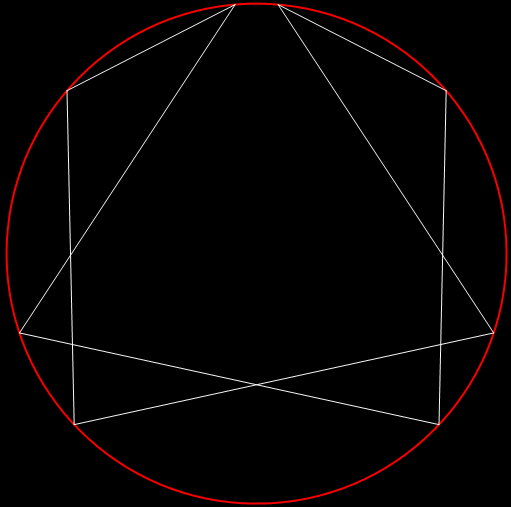
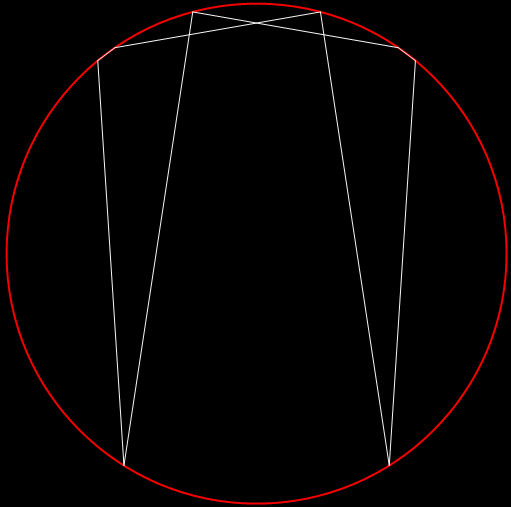
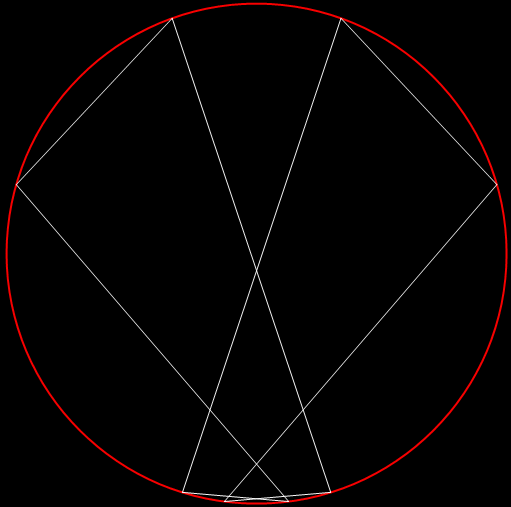
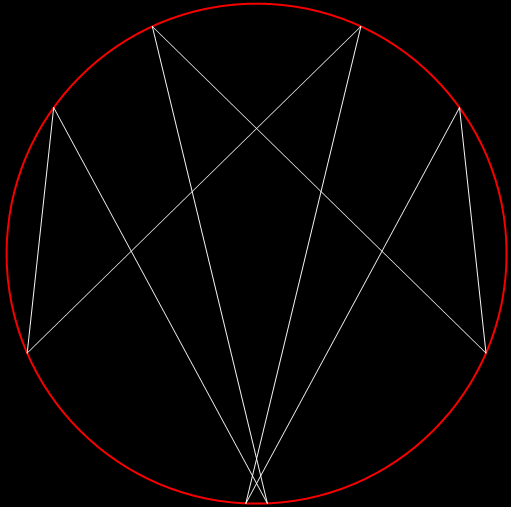
Girard knew and Fermat a few years later proved the beautiful theorem that every prime of the form 4n + 1; that is, the primes 5, 13, 17, 29, 37, 41, 53… is the sum of two squares in exactly one way. Primes of the form 4n + 3, such as 3, 7, 11, 19, 23, 31, 43, 47… are never the sum of two squares. — David Wells, The Penguin Dictionary of Curious and Interesting Numbers (1986), entry for “13”.


Elsewhere other-accessible…

Fermat’s theorem on sums of two squares
Pythagorean primes

Bi-Bell Basics

Here’s what you might call a Sisyphean sequence. It struggles upward, then slips back, over and over again:

1, 1, 2, 1, 2, 2, 3, 1, 2, 2, 3, 2, 3, 3, 4, 1, 2, 2, 3, 2, 3, 3, 4, 2, 3, 3, 4, 3, 4, 4, 5, 1, 2, 2, 3, 2, 3, 3, 4, 2, 3, 3, 4, 3, 4, 4, 5, 2, 3, 3, 4, 3, 4, 4, 5, 3, 4, 4, 5, 4, 5, 5, 6, 1, 2, 2, 3, 2, 3, 3, 4, 2, 3, 3, 4, 3, 4, 4, 5, 2, 3, 3, 4, 3, 4, 4, 5, 3, 4, 4, 5, 4, 5, 5, 6, 2, 3, 3, 4, 3, 4, 4, 5, 3, 4, 4, 5, 4, 5, 5, 6, 3, 4, 4, 5, 4, 5, 5, 6, 4, 5, 5, 6, 5, 6, 6, 7, 1, 2, 2, 3, 2, 3, 3, 4, 2...


The struggle goes on for ever. Every time it reaches a new maximum, it will fall back to 1 at the next step. And in fact 1, 2, 3 and all other integers occur infinitely often in the sequence, because it represents the digit-sums of binary numbers:

1 ← 1
1 = 1+0 ← 10 in binary = 2 in base ten
2 = 1+1 ← 11 = 3
1 = 1+0+0 ← 100 = 4
2 = 1+0+1 ← 101 = 5
2 = 1+1+0 ← 110 = 6
3 = 1+1+1 ← 111 = 7
1 = 1+0+0+0 ← 1000 = 8
2 = 1+0+0+1 ← 1001 = 9
2 = 1+0+1+0 ← 1010 = 10
3 = 1+0+1+1 ← 1011 = 11
2 = 1+1+0+0 ← 1100 = 12
3 = 1+1+0+1 ← 1101 = 13
3 = 1+1+1+0 ← 1110 = 14
4 = 1+1+1+1 ← 1111 = 15
1 = 1+0+0+0+0 ← 10000 = 16
2 = 1+0+0+0+1 ← 10001 = 17
2 = 1+0+0+1+0 ← 10010 = 18
3 = 1+0+0+1+1 ← 10011 = 19
2 = 1+0+1+0+0 ← 10100 = 20


Now here’s a related sequence in which all integers do not occur infinitely often:

1, 2, 3, 3, 4, 5, 6, 4, 5, 6, 7, 7, 8, 9, 10, 5, 6, 7, 8, 8, 9, 10, 11, 9, 10, 11, 12, 12, 13, 14, 15, 6, 7, 8, 9, 9, 10, 11, 12, 10, 11, 12, 13, 13, 14, 15, 16, 11, 12, 13, 14, 14, 15, 16, 17, 15, 16, 17, 18, 18, 19, 20, 21, 7, 8, 9, 10, 10, 11, 12, 13, 11, 12, 13, 14, 14, 15, 16, 17, 12, 13, 14, 15, 15, 16, 17, 18, 16, 17, 18, 19, 19, 20, 21, 22, 13, 14, 15, 16, 16, 17, 18, 19, 17, 18, 19, 20, 20, 21, 22, 23, 18, 19, 20, 21, 21, 22, 23, 24, 22, 23, 24, 25, 25, 26, 27, 28, 8, 9, 10, 11, 11, 12, 13, 14, 12, 13, 14, 15, 15...


The sequence represents the sum of the values of occupied columns in the binary numbers, reading from right to left:

10 in binary = 2 in base ten
21 (column values from right to left)
2*1 + 1*0 = 2


11 = 3
21
2*1 + 1*1 = 3


100 = 4
321 (column values from right to left)
3*1 + 2*0 + 1*0 = 3


101 = 5
321
3*1 + 2*0 + 1*1 = 4


110 = 6
321
3*1 + 2*1 + 1*0 = 5


111 = 7
321
3*1 + 2*1 + 1*1 = 6


1000 = 8
4321
4*1 + 3*0 + 2*0 + 1*0 = 4


1001 = 9
4321
4*1 + 3*0 + 2*0 + 1*1 = 5


1010 = 10
4321
4*1 + 3*0 + 2*1 + 1*0 = 6


1011 = 11
4321
4*1 + 3*0 + 2*1 + 1*1 = 7


1100 = 12
4321
4*1 + 3*1 + 2*0 + 1*0 = 7


1101 = 13
4321
4*1 + 3*1 + 2*0 + 1*1 = 8


1110 = 14
4321
4*1 + 3*1 + 2*1 + 1*0 = 9


1111 = 15
4321
4*1 + 3*1 + 2*1 + 1*1 = 10


10000 = 16
54321
5*1 + 4*0 + 3*0 + 2*0 + 1*0 = 5


In that sequence, although no number occurs infinitely often, some numbers occur more often than others. If you represent the count of sums up to a certain digit-length as a graph, you get a famous shape:

Bell curve formed by the count of column-sums in base 2


Bi-bell curves for 1 to 16 binary digits (animated)

In “Pi in the Bi”, I looked at that way of forming the bell curve and called it the bi-bell curve. Now I want to go further. Suppose that you assign varying values to the columns and try other bases. For example, what happens if you assign the values 2^p + 1 to the columns, reading from right to left, then use base 3 to generate the sums? These are the values of 2^p + 1:

2, 3, 5, 9, 17, 33, 65, 129, 257, 513, 1025...


And here’s an example of how you generate a column-sum in base 3:

2102 in base 3 = 65 in base ten
9532 (column values from right to left)
2*9 + 1*5 + 0*3 + 2*2 = 27


The graphs for these column-sums using base 3 look like this as the digit-length rises. They’re no longer bell-curves (and please note that widths and heights have been normalized so that all graphs fit the same space):

Graph for the count of column-sums in base 3 using 2^p + 1 (digit-length <= 7)

(width and height are normalized)


Graph for base 3 and 2^p + 1 (dl<=8)


Graph for base 3 and 2^p + 1 (dl<=9)


Graph for base 3 and 2^p + 1 (dl<=10)


Graph for base 3 and 2^p + 1 (dl<=11)


Graph for base 3 and 2^p + 1 (dl<=12)


Graph for base 3 and 2^p + 1 (animated)
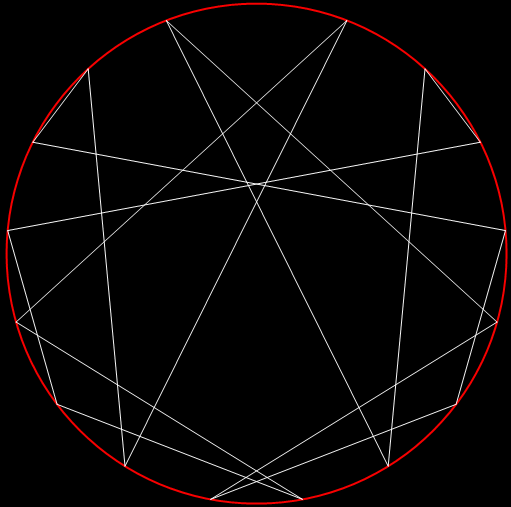

Now try base 3 and column-values of 2^p + 2 = 3, 4, 6, 10, 18, 34, 66, 130, 258, 514, 1026…

Graph for base 3 and 2^p + 2 (dl<=7)


Graph for base 3 and 2^p + 2 (dl<=8)


Graph for base 3 and 2^p + 2 (dl<=9)


Graph for base 3 and 2^p + 2 (dl<=10)


Graph for base 3 and 2^p + 2 (animated)
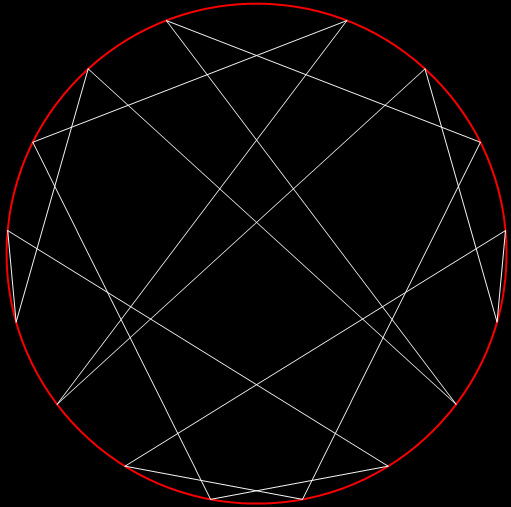

Now try base 5 and 2^p + 1 for the columns. The original bell curve has become like a fractal called the blancmange curve:

Graph for base 5 and 2^p + 1 (dl<=7)


Graph for base 5 and 2^p + 1 (dl<=8)


Graph for base 5 and 2^p + 1 (dl<=9)


Graph for base 5 and 2^p + 1 (dl<=10)


Graph for base 5 and 2^p + 1 (animated)


And finally, return to base 2 and try the Fibonacci numbers for the columns:

Graph for base 2 and Fibonacci numbers = 1,1,2,3,5… (dl<=7)


Graph for base 2 and Fibonacci numbers (dl<=9)


Graph for base 2 and Fibonacci numbers (dl<=11)


Graph for base 2 and Fibonacci numbers (dl<=13)


Graph for base 2 and Fibonacci numbers (dl<=15)


Graph for base 2 and Fibonacci numbers (animated)


Previously Pre-Posted…

Pi in the Bi — bell curves generated by binary digits

The Odd Couple

12,285

Together with 14,595 the smallest pair of odd amicable numbers, discovered by [the American mathematician] B.H. Brown in 1939. — The Penguin Dictionary of Curious and Interesting Numbers, David Wells (1986)

Sphiral Architect

If you’re a fan of Black Sabbath, you may have misread the title of this blog-post. But it’s not “Spiral Architect”, it’s “Sphiral Architect”. And this is a sphiral:

A sphiral
(the red square is the center)


But why do I call it a sphiral? The answer starts with the Fibonacci sequence, which is at once a perfectly simple and profoundly complex sequence of numbers. It’s very easy to create, yet yields endless riches. Simply seed the sequence with 1s, then add the previous two numbers in the sequence to get the next:


1, 1, 2, 3, 5, 8, 13, 21, 34, 55, 89, 144, 233, 377, 610, 987, 1597, 2584, 4181, 6765, 10946, 17711, 28657, 46368, 75025, 121393, 196418, 317811, 514229, 832040, 1346269, 2178309, 3524578, 5702887, 9227465, 14930352, 24157817, 39088169, 63245986, 102334155, 165580141, 267914296, 433494437, 701408733, 1134903170, 1836311903, 2971215073, 4807526976, 7778742049, 12586269025...


Each pair of numbers provides a better and better approximation to phi or φ, an irrational number whose decimal digits never end and never fall into a repeating pattern. It satisfies the equations 1/x = x-1 and x^2 = x+1:


1.6180339887498948482045868343656381177203091798... = φ

1 / 1.6180339887498948482045868343656381177203091798... = 0.6180339887498948482045868343656381177203091798...

1.6180339887498948482045868343656381177203091798...^2 = 2.6180339887498948482045868343656381177203091798...


Here are the approximations to φ supplied by successive pairs of numbers in the Fibonacci sequence:


1 = 1/1
2 = 2/1
1.5 = 3/2
1.666... = 5/3
1.6 = 8/5
1.625 = 13/8
1.6153846153846... = 21/13
1.619047619047619047619047... = 34/21
1.6176470588235294117647... = 55/34
1.6181818... = 89/55
1.617977528... = 144/89
1.6180555... = 233/144
1.618025751... = 377/233
1.6180371352785... = 610/377
1.6180327868852459... = 987/610
1.618034447821681864235... = 1597/987
1.6180338134... = 2584/1597
1.61803405572755... = 4181/2584
1.6180339631667... = 6765/4181
1.6180339985218... = 10946/6765
1.618033985... = 17711/10946
1.61803399... = 28657/17711
1.6180339882... = 46368/28657
1.6180339889579... = 75025/46368
1.61803398867... = 121393/75025
1.61803398878... = 196418/121393
1.6180339887383... = 317811/196418
1.6180339887543225376... = 514229/317811
1.6180339887482... = 832040/514229
1.61803398875... = 1346269/832040
1.6180339887496481... = 2178309/1346269
1.618033988749989... = 3524578/2178309
1.61803398874985884835... = 5702887/3524578
1.6180339887499... = 9227465/5702887
1.6180339887498895958965978... = 14930352/9227465
1.6180339887498968544... = 24157817/14930352
1.618033988749894... = 39088169/24157817
1.61803398874989514... = 63245986/39088169
1.6180339887498947364... = 102334155/63245986
1.61803398874989489... = 165580141/102334155
1.618033988749894831892914... = 267914296/165580141
1.618033988749894854435... = 433494437/267914296
1.618033988749894845824745843278261031063704284629608753202985163 = 701408733/433494437
1.6180339887498948491136... = 1134903170/701408733
1.618033988749894847857... = 1836311903/1134903170
1.61803398874989484833721... = 2971215073/1836311903
1.6180339887498948481... = 4807526976/2971215073
1.61803398874989484822... = 7778742049/4807526976
1.618033988749894848197... = 12586269025/7778742049
1.6180339887498948482... = 20365011074/12586269025
1.6180339887498948482045868343656381177203091798... = φ


I decided to look at how integers could be the partial sums of unique Fibonacci numbers. For example:


Using 1, 2, 3, 5, 8, 13, 21, 34, 55, 89...

1 = 1
2 = 2
3 = 1+2 = 3
4 = 1+3
5 = 2+3 = 5
6 = 1+2+3 = 1+5
7 = 2+5
8 = 1+2+5 = 3+5 = 8
9 = 1+3+5 = 1+8
10 = 2+3+5 = 2+8
11 = 1+2+3+5 = 1+2+8 = 3+8
12 = 1+3+8
13 = 2+3+8 = 5+8 = 13
14 = 1+2+3+8 = 1+5+8 = 1+13
15 = 2+5+8 = 2+13
16 = 1+2+5+8 = 3+5+8 = 1+2+13 = 3+13
17 = 1+3+5+8 = 1+3+13
18 = 2+3+5+8 = 2+3+13 = 5+13
19 = 1+2+3+5+8 = 1+2+3+13 = 1+5+13
20 = 2+5+13
21 = 1+2+5+13 = 3+5+13 = 8+13 = 21
22 = 1+3+5+13 = 1+8+13 = 1+21
23 = 2+3+5+13 = 2+8+13 = 2+21
24 = 1+2+3+5+13 = 1+2+8+13 = 3+8+13 = 1+2+21 = 3+21
25 = 1+3+8+13 = 1+3+21
26 = 2+3+8+13 = 5+8+13 = 2+3+21 = 5+21
27 = 1+2+3+8+13 = 1+5+8+13 = 1+2+3+21 = 1+5+21
28 = 2+5+8+13 = 2+5+21
29 = 1+2+5+8+13 = 3+5+8+13 = 1+2+5+21 = 3+5+21 = 8+21
30 = 1+3+5+8+13 = 1+3+5+21 = 1+8+21
31 = 2+3+5+8+13 = 2+3+5+21 = 2+8+21


All integers can be represented as partial sums of unique Fibonacci numbers. But what happens when you start removing numbers from the beginning of the Fibonacci sequence, then trying to find partial sums of the integers? Some integers are sumless:


Using 2, 3, 5, 8, 13, 21, 34, 55, 89, 144...

1 has no sum
2 = 2
3 = 3
4 has no sum
5 = 2+3 = 5
6 has no sum
7 = 2+5
8 = 3+5 = 8
9 has no sum
10 = 2+3+5 = 2+8
11 = 3+8
12 has no sum
13 = 2+3+8 = 5+8 = 13
14 has no sum
15 = 2+5+8 = 2+13
16 = 3+5+8 = 3+13
17 has no sum
18 = 2+3+5+8 = 2+3+13 = 5+13
19 has no sum
20 = 2+5+13
21 = 3+5+13 = 8+13 = 21
22 has no sum
23 = 2+3+5+13 = 2+8+13 = 2+21
24 = 3+8+13 = 3+21
25 has no sum
26 = 2+3+8+13 = 5+8+13 = 2+3+21 = 5+21
27 has no sum
28 = 2+5+8+13 = 2+5+21
29 = 3+5+8+13 = 3+5+21 = 8+21
30 has no sum
31 = 2+3+5+8+13 = 2+3+5+21 = 2+8+21


Now try removing more Fibonacci numbers from the sequence:


Using 3, 5, 8, 13, 21, 34, 55, 89, 144, 233...

1 to 2 have no sums
3 = 3
4 has no sum
5 = 5
6 to 7 have no sums
8 = 3+5 = 8
9 to 10 have no sums
11 = 3+8
12 has no sum
13 = 5+8 = 13
14 to 15 have no sums
16 = 3+5+8 = 3+13
17 has no sum
18 = 5+13
19 to 20 have no sums
21 = 3+5+13 = 8+13 = 21
22 to 23 have no sums
24 = 3+8+13 = 3+21
25 has no sum
26 = 5+8+13 = 5+21
27 to 28 have no sums
29 = 3+5+8+13 = 3+5+21 = 8+21
30 to 31 have no sums
32 = 3+8+21


Using 5, 8, 13, 21, 34, 55, 89, 144, 233, 377...

1 to 4 have no sums
5 = 5
6 to 7 have no sums
8 = 8
9 to 12 have no sums
13 = 5+8 = 13
14 to 17 have no sums
18 = 5+13
19 to 20 have no sums
21 = 8+13 = 21
22 to 25 have no sums
26 = 5+8+13 = 5+21
27 to 28 have no sums
29 = 8+21
30 to 33 have no sums
34 = 5+8+21 = 13+21 = 34
35 to 38 have no sums
39 = 5+13+21 = 5+34
40 to 41 have no sums
42 = 8+13+21 = 8+34
43 to 46 have no sums
47 = 5+8+13+21 = 5+8+34 = 13+34
48 to 51 have no sums
52 = 5+13+34


Using 8, 13, 21, 34, 55, 89, 144, 233, 377, 610...

1 to 7 have no sums
8 = 8
9 to 12 have no sums
13 = 13
14 to 20 have no sums
21 = 8+13 = 21
22 to 28 have no sums
29 = 8+21
30 to 33 have no sums
34 = 13+21 = 34
35 to 41 have no sums
42 = 8+13+21 = 8+34
43 to 46 have no sums
47 = 13+34
48 to 54 have no sums
55 = 8+13+34 = 21+34 = 55


Now ask: what fraction of integers can’t be represented as sums as you remove 1,2,3,5… from the Fibonacci sequence? Let’s approach the answer visually and represent the sums on a spiral created in the same way as an Ulam spiral. When the Fib-sums can’t use 1, you get this spiral:

2,3,5-sphiral
(integers that are the partial sums of unique Fibonacci numbers from 2, 3, 5, 8, 13, 21, 34, 55, 89…)

I call it a sphiral, because φ appears in the ratio of white-to-black space in the spiral, as we shall see. Phi also appears in these sphirals:

3,5,8,13-sphiral


5,8,13,21-sphiral


8,13,21,34-sphiral


Sum sphirals from 1,2,3,5 to 8,13,21,34(animated)
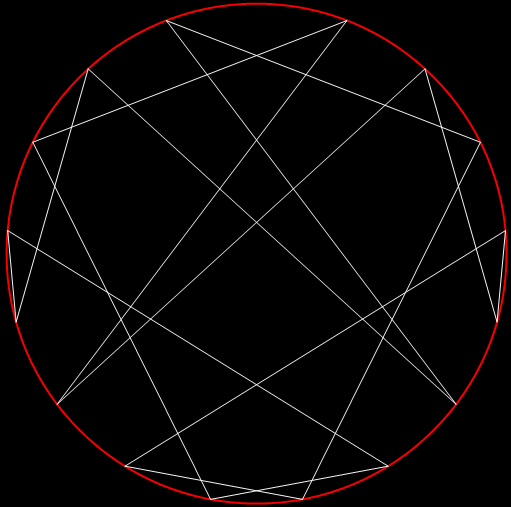

How does φ appear in the sphirals? Well, I think it must appear in lots more ways than I’m able to see. But one simple way, as remarked above, is that φ governs the ratio of white-to-black space in each sphiral. When all Fibonacci numbers can be used, there’s no black space, because all integers can be represented as sums of 1, 2, 3, 5, 8, 13, 21, 34, 55, 89… But that changes as numbers are dropped from the beginning of the Fibonacci sequence:


0.6180339887... of integers can be represented as partial sums of 2, 3, 5, 8, 13, 21, 34, 55, 89, 144...
0.6180339887... = 1/φ^1
0.3819660112... of integers can be represented as partial sums of 3, 5, 8, 13, 21, 34, 55, 89, 144, 233...
0.3819660112... = 1/φ^2
0.2360679774... of integers can be represented as partial sums of 5, 8, 13, 21, 34, 55, 89, 144, 233, 377...
0.2360679774... = 1/φ^3
0.1458980337... of integers can be represented as partial sums of 8, 13, 21, 34, 55, 89, 144, 233, 377, 610...
0.1458980337... = 1/φ^4
0.0901699437... of integers can be represented as partial sums of 13, 21, 34, 55, 89, 144, 233, 377, 610, 987...
0.0901699437... = 1/φ^5
0.05572809... of integers can be represented as partial sums of 21, 34, 55, 89, 144, 233, 377, 610, 987, 1597...
0.05572809... = 1/φ^6
0.0344418537... of integers can be represented as partial sums of 34, 55, 89, 144, 233, 377, 610, 987, 1597, 2584...
0.0344418537... = 1/φ^7
0.0212862362... of integers can be represented as partial sums of 55, 89, 144, 233, 377, 610, 987, 1597, 2584, 4181...
0.0212862362... = 1/φ^8
0.0131556174... of integers can be represented as partial sums of 89, 144, 233, 377, 610, 987, 1597, 2584, 4181, 6765...
0.0131556174... = 1/φ^9
0.0081306187... of integers can be represented as partial sums of 144, 233, 377, 610, 987, 1597, 2584, 4181, 6765, 10946...
0.0081306187... = 1/φ^10


But why stick to the standard Fibonacci sequence? If you seed a Fibonacci-like sequence with 2s instead of 1s, you get these numbers:


2, 2, 4, 6, 10, 16, 26, 42, 68, 110, 178, 288, 466, 754, 1220, 1974, 3194, 5168, 8362, 13530, 21892, 35422, 57314, 92736, 150050, 242786, 392836, 635622, 1028458, 1664080, 2692538, 4356618, 7049156, 11405774, 18454930, 29860704, 48315634, 78176338, 126491972, 204668310...


Obviously, all numbers in the 2,2,4-sequence are even, so no odd number is the partial sum of unique numbers in the sequence. But all even numbers are partial sums of the sequence. In other words:


0.5 of integers can be represented as partial sums of 2, 2, 4, 6, 10, 16, 26, 42, 68, 110...


So what happens when you drop the 2s and represent the sums graphically? You get this attractive sphiral:

4,6,10,16-sphiral (lo-res)


4,6,10,16-sphiral (hi-res)


In the 4,6,10,16-sphiral, the ratio of white-to-black space is 0.3090169943749474241… This is because:


0.3090169943749474241... of integers can be represented as partial sums of 4, 6, 10, 16, 26, 42, 68, 110, 178, 288...
0.3090169943749474241... = φ^1 * 0.5


Now try the 6,10,16,26-sphiral and 10,16,26,42-sphiral:

6,10,16,26-sphiral


10,16,26,42-sphiral


In the 4,6,10,16-sphiral, the ratio of white-to-black space is 0.190983005625… This is because:


0.190983005625... of integers can be represented as partial sums of 6, 10, 16, 26, 42, 68, 110, 178, 288, 466...
0.190983005625... = φ^2 * 0.5


And so on:


0.1180339887498948482... of integers can be represented as partial sums of 10, 16, 26, 42, 68, 110, 178, 288, 466, 754...
0.1180339887498948482... = φ^3 * 0.5
0.072949016875... of integers can be represented as partial sums of 16, 26, 42, 68, 110, 178, 288, 466, 754, 1220...
0.072949016875... = φ^4 * 0.5


Bristol Ditties

“Having no testosterone altered me physically and mentally. I grew breasts, became more empathetic and enjoyed the music of Nick Drake.” — Jeremy Clarke, The Daily Mail, 25ii20


Elsewhere Other-Accessible…

Ink Tune — review of Nick Drake: Dreaming England (2013) by Nathan Wiseman-Trowse

Think Inc — Book in Black

Incunabula Media have re-published Tales of Silence and Sortilege with a beautiful new cover:

Tales of Silence & Sortilege — Incunabula’s new edition


A review from Lulu of the first edition:

Tales of Silence & Sortilege, Simon Whitechapel (Ideophasis Books 2011)

If you love weird fantasy, if you love the English language, even if you don’t love Clark Ashton Smith, you should read this book. The back cover describes it as “the darkest and most disturbing fantasy” of this millennium, but that’s either sarcastic or tragically optimistic, because what these stories really are is beautiful. The breath of snow-wolves is described as “harsh-spiced.” A mysterious gargoyle leaning from the heights of a great cathedral has “wings still glistening with the rime of interplanetary flight.” Hummingbirds are “gem-feathered… their glittering breasts dusted with the gold of a hundred pollens.” If you cannot appreciate such imagery, then perhaps you are dead to beauty, or simply dead. These tales are very short, but some of them have stayed with me for years, such as “The Treasure of the Temple,” in which a thief seems to lose the greatest fortune he could ever have found by stealing a king’s ransom in actual treasure. Most of the stories are brilliant, one or two is only good, but the masterpieces are “Master of the Pyramid” and “The Return of the Cryomancer.” The sense of loss and mystery evoked by these two companion stories is almost physically painful, it is so haunting. There is nothing like these stories being published today. Reading them, I feel the excitement and wonder that fans of Weird Tales magazine must have known long ago when new stories would appear by H.P. Lovecraft, Clark Ashton Smith, and Robert E. Howard. Simon Whitechapel doesn’t imitate these authors so much as apply their greatest lessons to new forms of fantasy. This is one of the cheapest books I own, but I accord it one of my most valuable. It is easily the best work of art you will find in any form on Lulu. I cannot recommend it highly enough.


Elsewhere Other-Accessible…

Tales of Silence & Sortilege (Incunabula 2023)
Gweel & Other Alterities (Incunabula 2023)

Fine as Nine

This is a regular nonagon (a polygon with nine sides):

A nonagon or enneagon (from Wikipedia)

And this is the endlessly repeating decimal of the reciprocal of 7:

1/7 = 0.142857142857142857142857…

What is the curious connection between 1/7 and nonagons? If I’d been asked that a week ago, I’d’ve had no answer. Then I found a curious connection when I was looking at the leading digits of polygonal numbers. A polygonal number is a number that can be represented in the form of a polygon. Triangular numbers look like this:


* = 1

*
** = 3

*
**
*** = 6

*
**
***
**** = 10

*
**
***
****
***** = 15

By looking at the shapes rather than the numbers, it’s easy to see that you generate the triangular numbers by simply summing the integers:


1 = 1
1+2=3
1+2+3=6
1+2+3+4=10
1+2+3+4+5=15

Now try the square numbers:


* = 1

**
** = 4

***
***
*** = 9

****
****
****
**** = 16

*****
*****
*****
*****
***** = 25


You generate the square numbers by summing the odd integers:


1 = 1
1+3 = 4
1+3+5 = 9
1+3+7 = 16
1+3+7+9 = 25

Next come the pentagonal numbers, the hexagonal numbers, the heptagonal numbers, and so on. I was looking at the leading digits of these numbers and trying to find patterns. For example, when do the leading digits of the k-th triangular number, tri(k), match the digits of k? This is when:


tri(1) = 1
tri(19) = 190
tri(199) = 19900
tri(1999) = 1999000
tri(19999) = 199990000
tri(199999) = 19999900000
[...]

That pattern is easy to explain. The formula for the k-th polygonal number is k * ((pn-2)*k + (4-pn)) / 2, where pn = 3 for the triangular numbers, 4 for the square numbers, 5 for the pentagonal numbers, and so on. Therefore the k-th triangular number is k * (k + 1) / 2. When k = 19, the formula is 19 * (19 + 1) / 2 = 19 * 20 / 2 = 19 * 10 = 190. And so on. Now try the pol(k) = leaddig(pol(k)) for higher polygonal numbers. The patterns are easy to predict until you get to the nonagonal numbers:


square(10) = 100
square(100) = 10000
square(1000) = 1000000
square(10000) = 100000000
square(100000) = 10000000000
[...]


pentagonal(7) = 70
pentagonal(67) = 6700
pentagonal(667) = 667000
pentagonal(6667) = 66670000
pentagonal(66667) = 6666700000
[...]


hexagonal(6) = 66
hexagonal(51) = 5151
hexagonal(501) = 501501
hexagonal(5001) = 50015001
hexagonal(50001) = 5000150001
[...]


heptagonal(5) = 55
heptagonal(41) = 4141
heptagonal(401) = 401401
heptagonal(4001) = 40014001
heptagonal(40001) = 4000140001
[...]


octagonal(4) = 40
octagonal(34) = 3400
octagonal(334) = 334000
octagonal(3334) = 33340000
octagonal(33334) = 3333400000
[...]


nonagonal(4) = 46
nonagonal(30) = 3075
nonagonal(287) = 287574
nonagonal(2858) = 28581429
nonagonal(28573) = 2857385719
nonagonal(285715) = 285715000000
nonagonal(2857144) = 28571444285716
nonagonal(28571430) = 2857143071428575
nonagonal(285714287) = 285714287571428574
nonagonal(2857142858) = 28571428581428571429
nonagonal(28571428573) = 2857142857385714285719
nonagonal(285714285715) = 285714285715000000000000
nonagonal(2857142857144) = 28571428571444285714285716
nonagonal(28571428571430) = 2857142857143071428571428575
nonagonal(285714285714287) = 285714285714287571428571428574
nonagonal(2857142857142858) = 28571428571428581428571428571429
nonagonal(28571428571428573) = 2857142857142857385714285714285719
nonagonal(285714285714285715) = 285714285714285715000000000000000000
nonagonal(2857142857142857144) = 28571428571428571444285714285714285716
nonagonal(28571428571428571430) = 2857142857142857143071428571428571428575
[...]


What’s going on with the leading digits of the nonagonals? Well, they’re generating a different reciprocal. Or rather, they’re generating the multiple of a different reciprocal:


1/7 * 2 = 2/7 = 0.285714285714285714285714285714...

And why does 1/7 have this curious connection with the nonagonal numbers? Because the nonagonal formula is k * (7k-5) / 2 = k * ((9-2) * k + (4-pn)) / 2. Now look at the pentadecagonal numbers, where pn = 15:


pentadecagonal(1538461538461538461540) = 15384615384615384615406923076923076923076930

2/13 = 0.153846153846153846153846153846...

pentadecagonal formula = k * (13k - 11) / 2 = k * ((15-2)*k + (4-15)) / 2

Penultimately, let’s look at the icosikaihenagonal numbers, where pn = 21:


icosikaihenagonal(2) = 21
icosikaihenagonal(12) = 1266
icosikaihenagonal(107) = 107856
icosikaihenagonal(1054) = 10544743
icosikaihenagonal(10528) = 1052878960
icosikaihenagonal(105265) = 105265947385
icosikaihenagonal(1052633) = 10526335263165
icosikaihenagonal(10526317) = 1052631731578951
icosikaihenagonal(105263159) = 105263159210526318
icosikaihenagonal(1052631580) = 10526315801578947370
icosikaihenagonal(10526315791) = 1052631579163157894746
icosikaihenagonal(105263157896) = 105263157896368421052636
icosikaihenagonal(1052631578949) = 10526315789497368421052643
icosikaihenagonal(10526315789475) = 1052631578947542105263157900
icosikaihenagonal(105263157894738) = 105263157894738263157894736845
icosikaihenagonal(1052631578947370) = 10526315789473706842105263157905
icosikaihenagonal(10526315789473686) = 1052631578947368689473684210526331
icosikaihenagonal(105263157894736843) = 105263157894736843000000000000000000
icosikaihenagonal(1052631578947368422) = 10526315789473684220526315789473684211
icosikaihenagonal(10526315789473684212) = 1052631578947368421257894736842105263166

2/19 = 0.1052631578947368421052631579

icosikaihenagonal formula = k * (19k - 17) / 2 = k * ((21-2)*k + (4-21)) / 2

And ultimately, let’s look at this other pattern in the leading digits of the triangular numbers, which I can’t yet explain at all:


tri(904) = 409060
tri(6191) = 19167336
tri(98984) = 4898965620
tri(996694) = 496699963165
tri(9989894) = 49898996060565
tri(99966994) = 4996699994681515
tri(999898994) = 499898999601055515
tri(9999669994) = 49996699999451815015
tri(99998989994) = 4999898999960055555015
tri(999996699994) = 499996699999945018150015
tri(9999989899994) = 49999898999996005055550015
tri(99999966999994) = 4999996699999994500181500015
tri(999999898999994) = 499999898999999600500555500015
[...]

Performativizing Papyrocentricity #75

Papyrocentric Performativity Presents…

Spare on a Me-StringSpare, Prince Harry (Penguin 2023)

Miserissimy MemoirsThe God Squad, Paddy Doyle (1988) / My Godawful Life, Sunny McCreary (2008)

Twice Was Half As NiceGoing to Sea in a Sieve: The Autobiography, Danny Baker (Orion 2012)

Visceral VolumeMonolithic Undertow: In Search of Sonic Oblivion, Harry Sword (White Rabbit 2021) / Heavy: How Metal Changes the Way We See the World, Dan Franklin (Constable 2020)

Vehicular VillainessChristine, Stephen King (1983)

Once More (With Gweeling)Gweel & Other Alterities, Simon Whitechapel (Incunabula Books 2023)

Wrecking BawlThe Lives of Brian: A Memoir, Brian Johnson (Michael Joseph 2022)

Angst in AckyThe Boy with the Perpetual Nervousness: A Memoir of an Adolescence, Graham Caveney (Picador 2017)


Or Read a Review at Random: RaRaR

Triumph of the ’Ville

Is it wrong that I find it amusing to be mistaken for a Guardian-reader or Guns’n’Roses fan? Yes. Very wrong. It’s also wrong that I’d be amused to learn that someone thought I was serious about the title Gweel & Other Alterities. Serious about the Alterities bit, I mean. “Alterity” is a word used by, well, I’d better not describe them. But one example is China Miéville. ’Nuff said. And here he uses the word with exactly the phrase I’d’ve hoped he’d use it with:

“I’m not interested in fantasy or SF as utopian blueprints, that’s a disastrous idea. There’s some kind of link in terms of alterity.” — “A life in writing: China Miéville”, The Guardian, 14v11


Elsewhere Other-Accessible

Ex-term-in-ate! — extremophilically engaging the teratic toxicity of “in terms of”…
’Ville to Power — Mythopoetic Miéville incisively interrogates issues around Trotsko-toxicity…