
“Our fantastic civilization has fallen out of touch with many aspects of nature, and with none more completely than with night. Primitive folk, gathered at a cave mouth round a fire, do not fear night; they fear, rather, the energies and creatures to whom night gives power; we of the age of the machines, having delivered ourselves of nocturnal enemies, now have a dislike of night itself. With lights and ever more lights, we drive the holiness and beauty of night back to the forests and the sea; the little villages, the cross-roads even, will have none of it. Are modern folk, perhaps, afraid of night? Do they fear that vast serenity, the mystery of infinite space, the austerity of stars?” — Henry Beston (1888-1968), The Outermost House, 1933
Night Blight
Crucial Question
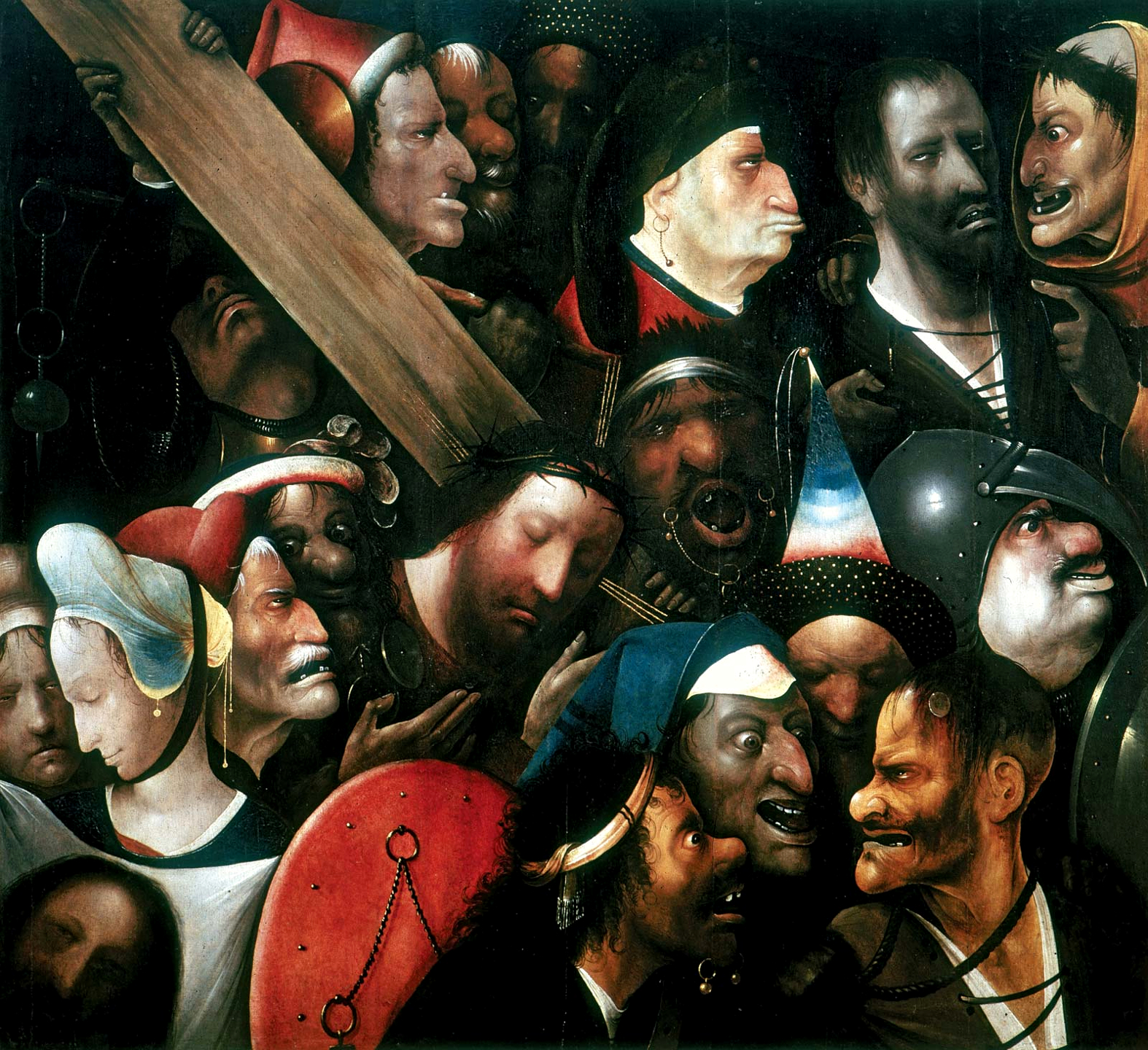
Christ Carrying the Cross by Hieronymus Bosch or follower, Ghent (1510-35)
• And what doth it mean to be flesh?
• Et que signifie donc d’être chair ?
• Und was heißt es, Fleisch zu sein?
• E che vuol dire essere carne?
• ¿Y qué quiere decir ser carne?
• और देह होना आखिर क्या है?
• და რას ნიშნავს ხორცად ყოფნა?
• 而为肉身,究竟意味着什么?
• अथ मांसत्वं किमर्थम्?
• ⲁⲩⲱ ⲧⲓ ⲟⲩⲛ ⲡⲉ ⲡⲓⲥⲁⲣⲝ ⲉⲧⲙⲉ?
• 𒅇 𒍑𒆪 𒅆𒂟 𒅗?
The ’rror
The Haunted Mirrors
Ego non sum…
Evangelium secundum Ioannem XVII, xiv.
The old palace had a thousand corridors, ten thousand mirrors, squares, ovals, and diamonds, which remained bright and clear for all the dust and cobwebs that surrounded them, specking not with the autumn rain that fell through rents in the roof, cracking not in the fierce frosts of midwinter, ever fascinating, ever fearful to the youths and maidens of the villages therearound. For no mirror reflected faithfully, or so ’twas said, having always some sorcerous taint or anomaly, whereby, on early corridors, the faces reflected were not quite those of him or her who stood before them, being distinct in some particular of eye or mouth or cheek, of hair or tint or scarring, as though a brother or sister looked out, not a twin; and on later the faces reflected began to alter more strongly, more unsettlingly, seeming to partake of different nation and race; and on last of all, seen by very few, the faces reflected began to depart the bounds of humanity, borrowing form and feature from beasts, birds, and fish.
But horrider than these, found here and there in the palace, were mirrors wherein viewers saw themselves become giant insects, myriad-eyed, with nodding antennæ, finger-like jaws or coiled proboscis, or else arachnids, crustaceans, or worms, whereat some fled in horror or fainted where they stood, and few indeed could watch the transformations for long. Kinder mirrors might stand a stride or two away, natheless, wherein faces became now flowers, great and glorious, now crystals of many and gorgeous facets or polyhedra of polished metal, reflective themselves within a reflection. But these mirrors too could trouble the brain and linger in dreams, being sorcerous equally with the rest, nor did it seem right that fragrance should leak from the flowers and notes chime from the crystals and polyhedra. Wherefor no mirror in the old palace could be viewed with impunity, save by the dullest-witted, the stupidest, and these too feared to come before one or another of two mirrors said to be horriblest of all.
In one of these, the viewer would see himself seemingly true at first, then note that months were passing in the mirror for moments before it, whereby one aged before one’s very eyes, skin wrinkling, nose expanding, jaw collapsing. And if one watched unwisely long, one saw death possess the face and a haze of maggots eat it to bare and grinning bone.
In the other of these mirrors, the viewer saw somewhat more disturbing still, save to a rarest few: namely, naught at all where a face should have looked back, as though one existed not and the world flowed on unaffected.
Powers of Persistence
“The persistence of a number is the number of times you need to multiply the digits together before reaching a single digit.” — OEIS
Base 5
23 → 11 → 1 in b5 (c=3) (n=13 in b10)
233 → 33 → 14 → 4 in b5 (c=4) (n=68 in b10)
33334 → 2244 → 224 → 31 → 3 in b5 (c=5) (n=2344 in b10)
444444444444 → 13243332331 → 333124 → 1331 → 14 → 4 in b5 (c=6) (n=244140624 in b10)
3344444444444444444444 → 2244112144242244414 → 13243332331 → 333124 → 1331 → 14 → 4 in b5 (c=7) (n=1811981201171874 in b10)
Base 6
23 → 10 → 0 in b6 (c=3) (n=15 in b10)
35 → 23 → 10 → 0 in b6 (c=4) (n=23 in b10)
444 → 144 → 24 → 12 → 2 in b6 (c=5) (n=172 in b10)
24445 → 2544 → 424 → 52 → 14 → 4 in b6 (c=6) (n=3629 in b10)
Base 7
24 → 11 → 1 in b7 (c=3) (n=18 in b10)
36 → 24 → 11 → 1 in b7 (c=4) (n=27 in b10)
245 → 55 → 34 → 15 → 5 in b7 (c=5) (n=131 in b10)
4445 → 635 → 156 → 42 → 11 → 1 in b7 (c=6) (n=1601 in b10)
44556 → 6666 → 3531 → 63 → 24 → 11 → 1 in b7 (c=7) (n=11262 in b10)
5555555 → 443525 → 6666 → 3531 → 63 → 24 → 11 → 1 in b7 (c=8) (n=686285 in b10)
444555555555555666 → 465556434443526 → 115443241155 → 256641 → 4125 → 55 → 34 → 15 → 5 in b7 (c=9) (n=1086400325525346 in b10)
Base 8
24 → 10 → 0 in b8 (c=3) (n=20 in b10)
37 → 25 → 12 → 2 in b8 (c=4) (n=31 in b10)
256 → 74 → 34 → 14 → 4 in b8 (c=5) (n=174 in b10)
2777 → 1256 → 74 → 34 → 14 → 4 in b8 (c=6) (n=1535 in b10)
333555577 → 3116773 → 5126 → 74 → 34 → 14 → 4 in b8 (c=7) (n=57596799 in b10)
Base 9
25 → 11 → 1 in b9 (c=3) (n=23 in b10)
38 → 26 → 13 → 3 in b9 (c=4) (n=35 in b10)
57 → 38 → 26 → 13 → 3 in b9 (c=5) (n=52 in b10)
477 → 237 → 46 → 26 → 13 → 3 in b9 (c=6) (n=394 in b10)
45788 → 13255 → 176 → 46 → 26 → 13 → 3 in b9 (c=7) (n=30536 in b10)
2577777 → 275484 → 13255 → 176 → 46 → 26 → 13 → 3 in b9 (c=8) (n=1409794 in b10)
Base 10
25 → 10 → 0 (c=3)
39 → 27 → 14 → 4 (c=4)
77 → 49 → 36 → 18 → 8 (c=5)
679 → 378 → 168 → 48 → 32 → 6 (c=6)
6788 → 2688 → 768 → 336 → 54 → 20 → 0 (c=7)
68889 → 27648 → 2688 → 768 → 336 → 54 → 20 → 0 (c=8)
2677889 → 338688 → 27648 → 2688 → 768 → 336 → 54 → 20 → 0 (c=9)
26888999 → 4478976 → 338688 → 27648 → 2688 → 768 → 336 → 54 → 20 → 0 (c=10)
3778888999 → 438939648 → 4478976 → 338688 → 27648 → 2688 → 768 → 336 → 54 → 20 → 0 (c=11)
277777788888899 → 4996238671872 → 438939648 → 4478976 → 338688 → 27648 → 2688 → 768 → 336 → 54 → 20 → 0 (c=12)
Base 11
26 → 11 → 1 in b11 (c=3) (n=28 in b10)
3A → 28 → 15 → 5 in b11 (c=4) (n=43 in b10)
69 → 4A → 37 → 1A → A in b11 (c=5) (n=75 in b10)
269 → 99 → 74 → 26 → 11 → 1 in b11 (c=6) (n=317 in b10)
3579 → 78A → 46A → 1A9 → 82 → 15 → 5 in b11 (c=7) (n=4684 in b10)
26778 → 3597 → 78A → 46A → 1A9 → 82 → 15 → 5 in b11 (c=8) (n=38200 in b10)
47788A → 86277 → 3597 → 78A → 46A → 1A9 → 82 → 15 → 5 in b11 (c=9) (n=757074 in b10)
67899AAA → 143A9869 → 299596 → 2A954 → 2783 → 286 → 88 → 59 → 41 → 4 in b11 (c=10) (n=130757439 in b10)
77777889999 → 2AA174996A → 143A9869 → 299596 → 2A954 → 2783 → 286 → 88 → 59 → 41 → 4 in b11 (c=11) (n=199718348047 in b10)
Base 12
26 → 10 → 0 in b12 (c=3) (n=30 in b10)
3A → 26 → 10 → 0 in b12 (c=4) (n=46 in b10)
6B → 56 → 26 → 10 → 0 in b12 (c=5) (n=83 in b10)
777 → 247 → 48 → 28 → 14 → 4 in b12 (c=6) (n=1099 in b10)
AAB → 778 → 288 → A8 → 68 → 40 → 0 in b12 (c=7) (n=1571 in b10)
3577777799 → 3BA55B53 → 557916 → 5576 → 736 → A6 → 50 → 0 in b12 (c=8) (n=17902874277 in b10)
Base 13
27 → 11 → 1 in b13 (c=3) (n=33 in b10)
3B → 27 → 11 → 1 in b13 (c=4) (n=50 in b10)
5A → 3B → 27 → 11 → 1 in b13 (c=5) (n=75 in b10)
9A → 6C → 57 → 29 → 15 → 5 in b13 (c=6) (n=127 in b10)
27A → AA → 79 → 4B → 35 → 12 → 2 in b13 (c=7) (n=439 in b10)
8AC → 58B → 27B → BB → 94 → 2A → 17 → 7 in b13 (c=8) (n=1494 in b10)
35AB → 99C → 59A → 288 → 9B → 78 → 44 → 13 → 3 in b13 (c=9) (n=7577 in b10)
9BBB → 55B6 → 99C → 59A → 288 → 9B → 78 → 44 → 13 → 3 in b13 (c=10) (n=21786 in b10)
2999BBC → 591795 → 65B5 → 99C → 59A → 288 → 9B → 78 → 44 → 13 → 3 in b13 (c=11) (n=13274091 in b10)
28CCCCCC → 9B89B93 → 591795 → 65B5 → 99C → 59A → 288 → 9B → 78 → 44 → 13 → 3 in b13 (c=12) (n=168938314 in b10)
377AAAABCCC → 2833B38BCB → B588A8A → 777995 → 4B2CA → 4A64 → 58B → 27B → BB → 94 → 2A → 17 → 7 in b13 (c=13) (n=494196864368 in b10)
Base 14
27 → 10 → 0 in b14 (c=3) (n=35 in b10)
3C → 28 → 12 → 2 in b14 (c=4) (n=54 in b10)
5B → 3D → 2B → 18 → 8 in b14 (c=5) (n=81 in b10)
99 → 5B → 3D → 2B → 18 → 8 in b14 (c=6) (n=135 in b10)
359 → 99 → 5B → 3D → 2B → 18 → 8 in b14 (c=7) (n=667 in b10)
CCC → 8B6 → 29A → CC → A4 → 2C → 1A → A in b14 (c=8) (n=2532 in b10)
359AB → 55AA → CA8 → 4C8 → 1D6 → 58 → 2C → 1A → A in b14 (c=9) (n=130883 in b10)
CDDDD → 8CC8C → 2C436 → 8B6 → 29A → CC → A4 → 2C → 1A → A in b14 (c=10) (n=499407 in b10)
3ABBDDDD → DAAAD54 → 63DAC8 → 5BC1A → 2596 → 2A8 → B6 → 4A → 2C → 1A → A in b14 (c=11) (n=397912927 in b10)
488AABCCCDDD → 39A59889584 → A89DBD84 → 598D14C → 5BC1A → 2596 → 2A8 → B6 → 4A → 2C → 1A → A in b14 (c=12) (n=18693488093783 in b10)
Base 15
28 → 11 → 1 in b15 (c=3) (n=38 in b10)
3D → 29 → 13 → 3 in b15 (c=4) (n=58 in b10)
5E → 4A → 2A → 15 → 5 in b15 (c=5) (n=89 in b10)
28C → CC → 99 → 56 → 20 → 0 in b15 (c=6) (n=582 in b10)
8AE → 4EA → 275 → 4A → 2A → 15 → 5 in b15 (c=7) (n=1964 in b10)
5BBB → 1E8A → 4EA → 275 → 4A → 2A → 15 → 5 in b15 (c=8) (n=19526 in b10)
BBBCC → 3BBC9 → B939 → BD3 → 1D9 → 7C → 59 → 30 → 0 in b15 (c=9) (n=596667 in b10)
2999BDE → 3C9CE6 → 66B7C → 9CC9 → 36C9 → 899 → 2D3 → 53 → 10 → 0 in b15 (c=10) (n=30104309 in b10)
39BBCCCCCD → 41CBD6D4C → 23C96E6 → 66B7C → 9CC9 → 36C9 → 899 → 2D3 → 53 → 10 → 0 in b15 (c=11) (n=140410607143 in b10)
Base 16
28 → 10 → 0 in b16 (c=3) (n=40 in b10)
3E → 2A → 14 → 4 in b16 (c=4) (n=62 in b10)
5F → 4B → 2C → 18 → 8 in b16 (c=5) (n=95 in b10)
BB → 79 → 3F → 2D → 1A → A in b16 (c=6) (n=187 in b10)
2AB → DC → 9C → 6C → 48 → 20 → 0 in b16 (c=7) (n=683 in b10)
3DDE → 1BBA → 4BA → 1B8 → 58 → 28 → 10 → 0 in b16 (c=8) (n=15838 in b10)
379BDD → 55C77 → 396C → 798 → 1F8 → 78 → 38 → 18 → 8 in b16 (c=9) (n=3644381 in b10)
Base 17
29 → 11 → 1 in b17 (c=3) (n=43 in b10)
3F → 2B → 15 → 5 in b17 (c=4) (n=66 in b10)
5G → 4C → 2E → 1B → B in b17 (c=5) (n=101 in b10)
9F → 7G → 6A → 39 → 1A → A in b17 (c=6) (n=168 in b10)
CE → 9F → 7G → 6A → 39 → 1A → A in b17 (c=7) (n=218 in b10)
3DD → 1CE → 9F → 7G → 6A → 39 → 1A → A in b17 (c=8) (n=1101 in b10)
9CF → 5A5 → EC → 9F → 7G → 6A → 39 → 1A → A in b17 (c=9) (n=2820 in b10)
2AFF → F9C → 5A5 → EC → 9F → 7G → 6A → 39 → 1A → A in b17 (c=10) (n=12986 in b10)
55DDF → CF4G → 25EB → 55A → EC → 9F → 7G → 6A → 39 → 1A → A in b17 (c=11) (n=446163 in b10)
39DDGG → DGCG7 → 35F54 → F9C → 5A5 → EC → 9F → 7G → 6A → 39 → 1A → A in b17 (c=12) (n=5079174 in b10)
DEGGGG → 86DCDC → DGCG7 → 35F54 → F9C → 5A5 → EC → 9F → 7G → 6A → 39 → 1A → A in b17 (c=13) (n=19710955 in b10)
6BBBBBEEF → 6FBEB7G8 → 5B39ACE → 1CED8G → 35F54 → F9C → 5A5 → EC → 9F → 7G → 6A → 39 → 1A → A in b17 (c=14) (n=46650378808 in b10)
2BDDDDDEEEEEF → 1FBBBB76B714 → 6FBEB7G8 → 5B39ACE → 1CED8G → 35F54 → F9C → 5A5 → EC → 9F → 7G → 6A → 39 → 1A → A in b17 (c=15) (n=1570081251102035 in b10)
Base 18
29 → 10 → 0 in b18 (c=3) (n=45 in b10)
3F → 29 → 10 → 0 in b18 (c=4) (n=69 in b10)
5E → 3G → 2C → 16 → 6 in b18 (c=5) (n=104 in b10)
8D → 5E → 3G → 2C → 16 → 6 in b18 (c=6) (n=157 in b10)
2BB → D8 → 5E → 3G → 2C → 16 → 6 in b18 (c=7) (n=857 in b10)
2CEG → GAC → 5GC → 2H6 → B6 → 3C → 20 → 0 in b18 (c=8) (n=15820 in b10)
AABF → 2EGC → GAC → 5GC → 2H6 → B6 → 3C → 20 → 0 in b18 (c=9) (n=61773 in b10)
8GGHH → 5B8DE → DD2G → GC8 → 4D6 → H6 → 5C → 36 → 10 → 0 in b18 (c=10) (n=938627 in b10)
AAAAAAH → 8HGH28 → 5B8DE → DD2G → GC8 → 4D6 → H6 → 5C → 36 → 10 → 0 in b18 (c=11) (n=360129437 in b10)
Base 19
2A → 11 → 1 in b19 (c=3) (n=48 in b10)
3G → 2A → 11 → 1 in b19 (c=4) (n=73 in b10)
5F → 3I → 2G → 1D → D in b19 (c=5) (n=110 in b10)
AB → 5F → 3I → 2G → 1D → D in b19 (c=6) (n=201 in b10)
DH → BC → 6I → 5D → 38 → 15 → 5 in b19 (c=7) (n=264 in b10)
2BC → DH → BC → 6I → 5D → 38 → 15 → 5 in b19 (c=8) (n=943 in b10)
7BG → 37G → HD → BC → 6I → 5D → 38 → 15 → 5 in b19 (c=9) (n=2752 in b10)
DII → BCD → 4E6 → HD → BC → 6I → 5D → 38 → 15 → 5 in b19 (c=10) (n=5053 in b10)
4AAH → IFH → CDB → 4E6 → HD → BC → 6I → 5D → 38 → 15 → 5 in b19 (c=11) (n=31253 in b10)
3BGII → 15HGF → 2I9D → BCD → 4E6 → HD → BC → 6I → 5D → 38 → 15 → 5 in b19 (c=12) (n=472548 in b10)
EEFHH → 69GBI → 15HGF → 2I9D → BCD → 4E6 → HD → BC → 6I → 5D → 38 → 15 → 5 in b19 (c=13) (n=1926275 in b10)
ADEFFH → 2F7HHE → 69GBI → 15HGF → 2I9D → BCD → 4E6 → HD → BC → 6I → 5D → 38 → 15 → 5 in b19 (c=14) (n=26556906 in b10)
4ADDDDEEF → 3E7919IH → 2HH7FE → 69GBI → 15HGF → 2I9D → BCD → 4E6 → HD → BC → 6I → 5D → 38 → 15 → 5 in b19 (c=15) (n=77518543969 in b10)
9999999BBFHHHI → 6B41DG4CB3BG → H27A5F3D → 2F7HHE → 69GBI → 15HGF → 2I9D → BCD → 4E6 → HD → BC → 6I → 5D → 38 → 15 → 5 in b19 (c=16) (n=399503342991325867 in b10)
Base 20
2A → 10 → 0 in b20 (c=3) (n=50 in b10)
3H → 2B → 12 → 2 in b20 (c=4) (n=77 in b10)
6D → 3I → 2E → 18 → 8 in b20 (c=5) (n=133 in b10)
7J → 6D → 3I → 2E → 18 → 8 in b20 (c=6) (n=159 in b10)
DI → BE → 7E → 4I → 3C → 1G → G in b20 (c=7) (n=278 in b10)
6DE → 2EC → GG → CG → 9C → 58 → 20 → 0 in b20 (c=8) (n=2674 in b10)
CGG → 7DC → 2EC → GG → CG → 9C → 58 → 20 → 0 in b20 (c=9) (n=5136 in b10)
2BHI → GGC → 7DC → 2EC → GG → CG → 9C → 58 → 20 → 0 in b20 (c=10) (n=20758 in b10)
CDGG → 4JGG → 28CG → 7DC → 2EC → GG → CG → 9C → 58 → 20 → 0 in b20 (c=11) (n=101536 in b10)
2DEGJ → DGCG → 4JGG → 28CG → 7DC → 2EC → GG → CG → 9C → 58 → 20 → 0 in b20 (c=12) (n=429939 in b10)
77BBHJ → BJ7D7 → GCGD → 4JGG → 28CG → 7DC → 2EC → GG → CG → 9C → 58 → 20 → 0 in b20 (c=13) (n=23612759 in b10)
BBBCEEHHHHH → 8DCB4G21J4 → 21ED4J4 → DGCG → 4JGG → 28CG → 7DC → 2EC → GG → CG → 9C → 58 → 20 → 0 in b20 (c=14) (n=118569903663157 in b10)
Base 21
2B → 11 → 1 in b21 (c=3) (n=53 in b10)
3I → 2C → 13 → 3 in b21 (c=4) (n=81 in b10)
6H → 4I → 39 → 16 → 6 in b21 (c=5) (n=143 in b10)
AK → 9B → 4F → 2I → 1F → F in b21 (c=6) (n=230 in b10)
GH → CK → B9 → 4F → 2I → 1F → F in b21 (c=7) (n=353 in b10)
4GI → 2CI → KC → B9 → 4F → 2I → 1F → F in b21 (c=8) (n=2118 in b10)
GII → BFI → 6F9 → 1HC → 9F → 69 → 2C → 13 → 3 in b21 (c=9) (n=7452 in b10)
5FHJ → 2CJC → C8C → 2CI → KC → B9 → 4F → 2I → 1F → F in b21 (c=10) (n=53296 in b10)
2BGIJ → CKKC → 64CI → BFI → 6F9 → 1HC → 9F → 69 → 2C → 13 → 3 in b21 (c=11) (n=498286 in b10)
FHKKK → AA5HI → GAJF → 4J89 → C8C → 2CI → KC → B9 → 4F → 2I → 1F → F in b21 (c=12) (n=3083912 in b10)
3BDGHJK → AHKKA3 → AA5HI → GAJF → 4J89 → C8C → 2CI → KC → B9 → 4F → 2I → 1F → F in b21 (c=13) (n=304907819 in b10)
6BBHIJJJJ → G1BHJ4DF → AHKKA3 → AA5HI → GAJF → 4J89 → C8C → 2CI → KC → B9 → 4F → 2I → 1F → F in b21 (c=14) (n=247765672579 in b10)
3DDGGGGGGGIIJ → 284GJDKAD63I → 5D65FHGK3 → 5BIB3KC → 1J6DC9 → H5JF → 2CJC → C8C → 2CI → KC → B9 → 4F → 2I → 1F → F in b21 (c=15) (n=26851272398708896 in b10)
Seeded Seating

Seedhead of a dandelion, Taraxacum sp., growing thru seat-slats of a bench
Ein Licht im Nichts
„Soweit wir erkennen können, besteht der einzige Zweck der menschlichen Existenz darin, ein Licht in der Dunkelheit des bloßen Seins zu entzünden.“ — Carl Jung (1875-1961)
• “As far as we can discern, the sole purpose of human existence is to kindle a light in the darkness of mere being.”
Pig Brother Is Watching You…
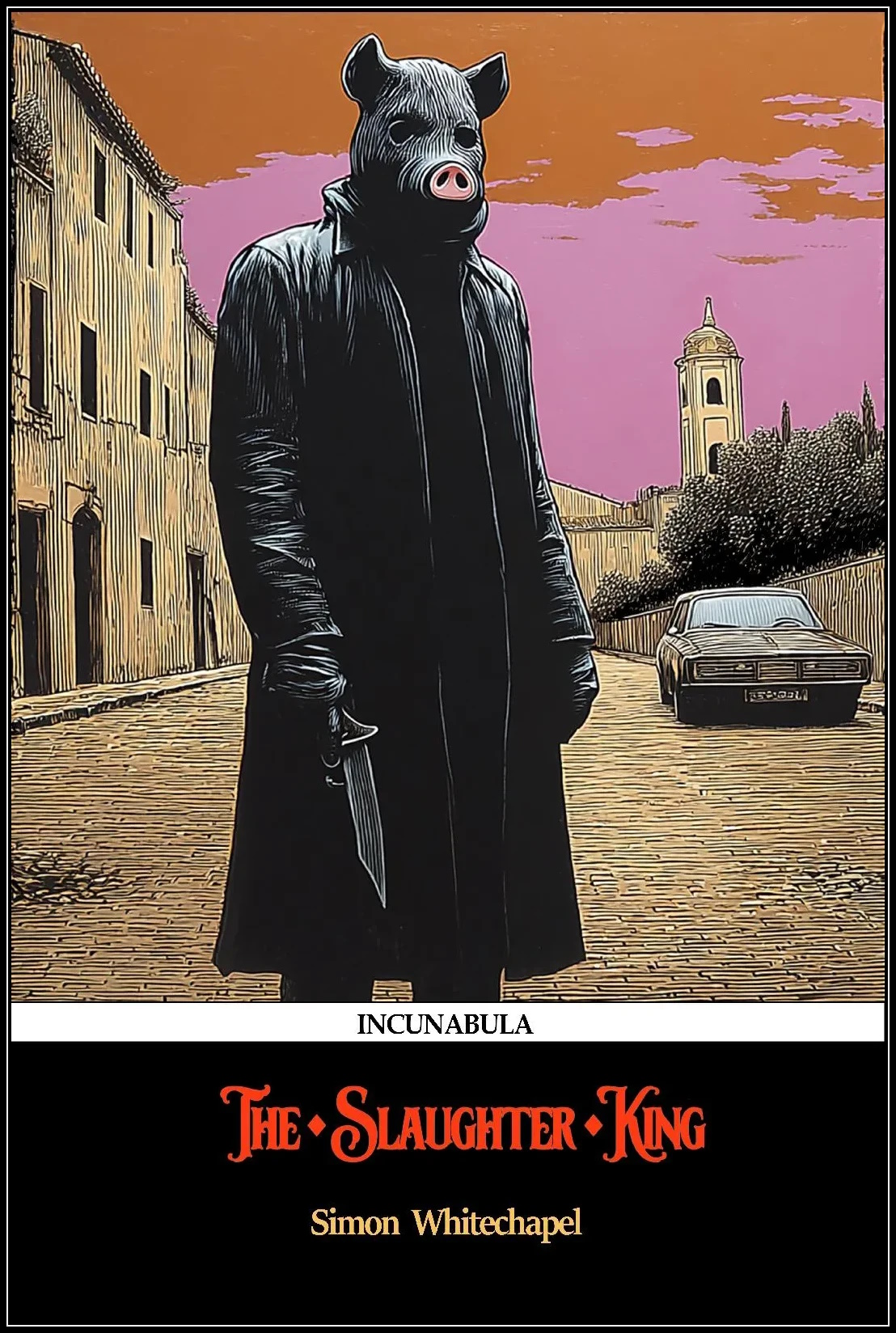
Tu le connais, lecteur, ce monstre délicat, — Hypocrite lecteur, — mon semblable, — mon frère! — Baudelaire
• The Slaughter King — Incunabula’s new edition
• Kore. King. Kompetition. — win a signed edition of this core counter-cultural classic…
Kore. King. Kompetition.
Incunabula have re-printed that core counter-cultural classic The Slaughter King, first published in 1996. To celebrate this auspicious occasion, here’s a competition to win a signed copy of the classic. To be in it with a chance to win it, please read the afterword to the new edition, then answer the questions and complete the tie-breaker.
Épilogue écrit trente ans après le roman
I hadn’t read or seen a copy of The Slaughter King for more than twenty years when Dave Mitchell contacted me and told me he wanted to re-publish it. I said no at first, but Dave is persuasive and so the Beast is Back, brand-new for the twenty-first century. I still don’t want to re-read it and, on balance, would prefer never to have written it.
Then again, I did get to know three fascinating people by writing it: a psychologically complex serial-killer fan called David Slater; a necrotropic gargoyle fan called David Kerekes; and (sorry to say this, but it’s true) an EngLit graduate called James Williamson. James ran Creation Books and was a crook, but also intelligent, imaginative and genuinely devoted to books and literature. The dysmorphic duo of deviant Davids were dim-but-devious adolescent voyeurs and genuinely devoted to scopophilia and slime-sniffing. They were the editors of the key counter-cultural journal Headpress and simul-scribes of the seminal snuff-study Killing for Culture.
I’ve never been interested in transgressive films or images myself and the deviant Daves did nothing to make me re-think my prejudices about those who are. Trying to hold an intelligent conversation with either Psicolo or Princess Dai was like trying to eat soup with chopsticks. Thin soup. And bendy chopsticks. However, I did learn two very interesting things about myself from Psicolo and Princess Dai: that I am homosexual and that I am a keyly committed core component of the coprophile community. Wow. Well, what was it thæt Teuto-Toxic Titan of Transgression said in Princess Dai’s book about his noxious necrophile narratives? Oh, yes: “Sorry to disappoint you”, lads, but you got it wrong. I am right, though, to say of Psicolo that he is, for some reason or other, very anxious to avoid attracting the attention of the police. I’m also right to say of Princess Dai that he has the soul of a lawyer, the mind of a cop, the intellect of a Daily-Mail reader and the psychology of a chav.
Not to mention the intellect and psychology of the late Diana Spencer, quondam Princess of Wales. Princess Di was “fascinated by the forbidden”, you know, and in between cuddling kiddies with cancer often visited a high-security hospital for the criminally insane called Broadmoor. She also liked transgressive images, spying and lashon hara (as we say up north). I can easily imagine her avidly watching some of the noxious necro-narratives deviantly dissected in Killing for Culture. In short, Princess Di was Headpressean, because Headpress and its edgily esoteric editors never provided an alternative to the voyeurism and other vices of the mainstream. Instead, they provided an exaggeration of mephitic mainstream maggot-culture. Dave Mitchell saw that instantly. Alas, it took me much longer.
And what about The Slaughter King? Is it Headpressean too? Is it “fascinated by the forbidden” à la Princess Di and Princess Dai and Psicolo? No, I hope it’s too literary and logophilic for that. And too intelligent. Dave Mitchell thinks it critiques mainstream maggot-culture rather than contributing to it. If he’s right, good. If he’s not, so it goes. Which reminds me to add: although Kurt Vonnegut wasn’t an influence on The Slaughter King, Ed McBain was. Oh, and “Épilogue écrit” etc is a pretentious and presumptuous reference to Huysmans’s À Rebours (1884), which is a very good book and also an influence on The Slaughter King.
Simon Whitechapel, Carlisle, 23×25.
• The Slaughter King — Incunabula’s new edition
Kompetition Kwestchuns
1. What does “Psicolo” mean?
2. What is the point of using “thæt”?
3. What else do we say up north?
Tiebreaker
Please say why The Slaughter King is a core counter-cultural classic in 23 words or fewer.
N.B. Entries by any and all bigots, racists, sexists, transphobes, homophobes, lesbophobes, Islamophobes, neo-Nazis, palaeo-Nazis, and past, present or future members of the I.D.F. are especially welcome. Fans of Guns’n’Roses, otoh, are banned.
Der Pharao des Farnen
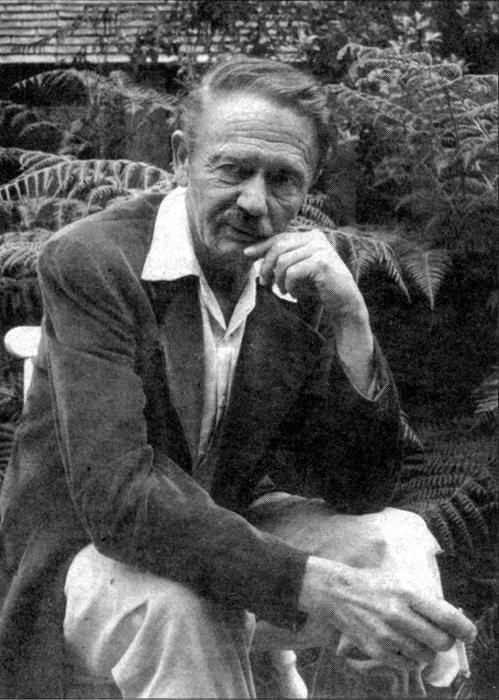
Clark Ashton Smith and some ferns in 1958 (Eldritch Dark)
I, too, am capable of observation; but I am far happier when I create everything in a story, including the milieu. This is why I do my best in work like “Satrampa Zeiros”. Maybe I haven’t enough love for, or interest in, real places to invest them with the atmosphere that I achieve in something purely imaginary. […] As for the problem of phantasy, my own standpoint is that there is absolutely no justification for literature unless it serves to release the imagination from the bounds of everyday life. I have undergone a complete revulsion against the purely realistic school, including the French, and can no longer stomach even Anatole France. […] Well, I must put a scientific — or at least a pseudo-scientific — curb on my fancy if I am to sell anything. — Clark Ashton Smith, letter to H.P. Lovecraft, 9th January 1930
• The Wine of Words: Valorizing the Verbiviniculture of Clark Ashton Smith
Mathemorchids
Flowers are modified leaves. That’s a scientific fact. And it must depend on the way the genetic program of a plant allows for change in variables of growth — in the relative dimensions, directions and forms of various collections of cells.
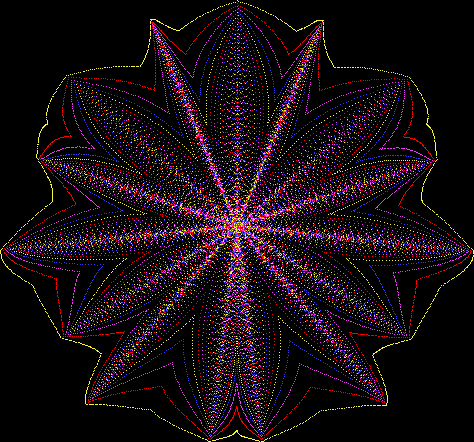
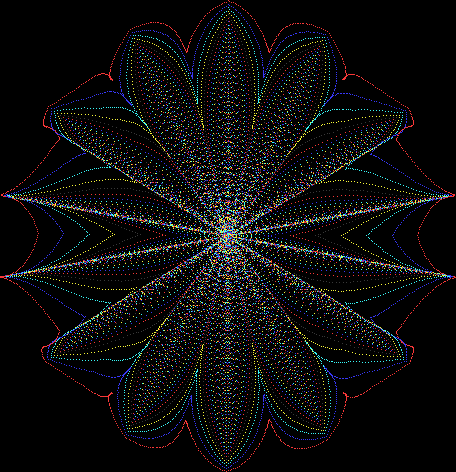
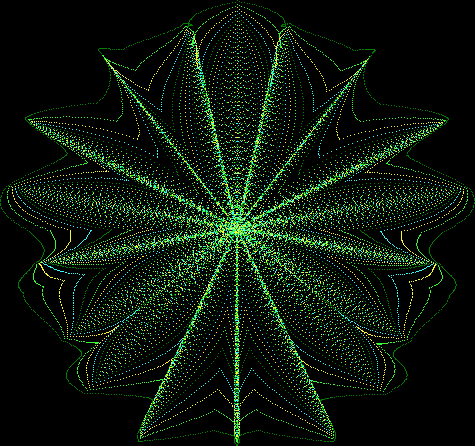
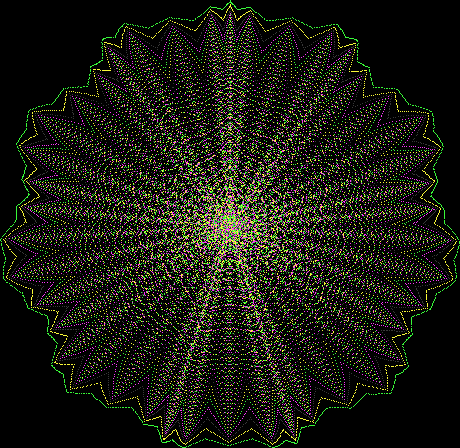
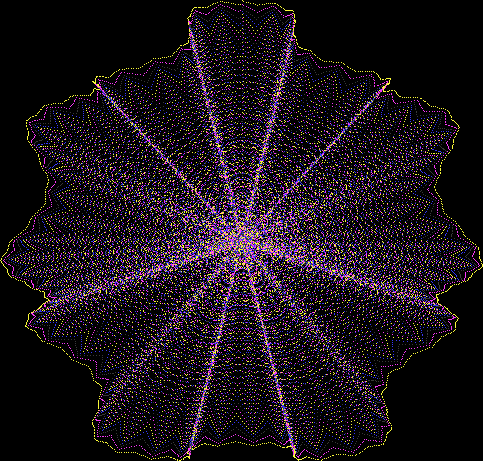
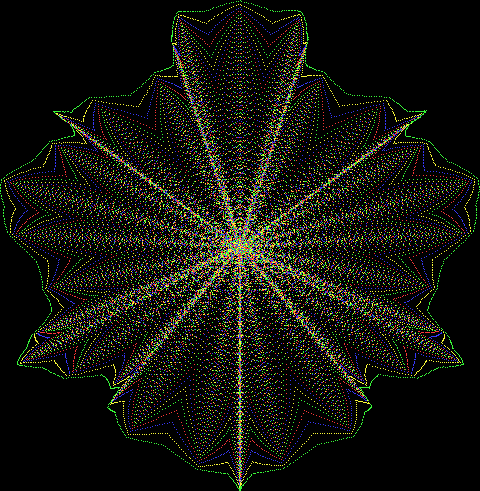
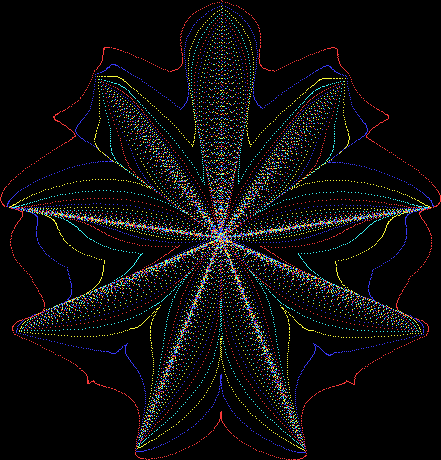
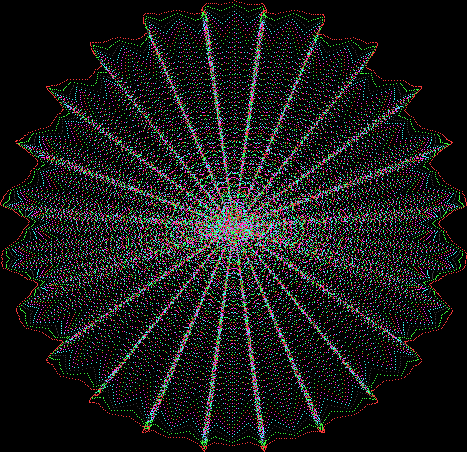
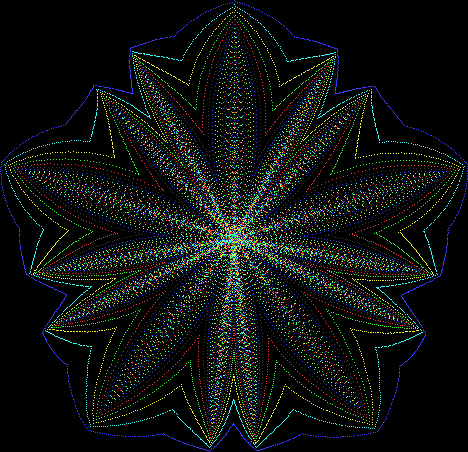
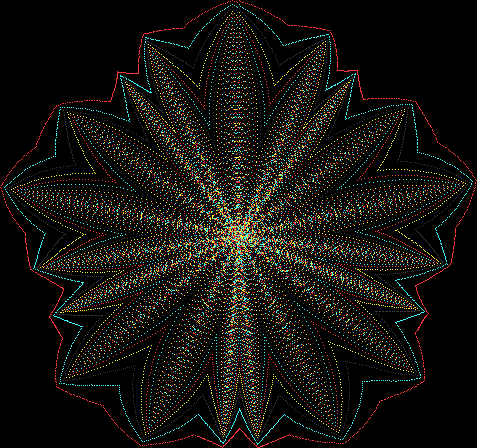
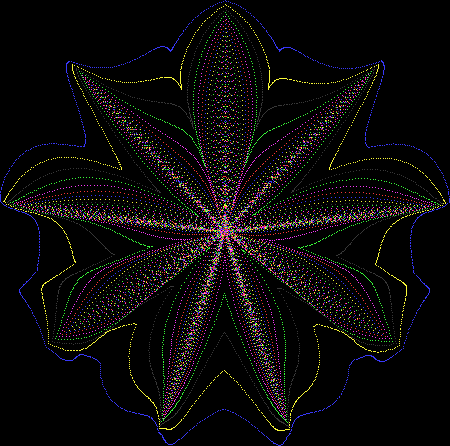
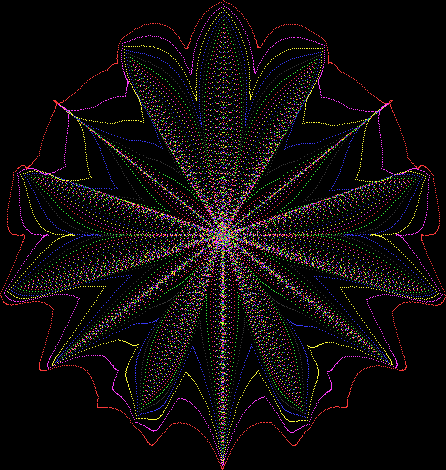
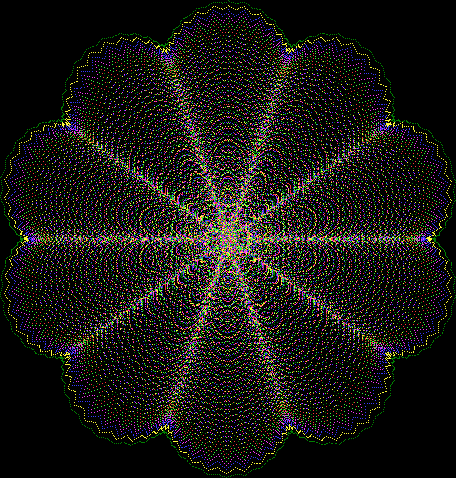
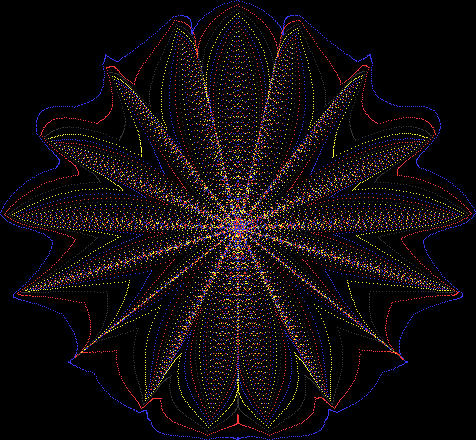
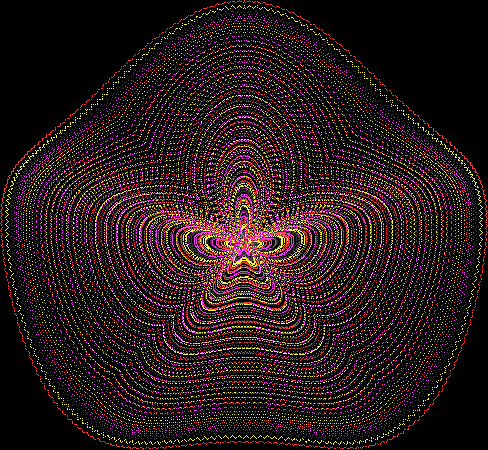
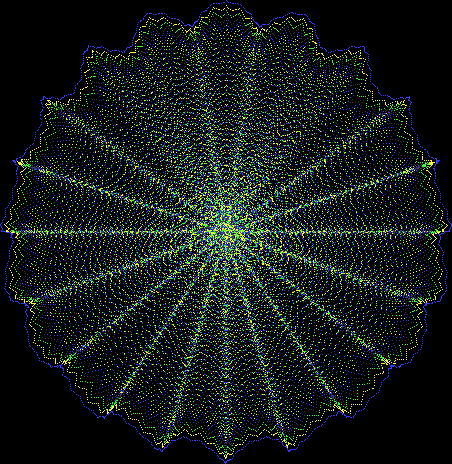
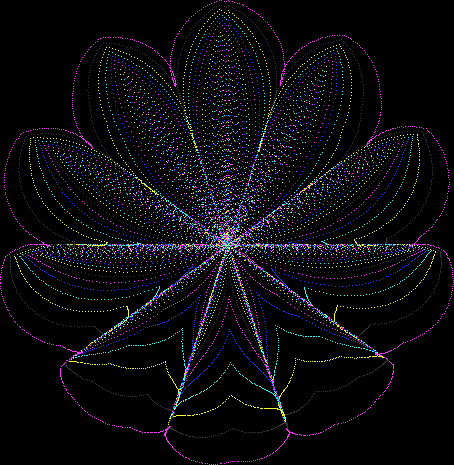
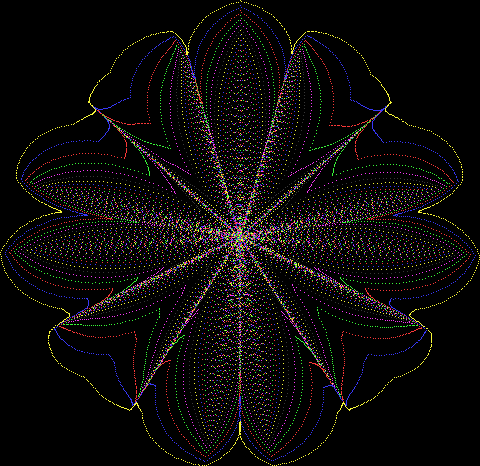
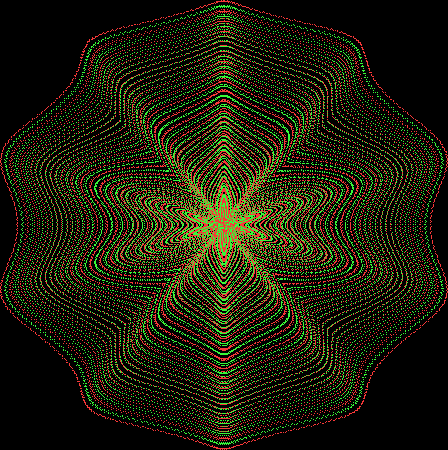
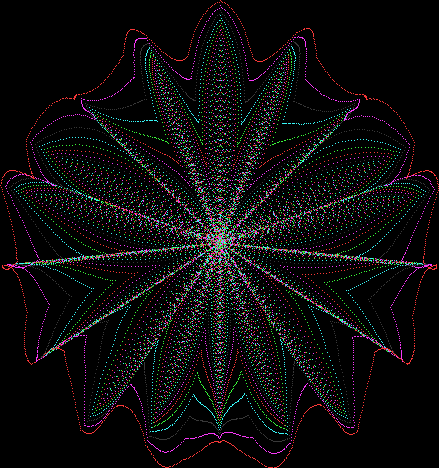
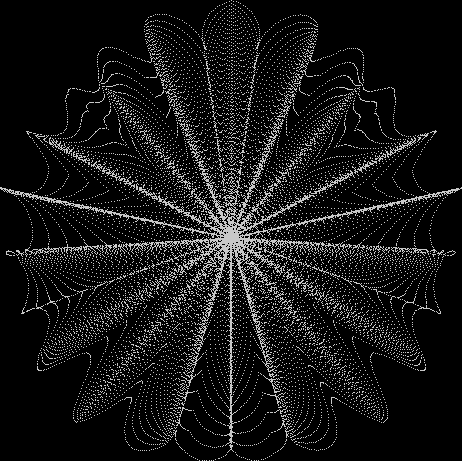
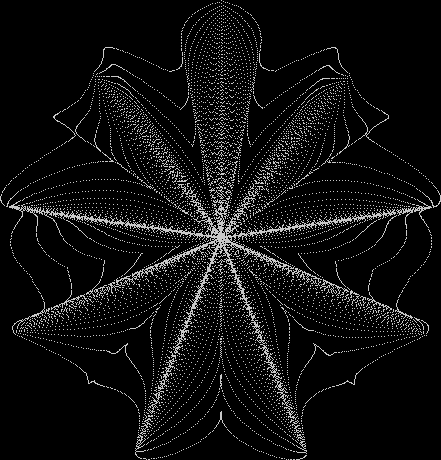
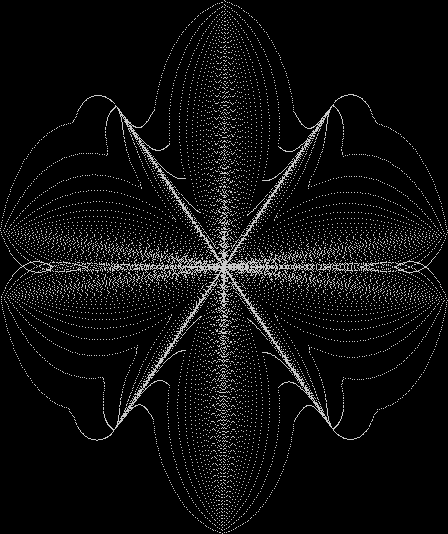
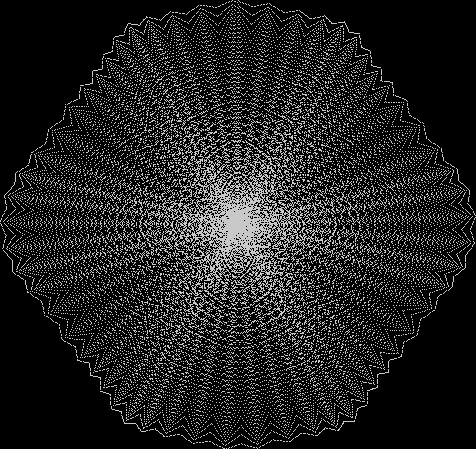
But I wasn’t thinking of flowers or leaves or botany when I wrote a program to trace the path taken by a point moving in various ways between the center and perimeter of a circle. After I’d run the program, I was definitely thinking of flowers and leaves. How could I not be, when they appeared on the screen in front of my eyes? By adjusting variables in the program, I could produce either flowers or leaves or something between the two:
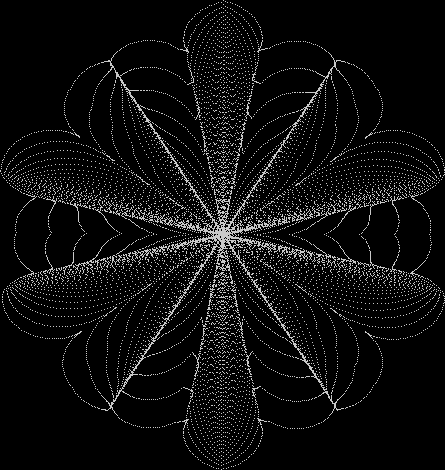
Flower without color
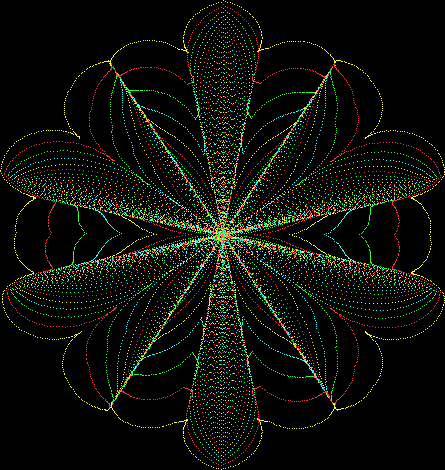
Flower with color
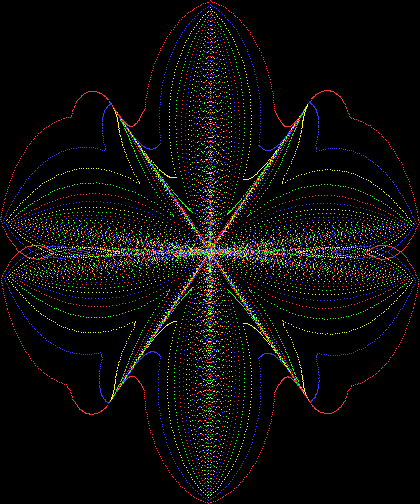
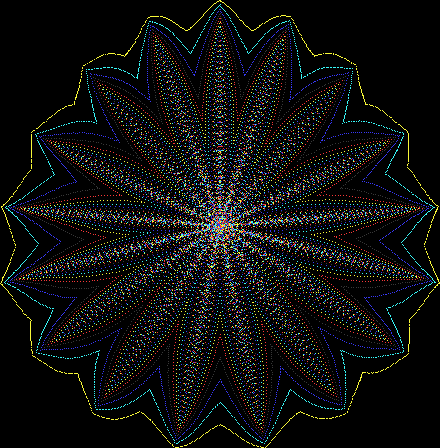
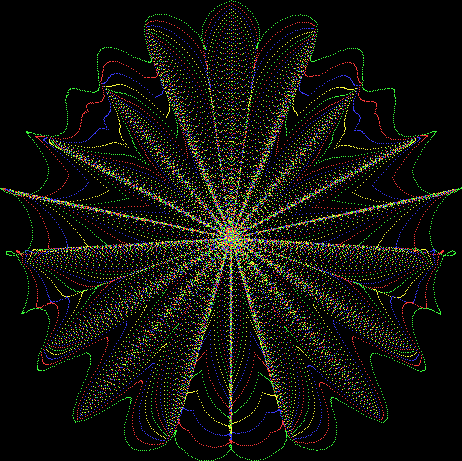
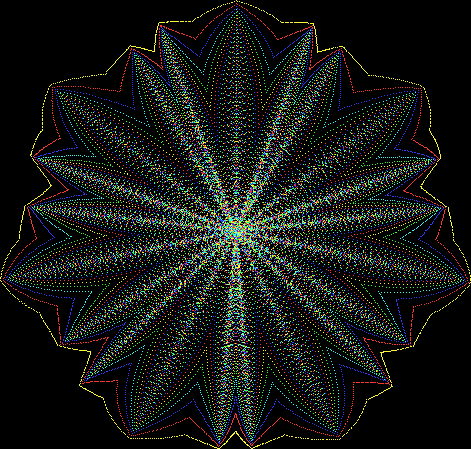
Some of the flower-shapes reminded me of orchids, so I called them mathemorchids. The variables I used governed this procedure:
defprocmathemorchid
rd = 0
jump = jmin
jinc = +1
repeat
xr = xc + int(sin(rd) * rdius + sin(rd * xmult) * xminl)
yr = yc + int(cos(rd) * rdius + cos(rd * ymult) * yminl)
jump = jump + jinc
if(jump = jmin) or (jump >= jmax) then jinc = -jinc
procDrawLine(xr,yr,xc,yc,jump)
rd = rd + rdinc
until rd > maxrd
endproc
Here are explanations of the variables:
rd — short for radian and setting the angle of the point, 0 to maxrd = pi * 2, as it moves between the center and perimeter of the circle
rdinc — the amount by which rd is incremented
xc, yc — the center of the circle
rdius — the radius of the circle
xr, yr — the adjustable radiuses used in trigonometric calculations for the x and y dimensions
xmult, ymult — used to multiply rd for further trig-calcs using…
xminl, yminl — the lengths by which xr and yr are adjusted
jmin, jmax — these are the lower and upper bounds for a rising and falling variable called jump, which determines how far the point moves before it’s marked on the screen
If you look at the use of the sine and cosine functions, you’ll see that the point can swing back on its path or swing ahead of itself, as it were. That’s how the path of the point can simulate three-dimensionality as it lays down thicker or thinner patches of pixels.
Here are the mathemorchids, leaves, scallops and other shapes created by adjusting the variables described above (with more of the generating program as an appendix):
Mathemorchid for jmin = 6, jmax = 69, xmult = 7, ymult = 7, xminl = 40, yminl = 88 (see file-name)
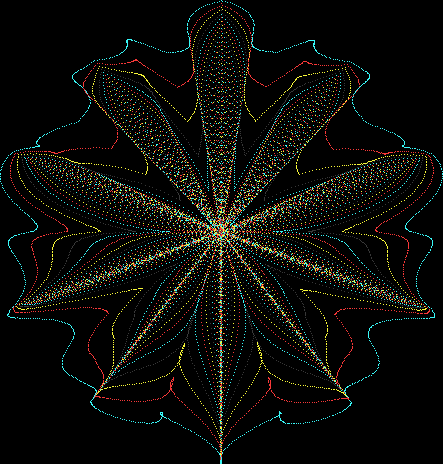
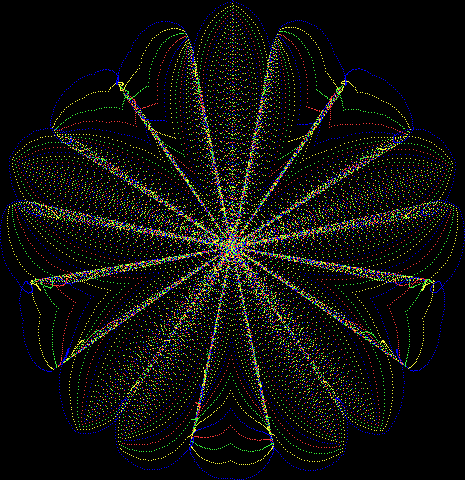
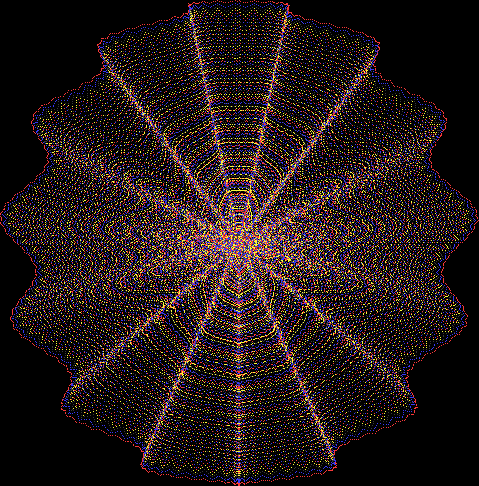
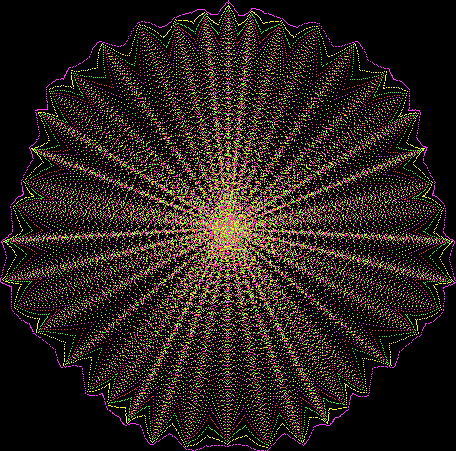
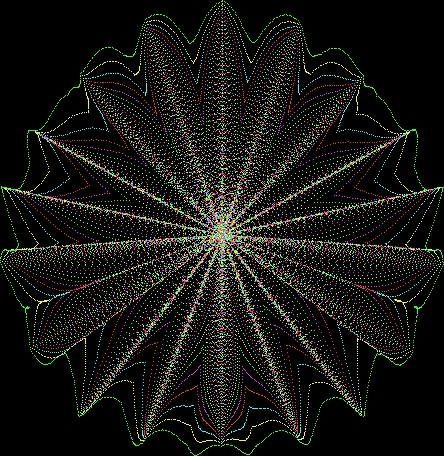
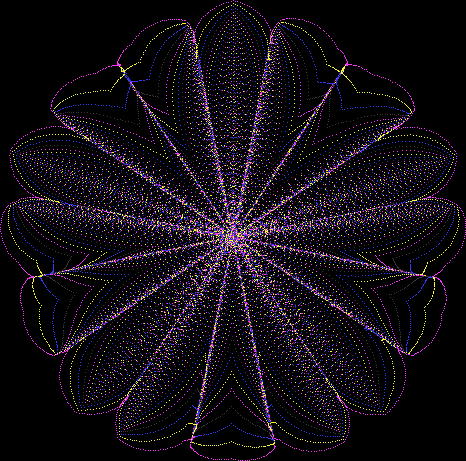
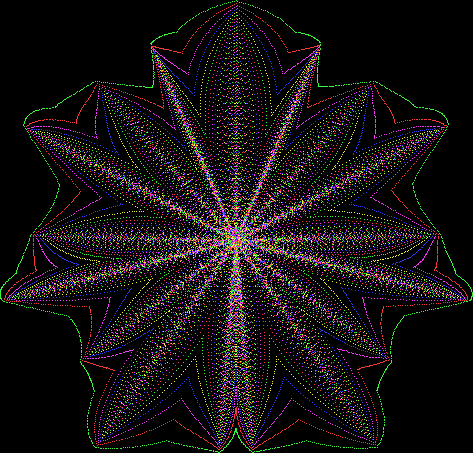
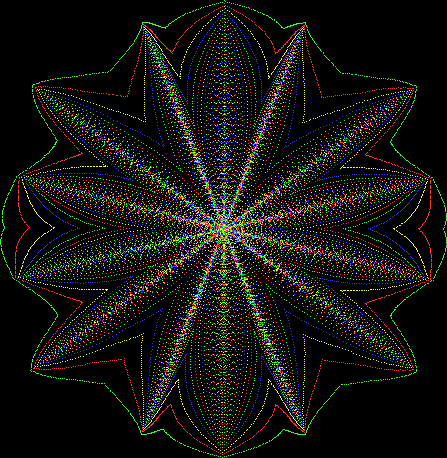
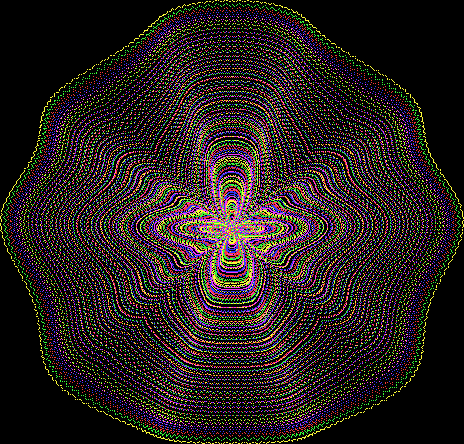

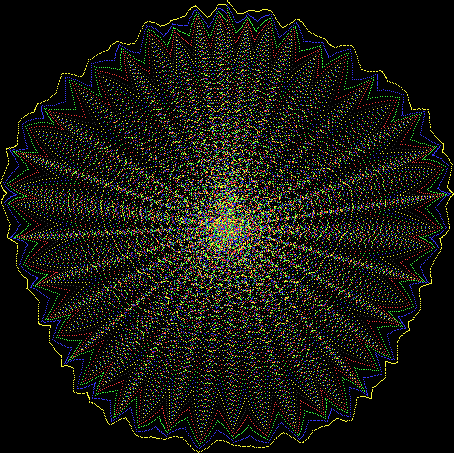
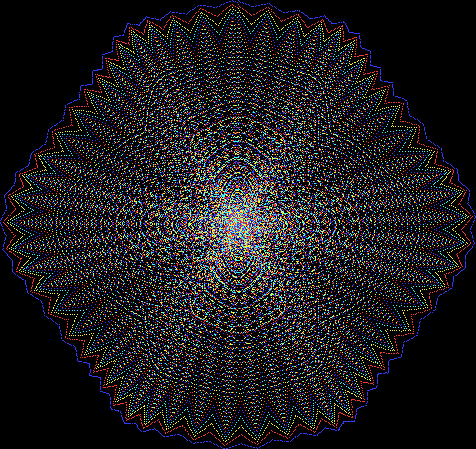

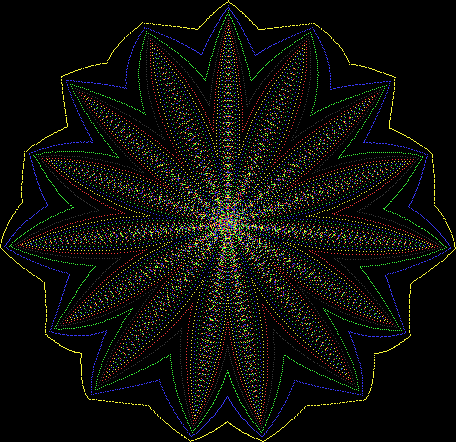
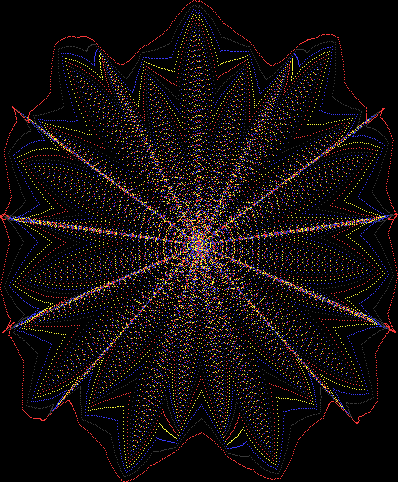

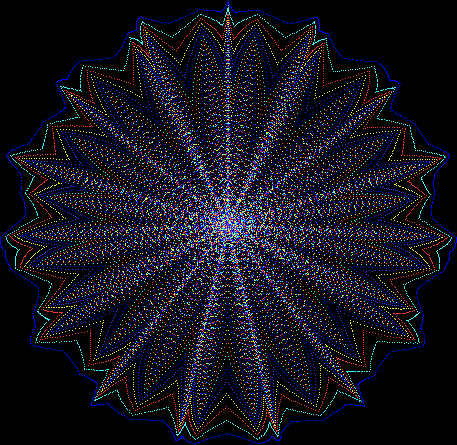
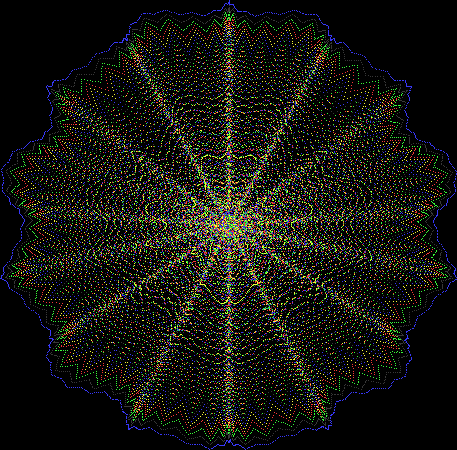

And here are a few more examples of the mathemorchids and other shapes look like without color:
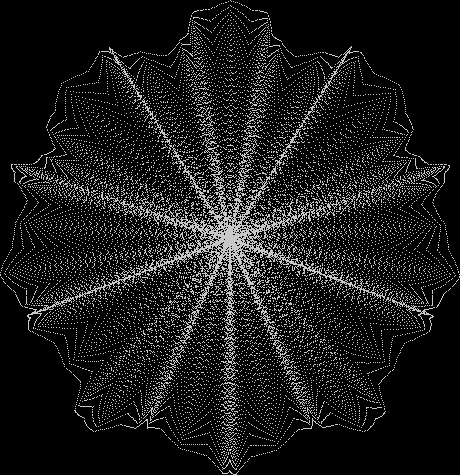
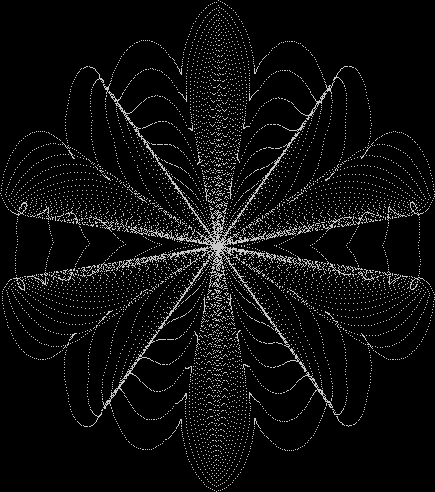
Code for creating the Mathemorchids
defprocmathemorchid
rd = 0
rd = 0
jump = jmin
jinc = +1
repeat
xr = xc + int(sin(rd) * rdius + sin(rd * xmult) * xminl)
yr = yc + int(cos(rd) * rdius + cos(rd * ymult) * yminl)
jump = jump + jinc
if(jump = jmin) or (jump >= jmax) then jinc = -jinc
procDrawLine(xr,yr,xc,yc,jump)
rd = rd + rdinc
k=inkey(0)
until rd > maxrd or k > -1
endproc
defprocDrawLine(x1,y1,x2,y2,puttest)
xdiff = x1 – x2
ydiff = y1 – y2
if abs(xdiff) > abs(ydiff) then
yinc = -ydiff / abs(xdiff)
if xdiff < 0 then xinc = +1 else xinc = -1
else
xinc = -xdiff / abs(ydiff)
if ydiff colrmx then col = 1
put = 0
endif
if int(x) x2 then x = x + xinc
if int(y) y2 then y = y + yinc
iffunc=2then
ifx<x_lo x_lo=x
ifyx_hi x_hi=x
ify>y_hi y_hi=y
endif
until fnreached
endproc
deffnreached
if xinc > 0 then
xreached = int(x) >= x2
else
xreached = int(x) 0 then
yreached = int(y) >= y2
else
yreached = int(y) <= y2
endif
= xreached and yreached
end
 Overlord In Terms of Core Issues Around Maximal Engagement with Key Notions of the Über-Feral