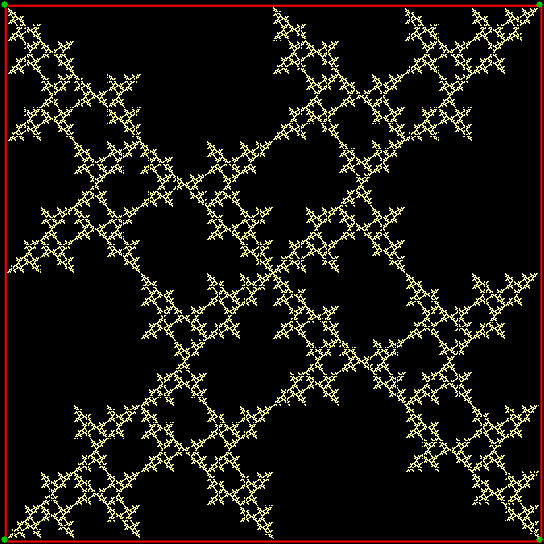
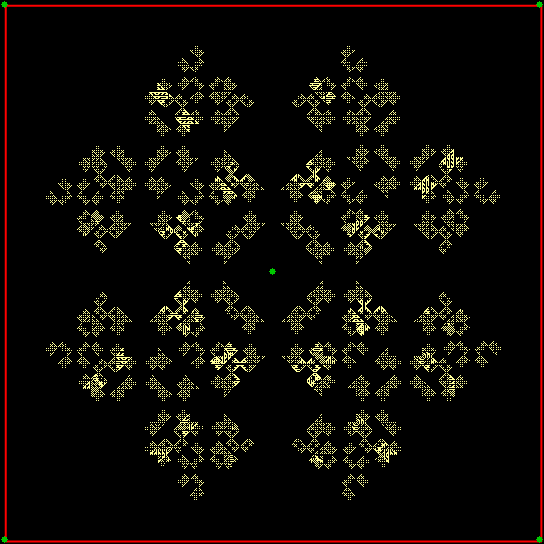
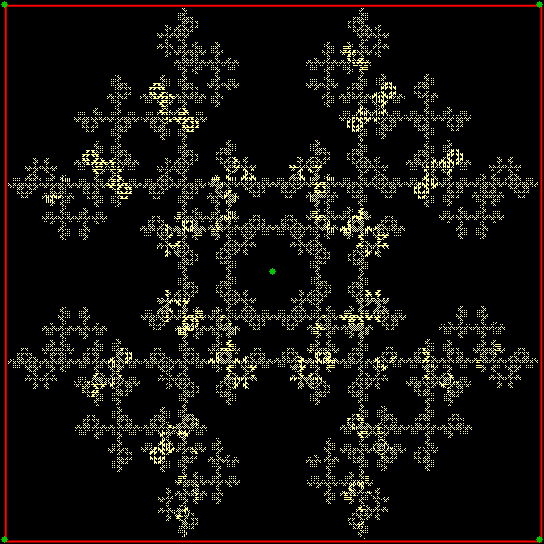
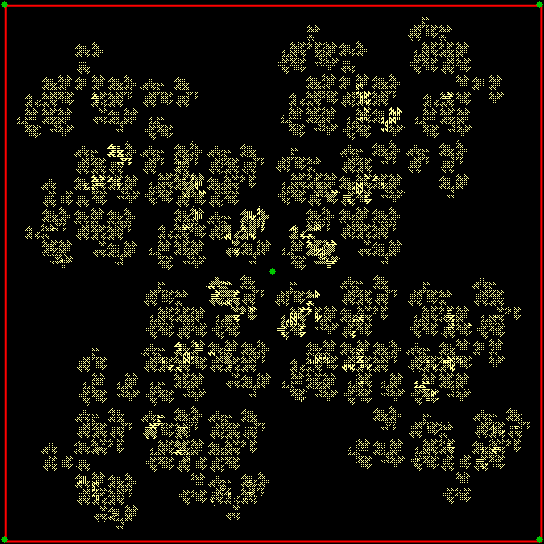
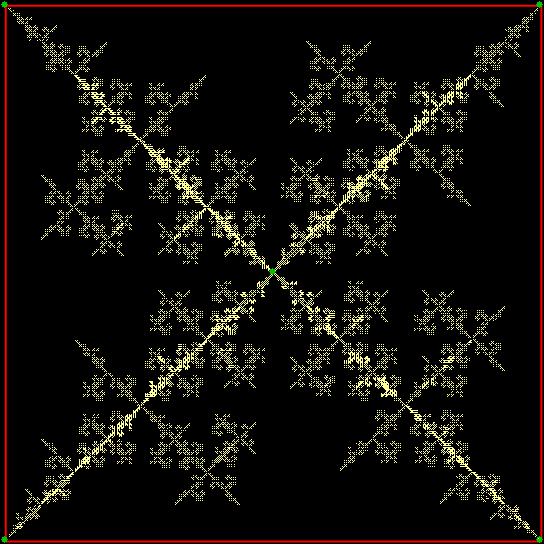
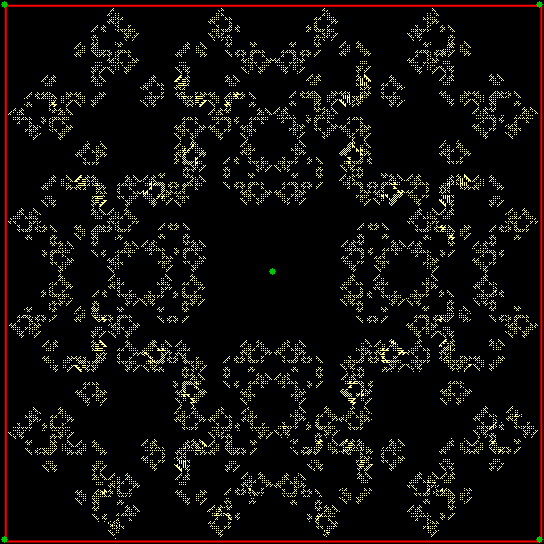
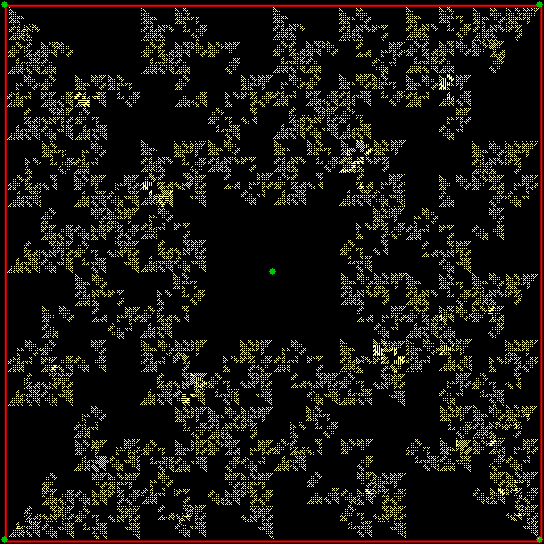
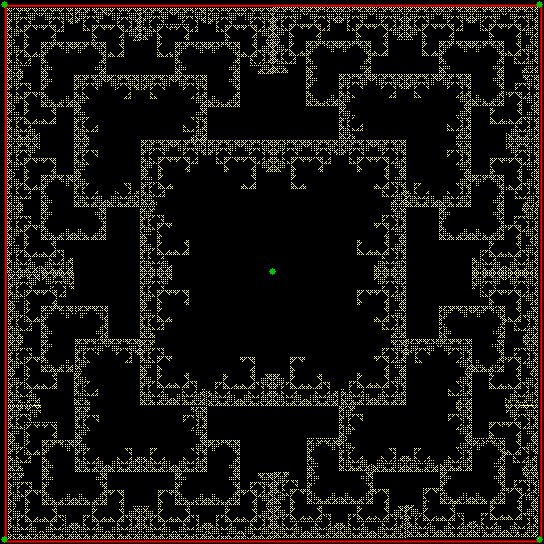
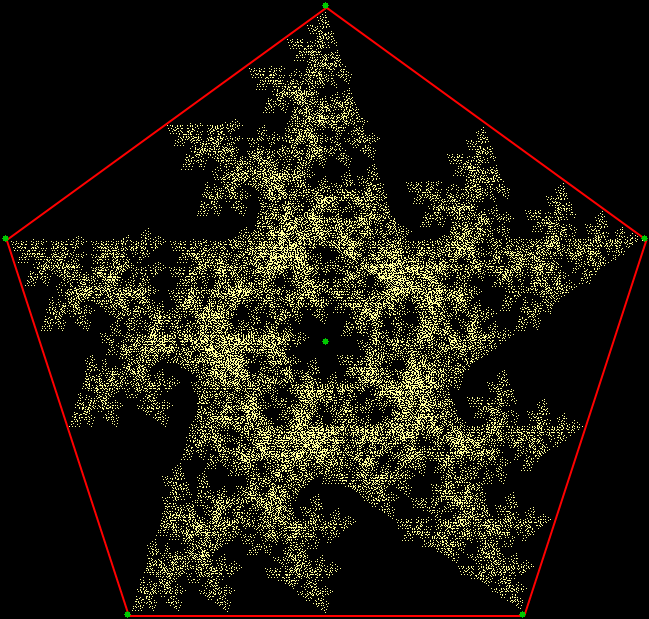
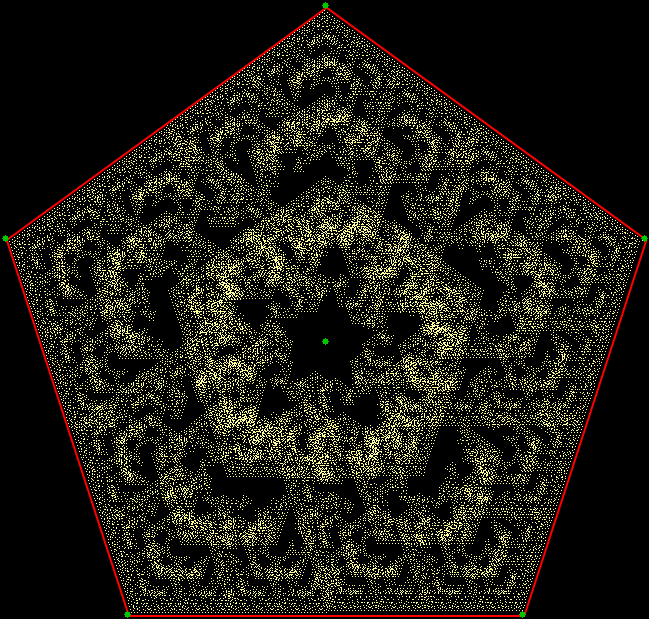
Pteric Ptosis

Uncle, whose inventive brains
Kept evolving aeroplanes,
Fell from an enormous height
Upon my garden lawn last night.
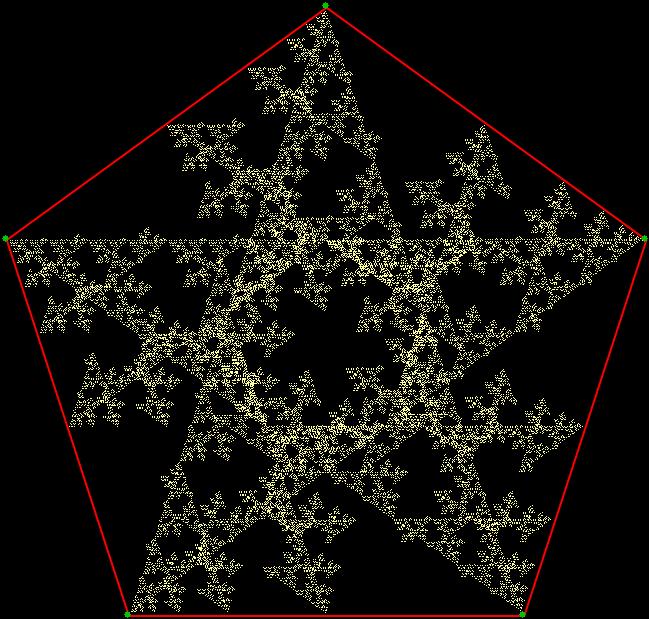
Flying is a fatal sport:
Uncle wrecked the tennis court. — Harry Graham (1874-1936)


Peri-Performative Post-Scriptum

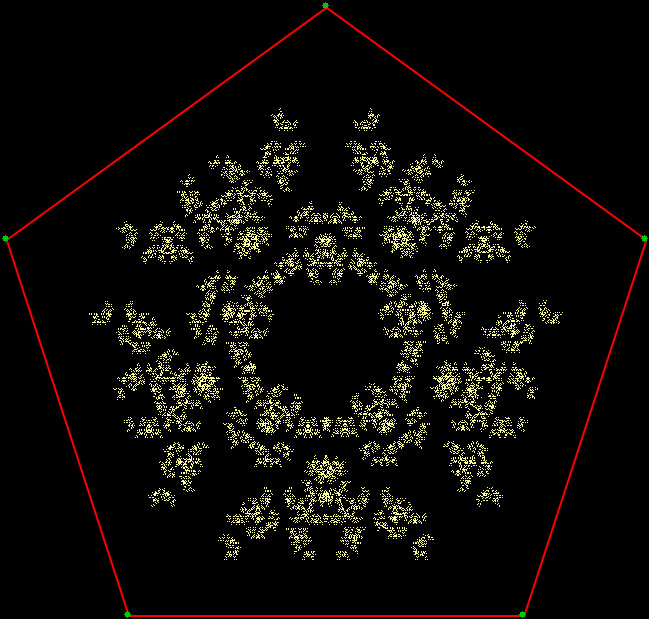
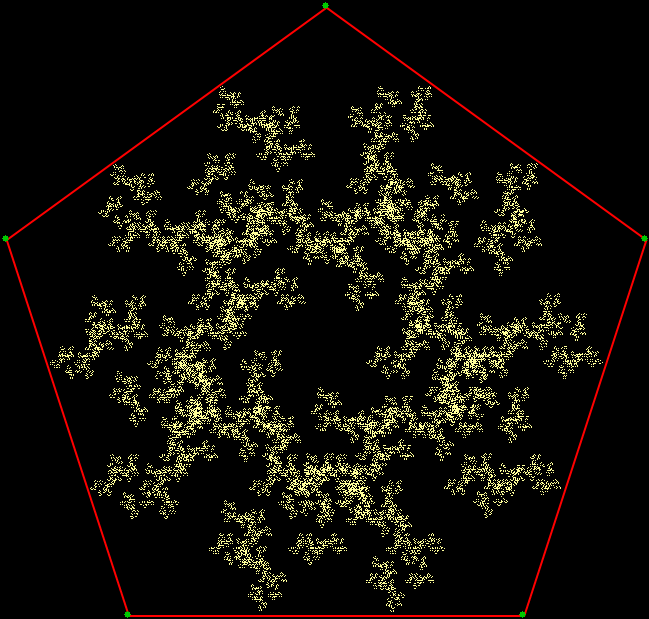
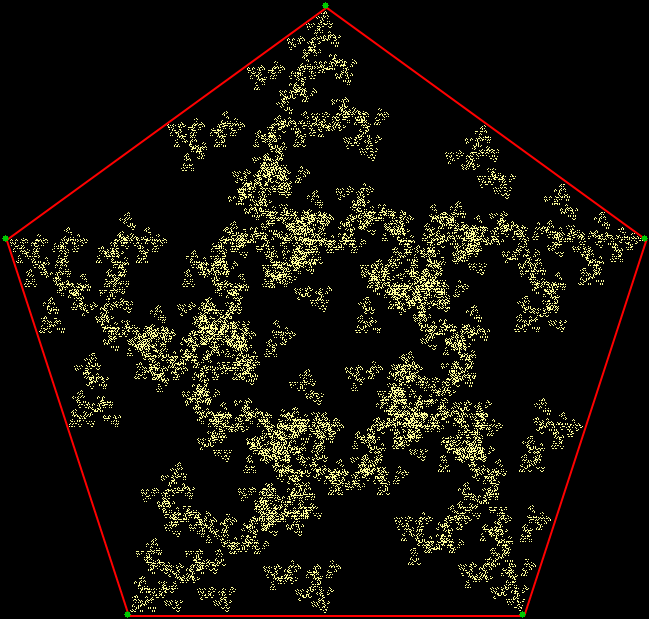
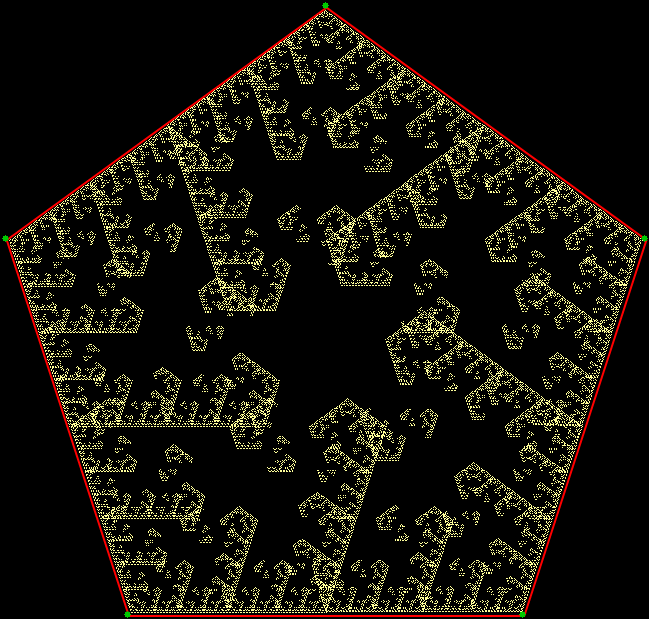
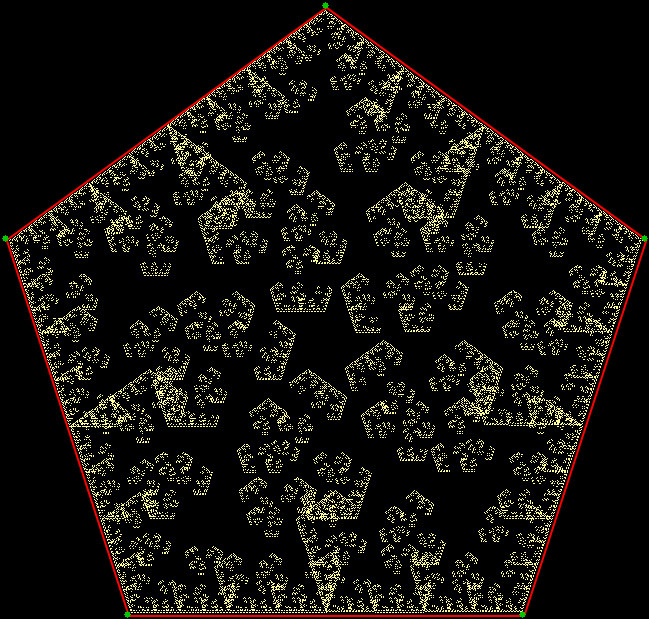
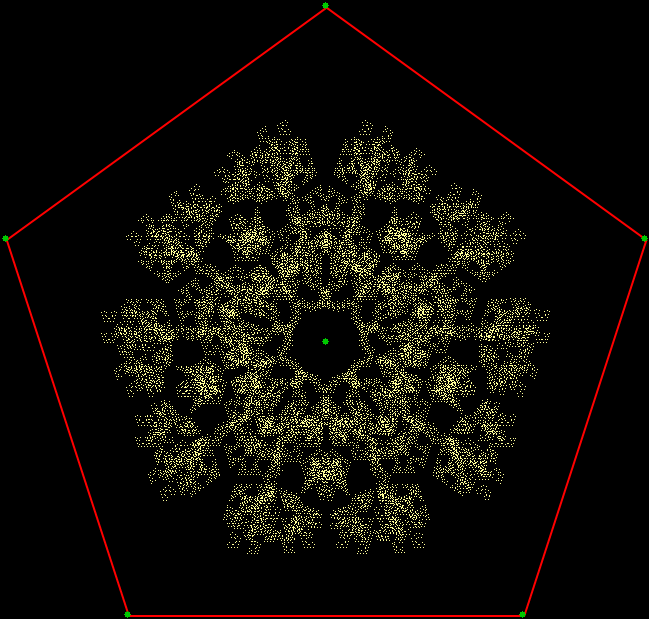
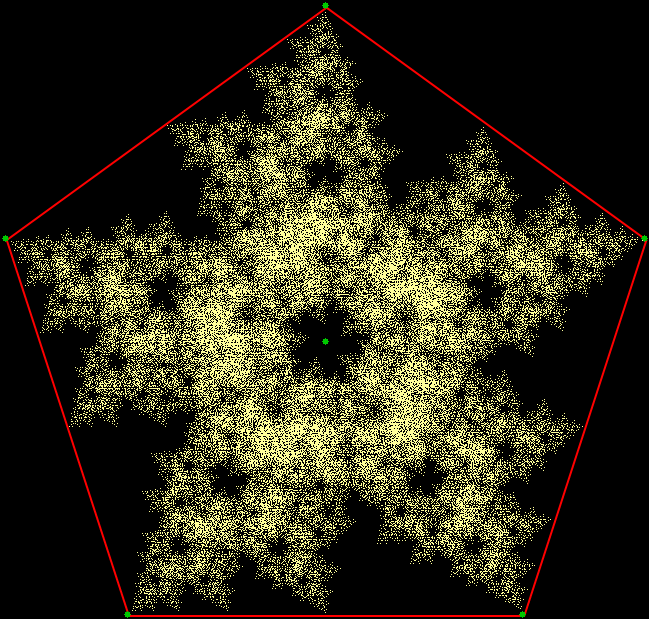
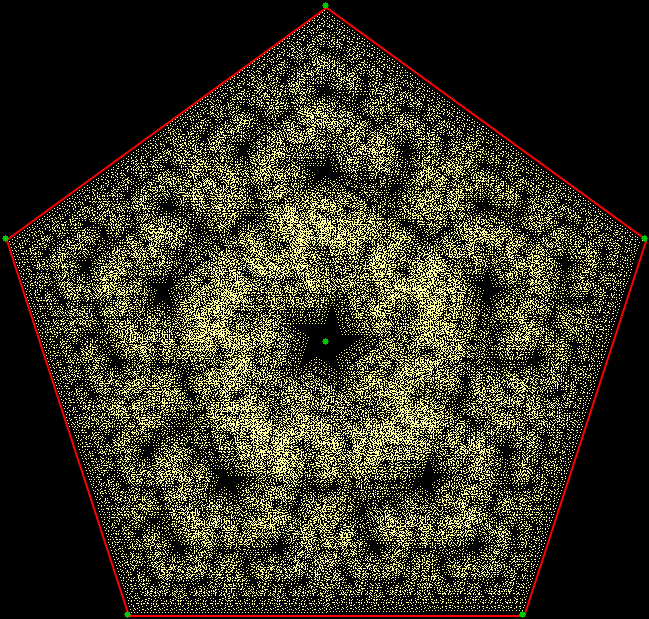
Pteric means “of or like a wing”; ptosis meant “fall, falling” in ancient Greek and is now used in medicine to mean “drooping of the eyelid; sagging or lowering of an organ”, etc.

I Like Aix

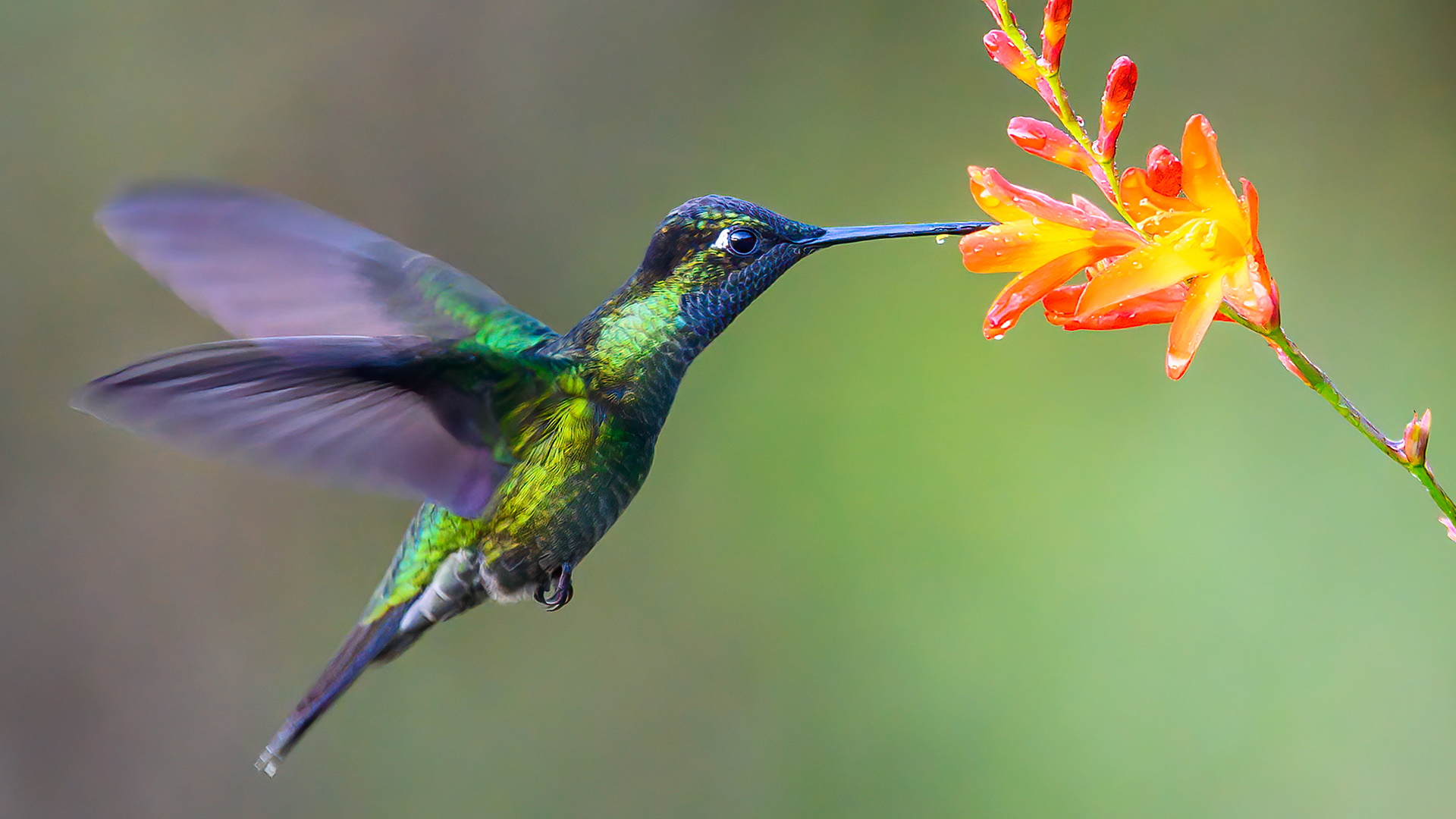
Mandarin duck, Aix galericulata (Linnaeus 1758) (from the In-Terms-in-ator)


Peri-Performative Post-Scriptum

“I Like Aix” corely references “I Like Ike”, a slogan for Dwight “Ike” Eisenhower’s presidential campaign in the 1950s. Aix galericulata means “crested aix”, the word αἴξ, aix, being used by Aristotle for an unknown variety of water-bird. In Greek, it would have been pronounced something like “aye-ks”, which is what I’ve used in the title of this incendiary intervention. But “ay-ks” is probably better in modern English.

Young Out to Dry

“I am sick to death of people saying that we’ve made 11 albums that sound exactly the same. In fact we’ve made 12 albums that sound exactly the same.” — Angus Young of AC/DC


Elsewhere other-accessible

Bon and Off — a rogue review at Papyrocentric Performativity of Two Sides to Every Glory: AC/DC: The Complete Biography

H₂Oenometry

You have two glasses each filled with exactly the same amount of liquid. One contains water, the other contains wine. First, take a teaspoon of water from the water glass and pour it into the wine glass. Next stir the wine and water until well mixed. Then take a teaspoon of the water-and-wine mixture and pour it into the glass of water.

The question now is: Is there more wine in the water glass than water in the wine glass, or is there less? (from World’s Most Baffling Puzzles, Charles Barry Townsend, Sterling, New York, 1991)

(Scroll down for answer)


Post-Performative Post-Scriptum

Oenometry means “wine-measurement”, from ancient Greek οἶνος, oinos, “wine”, + μετρία, metria, “measurement”. Its standard pronunciation would be “ee-NOM-ett-ry”, but you could conceivably say “oh-een-NOM-ett-ry” or “oi-NOM-ett-ry”.


Discussion of the answer

The original question is fair but worded to send you astray. By using the words “glass” and “teaspoon”, it creates distinct images in your mind: those of an unvarying teaspoon and of two glasses with identical-but-varying amounts of wine and water in them. So you’re guided away from considering that the contents of the glasses can be measured in teaspoons too. If you think not in teaspoons but in unspecified units (of liquid measure), it’s easier to see the truth.

If the two glasses each contain n units of liquid, by transferring water to the wine you’re adding 1 unit of water to n units of wine.

Therefore the wine glass contains n+1 units of mixed wine-and-water, of which n units are wine and 1 unit is water. Let’s say n+1 = n1.

Consider that 1 unit of that mixture contains n/n1 parts of wine and 1/n1 parts of water: n/n1 + 1/n1 = (n+1)/n1 = n1/n1 = 1 unit.

Now, if one unit of the mixture is transferred to the water glass, you take n/n1 units of wine from n units of wine in the wine glass: n – n/n1 = n-1 + 1/n1. You also take 1/n1 units of water from 1 unit of water in the wine glass: 1 – 1/n1 = (n1-1)/n1 = n/n1. So the wine glass now contains n-1 + 1/n1 units of wine and n/n1 of a unit of water.

When you add that unit to the (n-1) units of water in the water glass, it will contain (n-1) + 1/n1 units of water and n/n1 of unit of wine:

Wine glass: n-1 + 1/n1 units of wine and n/n1 of a unit of water
Water glass: n-1 + 1/n1 units of water and n/n1 of a unit of wine

Therefore, however much water and wine you start with, in the end there will be as much water in the wine glass as there is wine in the water glass. For some concrete examples:

Example #1

1. Start

Water glass: 2 teaspoons of water
Wine glass: 2 teaspoons of wine

2. Transfer water to wine glass and mix:

Water glass: 2 tsp of water – 1 tsp = 1 tsp of water
Wine glass: 2 tsp of wine + 1 tsp of water = 3 tsp of which 2/3 is wine, 1/3 is water

3. Transfer wine-and-water mixture to water glass:

One tsp of wine-and-water mixture = 2/3 tsp of wine + 1/3 tsp of water

Therefore:

Wine glass: 2 tsp of wine – 2/3 tsp of wine = 1 and 1/3 tsp of wine; 1 tsp of water – 1/3 tsp of water = 2/3 tsp of water
Water glass: 1 tsp of water + 1/3 tsp of water = 1 and 1/3 tsp of water; 0 tsp of wine + 2/3 tsp of wine = 2/3 tsp of wine

4. Finish

Wine glass contains: 1 and 1/3 tsp of wine, 2/3 tsp of water
Water glass contains: 1 and 1/3 tsp of water, 2/3 tsp of wine


Example #2

1. Start

Water glass: 10 teaspoons of water
Wine glass: 10 teaspoons of wine

Transfer water to wine glass and mix:

Water glass: 10 tsp of water – 1 tsp = 9 tsp of water
Wine glass: 10 tsp of wine + 1 tsp of water = 11 tsp of liquid of which 10/11 is wine, 1/11 is water

Transfer wine-and-water mixture to water glass:

One tsp of wine-and-water mixture = 10/11 tsp of wine + 1/11 tsp of water

Therefore:

Wine glass: 10 tsp of wine – 10/11 tsp of wine = 9 and 1/11 tsp of wine; 1 tsp of water – 1/11 tsp of water = 10/11 tsp of water
Water glass: 9 tsp of water + 1/11 tsp of water = 9 and 1/11 tsp of water; 0 tsp of wine + 10/11 tsp of wine = 10/11 tsp of wine

4. Finish

Wine glass contains: 9 and 1/11 tsp of wine, 10/11 tsp of water
Water glass contains: 9 and 1/11 tsp of water, 10/11 tsp of wine

RevNumSum

If you take an integer, n, and reverse its digits to get the integer r, there are three possibilities:


n > r (e.g. 85236 > 63258)
n < r (e.g. 17783 < 38771)
n = r (e.g. 45154 = 45154)

If n = r, n is a palindrome. If n > r, I call n a major number. If n < r, I call n a minor number. And here are the minor and major numbers represented as white squares on an Ulam-like spiral (the negative of a minor spiral is a major spiral, and vice versa — sometimes one looks better than the other):

b=2 (minor numbers)


b=3


b=4


b=5


b=6


b=7 (major numbers)


b=8 (minor numbers)


b=9 (mjn)


b=10 (mjn)


b=11 (mjn)


b=12 (mjn)


b=13 (mjn)


b=14 (mjn)


b=15 (mjn)


b=16 (mjn)


b=17 (mjn)


b=18 (mjn)


b=19 (mjn)


b=20 (mjn)


Minor numbers, b=2..20 (animated)


Now let’s look at a sequence formed by summing the reversed numbers, minor ones, major ones and palindromes. Here are the standard integers:


1, 2, 3, 4, 5, 6, 7, 8, 9, 10, 11, 12, 13, 14, 15, 16, 17...

If you sum the integers, you get what are called the triangular numbers:


1 = 1
3 = 1 + 2
6 = 1 + 2 + 3
10 = 1 + 2 + 3 + 4
15 = 1 + 2 + 3 + 4 + 5
21 = 1 + 2 + 3 + 4 + 5 + 6
28 = 1 + 2 + 3 + 4 + 5 + 6 + 7
36 = 1 + 2 + 3 + 4 + 5 + 6 + 7 + 8
45 = 1 + 2 + 3 + 4 + 5 + 6 + 7 + 8 + 9
55 = 1 + 2 + 3 + 4 + 5 + 6 + 7 + 8 + 9 + 10
66 = 1 + 2 + 3 + 4 + 5 + 6 + 7 + 8 + 9 + 10 + 11
78 = 1 + 2 + 3 + 4 + 5 + 6 + 7 + 8 + 9 + 10 + 11 + 12
91 = 1 + 2 + 3 + 4 + 5 + 6 + 7 + 8 + 9 + 10 + 11 + 12 + 13
105 = 1 + 2 + 3 + 4 + 5 + 6 + 7 + 8 + 9 + 10 + 11 + 12 + 13 + 14
120 = 1 + 2 + 3 + 4 + 5 + 6 + 7 + 8 + 9 + 10 + 11 + 12 + 13 + 14 + 15
136 = 1 + 2 + 3 + 4 + 5 + 6 + 7 + 8 + 9 + 10 + 11 + 12 + 13 + 14 + 15 + 16
153 = 1 + 2 + 3 + 4 + 5 + 6 + 7 + 8 + 9 + 10 + 11 + 12 + 13 + 14 + 15 + 16 + 17
171 = 1 + 2 + 3 + 4 + 5 + 6 + 7 + 8 + 9 + 10 + 11 + 12 + 13 + 14 + 15 + 16 + 17 + 18
190 = 1 + 2 + 3 + 4 + 5 + 6 + 7 + 8 + 9 + 10 + 11 + 12 + 13 + 14 + 15 + 16 + 17 + 18 + 19
210 = 1 + 2 + 3 + 4 + 5 + 6 + 7 + 8 + 9 + 10 + 11 + 12 + 13 + 14 + 15 + 16 + 17 + 18 + 19 + 20

But what happens if you reverse the integers before summing them? Here side-by-side are the triangular numbers and the underlined revnumsums (as they might be called):


45 = 1 + 2 + 3 + 4 + 5 + 6 + 7 + 8 + 9
45 = 1 + 2 + 3 + 4 + 5 + 6 + 7 + 8 + 9
55 = 1 + 2 + 3 + 4 + 5 + 6 + 7 + 8 + 9 + 10
46 = 1 + 2 + 3 + 4 + 5 + 6 + 7 + 8 + 9 + 1
66 = 1 + 2 + 3 + 4 + 5 + 6 + 7 + 8 + 9 + 10 + 11
57 = 1 + 2 + 3 + 4 + 5 + 6 + 7 + 8 + 9 + 1 + 11
78 = 1 + 2 + 3 + 4 + 5 + 6 + 7 + 8 + 9 + 10 + 11 + 12
78 = 1 + 2 + 3 + 4 + 5 + 6 + 7 + 8 + 9 + 1 + 11 + 21
91 = 1 + 2 + 3 + 4 + 5 + 6 + 7 + 8 + 9 + 10 + 11 + 12 + 13
109 = 1 + 2 + 3 + 4 + 5 + 6 + 7 + 8 + 9 + 1 + 11 + 21 + 31
105 = 1 + 2 + 3 + 4 + 5 + 6 + 7 + 8 + 9 + 10 + 11 + 12 + 13 + 14
150 = 1 + 2 + 3 + 4 + 5 + 6 + 7 + 8 + 9 + 1 + 11 + 21 + 31 + 41
120 = 1 + 2 + 3 + 4 + 5 + 6 + 7 + 8 + 9 + 10 + 11 + 12 + 13 + 14 + 15
201 = 1 + 2 + 3 + 4 + 5 + 6 + 7 + 8 + 9 + 1 + 11 + 21 + 31 + 41 + 51
136 = 1 + 2 + 3 + 4 + 5 + 6 + 7 + 8 + 9 + 10 + 11 + 12 + 13 + 14 + 15 + 16
262 = 1 + 2 + 3 + 4 + 5 + 6 + 7 + 8 + 9 + 1 + 11 + 21 + 31 + 41 + 51 + 61
153 = 1 + 2 + 3 + 4 + 5 + 6 + 7 + 8 + 9 + 10 + 11 + 12 + 13 + 14 + 15 + 16 + 17
333 = 1 + 2 + 3 + 4 + 5 + 6 + 7 + 8 + 9 + 1 + 11 + 21 + 31 + 41 + 51 + 61 + 71
171 = 1 + 2 + 3 + 4 + 5 + 6 + 7 + 8 + 9 + 10 + 11 + 12 + 13 + 14 + 15 + 16 + 17 + 18
414 = 1 + 2 + 3 + 4 + 5 + 6 + 7 + 8 + 9 + 1 + 11 + 21 + 31 + 41 + 51 + 61 + 71 + 81
190 = 1 + 2 + 3 + 4 + 5 + 6 + 7 + 8 + 9 + 10 + 11 + 12 + 13 + 14 + 15 + 16 + 17 + 18 + 19
505 = 1 + 2 + 3 + 4 + 5 + 6 + 7 + 8 + 9 + 1 + 11 + 21 + 31 + 41 + 51 + 61 + 71 + 81 + 91
210 = 1 + 2 + 3 + 4 + 5 + 6 + 7 + 8 + 9 + 10 + 11 + 12 + 13 + 14 + 15 + 16 + 17 + 18 + 19 + 20
507 = 1 + 2 + 3 + 4 + 5 + 6 + 7 + 8 + 9 + 1 + 11 + 21 + 31 + 41 + 51 + 61 + 71 + 81 + 91
+ 2

Unlike triangular numbers, revnumsums are dependent on the base they’re calculated in. In base 2, the revnumsum is always smaller than the triangular number, except at step 1. In base 3, the revnumsum is equal to the triangular number at steps 1, 2 and 15 (= 120 in base 3). Otherwise it’s smaller than the triangular number.

And in higher bases? In bases > 3, the revnumsum rises and falls above the equivalent triangular number. When it’s higher, it tends towards a maximum height of (base+1)/4 * triangular number.

Free-Wheel Ferning

Photo of unrolling fern frond, frondlets and frontletlets (from Free Photos)


Elsewhere Other-Engageable

Farnsicht — beautiful black-and-white photograph of ferns by Karl Blossfeldt


Post-Performative Post-Scriptum

“Free-Wheel Ferning” is a pun on the title of core Judas-Priest track “Free-Wheel Burning”, off core Judas-Priest album Defenders of the Faith, issued in core Judas-Priest success-period of 1984.

Palindrought

The alchemists dreamed of turning dross into gold. In mathematics, you can actually do that, metaphorically speaking. If palindromes are gold and non-palindromes are dross, here is dross turning into gold:


22 = 10 + 12
222 = 10 + 12 + 13 + 14 + 15 + 16 + 17 + 18 + 19 + 20 + 23 + 24
484 = 10 + 12 + 13 + 14 + 15 + 16 + 17 + 18 + 19 + 20 + 21 + 23 + 24 + 25 + 26 + 27 + 28 + 29 + 30 + 31 + 32 + 34
555 = 10 + 12 + 13 + 14 + 15 + 16 + 17 + 18 + 19 + 20 + 21 + 23 + 24 + 25 + 26 + 27 + 28 + 29 + 30 + 31 + 32 + 34 + 35 + 36
2002 = nonpalsum(10,67)
36863 = nonpalsum(10,286)
45954 = nonpalsum(10,319)
80908 = nonpalsum(10,423)
113311 = nonpalsum(10,501)
161161 = nonpalsum(10,598)
949949 = nonpalsum(10,1417)
8422248 = nonpalsum(10,4136)
13022031 = nonpalsum(10,5138)
14166141 = nonpalsum(10,5358)
16644661 = nonpalsum(10,5806)
49900994 = nonpalsum(10,10045)
464939464 = nonpalsum(10,30649)
523434325 = nonpalsum(10,32519)
576656675 = nonpalsum(10,34132)
602959206 = nonpalsum(10,34902)
[...]

The palindromes don’t seem to stop arriving. But something unexpected happens when you try to turn gold into gold. If you sum palindromes to get palindromes, you’re soon hit by what you might call a palindrought, where no palindromes appear:


1 = 1
3 = 1 + 2
6 = 1 + 2 + 3
111 = 1 + 2 + 3 + 4 + 5 + 6 + 7 + 8 + 9 + 11 + 22 + 33
353 = 1 + 2 + 3 + 4 + 5 + 6 + 7 + 8 + 9 + 11 + 22 + 33 + 44 + 55 + 66 + 77
7557 = 1 + 2 + 3 + 4 + 5 + 6 + 7 + 8 + 9 + 11 + 22 + 33 + 44 + 55 + 66 + 77 + 88 + 99 + 101 + 111 + 121 + 131 + 141 + 151 + 161 + 171 + 181 + 191 + 202 + 212 + 222 + 232 + 242 + 252 + 262 + 272 + 282 + 292 + 303 + 313 + 323 + 333 + 343 + 353 + 363 + 373 + 383
2376732 = palsum(1,21512)

That’s sequence A046488 at the OEIS. And I suspect that the sequence is complete and that the palindrought never ends. For some evidence of that, here’s an interesting pattern that emerges if you look at palsums of 1 to repdigits 9[…]9:


50045040 = palsum(1,99999)
50045045040 = palsum(1,9999999)
50045045045040 = palsum(1,999999999)
50045045045045040 = palsum(1,99999999999)
50045045045045045040 = palsum(1,9999999999999)
50045045045045045045040 = palsum(1,999999999999999)
50045045045045045045045040 = palsum(1,99999999999999999)
50045045045045045045045045040 = palsum(1,9999999999999999999)
50045045045045045045045045045040 = palsum(1,999999999999999999999)

As the sums get bigger, the carries will stop sweeping long enough and the sums may fall into semi-regular patterns of non-palindromic numbers like 50045040. If you try higher bases like base 909, you get more palindromes by summing palindromes, but a palindrought arrives in the end there too:


1 = palsum(1)
3 = palsum(1,2)
6 = palsum(1,3)
A = palsum(1,4)
[...]
66 = palsum(1,[104]) (palindromes = 43)
LL = palsum(1,[195]) (44)
[37][37] = palsum(1,[259]) (45)
[73][73] = palsum(1,[364]) (46)
[114][114] = palsum(1,[455]) (47)
[172][172] = palsum(1,[559]) (48)
[369][369] = palsum(1,[819]) (49)
6[466]6 = palsum(1,[104][104]) (50)
L[496]L = palsum(1,[195][195]) (51)
[37][528][37] = palsum(1,[259][259]) (52)
[73][600][73] = palsum(1,[364][364]) (53)
[114][682][114] = palsum(1,[455][455]) (54)
[172][798][172] = palsum(1,[559][559]) (55)
[291][126][291] = palsum(1,[726][726]) (56)
[334][212][334] = palsum(1,[778][778]) (57)
[201][774][830][774][201] = palsum(1,[605][707][605]) (58)
[206][708][568][708][206] = palsum(1,[613][115][613]) (59)
[456][456][569][569][456][456] = palsum(1,11[455]11) (60)
22[456][454][456]22 = palsum(1,21012) (61)

Note the palindrome for palsum(1,21012). All odd bases higher than 3 seem to produce a palindrome for 1 to 21012 in that base (21012 in base 5 = 1382 in base 10, 2012 in base 7 = 5154 in base 10, and so on):


2242422 = palsum(1,21012) (base=5)
2253522 = palsum(1,21012) (b=7)
2275722 = palsum(1,21012) (b=11)
2286822 = palsum(1,21012) (b=13)
2297922 = palsum(1,21012) (b=15)
22A8A22 = palsum(1,21012) (b=17)
22B9B22 = palsum(1,21012) (b=19)
22CAC22 = palsum(1,21012) (b=21)
22DBD22 = palsum(1,21012) (b=23)

And here’s another interesting pattern created by summing squares in base 9 (where 17 = 16 in base 10, 40 = 36 in base 10, and so on):


1 = squaresum(1)
5 = squaresum(1,4)
33 = squaresum(1,17)
111 = squaresum(1,40)
122221 = squaresum(1,4840)
123333321 = squaresum(1,503840)
123444444321 = squaresum(1,50483840)
123455555554321 = squaresum(1,5050383840)
123456666666654321 = squaresum(1,505048383840)
123456777777777654321 = squaresum(1,50505038383840)
123456788888888887654321 = squaresum(1,5050504838383840)

Then a palindrought strikes again. But you don’t get a palindrought in the triangular numbers, or numbers created by summing the integers, palindromic and non-palindromic alike:


1 = 1
3 = 1 + 2
6 = 1 + 2 + 3
55 = 1 + 2 + 3 + 4 + 5 + 6 + 7 + 8 + 9 + 10
66 = 1 + 2 + 3 + 4 + 5 + 6 + 7 + 8 + 9 + 10 + 11
171 = 1 + 2 + 3 + 4 + 5 + 6 + 7 + 8 + 9 + 10 + 11 + 12 + 13 + 14 + 15 + 16 + 17 + 18
595 = 1 + 2 + 3 + 4 + 5 + 6 + 7 + 8 + 9 + 10 + 11 + 12 + 13 + 14 + 15 + 16 + 17 + 18 + 19 + 20 + 21 + 22 + 23 + 24 + 25 + 26 + 27 + 28 + 29 + 30 + 31 + 32 + 33 + 34
666 = 1 + 2 + 3 + 4 + 5 + 6 + 7 + 8 + 9 + 10 + 11 + 12 + 13 + 14 + 15 + 16 + 17 + 18 + 19 + 20 + 21 + 22 + 23 + 24 + 25 + 26 + 27 + 28 + 29 + 30 + 31 + 32 + 33 + 34 + 35 + 36
3003 = palsum(1,77)
5995 = palsum(1,109)
8778 = palsum(1,132)
15051 = palsum(1,173)
66066 = palsum(1,363)
617716 = palsum(1,1111)
828828 = palsum(1,1287)
1269621 = palsum(1,1593)
1680861 = palsum(1,1833)
3544453 = palsum(1,2662)
5073705 = palsum(1,3185)
5676765 = palsum(1,3369)
6295926 = palsum(1,3548)
35133153 = palsum(1,8382)
61477416 = palsum(1,11088)
178727871 = palsum(1,18906)
1264114621 = palsum(1,50281)
1634004361 = palsum(1,57166)
5289009825 = palsum(1,102849)
6172882716 = palsum(1,111111)
13953435931 = palsum(1,167053)
16048884061 = palsum(1,179158)
30416261403 = palsum(1,246642)
57003930075 = palsum(1,337650)
58574547585 = palsum(1,342270)
66771917766 = palsum(1,365436)
87350505378 = palsum(1,417972)
[...]

If 617716 = palsum(1,1111) and 6172882716 = palsum(1,111111), what is palsum(1,11111111)? Try it for yourself — there’s an easy formula for the triangular numbers.

Fourtoshiki

I hadn’t realized that sudokus could be witty until earlier this year, when I did one that literally made me laugh, because the solutions were so clever and quirky. Foolishly, I neglected to make a note of the sudoku so I could reproduce it. But I haven’t made that mistake with this futoshiki:

Using more-than and less-than signs to deduce values, fill each line and column with the numbers 1 to 5 so that no number occurs twice in the same row or column

It’s not witty like that lost sudoku, but I think futoshikis are even more beautiful and enjoyable than sudokus, because they’re even more elemental. They’re also rooted in the magic of binary, thanks to the more-than / less-than clues. And when there’s only one number on the original grid, completing them feels like growing a flower from a seed.

Verbol

Green on green on green
The light befalls me clean,
Beneath the birds.

And how I can capture
This mute green rapture
In blinded words? (7viii21)


Post-Performative Post-Scriptum

This poem is an attempt to describe the impossibility of describing the green light I saw falling through the leaf-layers of a chestnut-tree a few days ago. I wanted a title that compressed the most important images in the poem — trees and greenness — and I remembered a clever portmanteau I’d seen in a Spanish translation of Lord of the Rings. In the translation, the Ent Treebeard, a walking-and-talking tree, was called Bárbol, which is a blend of the Spanish words barba, “beard”, and árbol, “tree”. I’ve tried to blend Spanish verde, “green”, and arbol. The resulting portmanteau contained more than I planned: it’s also got ver, Spanish for “to see”, and vēr, Latin for “spring, youth”. And it’s almost “verbal”, but with the “a” replaced by an “o”, representing the sun and its indescribable light. And come to think of it, there’s an important chestnut-tree in Lord of the Rings:
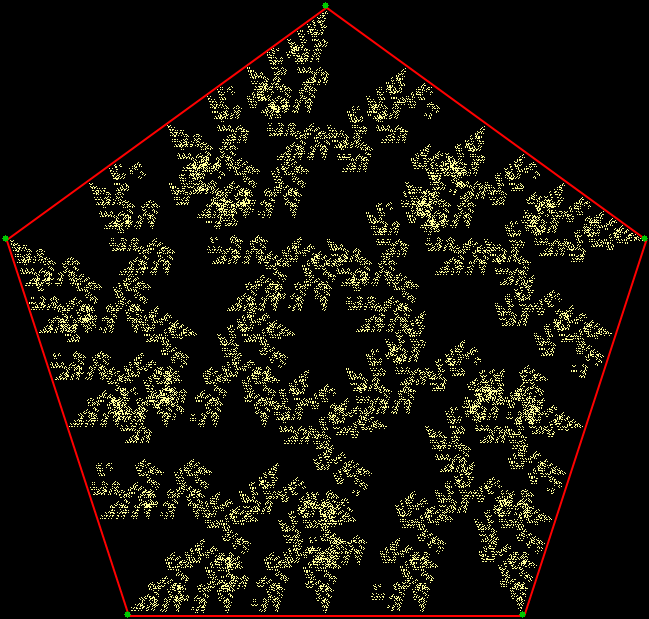
A little way beyond the battle-field they made their camp under a spreading tree: it looked like a chestnut, and yet it still bore many broad brown leaves of a former year, like dry hands with long splayed fingers; they rattled mournfully in the night-breeze. — The Two Towers, ch. 11
That’s when Aragorn, Legolas and Gimli are camping on the edge of Fangorn, the ancient forest where Treebeard dwells. The broadness of chestnut-leaves is why the light that falls through them is greened and cleaned in a special way.