Eye See Blue

Here’s a good example. Take the integer 2. How many different ways can it be represented as an sum of separate integers? Easy. First of all it can be represented as itself: 2 = 2. Next, it can be represented as 2 = 1 + 1. And that’s it. There are two partitions of 2, as mathematicians say:
2 = 2 = 1+1 (p=2)
Now try 3, 4, 5, 6:
3 = 3 = 1+2 = 1+1+1 (p=3)
4 = 4 = 1+3 = 2+2 = 1+1+2 = 1+1+1+1 (p=5)
5 = 5 = 1+4 = 2+3 = 1+1+3 = 1+2+2 = 1+1+1+2 = 1+1+1+1+1 (p=7)
6 = 6 = 1+5 = 2+4 = 3+3 = 1+1+4 = 1+2+3 = 2+2+2 = 1+1+1+3 = 1+1+2+2 = 1+1+1+1+2 = 1+1+1+1+1+1 (p=11)
So the partitions of 2, 3, 4, 5, 6 are 2, 3, 5, 7, 11. That’s interesting — the partition-counts are the prime numbers in sequence. So you might conjecture that p(7) = 13 and p(8) = 17. Alas, you’d be wrong. Here are the partitions of n = 1..10:
1 = 1 (p=1)
2 = 2 = 1+1 (p=2)
3 = 3 = 1+2 = 1+1+1 (p=3)
4 = 4 = 1+3 = 2+2 = 1+1+2 = 1+1+1+1 (p=5)
5 = 5 = 1+4 = 2+3 = 1+1+3 = 1+2+2 = 1+1+1+2 = 1+1+1+1+1 (p=7)
6 = 6 = 1+5 = 2+4 = 3+3 = 1+1+4 = 1+2+3 = 2+2+2 = 1+1+1+3 = 1+1+2+2 = 1+1+1+1+2 = 1+1+1+1+1+1 (p=11)
7 = 7 = 1+6 = 2+5 = 3+4 = 1+1+5 = 1+2+4 = 1+3+3 = 2+2+3 = 1+1+1+4 = 1+1+2+3 = 1+2+2+2 = 1+1+1+1+3 = 1+1+1+2+2 = 1+1+1+1+1+2 = 1+1+1+1+1+1+1 (p=15)
8 = 8 = 1+7 = 2+6 = 3+5 = 4+4 = 1+1+6 = 1+2+5 = 1+3+4 = 2+2+4 = 2+3+3 = 1+1+1+5 = 1+1+2+4 = 1+1+3+3 = 1+2+2+3 = 2+2+2+2 = 1+1+1+1+4 = 1+1+1+2+3 = 1+1+2+2+2 = 1+1+1+1+1+3 = 1+1+1+1+2+2 = 1+1+1+1+1+1+2 = 1+1+1+1+1+1+1+1 (p=22)
9 = 9 = 1+8 = 2+7 = 3+6 = 4+5 = 1+1+7 = 1+2+6 = 1+3+5 = 1+4+4 = 2+2+5 = 2+3+4 = 3+3+3 = 1+1+1+6 = 1+1+2+5 = 1+1+3+4 = 1+2+2+4 = 1+2+3+3 = 2+2+2+3 = 1+1+1+1+5 = 1+1+1+2+4 = 1+1+1+3+3 = 1+1+2+2+3 = 1+2+2+2+2 = 1+1+1+1+1+4 = 1+1+1+1+2+3 = 1+1+1+2+2+2 = 1+1+1+1+1+1+3 = 1+1+1+1+1+2+2 = 1+1+1+1+1+1+1+2 = 1+1+1+1+1+1+1+1+1 (p=30)
10 = 10 = 1+9 = 2+8 = 3+7 = 4+6 = 5+5 = 1+1+8 = 1+2+7 = 1+3+6 = 1+4+5 = 2+2+6 = 2+3+5 = 2+4+4 = 3+3+4 = 1+1+1+7 = 1+1+2+6 = 1+1+3+5 = 1+1+4+4 = 1+2+2+5 = 1+2+3+4 = 1+3+3+3 = 2+2+2+4 = 2+2+3+3 = 1+1+1+1+6 = 1+1+1+2+5 = 1+1+1+3+4 = 1+1+2+2+4 = 1+1+2+3+3 = 1+2+2+2+3 = 2+2+2+2+2 = 1+1+1+1+1+5 = 1+1+1+1+2+4 = 1+1+1+1+3+3 = 1+1+1+2+2+3 = 1+1+2+2+2+2 = 1+1+1+1+1+1+4 = 1+1+1+1+1+2+3 = 1+1+1+1+2+2+2 = 1+1+1+1+1+1+1+3 = 1+1+1+1+1+1+2+2 = 1+1+1+1+1+1+1+1+2 = 1+1+1+1+1+1+1+1+1+1 (p=42)
It’s very simple to understand what a partition is, but very difficult to say how many partitions, p(n), a particular number will have. Here’s a partition: 11 = 4 + 3 + 2 + 2. But what is p(11)? Is there a formula for the sequence of p(n)?
1, 2, 3, 5, 7, 11, 15, 22, 30, 42, 56, 77, 101, 135, 176, 231, 297, 385, 490, 627, 792, 1002, 1255, 1575, 1958, 2436, 3010, 3718, 4565, 5604, 6842, 8349, 10143, 12310, 14883, 17977, 21637, 26015, 3118 5, 37338, 44583, 53174, 63261... (A000041 at the OEIS)
Yes, there is a formula, but it is very difficult to understand the Partition function that supplies it. So that part of the river of mathematics is very deep. But a step away the river of mathematics is very shallow. Here’s another question: If you multiply the numbers in a partition of n, what’s the largest possible product? Try using the partitions of 5:
4 = 1 * 4
6 = 2 * 3
3 = 1 * 1 * 3
4 = 1 * 2 * 2
2 = 1 * 1 * 1 * 2
1 = 1 * 1 * 1 * 1 * 1
The largest product is 6 = 2 * 3. So the answer is easy for n = 5, but I assumed that as n got bigger, the largest product got more interesting, using a subtler and subtler mix of prime factors. I was wrong. You don’t have to struggle to find a formula for what you might call the maximum multiplicity of the partitions of n:
1 = 1 (n=1)
2 = 2 (n=2)
3 = 3 (n=3)
4 = 2 * 2 (n=4)
6 = 2 * 3 (n=5)
9 = 3 * 3 (n=6)
12 = 2 * 2 * 3 (n=7)
18 = 2 * 3 * 3 (n=8)
27 = 3 * 3 * 3 (n=9)
36 = 2 * 2 * 3 * 3 (n=10)
54 = 2 * 3 * 3 * 3 (n=11)
81 = 3 * 3 * 3 * 3 (n=12)
108 = 2 * 2 * 3 * 3 * 3 (n=13)
162 = 2 * 3 * 3 * 3 * 3 162(n=14)
243 = 3 * 3 * 3 * 3 * 3 (n=15)
324 = 2 * 2 * 3 * 3 * 3 * 3 (n=16)
486 = 2 * 3 * 3 * 3 * 3 * 3 (n=17)
729 = 3 * 3 * 3 * 3 * 3 * 3 (n=18)
It’s easy to see why the greatest prime factor is always 3. If you use 5 or 7 as a factor, the product can always be beaten by splitting the 5 into 2*3 or the 7 into 2*2*3:
15 = 3 * 5 < 18 = 3 * 2*3 (n=8)
14 = 2 * 7 < 24 = 2 * 2*2*3 (n=9)
35 = 5 * 7 < 72 = 2*3 * 2*2*3 (n=12)
And if you’re using 7 → 2*2*3 as factors, you can convert them to 1*3*3, then add the 1 to another factor to make a bigger product still:
14 = 2 * 7 < 24 = 2 * 2*2*3 < 27 = 3 * 3 * 3 (n=9)
35 = 5 * 7 < 72 = 2*3 * 2*2*3 < 81 = 3 * 3 * 3 * 3 (n=12)
The title of this post is, of course, a paronomasia on core Beatles album Live and Let Die (1954). But what does it mean? Well, if you think of the partitions of n as slivers of n, then you sliv n to find its partitions:
9 = 9 = 1+8 = 2+7 = 3+6 = 4+5 = 1+1+7 = 1+2+6 = 1+3+5 = 1+4+4 = 2+2+5 = 2+3+4 = 3+3+3 = 1+1+1+6 = 1+1+2+5 = 1+1+3+4 = 1+2+2+4 = 1+2+3+3 = 2+2+2+3 = 1+1+1+1+5 = 1+1+1+2+4 = 1+1+1+3+3 = 1+1+2+2+3 = 1+2+2+2+2 = 1+1+1+1+1+4 = 1+1+1+1+2+3 = 1+1+1+2+2+2 = 1+1+1+1+1+1+3 = 1+1+1+1+1+2+2 = 1+1+1+1+1+1+1+2 = 1+1+1+1+1+1+1+1+1 (p=30)
And when you find the greatest product among those partitions, you let 3 or “tri” work its multiplicative magic. So you “Sliv and Let Tri”:
8 = 1 * 8
14 = 2 * 7
18 = 3 * 6
20 = 4 * 5
7 = 1 * 1 * 7
12 = 1 * 2 * 6
15 = 1 * 3 * 5
16 = 1 * 4 * 4
20 = 2 * 2 * 5
24 = 2 * 3 * 4
27 = 3 * 3 * 3 ←
6 = 1 * 1 * 1 * 6
10 = 1 * 1 * 2 * 5
12 = 1 * 1 * 3 * 4
16 = 1 * 2 * 2 * 4
12 = 1 * 2 * 3 * 3
24 = 2 * 2 * 2 * 3
5 = 1 * 1 * 1 * 1 * 5
8 = 1 * 1 * 1 * 2 * 4
9 = 1 * 1 * 1 * 3 * 3
12 = 1 * 1 * 2 * 2 * 3
16 = 1 * 2 * 2 * 2 * 2
4 = 1 * 1 * 1 * 1 * 1 * 4
6 = 1 * 1 * 1 * 1 * 2 * 3
8 = 1 * 1 * 1 * 2 * 2 * 2
3 = 1 * 1 * 1 * 1 * 1 * 1 * 3
4 = 1 * 1 * 1 * 1 * 1 * 2 * 2
2 = 1 * 1 * 1 * 1 * 1 * 1 * 1 * 2
1 = 1 * 1 * 1 * 1 * 1 * 1 * 1 * 1 * 1

Tripod fish, Bathypterois sp.
Up-conjured by the magus sun,
A daffodil’s a golden gun
That stoops its head lest it should be
A slayer inadvertently.
Peri-Performative Post-Scriptum
The toxic title of this portmanteau-porting post is, of course, self-explanatory.
Some interesting statistics from the American sociologist Elizabeth Wrigley-Field:
Here are three puzzles.
• American fertility fluctuated dramatically in the decades surrounding the Second World War. Parents created the smallest families during the Great Depression, and the largest families during the postwar Baby Boom. Yet children born during the Great Depression came from larger families than those born during the Baby Boom. How can this be?
• About half of the prisoners released in any given year in the United States will end up back in prison within five years. Yet the proportion of prisoners ever released who will ever end up back in prison, over their whole lifetime, is just one third. How can this be?
• People whose cancers are caught early by random screening often live longer than those whose cancers are detected later, after they are symptomatic. Yet those same random screenings might not save any lives. How can this be?
And here is a twist: these are all the same puzzle.
• Answers here: Length-Biased Sampling by Elizabeth Wrigley-Field
Proxi-Performative Post-Scriptum
The title of this post is, of course, a radical reference to core Led Zeppelin track “Trampled Underfoot” (1975).
Everyone knows the shapes for one and two dimensions, far fewer know the shapes for three and four dimensions, let alone five, six and seven. And what shapes are those? The shapes that answer this question:
• How many equidistant points are possible in 1d, 2d, 3d, 4d…?
In one dimension it’s obvious that the answer is 2. In other words, you can get only two equidistant points, (a,b), on a straight line. Point a must be as far from point b as point b is from point a. You can’t add a third point, c, such that (a,b,c) are equidistant. Not on a straight line in 1d. But suppose you bend the line into a circle, so that you’re working in two dimensions. It’s easy to place three equidistant points, (a,b,c), on a circle.

Three equidistant points around a circle forming the vertices of an equilateral triangle
And it’s also easy to see that the three points will form the vertices of an equilateral triangle. Now try adding a fourth point, d. If you place it in the center of the triangle, it will be equidistant from (a,b,c), but it will be nearer to (a,b,c) than they are to each other. So you can have only 2 equidistant points in 1d and 3 equidistant points in 2d.
But what are the co-ordinates of the equidistant points in 1d and 2d? Suppose (a,b) in 1d are given the co-ordinates (0) and (1), so that a is 1 unit distant from b. When you move to 2d and add point c, the co-ordinates for (a,b) become (0,0) and (1,0). They’re still 1 unit distant from each other. But what are the co-ordinates for c? Start by placing c exactly midway between a and b, so that it has the co-ordinates (0.5,0) and is 0.5 units distant from both a and b. Now, if you move c in the first dimension, it will become nearer either to a or b: (0.49,0) or (0.51,0) or (0.48,0) or (0.52,0)…
But if you move c in the second dimension, it will always be equidistant from a and b, because (a,b) stay in the first dimension, as it were, and c moves equally away from both into the second dimension. So where in 2d will c be 1 unit distant from both a and b just as a and b are 1 unit distant from each other in 1d? You can see the answer here:
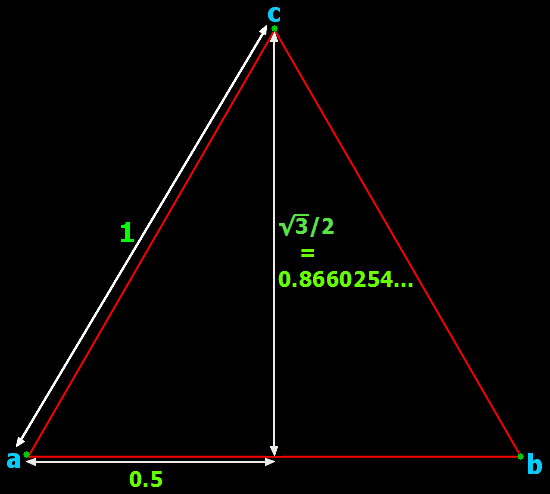 Height of an equilateral triangle
The co-ordinates for c are (0.5,√3/2) or (0.5,0.8660254…), because the second co-ordinate satisfies the Pythagorean equation 1^2 = 0.5^2 + (√3/2)^2 = 0.25 + 0.75. That is, to find the second co-ordinate of c for 2d, you find the answer to √(1 – 0.5^2) = √(1-0.25) = √0.75 = √(3/4) = √3/2 = 0.8660254….
But you can’t add a fourth point, d, in 2d such that (a,b,c,d) are equidistant. So let’s move to 3d for the points (a,b,c,d). Begin with point d in the center of the triangle formed by (a,b,c), where it will have the co-ordinates (0.5,√3/6,0) = (0.5,0.28867513…,0) and will be equidistant from (a,b,c). But d will be nearer to (a,b,c) than they are to each other. However, if you move d in the third dimension, it will be moving equally away from (a,b,c). So where in 3d will d be 1 unit from (a,b,c)? By analogy with 2d, the third co-ordinate for d will satisfy the generalized Pythagorean equation √(1 – 0.5^2 – (√3/6)^2). And √6/3 = √(1 – 0.5^2 – (√3/6)^2) = 0.81649658… So point d will have the co-ordinates (0.5,√3/6,√6/3) = (0.5, 0.288675135…, 0.816496581…).
And the four points (a,b,c,d) will be the vertices of a three-dimensional shape called the tetrahedron:

Rotating tetrahedron
But you can’t add a fifth point, e, in 3d such that (a,b,c,d,e) are equidistant. So let’s move to 4d, the fourth dimension, for the points (a,b,c,d,e). Begin with point e in the center of the tetrahedron formed by (a,b,c,d), where it will have the co-ordinates (0.5,√3/6,√6/12,0) = (0.5,0.28867513…, 0.2041241…, 0) and will be equidistant from (a,b,c,d). But e will be nearer to (a,b,c,d) than they are to each other. However, if you move e in the fourth dimension, it will be moving equally away from (a,b,c,e). So where in 4d will e be 1 unit from (a,b,c,d)? By analogy with 2d and 3d, the co-ordinate for 4d will satisfy the equation √(1 – 0.5^2 – (√3/6)^2 – (√6/12)^2). And √10/4 = √(1 – 0.5^2 – (√3/6)^2 – (√6/12)^2) = 0.79056941… So point e will have the co-ordinates (0.5,√3/6,√6/3,√10/4) = (0.5, 0.288675135…, 0.816496581…, 0.79056941…).
And the five points (a,b,c,d,e) will be the vertices of a four-dimensional shape called variously the hyperpyramid, the 5-cell, the pentachoron, the 4-simplex, the pentatope, the pentahedroid and the tetrahedral pyramid. It’s impossible for 3d creatures like human beings (at present) to visualize the hyperpyramid, but we can see its 3d shadow, as it were. And here is the 3d shadow of a rotating hyperpyramid:

Rotating hyperpyramid
N.B. Wikipedia reveals the mathematically beautiful fact that the “simplest set of coordinates [for a hyperpyramid] is: (2,0,0,0), (0,2,0,0), (0,0,2,0), (0,0,0,2), (φ,φ,φ,φ), with edge length 2√2, where φ is the golden ratio.”
So that’s the hyperpyramid, with 5 points in 4d. But you can’t add a sixth point, f, in 4d such that (a,b,c,d,e,f) are equidistant. You have to move to 5d. And it should be clear by now that in any dimension nd, the maximum possible number of equidistant points, p, in that dimension will be p = n+1. And here are the co-ordinates for p in dimensions 1 to 10 (the co-ordinates are given in full for 1d to 4d, then for 5d to 10d only the co-ordinates of the additional point are given):
d1: (0), (1)
d2: (0,0), (1,0), (0.5,0.866025404)
d3: (0,0,0), (1,0,0), (0.5,0.866025404,0), (0.5,0.288675135,0.816496581)
d4: 0.5, 0.288675135, 0.204124145, 0.790569415
d5: 0.5, 0.288675135, 0.204124145, 0.158113883, 0.774596669
d6: 0.5, 0.288675135, 0.204124145, 0.158113883, 0.129099445, 0.763762616
d7: 0.5, 0.288675135, 0.204124145, 0.158113883, 0.129099445, 0.109108945, 0.755928946
d8: 0.5, 0.288675135, 0.204124145, 0.158113883, 0.129099445, 0.109108945, 0.0944911183, 0.75
d9: 0.5, 0.288675135, 0.204124145, 0.158113883, 0.129099445, 0.109108945, 0.0944911183, 0.0833333333, 0.745355992
d10: 0.5, 0.288675135, 0.204124145, 0.158113883, 0.129099445, 0.109108945, 0.0944911183, 0.0833333333, 0.0745355992, 0.741619849
In each dimension d, the final co-ordinate, cd+1, of the additional point satisfies the generalized Pythagorean equation cd+1 = √(1 – c1^2 – c2^2 – … cd^2).
Readers’ advisory: I am not a mathematician and the discussion above cannot be trusted to be free of errors, whether major or minor.

There was a young man of Cape Horn,
Who wished that he’d never been born;
And he wouldn’t have been,
If his father had seen
That the end of the rubber was torn.
(Possibly by Swinburne)
This is a T-square fractal:
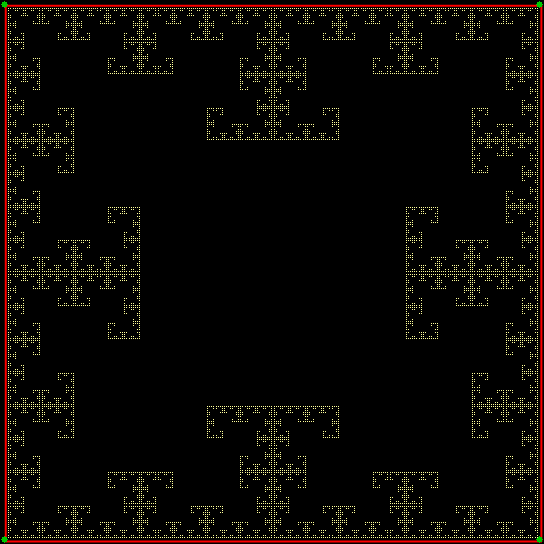
T-square fractal
Or you could say it’s a T-square fractal with the scaffolding taken away, because there’s nothing to show how it was made. And how is a T-square fractal made? There are many ways. One of the simplest is to set a point jumping 1/2 of the way towards one or another of the four vertices of a square. If the point is banned from jumping towards the vertex two places clockwise (or counter-clockwise) of the vertex, v[i=1..4], it’s just jumped towards, you get a T-square fractal by recording each spot where the point lands.
You also get a T-square if the point is banned from jumping towards the vertex most distant from the vertex, v[i], it’s just jumped towards. The most distant vertex will always be the diagonally opposite vertex, or the vertex, v[i+2], two places clockwise of v[i]. So those two bans are functionally equivalent.
But what if you don’t talk about bans at all? You can also create a T-square fractal by giving the point three choices of increment, [0,1,3], after it jumps towards v[i]. That is, it can jump towards v[i+0], v[i+1] or v[i+3] (where 3+2 = 5 → 5-4 = 1; 3+3 = 6 → 2; 4+1 = 5 → 1; 4+2 = 6 → 2; 4+3 = 7 → 3). Vertex v[i+0] is the same vertex, v[i+1] is the vertex one place clockwise of v[i], and v[i+3] is the vertex two places clockwise of v[i].
So this method is functionally equivalent to the other two bans. But it’s easier to calculate, because you can take the current vertex, v[i], and immediately calculate-and-use the next vertex, without having to check whether the next vertex is forbidden. In other words, if you want speed, you just have to Think Inc!
Speed becomes important when you add a new jumping-target to each side of the square. Now the point has 8 possible targets to jump towards. If you impose several bans on the next jump, e.g the point can’t jump towards v[i+2], v[i+3], v[i+5], v[i+6] and v[i+7], you will have to check for five forbidden targets. But using the increment-set [0,1,4] you don’t have to check for anything. You just inc-and-go:
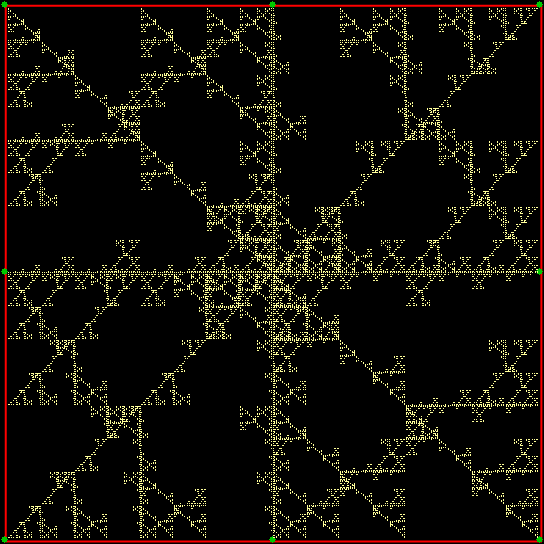
inc = 0, 1, 4
Here are more fractals created with the speedy inc-and-go method:

inc = 0, 2, 3

inc = 0, 2, 5

inc = 0, 3, 4
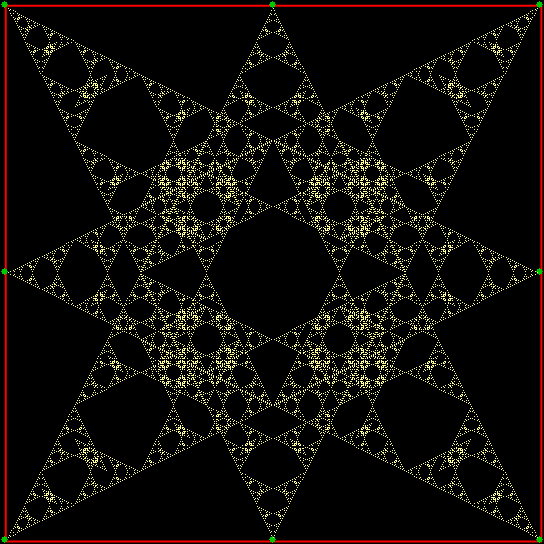
inc = 0, 3, 5
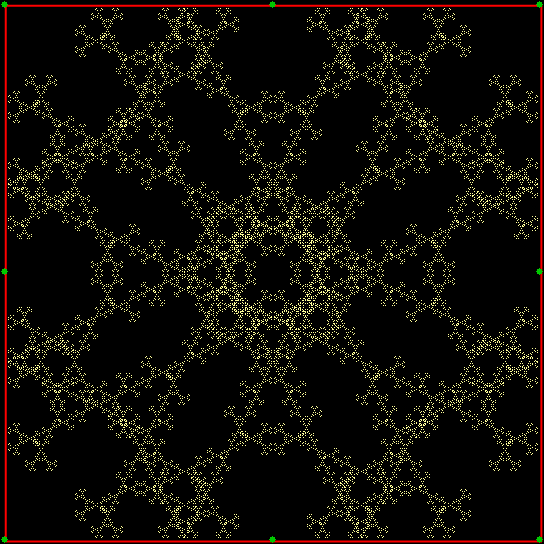
inc = 1, 4, 7
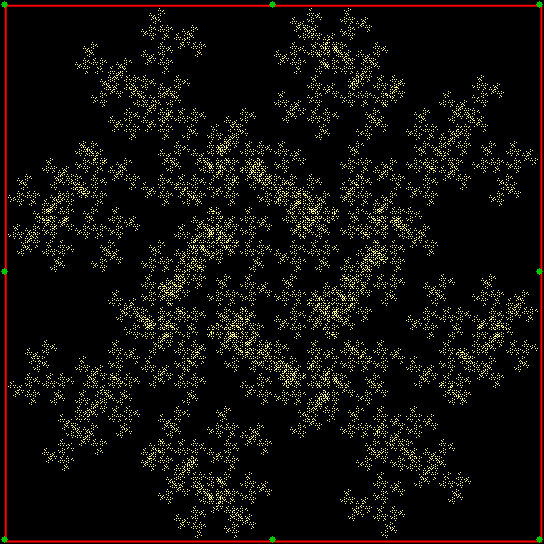
inc = 2, 4, 7

inc = 0, 1, 4, 7
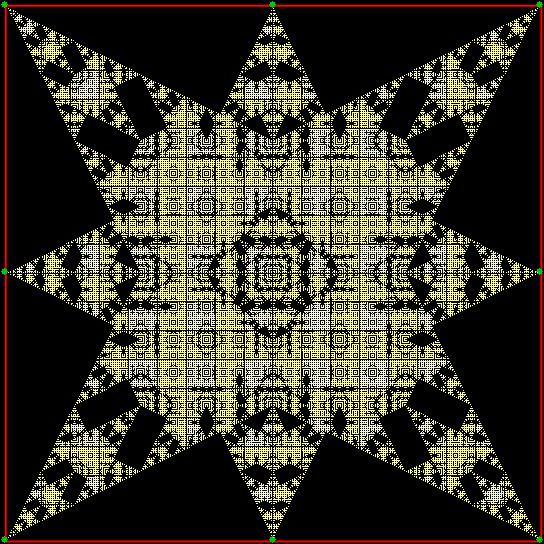
inc = 0, 3, 4, 5

inc = 0, 3, 4, 7
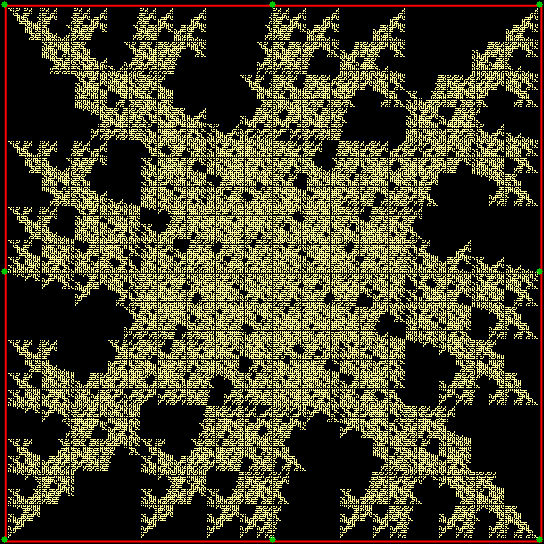
inc = 0, 4, 5, 7
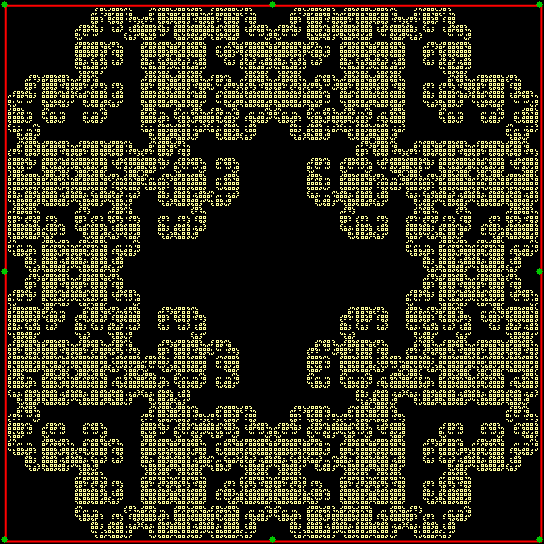
inc = 1, 2, 6, 7
With more incs, there are more possible paths for the jumping point and the fractals become more “solid”:

inc = 0, 1, 2, 4, 5
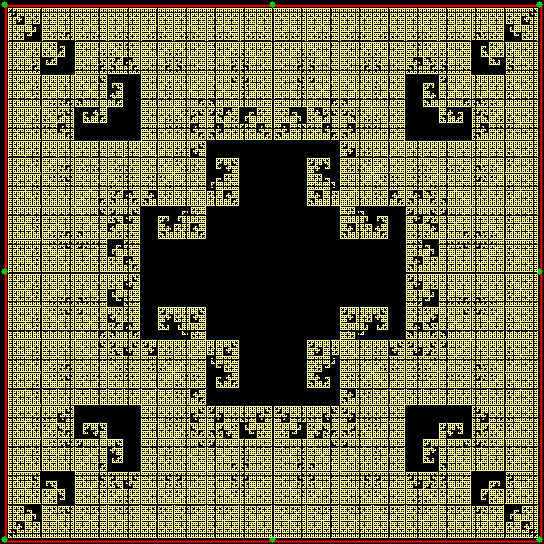
inc = 0, 1, 2, 6, 7

inc = 0, 1, 3, 5, 7
Now try applying inc-and-go to a pentagon:

inc = 0, 1, 2
(open in new window if blurred)

inc = 0, 2, 3
And add a jumping-target to each side of the pentagon:
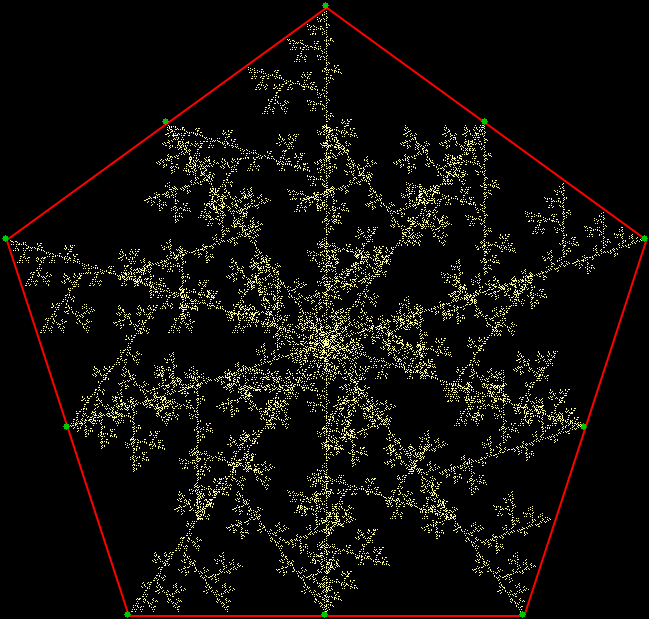
inc = 0, 2, 5
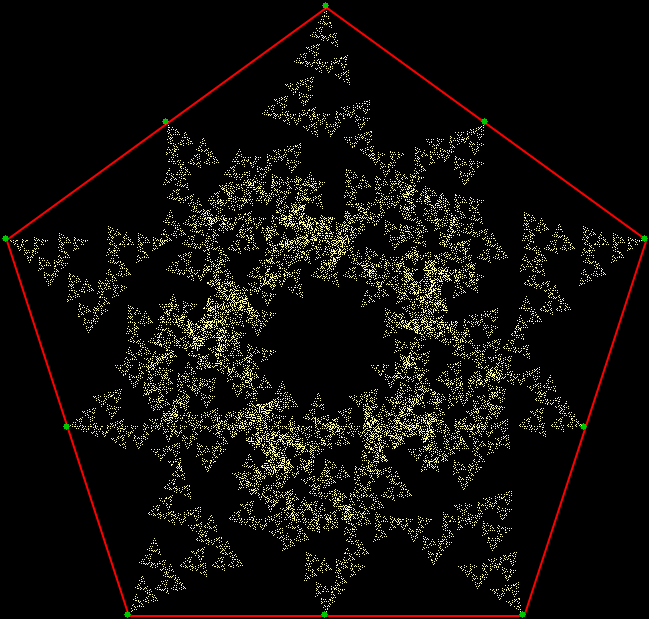
inc = 0, 3, 6
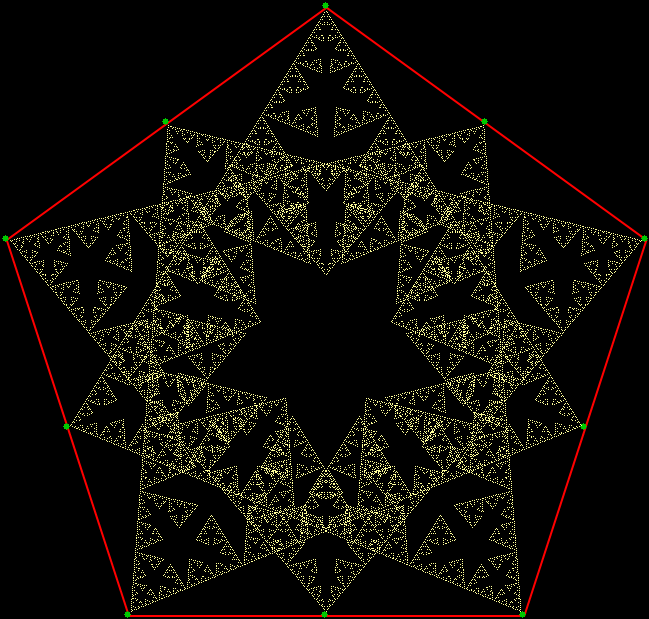
inc = 0, 3, 7
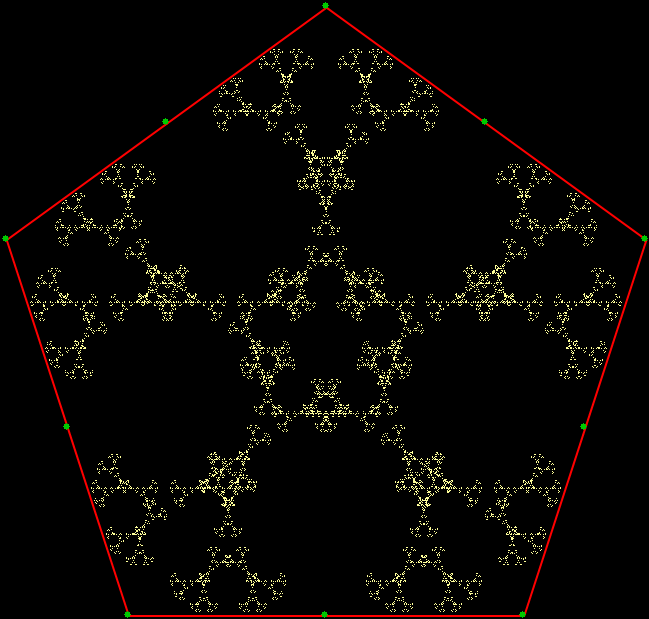
inc = 1, 5, 9
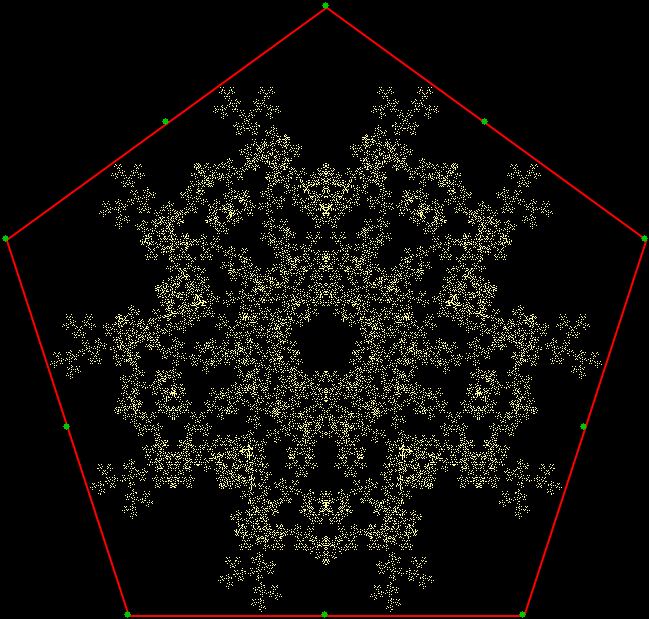
inc = 2, 5, 8

inc = 5, 6, 9
And add two jumping-targets to each side of the pentagon:
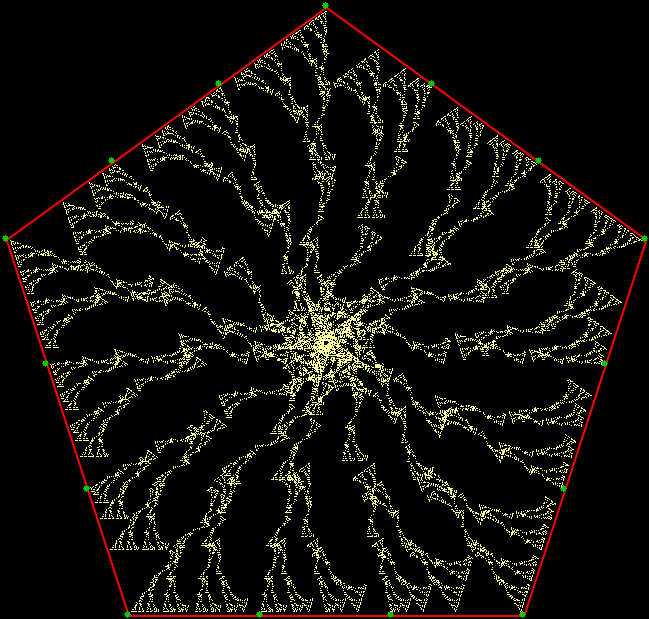
inc = 0, 1, 7
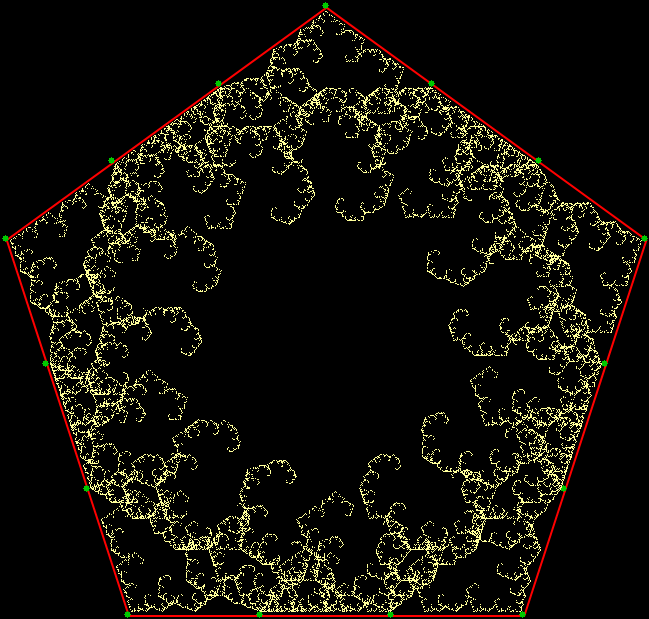
inc = 0, 2, 12

inc = 0, 3, 11

inc = 0, 3, 12
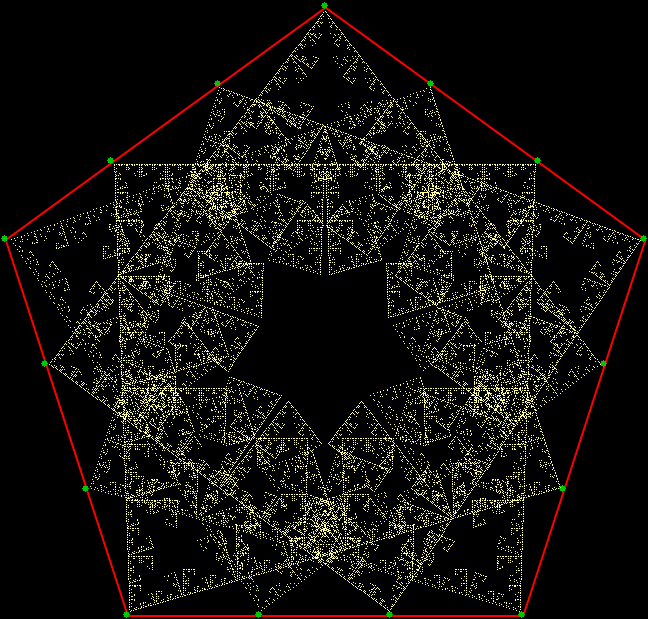
inc = 0, 4, 11
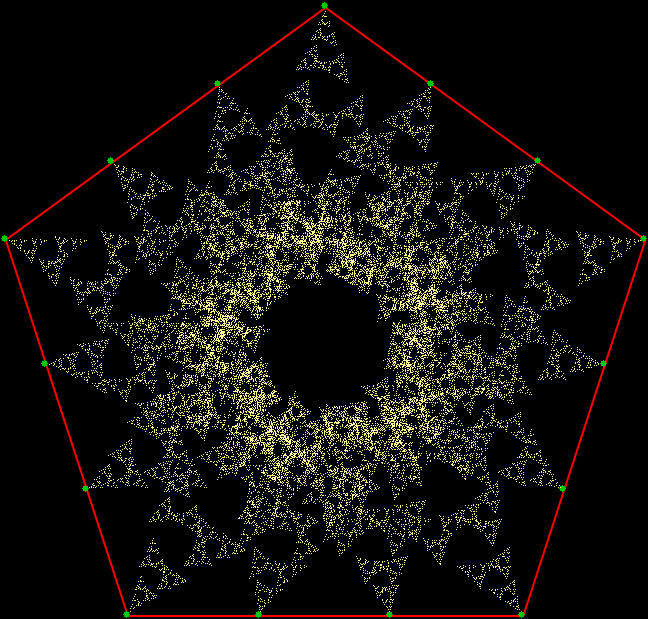
inc = 0, 5, 9

inc = 0, 5, 10

inc = 2, 7, 13
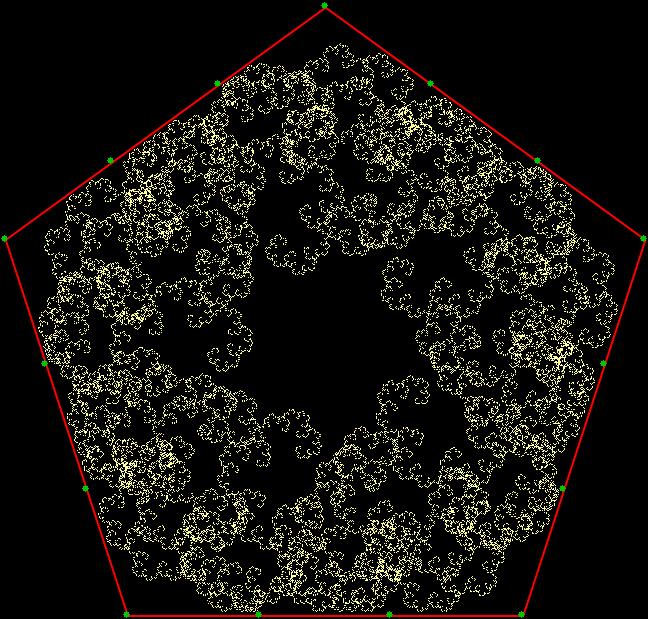
inc = 2, 11, 13
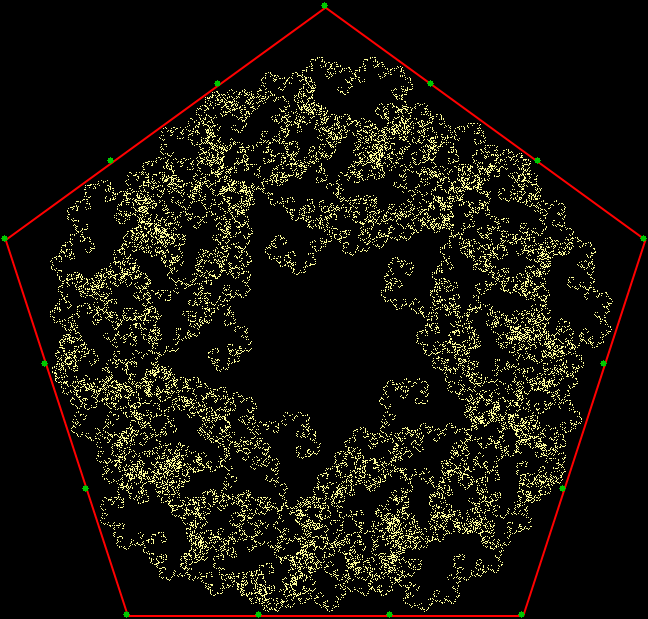
inc = 3, 11, 13
After the pentagon comes the hexagon:

inc = 0, 1, 2

inc = 0, 1, 5
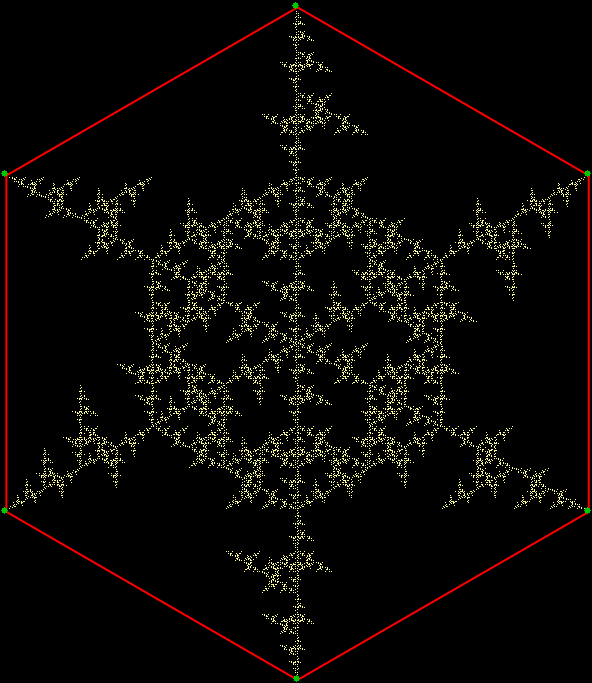
inc = 0, 3, 4

inc = 0, 3, 5

inc = 1, 3, 5

inc = 2, 3, 4
Add a jumping-target to each side of the hexagon:

inc = 0, 2, 5
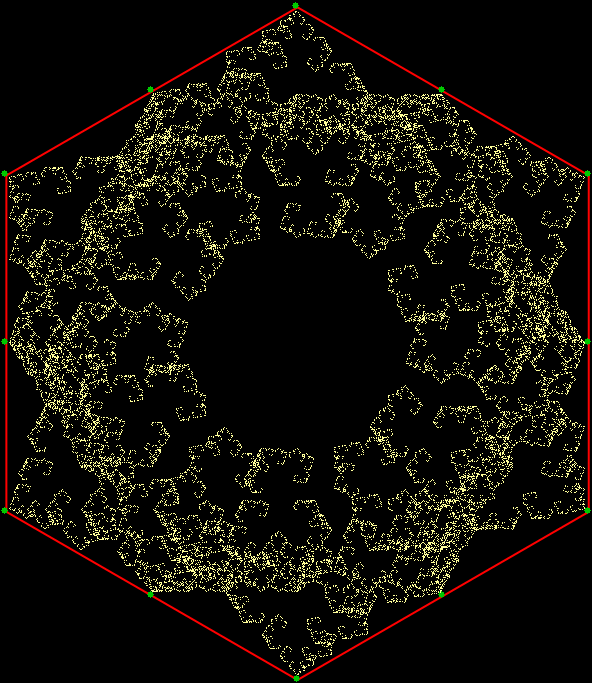
inc = 0, 2, 9
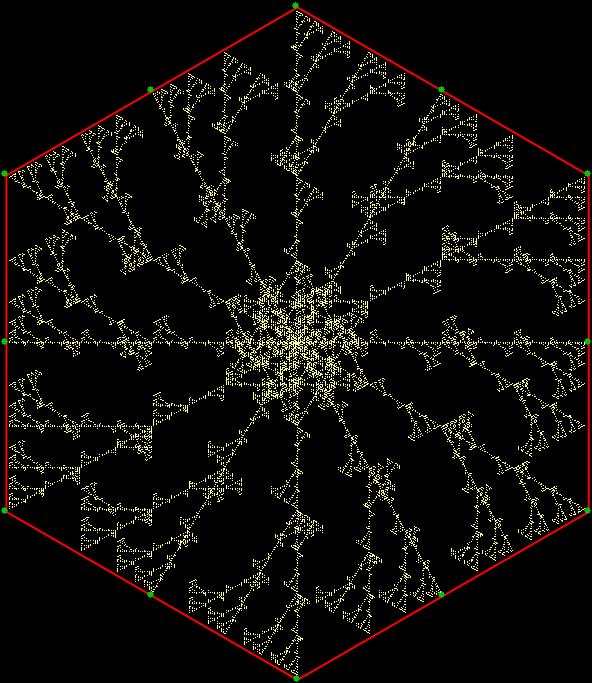
inc = 0, 6, 11
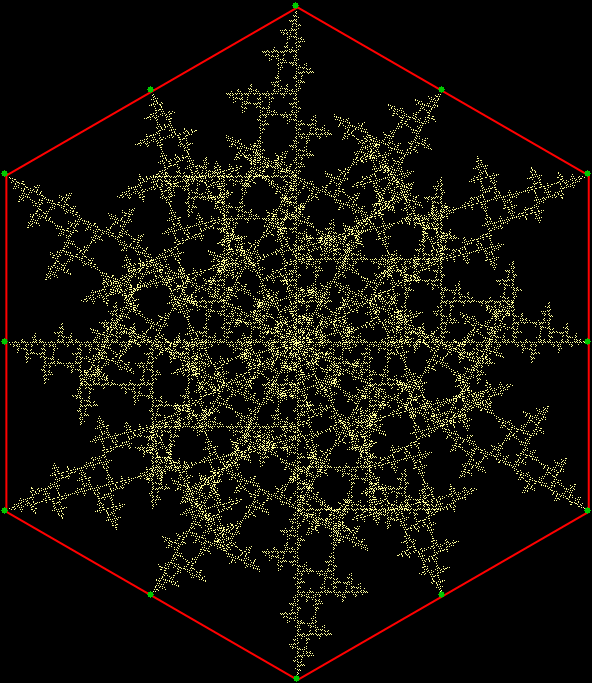
inc = 0, 3, 6
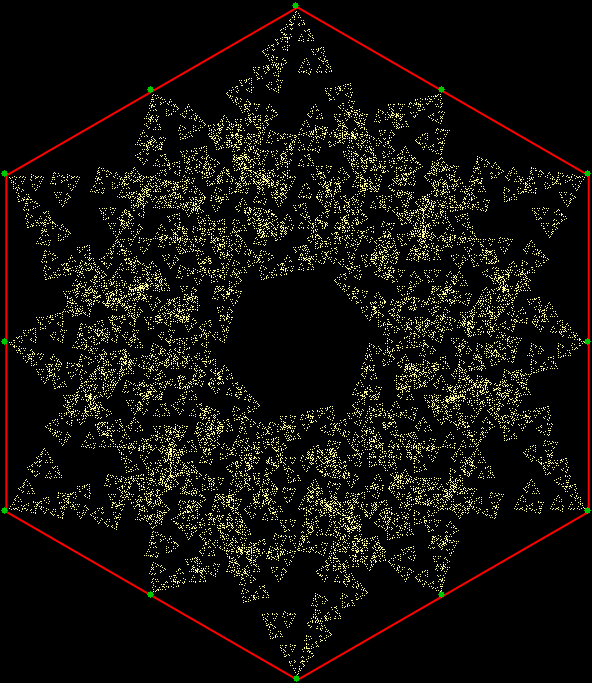
inc = 0, 3, 8

inc = 0, 3, 9
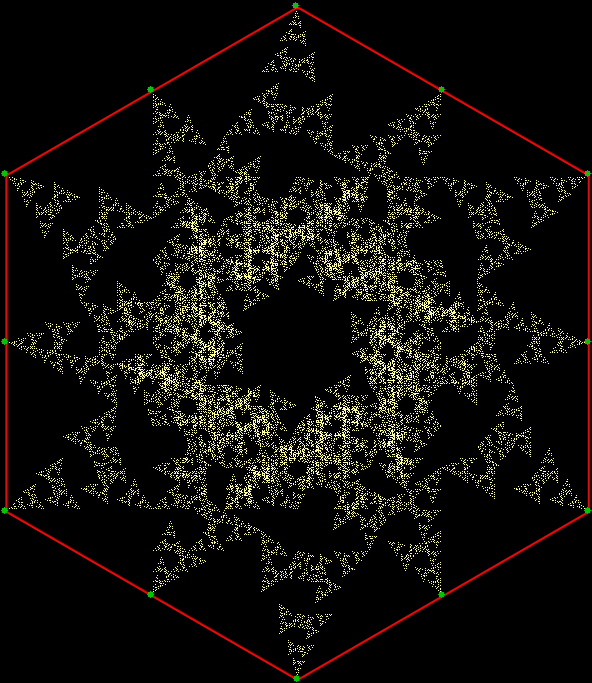
inc = 0, 4, 7
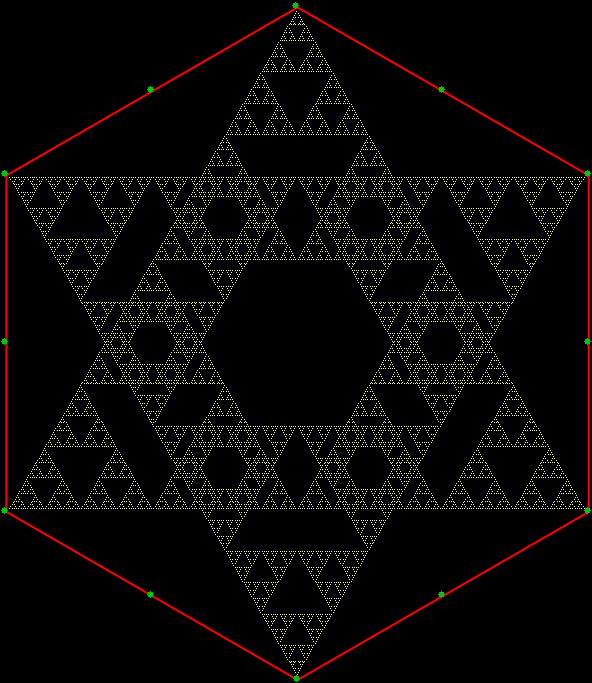
inc = 0, 4, 8
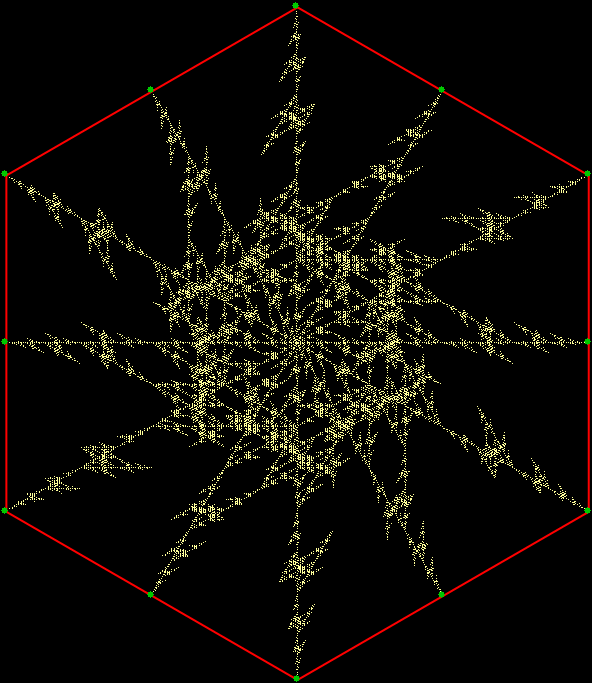
inc = 0, 5, 6

inc = 0, 5, 8

inc = 1, 5, 9

inc = 1, 6, 10
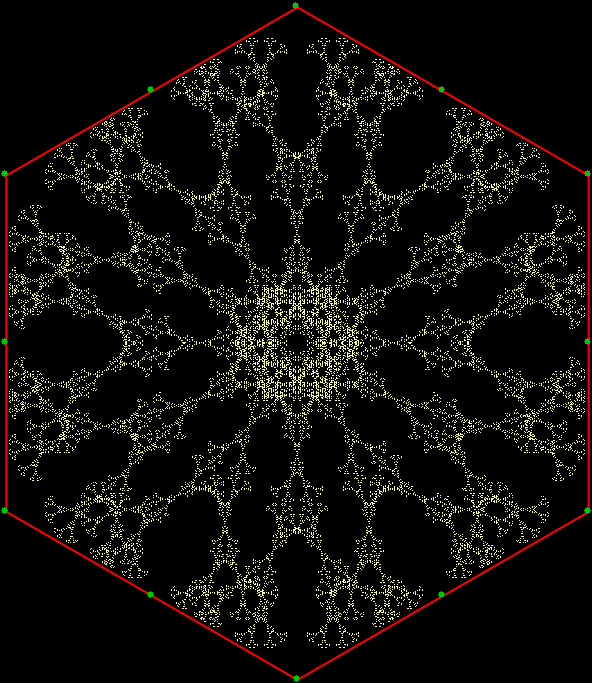
inc = 1, 6, 11
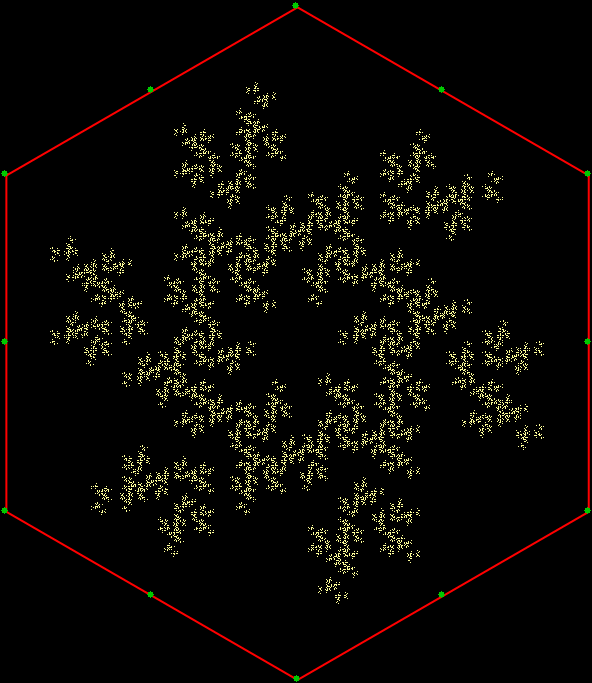
inc = 2, 6, 8
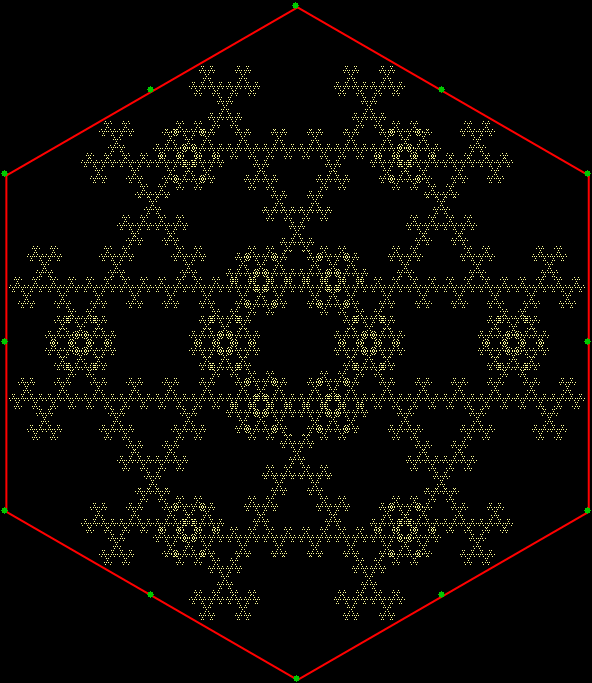
inc = 2, 6, 10
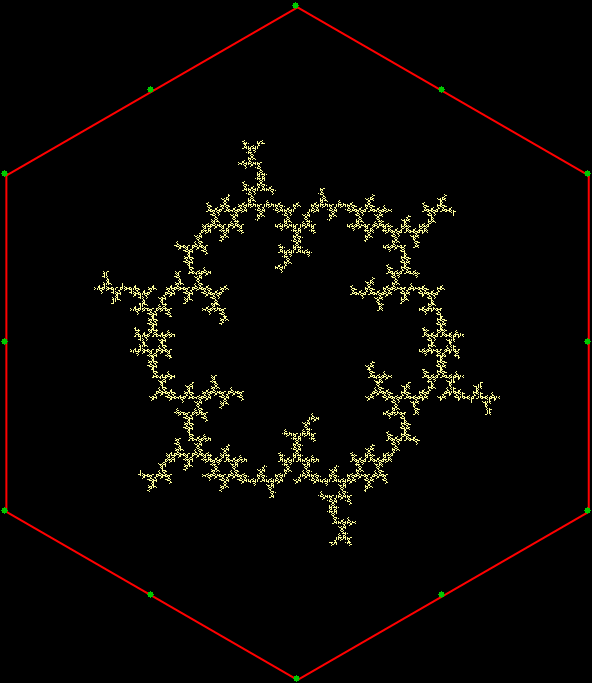
inc = 3, 5, 7

inc = 3, 6, 9
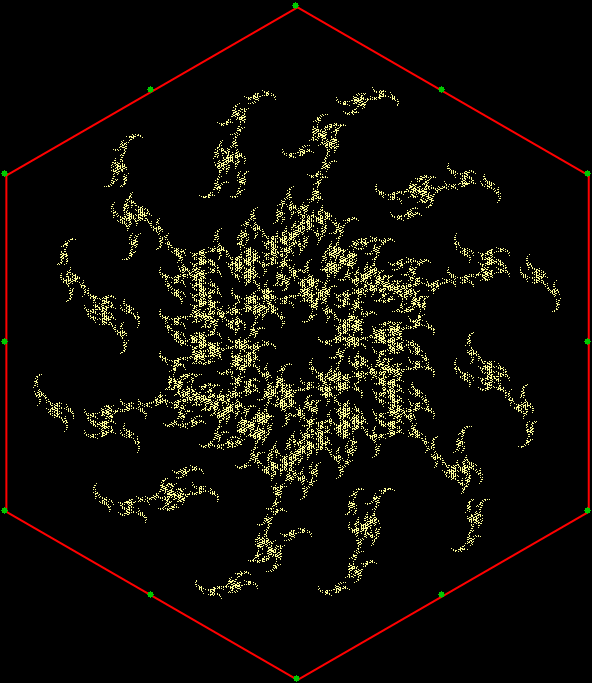
inc = 6, 7, 11
“I once received a letter from an eminent logician, Mrs. Christine Ladd-Franklin, saying that she was a solipsist, and was surprised that there were no others.” — Bertrand Russell, Human Knowledge: Its Scope and Limits (1948)
Peri-Performative Post-Scriptum
The title of this post is, of course, a radical reference to core Jethro Tull album Aladdin Sane (1973).
 Overlord In Terms of Core Issues Around Maximal Engagement with Key Notions of the Über-Feral