What does a fractal phallus look like?
Millions of people have axed this corely key question.
The Overlord of the Über-Feral can answer it — keyly, corely and comprehensively dot dot dot
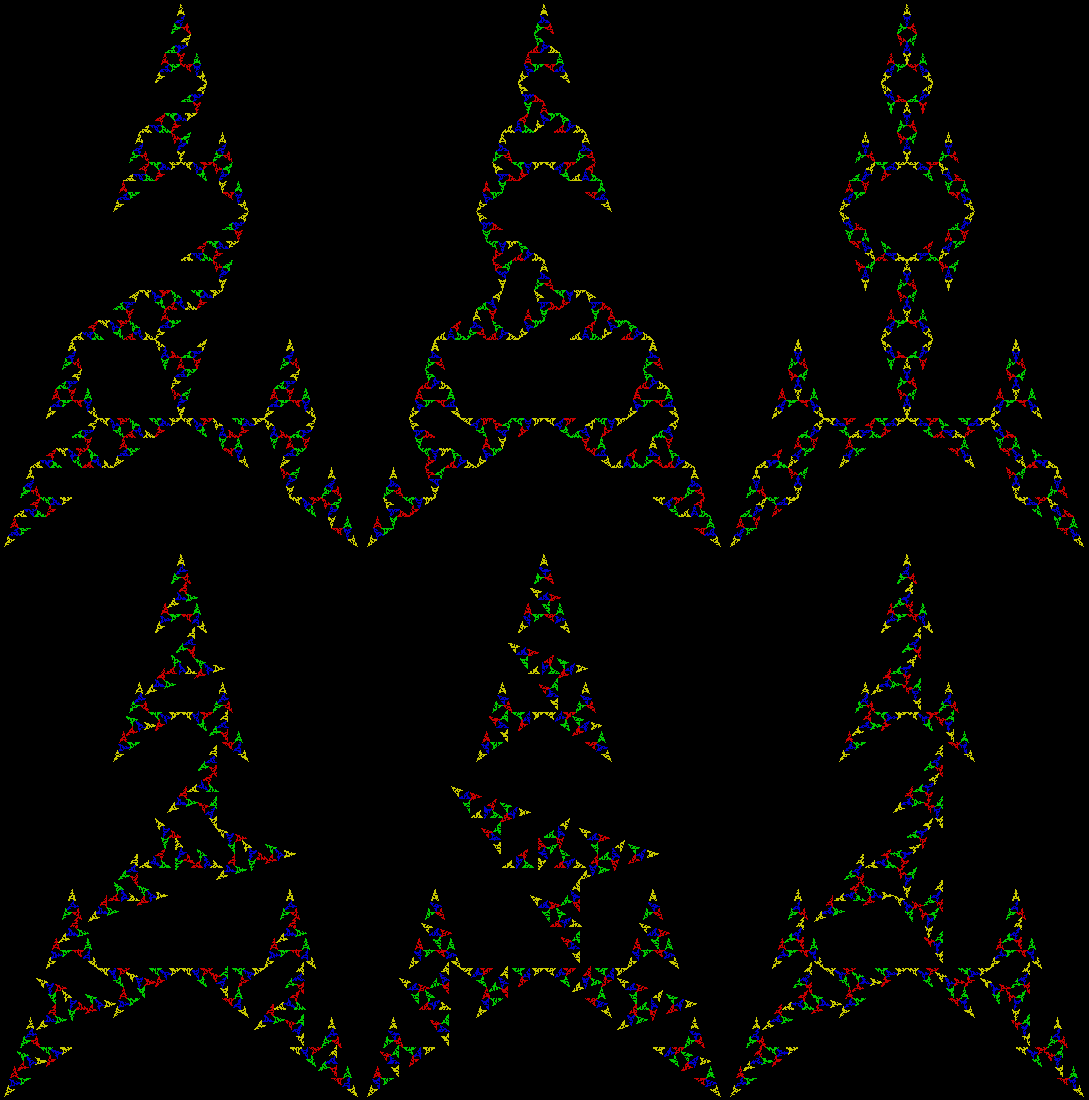
And here is the answer: Phrallic Frolics…

What does a fractal phallus look like?
Millions of people have axed this corely key question.
The Overlord of the Über-Feral can answer it — keyly, corely and comprehensively dot dot dot
And here is the answer: Phrallic Frolics…
Here is a very simple tree with two branches:
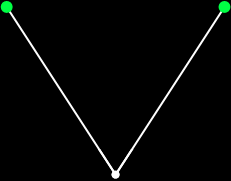
Two-branch tree
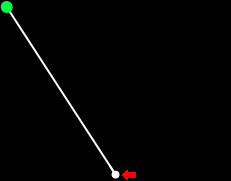
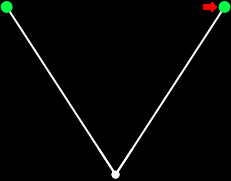
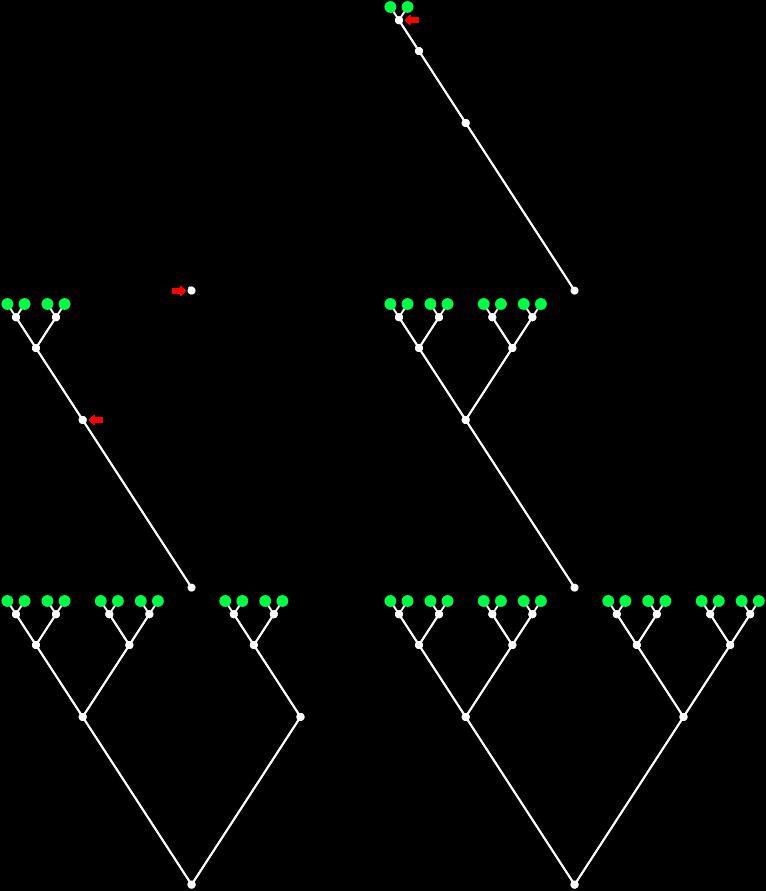
These are the steps that a simple computer program follows to draw the tree, with a red arrow indicating where the computer’s focus is at each stage:
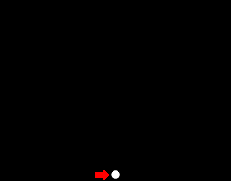
Two-branch tree stage 1
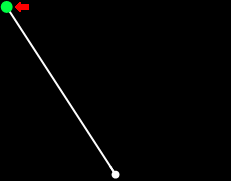
2-Tree stage 2
2-Tree stage 3
2-Tree stage 4
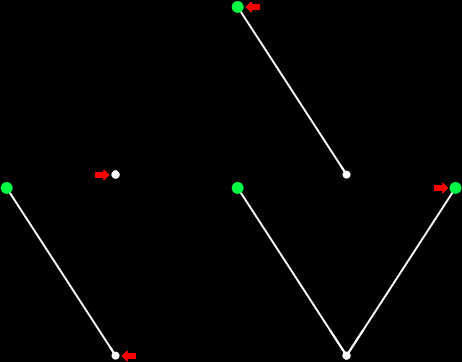
2-Tree (animated)
If you had to give the computer an explicit instruction at each stage, the instructions might look something like this:
1. Start at node 1, draw a left branch to node 2 and colour the node green.
2. Return to node 1.
3. Draw a right branch to node 3 and colour the node green.
4. Finish.
Now try a slightly less simple tree with branches that fork twice:
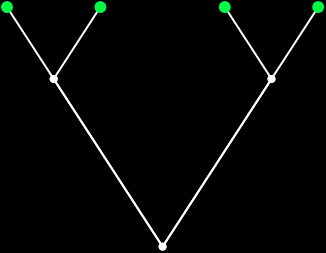
Four-branch tree (static)
These are the steps that a simple computer program follows to draw the tree, with a red arrow indicating where the computer’s focus is at each stage:
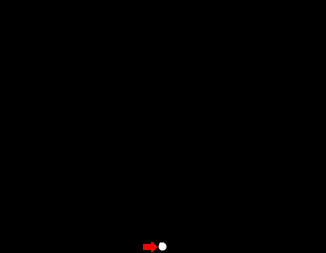
4-Tree #1
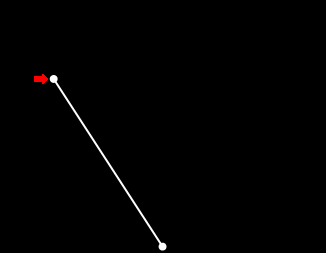
4-Tree #2
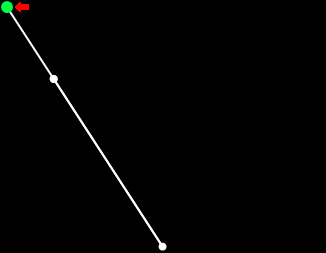
4-Tree #3
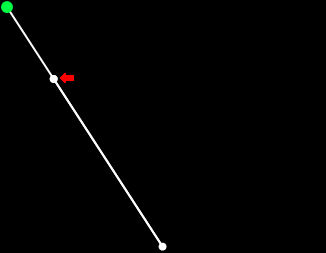
4-Tree #4
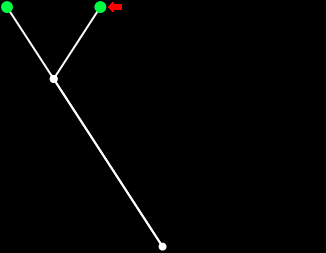
4-Tree #5
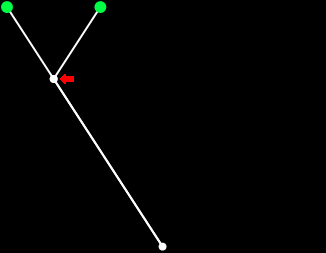
4-Tree #6
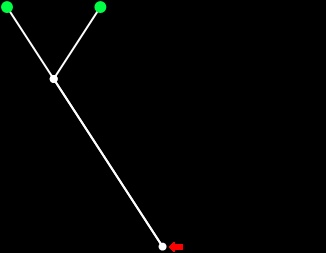
4-Tree #7
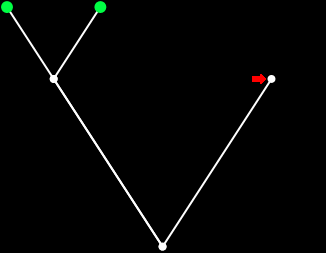
4-Tree #8
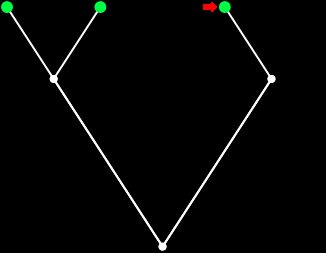
4-Tree #9
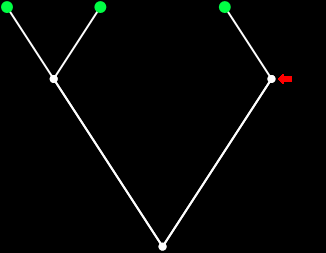
4-Tree #10
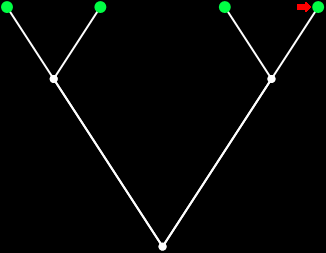
4-Tree #11
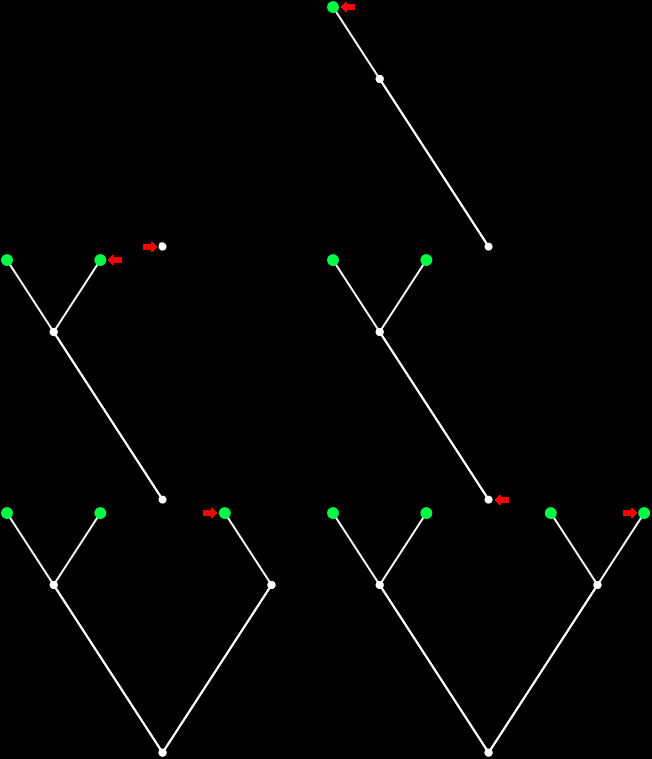
4-Tree (animated)
If you had to give the computer an explicit instruction at each stage, the instructions might look something like this:
1. Start at node 1 and draw a left branch to node 2.
2. Draw a left branch to node 3 and colour it green.
3. Return to node 2.
4. Draw a right branch to node 4 and colour it green.
5. Return to node 2.
6. Return to node 1.
7. Draw a right branch to node 5.
8. Draw a left branch to node 6.
9. Draw a left branch to node 7 and colour it green.
10. Return to node 6.
11. Draw a left branch to node 8 and colour it green.
12. Finish.
It’s easy to see that the list of instructions would be much bigger for a tree with branches that fork three times, let alone four times or you. But you don’t need to give a full set of explicit instructions: you can use a program, or a list of instructions using variables. Suppose the tree has branches that fork f times. If f = 4, you will need an array variable level() with four values, level(1), level(2), level(3) and level(4). Now follow these instructions:
1. li = 1, level(1) = 0, level(2) = 0, ... level(f+1) = 0
2. level(li) = level(li) + 1
3. If level(li) = 1, draw a branch to the left and jump to step 7
4. If level(li) = 2, draw a branch to the right and jump to step 7
5. li = li - 1 (note that this line is reached if the tests fail in lines 3 and 4)
6. If li > 0, jump to step 2, otherwise jump to step 11
7. If li = f, draw a green node and jump to step 5
9. li = li + 1
10. Jump to step 2
11. Finish.
By changing the value of f, a computer can use those eleven basic instructions to draw any size of tree (I’ve left out details like changes in the length of branches and so on). When f = 4, the tree will look like this:
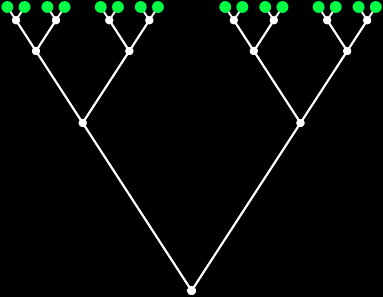
16-Tree (static)
16-Tree (animated)
With simple adjustments, the program can be used for other shapes whose underlying structure can be represented symbolically as a tree. The program is in fact a fractalizer, that is, it draws a fractal. So if you use a version of the program to draw fractals based on right-triangles, you can say you are “tright treeing” (tright = triangle-that-is-right).
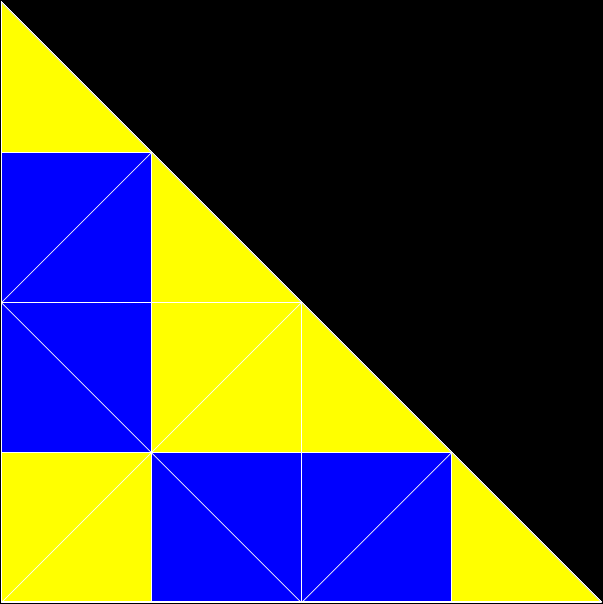
Here is some tright treeing. Start with a simple isoceles right-triangle. It can be divided into smaller isoceles right-triangles by finding the midpoint of the hypotenuse, then repeating:

Right-triangle rep-2 stage 1

Right-triangle #2

Tright #3
Tright #4

Tright #5

Tright #6

Tright #7

Tright #7 (no internal lines)
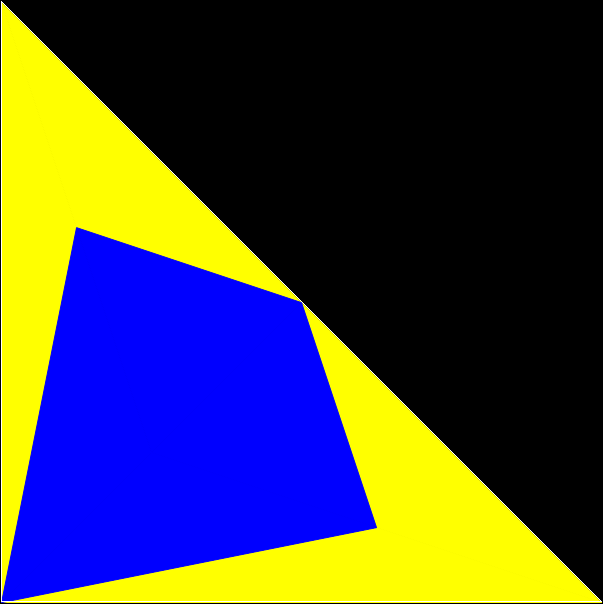
You can distort the isoceles right-triangle in interesting ways by finding the midpoint of a side other than the hypotenuse, like this:

Right-triangle (distorted) #1

Distorted tright #2
Distorted tright #3

Distorted tright #4

Distorted tright #5

Distorted tright #6
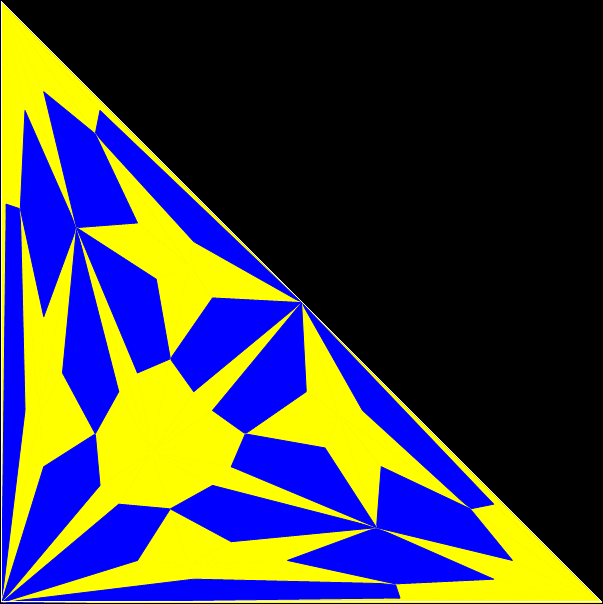
Distorted tright #7
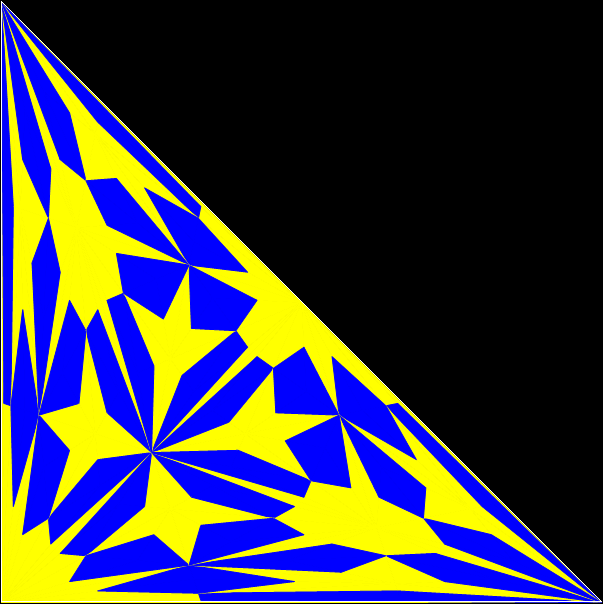
Distorted tright #8

Distorted tright #9

Distorted tright #10

Distorted tright #11

Distorted tright #12
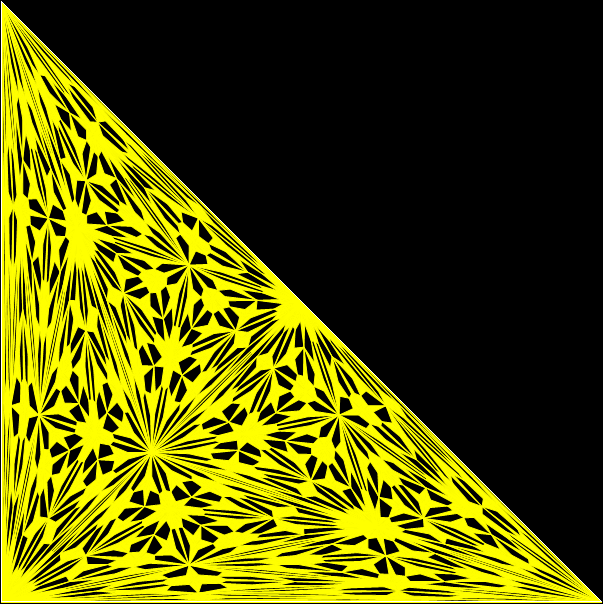
Distorted tright #13
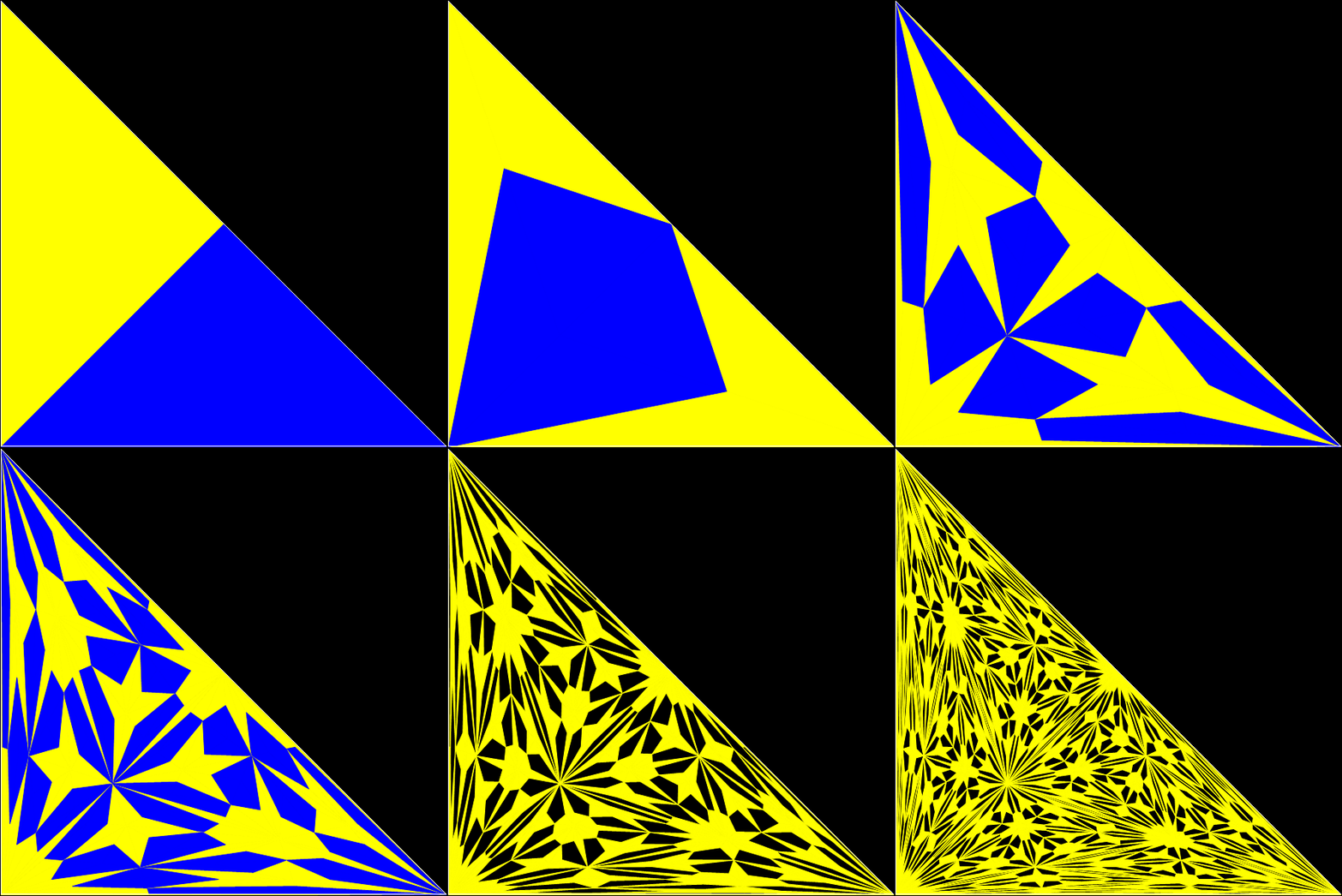
Distorted tright (animated)
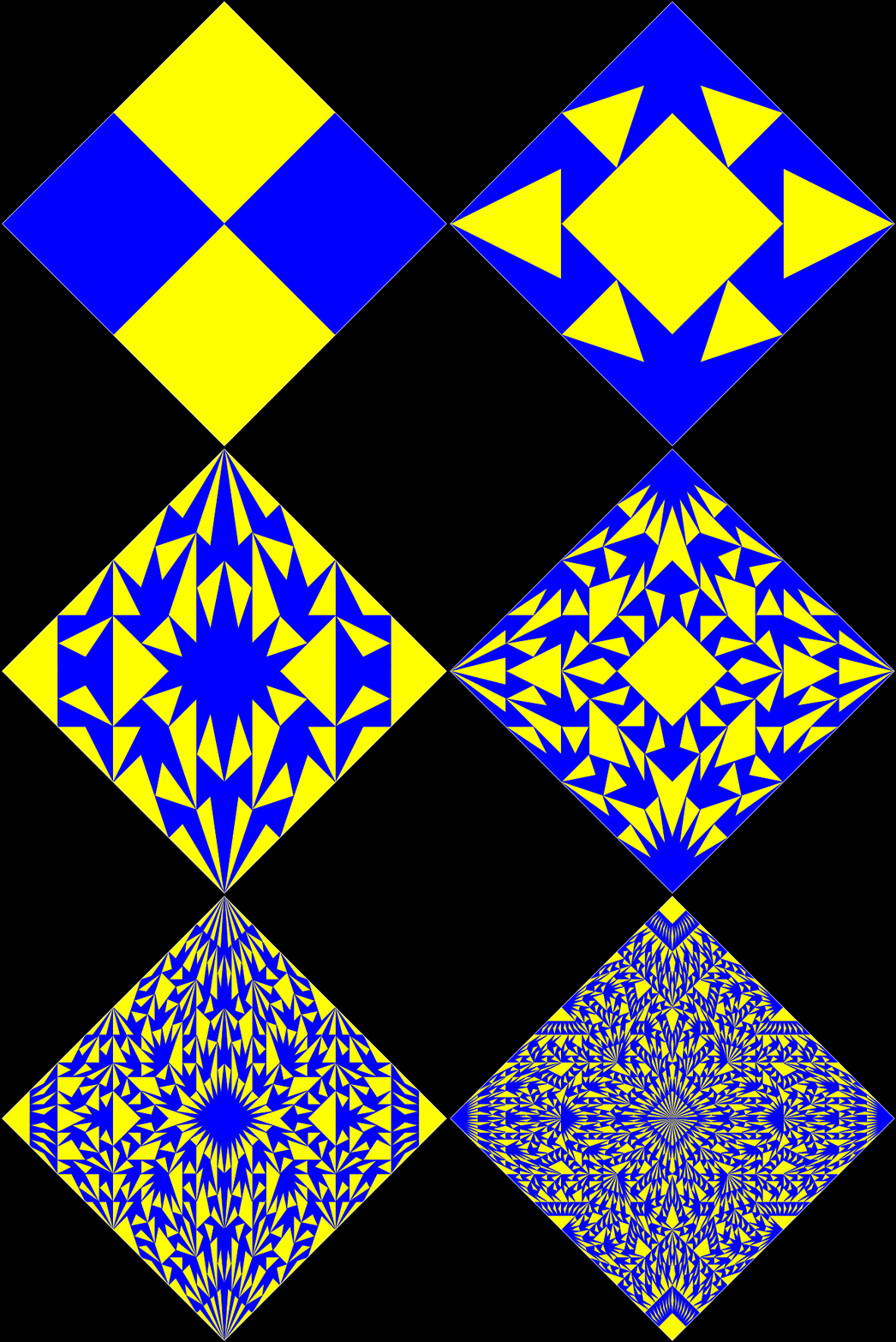
Here’s a different right-triangle. When you divide it regularly, it looks like this:

Right-triangle rep-3 stage 1

Rep-3 Tright #2
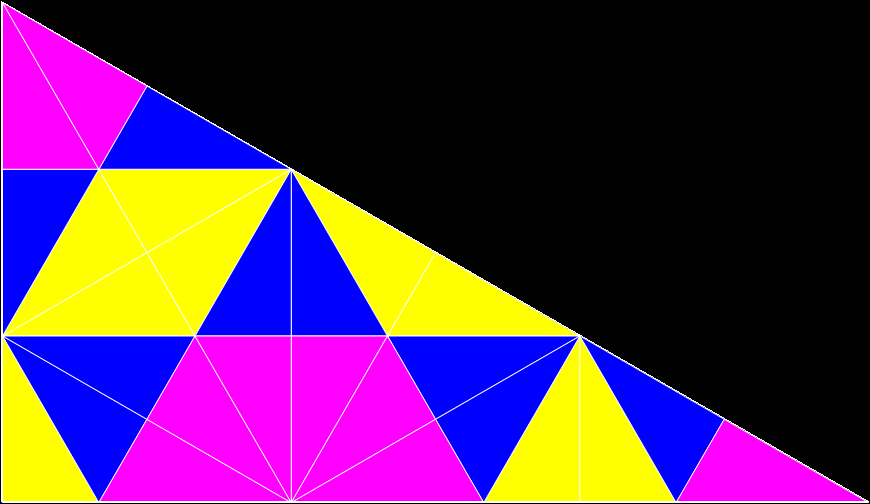
3-Tright #3

3-Tright #4
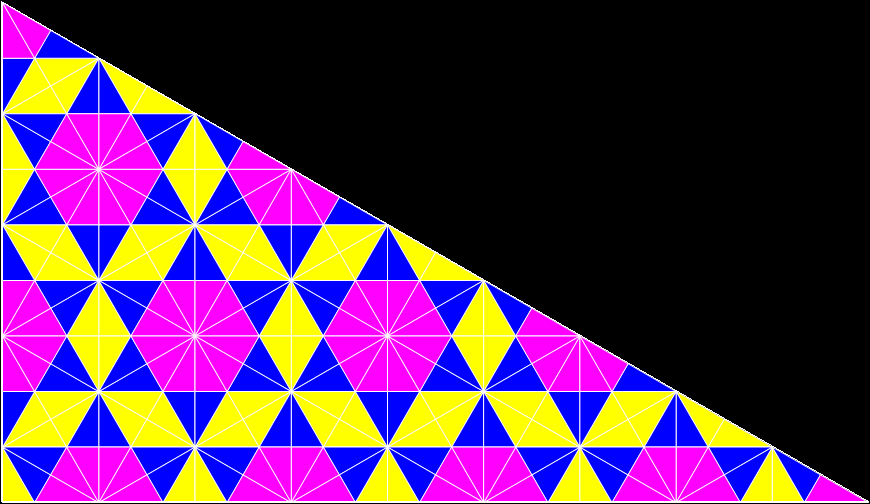
3-Tright #5

3-Tright #6

3-Tright #7
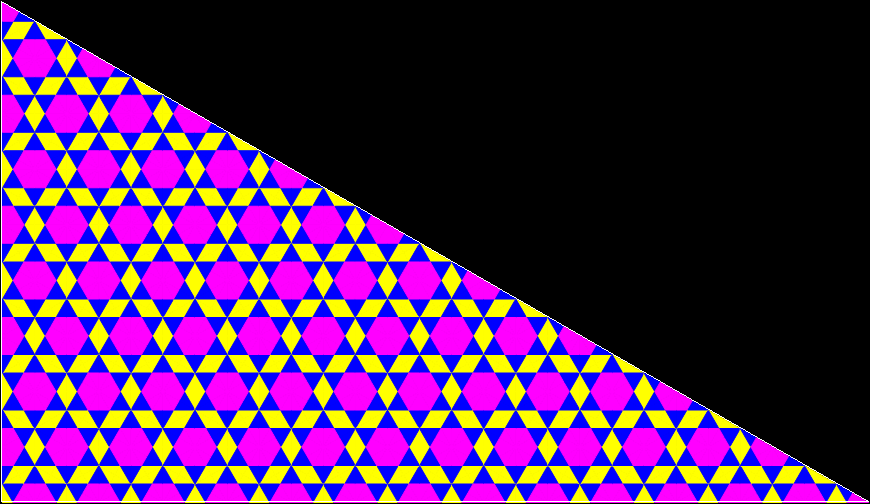
3-Tright #8

3-Tright #9
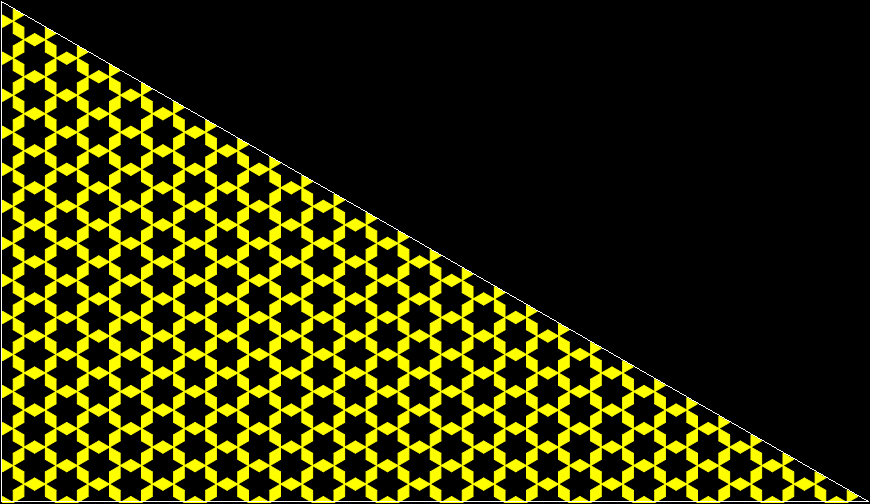
3-Tright (one colour)
When you distort the divisions, you can create interesting fractals (click on images for larger versions):
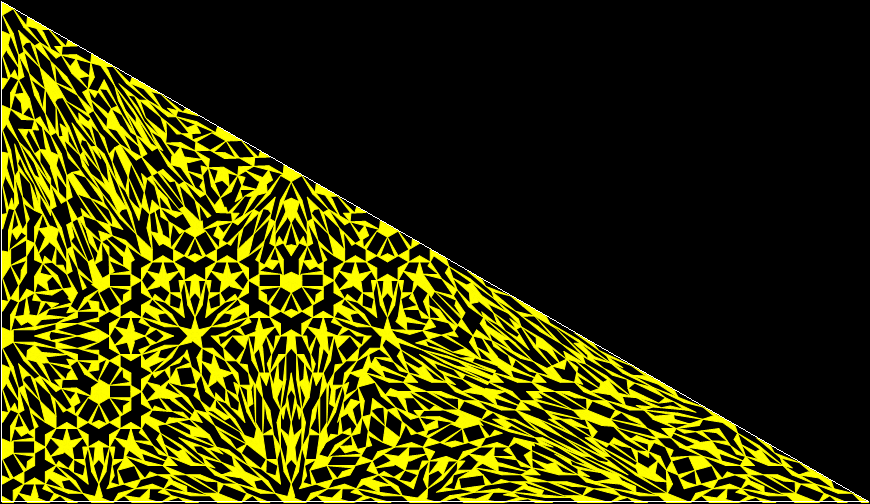
Distorted 3-Tright
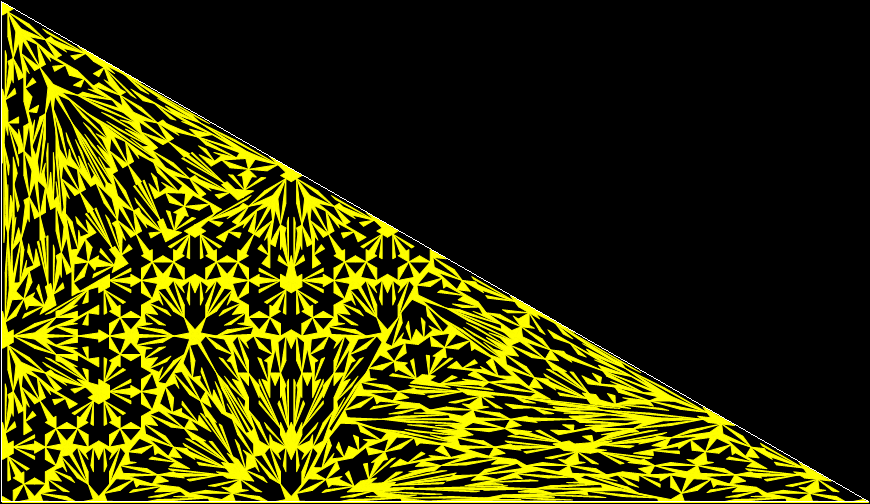
Distorted 3-Tright
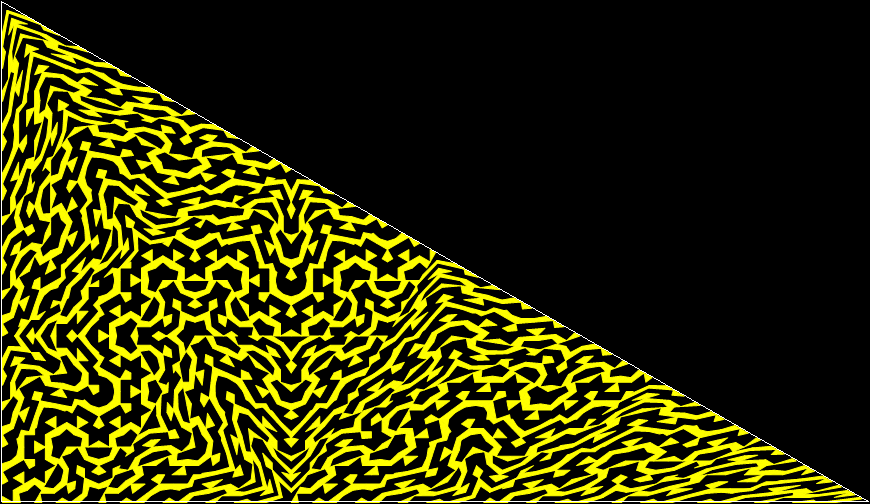
Distorted 3-Tright
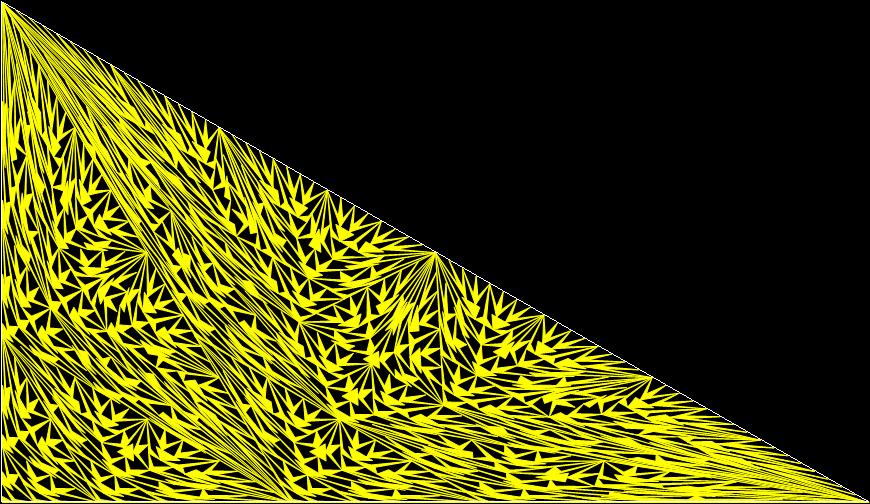
Distorted 3-Tright
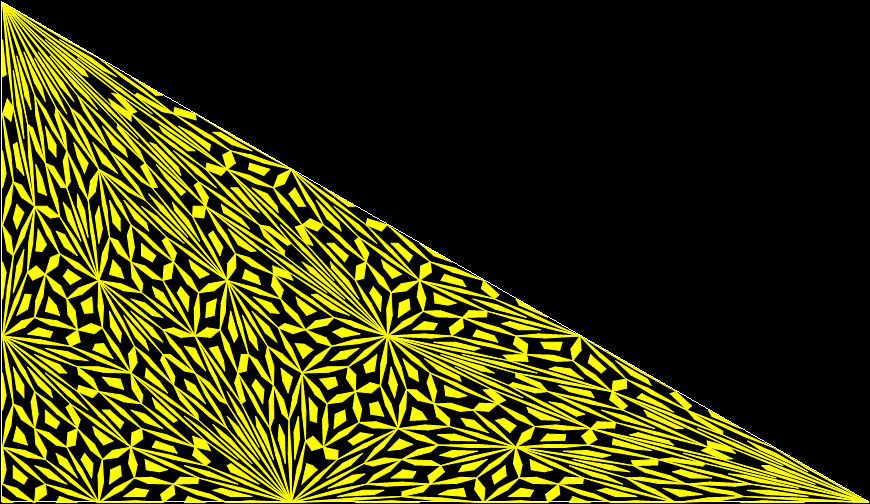
Distorted 3-Tright

Distorted 3-Tright
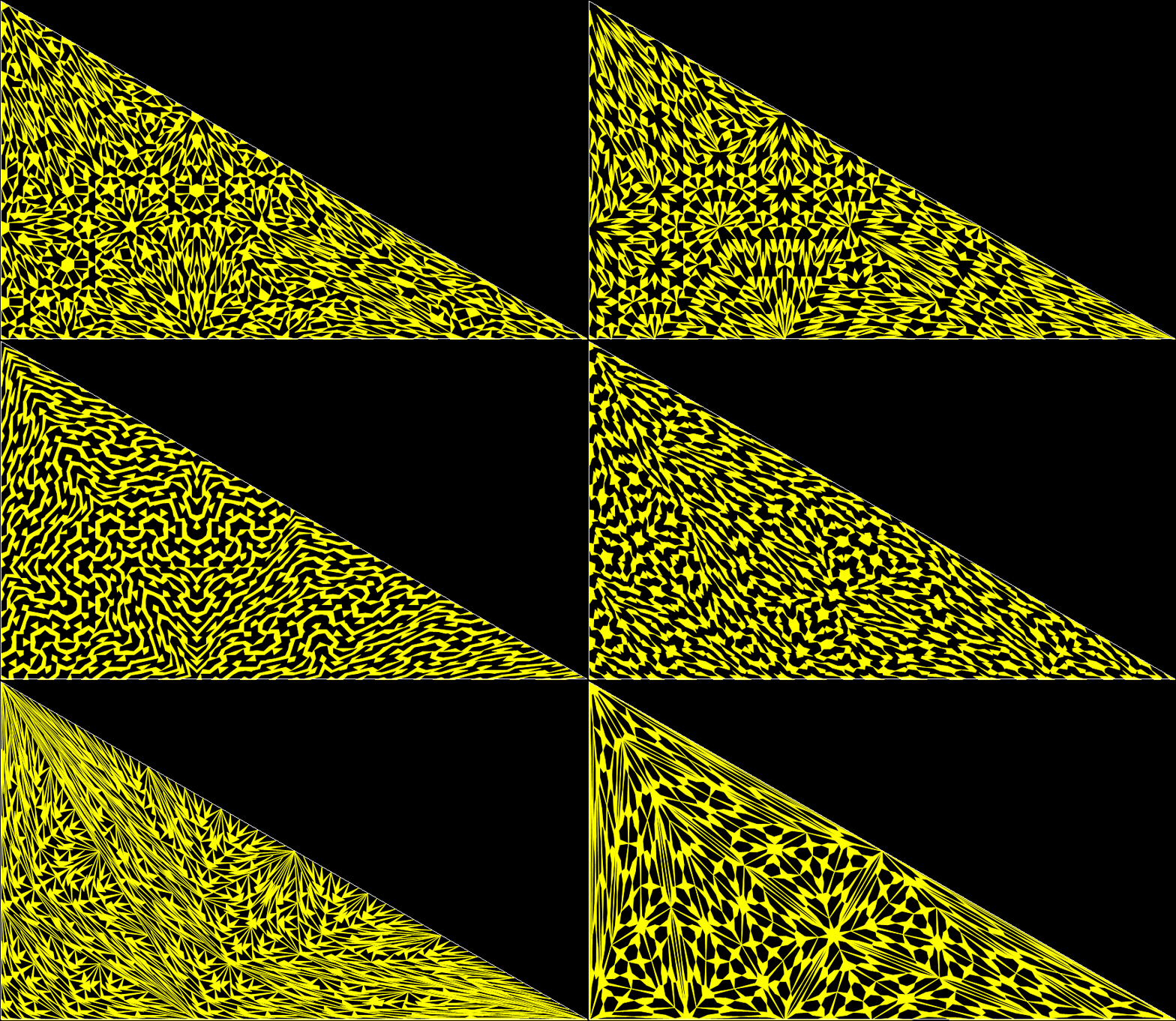
Distorted 3-Tright (animated)
And when four of the distorted right-triangles (rep-2 or rep-3) are joined in a diamond, you can create shapes like these:

Creating a diamond #1
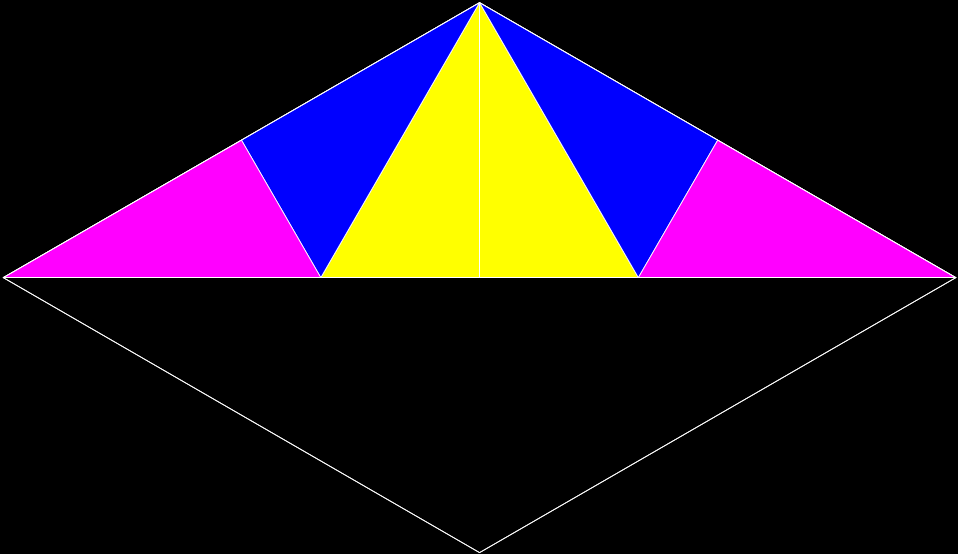
Creating a diamond #2

Creating a diamond #3

Creating a diamond #4
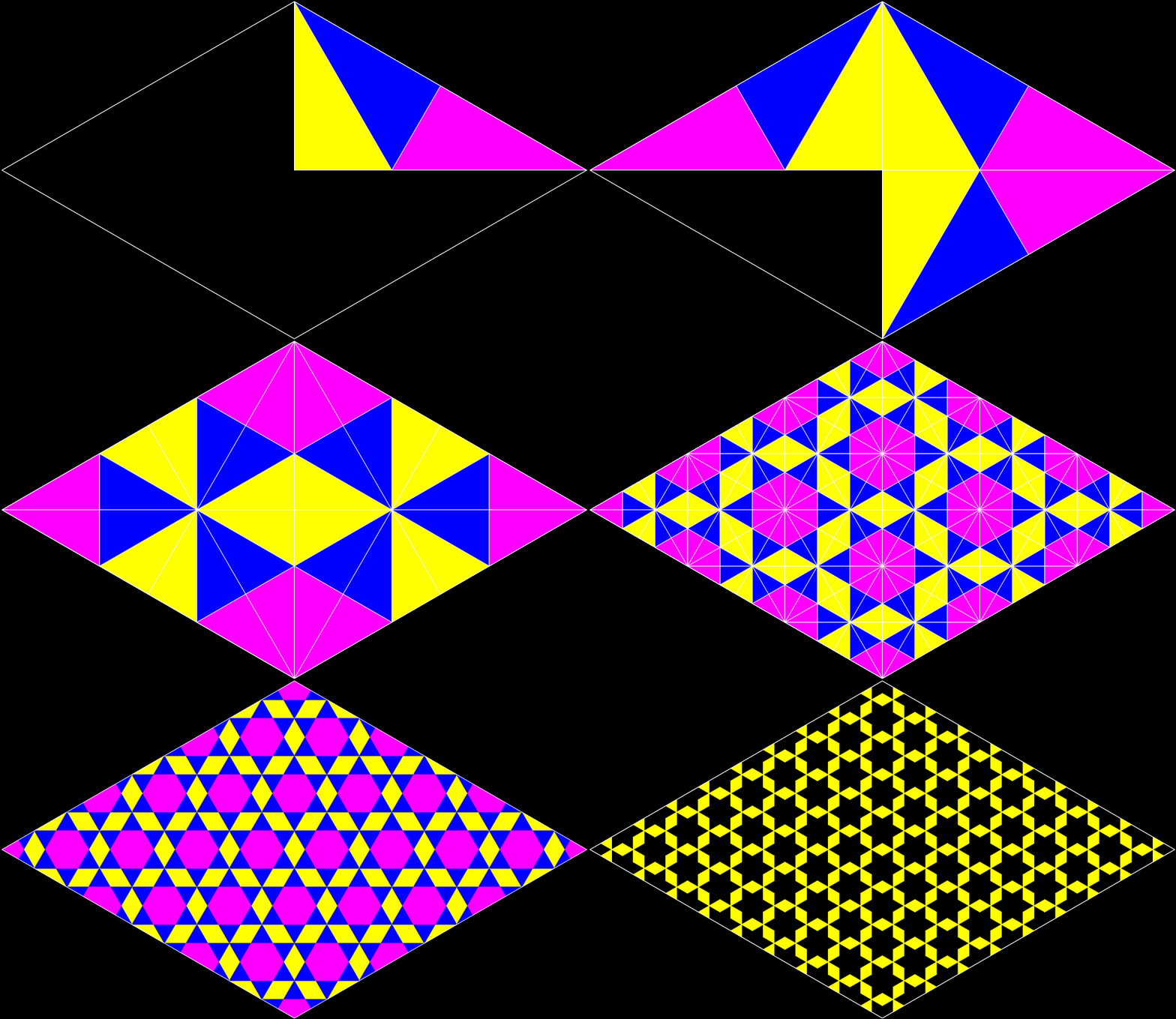
Creating a diamond (animated)

Rep-3 right-triangle diamond (divided)
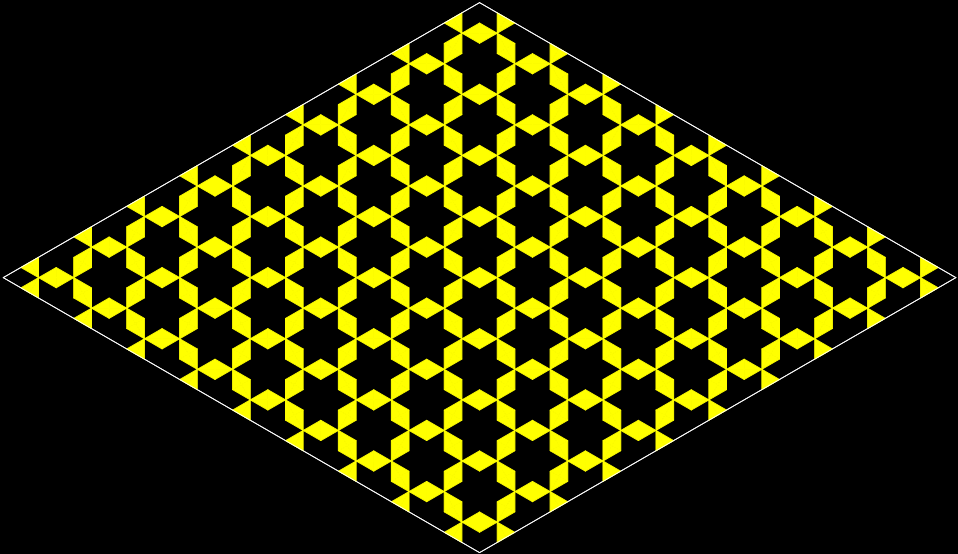
Rep-3 right-triangle diamond (single colour)
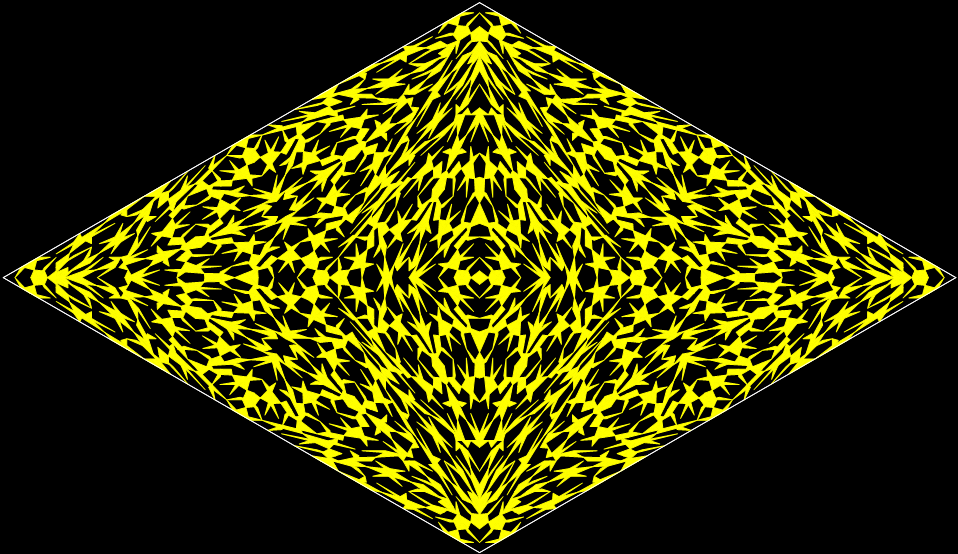
Distorted rep-3 right-triangle diamond
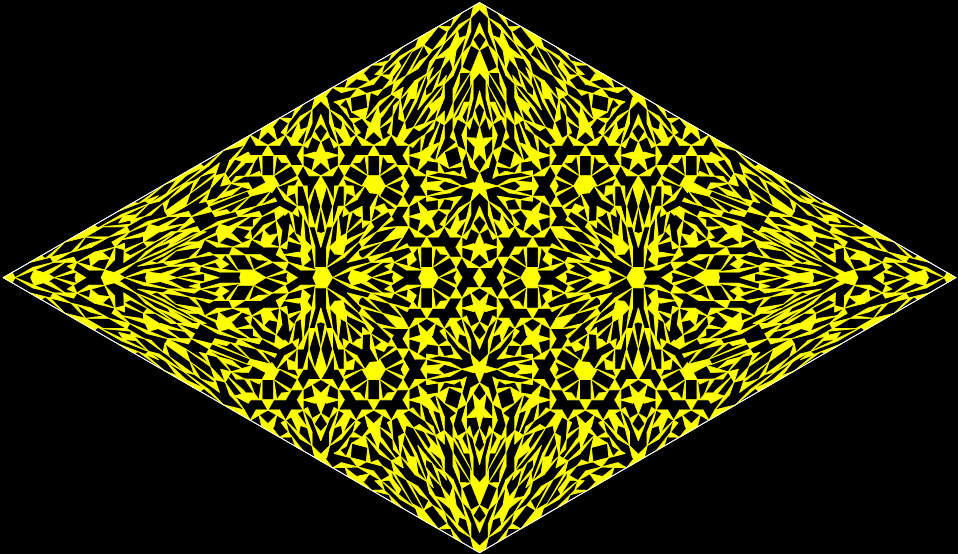
Distorted 3-tright diamond
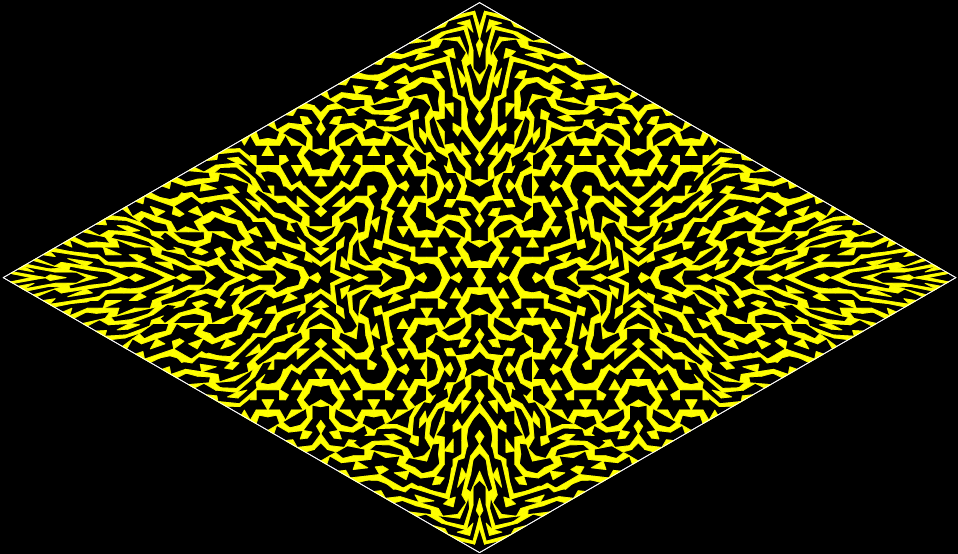
Distorted 3-tright diamond

Distorted 3-tright diamond
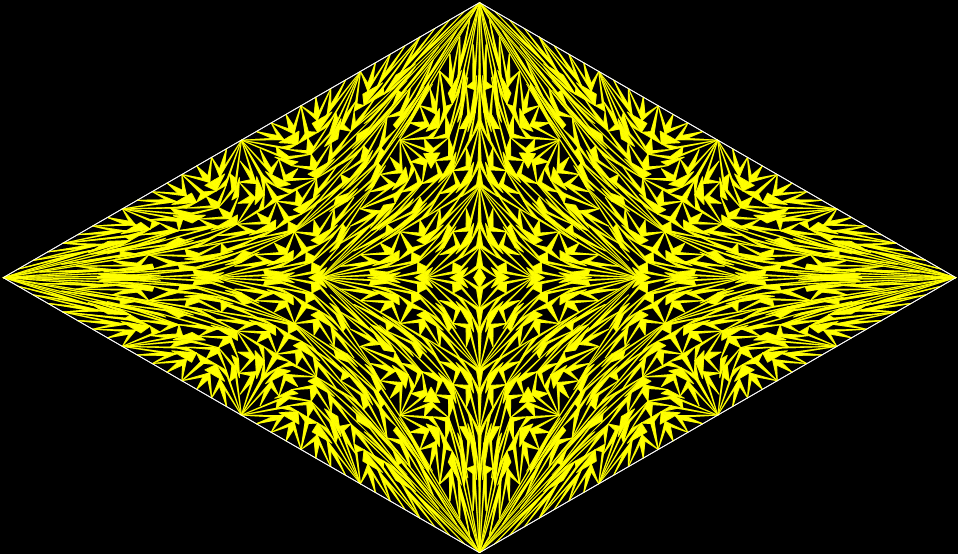
Distorted 3-tright diamond

Distorted 3-tright diamond

Distorted 3-tright diamond

Distorted 3-tright diamond

Distorted 3-tright diamond

Distorted 3-tright diamond
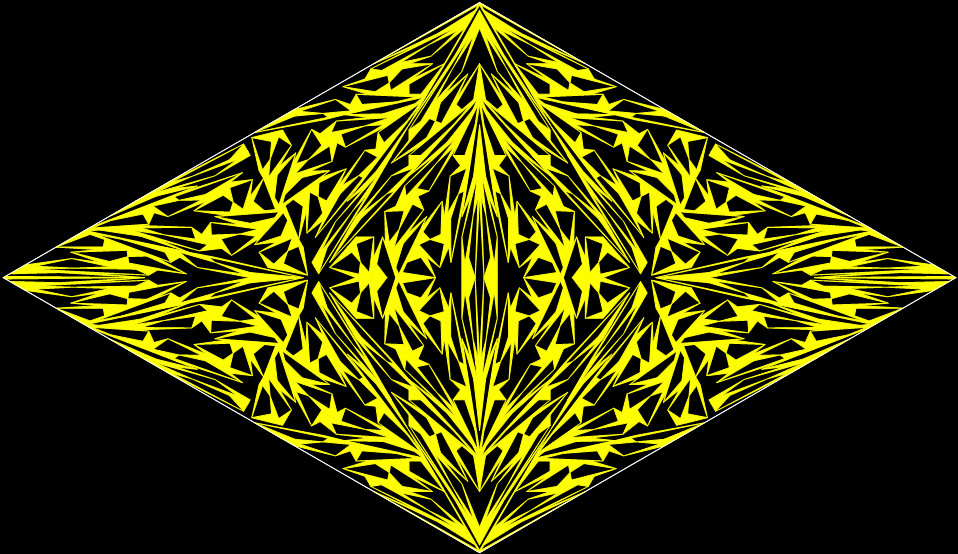
Distorted 3-tright diamond

Distorted 3-tright diamond (animated)
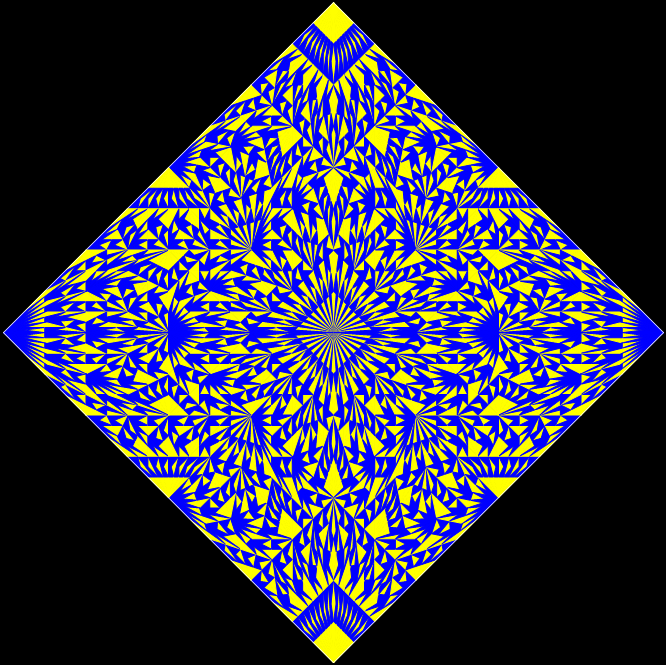
Distorted rep-2 right-triangle

Distorted 2-tright diamond
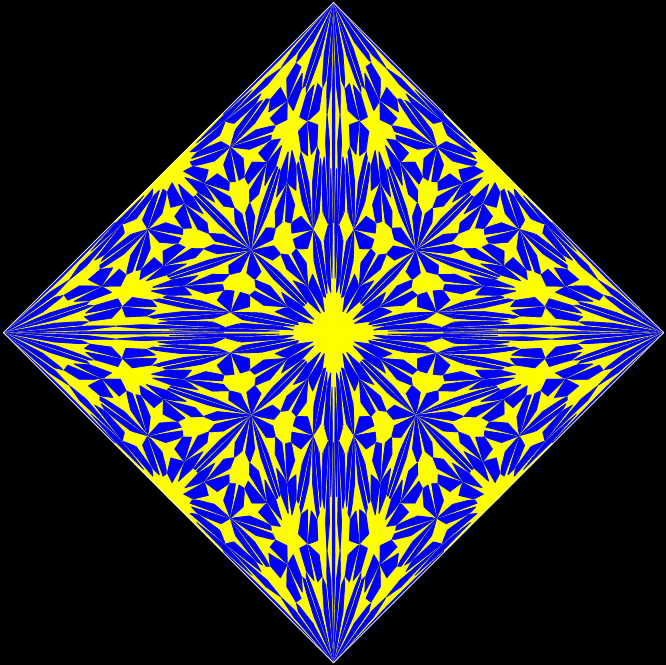
Distorted 2-tright diamond

Distorted 2-tright diamond
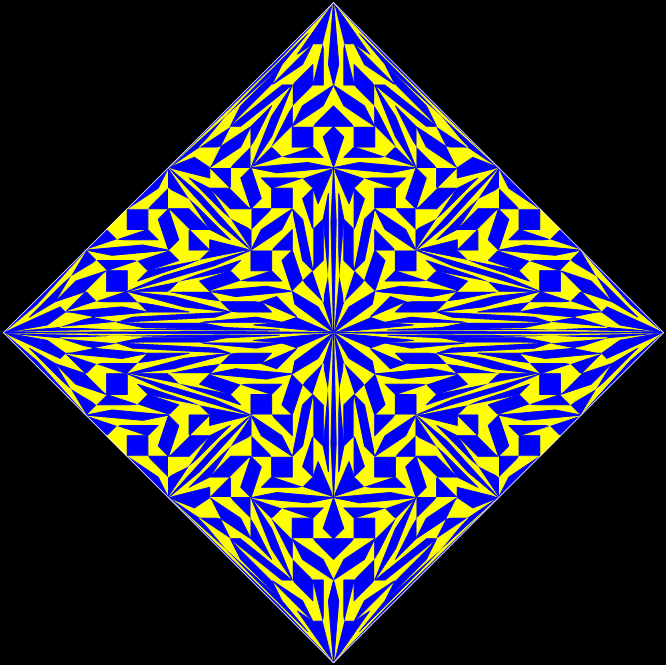
Distorted 2-tright diamond
Distorted 2-tright diamond (animated)
“There are three golden rules to ensure computer security. They are: do not own a computer; do not power it on; do not use it.” — Robert H. Morris (1932-2011), computer scientist and once head of the NSA.
« Quelle chimère est-ce donc que l’homme, quelle nouveauté, quel monstre, quel chaos, quel sujet de contradiction, quel prodige, juge de toutes choses, imbécile ver de terre, dépositaire du vrai, cloaque d’incertitude et d’erreur, gloire et rebut de l’univers ! » — Pascal
“What a Chimera is man! What a novelty, a monster, a chaos, a contradiction, a prodigy! Judge of all things, an imbecile worm; depository of truth, and sewer of error and doubt; the glory and refuse of the universe.”
Currently listening…
• Coöperatif-41, Bokej z Banvú (1997)
• Hedgehoppers, Age is a Perfect Curve (1986)
• Xexzi, W3 R Bilius Qeenz (1996)
• Koyske, Ijt Dael’dui (1973)
• Les Vraies Pêches, Huitztzilin (2014)
• Corpa Cicuga, Lo-Jakt (1983)
• DeciDames, Froschfrauen (1985)
• Tōbz Zuriū, Huāopāh Remixes (2000)
• Milly Boxbrough, Bojfrenzi (2012)
• Ituh Ba, Uyc Nue (1960)
• Ecce Tambora, En las Últimas (2009)
• Tinnitus Sect, Auricular (2014)
• Lupa In Silva, Exocets magnetiques (2007)
• P.A. Locatelli, Concerti Grossi (1990)
• Iümgenker, Gleimxi (2013)
Previously pre-posted:
Toxic Turntable #1 • #2 • #3 • #4 • #5 • #6 • #7 • #8 • #9 • #10 • #11 • #12 • #13 • #14 •

Portrait of Henry VIII (1540) by Hans Holbein the Younger (c. 1497-1543)
Discovering something that’s new to you in recreational maths is good. But so is re-discovering it by a different route. I’ve long been passionate about what happens when a point is allowed to jump repeatedly halfway towards the randomly chosen vertices of a square. If the point can choose any vertex any number of times, the interior of the square fills slowly and completely with points, like this:
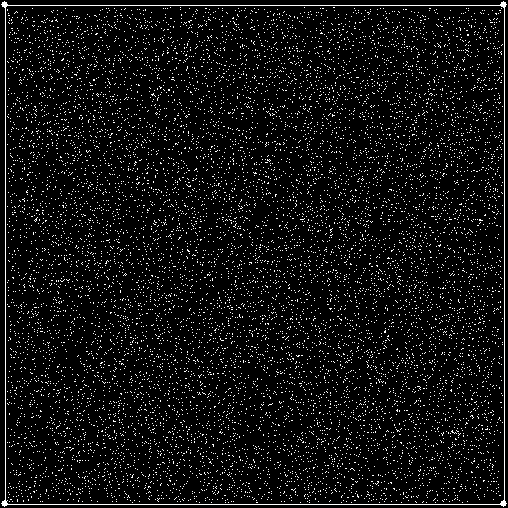
Point jumping at random halfway towards vertices of a square
However, if the point is banned from jumping towards the same vertex twice or more in a row, an interesting fractal appears:
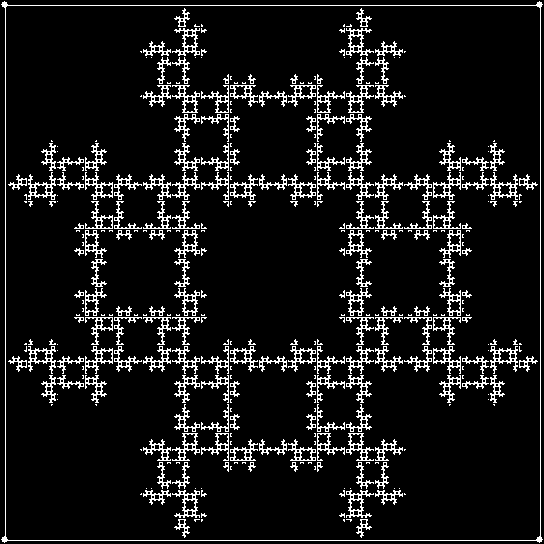
Fractal #1 — ban on jumping towards vertex vi twice or more
If the point can’t jump towards the vertex one place clockwise of the vertex it’s just jumped towards, this fractal appears:
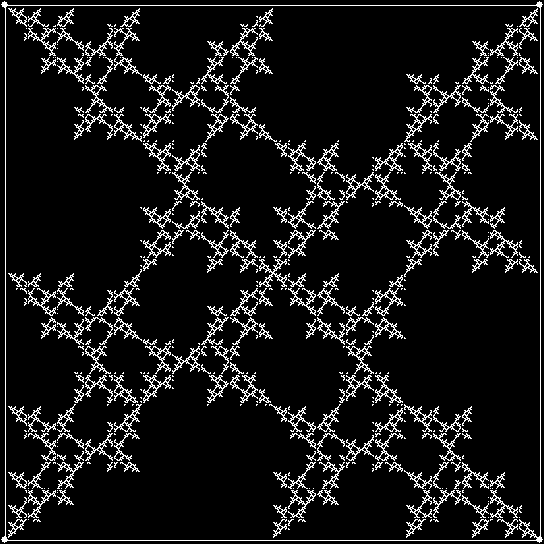
Fractal #2 — ban on jumping towards vertex vi+1
If the point can’t jump towards the vertex two places clockwise of the vertex it’s just jumped towards, this fractal appears (two places clockwise is also two places anticlockwise, i.e. the banned vertex is diagonally opposite):
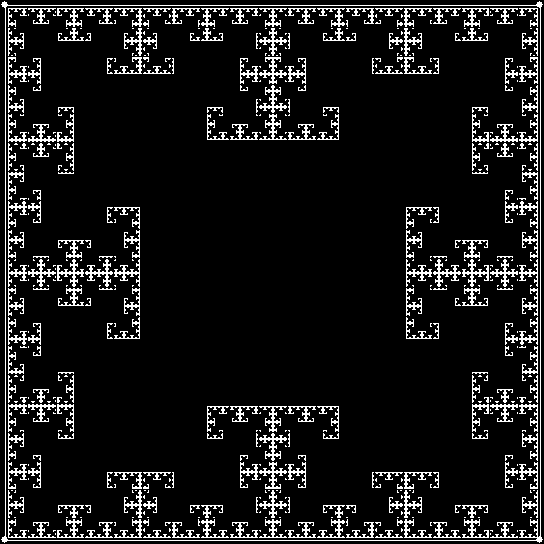
Fractal #3 — ban on jumping towards vertex vi+2
Now I’ve discovered a new way to create these fractals. You take a filled square, divide it into smaller squares, then remove some of them in a systematic way. Then you do the same to the smaller squares that remain. For fractal #1, you do this:
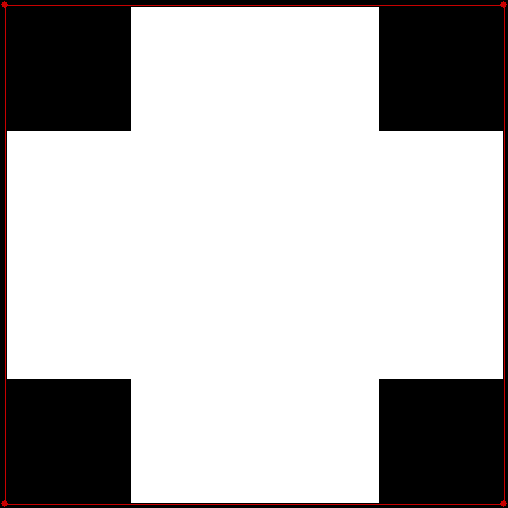
Fractal #1, stage #1
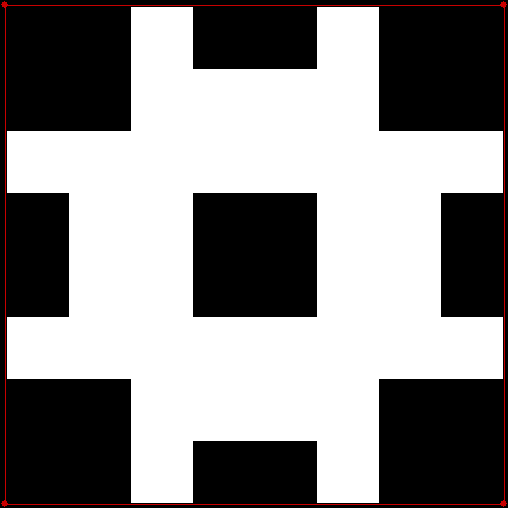
Stage #2
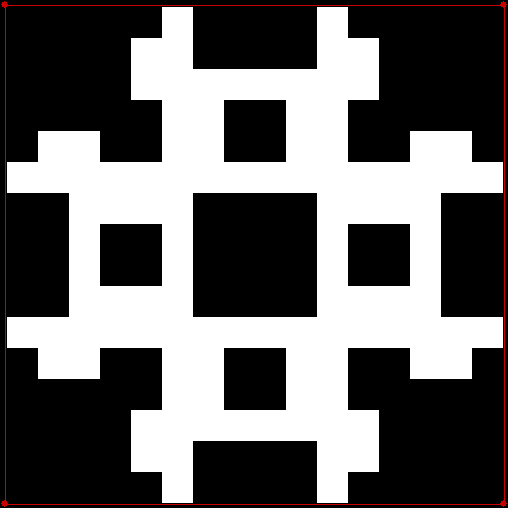
Stage #3
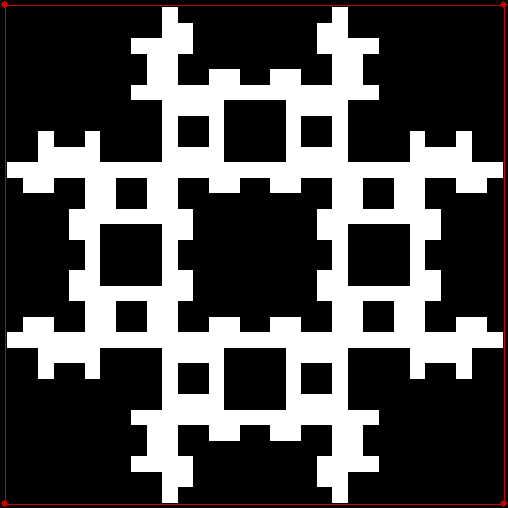
Stage #4
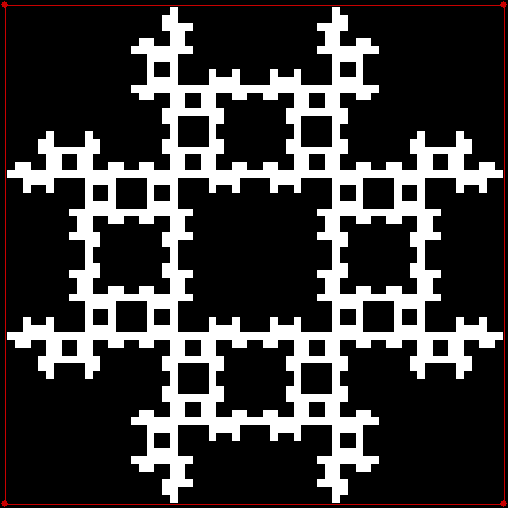
Stage #5
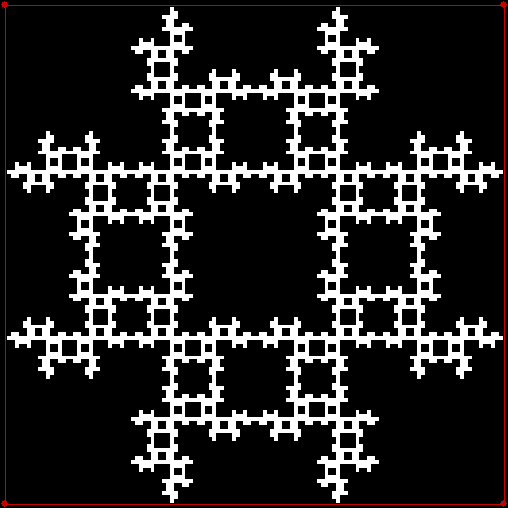
Stage #6
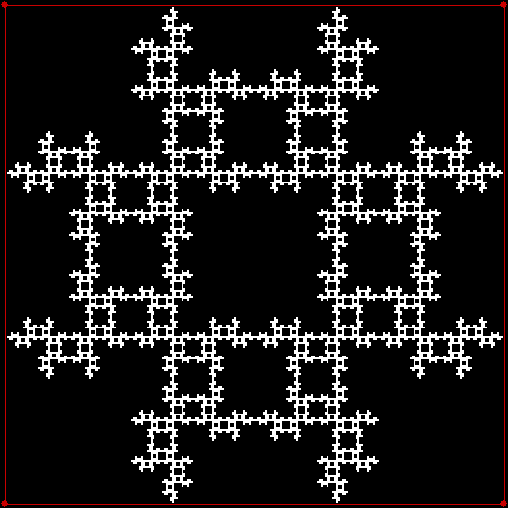
Stage #7
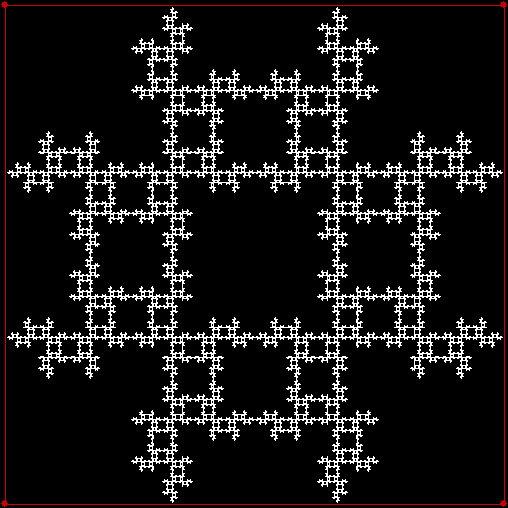
Stage #8

Fractal #1 (animated)
For fractal #2, you do this:
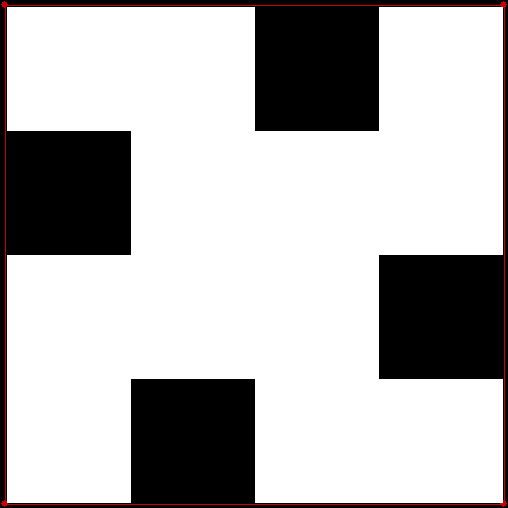
Fractal #2, stage #1
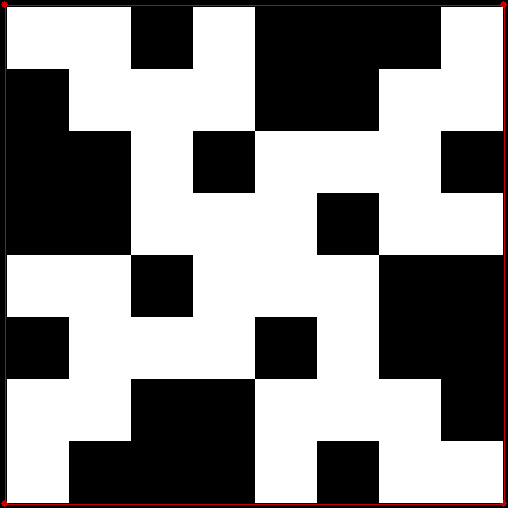
Stage #2
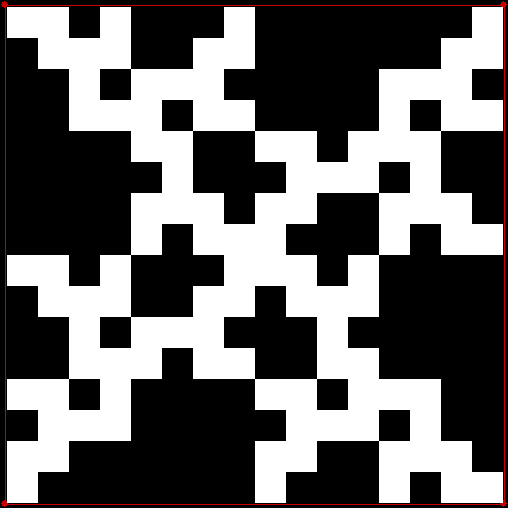
Stage #3
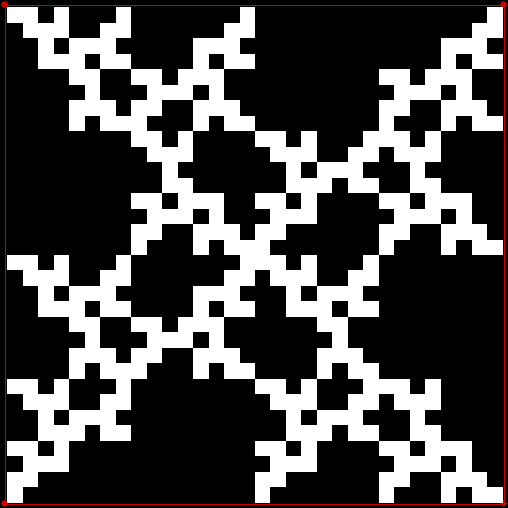
Stage #4
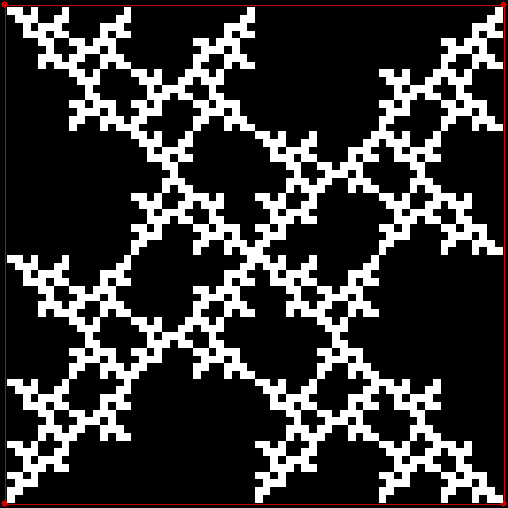
Stage #5
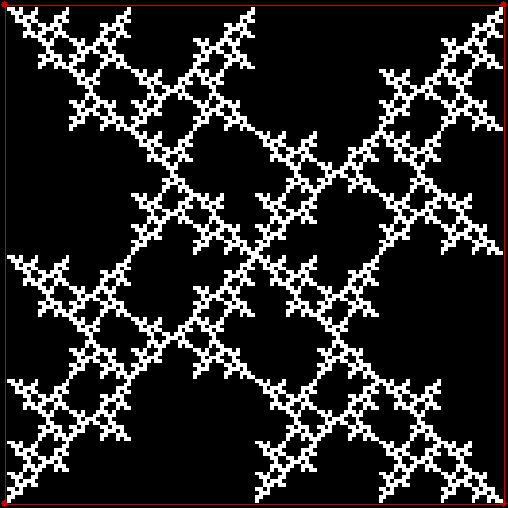
Stage #6
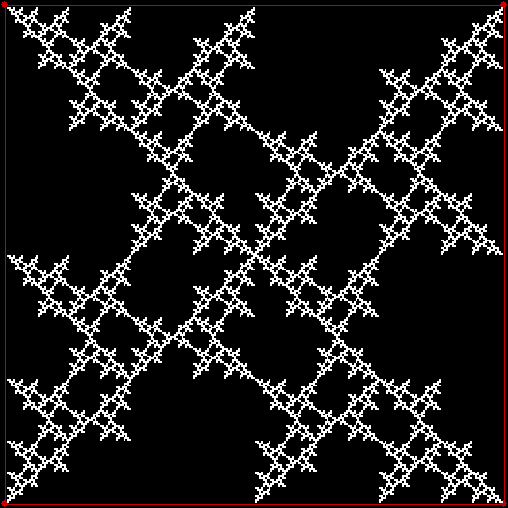
Stage #7
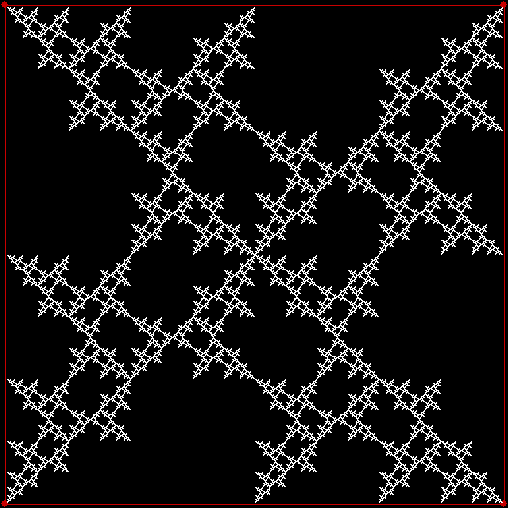
Stage #8

Fractal #2 (animated)
For fractal #3, you do this:
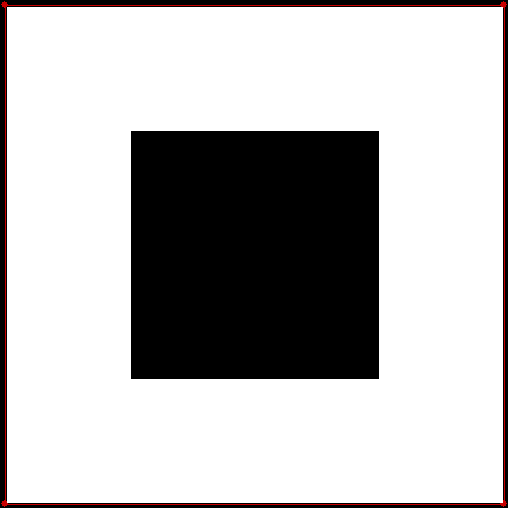
Fractal #3, stage #1
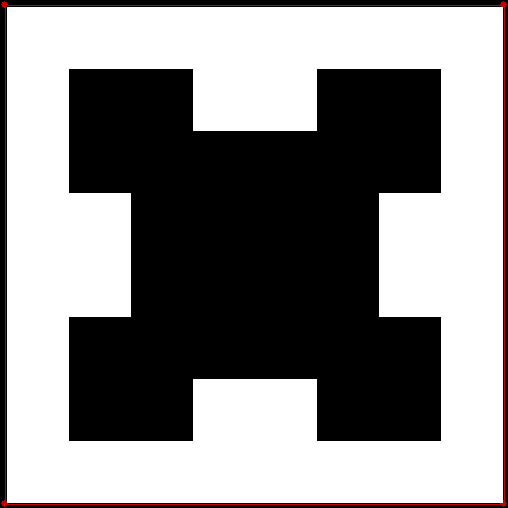
Stage #2
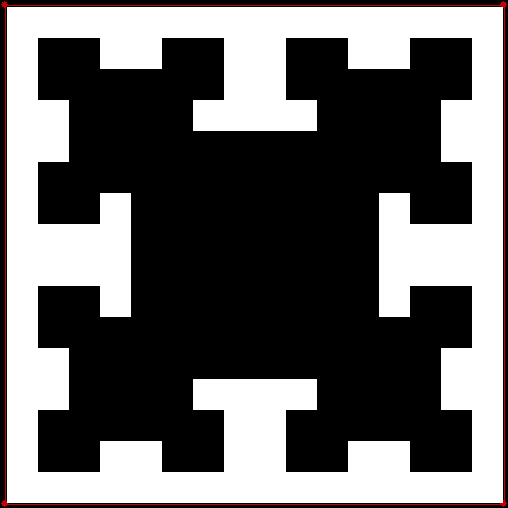
Stage #3
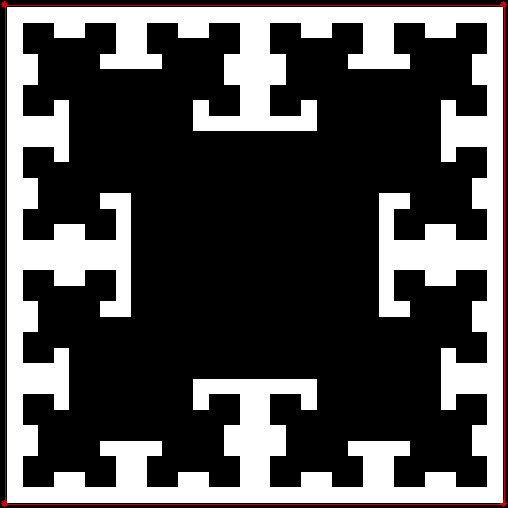
Stage #4
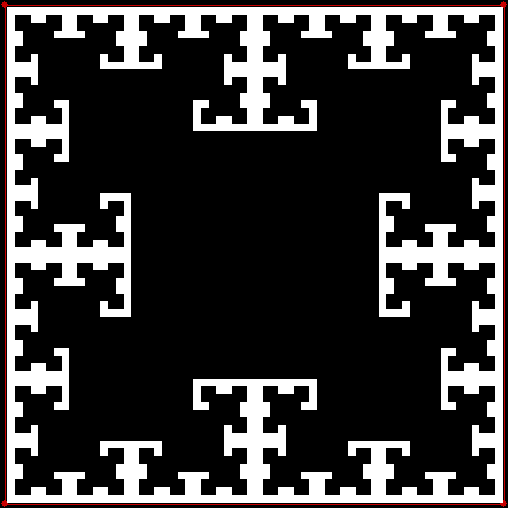
Stage #5
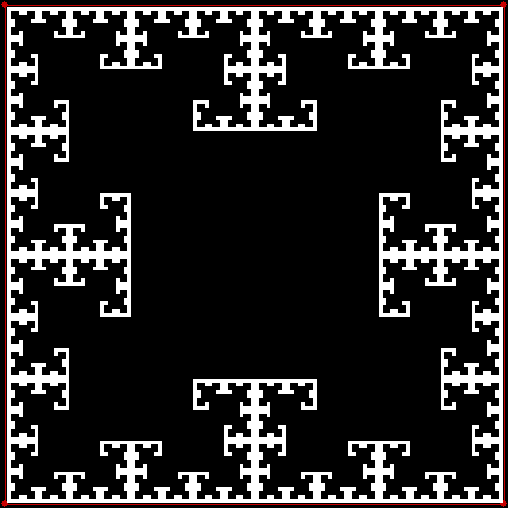
Stage #6
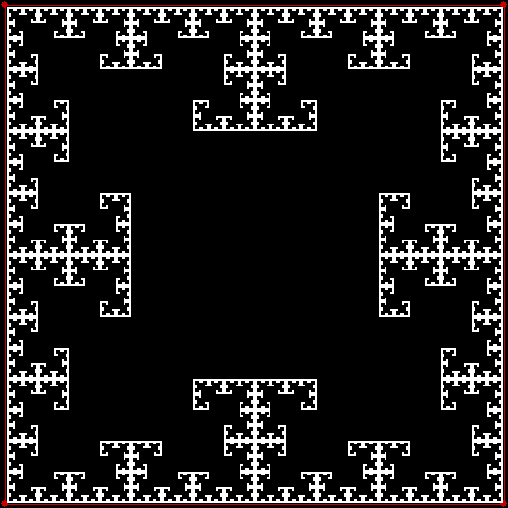
Stage #7
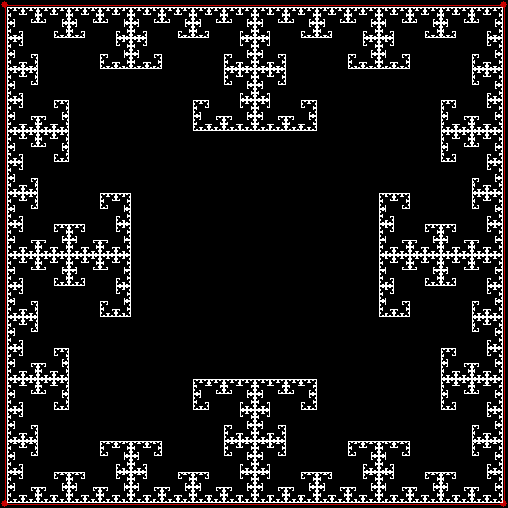
Stage #8

Fractal #3 (animated)
If the sub-squares are coloured, it’s easier to understand how, say, fractal #1 is created:
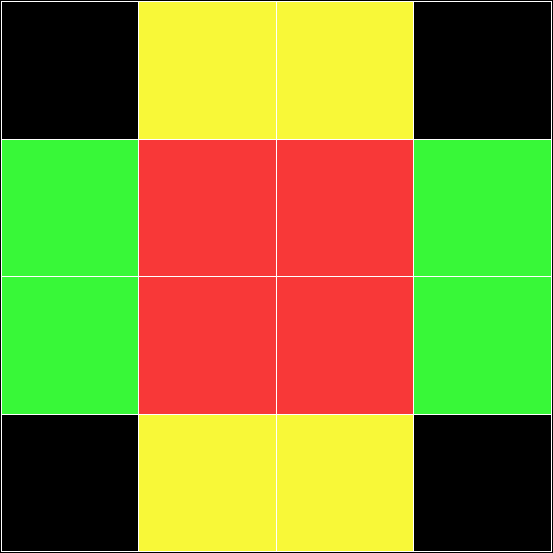
Fractal #1 (coloured), stage #1
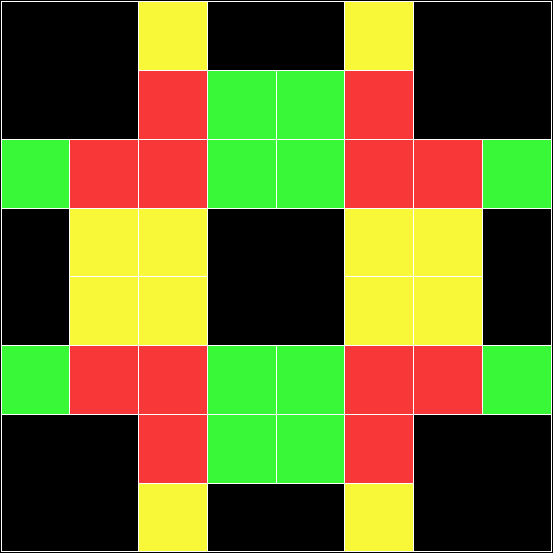
Stage #2
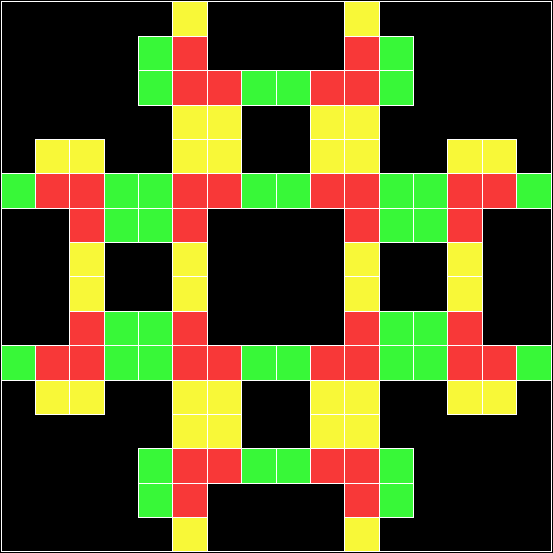
Stage #3
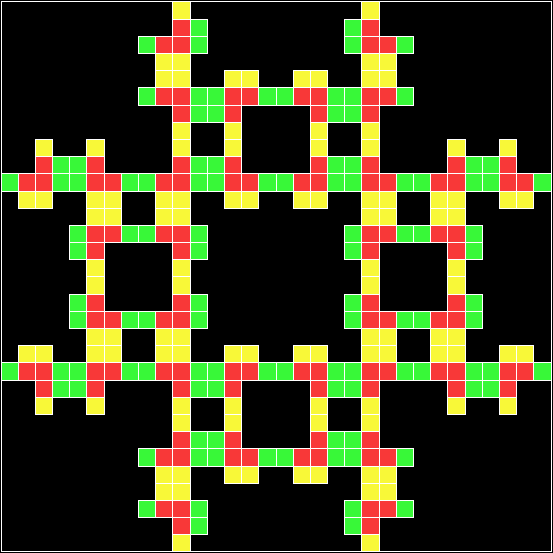
Stage #4
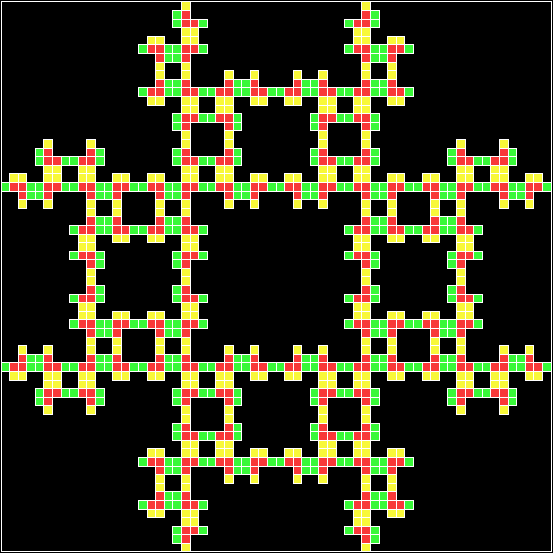
Stage #5
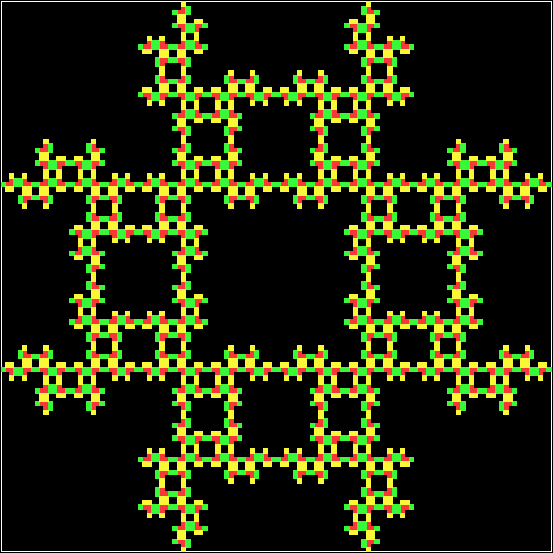
Stage #6
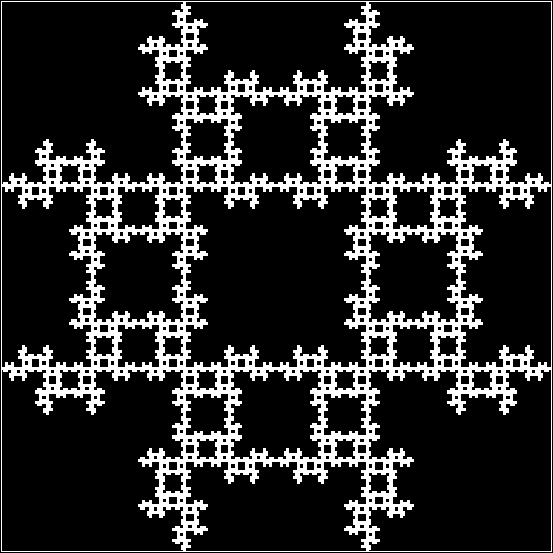
Stage #7
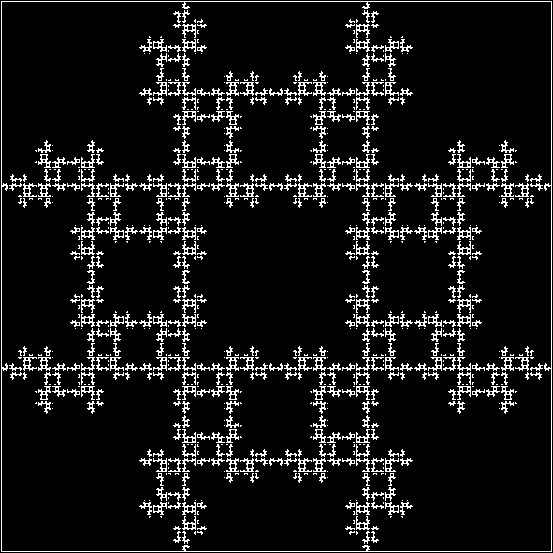
Stage #8
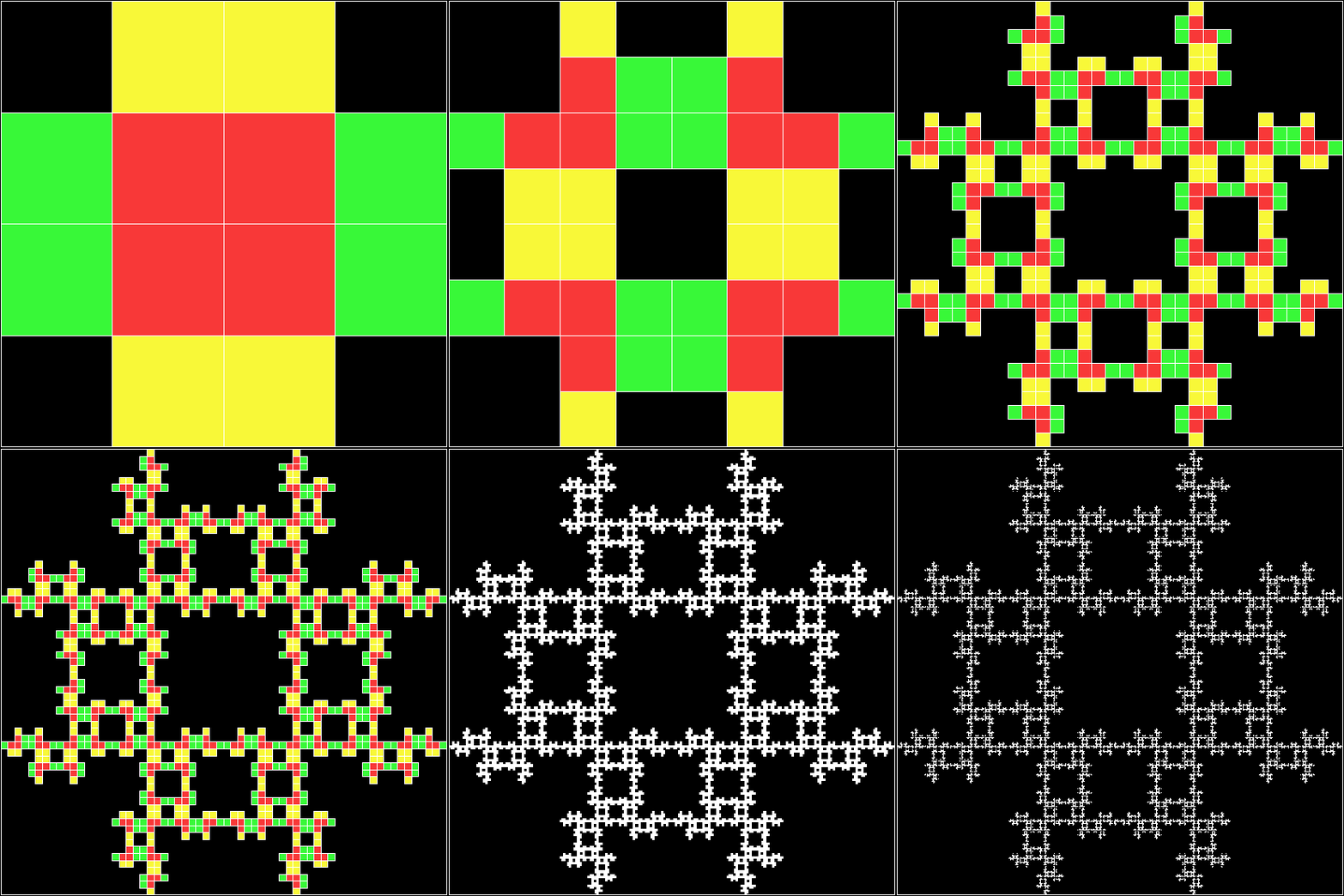
Fractal #1 (coloured and animated)
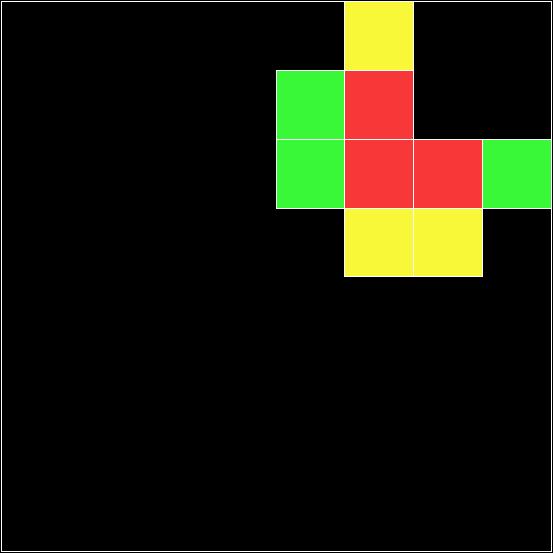
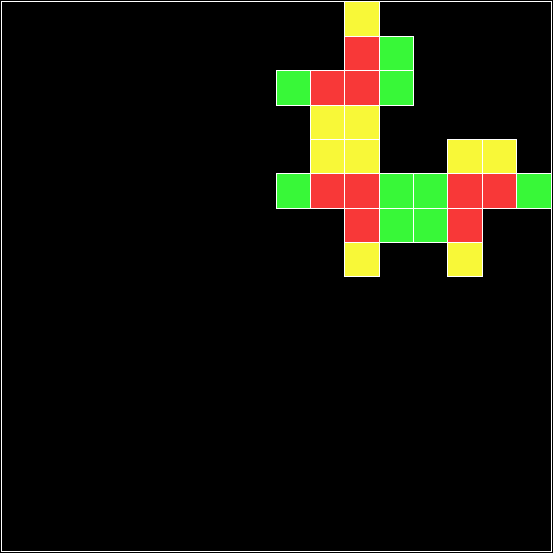
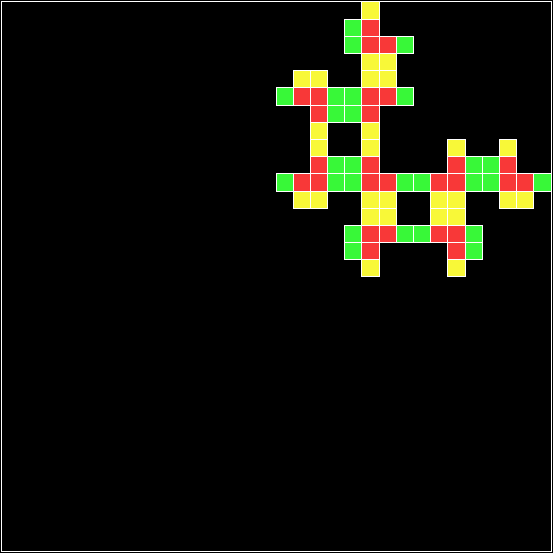
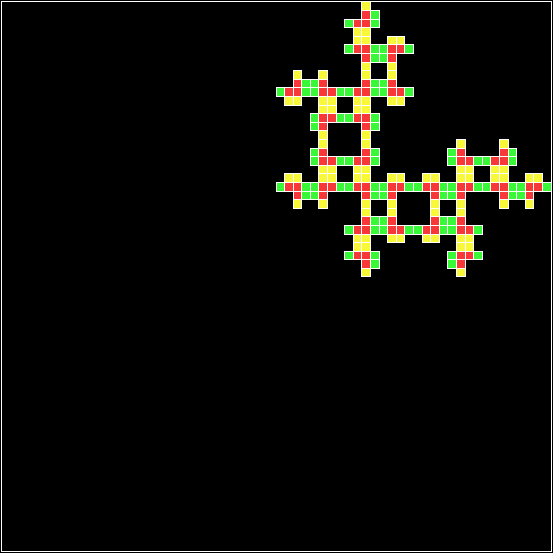
The fractal is actually being created in quarters, with one quarter rotated to form the second, third and fourth quarters:
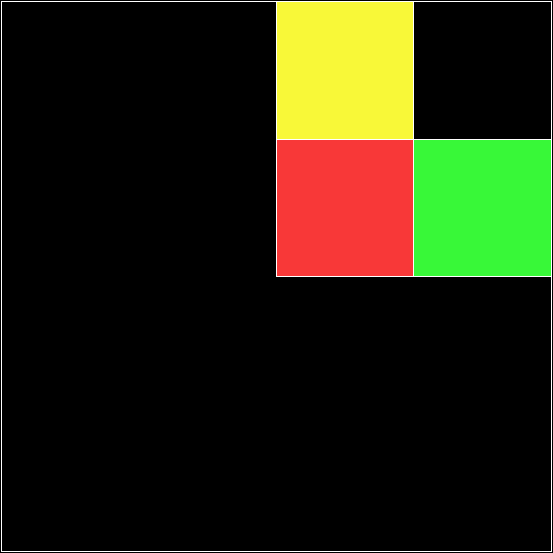
Fractal #1, quarter
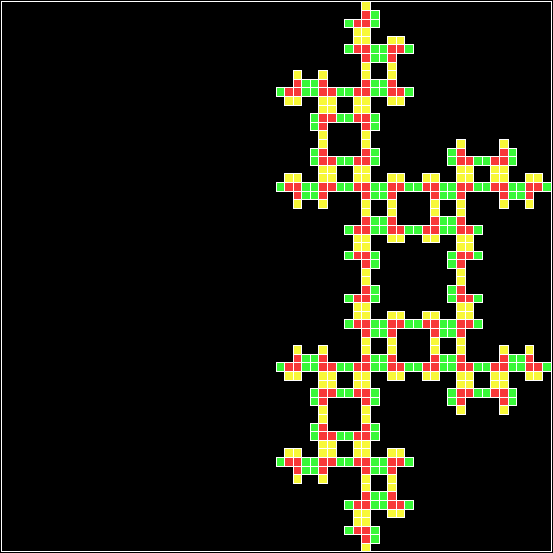
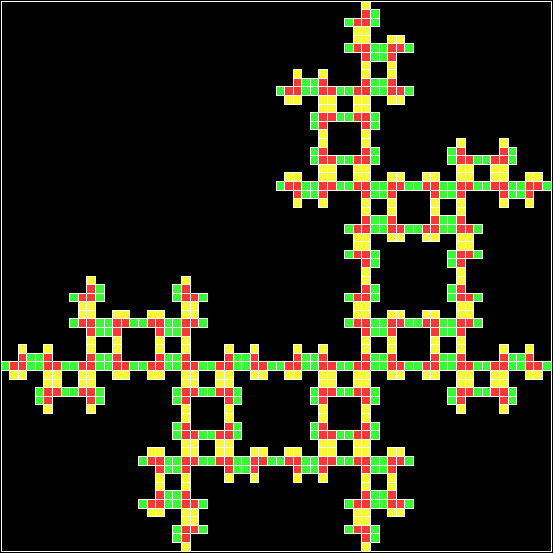
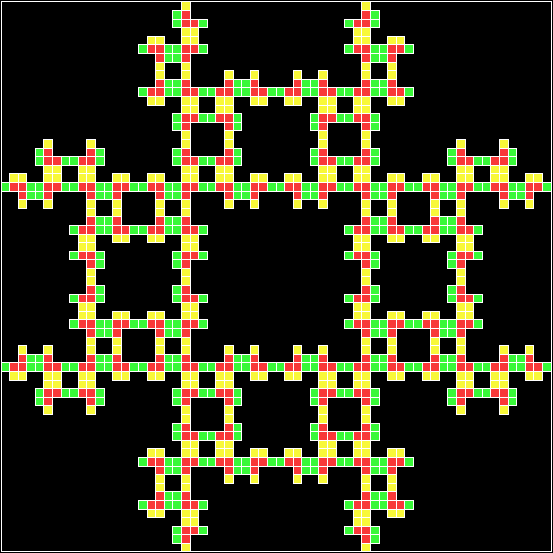
Here’s an animation of the same process for fractal #3:
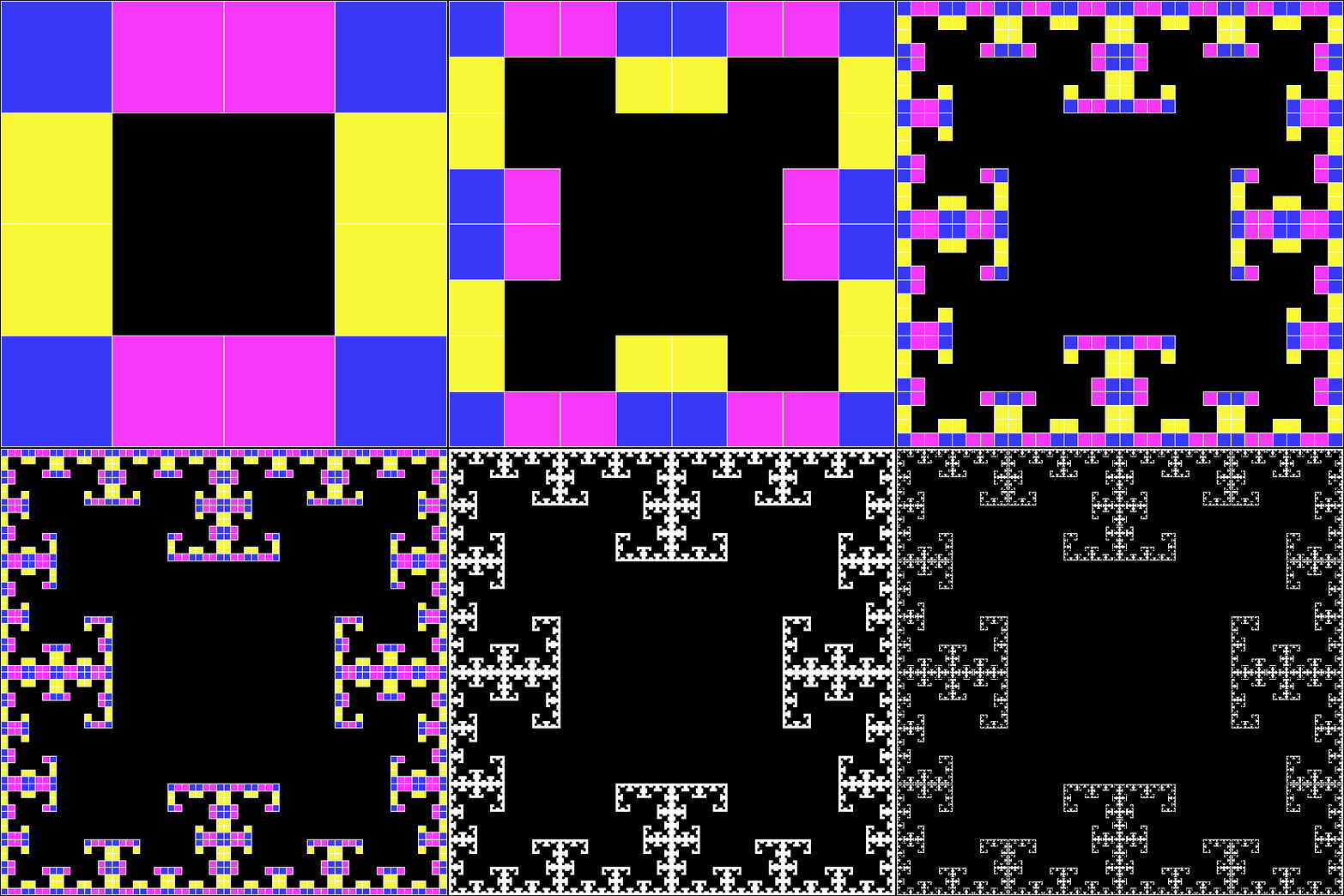
Fractal #3 (coloured and animated)
So you can create these fractals either with a jumping point or by subdividing a square. But in fact I discovered the subdivided-square route by looking at a variant of the jumping-point route. I wondered what would happen if you took a point inside a square, allowed it to trace all possible routes towards the vertices without marking its position, then imposed the restriction for Fractal #1 on its final jump, namely, that it couldn’t jump towards the vertex it jumped towards on its previous jump. If the point is marked after its final jump, this is what appears (if the routes chosen had been truly random, the image would be similar but messier):
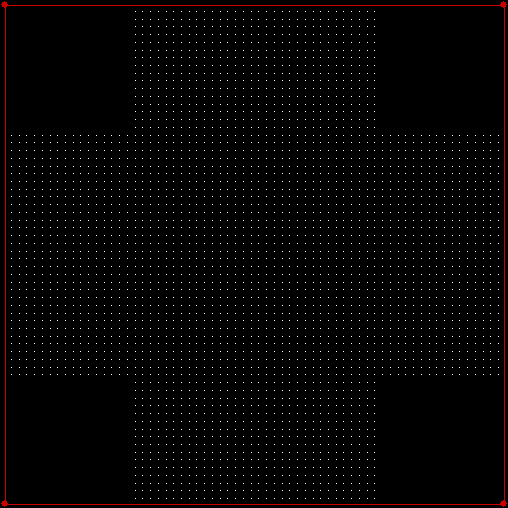
Fractal #1, restriction on final jump
Then I imposed the same restriction on the point’s final two jumps:
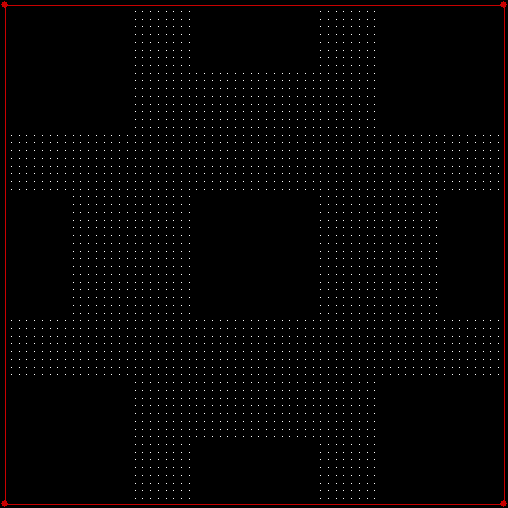
Fractal #1, restriction on final 2 jumps
And final three jumps:
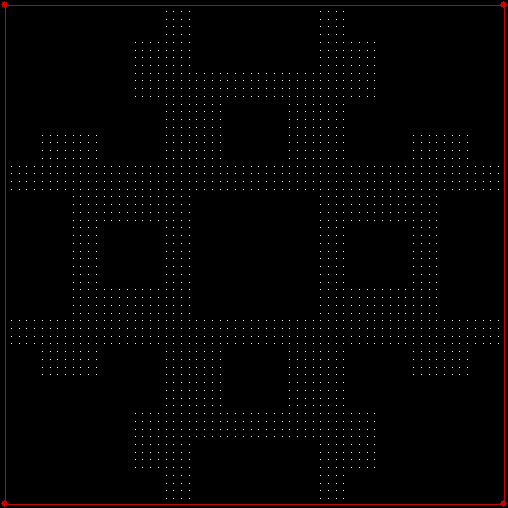
Fractal #1, restriction on final 3 jumps
And so on:
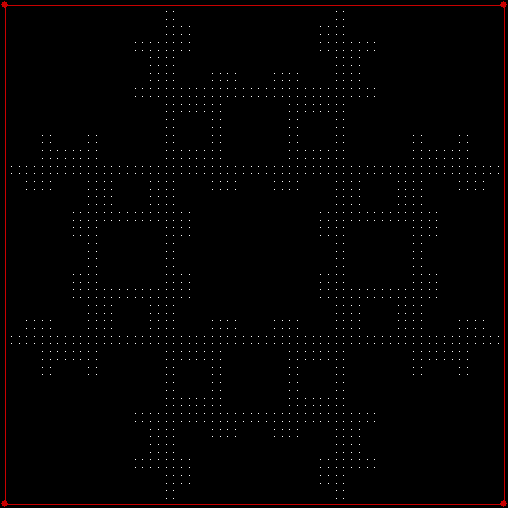
Fractal #1, restriction on final 4 jumps
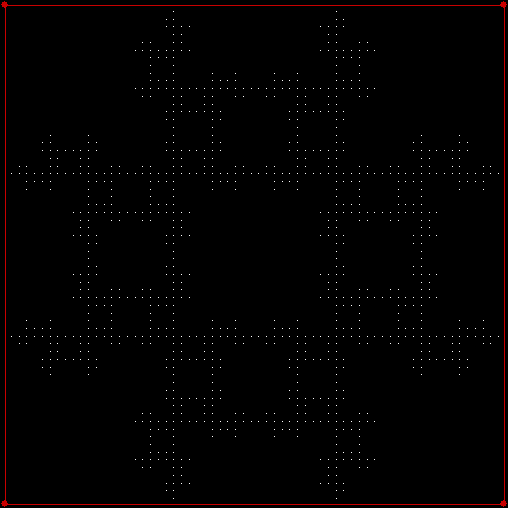
Fractal #1, restriction on final 5 jumps
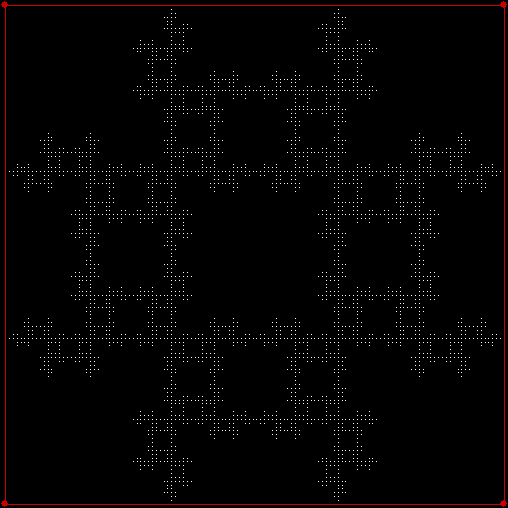
Fractal #1, restriction on final 6 jumps
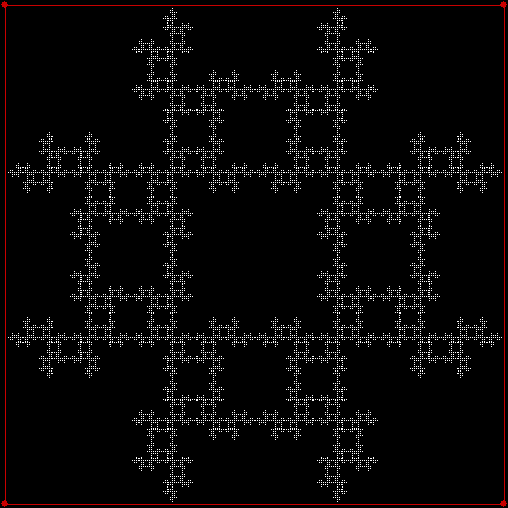
Fractal #1, restriction on final 7 jumps
Here are animations of the same process applied to fractals #2 and #3:
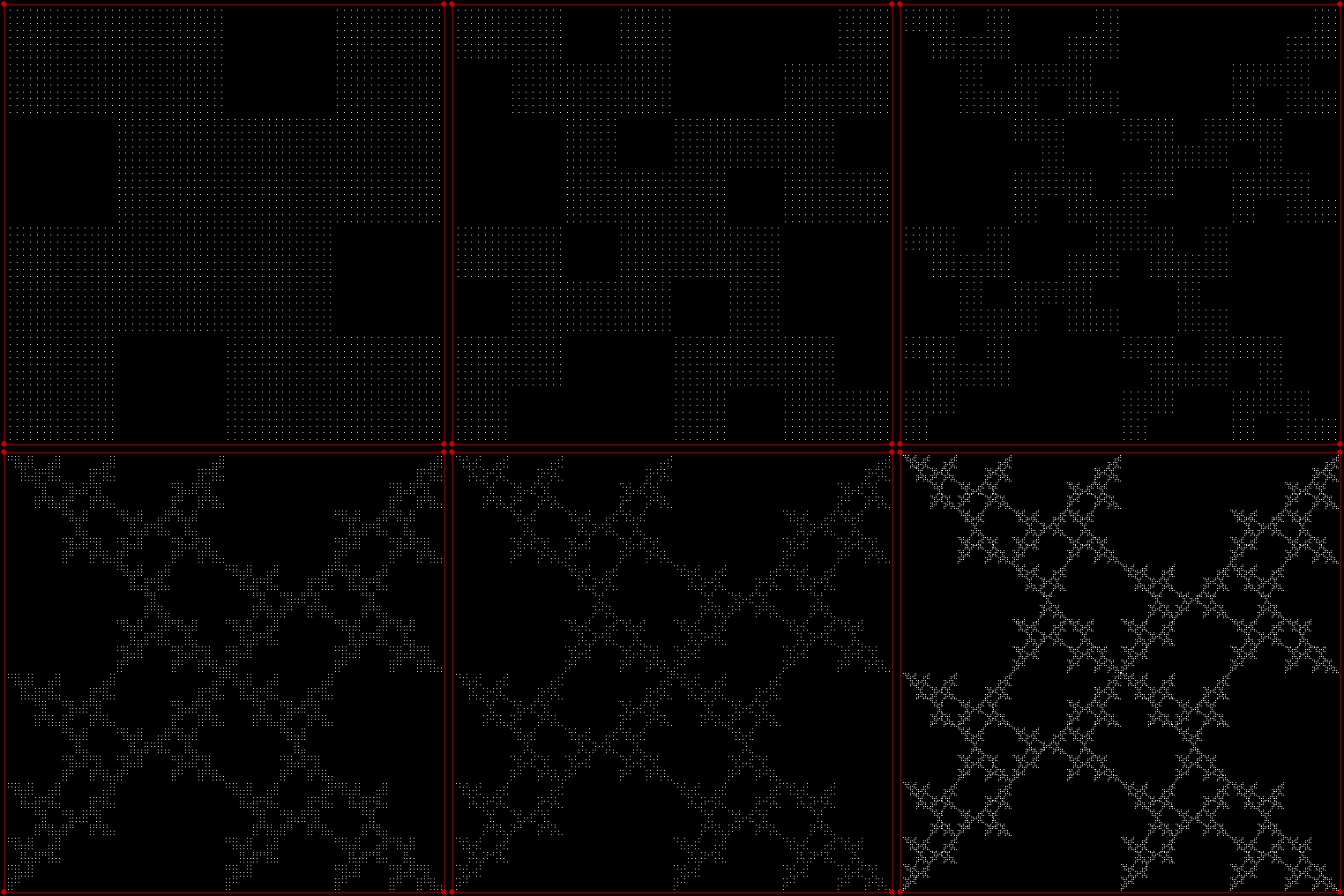
Fractal #2, restrictions on final 1, 2, 3… jumps
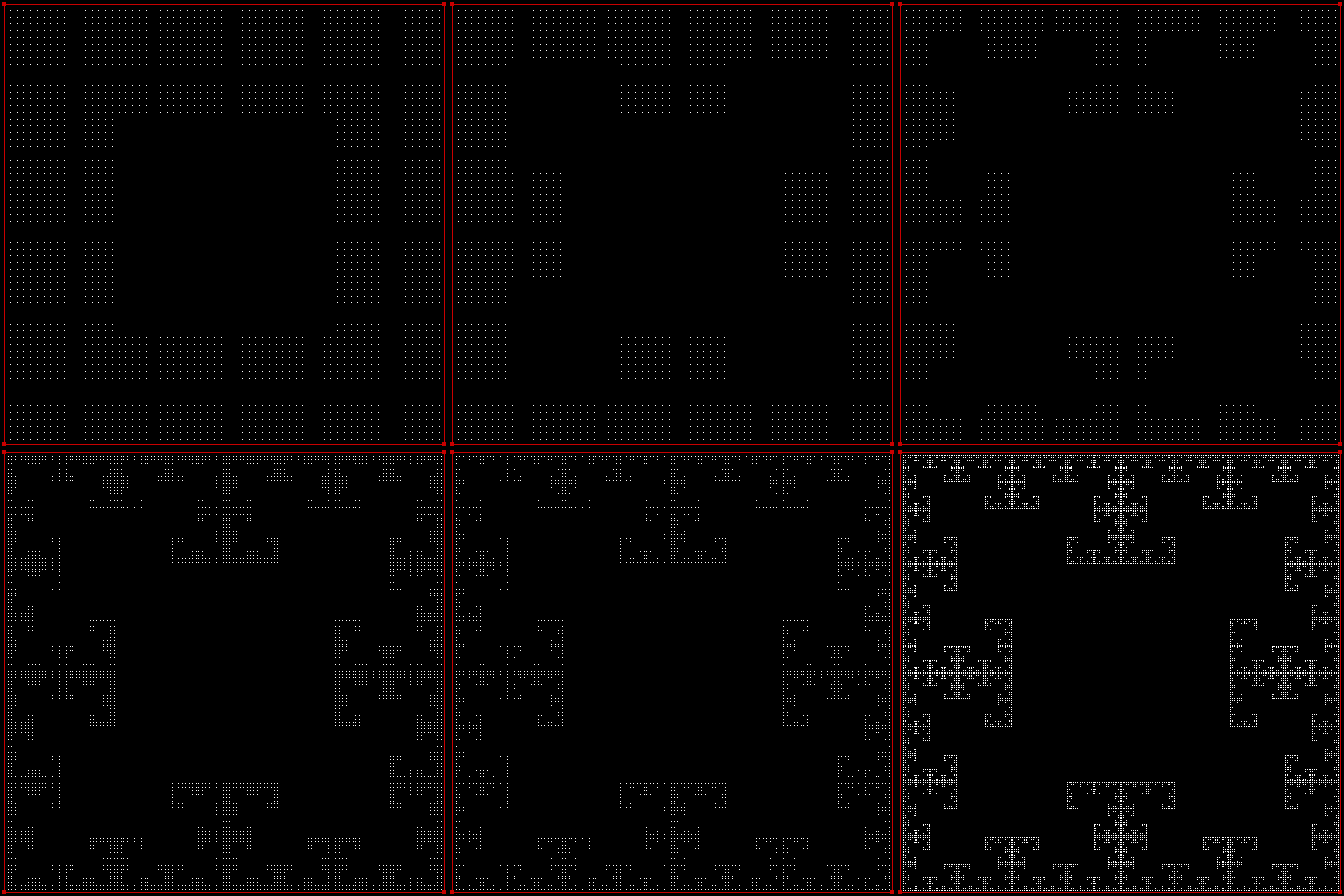
Fractal #3, restrictions on final 1, 2, 3… jumps
The longer the points are allowed to jump before the final restriction is imposed on their n final jumps, the more densely packed the marked points will be:
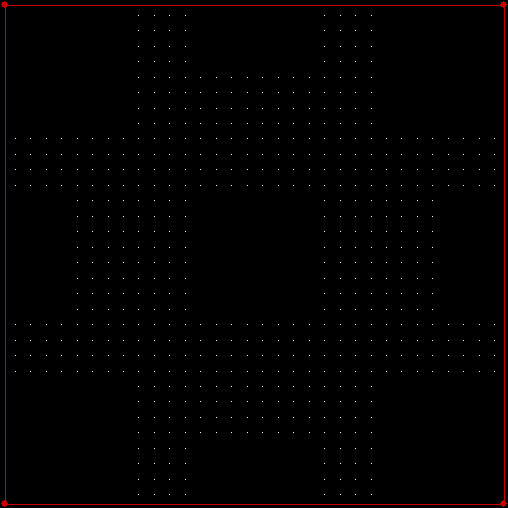
Fractal #1, packed points #1
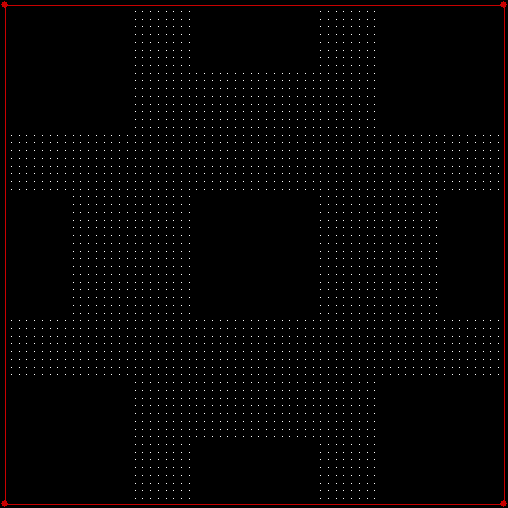
Packed points #2
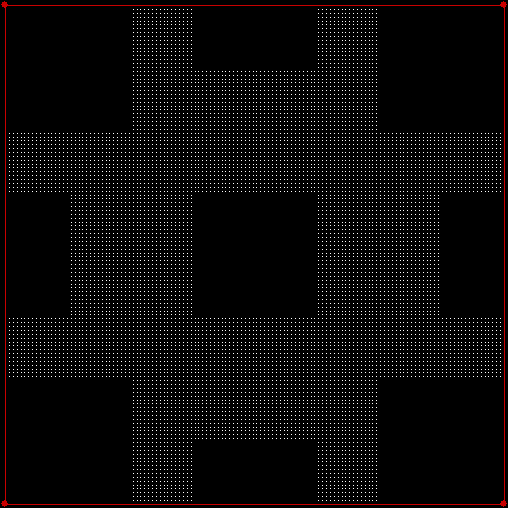
Packed points #3
Eventually, the individual points will form a solid mass, like this:
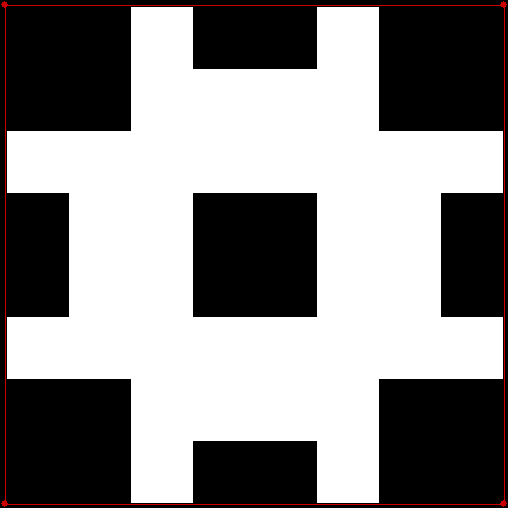
Fractal #1, solid mass of points
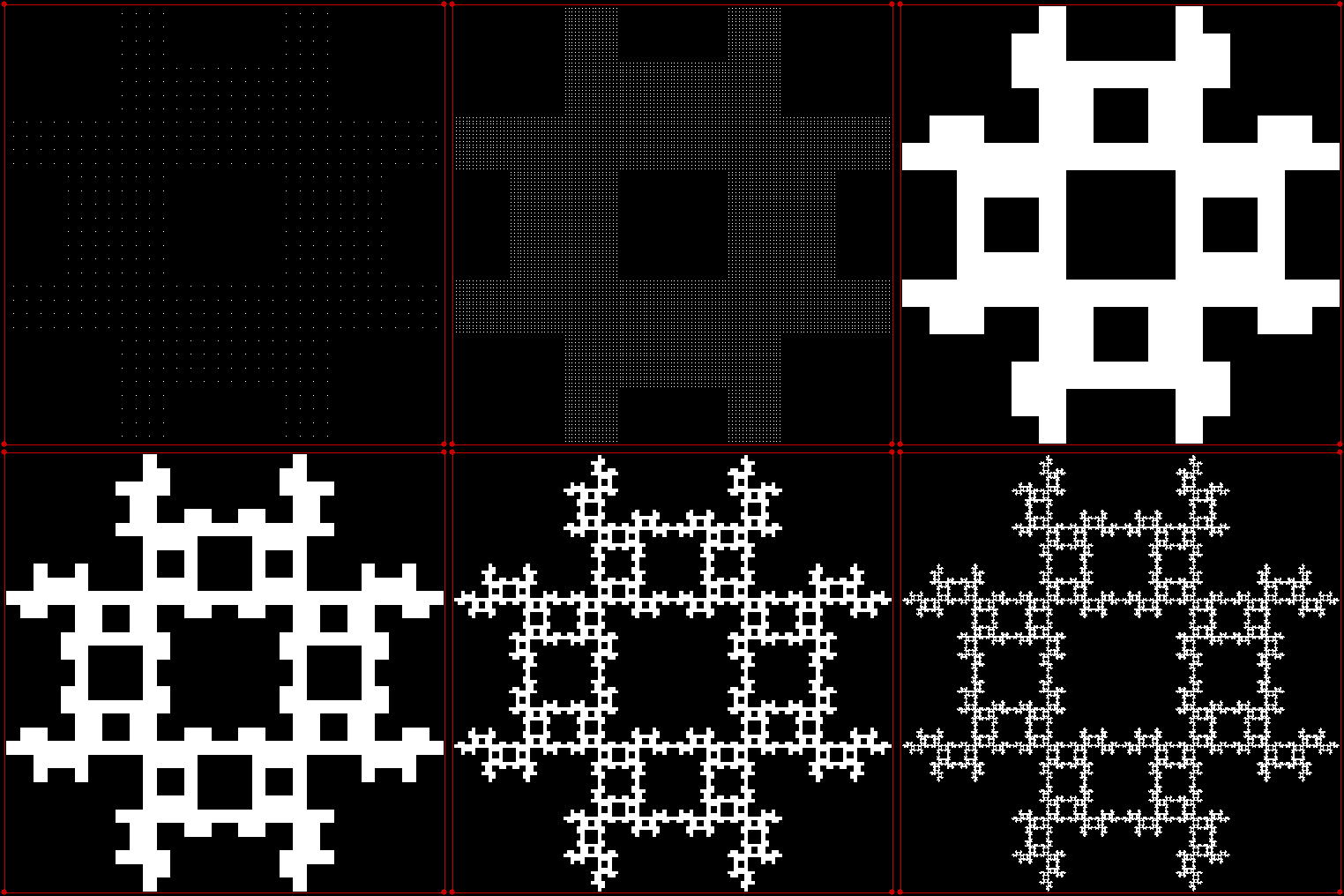
Fractal #1, packed points (animated)
Previously pre-posted (please peruse):
• Square Routes
• Square Routes Revisited
• Square Routes Re-Revisited
• Square Routes Re-Re-Revisited
10111 in base 2
212 in base 3
113 in base 4
43 in base 5
35 in base 6
32 in base 7
27 in base 8
25 in base 9
23 in base 10
21 in base 11
1B in base 12
1A in base 13
19 in base 14
18 in base 15
17 in base 16
16 in base 17
15 in base 18
14 in base 19
13 in base 20
12 in base 21
11 in base 22
10 in base 23
N in all bases >= 24
√23 = 4.79583152331…
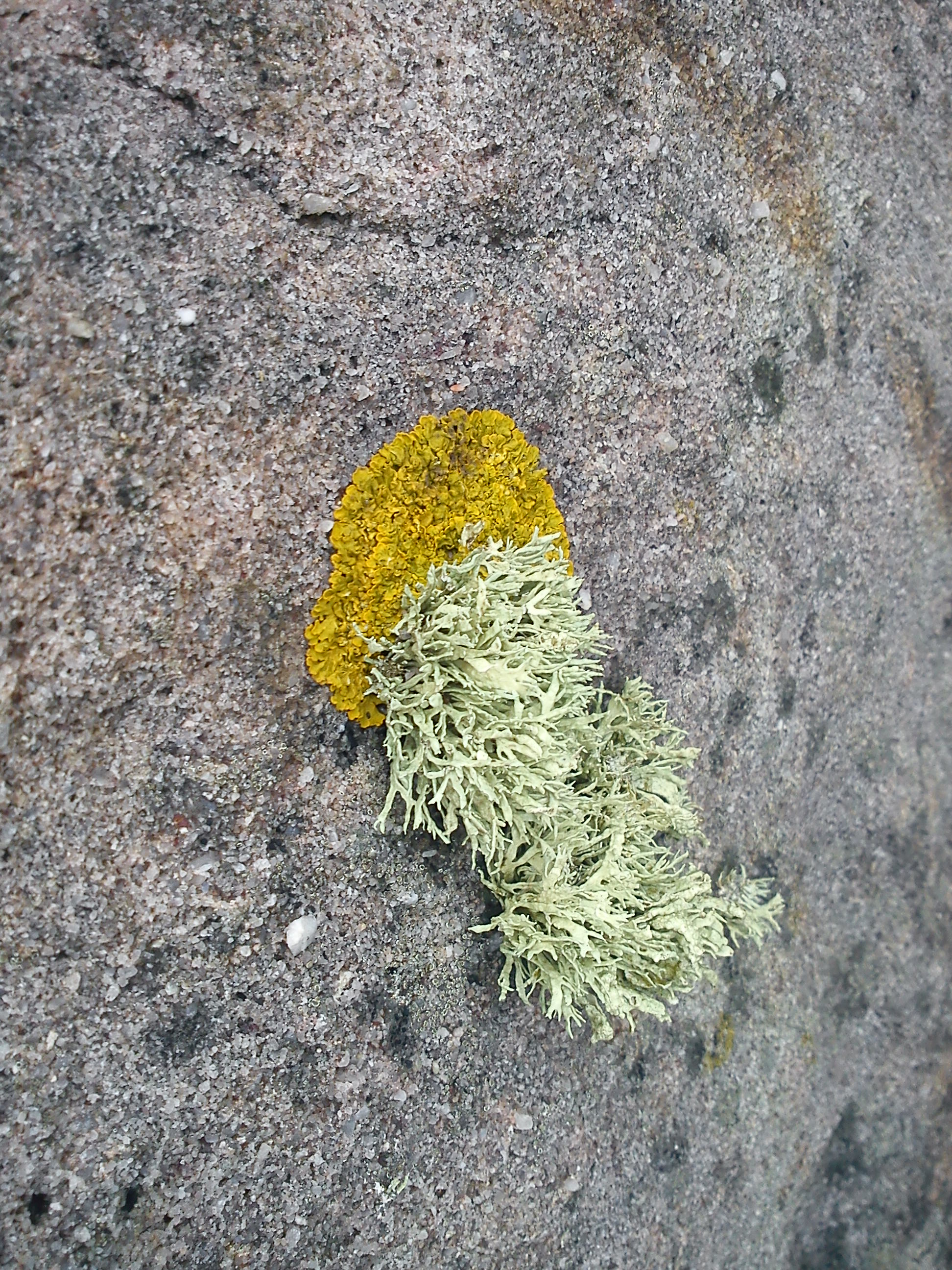
Sunburst lichen, Xanthorina parietina,* and Sea ivory, Ramalina siliquosa
Previously pre-posted:
• Songs from the Center of the Sun — an interview with Faster Than Lichen
• The Gold and the Grey — a pre-previous pre-posting of another version of this image
*Possibly.
In terms of ugly, pretentious phrases used by members of the Guardian-reading community, the “signature” phrase is undoubtedly “in terms of”. But there’s another phrase habitually deployerized by Guardianistas that is perhaps even worse in terms of its core Guardianisticity. To get to it, let’s first engage issues around the title of this post: “Prior Analytics”. I took it from the title of a book on logic by Aristotle, Prior Analytics, known in Latin as Analytica Priora.
Are you surprised to learn that Prior Analytics has a companion called Posterior Analytics, or Analytica Posteriora? No, of course you aren’t. “Prior” and “posterior” are high-falutin’ words that go together: when the first appears, the second naturally follows. And you might think that this obvious pairing would alert Guardianistas to the ugliness and pretension of another of their signature phrases, “prior to”:
• Foreign press warn over dangers of new UK media laws prior to Leveson report — headline in The Observer, 24xi2012
• “Prior to its emergence the trend was not to talk truth to power but to slur the powerless.” — The Great Gary Younge in The Observer, 6xi2011
• “Prior to a prang outside Tesco which, for insurance purposes, wasn’t actually my fault”… — The Great Zoë Williams in The Guardian, 8ii2005
Why do I think “prior to” may be even worse than “in terms of”? There are times when “in terms of” isn’t particularly bad English. I don’t like to admit it, but there are even times when it’s the best phrase to use. But “prior to”? It’s almost always just an ugly and pretentious way of saying “before”. I say “almost always” because you can make an exception for a technical usage like “Existence is logically prior to essence.” But that’s a rare exception, so I repeat: “prior to” is almost always just an ugly and pretentious way of saying “before”.
And guess what? You’ll find this in the Guardian and Observer style guide under “P”:
prior to, previous to
the word you want is “before” (see Guardian and Observer style guide: P)
Guardianistas should be able to realize that for themselves, because “prior to” naturally suggests “posterior to”. However, even Guardianistas don’t habitually say “posterior to” instead of “after”. Even a Guardianista’s ugliness-and-pretension-o-meter is tripped by “posterior to”. But only in the flesh, as it were. Guardianistas are apparently incapable of two-step logic: first, noticing that “prior to” rather than “before” naturally suggests “posterior to” rather than “after”; second, deciding that because “posterior to” is ugly and pretentious, they shouldn’t use “prior to” either.
Elsewhere other-engageable:
• All posts interrogating issues around “in terms of”
• All posts interrogating issues around the Guardian-reading community and its affiliates
 Overlord In Terms of Core Issues Around Maximal Engagement with Key Notions of the Über-Feral