Performativizing Papyrocentricity #16

Papyrocentric Performativity Presents:

Brit GritGranite and Grit: A Walker’s Guide to the Geology of British Mountains, Ronald Turnbull (Francis Lincoln 2011)

Singh Summing SimpsonsThe Simpsons and Their Mathematical Secrets, Simon Singh (Bloomsbury 2013)

Go with the QuoStatus Quo: Still Doin’ It – The Official Updated Edition, compiled by Bob Young, edited by Francis Rossi and Rick Parfitt (Omnibus Press 2013)

Breeding BunniesThe Golden Ratio: The Story of Phi, the Extraordinary Number of Nature, Art and Beauty, Mario Livio (Headline Review 2003) (posted @ Overlord of the Über-Feral)

Brit Bot BookReader’s Digest Field Guide to the Wild Flowers of Britain, J.R. Press et al, illustrated Leonora Box et al (1981) (@ O.o.t.Ü.-F.)


Or Read a Review at Random: RaRaR

The Brain in Train

I feel odd when I consider this possibility: that all my thoughts are strictly determined, no more under my control than a straw in a gale or a stone in an avalanche. It seems paradoxical to have strictly determined thoughts about strictly determined thoughts. But is it? And is strict determinism fatal for finding the truth? I don’t think so. In fact, I think that strict determinism is essential for truth. But irrelevant associations get in the way of our understanding this. If our thoughts are determined, they seem like automatic trains running on rigid tracks. We might want to go to the station marked “Truth”, but if the switches are set wrong, the train will never get there. Or it will thunder through and never stop.


Continue reading The Brain in Train

Fractal Fourmulas

A square can be divided into four right triangles. A right triangle can be divided into a square and two more right triangles. These simple rules, applied again and again, can be used to create fractals, or shapes that echo themselves on smaller and smaller scales.

trisquare5

trisquare3

trisquare4

trisquare2

trisquare6

trisquare7

trisquare1

Breeding Bunnies

Front cover of The Golden Ratio by Mario Livio
The Golden Ratio: The Story of Phi, the Extraordinary Number of Nature, Art and Beauty, Mario Livio (Headline Review 2003)

A good short popular guide to perhaps the most interesting, and certainly the most irrational, of all numbers: the golden ratio or phi (φ), which is approximately equal to 1·6180339887498948482… Prominent in mathematics since at least the ancient Greeks and Euclid, phi is found in many places in nature too, from pineapples and sunflowers to the flight of hawks. Livio catalogues its appearances in both maths and nature, looking closely at the Fibonacci sequence and rabbit-breeding, before going on to debunk mistaken claims that phi also appears a lot in art, music and poetry. Dalí certainly used it, but da Vinci, Debussy and Virgil almost certainly didn’t. Nor, almost certainly, did the builders of the Parthenon and pyramids. Finally, he examines what has famously been called (by the physicist Eugene Wiegner) the unreasonable effectiveness of mathematics: why is this human invention so good at describing the behaviour of the Universe? Livio quotes one of the best short answers I’ve seen:

Human logic was forced on us by the physical world and is therefore consistent with it. Mathematics derives from logic. That is why mathematics is consistent with the physical world. (ch. 9, “Is God a mathematician?”, pg. 252)

It’s not hard to recommend a book that quotes everyone from Johannes Kepler and William Blake to Lewis Carroll, Christopher Marlowe and Jef Raskin, “the creator of the Macintosh computer”, whose answer is given above. Recreational mathematicians should also find lots of ideas for further investigation, from fractal strings to the fascinating number patterns governed by Benford’s law. It isn’t just human beings who look after number one: as a leading figure, 1 turns up much more often in data from the real world, and in mathematical constructs like the Fibonacci sequence, than intuition would lead you to expect. If you’d like to learn more about that and about many other aspects of mathematics, hunt down a copy of this book.


Elsewhere other-posted:

Roses Are Golden – φ and floral homicide

DeVil to Power

666 is the Number of the Beast described in the Book of Revelation:

13:18 Here is wisdom. Let him that hath understanding count the number of the beast: for it is the number of a man; and his number is Six hundred threescore and six.

But 666 is not just diabolic: it’s narcissistic too. That is, it mirrors itself using arithmetic, like this:

666^47 =

5,049,969,684,420,796,753,173,148,798,405,
  564,772,941,516,295,265,408,188,117,632,
  668,936,540,446,616,033,068,653,028,889,
  892,718,859,670,297,563,286,219,594,665,
  904,733,945,856 → 5 + 0 + 4 + 9 + 9 + 6 + 9 + 6 + 8 + 4 + 4 + 2 + 0 + 7 + 9 + 6 + 7 + 5 + 3 + 1 + 7 + 3 + 1 + 4 + 8 + 7 + 9 + 8 + 4 + 0 + 5 + 5 + 6 + 4 + 7 + 7 + 2 + 9 + 4 + 1 + 5 + 1 + 6 + 2 + 9 + 5 + 2 + 6 + 5 + 4 + 0 + 8 + 1 + 8 + 8 + 1 + 1 + 7 + 6 + 3 + 2 + 6 + 6 + 8 + 9 + 3 + 6 + 5 + 4 + 0 + 4 + 4 + 6 + 6 + 1 + 6 + 0 + 3 + 3 + 0 + 6 + 8 + 6 + 5 + 3 + 0 + 2 + 8 + 8 + 8 + 9 + 8 + 9 + 2 + 7 + 1 + 8 + 8 + 5 + 9 + 6 + 7 + 0 + 2 + 9 + 7 + 5 + 6 + 3 + 2 + 8 + 6 + 2 + 1 + 9 + 5 + 9 + 4 + 6 + 6 + 5 + 9 + 0 + 4 + 7 + 3 + 3 + 9 + 4 + 5 + 8 + 5 + 6 = 666

666^51 =

993,540,757,591,385,940,334,263,511,341,
295,980,723,858,637,469,431,008,997,120,
691,313,460,713,282,967,582,530,234,558,
214,918,480,960,748,972,838,900,637,634,
215,694,097,683,599,029,436,416 → 9 + 9 + 3 + 5 + 4 + 0 + 7 + 5 + 7 + 5 + 9 + 1 + 3 + 8 + 5 + 9 + 4 + 0 + 3 + 3 + 4 + 2 + 6 + 3 + 5 + 1 + 1 + 3 + 4 + 1 + 2 + 9 + 5 + 9 + 8 + 0 + 7 + 2 + 3 + 8 + 5 + 8 + 6 + 3 + 7 + 4 + 6 + 9 + 4 + 3 + 1 + 0 + 0 + 8 + 9 + 9 + 7 + 1 + 2 + 0 + 6 + 9 + 1 + 3 + 1 + 3 + 4 + 6 + 0 + 7 + 1 + 3 + 2 + 8 + 2 + 9 + 6 + 7 + 5 + 8 + 2 + 5 + 3 + 0 + 2 + 3 + 4 + 5 + 5 + 8 + 2 + 1 + 4 + 9 + 1 + 8 + 4 + 8 + 0 + 9 + 6 + 0 + 7 + 4 + 8 + 9 + 7 + 2 + 8 + 3 + 8 + 9 + 0 + 0 + 6 + 3 + 7 + 6 + 3 + 4 + 2 + 1 + 5 + 6 + 9 + 4 + 0 + 9 + 7 + 6 + 8 + 3 + 5 + 9 + 9 + 0 + 2 + 9 + 4 + 3 + 6 + 4 + 1 + 6 = 666

But those are tiny numbers compared to 6^(6^6). That means 6^46,656 and equals roughly 2·6591… x 10^36,305. It’s 36,306 digits long and its full digit-sum is 162,828. However, 666 lies concealed in those digits too. To see how, consider the function Σ(x1,xn), which returns the sum of digits 1 to n of x. For example, π = 3·14159265…, so Σ(π14) = 3 + 1 + 4 + 1 = 9. The first 150 digits of 6^(6^6) are these:

26591197721532267796824894043879185949053422002699
24300660432789497073559873882909121342292906175583
03244068282650672342560163577559027938964261261109
… (150 digits)

If x = 6^(6^6), then Σ(x1,x146) = 666, Σ(x2,x148) = 666, and Σ(x2,x149) = 666.

There’s nothing special about these patterns: infinitely many numbers are narcissistic in similar ways. However, 666 has a special cultural significance, so people pay it more attention and look for patterns related to it more carefully. Who cares, for example, that 667 = digit-sum(667^48) = digit-sum(667^54) = digit-sum(667^58)? Fans of recreational maths will, but not very much. The Number of the Beast is much more fun, narcissistically and otherwise:

666 = digit-sum(6^194)
666 = digit-sum(6^197)

666 = digit-sum(111^73)
666 = digit-sum(111^80)

666 = digit-sum(222^63)
666 = digit-sum(222^66)

666 = digit-sum(333^58)
666 = digit-sum(444^53)
666 = digit-sum(777^49)
666 = digit-sum(999^49)


Previously pre-posted (please peruse):

More Narcissisum
Digital Disfunction
The Hill to Power
Narcissarithmetic #1
Narcissarithmetic #2

More Musings on Music

Black Mother Nirvana — from the potency of Purushmedh to the blast-beat barrage of Bodhisattva

Groaning and Grieving — the ashen passion of Slough of Despond

Pummelling Putridity — probing the purulence and putrefaction of Paraphistomiasis


Elsewhere other-posted:

• More Musings on Music

Brit Bot Book

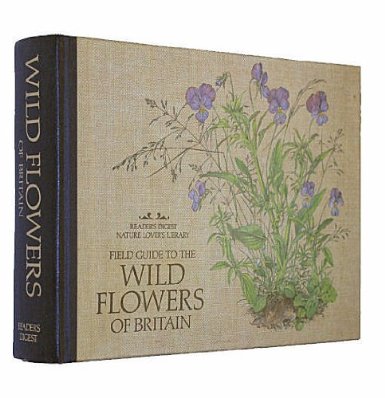
Front cover of Reader's Digest Field Guide to the Wild Flowers of Britain
Reader’s Digest Field Guide to the Wild Flowers of Britain, J.R. Press et al, illustrated Leonora Box et al (1981)

This is probably the best introduction to British wild flowers that I’ve seen: drawings, photographs and text complement each other perfectly over more than four hundred pages. Despite being compact, it’s a little heavy to be a good field guide, but it would be useful in every British field, wasteland and marsh. From Indian balsam (Impatiens glandulifera) to flowering-rush (Butomus umbellatus) by way of green alkanet (Pentaglottis sempervirens), it’s got a lot, if not the lot (no Mycelis muralis, or wall lettuce, for example). The drawings are skilful, detailed, and often show the plant growing with different species in its habitat, which prepares the eye for identifying it in situ. The drawings also often have the adventitious additions that make David N. Pegler’s Pocket Guide to Mushrooms and Toadstools more enjoyable too, like the half-brick with Canadian fleabane (Conyza canadensis), the chewing-gum wrapper with sea mayweed (Matricaria maritima) and the frog with water violet (Hottonia palustris).

The drawings dominate the page devoted to each plant, but there’s a small photograph of a living specimen too, though “small” doesn’t always mean undramatic. Sea thrift (Armeria maritima) is shown growing quietly on a cliff-top with swirling sea and towering rocks beyond and below it. The photo sums up the book: wild flowers are often delicate and unobtrusive, but they illustrate some grand themes of evolution and biology, from ecological webs to mimicry, parasitism and toxicology: dead-nettles (Lamium spp.) mimick nettles, broomrape (Orobanche spp.) parasitizes broom, clover and more, and lots of British plants can kill you, sicken you or drive you insane, from hemlock (Conium maculatum) to henbane (Hyoscyamus niger). The book explores some grand themes of culture too: the text mixes serious botany with folklore, cuisine, herbalism, and literature. Pignuts (Conopodium majus) appear in The Tempest, for example, and in Ireland “were thought to be the food of leprachauns”. The etymologies aren’t always trustworthy — the “-ard” of “mustard” doesn’t mean ardente, “burning” — but that makes the book itself part of folklore and adds to the plants’ appeal. Highly recommended in this first edition.

Performativizing Papyrocentricity #15

Papyrocentric Performativity Presents:

Brought to BookA Book of English Essays, selected by W.E. Williams (Pelican 1942)

GlamourdämmerungTreasures of Nirvana, Gillian G. Gaar (Carlton 2011)

Highway to Hell – The Road, Cormac McCarthy (2006)

Solids and ShadowsAn Adventure in Multidimensional Space: The Art and Geometry of Polygons, Polyhedra, and Polytopes, Koji Miyazaki (Wiley-Interscience 1987) (posted @ Overlord of the Über-Feral)

Magna Mater MarinaThe Illustrated World Encyclopedia of Marine Fish and Sea Creatures, Amy-Jane Beer and Derek Hall (Lorenz Books 2007) (@ O.o.t.Ü.-F.)


Or Read a Review at Random: RaRaR