Solids and Shadows

Front cover of An Adventure in Multidimensional Space by Koji MiyazakiAn Adventure in Multidimensional Space: The Art and Geometry of Polygons, Polyhedra, and Polytopes, Koji Miyazaki (Wiley-Interscience 1987)

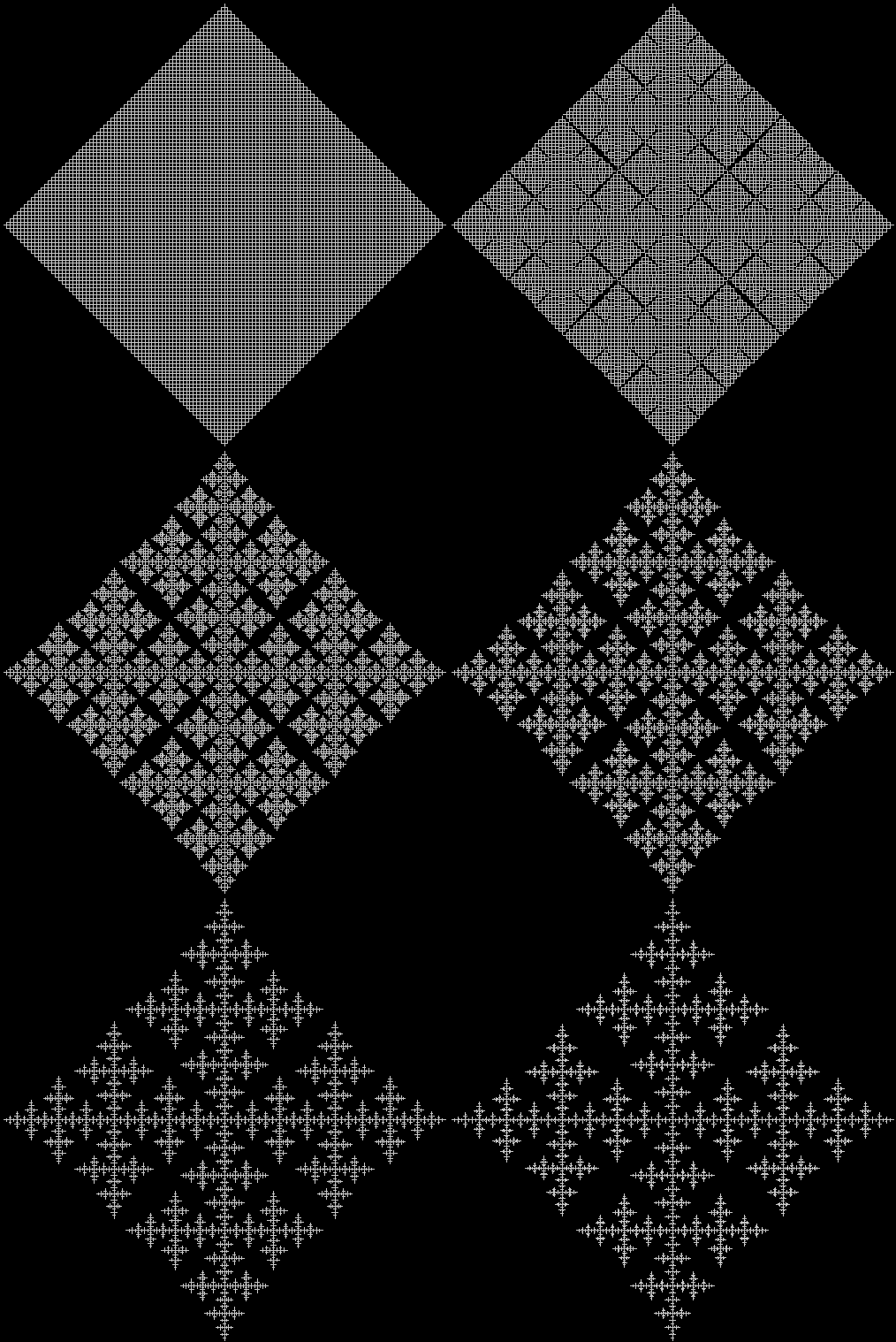
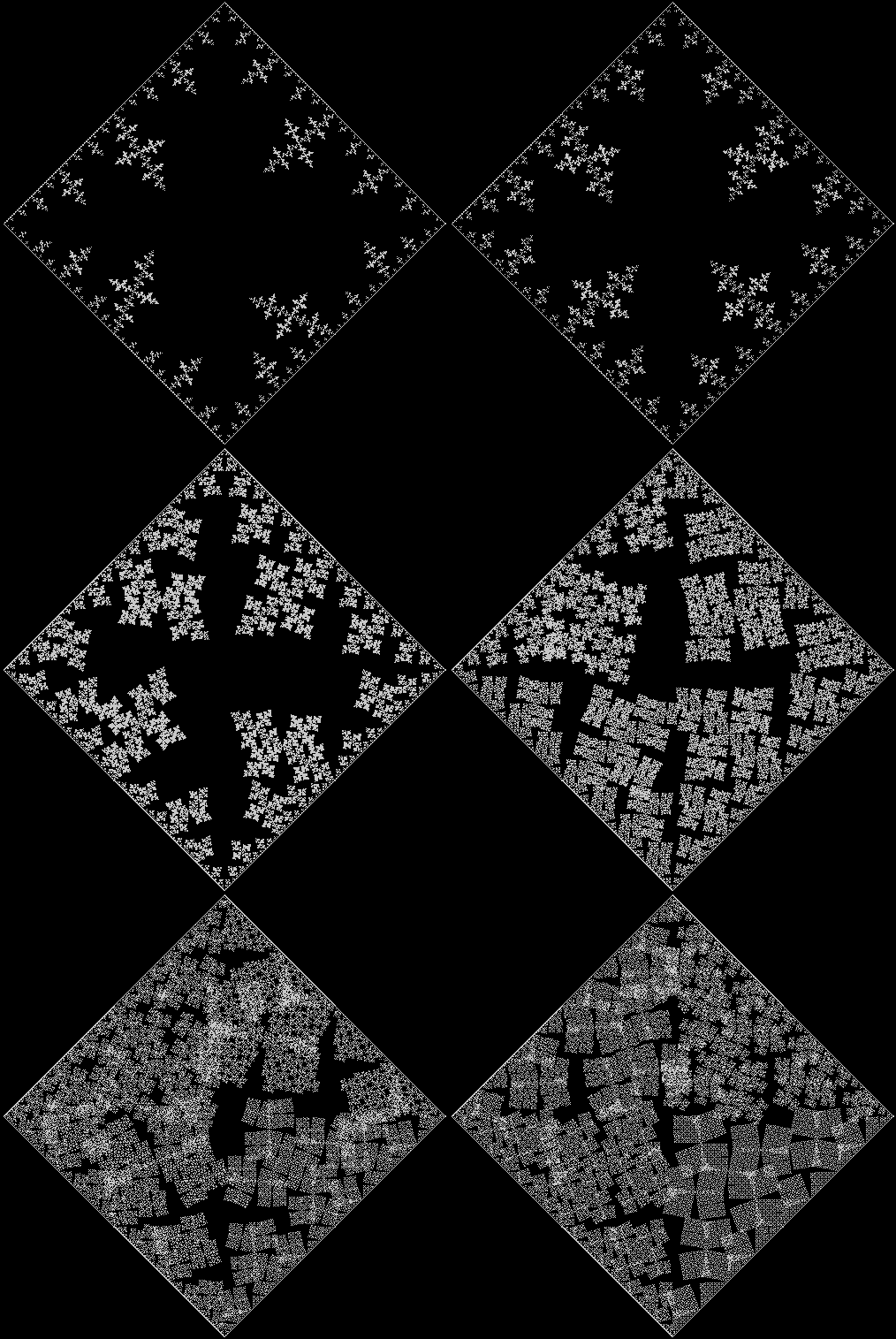
Two, three, four – or rather, two, three, ∞. Polygons are closed shapes in two dimensions (e.g., the square), polyhedra closed shapes in three dimensions (the cube), and polytopes closed shapes in four or more (the hypercube). You could spend a lifetime exploring any one of these geometries, but unless you take psychedelic drugs or brain-modification becomes much more advanced, you’ll be able to see only two of them: the geometries of polygons and polyhedra. Polytopes are beyond imagining but you can glimpse their shadows here – literally, because we can represent polytopes by the shadows they cast in 3-space or by the shadows of their shadows in 2-space.
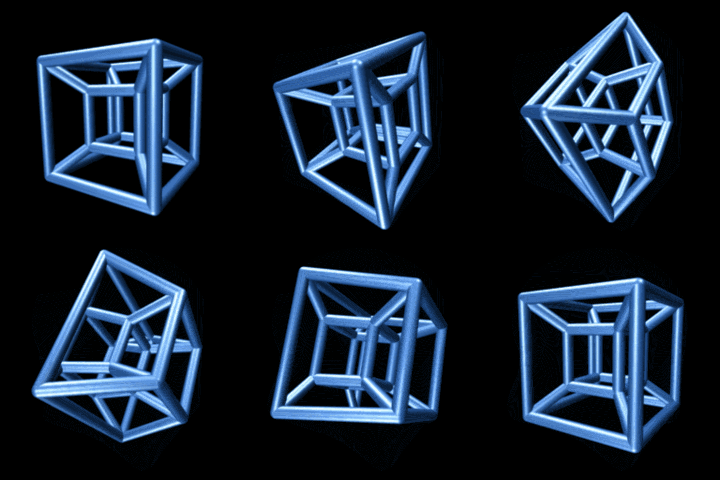
An animated gif of a tesseract

A four-dimensional shape in two dimensions (see Tesseract)

Elsewhere Miyazaki doesn’t have to convey wonder and beauty by shadows: not only is this book full of beautiful shapes, it’s beautifully designed too and the way it alternates black-and-white pages with colour actually increases the power of both. It isn’t restricted to pure mathematics either: Miyazaki also looks at the modern and ancient art and architecture inspired by geometry, and at geometry in nature: the dodecahedral pollen of Gypsophilum elegans (Showy Baby’s-Breath), for example, and the tetrahedral seeds of the Water Chestnut (Trapa spp.), which the Japanese spies and assassins called the ninja used as natural caltrops. A regular tetrahedron always lies on a flat surface with a vertex facing directly upward, and when a pursued ninja scattered the sharply pointed tetrahedral seeds of the Water Chestnut, they were regular enough to injure “the soles of feet of his pursuers”.
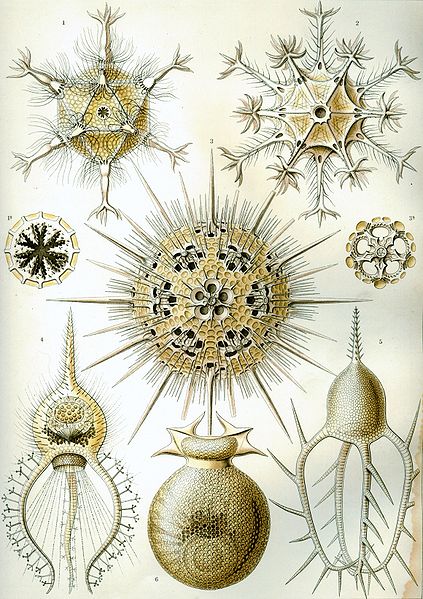
Polyhedral plankton by Ernst Haeckel

Polyhedral plankton by Ernst Haeckel

The slightly odd English there is another example of what I like about this book, because it proves the parochialism of language and the universality of mathematics. Miyazaki’s mathematics, as far as I can tell, is flawless, like that of many other Japanese mathematicians, but his self-translated English occasionally isn’t. Japanese mathematics was highly developed before Japan fell under strong Western influence. It would continue to develop if the West disappeared tomorrow. Language is something we have to absorb intuitively from the particular culture we’re born into, but mathematics is learnt and isn’t tied to any particular culture. That’s why it’s accessible in the same way to minds everywhere in the world. Miyazaki’s pictures and prose are an extended proof of all that, and the book is actually more valuable because it was written by a Japanese speaker. I think it’s probably more attractively designed for the same reason: the skill with which the pictures have been selected and laid out reflects something characteristically Japanese. Elegance and simplicity perhaps sum it up, and elegance and simplicity are central to mathematics and some of the greatest art.
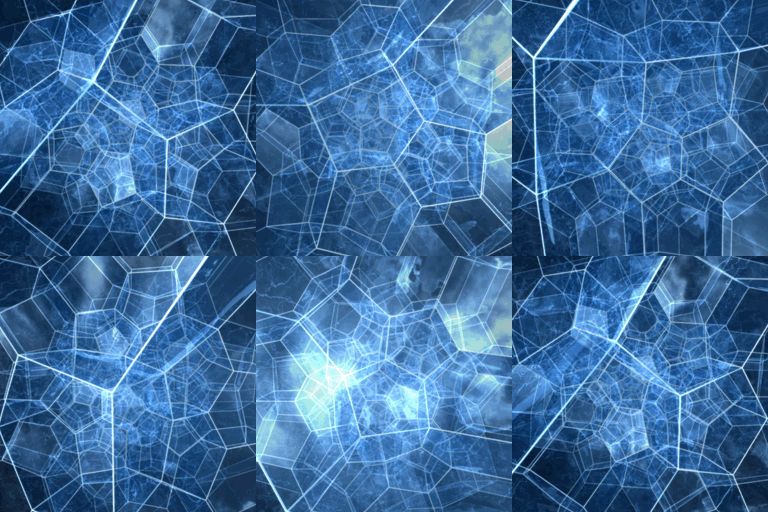
An animated gif of an 120-cell

Another four-dimensional shape in two dimensions (see 120-cell)

More Narcissisum

The number 23 is special, inter alia, because it’s prime, divisible by only itself and 1. It’s also special because its reciprocal has maximum period. That is, the digits of 1/23 come in repeated blocks of 22, like this:

1/23 = 0·0434782608695652173913  0434782608695652173913  0434782608695652173913…

But 1/23 fails to be special in another way: you can’t sum its digits and get 23:

0 + 4 + 3 + 4 + 7 = 18
0 + 4 + 3 + 4 + 7 + 8 = 26
0 + 4 + 3 + 4 + 7 + 8 + 2 + 6 + 0 + 8 + 6 + 9 + 5 + 6 + 5 + 2 + 1 + 7 + 3 + 9 + 1 + 3 = 99

1/7 is different:

1/7 = 0·142857… → 1 + 4 + 2 = 7

This means that 7 is narcissistic: it reflects itself by manipulation of the digits of 1/7. But that’s in base ten. If you try base eight, 23 becomes narcissistic too (note that 23 = 2 x 8 + 7, so 23 in base eight is 27):

1/27 = 0·02620544131… → 0 + 2 + 6 + 2 + 0 + 5 + 4 + 4 = 27 (base=8)

Here are more narcissistic reciprocals in base ten:

1/3 = 0·3… → 3 = 3
1/7 = 0·142857… → 1 + 4 + 2 = 7
1/8 = 0·125 → 1 + 2 + 5 = 8
1/13 = 0·076923… → 0 + 7 + 6 = 13
1/14 = 0·0714285… → 0 + 7 + 1 + 4 + 2 = 14
1/34 = 0·02941176470588235… → 0 + 2 + 9 + 4 + 1 + 1 + 7 + 6 + 4 = 34
1/43 = 0·023255813953488372093… → 0 + 2 + 3 + 2 + 5 + 5 + 8 + 1 + 3 + 9 + 5 = 43
1/49 = 0·020408163265306122448979591836734693877551… → 0 + 2 + 0 + 4 + 0 + 8 + 1 + 6 + 3 + 2 + 6 + 5 + 3 + 0 + 6 + 1 + 2 = 49
1/51 = 0·0196078431372549… → 0 + 1 + 9 + 6 + 0 + 7 + 8 + 4 + 3 + 1 + 3 + 7 + 2 = 51
1/76 = 0·01315789473684210526… → 0 + 1 + 3 + 1 + 5 + 7 + 8 + 9 + 4 + 7 + 3 + 6 + 8 + 4 + 2 + 1 + 0 + 5 + 2 = 76
1/83 = 0·01204819277108433734939759036144578313253… → 0 + 1 + 2 + 0 + 4 + 8 + 1 + 9 + 2 + 7 + 7 + 1 + 0 + 8 + 4 + 3 + 3 + 7 + 3 + 4 + 9 = 83
1/92 = 0·010869565217391304347826… → 0 + 1 + 0 + 8 + 6 + 9 + 5 + 6 + 5 + 2 + 1 + 7 + 3 + 9 + 1 + 3 + 0 + 4 + 3 + 4 + 7 + 8 = 92
1/94 = 0·01063829787234042553191489361702127659574468085… → 0 + 1 + 0 + 6 + 3 + 8 + 2 + 9 + 7 + 8 + 7 + 2 + 3 + 4 + 0 + 4 + 2 + 5 + 5 + 3 + 1 + 9 + 1 + 4 = 94
1/98 = 0·0102040816326530612244897959183673469387755… → 0 + 1 + 0 + 2 + 0 + 4 + 0 + 8 + 1 + 6 + 3 + 2 + 6 + 5 + 3 + 0 + 6 + 1 + 2 + 2 + 4 + 4 + 8 + 9 + 7 + 9 + 5 = 98


Previously pre-posted (please peruse):

Digital Disfunction
The Hill to Power
Narcissarithmetic #1
Narcissarithmetic #2

Court in the Act

Cover of Bombshell by The PrimitivesBombshell: The Hits and More, The Primitives (1994)

In all walks of life, from pop music to drug-dealing, some people achieve far more success than their talents deserve and some people achieve far less. Paul Court, the song-writer for the late-’eighties-and-a-bit-of-the-’nineties indie group The Primitives, is one of the second group. And perhaps drug-dealing describes his largely unrewarded talents too. Like a drug, music is designed to alter your consciousness and some of the songs on this compilation album are perfect little pills of pop, filling your brain with a two- or three-minute rush of jingly-jangly melodic pleasure. And maybe jungly pleasure too: The Primitives were a primitive band in the garage-and-bubblegum-pop tradition, particularly when they played live. Female vox, occasional male backing vocals, guitar, bass and drums, and that was it. There was no pretension about them, but they achieved the kind of a-lot-in-a-little simplicity that only an intelligent and skilful songwriter can give a band.

“Crash”, their most famous song, both opens and closes the album (apart from the doubly unexpected hidden track). It appears first as the album track, then as a demo, and some of the other songs come in a second version, whether demo or acoustic. I enjoy the chance to hear the different interpretations, but this padding does reflect the brevity of their career, which stretched from about 1987 to about 1992. Unfortunately, a twice-misspelt “Way Behing Me” and the appearance of “Secrets (Demo)” as the already-heard album track rather than the demo also reflect the sloppiness of the German company that put the compilation out. Court deserved better. There’s further proof of that in the single cover version, “As Tears Go By” by the Rolling Stones. It’s given the light treatment of the early Primitives and isn’t anywhere near as good as Court’s own compositions, I’d say.

Bombshell by The Primitives (CD)

Perhaps that’s why he chose it, and perhaps the darker songs on their final album, “Glamour”, reflect his frustration at not achieving the success that seemed to await him in the beginning. But there was a big obstacle ahead of him: although bands with attractive female singers can get attention more easily, they find it harder to get taken seriously. The Primitives never did drop any bombshells in the end and I suspect that the title of this compilation is a self-ironizing acknowledgment of that, as well as a reference to Tracy’s gleaming blonde locks.

Digital Disfunction

It’s fun when functions disfunc. The function digit-sum(n^p) takes a number, raises it to the power of p and sums its digits. If p = 1, n is unchanged. So digit-sum(1^1) = 1, digit-sum(11^1) = 2, digit-sum(2013^1) = 6. The following numbers set records for the digit-sum(n^1) from 1 to 1,000,000:

digit-sum(n^1): 1, 2, 3, 4, 5, 6, 7, 8, 9, 19, 29, 39, 49, 59, 69, 79, 89, 99, 199, 299, 399, 499, 599, 699, 799, 899, 999, 1999, 2999, 3999, 4999, 5999, 6999, 7999, 8999, 9999, 19999, 29999, 39999, 49999, 59999, 69999, 79999, 89999, 99999, 199999, 299999, 399999, 499999, 599999, 699999, 799999, 899999, 999999.

The pattern is easy to predict. But the function disfuncs when p = 2. Digit-sum(3^2) = 9, which is more than digit-sum(4^2) = 1 + 6 = 7 and digit-sum(5^2) = 2 + 5 = 7. These are the records from 1 to 1,000,000:

digit-sum(n^2): 1, 2, 3, 7, 13, 17, 43, 63, 83, 167, 264, 313, 707, 836, 1667, 2236, 3114, 4472, 6833, 8167, 8937, 16667, 21886, 29614, 32617, 37387, 39417, 42391, 44417, 60663, 63228, 89437, 141063, 221333, 659386, 791833, 976063, 987917.

Higher powers are similarly disfunctional:

digit-sum(n^3): 1, 2, 3, 4, 9, 13, 19, 53, 66, 76, 92, 132, 157, 353, 423, 559, 842, 927, 1192, 1966, 4289, 5826, 8782, 10092, 10192, 10275, 10285, 10593, 11548, 11595, 12383, 15599, 22893, 31679, 31862, 32129, 63927, 306842, 308113.

digit-sum(n^4): 1, 2, 3, 4, 6, 8, 13, 16, 18, 23, 26, 47, 66, 74, 118, 256, 268, 292, 308, 518, 659, 1434, 1558, 1768, 2104, 2868, 5396, 5722, 5759, 6381, 10106, 12406, 14482, 18792, 32536, 32776, 37781, 37842, 47042, 51376, 52536, 84632, 255948, 341156, 362358, 540518, 582477.

digit-sum(n^5): 1, 2, 3, 5, 6, 14, 15, 18, 37, 58, 78, 93, 118, 131, 139, 156, 179, 345, 368, 549, 756, 1355, 1379, 2139, 2759, 2779, 3965, 4119, 4189, 4476, 4956, 7348, 7989, 8769, 9746, 10566, 19199, 19799, 24748, 31696, 33208, 51856, 207198, 235846, 252699, 266989, 549248, 602555, 809097, 814308, 897778.

You can also look for narcissistic numbers with this function, like digit-sum(9^2) = 8 + 1 = 9 and digit-sum(8^3) = 5 + 1 + 2 = 8. 9^2 is the only narcissistic square in base ten, but 8^3 has these companions:

17^3 = 4913 → 4 + 9 + 1 + 3 = 17
18^3 = 5832 → 5 + 8 + 3 + 2 = 18
26^3 = 17576 → 1 + 7 + 5 + 7 + 6 = 26
27^3 = 19683 → 1 + 9 + 6 + 8 + 3 = 27

Twelfth powers are as unproductive as squares:

108^12 = 2518170116818978404827136 → 2 + 5 + 1 + 8 + 1 + 7 + 0 + 1 + 1 + 6 + 8 + 1 + 8 + 9 + 7 + 8 + 4 + 0 + 4 + 8 + 2 + 7 + 1 + 3 + 6 = 108

But thirteenth powers are fertile:

20 = digit-sum(20^13)
40 = digit-sum(40^13)
86 = digit-sum(86^13)
103 = digit-sum(103^13)
104 = digit-sum(104^13)
106 = digit-sum(106^13)
107 = digit-sum(107^13)
126 = digit-sum(126^13)
134 = digit-sum(134^13)
135 = digit-sum(135^13)
146 = digit-sum(146^13)

There are also numbers that are narcissistic with different powers, like 90:

90^19 = 1·350851717672992089 x 10^37 → 1 + 3 + 5 + 0 + 8 + 5 + 1 + 7 + 1 + 7 + 6 + 7 + 2 + 9 + 9 + 2 + 0 + 8 + 9 = 90
90^20 = 1·2157665459056928801 x 10^39 → 1 + 2 + 1 + 5 + 7 + 6 + 6 + 5 + 4 + 5 + 9 + 0 + 5 + 6 + 9 + 2 + 8 + 8 + 0 + 1 = 90
90^21 = 1·09418989131512359209 x 10^41 → 1 + 0 + 9 + 4 + 1 + 8 + 9 + 8 + 9 + 1 + 3 + 1 + 5 + 1 + 2 + 3 + 5 + 9 + 2 + 0 + 9 = 90
90^22 = 9·84770902183611232881 x 10^42 → 9 + 8 + 4 + 7 + 7 + 0 + 9 + 0 + 2 + 1 + 8 + 3 + 6 + 1 + 1 + 2 + 3 + 2 + 8 + 8 + 1 = 90
90^28 = 5·23347633027360537213511521 x 10^54 → 5 + 2 + 3 + 3 + 4 + 7 + 6 + 3 + 3 + 0 + 2 + 7 + 3 + 6 + 0 + 5 + 3 + 7 + 2 + 1 + 3 + 5 + 1 + 1 + 5 + 2 + 1 = 90

One of the world’s most famous numbers is also multi-narcissistic:

666 = digit-sum(666^47)
666 = digit-sum(666^51)

1423 isn’t multi-narcissistic, but I like the way it’s a prime that’s equal to the sum of the digits of its power to 101, which is also a prime:

1423^101 = 2,
976,424,759,070,864,888,448,625,568,610,774,713,351,233,339,
006,775,775,271,720,934,730,013,444,193,709,672,452,482,197,
898,160,621,507,330,824,007,863,598,230,100,270,989,373,401,
979,514,790,363,102,835,678,646,537,123,754,219,728,748,171,
764,802,617,086,504,534,229,621,770,717,299,909,463,416,760,
781,260,028,964,295,036,668,773,707,186,491,056,375,768,526,
306,341,717,666,810,190,220,650,285,746,057,099,312,179,689,
423 →

2 + 9 + 7 + 6 + 4 + 2 + 4 + 7 + 5 + 9 + 0 + 7 + 0 + 8 + 6 + 4 + 8 + 8 + 8 + 4 + 4 + 8 + 6 + 2 + 5 + 5 + 6 + 8 + 6 + 1 + 0 + 7 + 7 + 4 + 7 + 1 + 3 + 3 + 5 + 1 + 2 + 3 + 3 + 3 + 3 + 9 + 0 + 0 + 6 + 7 + 7 + 5 + 7 + 7 + 5 + 2 + 7 + 1 + 7 + 2 + 0 + 9 + 3 + 4 + 7 + 3 + 0 + 0 + 1 + 3 + 4 + 4 + 4 + 1 + 9 + 3 + 7 + 0 + 9 + 6 + 7 + 2 + 4 + 5 + 2 + 4 + 8 + 2 + 1 + 9 + 7 + 8 + 9 + 8 + 1 + 6 + 0 + 6 + 2 + 1 + 5 + 0 + 7 + 3 + 3 + 0 + 8 + 2 + 4 + 0 + 0 + 7 + 8 + 6 + 3 + 5 + 9 + 8 + 2 + 3 + 0 + 1 + 0 + 0 + 2 + 7 + 0 + 9 + 8 + 9 + 3 + 7 + 3 + 4 + 0 + 1 + 9 + 7 + 9 + 5 + 1 + 4 + 7 + 9 + 0 + 3 + 6 + 3 + 1 + 0 + 2 + 8 + 3 + 5 + 6 + 7 + 8 + 6 + 4 + 6 + 5 + 3 + 7 + 1 + 2 + 3 + 7 + 5 + 4 + 2 + 1 + 9 + 7 + 2 + 8 + 7 + 4 + 8 + 1 + 7 + 1 + 7 + 6 + 4 + 8 + 0 + 2 + 6 + 1 + 7 + 0 + 8 + 6 + 5 + 0 + 4 + 5 + 3 + 4 + 2 + 2 + 9 + 6 + 2 + 1 + 7 + 7 + 0 + 7 + 1 + 7 + 2 + 9 + 9 + 9 + 0 + 9 + 4 + 6 + 3 + 4 + 1 + 6 + 7 + 6 + 0 + 7 + 8 + 1 + 2 + 6 + 0 + 0 + 2 + 8 + 9 + 6 + 4 + 2 + 9 + 5 + 0 + 3 + 6 + 6 + 6 + 8 + 7 + 7 + 3 + 7 + 0 + 7 + 1 + 8 + 6 + 4 + 9 + 1 + 0 + 5 + 6 + 3 + 7 + 5 + 7 + 6 + 8 + 5 + 2 + 6 + 3 + 0 + 6 + 3 + 4 + 1 + 7 + 1 + 7 + 6 + 6 + 6 + 8 + 1 + 0 + 1 + 9 + 0 + 2 + 2 + 0 + 6 + 5 + 0 + 2 + 8 + 5 + 7 + 4 + 6 + 0 + 5 + 7 + 0 + 9 + 9 + 3 + 1 + 2 + 1 + 7 + 9 + 6 + 8 + 9 + 4 + 2 + 3 = 1423


Previously pre-posted (please peruse):

The Hill to Power
Narcissarithmetic #1
Narcissarithmetic #2

Voc and Rôle

Medieval music by Vox Vulgaris and Trouvère

At one time, people could never hear their own voices the way others heard them, because our own voices come to us partly through the flesh and bone of our skulls. Then phonographs and tape-recorders were invented and nowadays we all know what we really sound like. But what does the medieval music of groups like Vox Vulgaris and Trouvere really sound like? It comes to us through the flesh and bone of history and we listen to it with uninnocent ears, soaked in a hundred different genres. Medieval music doesn’t stand alone any more, it stands in contrast: acoustic, not amplified; simple, not complex; authentic, not artificial.

Or is it authentic? No, because it’s not the music that comes most readily to hand or to ear any more. Playing it and listening to it are roles you choose, not roles you’re born into, because it’s part of a cultic fringe nowadays. Ferns once ruled the forests; now they’re pushed to the damp or rocky margins by more advanced plants. So this is ferny music: fresh, green and simple, with a glamour of exile and overthrow. You can hear that glamour more strongly in Trouvere, who play slow, sad and sometimes stately music that seems both to celebrate and to lament the Middle Ages. Vox Vulgaris, which literally means “Popular Voice”, celebrate and don’t lament: they’re raucous and almost rocking and sound like a group for inns and peasants’ weddings, not for courts and cathedrals. They’re fun, not bittersweet like Trouvere, who remind me of the Early Music Consort of London. But, like Vox Vulgaris, Trouvere play instrumentals and don’t add lost languages to their lost music.

The music is enough, but they’re surely playing it with a modern accent that would raise smiles or laughter in a real medieval audience. We can’t go back and that is part of why their music is so attractive. It lilts, it longs and it laments, searching for something it will never find. And that is another way Trouvere evoke the Middle Ages:

La royne Blanche comme ung lys,
Qui chantoit à voix de sereine;
Berthe au grand pied, Bietris, Allys;
Harembourges, qui tint le Mayne,
Et Jehanne, la bonne Lorraine,
Qu’Anglois bruslèrent à Rouen;
Où sont-ilz, Vierge souveraine?…
Mais où sont les neiges d’antan!

“Ballade des dames du temps jadis”, François Villon (1431-c.1485)

White Queen Blanche, like a queen of lilies,
With a voice like any mermaiden,—
Bertha Broadfoot, Beatrice, Alice,
And Ermengarde the lady of Maine,—
And that good Joan whom Englishmen
At Rouen doomed and burned her there,—
Mother of God, where are they then?…
But where are the snows of yester−year.

Translation by Rossetti.

Go with the Floe

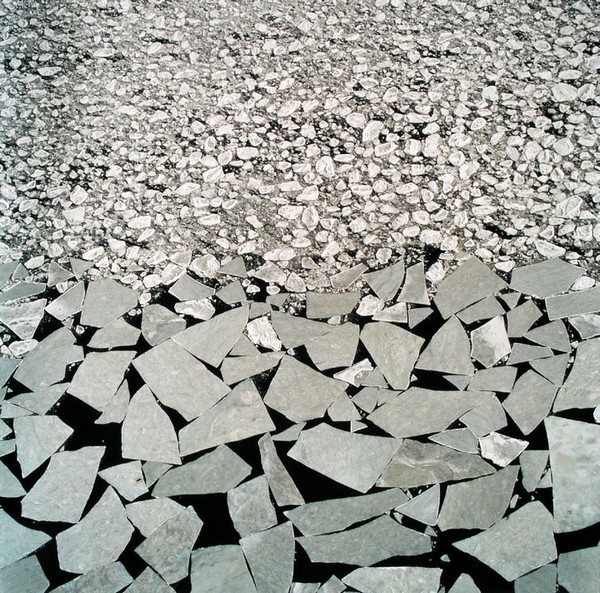
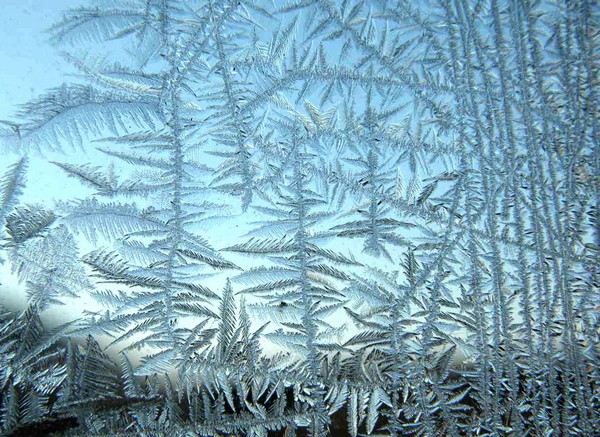
Fractals are shapes that contain copies of themselves on smaller and smaller scales. There are many of them in nature: ferns, trees, frost-flowers, ice-floes, clouds and lungs, for example. Fractals are also easy to create on a computer, because you all need do is take a single rule and repeat it at smaller and smaller scales. One of the simplest fractals follows this rule:

1. Take a line of length l and find the midpoint.
2. Erect a new line of length l x lm on the midpoint at right angles.
3. Repeat with each of the four new lines (i.e., the two halves of the original line and the two sides of the line erected at right angles).

When lm = 1/3, the fractal looks like this:

stick1

(Please open image in a new window if it fails to animate)

When lm = 1/2, the fractal is less interesting:

stick2

But you can adjust rule 2 like this:

2. Erect a new line of length l x lm x lm1 on the midpoint at right angles.

When lm1 = 1, 0.99, 0.98, 0.97…, this is what happens:

stick3

The fractals resemble frost-flowers on a windowpane or ice-floes on a bay or lake. You can randomize the adjustments and angles to make the resemblance even stronger:

frostfloe

Ice floes (see Owen Kanzler)

Ice floes (see Owen Kanzler)

Frost on window (see Kenneth G. Libbrecht, )

Frost on window (see Kenneth G. Libbrecht)

Magna Mater Marina

Front cover of The Illustrated World Encyclopedia of Marine Fish and Sea CreaturesThe Illustrated World Encyclopedia of Marine Fish and Sea Creatures, Amy-Jane Beer and Derek Hall (Lorenz Books, 2007)

Books about marine life need to be big, like this one, because the sea is a big place and has been occupied for far longer than the land. You’ll learn here that some land creatures have even returned to it, like the ancestors of cetaceans (whales et al), sirenians (dugongs and manatees), and sea-snakes. The saltiness of human blood means that we each carry around a miniature ocean of our own, symbol of our own marine ancestry. The Illustrated World Encyclopedia of Marine Fish and Sea Creatures is an excellent guide to the remainers and the returners of our ancient home. It isn’t a proper scientific encyclopedia, but you can get a good sense of the richness and variety of marine life here, from jellyfish to electric rays by way of the deep-water sea-cucumber, Irpa abyssicola, and the very strange tripod fish, Bathypterois grallator.

Bathypterois grallator

The tripod fish, Bathypterois grallator

That scientific name literally means “the deep-wing stilt-walker”, because the tripod fish lives very deep, up to 3·5km down, and props itself up on extended fin-rays to save energy on swimming. Its tiny prey float towards to it on the current: it isn’t an active hunter. It’s also hermaphroditic, so that each fish can fertilize its own eggs if, thanks to depth and darkness, it doesn’t find a mate. Unlike many other deep-sea fish, however, it isn’t particularly ugly or grotesque and wouldn’t easily find place in an H.P. Lovecraft story. Vampyroteuthis infernalis, or “the vampire squid from hell”, definitely would. It looks rather like an animated umbrella, with dark webs between its tentacles and huge, light-thirsty eyes.

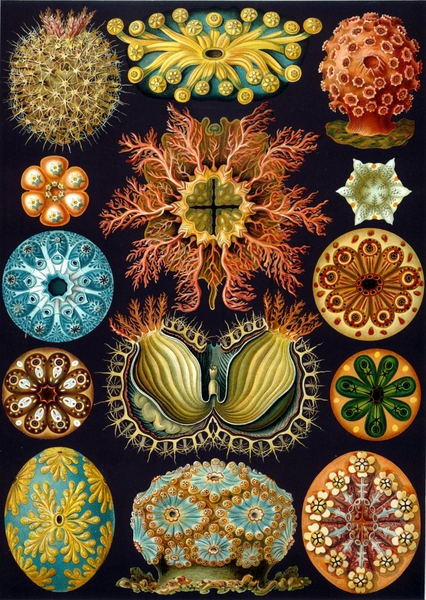
Sea anemones by Ernst Haeckel

Sea anemones by Ernst Haeckel

Elsewhere there’s proof that the sea contains not just abysmal ugliness but sublime beauty too, from cone shells (Conus spp.) and jewel “anemones” (Corynactis viridis) (really a form of coral, the book notes) to gorgeous fish like the copperband butterflyfish (Chelmon rostratus) and the Moorish idol (Zanclus cornutus). And the greater blue-ringed octopus (Hapalochlaena lunulata) is beautiful too, despite the “toxin in its saliva estimated to be 10,000 times more deadly than cyanide”. There isn’t enough here about plankton, which can be strange, ugly, and beautiful, but plankton could fill several encyclopedias, and this one does incorporate some more recent scientific discoveries, including the marine life that doesn’t depend ultimately on sunlight, however deep down dark it lives. The giant beardworm, Riftia pachyptila, lives in symbiosis with sulphide-digesting bacteria at hydrothermal vents on the ocean floor. It’s not part of the sun-chain and might have homologues beneath the ice-cap of Jupiter’s moon Europa. Life needs liquid, so far as we can see, and certainly on earth it had to get its start there. This book is an excellent introduction to the great biological cradle that is the sea and would be an ideal gift for a budding marine biologist or scientifically inclined sailer or fisherman.


Elsewhere other-posted:

Guise and Molls — review of Octopus: The Ocean’s Intelligent Invertebrate (2010)
Mental Marine Music — the band who supplied the title of this review

A Diet of Quiet

The astonishment one feels on learning of the success of the movement takes second place only to the astonishment that this success has been achieved almost without notice from the mainstream and the underground press alike. Nation-wide weeklies like the NME [New Musical Express] haven’t condescended as yet to feature a single band even vaguely affiliated to the movement, and the fanzines that spring up like mushrooms around any spasmodic “new genre” emptying of popular music’s overclogged bowels have found little nourishment in the only truly fresh development in the field since the earliest days of rap. So far only one or two of the bands on the very fringes of the movement have received any serious attention. Yet Dwaal, who by their own admission are one of the “baby” acts in Quiet, have sold nearly 20,000 of their debut album Slow Hearts in the eight months since its release; the really big boys like Morpheus and Dark could expect to shift this amount in the first week of release of their next albums. Tickets for tours by either of the last mentioned have been known to sell out within an hour of going on sale, and rumours of an imminent ocean-hop by Murmur, the Chicago band seen by many as the kings of Quiet, had the telephones at the offices of London’s GigWise booking agency tied up solid for nearly two days.

So, how has Quiet not merely got off the ground but got well on the way to the outer reaches of the Solar System without collecting a write-up or a review worthy of the name? Why do the names of the most important bands in the movement still mean nothing to the majority of music fans? Well, for a start, Quiet — in every sense — lives up to the name bestowed on by Hank O’Dowell, Murmur’s lead guitarist. To see how this is so, it’s necessary to take a look at its history.


• Continue reading A Diet of Quiet