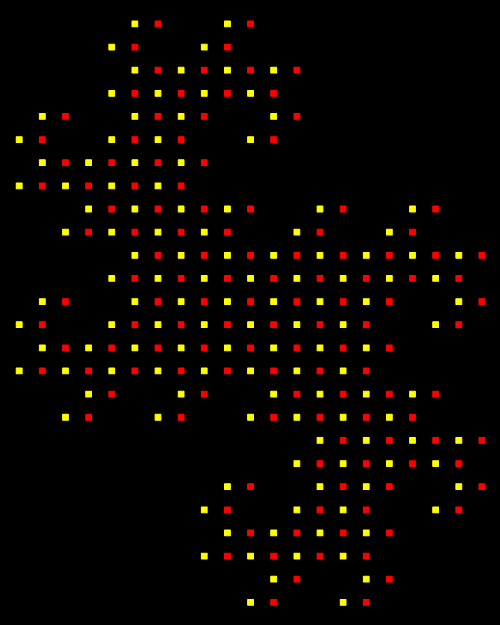
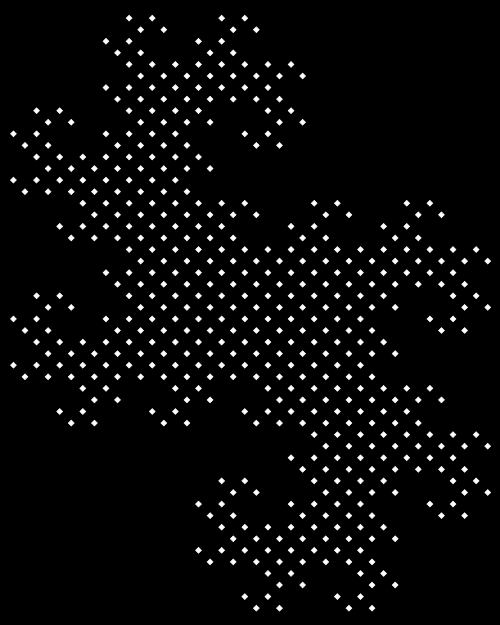
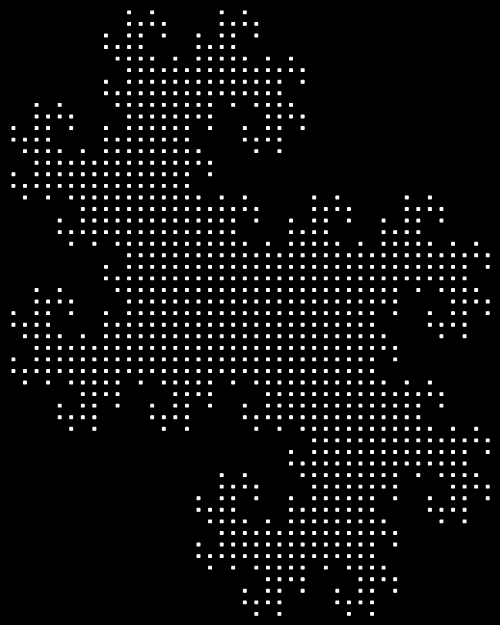
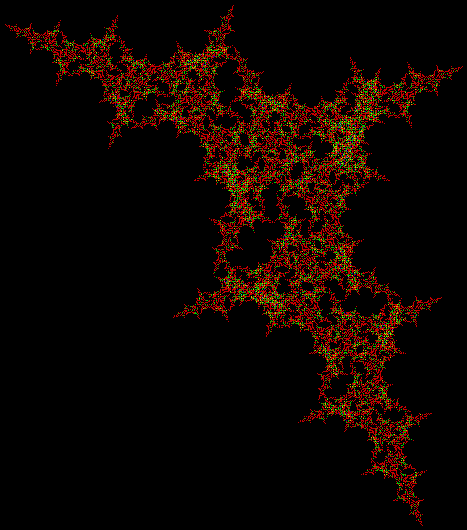
Scaffscapes

A fractal is a shape that contains copies of itself on smaller and smaller scales. You can find fractals everywhere in nature. Part of a fern looks like the fern as a whole:
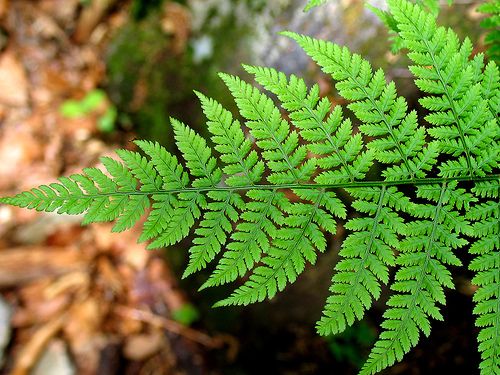
Fern as fractal (source)


Part of a tree looks like the tree as a whole:

Tree as fractal (source)


Part of a landscape looks like the landscape as a whole:
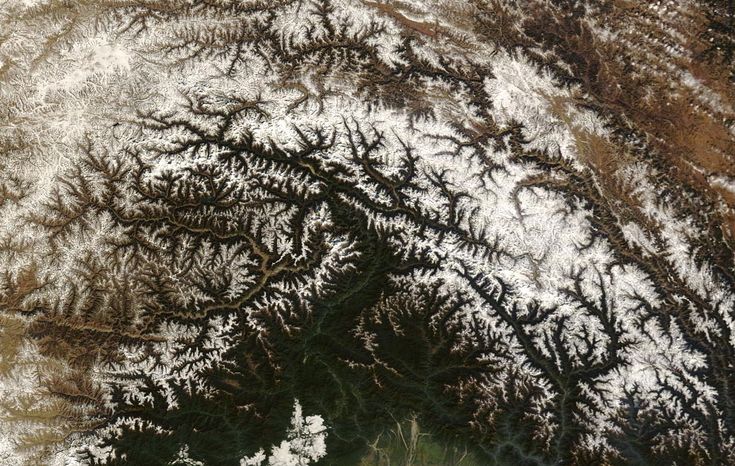
Landscape as fractal (source)


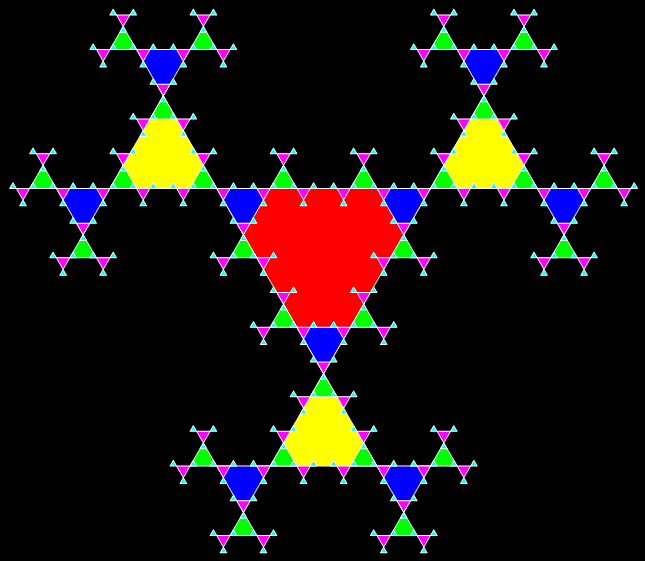
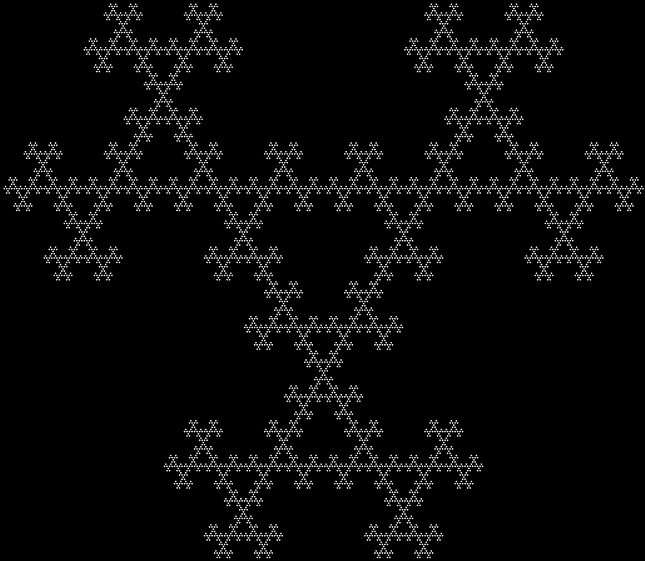
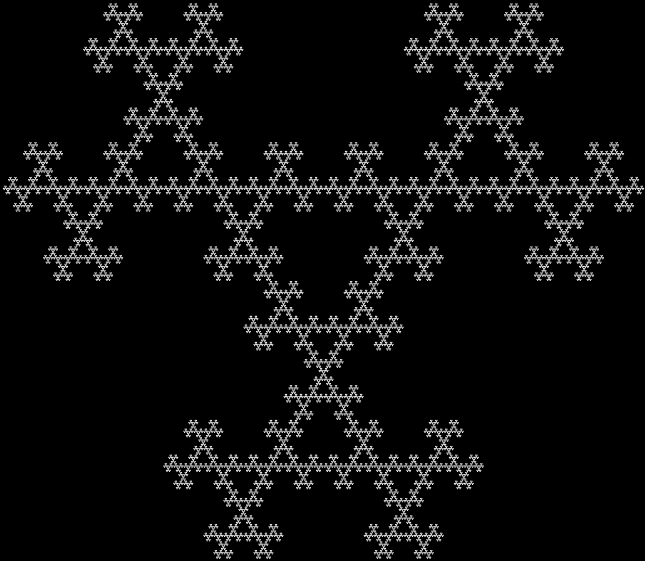
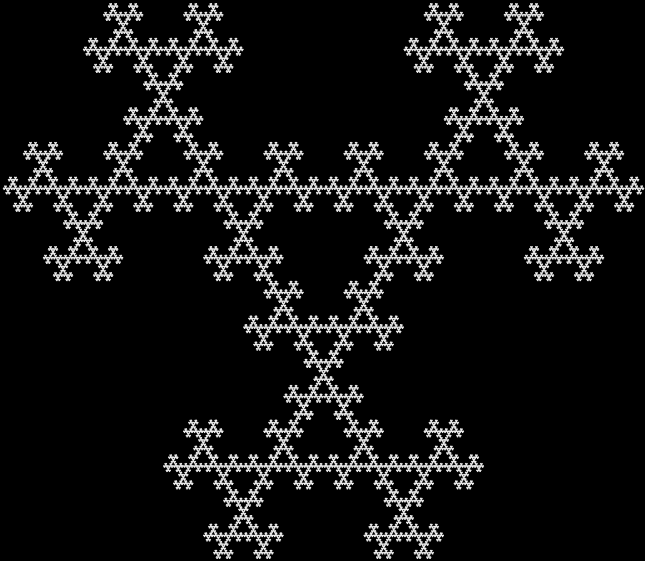
You can also create fractals for yourself. Here are three that I’ve constructed:
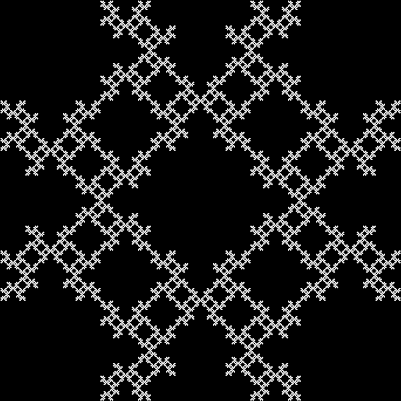
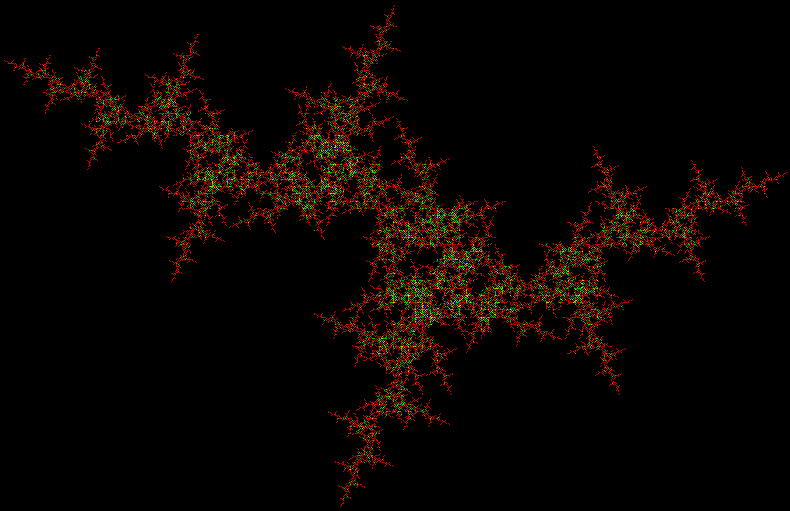
Fractal #1
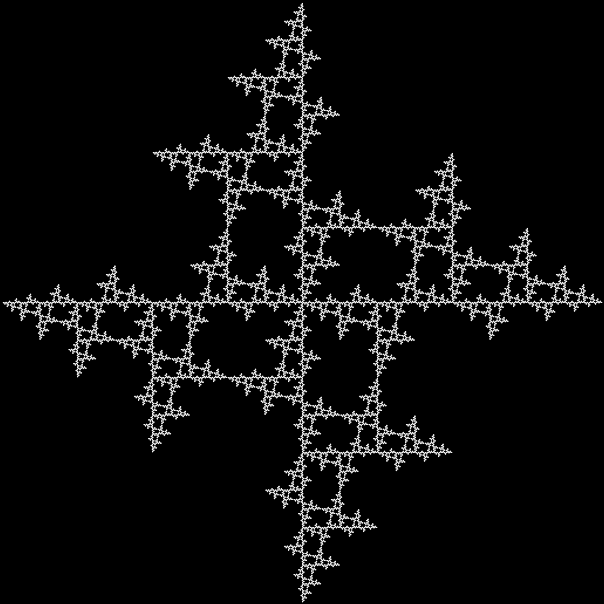

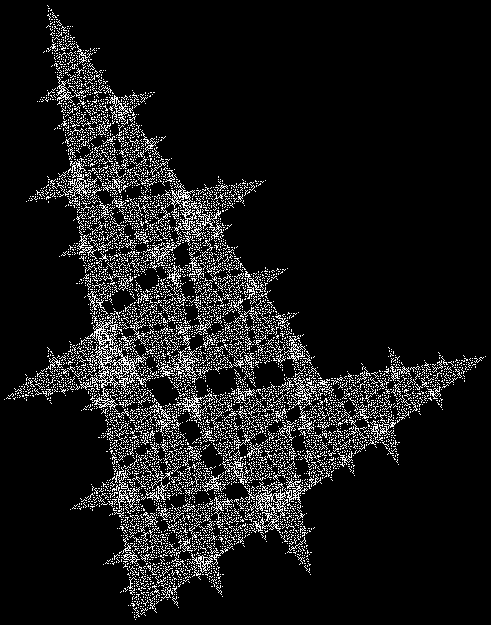
Fractal #2
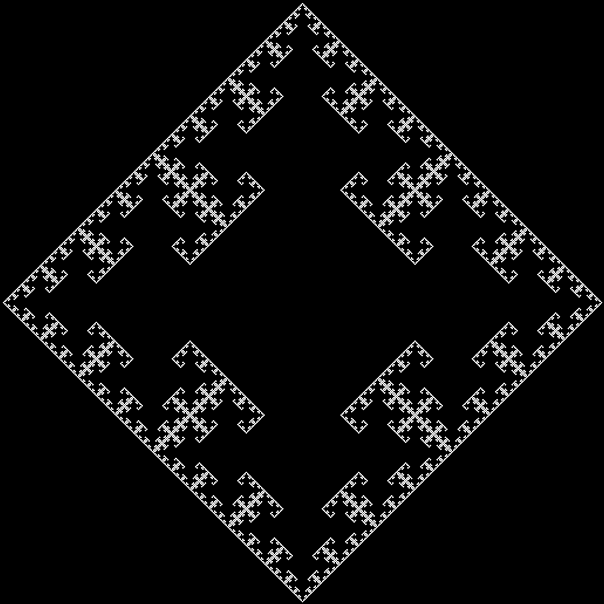

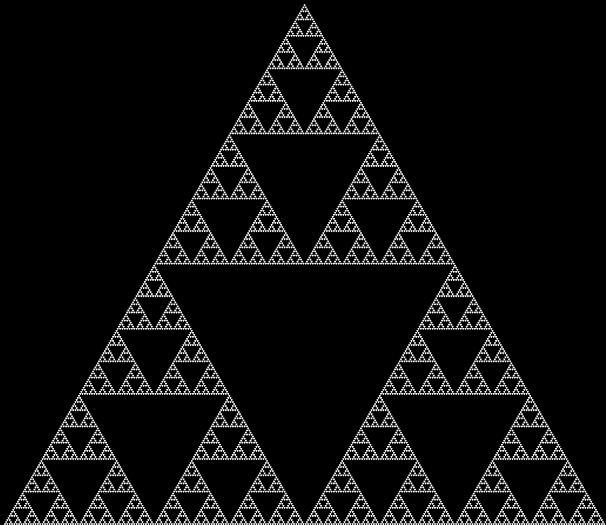
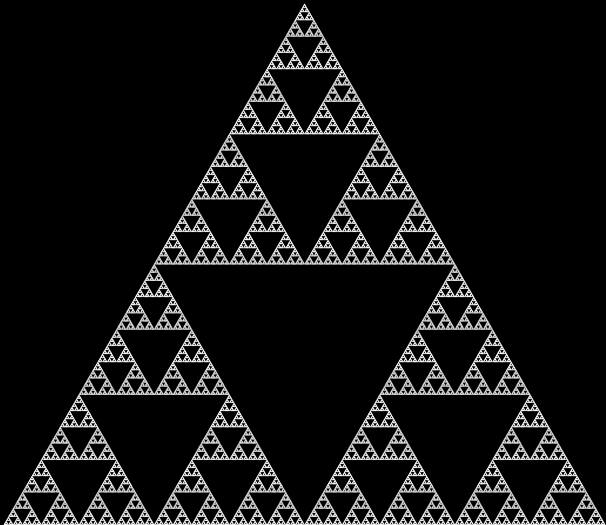
Fractal #3 — the T-square fractal


The three fractals look very different and, in one sense, that’s exactly what they are. But in another sense, they’re the same fractal. Each can morph into the other two:
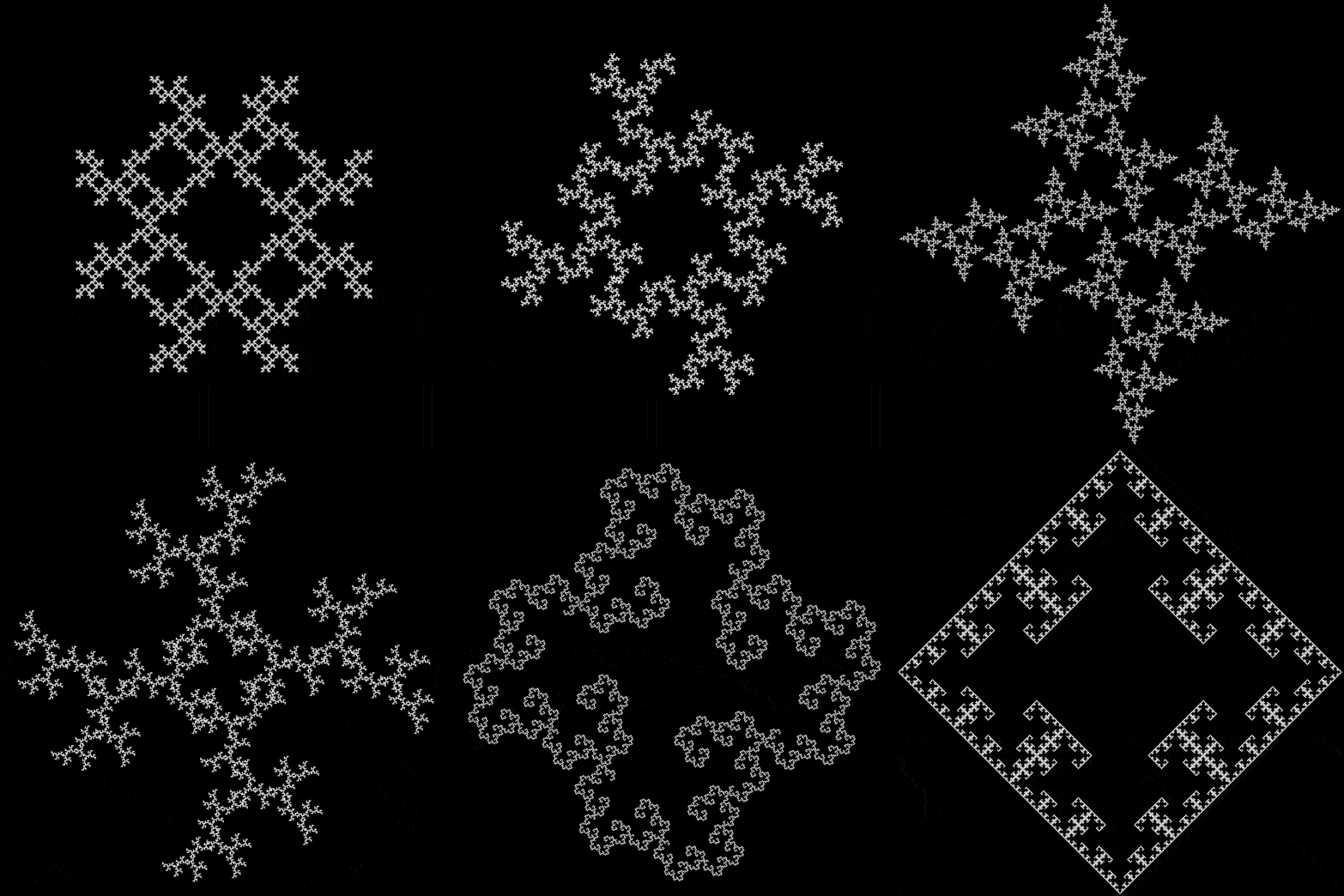
Fractal #1 → fractal #2 → fractal #3 (animated)


Here are two more fractals taken en route from fractal #2 to fractal #3, as it were:
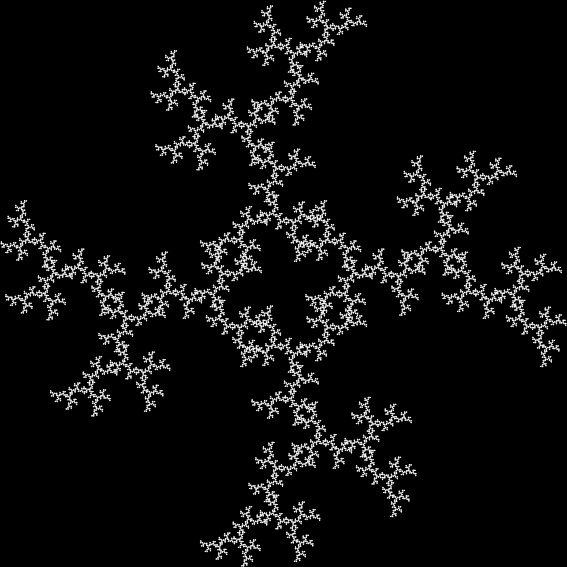
Fractal #4
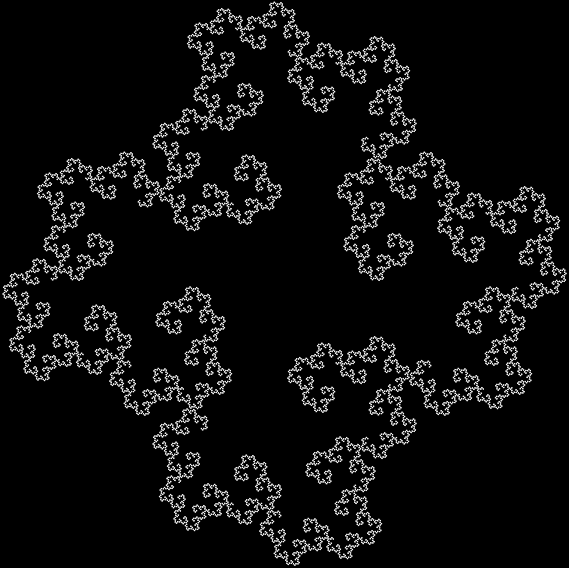

Fractal #5


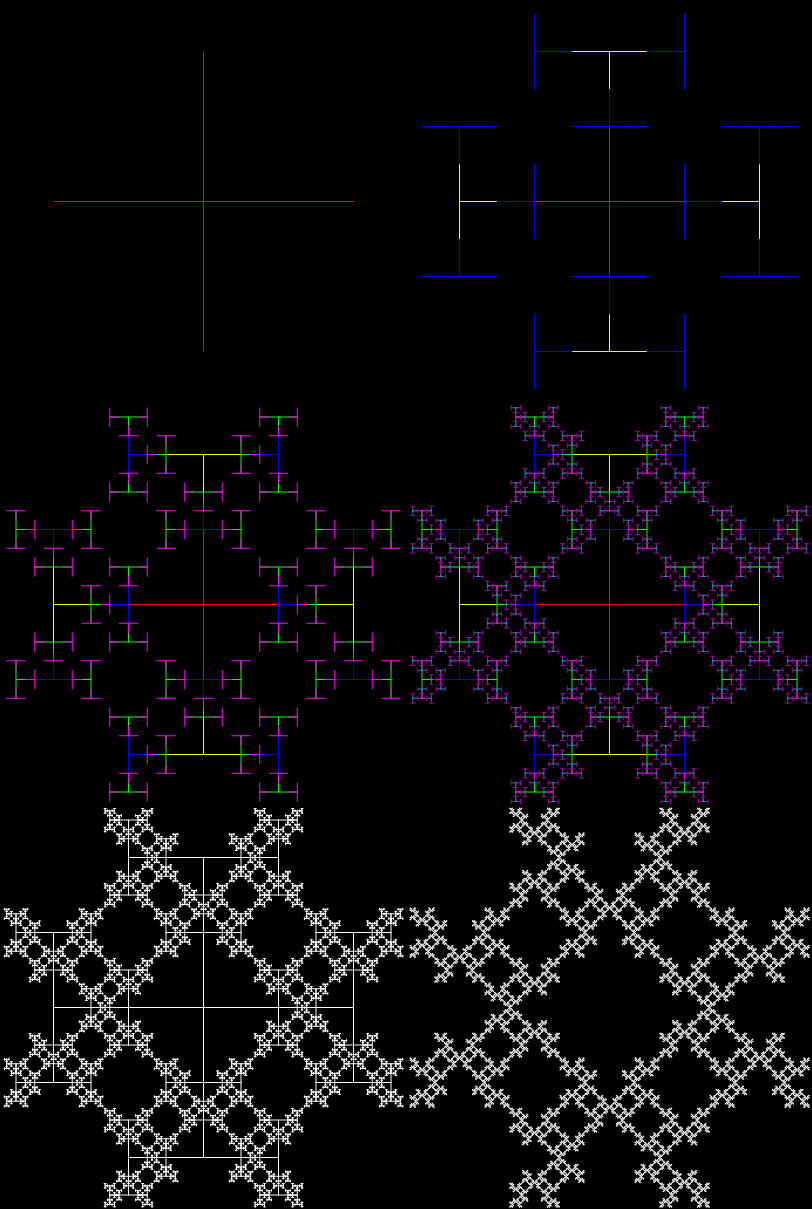
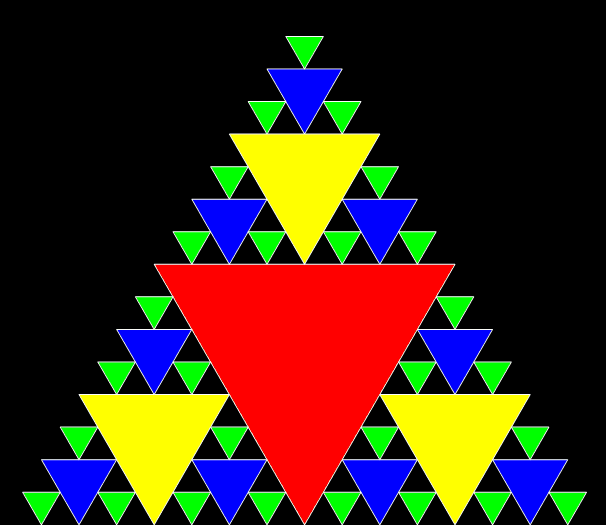
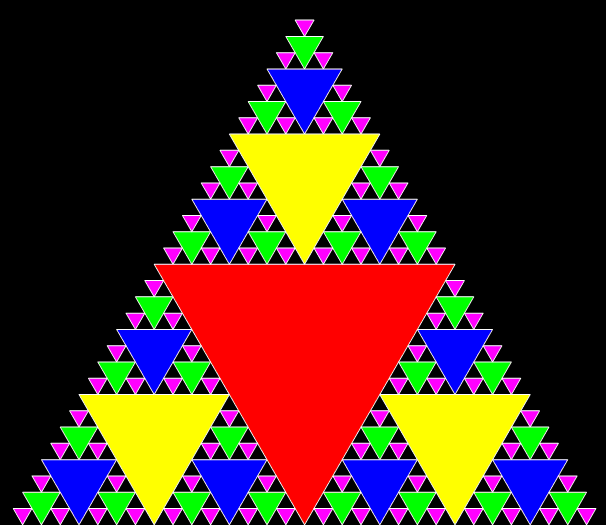
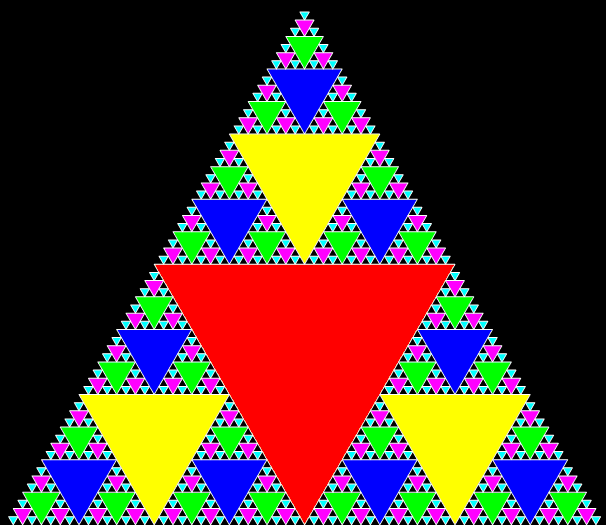
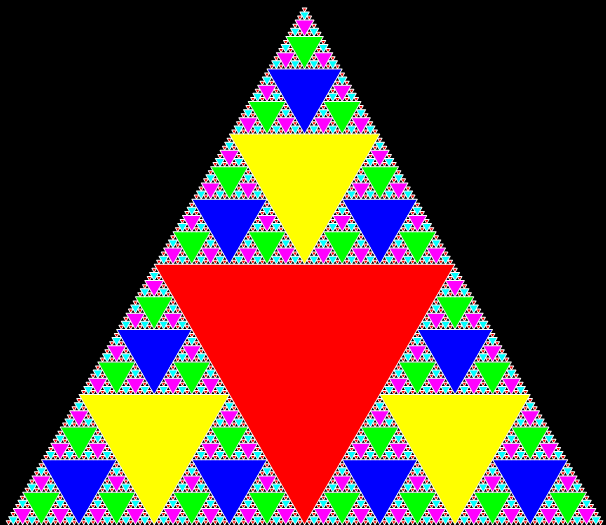
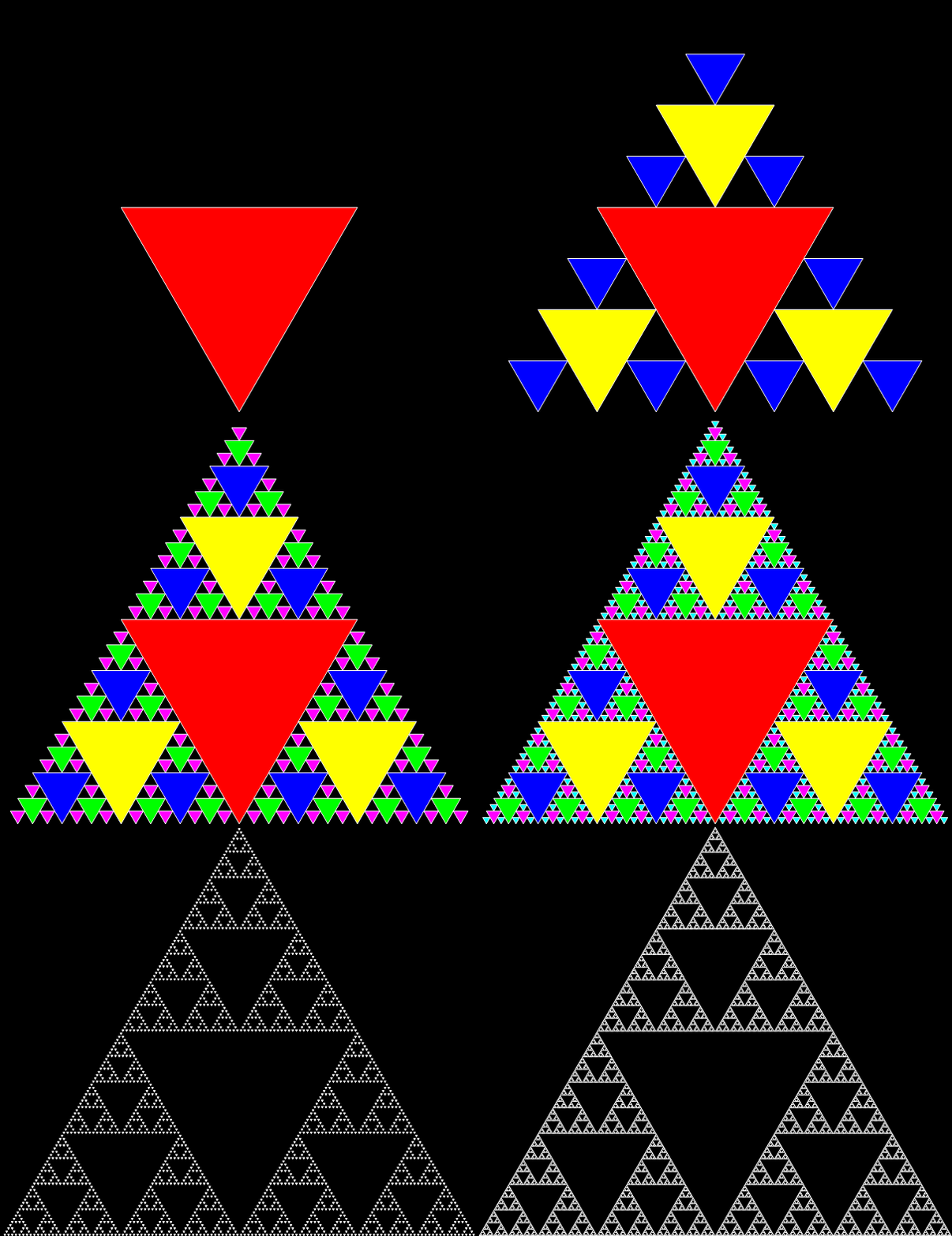
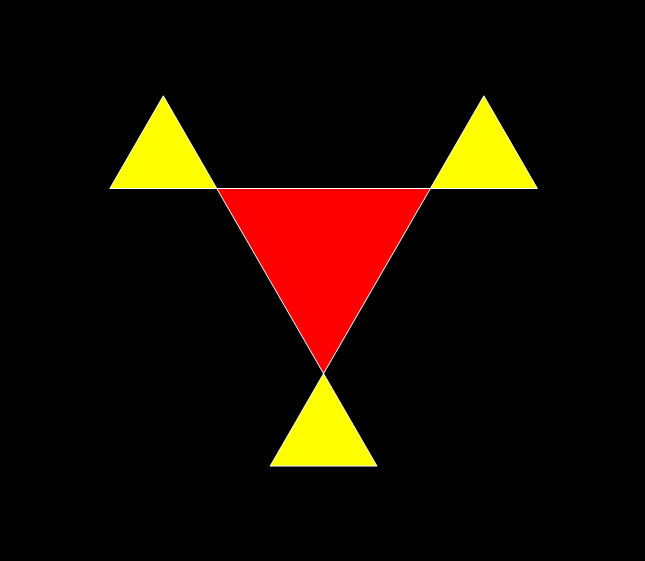
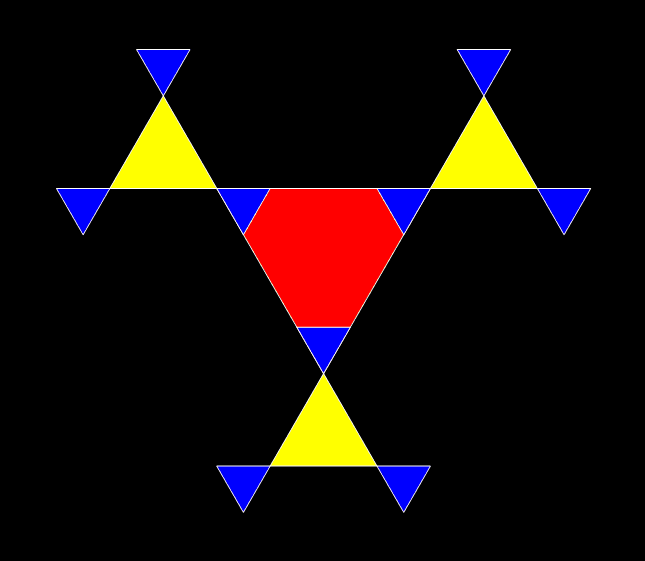
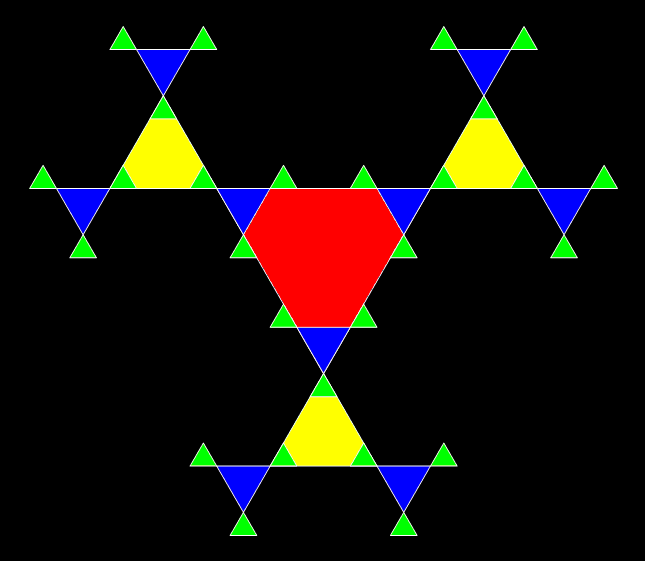
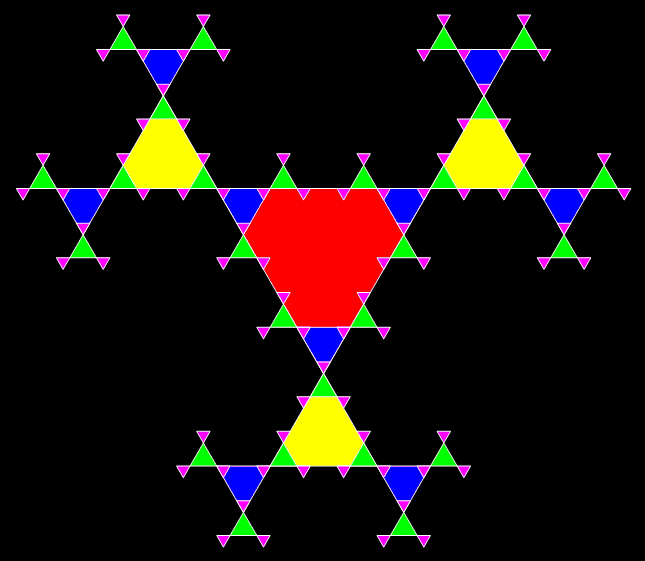
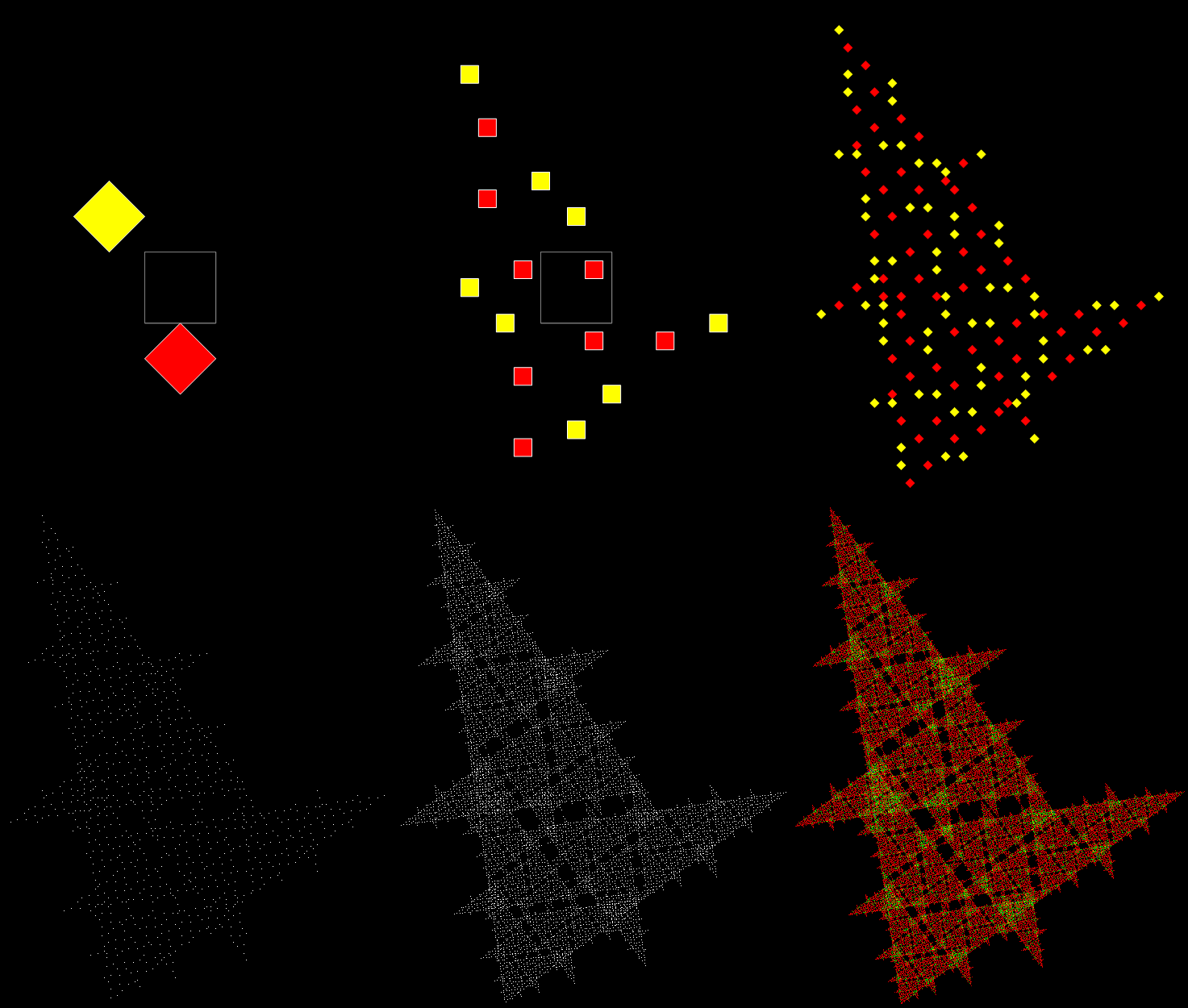
To understand how the fractals belong together, you have to see what might be called the scaffolding. The construction of fractal #3 is the easiest to understand. First you put up the scaffolding, then you take it away and leave the final fractal:
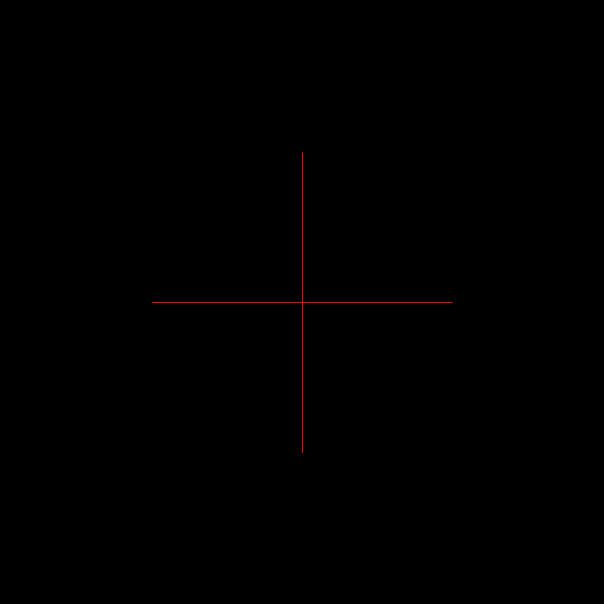
Fractal #3, scaffolding stage 1
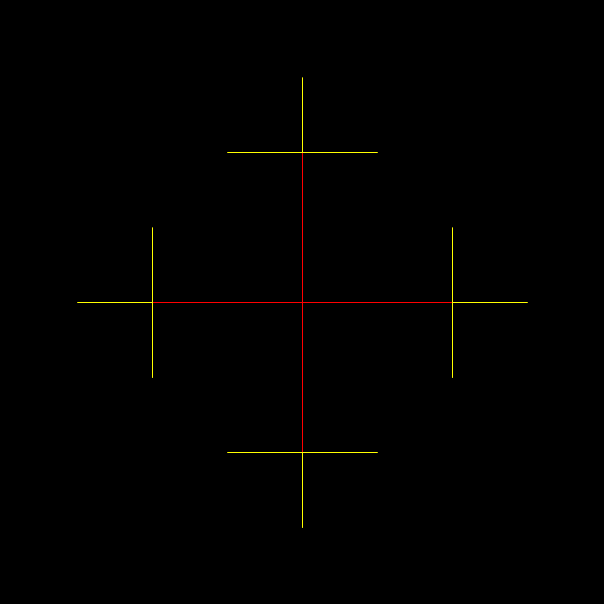

Fractal #3, stage 2
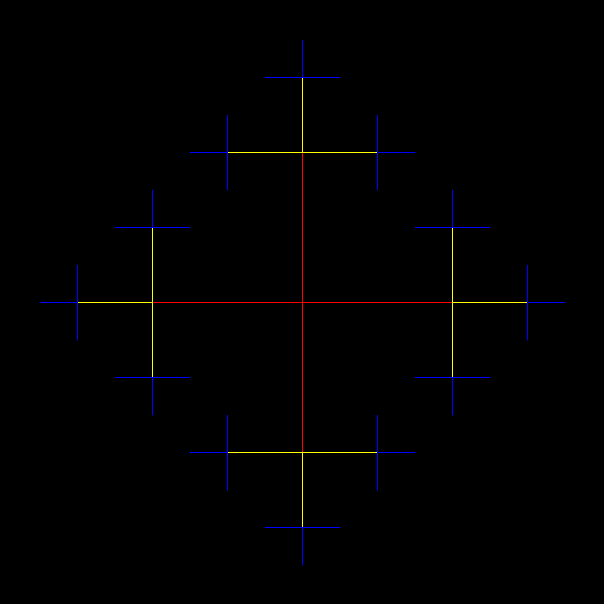

Fractal #3, stage 3
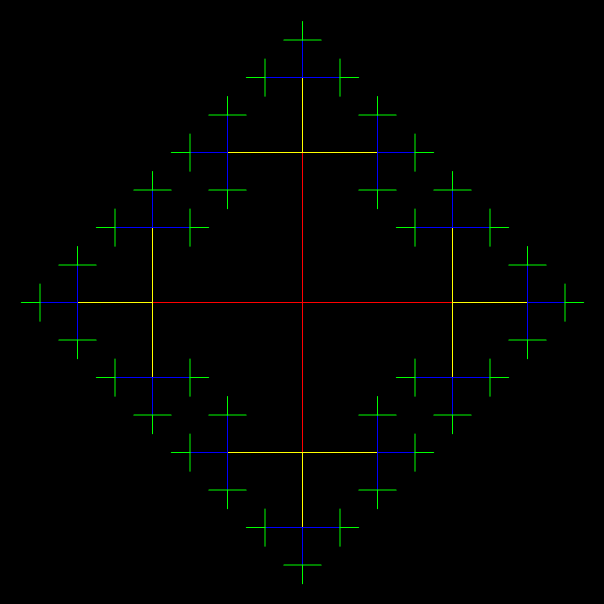

Fractal #3, stage 4
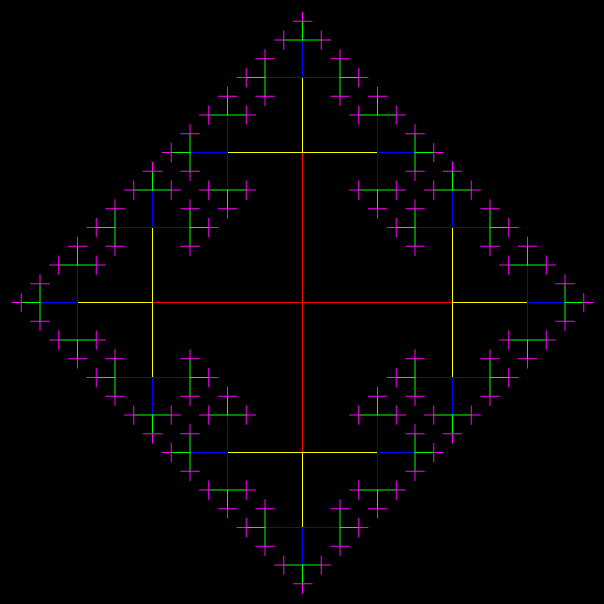

Fractal #3, stage 5
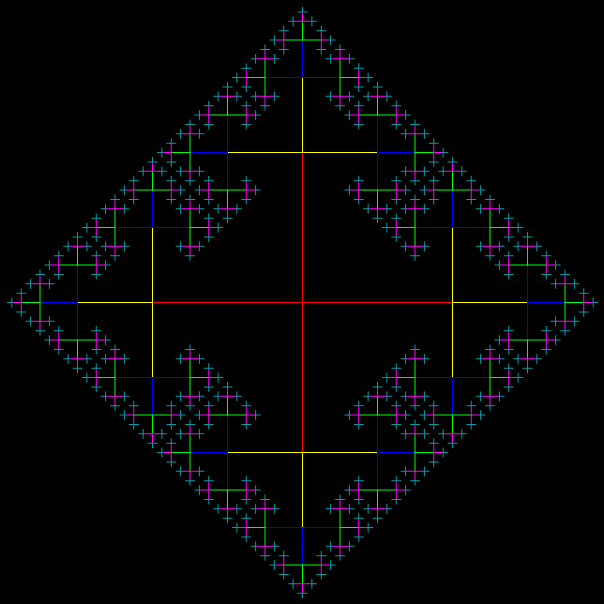

Fractal #3, stage 6
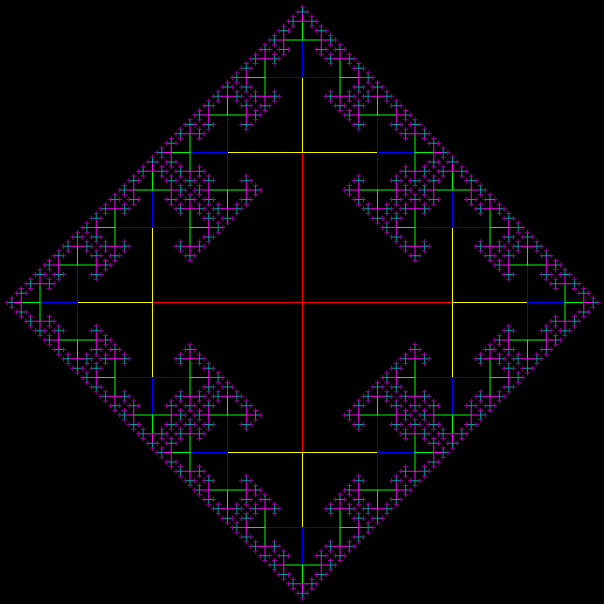

Fractal #3, stage 7
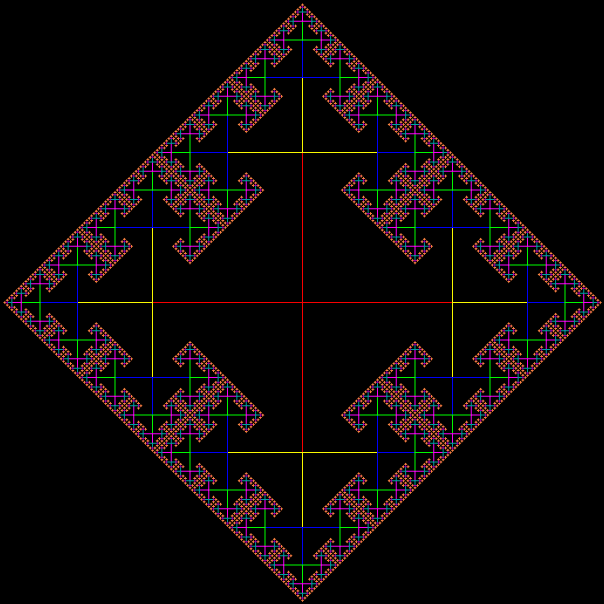

Fractal #3, stage 8
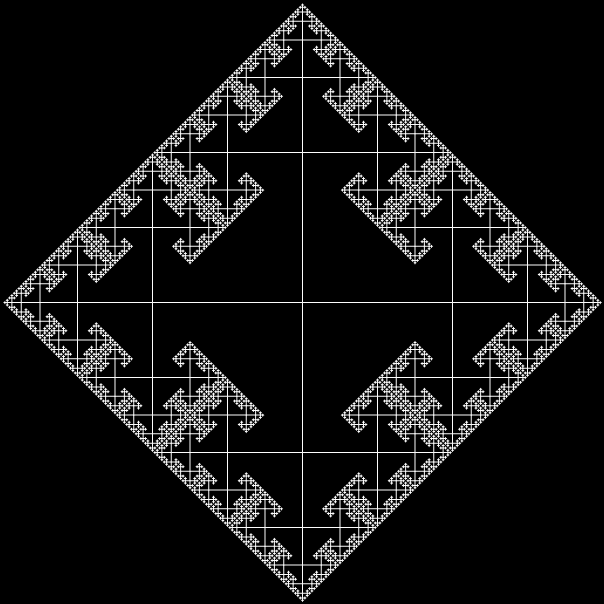

Fractal #3, stage 9
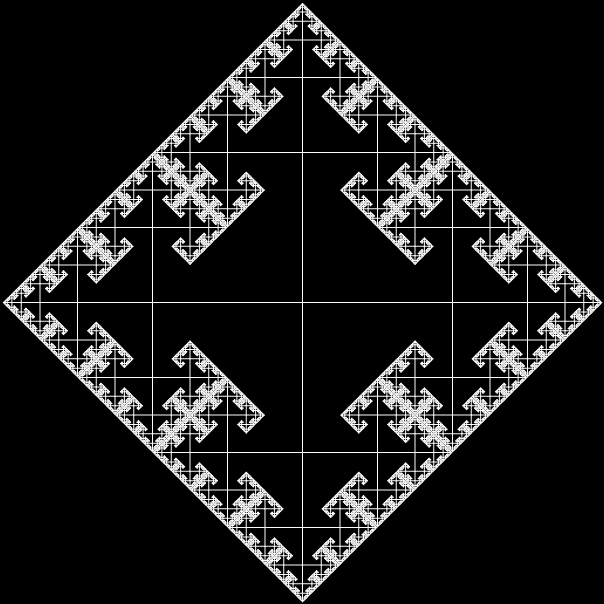

Fractal #3, stage 10
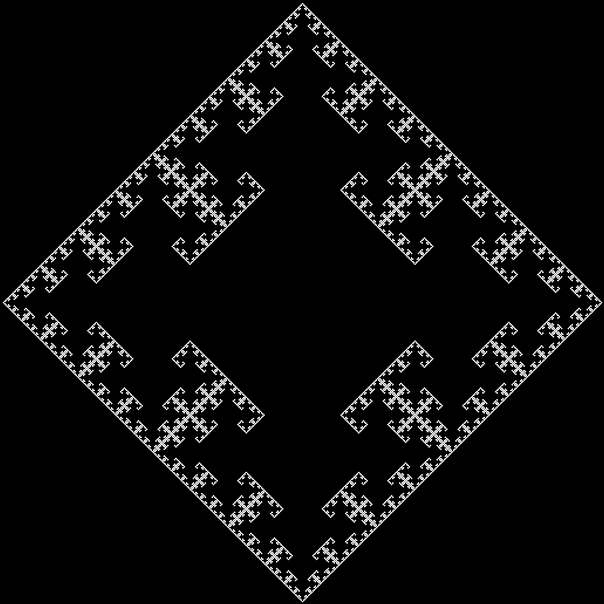

Fractal #3 (scaffolding removed)
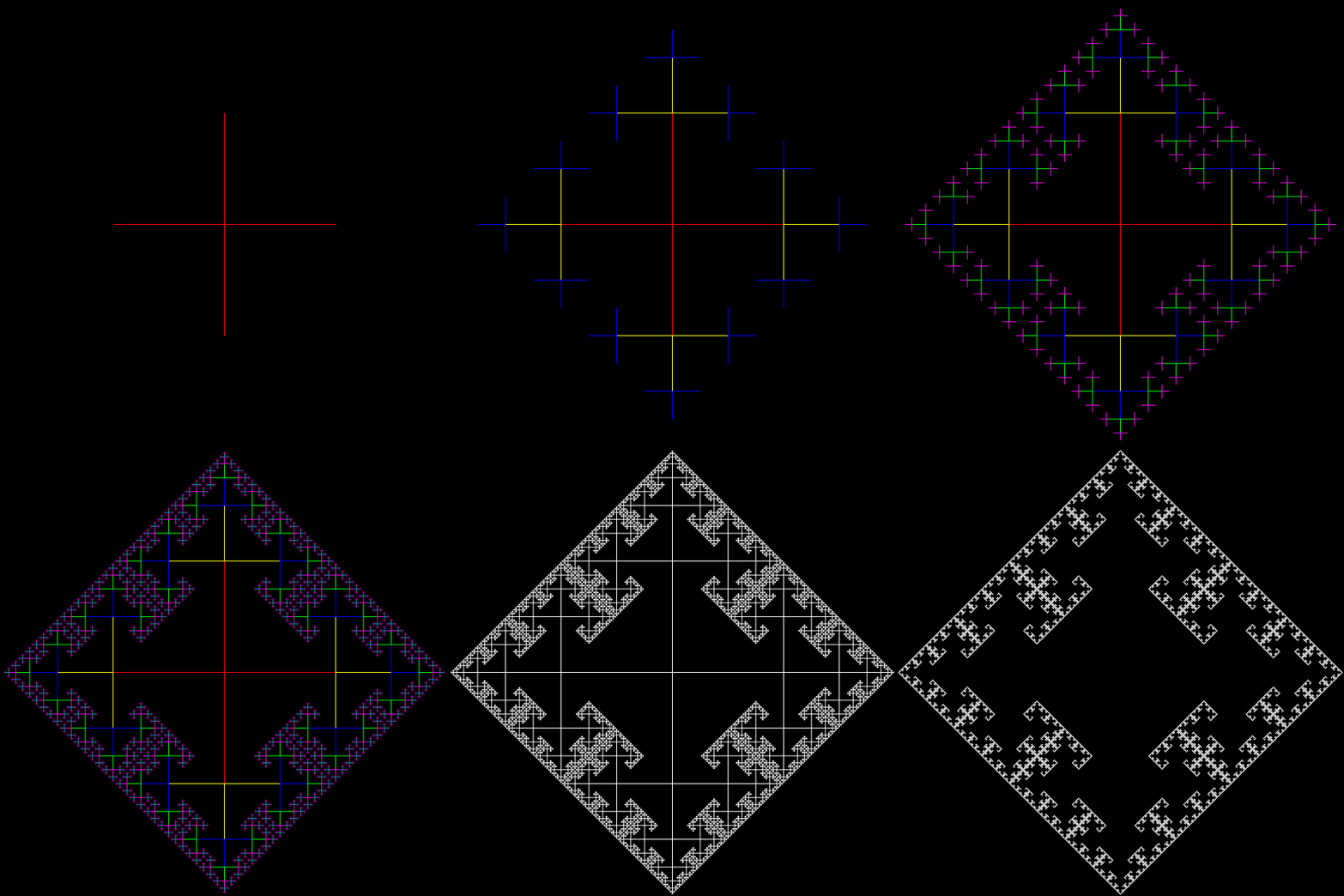

Construction of fractal #3 (animated)


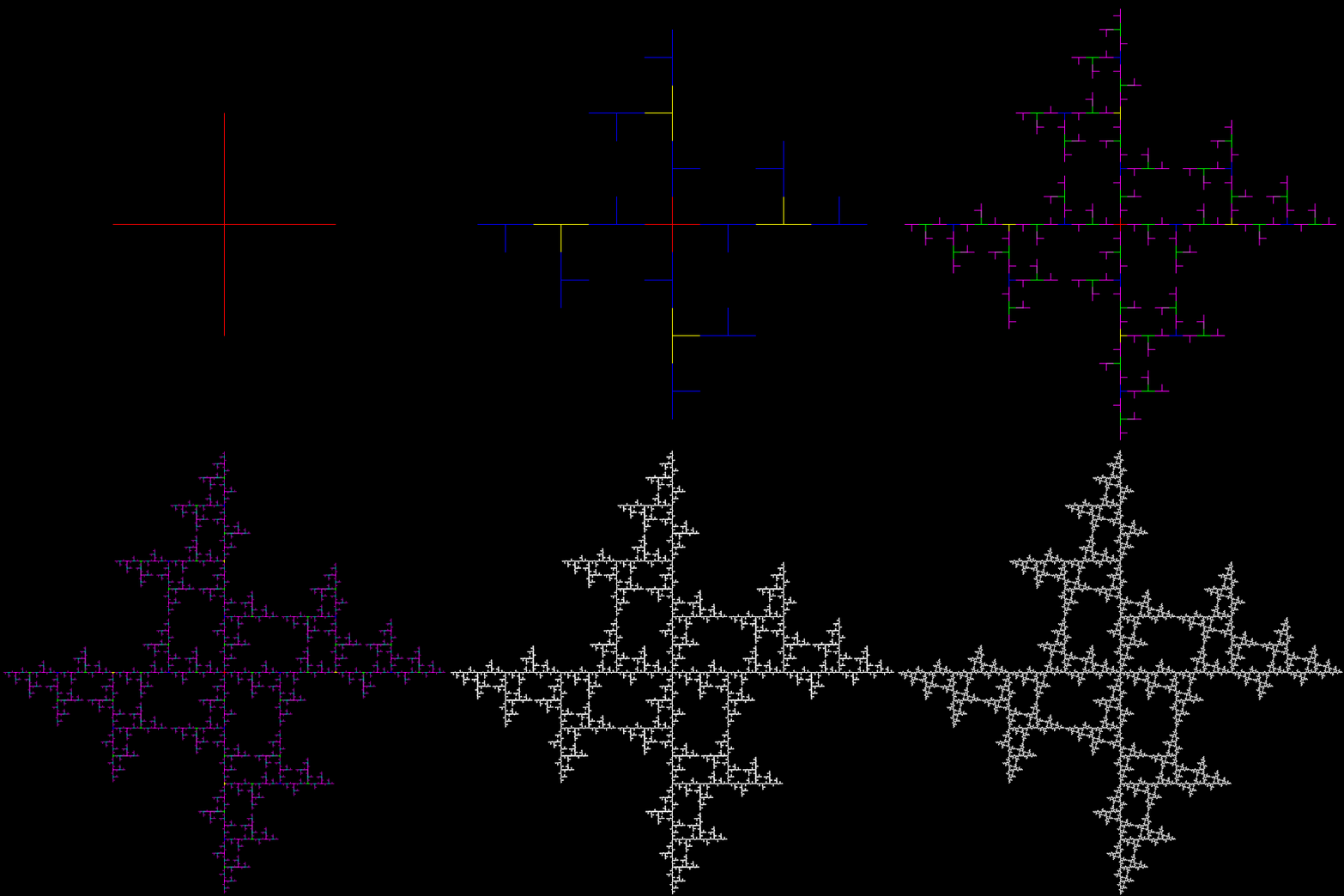
Now here’s the construction of fractal #1:
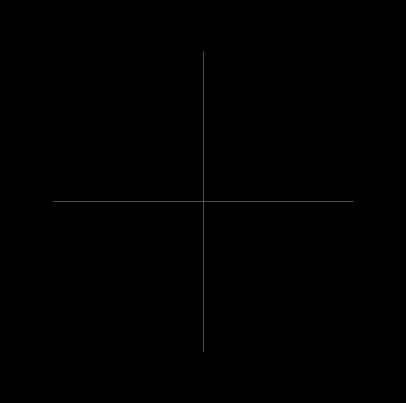
Fractal #1, stage 1
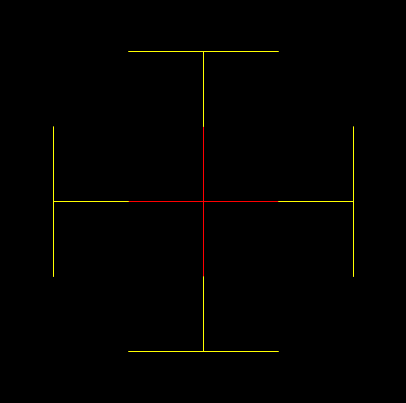

Fractal #1, stage 2
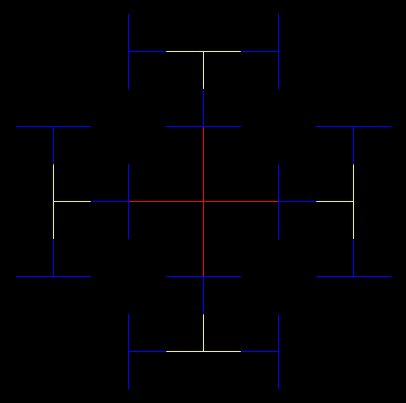

Fractal #1, stage 3

Construction of fractal #1 (animated)


Fractal #1 (static)


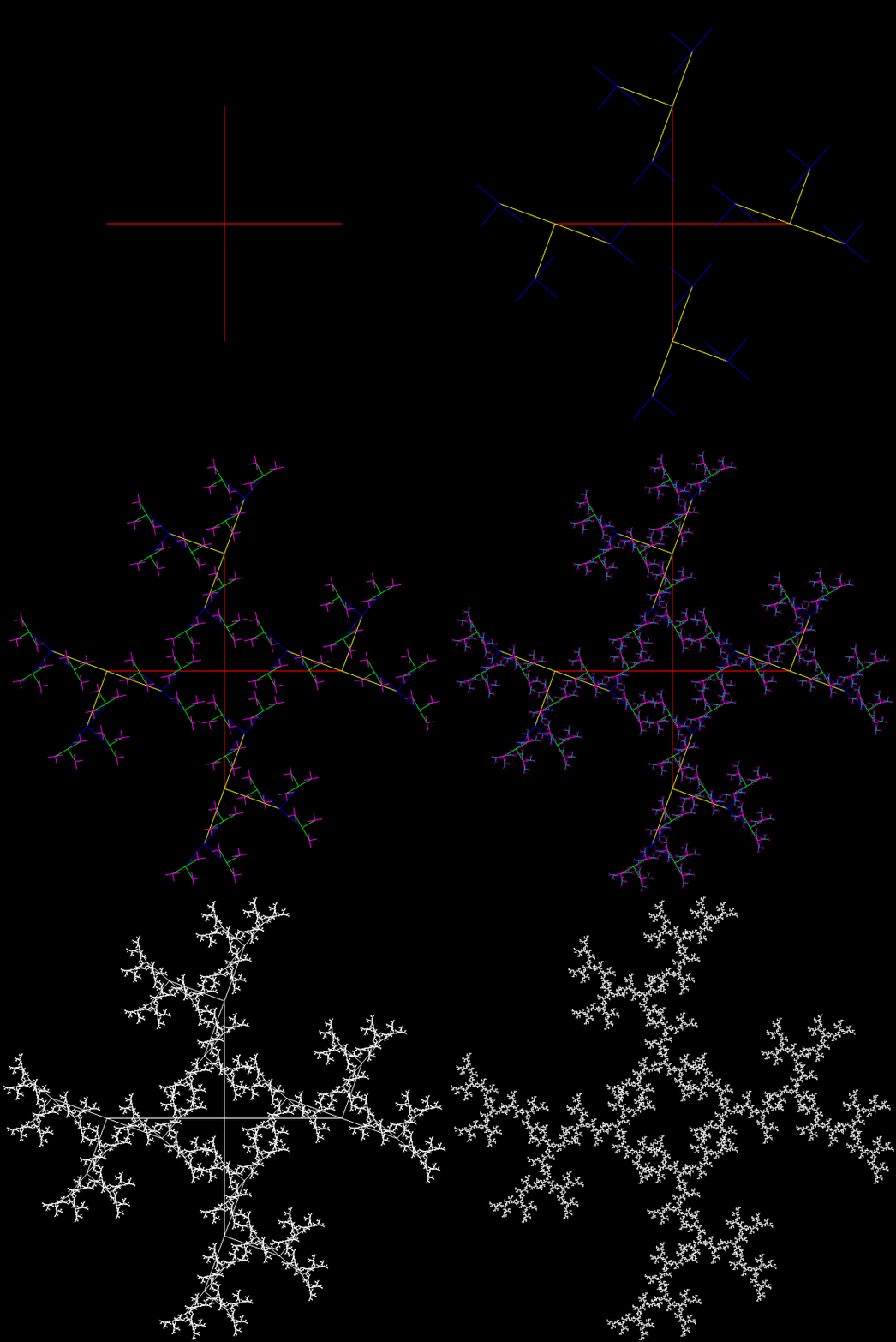
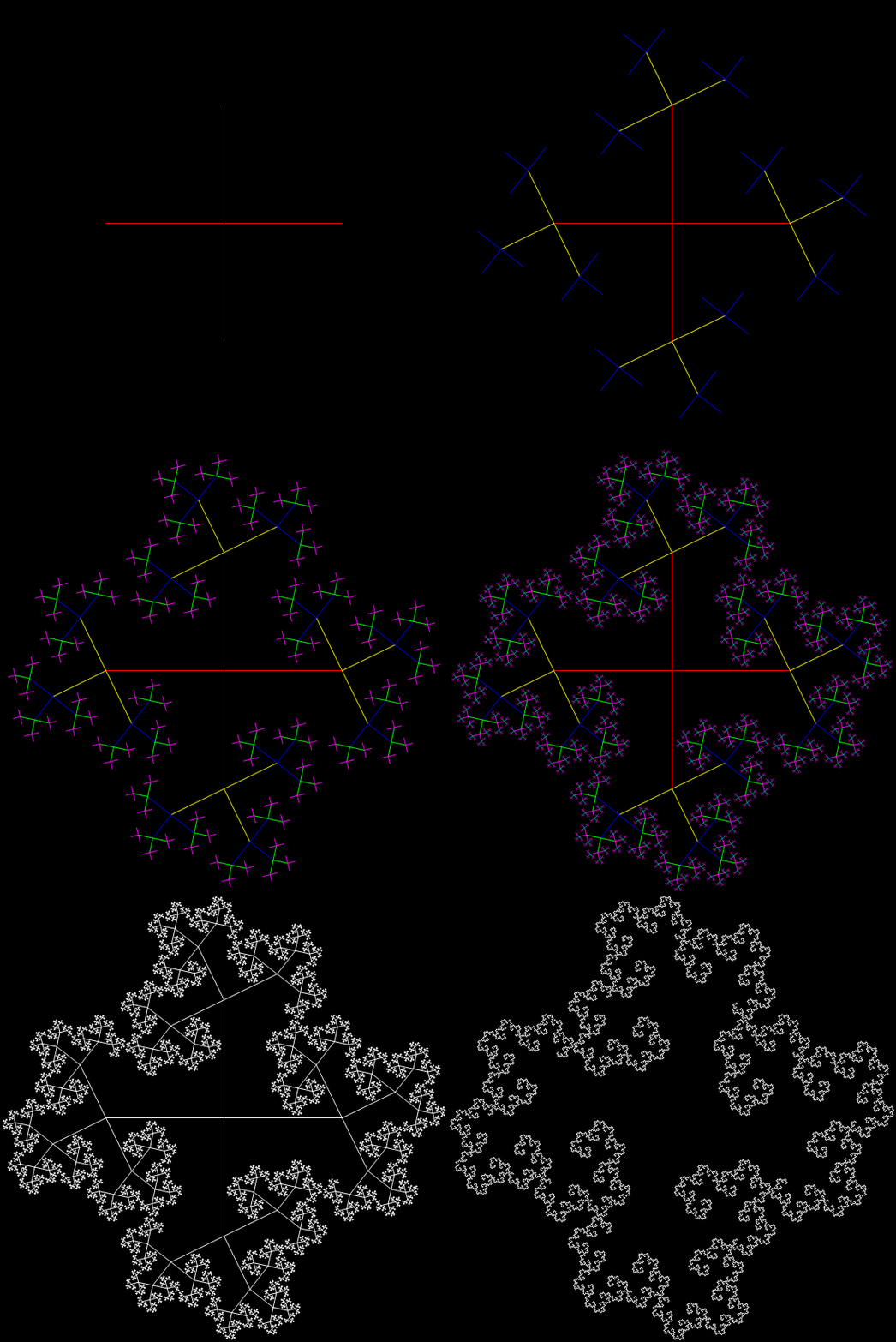
And the constructions of fractals #2, #4 and #5:

Fractal #2, stage 1
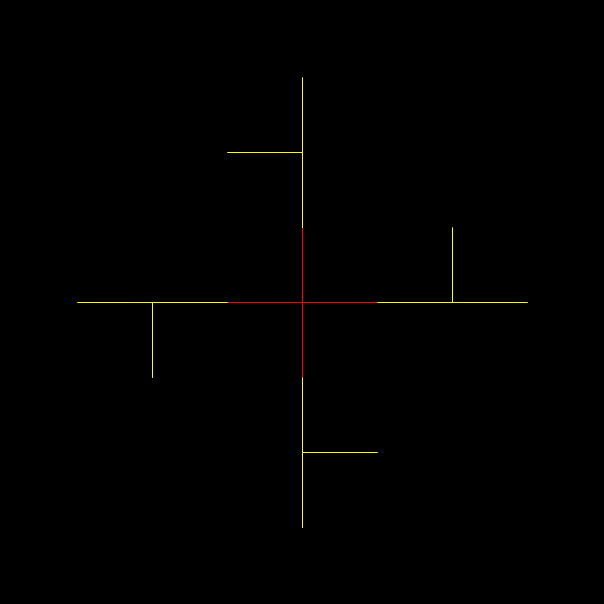

Fractal #2, stage 2
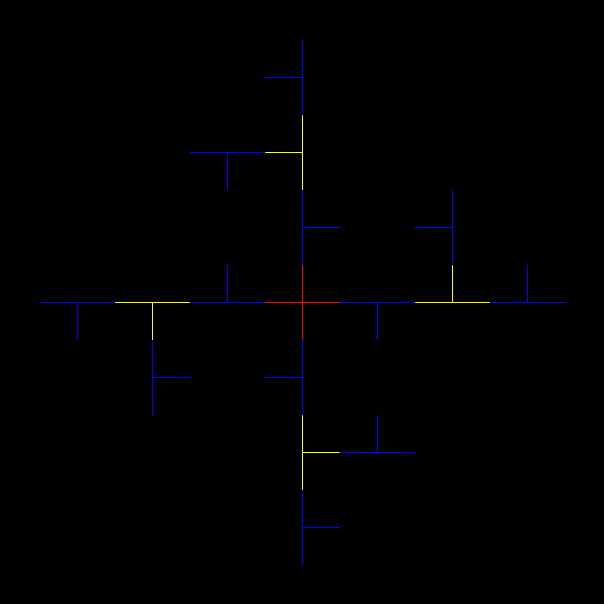

Fractal #2, stage 3

Fractal #2 (animated)


Fractal #2 (static)
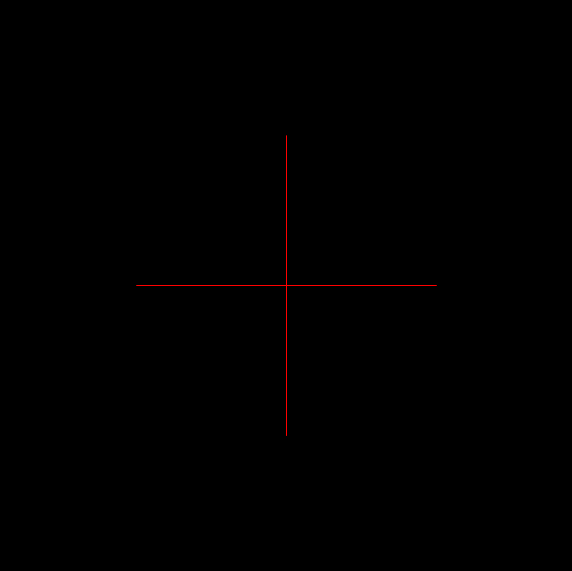

Fractal #4, stage 1
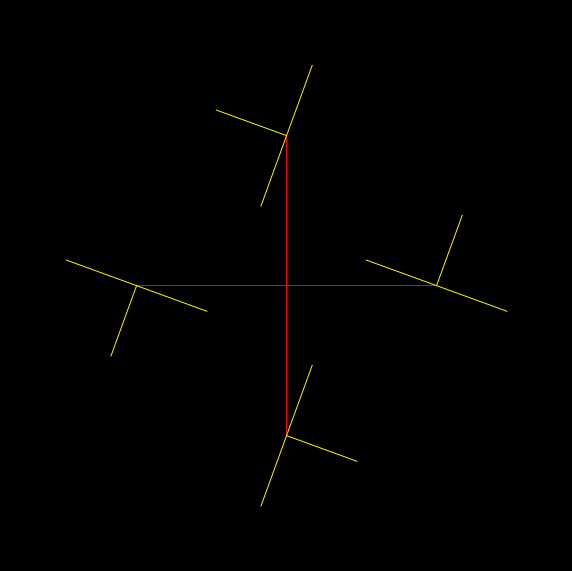

Fractal #4, stage 2
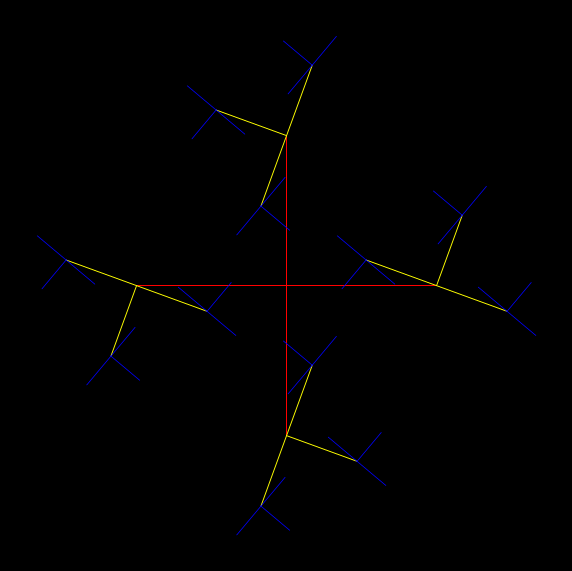

Fractal #4, stage 3

Fractal #4 (animated)


Fractal #4 (static)
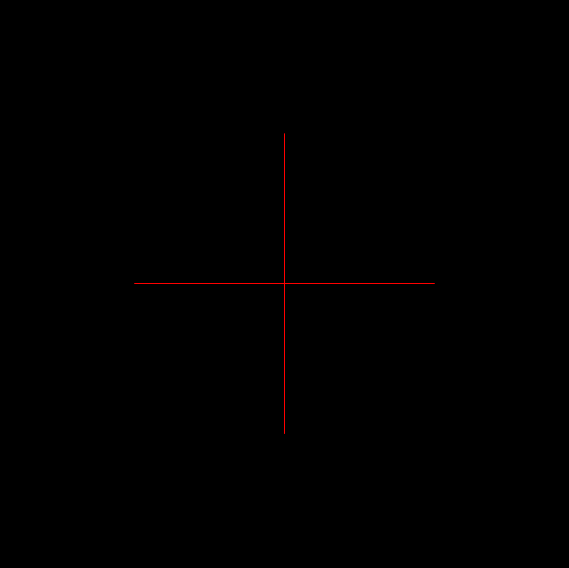

Fractal #5, stage 1
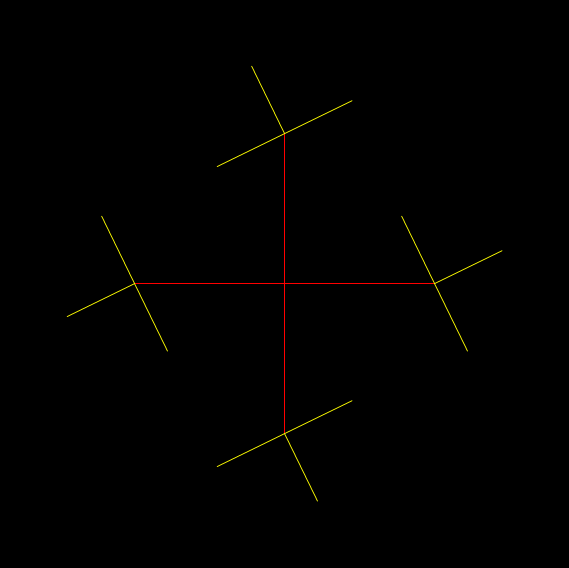

Fractal #5, stage 2
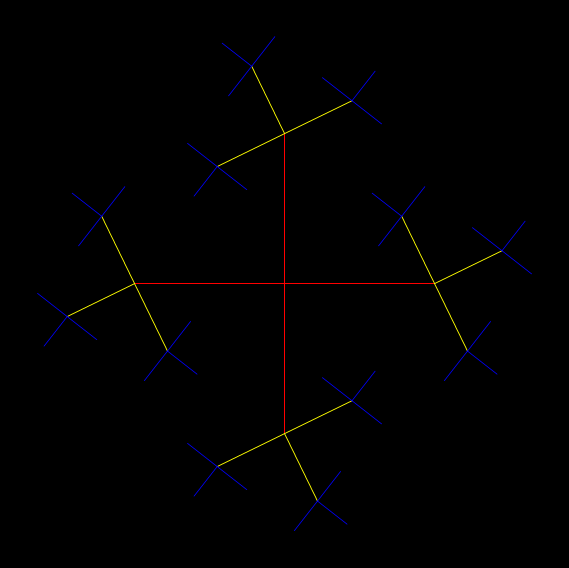

Fractal #5, stage 3

Fractal #5 (animated)


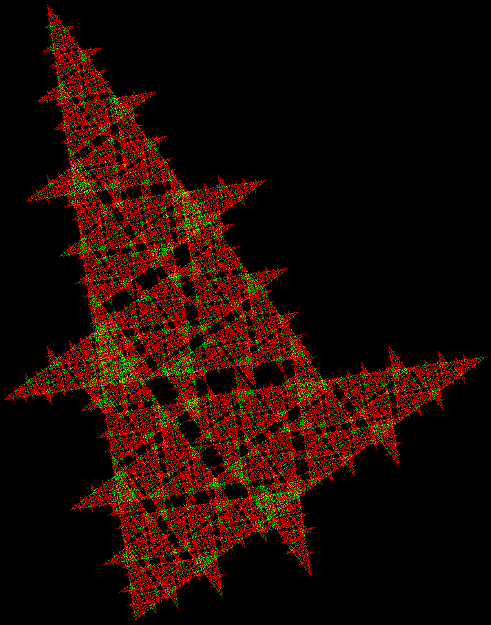
Fractal #5
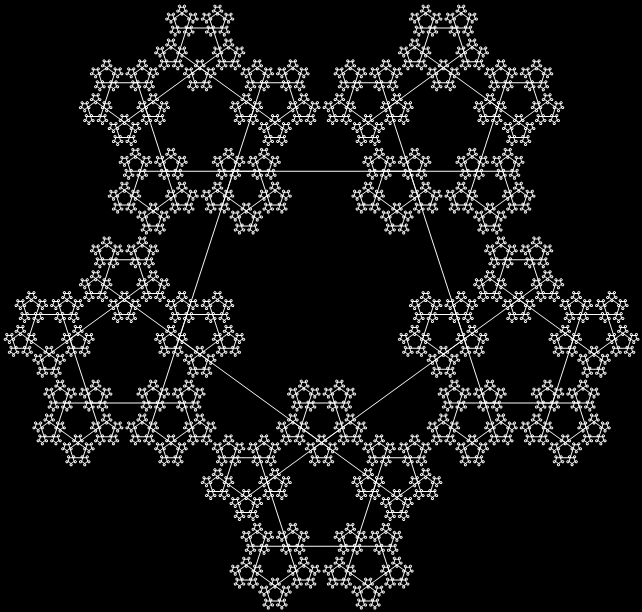

Twi-Phi

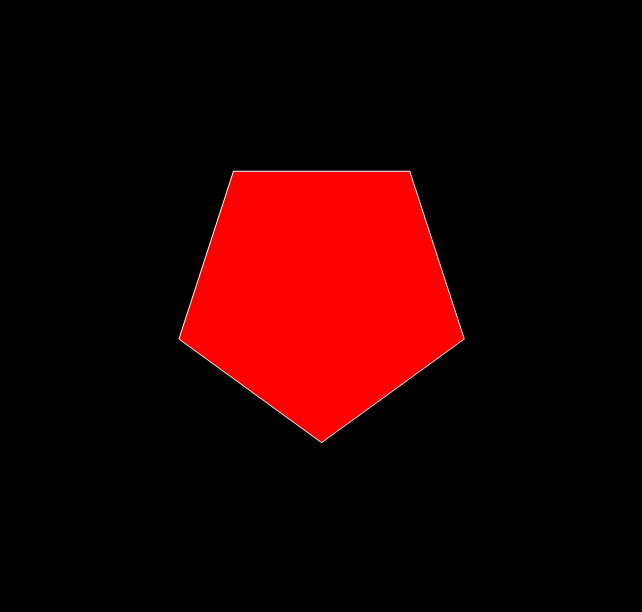
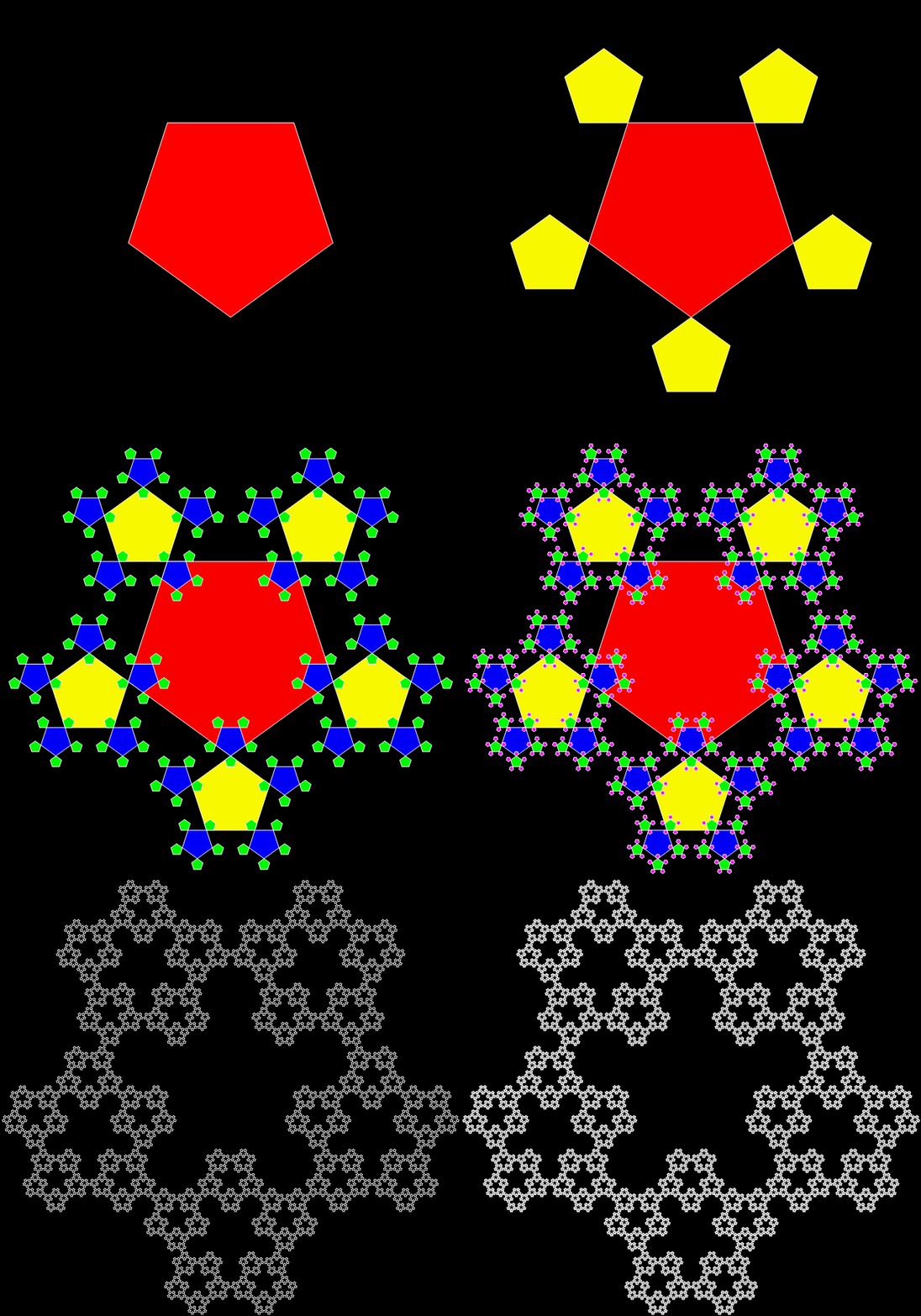
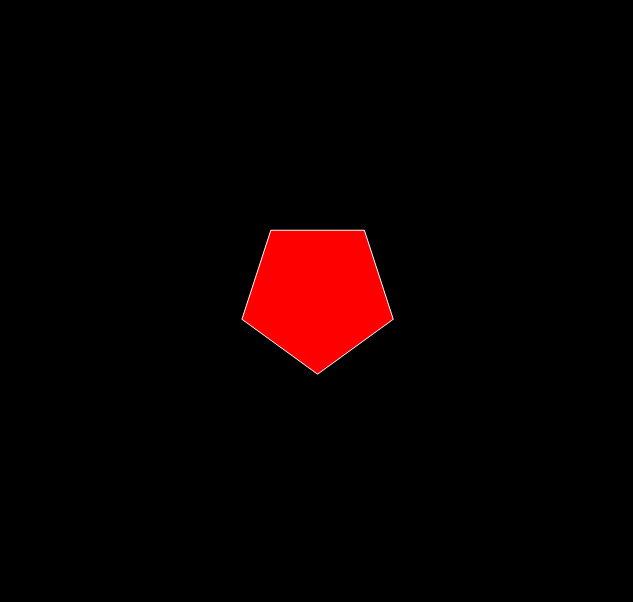
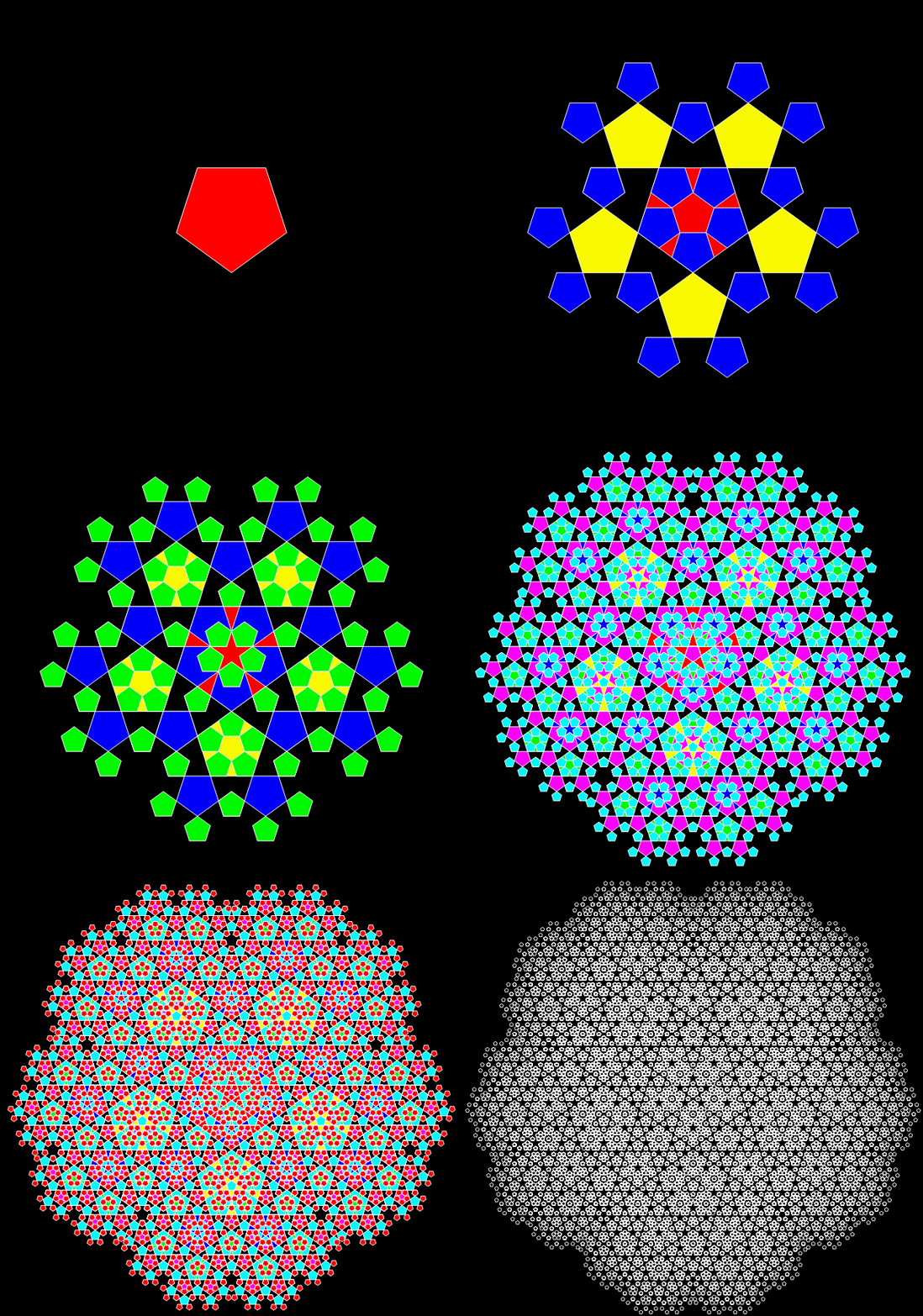
Here’s a pentagon:

Stage #1


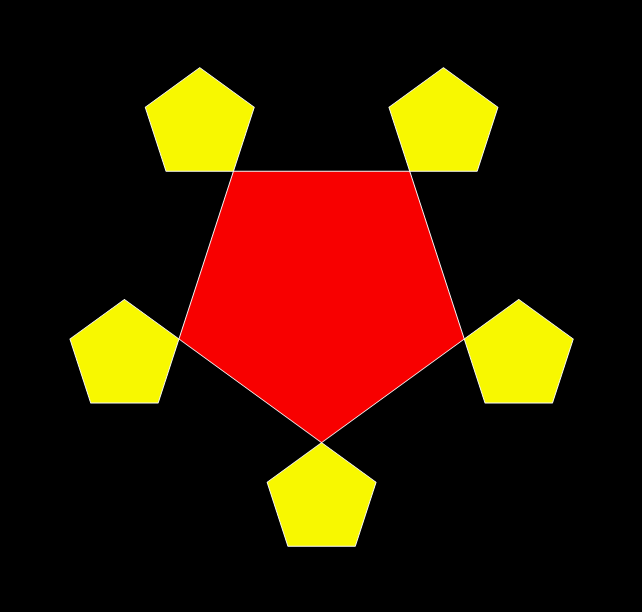
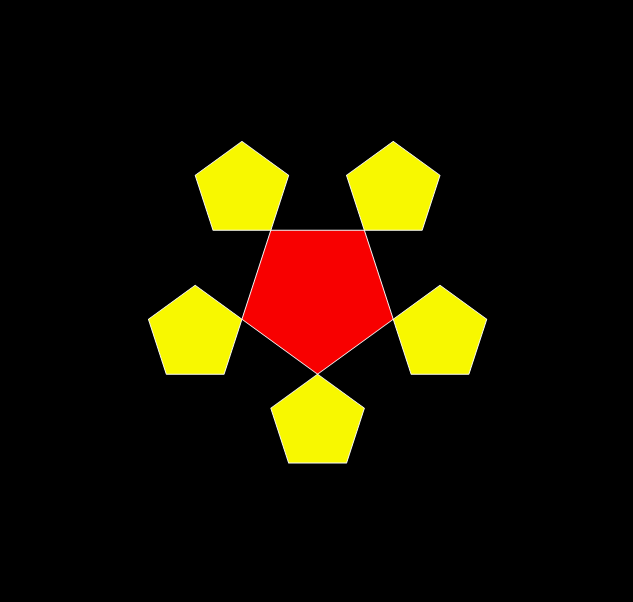
And here’s the pentagon with smaller pentagons on its vertices:

Stage #2


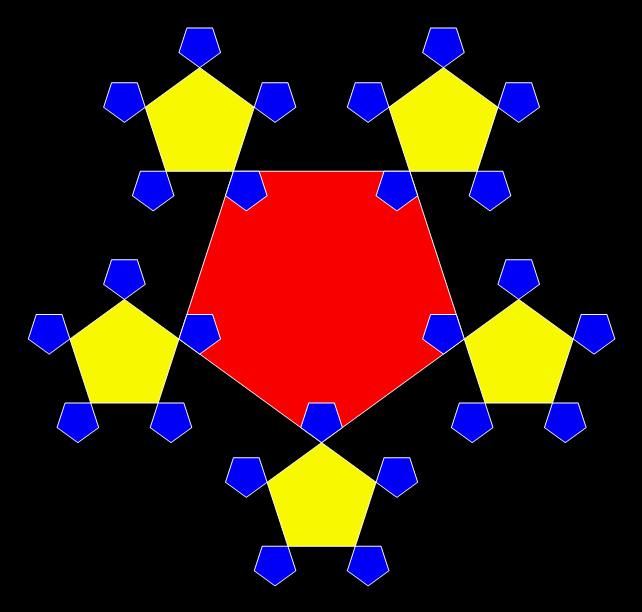
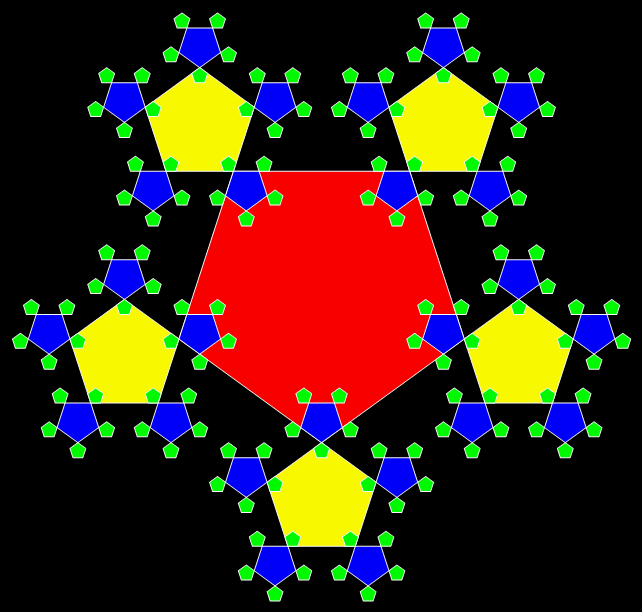
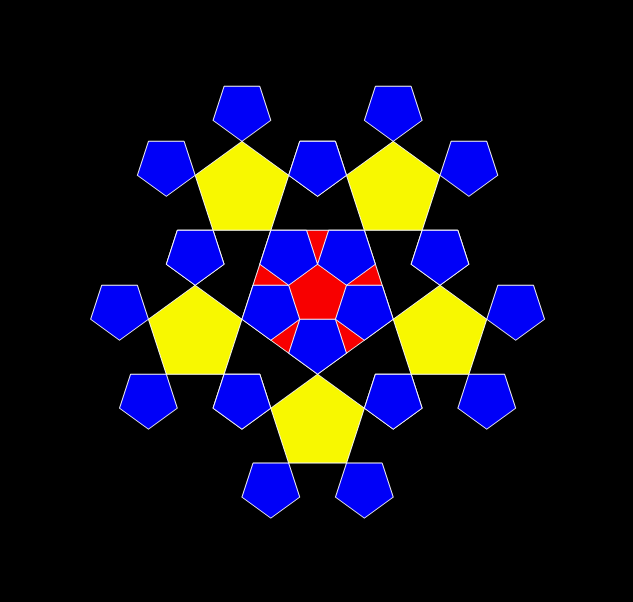
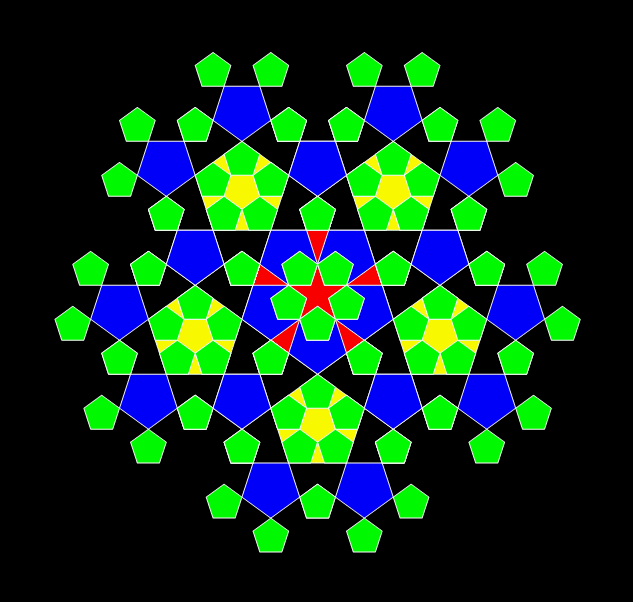
And here’s more of the same:

Stage #3


Stage #4


Stage #5
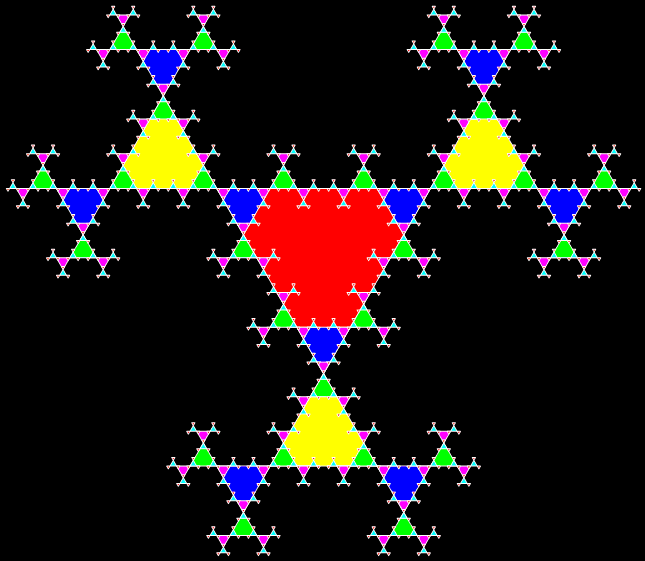

Stage #6


Stage #7


Stage #8


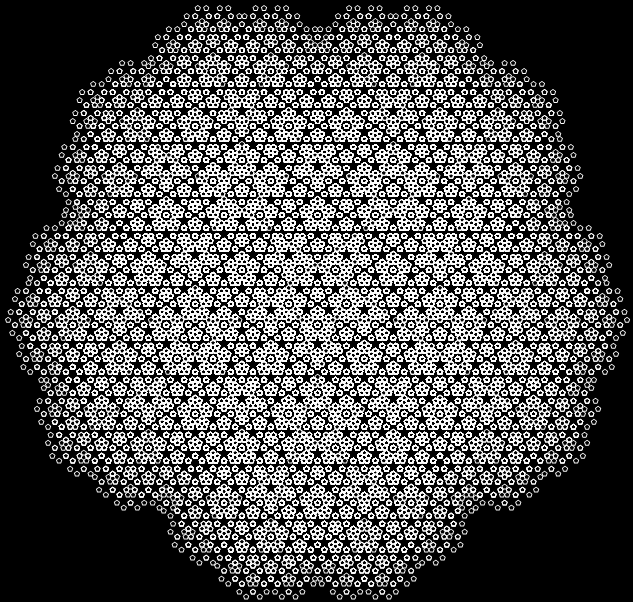
Animated fractal


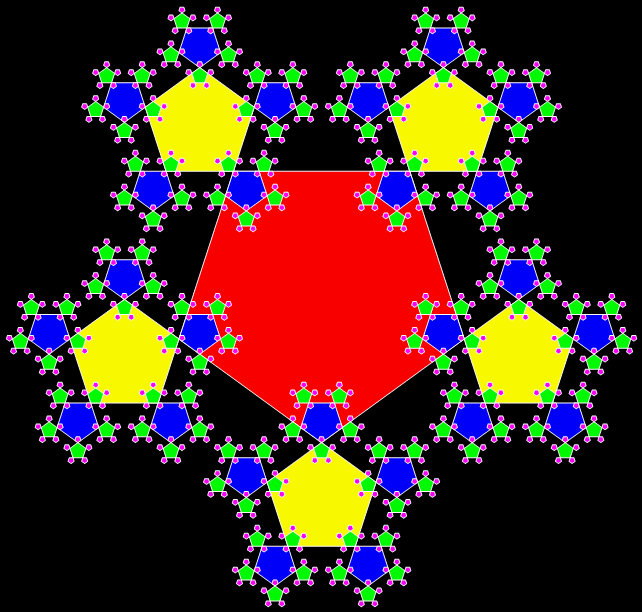
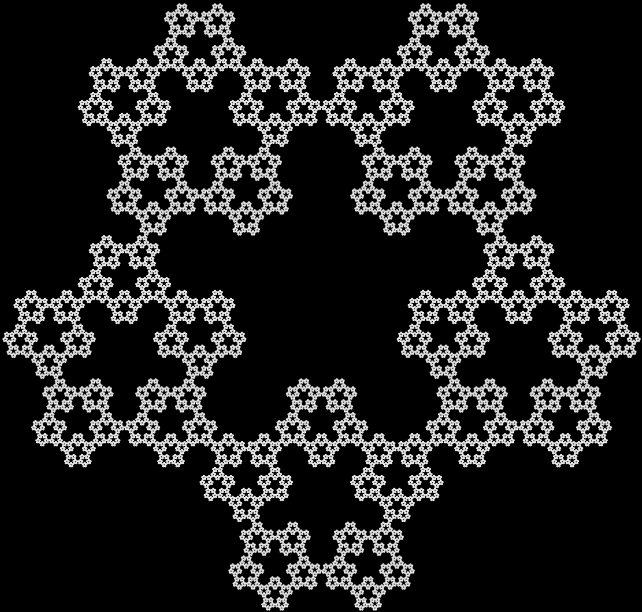
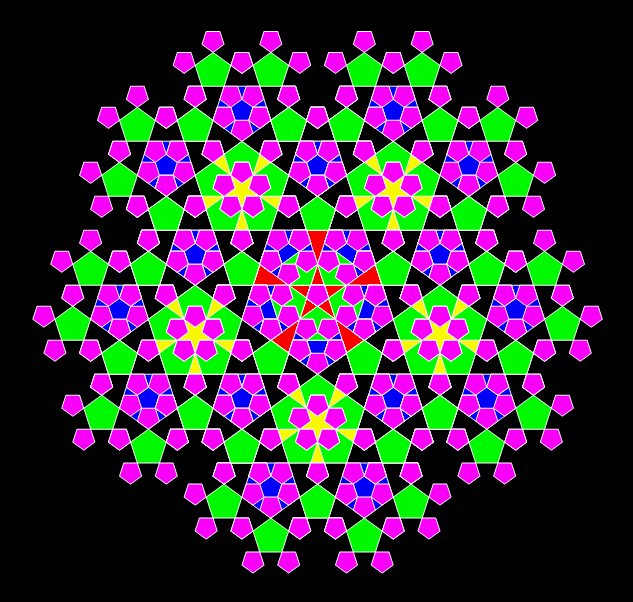
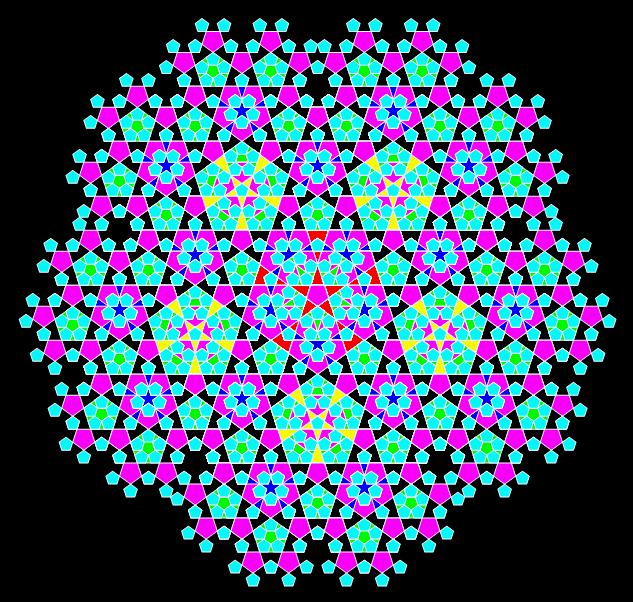
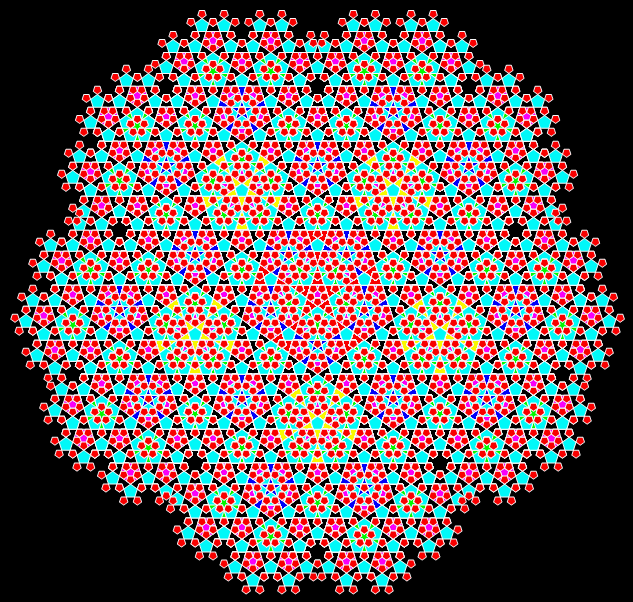
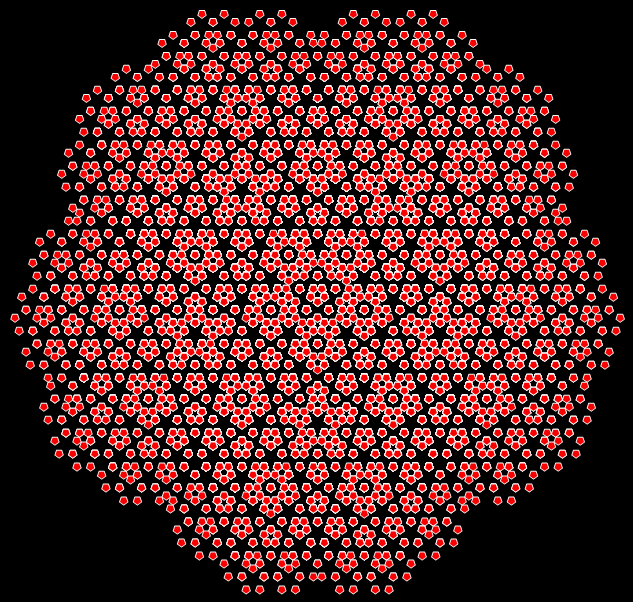
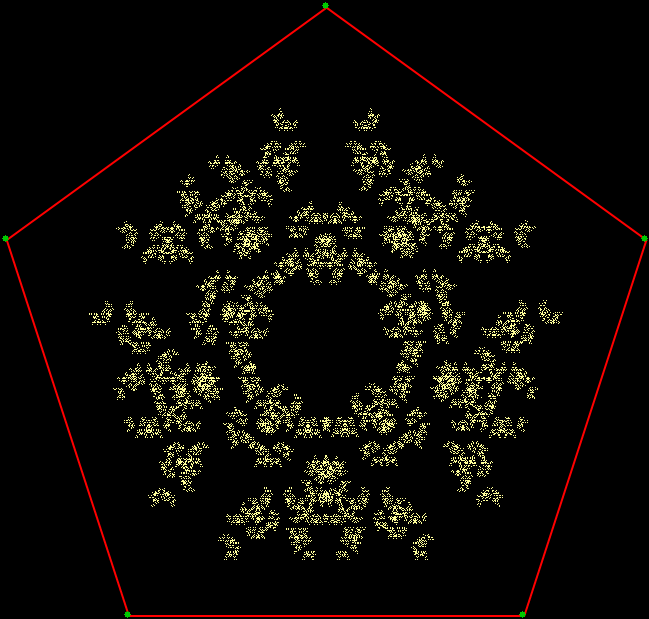
At infinity, the smaller pentagons have reached out like arms to exactly fill the gaps between themselves without overlapping. But how much smaller is each set of smaller pentagons than its mother-pentagon when the gaps are exactly filled? Well, if the radius of the mother-pentagon is r, then the radius of each daughter-pentagon is r * 1/(φ^2) = r * 0·38196601125…

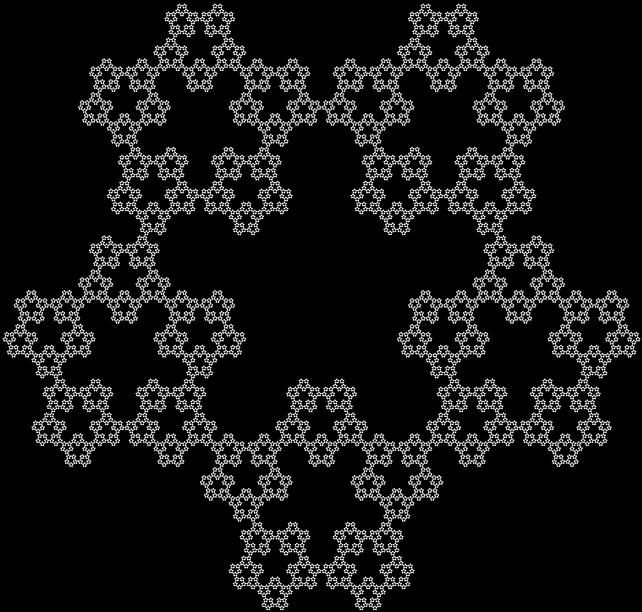
But what happens if the radius relationship of mother to daughter is r * 1/φ = r * 0·61803398874 = r * (φ-1)? Then you get this fractal:

Stage #1


Stage #2


Stage #3


Stage #4


Stage #5
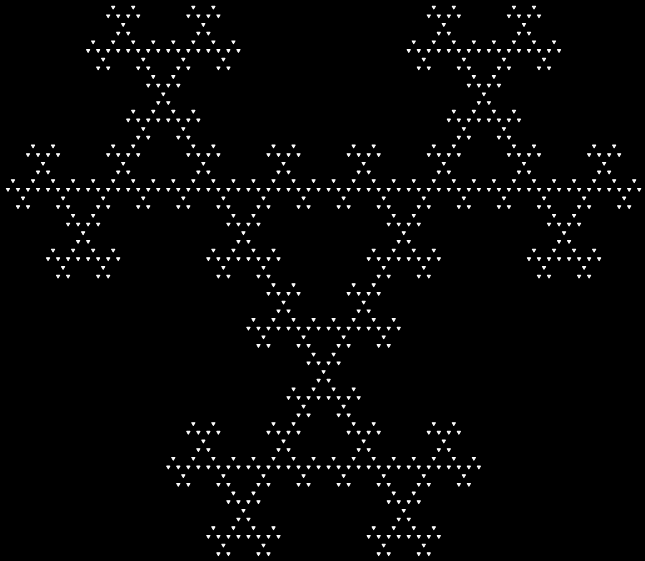

Stage #6


Stage #7


Stage #8


Stage #9


Animated fractal


Delta Skelta

“When I get to the bottom I go back to the top of the slide,
Where I stop and I turn and I go for a ride
Till I get to the bottom and I see you again.” — The Beatles, “Helter Skelter” (1968)


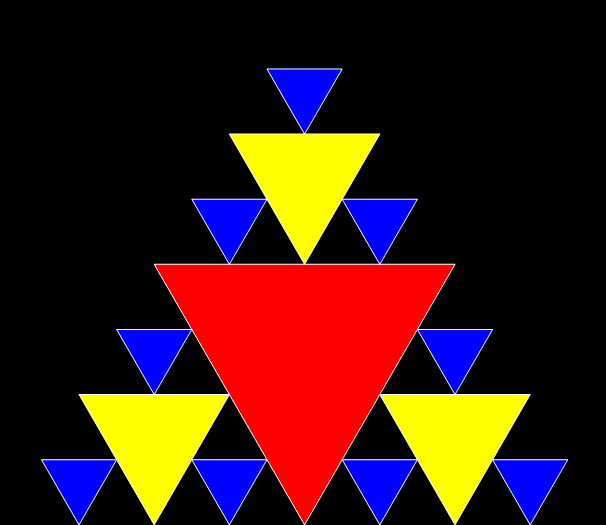
First stage of fractal #1


Animated fractal #1


First stage of fractal #2


Animated fractal #2

See-Saw Jaw

From Sierpiński triangle to T-square to Mandibles (and back again) (animated)
(Open in new window if distorted)


Elsewhere other-accessible…

Mandibular Metamorphosis — explaining the animation above
Agnathous Analysis — more on the Sierpiński triangle and T-square fractal

Middlemath

Suppose you start at the middle of a triangle, then map all possible ways you can jump eight times half-way towards one or another of the vertices of the triangle. At the end of the eight jumps, you mark your final position with a dot. You could jump eight times towards the same vertex, or once towards vertex 1, once towards vertex 2, and once again towards vertex 1. And so on. If you do this, the record of your jumps looks something like this:


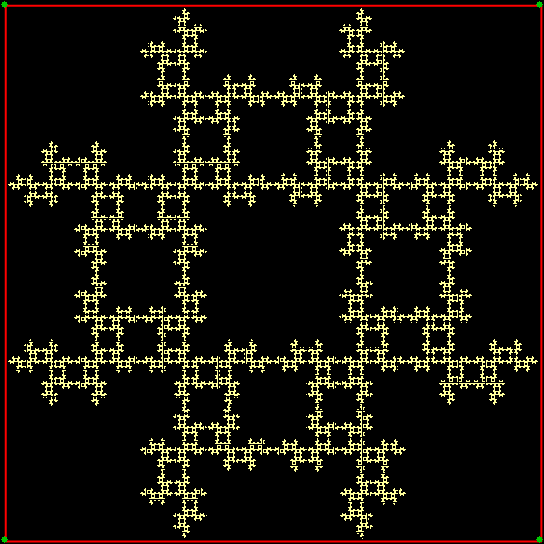
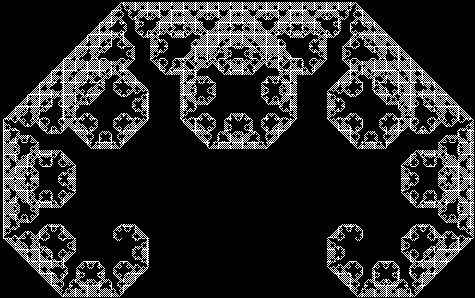
The shape is a fractal called the Sierpiński triangle. But if you try the same thing with a square — map all possible jumping-routes you can follow towards one or another of the four vertices — you simply fill the interior of the square. There’s no interesting fractal:


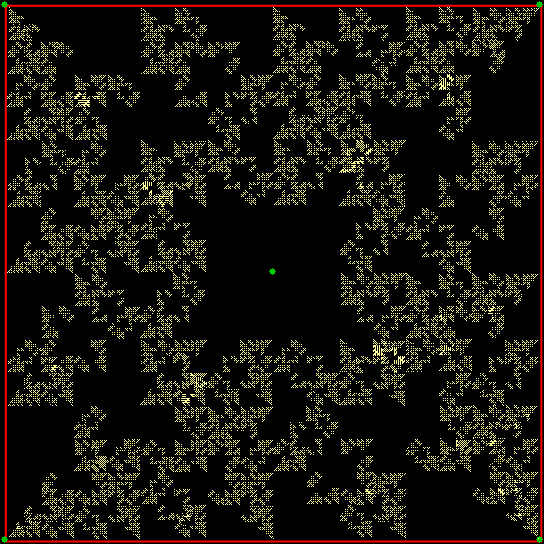
So you need a plan with a ban. Try mapping all possible routes where you can’t jump towards the same vertex twice in a row. And you get this:

Ban on jumping towards same vertex twice in a row, v(t) ≠ v(t-1)


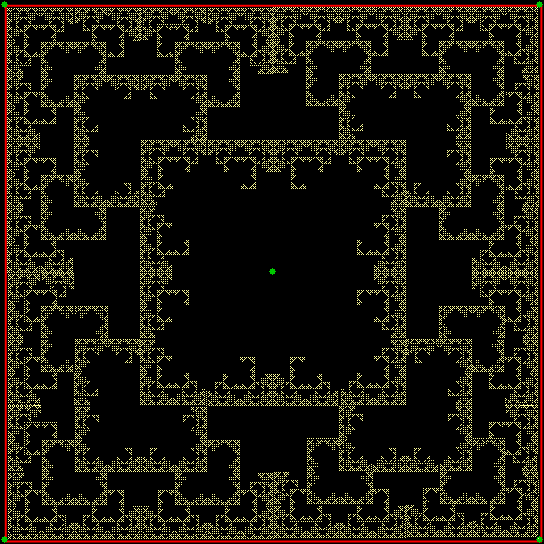
If you call the current vertex v(t) and the previous vertex v(t-1), the ban says that v(t) ≠ v(t-1). Now suppose you can’t jump towards the vertex one place clockwise of the previous vertex. Now the ban is v(t)-1 ≠ v(t-1) or v(t) ≠ v(t-1)+1 and this fractal appears:

v(t) ≠ v(t-1)+1


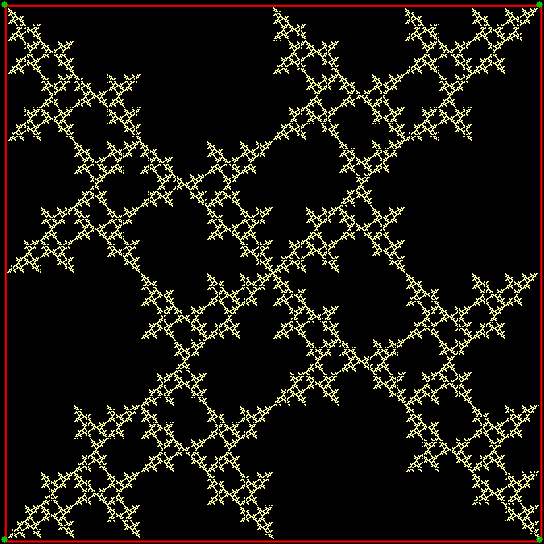
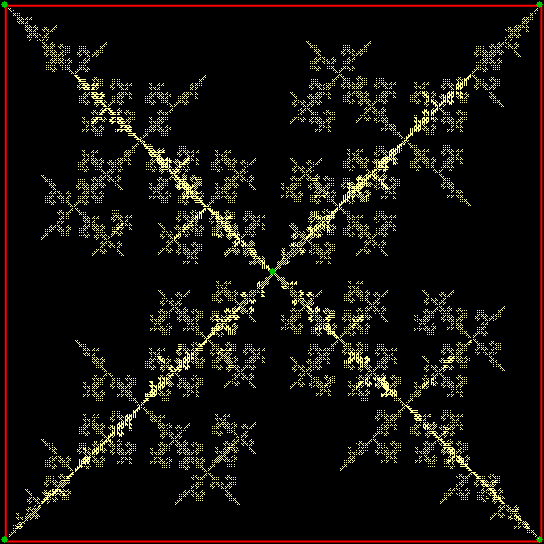
And here’s a ban on jumping towards the vertex two places clockwise (or counterclockwise) of the vertex you’ve just jumped towards:

v(t) ≠ v(t-1)+2


And finally the ban on jumping towards the vertex three places clockwise (or one place counterclockwise) of the vertex you’ve just jumped towards:

v(t) ≠ v(t-1)+3 (a mirror-image of v(t) ≠ v(t-1)+1, as above)


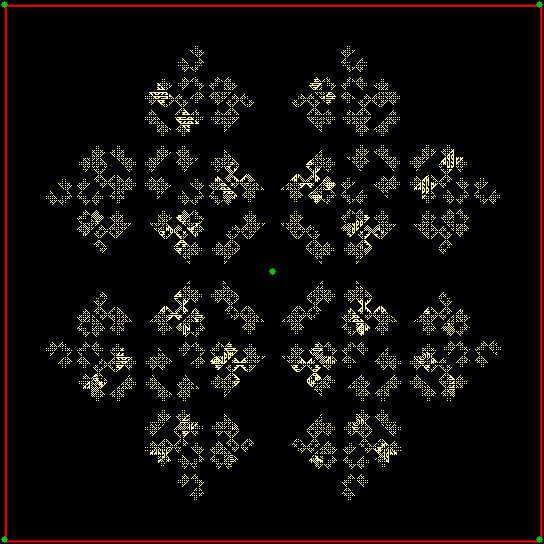
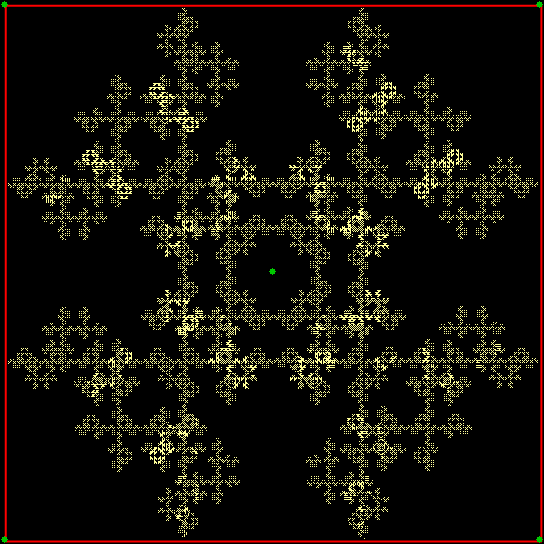
Now suppose you introduce a new point to jump towards at the middle of the square. You can create more fractals, but you have to adjust the kind of ban you use. The central point can’t be included in the ban or the fractal will be asymmetrical. So you continue taking account of the vertices, but if the previous jump was towards the middle, you ignore that jump. At least, that’s what I intended, but I wonder whether my program works right. Anyway, here are some of the fractals that it produces:

v(t) ≠ v(t-1) with central point (wcp)


v(t) ≠ v(t-1)+1, wcp


v(t) ≠ v(t-1)+2, wcp


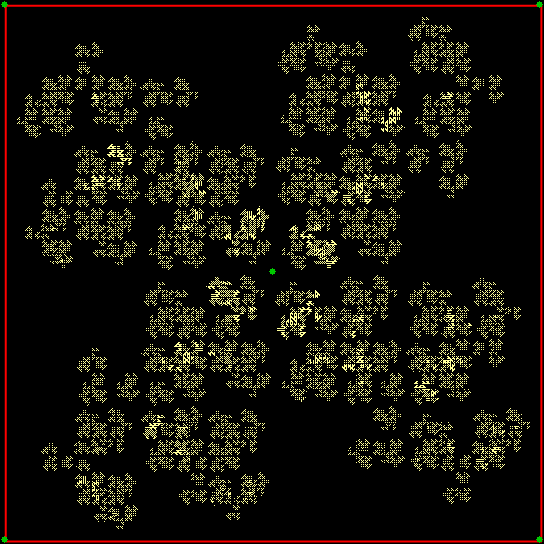
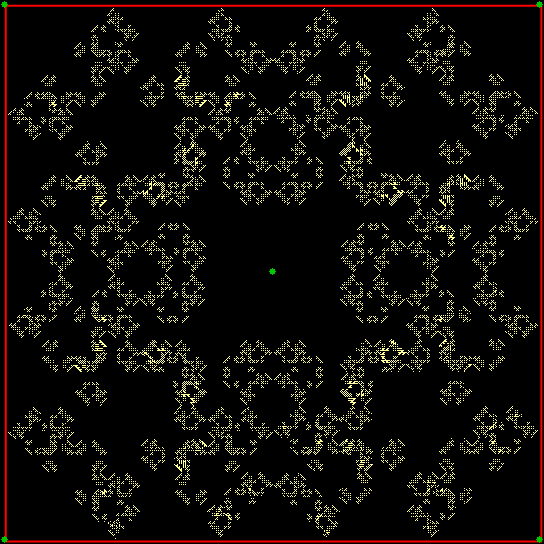
And here are some bans taking account of both the previous vertex and the pre-previous vertex:

v(t) ≠ v(t-1) & v(t) ≠ v(t-2), wcp


v(t) ≠ v(t-1) & v(t-2)+1, wcp


v(t) ≠ v(t-1)+2 & v(t-2), wcp


v(t) ≠ v(t-1) & v(t-2)+1, wcp


v(t) ≠ v(t-1)+1 & v(t-2)+1, wcp


v(t) ≠ v(t-1)+2 & v(t-2)+1, wcp


v(t) ≠ v(t-1)+3 & v(t-2)+1, wcp


v(t) ≠ v(t-1) & v(t-2)+2, wcp


v(t) ≠ v(t-1)+1 & v(t-2)+2, wcp


v(t) ≠ v(t-1)+2 & v(t-2)+2, wcp


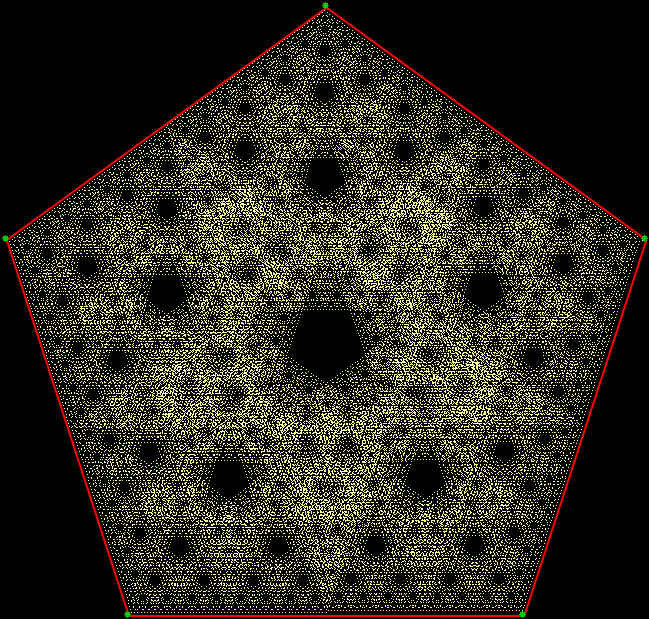
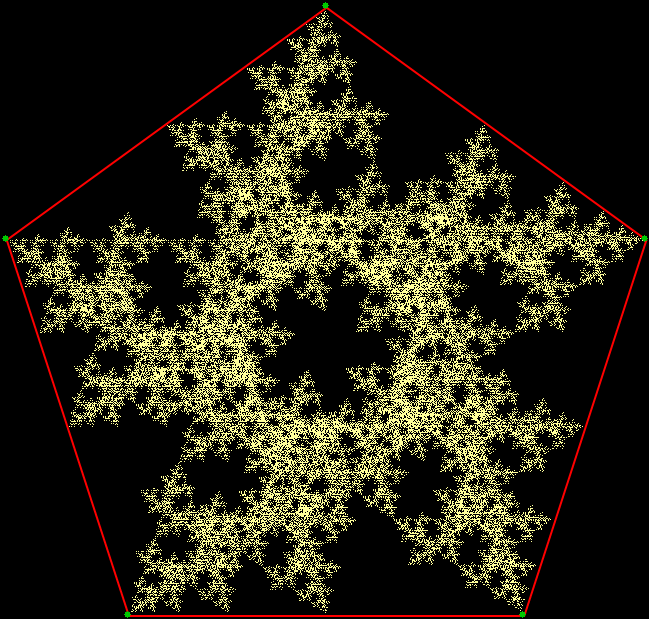
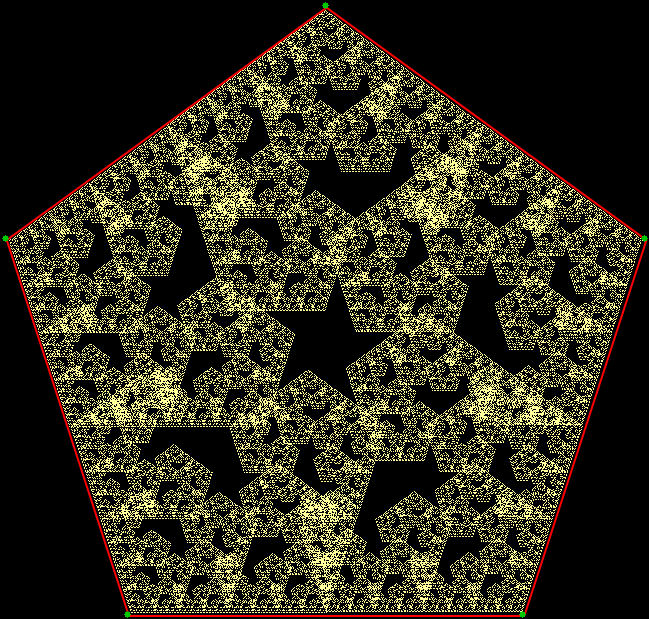
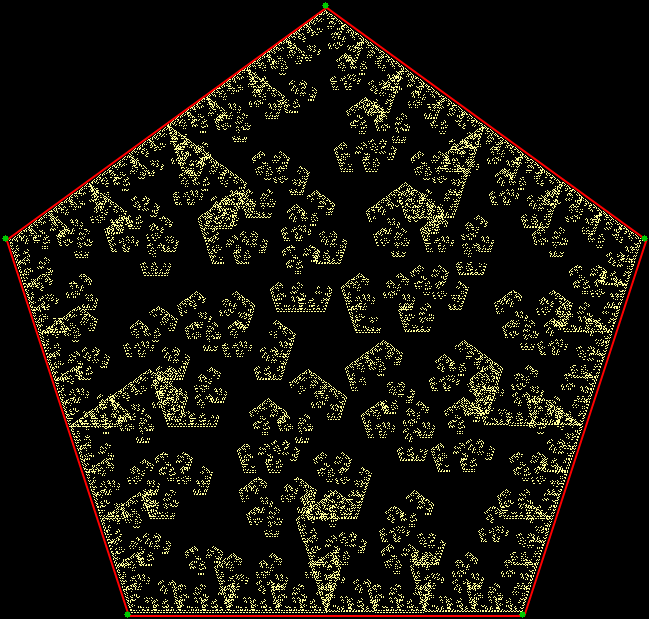
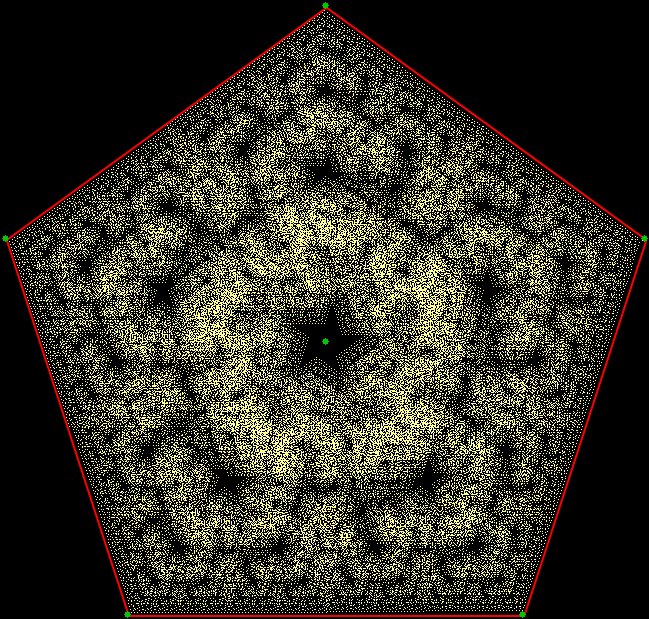
Now look at pentagons. They behave more like triangles than squares when you map all possible jumping-routes towards one or another of the five vertices. That is, a fractal appears:

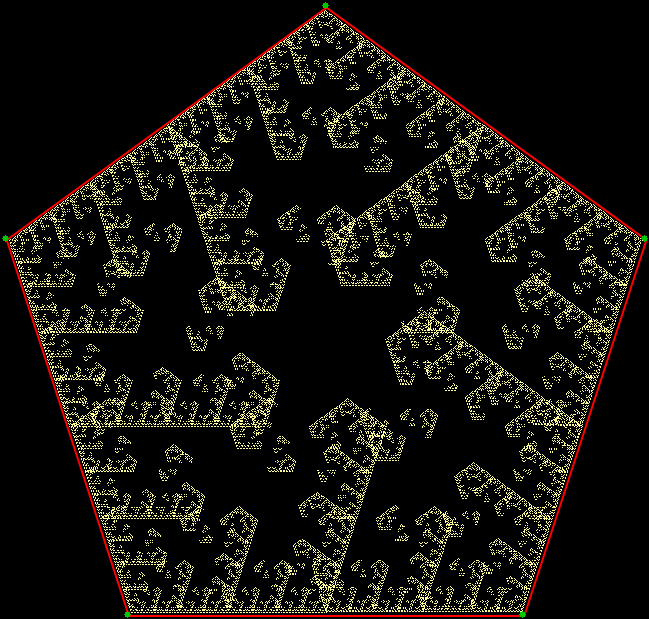
All possible jumping-routes towards the vertices of a pentagon


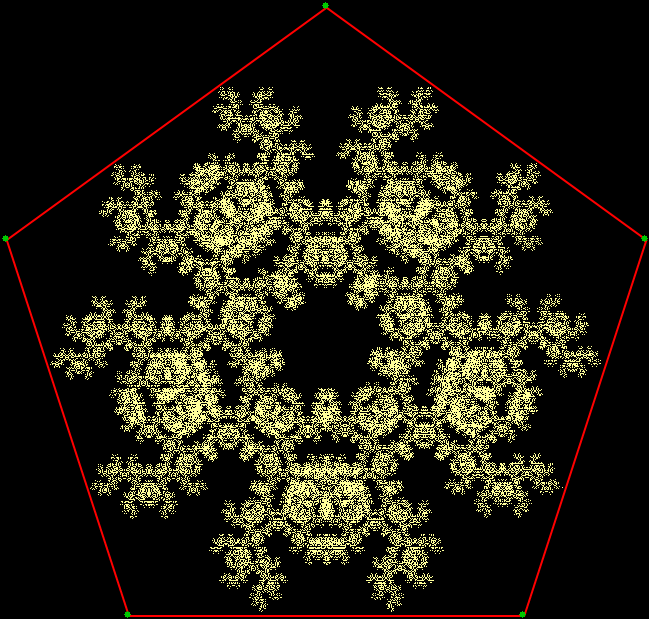
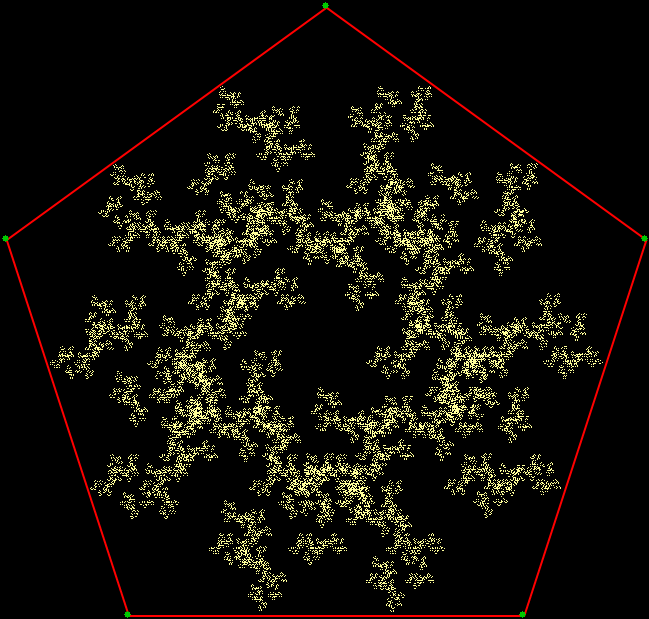
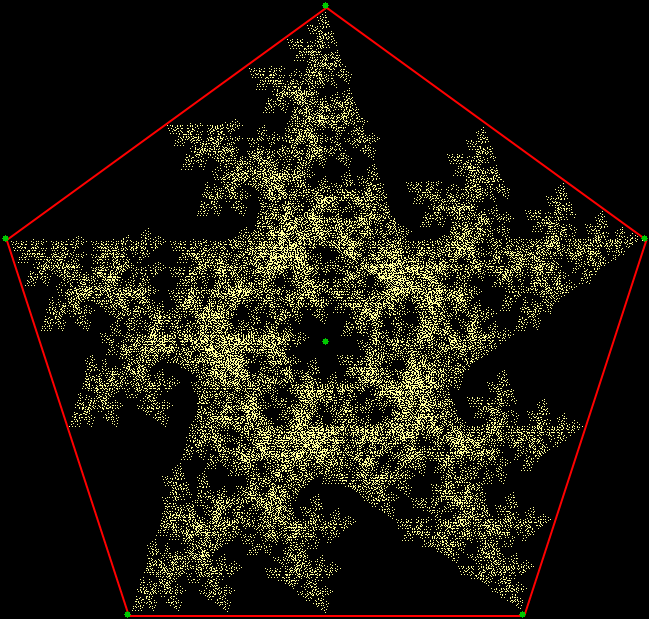
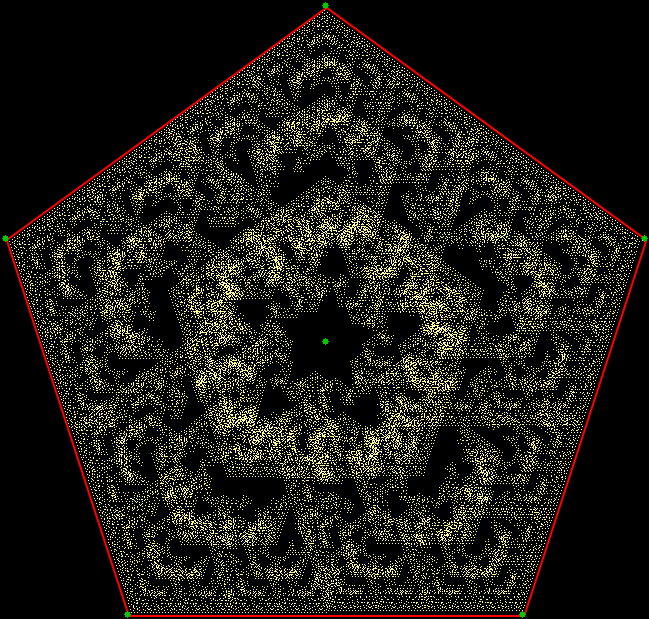
But the pentagonal-jump fractals get more interesting when you introduce jump-bans:

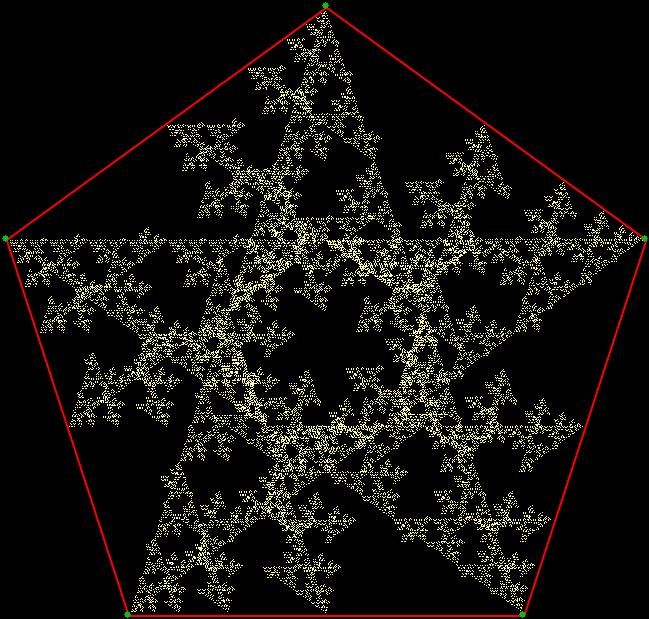
v(t) ≠ v(t-1)


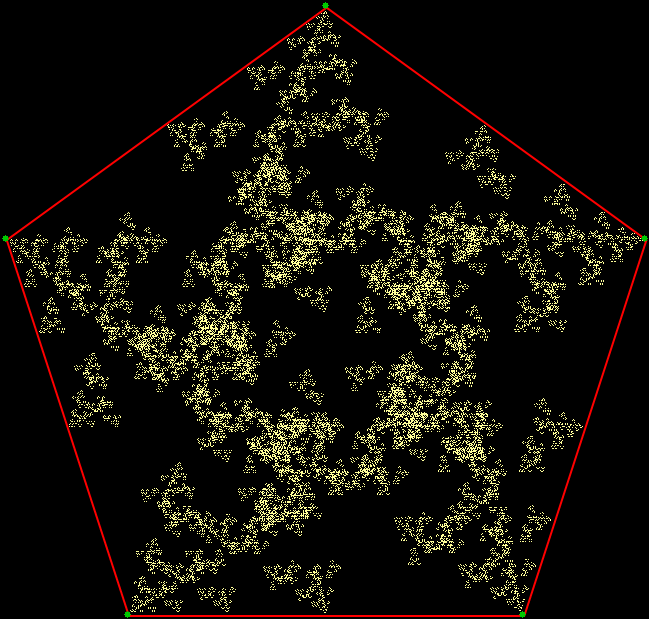
v(t) ≠ v(t-1)+1


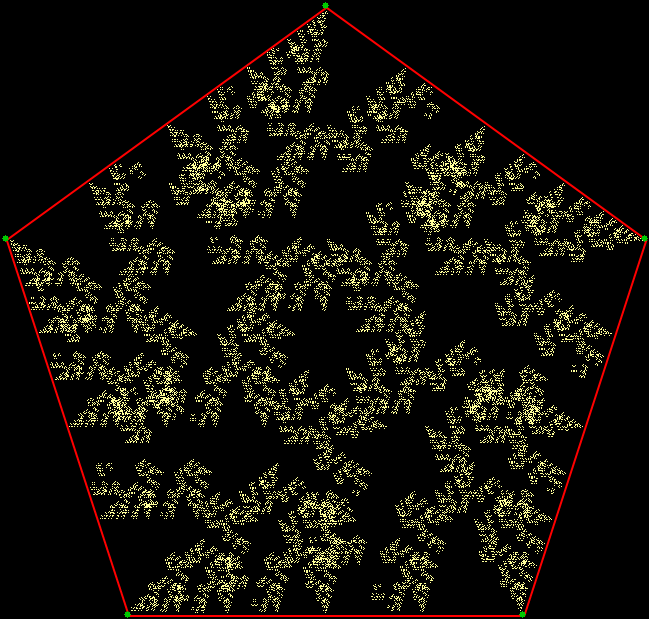
v(t) ≠ v(t-1)+2


v(t) ≠ v(t-1) & v(t-2)


v(t) ≠ v(t-1)+2 & v(t-2)


v(t) ≠ v(t-1)+1 & v(t-2)+1


v(t) ≠ v(t-1)+3 & v(t-2)+1


v(t) ≠ v(t-1)+1 & v(t-2)+2


v(t) ≠ v(t-1)+2 & v(t-2)+2


v(t) ≠ v(t-1)+3 & v(t-2)+2


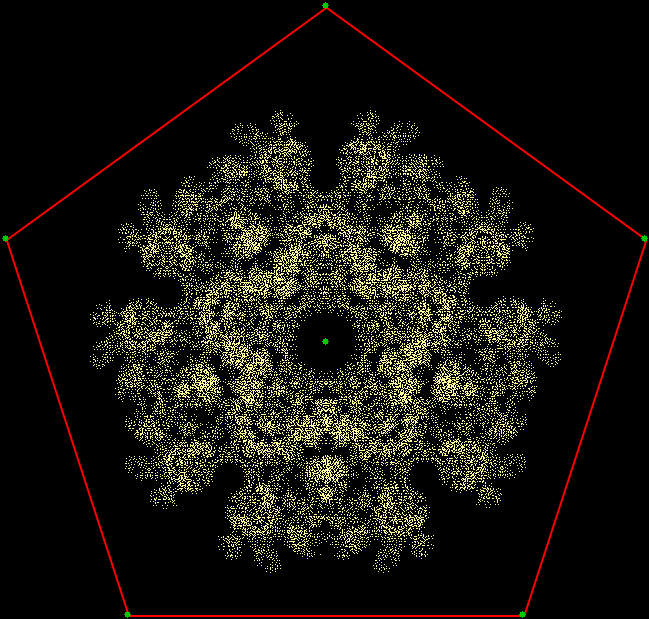
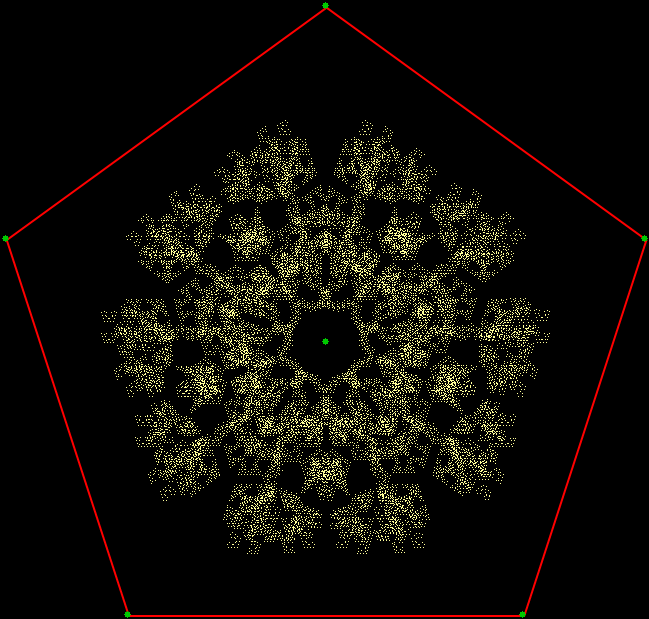
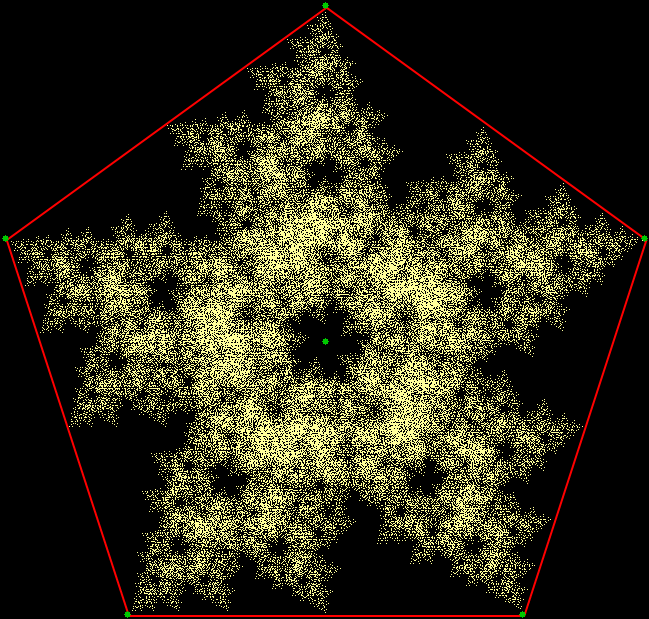
Finally, here are some pentagonal-jump fractals using a central point:


Post-Performative Post-Scriptum

I’m not sure if I’ve got the order of some bans right above. For example, should v(t) ≠ v(t-1)+1 & v(t-2)+2 really be v(t) ≠ v(t-1)+2 & v(t-2)+1? I don’t know and I’m not going to check. But the idea of jumping-point bans is there and that’s all you need if you want to experiment with these fractal methods for yourself.

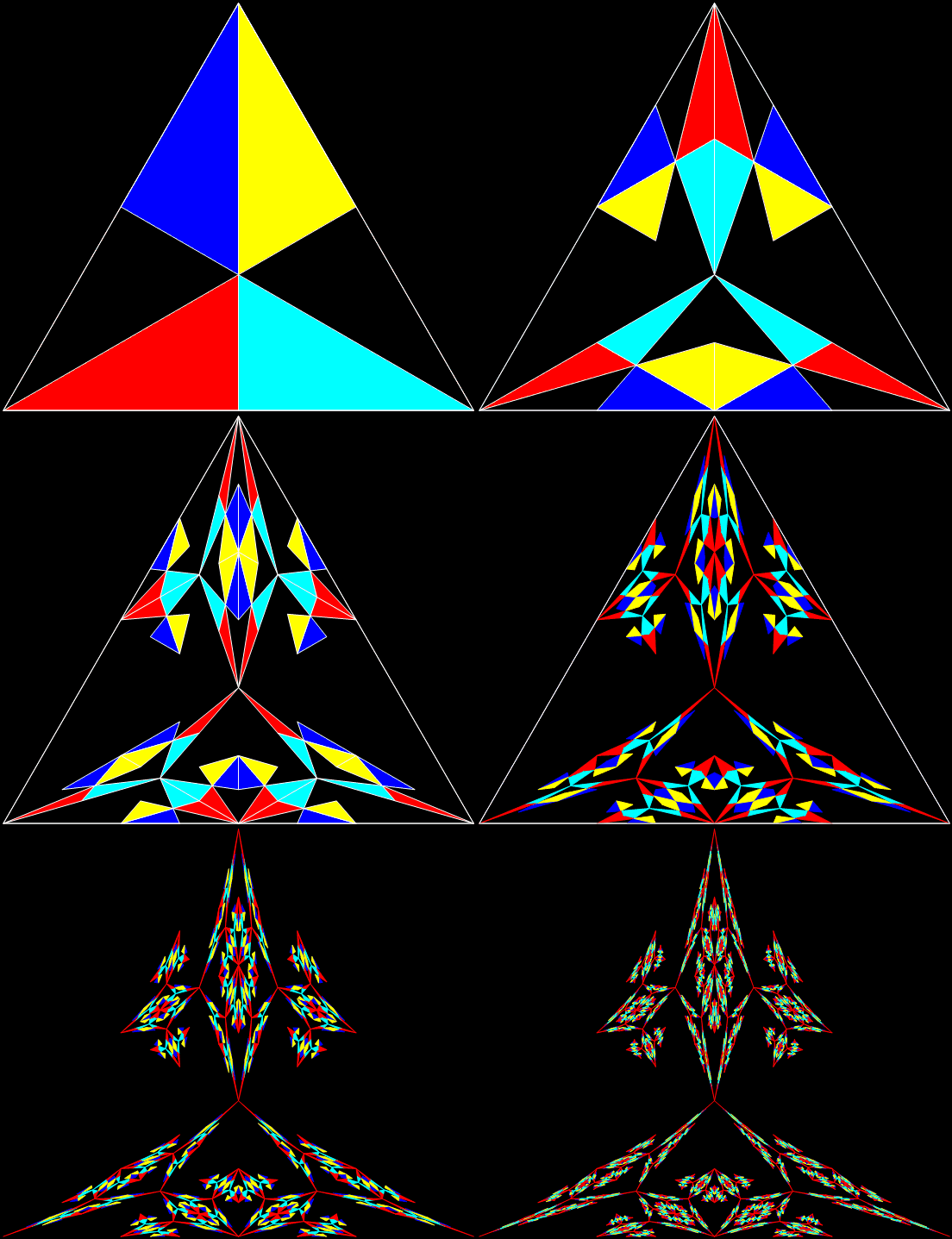
Six Mix Trix

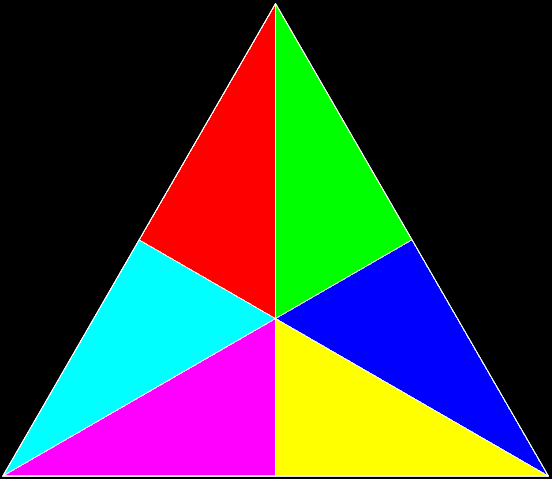
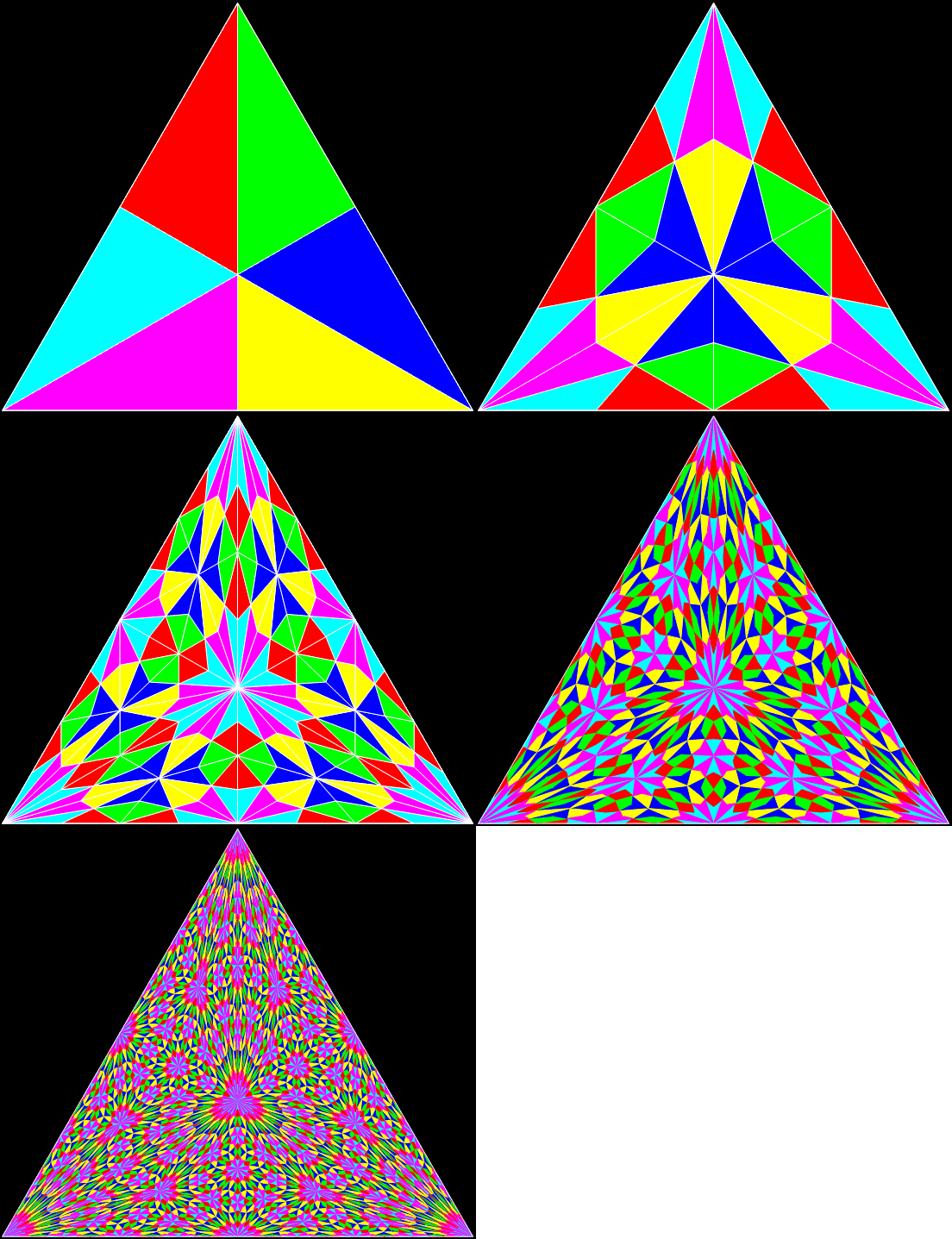
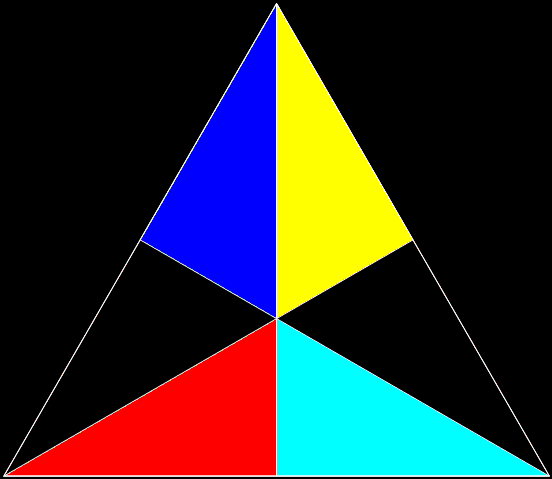
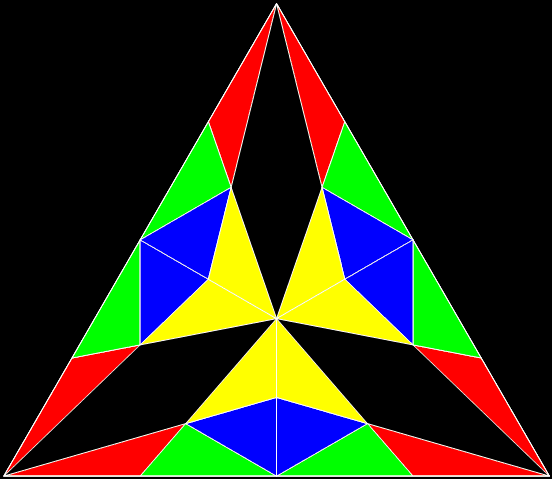
Here’s an equilateral triangle divided into six smaller triangles:

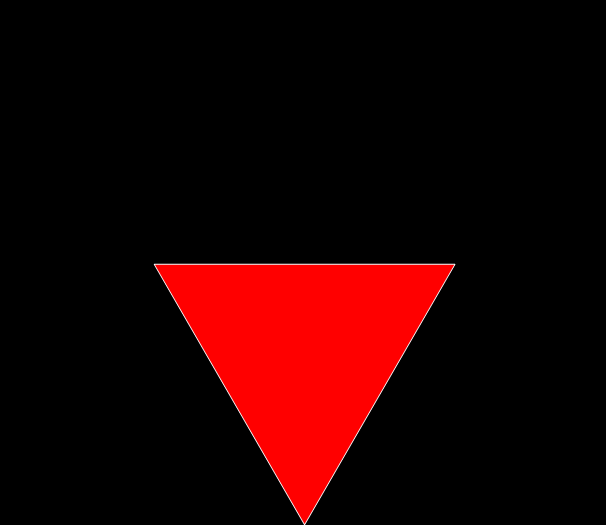
Equilateral triangle divided into six irregular triangles (Stage #1)


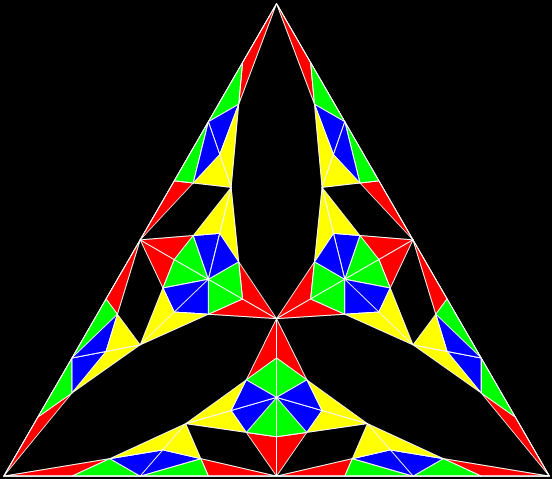
Now keep on dividing:

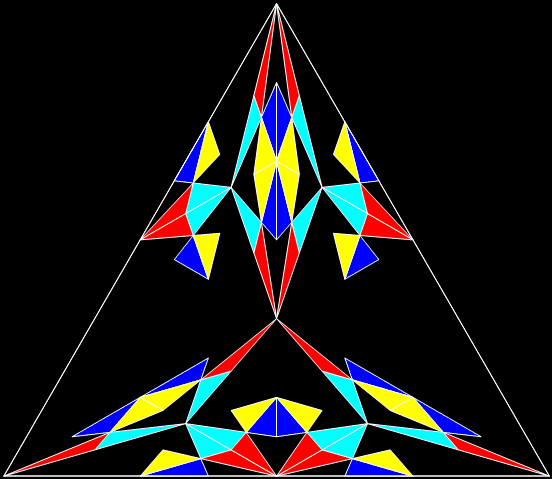
Stage #2


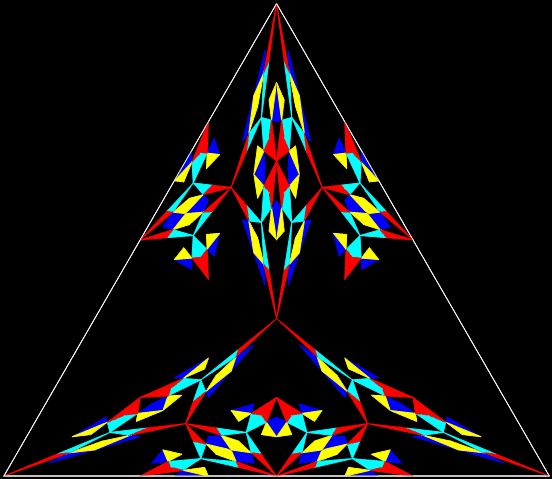
Stage #3


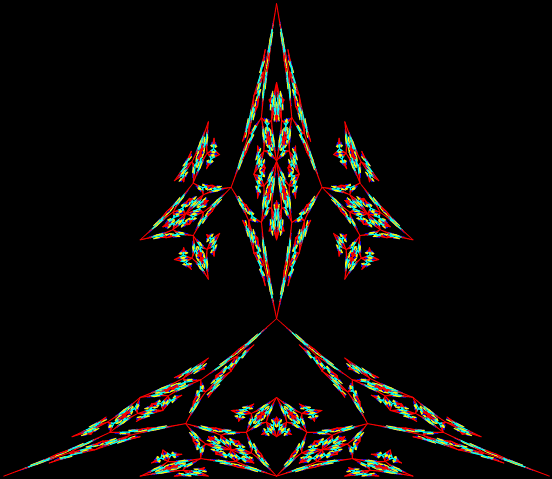
Stage #4


Stage #5
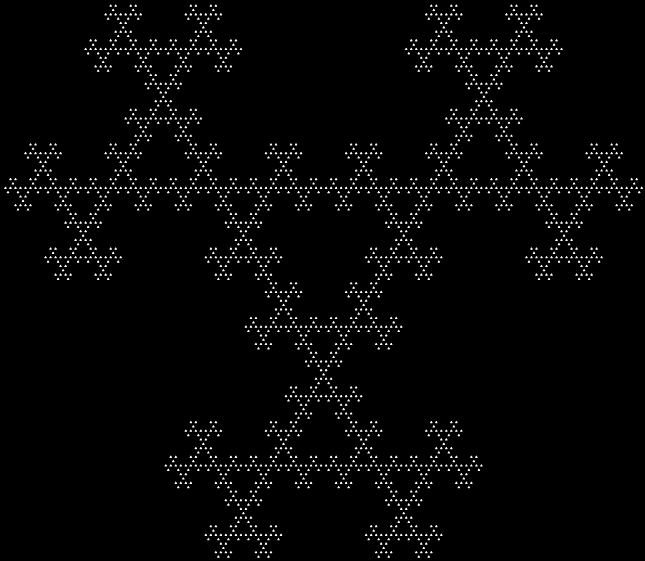

Equilateral triangle dividing into six irregular triangles (animated)


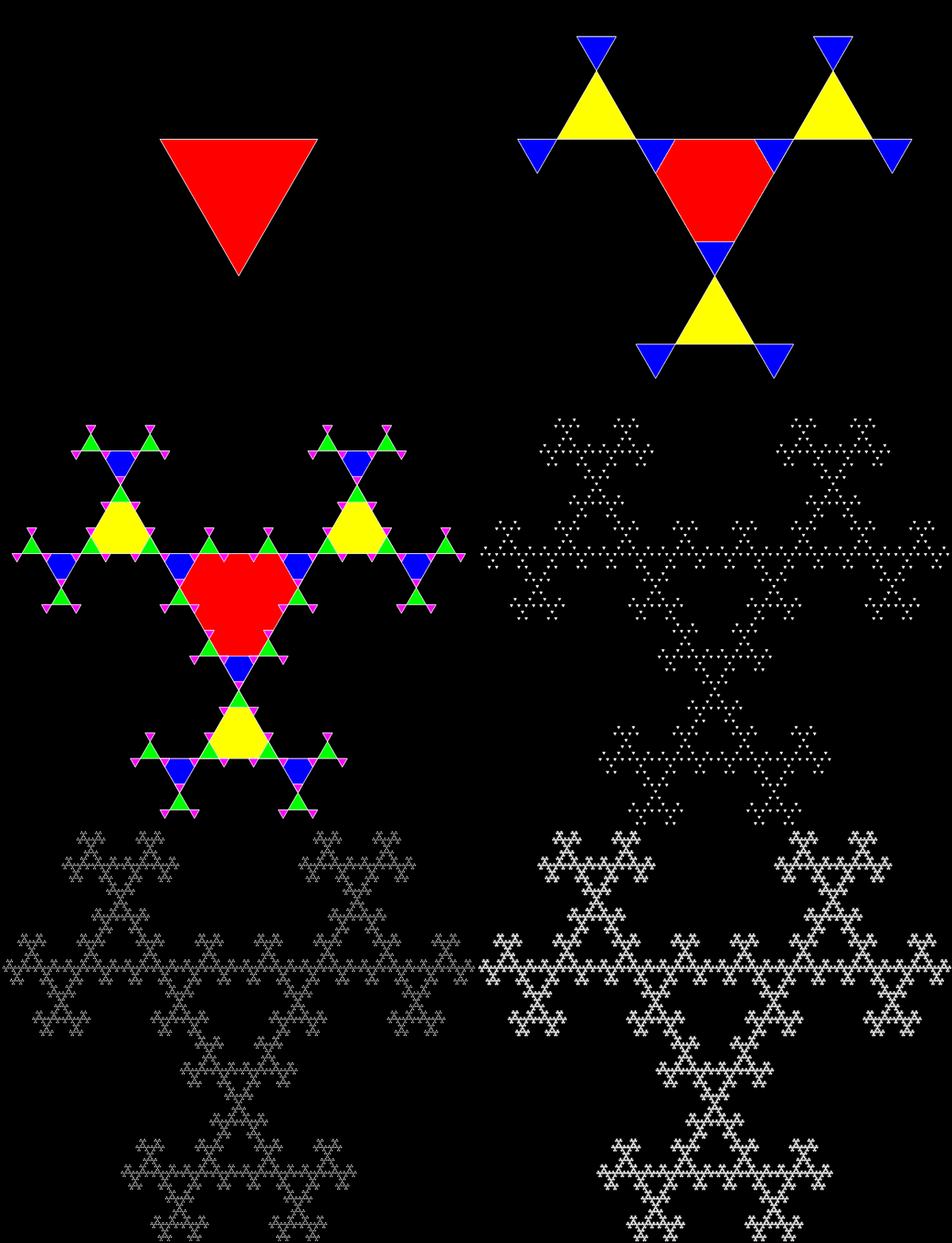
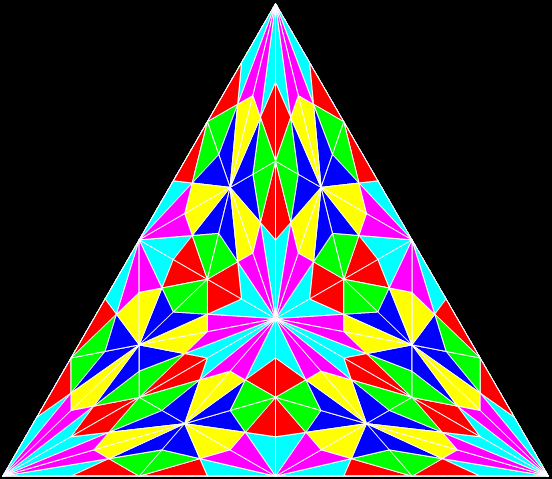
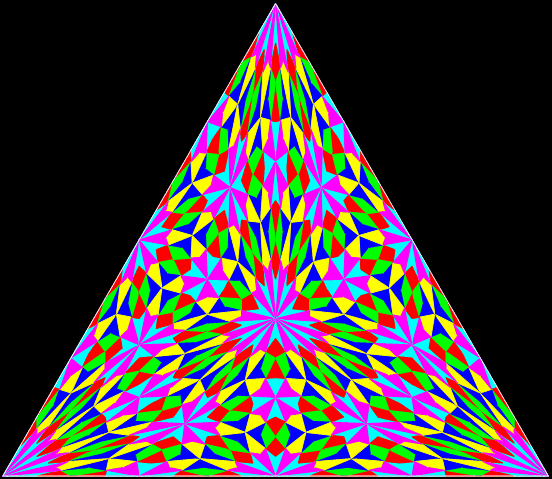
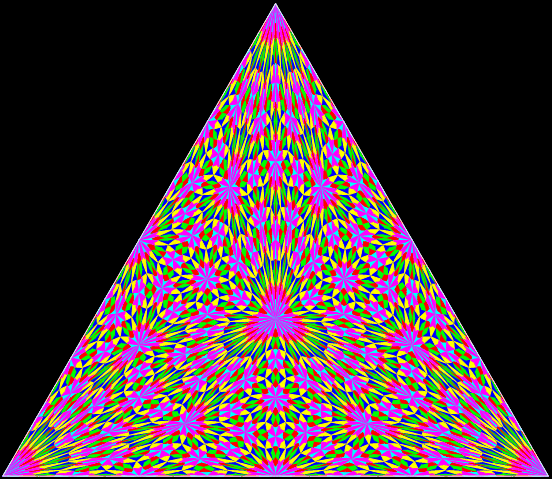
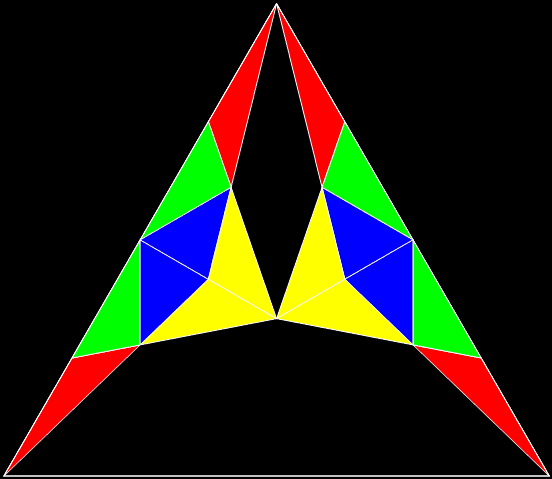
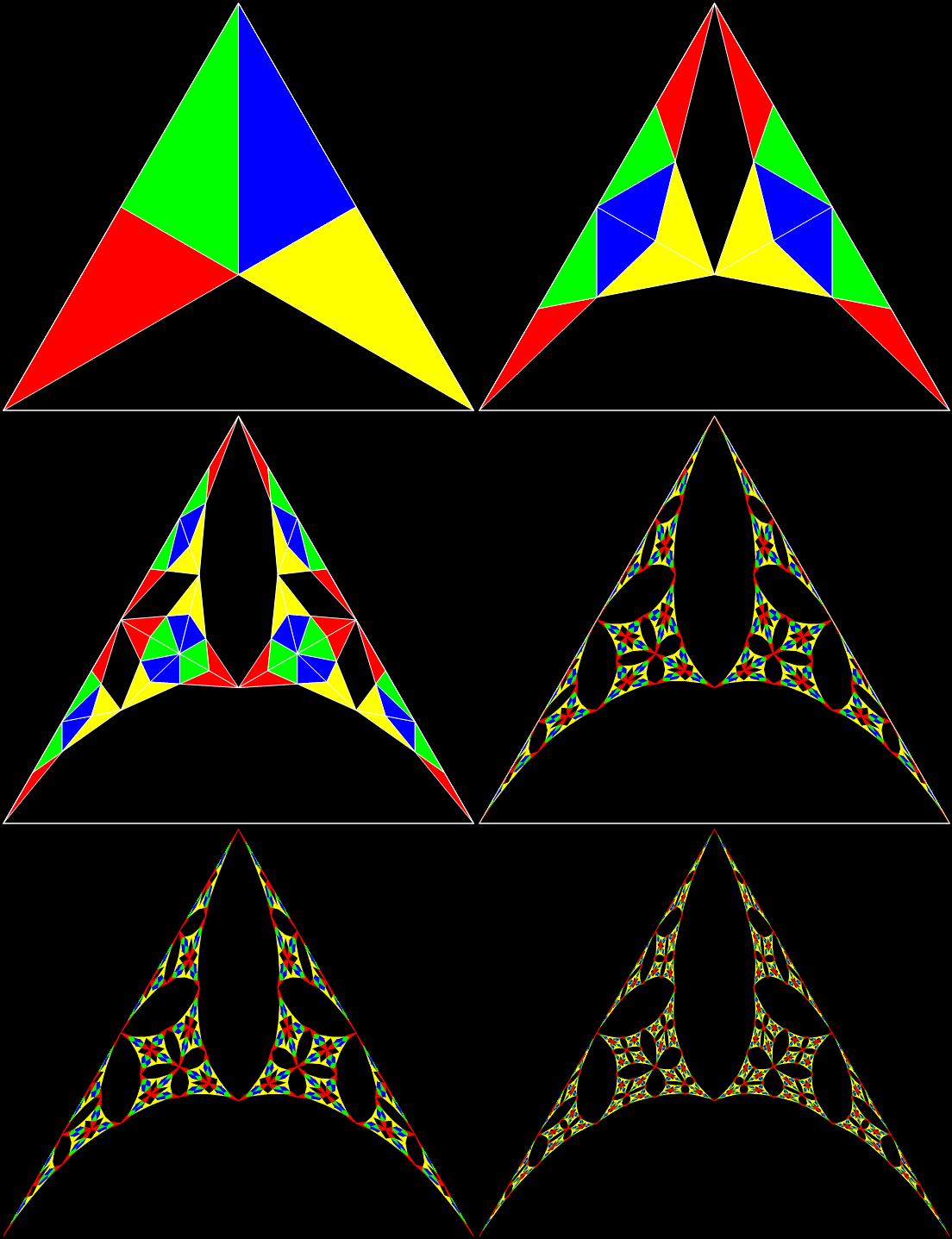
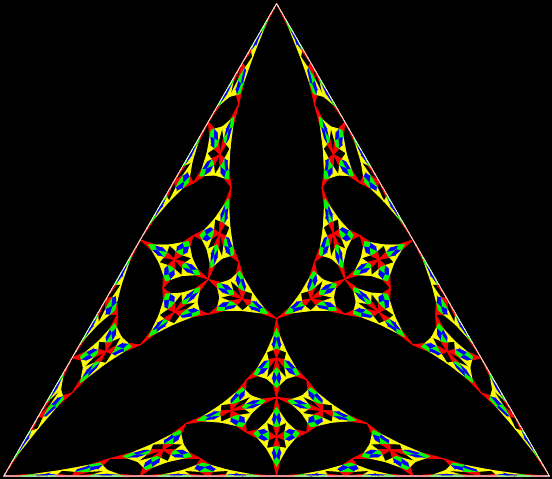
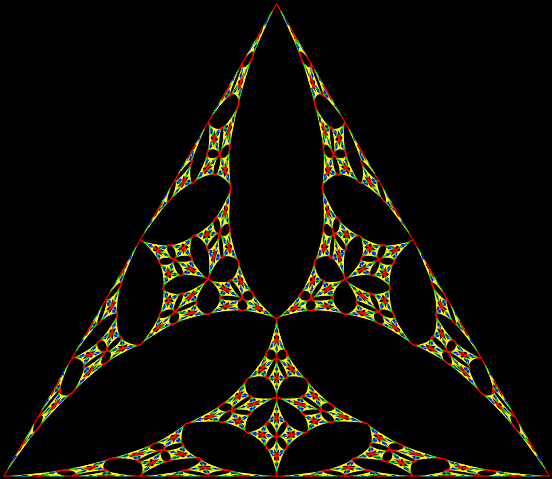
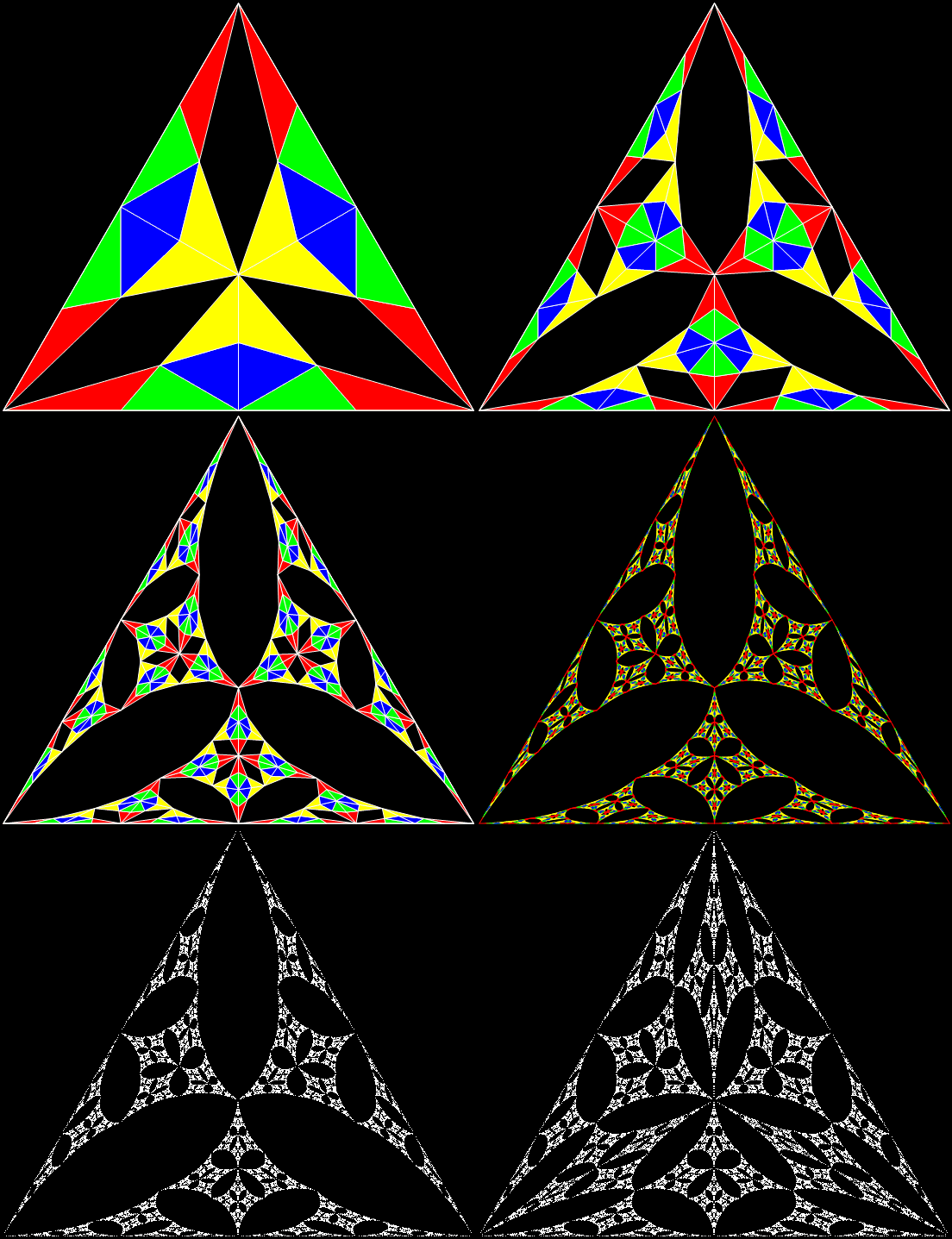
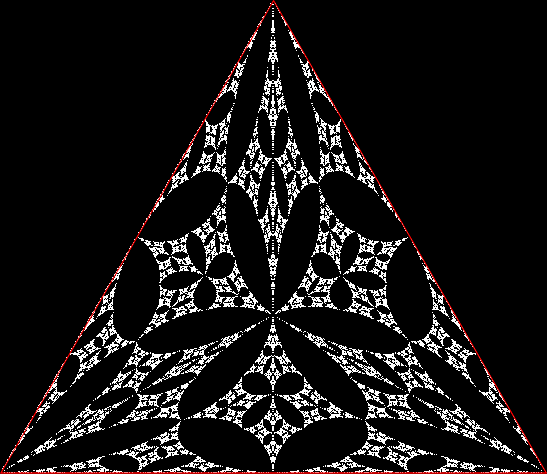
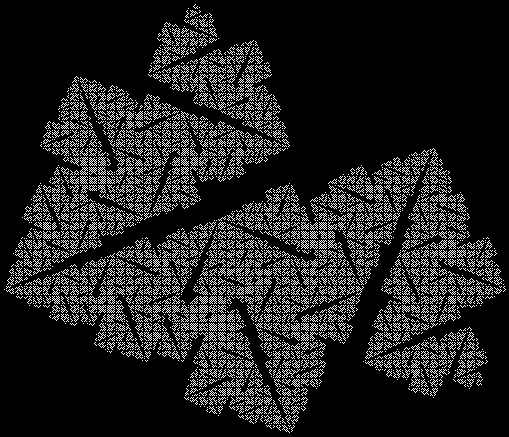
But what happens if you divide the triangle, then discard some of the sub-triangles, then repeat? You get a self-similar shape called a fractal:

Divide-and-discard stage #1


Stage #2


Stage #3


Stage #4


Stage #5
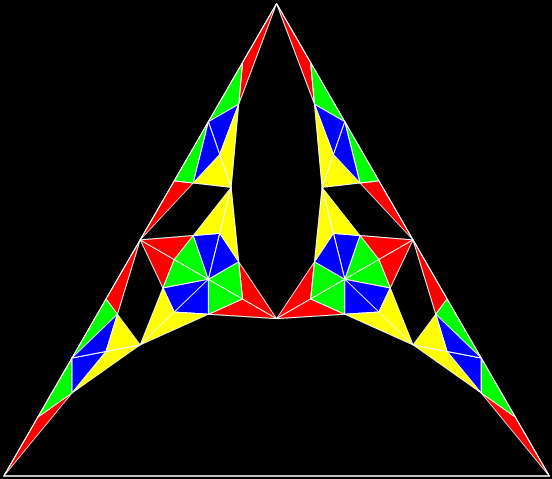

Stage #6


Triangle fractal (animated)


Here’s another example:

Divide-and-discard stage #1


Stage #2


Stage #3


Stage #4


Stage #5


Stage #6


Stage #7


Triangle fractal (animated)


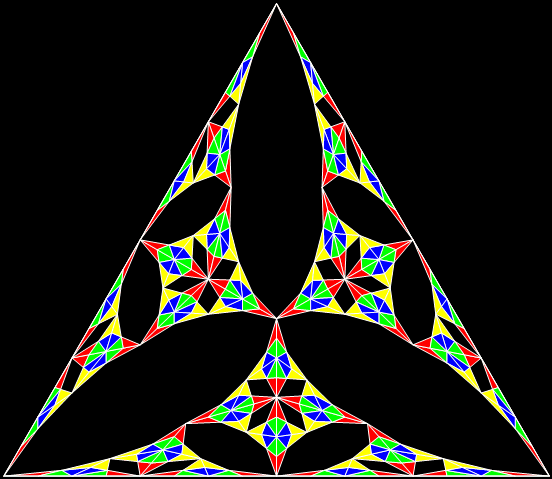
You can also delay the divide-and-discard to create a more symmetrical fractal, like this:

Delayed divide-and-discard stage #1


Stage #2


Stage #3


Stage #4


Stage #5
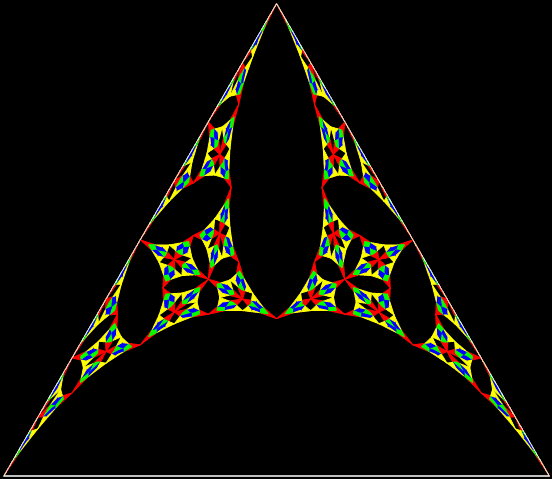

Stage #6


Stage #7


Triangle fractal (animated)


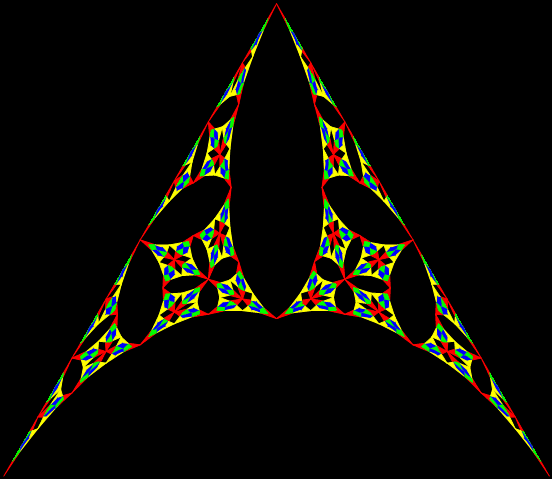
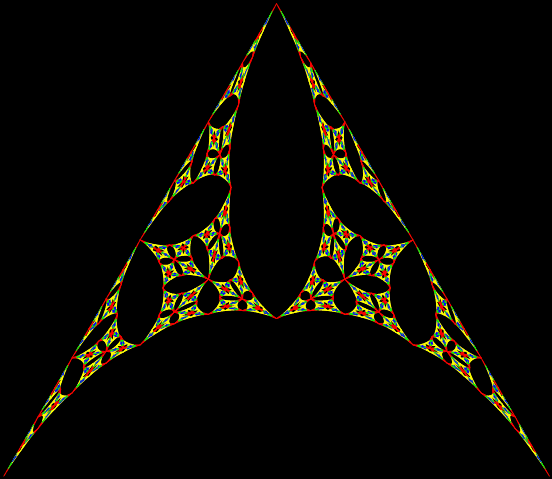
What next? You can use trigonometry to turn the cramped triangle into a circle:

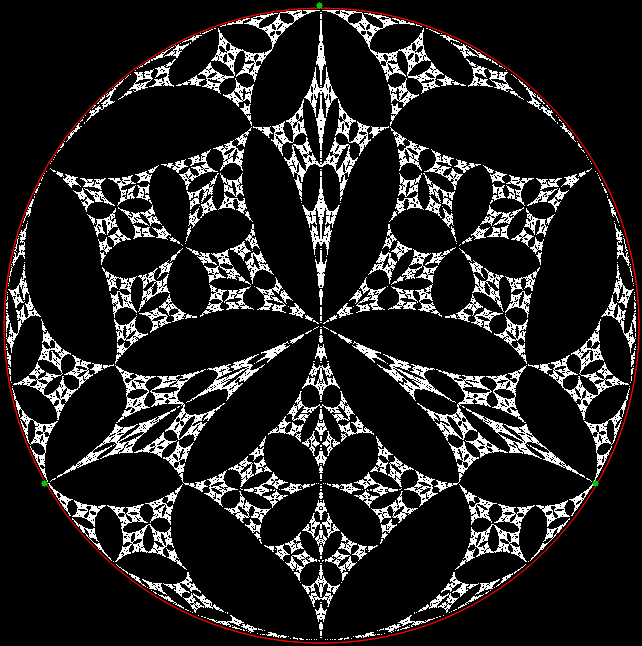
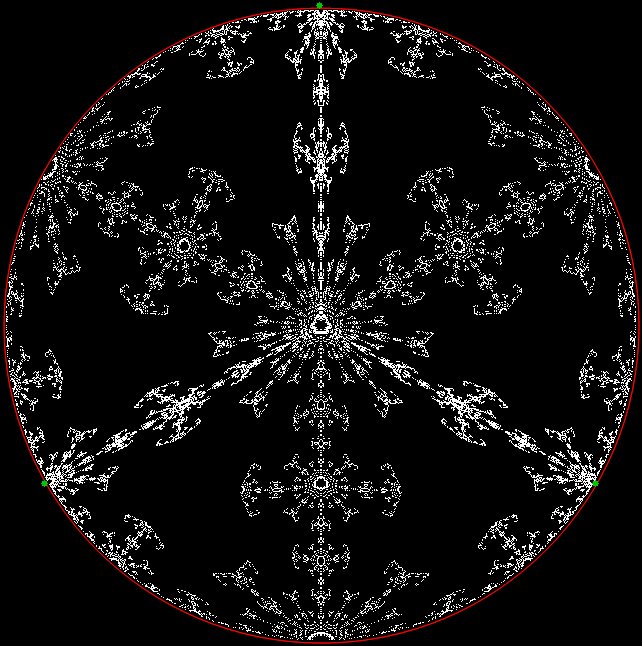
Triangular fractal

Circular fractal
(Open in new window for full image)


Triangle-to-circle (animated)


Here’s another example:

Triangular fractal

Circular fractal


Triangle-to-circle (animated)


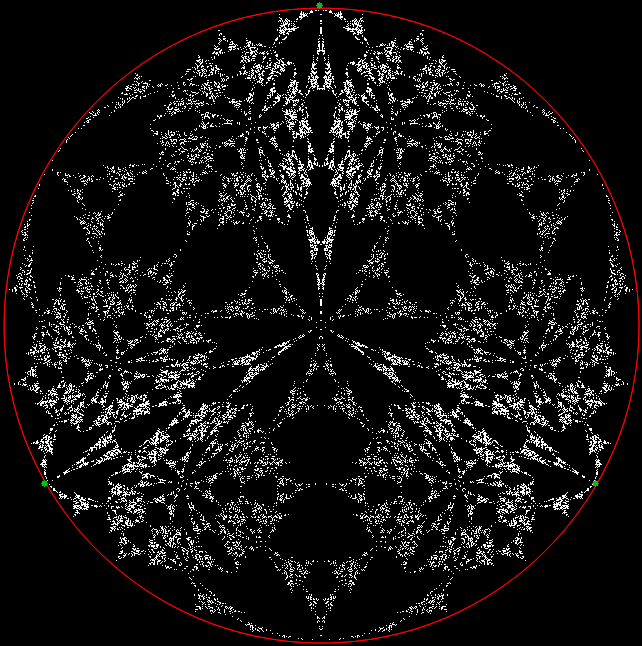
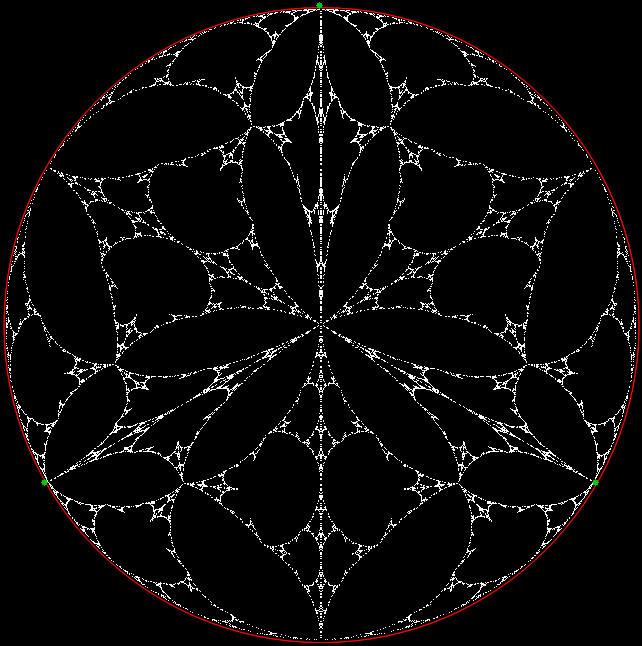
And below are some more circular fractals converted from triangular fractals. Some of them look like distorted skulls or transdimensional Lovecraftian monsters:

(Open in new window for full image)


Previous Pre-Posted

Circus Trix — an earlier look at sextally-divided-equilateral-triangle fractals

Square’s Flair

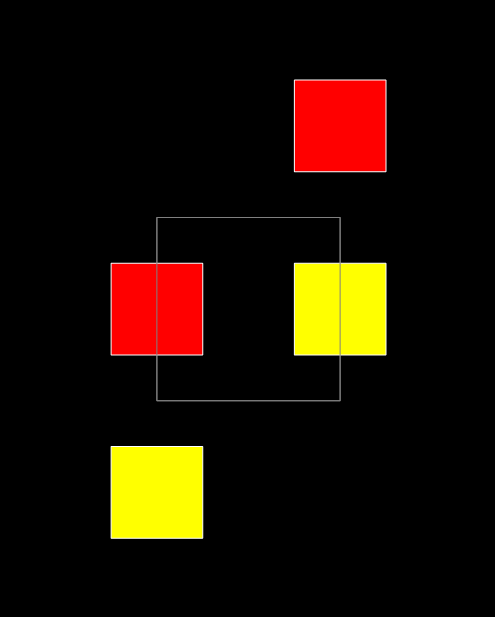
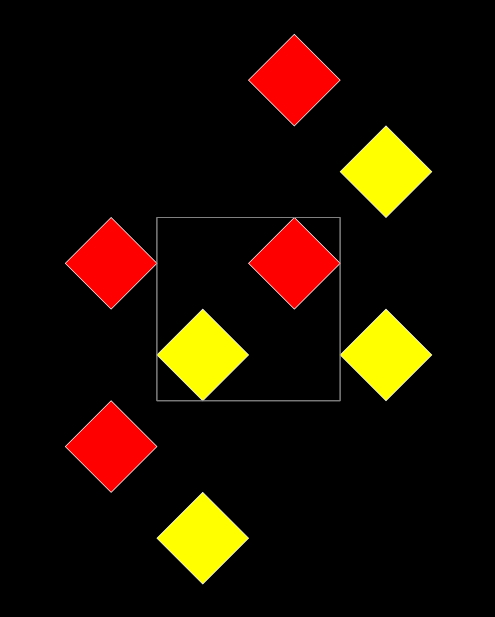
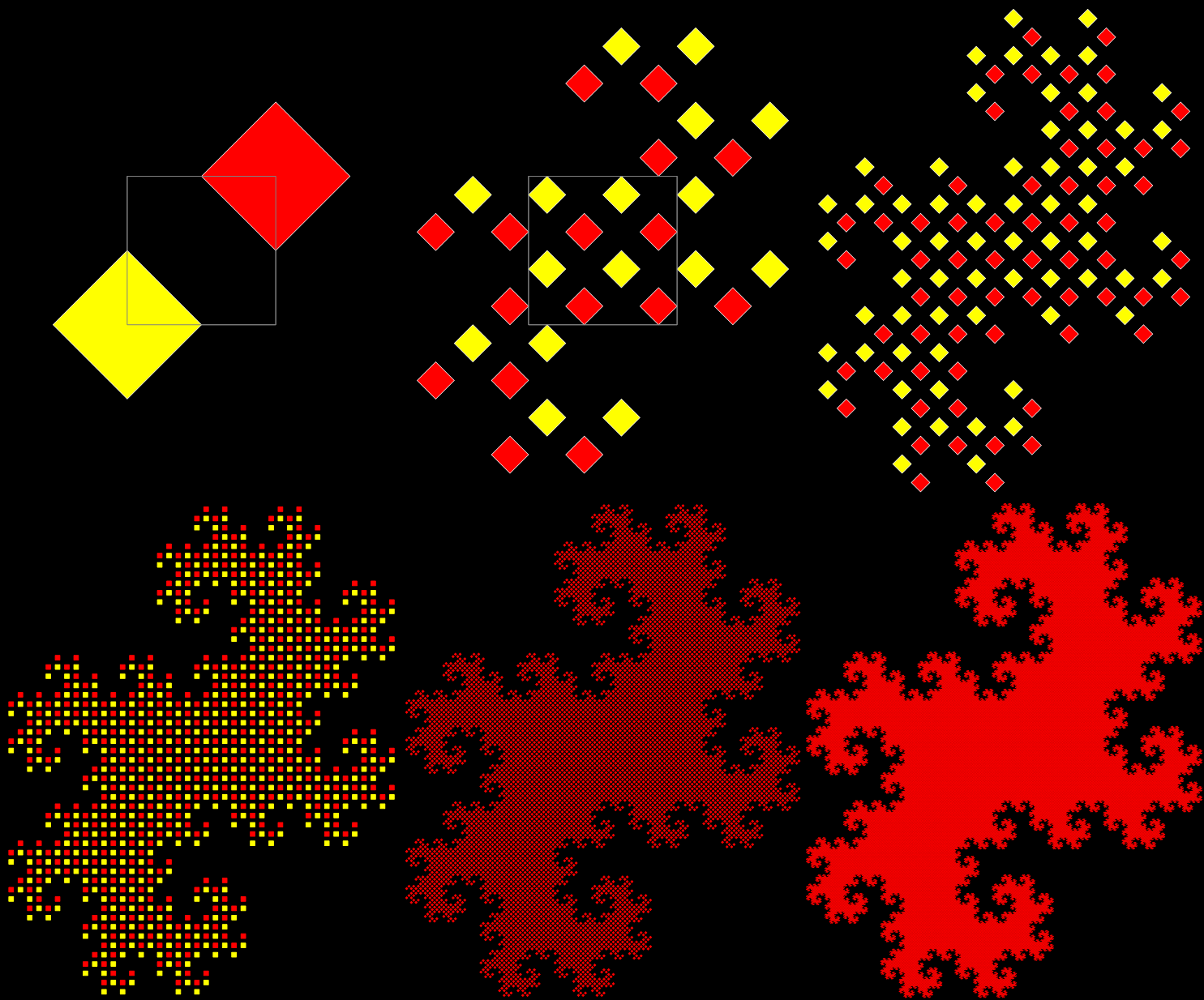
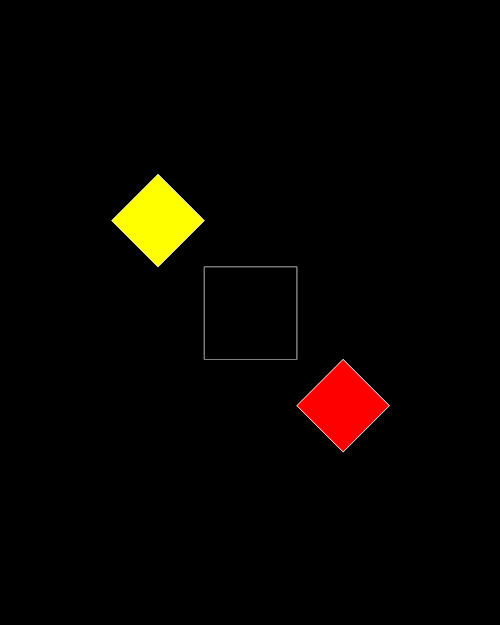
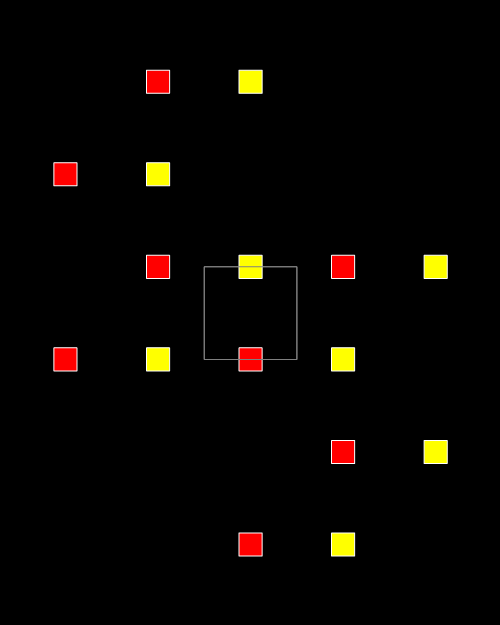
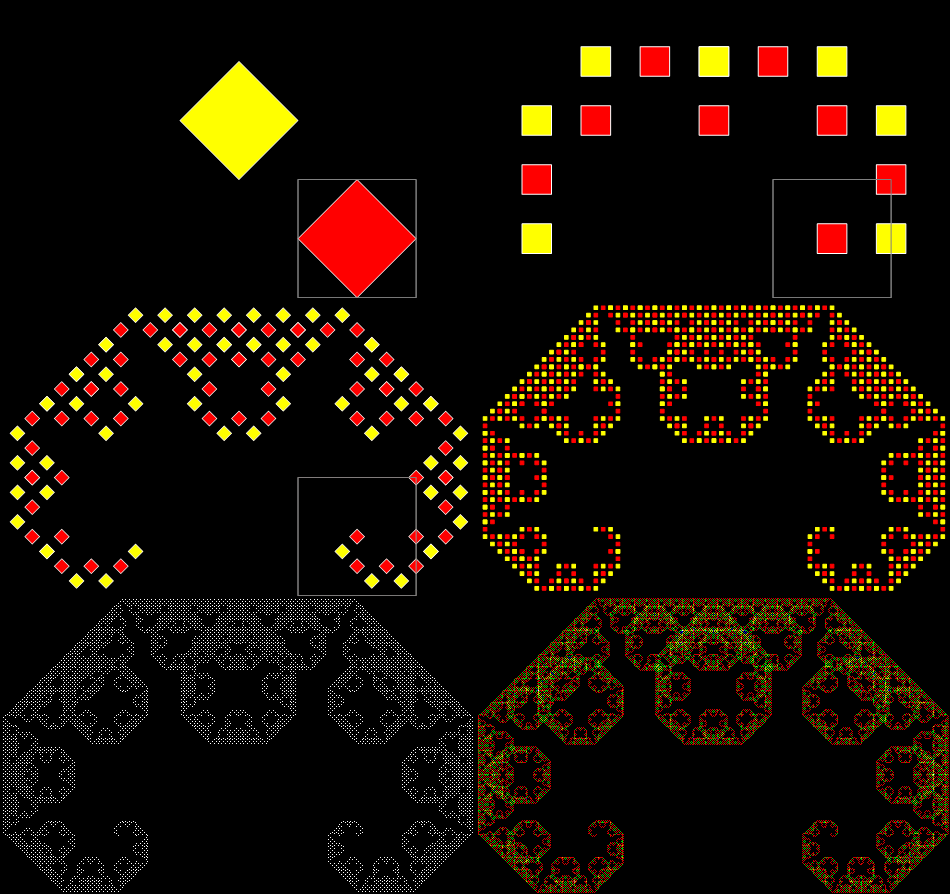
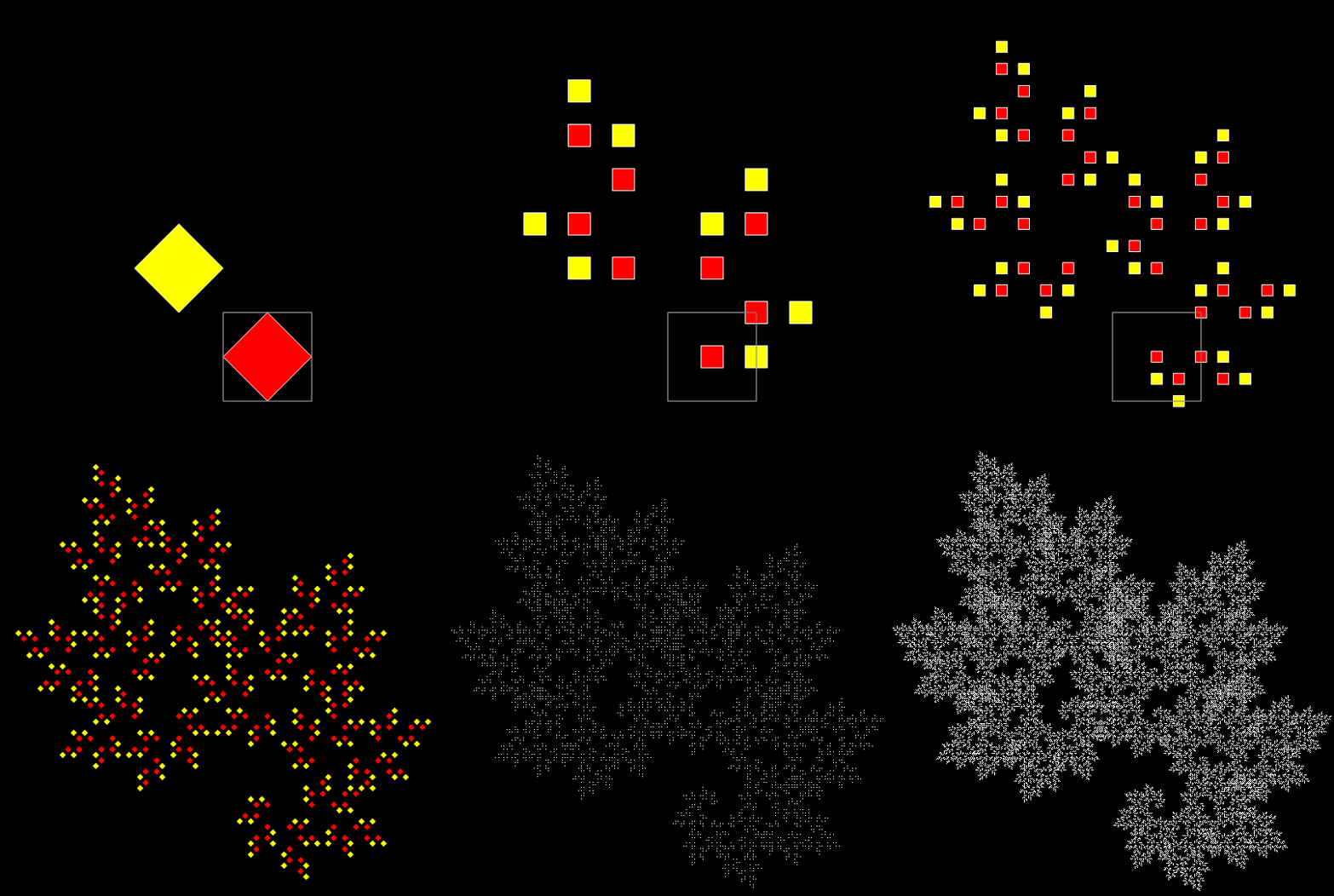
If you want to turn banality into beauty, start here with three staid and static squares:

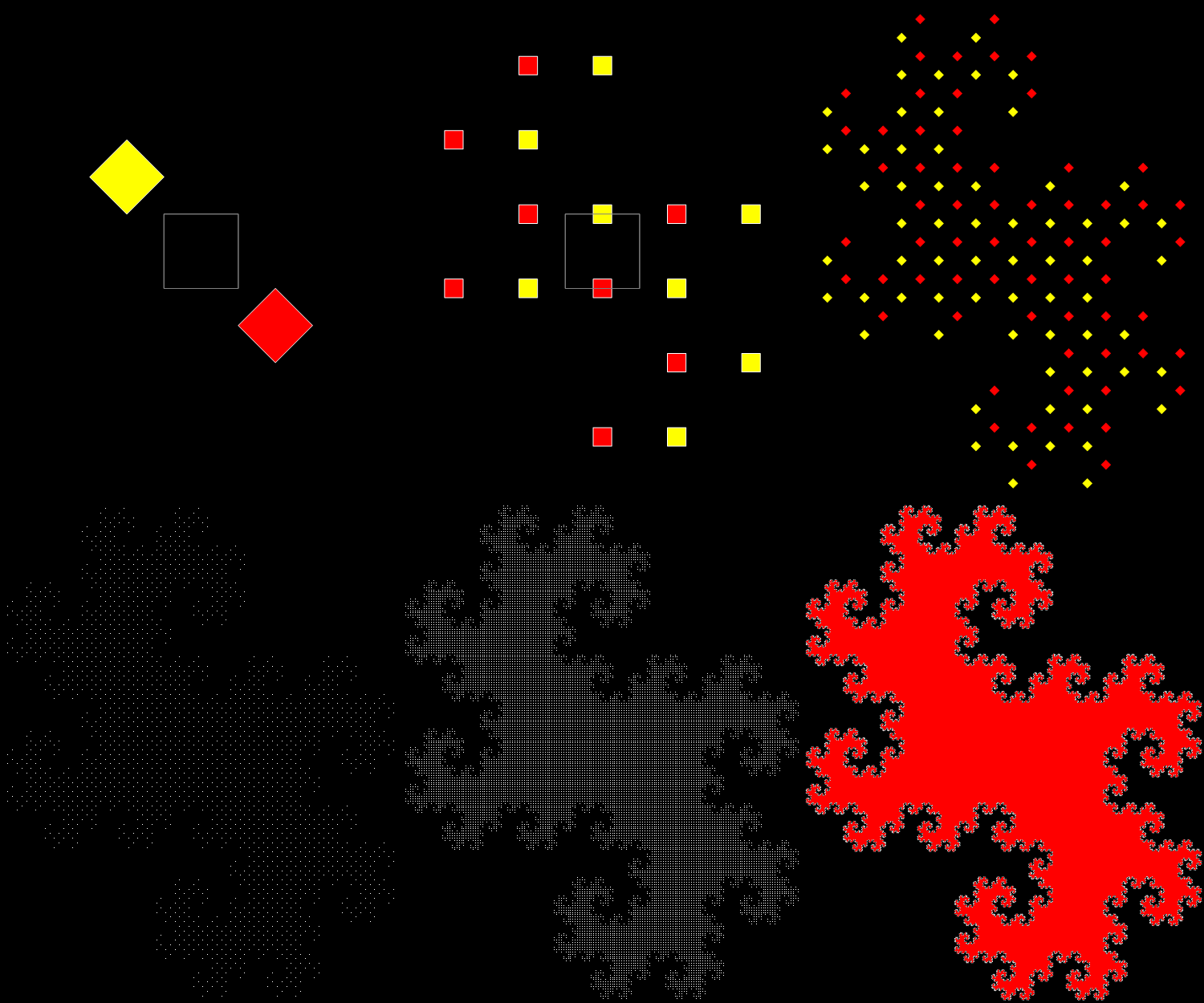
Stage #1


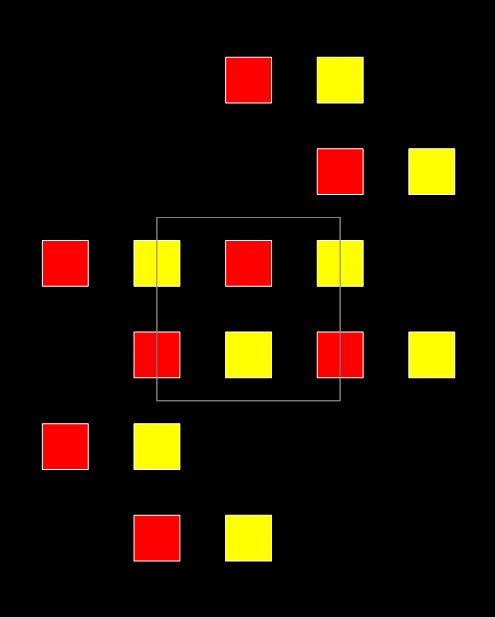
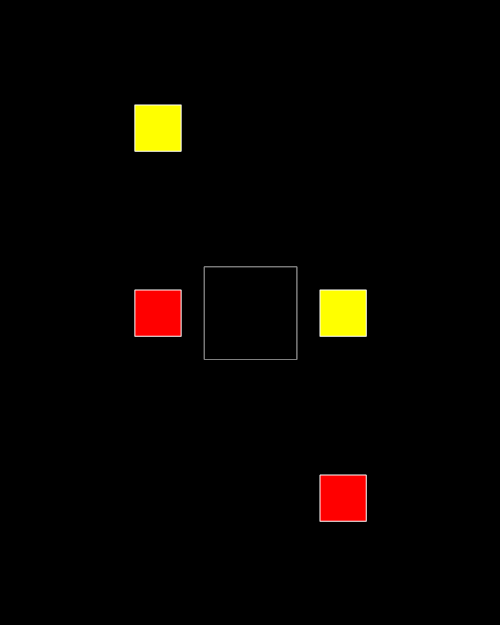
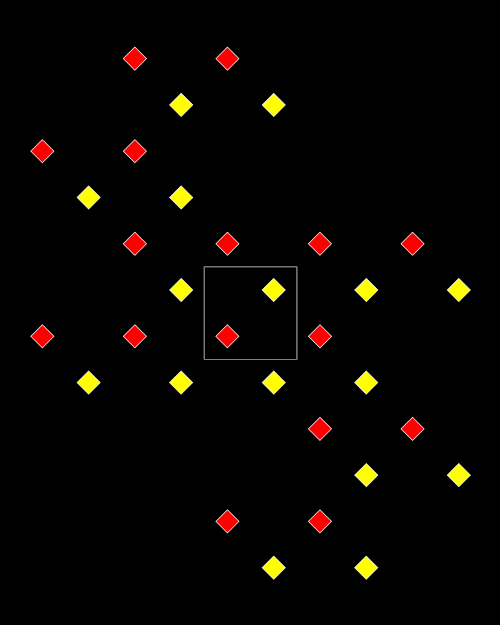
Now replace each red and yellow square with two new red and yellow squares orientated in the same way to the original square:

Stage #2


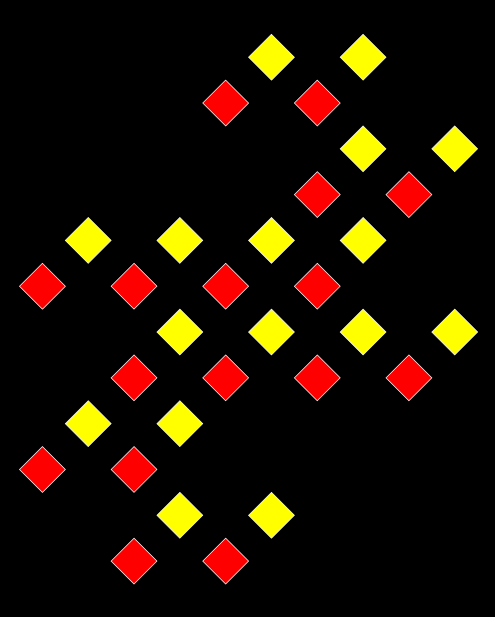
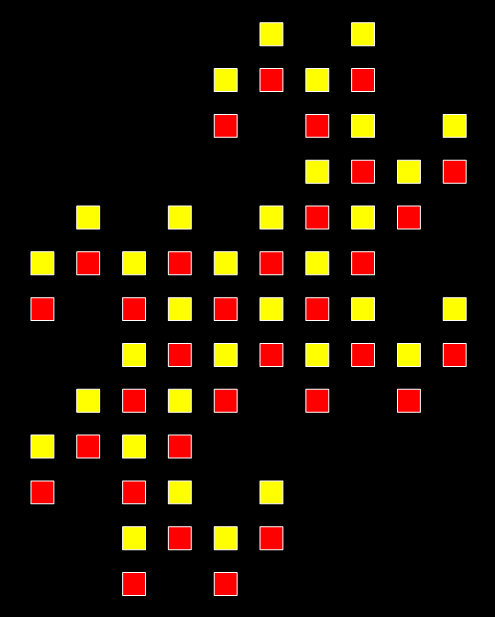
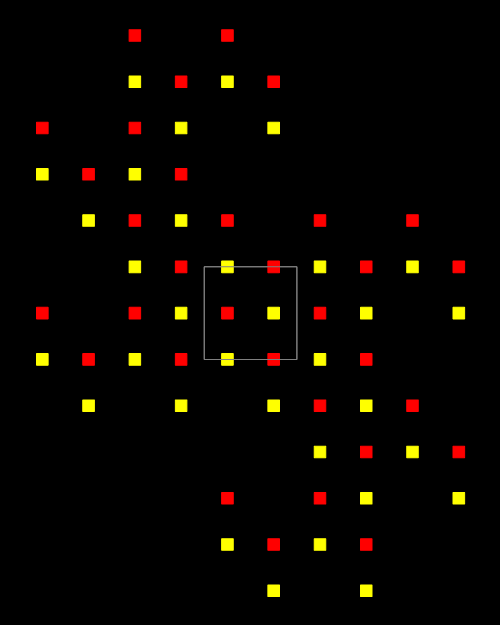
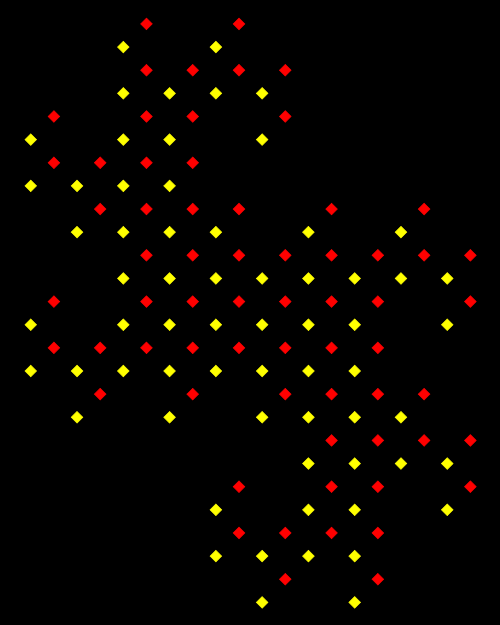
And repeat:

Stage #3


Stage #4


Stage #5


Stage #6


Stage #7


Stage #8


Stage #9


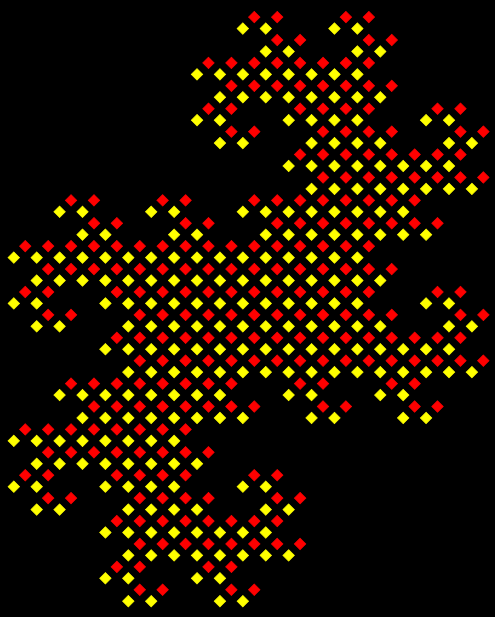
Stage #10


Stage #11


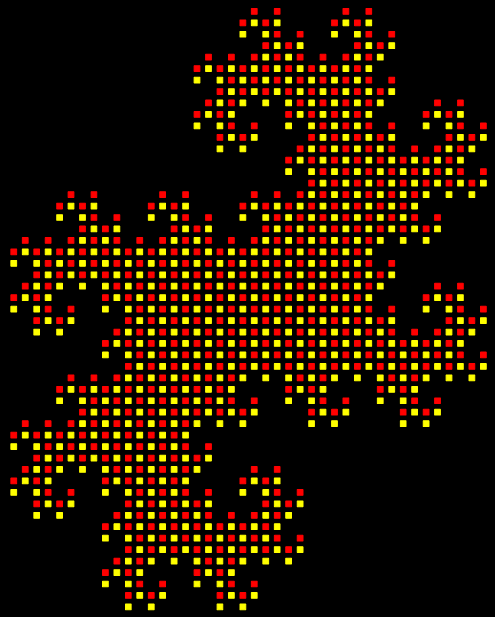
Stage #12


Stage #13


Stage #14


Stage #15


Stage #16


Stage #17


Stage #18


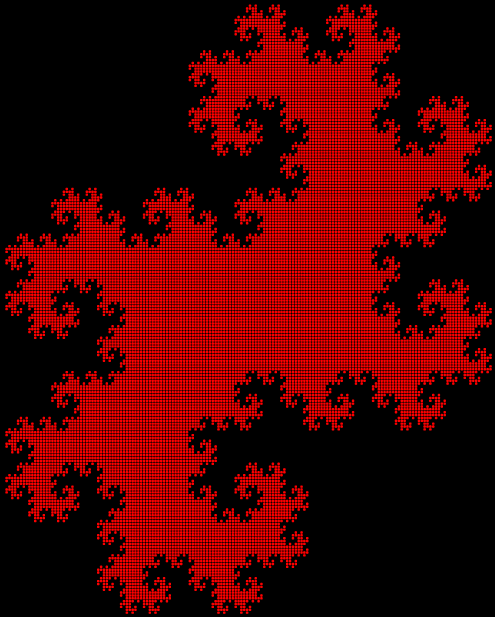
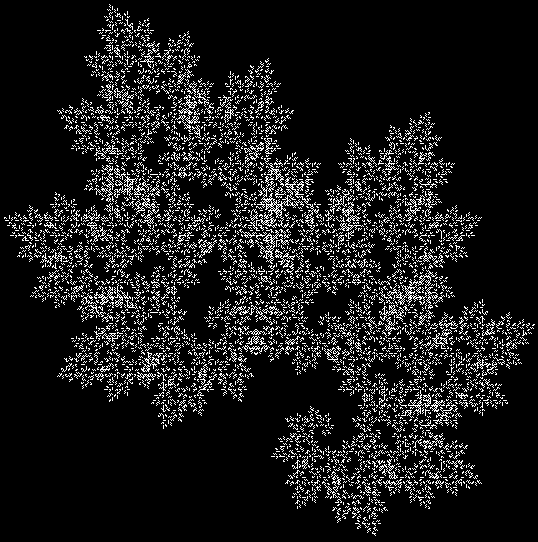
And you arrive in the end at a fractal called a dragon curve:

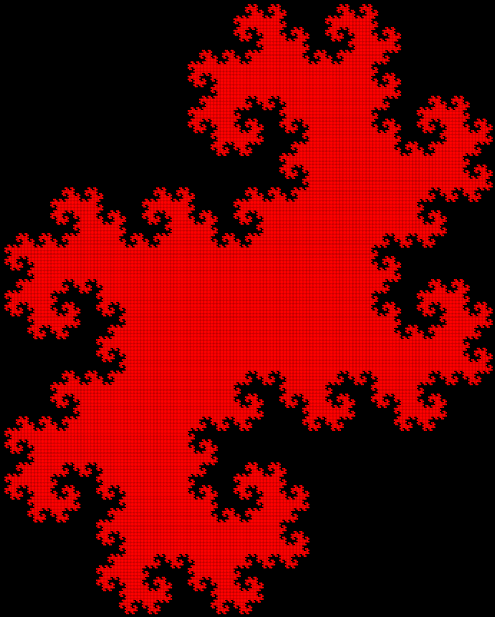
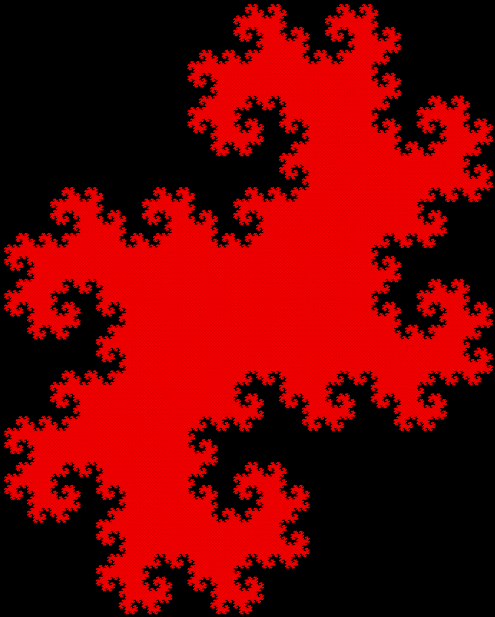
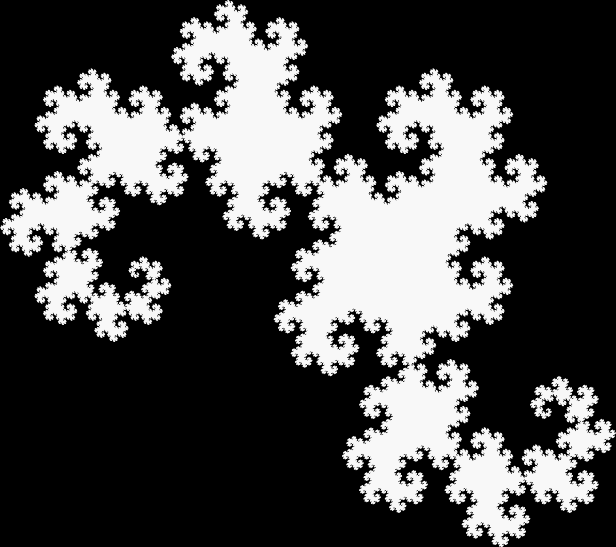
Dragon curve


Dragon curve (animated)


Elsewhere other-engageable

Curvous Energy — an introduction to dragon curves
All Posts — about dragon curves

Back to Drac’ #2

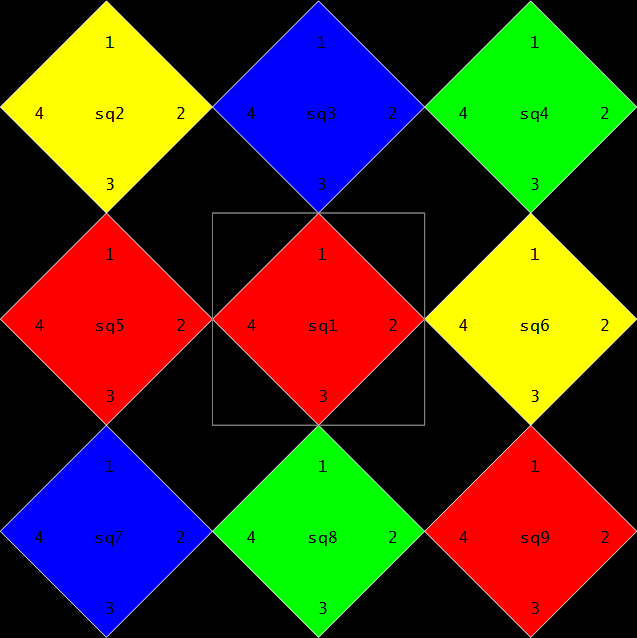
Boring, dull, staid, stiff, everyday, ordinary, unimaginative, unexceptional, crashingly conventional — the only interesting thing about squares is the number of ways you can say how uninteresting they are. Unlike triangles, which vary endlessly and entertainingly, squares are square in every sense of the word.

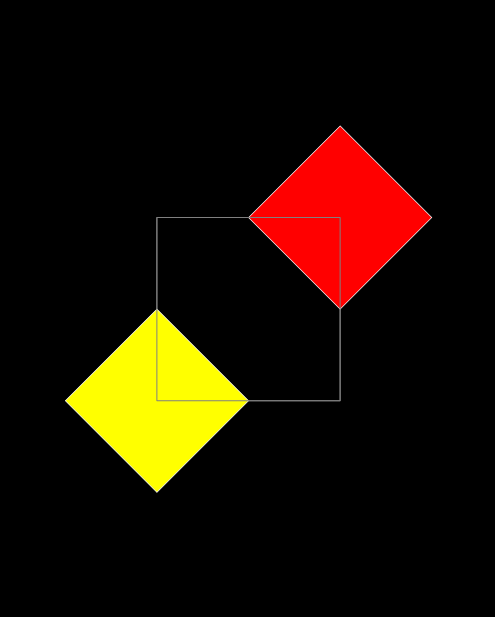
And they don’t get any better if you tilt them, as here:

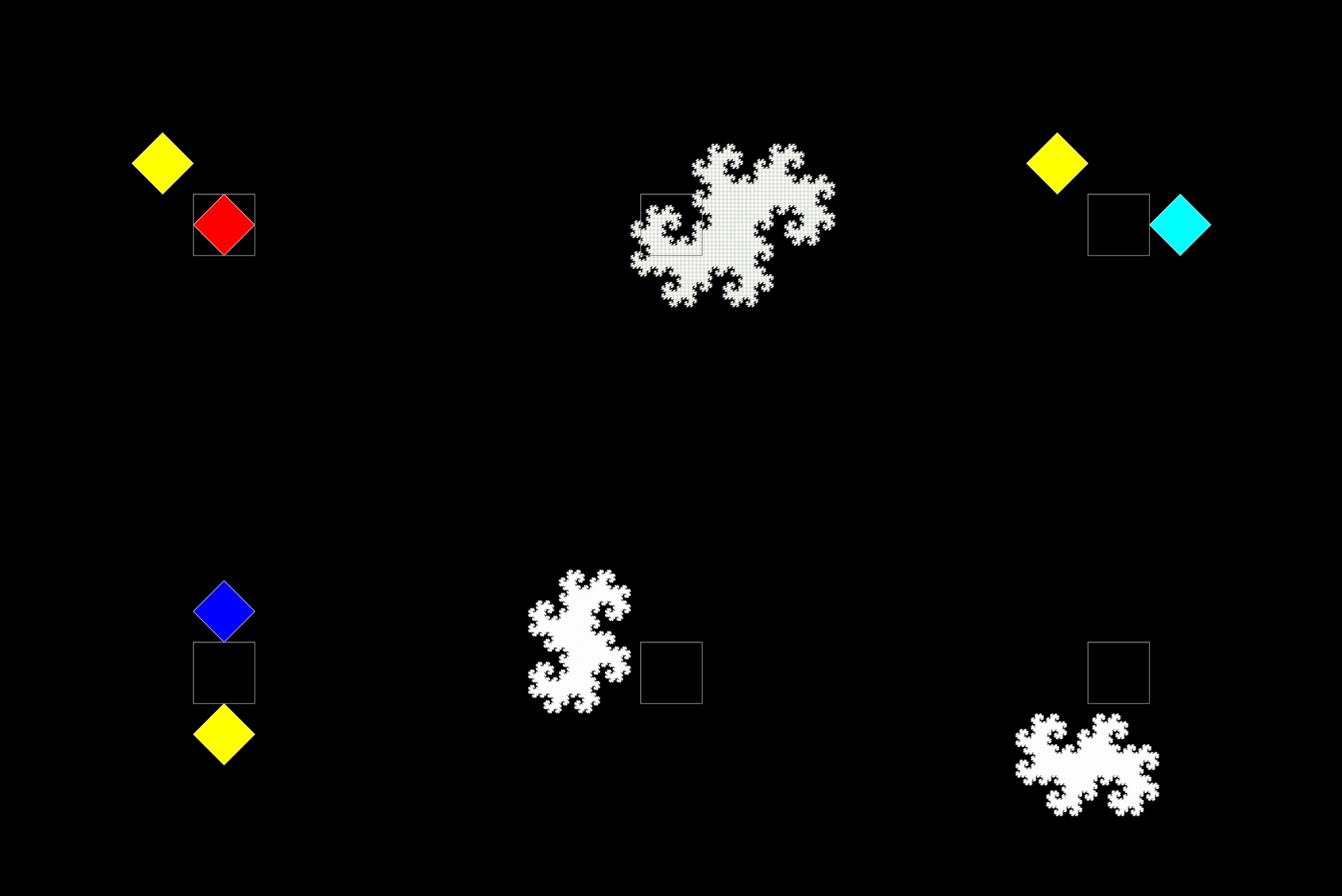
Sub-squares from gray square (with corner-numbers)


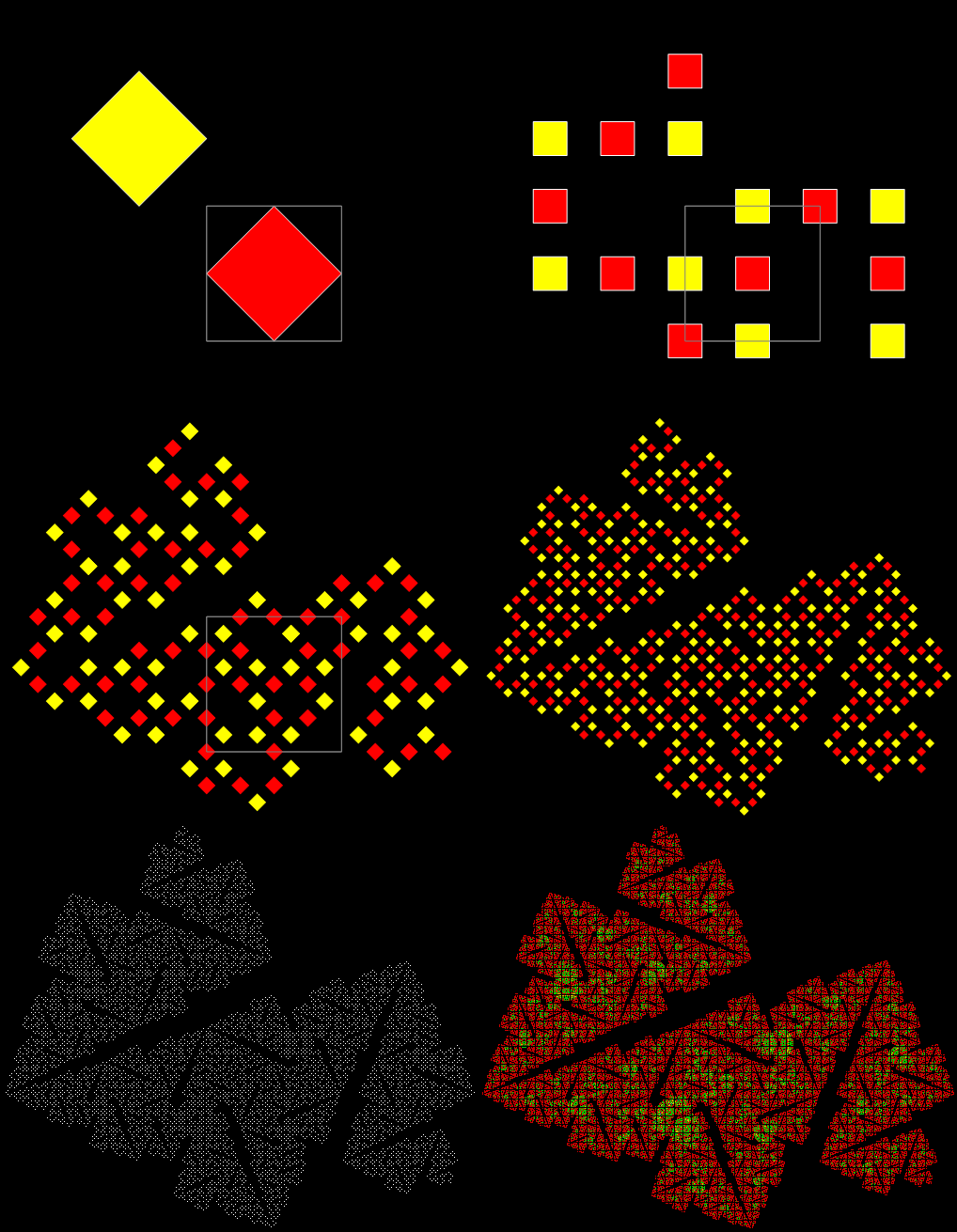
Nothing interesting can emerge from that set of squares. Or can it? As I showed in Curvous Energy, it can. Suppose that the gray square is dividing into the colored squares like a kind of amoeba. And suppose that the colored squares divide in their turn. So square divides into sub-squares and sub-squares divide into sub-sub-squares. And so on. And all the squares keep the same relative orientation.

What happens if the gray square divides into sub-squares sq2 and sq9? And then sq2 and sq9 each divide into their own sq2 and sq9? And so on. Something very unsquare-like happens:

Square-split stage #1


Stage #2


Square-split #3


Square-split #4


Square-split #5


Square-split #6


Square-split #7


Square-split #8


Square-split #9


Square-split #10


Square-split #11


Square-split #12


Square-split #13


Square-split #14


Square-split #15


Square-split #16


Square-split (animated)


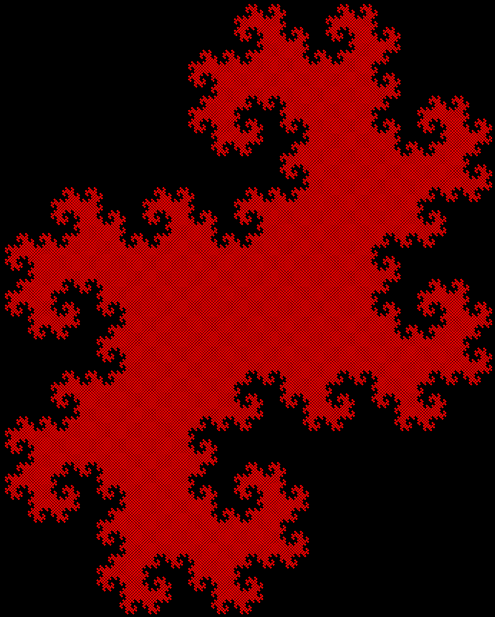
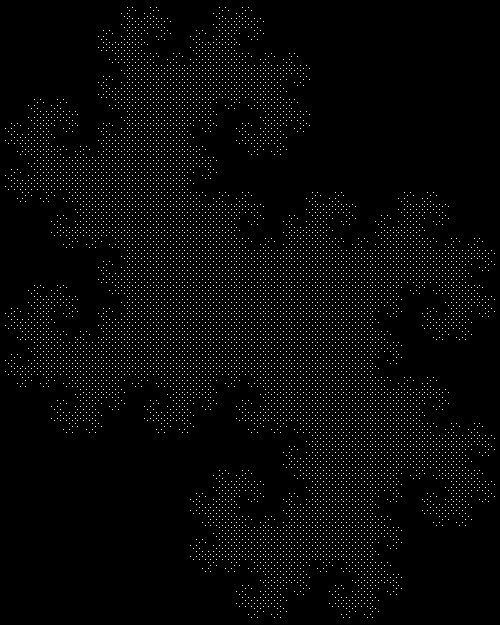
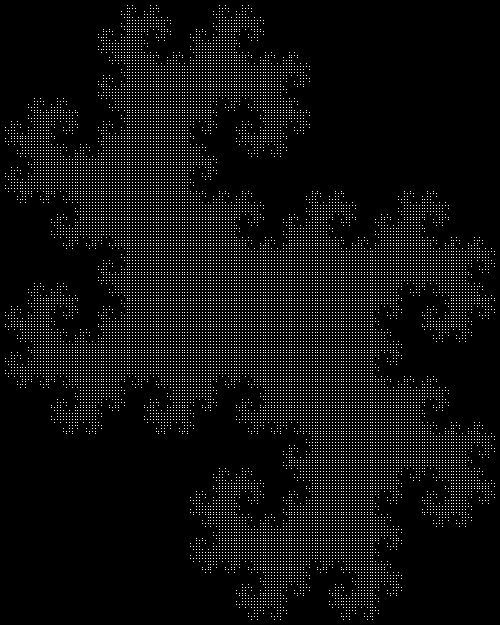
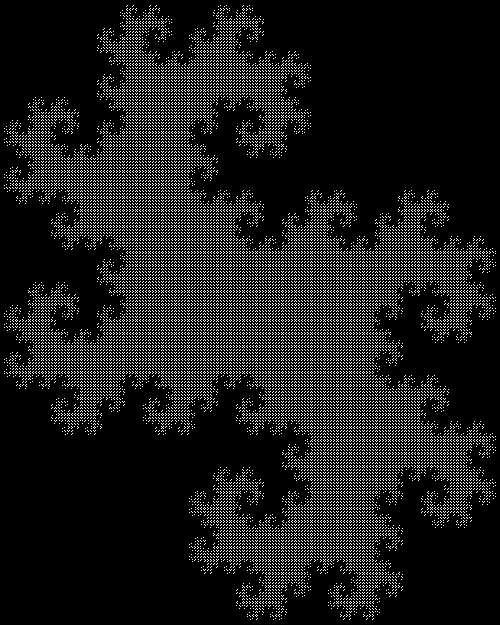
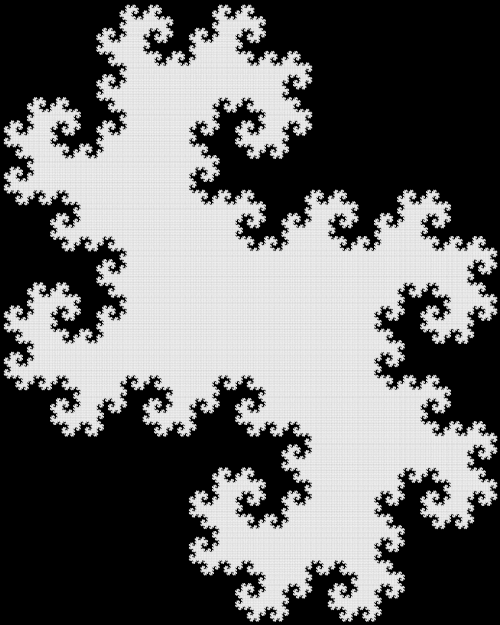
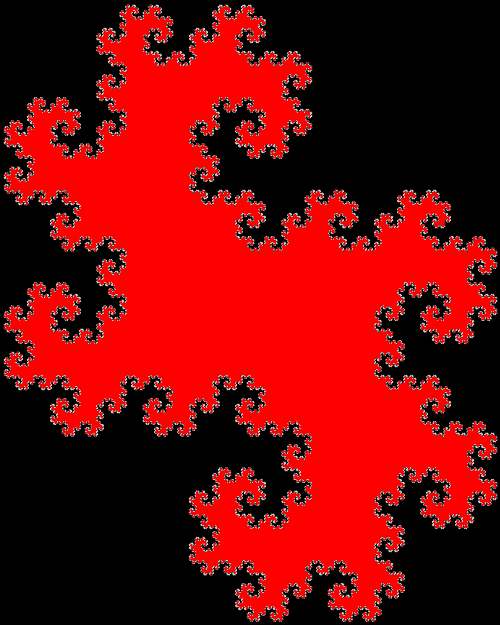
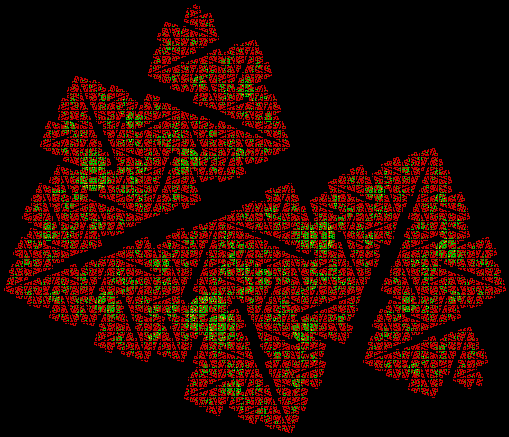
The square-split creates a beautiful fractal known as a dragon-curve:

Dragon-curve


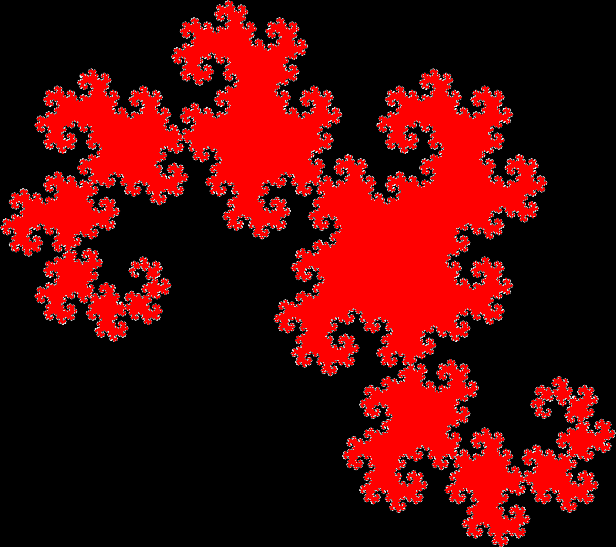
Dragon-curve (red)


And dragon-curves, at various angles and in various sizes, emerge from every other possible pair of sub-squares:

Lots of dragon-curves


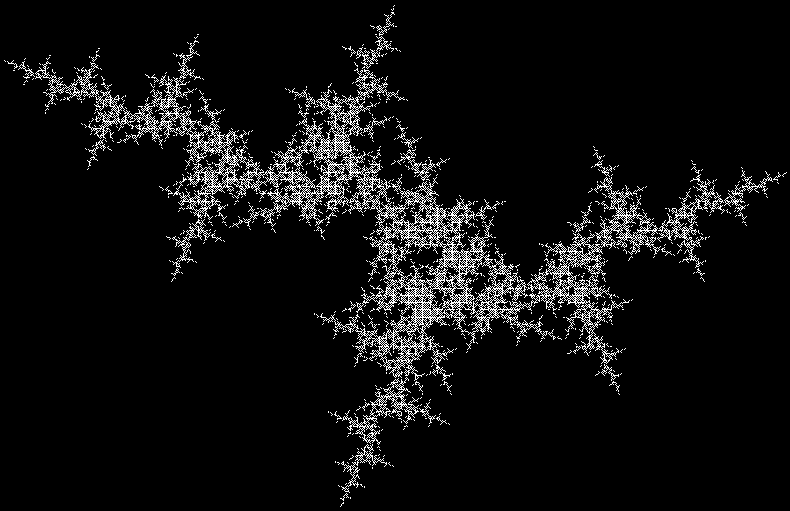
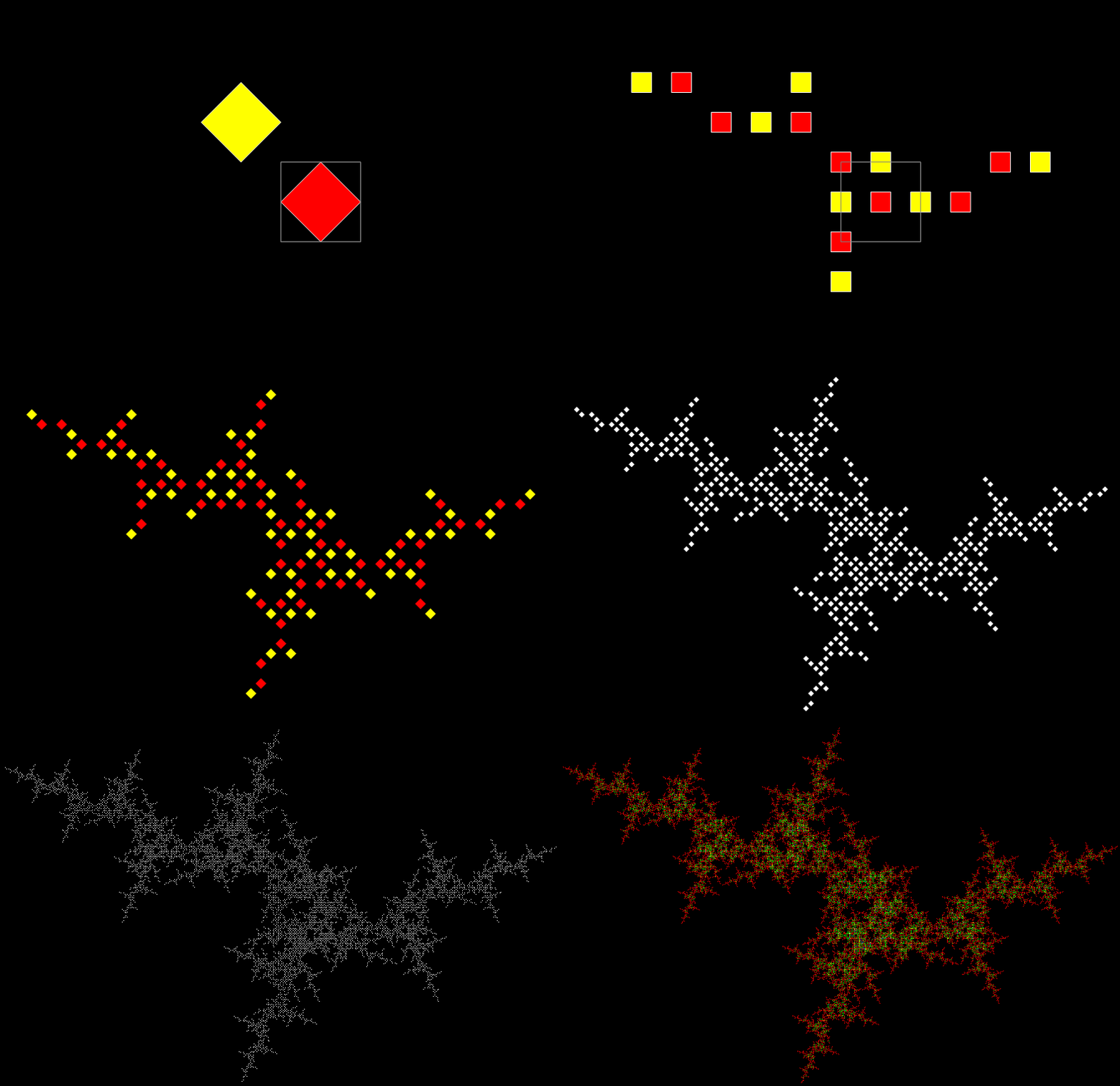
And you get other fractals if you manipulate the sub-squares, so that the corners are rotated or reverse-rotated:

Rotation = 1,2 (sub-square #1 unchanged, in sub-square #2 corner 1 becomes corner 2, 2 → 3, 3 → 4, 4 → 1)


rot = 1,2 (animated)


rot = 1,2 (colored)


rot = 1,5 (in sub-square #2 corner 1 stays the same, 4 → 2, 3 stays the same, 2 → 4)


rot = 1,5 (anim)


rot = 4,7 (sub-square #2 flipped and rotated)


rot = 4,7 (anim)


rot = 4,7 (col)


rot = 4,8


rot = 4,8 (anim)


rot = 4,8 (col)


sub-squares = 2,8; rot = 5,6


sub-squares = 2,8; rot = 5,6 (anim)


sub-squares = 2,8; rot = 5,6 (col)


Another kind of dragon-curve — rot = 3,2


rot = 3,2 (anim)


rot = 3,2 (col)


sub-squares = 4,5; rot = 3,9


sub-squares = 4,5; rot = 3,9 (anim)


sub-squares = 4,5; rot = 3,9 (col)


Elsewhere other-accessible…

Curvous Energy — a first look at dragon-curves
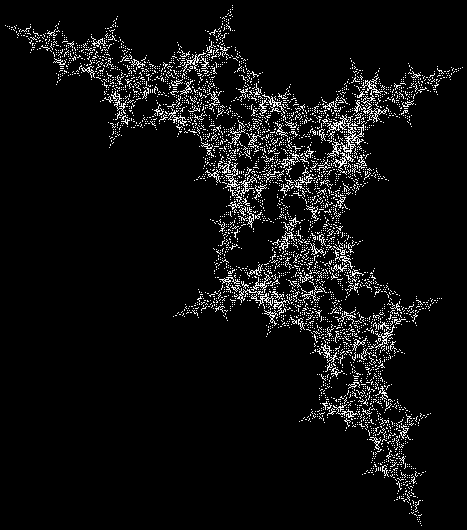
Back to Drac’ — a second look at dragon-curves