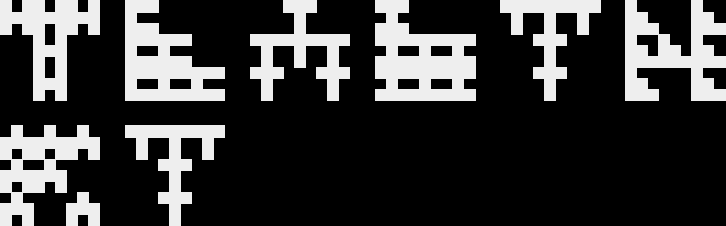
Absolutely Sabulous

Smooth between sea and land
Is laid the yellow sand,
And here through summer days
The seed of Adam plays.

Here the child comes to found
His unremaining mound,
And the grown lad to score
Two names upon the shore.

Here, on the level sand,
Between the sea and land,
What shall I build or write
Against the fall of night?

Tell me of runes to grave
That hold the bursting wave,
Or bastions to design
For longer date than mine.

Shall it be Troy or Rome
I fence against the foam,
Or my own name, to stay
When I depart for aye?

Nothing: too near at hand,
Planing the figure sand,
Effacing clean and fast
Cities not built to last
And charms devised in vain,
Pours the confounding main. — A.E. Housman, “XLV” of More Poems (1936)

This Old Housman

ტელლ მე ნოტ ჰერე, იტ ნეედს ნოტ საჲინგ,
უჰატ ტუნე თე ენჩანტრესს პლაჲს
ინ აფტერმათს ოფ სოფტ შეპტემბერ
ორ უნდერ ბლანჩინგ მაჲს,
ფორ შე ანდ ი უერე ლონგ აკყუაინტედ
ანდ ი კნეუ ალლ ჰერ უაჲს.

ონ რუსსეტ ფლოორს, ბჲ უატერს იდლე,
თე პინე ლეტს ფალლ იტს კონე;
თე კუკკოო შოუტს ალლ დაჲ ატ ნოთინგ
ინ ლეაფჲ დელლს ალონე;
ანდ ტრაველლერს ჯოჲ ბეგუილეს ინ აუტუმნ
ჰეარტს თატ ჰავე ლოსტ თეირ ოუნ.

ონ აკრეს ოფ თე სეედედ გრასსეს
თე ჩანგინგ ბურნიშ ჰეავეს;
ორ მარშალლედ უნდერ მოონს ოფ ჰარვესტ
შტანდ სტილლ ალლ ნიგჰტ თე შეავეს;
ორ ბეეჩეს სტრიპ ინ სტორმს ფორ უინტერ
ანდ სტაინ თე უინდ უით ლეავეს.

პოსსესს, ას ი პოსსესსედ ა სეასონ,
თე კოუნტრიეს ი რესიგნ,
უჰერე ოვერ ელმჲ პლაინს თე ჰიგჰუაჲ
უოულდ მოუნტ თე ჰილლს ანდ შინე,
ანდ ფულლ ოფ შადე თე პილლარედ ფორესტ
უოულდ მურმურ ანდ ბე მინე.

ფორ ნატურე, ჰეარტლესს, უიტლესს ნატურე,
უილლ ნეითერ კარე ნორ კნოუ
უჰატ სტრანგერს ფეეტ მაჲ ფინდ თე მეადოუ
ანდ ტრესპასს თერე ანდ გო,
ნორ ასკ ამიდ თე დეუს ოფ მორნინგ
იფ თეჲ არე მინე ორ ნო.

Snow No

XXXI

On Wenlock Edge the wood’s in trouble;
   His forest fleece the Wrekin heaves;
The gale, it plies the saplings double,
   And thick on Severn strew the leaves.

’Twould blow like this through holt and hanger
   When Uricon the city stood:
’Tis the old wind in the old anger,
   But then it threshed another wood.

Then, ’twas before my time, the Roman
   At yonder heaving hill would stare:
The blood that warms an English yeoman,
   The thoughts that hurt him, they were there.

There, like the wind through woods in riot,
   Through him the gale of life blew high;
The tree of man was never quiet:
   Then ’twas the Roman, now ’tis I.

The gale, it plies the saplings double,
   It blows so hard, ’twill soon be gone:
To-day the Roman and his trouble
   Are ashes under Uricon. — from A.E. Housman’s A Shropshire Lad (1896)


Post-Performative Post-Scriptum

If you were already familiar with the poem, you may have noticed that I replaced “snow” with “strew” in line four. I don’t think the original “snow” works, because leaves don’t fall like snow or look anything like snow. Plus, leaves don’t melt like snowflakes when they land on water. Plus plus, the consonant-cluster of “strew” works well with the idea of leaves coating the water.

Wotta Lotta Glotta

I once wrote a story about a drug called panglossium that allowed those who took it to speak all the languages that have ever existed – the living ones and the dead ones, the ones spoken by billions and the ones spoken by a dwindling remnant, the ones of which the hand of history holds a few tiny glittering feathers and the ones that have evaded the hand of history entirely. Panglossium would allow you to speak all of them, in every dialect and every mode. And to read and write them too, if they had an alphabet or an ideography.

One of the things I was interested in was what kind of literature users of panglossium would create for each other. I don’t think they would choose to write in a single language: they would mix languages (and it seems very unlikely that they would use much or perhaps any English). But I do think they would come closer to capturing the multitudinous flux of reality, which, in our reality, you can’t capture more than a sliver of when you use a single language. Or when you use a dozen languages, as some polyglots can in our reality. Maybe irreal panglossium would allow you to take a handful of reality or more.

I was reminded of panglossium recently because I wanted to write a poem about something I’d seen and been moved by: a band of white clouds and blue sky across which a gull slid swiftly on stationary wings. But I couldn’t do it to the standard I wanted. I couldn’t capture what I saw in two or three seconds: the grace of the gull gliding across the blue-and-white beauty of the sky. The gull wasn’t “gliding”, for example. That’s too slow a word. And I didn’t want to write a poem about my inability to capture that scene, because I’ve written one before about that inability:

Verbol

Green on green on green
The light befalls me clean,
Beneath the birds.

And how I can capture
This mute green rapture
In blinded words? (7viii21)

The title of that poem is panglossic, in a way. And the poem itself did reach the standard required, because not-reaching-the-standard is part of the point of the poem. And even the greatest poet can’t reach the full standard and fully capture a scene like that. But some can get much closer than others, as Housman explained in his study of Swinburne:

If even so bare and simple an object as the sea was too elusive and delicate for Swinburne’s observation and description, you would not expect him to have much success with anything so various and manifold as the surface of the earth. And I am downright aghast at the dullness of perception and lack of self-knowledge and self-criticism which permitted him to deposit his prodigious quantity of descriptive writing in the field of English literature. That field is rich beyond example in descriptions of nature from the hands of unequalled masters, for in the rendering of nature English poetry has outdone all poetry: and here, after five centuries, comes Swinburne covering the grass with his cartload of words and filling the air with the noise of the shooting of rubbish. It is a clear morning towards the end of winter: snow has fallen in the night, and still lies on the branches of the trees under brilliant sunshine. Tennyson would have surveyed the scene with his trained eye, made search among his treasury of choice words, sorted and sifted and condensed them, till he had framed three lines of verse, to be introduced one day in a narrative or a simile, and there to flash upon the reader’s eye the very picture of a snowy and sunshiny morning. Keats or Shakespeare would have walked between the trees thinking of whatever came uppermost and letting their senses commune with their souls; and there the morning would have transmuted itself into half a line or so which, occurring in some chance passage of their poetry, would have set the reader walking between the same trees again. Swinburne picks up the sausage-machine into which he crammed anything and everything; round goes the handle, and out at the other end comes this noise:

Ere frost-flower and snow-blossom faded and fell, and the splendour of winter had passed out of sight,
The ways of the woodlands were fairer and stranger than dreams that fulfil us in sleep with delight;
The breath of the mouths of the winds had hardened on tree-tops and branches that glittered and swayed
Such wonders and glories of blossomlike snow or of frost that outlightens all flowers till it fade
That the sea was not lovelier than here was the land, nor the night than the day, nor the day than the night,
Nor the winter sublimer with storm than the spring: such mirth had the madness and might in thee made,
March, master of winds, bright minstrel and marshal of storms that enkindle the season they smite.

That is not all, it clatters on for fifty lines or so; but that is enough and too much. It shows what nature was to Swinburne: just something to write verse about, a material for making a particular kind of sausage.

But what would Tennyson or Keats or Shakespeare have been able to write after taking panglossium?


Elsewhere other-accessible…

Poems and Brickbats – Housman’s study of Swinburne
Verbol – (commentary on) my poem about inability and inadequacy

FractAlphic Frolix

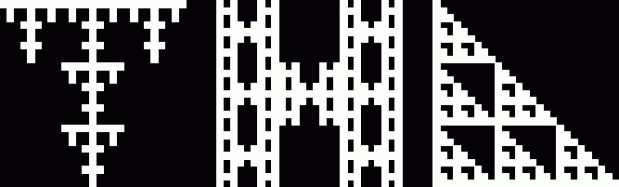
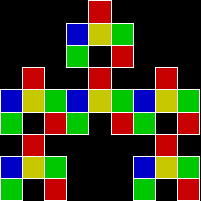
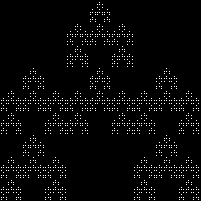
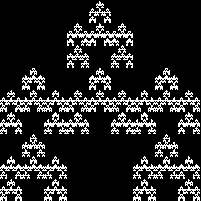
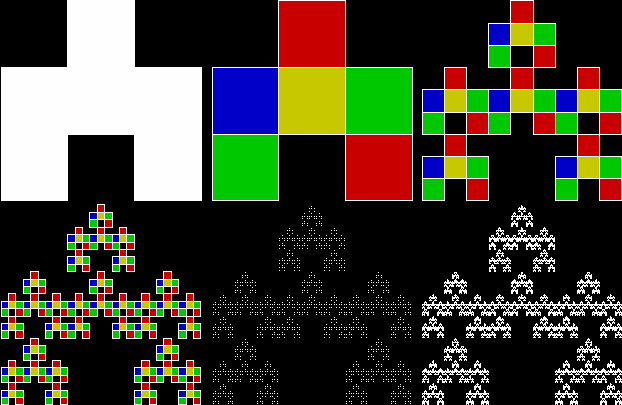
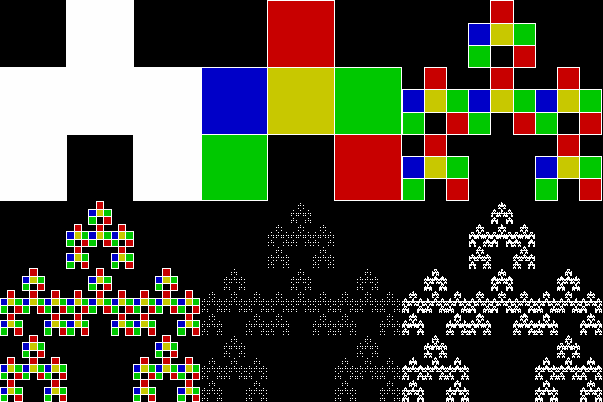
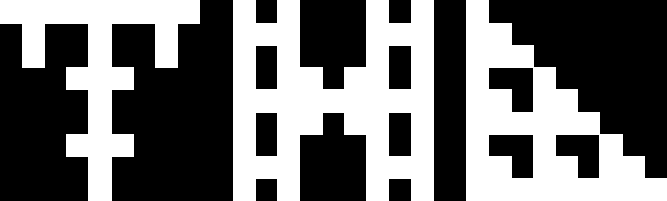
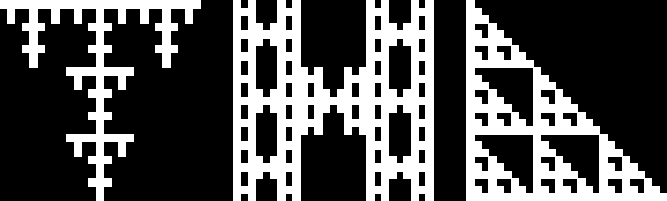
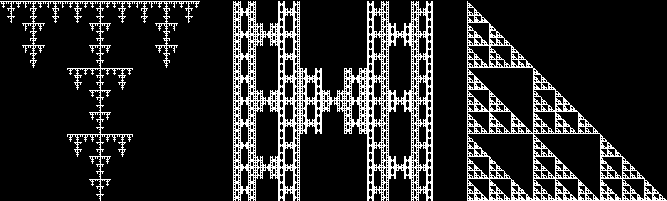
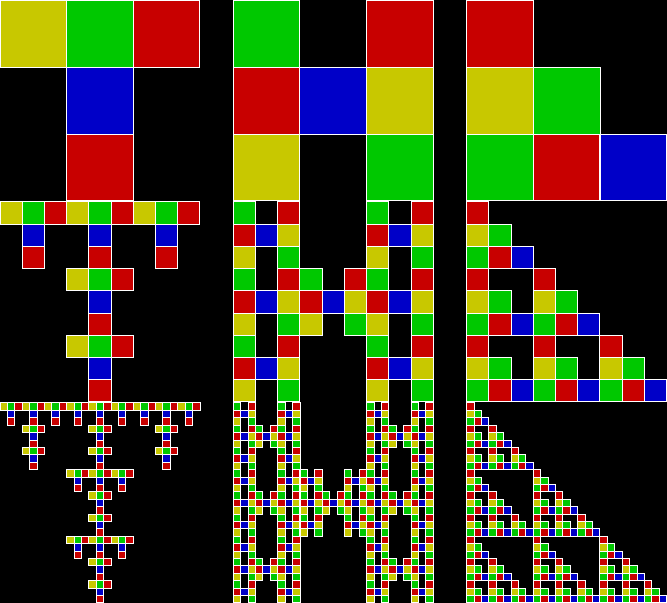
A fractal is a shape that contains smaller (and smaller) versions of itself, like this:

The hourglass fractal


Fractals also occur in nature. For example, part of a tree looks like the tree as whole. Part of a cloud or a lung looks like the cloud or lung as a whole. So trees, clouds and lungs are fractals. The letters of an alphabet don’t usually look like that, but I decided to create a fractal alphabet — or fractalphabet — that does.

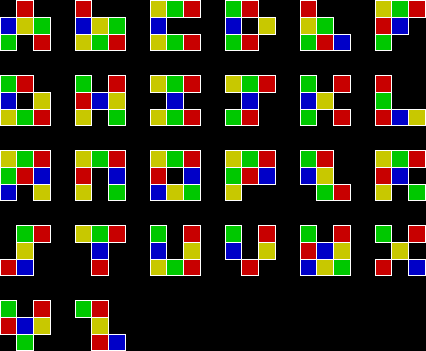
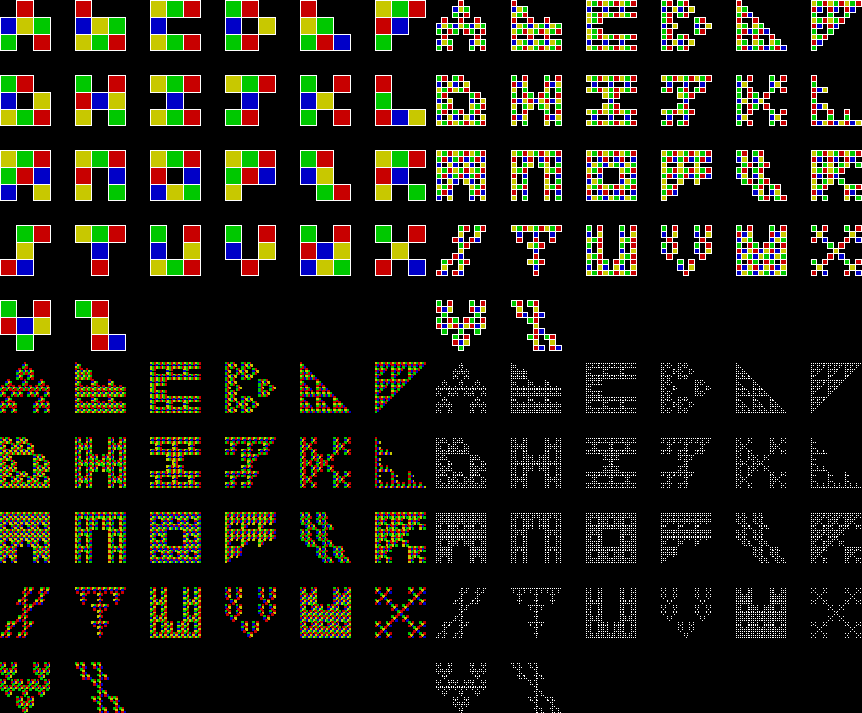
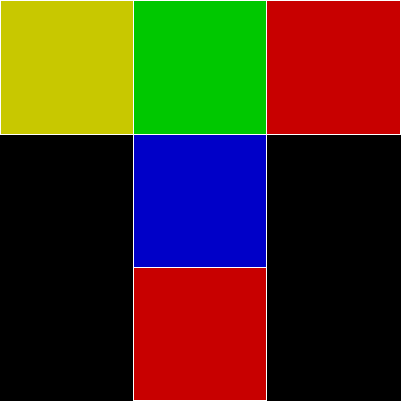
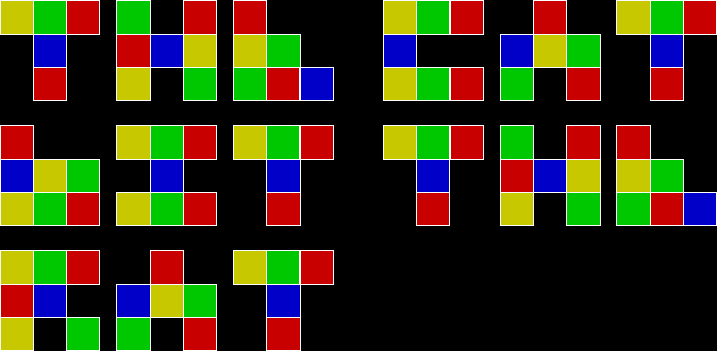
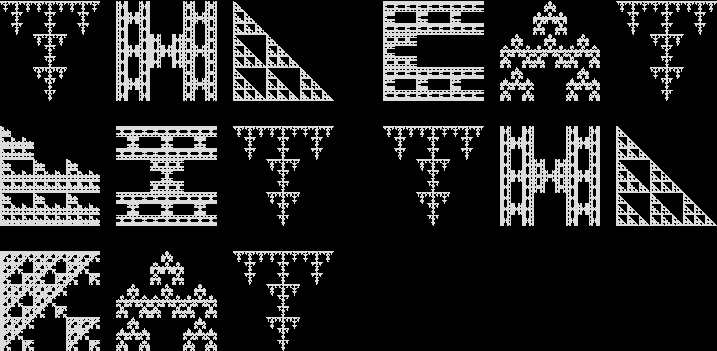
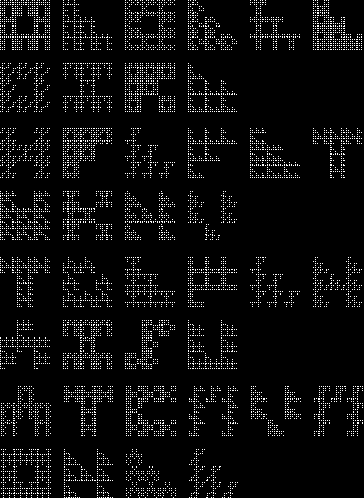
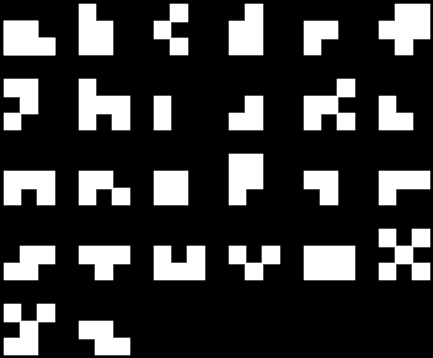
The fractalphabet starts with this minimal standard Roman alphabet in upper case, where each letter is created by filling selected squares in a 3×3 grid:


The above is stage 1 of the fractalphabet, when it isn’t actually a fractal alphabet at all. But if each filled square of the letter “A”, say, is replaced by the letter itself, the “A” turns into a fractal, like this:


Fractal A (animated)


Here’s the whole alphabet being turned into fractals:

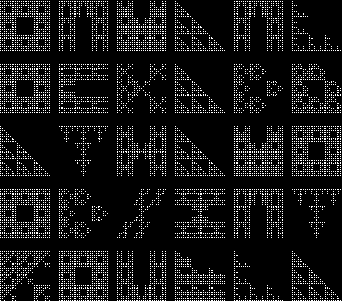
Full fractalphabet (black-and-white)


Full fractalphabet (color)


Full fractalphabet (b&w animated)


Full fractalphabet (color animated)


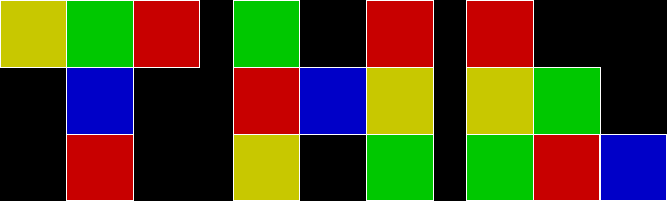
Now take a full word like “THE”:


You can turn each letter into a fractal using smaller copies of itself:


Fractal THE (b&w animated)


Fractal THE (color animated)


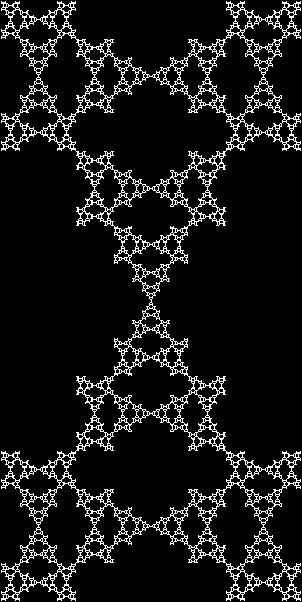
But you can also create a fractal from “THE” by compressing the “H” into the “T”, then the “E” into the “H”, like this:


Compressed THE (animated)


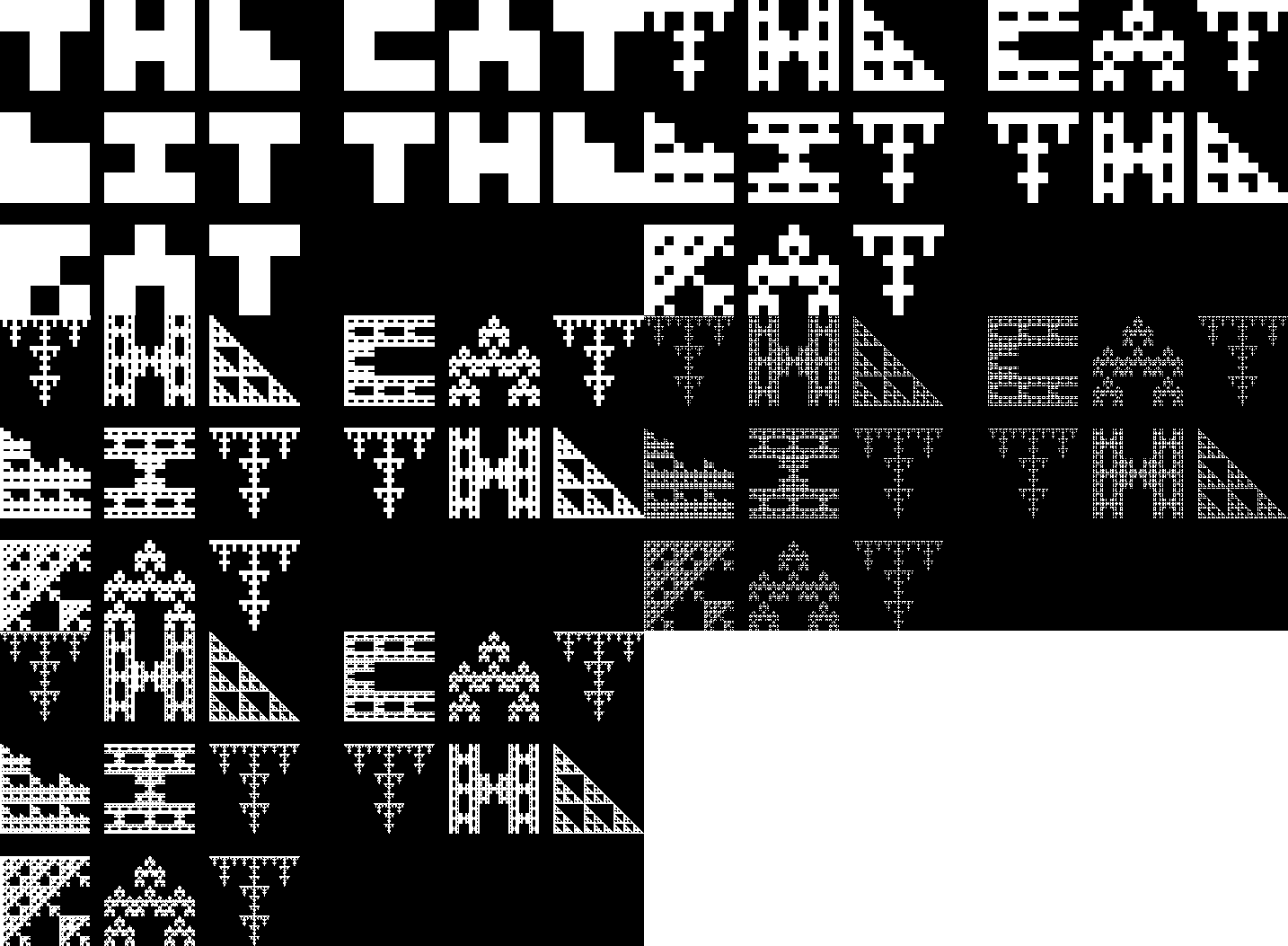
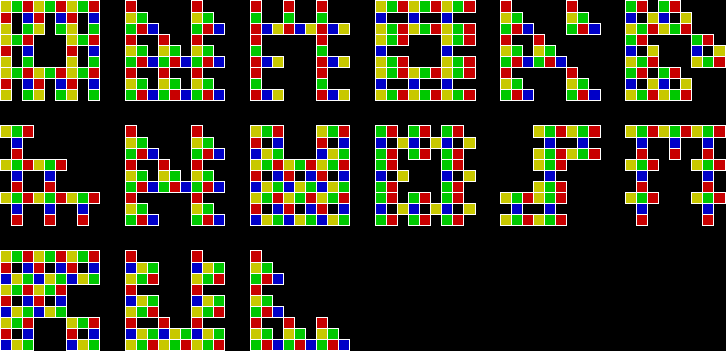
The compressed “THE” has a unique appearance and is both a letter and a word. Now try a complete sentence, “THE CAT BIT THE RAT”. This is the sentence in stage 1 of the fractalphabet:


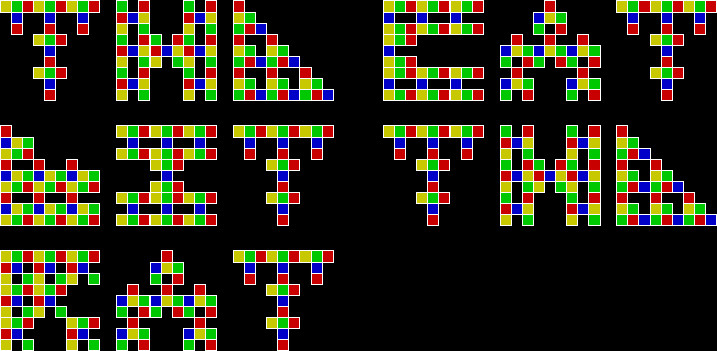
And stage 2:


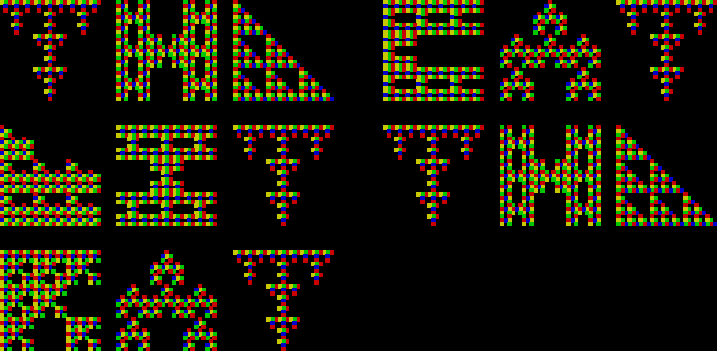
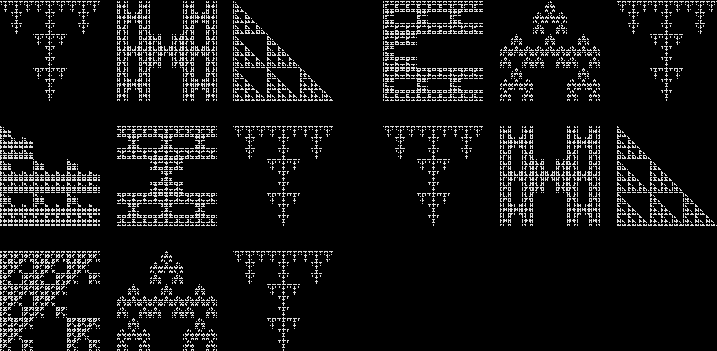
And further stages:


Fractal CAT (b&w animated)


Fractal CAT (color animated)


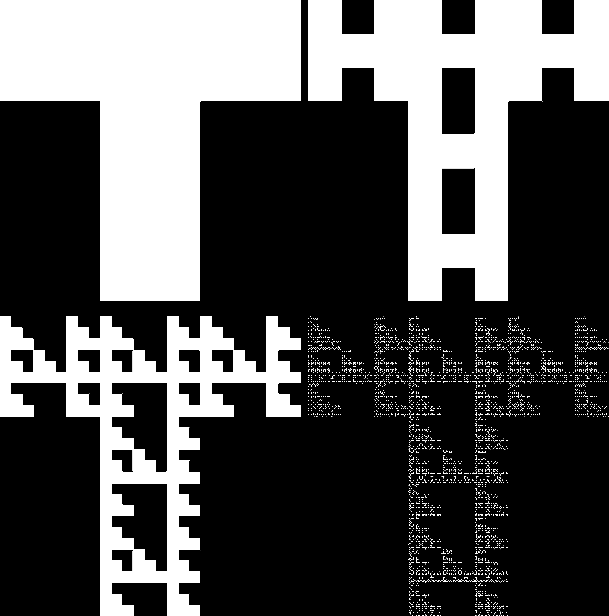
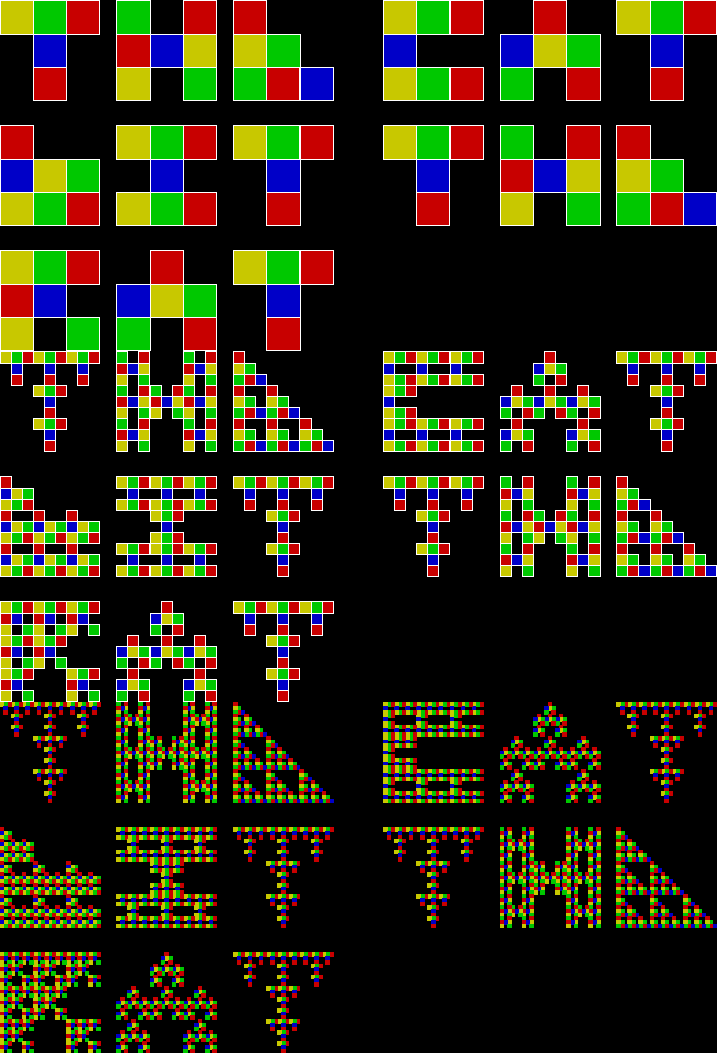
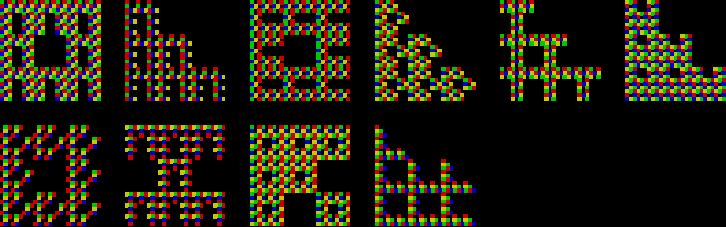
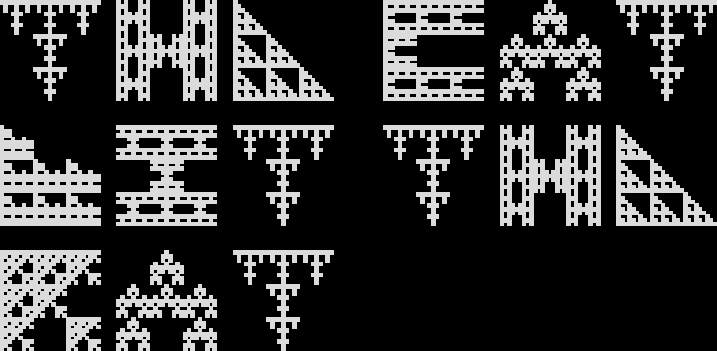
But, as we saw with “THE” above, that’s not the only fractal you can create from “THE CAT BIT THE RAT”. Here’s what I call a 2-compression of the sentence, where every second letter has been compressed into the letter that precedes it:


THE CAT BIT THE RAT (2-comp color)


THE CAT BIT THE RAT (2-comp b&w)


And here’s a 3-compression of the sentence, where every third letter has been compressed into every second letter, and every second-and-third letter has been compressed into the preceding letter:

THE CAT BIT THE RAT (3-comp color)


THE CAT BIT THE RAT (3-comp b&w)


As you can see above, each word of the original sentence is now a unique single letter of the fractalphabet. Theoretically, there’s no limit to the compression: you could fit every word of a book in the standard Roman alphabet into a single letter of the fractalphabet. Or you could fit an entire book into a single letter of the fractalphabet (with additional symbols for punctuation, which I haven’t bothered with here).

To see what the fractalphabeting of a longer text in the standard Roman alphabet might look like, take the first verse of a poem by A.E. Housman:

On Wenlock Edge the wood’s in trouble;
His forest fleece the Wrekin heaves;
The gale it plies the saplings double,
And thick on Severn snow the leaves. (“Poem XXXI” of A Shropshire Lad, 1896)

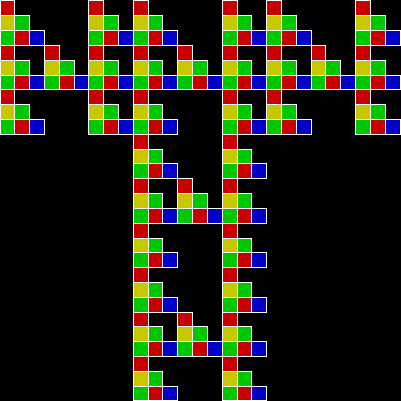
The first line looks like this in stage 1 of the fractalphabet:


Here’s stage 2 of the standard fractalphabet, where each letter is divided into smaller copies of itself:


And here’s stage 3 of the standard fractalphabet:


Now examine a colour version of the first line in stage 1 of the fractalphabet:


As with “THE” above, let’s try compressing each second letter into the letter that precedes it:


And here’s a 3-comp of the first line:


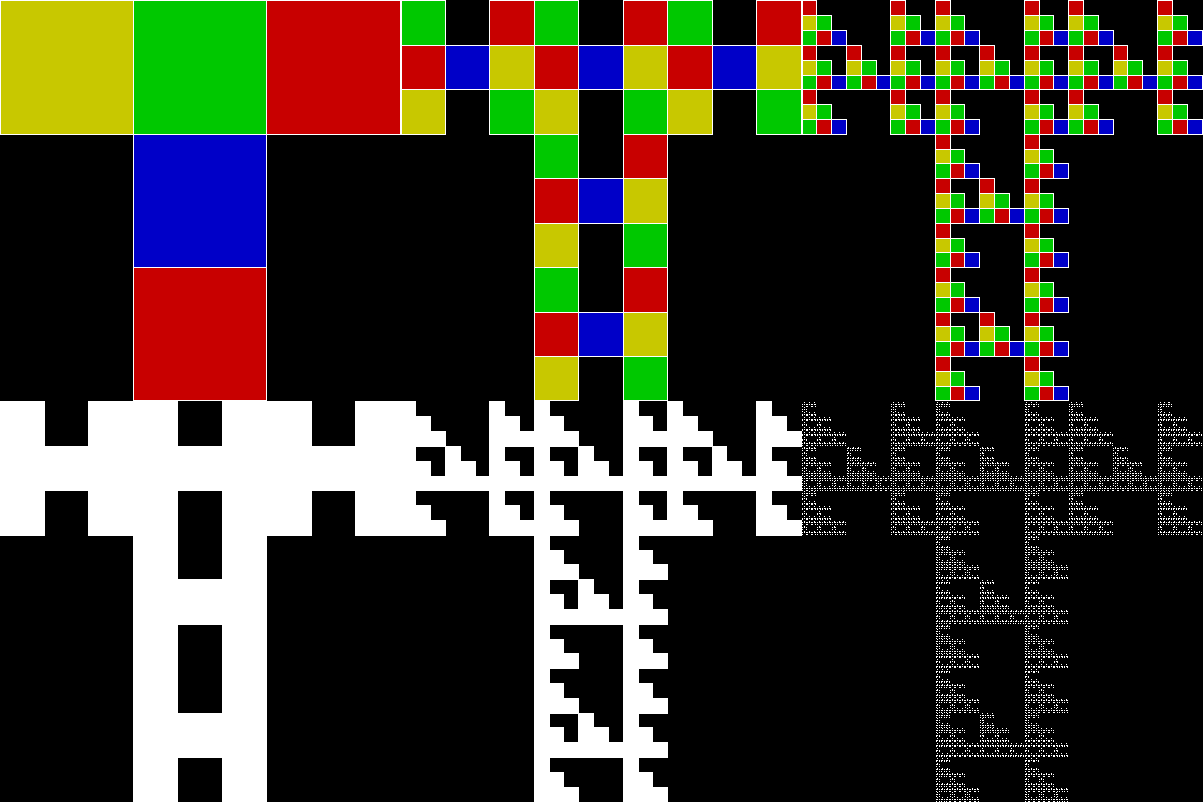
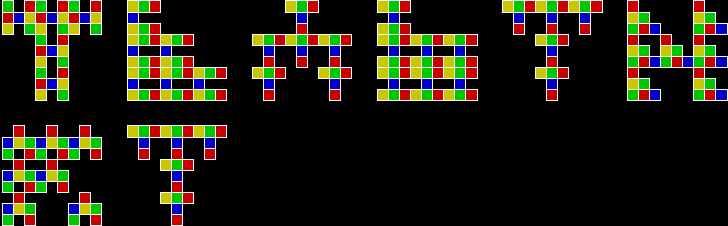
Finally, here’s the full first verse of Housman’s poem in 2-comp and 3-comp forms:

On Wenlock Edge the wood’s in trouble;
His forest fleece the Wrekin heaves;
The gale it plies the saplings double,
And thick on Severn snow the leaves. (“Poem XXXI of A Shropshire Lad, 1896)

“On Wenlock Edge” (2-comp)


“On Wenlock Edge” (3-comp)


Appendix

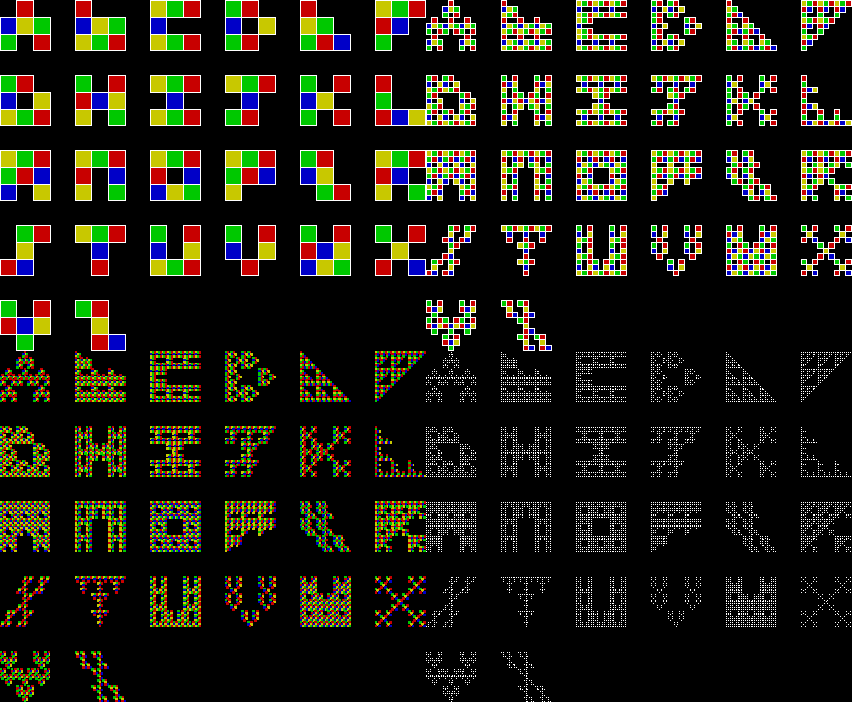
This is a possible lower-case version of the fractalphabet:

Whet Work

What, still alive at twenty-two,
A clean, upstanding chap like you?
Sure, if your throat ’tis hard to slit,
Slit your girl’s, and swing for it.

Like enough, you won’t be glad,
When they come to hang you, lad:
But bacon’s not the only thing
That’s cured by hanging from a string.

So, when the spilt ink of the night
Spreads o’er the blotting-pad of light,
Lads whose job is still to do
Shall whet their knives, and think of you.

Hugh Kingsmill’s famous parody of A.E. Housman

Performativizing Papyrocentricity #31

Papyrocentric Performativity Presents:

Nor Severn ShoreThe Poems of A.E. Housman, edited by Archie Burnett (Clarendon Press 1997) (posted @ Overlord of the Über-Feral)

Knight and ClayThe Riddle of the Labyrinth: The Quest to Crack an Ancient Code and the Uncovering of a Lost Civilisation, Margalit Fox (Profile Books 2013)

Goal God GuideThe Secret Footballer’s Guide to the Modern Game: Tips and Tactics from the Ultimate Insider, The Secret Footballer (Guardian Books 2014)


Or Read a Review at Random: RaRaR

Lute to Kill

A little-known Housman poem that should be better-known:


Breathe, my lute, beneath my fingers
    One regretful breath,
One lament for life that lingers
    Round the doors of death.
For the frost has killed the rose,
And our summer dies in snows,
    And our morning once for all
    Gathers to the evenfall.

Hush, my lute, return to sleeping,
    Sing no songs again.
For the reaper stays his reaping
    On the darkened plain;
And the day has drained its cup,
And the twilight cometh up;
    Song and sorrow all that are
    Slumber at the even-star.

A.E. Housman (1859-1936) — see also Breathe, my lute at Wikilivres.

Poetry and Putridity

Poetry and Putridity: Interrogating Issues of Narrativistic Necrocentricity in A.E. Housman and Clark Ashton Smith

Thanatic fanatic. Say it. Savour it, if you’re that way inclined. I certainly am: I am obsessed with words. The sound of them, the shape of them, their history, meaning and flavours. If I were a Guardianista, I’d say I was “passionate about” words. But it’s partly because I’m obsessed with words that I’m not a Guardianista. The Guardian and its readers use them badly. I like people who use them well: A.E. Housman and Clark Ashton Smith, for example. AEH (1859-1936) was an English classicist, CAS (1893-1961) a Californian jack-of-all-trades. But they were both masters of the English language.

They were also thanatic fanatics: obsessed with death. But in different ways. You could say that Housman was more death-as-dying, Smith more death-as-decaying. Not that Smith didn’t deal in dying too: he wrote powerfully and disturbingly about our departure from life, not just about what happens to us beyond it. But Housman didn’t dabble in decomposition and decay. In A Shropshire Lad (1896), the death is fresh, not foetid: necks break, throats are slit, athletes die young, men muse on drowning, fiancées arrive at church in coffins, not coaches. Sometimes the effect, and affect, are ludicrous. Sometimes they’re not. Sometimes it’s hard to decide:

On moonlit heath and lonesome bank
  The sheep beside me graze;
And yon the gallows used to clank
  Fast by the four cross ways.

A careless shepherd once would keep
  The flocks by moonlight there,*
And high amongst the glimmering sheep
  The dead man stood on air.

They hang us now in Shrewsbury jail:
  The whistles blow forlorn,
And trains all night groan on the rail
  To men that die at morn.

There sleeps in Shrewsbury jail to-night,
  Or wakes, as may betide,
A better lad, if things went right,
  Than most that sleep outside.

And naked to the hangman’s noose
  The morning clocks will ring
A neck God made for other use
  Than strangling in a string.

And sharp the link of life will snap,
  And dead on air will stand
Heels that held up as straight a chap
  As treads upon the land.

So here I’ll watch the night and wait
  To see the morning shine,
When he will hear the stroke of eight
  And not the stroke of nine;

And wish my friend as sound a sleep
  As lads’ I did not know,
That shepherded the moonlit sheep
  A hundred years ago.

*Hanging in chains was called keeping sheep by moonlight.

A Shropshire Lad, IX.

That poem mingles beauty and bathos as it contemplates death. Other poems have more or less of one or the other, but for Housman death is metaphor and metaphysics, not morbidity and mephitis. He uses it as a symbol of loss and despair and those are his real concerns. There is no literal death here:

’Tis time, I think, by Wenlock town
  The golden broom should blow;
The hawthorn sprinkled up and down
  Should charge the land with snow.

Spring will not wait the loiterer’s time
  Who keeps so long away;
So others wear the broom and climb
  The hedgerows heaped with may.

Oh tarnish late on Wenlock Edge,
  Gold that I never see;
Lie long, high snowdrifts in the hedge
  That will not shower on me.

A Shropshire Lad, XXXIX.

That is an example of multum in parvo: “much in little”. Using simple words and simple metre, Housman creates great beauty and can conjure overwhelming emotion. He was one of the greatest classicists in history, an expert in the rich and complex literature of the ancient world, a profound scholar of Latin and Greek. But his poetry is remarkable for its lack of classical vocabulary. There is no Latin or Greek in the poem above and only two words of French. Clark Ashton Smith was quite different:

“Look well,” said the necromancer, “on the empire that was yours, but shall be yours no longer.” Then, with arms outstretched toward the sunset, he called aloud the twelve names that were perdition to utter, and after them the tremendous invocation: Gna padambis devompra thungis furidor avoragomon.

Instantly, it seemed that great ebon clouds of thunder beetled against the sun. Lining the horizon, the clouds took the form of colossal monsters with heads and members somewhat resembling those of stallions. Rearing terribly, they trod down the sun like an extinguished ember; and racing as if in some hippodrome of Titans, they rose higher and vaster, coming towards Ummaos. Deep, calamitous rumblings preceded them, and the earth shook visibly, till Zotulla saw that these were not immaterial clouds, but actual living forms that had come forth to tread the world in macrocosmic vastness. Throwing their shadows for many leagues before them, the coursers charged as if devil-ridden into Xylac, and their feet descended like falling mountain crags upon far oases and towns of the outer wastes.

Like a many-turreted storm they came, and it seemed that the world shrank gulfward, tilting beneath the weight. Still as a man enchanted into marble, Zotulla stood and beheld the ruining that was wrought on his empire. And closer drew the gigantic stallions, racing with inconceivable speed, and louder was the thundering of their footfalls, that now began to blot the green fields and fruited orchards lying for many miles to the west of Ummaos. And the shadow of the stallions climbed like an evil gloom of eclipse, till it covered Ummaos; and looking up, the emperor saw their eyes halfway between earth and zenith, like baleful suns that glare down from soaring cumuli.

“The Dark Eidolon” (1935).

Smith’s logomania could not be satisfied beyond the bounds of English, in Latin, Greek and French: he stepped outside history altogether and created his own languages to weave word-spells with. If you didn’t know CAS or AEH or their writing, who would seem more like the world-famous classicist? Based on what I have quoted so far, it would perhaps be Smith. But that is part of what is astonishing about his writing: he wasn’t merely a Beethoven of prose, creating gigantic melodies with rich and rolling words, he was a poorly educated Beethoven. Here is another contrast with his fellow thanatic fanatic. Housman was not poorly educated and was given a chance Smith never had: to attend and adorn one of the world’s greatest universities. The chance was dropped. Housman attended, but he didn’t adorn:

After showing himself, as an undergraduate [at Oxford], to be a brilliant – even arrogantly brilliant – student of Latin and Greek, apparently set for a lifetime of scholarship, he produced a performance in his final examination that astonished all who knew him. He handed in a series of blank, or nearly blank, papers and was failed outright. Retrieving the situation as best he could, he completed the requirements for a pass degree, got through the Civil Service examination, and secured a post at the Patent Office. (The Collected Poems of A.E. Housman, Wordsworth, 2005, Michael Irwin’s Introduction, pg. 8)

Housman would end his life, laden with honours, as a Professor of Latin at Cambridge, but that isn’t surprising. The fiasco at Oxford certainly was. Why did it happen? A nervous breakdown or failure to work, perhaps, because of his unrequited love for a fellow student: Moses Jackson, who was healthy, heterosexual, and had no time for classical scholarship. In later life, travelling to cities like Paris and Venice, Housman would indulge much more than his gastronomic and aesthetic appetites. But he seems to have believed that sex without love is like food without flavour. And he never ceased loving Jackson. When he completed volume one of his magnum opus, a definitive edition of the Roman poet Manilius (fl. 1st century A.D.), he dedicated it to Jackson in Latin, dubbing him harum litterarum contemptor, “a scorner of these writings”. That was in 1903, when Jackson was married and living in India. Jackson would later move to Canada, where he died of anaemia in 1923. His death was anticipated by this cri du cœur from Housman:

The half-moon westers low, my love,
  And the wind brings up the rain;
And wide apart lie we, my love,
  And seas between the twain.

I know not if it rains, my love,
  In the land where you do lie;
And oh, so sound you sleep, my love,
  You know no more than I.

Last Poems (1922), XXVI.

But cri du cœur is not the mot juste: it is a very simple poem with only a single foreign word. That is, if “apart” can be called foreign, after centuries on the tongues and lips of English-speakers. Almost everything else has been there millennia and that is part of Housman’s word-magic. His poems are really about depth, not distance. One of the most famous says, in the same simple vocabulary, that far away is close at hand:

On Wenlock Edge the wood’s in trouble;
  His forest fleece the Wrekin heaves;
The gale, it plies the saplings double,
  And thick on Severn snow the leaves.

’Twould blow like this through holt and hanger
  When Uricon the city stood:
’Tis the old wind in the old anger,
  But then it threshed another wood.

Then, ’twas before my time, the Roman
  At yonder heaving hill would stare:
The blood that warms an English yeoman,
  The thoughts that hurt him, they were there.

There, like the wind through woods in riot,
  Through him the gale of life blew high;
The tree of man was never quiet:
  Then ’twas the Roman, now ’tis I.

The gale, it plies the saplings double,
  It blows so hard, ’twill soon be gone:
To-day the Roman and his trouble
  Are ashes under Uricon.

A Shropshire Lad, XXXI.

Death for Housman, as it was for Swinburne, is “a sleep”: when the body is ashes, the brain is troubled no more. Death does not necessarily sleep in Clark Ashton Smith:

Natanasna (chanting):

Muntbauut, maspratha butu, [Mumbavut, lewd and evil spirit,]
Varvas runu, vha rancutu. [Wheresoever thou roamest, hear me.]
Incubus, my cousin, come,
Drawn from out the night you haunt,
From the hollow mist and murk
Where discarnate larvae lurk,
By the word of masterdom.
Hell will keep its covenant,
You shall have the long-lost thing
That you howl and hunger for.
Borne on sable, sightless wing,
Leave the void that you abhor,
Enter in this new-made grave,
You that would a body have:
Clothed with the dead man’s flesh,
Rising through the riven earth
In a jubilant rebirth,
Wend your ancient ways afresh,
By the mantra laid on you
Do the deed I bid you do.
Vora votha Thasaidona [By (or through) Thasaidon’s power]
Sorgha nagrakronitlhona. [Arise from the death-time-dominion.]

(After a pause)

Vachat pantari vora nagraban [The spell (or mantra) is finished by the necromancer.]

Kalguth: Za, mozadrim: vachama vongh razan. [Yes, master: the vongh (corpse animated by a demon) will do the rest. (These words are from Umlengha, an ancient language of Zothique, used by scholars and wizards.)]

(The turf heaves and divides, and the incubus-driven Lich of Galeor rises from the grave. The grime of interment is on its face, hands, and clothing. It shambles forward and presses close to the outer circle, in a menacing attitude. Natanasna raises the staff, and Kalguth the arthame, used to control rebellious sprits. The Lich shrinks back.)

The Lich (in a thick, unhuman voice): You have summoned me,
And I must minister
To your desire.

Natanasna: Heed closely these instructions:
By alleys palled and posterns long disused,
Well-hidden from the moon and from men’s eyes,
You shall find ingress to the palace. There,
Through stairways only known to mummied kings
And halls forgotten save by ghosts, you must
Seek out the chamber of the queen Somelis,
And woo her lover-wise till that be done
Which incubi and lovers burn to do.

That is from Smith’s The Dead Will Cuckold You (1951), “A Drama in Six Scenes”. It is also a drama with a sex-scene, by implication, at least. The re-animated corpse follows its instructions, seeks out the palace and enters the “chamber of the queen Somelis”, who addresses it thus as her husband, King Smaragd, beats on the locked door:

Poor Galeor, the grave has left you cold:
I’ll warm you in my bed and in my arms
For those short moments ere the falling sword
Shatter the fragile bolts of mystery
And open what’s beyond. (Op. cit., Scene IV)

I read the play daunted by its erudition, delighted by its epeolatry, and disturbed by its emetic extremity. Some of Smith’s work is about something other than death. This play is about nothing but death. Compare it with Smith’s short-story “The Isle of Torturers” (1933), which contains both poetry and putridity. It’s part richness, part retching. There is poetry like this:

Creaming with a winy foam, full of strange murmurous voices and vague tales of exotic things, the halcyon sea was about the voyagers now beneath the high-lifting summer sun. But the sea’s enchanted voices and its long languorous, immeasurable cradling could not soothe the sorrow of Fulbra; and in his heart a despair abided, black as the gem that was set in the red ring of Vemdeez.

Howbeit, he held the great helm of the ebon barge, and steered as straightly as he could by the sun toward Cyntrom. The amber sail was taut with the favoring wind; and the barge sped onward all that day, cleaving the amaranth waters with its dark prow that reared in the carven form of an ebony goddess. And when the night came with familiar austral stars, Fulbra was able to correct such errors as he had made in reckoning the course.

“The Isle of Torturers” (1933).

There is also putridity like this:

Anon the drowned and dripping corpses went away; and Fulbra was stripped by the Torturers and was laid supine on the palace floor, with iron rings that bound him closely to the flags at knee and wrist, at elbow and ankle. Then they brought in the disinterred body of a woman, nearly eaten, in which a myriad maggots swarmed on the uncovered bones and tatters of dark corruption; and this body they placed on the right hand of Fulbra. And also they fetched the carrion of a black goat that was newly touched with beginning decay; and they laid it down beside him on the left hand. Then, across Fulbra, from right to left, the hungry maggots crawled in a long and undulant wave…

In The Dead Will Cuckold You, the poetry never escapes the putridity. After reading it, you will understand why L. Sprague de Camp remarked this of Smith: “Nobody since Poe has so loved a well-rotted corpse” (Literary Swordsmen and Sorcerers: the Makers of Heroic Fantasy, Arkham House 1976, pg. 206). Nor has anyone since Poe so loved an ingenious torture: in Scene V of the play, King Smaragd threatens his guards with a “douche” of “boiling camel-stale”. There’s humour in Smith’s morbidity, but I think that he dwelt too long on unhealthy themes. It shows both in his stories and in his popularity: the Weird Tales Big Three, H.P. Lovecraft (1890-1937), Robert E. Howard (1906-36), and Clark Ashton Smith, are rather like the three stars in the belt of Orion. Lovecraft and Howard are bright Alnilam and Mintaka, Smith is dimmer Alnitak. His luxuriant lexicon explains part of this, but his necrocentric narratives must repel people too.

Housman wrote about death more delicately and distantly. His work doesn’t so much narrativize the necrotic as thematicize the thanatic. It talks about dying, not decaying, and it doesn’t relish the repellent as Smith’s work often did. This helps explain why Housman is a bigger name in English literature than Smith, though I don’t think he was a greater writer. Housman is a minor poet with a major name. I think he deserves it for the beauty and simplicity of his verse. He’s a word-magician who can conjure tears. Smith is a word-magician who can conjure titans. He did more with English and deserves some of Housman’s fame. With his poetry, he might have won it; with his putridity, he lost his chance.