Six Six Nix

4 x 3 = 13. A mistake? Not in base-9, where 13 = 1×9^1 + 3 = 12 in base-10. This means that 13 is a sum-product number in base-9: first add its digits, then multiply them, then multiply the digit-sum by the digit-product: (1+3) x (1×3) = 13[9]. There are four more sum-product numbers in this base:

2086[9] = 17 x 116 = (2 + 8 + 6) x (2 x 8 x 6) = 1536[10] = 16 x 96
281876[9] = 35 x 7333 = (2 + 8 + 1 + 8 + 7 + 6) x (2 x 8 x 1 x 8 x 7 x 6) = 172032[10] = 32 x 5376
724856[9] = 35 x 20383 = (7 + 2 + 4 + 8 + 5 + 6) x (7 x 2 x 4 x 8 x 5 x 6) = 430080[10] = 32 x 13440
7487248[9] = 44 x 162582 = (7 + 4 + 8 + 7 + 2 + 4 + 8) x (7 x 4 x 8 x 7 x 2 x 4 x 8) = 4014080[10] = 40 x 100352

And that’s the lot, apart from the trivial 0 = (0) x (0) and 1 = (1) x (1), which are true in all bases.

What about base-10?

135 = 9 x 15 = (1 + 3 + 5) x (1 x 3 x 5)
144 = 9 x 16 = (1 + 4 + 4) x (1 x 4 x 4)
1088 = 17 x 64 = (1 + 8 + 8) x (1 x 8 x 8)

1088 is missing from the list at Wikipedia and the Encyclopedia of Integer Sequences, but I like the look of it, so I’m including it here. Base-11 has five sum-product numbers:

419[11] = 13 x 33 = (4 + 1 + 9) x (4 x 1 x 9) = 504[10] = 14 x 36
253[11] = [10] x 28 = (2 + 5 + 3) x (2 x 5 x 3) = 300[10] = 10 x 30
2189[11] = 19 x 121 = (2 + 1 + 8 + 9) x (2 x 1 x 8 x 9) = 2880[10] = 20 x 144
7634[11] = 19 x 419 = (7 + 6 + 3 + 4) x (7 x 6 x 3 x 4) = 10080[10] = 20 x 504
82974[11] = 28 x 3036 = (8 + 2 + 9 + 7 + 4) x (8 x 2 x 9 x 7 x 4) = 120960[10] = 30 x 4032

But the record for bases below 50 is set by 7:

22[7] = 4 x 4 = (2 + 2) x (2 x 2) = 16[10] = 4 x 4
505[7] = 13 x 34 = (5 + 5) x (5 x 5) = 250[10] = 10 x 25
242[7] = 11 x 22 = (2 + 4 + 2) x (2 x 4 x 2) = 128[10] = 8 x 16
1254[7] = 15 x 55 = (1 + 2 + 5 + 4) x (1 x 2 x 5 x 4) = 480[10] = 12 x 40
2343[7] = 15 x 132 = (2 + 3 + 4 + 3) x (2 x 3 x 4 x 3) = 864[10] = 12 x 72
116655[7] = 33 x 2424 = (1 + 1 + 6 + 6 + 5 + 5) x (1 x 1 x 6 x 6 x 5 x 5) = 21600[10] = 24 x 900
346236[7] = 33 x 10362 = (3 + 4 + 6 + 2 + 3 + 6) x (3 x 4 x 6 x 2 x 3 x 6) = 62208[10] = 24 x 2592
424644[7] = 33 x 11646 = (4 + 2 + 4 + 6 + 4 + 4) x (4 x 2 x 4 x 6 x 4 x 4) = 73728[10] = 24 x 3072

And base-6? Six Nix. There are no sum-product numbers unique to that base (to the best of my far-from-infallible knowledge). Here is the full list for base-3 to base-50 (not counting 0 and 1 as sum-product numbers):

5 in base-11 4 in base-21 3 in base-31 2 in base-41
4 in base-12 5 in base-22 1 in base-32 3 in base-42
0 in base-3 3 in base-13 4 in base-23 3 in base-33 4 in base-43
2 in base-4 3 in base-14 2 in base-24 4 in base-34 5 in base-44
1 in base-5 2 in base-15 3 in base-25 2 in base-35 6 in base-45
0 in base-6 2 in base-16 6 in base-26 2 in base-36 7 in base-46
8 in base-7 6 in base-17 0 in base-27 3 in base-37 3 in base-47
1 in base-8 5 in base-18 1 in base-28 3 in base-38 7 in base-48
5 in base-9 7 in base-19 0 in base-29 1 in base-39 5 in base-49
3 in base-10 3 in base-20 2 in base-30 2 in base-40 3 in base-50

Hex Appeal

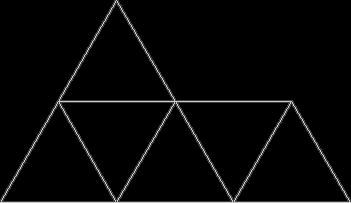
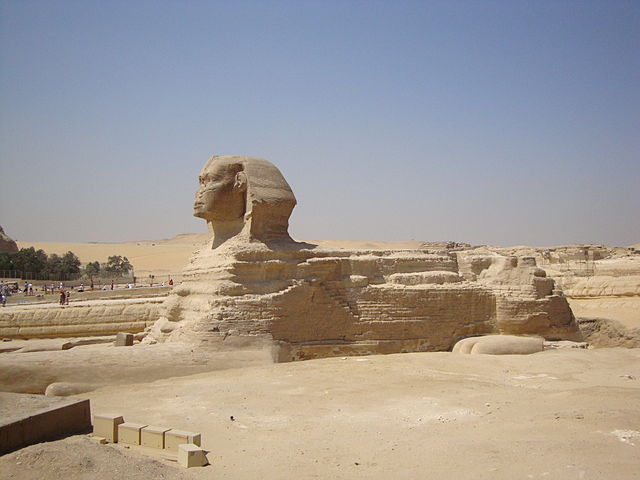
A polyiamond is a shape consisting of equilateral triangles joined edge-to-edge. There is one moniamond, consisting of one equilateral triangle, and one diamond, consisting of two. After that, there are one triamond, three tetriamonds, four pentiamonds and twelve hexiamonds. The most famous hexiamond is known as the sphinx, because it’s reminiscent of the Great Sphinx of Giza:

sphinx_hexiamond

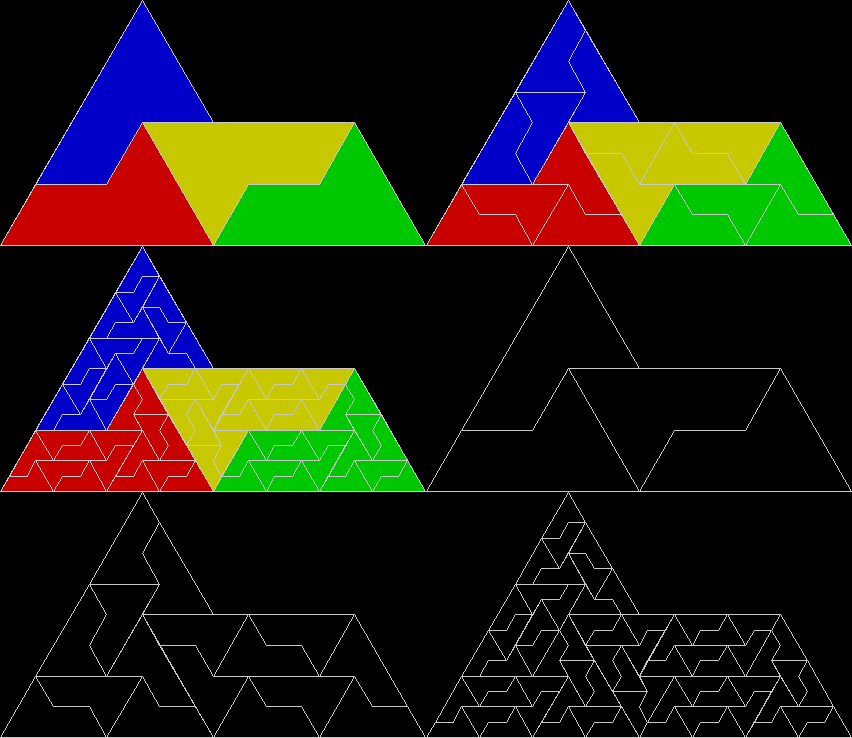
It’s famous because it is the only known pentagonal rep-tile, or shape that can be divided completely into smaller copies of itself. You can divide a sphinx into either four copies of itself or nine copies, like this (please open images in a new window if they fail to animate):

sphinx4

sphinx9

So far, no other pentagonal rep-tile has been discovered. Unless you count this double-triangle as a pentagon:

double_triangle_rep-tile

It has five sides, five vertices and is divisible into sixteen copies of itself. But one of the vertices sits on one of the sides, so it’s not a normal pentagon. Some might argue that this vertex divides the side into two, making the shape a hexagon. I would appeal to these ancient definitions: a point is “that which has no part” and a line is “a length without breadth” (see Neuclid on the Block). The vertex is a partless point on the breadthless line of the side, which isn’t altered by it.

But, unlike the sphinx, the double-triangle has two internal areas, not one. It can be completely drawn with five continuous lines uniting five unique points, but it definitely isn’t a normal pentagon. Even less normal are two more rep-tiles that can be drawn with five continuous lines uniting five unique points: the fish that can be created from three equilateral triangles and the fish that can be created from four isosceles right triangles:

equilateral_triangle_fish_rep-tile

right_triangle_fish_rep-tile

Think Ink

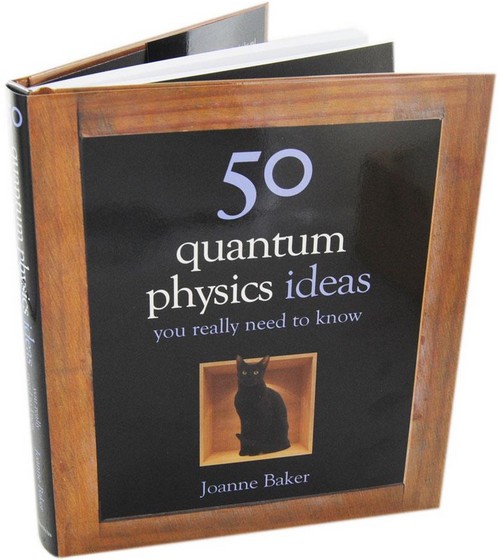
Front cover of 50 Quantum Physics Ideas You Really Need to Know by Joanne Baker50 Quantum Physics Ideas You Really Need to Know, Joanne Baker (Quercus 2013)

A very good introduction to a very difficult subject. A very superficial introduction too, because it doesn’t use proper mathematics. If it did, I’d be lost: like most people’s, my maths is far too weak for me to understand quantum physics. Here’s one of the side-quotes that help make this book such an interesting read: “We must be clear that when it comes to atoms, language can be used only as in poetry.”

That’s by the Jewish-Danish physicist Niels Bohr (1885-1962). It applies to quantum physics in general. Without the full maths, you’re peering through a frost-covered window into a sweetshop, you’re not inside sampling the wares. But even without the full maths, the concepts and ideas in this book are still difficult and challenging, from the early puzzles thrown up by the ultra-violet catastrophe to the ingenious experiments that have proved particle-wave duality and action at a distance.

But there’s a paradox here.

Continue reading: Think Ink

Rep It Up

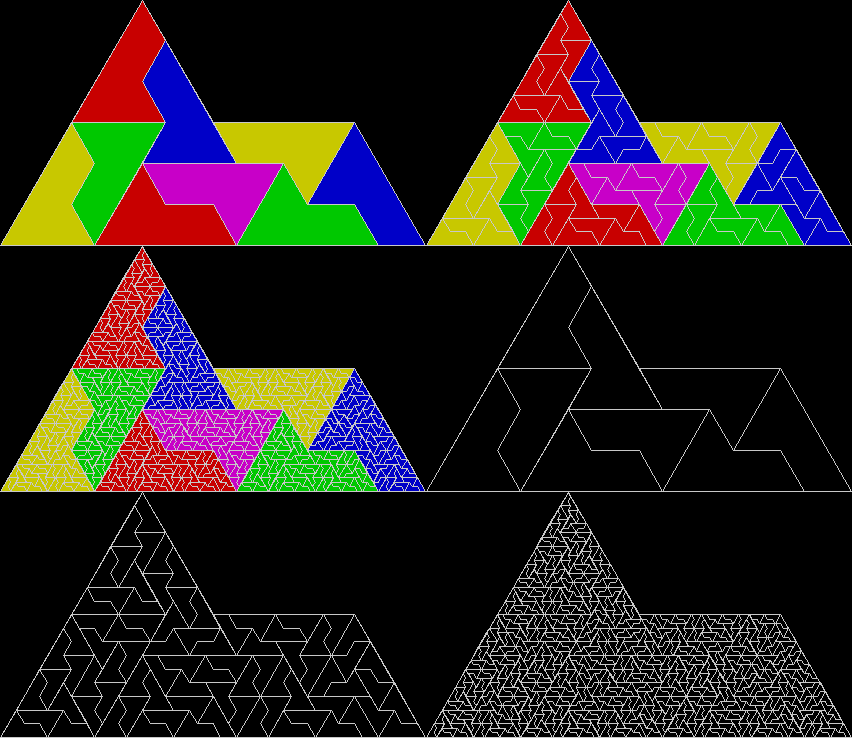
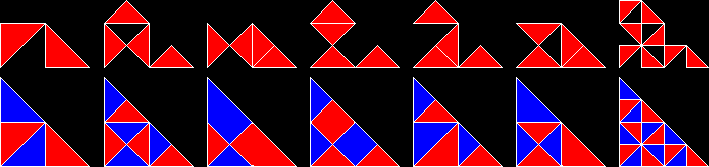
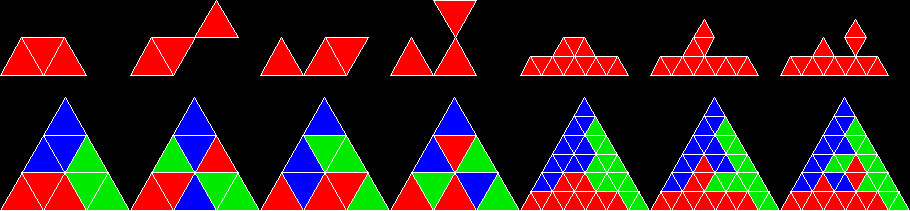
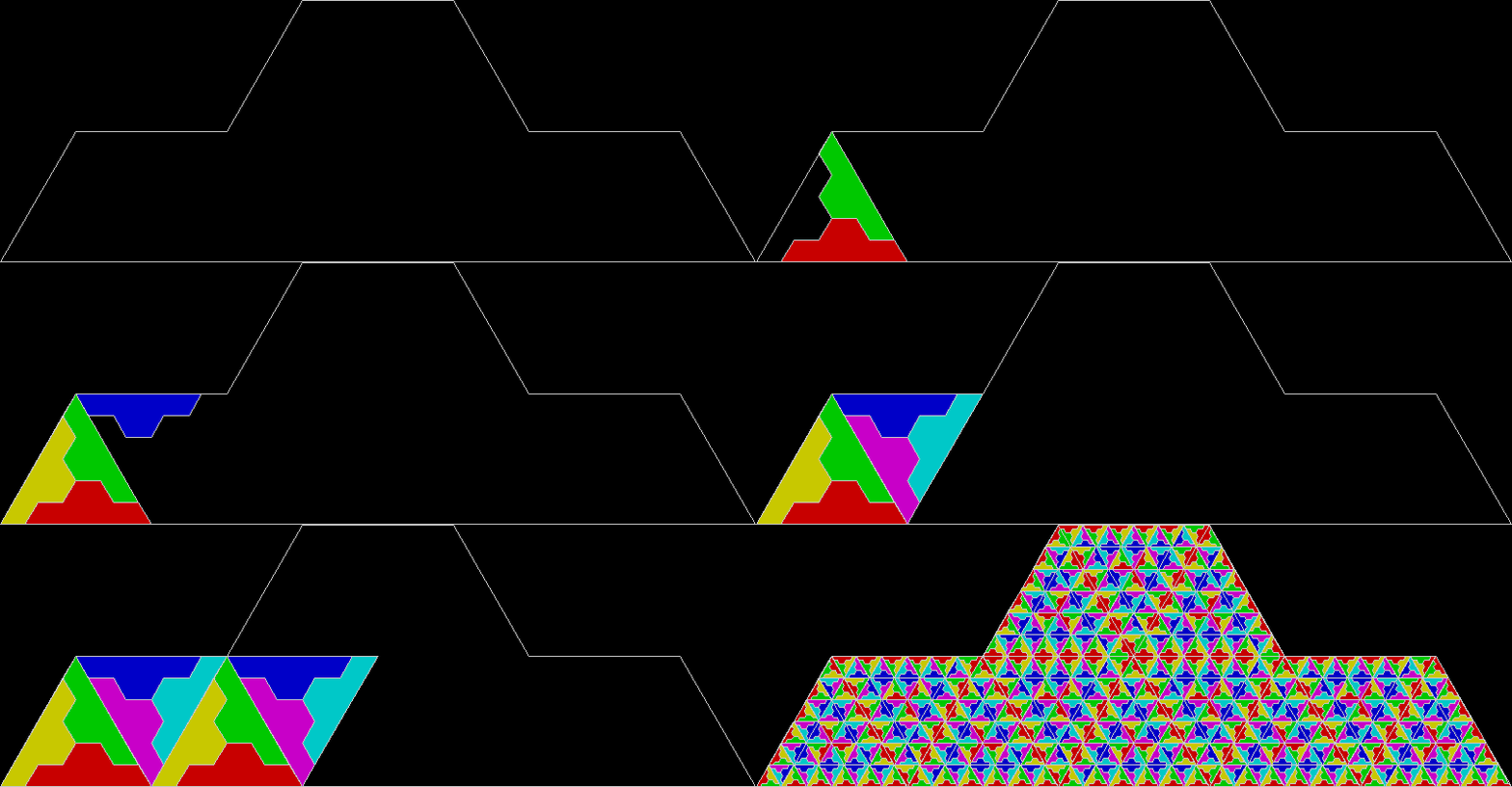
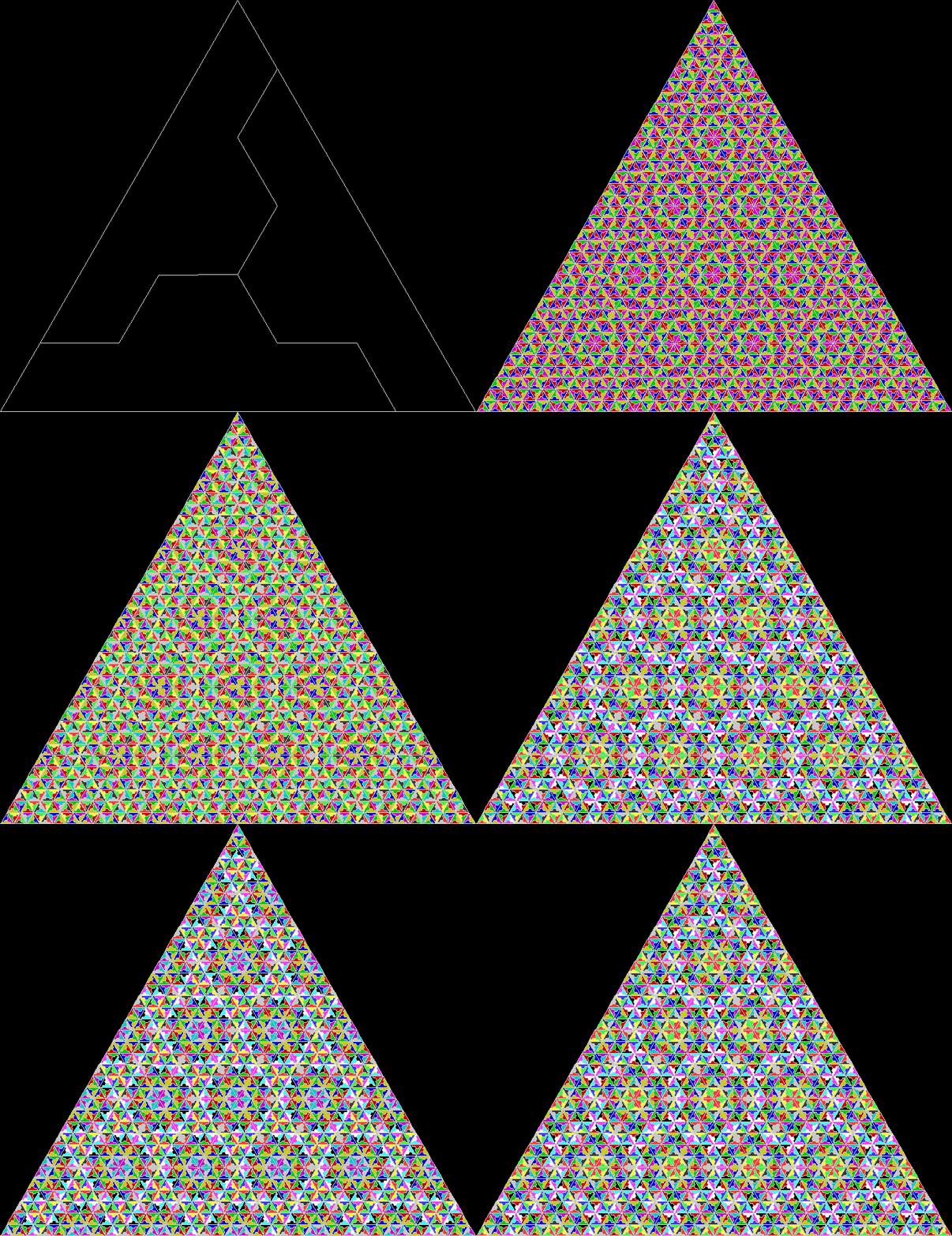
When I started to look at rep-tiles, or shapes that can be divided completely into smaller copies of themselves, I wanted to find some of my own. It turns out that it’s easy to automate a search for the simpler kinds, like those based on equilateral triangles and right triangles.

right triangle rep-tiles

right_triangle_fish

equilateral_triangle_reptiles

equilateral_triangle_rocket

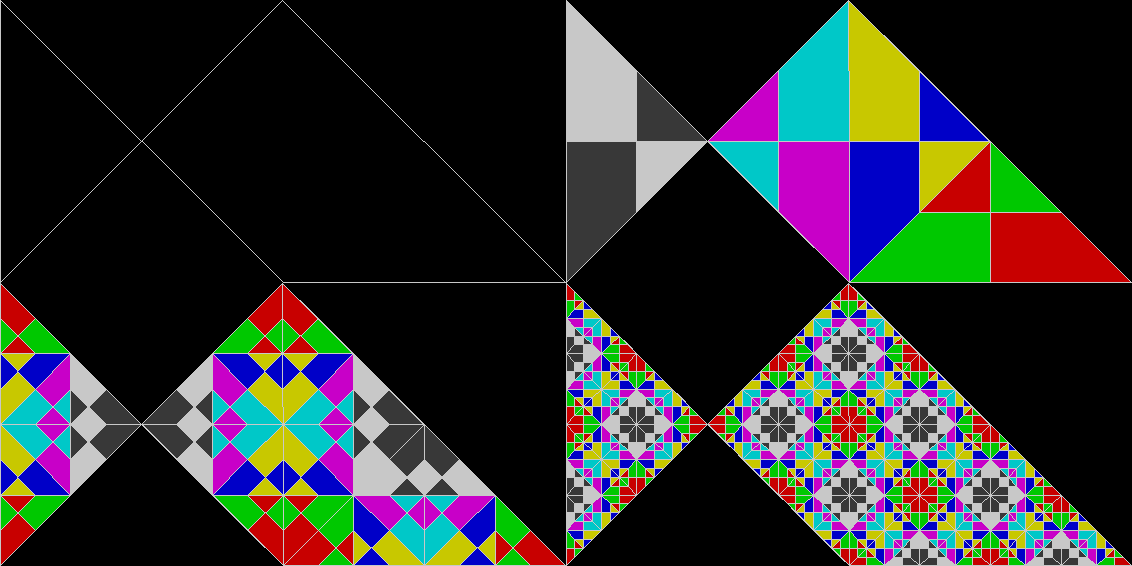
(Please open the following images in a new window if they fail to animate)

duodeciamond

triangle mosaic


Previously pre-posted (please peruse):

Rep-Tile Reflections

Hextra Texture

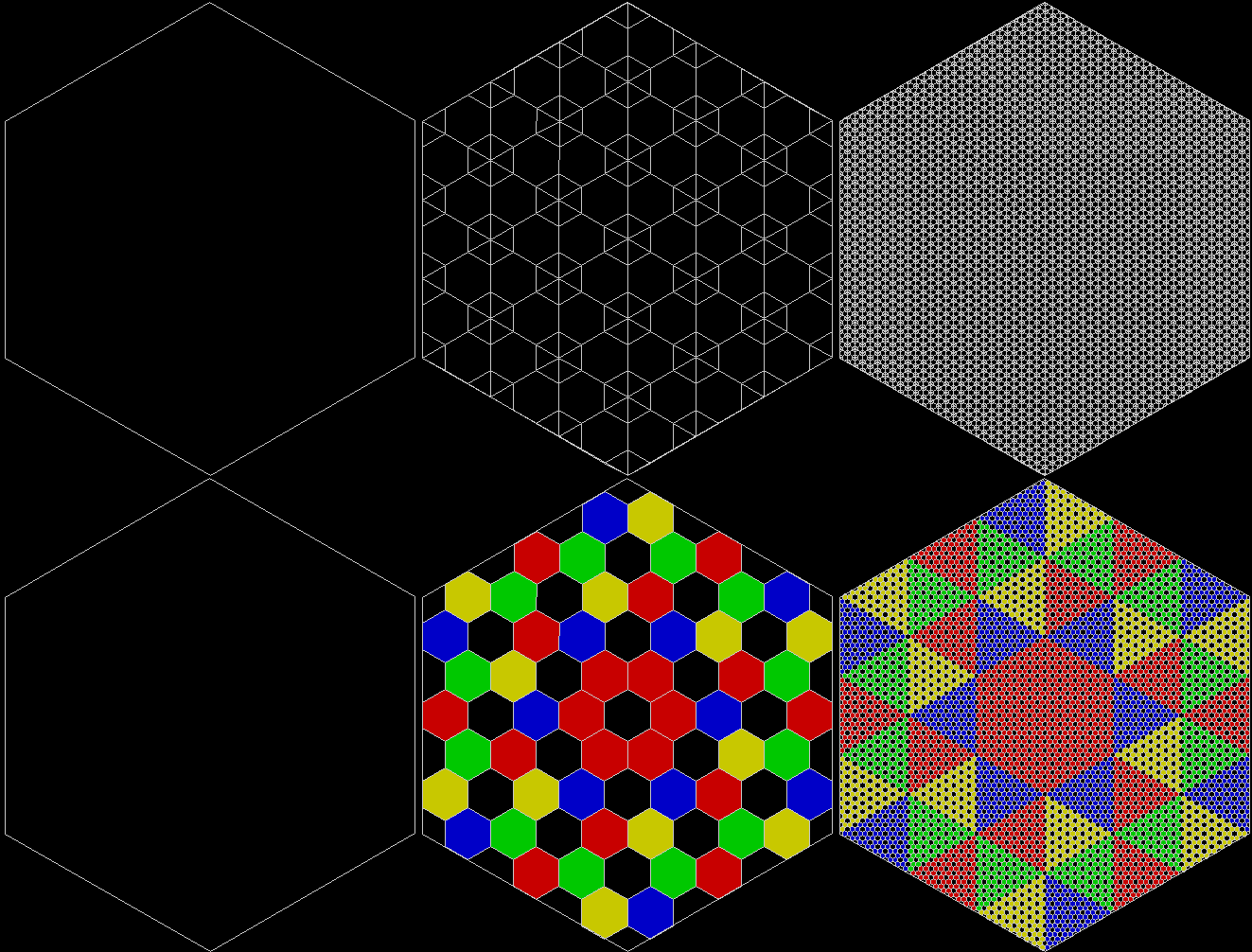
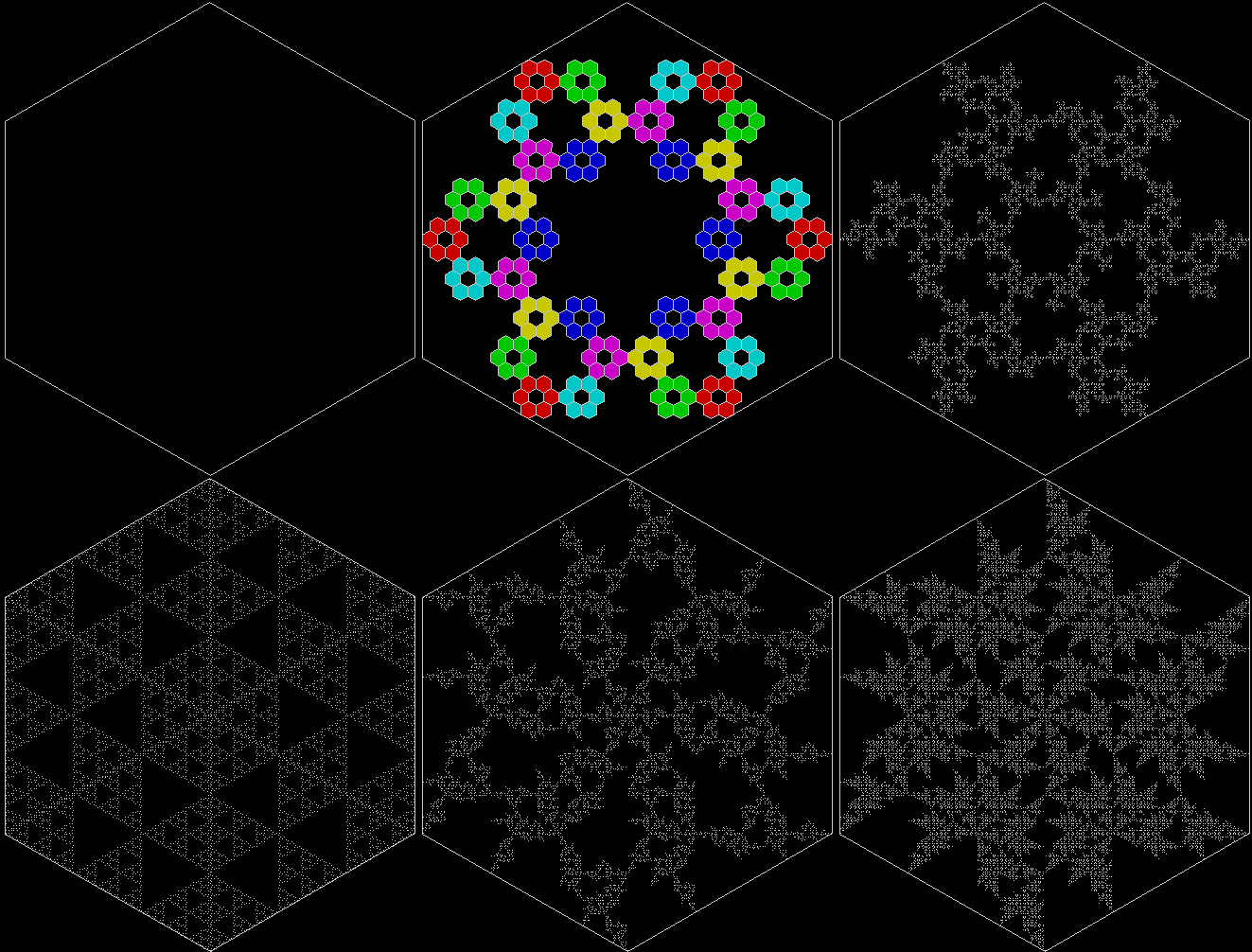
A hexagon can be divided into six equilateral triangles. An equilateral triangle can be divided into a hexagon and three more equilateral triangles. These simple rules, applied again and again, can be used to create fractals, or shapes that echo themselves on smaller and smaller scales.

hextriangle

hextriangle2

hextriangle1


Previously pre-posted (please peruse):

Fractal Fourmulas

Prime Time

1/29[b=2] = 0·0000100011010011110111001011… (l=28)
1/29[b=3] = 0·0002210102011122200121202111… (l=28)
1/29[b=5] = 0·00412334403211… (l=14)
1/29[b=7] = 0·0145536… (l=7)
1/29[b=11] = 0·04199534608387[10]69115764[10]2723… (l=28)
1/29[b=13] = 0·05[10]9[11]28[12]7231[10]4… (l=14)
1/29[b=17] = 0·09[16]7… (l=4)
1/29[b=19] = 0·0[12]89[15][13][14]7[16]73[17][13]1[18]6[10]9354[11]2[11][15]15[17]… (l=28)
1/29[b=23] = 0·0[18]5[12][15][19][19]… (l=7)
1/29[b=29] = 0·1 (l=1)
1/29[b=31] = 0·1248[17]36[12][25][20]9[19]7[14][29][28][26][22][13][27][24][18]5[10][21][11][23][16]… (l=28)
1/29[b=37] = 0·1[10]7[24]8[34][16][21][25][19]53[30][22][35][26][29][12][28]2[20][15][11][17][31][33]6[14]… (l=28)
1/29[b=41] = 0·1[16][39][24]… (l=4)
1/29[b=43] = 0·1[20][32][26][29][28]7[17][34]4[19][11][37]2[41][22][10][16][13][14][35][25]8[38][23][31]5[40]… (l=28)
1/29[b=47] = 0·1[29]84[40][24][14][27][25][43][35][30][37][12][45][17][38][42]6[22][32][19][21]3[11][16]9[34]… (l=28)
1/29[b=53] = 0·1[43][45][36][29][12][42]… (l=7)
1/29[b=59] = 0·2… (l=1)
1/29[b=61] = 0·26[18][56][48][23]8[25][14][44][10][31][33][39][58][54][42]4[12][37][52][35][46][16][50][29][27][21]… (l=28)
1/29[b=67] = 0·2[20][53]9[16][11][36][64][46][13][57][50][55][30]… (l=14)
1/29[b=71] = 0·2[31][58][53][61][14][48][68][39][12][17]9[56][22]… (l=14)
1/29[b=73] = 0·2[37][55][27][50][25][12][42][57][65][32][52][62][67][70][35][17][45][22][47][60][30][15]7[40][20][10]5… (l=28)
1/29[b=79] = 0·2[57][16][27][19]5[35][32][54][38][10][70][65][29][76][21][62][51][59][73][43][46][24][40][68]8[13][49]… (l=28)
1/29[b=83] = 0·2[71][45][65][68][57][20]… (l=7)
1/29[b=89] = 0·36[12][24][49]9[18][36][73][58][27][55][21][42][85][82][76][64][39][79][70][52][15][30][61][33][67][46]… (l=28)
1/29[b=97] = 0·3[33][43][46][80][26][73][56][83][60][20]6[66][86][93][63][53][50][16][70][23][40][13][36][76][90][30][10]… (l=28)

Performativizing Papyrocentricity #16

Papyrocentric Performativity Presents:

Brit GritGranite and Grit: A Walker’s Guide to the Geology of British Mountains, Ronald Turnbull (Francis Lincoln 2011)

Singh Summing SimpsonsThe Simpsons and Their Mathematical Secrets, Simon Singh (Bloomsbury 2013)

Go with the QuoStatus Quo: Still Doin’ It – The Official Updated Edition, compiled by Bob Young, edited by Francis Rossi and Rick Parfitt (Omnibus Press 2013)

Breeding BunniesThe Golden Ratio: The Story of Phi, the Extraordinary Number of Nature, Art and Beauty, Mario Livio (Headline Review 2003) (posted @ Overlord of the Über-Feral)

Brit Bot BookReader’s Digest Field Guide to the Wild Flowers of Britain, J.R. Press et al, illustrated Leonora Box et al (1981) (@ O.o.t.Ü.-F.)


Or Read a Review at Random: RaRaR

The Brain in Train

I feel odd when I consider this possibility: that all my thoughts are strictly determined, no more under my control than a straw in a gale or a stone in an avalanche. It seems paradoxical to have strictly determined thoughts about strictly determined thoughts. But is it? And is strict determinism fatal for finding the truth? I don’t think so. In fact, I think that strict determinism is essential for truth. But irrelevant associations get in the way of our understanding this. If our thoughts are determined, they seem like automatic trains running on rigid tracks. We might want to go to the station marked “Truth”, but if the switches are set wrong, the train will never get there. Or it will thunder through and never stop.


Continue reading The Brain in Train

Fractal Fourmulas

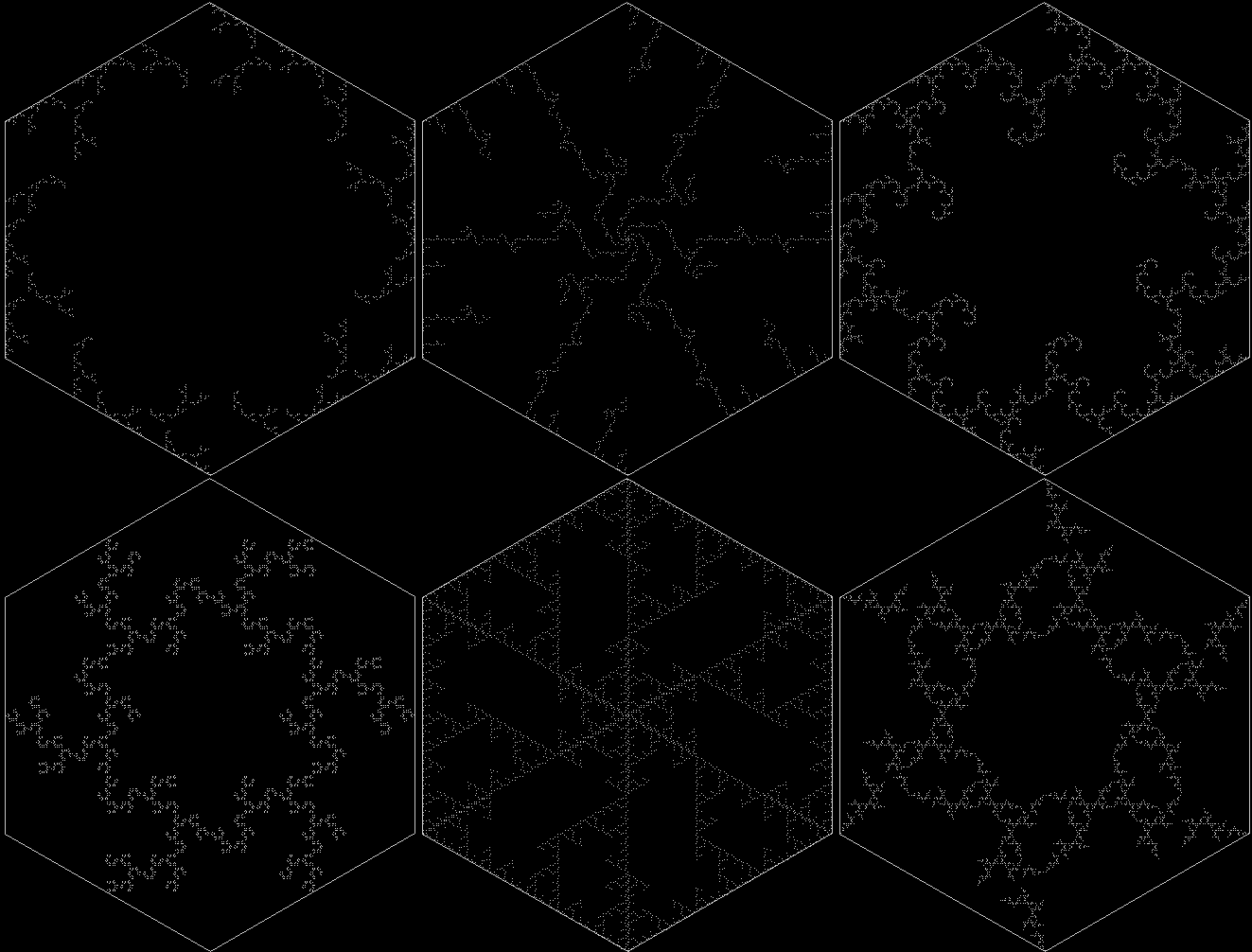
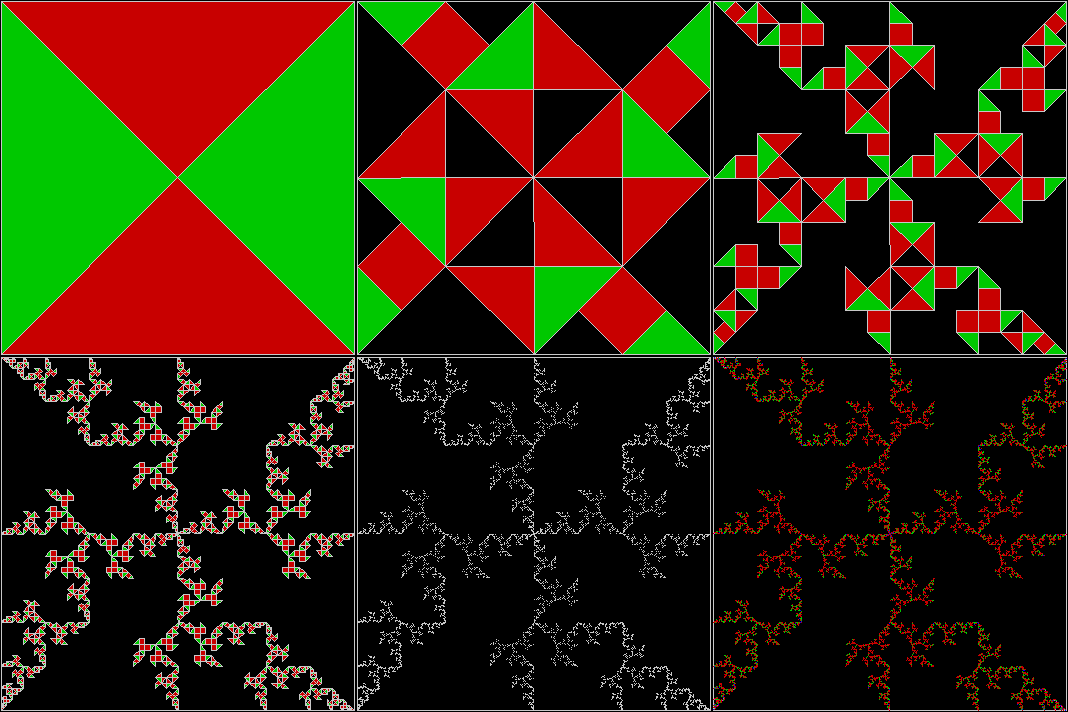
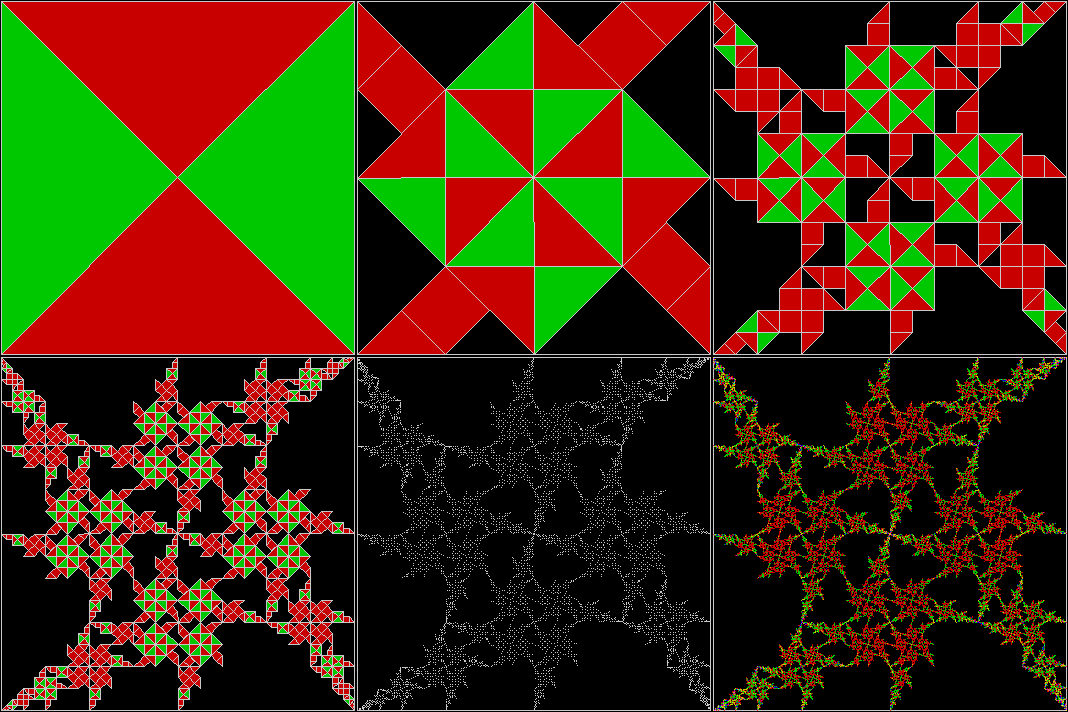
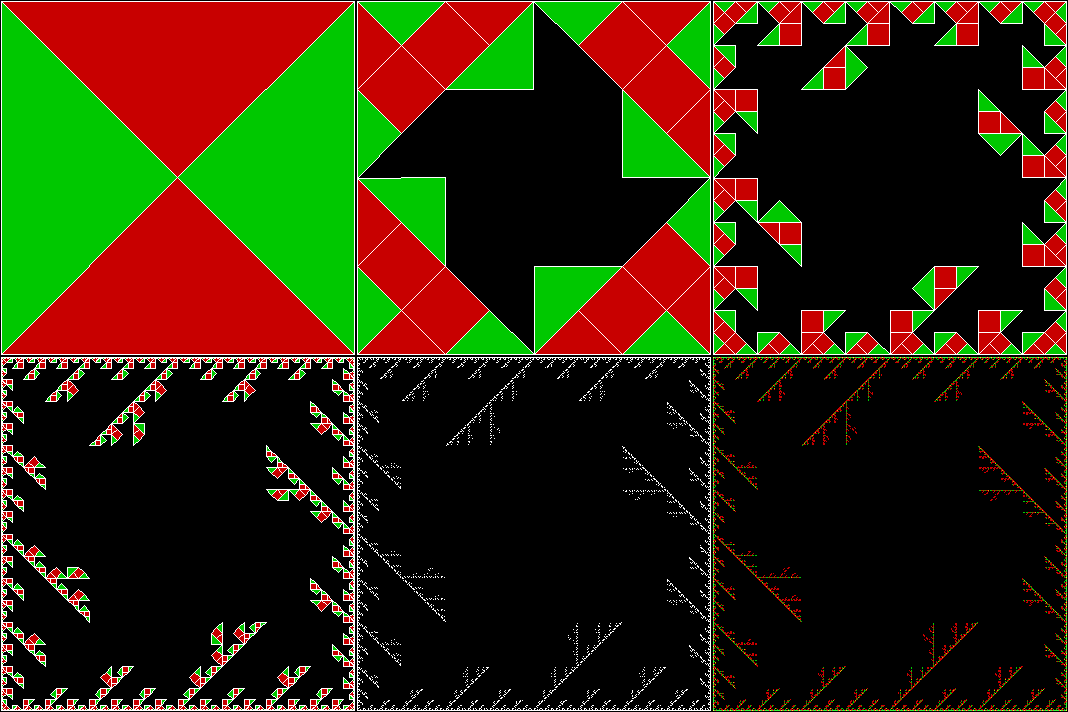
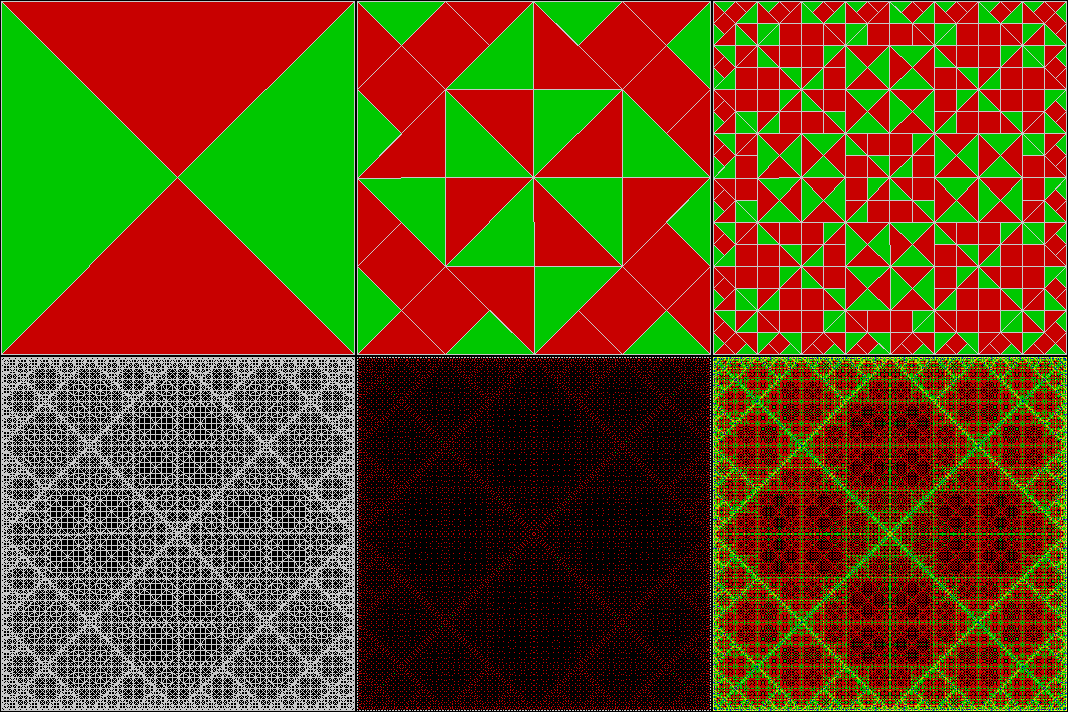
A square can be divided into four right triangles. A right triangle can be divided into a square and two more right triangles. These simple rules, applied again and again, can be used to create fractals, or shapes that echo themselves on smaller and smaller scales.

trisquare5

trisquare3

trisquare4

trisquare2

trisquare6

trisquare7

trisquare1

Breeding Bunnies

Front cover of The Golden Ratio by Mario Livio
The Golden Ratio: The Story of Phi, the Extraordinary Number of Nature, Art and Beauty, Mario Livio (Headline Review 2003)

A good short popular guide to perhaps the most interesting, and certainly the most irrational, of all numbers: the golden ratio or phi (φ), which is approximately equal to 1·6180339887498948482… Prominent in mathematics since at least the ancient Greeks and Euclid, phi is found in many places in nature too, from pineapples and sunflowers to the flight of hawks. Livio catalogues its appearances in both maths and nature, looking closely at the Fibonacci sequence and rabbit-breeding, before going on to debunk mistaken claims that phi also appears a lot in art, music and poetry. Dalí certainly used it, but da Vinci, Debussy and Virgil almost certainly didn’t. Nor, almost certainly, did the builders of the Parthenon and pyramids. Finally, he examines what has famously been called (by the physicist Eugene Wiegner) the unreasonable effectiveness of mathematics: why is this human invention so good at describing the behaviour of the Universe? Livio quotes one of the best short answers I’ve seen:

Human logic was forced on us by the physical world and is therefore consistent with it. Mathematics derives from logic. That is why mathematics is consistent with the physical world. (ch. 9, “Is God a mathematician?”, pg. 252)

It’s not hard to recommend a book that quotes everyone from Johannes Kepler and William Blake to Lewis Carroll, Christopher Marlowe and Jef Raskin, “the creator of the Macintosh computer”, whose answer is given above. Recreational mathematicians should also find lots of ideas for further investigation, from fractal strings to the fascinating number patterns governed by Benford’s law. It isn’t just human beings who look after number one: as a leading figure, 1 turns up much more often in data from the real world, and in mathematical constructs like the Fibonacci sequence, than intuition would lead you to expect. If you’d like to learn more about that and about many other aspects of mathematics, hunt down a copy of this book.


Elsewhere other-posted:

Roses Are Golden – φ and floral homicide