Eyes-Cream

Another reprehensible review of this teraticly toxic tomelet:

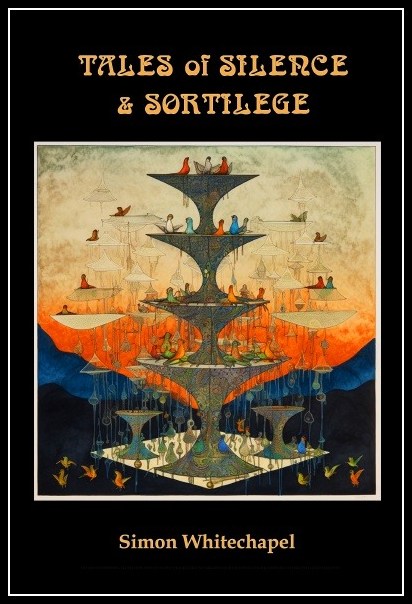
The Eyes by Jesús Ignacio Aldapuerta

As per the opening kayfabe, The Eyes was written by a deceased madman called Jesús Ignacio Aldapuerta who fashioned sex-toys from the bones of children.

I don’t want to be the guy who says there’s no Santa Claus, but this wouldn’t be the first time someone ghost-wrote an “alternative” book under the name of an imaginary lunatic. The true author of The Eyes is apt to be alive, sane, and well, and has likely done no more than give himself a backrub with the bones of children, if even that.

But that’s neither here nor there. The Eyes is disgusting, unforgettable, hard to read, harder to stop reading. I have read only a few books like it. One of them is Satanskin by James Havoc, another hoax author. He died in 1999… and was so dead that he reappeared in 2009 and started writing books again. Anyway, like Satanskin, The Eyes contains short stories meant to give you an inside view of hell. Some stories offer but a peek. Others give you the grand tour.

Pedophilia, cannibalism, it’s all here. Some stories (“Armful”) are so ugly that a summary would sound hyperbolic no matter what words I use. Generally, the tales in The Eyes provoke one of two reactions. The first is a horrified “WHAT?!” The second is like what you feel immediately after stepping on a nail. You don’t feel much pain, not at first, but there’s the sense that you’ve done yourself severe trauma.

Aldapuerta is one hell of a writer. James Havoc has a tendency to pile on the purple and overwrite beyond the point of self-parody, but The Eyes is lean and to the point. It’s not without a poetic edge. Aldapuerta’s forte is the quickfire mot juste. “Her hot little leaf of a hand.”… “the pale leaping tongues of his semen”…etc. Neat.

“Ikarus” is the most terrible creation in The Eyes, not a story but a black detonation of horror. A man explores the hull of a B-17 bomber, and discovers something that never will be explained, never could be explained, and never should be explained. “Ikarus” is almost a net liability to the book, as the other stories come up short next to it.

As it nears the end (its end, not yours), The Eyes gets increasingly strange. As the nostalgic schoolmaster’s fantasy of “Upright” ends, “The Winnowing” begins, which largely consists of a Czech man filling out a form. The final sentence… what am I supposed to take from that? That he was being sterilised? The book finishes with “Pornoglossia”, a list of words the author has invented for use in your own Marquis-de-Sade ripoff. The verb “Raí”, for example, means using an empty eye-socket as a sexual orifice. These words are in little danger of making their way into Merriam-Websters’ in the near future.

There may not be a hell, but Aldapuerta (or Whitechapel, or whoever wrote this) have proven that it is possible to create one on the page. The Eyes is genuinely amazing. Hopefully some day Aldapuerta will return to life, pick up his child-femur pen, and write a new collection of stories.

Original review


Jesús say: S… I…. M… E…. G…. U… S… T… A…. | M… A… Y… B… E…. I…. C… O… M… E….. H… A… U… N… T…. R… E… V… I… E…. W… E… R…. I… N… L… I… T… T… L… E…. B… I… T….

Performativizing Papyrocentricity #5

Papyrocentric Performativity Presents:

Sherlock’s ShadowThe Conan Doyle Stories, Arthur Conan Doyle (Blitz Editions, 1990)

Dahl “M” for Murder — Alfred Hitchcock Presents Stories to be Read with the Lights On, ed. Harold Q. Masur (1973)

Best-Laid StansUkridge, P.G. Wodehouse (Everyman, 2000)

Mental Marine Music

Cover of Magna Mater Marina by Slow Exploding Gulls (CD re-issue)

“Thalassa! Thalassa!” The chant that began the first song on the first side of the first S.E.G. album is still inspiring the group twenty-six years and eighteen albums later. Few fans will need reminding that it is ancient Greek for “The Sea! The Sea!”, as shouted in ecstasy by a mercenary army after a long and dangerous retreat across Asia Minor in 401 BC. Ecstasy is not so much an inspiration to the group as an aspiration. They try to use melody, rhythm and “drowned sound” to take their listeners out of the everyday and into the otherwhere, to sink them “full fathom five” in music as rich and mysterious as the sea. The S.E.G. story begins in 1987, when Joseph Corvin, the ever-present Kapitän und Kappellmeister, as he jokingly calls himself, was living in an old house in the ancient Celto-Roman town of Exeter on the southern English coast. When the sea-wind blew, his living quarters became lowing quarters: “an eerie wailing used to sound from the roof and there were all sorts of weird sound effects in the bathroom, because of air moving in the overflow pipe and the walls. I liked what I heard and I thought I could do something with it, musically speaking.”

Corvin recorded some of the wind-sounds, mixed them with gull-cries and underwater engine-noise, added vocals and electronically treated flute and drums, and put out the results on a cassette-only album called Magna Mater Marina (Latin for Great Marine Mother), under the odd but memorable moniker of Slow Exploding Gulls. The name was inspired by Corvin’s love of the surrealists Salvador Dalí and Max Ernst, but it would dog him and his cohorts for years to come, partly because it pigeon-holed the group as “Kraut-rock” and partly because it suggested cruelty to animals, which was not appreciated by some of his potential audience. Both assumptions were completely wrong: Corvin says, first, that, as a fan, he was then much more into The Cure, The Smiths and Siouxsie and the Banshees than anything electronic or experimental, and, second, that far from advocating cruelty to gulls, he was celebrating them:

Not for one moment was I suggesting any harm to anything with wings or feathers. Gulls are my favourite birds, highly potent symbols of freedom, grace and the life-force. The title was meant to be metaphorical, not literal, and it was partly a reference to the explosion of joy that sudden sight of a flying gull can waken in your heart. There’s something very Nietzschean about them and yeah, I will admit to a Friedrich-fixation in the 1980s, though the Kraut-rock label was an albatross around our necks, no pun intended, for most of the ’90s. It came mainly from a review in the N.M.E. [New Musical Express, one of Britain’s big “pop-papers”] claiming to detect similarities between us and Einstürzende Neubaten, which means “Collapsing New Buildings”. Well, I can’t say there wasn’t a subliminal influence, name-wise, but I’d heard very little by any of the German groups at the time and when I did hear more, I didn’t detect many similarities between their music and ours. We were and always will be inspired by sea-sounds, everything you can hear under and over the water of the British coast. The next label they tried to stick on us was “goth”, on the ground that we made gloomy music and always dressed in black. We didn’t: it was dark blue, it wasn’t all the time and there’s nothing gloomy about our music, if it’s listened to right. (Interview on the fan-site GullSegg, November, 2003)

Corvin’s protests were to no avail: S.E.G.’s next album, A Grey Mist (1989), was reviewed under titles like “Submarine Electro-Goths” and “Solipsistic Entrail-Gazing”. Again he says the press had got hold of the wrong end of the stick: “The title of the album comes from ‘Sea-Fever’, a very beautiful poem by John Masefield, and far from attempting to be gloomy or depressing, it was all about the joy of the sea, the cold in the early morning and the bite of the wind, ‘the white clouds flying’ and mist as a symbol of mystery and possibility, not as anything glum and gothic.” Happily, S.E.G. would outlive that early hostility and journalists’ insistence on labelling, rather than listening to, the music they created, but a lasting effect of both has been the playful name-switching they’ve indulged in since their early days. They’ve released albums under at least eight different names and performed gigs under all those and more, but every name has been based on the acronym S.E.G. and had a maritime theme. 1994’s Mew Upsilon Sigma, for example, came out under the name Swim with Elegant Gods, and 2003’s re-mixed Yr Wylan Ddu (Welsh for The Black Gull) under the name Seaside Excursion Guide. They’ve also recorded songs with titles like “Sunken Etruscan Gold”, “Sailing to Ecstatic Gnosis”, “Submersed in the Eternal Gulf” and “She’s an Exeter Girl” (a reference to Cathleen Orne, Joseph’s then girlfriend, now wife, who is indeed an Exeter girl).

Cover of Silica by Slow Exploding Gulls

This S.E.G. motif means that hardcore fans, of whom they’ve garnered and retained a flighty fair few down the decades, are generally referred to as SEGheads, while their biggest – and best – fan-site is GullSegg, where you can find the earliest and most accurate news on the group’s activities, plus detailed and reasonably objective reviews of every piece of music they’ve ever recorded. So can S.E.G. be described as Shadowy Exeter Goths? No, Soaring Elemental Gods is much closer the mark and I join many mental-marine-music fans in wishing them well in their ambition of recording music in every major sea-side town of the British Isles. Wexford on the eastern coast of Ireland is next, according to GullSegg, and Wassernyxe, album #19 (and German/Greek for “Mermaid-Night”), should be released before the end of the year. It’s unlikely it will sail new seas, or sound new depths, but after twenty-six years of mer-music-making who could expect it to? Yes, never mind the rowlocks! S.E.G.’s Saline Esoterica Gangs on – and gongs on – every time someone plays a classic album like Mew or Thalas/Socratic, their 1996 split-EP with their own whale-song side-project Schatten über Exeter Gruppe (German for “Shadow over Exeter Group”).


Elsewhere other-posted:

• More Musings on Music

Previously pre-posted (please peruse):

Stoch’! (In the Name of Dove)

Proviously post-posted (please peruse):

The Sound of Silex

Hateful, Bestial, Demonic

Who is the world’s saintliest womun? I would say Hillary Clinton, but she’s white, alas, so I’ll go for Aung San Suu Kyi and/or Winnie Mundela instead. But who is the world’s evillest woman? (sic) I don’t know, but I do know someone who is trying damn hard for the title: the keyly committed hate-blogger called HBD-Chick, who engages issues around an über-misanthropic unter-movement called H.B.D. This stands for Human Bio-Diversity, i.e., the hateful, bestial and demonic notion that biological “differences” between groups of humun being can help explain social, cultural and political patterns. HBD-Chick, for example, tries to explain levels of “corruption” and democracy in “different” countries by looking at how “in-bred” their populations are.

’Cuse me while I throw up. Yes, HBD is not just evil, it’s so pseudo-scientific that it makes tea-leaf reading look like gamma-ray astronomy. As proper scientists like Stephen Jay Gould, Jared Diamond, Steven Rose, Richard Lewontin and Karl Marx have taught us, humun beings floated free of biology during the Pleistocene and are best regarded as disembodied social units that just happen (for the time being) to have a corporeal component. It follows from this proper science that all social, cultural and political dysfunction can be explained by racism, sexism, homophobia and other forms of hate-think invented by white male Europeans of Christian heritage. And, like cornered rats baring their yellowed fangs and squealing their defiance, this despicable demographic has created HBD in an attempt to over-turn the hard-won scientific insights of Gould et al. If you’re a good persun, you won’t be taken in by the HBDers’ lies, deceit and pseudo-science. HBD-Chick is plainly a bad person (sic), because she has been taken in. But, as a womun, she isn’t really to blame – here are some of the real vectors of this diseased and depraved ideology:

Steve Surfer – KKKalifornian krank who invented and popularized the term HBD

West Hunter – run by pseudo-scientists Greg Cochran and Henry Harpending, the former of who/whom is responsible for an unspeakably hateful theory about the origins of homosexuality

JayMan – mendaciously claims to have Community-of-Color heritage and has added more hate-think to Cochran’s hate-theory

Evo and Proud – White, Male and Evil, more like

Dienekes – so pseudo-scientific it makes aromatherapy look like quantum physics

’Dith and the Maiden

Meredith Frampton's A Game of Patience (1937)

A Game of Patience (1937) by Meredith Frampton (1894-1984), from the Ferens Art Gallery in Kingston-on-Hull, Yorkshire.

Summer-Climb Views

Simple things can sometimes baffle advanced minds. If you take a number, reverse its digits, add the result to the original number, then repeat all that, will you eventually get a palindrome? (I.e., a number, like 343 or 27172, that reads the same in both directions.) Many numbers do seem to produce palindromes sooner or later. Here are 195 and 197:

195 + 591 = 786 + 687 = 1473 + 3741 = 5214 + 4125 = 9339 (4 steps)

197 + 791 = 988 + 889 = 1877 + 7781 = 9658 + 8569 = 18227 + 72281 = 90508 + 80509 = 171017 + 710171 = 881188 (7 steps)

But what about 196? Well, it starts like this:

196 + 691 = 887 + 788 = 1675 + 5761 = 7436 + 6347 = 13783 + 38731 = 52514 + 41525 = 94039 + 93049 = 187088 + 880781 = 1067869 + 9687601 = 10755470 + 7455701 = 18211171 + 17111281 = 35322452 + 25422353 = 60744805 + 50844706 = 111589511 + 115985111 = 227574622 + 226475722 = 454050344 + 443050454 = 897100798 + 897001798 = 1794102596 + 6952014971 = 8746117567 + 7657116478 = 16403234045 + 54043230461 = 70446464506 + 60546464407 = 130992928913 + 319829299031 = 450822227944 + 449722228054 = 900544455998…

And so far, after literally years of computing by mathematicians, it hasn’t produced a palindrome. It seems very unlikely it ever will, but no-one can prove this and say that 196 is, in base 10, a Lychrel number, or a number that never produces a palindrome. In other words, a simple thing has baffled advanced minds.

I don’t know whether it can baffle advanced minds, but here’s another simple mathematical technique: sum all the digits of a number, then add the result to the original number and repeat. How long before a palindrome appears in this case? Sum it and see:

10 + 1 = 11

12 + 3 = 15 + 6 = 21 + 3 = 24 + 6 = 30 + 3 = 33 (5 steps)

13 + 4 = 17 + 8 = 25 + 7 = 32 + 5 = 37 + 10 = 47 + 11 = 58 + 13 = 71 + 8 = 79 + 16 = 95 + 14 = 109 + 10 = 119 + 11 = 130 + 4 = 134 + 8 = 142 + 7 = 149 + 14 = 163 + 10 = 173 + 11 = 184 + 13 = 197 + 17 = 214 + 7 = 221 + 5 = 226 + 10 = 236 + 11 = 247 + 13 = 260 + 8 = 268 + 16 = 284 + 14 = 298 + 19 = 317 + 11 = 328 + 13 = 341 + 8 = 349 + 16 = 365 + 14 = 379 + 19 = 398 + 20 = 418 + 13 = 431 + 8 = 439 + 16 = 455 + 14 = 469 + 19 = 488 + 20 = 508 + 13 = 521 + 8 = 529 + 16 = 545 (45 steps)

14 + 5 = 19 + 10 = 29 + 11 = 40 + 4 = 44 (4 steps)

15 + 6 = 21 + 3 = 24 + 6 = 30 + 3 = 33 (4 steps)

16 + 7 = 23 + 5 = 28 + 10 = 38 + 11 = 49 + 13 = 62 + 8 = 70 + 7 = 77 (7 steps)

17 + 8 = 25 + 7 = 32 + 5 = 37 + 10 = 47 + 11 = 58 + 13 = 71 + 8 = 79 + 16 = 95 + 14 = 109 + 10 = 119 + 11 = 130 + 4 = 134 + 8 = 142 + 7 = 149 + 14 = 163 + 10 = 173 + 11 = 184 + 13 = 197 + 17 = 214 + 7 = 221 + 5 = 226 + 10 = 236 + 11 = 247 + 13 = 260 + 8 = 268 + 16 = 284 + 14 = 298 + 19 = 317 + 11 = 328 + 13 = 341 + 8 = 349 + 16 = 365 + 14 = 379 + 19 = 398 + 20 = 418 + 13 = 431 + 8 = 439 + 16 = 455 + 14 = 469 + 19 = 488 + 20 = 508 + 13 = 521 + 8 = 529 + 16 = 545 (44 steps)

18 + 9 = 27 + 9 = 36 + 9 = 45 + 9 = 54 + 9 = 63 + 9 = 72 + 9 = 81 + 9 = 90 + 9 = 99 (9 steps)

19 + 10 = 29 + 11 = 40 + 4 = 44 (3 steps)

20 + 2 = 22

I haven’t looked very thoroughly at this technique, so I don’t know whether it throws up a seemingly unpalindromizable number. If it does, I don’t have an advanced mind, so I won’t be able to prove that it is unpalindromizable. But an adaptation of the technique produces something interesting when it is represented on a graph. This time, if s > 9, where s = digit-sum(n), let s = digit-sum(s) until s <= 9 (i.e, s < 10, the base). I call this the condensed digit-sum:

140 + 5 = 145 + 1 = 146 + 2 = 148 + 4 = 152 + 8 = 160 + 7 = 167 + 5 = 172 + 1 = 173 + 2 = 175 + 4 = 179 + 8 = 187 + 7 = 194 + 5 = 199 + 1 = 200 + 2 = 202 (15 steps)

Here, for comparison, is the sequence for 140 using uncondensed digit-sums:

140 + 5 = 145 + 10 = 155 + 11 = 166 + 13 = 179 + 17 = 196 + 16 = 212 (6 steps)

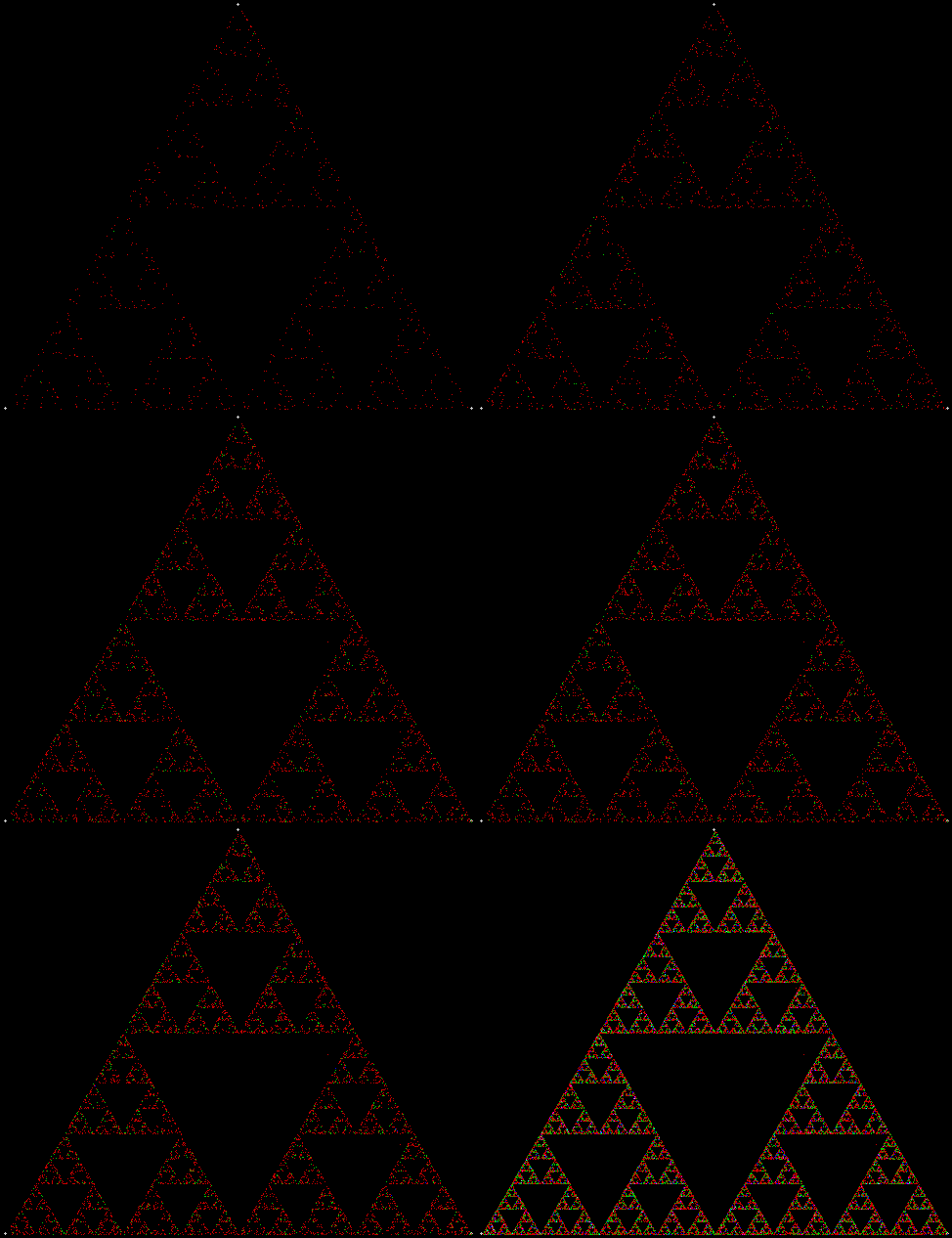
When all the numbers (including palindromes) created using condensed digit-sums are shown on a graph, they create an interesting pattern in base 10 (the x-axis represents n, the y-axis represents n, n1 = n + digit-sum(n), n2 = n1 + digit-sum(n1), etc):

(Please open images in a new window if they fail to animate.)

digitsum_b10

condensed_b3_to_b20_etc

And here, for comparison, are the patterns created by uncondensed digit-sums in base 2 to 10:

uncondensed_b2_to_b10

Homotextuality

In terms of the highest levels of the United Kingdom’s counter-cultural community, it seems to be compulsory for non-conformists, mavericks, free-thinkers et al to be committed readers of The Guardian (which was nicknamed The Grauniad by Private Eye in honour of the misspellings once common there). Naturally enough, committed Guardian-readers use the special dialect of English known as Guardianese (which is also found in The Times Literary Supplement, The London Review of Books, etc). And there are a lot of such Guardianistas in the counter-cultural community, trust me. So the obvious question arises:

Myriads, myriads, off the wall,
Who is the Grauniest of them all?

Continue reading Homotextuality

Light at Night

The Sky at Night: Answers to Questions from Across the Universe, Patrick Moore and Chris North (BBC Books, 2012)

Astronomy, one of the most successful and far-reaching of all sciences, has been largely based on almost nothing. Human beings have pushed their knowledge of the physical universe out over huge stretches of space and time without using anything physical, in the everyday sense of the word. This is because astronomy is largely based on the collection and analysis of tiny, weightless particles known as photons, which can’t be touched, tasted, smelt, or heard, only seen. And sometimes not seen either: visible light is only a small part of the electro-magnetic spectrum occupied by photons at different wavelengths and energies. Move a little in one direction and you meet invisible ultra-violet; move a little in the other direction and you meet invisible infra-red. Move further and you’ll meet radio-waves and gamma-rays. To make all those visible, we need technology, but we also need technology to collect the visible light of dim or distant celestial objects.

That technology is called the telescope and without it modern astronomy wouldn’t exist. The telescope opened a door in the attic of the universe just as the microscope opened a door in the cellar. But astronomy was an advanced subject well before the telescope was invented, in part because it is an essentially simple subject. Unlike human beings and animals, planets and stars behave in relatively stereotyped, predictable ways. That’s why their behaviour is so easily expressed and analysed using mathematics. Thousands of years ago, men could create mathematical models of the universe and accurately predict celestial behaviour in detail. But they couldn’t create mathematical models of animal or human behaviour and make accurate predictions. We still can’t do that, but we’ve getting better and better at applying mathematics to the photons we collect from the sky. Patrick Moore (1923-2012) was the eccentric BBC presenter of a series called The Sky at Night and devoted his life to those photons, particularly the ones that bounced off the surface of the moon. He wasn’t a professional astronomer or an advanced mathematician, but he could recognize the importance of mathematics and the devices that run on it:

What single technological advance over the past 53 years has facilitated the greatest increase in our knowledge and understanding of the cosmos?

Tony Davies (Shoreham-by-Sea, West Sussex)

I think we’ve got to say here the development of electronics in astronomy. Old-fashioned photography has gone out, and electronic devices have taken over. They have led to amazing advances, in all branches of science, not just astronomy. Coupled with the advances in electronic computing, they have allowed discoveries astronomers could only dream of even as recently as a decade ago. So I must say the advent of the Electronic Age. (“Patrick Moore and the Sky at Night”, pg. 424)

I can almost hear Patrick Moore’s slightly clipped, almost stuttering tones as I read that answer. He was an odd character, but I think he led a worthwhile life and odd characters are attracted to subjects like astronomy. It’s on the philatelic side of science and this description by George Orwell of his job in a bookshop might also apply to astronomy:

Like most second-hand bookshops we had various sidelines. We sold second-hand typewriters, for instance, and also stamps — used stamps, I mean. Stamp-collectors are a strange, silent, fish-like breed, of all ages, but only of the male sex; women, apparently, fail to see the peculiar charm of gumming bits of coloured paper into albums. (“Bookshop Memories”, 1936)

Women also mostly fail to see the peculiar charm of astronomy. One of the reasons I like it is that it contains a lot of big ideas and tantalizing possibilities, from the lingering birth-bawl in the Cosmic Microwave Background to the prospect of life beneath the ice-cap of Jupiter’s moon Europa, by way of T.L.P., or Transient Lunar Phenomena, the mysterious fleeting changes that occasionally occur on the moon. This book covers all of those and much more. Another reason I like astronomy is that, so far, it hasn’t often involved killing things and cutting them up. Or worse, not killing them and still cutting them up. H.G. Wells couldn’t have written The Island of Dr Moreau (1896) about an astronomer and part of H.P. Lovecraft’s genius was to combine the grandeurs and glories of astronomy with the intimacy and viscerality of biology. Lovecraft would certainly have liked this book. This sounds like a giant cosmic conspiracy right out of a story like “Dreams in the Witch House” (1932):

…our Galaxy is moving relative… to the Universe… at a speed of around 600 km/s… The cause of the motion, enigmatically known as the “Great Attractor”, was a mystery for several decades, partly because whatever is causing it is hidden behind the material in the disc of our Galaxy. The source of the motion is now thought to be a massive cluster of galaxies in the constellation of Norma, which is attracting not just our Galaxy and its immediate neighbours, but also the much larger Virgo cluster. (“Cosmology: The Expansion of the Universe”, pg. 208)

It’s a large and complicated universe out there and it’s amazing that we’ve managed to learn so much about it from our own tiny corner, using mostly nothing but light and working mostly nowhere but the earth itself. But that is the power of mathematics: Archimedes said of levers that, given a place to stand, he could move the world. Using the lever of mathematics, men can move the universe standing only in their own heads. The co-author of this book, Dr Chris North of the School of Physics and Astronomy at Cardiff University, is one of those men. He does the heavy intellectual lifting here, answering the most advanced questions, but I’m sure that he would acknowledge that Patrick Moore was one of the world’s greatest popularizers of astronomy. The questions themselves range from the naïve to the nuanced, the elementary to the exoplanetary. But I was surprised, given that this is a book issued by the Bolshevik Broadcasting Corporation, that almost all of them seemed to be asked by white males, sometimes from hideously unvibrant parts of Britain like County Durham. Was there no edict to invent some astrophile Ayeshas and Iqbals from Bradford and some budding Afro-physicists from Brixton?

Perhaps there was, but Moore ignored it. He was an old-fashioned character with old-fashioned views, after all, and he says here that he was introduced to astronomy by a book, G.F. Chambers’ The Story of the Solar System, that was published in 1898 (pg. 409). So his astronomy touched three centuries. He also met three very important men: Orville Wright, the first man to fly properly; Yuri Gagarin, the first man into space; and Neil Armstrong, the first man on the moon. Those were three steps towards our permanent occupation of space. To understand what attracts men there and the questions they hope to answer, this book is a good place to start.

He Say, He Sigh, He Sow #5

Что касается нас, то никогда мы не занимались кантиански-поповской, вегетариански-квакерской болтовней о “святости человеческой жизни”. Мы были революционерами в оппозиции и остались ими у власти. Чтобы сделать личность священной, нужно уничтожить общественный строй, который ее распинает. А эта задача может быть выполнена только железом и кровью.

Л.Д. Троцкий, Терроризм и коммунизм, IV. Терроризм.

As for us, we were never concerned with the Kantian-priestly and vegetarian-Quaker prattle about the “sacredness of human life”. We were revolutionaries in opposition, and have remained revolutionaries in power. To make the individual sacred we must destroy the social order that crucifies him. And this problem can be solved only by iron and blood.

Leon Trotsky, Terrorism and Communism, 4, Terrorism.