Toxic Turntable #14

Currently listening…

• Pigiz Ligiz, Pigs and Grapes (2003)
• Jag Rote Kill, West by West (1972)
• Ziel Lovkopf, Wir Dulder (1980)
• Louve (+), Tb Rehearsal Tapes (1993)
• Hord Voe, Nord/Sud (1966)
• Ozark Swamphony, Sonic Remedies (1960)
• Blutfloh, Die Zauberflohte (2000)
• Zwoir, Oromig (1996)
• Flitwick Youth, Six Sieves (1989)
• Iuscaic, L2-B3/J7 (1995)
• Tiertochter, Elmsfeuer EP (2005)
• Eothorn, Duchess Esmeralda (1973)
• E.F. Dall’Abaco, 12 Concerti (1972)
• Jamie Hendrix XPRNS, Mosaïk (1996)


Previously pre-posted:

Toxic Turntable #1#2#3#4#5#6#7#8#9#10#11#12#13 •

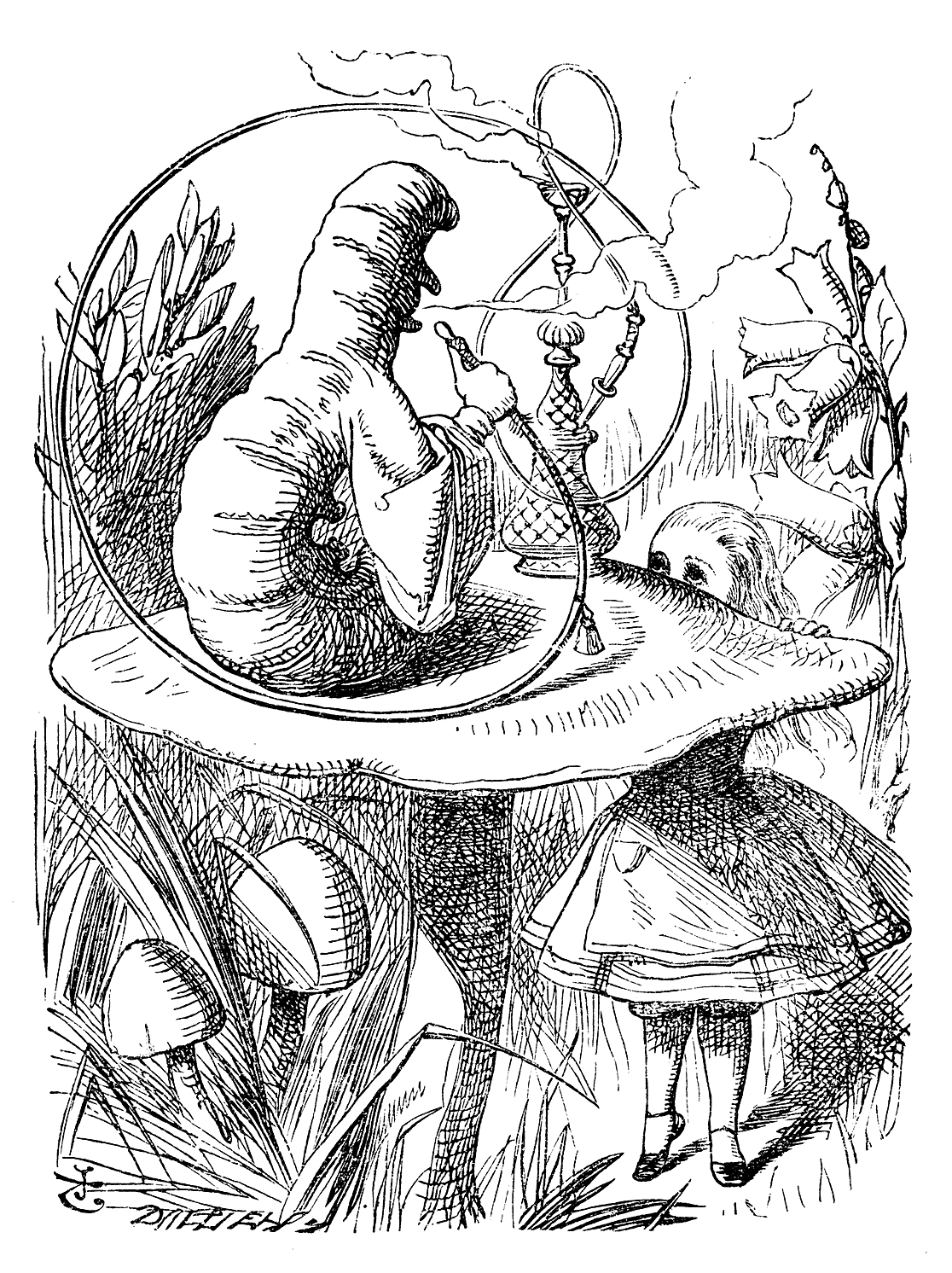
Ratschläge einer Raupe

“Alice and the Caterpillar” by John Tenniel (1820-1914), from Lewis Carroll’s Alice in Wonderland (1865)


Ratschläge einer Raupe is one possible German translation of “Advice from a Caterpillar”, which is the title of chapter five of Alice in Wonderland. But the drawing above doesn’t need a translation. John Tenniel and Lewis Carroll were a classic combination, like Quentin Blake and J.P. Martin or Thomas Henry and Richmal Crompton. Tenniel drew fantastic things in a matter-of-fact way, which was just right.

But that makes me wonder about Ratschläge einer Raupe. In German, Rat-schlag means “piece of advice” and Ratschläge is the plural. At first glance, the title is more fun in German: it alliterates and trips off the the tongue in a way the English doesn’t. And Schlag literally means “blow, stroke”, which captures the behaviour of the caterpillar well. Like many of the characters Alice encounters in Wonderland, he is a prickly and aggressive interlocutor. “Advice from a Caterpillar” is plain by comparison.

So perhaps that makes it better: it’s a matter-of-fact title for a surreal chapter. Tenniel’s art echoes that.

Horn Again

Pre-previously on Overlord-in-terms-of-Core-Issues-around-Maximal-Engagement-with-Key-Notions-of-the-Über-Feral, I interrogated issues around this shape, the horned triangle:
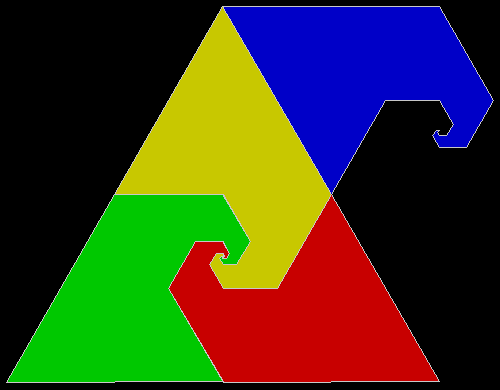
unicorn_reptile_static

Horned Triangle (more details)


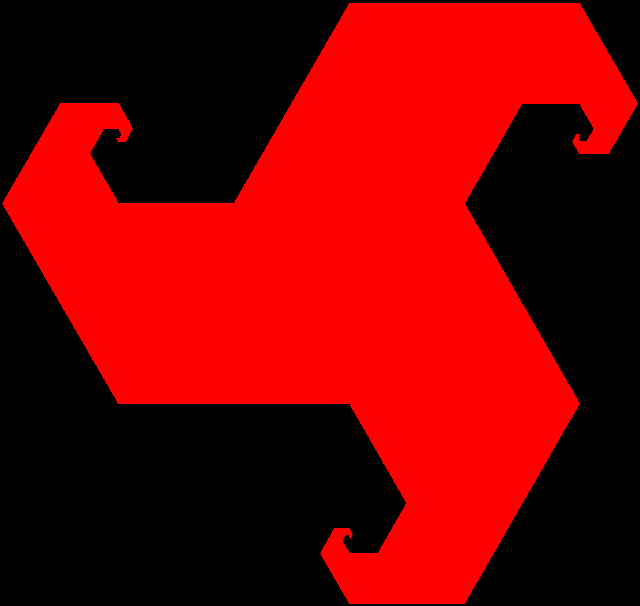
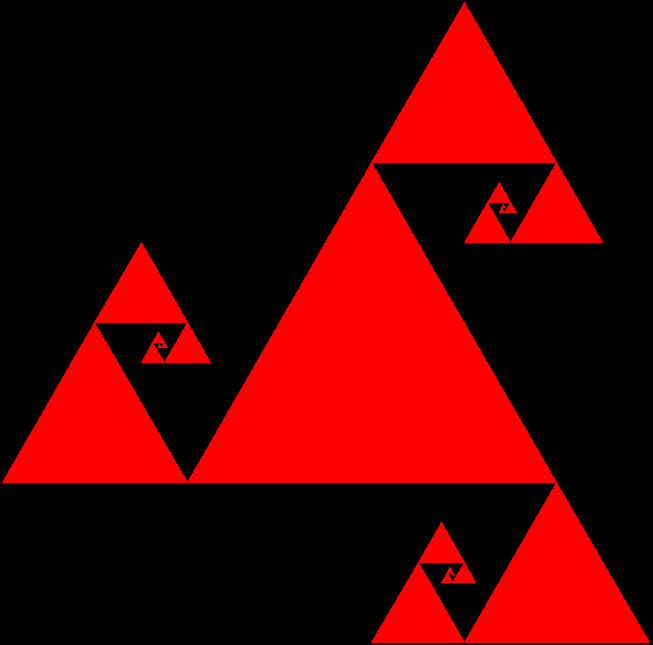
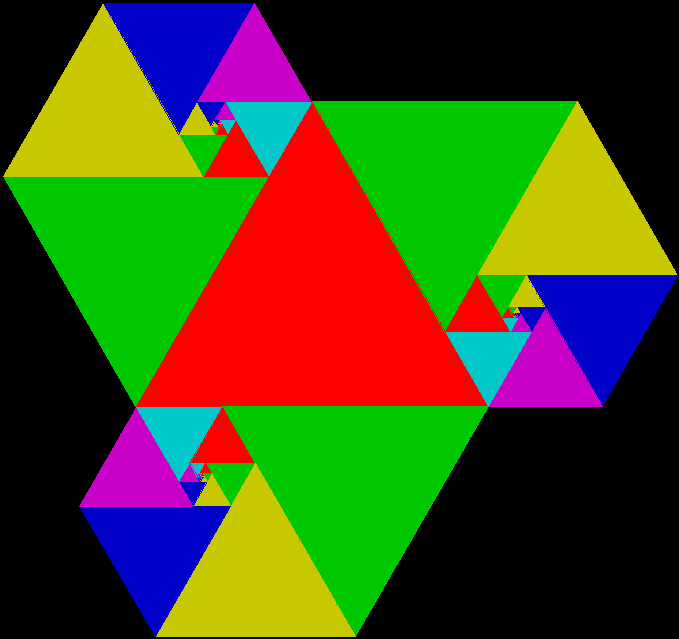
Now I want to look at the tricorn (from Latin tri-, “three”, + -corn, “horn”). It’s like a horned triangle, but has three horns instead of one:
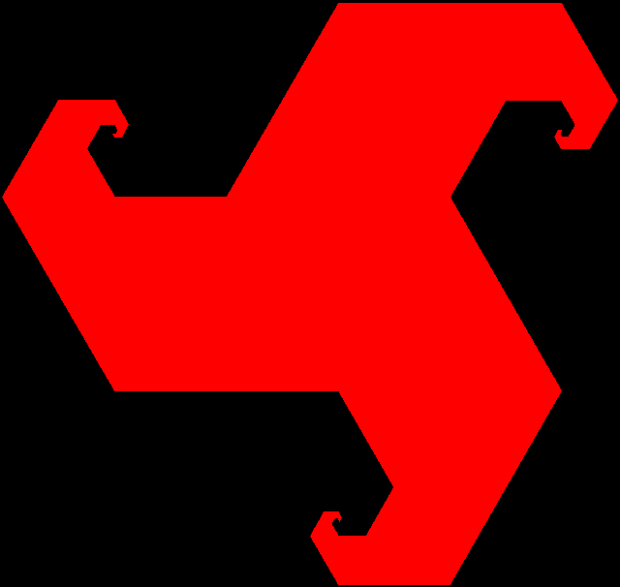
Tricorn, or three-horned triangle


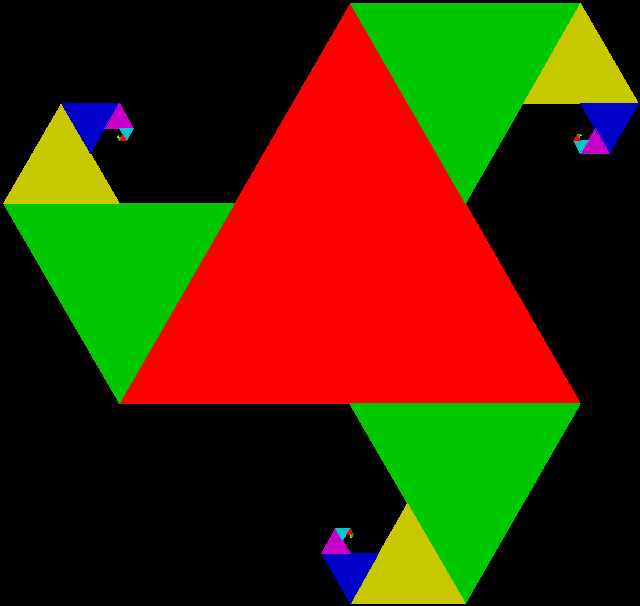
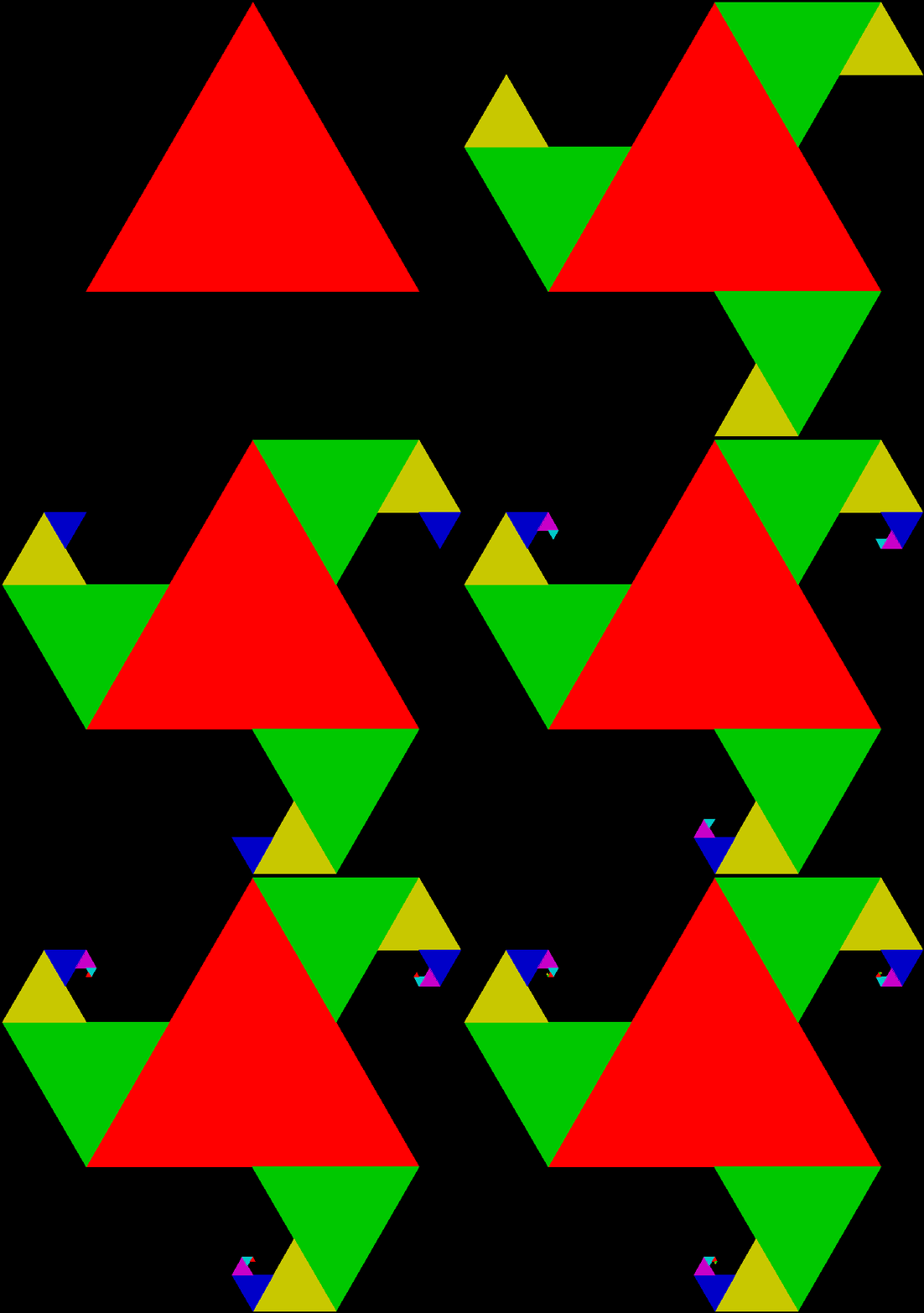
These are the stages that make up the tricorn:
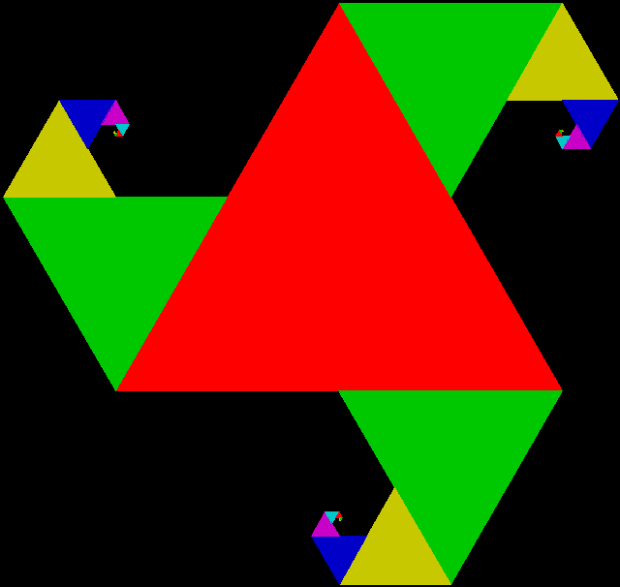
Tricorn (stages)
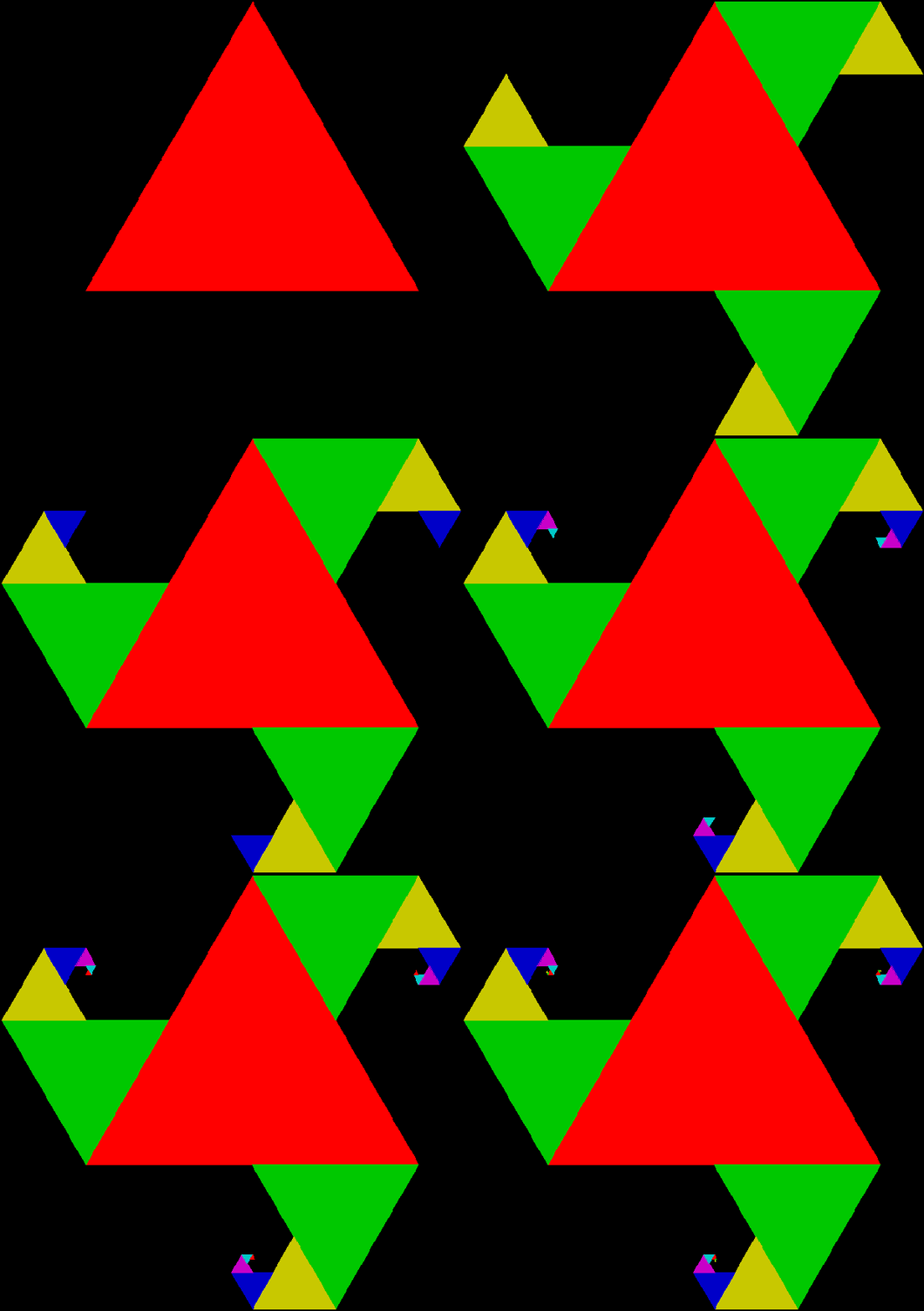

Tricorn (animated)


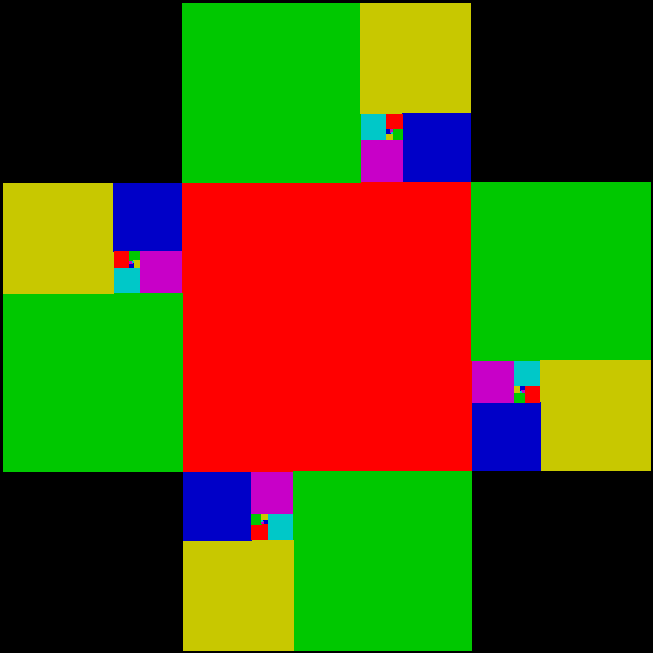
And there’s no need to stop at triangles. Here is a four-horned square, or quadricorn:
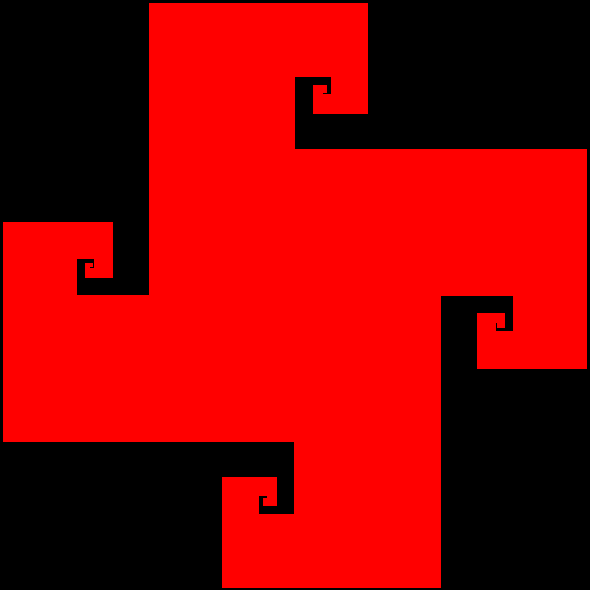
Quadricorn
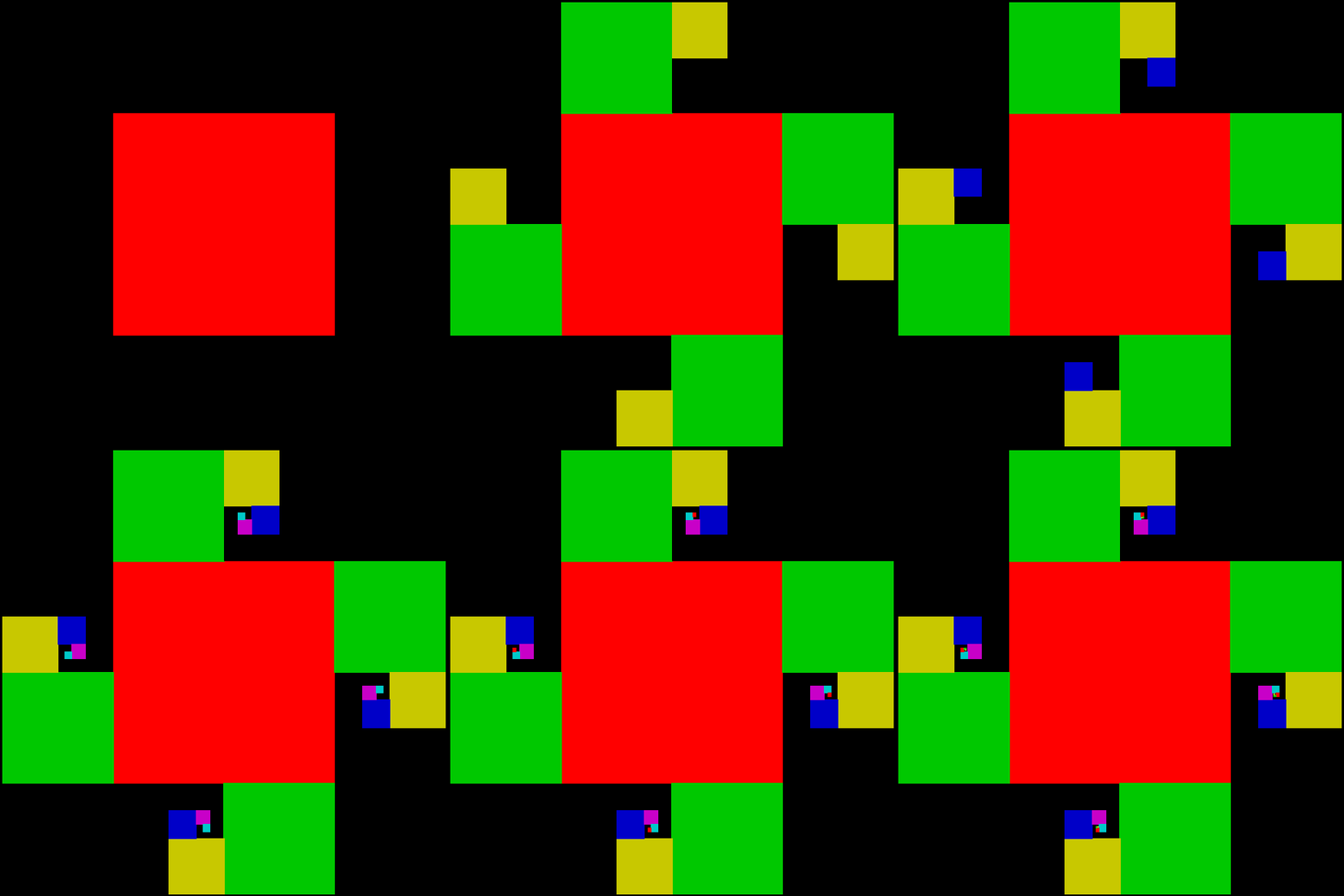

Quadricorn (animated)
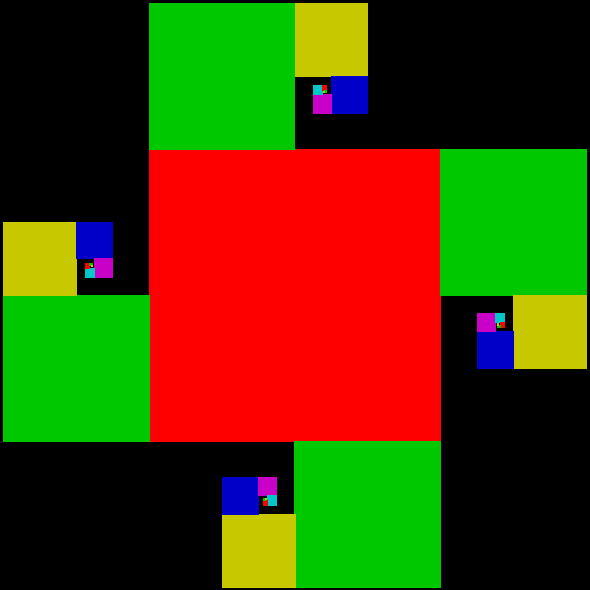

Quadricorn (coloured)


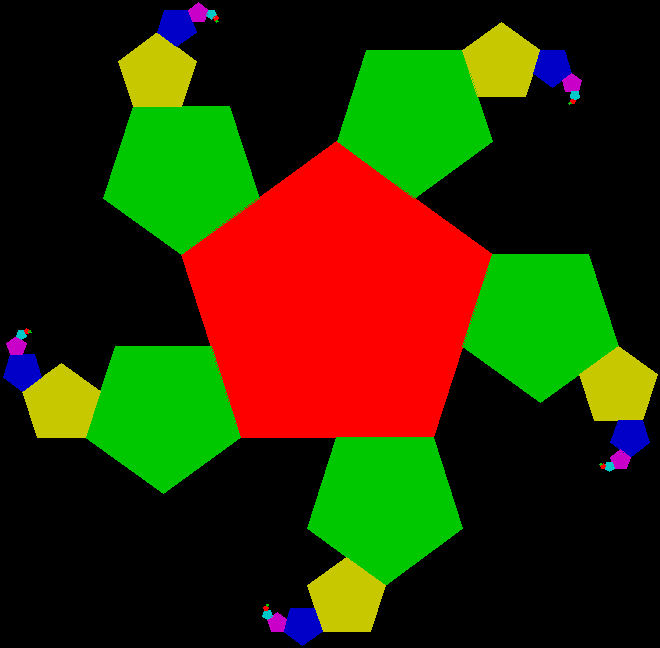
And a five-horned pentagon, or quinticorn:

Quinticorn, or five-horned pentagon
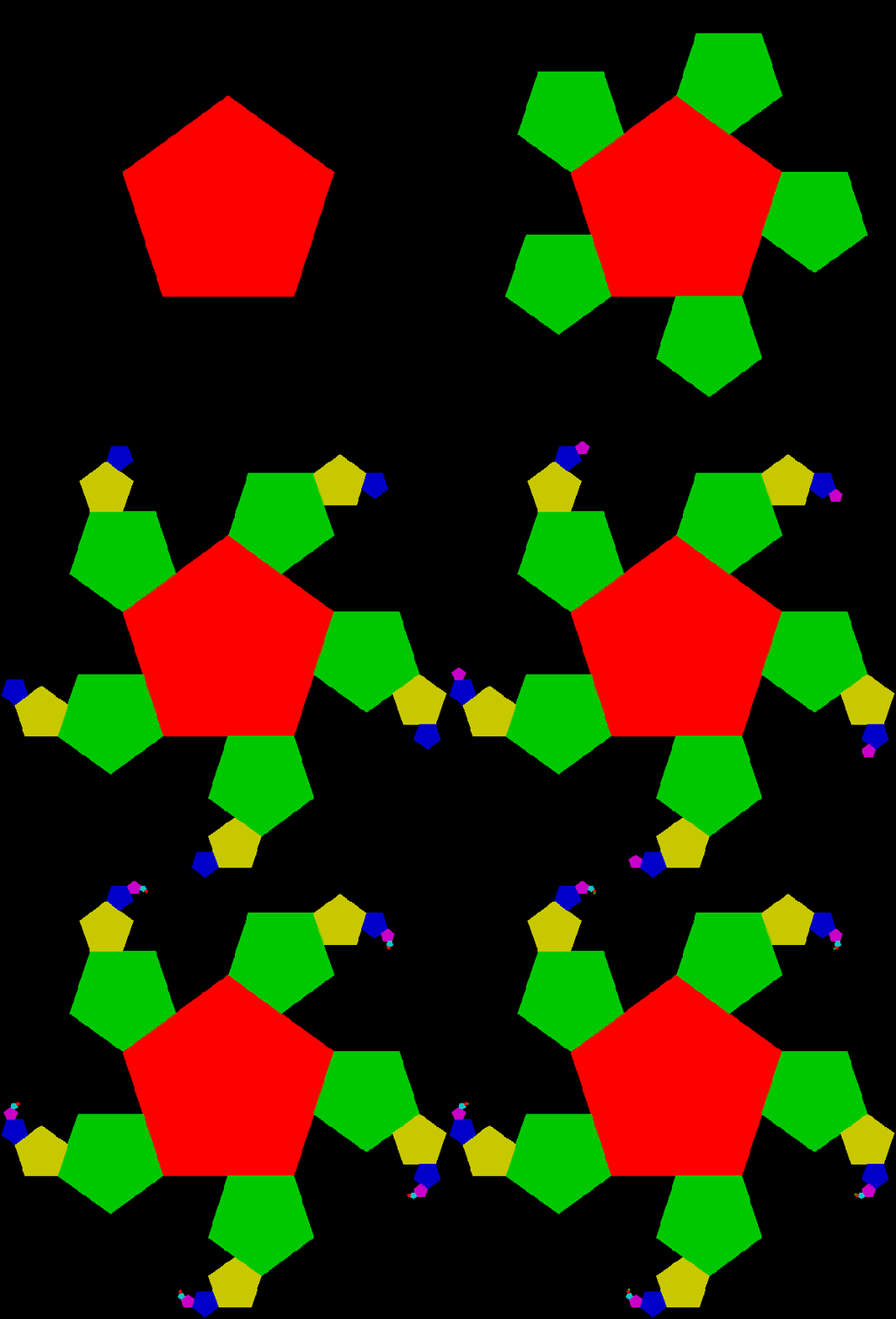

Quinticorn (anim)


Quinticorn (col)


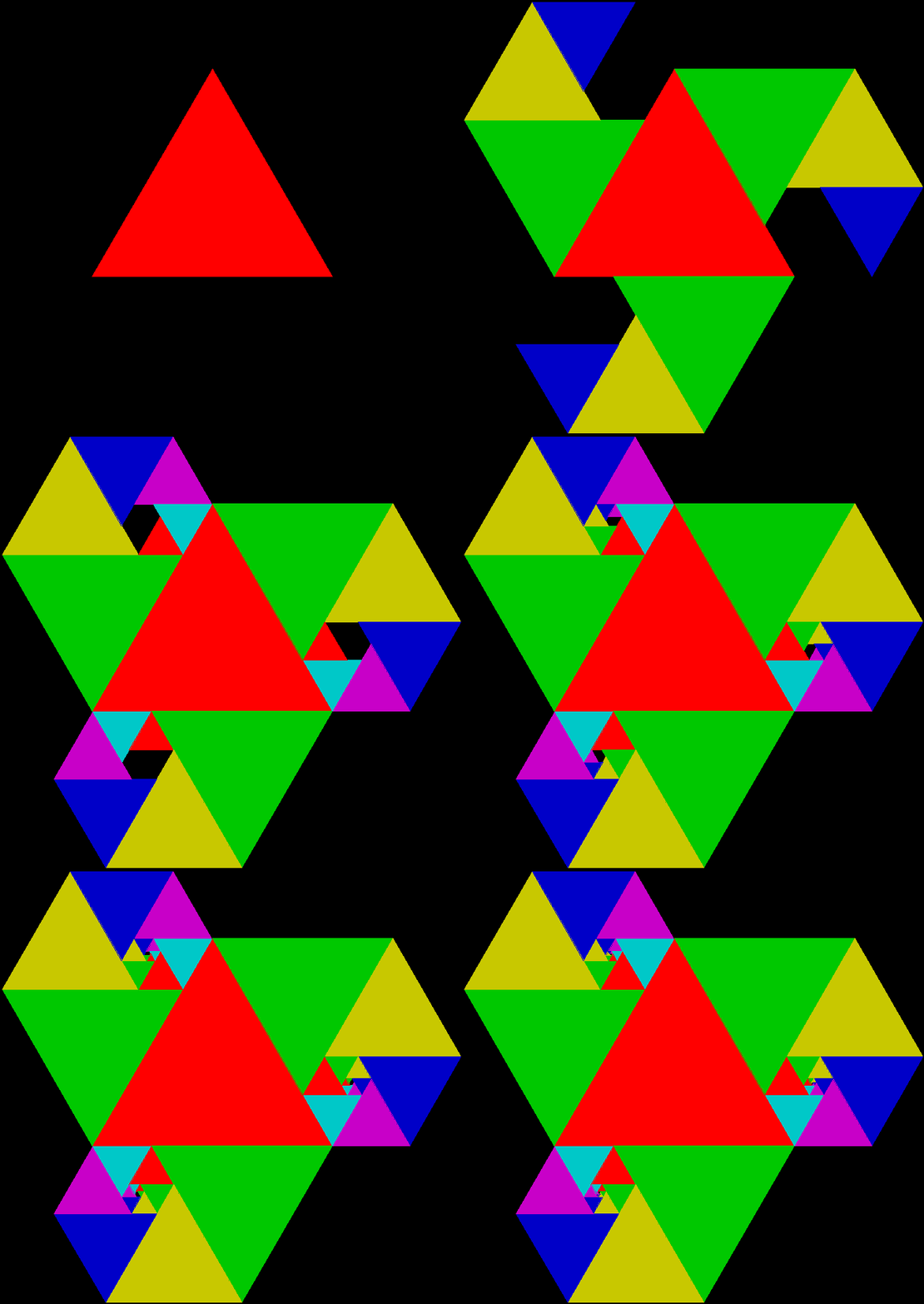
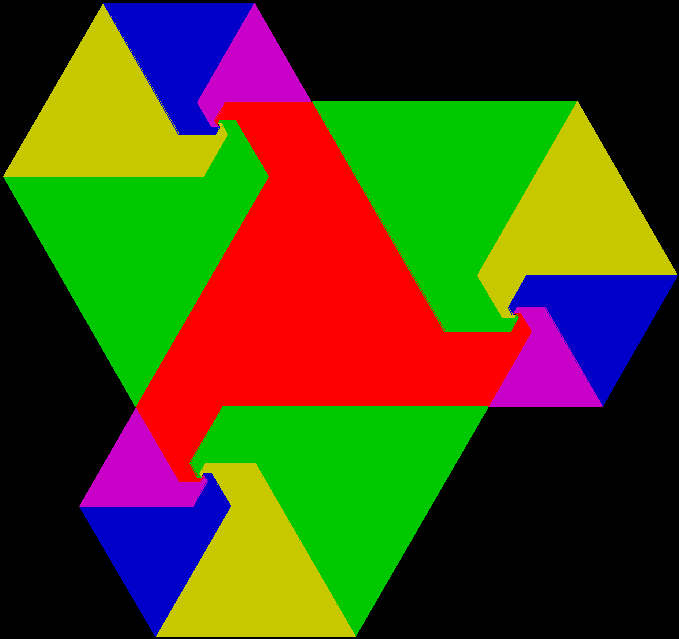
And below are some variants on the shapes above. First, the reversed tricorn:
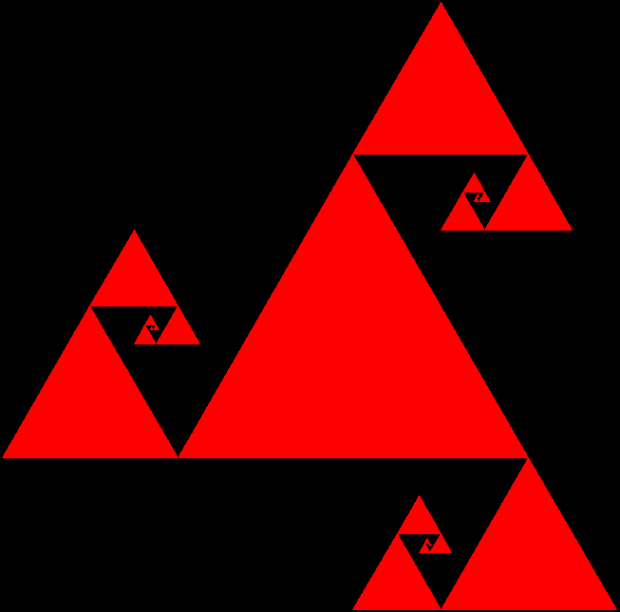
Reversed Tricorn
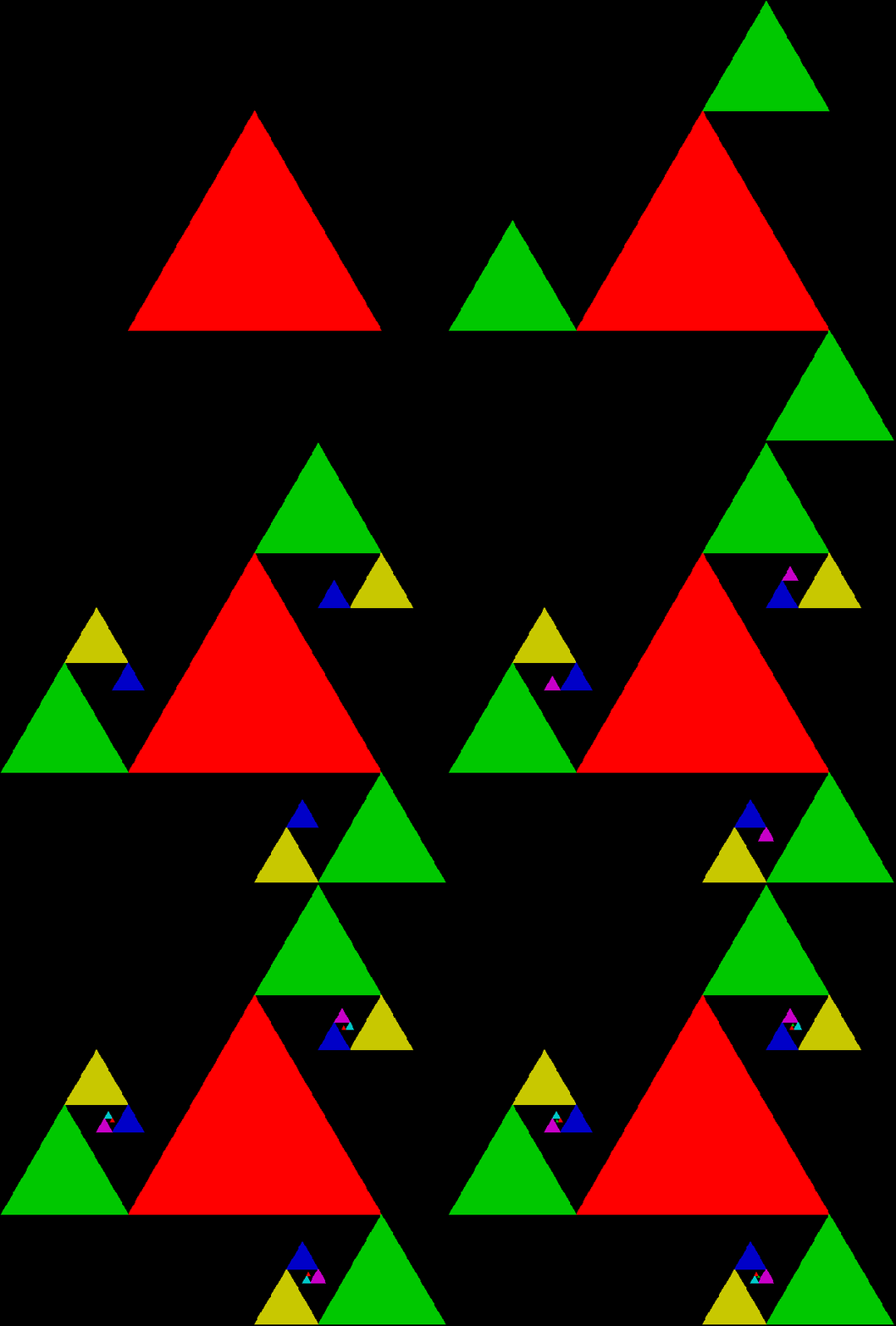

Reversed Tricorn (anim)


Reversed Tricorn (col)


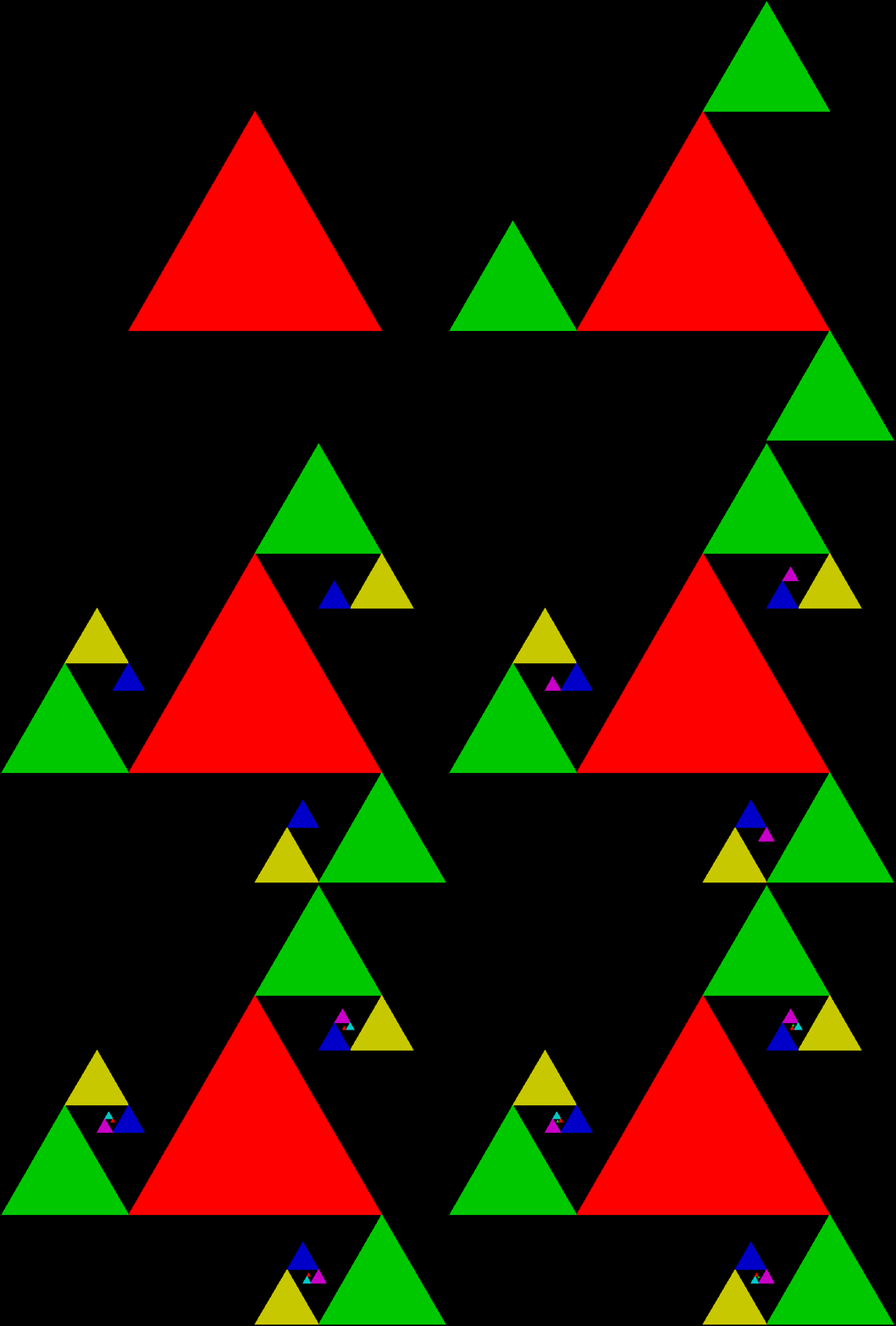
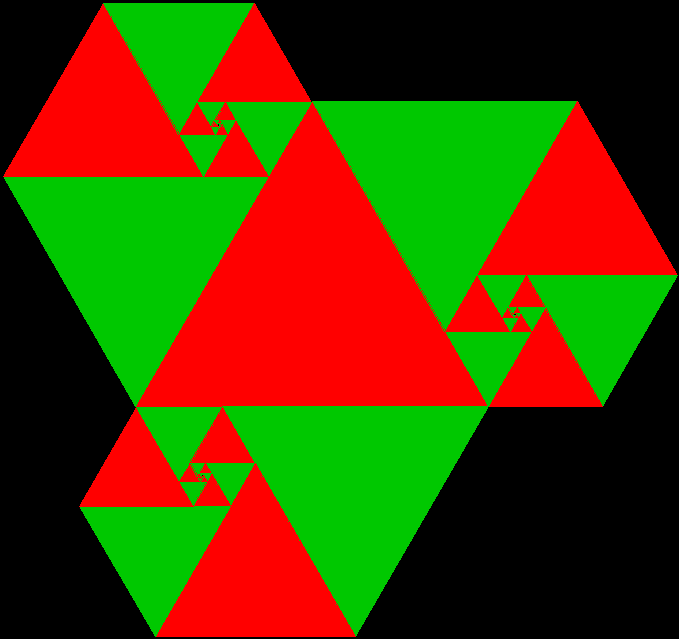
The nested tricorn:
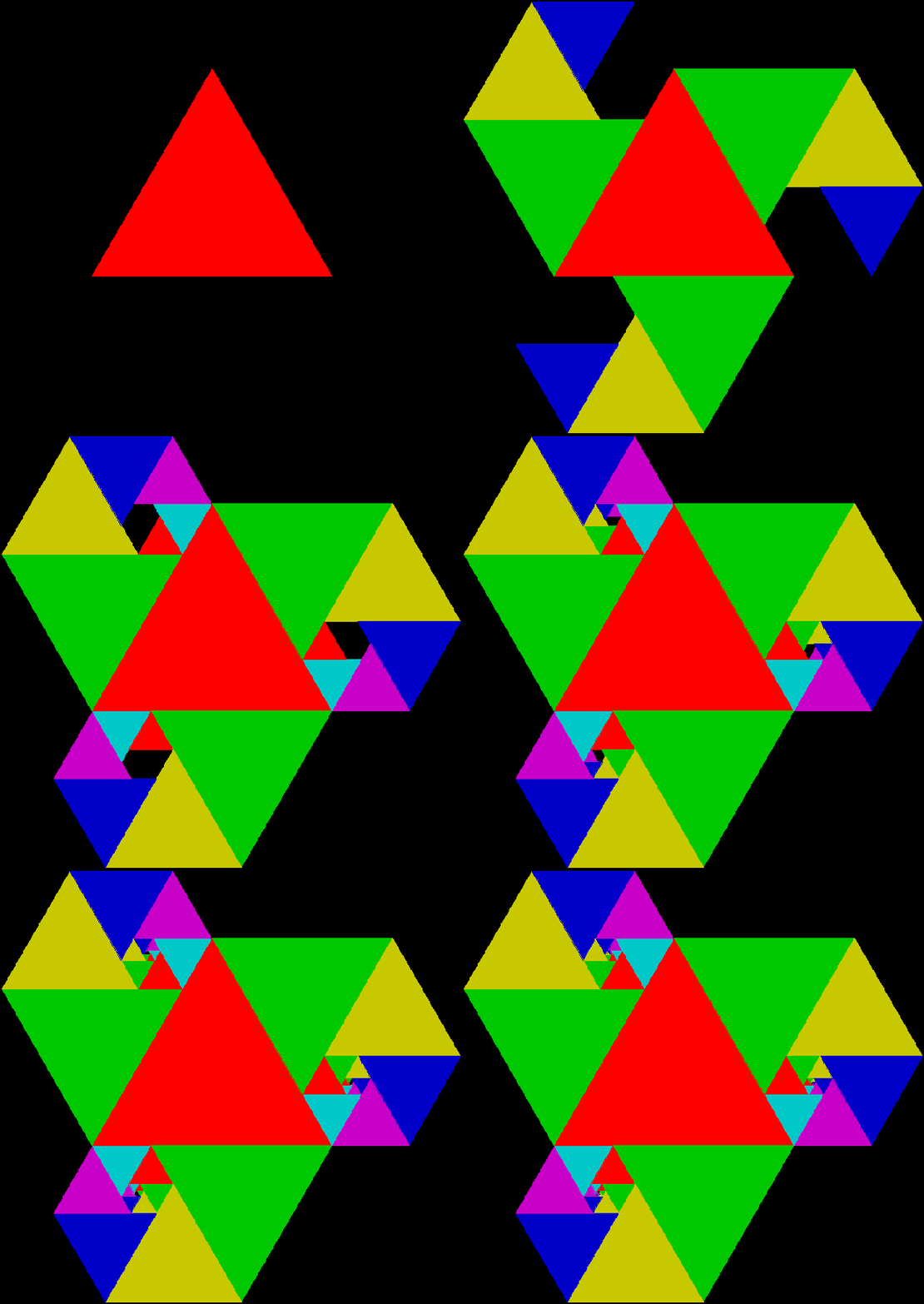
Nested Tricorn (anim)
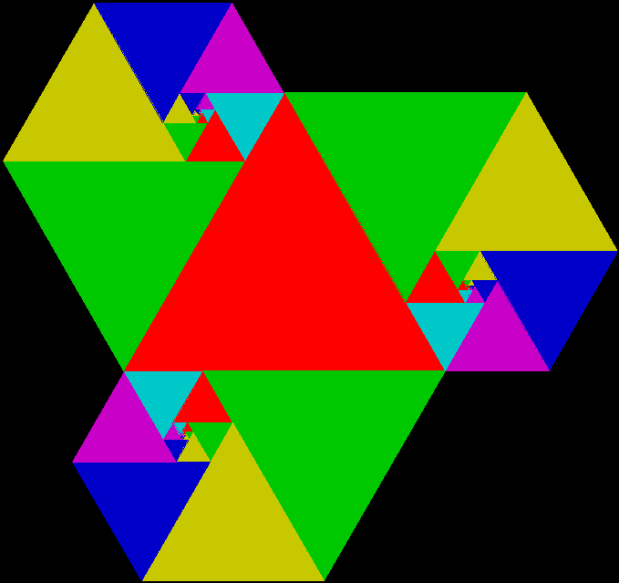

Nested Tricorn (col)
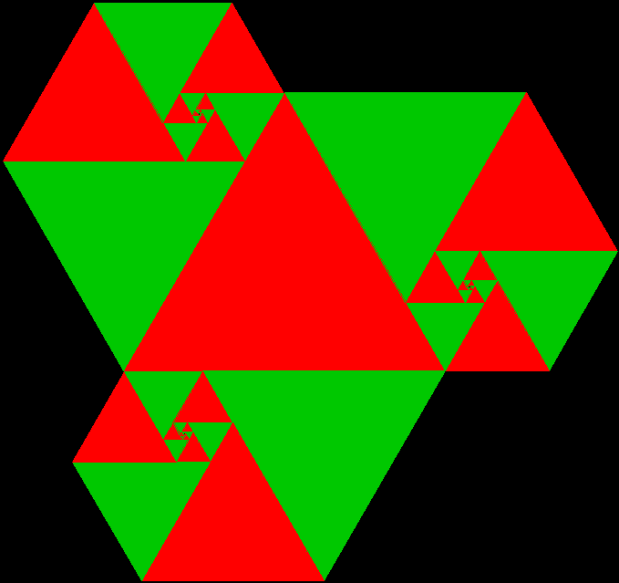

Nested Tricorn (red-green)
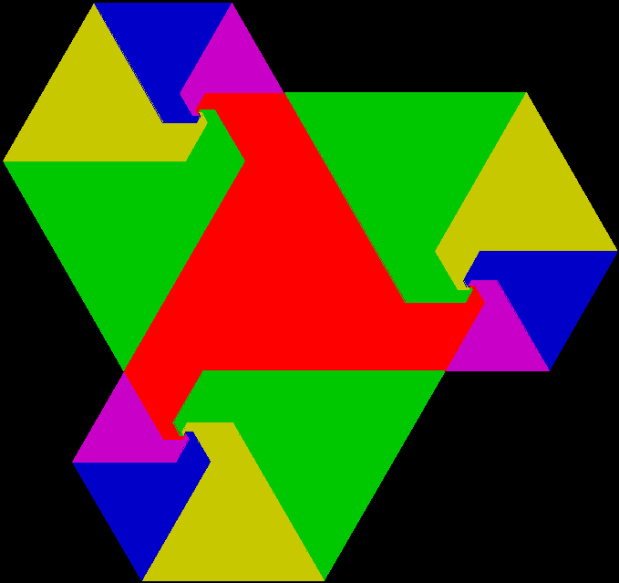

Nested Tricorn (variant col)


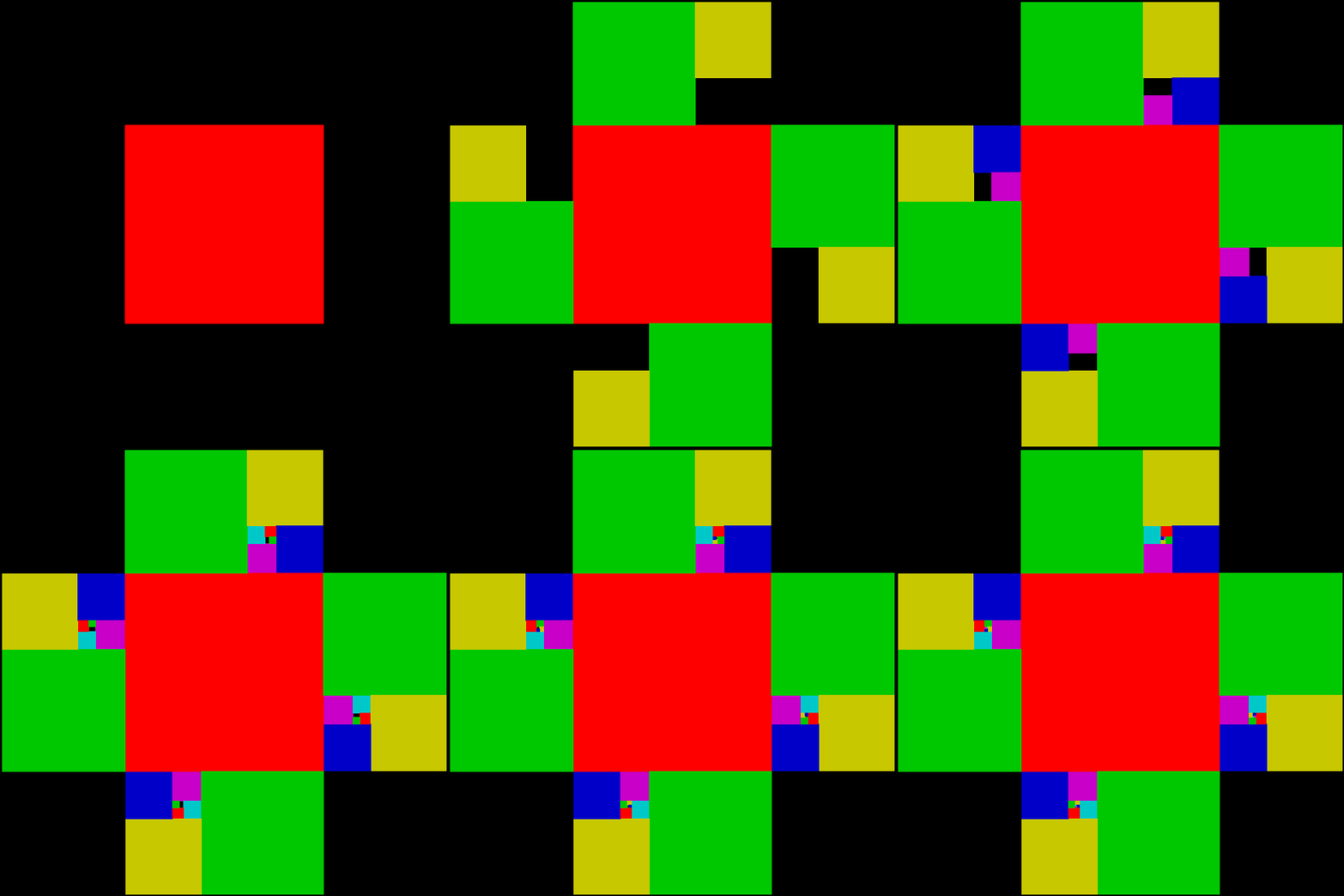
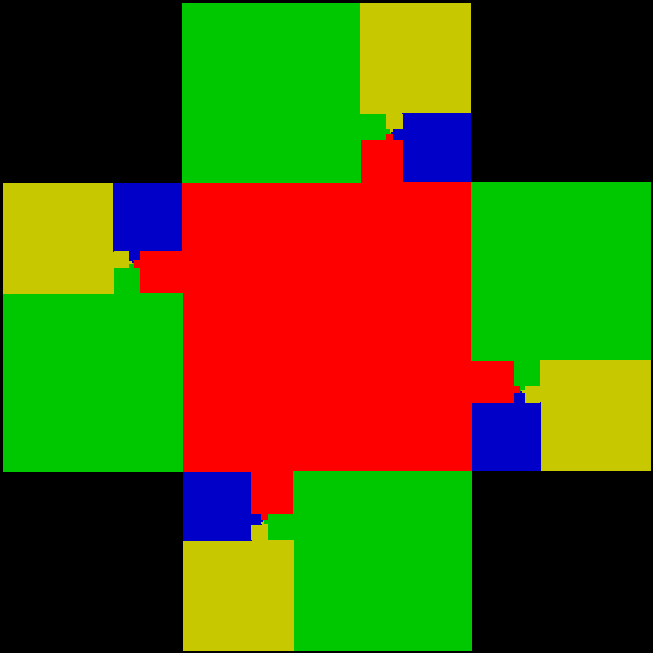
The nested quadricorn:
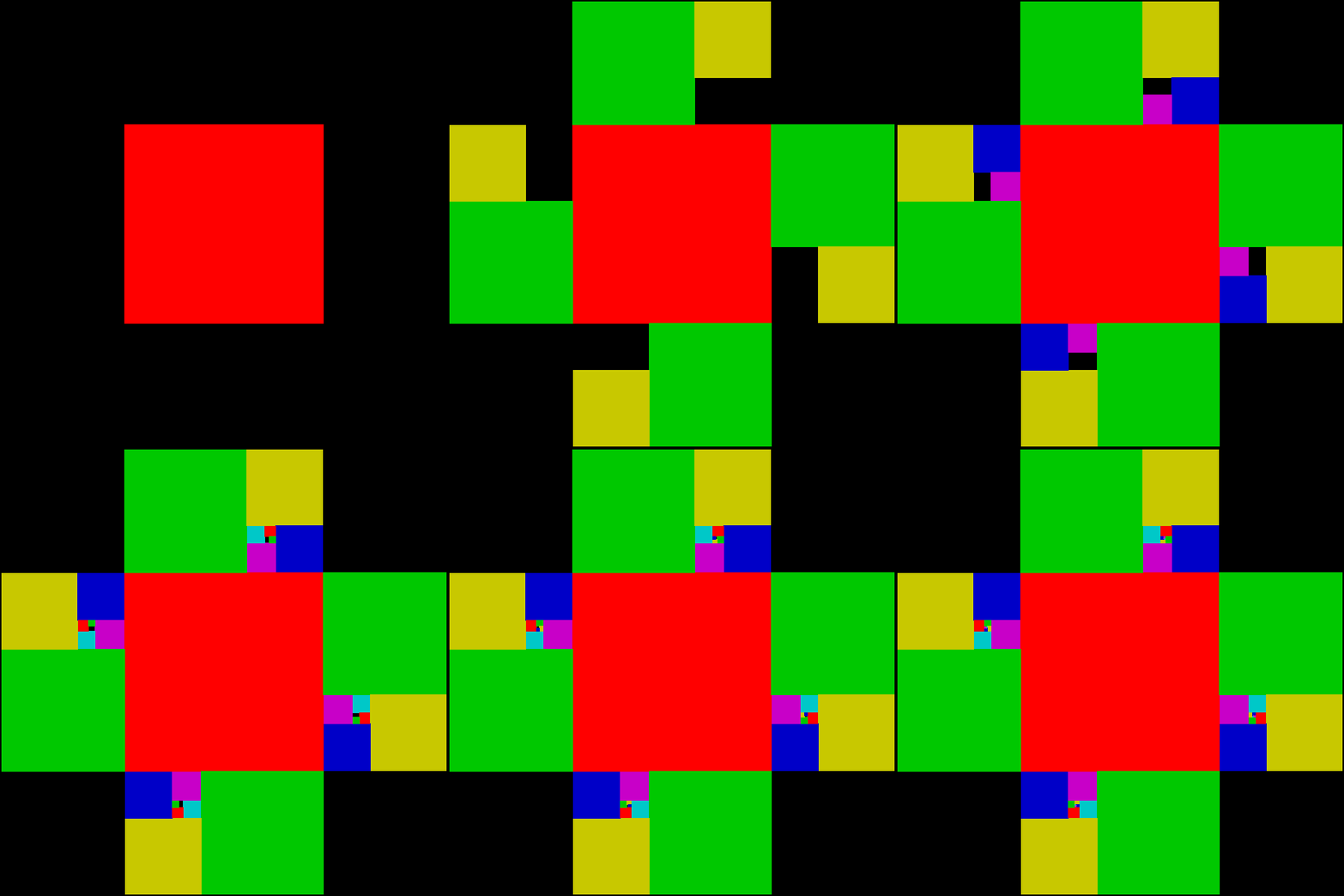
Nested Quadricorn (anim)


Nested Quadricorn
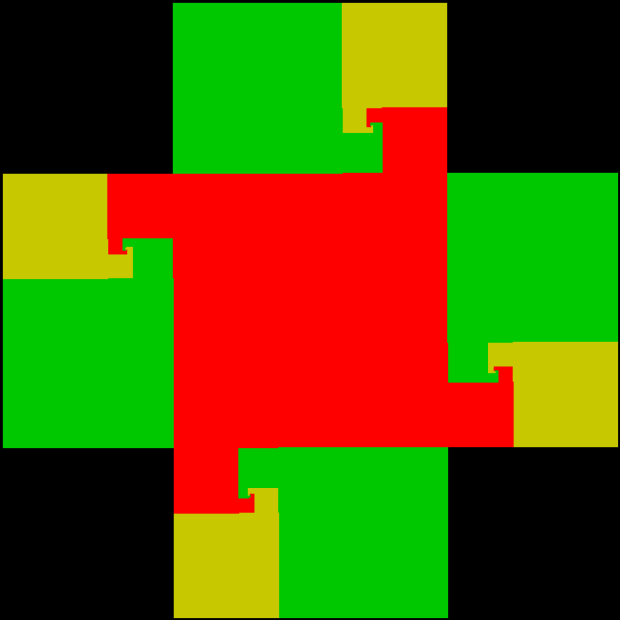

Nested Quadricorn (col #1)


Nested Quadricorn (col #2)


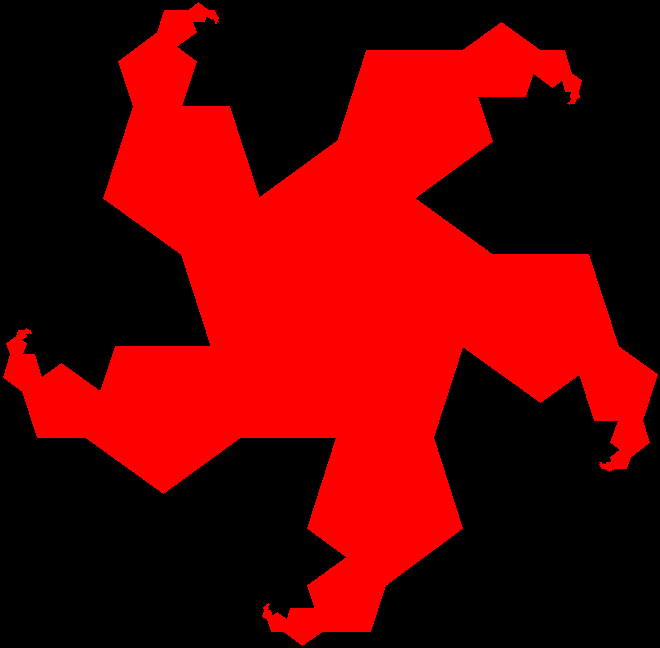
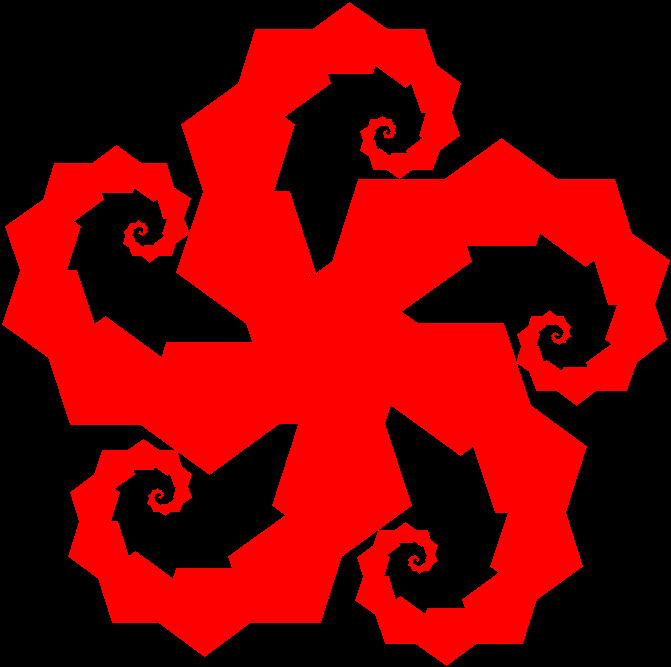
Finally (and ferally), the pentagonal octopus or pentapus:
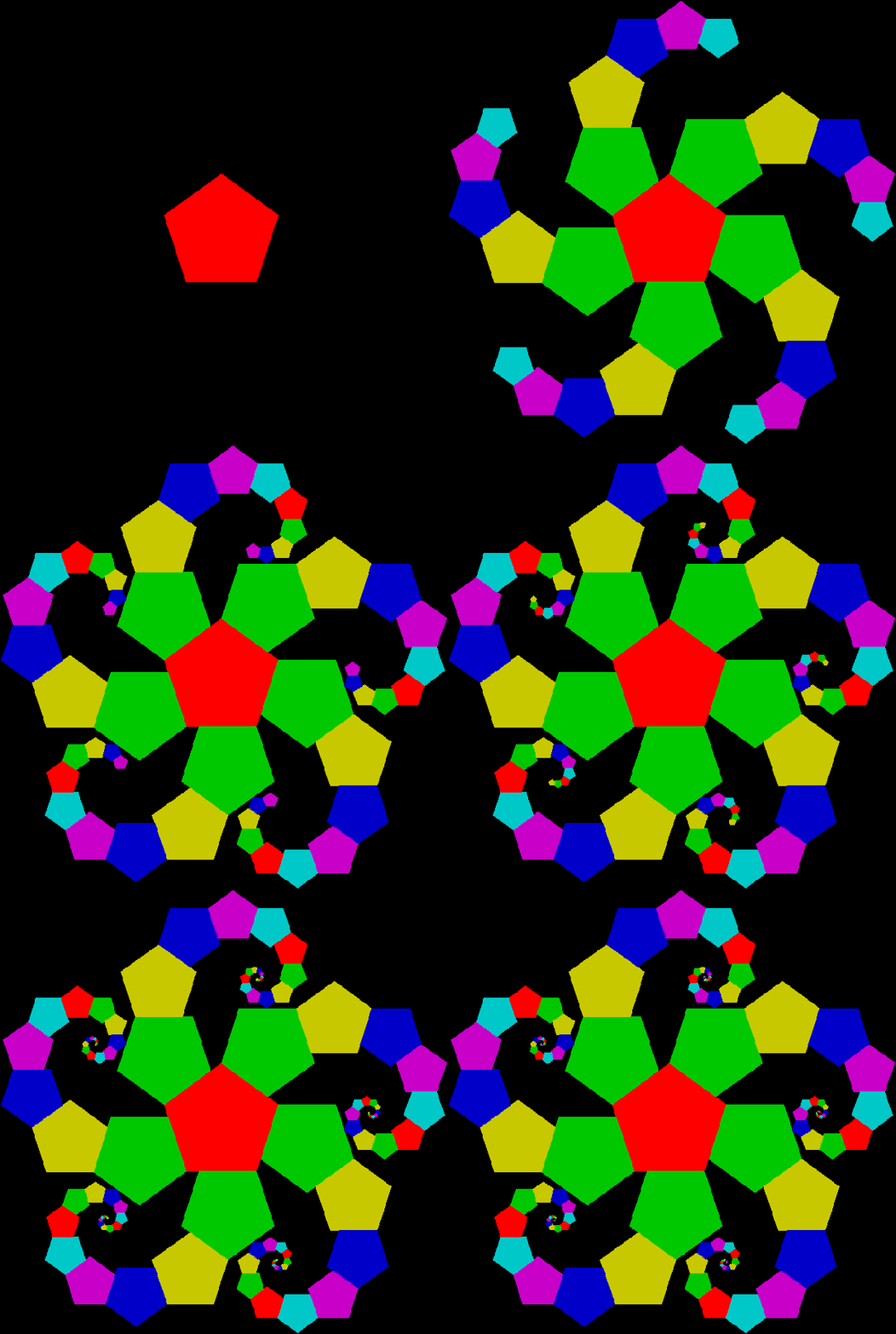
Pentapus (anim)


Pentapus


Pentapus #2


Pentapus #3


Pentapus #4


Pentapus #5


Pentapus #6
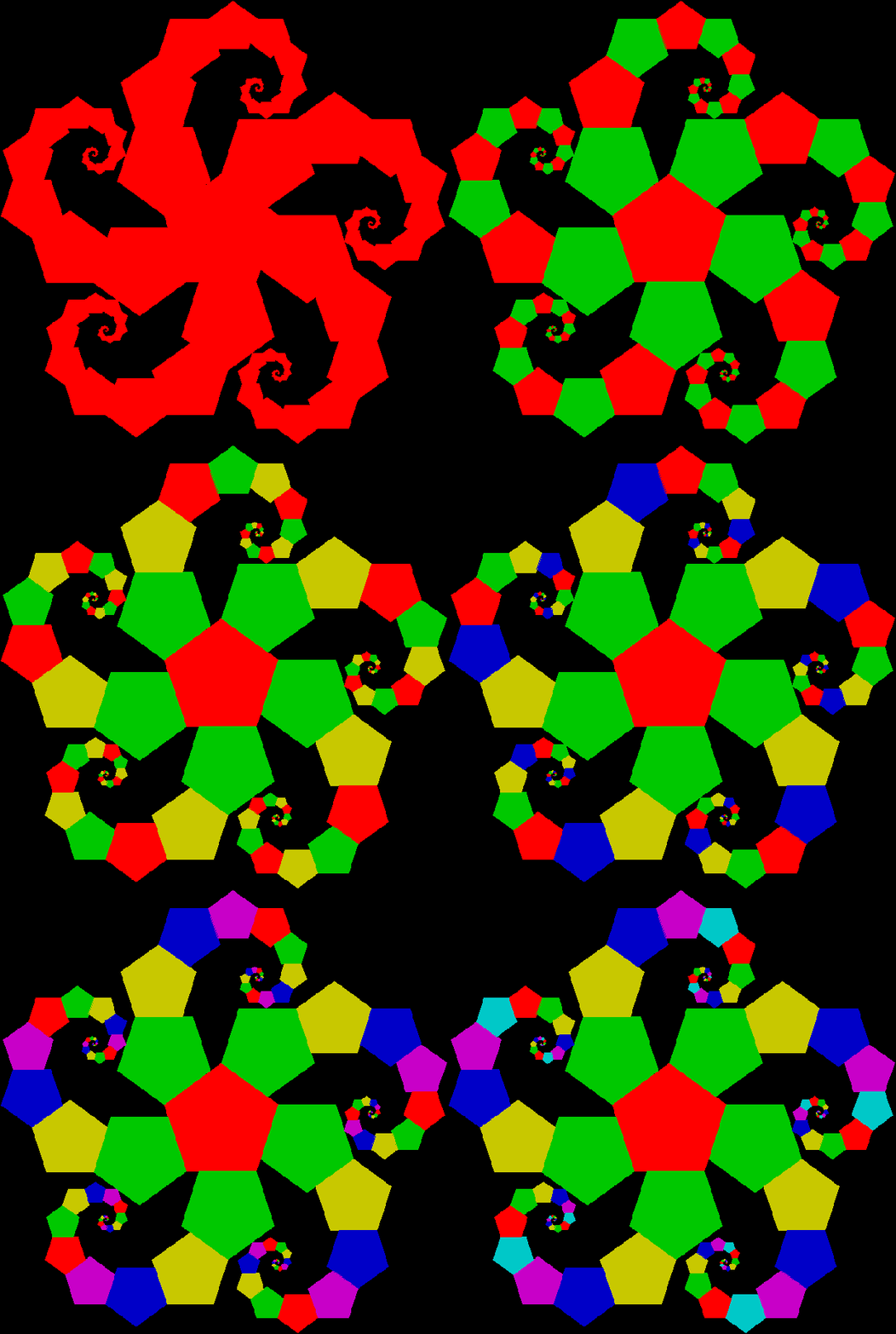

Pentapus (col anim)


Elsewhere other-engageable:

The Art Grows Onda — the horned triangle and Katsushika Hokusai’s painting The Great Wave off Kanagawa (c. 1830)

Performativizing Papyrocentricity #63

Papyrocentric Performativity Presents:

Bullets and ButterfliesMad Dog Killers: The Story of a Congo Mercenary, Ivan Smith (Helion / 30° South Publishers 2012)
Jaundiced on GeorgeGeorge Orwell: English Rebel, Robert Colls (Oxford University Press 2013)

Crabsody in ViewRSPB Handbook of the Seashore, Maya Plass (Bloomsbury 2013)


Or Read a Review at Random: RaRaR

Oh My Guardian #6

[…] the whole vintage package – which started as essentially a rediscovery of simple skills, tying generations together and serving as a visual cake-based bulwark against modern turbulence – has been used to sugar-coat a free-market nationalism that isn’t sweet at all. — Zoë Williams, Let’s ditch the nostalgia that’s invaded our TV and seeped into our politics, The Guardian, 30iv2018.


Elsewhere other-engageable:

Oh My Guardian #5
Zo with the Flow
Reds under the Thread (more on mixed metaphory)

Ruff Stuff

Zelfportret (1601) by Joachim Wtewael (1566-1638) (pron. roughly OO-tuh-vaal), as seen in Phaidon’s 500 Self-Portraits


Previously pre-posted:

She-ShellPerseus Rescuing Andromeda (1611) by Wtewael

O Khom, All Ye Faithful!

In this work, Edition of the “Way” [Tahrir al-Wasila], Khomeini gives opinions on such innovations as insurance, banking, lotteries, artificial insemination, anatomical dissection, sex-change operations, artificial insemination, space travel and marriage with extra-terrestrials. — James Buchan, Days of God: The Revolution in Iran and Its Consequences (2012), ch. 3, “The Iranian Religion”, pg. 135 of the 2013 John Murray paperback

Fink Frakt

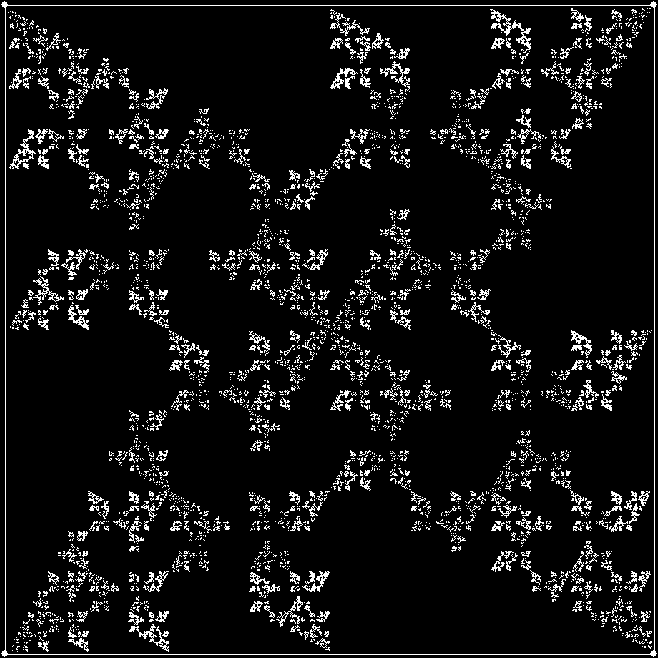
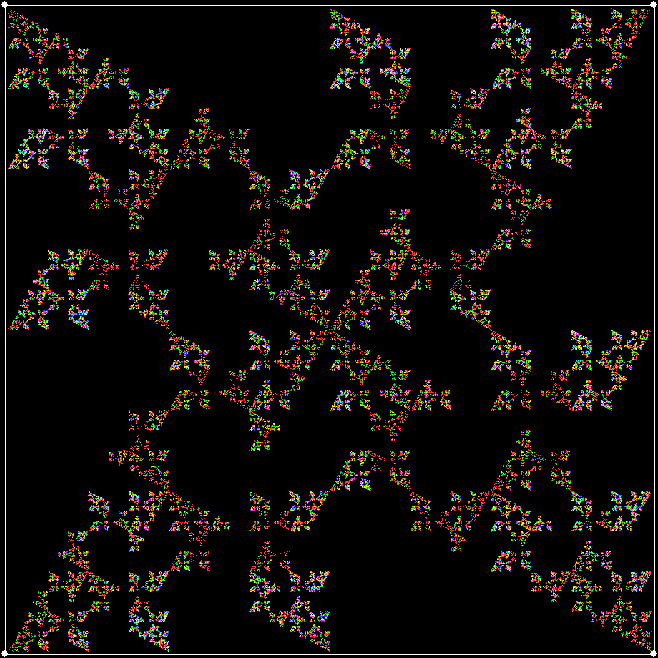
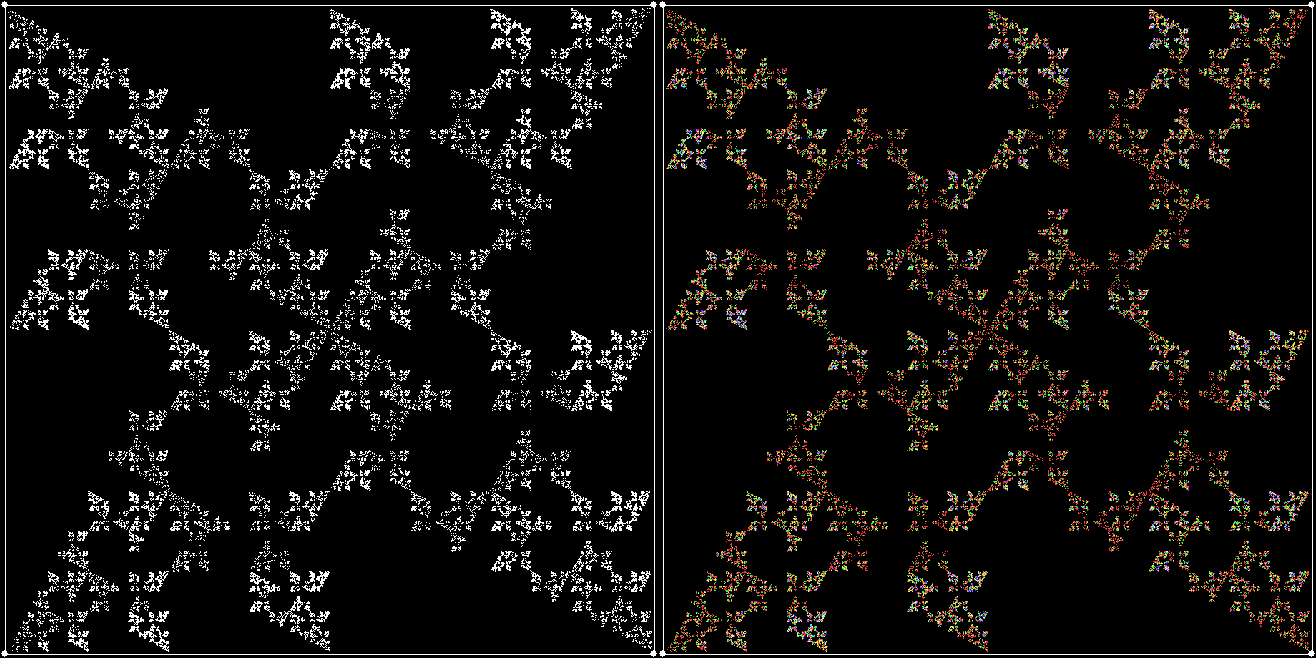
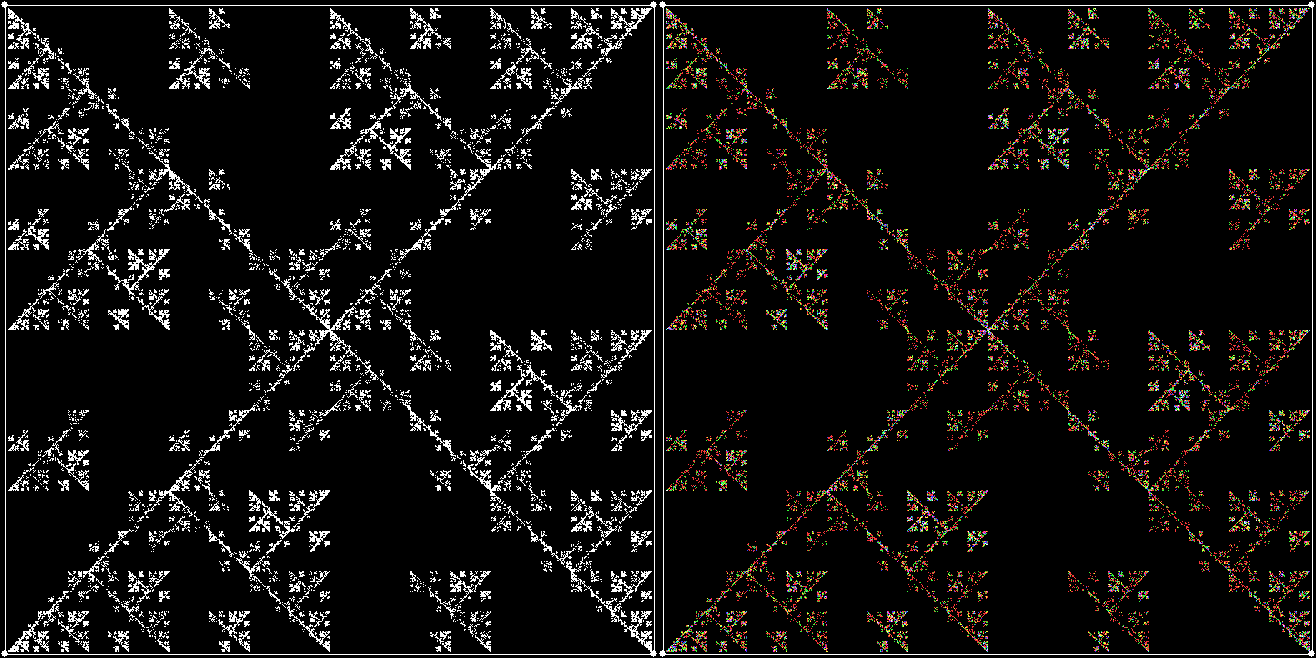
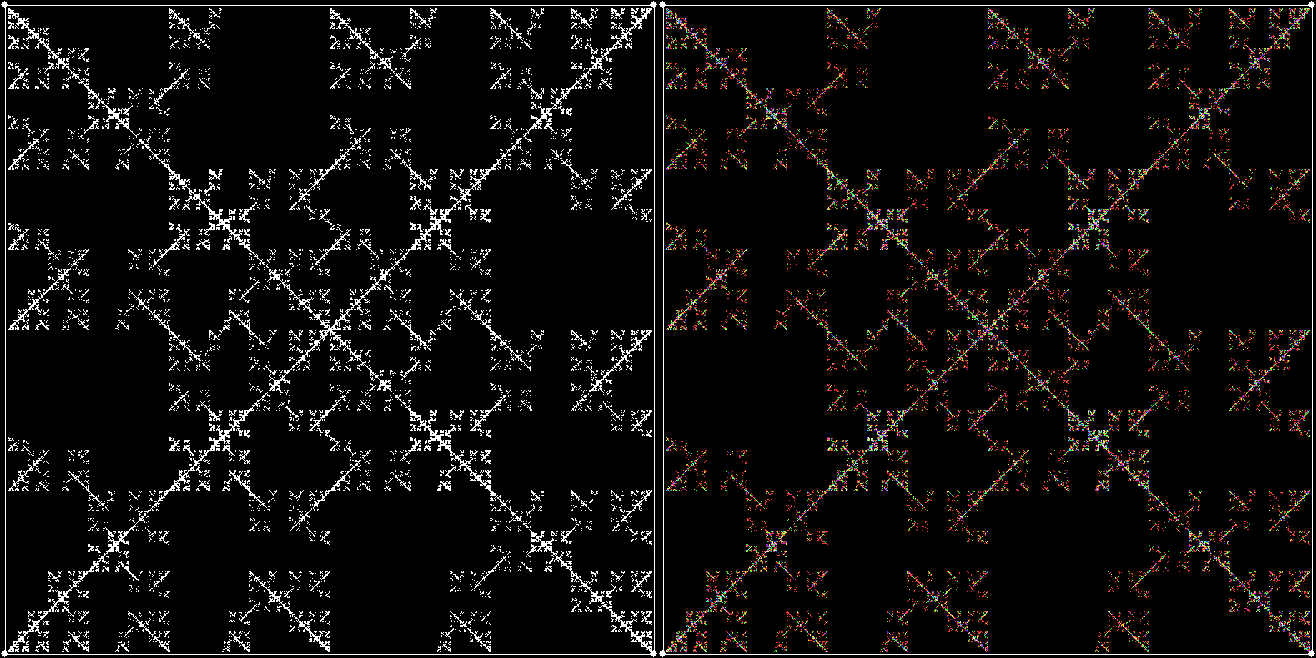
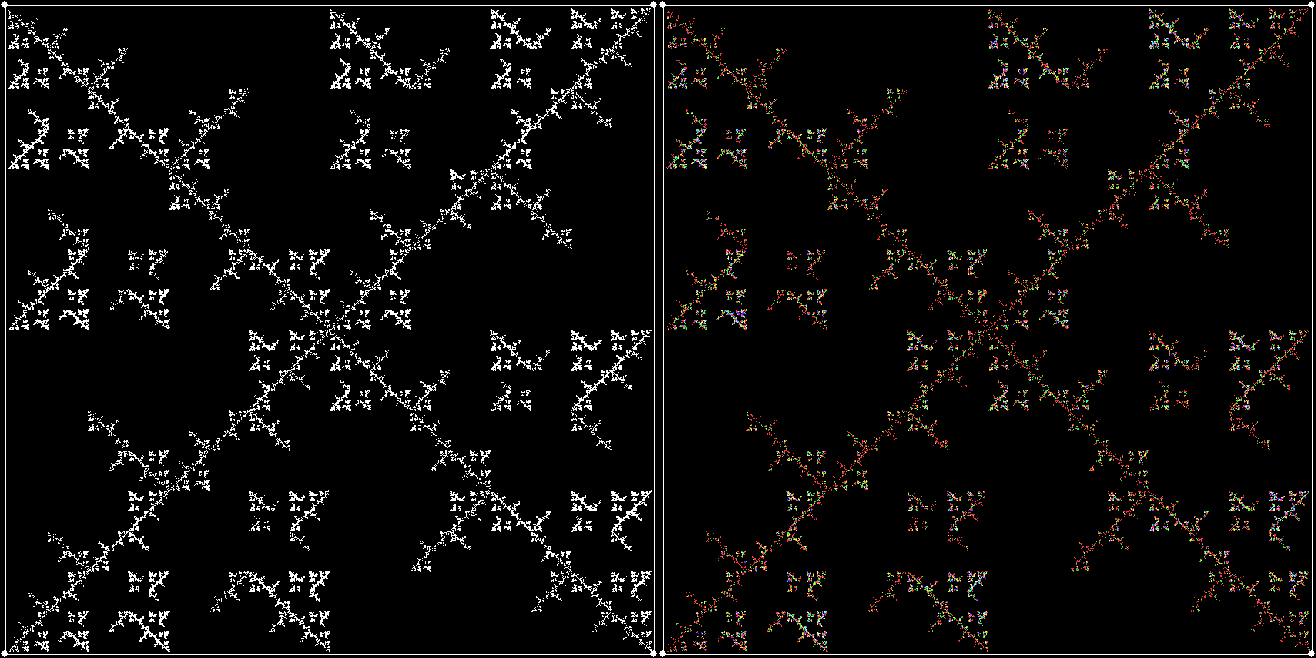
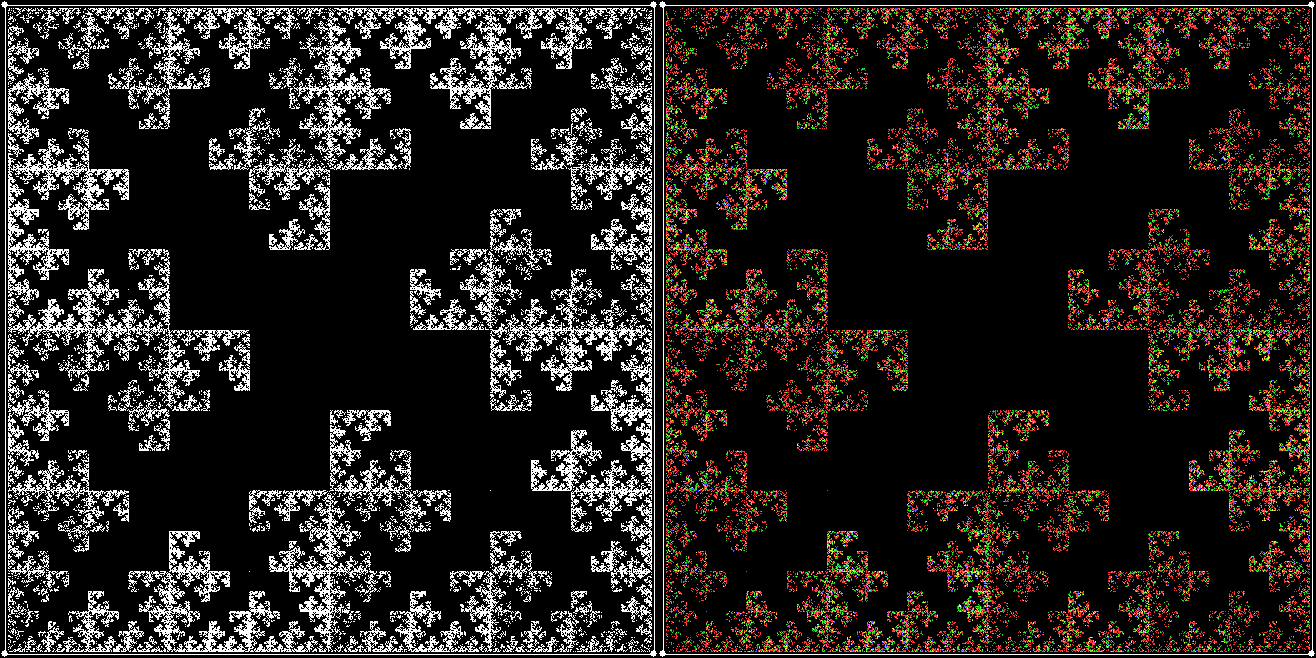
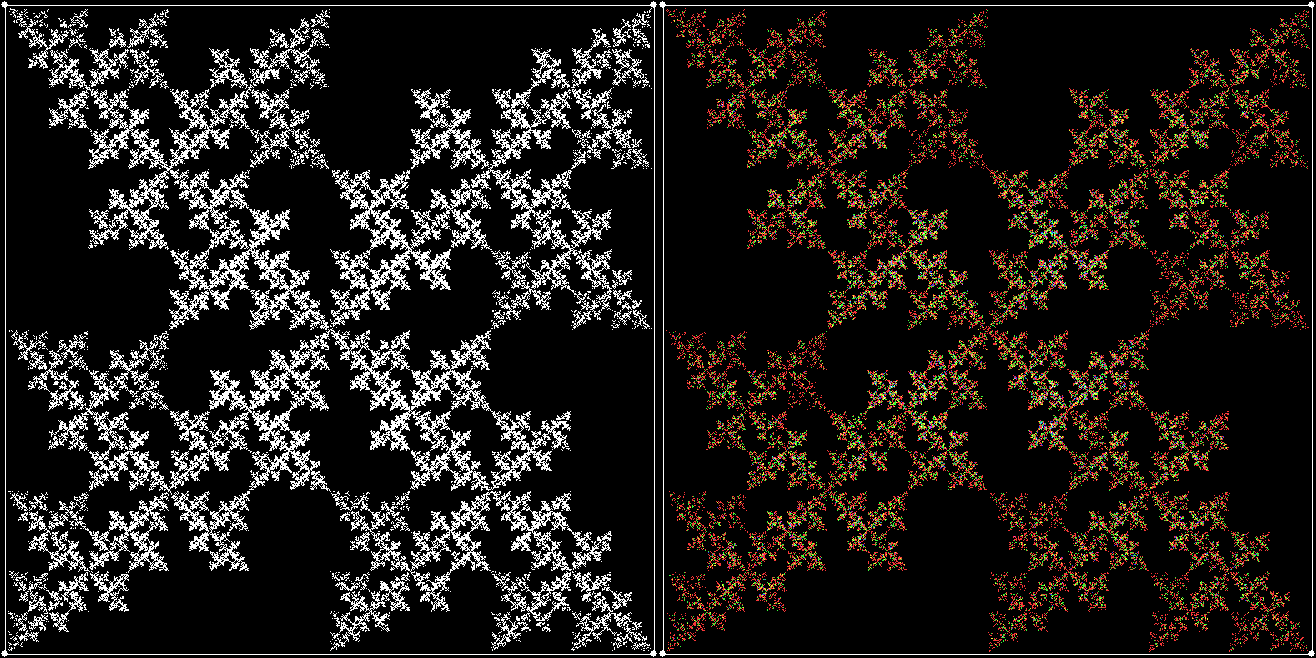
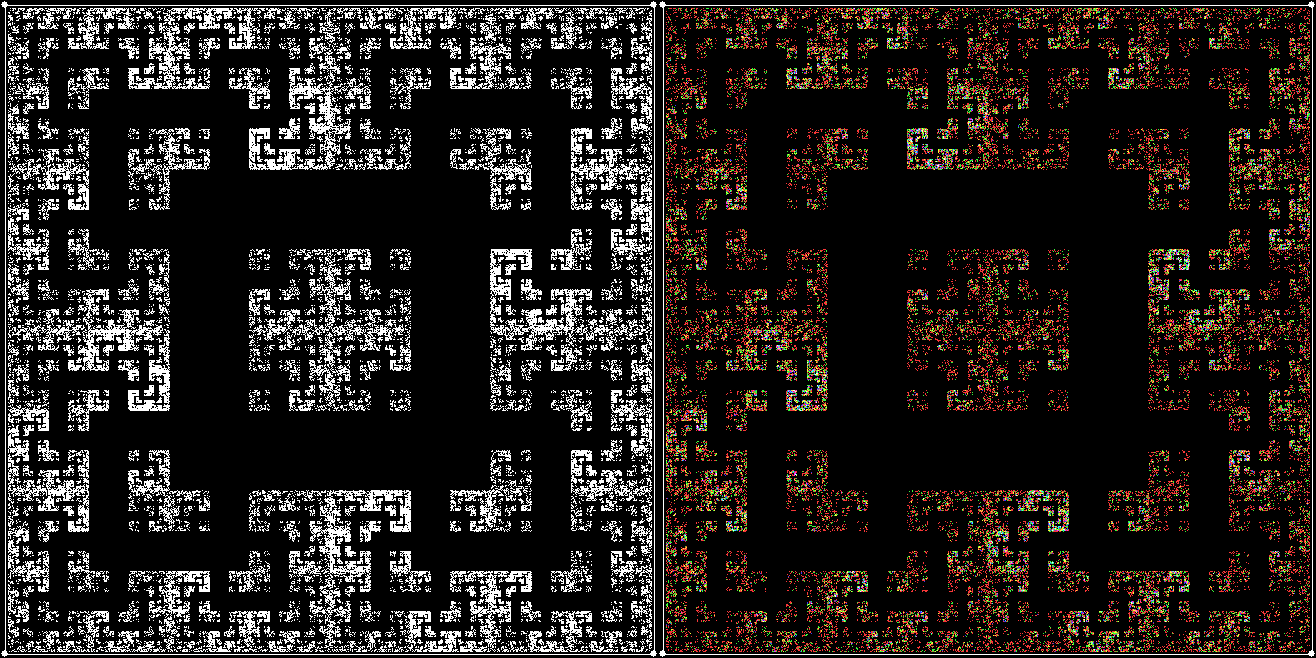
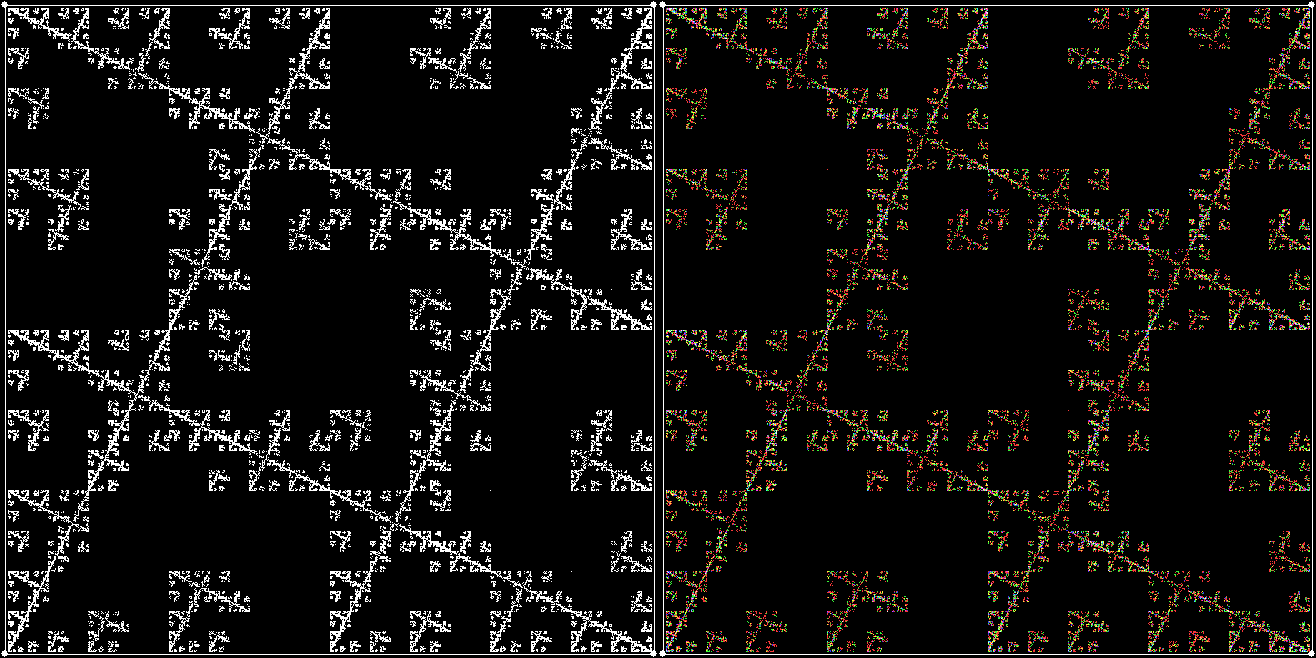
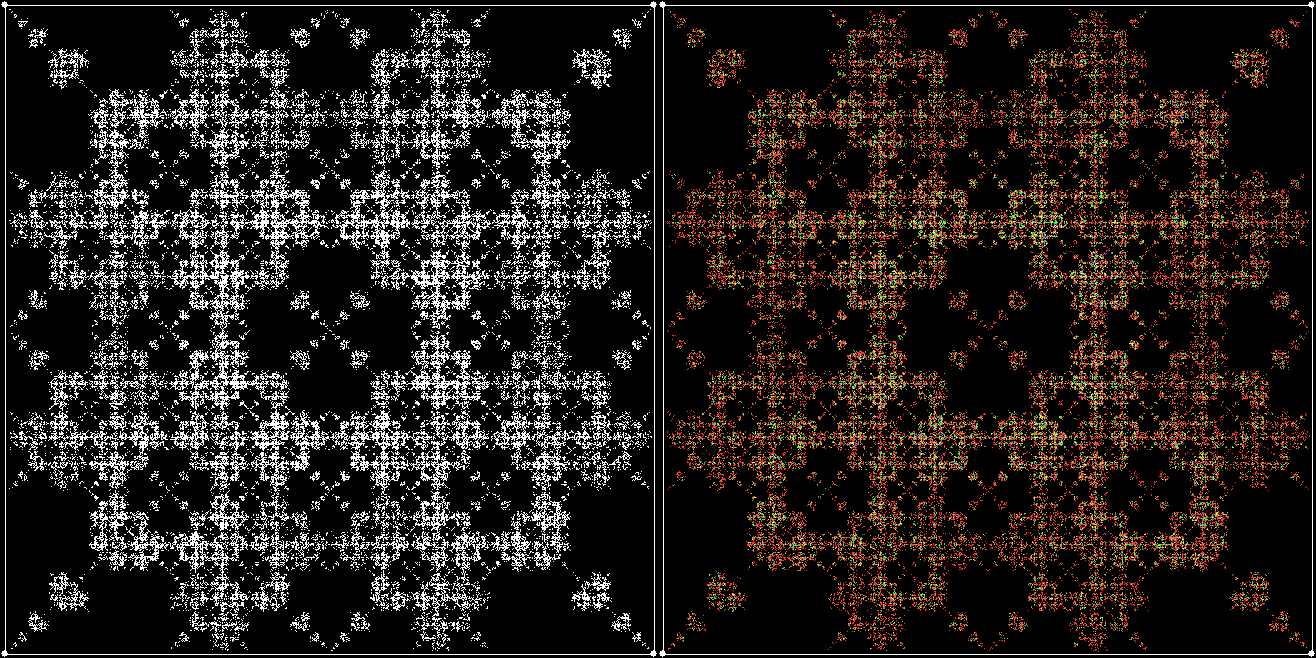
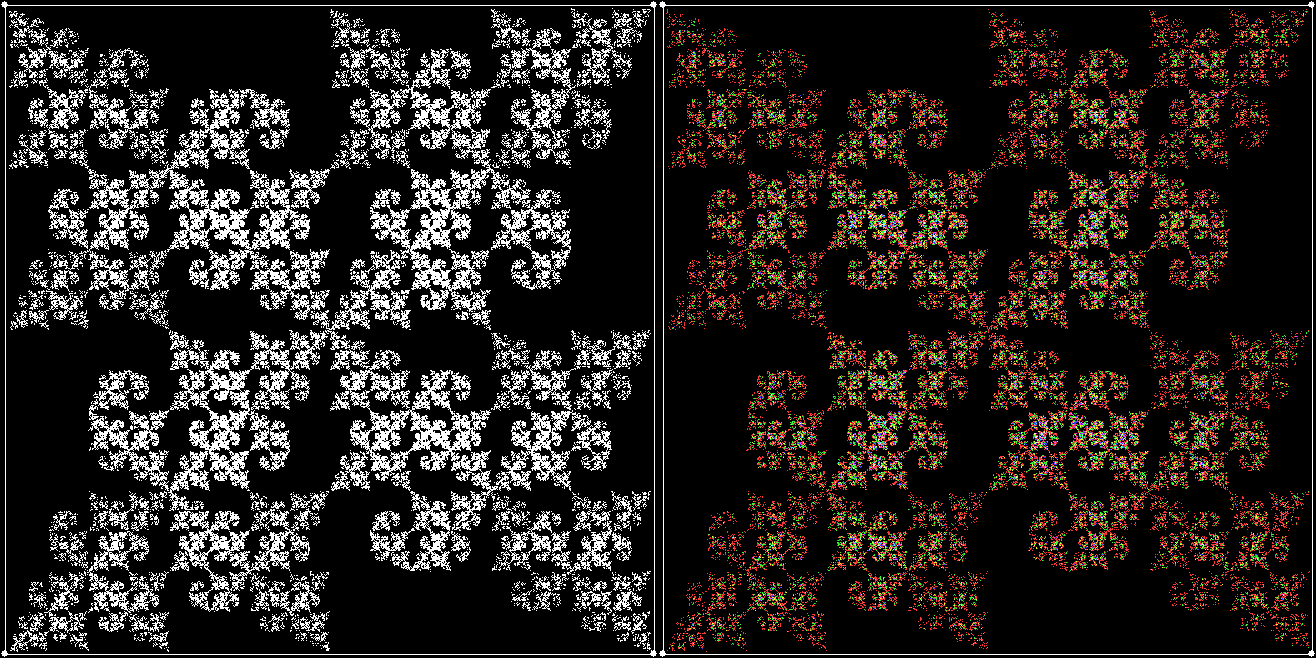
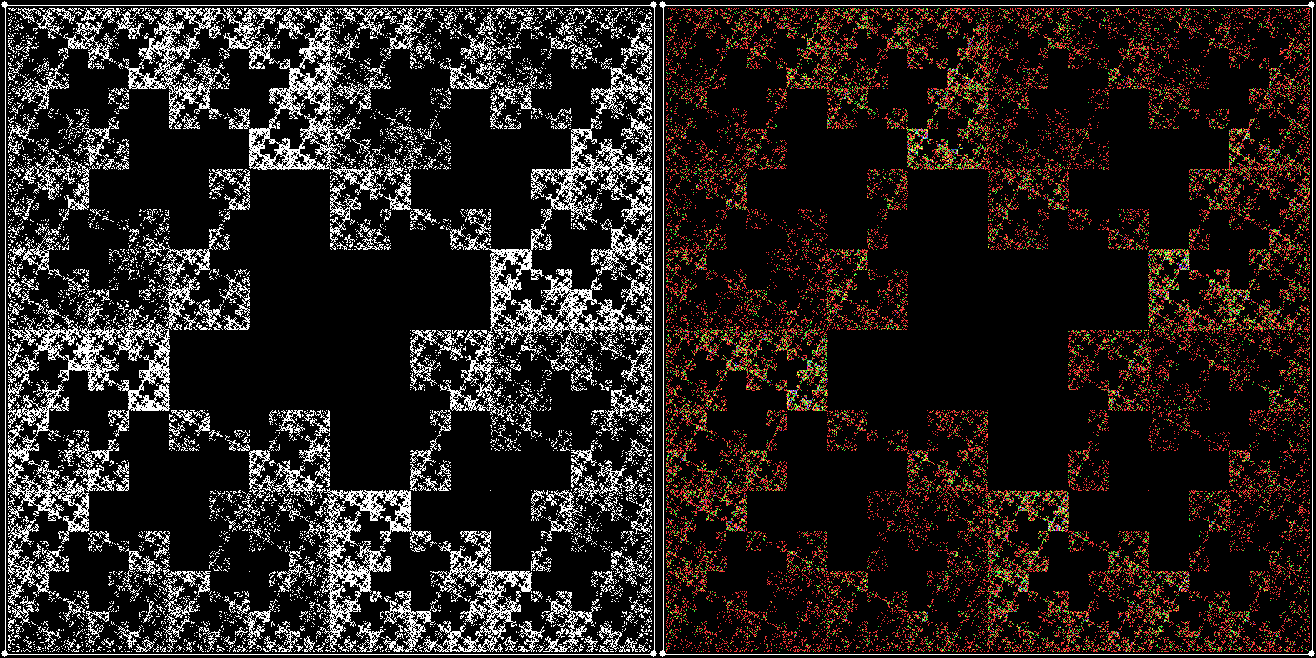
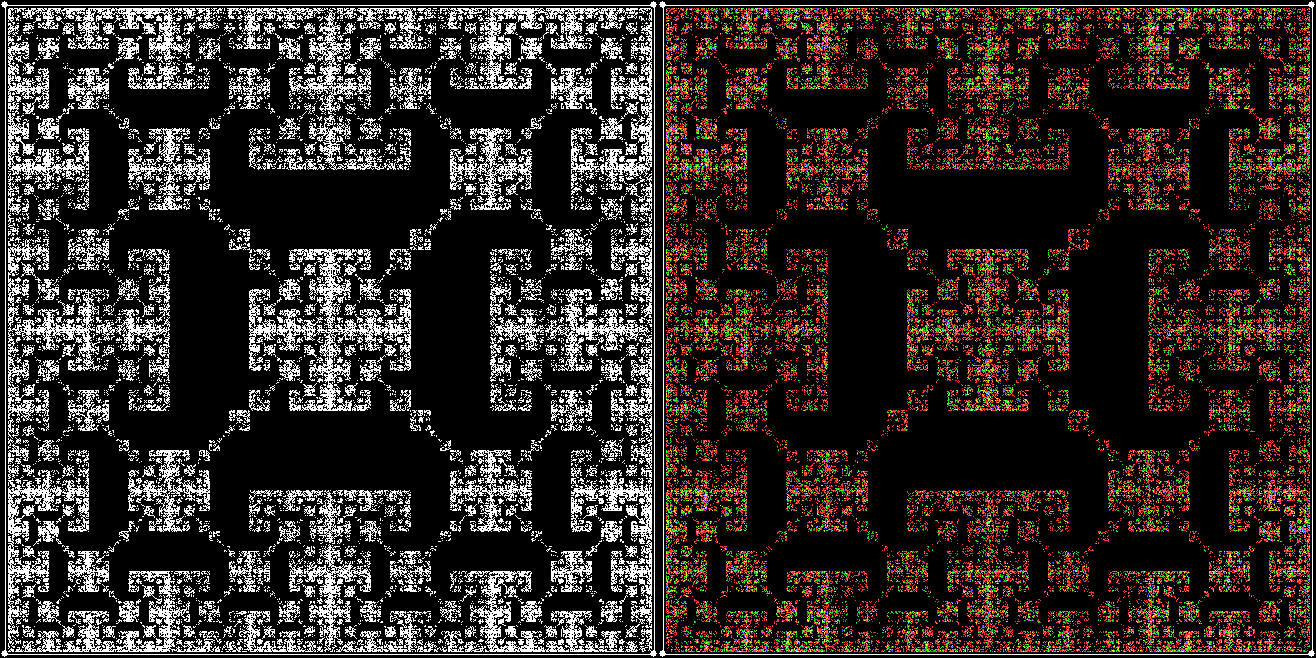
Pre-previously on Overlord-In-Terms-of-Issues-Around-Engagement-with-the-Über-Feral, I’ve looked at various ways of creating fractals by restricting the moves of a point jumping towards the vertices of a polygon. For example, the point can be banned from jumping towards the same vertex twice in a row. This time, I want to look at fractals created not by restriction, but by compulsion. If the point jumps towards vertex v and then tries to jump towards vertex v again, it will be forced to jump towards vertex v+1 instead, and so on.

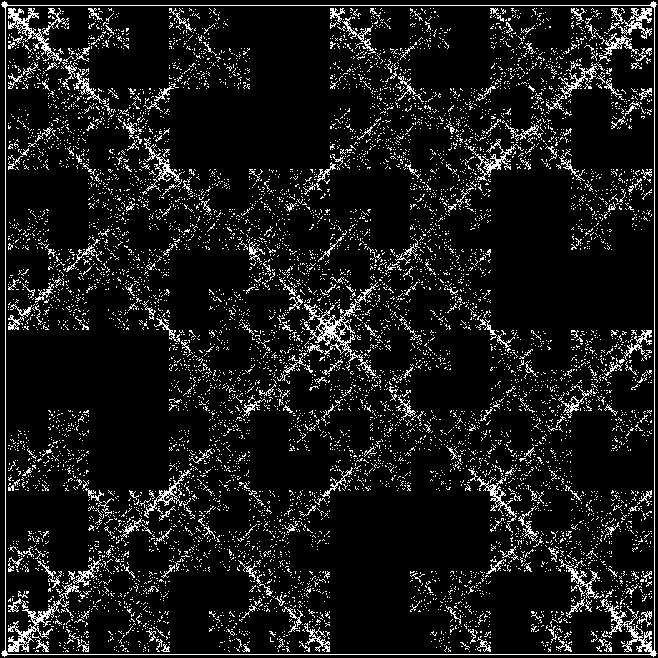
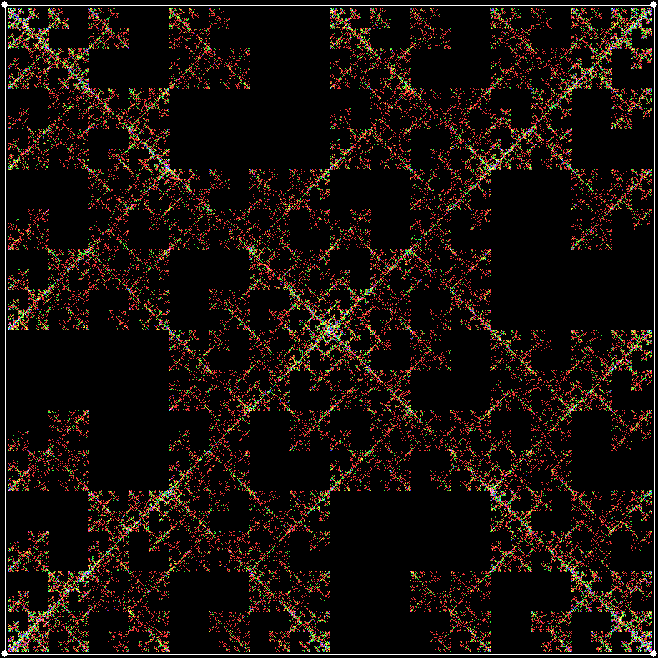
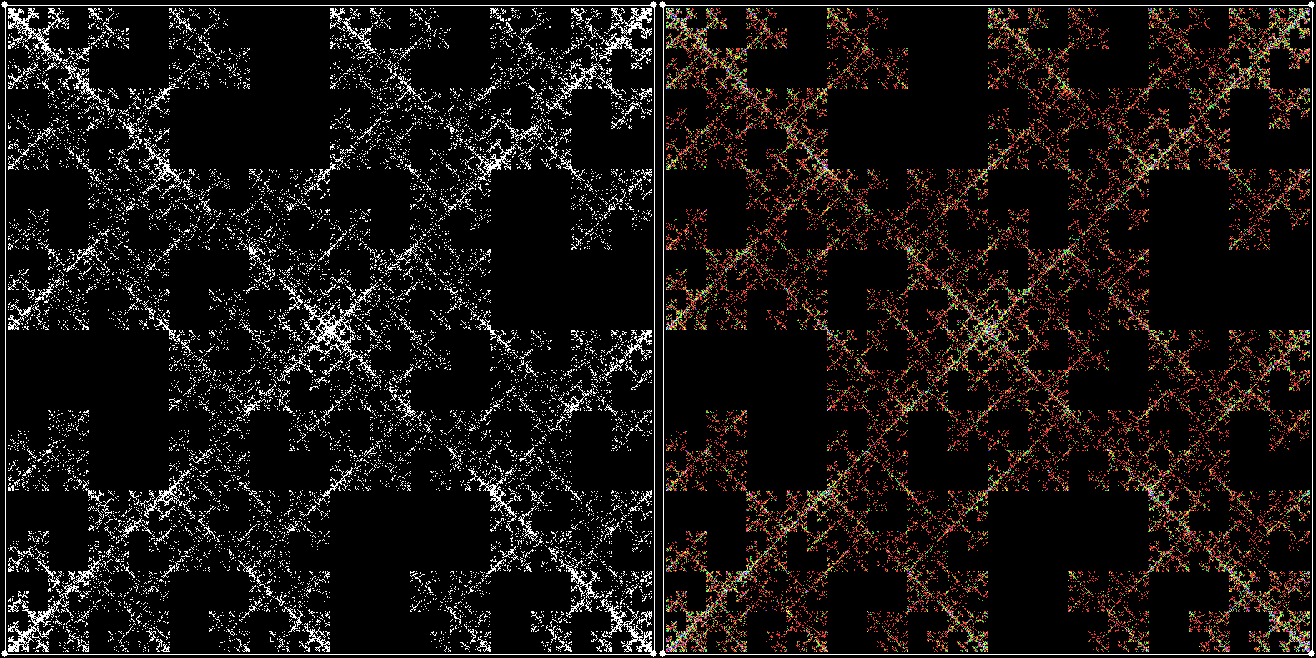
You could call vv+1 a forced increment or finc. So these are finc fractals. In some cases, restriction and compulsion create the same fractals, but I’ve found some new fractals using compulsion. Consider the fractal created by the rule v[-2]+1, v[-1] → +0,+1, where the subscripts refer to the history of jumps: v[-2] is the jump-before-last, v[-1] is the last jump. If the new vertex, v[0], chosen is the same as v[-2]+1 (e.g., v[0] = 2 = v[-2]+1 = 1+1), then the forced increment is 0, i.e., the point is allowed to choose that jump. However, if v[0] = v[-1], then the forced increment is 1 and the point must jump towards v[-1]+1.

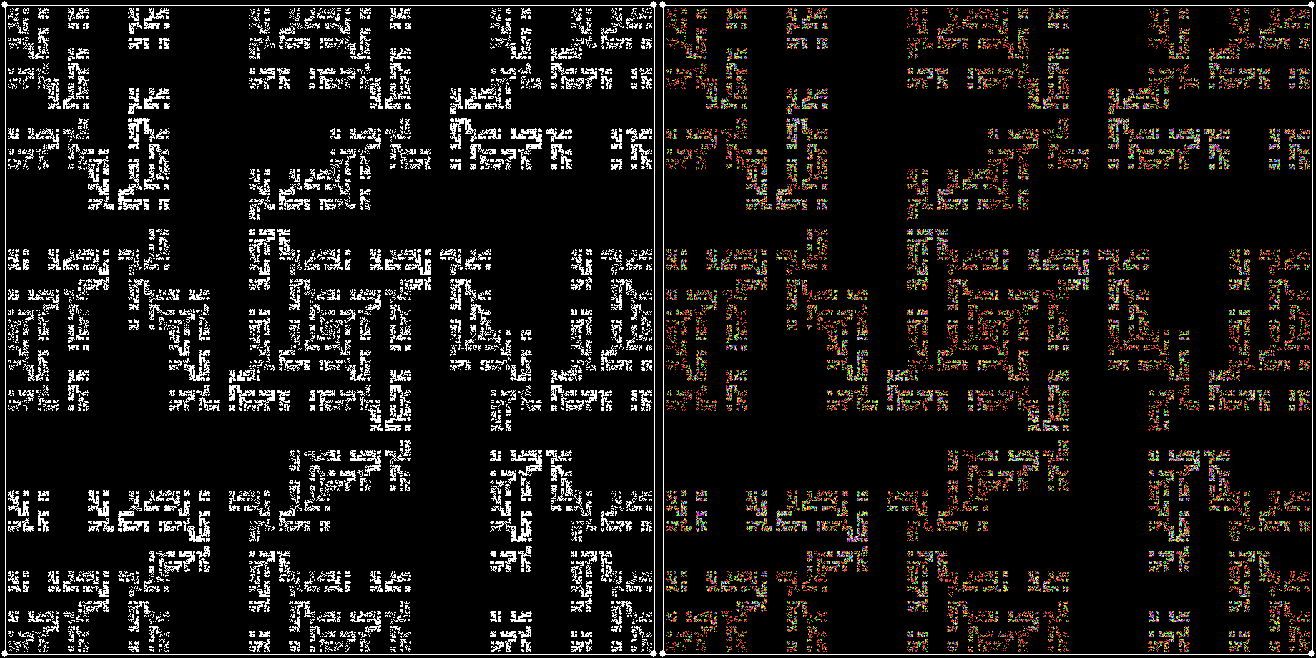
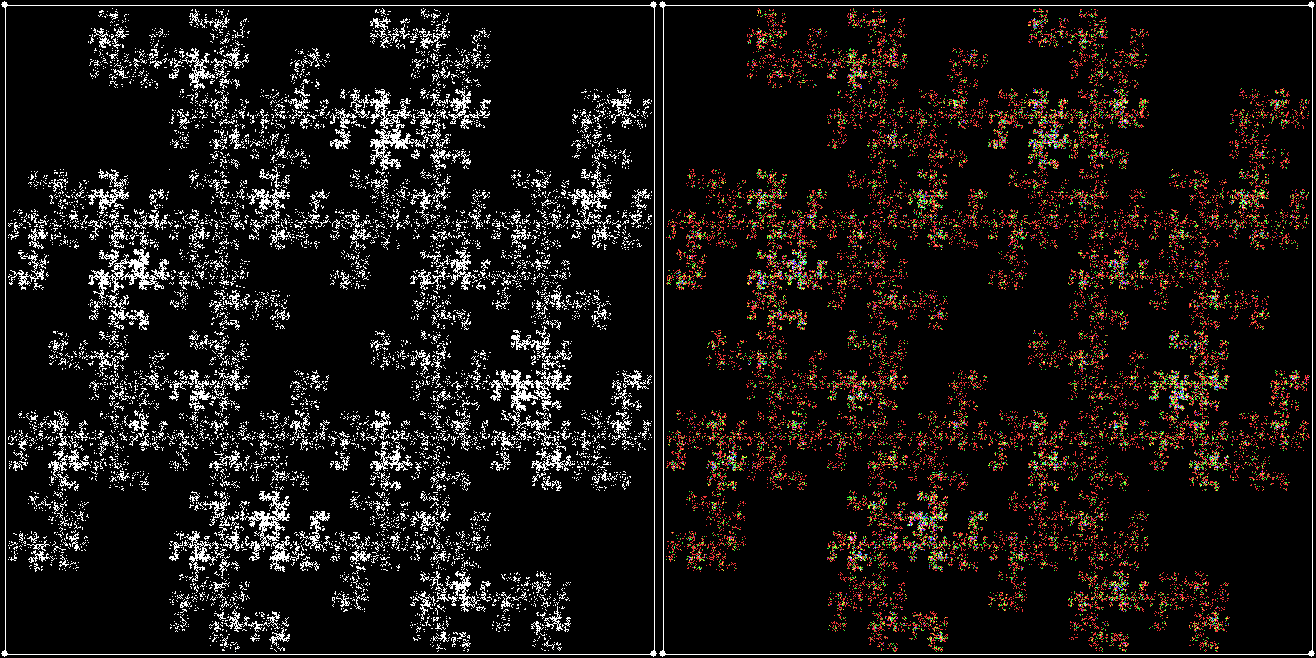
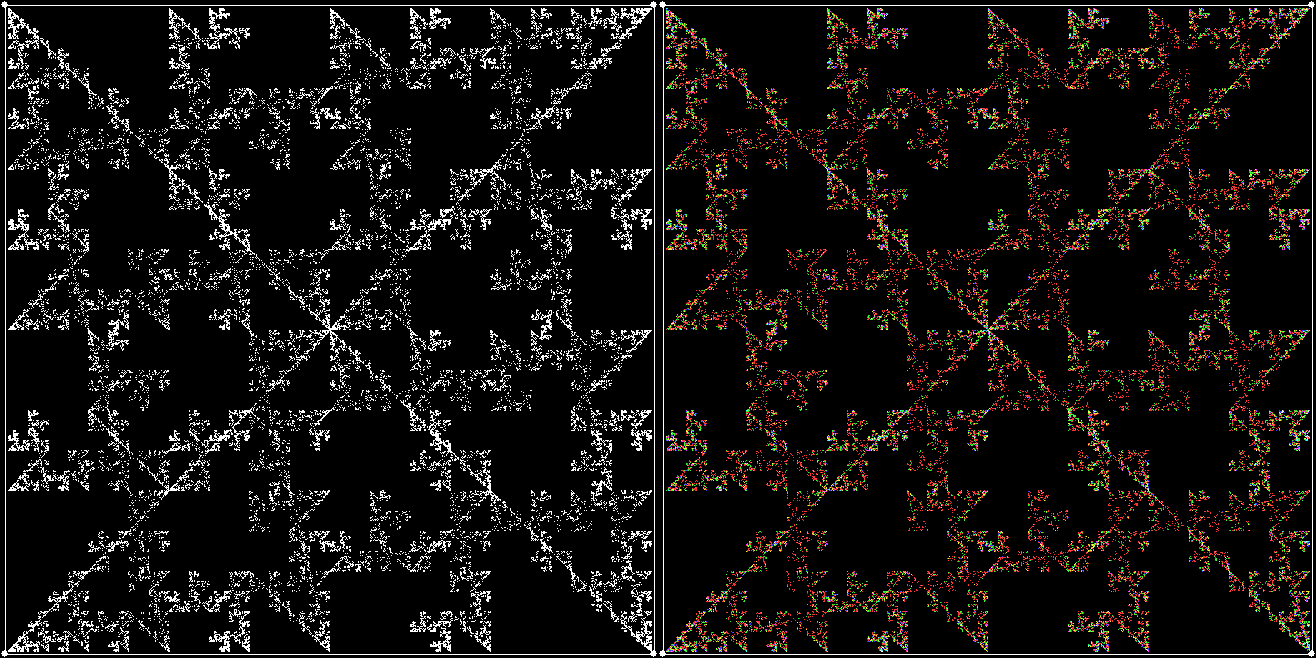
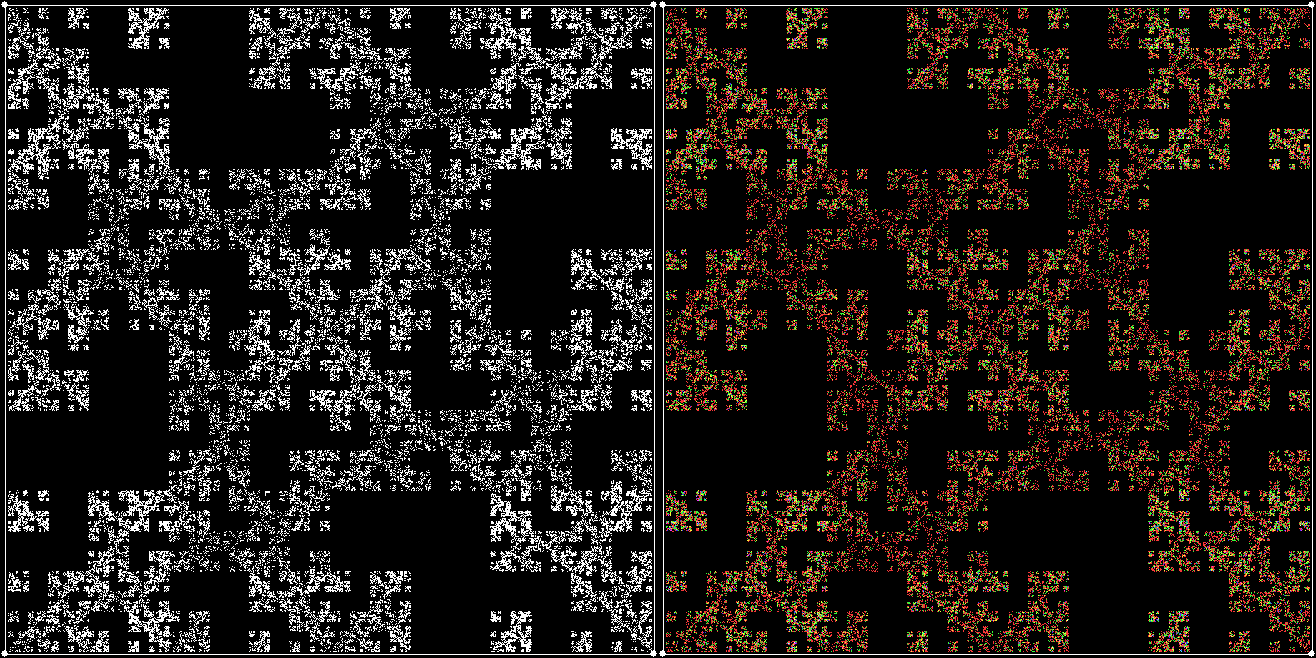
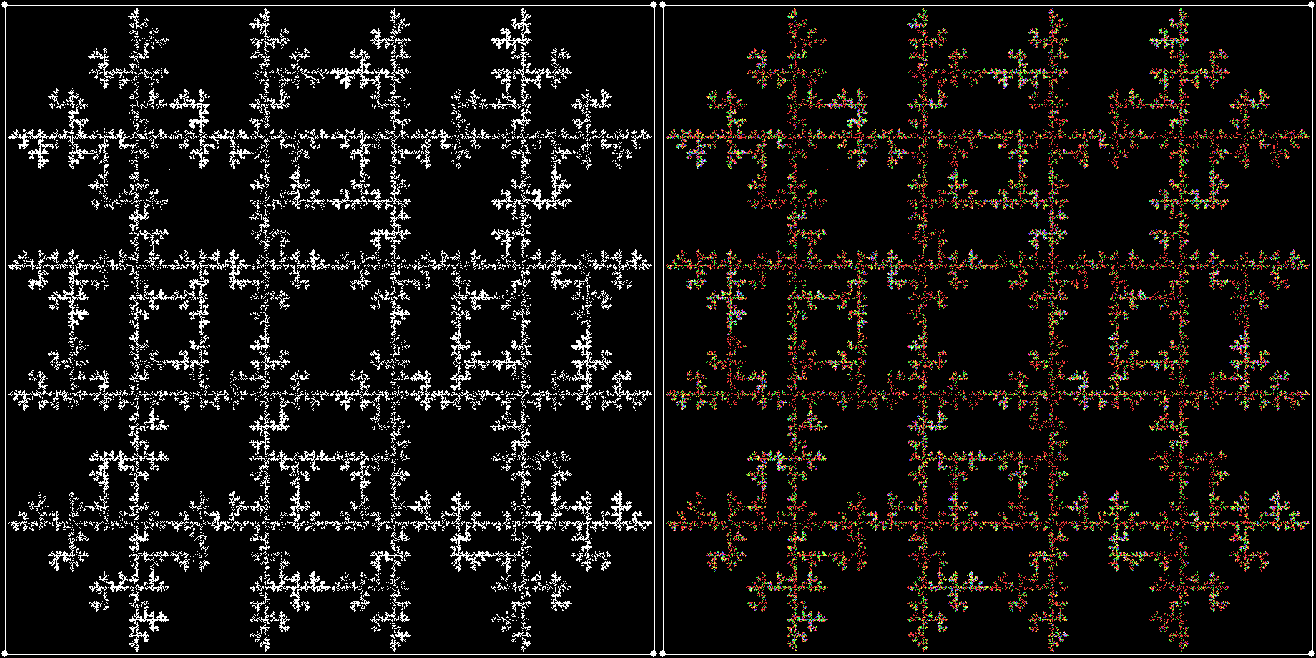
Here is the fractal in question:

v[-2]+1, v[-1] → +0,+1 (black-and-white)


v[-2]+1, v[-1] → +0,+1 (colour)


1,0 → +0,+1 (animated)


1,0 → +1,+0 (bw)


1,0 → +1,+0 (col)


1,0 → +1,+0 (anim)


1,0 → +1,+1 (bw)


1,0 → +1,+1 (col)


1,0 → +1,+1 (animated)


0,1 → +2,+1 (anim)


0,1 → +3,+1


1,0 → +0,+1


1,0 → +1,+0


1,1 → +0,+1


1,1 → +1,+2


1,1 → +1,+3


1,1 → +2,+1


1,2 → +0,+3


1,3 → +0,+1


2,2 → +0,+1


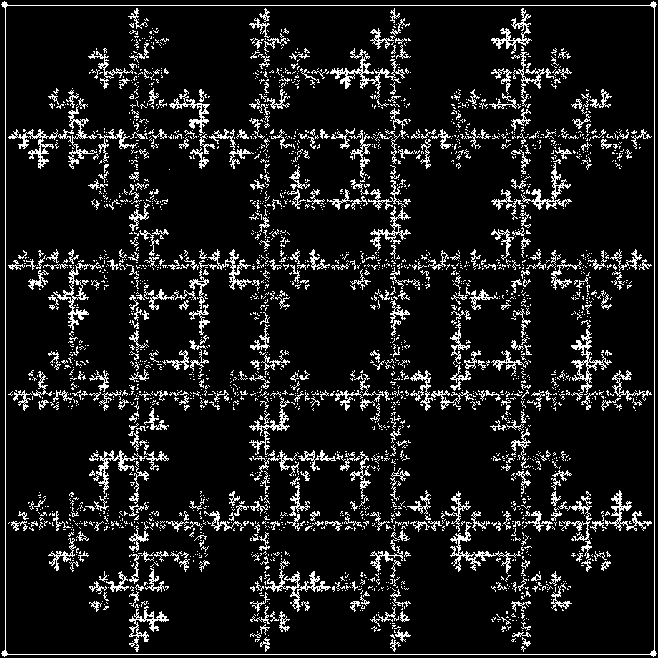
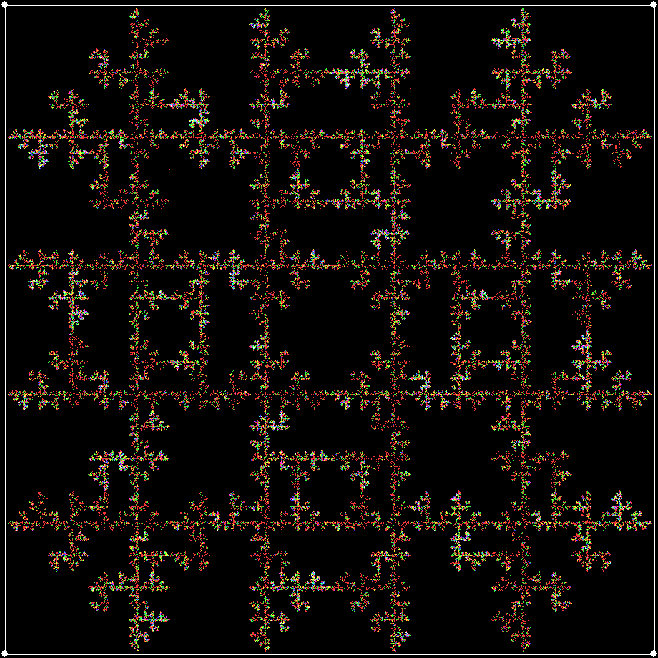
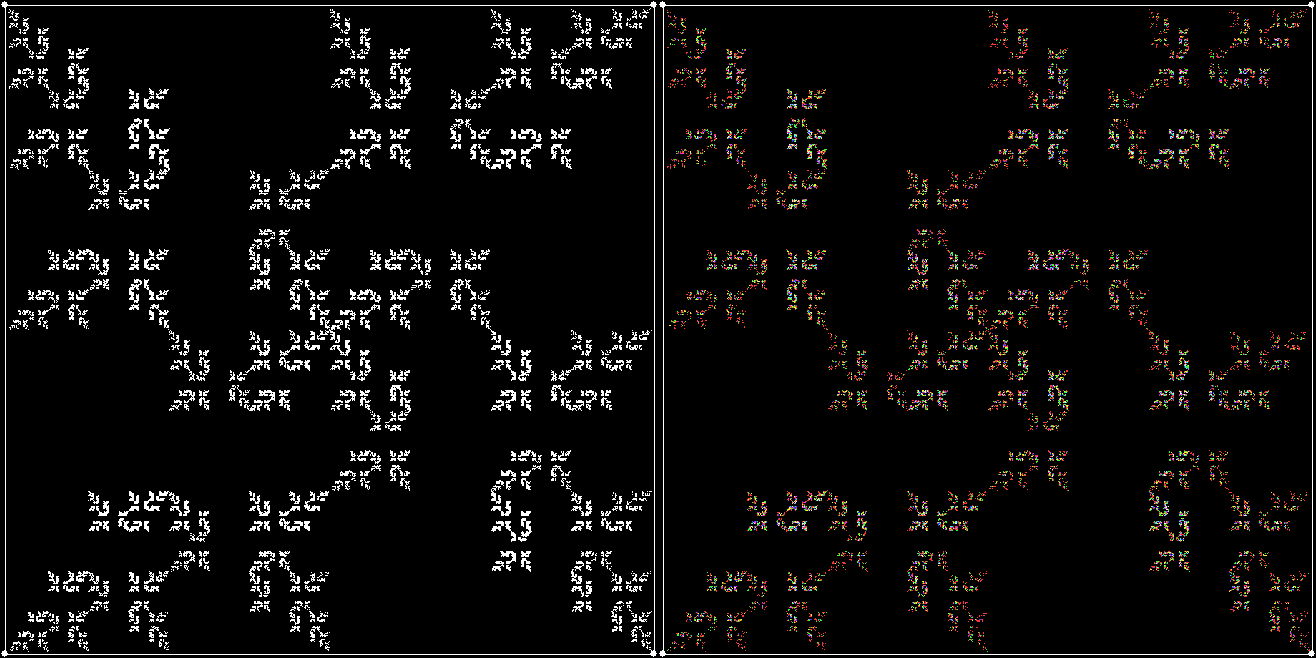
But suppose the history of jumps records not actual jumps, but the jumps the point wanted to make instead. In some cases, the jump made will be the same as the jump originally chosen, but in other cases it won’t. Here are some fractals using this method:

0 → +2


0 → +3


2 → +1


2 → +2


Oh My G.O.T.T.

I didn’t feel the need to read this. Just knowing it’s there is enough.

Coming Out as a Gay Orthodox Talmud Teacher

It would have been even better if it had been in The Guardian, but this is an imperfect world.