Wander in Woods

Errantes silva in magna et sub luce maligna
inter harundineasque comas gravidumque papaver
et tacitos sine labe lacus, sine murmure rivos,
quorum per ripas nebuloso lumine marcent
fleti, olim regum et puerorum nomina, flores.

Cupido Cruciatur, Decimius Magnus Ausonius (c.310-c.395)


They wander in deep woods, in mournful light,
Amid long reeds and drowsy headed poppies,
and lakes where no wave laps, and voiceless streams,
Upon whose banks in the dim light grow old
Flowers that were once bewailed names of kings.

• translated by Helen Waddell in her Medieval Latin Lyrics (1929)

Limerique Ophtalmodontique

Il était un gendarme à Nanteuil,
Qui n’avait qu’une dent et qu’un oeil;
    Mais cet oeil solitaire
    Était plein de mystère;
Cette dent, d’importance et d’orgueil. — George du Maurier (1834-96)


Elsewhere other-accessible

Vers Nonsensiques — more by du Maurier

Wotta Lotta Glotta

I once wrote a story about a drug called panglossium that allowed those who took it to speak all the languages that have ever existed – the living ones and the dead ones, the ones spoken by billions and the ones spoken by a dwindling remnant, the ones of which the hand of history holds a few tiny glittering feathers and the ones that have evaded the hand of history entirely. Panglossium would allow you to speak all of them, in every dialect and every mode. And to read and write them too, if they had an alphabet or an ideography.

One of the things I was interested in was what kind of literature users of panglossium would create for each other. I don’t think they would choose to write in a single language: they would mix languages (and it seems very unlikely that they would use much or perhaps any English). But I do think they would come closer to capturing the multitudinous flux of reality, which, in our reality, you can’t capture more than a sliver of when you use a single language. Or when you use a dozen languages, as some polyglots can in our reality. Maybe irreal panglossium would allow you to take a handful of reality or more.

I was reminded of panglossium recently because I wanted to write a poem about something I’d seen and been moved by: a band of white clouds and blue sky across which a gull slid swiftly on stationary wings. But I couldn’t do it to the standard I wanted. I couldn’t capture what I saw in two or three seconds: the grace of the gull gliding across the blue-and-white beauty of the sky. The gull wasn’t “gliding”, for example. That’s too slow a word. And I didn’t want to write a poem about my inability to capture that scene, because I’ve written one before about that inability:

Verbol

Green on green on green
The light befalls me clean,
Beneath the birds.

And how I can capture
This mute green rapture
In blinded words? (7viii21)

The title of that poem is panglossic, in a way. And the poem itself did reach the standard required, because not-reaching-the-standard is part of the point of the poem. And even the greatest poet can’t reach the full standard and fully capture a scene like that. But some can get much closer than others, as Housman explained in his study of Swinburne:

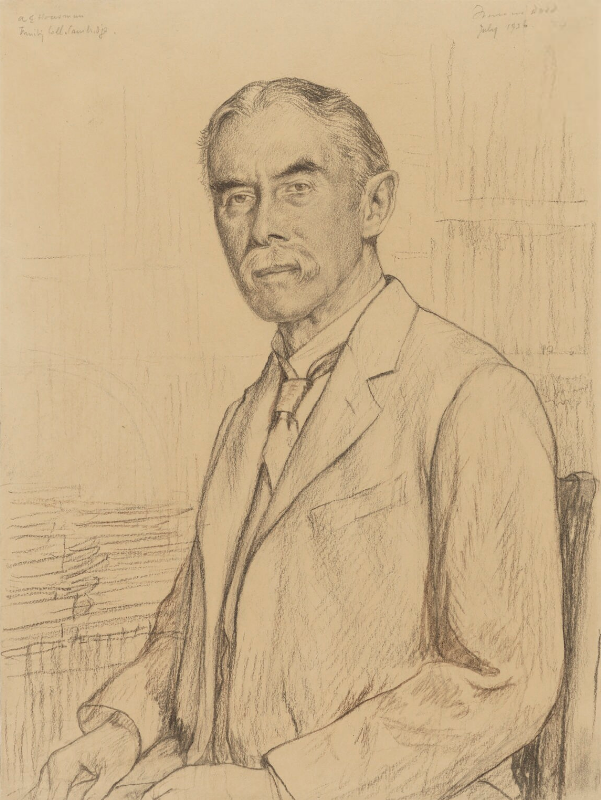
If even so bare and simple an object as the sea was too elusive and delicate for Swinburne’s observation and description, you would not expect him to have much success with anything so various and manifold as the surface of the earth. And I am downright aghast at the dullness of perception and lack of self-knowledge and self-criticism which permitted him to deposit his prodigious quantity of descriptive writing in the field of English literature. That field is rich beyond example in descriptions of nature from the hands of unequalled masters, for in the rendering of nature English poetry has outdone all poetry: and here, after five centuries, comes Swinburne covering the grass with his cartload of words and filling the air with the noise of the shooting of rubbish. It is a clear morning towards the end of winter: snow has fallen in the night, and still lies on the branches of the trees under brilliant sunshine. Tennyson would have surveyed the scene with his trained eye, made search among his treasury of choice words, sorted and sifted and condensed them, till he had framed three lines of verse, to be introduced one day in a narrative or a simile, and there to flash upon the reader’s eye the very picture of a snowy and sunshiny morning. Keats or Shakespeare would have walked between the trees thinking of whatever came uppermost and letting their senses commune with their souls; and there the morning would have transmuted itself into half a line or so which, occurring in some chance passage of their poetry, would have set the reader walking between the same trees again. Swinburne picks up the sausage-machine into which he crammed anything and everything; round goes the handle, and out at the other end comes this noise:

Ere frost-flower and snow-blossom faded and fell, and the splendour of winter had passed out of sight,
The ways of the woodlands were fairer and stranger than dreams that fulfil us in sleep with delight;
The breath of the mouths of the winds had hardened on tree-tops and branches that glittered and swayed
Such wonders and glories of blossomlike snow or of frost that outlightens all flowers till it fade
That the sea was not lovelier than here was the land, nor the night than the day, nor the day than the night,
Nor the winter sublimer with storm than the spring: such mirth had the madness and might in thee made,
March, master of winds, bright minstrel and marshal of storms that enkindle the season they smite.

That is not all, it clatters on for fifty lines or so; but that is enough and too much. It shows what nature was to Swinburne: just something to write verse about, a material for making a particular kind of sausage.

But what would Tennyson or Keats or Shakespeare have been able to write after taking panglossium?


Elsewhere other-accessible…

Poems and Brickbats – Housman’s study of Swinburne
Verbol – (commentary on) my poem about inability and inadequacy

Lux Legibilis

I wake from dreams and turning
     My vision on the height
I scan the beacons burning
     About the fields of night.

Each in its steadfast station
     Inflaming heaven they flare;
They sign with conflagration
     The empty moors of air.

The signal-fires of warning
     They blaze, but none regard;
And on through night to morning
     The world runs ruinward. — A.E. Housman in More Poems (1936)


There was a young fellow named Bright
Who travelled much faster than light.
     He set off one day,
     In a relative way
And came back the previous night. — Anonymous

Tête avec Texte


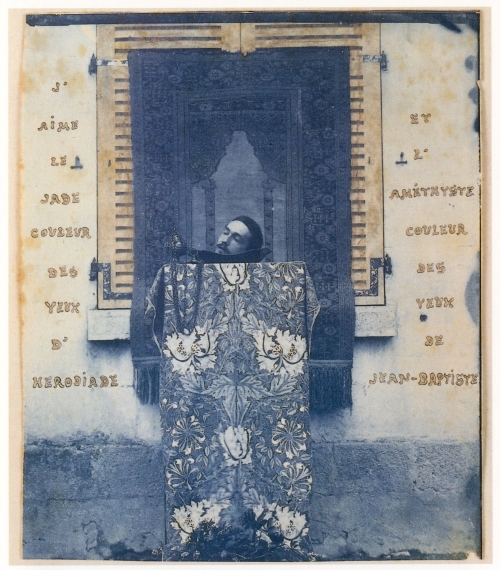
Above you can see the Peacock on a Platter, or Robert de Montesquiou posing as the severed head of John the Baptist and flanked by relevant lines of his own poetry. But there’s a better version of the poetry, as you can see by comparing the photo with this:

J’aime le jade,
Couleur des yeux
D’Hérodiade

Et l’améthyste,
Couleur du sang
De Jean-Baptiste. — from “Robert de Montesquiou: The Magnificent Dandy” (1962) by Cornelia Otis Skinner


I love jade,
Color of the eyes
Of Herodias

And amethyst,
Color of the blood
Of John the Baptist.


Elsewhere Other-Accessible…

Portrait of a Peacock — Cornelia Otis Skinner’s excellent essay on Montesquiou
Le Paon dans les Pyrénées — review of Julian Barnes’ not-so-good book partly about Montesquiou

Hymn to Heresy

Hymn to Proserpine

After the Proclamation in Rome
of the Christian Faith

by ALGERNON CHARLES SWINBURNE


Vicisti, Galilæe.

I have lived long enough, having seen one thing, that love hath an end;
Goddess and maiden and queen, be near me now and befriend.
Thou art more than the day or the morrow, the seasons that laugh or that weep;
For these give joy and sorrow; but thou, Proserpina, sleep.
Sweet is the treading of wine, and sweet the feet of the dove;
But a goodlier gift is thine than foam of the grapes or love.
Yea, is not even Apollo, with hair and harpstring of gold,
A bitter God to follow, a beautiful God to behold?
I am sick of singing; the bays burn deep and chafe: I am fain
To rest a little from praise and grievous pleasure and pain.
For the Gods we know not of, who give us our daily breath,
We know they are cruel as love or life, and lovely as death.
O Gods dethroned and deceased, cast forth, wiped out in a day!
From your wrath is the world released, redeemed from your chains, men say.
New Gods are crowned in the city; their flowers have broken your rods;
They are merciful, clothed with pity, the young compassionate Gods.
But for me their new device is barren, the days are bare;
Things long past over suffice, and men forgotten that were.
Time and the Gods are at strife; ye dwell in the midst thereof,
Draining a little life from the barren breasts of love.
I say to you, cease, take rest; yea, I say to you all, be at peace,
Till the bitter milk of her breast and the barren bosom shall cease.
Wilt thou yet take all, Galilean? but these thou shalt not take,
The laurel, the palms and the pæan, the breasts of the nymphs in the brake;
Breasts more soft than a dove’s, that tremble with tenderer breath;
And all the wings of the Loves, and all the joy before death;
All the feet of the hours that sound as a single lyre,
Dropped and deep in the flowers, with strings that flicker like fire.
More than these wilt thou give, things fairer than all these things?
Nay, for a little we live, and life hath mutable wings.
A little while and we die; shall life not thrive as it may?
For no man under the sky lives twice, outliving his day.
And grief is a grievous thing, and a man hath enough of his tears:
Why should he labour, and bring fresh grief to blacken his years?
Thou hast conquered, O pale Galilean; the world has grown grey from thy breath;
We have drunken of things Lethean, and fed on the fullness of death.
Laurel is green for a season, and love is sweet for a day;
But love grows bitter with treason, and laurel outlives not May.
Sleep, shall we sleep after all? for the world is not sweet in the end;
For the old faiths loosen and fall, the new years ruin and rend.
Fate is a sea without shore, and the soul is a rock that abides;
But her ears are vexed with the roar and her face with the foam of the tides.
O lips that the live blood faints in, the leavings of racks and rods!
O ghastly glories of saints, dead limbs of gibbeted Gods!
Though all men abase them before you in spirit, and all knees bend,
I kneel not neither adore you, but standing, look to the end.
All delicate days and pleasant, all spirits and sorrows are cast
Far out with the foam of the present that sweeps to the surf of the past:
Where beyond the extreme sea-wall, and between the remote sea-gates,
Waste water washes, and tall ships founder, and deep death waits:
Where, mighty with deepening sides, clad about with the seas as with wings,
And impelled of invisible tides, and fulfilled of unspeakable things,
White-eyed and poisonous-finned, shark-toothed and serpentine-curled,
Rolls, under the whitening wind of the future, the wave of the world.
The depths stand naked in sunder behind it, the storms flee away;
In the hollow before it the thunder is taken and snared as a prey;
In its sides is the north-wind bound; and its salt is of all men’s tears;
With light of ruin, and sound of changes, and pulse of years:
With travail of day after day, and with trouble of hour upon hour;
And bitter as blood is the spray; and the crests are as fangs that devour:
And its vapour and storm of its steam as the sighing of spirits to be;
And its noise as the noise in a dream; and its depth as the roots of the sea:
And the height of its heads as the height of the utmost stars of the air:
And the ends of the earth at the might thereof tremble, and time is made bare.
Will ye bridle the deep sea with reins, will ye chasten the high sea with rods?
Will ye take her to chain her with chains, who is older than all ye Gods?
All ye as a wind shall go by, as a fire shall ye pass and be past;
Ye are Gods, and behold, ye shall die, and the waves be upon you at last.
In the darkness of time, in the deeps of the years, in the changes of things,
Ye shall sleep as a slain man sleeps, and the world shall forget you for kings.
Though the feet of thine high priests tread where thy lords and our forefathers trod,
Though these that were Gods are dead, and thou being dead art a God,
Though before thee the throned Cytherean be fallen, and hidden her head,
Yet thy kingdom shall pass, Galilean, thy dead shall go down to thee dead.
Of the maiden thy mother men sing as a goddess with grace clad around;
Thou art throned where another was king; where another was queen she is crowned.
Yea, once we had sight of another: but now she is queen, say these.
Not as thine, not as thine was our mother, a blossom of flowering seas,
Clothed round with the world’s desire as with raiment, and fair as the foam,
And fleeter than kindled fire, and a goddess, and mother of Rome.
For thine came pale and a maiden, and sister to sorrow; but ours,
Her deep hair heavily laden with odour and colour of flowers,
White rose of the rose-white water, a silver splendour, a flame,
Bent down unto us that besought her, and earth grew sweet with her name.
For thine came weeping, a slave among slaves, and rejected; but she
Came flushed from the full-flushed wave, and imperial, her foot on the sea.
And the wonderful waters knew her, the winds and the viewless ways,
And the roses grew rosier, and bluer the sea-blue stream of the bays.
Ye are fallen, our lords, by what token? we wise that ye should not fall.
Ye were all so fair that are broken; and one more fair than ye all.
But I turn to her still, having seen she shall surely abide in the end;
Goddess and maiden and queen, be near me now and befriend.
O daughter of earth, of my mother, her crown and blossom of birth,
I am also, I also, thy brother; I go as I came unto earth.
In the night where thine eyes are as moons are in heaven, the night where thou art,
Where the silence is more than all tunes, where sleep overflows from the heart,
Where the poppies are sweet as the rose in our world, and the red rose is white,
And the wind falls faint as it blows with the fume of the flowers of the night,
And the murmur of spirits that sleep in the shadow of Gods from afar
Grows dim in thine ears and deep as the deep dim soul of a star,
In the sweet low light of thy face, under heavens untrod by the sun,
Let my soul with their souls find place, and forget what is done and undone.
Thou art more than the Gods who number the days of our temporal breath;
Let these give labour and slumber; but thou, Proserpina, death.
Therefore now at thy feet I abide for a season in silence. I know
I shall die as my fathers died, and sleep as they sleep; even so.
For the glass of the years is brittle wherein we gaze for a span;
A little soul for a little bears up this corpse which is man.
So long I endure, no longer; and laugh not again, neither weep.
For there is no God found stronger than death; and death is a sleep.
So long I endure, no longer; and laugh not again, neither weep.
For there is no God found stronger than death; and death is a sleep.


Elsewhere Other-Accessible…

• “Hymn to Proserpine” (1866) at Wikipedia

A Poof in a Porker

The great literary scholar and expert psychoanalyst Dr Miriam B. Stimbers has detected castration, clitoridolatry and communal cannibalism in the novels of Jane Austen. I’m not so ambitious. I merely want to detect a poof in a porker’s poetry. Or rather, I want to detect a poof in the poetry of a peer closely associated with a porker.

The porker is Bill Bunter, the fat, lazy and greedy public schoolboy whose misadventures at Greyfriars School were chronicled, under the pseudonym Frank Richards, by the highly prolific Charles Hamilton (1876-1961). One of Bunter’s schoolfellows was the languid and apparently effete peer Lord Mauleverer, who contributed this poem to The Greyfriars Holiday Annual for 1928:

“The Song of the Slacker”, by Lord Mauleverer

Tell me not, in mournful numbers,
Life was meant for toil and hustle;
It was meant for soothing slumbers,
Which relax both mind and muscle.

Life is lovely! Life is topping!
When you lie beneath the shade,
With the ginger-beer corks popping,
And a glorious spread arrayed.

Not enjoyment, and not sorrow,
Is our destined end or way;
But to put off till to-morrow
Work that should be done today!

In the world’s broad field of battle
All wise soldiers take their ease;
And they lie asleep, like cattle,
Underneath the shady trees.

Trust no Future, trust no Present,
Let the dead Past bury its dead!
The only prospect nice and pleasant
Is that of “forty winks” in bed!

“Life is short!” the bards are bawling,
Let’s enjoy it while we may;
On our study sofas sprawling,
Sleeping sixteen hours a day!

Lives of slackers all remind us
We should also rest our limbs;
And, departing, leave behind us,
“Helpful Hints for Tired Tims!”

Helpful hints, at which another
Will, perhaps, just take a peep;
Some exhausted, born-tired brother––
They will send him off to sleep!

While the hustlers are pursuing
Outdoor sports, on land and lake;
Let us, then, be up and doing––
There are several beds to make. – The Greyfriars Holiday Annual for 1928 (1927), Howard Baker abridged edition 1971


I liked the poem when I first read it, but I didn’t spot the parody as soon as I should. It was unexpected, you see, but then it dawned on me that “The Song of the Slacker” must be a parody of a famous poem by the poof-poet A.E. Housman (1859-1936):

REVEILLE

Wake: the silver dusk returning
Up the beach of darkness brims,
And the ship of sunrise burning
Strands upon the eastern rims.

Wake: the vaulted shadow shatters,
Trampled to the floor it spanned,
And the tent of night in tatters
Straws the sky-pavilioned land.

Up, lad, up, ’tis late for lying;
Hear the drums of morning play;
Hark, the empty highways crying
“Who’ll beyond the hills away?”

Towns and countries woo together,
Forelands beacon, belfries call;
Never lad that trod on leather
Lived to feast his heart with all.

Up, lad: thews that lie and cumber
Sunlit pallets never thrive;
Morns abed and daylight slumber
Were not meant for man alive.

Clay lies still, but blood’s a rover;
Breath’s a ware that will not keep.
Up, lad: when the journey’s over
There’ll be time enough to sleep. – A Shropshire Lad (1896), Poem IV


The meter of the two poems is the same, the period is right, and the sentiments of Housman’s call to energy and effort are turned neatly on their heads in Lord Mauleverer’s call to sleep and slackness. And it’s a clever parody, although it’s a little too long. I’m glad to have come across “The Song of the Slacker”, which the second-best parody of Housman I’ve read. Here’s the best:

What, still alive at twenty-two,
A clean, upstanding chap like you?
Sure, if your throat ’tis hard to slit,
Slit your girl’s, and swing for it.

Like enough, you won’t be glad,
When they come to hang you, lad:
But bacon’s not the only thing
That’s cured by hanging from a string.

So, when the spilt ink of the night
Spreads o’er the blotting-pad of light,
Lads whose job is still to do
Shall whet their knives, and think of you.

Hugh Kingsmill’s famous parody of A.E. Housman