Rainbows in the Dark

Iridogorgia sp. octocoral bush with two squat lobsters, Gulf of Mexico


Post-Performative Post-Scriptum

Iridogorgia are corals growing in the dark of the deep Atlantic and Pacific oceans. Part of their name comes from Greek ἶρις, ἰριδος, iris, iridos, “rainbow”, referring to their sometimes iridiscent colors. So they remind me of a Dio song that I’ve never heard but always liked the title of: “Rainbow in the Dark”. In this photo, I also like the contrast between the beauty of the coral and the grotesqueness of the squat lobsters.

Middlemath

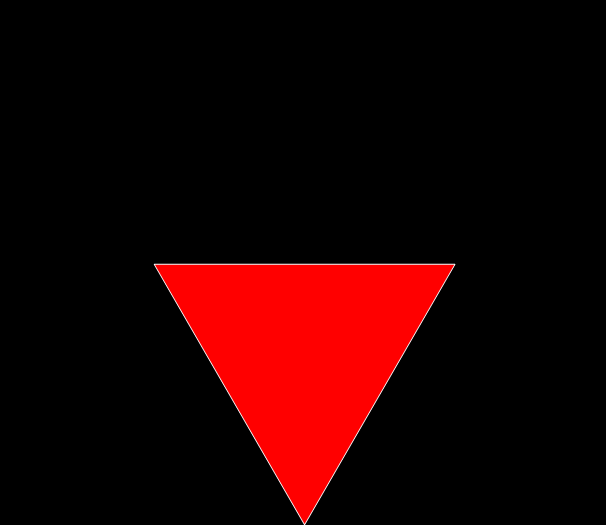
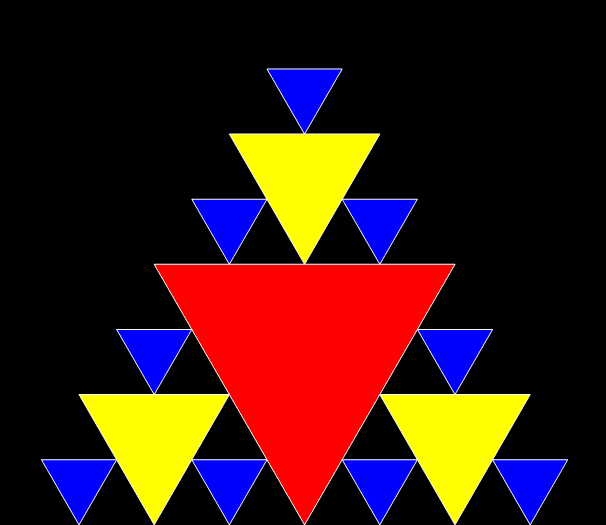
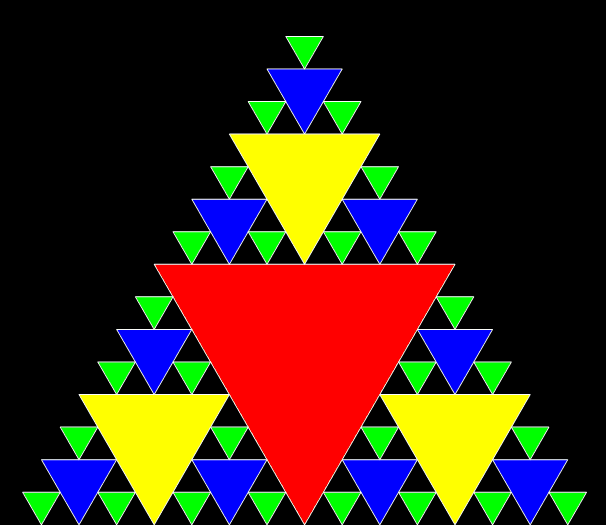
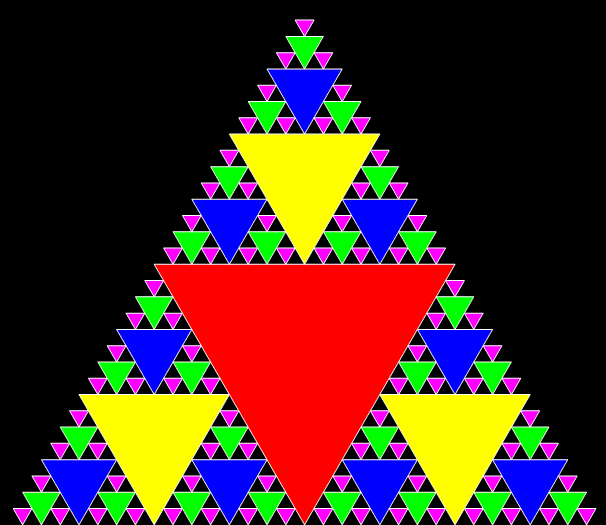
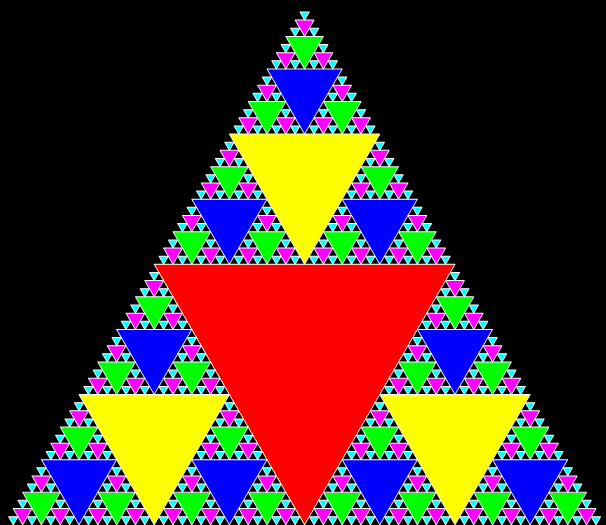
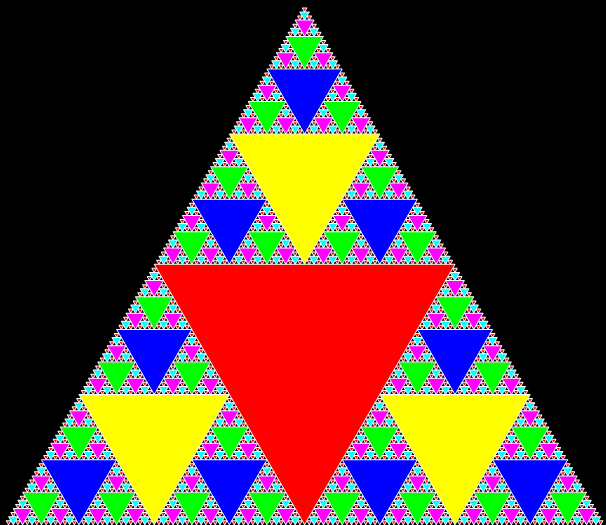
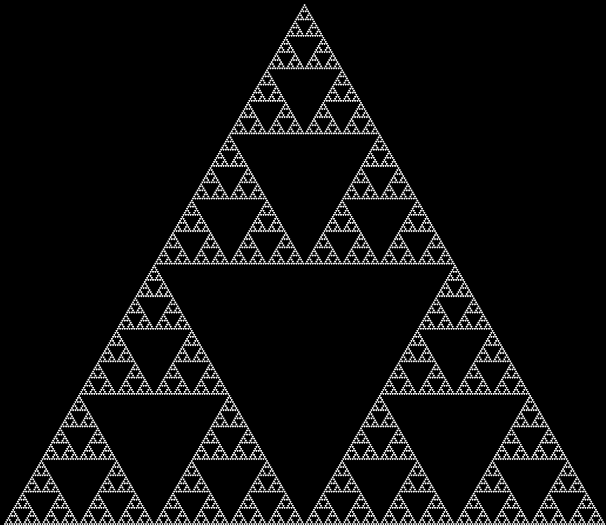
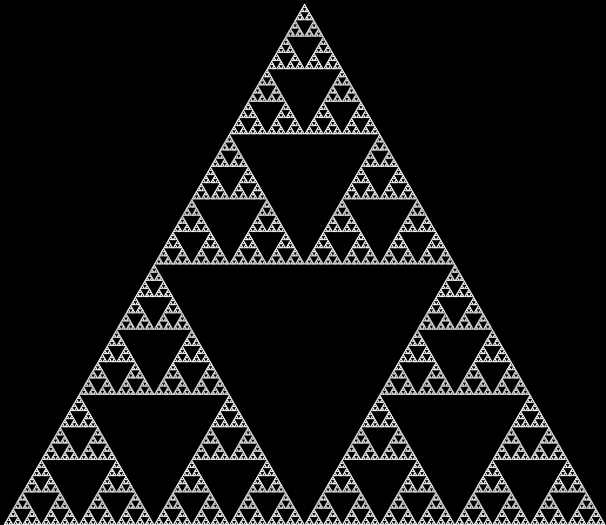
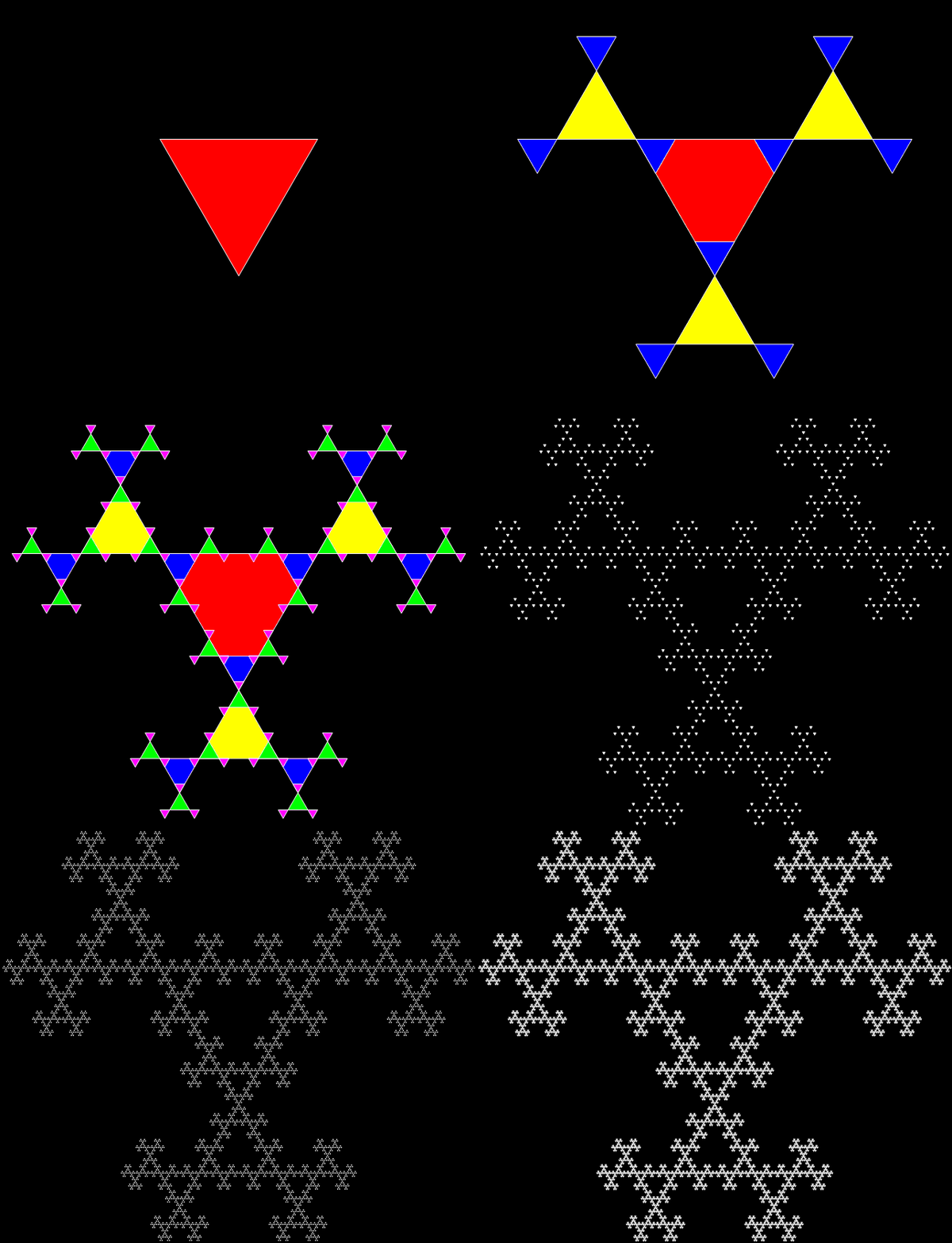
Suppose you start at the middle of a triangle, then map all possible ways you can jump eight times half-way towards one or another of the vertices of the triangle. At the end of the eight jumps, you mark your final position with a dot. You could jump eight times towards the same vertex, or once towards vertex 1, once towards vertex 2, and once again towards vertex 1. And so on. If you do this, the record of your jumps looks something like this:


The shape is a fractal called the Sierpiński triangle. But if you try the same thing with a square — map all possible jumping-routes you can follow towards one or another of the four vertices — you simply fill the interior of the square. There’s no interesting fractal:


So you need a plan with a ban. Try mapping all possible routes where you can’t jump towards the same vertex twice in a row. And you get this:

Ban on jumping towards same vertex twice in a row, v(t) ≠ v(t-1)


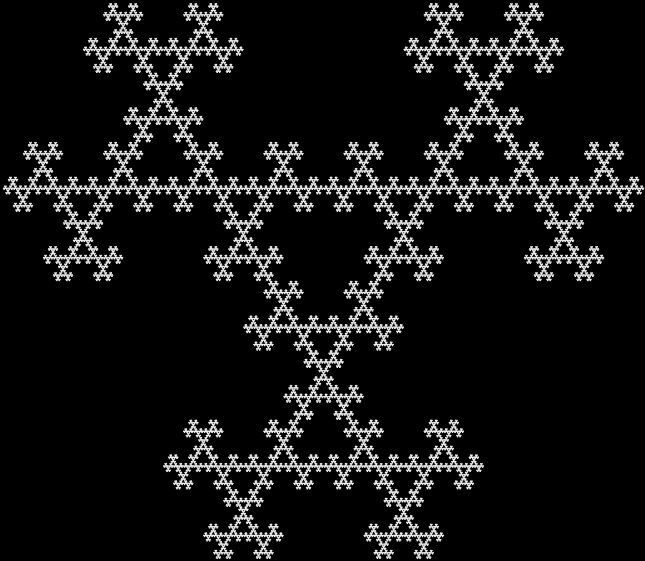
If you call the current vertex v(t) and the previous vertex v(t-1), the ban says that v(t) ≠ v(t-1). Now suppose you can’t jump towards the vertex one place clockwise of the previous vertex. Now the ban is v(t)-1 ≠ v(t-1) or v(t) ≠ v(t-1)+1 and this fractal appears:

v(t) ≠ v(t-1)+1


And here’s a ban on jumping towards the vertex two places clockwise (or counterclockwise) of the vertex you’ve just jumped towards:

v(t) ≠ v(t-1)+2


And finally the ban on jumping towards the vertex three places clockwise (or one place counterclockwise) of the vertex you’ve just jumped towards:

v(t) ≠ v(t-1)+3 (a mirror-image of v(t) ≠ v(t-1)+1, as above)


Now suppose you introduce a new point to jump towards at the middle of the square. You can create more fractals, but you have to adjust the kind of ban you use. The central point can’t be included in the ban or the fractal will be asymmetrical. So you continue taking account of the vertices, but if the previous jump was towards the middle, you ignore that jump. At least, that’s what I intended, but I wonder whether my program works right. Anyway, here are some of the fractals that it produces:

v(t) ≠ v(t-1) with central point (wcp)


v(t) ≠ v(t-1)+1, wcp


v(t) ≠ v(t-1)+2, wcp


And here are some bans taking account of both the previous vertex and the pre-previous vertex:

v(t) ≠ v(t-1) & v(t) ≠ v(t-2), wcp


v(t) ≠ v(t-1) & v(t-2)+1, wcp


v(t) ≠ v(t-1)+2 & v(t-2), wcp


v(t) ≠ v(t-1) & v(t-2)+1, wcp


v(t) ≠ v(t-1)+1 & v(t-2)+1, wcp


v(t) ≠ v(t-1)+2 & v(t-2)+1, wcp


v(t) ≠ v(t-1)+3 & v(t-2)+1, wcp


v(t) ≠ v(t-1) & v(t-2)+2, wcp


v(t) ≠ v(t-1)+1 & v(t-2)+2, wcp


v(t) ≠ v(t-1)+2 & v(t-2)+2, wcp


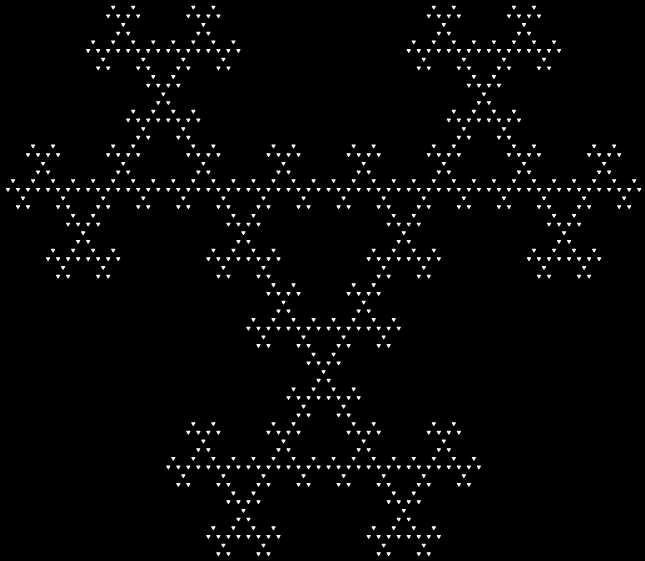
Now look at pentagons. They behave more like triangles than squares when you map all possible jumping-routes towards one or another of the five vertices. That is, a fractal appears:

All possible jumping-routes towards the vertices of a pentagon


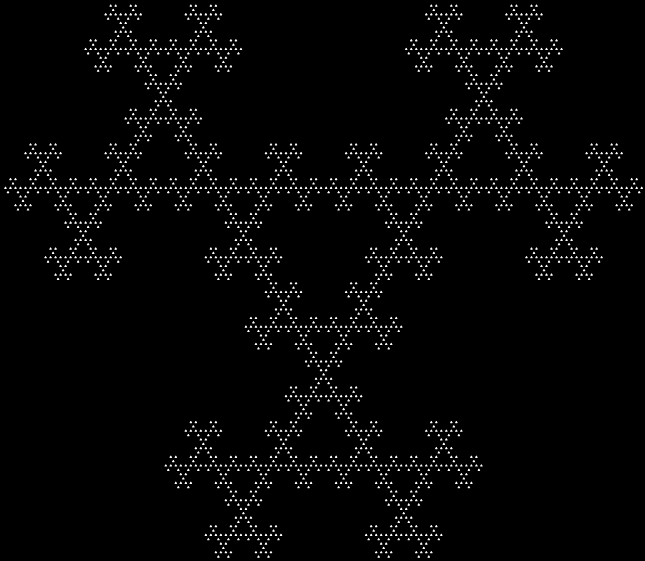
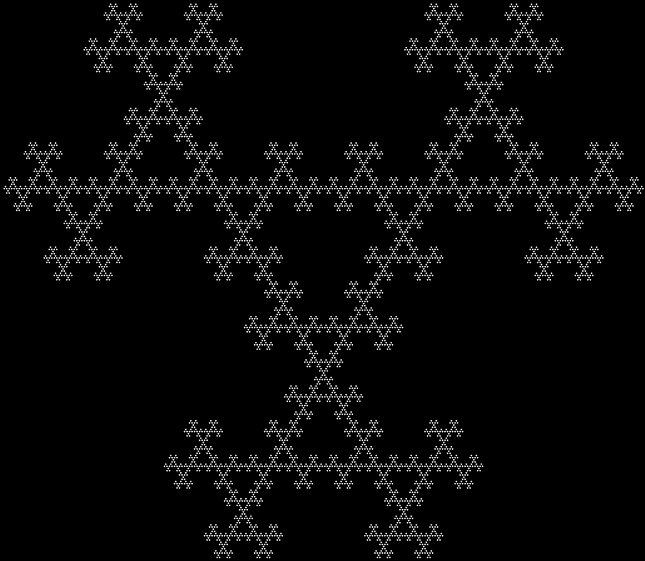
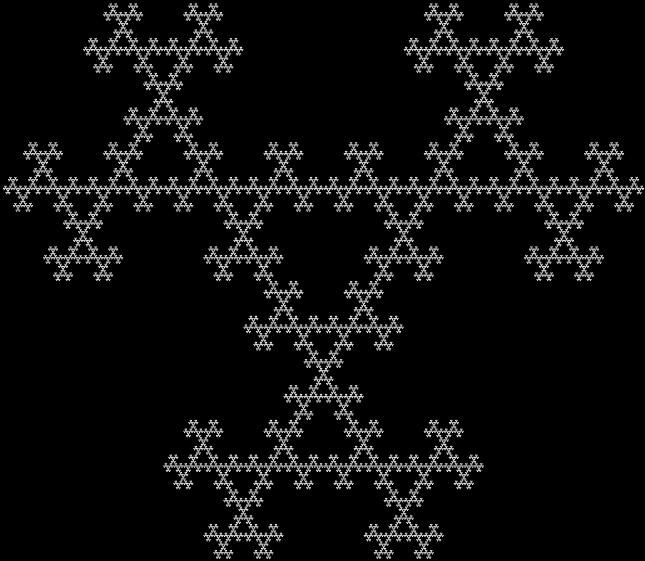
But the pentagonal-jump fractals get more interesting when you introduce jump-bans:

v(t) ≠ v(t-1)


v(t) ≠ v(t-1)+1


v(t) ≠ v(t-1)+2


v(t) ≠ v(t-1) & v(t-2)


v(t) ≠ v(t-1)+2 & v(t-2)


v(t) ≠ v(t-1)+1 & v(t-2)+1


v(t) ≠ v(t-1)+3 & v(t-2)+1


v(t) ≠ v(t-1)+1 & v(t-2)+2


v(t) ≠ v(t-1)+2 & v(t-2)+2


v(t) ≠ v(t-1)+3 & v(t-2)+2


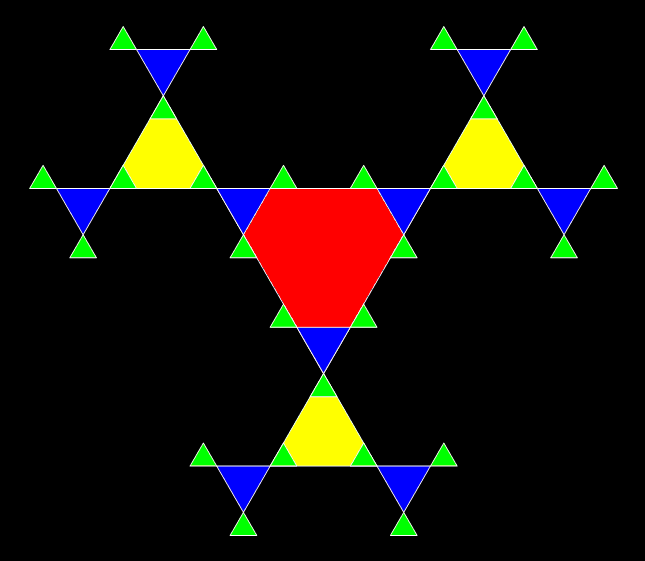
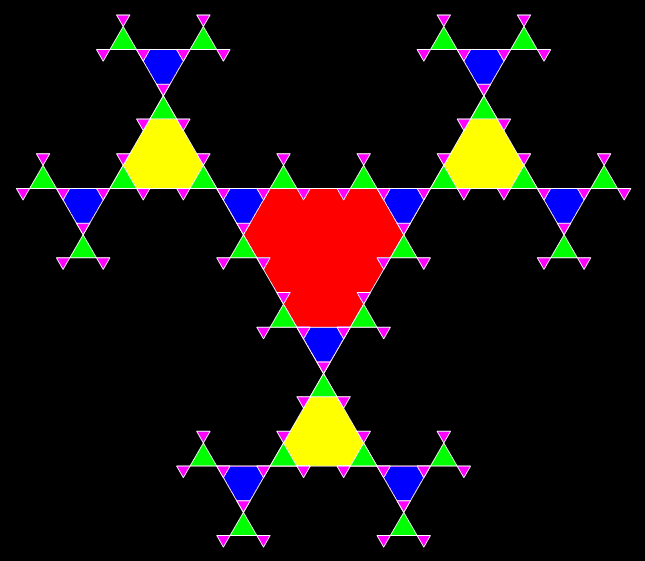
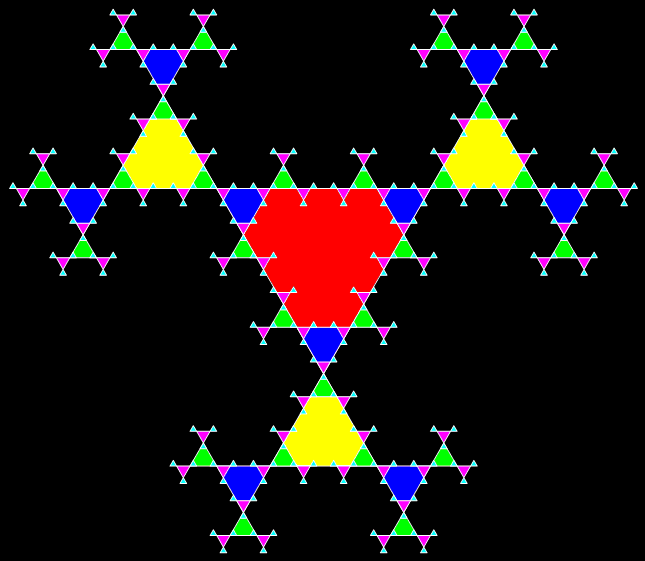
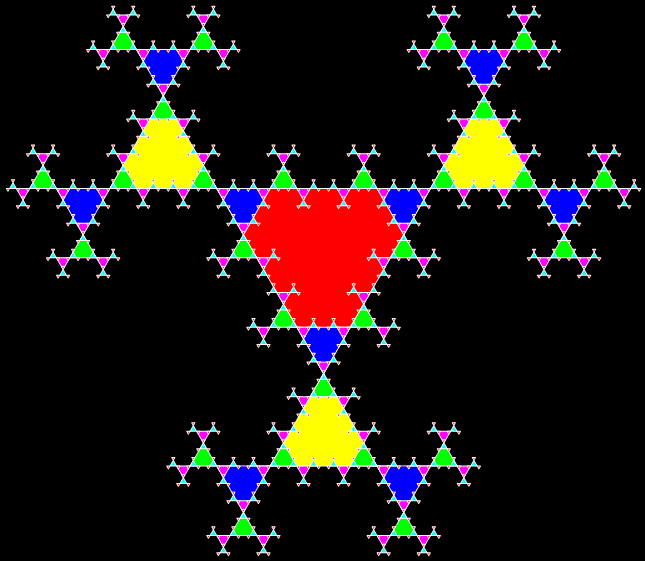
Finally, here are some pentagonal-jump fractals using a central point:


Post-Performative Post-Scriptum

I’m not sure if I’ve got the order of some bans right above. For example, should v(t) ≠ v(t-1)+1 & v(t-2)+2 really be v(t) ≠ v(t-1)+2 & v(t-2)+1? I don’t know and I’m not going to check. But the idea of jumping-point bans is there and that’s all you need if you want to experiment with these fractal methods for yourself.

Pascal’s Paradox

« Je n’ai fait celle-ci plus longue que parce que je n’ai pas eu le loisir de la faire plus courte. » — Blaise Pascal, Lettres provinciales (1657)

“I’ve made this [letter] longer only because I haven’t had time to make it shorter.” — Blaise Pascal

Performativizing Papyrocentricity #70

Papyrocentric Performativity Presents…

Fish, Not FrogDizionario Italiano: Dizionario della Lingua Contemporanea (Vallardi 2017)

Headstrong, Heroic and Hellbent on Glory – The Brigadier Gerard stories of Arthur Conan Doyle

Art of DarknessArt-Bandit: Interrogating the Outlaw Aesthetics of Über-Maverick Gay Atelierista John Coulthart, Dr Joan Jay Jefferson (Visceral Visions i.a.w. University of Salford Press 2022)

Fuller FrontalDeviant. Devious. Depraved.: The Sickening, Slimy and Sizzlingly Septic Story of Noxiously Nasty Necrophile Nonce David Fuller, David Kerekes, with an introduction by David Slater (Visceral Visions 2022)

Submarine SkinkUnderwater Adventure, Willard Price (1955)

Pair’s FairThe Dark Hours, Michael Connelly (2021)

Front Row for the Axl ShowNothin’ But a Good Time: The Spectacular Rise and Fall of Glam Metal, Justin Quirk (Unbound 2020)

Posturing ProctoglossistHumour, Terry Eagleton (Yale University Press 2019)


Or Read a Review at Random: RaRaR

Flit Lit

From the arts-sports [like ice-dance] I took heart [about my possible triviality]. They proved that creativity is indivisible. The skaters, the divers and the gymnasts reminded me that what I read in books, saw in pictures and heard in music had all started in a fundamental human compulsion to give dynamism shape. […] There are moments in Shakespeare when he sets three or four ideas all travelling at once through each other’s trajectories. He couldn’t have been thinking of Bach, who wasn’t born yet. But he might well have been thinking of a juggler he stopped to watch on the way to work. — from “Souls on Ice: Torvill and Dean”, Postscript (ii), in Reliable Essays: The Best of Clive James, Picador 2001.

Monetomania

« La couleur est mon obsession quotidienne, ma joie et mon torment. » — Claude Monet (1840-1926)

     “Color is my day-long obsession, my joy and my torment.” — Claude Monet