O l’Omertà o la Morte

• φασὶ γοῦν Ἵππαρχον τὸν Πυθαγόρειον, αἰτίαν ἔχοντα γράψασθαι τὰ τοῦ Πυθαγόρου σαφῶς, ἐξελαθῆναι τῆς διατριβῆς καὶ στήλην ἐπ’ αὐτῷ γενέσθαι οἷα νεκρῷ. — Κλήμης ὁ Ἀλεξανδρεύς, Στρώματα.

• They say, then, that Hipparchus the Pythagorean, being guilty of writing the tenets of Pythagoras in plain language, was expelled from the school, and a pillar raised for him as if he had been dead. — Clement of Alexandria, The Stromata, 2.5.9.57.3-4

Fract-Hills

The Farey sequence is a fascinating sequence of fractions that divides the interval between 0/1 and 1/1 into smaller and smaller parts. To find the Farey fraction a[i] / b[i], you simply find the mediant of the Farey fractions on either side:

• a[i] / b[i] = (a[i-1] + a[i+1]) / (b[i-1] + b[i+1])

Then, if necessary, you reduce the numerator and denominator to their simplest possible terms. So the sequence starts like this:

• 0/1, 1/1

To create the next stage, find the mediant of the two fractions above: (0+1) / (1+1) = 1/2

• 0/1, 1/2, 1/1

For the next stage, there are two mediants to find: (0+1) / (1+2) = 1/3, (1+1) / (2+3) = 2/3

• 0/1, 1/3, 1/2, 2/3, 1/1

Note that 1/2 is the mediant of 1/3 and 2/3, that is, 1/2 = (1+2) / (3+3) = 3/6 = 1/2. The next stage is this:

• 0/1, 1/4, 1/3, 2/5, 1/2, 3/5, 2/3, 3/4, 1/1

Now 1/2 is the mediant of 2/5 and 3/5, that is, 1/2 = (2+3) / (5+5) = 5/10 = 1/2. Further stages go like this:

• 0/1, 1/5, 1/4, 2/7, 1/3, 3/8, 2/5, 3/7, 1/2, 4/7, 3/5, 5/8, 2/3, 5/7, 3/4, 4/5, 1/1

• 0/1, 1/6, 1/5, 2/9, 1/4, 3/11, 2/7, 3/10, 1/3, 4/11, 3/8, 5/13, 2/5, 5/12, 3/7, 4/9, 1/2, 5/9, 4/7, 7/12, 3/5, 8/13, 5/8, 7/11, 2/3, 7/10, 5/7, 8/11, 3/4, 7/9, 4/5, 5/6, 1/1

• 0/1, 1/7, 1/6, 2/11, 1/5, 3/14, 2/9, 3/13, 1/4, 4/15, 3/11, 5/18, 2/7, 5/17, 3/10, 4/13, 1/3, 5/14, 4/11, 7/19, 3/8, 8/21, 5/13, 7/18, 2/5, 7/17, 5/12, 8/19, 3/7, 7/16, 4/9, 5/11, 1/2, 6/11, 5/9, 9/16, 4/7, 11/19, 7/12, 10/17, 3/5, 11/18, 8/13, 13/21, 5/8, 12/19, 7/11, 9/14, 2/3, 9/13, 7/10, 12/17, 5/7, 13/18, 8/11, 11/15, 3/4, 10/13, 7/9, 11/14, 4/5, 9/11, 5/6, 6/7, 1/1

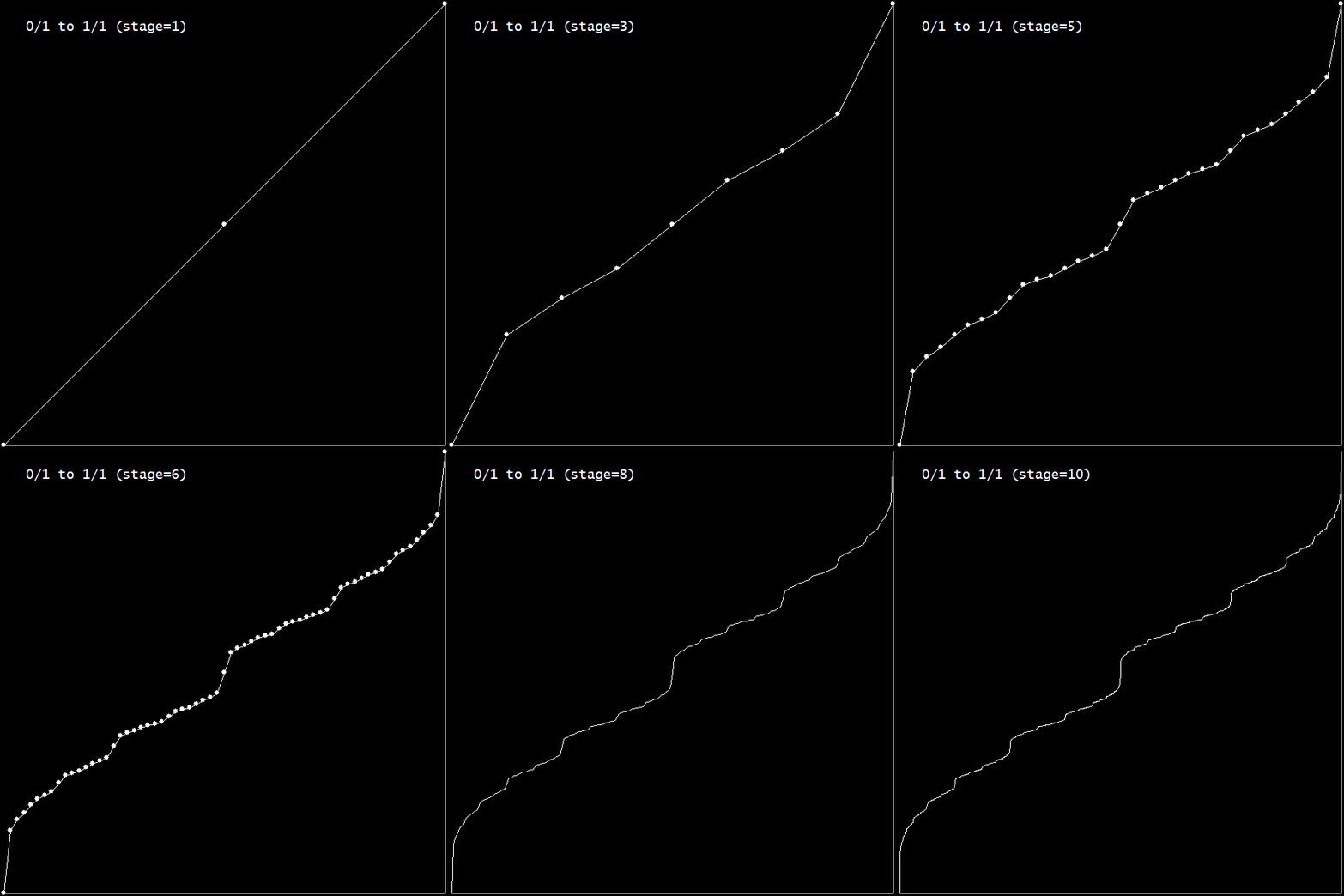
The Farey sequence is actually a fractal, as you can see more easily when it’s represented as an image:
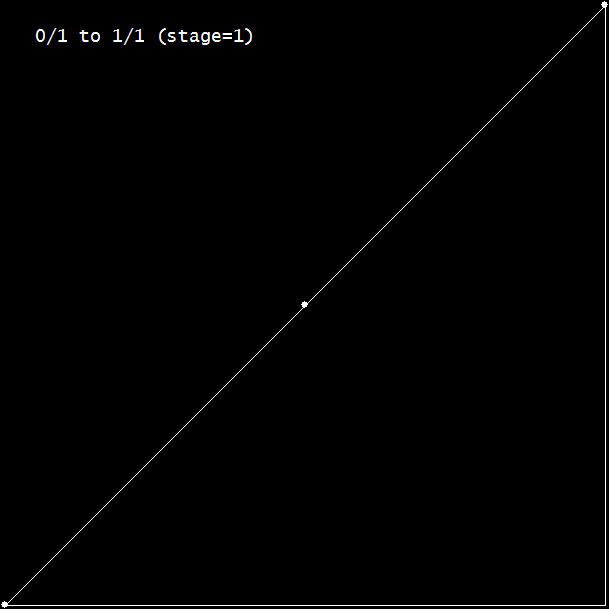
Farey fractal stage #1, representing 0/1, 1/2, 1/1
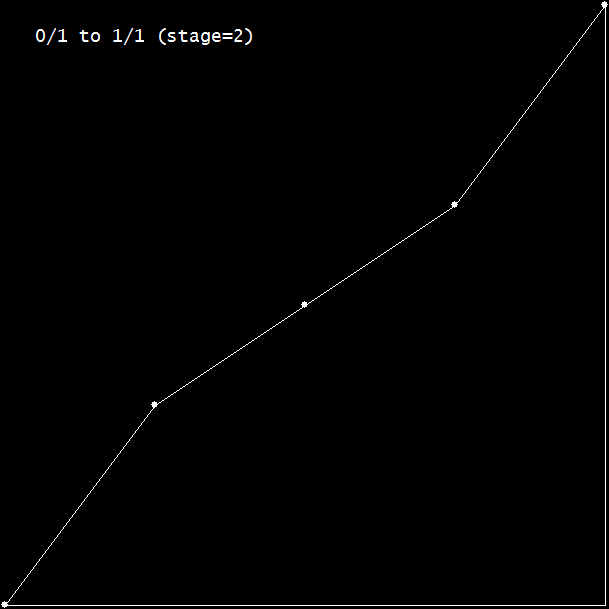
Farey fractal stage #2, representing 0/1, 1/3, 1/2, 2/3, 1/1
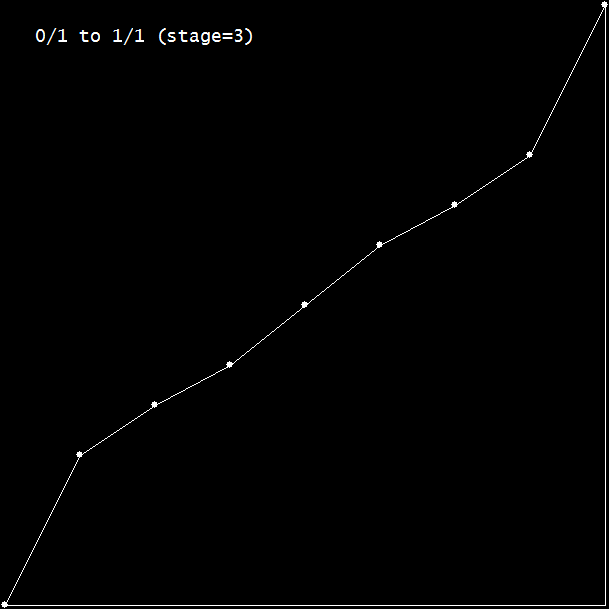
Farey fractal stage #3, representing 0/1, 1/4, 1/3, 2/5, 1/2, 3/5, 2/3, 3/4, 1/1
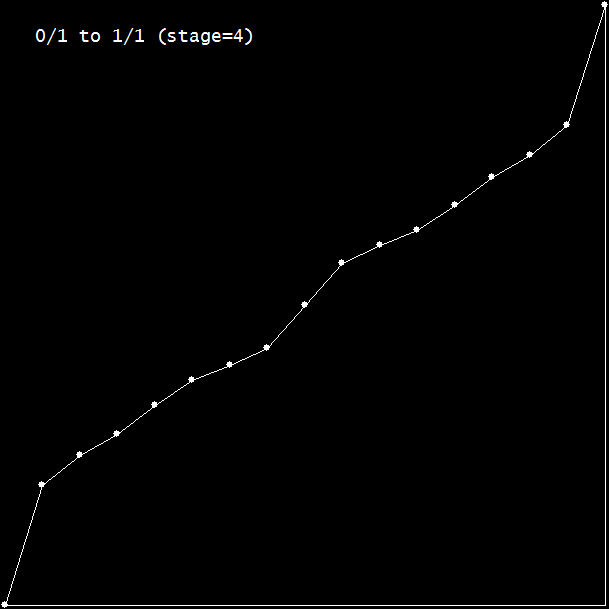
Farey fractal stage #4, representing 0/1, 1/5, 1/4, 2/7, 1/3, 3/8, 2/5, 3/7, 1/2, 4/7, 3/5, 5/8, 2/3, 5/7, 3/4, 4/5, 1/1
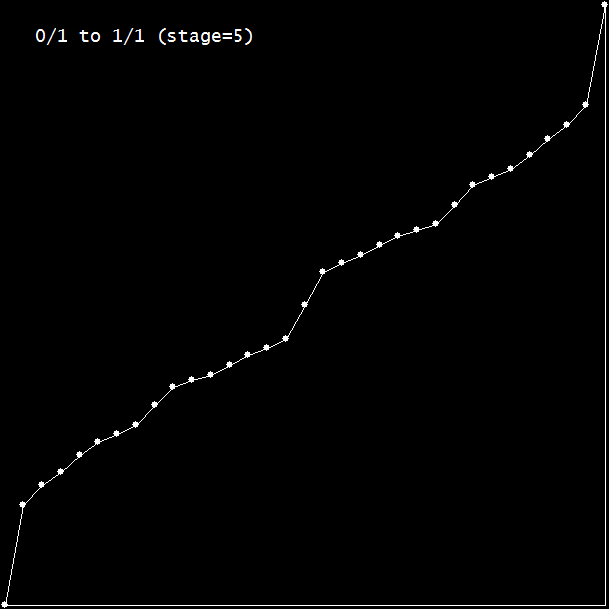
Farey fractal stage #5
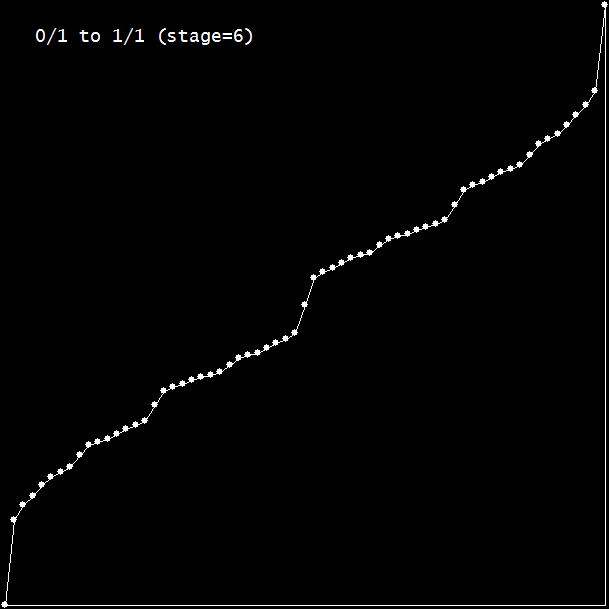
Farey fractal stage #6
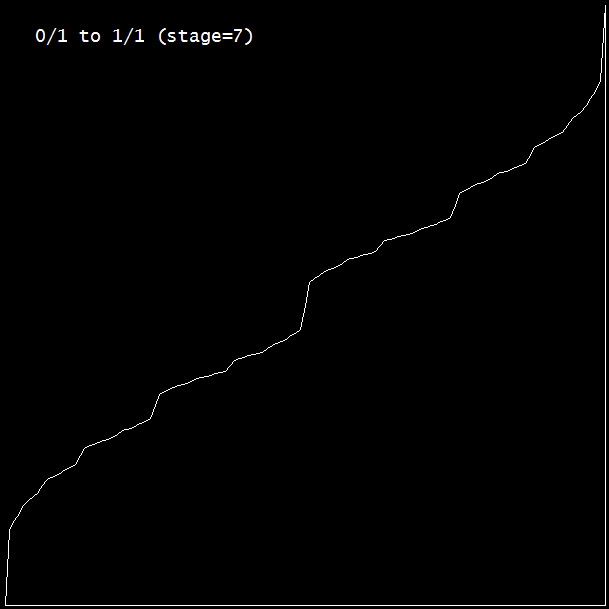
Farey fractal stage #7
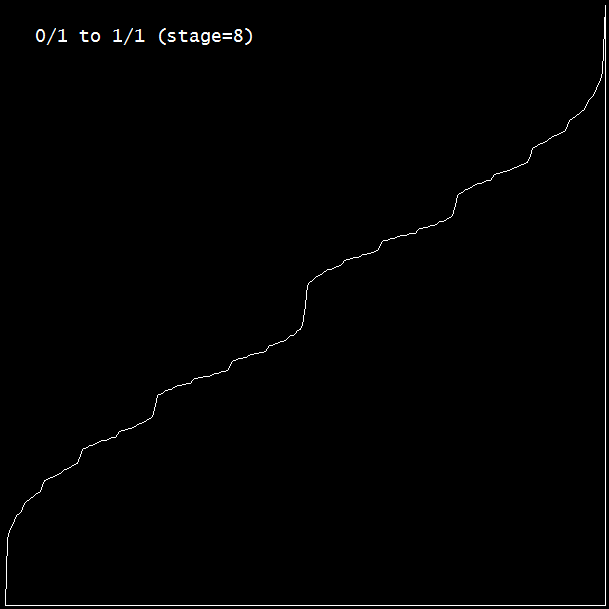
Farey fractal stage #8
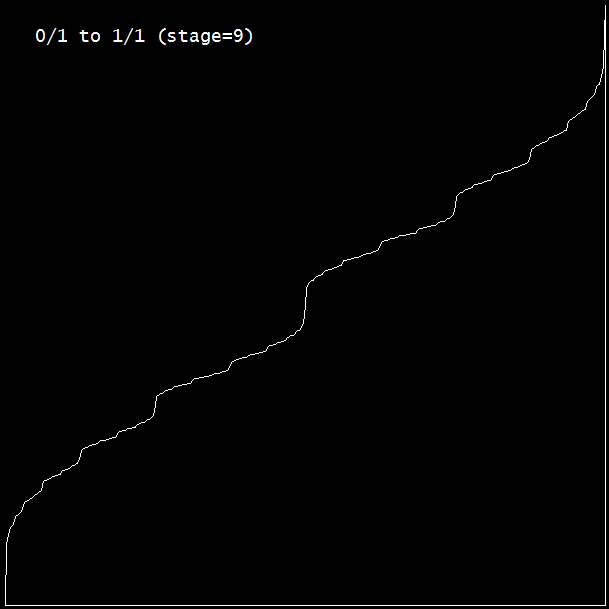
Farey fractal stage #9
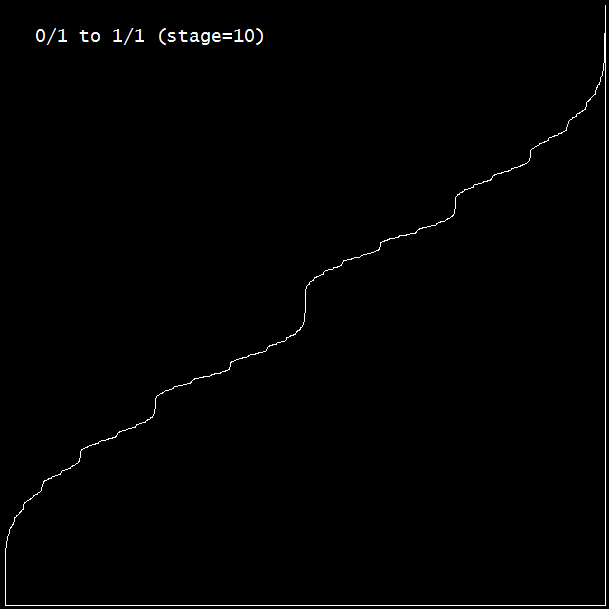
Farey fractal stage #10

Farey fractal (animated)

That looks like the slope of a hill to me, so you could call it a Farey fract-hill. But Farey fract-hills or Farey fractals aren’t confined to the unit interval, 0/1 to 1/1. Here are Farey fractals for the intervals 0/1 to n/1, n = 1..10:
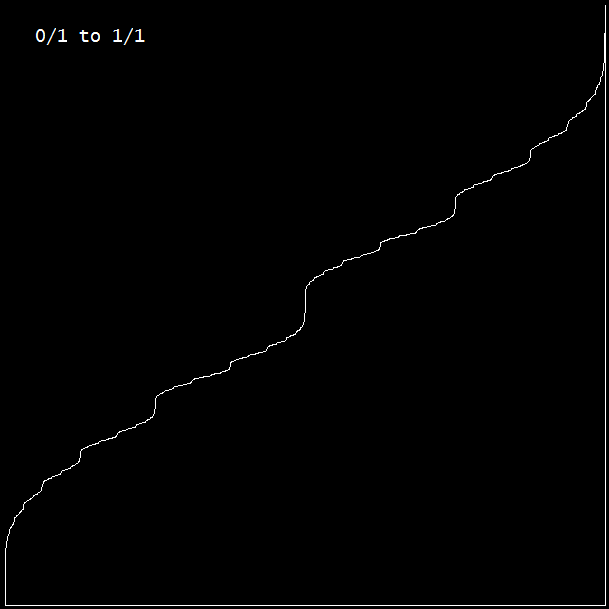
Farey fractal for interval 0/1 to 1/1
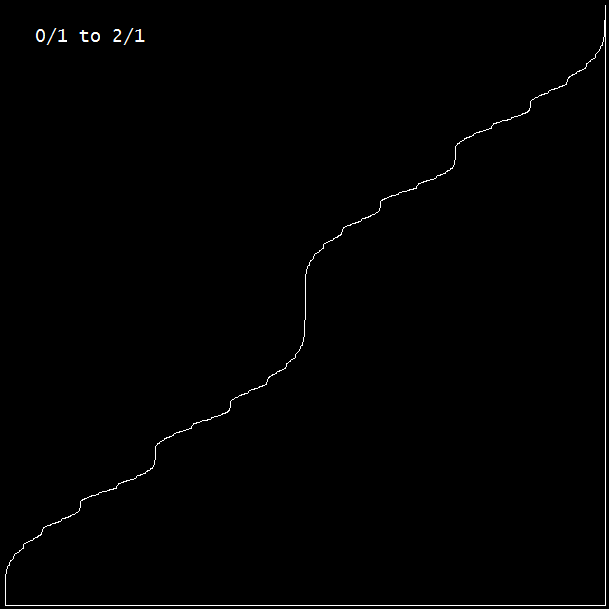
Farey fractal for interval 0/1 to 2/1, beginning 0/1, 1/4, 1/3, 2/5, 1/2, 3/5, 2/3, 3/4, 1/1, 5/4, 4/3, 7/5, 3/2, 8/5, 5/3, 7/4, 2/1
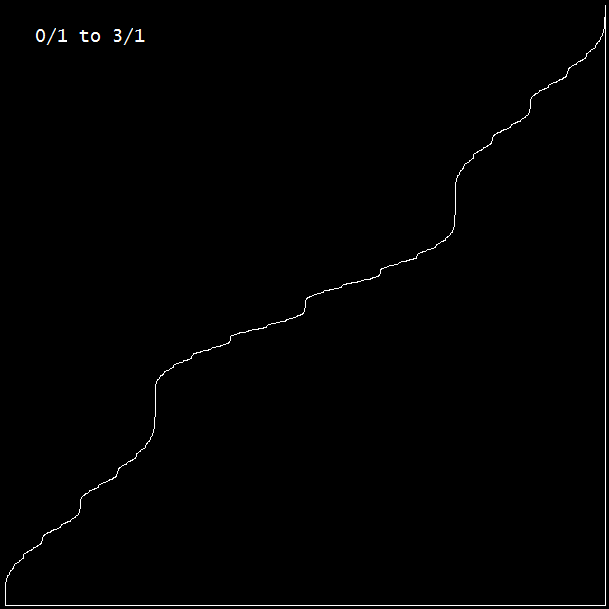
Farey fractal for interval 0/1 to 3/1, beginning 0/1, 1/3, 1/2, 2/3, 1/1, 5/4, 4/3, 7/5, 3/2, 8/5, 5/3, 7/4, 2/1, 7/3, 5/2, 8/3, 3/1
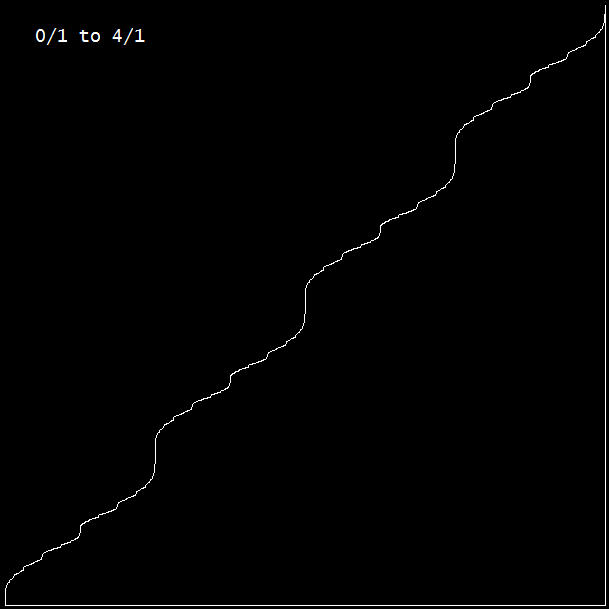
Farey fractal for interval 0/1 to 4/1, beginning
0/1, 1/3, 1/2, 2/3, 1/1, 4/3, 3/2, 5/3, 2/1, 7/3, 5/2, 8/3, 3/1, 10/3, 7/2, 11/3, 4/1
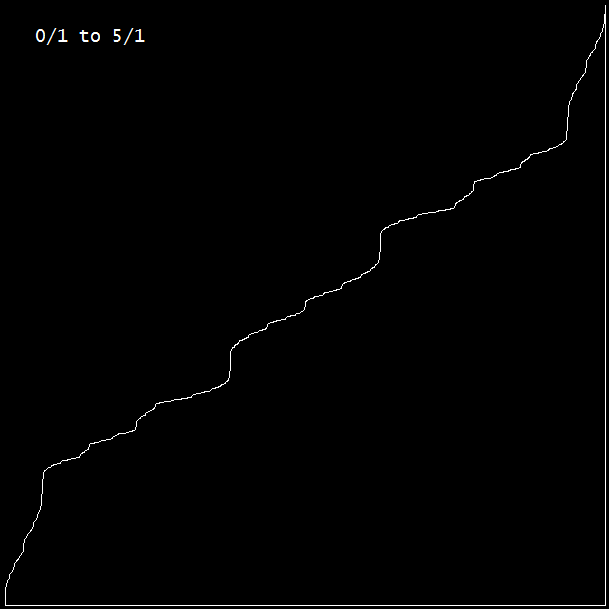
Farey fractal for interval 0/1 to 5/1, beginning 0/1, 1/1, 5/4, 10/7, 5/3, 7/4, 2/1, 7/3, 5/2, 8/3, 3/1, 13/4, 10/3, 25/7, 15/4, 4/1, 5/1
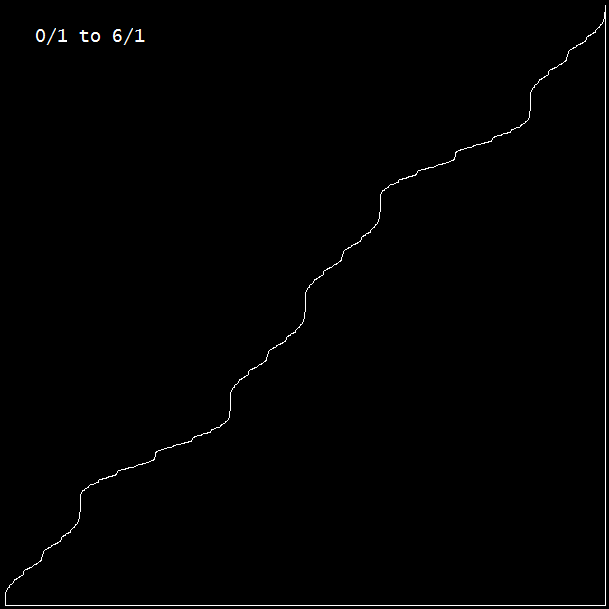
Farey fractal for interval 0/1 to 6/1, beginning 0/1, 1/2, 1/1, 4/3, 3/2, 5/3, 2/1, 5/2, 3/1, 7/2, 4/1, 13/3, 9/2, 14/3, 5/1, 11/2, 6/1
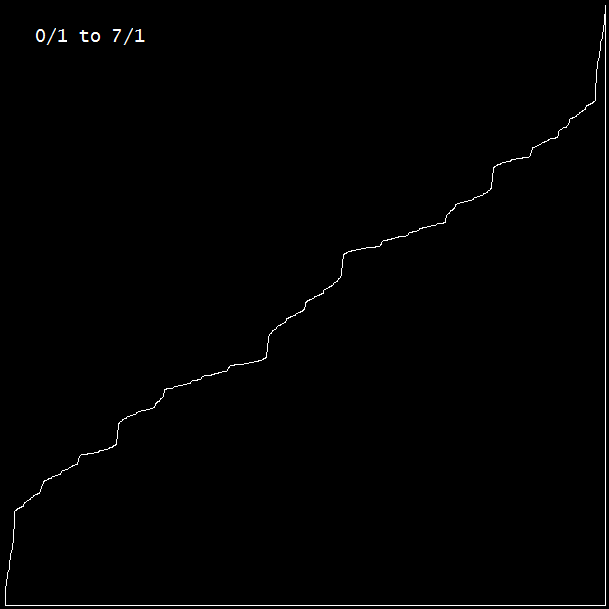
Farey fractal for interval 0/1 to 7/1, beginning 0/1, 7/5, 7/4, 2/1, 7/3, 21/8, 14/5, 3/1, 7/2, 4/1, 21/5, 35/8, 14/3, 5/1, 21/4, 28/5, 7/1
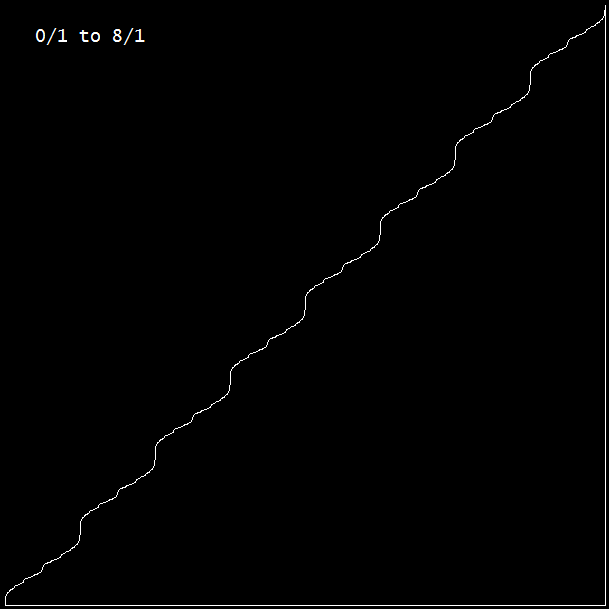
Farey fractal for interval 0/1 to 8/1, beginning 0/1, 1/2, 1/1, 3/2, 2/1, 5/2, 3/1, 7/2, 4/1, 9/2, 5/1, 11/2, 6/1, 13/2, 7/1, 15/2, 8/1
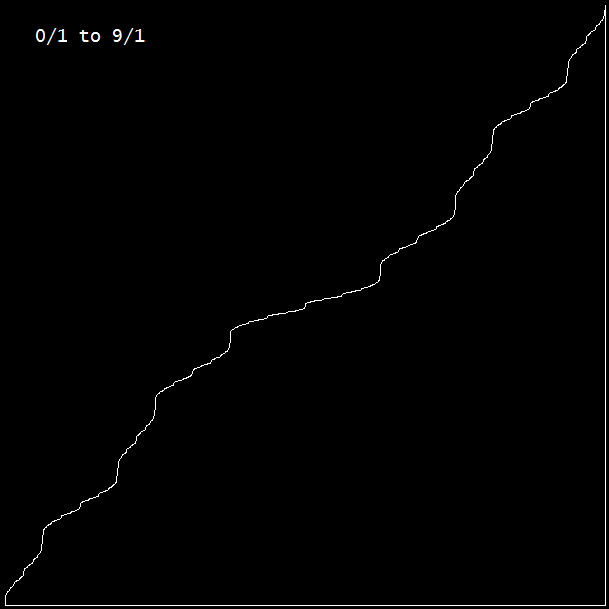
Farey fractal for interval 0/1 to 9/1, beginning 0/1, 1/1, 3/2, 2/1, 3/1, 7/2, 4/1, 13/3, 9/2, 14/3, 5/1, 11/2, 6/1, 7/1, 15/2, 8/1, 9/1
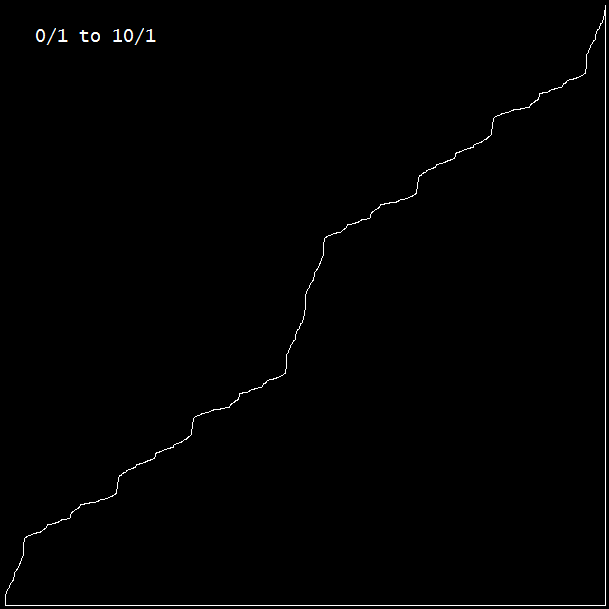
Farey fractal for interval 0/1 to 10/1, beginning 0/1, 5/4, 5/3, 2/1, 5/2, 3/1, 10/3, 15/4, 5/1, 25/4, 20/3, 7/1, 15/2, 8/1, 25/3, 35/4, 10/1

The shape of the slope is determined by the factorization of n:
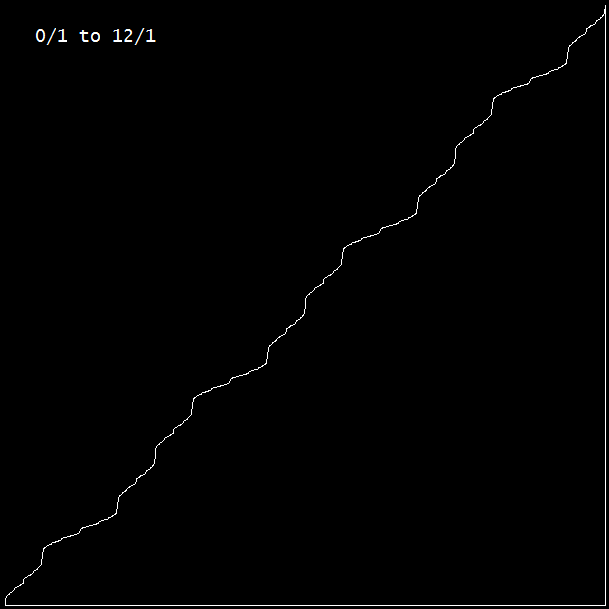
n = 12 = 2^2 * 3
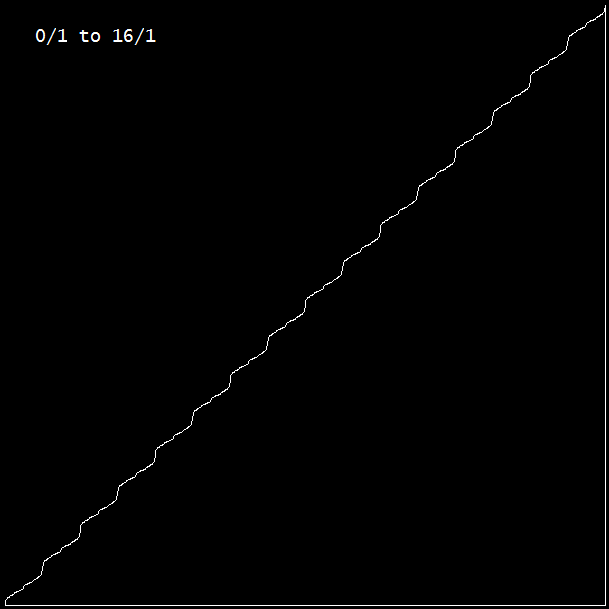
n = 16 = 2^4
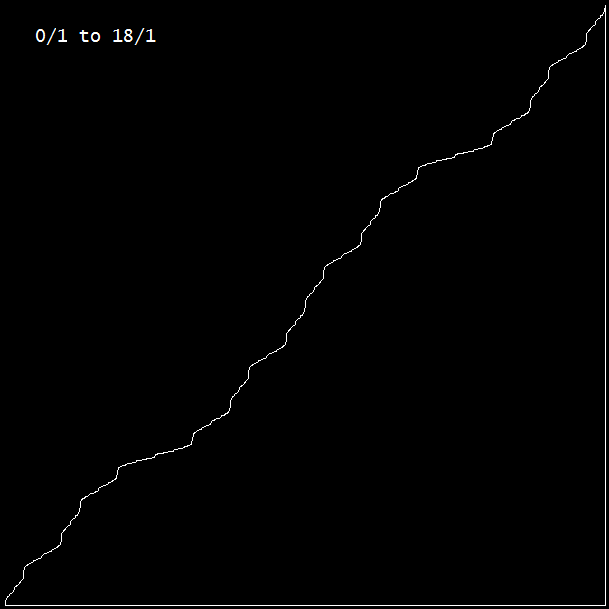
n = 18 = 2 * 3^2
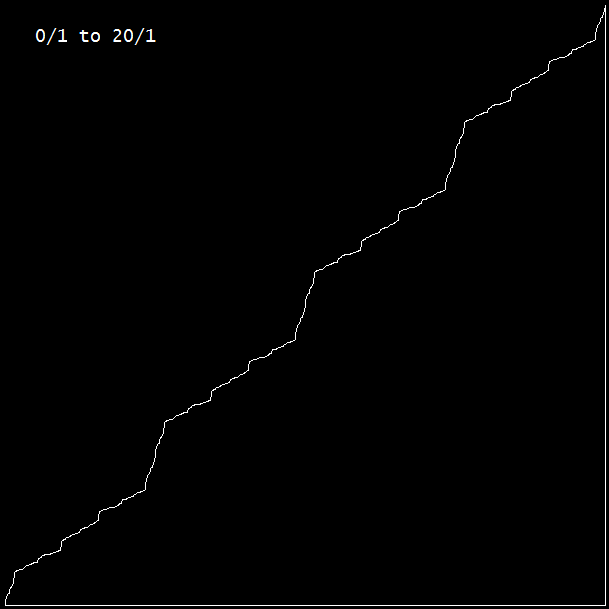
n = 20 = 2^2 * 5
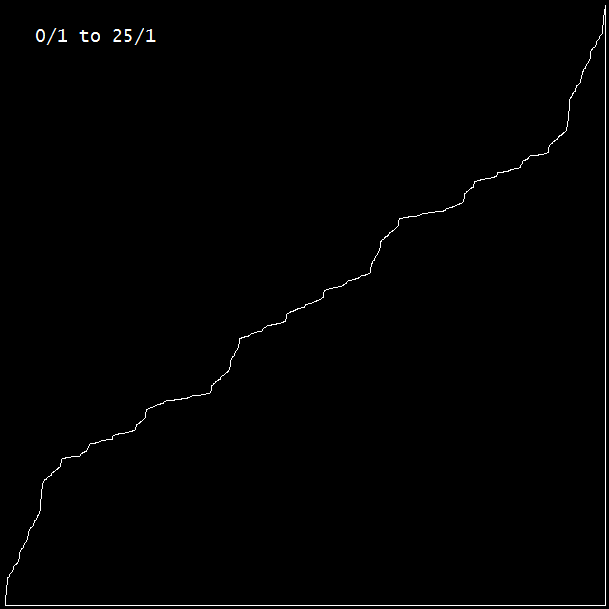
n = 25 = 5^2
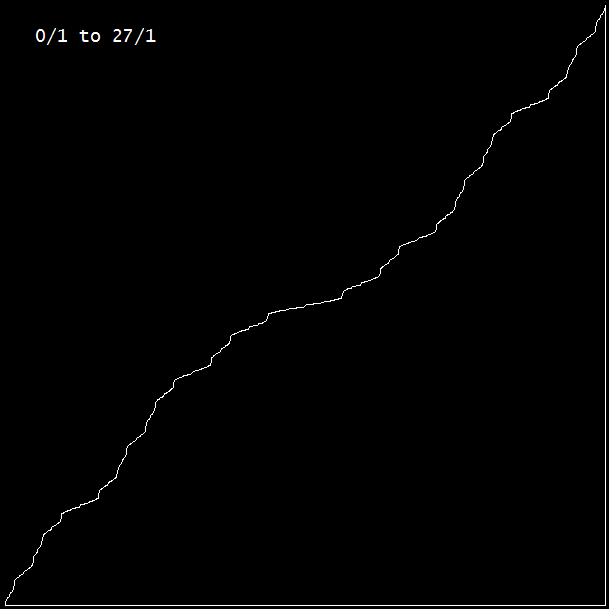
n = 27 = 3^3
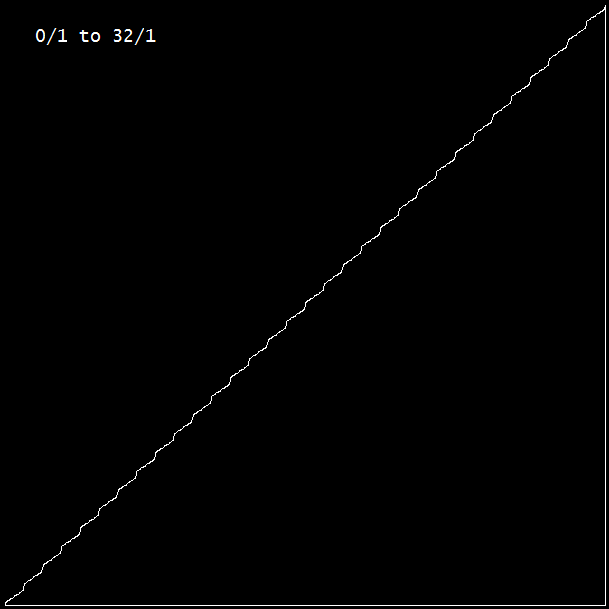
n = 32 = 2^5
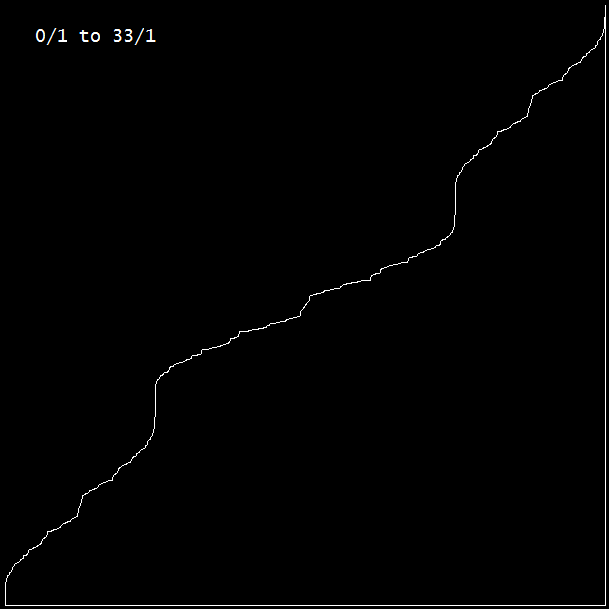
n = 33 = 3 * 11
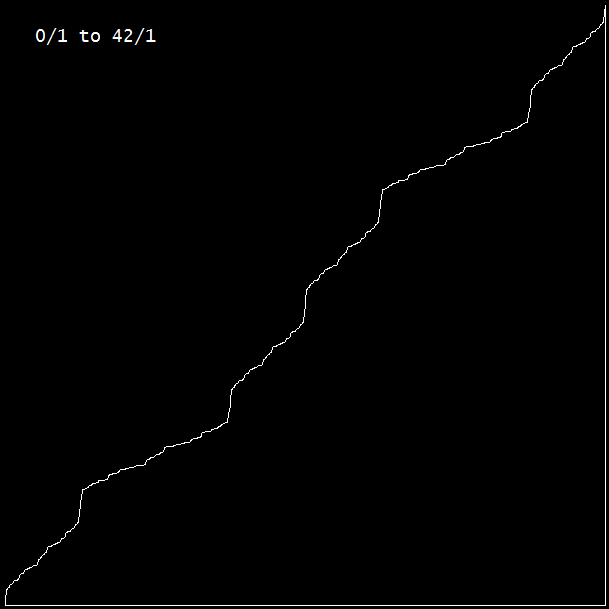
n = 42 = 2 * 3 * 7
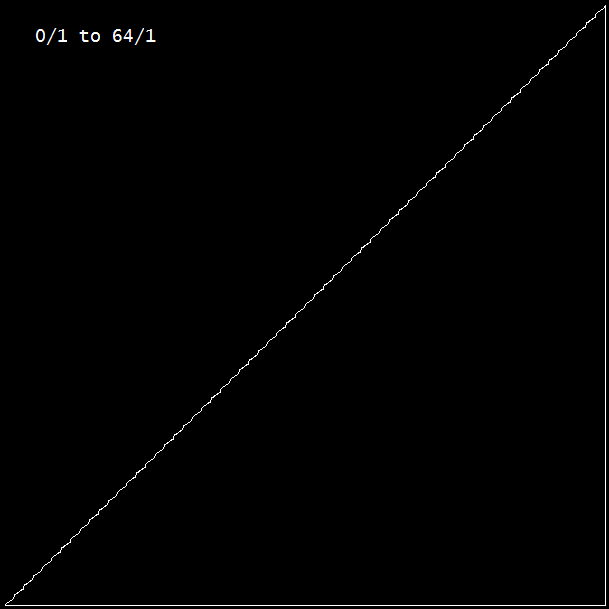
n = 64 = 2^6
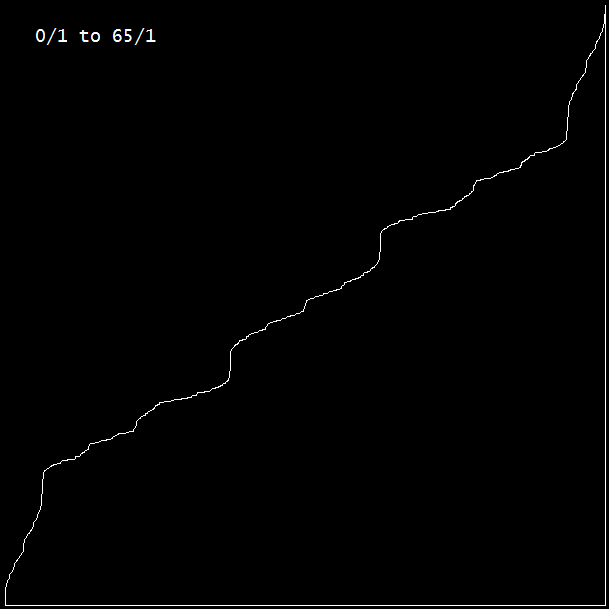
n = 65 = 5 * 13
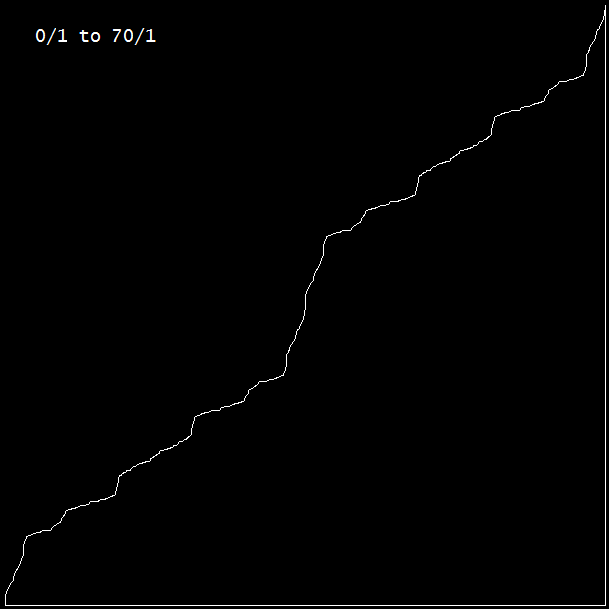
n = 70 = 2 * 5 * 7
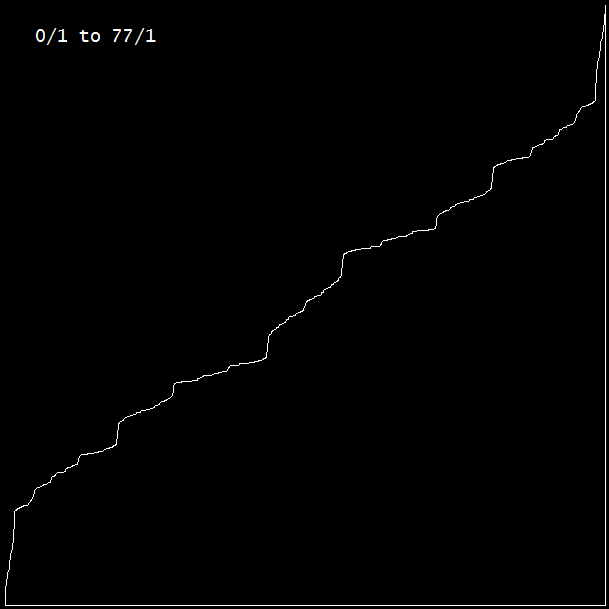
n = 77 = 7 * 11
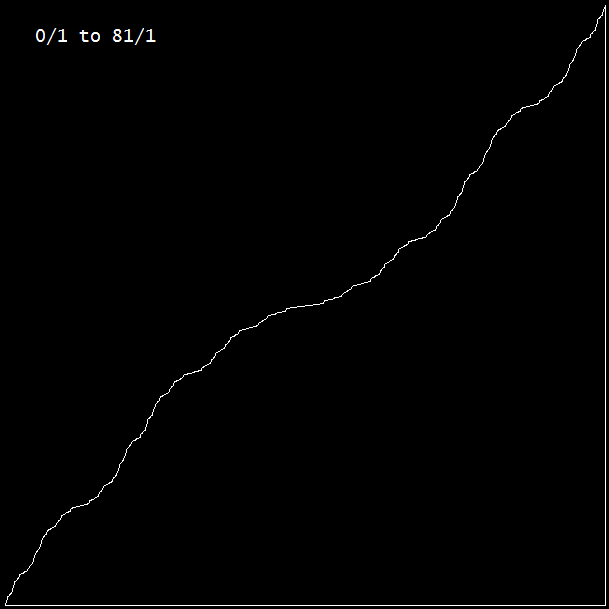
n = 81 = 3^4
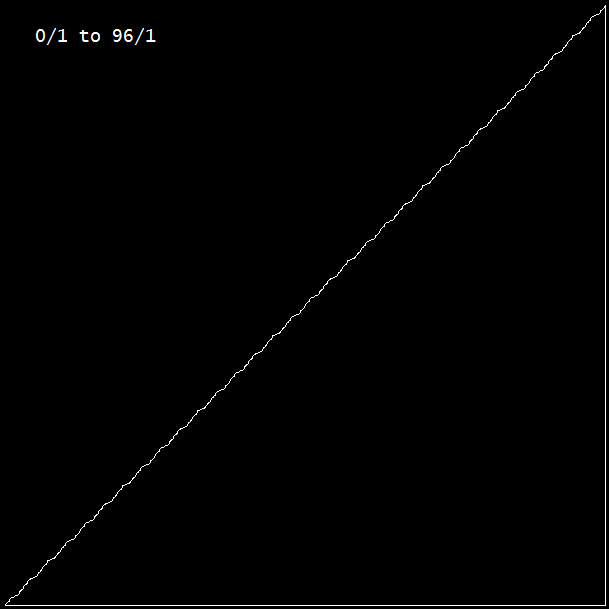
n = 96 = 2^5 * 3
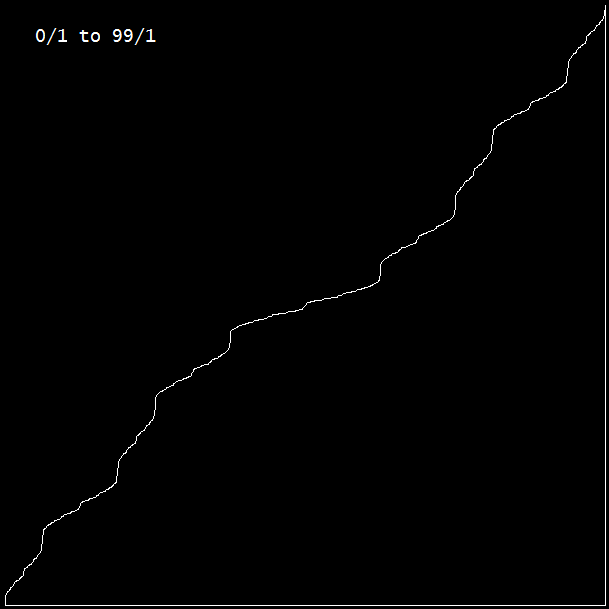
n = 99 = 3^2 * 11
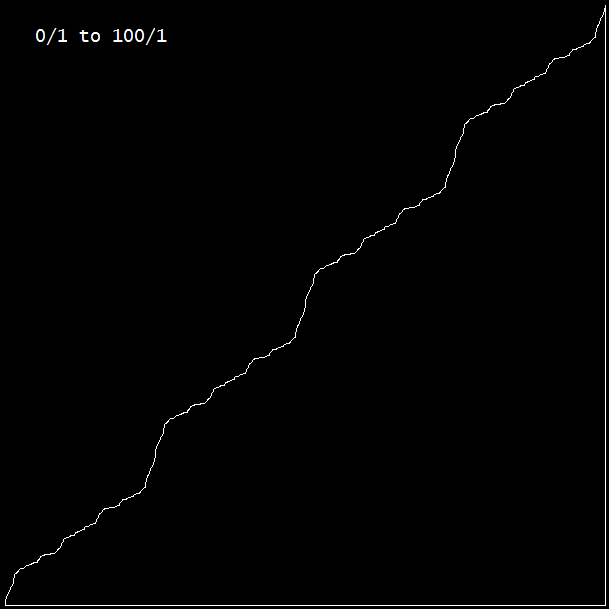
n = 100 = 2^2 * 5^2
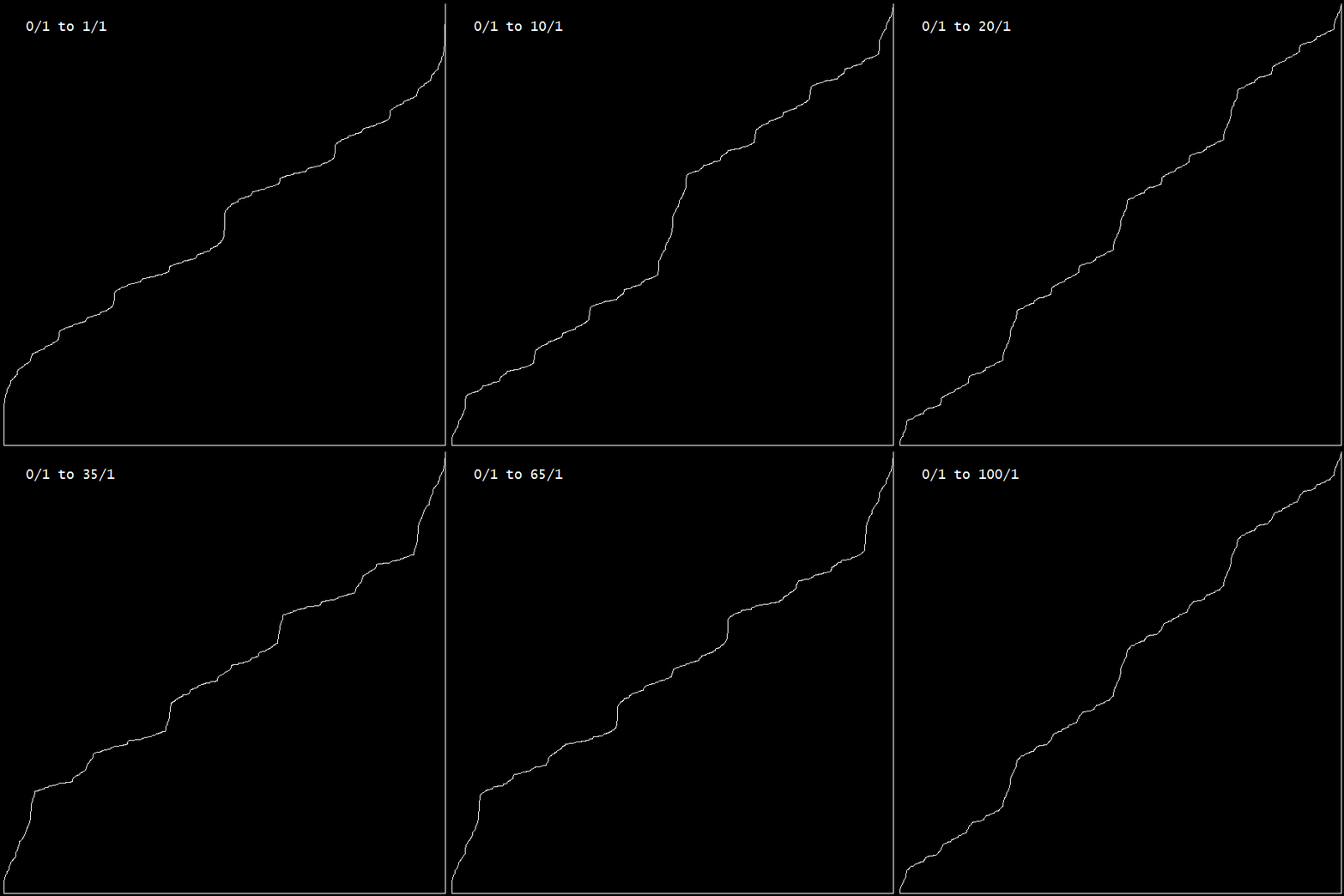
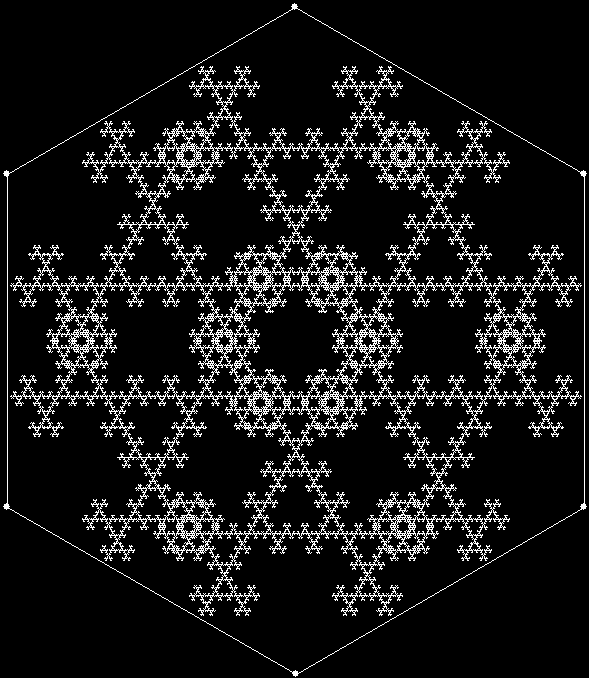
Farey fractal-hills, n = various

Der Sechsismus in der Musik

• Als Heifetz das Werk dann durchspielt, scheitert er mehrmals an einer extrem schwierigen Passage. Der unfehlbare Heifetz soll zu Schönberg sagen: Dafür müsste ich mir sechs Finger wachsen lassen. Schönberg erwidert angeblich: Na ich kann warten.

• When Heifetz then played through the work, he made several mistakes in a very difficult passage. The impeccable Heifetz said to Schoenberg: “I’d need to grow six fingers for that!” Schoenberg allegedly replied: “Well, I can wait!”

Jumping Jehosophracts!

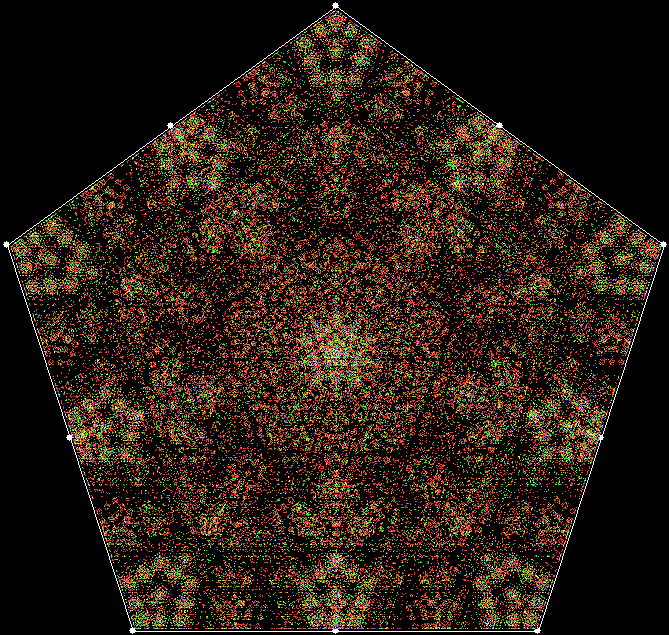
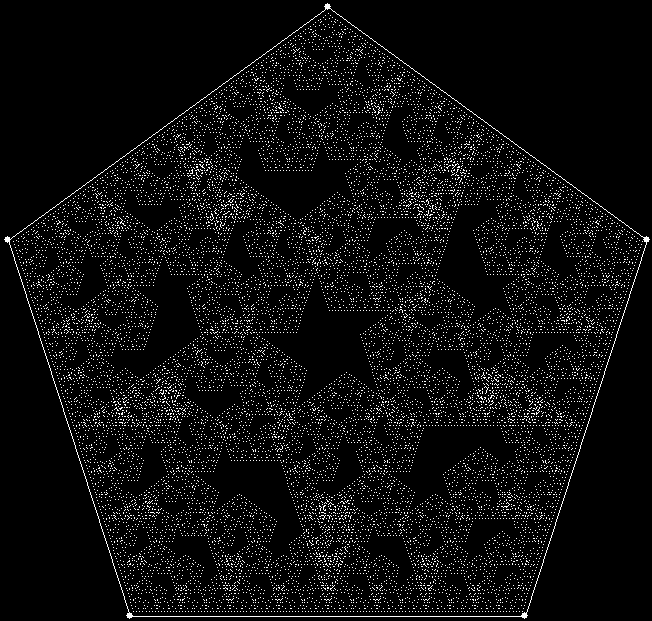
As I’ve shown pre-previously on Overlord-in-terms-of-issues-around-the-Über-Feral, you can create interesting fractals by placing restrictions on a point jumping inside a fractal towards a randomly chosen vertex. For example, the point can be banned from jumping towards the same vertex twice in a row, and so on.

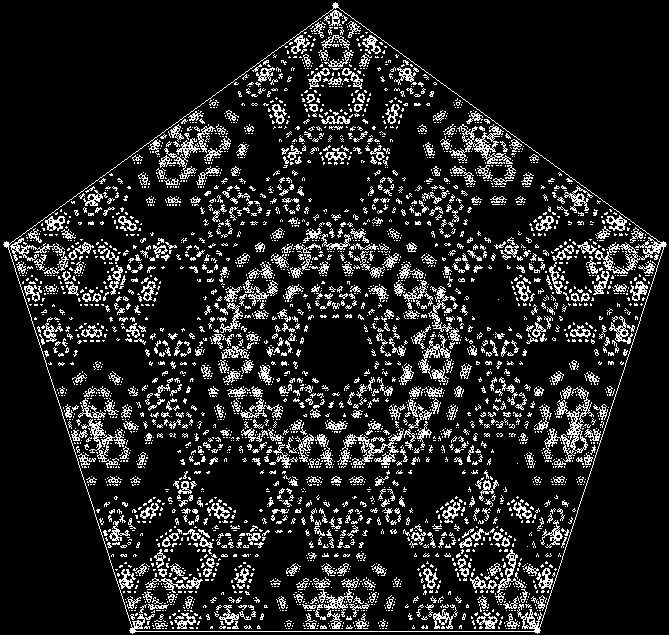
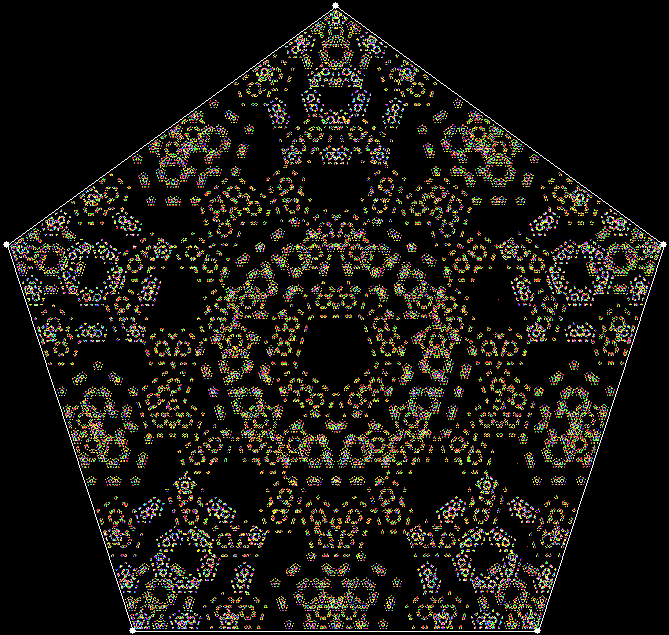
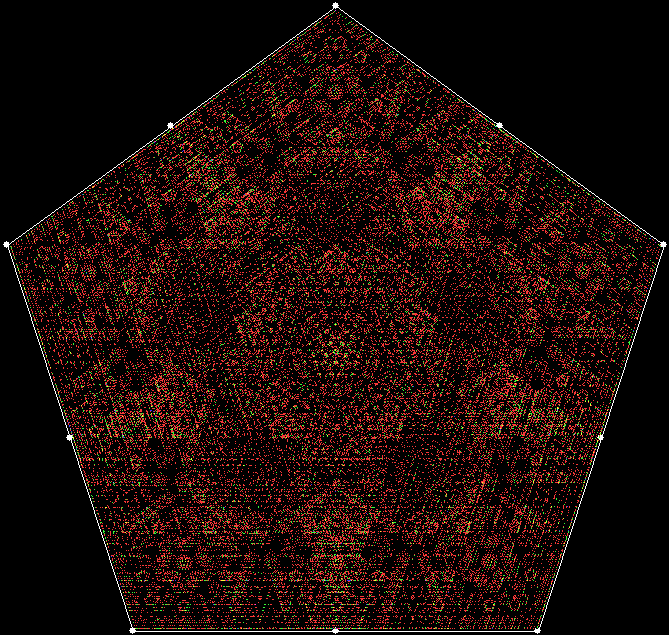
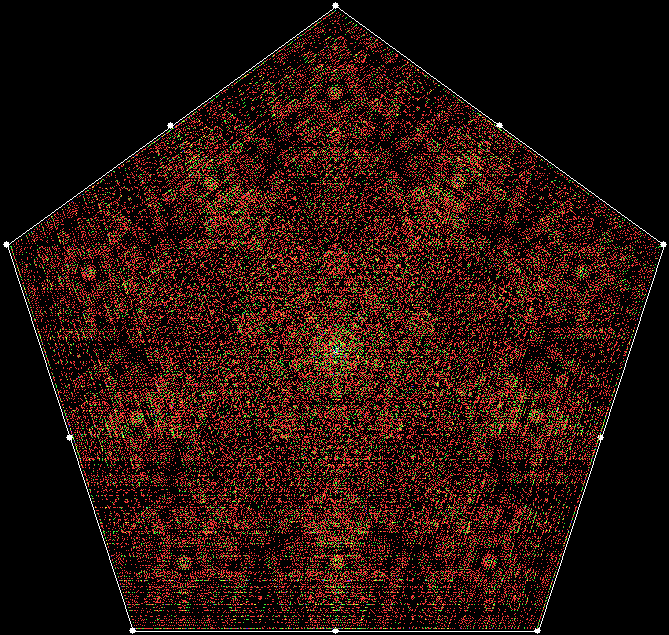
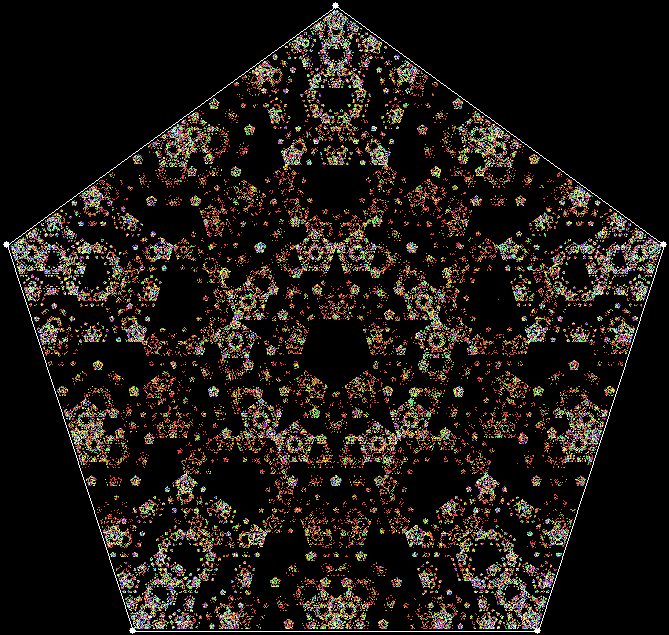
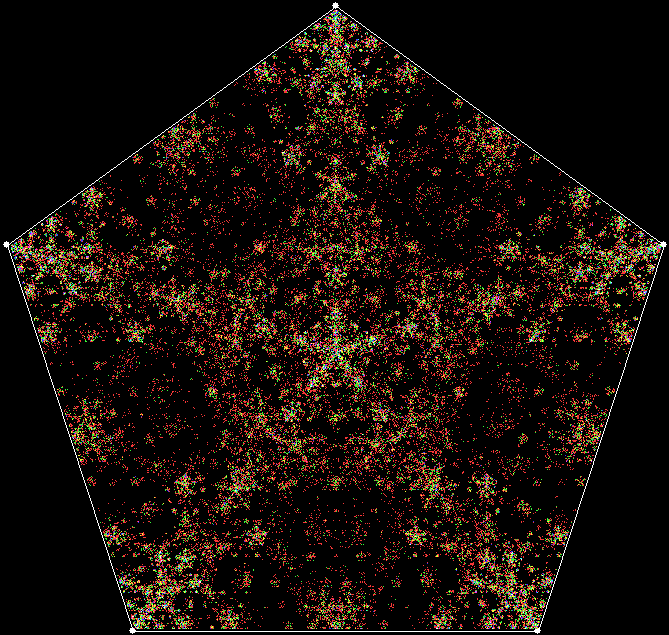
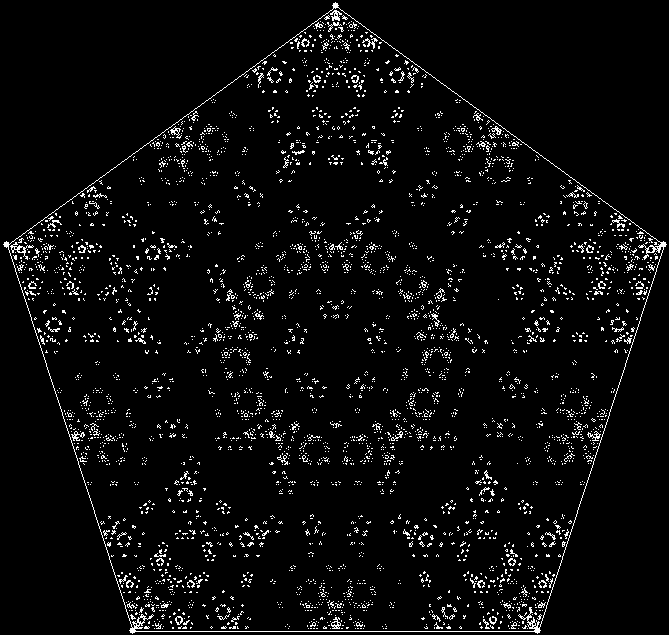
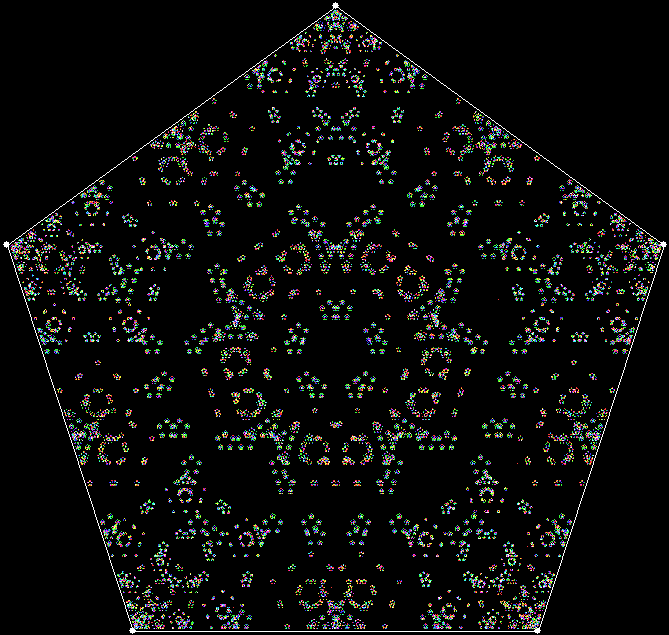
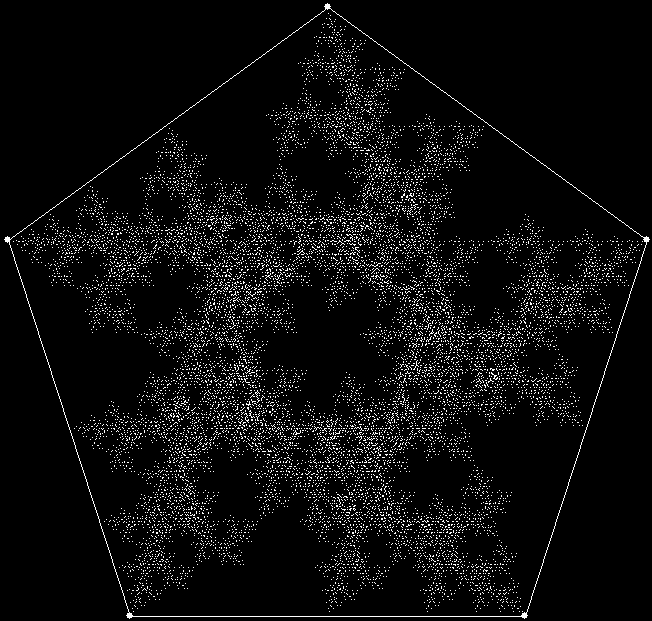
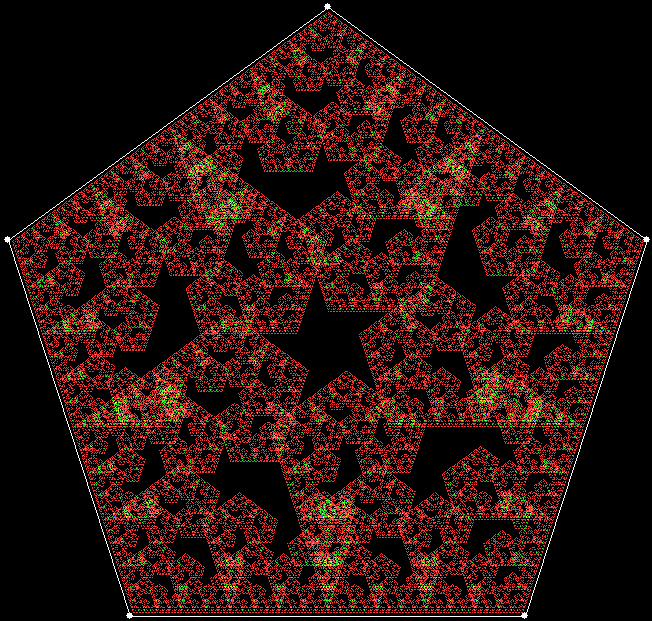
But you can use other restrictions. For example, suppose that the point can jump only once or twice towards any vertex, that is, (j = 1,2). It can then jump towards the same vertex again, but not the same number of times as it previously jumped. So if it jumps once, it has to jump twice next time; and vice versa. If you use this rule on a pentagon, this fractal appears:

v = 5, j = 1,2 (black-and-white)


v = 5, j = 1,2 (colour)


If the point can also jump towards the centre of the pentagon, this fractal appears:

v = 5, j = 1,2 (with centre)


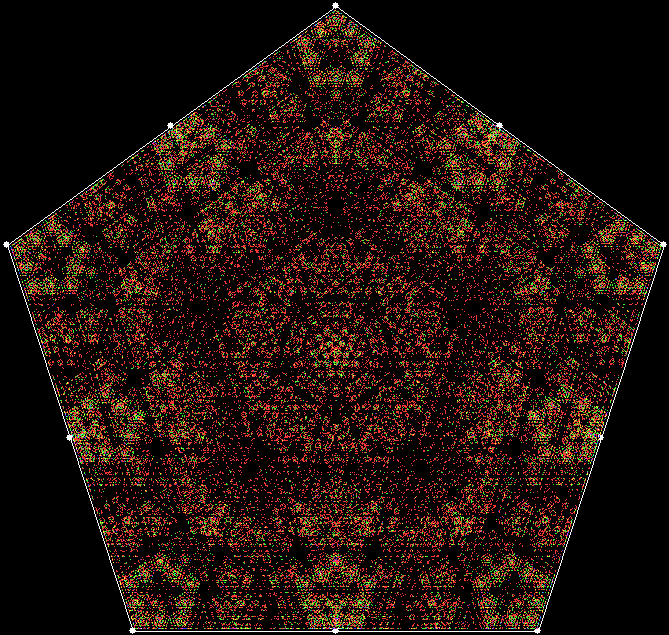
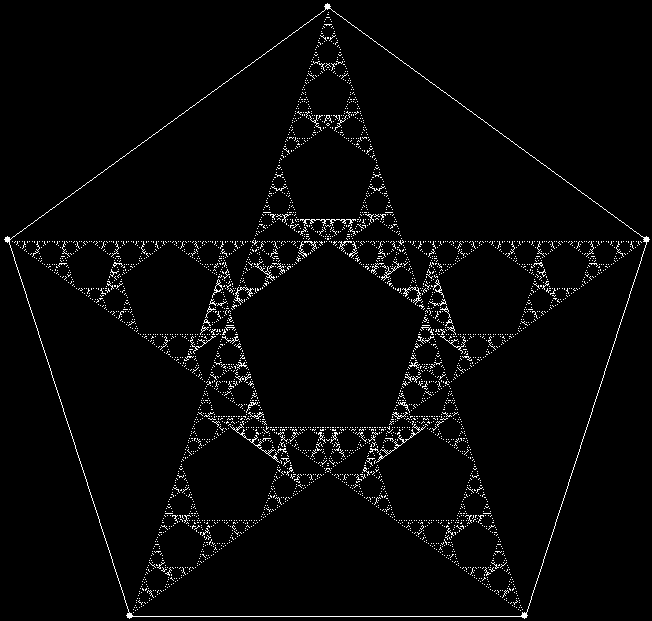
And if the point can also jump towards the midpoints of the sides:

v = 5, j = 1,2 (with midpoints)


v = 5, j = 1,2 (with midpoints and centre)


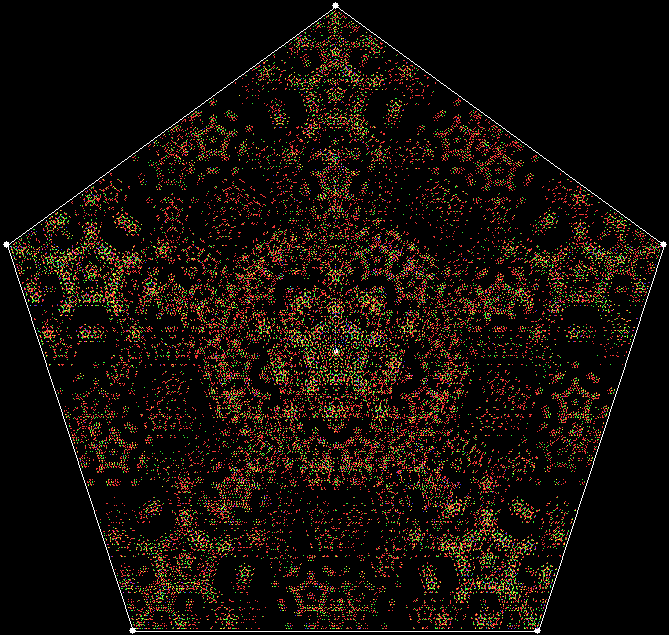
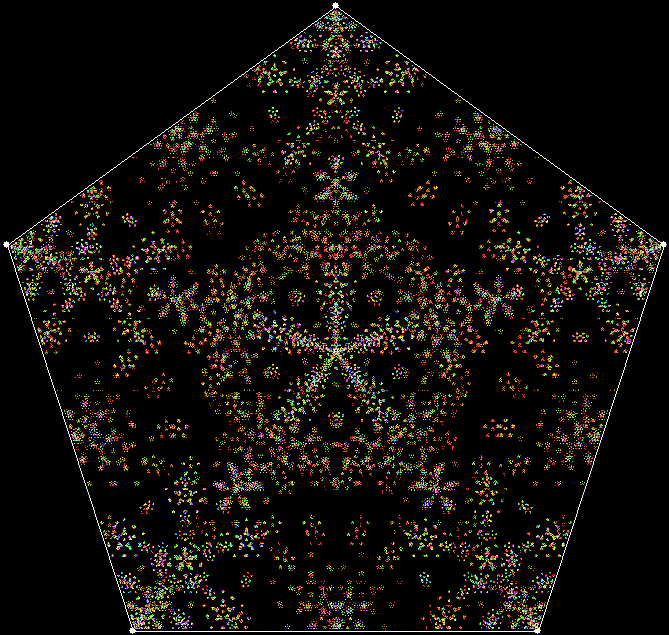
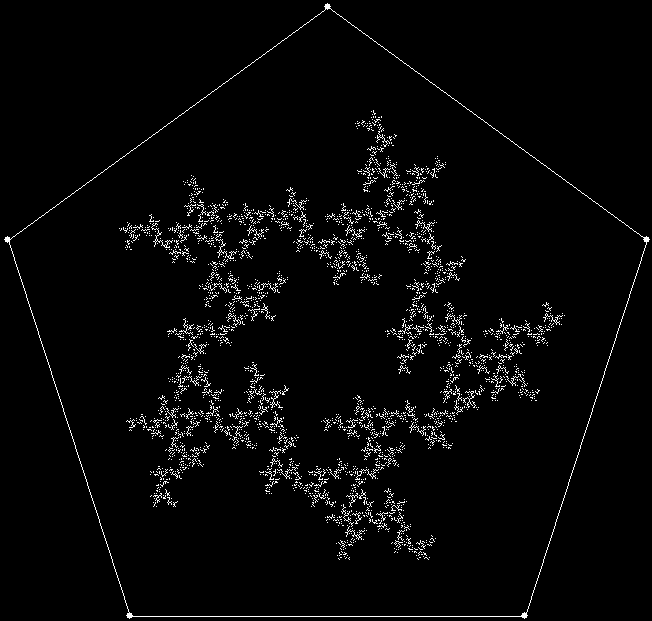
And here the point can jump 1, 2 or 3 times, but not once in a row, twice in a row or thrice in a row:

v = 5, j = 1,2,3


v = 5, j = 1,2,3 (with centre)


Here the point remembers its previous two moves, rather than just its previous move:

v = 5, j = 1,2,3, hist = 2 (black-and-white)


v = 5, j = 1,2,3, hist = 2


v = 5, j = 1,2,3, hist = 2 (with center)


v = 5, j = 1,2,3, hist = 2 (with midpoints)


v = 5, j = 1,2,3, hist = 2 (with midpoints and centre)


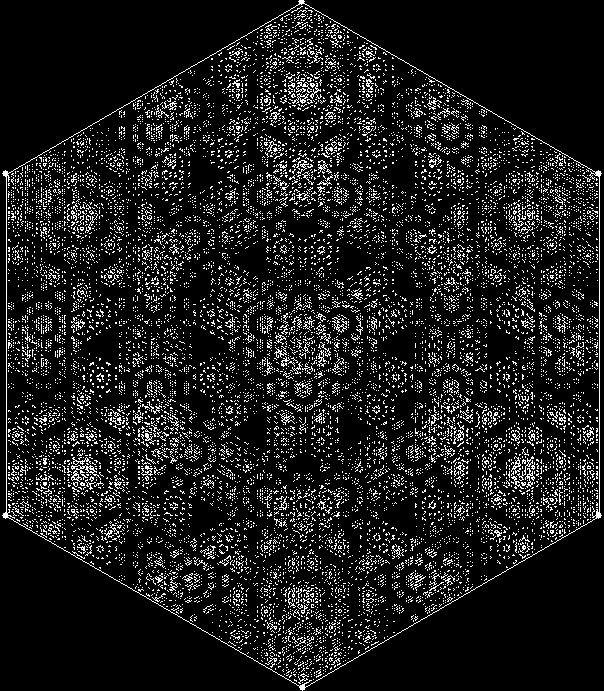
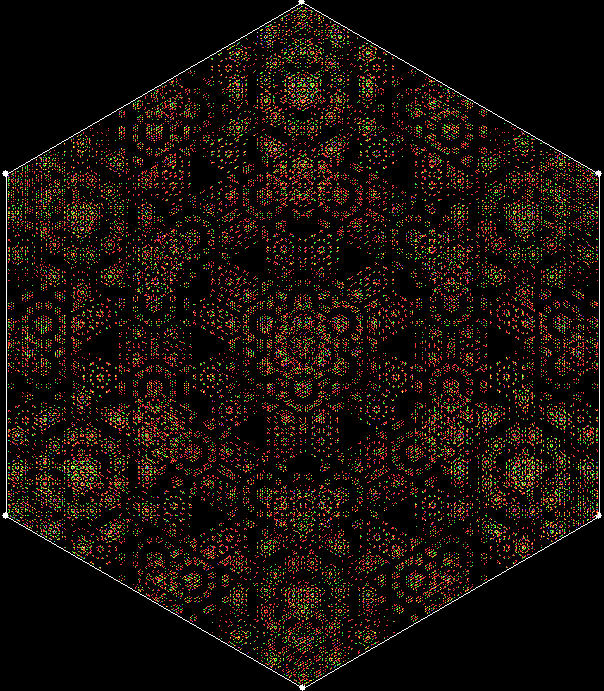
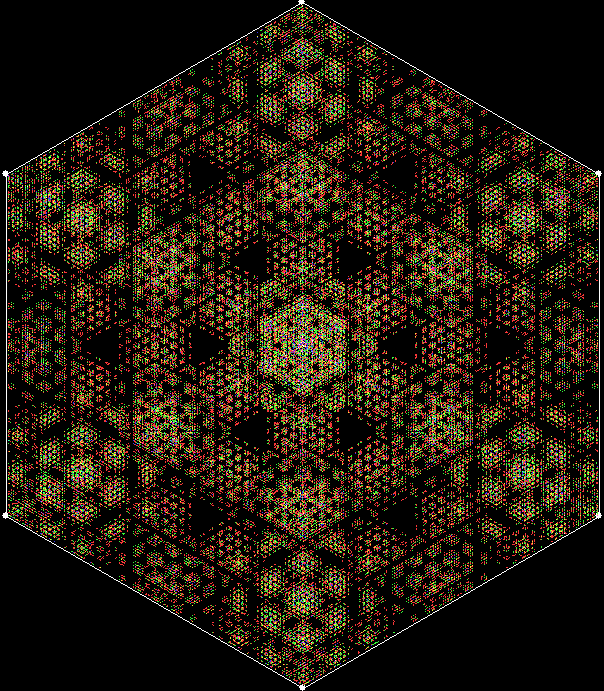
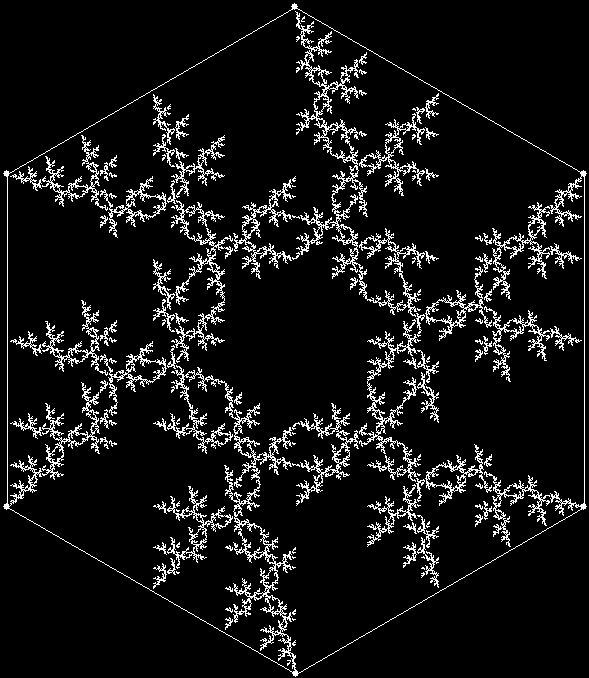
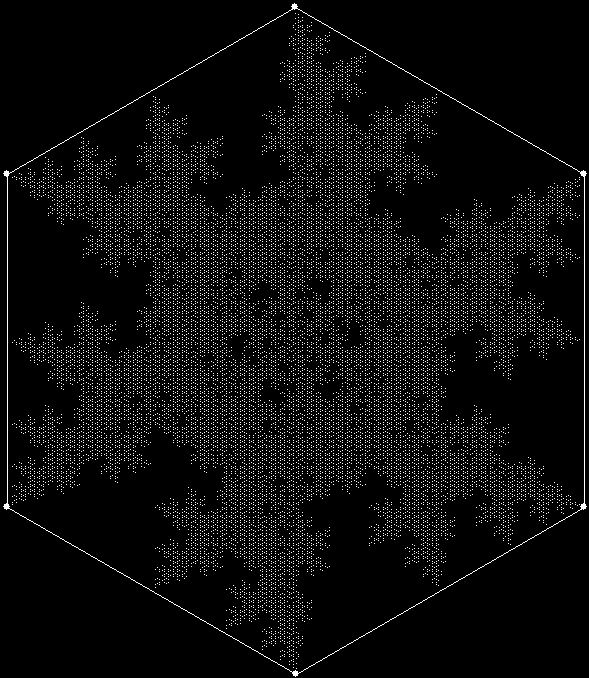
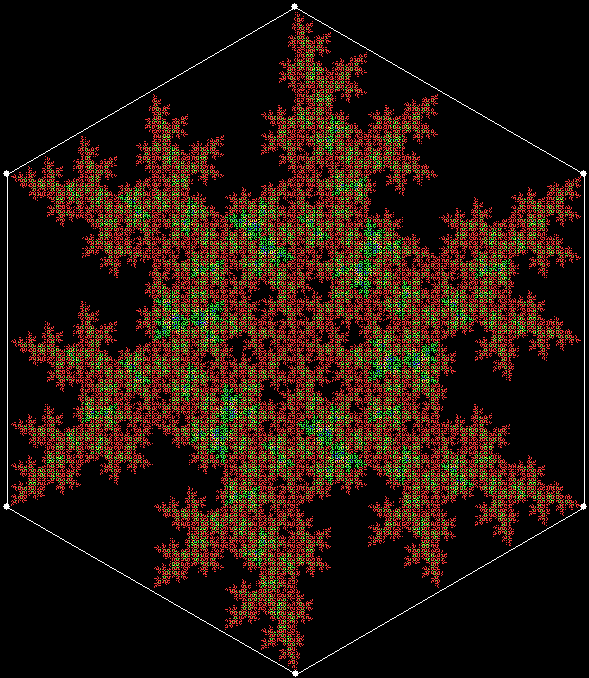
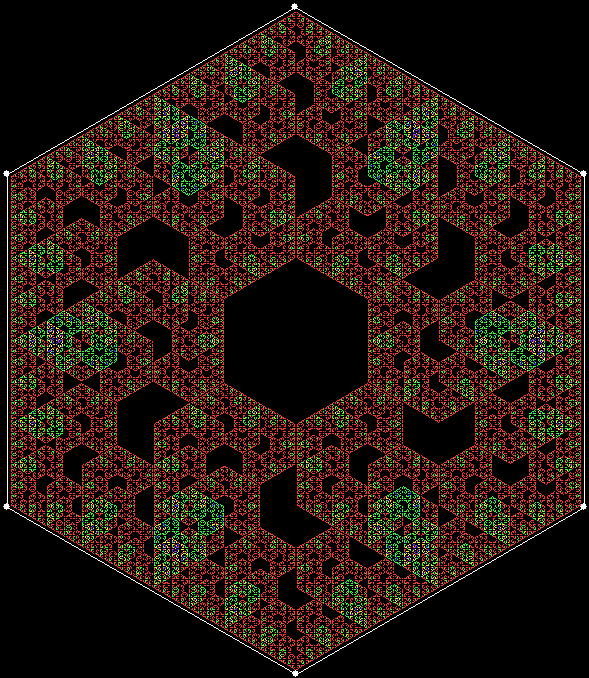
And here are hexagons using the same rules:

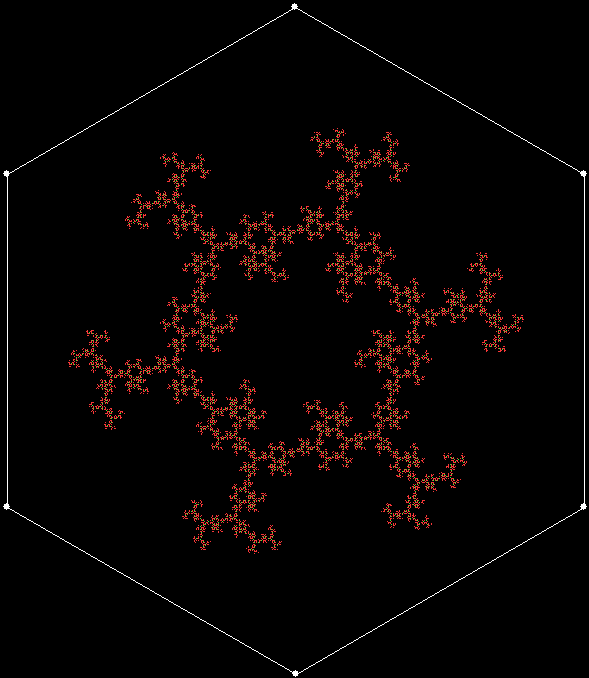
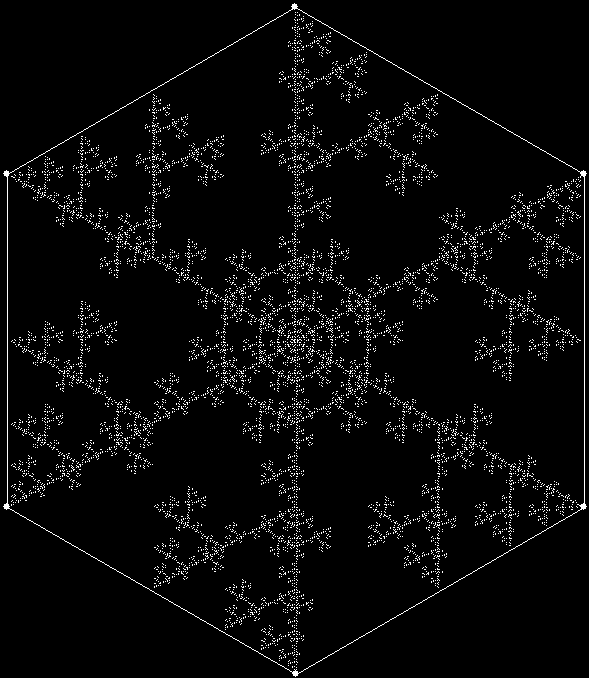
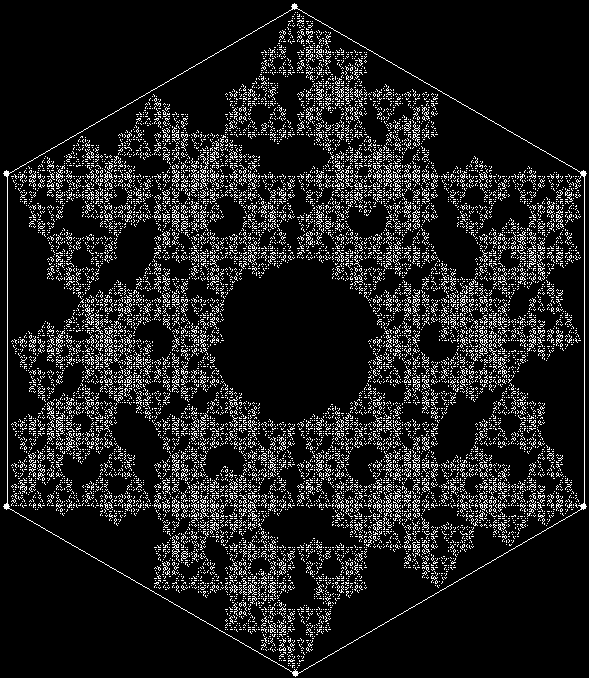
v = 6, j = 1,2 (black-and-white)


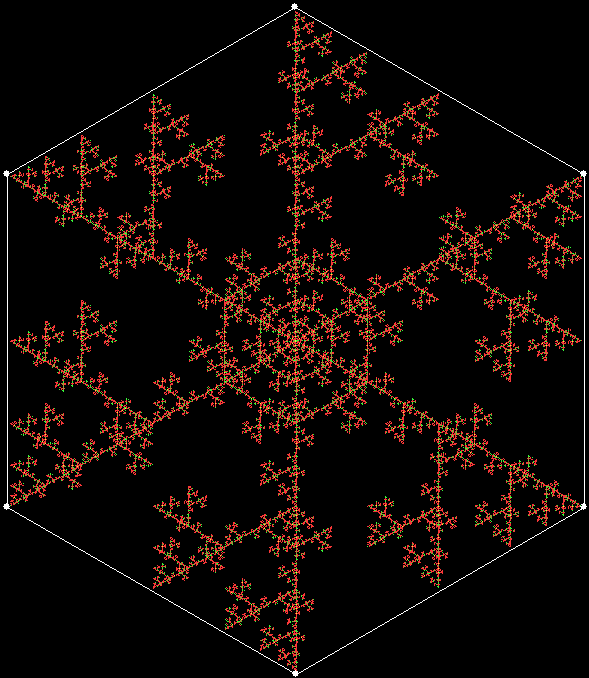
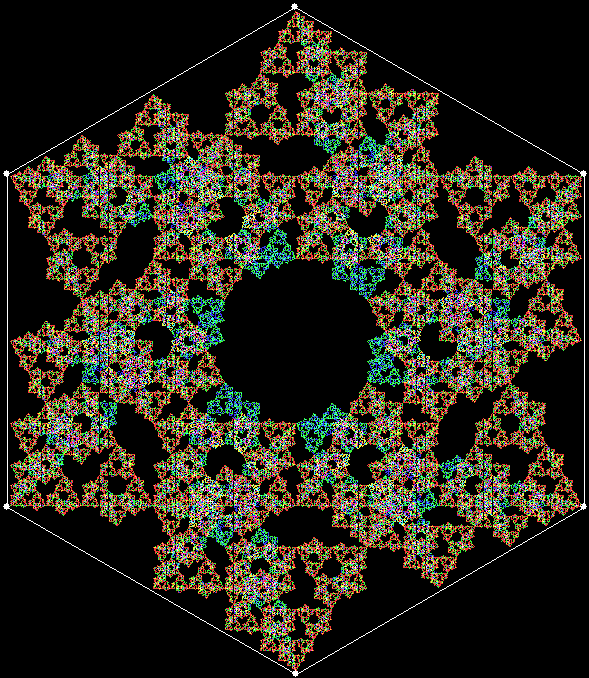
v = 6, j = 1,2


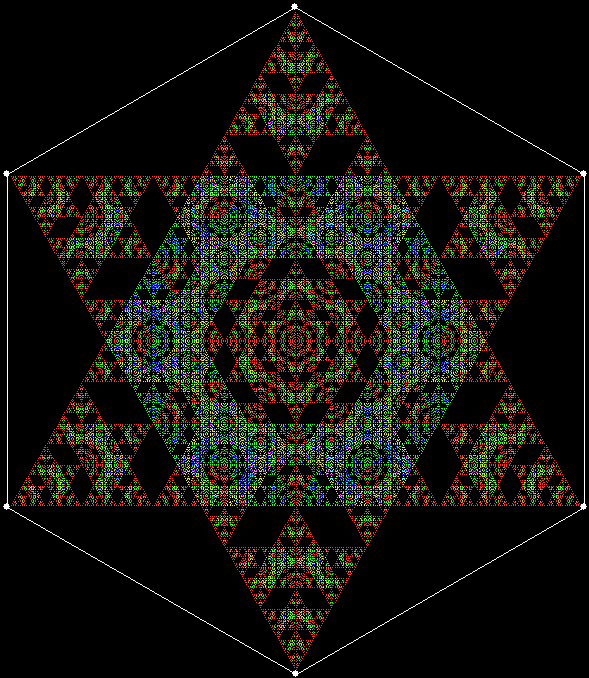
v = 6, j = 1,2 (with centre)


And octagons:

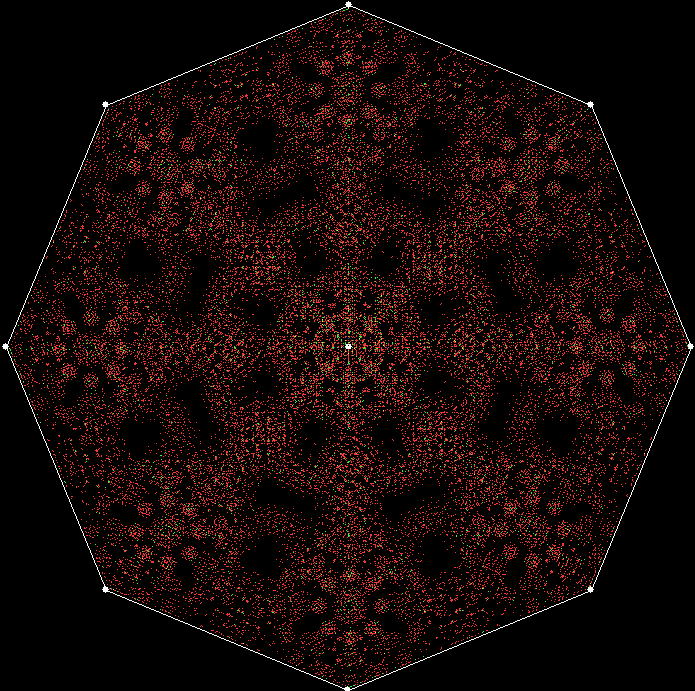
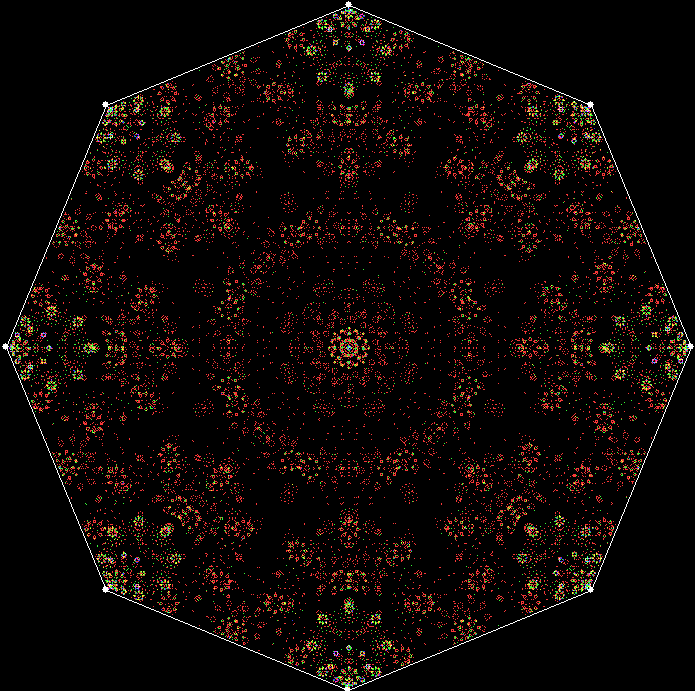
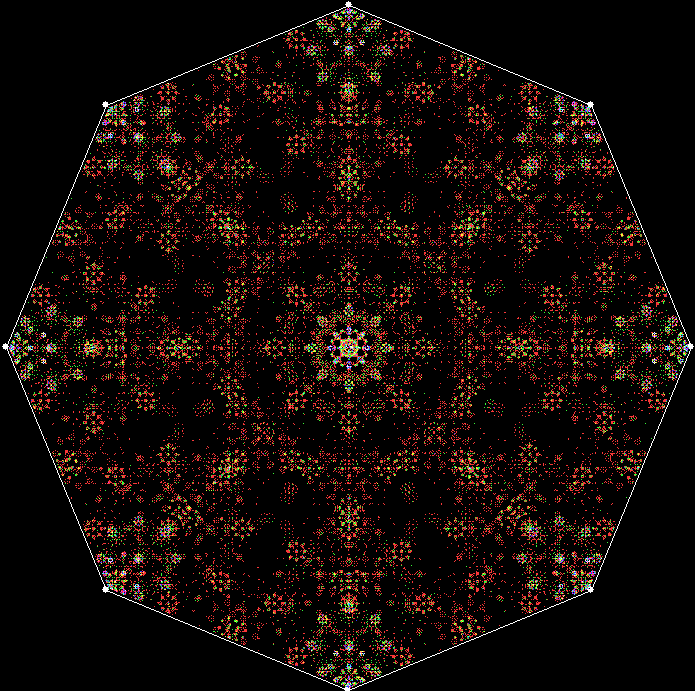
v = 8, j = 1,2


v = 8, j = 1,2 (with centre)


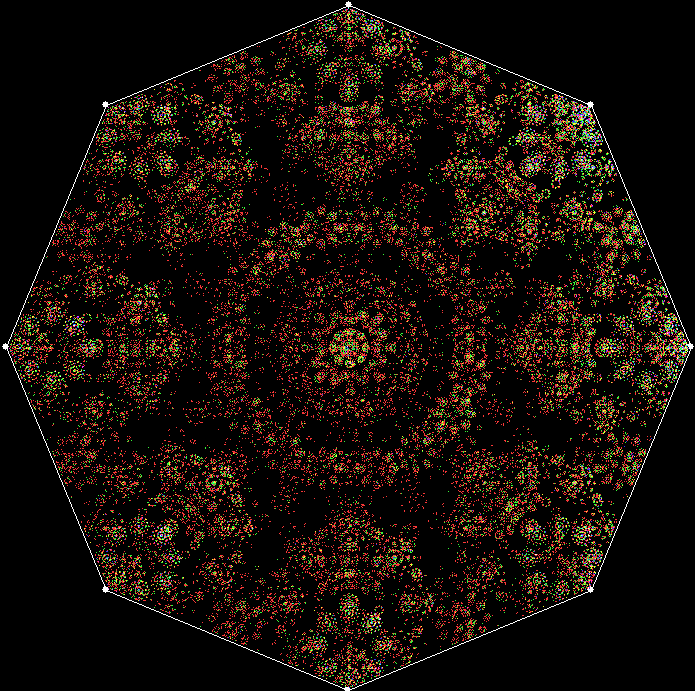
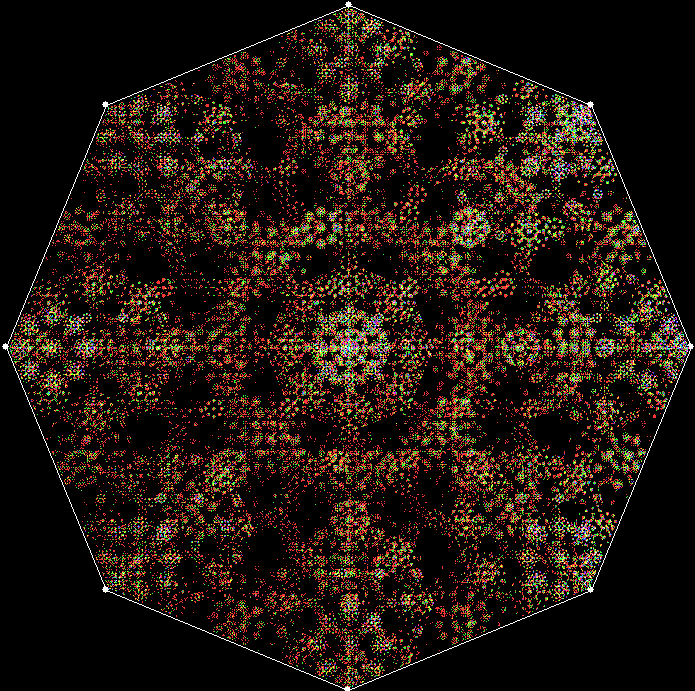
v = 8, j = 1,2,3, hist = 2


v = 8, j = 1,2,3, hist = 2


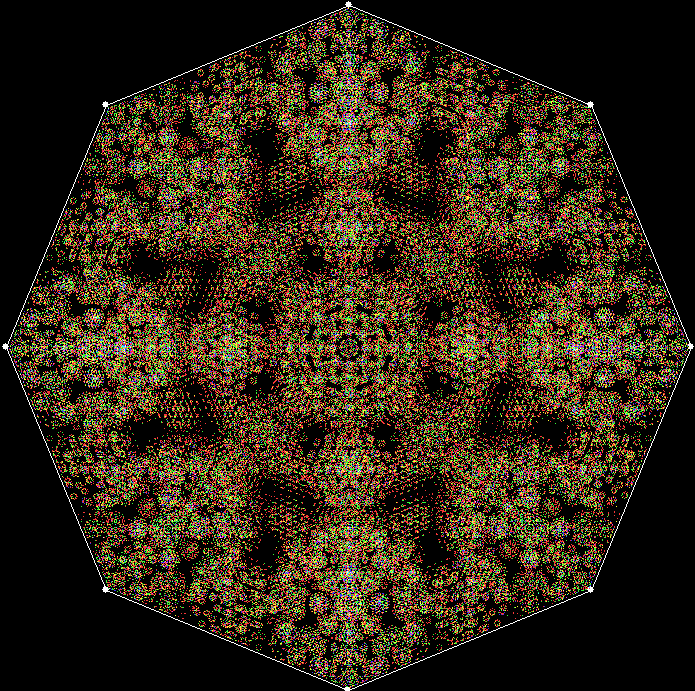
v = 8, j = 1,2,3,4 hist = 3


v = 8, j = 1,2,3,4 hist = 3 (with center)


Ju Dunnit

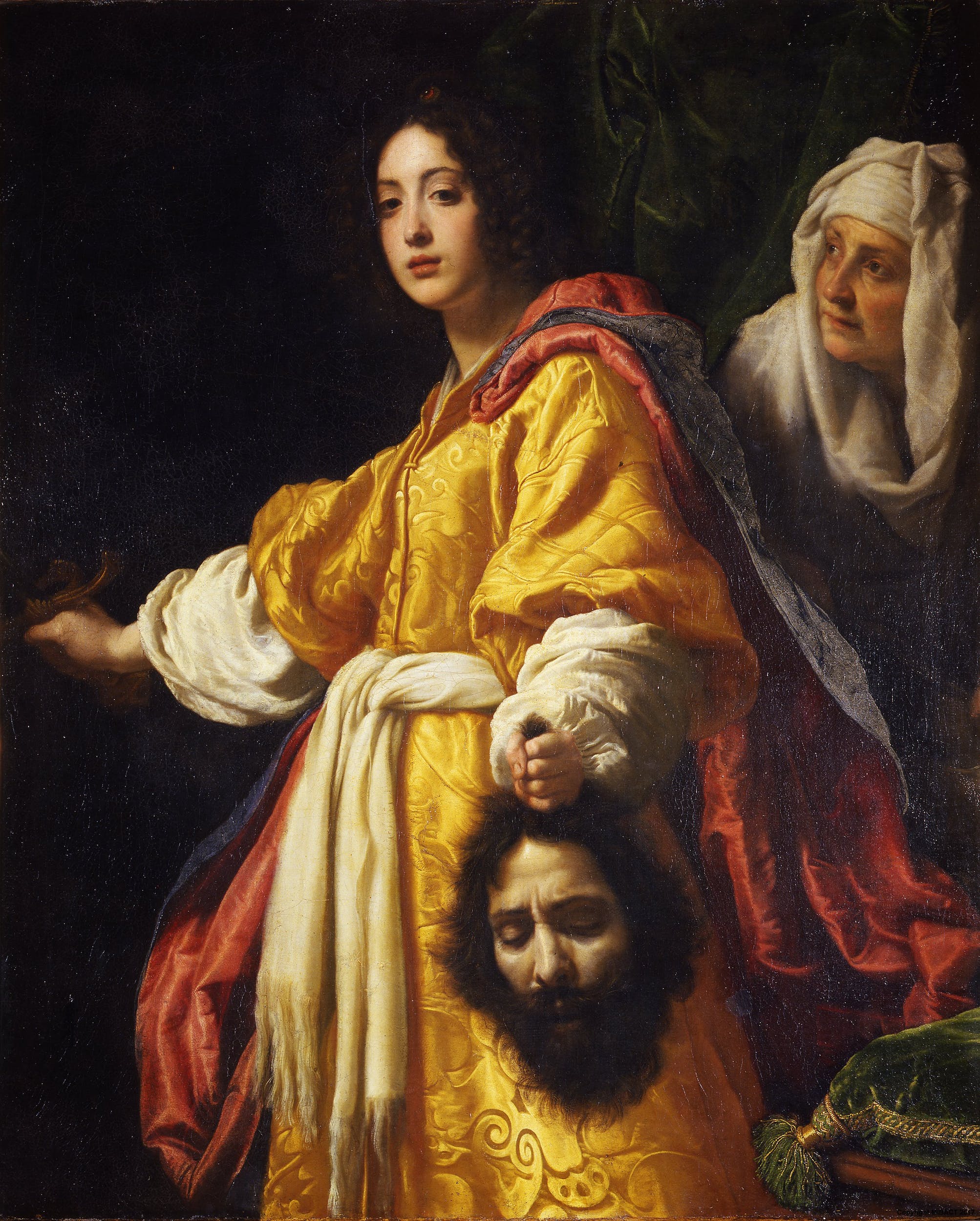
Giuditta con la testa di Oloferne (c. 1612), Cristofano Allori (1577-1621)


Interesting facts in-terms-of-issues-around this painting, known as Judith with the Head of Holofernes in English: according to Allori’s first biographer Filippo Baldinucci, the severed head is a self-portrait of Allori, the decapitatrix is an ex-girlfriend, Maria di Giovanni Mazzafirri, and the old servant is her mother (from A Face to the World, Laura Cumming, 2009).

Performativizing Papyrocentricity #61

Papyrocentric Performativity Presents:

Orchid KidThe Orchid Hunter: A Young Botanist’s Search for Happiness, Leif Bersweden (Short Books 2017)

Deep in the DarkThe Tunnel, Eric Williams (1951)

Faces and FactsThe Self-Portrait: A Cultural History, James Hall (Thames & Hudson 2014)

Persian PoolReligions of Iran: From Prehistory to the Present, Richard Foltz (Oneworld 2013)

Hooky HereUnknown Pleasures: Inside Joy Division, Peter Hook (Simon & Schuster 2012)

#MiTooMorbidly Miriam: The Mephitic Memoirs of Miriam B. Stimbers, Dr Miriam B. Stimbers (TransVisceral Books 2018)


• Or Read a Review at Random: RaRaR

Methylomania

अभि द्यां महिना भुवमभीमां पृथिवीं महीम् ।
कुवित्सोमस्यापामिति ॥८॥
हन्ताहं पृथिवीमिमां नि दधानीह वेह वा ।
कुवित्सोमस्यापामिति ॥९॥ — ऋग्वेदः सूक्तं १०.११९

“In my vastness, I surpassed the sky and this vast earth. Have I not drunk Soma? / Yes! I will place the earth here, or perhaps there. Have I not drunk Soma?” — Ṛg Veda, Mandala 10, Hymn 119, lines 8-9, translated by Wendy Doniger


Note: The title of this incendiary intervention is a portmanteau of “methylated” and “megalomania”. “Methylated” comes from the ancient Greek μέθυ, meaning “wine” and related to μέθυστος “drunk, intoxicated” (OED).

The Hex Fractor #2

Pre-previously on Overlord-in-terms-of-issues-around-the-Über-Feral, I looked at the fractals created when various restrictions are placed on a point jumping at random half-way towards the vertices of a square. For example, the point can be banned from jumping towards the same vertex twice in a row or towards the vertex to the left of the vertex it has just jumped towards, and so on.
Today I want to look at what happens to a similar point moving inside pentagons and hexagons. If the point can’t jump twice towards the same vertex of a pentagon, this is the fractal that appears:

Ban second jump towards same vertex (v + 0)


Ban second jump towards same vertex (color)


If the point can’t jump towards the vertex immediately to the left of the one it’s just jumped towards, this is the fractal that appears:

Ban jump towards v + 1


Ban jump towards v + 1 (color)


And this is the fractal when the ban is on the vertex two places to the left:

Ban jump towards v + 2


Ban jump towards v + 2 (color)


You can also ban more than one vertex:

Ban jump towards v + 0,1


Ban jump towards v + 1,2


Ban jump towards v + 1,4


Ban jump towards v + 1,4 (color)


Ban jump towards v + 2,3


And here are fractals created in similar ways inside hexagons:

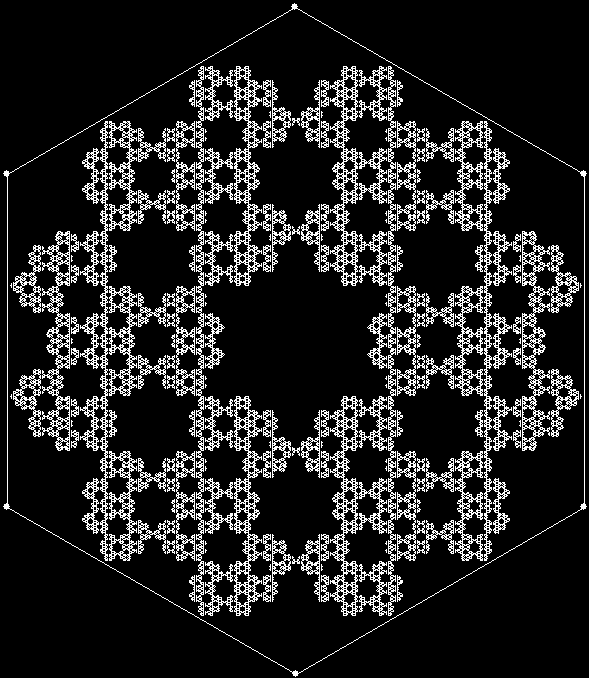
Ban jump towards v + 0,1


Ban jump towards v + 0,3


Ban jump towards v + 0,1,2


Ban jump towards v + 0,1,2 (color)


Ban jump towards v + 0,1,4


Ban jump towards v + 0,1,5


Ban jump towards v + 0,2,4


Ban jump towards v + 0,2,4 (color)


Ban jump towards v + 1,2,3


Ban jump towards v + 1,2,3 (color)


Ban jump towards v + 1,2,4


Ban jump towards v + 1,2,4, (color)


Ban jump towards v + 1,3,5


Ban jump towards v + 1,3,5 (color)


Ban jump towards v + 1,2


Ban jump towards v + 1,2


Ban jump towards v + 1,3


Ban jump towards v + 1,3 (color)


Ban jump towards v + 1,5


Ban jump towards v + 1,5 (color)


Ban jump towards v + 2,3


Ban jump towards v + 2,3 (color)


Ban jump towards v + 2,4


Ban jump towards v + 2,4 (color)


Elsewhere other-accessible:

Square Routes Re-Verticed

A Counter-Cultural Conundrum

If three keyly committed core components of the counter-cultural community say “in terms of” 105 times in an hour, how many times will one keyly committed core component of the counter-cultural community say “prior to” in terms of 23 minutes?


Elsewhere Other-Accessible:

Ex-term-in-ate!
Titus Graun: Heresy, Homotextuality, Hive-Mind
All O.o.t.Ü.-F. posts engaging issues around I.T.O.