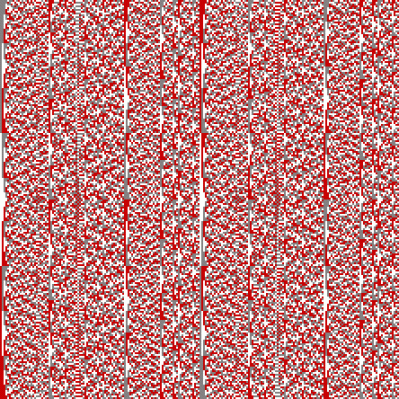
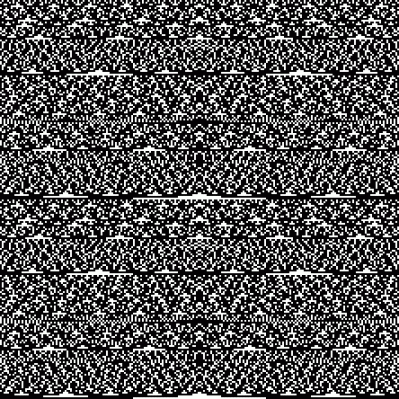
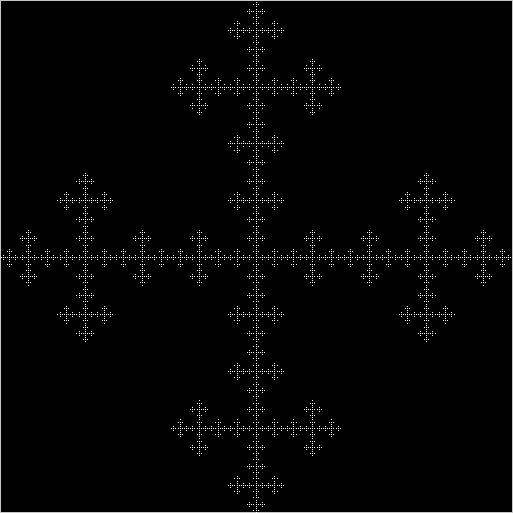
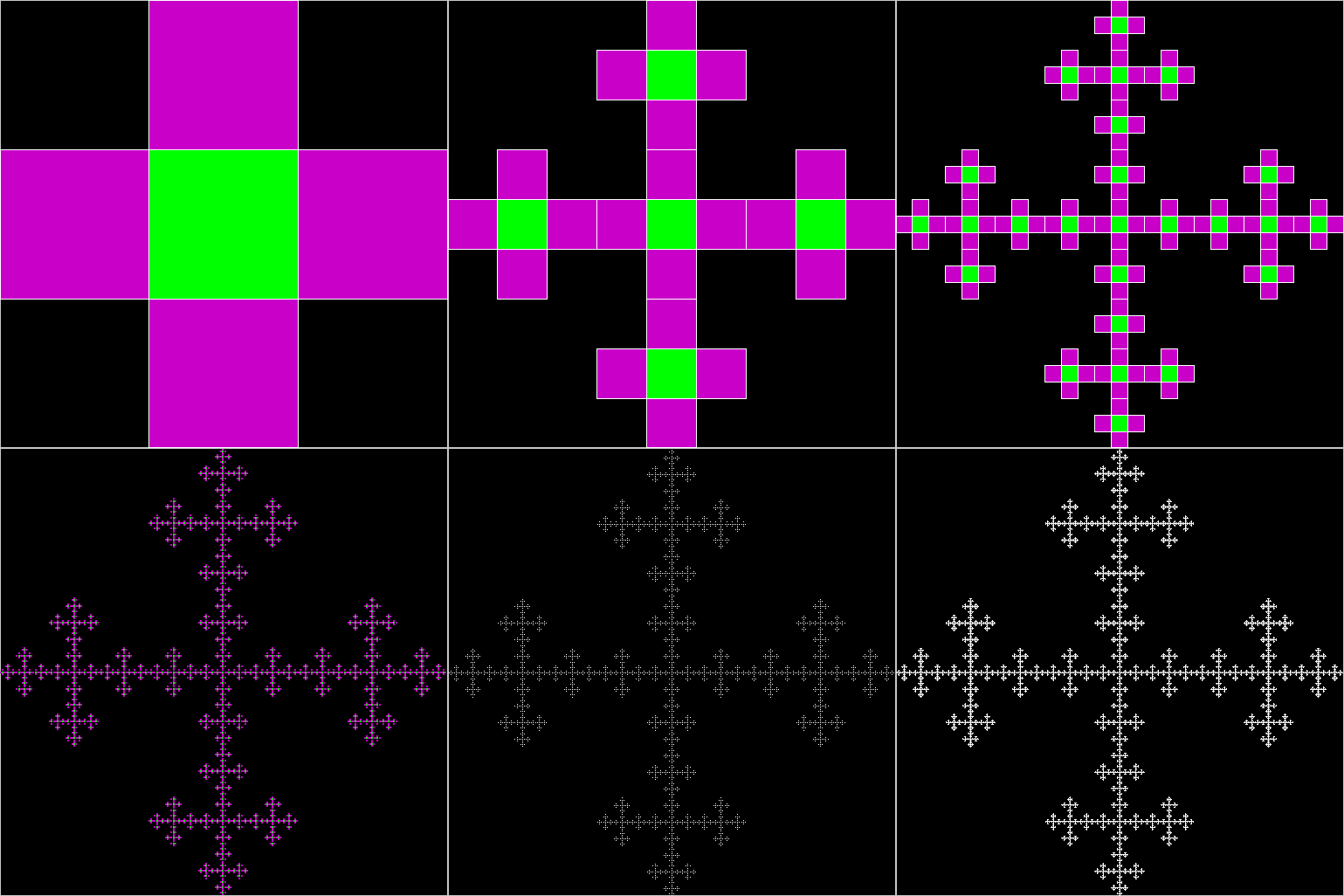
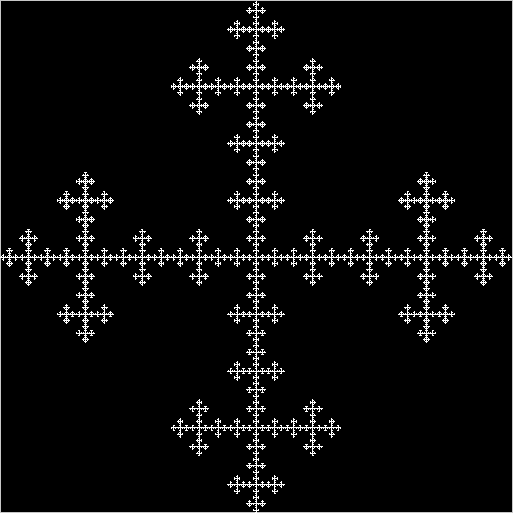
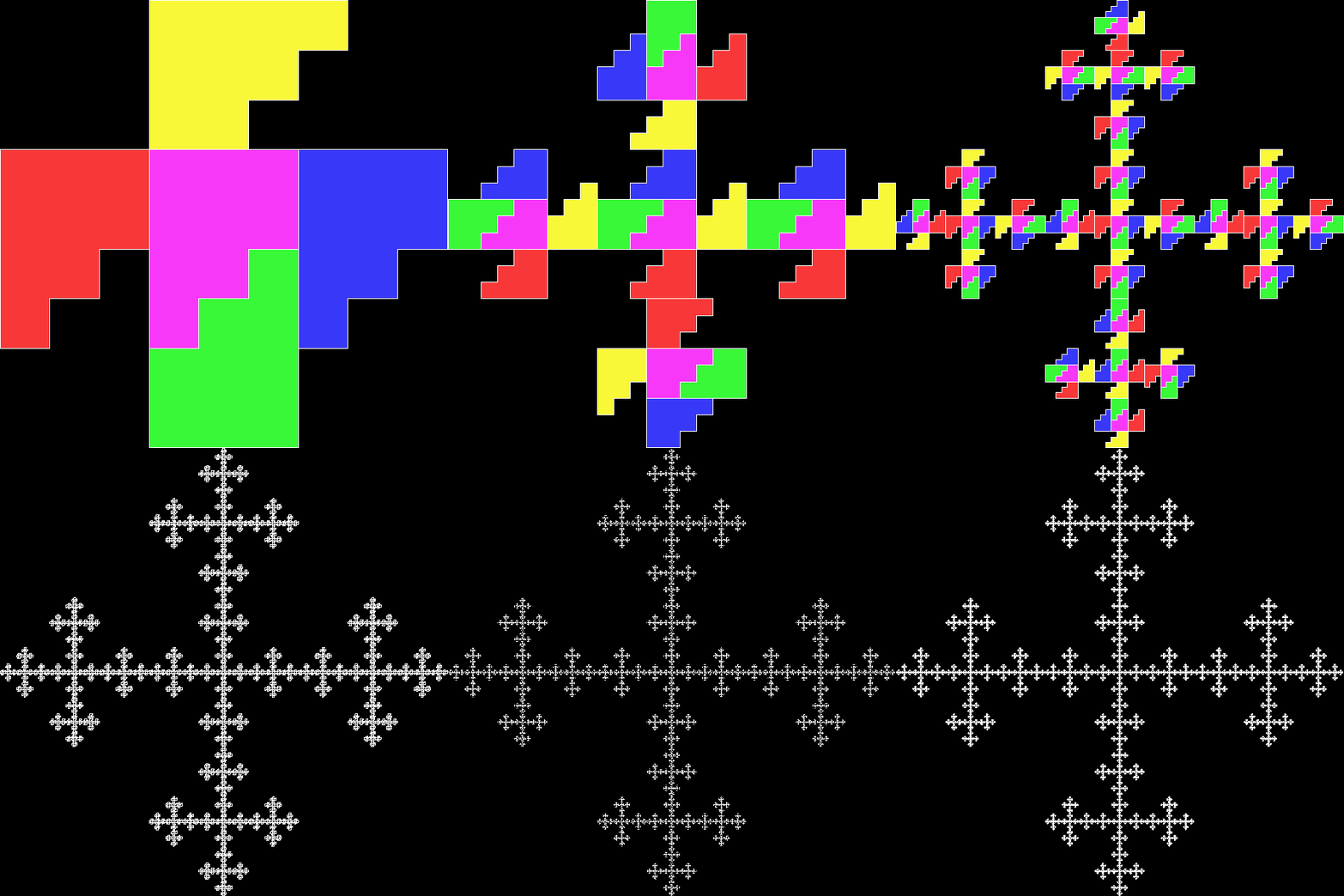
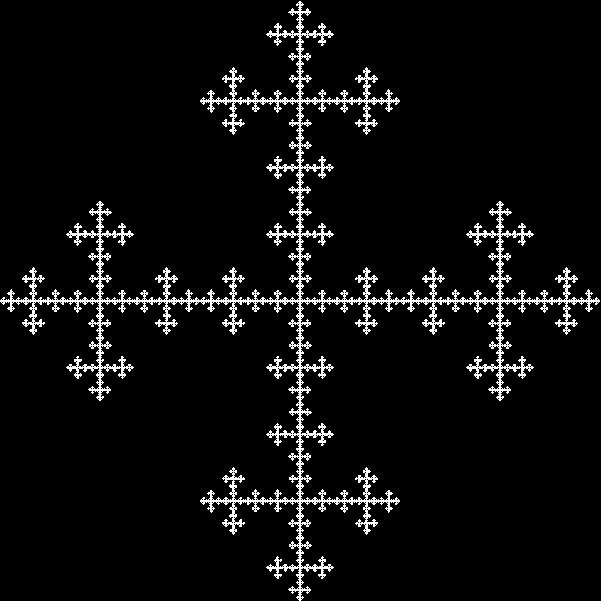
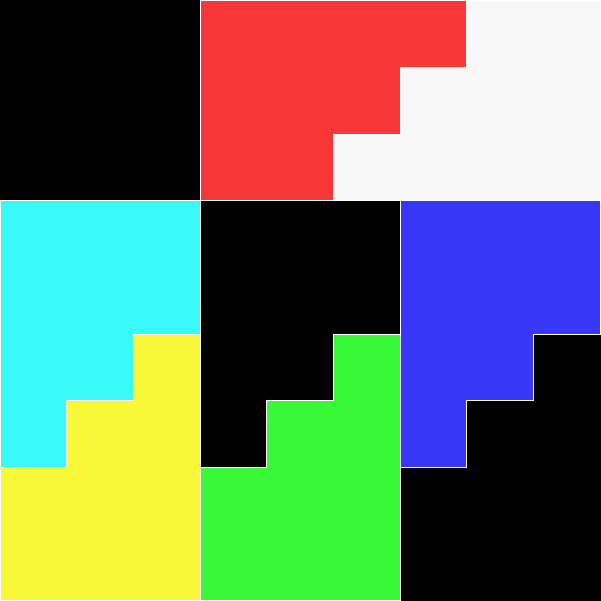
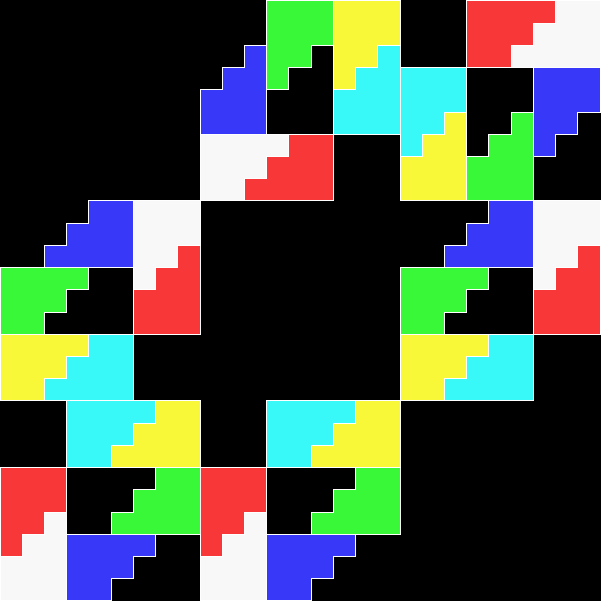
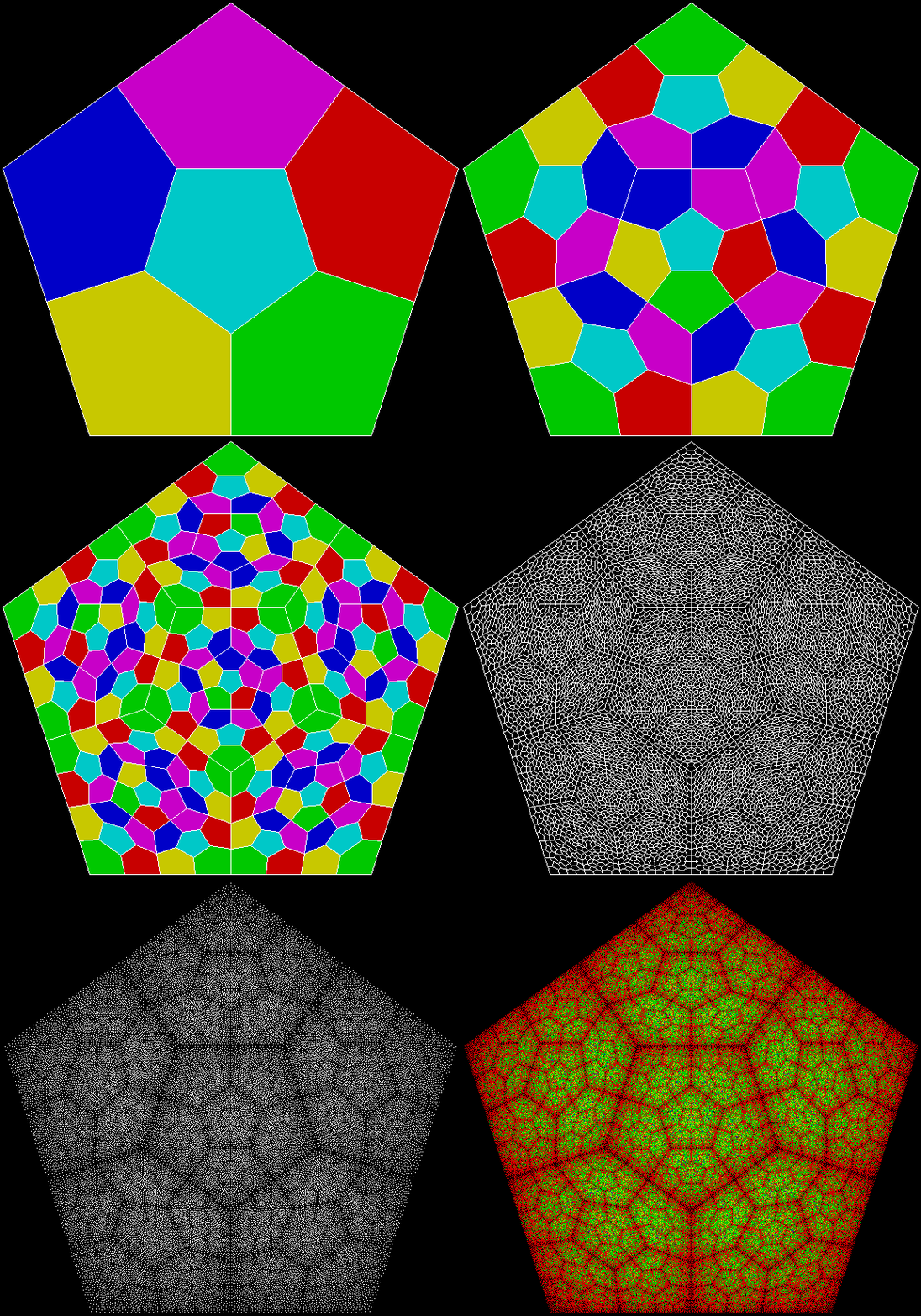
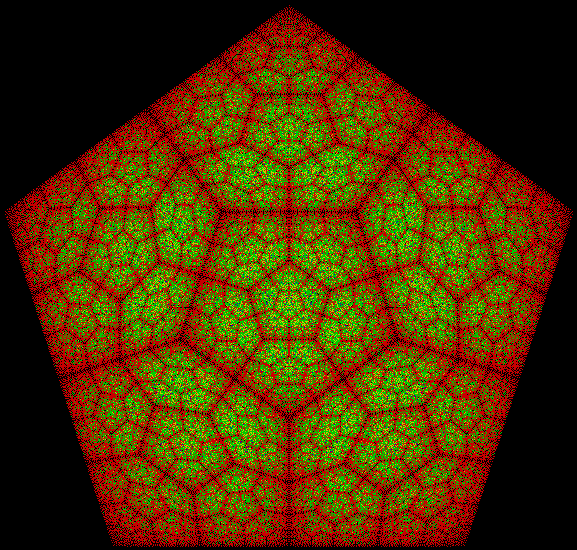
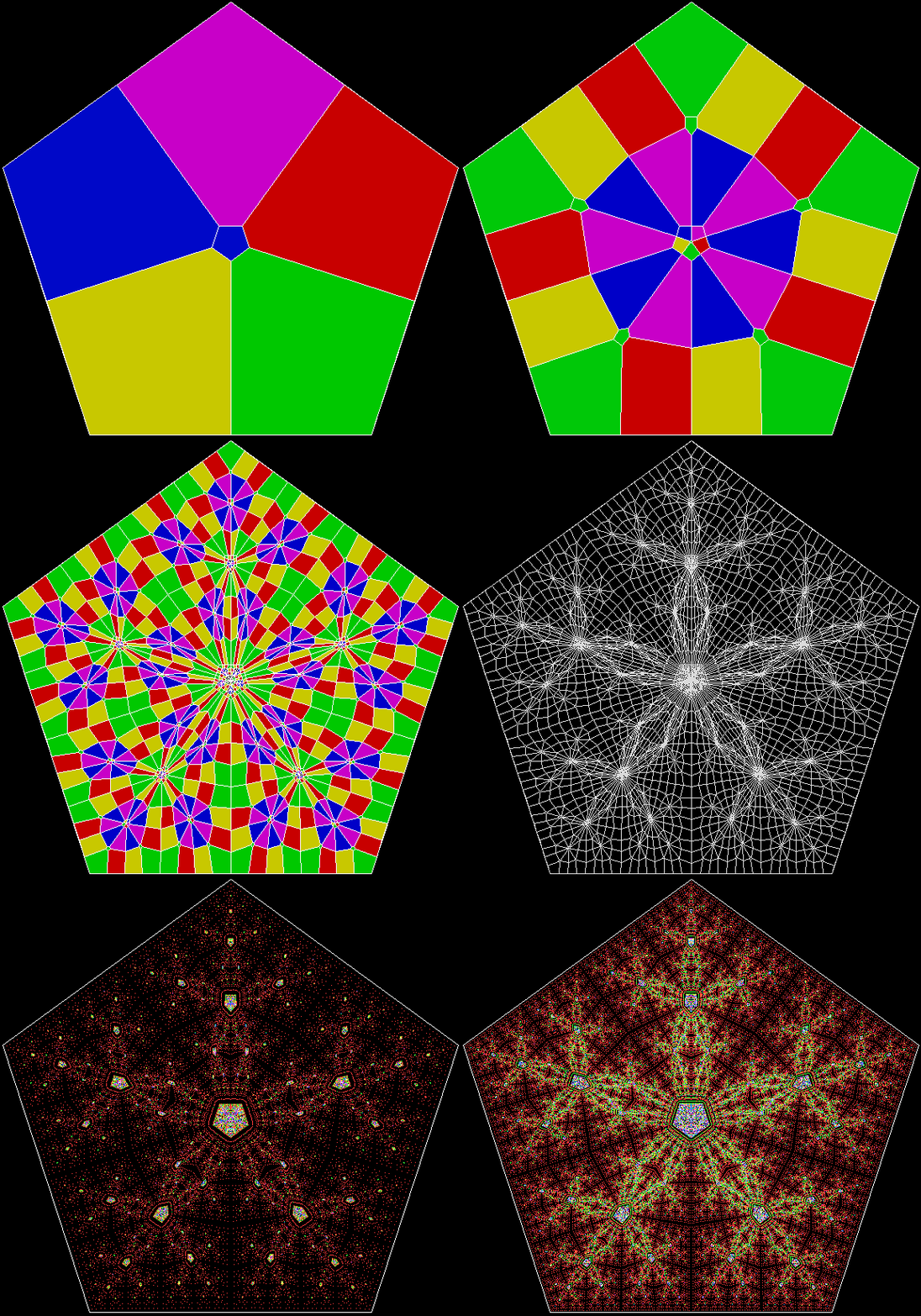
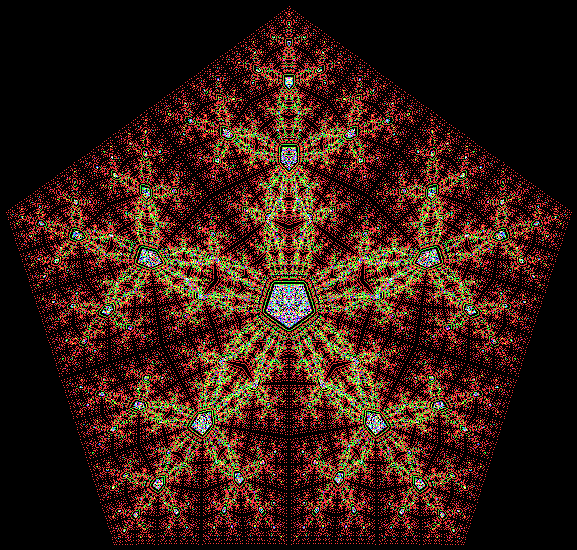
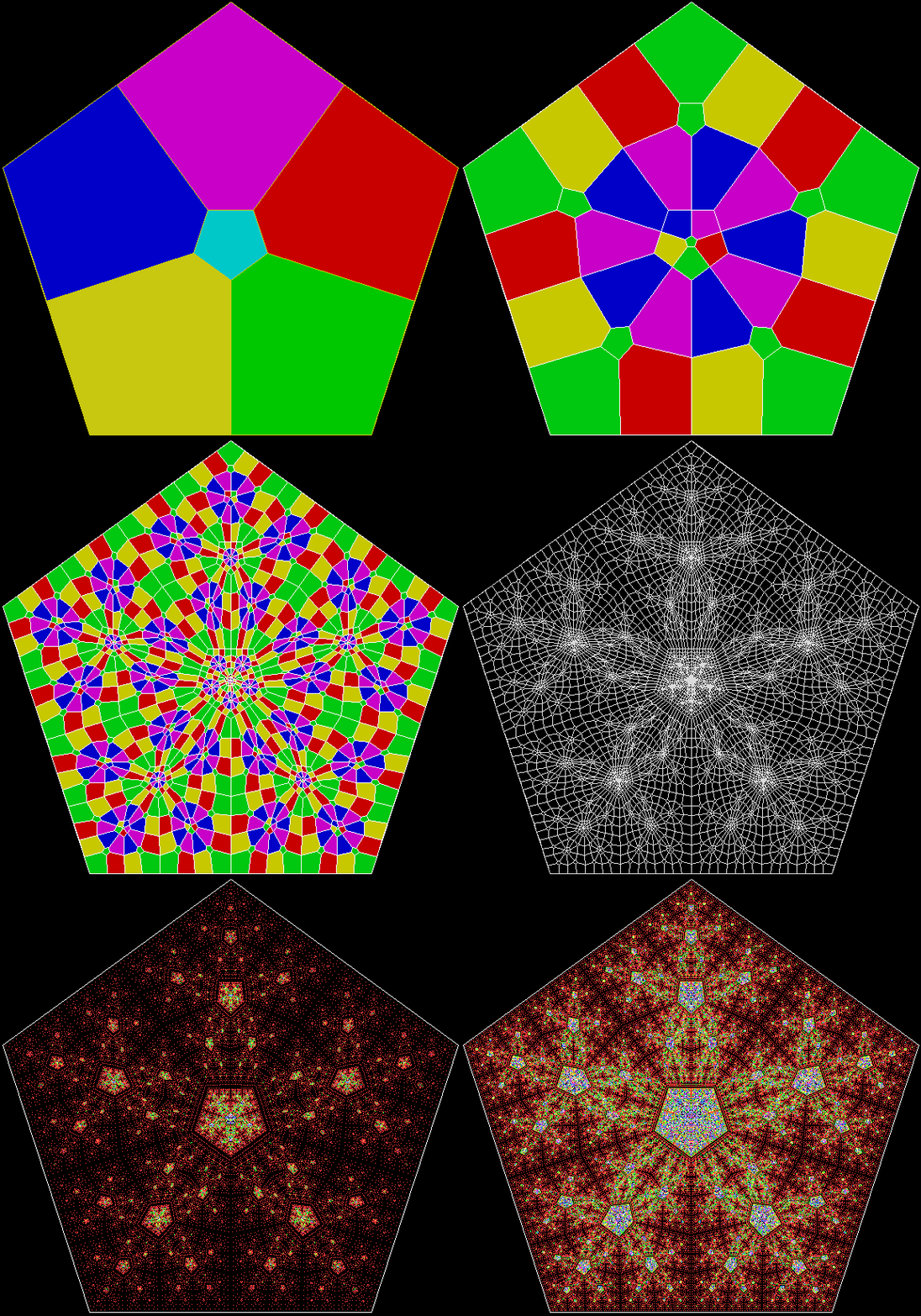
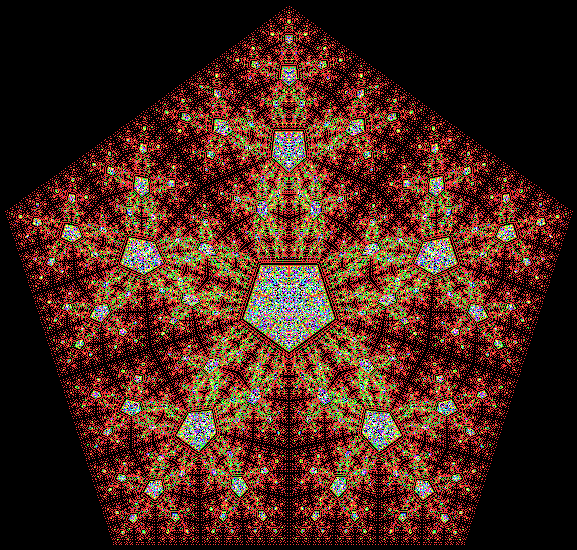
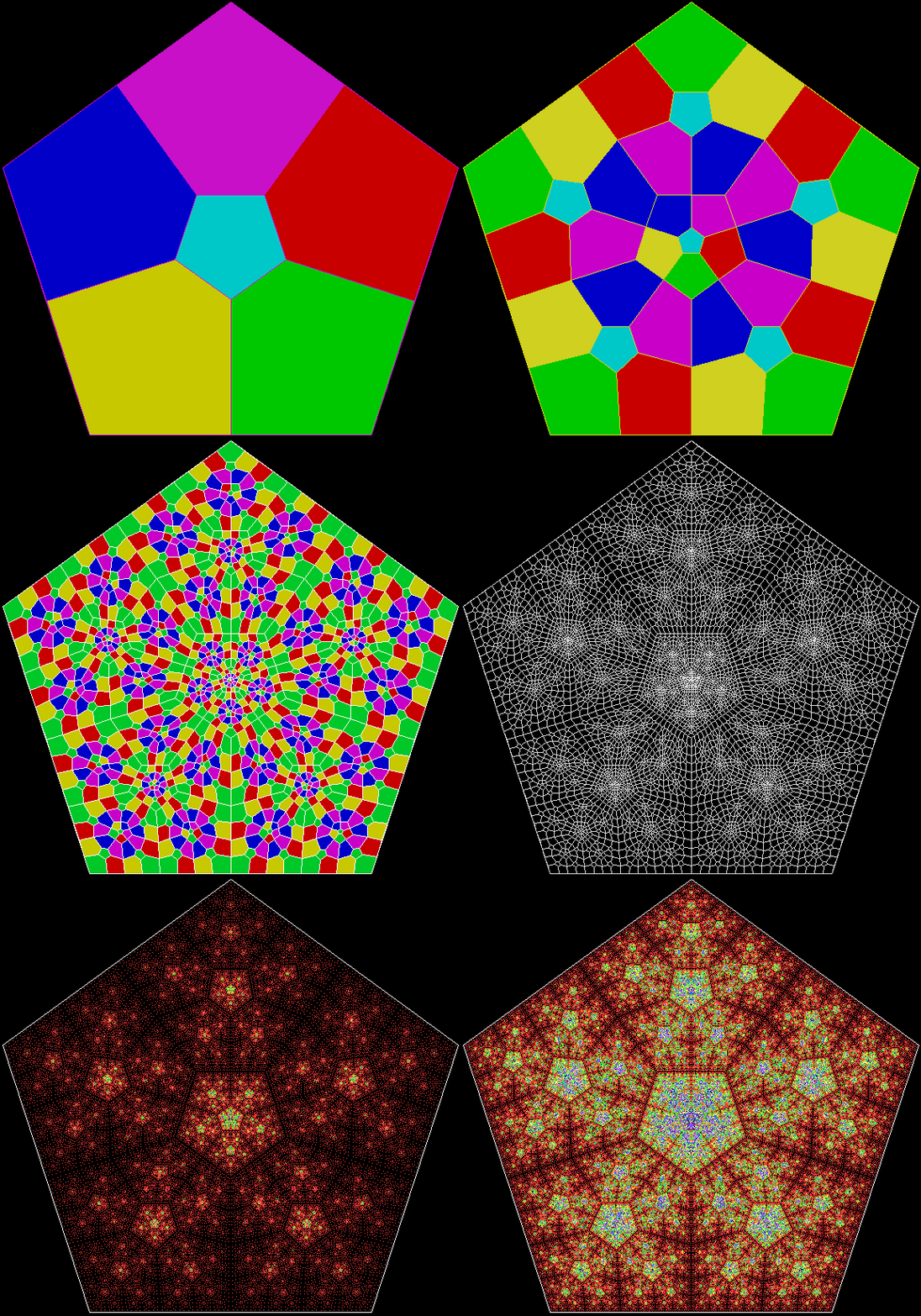
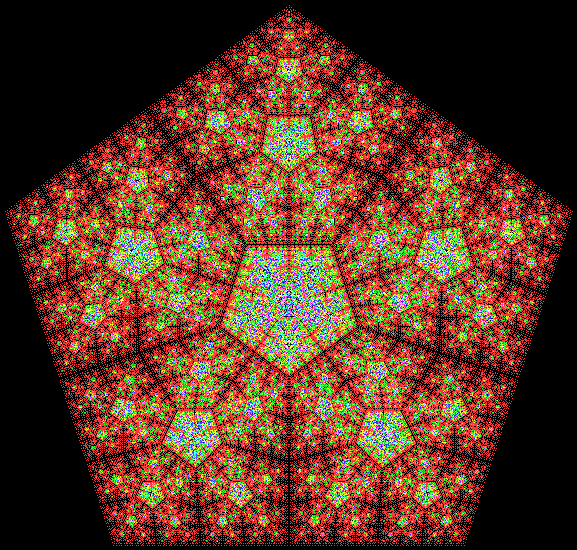
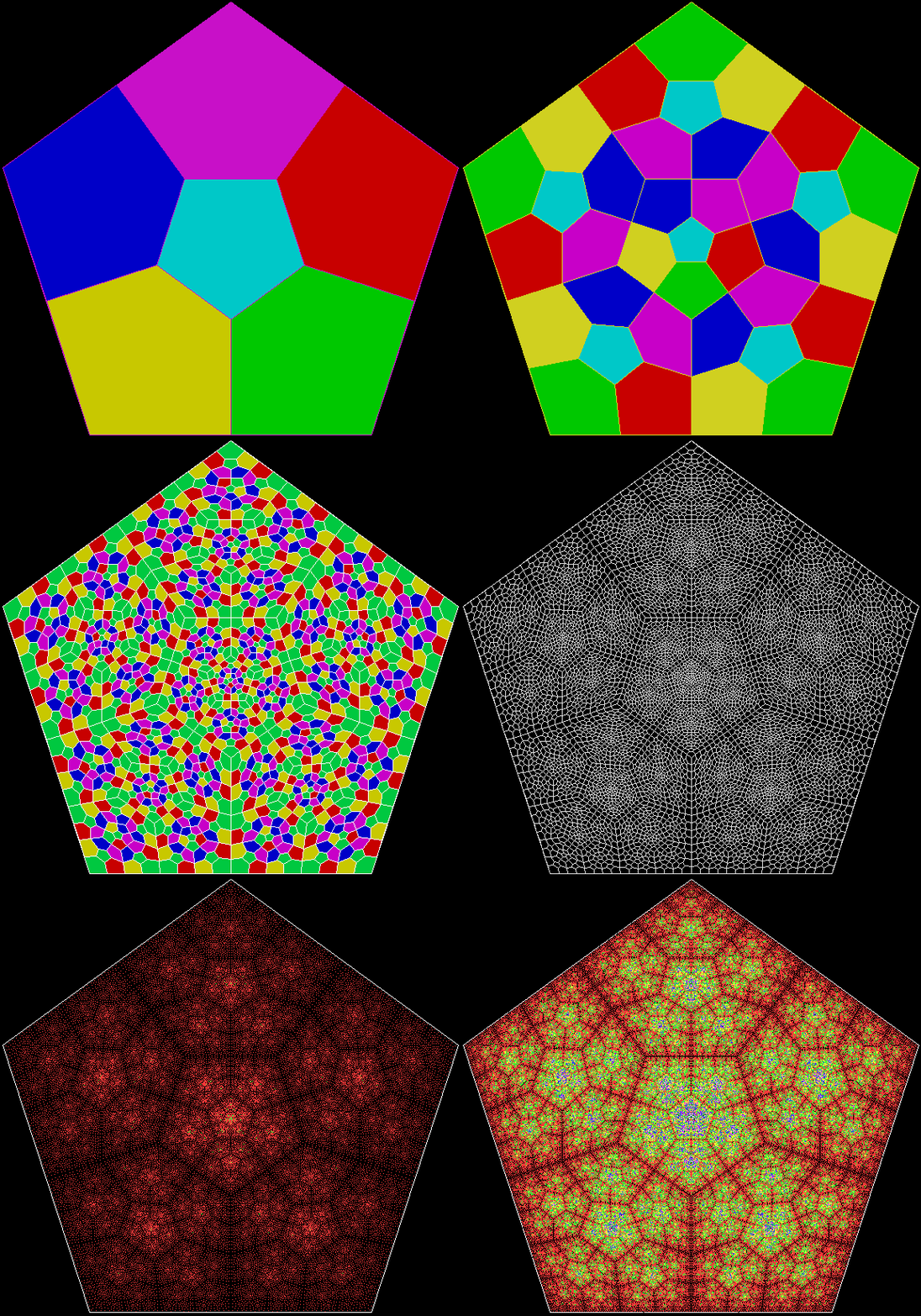
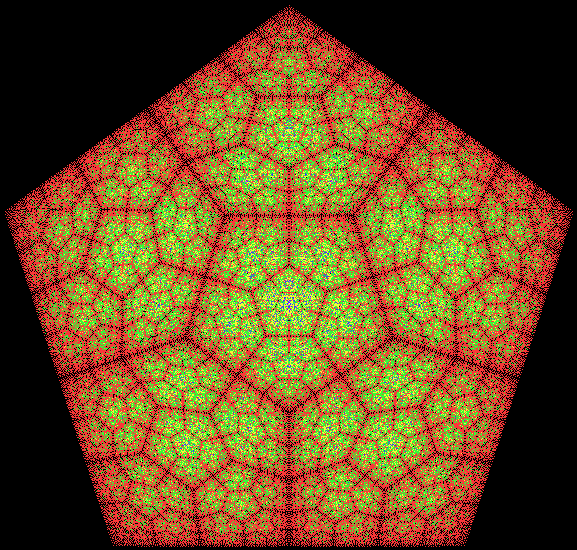
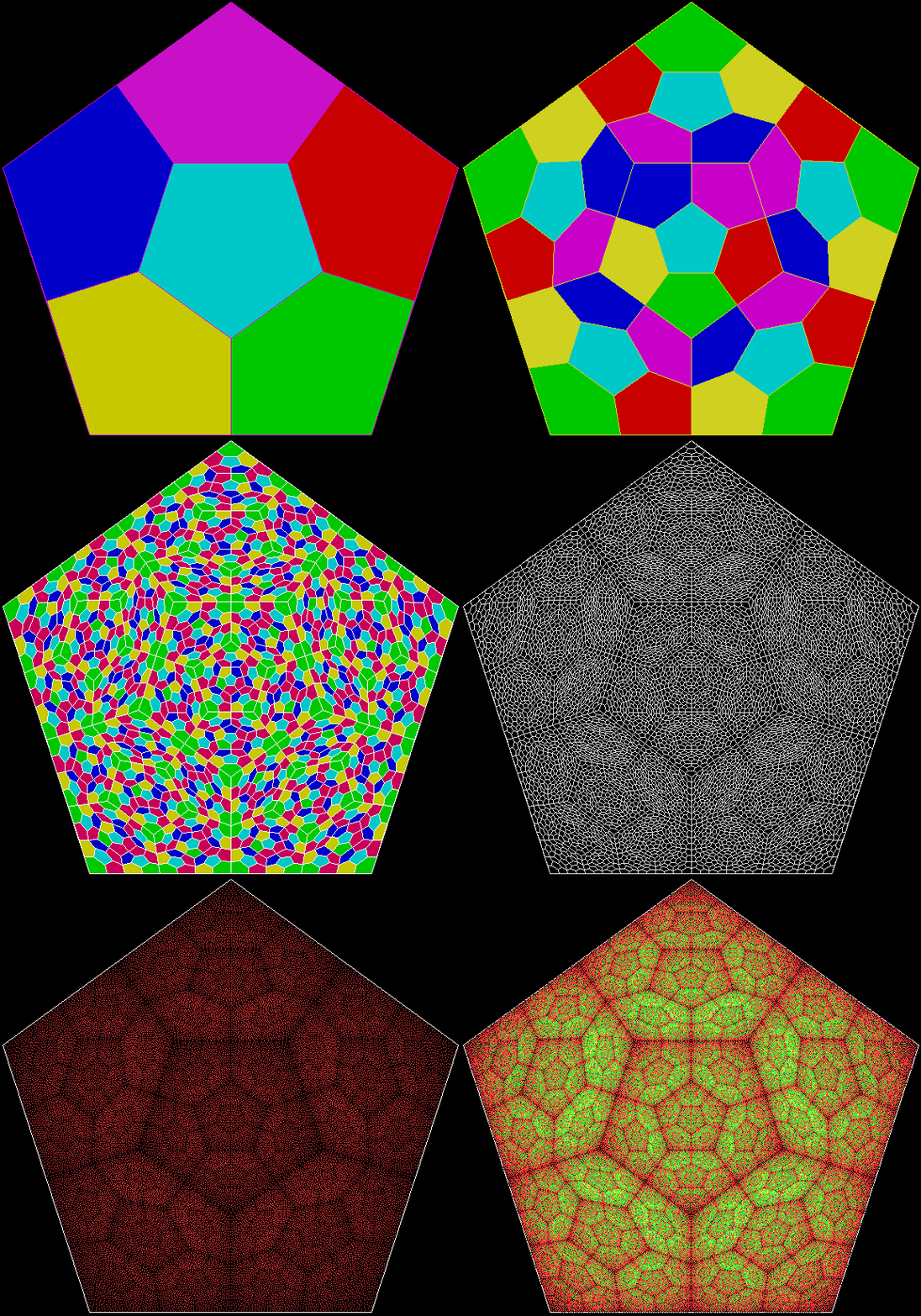
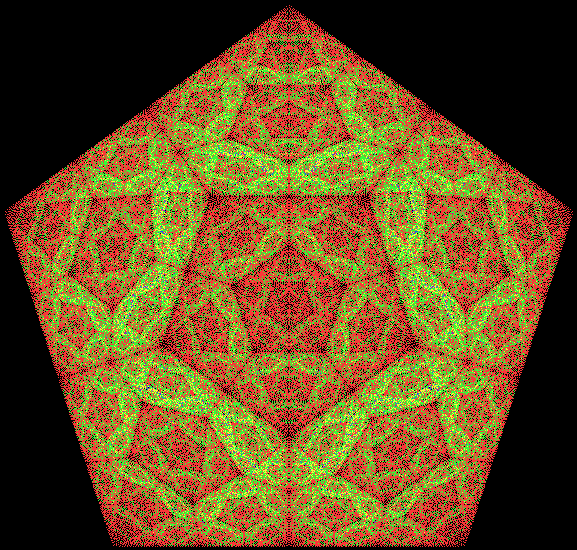
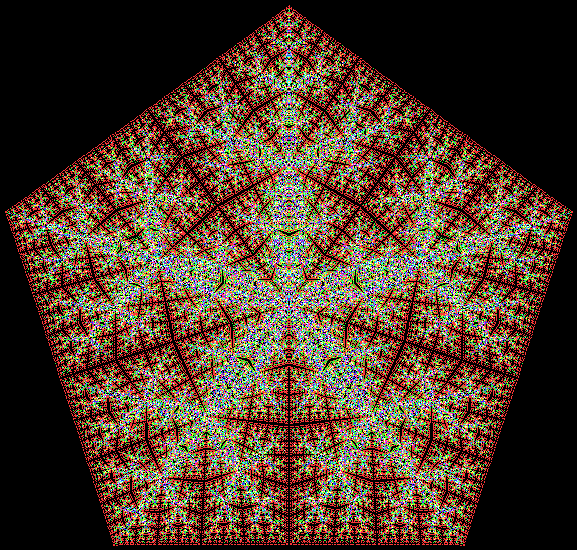
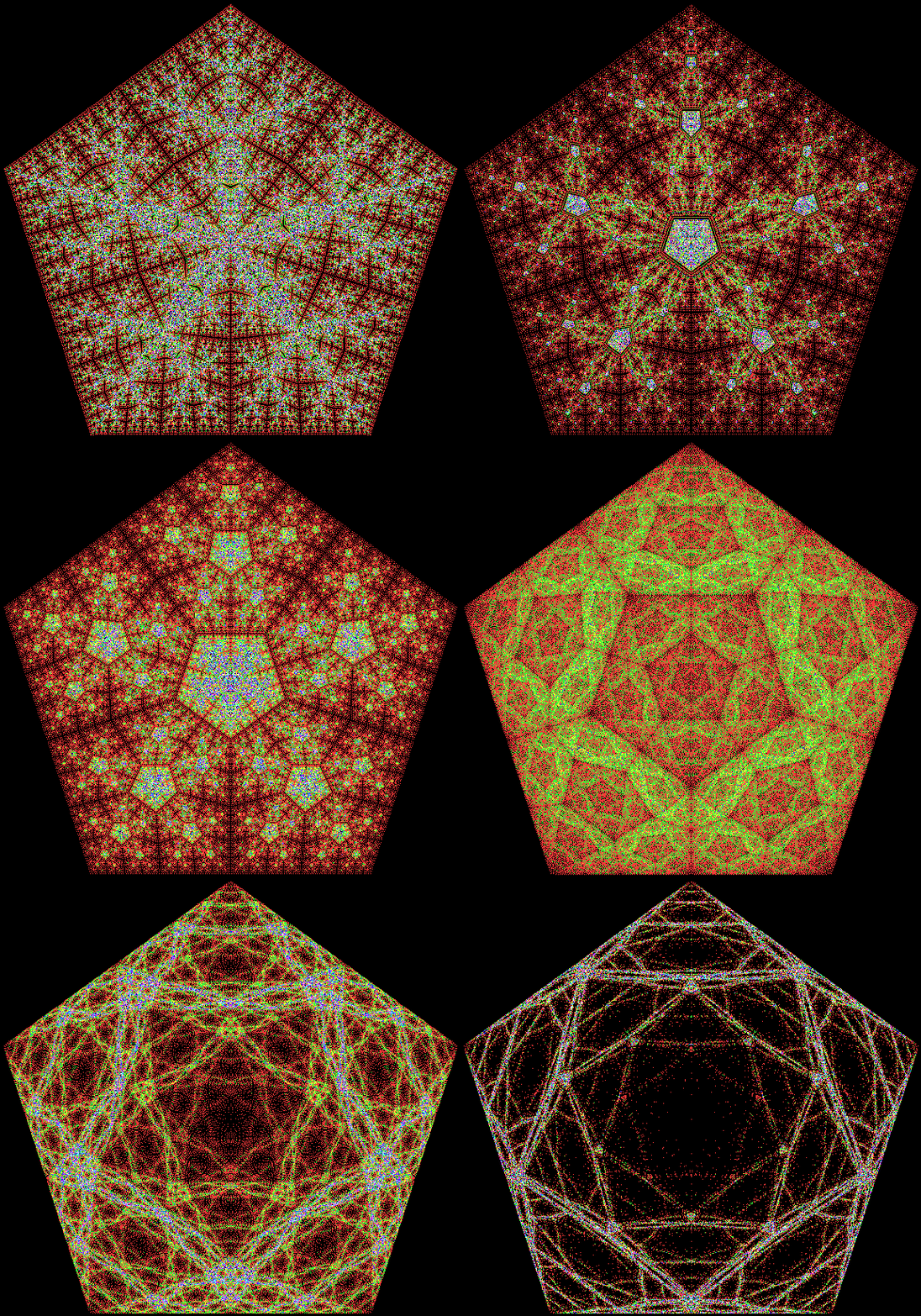
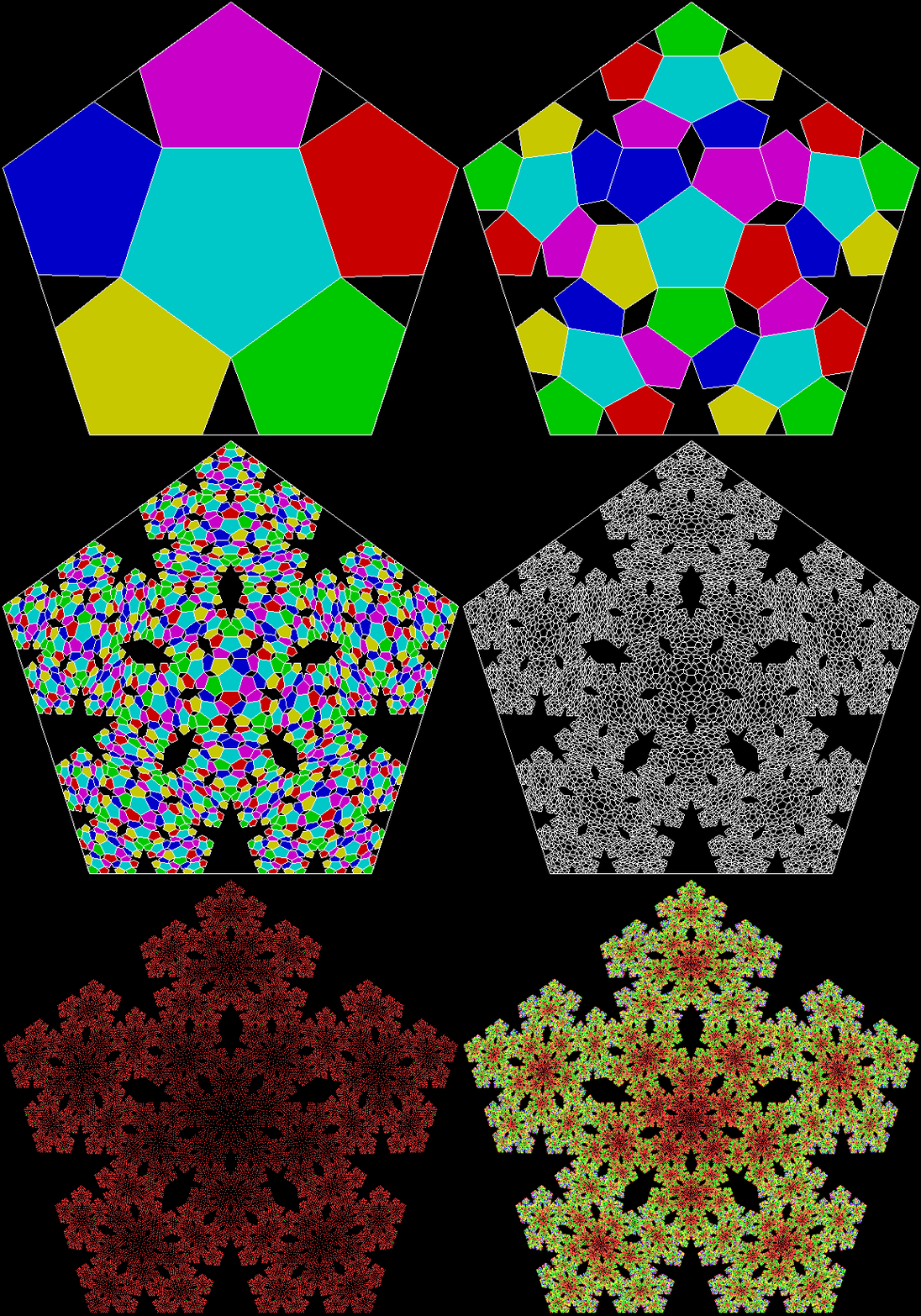
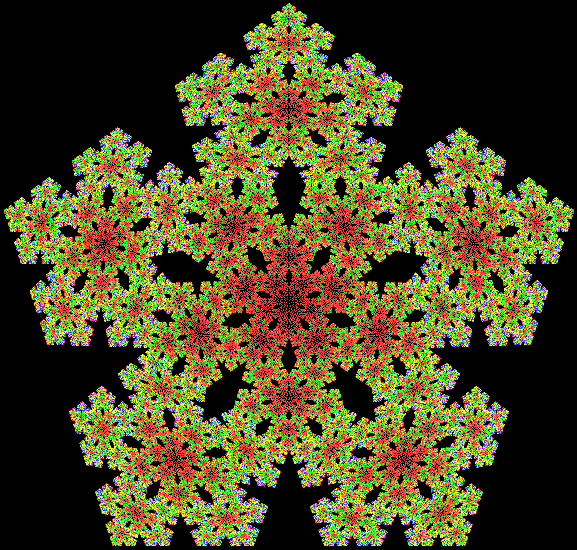
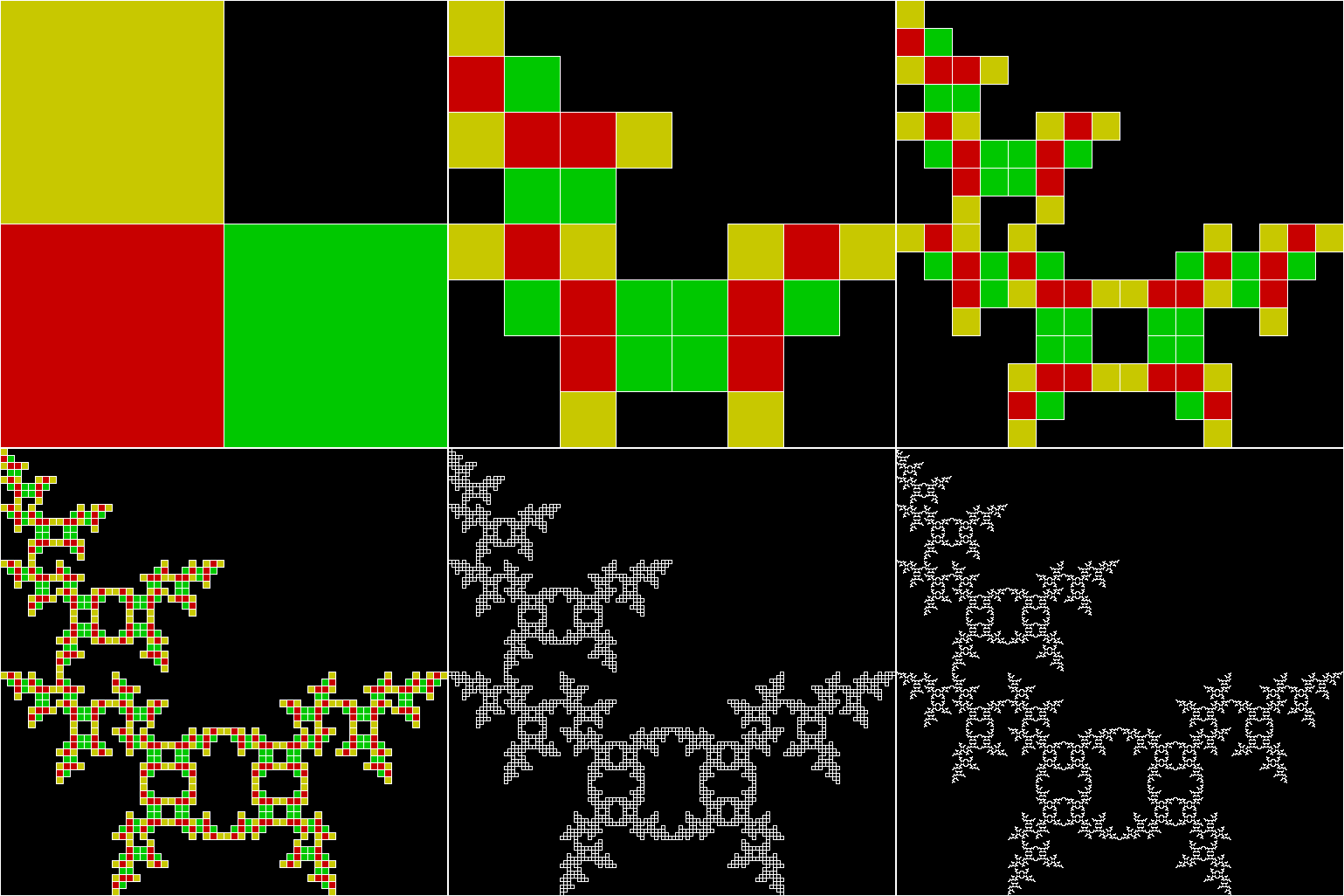
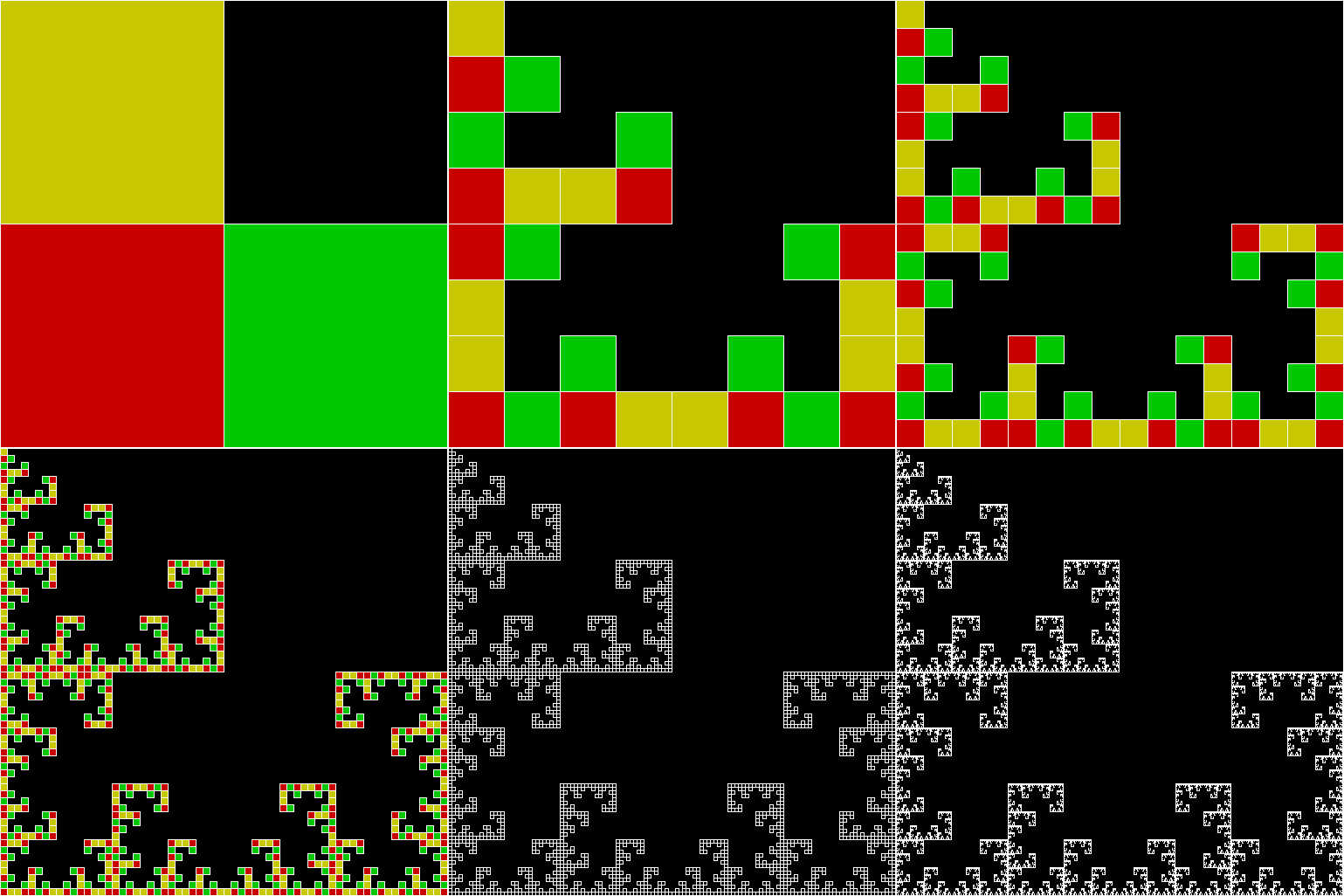
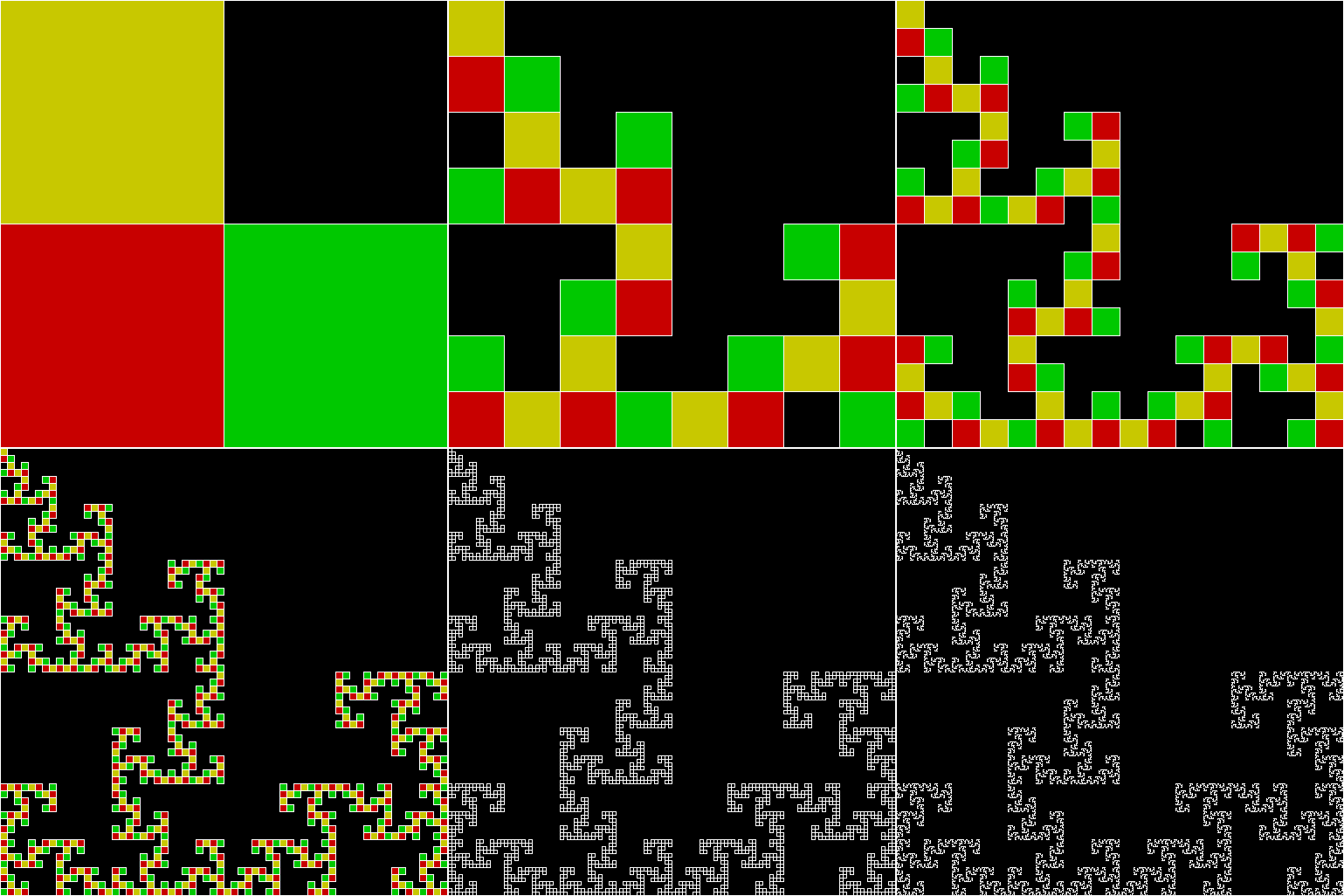
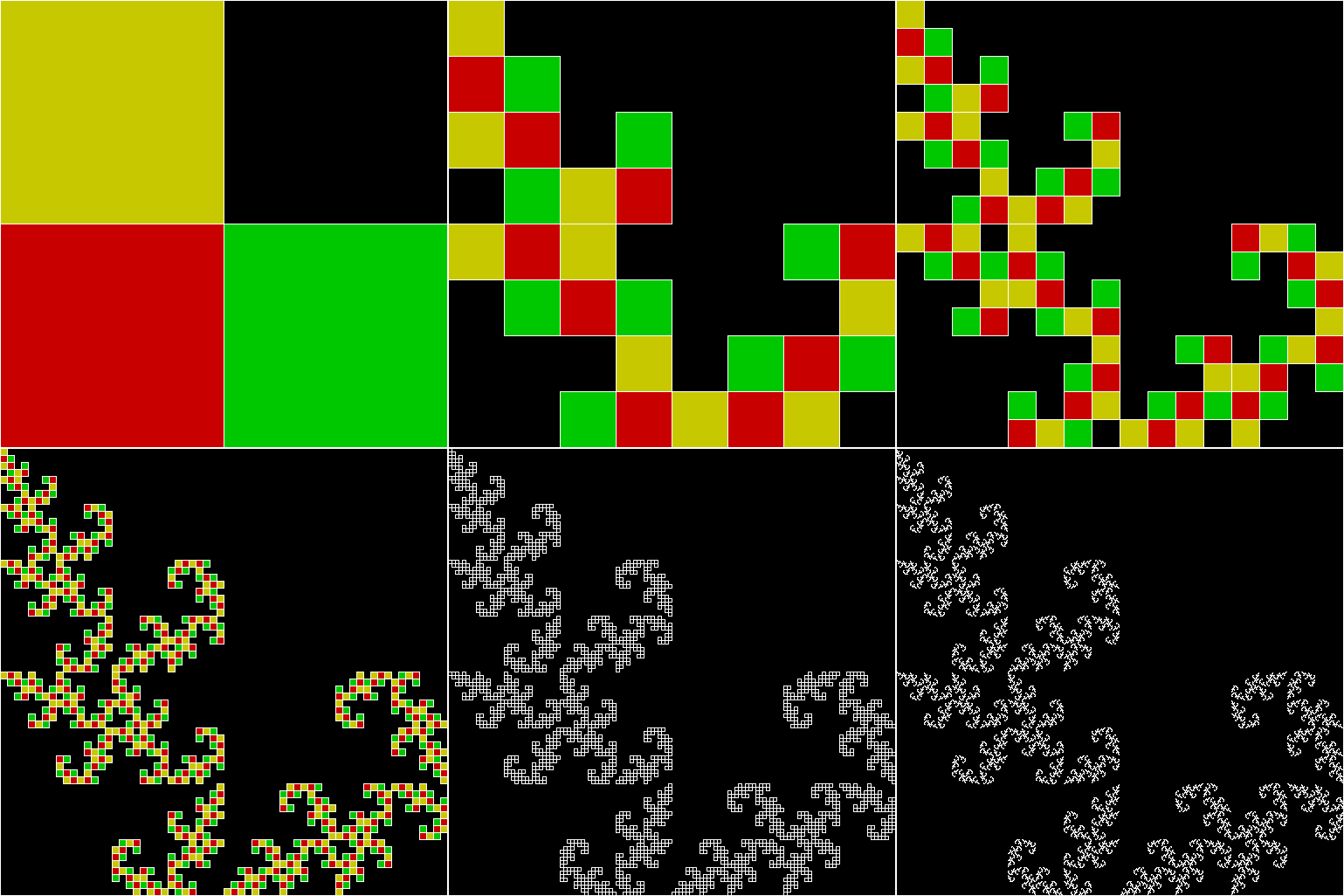
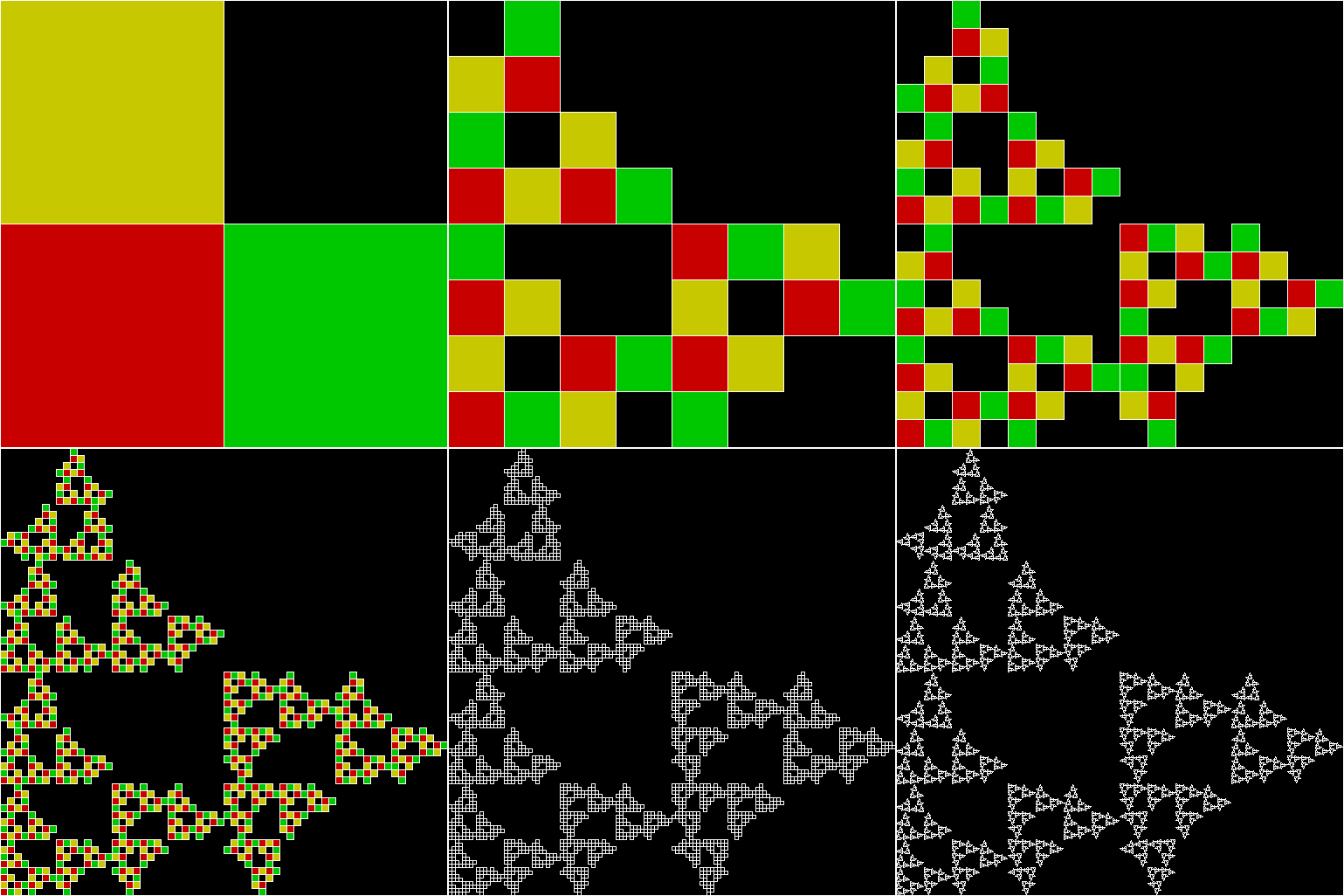
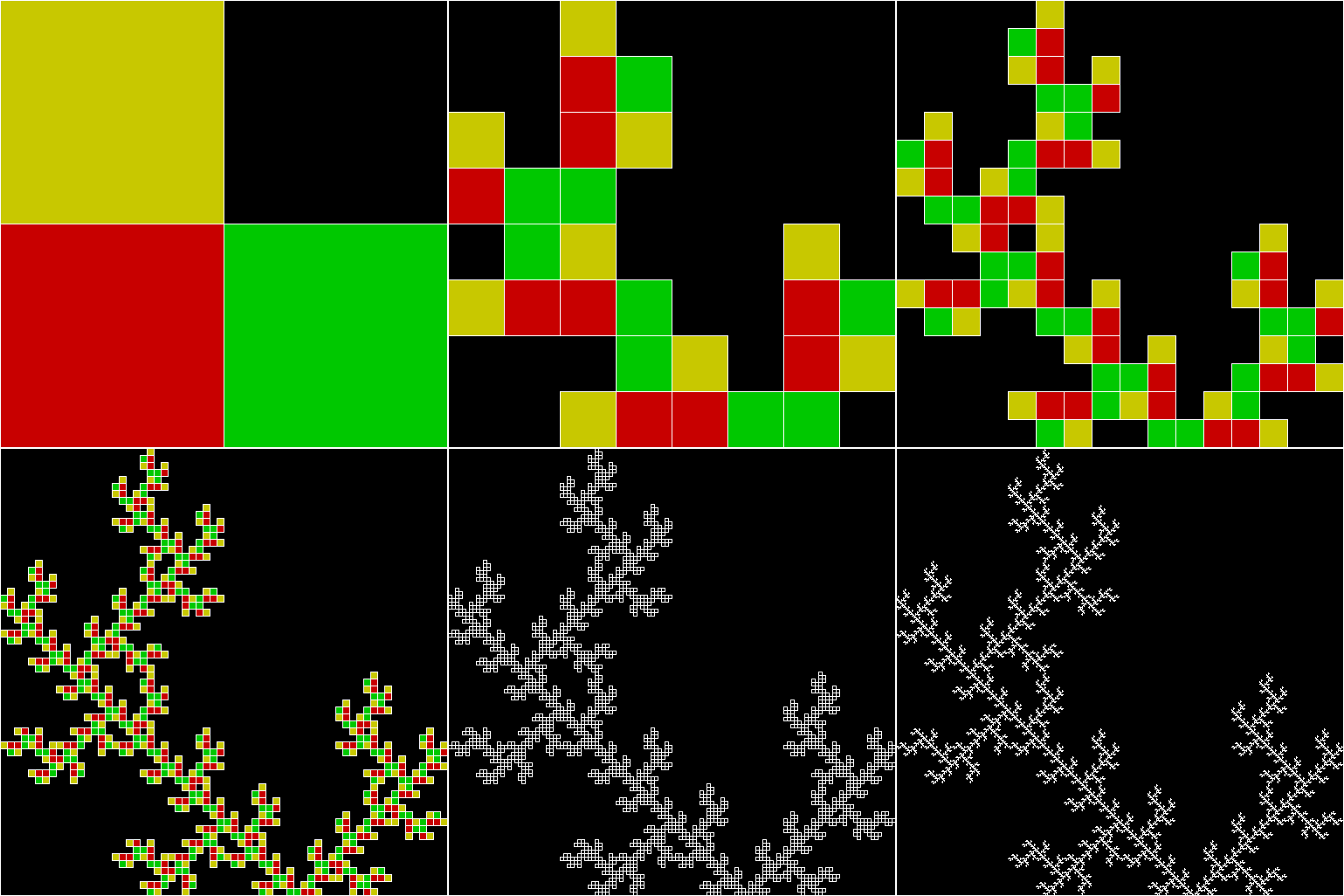
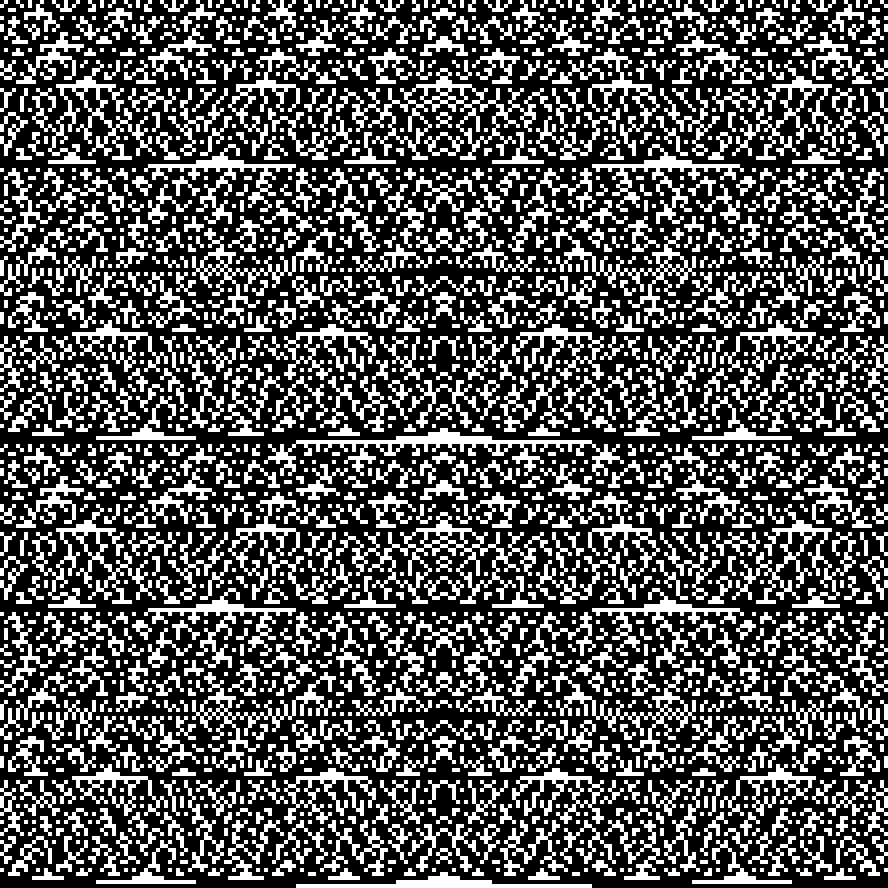
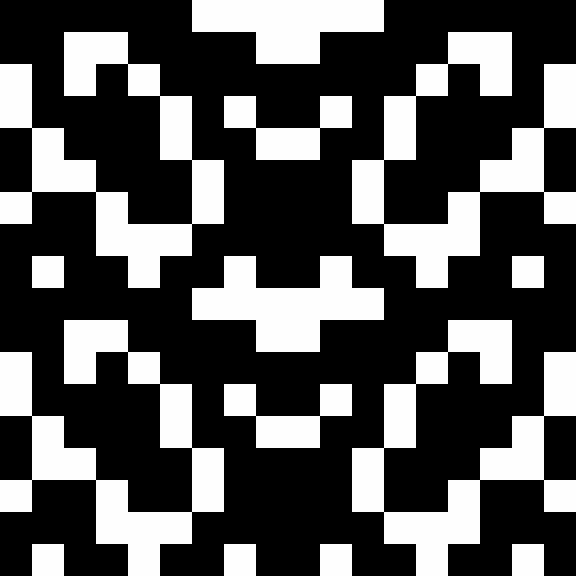
He Say, He Sigh, He Sow #43

Me dijo que su libro se llamaba el Libro de Arena, porque ni el libro ni la arena tienen ni principio ni fin. — Jorge Luis Borges, “El Libro de Arena” (1975)

   He told me that his book was called the Book of Sand, because neither book nor sand has beginning or end. — Borges, “The Book of Sand

Corralling Chaos

“Down through the aether I saw the accursed earth turning, ever turning, with angry and tempestuous seas gnawing at wild desolate shores and dashing foam against the tottering towers of deserted cities.” — “The Crawling Chaos” (1921), Winifred Jackson and H. P. Lovecraft.


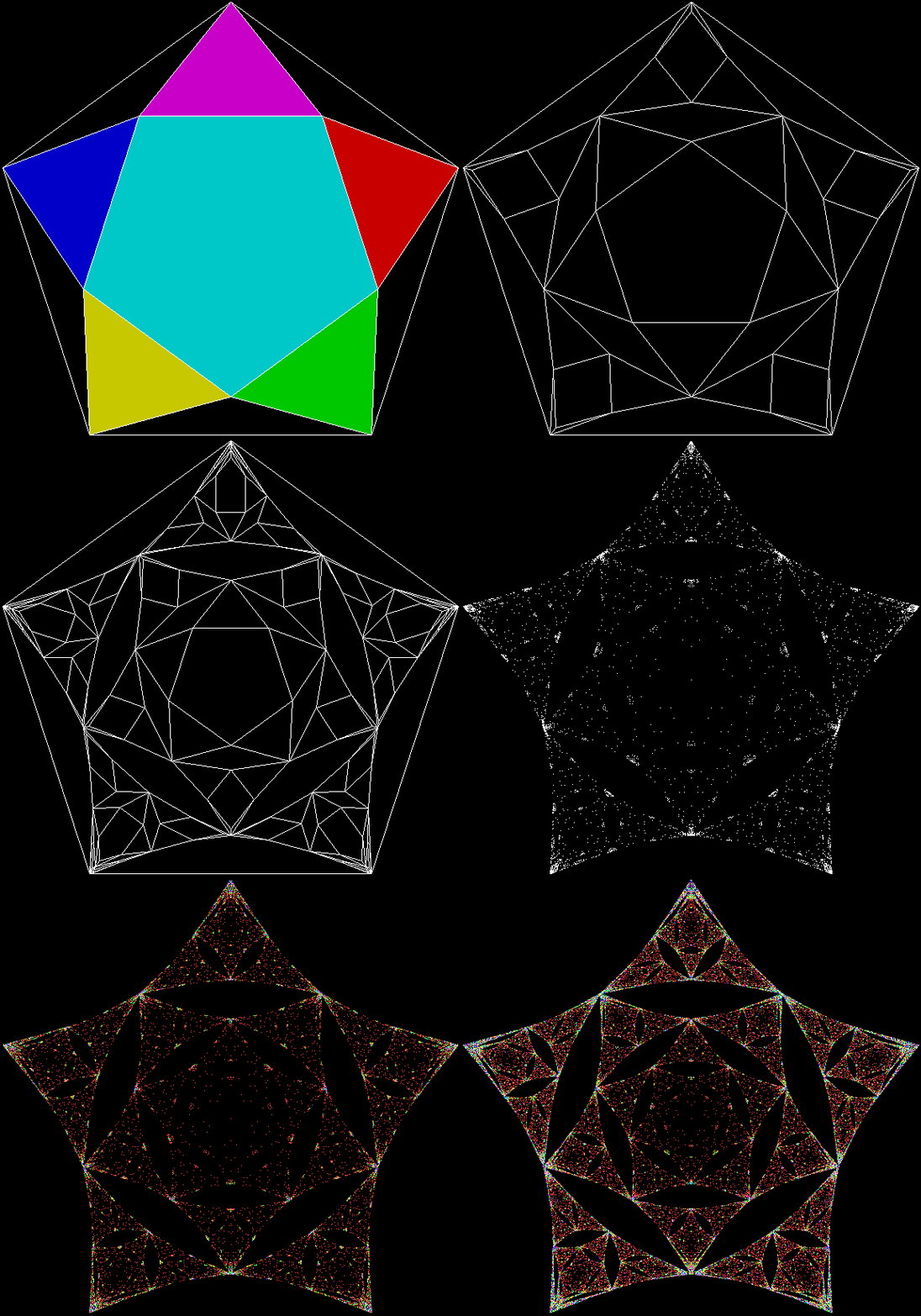
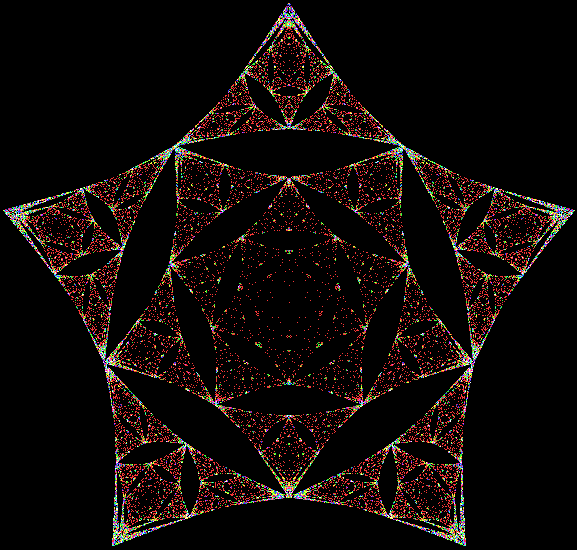
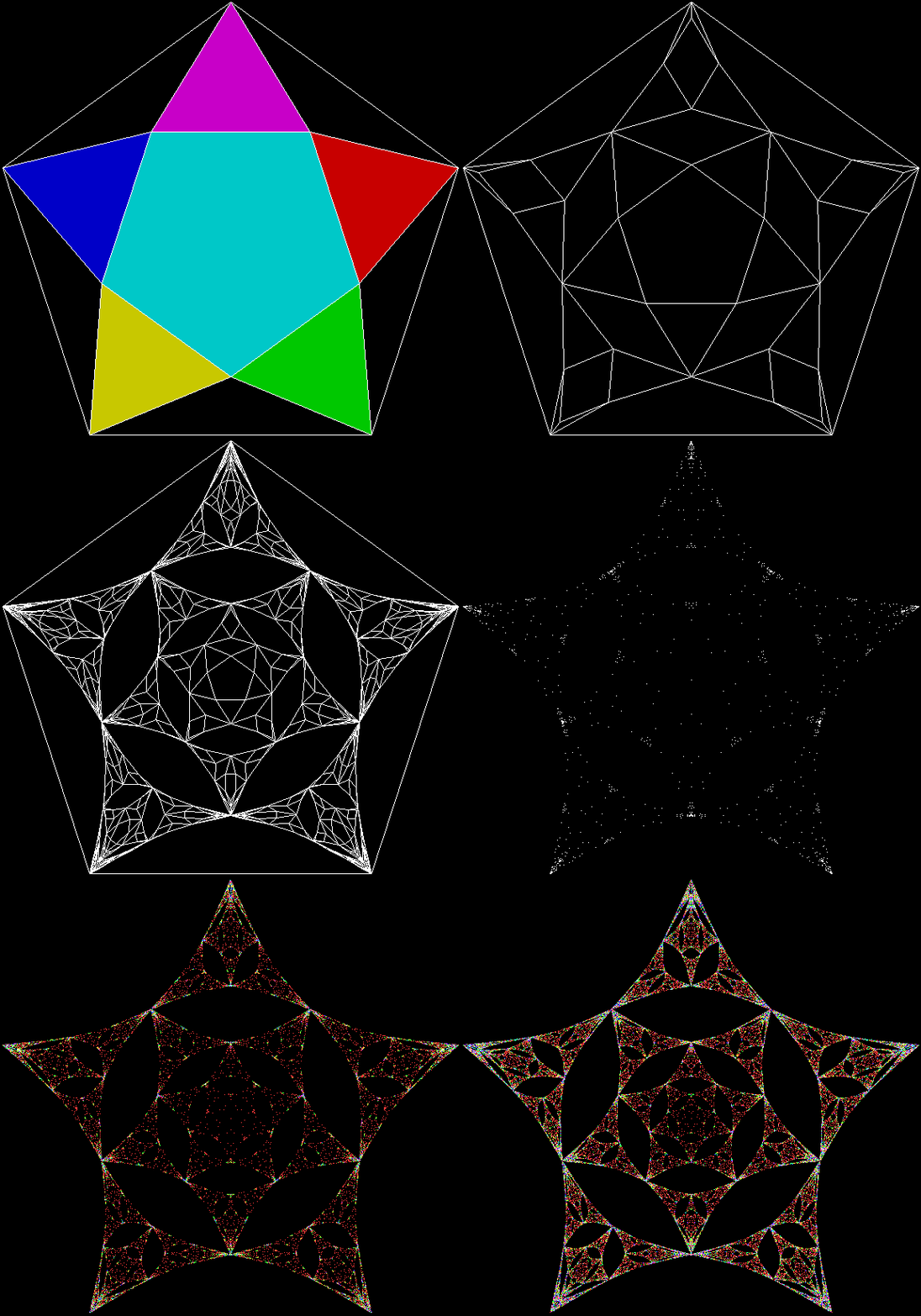
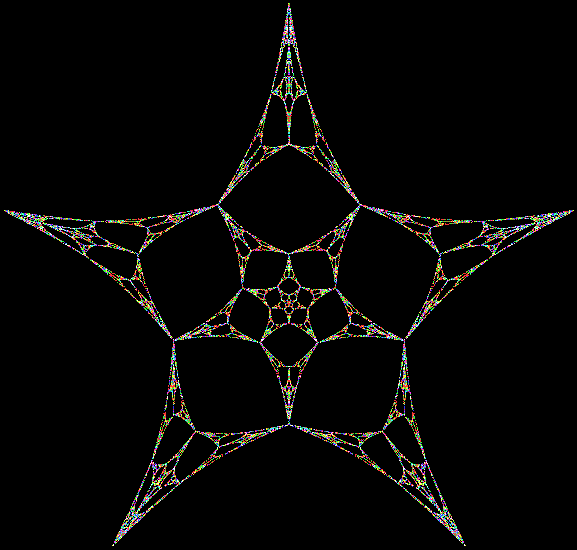
All the best people brood incessantly on the fact that a point inside a square jumping half-way towards a randomly chosen vertex will not create a fractal. Inside a triangle, yes: a fractal appears. Inside a pentagon too. But not inside a square:
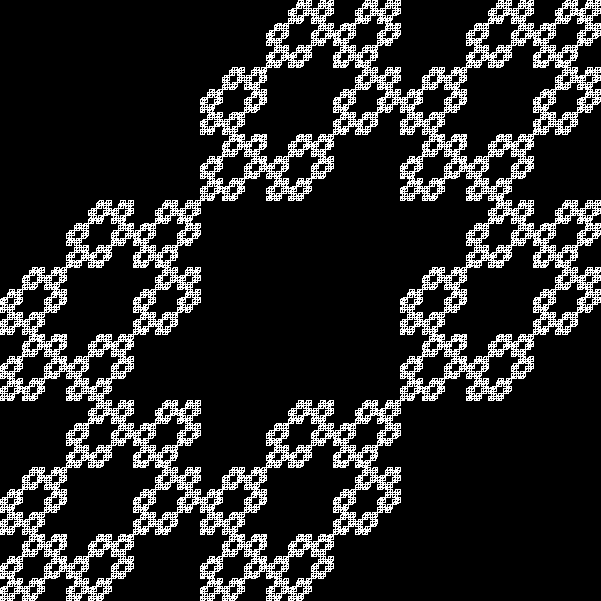
Point jumping half-way towards a randomly chosen vertex


Instead, the interior of the square fills with random points: it crawls with chaos, you might say. However, fractals appear inside a square if the point is restricted in some way: banned from jumping towards a vertex twice in a row; banned from jumping towards the second-nearest vertex; and so on. Those restrictions are what might be called soft, because they take place in software (or in the brain of someone following the rule as a game or piece of performance art). Here’s what might be called a hard restriction that creates a fractal: the point cannot jump towards a randomly vertex if its jump passes over any part of the red upright cross:
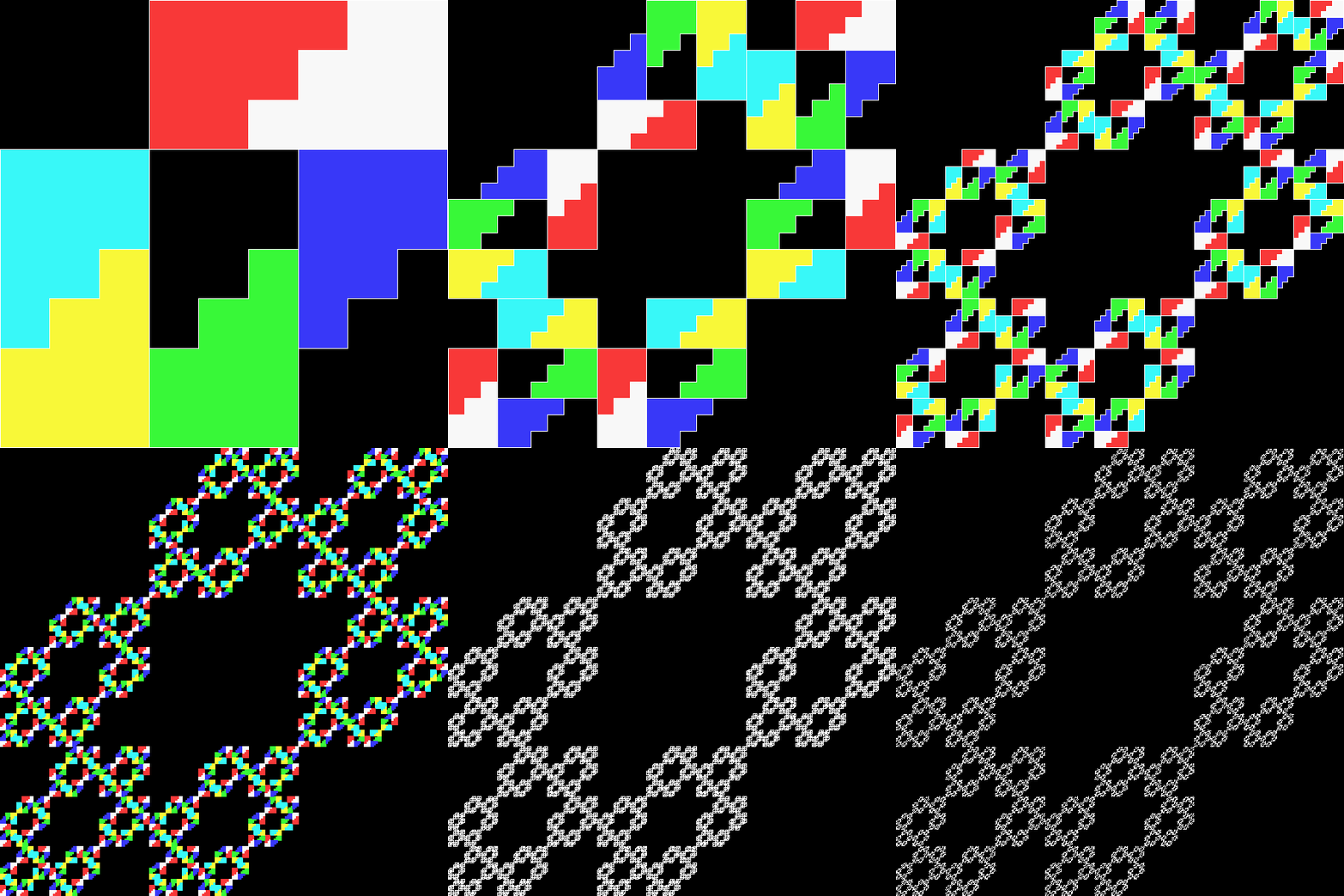
Point cannot pass over red lines


I call this a barrier fractal. It’s obvious that the point cannot jump from one corner of the square towards the opposite corner, which creates bare space stretching from each vertex towards the tips of the upright cross. Less obvious is the way in which this bare space “cascades” into other parts of the square, creating a repeatedly branching and shrinking pattern.
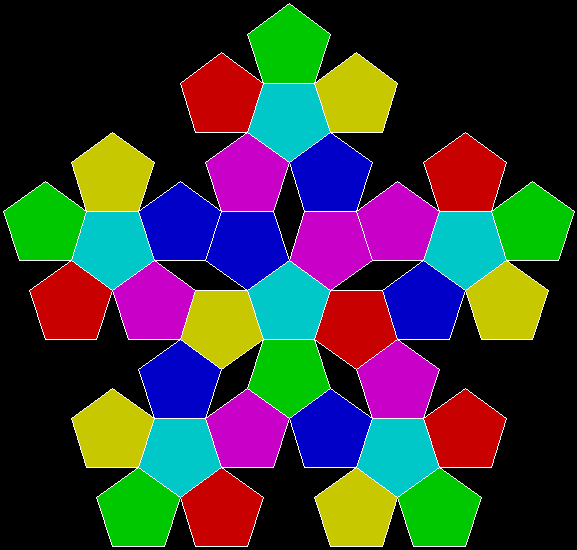


When the barrier is a circle, a similar fractal appears:


If the point can also jump towards the center of the circle, this is what happens:


Now here’s an upright cross with a gap in the middle:


Here’s an upright cross when the point can also jump towards the center of the cross:


A slanted cross with a central attractor:


And a single horizontal stroke:


A slanted stroke — note pentagons:


Even if the barrier is small and set on an edge of the square, it affects the rest of the square:


A more attractive example of edge-affects-whole:


Circles away from the edges


Detail of previous image


Here the point can also jump towards the center of the square’s edges:


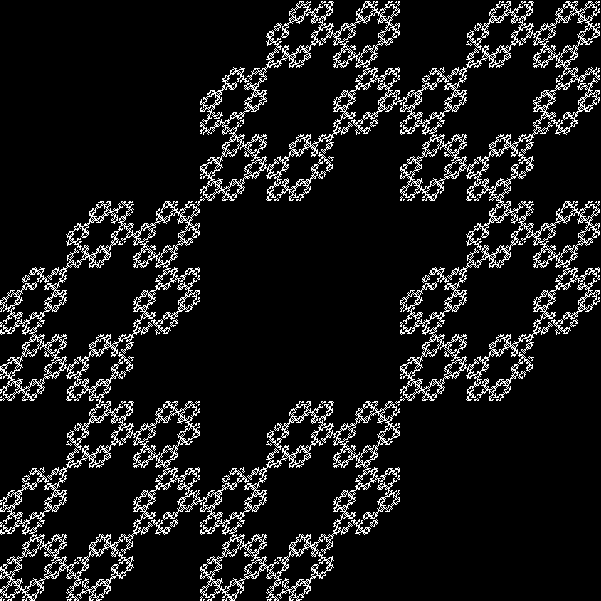
A more subtle barrier fractal uses the previous jumps of the point to restrict its next jump. For example, if the point cannot jump across the line created by its previous-but-one jump, it moves like this:

Jump can’t cross track of last-but-one jump (animated gif)


The fractal itself looks like this:


Rule: on jump #3, cannot jump across the line created by jump #1; on jump #4, cannot cross the line created by jump #2; and so on.


And this is the fractal if the point cannot jump across the line created by its previous-but-two jump:

Rule: on jump #4, cannot jump across the line created by jump #2; on jump #5, cannot cross the line created by jump #3; and so on


Toxic Turntable #11

Currently listening…

• Watchful Hags, Snakes of Grace (1996)
• Jupiter Pore, Gneumos (1980)
• Sixmith, Internecine (2010)
• The Hext, Celestial Chimes (1982)
• Why We Wander, W3 E.P. (1986)
• Zoön, Zoönotic Rhythms (2011)
• Fen Witches, Wild Hunt (1998)
• Virolator, V-003 (2014)
• Slow Exploding Gulls, Yr Wylan Ddu (2003)
• Doris Day, The Best Of… (1987)
• Sirium, MoCoT (2013)


Previously pre-posted:

Toxic Turntable #1#2#3#4#5#6#7#8#9#10

Jumper to Jumper

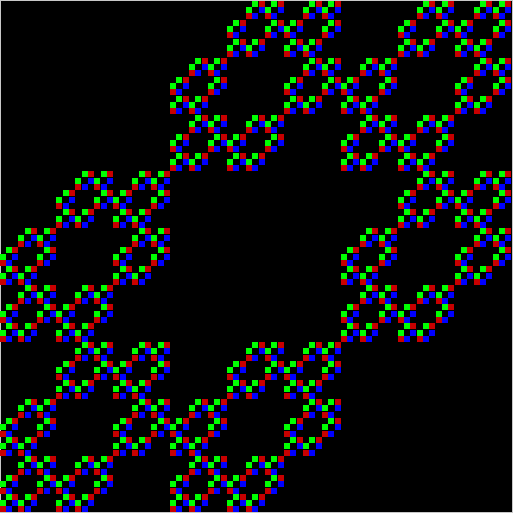
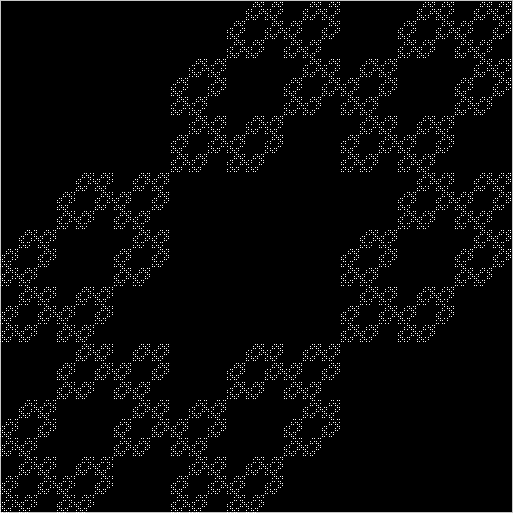
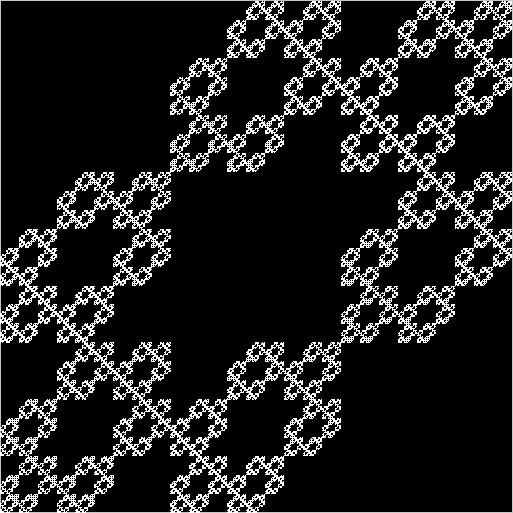
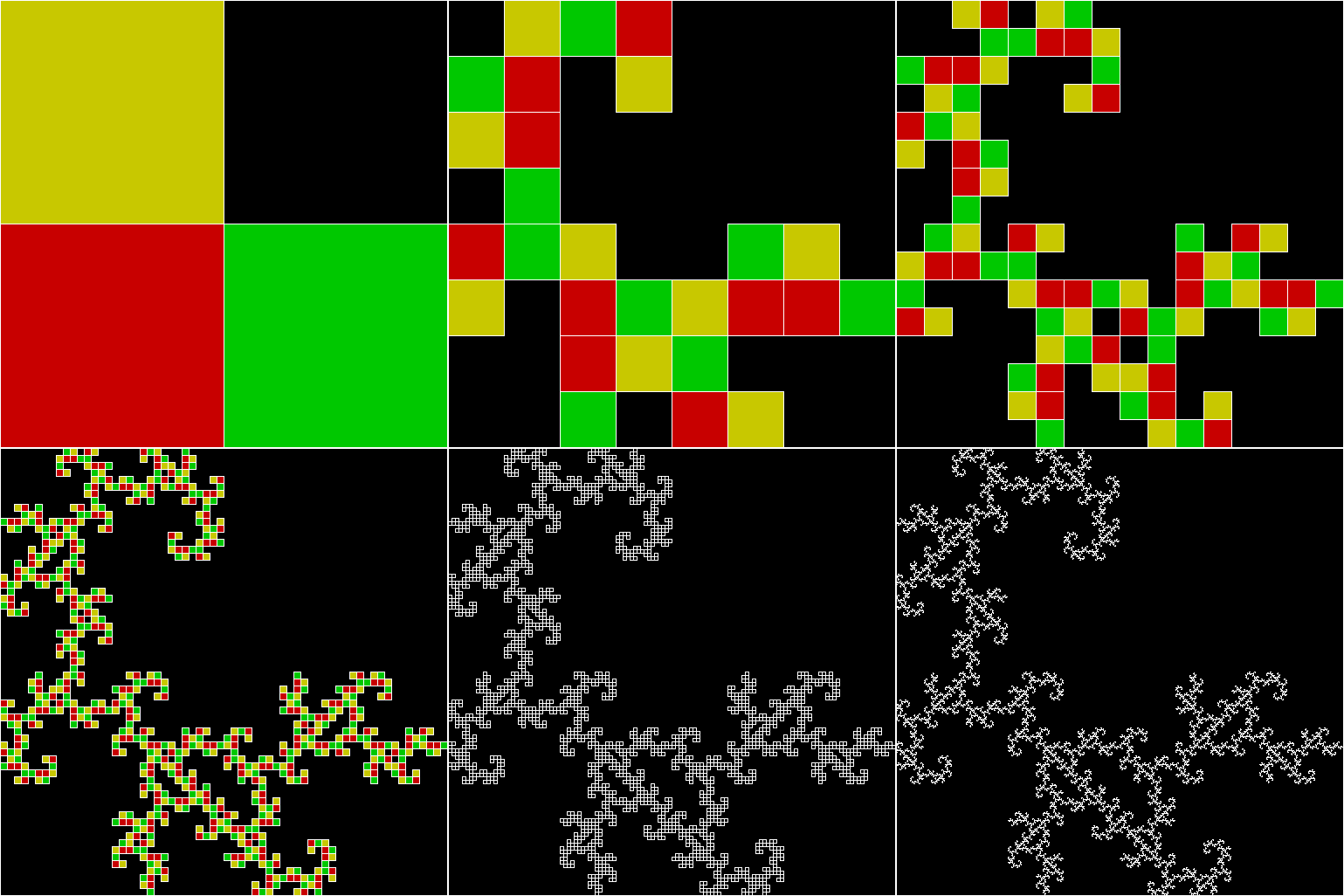
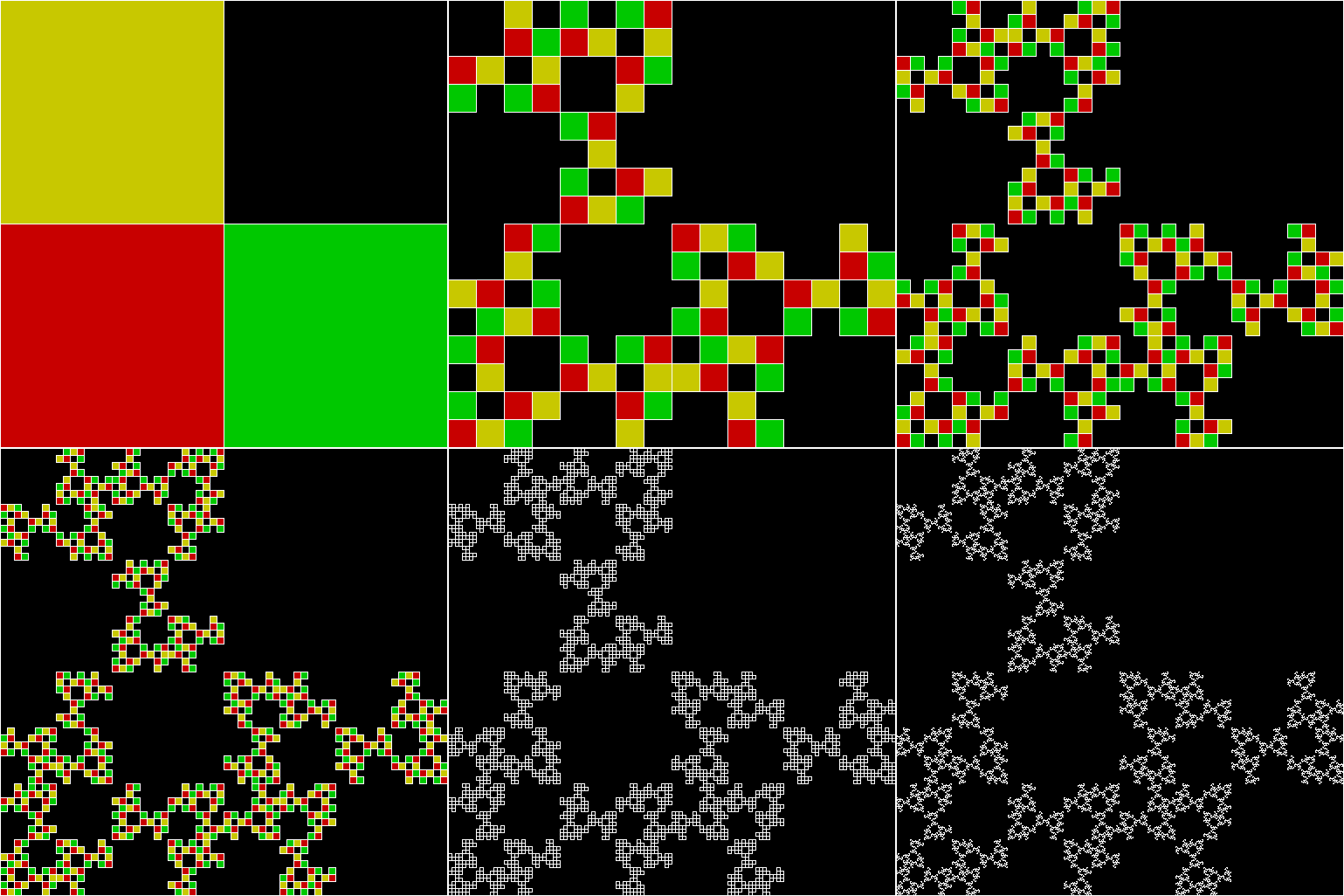
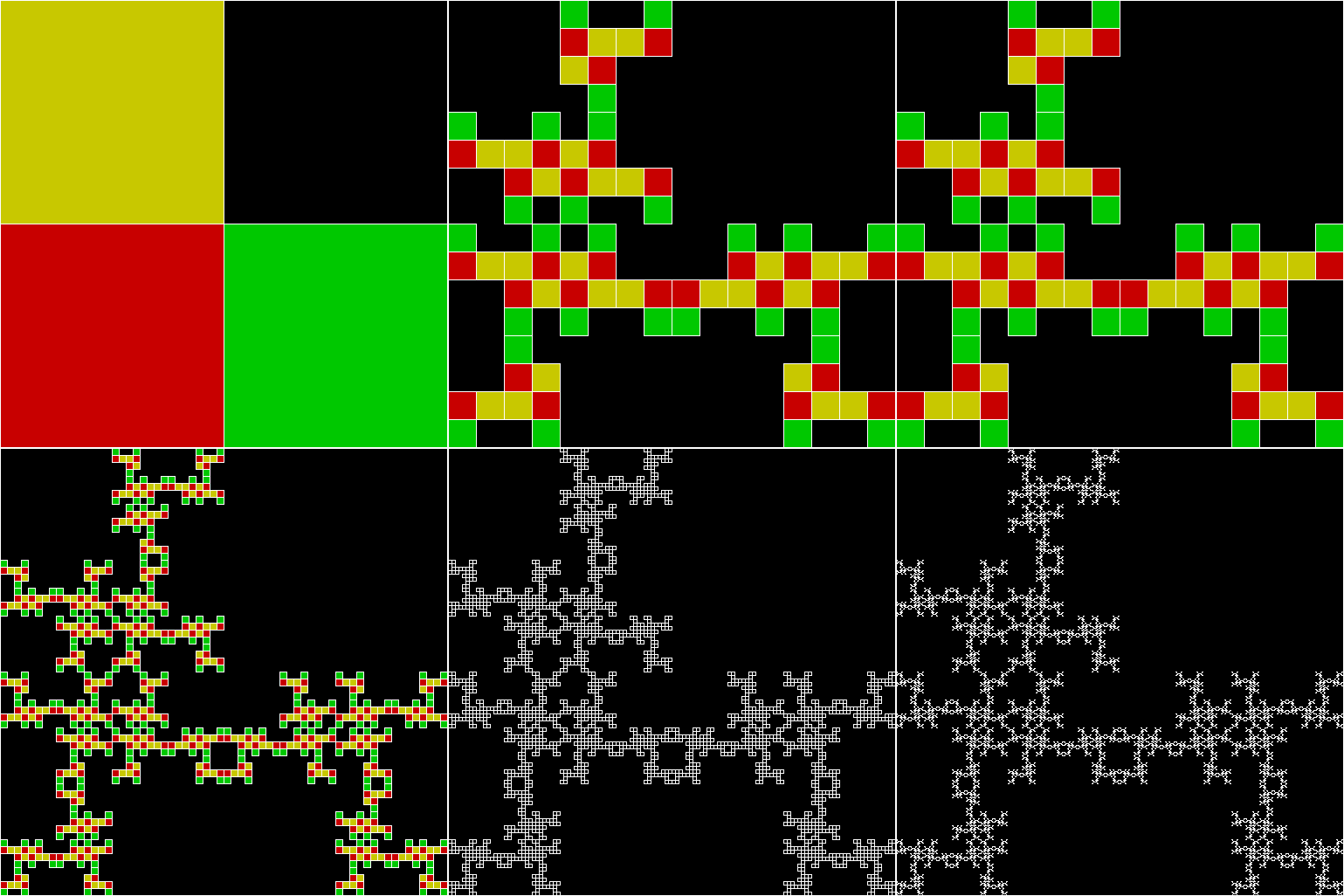
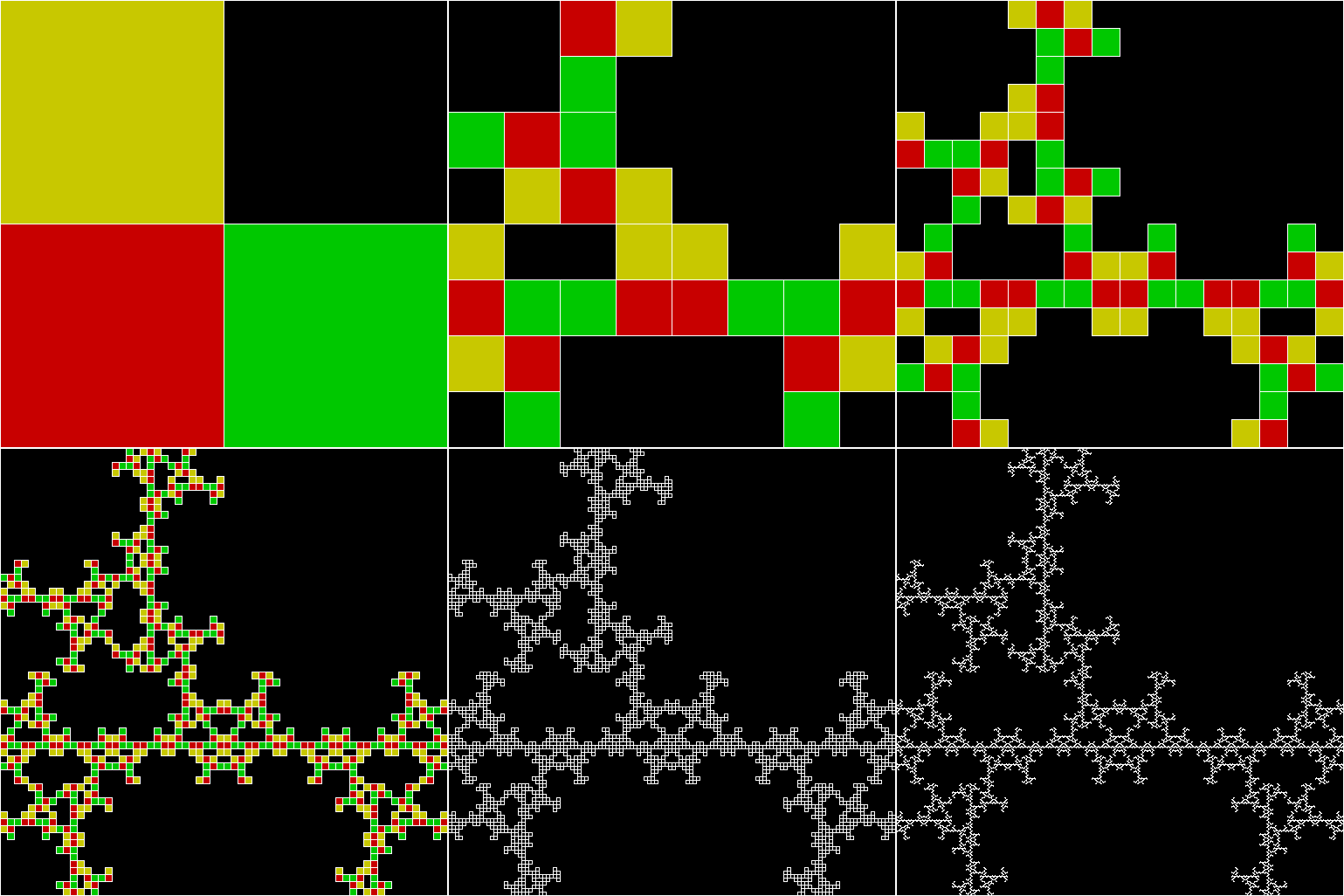
Previously I’ve looked at fractals created by a point moving half-way towards the random chosen vertex of a polygon. But you can also choose an initial vertex, then choose a new vertex by adding a random number to that initial vertex. Then repeat. For example, if the polygon is a square and the initial vertex is v = 1, then choose v + 3 = 4 or v – 1 = 3, and so on.
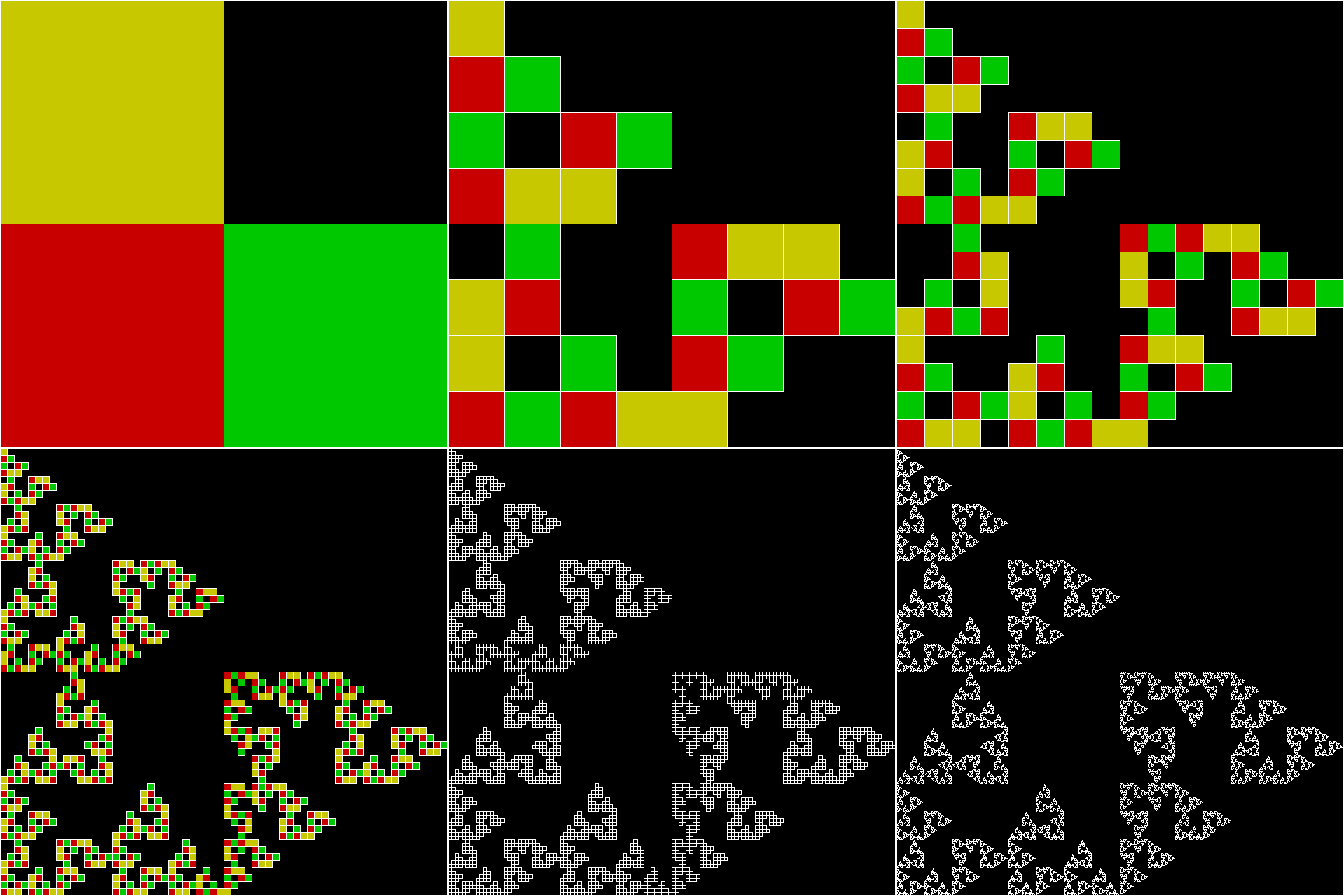
You can then ban or un-ban the choice of vertex-jump as you can ban or un-ban direct choices of vertex. These two methods of random choice are effectively the same, but one can be simpler to program than the other. That’s why I’ve come across some new fractals by using vertex-jumps. Here they are:

vertices = 4, vertex-jump = (1,2,3,4), ban on same choice twice in a row


vertices = 4, vertex-jump = (1,2,3,4), ban on 2 in row (black-and-white version)


v = 4, vj = (1,2,3,4), ban on choice c + 2 from previous choice c


v = 4, vj = (1,2,3,4), ban c + 2 (animated gif)


vj = (1,2,3,4), ban c + 2 (black-and-white)


vj = (1,2,3,4), ban c + 0 at time t+1 unless c + 0 at time t-1


vj = (1,2,3,4), ban c + 0 at t+1, unless c + 0 at t-1 (black-and-white)


vj = (1,2,3,4,5), ban c + 0


vj = (0,1,2,3,4), ban c + 0


vj = (0,1,2,3,4), ban c + 0 (black-and-white)


vj = (1,2,3,4), ban c + 2 at t+1 unless c + 2 at t-1 (animated gif)


vj = (1,2,3,4), ban c + various at t+1 unless c + various at t-1 (animated gif)


vj = (1,2,3,4,5), ban c + 0 at t+1 unless c + 0 at t-1


vj = (-2,-1,0,1,2), ban c + 0


vj = (-2,-1,0,1,2), ban c + 0 (black-and-white)


vj = (0,1,2,3,4), ban c + va unless c + va


v = 5, vj = (1,2,3,4), ban c + 0


v = 5, vj = (1,2,3,4), ban c + 2


v = 5, vj = (0,1,2,3), ban c + 3


v = 6, vj = (0,1,2,3), ban c + 2


v = 6, vj = va, ban c + va (animated gif)


Are U Worthy?

If you’re nagged by doubts as to whether you really are a keyly committed core component of the counter-cultural community, then simply engage issues around the following issues…

1. In terms of “in terms of”, how often do you hear this phantasmagoric phrase in terms of a daily basis?

2. Please hierarchialize the following core components of the counter-cultural icon community in terms of their “in-terms-of”-usage metrics: Will Self, J.G. Ballard, William Burroughs, Alan Moore, Miriam Stimbers, Michael Moorcock, Kathy Acker, Genesis P. Orridge, Alan Ginsberg, Stewart Home, Hubert Selby Jr., Norman Foreman (B.A.). (I.e., if you think Foreman uses “in terms of” most in terms of usage metrics, put him first; if you think Acker uses it second-most, put her second; etc.)

3. Engage issues around 1 and 2 again, replacing “in terms of” with “prior to”…

4. Engage issues around 1 and 2 again, replacing “in terms of” with “issues around”……

5. Engage issues around 1 and 2 again, replacing “in terms of” with “Vote Corbyn”………

Once you’ve engaged issues around the above issues, email your answers to Evaluator!@NakedKrunch and you should have your doubts laid to rest within 23 working days…


Previously pre-posted on Overlord of the Über-Feral…

Les Sez
Don’t Do Dot…
Terminator!
Metricizing Michael…
Terminal Breach
More Termination…

Sphere Hear

οὐσίαν θεοῦ σφαιροειδῆ, μηδὲν ὅμοιον ἔχουσαν ἀνθρώπωι· ὅλον δὲ ὁρᾶν καὶ ὅλον ἀκούειν, μὴ μέντοι ἀναπνεῖν· σύμπαντά τε εἶναι νοῦν καὶ φρόνησιν καὶ ἀίδιον. — Διογένης Λαέρτιος, Βίοι καὶ γνῶμαι τῶν ἐν φιλοσοφίᾳ εὐδοκιμησάντων

    “The substance of God is spherical, in no way resembling man. He is all eye and all ear, but does not breathe; he is the totality of mind and thought, and is eternal.” — Xenophanes’ concept of God in Diogenes Laërtius’ Lives of Eminent Philosophers (c. 280-320 AD), Book IX, chapter 2 (translated by R.D. Hicks, 1925)

Appointment with Distality

distal, adj. Anat. Situated away from the centre of the body, or from the point of origin (said of the extremity or distant part of a limb or organ); terminal. Opp. to proximal. [← stem of dist- (in distant adj.) + -al, after dorsal, ventral, etc.] — Oxford English Dictionary

When a point jumps inside a triangle, moving halfway towards a randomly chosen vertex each time, a fractal known as the Sierpiński triangle appears:
chaos_triangle

Point jumping halfway towards random vertex of a triangle


chaos_triangle_bw

Point jumping inside triangle (black-and-white version)


But when a point moves at random in the same way inside a square, no fractal appears. Instead, the interior of the square gradually fills with a haze of pixels:
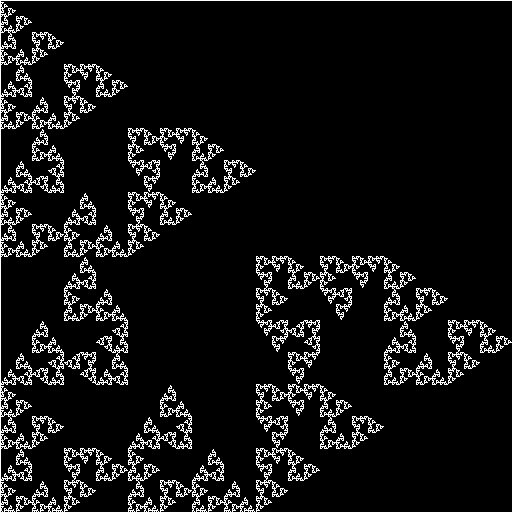
random_fill

Point jumping halfway towards random vertex of a square
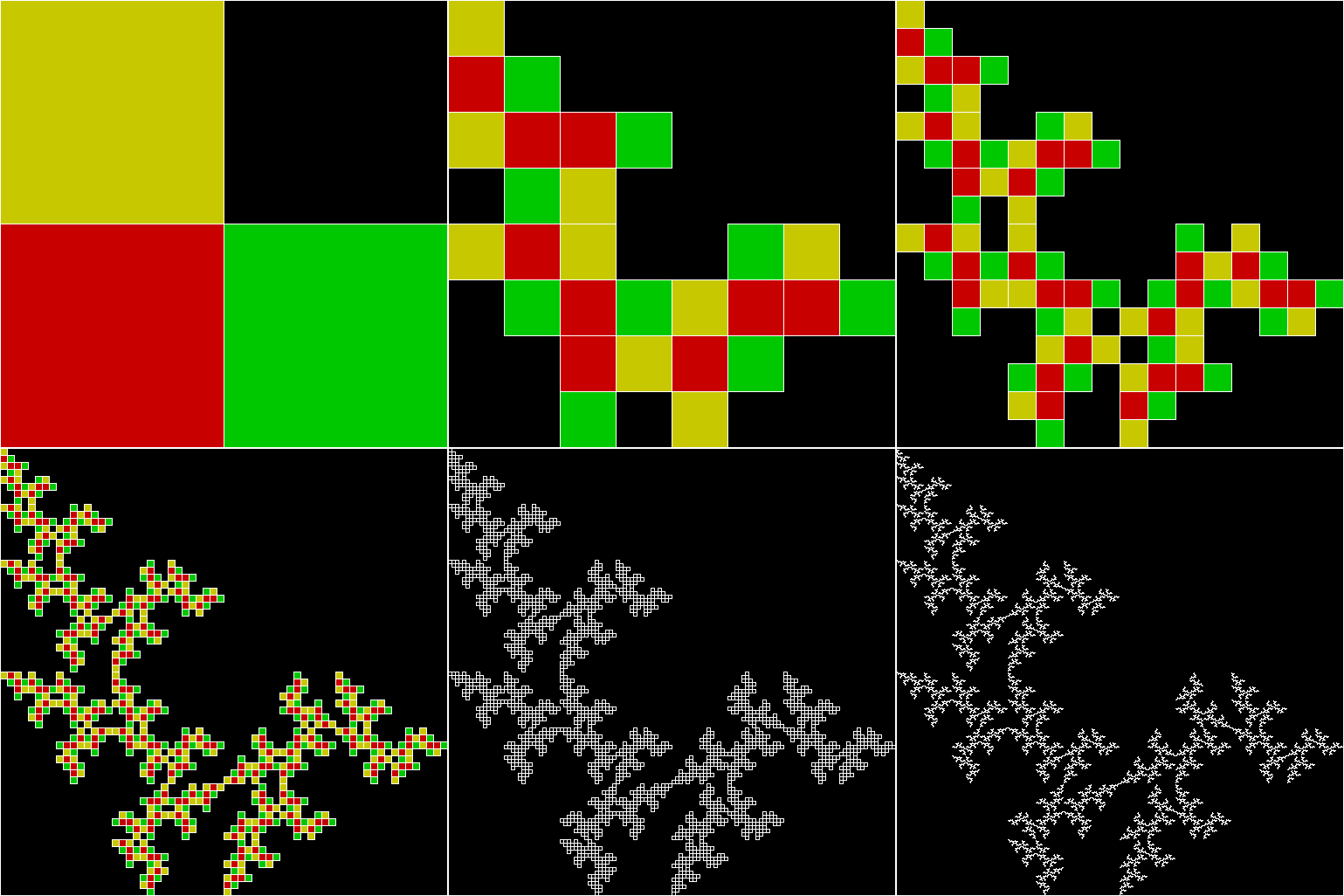

Now trying imposing restrictions on the point jumping inside a square. If it can’t jump towards a vertex twice in a row, this fractal appears:
select_1_0

Ban consecutive jumps towards same vertex


select_1_0_bw

Ban consecutive jumps towards same vertex (black-and-white version)


Suppose the vertices are numbered from 1 to 4 and the point can’t jump towards the vertex one lower than the previously chosen vertex. That is, if it jumps towards vertex 3, it can’t jump next towards vertex 2, but it can jump towards vertices 1, 3, or 4 (if the vertex is 1, it’s banned from moving towards vertex 4, i.e. 1-1 = 0 = 4). Now this fractal appears:
select_1_1

Ban jump towards vertex v-1


select_1_1_bw


This is the fractal when the point can’t jump towards the vertex two places lower than the one it has just jumped towards:
select_1_2

Ban jump towards vertex v-2


select_1_2_bw


But if you can ban, you can also un-ban. Suppose the point jumps towards vertex v at time t and is then banned from jumping towards vertex v-2 at time t+1 unless it had jumped towards vertex v-1 at time t-1. This interesting fractal appears:
select_2_1_1_2

Ban jump v-2 at t+1 unless jump v-1 at t-1


Here are some more fractals using the ban / un-ban technique:
select_2_1_various

Ban / un-ban various


select_2_1_0_1

Ban jump v+0 at t+1 unless jump v+1 at t-1


select_2_1_1_3

Ban jump v+1 at t+1 unless jump v+3 at t-1


select_2_1_2_0

Ban jump v+0 at t+1 unless jump v+2 at t-1


select_2_1_2_2

Ban jump v+2 at t+1 unless jump v+2 at t-1


select_1_2_various

Ban / un-ban various


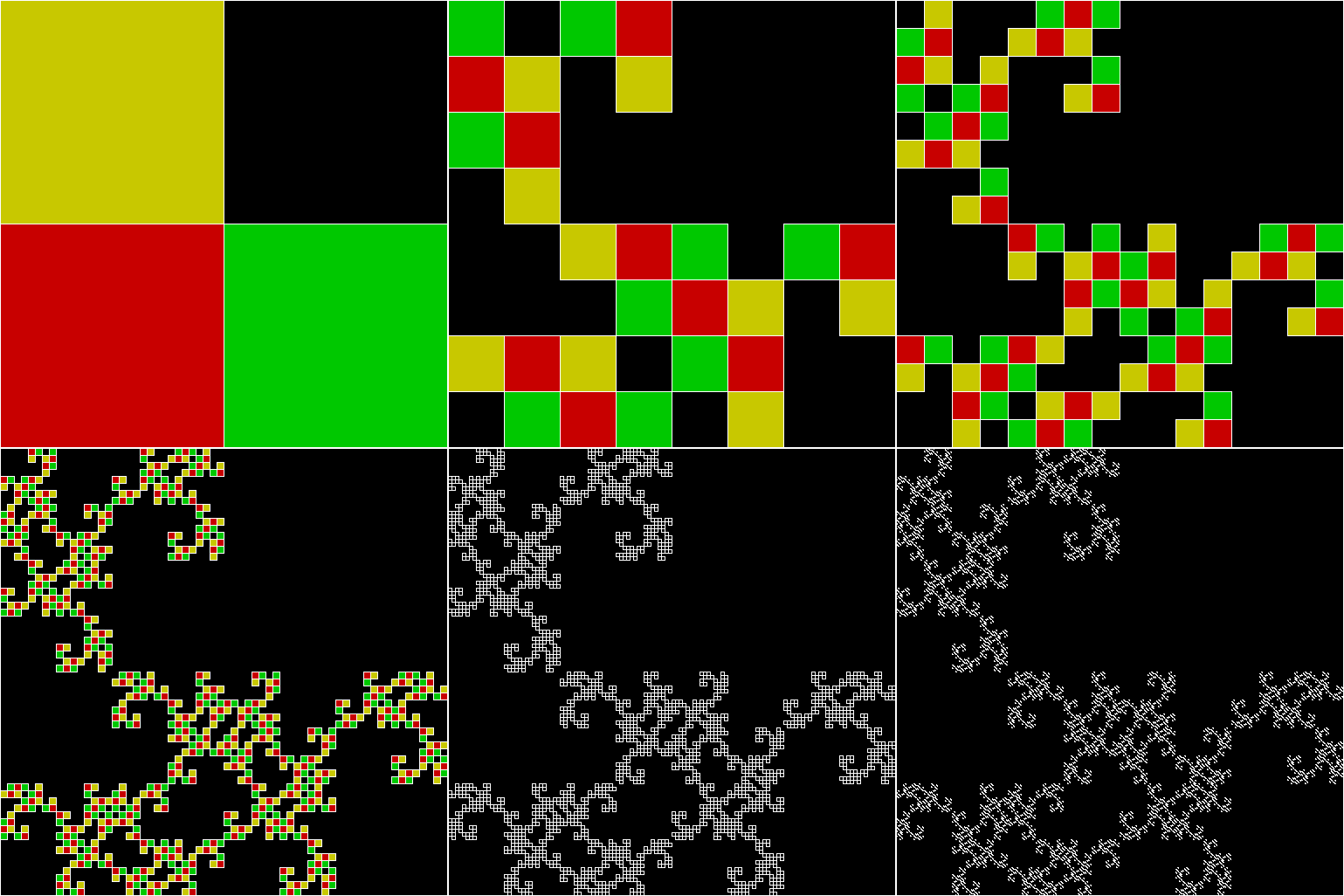
You can also impose or lift bans based not on the vertex the point jumps towards, but on the distance the point jumps. For example, take the radius r of the circle circumscribing the square and divide it into four segments, 0 to ¼r, ¼r to ½r, ½r to ¾r, and ¾r to r. When the point is going to jump towards vertex v, test whether its jump will land in the same segment, measured from the center of the circle, as it currently occupies. If it does, ban the jump and choose another vertex. Or unban the vertex if the point occupied segment s + x at time t-1. Here are some of the fractals produced using this technique:
dist_2_1_various

Ban / un-ban based on distance jumped


dist_center_1_0

Ban jump into segment s+0 of 4


dist_center_1_1

Ban jump into segment s+1 from center


dist_center_1_2

Ban jump into segment s+2


dist_center_-2_1_2_2

Ban jump into s+2 at t+1 unless jump into s+2 at at t-1


dist_xy_1_0

Ban jump into s+0 from present point


dist_xy_1_2

Ban jump into s+2 from present point


dist_xy_1_3

Ban jump into s+3 from present point


dist_xy_2_1_1_0

Ban jump into s+0 at t+1 unless jump into s+1 at at t-1


It’s easy to think of variants on all these themes, but I’ll leave them as an exercise for the interested reader.

Performativizing Papyrocentricity #52

Papyrocentric Performativity Presents:

Reds in the HeadThe War of the Worlds, H.G. Wells (1898)

Canine the BarbarianThe Call of the Wild, White Fang, and Other Stories, Jack London (Penguin American Library 1981)

Star-StuffThe Universe in 100 Key Discoveries, Giles Sparrow (Quercus 2012)

An Island of Her OwnThe Phantom Atlas: The Greatest Myths, Lies and Blunders on Maps, Edward Brooke-Hitching (Simon & Schuster 2016)


Or Read a Review at Random: RaRaR

The Swing’s the Thing

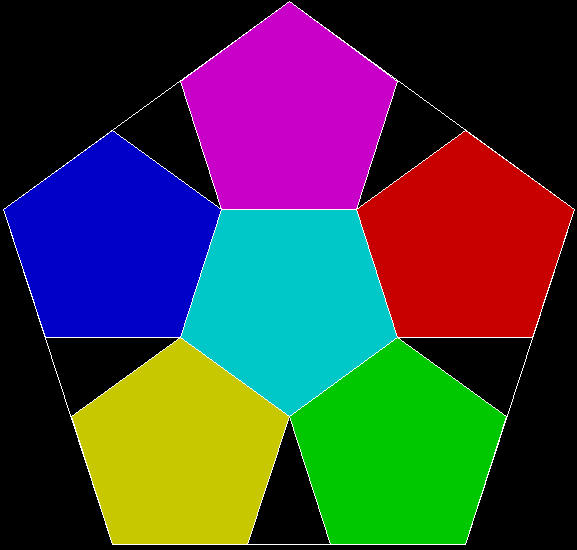
Order emerges from chaos with a triangle or pentagon, but not with a square. That is, if you take a triangle or a pentagon, chose a point inside it, then move the point repeatedly halfway towards a vertex chosen at random, a fractal will appear:

triangle

Sierpiński triangle from point jumping halfway to randomly chosen vertex


pentagon

Sierpiński pentagon from point jumping halfway to randomly chosen vertex


But it doesn’t work with a square. Instead, the interior of the square slowly fills with random points:

square
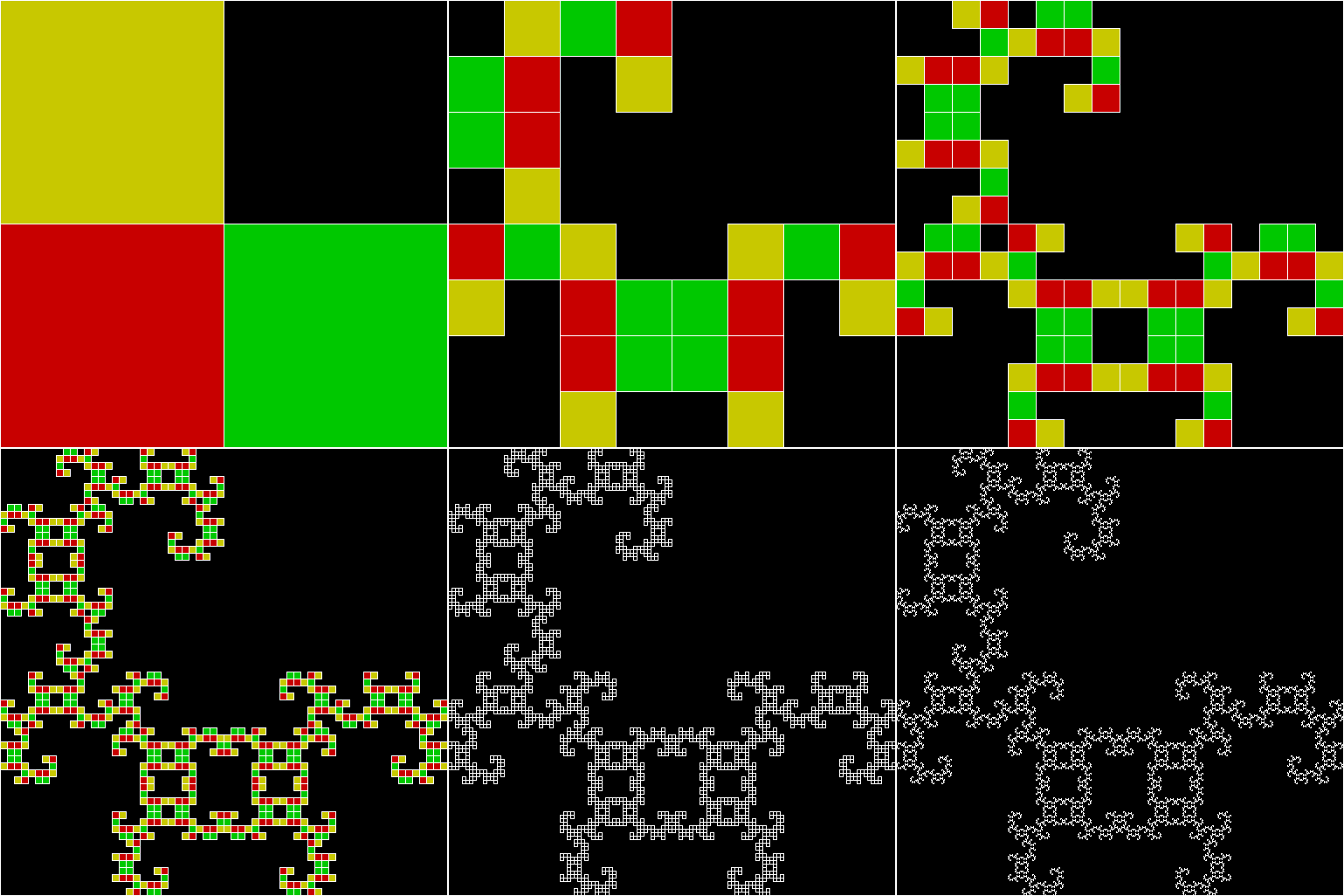
Square filling with point jumping halfway to randomly chosen vertex


As I showed in Polymorphous Perverticity, you can create fractals from squares and randomly moving points if you ban the point from choosing the same vertex twice in a row, and so on. But there are other ways. You can take the point, move it towards a vertex at random, then swing it around the center of the square through some angle before you mark its position, like this:

square_sw90

Point moves at random, then swings by 90° around center


square_sw180

Point moves at random, then swings by 180° around center


You can also adjust the distance of the point from the center of the square using a formula like dist = r * rmdist, where dist is the distance, r is the radius of the circle in which the circle is drawn, and rm takes values like 0.1, 0.25, 0.5, 0.75 and so on:

square_dist_rm0_05

Point moves at random, dist = r * 0.05 – dist


square_dist_rm0_1

Point moves at random, dist = r * 0.1 – dist


square_dist_rm0_2

Point moves at random, dist = r * 0.2 – dist


But you can swing the point while applying a vertex-ban, like banning the previously chosen vertex, or the vertex 90° or 180° away. In fact, swinging the points converts one kind of vertex ban into the others.

square_ban0

Point moves at random towards vertex not chosen previously


square_ban0_sw405

Point moves at random, then swings by 45°


square_ban0_sw360

Point moves at random, then swings by 360°


square_ban0_sw697

Point moves at random, then swings by 697.5°


square_ban0_sw720

Point moves at random, then swings by 720°


square_ban0_sw652

Point moves at random, then swings by 652.5°


square_ban0_swing_va_animated

Animated angle swing


You can also reverse the swing at every second move, swing the point around a vertex instead of the center or around a point on the circle that encloses the square. Here are some of the fractals you get applying these techniques.
square_ban0_sw45_rock

Point moves at random, then swings alternately by 45°, -45°


square_ban0_sw90_rock

Point moves at random, then swings alternately by 90°, -90°


square_ban0_sw135_rock

Point moves at random, then swings alternately by 135°, -135°


square_ban0_sw180_rock

Point moves at random, then swings alternately by 180°, -180°


square_ban0_sw225

Point moves at random, then swings alternately by 225°, -225°


square_ban0_sw315

Point moves at random, then swings alternately by 315°, -315°


square_ban0_sw360_rock

Point moves at random, then swings alternately by 360°, -360°


square_swing_vx0_va_animated

Animated alternate swing


square_circle_sw45

Point moves at random, then swings around point on circle by 45°


square_circle_sw67

Point moves at random, then swings around point on circle by 67.5°


square_circle_sw90

Point moves at random, then swings around point on circle by 90°


square_circle_sw112

Point moves at random, then swings around point on circle by 112.5°


square_circle_sw135

Point moves at random, then swings around point on circle by 135°


square_circle_sw180

Point moves at random, then swings around point on circle by 180°


square_circle_sw_animated

Animated circle swing