Here’s an elementary mathematical problem: how many ways are there to choose three numbers from a set of six numbers? If the set is (1, 2, 3, 4, 5, 6), these are the possible choices (or combinations):
(1, 2, 3), (1, 2, 4), (1, 2, 5), (1, 2, 6), (1, 3, 4), (1, 3, 5), (1, 3, 6), (1, 4, 5), (1, 4, 6), (1, 5, 6), (2, 3, 4), (2, 3, 5), (2, 3, 6), (2, 4, 5), (2, 4, 6), (2, 5, 6), (3, 4, 5), (3, 4, 6), (3, 5, 6), (4, 5, 6) (c = 20)
So 6C3 = 20 (C stands for “combination”). The general formula is nCr = (n! / (n-r)!) / r!, where n is the number to choose from, r is the number of choices and n! is factorial n, or n multiplied by all numbers less than itself. For example, 6! = 6 * 5 * 4 * 3 * 2 * 1 = 720. When n = 6 and c = 3, 6C3 = (6! / (6-3)!) / 3! = (720 / 6) / 6 = 20.
There isn’t much visual appeal in the choices above, but there’s a simple way to change that. Take the ways of choosing two numbers from a set of ten. They start like this:
(1, 2), (1, 3), (1, 4), (1, 5), (1, 6), (1, 7), (1, 8), (1, 9), (1, 10), (2, 3), (2, 4), (2, 5), (2, 6), (2, 7), (2, 8), (2, 9), (2, 10), (3, 4), (3, 5), (3, 6)…
Suppose each choice represents the midpoint of two points chosen from a set of ten points around a pentagon, so that (1, 2) is half-way between points 1 and 2, (3, 5) is half-way between points 3 and 5, and so on:
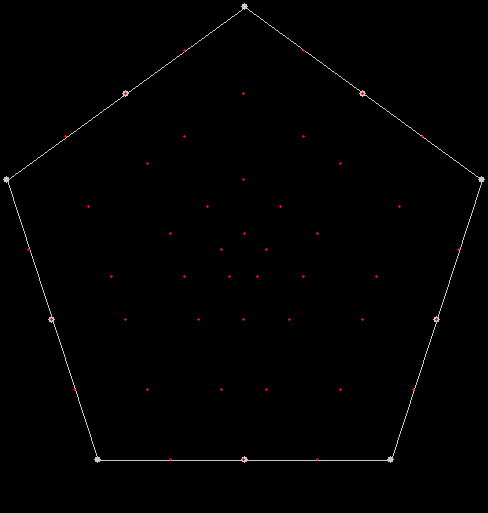
Now take the ways of choosing three numbers from a set of ten:
(1, 2, 3), (1, 2, 4), (1, 2, 5), (1, 2, 6), (1, 2, 7), (1, 2, 8), (1, 2, 9), (1, 2, 10), (1, 3, 4), (1, 3, 5), (1, 3, 6), (1, 3, 7), (1, 3, 8), (1, 3, 9), (1, 3, 10)…
Now the pentagon looks like this, with (1, 2, 3) representing the point midway between 1, 2 and 3, (1, 3, 9) representing the point midway between 1, 3 and 9, and so on:
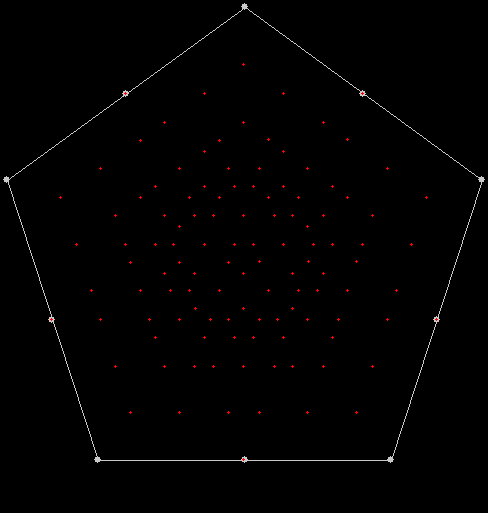
Now here are 10C4, 10C5 and 10C6 for the pentagon:
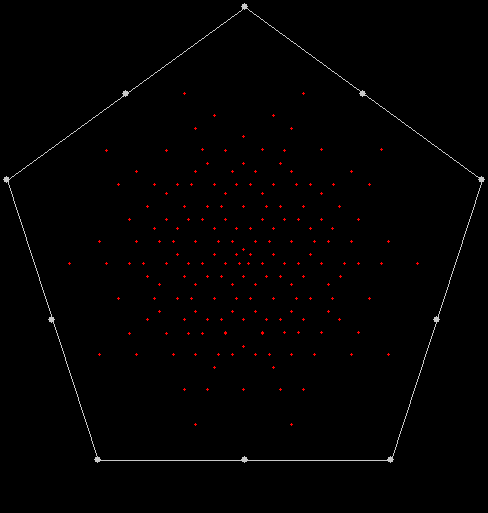
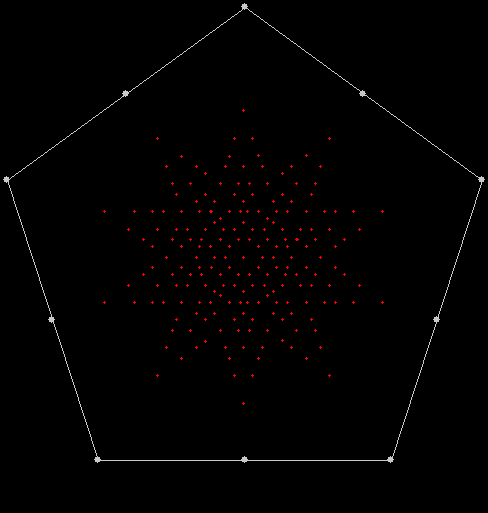
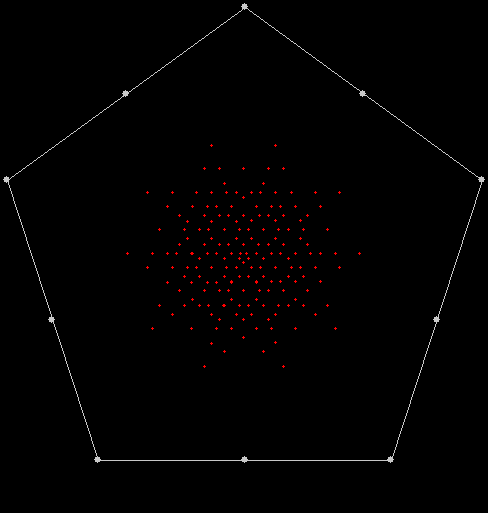
You can also generate the points 5C4 = 5, then add them to the original five points and generate 10C4:
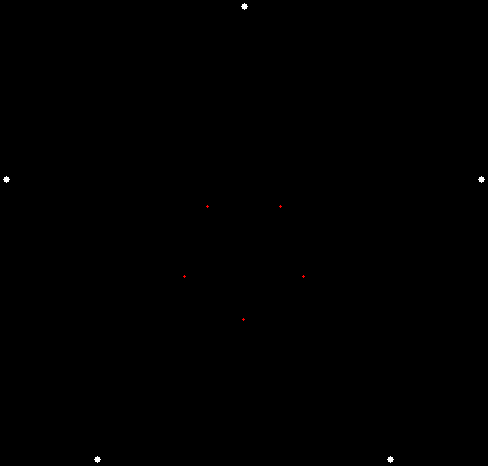
5C4
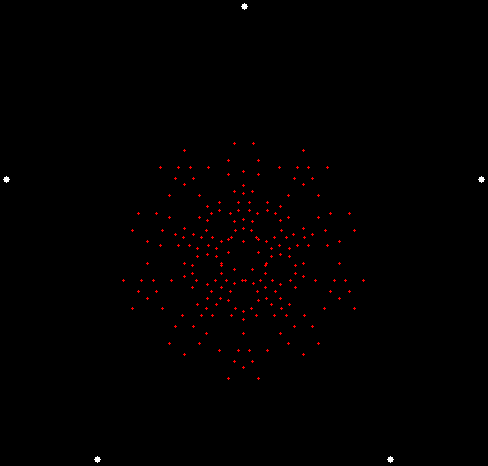
10C4
And here are 5C5, 6C5 and 12C5:
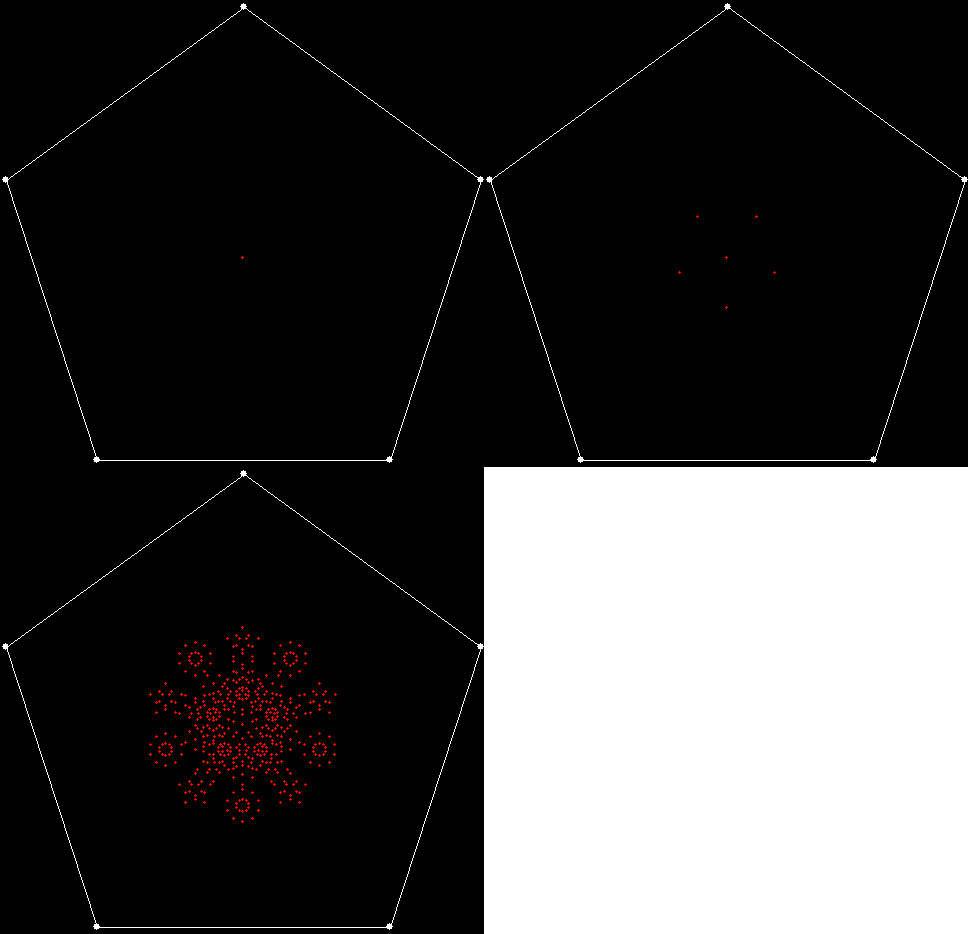
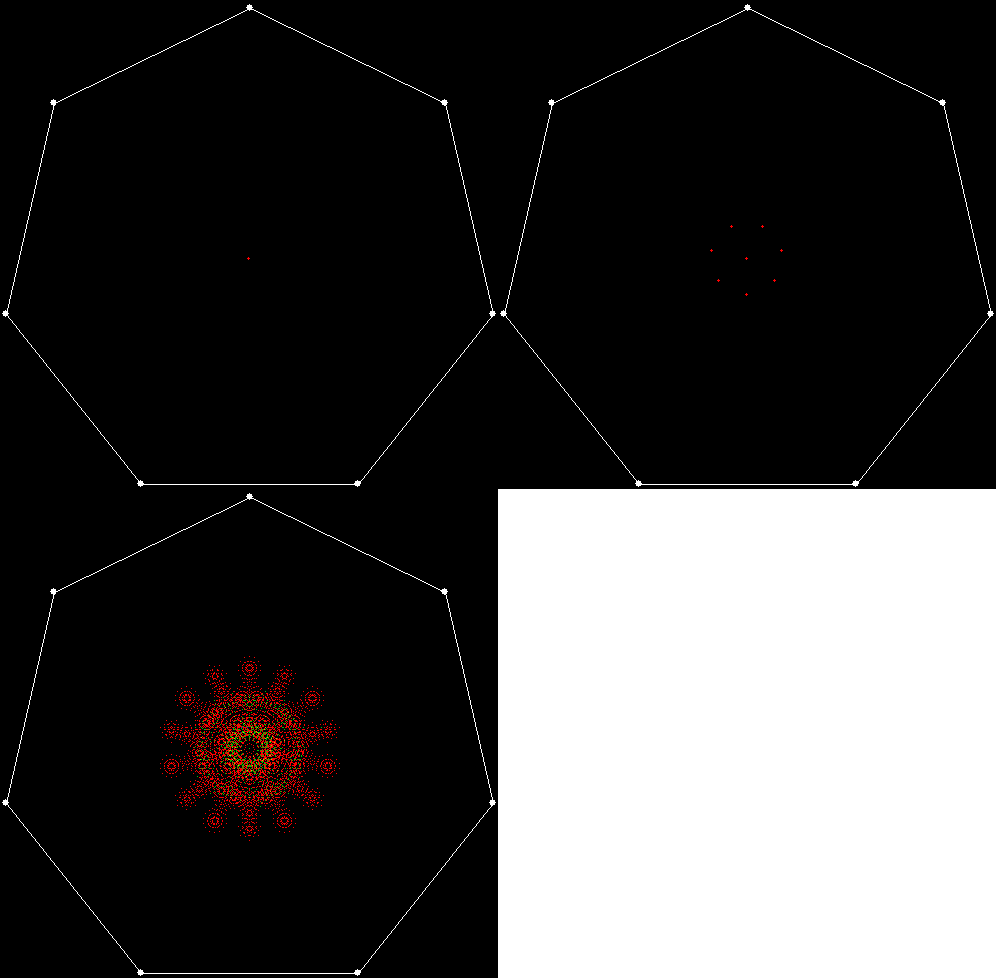
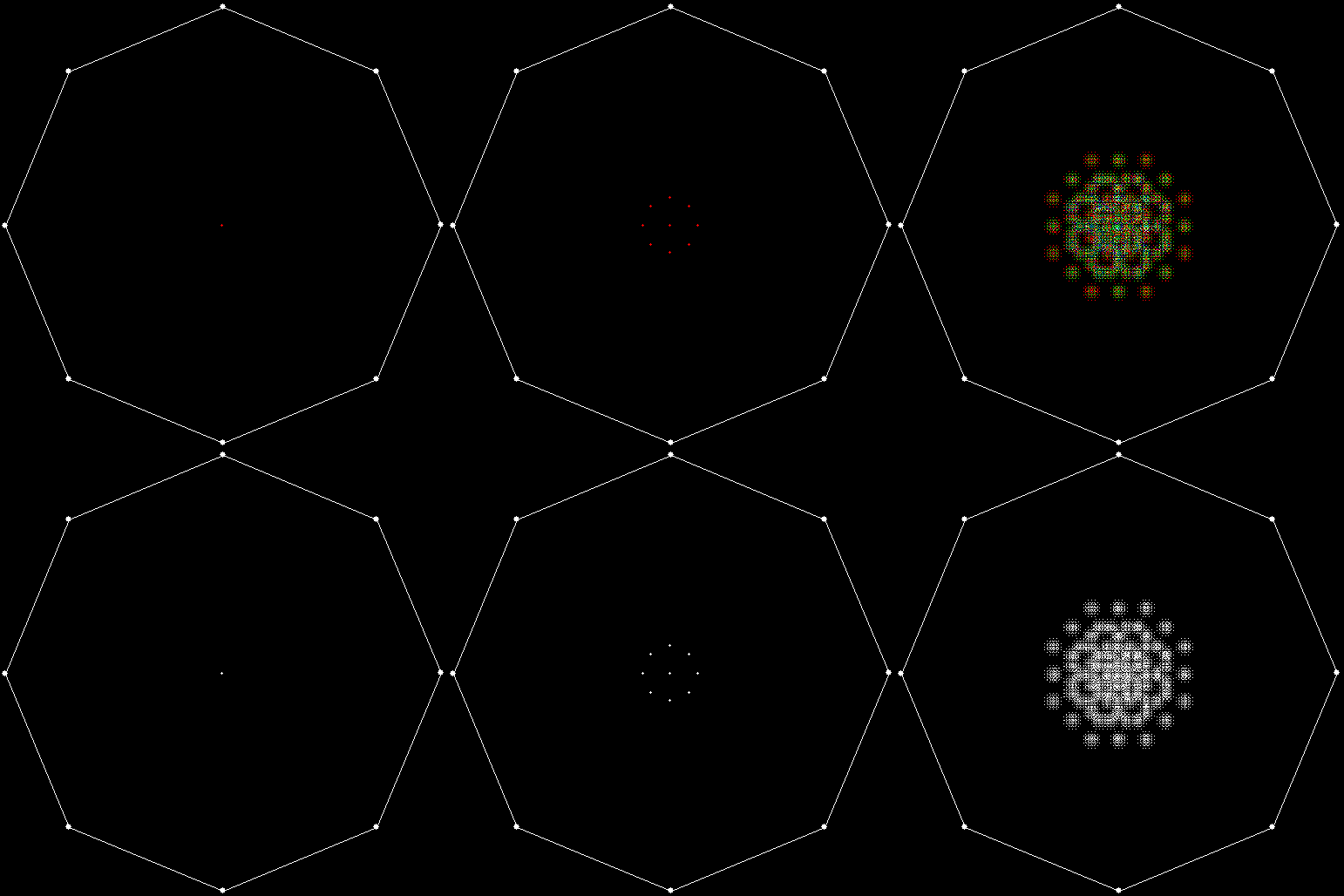
Here are 7C7 and 8C8, adding points as for 5C4:
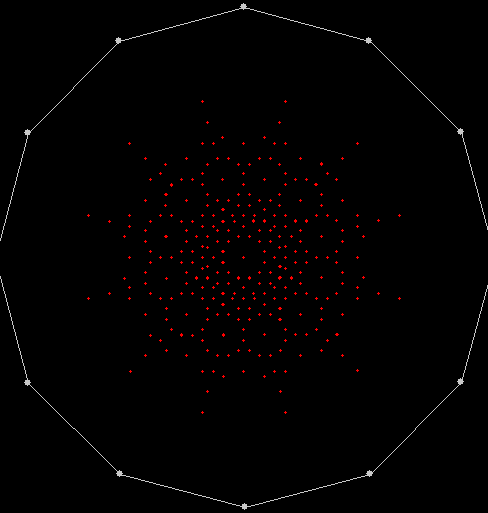
And here is 12C6 using a dodecagon:
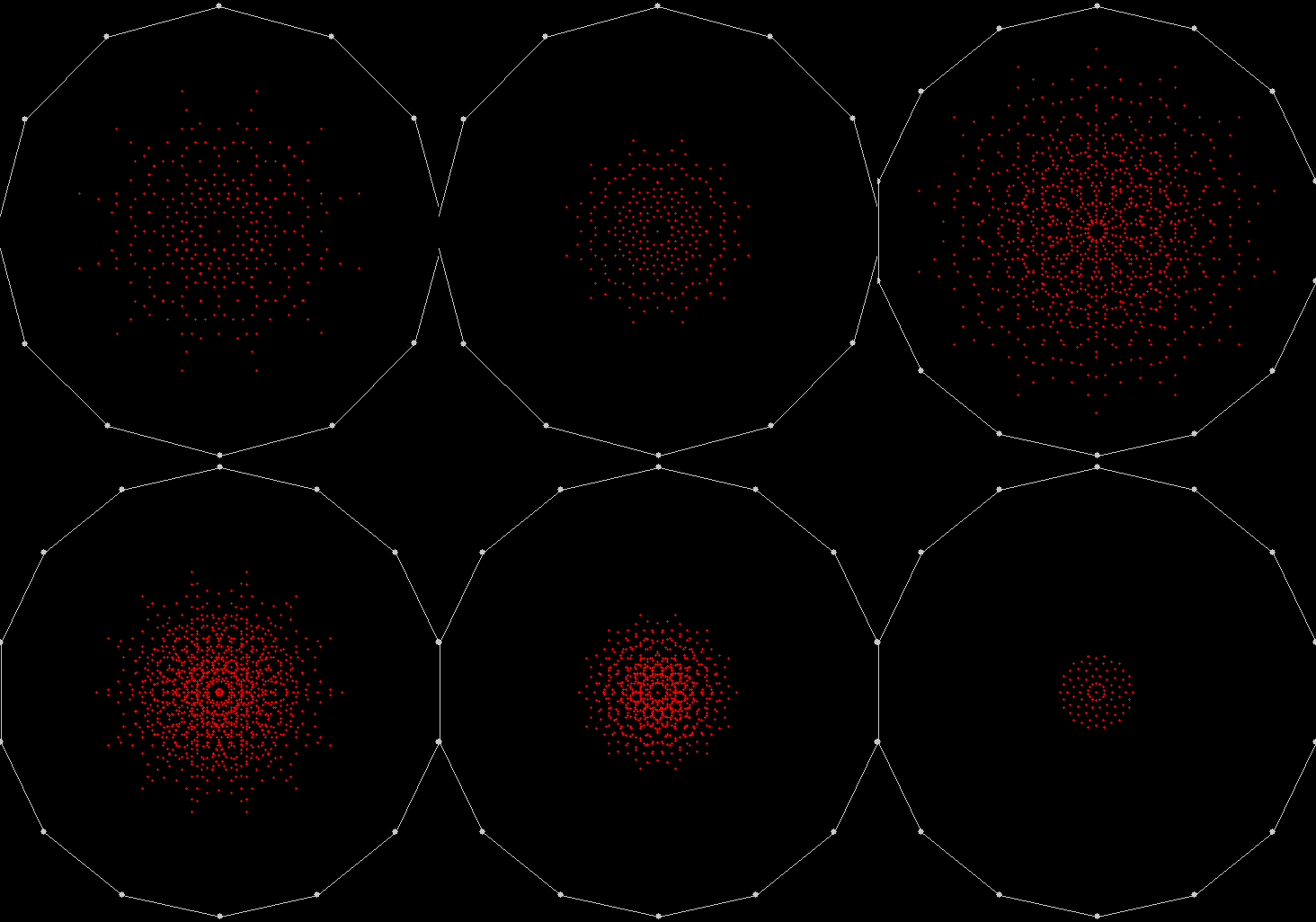
And various nCr for dodecagons and other polygons:
This method can also be used to represent the partitions of n, or the number of sets whose members sum to n. The partitions of 5 are these:
(5), (4, 1), (3, 2), (3, 1, 1), (2, 2, 1), (2, 1, 1, 1), (1, 1, 1, 1, 1)
There are seven partitions, so p(5) = 7. Partitions start small and get very large, starting with p(1), p(2), p(3) and so on:
1, 2, 3, 5, 7, 11, 15, 22, 30, 42, 56, 77, 101, 135, 176, 231, 297, 385, 490, 627, 792, 1002, 1255, 1575, 1958, 2436, 3010, 3718, 4565, 5604, 6842, 8349, 10143, 12310, 14883, 17977, 21637, 26015, 31185, 37338, 44583, 53174, 63261, 75175, 89134, 105558, 124754, 147273, 173525, 204226, 239943, 281589, 329931, 386155, 451276, 526823, 614154, 715220, 831820, 966467, 1121505, 1300156…
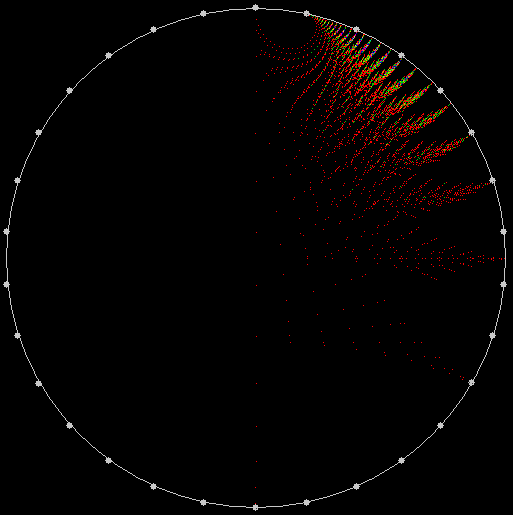
Suppose the partitions of n are treated as sets of points around a polygon with n vertices. Each set is then used to generate the point midway between its members. For example, (5, 4, 4, 2) is one partition of 15 and would represent the point midway between 5, 4, 4 and 2 of a pentadecagon. Here is a graphical representation of p(30):
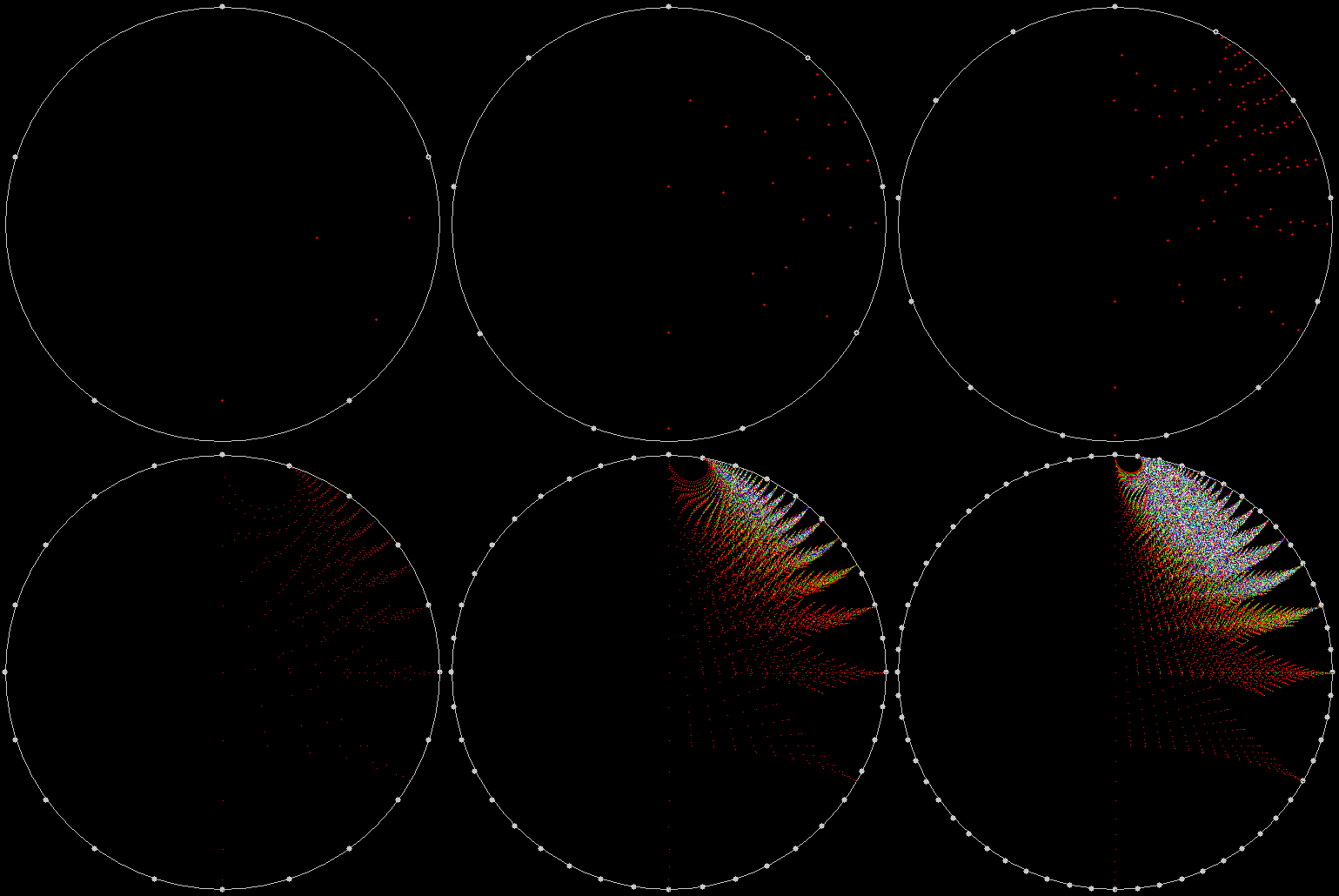
Here are graphical representations for the partitions 5 to 15, then 15 to 60 in increments of 5 (15, 20, 25, etc):
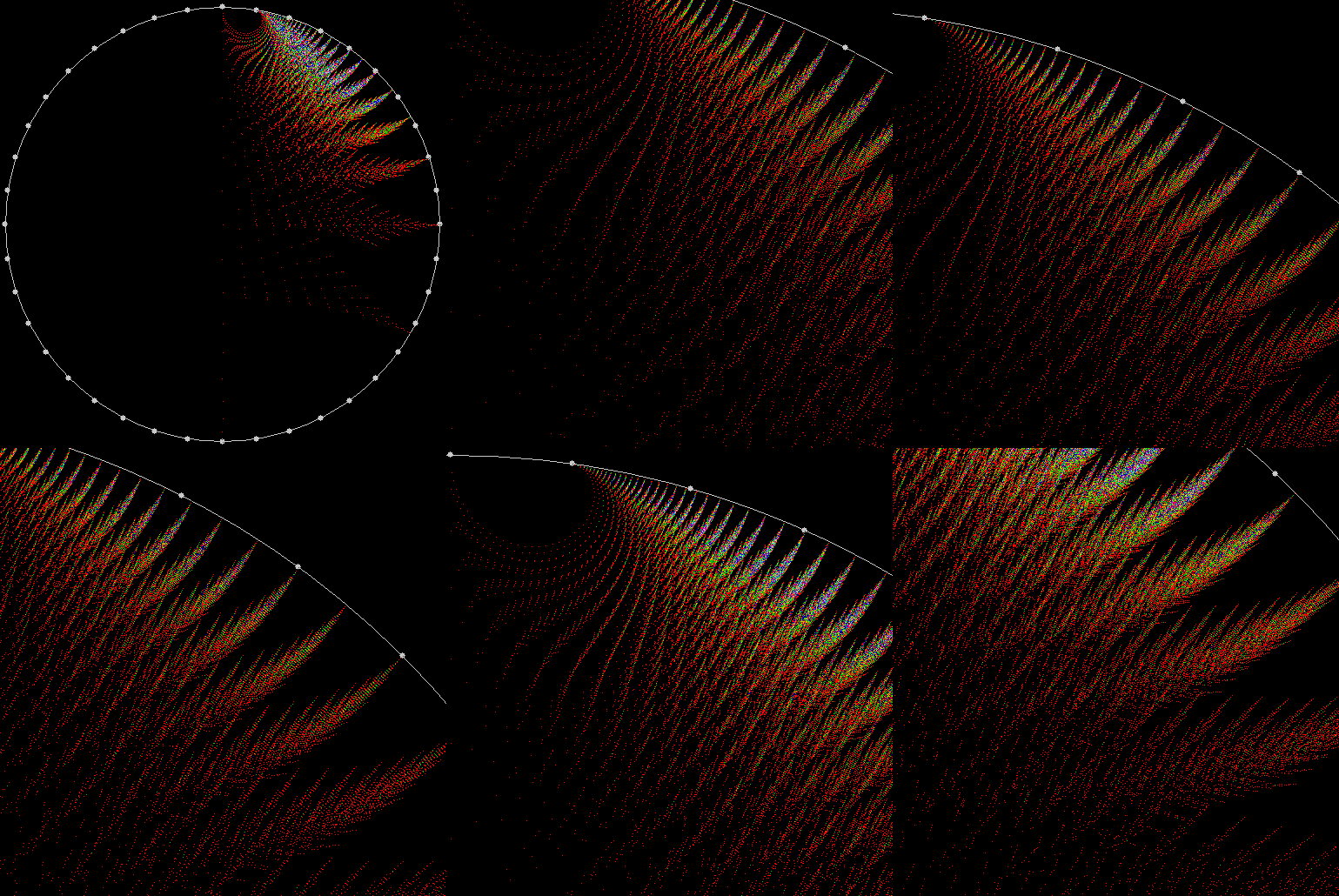
And here are some close-ups for the partitions of 35 and 40:
Post-Performative Post-Scriptum…
The title of this incendiary intervention wrily references the Bible:
The flowers appear on the earth; the time of the singing of birds is come, and the voice of the turtle is heard in our land — The Song of Solomon, 2:12


 Overlord In Terms of Core Issues Around Maximal Engagement with Key Notions of the Über-Feral