
« Si je préfère les chats aux chiens, c’est parce qu’il n’y a pas de chat policier. » — Jean Cocteau
• “If I prefer cats to dogs, it’s because there are no police cats.”
Tag Archives: French
Troicronyme
• R I O A E T L U
→ Herriot a été élu.
• L N N E O P Y I A V Q E I E D C D
→ Hélène est née au pay grec, y a vécu et y est décédée.
• J J A D I D A C K O T L A H E T D B K C D G A L E V D I N C P I E D F I J E C O Q P D B B A J T
→ Gigi a des idées assez cahotées: elle a acheté des bécasses et des geais, a élevé des hyènes, s’est payé des effigies et s’est occupée des bébés agités.
• From John Julius Norwich’s More Christmas Crackers (1990)
Limerique Ophtalmodontique
Il était un gendarme à Nanteuil,
Qui n’avait qu’une dent et qu’un oeil;
Mais cet oeil solitaire
Était plein de mystère;
Cette dent, d’importance et d’orgueil. — George du Maurier (1834-96)
Elsewhere other-accessible
• Vers Nonsensiques — more by du Maurier
Cats and Dogmas
« Les chats furent créés dans notre monde pour réfuter le dogme que toutes choses furent créées pour servir l’Homme. » — Froquevielle
• “Cats were created in our world to refute the dogma that everything was created to serve mankind.”
Post-Performative Post-Scriptum
I can’t find any more details of “Froquevielle”, which may be a misspelling.
Félosophisme
« Tous les chats sont mortels, Socrate est mortel, donc Socrate est un chat. » — Rhinocéros (1959) par Eugène Ionesco (1931-94)
• “All cats are mortal, Socrates is mortal, therefore Socrates is a cat.”
Lavoro di Leonardo?
I first came across this quote about cats in French:
« Le plus petit des félins est une œuvre d’art. »
• “The smallest of felines is a work of art.”
It’s widely attributed to Leonardo da Vinci, but I can’t find any proof that he ever said it. Here it is in a fuller Italian version:
« Anche il più piccolo dei felini, il gatto, è un capolavoro. »
• Même le plus petit des félins, le chat, est un chef-d’œuvre.
•• Even the smallest of felines, the cat, is a masterpiece.
It’s a good quote, wherever it comes from. But the attribution to Leonardo reminds of another saying in Italian: Se non è vero, è ben trovato — “If it’s not true, it’s a happy invention.”
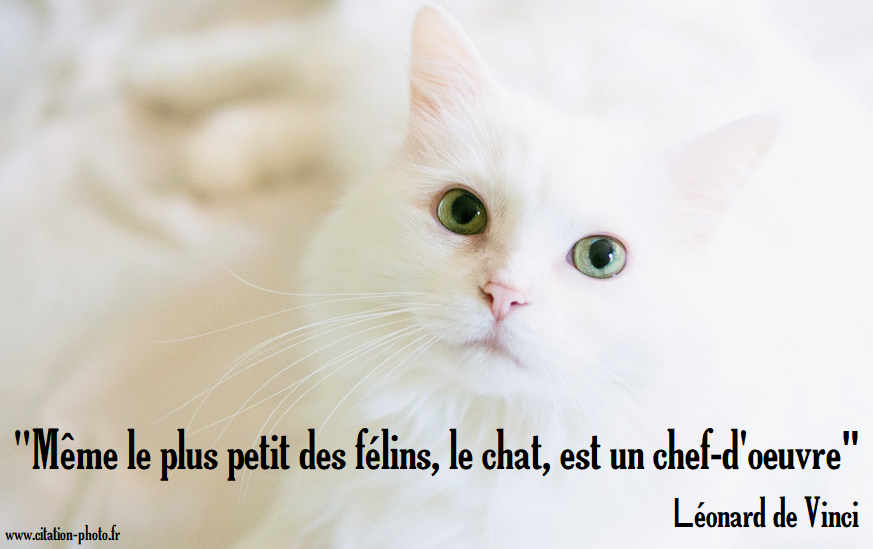
(From Pinterest)

Leonardo’s Étude du mouvement des chats
Parlez-vous franchat?
French novelist Colette was a firm cat-lover. When she was in the U.S. she saw a cat sitting in the street. She went over to talk to it and the two of them mewed at each other for a friendly minute. Colette turned to her companion and exclaimed, “Enfin! Quelqu’un qui parle français.” (At last! Someone who speaks French!) — viâ Cat Ladies and a book whose title I forget
Termed Out Nice Again
In 2013, I made a key discovery that disturbed and distressed core members of the non-conformist maverick community on a global basis dot dot dot… In America (or so it appeared) a key lexical marker of non-conformist maverickness was rapidly declining in terms of core usage, thusly:

At the same time, the non-conformist maverick community in Britain had maintained their core commitment to this key lexical marker of etc, thusly:

I expressed my puzzlement at the decline of “in terms of” in America. I couldn’t see a linguistic explanation and should (I now realize) have expressed doubts about the reliability of the data. Yes, in 2020 I’m very happy to report to members of the non-conformist maverick community that they need be disturbed and distressed no longer. The term has turned and it seems Google’s nGram wasn’t working properly at that time-period. Key statistics for core usage of “in terms of” are now in core accordance with key expectations, thusly:
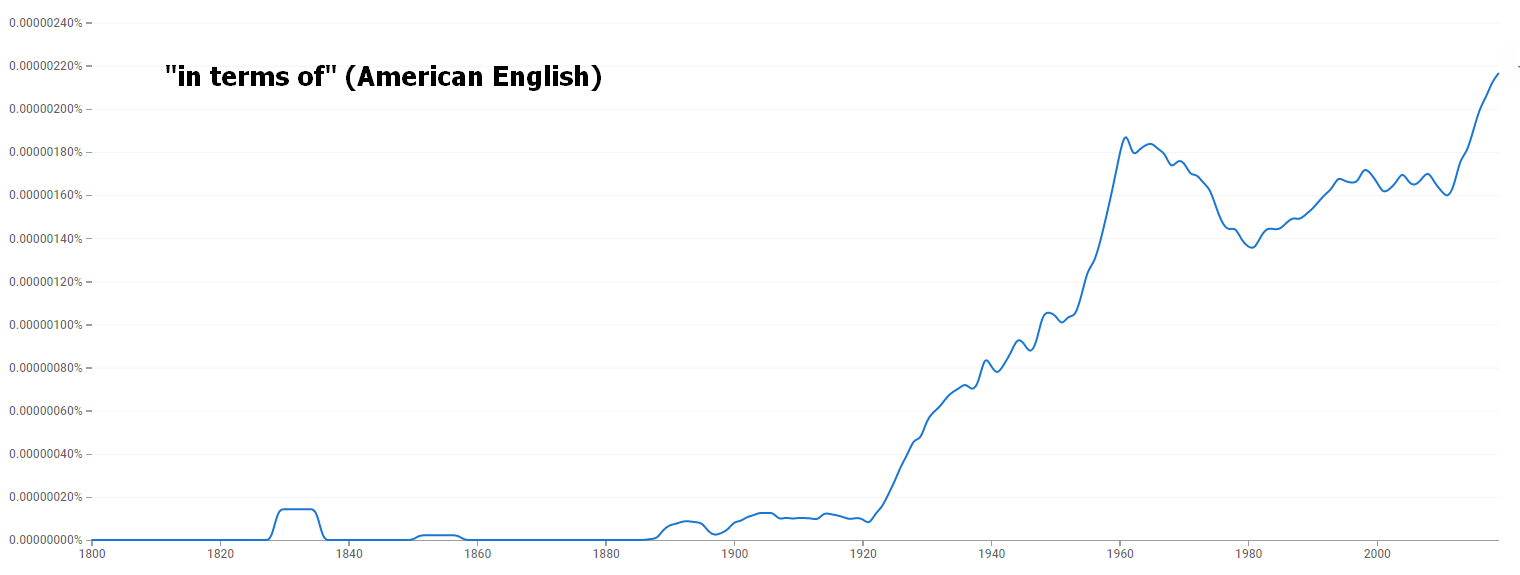
“in terms of” (American English)
(open in new tab for larger image)

“in terms of” (British English)
Sadly, however, non-conformist mavericks in French- and Spanish-speaking countries seem to have stopped being non-conformist:

“en termes de” (French)

“en términos de” (Spanish)
Peri-Performative Post-Scriptum
The title of this incendiary intervention radically referencizes a key catchphrase of core comedian George Formby (1904-61), viz, “turned out nice again”. Formby’s home-county of Lancashire (England) was — and remains — a core hotbed of non-conformist maverickness dot dot dot
• Core discussion around “in terms of”…
Colorfool
Album primo-avrilesque, meaning April-Foolish Album, is a collection of visual jokes published by the French humourist Alphonse Allais (1854-1905) on 1st April 1897. Note that some of the captions can’t be translated fully into English, because they use French idioms that refer to color.
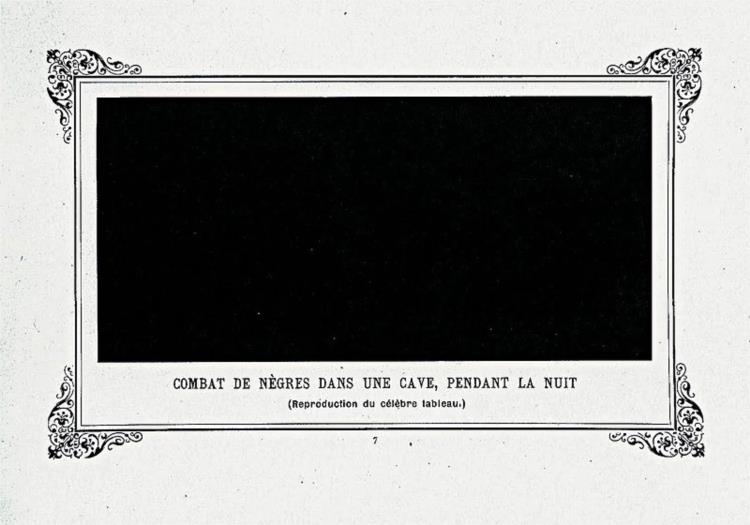
Combat de nègres dans une cave, pendant la nuit
Negroes fighting in a cellar at night

Stupeur de jeunes recrues apercevant pour la première fois ton azur, O Méditerranée!
Astonishment of young naval recruits seeing for the first time your blue, O Mediterranean!
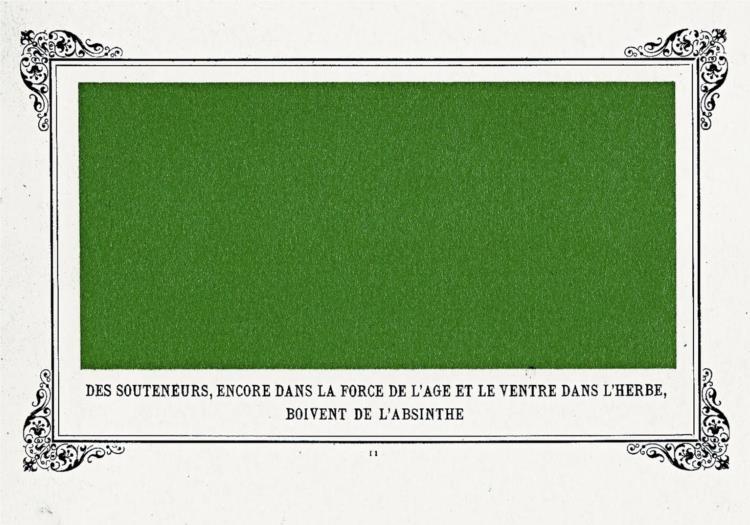
Des souteneurs, encore dans la force de l’âge et le ventre dans l’herbe, boivant de l’absinthe
Pimps, still in the prime of life and with bellies to the grass, drinking absinthe
(Pimps were then known as dos verts or “green-backs”)
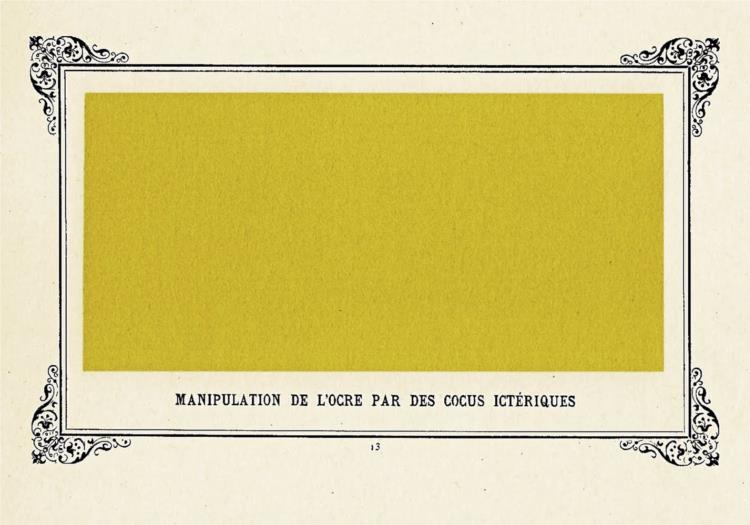
Manipulation de l’ocre par des cocus ictériques
Handling of ochre by jaundiced cuckolds
(According to one page I’ve found, coucou is the name given to some yellow wild-flowers, and cuckolds can be yellow with jealousy)
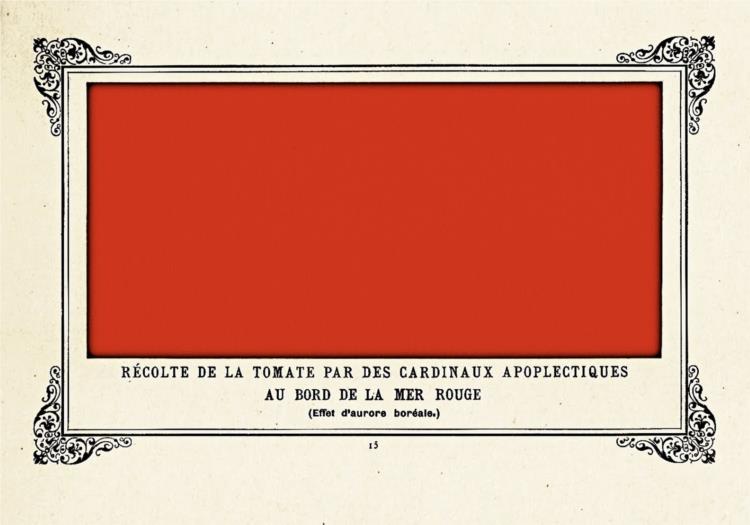
Récolte de la tomate par des cardinaux apoplectiques au bord de la mer Rouge (Effet d’aurore boréale)
Harvesting of tomatoes by apoplectic cardinals on the shore of the Red Sea (effect of the Aurora Borealis)

Ronde de pochards dans le brouillard
Dance of drunks in the fog
(Slang for “drunk” in French is gris, which also means “gray”)
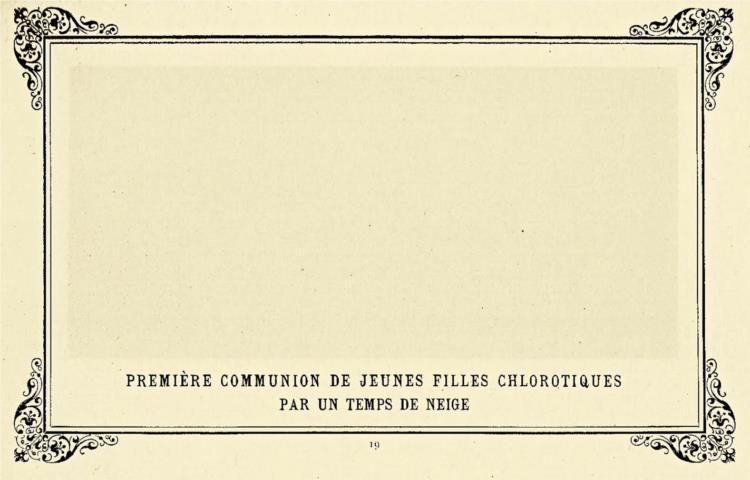
Première communion de jeunes filles chlorotiques par un temps de neige
First communion of anaemic young girls in snowy weather
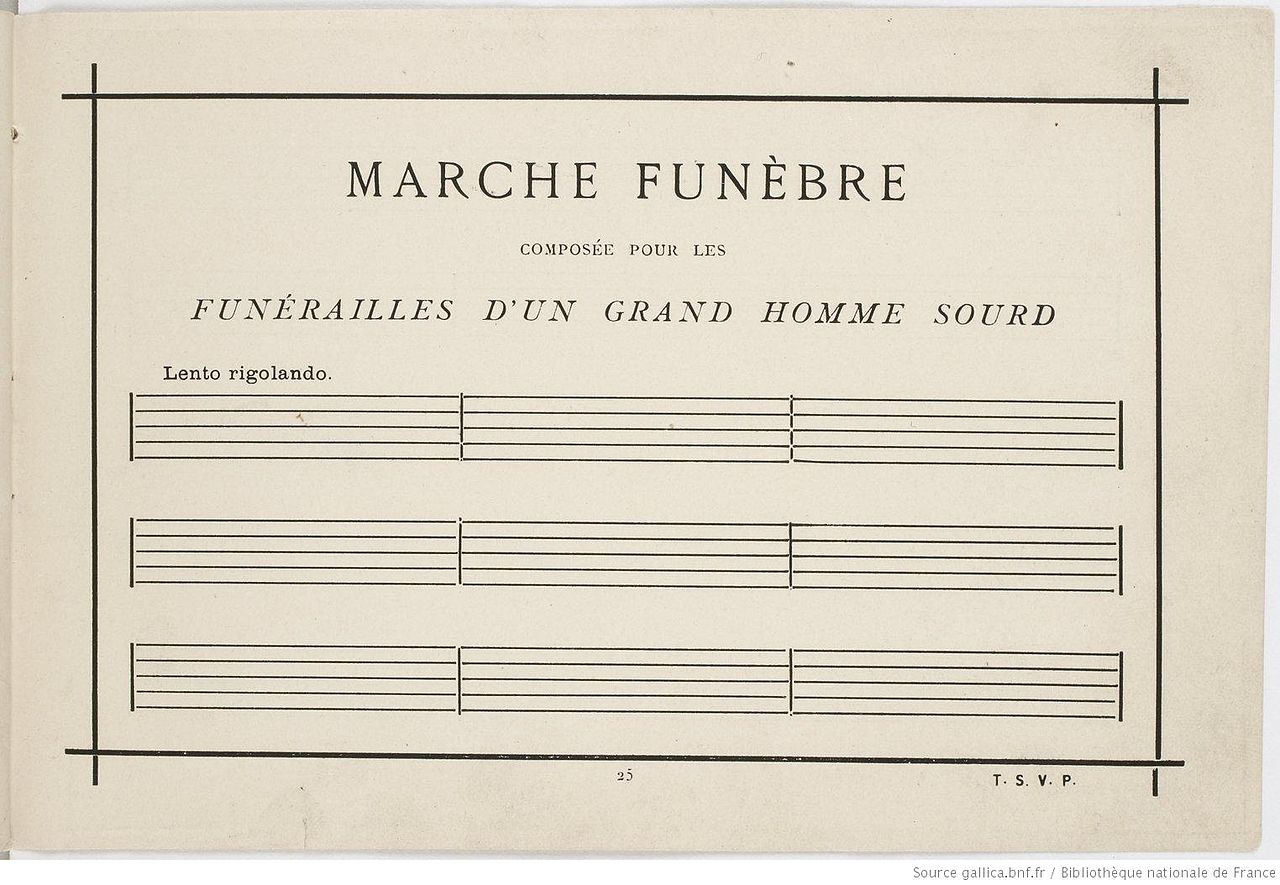
Marche funèbre, composée pour les funérailles d’un grand homme sourd
Funeral March, composed for the obsequies of a great deaf man
Hymne à la Chim’ !
« Quelle chimère est-ce donc que l’homme, quelle nouveauté, quel monstre, quel chaos, quel sujet de contradiction, quel prodige, juge de toutes choses, imbécile ver de terre, dépositaire du vrai, cloaque d’incertitude et d’erreur, gloire et rebut de l’univers ! » — Pascal
“What a Chimera is man! What a novelty, a monster, a chaos, a contradiction, a prodigy! Judge of all things, an imbecile worm; depository of truth, and sewer of error and doubt; the glory and refuse of the universe.”
 Overlord In Terms of Core Issues Around Maximal Engagement with Key Notions of the Über-Feral