World Wide Watchmen

I prefer to self-issue books in a library. It’s quicker and more convenient. And you feel okay about borrowing books suggestive of sordid and socially unacceptable tastes. For example, who would want to hand a copy of Watch You Bleed to a live librarian?

Well, I wouldn’t mind. I find it amusing to be mistaken for a Guns’n’Roses fan, just as I find it amusing to be mistaken for a Guardian-reader. But there are limits, so I’m grateful for self-issue when I borrow, say, a biography of Martin Amis or that book about The Simpsons. The trouble is, nowadays we have to be more dubious about self-issue than we used to be. It’s all on computer and it isn’t just librarians who might be scanning the record of books you borrow. No, you also have to ask yourself: What will the NSA, GCHQ and MOSSAD think?

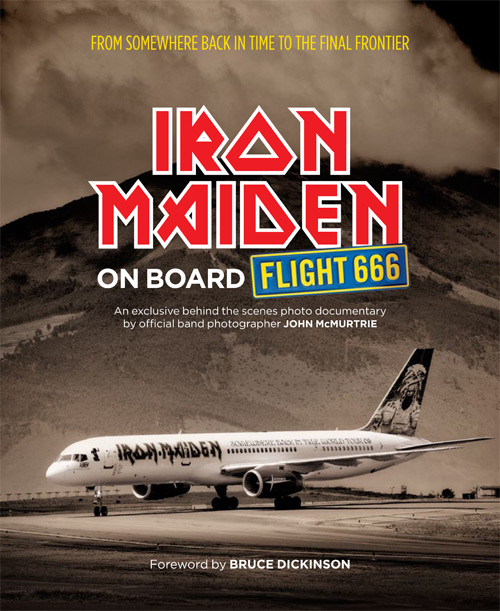
With this in mind, I’d like to put it clearly on record: I got that book out last year for research purposes only. Nothing more. I am not – repeat not – a fan of Iron Maiden. The same applies to that other book this year. I got it out for research purposes only, I swear. Inter alia, I had a hypothesis to confirm. I am not – repeat not – a fan of his.

Front cover of Iron Maiden: On Board Flight 666

And was the hypothesis confirmed? Yes, thanks for asking, it was.


As for Big Numbers, Moore asserted: “It is the most advanced comic work I’ve ever done in terms of the storytelling.” — Magic Words: The Extraordinary Life of Alan Moore, Lance Parkin, pg. 266 (Aurum 2013)


Elsewhere other-posted:

Ex-term-in-ate!

Guns’n’Gladioli

Front cover of A Light That Never Goes Out by Tony FletcherA Light That Never Goes Out: The Enduring Saga of the Smiths, Tony Fletcher (Windmill Books 2013)

Coke, booze, earsplitting volume. Not a combination you associate with the Smiths. But it was there, as you’ll learn from this book. Towards the end, they were almost turning into Guns’n’Gladioli. Morrissey, of course, was the odd one out: he wasn’t battering his brain-cells with drink and drugs on their final American tour. But back home his Lichtmusik was also lout-music: the Smiths didn’t just appeal to bedsit miserabilists in rain-hammered humdrum towns. No, they appealed to some football hooligans too, including a Chelsea fan who didn’t mind being asked, “You still wanking off over that miserable northern poof?” as he travelled north by train to do battle with Manchester United and Manchester City, who also supplied hoolifans to the Smiths (pp. 509-10). So did football clubs in Glasgow and Edinburgh. The Smiths are easy to caricature, but the caricatures don’t capture their complexity.

Tony Fletcher does capture it: the band, their music, their fans, friends, producers, studio-engineers and record-labels. He’s definitely a Guardianista, but his prose is plodding rather than painful and he does a good job of putting the poof and his partners into context. The 1980s is one important part of that context. So are Irish Catholicism and Manchester. When you look at pictures of the Smiths, you can see two clear divisions. One of them separates the singer, guitarist and drummer from the bassist: the dark-haired, bushy-browed, strong-faced Morrissey, Johnny Marr and Andy Rourke clearly belong to one race and the light-haired, lesser-browed, milder-faced Mike Joyce to another. They’re Irish and he’s English: the British Isles are rich in language and rich in biology too. But Morrissey’s height and handsomeness also separate him from Marr, Rourke and Joyce, like his polysyllabic name. Both must be related to his intelligence, his creativity and his ability to turn himself into the Pope of Mope and become much more famous than any of the other three. Fletcher doesn’t talk about this biology – as I said, he’s a Guardianista – but it’s implicit in his descriptions of Irish settlement in Manchester and of Morrissey’s genius.

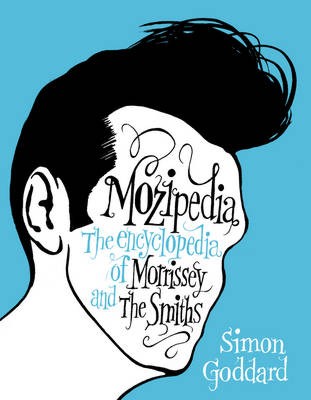
Is that too strong a word? Maybe. Morrissey is certainly the interesting and original one in this book and it ends with his story only just beginning. You can feel the tug of his later career throughout the book: it’s not discussed, but you know it’s there. But Fletcher isn’t concentrating on Morrissey and doesn’t seem very interested in Carry On and Brit-film in the 1960s, so he’s less good on what might be called the Smythos: the world created by Morrissey in his lyrics and interviews. Morrissey’s influences are better explained in Simon Goddard’s Mozipedia (2009), which isn’t just about the New York Dolls, the Cockney Rejects and vegetarianism. It has also entries for everyone from Hawtrey and Housman to Williams and Wilde by way of Sandy Shaw, Shelagh Delaney and Jobriath. No-one will ever devote an encyclopaedia to Marr like that: music doesn’t have as much meaning and metaphor in it. It has emotion and beauty instead and Fletcher is good at describing how Marr created a lot of both on albums like Meat Is Murder and Strangeways Here We Come.

Front cover of Mozipedia by Simon Goddard

Front cover of Mozipedia by Simon Goddard

I’ve never liked him much, though. I like what he did with the guitar and in the studio, but I don’t like what he did to his body and mind. Or what he put on his body: he didn’t have Mozza’s way with weeds either. In the photos, you can clearly see Morrissey’s narcissism and Marr’s weediness. It’s no surprise that Marr smoked a lot of marijuana, preferred working at night and didn’t eat properly. But he’s weedy in more ways than the physical: there’s also a photo of him with Billy Bragg, the committed socialist behind Red Wedge. This was a collective of musicians and bands who wanted to make the world a better place by fighting Fatcher, fascism and free speech with their fantastic music. Morrissey had his lefty opinions too, but he didn’t like collectives and he didn’t scorn just Margaret Thatcher and the Queen: Bob Geldof and Live Aid got the sharp side of his tongue too. Which is good. Mozza is worshipped by Guardianistas, but he’s not a Guardianista himself.

Or not wholly. The hive-mind hasn’t been able to hum him fully into line, unlike Marr and Bragg. As for Rourke and Joyce: their politics don’t matter and the most interesting thing one of them does in this book is get stung by a sting-ray (pp. 539-40). They were competent musicians, but they weren’t essential to the Smiths. Joyce is most important for causing trouble, not for strumming his bass: first there was the heroin addiction, then the 21st-century court-case in which he sued for more money and earnt Morrissey’s undying enmity. Fletcher barely mentions the court-case and ends the book in the 1980s, with the Smiths exhausted, antagonistic and unfulfilled. They never achieved their full potential and though few bands do, few bands have had more to offer than the Smiths. The Beatles were one and managed to offer it from the nearby northern city of Liverpool. They were Irish Catholic too. But, like the Smiths, they achieved success in England, not Ireland. That’s important and the younger band captured it in their name. “Smiths” is an Anglo-Saxon word with ancient roots and difficult phonetics. It seems simple, but it isn’t. Rather like light.

Ass You Like It

This is a guest post by Norman Foreman, B.A.


Mediaeval Catholic philosophers wrote about both praying and braying. The braying came from Buridan’s ass, a thought-experiment about choice and free will. Imagine a hungry ass set between two piles of hay that are identical in every way: size, shape, colour, tastiness and so on. Some philosophers argued that, if it had no reason to prefer one pile of hay to the other, the ass would be unable to choose and would therefore starve to death.

I don’t agree: inter alia, nervous systems don’t work symmetrically and we don’t experience objects as fully identical when they’re in different parts of our visual field. However, in a literary sense, I understand what it feels like to be Buridan’s ass. To assify myself, I start by imagining this:

• I’m offered £1000 to read a book by the transgressive author Will Self.

Would I accept? Yes. It would be distasteful, but I’d do it for £1000. Self’s writing is so bad that I might give the money back rather than finish the book, but I’d have a go. Now change the situation:

• I’m offered £1000 to read a book by the transgressive author Stewart Home.

Would I still accept? Yes. Again, it would be distasteful, but I’d do it for the money. Or I’d try, at least. The next step turns me into Buridan’s ass. I imagine this:

• I’m offered £1000 to read a book by either Will Self or Stewart Home (not both). And I have to make the choice for myself.

Now I’m on the horns of a dilemma. I would want the £1000, but I can’t decide which transgressive author I’d rather NOT read. Home is a downmarket version of Self, Self is an upmarket version of Home. It’s Self-as-chav vs Home-as-Oxbridge-grad. And/or vice versâ. They’re both keyly committed core components of the Guardianista community, with all that that implies in terms of issues around bad English, mixed metaphors and “in terms of”. I’m happy to say I’ve never read a book by either of them. So if I were offered £1000 to do so and had to choose either Self or Home, I couldn’t do it. Not unassisted. I’d have to toss a coin. Best of three. Or best of five dot dot dot


Previously pre-posted (please peruse):

Titus Graun
Ex-term-in-ate!
Reds under the Thread

The Term Turns dot dot dot

In Titus Graun, I interrogated issues around the Grauniness, or Guardianisticity, of two keyly committed core components of the counter-cultural community: the semiotician Stewart Home and the æsthetician John Coulthart. Seeking to utilizate their usage-metrics for the core/epicentral Guardianista phrase “in terms of” (i.t.o.), I interrogated their personal websites like this in terms of January 2013:

site:http://www.johncoulthart.com “in terms of”
About 2,180 results

site:http://www.johncoulthart.com “the”
About 8,860 results

site:http://www.johncoulthart.com “and”
About 8,150 results


site:http://www.stewarthomesociety.org “in terms of”
About 123 results

site:http://www.stewarthomesociety.org “the”
About 602 results

site:http://www.stewarthomesociety.org “and”
About 599 results

Noting that Coulthart’s site used “the/and” approximately 14 times more often than Home’s, I adjusted Home’s raw i.t.o.-score accordingly: 123 x 14 = 1722. I concluded that Coulthart, with an i.t.o.-score of 2180, was approximately 26·59% Graunier than Home – exactly as one might have hoped, given that Coulthart is not merely a Guardianista (good), but a gay Guardianista (doubleplusgood). But that was in terms of January. When I re-interrogated their websites in terms of June 2013, I discovered that the semiotic situation had transitioned in a most disturbing and disquieting way:

site:http://www.johncoulthart.com “in terms of”
About 1,080 results

site:http://www.johncoulthart.com “the”
About 8,680 results

site:http://www.johncoulthart.com “and”
About 8,010 results


site:http://www.stewarthomesociety.org “in terms of”
About 119 results

site:http://www.stewarthomesociety.org “the”
About 541 results

site:http://www.stewarthomesociety.org “and”
About 536 results

I was aghast (literally) to see that Coulthart’s i.t.o.-metrics have spiked (in reverse). Other lexicostatistical metrics have transitioned relatively little: his site now seems to use “the/and” approximately 15·5 times more often than Home’s. Home’s raw i.t.o.-score is 119 and 119 x 15·5 = 1844·5. So it is now Home who is approximately 70·78% Graunier than Coulthart.

This can only be described as highly suspicious. What has Coulthart been up to? Has he been spraying his site with verbicide? Has he donned a black Savoy nihilinja-suit™, crept out under cover of darkness and clubbed innocent i.t.o.’s as they lay basking in the feral radiance of Manchester’s Most Maverick Messiahs? If so, this is “‘Pushing the Transgressive Envelope Too Far’ Too Far” too far. Even M.M.M.M. must look askance at behaviour like that. Surely.


Previously pre-posted (please peruse):

Titus Graun
Ex-term-in-ate!
Reds under the Thread

Poetry and Putridity

Poetry and Putridity: Interrogating Issues of Narrativistic Necrocentricity in A.E. Housman and Clark Ashton Smith

Thanatic fanatic. Say it. Savour it, if you’re that way inclined. I certainly am: I am obsessed with words. The sound of them, the shape of them, their history, meaning and flavours. If I were a Guardianista, I’d say I was “passionate about” words. But it’s partly because I’m obsessed with words that I’m not a Guardianista. The Guardian and its readers use them badly. I like people who use them well: A.E. Housman and Clark Ashton Smith, for example. AEH (1859-1936) was an English classicist, CAS (1893-1961) a Californian jack-of-all-trades. But they were both masters of the English language.

They were also thanatic fanatics: obsessed with death. But in different ways. You could say that Housman was more death-as-dying, Smith more death-as-decaying. Not that Smith didn’t deal in dying too: he wrote powerfully and disturbingly about our departure from life, not just about what happens to us beyond it. But Housman didn’t dabble in decomposition and decay. In A Shropshire Lad (1896), the death is fresh, not foetid: necks break, throats are slit, athletes die young, men muse on drowning, fiancées arrive at church in coffins, not coaches. Sometimes the effect, and affect, are ludicrous. Sometimes they’re not. Sometimes it’s hard to decide:

On moonlit heath and lonesome bank
  The sheep beside me graze;
And yon the gallows used to clank
  Fast by the four cross ways.

A careless shepherd once would keep
  The flocks by moonlight there,*
And high amongst the glimmering sheep
  The dead man stood on air.

They hang us now in Shrewsbury jail:
  The whistles blow forlorn,
And trains all night groan on the rail
  To men that die at morn.

There sleeps in Shrewsbury jail to-night,
  Or wakes, as may betide,
A better lad, if things went right,
  Than most that sleep outside.

And naked to the hangman’s noose
  The morning clocks will ring
A neck God made for other use
  Than strangling in a string.

And sharp the link of life will snap,
  And dead on air will stand
Heels that held up as straight a chap
  As treads upon the land.

So here I’ll watch the night and wait
  To see the morning shine,
When he will hear the stroke of eight
  And not the stroke of nine;

And wish my friend as sound a sleep
  As lads’ I did not know,
That shepherded the moonlit sheep
  A hundred years ago.

*Hanging in chains was called keeping sheep by moonlight.

A Shropshire Lad, IX.

That poem mingles beauty and bathos as it contemplates death. Other poems have more or less of one or the other, but for Housman death is metaphor and metaphysics, not morbidity and mephitis. He uses it as a symbol of loss and despair and those are his real concerns. There is no literal death here:

’Tis time, I think, by Wenlock town
  The golden broom should blow;
The hawthorn sprinkled up and down
  Should charge the land with snow.

Spring will not wait the loiterer’s time
  Who keeps so long away;
So others wear the broom and climb
  The hedgerows heaped with may.

Oh tarnish late on Wenlock Edge,
  Gold that I never see;
Lie long, high snowdrifts in the hedge
  That will not shower on me.

A Shropshire Lad, XXXIX.

That is an example of multum in parvo: “much in little”. Using simple words and simple metre, Housman creates great beauty and can conjure overwhelming emotion. He was one of the greatest classicists in history, an expert in the rich and complex literature of the ancient world, a profound scholar of Latin and Greek. But his poetry is remarkable for its lack of classical vocabulary. There is no Latin or Greek in the poem above and only two words of French. Clark Ashton Smith was quite different:

“Look well,” said the necromancer, “on the empire that was yours, but shall be yours no longer.” Then, with arms outstretched toward the sunset, he called aloud the twelve names that were perdition to utter, and after them the tremendous invocation: Gna padambis devompra thungis furidor avoragomon.

Instantly, it seemed that great ebon clouds of thunder beetled against the sun. Lining the horizon, the clouds took the form of colossal monsters with heads and members somewhat resembling those of stallions. Rearing terribly, they trod down the sun like an extinguished ember; and racing as if in some hippodrome of Titans, they rose higher and vaster, coming towards Ummaos. Deep, calamitous rumblings preceded them, and the earth shook visibly, till Zotulla saw that these were not immaterial clouds, but actual living forms that had come forth to tread the world in macrocosmic vastness. Throwing their shadows for many leagues before them, the coursers charged as if devil-ridden into Xylac, and their feet descended like falling mountain crags upon far oases and towns of the outer wastes.

Like a many-turreted storm they came, and it seemed that the world shrank gulfward, tilting beneath the weight. Still as a man enchanted into marble, Zotulla stood and beheld the ruining that was wrought on his empire. And closer drew the gigantic stallions, racing with inconceivable speed, and louder was the thundering of their footfalls, that now began to blot the green fields and fruited orchards lying for many miles to the west of Ummaos. And the shadow of the stallions climbed like an evil gloom of eclipse, till it covered Ummaos; and looking up, the emperor saw their eyes halfway between earth and zenith, like baleful suns that glare down from soaring cumuli.

“The Dark Eidolon” (1935).

Smith’s logomania could not be satisfied beyond the bounds of English, in Latin, Greek and French: he stepped outside history altogether and created his own languages to weave word-spells with. If you didn’t know CAS or AEH or their writing, who would seem more like the world-famous classicist? Based on what I have quoted so far, it would perhaps be Smith. But that is part of what is astonishing about his writing: he wasn’t merely a Beethoven of prose, creating gigantic melodies with rich and rolling words, he was a poorly educated Beethoven. Here is another contrast with his fellow thanatic fanatic. Housman was not poorly educated and was given a chance Smith never had: to attend and adorn one of the world’s greatest universities. The chance was dropped. Housman attended, but he didn’t adorn:

After showing himself, as an undergraduate [at Oxford], to be a brilliant – even arrogantly brilliant – student of Latin and Greek, apparently set for a lifetime of scholarship, he produced a performance in his final examination that astonished all who knew him. He handed in a series of blank, or nearly blank, papers and was failed outright. Retrieving the situation as best he could, he completed the requirements for a pass degree, got through the Civil Service examination, and secured a post at the Patent Office. (The Collected Poems of A.E. Housman, Wordsworth, 2005, Michael Irwin’s Introduction, pg. 8)

Housman would end his life, laden with honours, as a Professor of Latin at Cambridge, but that isn’t surprising. The fiasco at Oxford certainly was. Why did it happen? A nervous breakdown or failure to work, perhaps, because of his unrequited love for a fellow student: Moses Jackson, who was healthy, heterosexual, and had no time for classical scholarship. In later life, travelling to cities like Paris and Venice, Housman would indulge much more than his gastronomic and aesthetic appetites. But he seems to have believed that sex without love is like food without flavour. And he never ceased loving Jackson. When he completed volume one of his magnum opus, a definitive edition of the Roman poet Manilius (fl. 1st century A.D.), he dedicated it to Jackson in Latin, dubbing him harum litterarum contemptor, “a scorner of these writings”. That was in 1903, when Jackson was married and living in India. Jackson would later move to Canada, where he died of anaemia in 1923. His death was anticipated by this cri du cœur from Housman:

The half-moon westers low, my love,
  And the wind brings up the rain;
And wide apart lie we, my love,
  And seas between the twain.

I know not if it rains, my love,
  In the land where you do lie;
And oh, so sound you sleep, my love,
  You know no more than I.

Last Poems (1922), XXVI.

But cri du cœur is not the mot juste: it is a very simple poem with only a single foreign word. That is, if “apart” can be called foreign, after centuries on the tongues and lips of English-speakers. Almost everything else has been there millennia and that is part of Housman’s word-magic. His poems are really about depth, not distance. One of the most famous says, in the same simple vocabulary, that far away is close at hand:

On Wenlock Edge the wood’s in trouble;
  His forest fleece the Wrekin heaves;
The gale, it plies the saplings double,
  And thick on Severn snow the leaves.

’Twould blow like this through holt and hanger
  When Uricon the city stood:
’Tis the old wind in the old anger,
  But then it threshed another wood.

Then, ’twas before my time, the Roman
  At yonder heaving hill would stare:
The blood that warms an English yeoman,
  The thoughts that hurt him, they were there.

There, like the wind through woods in riot,
  Through him the gale of life blew high;
The tree of man was never quiet:
  Then ’twas the Roman, now ’tis I.

The gale, it plies the saplings double,
  It blows so hard, ’twill soon be gone:
To-day the Roman and his trouble
  Are ashes under Uricon.

A Shropshire Lad, XXXI.

Death for Housman, as it was for Swinburne, is “a sleep”: when the body is ashes, the brain is troubled no more. Death does not necessarily sleep in Clark Ashton Smith:

Natanasna (chanting):

Muntbauut, maspratha butu, [Mumbavut, lewd and evil spirit,]
Varvas runu, vha rancutu. [Wheresoever thou roamest, hear me.]
Incubus, my cousin, come,
Drawn from out the night you haunt,
From the hollow mist and murk
Where discarnate larvae lurk,
By the word of masterdom.
Hell will keep its covenant,
You shall have the long-lost thing
That you howl and hunger for.
Borne on sable, sightless wing,
Leave the void that you abhor,
Enter in this new-made grave,
You that would a body have:
Clothed with the dead man’s flesh,
Rising through the riven earth
In a jubilant rebirth,
Wend your ancient ways afresh,
By the mantra laid on you
Do the deed I bid you do.
Vora votha Thasaidona [By (or through) Thasaidon’s power]
Sorgha nagrakronitlhona. [Arise from the death-time-dominion.]

(After a pause)

Vachat pantari vora nagraban [The spell (or mantra) is finished by the necromancer.]

Kalguth: Za, mozadrim: vachama vongh razan. [Yes, master: the vongh (corpse animated by a demon) will do the rest. (These words are from Umlengha, an ancient language of Zothique, used by scholars and wizards.)]

(The turf heaves and divides, and the incubus-driven Lich of Galeor rises from the grave. The grime of interment is on its face, hands, and clothing. It shambles forward and presses close to the outer circle, in a menacing attitude. Natanasna raises the staff, and Kalguth the arthame, used to control rebellious sprits. The Lich shrinks back.)

The Lich (in a thick, unhuman voice): You have summoned me,
And I must minister
To your desire.

Natanasna: Heed closely these instructions:
By alleys palled and posterns long disused,
Well-hidden from the moon and from men’s eyes,
You shall find ingress to the palace. There,
Through stairways only known to mummied kings
And halls forgotten save by ghosts, you must
Seek out the chamber of the queen Somelis,
And woo her lover-wise till that be done
Which incubi and lovers burn to do.

That is from Smith’s The Dead Will Cuckold You (1951), “A Drama in Six Scenes”. It is also a drama with a sex-scene, by implication, at least. The re-animated corpse follows its instructions, seeks out the palace and enters the “chamber of the queen Somelis”, who addresses it thus as her husband, King Smaragd, beats on the locked door:

Poor Galeor, the grave has left you cold:
I’ll warm you in my bed and in my arms
For those short moments ere the falling sword
Shatter the fragile bolts of mystery
And open what’s beyond. (Op. cit., Scene IV)

I read the play daunted by its erudition, delighted by its epeolatry, and disturbed by its emetic extremity. Some of Smith’s work is about something other than death. This play is about nothing but death. Compare it with Smith’s short-story “The Isle of Torturers” (1933), which contains both poetry and putridity. It’s part richness, part retching. There is poetry like this:

Creaming with a winy foam, full of strange murmurous voices and vague tales of exotic things, the halcyon sea was about the voyagers now beneath the high-lifting summer sun. But the sea’s enchanted voices and its long languorous, immeasurable cradling could not soothe the sorrow of Fulbra; and in his heart a despair abided, black as the gem that was set in the red ring of Vemdeez.

Howbeit, he held the great helm of the ebon barge, and steered as straightly as he could by the sun toward Cyntrom. The amber sail was taut with the favoring wind; and the barge sped onward all that day, cleaving the amaranth waters with its dark prow that reared in the carven form of an ebony goddess. And when the night came with familiar austral stars, Fulbra was able to correct such errors as he had made in reckoning the course.

“The Isle of Torturers” (1933).

There is also putridity like this:

Anon the drowned and dripping corpses went away; and Fulbra was stripped by the Torturers and was laid supine on the palace floor, with iron rings that bound him closely to the flags at knee and wrist, at elbow and ankle. Then they brought in the disinterred body of a woman, nearly eaten, in which a myriad maggots swarmed on the uncovered bones and tatters of dark corruption; and this body they placed on the right hand of Fulbra. And also they fetched the carrion of a black goat that was newly touched with beginning decay; and they laid it down beside him on the left hand. Then, across Fulbra, from right to left, the hungry maggots crawled in a long and undulant wave…

In The Dead Will Cuckold You, the poetry never escapes the putridity. After reading it, you will understand why L. Sprague de Camp remarked this of Smith: “Nobody since Poe has so loved a well-rotted corpse” (Literary Swordsmen and Sorcerers: the Makers of Heroic Fantasy, Arkham House 1976, pg. 206). Nor has anyone since Poe so loved an ingenious torture: in Scene V of the play, King Smaragd threatens his guards with a “douche” of “boiling camel-stale”. There’s humour in Smith’s morbidity, but I think that he dwelt too long on unhealthy themes. It shows both in his stories and in his popularity: the Weird Tales Big Three, H.P. Lovecraft (1890-1937), Robert E. Howard (1906-36), and Clark Ashton Smith, are rather like the three stars in the belt of Orion. Lovecraft and Howard are bright Alnilam and Mintaka, Smith is dimmer Alnitak. His luxuriant lexicon explains part of this, but his necrocentric narratives must repel people too.

Housman wrote about death more delicately and distantly. His work doesn’t so much narrativize the necrotic as thematicize the thanatic. It talks about dying, not decaying, and it doesn’t relish the repellent as Smith’s work often did. This helps explain why Housman is a bigger name in English literature than Smith, though I don’t think he was a greater writer. Housman is a minor poet with a major name. I think he deserves it for the beauty and simplicity of his verse. He’s a word-magician who can conjure tears. Smith is a word-magician who can conjure titans. He did more with English and deserves some of Housman’s fame. With his poetry, he might have won it; with his putridity, he lost his chance.

He Say, He Sigh, He Sow

“It’s only really in the last decade or so that I’ve started to engage seriously with what I think the implications of modernism are in terms of the novel…” – Will Self, The Observer, Sunday, 5th August, 2012.


Pre-Previously Posted (Please Peruse)

Ex-Term-In-Ate!

Vermilion Glands

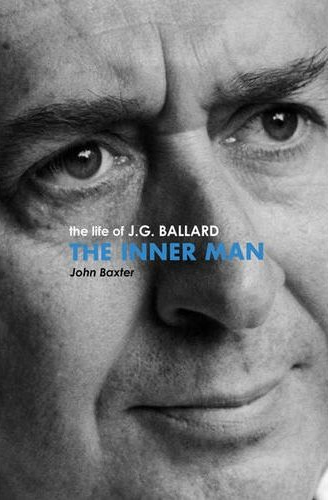
Front cover of The Inner Man The Life of J.G. Ballard by John BaxterReaders’ Advisory: Contains Self-abuse and reference to Mancas.

The Inner Man: The Life of J.G. Ballard, John Baxter (W&N 2011)

“B” is for Bataille, Burroughs, and Ballard. I’ve never read Bataille, I can’t stand Burroughs, I used to love Ballard. Nowadays I have strong doubts about him. Vermilion Sands, yes. Crash, no. Vermilion Sands is surreal, haunting, funny, endlessly inventive, and extravagantly intelligent. Crash, by contrast, is silly and sordid. The last time I tried to read it I quickly gave up. I couldn’t take it seriously any more. It’s a book for pretentious, wanna-be-intellectual adolescents of all ages who like Dark’n’Dangerous Sex’n’Violence. A book for Guardian-readers, in short – the sort of people who continually use and hear the phrase “in terms of”, who believe passionately in Equality, Justice, and the Fight against Hate, and who desperately, desperately, wished they’d been able to stimulate the largest erogenous zone in their bodies by voting for Barack Obama in 2008.

What is that erogenous zone? Well, though not all liberals are Guardianistas, all Guardianistas are liberals, so the largest erogenous zone in a Guardianista’s body is his-or-her narcissism. Guardianistas are also, alas, the sort of people who write biographies of J.G. Ballard. John Baxter is most definitely a committed component of the core community. As a big admirer of Mike Moorcock, Britain’s biggest bearded Burroughsian lit-twat, how could he not be? This is part of why I now have doubts about Ballard. I don’t like liking things that Guardianistas like and I don’t like the fact that Moorcock was mates (on and off) with Ballard. On the other hand, I do like the fact that Moorcock and the Guardian boosted Burroughs big-time back in the day and that the Guardian now bigs up Cormac McCarthy and his Dark’n’Dangerous Sex’n’Violence. Good, I think: they all deserve each other. Perhaps one day, in some drug-stoked, depravity-soaked über-orgy of trans-transgressive hyper-homoeroticism, they’ll all manage to climb up each other’s arseholes and disappear from history.

But Guardianistas don’t just like Burroughs and McCarthy: they like Ballard too. They write books about him. Fortunately, The Inner Man isn’t a good book. That would have been disturbing, believe me. The dedication is by far the best thing in it: “To the insane. I owe them everything.” And guess whose lines those are? After that, it’s mostly Baxter and mostly dull. When it’s not, you’ll usually have Ballard to thank:

Novels sent to him in hope of endorsement got short shrift. He enjoyed describing the satisfying thump of Salman Rushdie’s Midnight’s Children as it hit the bottom of the dustbin. (pg. 47) In September 1995, the Observer, for a piece about odd bequests, invited him to answer the question, “What would you leave to whom, and why?” Jim said, “I would leave Andrea Dworkin my testicles. She could have testicules flambés.” Anti-pornography campaigner Dworkin was a close friend of Mike and Linda Moorcock but a bête noire of Ballard’s. (pg. 308)

I think Ballard was right in his cod-bequest for Dworkin and bum’s-rush for Rushdie. And if Baxter had the same sense of humour and mischief, The Inner Man would have been a much better book. Okay, it’s not that bad, because I managed to finish it, but that was disappointing in its own way. I’d almost have preferred a boldly, flamboyantly pretentious Ballard bio full of solecisms and mixed metaphors to a plodding, mediocre one like this. I like sneering at and feeling sniffily superior to Guardianistas. And all I’ve got to go on here are occasional lines like these:

Like another diligent civil servant, he [Ballard] was Agent 00∞: licensed to chill… (pg. 3) But in surrealism, as in most things, Jim was drawn to the extremity, the dangerous edge, the abyss which, as H.G. Wells warned, will, if you stare into it long enough, stare back at you. (pg. 36)

It’s puzzling that Baxter misattributes such a famous quote and that his editors didn’t spot the misattribution. It’s also puzzling that Baxter doesn’t seem to like Ballard much, to be very interested in Ballard’s life, or to be very enthusiastic about Ballard’s writing. Born in Shanghai, incarcerated (and half-starved) under the Japanese during the war, trained as a doctor: Ballard had an unusual early life for a writer and one can only admire Baxter’s ability to keep the interest out of it. Baxter devotes much more attention to Ballard’s time in advertising and life in suburbia. Yes, the contrast between this apparently staid existence and the wildness of Ballard’s veridically visceral visions is interesting, but it’s obviously related to his early experiences in China. Baxter has got those out of the way within the first 26 pages of a 377-page book. When he himself takes visionary flight, he doesn’t do so to Ballard’s advantage. Why did Ballard turn down the chance to be published in “a series of de luxe limited editions of fantasy classics” by Manchester’s most maverick messiahs, “the radical publishing enterprise of Savoy Books”? Baxter conducts an interview with his own imagination and reports back with this:

He may have felt that involvement with Savoy and [David] Britton – who had already served two prison terms under the Obscene Publications and Dangerous Dogs Acts – risked once again placing him in hazard, as had been the case with “Why I Want to Fuck Ronald Reagan”. (pg. 321)

Eh? Yes, he “may”, but simpler explanations are to hand. Either way, Baxter says the rejection meant that “a sense of grievance” now “permeated his relationship with” the messianic Mancas. Again: Eh? The grievance would have been one-sided, there was never much of a relationship, and although Savoy “put a lot of effort” into persuading Fenella Fielding to record extracts from one of Ballard’s books (no prizes for guessing which), they put in the effort without first asking Ballard if he was interested. When the recordings were made and they did ask, he “refused to cooperate”. It was now that grievance began to permeate the relationship.

Reading about this important episode in Ballard’s career, I felt another feeling begin to permeate me. A familiar feeling. Yes, “S” is for Savoy (B), Sontag (S), and Self (W). All three turn up in this biography, variously offering to publish Ballard, heaping praise on him, and having dinner with him. All three are part of the Guardianista demographic in one way or another: Self nails his colours firmly to the gasbag when he speaks of a “scintilla” of an “affectation” that forms an “armature” (pg. 341). All three add to my doubts about Ballard. If people like that like him, should I like him too, like? I think if Ballard had been born ten or twenty years later, the question wouldn’t arise. A younger Ballard would have been sucked fully into the macroverse of Guardianista subversion, radicalism, and counter-cultural twattishness and I’d never have liked him at all. As it was, he was too big to entirely fit. Crash got sucked and does suck. Vermilion Sands didn’t and doesn’t.

And this biography? Well, it could have been much worse. Yes, it’s dull but that may be partly because Ballard himself is such an interesting and memorable writer. As I’ve pointed out elsewhere, the danger in literary biographies is that the biographee is likely to be a better writer than the biographer. The implicit comparison will always be there and Ballard’s autobiography, Miracles of Life (2008), is likely to remain better, and briefer, than anything a biographer ever turns out. But Baxter tells you about things that Ballard doesn’t, possibly because they’re not true. Like the air of menace Ballard could project and his occasional violence towards his girlfriend Claire Walsh, who “appeared at parties with facial bruises, usually hidden between sunglasses” (pg. 187).

And “girlfriend” is the word: Baxter reports that Ballard “always” and “anachronistically” used it of Walsh (pg. 171), rather than (he implies) the smarmy Guardianista “partner”. Good for Ballard. But bad for Ballard in terms of engagement with issues around the bruises, if true. As George Orwell said:

If Shakespeare returned to the earth to-morrow, and if it were found that his favourite recreation was raping little girls in railway carriages, we should not tell him to go ahead with it on the ground that he might write another King Lear. (“Benefit of Clergy: Some Notes on Salvador Dalí”, 1944)

It would have been better that Ballard hadn’t punched his girlfriend, just as it would have been better that Caravaggio hadn’t been a murderer. But if they hadn’t been violent men, with more than a touch of psychosis, they might not have produced such interesting art. I don’t think Ballard is as significant a figure in European art as Caravaggio, and even if he is, he and his art won’t have as much time to be significant in. One way or another, Europe is now entering its final days. We are about to reap the whirlwinds so diligently sown for us by the Guardianistas and their continental cousins. And science is busy measuring mankind for its coffin. Ballard saw and wrote about parts of this future, but I now prefer his surreal side to his sinister and his dreams to his depravity. It’s bad, v. bad, that Will Self hails Ballard as “My single most important mentor and influence.” But Self (thank Bog) didn’t write this biography. He didn’t write Vermilion Sands either. He couldn’t. Ballard could and did. He could and did write other good stuff. I don’t love him any more, but, despite the Guardian and the Guardianistas, I will continue to read him. Lucky Jim, eh?


Post-Performative Post-Scriptum…

In terms of all Savoy-fans and other non-conformist mavericks, keyly committed core components of the counter-cultural community et al having read this review prior to departing in terms of departure… please can you stop using “in terms of” and “prior to” and stuff? You wouldn’t allow bloated flesh to adversely impact your body, so why do you allow bloated phrases to negatively trajectorize your English?

Ex-term-in-ate! — more on “in terms of”
Prior Analytics — more on “prior to”