Blue is the Killer

Eye Bogglers by Gianni A. Sarcone and Marie-Jo WaeberEye Bogglers: A Mesmerizing Mass of Amazing Illusions, Gianni A. Sarcone and Marie-Jo Waeber (Carlton Books 2011; paperback 2013)

A simple book with some complex illusions. It’s aimed at children but scientists have spent decades understanding how certain arrangements of colour and line fool the eye so powerfully. I particularly like the black-and-white tiger set below a patch of blue on page 60. Stare at the blue “for 15 seconds”, then look quickly at a tiny cross set between the tiger’s eyes and the killer turns colour.

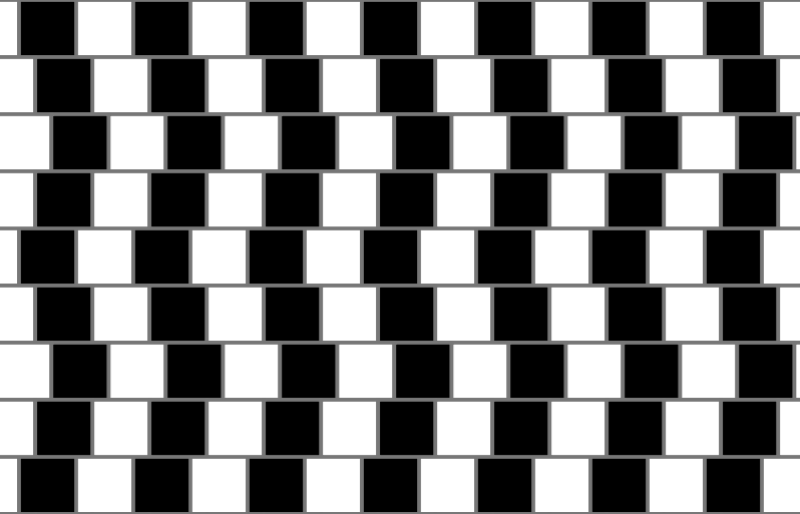
So what’s not there appears to be there, just as, elsewhere, what’s there appears not to be. Straight lines seem curved; large figures seem small; the same colour seems light on the right, dark on the left. There are also some impossible figures, as made famous by M.C. Escher and now studied seriously by geometricians, but the only true art here is a “Face of Fruits” by Arcimboldo. The rest is artful, not art, but it’s interesting to think what Escher might have made of some of the ideas here. Mind is mechanism; mechanism can be fooled. Optical illusions are the most compelling examples, because vision is the most powerful of our senses, but the lesson you learn here is applicable everywhere. This book fools you for fun; others try to fool you for profit. Caveat spectator.

Simple but complex: The café wall illusion

Simple but complex: The café wall illusion

Performativizing Papyrocentricity #23

Papyrocentric Performativity Presents:

Face PaintA Face to the World: On Self-Portraits, Laura Cumming (HarperPress 2009; paperback 2010)

The Aesthetics of AnimalsLife: Extraordinary Animals, Extreme Behaviour, Martha Holmes and Michael Gunton (BBC Books 2009)

Less Light, More NightThe End of Night: Searching for Natural Darkness in an Age of Artifical Light, Paul Bogard (Fourth Estate 2013)

The Power of Babel – Clark Ashton Smith, Huysmans, Maupassant


Or Read a Review at Random: RaRaR

Performativizing Papyrocentricity #22

Papyrocentric Performativity Presents:

Plates from the GreatShots from the Front: The British Soldier 1914-18, Richard Holmes (HarperPress 2008; paperback 2010)

Math for the MistressA Mathematician’s Apology, G.H. Hardy (1940)

Sinister SinemaScalarama: A Celebration of Subterranean Cinema at Its Sleazy, Slimy and Sinister Best, ed. Norman Foreman, B.A. (TransVisceral Books 2015)

Rick PickingsLost, Stolen or Shredded: Stories of Missing Works of Art and Literature, Rick Gekoski (Profile Books 2013/2014)

Slug is a DrugCollins Complete Guide to British Coastal Wildlife, Paul Sterry and Andrew Cleave (HarperCollins 2012) (posted @ Overlord of the Über-Feral)


Or Read a Review at Random: RaRaR

The Power of Babel

“…par la suggestive lecture d’un ouvrage racontant de lointains voyages…” – J.K. Huysmans, À Rebours (1884).

The language you know best is also the language you know least: your mother tongue, the language you acquired by instinct and speak by intuition. Asking a native speaker to describe English, French or Quechua is rather like asking a fish to describe water. The native speaker, like the fish, knows the answer very intimately, yet in some ways doesn’t know as well as a non-native speaker. In other words, standing outside can help you better understand standing inside: there is good in the gap. What is it like to experience gravity? Like most humans, I’ve known all my life, but I’d know better if I were in orbit or en route to the moon, experiencing the absence of gravity.

And what is it like to be human? We all know and we’ve all read countless stories about other human beings. But in some ways they don’t answer that question as effectively as stories that push humanity to the margins, like Richard Adams’ Watership Down (1972), which is about rabbits, or Isaac Asimov’s The Gods Themselves (also 1972), which is about trisexual aliens in a parallel dimension. There is good in the gap, in stepping outside the familiar and looking back to see the familiar anew.


Continuing reading The Power of Babel

Omnibusserunt

Index Librorum Prohibitorum

• Multi eorum, qui fuerant curiosa sectati, contulerant Libros et combusserunt coram omnibus. — Actus Apostolorum, xix, 19.

• Many of them also which used curious arts brought their books together, and burned them before all men. — The Acts of the Apostles, 19:19.

Slug is a Drug

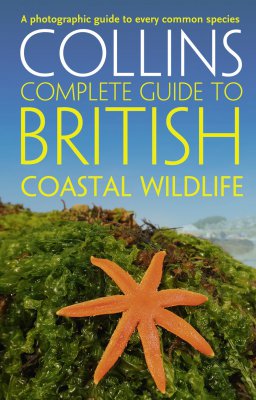
Collins Complete Guide to British Coastal Wildlife
Collins Complete Guide to British Coastal Wildlife, Paul Sterry and Andrew Cleave (HarperCollins 2012)

Living by a river is good, but living by the sea is better. This means that the ideal might be Innsmouth:

The harbour, long clogged with sand, was enclosed by an ancient stone breakwater; on which I could begin to discern the minute forms of a few seated fishermen, and at whose end were what looked like the foundations of a bygone lighthouse. A sandy tongue had formed inside this barrier and upon it I saw a few decrepit cabins, moored dories, and scattered lobster-pots. The only deep water seemed to be where the river poured out past the belfried structure and turned southward to join the ocean at the breakwater’s end. (“The Shadow Over Innsmouth”, 1936)

Lovecraft would certainly have liked Collins Complete Guide to British Coastal Wildlife, a solid photographic guide to the flora and fauna of the British coast. There are some very Lovecraftian species here, both floral and faunal. Among the plants there’s sea-holly, Eryngium maritimum, a blue-grey shingle-dweller with gothically spiky and veined leaves. It has its own specialized parasite, Orobanche minor ssp. maritima, “an exclusively coastal sub-species” of common broomrape (pg. 94). Among the Lovecraftian animals there are the cephalopods (octopuses and squids), echinoderms (sea-urchins and starfish) and cnidarians (jellyfish and sea-anemones), but also the greater and lesser weever, Trachinus draco and Echiichthys vipera, which are “notorious fish, capable of inflicting a painful sting to a bather’s foot” (pg. 278).

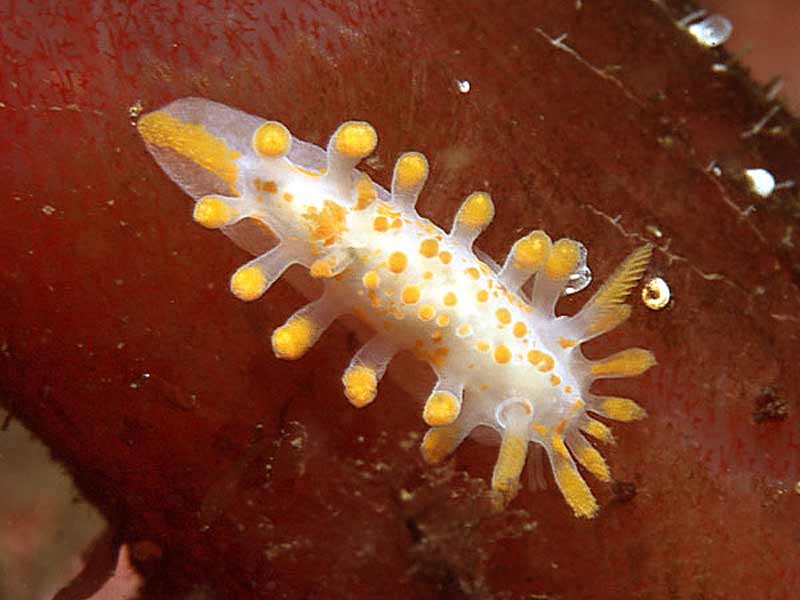
Limacia clavigera

Orange-clubbed sea-slug, Limacia clavigera


But the strangest and most wonderful creatures in the book might be the sea-slugs and sea-hares, which are brightly coloured or enigmatically mottled, with surreal knobs, furs and “rhinophores”, or head tentacles. If LSD took organic form, it might look like a sea-slug. Greilada elegans, “orange with blue spots”, Flabellina pedata, “purple body and pinkish-red cerata”, Catriona gymnata, “swollen, orange and white-tipped”, resemble the larvae of some eldritch interstellar race, destined to grow great and eat worlds (pp. 218-222 – “cerata” are “dorsal projections”). As it is, they stay tiny: the orange-clubbed sea-slug, Limacia clavigera, gets to 15mm on a diet of bryozoans, the miniature coral-like animals that are Lovecraftian in a different way. That “Limacia”, from the Latin limax, meaning “slug”, is a reminder that sea-slugs have an accurate common name, unlike Montagu’s sea snail, Liparis montagui, and the sea scorpion, Taurulus bubalis, which are both fish, and sea ivory, Ramalina siliquosa, which is a lichen. This book includes a land slug too, the great black, Arion ater, but it has none of the charm or beauty of its marine relatives.

Arion ater is included here because it’s “particularly common on coastal cliffs, paths and dunes” (pg. 239). The land snails that accompany it have charm, like the looping snail, Truncatella subcylindrica, and the wrinkled snail, Candidula intersecta, but they don’t have the beauty and variety of marine shell-dwellers, from the limpets, scallops and cockles to the wentletraps, cowries and whelks. And the violet snail, Jacintha jacintha, which rides the open ocean on a “‘float’ of mucus-trapped bubbles” as it feeds on the by-the-wind sailor, Velella velella. Layfolk would say that Velella and its relative Physalia physalis, the Portuguese man-o’-war, are jellyfish, but they’re actually “pelagic hydroids”. And Physalia is a colony of animals, not a single animal.
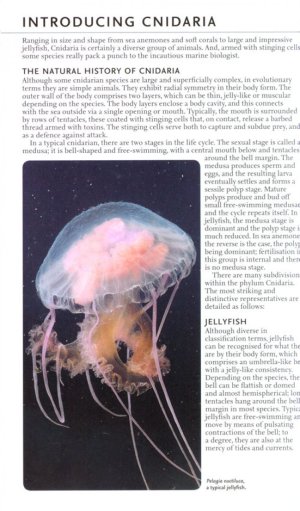
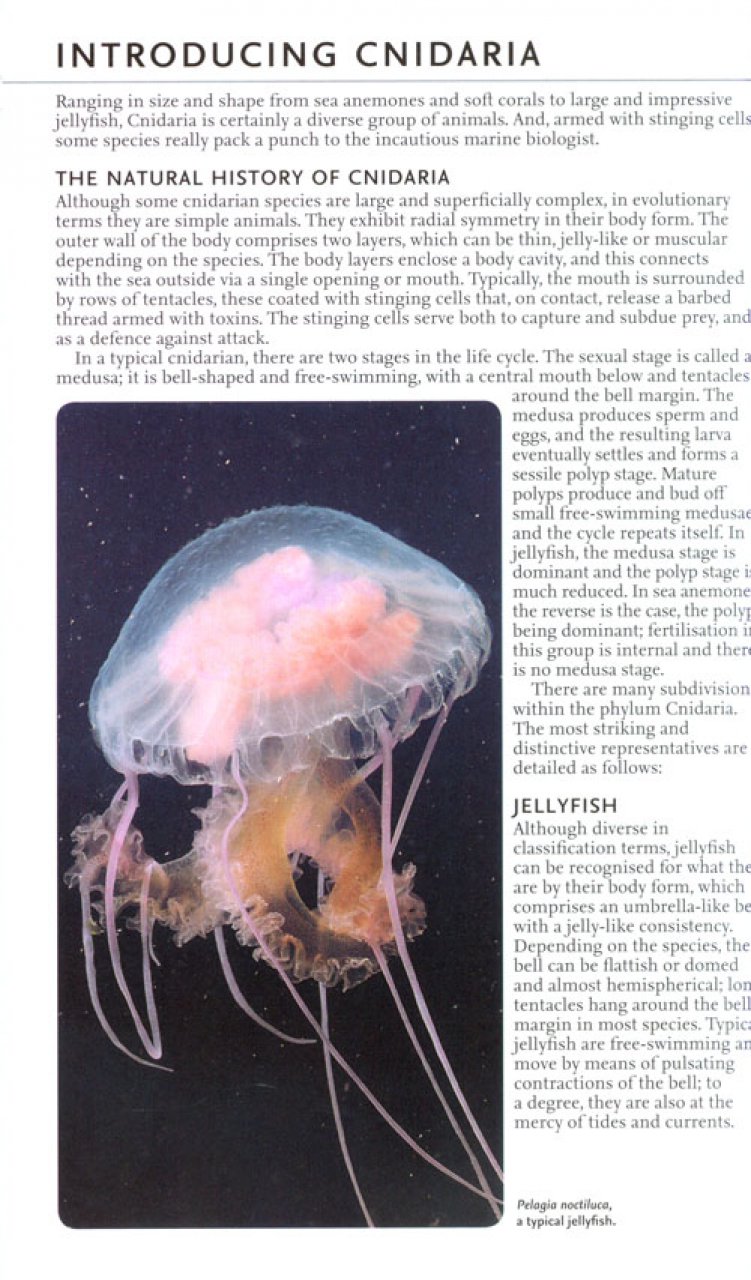
Sample page #1

Sample page #1


Both jellyfish and hydroids are related to sea-anemones and corals: they’re all classified as cnidaria, from the Greek κνιδη, knidē, meaning “nettle”. In short: they all sting. Some swim and sway too: the colours, patterns and sinuosity of the cnidaria are seductively strange. There are strawberry, snakelocks, gem, jewel, fountain and plumose anemones, for example: Actinia fragacea, Anemonia viridis, Aulactinia verrucosa, Corynactis viridis, Sargartiogeton laceratus and Metridium senile. The tentacles of the last-named look like a glossy head of white hair and the snakelocks anemone sometimes has green tentacles with purple tips.

After the cnidaria come the annelids, or segmented worms, which can be beautiful or repulsive, mundane or surreal, free-living or sessile. For example, the scaleworms are “unusual-looking polychaete worms whose dorsal surface is mostly or entirely covered with overlapping scales” (pg. 129). They’re reminiscent of the sea-slugs, though less strange and more subdued. But segmented worms gave rise to the wild variety of the crustaceans, including crabs, sea-slaters, lobsters and even barnacles, one species of which is a parasite: Sacculina carcini forms a “branching network” (pg. 178) within the body of a crab, particularly the green shore crab, Carcinus maenas. You would never guess that it was a barnacle and you might not guess that an infected crab was infected, because the yellow “reproductive structure” of the barnacle looks as though it belongs to the crab itself.
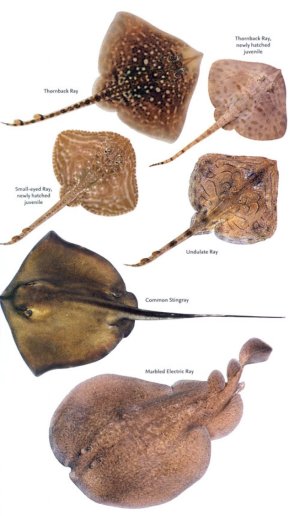
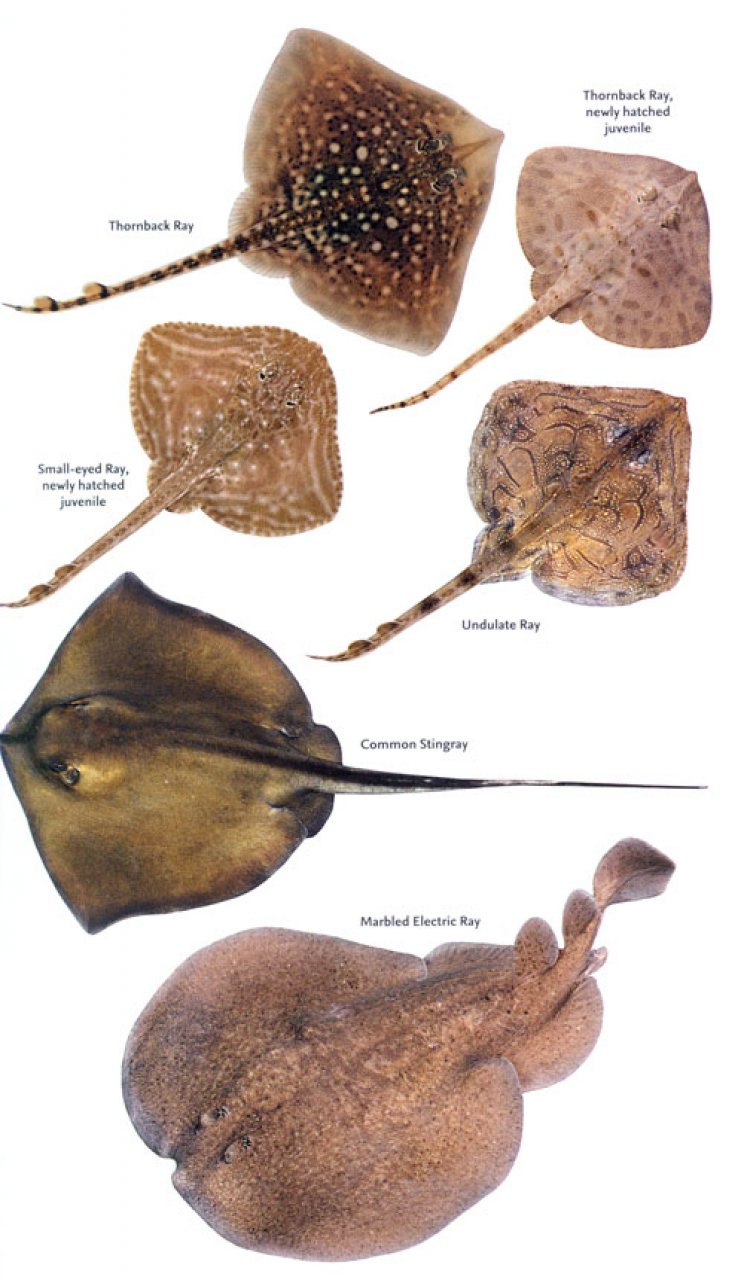
Sample page

Sample page #2


And there’s a photograph here to prove it. In fact, there are two: one in the barnacle’s own entry, the other in the entry for the green shore crab. I like the way the guide gives extra information like that. In the entries for sea-lavender, Limonium vulgare, and thrift, Armeria maritima, there are small photographs of insects that feed “only” or “almost exclusively” on these plants: the plume moth Agditis bennetii, with very narrow wings, and the more conventional moth Polymixis xanthomista (pg. 90), respectively. Those insects, with Fisher’s estuarine moth, Gortyna borelii, and the Sand Dart, Agrotis ripae, are stranded in the wild-flower section, as though they’ve been deposited there by a stray current. The fiery clearwing moth, Pyropteron chrysidiformis, is stranded in another way: in Britain, it’s “entirely restricted to stretches of grassy undercliff on the south coast of Kent”. It looks like a wasp wearing make-up. The scaly cricket, Pseudomogoplistes vincentae, isn’t attractive but is romantic in a similar way: it’s “confined to a handful of coastal shingle beaches in Britain and the Channel Islands” (pg. 17).

Also confined is the bracket fungus Phellinus hippophaeicola, which is “found only” on the trunks of sea buckthorn, Hippophae rhamnoides (pg. 54). Its photograph appears with its host, but the full fungus section is only one page anyway. It includes the “unmistakable” dune stinkhorn, Phallus hadriani, whose scientific name means “Hadrian’s dick”. It’s “restricted to dunes and associated with Marram” grass (pg. 50). But fungi flourish best away from the coast. Not that “flourish” is the right word, because fungi don’t flower. Nor do seaweeds, the giant algae that have to survive both battering by the waves and exposure to sun and wind. They cope by being tough: leathery or horny or chalky or coralline. And though their colours are limited mostly to green, brown and red, their geometry is very varied: leafy, membranous, thong-like, ribbon-like, whip-like, fan-like, feather-like, even globular: punctured ball weed, Leathesia difformis, and oyster thief, Colpomenia peregrina, for example. The book doesn’t explain why “oyster thief” is called that. Landlady’s wig, Desmarestia aculeata, red rags, Dilsea carnosa, and bladder wrack, Fucus vesiculous, are self-explanatory.

And there’s a bluntness to names like wrack, kelp and the various weeds – bean-weed, bead-weed, wire-weed – that go well with the rough, tough life these plants lead. That’s why rainbow wrack, Cystoseria tamariscifolia, sounds so odd. But it lives up to its name: it’s “bushy and iridescent blue-green underwater” (pg. 36).

Seaweeds are at the beginning of the book; birds, fish and mammals are at the end. After the strangeness, surreality and beauty of some of the plants and invertebrates, the higher animals can seem almost mundane. Evolution hasn’t found as many spinal solutions as non-spinal, because the invertebrates have been around much longer. Among the vertebrates, it’s been working longest on the fish, so the variety of shapes is greatest there: rays and flounders, lampreys and eels, sea-horses and pipe-fish, the giant sun-fish and the largest animal native to Britain, the basking shark, Cetorhinus maximus. Some of the names seem ancient and long-evolved too: saithe, pogge, goldsinny, weever, dab, goby, blenny, shanny and brill. The last-named, Scophthalmus rhombus, is a flatfish with a typically ugly head. As the book notes: “In their early stages, they resemble conventional species. But during their development the head shape distorts so that, although they lie and swim on their sides, both eyes are on top” (pg. 257).

The rays aren’t distorted like that: they lie on their bellies, not on their sides, so their eyes don’t look distorted. Evolution has taken two different routes to the same ecological niche, the sea-floor. Camouflage is useful there, so both rays and flatfish have beautiful patterns: specklings, mottlings and spots. Other fish are colourful, but British fish can’t match the rainbow variety of fish in the tropics. Nor can British birds. The kingfisher, Alcedo atthis, is a rare exception and it “favours fresh waters”, except in winter (pg. 328). Truly coastal birds can be hard to tell apart: the knot, Calidris canutus, and the Sanderling, Calidris alba, are not as distinctive as their common names. Nor are the whimbrel, Numenius phaeopus, and the curlew, Numenius arquata. Both have long down-curved beaks and streaked, “grey-brown plumage” (pg. 342). But the whimbrel is smaller and rarer.

The gulls and terns can also be hard to tell apart, as can the skuas that prey on and parasitize them. “Skua”, which comes from Old Norse skúfr, is a good name for a gangster-like bird. I prefer “gull” in what is probably its original form, the Welsh gŵylan. The French mouette, for small gulls, and goéland, for large ones, are also good, and some French bird-names are used in English: avocet, plover and guillemot, for example. “Plover” is from Latin pluvia, “rain”, but the reference is “unexplained”, according to the Oxford English Dictionary. The reference of “ruff” might seem to be obvious: the male ruff, Philomachus pugnax, has a ruff of feathers in the breeding season, like a kind of gladiatorial costume: its scientific name literally means “the pugnacious lover-of-fighting”. But the female of this species is called a reeve, so perhaps ruffs have nothing to do with ruffs: the feminine form, “apparently made … by a vowel change (cf. fox vixen) suggests that [ruff] is an older word and separate” (OED).

This book uses “ruff” for both sexes: it doesn’t have space to chase etymology and give more than brief details of the hundreds of species it covers. The final species are the mammals and the final mammals are the ones that have returned to the sea: whales, dolphins and seals. After them comes a brief section on “The Strandline”:

A beach marks the zone where land meets sea. It is also where detached and floating matter is washed up and deposited by the tides, typically in well-defined lines. During periods of spring tides, debris is pushed to the top of the shore. But with approaching neap tides, tide extremes diminish and the high-tide mark drops; the result is a series of different strandlines on the shore. The strandline is a great place for the marine naturalist to explore and find unexpected delights washed up from the depths. But it is also home to a range of specialised animals that exploit the rich supply of organic matter created by decomposing seaweeds and marine creatures. (pg. 368)

Those specialised animals – sand-hoppers, kelp-flies and so on – have been covered earlier in the book, so this section covers things like skeletons, skulls, fossils and egg-cases – the “sea wash balls” laid by whelks and the “mermaid’s purses” laid by rays. Then there are “sea-beans”, tree-seeds that may have “drifted across the Atlantic from the Caribbean or Central America”. At first glance, seaweeds also seem to make a come-back in this section. Not so: a bryozoan branches like a plant but is “actually a colonial animal that lives just offshore attached to shells and stones”. Bryzoans are often washed ashore after storms. One of the commonest is hornwrack, Flustra foliacea, of which “fresh specimens smell like lemon” (pg. 254). When I first noticed that for myself, I thought I was having an olfactory hallucination. That’s the sea for you: always changing, always surprising. This book captures its complexity in 384 well-designed pages full of eye- and brain-candy.


Performativizing Papyrocentricity #21

Papyrocentric Performativity Presents:

Poems and ParachutesA Hell for Heroes: An SAS Hero’s Journey into the Heart of Darkness, Theo Knell (Coronet 2012)

I Am A KameraMezzogiallo: Ferality. Fetidity. Eastern Europe., David Kerekes (TransVisceral Books 2014)

Where’s the Beef?Mein Kampf, Adolf Hitler (1925)

No Plaice Like OlmEuropean Reptile and Amphibian Guide, Axel Kwet (New Holland 2009) (posted @ Overlord of the Über-Feral)

Or Read a Review at Random: RaRaR

No Plaice Like Olm

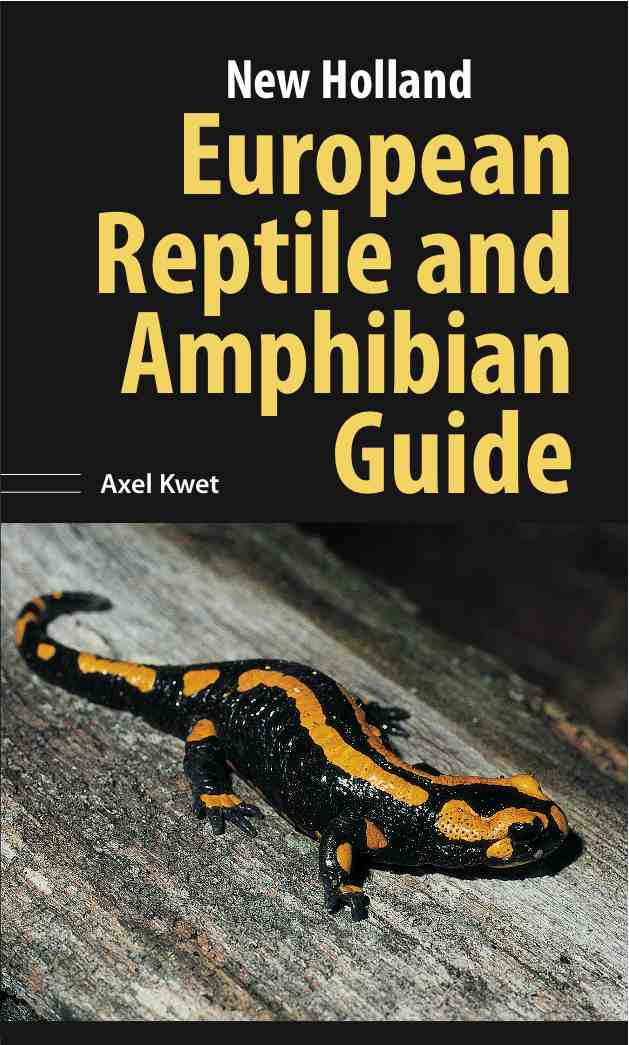
European Reptile and Amphibian Guide by Axel KwetEuropean Reptile and Amphibian Guide, Axel Kwet (New Holland 2009)

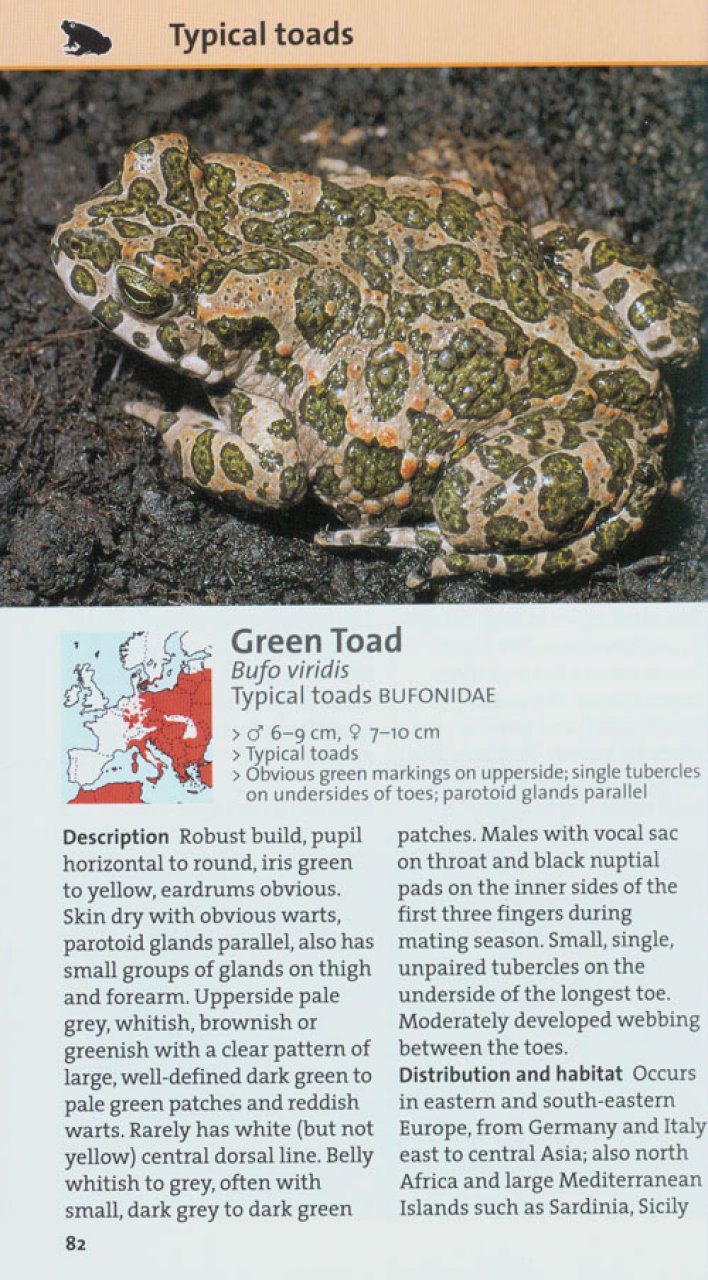
An attractive book about animals that are mostly attractive, sometimes strange, always interesting. It devotes photographs and descriptive text to all the reptiles and amphibians found in Europe, from tree-frogs to terrapins, from skinks to slow-worms. Some of the salamanders look like heraldic mascots, some of the lizards like enamel jewellery, and some of the toads like sumo wrestlers with exotic skin-diseases. When you leaf through the book, you’ve moving through several kinds of space: geographic and evolutionary, aesthetic and psychological. Europe is a big place and has a lot of reptilian and amphibian variety, including one species of turtle, the loggerhead, Caretta caretta, and one species of chameleon, the Mediterranean, Chamaeleo chamaeleon.

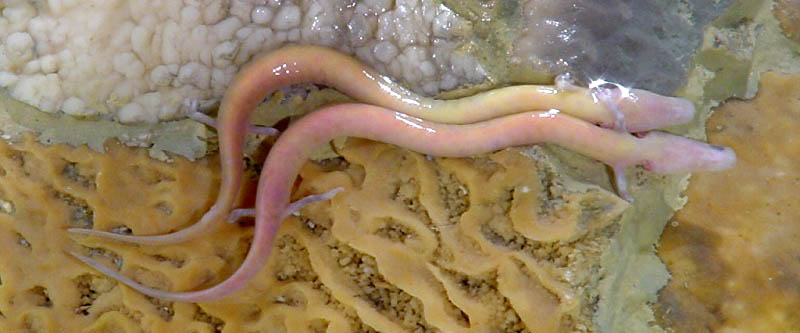
But every species, no matter how dissimilar in size and appearance, has a common ancestor: the tiny crested newt (Triturus cristatus) to the far north-west in Scotland and the two-and-a-half metre whip snake (Dolichophis caspius) to the far south-east in Greece; the sun-loving Hermann’s tortoise (Testudo hermanni), with its sturdy shell, and the pallid and worm-like olm (Proteus anguinus), which lives in “underground streams in limestone karst country along the coast from north-east Italy to Montenegro” (pg. 55). Long-limbed or limbless, sun-loving or sun-shunning, soft-skinned or scaly – they’re all variations on a common theme.

Sample page

Sample page from European Reptile and Amphibian Guide


And that’s where aesthetic and psychological space comes in, because different species and families evoke different impressions and emotions. Why do snakes look sinister and skinks look charming? But snakes are sinuous too and in a way it’s a shame that a photograph can capture their endlessly varying loops and curves as easily as it can capture the ridigity of a tortoise. At one time a book like this would have had paintings or drawings. Nowadays, it has photographs. The images are more realistic but less enchanted: the images are no longer mediated by the hand, eye and brain of an artist. But some enchantment remains: the glass lizard, Pseudopus apodus, peering from a holly bush on page 199 reminds me of Robert E. Howard’s “The God in the Bowl”, because there’s an alien intelligence in its gaze. Glass lizards are like snakes but can blink and retain “tiny, barely visible vestiges of the hind legs” (pg. 198).

Other snake-like reptiles retain vestiges of the fore-limbs too, like the Italian three-toed skink (Chalcides chalcides). The slow-worm, Anguis fragilis, has lost its limbs entirely, but doesn’t look sinister like a snake and can still blink. Elsewhere, some salamanders have lost not limbs but lungs: the Italian cave salamander, Speleomantes italicus, breathes through its skin and the lining of its mouth. So does Gené’s cave salamander, Speleomantes genei, which is found only on the island of Sardinia. It “emits an aromatic scent when touched” (pg. 54). Toads can emit toxins and snakes can inject venoms: movement in evolutionary space means movement in chemical space, because every alteration in an animal’s appearance and anatomy involves an alteration in the chemicals created by its body. But chemical space is two-fold: genotypic and phenotypic. The genes change and so the products of the genes change. The external appearance of every species is like a bookmark sticking out of the Book of Life, fixing its position in gene-space. You have to open that book to see the full recipe for the animal’s anatomy, physiology and behaviour, though not everything is specified by the genes.

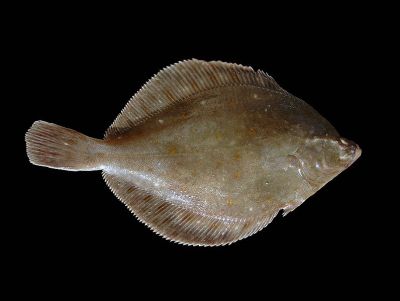
Pleuronectes platessa on the sea-floor

Pleuronectes platessa on the sea-floor


The force of gravity is one ingredient in an animal’s development, for example. So is sunlight or its absence. Or water, sand, warmth, cold. The descendants of that common ancestor occupy many ecological niches. And in fact one of those descendants wrote this book: humans and all other mammals share an ancestor with frogs, skinks and vipers. Before that, we were fish. So a plaice is a distant cousin of an olm, despite the huge difference in their appearance and habitat. One is flat, one is tubular. One lives in the sea, one lives in caves. But step by step, moving through genomic and topological space, you can turn a plaice into an olm. Or into anything else in this book. Just step back through time to the common ancestor, then take another evolutionary turning. One ancestor, many descendants. That ancestor was itself one descendant among many of something even earlier.
Olm in a Slovenian cave

Olm in a Slovenian cave


But there’s another important point: once variety appeared, it began to interact with itself. Evolutionary environment includes much more than the inanimate and inorganic. We mammals share more than an ancestor with reptiles and amphibians: we’ve also shared the earth. So we’re written into their genes and some of them are probably written into ours. Mammalian predators have influenced the evolution of skin-colour and psychology, making some animals camouflaged and cautious, others obtrusive and aggressive. But it works both ways: perhaps snakes seem sinister because we’re born with snake-sensitive instincts. If it’s got no limbs and it doesn’t blink, it might have a dangerous bite. That’s why the snake section of this book seems so different to the salamander section or the frog section. But all are interesting and all are important. This is a small book with some big themes.

Performativizing Papyrocentricity #20

Papyrocentric Performativity Presents:

Clive AliveC.S. Lewis: A Life, Alister McGrath (Hodder & Staughton 2013)

Ink TuneNick Drake: Dreaming England, Nathan Wiseman-Trowse (Reaktion Books 2013)

Stan’s FansAwaydays, Kevin Sampson (Vintage 1998)

Words at WarPoetry of the First World War: An Anthology, ed. Tim Kendall (Oxford University Press 2013) (posted @ Overlord of the Über-Feral)


Or Read a Review at Random: RaRaR

Words at War

Front cover of Poetry of the First World War edited by Tim KendallPoetry of the First World War: An Anthology, ed. Tim Kendall (Oxford University Press 2013)

J.R.R. Tolkien and C.S. Lewis are famous names today, but both might have died young in the First World War. If so, they would now be long forgotten. Generally speaking, novelists, essayists and scholars take time to mature and need time to create. Poets are different: they can create something of permanent value in a few minutes. This helps explain why nearly half the men chosen for this book did not reach their thirties:

• Rupert Brooke (1887-1915)
• Julian Grenfell (1888-1915)
• Charles Sorley (1895-1915)
• Patrick Shaw Stewart (1888-1917)
• Arthur Graeme West (1891-1917)
• Isaac Rosenberg (1890-1918)
• Wilfred Owen (1893-1918)

And none of them left substantial bodies of work. Indeed, “except for some schoolboy verse”, Patrick Shaw Stewart is known for only one poem, which “was found written on the back flyleaf of his copy of A.E. Housman’s A Shropshire Lad after his death” (pg. 116). It begins like this:

I saw a man this morning
  Who did not wish to die:
I ask and cannot answer,
  If otherwise wish I.

(From I saw a man this morning)

Housman is here too, with Epitaph on an Army of Mercenaries, which Kipling, also here, is said to have called “the finest poem of the First World War” (pg. 14). I don’t agree and I would prefer less Kipling and no Thomas Hardy. That would have left space for something I wish had been included: translations from French and German. The First World War was fought by speakers of Europe’s three major languages and this book makes me realize that I know nothing about war poetry in French and German.

It would be interesting to compare it with the poetry in English. Were traditional forms mingling with modernism in the same way? I assume so. Wilfred Owen looked back to Keats and the assonance of Anglo-Saxon verse:

Our brains ache, in the merciless iced winds that knive us…
Wearied we keep awake because the night is silent…
Low, drooping flares confuse our memory of the salient…
Worried by silence, sentries whisper, curious, nervous,
  But nothing happens. (Exposure)

David Jones (1895-1974) looked forward:

   You can hear the silence of it:
You can hear the rat of no-man’s-land
rut-out intricacies,
weasel-out his patient workings,
scrut, scrut, sscrut,
harrow-out earthly, trowel his cunning paw;
redeem the time of our uncharity, to sap his own amphibi-
ous paradise.
   You can hear his carrying-parties rustle our corruptions
through the night-weeds – contest the choicest morsels in his
tiny conduits, bead-eyed feast on us; by a rule of his nature,
at night-feast on the broken of us. (In Parenthesis)

But is there Gerard Manley Hopkins in that? And in fact In Parenthesis was begun “in 1927 or 1928” and published in 1937. T.S. Eliot called it “a work of genius” (pg. 200). I’d prefer to disagree, but I can’t: you can feel the power in the extract given here. Isaac Rosenberg had a briefer life and left briefer work, but was someone else who could work magic with words:

A worm fed on the heart of Corinth,
Babylon and Rome.
Not Paris raped tall Helen,
But this incestuous worm
Who lured her vivid beauty
To his amorphous sleep.
England! famous as Helen
Is thy betrothal sung.
To him the shadowless,
More amorous than Solomon.

A beautiful poem about an ugly thing: death. A mysterious poem too. And a sardonic one. Rosenberg says much with little and I think he was a much better poet than the more famous Siegfried Sassoon and Robert Graves. They survived the war and wrote more during it, which helps explain their greater fame. But the flawed poetry of Graves was sometimes appropriate to its ugly theme:

To-day I found in Mametz Wood
A certain cure for lust of blood:

Where, propped against a shattered trunk,
  In a great mess of things unclean,
Sat a dead Boche; he scowled and stunk
  With clothes and face a sodden green,
Big-bellied, spectacled, crop-haired,
Dribbling black blood from nose and beard.

A poem like that is a cure for romanticism, but that’s part of what makes Wilfred Owen a better and more interesting poet than Graves. Owen’s romanticism wasn’t cured: there’s conflict in his poems about conflict:

I saw his round mouth’s crimson deepen as it fell,
  Like a sun, in his last deep hour;
Watched the magnificent recession of farewell,
  Clouding, half gleam, half glower,
And a last splendour burn the heavens of his cheek.
  And in his eyes
The cold stars lighting, very old and bleak,
  In different skies.

But how good is Owen’s work? He was a Kurt Cobain of his day: good-looking, tormented and dying young. You can’t escape the knowledge of early death when you read the poetry of one or listen to the music of other. That interferes with objective appraisal. But the flaws in Owen’s poetry add to its power, increasing the sense of someone writing against time and struggling for greatness in a bad place. The First World War destroyed a lot of poets and perhaps helped destroy poetry too, raising questions about tradition that some answered with nihilism. As Owen asks in Futility:

Was it for this the clay grew tall?
—O what made fatuous sun-beams toil
To break earth’s sleep at all?

Some of the poets here were happy to go to war, but it wasn’t the Homeric adventure anticipated by Patrick Shaw Stewart. He learnt that high explosive is impersonal, bullets kill at great distance and machines don’t need rest. Poetry of the First World War is about a confrontation: between flesh and metal, brains and machinery. It’s an interesting anthology that deserves much more time than I have devoted to it. The notes aren’t intrusive, the biographies are brief but illuminating, and although Tim Kendall is a Professor of English Literature he has let his profession down by writing clear prose and eschewing jargon. He’s also included some “Music-Hall and Trench Songs” and they speak for the ordinary and sometimes illiterate soldier. The First World War may be the most important war in European history and this is a good introduction to some of the words it inspired.