Metricizing Michael…

All right-thinking folk are agreed that the Peckham-based author and visionary Michael Moorcock is a core colossus of the counter-culture. As the Guardian put it in 2007, he’s “the incendiary keystone of the visionary vortex that crystallized around New Worlds magazine in the 1960s, sparking a transgressive tornado that has sculpted paradigm-defying narratives of mutant sexuality, psychology and politics on an almost daily basis for over fifty years.”

But how often have keyly committed components of the Moorcock-fan community wished they had some objective mode of metricizing the coreness of the colossusness of his counter-culturality?

Well, the wait is over dot dot dot

site:http://www.multiverse.org/ “in terms of”

About 4,910 results (0.56 seconds)

• in terms of sci-fi recommendations, I gotta go — Moorcock’s
• They’re really rebellious in terms of gender, in terms of sex, in terms of politics, the portrayal of society and race, and I really want that to be …
• In terms of games I am rediscovering Zelda: Majora’s Mask with updated graphics and sound.
• … and to describe such elements in terms of Good and Evil seems (as I hope I demonstrate) a rather useless way of looking at our problems.
• We’ve reached a point, in this new century, that can be identified as both technologically and sociologically, futuristic, even in terms of the very recent past and …
• I’m wondering about stillborn-siblings in terms of esoterica: are they the next sibling born after the stillbirth, making a short appearance (i.e. is …
• I can say I’ve had one good experience with a press release distribution service, in terms of acquiring reviews.
• In terms of chronology, however, it would have to fit in somewhere between the novels The Fortress of the Pearl and The Sailor on the Seas of [Fate]


Elsewhere other-posted:

Ex-term-in-ate!

Oh My Guardian #1

“The Naz and Matt Foundation was announced at a special service held in London for Nazim, two weeks after his funeral. The service featured contributions from a gay Muslim, gay Hindu, a gay vicar, a trainee Rabbi and a lesbian interfaith minister.” — My boyfriend killed himself because his family couldn’t accept that he was gay, The Guardian, 21/iii/2015.


Proviously post-posted (please peruse):

Oh My Guardian #2

Fiat Flux

Q. How many Guardianistas does it take to change a light-bulb?

A. In terms of an initial / preliminary response around this obviously loaded question, I’d like to begin by problematicizing the notion that it is possible to erect an overt illuminational hierarchy whereby notions of “light” are privileged over notions of “darkness” through deployment of an “objective” and/or “value-free” modality of environmental interrogation via soi disant “sensory” channels. Next, it will (of course) be vital to undertake an in-depth consultation-exercise / impact-assessment with any and all vulnerable minority-communities of ethnicity, sexuality, gender-fluidity and/or other alternate ontology. We must ensure, on a keyly non-negotiable basis of absolute core non-negotiability, that their “fringe” inputs are prioritized on an on-going basis in terms of the decision-making process taking place around the problematicized notion of “changing” the allegedly “dead” so-called “bulb”. Issues around adequate resourcing of the consultation-exercise / impact-assessment must be addressed as a matter of urgency, with ring-fenced contingencies in place safeguarding provision of all necessary trauma counselling for vulnerable communities and/or individuals adversely impacted on a negative basis by the “bulb”-transitioning procedure and/or (indeed) the consultation-exercise / impact-assessment it/them/self/ves. Furthermore…

Get Your Tox Off

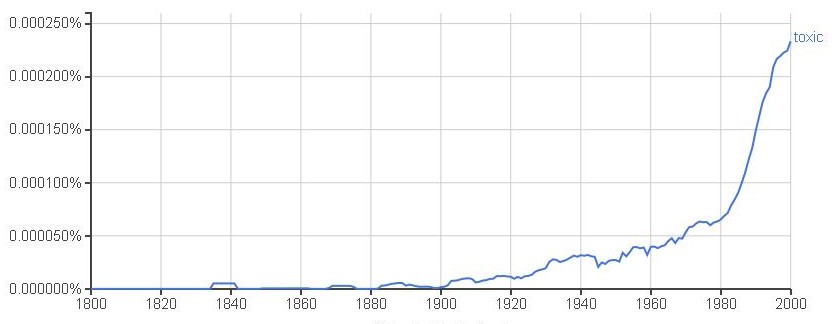
There’s only one word for it: toxic. The proliferation of this word is an incendiarily irritating abjectional aspect of contemporary culture. My visit to Google Ngram has confirmed my worst suspicions:

Toxic in English

Toxic in English

Toxic in English fiction

Toxic in English fiction

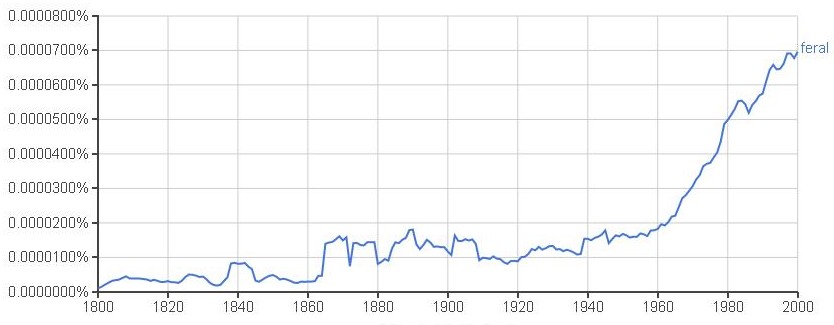
“Feral” isn’t irritating in quite the same way, but has similarly proliferated:

Feral in English

Feral in English

Feral in English fiction

Feral in English fiction

Noxious note: In terms of majorly maximal members of the Maverick Messiah community (such as myself), it goes without saying that when we deploy such items of Guardianese, we are being ironic dot dot dot


Previously pre-posted (please peruse):

Septics vs Dirties
Ex-term-in-ate!
Reds Under the Thread
Titus Graun

Hip-Hop Hermeneuticized

The Guardian undertakes a close hermeneutical analysis of some respected figures in the rap community and their complex and challenging lyrical interrogation of issues around neo-liberal capitalism:

In contemporary America, success in overcoming adversity (and often systemic racism) is most often represented in financial terms, and it’s a recurring theme in hip-hop. Consider Kanye West:

I treat the cash the way the government treats AIDS
I won’t be satisfied til all my niggas get it, get it?

Or Dr Dre:

Get your money right
Don’t be worried ’bout the next man – make sure your business tight
Get your money right
Go inside the safe, grab your stash that you copped tonight
Get your money right
Be an international player, don’t be scared to catch those red eye flights
You better get your money right
Cause when you out there on the streets, you gotta get it – get it

Or even TI himself:

Regardless what haters say I’m as real as they come
I’m chasin that paper baby however it come
I’m singin a song and movin yay by the ton
I bet you never seen a nigga gettin money so young.

Hip-Hop Hermeneuticized

Vibe Alibe

“The recent election of Syriza in Greece offers a vibrant glimmer of hope for the future of social and economic democracy in Europe.” — from a letter to The Guardian by Judith Butler, Slavoj Žižek, Jacqueline Rose, et al.

Mi Is Mirror

I hope that nobody thinks I’m being racially prejudiced when I say that, much though I am fascinated by her, I do not find the Anglo-American academic Mikita Brottman physically attractive. It is her mind that has raised my longstanding interest, nothing more.

Honest.

This is because, for me, Ms B is like a mirror that reverses not left and right, but male and female.

Obviously, we’re different in a lot of ways: I don’t smoke and I don’t have any tattoos, for example.

But there are big similarities too.

We were born in the same year (1956) and we were both keyly core contributors to seminal early issues of the transgressive journal Headpress Journal.

And we have various other things in common, like our mutually shared passion for corpse’n’cannibal cinema, our Glaswegian accents and (at different times) our season tickets for Hull Kingston Rovers.

So it is that, looking at Ms B, I have the uncanny experience of seeing myself as I might have been, had I been born female.

But it’s not just uncanny.

It’s horrifying at times too.

Okay, I’m comfortable with the idea that, born female, I would have been less intelligent and more conformist. So I don’t mind that Ms B is a Guardianista. Not particularly. I can face the fact that I would quite likely have been one of them too, as a female.

But there are worse things than being a Guardianista, believe it or not.

Ms B has a PhD in EngLit.

A PhD!

In EngLit.

It’s not at all easy for me to face the fact that I might have had one too, as a female. It really isn’t. But how can I deny it? I might have. That despicable, deplorable, thoroughly disreputable subject might have attracted me. In fact, it would probably have attracted me.

<retch>

But it gets worse still.

Ms B is a psychoanalyst.

A psychoanalyst.

Ach du lieber Gott!

See what I mean by “horrifying”?

I mean, even if I’d been born female I wouldn’t have sunk to such depths, would I? Would I? No, I have to face facts: I might. But I don’t think so. I have a feeling that there’s more to Brotty’s interest in Freud than her gender statusicity and her key commitment to core componency of the counter-cultural community.

But I’d better say no more. Verb sap.

Who Guards the Guardianistas?

“…We’re not so much a reaction against what’s going on – it’s more down to the music that we’re into – but in terms of guitar music there hasn’t been much in terms of louder groups.” – Bored of cookie-cutter conformity in music?, The Guardian, 6/iii/ 2014.


Elsewhere other-posted:

Ex-term-in-ate!

Bill Self

I would be disturbed and dismayed if Will Self ever wrote an essay on Evelyn Waugh or Clark Ashton Smith. In fact, I hope he has never even heard of CAS. But I’m happy to see Self writing in the Guardian on William Burroughs. It’s a perfect setting for a perfect pairing. And Self, like Christopher Hitchens, raises a very interesting question. What is his mother-tongue? Quechua? Tagalog? Sumerian? Whatever it is, it’s not even remotely related to English.


William Burroughs — the original Junkie — Will Self, The Guardian, 1/ii/2014.

Entitled Junkie: Confessions of an Unredeemed Drug Addict and authored pseudonymously by “William Lee” (Burroughs’ mother’s maiden name – he didn’t look too far for a nom de plume) …

[Self missed his chance there: nom de guerre would have been much better.]

The two-books-in-one format was not uncommon in 1950s America …

Despite its subhead, Wyn did think the book had a redemptive capability …

Both Junkie and Narcotic Agent have covers of beautiful garishness, featuring 1950s damsels in distress. On the cover of Junkie a craggy-browed man is grabbing a blond lovely from behind; one of his arms is around her neck, while the other grasps her hand, within which is a paper package. The table beside them has been knocked in the fray, propelling a spoon, a hypodermic, and even a gas ring, into inner space.

This cover illustration is, in fact, just that: an illustration of a scene described by Burroughs in the book. “When my wife saw I was getting the habit again, she did something she had never done before. I was cooking up a shot two days after I’d connected with Old Ike. My wife grabbed the spoon and threw the junk on the floor. I slapped her twice across the face and she threw herself on the bed, sobbing …” That this uncredited and now forgotten hack artist should have chosen one of the few episodes featuring the protagonist’s wife to use for the cover illustration represents one of those nastily serendipitous ironies that Burroughs himself almost always chose to view as evidence of the magical universe. …

… if you turn to his glossary of junk lingo and jive talk – you will see how many arcane drug terms have metastasised into the vigorous language. …

Burroughs viewed the postwar era as a Götterdämmerung and a convulsive re-evaluation of values. …

An open homosexual and a drug addict, his quintessentially Midwestern libertarianism led him to eschew any command economy of ethics …

For Burroughs, the re-evaluation was both discount and markup …

… and perhaps it was this that made him such a great avatar of the emergent counterculture. …

Janus-faced, and like some terminally cadaverous butler, Burroughs ushers in the new society of kicks for insight as well as kicks’ sake. …

Let’s return to that cover illustration with its portrayal of “William Lee” as Rock Hudson and his common-law wife, Joan Vollmer, as Kim Novak.

When I say Burroughs himself must have regarded the illustration – if he thought of it at all – as evidence of the magical universe he conceived of as underpinning and interpenetrating our own …

Much has been written and even more conjectured about the killing. Burroughs himself described it as “the accidental shooting death”; and although he jumped bail, he was only convicted – in absentia by the Mexican court – of homicide. …

When Burroughs was off heroin he was a bad, blackout drunk (for evidence you need look no further than his own confirmation in Junky). …

By the time Burroughs was living in Tangier in the late 1950s, his sense of being little more than a cipher, or a fictional construct, had become so plangent …

Burroughs was the perfect incarnation of late 20th-century western angst precisely because he was an addict. Self-deluding, vain, narcissistic, self-obsessed, and yet curiously perceptive about the sickness of the world if not his own malaise, Burroughs both offered up and was compelled to provide his psyche as a form of Petri dish, within which were cultured the obsessive and compulsive viruses of modernity. …

In a thin-as-a-rake’s progress …

… a deceptively thin, Pandora’s portfolio of an idea …

It is Burroughs’ own denial of the nature of his addiction that makes this book capable of being read as a fiendish parable of modern alienation. …

For, in describing addiction as “a way of life”, Burroughs makes of the hypodermic a microscope, through which he can examine the soul of man under late 20th-century capitalism.

William Burroughs – the original Junkie, The Guardian, 1/ii/2014.


The big disappointment is that he didn’t use in terms of.

World Wide Watchmen

I prefer to self-issue books in a library. It’s quicker and more convenient. And you feel okay about borrowing books suggestive of sordid and socially unacceptable tastes. For example, who would want to hand a copy of Watch You Bleed to a live librarian?

Well, I wouldn’t mind. I find it amusing to be mistaken for a Guns’n’Roses fan, just as I find it amusing to be mistaken for a Guardian-reader. But there are limits, so I’m grateful for self-issue when I borrow, say, a biography of Martin Amis or that book about The Simpsons. The trouble is, nowadays we have to be more dubious about self-issue than we used to be. It’s all on computer and it isn’t just librarians who might be scanning the record of books you borrow. No, you also have to ask yourself: What will the NSA, GCHQ and MOSSAD think?

With this in mind, I’d like to put it clearly on record: I got that book out last year for research purposes only. Nothing more. I am not – repeat not – a fan of Iron Maiden. The same applies to that other book this year. I got it out for research purposes only, I swear. Inter alia, I had a hypothesis to confirm. I am not – repeat not – a fan of his.

Front cover of Iron Maiden: On Board Flight 666

And was the hypothesis confirmed? Yes, thanks for asking, it was.


As for Big Numbers, Moore asserted: “It is the most advanced comic work I’ve ever done in terms of the storytelling.” — Magic Words: The Extraordinary Life of Alan Moore, Lance Parkin, pg. 266 (Aurum 2013)


Elsewhere other-posted:

Ex-term-in-ate!