Amateur ’Grammatics

There is much more to mathematics than mathematics. Like a tree, it has deep roots. Like a tree, it’s affected by its environment. Philosophy of mathematics is concerned with the roots. Psychology of mathematics is concerned with the environment.

On Planet Earth, the environment is human beings. What attracts men and women to the subject? What makes them good or bad at it?And so on. One interesting answer to the first question was supplied by the mathematician Stanislaw Ulam (1909-84), who wrote this in his autobiography:

“In many cases, mathematics is an escape from reality. The mathematician finds his own monastic niche and happiness in pursuits that are disconnected from external affairs. Some practice it as if using a drug.” – Adventures of a Mathematician (1983)

That’s certainly part of maths’ appeal to me: as an escape from reality, or an escape from one reality into another (and deeper). Real life is messy. Maths isn’t, unless you want it to be. But you can find parallels between maths and real life too. In real life, people collect things that they find attractive or interesting: stamps, sea-shells, gems, cigarette-cards, beer-cans and so on. You can collect things in maths too: interesting numbers and number patterns. Recreational maths can feel like looking on a beach for attractive shells and pebbles.

Here’s a good example: digital anagrams, or numbers in different bases whose digits are the same but re-arranged. For example, 13 in base 10 equals 31 in base 4, because 13 = 3 * 4 + 1. To people with the right kind of mind, that’s an interesting and attractive pattern. There are lots more anagrams like that:

1045 = 4501 in base 6
1135 = 5131 in base 6

23 = 32 in base 7
46 = 64 in base 7

1273 = 2371 in base 8
1653 = 3165 in base 8

158 = 185 in base 9
227 = 272 in base 9

196 = 169 in base 11
283 = 238 in base 11

2193 = 1329 in base 12
6053 = 3605 in base 12

43 = 34 in base 13
86 = 68 in base 13

But triple anagrams, involving three bases, seem even more attractive:

913 = 391 in base 16 = 193 in base 26
103462 = 610432 in base 7 = 312046 in base 8
245183 = 413285 in base 9 = 158234 in base 11

And that’s just looking in base 10. If you include all bases, the first double anagram is in fact 21 in base 3 = 12 in base 5 (equals 7 in base 10). The first triple anagram is this:

2C1 in base 13 = 1C2 in base 17 = 12C in base 21 (equals 495 in base 10)

But are there quadruple anagrams, quintuple anagrams and higher? I don’t know. I haven’t found any and it gets harder and harder to search for them, because the bigger n gets, the more bases there are to check. However, I can say one thing for certain: in any given base, anagrams eventually disappear.

To understand why, consider the obvious fact that anagrams have to have the same number of digits in different bases. But the number of digits is a function of the powers of the base. That is, the triple anagram 103462 (see above) has six digits in bases 7, 8 and 10 because 7^5 < 103462 < 7^6, 8^5 < 103462 < 8^6 and 10^5 < 103462 < 10^6. Similarly, the triple anagram 245183 (ditto) has six digits in bases 9, 10 and 11 because 9^5 < 245183 < 9^6, 10^5 < 245183 < 10^6 and 11^5 < 245183 < 11^6:

7^5 < 103462 < 7^6
16807 < 103462 < 117649
8^5 < 103462 < 8^6
32768 < 103462 < 262144
10^5 < 103462 < 10^6
100000 < 103462 < 1000000
9^5 < 245183 < 9^6
59049 < 245183 < 531441
10^5 < 245183 < 10^6
100000 < 245183 < 1000000
11^5 < 245183 < 11^6
161051 < 245183 < 1771561

In other words, for some n the number-lengths of bases 7 and 8 overlap the number-lengths of base 10, which overlap the number-lengths of bases 9 and 11. But eventually, as n gets larger, the number-lengths of base 10 will fall permanently below the number-lengths of bases 7, 8 and 9, just as the number-lengths of base 11 will fall permanently below the number-lengths of base 10.

To see this in action, consider the simplest example: number-lengths in bases 2 and 3. There is no anagram involving these two bases, because only two numbers have the same number of digits in both: 1 and 3 = 11 in base 2 = 10 in base 3. After that, n in base 2 always has more digits than n in base 3:

2^0 = 1 in base 2 (number-length=1) = 1 in base 3 (l=1)
2^1 = 2 = 10 in base 2 (number-length=2) = 2 in base 3 (l=1)
2^2 = 4 = 100 in base 2 (l=3) = 11 in base 3 (l=2)
2^3 = 8 = 1000 in base 2 = 22 in base 3 (l=2)
2^4 = 16 = 10000 in base 2 = 121 in base 3 (l=3)
2^5 = 32 = 1012 in base 3 (l=4)
2^6 = 64 = 2101 in base 3 (l=4)
2^7 = 128 = 11202 in base 3 (l=5)
2^8 = 256 = 100111 in base 3 (l=6)
2^9 = 512 = 200222 in base 3 (l=6)
2^10 = 1024 = 1101221 in base 3 (l=7)

Now consider bases 3 and 4. Here is an anagram using these bases: 211 in base 3 = 112 in base 4 = 22. There are no more anagrams and eventually there’s no more chance for them to occur, because this happens as n gets larger:

3^0 = 1 in base 3 (number-length=1) = 1 in base 4 (l=1)
3^1 = 3 = 10 in base 3 (number-length=2) = 3 in base 4 (l=1)
3^2 = 9 = 100 in base 3 (l=3) = 21 in base 4 (l=2)
3^3 = 27 = 1000 in base 3 (l=4) = 123 in base 4 (l=3)
3^4 = 81 = 10000 in base 3 (l=5) = 1101 in base 4 (l=4)
3^5 = 243 = 100000 in base 3 (l=6) = 3303 in base 4 (l=4)
3^6 = 729 = 23121 in base 4 (l=5)
3^7 = 2187 = 202023 in base 4 (l=6)
3^8 = 6561 = 1212201 in base 4 (l=7)
3^9 = 19683 = 10303203 in base 4 (l=8)
3^10 = 59049 = 32122221 in base 4 (l=8)
3^11 = 177147 = 223033323 in base 4 (l=9)
3^12 = 531441 = 2001233301 in base 4 (l=10)
3^13 = 1594323 = 12011033103 in base 4 (l=11)
3^14 = 4782969 = 102033231321 in base 4 (l=12)
3^15 = 14348907 = 312233021223 in base 4 (l=12)
3^16 = 43046721 = 2210031131001 in base 4 (l=13)
3^17 = 129140163 = 13230220113003 in base 4 (l=14)
3^18 = 387420489 = 113011321011021 in base 4 (l=15)
3^19 = 1162261467 = 1011101223033123 in base 4 (l=16)
3^20 = 3486784401 = 3033311001232101 in base 4 (l=16)

When n is sufficiently large, it always has fewer digits in base 4 than in base 3. And the gap gets steadily bigger. When n doesn’t have the same number of digits in two bases, it can’t be an anagram. A similar number-length gap eventually appears in bases 4 and 5, but the anagrams don’t run out as quickly there:

103 in base 5 = 130 in base 4 = 28
1022 in base 5 = 2021 in base 4 = 137
1320 in base 5 = 3102 in base 4 = 210
10232 in base 5 = 22310 in base 4 = 692
10332 in base 5 = 23031 in base 4 = 717
12213 in base 5 = 32211 in base 4 = 933
100023 in base 5 = 301002 in base 4 = 3138
100323 in base 5 = 302031 in base 4 = 3213
102131 in base 5 = 311120 in base 4 = 3416
102332 in base 5 = 312023 in base 4 = 3467
103123 in base 5 = 313102 in base 4 = 3538
1003233 in base 5 = 3323010 in base 4 = 16068

Base 10 isn’t exempt. Eventually it must outshrink base 9 and be outshrunk by base 11, so what is the highest 9:10 anagram and highest 10:11 anagram? I don’t know: my maths isn’t good enough for me to find out quickly. But using machine code, I’ve found these large anagrams:

205888888872731 = 888883178875022 in base 9
1853020028888858 = 8888888525001032 in base 9
16677181388880888 = 88888888170173166 in base 9

999962734025 = 356099992472 in base 11
9999820360965 = 3205999998606 in base 11
99999993520348 = 29954839390999 in base 11

Note how the digits of n in the lower base are increasing as the digits of n in the higher base are decreasing. Eventually, n in the lower base will always have more digits than n in the higher base. When that happens, there will be no more anagrams.

Some triple anagrams

2C1 in base 13 = 1C2 in base 17 = 12C in base 21 (n=495 = 3^2*5*11)
912 in base 10 = 219 in base 21 = 192 in base 26 (2^4*3*19)
913 in base 10 = 391 in base 16 = 193 in base 26 (11*83)
4B2 in base 15 = 42B in base 16 = 24B in base 22 (n=1067 = 11*97)
5C1 in base 17 = 51C in base 18 = 1C5 in base 35 (n=1650 = 2*3*5^2*11)
3L2 in base 26 = 2L3 in base 31 = 23L in base 35 (n=2576 = 2^4*7*23)
3E1 in base 31 = 1E3 in base 51 = 13E in base 56 (n=3318 = 2*3*7*79)
531 in base 29 = 351 in base 37 = 135 in base 64 (n=4293 = 3^4*53)
D53 in base 18 = 53D in base 29 = 35D in base 37 (n=4305 = 3*5*7*41)
53I in base 29 = 3I5 in base 35 = 35I in base 37 (n=4310 = 2*5*431)
825 in base 25 = 582 in base 31 = 258 in base 49 (n=5055 = 3*5*337)
6S2 in base 31 = 2S6 in base 51 = 26S in base 56 (n=6636 = 2^2*3*7*79)
D35 in base 23 = 5D3 in base 36 = 3D5 in base 46 (n=6951 = 3*7*331)
3K1 in base 49 = 31K in base 52 = 1K3 in base 81 (n=8184 = 2^3*3*11*31)
A62 in base 29 = 6A2 in base 37 = 26A in base 64 (n=8586 = 2*3^4*53)
9L2 in base 30 = 92L in base 31 = 2L9 in base 61 (n=8732 = 2^2*37*59)
3W1 in base 49 = 1W3 in base 79 = 13W in base 92 (n=8772 = 2^2*3*17*43)
G4A in base 25 = AG4 in base 31 = 4AG in base 49 (n=10110 = 2*3*5*337)
J10 in base 25 = 1J0 in base 100 = 10J in base 109 (n=11900 = 2^2*5^2*7*17)
5[41]1 in base 46 = 1[41]5 in base 93 = 15[41] in base 109 (n=12467 = 7*13*137)
F91 in base 29 = 9F1 in base 37 = 19F in base 109 (n=12877 = 79*163)
F93 in base 29 = 9F3 in base 37 = 39F in base 64 (n=12879 = 3^5*53)
AP4 in base 35 = A4P in base 36 = 4AP in base 56 (n=13129 = 19*691)
BP2 in base 36 = B2P in base 37 = 2PB in base 81 (n=15158 = 2*11*13*53)
O6F in base 25 = FO6 in base 31 = 6FO in base 49 (n=15165 = 3^2*5*337)
FQ1 in base 31 = 1QF in base 111 = 1FQ in base 116 (n=15222 = 2*3*43*59)
B74 in base 37 = 7B4 in base 46 = 47B in base 61 (n=15322 = 2*47*163)
Performativizing Papyrocentricity #46

Papyrocentric Performativity Presents:

Machina MundiThe Invention of Science: A New History of the Scientific Revolution, David Wootton (Allen Lane 2015)

Wandering WondersPlankton: Wonders of the Drifting World, Christian Sardet (The University of Chicago Press 2015)

Love BuzzA Buzz in the Meadow, Dave Goulson (Jonathan Cape 2014)

Quake’s ProgressThe Million Death Quake: The Science of Predicting Earth’s Deadliest Natural Disaster, Roger Musson (Palgrave Macmillan 2012)

Sin after CinGargoyle Girls from Beelzebub’s Ballsack: The Sickest, Sleaziest, Splanchnophagousest Slimefests in Scum Cinema, Dr Joan Jay Jefferson (TransToxic Texts 2016)


Or Read a Review at Random: RaRaR

Performativizing Papyrocentricity #45

Papyrocentric Performativity Presents:

Plants on PaperDrawing and Painting Plants, Christina Brodie (A & C Black 2006)

LewminiferousGuide to Garden Wildlife, Richard Lewington (British Wildlife Publishing 2008)

Old GoldPuskás: Madrid, the Magyars and the Amazing Adventures of the World’s Greatest Goalscorer, György Szöllős (Freight Books 2015)

Rosetta RokRok 1984, George Orwell (MUZA SA, Warszawa 2001)


Or Read a Review at Random: RaRaR

Performativizing Papyrocentricity #44

Papyrocentric Performativity Presents:

Lesser LettersYou’ve Had Your Time: Being the Second Part of the Confessions of Anthony Burgess, Anthony Burgess (Heinemann 1990)

The Light of DaySJWs Always Lie: Taking Down the Thought Police, Vox Day (Castalia House 2015)

Sextual KeelingSextant: A Voyage Guided by the Stars and the Men Who Mapped the World’s Oceans, David Barrie (William Collins 2014)

Twy Defy the EyeThe World of Visual Illusions: Optical Tricks That Defy Belief!, Gianni A. Sarcone and Marie-Jo Waeber (Arcturus 2012)


Or Read a Review at Random: RaRaR

Performativizing Papyrocentricity #43

Papyrocentric Performativity Presents:

Avens AboveHarrap’s Wild Flowers: A Guide to the Wild Flowers of Britain & Ireland, Simon Harrap (Bloomsbury 2013)

Place of GladesA Dictionary of British Place-Names, A.D. Mills (Oxford University Press 1991)

De Minimis Curat Rex?Infinitesimal: How a Dangerous Mathematical Theory Shaped the Modern World, Amir Alexander (Oneworld 2014)

Seen and Not HeardThe Greatest Albums You’ll Never Hear, ed. Bruno MacDonald (Aurum Press 2014)


Or Read a Review at Random: RaRaR

Performativizing Papyrocentricity #42

Papyrocentric Performativity Presents:

Feats for the EyesDrawn from Paradise: The discovery, art and natural history of the birds of paradise, David Attenborough and Errol Fuller (Collins 2012)

Heart of the MatherChaotic Fishponds and Mirror Universes: the maths that governs our world, Richard Elwes (Quercus 2013)

BergblumenEnchanting Alpine Flowers, Alfred Pohler, trans. Jacqueline Schweighofer


Or Read a Review at Random: RaRaR

Sward and Sorcery

Watership Down by Richard Adams with cover by Pauline BaynesWatership Down, Richard Adams (1972)

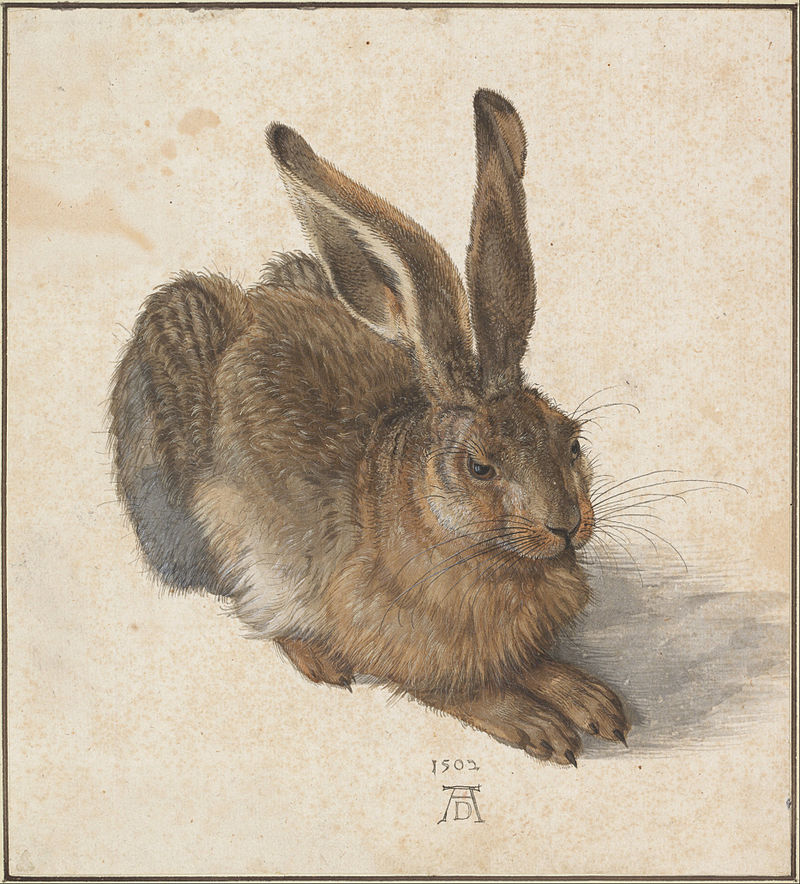
A book is a magical thing. Black marks on white paper create words; words conjure worlds. But the sorcery of Watership Down is remarkable even by literary standards. The world conjured here defies expectation and suspends disbelief. Richard Adams took a seemingly ludicrous subject – the adventures of a group of rabbits – and made it something that could grip the imagination and stir the emotions of readers at any age.

He did this by combining two distinct traditions of writing about animals: the realism of Jack London’s Call of the Wild (1903) and White Fang (1906) with the fantasy of Wind in the Willows (1908) and Beatrix Potter (1866-1943). Jack London’s animals are real and don’t speak, but Grahame and Potter turned animals into miniature humans, bringing them into our world, taming and civilizing them. Adams does the reverse: he takes us into the world of animals. He kept his rabbits wild and on all fours, sworn to the sward that they create with their teeth, but he used one piece of anthropomorphism. Hazel, Fiver, Bigwig and the other rabbits can all talk. They have a language, Lapine, and communicate with other animals using a “very simple, limited lingua franca of the hedgerow and woodland” (Part II, ch. 20).

How else could there be a proper story? But that one piece of anthropomorphism is actually an umbrella sheltering many other things: intelligence, memory, planning, persuasion, story-telling, the ability to lie, and so on. With language, the rabbits become like a tribe of primitive humans, pre-literate, almost innumerate:

Rabbits can count up to four. Any number above that is Hrair – ‘a lot’ or ‘a thousand’. Thus they say U Hrair – ‘The Thousand’ – to mean, collectively, all the enemies (or elil, as they call them) of rabbits – fox, stoat, weasel, cat, owl, man, etc. There were probably more than five rabbits in the litter where Fiver was born, but his name, Hrairoo, means ‘Little thousand’, i.e. the little one of a lot, or, as they say of pigs, ‘the runt’. (Part I, “The Journey”, ch. 1, “The Notice Board”)

At the beginning of the book, Fiver is the unacknowledged shaman of Sandleford Warren and foresees the doom that approaches it. Unfortunately, few rabbits believe him, which is why Adams heads the first chapter with a quote from Aeschylus, Cassandra’s warning that “The house reeks of death and dripping blood.” Every other chapter has its apposite quote, ancient or modern, poetry or prose, whimsical or serious: Aeschylus, Shakespeare, Tennyson, Napoleon, W.H. Auden, Dr Johnson, Clausewitz, Walter de la Mare and so on. The quotes stitch Watership Down deftly into the literary canon and into history, because the book is, in part, a celebration of story-telling and the possibilities of language.

That celebration is echoed inside the book, because the narrative is broken up by stories of El-ahrairah, the rabbits’ trickster-prince and protector. He’s like Odysseus and Watership Down is like the Odyssey. It’s a cycle of folk-tales in the making. Like Odysseus, the rabbits have to rely on their cunning and their speed, tricking monsters, not directly confronting them. Their own adventures will, in time, be attributed to El-ahrairah. Without writing, they have no history and sooner or later real events will melt into myth. But that’s the natural way: writing is a mysterious and evil thing to those rabbits who can intuit its purpose:

In the livid, foggy twilight, Fiver stared at the board. As he stared, the black sticks flickered on the white surface. They raised their sharp, wedge-shaped little heads and chattered together like a nestful of young weasels. The sound, mocking and cruel, came faintly to his ears, as though muffled by sand or sacking. ‘In memory of Hazel-rah! In memory of Hazel-rah! In memory of Hazel-rah! Ha ha ha ha ha ha!’ (Part II, ch. 26, “Fiver Beyond”)

Like Tolkien in The Hobbit (1937) and Lord of the Rings (1954-5), Adams is writing against the evils of technology and modernity; unlike Tolkien, he lists writing among those evils. A book that condemns writing is a paradox, but Adams is adopting a rabbit’s perspective. Tolkien’s books were, I’d suggest, a strong hidden influence on Watership Down. Rabbits are hole-dwellers like hobbits and the band of rabbits who set out from Sandleford Warren are rather like the Company of the Ring. Adams treats Lapine the way Tolkien treats his invented languages, using it to make us aware of the gulf across which the story comes to us:

With them was a third rabbit, Hlao – Pipkin – a friend of Fiver. (Hlao means any small concavity in the grass where moisture may collect, e.g. the dimple formed by a dandelion or thistle-cup.) (Part 1, ch. 4, “The Departure”)

Meriadoc was chosen to fit the fact that this character’s shortened name, Kali, meant in the Westron ‘jolly, gay’, though this was actually an abbreviation of the now unmeaning Buckland name Kalimac. (Lord of the Rings, Appendix F, “On Translation”)

But I think Adams is more linguistically creative and subtle than Tolkien, whose invented languages still seem like real ones: Welsh, Finnish, Old Norse and so on. Lapine isn’t reminiscent of anything familiar and some of its words – pfeffa, “cat”, and hrududu, “motor vehicle” – are cleverly simple, just the sort of onomatopoeias you can imagine a talking rabbit would use.

Cover of a recent edition of Watership Down

Cover of a recent edition of Watership Down

Lapine is also like Nadsat, the teen-speak invented by Anthony Burgess for A Clockwork Orange (1962). Adams leaves some words of Lapine untranslated at first, letting context give them meaning, sprinkling them through the text and allowing them to sink slowly into the reader’s mind. By the end of the book, you’ll find that you can understand basic Lapine: “Siflay hraka, u embleer rah,” says Bigwig to General Woundwort and the line doesn’t need translation.

General Woundwort is the Polyphemus or Sauron of Watership Down: a rabbit almost as big as a hare, the cunning and vicious megalomaniac who leads the slave-warren Efrafra. His wickedness is on a much smaller scale than Sauron’s, of course, but that makes it more credible and so more powerful. Lord of the Rings is more ambitious than The Hobbit, which is admirable, but also less successful, which was inevitable. Bilbo sets out to slay a dragon, not save the world. The rabbits in Watership Down are unwilling refugees who want to found a permanent warren of their own. It’s a small thing within the wider world, where humans rear giant metal pylons, span rivers with bridges, and speed to and fro in hrududim, but then human affairs are small within the wider universe.

It doesn’t matter: significance is not determined by size, purpose doesn’t have to be blunted by futility. The rabbits’ instincts drive them on and their ambitions are big enough for their abilities. They don’t need more. It’s General Woundwort’s desire to be great that prevents him from being so. He’s the most human of the rabbits and so the most evil: “All other elil do what they have to do and Frith moves them as he moves us. They live on the earth and they need food. Men will never rest till they’ve spoiled the earth and destroyed the animals.” (Part II, ch. 21, “For El-ahrairah to Cry”)

Man’s restlessness and meddling are a theme Adams took up again in The Plague Dogs (1977), a novel about two dogs that escape from a research laboratory in the Lake District. It’s a weak book set beside Watership Down, written more self-consciously and less coherently. Adams doesn’t stitch literary allusions into the story: he nails them in like corrugated iron. But his sympathy for animals is still there and so is his ability to describe the world through their sharper and subtler senses. The rabbits of Watership Down are like a primitive tribe of humans, but you never forget that they aren’t actually human:

A robin on a low branch twittered a phrase and listened for another that answered to him from beyond the farmhouse. A chaffinch gave its little falling song and farther off, high in an elm, a chiff-chaff began to call. Hazel stopped and then sat up, the better to scent the air. Powerful smells of straw and cow-dung mingled with those of elm-leaves, ashes and cattle-feed. Fainter traces came to his nose as the overtones of a bell sound in a trained ear. Tobacco, naturally: a good deal of cat and rather less dog and then, suddenly and beyond doubt, rabbit. He looked at Pipkin and saw that he too had caught it. (Part II, ch. 24, “Nuthanger Farm”)

That’s describing a raid on a farm that keeps pet rabbits. Hazel wants to find some does for the warren at Watership Down, where he and his fellow hlessil – “wanderers, scratchers, vagabonds” – seem to have finally found sanctuary. They’ve come a long way through strange country, but they’ll go further and see stranger before the end of the book. Watership Down is first and foremost an adventure story, but it’s also a celebration of the English countryside: its flowers, trees, birds, streams and rivers; its sounds, scents, shapes; its delights and dangers. The rabbits have their place there, naming themselves from nature, and unlike man, with his stinks and cacophonies, they don’t desire dominion over it.

The raucous gull Kehaar, their ally in their struggle with General Woundwort and Efrafra, brings word of far-off places and the mysterious sea, but their world is room enough. It fills their senses, challenges their cunning and ingenuity, sustains them, in the end will slay them. The countryside is the biggest character, as the title suggests, and rabbits were the best way to bring that character into a book. They’re social animals, mostly warren-dwelling, occasionally wandering, and if Adams could suspend disbelief and give them language, he could conjure a world of wonders through their eyes, ears, noses and mouths.

He could and did exactly that with the help of R.M. Lockley, who wrote The Private Life of the Rabbit, the “remarkable book” on which he drew for a “knowledge of rabbits and their ways” (“Acknowledgments”). Rabbits are in fact remarkable animals, but most people won’t realize that until they read the remarkable book called Watership Down. It’s a microcosm that mirrors the macrocosm, both reflecting man and reflecting on our ways. Rabbits “don’t name the stars”, Adams tells us, but in truth they don’t name anything, because Lapine doesn’t exist. It was his great achievement to make that impossibility plausible, turning sward-munchers into adventurers, mystics and dynasts with the sorcery of words:

A few minutes later there was not a rabbit to be seen on the down. The sun sank beneath Ladle Hill and the autumn stars began to shine in the darkening east – Perseus and the Pleiades, Cassiopeia, faint Pisces and the great square of Pegasus. The wind freshened, and soon myriads of dry beech leaves were filling the ditches and hollows and blowing in gusts across the dark miles of open grass. Underground, the story continued. (Part IV, ch. 50, “And Last”)

The Stages of Cin (#3)

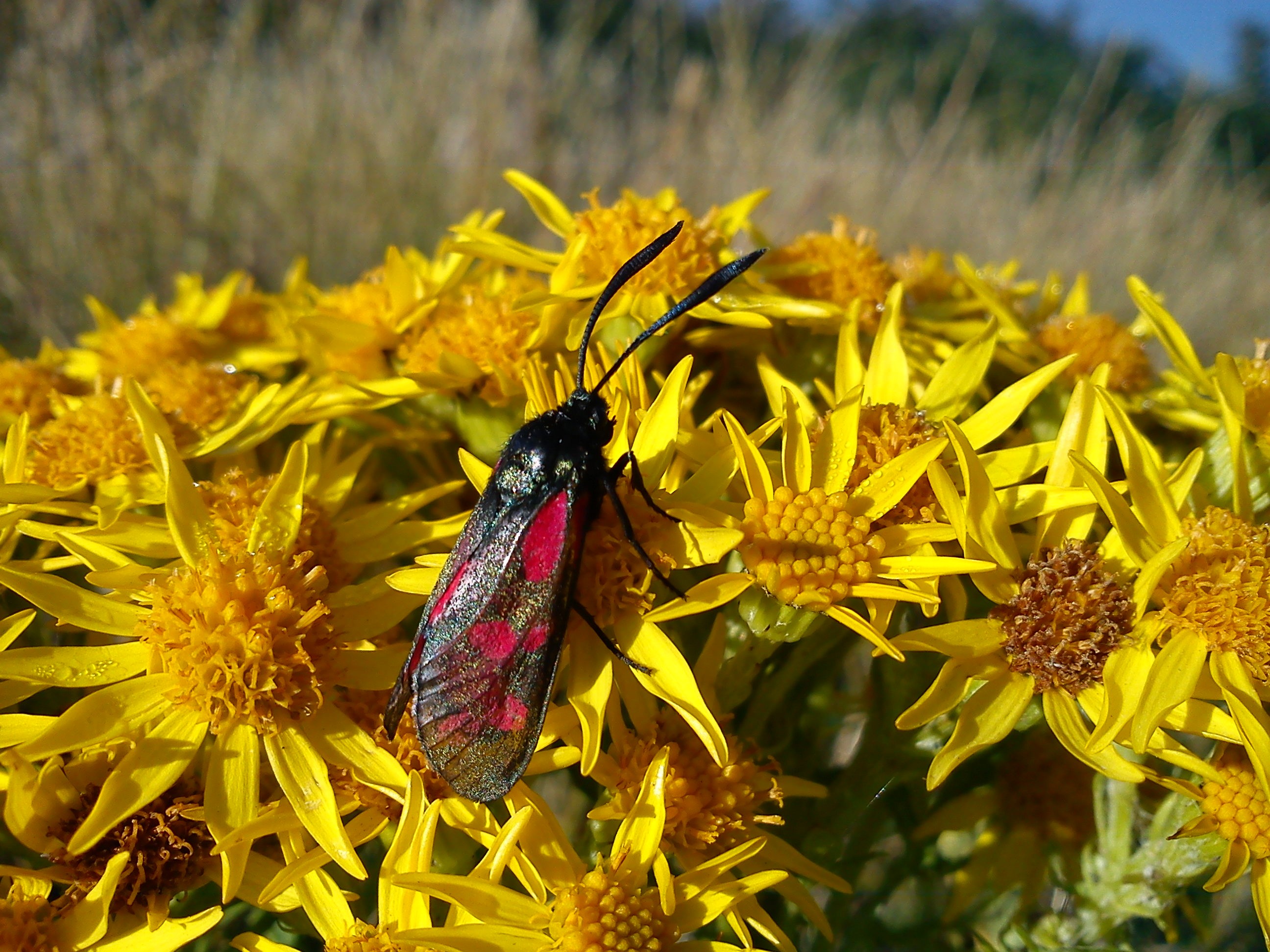
Cinnabar moth on ragwort

Cinnabar moth, Tyria jacobaeae, on ragwort, Jacobaea vulgaris


Update: In fact, it’s a Six-spot burnet, Zygaena filipendulae, on ragwort, Jacobaea vulgaris. Probably.