
We have three sets of cones (or colour sensors) in our retinas, each of which is sensitive to a different part of the colour spectrum; the brain then constructs the rest of the spectrum by extrapolating from the relative strength of these three. In the case of purple, which occurs when the red and blue sensors but not the green ones are triggered, the brain creates a colour to fill the gap. If your brain were more objective, rather than showing you purple, it would display a patch of flickering grey with the words “system error” on it. — Rory Sutherland in Alchemy: The Surprising Power of Ideas That Don’t Make Sense (2019), section 6.2
Perplexing Purple
Fylfy Fractals
An equilateral triangle is a rep-tile, because it can be tiled completely with smaller copies of itself. Here it is as a rep-4 rep-tile, tiled with four smaller copies of itself:
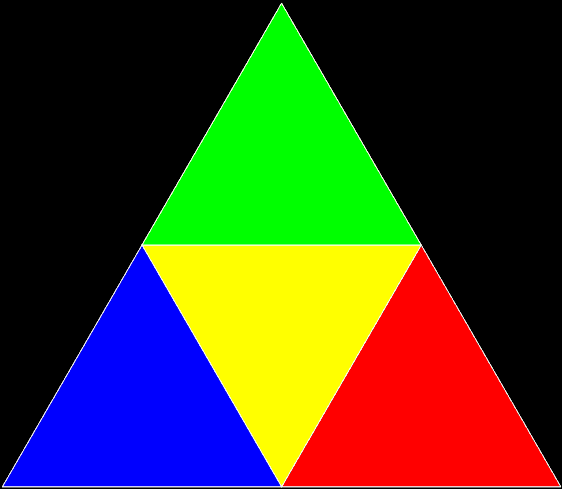
Equilateral triangle as rep-4 rep-tile
If you divide and discard one of the sub-copies, then carry on dividing-and-discarding with the sub-copies and sub-sub-copies and sub-sub-sub-copies, you get the fractal seen below. Alas, it’s not a very attractive or interesting fractal:
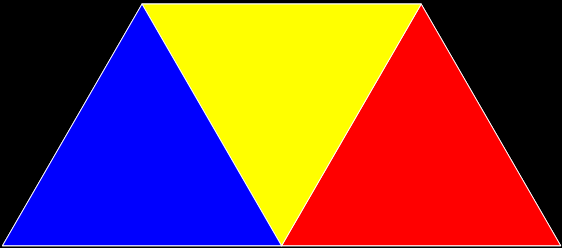
Divide-and-discard fractal stage #1
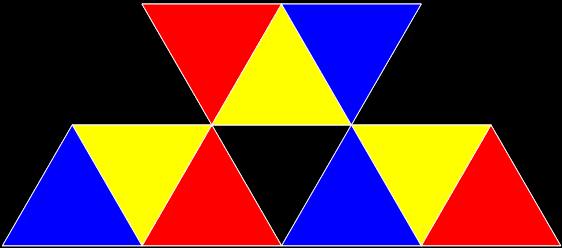
Stage #2
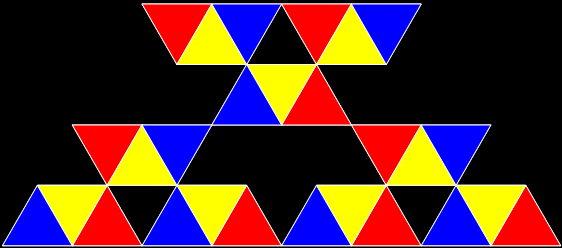
Stage #3
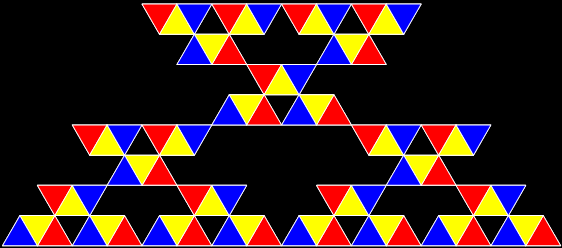
Stage #4

Stage #5

Stage #6

Stage #7
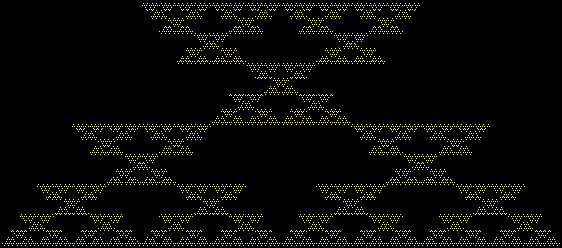
Stage #8
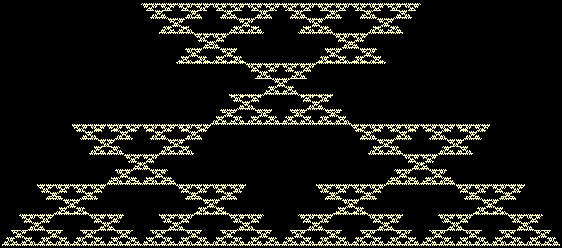
Stage #9
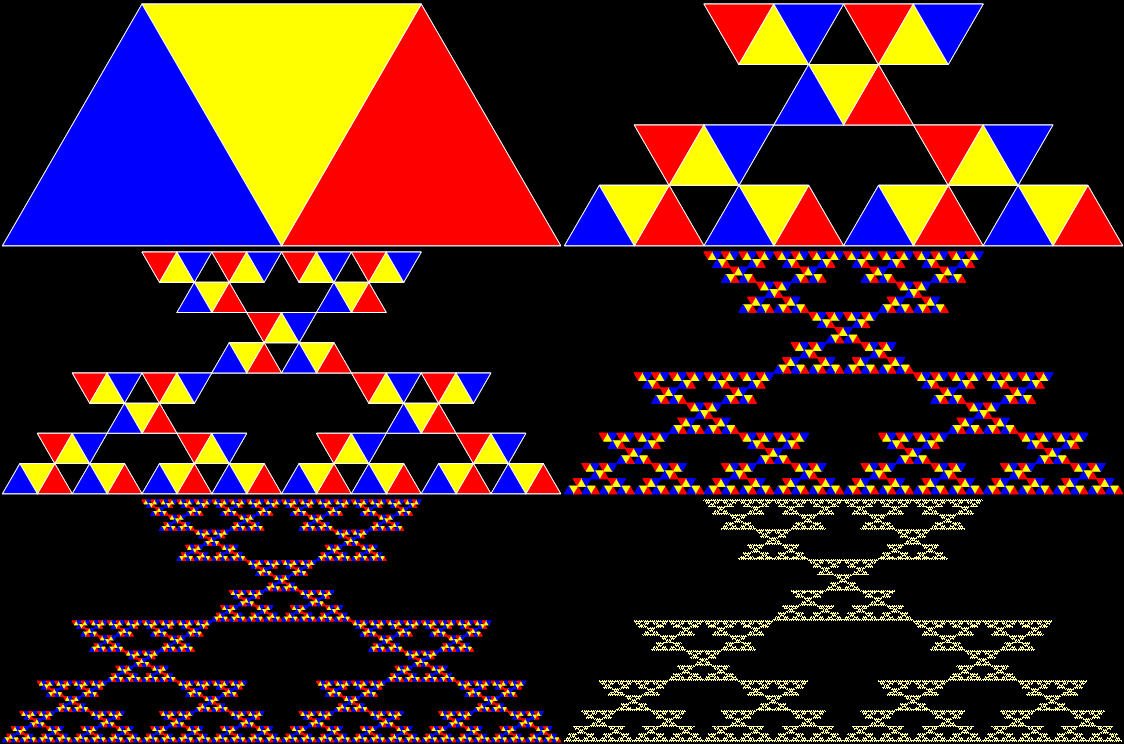
Divide-and-discard fractal (animated)
You can create more attractive and interesting fractals by rotating the sub-triangles clockwise or anticlockwise. Here are some examples:
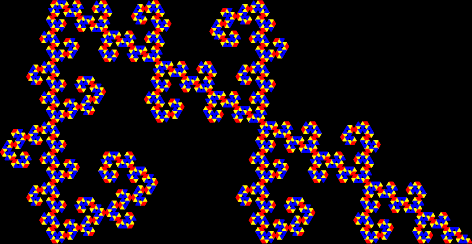
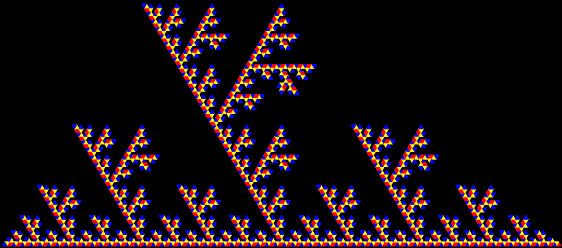
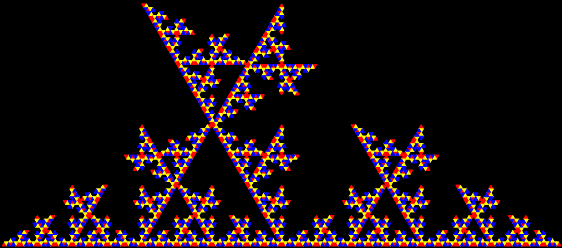

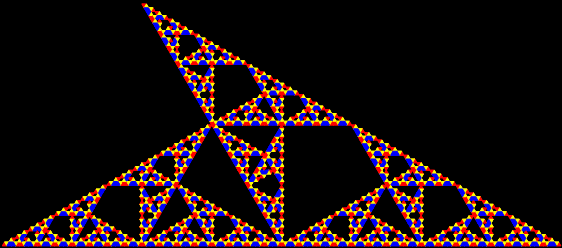
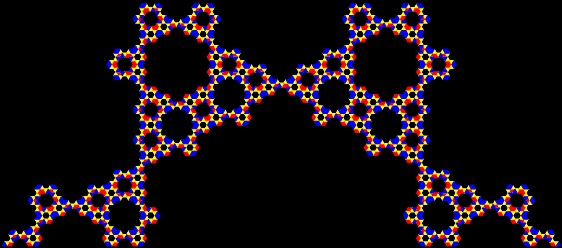

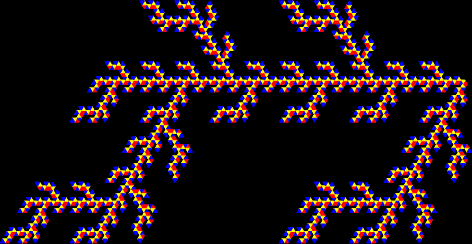
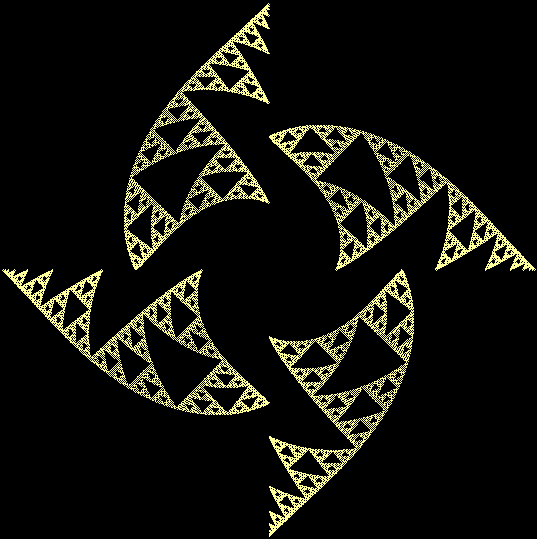
Now try dividing a square into four right triangles, then turning each of the four triangles into a divide-and-discard fractal. The resulting four-fractal shape is variously called a swastika, a gammadion, a cross cramponnée, a Hakenkreuz and a fylfot. I’m calling it a fylfy fractal:
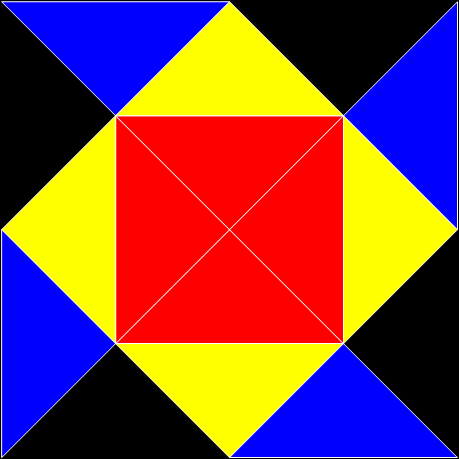
Divide-and-discard fractals in the four triangles of a divided square stage #1
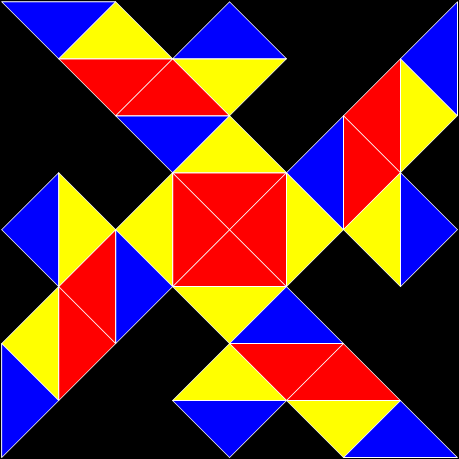
Fylfy fractal #2
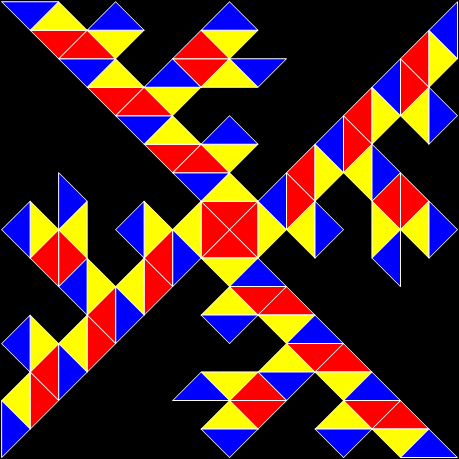
Fylfy fractal #3

Fylfy fractal #4
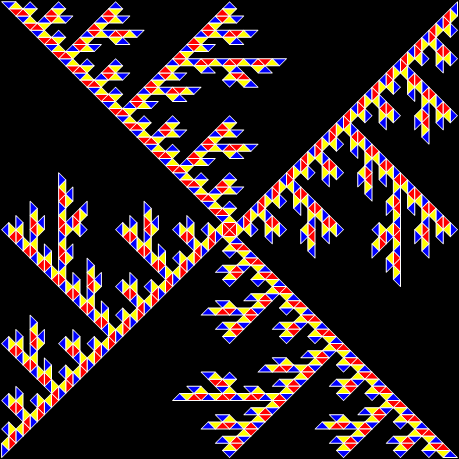
Fylfy fractal #5

Fylfy fractal #6
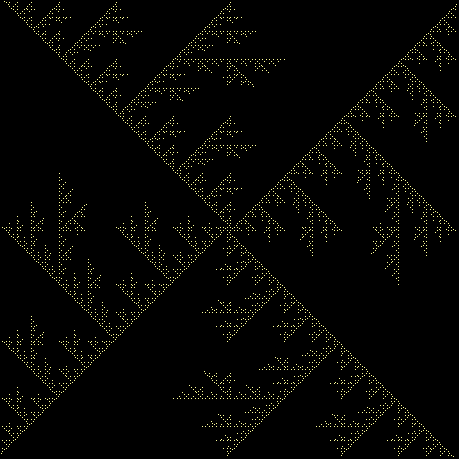
Fylfy fractal #7

Fylfy fractal #8
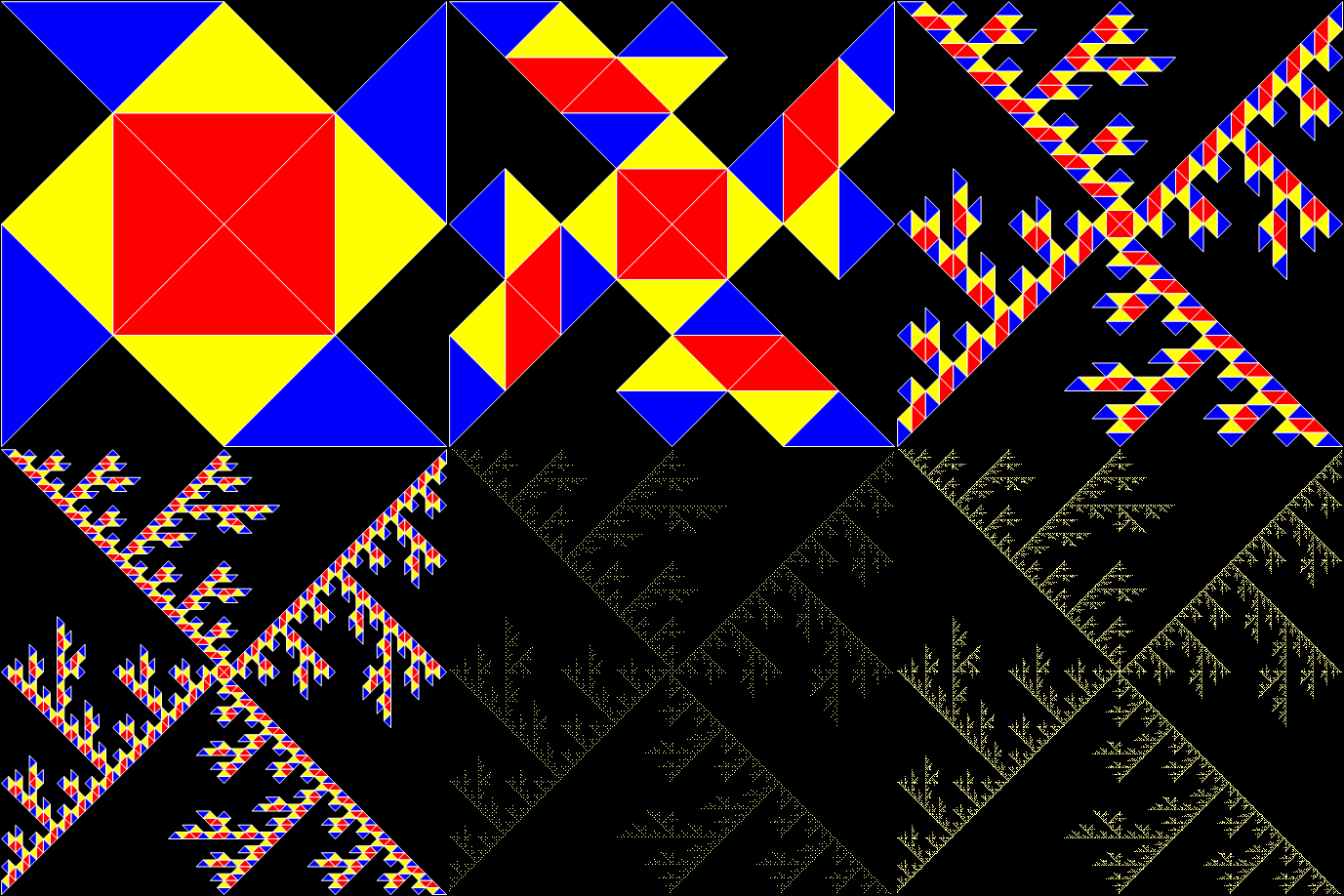
Fylfy fractal (animated)
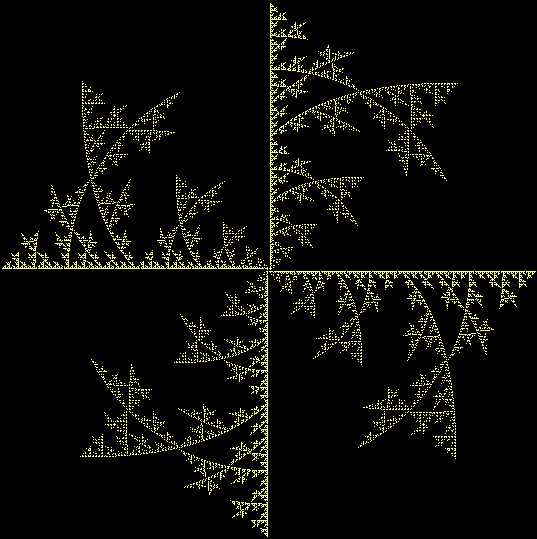
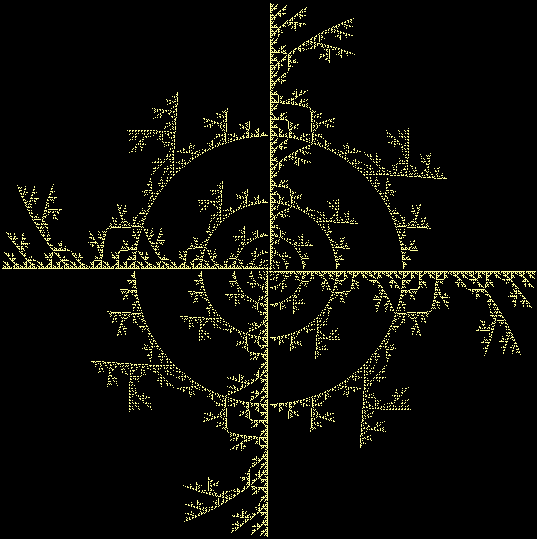
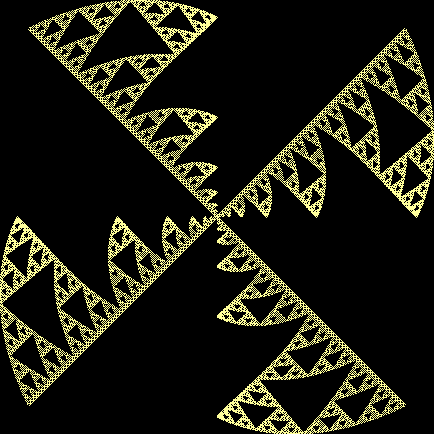
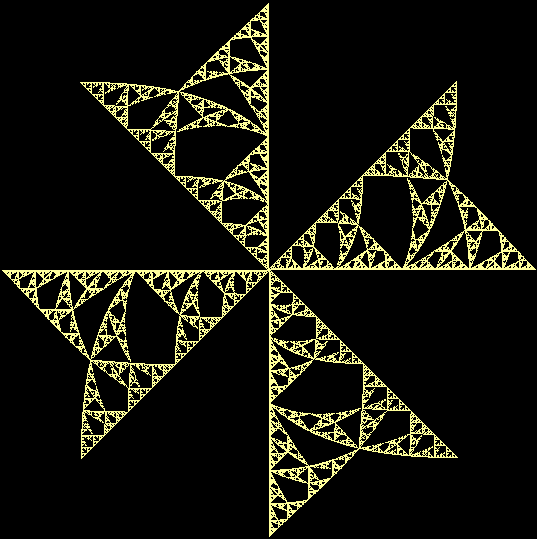
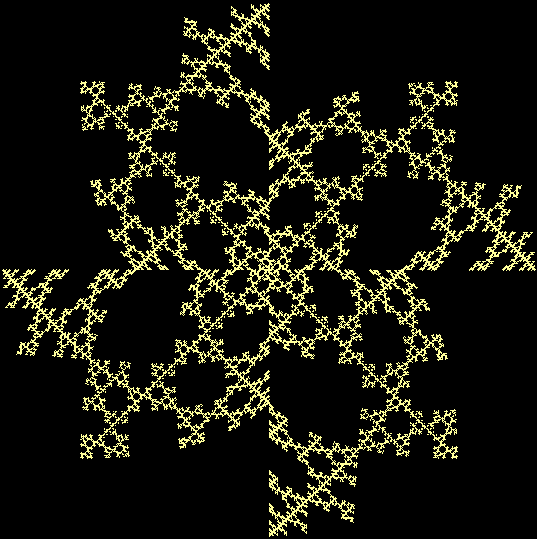
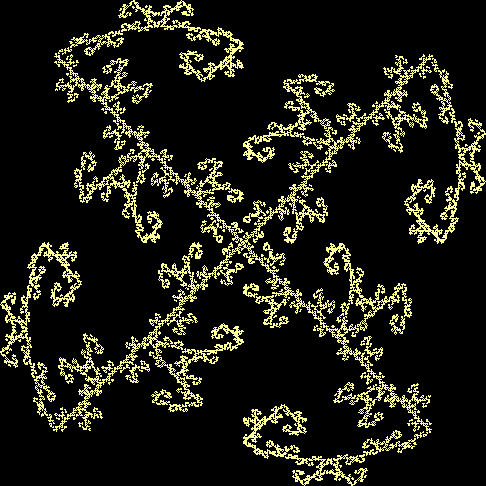
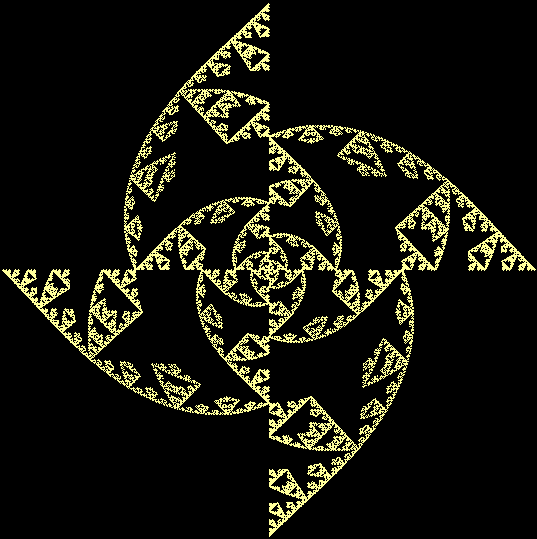
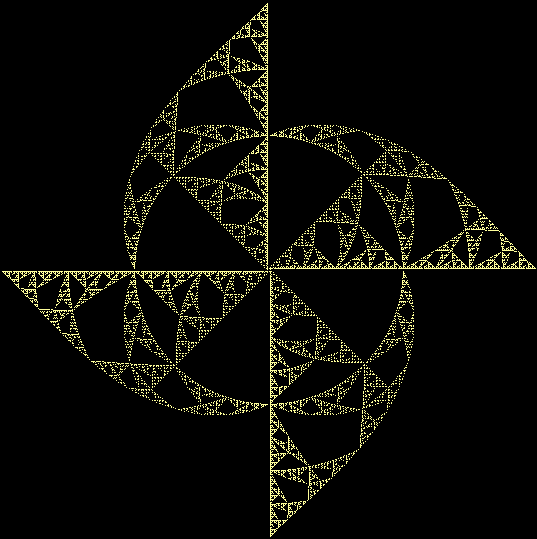
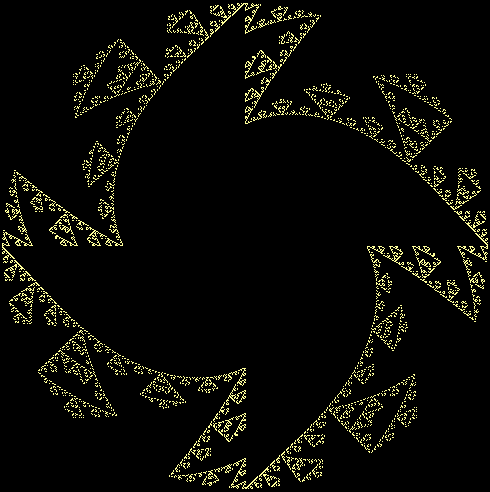
Finally, you can adjust the fylfy fractals so that each point in the square becomes the equivalent point in a circle:





A Poof in a Porker
The great literary scholar and expert psychoanalyst Dr Miriam B. Stimbers has detected castration, clitoridolatry and communal cannibalism in the novels of Jane Austen. I’m not so ambitious. I merely want to detect a poof in a porker’s poetry. Or rather, I want to detect a poof in the poetry of a peer closely associated with a porker.
The porker is Bill Bunter, the fat, lazy and greedy public schoolboy whose misadventures at Greyfriars School were chronicled, under the pseudonym Frank Richards, by the highly prolific Charles Hamilton (1876-1961). One of Bunter’s schoolfellows was the languid and apparently effete peer Lord Mauleverer, who contributed this poem to The Greyfriars Holiday Annual for 1928:
“The Song of the Slacker”, by Lord Mauleverer
Tell me not, in mournful numbers,
Life was meant for toil and hustle;
It was meant for soothing slumbers,
Which relax both mind and muscle.Life is lovely! Life is topping!
When you lie beneath the shade,
With the ginger-beer corks popping,
And a glorious spread arrayed.Not enjoyment, and not sorrow,
Is our destined end or way;
But to put off till to-morrow
Work that should be done today!In the world’s broad field of battle
All wise soldiers take their ease;
And they lie asleep, like cattle,
Underneath the shady trees.Trust no Future, trust no Present,
Let the dead Past bury its dead!
The only prospect nice and pleasant
Is that of “forty winks” in bed!“Life is short!” the bards are bawling,
Let’s enjoy it while we may;
On our study sofas sprawling,
Sleeping sixteen hours a day!Lives of slackers all remind us
We should also rest our limbs;
And, departing, leave behind us,
“Helpful Hints for Tired Tims!”Helpful hints, at which another
Will, perhaps, just take a peep;
Some exhausted, born-tired brother––
They will send him off to sleep!While the hustlers are pursuing
Outdoor sports, on land and lake;
Let us, then, be up and doing––
There are several beds to make. – The Greyfriars Holiday Annual for 1928 (1927), Howard Baker abridged edition 1971
I liked the poem when I first read it, but I didn’t spot the parody as soon as I should. It was unexpected, you see, but then it dawned on me that “The Song of the Slacker” must be a parody of a famous poem by the poof-poet A.E. Housman (1859-1936):
REVEILLE
Wake: the silver dusk returning
Up the beach of darkness brims,
And the ship of sunrise burning
Strands upon the eastern rims.Wake: the vaulted shadow shatters,
Trampled to the floor it spanned,
And the tent of night in tatters
Straws the sky-pavilioned land.Up, lad, up, ’tis late for lying;
Hear the drums of morning play;
Hark, the empty highways crying
“Who’ll beyond the hills away?”Towns and countries woo together,
Forelands beacon, belfries call;
Never lad that trod on leather
Lived to feast his heart with all.Up, lad: thews that lie and cumber
Sunlit pallets never thrive;
Morns abed and daylight slumber
Were not meant for man alive.Clay lies still, but blood’s a rover;
Breath’s a ware that will not keep.
Up, lad: when the journey’s over
There’ll be time enough to sleep. – A Shropshire Lad (1896), Poem IV
The meter of the two poems is the same, the period is right, and the sentiments of Housman’s call to energy and effort are turned neatly on their heads in Lord Mauleverer’s call to sleep and slackness. And it’s a clever parody, although it’s a little too long. I’m glad to have come across “The Song of the Slacker”, which the second-best parody of Housman I’ve read. Here’s the best:
What, still alive at twenty-two,
A clean, upstanding chap like you?
Sure, if your throat ’tis hard to slit,
Slit your girl’s, and swing for it.Like enough, you won’t be glad,
When they come to hang you, lad:
But bacon’s not the only thing
That’s cured by hanging from a string.So, when the spilt ink of the night
Spreads o’er the blotting-pad of light,
Lads whose job is still to do
Shall whet their knives, and think of you.• Hugh Kingsmill’s famous parody of A.E. Housman
Absolutely Sabulous
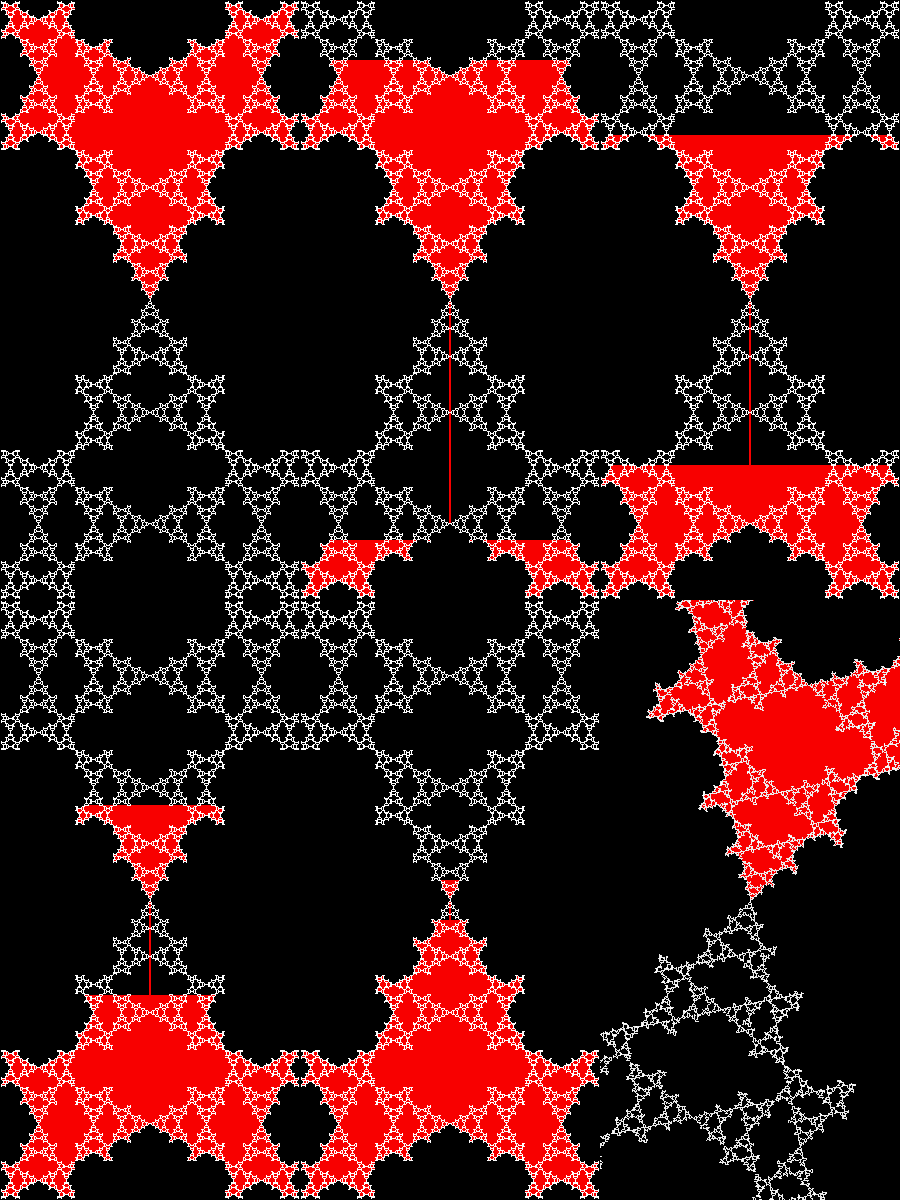
The Hourglass Fractal (animated gif optimized at ezGIF)
Performativizing Paronomasticity
The title of this incendiary intervention is a paronomasia on the title of the dire Absolutely Fabulous. The adjective sabulous means “sandy; consisting of or abounding in sand; arenaceous” (OED).
Elsewhere Other-Accessible
• Hour Re-Re-Re-Re-Powered — more on the hourglass fractal
• Allus Pour, Horic — an earlier paronomasia for the fractal
Hurl’d World
Who sees with equal eye, as God of all,
A hero perish, or a sparrow fall,
Atoms or systems into ruin hurl’d,
And now a bubble burst, and now a world.
• An Essay on Man (1734), Alexander Pope
Game of Throwns
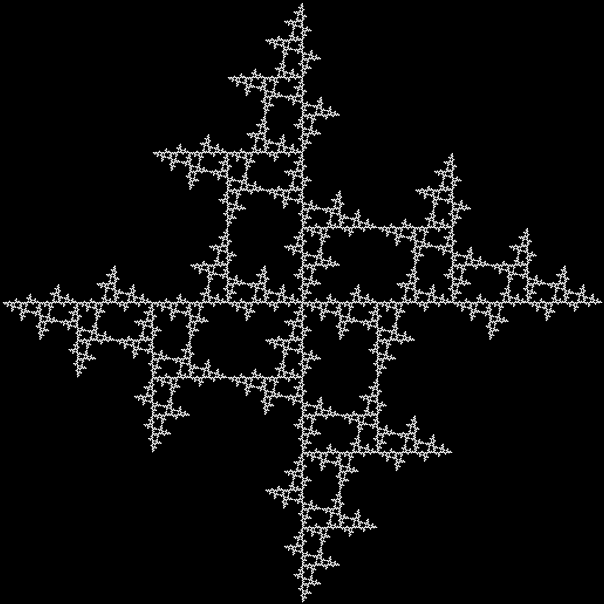
In “Scaffscapes”, I looked at these three fractals and described how they were in a sense the same fractal, even though they looked very different:
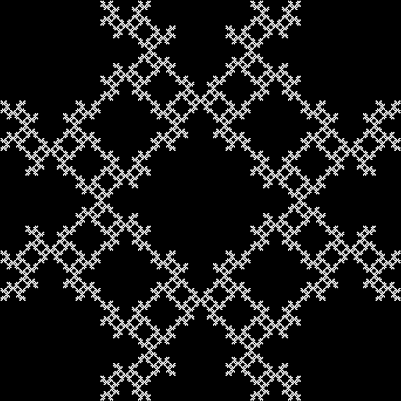
Fractal #1
Fractal #2
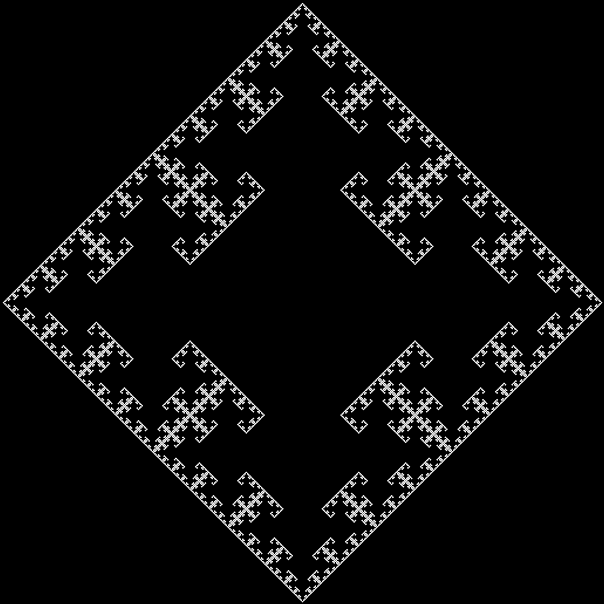
Fractal #3
But even if they are all the same in some mathematical sense, their different appearances matter in an aesthetic sense. Fractal #1 is unattractive and seems uninteresting:
Fractal #1, unattractive, uninteresting and unnamed
Fractal #3 is attractive and interesting. That’s part of why mathematicians have given it a name, the T-square fractal:
Fractal #3 — the T-square fractal
But fractal #2, although it’s attractive and interesting, doesn’t have a name. It reminds me of a ninja throwing-star or shuriken, so I’ve decided to call it the throwing-star fractal or ninja-star fractal:
Fractal #2, the throwing-star fractal

A ninja throwing-star or shuriken
This is one way to construct a throwing-star fractal:

Throwing-star fractal, stage 1
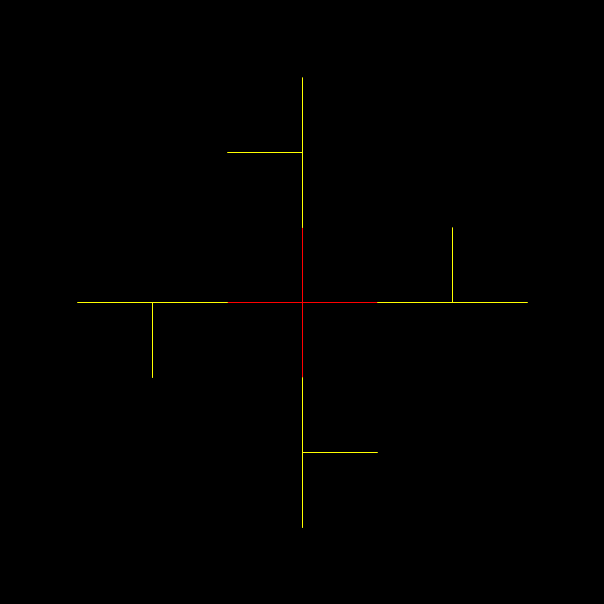
Throwing-star fractal, #2
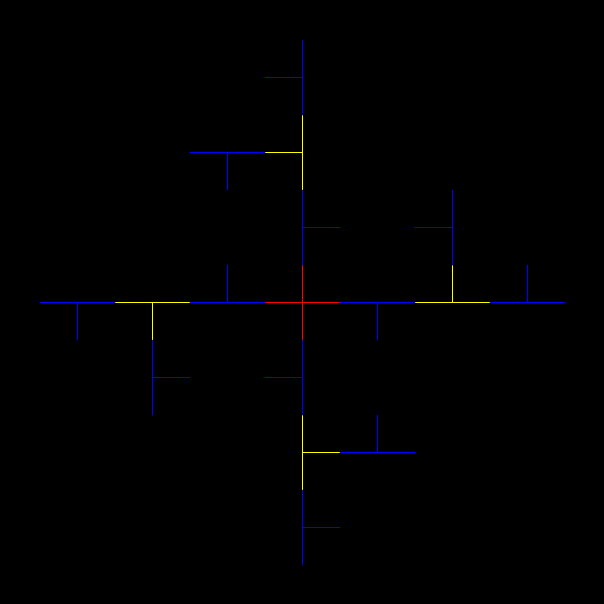
Throwing-star fractal, #3
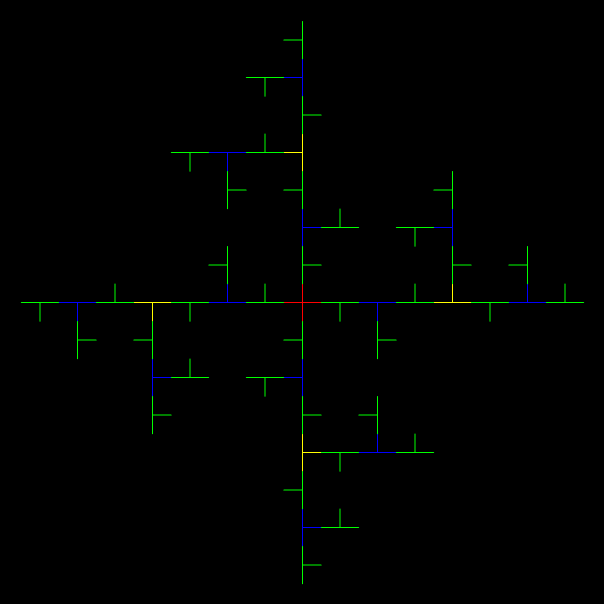
Throwing-star fractal, #4
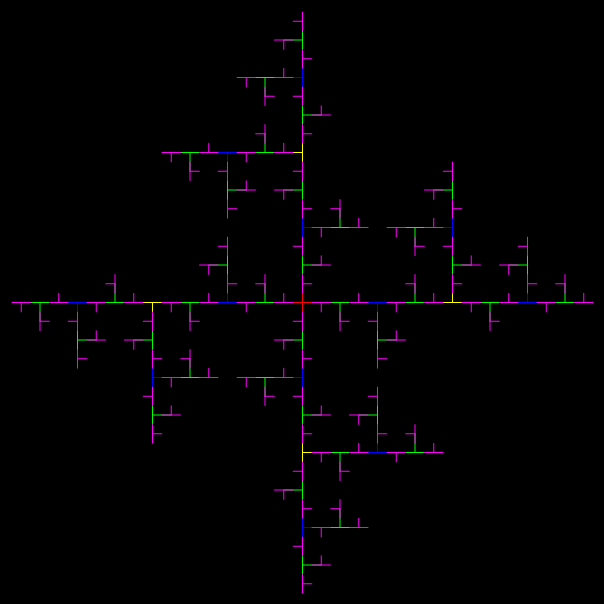
Throwing-star fractal, #5

Throwing-star fractal, #6
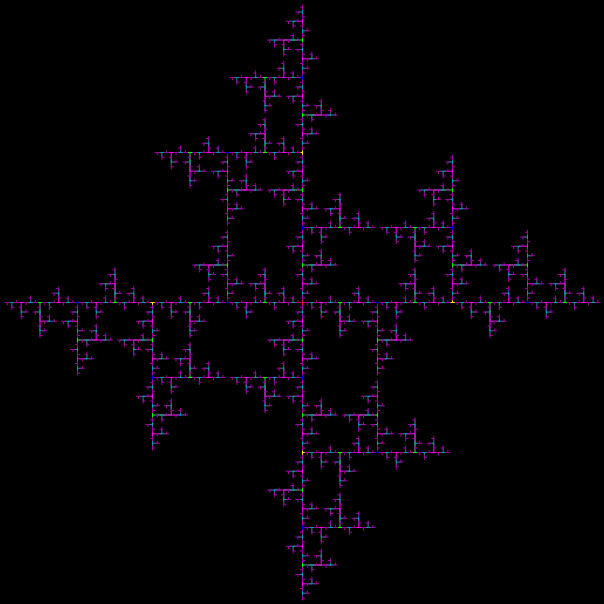
Throwing-star fractal, #7
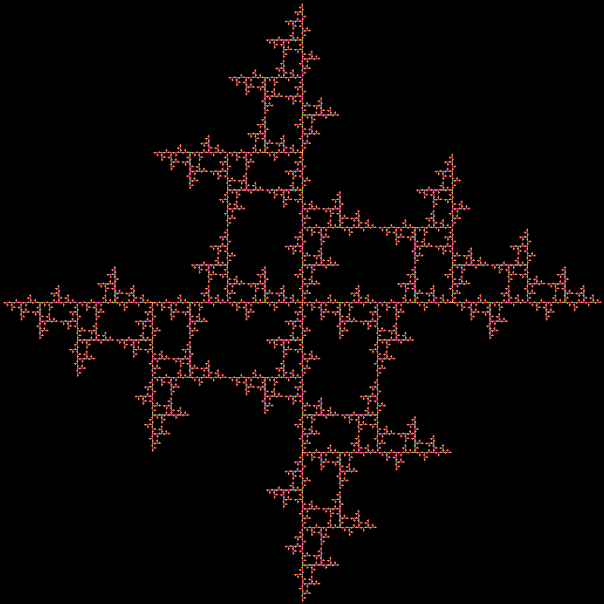
Throwing-star fractal, #8

Throwing-star fractal, #9
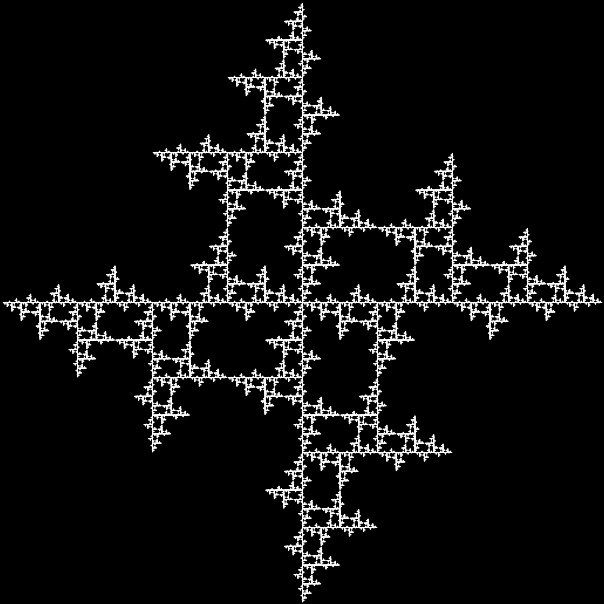
Throwing-star fractal, #10
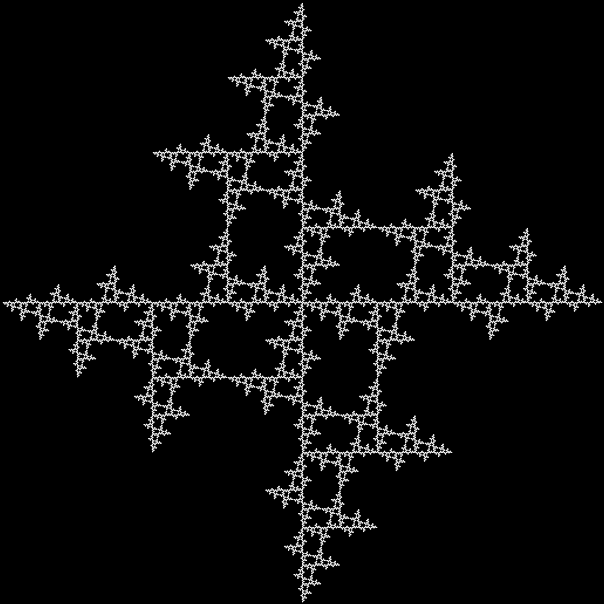
Throwing-star fractal, #11
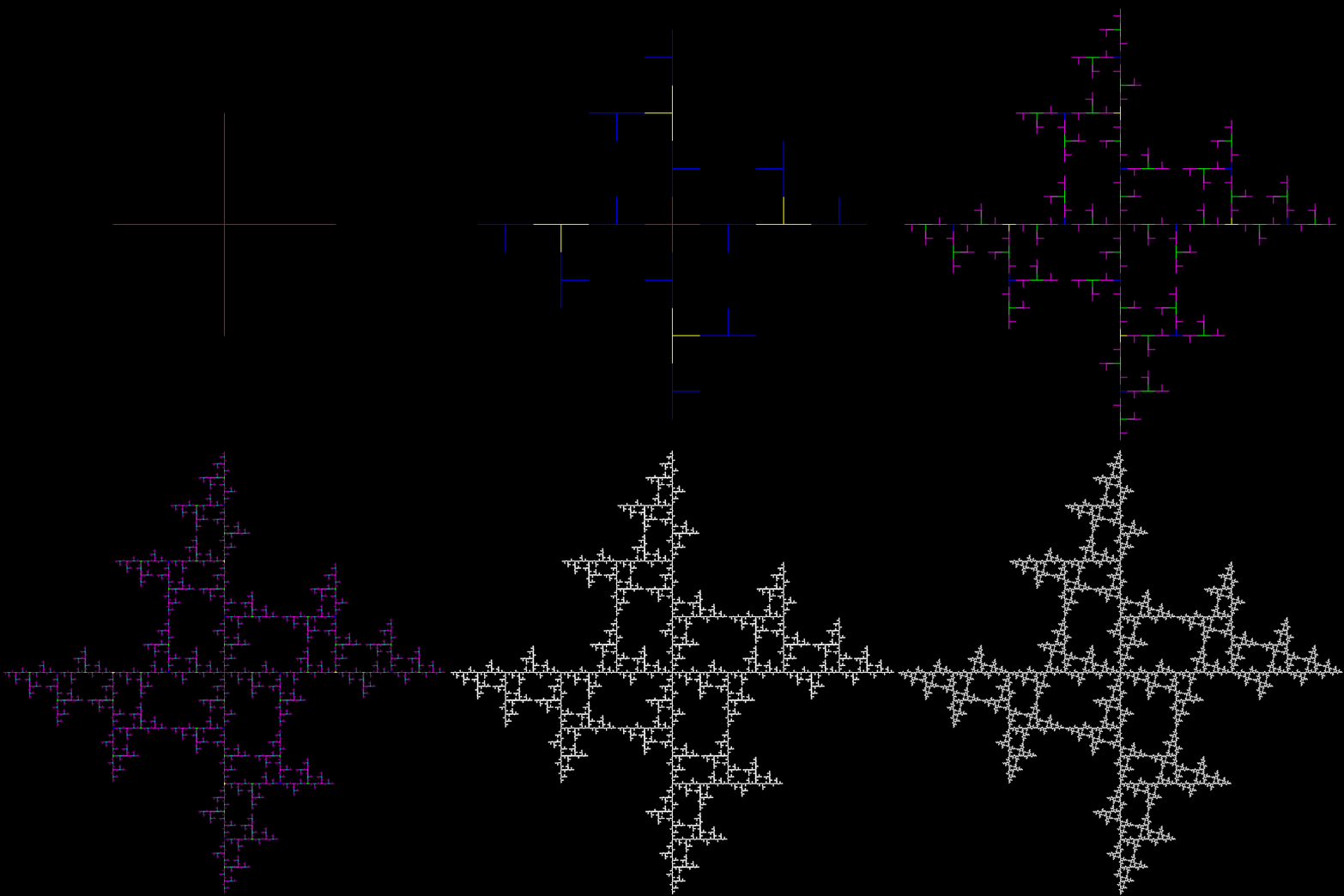
Throwing-star fractal (animated)
But there’s another way to construct a throwing-star fractal. You use what’s called the chaos game. To understand the commonest form of the chaos game, imagine a ninja inside an equilateral triangle throwing a shuriken again and again halfway towards a randomly chosen vertex of the triangle. If you mark each point where the shuriken lands, you eventually get a fractal called the Sierpiński triangle:
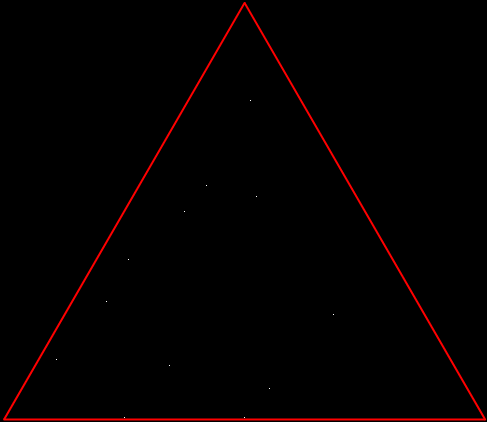
Chaos game with triangle stage 1
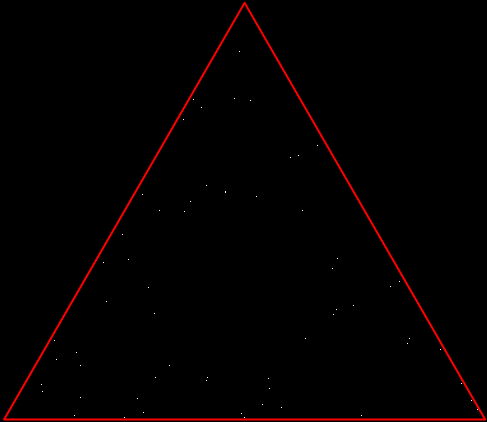
Chaos triangle #2
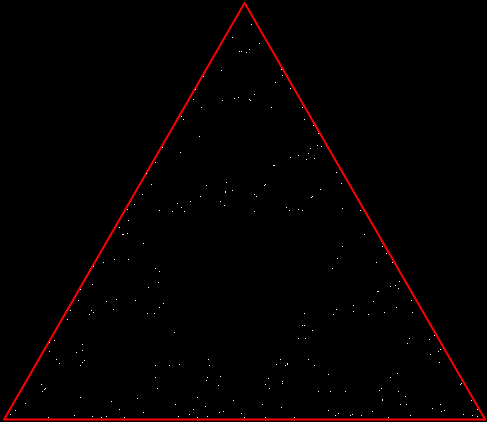
Chaos triangle #3

Chaos triangle #4
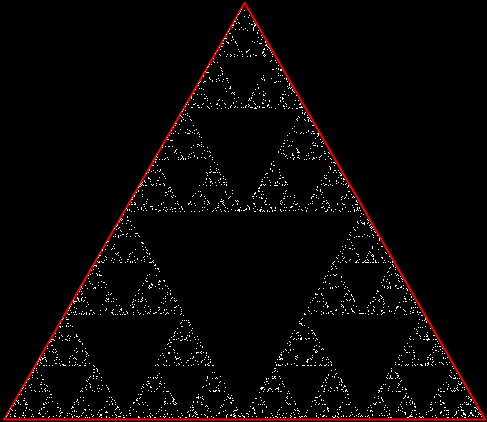
Chaos triangle #5
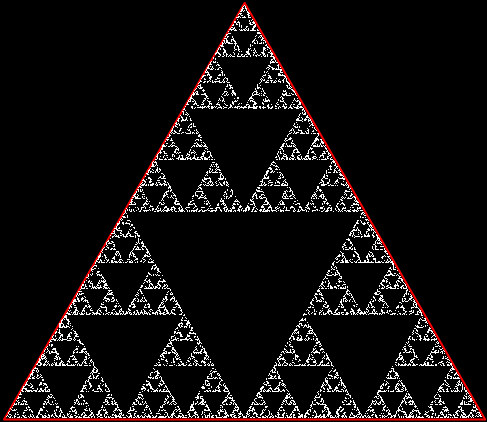
Chaos triangle #6

Chaos triangle #7
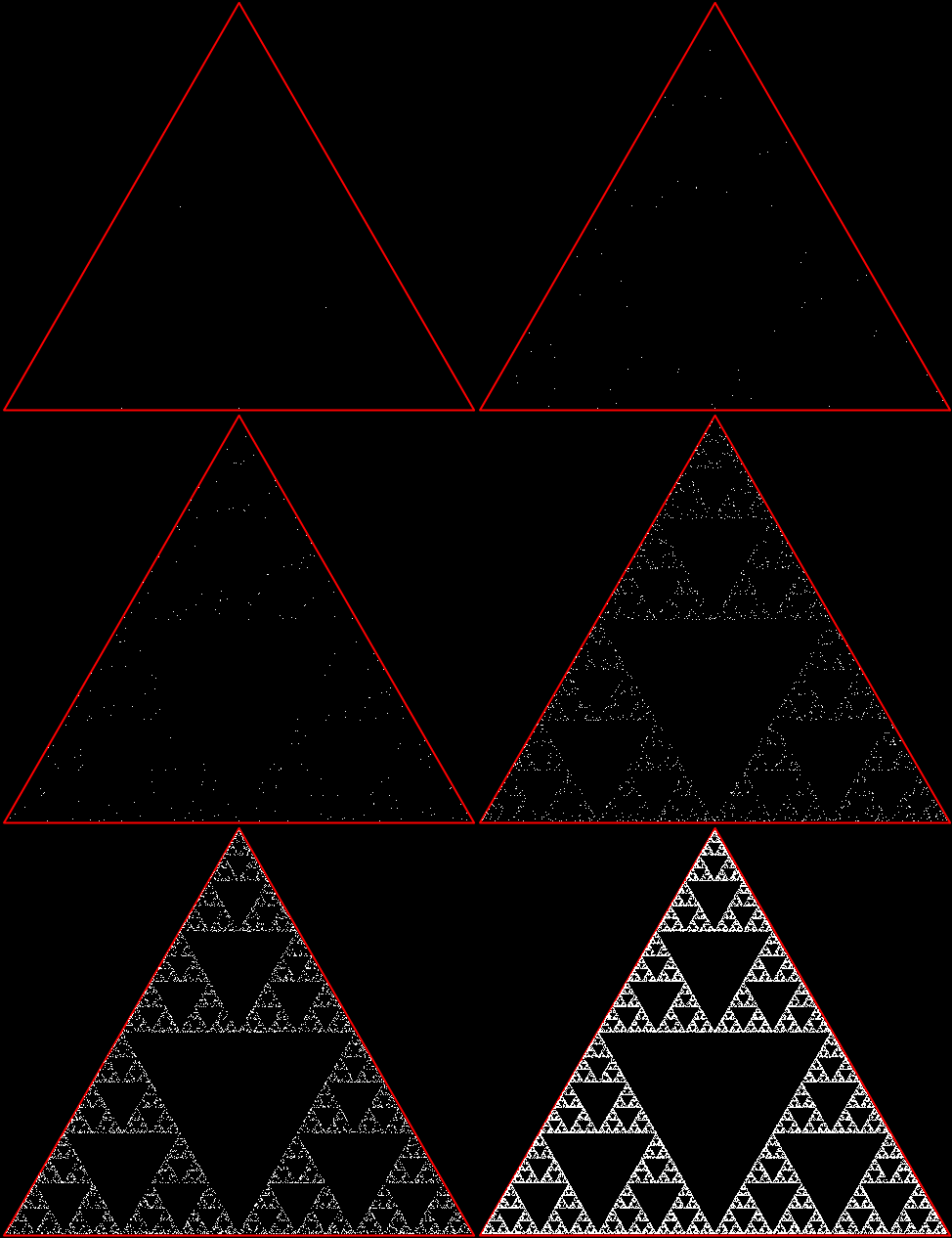
Chaos triangle (animated)
When you try the chaos game with a square, with the ninja throwing the shuriken again and again halfway towards a randomly chosen vertex, you don’t get a fractal. The interior of the square just fills more or less evenly with points:
Chaos game with square, stage 1
Chaos square #2
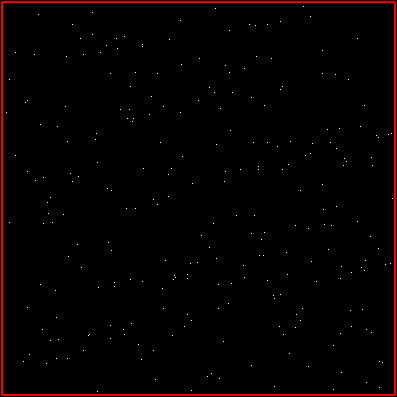
Chaos square #3
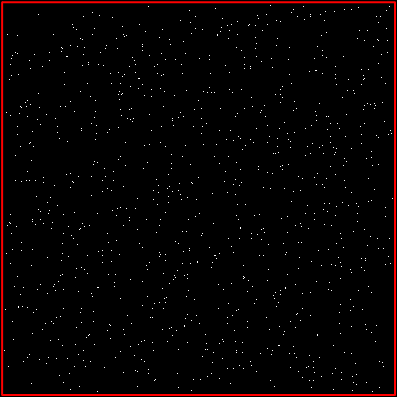
Chaos square #4
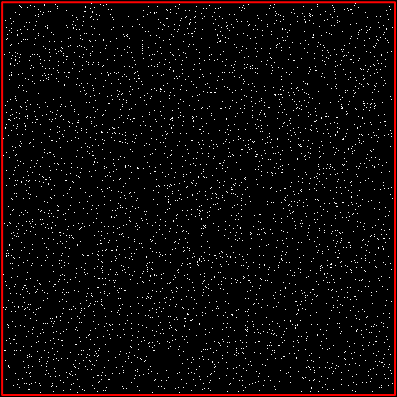
Chaos square #5
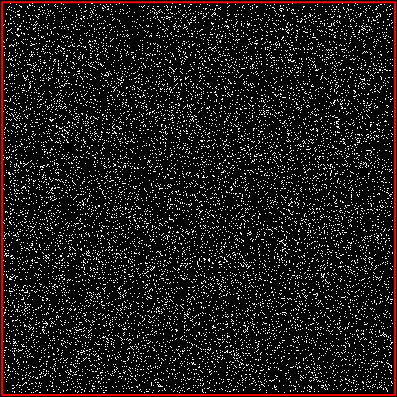
Chaos square #6
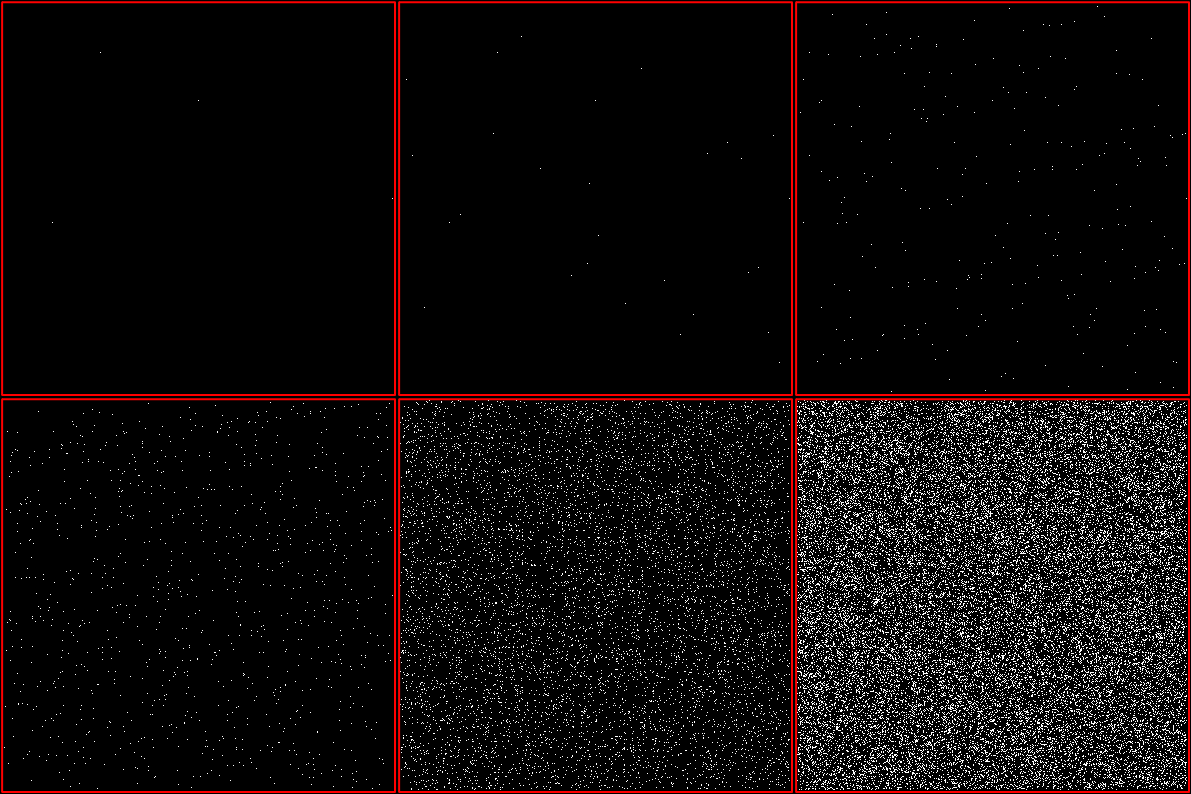
Chaos square (anim)
But suppose you restrict the ninja’s throws in some way. If he can’t throw twice or more in a row towards the same vertex, you get a familiar fractal:
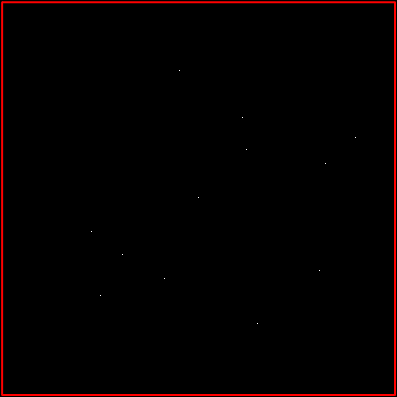
Chaos game with square, ban on throwing towards same vertex, stage 1
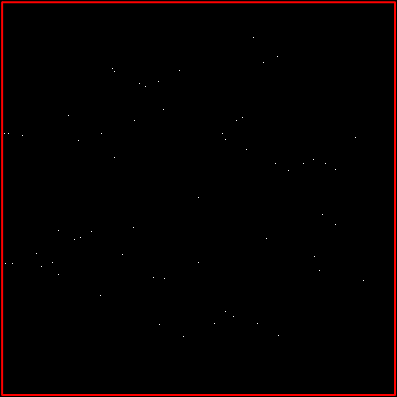
Chaos square, ban = v+0, #2

Chaos square, ban = v+0, #3
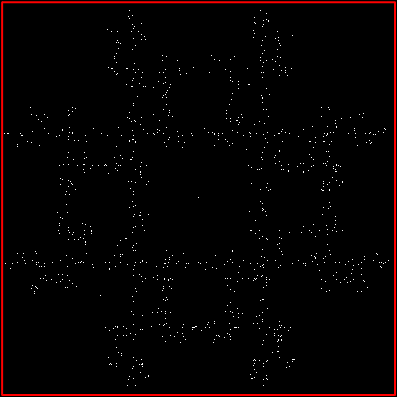
Chaos square, ban = v+0, #4

Chaos square, ban = v+0, #5
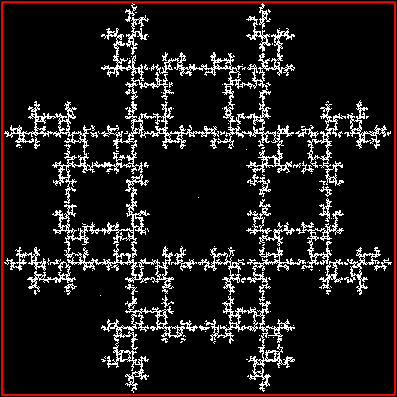
Chaos square, ban = v+0, #6

Chaos square, ban = v+0 (anim)
But what if the ninja can’t throw the shuriken towards the vertex one place anti-clockwise of the vertex he’s just thrown it towards? Then you get another familiar fractal — the throwing-star fractal:

Chaos square, ban = v+1, stage 1

Chaos square, ban = v+1, #2

Chaos square, ban = v+1, #3
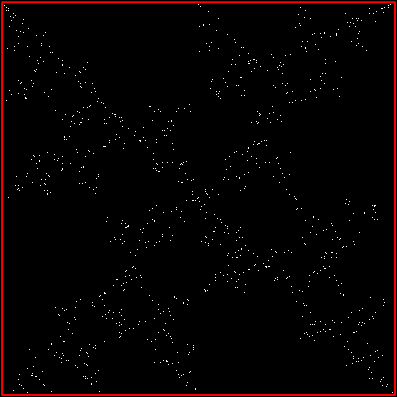
Chaos square, ban = v+1, #4
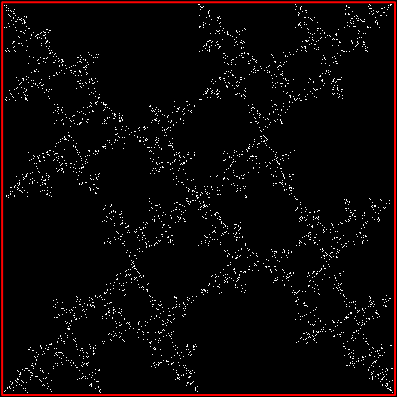
Chaos square, ban = v+1, #5

Game of Throwns — throwing-star fractal from chaos game (static)
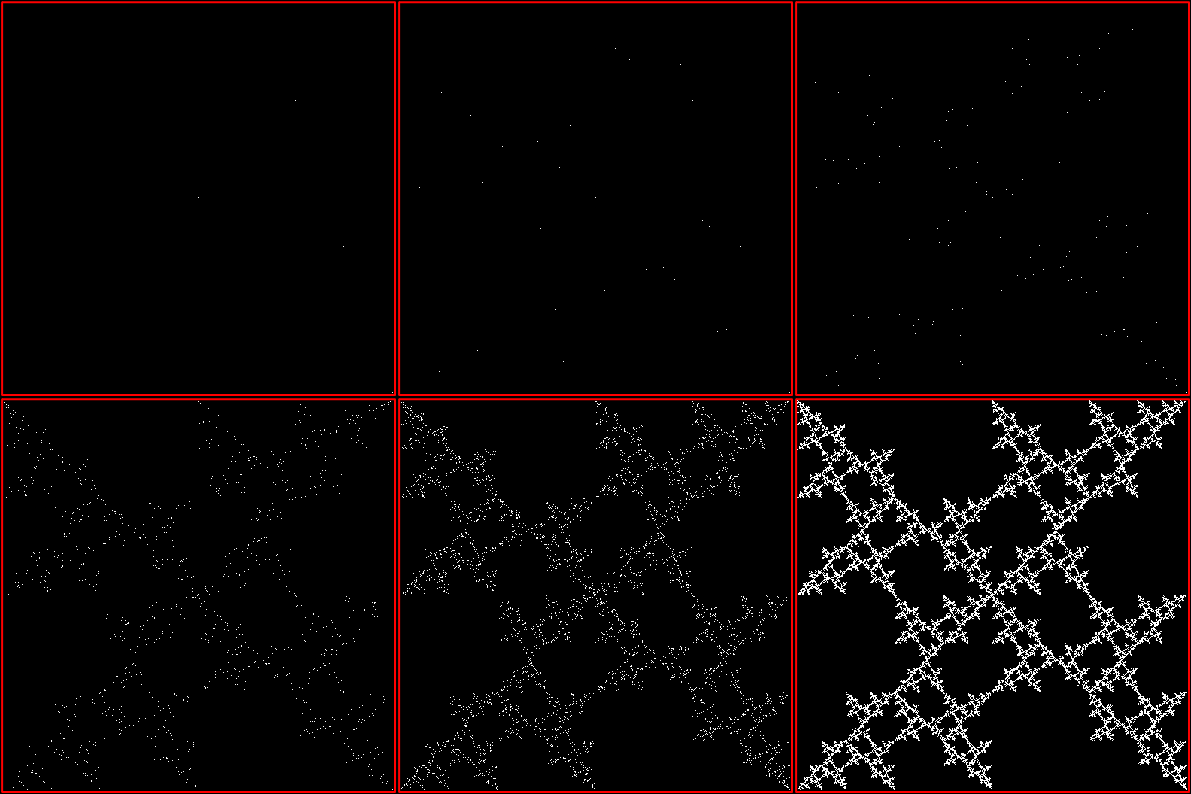
Game of Throwns — throwing-star fractal from chaos game (anim)
And what if the ninja can’t throw towards the vertex two places anti-clockwise (or two places clockwise) of the vertex he’s just thrown the shuriken towards? Then you get a third familiar fractal — the T-square fractal:

Chaos square, ban = v+2, stage 1
Chaos square, ban = v+2, #2
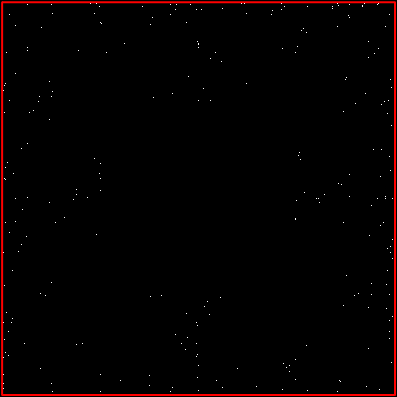
Chaos square, ban = v+2, #3
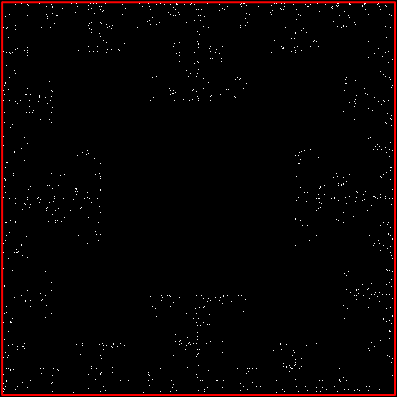
Chaos square, ban = v+2, #4

Chaos square, ban = v+2, #5
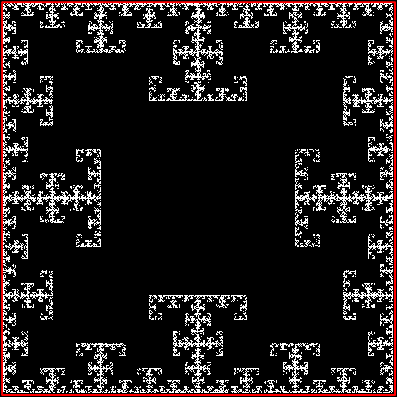
T-square fractal from chaos game (static)
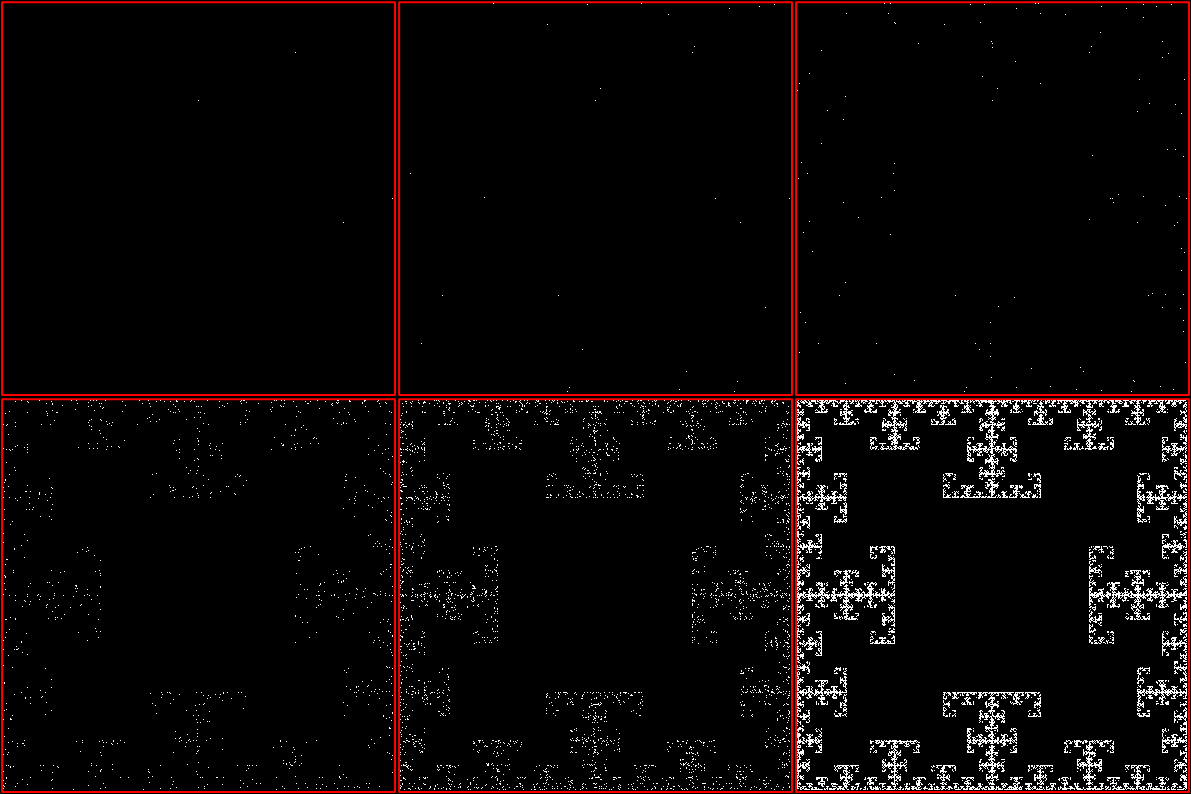
T-square fractal from chaos game (anim)
Finally, what if the ninja can’t throw towards the vertex three places anti-clockwise, or one place clockwise, of the vertex he’s just thrown the shuriken towards? If you can guess what happens, your mathematical intuition is much better than mine.
Post-Performative Post-Scriptum
I am not now and never have been a fan of George R.R. Martin. He may be a good author but I’ve always suspected otherwise, so I’ve never read any of his books or seen any of the TV adaptations.
Hedonic Hierairchy
Pilot-thrilling… 10 flyers’ favourites
1. Vickers VC10 — A pilot’s airliner that also beguiled its passengers
2. North American F-86 Sabre — The classic second-generation jet fighter
3. Hawker Hart — An elegant two-seat day bomber of the 1930s that delighted its pilots
4. de Havilland Hornet — The ultimate twin-piston fighter, evolved from the classic Mosquito
5. Sopwith Pup — A First World War fighter beloved by all who flew it
6. Armstrong Whitworth Siskin — Agile and manouverable radial-engined inter-war fighter
7. Stampe SV-4 — A classic sporting biplane renowned for its aerobatic qualities
8. Hawker Hurricane — A distant descendant of the Pup with similarly wide pilot appeal
9. North American P-51 Mustang — One of the greatest Second World War single-seat fighters, an ace-maker
10. Avro Lancaster — A pilot’s favourite with exceptional handling qualities for a multi-engine type
• From Aeroplane magazine, December 2003, viâ a VC10 fan-site
Scaffscapes
A fractal is a shape that contains copies of itself on smaller and smaller scales. You can find fractals everywhere in nature. Part of a fern looks like the fern as a whole:
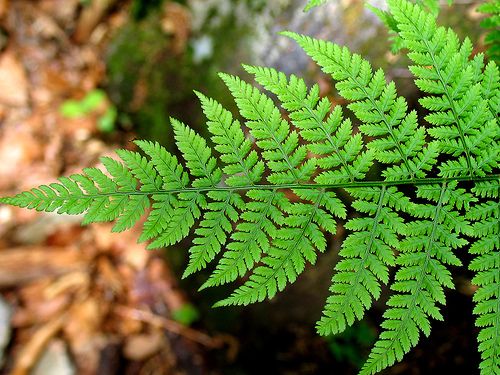
Fern as fractal (source)
Part of a tree looks like the tree as a whole:

Tree as fractal (source)
Part of a landscape looks like the landscape as a whole:
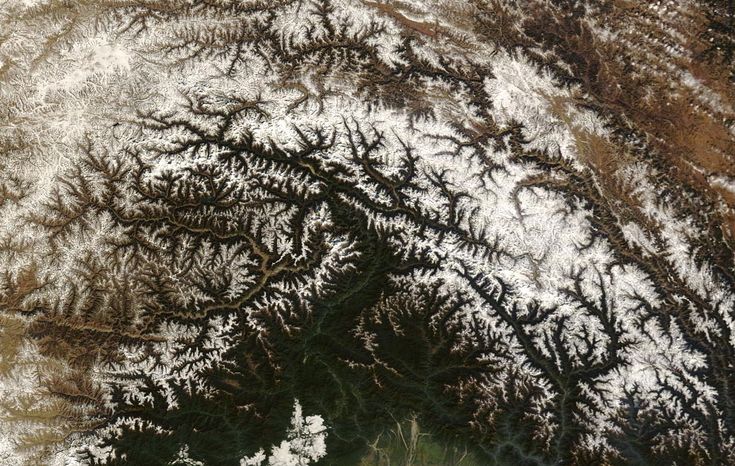
Landscape as fractal (source)
You can also create fractals for yourself. Here are three that I’ve constructed:
Fractal #1
Fractal #2
Fractal #3 — the T-square fractal
The three fractals look very different and, in one sense, that’s exactly what they are. But in another sense, they’re the same fractal. Each can morph into the other two:
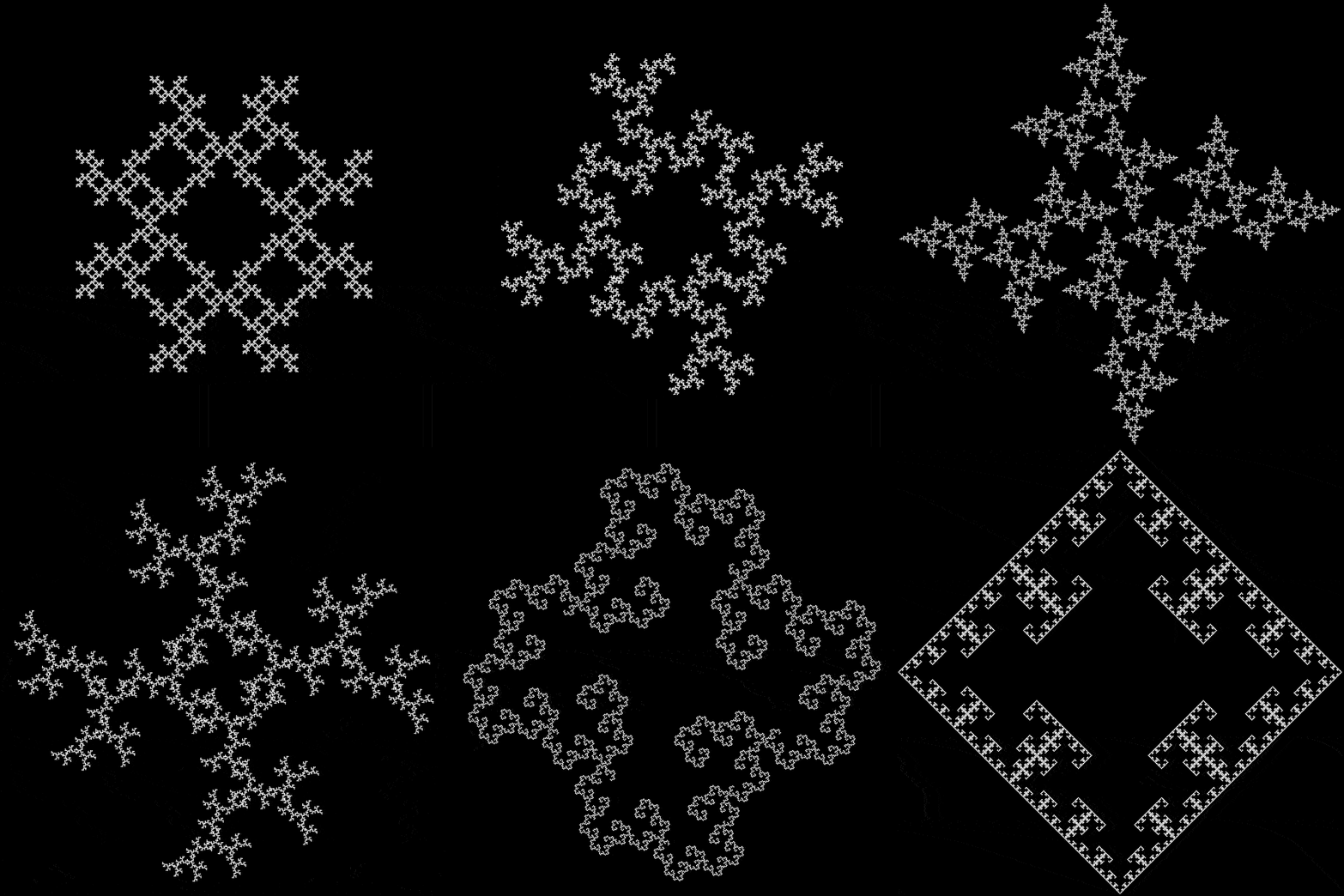
Fractal #1 → fractal #2 → fractal #3 (animated)
Here are two more fractals taken en route from fractal #2 to fractal #3, as it were:
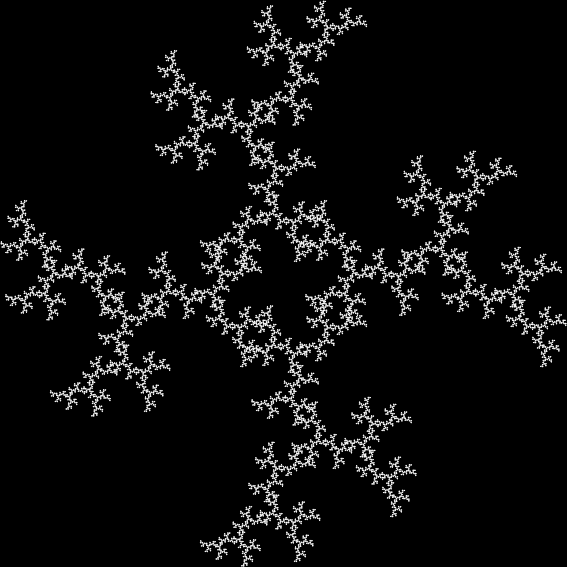
Fractal #4
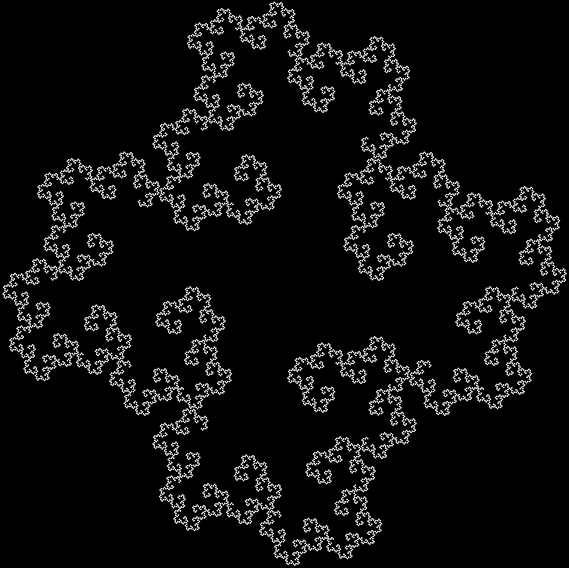
Fractal #5
To understand how the fractals belong together, you have to see what might be called the scaffolding. The construction of fractal #3 is the easiest to understand. First you put up the scaffolding, then you take it away and leave the final fractal:
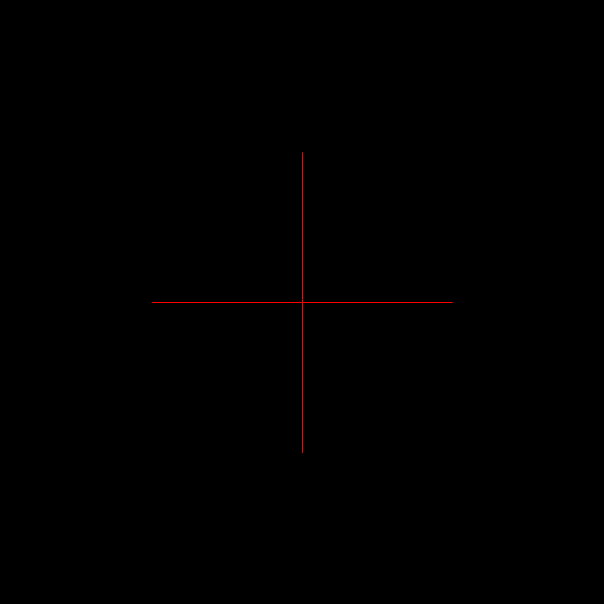
Fractal #3, scaffolding stage 1
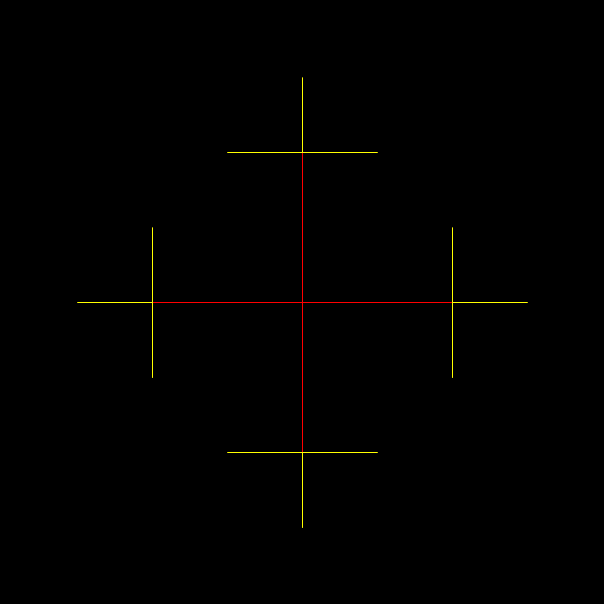
Fractal #3, stage 2
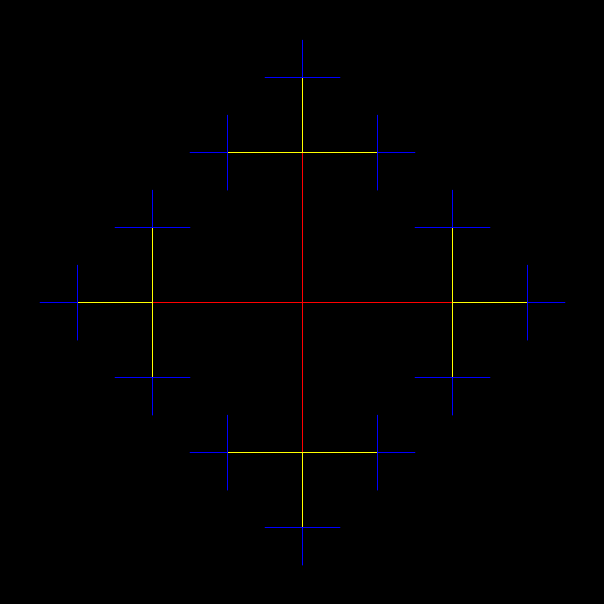
Fractal #3, stage 3
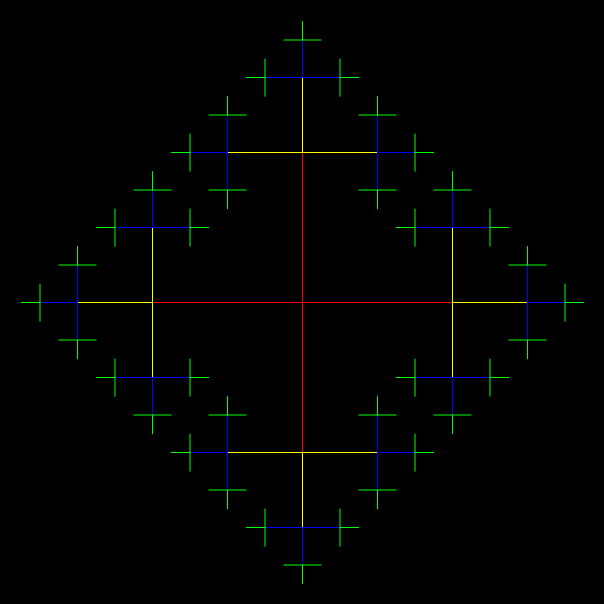
Fractal #3, stage 4
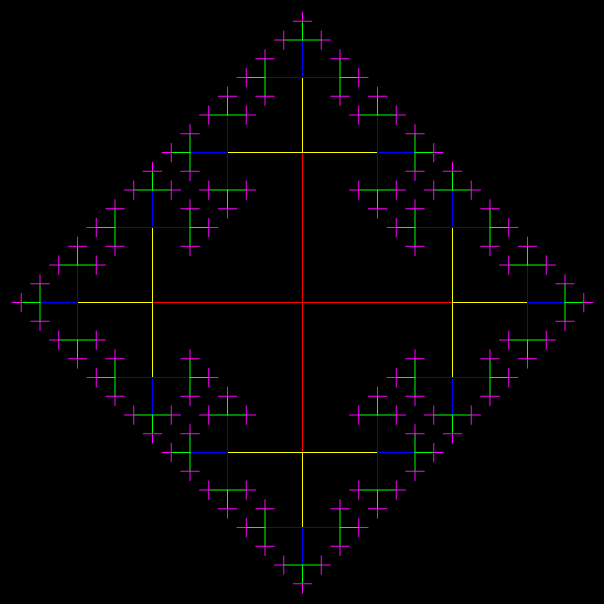
Fractal #3, stage 5
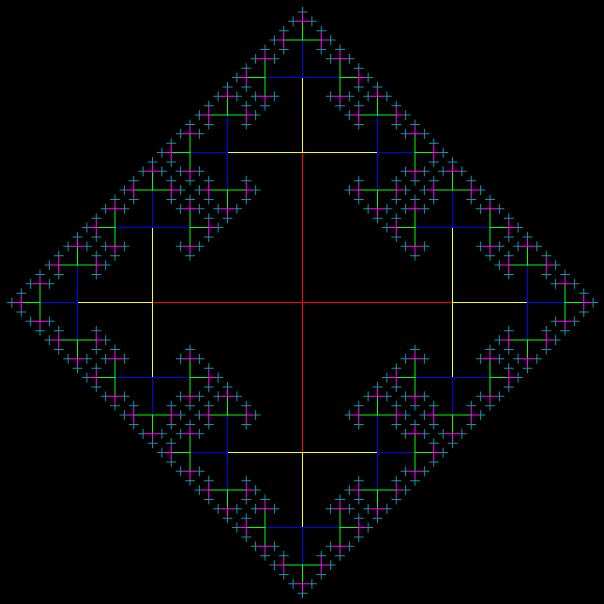
Fractal #3, stage 6
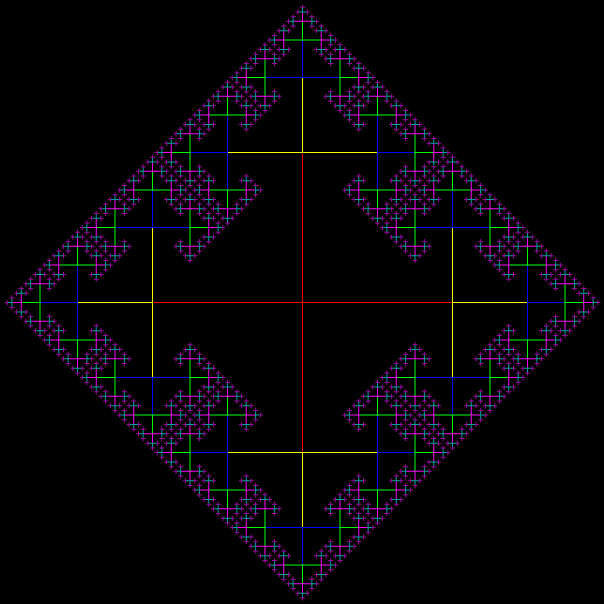
Fractal #3, stage 7
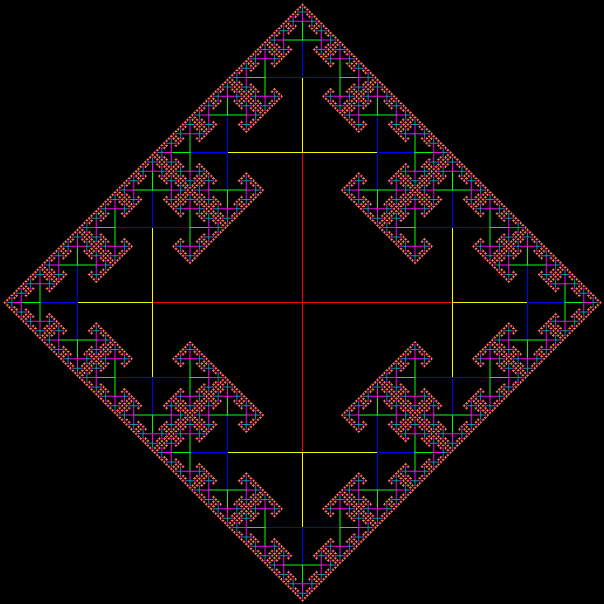
Fractal #3, stage 8
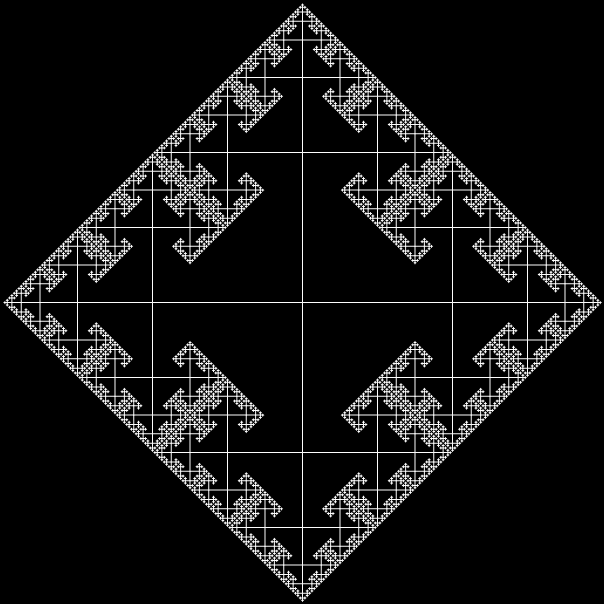
Fractal #3, stage 9
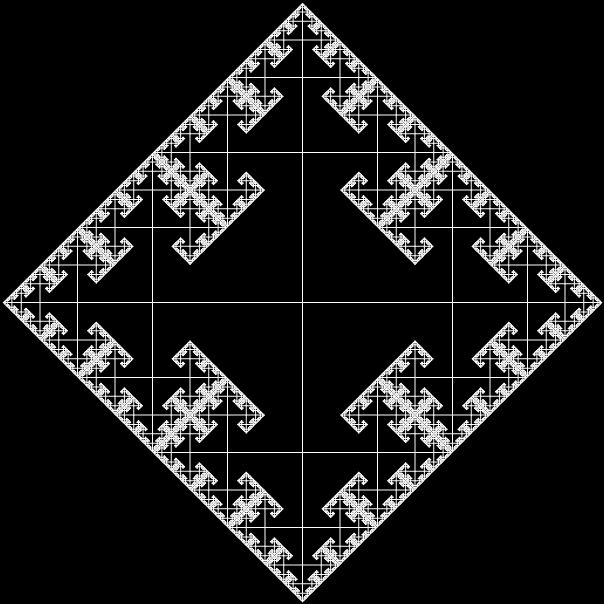
Fractal #3, stage 10
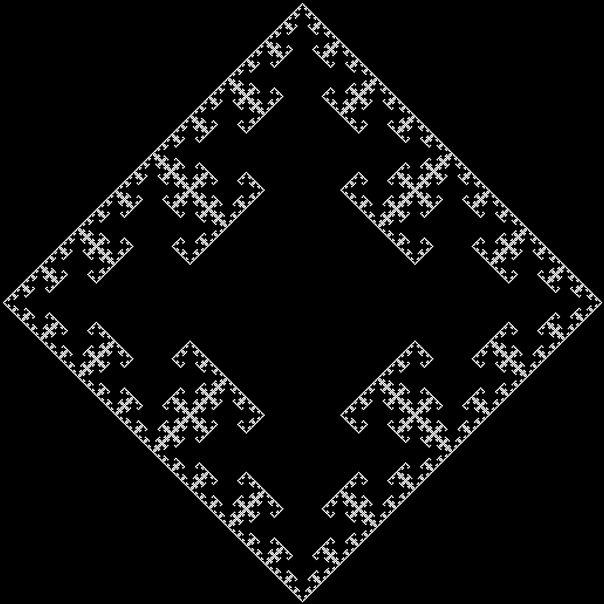
Fractal #3 (scaffolding removed)
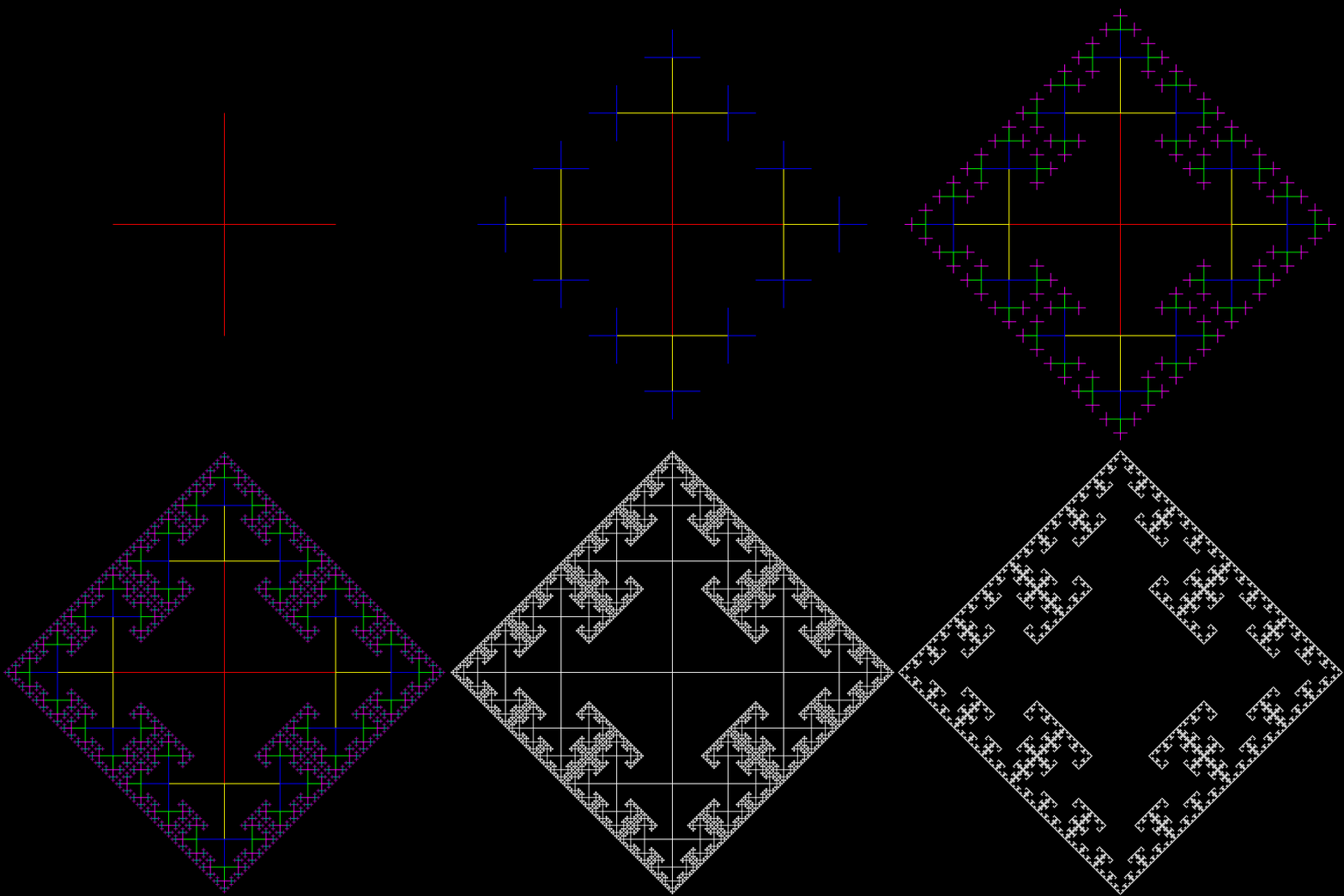
Construction of fractal #3 (animated)
Now here’s the construction of fractal #1:
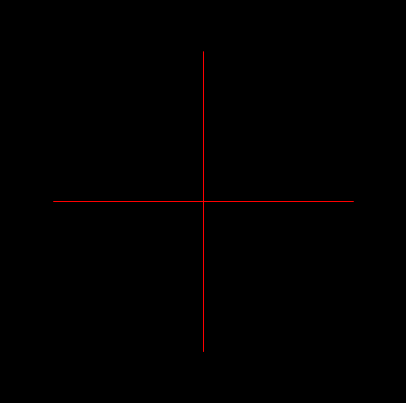
Fractal #1, stage 1
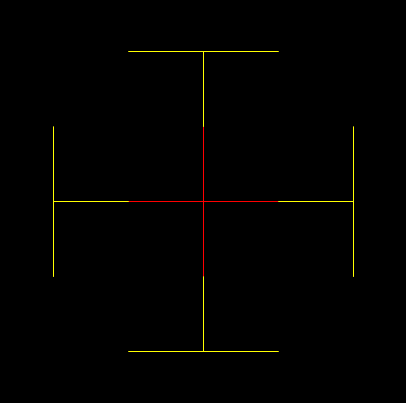
Fractal #1, stage 2
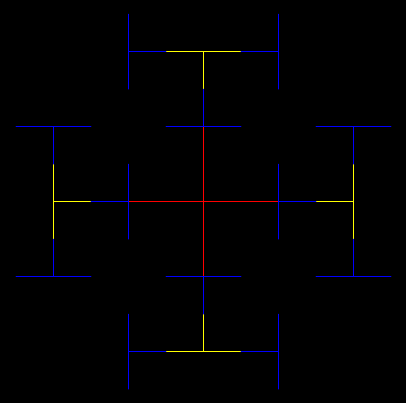
Fractal #1, stage 3
↓
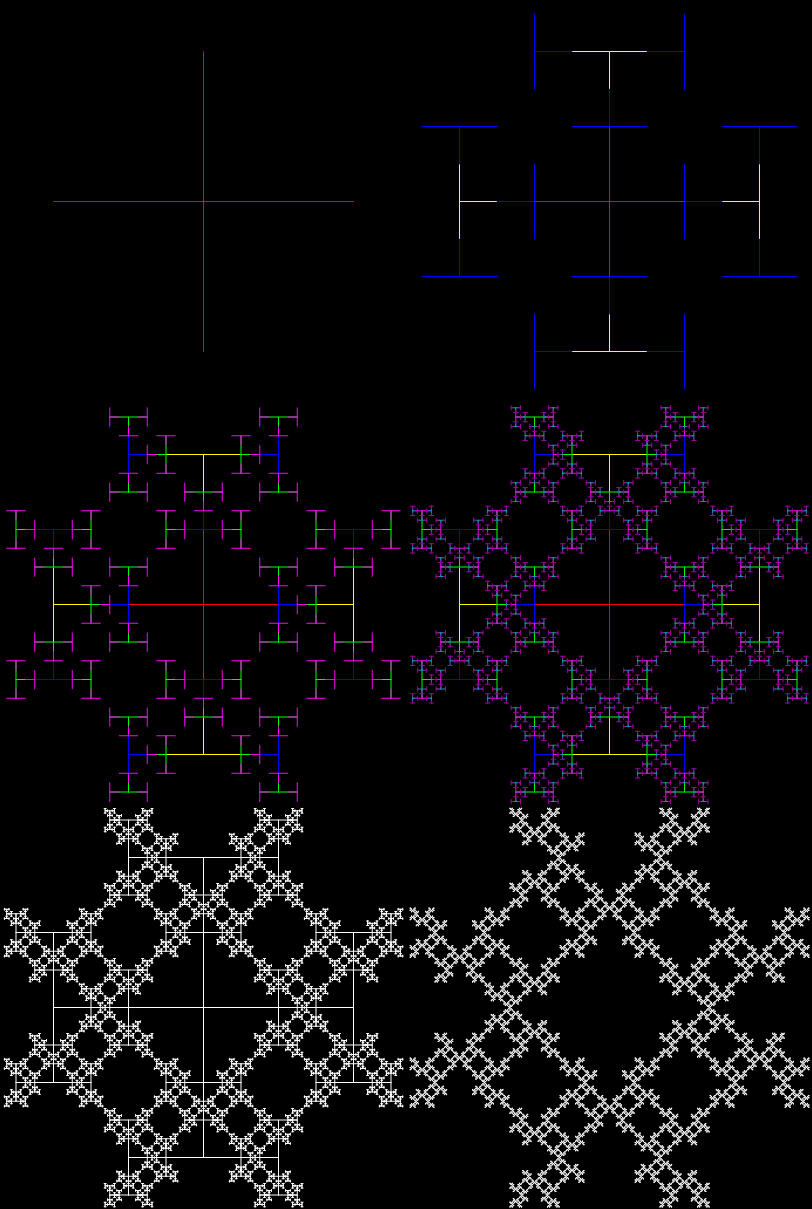
Construction of fractal #1 (animated)
Fractal #1 (static)
And the constructions of fractals #2, #4 and #5:
Fractal #2, stage 1
Fractal #2, stage 2
Fractal #2, stage 3
↓
Fractal #2 (animated)
Fractal #2 (static)
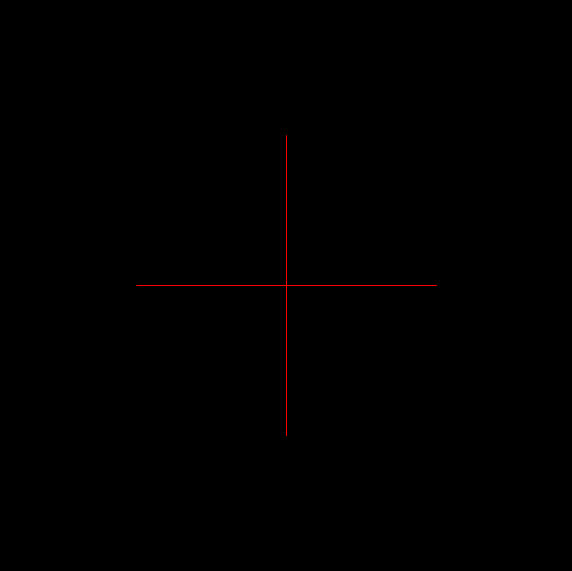
Fractal #4, stage 1
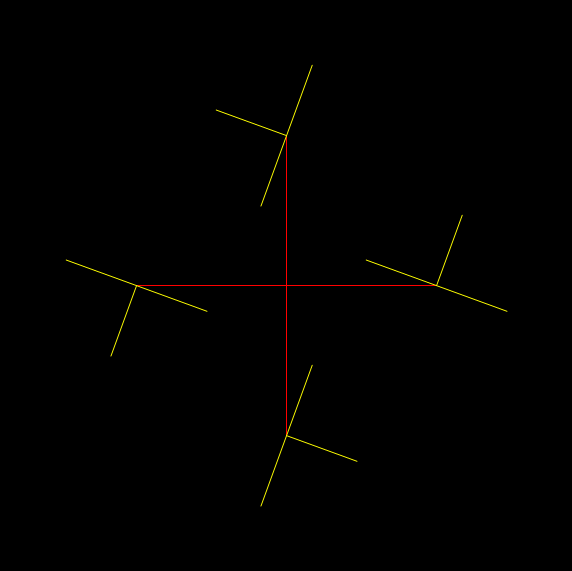
Fractal #4, stage 2
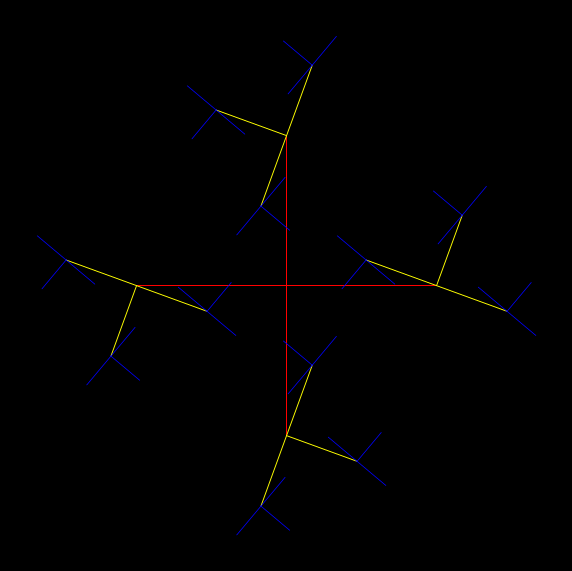
Fractal #4, stage 3
↓
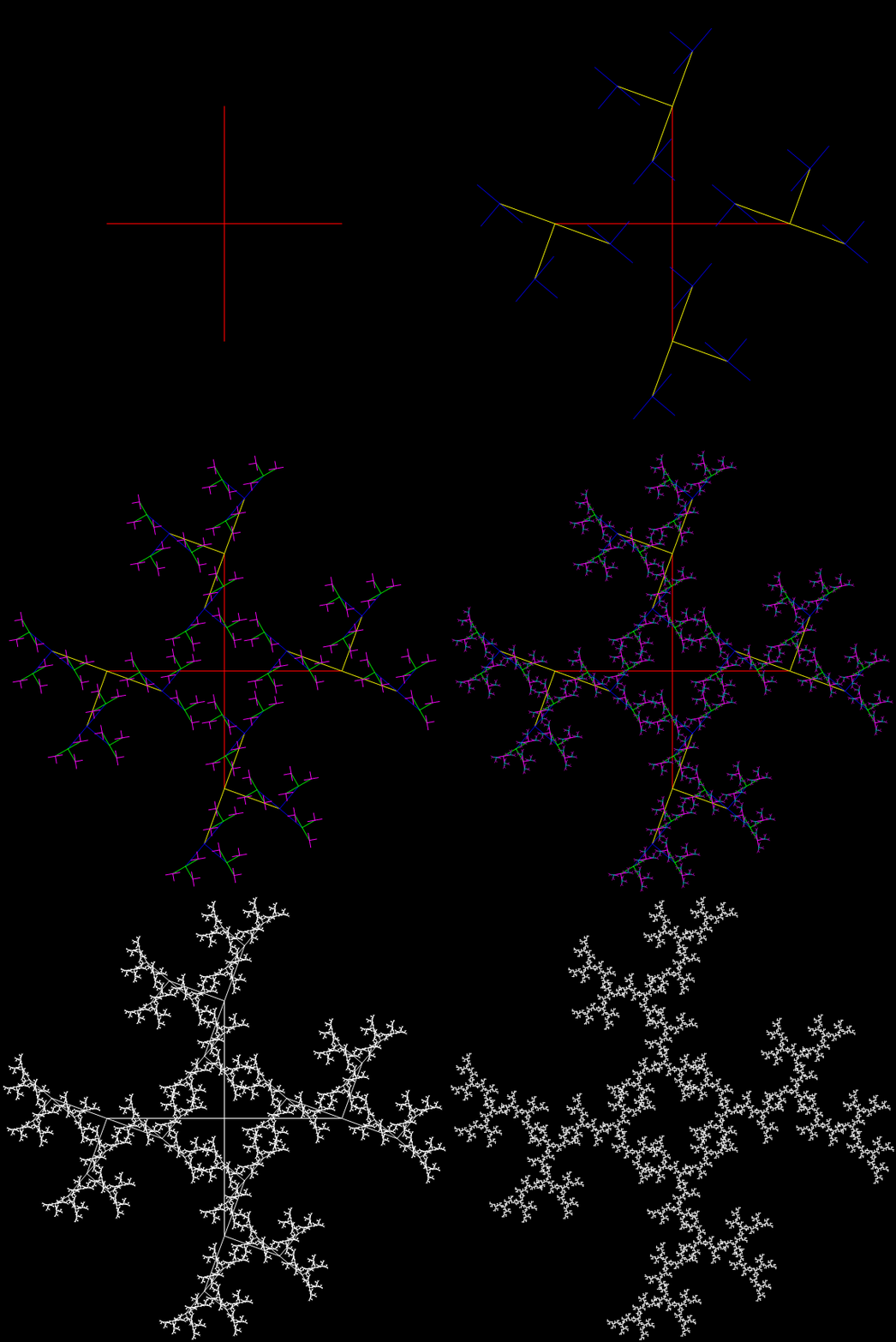
Fractal #4 (animated)
Fractal #4 (static)
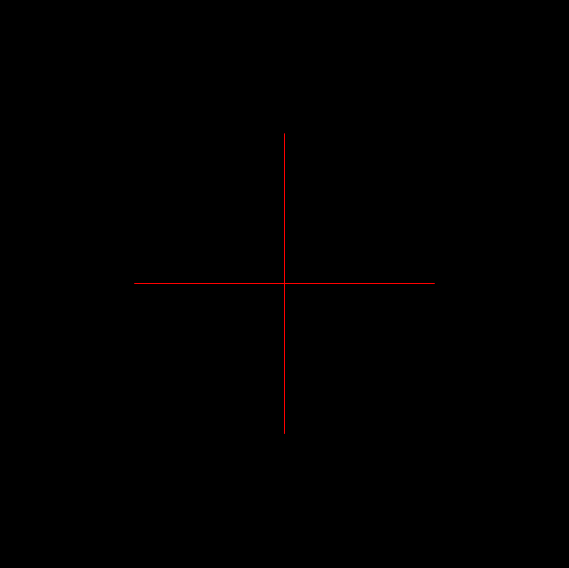
Fractal #5, stage 1
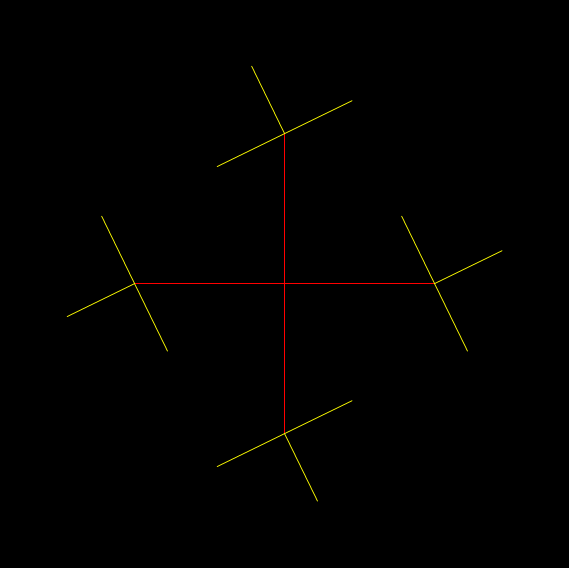
Fractal #5, stage 2
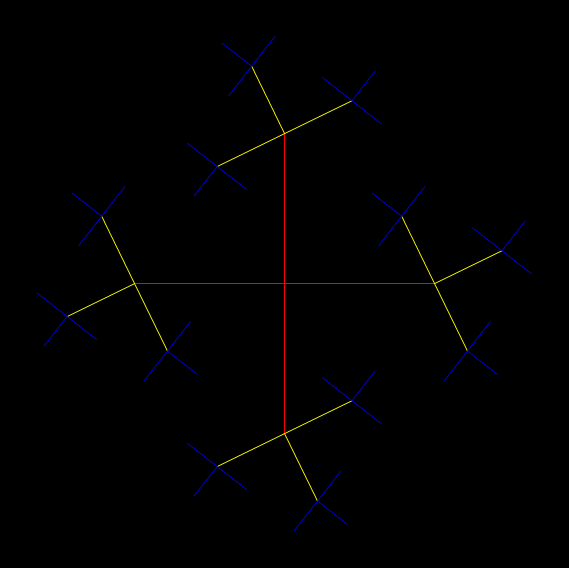
Fractal #5, stage 3
↓
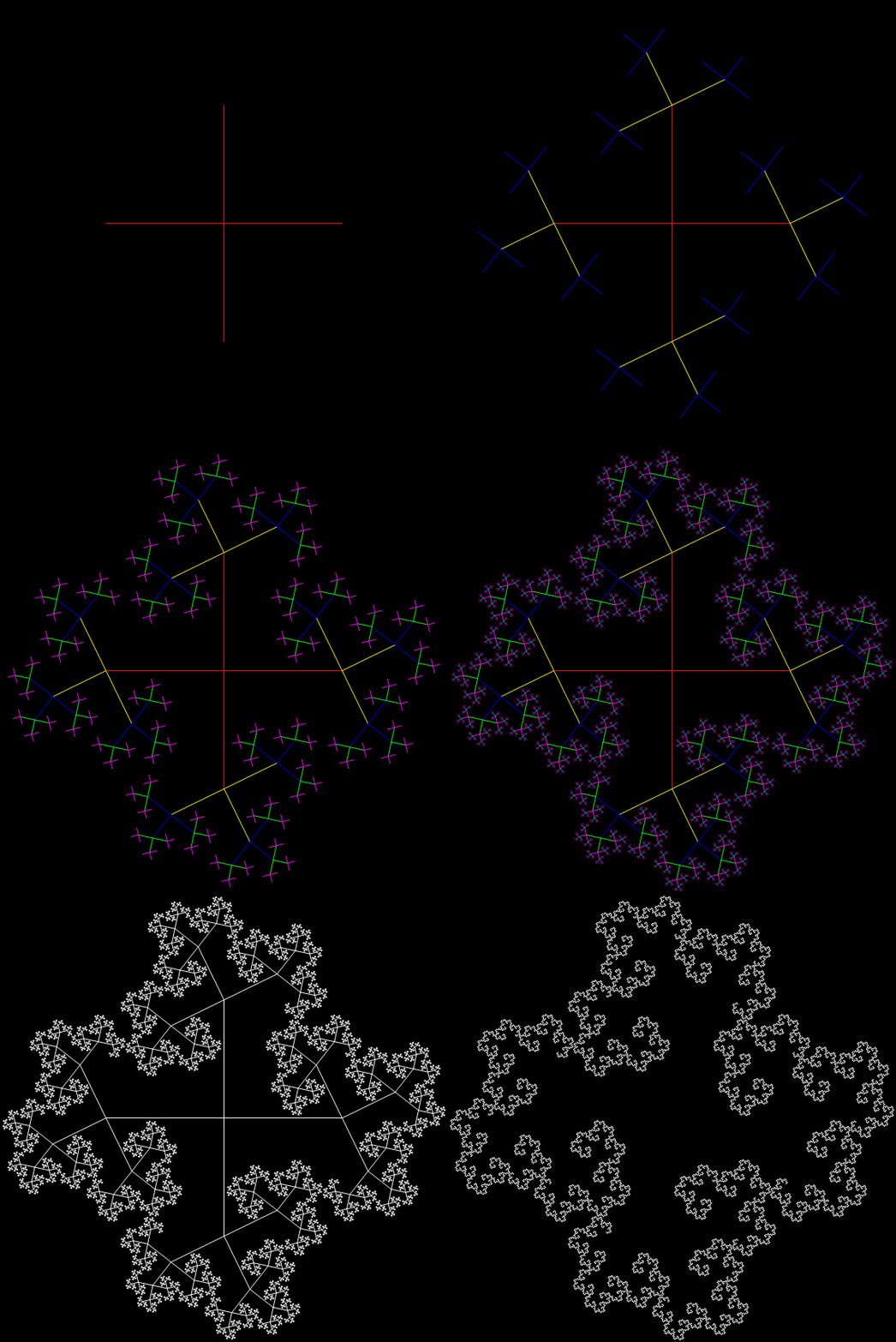
Fractal #5 (animated)
Fractal #5
Root Pursuit
Roots are hard, powers are easy. For example, the square root of 2, or √2, is the mysterious and never-ending number that is equal to 2 when multiplied by itself:
• √2 = 1·414213562373095048801688724209698078569671875376948073...
It’s hard to calculate √2. But the powers of 2, or 2^p, are the straightforward numbers that you get by multiplying 2 repeatedly by itself. It’s easy to calculate 2^p:
• 2 = 2^1
• 4 = 2^2
• 8 = 2^3
• 16 = 2^4
• 32 = 2^5
• 64 = 2^6
• 128 = 2^7
• 256 = 2^8
• 512 = 2^9
• 1024 = 2^10
• 2048 = 2^11
• 4096 = 2^12
• 8192 = 2^13
• 16384 = 2^14
• 32768 = 2^15
• 65536 = 2^16
• 131072 = 2^17
• 262144 = 2^18
• 524288 = 2^19
• 1048576 = 2^20
[...]
But there is a way to find √2 by finding 2^p, as I discovered after I asked a simple question about 2^p and 3^p. What are the longest runs of matching digits at the beginning of each power?
• 131072 = 2^17
• 129140163 = 3^17
• 1255420347077336152767157884641... = 2^193
• 1214512980685298442335534165687... = 3^193
• 2175541218577478036232553294038... = 2^619
• 2177993962169082260270654106078... = 3^619
• 7524389324549354450012295667238... = 2^2016
• 7524012611682575322123383229826... = 3^2016
There’s no obvious pattern. Then I asked the same question about 2^p and 5^p. And an interesting pattern appeared:
• 32 = 2^5
• 3125 = 5^5
• 316912650057057350374175801344 = 2^98
• 3155443620884047221646914261131... = 5^98
• 3162535207926728411757739792483... = 2^1068
• 3162020133383977882730040274356... = 5^1068
• 3162266908803418110961625404267... = 2^127185
• 3162288411569894029343799063611... = 5^127185
The digits 31622 rang a bell. Isn’t that the start of √10? Yes, it is:
• √10 = 3·1622776601683793319988935444327185337195551393252168268575...
I wrote a fast machine-code program to find even longer runs of matching initial digits. Sure enough, the pattern continued:
• 316227... = 2^2728361
• 316227... = 5^2728361
• 3162277... = 2^15917834
• 3162277... = 5^15917834
• 31622776... = 2^73482154
• 31622776... = 5^73482154
• 3162277660... = 2^961700165
• 3162277660... = 5^961700165
But why are powers of 2 and 5 generating the digits of √10? If you’re good at math, that’s a trivial question about a trivial discovery. Here’s the answer: We use base ten and 10 = 2 * 5, 10^2 = 100 = 2^2 * 5^2 = 4 * 25, 10^3 = 1000 = 2^3 * 5^3 = 8 * 125, and so on. When the initial digits of 2^p and 5^p match, those matching digits must come from the digits of √10. Otherwise the product of 2^p * 5^p would be too large or too small. Here are the records for matching initial digits multiplied by themselves:
• 32 = 2^5
• 3125 = 5^5
• 3^2 = 9
• 316912650057057350374175801344 = 2^98
• 3155443620884047221646914261131... = 5^98
• 31^2 = 961
• 3162535207926728411757739792483... = 2^1068
• 3162020133383977882730040274356... = 5^1068
• 3162^2 = 9998244
• 3162266908803418110961625404267... = 2^127185
• 3162288411569894029343799063611... = 5^127185
• 31622^2 = 999950884
• 316227... = 2^2728361
• 316227... = 5^2728361
• 316227^2 = 99999515529
• 3162277... = 2^15917834
• 3162277... = 5^15917834
• 3162277^2 = 9999995824729
• 31622776... = 2^73482154
• 31622776... = 5^73482154
• 31622776^2 = 999999961946176
• 3162277660... = 2^961700165
• 3162277660... = 5^961700165
• 3162277660^2 = 9999999998935075600
The square of each matching run falls short of 10^p. And so when the digits of 2^p and 5^p stop matching, one power must fall below √10, as it were, and one must rise above:
• 3 162266908803418110961625404267... = 2^127185
• 3·162277660168379331998893544432... = √10
• 3 162288411569894029343799063611... = 5^127185
In this way, 2^p * 5^p = 10^p. And that’s why matching initial digits of 2^p and 5^p generate the digits of √10. The same thing, mutatis mutandis, happens in base 6 with 2^p and 3^p, because 6 = 2 * 3:
• 2.24103122055214532500432040411... = √6 (in base 6)
• 24 = 2^4
• 213 = 3^4
• 225522024 = 2^34 in base 6 = 2^22 in base 10
• 22225525003213 = 3^34 (3^22)
• 2241525132535231233233555114533... = 2^1303 (2^327)
• 2240133444421105112410441102423... = 3^1303 (3^327)
• 2241055222343212030022044325420... = 2^153251 (2^15007)
• 2241003215453455515322105001310... = 3^153251 (3^15007)
• 2241032233315203525544525150530... = 2^233204 (2^20164)
• 2241030204225410320250422435321... = 3^233204 (3^20164)
• 2241031334114245140003252435303... = 2^2110415 (2^102539)
• 2241031103430053425141014505442... = 3^2110415 (3^102539)
And in base 30, where 30 = 2 * 3 * 5, you can find the digits of √30 in three different ways, because 30 = 2 * 15 = 3 * 10 = 5 * 6:
• 5·E9F2LE6BBPBF0F52B7385PE6E5CLN... = √30 (in base 30)
• 55AA4 = 2^M in base 30 = 2^22 in base 10
• 5NO6CQN69C3Q0E1Q7F = F^M = 15^22
• 5E63NMOAO4JPQD6996F3HPLIMLIRL6F... = 2^K6 (2^606)
• 5ECQDMIOCIAIR0DGJ4O4H8EN10AQ2GR... = F^K6 (15^606)
• 5E9DTE7BO41HIQDDO0NB1MFNEE4QJRF... = 2^B14 (2^9934)
• 5E9G5SL7KBNKFLKSG89J9J9NT17KHHO... = F^B14 (15^9934)
[...]
• 5R4C9 = 3^E in base 30 = 3^14 in base 10
• 52CE6A3L3A = A^E = 10^14
• 5E6SOQE5II5A8IRCH9HFBGO7835KL8A = 3^3N (3^113)
• 5EC1BLQHNJLTGD00SLBEDQ73AH465E3... = A^3N (10^113)
• 5E9FI455MQI4KOJM0HSBP3GG6OL9T8P... = 3^EJH (3^13187)
• 5E9EH8N8D9TR1AH48MT7OR3MHAGFNFQ... = A^EJH (10^13187)
[...]
• 5OCNCNRAP = 5^I in base 30 = 5^18 in base 10
• 54NO22GI76 = 6^I (6^18)
• 5EG4RAMD1IGGHQ8QS2QR0S0EH09DK16... = 5^1M7 (5^1567)
• 5E2PG4Q2G63DOBIJ54E4O035Q9TEJGH... = 6^1M7 (6^1567)
• 5E96DB9T6TBIM1FCCK8A8J7IDRCTM71... = 5^F9G (5^13786)
• 5E9NM222PN9Q9TEFTJ94261NRBB8FCH... = 6^F9G (6^13786)
[...]
So that’s √10, √6 and √30. But I said at the beginning that you can find √2 by finding 2^p. How do you do that? By offsetting the powers, as it were. With 2^p and 5^p, you can find the digits of √10. With 2^(p+1) and 5^p, you can find the digits of √2 and √20, because 2^(p+1) * 5^p = 2 * 2^p * 5^p = 2 * 10^p:
• √2 = 1·414213562373095048801688724209698078569671875376948073...
• √20 = 4·472135954999579392818347337462552470881236719223051448...
• 16 = 2^4
• 125 = 5^3
• 140737488355328 = 2^47
• 142108547152020037174224853515625 = 5^46
• 1413... = 2^243
• 1414... = 5^242
• 14141... = 2^6651
• 14142... = 5^6650
• 141421... = 2^35389
• 141420... = 5^35388
• 4472136... = 2^162574
• 4472135... = 5^162573
• 141421359... = 2^3216082
• 141421352... = 5^3216081
• 447213595... = 2^172530387
• 447213595... = 5^172530386
[...]
A Vulcar Display of Power
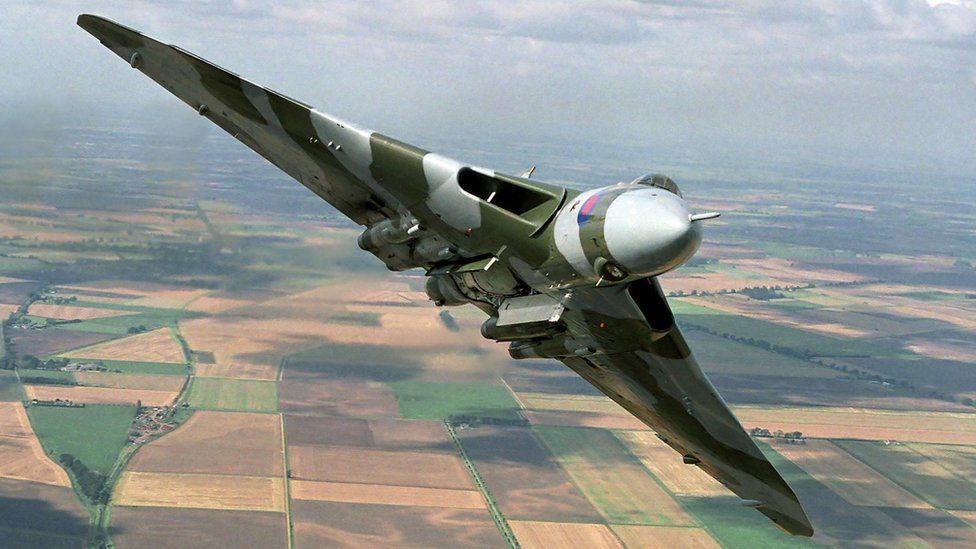
Vulcan bomber (photo via BBC)
Post Performative Post-Scriptum
The title of this incendiary intervention is a paronomasia on Pantera’s Vulgar Display of Power (1992). I don’t like Pantera, but that’s a good title.
 Overlord In Terms of Core Issues Around Maximal Engagement with Key Notions of the Über-Feral