Performativizing Papyrocentricity #37

Papyrocentric Performativity Presents:

Maths and Marmosets – The Great Mathematical Problems: Marvels and Mysteries of Mathematics, Ian Stewart (Profile Books 2013)

Be Ear Now – Sonic Wonderland: A Scientific Odyssey of Sound, Trevor Cox (Vintage 2015)

Exquisite Bulgarity – The Future of Architecture in 100 Buildings, Mark Kushner (Simon & Schuster 2015)

Stellar StoryDiscovering the Universe: The Story of Astronomy, Paul Murdin (Andre Deutsch 2014)

Terms of EndrearmentShe Literally Exploded: The Daily Telegraph Infuriating Phrasebook, Christopher Howse and Richard Preston (Constable 2007)


Or Read a Review at Random: RaRaR

Narcischism

What have bits to do with splits? A lot. Suppose you take the digits 12345, split them in all possible ways, then sum the results, like this:

12345 → (1234 + 5) + (123 + 45) + (123 + 4 + 5) + (12 + 345) + (12 + 34 + 5) + (12 + 3 + 45) + (12 + 3 + 4 + 5) + (1 + 2345) + (1 + 234 + 5) + (1 + 23 + 45) + (1 + 23 + 4 + 5) + (1 + 2 + 345) + (1 + 2 + 34 + 5) + (1 + 2 + 3 + 45) + (1 + 2 + 3 + 4 + 5) = 5175.

That’s a sum in base 10, but base 2 is at work below the surface, because each set of numbers is the answer to a series of binary questions: split or not? There are four possible places to split the digits 12345: after the 1, after the 2, after the 3 and after the 4. In (1 + 2 + 3 + 4 + 5), the binary question “Split or not?” is answered SPLIT every time. In (1234 + 5) and (1 + 2345) it’s answered SPLIT only once.

So the splits are governed by a four-digit binary number ranging from 0001 to 1111. When the binary digit is 1, split; when the binary digit is 0, don’t split. In binary, 0001 to 1111 = 01 to 15 in base 10 = 2^4-1. That’s for a five-digit number, so the four-digit 1234 will have 2^3-1 = 7 sets of sums:

1234 → (123 + 4) + (12 + 34) + (12 + 3 + 4) + (1 + 234) + (1 + 23 + 4) + 110 (1 + 2 + 34) + (1 + 2 + 3 + 4) = 502.

And the six-digit number 123456 will have 2^5-1 = 31 sets of sums. By now, an exciting question may have occurred to some readers. Does any number in base 10 equal the sum of all possible numbers formed by splitting its digits?

The exciting answer is: 0. In other words: No. To see why not, examine a quick way of summing the split-bits of 123,456,789, with nine digits. The long way is to find all possible sets of split-bits. There are 2^8-1 = 255 of them. The quick way is to sum these equations:

1 * 128 + 10 * 64 + 100 * 32 + 1000 * 16 + 10000 * 8 + 100000 * 4 + 1000000 * 2 + 10000000 * 1
2 * 128 + 20 * 64 + 200 * 32 + 2000 * 16 + 20000 * 8 + 200000 * 4 + 2000000 * 2 + 20000000 * 1
3 * 128 + 30 * 64 + 300 * 32 + 3000 * 16 + 30000 * 8 + 300000 * 4 + 3000000 * 3
4 * 128 + 40 * 64 + 400 * 32 + 4000 * 16 + 40000 * 8 + 400000 * 7
5 * 128 + 50 * 64 + 500 * 32 + 5000 * 16 + 50000 * 15
6 * 128 + 60 * 64 + 600 * 32 + 6000 * 31
7 * 128 + 70 * 64 + 700 * 63
8 * 128 + 80 * 127
9 * 255

Sum = 52,322,283.

52,322,283 has eight digits. If you use the same formula for the nine-digit number 999,999,999, the sum is 265,621,761, which has nine digits but is far smaller than 999,999,999. If you adapt the formula for the twenty-digit 19,999,999,999,999,999,999 (starting with 1), the split-bit sum is 16,562,499,999,987,400,705. In base 10, as far as I can see, numbers increase too fast and digit-lengths too slowly for the binary governing the split-sums to keep up. That’s also true in base 9 and base 8:

Num = 18,888,888,888,888,888,888 (b=9)
Sum = 16,714,201,578,038,328,760

Num = 17,777,777,777,777,777,777 (b=8)
Sum = 17,070,707,070,625,000,001

So what about base 7? Do the numbers increase slowly enough and the digit-lengths fast enough for the binary to keep up? The answer is: 1. In base 7, this twenty-digit number is actually smaller than its split-bit sum:

Num = 16,666,666,666,666,666,666 (b=7)
Sum = 20,363,036,303,404,141,363

And if you search below that, you can find a number that is equal to its split-bit sum:

166512 → (1 + 6 + 6 + 5 + 1 + 2) + (16 + 6 + 5 + 1 + 2) + (1 + 66 + 5 + 1 + 2) + (166 + 5 + 1 + 2) + (1 + 6 + 65 + 1 + 2) + (16 + 65 + 1 + 2) + (1 + 665 + 1 + 2) + (1665 + 1 + 2) + (1 + 6 + 6 + 51 + 2) + (16 + 6 + 51 + 2) + (1 + 66 + 51 + 2) + (166 + 51 + 2) + (1 + 6 + 651 + 2) + (16 + 651 + 2) + (1 + 6651 + 2) + (16651 + 2) + (1 + 6 + 6 + 5 + 12) + (16 + 6 + 5 + 12) + (1 + 66 + 5 + 12) + (166 + 5 + 12) + (1 + 6 + 65 + 12) + (16 + 65 + 12) + (1 + 665 + 12) + (1665 + 12) + (1 + 6 + 6 + 512) + (16 + 6 + 512) + (1 + 66 + 512) + (166 + 512) + (1 + 6 + 6512) + (16 + 6512) + (1 + 66512) = 166512[b=7] = 33525[b=10].

So 33525 in base 7 is what might be called a narcischist: it can gaze into the split-bits of its own digits and see itself gazing back. In base 6, 1940 is a narcischist:

12552 → (1 + 2 + 5 + 5 + 2) + (12 + 5 + 5 + 2) + (1 + 25 + 5 + 2) + (125 + 5 + 2) + (1 + 2 + 55 + 2) + (12 + 55 + 2) + (1 + 255 + 2) + (1255 + 2) + (1 + 2 + 5+ 52) + (12 + 5 + 52) + (1 + 25 + 52) + (125 + 52) + (1 + 2 + 552) + (12 + 552) + (1 + 2552) = 12552[b=6] = 1940[b=10].

In base 5, 4074 is a narcischist:

112244 → (1 + 1 + 2 + 2 + 4 + 4) + (11 + 2 + 2 + 4 + 4) + (1 + 12 + 2 + 4 + 4) + (112 + 2 + 4 + 4) + (1 + 1 + 22 + 4 + 4) + (11 + 22 + 4 + 4) + (1 + 122 + 4 + 4) + (1122 + 4 + 4) + (1 + 1 + 2 + 24 + 4) + (11 + 2 + 24 + 4) + (1 + 12 + 24 + 4) + (112 + 24 + 4) + (1 + 1 + 224 + 4) + (11 + 224 + 4) + (1 + 1224 + 4) + (11224 + 4) + (1 + 1 + 2 + 2 + 44) + (11 + 2 + 2 + 44) + (1 + 12 + 2 + 44) + (112 + 2 + 44) + (1 + 1 + 22 + 44) + (11 + 22 + 44) + (1 + 122 + 44) + (1122 + 44) + (1 + 1 + 2 + 244) + (11 + 2 + 244) + (1 + 12 + 244) + (112 + 244) + (1 + 1 + 2244) + (11 + 2244) + (1 + 12244) = 112244[b=5] = 4074.

And in base 4, 27 is:

123 → (1 + 2 + 3) + (12 + 3) + (1 + 23) = 123[b=4] = 27.

And in base 3, 13 and 26 are:

111 → (1 + 1 + 1) + (11 + 1) + (1 + 11) = 111[b=3] = 13.

222 → (2 + 2 + 2) + (22 + 2) + (2 + 22) = 222[b=3] = 26.

There are many more narcischists in all these bases, even if you exclude numbers with zeroes in them, like these in base 4:

1022 → (1 + 0 + 2 + 2) + (10 + 2 + 2) + (1 + 02 + 2) + (102 + 2) + (1 + 0 + 22) + (10 + 22) + (1 + 022) = 1022[b=4] = 74.

1030 → (1 + 0 + 3 + 0) + (10 + 3 + 0) + (1 + 03 + 0) + (103 + 0) + (1 + 0 + 30) + (10 + 30) + (1 + 030) = 1030[b=4] = 76.

1120 → (1 + 1 + 2 + 0) + (11 + 2 + 0) + (1 + 12 + 0) + (112 + 0) + (1 + 1 + 20) + (11 + 20) + (1 + 120) = 1120[b=4] = 88.

Magistra Rules the Waves

One of my favourite integer sequences has the simple formula n(i) = n(i-1) + digitsum(n(i-1)). If it’s seeded with 1, its first few terms go like this:

n(1) = 1
n(2) = n(1) + digitsum(n(1)) = 1 + digitsum(1) = 2
n(3) = 2 + digitsum(2) = 4
n(4) = 4 + digitsum(4) = 8
n(5) = 8 + digitsum(8) = 16
n(6) = 16 + digitsum(16) = 16 + 1+6 = 16 + 7 = 23
n(7) = 23 + digitsum(23) = 23 + 2+3 = 23 + 5 = 28
n(8) = 28 + digitsum(28) = 28 + 2+8 = 28 + 10 = 38

As a sequence, it looks like this:

1, 2, 4, 8, 16, 23, 28, 38, 49, 62, 70, 77, 91, 101, 103, 107, 115, 122, 127, 137, 148, 161, 169, 185, 199, 218, 229, 242, 250, 257, 271, 281, 292, 305, 313, 320, 325, 335, 346, 359, 376, 392, 406, 416, 427, 440, 448, 464, 478, 497, 517, 530, 538, 554, 568, 587, 607, 620, 628, 644, 658, 677, 697, 719, 736, 752, 766, 785, 805, 818, 835, 851, 865, 884, 904, 917, 934, 950, 964, 983, 1003…

Given a number at random, is there a quick way to say whether it appears in the sequence seeded with 1? Not that I know, with one exception. If the number is divisible by 3, it doesn’t appear, at least in base 10. In base 2, that rule doesn’t apply:

n(1) = 1
n(2) = 1 + digitsum(1) = 10 = 1 + 1 = 2
n(3) = 10 + digitsum(10) = 10 + 1 = 11 = 2 + 1 = 3
n(4) = 11 + digitsum(11) = 11 + 1+1 = 101 = 3 + 2 = 5
n(5) = 101 + digitsum(101) = 101 + 1+0+1 = 111 = 5 + 2 = 7
n(6) = 111 + digitsum(111) = 111 + 11 = 1010 = 7 + 3 = 10
n(7) = 1010 + digitsum(1010) = 1010 + 10 = 1100 = 10 + 2 = 12
n(8) = 1100 + digitsum(1100) = 1100 + 10 = 1110 = 12 + 2 = 14

1, 2, 3, 5, 7, 10, 12, 14, 17, 19, 22, 25, 28, 31, 36, 38, 41, 44, 47, 52, 55, 60, 64, 65, 67, 70, 73, 76, 79, 84, 87, 92, 96, 98, 101, 105, 109, 114, 118, 123, 129, 131, 134, 137, 140, 143, 148, 151, 156, 160, 162, 165, 169, 173, 178, 182, 187, 193, 196, 199, 204, 208, 211, 216, 220, 225, 229, 234, 239, 246, 252, 258, 260, 262, 265, 268, 271, 276, 279, 284, 288, 290, 293, 297, 301, 306, 310, 315, 321, 324, 327, 332, 336, 339, 344, 348, 353, 357, 362, 367, 374…

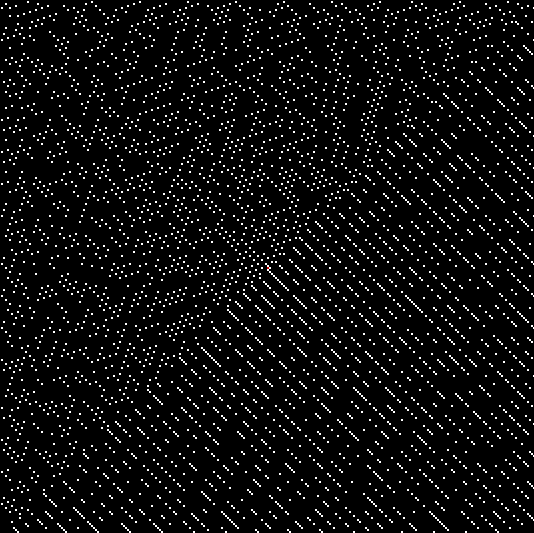
What patterns are there in these sequences? It’s easier to check when they’re represented graphically, so I converted them into patterns à la the Ulam spiral, where n is represented as a dot on a spiral of integers. This is the spiral for base 10:

ulambase10Base 10


And these are the spirals for bases 2 and 3:

ulambase2

Base 2


ulambase3

Base 3


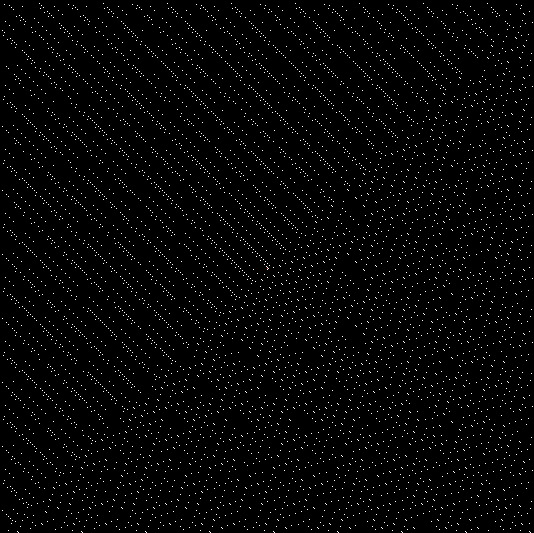
These sequences look fairly random to me: there are no obvious patterns in the jumps from n(i) to n(i+1), i.e. in the values for digitsum(n(i)). Now try the spirals for bases 9 and 33:

ulambase9

Base 9


ulambase33

Base 33


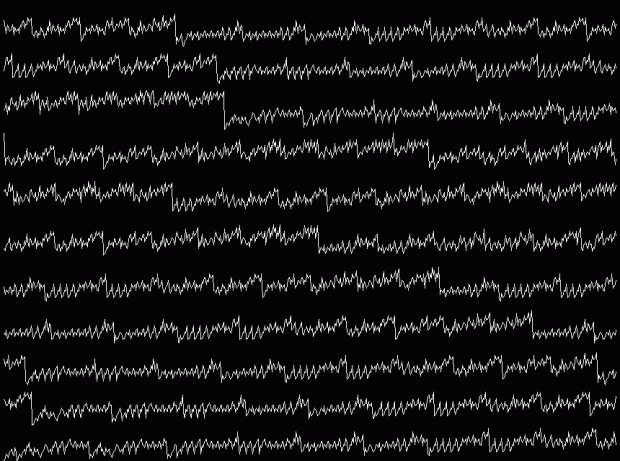
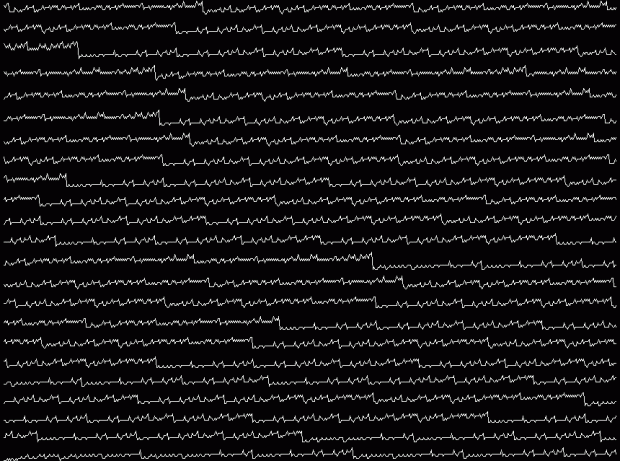
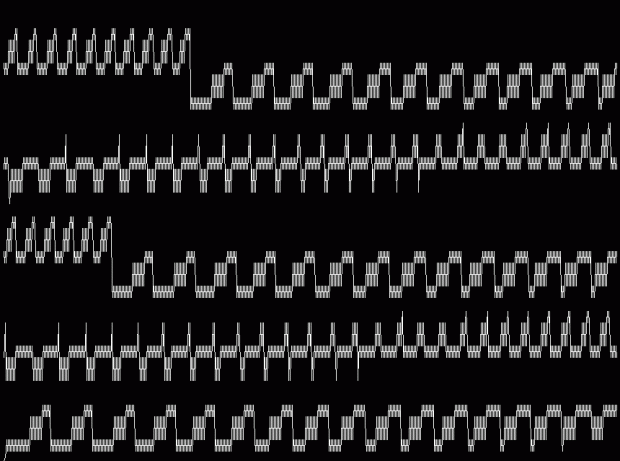
Patterns have appeared: there is some regularity in the jumps. You can see these regularities more clearly if you represent digitsum(n(i)) as a graph, with n(i) on the x axis and digitsum(n(i)) on the y axis. If the graph starts with n(i) = 1 on the lower left and proceeds left-right, left-right up the screen, it looks like this in base 10:

base10

Base 10 (click to enlarge)


Here are bases 2 and 3:

base2

Base 2


base3

Base 3


The jumps seem fairly random. Now try bases 9, 13, 16, 17, 25, 33 and 49:

base9

Base 9


base13

Base 13


base16

Base 16


base17

Base 17


base25

Base 25


base33

Base 33


base49

Base 49


In some bases, the formula n(i) = n(i-1) + digitsum(n(i-1)) generates mild randomness. In others, it generates strong regularity, like waves rolling ashore under a steady wind. I don’t understand why, but regularity seems to occur in bases that are one more than a power of 2 and also in some bases that are primes or squares.


Elsewhere other-posted:

Mathematica Magistra Mundi
8200_idf_insignia

Dig Sum Fib

The Fibonacci sequence is an infinitely rich sequence based on a very simple rule: add the previous two numbers. If the first two numbers are 1 and 1, the sequence begins like this:

1, 1, 2, 3, 5, 8, 13, 21, 34, 55, 89, 144, 233, 377, 610, 987, 1597, 2584, 4181, 6765, 10946, 17711, 28657, 46368, 75025…

Plainly, the numbers increase for ever. The hundredth Fibonacci number is 354,224,848,179,261,915,075, for example, and the two-hundredth is 280,571,172,992,510,140,037,611,932,413,038,677,189,525. But there are variants on the Fibonacci sequence that don’t increase for ever. The standard rule is n(i) = n(i-2) + n(i-1). What if the rule becomes n(i) = digitsum(n(i-2)) + digitsum(n(i-1))? Now the sequence falls into a loop, like this:

1, 1, 2, 3, 5, 8, 13, 12, 7, 10, 8, 9, 17, 17, 16, 15, 13, 10, 5, 6, 11, 8, 10, 9, 10, 10, 2, 3… (length=28)

But that’s in base 10. Here are the previous bases:

1, 1, 2, 2, 2… (base=2) (length=5)
1, 1, 2, 3, 3, 2, 3… (b=3) (l=7)
1, 1, 2, 3, 5, 5, 4, 3, 4, 4, 2, 3… (b=4) (l=12)
1, 1, 2, 3, 5, 4, 5, 5, 2, 3… (b=5) (l=10)
1, 1, 2, 3, 5, 8, 8, 6, 4, 5, 9, 9, 8, 7, 5, 7, 7, 4, 6, 5, 6, 6, 2, 3… (b=6) (l=24)
1, 1, 2, 3, 5, 8, 7, 3, 4, 7, 5, 6, 11, 11, 10, 9, 7, 4, 5, 9, 8, 5, 7, 6, 7, 7, 2, 3… (b=7) (l=28)
1, 1, 2, 3, 5, 8, 6, 7, 13, 13, 12, 11, 9, 6, 8, 7, 8, 8, 2, 3… (b=8) (l=20)
1, 1, 2, 3, 5, 8, 13, 13, 10, 7, 9, 8, 9, 9, 2, 3… (b=9) (l=16)

Apart from base 2, all the bases repeat with (2, 3), which is set up in each case by (base, base) = (10, 10) in that base, equivalent to (1, 1). All bases > 2 appear to repeat with (2, 3), but I don’t understand why. The length of the sequence varies widely. Here it is in bases 29, 30 and 31:

1, 1, 2, 3, 5, 8, 13, 21, 34, 27, 33, 32, 9, 13, 22, 35, 29, 8, 9, 17, 26, 43, 41, 28, 41, 41, 26, 39, 37, 20, 29, 21, 22, 43, 37, 24, 33, 29, 6, 7, 13, 20, 33, 25, 30, 27, 29, 28, 29, 29, 2, 3… (b=29) (l=52)

1, 1, 2, 3, 5, 8, 13, 21, 34, 26, 31, 28, 30, 29, 30, 30, 2, 3 (b=30) (l=18)

1, 1, 2, 3, 5, 8, 13, 21, 34, 25, 29, 54, 53, 47, 40, 27, 37, 34, 11, 15, 26, 41, 37, 18, 25, 43, 38, 21, 29, 50, 49, 39, 28, 37, 35, 12, 17, 29, 46, 45, 31, 16, 17, 33, 20, 23, 43, 36, 19, 25, 44, 39, 23, 32, 25, 27, 52, 49, 41, 30, 41, 41, 22, 33, 25, 28, 53, 51, 44, 35, 19, 24, 43, 37, 20, 27, 47, 44, 31, 15, 16, 31, 17, 18, 35, 23, 28, 51, 49, 40, 29, 39, 38, 17, 25, 42, 37, 19, 26, 45, 41, 26, 37, 33, 10, 13, 23, 36, 29, 35, 34, 9, 13, 22, 35, 27, 32, 29, 31, 30, 31, 31, 2, 3 (b=31) (l=124)

The sequence for base 77 is short like that for base 30:

1, 1, 2, 3, 5, 8, 13, 21, 34, 55, 89, 68, 81, 73, 78, 75, 77, 76, 77, 77, 2, 3 (b=77) (l=22)

But the sequence for base 51 is this:

1, 1, 2, 3, 5, 8, 13, 21, 34, 55, 39, 44, 83, 77, 60, 37, 47, 84, 81, 65, 46, 61, 57, 18, 25, 43, 68, 61, 29, 40, 69, 59, 28, 37, 65, 52, 17, 19, 36, 55, 41, 46, 87, 83, 70, 53, 23, 26, 49, 75, 74, 49, 73, 72, 45, 67, 62, 29, 41, 70, 61, 31, 42, 73, 65, 38, 53, 41, 44, 85, 79, 64, 43, 57, 50, 57, 57, 14, 21, 35, 56, 41, 47, 88, 85, 73, 58, 31, 39, 70, 59, 29, 38, 67, 55, 22, 27, 49, 76, 75, 51, 26, 27, 53, 30, 33, 63, 46, 59, 55, 14, 19, 33, 52, 35, 37, 72, 59, 31, 40, 71, 61, 32, 43, 75, 68, 43, 61, 54, 15, 19, 34, 53, 37, 40, 77, 67, 44, 61, 55, 16, 21, 37, 58, 45, 53, 48, 51, 49, 50, 99, 99, 98, 97, 95, 92, 87, 79, 66, 45, 61, 56, 17, 23, 40, 63, 53, 16, 19, 35, 54, 39, 43, 82, 75, 57, 32, 39, 71, 60, 31, 41, 72, 63, 35, 48, 83, 81, 64, 45, 59, 54, 13, 17, 30, 47, 77, 74, 51, 25, 26, 51, 27, 28, 55, 33, 38, 71, 59, 30, 39, 69, 58, 27, 35, 62, 47, 59, 56, 15, 21, 36, 57, 43, 50, 93, 93, 86, 79, 65, 44, 59, 53, 12, 15, 27, 42, 69, 61, 30, 41, 71, 62, 33, 45, 78, 73, 51, 24, 25, 49, 74, 73, 47, 70, 67, 37, 54, 41, 45, 86, 81, 67, 48, 65, 63, 28, 41, 69, 60, 29, 39, 68, 57, 25, 32, 57, 39, 46, 85, 81, 66, 47, 63, 60, 23, 33, 56, 39, 45, 84, 79, 63, 42, 55, 47, 52, 49, 51, 50, 51, 51, 2, 3… (b=51) (l=304)

Summer Set Sequence

I wondered what would happen if you added to a set of numbers, (a, b, c), the first number that wasn’t equal to the sum of any subset of the numbers: a + b, a + c, c + b, a + b + c. If the set begins with 1, the first number not equal to any subset of (1) is 2. So the set becomes (1, 2). 3 = 1 + 2, so 3 is not added. But 4 is added, making the set (1, 2, 4). The sequence of additions goes like this:

1, 2, 4, 8, 16, 32, 64, 128, 256, 512, 1024, 2048, 4096, 8192, 16384, 32768, 65536…

It’s the powers of 2, because some subset of the powers of 2 < 2^p will equal any number from 1 to (2^p)-1, therefore the first addition will be 2^p = the cumulative sum + 1:

1 (cumulative sum=1), 2 (cs=3), 4 (cs=7), 8 (cs=15), 16 (cs=31), 32 (cs=63), 64 (cs=127), 128 (cs=255), 256 (cs=511), 512 (cs=1023), 1024 (cs=2047), 2048 (cs=4095), 4096 (cs=8191), 8192 (cs=16383), 16384 (cs=32767), 32768 (cs=65535)…

If you seed the sequence with the set (2), the first addition is 3, but after that the powers of 2 re-appear:

2, 3, 4, 8, 16, 32, 64, 128, 256, 512, 1024, 2048, 4096, 8192, 16384, 32768, 65536…

It becomes more complicated if the sequence is seeded with the set (3):

3, 4, 5, 6, 16, 17, 49, 50, 148, 149, 445, 446, 1336, 1337, 4009, 4010, 12028, 12029, 36085, 36086…

You can predict the pattern by looking at the cumulative sums again:

3, 4, 5, 6 (cumulative sum=18), 16, 17 (cs=51), 49, 50 (cs=150), 148, 149 (cs=447), 445, 446 (cs=1338), 1336, 1337 (cs=4011), 4009, 4010 (cs=12030), 12028, 12029 (cs=36087), 36085, 36086 (cs=108258)…

The sequence begins with a block of four consecutive numbers, followed by separate blocks of two consecutive numbers. The first number in each 2-block is predicted by the cumulative sum of the last number in the previous block, according to the formula n = cumulative sum – seed + 1. When the seed is 3, n = cs-3+1.

If the seed is 4, the sequences goes like this:

4, 5, 6, 7, 8, 27, 28, 29, 111, 112, 113, 447, 448, 449, 1791, 1792, 1793, 7167, 7168, 7169…

Now the sequence begins with a block of five consecutive numbers, followed by separate blocks of three consecutive numbers. The formula is n = cs-4+1:

4, 5, 6, 7, 8 (cumulative sum=30), 27, 28, 29 (cs=114), 111, 112, 113 (cs=450), 447, 448, 449 (cs=1794), 1791, 1792, 1793 (cs=7170), 7167, 7168, 7169 (cs=28674)…

And here’s the sequence seeded with (5):

5, 6, 7, 8, 9, 10, 41, 42, 43, 44, 211, 212, 213, 214, 1061, 1062, 1063, 1064, 5311, 5312, 5313, 5314…

5, 6, 7, 8, 9, 10 (cs=45), 41, 42, 43, 44 (cs=215), 211, 212, 213, 214 (cs=1065), 1061, 1062, 1063, 1064 (cs=5315), 5311, 5312, 5313, 5314 (cs=26565)…

M.i.P. Trip

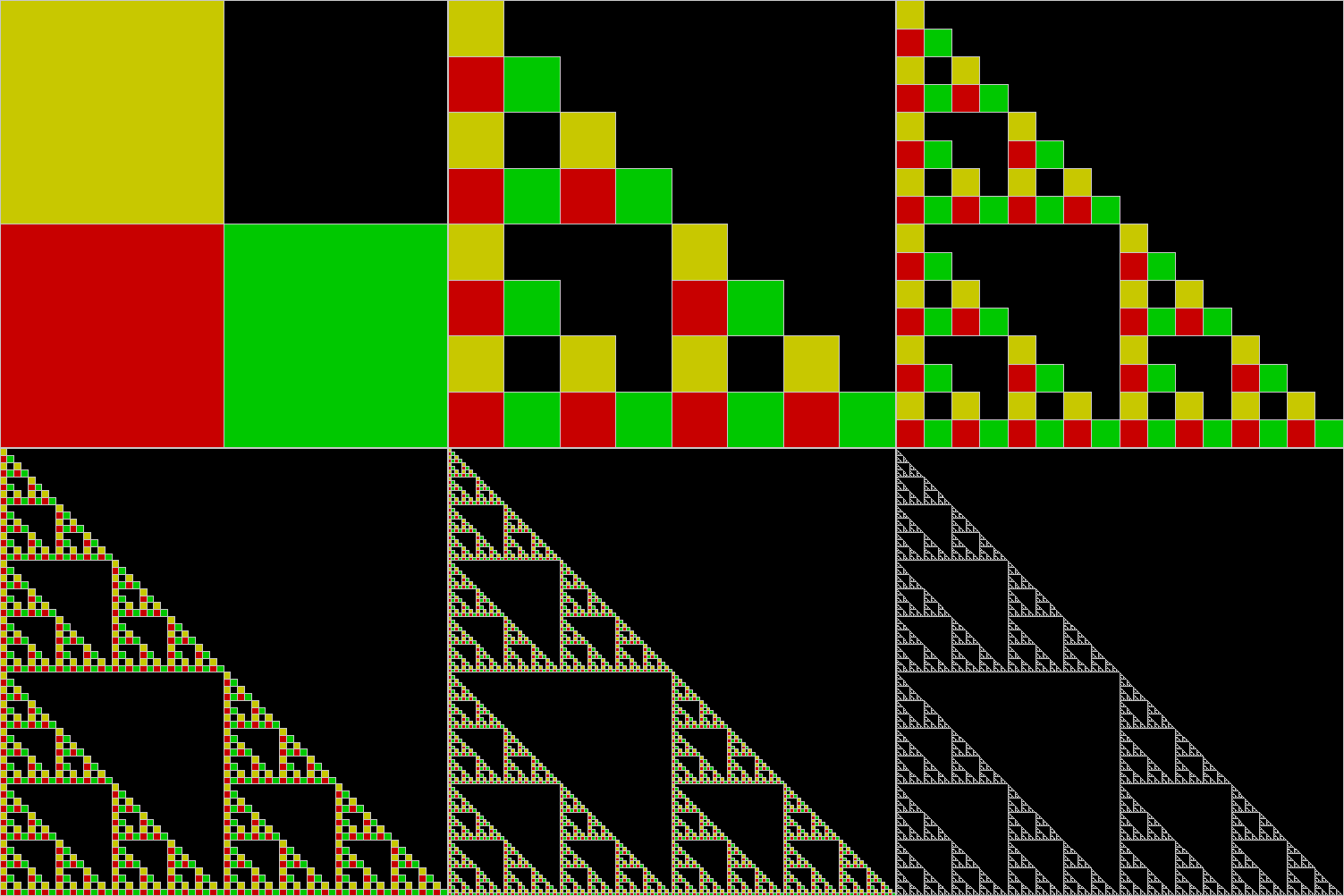
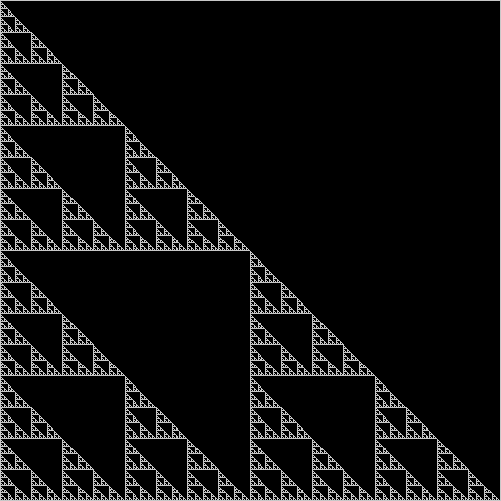
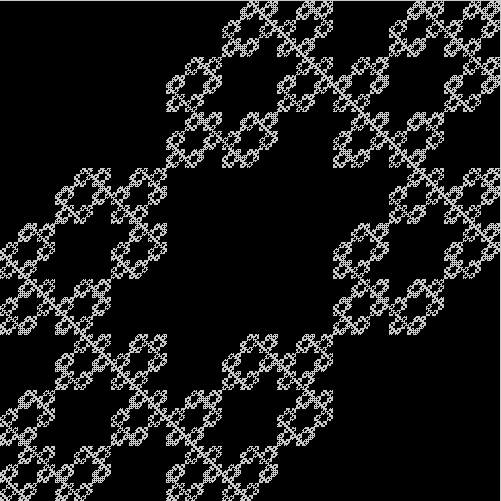
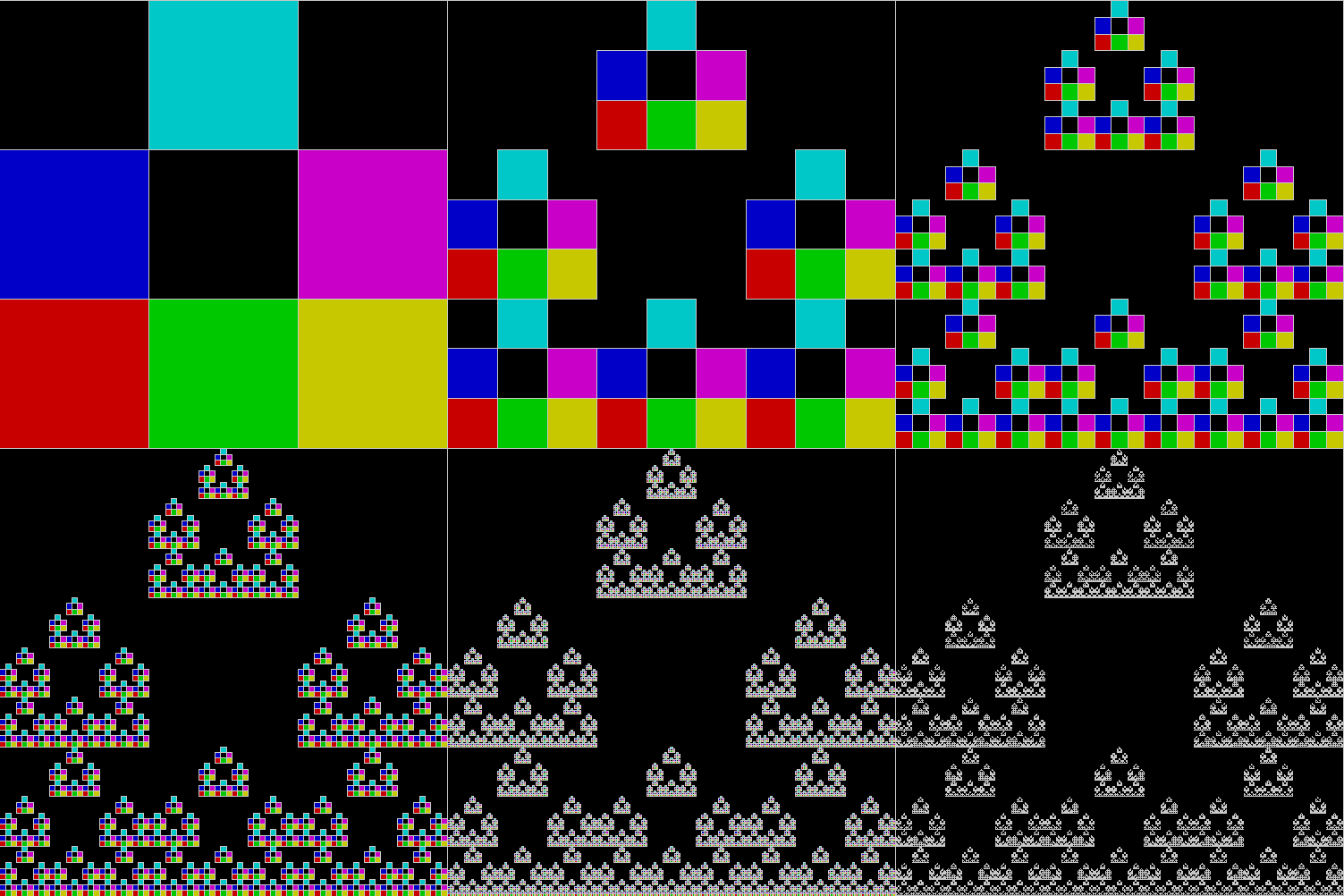
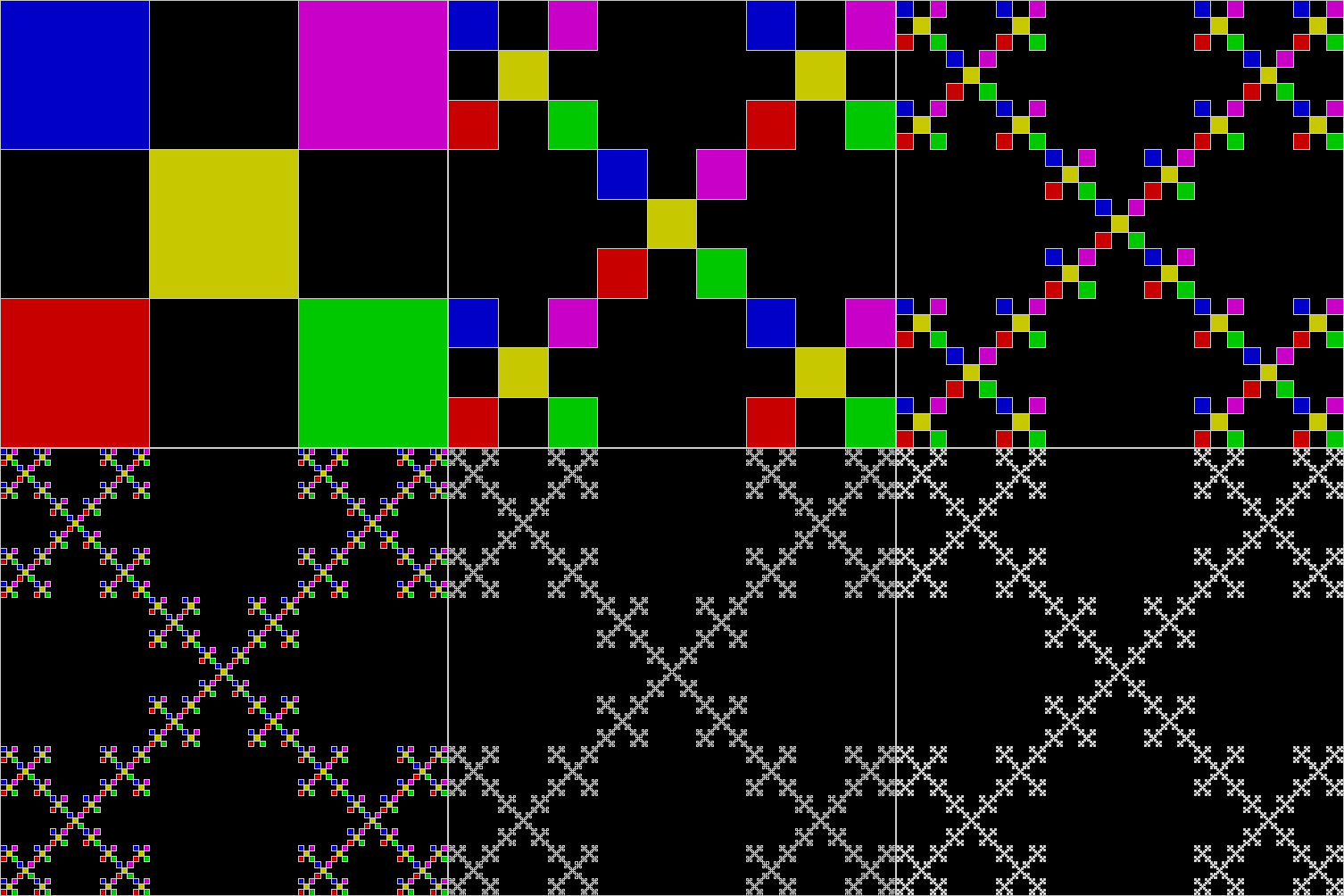
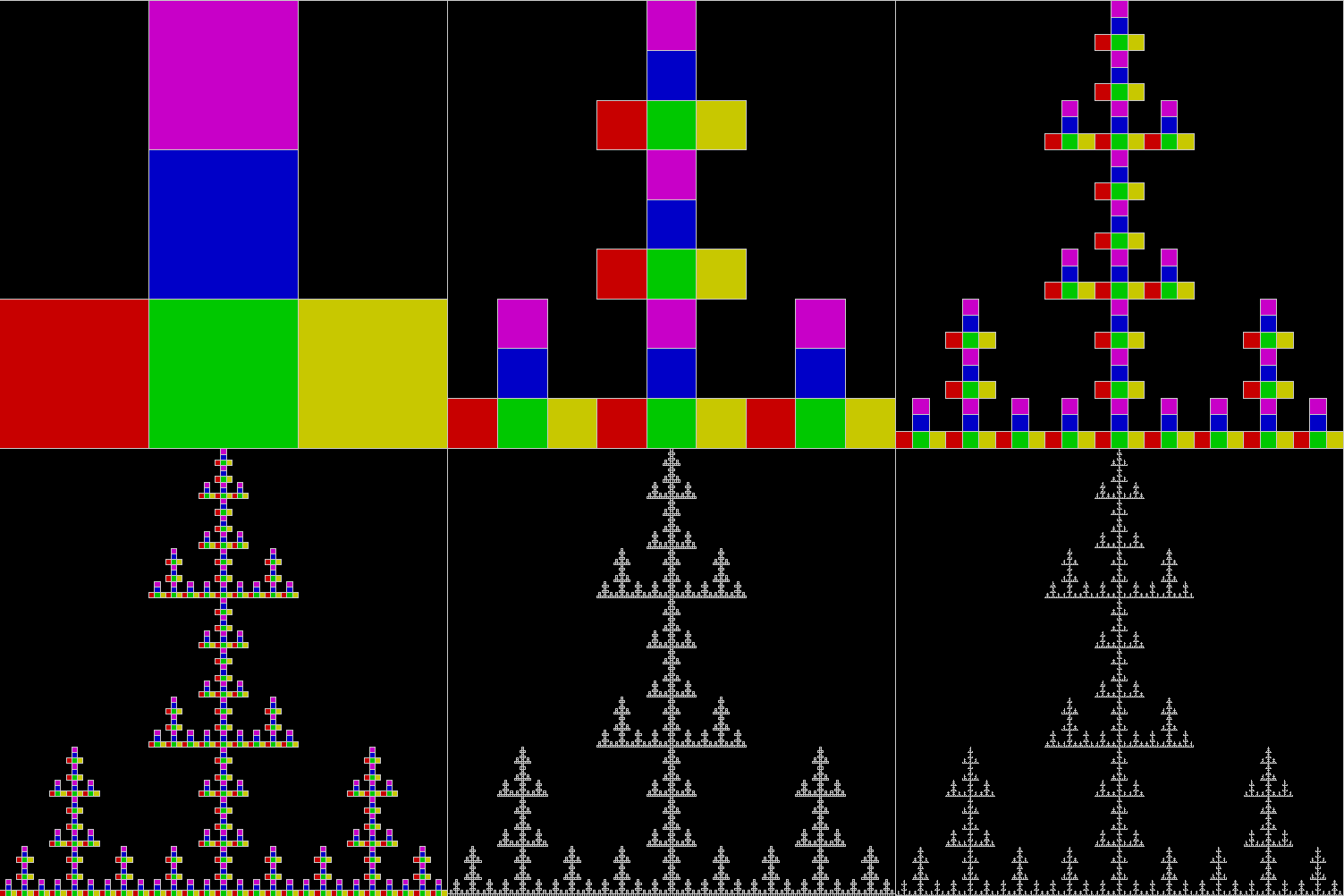
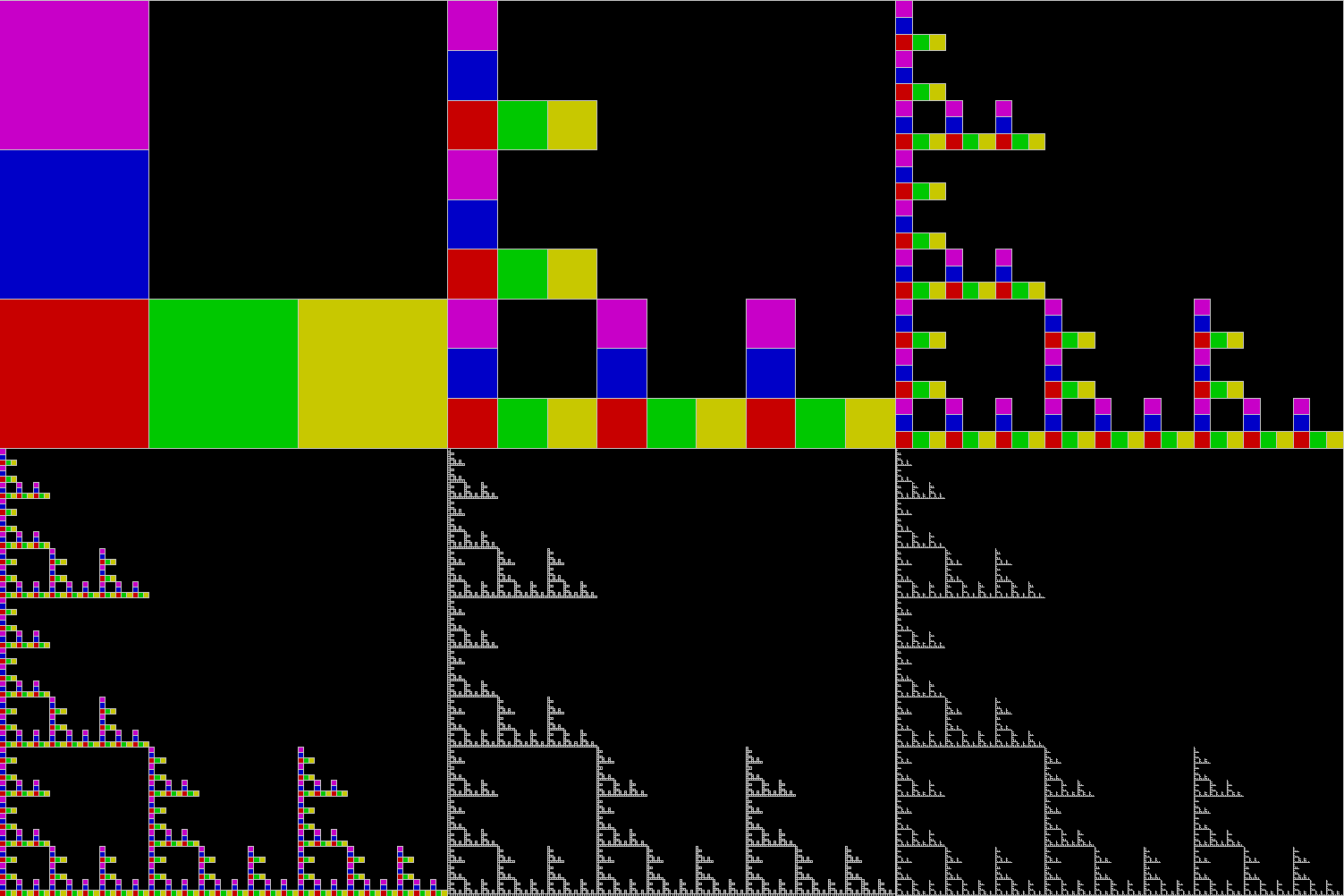
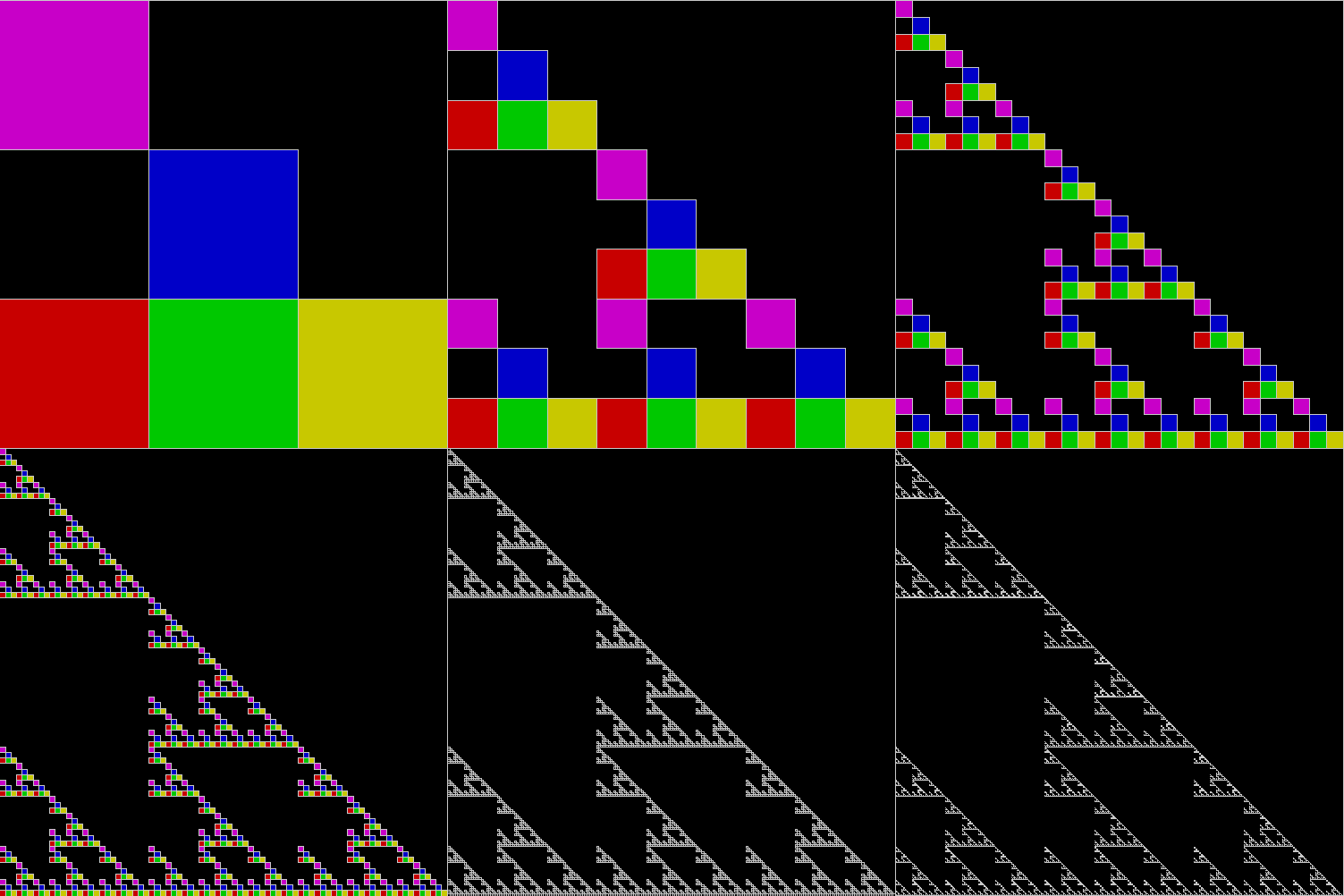
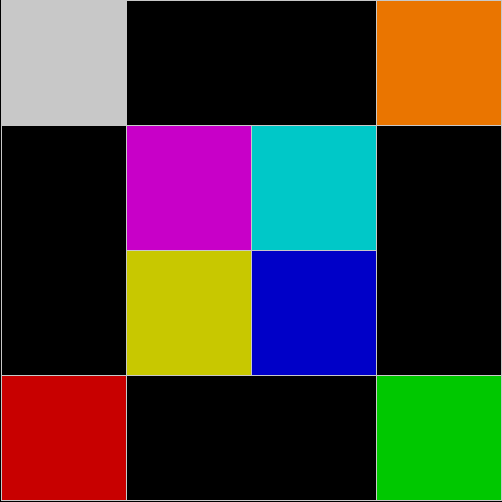
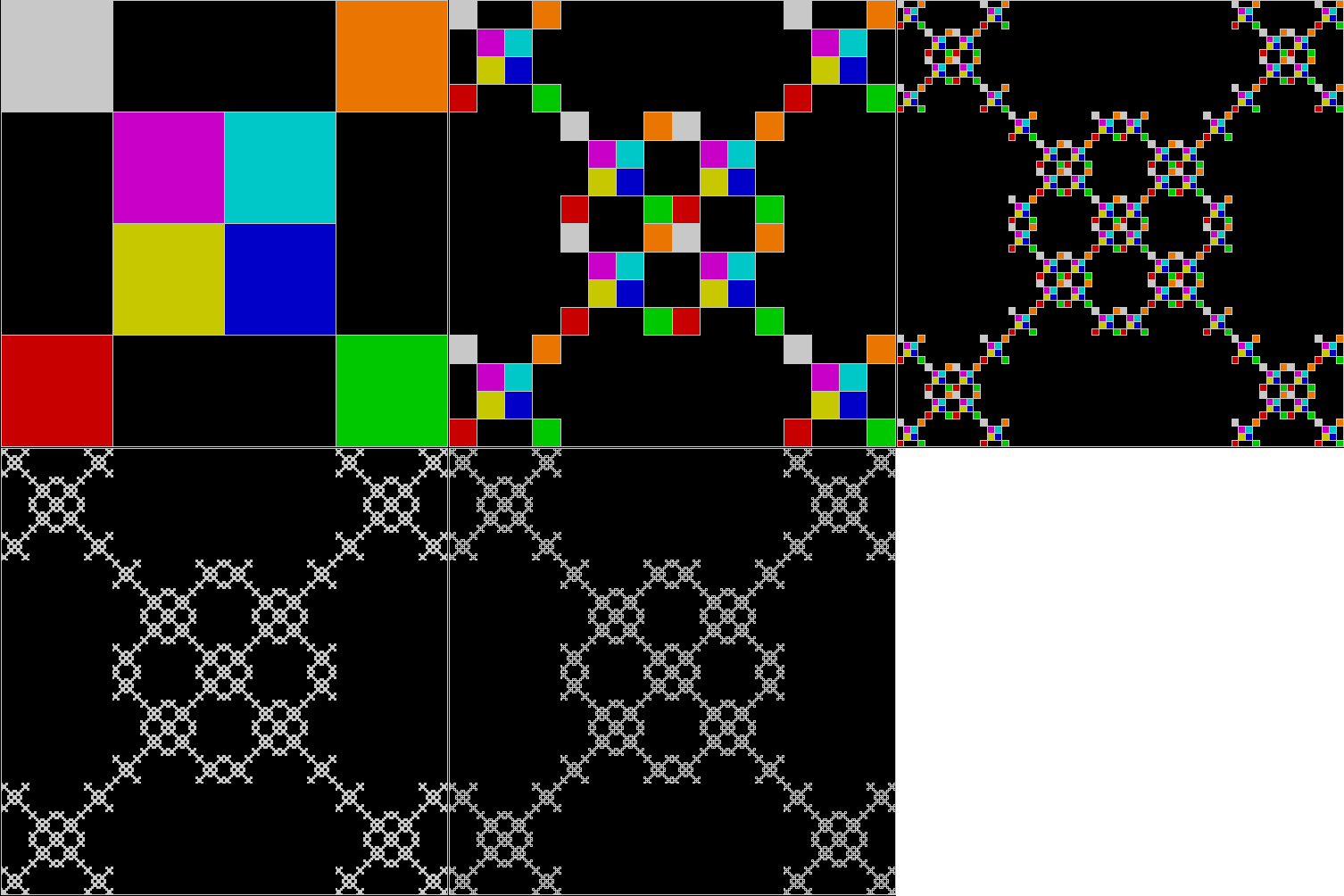
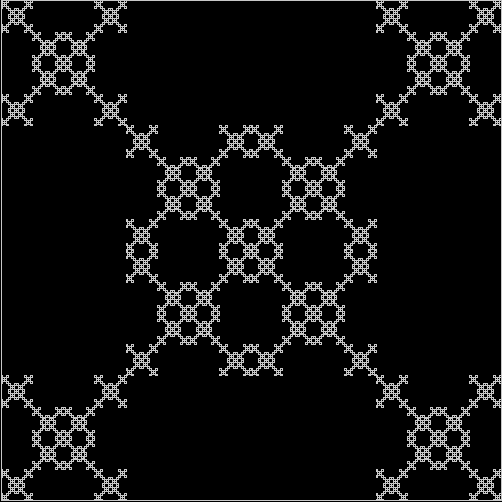
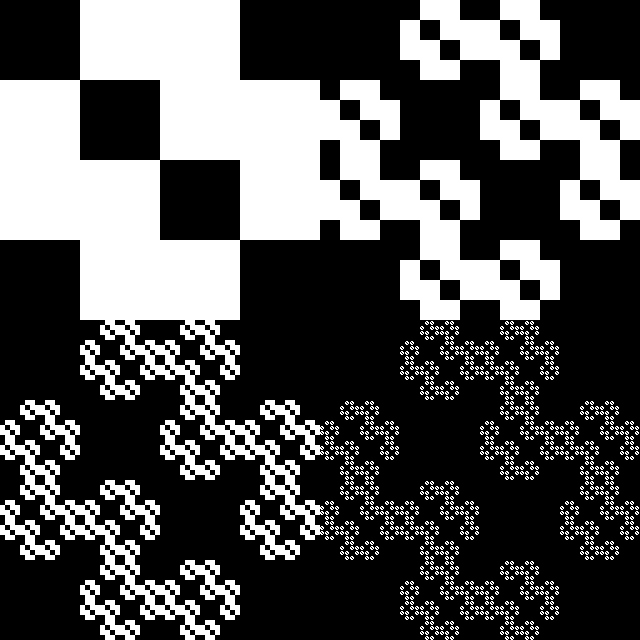
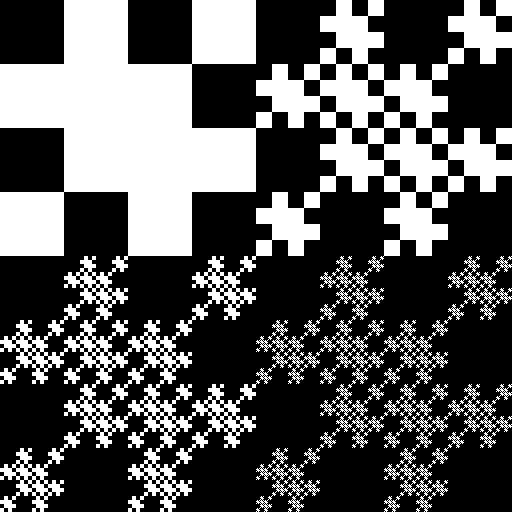
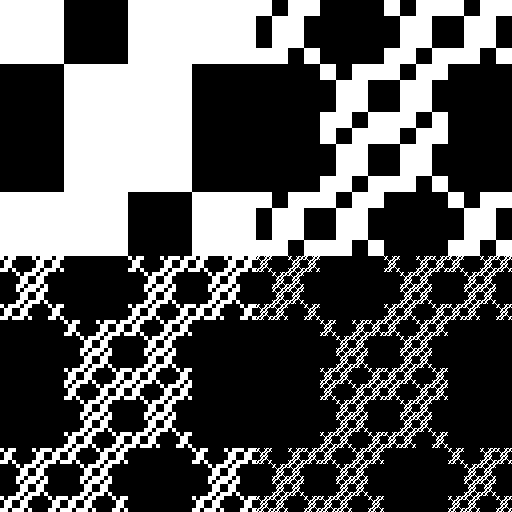
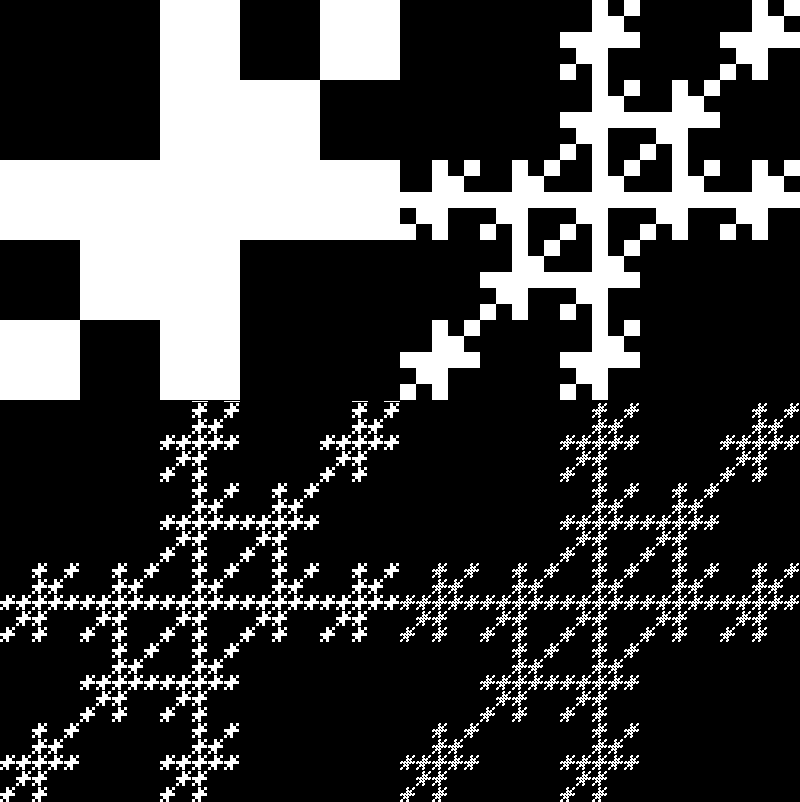
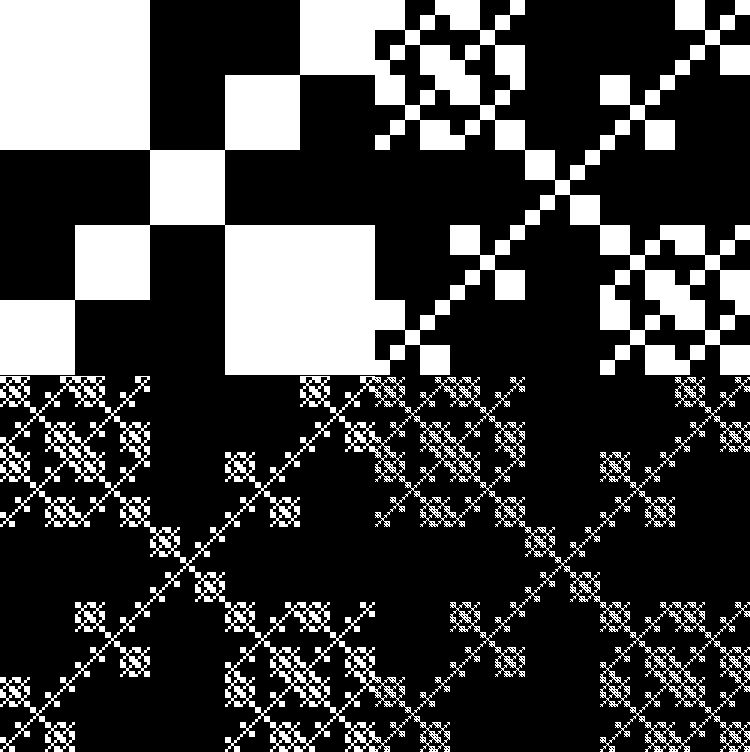
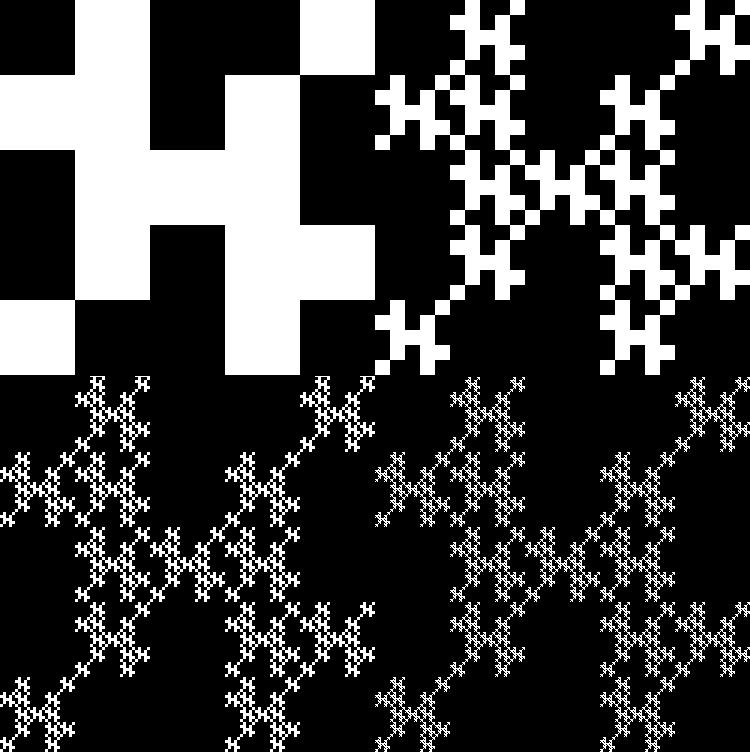
The Latin phrase multum in parvo means “much in little”. It’s a good way of describing the construction of fractals, where the application of very simple rules can produce great complexity and beauty. For example, what could be simpler than dividing a square into smaller squares and discarding some of the smaller squares?

Yet repeated applications of divide-and-discard can produce complexity out of even a 2×2 square. Divide a square into four squares, discard one of the squares, then repeat with the smaller squares, like this:

2x2square2


2x2square3


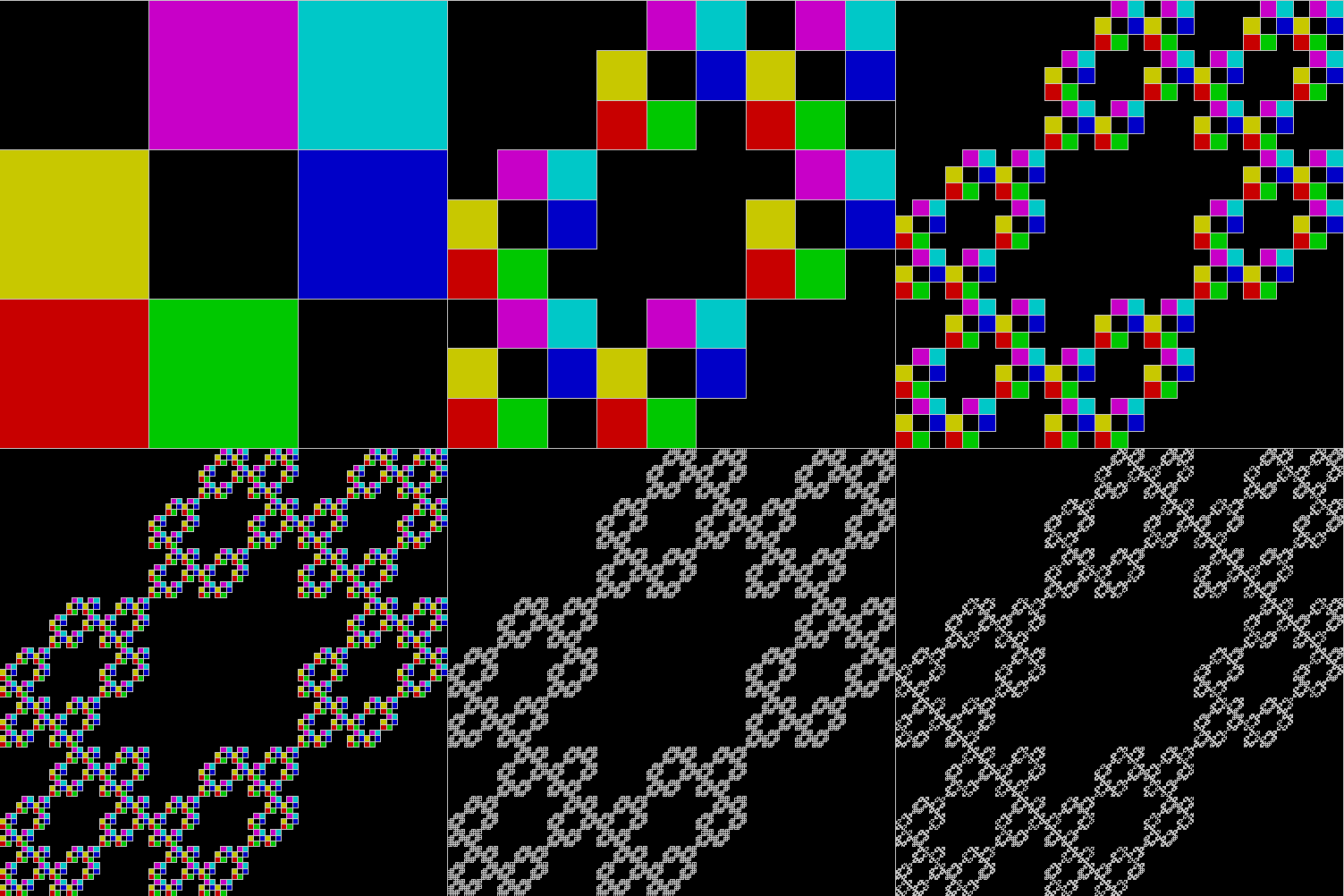
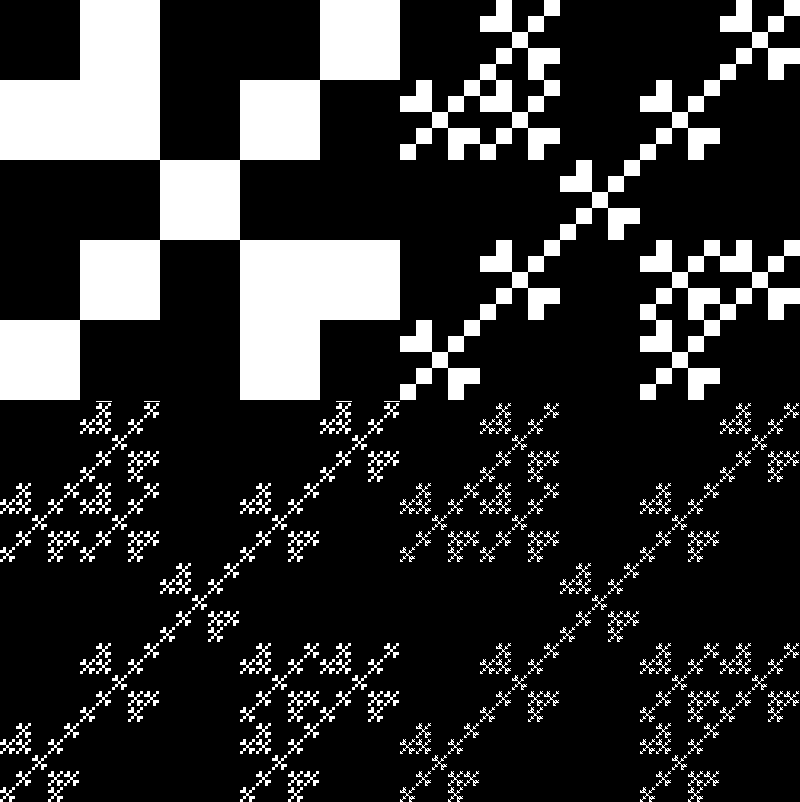
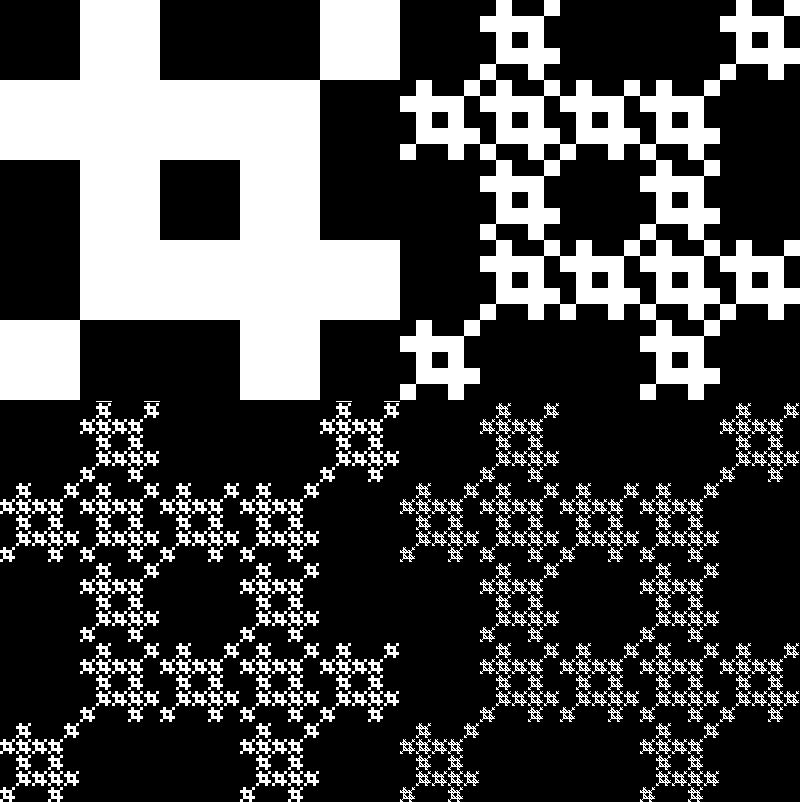
Increase the sides of the square by a little and you increase the number of fractals by a lot. A 3×3 square yields these fractals:

3x3square2


3x3square3


3x3square6


3x3square7


3x3square8


3x3square9


3x3square10


And the 4×4 and 5×5 fractals yield more:
4x4square1


4x4square2


4x4square4


4x4square5


4x4square6


4x4square7


4x4square8


5x5square1


5x5square2


5x5square3


5x5square4


5x5square5


5x5square6


5x5square7


The Rite of Sling

Duels are interesting things. Flashman made his name in one and earnt an impressive scar in another. Maupassant explored their psychology and so did his imitator Maugham. Game theory might be a good guide on how to fight one, but I’d like to look at something simpler: the concept of duelling numbers.

How would two numbers fight? One way is to use digit-sums. Find the digit-sum of each number, then take it away from the other number. Repeat until one or both numbers <= 0, like this:

function duel(n1,n2){
print(n1," <-> ",n2);
do{
s1=digitsum(n1);
s2=digitsum(n2);
n1 -= s2;
n2 -= s1;
print(” -> ",n1," <-> ",n2);
}while(n1>0 && n2>0);
}

Suppose n1 = 23 and n2 = 22. At the first step, s1 = digitsum(23) = 5 and s2 = digitsum(22) = 4. So n1 = 23 – 4 = 19 and n2 = 22 – 5 = 17. And what happens in the end?

23 ↔ 22 ➔ 19 ↔ 17 ➔ 11 ↔ 7 ➔ 4 ↔ 5 ➔ -1 ↔ 1

So 23 loses the duel with 22. Now try 23 vs 24:

23 ↔ 24 ➔ 17 ↔ 19 ➔ 7 ↔ 11 ➔ 5 ↔ 4 ➔ 1 ↔ -1

23 wins the duel with 24. The gap can be bigger. For example, 85 and 100 are what might be called David and Goliath numbers, because the David of 85 beats the Goliath of 100:

85 ↔ 100 ➔ 84 ↔ 87 ➔ 69 ↔ 75 ➔ 57 ↔ 60 ➔ 51 ↔ 48 ➔ 39 ↔ 42 ➔ 33 ↔ 30 ➔ 30 ↔ 24 ➔ 24 ↔ 21 ➔ 21 ↔ 15 ➔ 15 ↔ 12 ➔ 12 ↔ 6 ➔ 6 ↔ 3 ➔ 3 ↔ -3

999 and 1130 are also David and Goliath numbers:

999 ↔ 1130 ➔ 994 ↔ 1103 ➔ 989 ↔ 1081 ➔ 979 ↔ 1055 ➔ 968 ↔ 1030 ➔ 964 ↔ 1007 ➔ 956 ↔ 988 ➔ 931 ↔ 968 ➔ 908 ↔ 955 ➔ 889 ↔ 938 ➔ 869 ↔ 913 ➔ 856 ↔ 890 ➔ 839 ↔ 871 ➔ 823 ↔ 851 ➔ 809 ↔ 838 ➔ 790 ↔ 821 ➔ 779 ↔ 805 ➔ 766 ↔ 782 ➔ 749 ↔ 763 ➔ 733 ↔ 743 ➔ 719 ↔ 730 ➔ 709 ↔ 713 ➔ 698 ↔ 697 ➔ 676 ↔ 674 ➔ 659 ↔ 655 ➔ 643 ↔ 635 ➔ 629 ↔ 622 ➔ 619 ↔ 605 ➔ 608 ↔ 589 ➔ 586 ↔ 575 ➔ 569 ↔ 556 ➔ 553 ↔ 536 ➔ 539 ↔ 523 ➔ 529 ↔ 506 ➔ 518 ↔ 490 ➔ 505 ↔ 476 ➔ 488 ↔ 466 ➔ 472 ↔ 446 ➔ 458 ↔ 433 ➔ 448 ↔ 416 ➔ 437 ↔ 400 ➔ 433 ↔ 386 ➔ 416 ↔ 376 ➔ 400 ↔ 365 ➔ 386 ↔ 361 ➔ 376 ↔ 344 ➔ 365 ↔ 328 ➔ 352 ↔ 314 ➔ 344 ↔ 304 ➔ 337 ↔ 293 ➔ 323 ↔ 280 ➔ 313 ↔ 272 ➔ 302 ↔ 265 ➔ 289 ↔ 260 ➔ 281 ↔ 241 ➔ 274 ↔ 230 ➔ 269 ↔ 217 ➔ 259 ↔ 200 ➔ 257 ↔ 184 ➔ 244 ↔ 170 ➔ 236 ↔ 160 ➔ 229 ↔ 149 ➔ 215 ↔ 136 ➔ 205 ↔ 128 ➔ 194 ↔ 121 ➔ 190 ↔ 107 ➔ 182 ↔ 97 ➔ 166 ↔ 86 ➔ 152 ↔ 73 ➔ 142 ↔ 65 ➔ 131 ↔ 58 ➔ 118 ↔ 53 ➔ 110 ↔ 43 ➔ 103 ↔ 41 ➔ 98 ↔ 37 ➔ 88 ↔ 20 ➔ 86 ↔ 4 ➔ 82 ↔ -10

You can look in the other direction and find bully numbers, or numbers that beat all numbers smaller than themselves. In base 10, the numbers 2 to 9 obviously do. So do these:

35, 36, 37, 38, 39, 47, 48, 49, 58, 59, 64, 65, 66, 67, 68, 69, 76, 77, 78, 79, 189

In other bases, bullies are sometimes common, sometimes rare. Sometimes they don’t exist at all for n > b. Here are bully numbers for bases 2 to 30:

base=2: 3, 5, 7, 13, 15, 21, 27, 29, 31, 37, 43, 45, 47, 54, 59
b=3: 4, 5, 7, 8, 14
b=4: 5, 6, 7, 9, 10, 11, 14, 15, 27, 63
b=5: 12, 13, 14, 18, 19, 23, 24
b=6: 15, 16, 17, 22, 23, 26, 27, 28, 29, 32, 33, 34, 35, 65, 71, 101
b=7: 17, 18, 19, 20, 24, 25, 26, 27, 32, 33, 34, 40, 41, 45, 46, 47, 48, 76
b=8: 37, 38, 39, 46, 47, 59, 60, 61, 62, 63, 95, 103, 111, 119
b=9: 42, 43, 44, 52, 53, 61, 62
b=10: 35, 36, 37, 38, 39, 47, 48, 49, 58, 59, 64, 65, 66, 67, 68, 69, 76, 77, 78, 79, 189
b=11: 38, 39, 40, 41, 42, 43, 49, 50, 51, 52, 53, 54, 62, 63, 64, 65, 73, 74, 75, 76, 85, 86, 87
b=12: 57, 58, 59
b=13: 58, 59, 60, 61, 62, 63, 64, 74, 75, 76, 77, 87, 88, 89, 90, 101, 102, 103, 115, 116, 127, 128, 129
b=14: none (except 2 to 13)
b=15: 116, 117, 118, 119, 130, 131, 132, 133, 134, 147, 148, 149
b=16: 122, 123, 124, 125, 126, 127, 140, 141, 142, 143, 156, 157, 158, 159, 173, 174, 175, 190, 191, 222, 223
b=17: 151, 152, 168, 169, 185, 186
b=18: 85, 86, 87, 88, 89, 191, 192, 193, 194, 195, 196, 197, 212, 213, 214, 215
b=19: 242, 243, 244, 245, 246
b=20: none
b=21: 136, 137, 138, 139, 140, 141, 142, 143, 144, 145, 146, 162, 163, 164, 165, 166, 167, 183, 184, 185, 186, 187, 188, 206, 207, 208, 209, 227, 228, 229, 230, 248, 249, 250, 251, 270, 271, 272
b=22: 477, 478, 479, 480, 481, 482, 483
b=23: none
b=24: none
b=25: 271, 272, 273, 274, 296, 297, 298, 299, 322, 323, 324, 348, 349, 372, 373, 374
b=26: none
b=27: none
b=28: none
b=29: 431, 432, 433, 434, 459, 460, 461, 462, 463, 490, 491, 492, 546, 547, 548, 549, 550
b=30: none

Moto-Motto

Poem XLIII of Housman’s More Poems (1936) runs like this:

I wake from dreams and turning
My vision on the height
I scan the beacons burning
About the fields of night.

Each in its steadfast station
Inflaming heaven they flare;
They sign with conflagration
The empty moors of air.

The signal-fires of warning
They blaze, but none regard;
And on through night to morning
The world runs ruinward. (MP, XLIII)

In his commentary on the poem, the Housman scholar Archie Burnett traces a parallel with these lines from Lucretius: …multosque per annos | sustenata ruet moles et machina mundi – “…and the mass and fabric of the world, upheld through many years, shall crash into ruins” (De Rerum Natura, V 95-6).

I like the phrase moles et machina mundi, “mass and fabric of the world”, but I didn’t understand the translation fully. I investigated and discovered that the Latin word machina, though taken from Doric Greek μαχανα, makhana, “mechanical device”,* developed an additional meaning of “frame” or “body”. So Latin has deus ex machina, “god from the machine”, with one meaning, and machina mundi, “fabric of the world”, with another.

This seems to make machina a good word to expand the motto of this bijou bloguette. At the moment, the motto is this:

• Mathematica (v) • Magistra (iij) • Mundi (ij) •

That means “Mathematics is Mistress of the World”. Now try this:

• Mathematica (v) • Machina (iij) • Mundi (ij) •

The syllabification doesn’t change, but now I assume that the central word is pleasingly ambiguous and the motto means variously “Mathematics is Mechanism of the World”, the “Fabric of the World”, the “Engine of the World”, the “Body of the World”, and so on.

In addition, all the letters of Machina are found in Mathematica and Mundi, so the words on left and right almost act as a matrix, generating what appears between them.

There are further possibilities, blending magistra and machina:

• Mathematica (v) • Machistra (iij) • Mundi (ij) •

• Mathematica (v) • Magina (iij) • Mundi (ij) •


*In Attic Greek, it’s μηχανη, mēkhanē, whence “mechanical”, etc.

The Hex Fractor

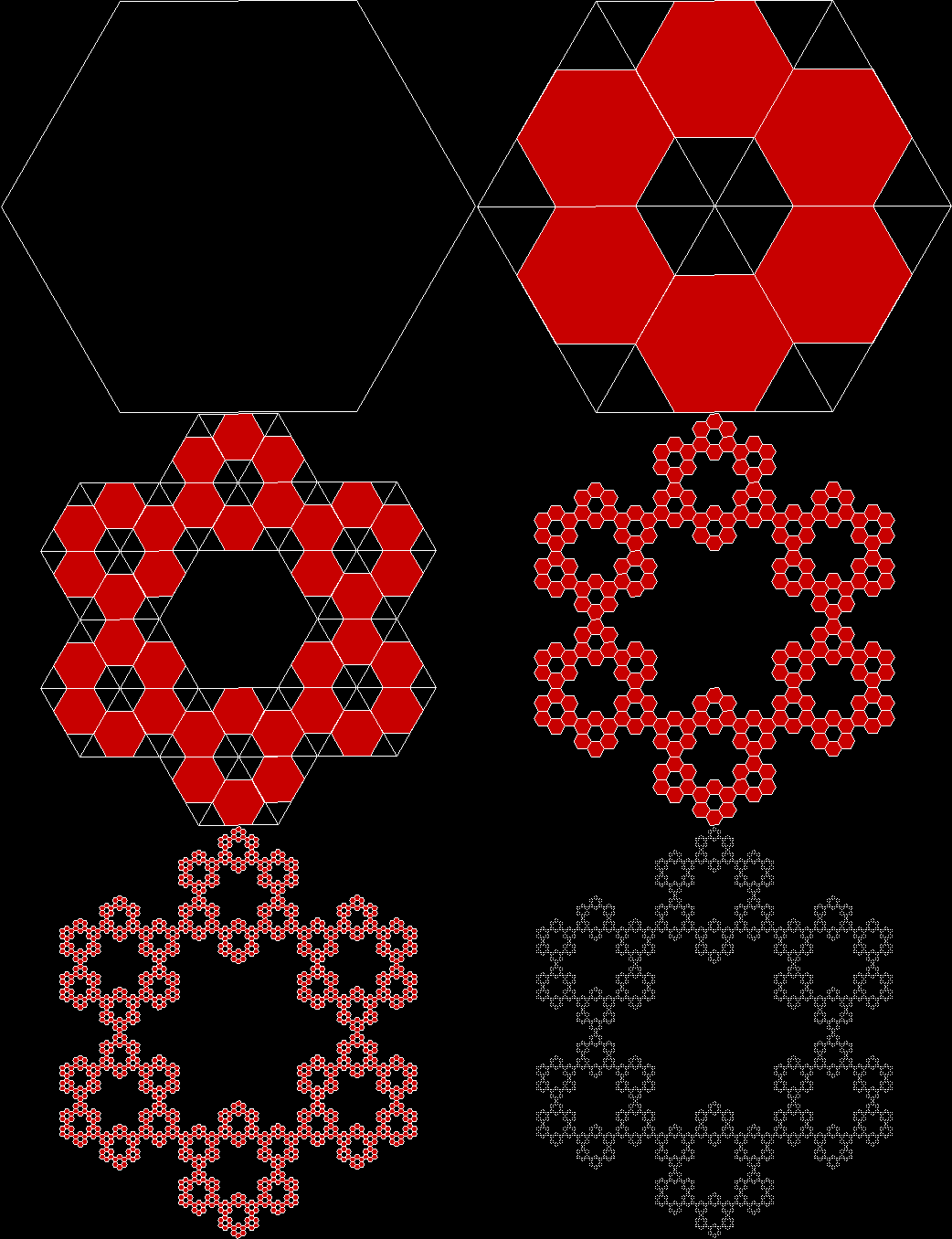
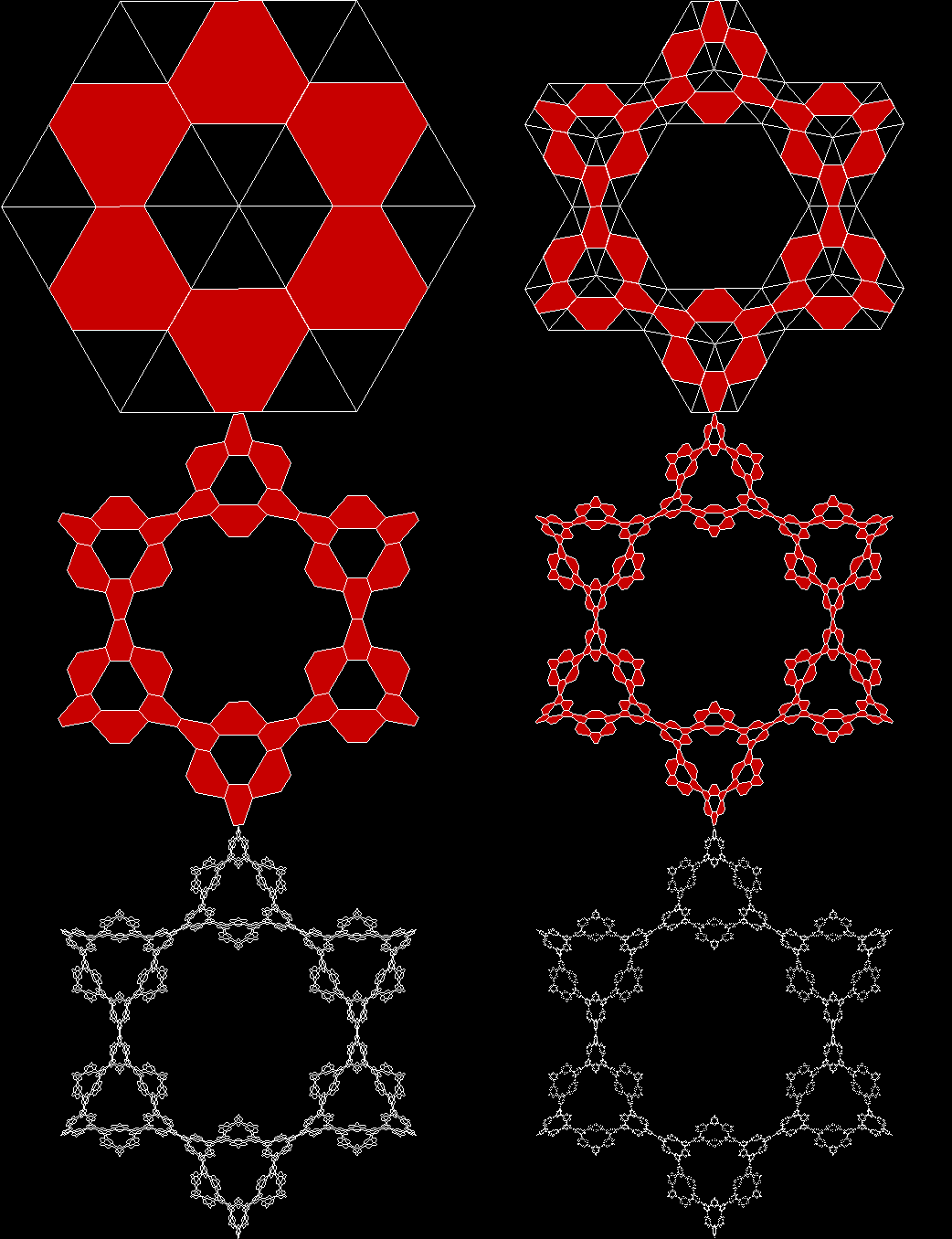
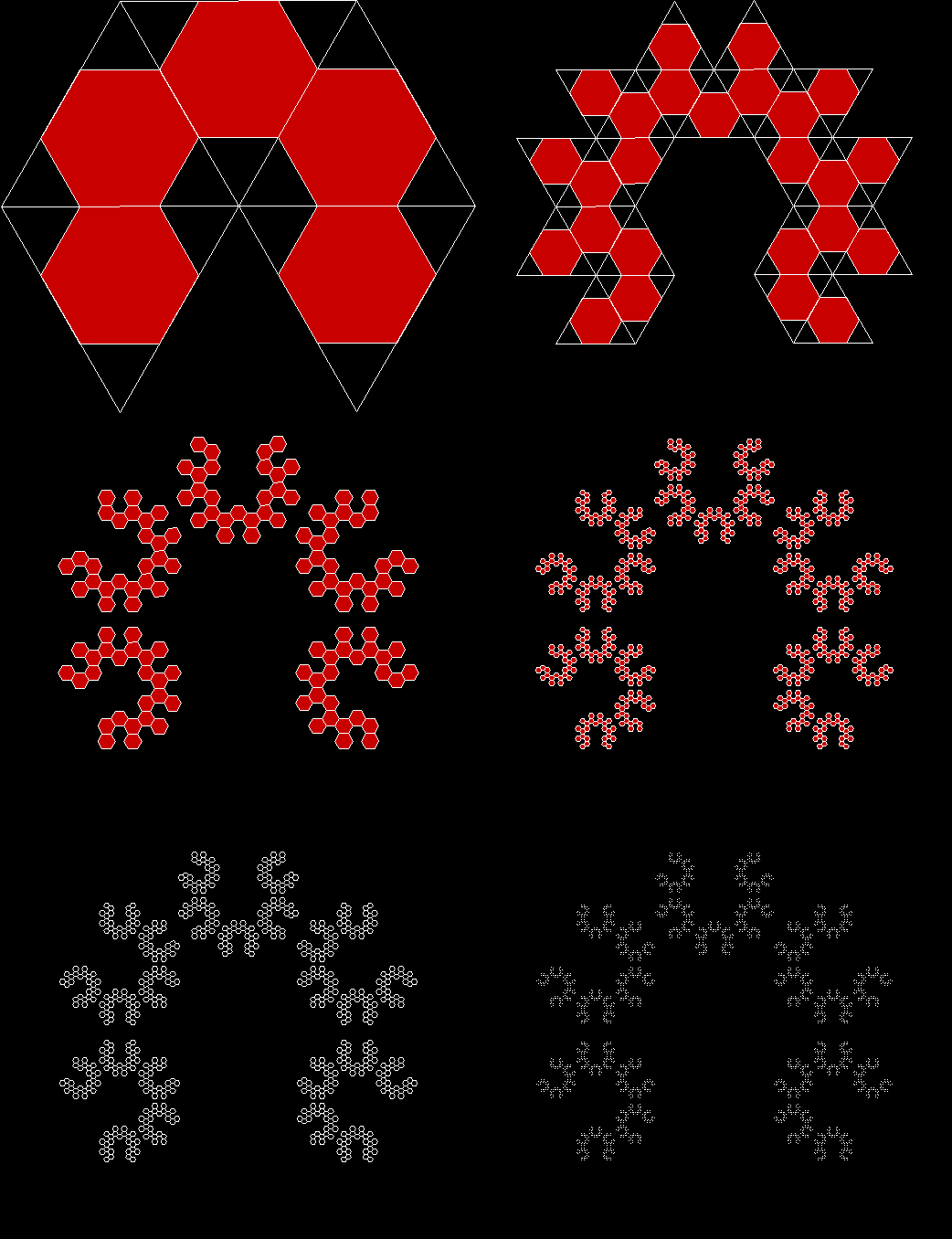
A regular hexagon can be divided into six equilateral triangles. An equilateral triangle can be divided into three more equilateral triangles and a regular hexagon. If you discard the three triangles and repeat, you create a fractal, like this:

hexring
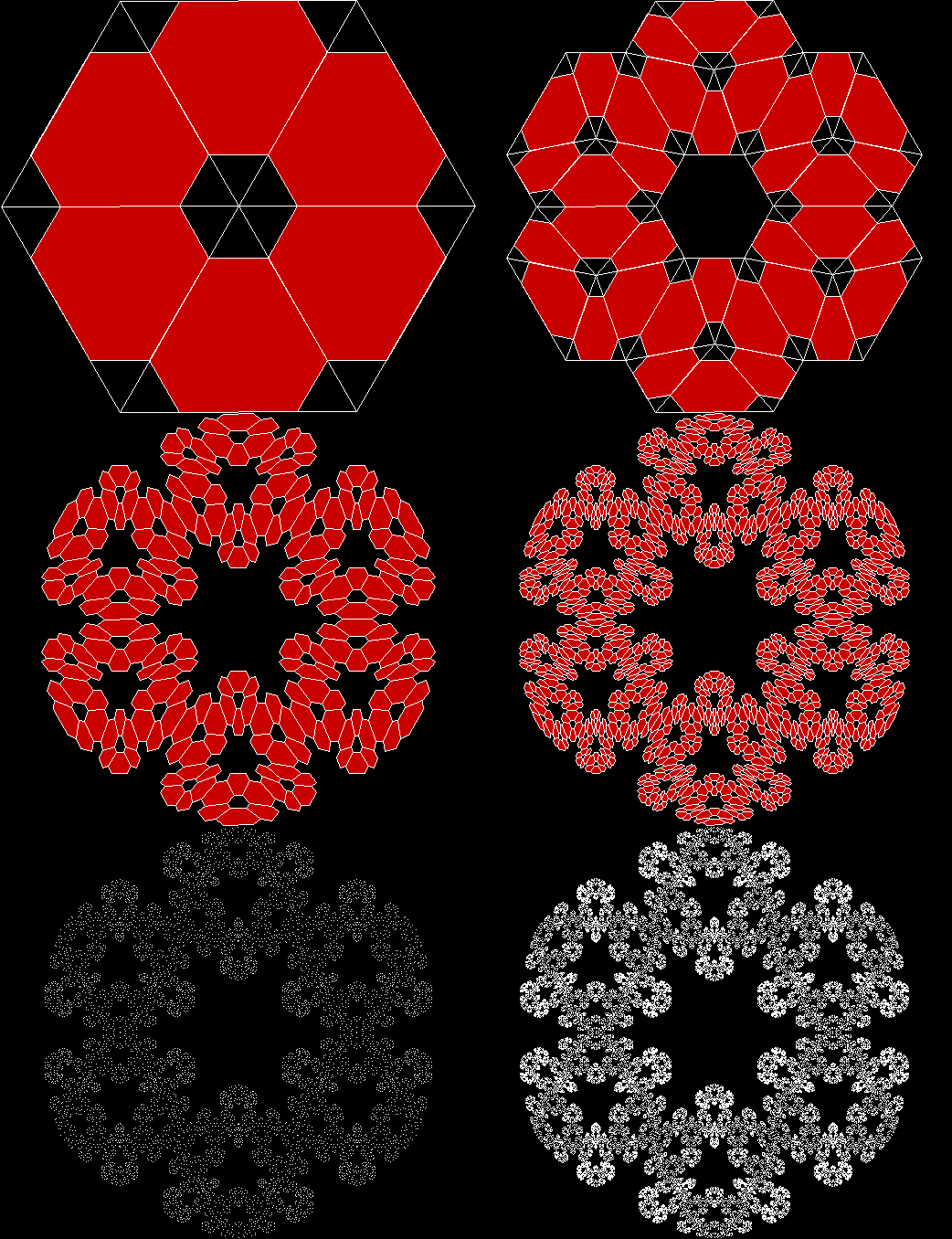
Adjusting the sides of the internal hexagon creates new fractals:
hexring2
hexring1
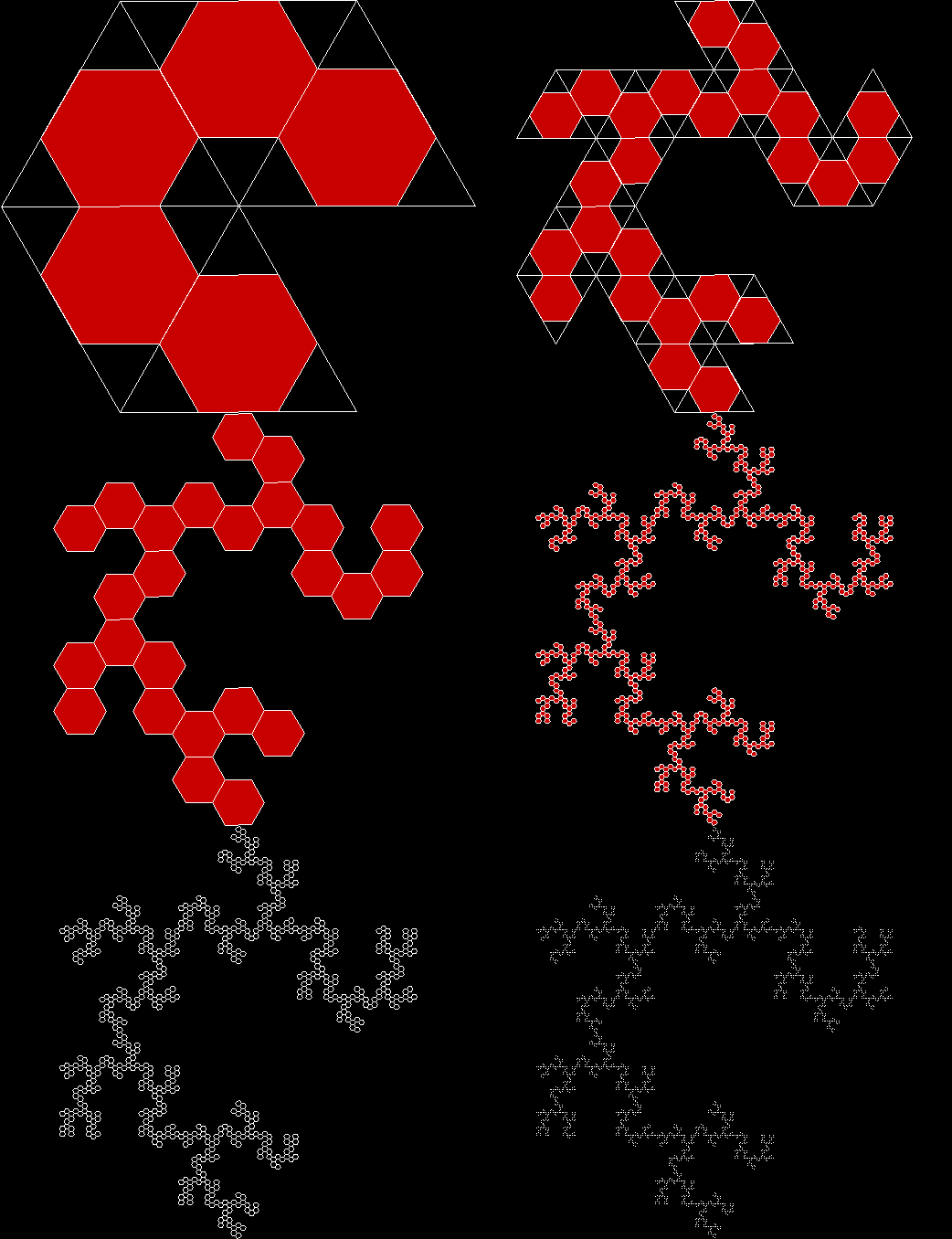
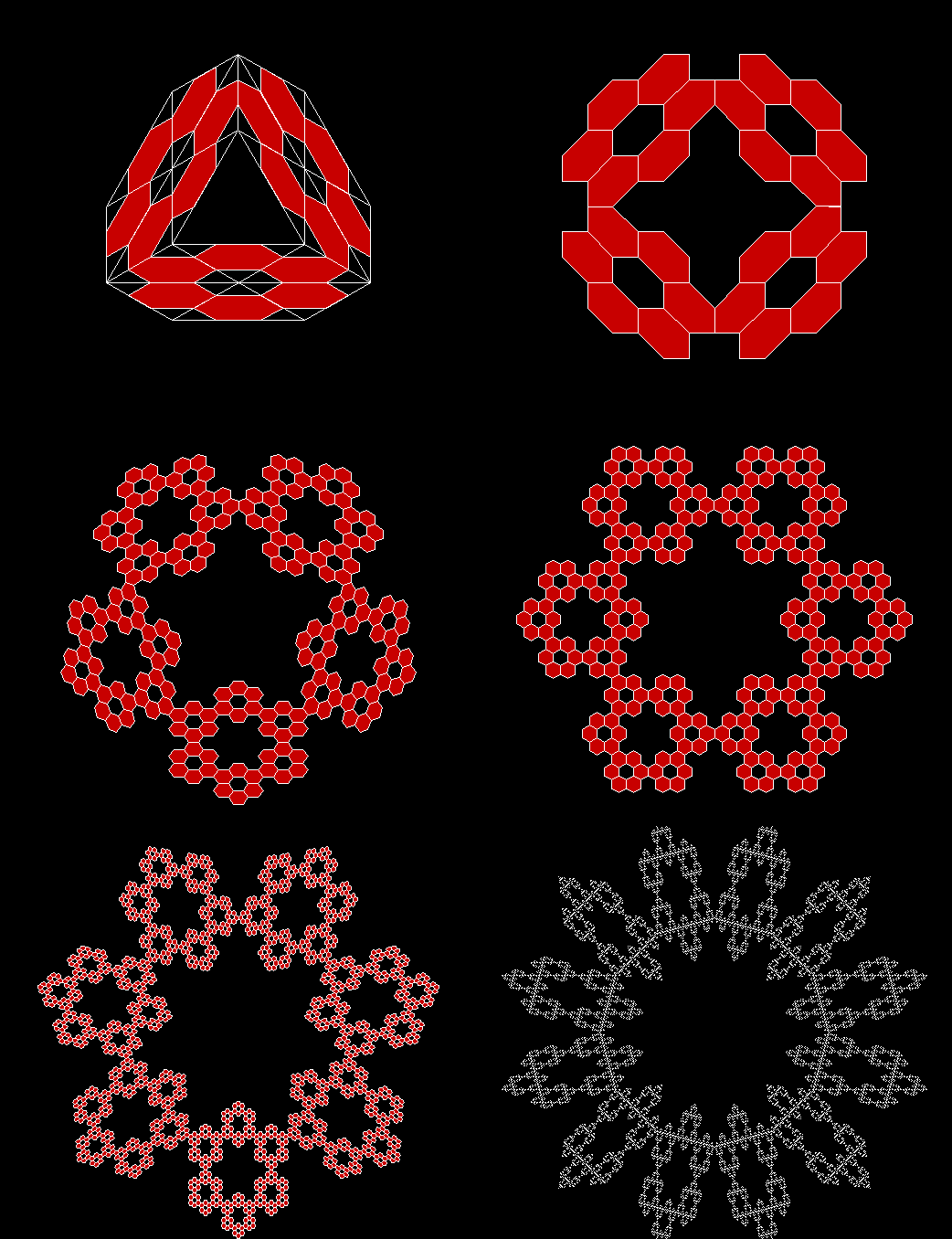
Discarding a hexagon after each subdivision creates new shapes:

hexring4
hexring5
hexring6
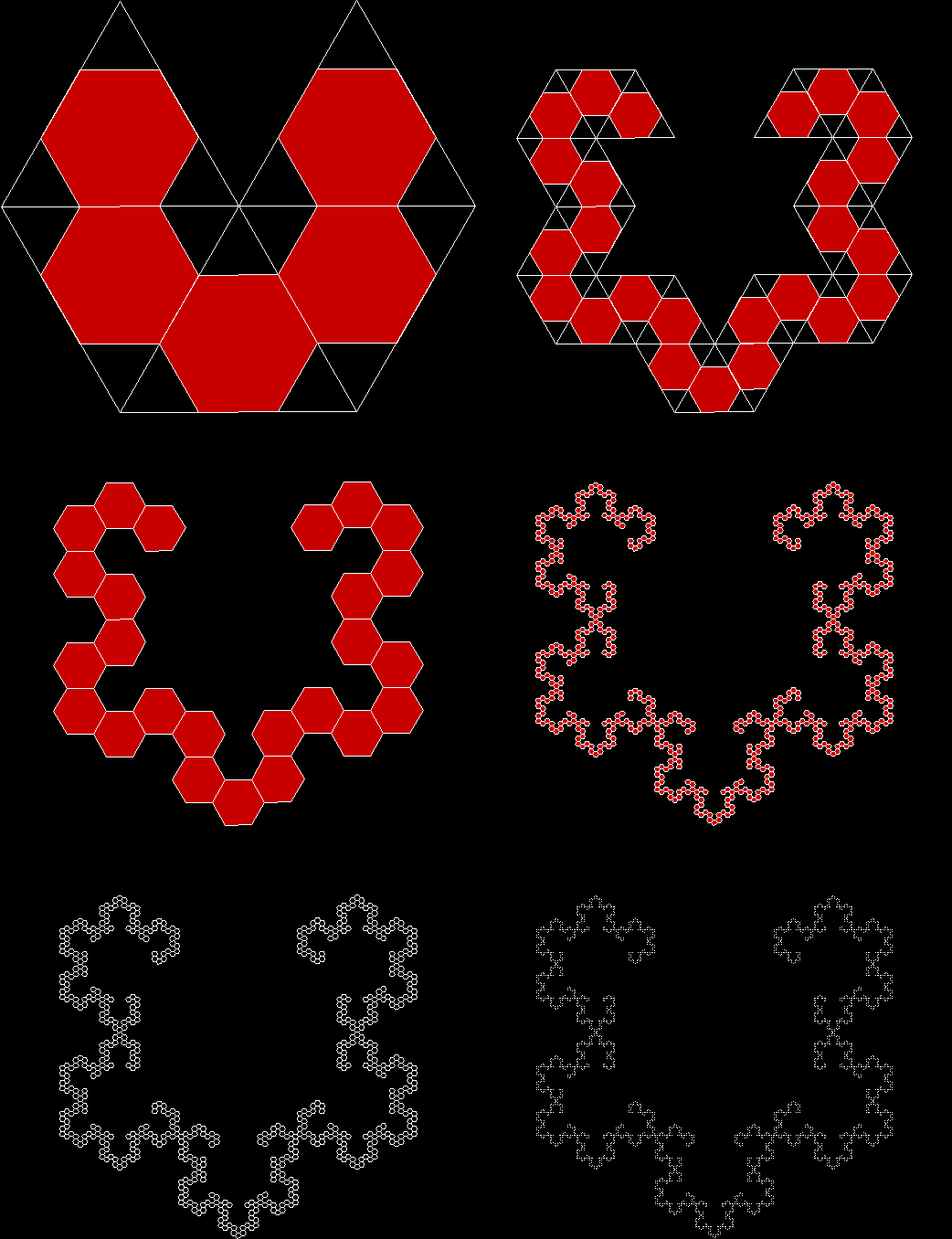
And you can start with another regular polygon, divide it into triangles, then proceed with the hexagons:
hexring3

The Mill to Power

Reading about Searle’s Chinese Room Argument at the Stanford Encyclopedia of Philosophy, I came across “Leibniz’s Mill” for the first time. At least, I think it was the first time:

It must be confessed, however, that perception, and that which depends upon it, are inexplicable by mechanical causes, that is to say, by figures and motions. Supposing that there were a machine whose structure produced thought, sensation, and perception, we could conceive of it as increased in size with the same proportions until one was able to enter into its interior, as he would into a mill. Now, on going into it he would find only pieces working upon one another, but never would he find anything to explain perception. It is accordingly in the simple substance, and not in the compound nor in a machine that the perception is to be sought. Furthermore, there is nothing besides perceptions and their changes to be found in the simple substance. And it is in these alone that all the internal activities of the simple substance can consist. (Monadology, 1714, section #17)

Andererseits muß man gestehen, daß die Vorstellungen, und Alles, was von ihnen abhängt, aus mechanischen Gründen, dergleichen körperliche Gestalten und Bewegungen sind, unmöglich erklärt werden können. Man stelle sich eine Maschine vor, deren Structur so eingerichtet sei, daß sie zu denken, zu fühlen und überhaupt vorzustellen vermöge und lasse sie unter Beibehaltung derselben Verhältnisse so anwachsen, daß man hinein, wie in das Gebäude einer Mühle eintreten kann. Dies vorausgesetzt, wird man bei Besichtigung des Innern nichts Anderes finden, als etliche Triebwerke, deren eins das andere bewegt, aber gar nichts, was hinreichen würde, den Grund irgend einer Vorstellung abzugeben. Die letztere gehört ausschließlich der einfachen Substanz an, nicht der zusammengesetzten, und dort, nicht hier, muß man sie suchen. Auch sind Vorstellungen und ihre Veränderungen zugleich das Einzige, was man in der einfachen Substanz antrifft. (Monadologie, 1714)
We can see that Leibniz’s argument applies to mechanism in general, not simply to the machines he could conceive in his own day. He’s claiming that consciousness isn’t corporeal. It can’t generated by interacting parts or particles. And intuitively, he seems to be right. How could a machine or mechanism, however complicated, be conscious? Intuition would say that it couldn’t. But is intuition correct? If we examine the brain, we see that consciousness begins with mechanism. Vision and the other senses are certainly electro-chemical processes in the beginning. Perhaps in the end too.

Some puzzles arise if we assume otherwise. If consciousness isn’t mechanistic, how does it interact with mechanism? If it’s immaterial, how does it interact with matter? But those questions go back much further, to Greek atomists like Democritus (c. 460-370 BC):

Δοκεῖ δὲ αὐτῶι τάδε· ἀρχὰς εἶναι τῶν ὅλων ἀτόμους καὶ κενόν, τὰ δ’ἀλλα πάντα νενομίσθαι.

He taught that the first principles of the universe are atoms and void; everything else is merely thought to exist.

Νόμωι (γάρ φησι) γλυκὺ καὶ νόμωι πικρόν, νόμωι θερμόν, νόμωι ψυχρόν, νόμωι χροιή, ἐτεῆι δὲ ἄτομα καὶ κενόν.
By convention sweet is sweet, bitter is bitter, hot is hot, cold is cold, color is color; but in truth there are only atoms and the void. (Democritus at Wikiquote)

Patterns of unconscious matter and energy influence consciousness and are perhaps entirely responsible for it. The patterns are tasteless, soundless, colourless, scentless, neither hot nor cold – in effect, units of information pouring through the circuits of reality. But are qualia computational? I think they are. I don’t think it’s possible to escape matter or mechanism and I certainly don’t think it’s possible to escape mathematics. But someone who thinks it’s possible to escape at least the first two is the Catholic philosopher Edward Feser. I wish I had come across his work a long time ago, because he raises some very interesting questions in a lucid way and confirms the doubts I’ve had for a long time about Richard Dawkins and other new atheists. His essay “Schrödinger, Democritus, and the paradox of materialism” (2009) is a good place to start.


Elsewhere other-posted:

Double Bubble
This Mortal Doyle
The Brain in Pain
The Brain in Train