
“Physics is mathematical not because we know so much about the physical world, but because we know so little; it is only its mathematical properties that we can discover.” — Bertrand Russell, An Outline of Philosophy (1927), ch. 15, “The Nature of our Knowledge of Physics”
Category Archives: Literature
Math Matters
Toxic Textuality for Tenebrose Times…
If you thought the keyly committed core componency of Covid-19 was bad, please park your peepers on the Satan Bug dot dot dot:
In its final form, the Satan Bug is an extremely refined powder. I take a salt-spoon of this powder, go outside in the grounds of Mordon and turn the salt-spoon upside down. What happens? Every person in Mordon would be dead within an hour, the whole of Wiltshire would be an open tomb by dawn. In a week, ten days, all life would have ceased to exist in Britain. I mean all life. The Plague, the Black Death – was nothing compared with this. Long before the last man died in agony ships or planes or birds or just the waters of the North Sea would have carried the Satan Bug to Europe. We can conceive of no obstacle that can stop its eventual world-wide spread… The Lapp trapping in the far north of Sweden. The Chinese peasant tilling his rice-fields in the Yangtse valley. The cattle rancher on his station in the Australian outback, the shopper in Fifth Avenue, the primitive in Tierra del Fuego. Dead. All dead. Because I turned a salt-spoon upside down. Nothing, nothing, nothing can stop the Satan Bug.
Previously pre-posted (on Papyrocentric Performativity):
• God-Finger — a radical review of Alistair MacLean’s The Satan Bug (1962)…
FractAlphic Frolix
A fractal is a shape that contains smaller (and smaller) versions of itself, like this:
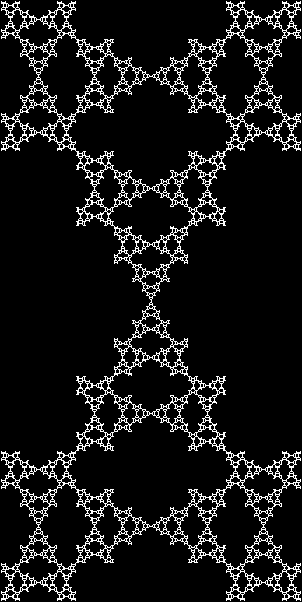
Fractals also occur in nature. For example, part of a tree looks like the tree as whole. Part of a cloud or a lung looks like the cloud or lung as a whole. So trees, clouds and lungs are fractals. The letters of an alphabet don’t usually look like that, but I decided to create a fractal alphabet — or fractalphabet — that does.
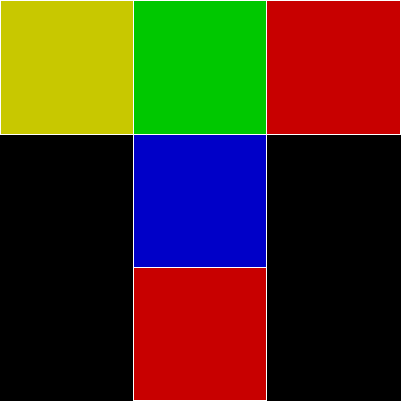
The fractalphabet starts with this minimal standard Roman alphabet in upper case, where each letter is created by filling selected squares in a 3×3 grid:

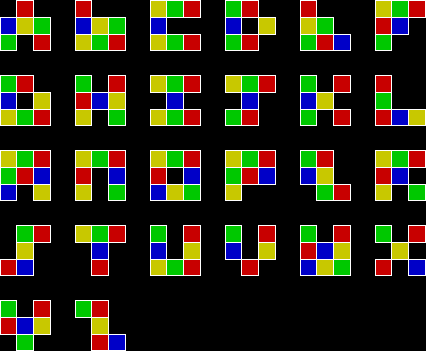
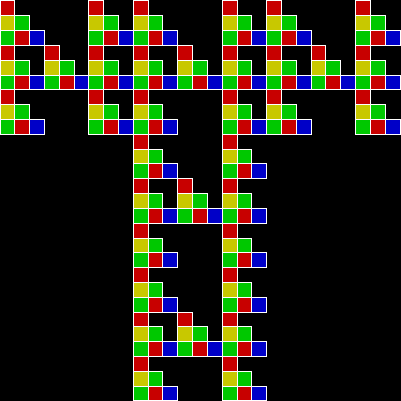
The above is stage 1 of the fractalphabet, when it isn’t actually a fractal alphabet at all. But if each filled square of the letter “A”, say, is replaced by the letter itself, the “A” turns into a fractal, like this:


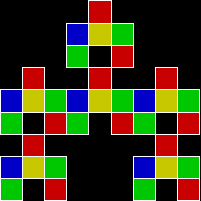

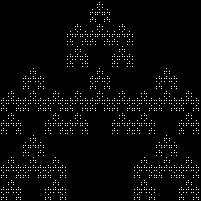
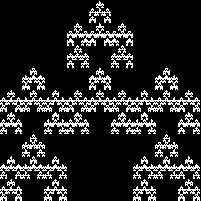
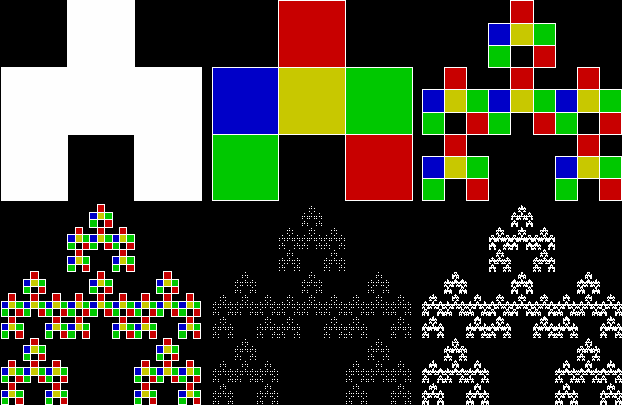
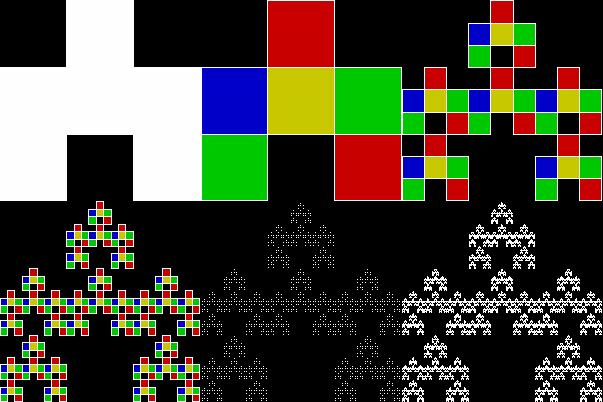
Fractal A (animated)
Here’s the whole alphabet being turned into fractals:

Full fractalphabet (black-and-white)
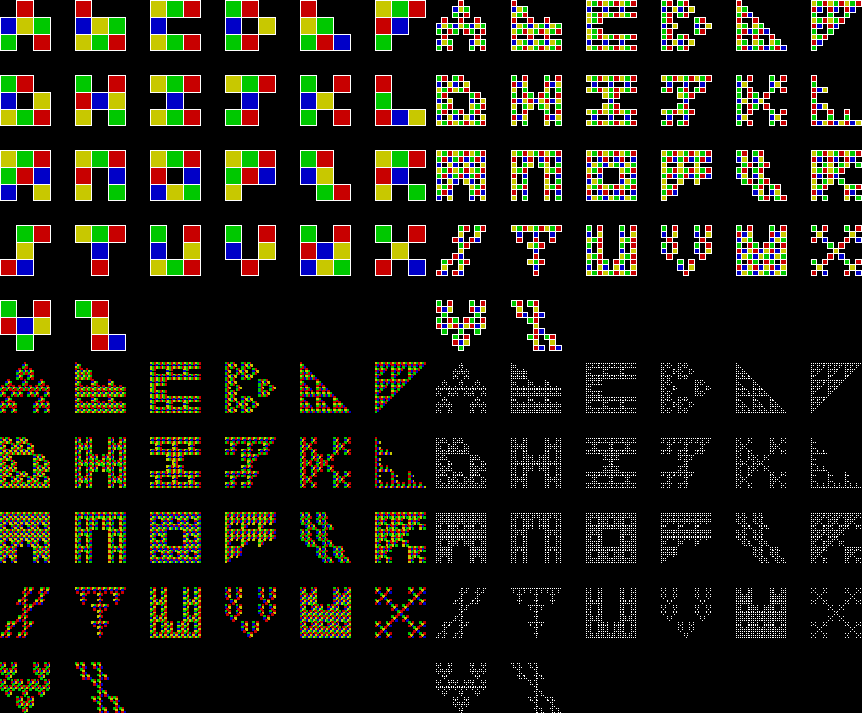
Full fractalphabet (color)

Full fractalphabet (b&w animated)
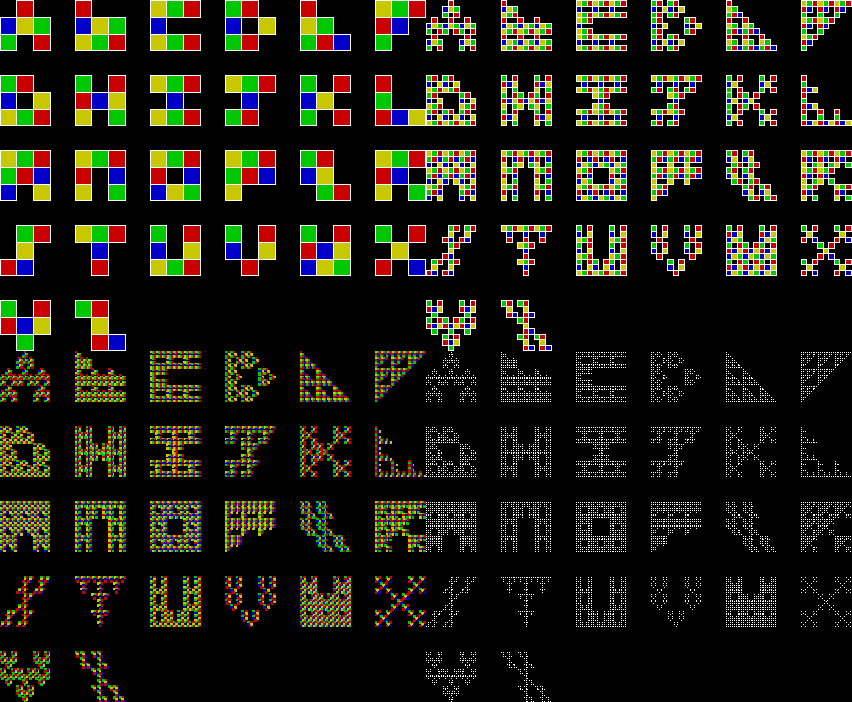
Full fractalphabet (color animated)
Now take a full word like “THE”:
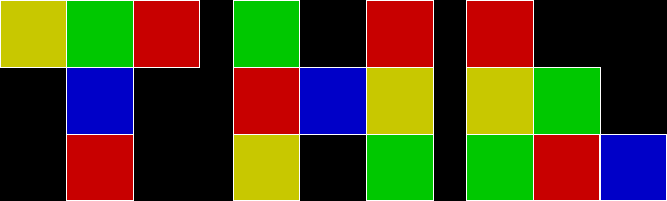
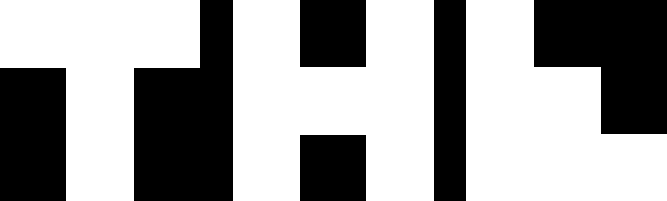
You can turn each letter into a fractal using smaller copies of itself:


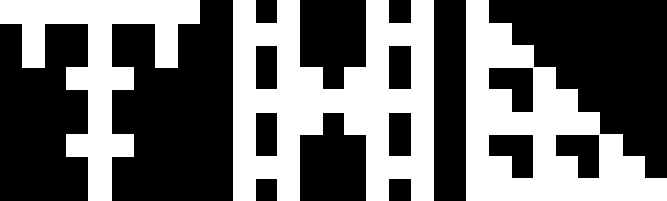
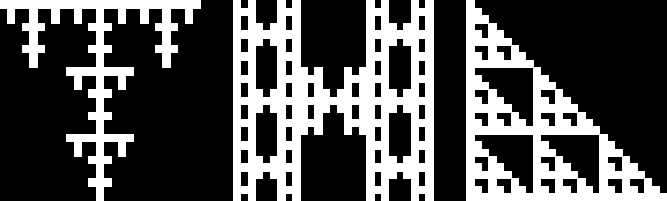

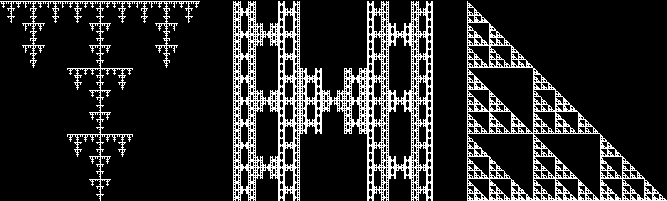
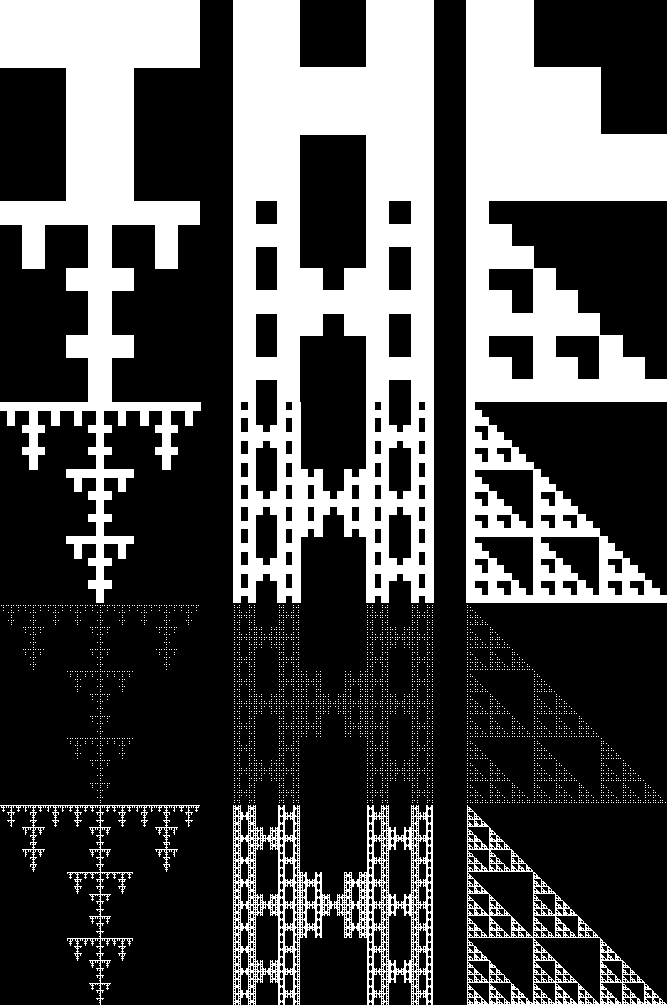
Fractal THE (b&w animated)
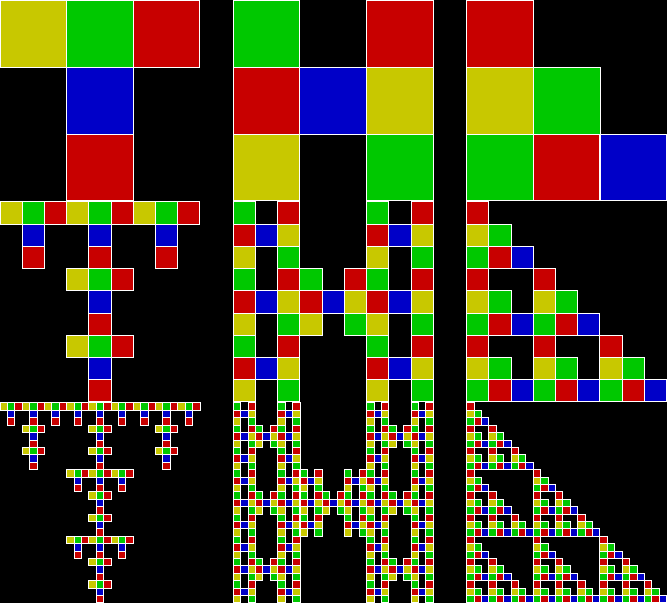
Fractal THE (color animated)
But you can also create a fractal from “THE” by compressing the “H” into the “T”, then the “E” into the “H”, like this:

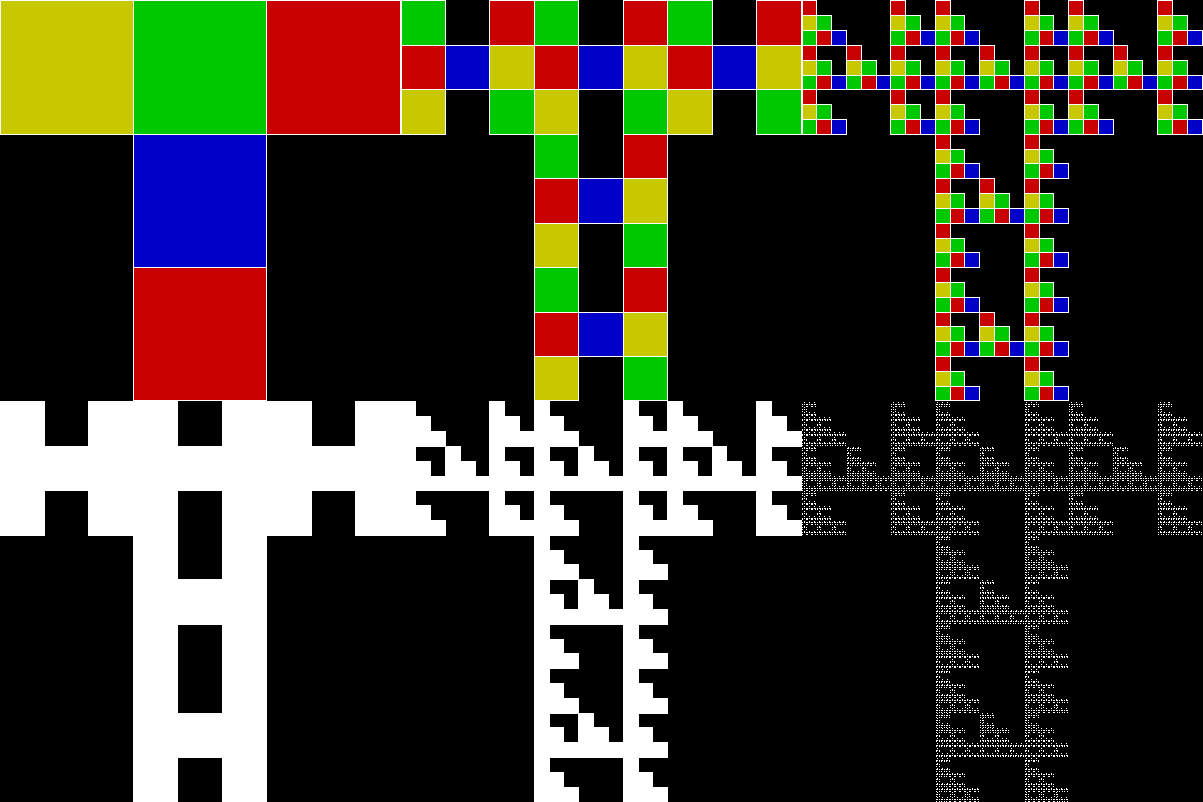
Compressed THE (animated)
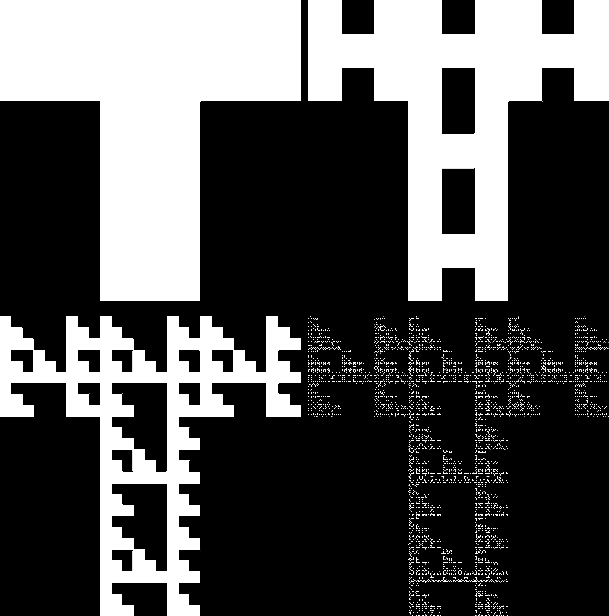
The compressed “THE” has a unique appearance and is both a letter and a word. Now try a complete sentence, “THE CAT BIT THE RAT”. This is the sentence in stage 1 of the fractalphabet:
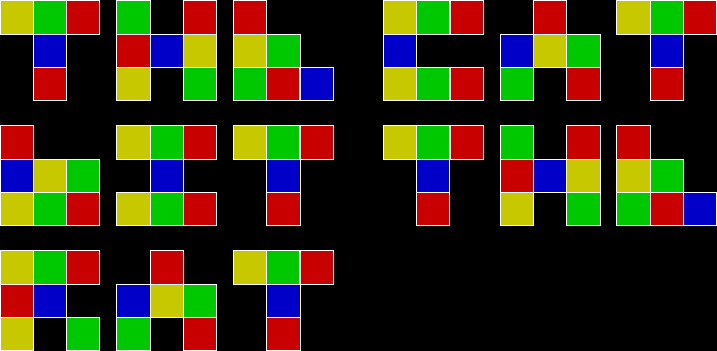

And stage 2:
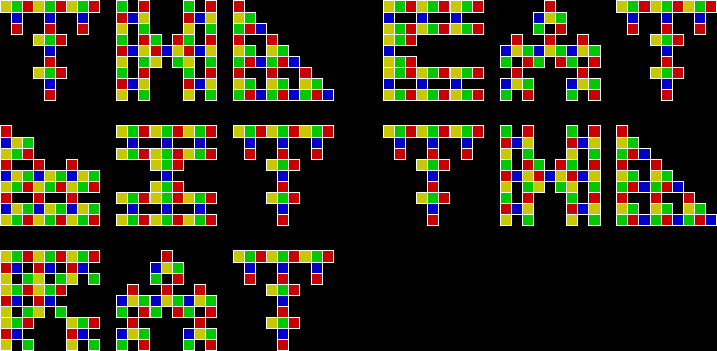

And further stages:
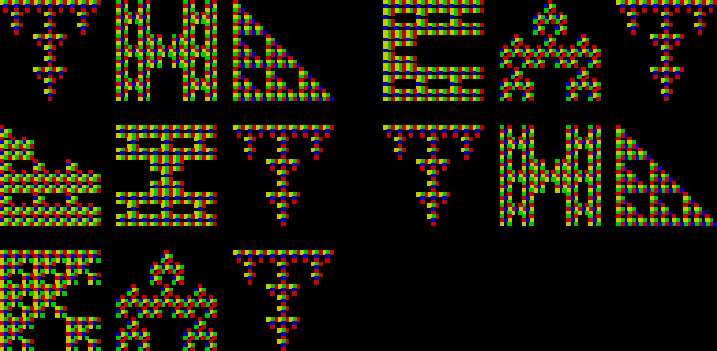
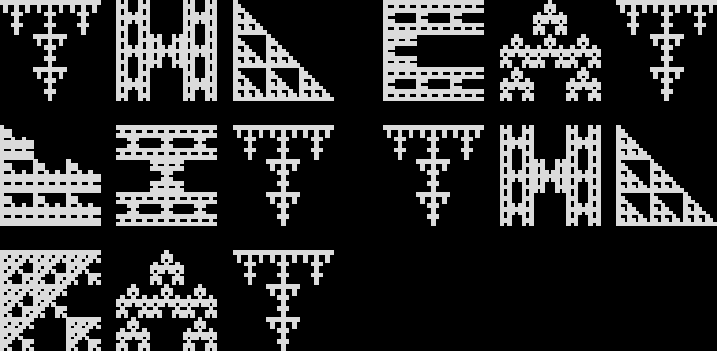
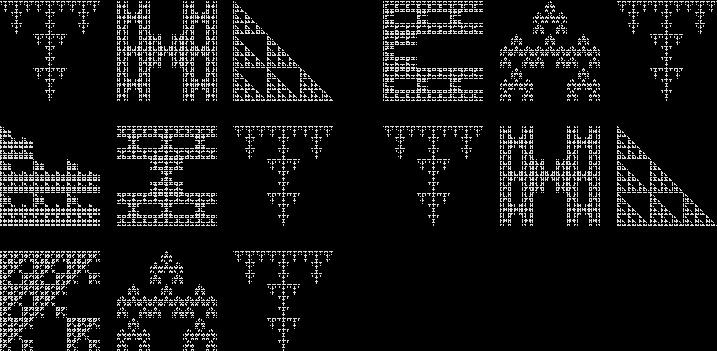
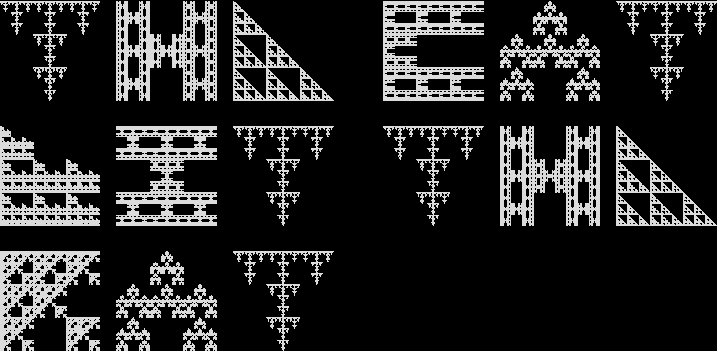
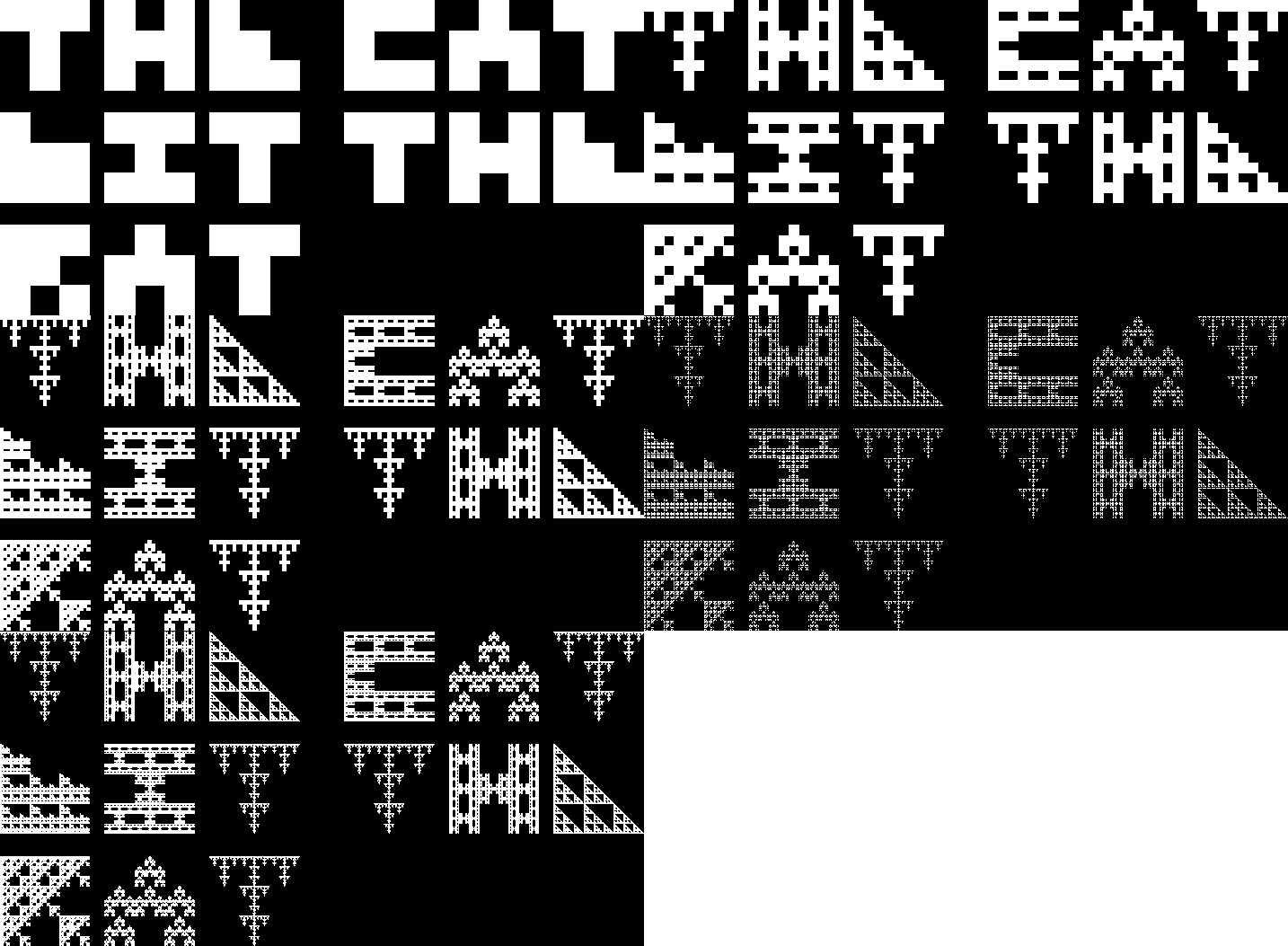
Fractal CAT (b&w animated)
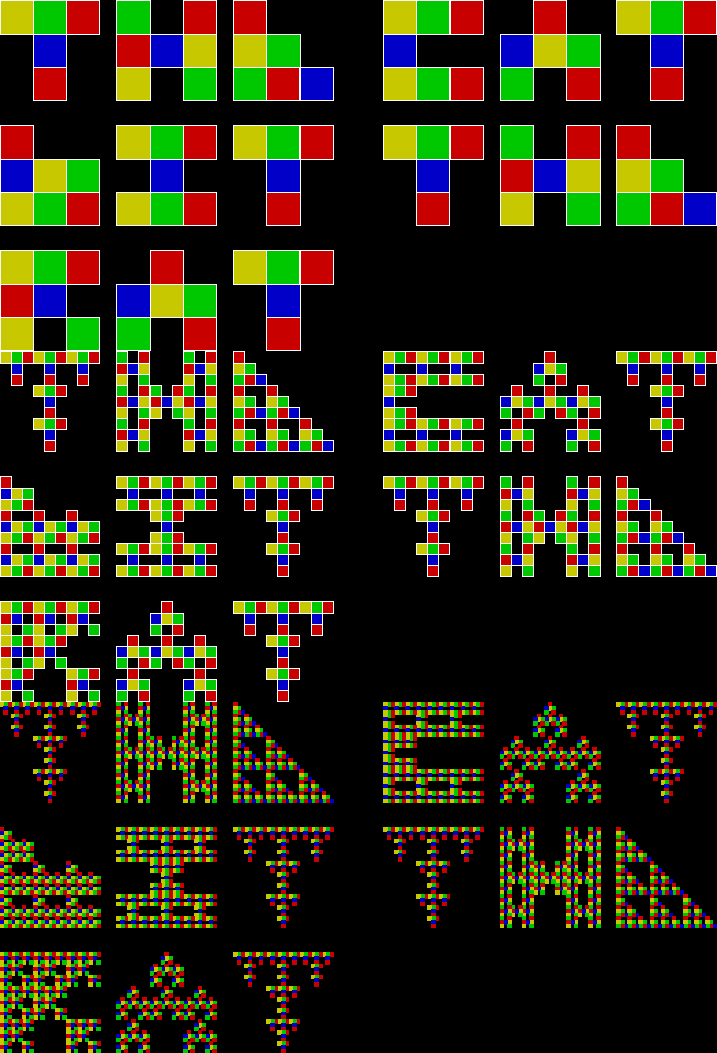
Fractal CAT (color animated)
But, as we saw with “THE” above, that’s not the only fractal you can create from “THE CAT BIT THE RAT”. Here’s what I call a 2-compression of the sentence, where every second letter has been compressed into the letter that precedes it:
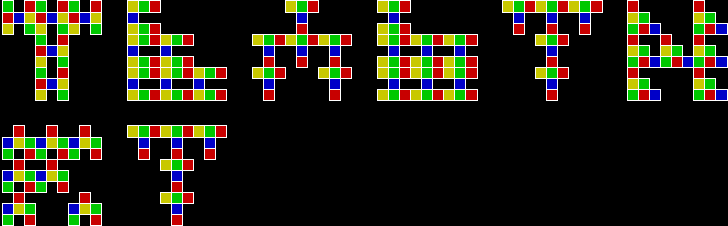
THE CAT BIT THE RAT (2-comp color)
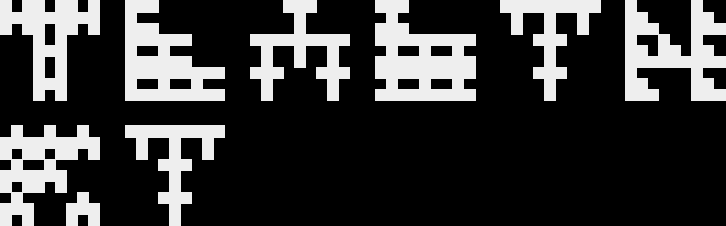
THE CAT BIT THE RAT (2-comp b&w)
And here’s a 3-compression of the sentence, where every third letter has been compressed into every second letter, and every second-and-third letter has been compressed into the preceding letter:

THE CAT BIT THE RAT (3-comp color)

THE CAT BIT THE RAT (3-comp b&w)
As you can see above, each word of the original sentence is now a unique single letter of the fractalphabet. Theoretically, there’s no limit to the compression: you could fit every word of a book in the standard Roman alphabet into a single letter of the fractalphabet. Or you could fit an entire book into a single letter of the fractalphabet (with additional symbols for punctuation, which I haven’t bothered with here).
To see what the fractalphabeting of a longer text in the standard Roman alphabet might look like, take the first verse of a poem by A.E. Housman:
On Wenlock Edge the wood’s in trouble;
His forest fleece the Wrekin heaves;
The gale it plies the saplings double,
And thick on Severn snow the leaves. (“Poem XXXI” of A Shropshire Lad, 1896)
The first line looks like this in stage 1 of the fractalphabet:

Here’s stage 2 of the standard fractalphabet, where each letter is divided into smaller copies of itself:

And here’s stage 3 of the standard fractalphabet:
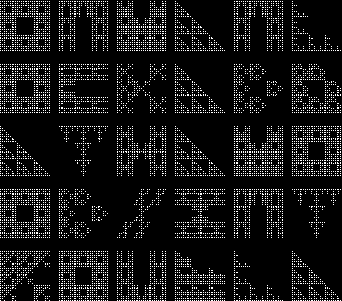
Now examine a colour version of the first line in stage 1 of the fractalphabet:

As with “THE” above, let’s try compressing each second letter into the letter that precedes it:
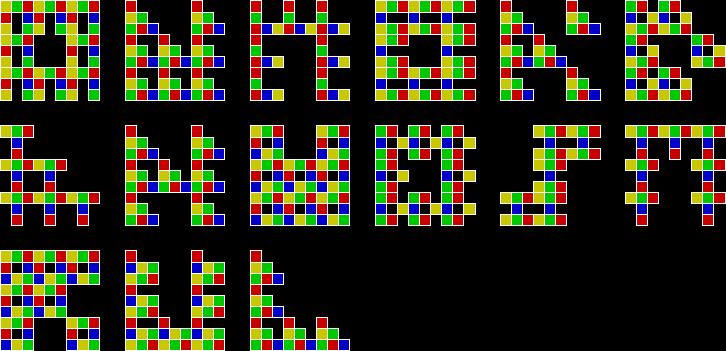
And here’s a 3-comp of the first line:
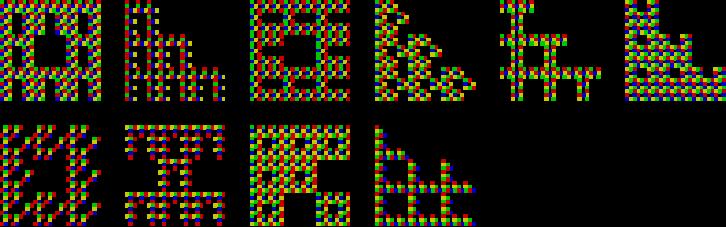
Finally, here’s the full first verse of Housman’s poem in 2-comp and 3-comp forms:
On Wenlock Edge the wood’s in trouble;
His forest fleece the Wrekin heaves;
The gale it plies the saplings double,
And thick on Severn snow the leaves. (“Poem XXXI of A Shropshire Lad, 1896)

“On Wenlock Edge” (2-comp)
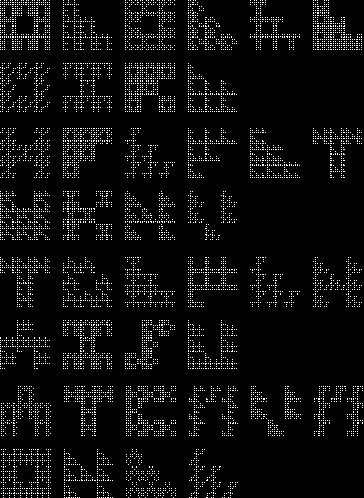
“On Wenlock Edge” (3-comp)
Appendix
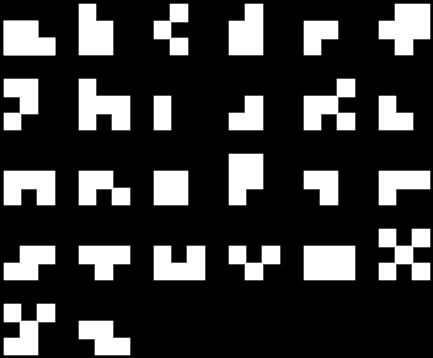
This is a possible lower-case version of the fractalphabet:
Queer Here
“Bells are like cats and mirrors — they’re always queer, and it doesn’t do to think too much about them.” — Dorothy L. Sayers, The Nine Tailors (1934)
He Say, He Sigh, He Sow #49
• «Планета есть колыбель разума, но нельзя вечно жить в колыбели.» — Константин Эдуардович Циолковский (1911)
• “Planet is the cradle of mind, but one cannot live in the cradle forever.” — Konstantin Tsiolkovsky
Crowley on Crystals
The first thing to meet our eyes [on a Himalayan expedition in 1902] was what, suppose we had landed in the country of Brobdignag, only more, so, might have been the lace handkerchief of a Super-Glumdalclitch left out to dry. It was a glittering veil of brilliance of the hillside; but closer inspection, instead of destroying the illusion, made one exclaim with increased enthusiasm.
The curtain had been formed by crystalline deposits from a hot spring (38.3° centigrade). The incrustation is exquisitely white and exquisitely geometrical in every detail. The burden of the cynicism of my six and twenty years fell from me like a dream. I trod the shining slopes; they rustled under my feet rather as snow does in certain conditions. (The sound is strangely exhilarating.) It is a voluptuous flattery like the murmurous applause of a refined multitude, with the instinctive ecstatic reverence of a man conscious of his unworthiness entering paradise. At the top of the curtain is the basin from which it proceeds, the largest of several similar formations. It is some thirty-one feet in diameter, an almost perfect circle. The depth in the middle is little over two feet. It is a bath for Venus herself.
I had to summon my consciousness of godhead before venturing to invade it. The water steams delicately with sulphurous emanations, yet the odour is subtly delicious. Knowles, the doctor, and I spent more than an hour and a half reposing in its velvet warmth, in the intoxicating dry mountain air, caressed by the splendour of the sun. I experienced all the ecstasy of the pilgrim who has come to the end of his hardships. I felt as if I had been washed clean of all the fatigues of the journey. In point of fact, I had arrived, despite myself, at perfect physical condition. I had realized from the first that the proper preparation for a journey of this sort is to get as fat as possible before starting, and stay as fat as possible as long as possible. I was now in the condition in which Pfannl had been at Srinagar. I could have gone forty-eight hours without turning a hair. — The Confessions of Aleister Crowley: An Autohagiography (1929)
Dull ’Un
There was a lot of drinking. One sunny morning [Dylan] Thomas and friends were in a field above Newlyn, sampling a “champagne wine tonic” sold by a local herbalist. Thomas talked and talked, then stopped abruptly. “Someone’s boring me,” he said. “I think it’s me.”
After his Vassar reading, Thomas stayed with a staff member at the college, Vernon Venable. He and his hosts sat up half the night, talking and drinking. When he finally retired, Venable sat on the bed while Thomas launched into a drunken account of his unhappiness. According to Venable, it went on for hours — “just misery, misery, misery, which seemed to me so pervasive that it had no source except a psychological source. That is, the man was deeply neurotic.” Venable is unable to remember details, except that part of the monologue was concerned with his love for Caitlin [Thomas, his wife]. In effect, says Venable, he was declaring that life was a nightmare and he couldn’t stand it. […]
In the morning Venable said goodbye to his guest, then discovered to his annoyance that Thomas had stolen his best white shirt. — Dylan Thomas, Paul Ferris (1977) (ch. 7, “Caitlin”, and ch. 10, “Laugharne and America”)
The Psyve Mind Speaks
“H.P. Lovecraft were really underrated in terms of the sixties bands from the West Coast.” — Psychic Hi-Fi: Genesis Breyer P-Orridge’s Favourite Albums, The Quietus, 23i2014.
Previously pre-posted:
• He Say, He Sigh, He Sow #23 — an earlier engagement by Genesis P. Orridge in terms of issues around “in terms of” (dot dot dot)
• Ex-term-in-ate!
Sigh-Lent Night
Morrissey’s stag night, like sim. Descriptive of a public house peopled entirely by broken men of indeterminate age staring silently at their half-empty pint glasses. […]
mortal adj. Refreshed (qv) within an inch of one’s life.
mortal combat n. Fighting between intoxicated fellows. Or occasionally, in the case of certain self-sufficient Harold Ramps (qv), between a single intoxicated fellow. — from Roger’s Profanisaurus: Das Krapital, The Revolutionary Dictionary of Bad Language (Viz 2010)
Nice Von
“If people do not believe that mathematics is simple, it is only because they do not realize how complicated life is.” — John von Neumann
This quote is popular on web pages about von Neumann, and about computing and mathematics generally. It is apparently not from a published work of von Neumann’s, but Franz L. Alt recalls it as a remark made from the podium by von Neumann as keynote speaker at the first national meeting of the Association for Computing Machinery in 1947. The exchange at that meeting is described at the end of Alt’s brief article “Archaeology of computers: Reminiscences, 1945–1947”, Communications of the ACM, volume 15, issue 7, July 1972, special issue: Twenty-fifth anniversary of the Association for Computing Machinery, p. 694. Alt recalls that von Neumann “mentioned the ‘new programming method’ for ENIAC and explained that its seemingly small vocabulary was in fact ample: that future computers, then in the design stage, would get along on a dozen instruction types, and this was known to be adequate for expressing all of mathematics…. Von Neumann went on to say that one need not be surprised at this small number, since about 1,000 words were known to be adequate for most situations of real life, and mathematics was only a small part of life, and a very simple part at that. This caused some hilarity in the audience, which provoked von Neumann to say: ‘If people do not believe that mathematics is simple, it is only because they do not realize how complicated life is.’ ”
 Overlord In Terms of Core Issues Around Maximal Engagement with Key Notions of the Über-Feral