Auberon Waugh called himself a “practitioner of the vituperative arts”. Perhaps it was a Catholic thing. And unless you know Latin, you won’t understand. Or you won’t understand as much as you might. I don’t know Latin well, but I can appreciate some of the wonderful vituperation in a book of Latin exorcisms I’ve found scanned at Google Books. The title alone is good: Flagellum Daemonum: Exorcismos Terribiles, Potentissimos et Efficaces, which means (I think) The Flail of Demons: Exorcisms Terrible, Most Potent and Effective. Or is the title Fustis Daemonum: Adiurationes Formidabiles, Potentissimas et Efficaces, meaning The Cudgel of Demons: Adjurations Formidable, Most Potent and Effective?
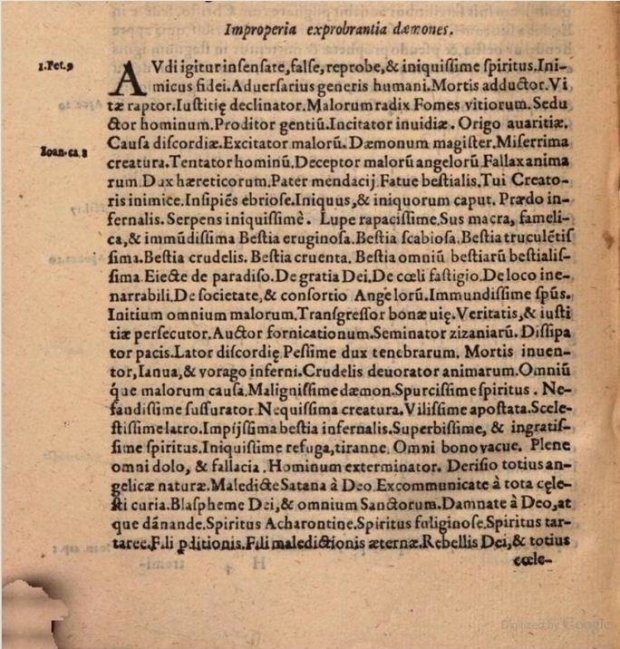
Vituperation from the Flagellum Daemonum (1644)
Either way, one of the exorcisms contains a good list of curses directed at the Devil. He’s called
Bestia Omnium Bestiarum Bestialissima, meaning “Beast of All Beasts the Most Beastly”. Beside that, there are
Dux Hæreticorum and
Lupus Rapacissimus, “Duke of Heretics” and “Most Rapacious Wolf”. There’s an odd
Sus Macra, Famelica, et Immundissima, which means something like “Scrawny, Famished and Most Filthy Hog”. Lovecraft would have liked
Nefandissimus Susurrator, “Most Unspeakable Whisperer”, and
Draco Iniquissimus, “Most Iniquitous Dragon”.
Pessimus Dux Tenebrarum is “Most Evil Duke of Darkness” and Janua et Vorago Inferni is “Door and Abyss of Hell”. Seminator Zizaniarum, meaning “Sower of Tares”, refers to Matthew xiii, 25: “But while men slept, his enemy came and sowed tares among the wheat, and went his way.” And those are only a few of the curses poured on the Devil’s head. I’ve turned the full list into plain text. As it says in the book that originally led me to the Flagellum Daemonum, “The following is a specimen of one of these vituperative addresses”:
Audi igitur insensate, false, reprobe, et iniquissime Spiritus. Inimice fidei. Adversarie generis humani. Mortis adductor. Vitæ raptor. Justitiæ declinator. Malorum radix. Fomes vitiorum. Seductor hominum. Proditor gentium. Incitator invidiæ. Origo aravitiæ. Causa discordiæ. Excitator malorum. Dæmonum magister. Miserrima Creature. Tentator Homininum. Deceptor malorum Angelorum. Fallax animarum. Dux Hæreticorum. Pater Mendacii. Fatue Bestialis. Tui creatoris Inimicus. Insipiens ebriose. Inique et iniquorum caput. Prædo infernalis. Serpens iniquissime. Lupe rapacissime. Sus macra, famelica, et immundissima. Bestia eruginosa. Bestia scabiosa. Bestia truculentissima. Bestia crudelis. Bestia cruenta. Bestia omnium Bestiarum Bestialissima. Ejecte de Paradise. De gratiâ Dei. De Cœli fastigio. De loco inerrabili. De Societate et consortia Angelorum. Immundissime Spiritus Initium omnium malorum. Trangressor bonæ vitæ. Veritatis et Justitiæ persecutor. Auctor fornicationum. Seminator zizaniarum. Dissipator pacis. Latro discordiæ. Pessime dux tenebrarum. Mortis inventor. Janua et vorago Inferni. Crudelis devorator animarum omniumque malorum causa. Malignissime Dæmon. Spurcissime Spiritus. Nefandissime susurrator. Nequissima Creatura. Vilissime apostata. Scelestissima latro. Impiissima bestia infernalis. Superbissime et ingratissime Spiritus. Iniquissime refuga. Tyranne, Omni bono vacue. Plene omni dolo et fallaciâ. Hominum exterminator. Derisio totius Angelicæ Naturæ. Maledicte Satana a Deo. Excommunicate a totâ cœlesti curiâ. Blaspheme Dei et omnium Sanctorum. Damnate a Deo atque Damnande. Spiritus Acherontine. Spiritus Tartaree. Fili Perditionis. Fili maledictionis æternæ. Rebellis Dei et totius cœlestis curiæ. Serpens crudelissime. Draco iniquissime. Creatura damnata, reprobata et maledicta a Deo in æternum ob superbiam nequitiam tuam.
The first line, Audi igitur insensate, false, reprobe, et iniquissime Spiritus means something like “Hear, then, Senseless, False, Reprobate and Most Iniquitous Spirit”. Then the Devil is called Inimicus Fidei, “Enemy of the Faith”, Adversarius Generis Humani, “Adversary of the Human Race”, Mortis Adductor, “Dragger to Death”, and Vitæ Raptor, “Snatcher of Life”. Then the vituperation really begins.



