First Whirled Warp

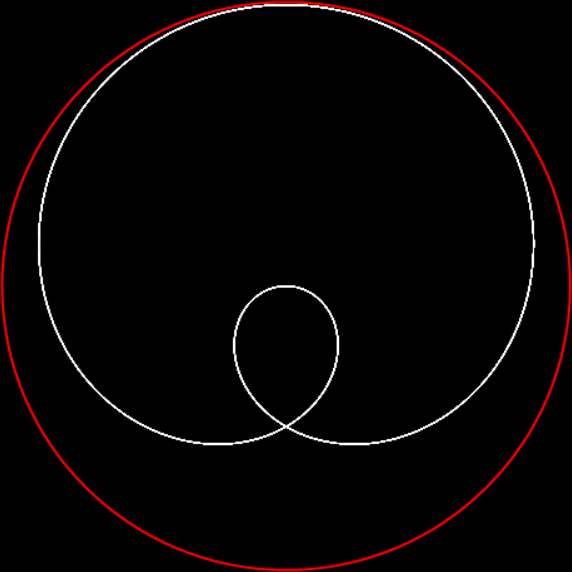
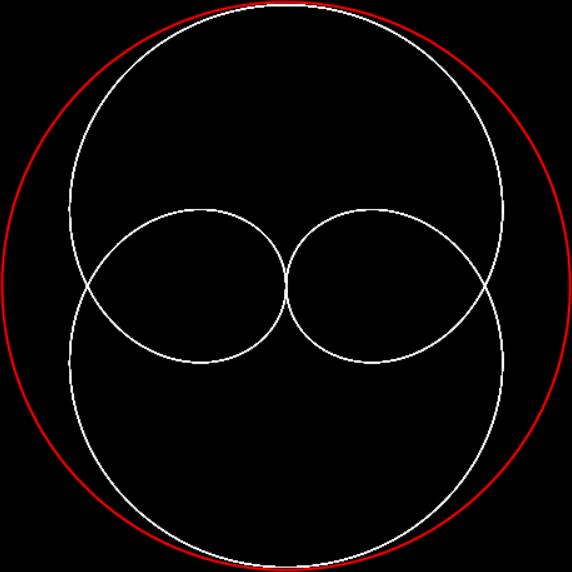
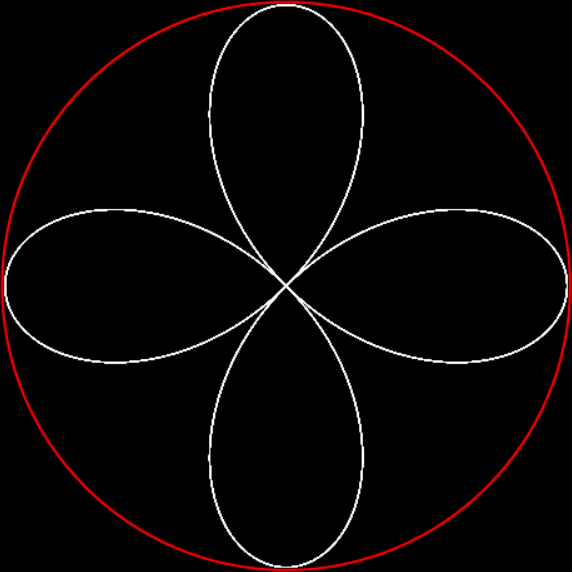
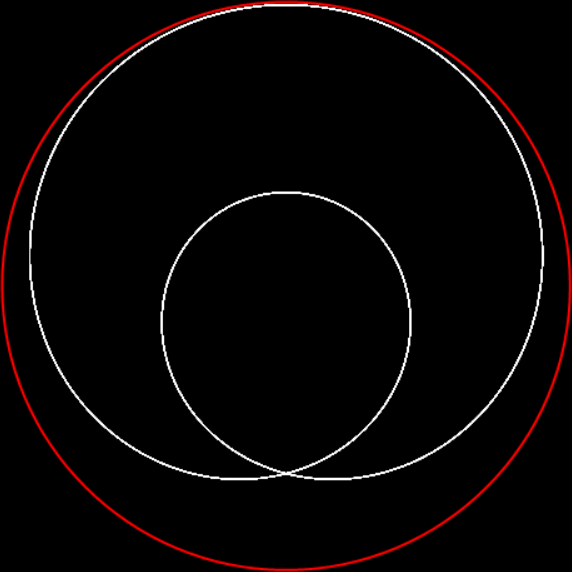
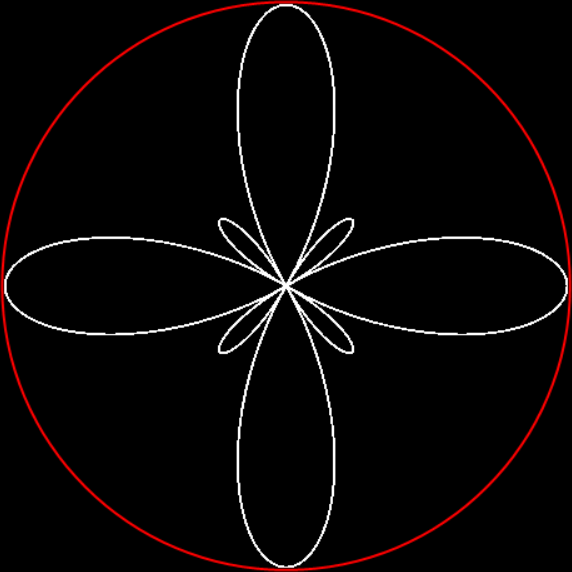
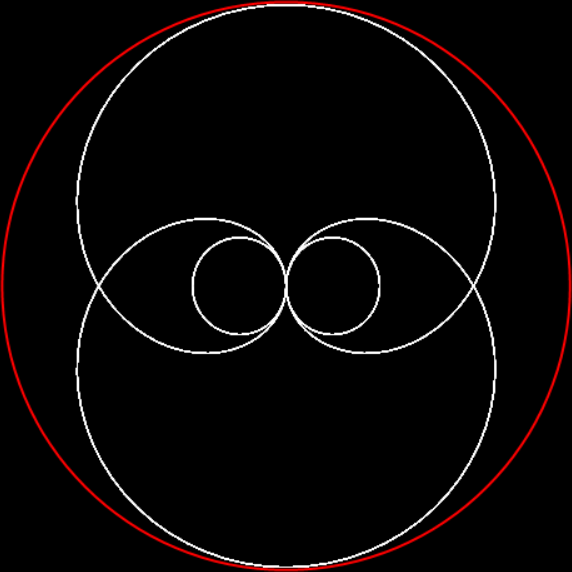
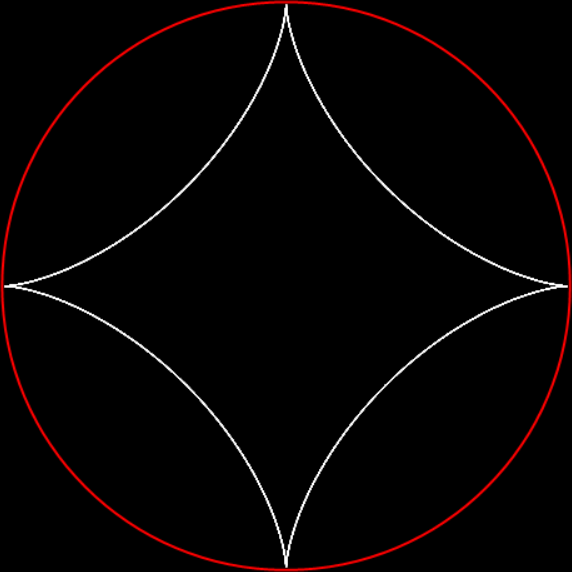
Imagine two points moving clockwise around the circumference of a circle. Find the midpoint between the two points when one point is moving twice as fast as the other. The midpoint will trace this shape:

Midpoint of two points moving around circle at speeds s and s*2

(n.b. to make things easier to see, the red circle shown here and elsewhere is slightly larger than the virtual circle used to calculate the midpoints)


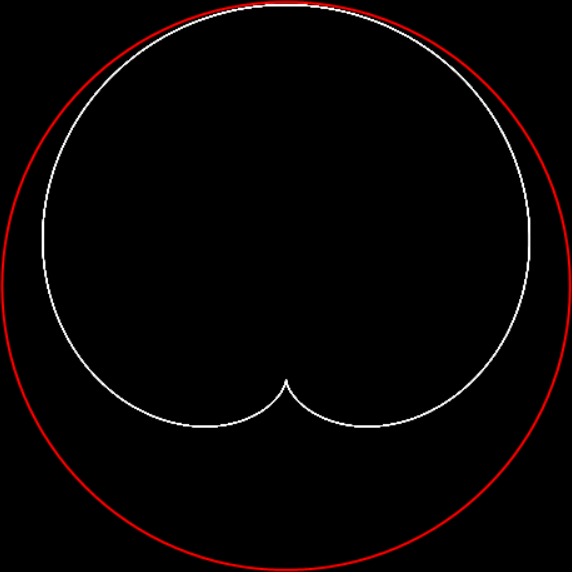
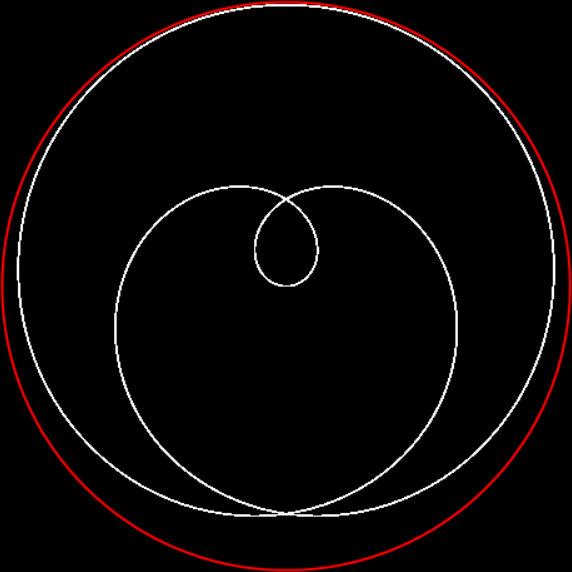
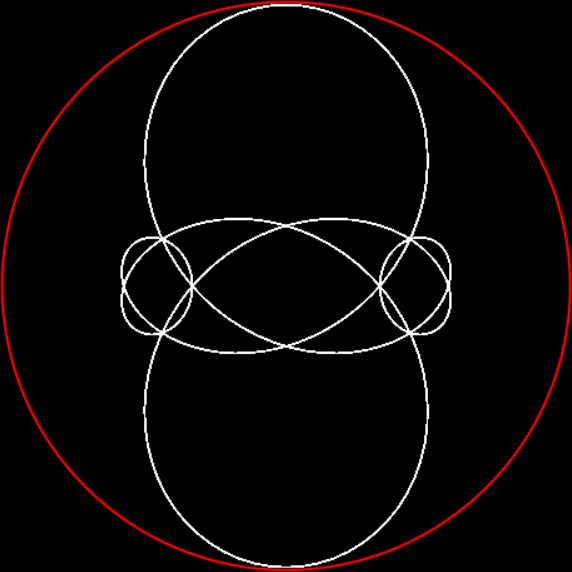
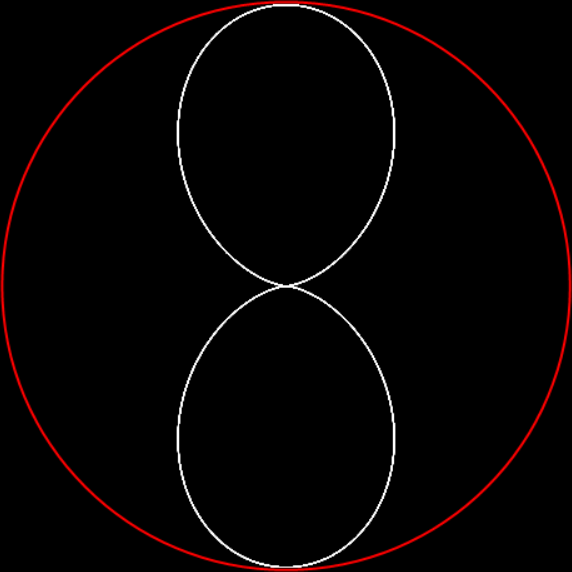
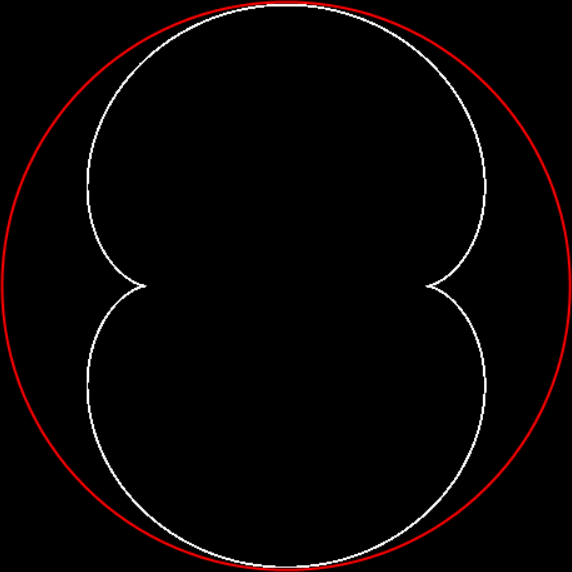
Now suppose that one point is moving anticlockwise. The midpoint will now trace this shape:

Midpoint for s, -s*2


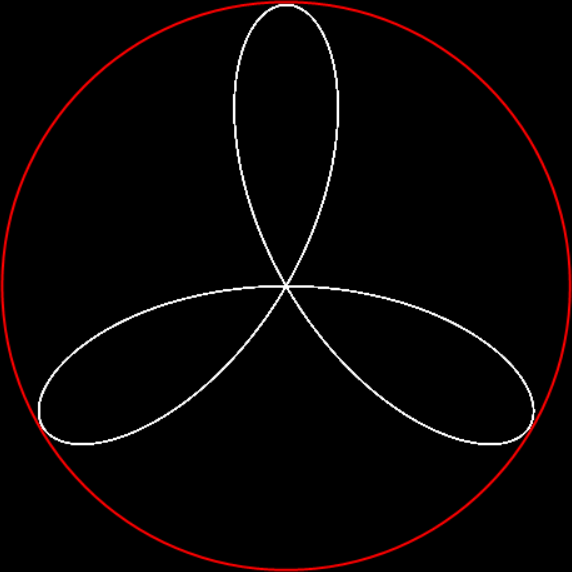
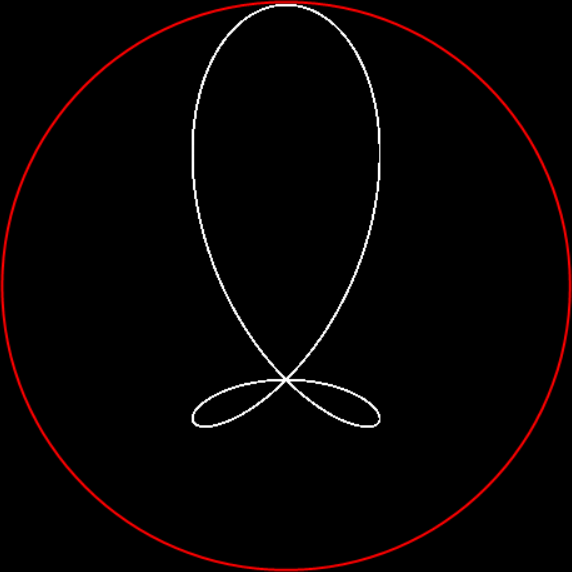
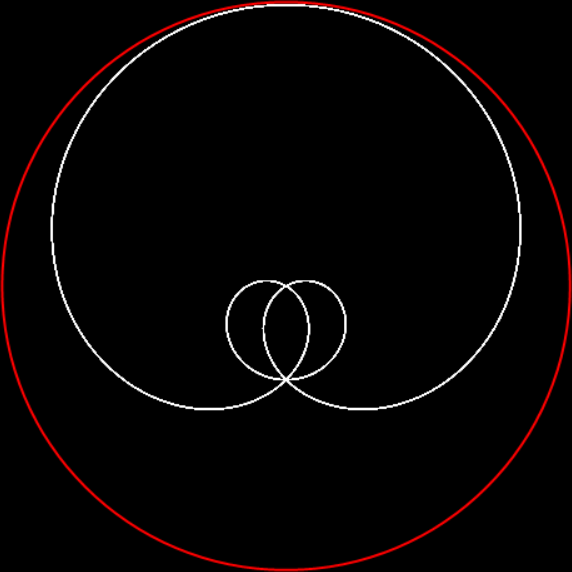
Now try three points, two moving at the same speed and one moving twice as fast:

Midpoint for s, s, s*2


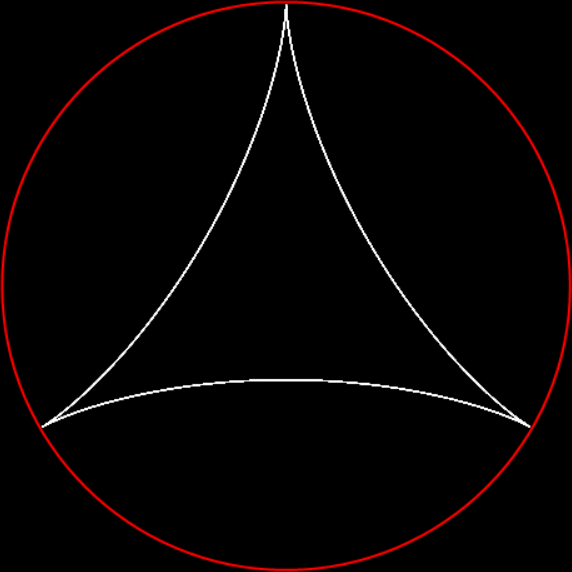
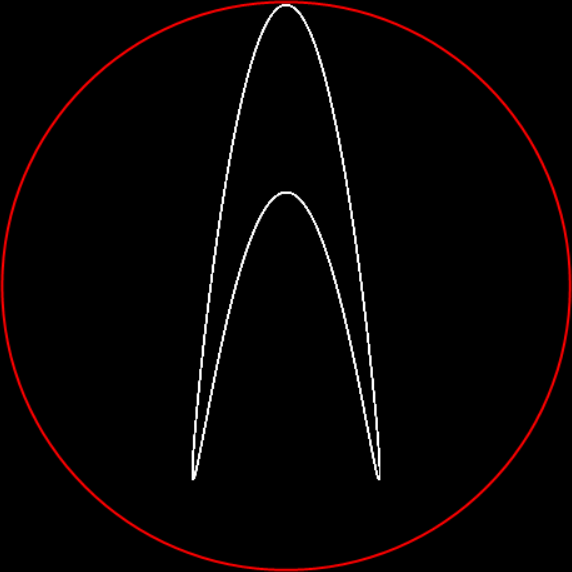
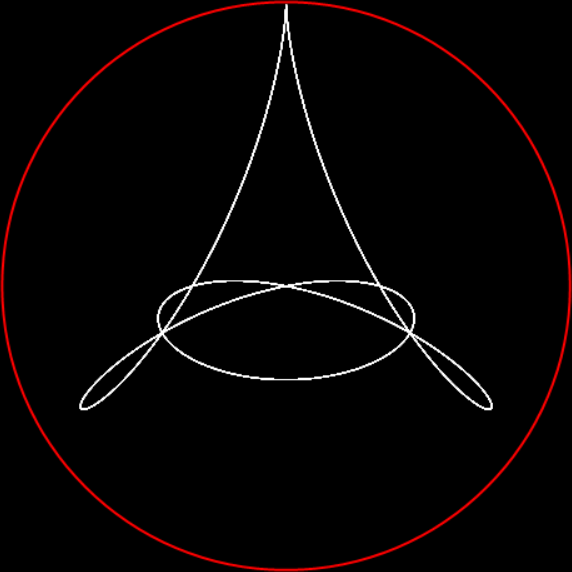
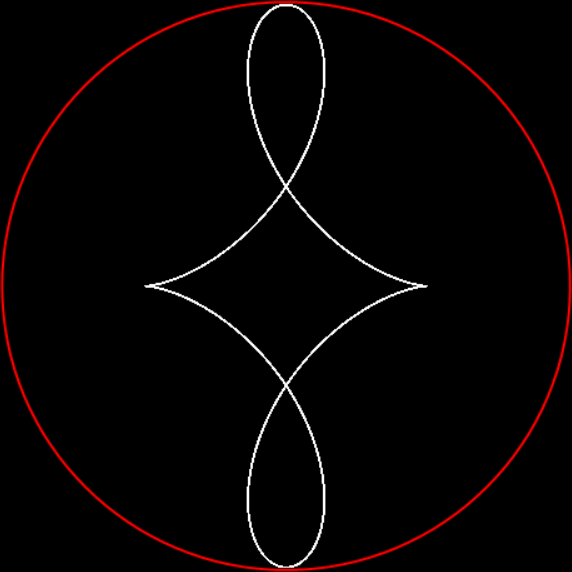
When the point moving twice as fast is moving anticlockwise, this shape appears:

Midpoint for s, s, -s*2


Here are more of these midpoint-shapes:

Midpoint for s, s*3


Midpoint for s, -s*3


Midpoint for s*2, s*3


Midpoint for s, -s, s*2


Midpoint for s, s*2, -s*2


Midpoint for s, s*2, s*2


Midpoint for s, -s*3, -s*5


Midpoint for s, s*2, s*3


Midpoint for s, s*2, -s*3


Midpoint for s, -s*3, s*5


Midpoint for s, s*3, s*5


Midpoint for s, s, s, s*3


Midpoint for s, s, s, -s*3


Midpoint for s, s, -s, s*3


Midpoint for s, s, -s, -s*3


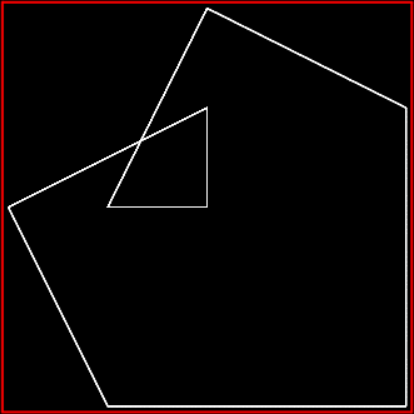
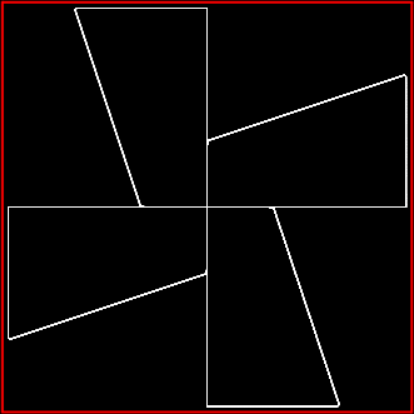
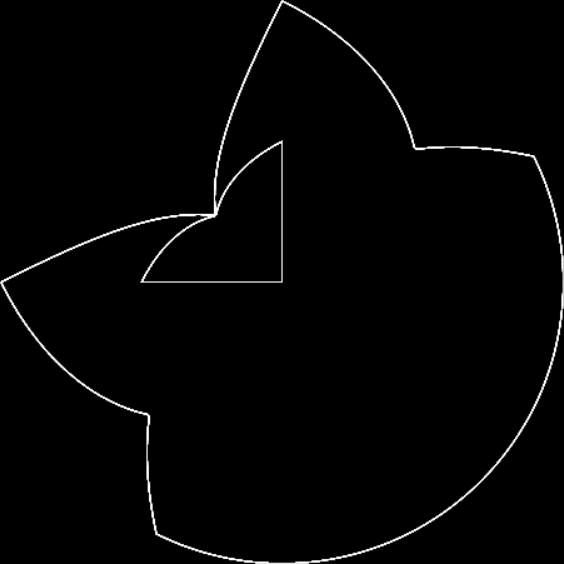
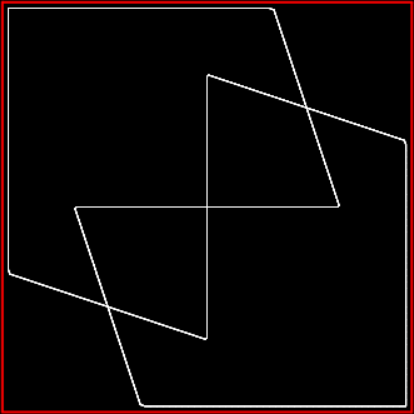
But what about points moving around the perimeter of a polygon? Here are the midpoints of two points moving clockwise around the perimeter of a square, with one point moving twice as fast as the other:

Midpoint for square with s, s*2


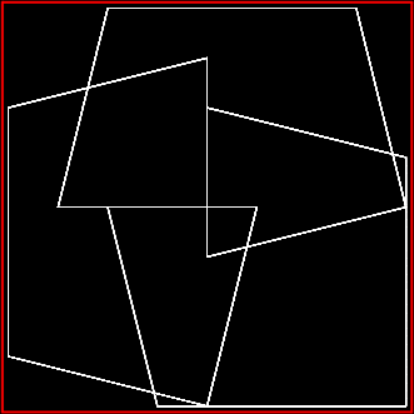
And when one point moves anticlockwise:

Midpoint for square with s, -s*2


If you adjust the midpoints so that the square fills a circle, they look like this:

Midpoint for square with s, s*2, with square adjusted to fill circle


When the red circle is removed, the midpoint-shape is easier to see:

Midpoint for square with s, s*2, circ-adjusted


Here are more midpoint-shapes from squares:

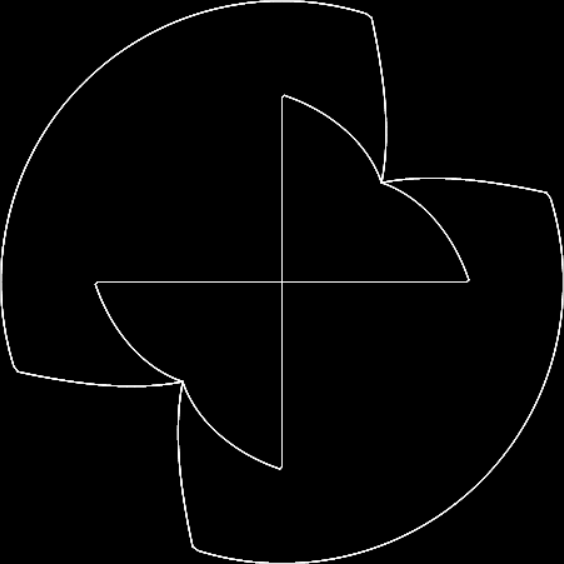
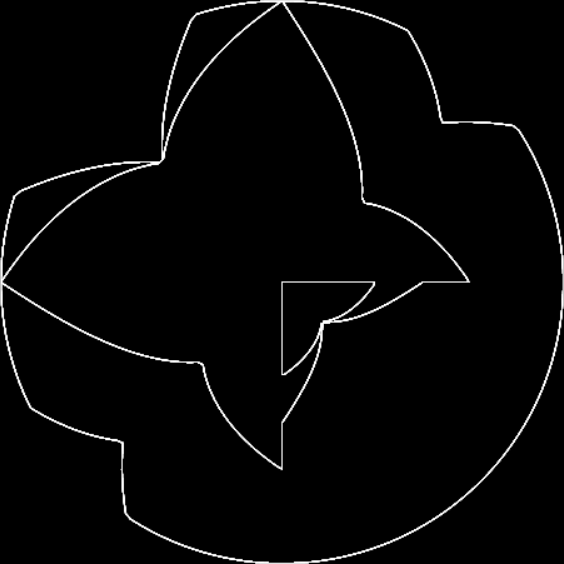
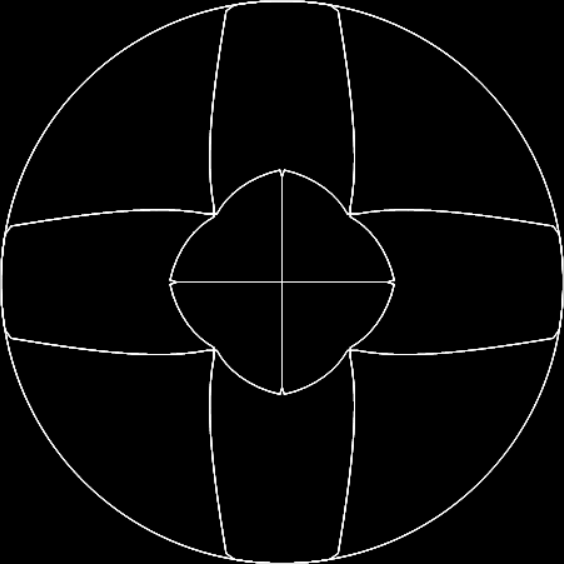
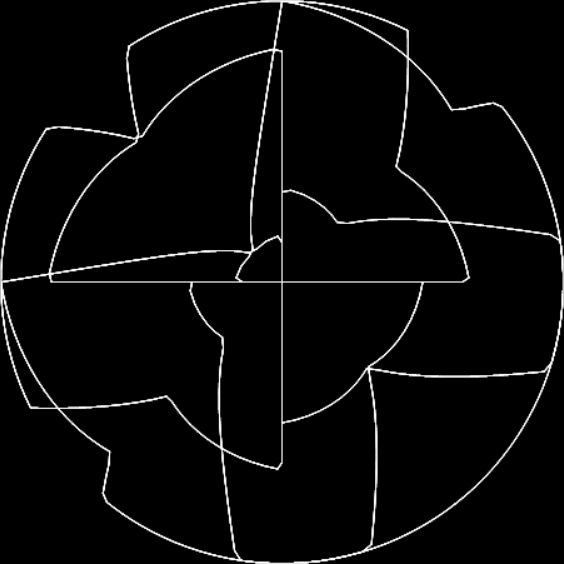
Midpoint for s, s*3


Midpoint for s, -s*3


Midpoint for s, s*4


And some more circularly adjusted midpoint-shapes from squares:

Midpoint for s, s*3, circ-adjusted


Midpoint for s*2, s*3, circ-adjusted


Midpoint for s, s*5, circ-adjusted


Midpoint for s, s*6, circ-adjusted


Midpoint for s, s*7, circ-adjusted


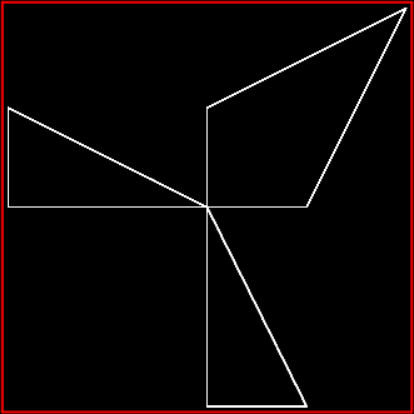
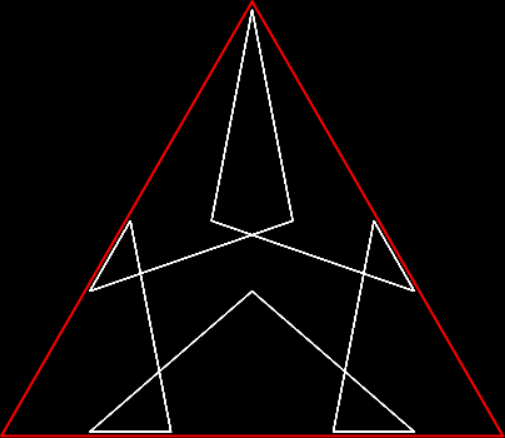
Finally (for now), let’s look at triangles. If three points are moving clockwise around the perimeter of a triangle, one moving four times as fast as the other two, the midpoint traces this shape:

Midpoint for triangle with s, s, s*4


Now try one of the points moving anticlockwise:

Midpoint for s, s, -s*4


Midpoint for s, -s, s*4


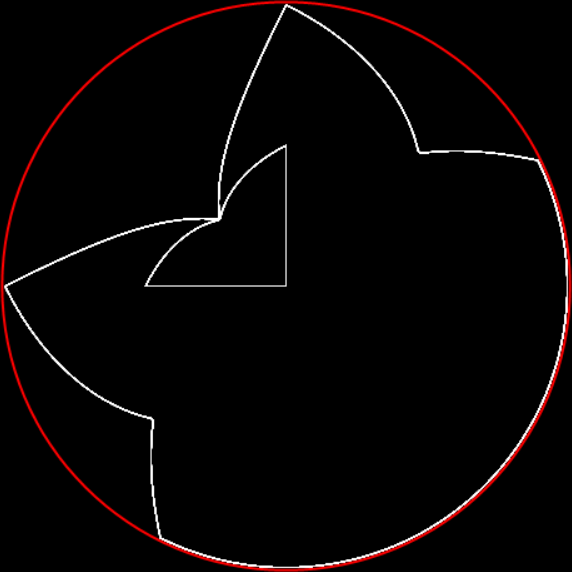
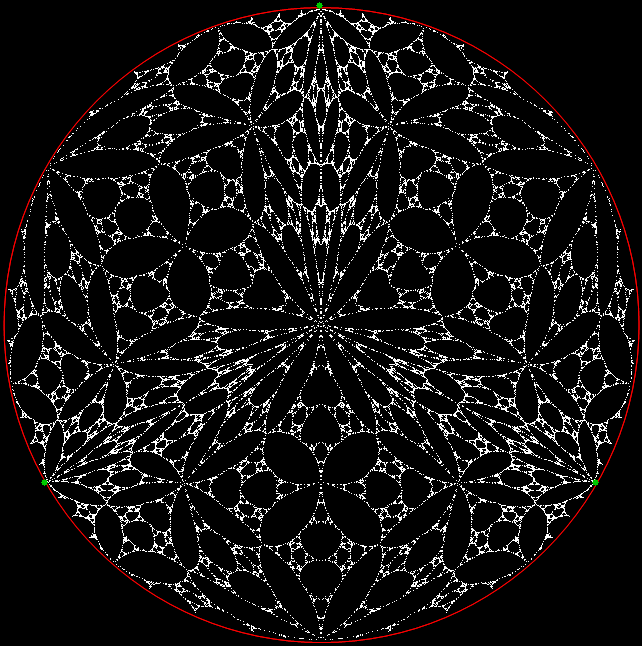
If you adjust the midpoints so that the triangular space fills a circle, they look like this:

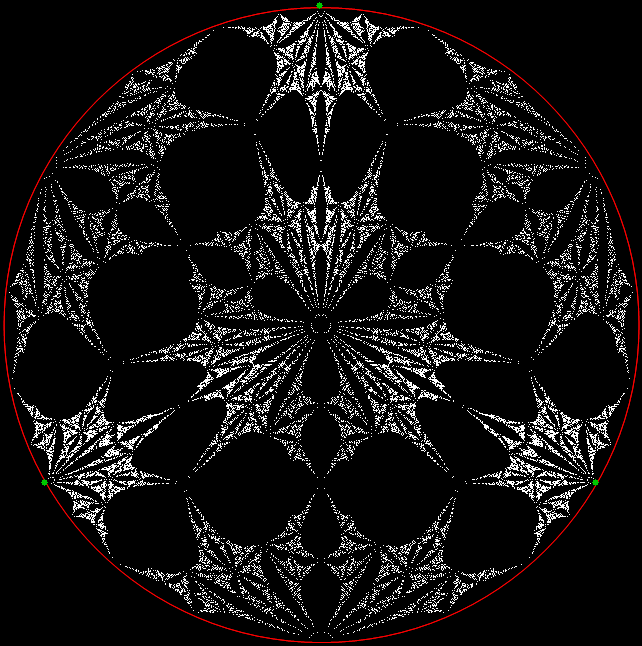
Midpoint for s, s, s*4, with triangular space adjusted to fill circle


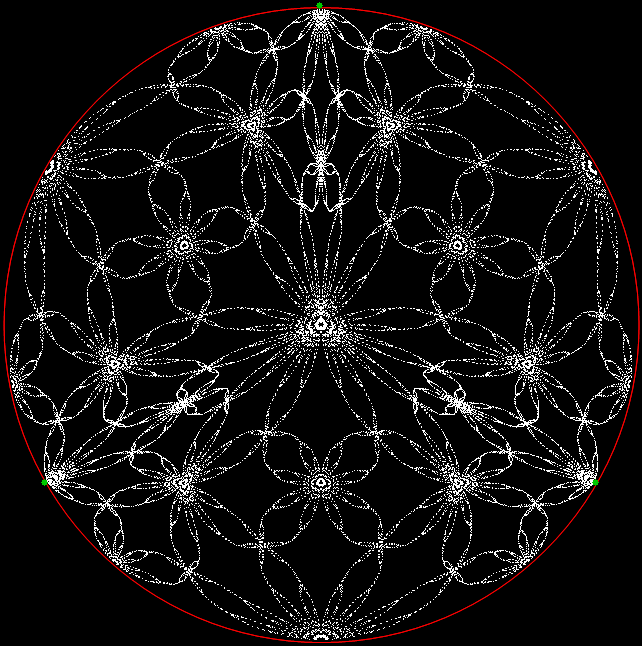
Midpoint for s, -s, s*4, circ-adjusted


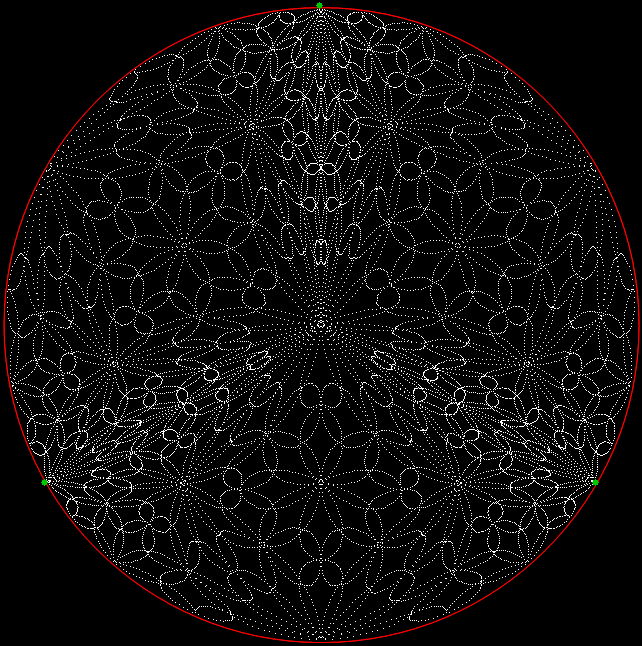
Midpoint for s, s, -s*4, circ-adjusted


There are lots more (infinitely more!) midpoint-shapes to see, so watch this (circularly adjusted) space.


Elsewhere Other-Accessible…

Second Whirled Warp — more on points moving around polygons
Third Whirled Warp — even more on points moving around polygons
We Can Circ It Out — more on converting polygons into circles

We Can Circ It Out

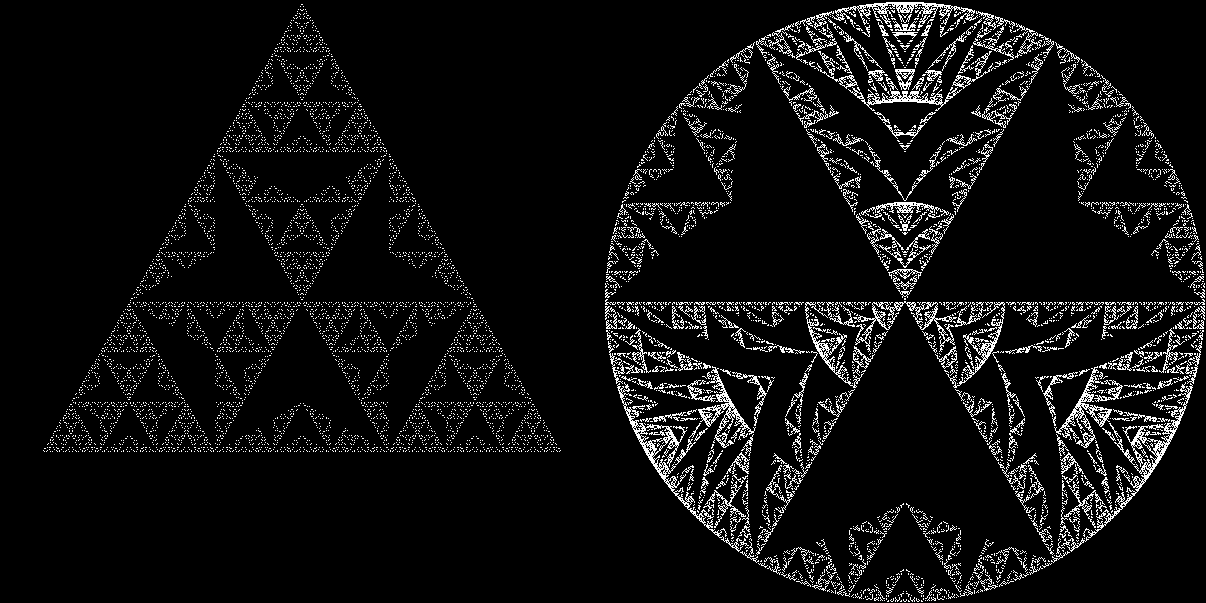
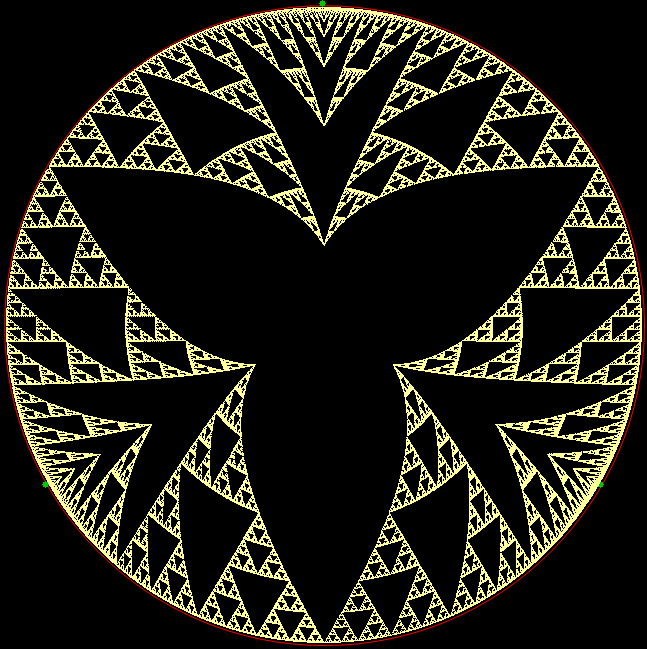
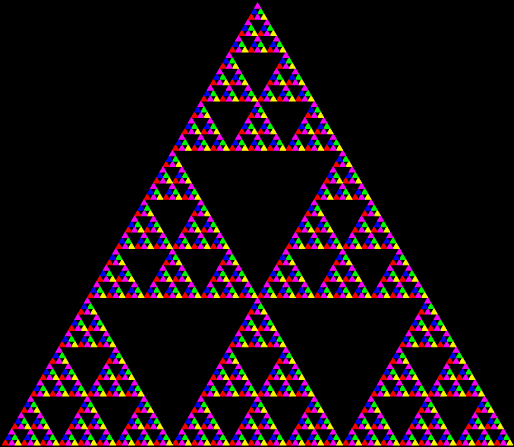
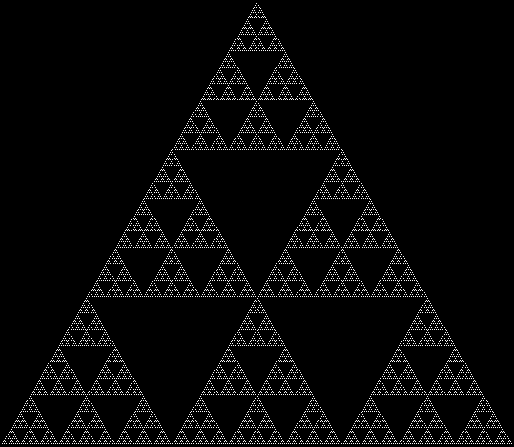
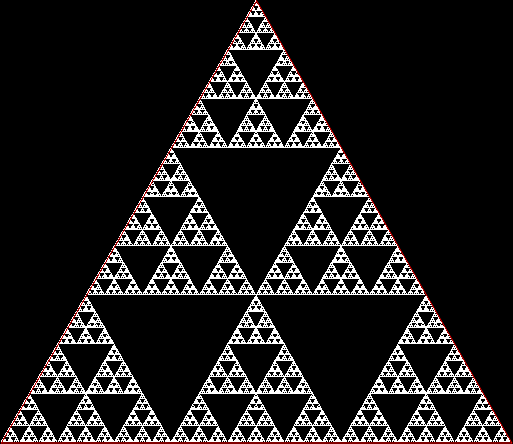
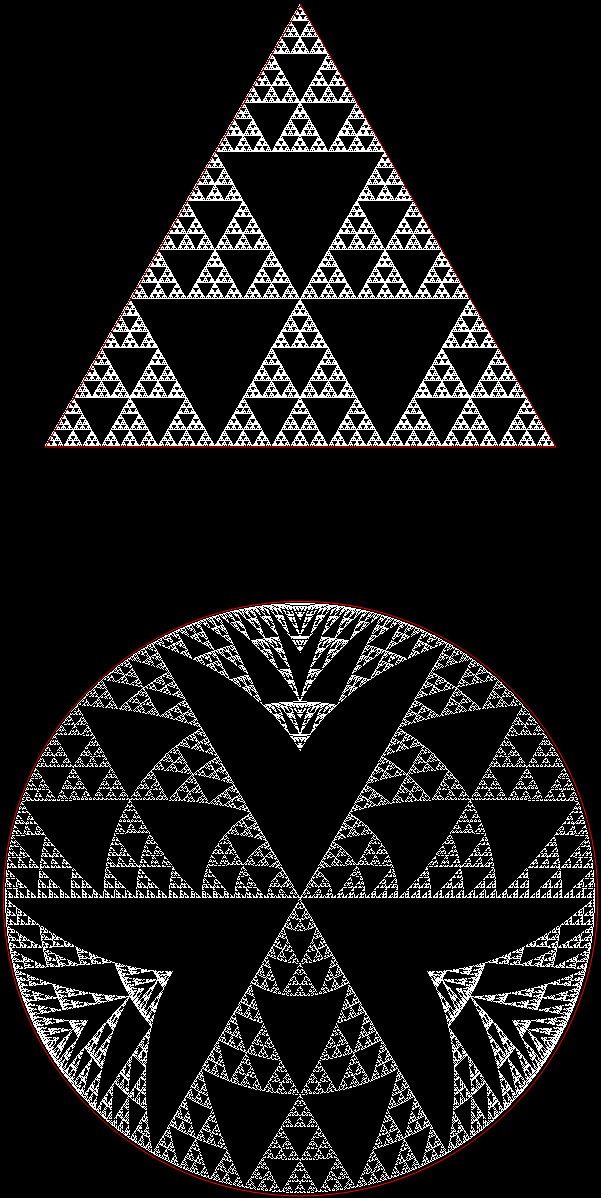
It’s a pretty little problem to convert this triangular fractal…

Sierpiński triangle (Wikipedia)


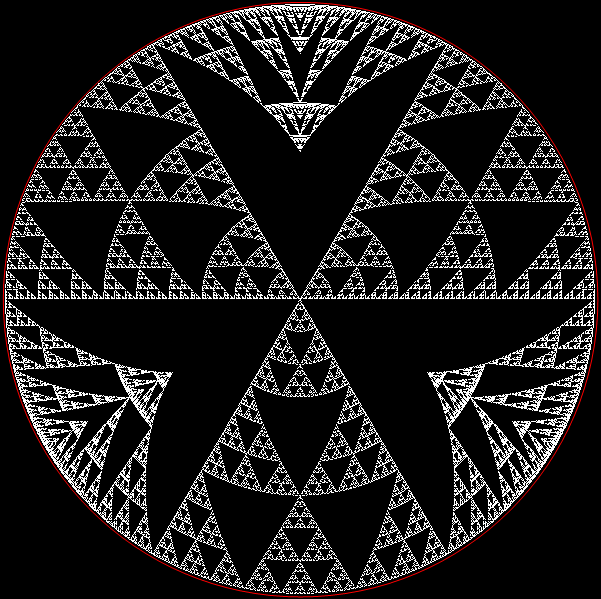
…into its circular equivalent:

Sierpiński triangle as circle


Sierpiński triangle to circle (animated)


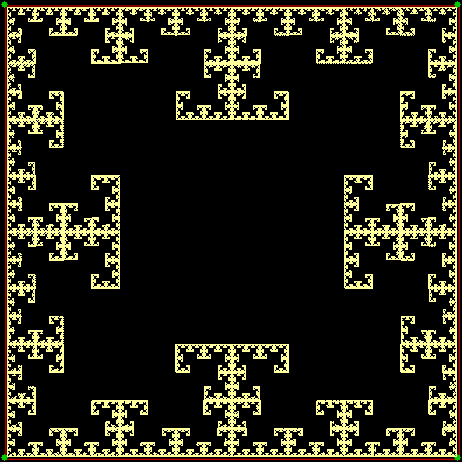
But once you’ve circ’d it out, as it were, you can easily adapt the technique to fractals based on other polygons:

T-square fractal (Wikipedia)

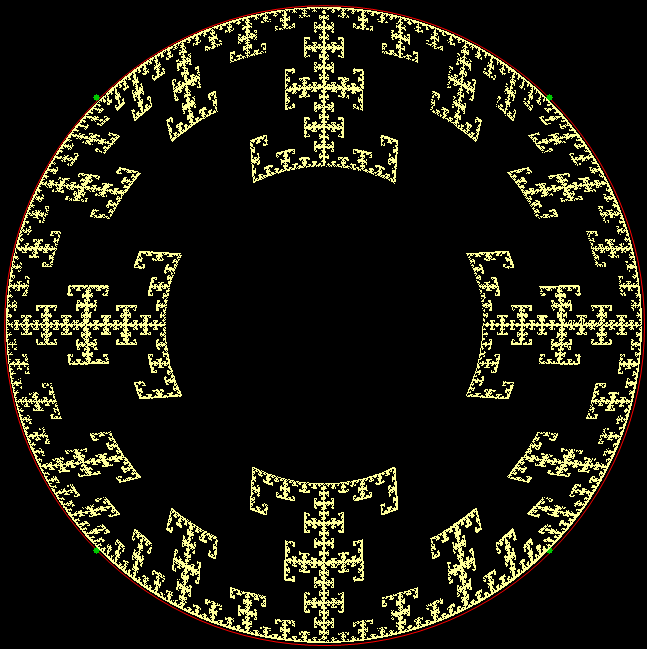
T-square fractal as circle


T-square fractal to circle (animated)


Elsewhere other-accessible…

Dilating the Delta — more on converting polygonic fractals to circles…

Six Mix Trix

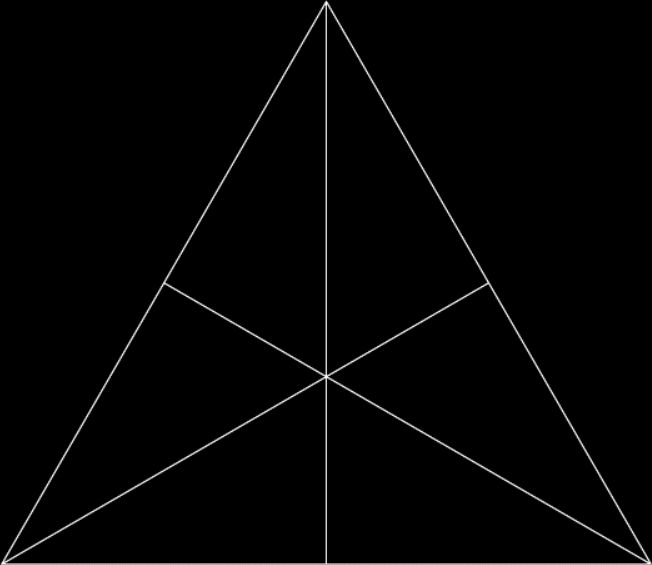
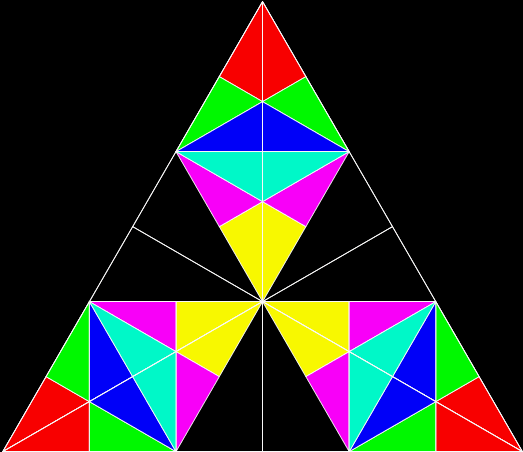
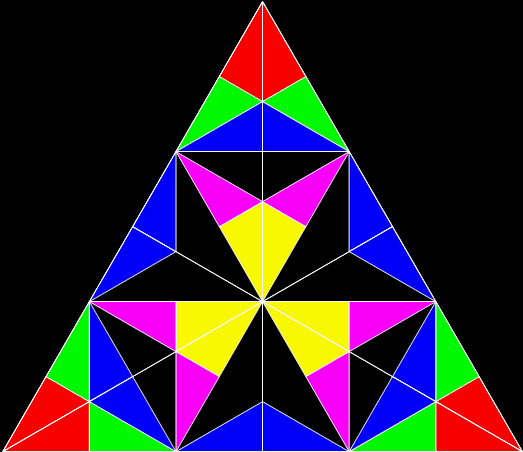
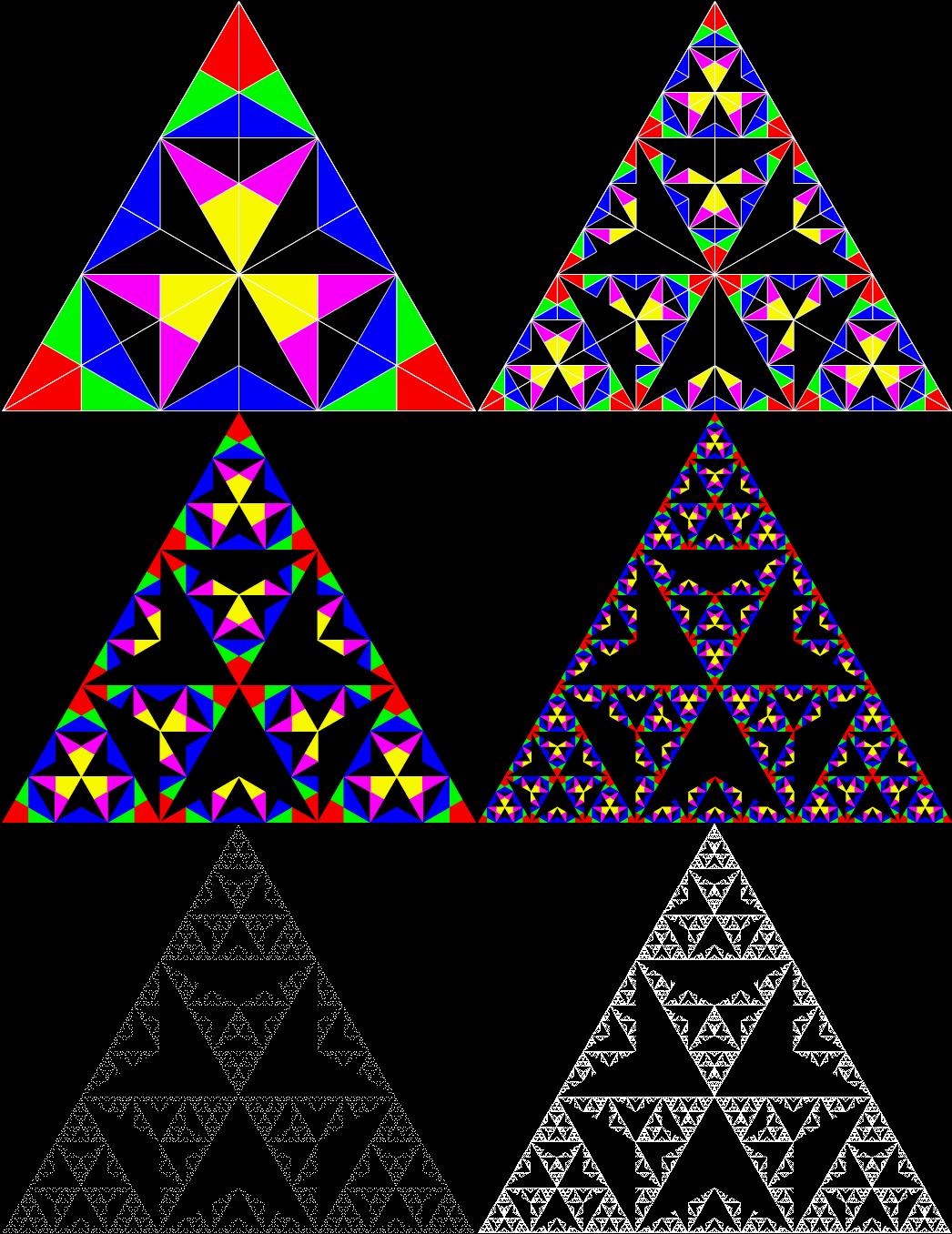
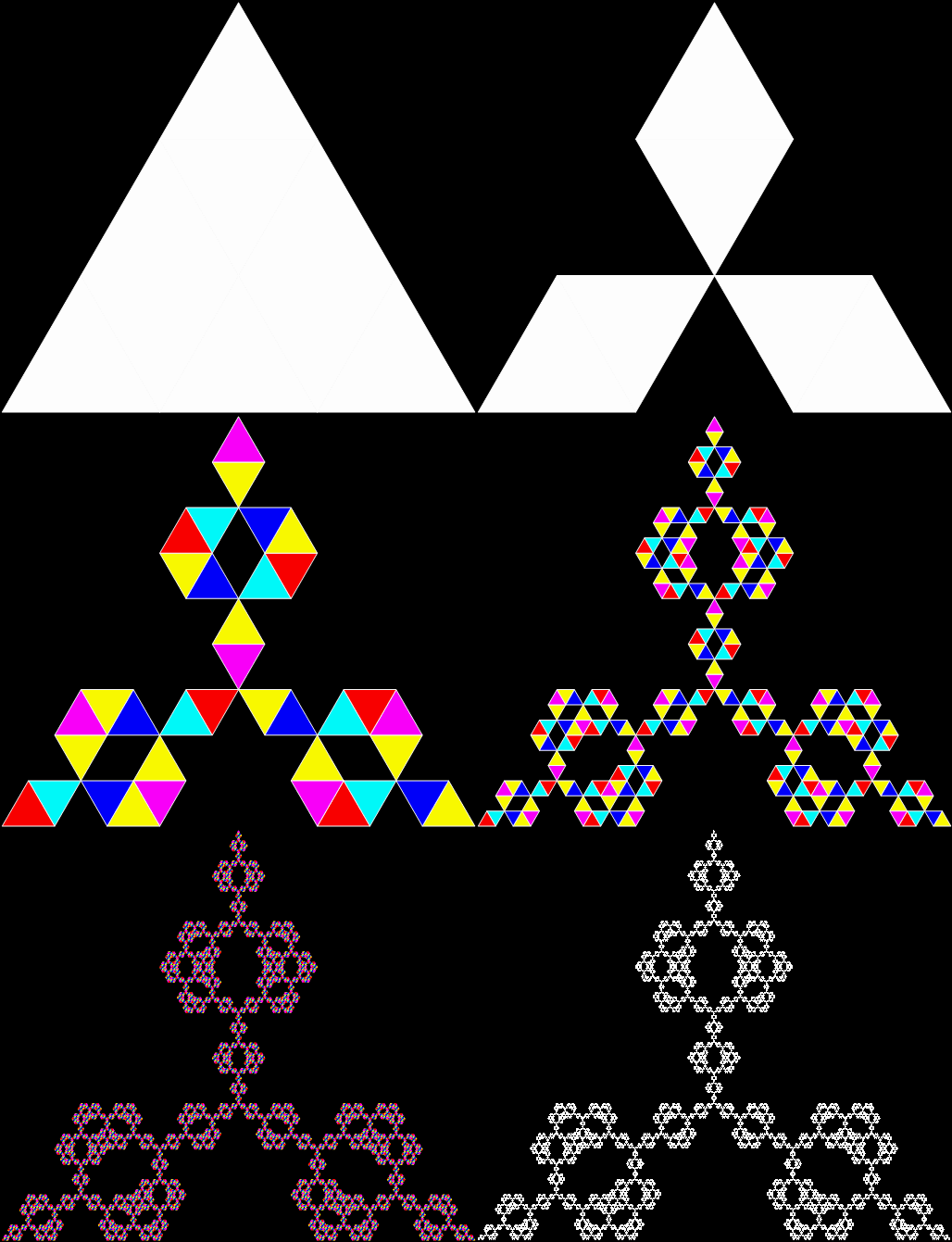
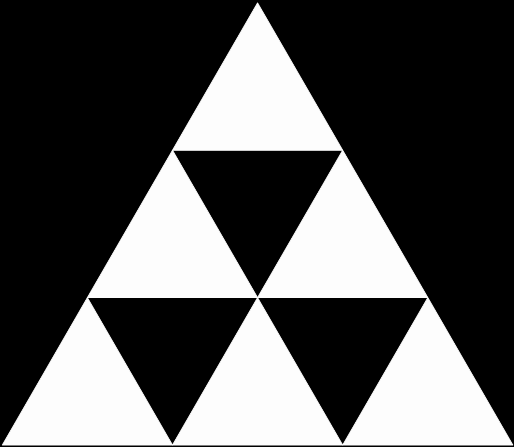
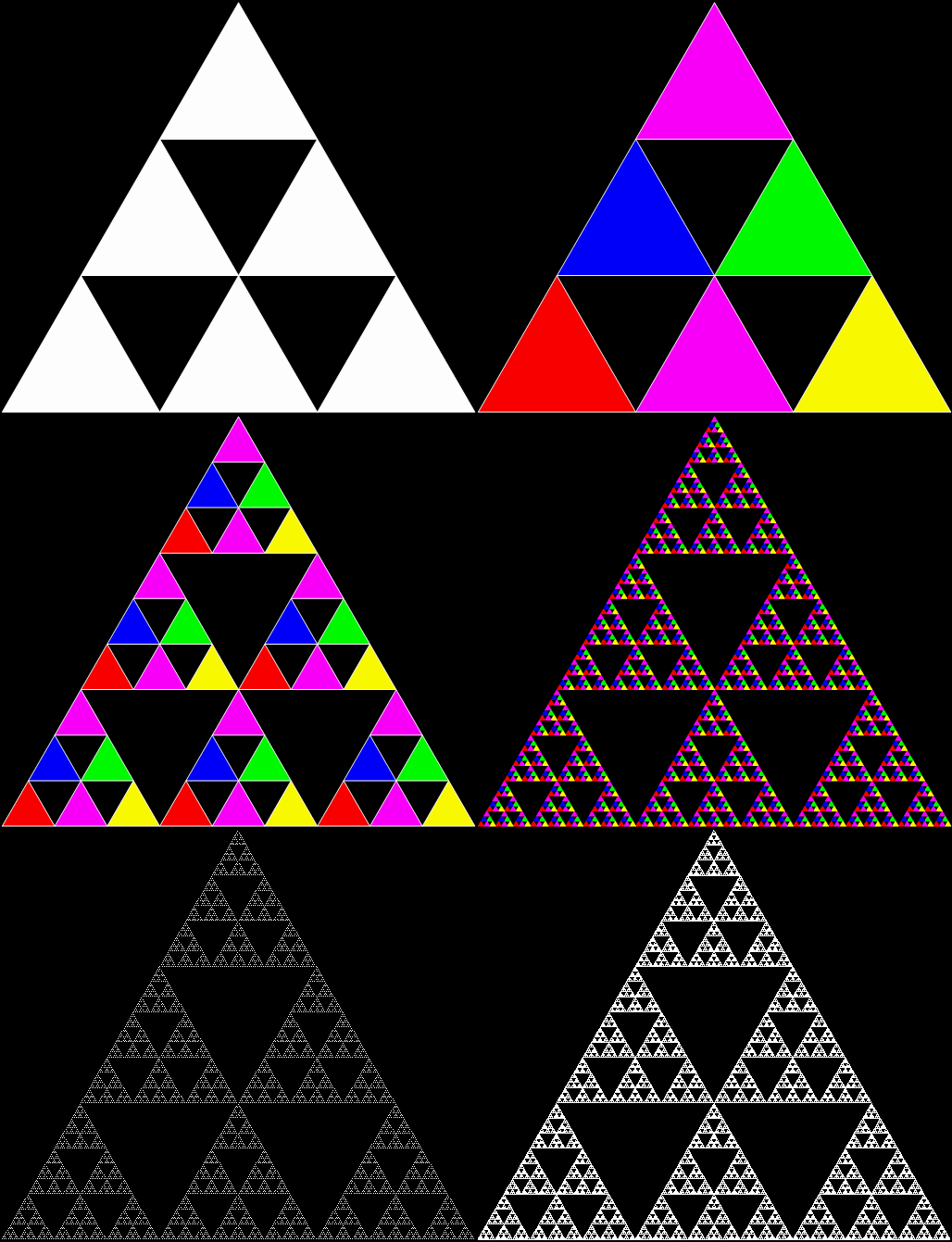
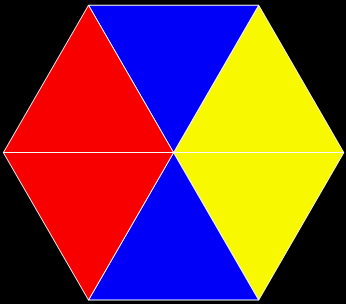
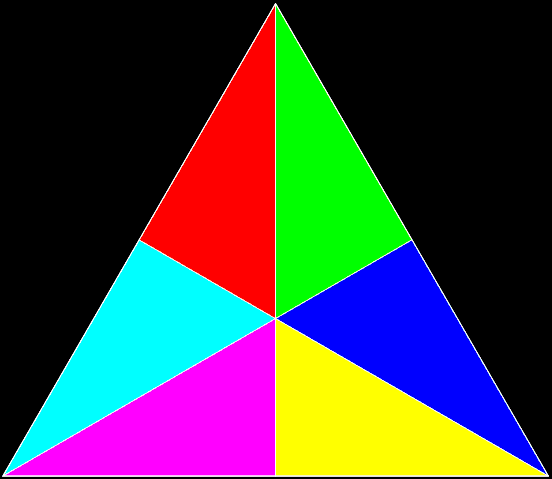
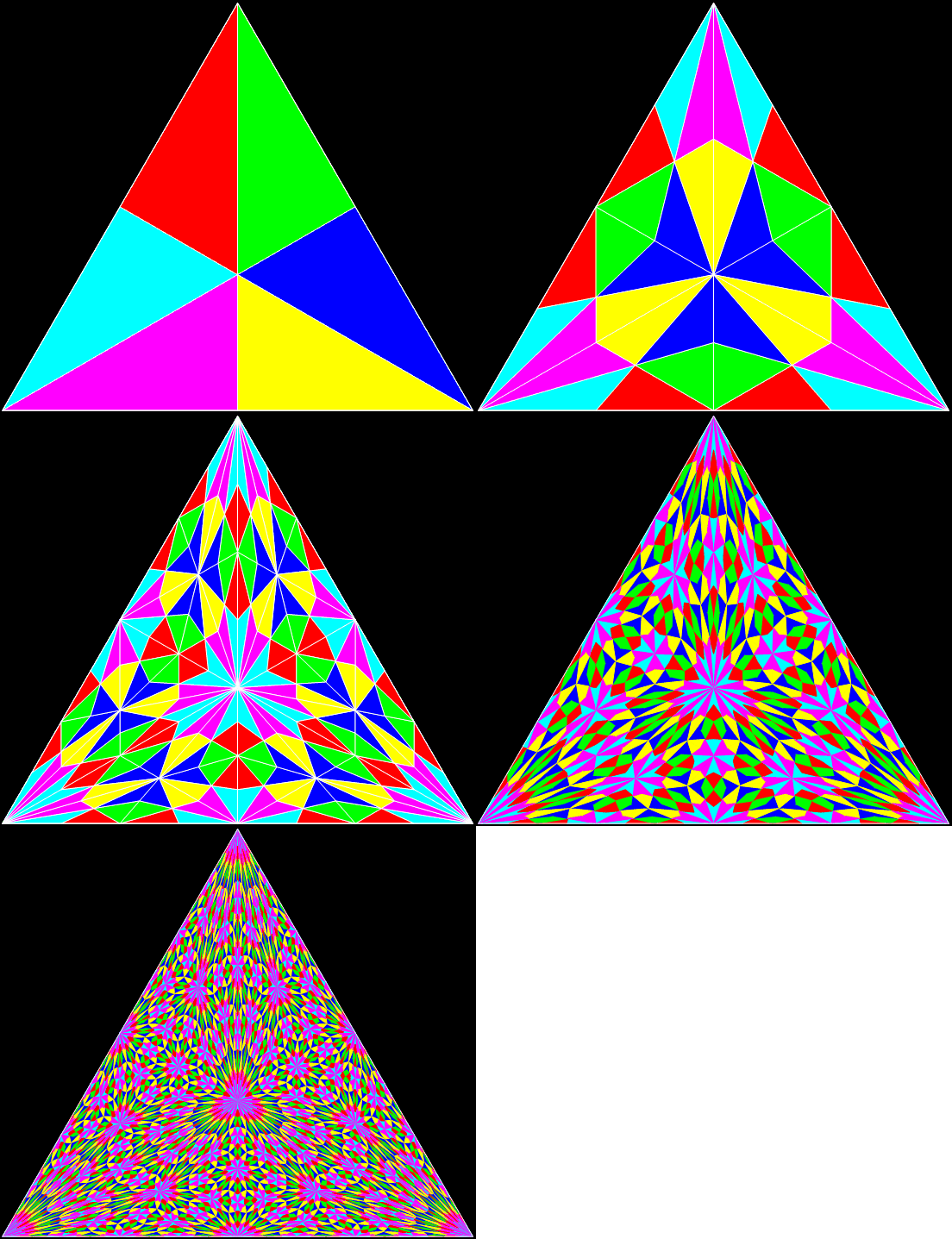
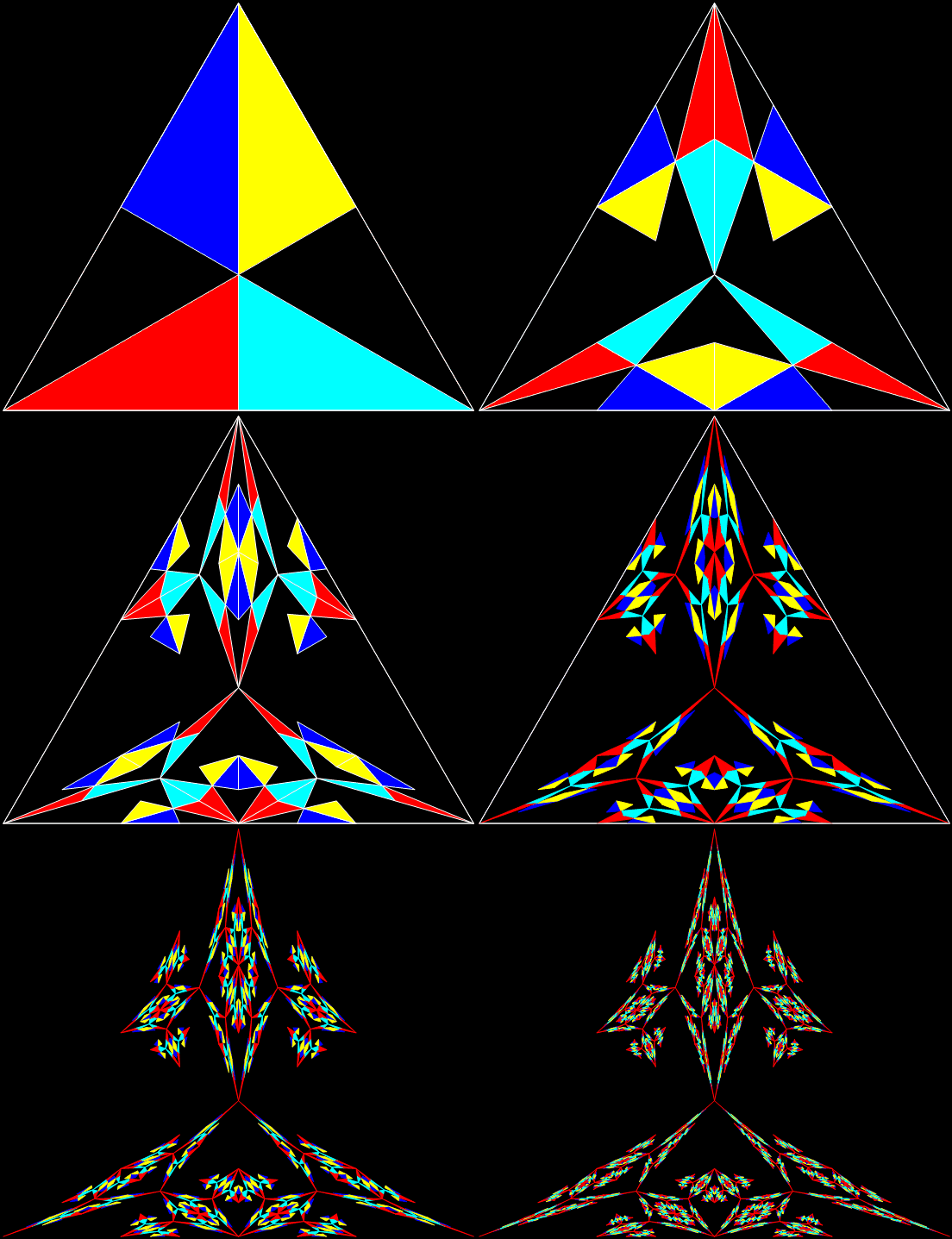
Here’s an equilateral triangle divided into six smaller triangles:

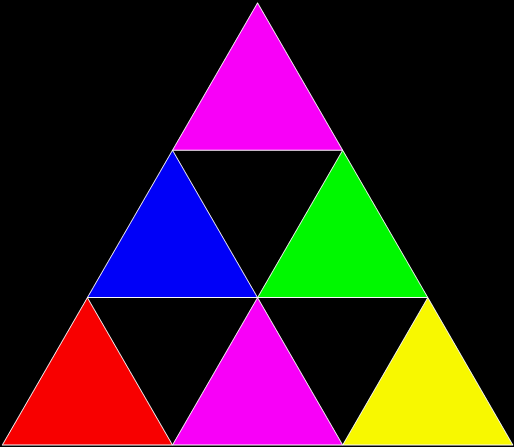
Equilateral triangle divided into six irregular triangles (Stage #1)


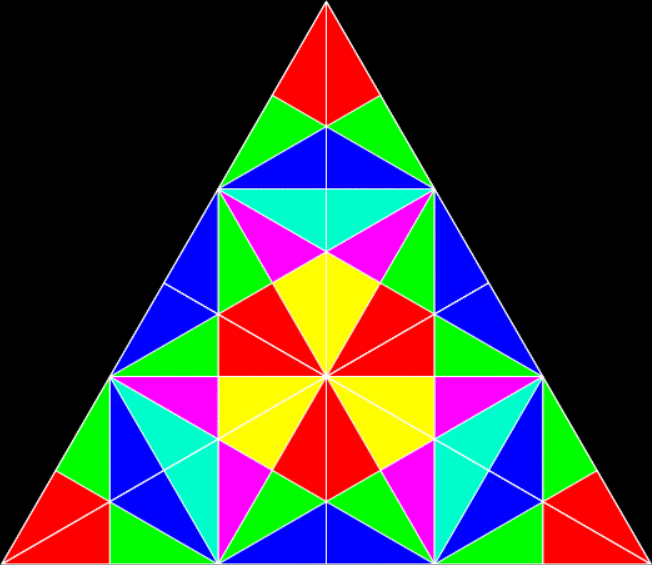
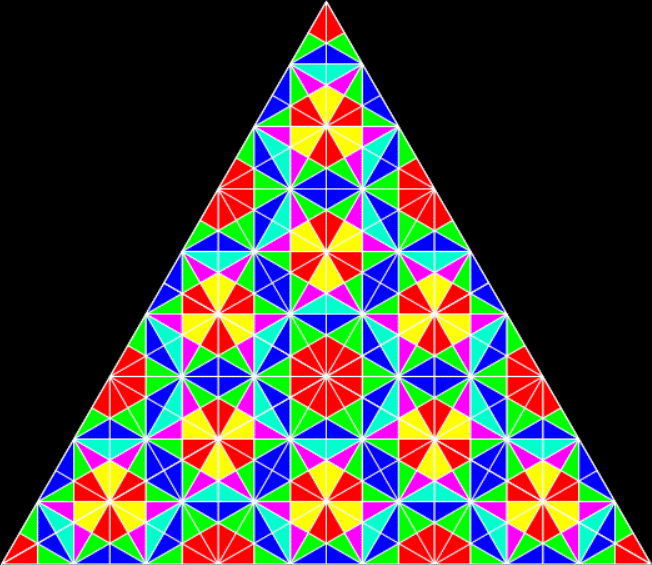
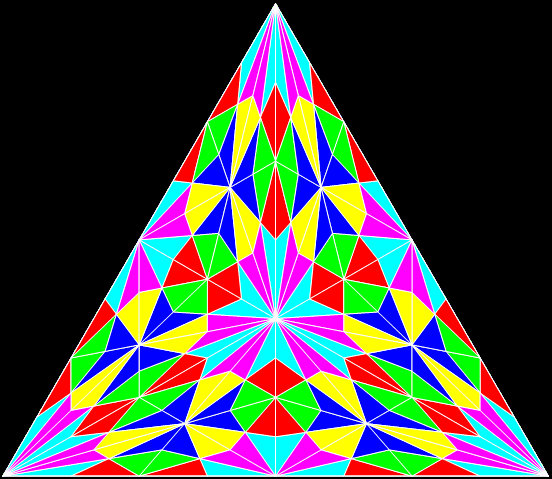
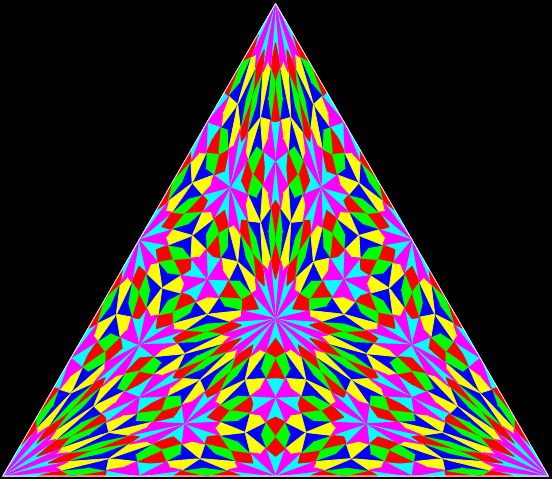
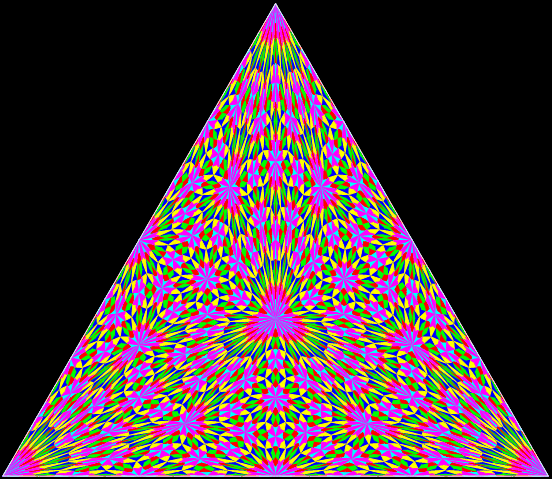
Now keep on dividing:

Stage #2


Stage #3


Stage #4


Stage #5


Equilateral triangle dividing into six irregular triangles (animated)


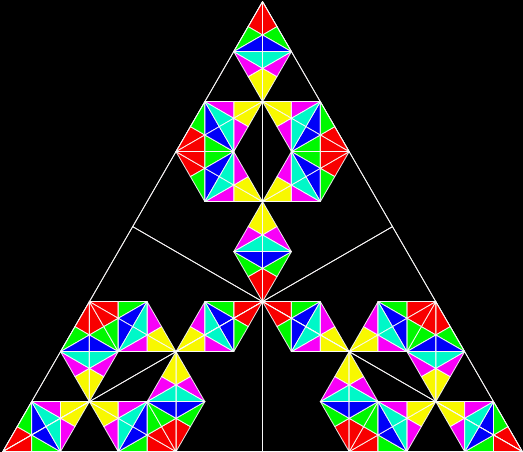
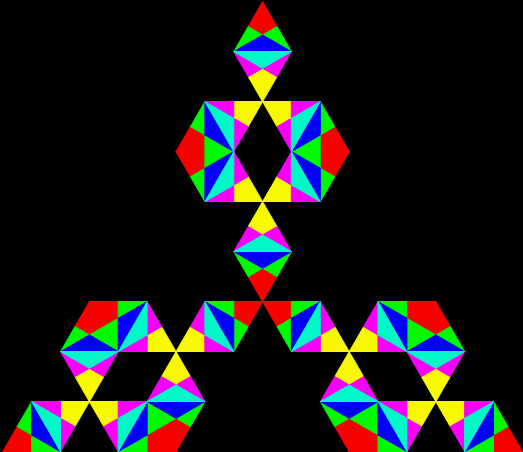
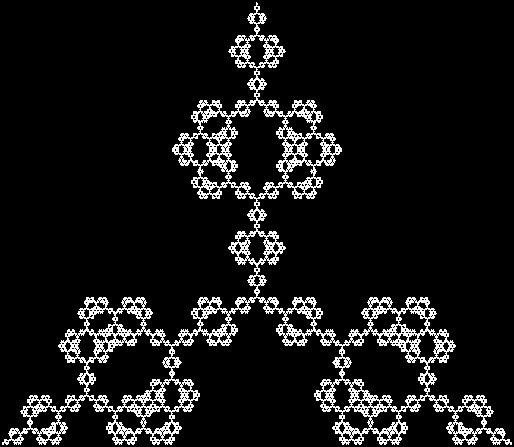
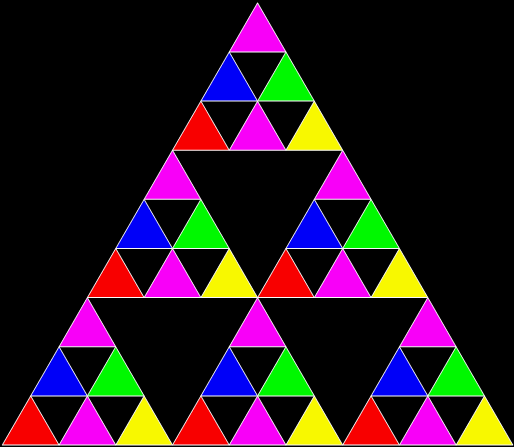
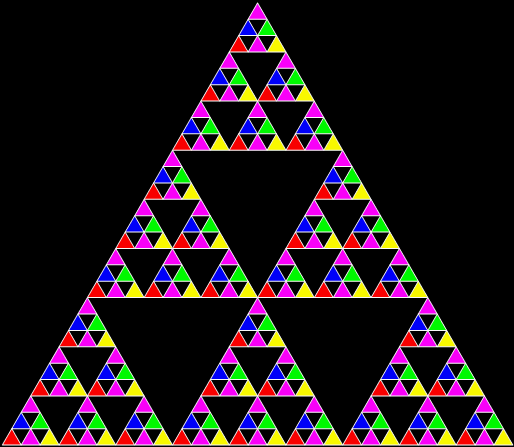
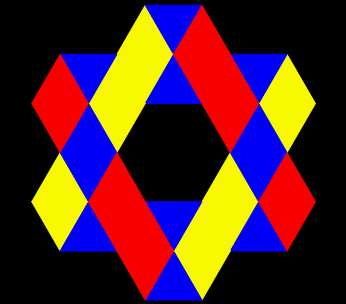
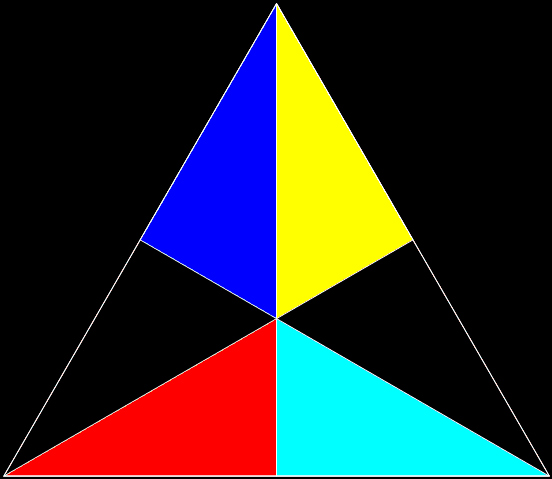
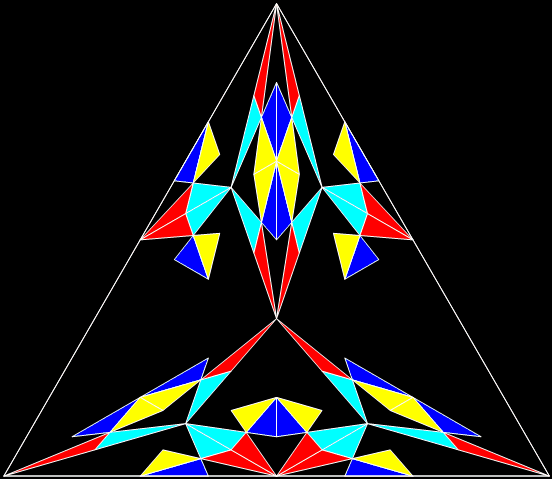
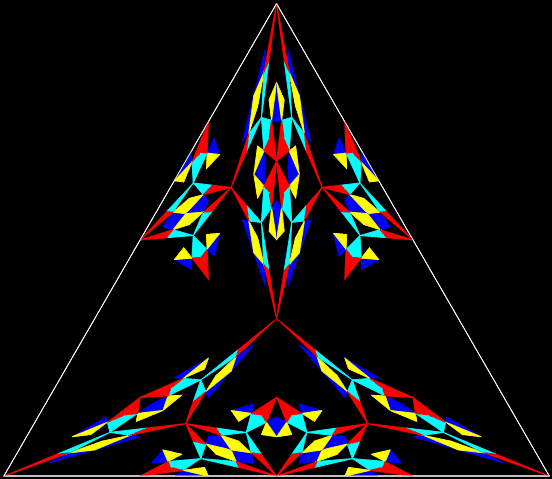
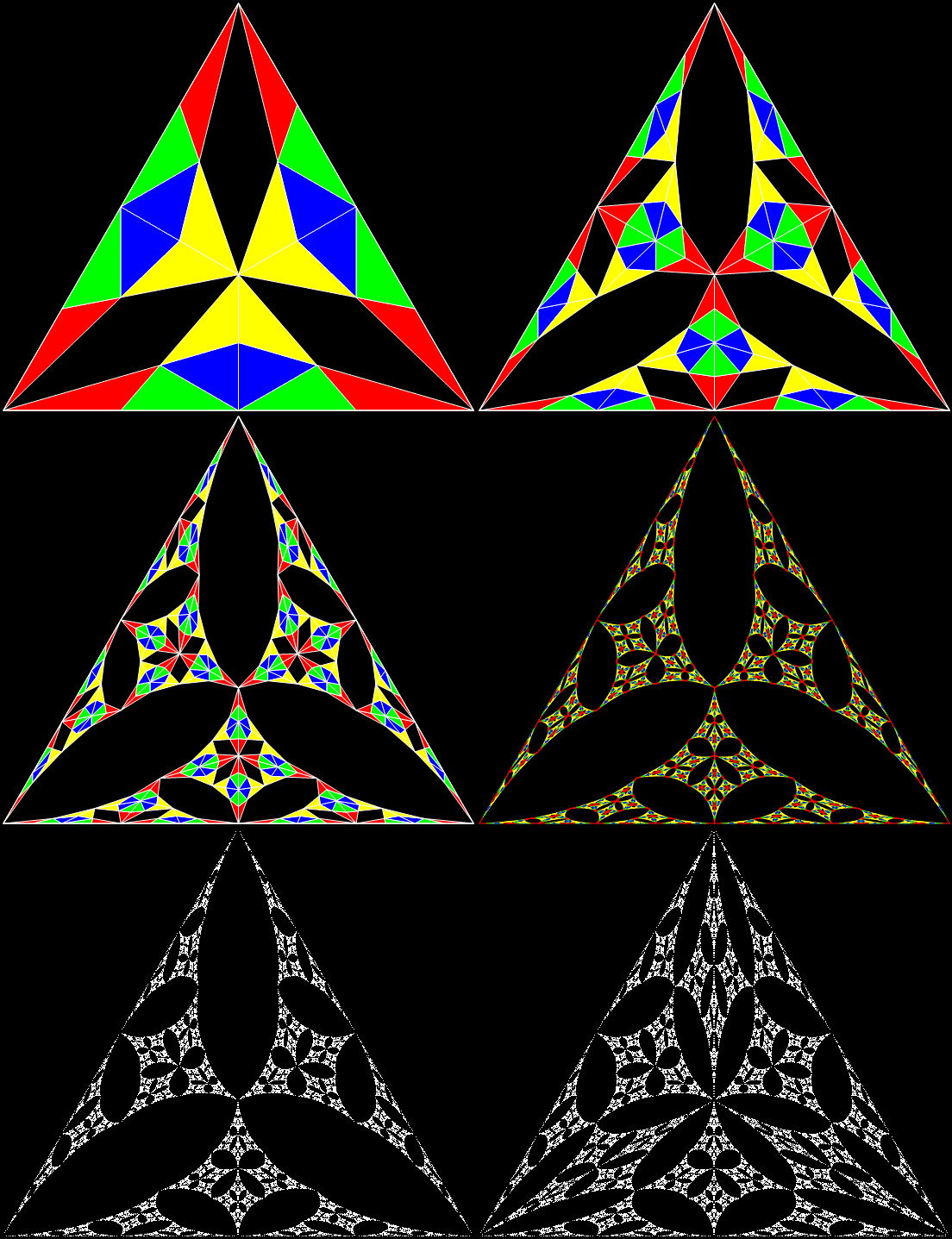
But what happens if you divide the triangle, then discard some of the sub-triangles, then repeat? You get a self-similar shape called a fractal:

Divide-and-discard stage #1


Stage #2


Stage #3


Stage #4


Stage #5


Stage #6


Triangle fractal (animated)

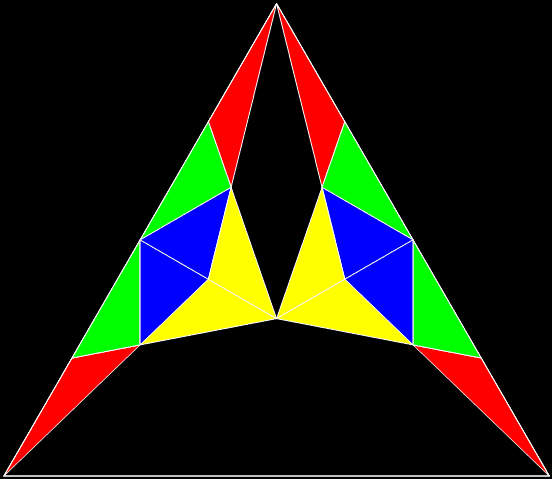
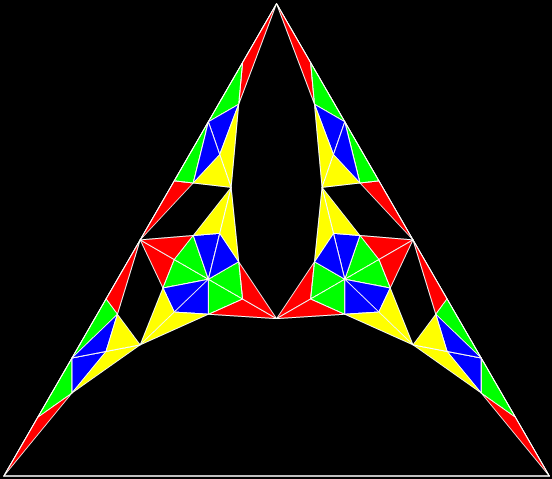
Here’s another example:

Divide-and-discard stage #1


Stage #2


Stage #3


Stage #4


Stage #5


Stage #6


Stage #7


Triangle fractal (animated)

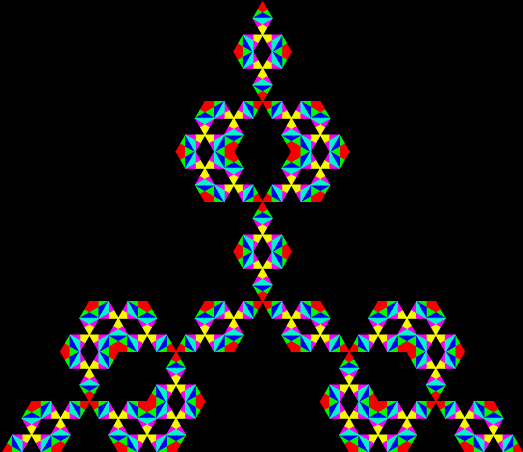
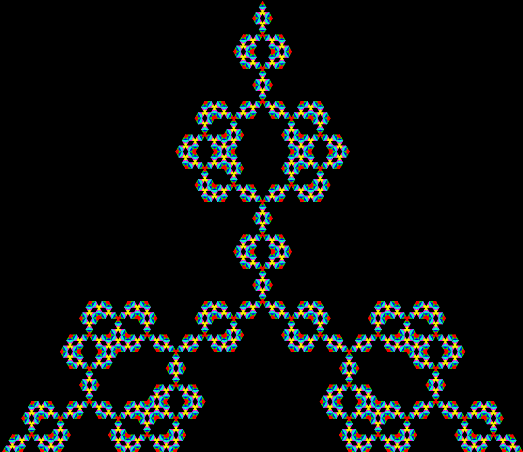
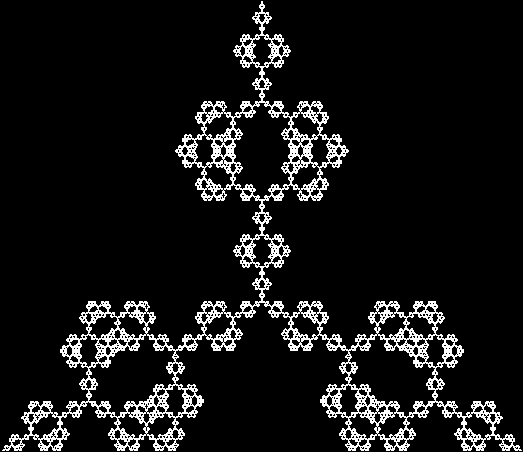
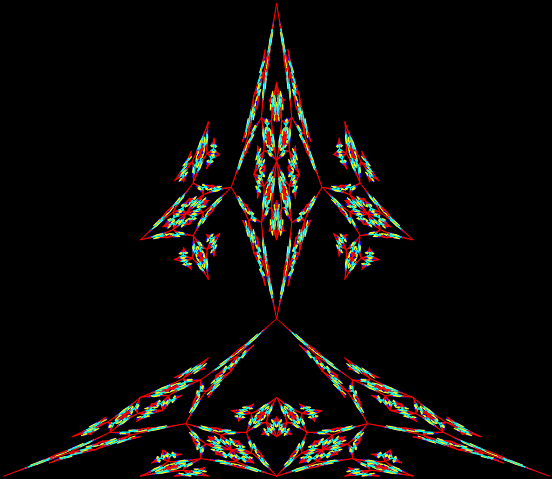
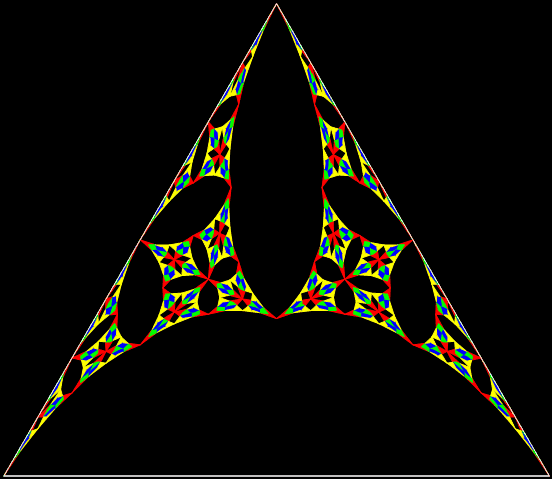
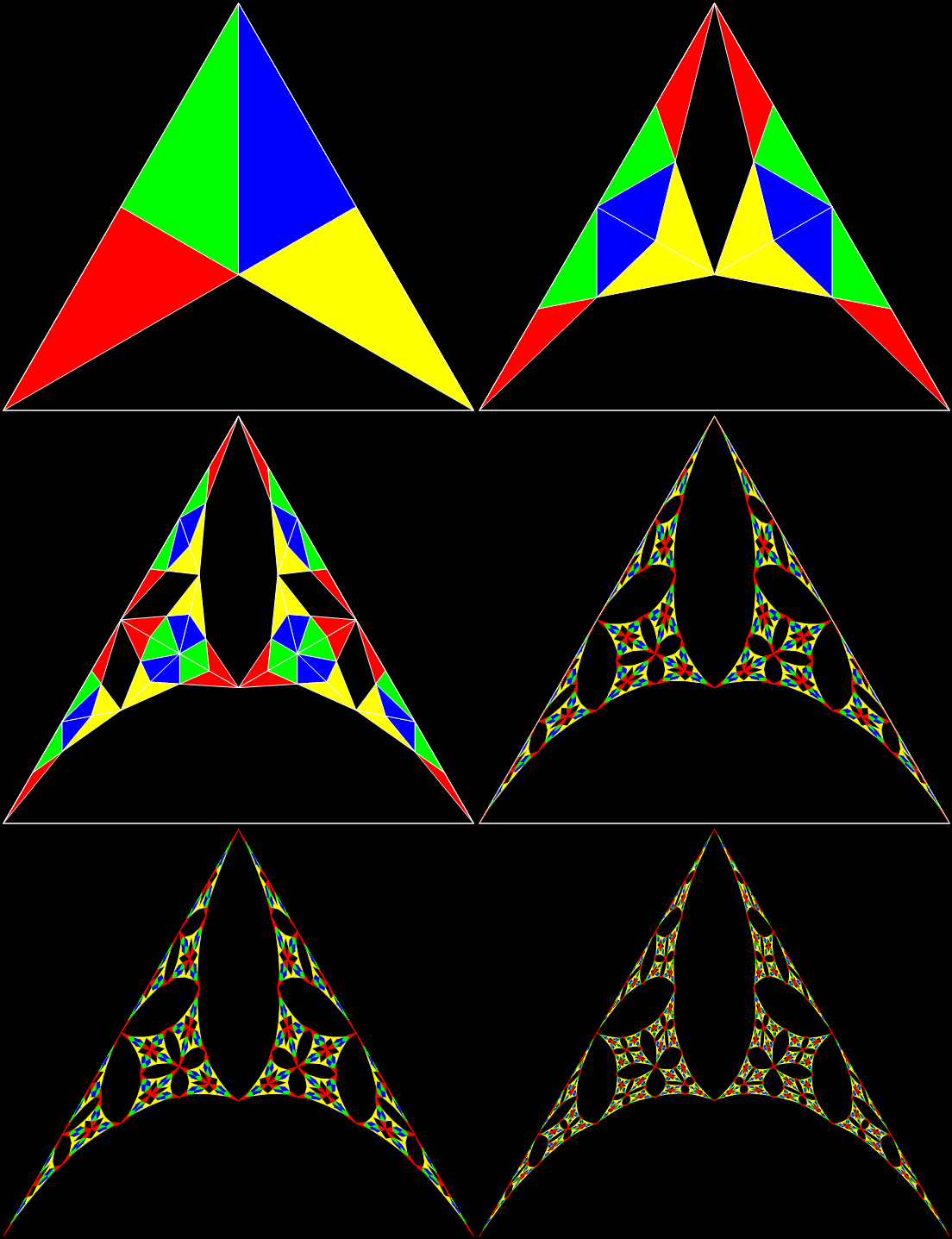
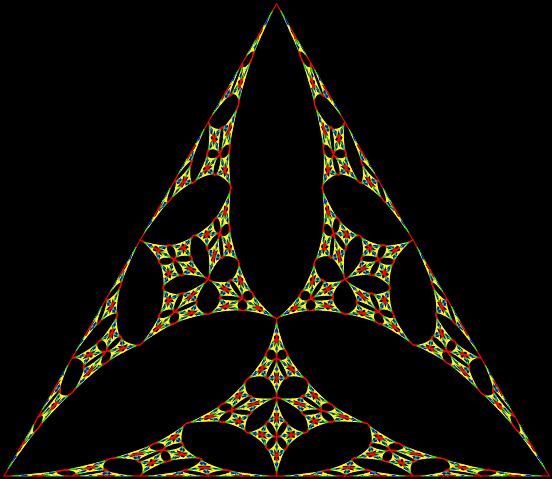
You can also delay the divide-and-discard to create a more symmetrical fractal, like this:

Delayed divide-and-discard stage #1


Stage #2


Stage #3


Stage #4


Stage #5


Stage #6


Stage #7


Triangle fractal (animated)

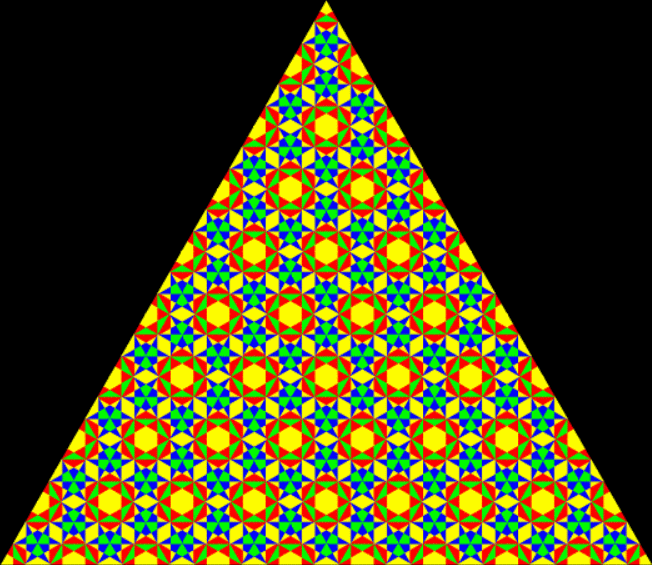
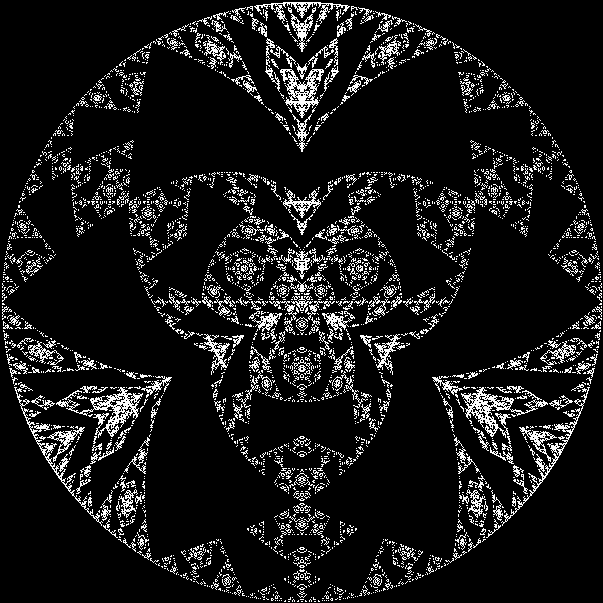
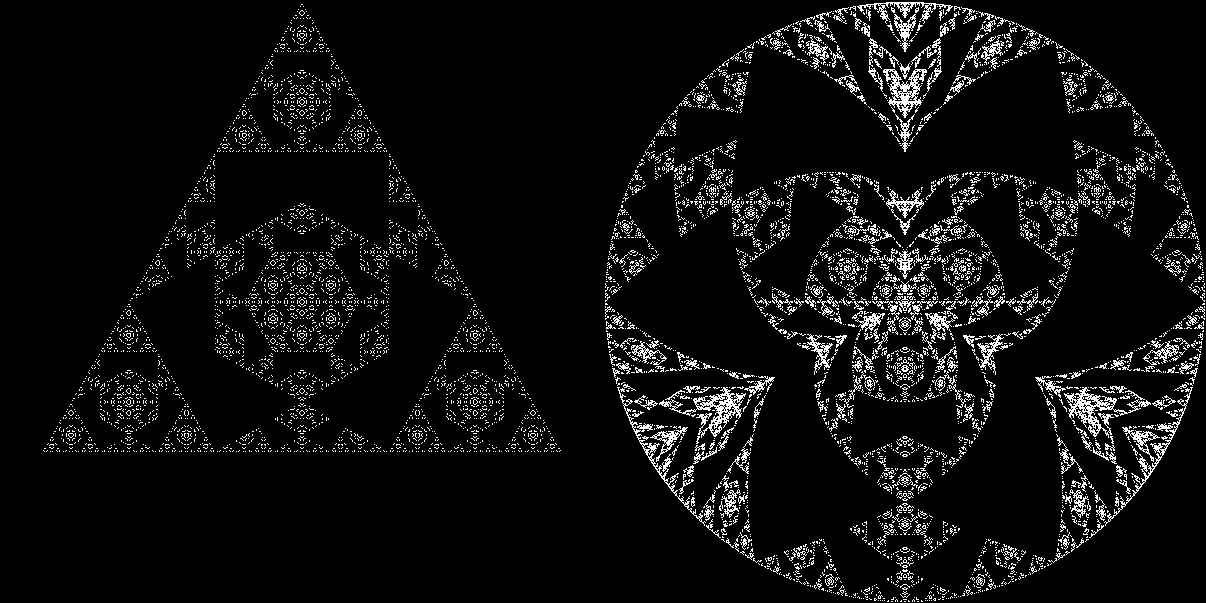
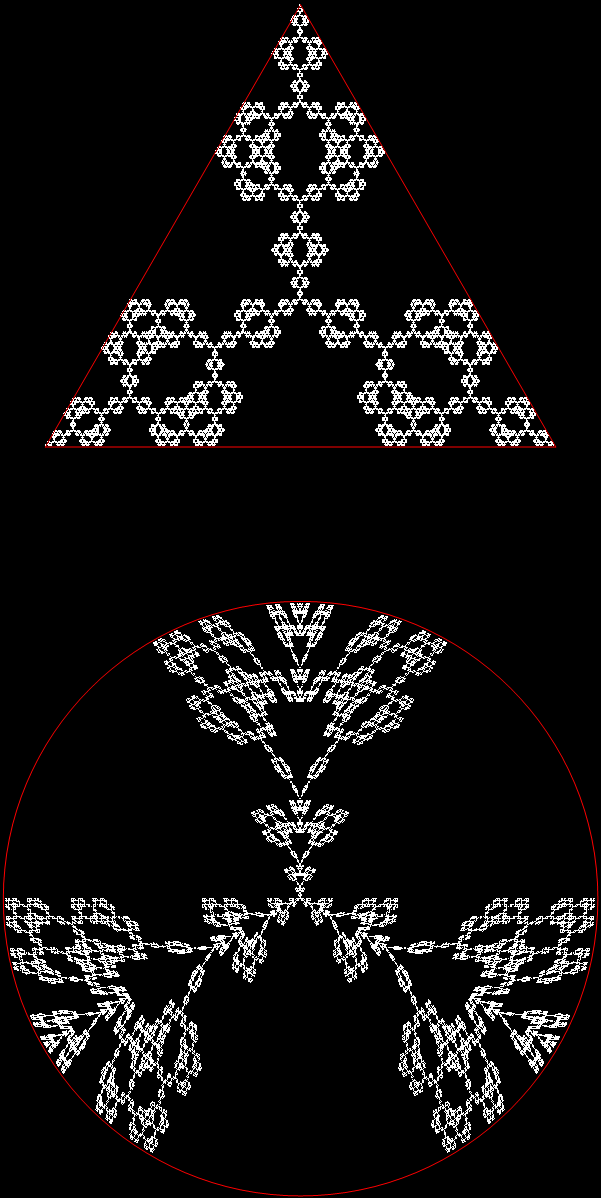
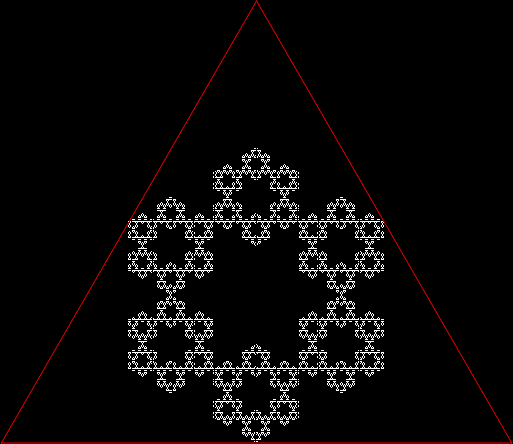
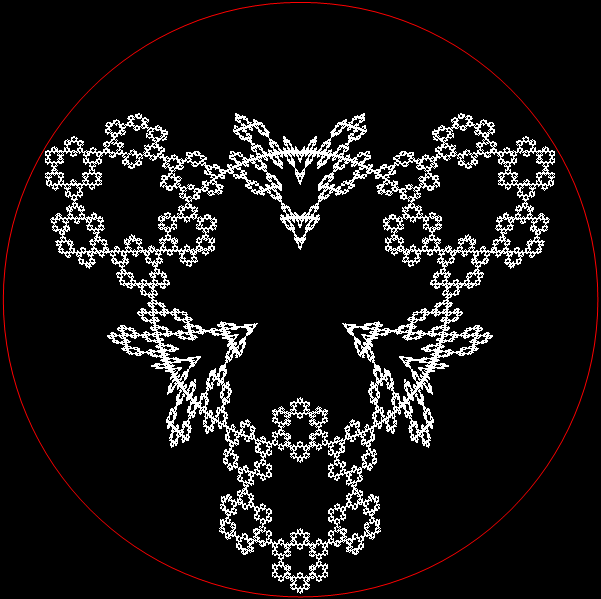
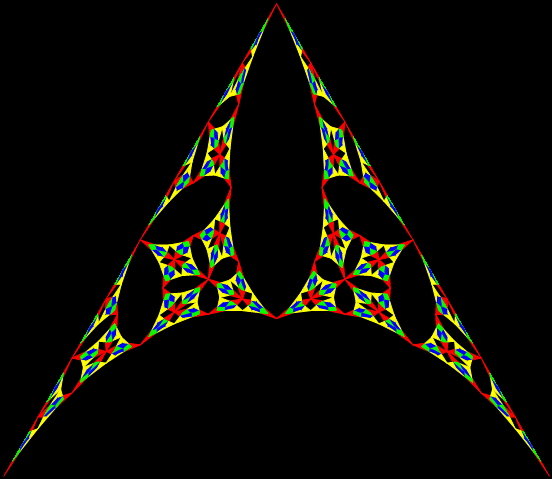
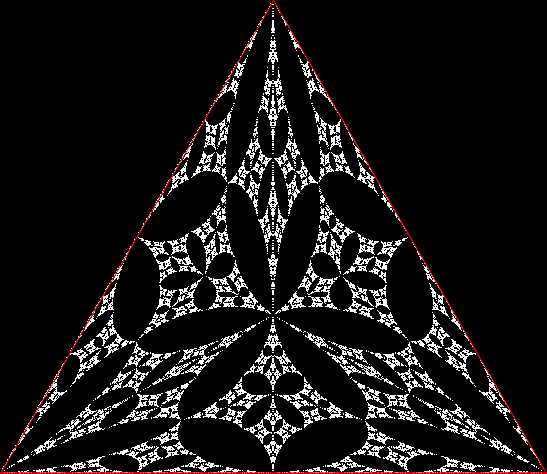
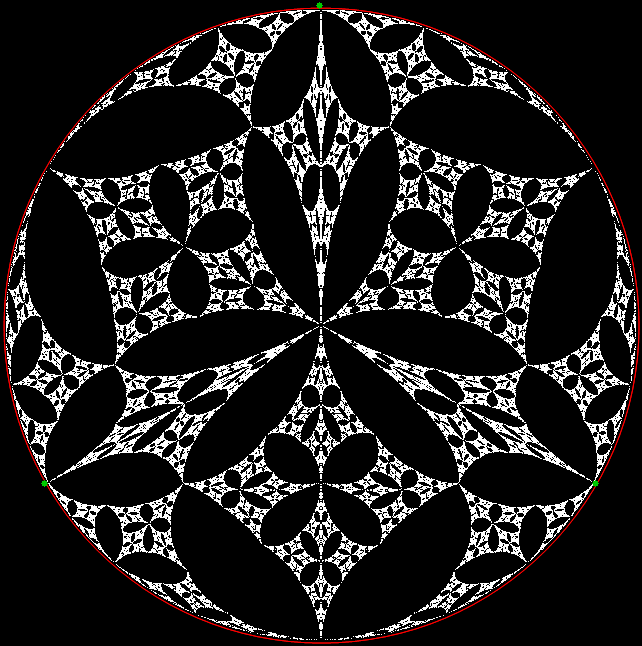
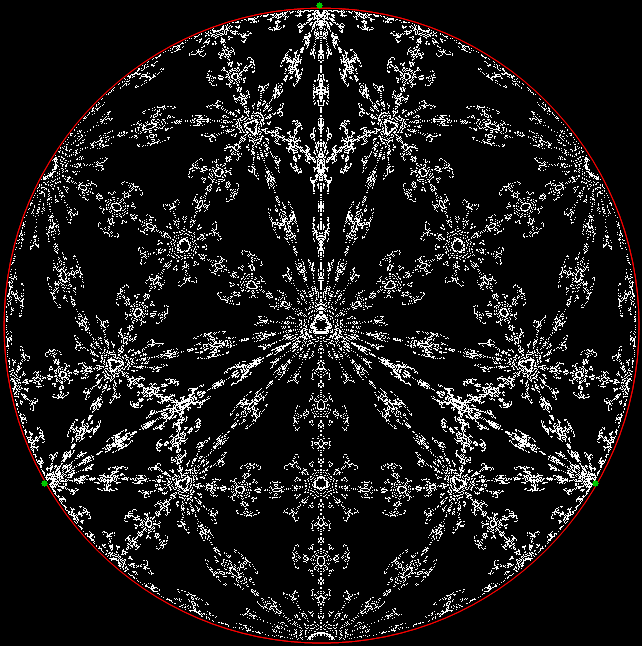
What next? You can use trigonometry to turn the cramped triangle into a circle:

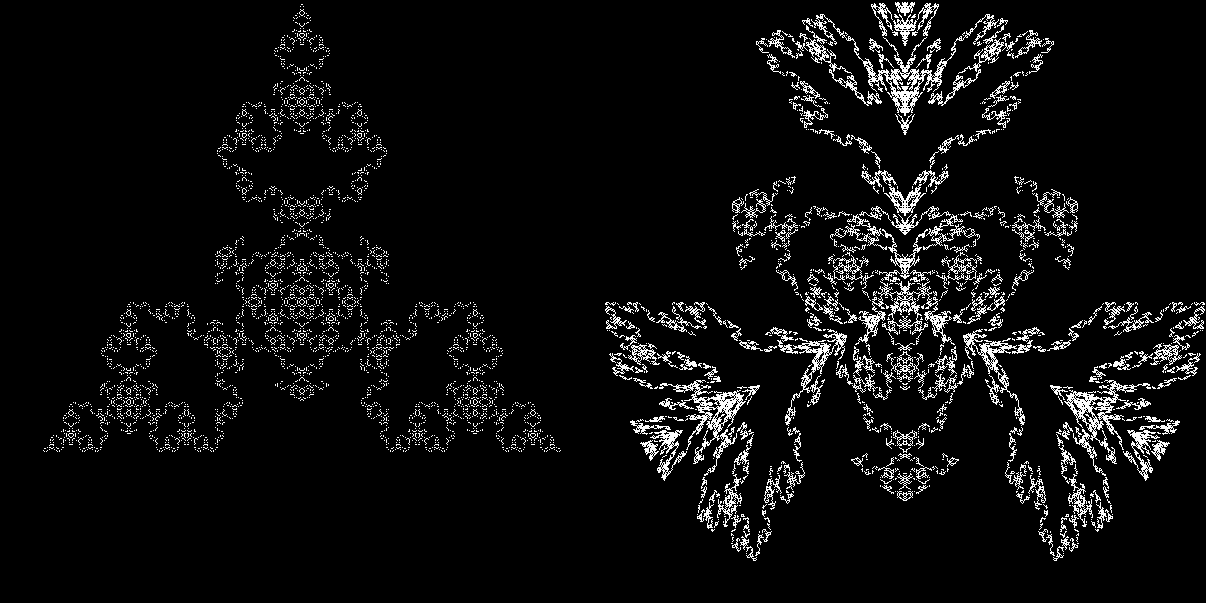
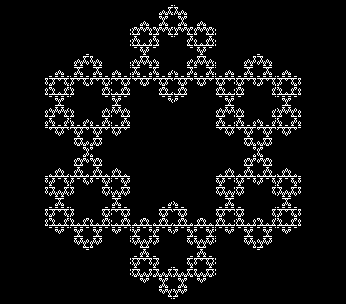
Triangular fractal

Circular fractal
(Open in new window for full image)


Triangle-to-circle (animated)

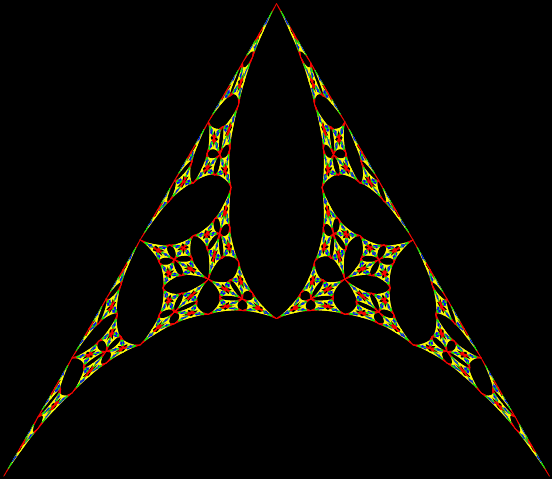
Here’s another example:

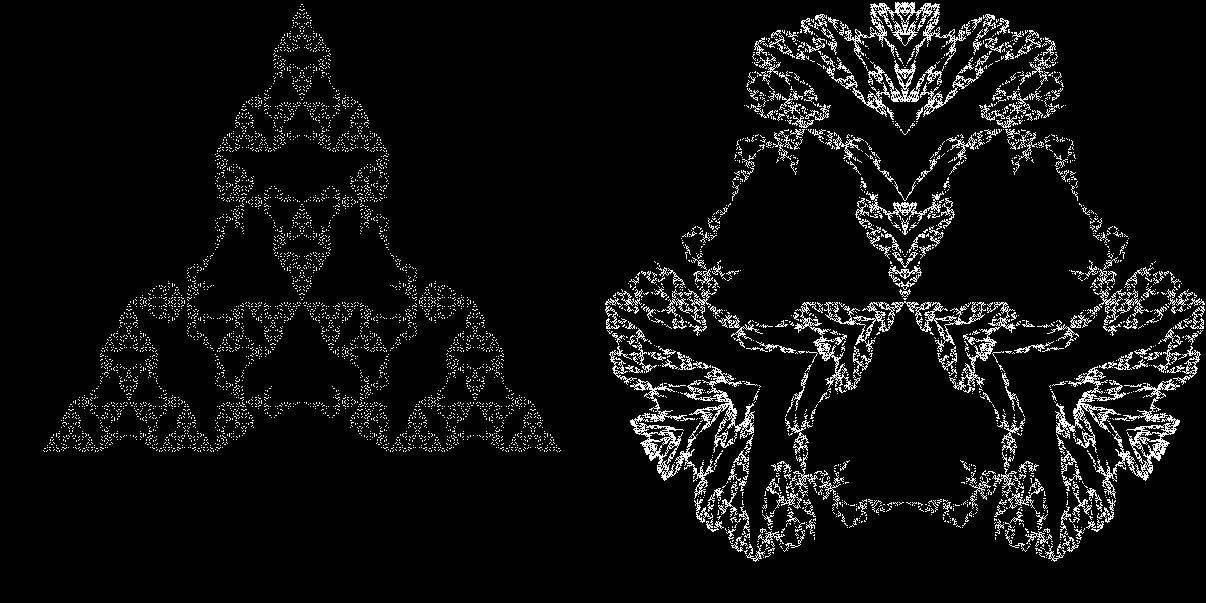
Triangular fractal

Circular fractal


Triangle-to-circle (animated)

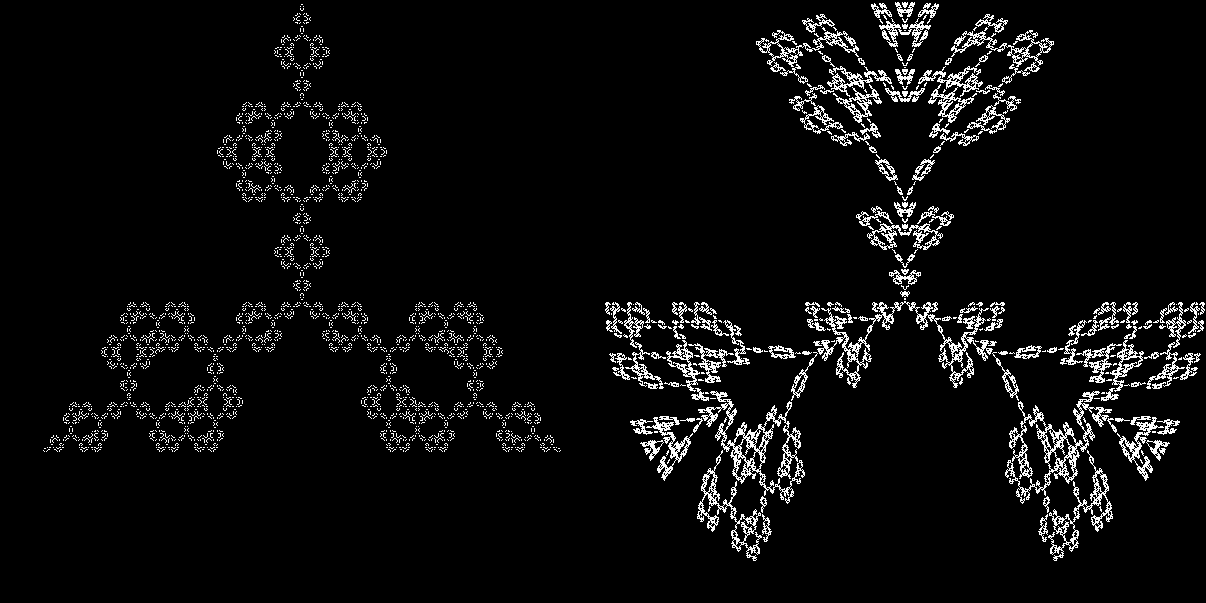
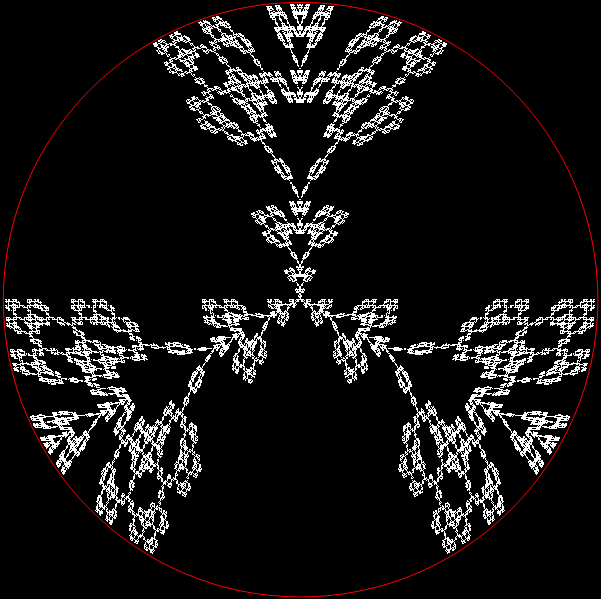
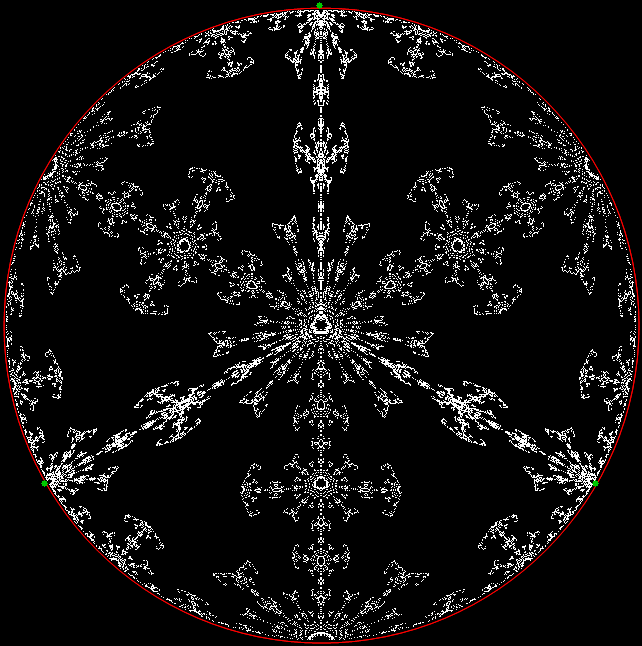
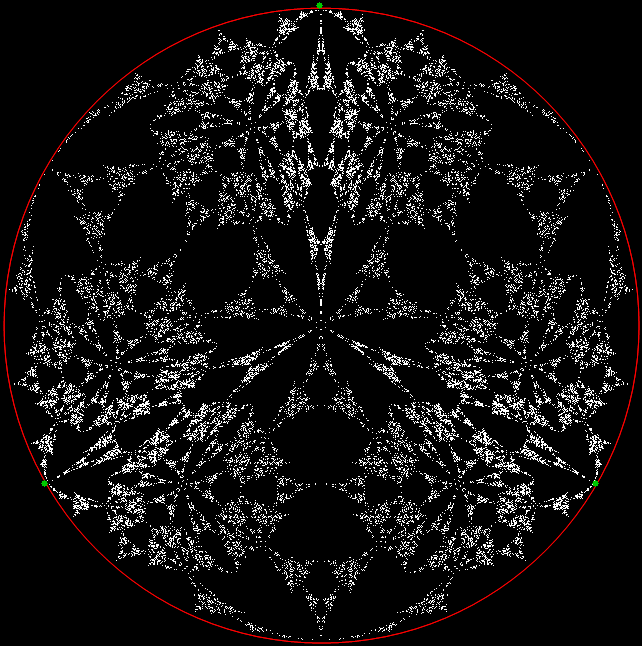
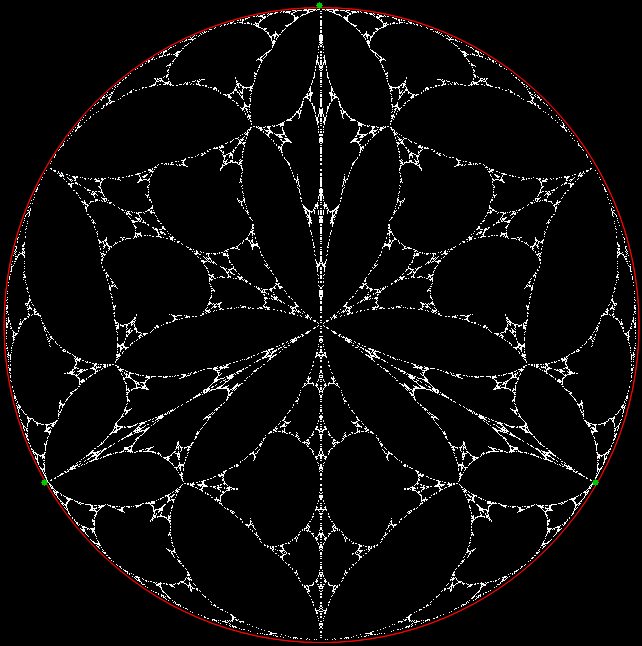
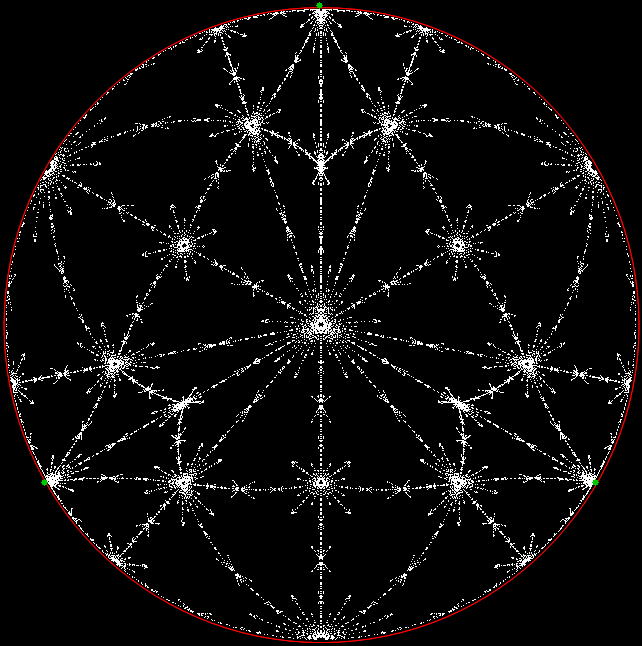
And below are some more circular fractals converted from triangular fractals. Some of them look like distorted skulls or transdimensional Lovecraftian monsters:

(Open in new window for full image)


Previous Pre-Posted

Circus Trix — an earlier look at sextally-divided-equilateral-triangle fractals