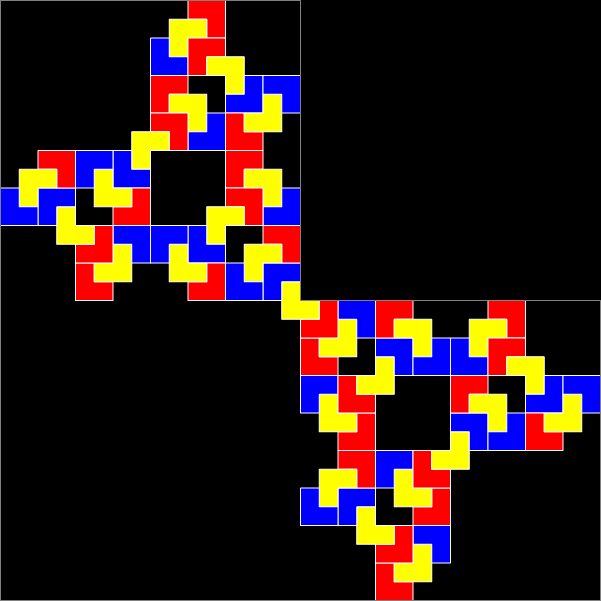
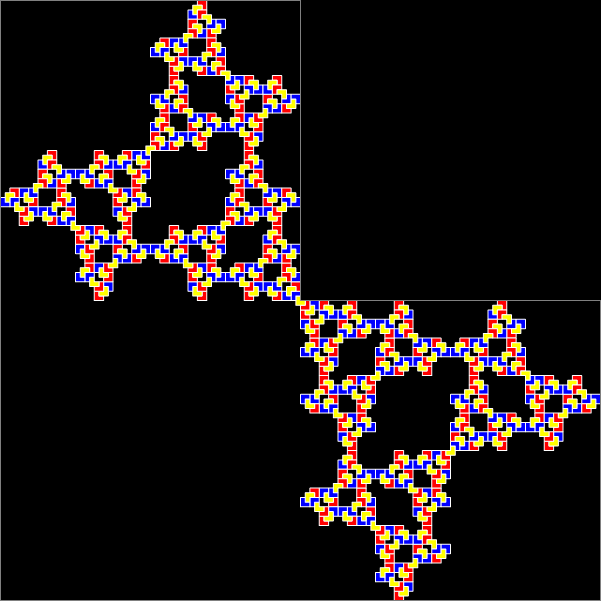
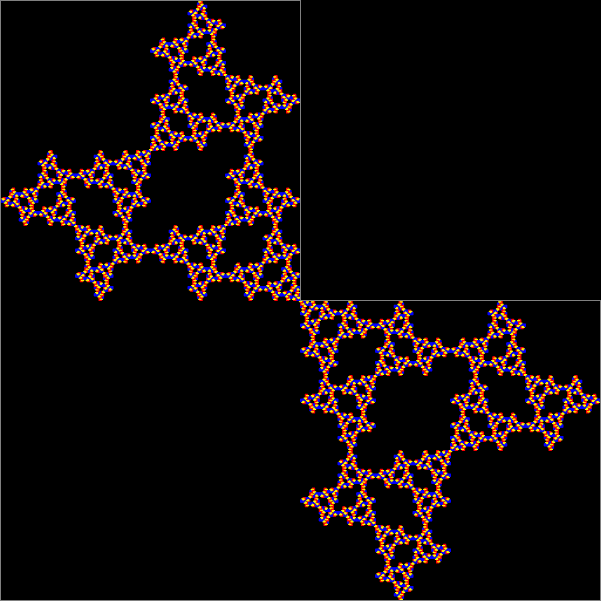
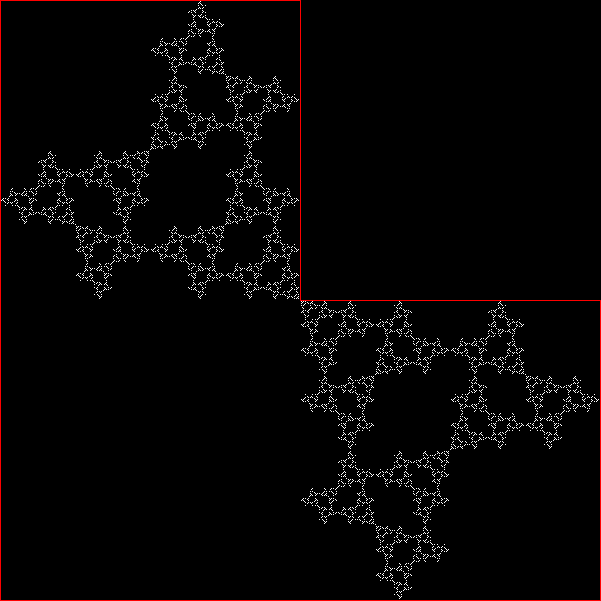
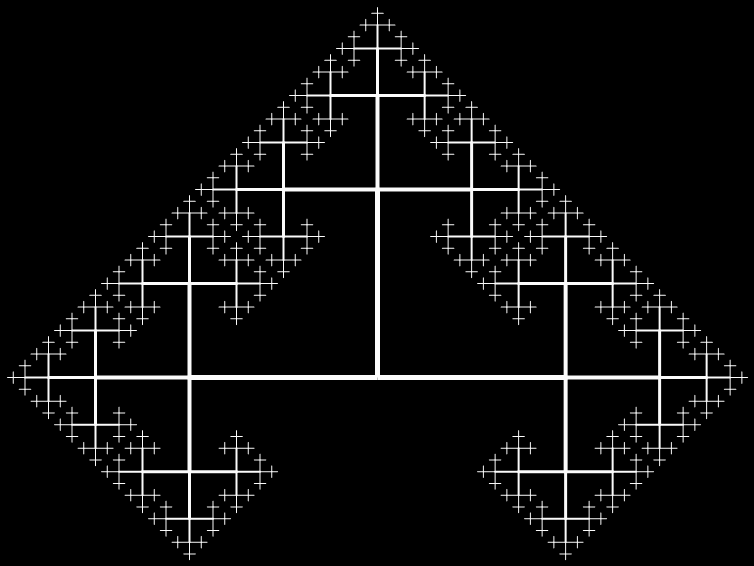
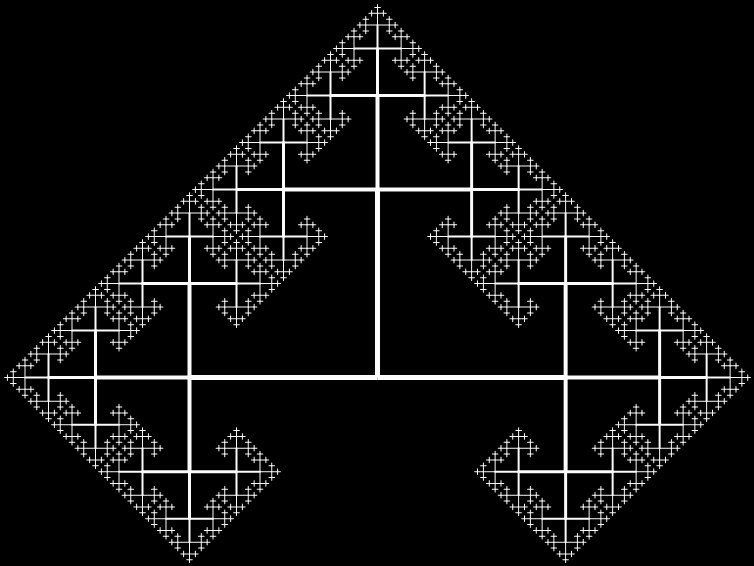
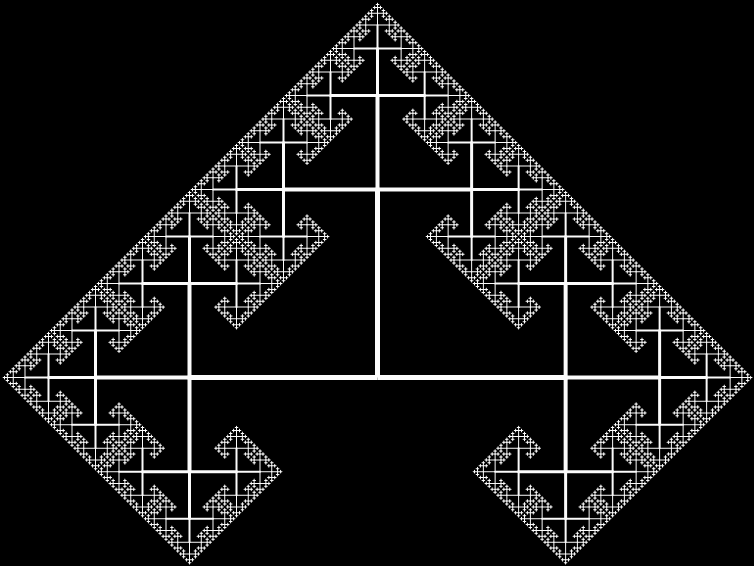
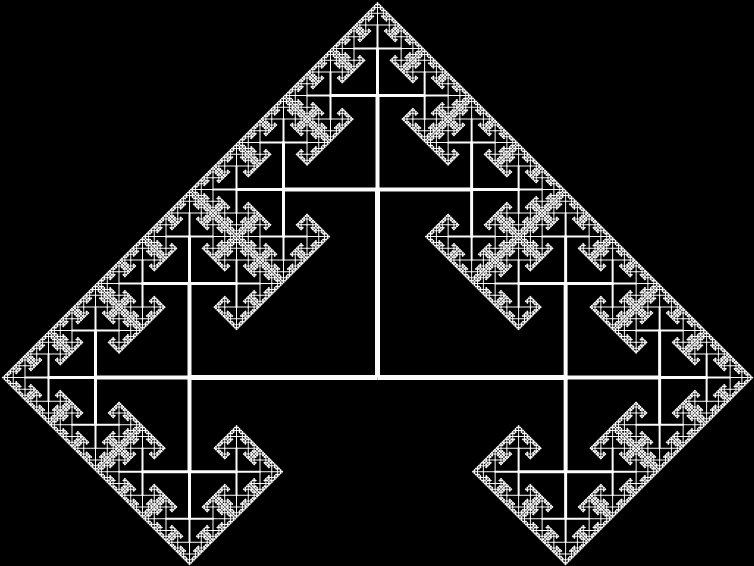
Circus Trix

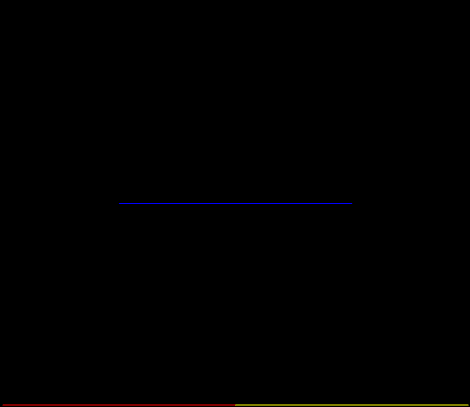
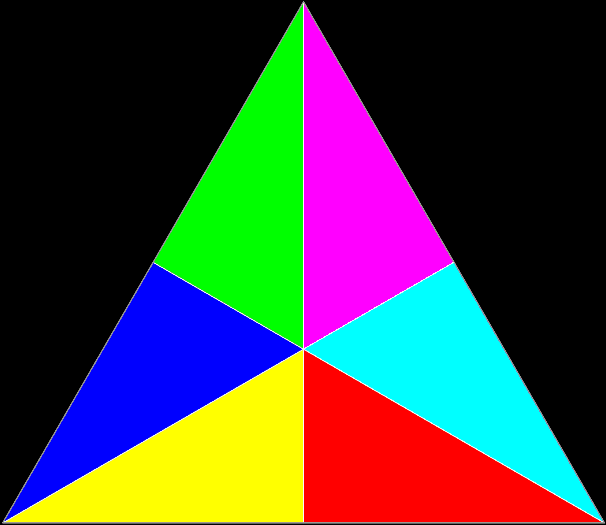
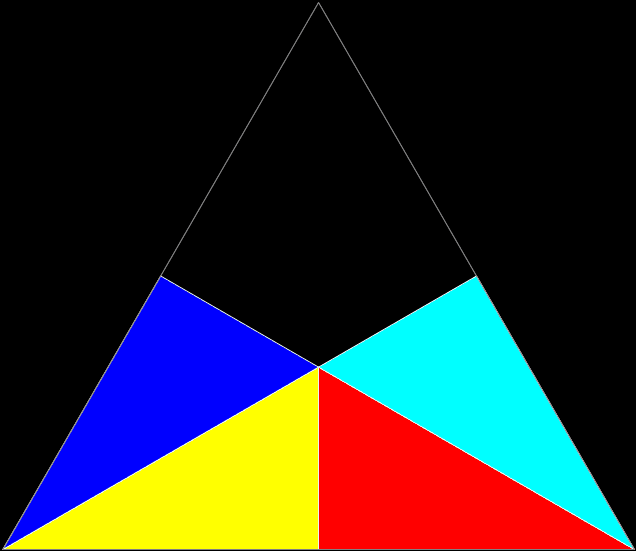
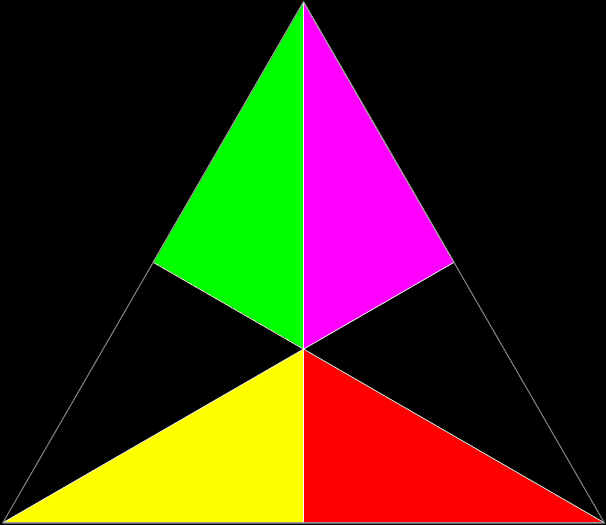
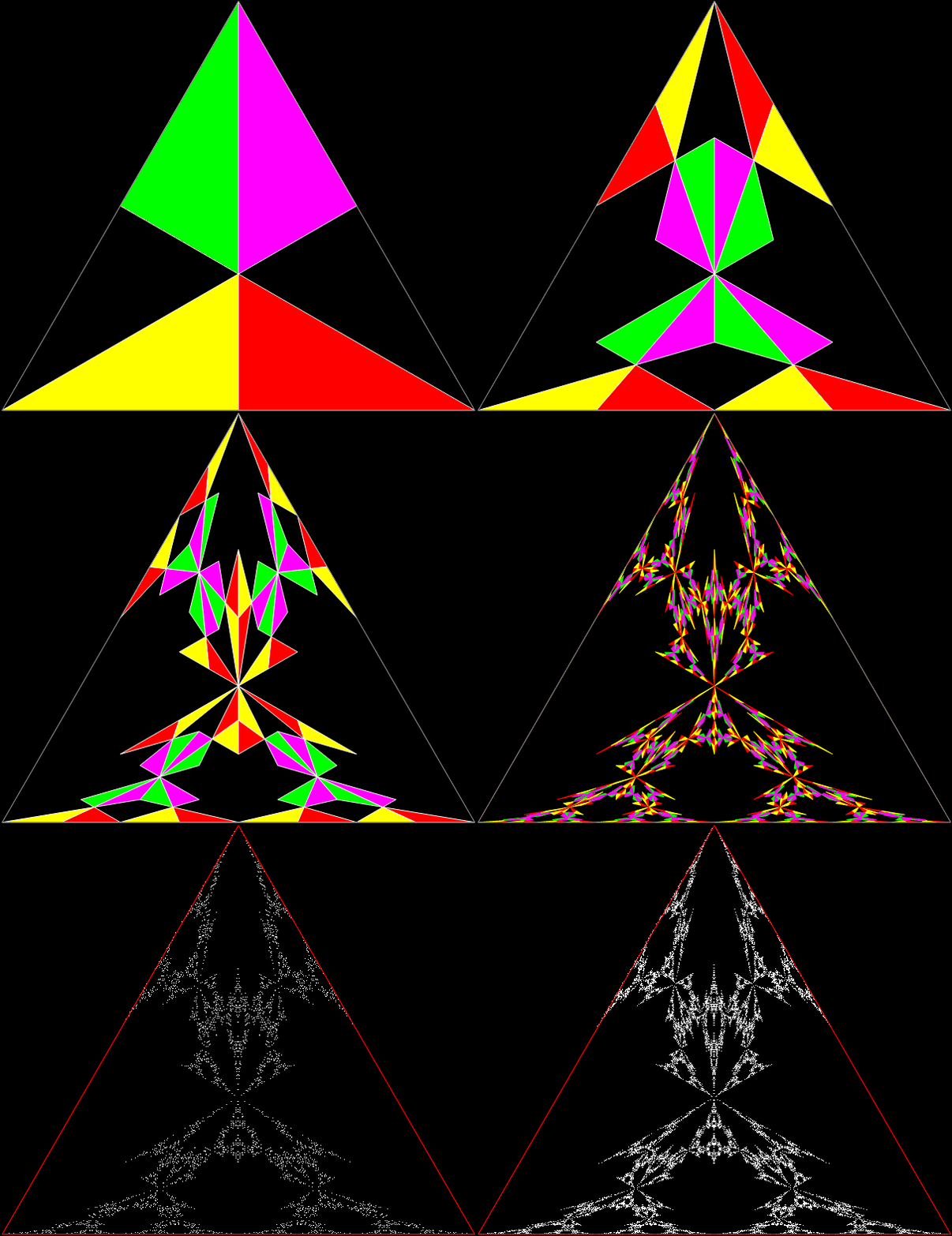
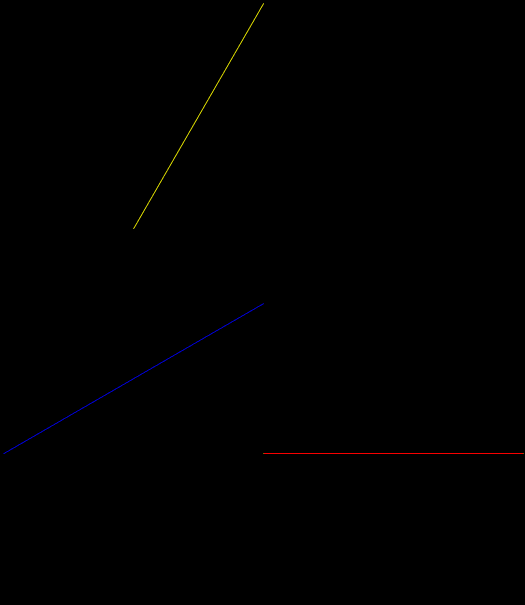
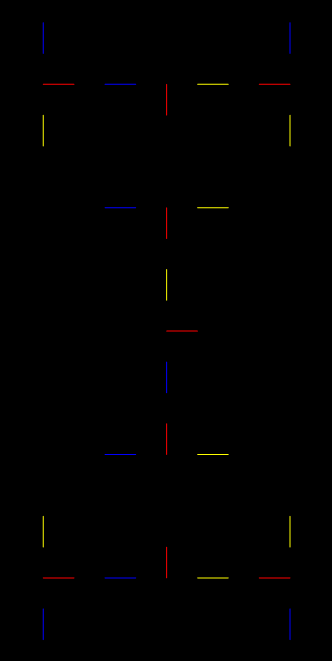
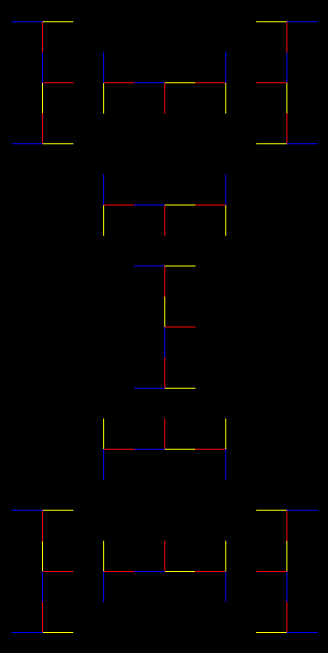
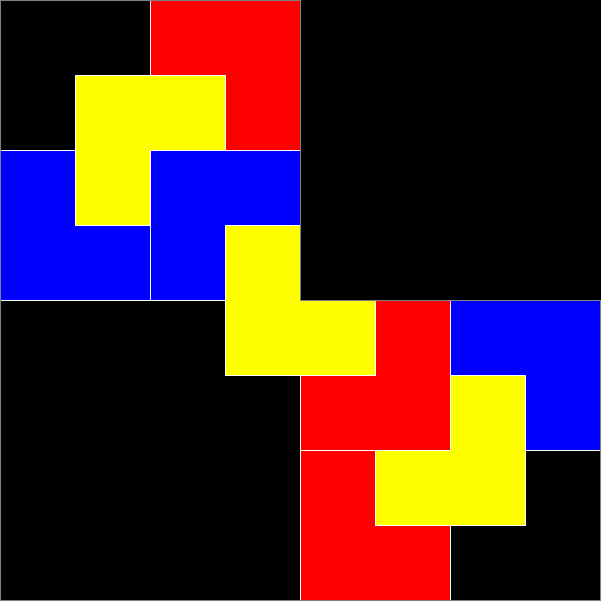
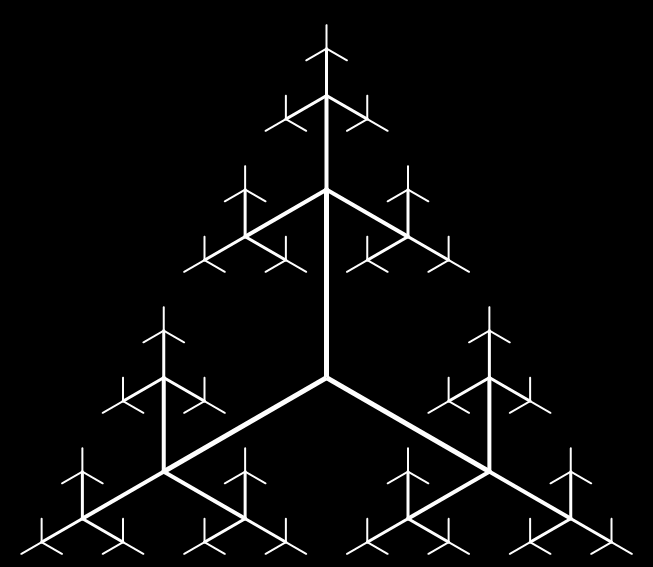
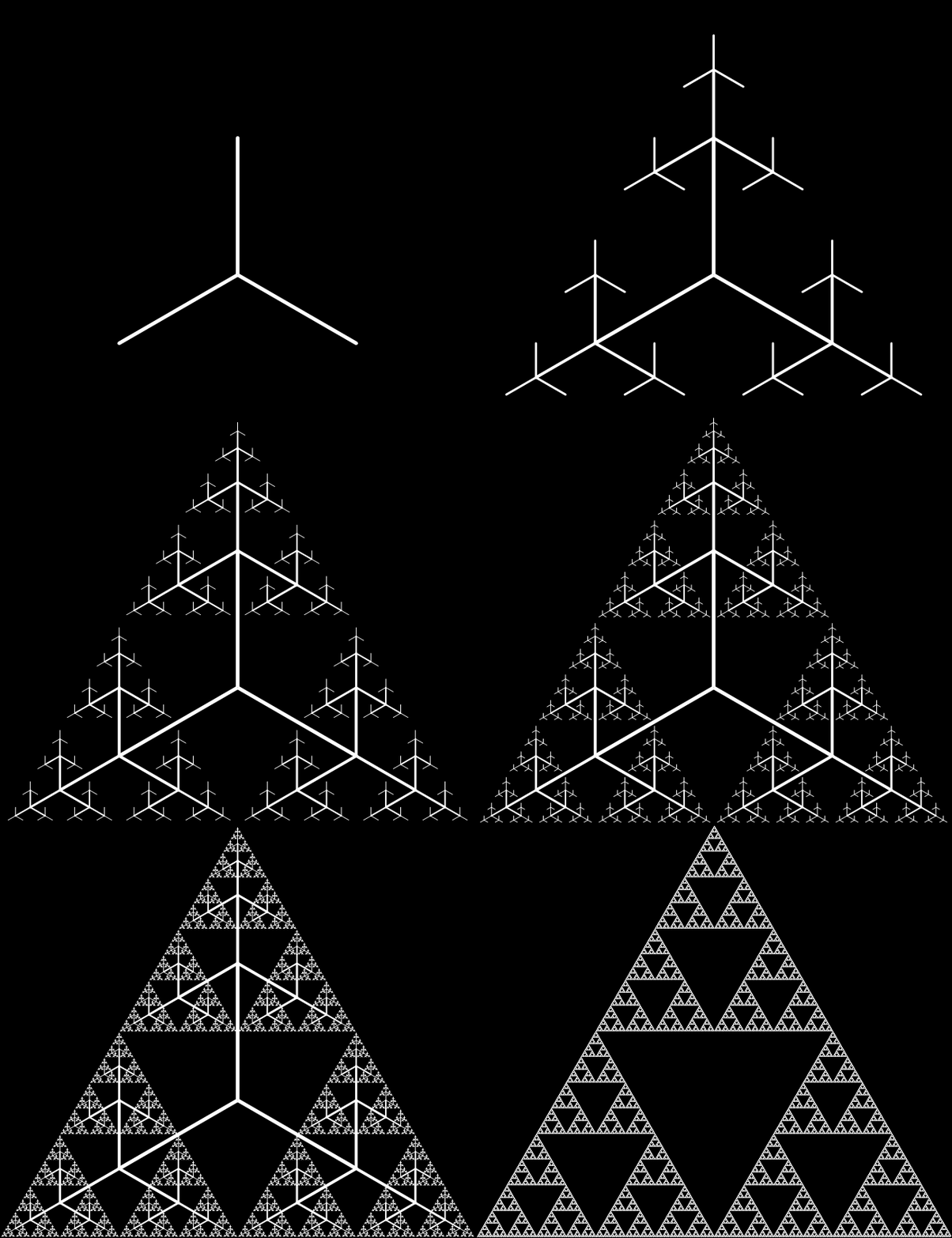
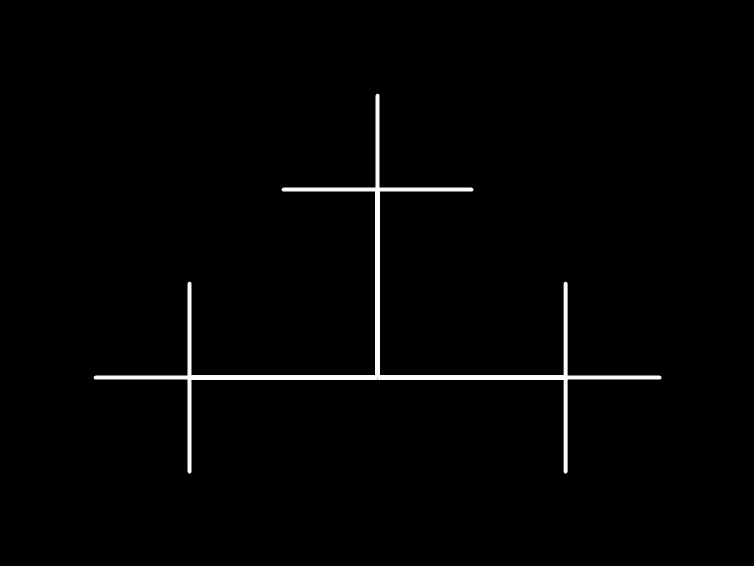
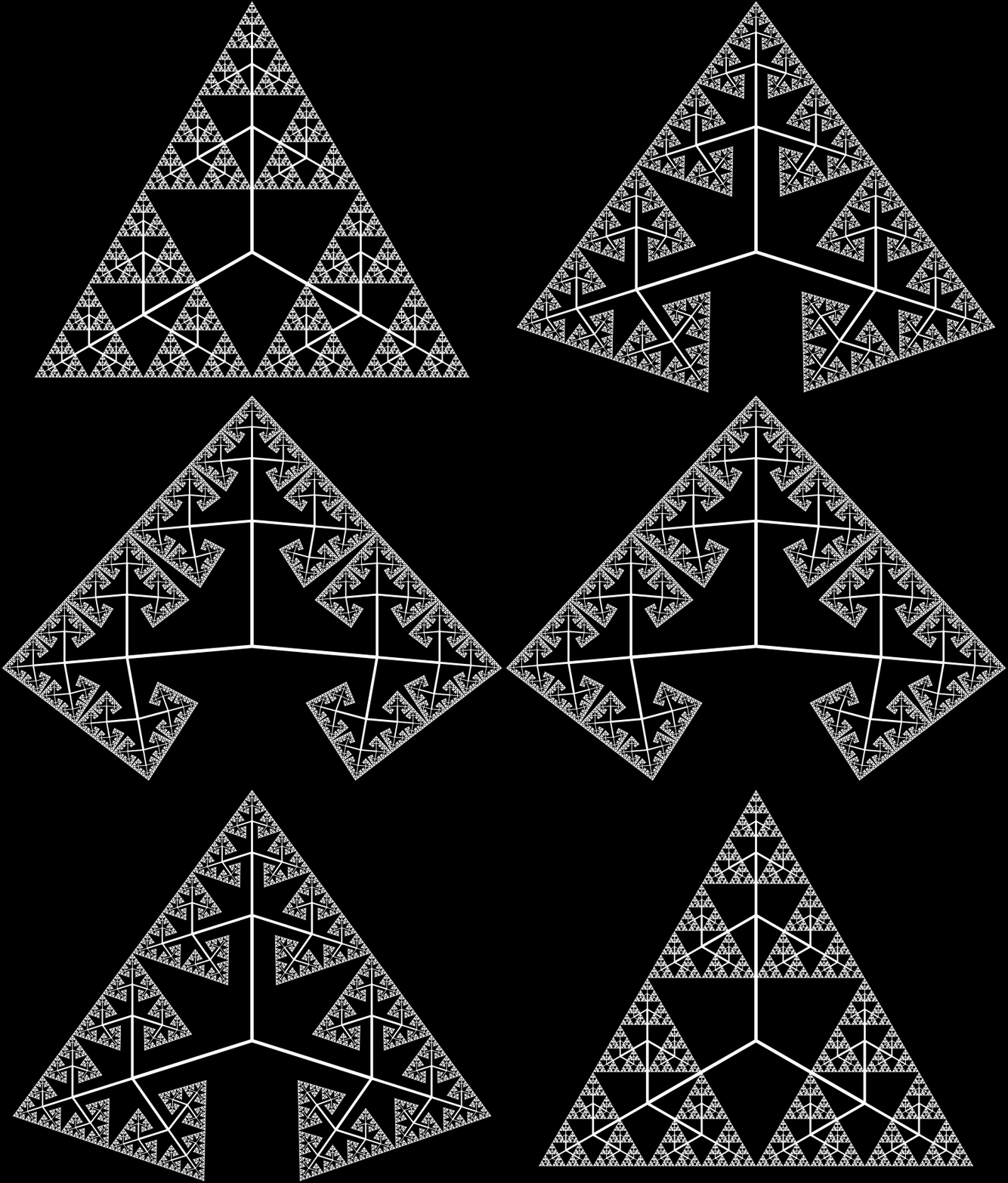
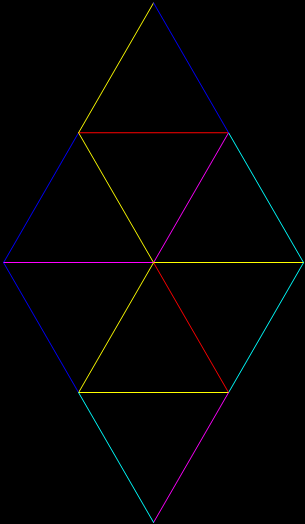
Here’s a trix, or triangle divided into six smaller triangles:

Trix, or triangle divided into six smaller triangles


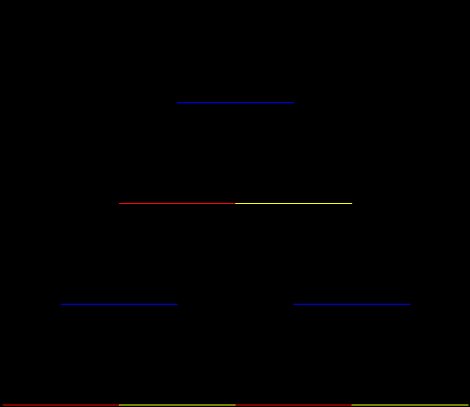
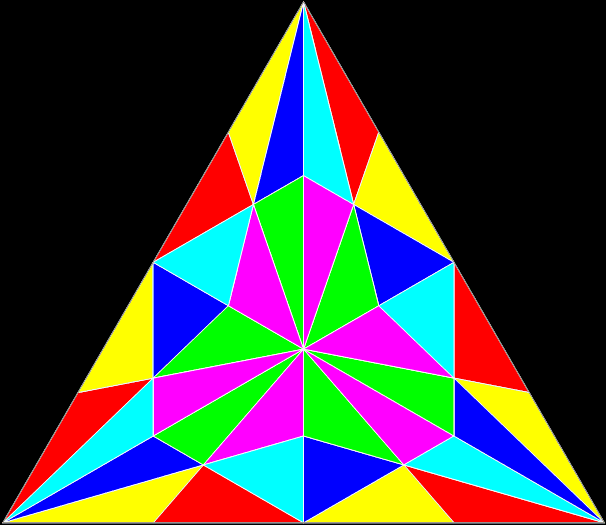
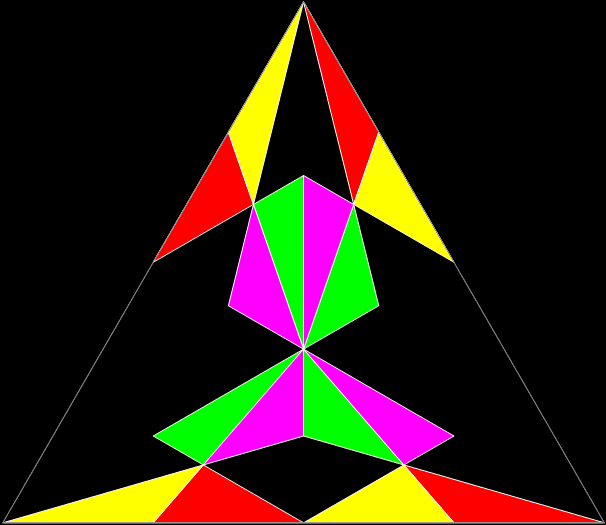
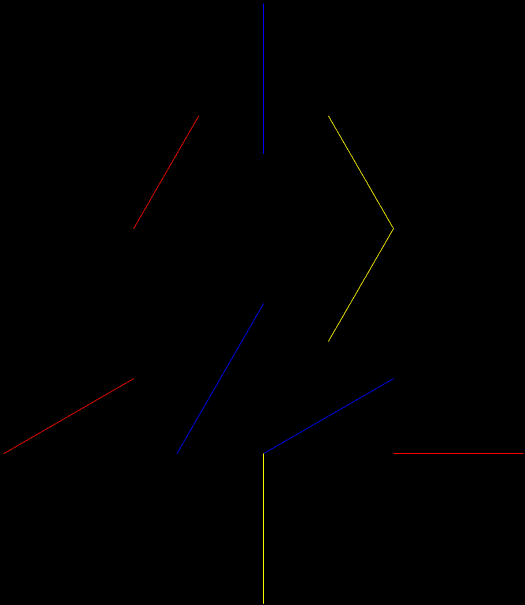
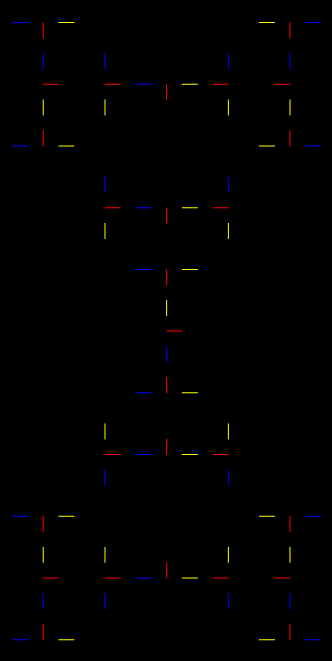
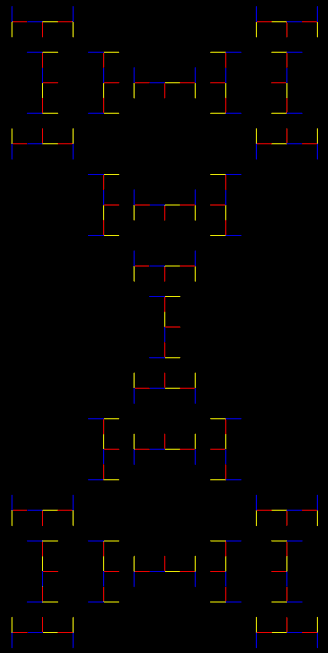
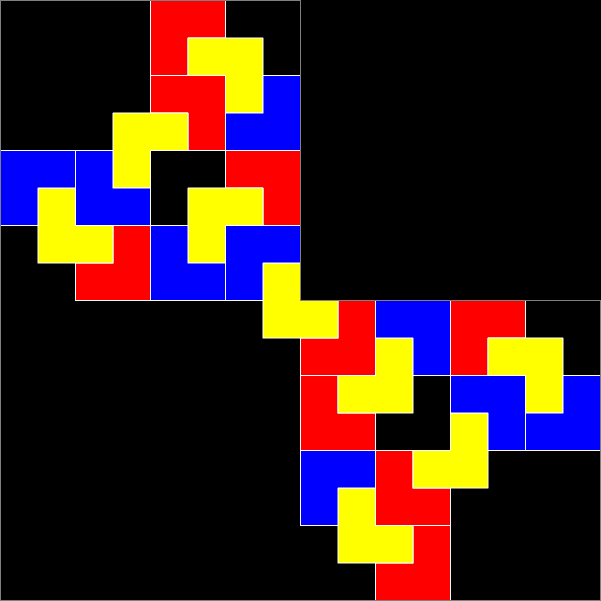
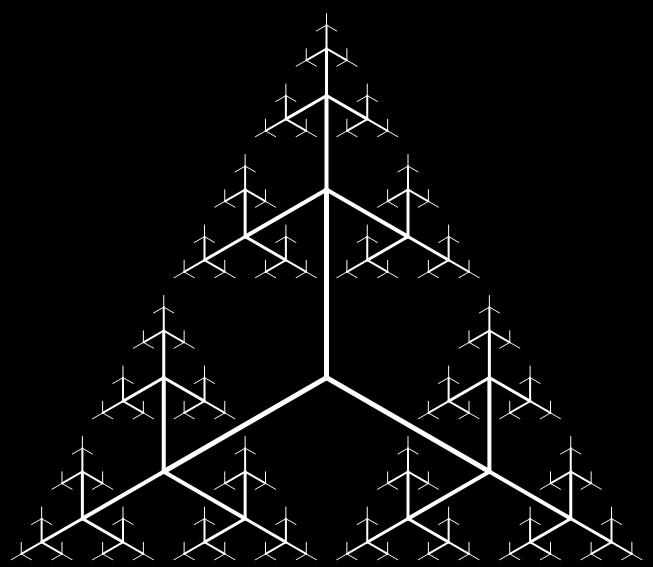
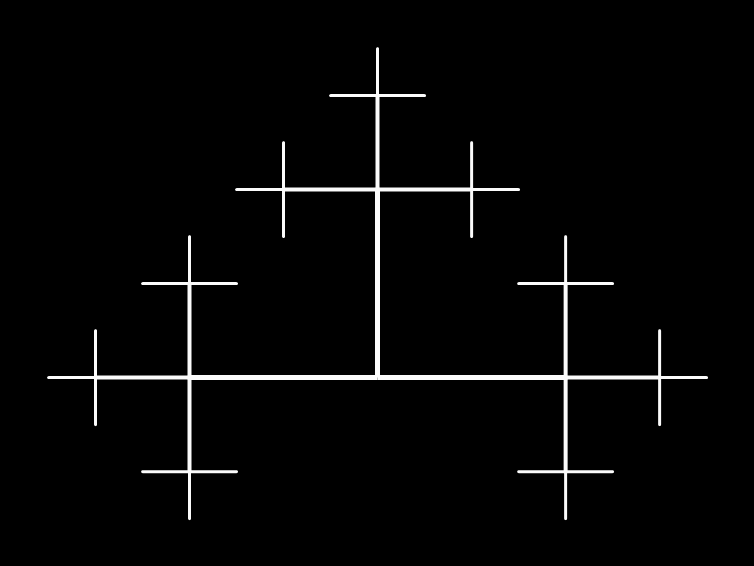
Now each sub-triangle becomes a trix in its turn:

Trix stage #2


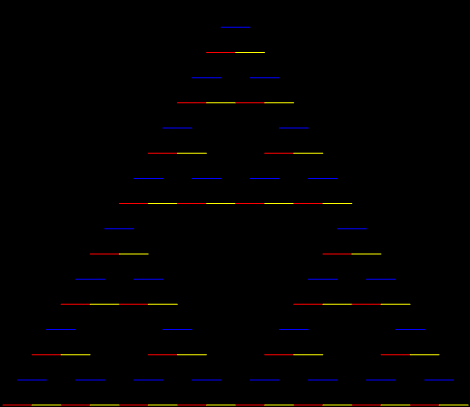
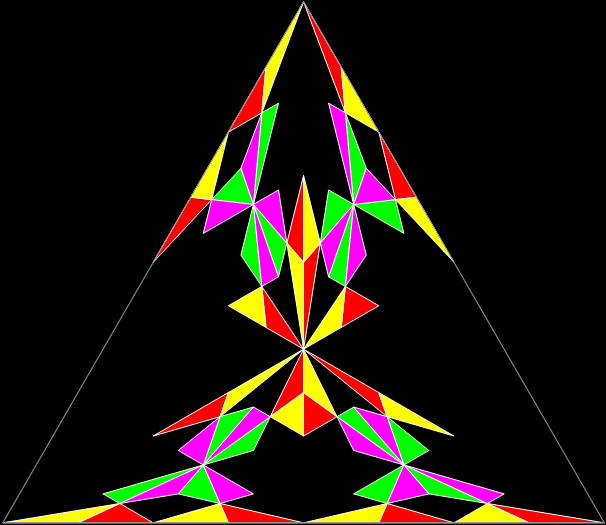
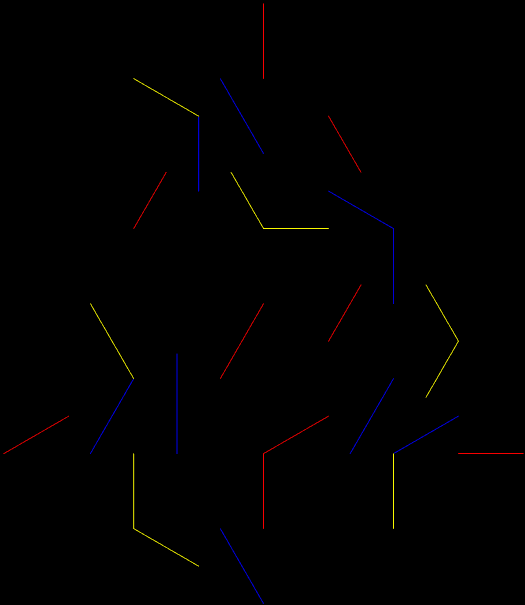
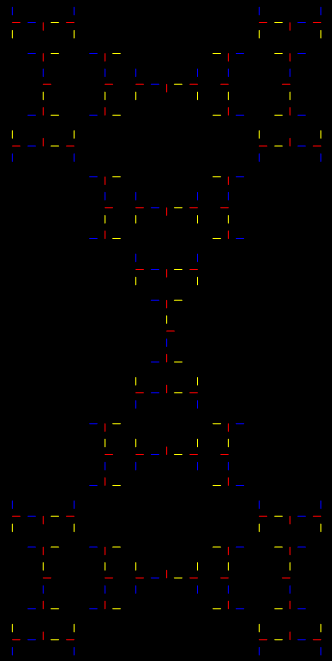
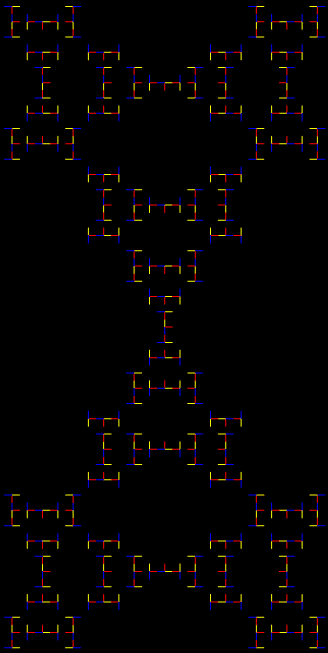
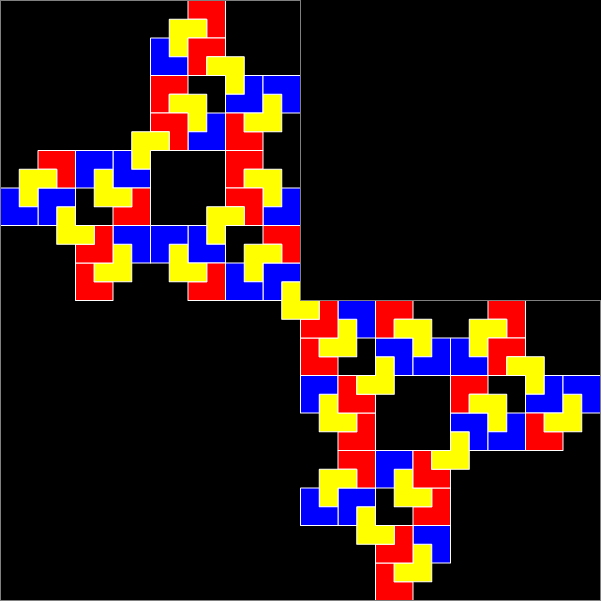
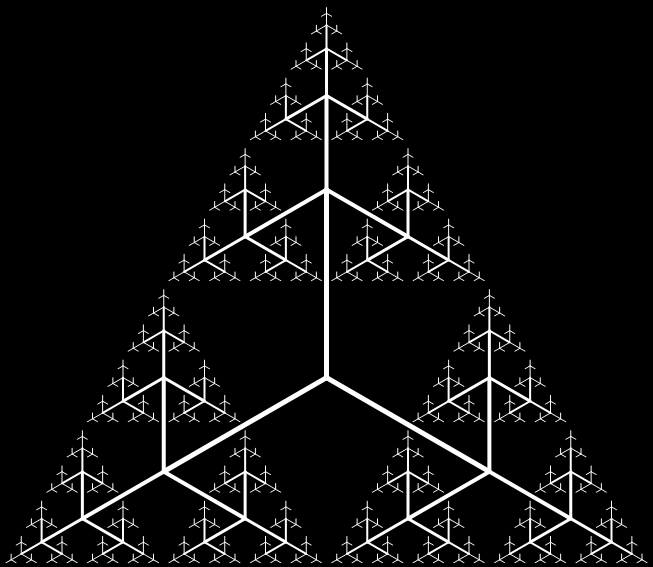
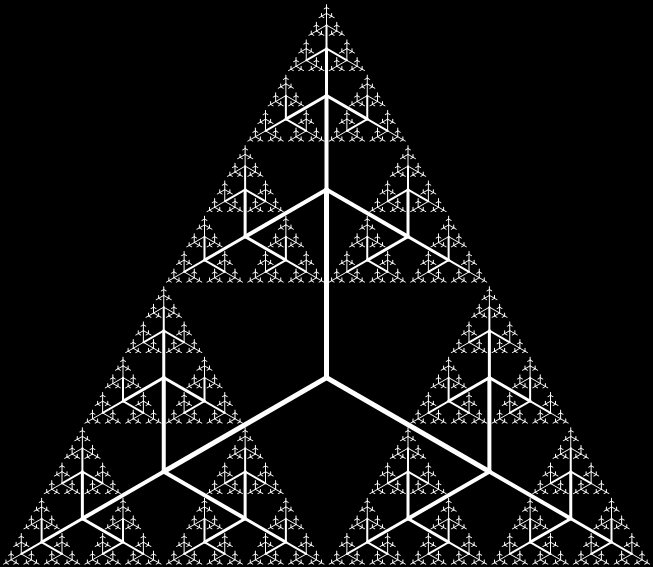
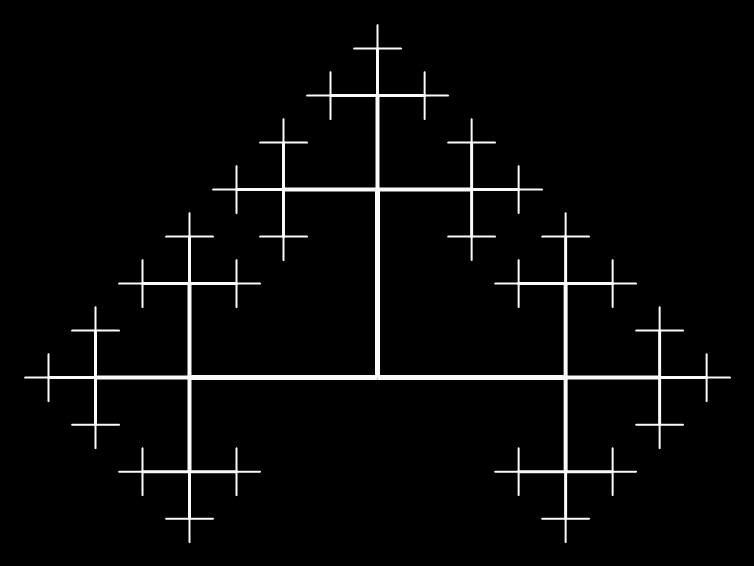
And again:

Trix #3


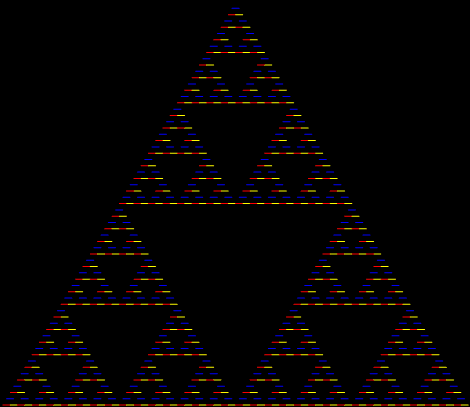
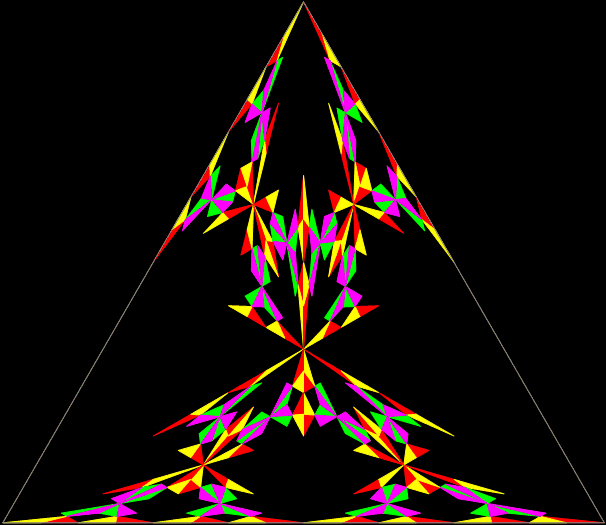
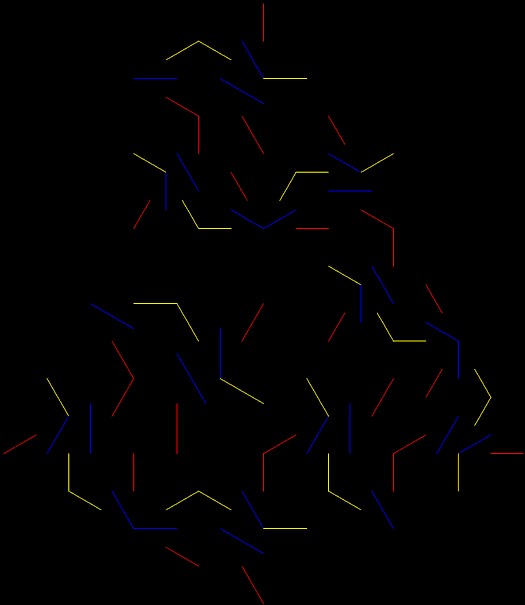
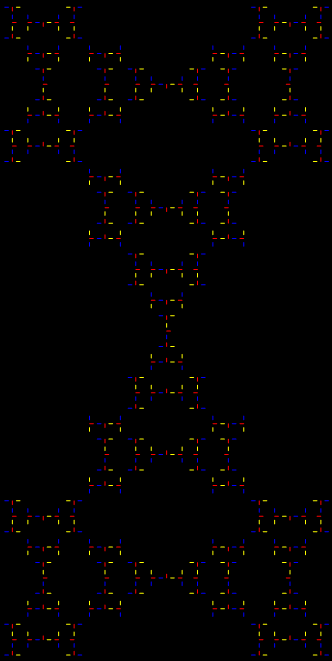
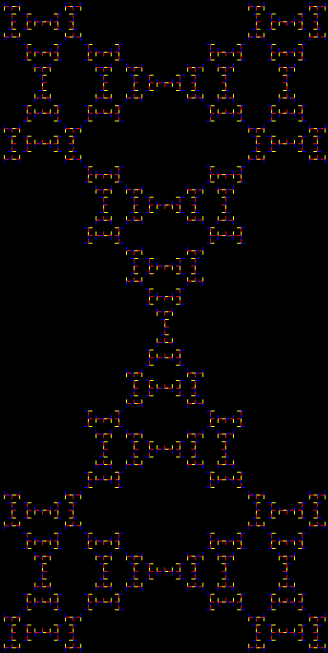
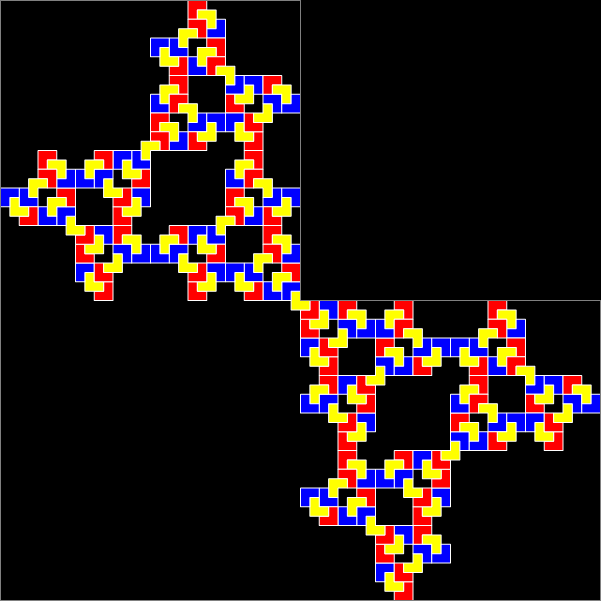
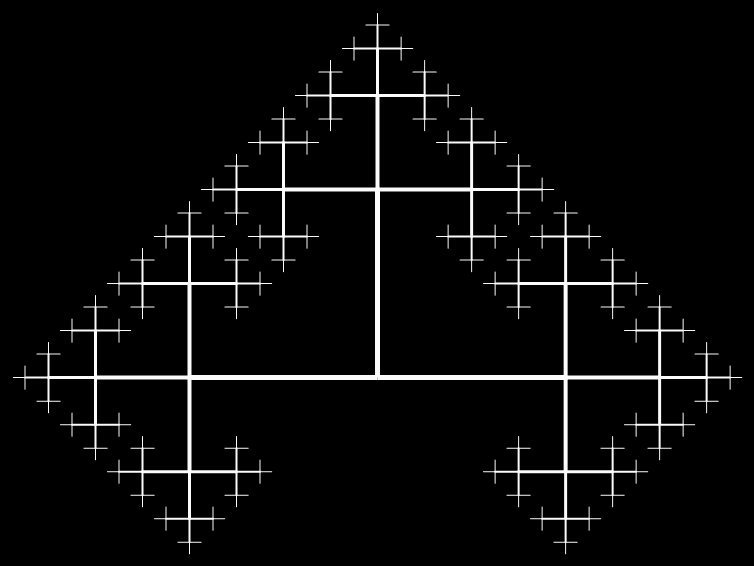
Trix #4


Trix #5


Trix divisions (animated)


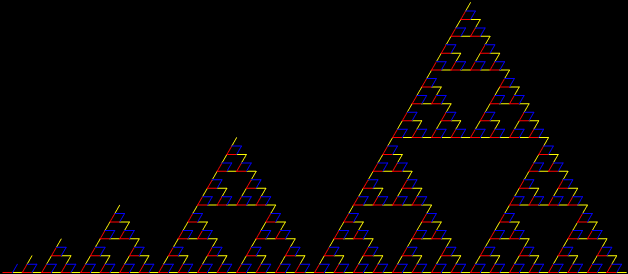
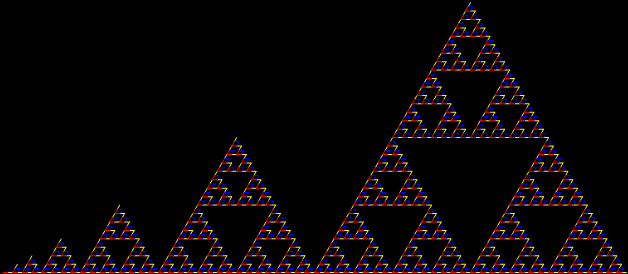
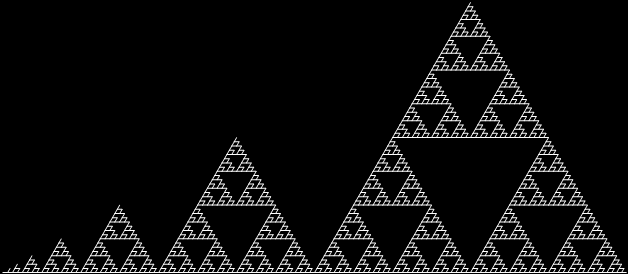
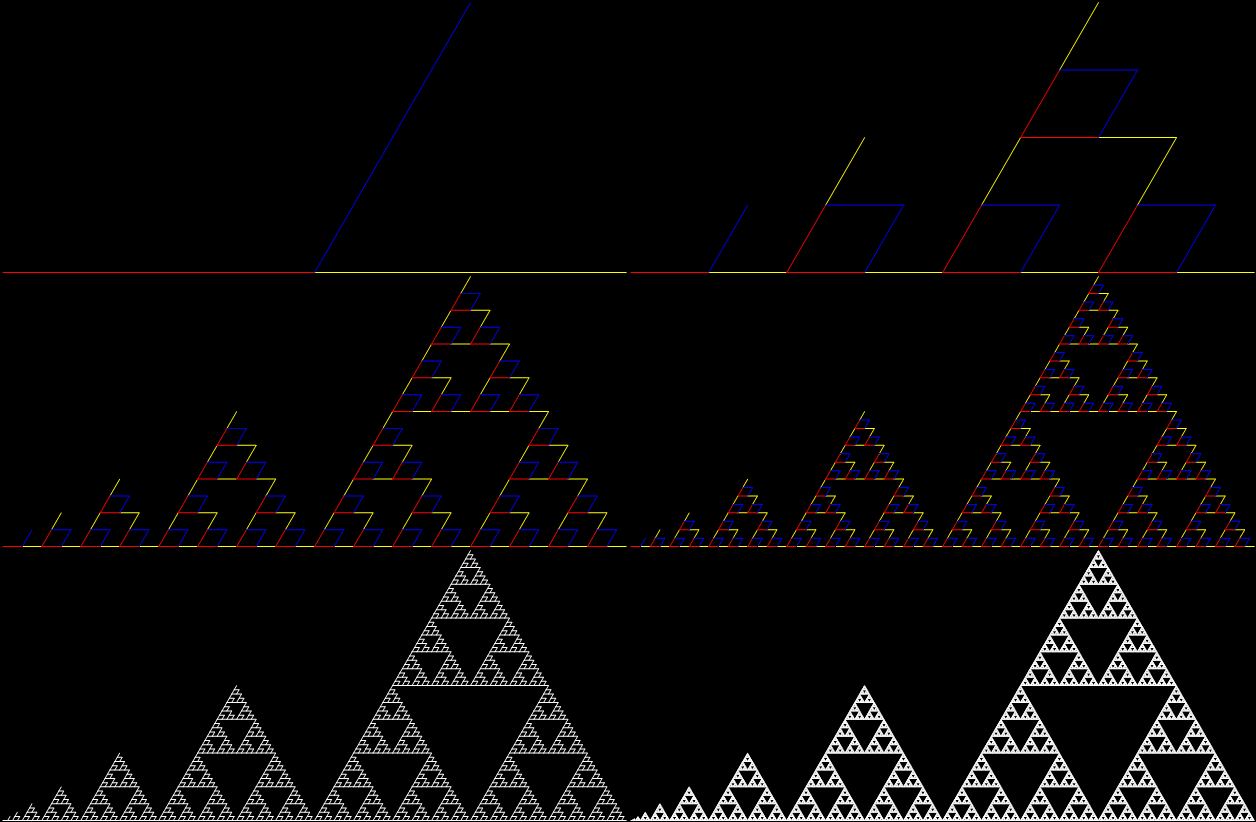
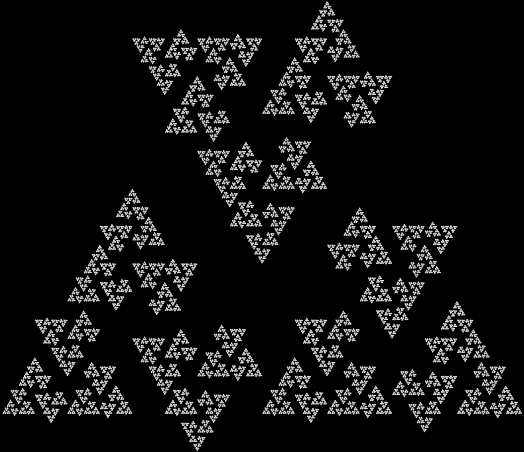
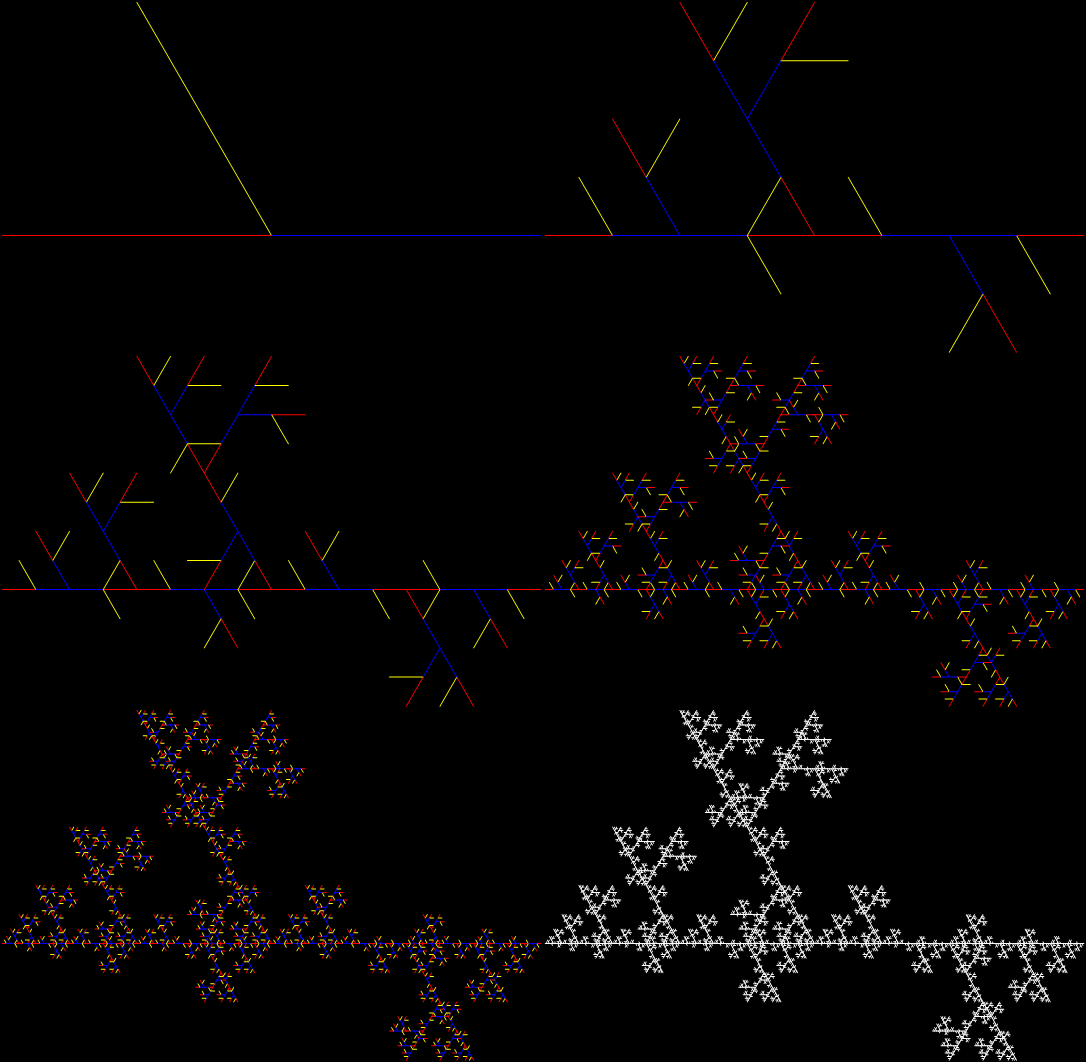
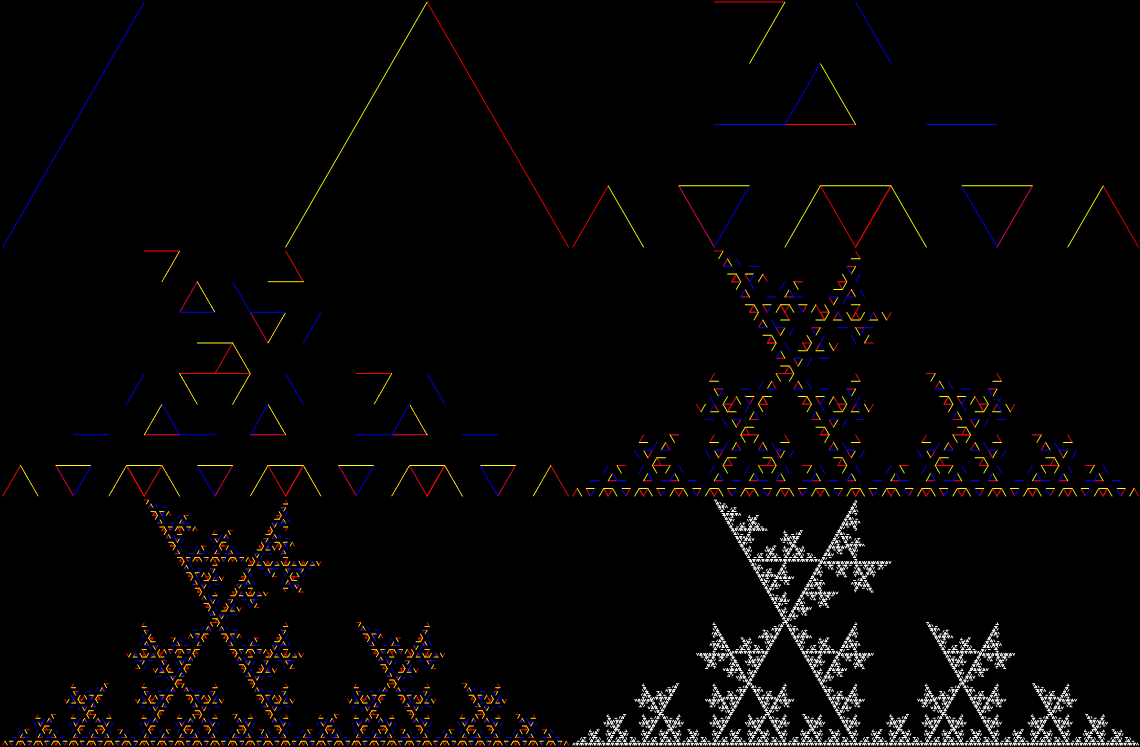
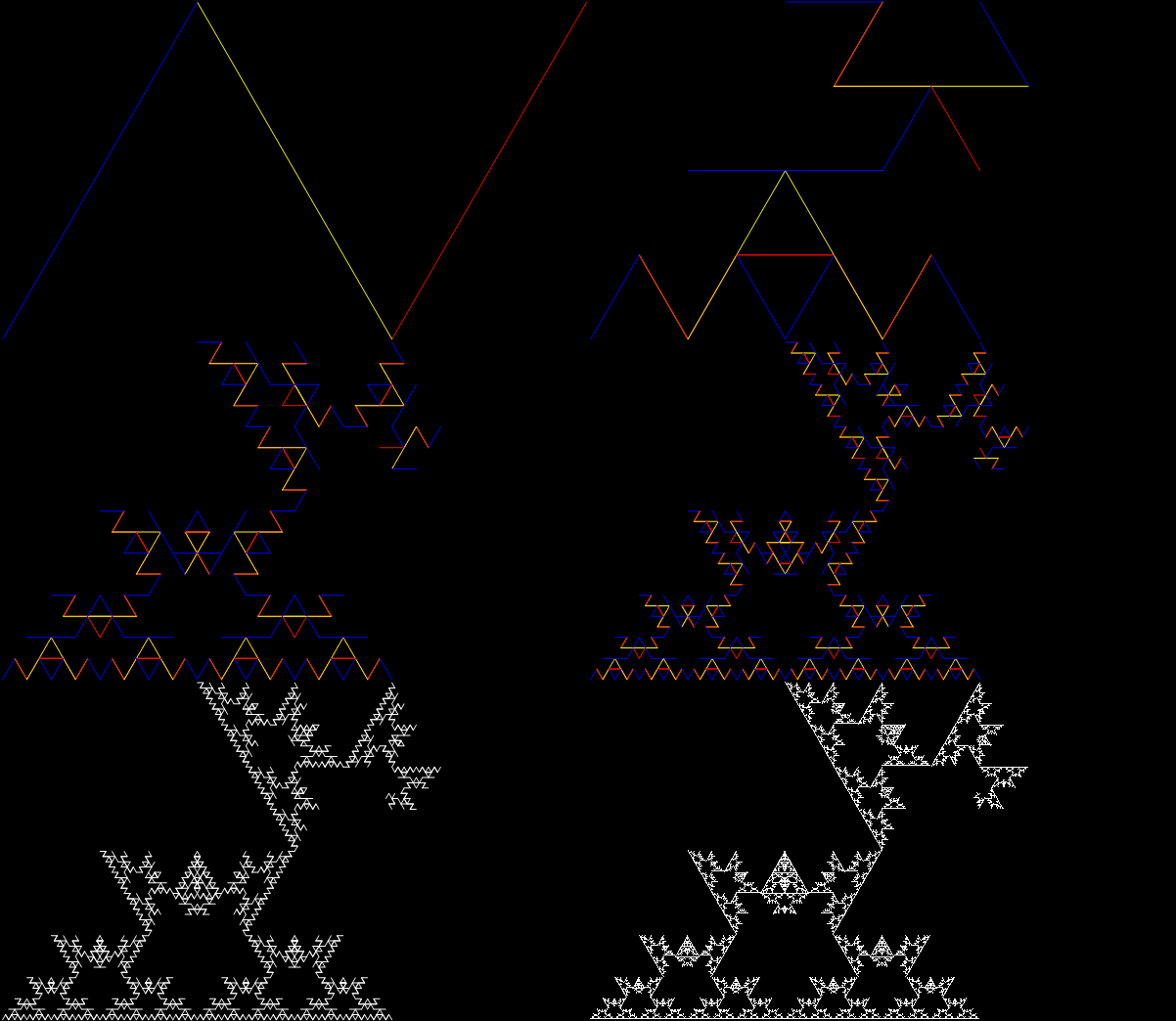
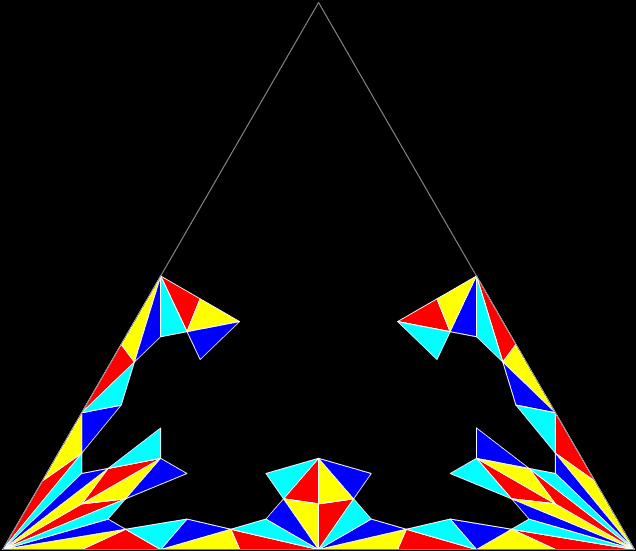
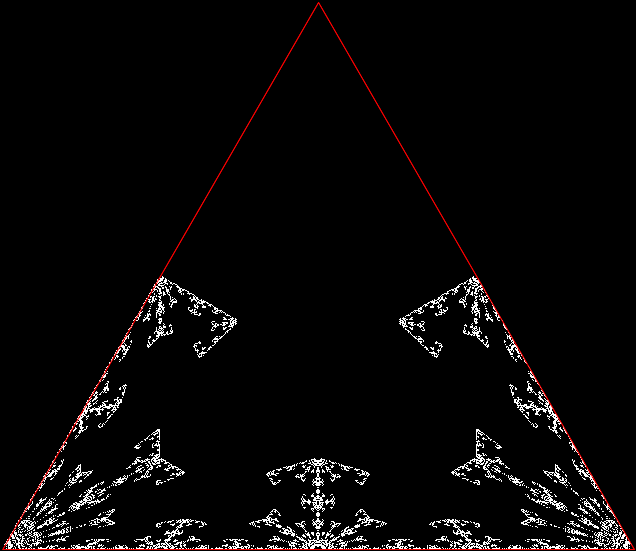
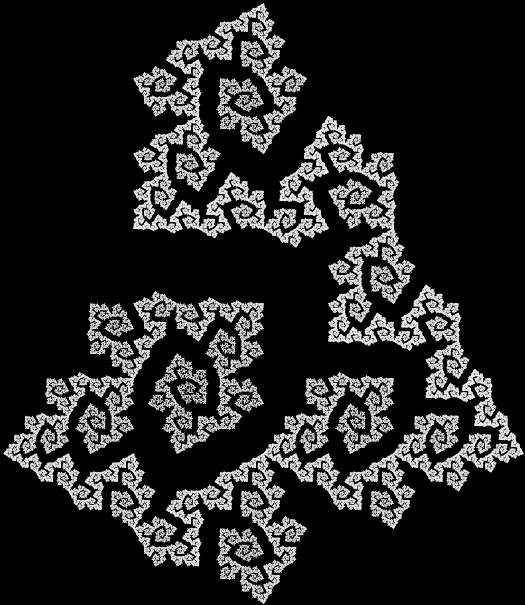
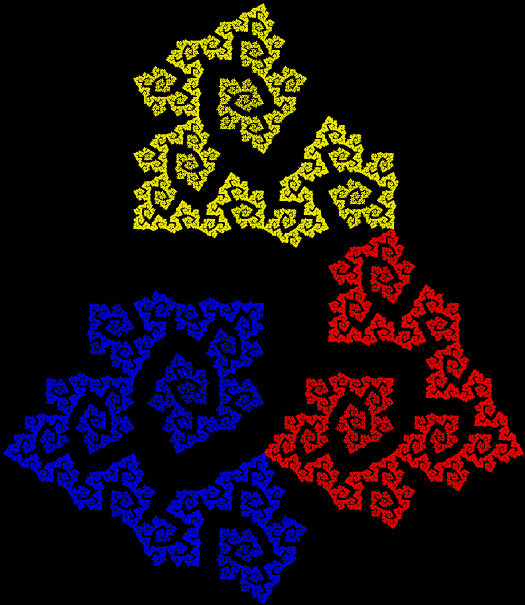
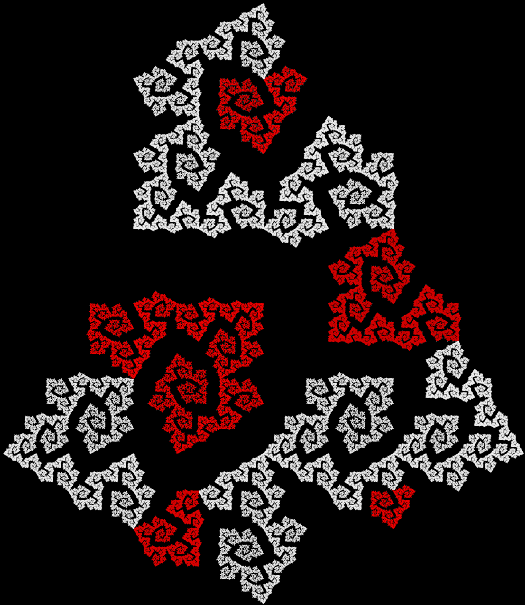
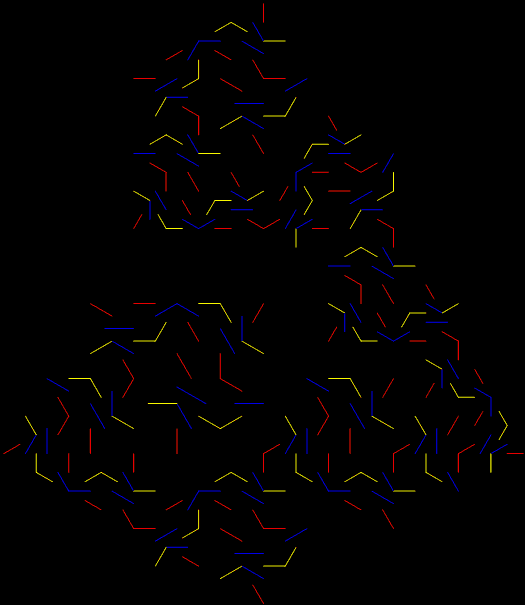
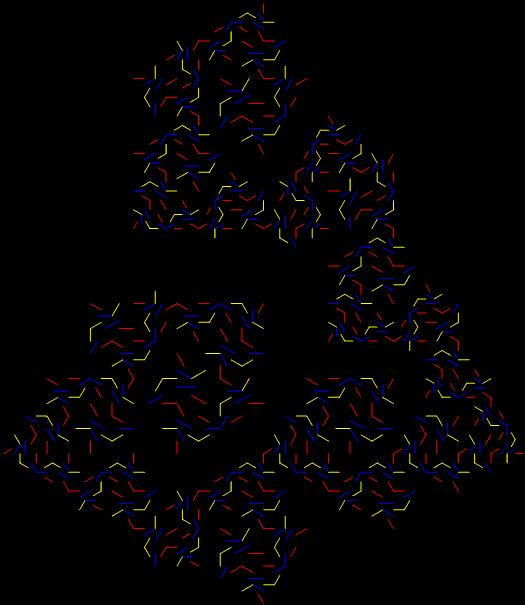
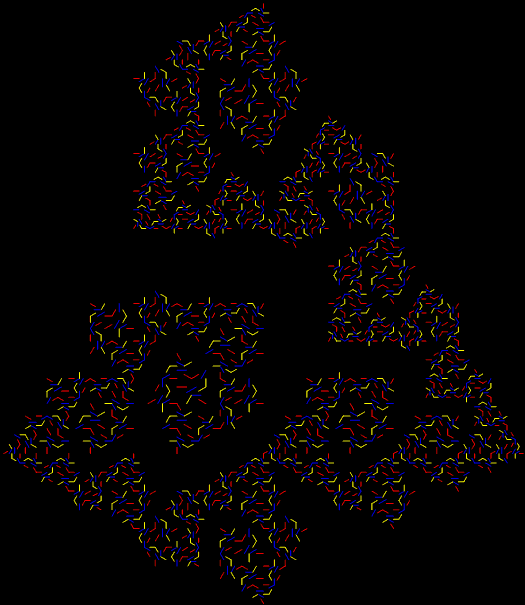
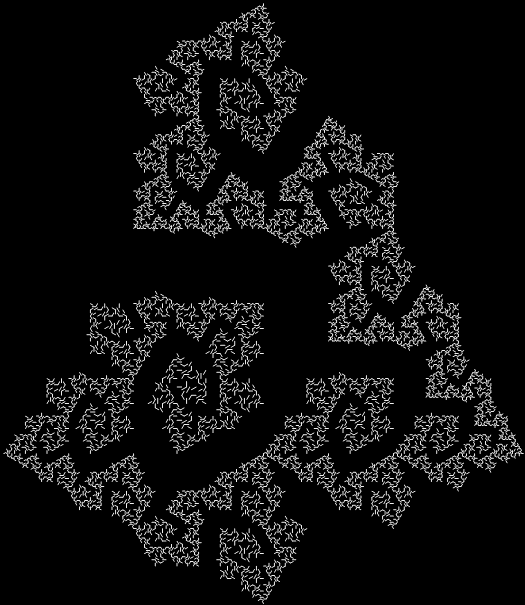
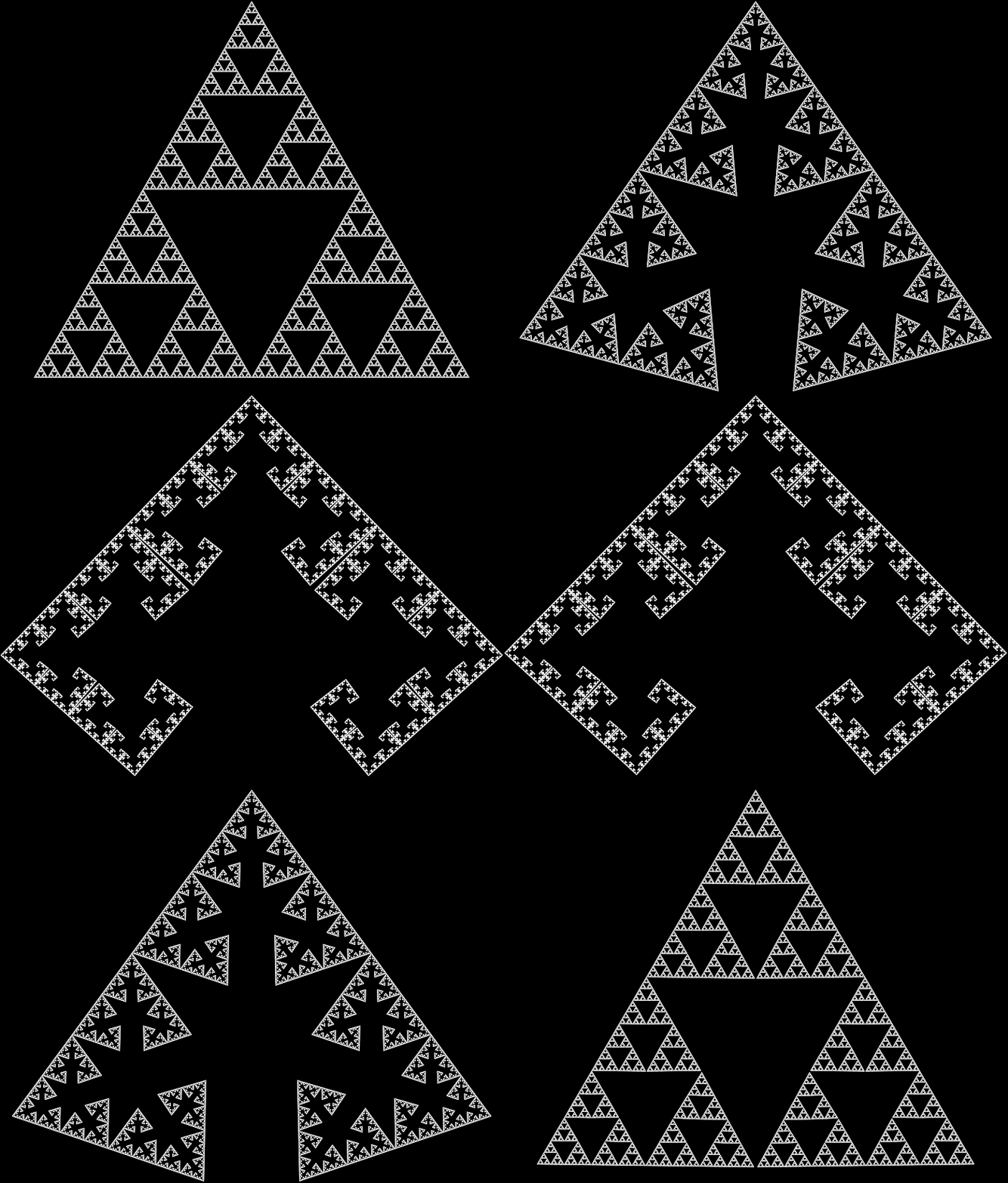
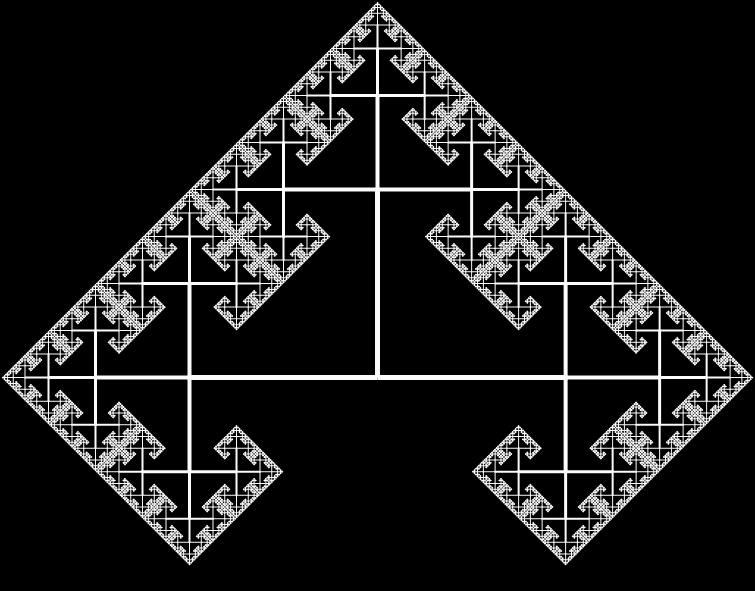
Now try dividing the trix and discarding sub-triangles, then repeating the process. A fractal appears:

Trix fractal #1


Trix fractal #2


Trix fractal #3


Trix fractal #4


Trix fractal #5


Trix fractal #6


Trix fractal #7


Trix fractal (animated)


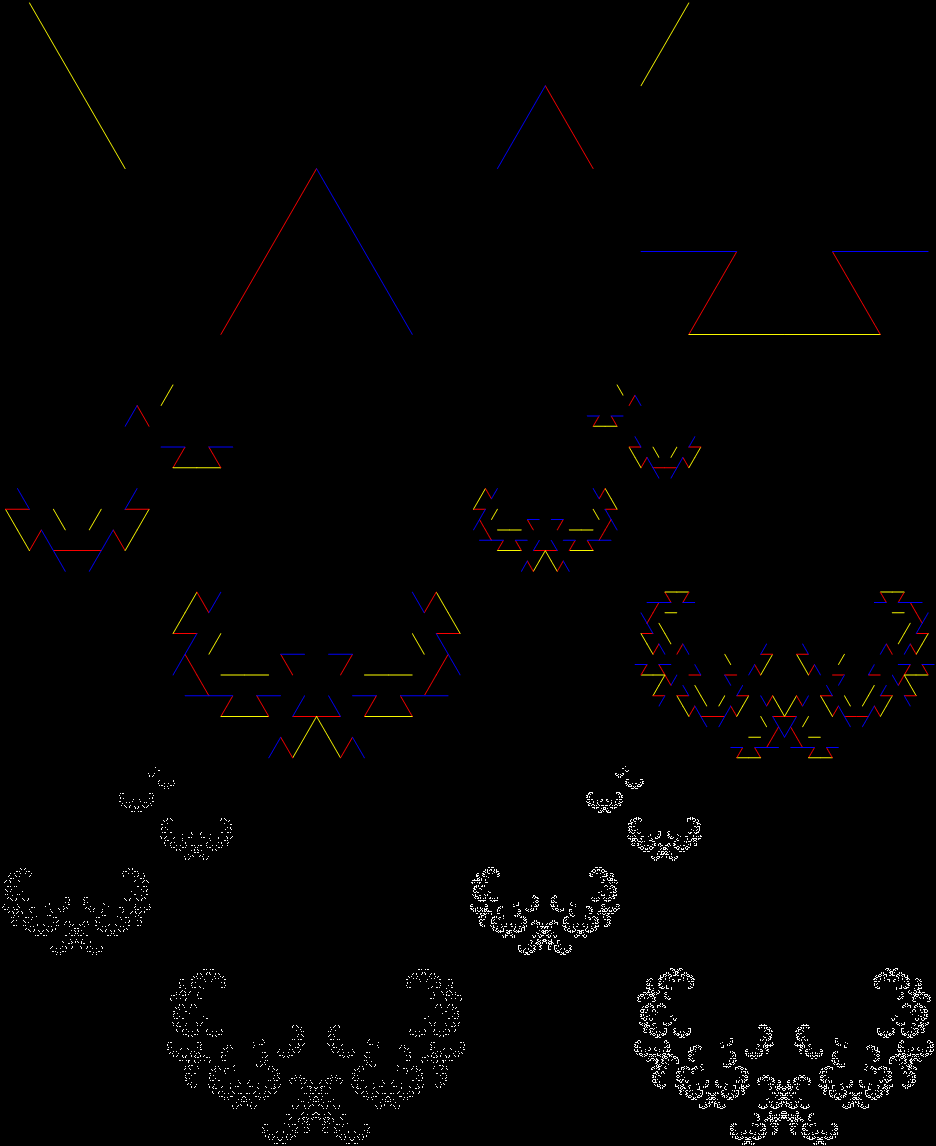
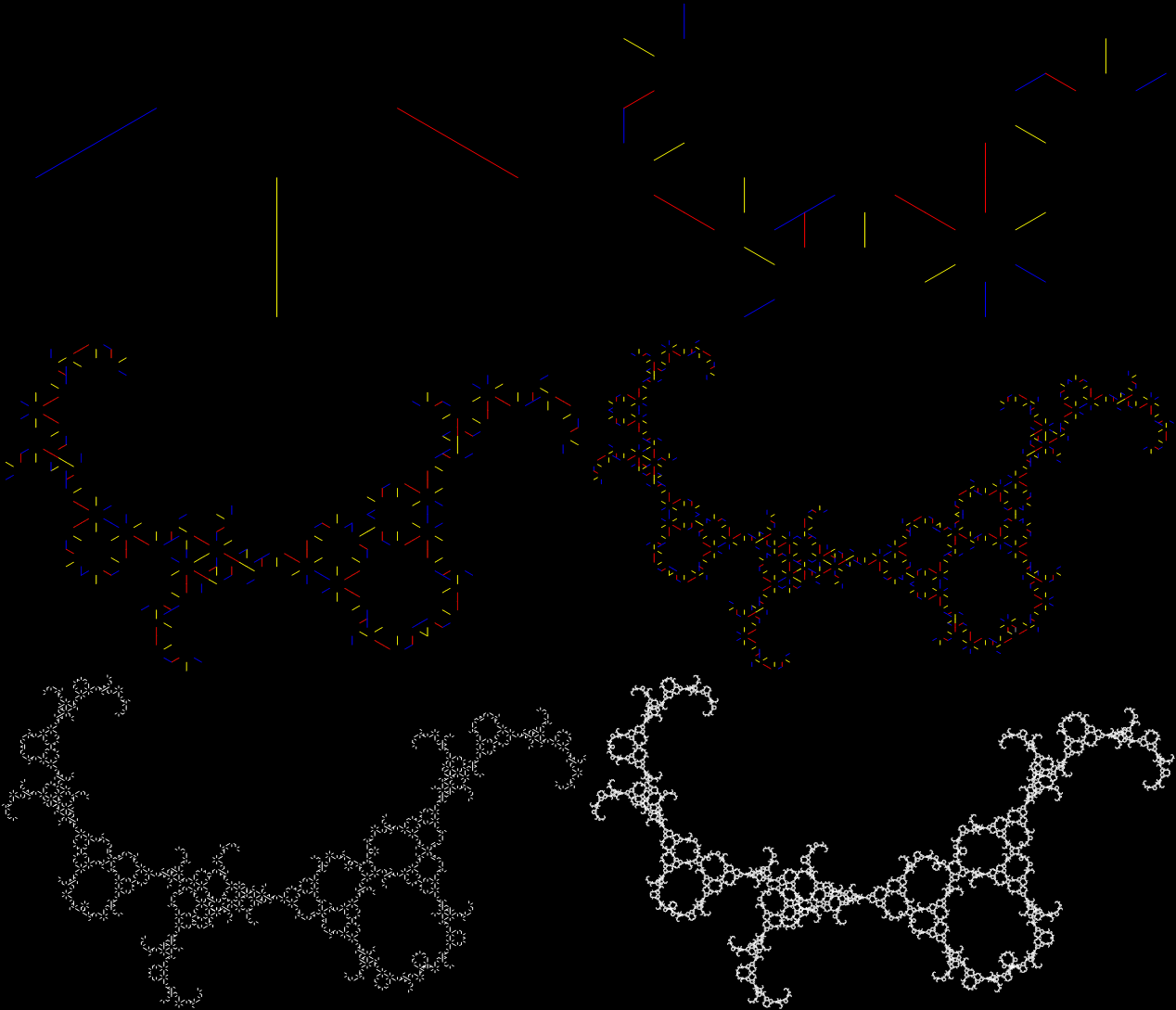
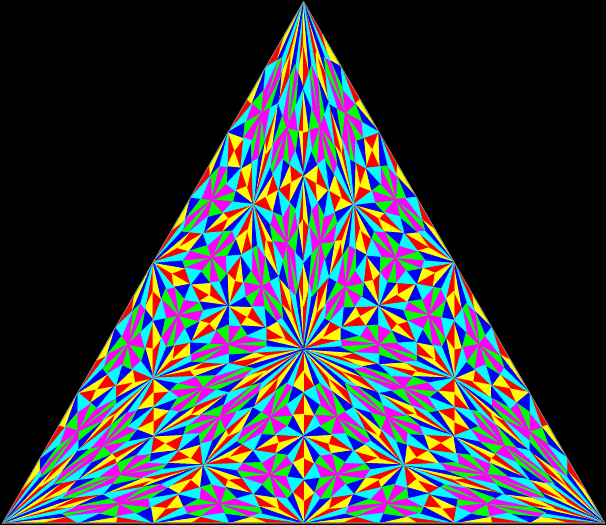
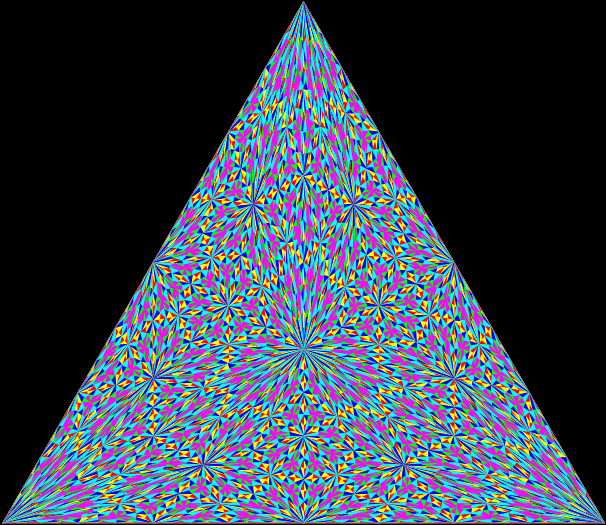
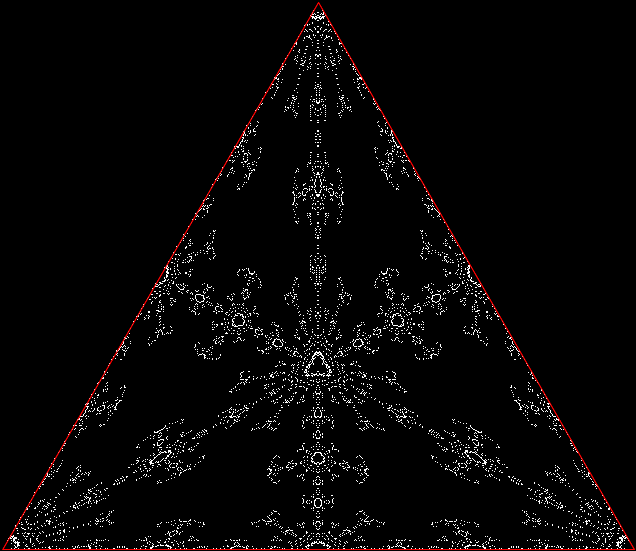
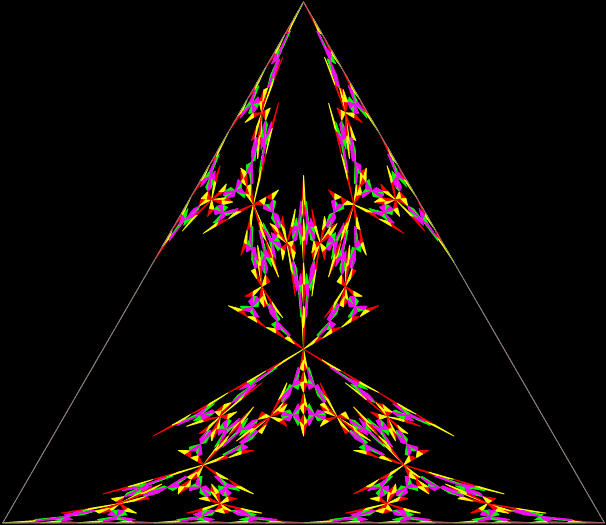
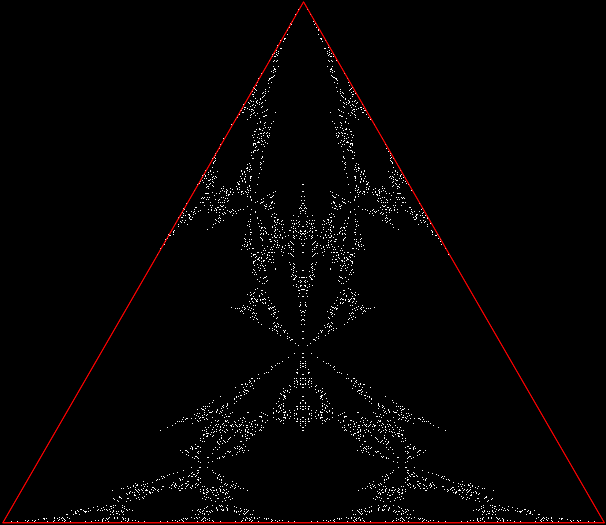
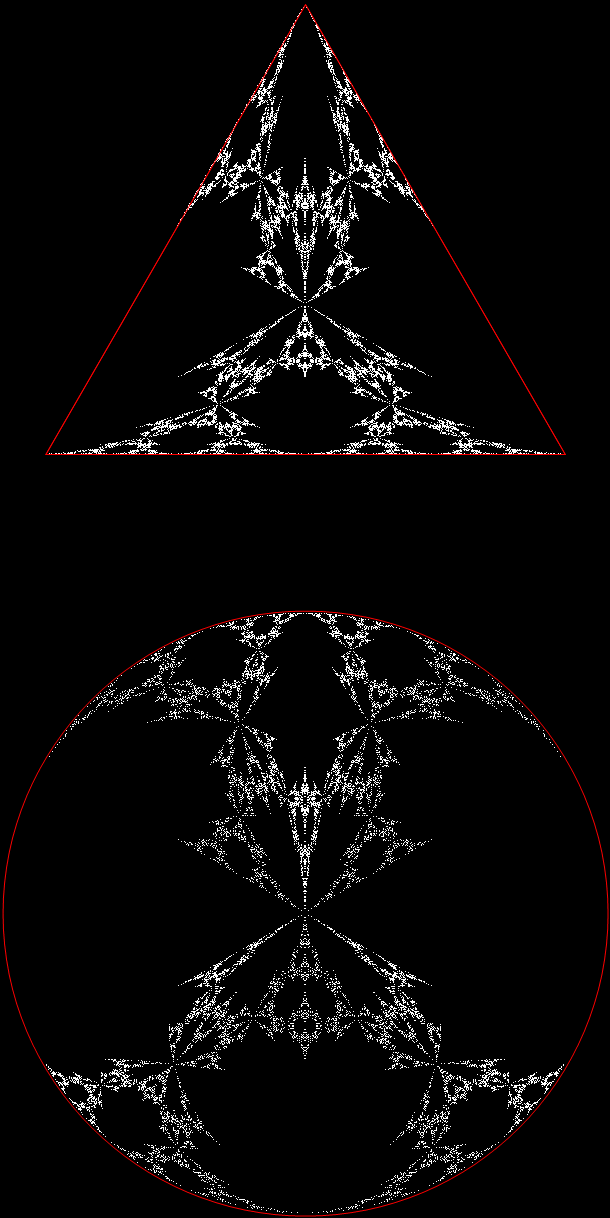
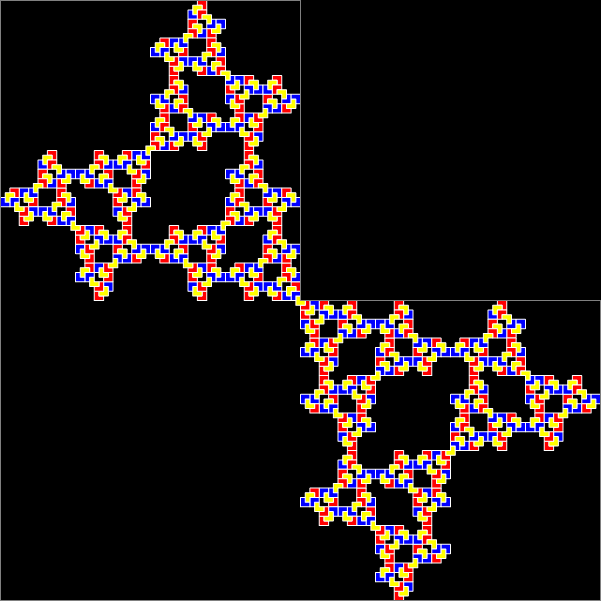
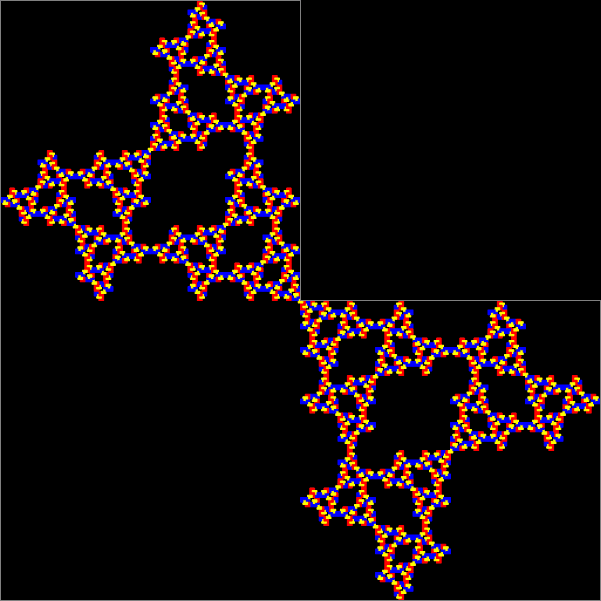
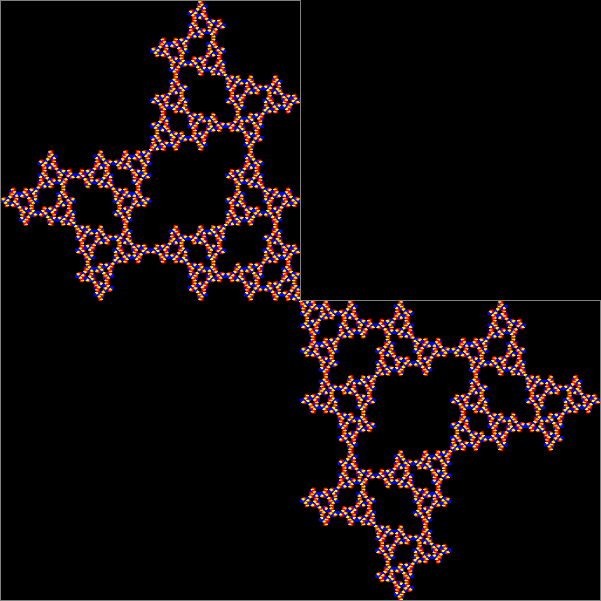
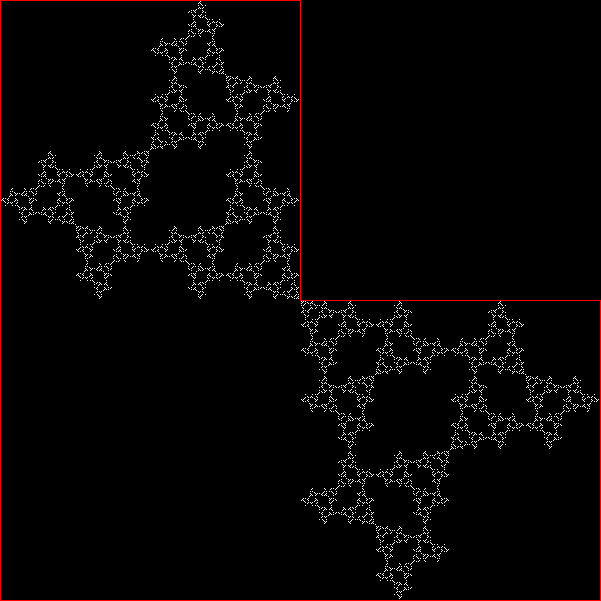
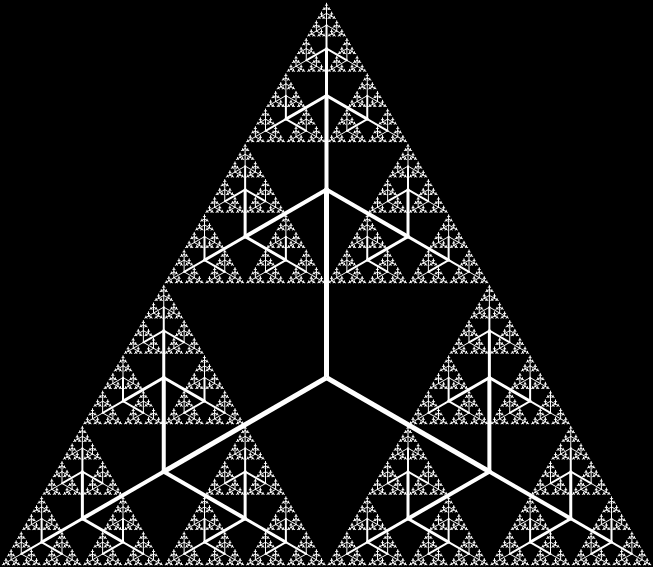
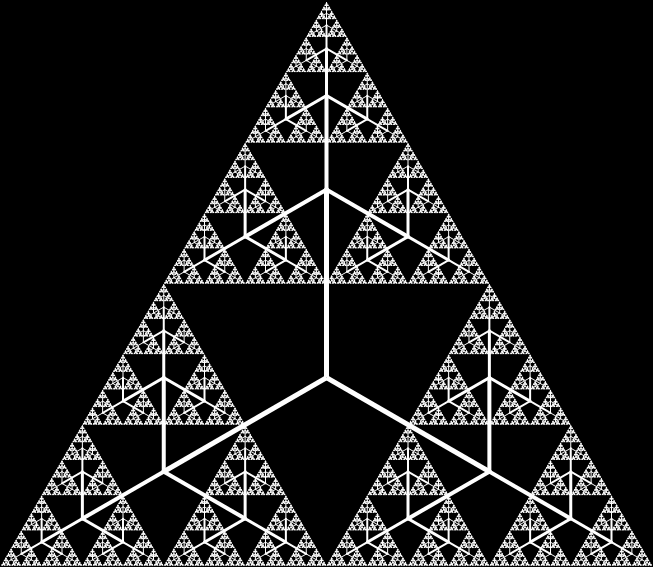
But what happens if you delay the discarding, first dividing the trix completely into sub-triangles, then dividing completely again? You get a more attractive and symmetrical fractal, like this:

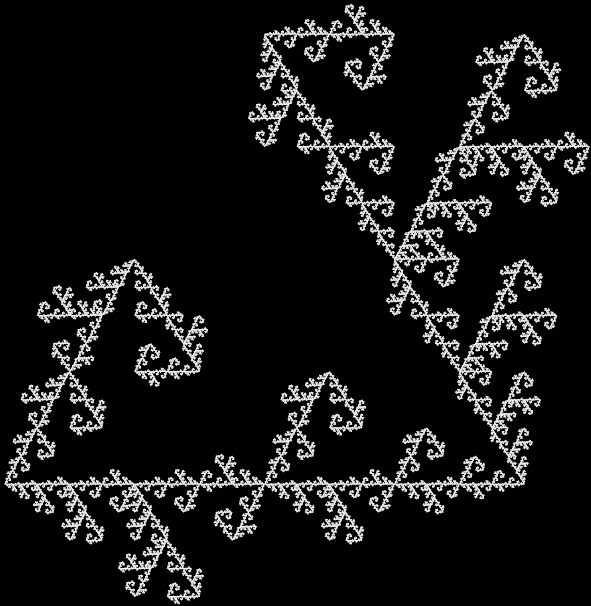
Trix fractal (delayed discard)


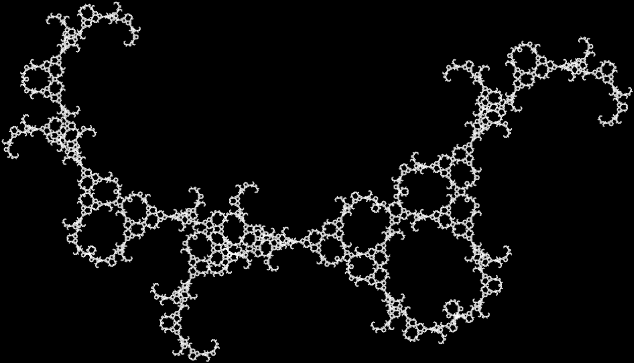
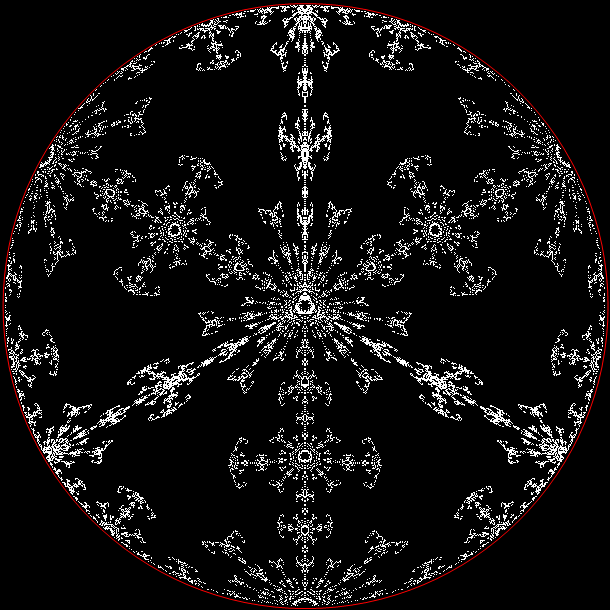
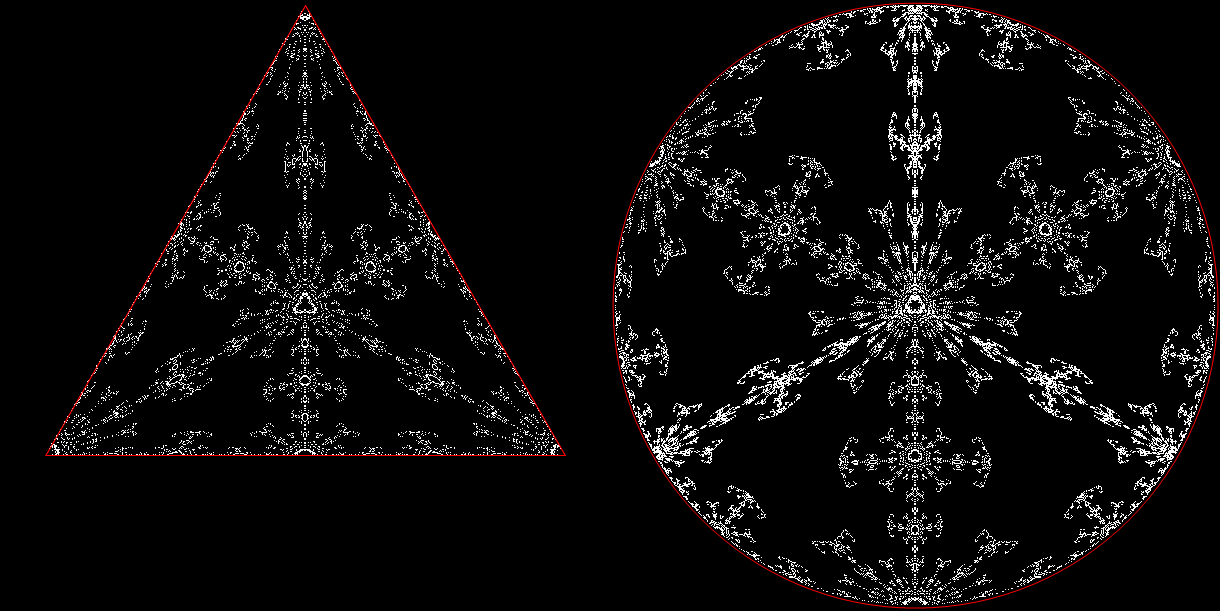
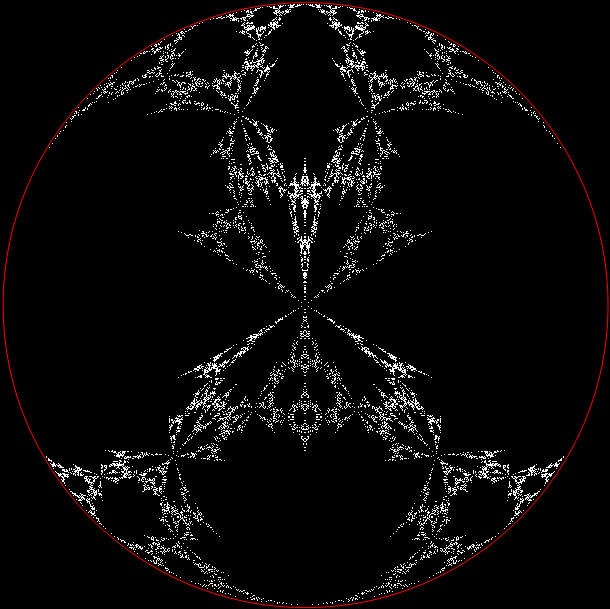
And it’s easy to convert the triangle into a circle, creating a fractal like this:

Delayed-discard trix fractal converted into circle


Delayed-discard trix fractal to circular fractal (animated)


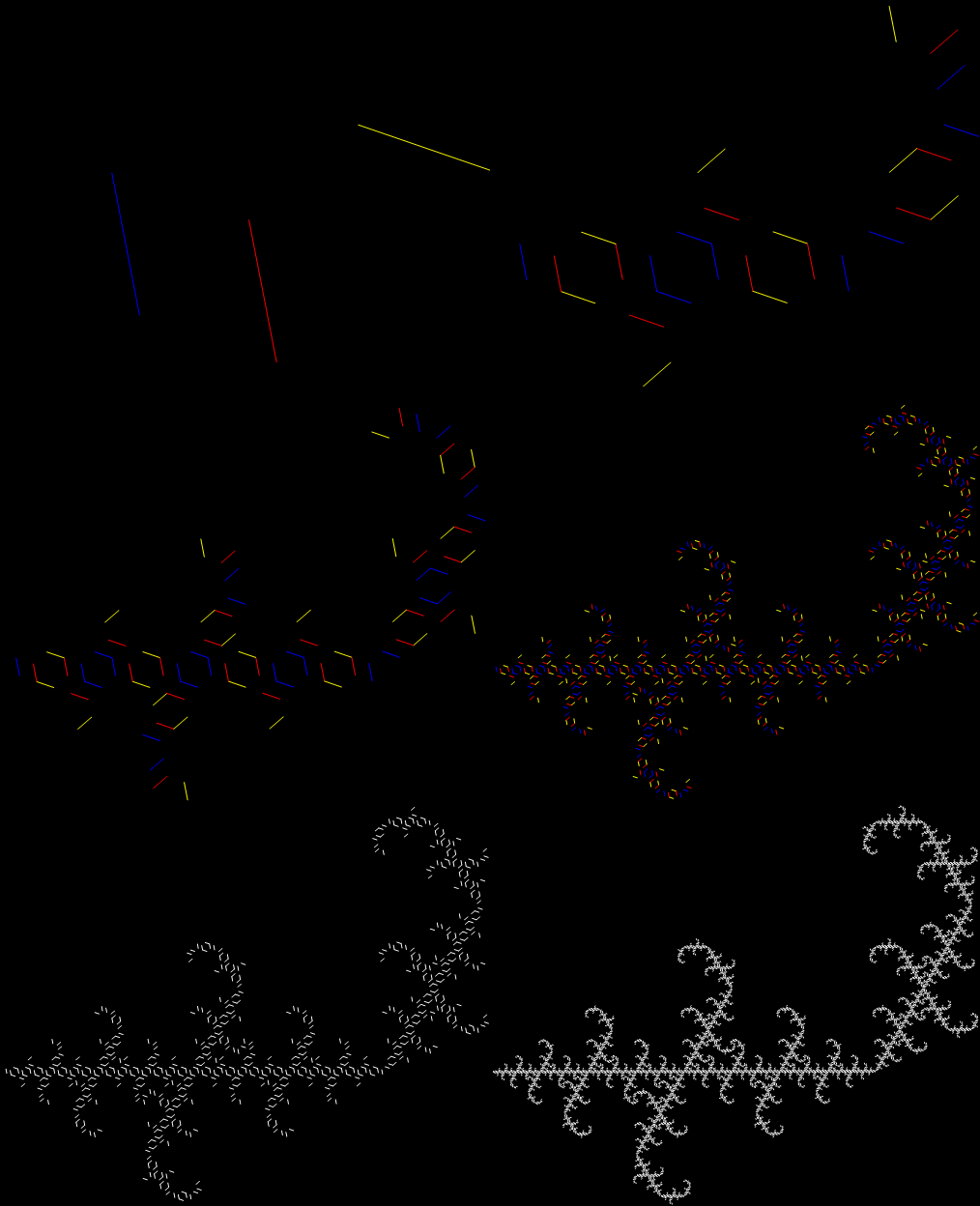
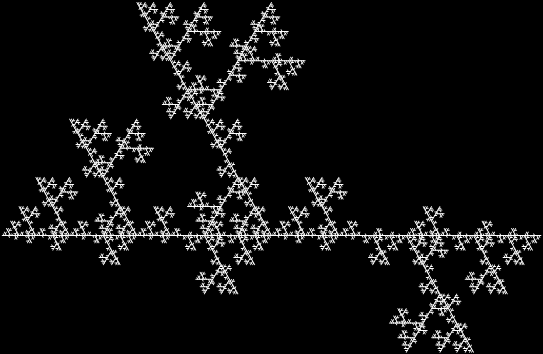
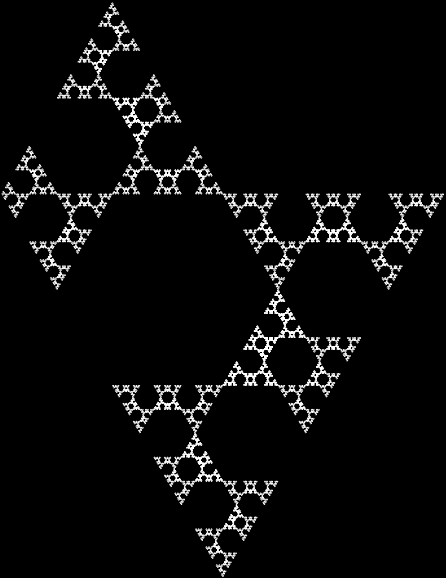
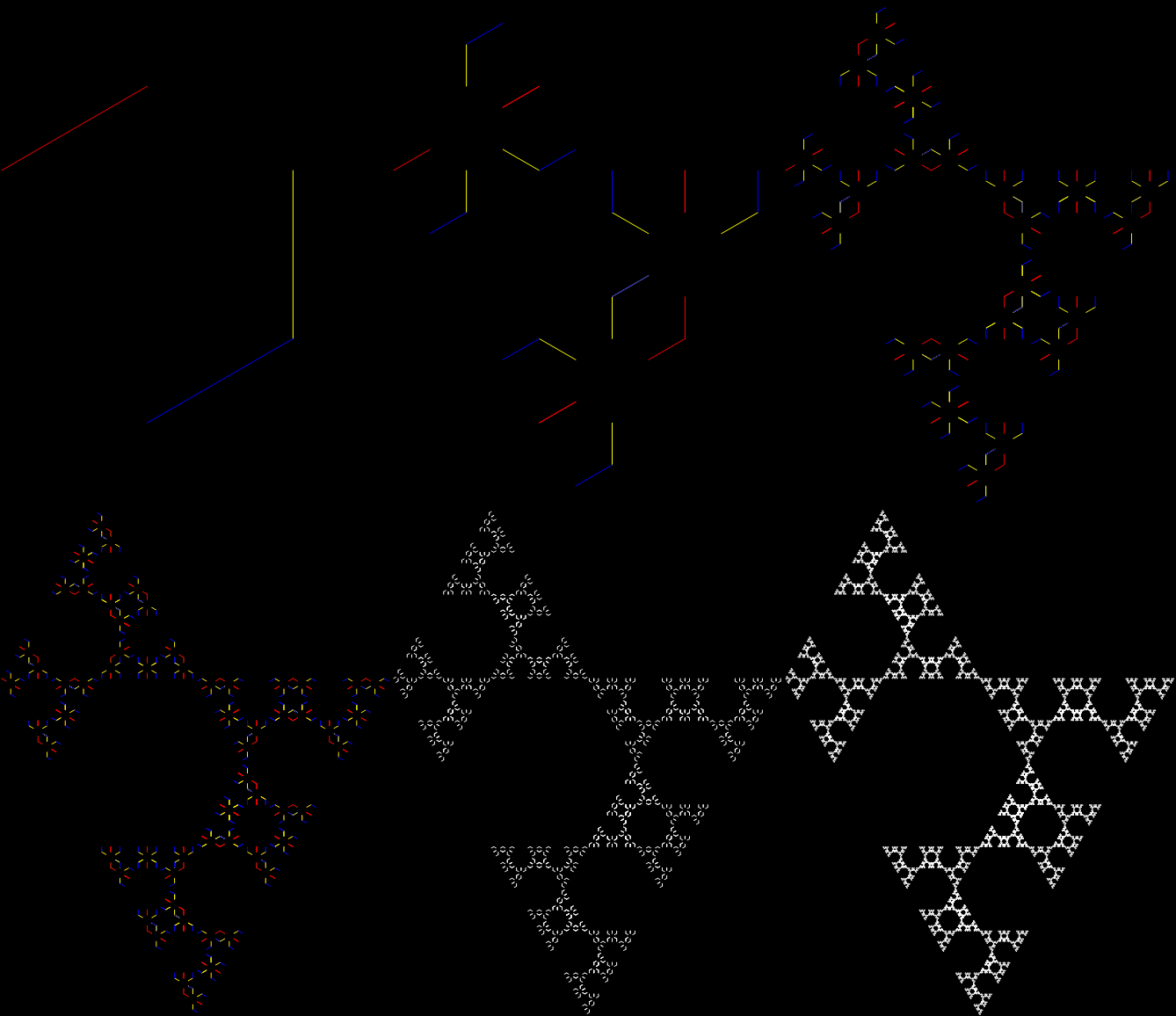
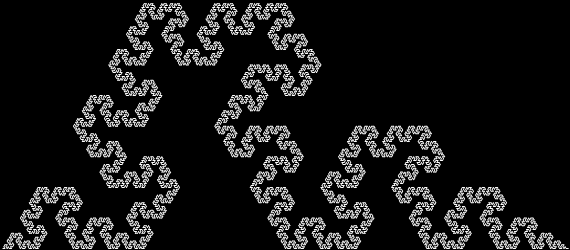
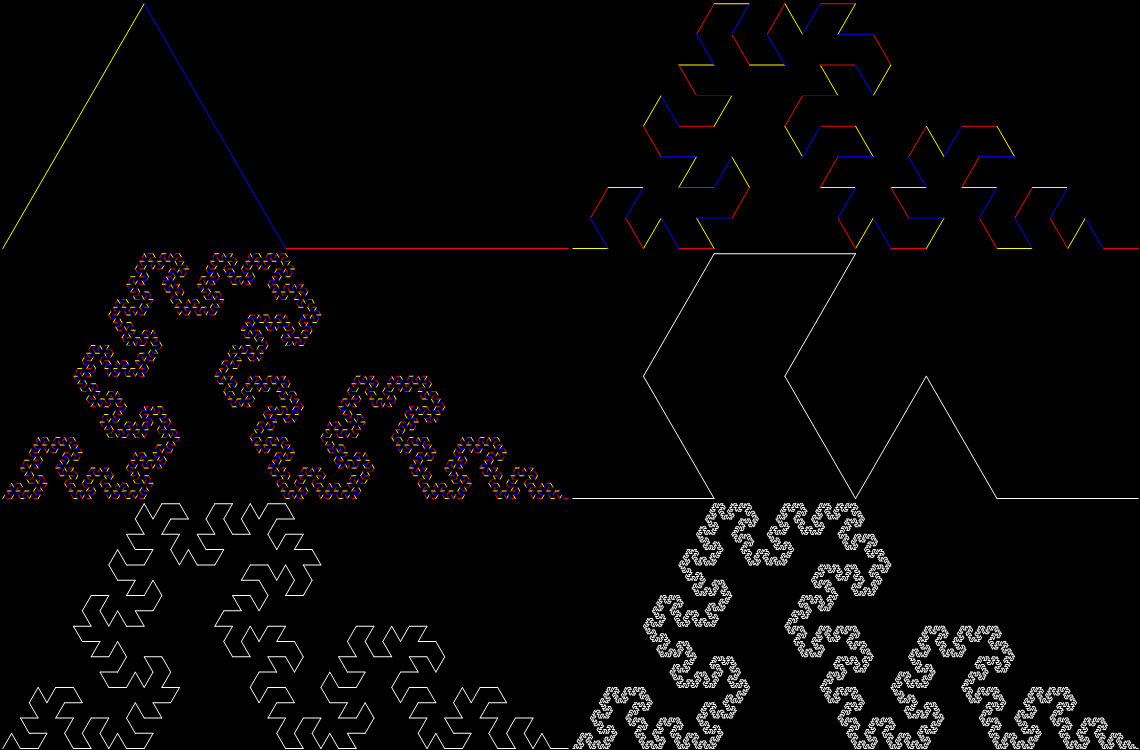
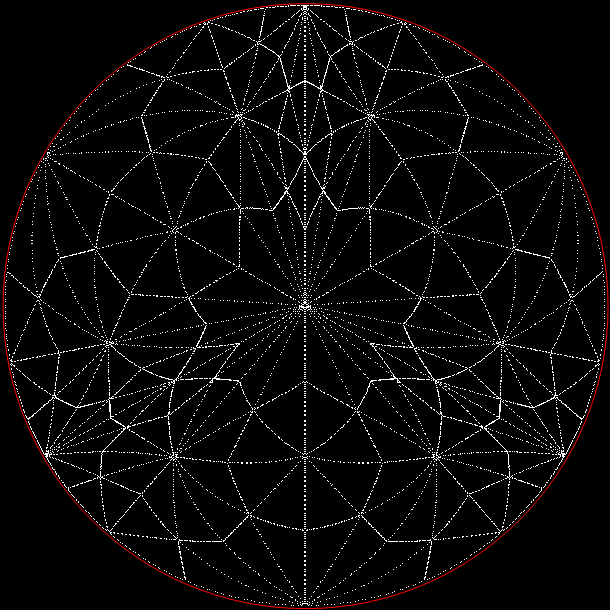
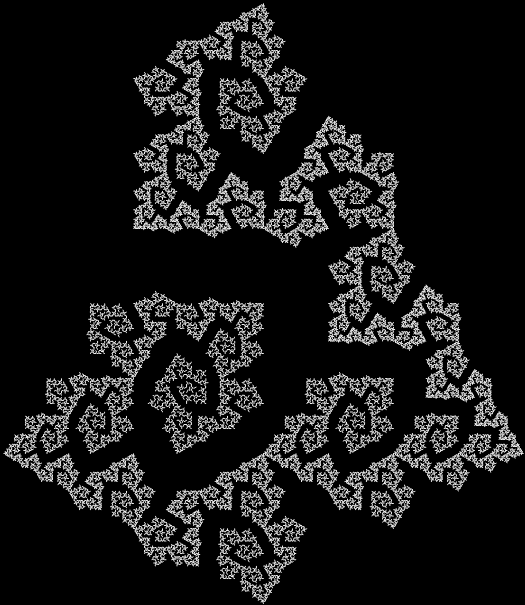
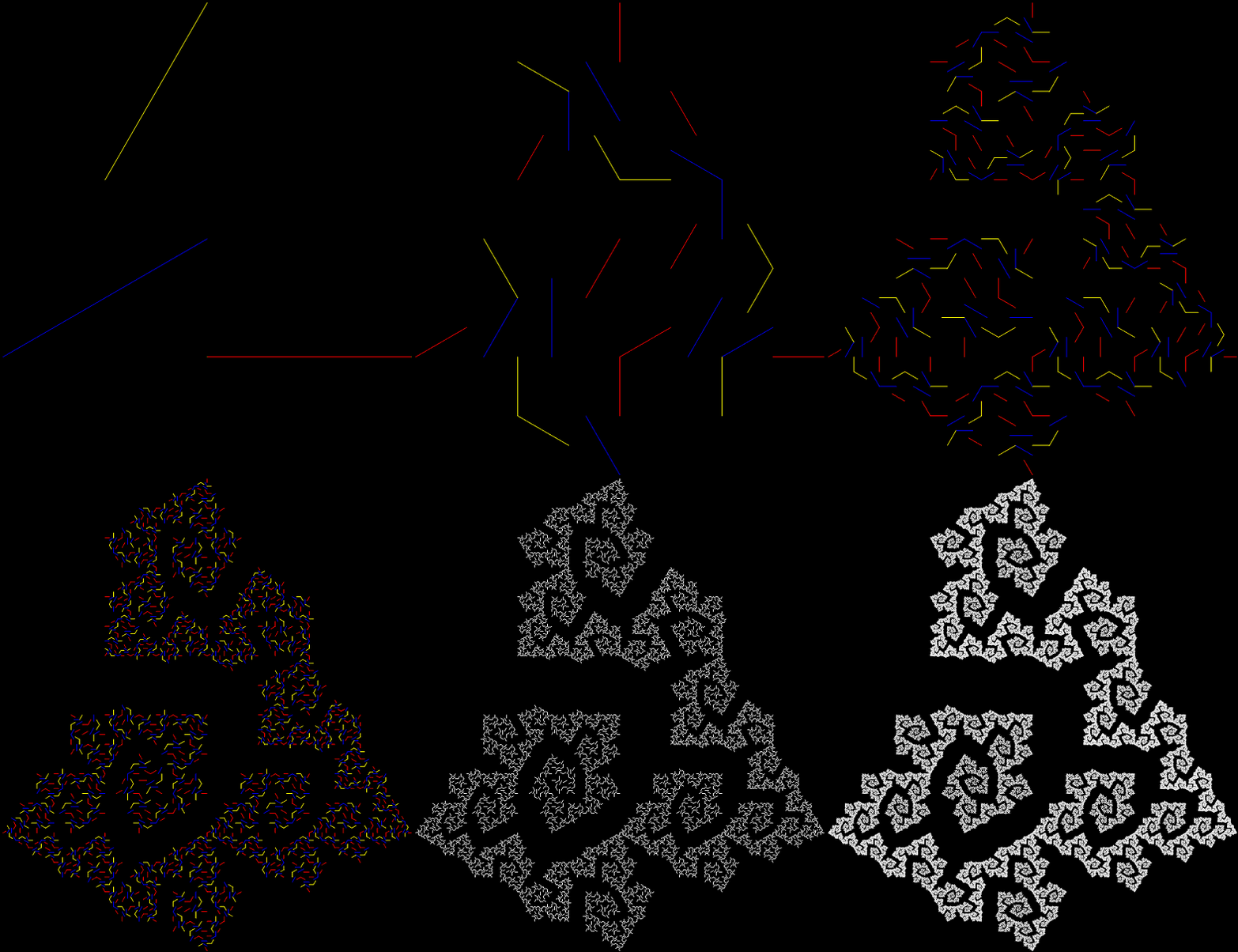
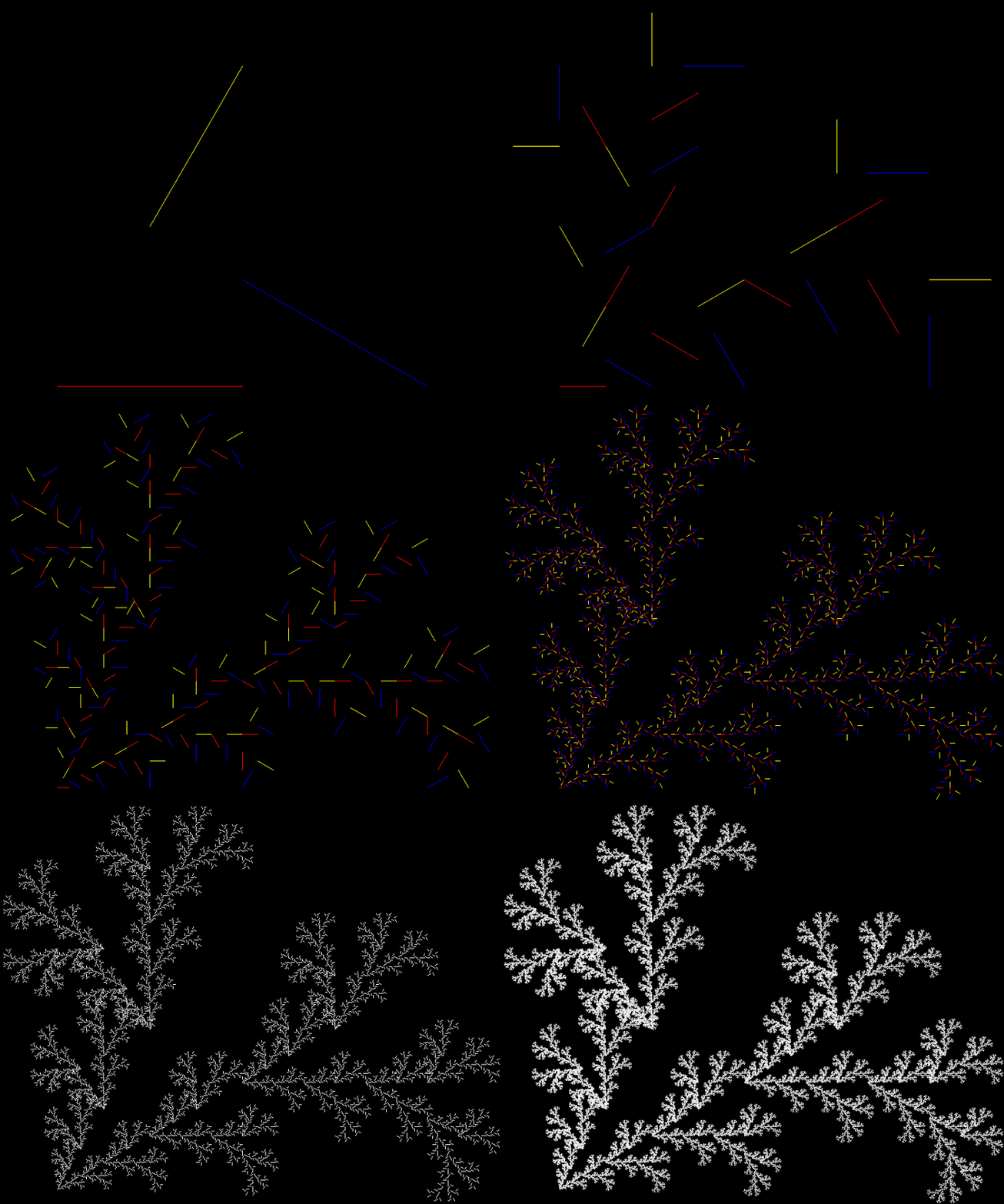
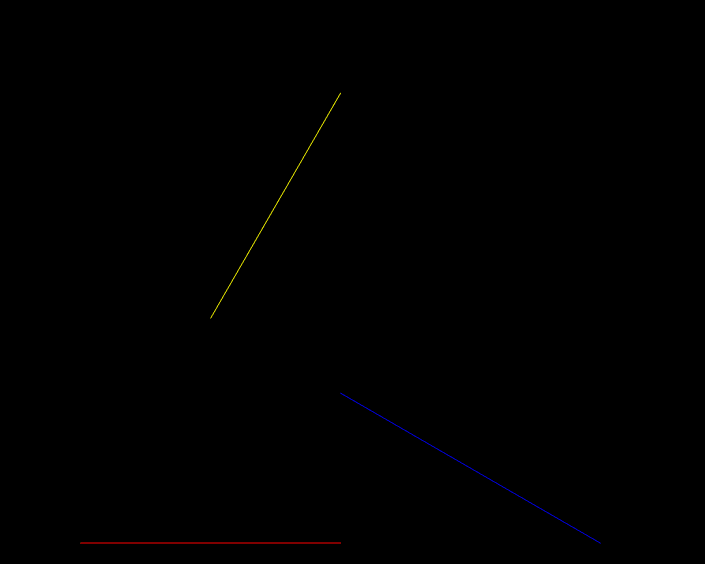
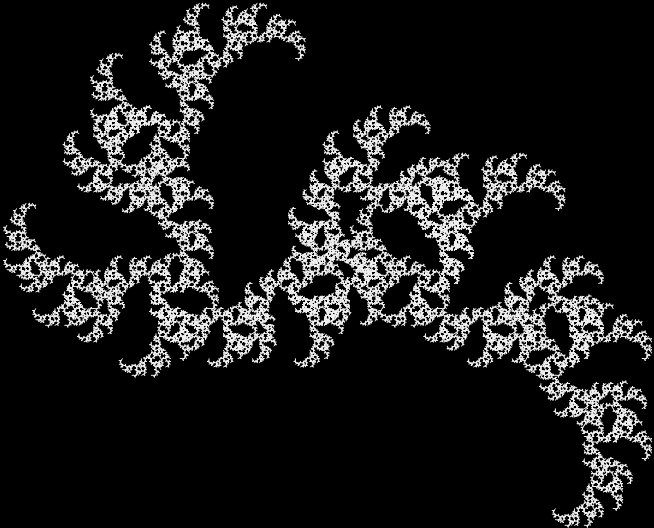
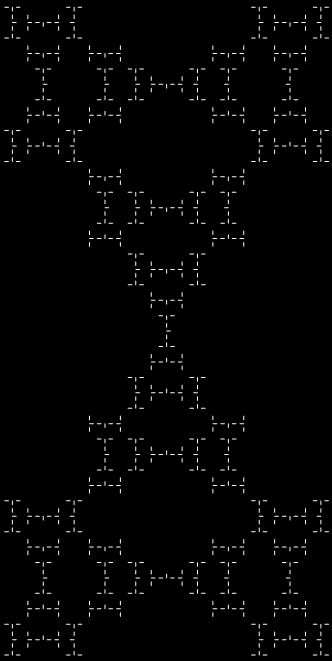
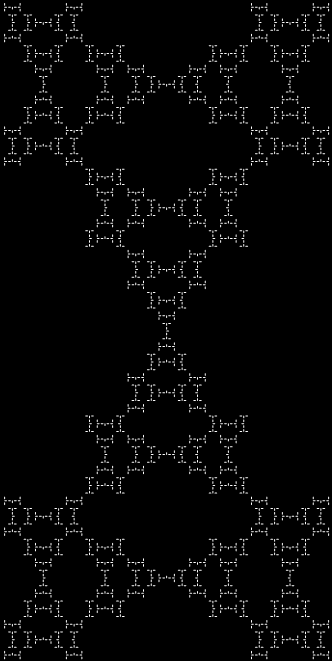
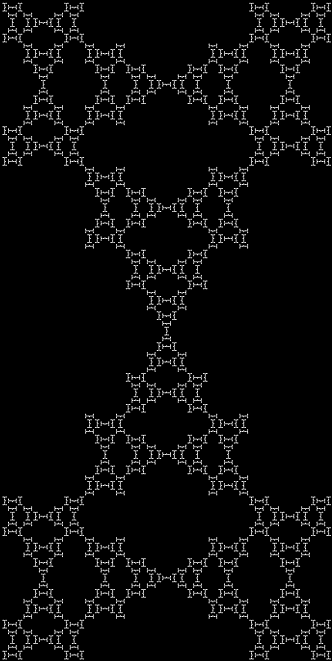
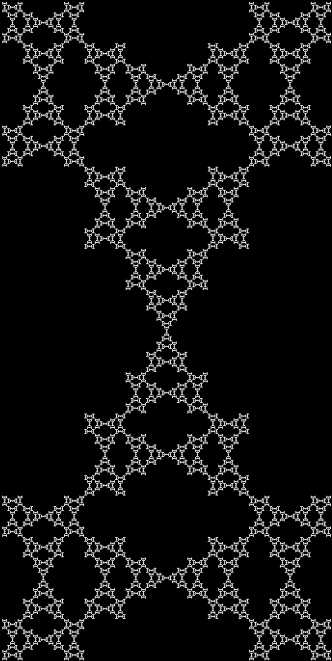
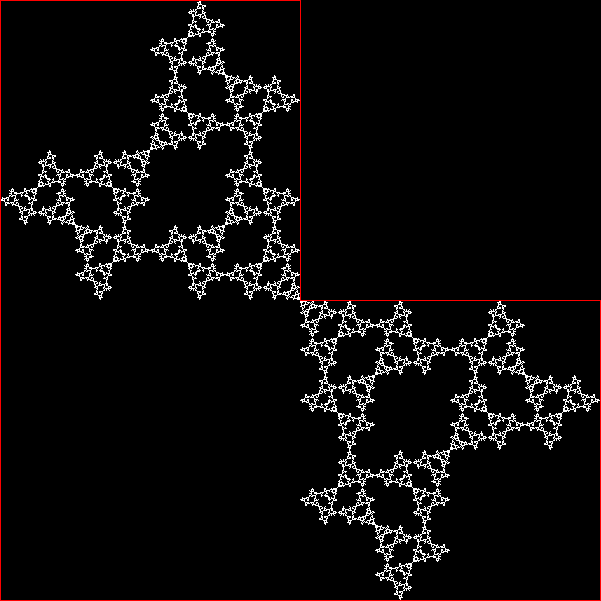
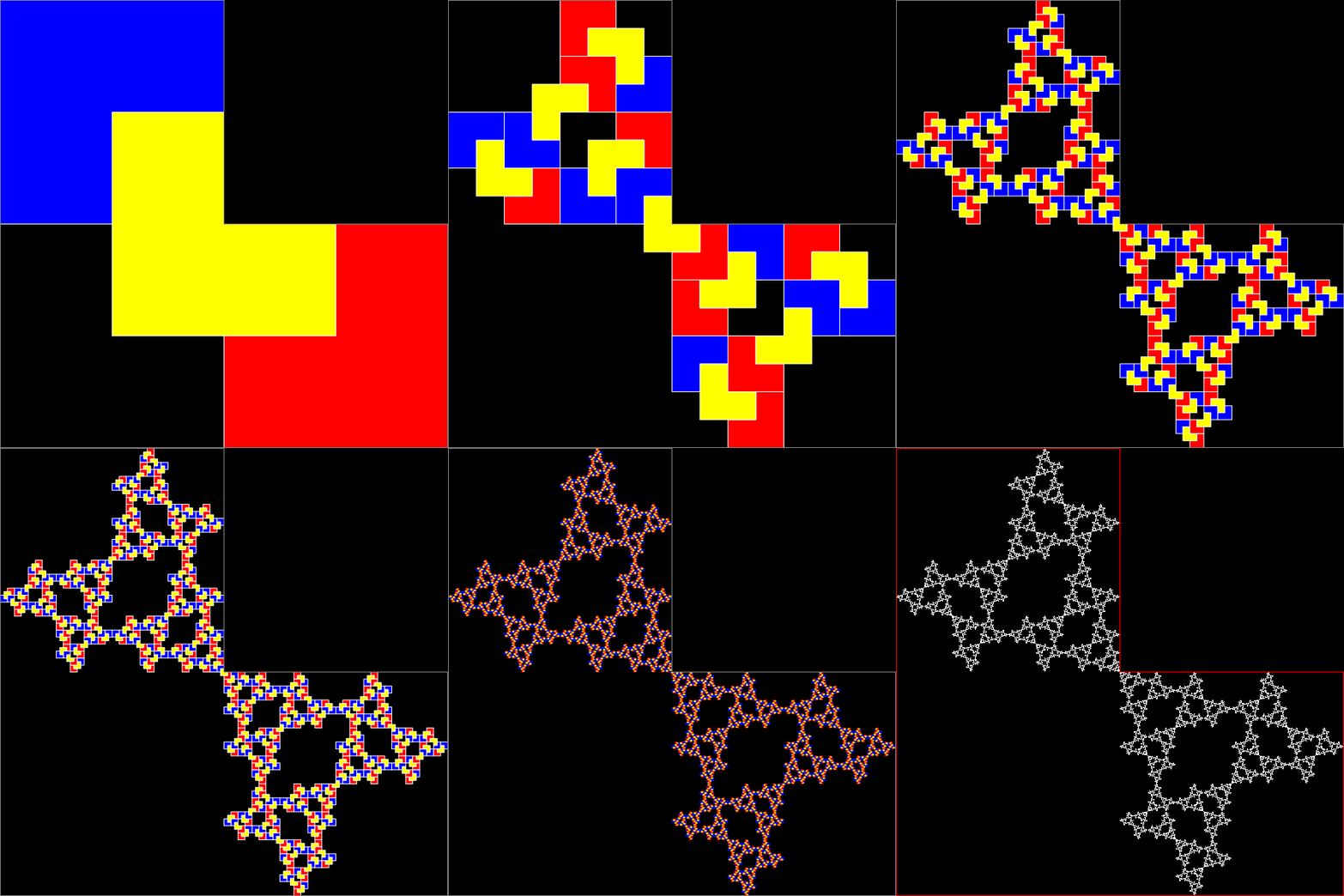
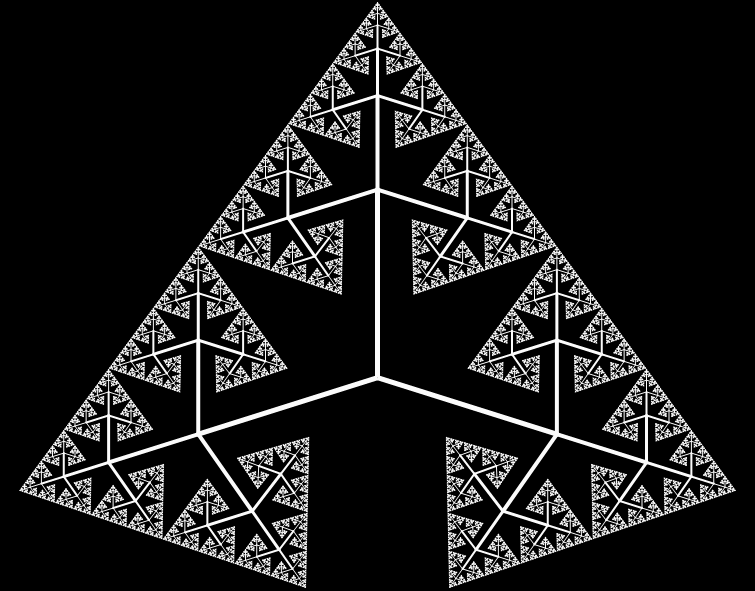
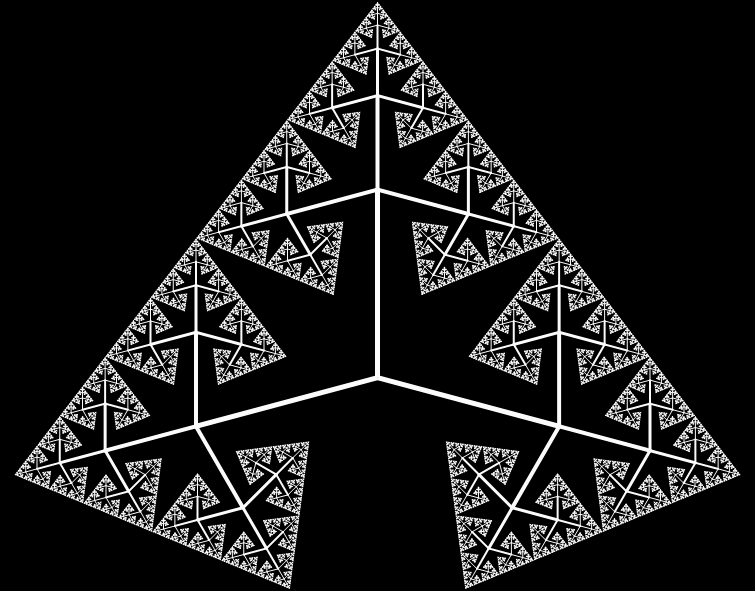
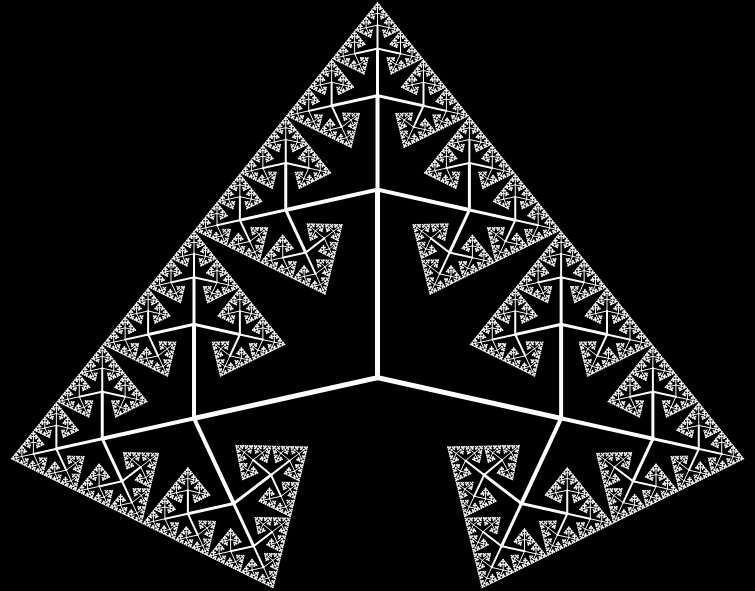
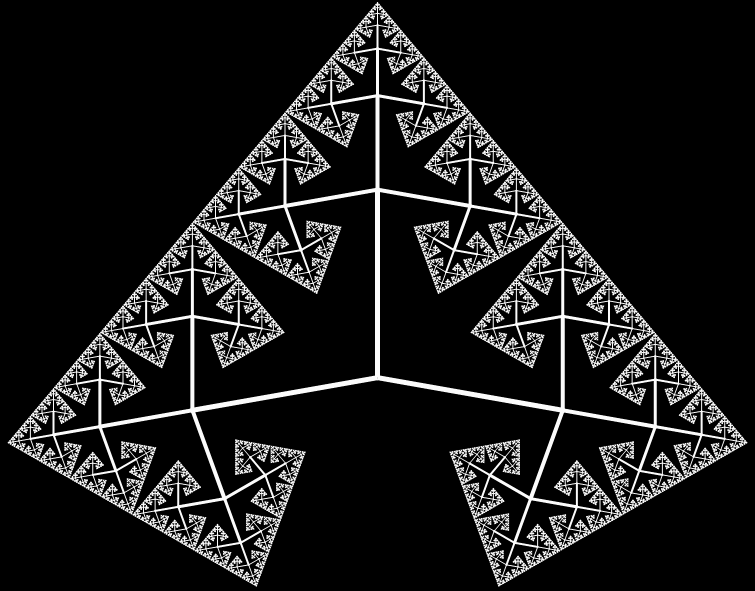
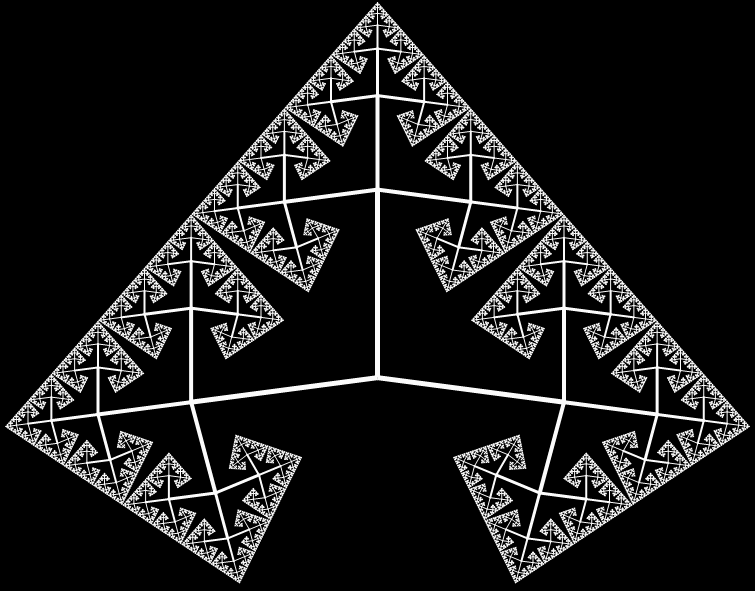
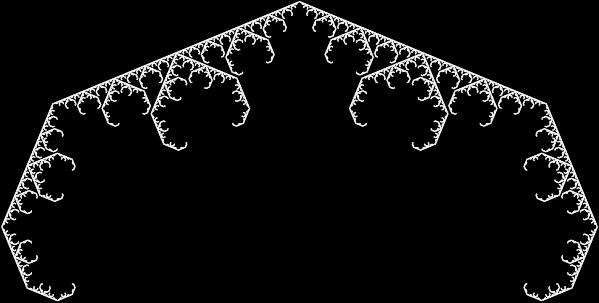
Now a trix fractal that looks like a hawk-god:

Trix hawk-god #1


Trix hawk-god #2


Trix hawk-god #3


Trix hawk-god #4


Trix hawk-god #5


Trix hawk-god #6


Trix hawk-god #7


Trix hawk-god (animated)


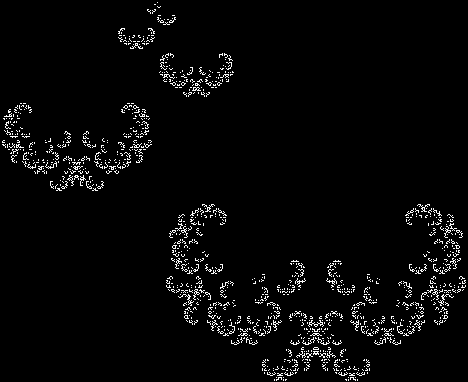
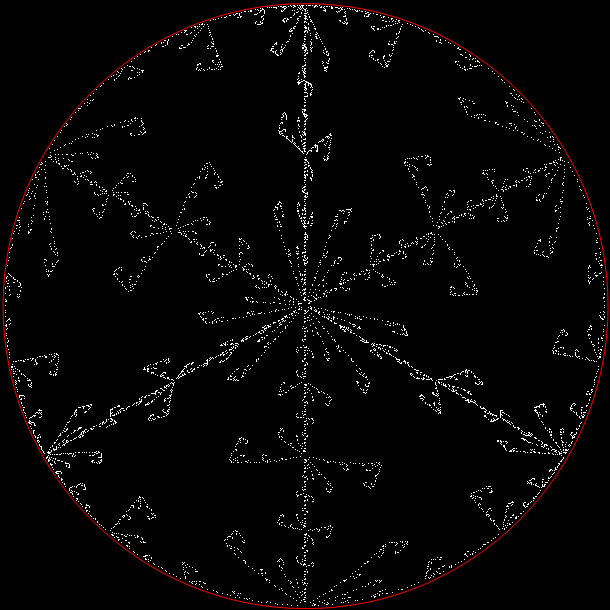
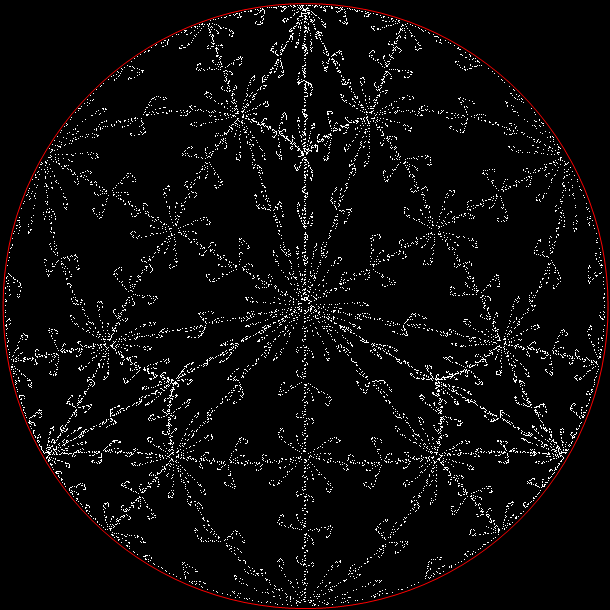
Trix hawk-god converted to circle


Trix hawk-god to circle (animated)


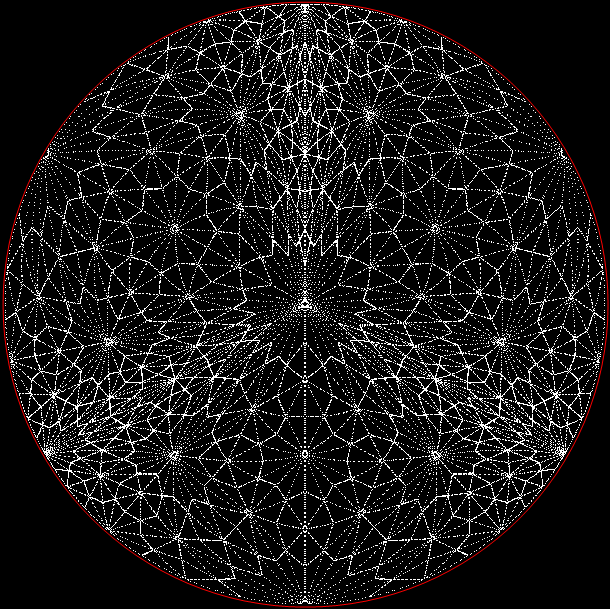
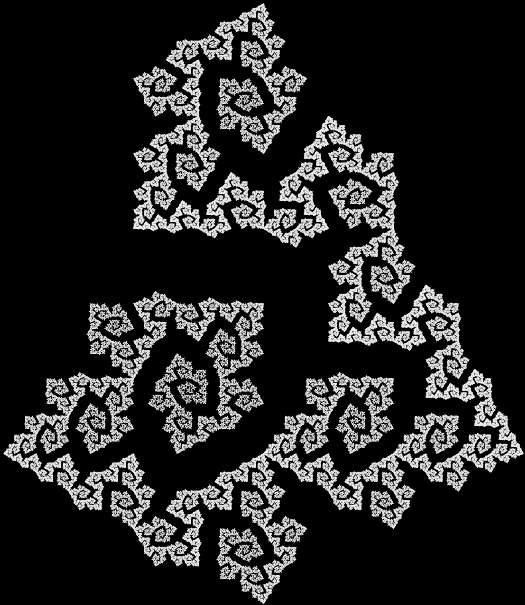
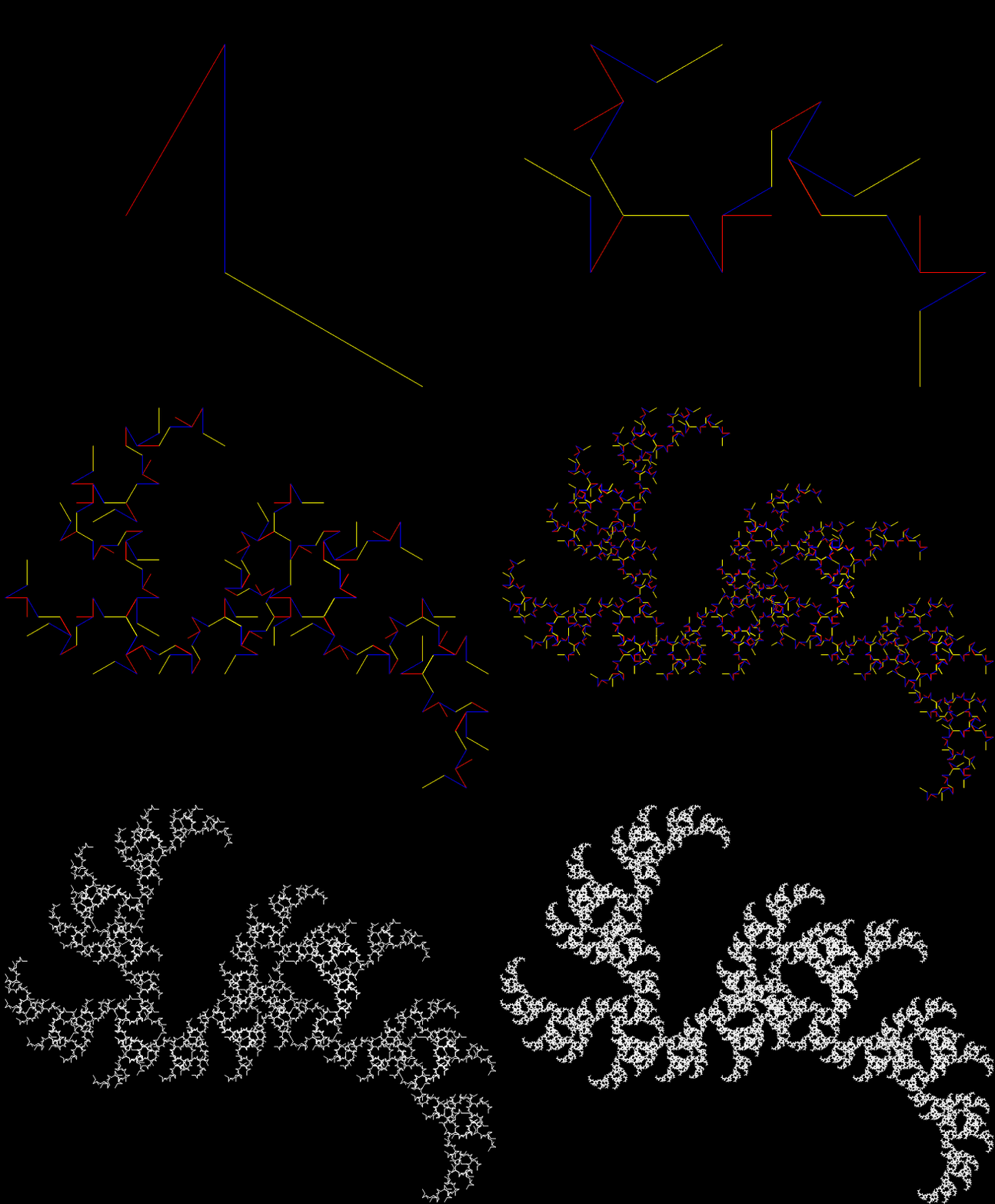
If you delay the discard, you get this:

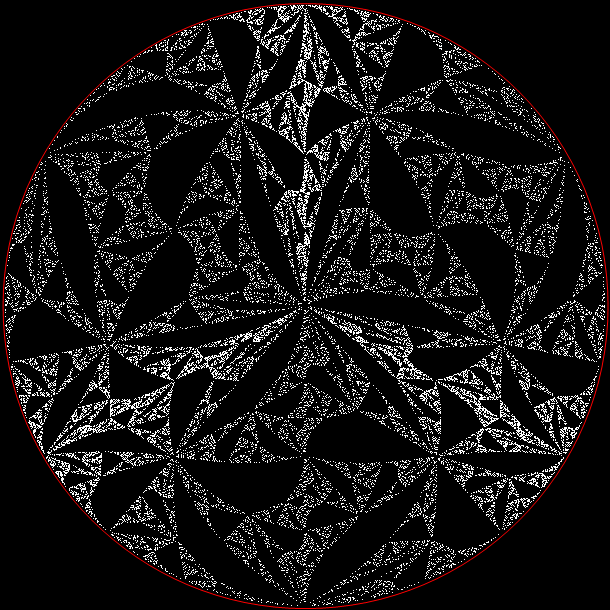
Trix hawk-god circle (delayed discard)


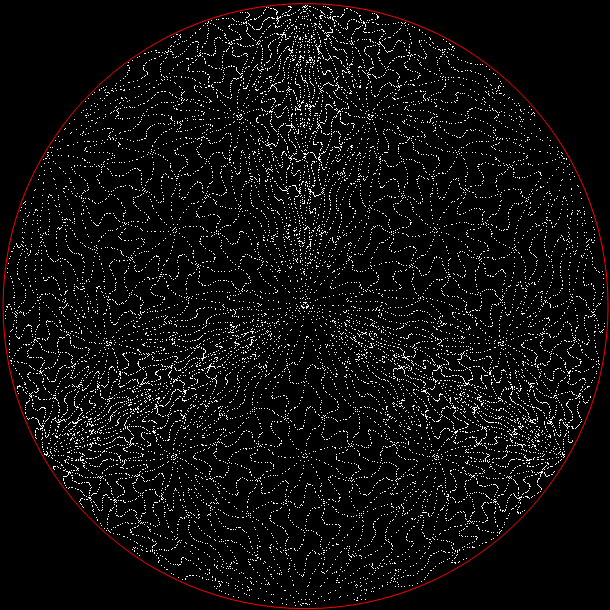
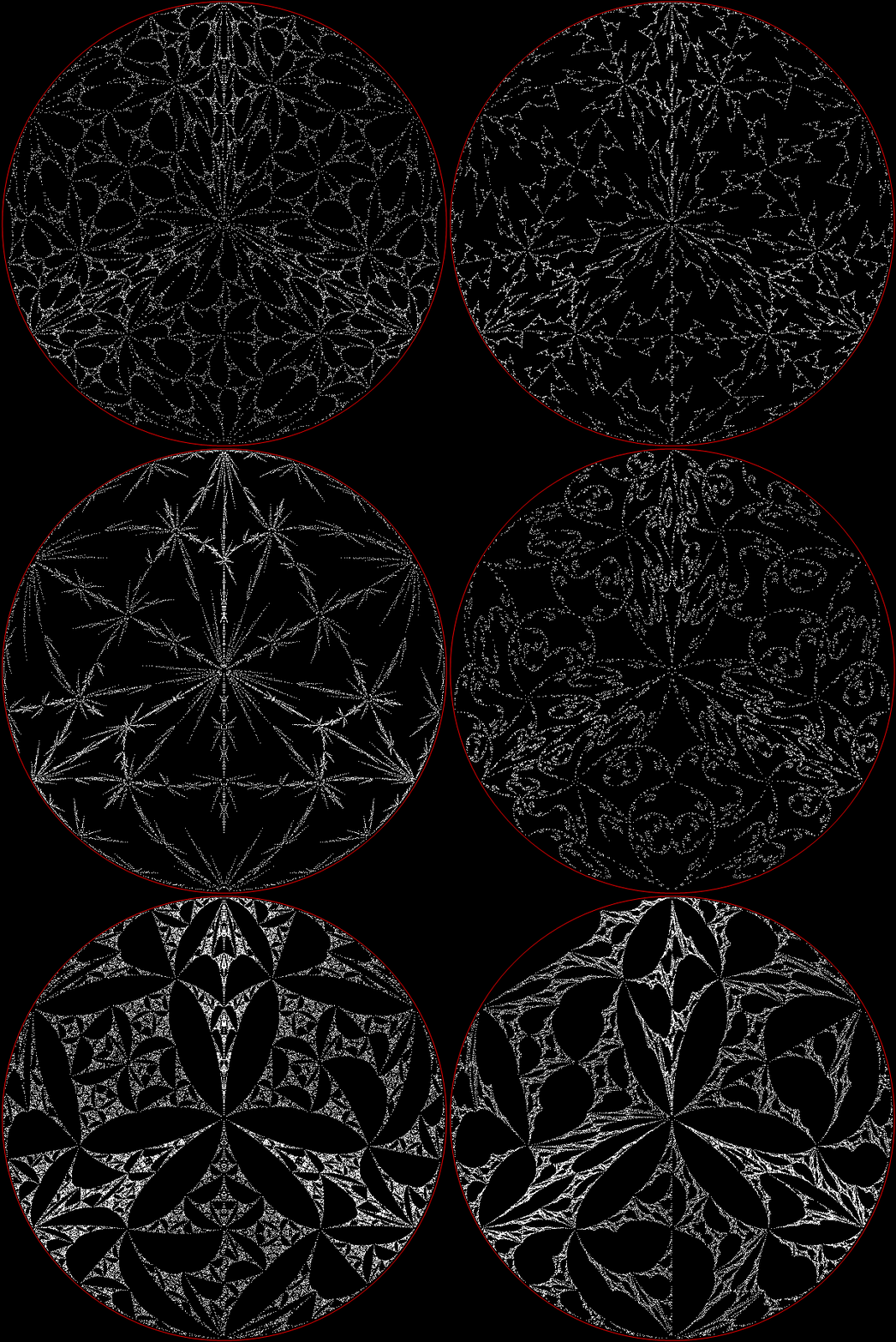
And here are more delayed-discard trix fractals:


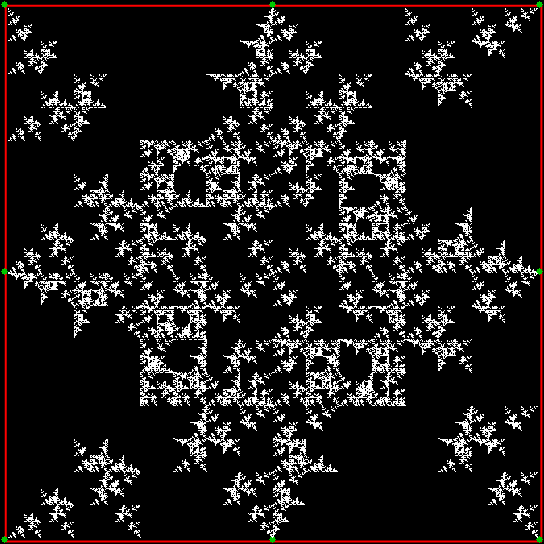
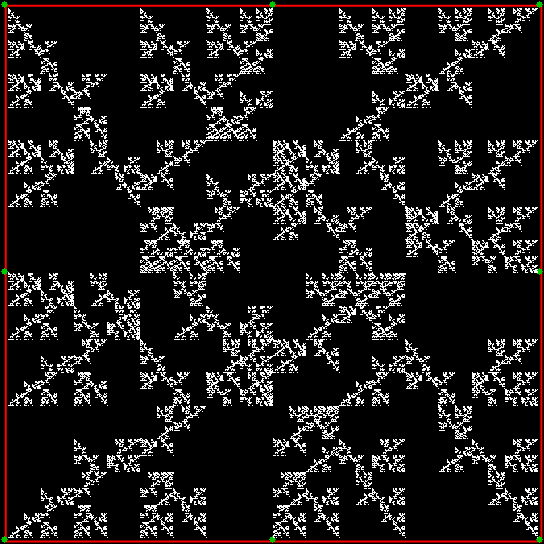
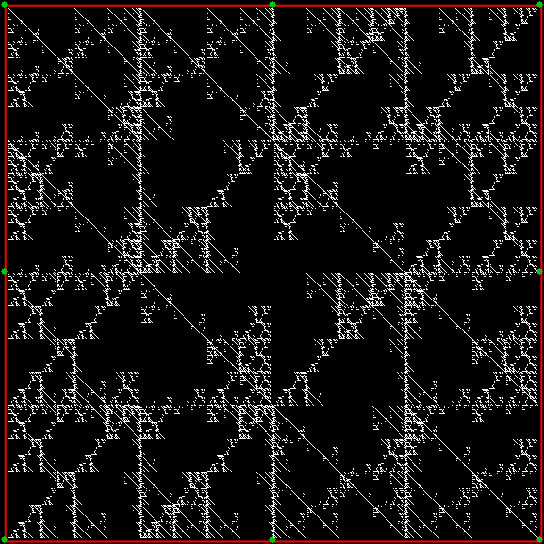
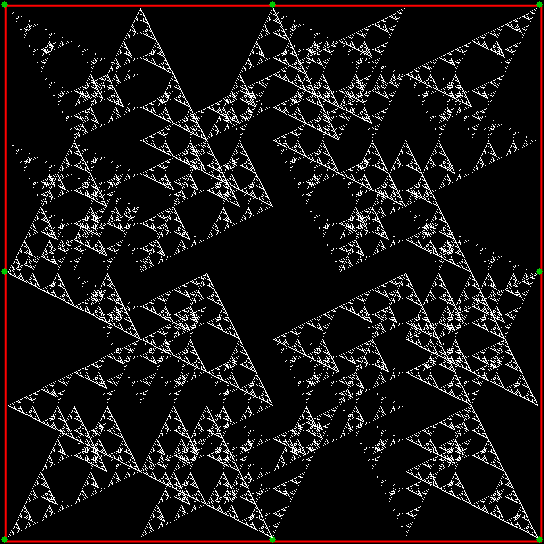
Various circular trix-fractals (animated)


Post-Performative Post-Scriptum

In Latin, circus means “ring, circle” — the English word “circle” is actually from the Latin diminutive circulus, meaning “little circle”.

Fractangular Frolics

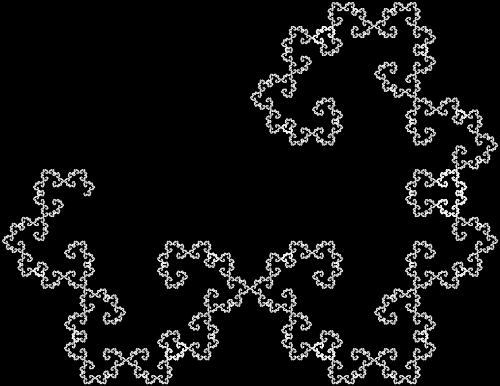
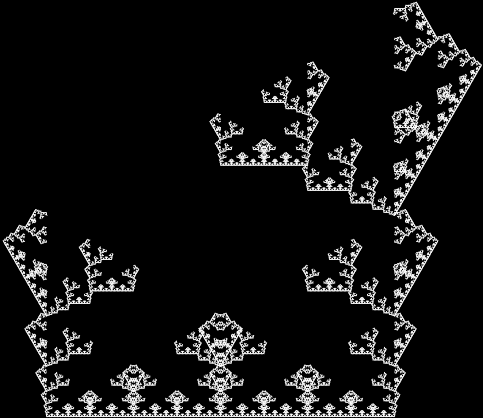
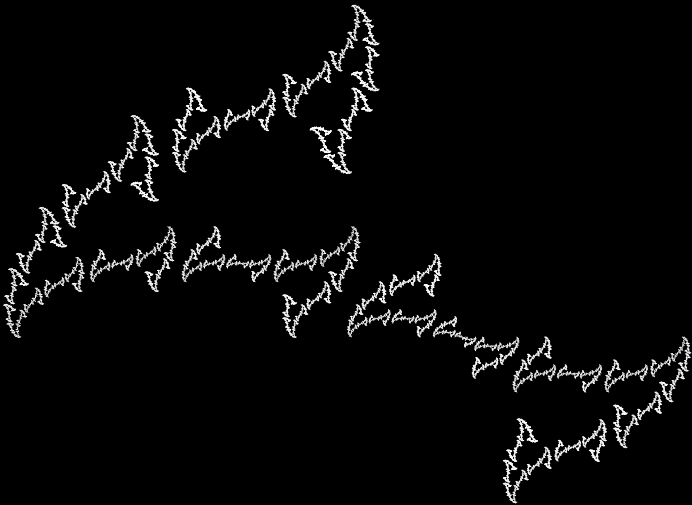
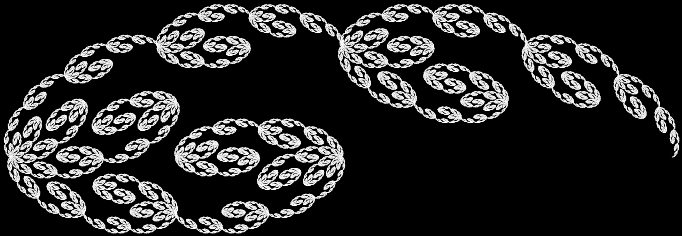
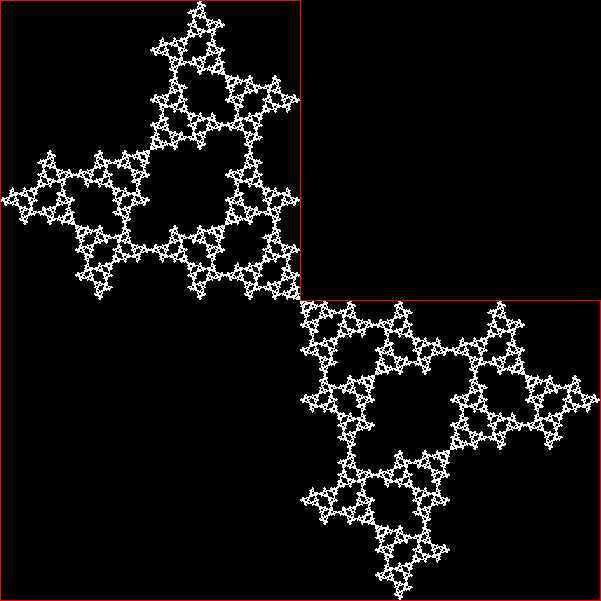
Here’s an interesting shape that looks like a distorted and dissected capital S:

A distorted and dissected capital S


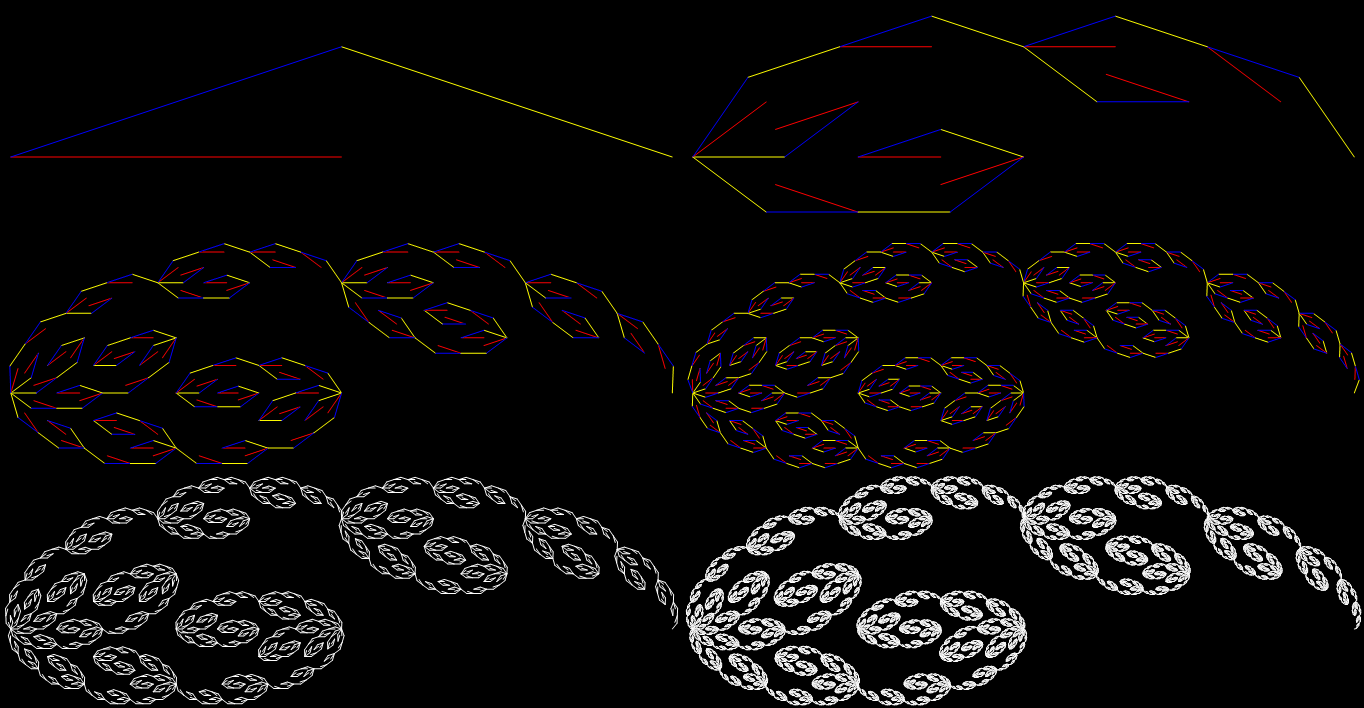
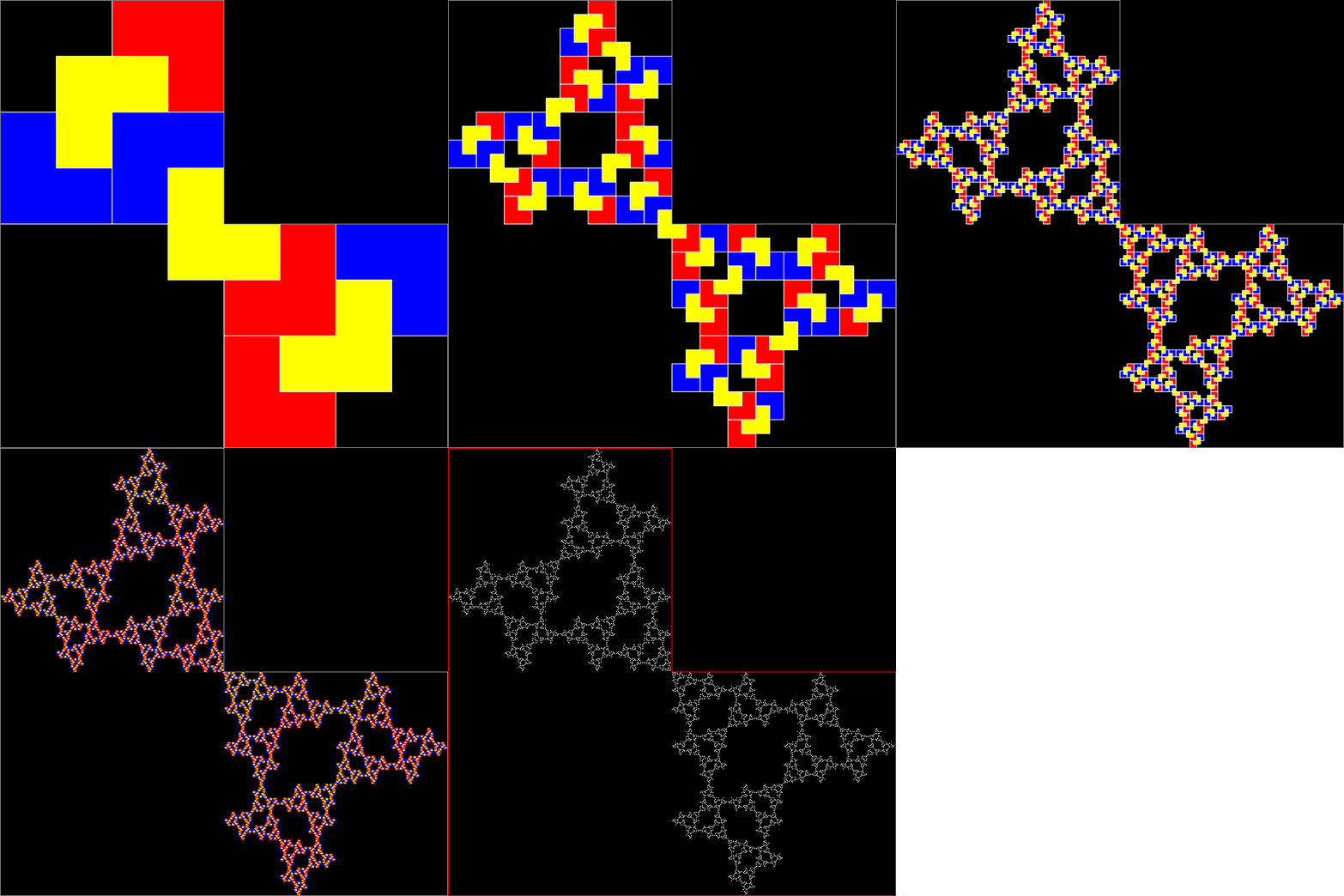
If you look at it more closely, you can see that it’s a fractal, a shape that contains itself over and over on smaller and smaller scales. First of all, it can be divided completely into three copies of itself (each corresponding to a line of the fractangle seed, as shown below):

The shape contains three smaller versions of itself


The blue sub-fractal is slightly larger than the other two (1.154700538379251…x larger, to be more exact, or √(4/3)x to be exactly exact). And because each sub-fractal can be divided into three sub-sub-fractals, the shape contains smaller and smaller copies of itself:

Five more sub-fractals


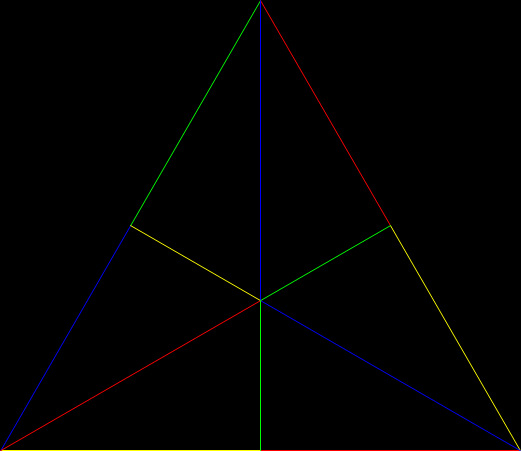
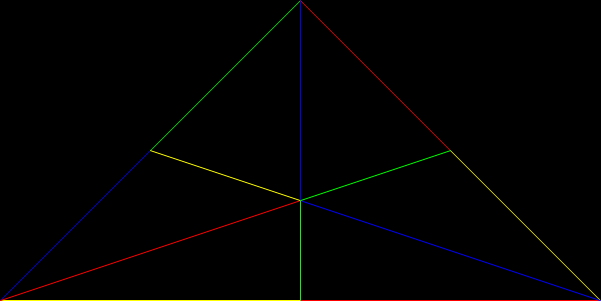
But how do you create the shape? You start by selecting three lines from this divided equilateral triangle:

A divided equilateral triangle


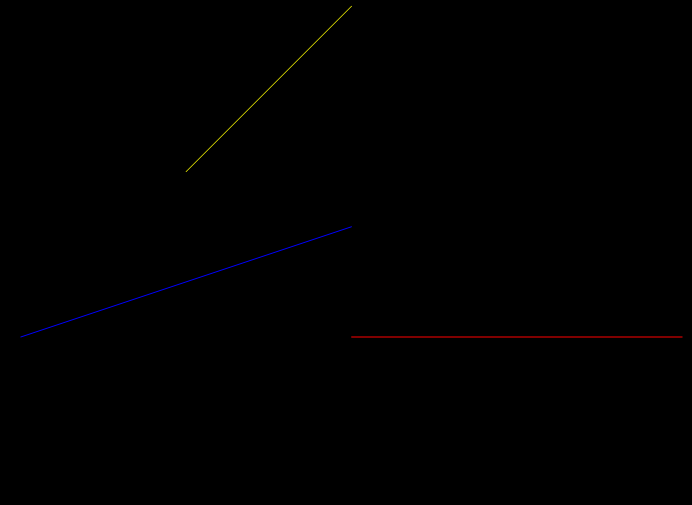
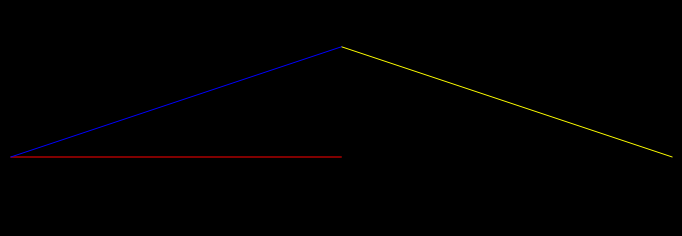
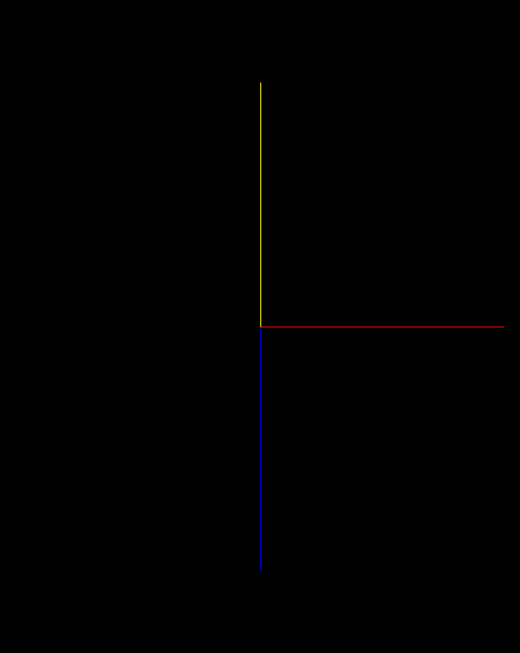
These are the three lines you need to create the shape:

Fractangle seed (the three lines correspond to the three sub-fractals seen above)


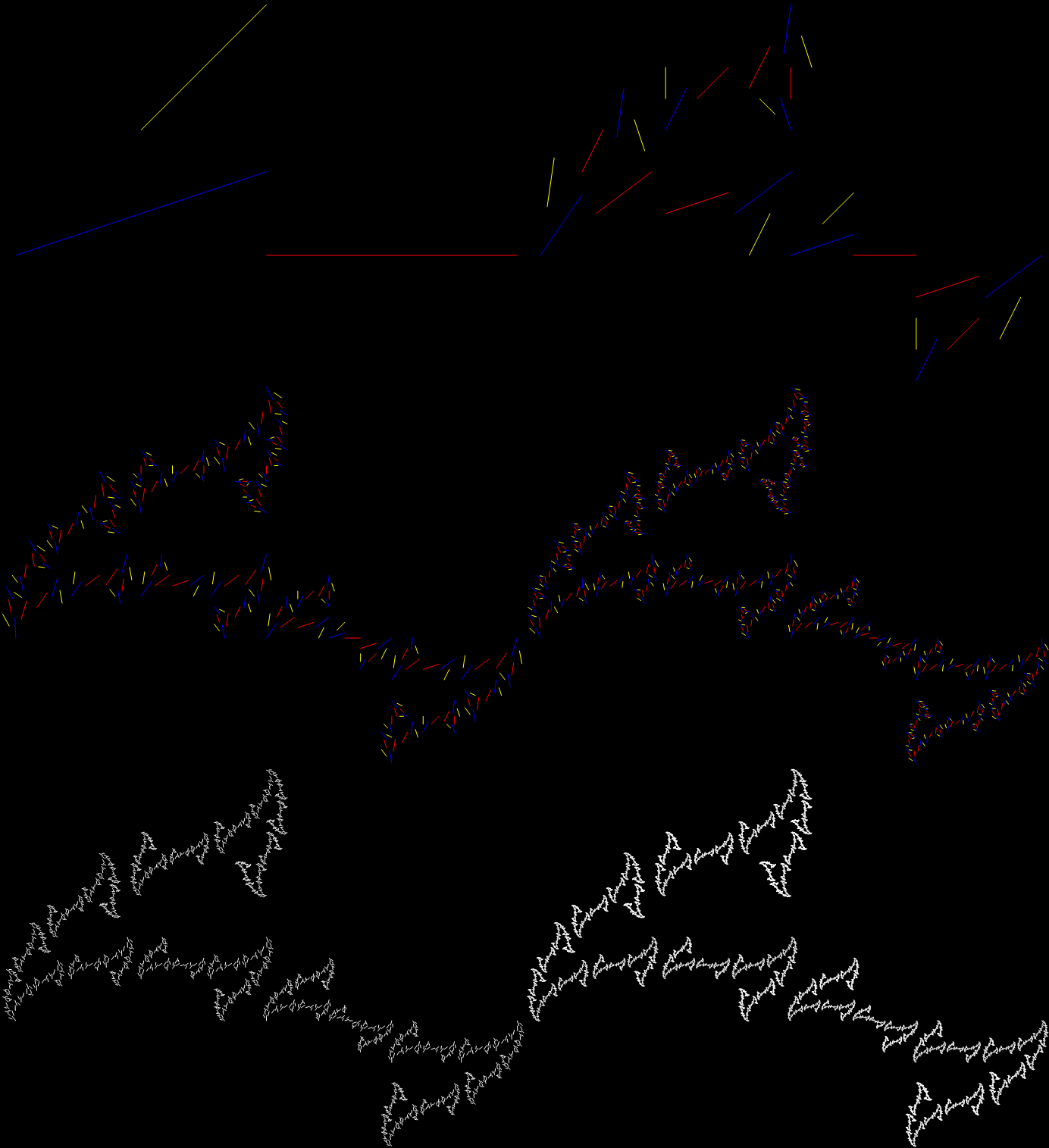
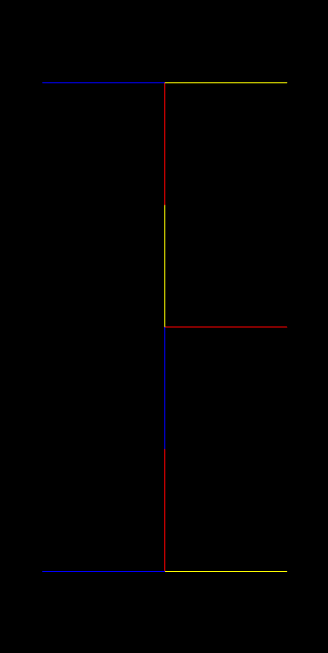
Now replace each line with a half-sized set of the same three lines:

Fractangle stage #2


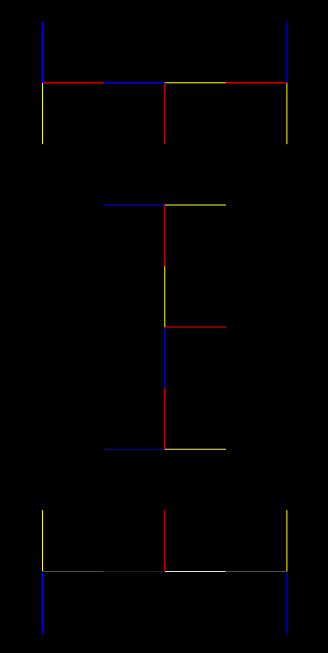
And do that again:

Fractangle stage #3


And again:

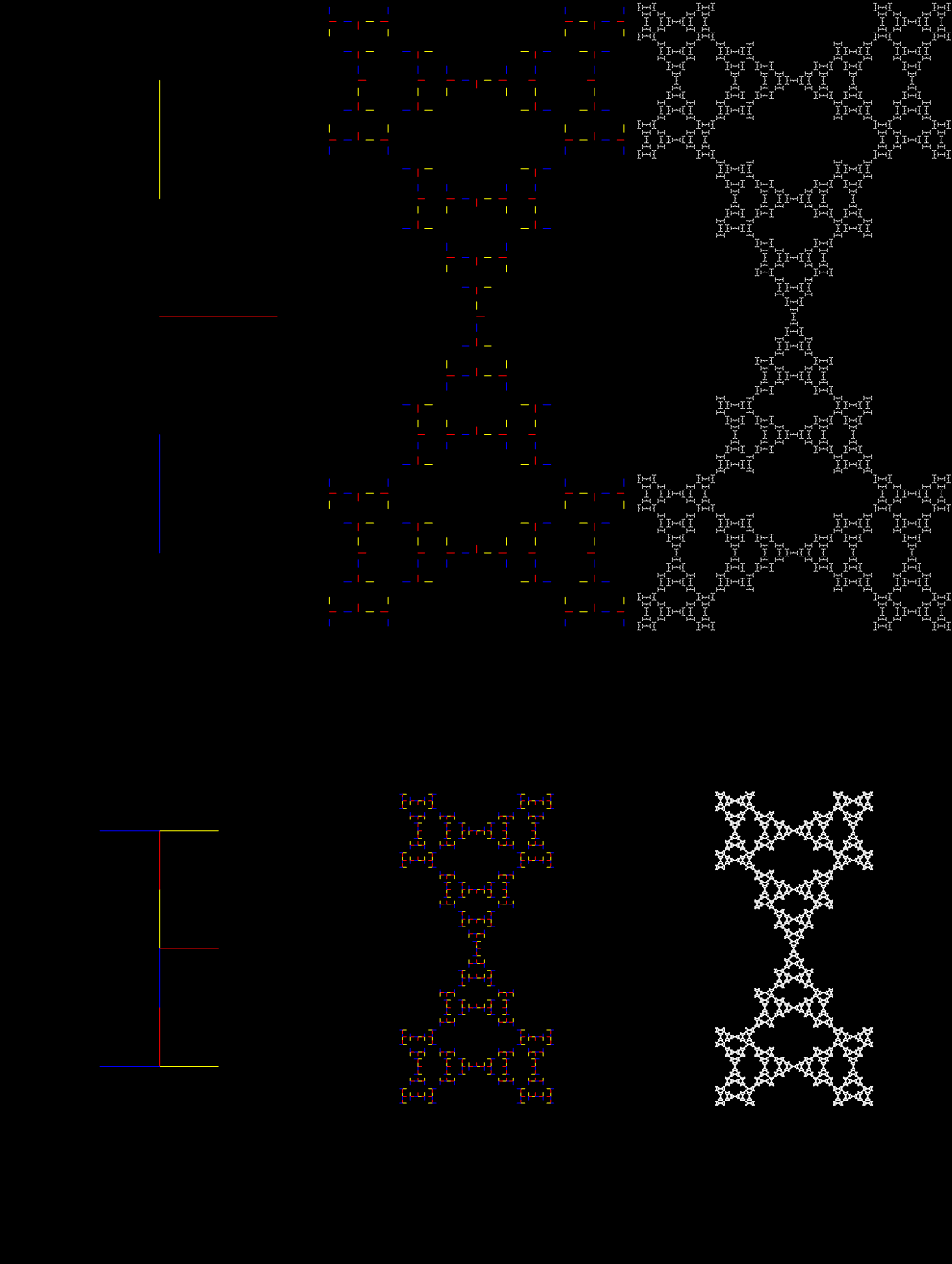
Fractangle stage #4


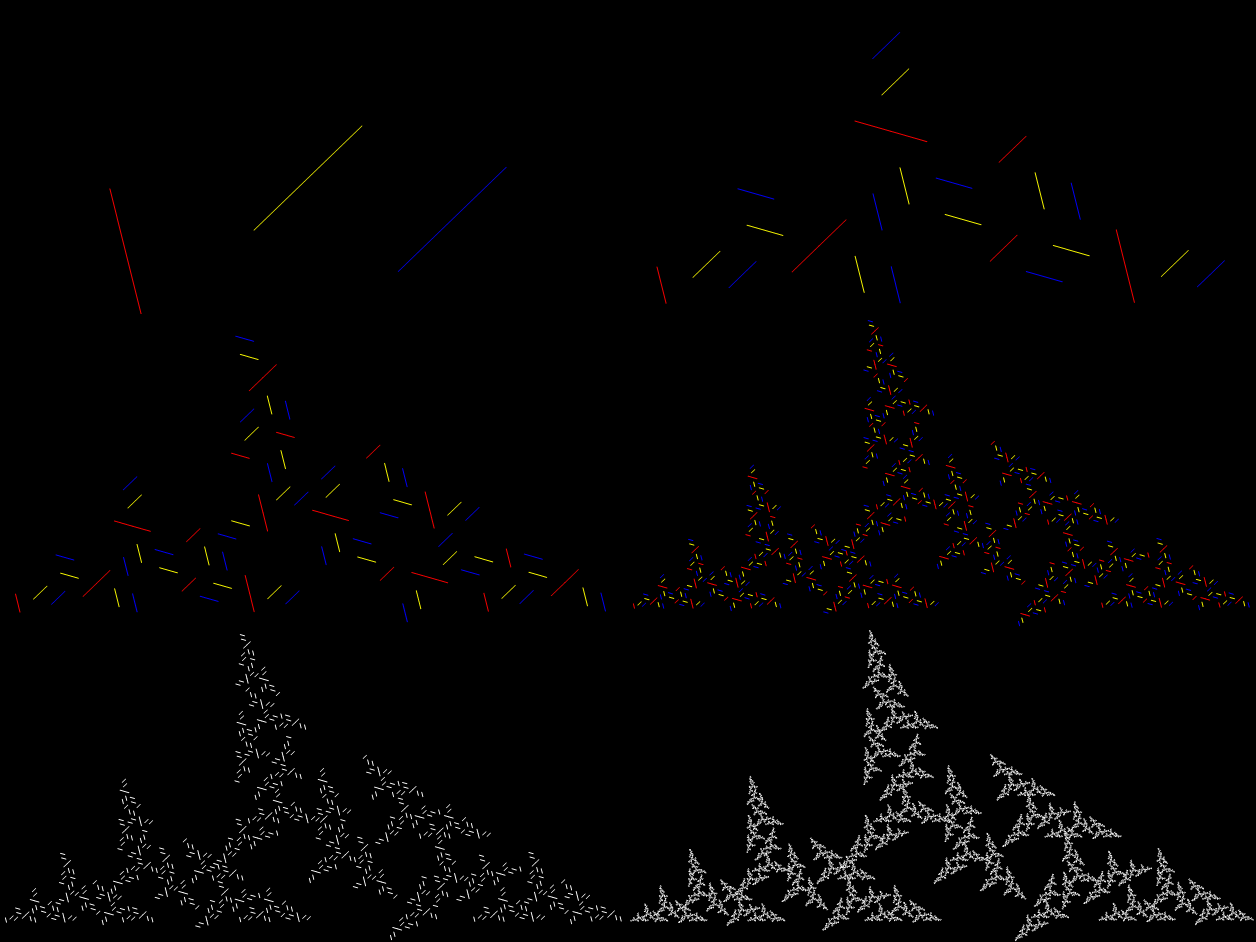
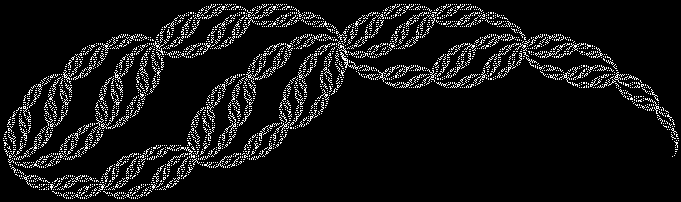
And carry on doing it as you create what I call a fractangle, i.e. a fractal derived from a triangle:

Fractangle stage #5


Fractangle stage #6


Fractangle stage #7


Fractangle stage #8


Fractangle stage #9


Fractangle stage #10


Fractangle stage #11


Here’s an animation of the process:

Creating the fractangle (animated)


And here are more fractangles created in a similar way from three lines of the divided equilateral triangle:

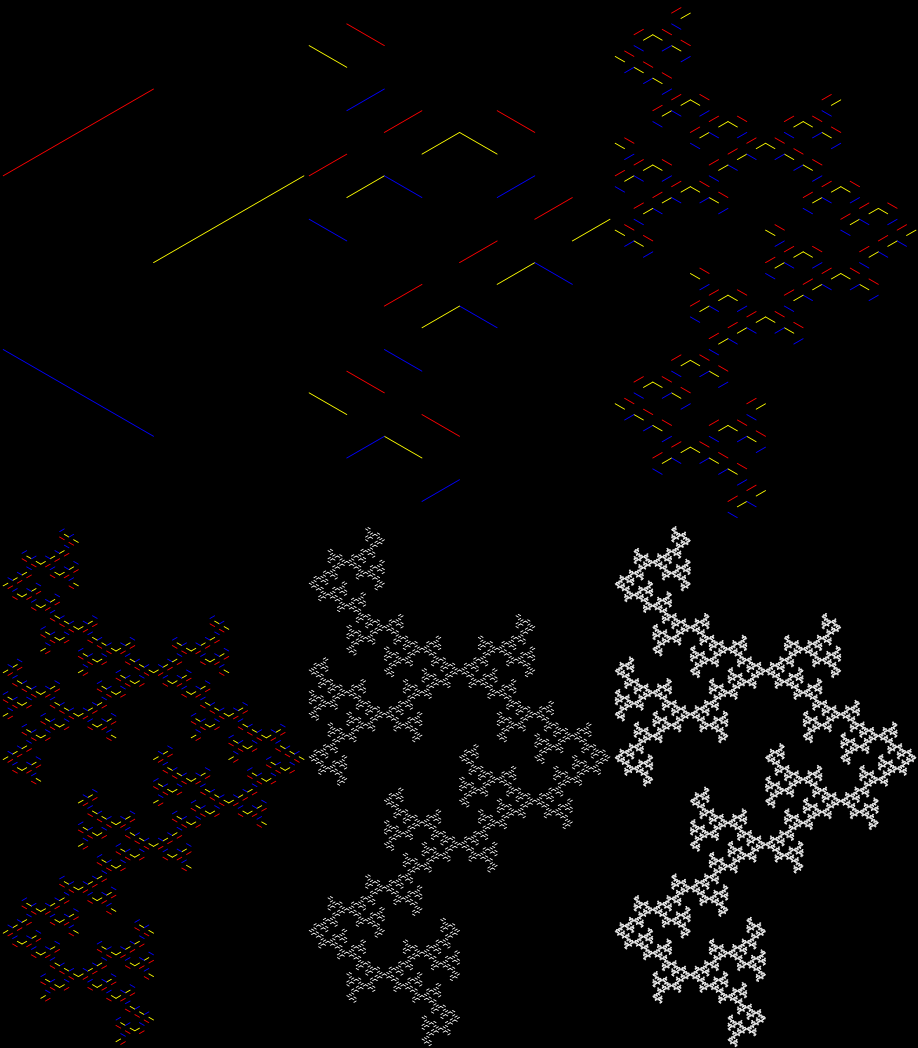
Fractangle #2


Fractangle #2 (anim)

(open in new window if distorted)


Fractangle #2 (seed)


Fractangle #3


Fractangle #3 (anim)


Fractangle #3 (seed)


Fractangle #4


Fractangle #4 (anim)


Fractangle #4 (seed)


You can also use a right triangle to create fractangles:

Divided right triangle for fractangles


Here are some fractangles created from three lines chosen of the divided right triangle:

Fractangle #5


Fractangle #5 (anim)


Fractangle #5 (seed)


Fractangle #6


Fractangle #6 (anim)


Fractangle #6 (seed)


Fractangle #7


Fractangle #7 (anim)


Fractangle #7 (seed)


Fractangle #8


Fractangle #8 (anim)


Fractangle #8 (seed)


Who Made Heu?

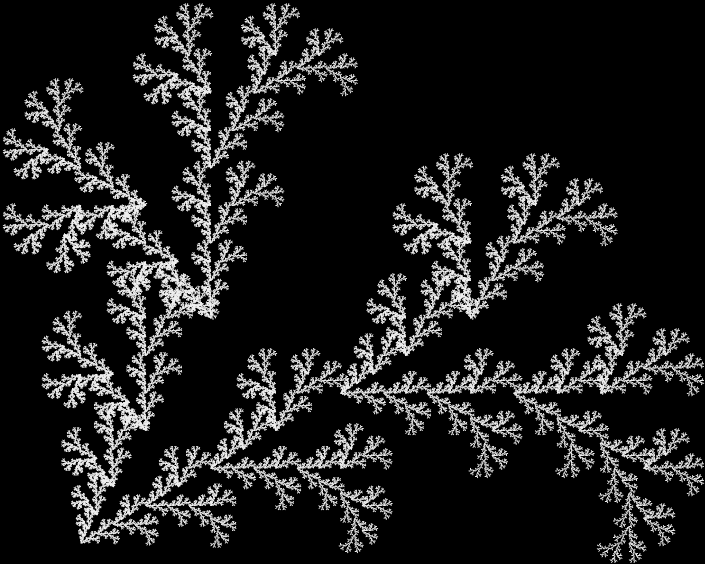
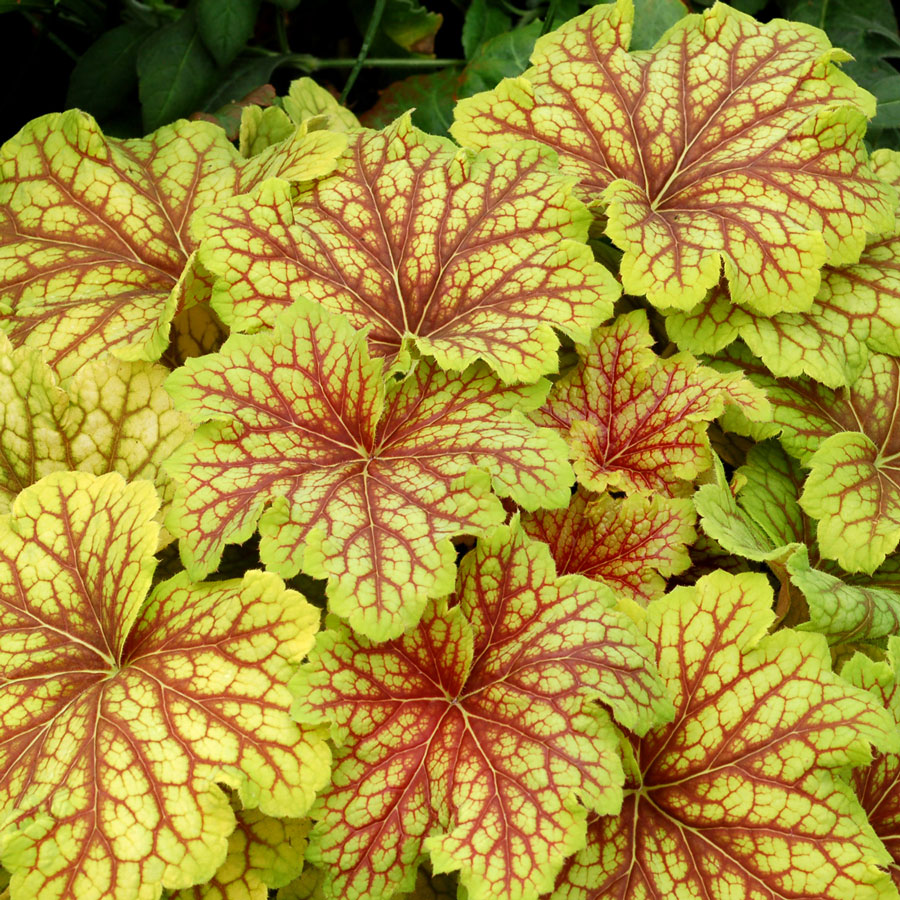
Fractal leaves of Heuchera “Red Lightning


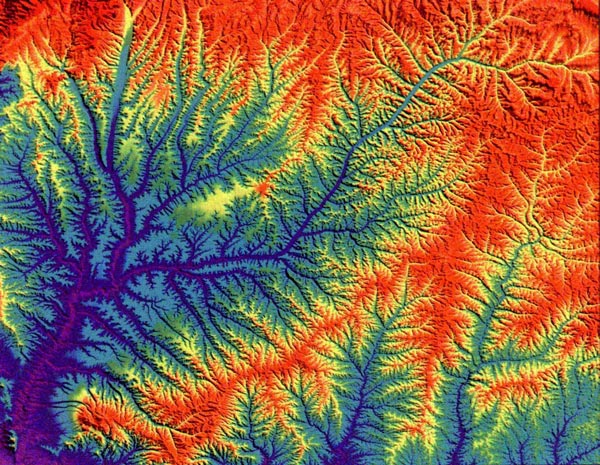
Fractal river network in Shaanxi province, China


Post-Performative Post-Scriptum

Because “Heuchera” comes from the name of the German botanist J.H. Heucher (1677–1747), it should strictly speaking be pronounced something like “HOI-keh-ruh”. But people often say “HYOO-keh-ruh” or variations thereon.

Hour Re-Re-Re-Powered

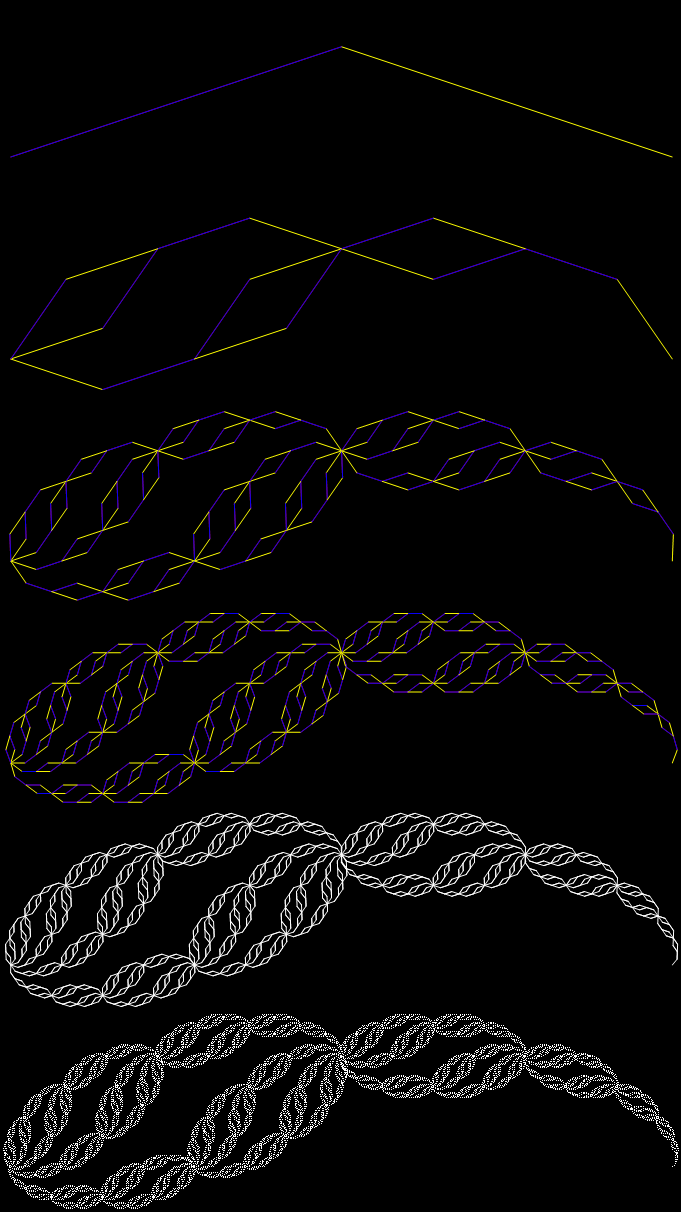
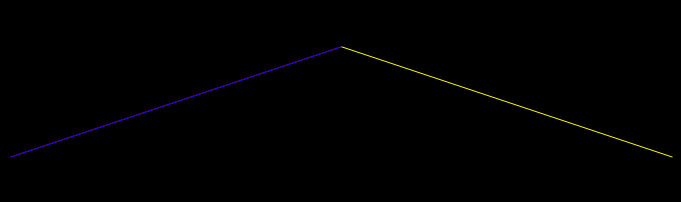
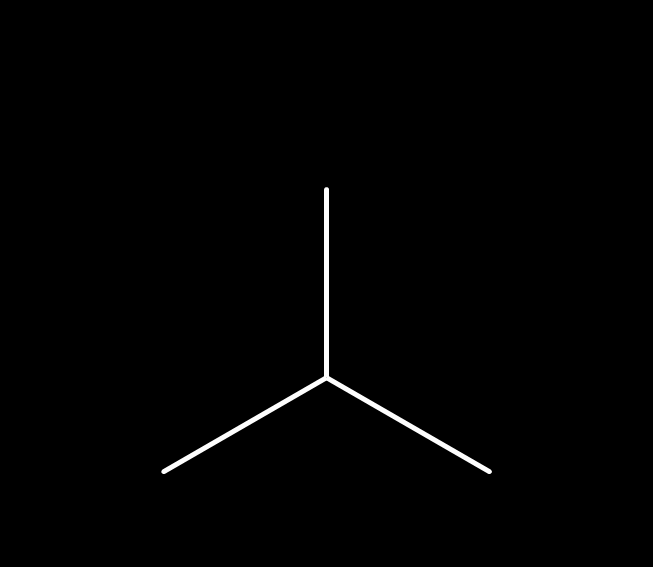
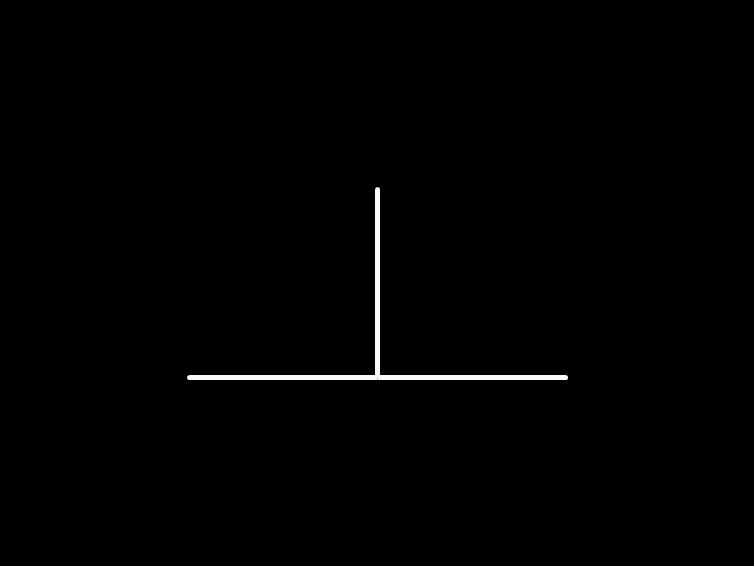
Here’s a set of three lines:

Three lines


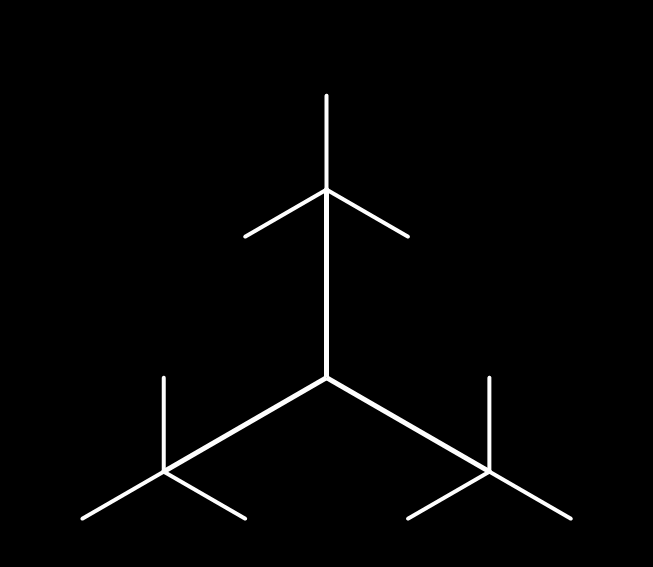
Now try replacing each line with a half-sized copy of the original three lines:

Three half-sized copies of the original three lines


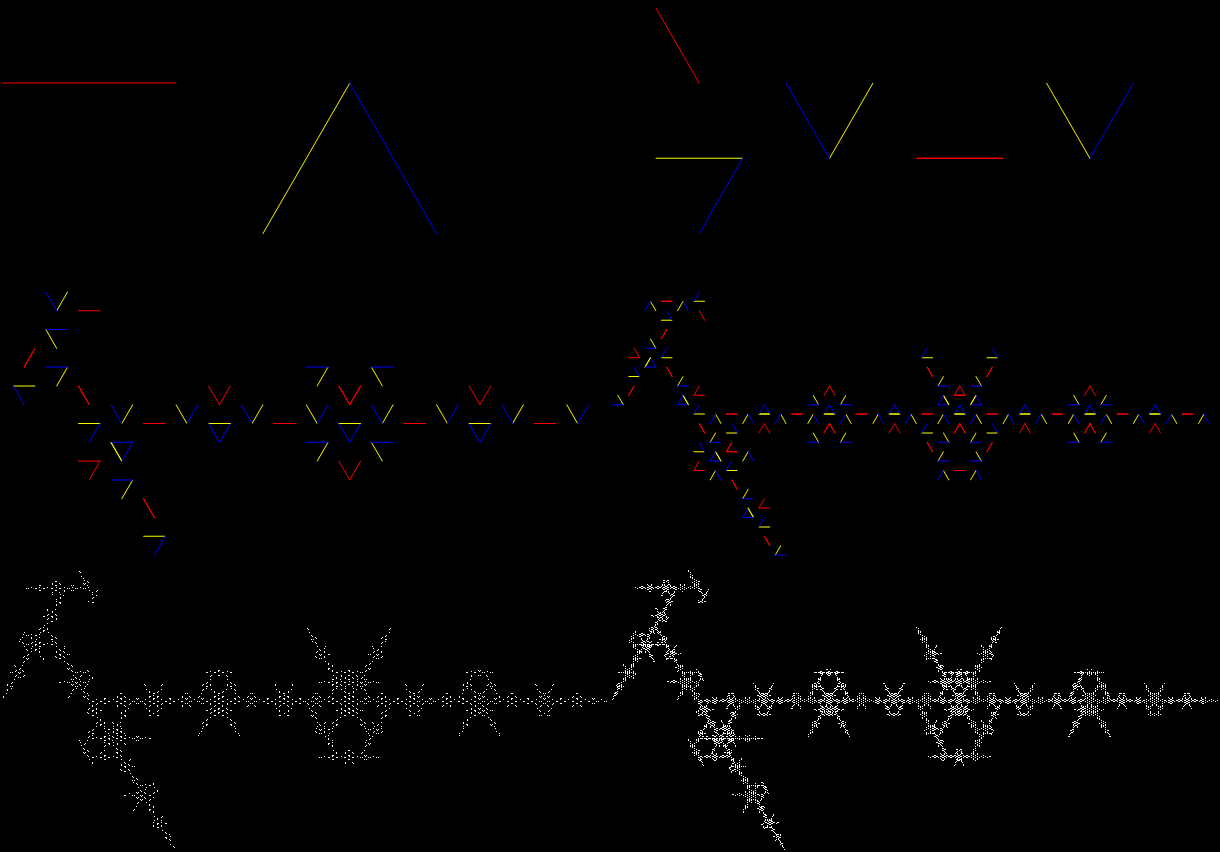
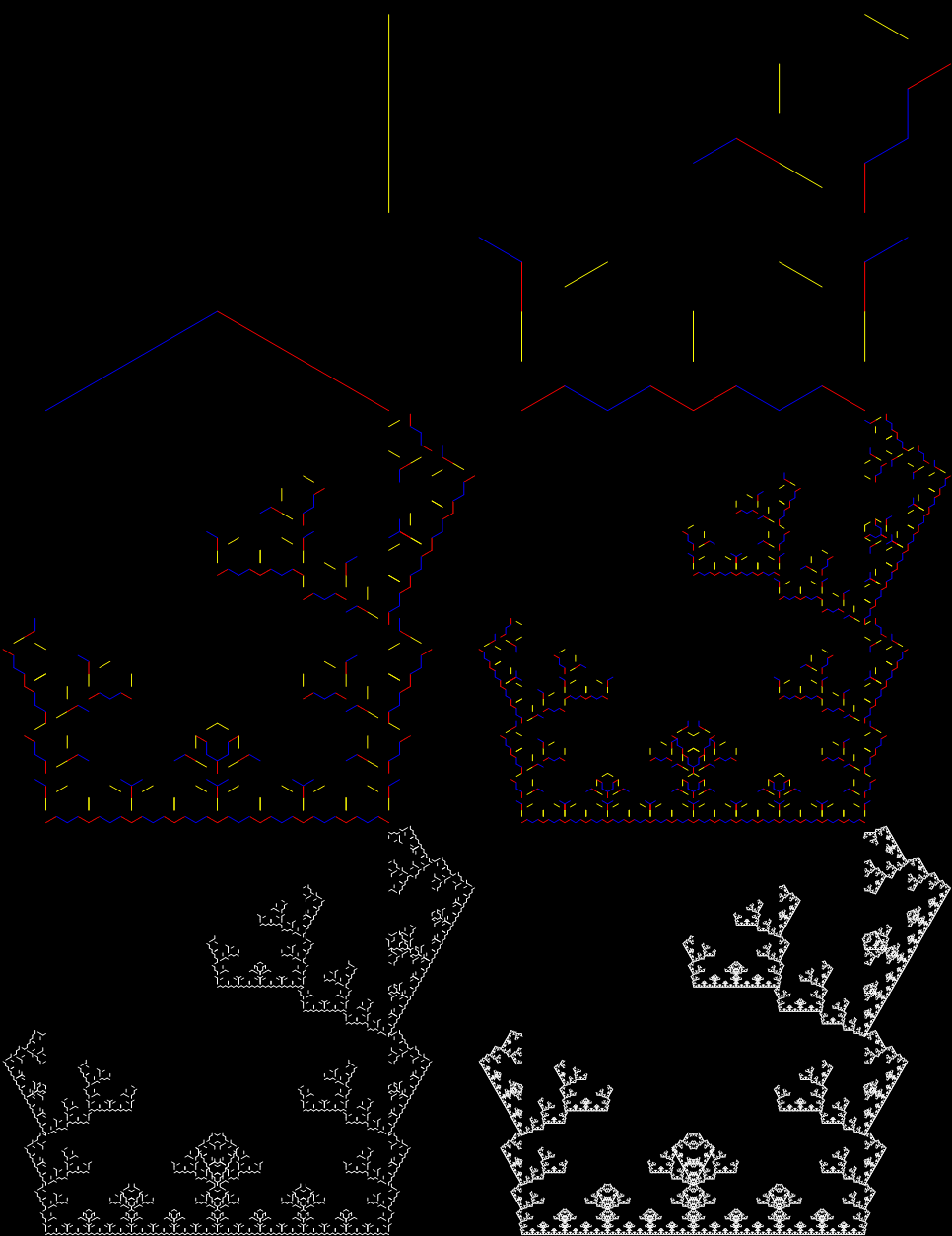
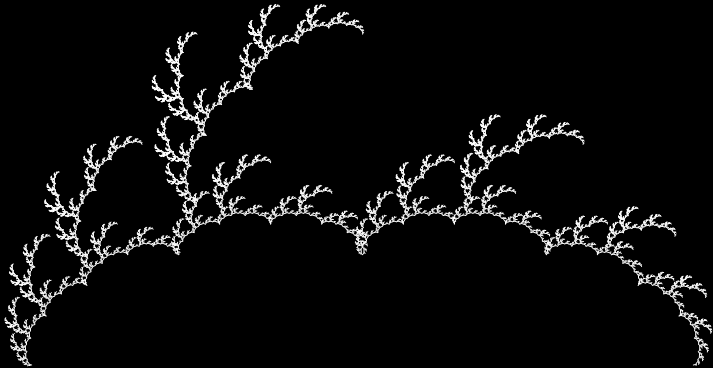
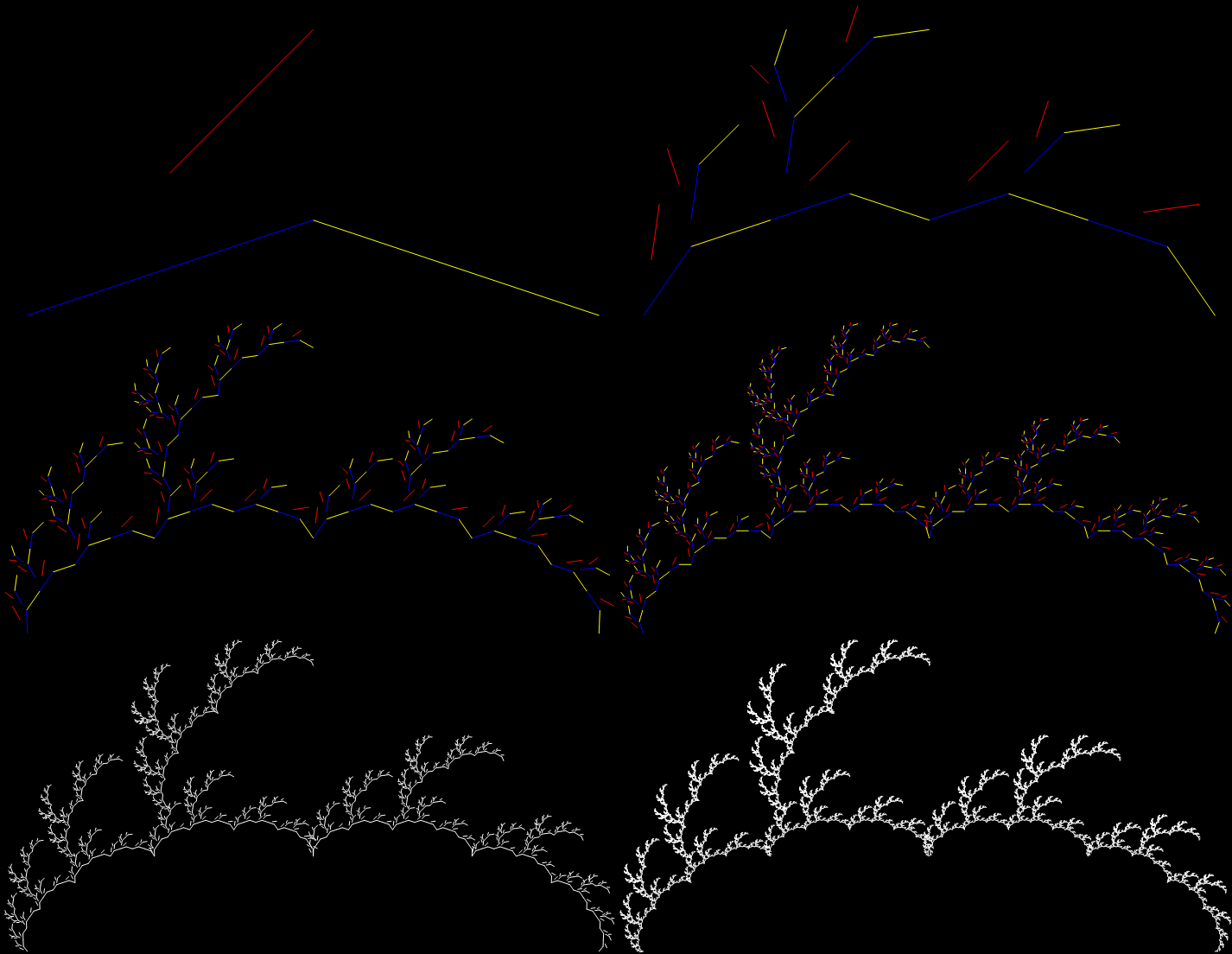
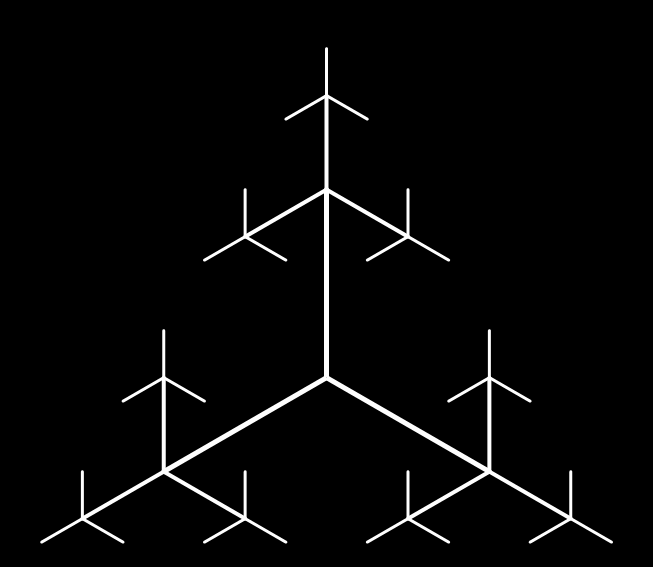
What shape results if you keep on doing that — replacing each line with three half-sized new lines — over and over again? I’m not sure that any human is yet capable of visualizing it, but you can see the shape being created below:

Morphogenesis #3


Morphogenesis #4


Morphogenesis #5


Morphogenesis #6


Morphogenesis #7


Morphogenesis #8


Morphogenesis #9


Morphogenesis #10


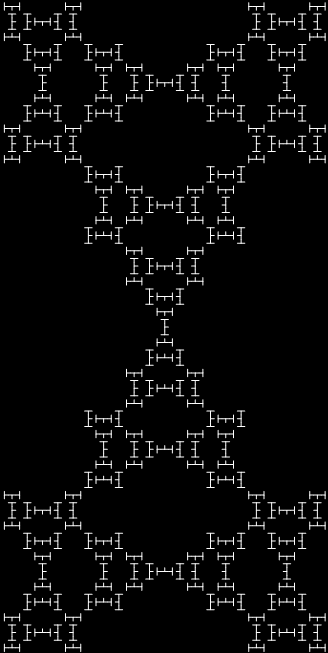
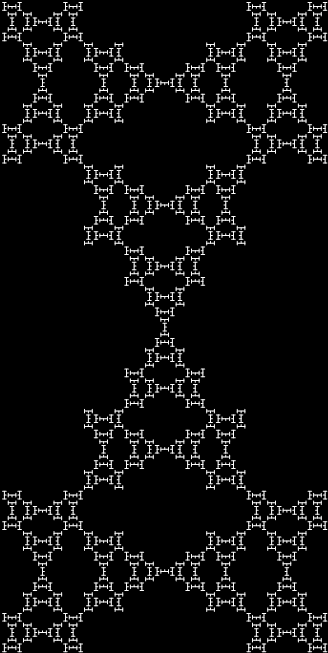
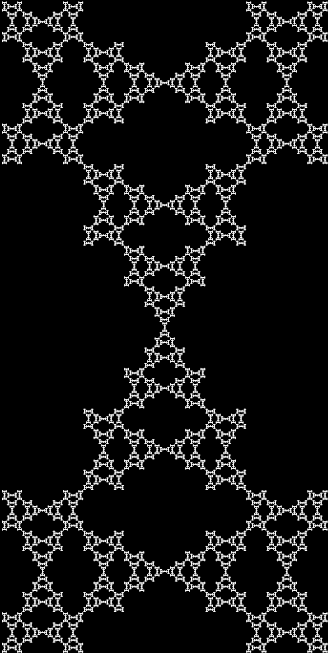
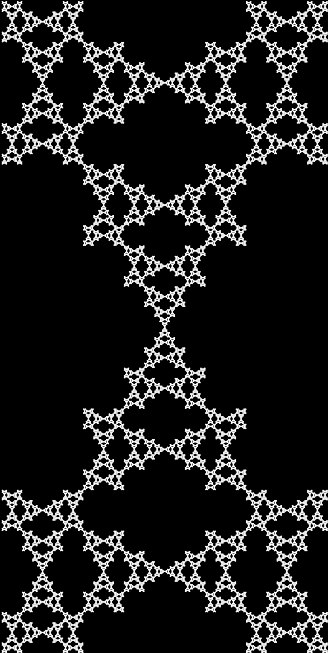
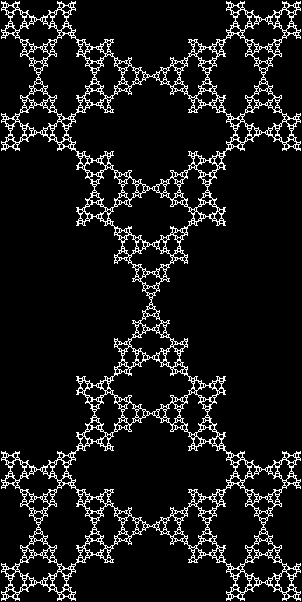
Morphogenesis #11 — the Hourglass Fractal


Morphogenesis of the Hourglass Fractal (animated)


The shape that results is what I call the hourglass fractal. Here’s a second and similar method of creating it:

Hourglass fractal, method #2 stage #1


Hourglass fractal #2


Hourglass fractal #3


Hourglass fractal #4


Hourglass fractal #5


Hourglass fractal #6


Hourglass fractal #7


Hourglass fractal #8


Hourglass fractal #9


Hourglass fractal #10


Hourglass fractal #11


Hourglass fractal (animated)


And below are both methods in one animated gif, where you can see how method #1 produces an hourglass fractal twice as large as the hourglass fractal produced by method #2:

Two routes to the hourglass fractal (animated)


Elsewhere other-engageable:

Hour Power
Hour Re-Powered
Hour Re-Re-Powered

Tri Again (Again (Again))

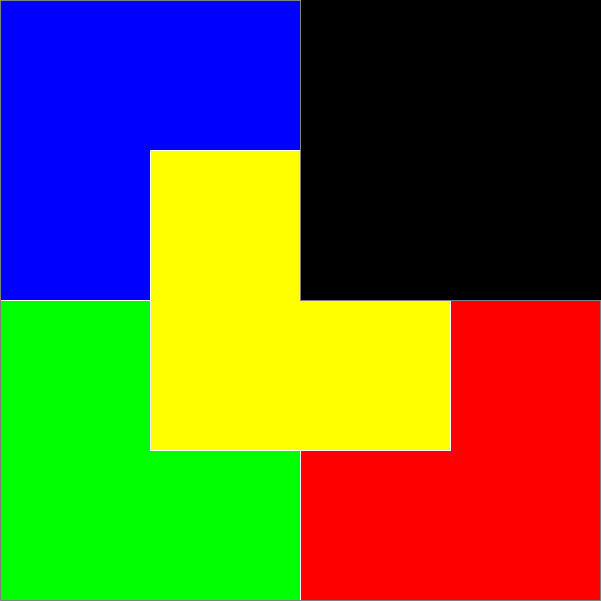
Like the moon, mathematics is a harsh mistress. In mathematics, as on the moon, the slightest misstep can lead to disaster — as I’ve discovered again and again. My latest discovery came when I was looking at a shape called the L-tromino, created from three squares set in an L-shape. It’s a rep-tile, because it can be tiled with four smaller copies of itself, like this:

Rep-4 L-tromino


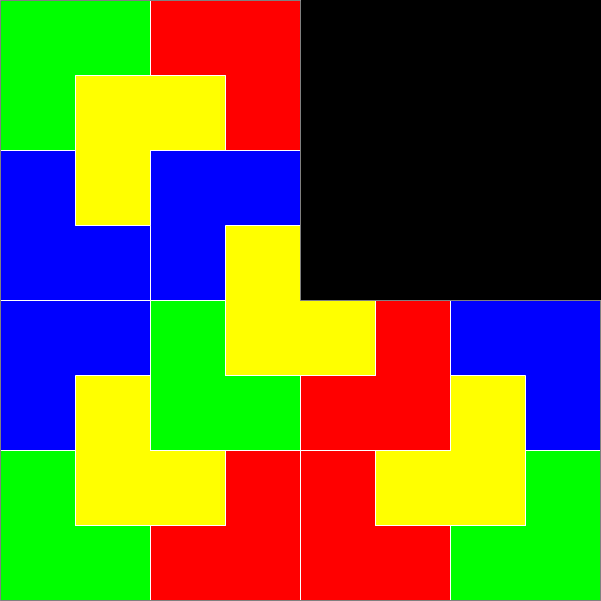
And if it can be tiled with four copies of itself, it can also be tiled with sixteen copies of itself, like this:

Rep-16 L-tromino


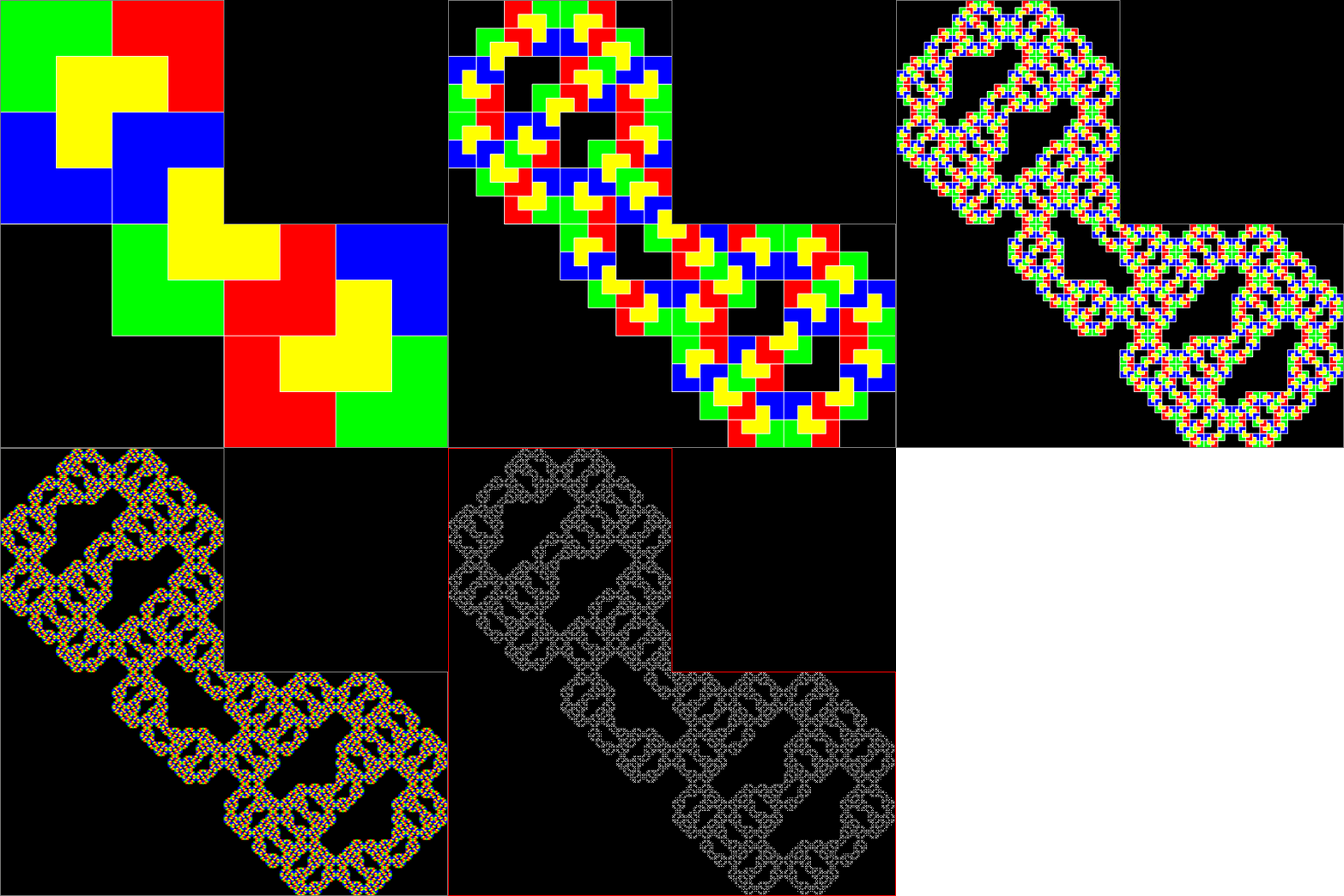
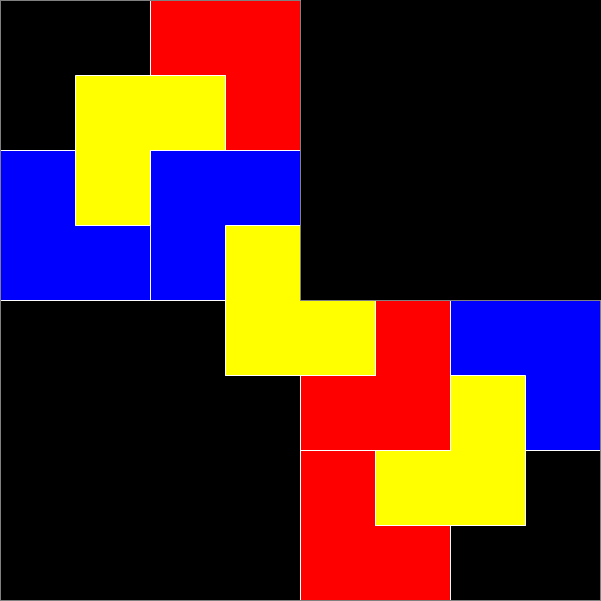
My misstep came when I was trying to do to a rep-16 L-tromino what I’d already done to a rep-4 L-tromino. And what had I already done? I’d created a beautiful shape called the hourglass fractal by dividing-and-discarding sub-copies of a rep-4 L-tromino. That is, I divided the L-tromino into four sub-copies, discarded one of the sub-copies, then repeated the process with the sub-sub-copies of the sub-copies, then the sub-sub-sub-copies of the sub-sub-copies, and so on:

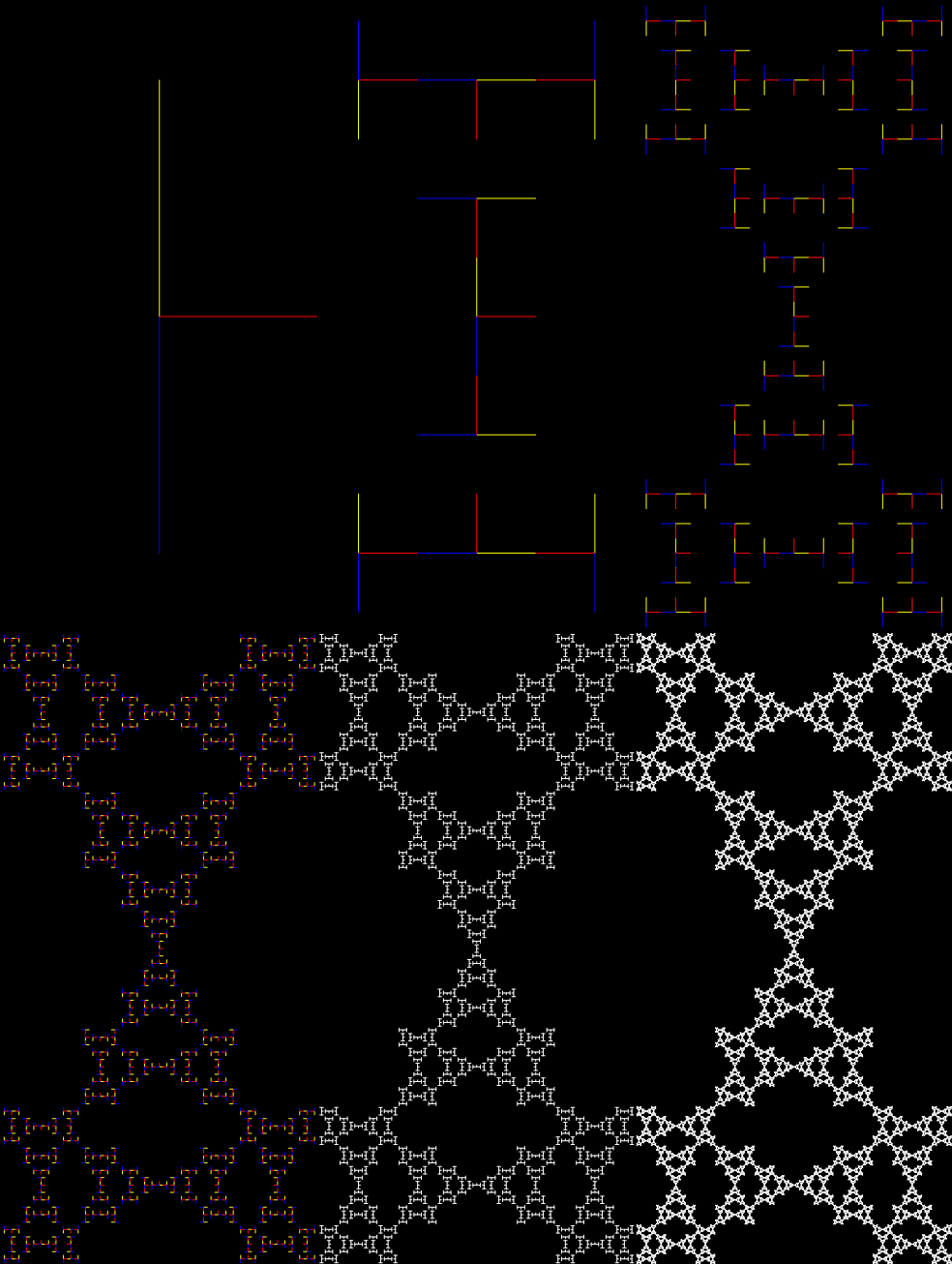
Creating an hourglass fractal #1


Creating an hourglass fractal #2


Creating an hourglass fractal #3


Creating an hourglass fractal #4


Creating an hourglass fractal #5


Creating an hourglass fractal #6


Creating an hourglass fractal #7


Creating an hourglass fractal #8


Creating an hourglass fractal #9


Creating an hourglass fractal #10


Creating an hourglass fractal (animated)


The hourglass fractal


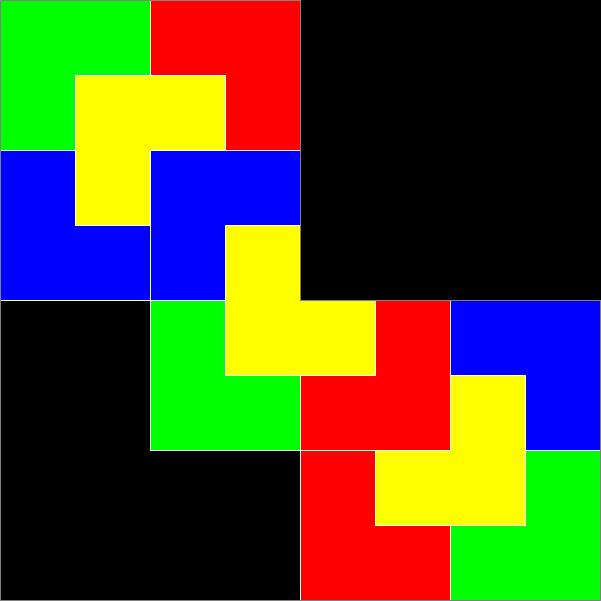
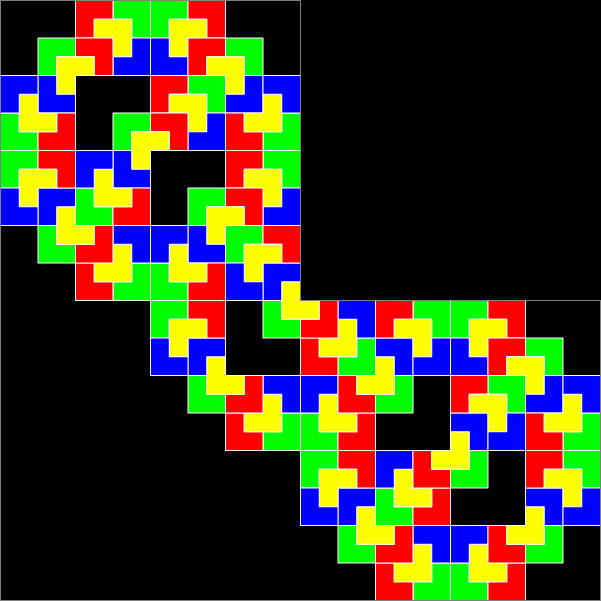
Next I wanted to create an hourglass fractal from a rep-16 L-tromino, so I reasoned like this:

• If one sub-copy of four is discarded from a rep-4 L-tromino to create the hourglass fractal, that means you need 3/4 of the rep-4 L-tromino. Therefore you’ll need 3/4 * 16 = 12/16 of a rep-16 L-tromino to create an hourglass fractal.

So I set up the rep-16 L-tromino with twelve sub-copies in the right pattern and began dividing-and-discarding:

A failed attempt at an hourglass fractal #1


A failed attempt at an hourglass fractal #2


A failed attempt at an hourglass fractal #3


A failed attempt at an hourglass fractal #4


A failed attempt at an hourglass fractal #5


A failed attempt at an hourglass fractal (animated)


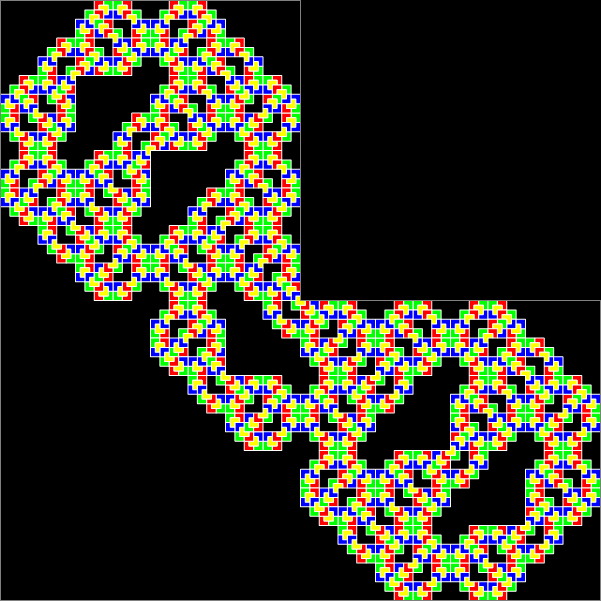
Whoops! What I’d failed to take into account is that the rep-16 L-tromino is actually the second stage of the rep-4 triomino, i.e. that 4 * 4 = 16. It follows, therefore, that 3/4 of the rep-4 L-tromino will actually be 9/16 = 3/4 * 3/4 of the rep-16 L-tromino. So I tried again, setting up a rep-16 L-tromino with nine sub-copies, then dividing-and-discarding:

A third attempt at an hourglass fractal #1


A third attempt at an hourglass fractal #2


A third attempt at an hourglass fractal #3


A third attempt at an hourglass fractal #4


A third attempt at an hourglass fractal #5


A third attempt at an hourglass fractal #6


A third attempt at an hourglass fractal (animated)


Previously (and passionately) pre-posted:

Tri Again
Tri Again (Again)

Agnathous Analysis

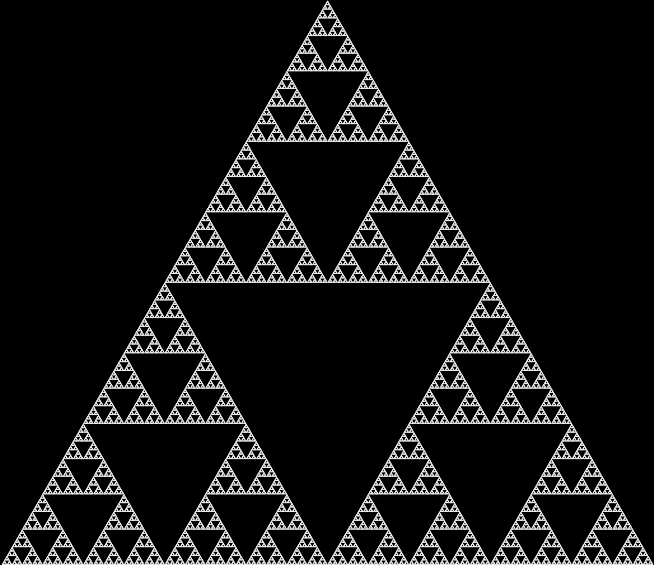
In Mandibular Metamorphosis, I looked at two distinct fractals and how you could turn one into the other in one smooth sweep. The Sierpiński triangle was one of the fractals:

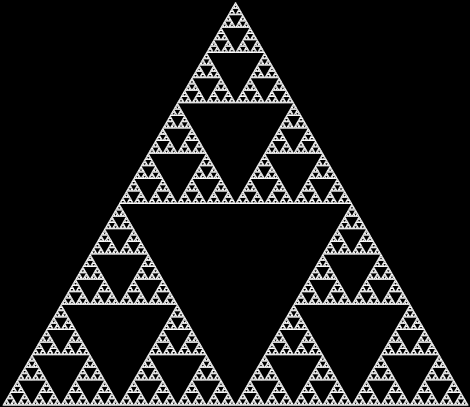
Sierpiński triangle


The T-square fractal was the other:

T-square fractal (or part thereof)


And here they are turning into each other:

Sierpiński ↔ T-square (anim)
(Open in new window if distorted)


But what exactly is going on? To answer that, you need to see how the two fractals are created. Here are the stages for one way of constructing the Sierpiński triangle:

Sierpiński triangle #1


Sierpiński triangle #2


Sierpiński triangle #3


Sierpiński triangle #4


Sierpiński triangle #5


Sierpiński triangle #6


Sierpiński triangle #7


Sierpiński triangle #8


Sierpiński triangle #9


When you take away all the construction lines, you’re left with a simple Sierpiński triangle:


Constructing a Sierpiński triangle (anim)


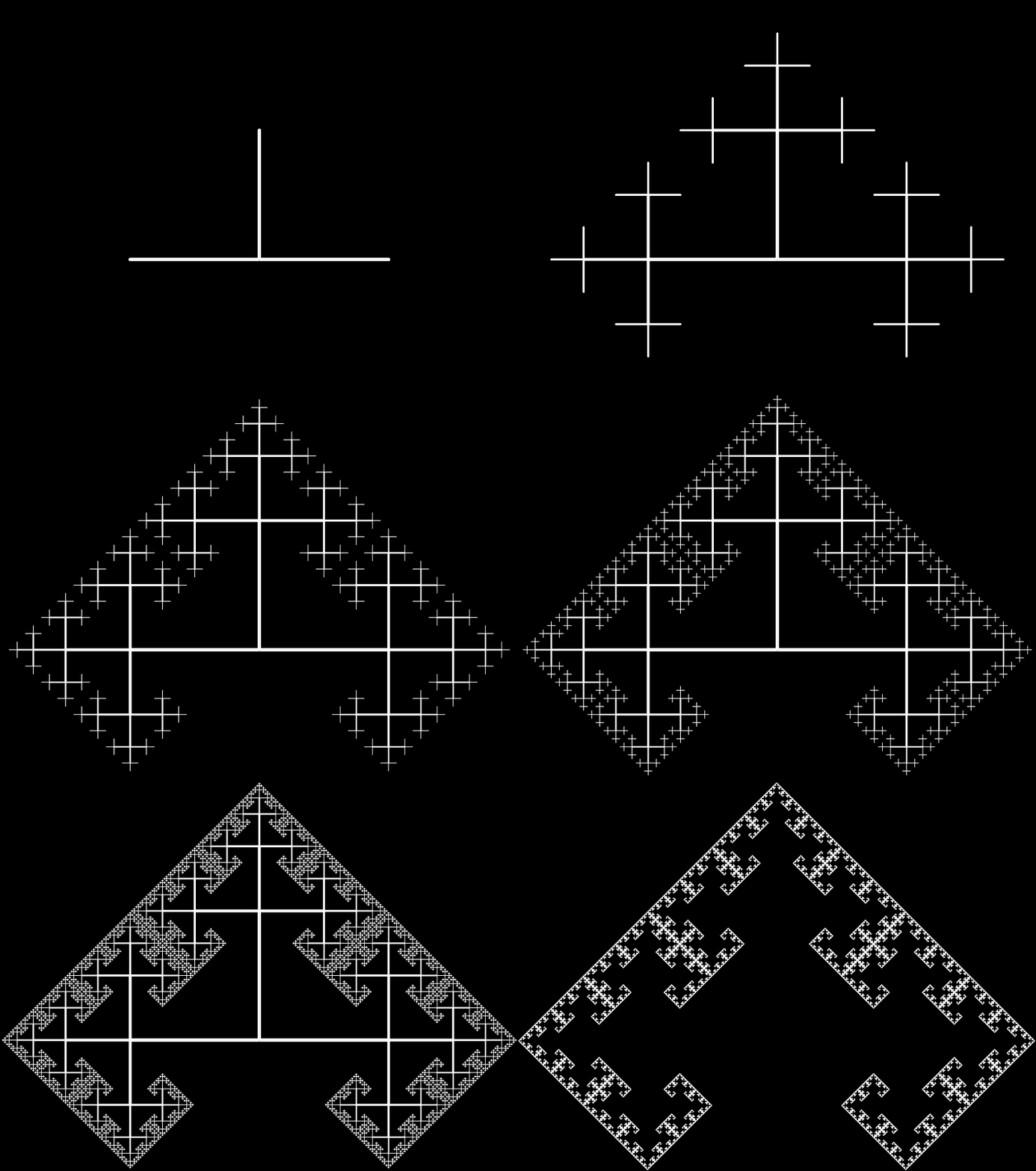
Now here’s the construction of a T-square fractal:

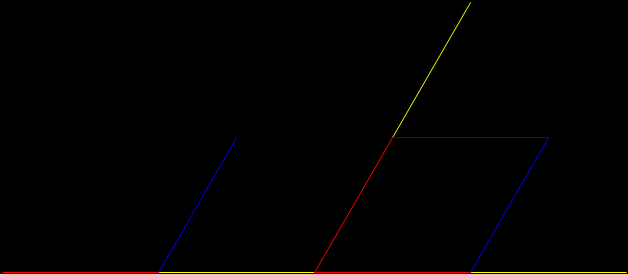
T-square fractal #1


T-square fractal #2


T-square fractal #3


T-square fractal #4


T-square fractal #5


T-square fractal #6


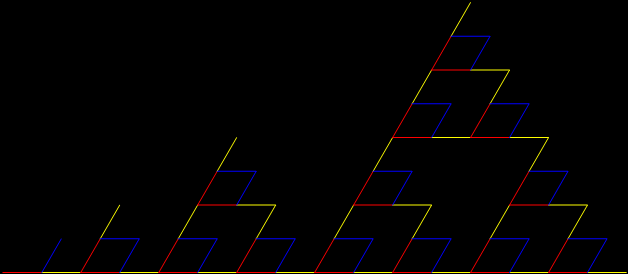
T-square fractal #7


T-square fractal #8


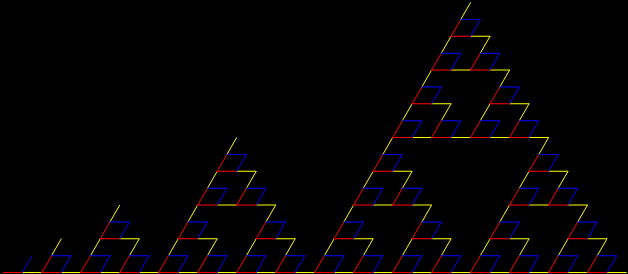
T-square fractal #9


Take away the construction lines and you’re left with a simple T-square fractal:

T-square fractal


Constructing a T-square fractal (anim)


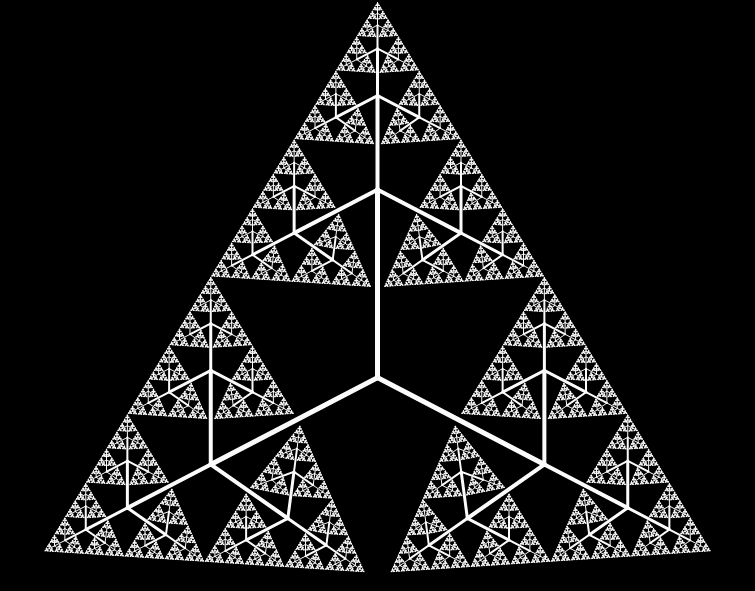
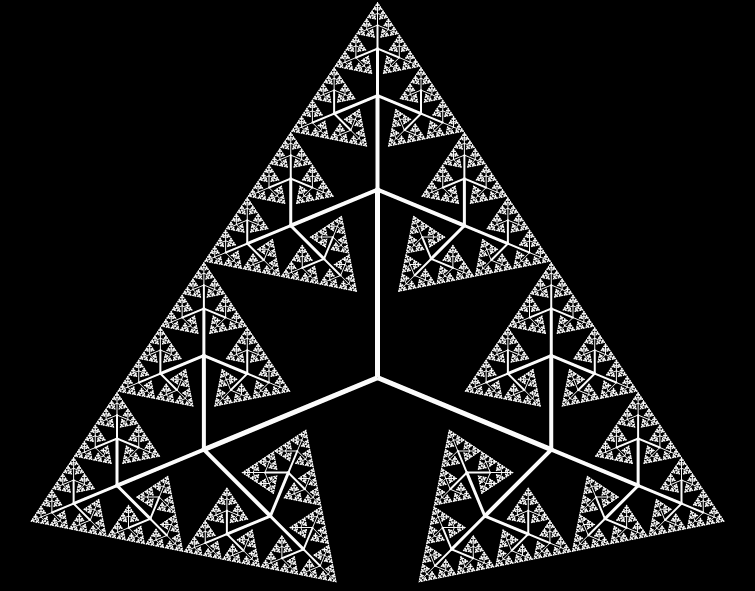
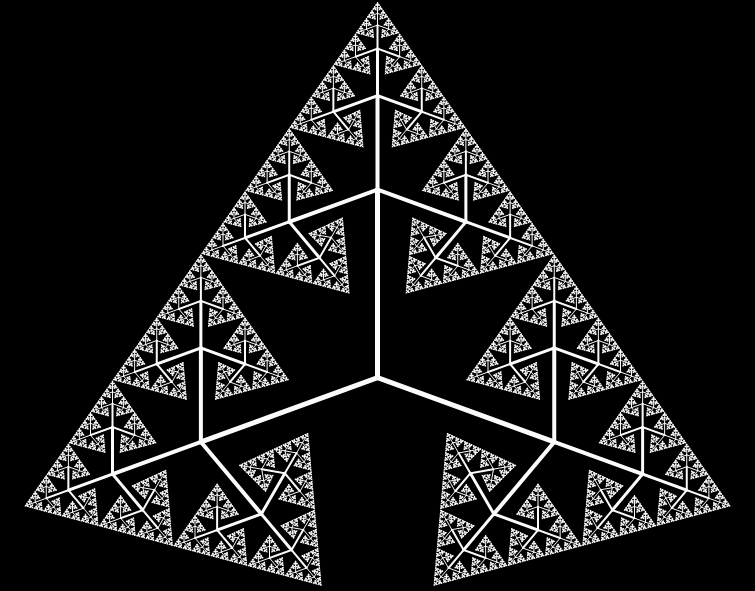
And now it’s easy to see how one turns into the other:

Sierpiński → T-square #1


Sierpiński → T-square #2


Sierpiński → T-square #3


Sierpiński → T-square #4


Sierpiński → T-square #5


Sierpiński → T-square #6


Sierpiński → T-square #7


Sierpiński → T-square #8


Sierpiński → T-square #9


Sierpiński → T-square #10


Sierpiński → T-square #11


Sierpiński → T-square #12


Sierpiński → T-square #13


Sierpiński ↔ T-square (anim)
(Open in new window if distorted)


Post-Performative Post-Scriptum

Mandibular Metamorphosis also looked at a third fractal, the mandibles or jaws fractal. Because I haven’t included the jaws fractal in this analysis, the analysis is therefore agnathous, from Ancient Greek ἀ-, a-, “without”, + γνάθ-, gnath-, “jaw”.

Mandibular Metamorphosis

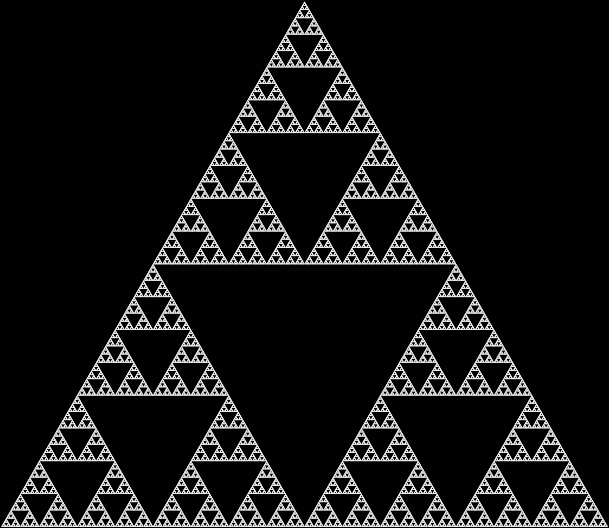
Here’s the famous Sierpiński triangle:

Sierpiński triangle


And here’s the less famous T-square fractal:

T-square fractal (or part of it, at least)


How do you get from one to the other? Very easily, as it happens:

From Sierpiński triangle to T-square (and back again) (animated)
(Open in new window if distorted)


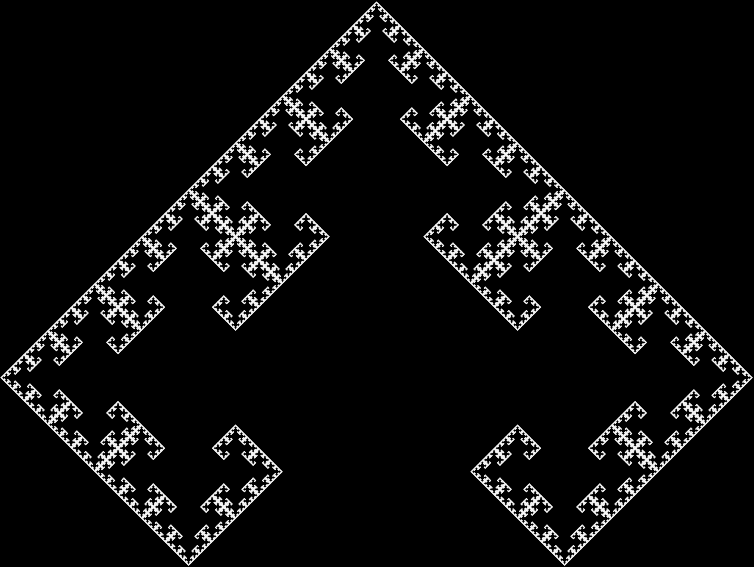
Now, here are the Sierpiński triangle, the T-square fractal and what I call the mandibles or jaws fractal:

Sierpiński triangle


T-square fractal


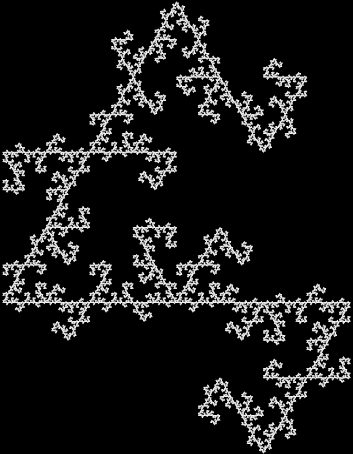
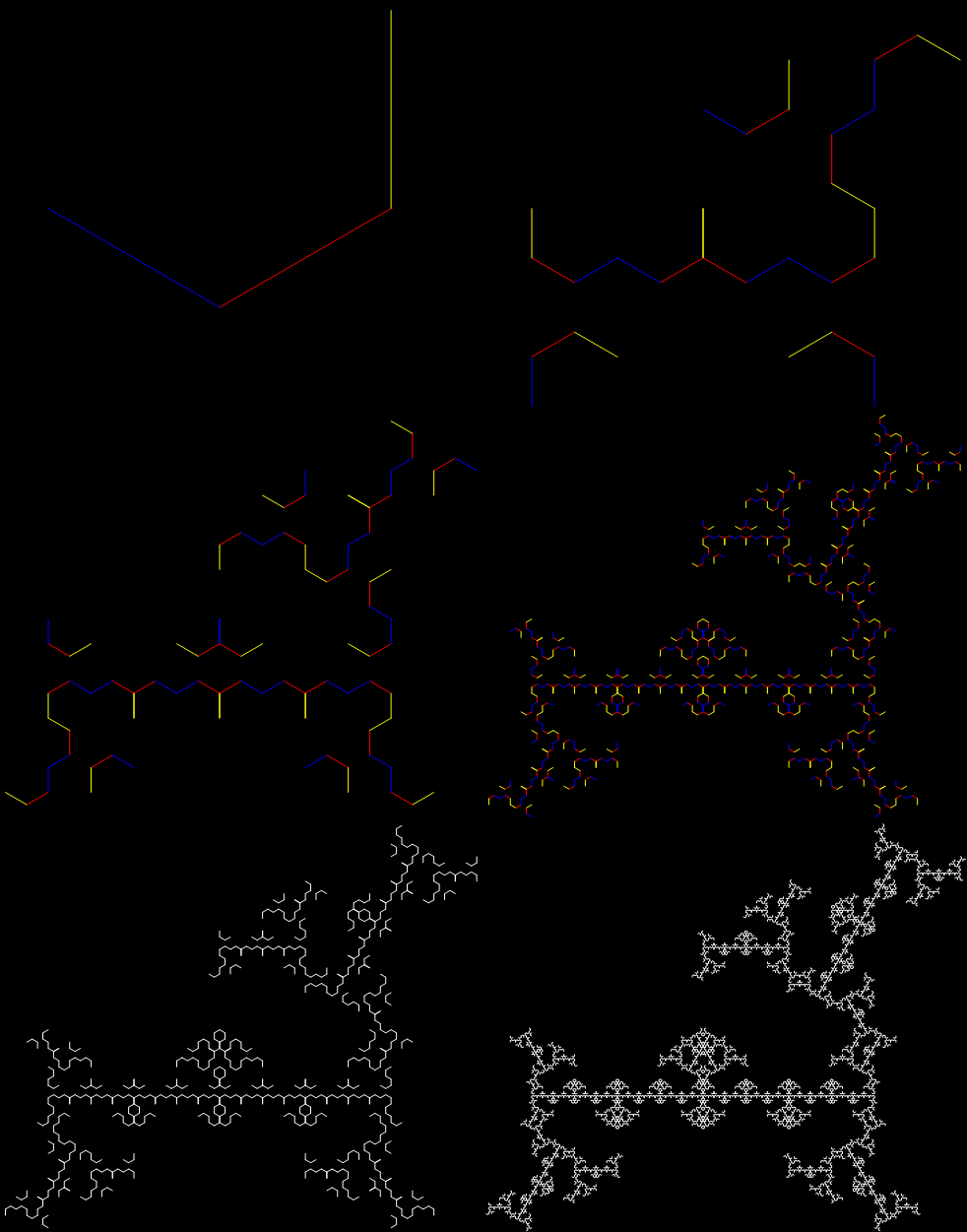
Mandibles / Jaws fractal


How do you cycle between them? Again, very easily:

From Sierpiński triangle to T-square to Mandibles (and back again) (animated)
(Open in new window if distorted)


Elsewhere other-accessible…

Agnathous Analysis — a closer look at these shapes

Controlled Chaos

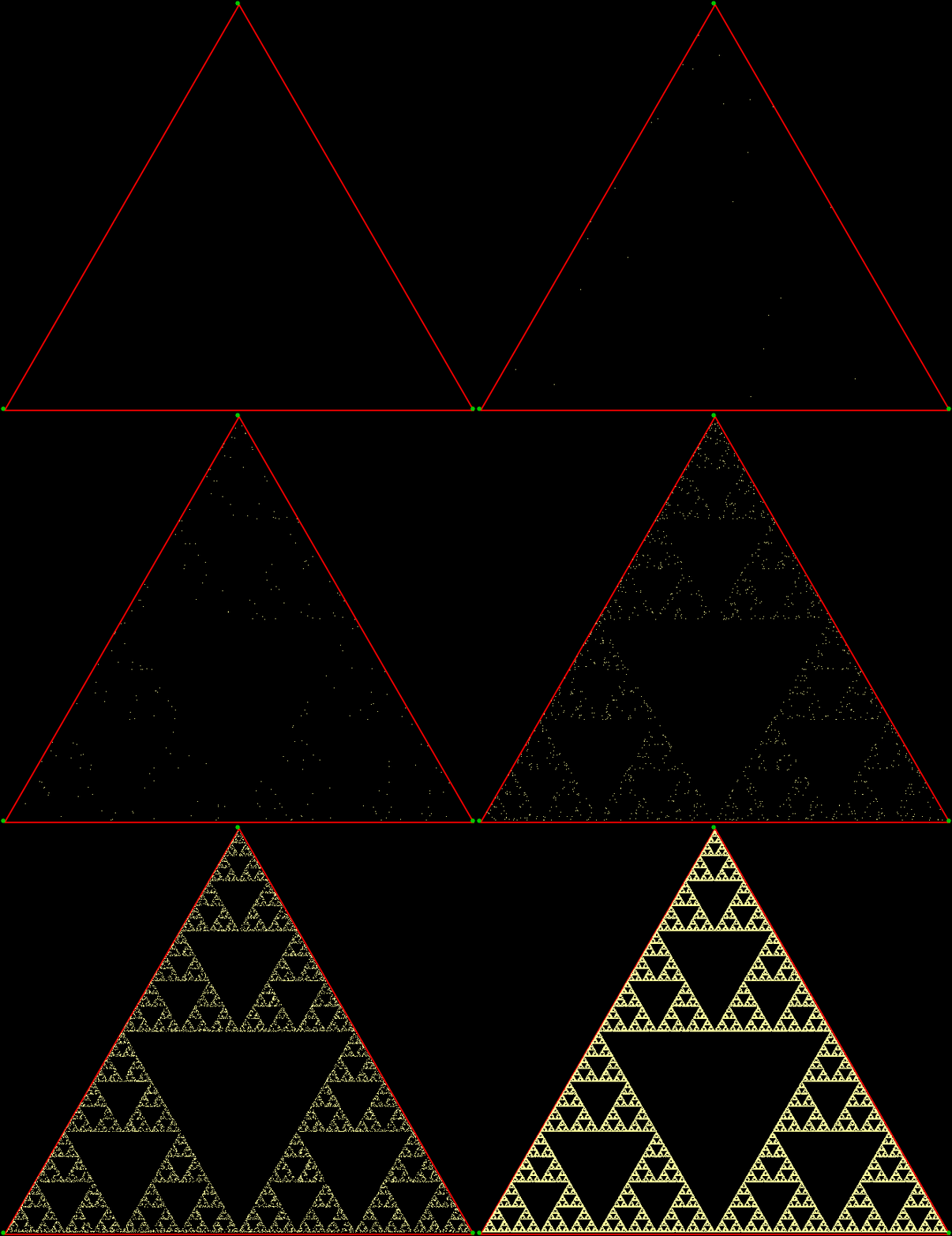
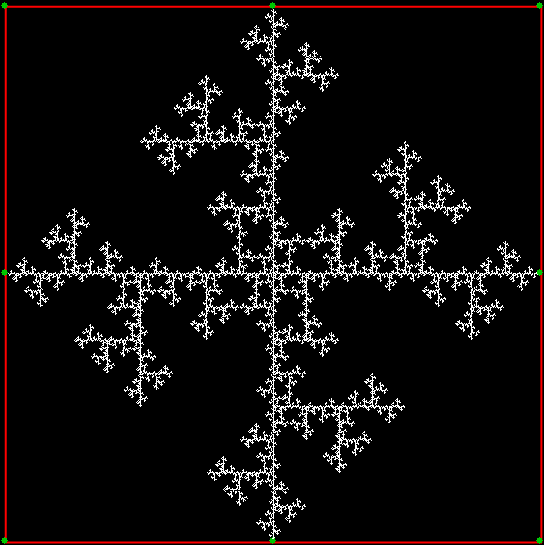
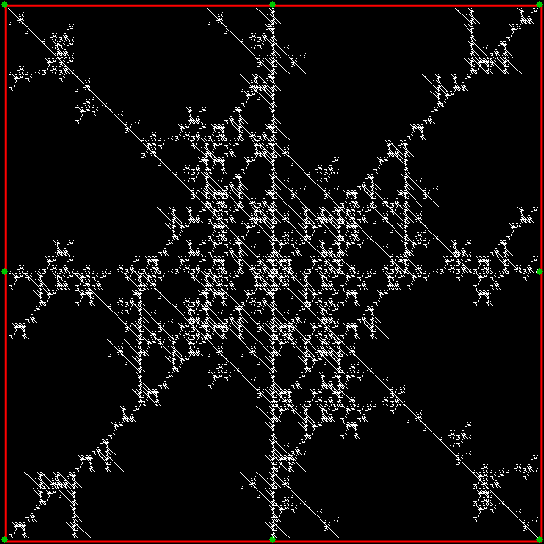
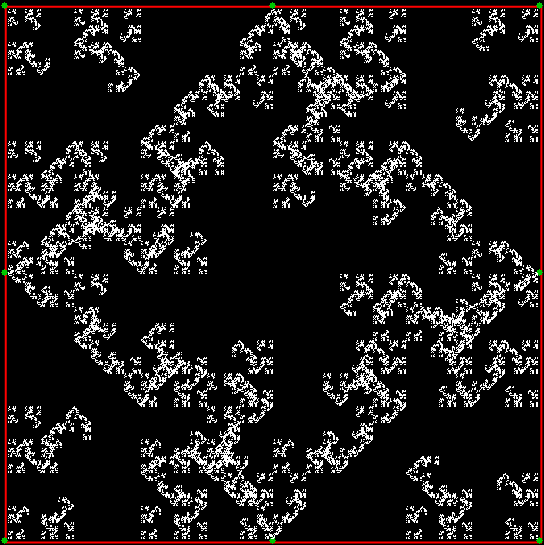
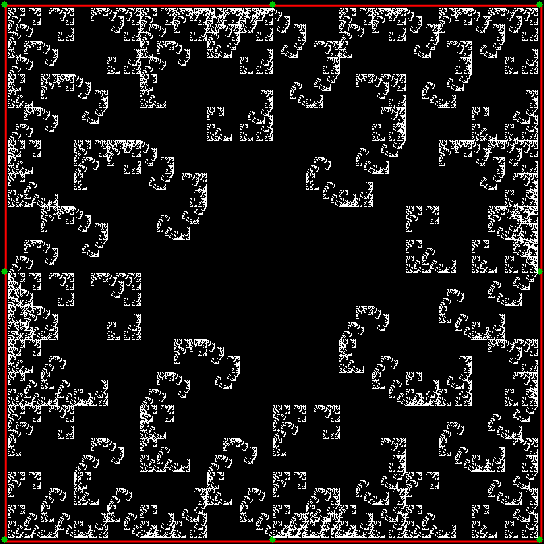
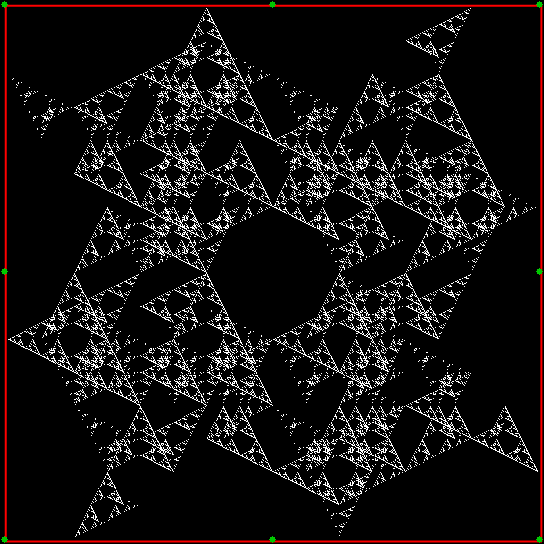
The chaos game is a simple mathematical technique for creating fractals. Suppose a point jumps over and over again 1/2 of the distance towards a randomly chosen vertex of a triangle. This shape appears, the so-called Sierpiński triangle:

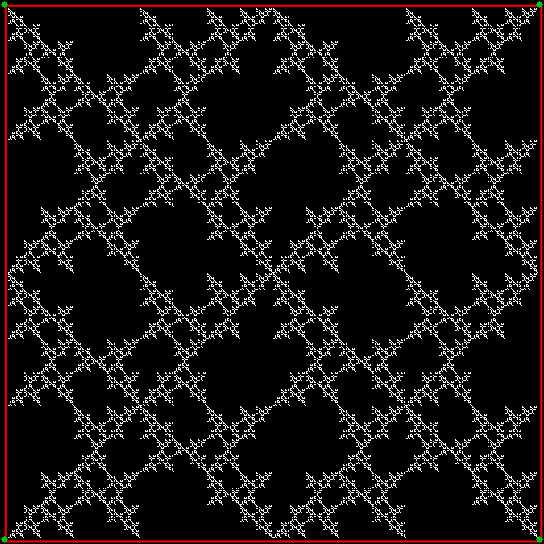
Sierpiński triangle created by the chaos game


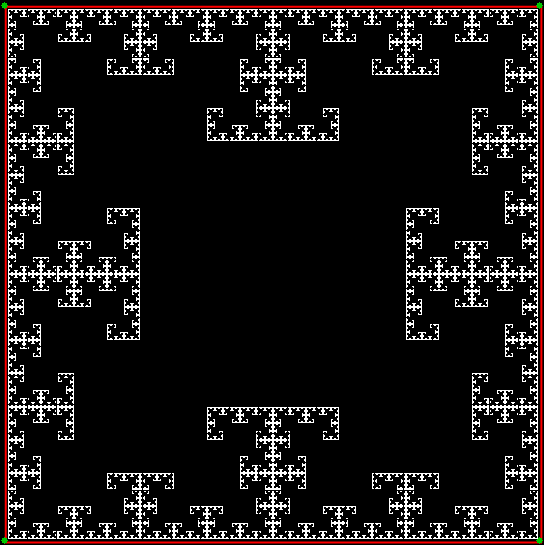
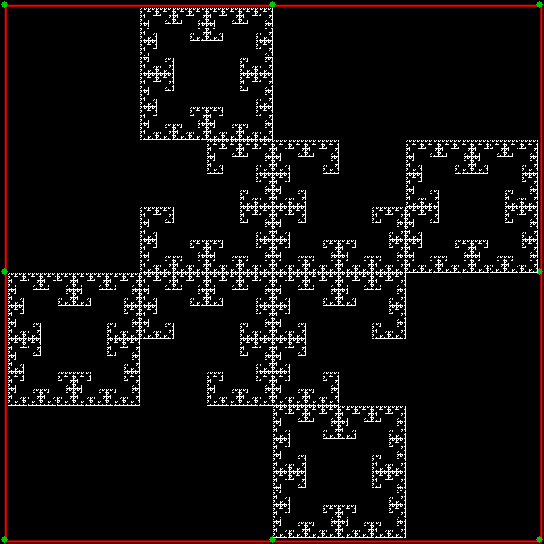
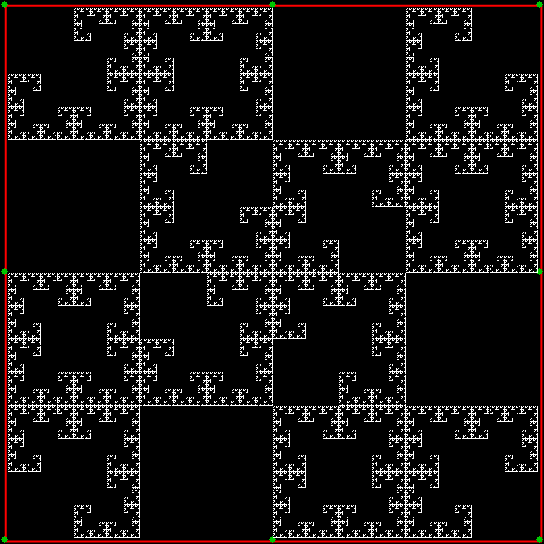
But the jumps don’t have to be random: you can use an array to find every possible combination of jumps and so create a more even image. I call this controlled chaos. However, if you try the chaos game (controlled or otherwise) with a square, no fractal appears unless you restrict the vertex chosen in some way. For example, if the point can’t jump towards the same vertex twice or more in a row, this fractal appears:

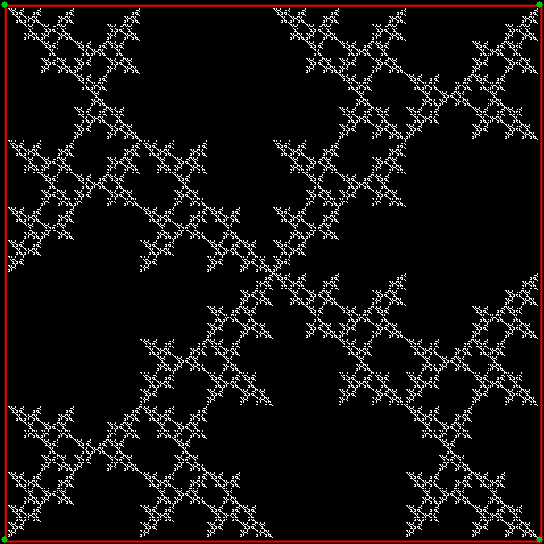
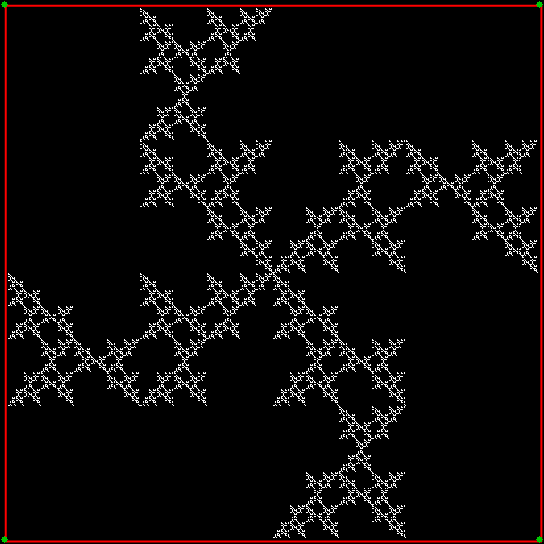
Ban on jumping towards previously chosen vertex, i.e. v + 0


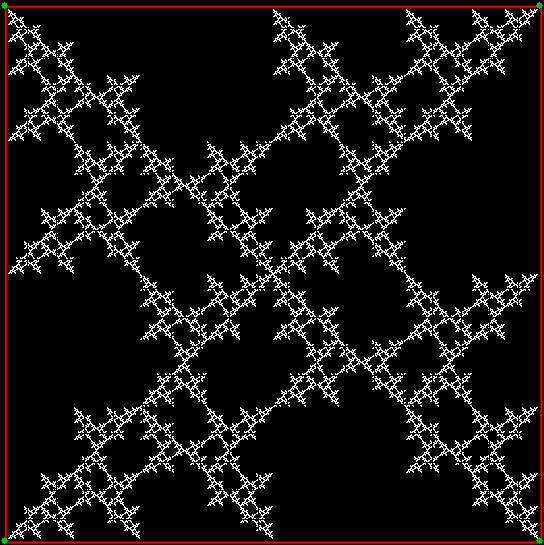
And if the point can’t jump towards the vertex one place clockwise of the previously chosen vertex, this fractal appears:

Ban on v + 1


If the point can’t jump towards the vertex two places clockwise of the previously chosen vertex, this fractal appears:

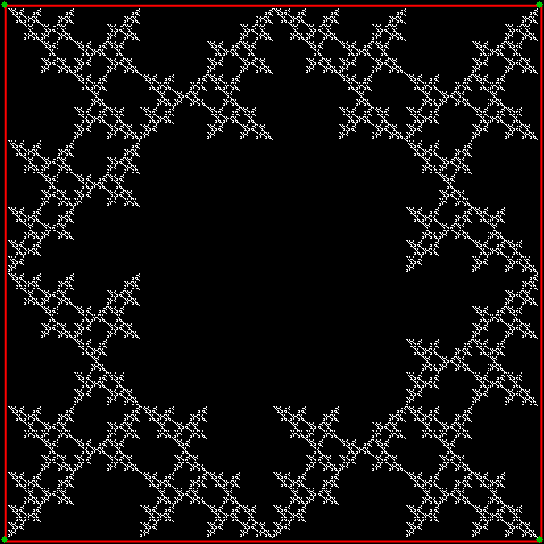
Ban on v + 2


If the point can’t jump towards the vertex three places clockwise, or one place anticlockwise, of the previously chosen vertex, this fractal appears (compare v + 1 above):

Ban on v + 3


You can also ban vertices based on how close the point is to them at any given moment. Suppose that the point can’t jump towards the nearest vertex, which means that it must choose to jump towards either the 2nd-nearest, 3rd-nearest or 4th-nearest vertex. A fractal we’ve already seen appears:

Must jump towards vertex at distance 2, 3 or 4


In effect, not jumping towards the nearest vertex means not jumping towards a vertex twice or more in a row. Another familiar fractal appears if the point can’t jump towards the most distant vertex:

d = 1,2,3


But new fractals also appear when the jumps are determined by distance:

d = 1,2,4


d = 1,3,4


And you can add more targets for the jumping point midway between the vertices of the square:

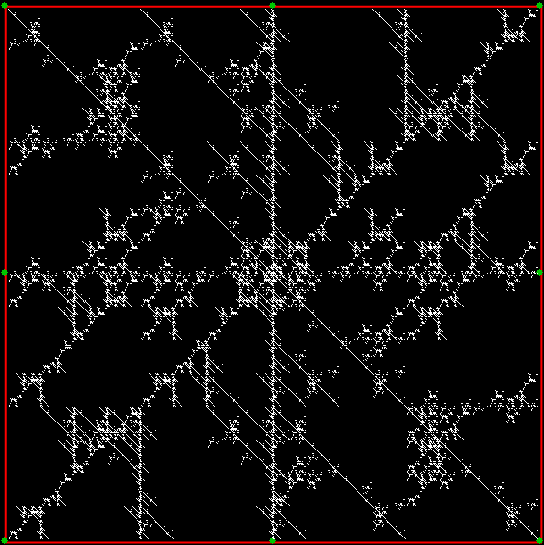
d = 1,2,8


d = 1,4,6


d = 1,6,8


d = 1,7,8


d = 2,3,6


d = 2,3,8


d = 2,4,8


d = 2,5,6


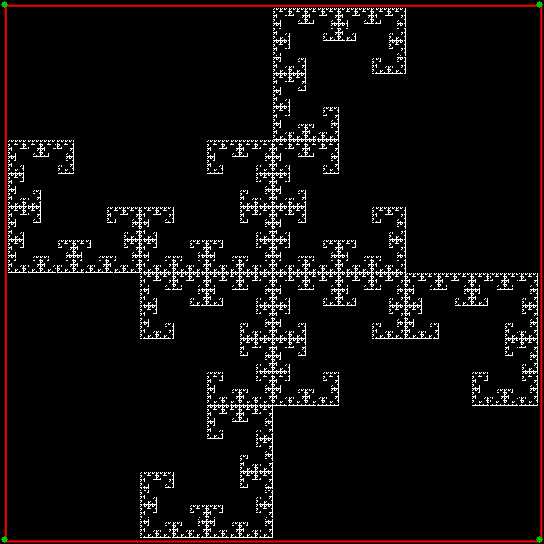
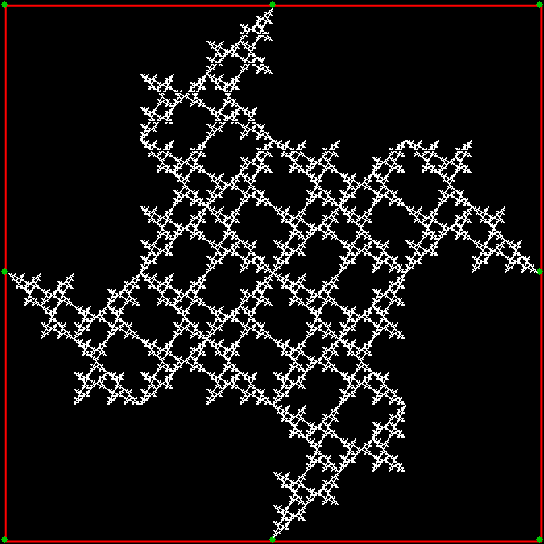
And what if you choose the next vertex by incrementing the previously chosen vertex? Suppose the initial vertex is 1 and the possible increments are 1, 2 and 2. This new fractal appears:

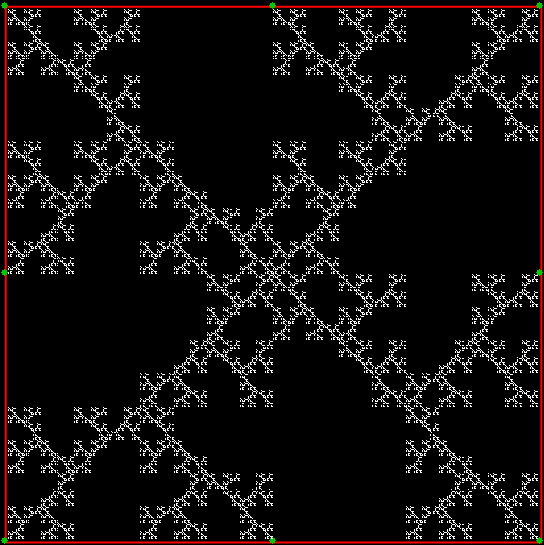
increment = 1,2,2 (for example, 1 + 1 = 2, 2 + 2 = 4, 4 + 2 = 6, and 6 is adjusted thus: 6 – 4 = 2)


And with this set of increments, it’s déjà vu all over again:

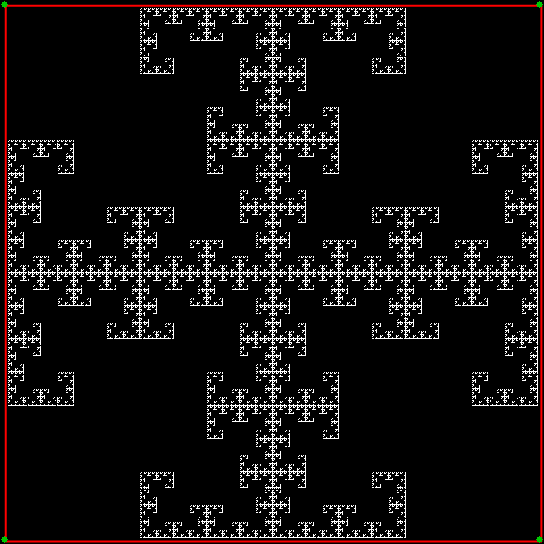
i = 2,2,3


And again:

i = 2,3,2


With more possible increments, familiar fractals appear in unfamiliar ways:

i = 1,3,2,3


i = 1,3,3,2


i = 1,4,3,3


i = 2,1,2,2


i = 2,1,3,4


i = 2,2,3,4


i = 3,1,1,2


Now try increments with midpoints on the sides:

v = 4 + midpoints, i = 1,2,4


As we saw above, this incremental fractal can also be created from a square with four vertices and no midpoints:

i = 1,3,3; initial vertex = 1


But the fractal changes when the initial vertex is set to 2, i.e. to one of the midpoints:

i = 1,3,3; initial vertex = 2


And here are more inc-fractals with midpoints:

i = 1,4,2 (cf. inc-fractal 1,2,4 above)


i = 1,4,8


i = 2,6,3


i = 3,2,6


i = 4,7,8


i = 1,2,3,5


i = 1,4,5,4


i = 6,2,4,1


i = 7,6,2,2


i = 7,8,2,4


i = 7,8,4,2


Root Rite

A square contains one of the great — perhaps the greatest — intellectual rites of passage. If each side of the square is 1 unit in length, how long are its diagonals? By Pythagoras’ theorem:

a^2 + b^2 = c^2
1^2 + 1^2 = 2, so c = √2

So each diagonal is √2 units long. But what is √2? It’s a new kind of number: an irrational number. That doesn’t mean that it’s illogical or against reason, but that it isn’t exactly equal to any ratio of integers like 3/2 or 17/12. When represented as decimals, the digits of all integer ratios either end or fall, sooner or later, into an endlessly repeating pattern:

3/2 = 1.5

17/12 = 1.416,666,666,666,666…

577/408 = 1.414,2156 8627 4509 8039,2156 8627 4509 8039,2156 8627 4509 8039,2156 8627 4509 8039,2156 8627 4509 8039,…

But when √2 is represented as a decimal, its digits go on for ever without any such pattern:

√2 = 1.414,213,562,373,095,048,801,688,724,209,698,078,569,671,875,376,948,073,176,679,737,990,732,478,462,107…

The intellectual rite of passage comes when you understand why √2 is irrational and behaves like that:

Proof of the irrationality of √2

1. Suppose that there is some ratio, a/b, such that

2. a and b have no factors in common and

3. a^2/b^2 = 2.

4. It follows that a^2 = 2b^2.

5. Therefore a is even and there is some number, c, such that 2c = a.

6. Substituting c in #4, we derive (2c)^2 = 4c^2 = 2b^2.

7. Therefore 2c^2 = b^2 and b is also even.

8. But #7 contradicts #2 and the supposition that a and b have no factors in common.

9. Therefore, by reductio ad absurdum, there is no ratio, a/b, such that a^2/b^2 = 2. Q.E.D.

Given that subtle proof, you might think the digits of an irrational number like √2 would be difficult to calculate. In fact, they’re easy. And one method is so easy that it’s often re-discovered by recreational mathematicians. Suppose that a is an estimate for √2 but it’s too high. Clearly, if 2/a = b, then b will be too low. To get a better estimate, you simply split the difference: a = (a + b) / 2. Then do it again and again:

a = (2/a + a) / 2

If you first set a = 1, the estimates improve like this:

(2/1 + 1) / 2 = 3/2
2 – (3/2)^2 = -0.25
(2/(3/2) + 3/2) / 2 = 17/12
2 – (17/12)^2 = -0.00694…
(2/(17/12) + 17/12) / 2 = 577/408
2 – (577/408)^2 = -0.000006007…
(2/(577/408) + 577/408) / 2 = 665857/470832
2 – (665857/470832)^2 = -0.00000000000451…

In fact, the estimate doubles in accuracy (or better) at each stage (the first digit to differ is underlined):

1.5… = 3/2 (matching digits = 1)
1.4… = √2

1.416… = 17/12 (m=3)
1.414… = √2

1.414,215… = 577/408 (m=6)
1.414,213… = √2

1.414,213,562,374… = 665857/470832 (m=12)
1.414,213,562,373… = √2

1.414,213,562,373,095,048,801,689… = 886731088897/627013566048 (m=24)
1.414,213,562,373,095,048,801,688… = √2

1.414,213,562,373,095,048,801,688,724,209,698,078,569,671,875,377… (m=48)
1.414,213,562,373,095,048,801,688,724,209,698,078,569,671,875,376… = √2

1.414,213,562,373,095,048,801,688,724,209,698,078,569,671,875,376,948,073,176,679,737,990,732,478,46
2,107,038,850,387,534,327,641,6… (m=97)
1.414,213,562,373,095,048,801,688,724,209,698,078,569,671,875,376,948,073,176,679,737,990,732,478,46
2,107,038,850,387,534,327,641,5… = √2

1.414,213,562,373,095,048,801,688,724,209,698,078,569,671,875,376,948,073,176,679,737,990,732,478,46
2,107,038,850,387,534,327,641,572,735,013,846,230,912,297,024,924,836,055,850,737,212,644,121,497,09
9,935,831,413,222,665,927,505,592,755,799,950,501,152,782,060,8… (m=196)
1.414,213,562,373,095,048,801,688,724,209,698,078,569,671,875,376,948,073,176,679,737,990,732,478,46
2,107,038,850,387,534,327,641,572,735,013,846,230,912,297,024,924,836,055,850,737,212,644,121,497,09
9,935,831,413,222,665,927,505,592,755,799,950,501,152,782,060,5… = √2

1.414,213,562,373,095,048,801,688,724,209,698,078,569,671,875,376,948,073,176,679,737,990,732,478,46
2,107,038,850,387,534,327,641,572,735,013,846,230,912,297,024,924,836,055,850,737,212,644,121,497,09
9,935,831,413,222,665,927,505,592,755,799,950,501,152,782,060,571,470,109,559,971,605,970,274,534,59
6,862,014,728,517,418,640,889,198,609,552,329,230,484,308,714,321,450,839,762,603,627,995,251,407,98
9,687,253,396,546,331,808,829,640,620,615,258,352,395,054,745,750,287,759,961,729,835,575,220,337,53
1,857,011,354,374,603,43… (m=392)
1.414,213,562,373,095,048,801,688,724,209,698,078,569,671,875,376,948,073,176,679,737,990,732,478,46
2,107,038,850,387,534,327,641,572,735,013,846,230,912,297,024,924,836,055,850,737,212,644,121,497,09
9,935,831,413,222,665,927,505,592,755,799,950,501,152,782,060,571,470,109,559,971,605,970,274,534,59
6,862,014,728,517,418,640,889,198,609,552,329,230,484,308,714,321,450,839,762,603,627,995,251,407,98
9,687,253,396,546,331,808,829,640,620,615,258,352,395,054,745,750,287,759,961,729,835,575,220,337,53
1,857,011,354,374,603,40… = √2

1.414,213,562,373,095,048,801,688,724,209,698,078,569,671,875,376,948,073,176,679,737,990,732,478,46
2,107,038,850,387,534,327,641,572,735,013,846,230,912,297,024,924,836,055,850,737,212,644,121,497,09
9,935,831,413,222,665,927,505,592,755,799,950,501,152,782,060,571,470,109,559,971,605,970,274,534,59
6,862,014,728,517,418,640,889,198,609,552,329,230,484,308,714,321,450,839,762,603,627,995,251,407,98
9,687,253,396,546,331,808,829,640,620,615,258,352,395,054,745,750,287,759,961,729,835,575,220,337,53
1,857,011,354,374,603,408,498,847,160,386,899,970,699,004,815,030,544,027,790,316,454,247,823,068,49
2,936,918,621,580,578,463,111,596,668,713,013,015,618,568,987,237,235,288,509,264,861,249,497,715,42
1,833,420,428,568,606,014,682,472,077,143,585,487,415,565,706,967,765,372,022,648,544,701,585,880,16
2,075,847,492,265,722,600,208,558,446,652,145,839,889,394,437,092,659,180,031,138,824,646,815,708,26
3,010,059,485,870,400,318,648,034,219,489,727,829,064,104,507,263,688,131,373,985,525,611,732,204,02
4,509,122,770,022,694,112,757,362,728,049,574… (m=783)
1.414,213,562,373,095,048,801,688,724,209,698,078,569,671,875,376,948,073,176,679,737,990,732,478,46
2,107,038,850,387,534,327,641,572,735,013,846,230,912,297,024,924,836,055,850,737,212,644,121,497,09
9,935,831,413,222,665,927,505,592,755,799,950,501,152,782,060,571,470,109,559,971,605,970,274,534,59
6,862,014,728,517,418,640,889,198,609,552,329,230,484,308,714,321,450,839,762,603,627,995,251,407,98
9,687,253,396,546,331,808,829,640,620,615,258,352,395,054,745,750,287,759,961,729,835,575,220,337,53
1,857,011,354,374,603,408,498,847,160,386,899,970,699,004,815,030,544,027,790,316,454,247,823,068,49
2,936,918,621,580,578,463,111,596,668,713,013,015,618,568,987,237,235,288,509,264,861,249,497,715,42
1,833,420,428,568,606,014,682,472,077,143,585,487,415,565,706,967,765,372,022,648,544,701,585,880,16
2,075,847,492,265,722,600,208,558,446,652,145,839,889,394,437,092,659,180,031,138,824,646,815,708,26
3,010,059,485,870,400,318,648,034,219,489,727,829,064,104,507,263,688,131,373,985,525,611,732,204,02
4,509,122,770,022,694,112,757,362,728,049,573… = √2

Allus Pour, Horic

*As a rotating animated gif (optimized at ezGIF).


Performativizing Paronomasticity

The title of this incendiary intervention is a paronomasia on Shakespeare’s “Alas, poor Yorick!” (Hamlet, Act 5, scene 1). “Allus” is a northern form of “always”, “pour” has its standard meaning, and “Horic” is from the Greek ὡρῐκός, hōrikos, which strictly speaking means “in one’s prime, blooming”. However, it could also be interpreted as meaning “hourly”. So the paronomasia means “Always pour, O Hourly One!” (i.e. hourglass).