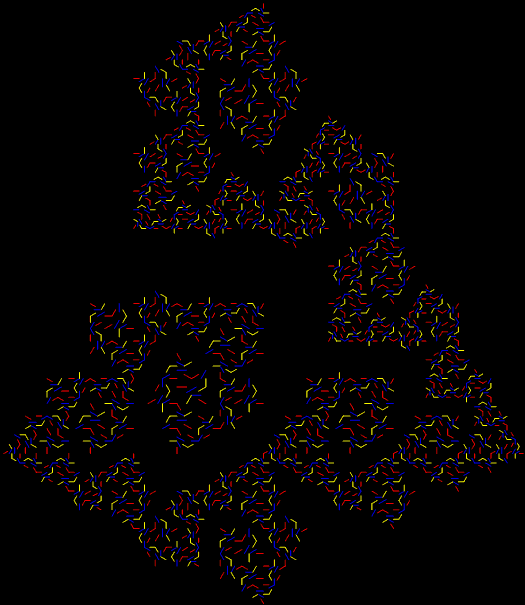
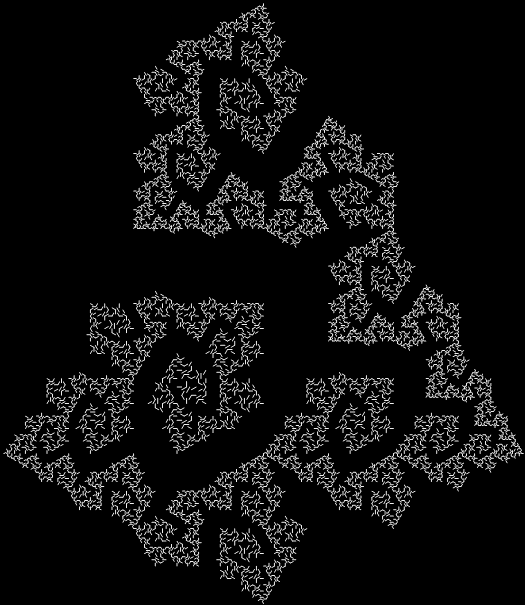
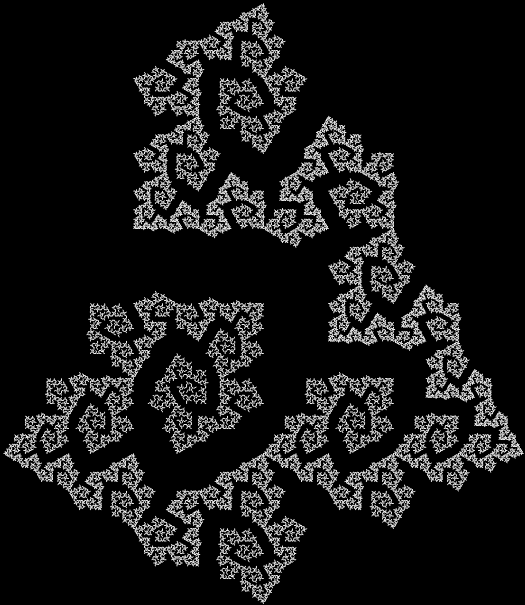
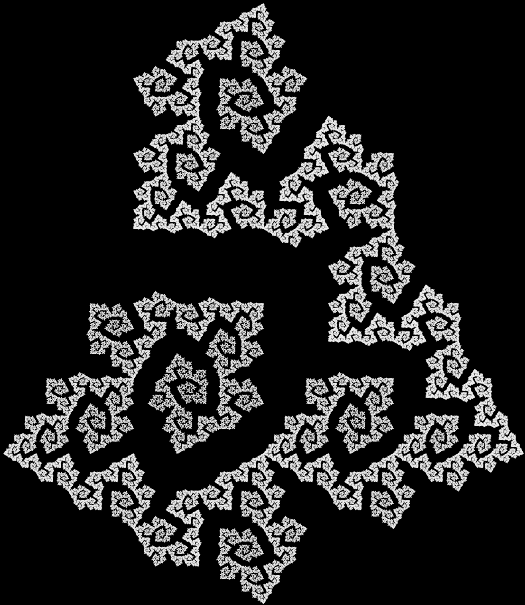
Hour Re-Re-Re-Re-Powered

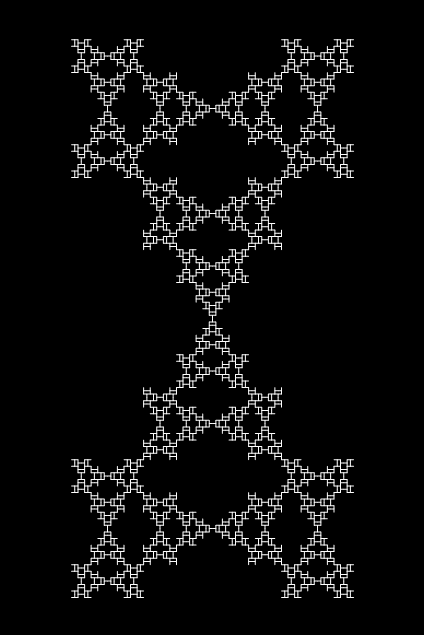
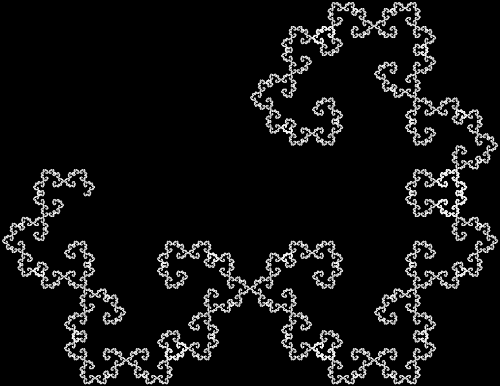
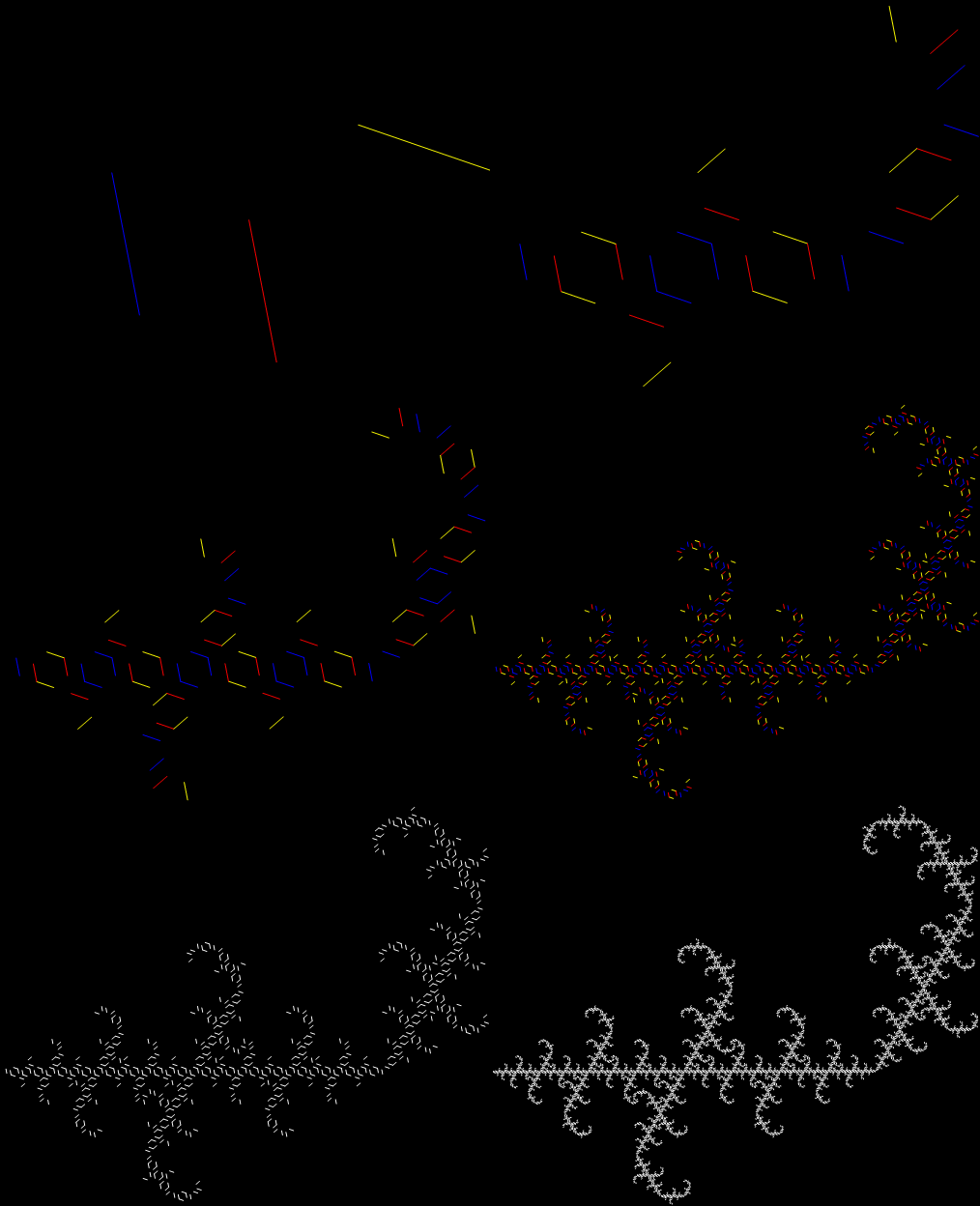
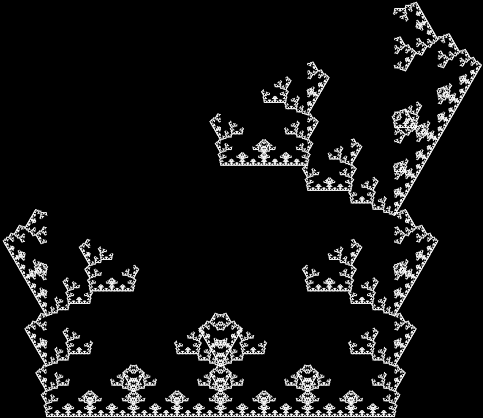
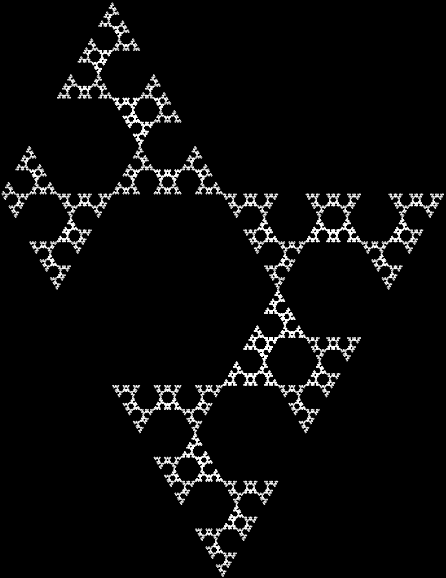
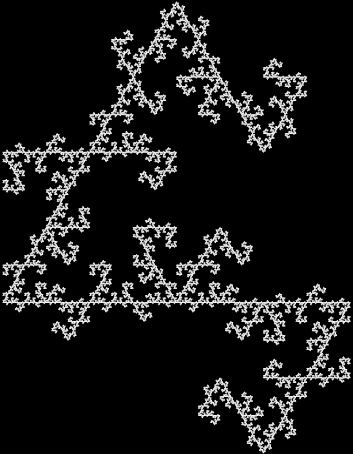
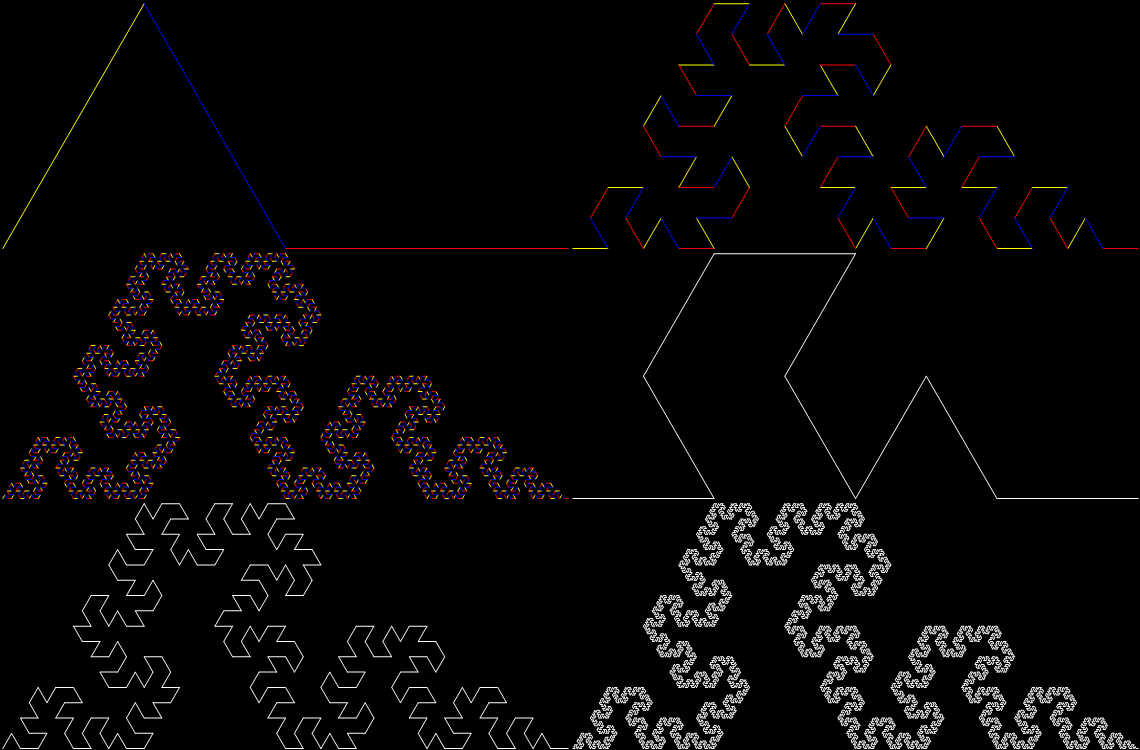
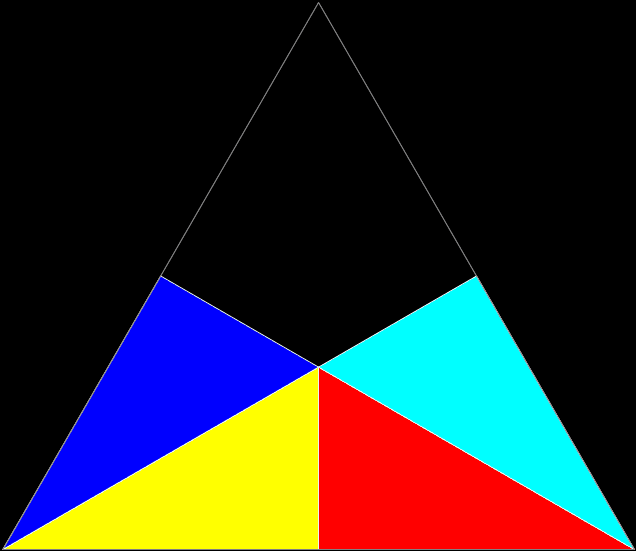
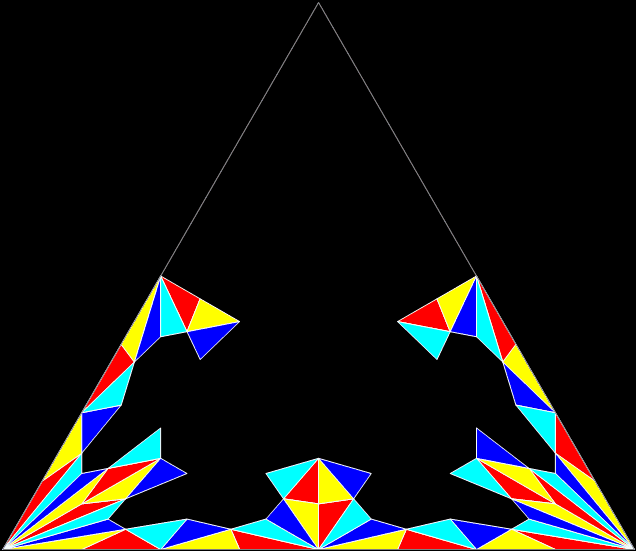
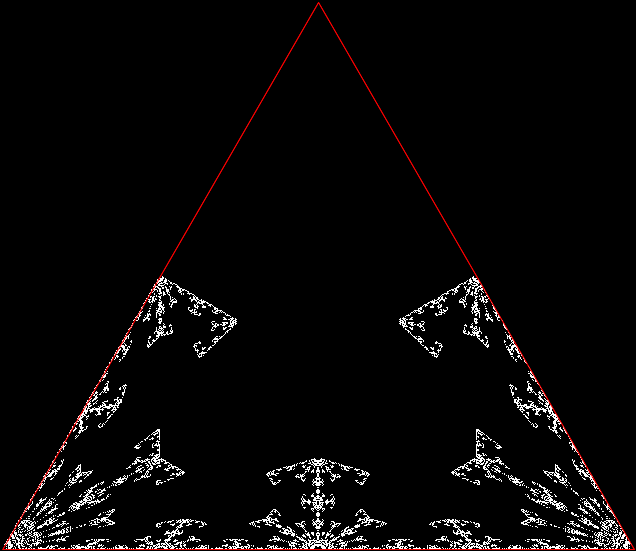
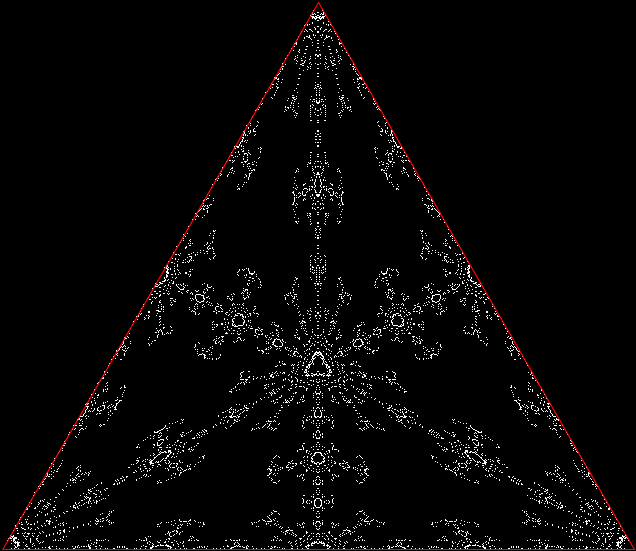
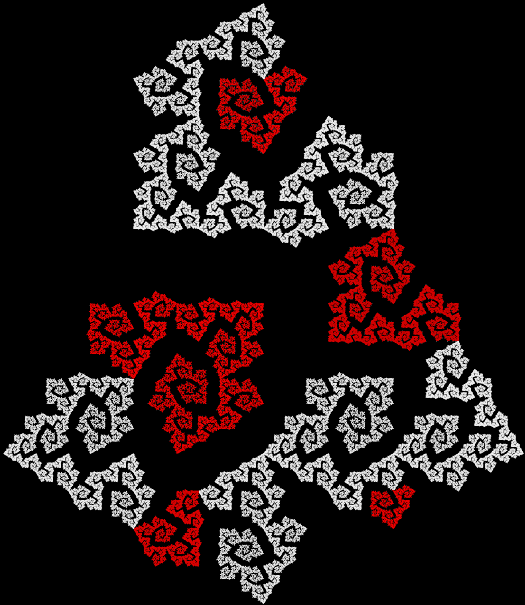
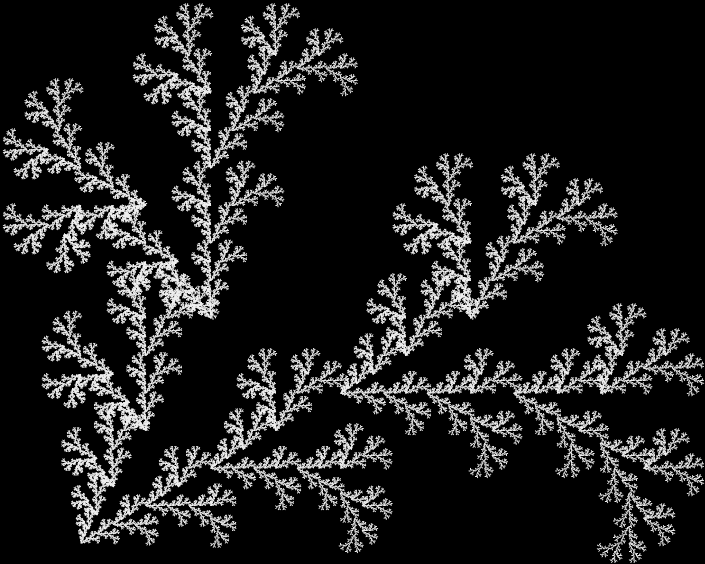
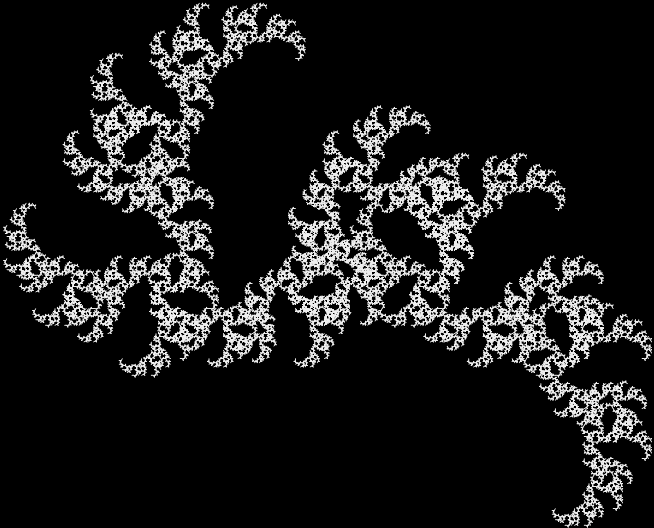
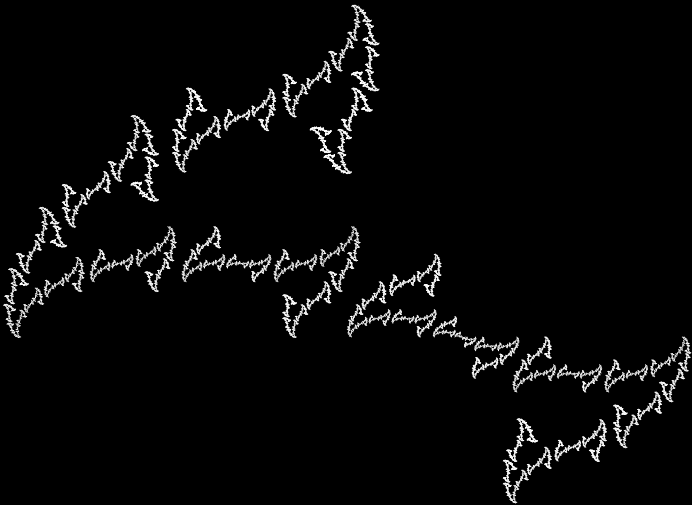
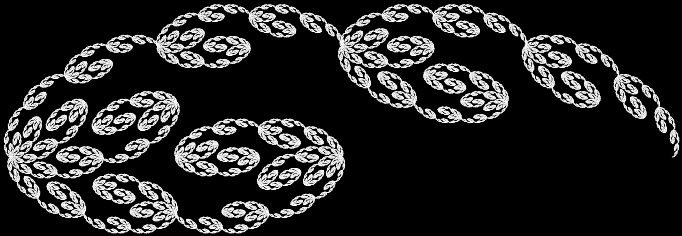
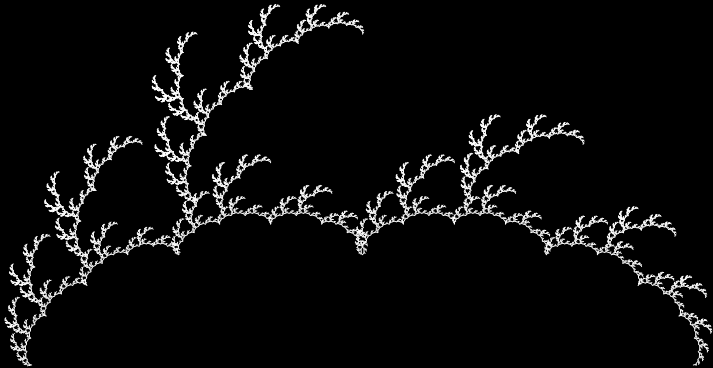
In “Dissing the Diamond” I looked at some of the fractals I found by selecting lines from a dissected diamond. Here’s another of those fractals:

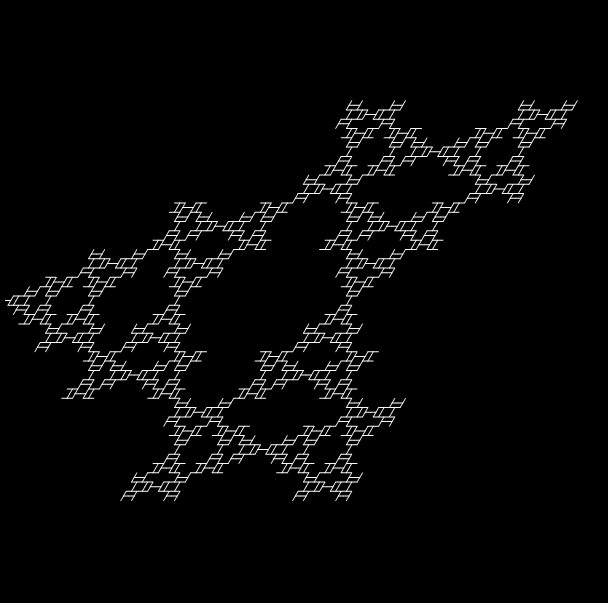
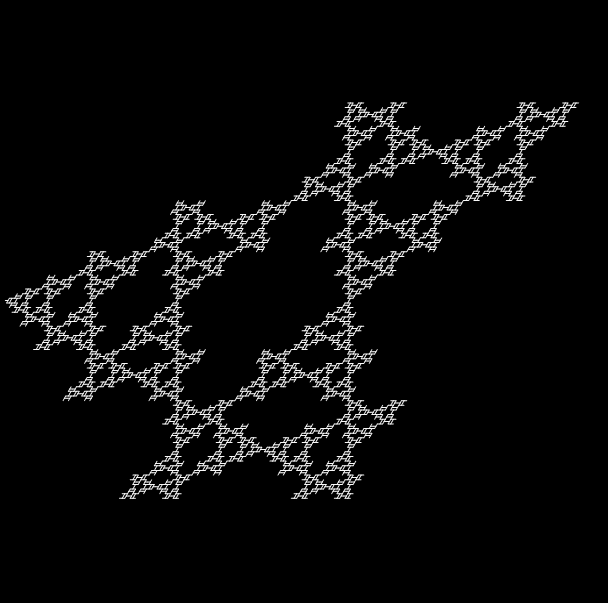
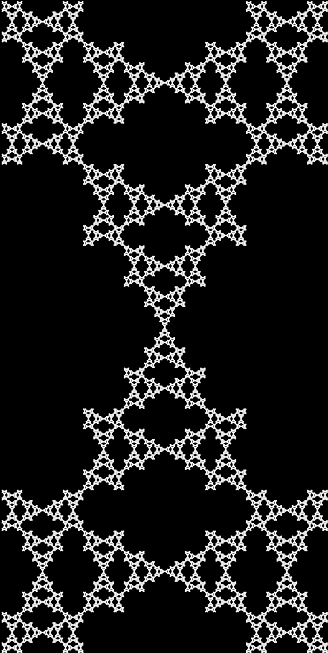
Fractal from dissected diamond


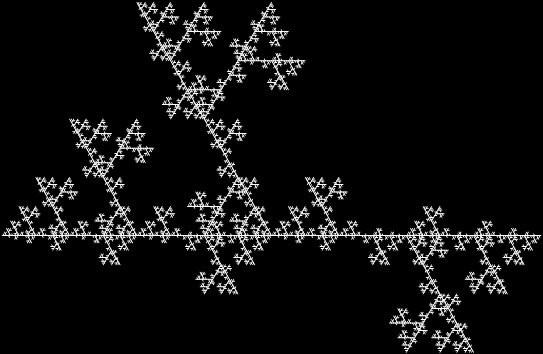
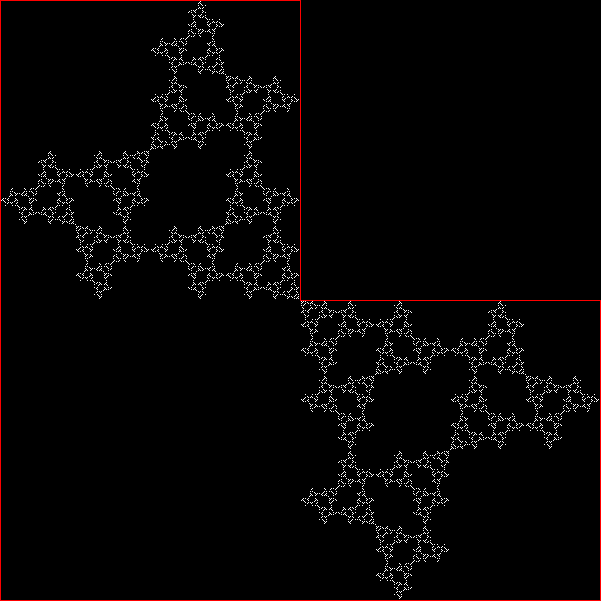
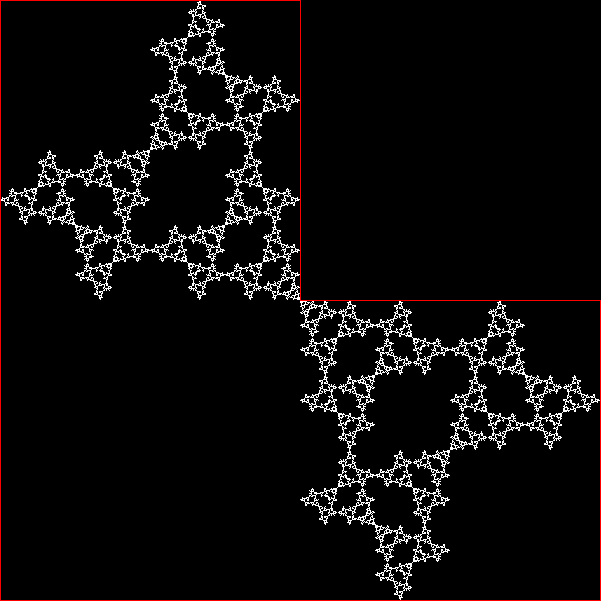
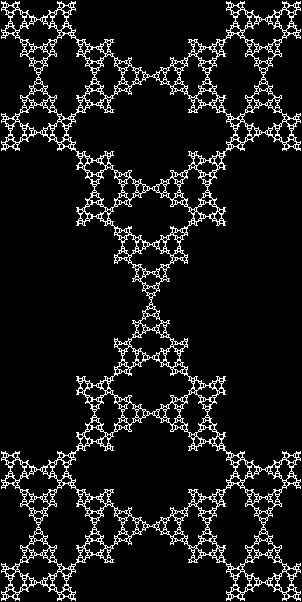
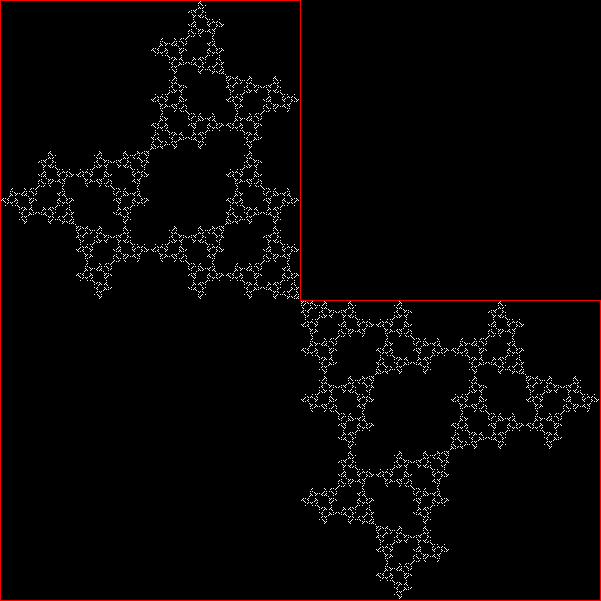
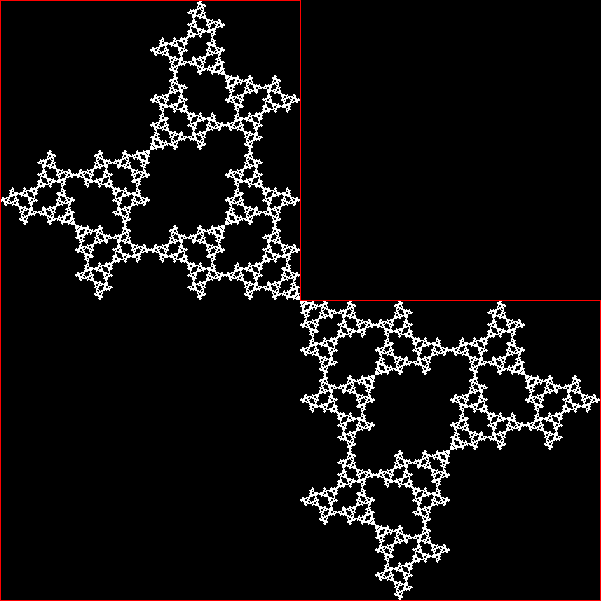
It’s a distorted and incomplete version of the hourglass fractal:

Hourglass fractal


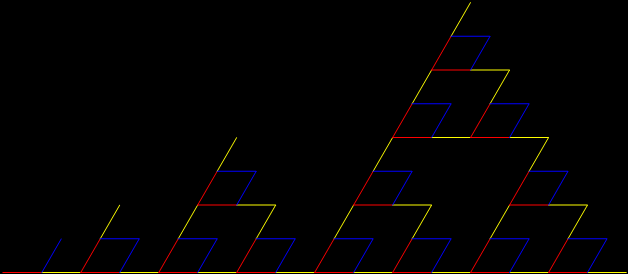
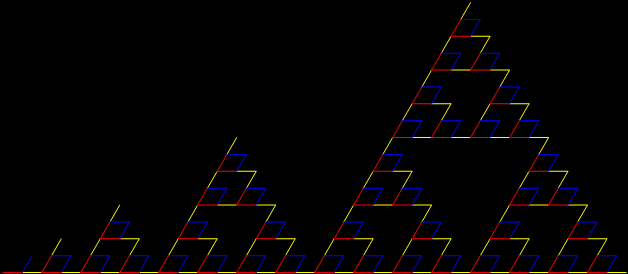
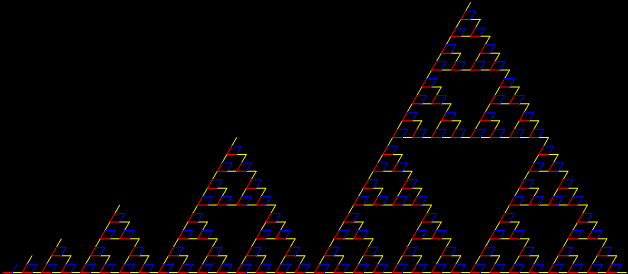
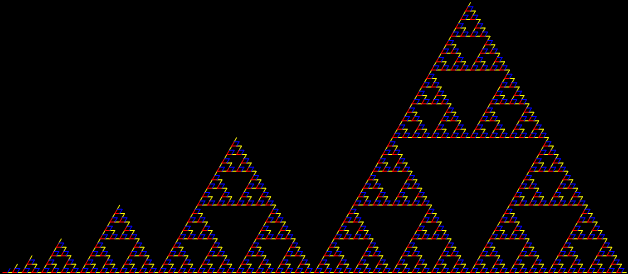
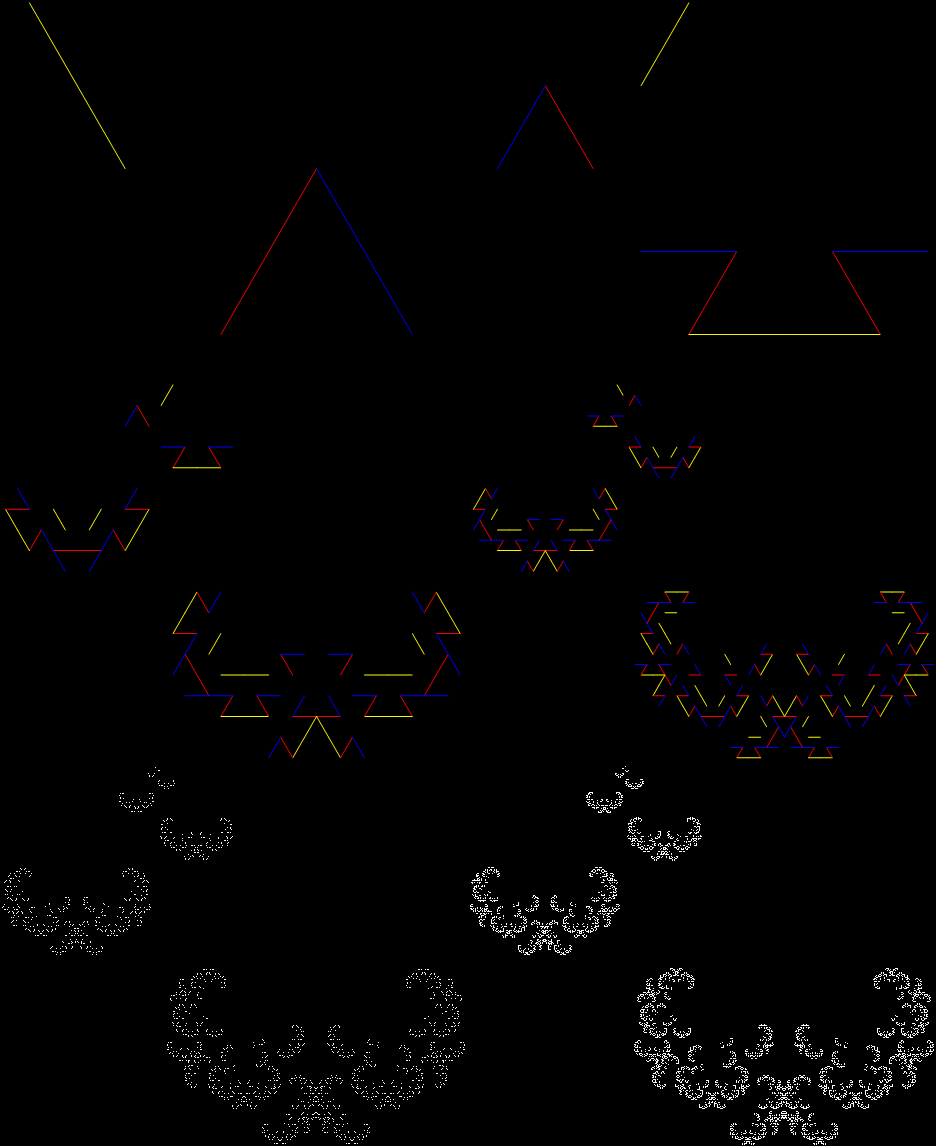
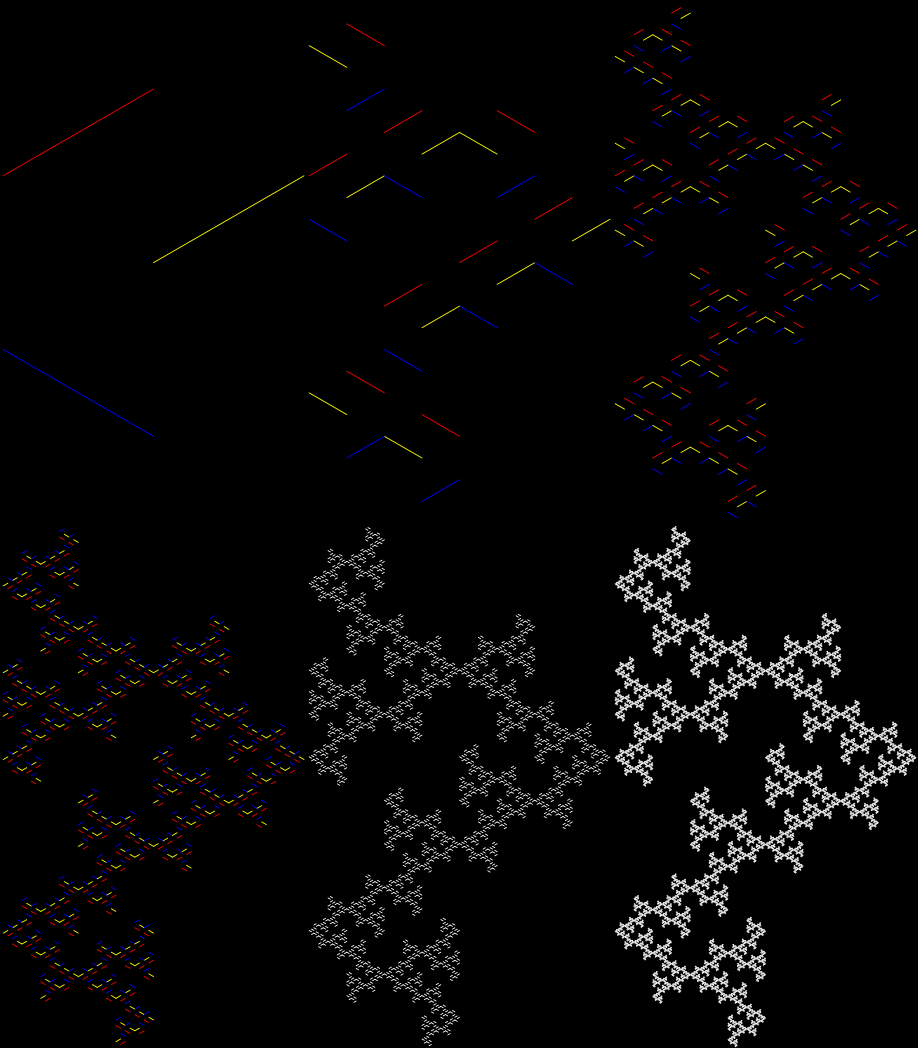
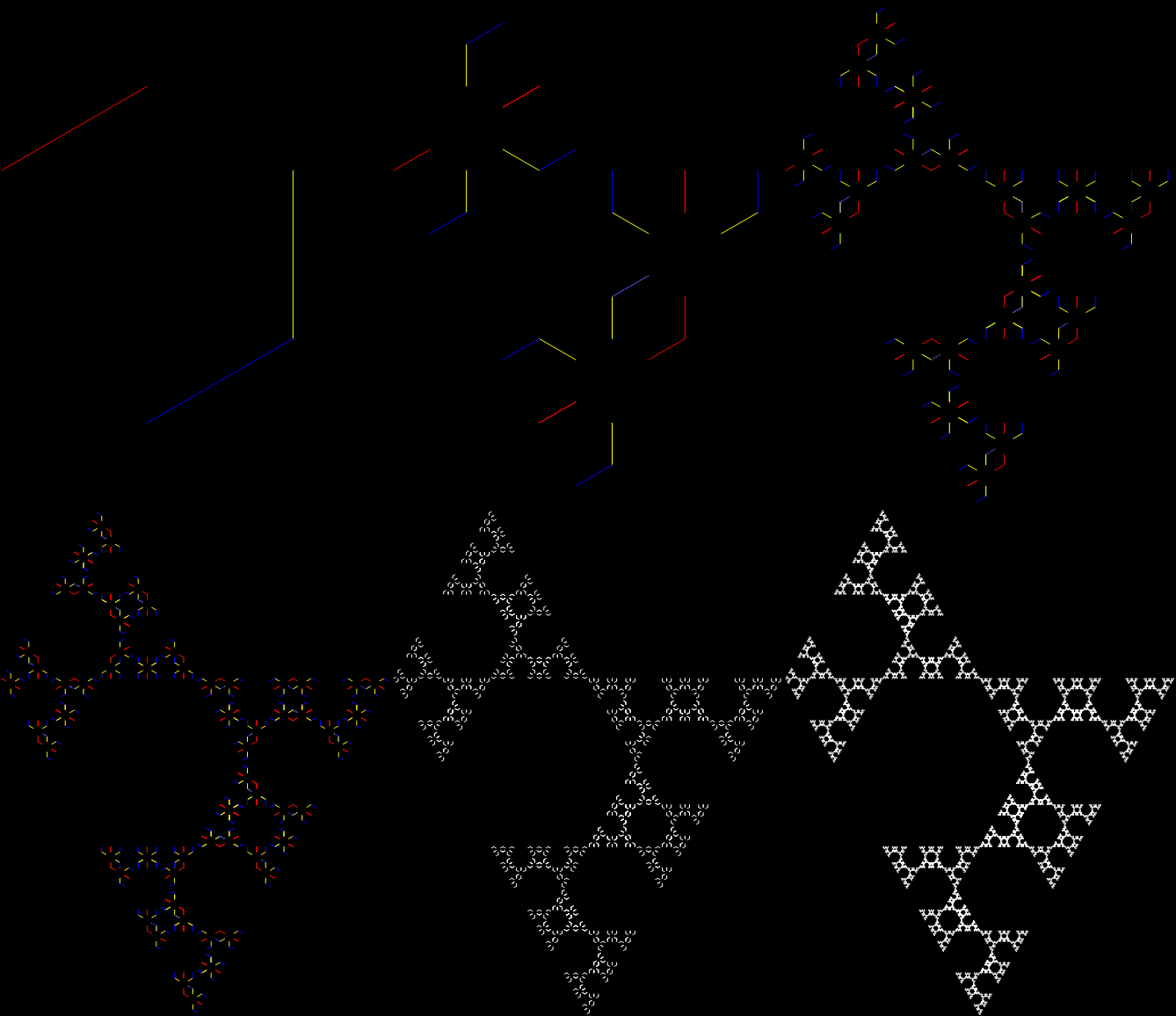
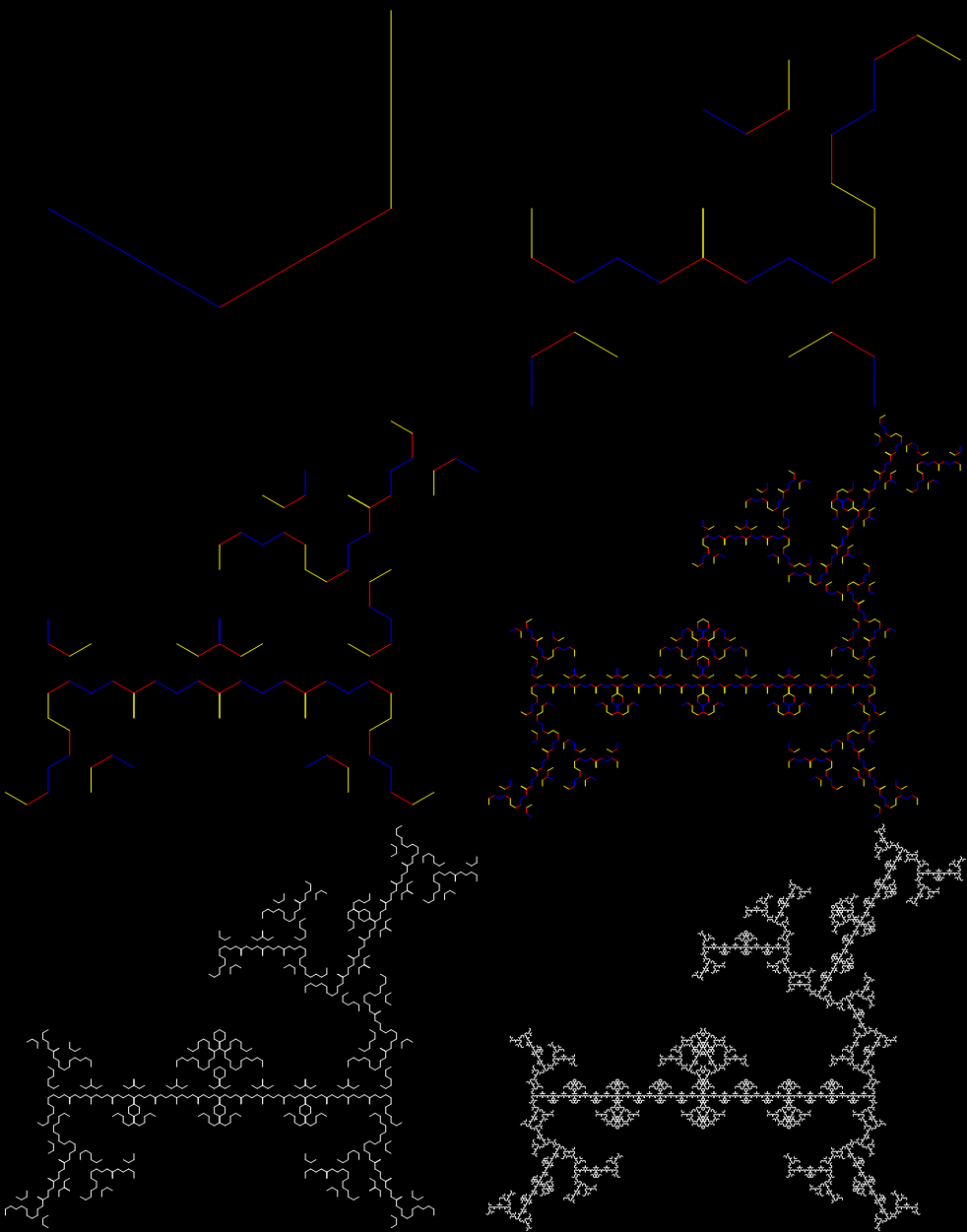
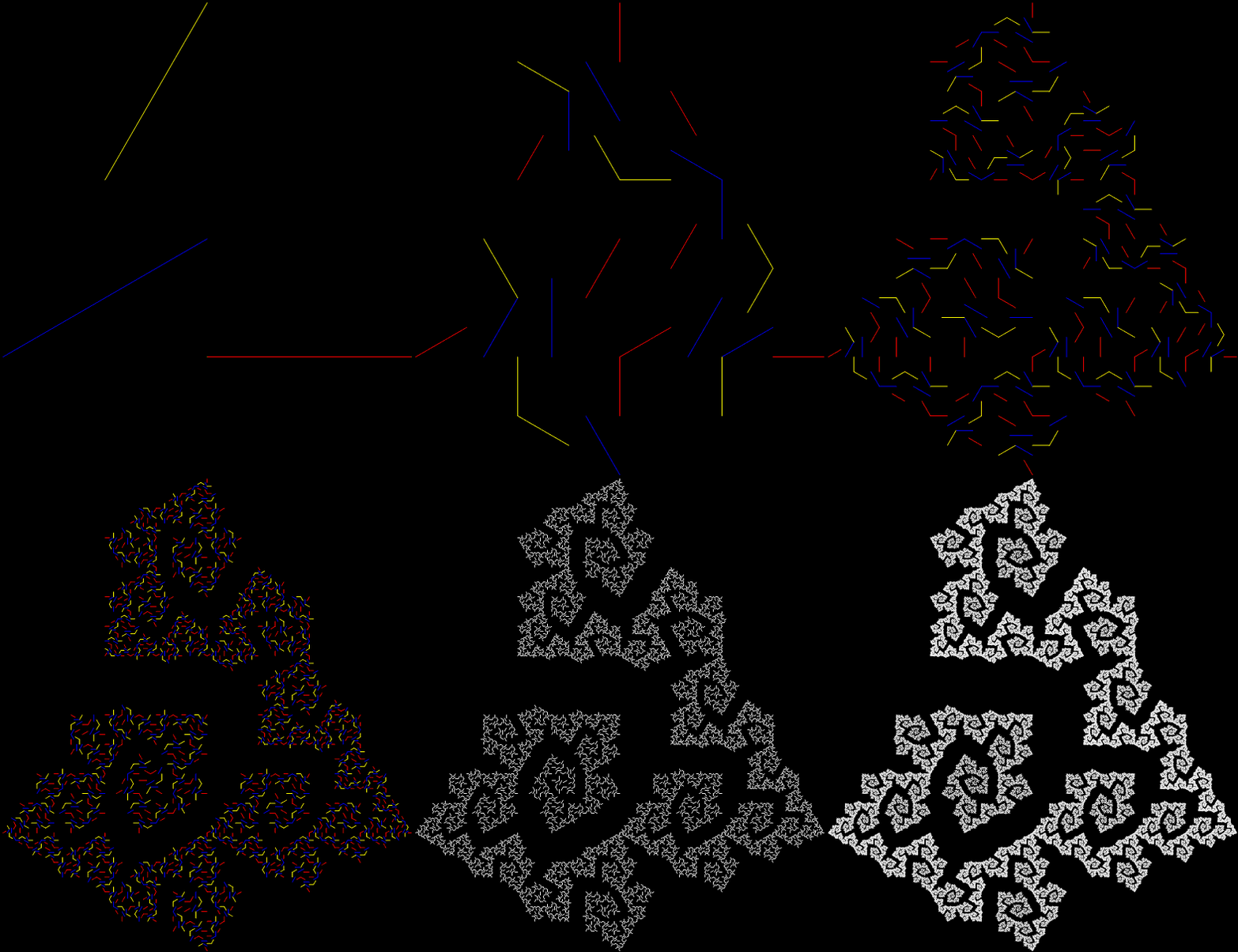
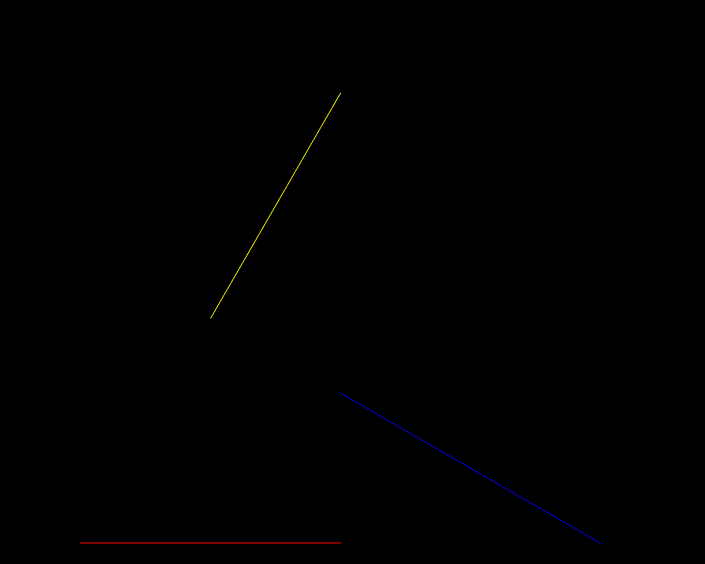
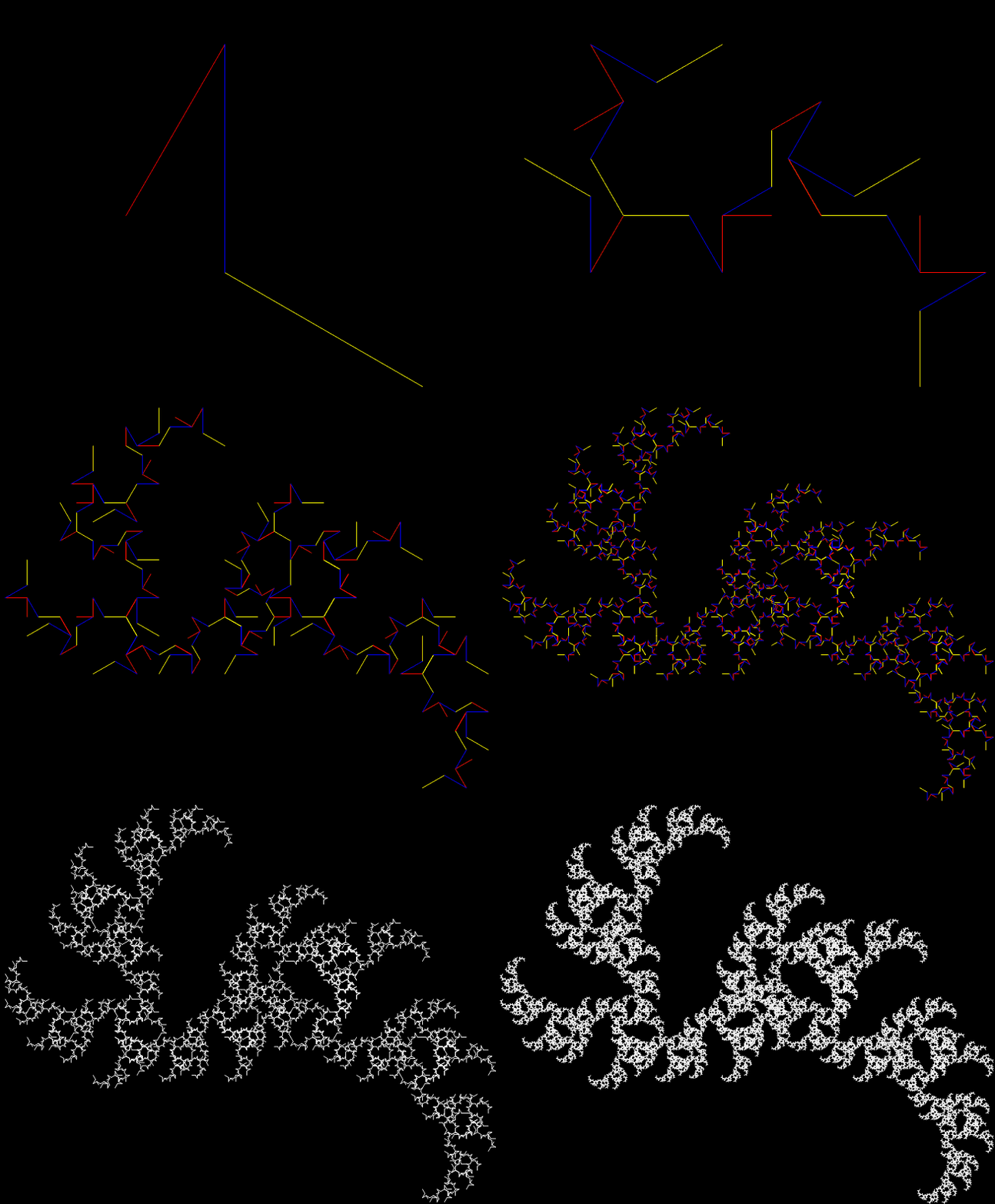
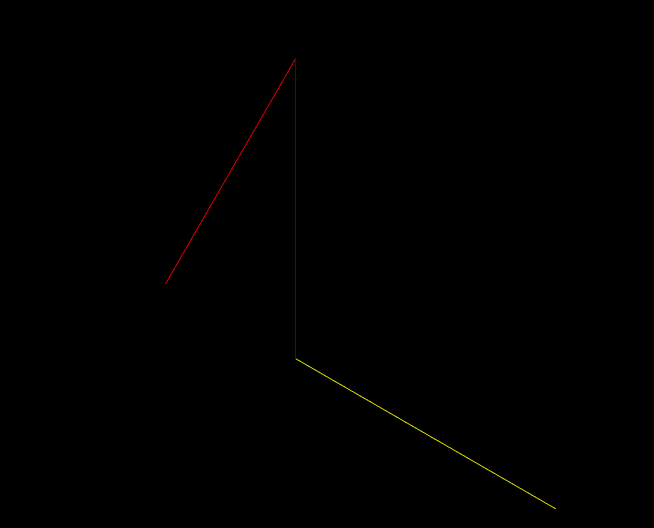
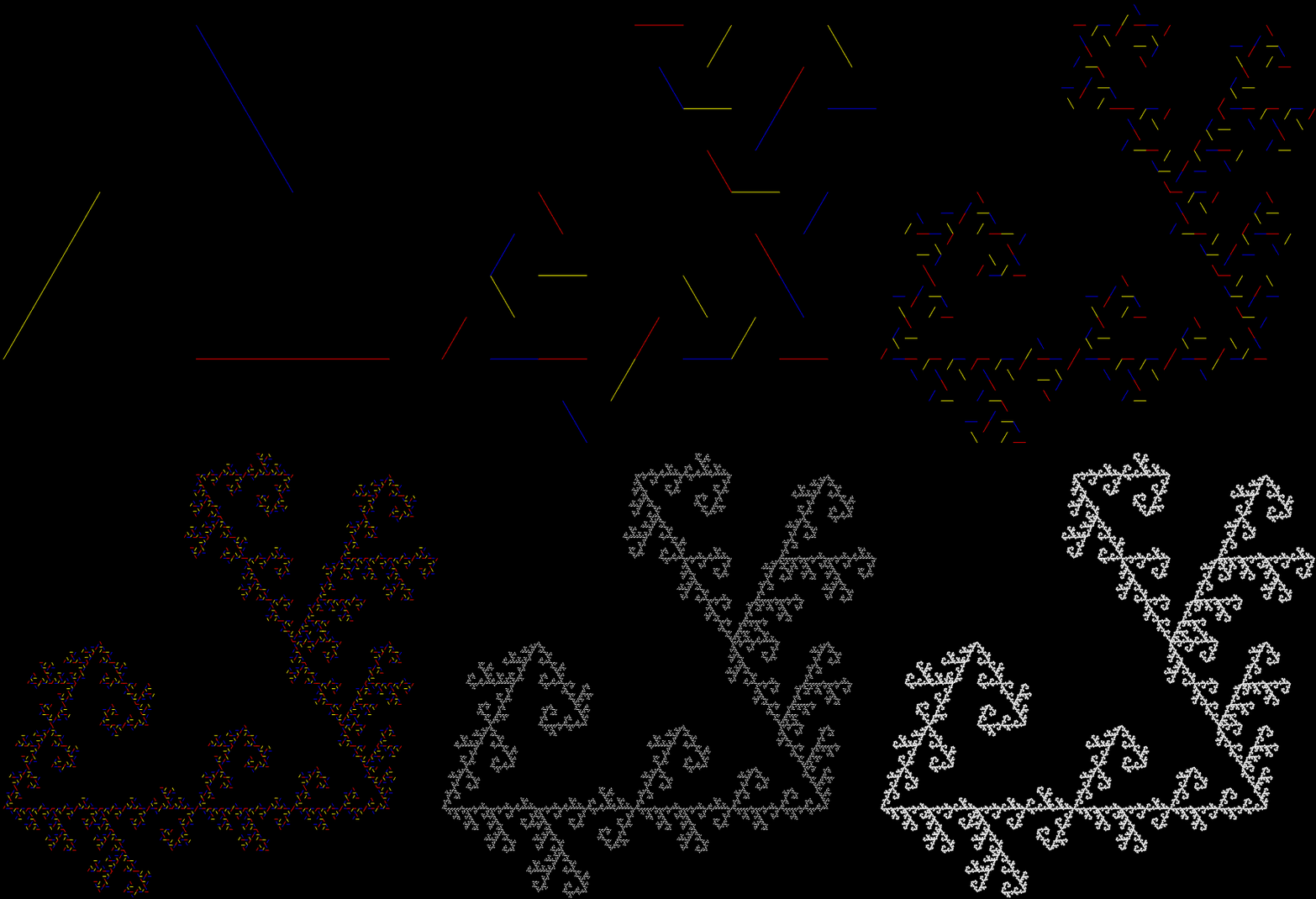
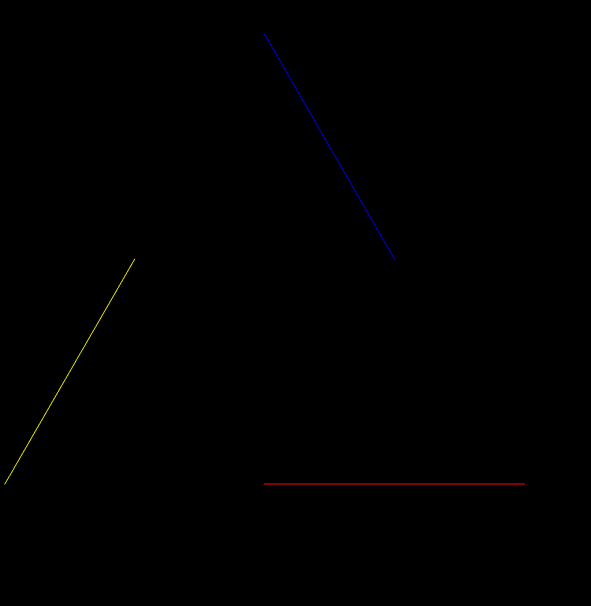
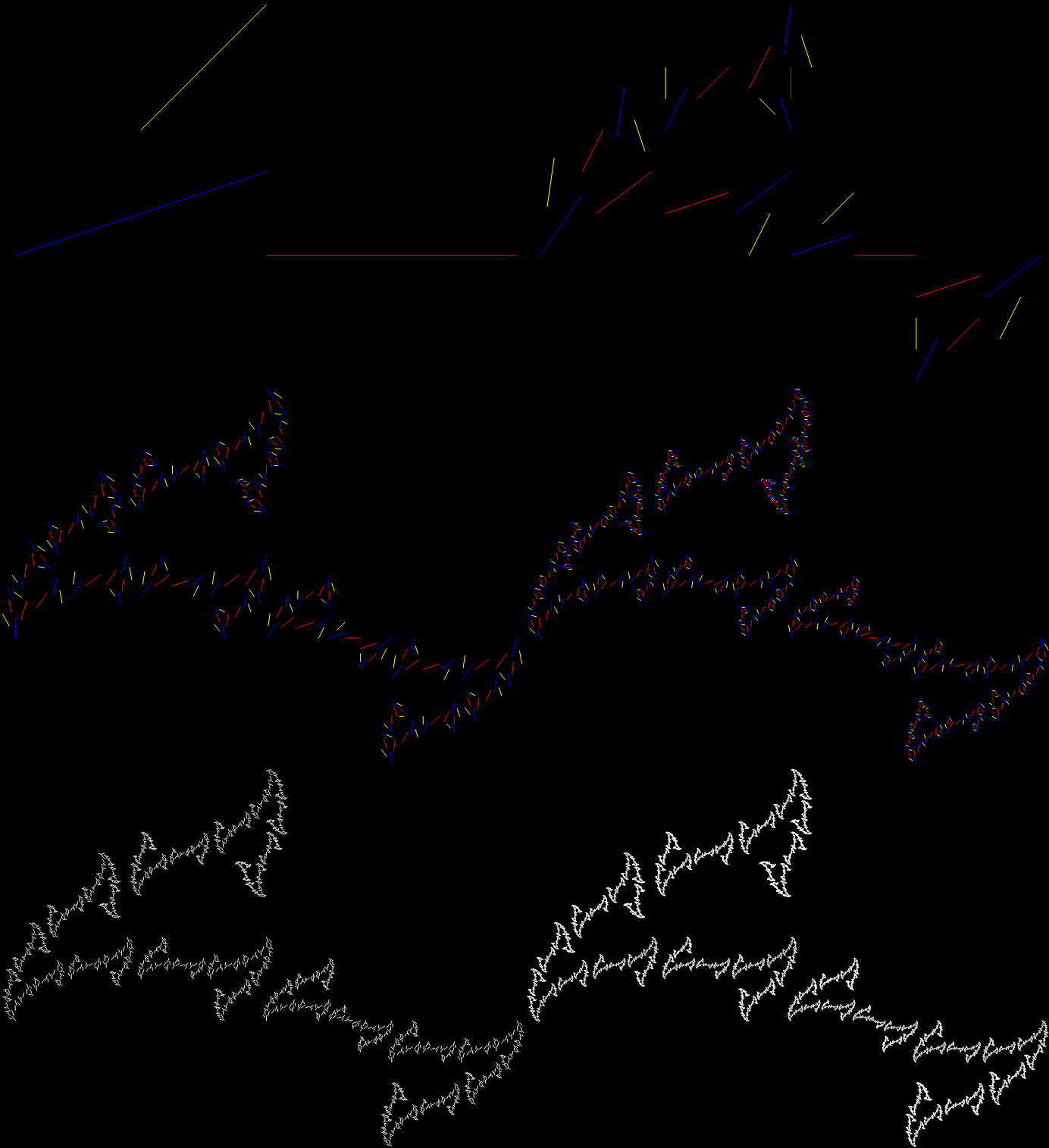
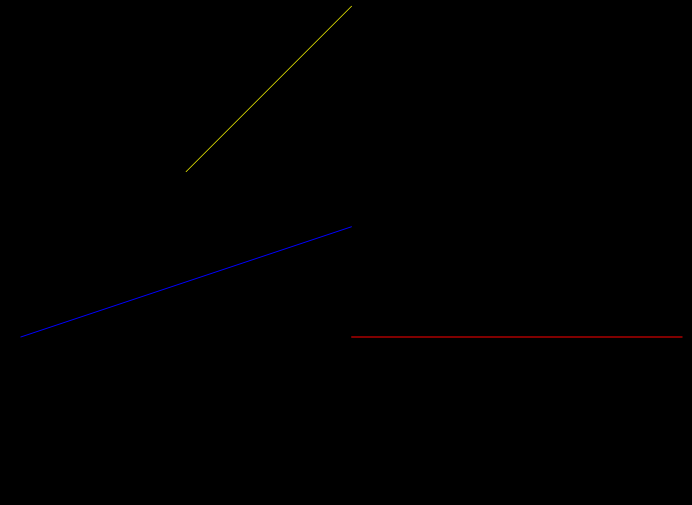
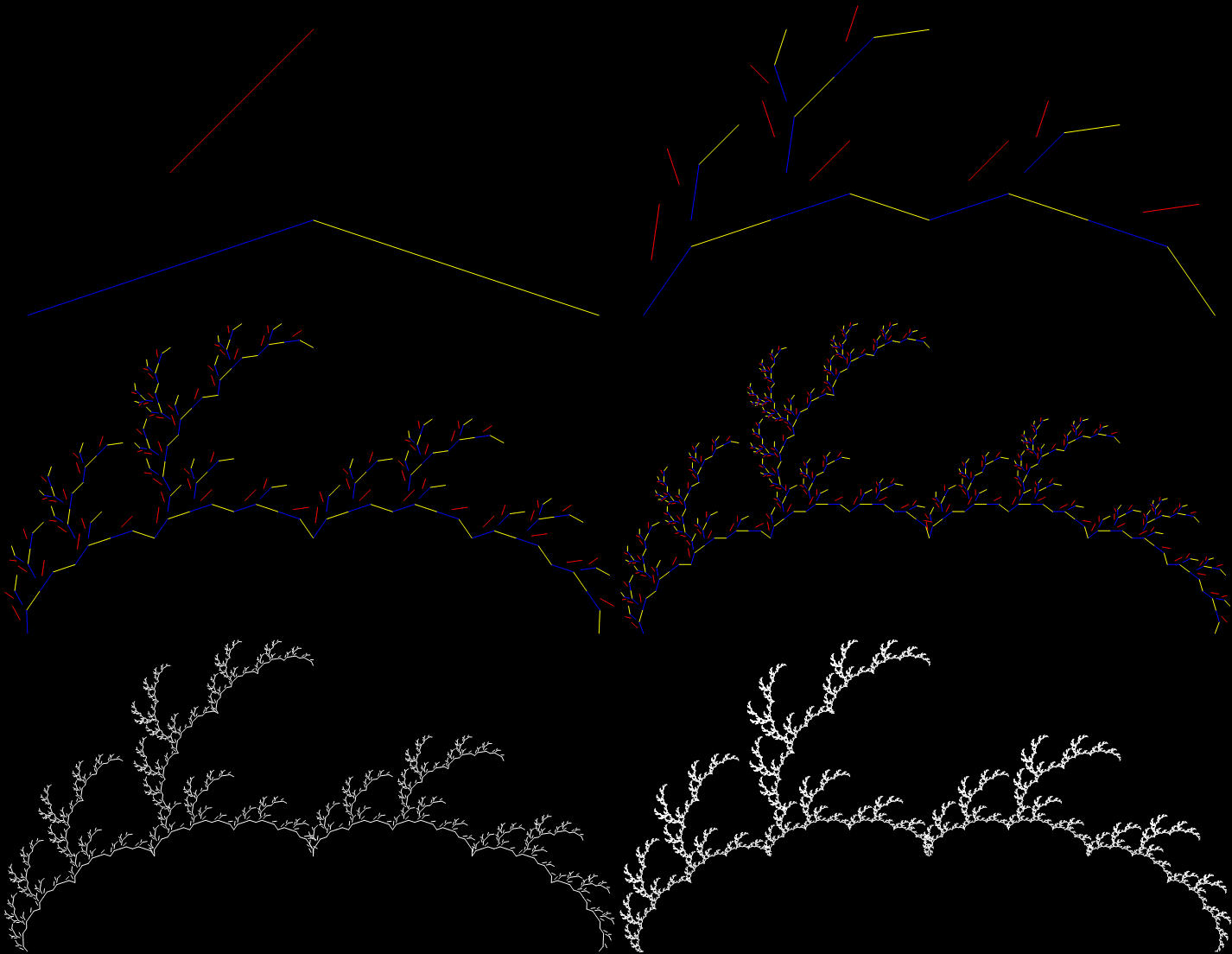
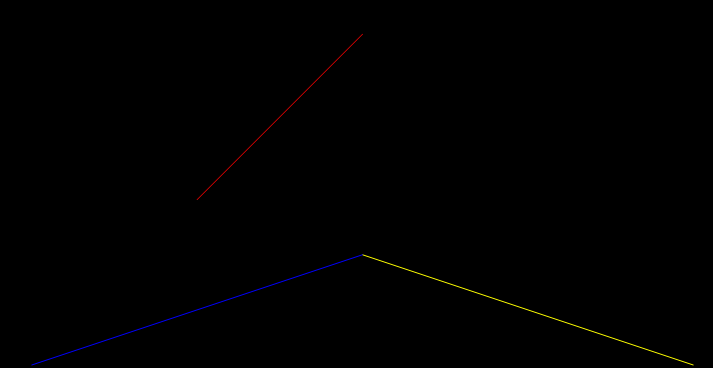
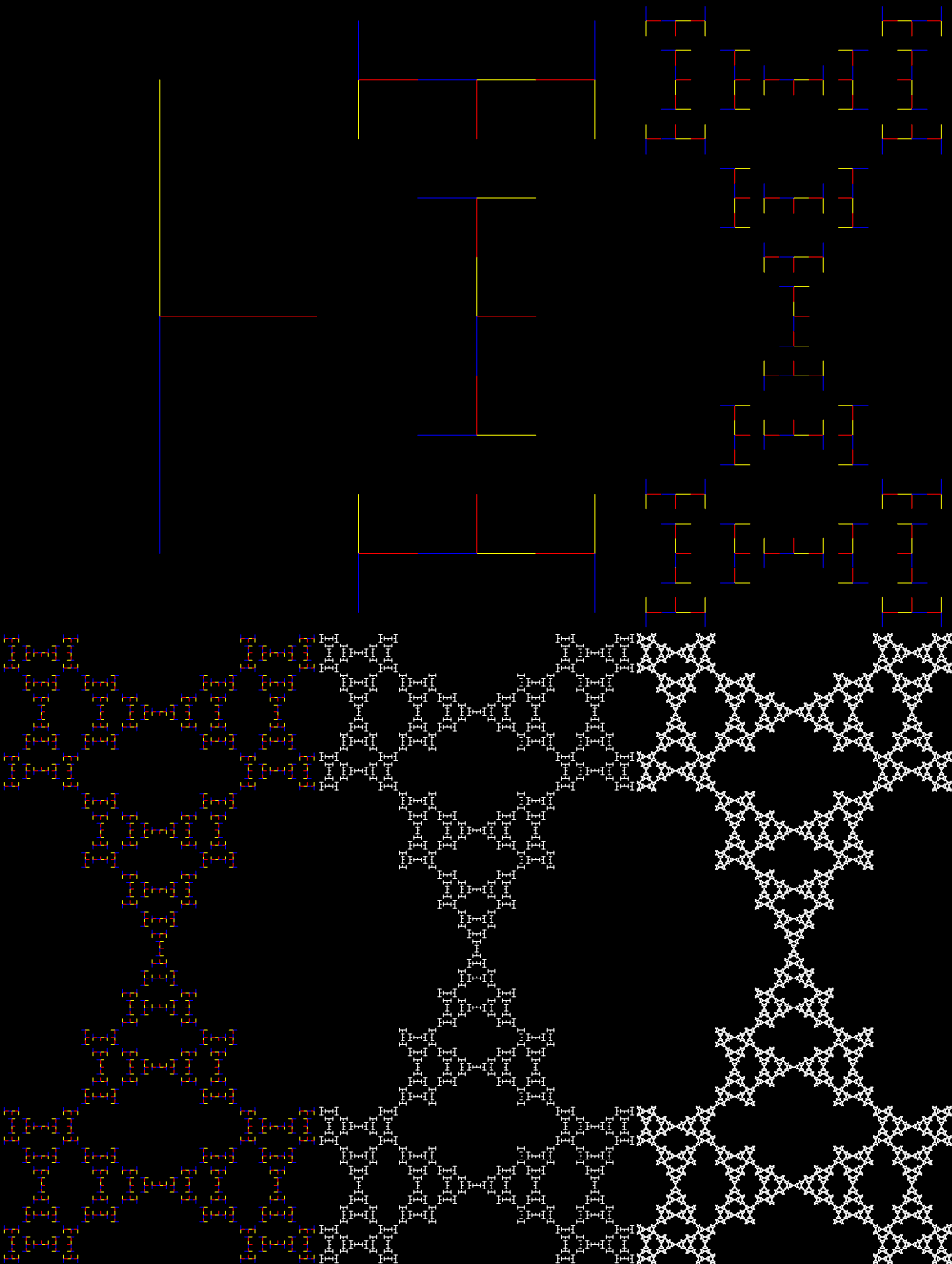
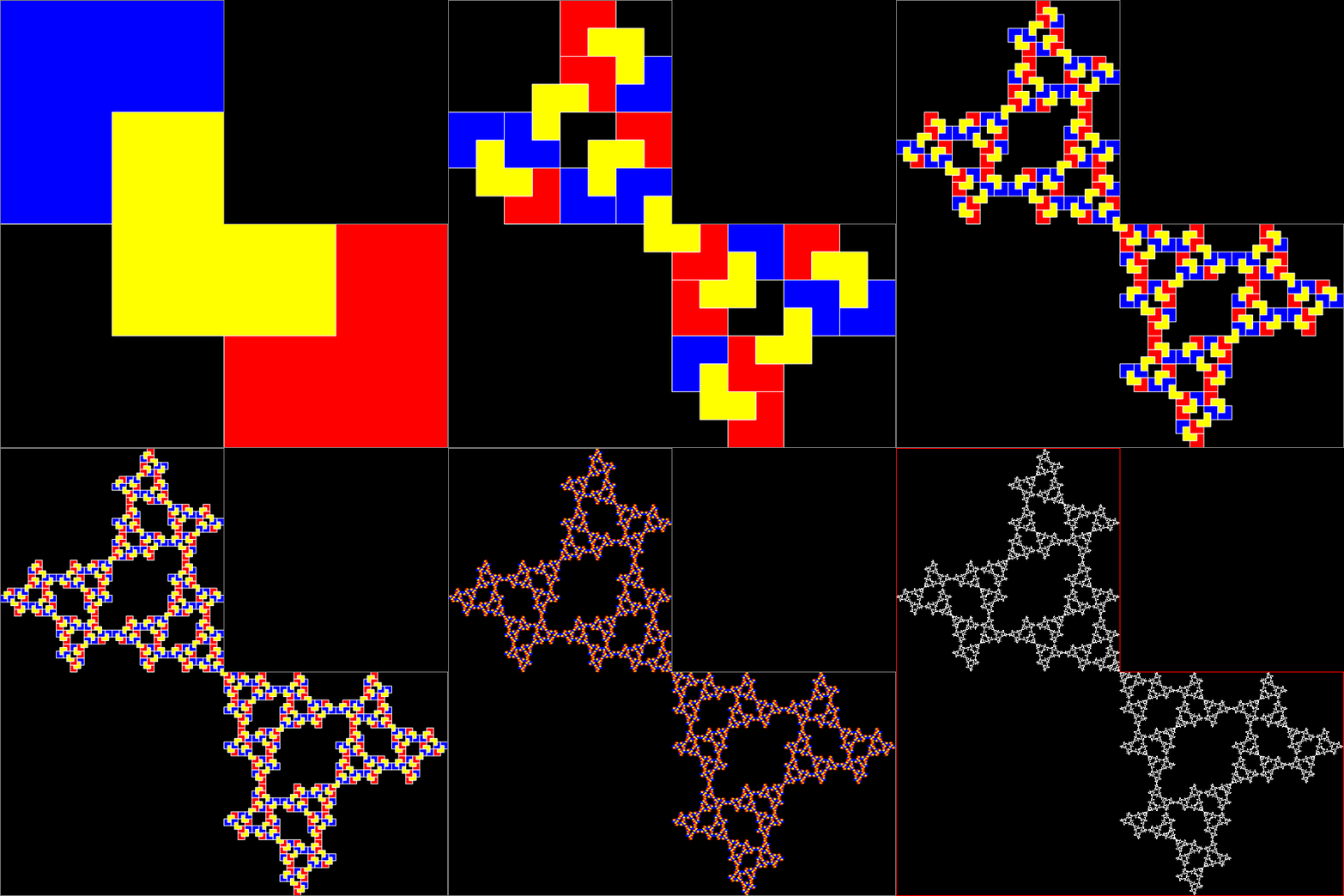
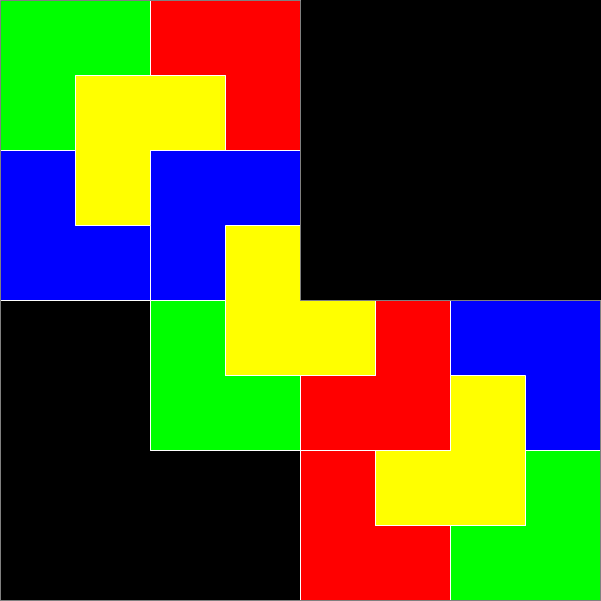
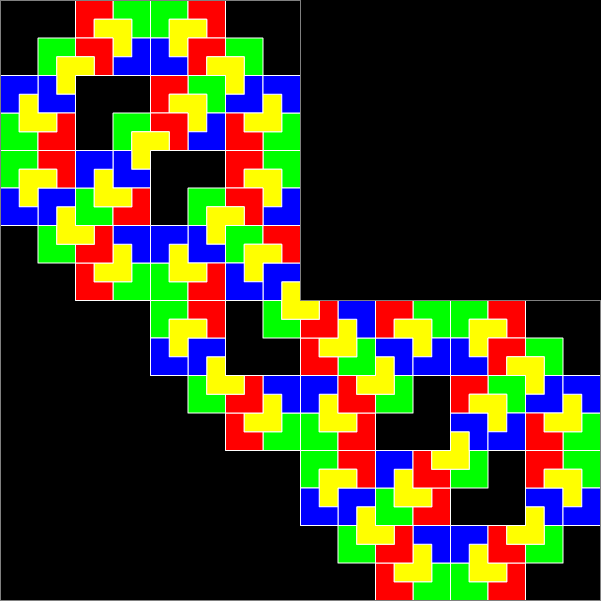
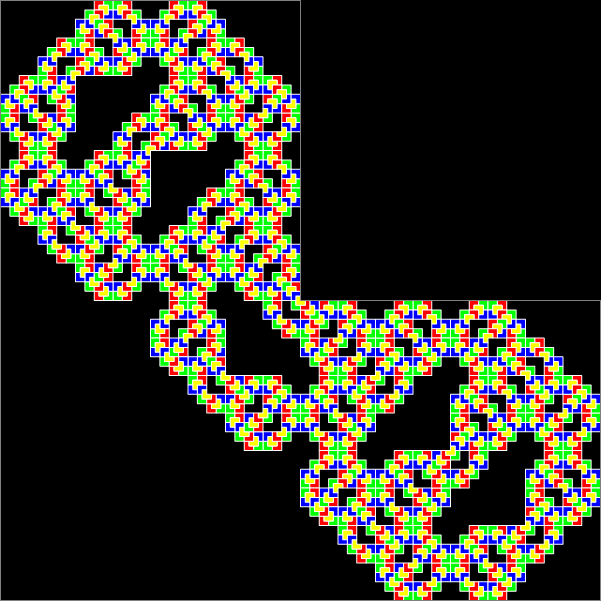
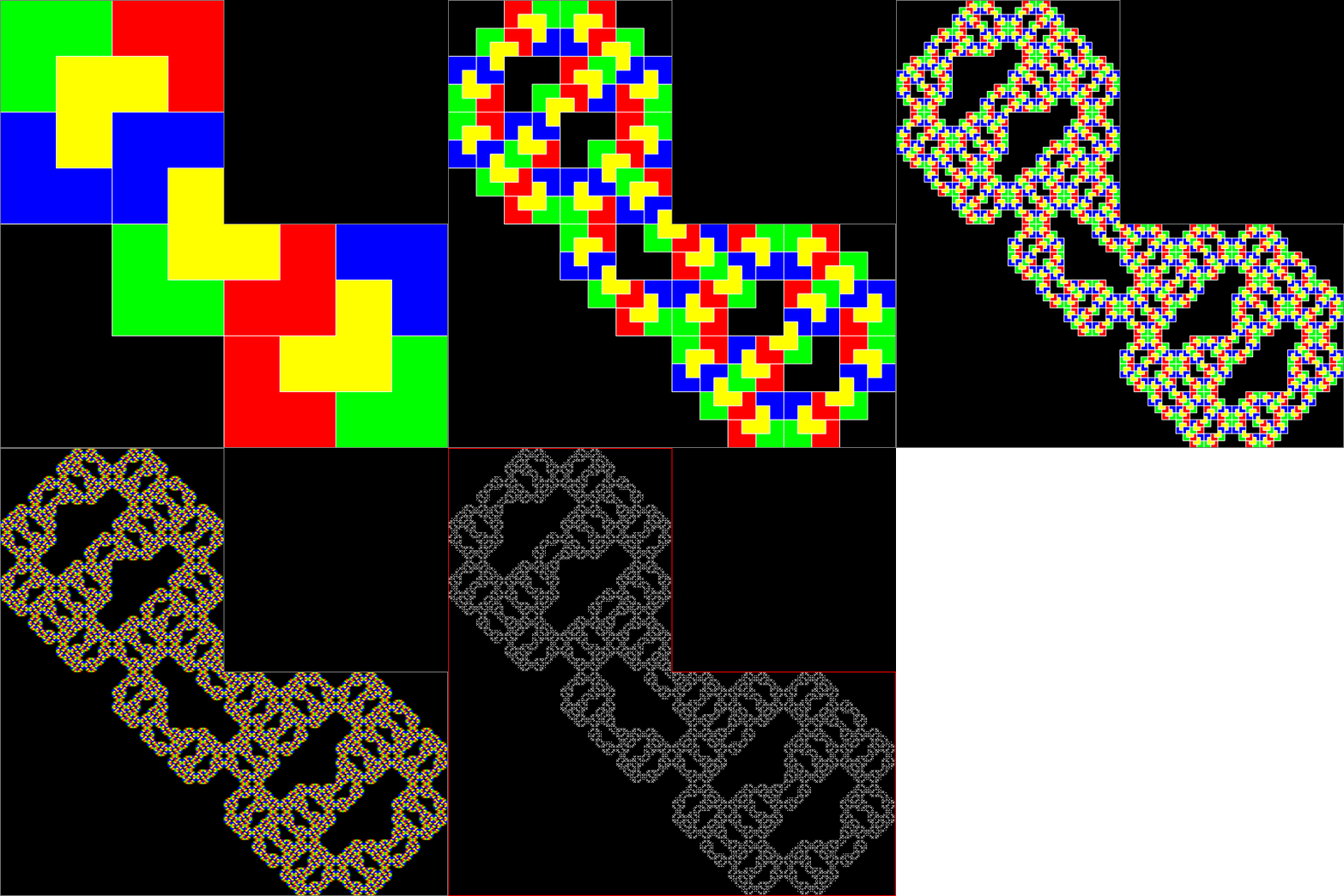
Here’s how to create the distorted form of the hourglass fractal:

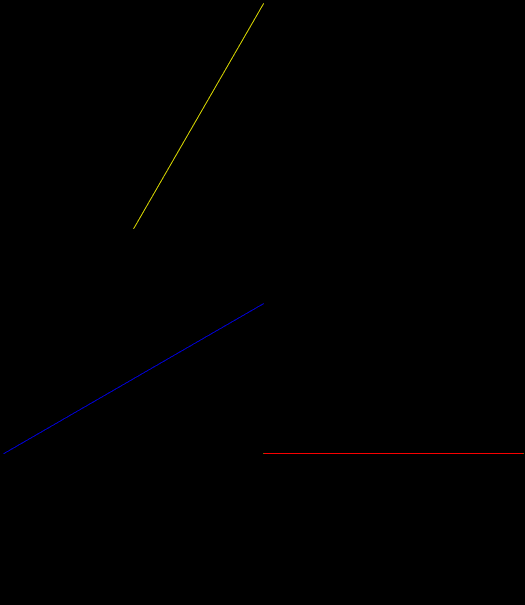
Distorted hourglass from dissected diamond (stage 1)


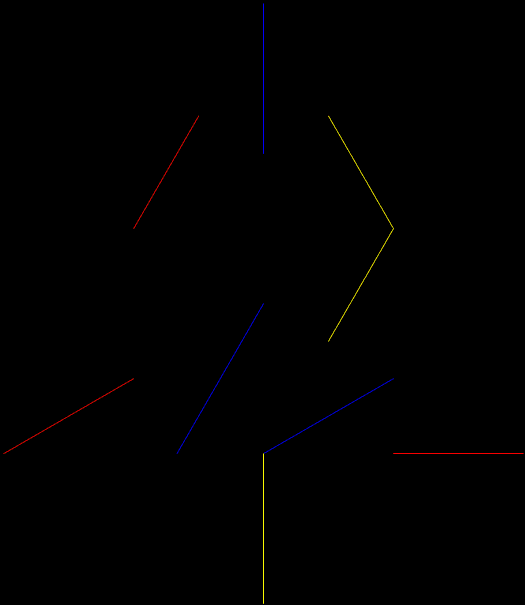
Distorted hourglass #2


Distorted hourglass #3


Distorted hourglass #4


Distorted hourglass #5


Distorted hourglass #6


Distorted hourglass #7


Distorted hourglass #8


Distorted hourglass #9


Distorted hourglass #10


Distorted hourglass (animated)


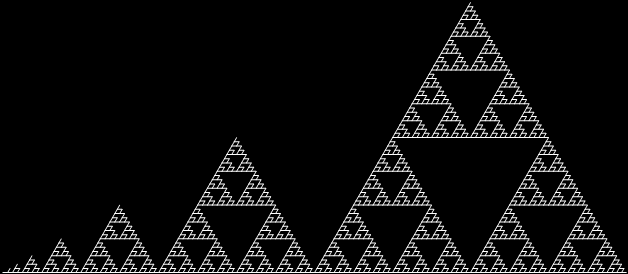
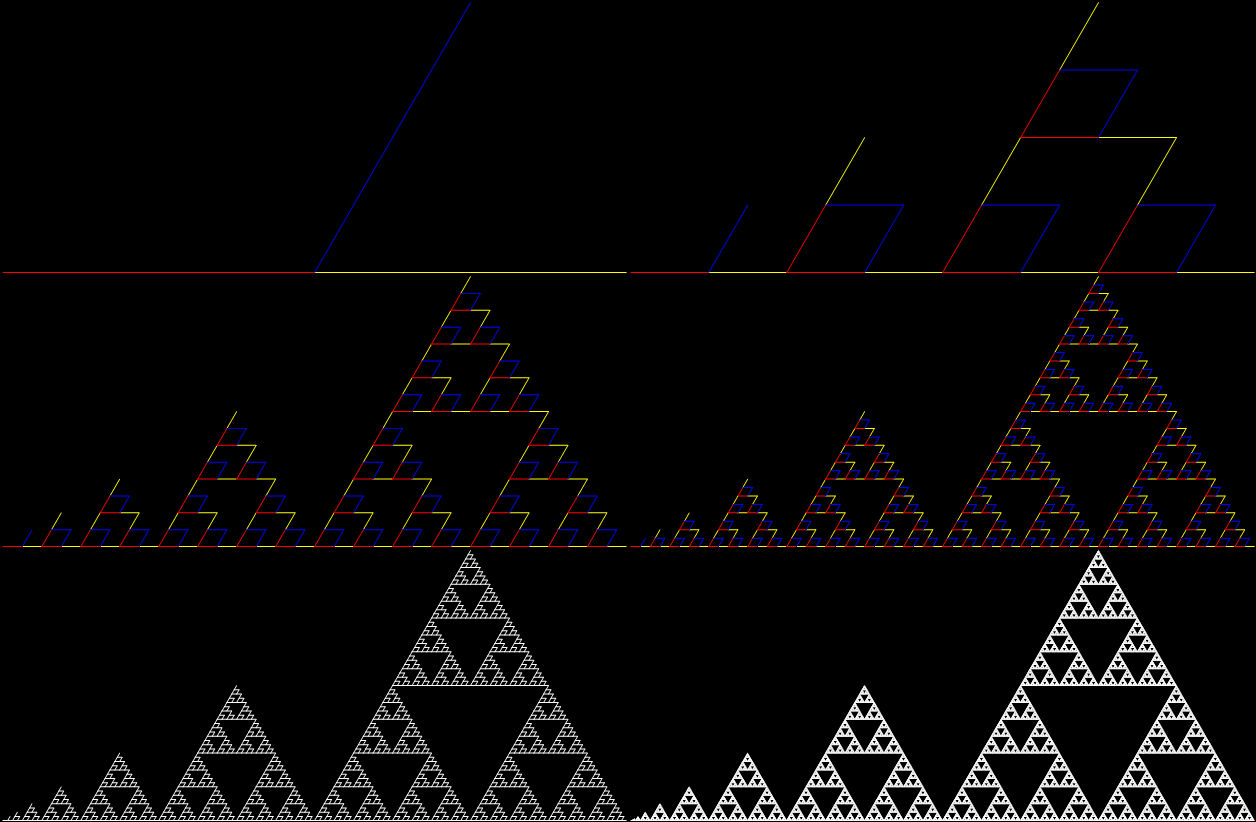
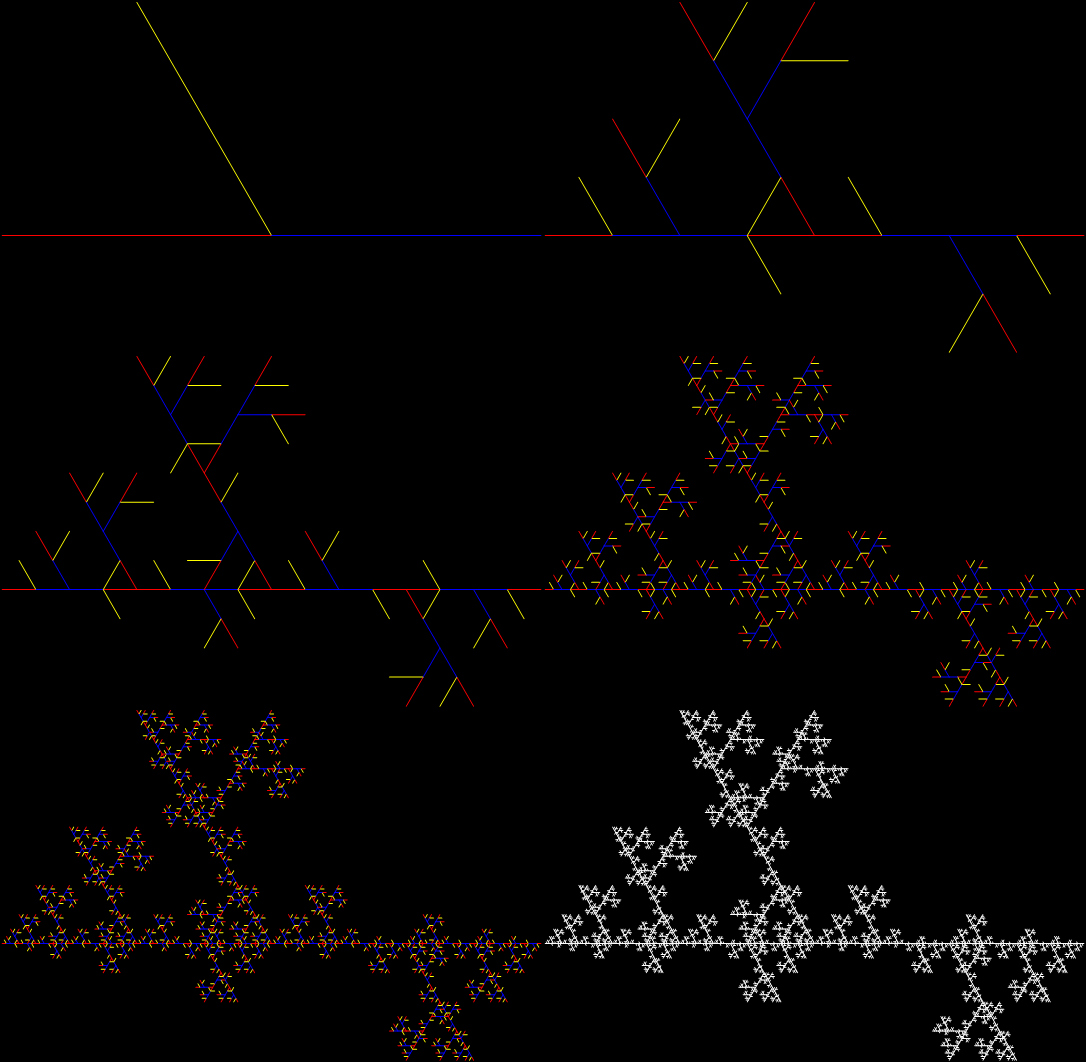
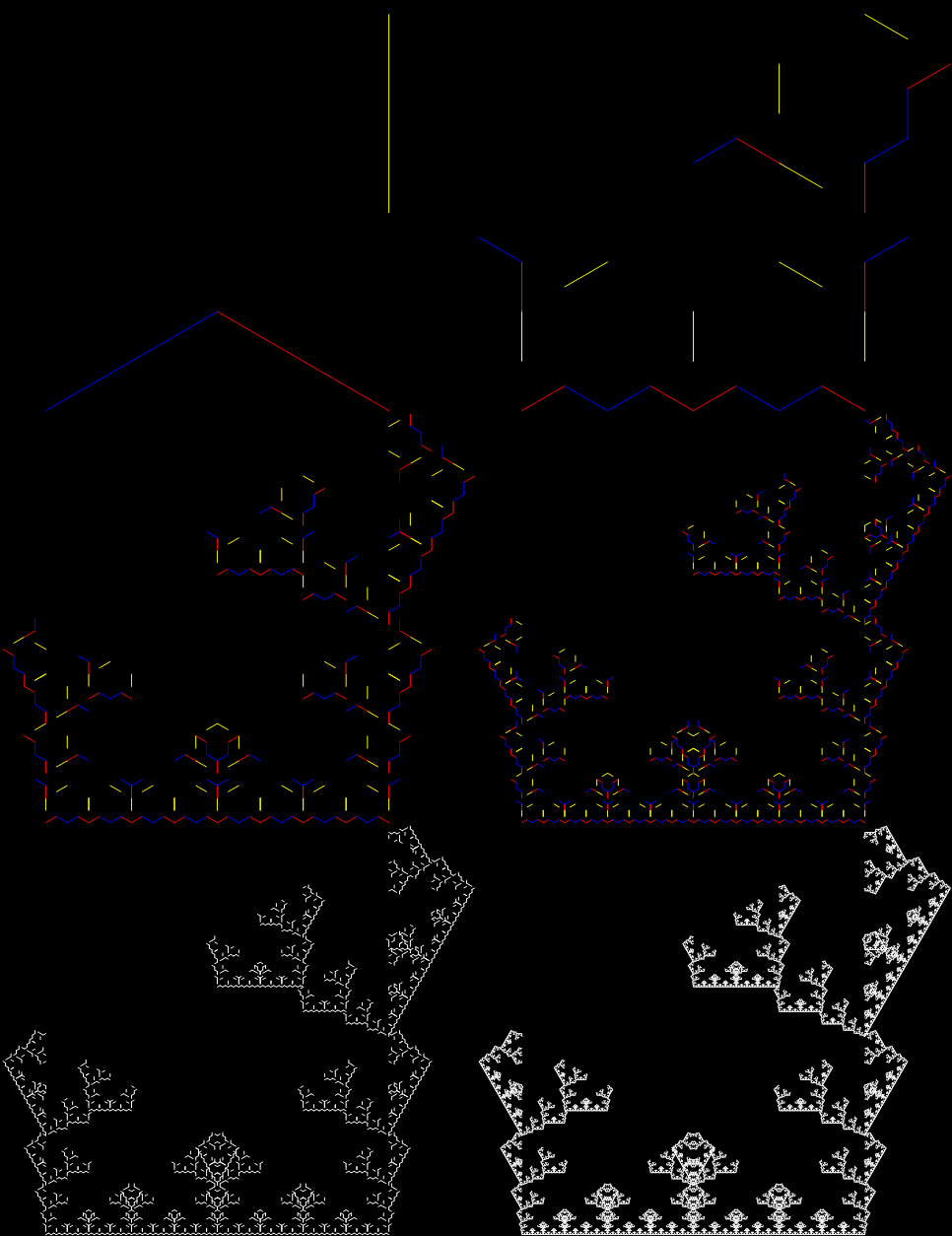
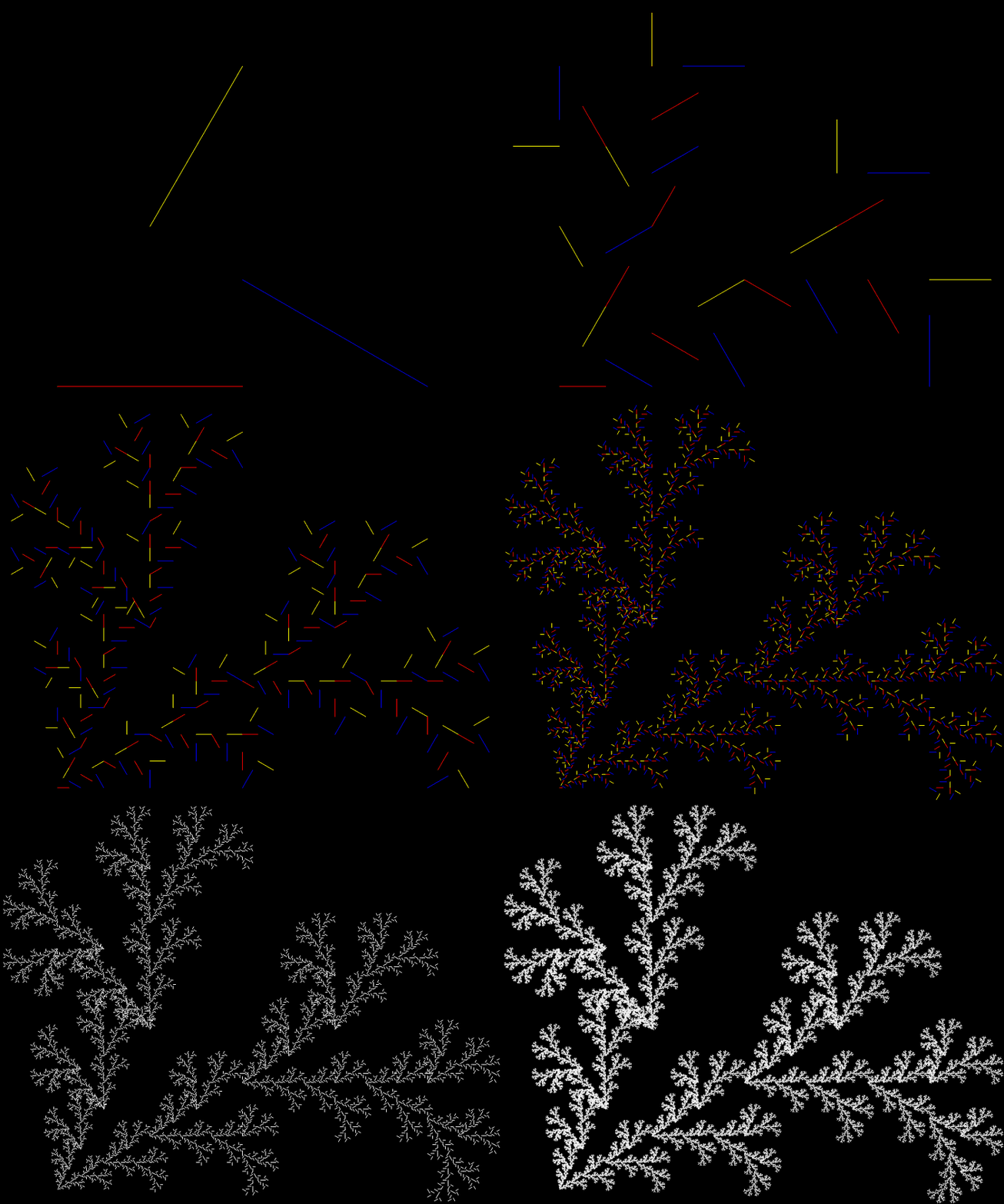
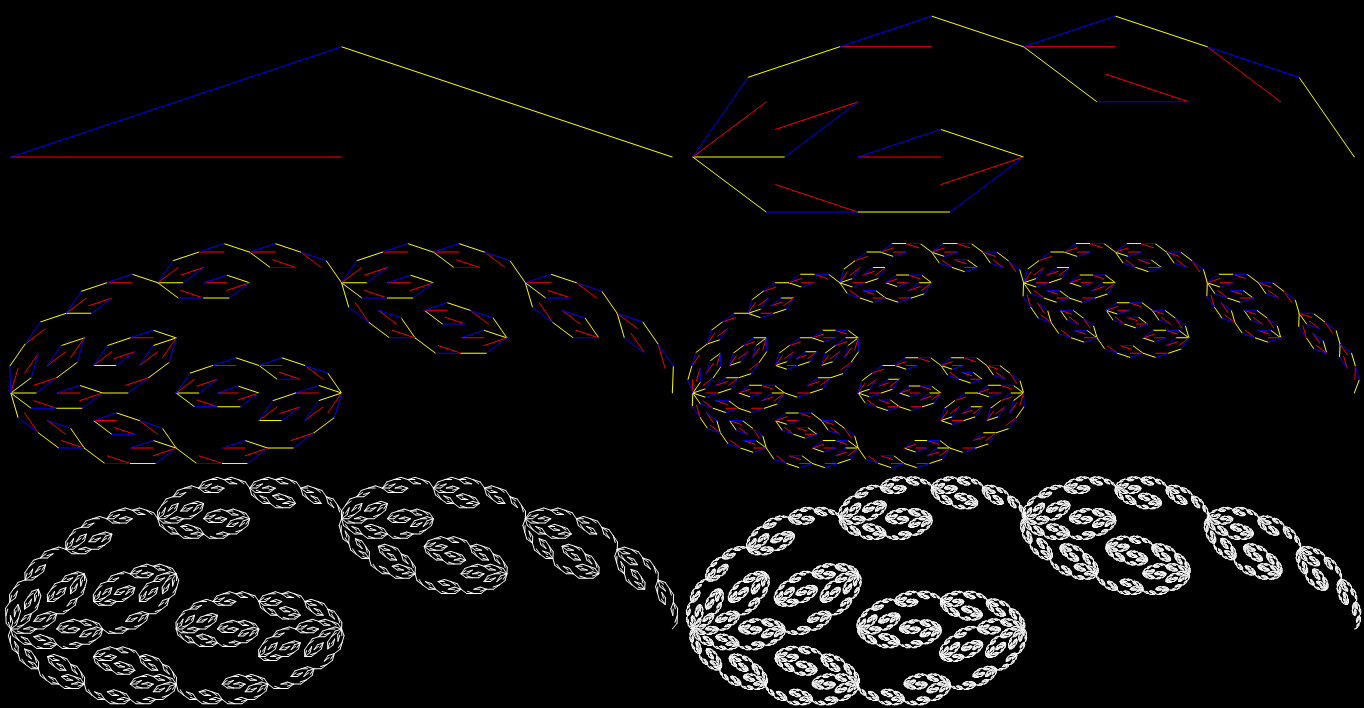
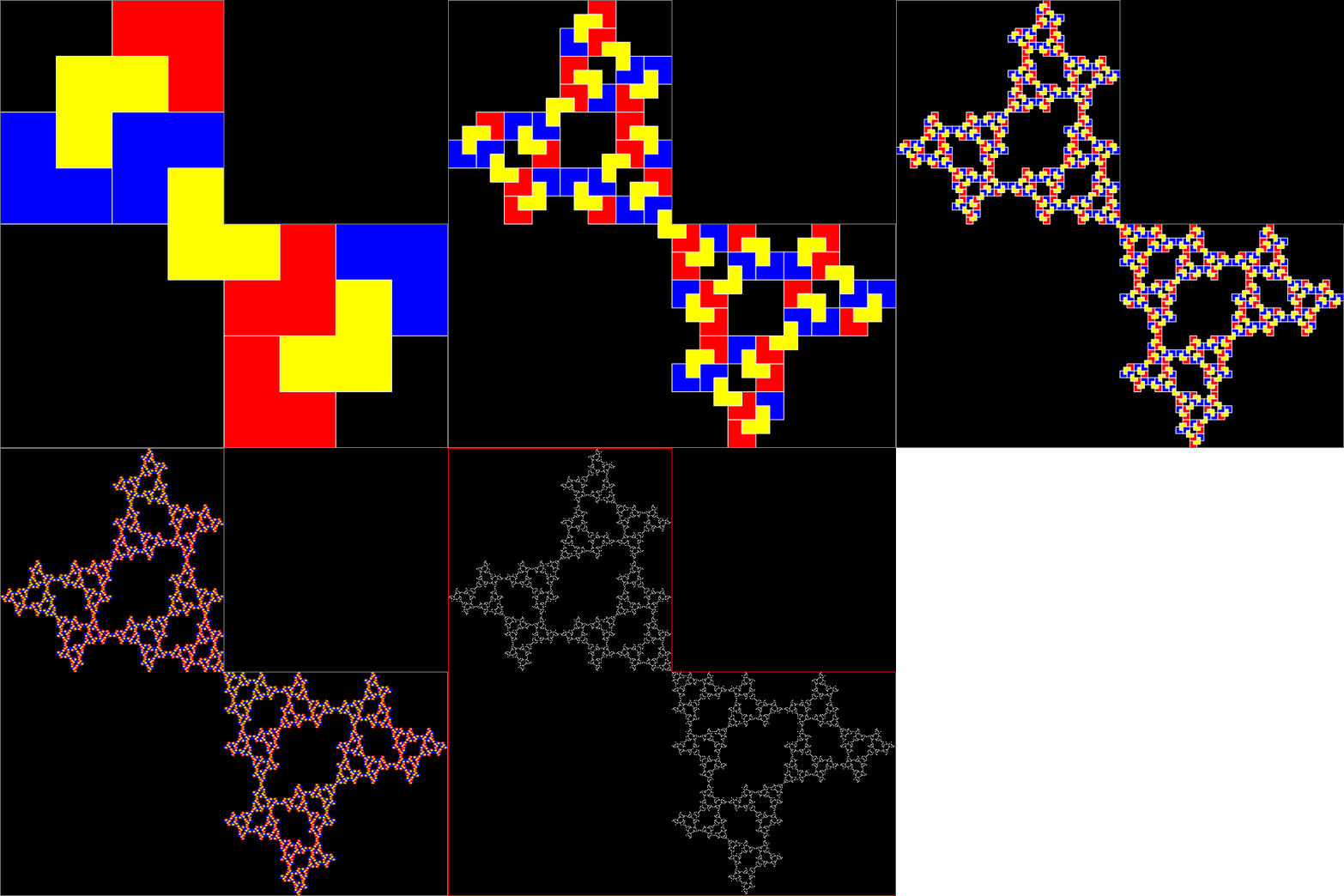
When I de-distorted and doubled the dissected-diamond method, I got this:

Hourglass fractal #1


Hourglass fractal #2


Hourglass fractal #3


Hourglass fractal #4


Hourglass fractal #5


Hourglass fractal #6


Hourglass fractal #7


Hourglass fractal #8


Hourglass fractal #9


Hourglass fractal #10


Hourglass fractal (animated)


Elsewhere other-engageable:


Hour Power
Hour Re-Powered
Hour Re-Re-Powered
Hour Re-Re-Re-Powered

Dissing the Diamond

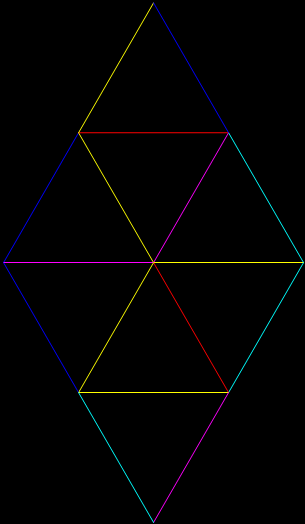
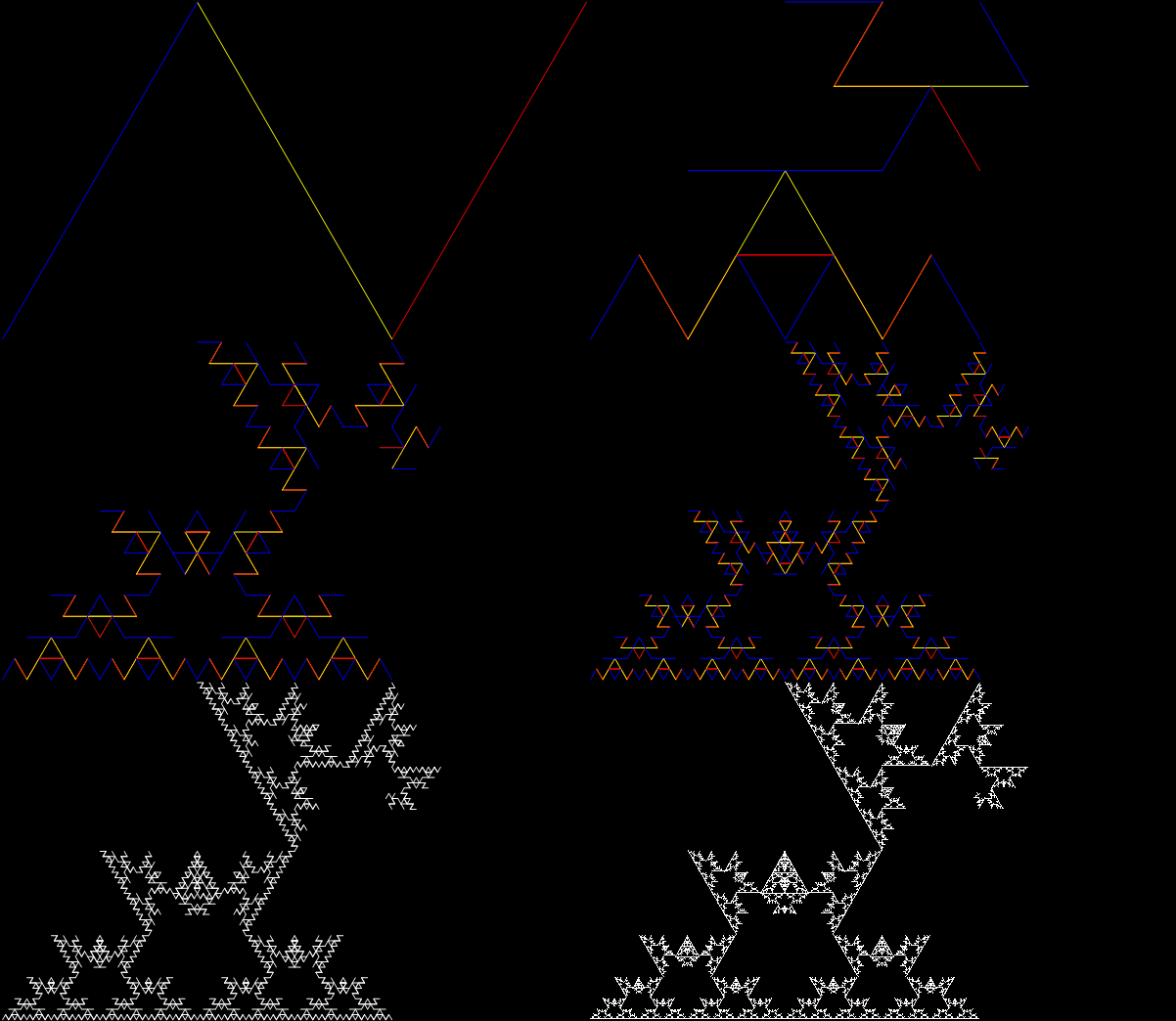
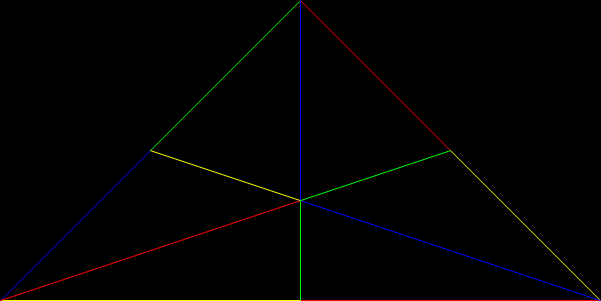
In “Fractangular Frolics” I looked at how you could create fractals by choosing lines from a dissected equilateral or isosceles right triangle. Now I want to look at fractals created from the lines of a dissected diamond, as here:

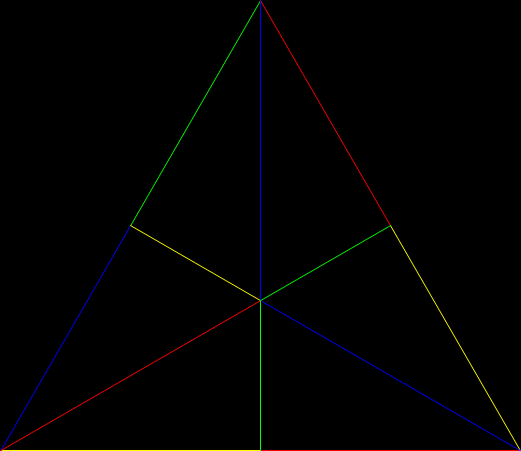
Lines in a dissected diamond


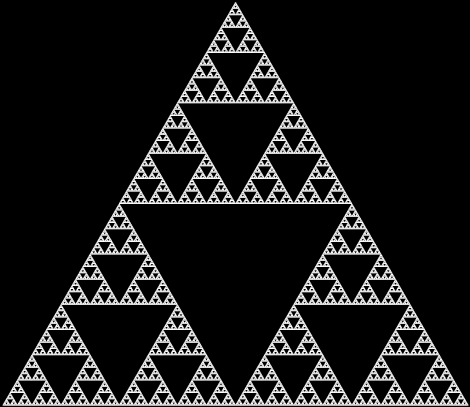
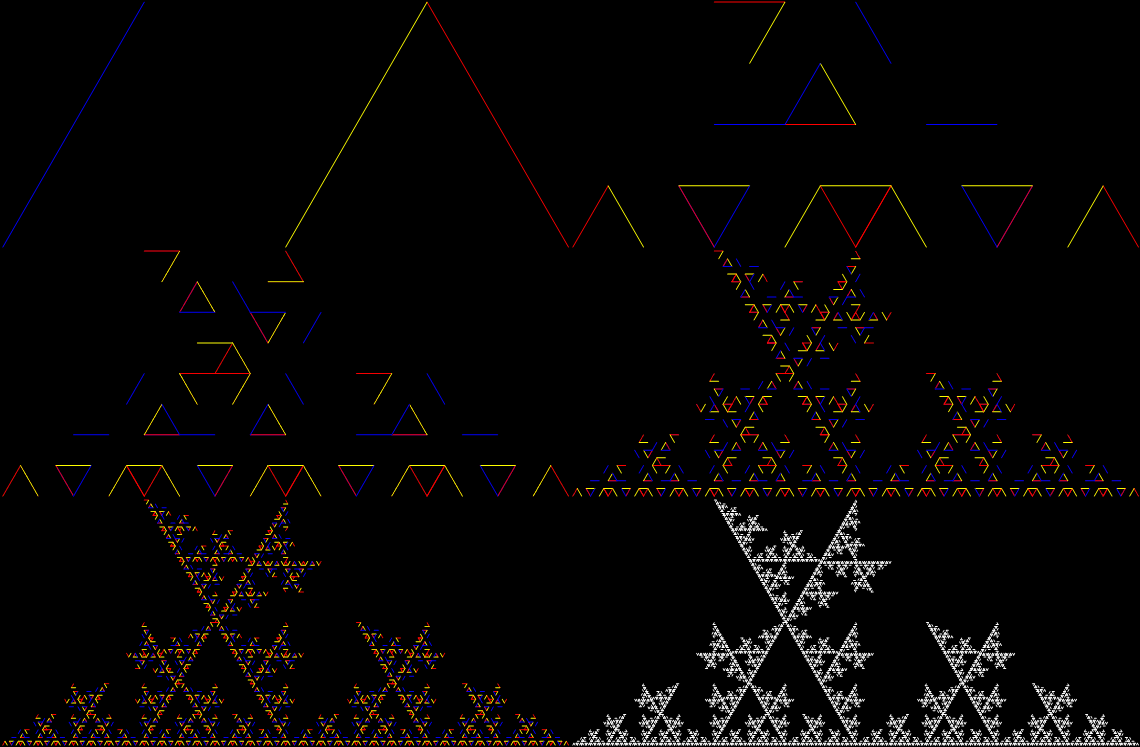
Let’s start by creating one of the most famous fractals of all, the Sierpiński triangle:

Sierpiński triangle stage 1


Sierpiński triangle #2


Sierpiński triangle #3


Sierpiński triangle #4


Sierpiński triangle #5


Sierpiński triangle #6


Sierpiński triangle #7


Sierpiński triangle #8


Sierpiński triangle #9


Sierpiński triangle #10


Sierpiński triangle (animated)


However, you can get an infinite number of Sierpiński triangles with three lines from the diamond:

Sierpińfinity #1


Sierpińfinity #2


Sierpińfinity #3


Sierpińfinity #4


Sierpińfinity #5


Sierpińfinity #6


Sierpińfinity #7


Sierpińfinity #8


Sierpińfinity #9


Sierpińfinity #10


Sierpińfinity (animated)


Here are some more fractals created from three lines of the dissected diamond (sometimes the fractals are rotated to looked better):


And in these fractals one or more of the lines are flipped to create the next stage of the fractal:


Previously pre-posted:

Fractangular Frolics — fractals created in a similar way

Dissecting the Diamond — fractals from another kind of diamond

Circus Trix

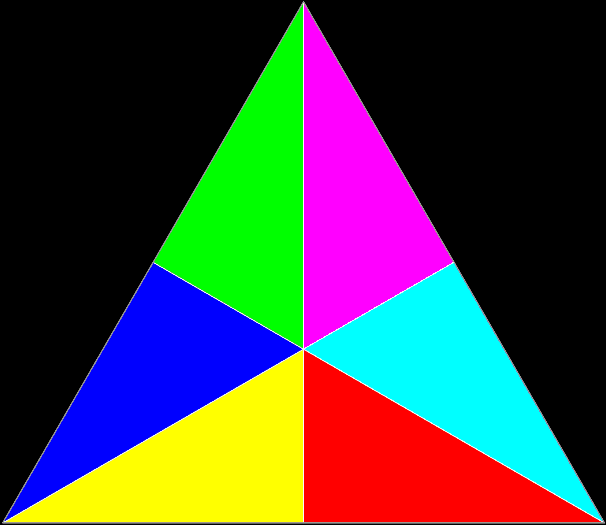
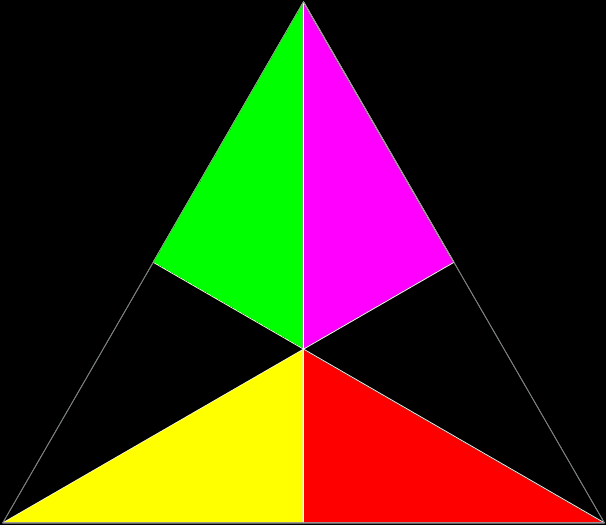
Here’s a trix, or triangle divided into six smaller triangles:

Trix, or triangle divided into six smaller triangles


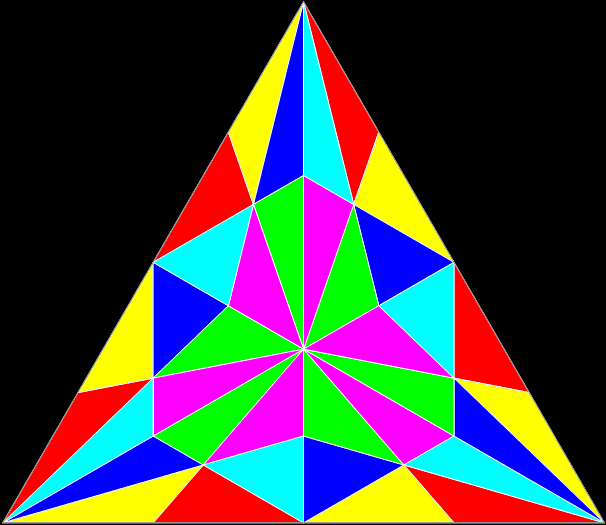
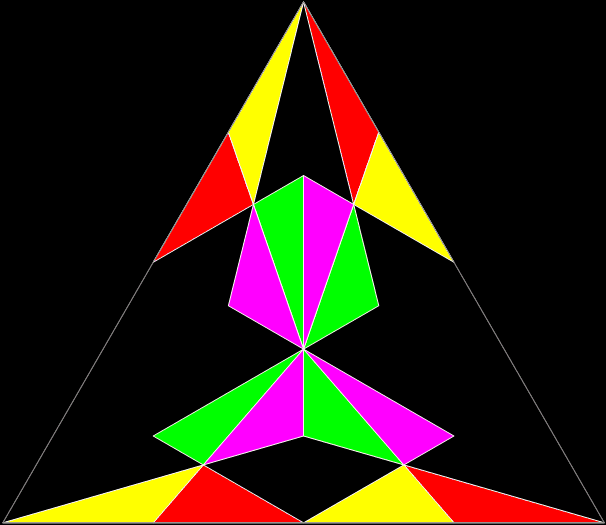
Now each sub-triangle becomes a trix in its turn:

Trix stage #2


And again:

Trix #3


Trix #4


Trix #5


Trix divisions (animated)


Now try dividing the trix and discarding sub-triangles, then repeating the process. A fractal appears:

Trix fractal #1


Trix fractal #2


Trix fractal #3


Trix fractal #4


Trix fractal #5


Trix fractal #6


Trix fractal #7


Trix fractal (animated)


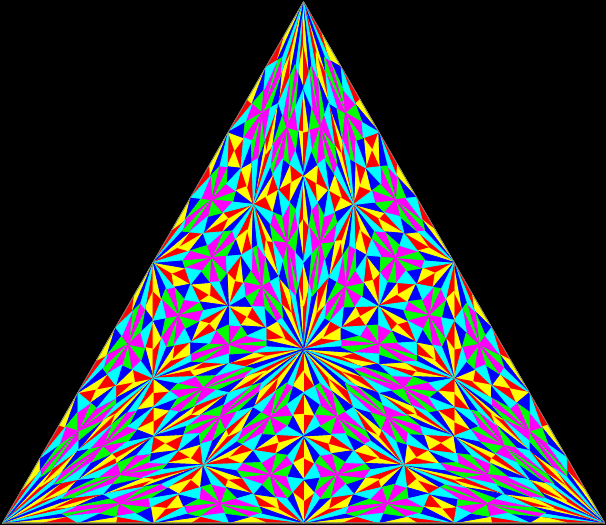
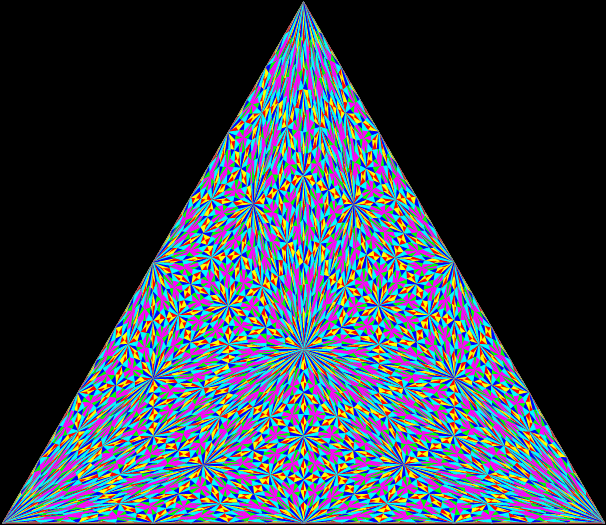
But what happens if you delay the discarding, first dividing the trix completely into sub-triangles, then dividing completely again? You get a more attractive and symmetrical fractal, like this:

Trix fractal (delayed discard)


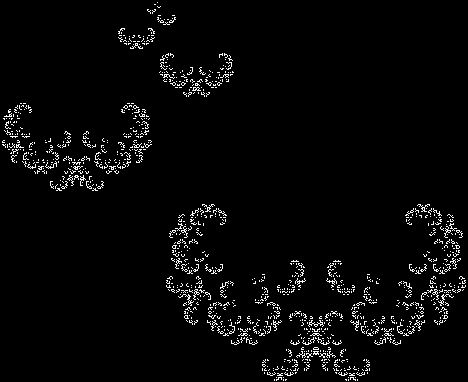
And it’s easy to convert the triangle into a circle, creating a fractal like this:

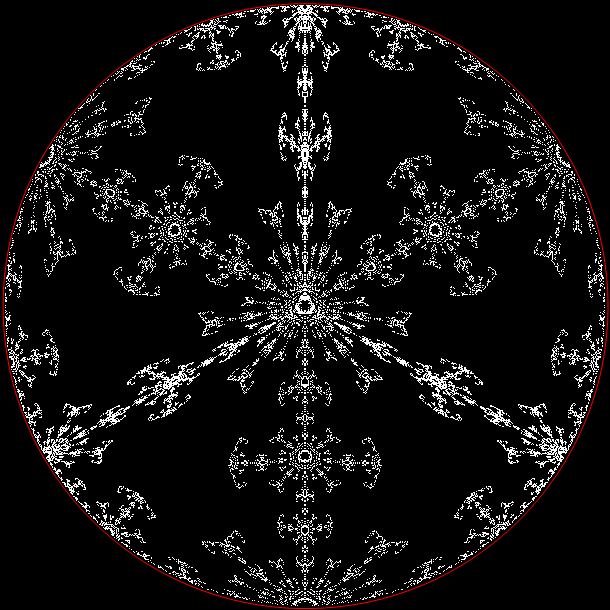
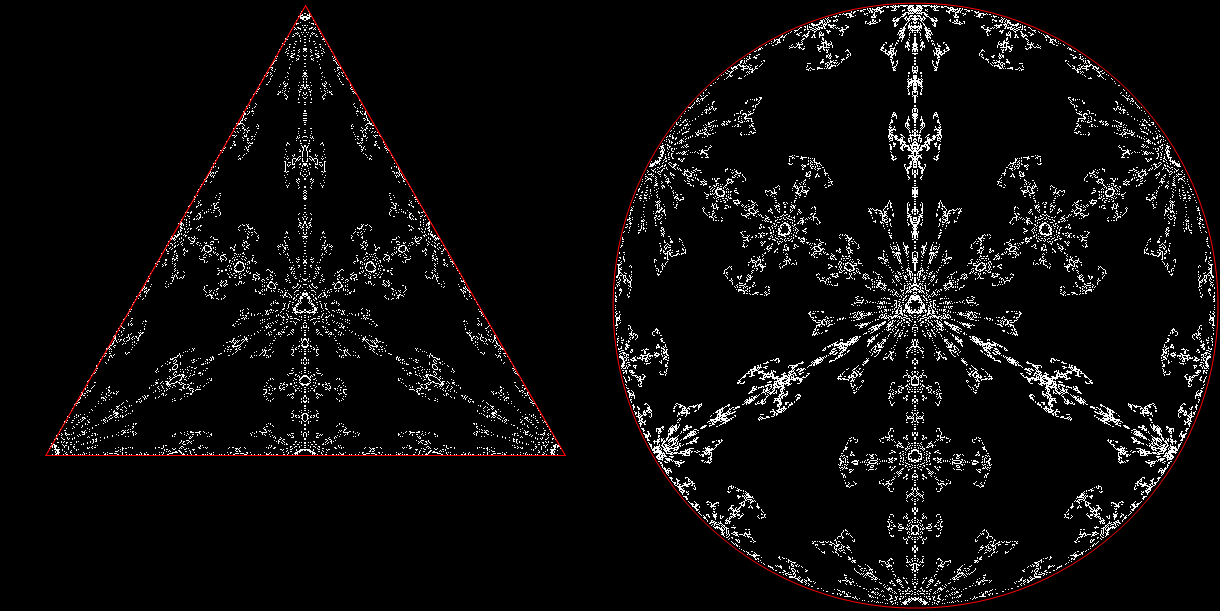
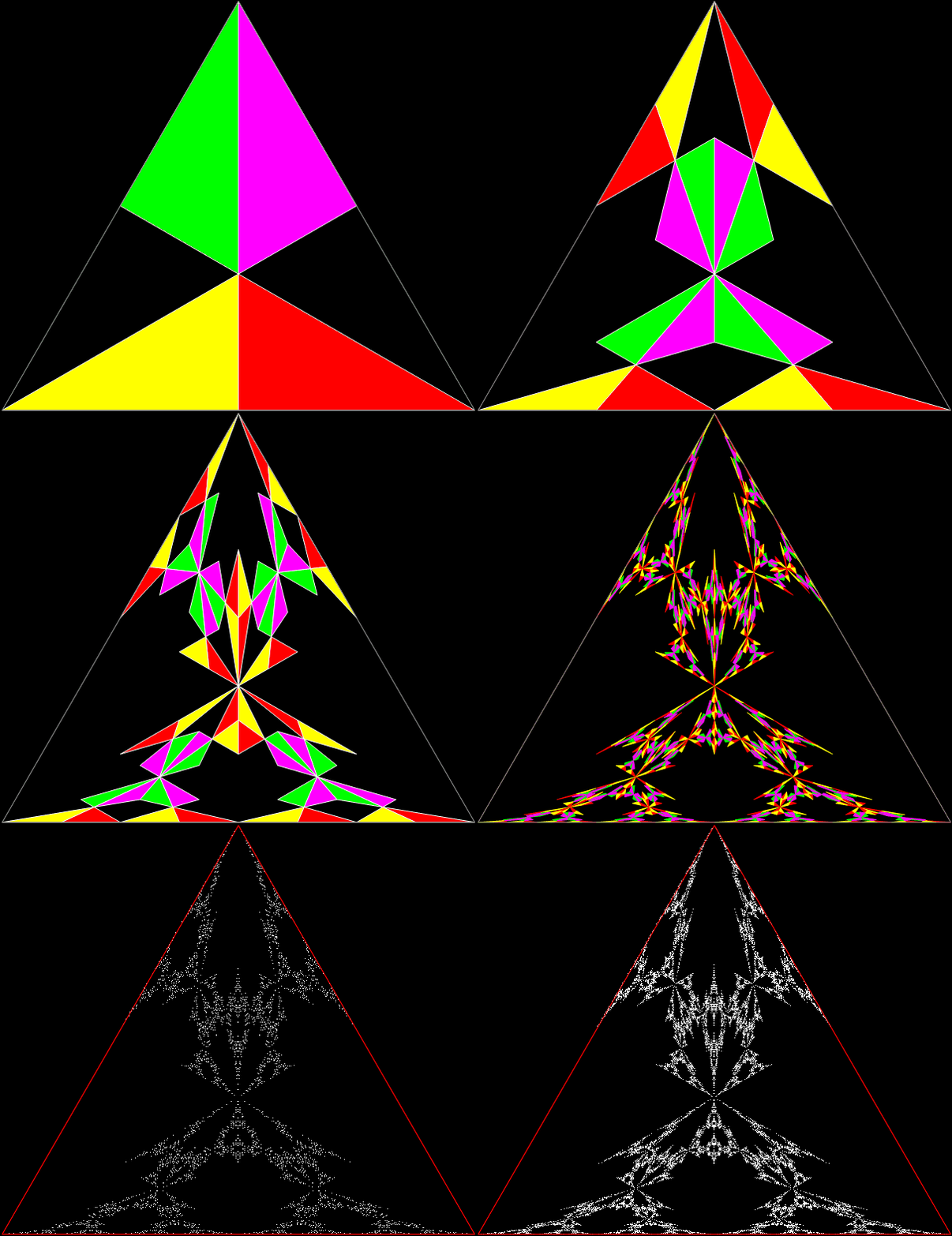
Delayed-discard trix fractal converted into circle


Delayed-discard trix fractal to circular fractal (animated)


Now a trix fractal that looks like a hawk-god:

Trix hawk-god #1


Trix hawk-god #2


Trix hawk-god #3


Trix hawk-god #4


Trix hawk-god #5


Trix hawk-god #6


Trix hawk-god #7


Trix hawk-god (animated)


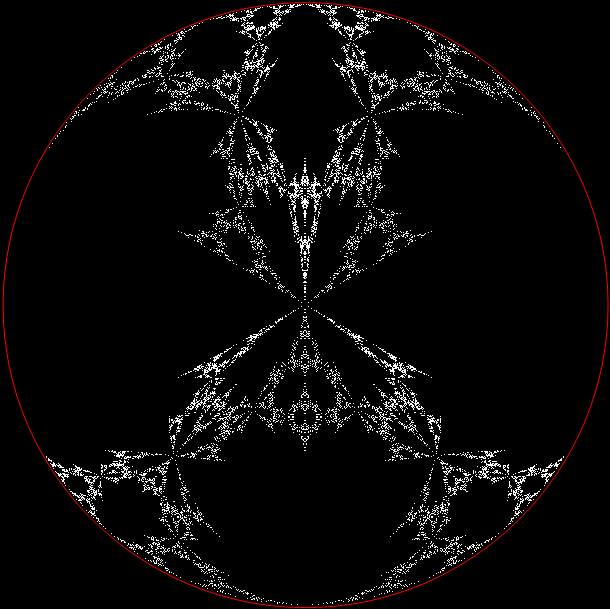
Trix hawk-god converted to circle


Trix hawk-god to circle (animated)


If you delay the discard, you get this:

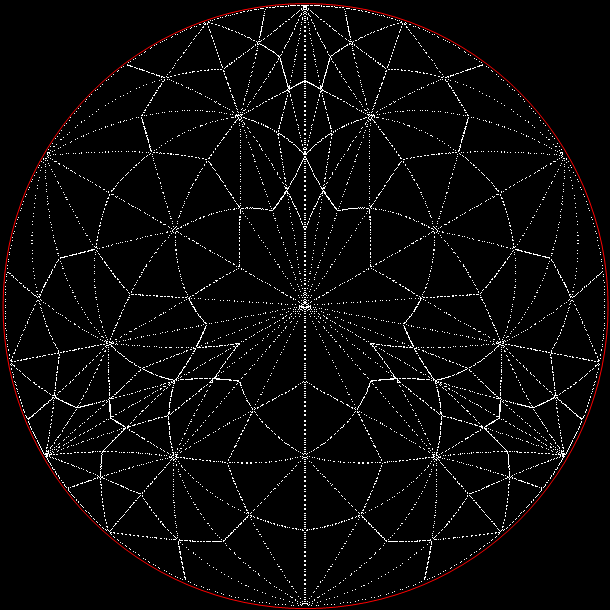
Trix hawk-god circle (delayed discard)


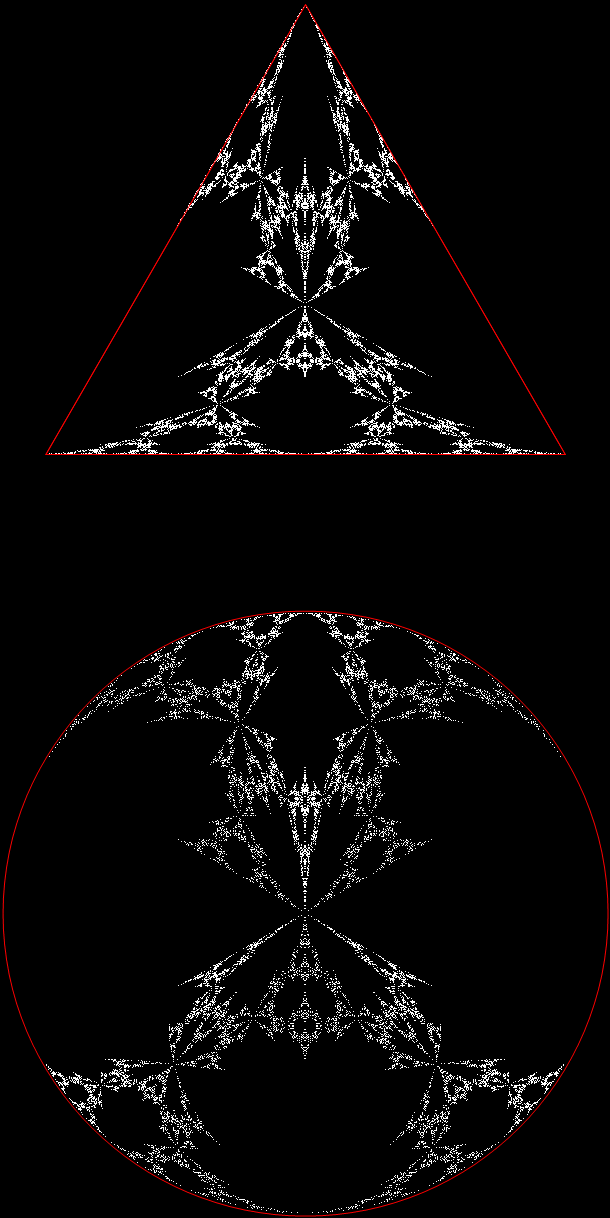
And here are more delayed-discard trix fractals:


Various circular trix-fractals (animated)


Post-Performative Post-Scriptum

In Latin, circus means “ring, circle” — the English word “circle” is actually from the Latin diminutive circulus, meaning “little circle”.

Fractangular Frolics

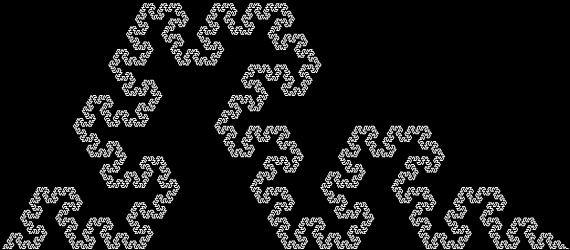
Here’s an interesting shape that looks like a distorted and dissected capital S:

A distorted and dissected capital S


If you look at it more closely, you can see that it’s a fractal, a shape that contains itself over and over on smaller and smaller scales. First of all, it can be divided completely into three copies of itself (each corresponding to a line of the fractangle seed, as shown below):

The shape contains three smaller versions of itself


The blue sub-fractal is slightly larger than the other two (1.154700538379251…x larger, to be more exact, or √(4/3)x to be exactly exact). And because each sub-fractal can be divided into three sub-sub-fractals, the shape contains smaller and smaller copies of itself:

Five more sub-fractals


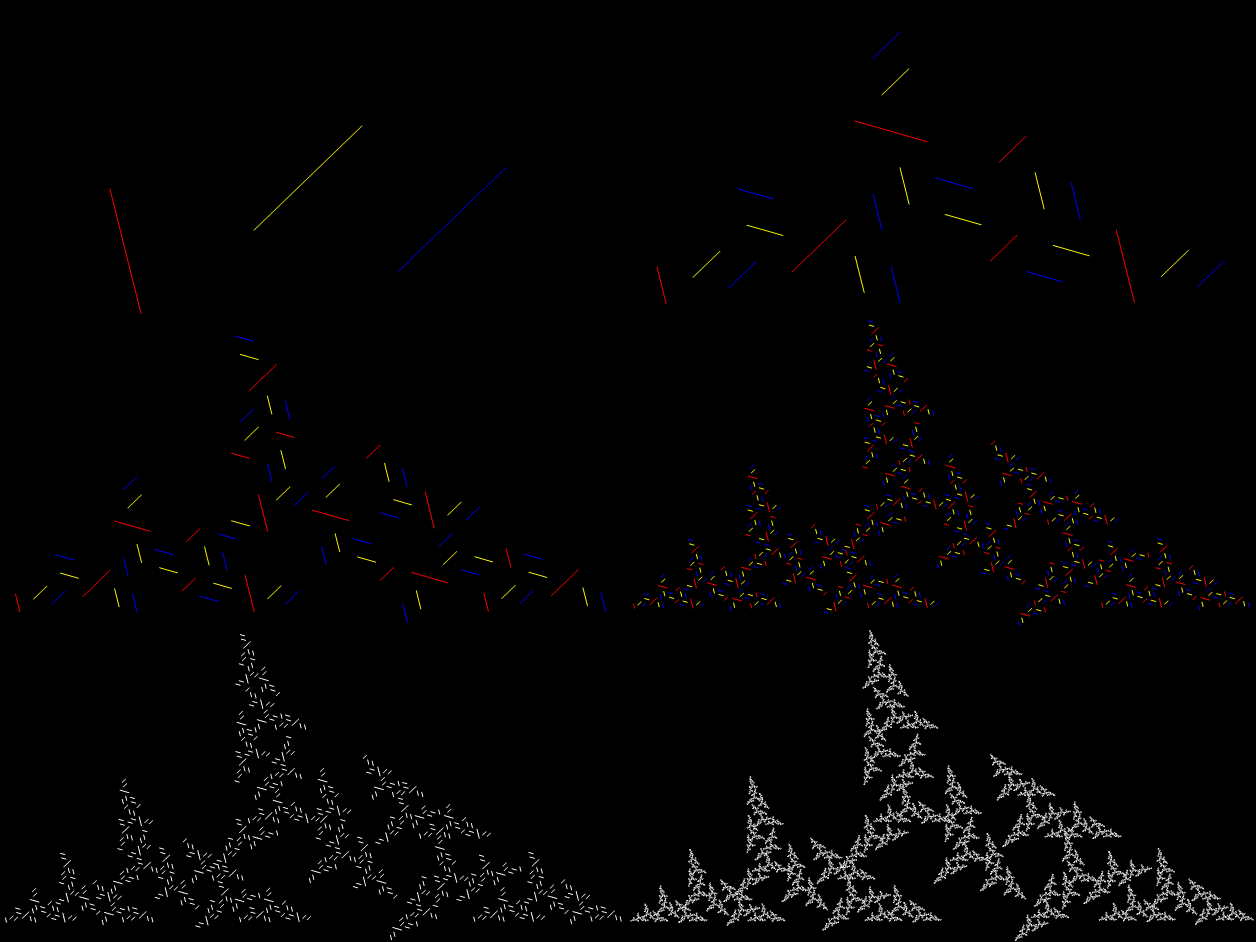
But how do you create the shape? You start by selecting three lines from this divided equilateral triangle:

A divided equilateral triangle


These are the three lines you need to create the shape:

Fractangle seed (the three lines correspond to the three sub-fractals seen above)


Now replace each line with a half-sized set of the same three lines:

Fractangle stage #2


And do that again:

Fractangle stage #3


And again:

Fractangle stage #4


And carry on doing it as you create what I call a fractangle, i.e. a fractal derived from a triangle:

Fractangle stage #5


Fractangle stage #6


Fractangle stage #7


Fractangle stage #8


Fractangle stage #9


Fractangle stage #10


Fractangle stage #11


Here’s an animation of the process:

Creating the fractangle (animated)


And here are more fractangles created in a similar way from three lines of the divided equilateral triangle:

Fractangle #2


Fractangle #2 (anim)

(open in new window if distorted)


Fractangle #2 (seed)


Fractangle #3


Fractangle #3 (anim)


Fractangle #3 (seed)


Fractangle #4


Fractangle #4 (anim)


Fractangle #4 (seed)


You can also use a right triangle to create fractangles:

Divided right triangle for fractangles


Here are some fractangles created from three lines chosen of the divided right triangle:

Fractangle #5


Fractangle #5 (anim)


Fractangle #5 (seed)


Fractangle #6


Fractangle #6 (anim)


Fractangle #6 (seed)


Fractangle #7


Fractangle #7 (anim)


Fractangle #7 (seed)


Fractangle #8


Fractangle #8 (anim)


Fractangle #8 (seed)


Who Made Heu?

Fractal leaves of Heuchera “Red Lightning


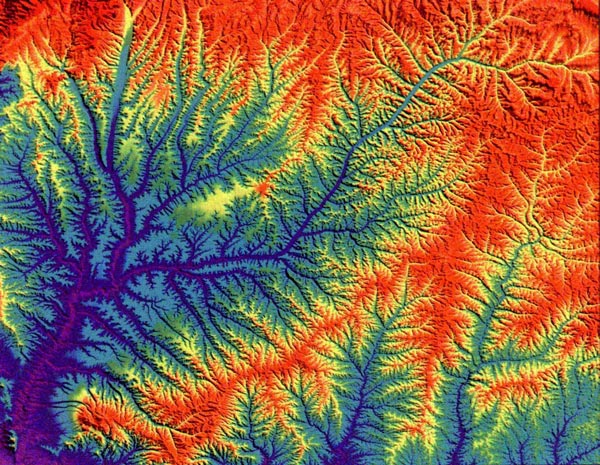
Fractal river network in Shaanxi province, China


Post-Performative Post-Scriptum

Because “Heuchera” comes from the name of the German botanist J.H. Heucher (1677–1747), it should strictly speaking be pronounced something like “HOI-keh-ruh”. But people often say “HYOO-keh-ruh” or variations thereon.

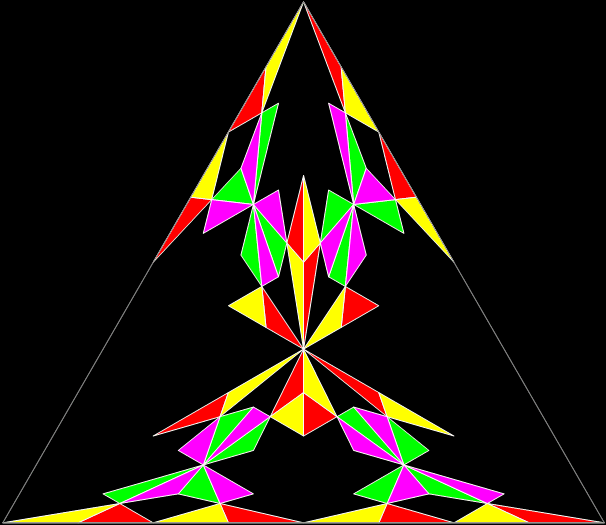
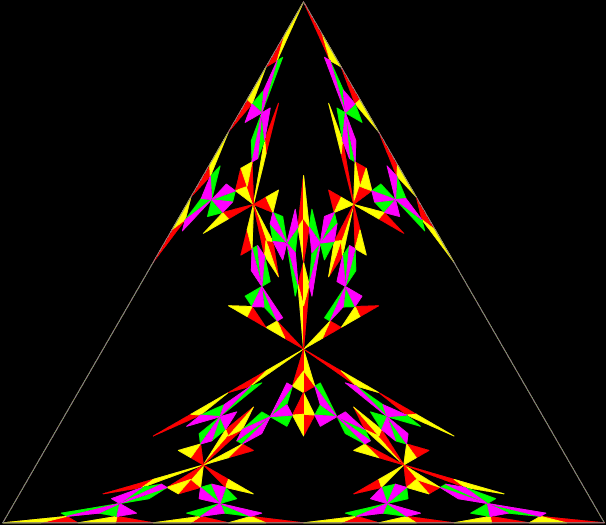
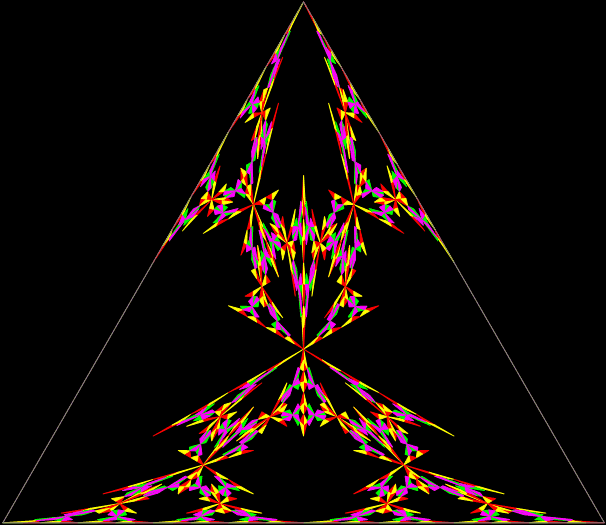
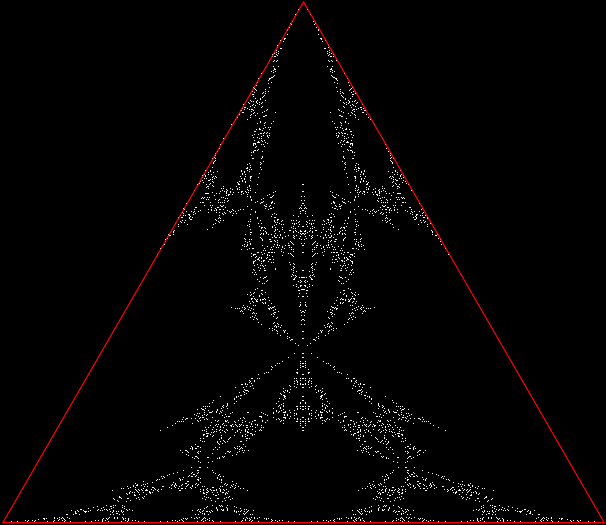
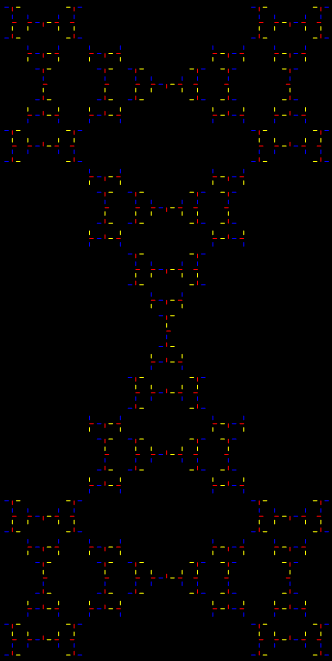
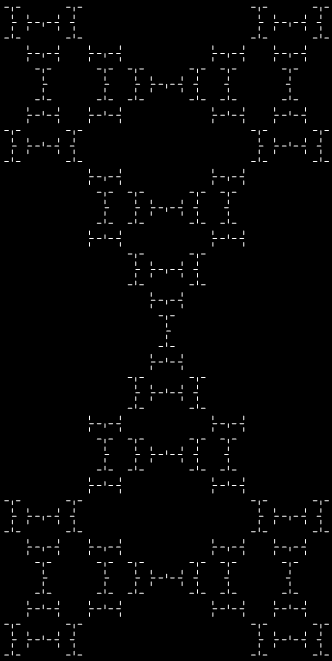
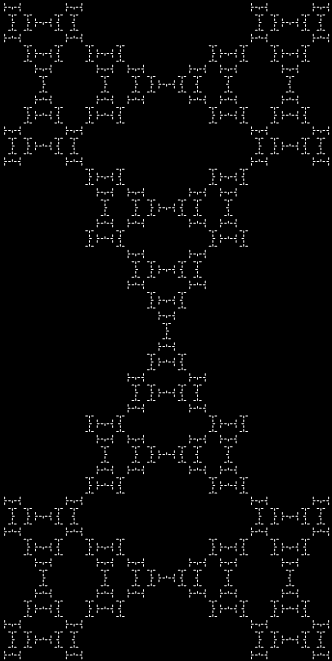
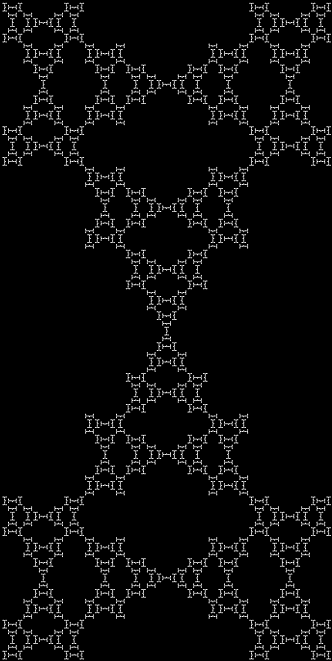
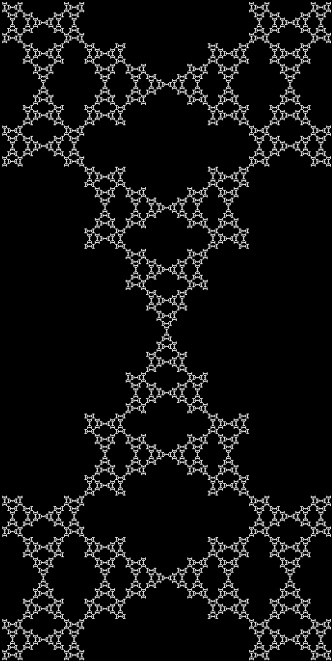
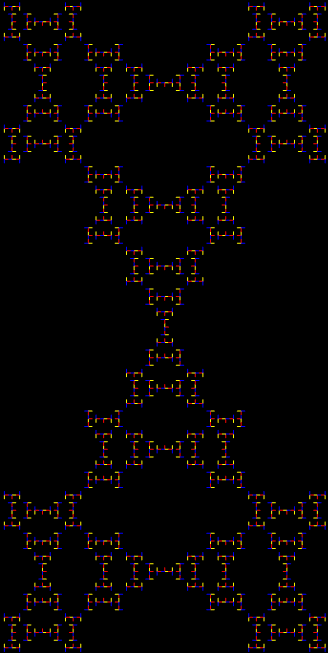
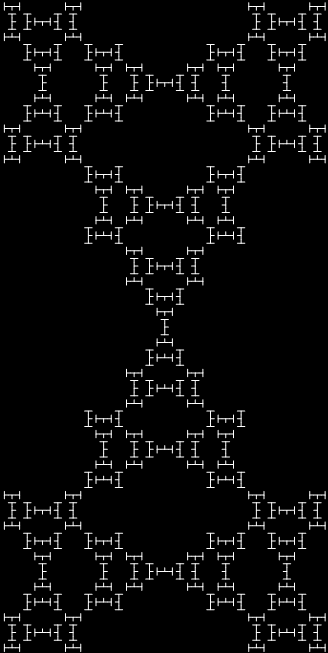
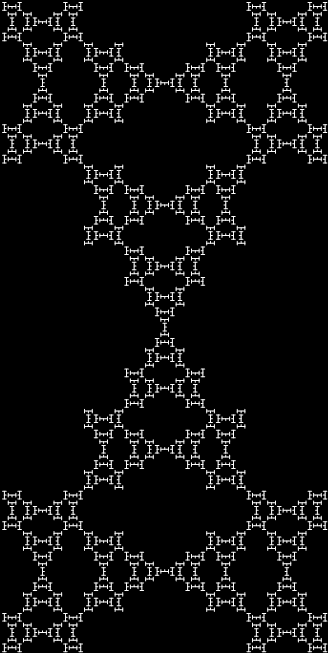
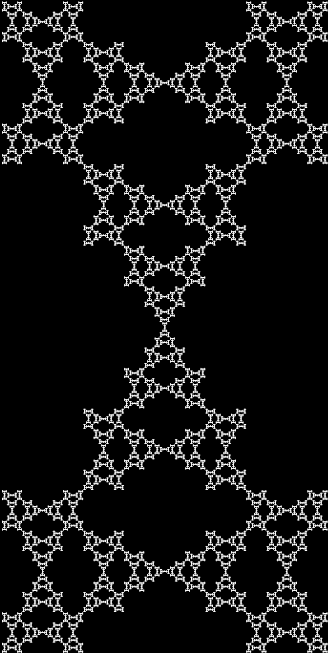
Hour Re-Re-Re-Powered

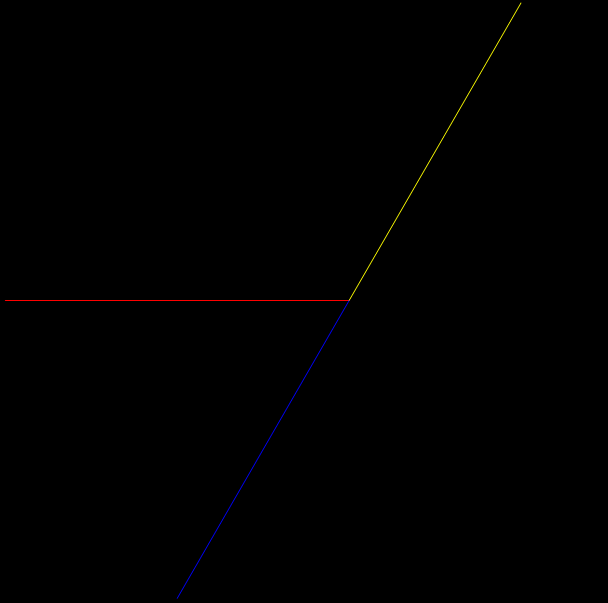
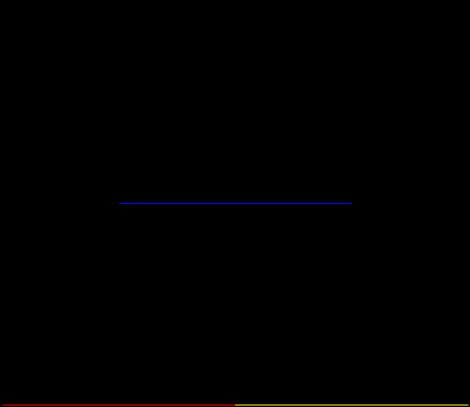
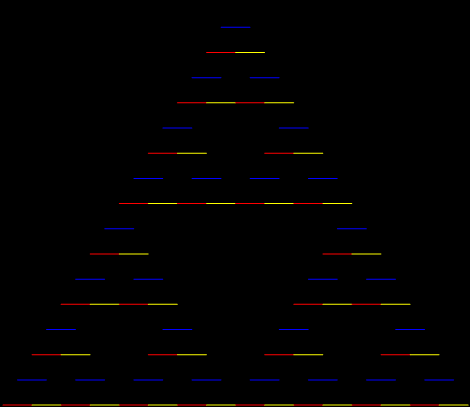
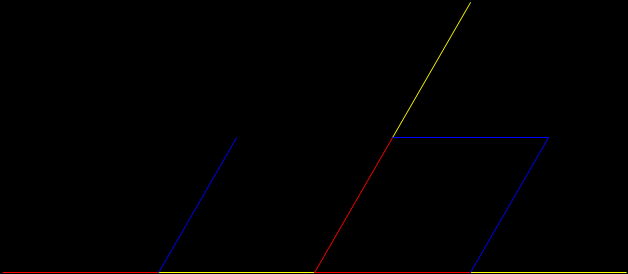
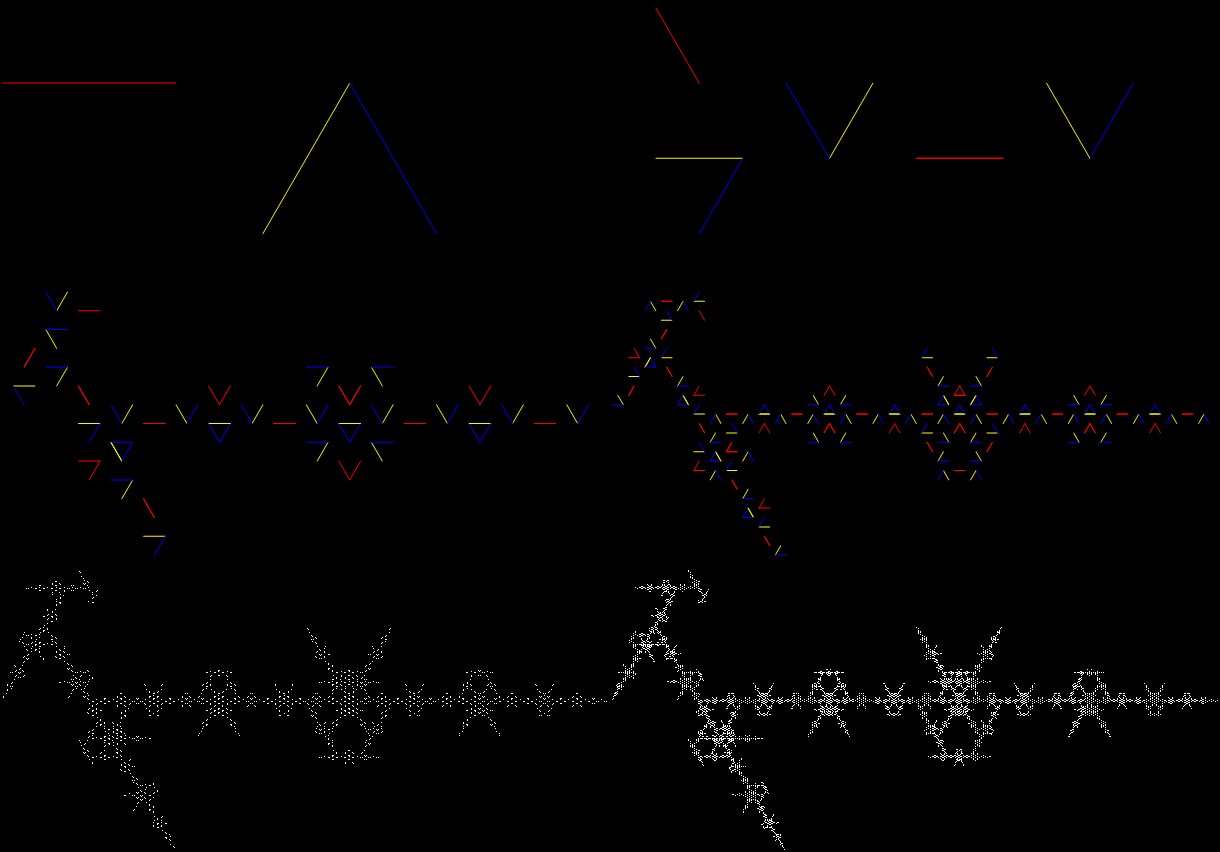
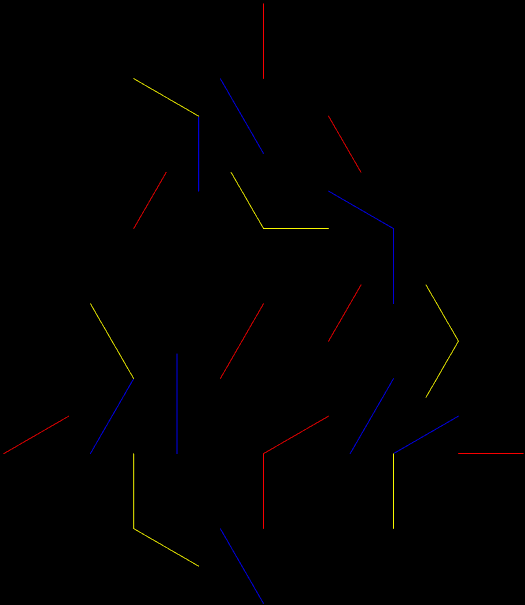
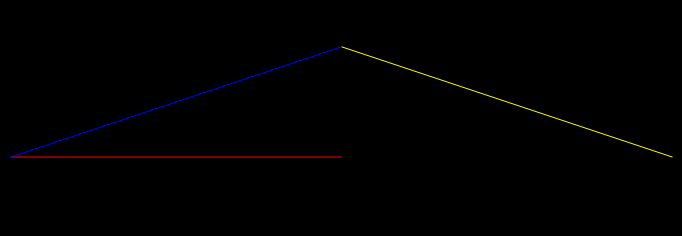
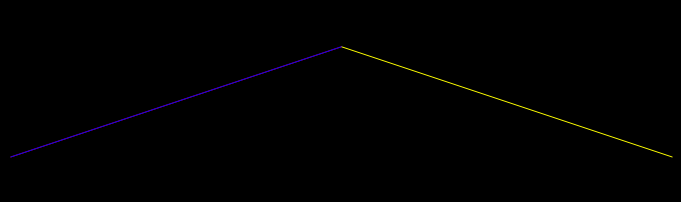
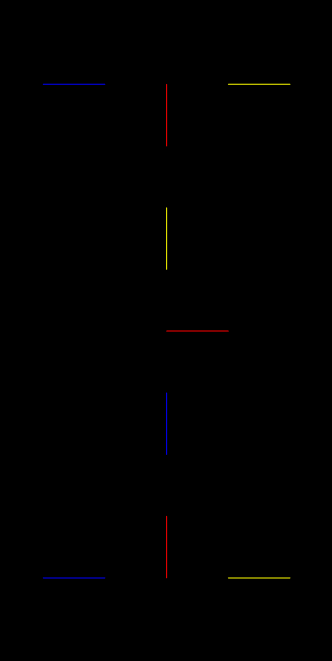
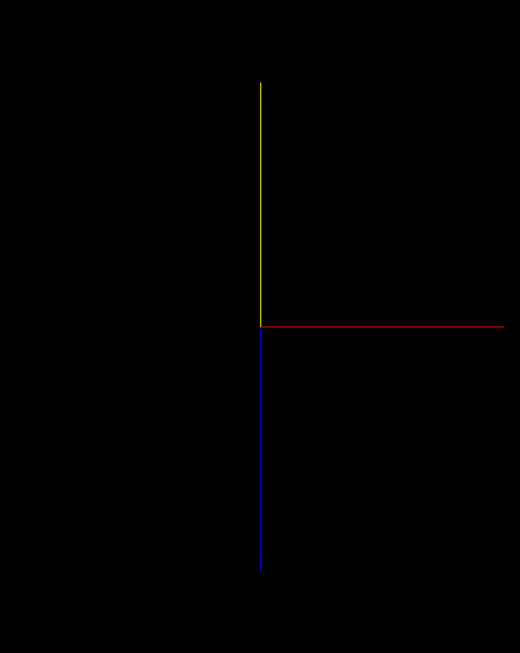
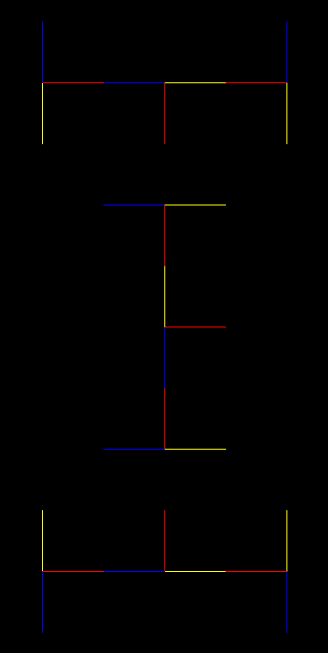
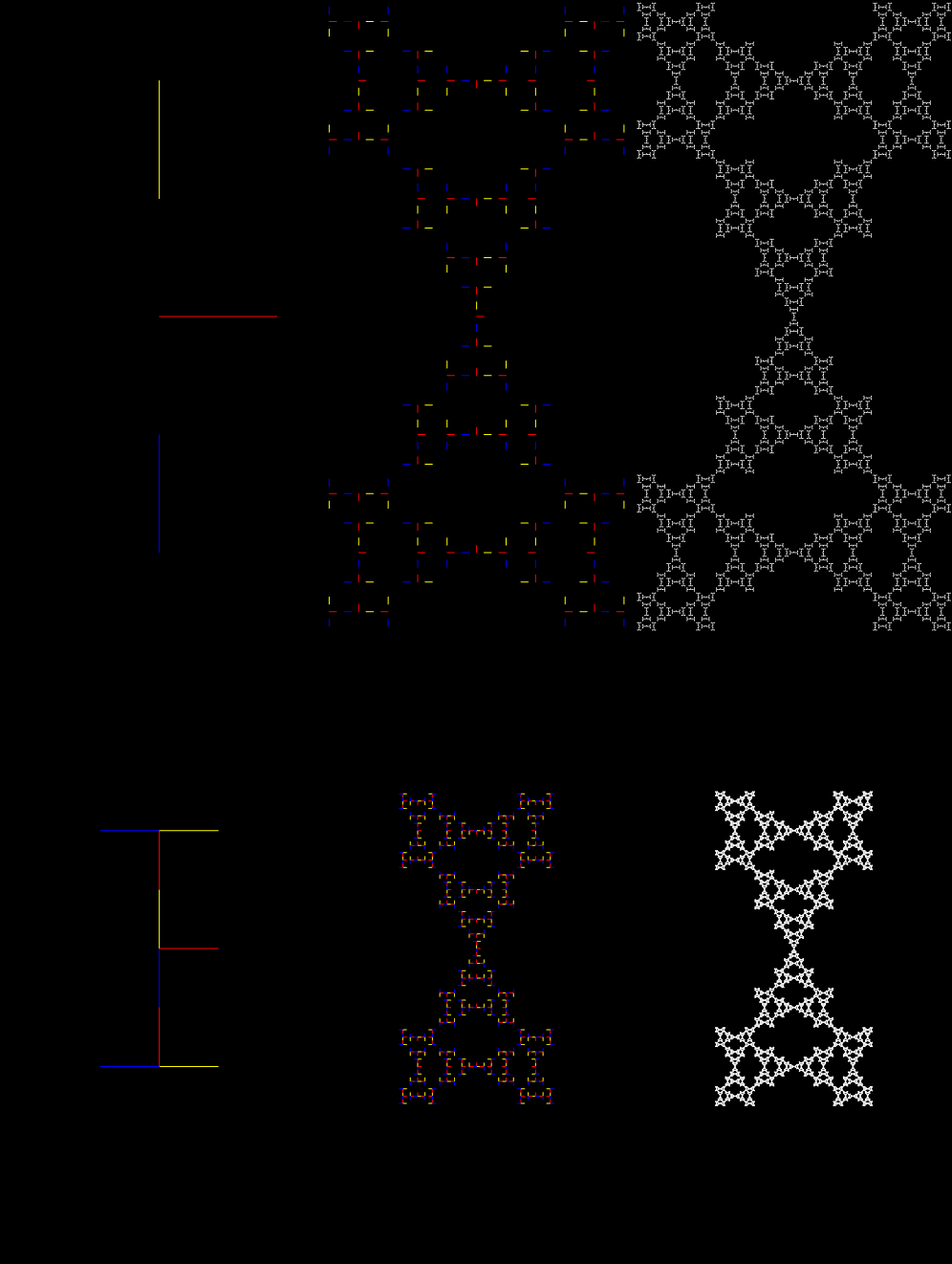
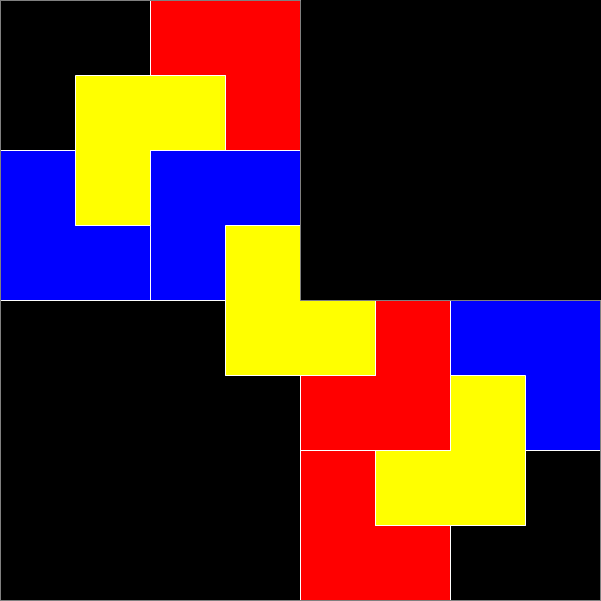
Here’s a set of three lines:

Three lines


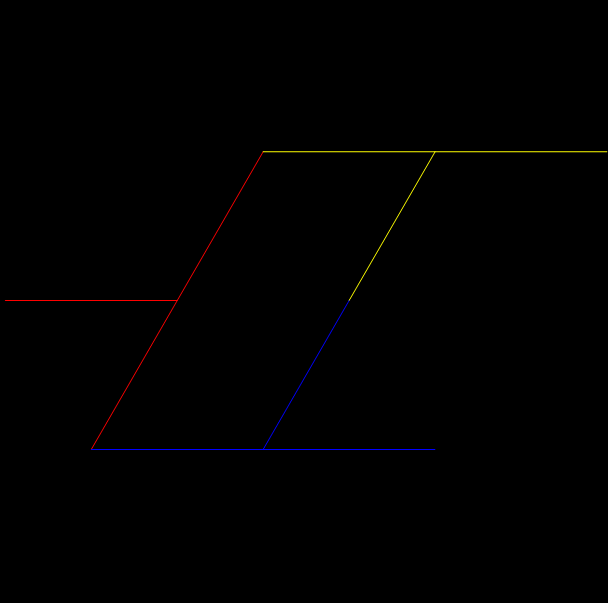
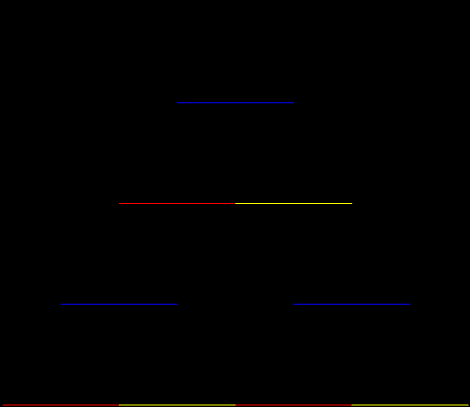
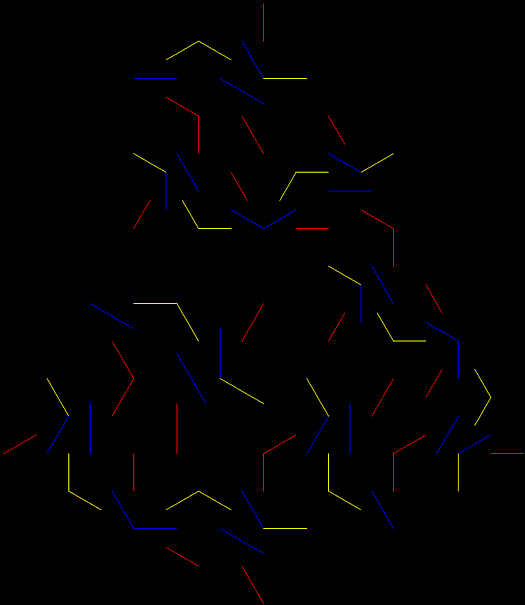
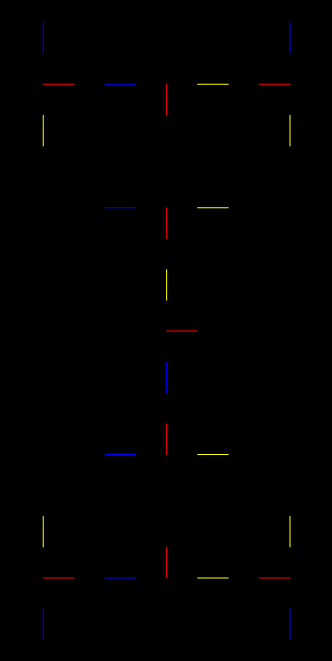
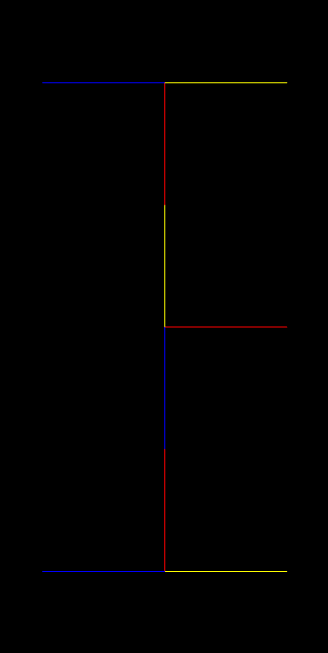
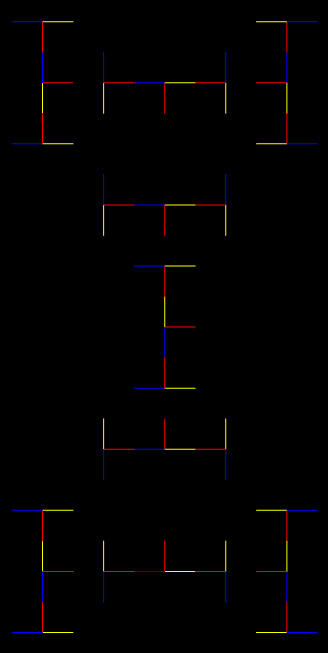
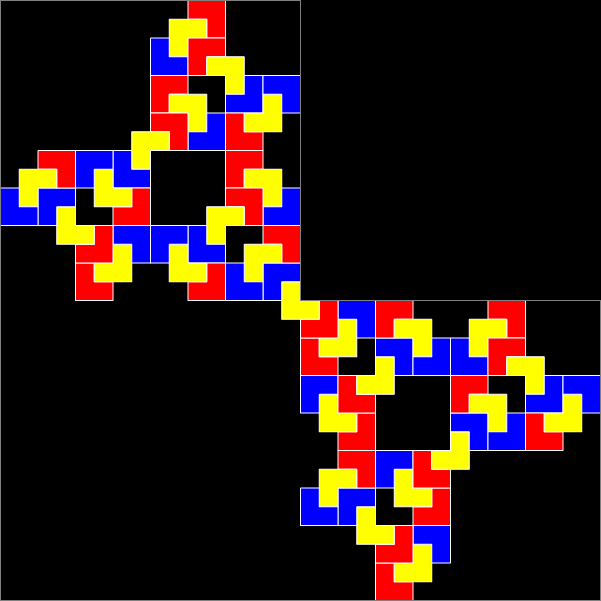
Now try replacing each line with a half-sized copy of the original three lines:

Three half-sized copies of the original three lines


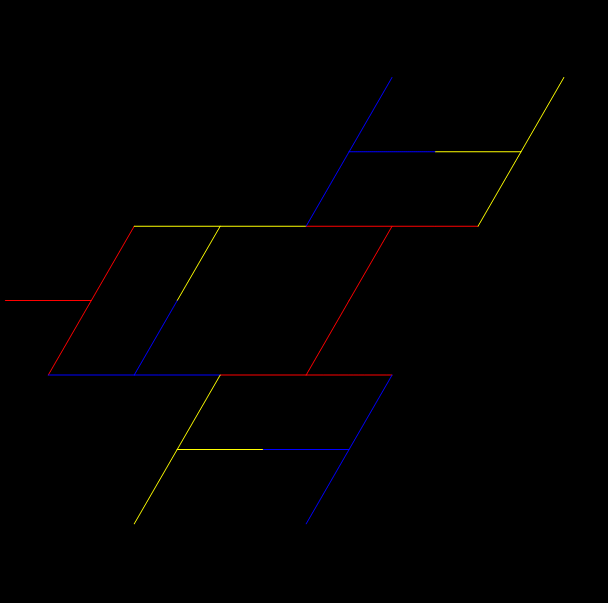
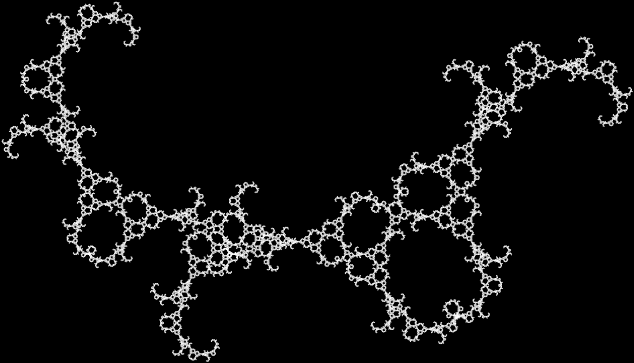
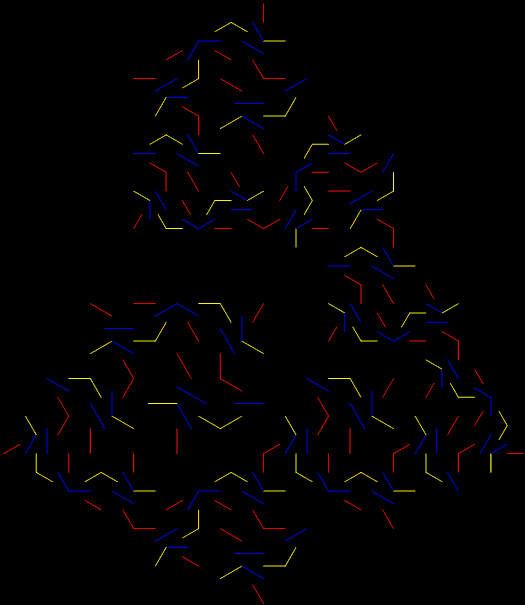
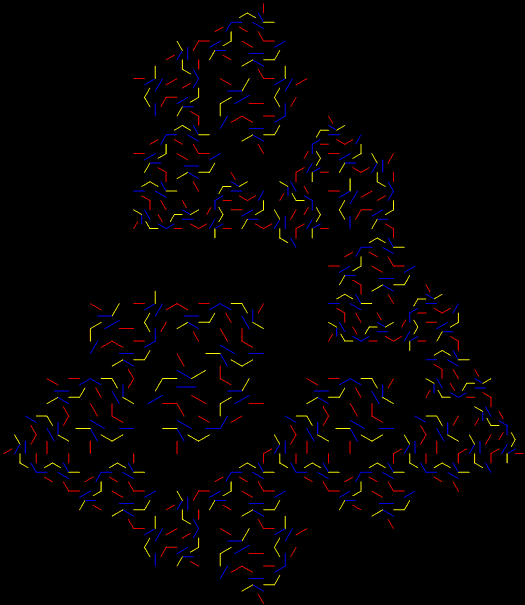
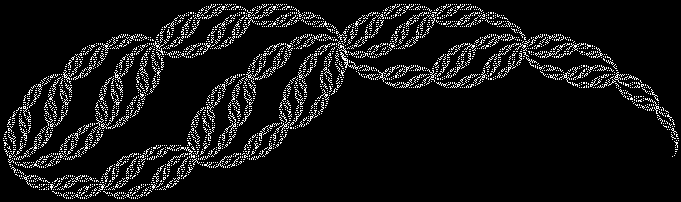
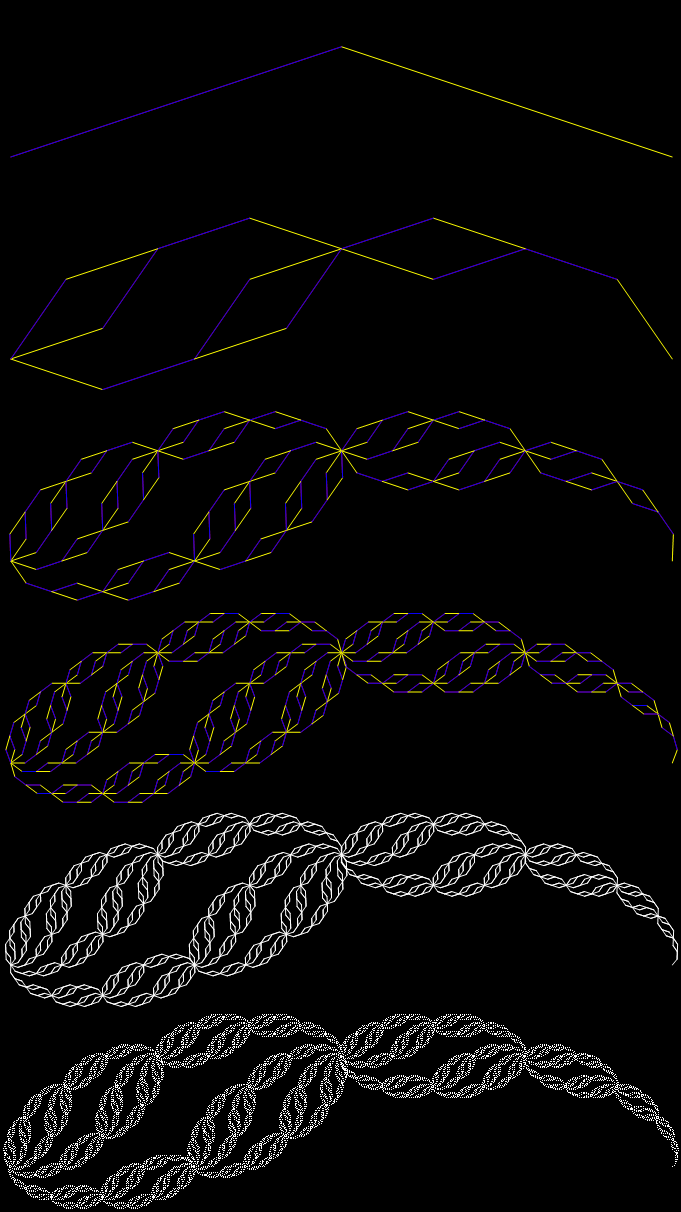
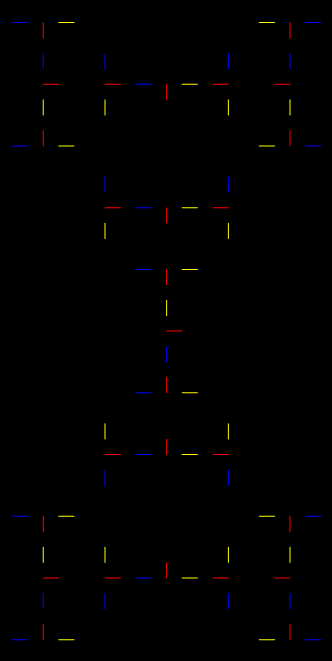
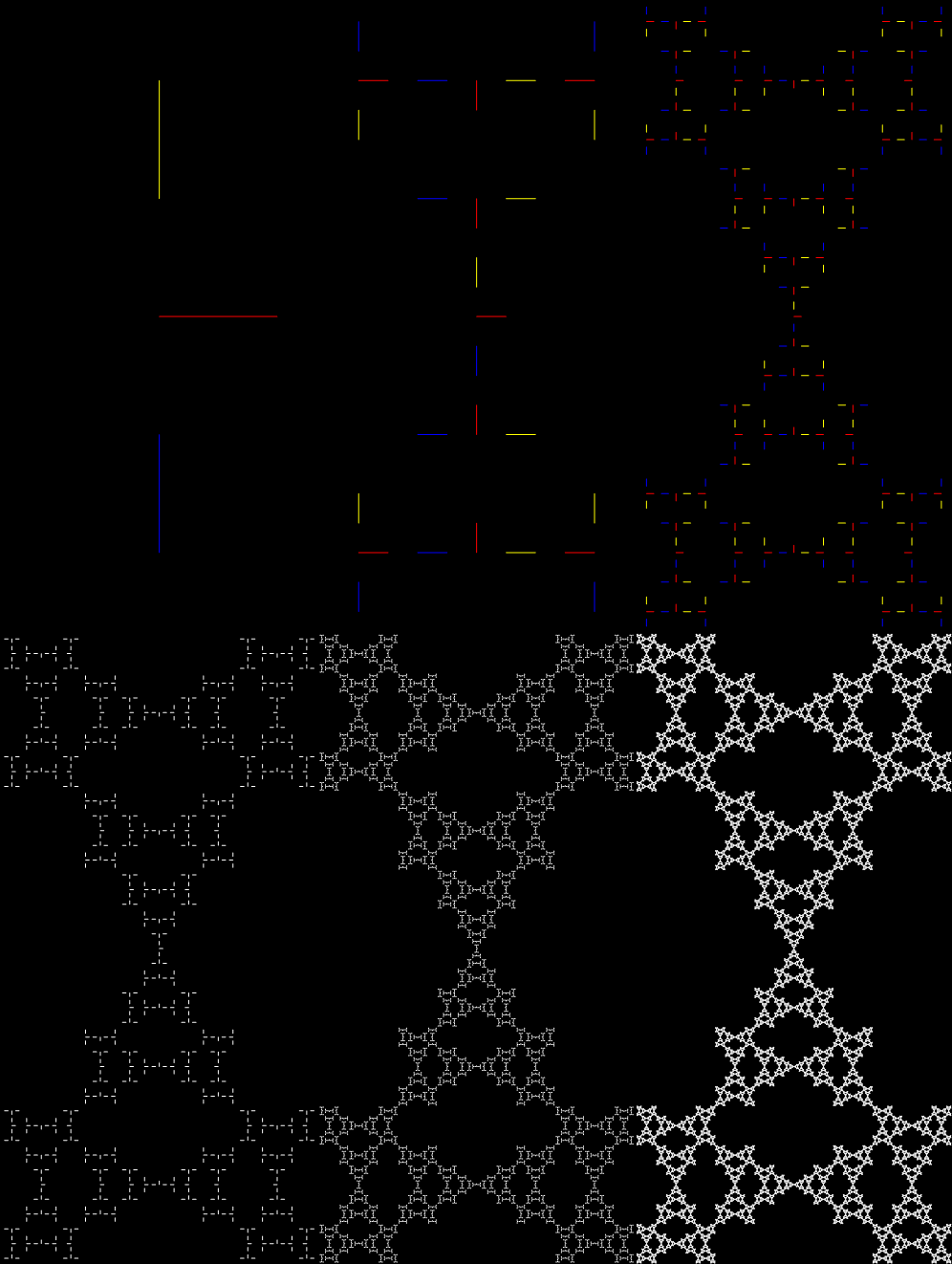
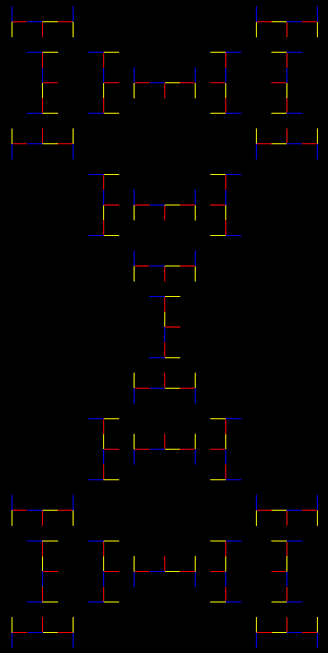
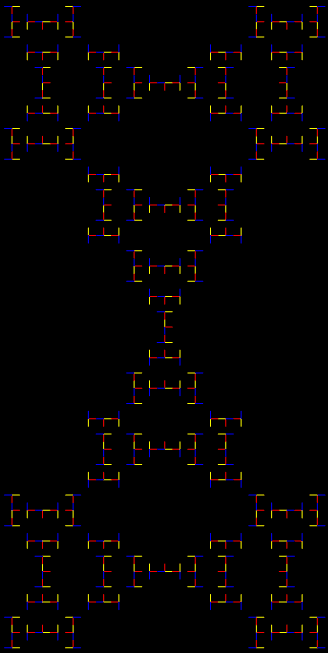
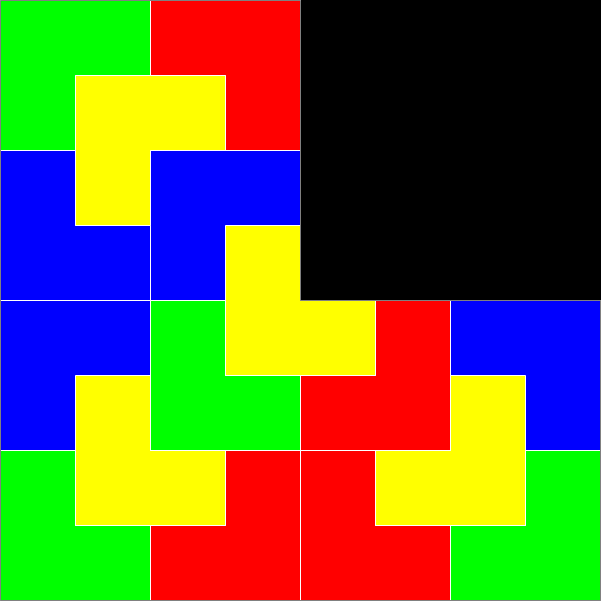
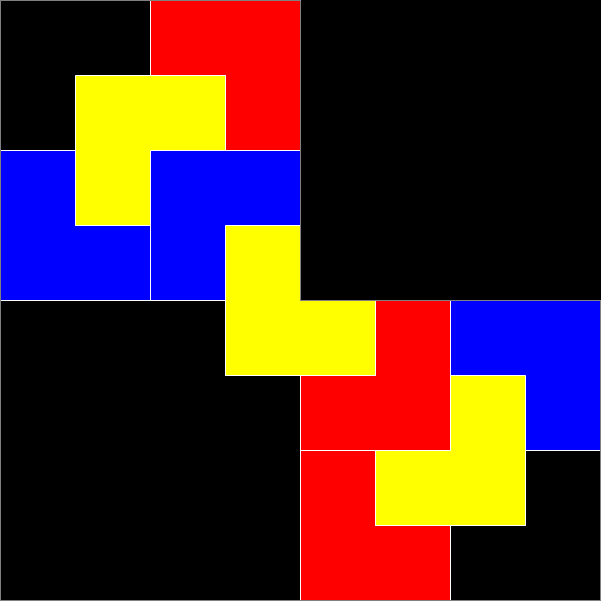
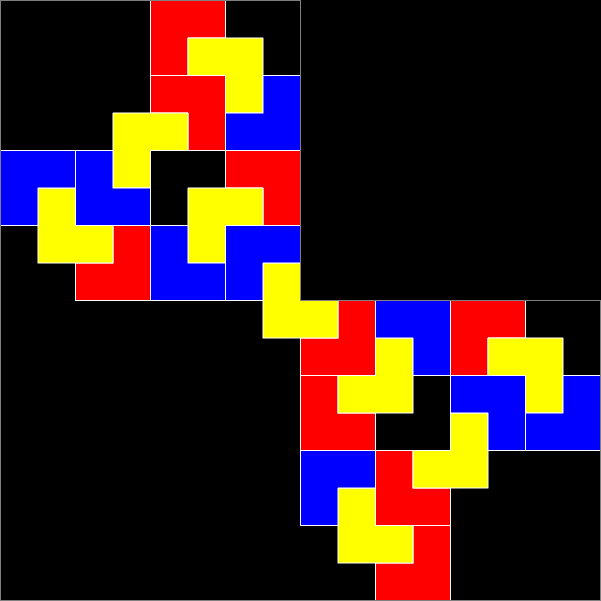
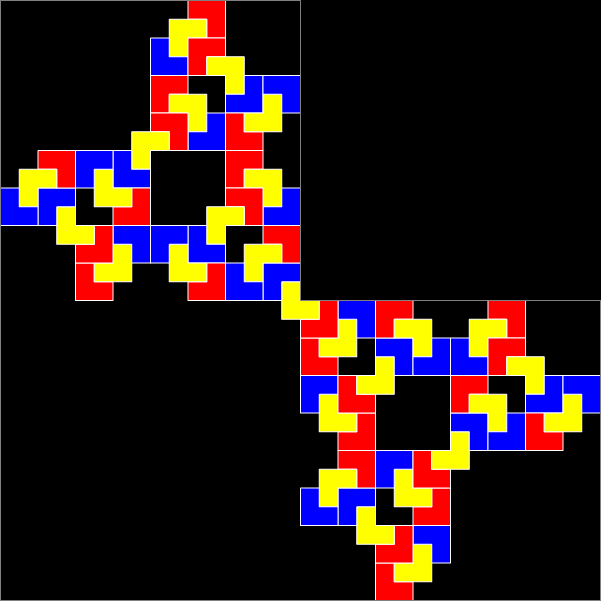
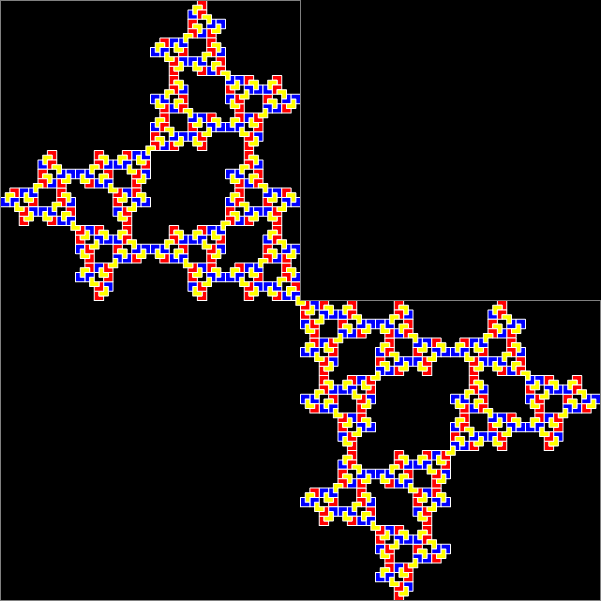
What shape results if you keep on doing that — replacing each line with three half-sized new lines — over and over again? I’m not sure that any human is yet capable of visualizing it, but you can see the shape being created below:

Morphogenesis #3


Morphogenesis #4


Morphogenesis #5


Morphogenesis #6


Morphogenesis #7


Morphogenesis #8


Morphogenesis #9


Morphogenesis #10


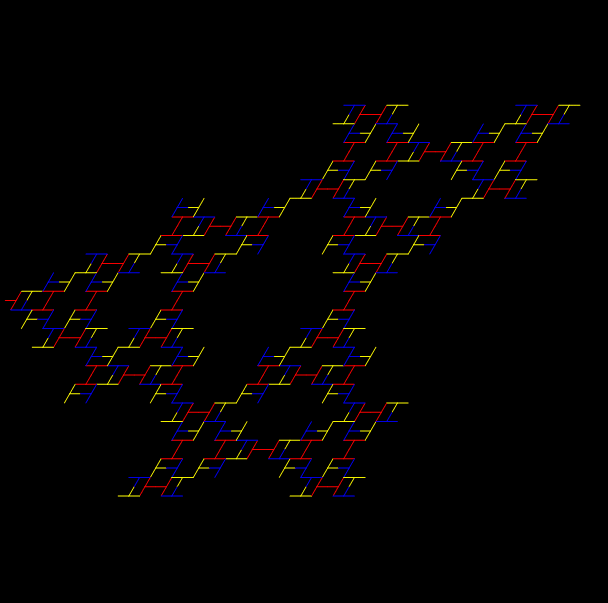
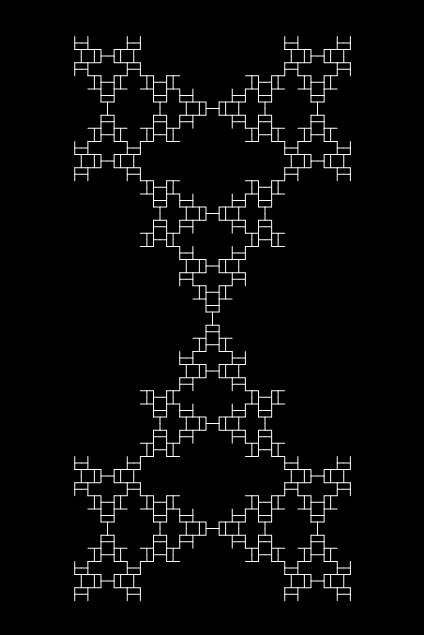
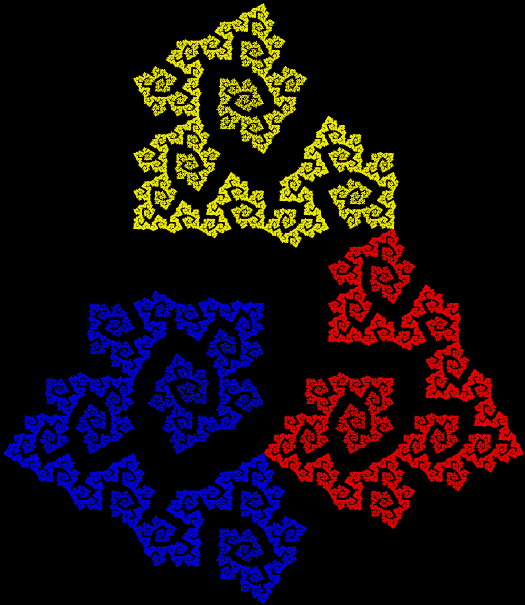
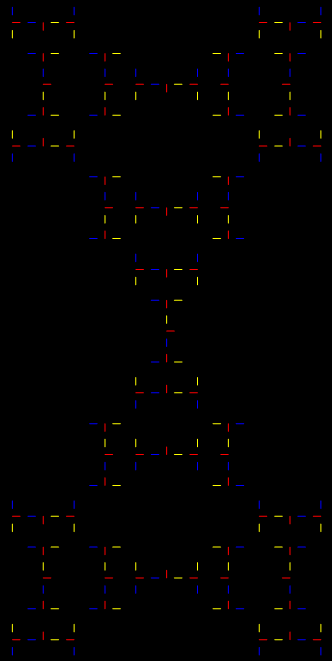
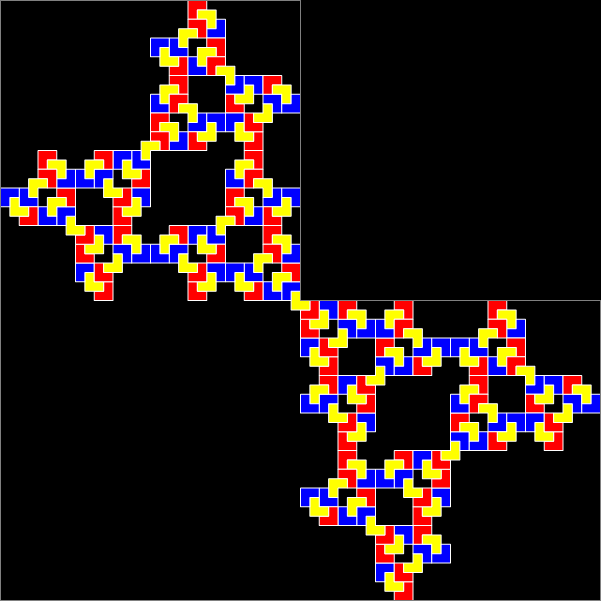
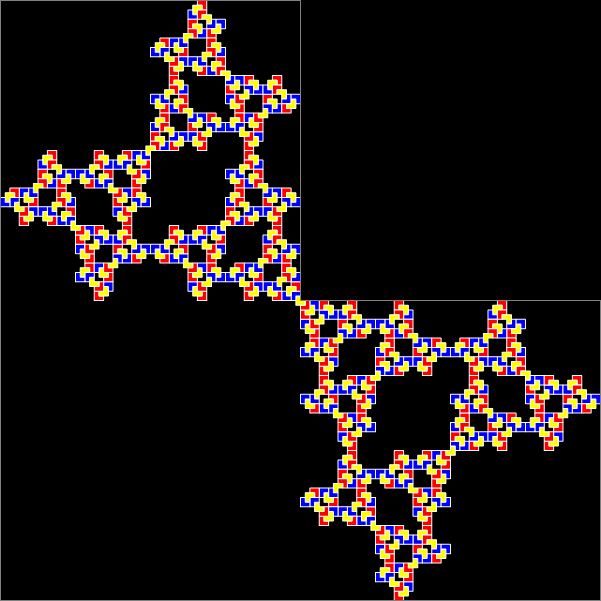
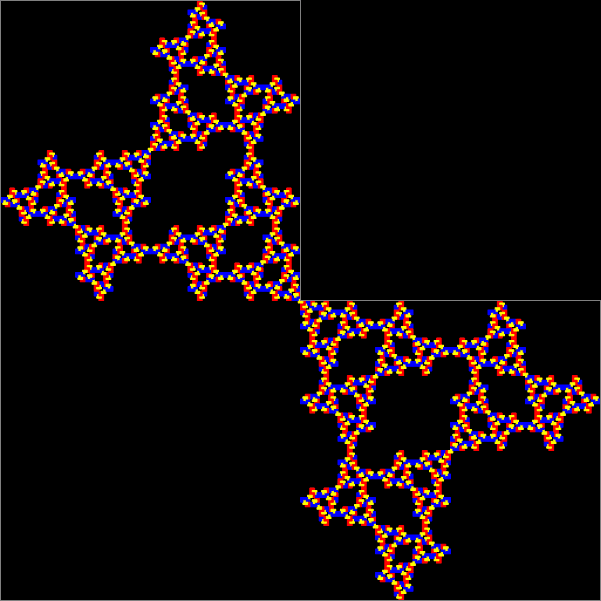
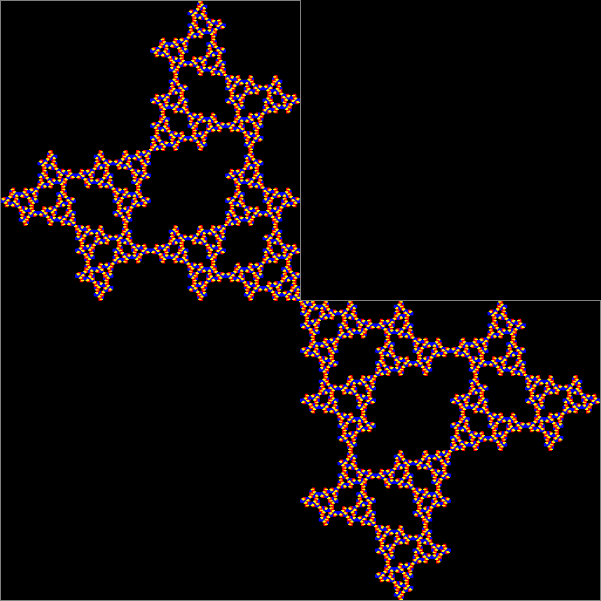
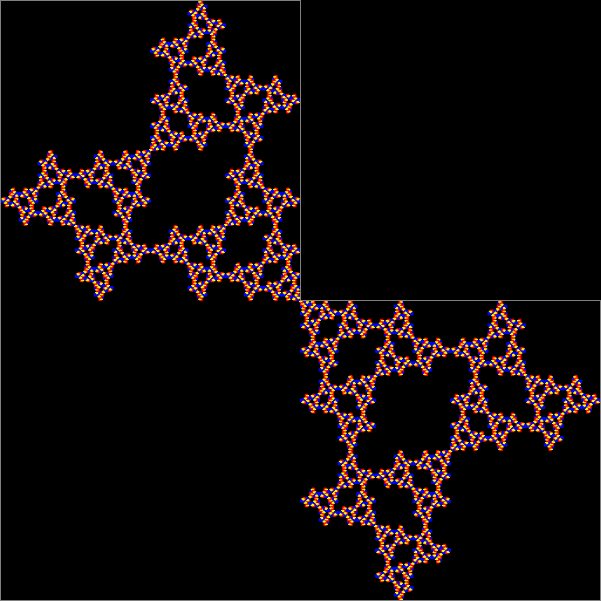
Morphogenesis #11 — the Hourglass Fractal


Morphogenesis of the Hourglass Fractal (animated)


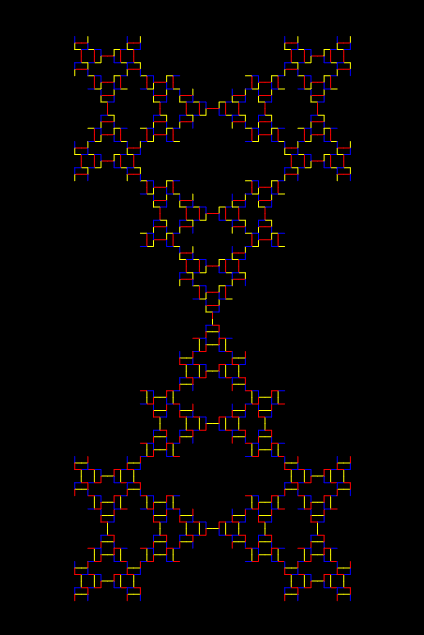
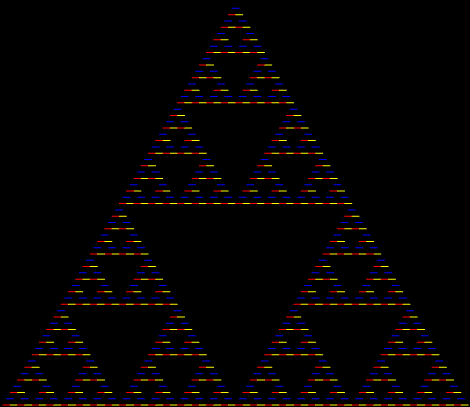
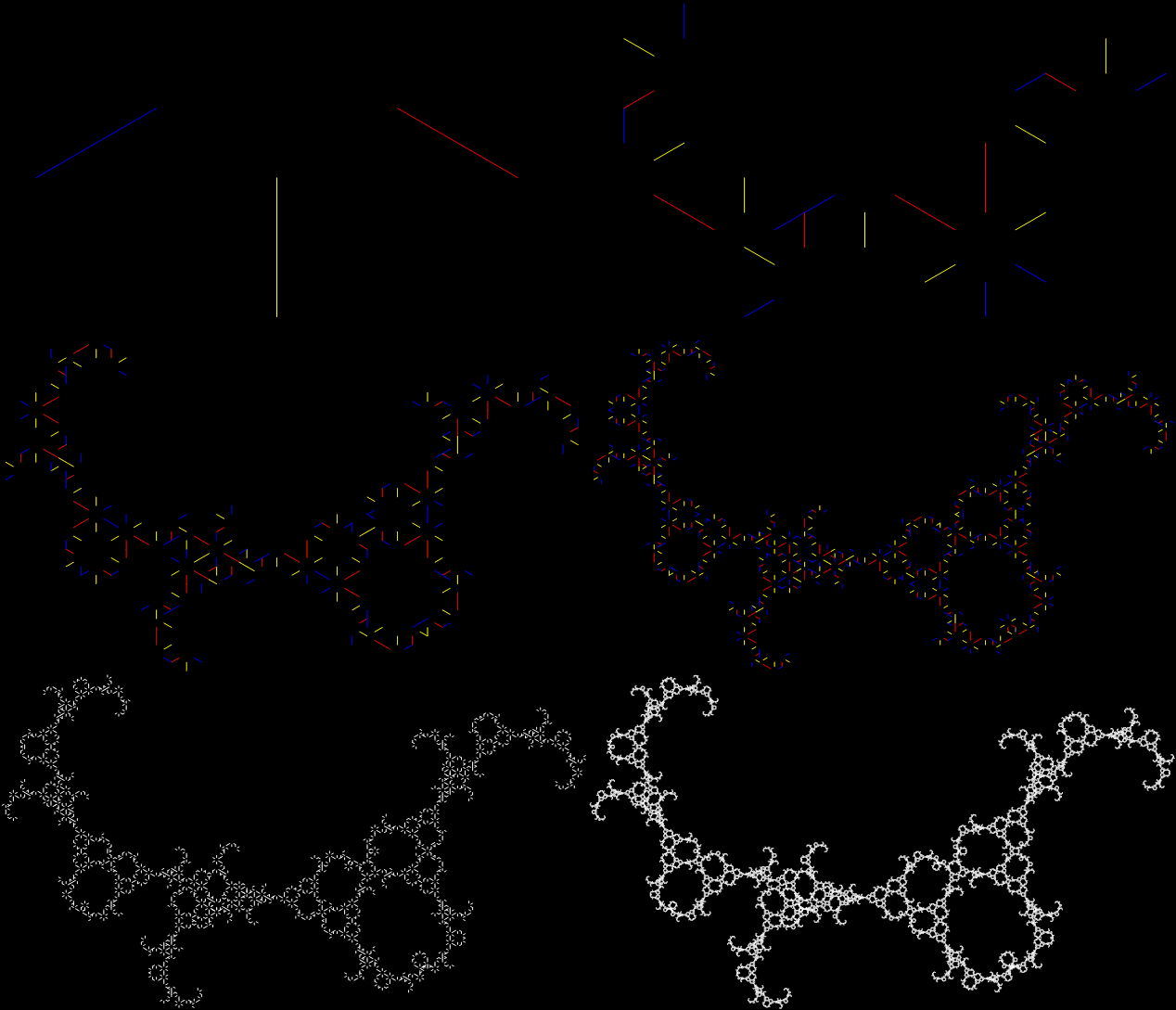
The shape that results is what I call the hourglass fractal. Here’s a second and similar method of creating it:

Hourglass fractal, method #2 stage #1


Hourglass fractal #2


Hourglass fractal #3


Hourglass fractal #4


Hourglass fractal #5


Hourglass fractal #6


Hourglass fractal #7


Hourglass fractal #8


Hourglass fractal #9


Hourglass fractal #10


Hourglass fractal #11


Hourglass fractal (animated)


And below are both methods in one animated gif, where you can see how method #1 produces an hourglass fractal twice as large as the hourglass fractal produced by method #2:

Two routes to the hourglass fractal (animated)


Elsewhere other-engageable:

Hour Power
Hour Re-Powered
Hour Re-Re-Powered

Tri Again (Again (Again))

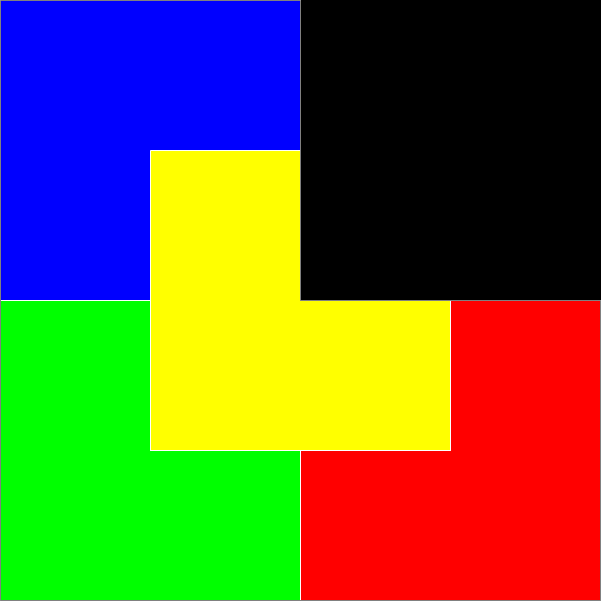
Like the moon, mathematics is a harsh mistress. In mathematics, as on the moon, the slightest misstep can lead to disaster — as I’ve discovered again and again. My latest discovery came when I was looking at a shape called the L-tromino, created from three squares set in an L-shape. It’s a rep-tile, because it can be tiled with four smaller copies of itself, like this:

Rep-4 L-tromino


And if it can be tiled with four copies of itself, it can also be tiled with sixteen copies of itself, like this:

Rep-16 L-tromino


My misstep came when I was trying to do to a rep-16 L-tromino what I’d already done to a rep-4 L-tromino. And what had I already done? I’d created a beautiful shape called the hourglass fractal by dividing-and-discarding sub-copies of a rep-4 L-tromino. That is, I divided the L-tromino into four sub-copies, discarded one of the sub-copies, then repeated the process with the sub-sub-copies of the sub-copies, then the sub-sub-sub-copies of the sub-sub-copies, and so on:

Creating an hourglass fractal #1


Creating an hourglass fractal #2


Creating an hourglass fractal #3


Creating an hourglass fractal #4


Creating an hourglass fractal #5


Creating an hourglass fractal #6


Creating an hourglass fractal #7


Creating an hourglass fractal #8


Creating an hourglass fractal #9


Creating an hourglass fractal #10


Creating an hourglass fractal (animated)


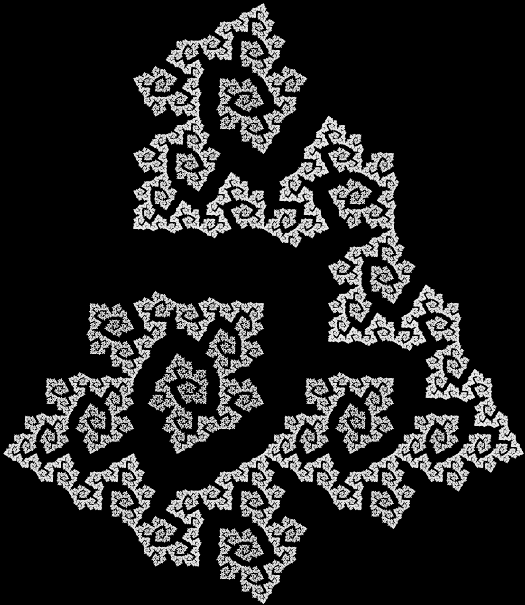
The hourglass fractal


Next I wanted to create an hourglass fractal from a rep-16 L-tromino, so I reasoned like this:

• If one sub-copy of four is discarded from a rep-4 L-tromino to create the hourglass fractal, that means you need 3/4 of the rep-4 L-tromino. Therefore you’ll need 3/4 * 16 = 12/16 of a rep-16 L-tromino to create an hourglass fractal.

So I set up the rep-16 L-tromino with twelve sub-copies in the right pattern and began dividing-and-discarding:

A failed attempt at an hourglass fractal #1


A failed attempt at an hourglass fractal #2


A failed attempt at an hourglass fractal #3


A failed attempt at an hourglass fractal #4


A failed attempt at an hourglass fractal #5


A failed attempt at an hourglass fractal (animated)


Whoops! What I’d failed to take into account is that the rep-16 L-tromino is actually the second stage of the rep-4 triomino, i.e. that 4 * 4 = 16. It follows, therefore, that 3/4 of the rep-4 L-tromino will actually be 9/16 = 3/4 * 3/4 of the rep-16 L-tromino. So I tried again, setting up a rep-16 L-tromino with nine sub-copies, then dividing-and-discarding:

A third attempt at an hourglass fractal #1


A third attempt at an hourglass fractal #2


A third attempt at an hourglass fractal #3


A third attempt at an hourglass fractal #4


A third attempt at an hourglass fractal #5


A third attempt at an hourglass fractal #6


A third attempt at an hourglass fractal (animated)


Previously (and passionately) pre-posted:

Tri Again
Tri Again (Again)

Count Amounts

One of my favourite integer sequences is what I call the digit-line. You create it by taking this very familiar integer sequence:

• 1, 2, 3, 4, 5, 6, 7, 8, 9, 10, 11, 12, 13, 14, 15, 16, 17, 18, 19, 20…

And turning it into this one:

• 1, 2, 3, 4, 5, 6, 7, 8, 9, 1, 0, 1, 1, 1, 2, 1, 3, 1, 4, 1, 5, 1, 6, 1, 7, 1, 8, 1, 9, 2, 0… (A033307 in the Online Encyclopedia of Integer Sequences)

You simply chop all numbers into single digits. What could be simpler? Well, creating the digit-line couldn’t be simpler, but it is in fact a very complex object. There are hidden depths in its patterns, as even a brief look will uncover. For example, you can try counting the digits as they appear one-by-one in the line and seeing whether the digit-counts compare. Do the 1s of the digit-line always outnumber the 0s, as you might expect? Yes, they do (unless you start the digit-line 0, 1, 2, 3…). But do the 2s always outnumber the 0s? No: at position 2, there’s a 2, and at position 11 there’s a 0. So that’s one 2 and one 0. Does it happen again? Yes, it happens again at the 222nd digit of the digit-line, as below:

1, 2count=1, 3, 4, 5, 6, 7, 8, 9, 1, 0count=1, 1, 1, 1, 22, 1, 3, 1, 4, 1, 5, 1, 6, 1, 7, 1, 8, 1, 9, 23, 02, 24, 1, 25, 26, 27, 3, 28, 4, 29, 5, 210, 6, 211, 7, 212, 8, 213, 9, 3, 03, 3, 1, 3, 214, 3, 3, 3, 4, 3, 5, 3, 6, 3, 7, 3, 8, 3, 9, 4, 04, 4, 1, 4, 215, 4, 3, 4, 4, 4, 5, 4, 6, 4, 7, 4, 8, 4, 9, 5, 05, 5, 1, 5, 216, 5, 3, 5,4, 5, 5, 5, 6, 5, 7, 5, 8, 5, 9, 6, 06, 6, 1, 6, 217, 6, 3, 6, 4, 6, 5, 6, 6, 6, 7, 6, 8, 6, 9, 7, 07, 7, 1, 7, 218, 7, 3, 7, 4, 7, 5, 7, 6, 7, 7, 7, 8, 7, 9, 8, 08, 8, 1, 8, 219, 8, 3, 8, 4, 8, 5, 8, 6, 8, 7, 8, 8, 8, 9, 9, 09, 9, 1, 9, 220, 9, 3, 9, 4, 9, 5, 9, 6, 9, 7, 9, 8, 9, 9, 1, 010, 011, 1, 012, 1, 1, 013, 221, 1, 014, 3, 1, 015, 4, 1, 016, 5, 1, 017, 6, 1, 018, 7, 1, 019, 8, 1, 020, 9, 1, 1, 021

So count(2) = count(0) = 1 at digit 11 of the digit-line in the 0 of what was originally 10. And count(2) = count(0) = 21 @ digit 222 in the 0 of what was originally 110. Is a pattern starting to emerge? Yes, it is. Here are the first few points at which the count(2) = count(0) in the digit-line of base 10:

1 @ 11 in 10
21 @ 222 in 110
321 @ 3333 in 1110
4321 @ 44444 in 11110
54321 @ 555555 in 111110
654321 @ 6666666 in 1111110
7654321 @ 77777777 in 11111110
87654321 @ 888888888 in 111111110
987654321 @ 9999999999 in 1111111110
10987654321 @ 111111111110 in 11111111110
120987654321 @ 1222222222221 in 111111111110
[...]

The count(2) = count(0) = 321 at position 3333 in the digit-line, and 4321 at position 44444, and 54321 at position 555555, and so on. I don’t understand why these patterns occur, but you can predict the count-and-position of 2s and 0s easily until position 9999999999, after which things become more complicated. Related patterns for 2 and 0 occur in all other bases except binary (which doesn’t have a 2 digit). Here’s base 6:

1 @ 11 in 10 (1 @ 7 in 6)
21 @ 222 in 110 (13 @ 86 in 42)
321 @ 3333 in 1110 (121 @ 777 in 258)
4321 @ 44444 in 11110 (985 @ 6220 in 1554)
54321 @ 555555 in 111110 (7465 @ 46655 in 9330)
1054321 @ 11111110 in 1111110 (54121 @ 335922 in 55986)
12054321 @ 122222221 in 11111110 (380713 @ 2351461 in 335922)
132054321 @ 1333333332 in 111111110 (2620201 @ 16124312 in 2015538)
1432054321 @ 14444444443 in 1111111110 (17736745 @ 108839115 in 12093234)
15432054321 @ 155555555554 in 11111111110 (118513705 @ 725594110 in 72559410)
205432054321 @ 2111111111105 in 111111111110 (783641641 @ 4788921137 in 435356466)
2205432054321 @ 22222222222220 in 1111111111110 (5137206313 @ 31345665636 in 2612138802)

And what about comparing other pairs of digits? In fact, the count of all digits except 0 matches infinitely often. To write the numbers 1..9 takes one of each digit (except 0). To write the numbers 1 to 99 takes twenty of each digit (except 0). Here’s the proof:

11, 21, 31, 41, 51, 61, 71, 81, 91, 12, 01, 13, 14, 15, 22, 16, 32, 17, 42, 18, 52, 19, 62, 110, 72, 111, 82, 112, 92, 23, 02, 24, 113, 25, 26, 27, 33, 28, 43, 29, 53, 210, 63, 211, 73, 212, 83, 213, 93, 34, 03, 35, 114, 36, 214, 37, 38, 39, 44, 310, 54, 311, 64, 312, 74, 313, 84, 314, 94, 45, 04, 46, 115, 47, 215, 48, 315, 49, 410, 411, 55, 412, 65, 413, 75, 414, 85, 415, 95, 56, 05, 57, 116, 58, 216, 59, 316, 510, 416, 511, 512, 513, 66, 514, 76, 515, 86, 516, 96, 67, 06, 68, 117, 69, 217, 610, 317, 6
11
, 417, 612, 517, 613, 614, 615, 77, 616, 87, 617, 97, 78, 07, 79, 118, 710, 218, 711, 318, 712, 418, 713, 518, 714, 618, 715, 716, 717, 88, 718, 98, 89, 08, 810, 119, 811, 219, 812, 319, 813, 419, 814, 519, 815, 619, 816, 719, 817, 818, 819, 99, 910, 09, 911, 120, 912, 220, 913, 320, 914, 420, 915, 520, 916, 620, 917, 720, 918, 820, 919, 920

And what about writing 1..999, 1..9999, and so on? If you think about it, for every pair of non-zero digits, d1 and d2, all numbers containing one digit can be matched with a number containing the other. 100 → 200, 111 → 222, 314 → 324, 561189571 → 562289572, and so on. So in counting 1..999, 1..9999, 1..99999, you use the same number of non-zero digits. And once again a pattern emerges:

count(0) = 0; count(1) = 1; count(2) = 1; count(3) = 1; count(4) = 1; count(5) = 1; count(6) = 1; count(7) = 1; count(8) = 1; count(9) = 1 (writing 1..9)
count(0) = 9; count(1) = 20; count(2) = 20; count(3) = 20; count(4) = 20; count(5) = 20; count(6) = 20; count(7) = 20; count(8) = 20; count(9) = 20 (writing 1..99)
0: 189; 1: 300; 2: 300; 3: 300; 4: 300; 5: 300; 6: 300; 7: 300; 8: 300; 9: 300 (writing 1..999)
0: 2889; 1: 4000; 2: 4000; 3: 4000; 4: 4000; 5: 4000; 6: 4000; 7: 4000; 8: 4000; 9: 4000 (writing 1..9999)
0: 38889; 1: 50000; 2: 50000; 3: 50000; 4: 50000; 5: 50000; 6: 50000; 7: 50000; 8: 50000; 9: 50000 (writing 1..99999)
0: 488889; 1: 600000; 2: 600000; 3: 600000; 4: 600000; 5: 600000; 6: 600000; 7: 600000; 8: 600000; 9: 600000 (writing 1..999999)
0: 5888889; 1: 7000000; 2: 7000000; 3: 7000000; 4: 7000000; 5: 7000000; 6: 7000000; 7: 7000000; 8: 7000000; 9: 7000000 (writing 1..9999999)
[...]

And here’s base 6 again:

0: 0; 1: 1; 2: 1; 3: 1; 4: 1; 5: 1 (writing 1..5)
0: 5; 1: 20; 2: 20; 3: 20; 4: 20; 5: 20 (writing 1..55 in base 6)
0: 145; 1: 300; 2: 300; 3: 300; 4: 300; 5: 300 (writing 1..555)
0: 2445; 1: 4000; 2: 4000; 3: 4000; 4: 4000; 5: 4000 (writing 1..5555)
0: 34445; 1: 50000; 2: 50000; 3: 50000; 4: 50000; 5: 50000 (writing 1..55555)
0: 444445; 1: 1000000; 2: 1000000; 3: 1000000; 4: 1000000; 5: 1000000 (writing 1..555555)
0: 5444445; 1: 11000000; 2: 11000000; 3: 11000000; 4: 11000000; 5: 11000000 (writing 1..5555555)
0: 104444445; 1: 120000000; 2: 120000000; 3: 120000000; 4: 120000000; 5: 120000000 (writing 1..55555555)
0: 1144444445; 1: 1300000000; 2: 1300000000; 3: 1300000000; 4: 1300000000; 5: 1300000000 (writing 1..555555555)

Joule for Thought

No matter how efficient any physical device is (e.g. a computer or a brain) it can acquire one bit of information only if it expends 0.693kT joules of energy. — Information Theory: A Tutorial Introduction, James V. Stone, Sebtel Press 2015