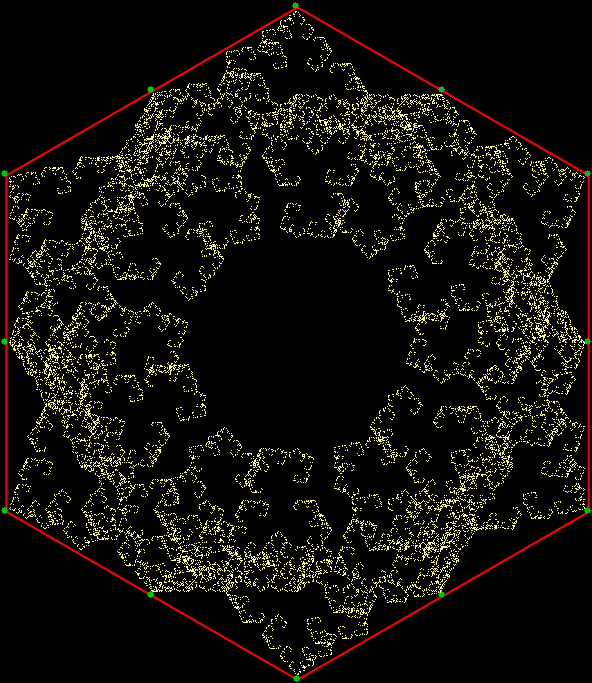
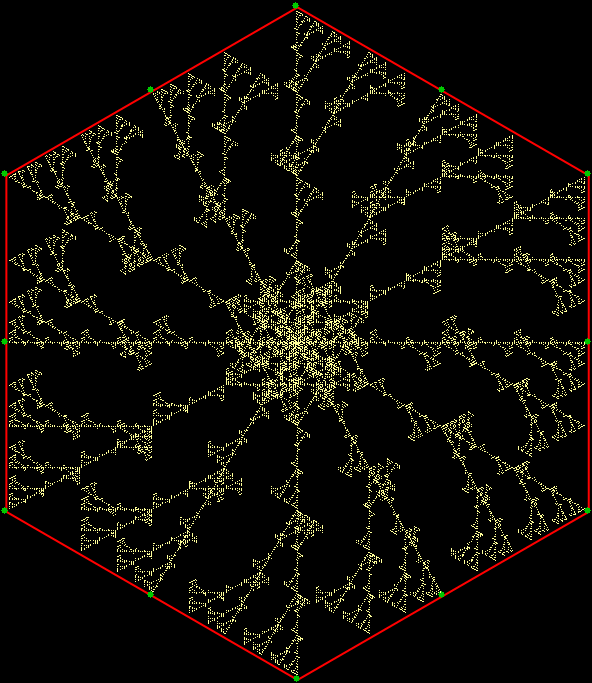
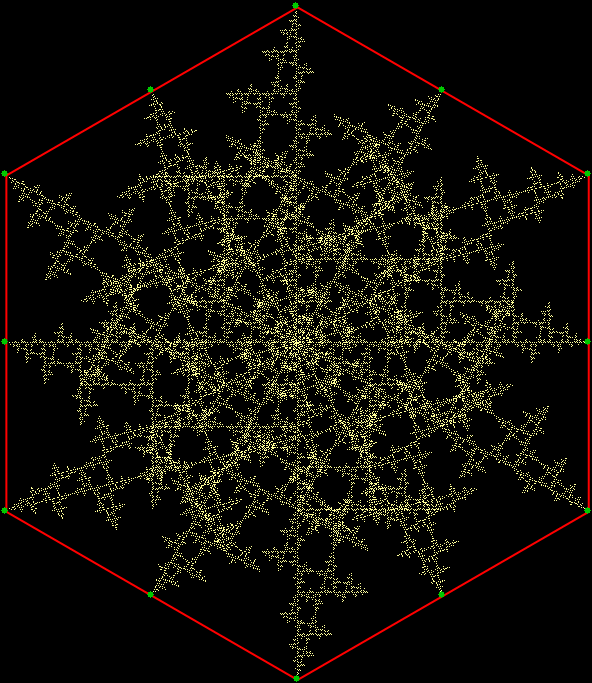
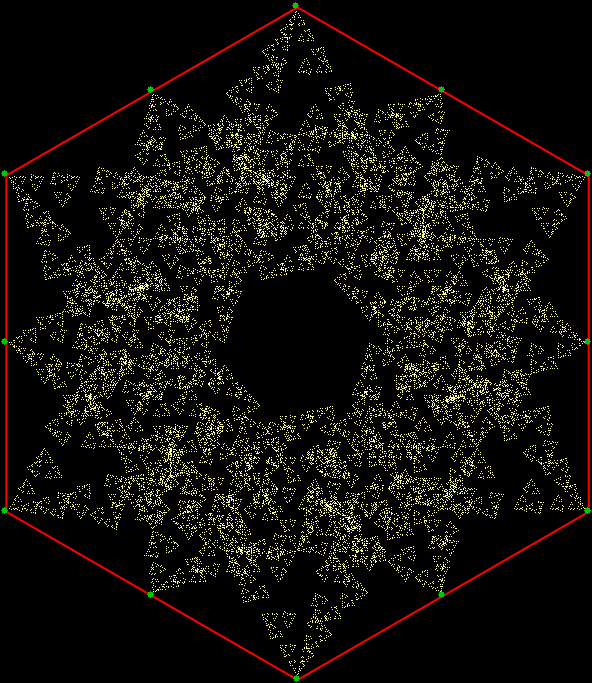
Tri Again (Again (Again))

Like the moon, mathematics is a harsh mistress. In mathematics, as on the moon, the slightest misstep can lead to disaster — as I’ve discovered again and again. My latest discovery came when I was looking at a shape called the L-tromino, created from three squares set in an L-shape. It’s a rep-tile, because it can be tiled with four smaller copies of itself, like this:

Rep-4 L-tromino


And if it can be tiled with four copies of itself, it can also be tiled with sixteen copies of itself, like this:

Rep-16 L-tromino


My misstep came when I was trying to do to a rep-16 L-tromino what I’d already done to a rep-4 L-tromino. And what had I already done? I’d created a beautiful shape called the hourglass fractal by dividing-and-discarding sub-copies of a rep-4 L-tromino. That is, I divided the L-tromino into four sub-copies, discarded one of the sub-copies, then repeated the process with the sub-sub-copies of the sub-copies, then the sub-sub-sub-copies of the sub-sub-copies, and so on:

Creating an hourglass fractal #1


Creating an hourglass fractal #2


Creating an hourglass fractal #3


Creating an hourglass fractal #4


Creating an hourglass fractal #5


Creating an hourglass fractal #6


Creating an hourglass fractal #7


Creating an hourglass fractal #8


Creating an hourglass fractal #9


Creating an hourglass fractal #10


Creating an hourglass fractal (animated)


The hourglass fractal


Next I wanted to create an hourglass fractal from a rep-16 L-tromino, so I reasoned like this:

• If one sub-copy of four is discarded from a rep-4 L-tromino to create the hourglass fractal, that means you need 3/4 of the rep-4 L-tromino. Therefore you’ll need 3/4 * 16 = 12/16 of a rep-16 L-tromino to create an hourglass fractal.

So I set up the rep-16 L-tromino with twelve sub-copies in the right pattern and began dividing-and-discarding:

A failed attempt at an hourglass fractal #1


A failed attempt at an hourglass fractal #2


A failed attempt at an hourglass fractal #3


A failed attempt at an hourglass fractal #4


A failed attempt at an hourglass fractal #5


A failed attempt at an hourglass fractal (animated)


Whoops! What I’d failed to take into account is that the rep-16 L-tromino is actually the second stage of the rep-4 triomino, i.e. that 4 * 4 = 16. It follows, therefore, that 3/4 of the rep-4 L-tromino will actually be 9/16 = 3/4 * 3/4 of the rep-16 L-tromino. So I tried again, setting up a rep-16 L-tromino with nine sub-copies, then dividing-and-discarding:

A third attempt at an hourglass fractal #1


A third attempt at an hourglass fractal #2


A third attempt at an hourglass fractal #3


A third attempt at an hourglass fractal #4


A third attempt at an hourglass fractal #5


A third attempt at an hourglass fractal #6


A third attempt at an hourglass fractal (animated)


Previously (and passionately) pre-posted:

Tri Again
Tri Again (Again)

Count Amounts

One of my favourite integer sequences is what I call the digit-line. You create it by taking this very familiar integer sequence:

• 1, 2, 3, 4, 5, 6, 7, 8, 9, 10, 11, 12, 13, 14, 15, 16, 17, 18, 19, 20…

And turning it into this one:

• 1, 2, 3, 4, 5, 6, 7, 8, 9, 1, 0, 1, 1, 1, 2, 1, 3, 1, 4, 1, 5, 1, 6, 1, 7, 1, 8, 1, 9, 2, 0… (A033307 in the Online Encyclopedia of Integer Sequences)

You simply chop all numbers into single digits. What could be simpler? Well, creating the digit-line couldn’t be simpler, but it is in fact a very complex object. There are hidden depths in its patterns, as even a brief look will uncover. For example, you can try counting the digits as they appear one-by-one in the line and seeing whether the digit-counts compare. Do the 1s of the digit-line always outnumber the 0s, as you might expect? Yes, they do (unless you start the digit-line 0, 1, 2, 3…). But do the 2s always outnumber the 0s? No: at position 2, there’s a 2, and at position 11 there’s a 0. So that’s one 2 and one 0. Does it happen again? Yes, it happens again at the 222nd digit of the digit-line, as below:

1, 2count=1, 3, 4, 5, 6, 7, 8, 9, 1, 0count=1, 1, 1, 1, 22, 1, 3, 1, 4, 1, 5, 1, 6, 1, 7, 1, 8, 1, 9, 23, 02, 24, 1, 25, 26, 27, 3, 28, 4, 29, 5, 210, 6, 211, 7, 212, 8, 213, 9, 3, 03, 3, 1, 3, 214, 3, 3, 3, 4, 3, 5, 3, 6, 3, 7, 3, 8, 3, 9, 4, 04, 4, 1, 4, 215, 4, 3, 4, 4, 4, 5, 4, 6, 4, 7, 4, 8, 4, 9, 5, 05, 5, 1, 5, 216, 5, 3, 5,4, 5, 5, 5, 6, 5, 7, 5, 8, 5, 9, 6, 06, 6, 1, 6, 217, 6, 3, 6, 4, 6, 5, 6, 6, 6, 7, 6, 8, 6, 9, 7, 07, 7, 1, 7, 218, 7, 3, 7, 4, 7, 5, 7, 6, 7, 7, 7, 8, 7, 9, 8, 08, 8, 1, 8, 219, 8, 3, 8, 4, 8, 5, 8, 6, 8, 7, 8, 8, 8, 9, 9, 09, 9, 1, 9, 220, 9, 3, 9, 4, 9, 5, 9, 6, 9, 7, 9, 8, 9, 9, 1, 010, 011, 1, 012, 1, 1, 013, 221, 1, 014, 3, 1, 015, 4, 1, 016, 5, 1, 017, 6, 1, 018, 7, 1, 019, 8, 1, 020, 9, 1, 1, 021

So count(2) = count(0) = 1 at digit 11 of the digit-line in the 0 of what was originally 10. And count(2) = count(0) = 21 @ digit 222 in the 0 of what was originally 110. Is a pattern starting to emerge? Yes, it is. Here are the first few points at which the count(2) = count(0) in the digit-line of base 10:

1 @ 11 in 10
21 @ 222 in 110
321 @ 3333 in 1110
4321 @ 44444 in 11110
54321 @ 555555 in 111110
654321 @ 6666666 in 1111110
7654321 @ 77777777 in 11111110
87654321 @ 888888888 in 111111110
987654321 @ 9999999999 in 1111111110
10987654321 @ 111111111110 in 11111111110
120987654321 @ 1222222222221 in 111111111110
[...]

The count(2) = count(0) = 321 at position 3333 in the digit-line, and 4321 at position 44444, and 54321 at position 555555, and so on. I don’t understand why these patterns occur, but you can predict the count-and-position of 2s and 0s easily until position 9999999999, after which things become more complicated. Related patterns for 2 and 0 occur in all other bases except binary (which doesn’t have a 2 digit). Here’s base 6:

1 @ 11 in 10 (1 @ 7 in 6)
21 @ 222 in 110 (13 @ 86 in 42)
321 @ 3333 in 1110 (121 @ 777 in 258)
4321 @ 44444 in 11110 (985 @ 6220 in 1554)
54321 @ 555555 in 111110 (7465 @ 46655 in 9330)
1054321 @ 11111110 in 1111110 (54121 @ 335922 in 55986)
12054321 @ 122222221 in 11111110 (380713 @ 2351461 in 335922)
132054321 @ 1333333332 in 111111110 (2620201 @ 16124312 in 2015538)
1432054321 @ 14444444443 in 1111111110 (17736745 @ 108839115 in 12093234)
15432054321 @ 155555555554 in 11111111110 (118513705 @ 725594110 in 72559410)
205432054321 @ 2111111111105 in 111111111110 (783641641 @ 4788921137 in 435356466)
2205432054321 @ 22222222222220 in 1111111111110 (5137206313 @ 31345665636 in 2612138802)

And what about comparing other pairs of digits? In fact, the count of all digits except 0 matches infinitely often. To write the numbers 1..9 takes one of each digit (except 0). To write the numbers 1 to 99 takes twenty of each digit (except 0). Here’s the proof:

11, 21, 31, 41, 51, 61, 71, 81, 91, 12, 01, 13, 14, 15, 22, 16, 32, 17, 42, 18, 52, 19, 62, 110, 72, 111, 82, 112, 92, 23, 02, 24, 113, 25, 26, 27, 33, 28, 43, 29, 53, 210, 63, 211, 73, 212, 83, 213, 93, 34, 03, 35, 114, 36, 214, 37, 38, 39, 44, 310, 54, 311, 64, 312, 74, 313, 84, 314, 94, 45, 04, 46, 115, 47, 215, 48, 315, 49, 410, 411, 55, 412, 65, 413, 75, 414, 85, 415, 95, 56, 05, 57, 116, 58, 216, 59, 316, 510, 416, 511, 512, 513, 66, 514, 76, 515, 86, 516, 96, 67, 06, 68, 117, 69, 217, 610, 317, 6
11
, 417, 612, 517, 613, 614, 615, 77, 616, 87, 617, 97, 78, 07, 79, 118, 710, 218, 711, 318, 712, 418, 713, 518, 714, 618, 715, 716, 717, 88, 718, 98, 89, 08, 810, 119, 811, 219, 812, 319, 813, 419, 814, 519, 815, 619, 816, 719, 817, 818, 819, 99, 910, 09, 911, 120, 912, 220, 913, 320, 914, 420, 915, 520, 916, 620, 917, 720, 918, 820, 919, 920

And what about writing 1..999, 1..9999, and so on? If you think about it, for every pair of non-zero digits, d1 and d2, all numbers containing one digit can be matched with a number containing the other. 100 → 200, 111 → 222, 314 → 324, 561189571 → 562289572, and so on. So in counting 1..999, 1..9999, 1..99999, you use the same number of non-zero digits. And once again a pattern emerges:

count(0) = 0; count(1) = 1; count(2) = 1; count(3) = 1; count(4) = 1; count(5) = 1; count(6) = 1; count(7) = 1; count(8) = 1; count(9) = 1 (writing 1..9)
count(0) = 9; count(1) = 20; count(2) = 20; count(3) = 20; count(4) = 20; count(5) = 20; count(6) = 20; count(7) = 20; count(8) = 20; count(9) = 20 (writing 1..99)
0: 189; 1: 300; 2: 300; 3: 300; 4: 300; 5: 300; 6: 300; 7: 300; 8: 300; 9: 300 (writing 1..999)
0: 2889; 1: 4000; 2: 4000; 3: 4000; 4: 4000; 5: 4000; 6: 4000; 7: 4000; 8: 4000; 9: 4000 (writing 1..9999)
0: 38889; 1: 50000; 2: 50000; 3: 50000; 4: 50000; 5: 50000; 6: 50000; 7: 50000; 8: 50000; 9: 50000 (writing 1..99999)
0: 488889; 1: 600000; 2: 600000; 3: 600000; 4: 600000; 5: 600000; 6: 600000; 7: 600000; 8: 600000; 9: 600000 (writing 1..999999)
0: 5888889; 1: 7000000; 2: 7000000; 3: 7000000; 4: 7000000; 5: 7000000; 6: 7000000; 7: 7000000; 8: 7000000; 9: 7000000 (writing 1..9999999)
[...]

And here’s base 6 again:

0: 0; 1: 1; 2: 1; 3: 1; 4: 1; 5: 1 (writing 1..5)
0: 5; 1: 20; 2: 20; 3: 20; 4: 20; 5: 20 (writing 1..55 in base 6)
0: 145; 1: 300; 2: 300; 3: 300; 4: 300; 5: 300 (writing 1..555)
0: 2445; 1: 4000; 2: 4000; 3: 4000; 4: 4000; 5: 4000 (writing 1..5555)
0: 34445; 1: 50000; 2: 50000; 3: 50000; 4: 50000; 5: 50000 (writing 1..55555)
0: 444445; 1: 1000000; 2: 1000000; 3: 1000000; 4: 1000000; 5: 1000000 (writing 1..555555)
0: 5444445; 1: 11000000; 2: 11000000; 3: 11000000; 4: 11000000; 5: 11000000 (writing 1..5555555)
0: 104444445; 1: 120000000; 2: 120000000; 3: 120000000; 4: 120000000; 5: 120000000 (writing 1..55555555)
0: 1144444445; 1: 1300000000; 2: 1300000000; 3: 1300000000; 4: 1300000000; 5: 1300000000 (writing 1..555555555)

Joule for Thought

No matter how efficient any physical device is (e.g. a computer or a brain) it can acquire one bit of information only if it expends 0.693kT joules of energy. — Information Theory: A Tutorial Introduction, James V. Stone, Sebtel Press 2015

At the Mountings of Mathness

Mounting n. a backing or setting on which a photograph, work of art, gem, etc. is set for display. — Oxford English Dictionary

Viewer’s advisory: If you are sensitive to flashing or flickering images, you should be careful when you look at the final fourth and fifth of the animated gifs below.


H.P. Lovecraft in some Mountings of Mathness


Paradoxical Puzzle Pair

Two interesting puzzles, one of which looks hard and is in fact easy, while the other looks easy and is in fact hard.

1. Three Cards

The values attached to a deck of bridge cards start with the Two of Clubs as lowest, with Diamonds, Hearts and Ace of Spades as highest.

If you draw three cards at random from the deck, what is the probability that they will be drawn in order of increasing value? (Answer 1)


2. The Hungry Hunter

A hunter, having run out of food, met two shepherds. One of the shepherd had three loaves of bread and the other had five loaves. When the hunter asked for food, the shepherds agreed to divide the eight identical loaves equally between the three of them. The hunter thanked them and gave them $8. How should the shepherds divide the money? (Answer 2)

• Puzzles and answers from Erwin Brecher’s How Do You Survive a Duel? And Other Mathematical Diversions, Puzzles and Brainteasers (Carlton Books 2018)

*

*

*

*

*

*

*

*

*


Answer #1: The puzzle sounds far more complicated than it is. The deck of cards is a red herring. The question reduces to this: Take three cards, say 2, 3 and 4 of clubs, facedown. What is the probability of turning them over in the order 2, 3, 4? There are six possible ways of arranging three cards. Therefore the probability is one-sixth.

*

*

*

*

*

*

*

*

*

Answer #2: It would be wrong to split the money into $3 and $5. Each of the three ended up with 2⅔ loaves. In other words, the first shepherd parted with ⅓ of a loaf and the other shepherd with 2⅓ or 7/3 loaves. The first shepherd should therefore get $1 and the second shepherd $7.

Agnathous Analysis

In Mandibular Metamorphosis, I looked at two distinct fractals and how you could turn one into the other in one smooth sweep. The Sierpiński triangle was one of the fractals:
Sierpiński triangle


The T-square fractal was the other:

T-square fractal (or part thereof)


And here they are turning into each other:

Sierpiński ↔ T-square (anim)
(Open in new window if distorted)


But what exactly is going on? To answer that, you need to see how the two fractals are created. Here are the stages for one way of constructing the Sierpiński triangle:

Sierpiński triangle #1


Sierpiński triangle #2

Sierpiński triangle #3

Sierpiński triangle #4


Sierpiński triangle #5


Sierpiński triangle #6

Sierpiński triangle #7


Sierpiński triangle #8


Sierpiński triangle #9


When you take away all the construction lines, you’re left with a simple Sierpiński triangle:


Constructing a Sierpiński triangle (anim)


Now here’s the construction of a T-square fractal:

T-square fractal #1


T-square fractal #2


T-square fractal #3


T-square fractal #4


T-square fractal #5


T-square fractal #6


T-square fractal #7


T-square fractal #8


T-square fractal #9


Take away the construction lines and you’re left with a simple T-square fractal:

T-square fractal


Constructing a T-square fractal (anim)


And now it’s easy to see how one turns into the other:

Sierpiński → T-square #1


Sierpiński → T-square #2


Sierpiński → T-square #3


Sierpiński → T-square #4


Sierpiński → T-square #5


Sierpiński → T-square #6


Sierpiński → T-square #7


Sierpiński → T-square #8


Sierpiński → T-square #9


Sierpiński → T-square #10


Sierpiński → T-square #11


Sierpiński → T-square #12


Sierpiński → T-square #13


Sierpiński ↔ T-square (anim)
(Open in new window if distorted)


Post-Performative Post-Scriptum

Mandibular Metamorphosis also looked at a third fractal, the mandibles or jaws fractal. Because I haven’t included the jaws fractal in this analysis, the analysis is therefore agnathous, from Ancient Greek ἀ-, a-, “without”, + γνάθ-, gnath-, “jaw”.

Mandibular Metamorphosis

Here’s the famous Sierpiński triangle:

Sierpiński triangle


And here’s the less famous T-square fractal:

T-square fractal (or part of it, at least)


How do you get from one to the other? Very easily, as it happens:

From Sierpiński triangle to T-square (and back again) (animated)
(Open in new window if distorted)


Now, here are the Sierpiński triangle, the T-square fractal and what I call the mandibles or jaws fractal:

Sierpiński triangle


T-square fractal


Mandibles / Jaws fractal


How do you cycle between them? Again, very easily:

From Sierpiński triangle to T-square to Mandibles (and back again) (animated)
(Open in new window if distorted)


Elsewhere other-accessible…

Agnathous Analysis — a closer look at these shapes

Math Matters

“Physics is mathematical not because we know so much about the physical world, but because we know so little; it is only its mathematical properties that we can discover.” — Bertrand Russell, An Outline of Philosophy (1927), ch. 15, “The Nature of our Knowledge of Physics”

Controlled Chaos

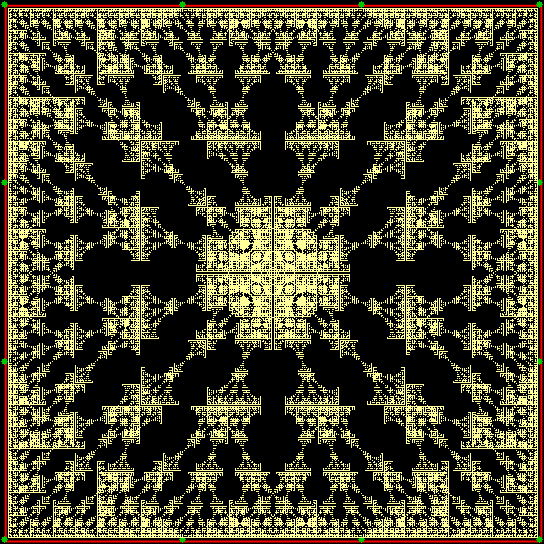
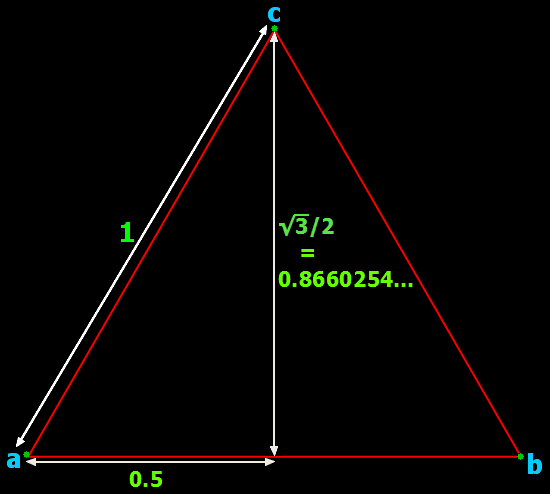
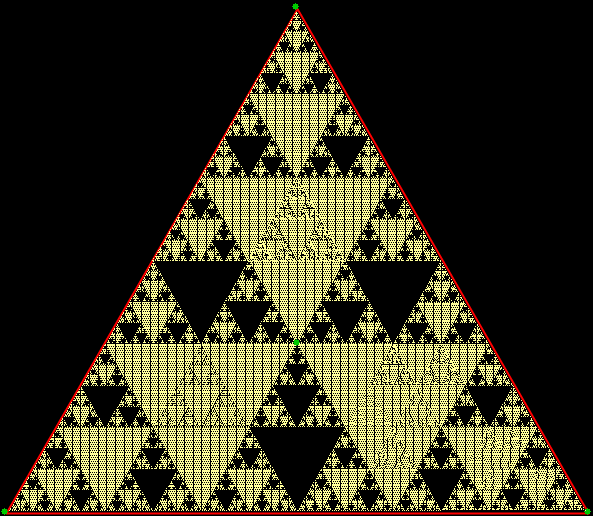
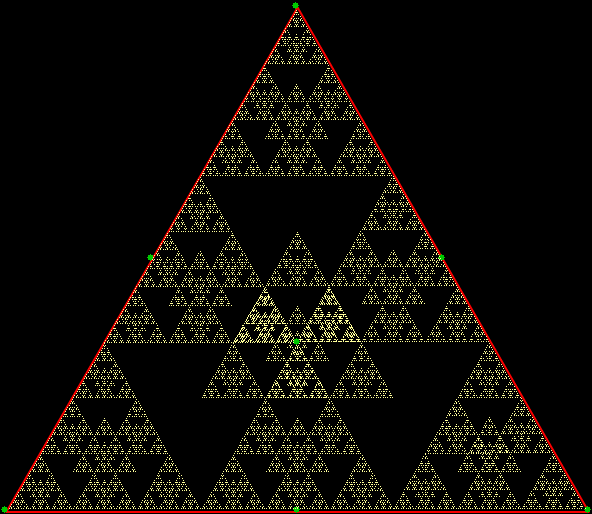
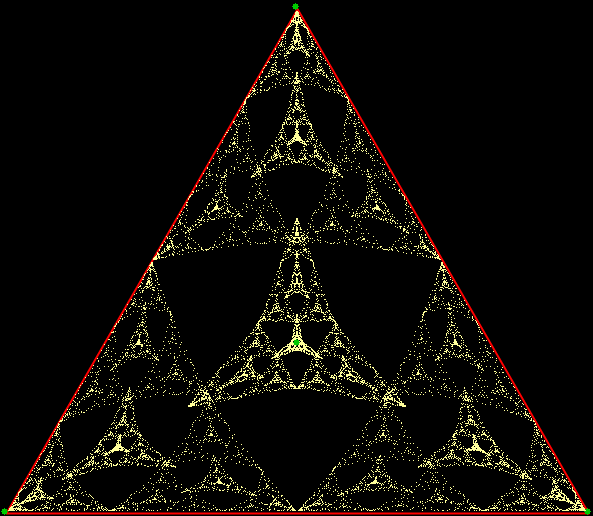
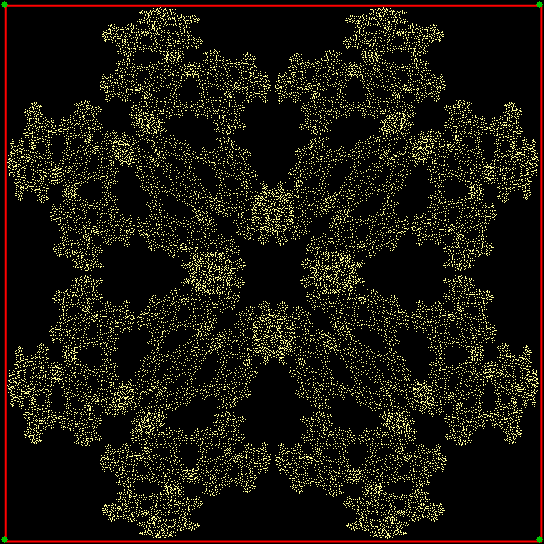
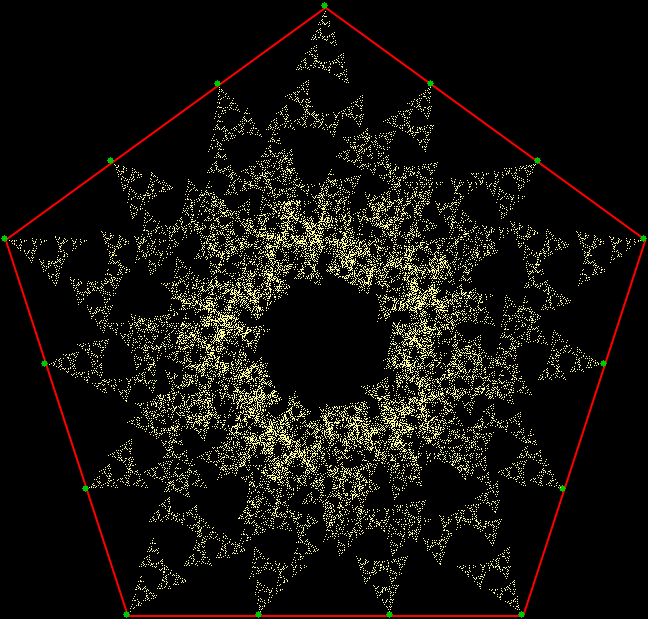
The chaos game is a simple mathematical technique for creating fractals. Suppose a point jumps over and over again 1/2 of the distance towards a randomly chosen vertex of a triangle. This shape appears, the so-called Sierpiński triangle:

Sierpiński triangle created by the chaos game


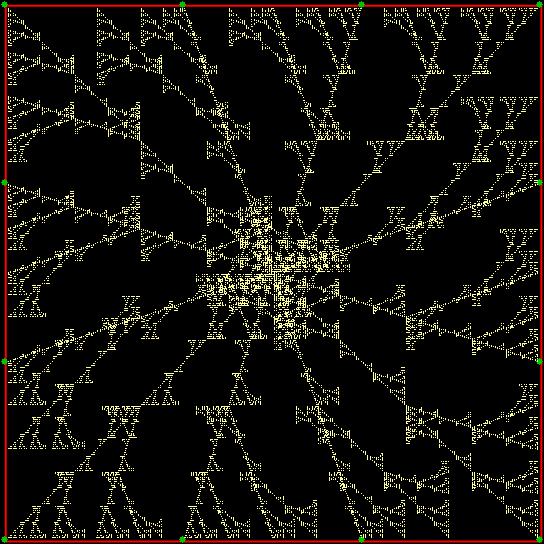
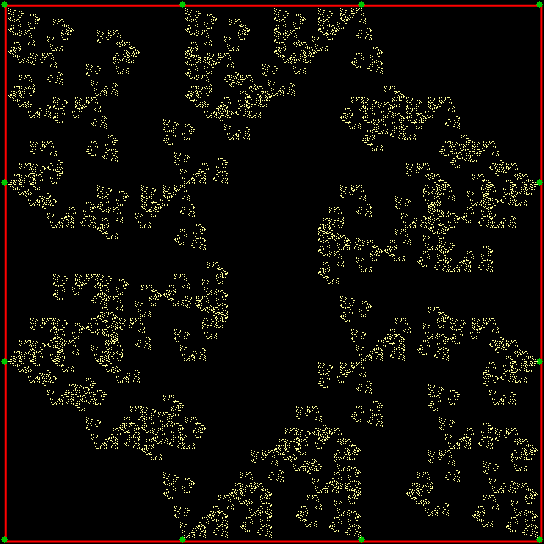
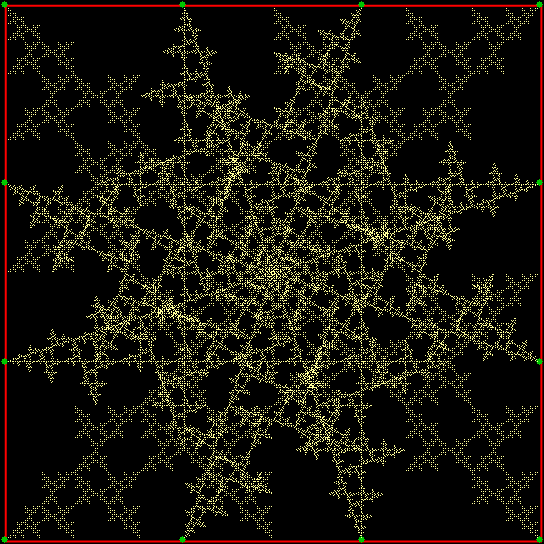
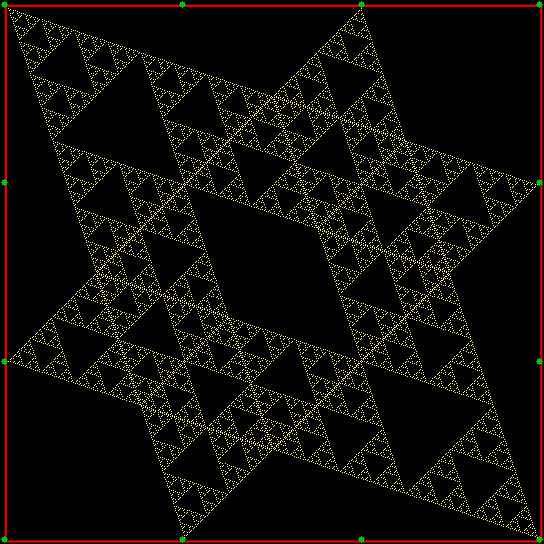
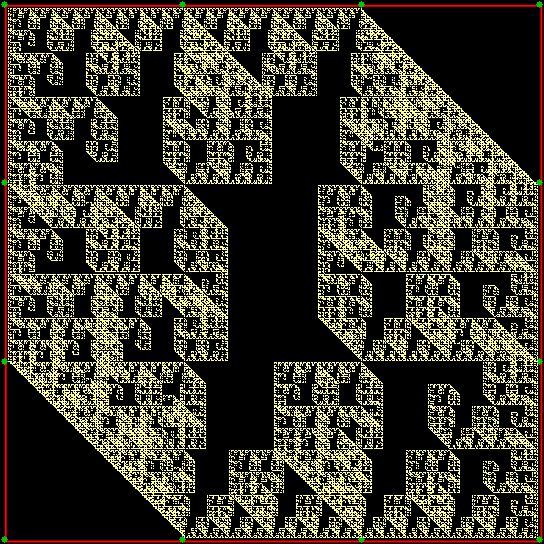
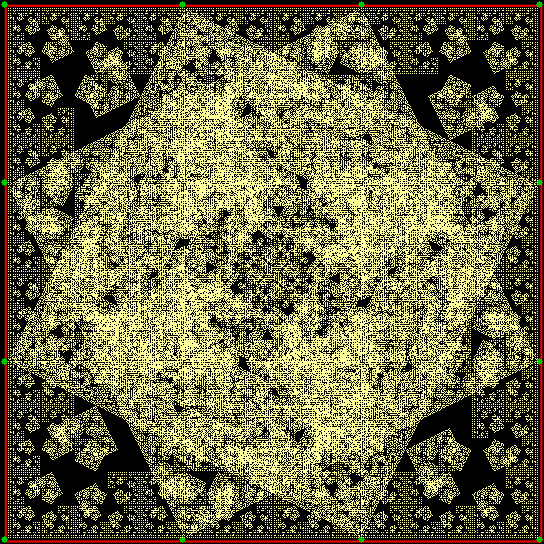
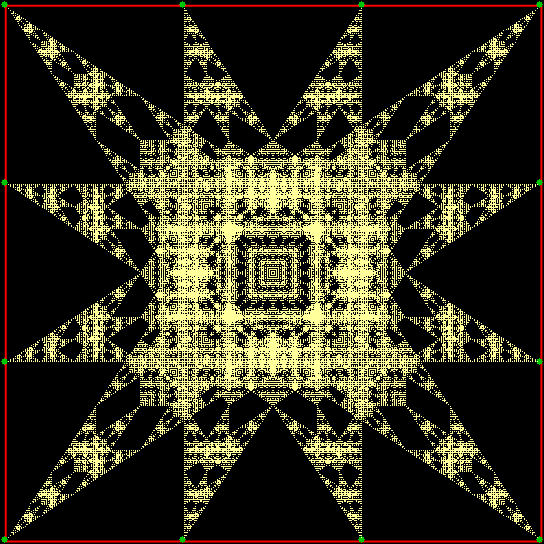
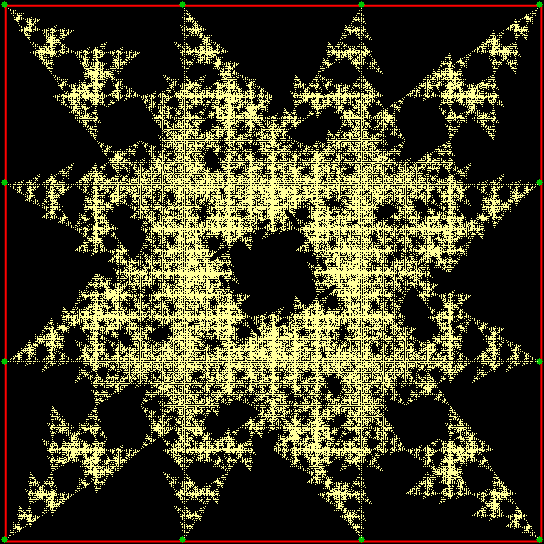
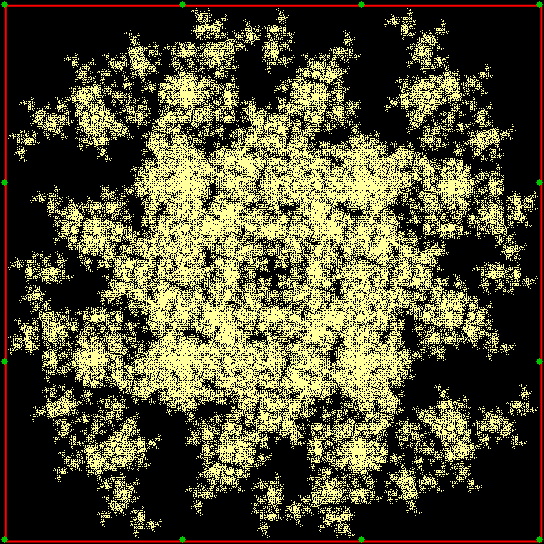
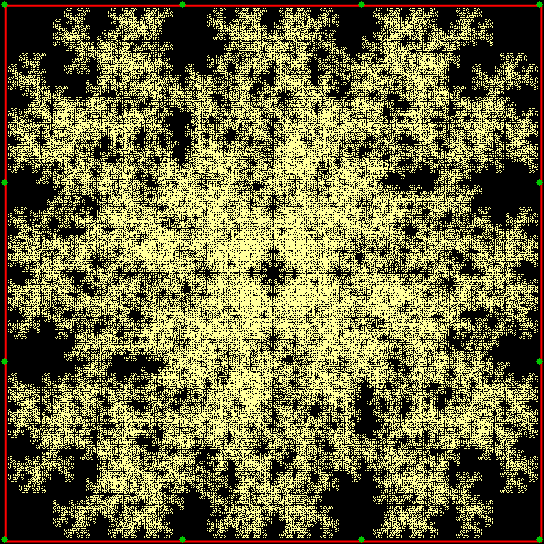
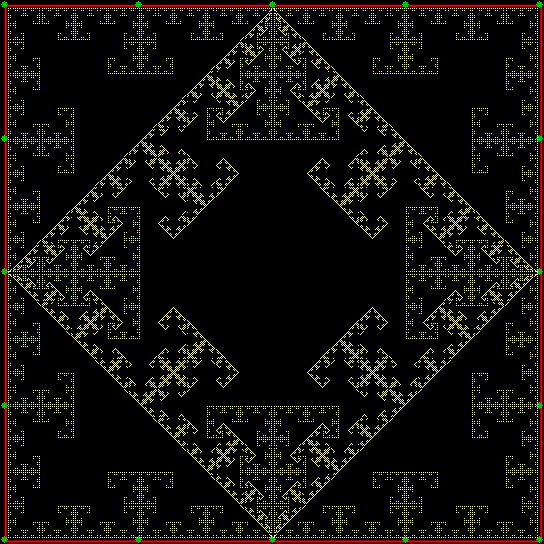
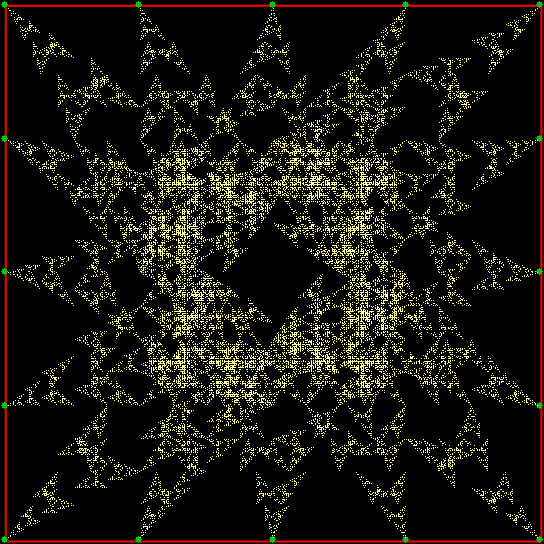
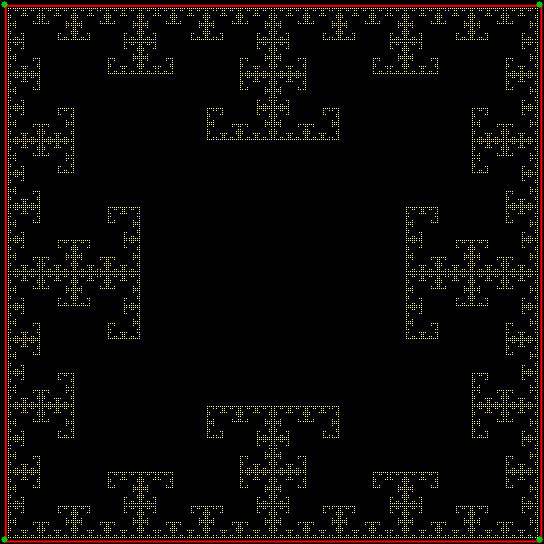
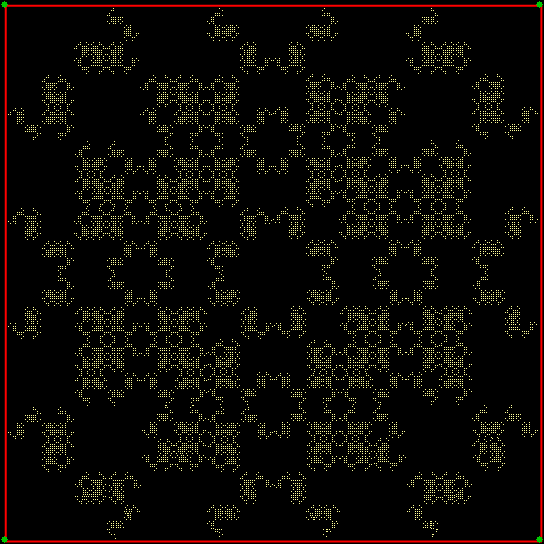
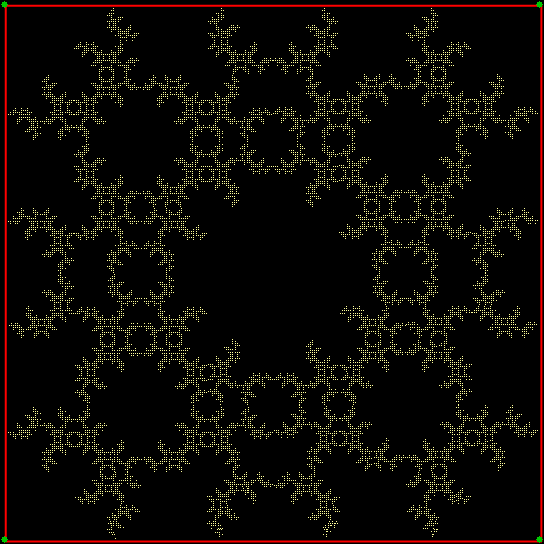
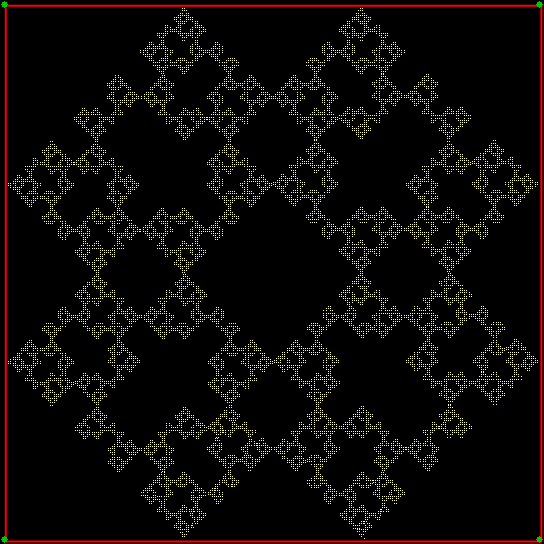
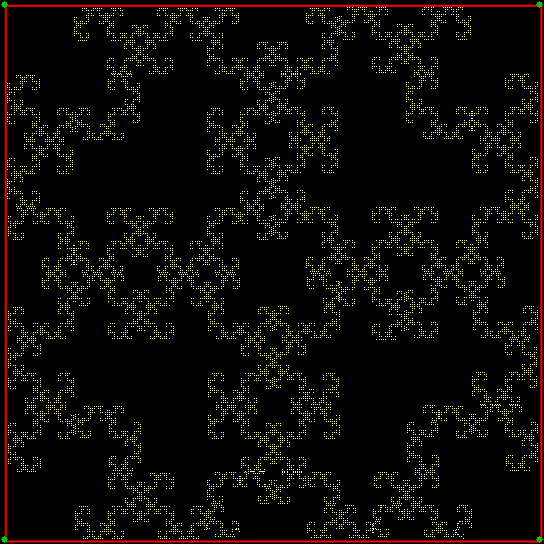
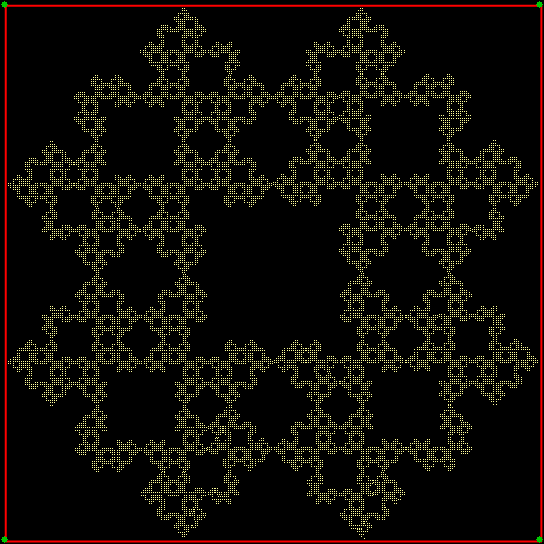
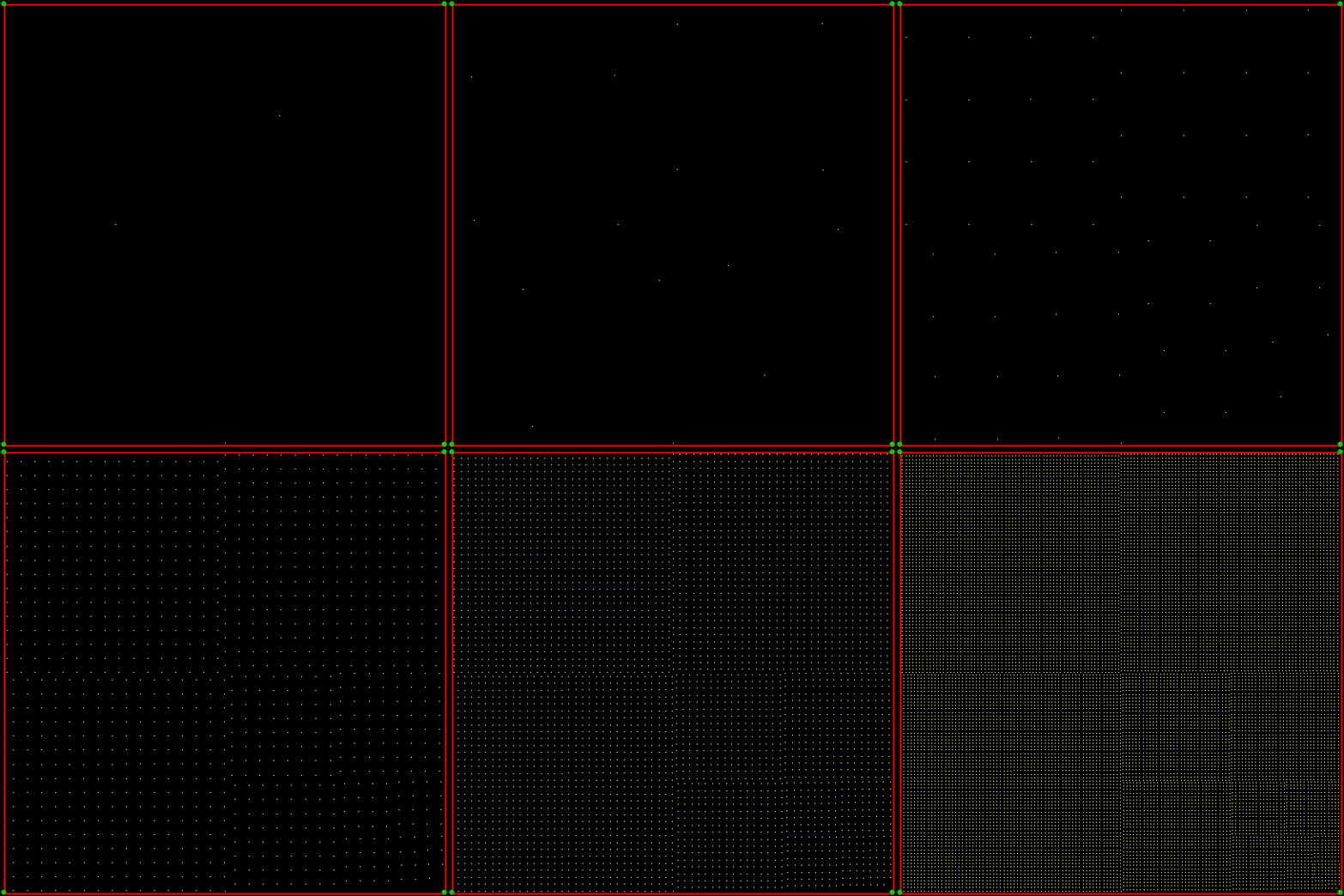
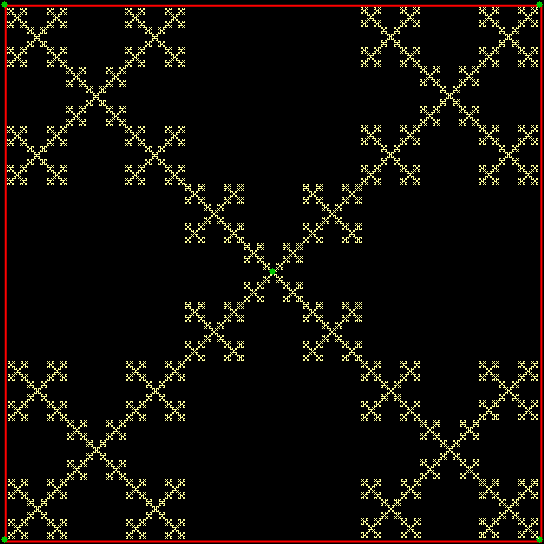
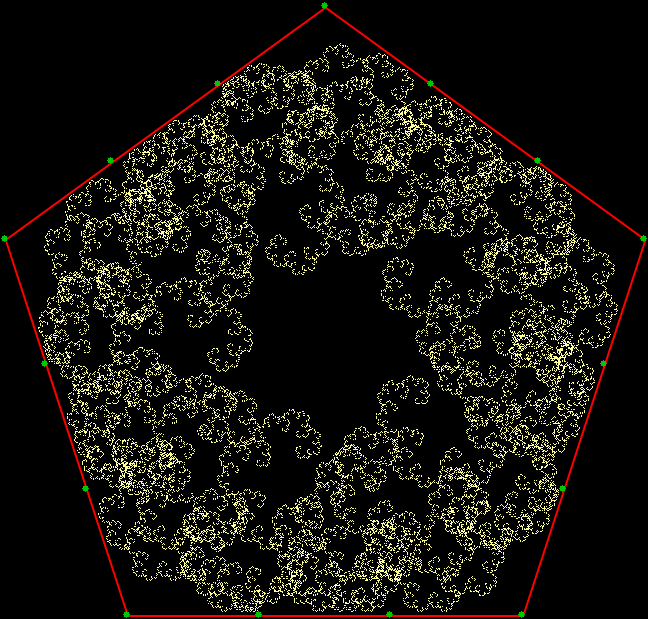
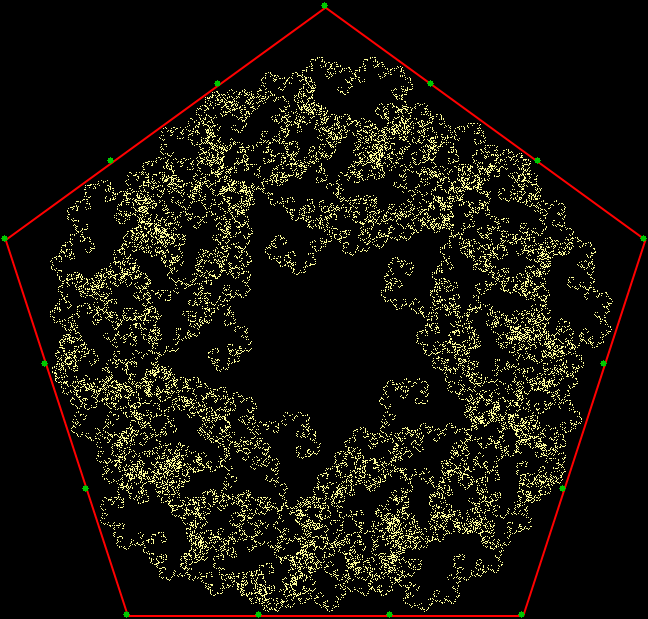
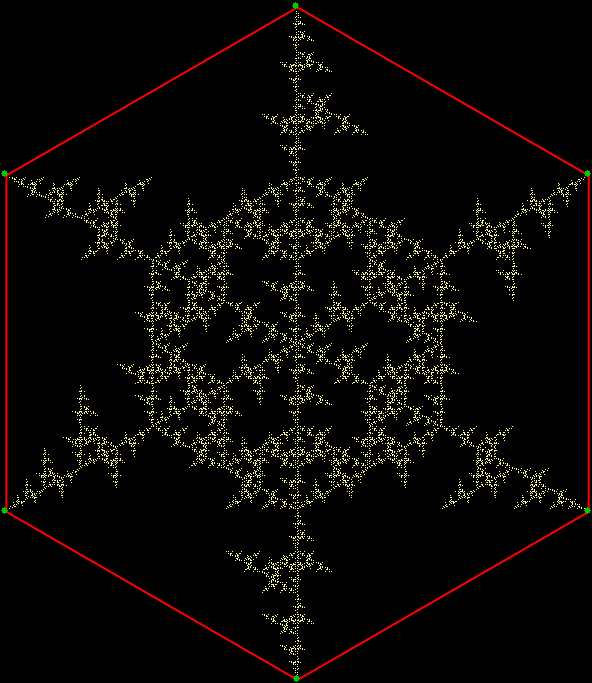
But the jumps don’t have to be random: you can use an array to find every possible combination of jumps and so create a more even image. I call this controlled chaos. However, if you try the chaos game (controlled or otherwise) with a square, no fractal appears unless you restrict the vertex chosen in some way. For example, if the point can’t jump towards the same vertex twice or more in a row, this fractal appears:

Ban on jumping towards previously chosen vertex, i.e. v + 0


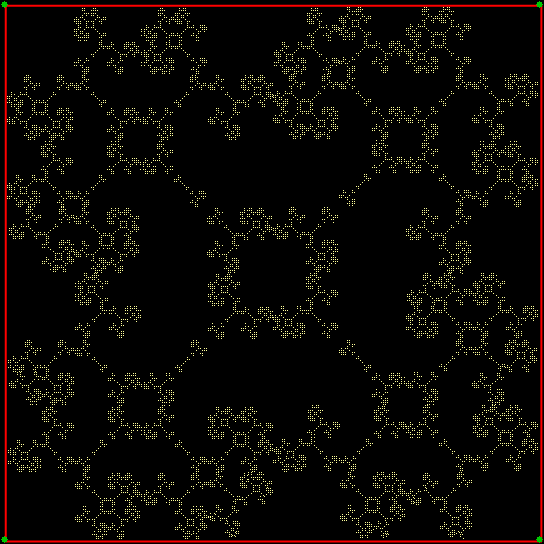
And if the point can’t jump towards the vertex one place clockwise of the previously chosen vertex, this fractal appears:

Ban on v + 1


If the point can’t jump towards the vertex two places clockwise of the previously chosen vertex, this fractal appears:

Ban on v + 2


If the point can’t jump towards the vertex three places clockwise, or one place anticlockwise, of the previously chosen vertex, this fractal appears (compare v + 1 above):

Ban on v + 3


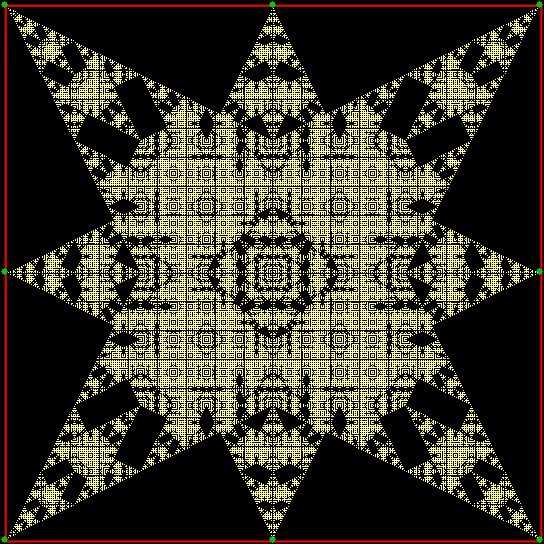
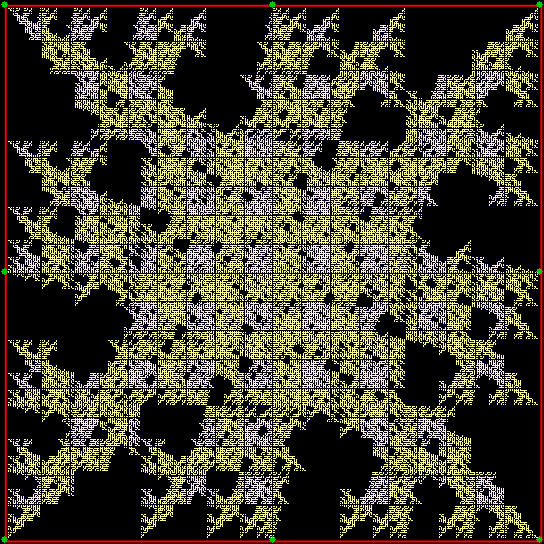
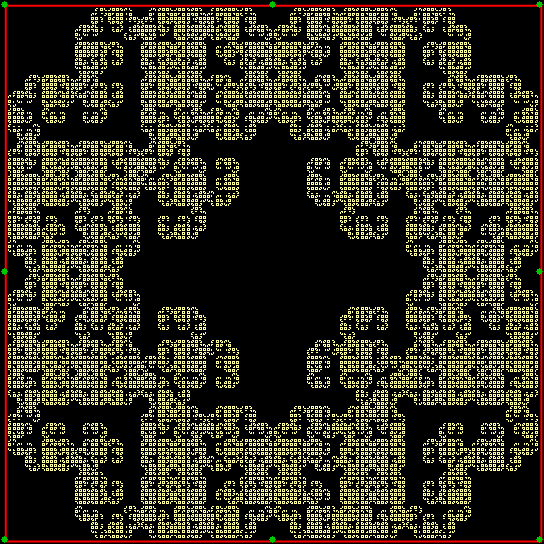
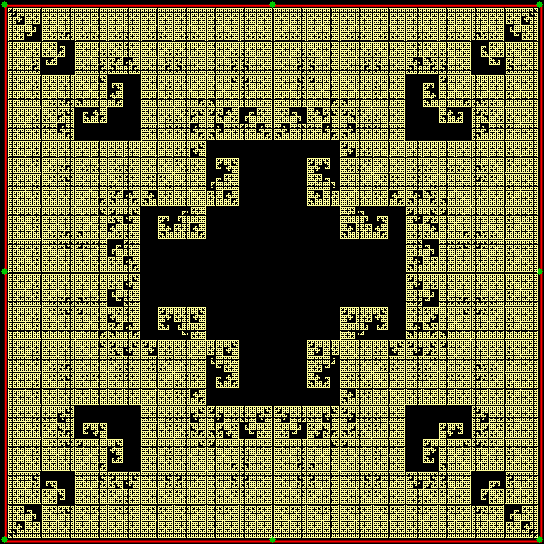
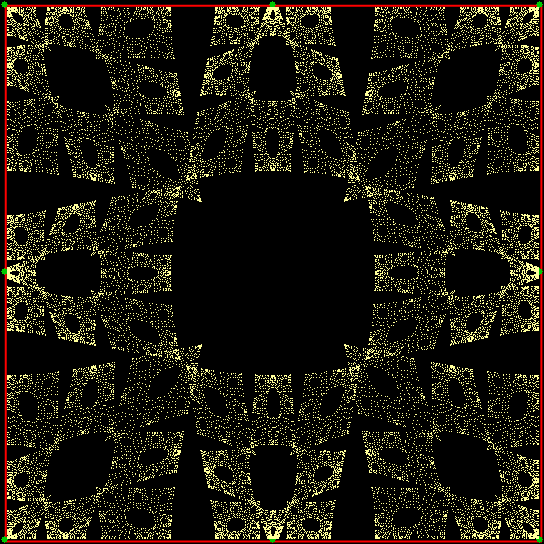
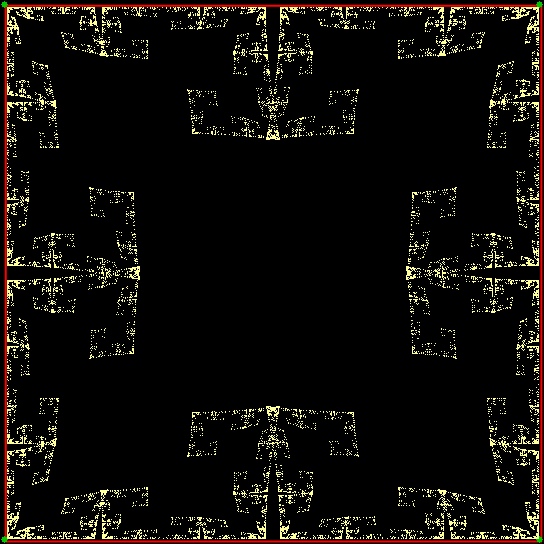
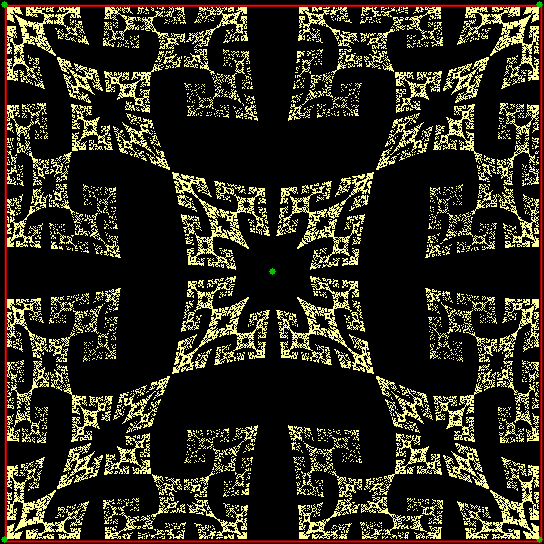
You can also ban vertices based on how close the point is to them at any given moment. Suppose that the point can’t jump towards the nearest vertex, which means that it must choose to jump towards either the 2nd-nearest, 3rd-nearest or 4th-nearest vertex. A fractal we’ve already seen appears:

Must jump towards vertex at distance 2, 3 or 4


In effect, not jumping towards the nearest vertex means not jumping towards a vertex twice or more in a row. Another familiar fractal appears if the point can’t jump towards the most distant vertex:

d = 1,2,3


But new fractals also appear when the jumps are determined by distance:

d = 1,2,4


d = 1,3,4


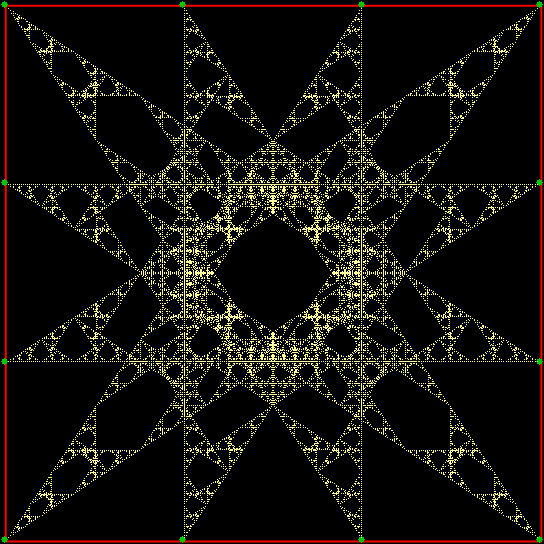
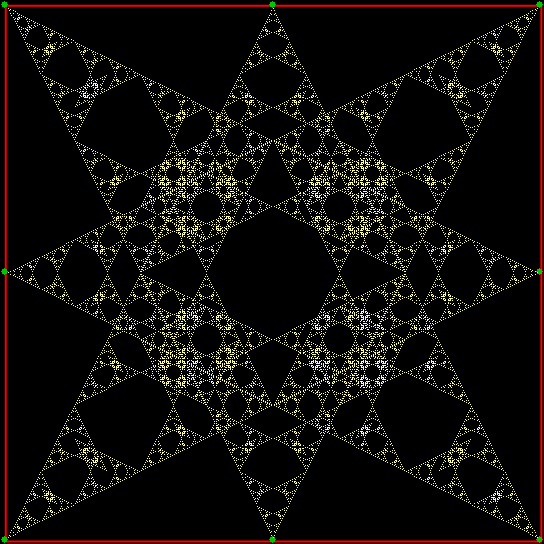
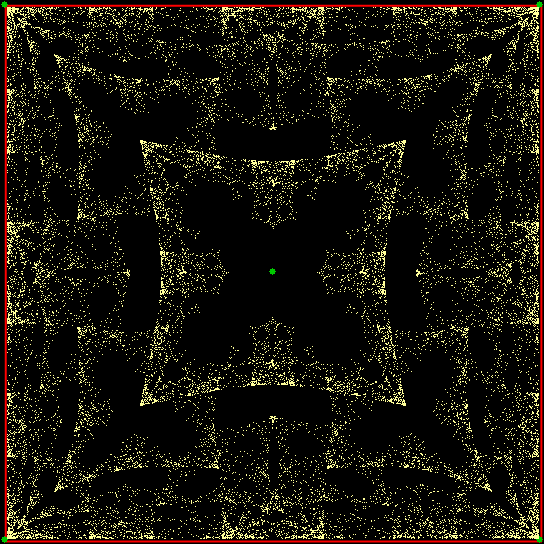
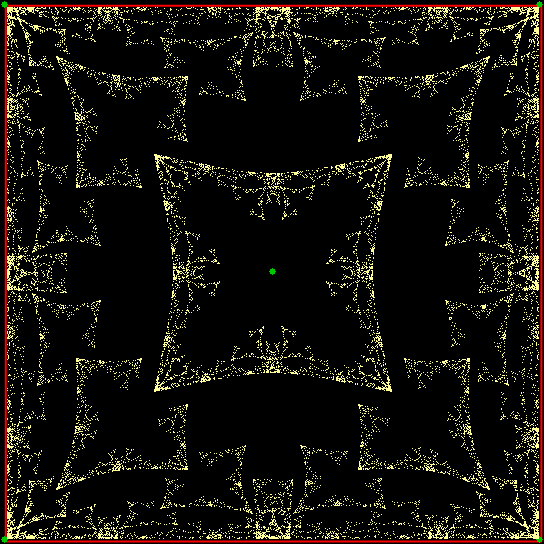
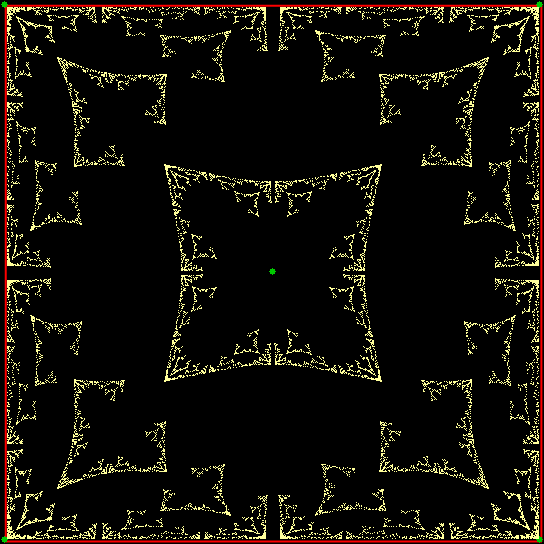
And you can add more targets for the jumping point midway between the vertices of the square:

d = 1,2,8


d = 1,4,6


d = 1,6,8


d = 1,7,8


d = 2,3,6


d = 2,3,8


d = 2,4,8


d = 2,5,6


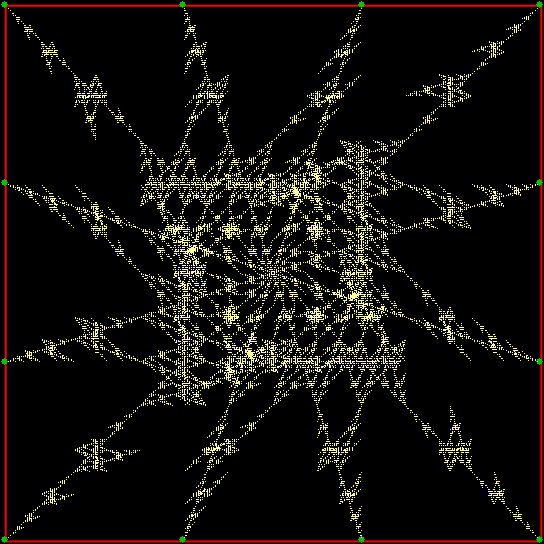
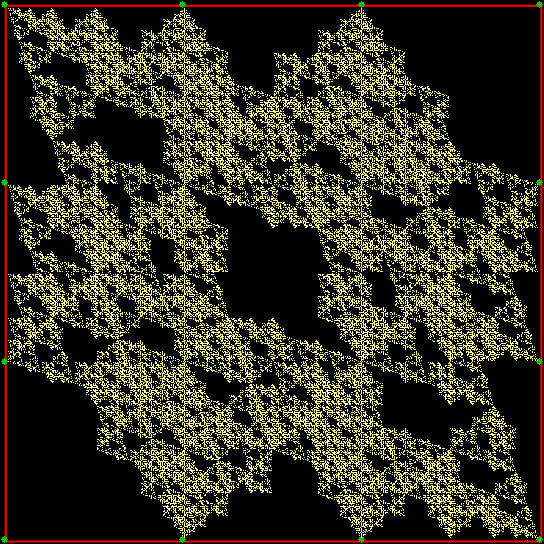
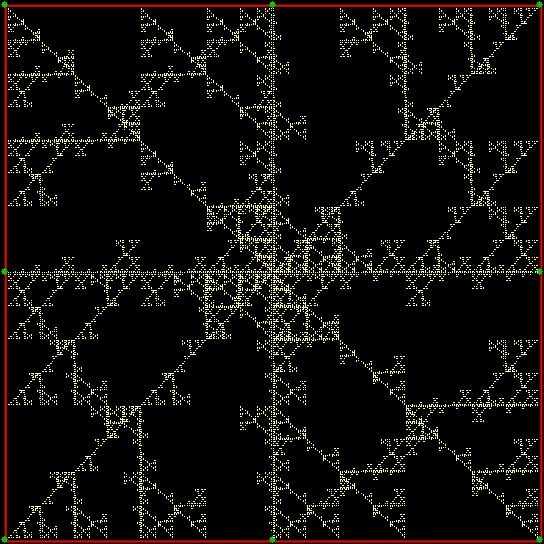
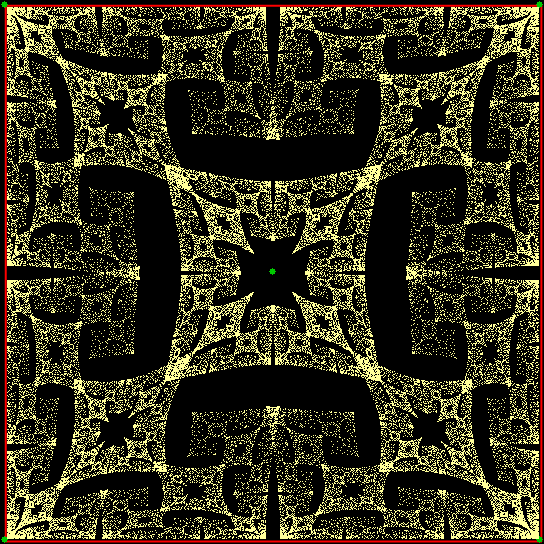
And what if you choose the next vertex by incrementing the previously chosen vertex? Suppose the initial vertex is 1 and the possible increments are 1, 2 and 2. This new fractal appears:

increment = 1,2,2 (for example, 1 + 1 = 2, 2 + 2 = 4, 4 + 2 = 6, and 6 is adjusted thus: 6 – 4 = 2)


And with this set of increments, it’s déjà vu all over again:

i = 2,2,3


And again:

i = 2,3,2


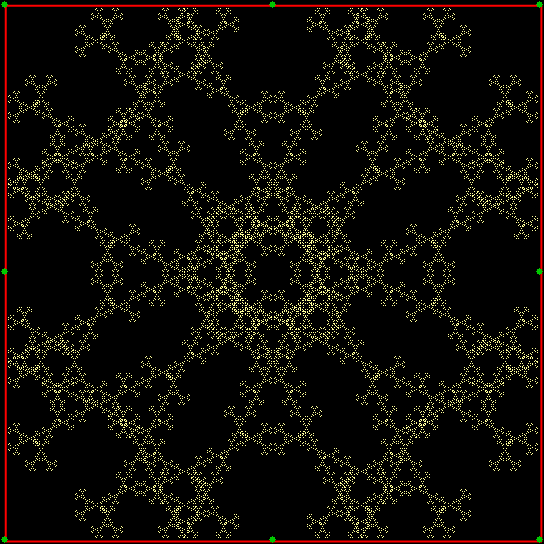
With more possible increments, familiar fractals appear in unfamiliar ways:

i = 1,3,2,3


i = 1,3,3,2


i = 1,4,3,3


i = 2,1,2,2


i = 2,1,3,4


i = 2,2,3,4


i = 3,1,1,2


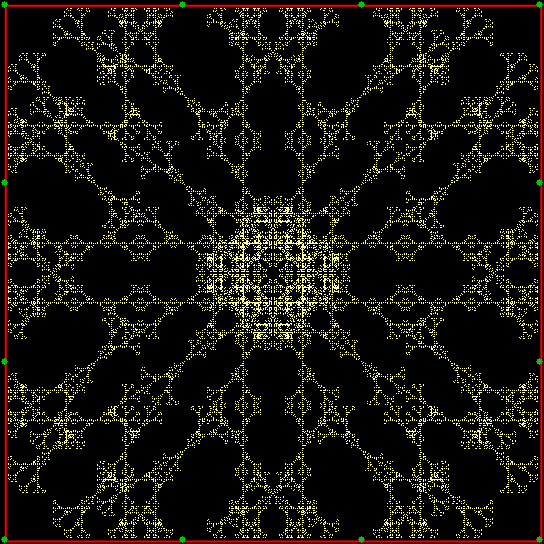
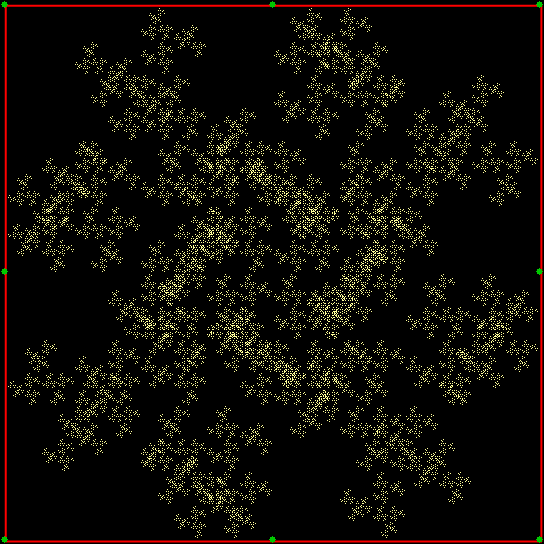
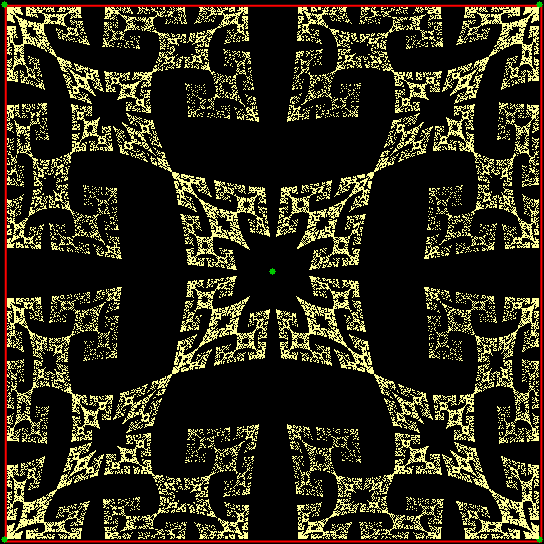
Now try increments with midpoints on the sides:

v = 4 + midpoints, i = 1,2,4


As we saw above, this incremental fractal can also be created from a square with four vertices and no midpoints:

i = 1,3,3; initial vertex = 1


But the fractal changes when the initial vertex is set to 2, i.e. to one of the midpoints:

i = 1,3,3; initial vertex = 2


And here are more inc-fractals with midpoints:

i = 1,4,2 (cf. inc-fractal 1,2,4 above)


i = 1,4,8


i = 2,6,3


i = 3,2,6


i = 4,7,8


i = 1,2,3,5


i = 1,4,5,4


i = 6,2,4,1


i = 7,6,2,2


i = 7,8,2,4


i = 7,8,4,2


Root Rite

A square contains one of the great — perhaps the greatest — intellectual rites of passage. If each side of the square is 1 unit in length, how long are its diagonals? By Pythagoras’ theorem:

a^2 + b^2 = c^2
1^2 + 1^2 = 2, so c = √2

So each diagonal is √2 units long. But what is √2? It’s a new kind of number: an irrational number. That doesn’t mean that it’s illogical or against reason, but that it isn’t exactly equal to any ratio of integers like 3/2 or 17/12. When represented as decimals, the digits of all integer ratios either end or fall, sooner or later, into an endlessly repeating pattern:

3/2 = 1.5

17/12 = 1.416,666,666,666,666…

577/408 = 1.414,2156 8627 4509 8039,2156 8627 4509 8039,2156 8627 4509 8039,2156 8627 4509 8039,2156 8627 4509 8039,…

But when √2 is represented as a decimal, its digits go on for ever without any such pattern:

√2 = 1.414,213,562,373,095,048,801,688,724,209,698,078,569,671,875,376,948,073,176,679,737,990,732,478,462,107…

The intellectual rite of passage comes when you understand why √2 is irrational and behaves like that:

Proof of the irrationality of √2

1. Suppose that there is some ratio, a/b, such that

2. a and b have no factors in common and

3. a^2/b^2 = 2.

4. It follows that a^2 = 2b^2.

5. Therefore a is even and there is some number, c, such that 2c = a.

6. Substituting c in #4, we derive (2c)^2 = 4c^2 = 2b^2.

7. Therefore 2c^2 = b^2 and b is also even.

8. But #7 contradicts #2 and the supposition that a and b have no factors in common.

9. Therefore, by reductio ad absurdum, there is no ratio, a/b, such that a^2/b^2 = 2. Q.E.D.

Given that subtle proof, you might think the digits of an irrational number like √2 would be difficult to calculate. In fact, they’re easy. And one method is so easy that it’s often re-discovered by recreational mathematicians. Suppose that a is an estimate for √2 but it’s too high. Clearly, if 2/a = b, then b will be too low. To get a better estimate, you simply split the difference: a = (a + b) / 2. Then do it again and again:

a = (2/a + a) / 2

If you first set a = 1, the estimates improve like this:

(2/1 + 1) / 2 = 3/2
2 – (3/2)^2 = -0.25
(2/(3/2) + 3/2) / 2 = 17/12
2 – (17/12)^2 = -0.00694…
(2/(17/12) + 17/12) / 2 = 577/408
2 – (577/408)^2 = -0.000006007…
(2/(577/408) + 577/408) / 2 = 665857/470832
2 – (665857/470832)^2 = -0.00000000000451…

In fact, the estimate doubles in accuracy (or better) at each stage (the first digit to differ is underlined):

1.5… = 3/2 (matching digits = 1)
1.4… = √2

1.416… = 17/12 (m=3)
1.414… = √2

1.414,215… = 577/408 (m=6)
1.414,213… = √2

1.414,213,562,374… = 665857/470832 (m=12)
1.414,213,562,373… = √2

1.414,213,562,373,095,048,801,689… = 886731088897/627013566048 (m=24)
1.414,213,562,373,095,048,801,688… = √2

1.414,213,562,373,095,048,801,688,724,209,698,078,569,671,875,377… (m=48)
1.414,213,562,373,095,048,801,688,724,209,698,078,569,671,875,376… = √2

1.414,213,562,373,095,048,801,688,724,209,698,078,569,671,875,376,948,073,176,679,737,990,732,478,46
2,107,038,850,387,534,327,641,6… (m=97)
1.414,213,562,373,095,048,801,688,724,209,698,078,569,671,875,376,948,073,176,679,737,990,732,478,46
2,107,038,850,387,534,327,641,5… = √2

1.414,213,562,373,095,048,801,688,724,209,698,078,569,671,875,376,948,073,176,679,737,990,732,478,46
2,107,038,850,387,534,327,641,572,735,013,846,230,912,297,024,924,836,055,850,737,212,644,121,497,09
9,935,831,413,222,665,927,505,592,755,799,950,501,152,782,060,8… (m=196)
1.414,213,562,373,095,048,801,688,724,209,698,078,569,671,875,376,948,073,176,679,737,990,732,478,46
2,107,038,850,387,534,327,641,572,735,013,846,230,912,297,024,924,836,055,850,737,212,644,121,497,09
9,935,831,413,222,665,927,505,592,755,799,950,501,152,782,060,5… = √2

1.414,213,562,373,095,048,801,688,724,209,698,078,569,671,875,376,948,073,176,679,737,990,732,478,46
2,107,038,850,387,534,327,641,572,735,013,846,230,912,297,024,924,836,055,850,737,212,644,121,497,09
9,935,831,413,222,665,927,505,592,755,799,950,501,152,782,060,571,470,109,559,971,605,970,274,534,59
6,862,014,728,517,418,640,889,198,609,552,329,230,484,308,714,321,450,839,762,603,627,995,251,407,98
9,687,253,396,546,331,808,829,640,620,615,258,352,395,054,745,750,287,759,961,729,835,575,220,337,53
1,857,011,354,374,603,43… (m=392)
1.414,213,562,373,095,048,801,688,724,209,698,078,569,671,875,376,948,073,176,679,737,990,732,478,46
2,107,038,850,387,534,327,641,572,735,013,846,230,912,297,024,924,836,055,850,737,212,644,121,497,09
9,935,831,413,222,665,927,505,592,755,799,950,501,152,782,060,571,470,109,559,971,605,970,274,534,59
6,862,014,728,517,418,640,889,198,609,552,329,230,484,308,714,321,450,839,762,603,627,995,251,407,98
9,687,253,396,546,331,808,829,640,620,615,258,352,395,054,745,750,287,759,961,729,835,575,220,337,53
1,857,011,354,374,603,40… = √2

1.414,213,562,373,095,048,801,688,724,209,698,078,569,671,875,376,948,073,176,679,737,990,732,478,46
2,107,038,850,387,534,327,641,572,735,013,846,230,912,297,024,924,836,055,850,737,212,644,121,497,09
9,935,831,413,222,665,927,505,592,755,799,950,501,152,782,060,571,470,109,559,971,605,970,274,534,59
6,862,014,728,517,418,640,889,198,609,552,329,230,484,308,714,321,450,839,762,603,627,995,251,407,98
9,687,253,396,546,331,808,829,640,620,615,258,352,395,054,745,750,287,759,961,729,835,575,220,337,53
1,857,011,354,374,603,408,498,847,160,386,899,970,699,004,815,030,544,027,790,316,454,247,823,068,49
2,936,918,621,580,578,463,111,596,668,713,013,015,618,568,987,237,235,288,509,264,861,249,497,715,42
1,833,420,428,568,606,014,682,472,077,143,585,487,415,565,706,967,765,372,022,648,544,701,585,880,16
2,075,847,492,265,722,600,208,558,446,652,145,839,889,394,437,092,659,180,031,138,824,646,815,708,26
3,010,059,485,870,400,318,648,034,219,489,727,829,064,104,507,263,688,131,373,985,525,611,732,204,02
4,509,122,770,022,694,112,757,362,728,049,574… (m=783)
1.414,213,562,373,095,048,801,688,724,209,698,078,569,671,875,376,948,073,176,679,737,990,732,478,46
2,107,038,850,387,534,327,641,572,735,013,846,230,912,297,024,924,836,055,850,737,212,644,121,497,09
9,935,831,413,222,665,927,505,592,755,799,950,501,152,782,060,571,470,109,559,971,605,970,274,534,59
6,862,014,728,517,418,640,889,198,609,552,329,230,484,308,714,321,450,839,762,603,627,995,251,407,98
9,687,253,396,546,331,808,829,640,620,615,258,352,395,054,745,750,287,759,961,729,835,575,220,337,53
1,857,011,354,374,603,408,498,847,160,386,899,970,699,004,815,030,544,027,790,316,454,247,823,068,49
2,936,918,621,580,578,463,111,596,668,713,013,015,618,568,987,237,235,288,509,264,861,249,497,715,42
1,833,420,428,568,606,014,682,472,077,143,585,487,415,565,706,967,765,372,022,648,544,701,585,880,16
2,075,847,492,265,722,600,208,558,446,652,145,839,889,394,437,092,659,180,031,138,824,646,815,708,26
3,010,059,485,870,400,318,648,034,219,489,727,829,064,104,507,263,688,131,373,985,525,611,732,204,02
4,509,122,770,022,694,112,757,362,728,049,573… = √2