Summus

I’m interested in digit-sums and in palindromic numbers. Looking at one, I found the other. It started like this: 9^2 = 81 and 9 = 8 + 1, so digitsum(9^1) = digitsum(9^2). I wondered how long such a sequence of powers could be (excluding powers of 10). I quickly found that the digit-sum of 468 is equal to the digit-sum of its square and cube:

digsum(468) = digsum(219024) = digsum(102503232)

But I couldn’t find any longer sequence, although plenty of other numbers are similar to 468:

digsum(585) = digsum(342225) = digsum(200201625)
digsum(4680) = digsum(21902400) = digsum(102503232000)
digsum(5850) = digsum(34222500) = digsum(200201625000)
digsum(5851) = digsum(34234201) = digsum(200304310051)
digsum(5868) = digsum(34433424) = digsum(202055332032)
digsum(28845) = digsum(832034025) = digsum(24000021451125) […]
digsum(589680) = digsum(347722502400) = digsum(205045005215232000)

What about other bases? First came this sequence:

digsum(2) = digsum(11) (base = 3) (highest power = 2)

Then these:

digsum(4) = digsum(22) = digsum(121) (b=7) (highest power = 3)
digsum(8) = digsum(44) = digsum(242) = digsum(1331) (b=15) (hp=4)
digsum([16]) = digsum(88) = digsum(484) = digsum(2662) = digsum(14641) (b=31) (hp=5)

The pattern continues (a number between square brackets represents a single digit in the base):

digsum([32]) = digsum([16][16]) = digsum(8[16]8) = digsum(4[12][12]4) = digsum(28[12]82) = digsum(15[10][10]51) (b=63) (hp=6)
digsum([64]) = digsum([32][32]) = digsum([16][32][16]) = digsum(8[24][24]8) = digsum(4[16][24][16]4) = digsum(2[10][20][20][10]2) = digsum(16[15][20][15]61) (b=127) (hp=7)
digsum([128]) = digsum([64][64]) = digsum([32][64][32]) = digsum([16][48][48][16]) = digsum(8[32][48][32]8) = digsum(4[20][40][40][20]4) = digsum(2[12][30][40][30][12]2) = digsum(17[21][35][35][21]71) (b=255) (hp=8)
digsum([256]) = digsum([128][128]) = digsum([64][128][64]) = digsum([32][96][96][32]) = digsum([16][64][96][64][16]) = digsum(8[40][80][80][40]8) = digsum(4[24][60][80][60][24]4) = digsum(2[14][42][70][70][42][14]2) = digsum(18[28][56][70][56][28]81) (b=511) (hp=9)

After this, I looked at sequences in which n(i) = n(i-1) + digitsum(n(i-1)). How long could digitsum(n(i)) be greater than or equal to digitsum(n(i-1))? In base 10, I found these sequences:

1 (digitsum=1) → 2 → 4 → 8 → 16 (sum=7) (count=4) (base=10)
9 → 18 (sum=9) → 27 (s=9) → 36 (s=9) → 45 (s=9) → 54 (s=9) → 63 (s=9) → 72 (s=9) → 81 (s=9) → 90 (s=9) → 99 (s=18) → 117 (s=9) (c=11) (b=10)
801 (s=9) → 810 (s=9) → 819 (s=18) → 837 (s=18) → 855 (s=18) → 873 (s=18) → 891 (s=18) → 909 (s=18) → 927 (s=18) → 945 (s=18) → 963 (s=18) → 981 (s=18) → 999 (s=27) → 1026 (s=9) (c=13)

Base 2 does better:

1 → 10 (s=1) → 11 (s=2) → 101 (s=2) → 111 (s=3) → 1010 (s=2) (c=5) (b=2)
16 = 10000 (s=1) → 10001 (s=2) → 10011 (s=3) → 10110 (s=3) → 11001 (s=3) → 11100 (s=3) → 11111 (s=5) → 100100 (s=2) (c=7) (b=2)
962 = 1111000010 (s=5) → 1111000111 (s=7) → 1111001110 (s=7) → 1111010101 (s=7) → 1111011100 (s=7) → 1111100011 (s=7) → 1111101010 (s=7) → 1111110001 (s=7) → 1111111000 (s=7) → 1111111111 (s=10) → 10000001001 (s=3) (c=10) (b=2)
524047 = 1111111111100001111 (s=15) → 1111111111100011110 (s=15) → 1111111111100101101 (s=15) → 1111111111100111100 (s=15) → 1111111111101001011 (s=15) → 1111111111101011010 (s=15) → 1111111111101101001(s=15) → 1111111111101111000 (s=15) → 1111111111110000111 (s=15) → 1111111111110010110 (s=15) → 1111111111110100101 (s=15) → 1111111111110110100 (s=15) → 1111111111111000011 (s=15) → 1111111111111010010 (s=15) → 1111111111111100001 (s=15) → 1111111111111110000 (s=15) → 1111111111111111111 (s=19) → 10000000000000010010 (s=3) (c=17) (b=2)

The best sequence I found in base 3 is shorter than in base 10, but there are more sequences:

1 → 2 → 11 (s=2) → 20 (s=2) → 22 (s=4) → 110 (s=2) (c=5) (b=3)
31 = 1011 (s=3) → 1021 (s=4) → 1102 (s=4) → 1120 (s=4) → 1201 (s=4) → 1212 (s=6) → 2002 (s=4) (c=6) (b=3)
54 = 2000 (s=2) → 2002 (s=4) → 2020 (s=4) → 2101 (s=4) → 2112 (s=6) → 2202 (s=6) → 2222 (s=8) → 10021(s=4) (c=7) (b=3)
432 = 121000 (s=4) → 121011 (s=6) → 121101 (s=6) → 121121 (s=8) → 121220 (s=8) → 122012 (s=8) → 122111 (s=8) → 122210 (s=8) → 200002 (s=4) (c=8) (b=3)
648 = 220000 (s=4) → 220011 (s=6) → 220101 (s=6) → 220121 (s=8) → 220220 (s=8) → 221012 (s=8) → 221111 (s=8) → 221210 (s=8) → 222002 (s=8) → 222101 (s=8) → 222200 (s=8) → 222222 (s=12) → 1000102 (s=4) (c=12) (b=3)

And what about sequences in which digitsum(n(i)) is always greater than digitsum(n(i-1))? Base 10 is disappointing:

1 → 2 → 4 → 8 → 16 (sum=7) (count=4) (base=10)
50 (s=5) → 55 (s=10) → 65 (s=11) → 76 (s=13) → 89 (s=17) → 106 (s=7) (c=5) (b=10)

Some other bases do better:

2 = 10 (s=1) → 11 (s=2) → 101 (s=2) (c=2) (b=2)
4 = 100 (s=1) → 101 (s=2) → 111 (s=3) → 1010 (s=2) (c=3) (b=2)
240 = 11110000 (s=4) → 11110100 (s=5) → 11111001 (s=6) → 11111111 (s=8) → 100000111 (s=4) (c=4) (b=2)

1 → 2 → 11 (s=2) (c=2) (b=3)
19 = 201 (s=3) → 211 (s=4) → 222 (s=6) → 1012 (s=4) (c=3) (b=3)
58999 = 2222221011 (s=15) → 2222221201 (s=16) → 2222222022 (s=18) → 2222222222 (s=20) → 10000000201 (s=4) (c=4) (b=3)

1 → 2 → 10 (s=1) (c=2) (b=4)
4 = 10 (s=1) → 11 (s=2) → 13 (s=4) → 23 (s=5) → 100 (s=1) (c=4) (b=4)
977 = 33101 (s=8) → 33121 (s=10) → 33203 (s=11) → 33232 (s=13) → 33323 (s=14) → 100021 (s=4) (c=5) (b=4)

1 → 2 → 4 → 13 (s=4) (c=3) (b=5)
105 = 410 (s=5) → 420 (s=6) → 431 (s=8) → 444 (s=12) → 1021 (s=4) (c=4) (b=5)

1 → 2 → 4 → 12 (s=3) (c=3) (b=6)
13 = 21 (s=3) → 24 (s=6) → 34 (s=7) → 45 (s=9) → 102 (s=3) (c=4) (b=6)
396 = 1500 (s=6) → 1510 (s=7) → 1521 (s=9) → 1534 (s=13) → 1555 (s=16) → 2023 (s=7) (c=5) (b=6)

1 → 2 → 4 → 11 (s=2) (c=3) (b=7)
121 = 232 (s=7) → 242 (s=8) → 253 (s=10) → 266 (s=14) → 316 (s=10) (c=4) (b=7)
205 = 412 (s=7) → 422 (s=8) → 433 (s=10) → 446 (s=14) → 466 (s=16) → 521 (s=8) (c=5) (b=7)

1 → 2 → 4 → 10 (s=1) (c=3) (b=8)
8 = 10 (s=1) → 11 (s=2) → 13 (s=4) → 17 (s=8) → 27 (s=9) → 40 (s=4) (c=5) (b=8)
323 = 503 (s=8) → 513 (s=9) → 524 (s=11) → 537 (s=15) → 556 (s=16) → 576 (s=18) → 620 (s=8) (c=6) (b=8)

1 → 2 → 4 → 8 → 17 (s=8) (c=4) (b=9)
6481 = 8801 (s=17) → 8820 (s=18) → 8840 (s=20) → 8862 (s=24) → 8888 (s=32) → 10034 (s=8) (c=5) (b=9)

1 → 2 → 4 → 8 → 16 (s=7) (c=4) (b=10)
50 (s=5) → 55 (s=10) → 65 (s=11) → 76 (s=13) → 89 (s=17) → 106 (s=7) (c=5) (b=10)

1 → 2 → 4 → 8 → 15 (s=6) (c=4) (b=11)
1013 = 841 (s=13) → 853 (s=16) → 868 (s=22) → 888 (s=24) → 8[10][10] (s=28) → 925 (s=16) (c=5) (b=11)

1 → 2 → 4 → 8 → 14 (s=5) (c=4) (b=12)
25 = 21 (s=3) → 24 (s=6) → 2[10] (s=12) → 3[10] (s=13) → 4[11] (s=15) → 62 (s=8) (c=5) (b=12)
1191 = 833 (s=14) → 845 (s=17) → 85[10] (s=23) → 879 (s=24) → 899 (s=26) → 8[11][11] (s=30) → 925 (s=16) (c=6) (b=12)

1 → 2 → 4 → 8 → 13 (s=4) (c=4) (b=13)
781 = 481 (s=13) → 491 (s=14) → 4[10]2 (s=16) → 4[11]5 (s=20) → 4[12][12] (s=28) → 521 (s=8) (c=5) (b=13)
19621 = 8[12]14 (s=25) → 8[12]33 (s=26) → 8[12]53 (s=28) → 8[12]75 (s=32) → 8[12]9[11] (s=40) → 8[12][12][12] (s=44) → 9034 (s=16) (c=6) (b=13)

1 → 2 → 4 → 8 → 12 (s=3) (c=4) (b=14)
72 = 52 (s=7) → 59 (s=14) → 69 (s=15) → 7[10] (s=17) → 8[13] (s=21) → [10]6 (s=16) (c=5) (b=14)
1275 = 671 (s=14) → 681 (s=15) → 692 (s=17) → 6[10]5 (s=21) → 6[11][12] (s=29) → 6[13][13] (s=32) → 723 (s=12) (c=6) (b=14)
19026 = 6[13]10 (s=20) → 6[13]26 (s=27) → 6[13]45 (s=28) → 6[13]65 (s=30) → 6[13]87 (s=34) → 6[13][10][13] (s=42) → 6[13][13][13] (s=45) → 7032 (s=12) (c=7) (b=14)

1 → 2 → 4 → 8 → 11 (s=2) (c=4) (b=15)
603 = 2[10]3 (s=15) → 2[11]3 (s=16) → 2[12]4 (s=18) → 2[13]7 (s=22) → 2[14][14] (s=30) → 31[14] (s=18) (c=5) (b=15)
1023 = 483 (s=15) → 493 (s=16) → 4[10]4 (s=18) → 4[11]7 (s=22) → 4[12][14] (s=30) → 4[14][14] (s=32) → 521 (s=8) (c=6) (b=15)
1891 = 861 (s=15) → 871 (s=16) → 882 (s=18) → 895 (s=22) → 8[10][12] (s=30) → 8[12][12] (s=32) → 8[14][14] (s=36) → 925 (s=16) (c=7) (b=15)

1 → 2 → 4 → 8 → 10 (s=1) (c=4) (b=16)
16 = 10 (s=1) → 11 (s=2) → 13 (s=4) → 17 (s=8) → 1[15] (s=16) → 2[15] (s=17) → 40 (s=4) (c=6) (b=16)
1396 = 574 (s=16) → 584 (s=17) → 595 (s=19) → 5[10]8 (s=23) → 5[11][15] (s=31) → 5[13][14] (s=32) → 5[15][14] (s=34) → 620 (s=8) (c=7) (b=16)
2131 = 853 (s=16) → 863 (s=17) → 874 (s=19) → 887 (s=23) → 89[14] (s=31) → 8[11][13] (s=32) → 8[13][13] (s=34) → 8[15][15] (s=38) → 925 (s=16) (c=8) (b=16)

1 → 2 → 4 → 8 → [16] (s=16) → 1[15] (s=16) (c=5) (b=17)

1 → 2 → 4 → 8 → [16] (s=16) → 1[14] (s=15) (c=5) (b=18)
5330 = [16]82 (s=26) → [16]9[10] (s=35) → [16][11]9 (s=36) → [16][13]9 (s=38) → [16][15][11] (s=42) → [16][17][17] (s=50) → [17]2[13] (s=32) (c=6) (b=18)

1 → 2 → 4 → 8 → [16] (s=16) → 1[13] (s=14) (c=5) (b=19)
116339 = [16][18]52 (s=41) → [16][18]75 (s=46) → [16][18]9[13] (s=56) → [16][18][12][12] (s=58) → [16][18][15][13] (s=62) → [16][18][18][18] (s=70) → [17]03[12] (s=32) (c=6) (b=19)

1 → 2 → 4 → 8 → [16] (s=16) → 1[12] (s=13) (c=5) (b=20)
100 = 50 (s=5) → 55 (s=10) → 5[15] (s=20) → 6[15] (s=21) → 7[16] (s=23) → 8[19] (s=27) → [10]6 (s=16) (c=6) (b=20)
135665 = [16][19]35 (s=43) → [16][19]58 (s=48) → [16][19]7[16] (s=58) → [16][19][10][14] (s=59) → [16][19][13][13] (s=61) → [16][19][16][14] (s=65) → [16][19][19][19] (s=73) → [17]03[12] (s=32) (c=7) (b=20)

Performativizing Papyrocentricity #29

Papyrocentric Performativity Presents:

Sky StoryThe Cloud Book: How to Understand the Skies, Richard Hamblyn (David & Charles 2008)

Wine WordsThe Oxford Companion to Wine, ed. Janice Robinson (Oxford University Press 2006)

Nu WorldsNumericon, Marianne Freiberger and Rachel Thomas (Quercus Editions 2014)

ThalassobiblionOcean: The Definitive Visual Guide, introduction by Fabien Cousteau (Dorling Kindersley 2014) (posted @ Overlord of the Über-Feral)


Or Read a Review at Random: RaRaR

Spijit

The only two digits found in all standard bases are 1 and 0. But they behave quite differently. Suppose you take the integers 1 to 100 and compare the number of 1s and 0s in the representation of each integer, n, in bases 2 to n-1. For example, 10 would look like this:

1010 in base 2
101 in base 3
22 in base 4
20 in base 5
14 in base 6
13 in base 7
12 in base 8
11 in base 9

So there are nine 1s and four 0s. If you check 1 to 100 using this all-base function, the count of 1s goes like this:

1, 1, 2, 3, 5, 5, 8, 5, 9, 9, 11, 10, 15, 12, 14, 13, 15, 12, 17, 14, 20, 19, 20, 15, 23, 19, 22, 22, 25, 24, 31, 21, 25, 24, 24, 27, 33, 27, 31, 29, 34, 29, 36, 30, 34, 35, 34, 30, 40, 33, 36, 35, 38, 34, 42, 37, 43, 40, 41, 37, 48, 39, 42, 42, 44, 43, 48, 43, 47, 46, 51, 42, 53, 44, 48, 50, 51, 50, 55, 48, 59, 55, 55, 54, 64, 57, 57, 55, 60, 57, 68, 60, 64, 63, 64, 59, 68, 58, 61, 63.

And the count of 0s goes like this:

0, 1, 0, 2, 1, 2, 0, 4, 4, 4, 2, 5, 1, 2, 2, 7, 4, 8, 4, 7, 4, 3, 1, 8, 4, 4, 6, 8, 4, 7, 1, 10, 8, 7, 7, 12, 5, 6, 5, 10, 4, 8, 2, 6, 7, 4, 2, 12, 6, 9, 7, 8, 4, 11, 6, 10, 5, 4, 2, 12, 2, 3, 5, 14, 11, 13, 7, 10, 8, 11, 5, 17, 7, 8, 10, 10, 8, 10, 4, 13, 12, 10, 8, 16, 8, 7, 7, 12, 6, 14, 6, 8, 5, 4, 4, 16, 6, 10, 11, 15.

The bigger the numbers get, the bigger the discrepancies get. Sometimes the discrepancy is dramatic. For example, suppose you represented the prime 1014719 in bases 2 to 1014718. How 0s would there be? And how many 1s? There are exactly nine zeroes:

1014719 = 11110111101110111111 in base 2 = 1220112221012 in base 3 = 40B27B in base 12 = 1509CE in base 15 = 10[670] in base 1007.

But there are 507723 ones. The same procedure applied to the next integer, 1014720, yields 126 zeroes and 507713 ones. However, there is a way to see that 1s and 0s in the all-base representation are behaving in a similar way. To do this, imagine listing the individual digits of n in bases 2 to n-1 (or just base 2, if n <= 3). When the digits aren’t individual they look like this:

1 = 1 in base 2
2 = 10 in base 2
3 = 11 in base 2
4 = 100 in base 2; 11 in base 3
5 = 101 in base 2; 12 in base 3; 11 in base 4
6 = 110 in base 2; 20 in base 3; 12 in base 4; 11 in base 5
7 = 111 in base 2; 21 in base 3; 13 in base 4; 12 in base 5; 11 in base 6
8 = 1000 in base 2; 22 in base 3; 20 in base 4; 13 in base 5; 12 in base 6; 11 in base 7
9 = 1001 in base 2; 100 in base 3; 21 in base 4; 14 in base 5; 13 in base 6; 12 in base 7; 11 in base 8
10 = 1010 in base 2; 101 in base 3; 22 in base 4; 20 in base 5; 14 in base 6; 13 in base 7; 12 in base 8; 11 in base 9

So the list would look like this:

1, 1, 0, 1, 1, 1, 0, 0, 1, 1, 1, 0, 1, 1, 2, 1, 1, 1, 1, 0, 2, 0, 1, 2, 1, 1, 1, 1, 1, 2, 1, 1, 3, 1, 2, 1, 1, 1, 0, 0, 0, 2, 2, 2, 0, 1, 3, 1, 2, 1, 1, 1, 0, 0, 1, 1, 0, 0, 2, 1, 1, 4, 1, 3, 1, 2, 1, 1, 1, 0, 1, 0, 1, 0, 1, 2, 2, 2, 0, 1, 4, 1, 3, 1, 2, 1, 1

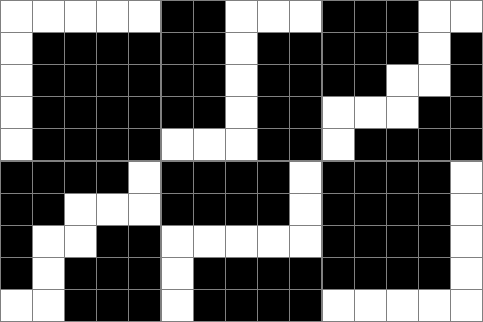
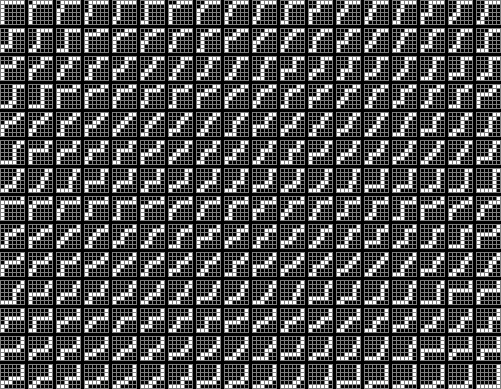
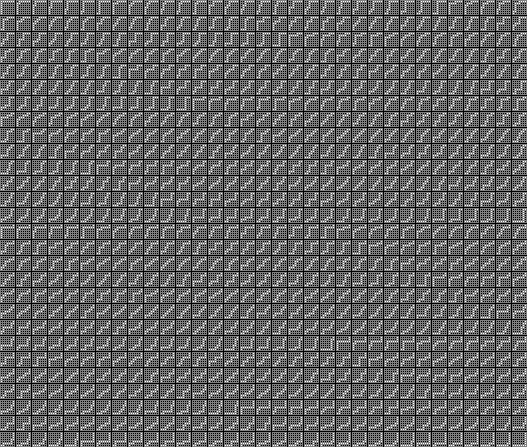
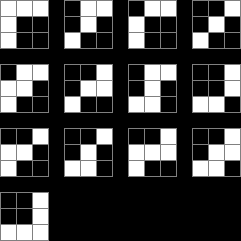
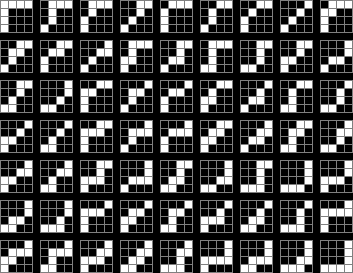
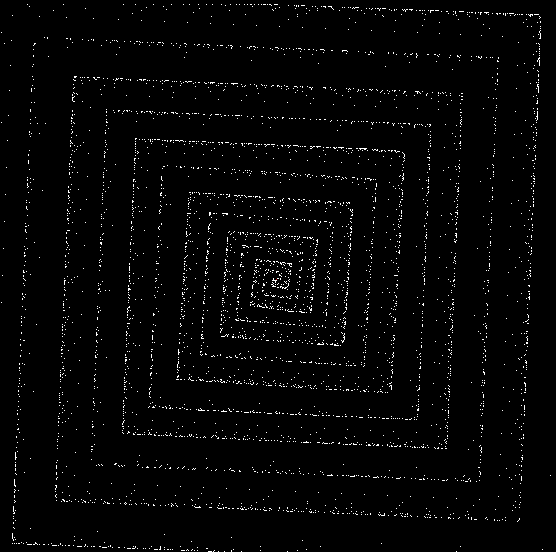
Suppose that these digits are compared against the squares of a counter-clockwise spiral on a rectangular grid. If the spiral digit is equal to 1, the square is filled in; if the spijit is not equal to 1, the square is left blank. The 1-spiral looks like this:
1spiral
Now try zero. If the spijit is equal to 0, the square is filled in; if not, the square is left blank. The 0-spiral looks like this:
0spiral
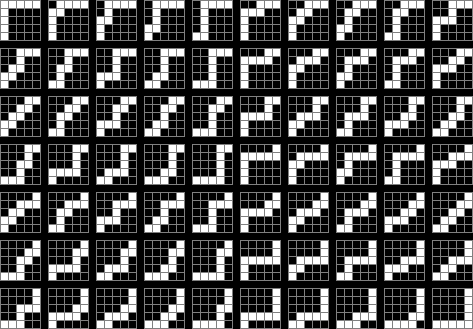
And here’s an animated gif of the n-spiral for n = 0..9:
animspiral

N-route

In maths, one thing leads to another. I wondered whether, in a spiral of integers, any number was equal to the digit-sum of the numbers on the route traced by moving to the origin first horizontally, then vertically. To illustrate the procedure, here is a 9×9 integer spiral containing 81 numbers:

| 65 | 64 | 63 | 62 | 61 | 60 | 59 | 58 | 57 |
| 66 | 37 | 36 | 35 | 34 | 33 | 32 | 31 | 56 |
| 67 | 38 | 17 | 16 | 15 | 14 | 13 | 30 | 55 |
| 68 | 39 | 18 | 05 | 04 | 03 | 12 | 29 | 54 |
| 69 | 40 | 19 | 06 | 01 | 02 | 11 | 28 | 53 |
| 70 | 41 | 20 | 07 | 08 | 09 | 10 | 27 | 52 |
| 71 | 42 | 21 | 22 | 23 | 24 | 25 | 26 | 51 |
| 72 | 43 | 44 | 45 | 46 | 47 | 48 | 49 | 50 |
| 73 | 74 | 75 | 76 | 77 | 78 | 79 | 80 | 81 |

Take the number 21, which is three places across and up from the bottom left corner of the spiral. The route to the origin contains the numbers 21, 22, 23, 8 and 1, because first you move right two places, then up two places. And 21 is what I call a route number, because 21 = 3 + 4 + 5 + 8 + 1 = digitsum(21) + digitsum(22) + digitsum(23) + digitsum(8) + digitsum(1). Beside the trivial case of 1, there are two more route numbers in the spiral:

58 = 13 + 14 + 6 + 7 + 7 + 6 + 4 + 1 = digitsum(58) + digitsum(59) + digitsum(60) + digitsum(61) + digitsum(34) + digitsum(15) + digitsum(4) + digitsum(1).

74 = 11 + 12 + 13 + 14 + 10 + 5 + 8 + 1 = digitsum(74) + digitsum(75) + digitsum(76) + digitsum(77) + digitsum(46) + digitsum(23) + digitsum(8) + digitsum(1).

Then I wondered about other possible routes to the origin. Think of the origin as one corner of a rectangle and the number being tested as the diagonal corner. Suppose that you always move away from the starting corner, that is, you always move up or right (or up and left, and so on, depending on where the corners lie). In a x by y rectangle, how many routes are there between the diagonal corners under those conditions?

It’s an interesting question, but first I’ve looked at the simpler case of an n by n square. You can encode each route as a binary number, with 0 representing a vertical move and 1 representing a horizontal move. The problem then becomes equivalent to finding the number of distinct ways you can arrange equal numbers of 1s and 0s. If you use this method, you’ll discover that there are two routes across the 2×2 square, corresponding to the binary numbers 01 and 10:

2x2

Across the 3×3 square, there are six routes, corresponding to the binary numbers 0011, 0101, 0110, 1001, 1010 and 1100:

3x3

Across the 4×4 square, there are twenty routes:
4x4

(Please open in new window if it fails to animate)

(Please open in new window if it fails to animate)

Across the 5×5 square, there are 70 routes:

5x5

(Please open in new window etc)

(Please open in new window etc)

Across the 6×6 and 7×7 squares, there are 252 and 924 routes:

6x6

7x7

After that, the routes quickly increase in number. This is the list for n = 1 to 14:

1, 2, 6, 20, 70, 252, 924, 3432, 12870, 48620, 184756, 705432, 2704156, 10400600… (see A000984 at the Online Encyclopedia of Integer Sequences)

After that you can vary the conditions. What if you can move not just vertically and horizontally, but diagonally, i.e. vertically and horizontally at the same time? Now you can encode the route with a ternary number, or number in base 3, with 0 representing a vertical move, 1 a horizontal move and 2 a diagonal move. As before, there is one route across a 1×1 square, but there are three across a 2×2, corresponding to the ternary numbers 01, 2 and 10:

3x3t

There are 13 routes across a 3×3 square, corresponding to the ternary numbers 0011, 201, 021, 22, 0101, 210, 1001, 120, 012, 102, 0110, 1010, 1100:

4x4t

And what about cubes, hypercubes and higher?

Will Two Power?

It’s such a simple thing: repeatedly doubling a number: 1, 2, 4, 8, 16, 32, 61, 128… And yet it yields such riches, reminiscent of DNA or a literary text:

2^0 = 1
2^1 = 2
2^2 = 4
2^3 = 8
2^4 = 16
2^5 = 32
2^6 = 64
2^7 = 128
2^8 = 256
2^9 = 512
2^10 = 1024
2^20 = 1048576
2^30 = 1073741824
2^40 = 1099511627776
2^50 = 1125899906842624
2^60 = 1152921504606846976
2^70 = 1180591620717411303424
2^80 = 1208925819614629174706176
2^90 = 1237940039285380274899124224
2^100 = 1267650600228229401496703205376
2^200 = 1606938044258990275541962092341162602522202993782792835301376

Although, by Benford’s law*, 1 is the commonest leading digit, do all numbers eventually appear as the leading digits of some power of 2? I conjecture that they do. indeed, I conjecture that they do infinitely often. If the function first(n) returns the power of 2 whose leading digits are the same as the digits of n, then:

first(1) = 2^0 = 1
first(2) = 2^1 = 2
first(3) = 2^5 = 32
first(4) = 2^2 = 4
first(5) = 2^9 = 512
first(6) = 2^6 = 64
first(7) = 2^46 = 70368744177664
first(8) = 2^3 = 8
first(9) = 2^53 = 9007199254740992
first(10) = 2^10 = 1024

And I conjecture that this is true of all bases except bases that are powers of 2, like 2, 4, 8, 16 and so on. A related question is whether the leading digits of any 2^n are the same as the digits of n. Yes:

2^6 = 64
2^10 = 1024
2^1542 = 1.54259995… * 10^464
2^77075 = 7.70754024… * 10^23201
2^113939 = 1.13939932… * 10^34299
2^1122772 = 1.12277217… * 10^337988

That looks like a look of calculation, but there’s a simple way to cut it down: restrict the leading digits. Eventually they will lose accuracy, because the missing digits are generating carries. With four leading digits, this happens:

1: 0001
2: 0002
4: 0004
8: 0008
16: 0016
32: 0032
64: 0064
128: 0128
256: 0256
512: 0512
1024: 1024
2048: 2048
4096: 4096
8192: 8192
16384: 1638…
32768: 3276…
65536: 6552…

But working with only fifteen leading digits, you can find that 1122772 = the leading digits of 2^1122772, which has 337989 digits when calculated in full.


Previously pre-posted (please peruse):

Talcum Power


*Not Zipf’s law, as I originally said.

Talcum Power

If primes are like diamonds, powers of 2 are like talc. Primes don’t crumble under division, because they can’t be divided by any number but themselves and one. Powers of 2 crumble more than any other numbers. The contrast is particularly strong when the primes are Mersenne primes, or equal to a power of 2 minus 1:

3 = 4-1 = 2^2 – 1.
4, 2, 1.

7 = 8-1 = 2^3 – 1.
8, 4, 2, 1.

31 = 32-1 = 2^5 – 1.
32, 16, 8, 4, 2, 1.

127 = 2^7 – 1.
128, 64, 32, 16, 8, 4, 2, 1.

8191 = 2^13 – 1.
8192, 4096, 2048, 1024, 512, 256, 128, 64, 32, 16, 8, 4, 2, 1.

131071 = 2^17 – 1.
131072, 65536, 32768, 16384, 8192, 4096, 2048, 1024, 512, 256, 128, 64, 32, 16, 8, 4, 2, 1.

524287 = 2^19 – 1.
524288, 262144, 131072, 65536, 32768, 16384, 8192, 4096, 2048, 1024, 512, 256, 128, 64, 32, 16, 8, 4, 2, 1.

2147483647 = 2^31 – 1.
2147483648, 1073741824, 536870912, 268435456, 134217728, 67108864, 33554432, 16777216, 8388608, 4194304, 2097152, 1048576, 524288, 262144, 131072, 65536, 32768, 16384, 8192, 4096, 2048, 1024, 512, 256, 128, 64, 32, 16, 8, 4, 2, 1.

Are Mersenne primes infinite? If they are, then there will be just as many Mersenne primes as powers of 2, even though very few powers of 2 create a Mersenne prime. That’s one of the paradoxes of infinity: an infinite part is equal to an infinite whole.

But are they infinite? No-one knows, though some of the greatest mathematicians in history have tried to find a proof or disproof of the conjecture. A simpler question about powers of 2 is this: Does every integer appear as part of a power of 2? I can’t find one that doesn’t:

0 is in 1024 = 2^10.
1 is in 16 = 2^4.
2 is in 32 = 2^5.
3 is in 32 = 2^5.
4 = 2^2.
5 is in 256 = 2^8.
6 is in 16 = 2^4.
7 is in 32768 = 2^15.
8 = 2^3.
9 is in 4096 = 2^12.
10 is in 1024 = 2^10.
11 is in 1099511627776 = 2^40.
12 is in 128 = 2^7.
13 is in 131072 = 2^17.
14 is in 262144 = 2^18.
15 is in 2097152 = 2^21.
16 = 2^4.
17 is in 134217728 = 2^27.
18 is in 1073741824 = 2^30.
19 is in 8192 = 2^13.
20 is in 2048 = 2^11.

666 is in 182687704666362864775460604089535377456991567872 = 2^157.
1066 is in 43556142965880123323311949751266331066368 = 2^135.
1492 is in 356811923176489970264571492362373784095686656 = 2^148.
2014 is in 3705346855594118253554271520278013051304639509300498049262642688253220148477952 = 2^261.

I’ve tested much higher than that, but testing is no good: where’s a proof? I don’t have one, though I conjecture that all integers do appear as part or whole of a power of 2. Nor do I have a proof for another conjecture: that all integers appear infinitely often as part or whole of powers of 2. Or indeed, of powers of 3, 4, 5 or any other number except powers of 10.

I conjecture that this would apply in all bases too: In any base b all n appear infinitely often as part or whole of powers of any number except those equal to a power of b.

1 is in 11 = 2^2 in base 3.
2 is in 22 = 2^3 in base 3.
10 is in 1012 = 2^5 in base 3.
11 = 2^2 in base 3.
12 is in 121 = 2^4 in base 3.
20 is in 11202 = 2^7 in base 3.
21 is in 121 = 2^4 in base 3.
22 = 2^3 in base 3.
100 is in 100111 = 2^8 in base 3.
101 is in 1012 = 2^5 in base 3.
102 is in 2210212 = 2^11 in base 3.
110 is in 1101221 = 2^10 in base 3.
111 is in 100111 = 2^8 in base 3.
112 is in 11202 = 2^7 in base 3.
120 is in 11202 = 2^7 in base 3.
121 = 2^4 in base 3.
122 is in 1101221 = 2^10 in base 3.
200 is in 200222 = 2^9 in base 3.
201 is in 12121201 = 2^12 in base 3.
202 is in 11202 = 2^7 in base 3.

1 is in 13 = 2^3 in base 5.
2 is in 112 = 2^5 in base 5.
3 is in 13 = 2^3 in base 5.
4 = 2^2 in base 5.
10 is in 1003 = 2^7 in base 5.
11 is in 112 = 2^5 in base 5.
12 is in 112 = 2^5 in base 5.
13 = 2^3 in base 5.
14 is in 31143 = 2^11 in base 5.
20 is in 2011 = 2^8 in base 5.
21 is in 4044121 = 2^16 in base 5.
22 is in 224 = 2^6 in base 5.
23 is in 112341 = 2^12 in base 5.
24 is in 224 = 2^6 in base 5.
30 is in 13044 = 2^10 in base 5.
31 = 2^4 in base 5.
32 is in 230232 = 2^13 in base 5.
33 is in 2022033 = 2^15 in base 5.
34 is in 112341 = 2^12 in base 5.
40 is in 4022 = 2^9 in base 5.

1 is in 12 = 2^3 in base 6.
2 is in 12 = 2^3 in base 6.
3 is in 332 = 2^7 in base 6.
4 = 2^2 in base 6.
5 is in 52 = 2^5 in base 6.
10 is in 1104 = 2^8 in base 6.
11 is in 1104 = 2^8 in base 6.
12 = 2^3 in base 6.
13 is in 13252 = 2^11 in base 6.
14 is in 144 = 2^6 in base 6.
15 is in 101532 = 2^13 in base 6.
20 is in 203504 = 2^14 in base 6.
21 is in 2212 = 2^9 in base 6.
22 is in 2212 = 2^9 in base 6.
23 is in 1223224 = 2^16 in base 6.
24 = 2^4 in base 6.
25 is in 13252 = 2^11 in base 6.
30 is in 30544 = 2^12 in base 6.
31 is in 15123132 = 2^19 in base 6.
32 is in 332 = 2^7 in base 6.

1 is in 11 = 2^3 in base 7.
2 is in 22 = 2^4 in base 7.
3 is in 1331 = 2^9 in base 7.
4 = 2^2 in base 7.
5 is in 514 = 2^8 in base 7.
6 is in 2662 = 2^10 in base 7.
10 is in 1054064 = 2^17 in base 7.
11 = 2^3 in base 7.
12 is in 121 = 2^6 in base 7.
13 is in 1331 = 2^9 in base 7.
14 is in 514 = 2^8 in base 7.
15 is in 35415440431 = 2^30 in base 7.
16 is in 164351 = 2^15 in base 7.
20 is in 362032 = 2^16 in base 7.
21 is in 121 = 2^6 in base 7.
22 = 2^4 in base 7.
23 is in 4312352 = 2^19 in base 7.
24 is in 242 = 2^7 in base 7.
25 is in 11625034 = 2^20 in base 7.
26 is in 2662 = 2^10 in base 7.

1 is in 17 = 2^4 in base 9.
2 is in 152 = 2^7 in base 9.
3 is in 35 = 2^5 in base 9.
4 = 2^2 in base 9.
5 is in 35 = 2^5 in base 9.
6 is in 628 = 2^9 in base 9.
7 is in 17 = 2^4 in base 9.
8 = 2^3 in base 9.
10 is in 108807 = 2^16 in base 9.
11 is in 34511011 = 2^24 in base 9.
12 is in 12212 = 2^13 in base 9.
13 is in 1357 = 2^10 in base 9.
14 is in 314 = 2^8 in base 9.
15 is in 152 = 2^7 in base 9.
16 is in 878162 = 2^19 in base 9.
17 = 2^4 in base 9.
18 is in 218715 = 2^17 in base 9.
20 is in 70122022 = 2^25 in base 9.
21 is in 12212 = 2^13 in base 9.
22 is in 12212 = 2^13 in base 9.

He Say, He Sigh, He Sow #20

“In 1997, Fabrice Bellard announced that the trillionth digit of π, in binary notation, is 1.” — Ian Stewart, The Great Mathematical Problems (2013).

Blue is the Killer

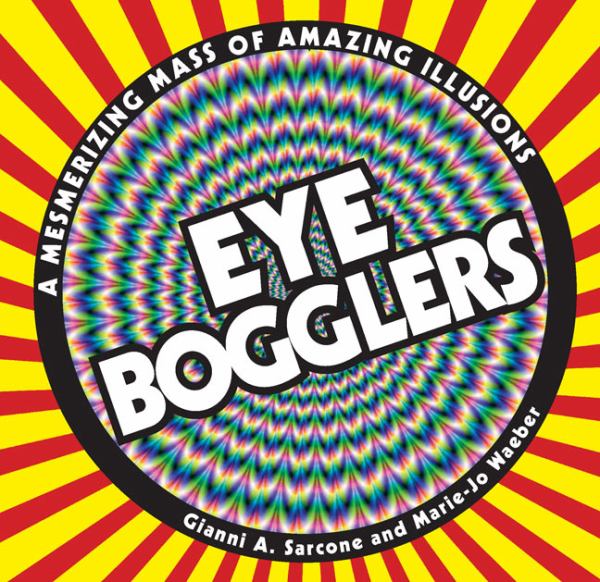
Eye Bogglers by Gianni A. Sarcone and Marie-Jo WaeberEye Bogglers: A Mesmerizing Mass of Amazing Illusions, Gianni A. Sarcone and Marie-Jo Waeber (Carlton Books 2011; paperback 2013)

A simple book with some complex illusions. It’s aimed at children but scientists have spent decades understanding how certain arrangements of colour and line fool the eye so powerfully. I particularly like the black-and-white tiger set below a patch of blue on page 60. Stare at the blue “for 15 seconds”, then look quickly at a tiny cross set between the tiger’s eyes and the killer turns colour.

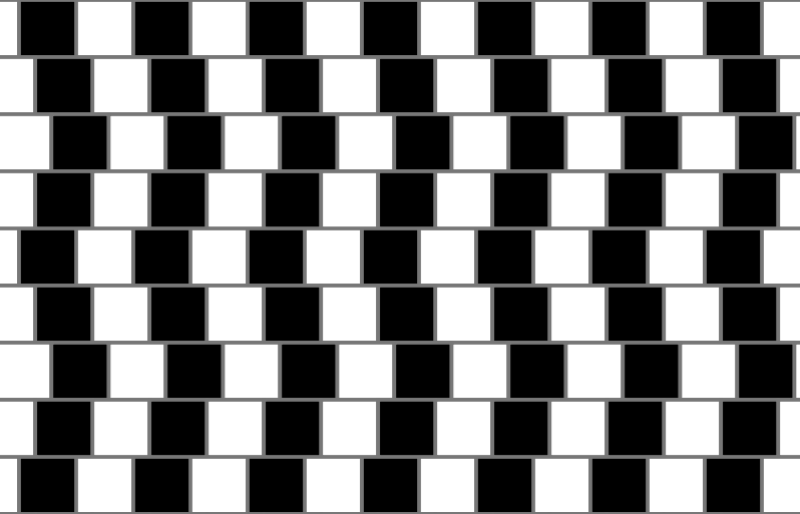
So what’s not there appears to be there, just as, elsewhere, what’s there appears not to be. Straight lines seem curved; large figures seem small; the same colour seems light on the right, dark on the left. There are also some impossible figures, as made famous by M.C. Escher and now studied seriously by geometricians, but the only true art here is a “Face of Fruits” by Arcimboldo. The rest is artful, not art, but it’s interesting to think what Escher might have made of some of the ideas here. Mind is mechanism; mechanism can be fooled. Optical illusions are the most compelling examples, because vision is the most powerful of our senses, but the lesson you learn here is applicable everywhere. This book fools you for fun; others try to fool you for profit. Caveat spectator.

Simple but complex: The café wall illusion

Simple but complex: The café wall illusion

On the M3!

6 = 2 x 3. And 6 = 1 + 2 + 3. But 6 also equals 3!. That is, 6 = 3 x 2 x 1, or factorial three. If you have three different items, you can arrange them in six different ways. There are three posibilities for the first item, two for the second and one for the third.

You can illustrate this linguistically. All languages are governed by mathematics, but maths manifests itself in different ways. Emphasis is an important part of language, for example, but there are different ways to achieve it. English usually does it with stress or by adding an emphatic word. Other languages can do it by varying the order of words. Latin, for example:

  • Mathematica Magistra Mundi
    — Mathematics is Mistress of the World.
  • Mathematica Mundi Magistra
    — Mathematics of the World is Mistress.
  • Magistra Mathematica Mundi
    — Mistress is Mathematics of the World
  • Magistra Mundi Mathematica
    — Mistress of the World is Mathematics.
  • Mundi Mathematica Magistra
    — Of the World Mathematics is Mistress.
  • Mundi Magistra Mathematica
    — Of the World the Mistress is Mathematics.

Elsewhere other-posted:

Mathematica Magistra Mundi — more on the motto
Moto-Motto — a variant on the motto