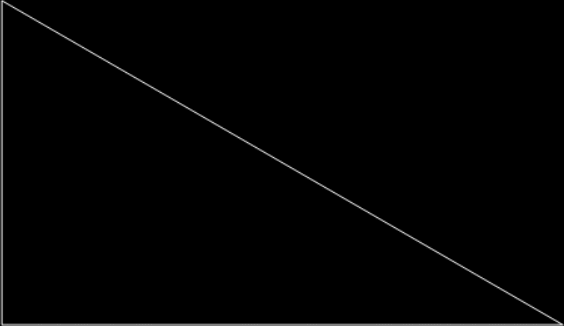
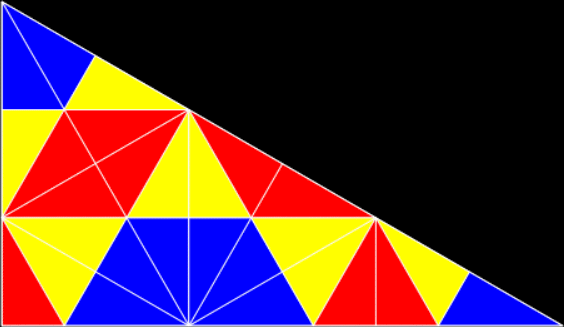
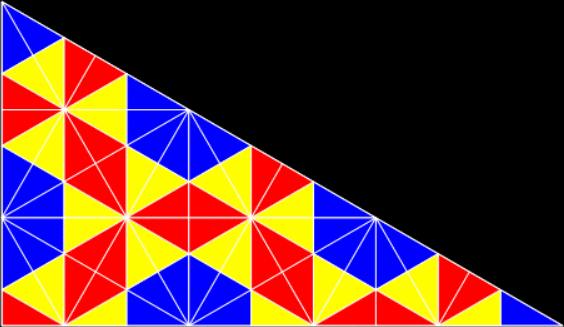
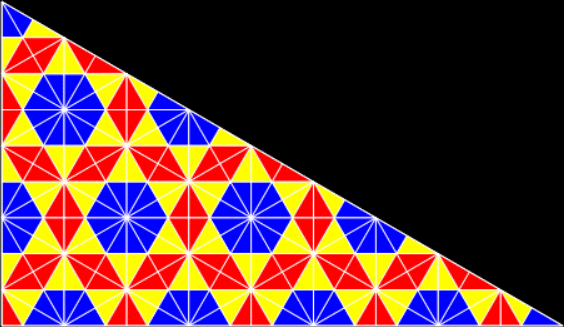
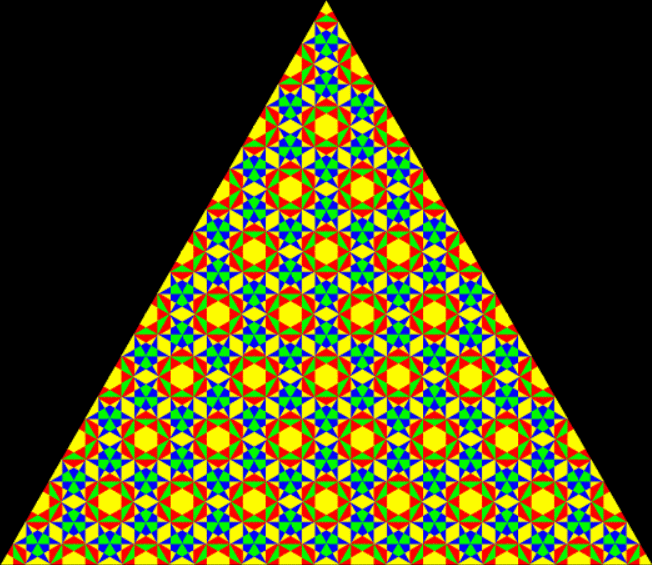
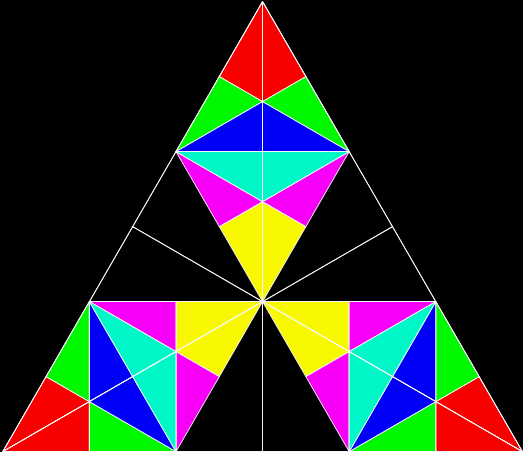
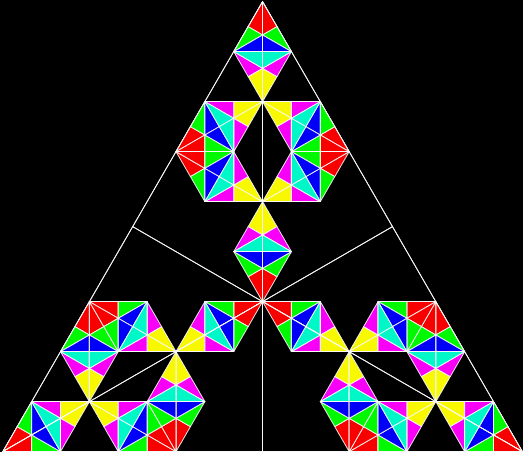
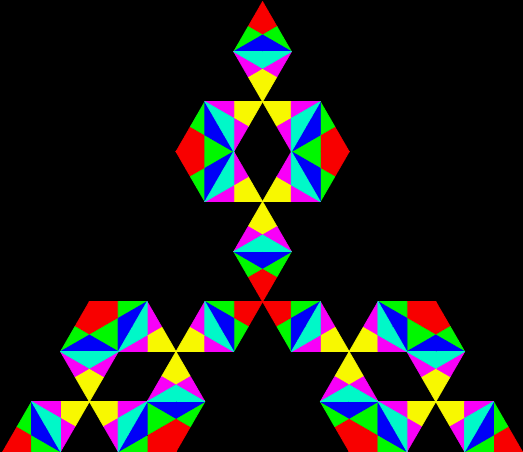
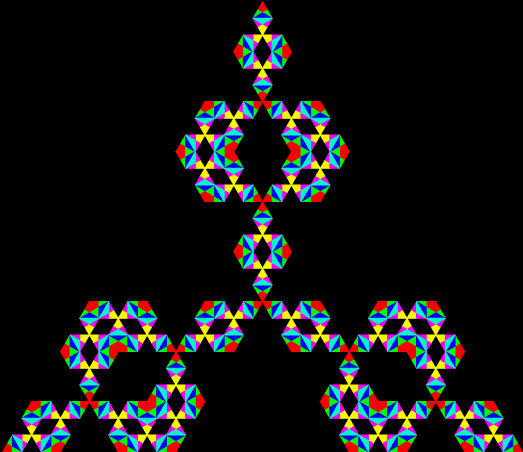
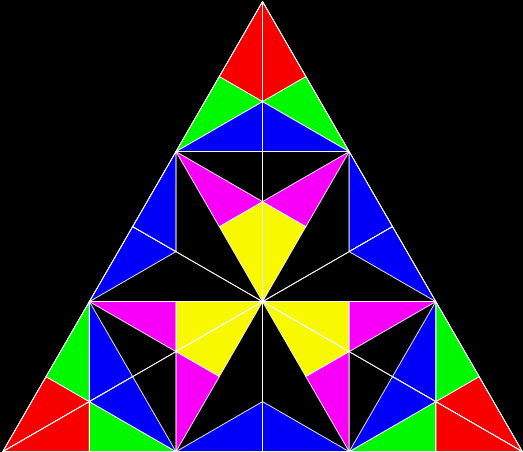
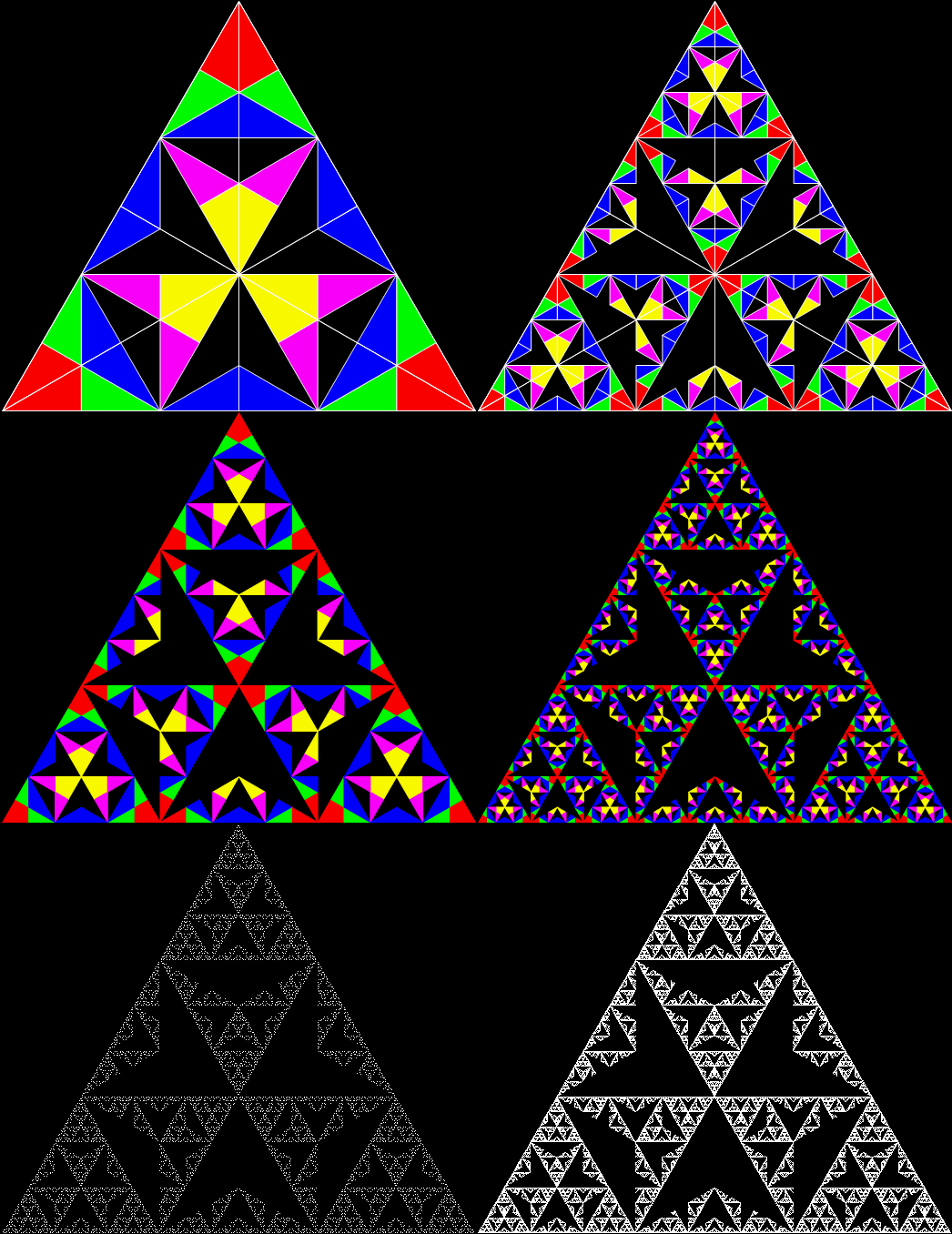
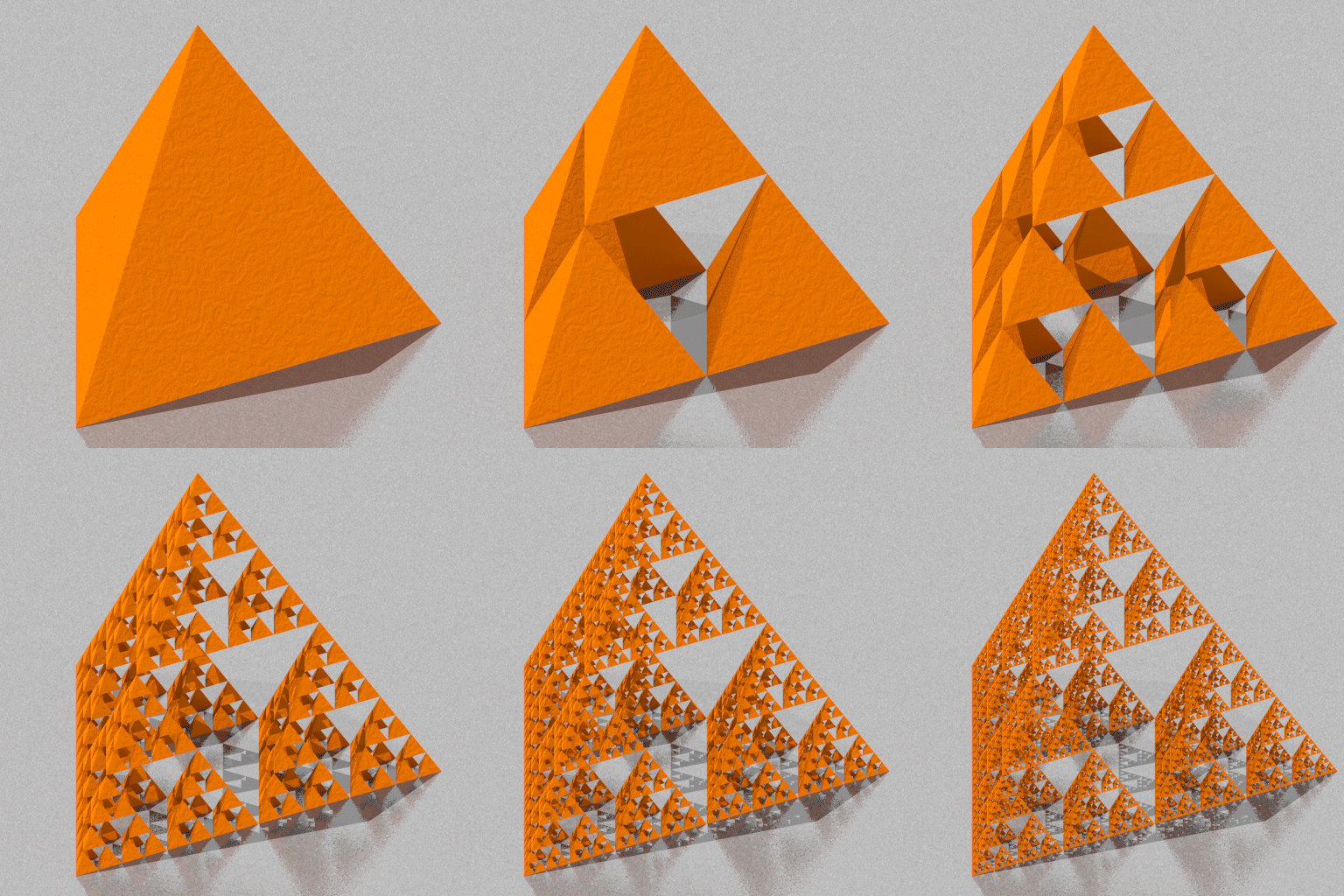
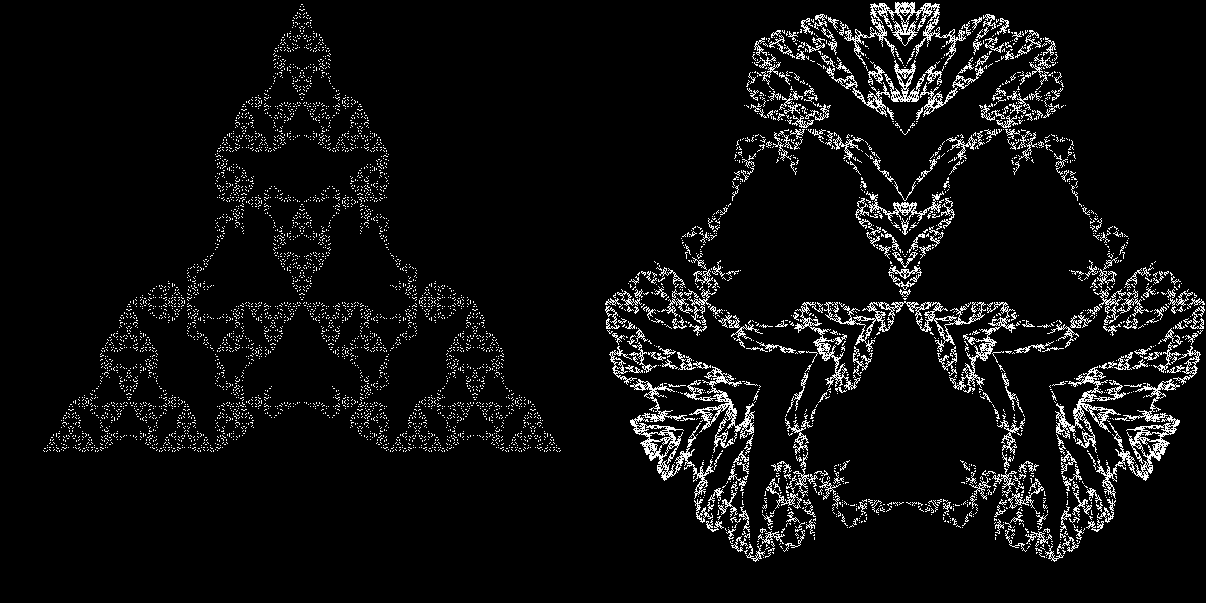
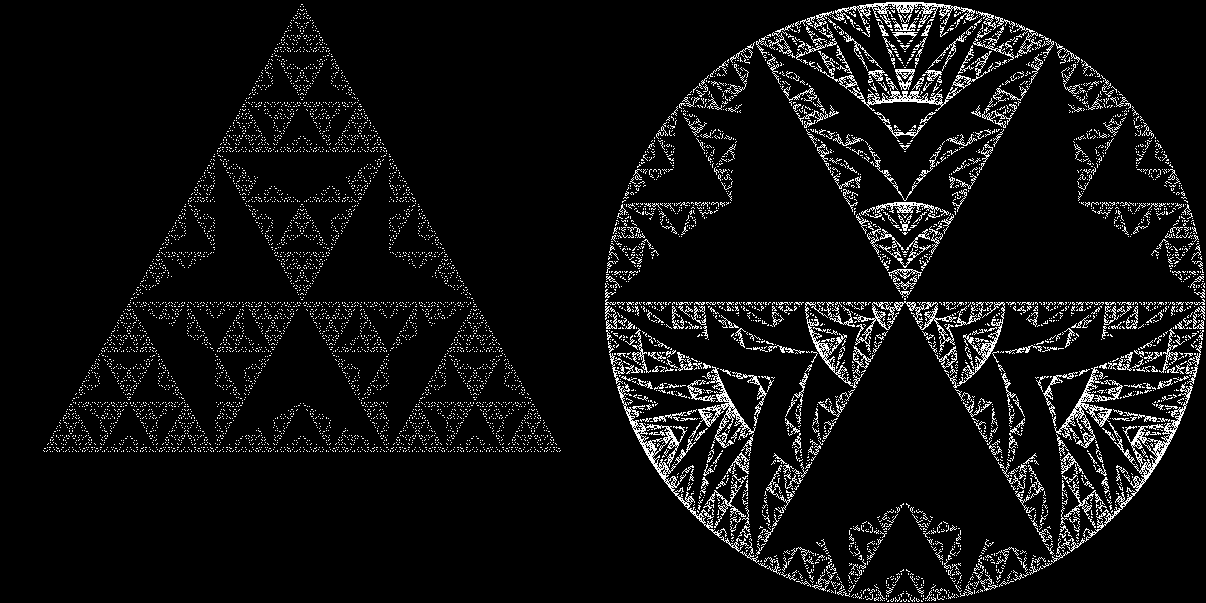
Construction of a Sierpiński tetrahedron (from WikiMedia)
Post-Performative Post-Scriptum
The toxic title of this incendiary intervention radically references George Harrison’s album Extra Texture (1975).

Construction of a Sierpiński tetrahedron (from WikiMedia)
Post-Performative Post-Scriptum
The toxic title of this incendiary intervention radically references George Harrison’s album Extra Texture (1975).
Errantes silva in magna et sub luce maligna
inter harundineasque comas gravidumque papaver
et tacitos sine labe lacus, sine murmure rivos,
quorum per ripas nebuloso lumine marcent
fleti, olim regum et puerorum nomina, flores.
• Cupido Cruciatur, Decimius Magnus Ausonius (c.310-c.395)
They wander in deep woods, in mournful light,
Amid long reeds and drowsy headed poppies,
and lakes where no wave laps, and voiceless streams,
Upon whose banks in the dim light grow old
Flowers that were once bewailed names of kings.
• translated by Helen Waddell in her Medieval Latin Lyrics (1929)
Imagine two points moving clockwise around the circumference of a circle. Find the midpoint between the two points when one point is moving twice as fast as the other. The midpoint will trace this shape:
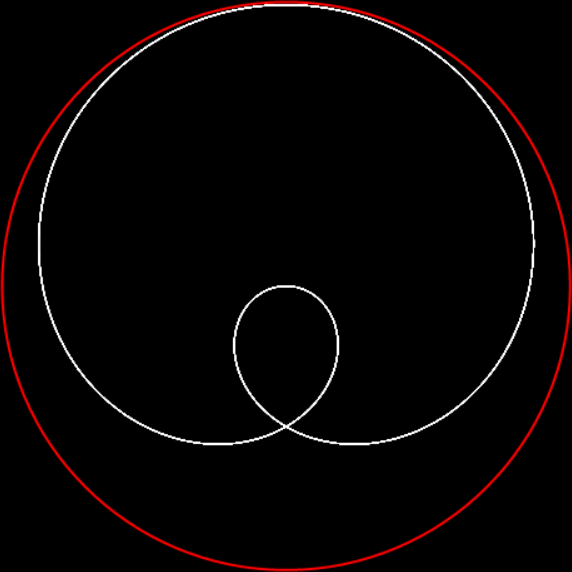
Midpoint of two points moving around circle at speeds s and s*2
(n.b. to make things easier to see, the red circle shown here and elsewhere is slightly larger than the virtual circle used to calculate the midpoints)
Now suppose that one point is moving anticlockwise. The midpoint will now trace this shape:
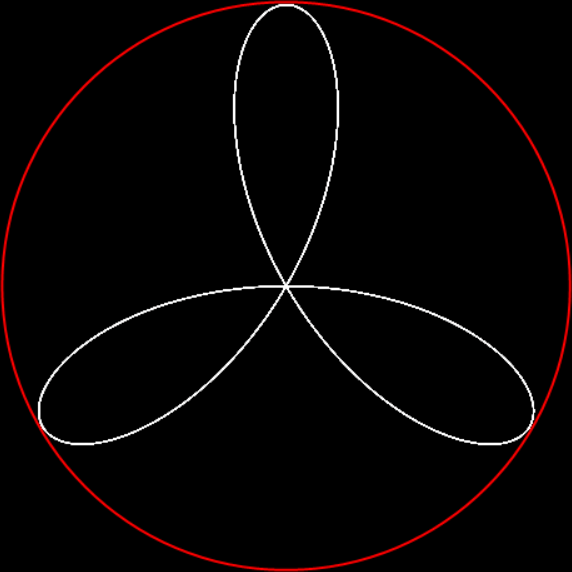
Midpoint for s, -s*2
Now try three points, two moving at the same speed and one moving twice as fast:
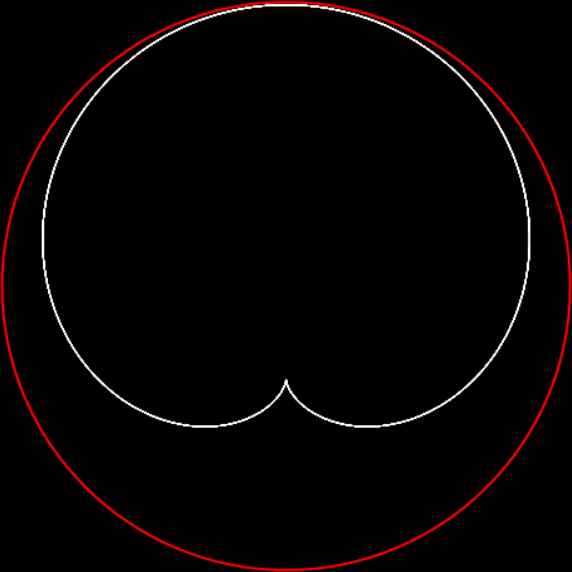
Midpoint for s, s, s*2
When the point moving twice as fast is moving anticlockwise, this shape appears:
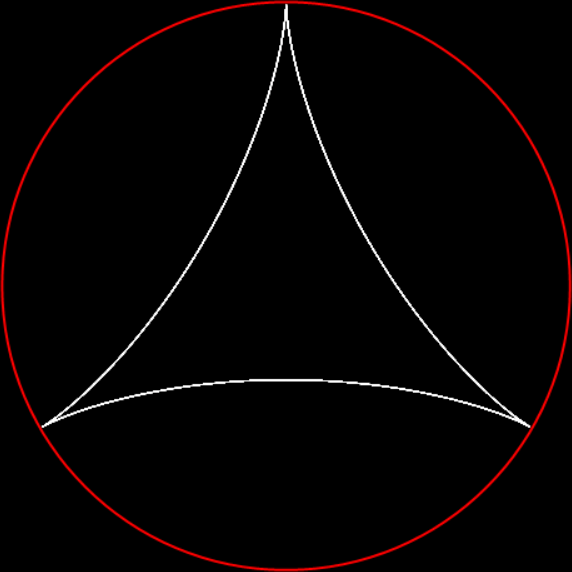
Midpoint for s, s, -s*2
Here are more of these midpoint-shapes:
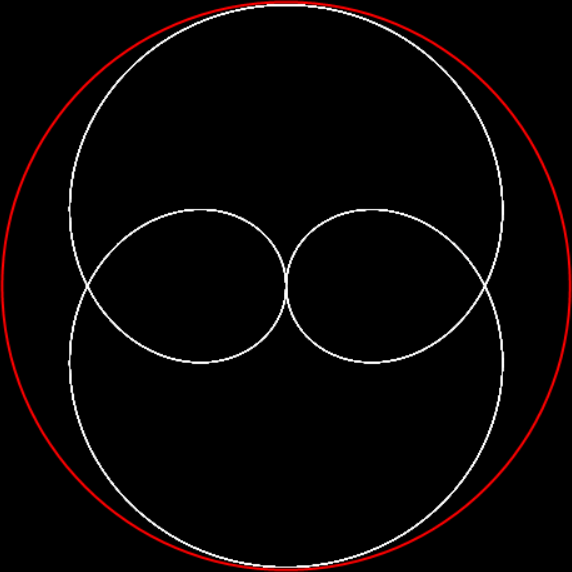
Midpoint for s, s*3
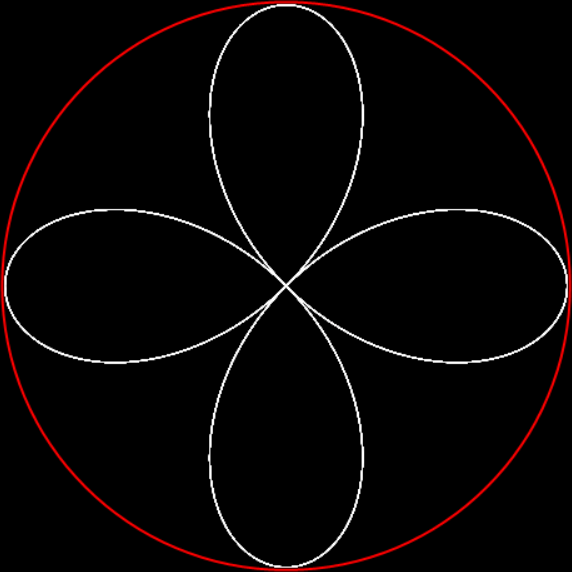
Midpoint for s, -s*3
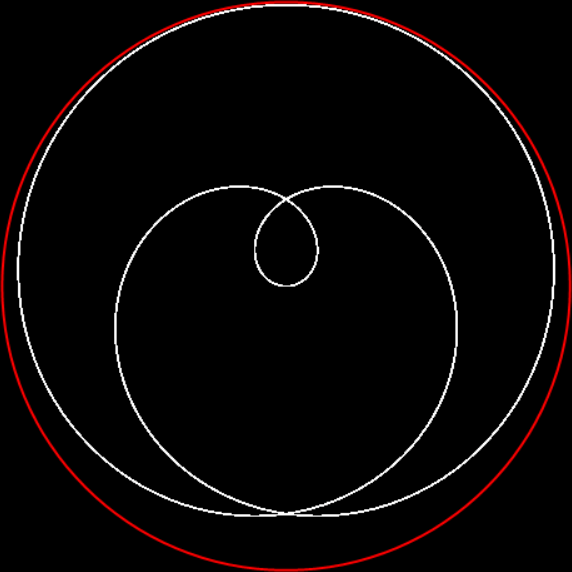
Midpoint for s*2, s*3
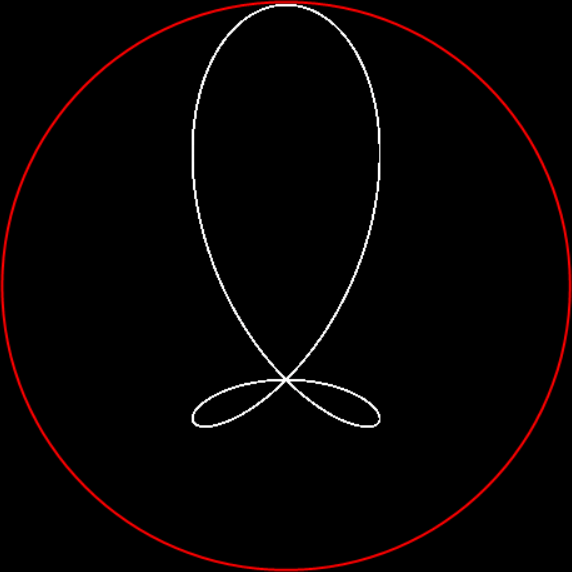
Midpoint for s, -s, s*2
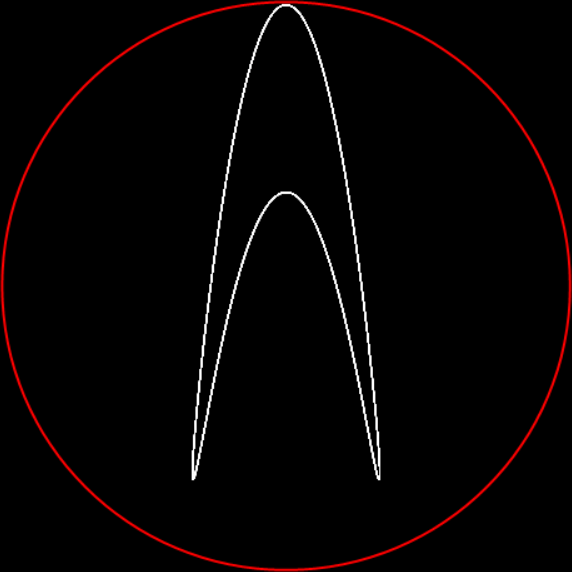
Midpoint for s, s*2, -s*2
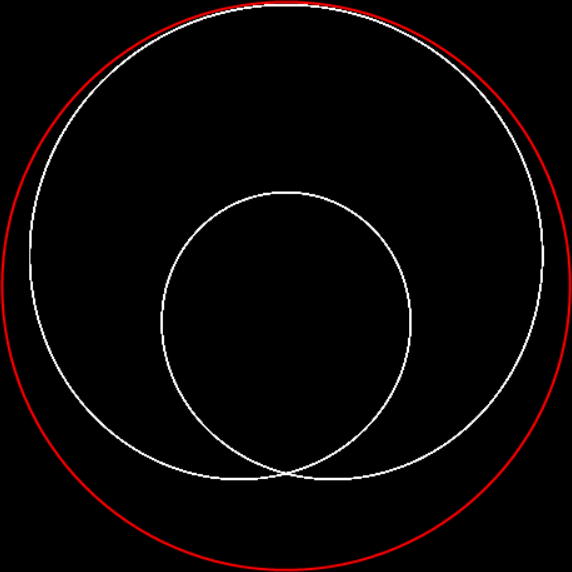
Midpoint for s, s*2, s*2
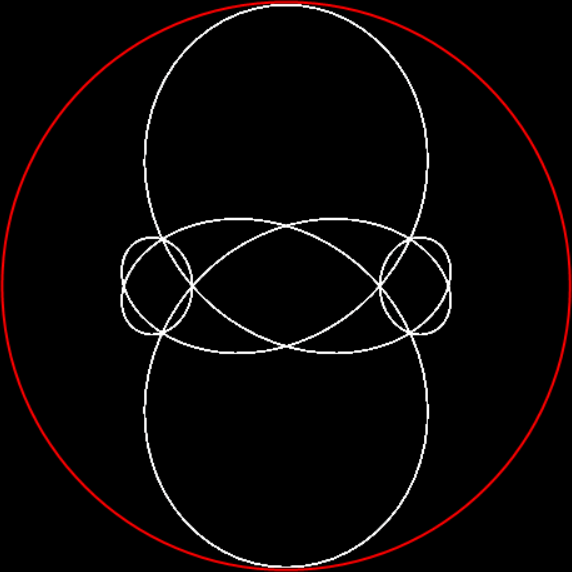
Midpoint for s, -s*3, -s*5
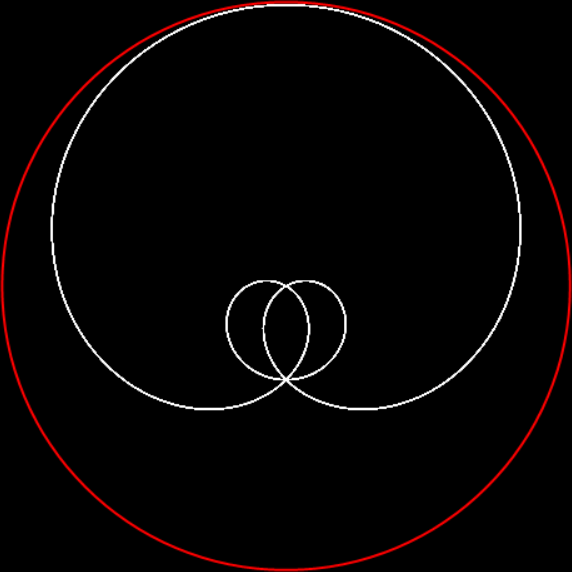
Midpoint for s, s*2, s*3
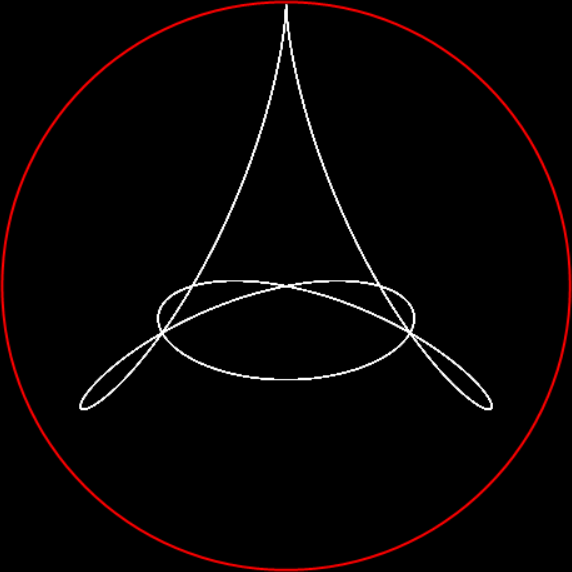
Midpoint for s, s*2, -s*3
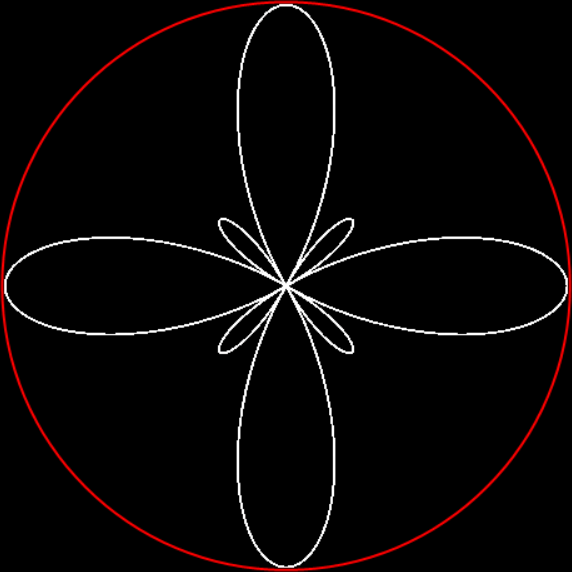
Midpoint for s, -s*3, s*5
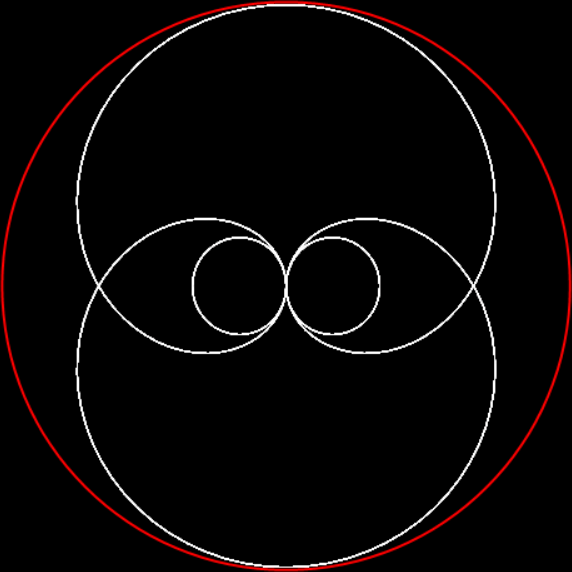
Midpoint for s, s*3, s*5
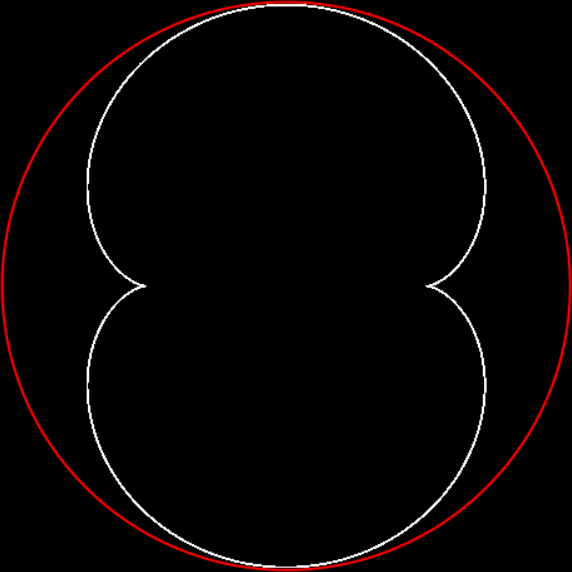
Midpoint for s, s, s, s*3
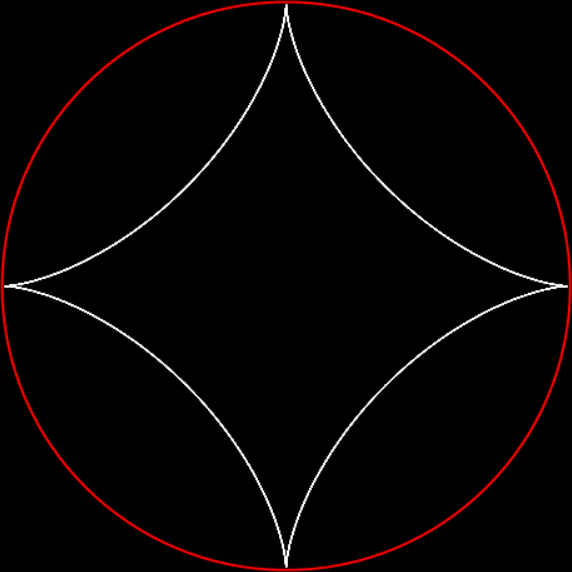
Midpoint for s, s, s, -s*3
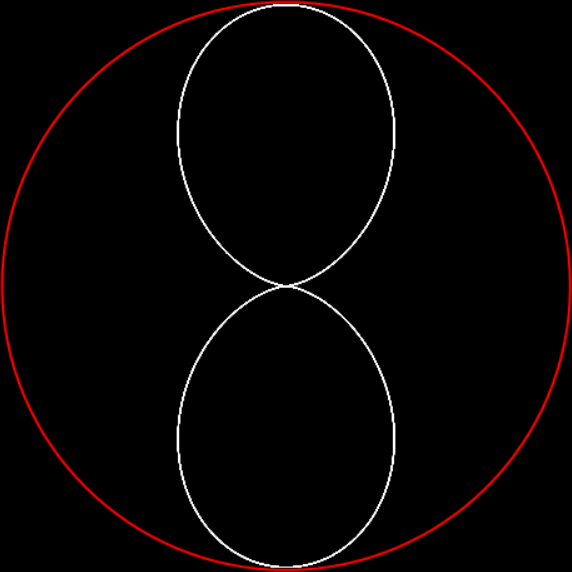
Midpoint for s, s, -s, s*3
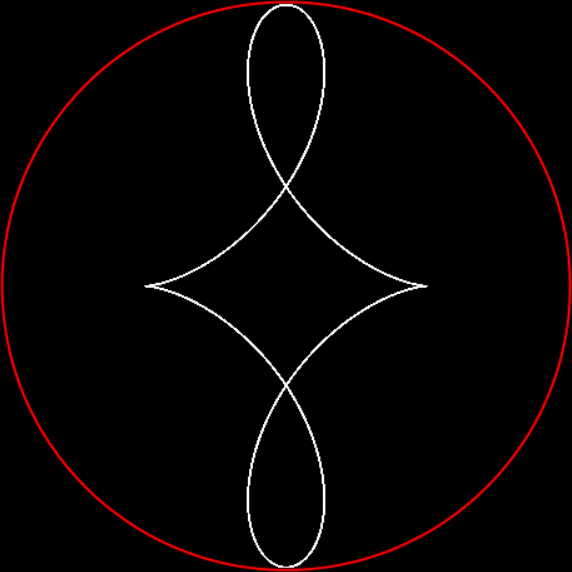
Midpoint for s, s, -s, -s*3
But what about points moving around the perimeter of a polygon? Here are the midpoints of two points moving clockwise around the perimeter of a square, with one point moving twice as fast as the other:
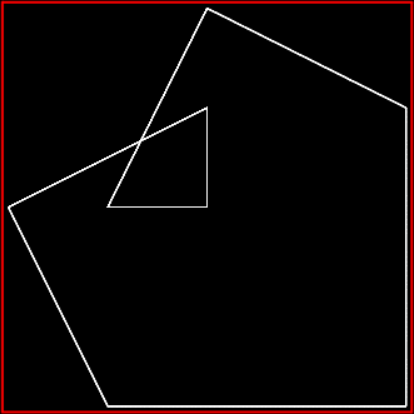
Midpoint for square with s, s*2
And when one point moves anticlockwise:
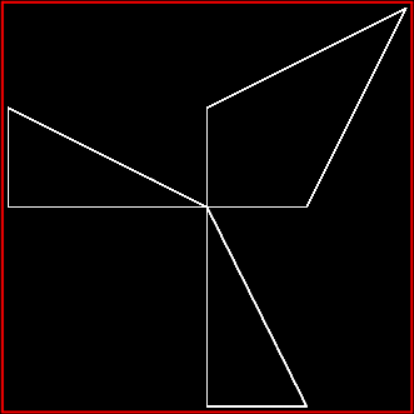
Midpoint for square with s, -s*2
If you adjust the midpoints so that the square fills a circle, they look like this:
↓
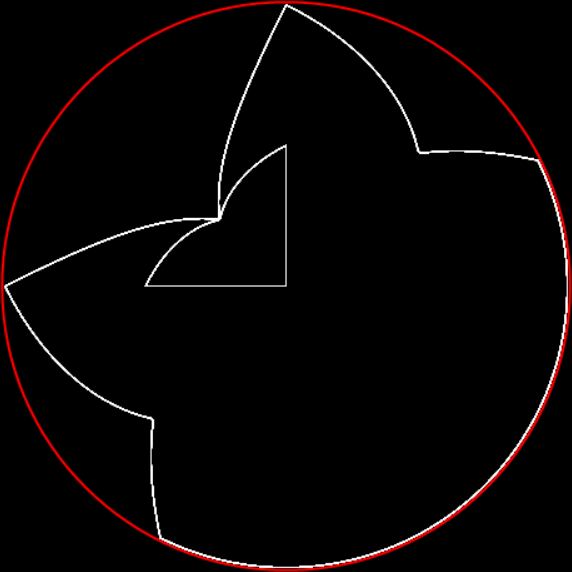
Midpoint for square with s, s*2, with square adjusted to fill circle
When the red circle is removed, the midpoint-shape is easier to see:
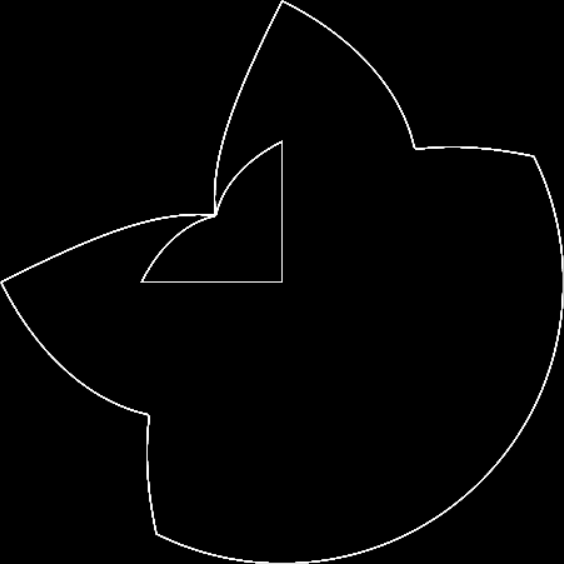
Midpoint for square with s, s*2, circ-adjusted
Here are more midpoint-shapes from squares:
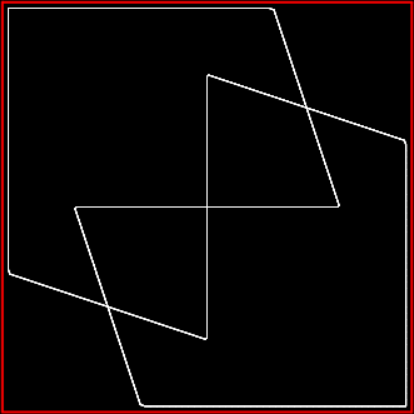
Midpoint for s, s*3
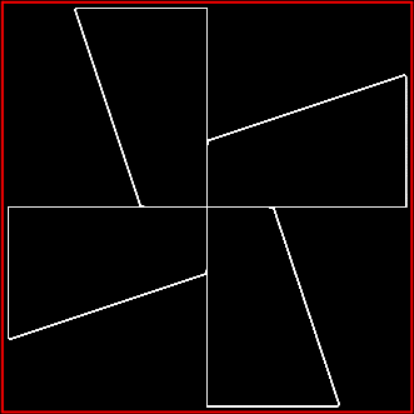
Midpoint for s, -s*3
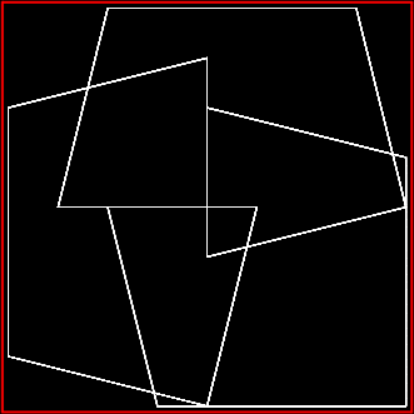
Midpoint for s, s*4
And some more circularly adjusted midpoint-shapes from squares:
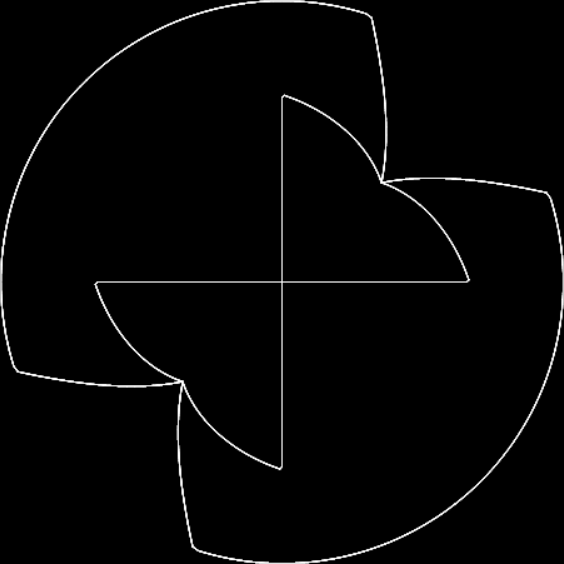
Midpoint for s, s*3, circ-adjusted
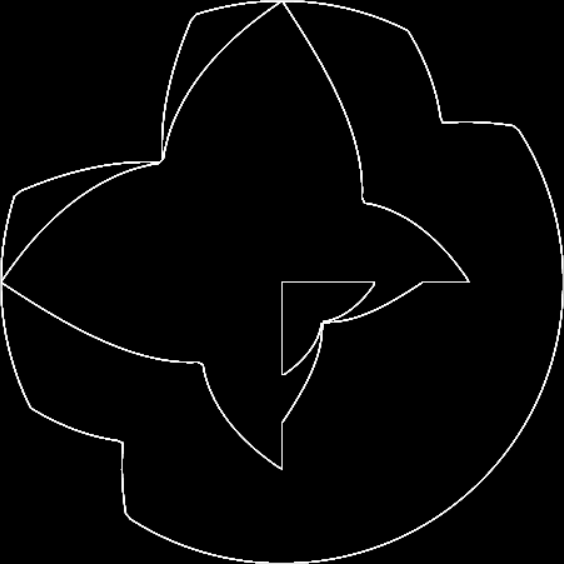
Midpoint for s*2, s*3, circ-adjusted
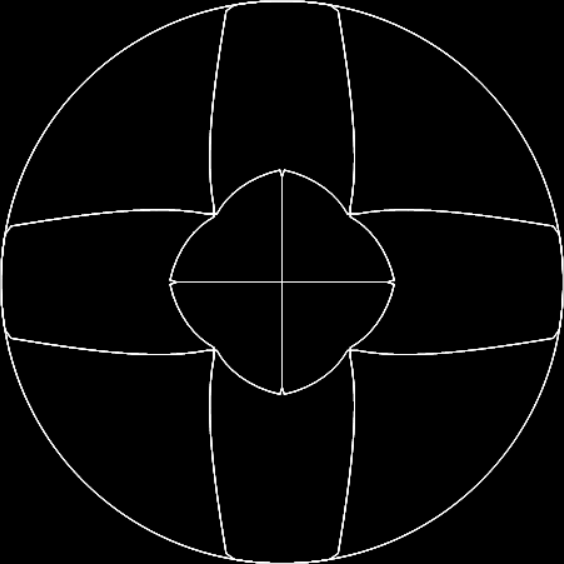
Midpoint for s, s*5, circ-adjusted
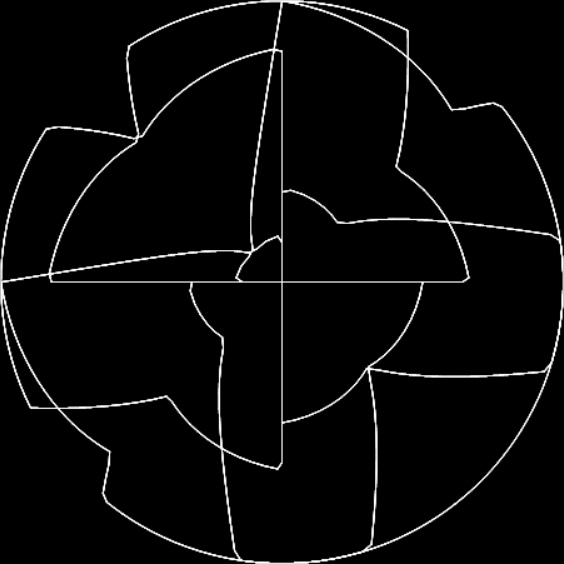
Midpoint for s, s*6, circ-adjusted
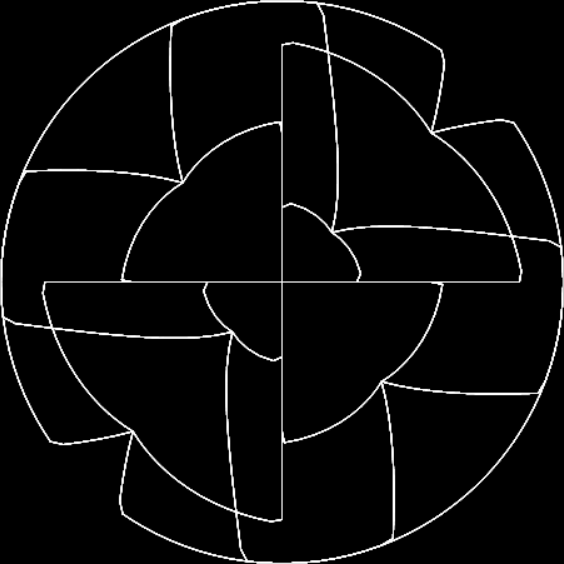
Midpoint for s, s*7, circ-adjusted
Finally (for now), let’s look at triangles. If three points are moving clockwise around the perimeter of a triangle, one moving four times as fast as the other two, the midpoint traces this shape:
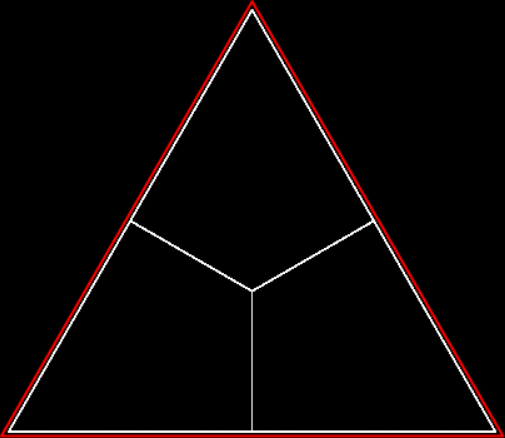
Midpoint for triangle with s, s, s*4
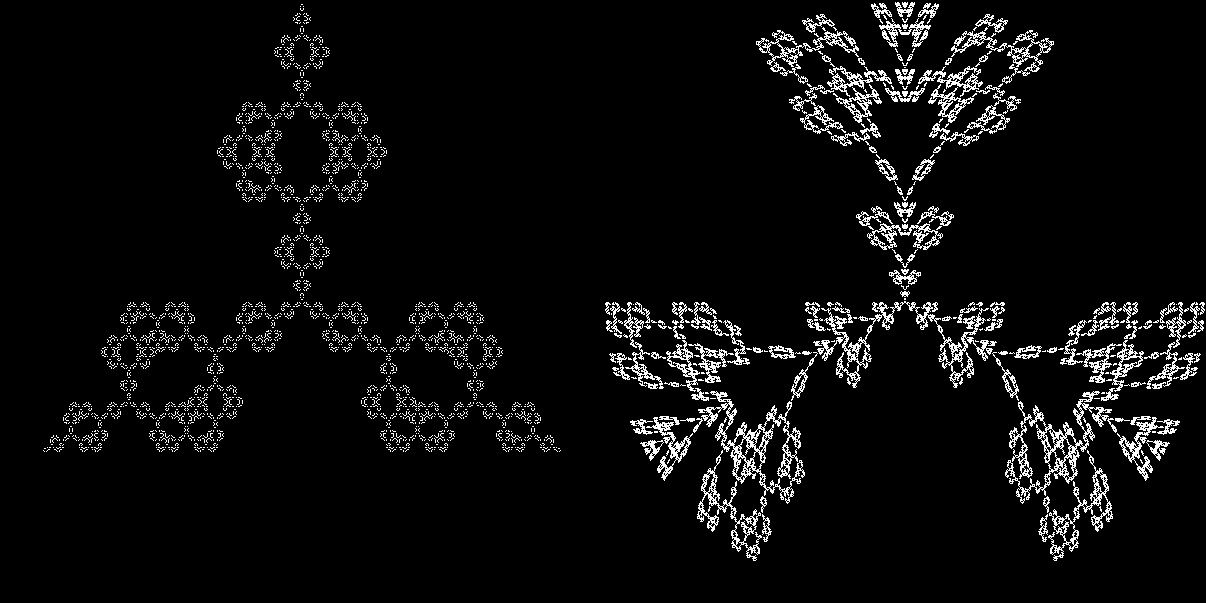
Now try one of the points moving anticlockwise:
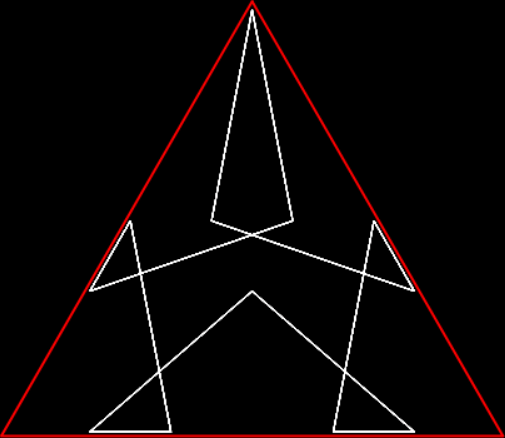
Midpoint for s, s, -s*4
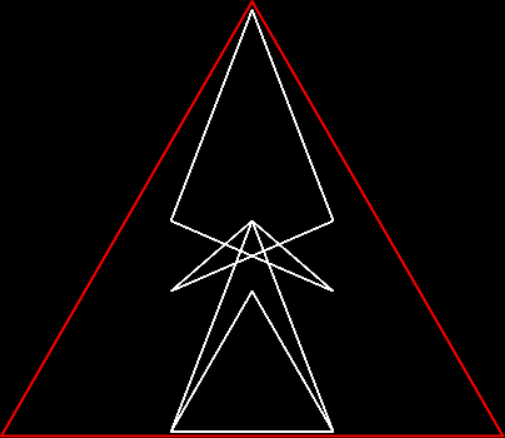
Midpoint for s, -s, s*4
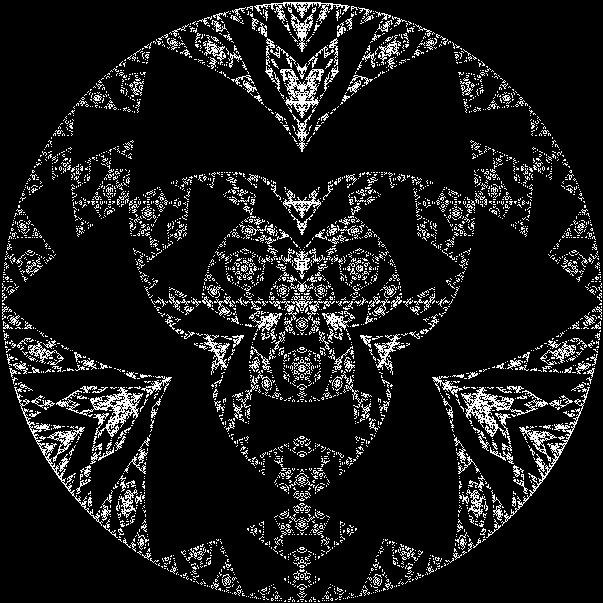
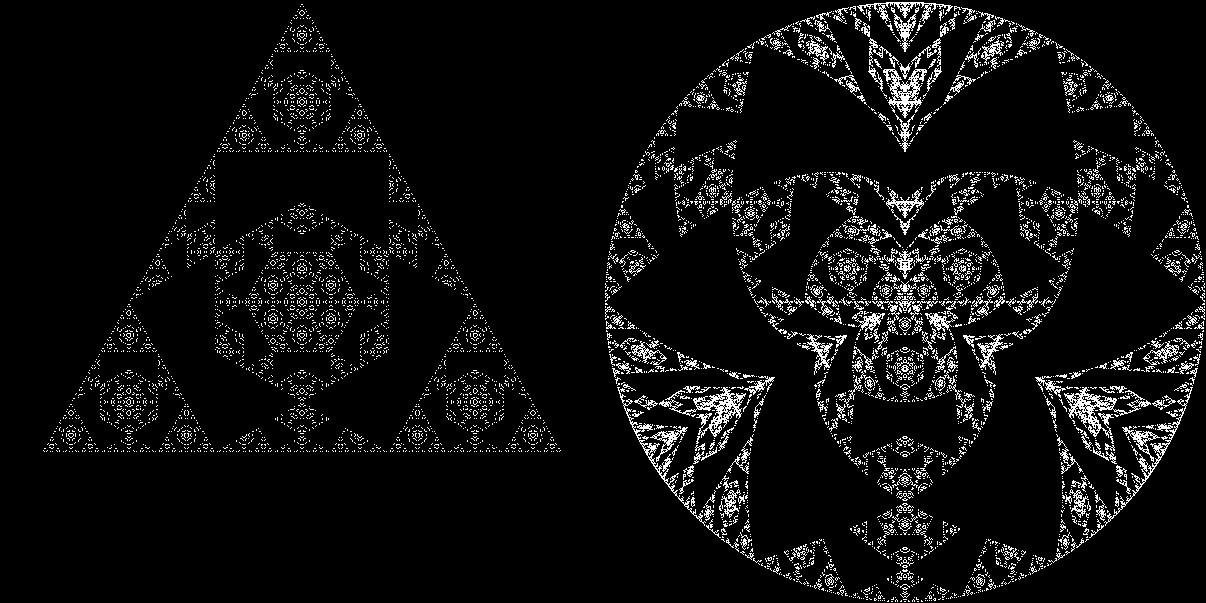
If you adjust the midpoints so that the triangular space fills a circle, they look like this:
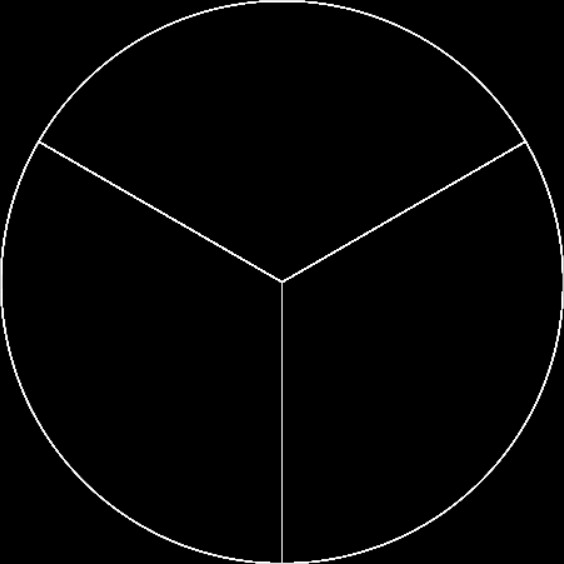
Midpoint for s, s, s*4, with triangular space adjusted to fill circle
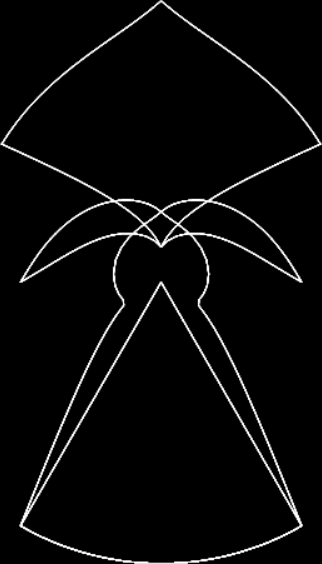
Midpoint for s, -s, s*4, circ-adjusted
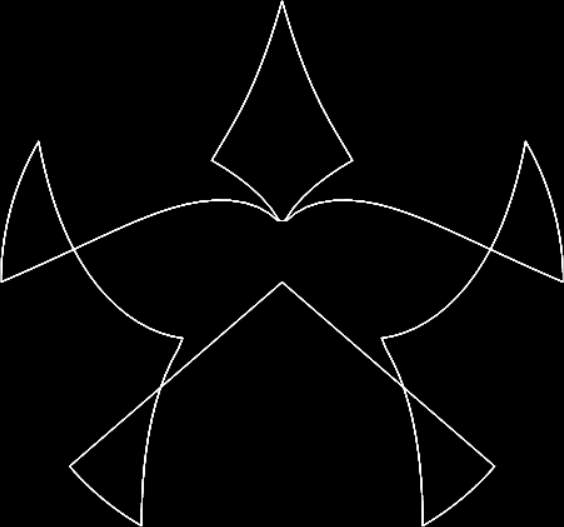
Midpoint for s, s, -s*4, circ-adjusted
There are lots more (infinitely more!) midpoint-shapes to see, so watch this (circularly adjusted) space.
Previously pre-posted (please peruse)
• Second Whirled Warp — more on points moving around polygons
• We Can Circ It Out — more on converting polygons into circles
Forms: Old English cyta, Middle English kete, kijt, kuytte, Middle English kuyte, Middle English–1600s kyte, (1500s kight, kighte, kyght, Scottish kyt), Middle English kite.
Etymology: Old English cýta ( < *kūtjon-); no related word appears in the cognate languages.
1. A bird of prey of the family Falconidæ and subfamily Milvinæ, having long wings, tail usually forked, and no tooth in the bill.
2. [ < its hovering in the air like the bird.] A toy consisting of a light frame, usually of wood, with paper or other light thin material stretched upon it; mostly in the form of an isosceles triangle with a circular arc as base, or a quadrilateral symmetrical about the longer diagonal; constructed (usually with a tail of some kind for the purpose of balancing it) to be flown in a strong wind by means of a long string attached. Also, a modification of the toy kite designed to support a man in the air or to form part of an unpowered flying machine. — Oxford English Dictionary
Sommeraften på Skagen Sønderstrand (1893), Peder Severin Krøyer (1851-1909)
(click for larger)
Elsewhere other-accessible…
• Summer Evening on Skagen’s Southern Beach — more about the painting
[In the plane] We hurried past the great bay at the northern end of Santo, down the eastern side of the island, well clear of its gaunt, still unexplored mountains. The morning sun was low when we passed the central part of Santo, and I can still recall the eerie effect of horizontal shadows upon the thickest jungle in the South Pacific. A hard, forbidding green mat hid every feature of the island, but from time to time solitary trees, burdened with parasites, thrust their tops high above the mat. It was these trees, catching the early sunlight, that made the island grotesque, crawling, and infinitely lonely. Planes had crashed into this green sea of Espiritu and had never been seen again. Ten minutes after the smoke cleared, a burnt plane was invisible. — James A. Michener evokes H.P. Lovecraft in the short-story “Wine for the Mess at Segi” from Tales of the South Pacific (1947)
L’ange du silence sur la tombe du comte Robert de Montesquiou à Versailles (Wikipédia)
Il était un gendarme à Nanteuil,
Qui n’avait qu’une dent et qu’un oeil;
Mais cet oeil solitaire
Était plein de mystère;
Cette dent, d’importance et d’orgueil. — George du Maurier (1834-96)
Elsewhere other-accessible
• Vers Nonsensiques — more by du Maurier

A.E. Housman drawn in charcoal by Francis Dodd, 1926 (National Portrait Gallery)
On entre, on crie,
Et c’est la vie.
On baîlle, on sort,
Et c’est la mort. — Ausone de Chancel (1808-78)
I once wrote a story about a drug called panglossium that allowed those who took it to speak all the languages that have ever existed – the living ones and the dead ones, the ones spoken by billions and the ones spoken by a dwindling remnant, the ones of which the hand of history holds a few tiny glittering feathers and the ones that have evaded the hand of history entirely. Panglossium would allow you to speak all of them, in every dialect and every mode. And to read and write them too, if they had an alphabet or an ideography.
One of the things I was interested in was what kind of literature users of panglossium would create for each other. I don’t think they would choose to write in a single language: they would mix languages (and it seems very unlikely that they would use much or perhaps any English). But I do think they would come closer to capturing the multitudinous flux of reality, which, in our reality, you can’t capture more than a sliver of when you use a single language. Or when you use a dozen languages, as some polyglots can in our reality. Maybe irreal panglossium would allow you to take a handful of reality or more.
I was reminded of panglossium recently because I wanted to write a poem about something I’d seen and been moved by: a band of white clouds and blue sky across which a gull slid swiftly on stationary wings. But I couldn’t do it to the standard I wanted. I couldn’t capture what I saw in two or three seconds: the grace of the gull gliding across the blue-and-white beauty of the sky. The gull wasn’t “gliding”, for example. That’s too slow a word. And I didn’t want to write a poem about my inability to capture that scene, because I’ve written one before about that inability:
Verbol
Green on green on green
The light befalls me clean,
Beneath the birds.And how I can capture
This mute green rapture
In blinded words? (7viii21)
The title of that poem is panglossic, in a way. And the poem itself did reach the standard required, because not-reaching-the-standard is part of the point of the poem. And even the greatest poet can’t reach the full standard and fully capture a scene like that. But some can get much closer than others, as Housman explained in his study of Swinburne:
If even so bare and simple an object as the sea was too elusive and delicate for Swinburne’s observation and description, you would not expect him to have much success with anything so various and manifold as the surface of the earth. And I am downright aghast at the dullness of perception and lack of self-knowledge and self-criticism which permitted him to deposit his prodigious quantity of descriptive writing in the field of English literature. That field is rich beyond example in descriptions of nature from the hands of unequalled masters, for in the rendering of nature English poetry has outdone all poetry: and here, after five centuries, comes Swinburne covering the grass with his cartload of words and filling the air with the noise of the shooting of rubbish. It is a clear morning towards the end of winter: snow has fallen in the night, and still lies on the branches of the trees under brilliant sunshine. Tennyson would have surveyed the scene with his trained eye, made search among his treasury of choice words, sorted and sifted and condensed them, till he had framed three lines of verse, to be introduced one day in a narrative or a simile, and there to flash upon the reader’s eye the very picture of a snowy and sunshiny morning. Keats or Shakespeare would have walked between the trees thinking of whatever came uppermost and letting their senses commune with their souls; and there the morning would have transmuted itself into half a line or so which, occurring in some chance passage of their poetry, would have set the reader walking between the same trees again. Swinburne picks up the sausage-machine into which he crammed anything and everything; round goes the handle, and out at the other end comes this noise:
Ere frost-flower and snow-blossom faded and fell, and the splendour of winter had passed out of sight,
The ways of the woodlands were fairer and stranger than dreams that fulfil us in sleep with delight;
The breath of the mouths of the winds had hardened on tree-tops and branches that glittered and swayed
Such wonders and glories of blossomlike snow or of frost that outlightens all flowers till it fade
That the sea was not lovelier than here was the land, nor the night than the day, nor the day than the night,
Nor the winter sublimer with storm than the spring: such mirth had the madness and might in thee made,
March, master of winds, bright minstrel and marshal of storms that enkindle the season they smite.That is not all, it clatters on for fifty lines or so; but that is enough and too much. It shows what nature was to Swinburne: just something to write verse about, a material for making a particular kind of sausage.
But what would Tennyson or Keats or Shakespeare have been able to write after taking panglossium?
Elsewhere other-accessible…
• Poems and Brickbats – Housman’s study of Swinburne
• Verbol – (commentary on) my poem about inability and inadequacy