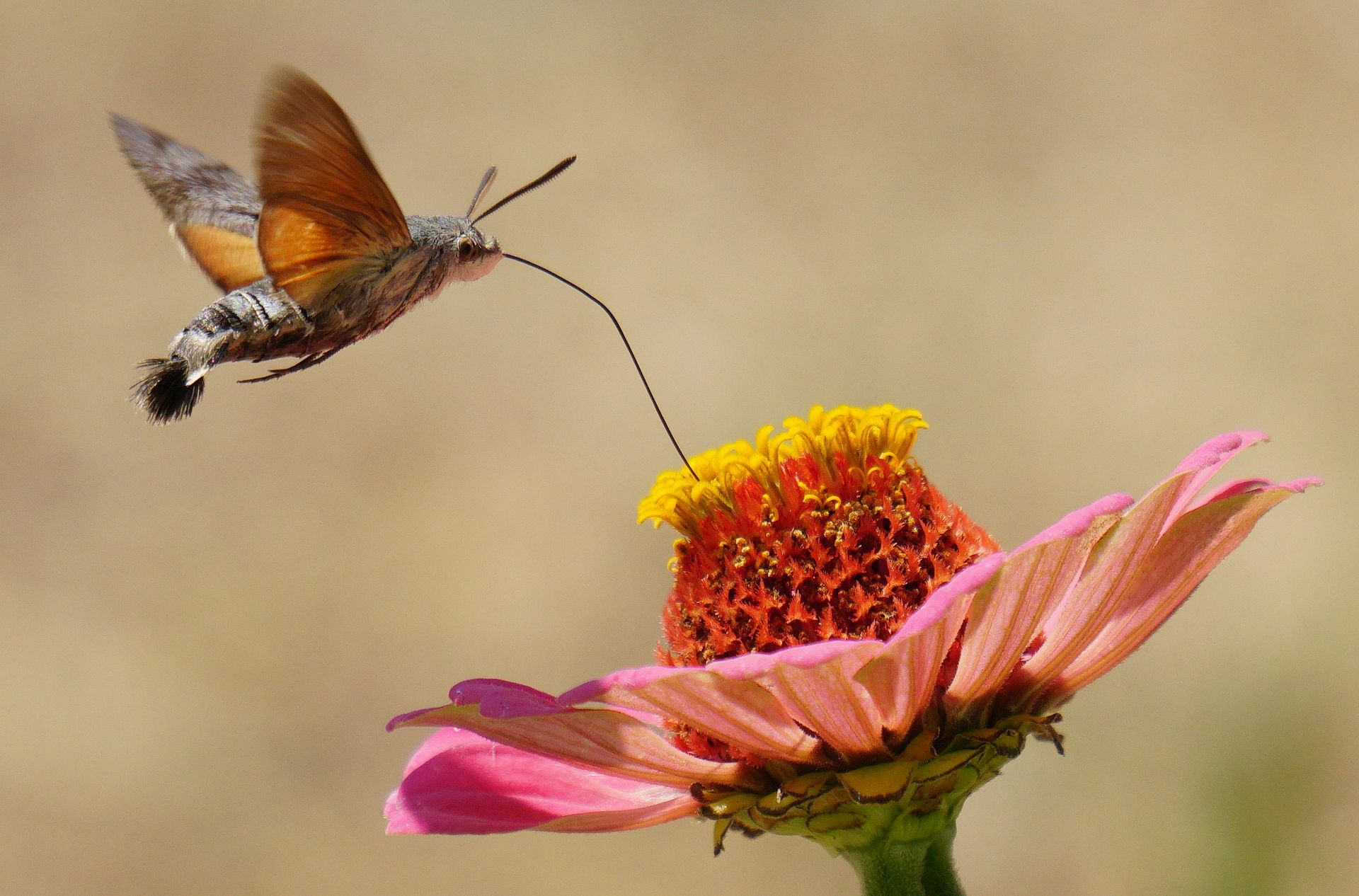
Hummingbird hawk-moth, Macroglossum stellatarum (Linnaeus, 1758)
(click for larger)

Hummingbird hawk-moth, Macroglossum stellatarum (Linnaeus, 1758)
(click for larger)
“In no other branch of mathematics is it so easy for experts to blunder as in probability theory.” — Martin Gardner (1914-2010)
Seedhead of western goat’s-beard, Tragopogon dubius (Scop.)
Papyrocentric Performativity Presents…
• Hod is G-d – Playmaker: My Autobiography, Glenn Hoddle with Jacob Steinberg (HarperCollins 2021)
• The Wheel Deal – Cyclogeography: Journeys of a London Bicycle Courier, Jon Day (Notting Hill Editions 2015)
• Manc Wanc – From Manchester with Love: The Life and Opinions of Tony Wilson, Paul Morley (Faber & Faber 2021)
• Goyles, Goyles, Goyles… – I, Gargoyle: Toxic True Tales of Fetid Freaks, Wild-Eyed Weirdos and Kore Kounter-Kultural Kooks Who Insidiously Identify as Human Gargoyles…, edited by David Kerekes and Norman Nekrophile (Visceral Visions, forthcoming)
• Sneaky McCready – The Deceiver, Frederick Forsyth (1991)
• Shake’s Peer – Shakespeare, Bill Bryson (William Collins 2017)
• Winged Words – The Last Enemy, Richard Hillary (1942)
• The Cult of Ult – 1312: Among the Ultras: A Journey with the World’s Most Extreme Fans, James Montague (Ebury Press 2021)
Or Read a Review at Random: RaRaR
It’s one of the most famous and easily recognizable logos in the world:

The Mitsubishi diamonds (source)
Those are the three diamonds of Mitsubishi, whose name itself means “three diamonds” or “three rhombi” in Japanese (see 三菱). But if you look at the Mitsubishi diamonds with a mathematical eye, you can see how to create them in two simple steps. First, you divide an equilateral triangle into nine smaller equilateral triangles. Then you discard three of the sub-triangles, like this:

Equilateral triangle divided into nine sub-triangles
↓

Six sub-triangles left after three are discarded

↓

But why stop there? Once you’ve discarded three triangles, six triangles are left. Now do the same to the remaining six: divide each into nine sub-triangles and discard three of the sub-triangles. Then do it again and again. When you’ve reduced the diamonds to dust, you’ve got a fractal, a shape that repeats itself at smaller and smaller scales:
Diamond fractal stage #1

Diamond fractal stage #2
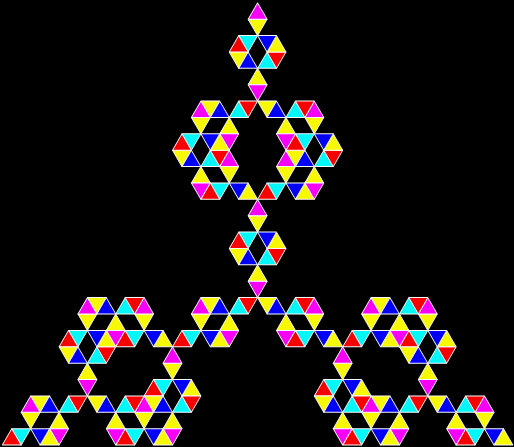
Diamond fractal stage #3

Diamond fractal stage #4

Diamond fractal stage #5
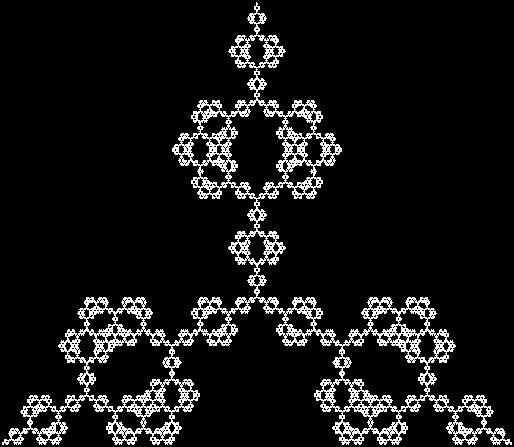
Diamond fractal stage #6

Diamond fractal (animated)
After that, you can convert the fractal-within-a-triangle into a fractal-within-a-circle:

↓
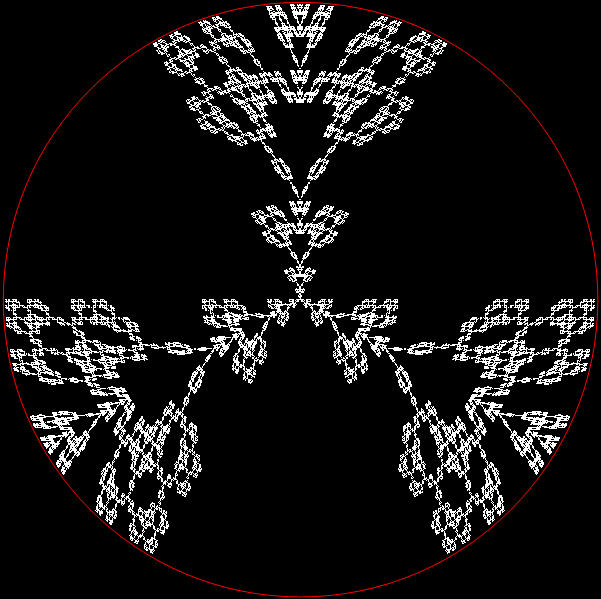
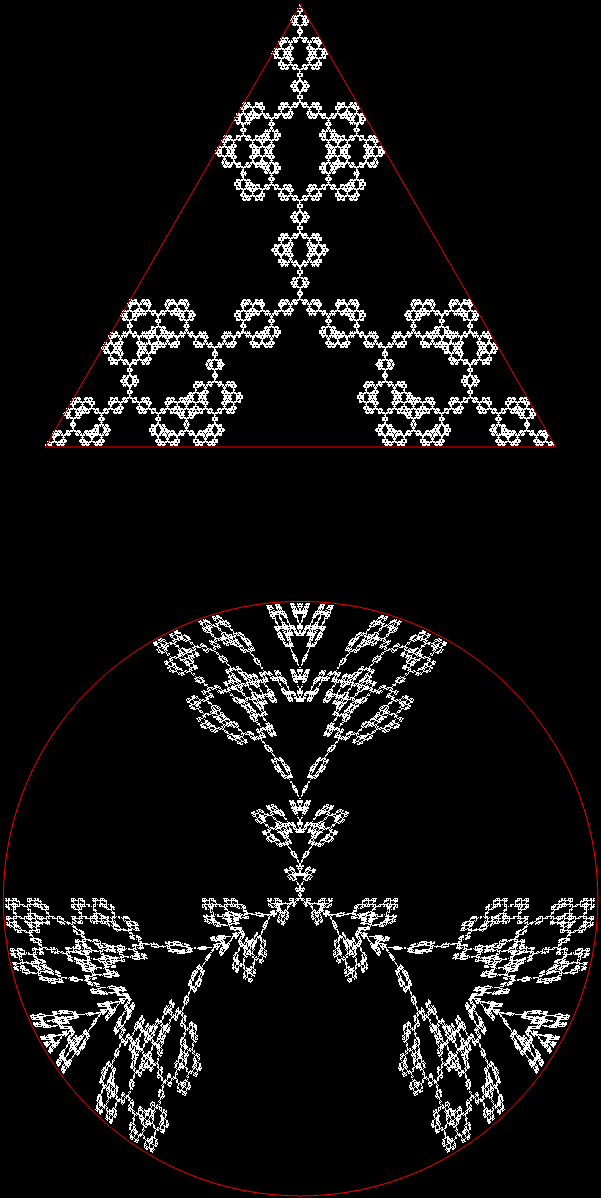
Diamond fractal, triangular to circular (animated)
You can create other fractals by dividing-and-discarding sub-triangles from a rep-9 equilaterial triangle. Here’s what I call a rep9-tri grid fractal:
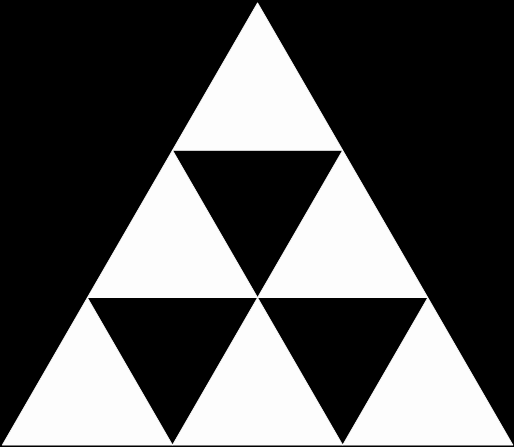
Grid fractal stage #1
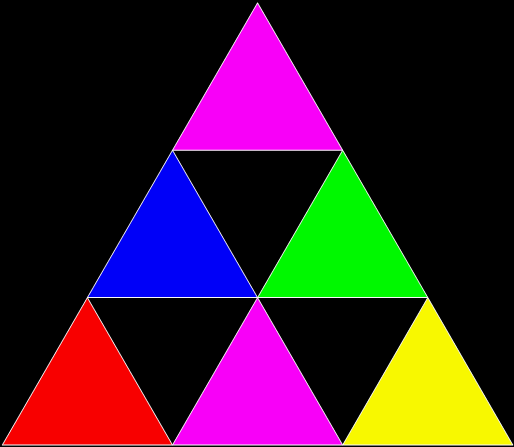
Grid fractal stage #2
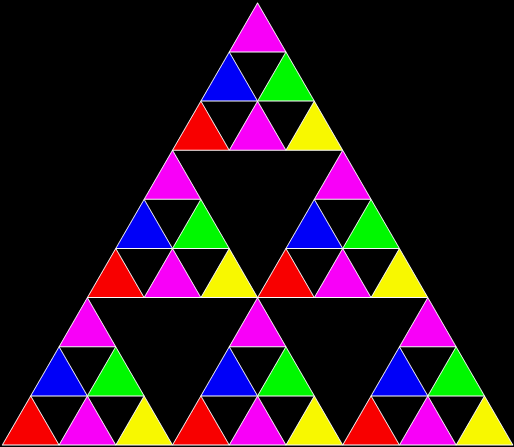
Grid fractal stage #3
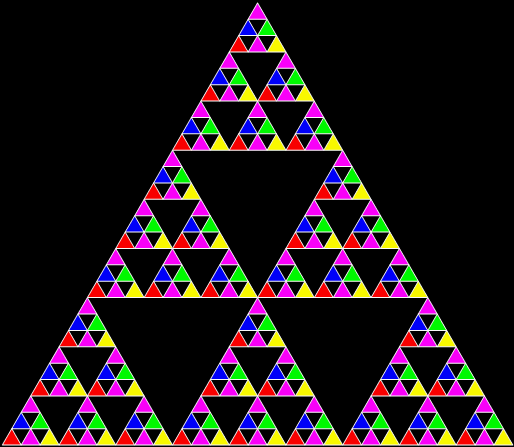
Grid fractal stage #4
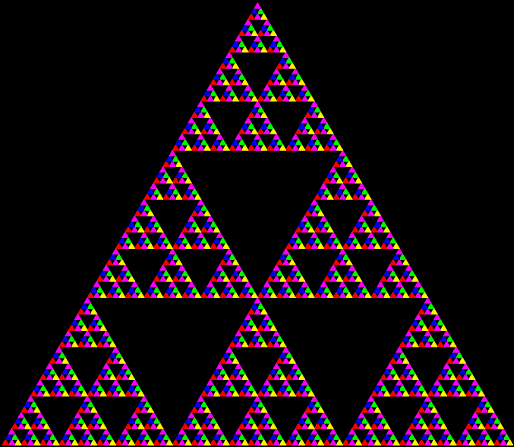
Grid fractal stage #5
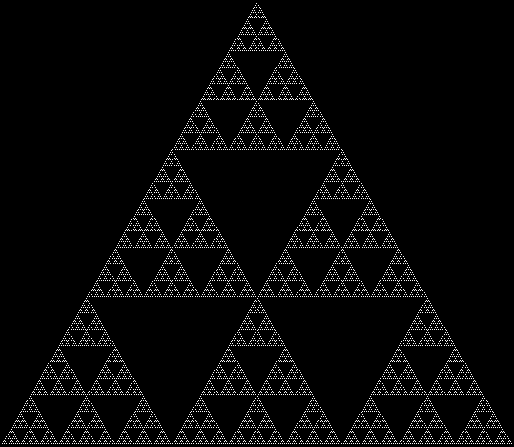
Grid fractal stage #6

Grid fractal stage #7
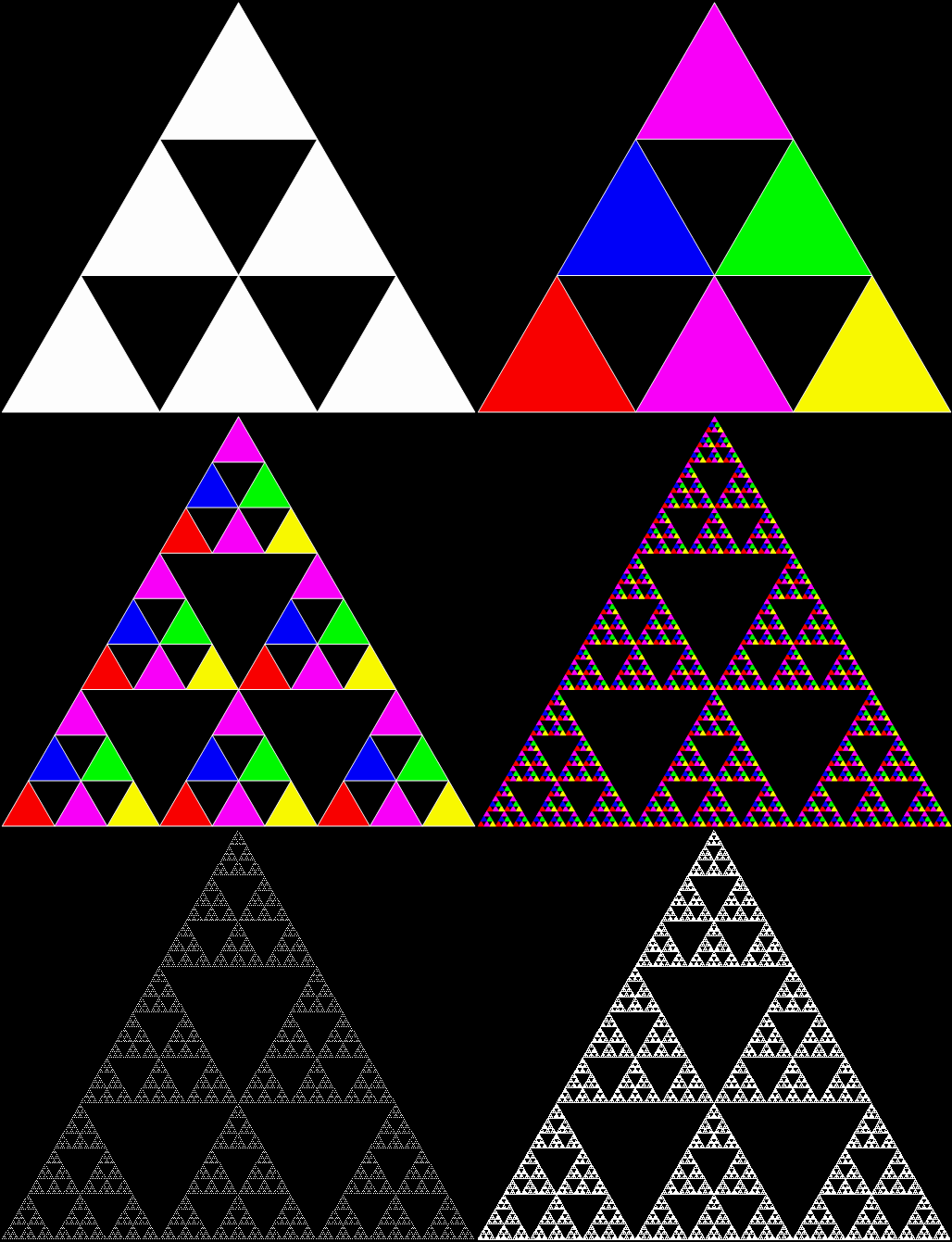
Grid fractal (animated)
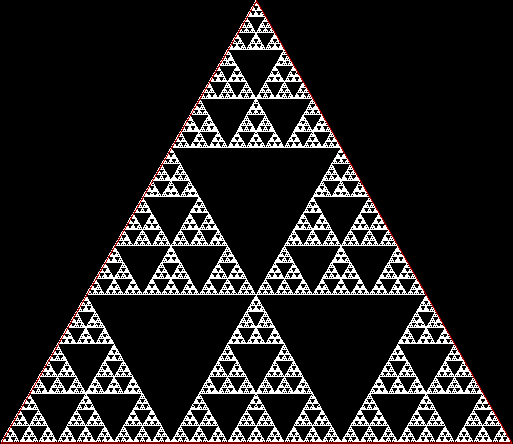
↓
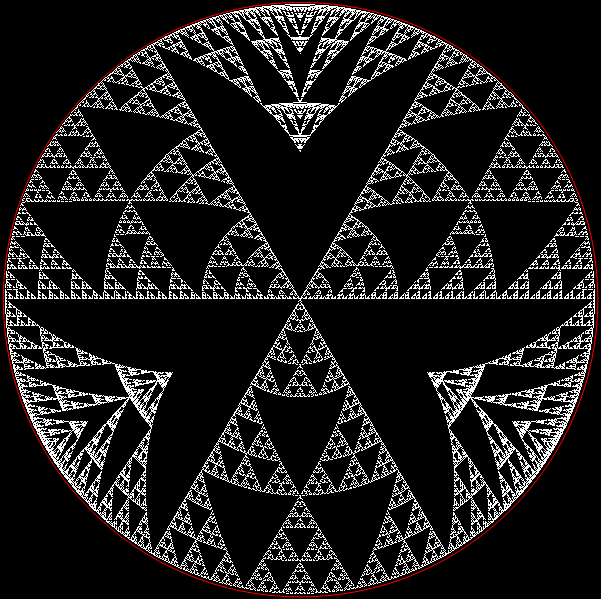
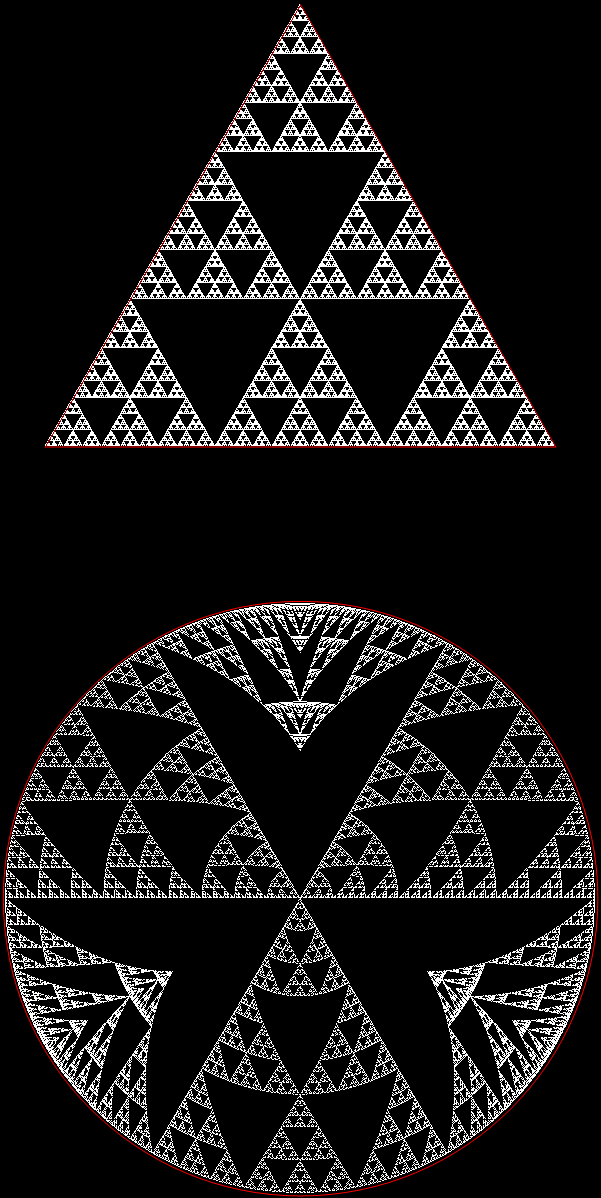
Grid fractal, triangular to circular (animated)
And here’s a rep9-tri hexagon fractal:
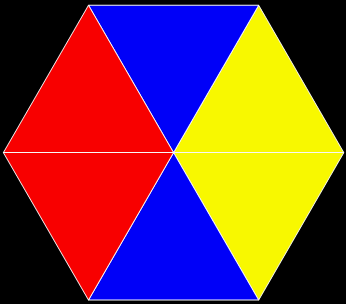
Hexagon fractal (initial form)

Hexagon fractal stage #1
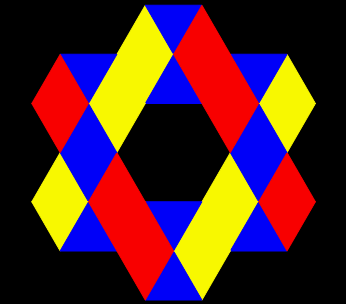
Hexagon fractal stage #2
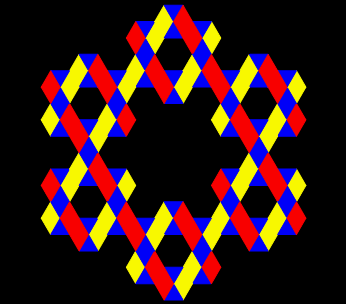
Hexagon fractal stage #3

Hexagon fractal stage #4

Hexagon fractal stage #5
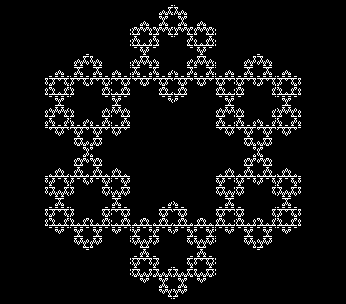
Hexagon fractal stage #6

Hexagon fractal (animated)
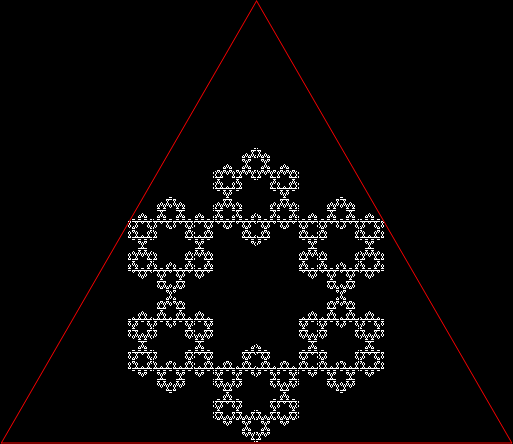
↓
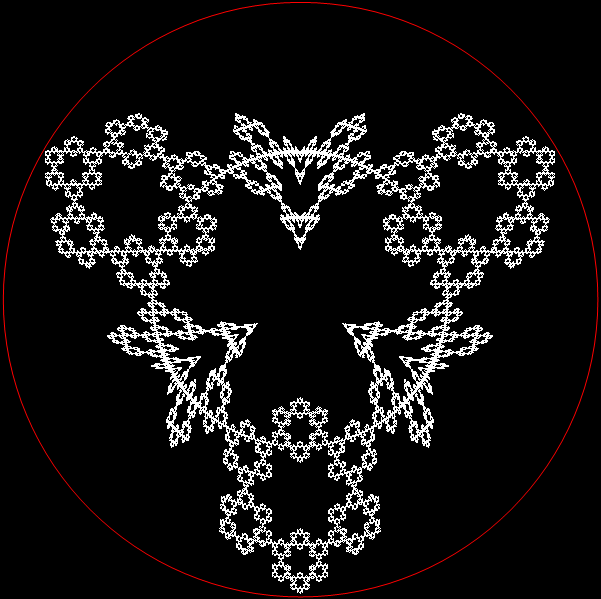

Hexagon fractal, triangular to circular (animated)

Title page of Sir Henry Billingsley’s first English version of Euclid’s Elements, 1570, with personifications of Geometria, Astronomia, Arithmetica and Musica as beautiful young women
The title of this incendiary intervention is a paronomasia on “The Bells of Hell…”, a British airmen’s song in terms of core issues around World War I.
• 3, 7, 31, 127, 8191, 131071, 524287, 2147483647, 2305843009213693951, 618970019642690137449562111, 162259276829213363391578010288127, 170141183460469231731687303715884105727 — A000668, Mersenne primes (primes of the form 2^n – 1), at the Online Encyclopedia of Integer Sequences
• 2, 3, 5, 7, 13, 17, 19, 31, 61, 89, 107, 127, 521, 607, 1279, 2203, 2281, 3217, 4253, 4423, 9689, 9941, 11213, 19937, 21701, 23209, 44497, 86243, 110503, 132049, 216091, 756839, 859433, 1257787, 1398269, 2976221, 3021377, 6972593, 13466917, 20996011, 24036583, 25964951, 30402457, 32582657, 37156667, 42643801, 43112609, 57885161, 74207281, 77232917, 82589933 — A000043, Mersenne exponents: primes p such that 2^p – 1 is prime. Then 2^p – 1 is called a Mersenne prime. […] It is believed (but unproved) that this sequence is infinite. The data suggest that the number of terms up to exponent N is roughly K log N for some constant K.
• The largest known prime number (as of May 2022) is 282,589,933 − 1, a number which has 24,862,048 digits when written in base 10. It was found via a computer volunteered by Patrick Laroche of the Great Internet Mersenne Prime Search (GIMPS) in 2018. — Largest known prime number
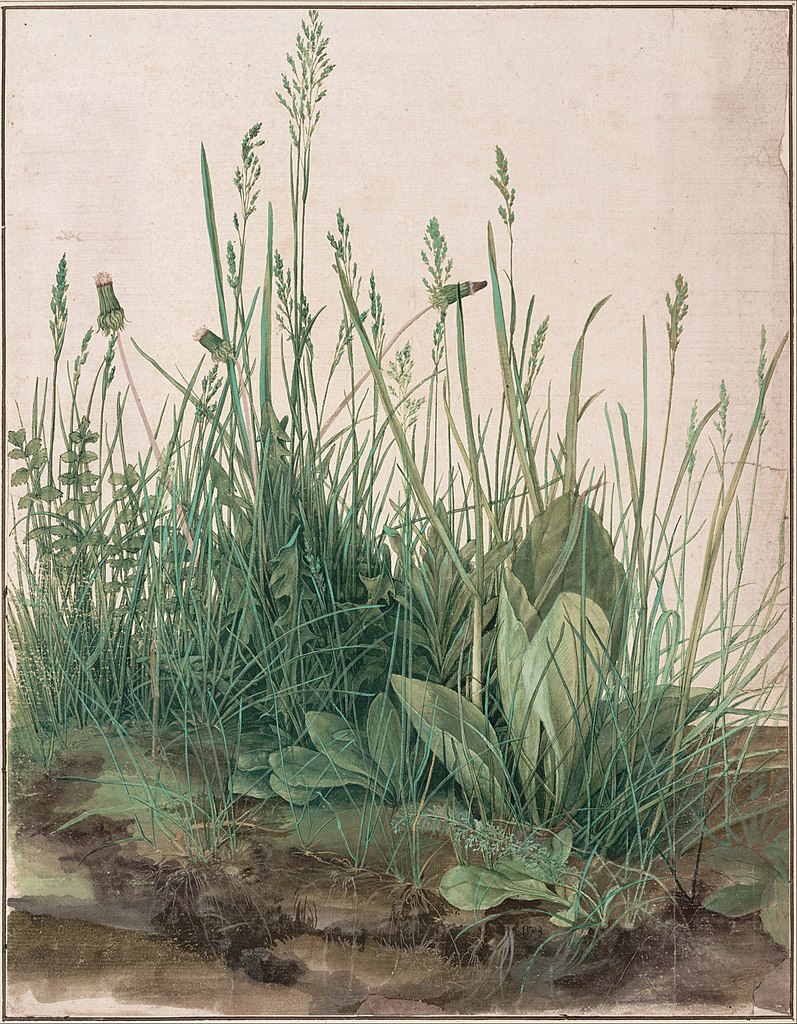
Albrecht Dürer, Das große Rasenstück / Great Piece of Turf (1503)
(click for larger)
« Tous les chats sont mortels, Socrate est mortel, donc Socrate est un chat. » — Rhinocéros (1959) par Eugène Ionesco (1931-94)
• “All cats are mortal, Socrates is mortal, therefore Socrates is a cat.”

Dopelord, Polish stoner-doom band (photo by Marcin Pawłowski)
“Navigator” by Dopelord from Children of the Haze (2017)
Leaf burns to ashes — Hail the Holy Smoke!
Deepspace traveller, folding time with bong;
Green smoke inhaler — space defeated bends.
Skilled time deflector, holding bong in hand
Holding bong in hand…Slowly he’s dying,
Slowly he’s turning,
Into stones and into ashes:
Slowly gets high.Galaxy raider flights the mothership;
Mind decompressor on eternal trip;
Green smoke inhaler — space defeated bends.
Skilled time deflector, holding bong in hand
Holding bong in hand…
Elsewhere Other-Accessible…
• Dopelord at Bandcamp
Post-Performative Post-Scriptum
The title of this incendiary intervention is a paronomasia on Song of Songs, the Biblical book traditionally ascribed to King Solomon and known in Hebrew as שִׁיר הַשִּׁירִים Šīr hašŠīrīm and in Polish as Pieśń nad Pieśniami. Please note that the Overlord of the Über-Feral abhors and abominates the taking of all and any drugs. Except the purest and most potent: water, language, mathematics and music dot dot dot
 Overlord In Terms of Core Issues Around Maximal Engagement with Key Notions of the Über-Feral