WhirlpUlam

Stanislaw Ulam (pronounced OO-lam) was an American mathematician who was doodling one day in 1963 and created what is now called the Ulam spiral. It’s a spiral of integers on a square grid with the prime squares filled in and the composite squares left empty. At the beginning it looks like this (the blue square is the integer 1, with 2 to the east, 3 to the north-east, 4 to the north, 5 to the north-west, 6 to the west, and so on):
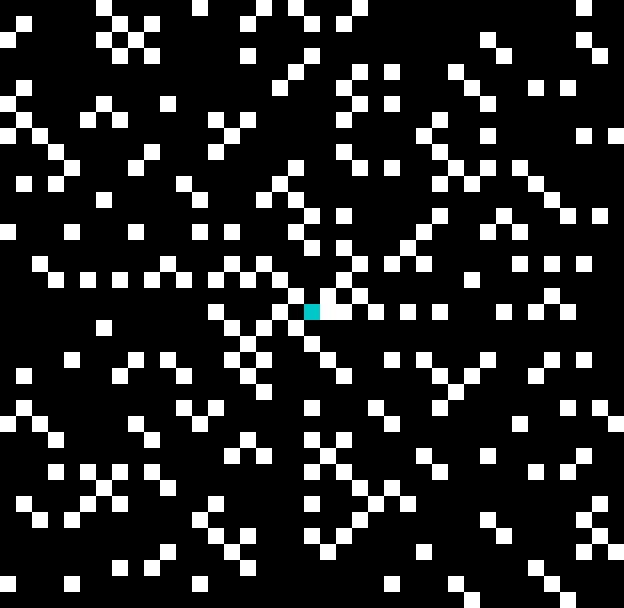
Ulam spiral


And here’s an Ulam spiral with more integers:
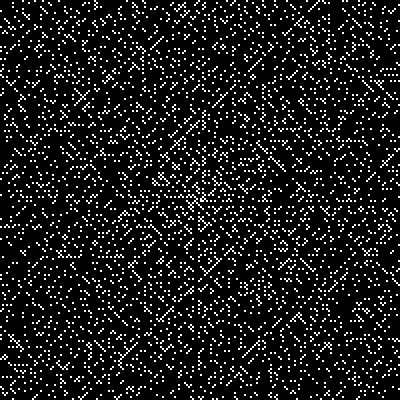
Ulam spiral at higher resolution


The primes aren’t scattered at random over the spiral: they often fall into lines that are related to what are called polynomial functions, such as n2 + n + 1. To understand polynomial functions better, let’s look at how the Ulam spiral is made. Here is a text version with the primes underlined:


Here’s an animated version:


Here’s the true spiral again with 1 marked as a blue square:

Ulam spiral centred on 1


What happens when you try other numbers at the centre? Here’s 2 at the centre as a purple square, because it’s prime:
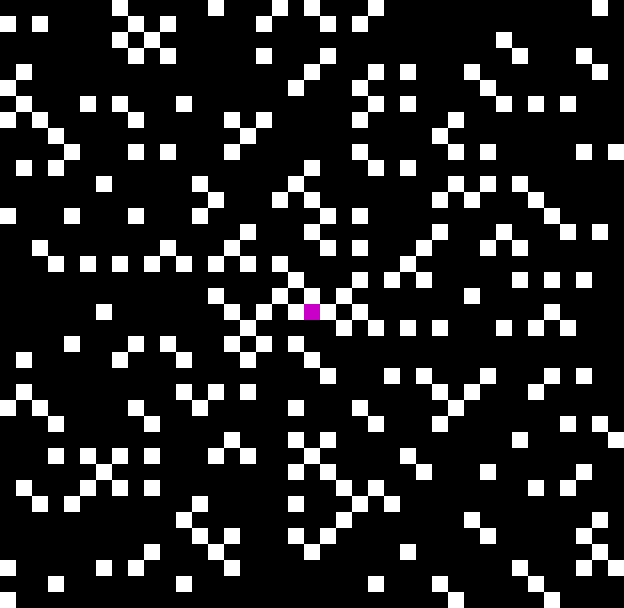
Ulam spiral centred on 2


And 3 at the centre, also purple because it’s also prime:

Ulam spiral centred on 3


And 4 at the centre, blue again because 4 = 2^2:

Ulam spiral centred on 4


And 5 at the centre, prime and purple:
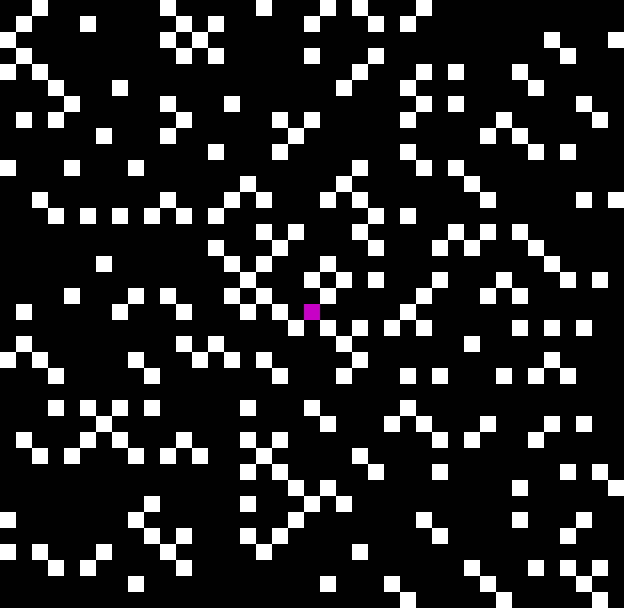
Ulam spiral centred on 5


Each time the central number changes, the spiral shifts fractionally. Here’s an animation of the central number shifting from 1 to 41. If you watch, you’ll see patterns remaining stable, then breaking up as the numbers shift towards the center and disappear (the central number is purple if prime, blue if composite):

Ulam whirlpool, or WhirlpUlam


I think the animation looks like a whirlpool or whirlpUlam (prounced whirlpool-am), as numbers spiral towards the centre and disappear. You can see the whirlpUlam more clearly here:
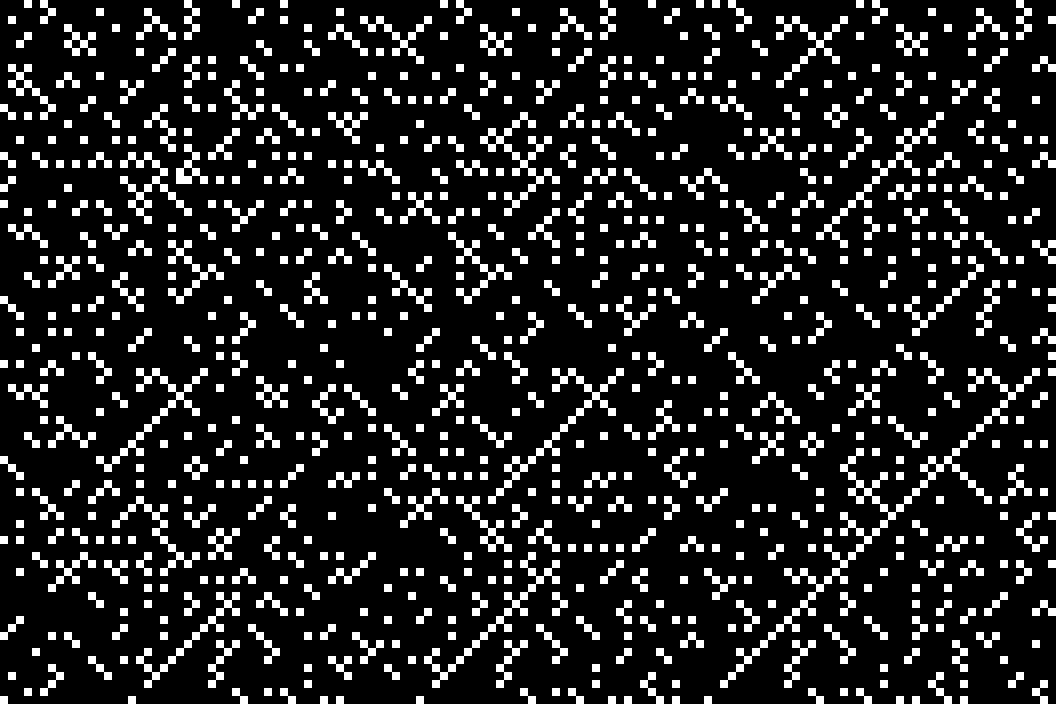
An animated Ulam Spiral pausing at n=11, 17, 41


WhirlpUlam again


Note that something interesting happens when the central number is 41. The spiral is bisected by a long line of prime squares, like this:

Ulam spiral centred on 41


The line is actually a visual representation of something David Wells wrote about in The Penguin Dictionary of Curious and Interesting Numbers (1986):

Euler discovered the excellent and famous formula x2 + x + 41, which gives prime values for x = 0 to 39.

Here are the primes generated by the formula:

41, 43, 47, 53, 61, 71, 83, 97, 113, 131, 151, 173, 197, 223, 251, 281, 313, 347, 383, 421, 461, 503, 547, 593, 641, 691, 743, 797, 853, 911, 971, 1033, 1097, 1163, 1231, 1301, 1373, 1447, 1523, 1601

You’ll see other lines appear and disappear as the whirlpUlam whirls:

Ulam spiral centred on 17


Primes in line: 17, 19, 23, 29, 37, 47, 59, 73, 89, 107, 127, 149, 173, 199, 227, 257 (n=0..15)
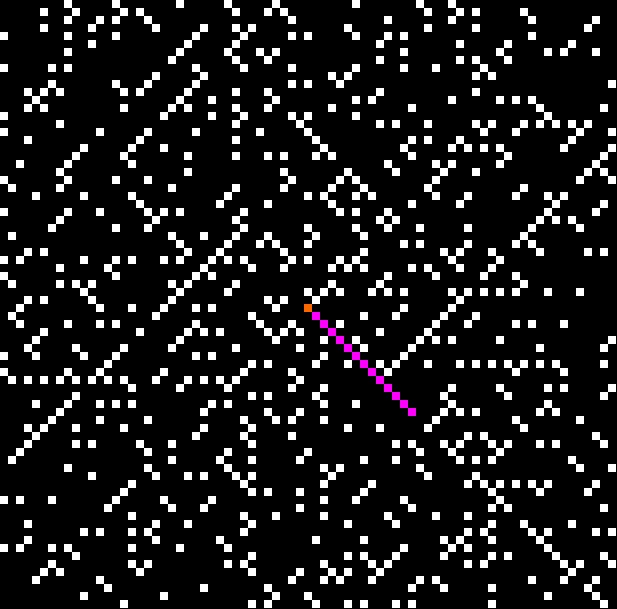

Ulam spiral centred on 59


Primes in line: 59, 67, 83, 107, 139, 179, 227, 283, 347, 419, 499, 587, 683, 787 (n=0..13)


Ulam spiral centred on 163


Primes in line: 163, 167, 179, 199, 227, 263, 307, 359, 419, 487, 563, 647, 739, 839, 947, 1063, 1187, 1319, 1459, 1607 (n=0..19)
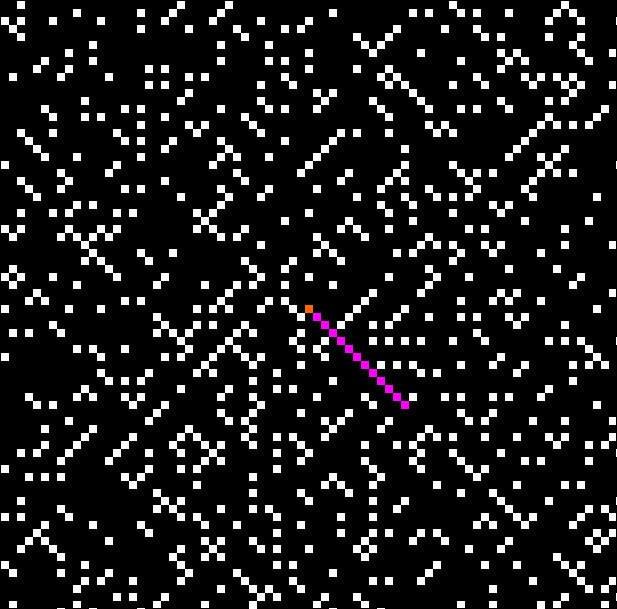

Ulam spiral centred on 233


Primes in line: 233, 241, 257, 281, 313, 353, 401, 457, 521, 593, 673, 761, 857 ((n=0..12)


Ulam spiral centred on 653


Primes in line: 653, 661, 677, 701, 733, 773, 821, 877, 941, 1013, 1093, 1181, 1277, 1381, 1493, 1613, 1741, 1877 (n=0..17)


Ulam spiral centred on 409,333


Primes in line: 409,333, 409337, 409349, 409369, 409397, 409433, 409477, 409529, 409589, 409657, 409733, 409817, 409909, 410009, 410117, 410233 (n=0..15)


Some bisect the centre, some don’t, because you could say that the Ulam spiral has six diagonals, two that bisect the centre (top-left-to-bottom-right and bottom-left-to-top-right) and four that don’t. You could also call them spokes:


If you look at the integers in the spokes, you can see that they’re generated by polynomial functions in which c stands for the central number:

North-west spoke: 1, 5, 17, 37, 65, 101, 145, 197, 257, 325, 401, 485, 577, 677, 785, 901, 1025, 1157, 1297, 1445, 1601, 1765, 1937, 2117, 2305, 2501, 2705, 2917... = c + (2n)^2


South-east spoke: 1, 9, 25, 49, 81, 121, 169, 225, 289, 361, 441, 529, 625, 729, 841, 961, 1089, 1225, 1369, 1521, 1681, 1849, 2025, 2209, 2401, 2601, 2809, 3025, 3249, 3481, 3721, 3969, 4225, 4489, 4761, 5041, 5329, 5625... = c+(2n+1)^2-1


NW-SE diagonal: 1, 5, 9, 17, 25, 37, 49, 65, 81, 101, 121, 145, 169, 197, 225, 257, 289, 325, 361, 401, 441, 485, 529, 577, 625, 677, 729, 785, 841, 901, 961, 1025, 1089, 1157, 1225, 1297, 1369, 1445, 1521, 1601, 1681 = c + n^2 + 1 - (n mod 2)


North-east spoke: 1, 3, 13, 31, 57, 91, 133, 183, 241, 307, 381, 463, 553, 651, 757, 871, 993, 1123, 1261, 1407, 1561, 1723, 1893, 2071... = c + (n+1)^2 - n - 1


South-west spoke: 1, 7, 21, 43, 73, 111, 157, 211, 273, 343, 421, 507, 601, 703, 813, 931, 1057, 1191, 1333, 1483, 1641, 1807, 1981, 2163... = c + (2n)^2 + 2n


SW-NE diagonal: 1, 3, 7, 13, 21, 31, 43, 57, 73, 91, 111, 133, 157, 183, 211, 241, 273, 307, 343, 381, 421, 463, 507, 553, 601, 651, 703, 757, 813, 871, 931, 993, 1057, 1123, 1191, 1261, 1333, 1407, 1483, 1561, 1641... = c + n^2 + n


Elsewhere other-engageable:

All posts interrogating issues around the Ulam spiral

Performativizing Papyrocentricity #64

Papyrocentric Performativity Presents:

God GuideA Guide to Tolkien, David Day (Octopus 1993)

The Catcher and the RyeThe Biology of Flowers, Eigil Holm, ill. by Thomas Bredsdorff and Peter Nielsen (Penguin Nature Guides 1979)

Dayzed and ContusedThe Greatest Footballer You Never Saw: The Robin Friday Story, Paul McGuigan and Paolo Hewitt (Mainstream 1997)


Or Read a Review at Random: RaRaR

Oh My Guardianisticity!

He’s been mixing with the wrong people:

“Our supporters and our country has had a long time suffering in terms of football. […] Our country has been through some difficult moments recently in terms of unity but sport has the power to unite — and football in particular has the power to do that.” — England manager Gareth Southgate, BBC Sport, 10vii2018.


Elsewhere other-engageable:

Oh My Guardian #6 — the latest in the award-winning series
All posts interrogating issues around the Guardian-reading community and its affiliates
Ex-term-in-ate! — interrogating arguably the keyliest and coreliest Guardianista phrase
All posts interrogating issues around “in terms of”

Mice Thrice

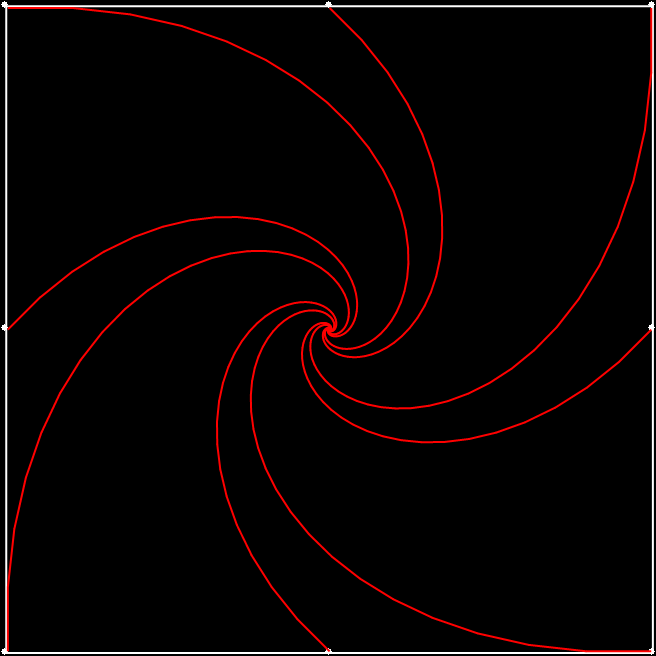
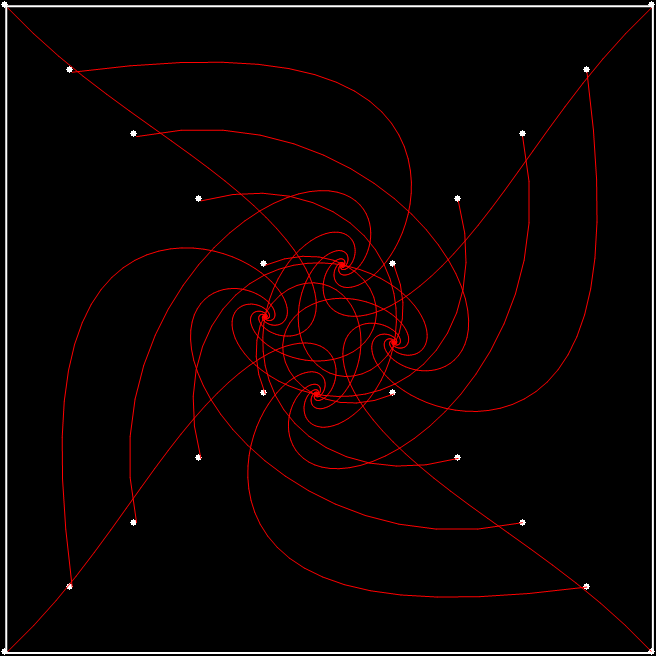
Twice before on Overlord-in-terms-of-Core-Issues-around-Maximal-Engagement-with-Key-Notions-of-the-Über-Feral, I’ve interrogated issues around pursuit curves. Imagine four mice or four beetles each sitting on one corner of a square and looking towards the centre of the square. If each mouse or beetle begins to run towards the mouse or beetle to its left, it will follow a curving path that takes it to the centre of the square, like this:

vertices = 4, pursuit = +1


The paths followed by the mice or beetles are pursuit curves. If you arrange eight mice clockwise around a square, with a mouse on each corner and a mouse midway along each side, you get a different set of pursuit curves:

v = 4 + 1 on the side, p = +1


Here each mouse is pursuing the mouse two places to its left:

v = 4+s1, p = +2


And here each mouse is pursuing the mouse three places to its left:

v = 4+s1, p = +3


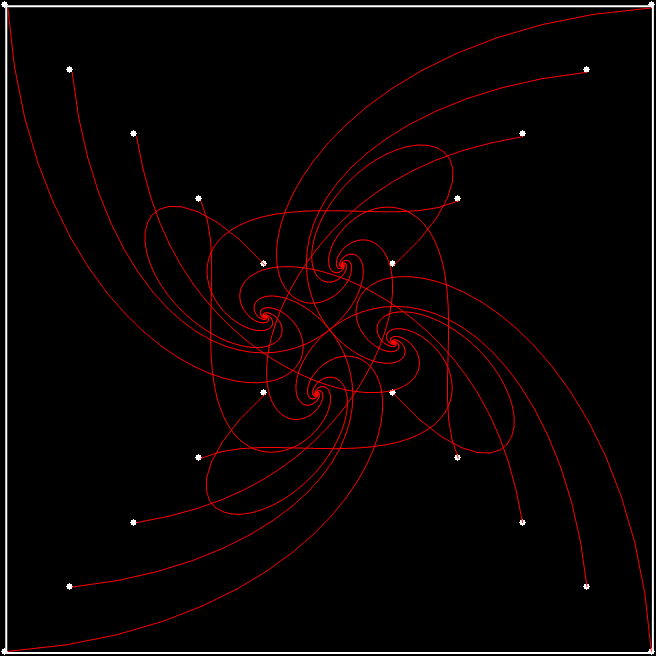
Now try a different arrangement of the mice. In the square below, the mice are arranged clockwise in rows from the bottom right-hand corner. That is, mouse #1 begins on the bottom left-hand corner, mouse #2 begins between that corner and the centre, mouse #3 begins on the bottom left-hand corner, and so on. When each mice runs towards the mouse three places away, these pursuit curves appear:

v = 4 + 1 internally, p = +3


Here are some more:

v = 4 + i1, p = +5


v = 4 + i2, p = +1


v = 4 + i2, p = +2


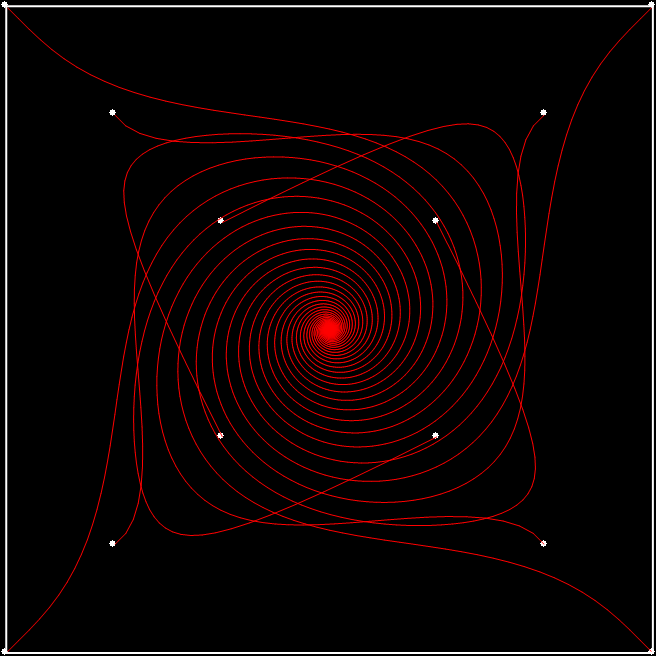
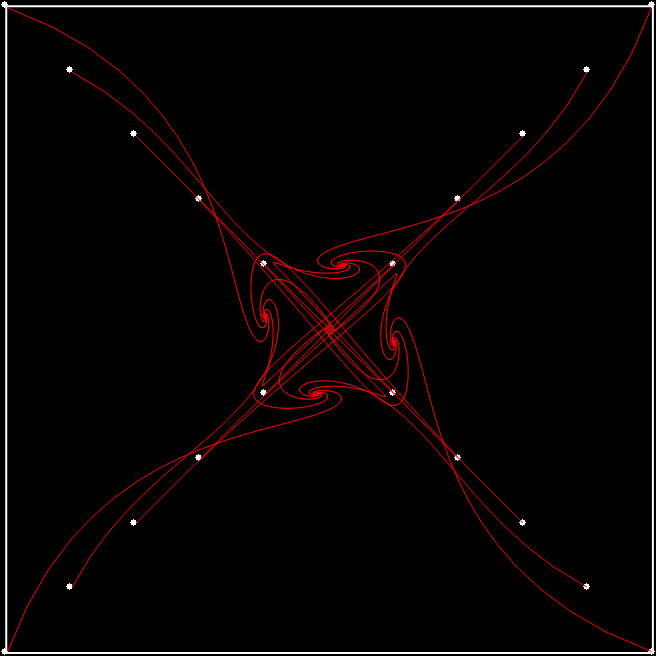
So far, all the mice have eventually run to the centre of the square, but that doesn’t happen here:

v = 4 + i2, p = 4


Here are more pursuit curves for the v4+i2 mice, using an animated gif:

v = 4 + i2, p = various (animated — open in new tab for clearer image)


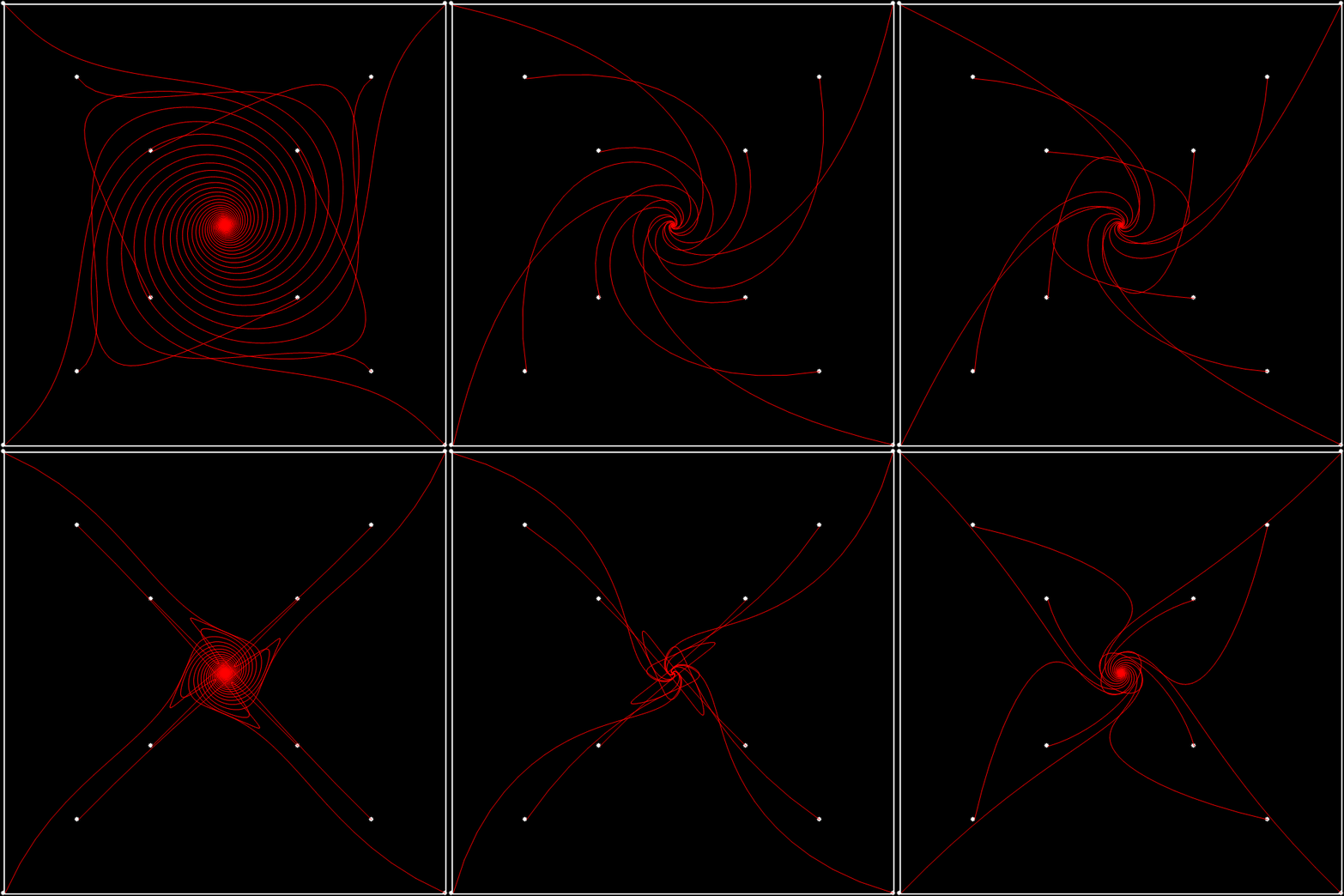
And here are more pursuit curves that don’t end in the centre of the square:

v = 4 + i4, p = 4


v = 4 + i4, p = 8


v = 4 + i4, p = 12


v = 4 + i4, p = 16


But the v4+i4 pursuit curves more usually look like this:

v = 4 + i4, p = 7


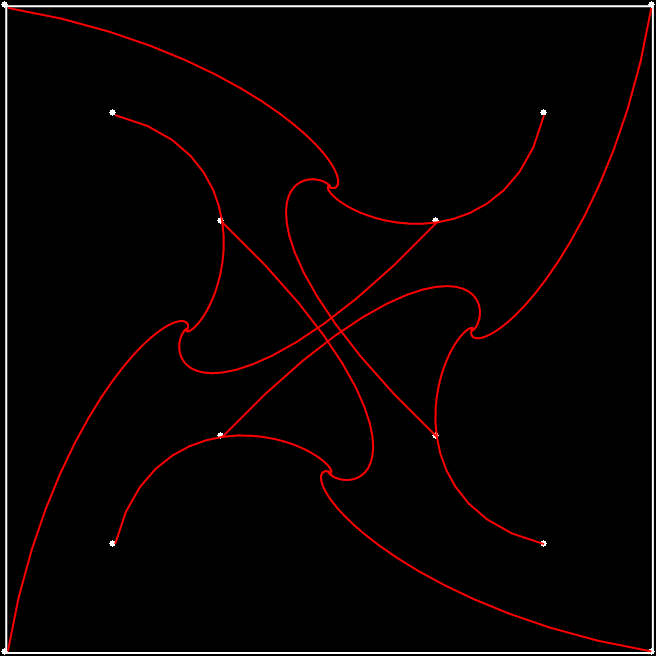
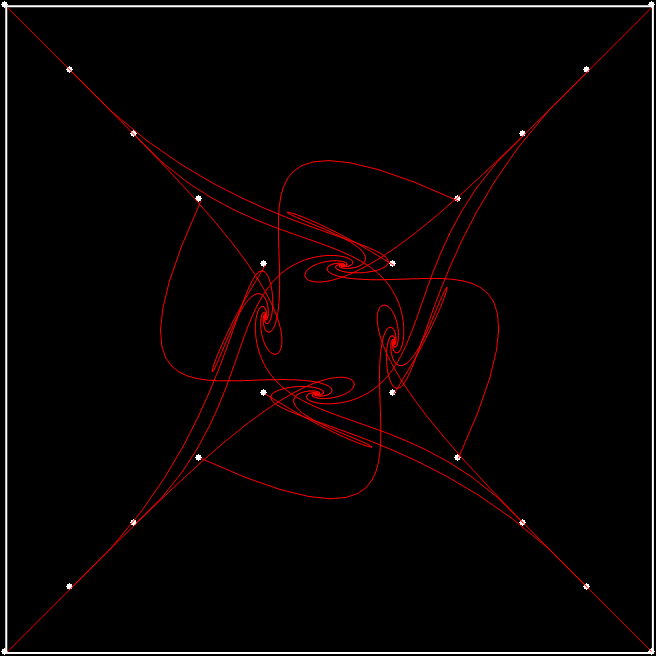
Now try adapting the rules so that mice don’t run directly towards another mouse, but towards the point midway between two other mice. In this square, the odd- and even-numbered mice follow different rules. Mice #1, #3, #5 and #7 run towards the point midway between the mice one and two places away, while ice #2, #4, #6 and #8 run towards the point midway between the mice two and seven places away:

v = 4 + s1, p(1,3,5,7) = 1,2, p(2,4,6,8) = 2,7


I think the curves are very elegant. Here’s a slight variation:

v = 4 + s1, p1 = 1,3, p2 = 2,7


Now try solid curves:

v = 4 + s1, p1 = 1,3, p2 = 2,7 (red)


v = 4 + s1, p1 = 1,3, p2 = 2,7 (yellow-and-blue)


And some variants:

v = 4 + s1, p1 = 1,7, p2 = 1,2


v = 4 + s1, p1 = 2,3, p2 = 2,5


v = 4 + s1, p1 = 5,6, p2 = 1,3


v = 4 + s1, p1 = 5,6, p2 = 1,4


v = 4 + s1, p1 = 5,6, p2 = 1,6


Elsewhere other-posted:

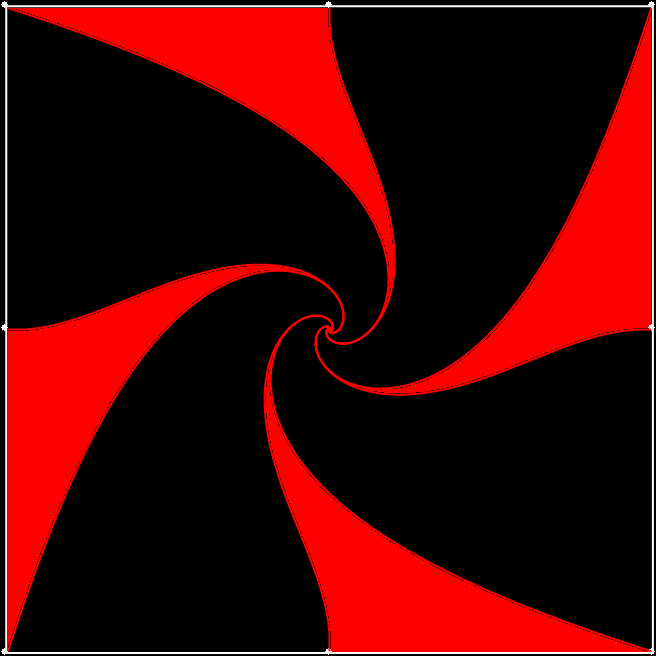
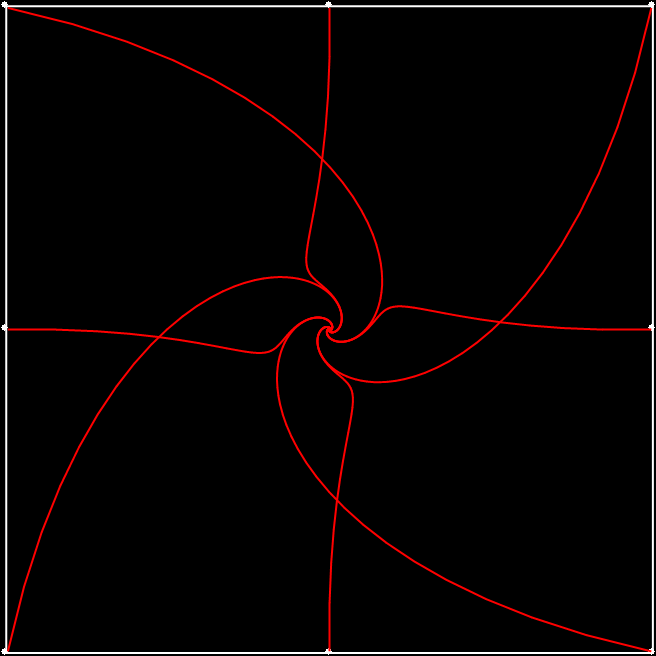
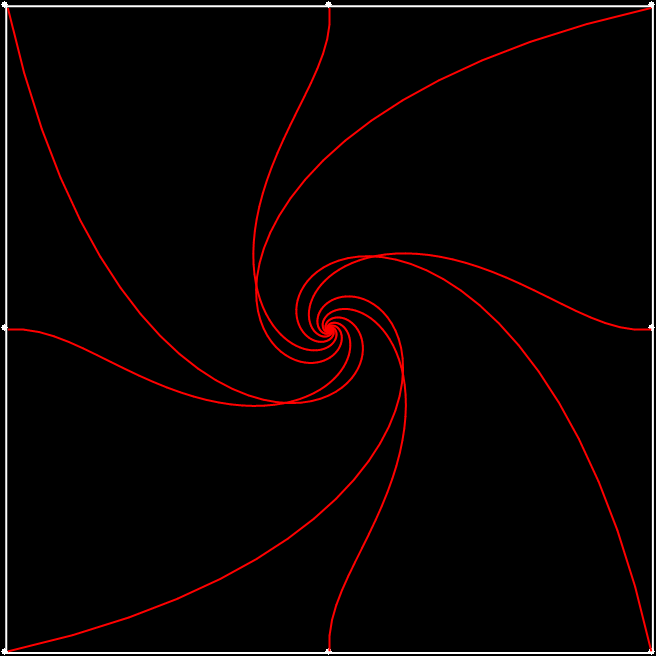
Polymorphous Pursuit
Persecution Complex

Toxic Turntable #14

Currently listening…

• Pigiz Ligiz, Pigs and Grapes (2003)
• Jag Rote Kill, West by West (1972)
• Ziel Lovkopf, Wir Dulder (1980)
• Louve (+), Tb Rehearsal Tapes (1993)
• Hord Voe, Nord/Sud (1966)
• Ozark Swamphony, Sonic Remedies (1960)
• Blutfloh, Die Zauberflohte (2000)
• Zwoir, Oromig (1996)
• Flitwick Youth, Six Sieves (1989)
• Iuscaic, L2-B3/J7 (1995)
• Tiertochter, Elmsfeuer EP (2005)
• Eothorn, Duchess Esmeralda (1973)
• E.F. Dall’Abaco, 12 Concerti (1972)
• Jamie Hendrix XPRNS, Mosaïk (1996)


Previously pre-posted:

Toxic Turntable #1#2#3#4#5#6#7#8#9#10#11#12#13 •

Ratschläge einer Raupe

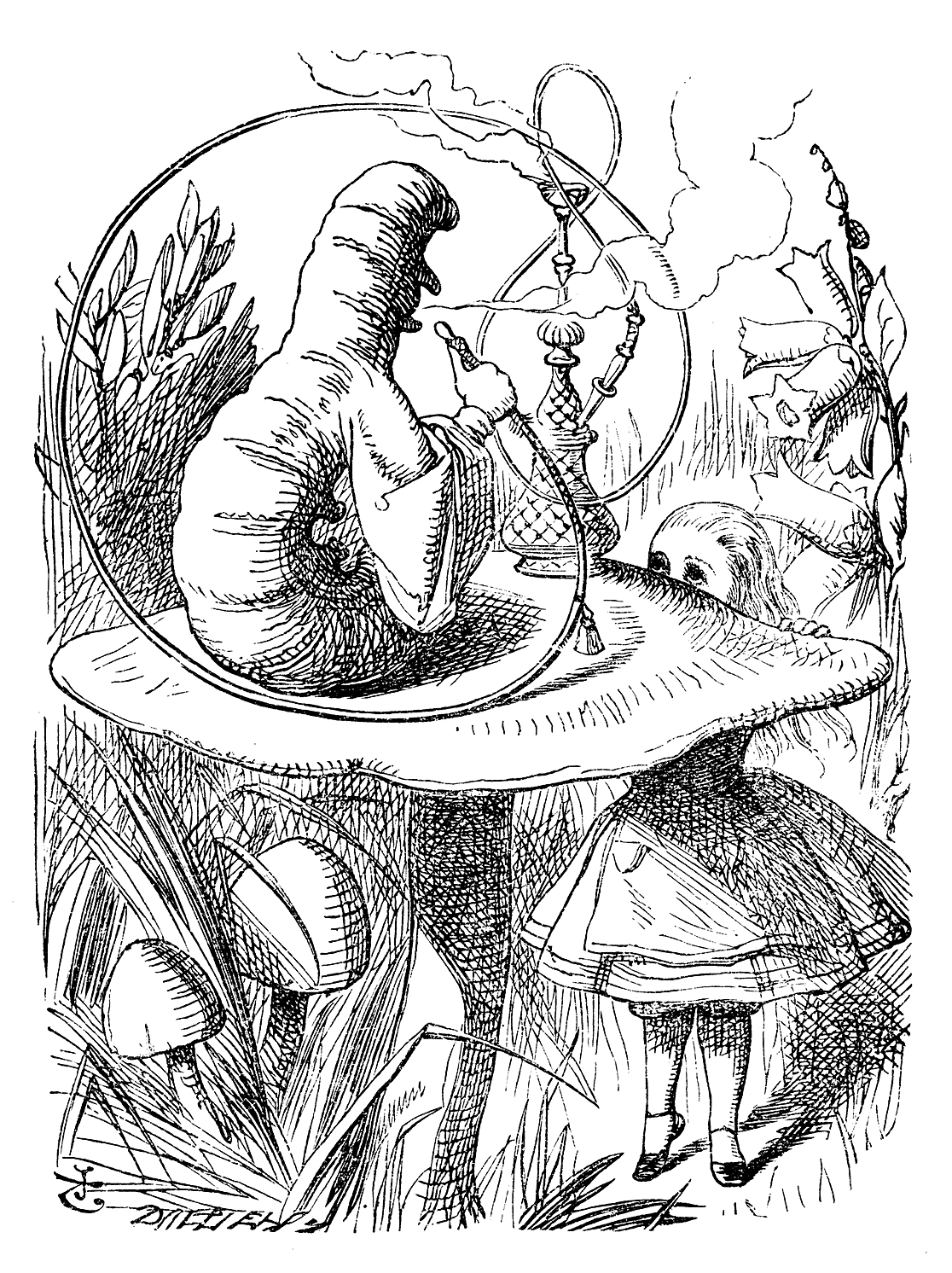
“Alice and the Caterpillar” by John Tenniel (1820-1914), from Lewis Carroll’s Alice in Wonderland (1865)


Ratschläge einer Raupe is one possible German translation of “Advice from a Caterpillar”, which is the title of chapter five of Alice in Wonderland. But the drawing above doesn’t need a translation. John Tenniel and Lewis Carroll were a classic combination, like Quentin Blake and J.P. Martin or Thomas Henry and Richmal Crompton. Tenniel drew fantastic things in a matter-of-fact way, which was just right.

But that makes me wonder about Ratschläge einer Raupe. In German, Rat-schlag means “piece of advice” and Ratschläge is the plural. At first glance, the title is more fun in German: it alliterates and trips off the the tongue in a way the English doesn’t. And Schlag literally means “blow, stroke”, which captures the behaviour of the caterpillar well. Like many of the characters Alice encounters in Wonderland, he is a prickly and aggressive interlocutor. “Advice from a Caterpillar” is plain by comparison.

So perhaps that makes it better: it’s a matter-of-fact title for a surreal chapter. Tenniel’s art echoes that.

Horn Again

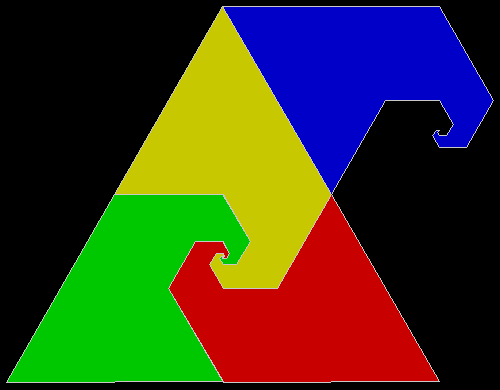
Pre-previously on Overlord-in-terms-of-Core-Issues-around-Maximal-Engagement-with-Key-Notions-of-the-Über-Feral, I interrogated issues around this shape, the horned triangle:

unicorn_reptile_static

Horned Triangle (more details)


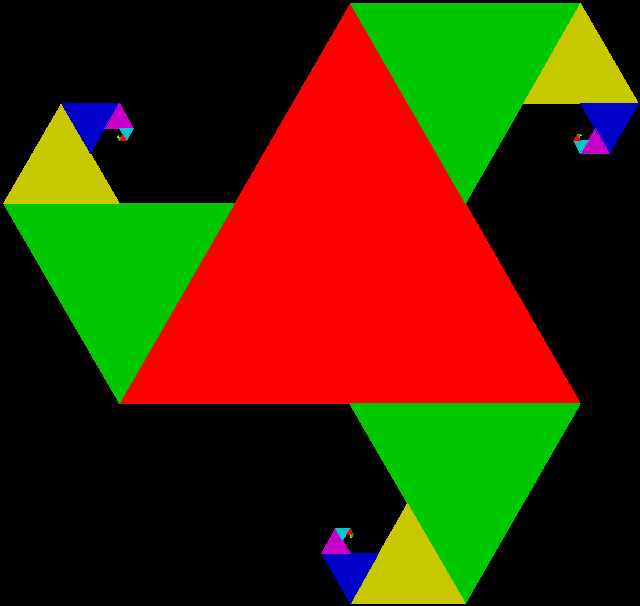
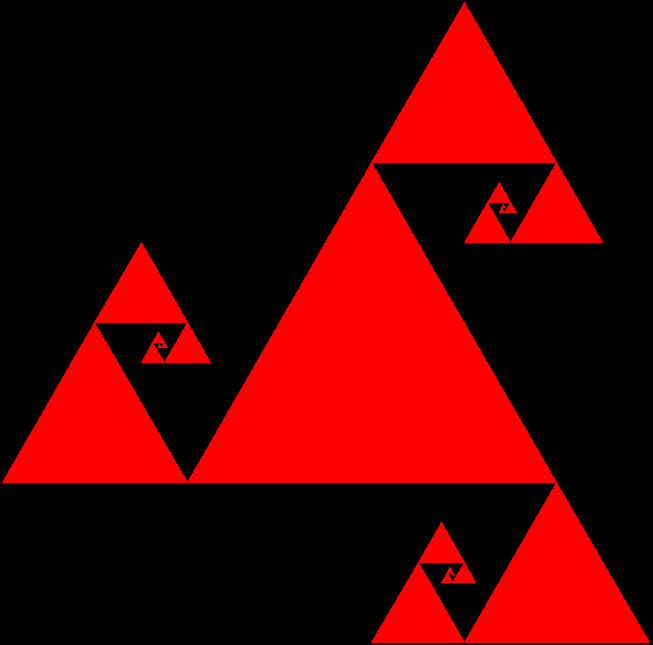
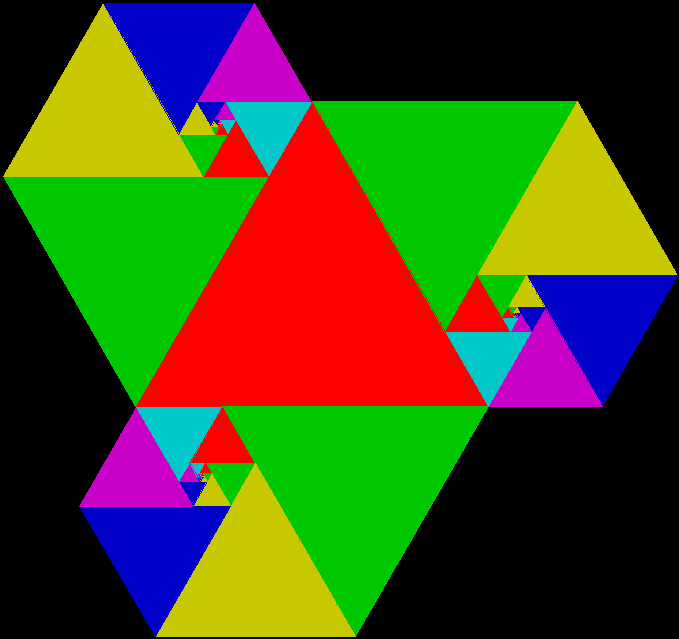
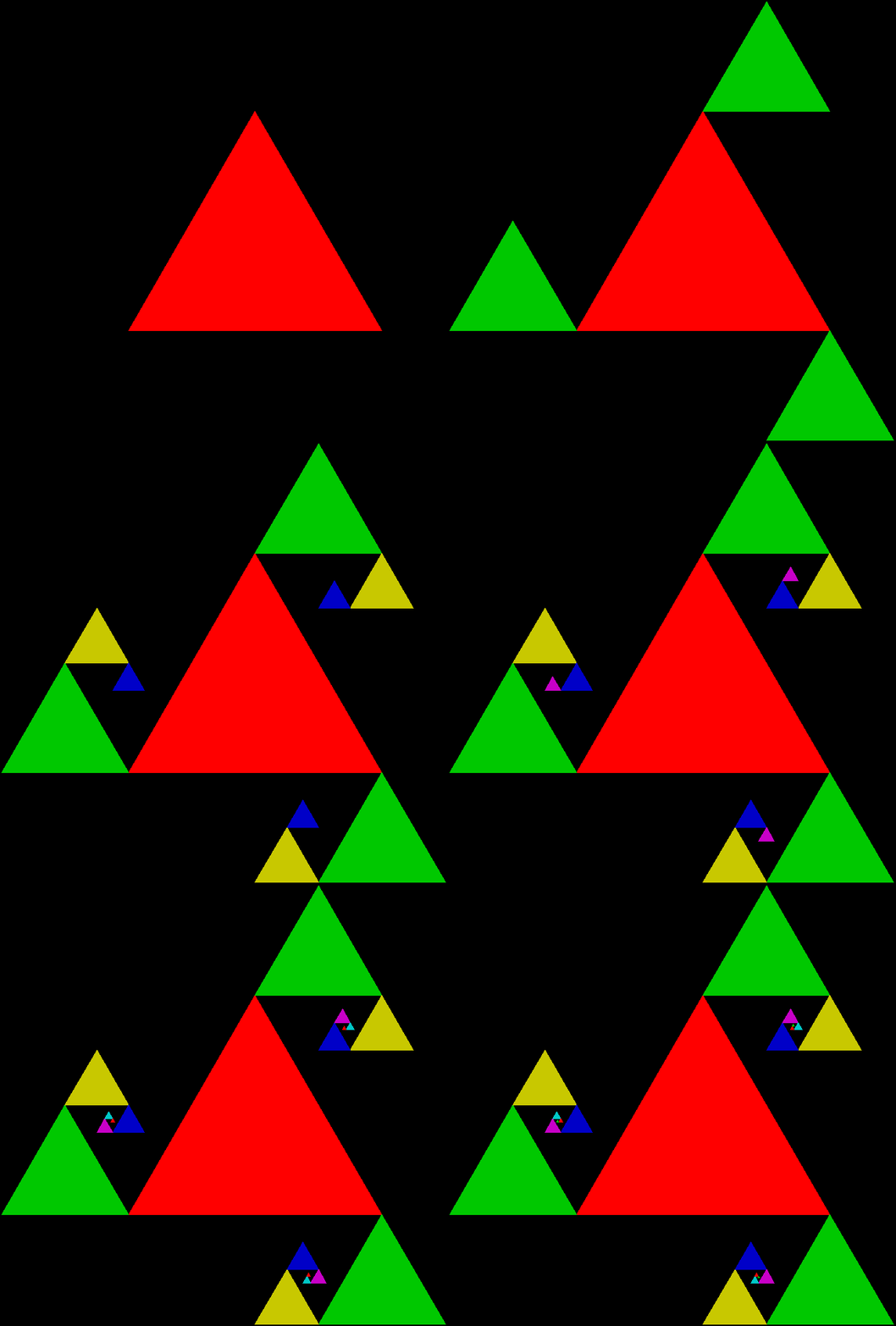
Now I want to look at the tricorn (from Latin tri-, “three”, + -corn, “horn”). It’s like a horned triangle, but has three horns instead of one:

Tricorn, or three-horned triangle


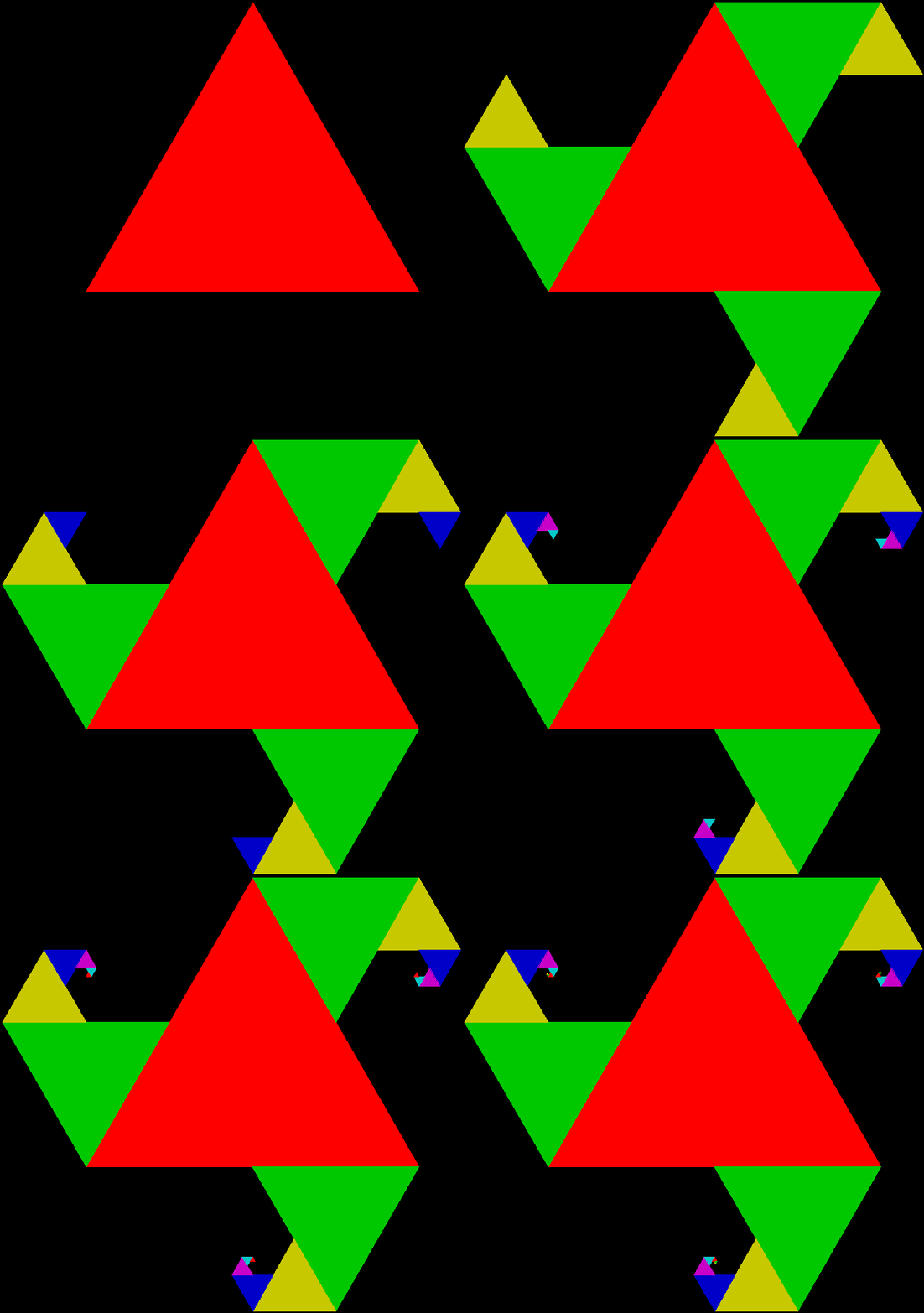
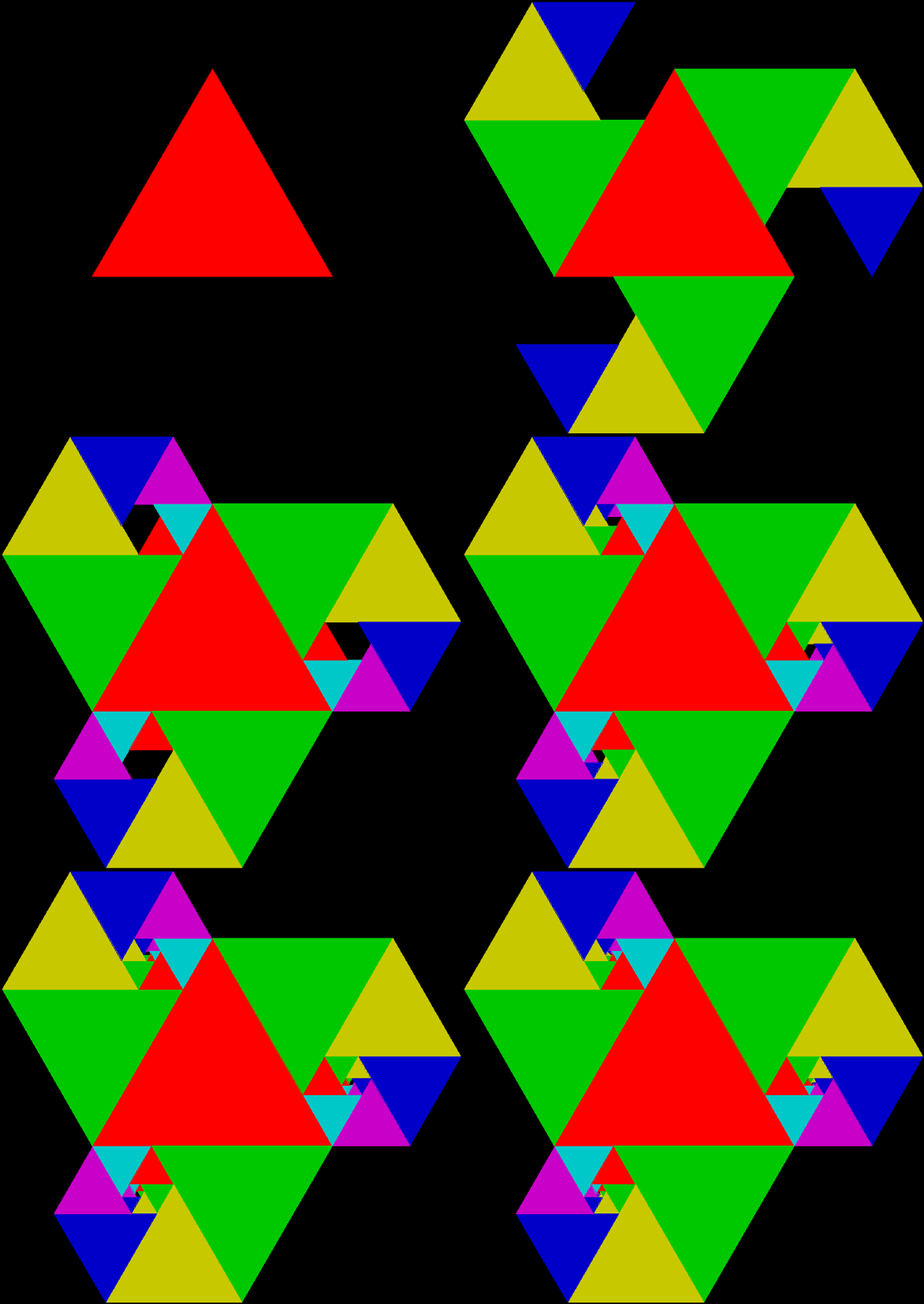
These are the stages that make up the tricorn:

Tricorn (stages)


Tricorn (animated)


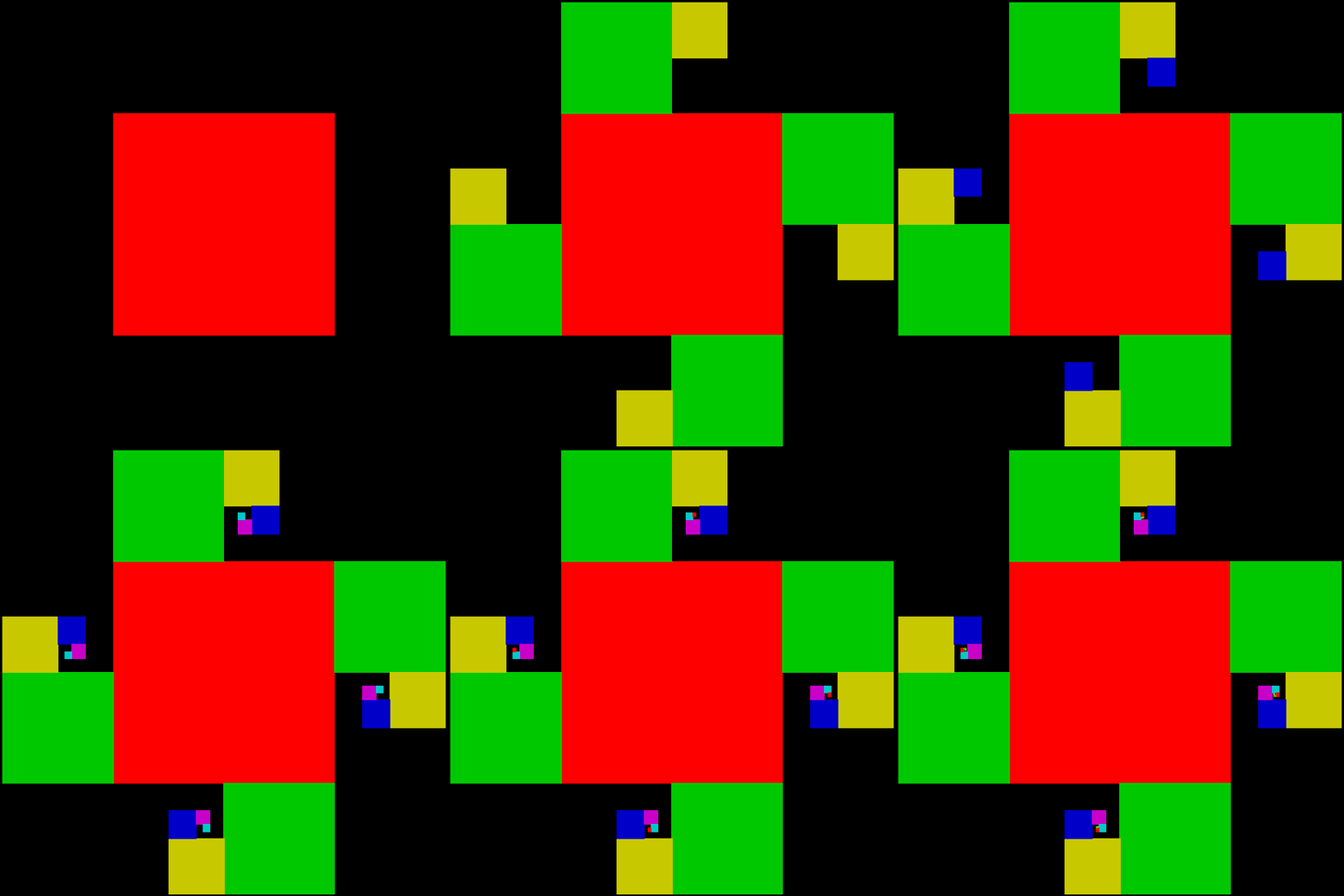
And there’s no need to stop at triangles. Here is a four-horned square, or quadricorn:

Quadricorn


Quadricorn (animated)


Quadricorn (coloured)


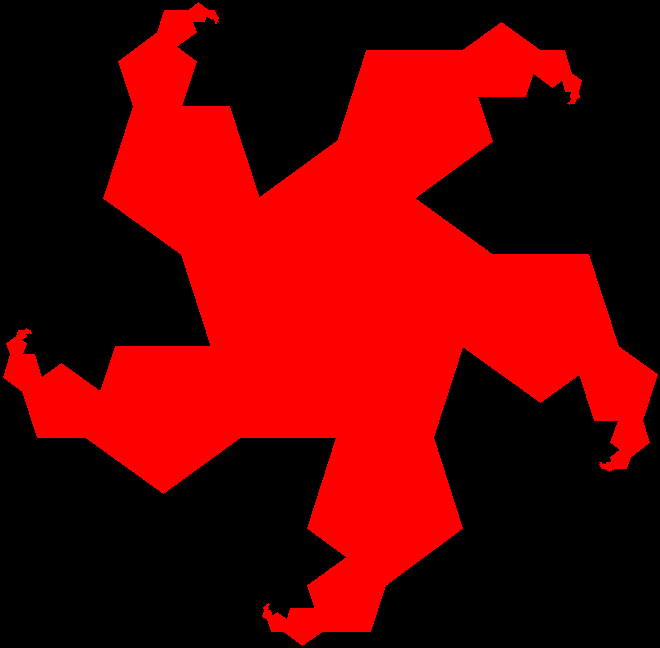
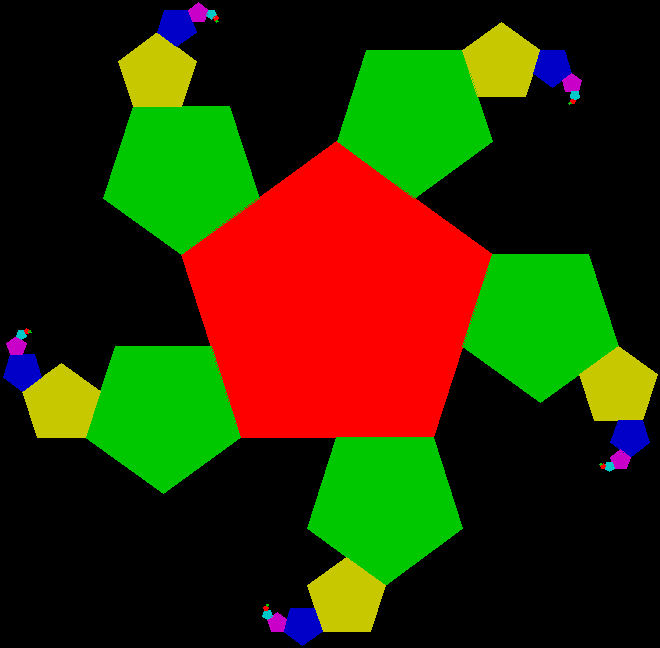
And a five-horned pentagon, or quinticorn:

Quinticorn, or five-horned pentagon


Quinticorn (anim)


Quinticorn (col)


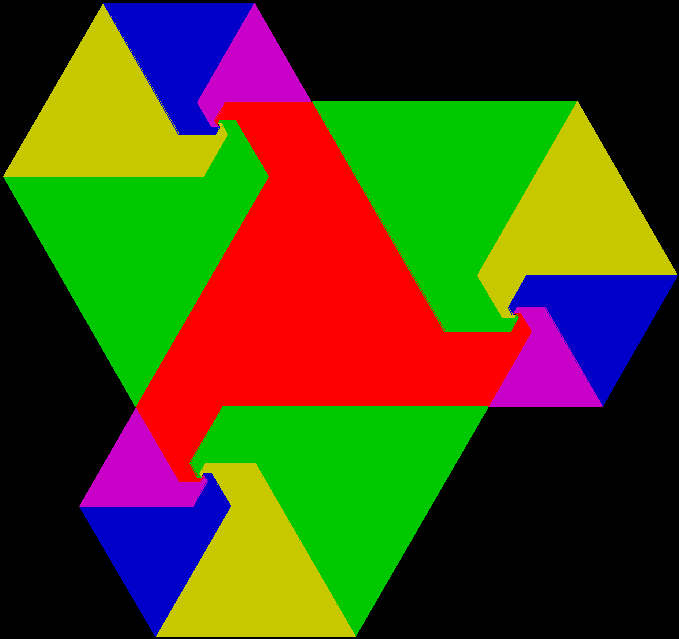
And below are some variants on the shapes above. First, the reversed tricorn:

Reversed Tricorn


Reversed Tricorn (anim)


Reversed Tricorn (col)


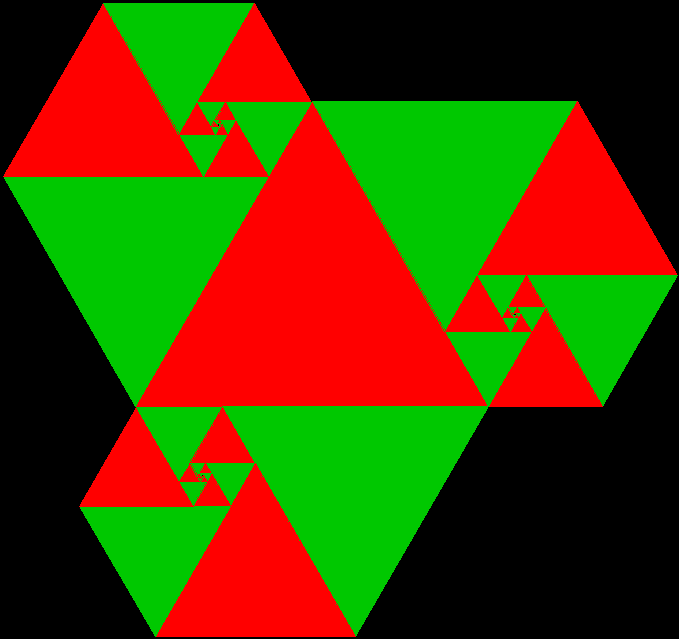
The nested tricorn:

Nested Tricorn (anim)


Nested Tricorn (col)


Nested Tricorn (red-green)


Nested Tricorn (variant col)


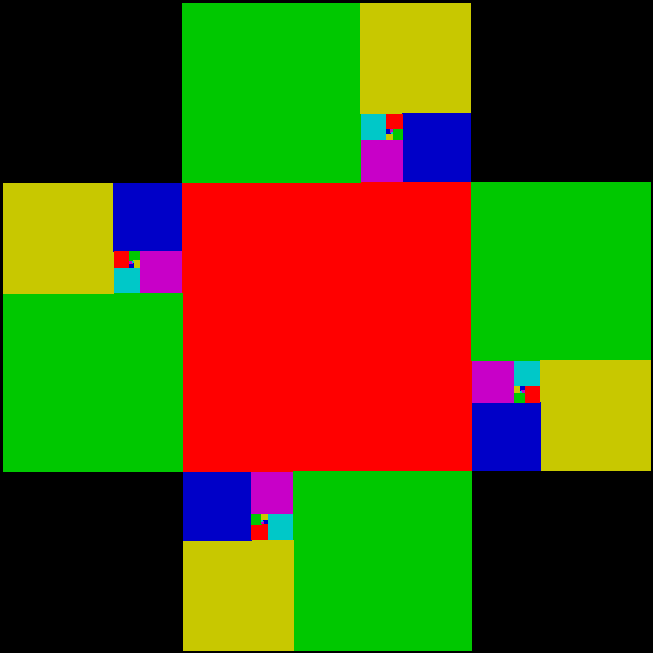
The nested quadricorn:

Nested Quadricorn (anim)


Nested Quadricorn


Nested Quadricorn (col #1)


Nested Quadricorn (col #2)


Finally (and ferally), the pentagonal octopus or pentapus:

Pentapus (anim)


Pentapus


Pentapus #2


Pentapus #3


Pentapus #4


Pentapus #5


Pentapus #6


Pentapus (col anim)


Elsewhere other-engageable:

The Art Grows Onda — the horned triangle and Katsushika Hokusai’s painting The Great Wave off Kanagawa (c. 1830)

Performativizing Papyrocentricity #63

Papyrocentric Performativity Presents:

Bullets and ButterfliesMad Dog Killers: The Story of a Congo Mercenary, Ivan Smith (Helion / 30° South Publishers 2012)

Jaundiced on GeorgeGeorge Orwell: English Rebel, Robert Colls (Oxford University Press 2013)

Crabsody in ViewRSPB Handbook of the Seashore, Maya Plass (Bloomsbury 2013)


Or Read a Review at Random: RaRaR