He Say, He Sigh, He Sow #22 & #23

“After a million years or so, those screens are about to be removed, and once they have gone, then, for the first time, men will really know what it is to be alive.” — Extreme Metaphors: Collected Interviews with J.G. Ballard, 1967-2008, ed. Simon Sellars and Dan O’Hara (2012).

“A fertile imagination is better than any drug.” — Ibid.


Elsewhere other-posted:

Vermilion Glands — review of The Inner Man: The Life of J.G. Ballard (W&N 2011)

Performativizing Papyrocentricity #26

Papyrocentric Performativity Presents:

World Wide WingsThe Big Book of Flight, Rowland White (Bantam Press 2013)

Kite WriteThe Kite-Making Handbook, compiled by Rossella Guerra and Giuseppe Ferlenga (David & Charles 2004)

Gun GuideSmall Arms: 1914-45, Michael E. Haskew (Amber Books 2012)

The Basis of the BeastKillers: The Origins of Iron Maiden, 1975-1983, Neil Daniels (Soundcheck Books 2014)


Or Read a Review at Random: RaRaR

Talcum Power

If primes are like diamonds, powers of 2 are like talc. Primes don’t crumble under division, because they can’t be divided by any number but themselves and one. Powers of 2 crumble more than any other numbers. The contrast is particularly strong when the primes are Mersenne primes, or equal to a power of 2 minus 1:

3 = 4-1 = 2^2 – 1.
4, 2, 1.

7 = 8-1 = 2^3 – 1.
8, 4, 2, 1.

31 = 32-1 = 2^5 – 1.
32, 16, 8, 4, 2, 1.

127 = 2^7 – 1.
128, 64, 32, 16, 8, 4, 2, 1.

8191 = 2^13 – 1.
8192, 4096, 2048, 1024, 512, 256, 128, 64, 32, 16, 8, 4, 2, 1.

131071 = 2^17 – 1.
131072, 65536, 32768, 16384, 8192, 4096, 2048, 1024, 512, 256, 128, 64, 32, 16, 8, 4, 2, 1.

524287 = 2^19 – 1.
524288, 262144, 131072, 65536, 32768, 16384, 8192, 4096, 2048, 1024, 512, 256, 128, 64, 32, 16, 8, 4, 2, 1.

2147483647 = 2^31 – 1.
2147483648, 1073741824, 536870912, 268435456, 134217728, 67108864, 33554432, 16777216, 8388608, 4194304, 2097152, 1048576, 524288, 262144, 131072, 65536, 32768, 16384, 8192, 4096, 2048, 1024, 512, 256, 128, 64, 32, 16, 8, 4, 2, 1.

Are Mersenne primes infinite? If they are, then there will be just as many Mersenne primes as powers of 2, even though very few powers of 2 create a Mersenne prime. That’s one of the paradoxes of infinity: an infinite part is equal to an infinite whole.

But are they infinite? No-one knows, though some of the greatest mathematicians in history have tried to find a proof or disproof of the conjecture. A simpler question about powers of 2 is this: Does every integer appear as part of a power of 2? I can’t find one that doesn’t:

0 is in 1024 = 2^10.
1 is in 16 = 2^4.
2 is in 32 = 2^5.
3 is in 32 = 2^5.
4 = 2^2.
5 is in 256 = 2^8.
6 is in 16 = 2^4.
7 is in 32768 = 2^15.
8 = 2^3.
9 is in 4096 = 2^12.
10 is in 1024 = 2^10.
11 is in 1099511627776 = 2^40.
12 is in 128 = 2^7.
13 is in 131072 = 2^17.
14 is in 262144 = 2^18.
15 is in 2097152 = 2^21.
16 = 2^4.
17 is in 134217728 = 2^27.
18 is in 1073741824 = 2^30.
19 is in 8192 = 2^13.
20 is in 2048 = 2^11.

666 is in 182687704666362864775460604089535377456991567872 = 2^157.
1066 is in 43556142965880123323311949751266331066368 = 2^135.
1492 is in 356811923176489970264571492362373784095686656 = 2^148.
2014 is in 3705346855594118253554271520278013051304639509300498049262642688253220148477952 = 2^261.

I’ve tested much higher than that, but testing is no good: where’s a proof? I don’t have one, though I conjecture that all integers do appear as part or whole of a power of 2. Nor do I have a proof for another conjecture: that all integers appear infinitely often as part or whole of powers of 2. Or indeed, of powers of 3, 4, 5 or any other number except powers of 10.

I conjecture that this would apply in all bases too: In any base b all n appear infinitely often as part or whole of powers of any number except those equal to a power of b.

1 is in 11 = 2^2 in base 3.
2 is in 22 = 2^3 in base 3.
10 is in 1012 = 2^5 in base 3.
11 = 2^2 in base 3.
12 is in 121 = 2^4 in base 3.
20 is in 11202 = 2^7 in base 3.
21 is in 121 = 2^4 in base 3.
22 = 2^3 in base 3.
100 is in 100111 = 2^8 in base 3.
101 is in 1012 = 2^5 in base 3.
102 is in 2210212 = 2^11 in base 3.
110 is in 1101221 = 2^10 in base 3.
111 is in 100111 = 2^8 in base 3.
112 is in 11202 = 2^7 in base 3.
120 is in 11202 = 2^7 in base 3.
121 = 2^4 in base 3.
122 is in 1101221 = 2^10 in base 3.
200 is in 200222 = 2^9 in base 3.
201 is in 12121201 = 2^12 in base 3.
202 is in 11202 = 2^7 in base 3.

1 is in 13 = 2^3 in base 5.
2 is in 112 = 2^5 in base 5.
3 is in 13 = 2^3 in base 5.
4 = 2^2 in base 5.
10 is in 1003 = 2^7 in base 5.
11 is in 112 = 2^5 in base 5.
12 is in 112 = 2^5 in base 5.
13 = 2^3 in base 5.
14 is in 31143 = 2^11 in base 5.
20 is in 2011 = 2^8 in base 5.
21 is in 4044121 = 2^16 in base 5.
22 is in 224 = 2^6 in base 5.
23 is in 112341 = 2^12 in base 5.
24 is in 224 = 2^6 in base 5.
30 is in 13044 = 2^10 in base 5.
31 = 2^4 in base 5.
32 is in 230232 = 2^13 in base 5.
33 is in 2022033 = 2^15 in base 5.
34 is in 112341 = 2^12 in base 5.
40 is in 4022 = 2^9 in base 5.

1 is in 12 = 2^3 in base 6.
2 is in 12 = 2^3 in base 6.
3 is in 332 = 2^7 in base 6.
4 = 2^2 in base 6.
5 is in 52 = 2^5 in base 6.
10 is in 1104 = 2^8 in base 6.
11 is in 1104 = 2^8 in base 6.
12 = 2^3 in base 6.
13 is in 13252 = 2^11 in base 6.
14 is in 144 = 2^6 in base 6.
15 is in 101532 = 2^13 in base 6.
20 is in 203504 = 2^14 in base 6.
21 is in 2212 = 2^9 in base 6.
22 is in 2212 = 2^9 in base 6.
23 is in 1223224 = 2^16 in base 6.
24 = 2^4 in base 6.
25 is in 13252 = 2^11 in base 6.
30 is in 30544 = 2^12 in base 6.
31 is in 15123132 = 2^19 in base 6.
32 is in 332 = 2^7 in base 6.

1 is in 11 = 2^3 in base 7.
2 is in 22 = 2^4 in base 7.
3 is in 1331 = 2^9 in base 7.
4 = 2^2 in base 7.
5 is in 514 = 2^8 in base 7.
6 is in 2662 = 2^10 in base 7.
10 is in 1054064 = 2^17 in base 7.
11 = 2^3 in base 7.
12 is in 121 = 2^6 in base 7.
13 is in 1331 = 2^9 in base 7.
14 is in 514 = 2^8 in base 7.
15 is in 35415440431 = 2^30 in base 7.
16 is in 164351 = 2^15 in base 7.
20 is in 362032 = 2^16 in base 7.
21 is in 121 = 2^6 in base 7.
22 = 2^4 in base 7.
23 is in 4312352 = 2^19 in base 7.
24 is in 242 = 2^7 in base 7.
25 is in 11625034 = 2^20 in base 7.
26 is in 2662 = 2^10 in base 7.

1 is in 17 = 2^4 in base 9.
2 is in 152 = 2^7 in base 9.
3 is in 35 = 2^5 in base 9.
4 = 2^2 in base 9.
5 is in 35 = 2^5 in base 9.
6 is in 628 = 2^9 in base 9.
7 is in 17 = 2^4 in base 9.
8 = 2^3 in base 9.
10 is in 108807 = 2^16 in base 9.
11 is in 34511011 = 2^24 in base 9.
12 is in 12212 = 2^13 in base 9.
13 is in 1357 = 2^10 in base 9.
14 is in 314 = 2^8 in base 9.
15 is in 152 = 2^7 in base 9.
16 is in 878162 = 2^19 in base 9.
17 = 2^4 in base 9.
18 is in 218715 = 2^17 in base 9.
20 is in 70122022 = 2^25 in base 9.
21 is in 12212 = 2^13 in base 9.
22 is in 12212 = 2^13 in base 9.

Performativizing Papyrocentricity #25

Papyrocentric Performativity Presents:

Colouring the ChameleonOlivier, Philip Ziegler (MacLehose Press 2013)

Paper-DeepTreasure Island (1883) and Dr. Jekyll and Mr. Hyde (1885), Robert Louis Stevenson

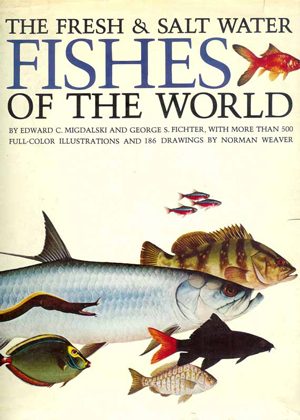
Fins and FangsThe Fresh and Salt Water Fishes of the World, Edward C. Migdalski and George S. Fichter, illustrated by Norman Weaver (1977) (posted @ Overlord of the Über-Feral)


Or Read a Review at Random: RaRaR

Sime Time

I came across the writings of Simon Whitechapel a year ago after picking up the first twenty or so issues of Headpress, a 1990s ’zine that dealt with the relentlessly grim, the esoteric and prurient. His style was fascinating, coming across as intelligent and well-read and — at least from first reading — subtly ironic.

In fact he must have impressed some other people during this time too as Headpress’ Critical Vision imprint spun his collected articles together for publication under the title Intense Device: A Journey Through Lust, Murder and the Fires of Hell — they have all the typical interests that run through Whitechapel’s work — there is an obsession with numerology, with Whitehouse-style distortion music, with Hitler and de Sade. There are also articles on farting, on Jack Chick and novelisations of TV shows. They are fascinating, written in a scholarly way with footnotes aplenty but never difficult to understand. He also wrote two non-fiction works during the late 1990s and early 2000s that centred around sadism and the murder of women in South America. They are dark.

There are also the works of fiction. To say that Whitechapel is transgressive is an understatement. His writing bleeds. The ‘official’ work The Slaughter King is filled with the detailed descriptions of sadistic murder, beginning with a serial killer murdering a gay prostitute whilst listening to distortion-atrocity music. The plot is schlocky but serviceable, jumping around inconsistently but the images it creates are terrifying. A bourgeois dinner party straight out of Buñuel and Pasolini’s nightmares where guests are served poisons as if they were the finest consommés: they eat bees until their faces swell, dropping dead at the table, finishing with a trifle “made from the berries of the several varieties of belladonna, of cuckoo-pint, and of the flowers of monkshood”. It’s a sinister book, but nothing compared to his second work.

Whitechapel wrote The Eyes. This is clear just from a simple comparison between his texts, the fascination with language, with sadism, with de Sade. The thing is, The Eyes is supposedly written by some guy called Aldapuerta, Spanish apparently. ‘Aldapuerta’ can be written Alda Puerta — ‘at the gate’, a telling description of these short stories, which go past this point many, many times. The tale of ‘Aldapuerta’ himself is too exact to be believed: a young boy with an interest in de Sade, corrupted by the local pornographer, medical-school training that honed his knowledge, then a mysterious death (echoing shades of Pasolini’s own) and finishing with the “and he might be baaaack” closer. But this point isn’t really an issue and it’s understandable that Whitechapel would want to keep his name away from this work. It is also surrealistically brilliant at times: amongst the brutality, the images it creates are unforgettable.

Of course, Whitechapel is a fake name, redolent of Jack the Ripper, and even Simon was taken from elsewhere — a colleague perhaps? He disappeared during the 2000s, no longer writing for Headpress, a few self-published chapbooks pastiching Clark Ashton Smith… where did he go? There are the rumours of prison time — they are convincing to my mind, as they too revolve around different identities, around extremity and anonymity. I wonder though, if true, just how much this individual actually believed in them. His most recent writings, at his tricksy blog, hint at this, as well as make his ‘relationship’ with Aldapuerta clearer but it’s not in my ability to directly connect the personas.

If you want to be fascinated and repulsed, then the non-author Simon Whitechapel is for you.

Lancashire


Elsewhere other-posted:

It’s The Gweel Thing…Gweel & Other Alterities, Simon Whitechapel (Ideophasis Books, 2011)

Fins and Fangs

Fresh and Salt-Water Fishes of the World by Edward C. Migdalski and George S. Fichter illustrated by Norman WeaverThe Fresh and Salt Water Fishes of the World, Edward C. Migdalski and George S. Fichter, illustrated by Norman Weaver (1977)

A big book with a big subject: fish are the most numerous and varied of the vertebrates, from the bus-sized Rhincodon typus or whale shark, which feeds its vast bulk on plankton, to the little-finger-long Vandellia cirrhosa, the parasitic catfish that can give bathers a nasty surprise by swimming into their “uro-genitary openings” – “the pain is agonizing and the fish can be removed only by surgery”. The book is full of interesting asides like that, but I doubt that readers will read every page carefully. They’ll certainly look at every page carefully, to see Norman Weaver’s gorgeous drawings, which capture both the colour and the shine of fish’s bodies. Another aspect of the enormous variation of fish is not just their differences in size, shape and colouring, but their differences in aesthetic appeal. Some are among the most beautiful of living creatures, others among the most grotesque, like the Lovecraftian horrors that literally dwell in the abyss: inhabitants of the very deep ocean like Chauliodus macouni, the Pacific viperfish, whose teeth are too long and sharp for it to close its mouth.

The crushing pressure and freezing darkness in which these fish live are alien to human beings and so are the appearance and behaviour of the fish. But fish that live in shallow water, like the hammerhead shark and the electric eel, can seem alien too and some of the strangest fish of all, the horizontally flattened rays and mantas, can even fly briefly in the open air. Some of the piscine beauties, on the other hand, like Cheirodon axelrodi, the neon-bodied cardinal tetra, are routinely kept in aquariums, but then so is the very strange Anoptichthys jordani, the blind cavefish. There’s a blind torpedo ray too, Typhlonarke aysoni, “which has no functional eyes and ‘stumps’ along the bottom on its thick, leglike ventral fins”. But the appearance, behaviour and habitat of fish aren’t the only things man finds interesting about them. Some are good eating or offer good sport and the authors often discuss both cuisine and fishing in relation to a particular species or family. That raises the second of the two questions I keep asking myself when I look at this book. The first question is: “Why are some fish so beautiful and some so ugly?” The second is: “Are fish capable of suffering, and if they are, do they suffer much?”

I don’t know if the first question can be answered or is even sensible to ask; the second will, I hope, be answered by science in the negative. It’s not pleasant to think of what a positive answer would mean, because we’ve been hooking and hauling fish from fresh and salt water for countless generations. In the past, it was for food, but when we do it today it’s often for fun. I hope the fun isn’t at fish’s expense in more than the obvious sense: that it deprives them permanently of life or, for those returned to the water, temporarily of peaceful existence. I hope the deprivation is not painful in any strong sense. Either way, fish will continue to die at each other’s fangs and to serve as food for many species of mammal and bird. Nature is red in tooth and claw, after all, but it’s a lot more beside and this is one of the books that will show you how. From luminous sharks to uncannily accurate archerfish, from what men do to fish to what fish do to men: the 315 pages of the large and lavishly illustrated Fishes of the World can offer only a glimpse into a very rich and fascinating world, but a glimpse is dazzling.


Previously pre-posted (please peruse):

Slug is a DrugCollins Complete Guide to British Coastal Wildlife (2012)

He Say, He Sigh, He Sow #20

“In 1997, Fabrice Bellard announced that the trillionth digit of π, in binary notation, is 1.” — Ian Stewart, The Great Mathematical Problems (2013).