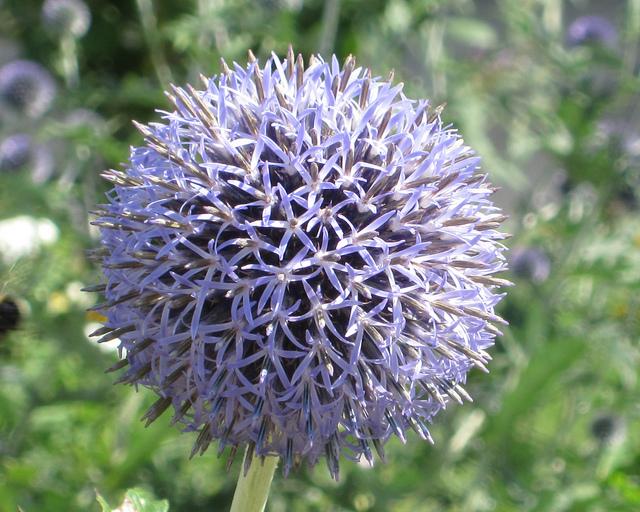
Echinops sphaerocephalus, or Great Globe Thistle

Echinops sphaerocephalus, or Great Globe Thistle
Papyrocentric Performativity Presents:
• Face Paint – A Face to the World: On Self-Portraits, Laura Cumming (HarperPress 2009; paperback 2010)
• The Aesthetics of Animals – Life: Extraordinary Animals, Extreme Behaviour, Martha Holmes and Michael Gunton (BBC Books 2009)
• Less Light, More Night – The End of Night: Searching for Natural Darkness in an Age of Artifical Light, Paul Bogard (Fourth Estate 2013)
• The Power of Babel – Clark Ashton Smith, Huysmans, Maupassant
Or Read a Review at Random: RaRaR
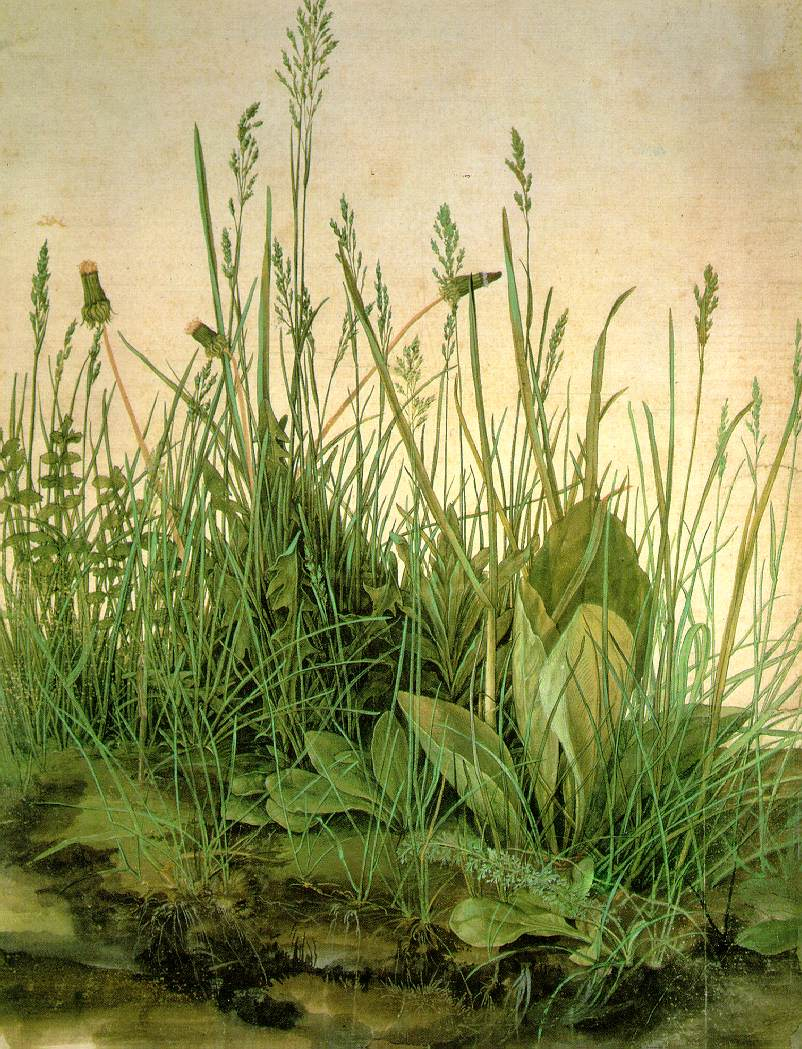
Albrecht Dürer, Das große Rasenstück (1503)
Dürer’s “The Large Piece of Turf”.
“…par la suggestive lecture d’un ouvrage racontant de lointains voyages…” – J.K. Huysmans, À Rebours (1884).
The language you know best is also the language you know least: your mother tongue, the language you acquired by instinct and speak by intuition. Asking a native speaker to describe English, French or Quechua is rather like asking a fish to describe water. The native speaker, like the fish, knows the answer very intimately, yet in some ways doesn’t know as well as a non-native speaker. In other words, standing outside can help you better understand standing inside: there is good in the gap. What is it like to experience gravity? Like most humans, I’ve known all my life, but I’d know better if I were in orbit or en route to the moon, experiencing the absence of gravity.
And what is it like to be human? We all know and we’ve all read countless stories about other human beings. But in some ways they don’t answer that question as effectively as stories that push humanity to the margins, like Richard Adams’ Watership Down (1972), which is about rabbits, or Isaac Asimov’s The Gods Themselves (also 1972), which is about trisexual aliens in a parallel dimension. There is good in the gap, in stepping outside the familiar and looking back to see the familiar anew.
Continuing reading The Power of Babel…
I hope that nobody thinks I’m being racially prejudiced when I say that, much though I am fascinated by her, I do not find the Anglo-American academic Mikita Brottman physically attractive. It is her mind that has raised my longstanding interest, nothing more.
Honest.
This is because, for me, Ms B is like a mirror that reverses not left and right, but male and female.
Obviously, we’re different in a lot of ways: I don’t smoke and I don’t have any tattoos, for example.
But there are big similarities too.
We were born in the same year (1956) and we were both keyly core contributors to seminal early issues of the transgressive journal Headpress Journal.
And we have various other things in common, like our mutually shared passion for corpse’n’cannibal cinema, our Glaswegian accents and (at different times) our season tickets for Hull Kingston Rovers.
So it is that, looking at Ms B, I have the uncanny experience of seeing myself as I might have been, had I been born female.
But it’s not just uncanny.
It’s horrifying at times too.
Okay, I’m comfortable with the idea that, born female, I would have been less intelligent and more conformist. So I don’t mind that Ms B is a Guardianista. Not particularly. I can face the fact that I would quite likely have been one of them too, as a female.
But there are worse things than being a Guardianista, believe it or not.
Ms B has a PhD in EngLit.
A PhD!
In EngLit.
It’s not at all easy for me to face the fact that I might have had one too, as a female. It really isn’t. But how can I deny it? I might have. That despicable, deplorable, thoroughly disreputable subject might have attracted me. In fact, it would probably have attracted me.
<retch>
But it gets worse still.
Ms B is a psychoanalyst.
A psychoanalyst.
Ach du lieber Gott!
See what I mean by “horrifying”?
I mean, even if I’d been born female I wouldn’t have sunk to such depths, would I? Would I? No, I have to face facts: I might. But I don’t think so. I have a feeling that there’s more to Brotty’s interest in Freud than her gender statusicity and her key commitment to core componency of the counter-cultural community.
But I’d better say no more. Verb sap.
Challenger chopped and changed. That is to say, in one important respect, Arthur Conan Doyle’s character Professor Challenger lacked continuity. His philosophical views weren’t consistent. At one time he espoused materialism, at another he opposed it. He espoused it in “The Land of Mist” (1927):
“Don’t tell me, Daddy, that you with all your complex brain and wonderful self are a thing with no more life hereafter than a broken clock!”
“Four buckets of water and a bagful of salts,” said Challenger as he smilingly detached his daughter’s grip. “That’s your daddy, my lass, and you may as well reconcile your mind to it.”
But earlier, in “The Poison Belt” (1913), he had opposed it:
“No, Summerlee, I will have none of your materialism, for I, at least, am too great a thing to end in mere physical constituents, a packet of salts and three bucketfuls of water. Here ― here” ― and he beat his great head with his huge, hairy fist ― “there is something which uses matter, but is not of it ― something which might destroy death, but which death can never destroy.”
That story was published just over a century ago, but Challenger’s boast has not been vindicated in the meantime. So far as science can see, matter rules mind, not vice versa. Conan Doyle thought the same as the earlier Challenger, but Conan Doyle’s rich and teeming brain seems to have ended in “mere physical constituents”. To all appearances, when the organization of his brain broke down, so did his consciousness. And that concluded the cycle described by A.E. Housman in “Poem XXXII” of A Shropshire Lad (1896):
From far, from eve and morning
And yon twelve-winded sky,
The stuff of life to knit me
Blew hither: here am I.Now – for a breath I tarry
Nor yet disperse apart –
Take my hand quick and tell me,
What have you in your heart.Speak now, and I will answer;
How shall I help you, say;
Ere to the wind’s twelve quarters
I take my endless way. (ASL, XXXII)
Continue reading This Mortal Doyle…
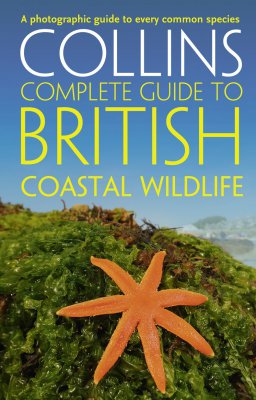
Collins Complete Guide to British Coastal Wildlife, Paul Sterry and Andrew Cleave (HarperCollins 2012)
Living by a river is good, but living by the sea is better. This means that the ideal might be Innsmouth:
The harbour, long clogged with sand, was enclosed by an ancient stone breakwater; on which I could begin to discern the minute forms of a few seated fishermen, and at whose end were what looked like the foundations of a bygone lighthouse. A sandy tongue had formed inside this barrier and upon it I saw a few decrepit cabins, moored dories, and scattered lobster-pots. The only deep water seemed to be where the river poured out past the belfried structure and turned southward to join the ocean at the breakwater’s end. (“The Shadow Over Innsmouth”, 1936)
Lovecraft would certainly have liked Collins Complete Guide to British Coastal Wildlife, a solid photographic guide to the flora and fauna of the British coast. There are some very Lovecraftian species here, both floral and faunal. Among the plants there’s sea-holly, Eryngium maritimum, a blue-grey shingle-dweller with gothically spiky and veined leaves. It has its own specialized parasite, Orobanche minor ssp. maritima, “an exclusively coastal sub-species” of common broomrape (pg. 94). Among the Lovecraftian animals there are the cephalopods (octopuses and squids), echinoderms (sea-urchins and starfish) and cnidarians (jellyfish and sea-anemones), but also the greater and lesser weever, Trachinus draco and Echiichthys vipera, which are “notorious fish, capable of inflicting a painful sting to a bather’s foot” (pg. 278).
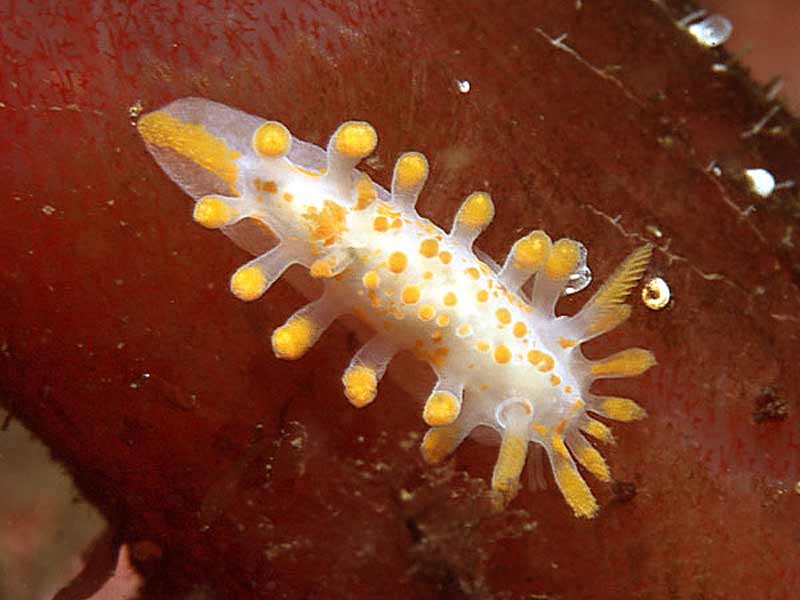
Orange-clubbed sea-slug, Limacia clavigera
Arion ater is included here because it’s “particularly common on coastal cliffs, paths and dunes” (pg. 239). The land snails that accompany it have charm, like the looping snail, Truncatella subcylindrica, and the wrinkled snail, Candidula intersecta, but they don’t have the beauty and variety of marine shell-dwellers, from the limpets, scallops and cockles to the wentletraps, cowries and whelks. And the violet snail, Jacintha jacintha, which rides the open ocean on a “‘float’ of mucus-trapped bubbles” as it feeds on the by-the-wind sailor, Velella velella. Layfolk would say that Velella and its relative Physalia physalis, the Portuguese man-o’-war, are jellyfish, but they’re actually “pelagic hydroids”. And Physalia is a colony of animals, not a single animal.
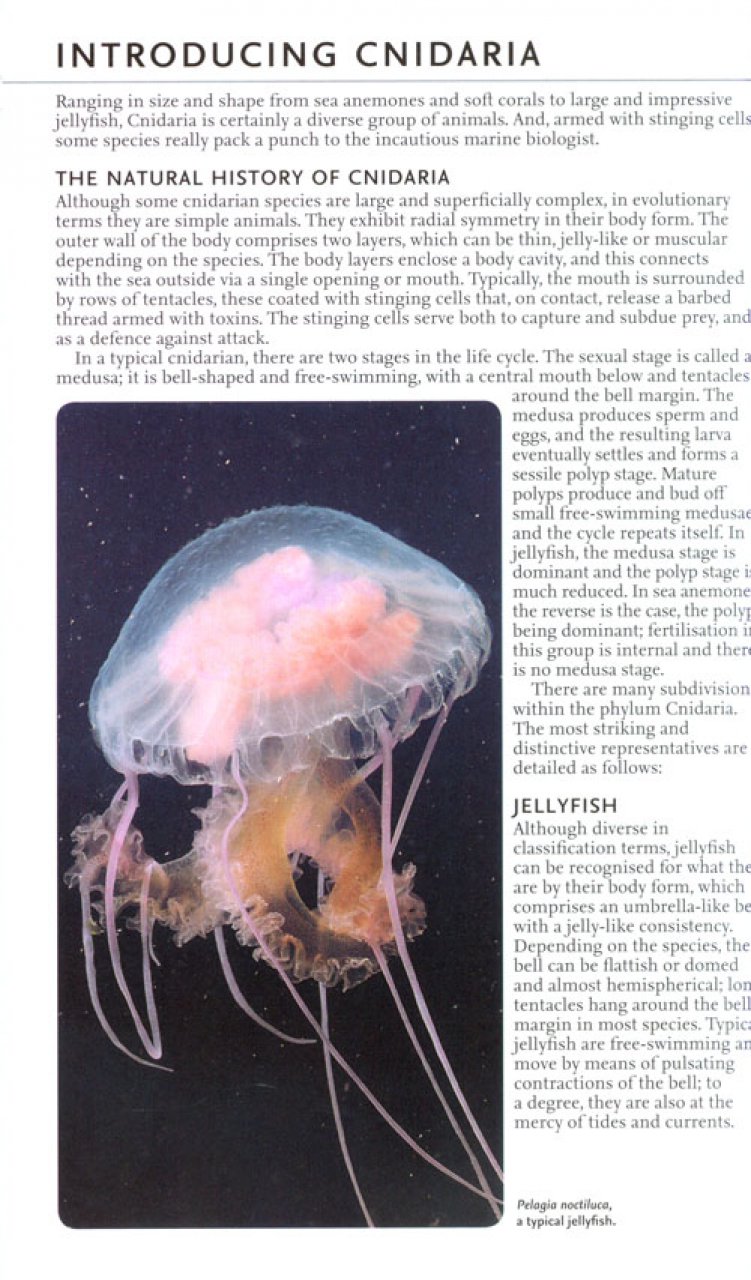
Sample page #1
After the cnidaria come the annelids, or segmented worms, which can be beautiful or repulsive, mundane or surreal, free-living or sessile. For example, the scaleworms are “unusual-looking polychaete worms whose dorsal surface is mostly or entirely covered with overlapping scales” (pg. 129). They’re reminiscent of the sea-slugs, though less strange and more subdued. But segmented worms gave rise to the wild variety of the crustaceans, including crabs, sea-slaters, lobsters and even barnacles, one species of which is a parasite: Sacculina carcini forms a “branching network” (pg. 178) within the body of a crab, particularly the green shore crab, Carcinus maenas. You would never guess that it was a barnacle and you might not guess that an infected crab was infected, because the yellow “reproductive structure” of the barnacle looks as though it belongs to the crab itself.
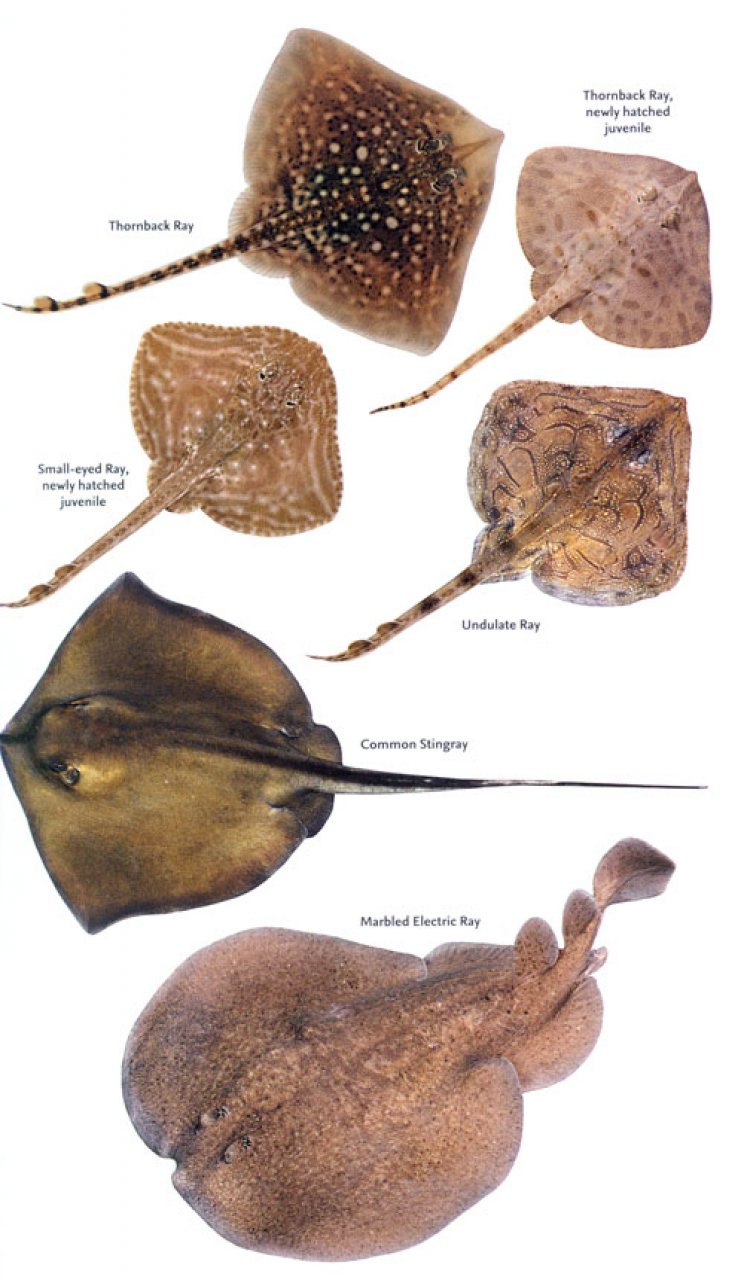
Sample page #2
And there’s a bluntness to names like wrack, kelp and the various weeds – bean-weed, bead-weed, wire-weed – that go well with the rough, tough life these plants lead. That’s why rainbow wrack, Cystoseria tamariscifolia, sounds so odd. But it lives up to its name: it’s “bushy and iridescent blue-green underwater” (pg. 36).
Seaweeds are at the beginning of the book; birds, fish and mammals are at the end. After the strangeness, surreality and beauty of some of the plants and invertebrates, the higher animals can seem almost mundane. Evolution hasn’t found as many spinal solutions as non-spinal, because the invertebrates have been around much longer. Among the vertebrates, it’s been working longest on the fish, so the variety of shapes is greatest there: rays and flounders, lampreys and eels, sea-horses and pipe-fish, the giant sun-fish and the largest animal native to Britain, the basking shark, Cetorhinus maximus. Some of the names seem ancient and long-evolved too: saithe, pogge, goldsinny, weever, dab, goby, blenny, shanny and brill. The last-named, Scophthalmus rhombus, is a flatfish with a typically ugly head. As the book notes: “In their early stages, they resemble conventional species. But during their development the head shape distorts so that, although they lie and swim on their sides, both eyes are on top” (pg. 257).
The rays aren’t distorted like that: they lie on their bellies, not on their sides, so their eyes don’t look distorted. Evolution has taken two different routes to the same ecological niche, the sea-floor. Camouflage is useful there, so both rays and flatfish have beautiful patterns: specklings, mottlings and spots. Other fish are colourful, but British fish can’t match the rainbow variety of fish in the tropics. Nor can British birds. The kingfisher, Alcedo atthis, is a rare exception and it “favours fresh waters”, except in winter (pg. 328). Truly coastal birds can be hard to tell apart: the knot, Calidris canutus, and the Sanderling, Calidris alba, are not as distinctive as their common names. Nor are the whimbrel, Numenius phaeopus, and the curlew, Numenius arquata. Both have long down-curved beaks and streaked, “grey-brown plumage” (pg. 342). But the whimbrel is smaller and rarer.
The gulls and terns can also be hard to tell apart, as can the skuas that prey on and parasitize them. “Skua”, which comes from Old Norse skúfr, is a good name for a gangster-like bird. I prefer “gull” in what is probably its original form, the Welsh gŵylan. The French mouette, for small gulls, and goéland, for large ones, are also good, and some French bird-names are used in English: avocet, plover and guillemot, for example. “Plover” is from Latin pluvia, “rain”, but the reference is “unexplained”, according to the Oxford English Dictionary. The reference of “ruff” might seem to be obvious: the male ruff, Philomachus pugnax, has a ruff of feathers in the breeding season, like a kind of gladiatorial costume: its scientific name literally means “the pugnacious lover-of-fighting”. But the female of this species is called a reeve, so perhaps ruffs have nothing to do with ruffs: the feminine form, “apparently made … by a vowel change (cf. fox vixen) suggests that [ruff] is an older word and separate” (OED).
This book uses “ruff” for both sexes: it doesn’t have space to chase etymology and give more than brief details of the hundreds of species it covers. The final species are the mammals and the final mammals are the ones that have returned to the sea: whales, dolphins and seals. After them comes a brief section on “The Strandline”:
A beach marks the zone where land meets sea. It is also where detached and floating matter is washed up and deposited by the tides, typically in well-defined lines. During periods of spring tides, debris is pushed to the top of the shore. But with approaching neap tides, tide extremes diminish and the high-tide mark drops; the result is a series of different strandlines on the shore. The strandline is a great place for the marine naturalist to explore and find unexpected delights washed up from the depths. But it is also home to a range of specialised animals that exploit the rich supply of organic matter created by decomposing seaweeds and marine creatures. (pg. 368)
Those specialised animals – sand-hoppers, kelp-flies and so on – have been covered earlier in the book, so this section covers things like skeletons, skulls, fossils and egg-cases – the “sea wash balls” laid by whelks and the “mermaid’s purses” laid by rays. Then there are “sea-beans”, tree-seeds that may have “drifted across the Atlantic from the Caribbean or Central America”. At first glance, seaweeds also seem to make a come-back in this section. Not so: a bryozoan branches like a plant but is “actually a colonial animal that lives just offshore attached to shells and stones”. Bryzoans are often washed ashore after storms. One of the commonest is hornwrack, Flustra foliacea, of which “fresh specimens smell like lemon” (pg. 254). When I first noticed that for myself, I thought I was having an olfactory hallucination. That’s the sea for you: always changing, always surprising. This book captures its complexity in 384 well-designed pages full of eye- and brain-candy.
“Exchange rate behaves like particles in a molecular fluid” — ScienceDaily, 13/iii/2014.
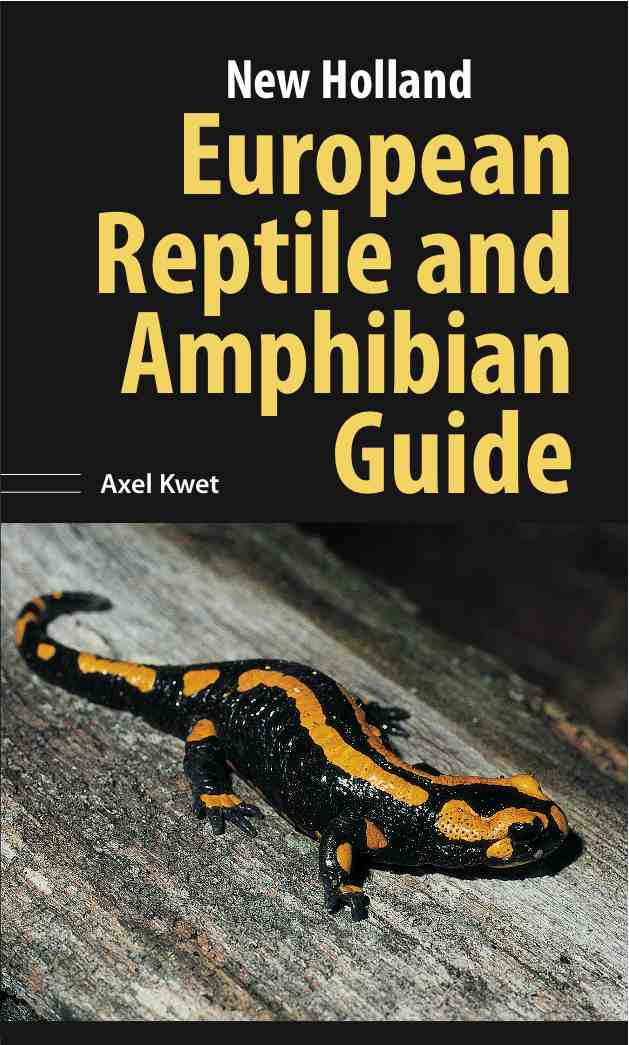 European Reptile and Amphibian Guide, Axel Kwet (New Holland 2009)
An attractive book about animals that are mostly attractive, sometimes strange, always interesting. It devotes photographs and descriptive text to all the reptiles and amphibians found in Europe, from tree-frogs to terrapins, from skinks to slow-worms. Some of the salamanders look like heraldic mascots, some of the lizards like enamel jewellery, and some of the toads like sumo wrestlers with exotic skin-diseases. When you leaf through the book, you’ve moving through several kinds of space: geographic and evolutionary, aesthetic and psychological. Europe is a big place and has a lot of reptilian and amphibian variety, including one species of turtle, the loggerhead, Caretta caretta, and one species of chameleon, the Mediterranean, Chamaeleo chamaeleon.
But every species, no matter how dissimilar in size and appearance, has a common ancestor: the tiny crested newt (Triturus cristatus) to the far north-west in Scotland and the two-and-a-half metre whip snake (Dolichophis caspius) to the far south-east in Greece; the sun-loving Hermann’s tortoise (Testudo hermanni), with its sturdy shell, and the pallid and worm-like olm (Proteus anguinus), which lives in “underground streams in limestone karst country along the coast from north-east Italy to Montenegro” (pg. 55). Long-limbed or limbless, sun-loving or sun-shunning, soft-skinned or scaly – they’re all variations on a common theme.
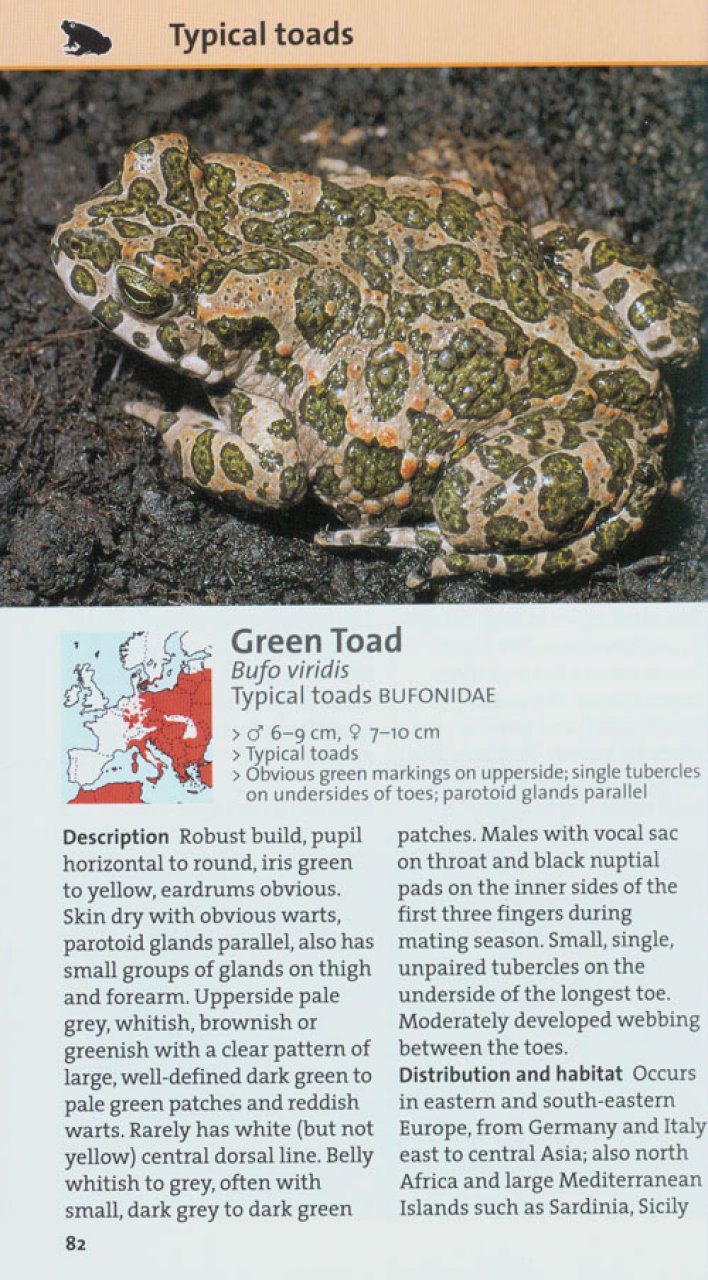
Sample page from European Reptile and Amphibian Guide
Other snake-like reptiles retain vestiges of the fore-limbs too, like the Italian three-toed skink (Chalcides chalcides). The slow-worm, Anguis fragilis, has lost its limbs entirely, but doesn’t look sinister like a snake and can still blink. Elsewhere, some salamanders have lost not limbs but lungs: the Italian cave salamander, Speleomantes italicus, breathes through its skin and the lining of its mouth. So does Gené’s cave salamander, Speleomantes genei, which is found only on the island of Sardinia. It “emits an aromatic scent when touched” (pg. 54). Toads can emit toxins and snakes can inject venoms: movement in evolutionary space means movement in chemical space, because every alteration in an animal’s appearance and anatomy involves an alteration in the chemicals created by its body. But chemical space is two-fold: genotypic and phenotypic. The genes change and so the products of the genes change. The external appearance of every species is like a bookmark sticking out of the Book of Life, fixing its position in gene-space. You have to open that book to see the full recipe for the animal’s anatomy, physiology and behaviour, though not everything is specified by the genes.
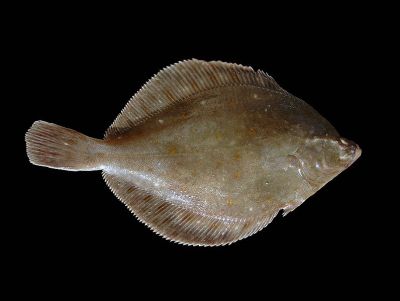
Pleuronectes platessa on the sea-floor
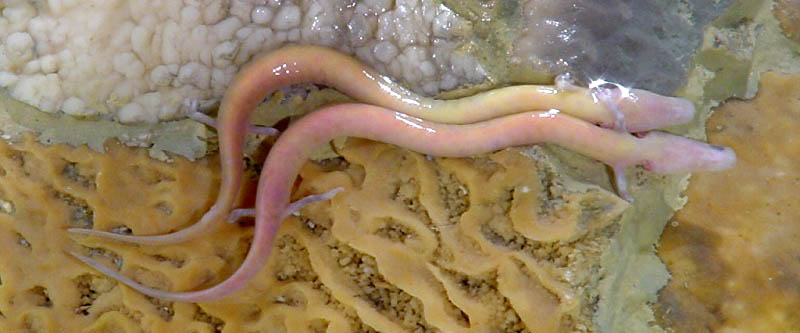
Olm in a Slovenian cave
“Epitaxial mismatches in the lattices of nickelate ultra-thin films can be used to tune the energetic landscape of Mott materials and thereby control conductor/insulator transitions.” — On the road to Mottronics, ScienceDaily, 24/ii/2014.


