Sept-Ember

“The Palace of Pan”

by Algernon Charles Swinburne (1837-1909)


September, all glorious with gold, as a king
In the radiance of triumph attired,
Outlightening the summer, outsweetening the spring,
Broods wide on the woodlands with limitless wing,
A presence of all men desired.

Far eastward and westward the sun-coloured lands
Smile warm as the light on them smiles;
And statelier than temples upbuilded with hands,
Tall column by column, the sanctuary stands
Of the pine-forest’s infinite aisles.

Mute worship, too fervent for praise or for prayer,
Possesses the spirit with peace,
Fulfilled with the breath of the luminous air,
The fragrance, the silence, the shadows as fair
As the rays that recede or increase.

Ridged pillars that redden aloft and aloof,
With never a branch for a nest,
Sustain the sublime indivisible roof,
To the storm and the sun in his majesty proof,
And awful as waters at rest.

Man’s hand hath not measured the height of them; thought
May measure not, awe may not know;
In its shadow the woofs of the woodland are wrought;
As a bird is the sun in the toils of them caught,
And the flakes of it scattered as snow.

As the shreds of a plumage of gold on the ground
The sun-flakes by multitudes lie,
Shed loose as the petals of roses discrowned
On the floors of the forest engilt and embrowned
And reddened afar and anigh.

Dim centuries with darkling inscrutable hands
Have reared and secluded the shrine
For gods that we know not, and kindled as brands
On the altar the years that are dust, and their sands
Time’s glass has forgotten for sign.

A temple whose transepts are measured by miles,
Whose chancel has morning for priest,
Whose floor-work the foot of no spoiler defiles,
Whose musical silence no music beguiles,
No festivals limit its feast.

The noon’s ministration, the night’s and the dawn’s,
Conceals not, reveals not for man,
On the slopes of the herbless and blossomless lawns,
Some track of a nymph’s or some trail of a faun’s
To the place of the slumber of Pan.

Thought, kindled and quickened by worship and wonder
To rapture too sacred for fear
On the ways that unite or divide them in sunder,
Alone may discern if about them or under
Be token or trace of him here.

With passionate awe that is deeper than panic
The spirit subdued and unshaken
Takes heed of the godhead terrene and Titanic
Whose footfall is felt on the breach of volcanic
Sharp steeps that their fire has forsaken.

By a spell more serene than the dim necromantic
Dead charms of the past and the night,
Or the terror that lurked in the noon to make frantic
Where Etna takes shape from the limbs of gigantic
Dead gods disanointed of might,

The spirit made one with the spirit whose breath
Makes noon in the woodland sublime
Abides as entranced in a presence that saith
Things loftier than life and serener than death,
Triumphant and silent as time.

(Inscribed to my Mother) Pine Ridge: September 1893

Gyp Cip

Abundance often overwhelms, but restriction reaps riches. That’s true in mathematics and science, where you can often understand the whole better by looking at only a part of it first — restriction reaps riches. Egyptian fractions are one example in maths. In ancient Egypt, you could have any kind of fraction you liked so long as it was a reciprocal like 1/2, 1/3, 1/4 or 1/5 (well, there were two exceptions: 2/3 and 3/4 were also allowed).

So when mathematicians speak of “Egyptian fractions”, they mean those fractions that can be represented as a sum of reciprocals. Egyptian fractions are restricted and that reaps riches. Here’s one example: how many ways can you add n distinct reciprocals to make 1? When n = 1, there’s one way to do it: 1/1. When n = 2, there’s no way to do it, because 1 – 1/2 = 1/2. Therefore the summed reciprocals aren’t distinct: 1/2 + 1/2 = 1. After that, 1 – 1/3 = 2/3, 1 – 1/4 = 3/4, and so on. By the modern meaning of “Egyptian fraction”, there’s no solution for n = 2.

However, when n = 3, there is a way to do it:

• 1/2 + 1/3 + 1/6 = 1

But that’s the only way. When n = 4, things get better:

• 1/2 + 1/4 + 1/6 + 1/12 = 1
• 1/2 + 1/3 + 1/10 + 1/15 = 1
• 1/2 + 1/3 + 1/9 + 1/18 = 1
• 1/2 + 1/4 + 1/5 + 1/20 = 1
• 1/2 + 1/3 + 1/8 + 1/24 = 1
• 1/2 + 1/3 + 1/7 + 1/42 = 1

What about n = 5, n = 6 and so on? You can find the answer at the Online Encyclopedia of Integer Sequences (OEIS), where sequence A006585 is described as “Egyptian fractions: number of solutions to 1 = 1/x1 + … + 1/xn in positive integers x1 < … < xn”. The sequence is one of the shortest and strangest at the OEIS:

• 1, 0, 1, 6, 72, 2320, 245765, 151182379

When n = 1, there’s one solution: 1/1. When n = 2, there’s no solution, as I showed above. When n = 3, there’s one solution again. When n = 4, there are six solutions. And the OEIS tells you how many solutions there are for n = 5, 6, 7, 8. But n >= 9 remains unknown at the time of writing.

To understand the problem, consider the three reciprocals, 1/2, 1/3 and 1/5. How do you sum them? They have different denominators, 2, 3 and 5, so you have to create a new denominator, 30 = 2 * 3 * 5. Then you have to adjust the numerators (the numbers above the fraction bar) so that the new fractions have the same value as the old:

• 1/2 = 15/30 = (2*3*5 / 2) / 30
• 1/3 = 10/30 = (2*3*5 / 3) / 30
• 1/5 = 06/30 = (2*3*5 / 5) / 30
• 15/30 + 10/30 + 06/30 = (15+10+6) / 30 = 31/30 = 1 + 1/30

Those three reciprocals don’t sum to 1. Now try 1/2, 1/3 and 1/6:

• 1/2 = 18/36 = (2*3*6 / 2) / 36
• 1/3 = 12/36 = (2*3*6 / 3) / 36
• 1/6 = 06/36 = (2*3*6 / 6) / 36
• 18/36 + 12/36 + 06/36 = (18+12+6) / 36 = 36/36 = 1

So when n = 3, the problem consists of finding three reciprocals, 1/a, 1/b and 1/c, such that for a, b, and c:

• a*b*c = a*b + a*c + b*c

There is only one solution: a = 2, b = 3 and c = 6. When n = 4, the problem consists of finding four reciprocals, 1/a, 1/b, 1/c and 1/d, such that for a, b, c and d:

• a*b*c*d = a*b*c + a*b*d + a*c*d + b*c*d

For example:

• 2*4*6*12 = 576
• 2*4*6 + 2*4*12 + 2*6*12 + 4*6*12 = 48 + 96 + 144 + 288 = 576
• 2*4*6*12 = 2*4*6 + 2*4*12 + 2*6*12 + 4*6*12 = 576

Therefore:

• 1/2 + 1/4 + 1/6 + 1/12 = 1

When n = 5, the problem consists of finding five reciprocals, 1/a, 1/b, 1/c, 1/d and 1/e, such that for a, b, c, d and e:

• a*b*c*d*e = a*b*c*d + a*b*c*e + a*b*d*e + a*c*d*e + b*c*d*e

There are 72 solutions and here they are:

• 1/2 + 1/4 + 1/10 + 1/12 + 1/15 = 1 (#1)
• 1/2 + 1/4 + 1/9 + 1/12 + 1/18 = 1 (#2)
• 1/2 + 1/5 + 1/6 + 1/12 + 1/20 = 1 (#3)
• 1/3 + 1/4 + 1/5 + 1/6 + 1/20 = 1 (#4)
• 1/2 + 1/4 + 1/8 + 1/12 + 1/24 = 1 (#5)
• 1/2 + 1/3 + 1/12 + 1/21 + 1/28 = 1 (#6)
• 1/2 + 1/4 + 1/6 + 1/21 + 1/28 = 1 (#7)
• 1/2 + 1/4 + 1/7 + 1/14 + 1/28 = 1 (#8)
• 1/2 + 1/3 + 1/12 + 1/20 + 1/30 = 1 (#9)
• 1/2 + 1/4 + 1/6 + 1/20 + 1/30 = 1 (#10)
• 1/2 + 1/5 + 1/6 + 1/10 + 1/30 = 1 (#11)
• 1/2 + 1/3 + 1/11 + 1/22 + 1/33 = 1 (#12)
• 1/2 + 1/3 + 1/14 + 1/15 + 1/35 = 1 (#13)
• 1/2 + 1/3 + 1/12 + 1/18 + 1/36 = 1 (#14)
• 1/2 + 1/4 + 1/6 + 1/18 + 1/36 = 1 (#15)
• 1/2 + 1/3 + 1/10 + 1/24 + 1/40 = 1 (#16)
• 1/2 + 1/4 + 1/8 + 1/10 + 1/40 = 1 (#17)
• 1/2 + 1/4 + 1/7 + 1/12 + 1/42 = 1 (#18)
• 1/2 + 1/3 + 1/9 + 1/30 + 1/45 = 1 (#19)
• 1/2 + 1/4 + 1/5 + 1/36 + 1/45 = 1 (#20)
• 1/2 + 1/5 + 1/6 + 1/9 + 1/45 = 1 (#21)
• 1/2 + 1/3 + 1/12 + 1/16 + 1/48 = 1 (#22)
• 1/2 + 1/4 + 1/6 + 1/16 + 1/48 = 1 (#23)
• 1/2 + 1/3 + 1/9 + 1/27 + 1/54 = 1 (#24)
• 1/2 + 1/3 + 1/8 + 1/42 + 1/56 = 1 (#25)
• 1/2 + 1/3 + 1/8 + 1/40 + 1/60 = 1 (#26)
• 1/2 + 1/3 + 1/10 + 1/20 + 1/60 = 1 (#27)
• 1/2 + 1/3 + 1/12 + 1/15 + 1/60 = 1 (#28)
• 1/2 + 1/4 + 1/5 + 1/30 + 1/60 = 1 (#29)
• 1/2 + 1/4 + 1/6 + 1/15 + 1/60 = 1 (#30)
• 1/2 + 1/4 + 1/5 + 1/28 + 1/70 = 1 (#31)
• 1/2 + 1/3 + 1/8 + 1/36 + 1/72 = 1 (#32)
• 1/2 + 1/3 + 1/9 + 1/24 + 1/72 = 1 (#33)
• 1/2 + 1/4 + 1/8 + 1/9 + 1/72 = 1 (#34)
• 1/2 + 1/3 + 1/12 + 1/14 + 1/84 = 1 (#35)
• 1/2 + 1/4 + 1/6 + 1/14 + 1/84 = 1 (#36)
• 1/2 + 1/3 + 1/8 + 1/33 + 1/88 = 1 (#37)
• 1/2 + 1/3 + 1/10 + 1/18 + 1/90 = 1 (#38)
• 1/2 + 1/3 + 1/7 + 1/78 + 1/91 = 1 (#39)
• 1/2 + 1/3 + 1/8 + 1/32 + 1/96 = 1 (#40)
• 1/2 + 1/3 + 1/9 + 1/22 + 1/99 = 1 (#41)
• 1/2 + 1/4 + 1/5 + 1/25 + 1/100 = 1 (#42)
• 1/2 + 1/3 + 1/7 + 1/70 + 1/105 = 1 (#43)
• 1/2 + 1/3 + 1/11 + 1/15 + 1/110 = 1 (#44)
• 1/2 + 1/3 + 1/8 + 1/30 + 1/120 = 1 (#45)
• 1/2 + 1/4 + 1/5 + 1/24 + 1/120 = 1 (#46)
• 1/2 + 1/5 + 1/6 + 1/8 + 1/120 = 1 (#47)
• 1/2 + 1/3 + 1/7 + 1/63 + 1/126 = 1 (#48)
• 1/2 + 1/3 + 1/9 + 1/21 + 1/126 = 1 (#49)
• 1/2 + 1/3 + 1/7 + 1/60 + 1/140 = 1 (#50)
• 1/2 + 1/4 + 1/7 + 1/10 + 1/140 = 1 (#51)
• 1/2 + 1/3 + 1/12 + 1/13 + 1/156 = 1 (#52)
• 1/2 + 1/4 + 1/6 + 1/13 + 1/156 = 1 (#53)
• 1/2 + 1/3 + 1/7 + 1/56 + 1/168 = 1 (#54)
• 1/2 + 1/3 + 1/8 + 1/28 + 1/168 = 1 (#55)
• 1/2 + 1/3 + 1/9 + 1/20 + 1/180 = 1 (#56)
• 1/2 + 1/3 + 1/7 + 1/54 + 1/189 = 1 (#57)
• 1/2 + 1/3 + 1/8 + 1/27 + 1/216 = 1 (#58)
• 1/2 + 1/4 + 1/5 + 1/22 + 1/220 = 1 (#59)
• 1/2 + 1/3 + 1/11 + 1/14 + 1/231 = 1 (#60)
• 1/2 + 1/3 + 1/7 + 1/51 + 1/238 = 1 (#61)
• 1/2 + 1/3 + 1/10 + 1/16 + 1/240 = 1 (#62)
• 1/2 + 1/3 + 1/7 + 1/49 + 1/294 = 1 (#63)
• 1/2 + 1/3 + 1/8 + 1/26 + 1/312 = 1 (#64)
• 1/2 + 1/3 + 1/7 + 1/48 + 1/336 = 1 (#65)
• 1/2 + 1/3 + 1/9 + 1/19 + 1/342 = 1 (#66)
• 1/2 + 1/4 + 1/5 + 1/21 + 1/420 = 1 (#67)
• 1/2 + 1/3 + 1/7 + 1/46 + 1/483 = 1 (#68)
• 1/2 + 1/3 + 1/8 + 1/25 + 1/600 = 1 (#69)
• 1/2 + 1/3 + 1/7 + 1/45 + 1/630 = 1 (#70)
• 1/2 + 1/3 + 1/7 + 1/44 + 1/924 = 1 (#71)
• 1/2 + 1/3 + 1/7 + 1/43 + 1/1806 = 1 (#72)

All the sums start with 1/2 except for one:

• 1/2 + 1/5 + 1/6 + 1/12 + 1/20 = 1 (#3)
• 1/3 + 1/4 + 1/5 + 1/6 + 1/20 = 1 (#4)

Here are the solutions in another format:

(2,4,10,12,15), (2,4,9,12,18), (2,5,6,12,20), (3,4,5,6,20), (2,4,8,12,24), (2,3,12,21,28), (2,4,6,21,28), (2,4,7,14,28), (2,3,12,20,30), (2,4,6,20,30), (2,5,6,10,30), (2,3,11,22,33), (2,3,14,15,35), (2,3,12,18,36), (2,4,6,18,36), (2,3,10,24,40), (2,4,8,10,40), (2,4,7,12,42), (2,3,9,30,45), (2,4,5,36,45), (2,5,6,9,45), (2,3,12,16,48), (2,4,6,16,48), (2,3,9,27,54), (2,3,8,42,56), (2,3,8,40,60), (2,3,10,20,60), (2,3,12,15,60), (2,4,5,30,60), (2,4,6,15,60), (2,4,5,28,70), (2,3,8,36,72), (2,3,9,24,72), (2,4,8,9,72), (2,3,12,14,84), (2,4,6,14,84), (2,3,8,33,88), (2,3,10,18,90), (2,3,7,78,91), (2,3,8,32,96), (2,3,9,22,99), (2,4,5,25,100), (2,3,7,70,105), (2,3,11,15,110), (2,3,8,30,120), (2,4,5,24,120), (2,5,6,8,120), (2,3,7,63,126), (2,3,9,21,126), (2,3,7,60,140), (2,4,7,10,140), (2,3,12,13,156), (2,4,6,13,156), (2,3,7,56,168), (2,3,8,28,168), (2,3,9,20,180), (2,3,7,54,189), (2,3,8,27,216), (2,4,5,22,220), (2,3,11,14,231), (2,3,7,51,238), (2,3,10,16,240), (2,3,7,49,294), (2,3,8,26,312), (2,3,7,48,336), (2,3,9,19,342), (2,4,5,21,420), (2,3,7,46,483), (2,3,8,25,600), (2,3,7,45,630), (2,3,7,44,924), (2,3,7,43,1806)


Note

Strictly speaking, there are two solutions for n = 2 in genuine Egyptian fractions, because 1/3 + 2/3 = 1 and 1/4 + 3/4 = 1. As noted above, 2/3 and 3/4 were permitted as fractions in ancient Egypt.


Hal Bent for Leather

It isn’t the best possible phrase to be governed by “in terms of” in the pages of
The Guardian
, but the combination below may be the archetypal item of Guardianese:

And what about the leather? Was that also a signal? [Rob Halford:] “It wasn’t conscious. But how ironic that I chose that look – Glenn, the biker from the Village People. That wasn’t my attachment, in terms of the gay community, but I understood the power of that look.” — How Judas Priest invented heavy metal, The Guardian, 10×2010.


Elsewhere other-engageable:

All posts interrogating issues around “in terms of”
All posts interrogating issues around the Guardian-reading community and its affiliates


Poovy Postscript

The title of this post was originally “Highway to Hal”, which is feeble. I don’t know why I didn’t think a bit longer and come up with the present title, which has a double entendre (your actual French, ducky).

Performativizing Papyrocentricity #65

Papyrocentric Performativity Presents:

Fratele Gets You NowhereO mie nouă sute optzeci şi patru, George Orwell, translated by Mihnea Gafiţa (Biblioteca Polirom 2002)

Whole Lotta ScottHighway to Hell: The Life and Times of AC/DC Legend Bon Scott, Clinton Walker (Pan Books 1996)

The Bella and the BoltonianA Forger’s Tale: Confessions of the Bolton Forger, Shaun Greenhalgh (Allen & Unwin 2017)

Clubbed to DeafThe Haçienda: How Not to Run a Club, Peter Hook (Simon & Schuster 2009)

Dizh Izh Vizh BizhVilest Visions: The Darkest, Despicablest, Disgustingest Decapitations vs The Nastiest, Noxiousest, Nauseatingest Necrophilia, Dr Samuel P. Salatta and Dr William K. Phipps (Visceral Visions 2018)


Or Read a Review at Random: RaRaR

Oh My Guardian #7

As I pointed out in Ex-Term-In-Ate!, my excoriating interrogation of “in terms of”, this ugly and pretentious phrase is especially “popular among politicians, who need ways to sound impressive and say little”. But I’ve rarely seen even a politician blether like this:

Cox’s predecessor, Mike Wood, the town’s Labour MP from 1997 to 2015, has said he felt it prudent not to rise to Lockwood’s provocation while in office. But, breaking his silence, [he] told the Observer: “Lockwood has never been anything other than a major issue in terms of trying to unstick what a lot of people were trying to do in terms of community relations.” — Tommy Robinson and the editor: how a newspaper ‘sows division’ where Jo Cox died, The Observer, 2ix2018.


Elsewhere other-engageable:

Oh My Guardian #6 — the previous entry in this award-winning series
All posts interrogating issues around “in terms of”
All posts interrogating issues around the Guardian-reading community and its affiliates

Block’n’Role

How low can you go? When it comes to standard bases in mathematics, you can’t go lower than 2. But base 2, or binary, is unsurpassable for simplicity and beauty. With only two digits, 1 and 0, you can capture any integer you like:

• 0, 1, 2, 3, 4, 5... -> 0, 1, 10, 11, 100, 101, 110, 111, 1000, 1001, 1010, 1011, 1100, 1101, 1110, 1111, 10000, 10001, 10010, 10011, 10100, 10101, 10110, 10111, 11000, 11001, 11010, 11011, 11100, 11101, 11110, 11111, 100000, 100001, 100010, 100011, 100100, 100101, 100110, 100111, 101000, 101001, 101010, 101011, 101100, 101101, 101110, 101111, 110000, 110001, 110010, 110011, 110100, 110101, 110110, 110111, 111000, 111001, 111010, 111011, 111100, 111101, 111110, 111111...


Here are a few famous decimal numbers in binary:

• 23 = 10111 in binary
• 666 = 1010011010 in binary
• 1492 = 10111010100 in binary
• 2001 = 11111010001 in binary

As you can see, there’s a problem with binary for human beings. It takes up a lot of space and doesn’t look very distinctive. But that’s easy to solve by converting binary into octal (base 8) or hexadecimal (base 16). One digit in octal is worth three digits in binary and one digit in hexadecimal is worth four digits in binary. So the conversion back and forth is very easy:

• 23 = 10111 → (010,111) → 27 in octal
• 23 = 10111 → (0001,0111) → 17 in hexadecimal
• 666 = 1010011010 → (001,010,011,010) → 1232 in octal
• 666 = 1010011010 → (0010,1001,1010) → 29A in hexademical
• 1492 = 10111010100 → (010,111,010,100) → 2724 in octal
• 1492 = 10111010100 → (0101,1101,0100) → 5D4 in hexademical
• 2001 = 11111010001 → (011,111,010,001) → 3721 in octal
• 2001 = 11111010001 → (0111,1101,0001) → 7D1 in hexademical

But there’s another way to compress a binary number: count the lengths of the runs of 1 and 0. For example, 23 = 10111 and 10111 → one 1, one 0, three 1s → (1,1,3) → 113. That’s not much of a compression, but it usually gets better as the numbers get bigger:

• 2001 = 11111010001 → (5,1,1,3,1) → 51131

From the compressed form you can easily re-create the binary number:

• 51131 → (5,1,1,3,1) → (11111,0,1,000,1) → 11111010001

This block-compression doesn’t work with any other standard base. For example, the compressed form (1,2) in ternary, or base 3, is ambiguous:

• (1,2) → (1,00) → 100 in base 3 = 09 in decimal
• (1,2) → (1,22) → 122 in base 3 = 17 in decimal
• (1,2) → (2,00) → 200 in base 3 = 18 in decimal
• (1,2) → (2,11) → 211 in base 3 = 22 in decimal

The higher the base, the bigger the ambiguity. But ambiguity exists with binary block-compressions too. Look at 51131 ← 11111010001 = 2001 in decimal. Out of context, 51131 is infinitely ambiguous. It could represent a number in any base higher than 5:

• 51131 in base 06 = 006751 in base 10
• 51131 in base 07 = 012419 in base 10
• 51131 in base 08 = 021081 in base 10
• 51131 in base 09 = 033643 in base 10
• 51131 in base 10 = 051131 in base 10
• 51131 in base 11 = 074691 in base 10
• 51131 in base 12 = 105589 in base 10
• 51131 in base 13 = 145211 in base 10
• 51131 in base 14 = 195063 in base 10
• 51131 in base 15 = 256771 in base 10
• 51131 in base 16 = 332081 in base 10
• 51131 in base 17 = 422859 in base 10
• 51131 in base 18 = 531091 in base 10
• 51131 in base 19 = 658883 in base 10
• 51131 in base 20 = 808461 in base 10...

But that ambiguity raises an interesting question. Does the binary block-compression of n ever match the digits of n in another base? Yes, it does:

• 23 = 10111 in base 2 → (1,1,3) and 113 in base 4 = 10111 in base 2 = 23 in base 10

113 in base 4 = 1*4^2 + 1*4 + 3*4^0 = 16+4+3 = 23. You could call this “Block’n’Role”, because the blocks of 1 and 0 allow a binary number to retain its identity but take on a different role, that is, represent a number in a different base. Here’s a list of binary block-numbers that match the digits of n in another base:

• 10111 → (1,1,3) = 113 in base 4 (n=23)
• 11001 → (2,2,1) = 221 in base 3 (n=25)
• 101100 → (1,1,2,2) = 1122 in base 3 (n=44)
• 111001 → (3,2,1) = 321 in base 4 (n=57)
• 1011111 → (1,1,5) = 115 in base 9 (n=95)
• 1100001 → (2,4,1) = 241 in base 6 (n=97)
• 11100001 → (3,4,1) = 341 in base 8 (n=225)
• 100110000 → (1,2,2,4) = 1224 in base 6 (n=304)
• 101110111 → (1,1,3,1,3) = 11313 in base 4 (n=375)
• 111111001 → (6,2,1) = 621 in base 9 (n=505)
• 1110010111 → (3,2,1,1,3) = 32113 in base 4 (n=919)
• 10000011111 → (1,5,5) = 155 in base 30 (n=1055)
• 11111100001 → (6,4,1) = 641 in base 18 (n=2017)
• 1011101110111 → (1,1,3,1,3,1,3) = 1131313 in base 4 (n=6007)
• 11100101110111 → (3,2,1,1,3,1,3) = 3211313 in base 4 (n=14711)
• 10111011101110111 → (1,1,3,1,3,1,3,1,3) = 113131313 in base 4 (n=96119)
• 111001011101110111 → (3,2,1,1,3,1,3,1,3) = 321131313 in base 4 (n=235383)
• 100000111111111000001 → (1,5,9,5,1) = 15951 in base 31 (n=1081281)
• 101110111011101110111 → 11313131313 in b4 = 1537911
• 1110010111011101110111 → 32113131313 in b4 = 3766135
• 1011101110111011101110111 → 1131313131313 in b4 = 24606583
• 11100101110111011101110111 → 3211313131313 in b4 = 60258167
• 10111011101110111011101110111 → 113131313131313 in b4 = 393705335
• 111001011101110111011101110111 → 321131313131313 in b4 = 964130679

The list of block-nums is incomplete, because I’ve skipped some trivial examples where, for all powers 2^p > 2^2, the block-num is “1P” in base b = (2^p – p). For example:

• 2^3 = 08 = 1000 in base 2 → (1,3) and 13 in base 5 = 8, where 5 = 2^3-3 = 8-3
• 2^4 = 16 = 10000 in base 2 → (1,4) and 14 in base 12 = 16, where 12 = 2^4-4 = 16-4
• 2^5 = 32 = 100000 in base 2 → (1,5) and 15 in base 27 = 32, where 27 = 2^5-5 = 32-5
• 2^6 = 64 = 1000000 in base 2 → (1,6) and 16 in base 58 = 64, where 58 = 2^6-6 = 64-6

And note that the block-num matches in base 4 continue for ever, because the pairs 113… and 321… generate their successors using simple formulae in base 4:

• 113... * 100 + 13
• 321... * 100 + 13

For example, 113 and 321 are the first pair of matches:

• 10111 → (1,1,3) = 113 in base 4 (n=23)
• 111001 → (3,2,1) = 321 in base 4 (n=57)

In base 4, 113 * 100 + 13 = 11313 and 321 * 100 + 13 = 32113:

• 101110111 → (1,1,3,1,3) = 11313 in base 4 (n=375)
• 1110010111 → (3,2,1,1,3) = 32113 in base 4 (n=919)

Next, 11313 * 100 + 13 = 1131313 and 32113 * 100 + 13 = 3211313:

• 1011101110111 → (1,1,3,1,3,1,3) = 1131313 in base 4 (n=6007)
• 11100101110111 → (3,2,1,1,3,1,3) = 3211313 in base 4 (n=14711)

And so on.

Weight-Botchers

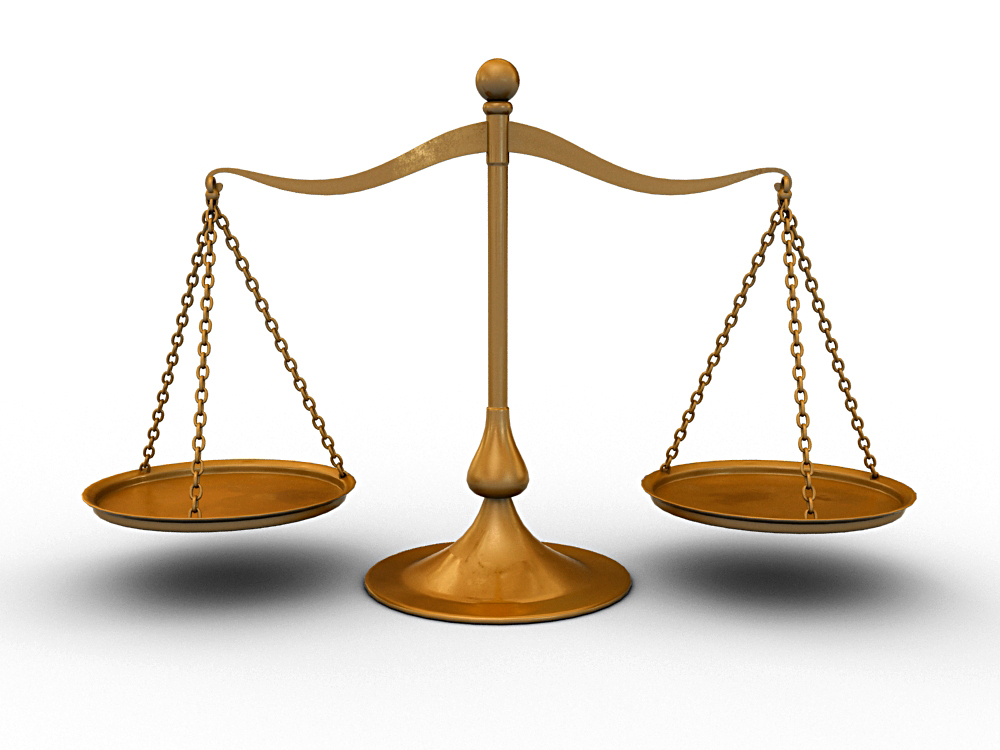
Suppose you have a balance scale and four weights of 1 unit, 2 units, 4 units and 8 units. How many different weights can you match? If you know binary arithmetic, it’s easy to see that you can match any weight up to fifteen units inclusive. With the object in the left-hand pan of the scale and the weights in the right-hand pan, these are the matches:

01 = 1
02 = 2
03 = 2+1
04 = 4
05 = 4+1
06 = 4+2
07 = 4+2+1
08 = 8
09 = 8+1
10 = 8+2
11 = 8+2+1
12 = 8+4
13 = 8+4+1
14 = 8+4+2
15 = 8+4+2+1

Balance scale


The weights that sum to n match the 1s in the digits of n in binary.

01 = 0001 in binary
02 = 0010 = 2
03 = 0011 = 2+1
04 = 0100 = 4
05 = 0101 = 4+1
06 = 0110 = 4+2
07 = 0111 = 4+2+1
08 = 1000 = 8
09 = 1001 = 8+1
10 = 1010 = 8+2
11 = 1011 = 8+2+1
12 = 1100 = 8+4
13 = 1101 = 8+4+1
14 = 1110 = 8+4+2
15 = 1111 = 8+4+2+1

But there’s another set of four weights that will match anything from 1 unit to 40 units. Instead of using powers of 2, you use powers of 3: 1, 3, 9, 27. But how would you match an object weighing 2 units using these weights? Simple. You put the object in the left-hand scale, the 3-weight in the right-hand scale, and then add the 1-weight to the left-hand scale. In other words, 2 = 3-1. Similarly, 5 = 9-3-1, 6 = 9-3 and 7 = 9-3+1. When the power of 3 is positive, it’s in the right-hand pan; when it’s negative, it’s in the left-hand pan.

This system is actually based on base 3 or ternary, which uses three digits, 0, 1 and 2. However, the relationship between ternary numbers and the sums of positive and negative powers of 3 is more complicated than the relationship between binary numbers and sums of purely positive powers of 2. See if you can work out how to derive the sums in the middle from the ternary numbers on the right:

01 = 1 = 1 in ternary
02 = 3-1 = 2
03 = 3 = 10
04 = 3+1 = 11
05 = 9-3-1 = 12
06 = 9-3 = 20
07 = 9-3+1 = 21
08 = 9-1 = 22
09 = 9 = 100
10 = 9+1 = 101
11 = 9+3-1 = 102
12 = 9+3 = 110
13 = 9+3+1 = 111
14 = 27-9-3-1 = 112
15 = 27-9-3 = 120
16 = 27-9-3+1 = 121
17 = 27-9-1 = 122
18 = 27-9 = 200
19 = 27-9+1 = 201
20 = 27-9+3-1 = 202
21 = 27-9+3 = 210
22 = 27-9+3+1 = 211
23 = 27-3-1 = 212
24 = 27-3 = 220
25 = 27-3+1 = 221
26 = 27-1 = 222
27 = 27 = 1000
28 = 27+1 = 1001
29 = 27+3-1 = 1002
30 = 27+3 = 1010
31 = 27+3+1 = 1011
32 = 27+9-3-1 = 1012
33 = 27+9-3 = 1020
34 = 27+9-3+1 = 1021
35 = 27+9-1 = 1022
36 = 27+9 = 1100
37 = 27+9+1 = 1101
38 = 27+9+3-1 = 1102
39 = 27+9+3 = 1110
40 = 27+9+3+1 = 1111

To begin understanding the sums, consider those ternary numbers containing only 1s and 0s, like n = 1011[3], which equals 31 in decimal. The sum of powers is straightforward, because all of them are positive and they’re easy to work out from the digits of n in ternary: 1011 = 1*3^3 + 0*3^2 + 1*3^1 + 1*3^0 = 27+3+1. Now consider n = 222[3] = 26 in decimal. Just as a decimal number consisting entirely of 9s is always 1 less than a power of 10, so a ternary number consisting entirely of 2s is always 1 less than a power of three:

999 = 1000 - 1 = 10^3 - 1 (decimal)
222 = 1000[3] - 1 (ternary) = 26 = 27-1 = 3^3 - 1 (decimal)

If a ternary number contains only 2s and is d digits long, it will be equal to 3^d – 1. But what about numbers containing a mixture of 2s, 1s and 0s? Well, all ternary numbers containing at least one 2 will have a negative power of 3 in the sum. You can work out the sum by using the following algorithm. Suppose the number is five digits long and the rightmost digit is digit #1 and the leftmost is digit #5:

01. i = 1, sum = 0, extra = 0, posi = true.
02. if posi = false, goto step 07.
03. if digit #i = 0, sum = sum + 0.
04. if digit #i = 1, sum = sum + 3^(i-1).
05. if digit #i = 2, sum = sum - 3^(i-1), extra = 3^5, posi = false.
06. goto step 10.
07. if digit #i = 0, sum = sum + 3^(i-1), extra = 0, posi = true.
08. if digit #i = 1, sum = sum - 3^(i-1).
09. if digit #i = 2, sum = sum + 0.
10. i = i+1. if i <= 5, goto step 2.
11. print sum + extra.

As the number of weights grows, the advantages of base 3 get bigger:

With 02 weights, base 3 reaches 04 and base 2 reaches 3: 04-3 = 1.
With 03 weights, base 3 reaches 13 and base 2 reaches 7: 13-7 = 6.
With 04 weights, 000040 - 0015 = 000025
With 05 weights, 000121 - 0031 = 000090
With 06 weights, 000364 - 0063 = 000301
With 07 weights, 001093 - 0127 = 000966
With 08 weights, 003280 - 0255 = 003025
With 09 weights, 009841 - 0511 = 009330
With 10 weights, 029524 - 1023 = 028501
With 11 weights, 088573 - 2047 = 086526
With 12 weights, 265720 - 4095 = 261625...

But what about base 4, or quaternary? With four weights of 1, 4, 16 and 64, representing powers of 4 from 4^0 to 4^3, you should be able to weigh objects from 1 to 85 units using sums of positive and negative powers. In fact, some weights can’t be matched. As you can see below, if n in base 4 contains a 2, it usually can’t be represented as a sum of positive and negative powers of 4 (one exception is 23 = 2*4 + 3 = 11 in base 10). Certain other numbers are also impossible to represent as that kind of sum:

1 = 1 ← 1
2 has no sum = 2
3 = 4-1 ← 3
4 = 4 ← 10 in base 4
5 = 4+1 ← 11 in base 4
6 has no sum = 12 in base 4
7 has no sum = 13
8 has no sum = 20
9 has no sum = 21
10 has no sum = 22
11 = 16-4-1 ← 23
12 = 16-4 ← 30
13 = 16-4+1 ← 31
14 has no sum = 32
15 = 16-1 ← 33
16 = 16 ← 100
17 = 16+1 ← 101
18 has no sum = 102
19 = 16+4-1 ← 103
20 = 16+4 ← 110
21 = 16+4+1 ← 111
22 has no sum = 112
23 has no sum = 113
24 has no sum = 120
25 has no sum = 121
26 has no sum = 122
27 has no sum = 123
[...]

With a more complicated balance scale, it’s possible to use weights representing powers of base 4 and base 5 (use two pans on each arm of the scale instead of one, placing the extra pan at the midpoint of the arm). But with a standard balance scale, base 3 is the champion. However, there is a way to do slightly better than standard base 3. You do it by botching the weights. Suppose you have four weights of 1, 4, 10 and 28 (representing 1, 3+1, 9+1 and 27+1). There are some weights n you can’t match, but because you can match n-1 and n+1, you know what these unmatchable weights are. Accordingly, while weights of 1, 3, 9 and 27 can measure objects up to 40 units, weights of 1, 4, 10 and 28 can measure objects up to 43 units:

1 = 1 ← 1
2 has no sum = 2
3 = 4-1 ← 10 in base 3
4 = 4 ← 11 in base 3
5 = 4+1 ← 12 in base 3
6 = 10-4 ← 20
7 = 10-4+1 ← 21
8 has no sum = 22
9 = 10-1 ← 100
10 = 10 ← 101
11 = 10+1 ← 102
12 has no sum = 110
13 = 10+4-1 ← 111
14 = 10+4 ← 112
15 = 10+4+1 ← 120
16 has no sum = 121
17 = 28-10-1 ← 122
18 = 28-10 ← 200
19 = 28-10+1 ← 201
20 has no sum = 202
21 = 28-10+4-1 ← 210
22 = 28-10+4 ← 211
23 = 28-4-1 ← 212
24 = 28-4 ← 220
25 = 28-4+1 ← 221
26 has no sum = 222
27 = 28-1 ← 1000
28 = 28 ← 1001
29 = 28+1 ← 1002
30 has no sum = 1010
31 = 28+4-1 ← 1011
32 = 28+4 ← 1012
33 = 28+4+1 ← 1020
34 = 28+10-4 ← 1021
35 = 28+10-4+1 ← 1022
36 has no sum = 1100
37 = 28+10-1 ← 1101
38 = 28+10 ← 1102
39 = 28+10+1 ← 1110
40 = has no sum = 1111*
41 = 28+10+4-1 ← 1112
42 = 28+10+4 ← 1120
43 = 28+10+4+1 ← 1121


*N.B. 40 = 82-28-10-4, i.e. has a sum when another botched weight, 82 = 3^4+1, is used.