There was a young man of Cape Horn,
Who wished that he’d never been born;
And he wouldn’t have been,
If his father had seen
That the end of the rubber was torn.
(Possibly by Swinburne)

There was a young man of Cape Horn,
Who wished that he’d never been born;
And he wouldn’t have been,
If his father had seen
That the end of the rubber was torn.
(Possibly by Swinburne)
This is a T-square fractal:
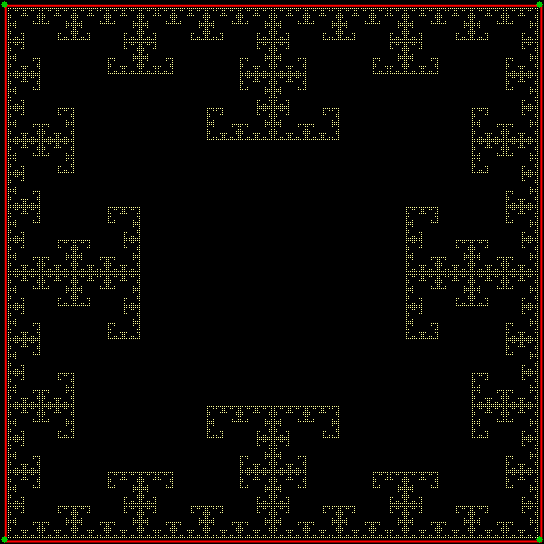
T-square fractal
Or you could say it’s a T-square fractal with the scaffolding taken away, because there’s nothing to show how it was made. And how is a T-square fractal made? There are many ways. One of the simplest is to set a point jumping 1/2 of the way towards one or another of the four vertices of a square. If the point is banned from jumping towards the vertex two places clockwise (or counter-clockwise) of the vertex, v[i=1..4], it’s just jumped towards, you get a T-square fractal by recording each spot where the point lands.
You also get a T-square if the point is banned from jumping towards the vertex most distant from the vertex, v[i], it’s just jumped towards. The most distant vertex will always be the diagonally opposite vertex, or the vertex, v[i+2], two places clockwise of v[i]. So those two bans are functionally equivalent.
But what if you don’t talk about bans at all? You can also create a T-square fractal by giving the point three choices of increment, [0,1,3], after it jumps towards v[i]. That is, it can jump towards v[i+0], v[i+1] or v[i+3] (where 3+2 = 5 → 5-4 = 1; 3+3 = 6 → 2; 4+1 = 5 → 1; 4+2 = 6 → 2; 4+3 = 7 → 3). Vertex v[i+0] is the same vertex, v[i+1] is the vertex one place clockwise of v[i], and v[i+3] is the vertex two places clockwise of v[i].
So this method is functionally equivalent to the other two bans. But it’s easier to calculate, because you can take the current vertex, v[i], and immediately calculate-and-use the next vertex, without having to check whether the next vertex is forbidden. In other words, if you want speed, you just have to Think Inc!
Speed becomes important when you add a new jumping-target to each side of the square. Now the point has 8 possible targets to jump towards. If you impose several bans on the next jump, e.g the point can’t jump towards v[i+2], v[i+3], v[i+5], v[i+6] and v[i+7], you will have to check for five forbidden targets. But using the increment-set [0,1,4] you don’t have to check for anything. You just inc-and-go:
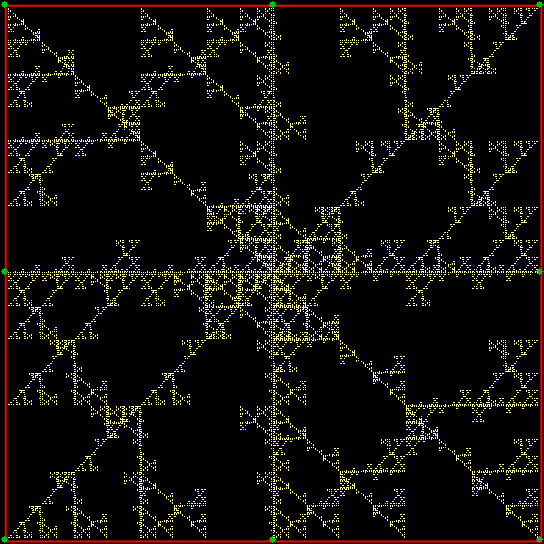
inc = 0, 1, 4
Here are more fractals created with the speedy inc-and-go method:

inc = 0, 2, 3

inc = 0, 2, 5

inc = 0, 3, 4
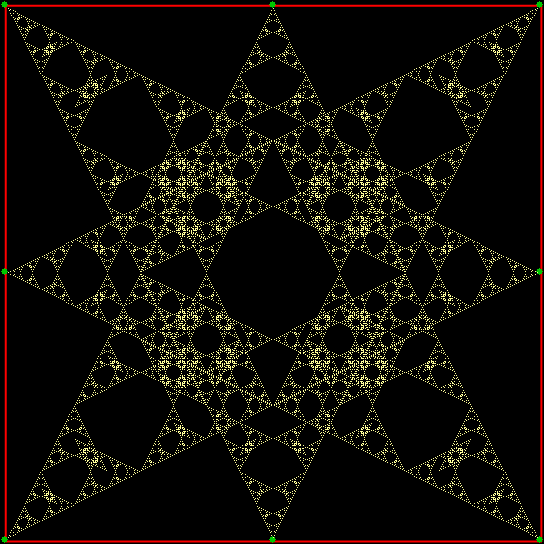
inc = 0, 3, 5
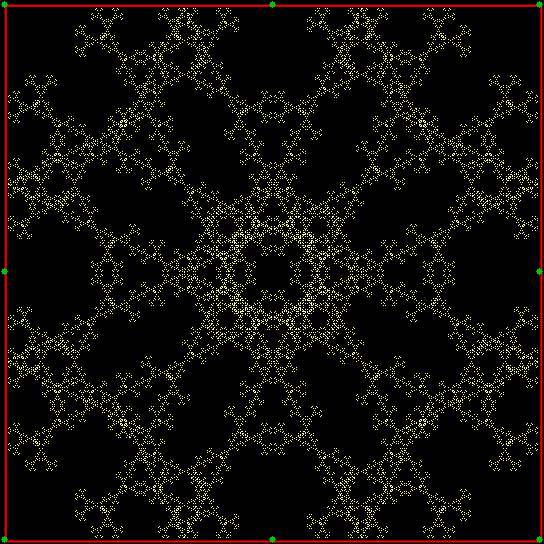
inc = 1, 4, 7
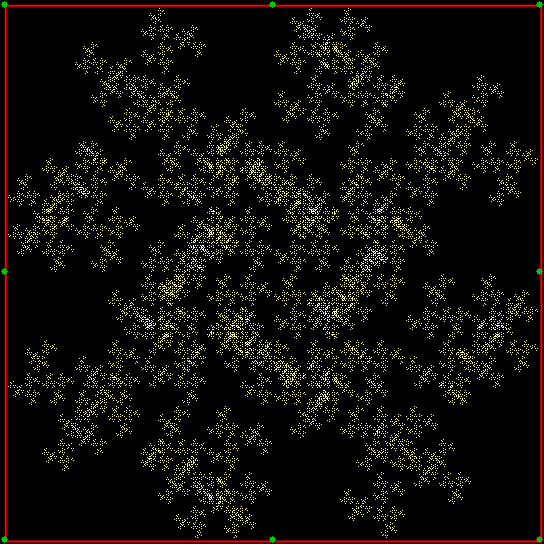
inc = 2, 4, 7

inc = 0, 1, 4, 7
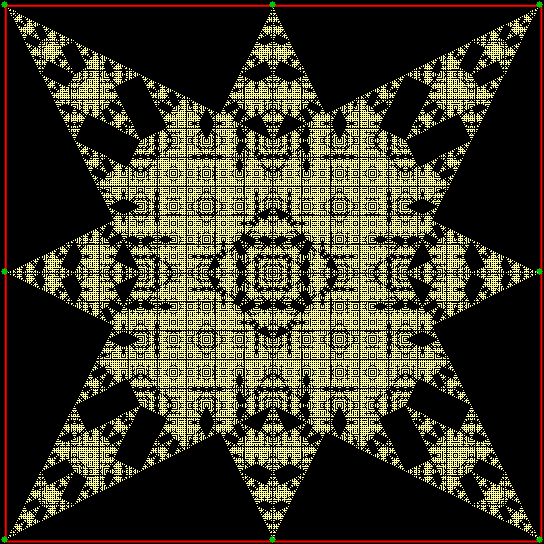
inc = 0, 3, 4, 5

inc = 0, 3, 4, 7
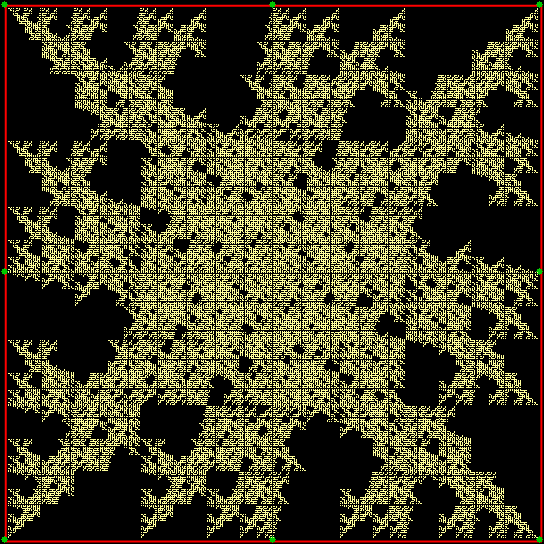
inc = 0, 4, 5, 7
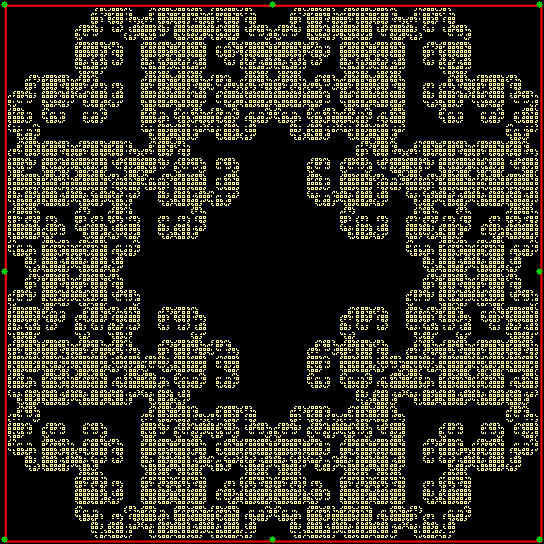
inc = 1, 2, 6, 7
With more incs, there are more possible paths for the jumping point and the fractals become more “solid”:

inc = 0, 1, 2, 4, 5
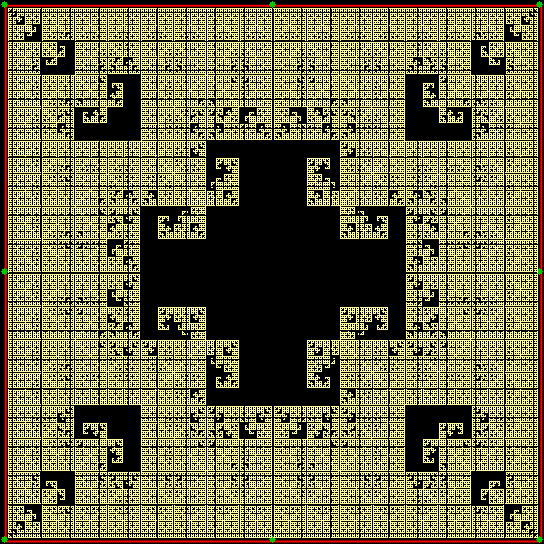
inc = 0, 1, 2, 6, 7

inc = 0, 1, 3, 5, 7
Now try applying inc-and-go to a pentagon:

inc = 0, 1, 2
(open in new window if blurred)

inc = 0, 2, 3
And add a jumping-target to each side of the pentagon:
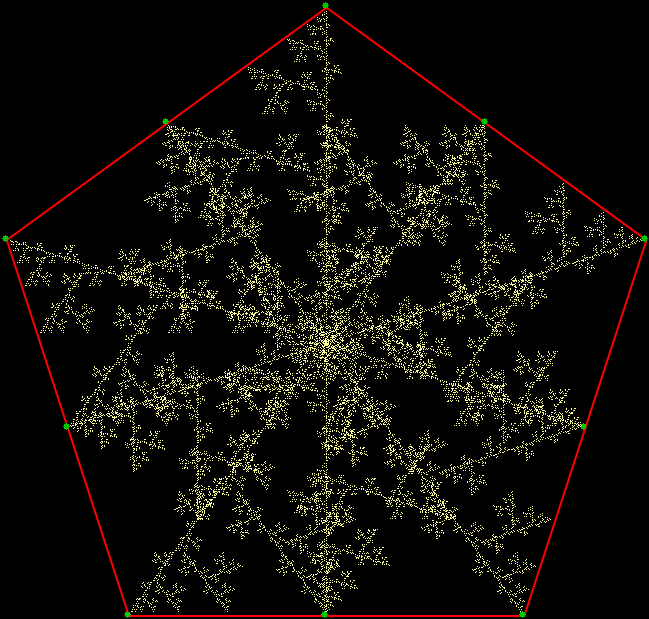
inc = 0, 2, 5
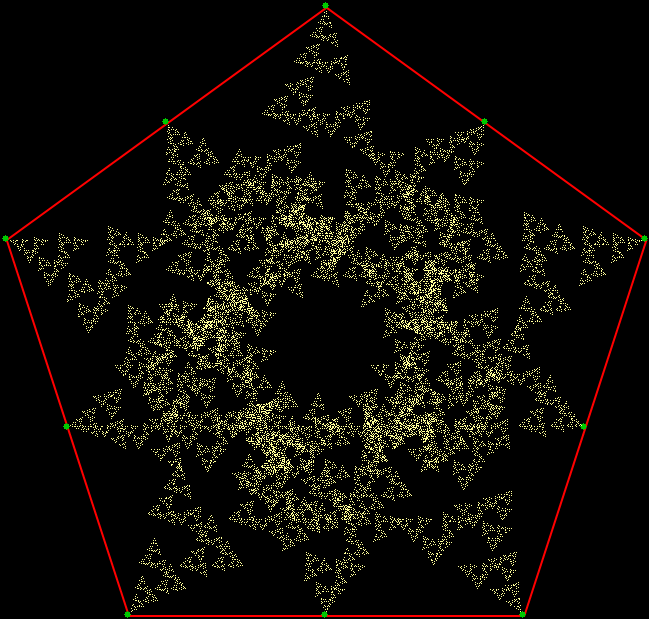
inc = 0, 3, 6
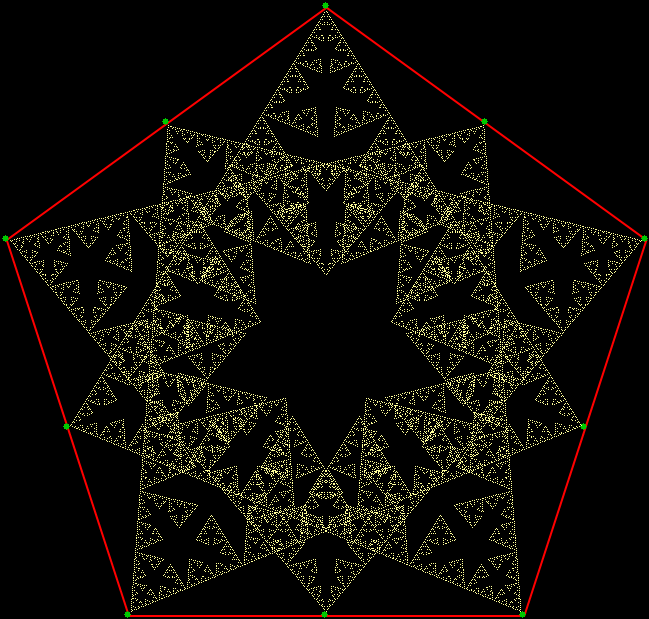
inc = 0, 3, 7
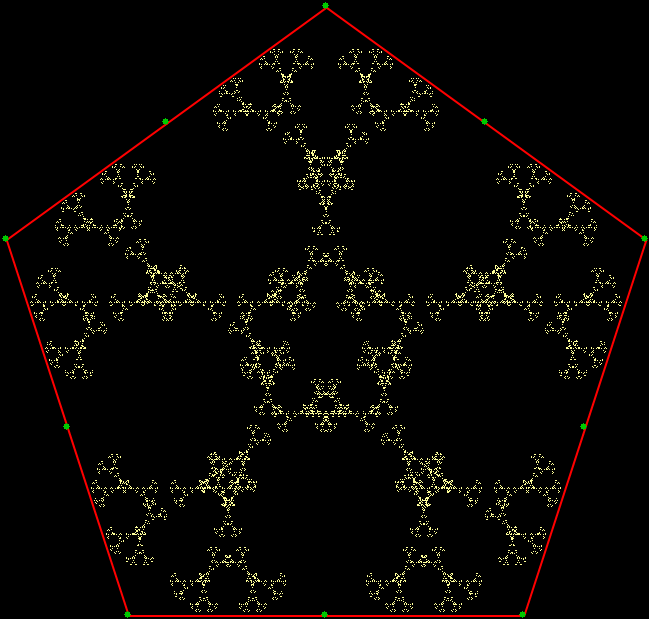
inc = 1, 5, 9
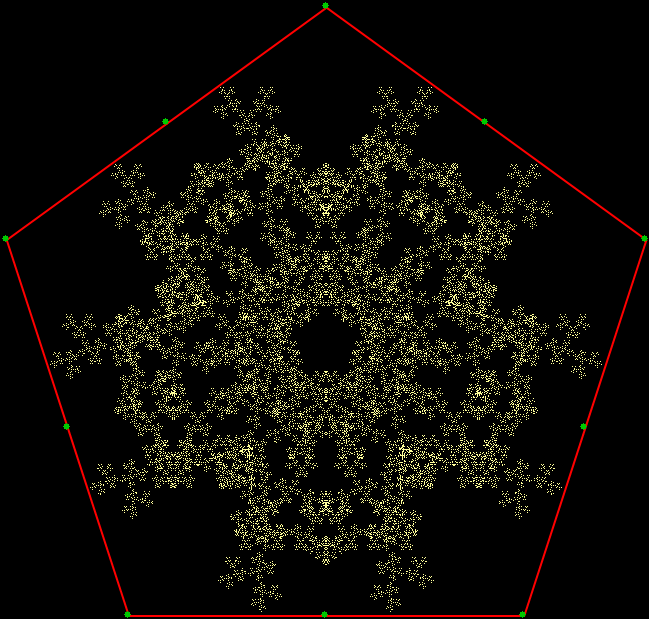
inc = 2, 5, 8

inc = 5, 6, 9
And add two jumping-targets to each side of the pentagon:
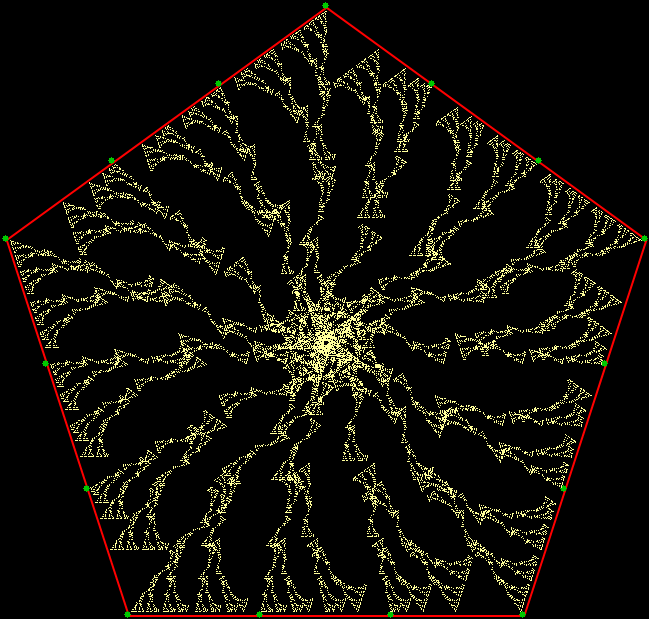
inc = 0, 1, 7
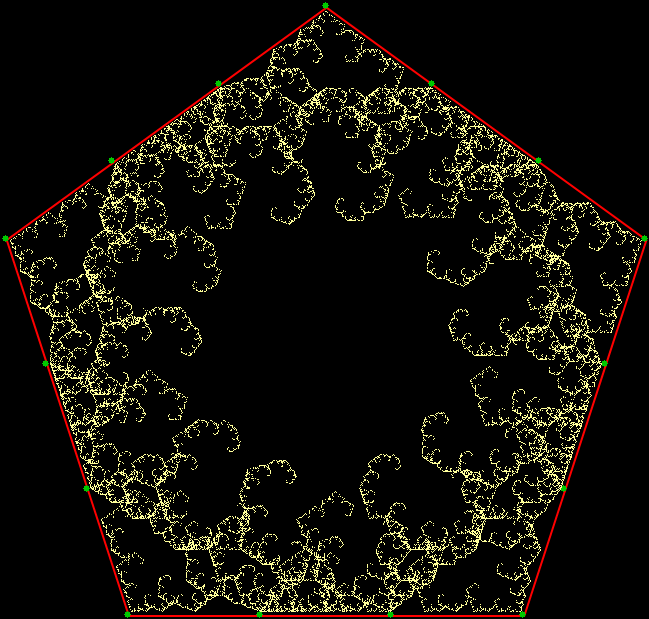
inc = 0, 2, 12

inc = 0, 3, 11

inc = 0, 3, 12
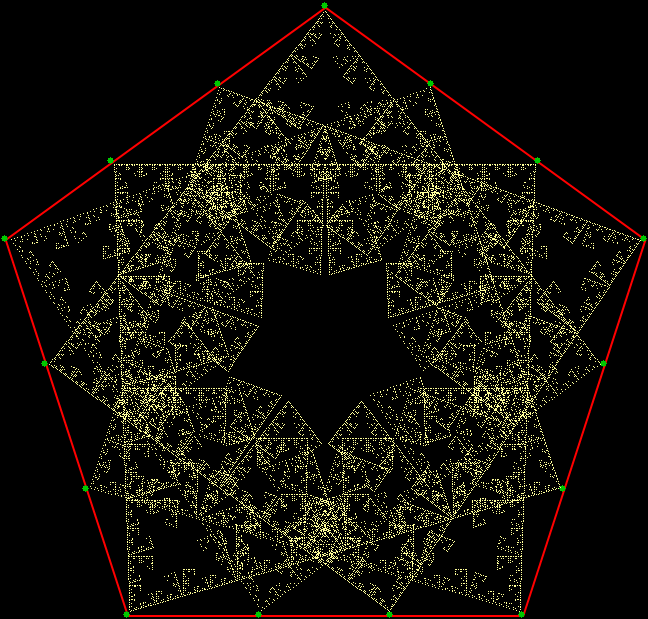
inc = 0, 4, 11
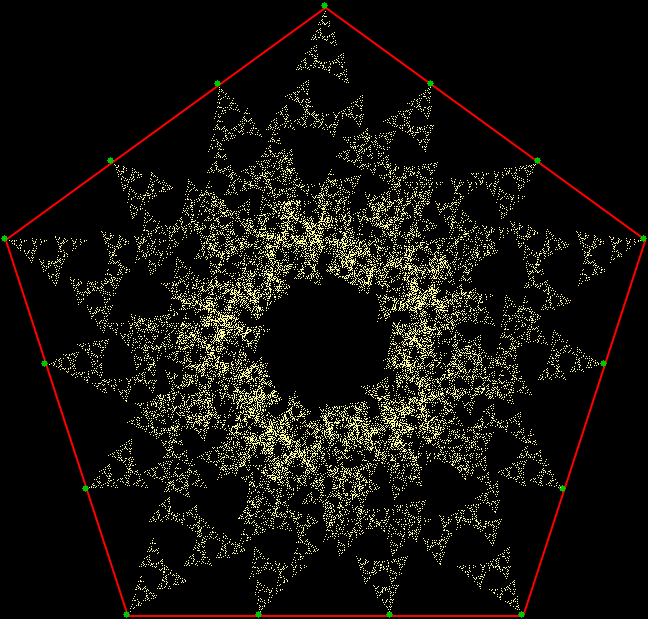
inc = 0, 5, 9

inc = 0, 5, 10

inc = 2, 7, 13
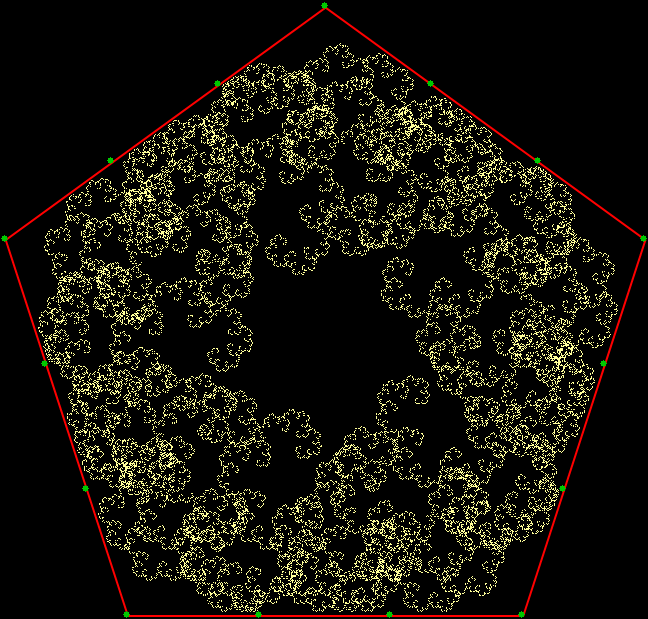
inc = 2, 11, 13
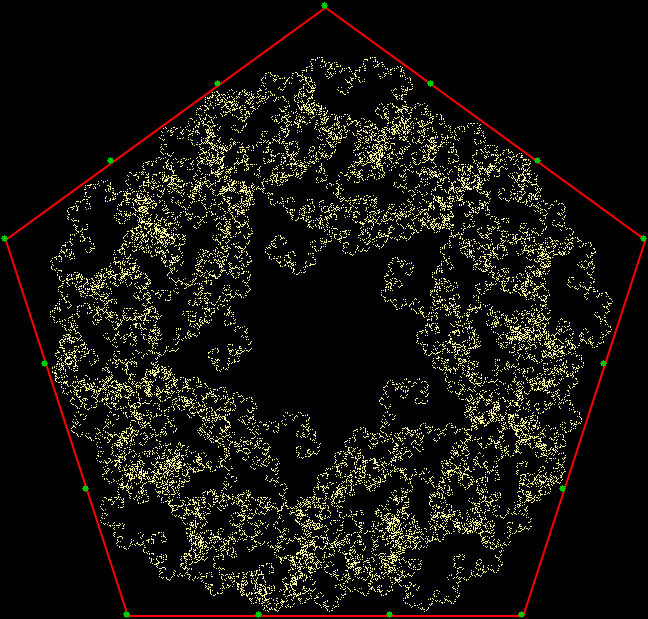
inc = 3, 11, 13
After the pentagon comes the hexagon:

inc = 0, 1, 2

inc = 0, 1, 5
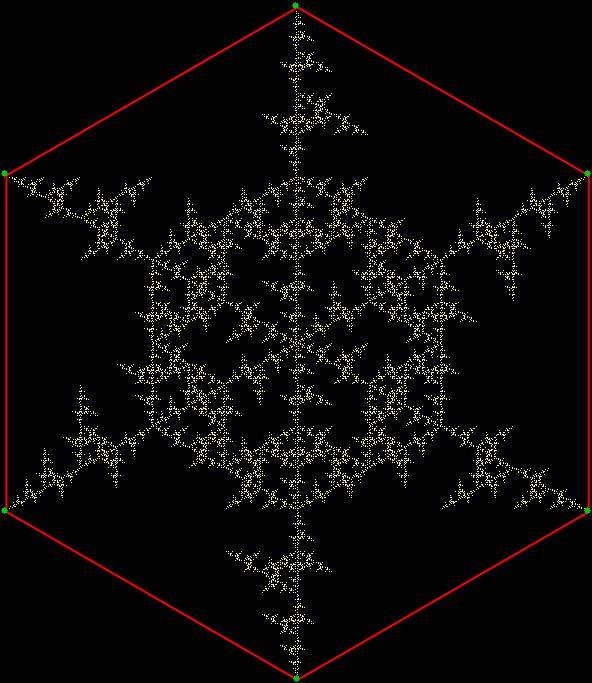
inc = 0, 3, 4

inc = 0, 3, 5

inc = 1, 3, 5

inc = 2, 3, 4
Add a jumping-target to each side of the hexagon:

inc = 0, 2, 5
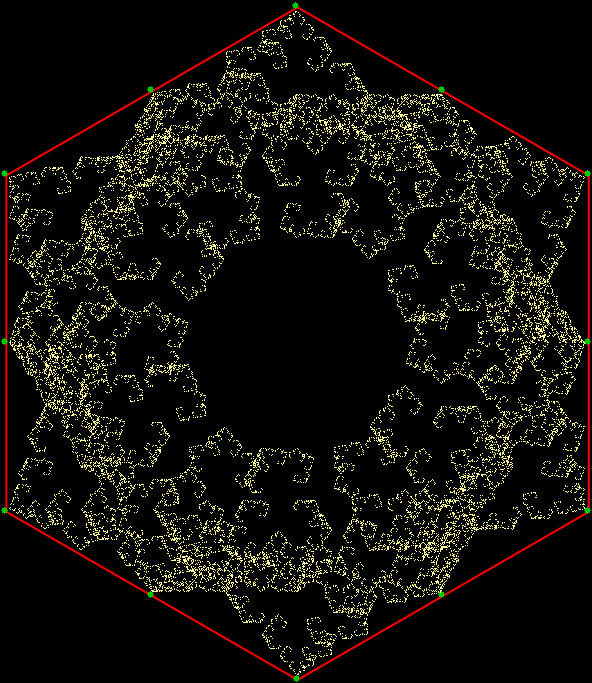
inc = 0, 2, 9
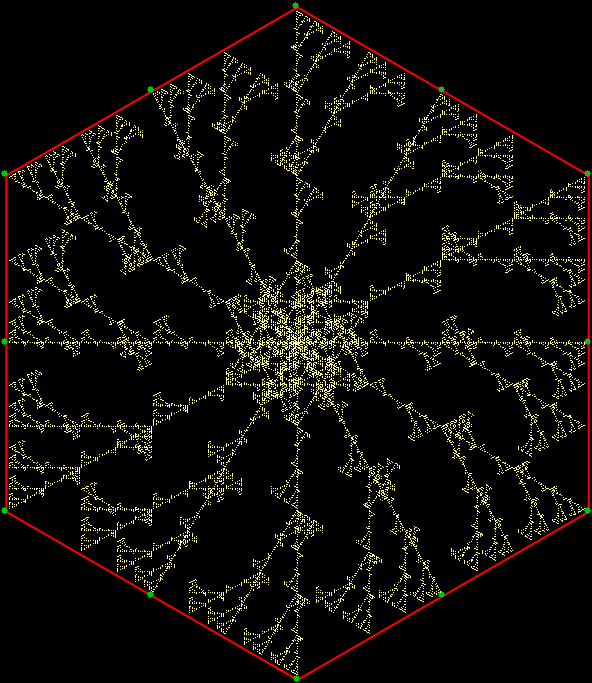
inc = 0, 6, 11
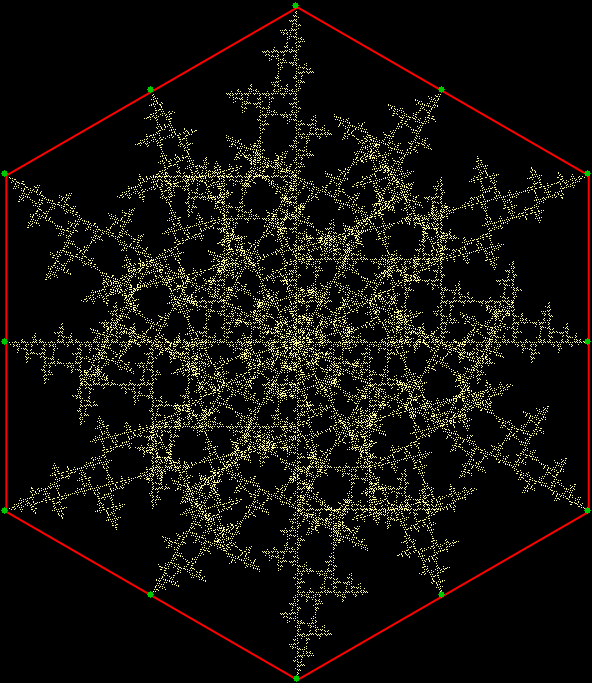
inc = 0, 3, 6
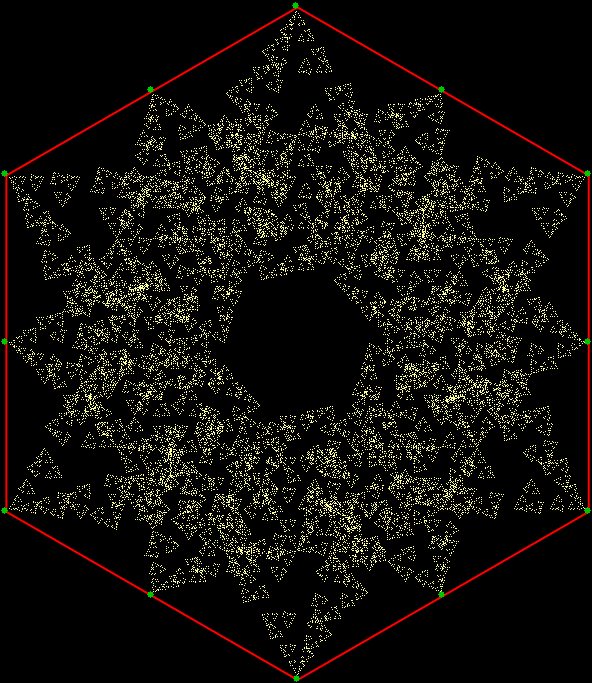
inc = 0, 3, 8

inc = 0, 3, 9
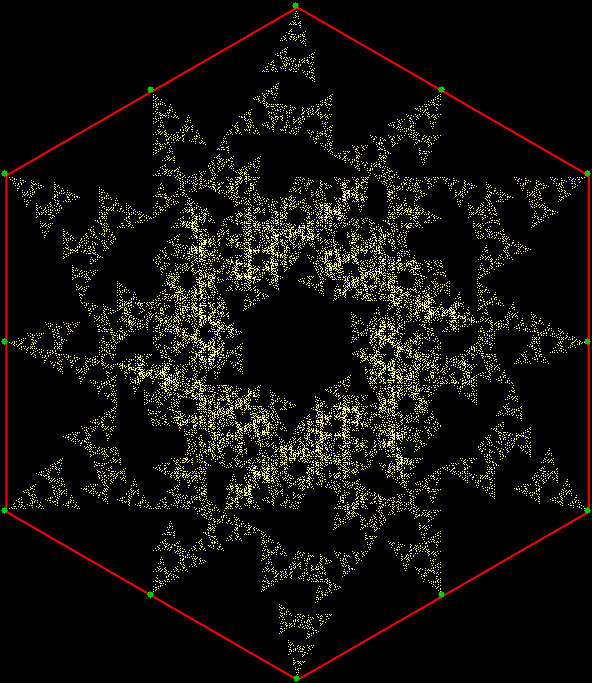
inc = 0, 4, 7
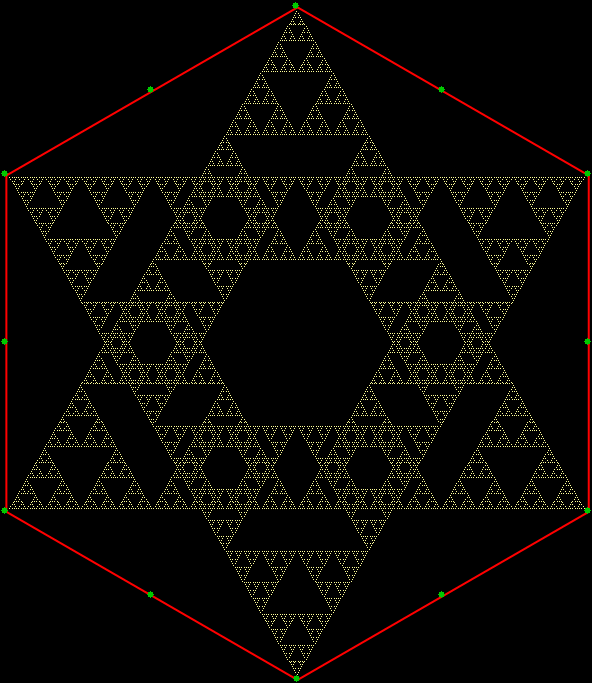
inc = 0, 4, 8
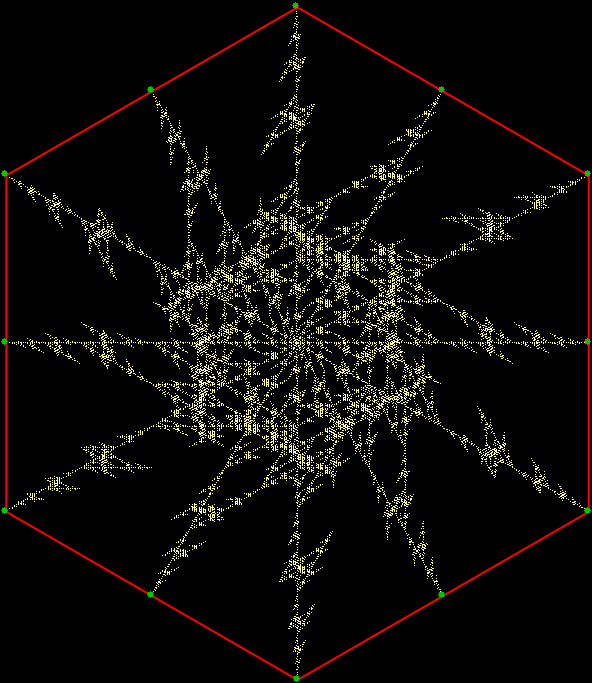
inc = 0, 5, 6

inc = 0, 5, 8

inc = 1, 5, 9

inc = 1, 6, 10
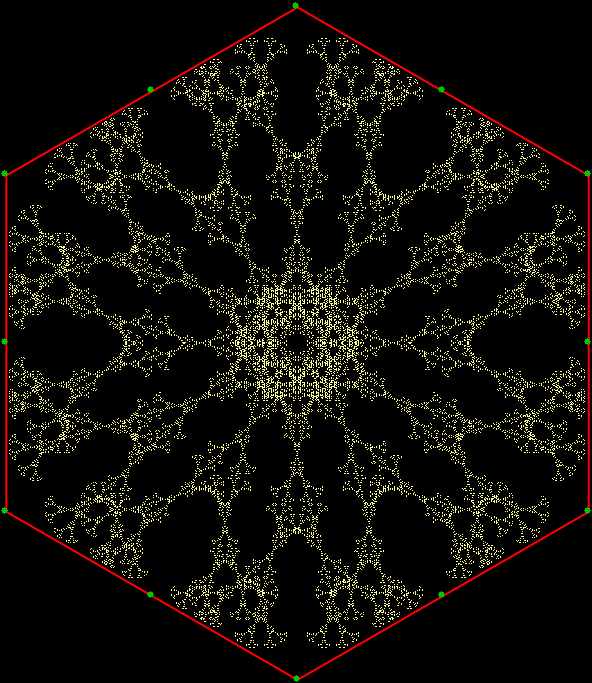
inc = 1, 6, 11
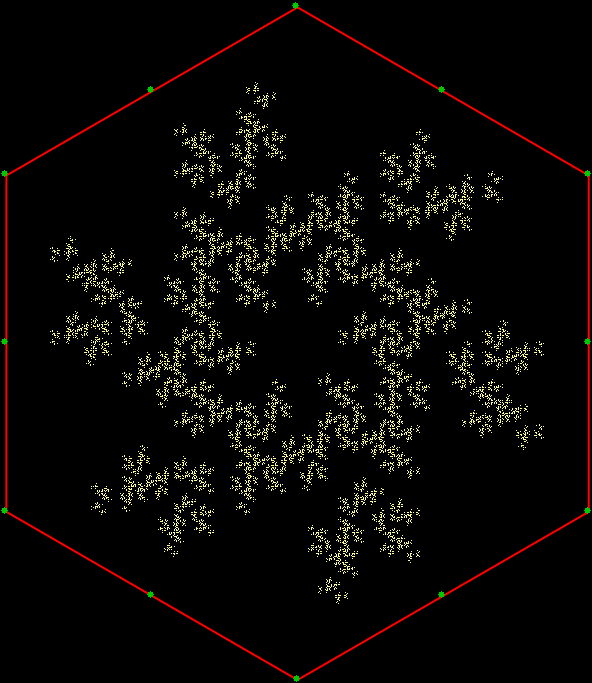
inc = 2, 6, 8
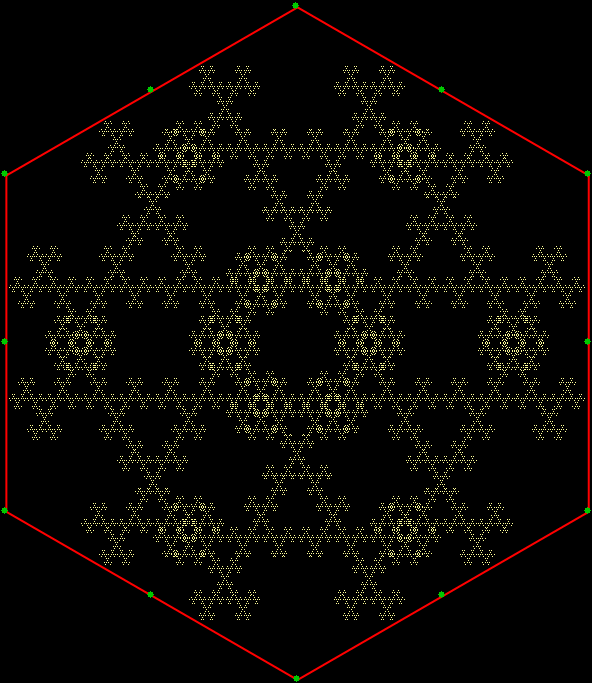
inc = 2, 6, 10
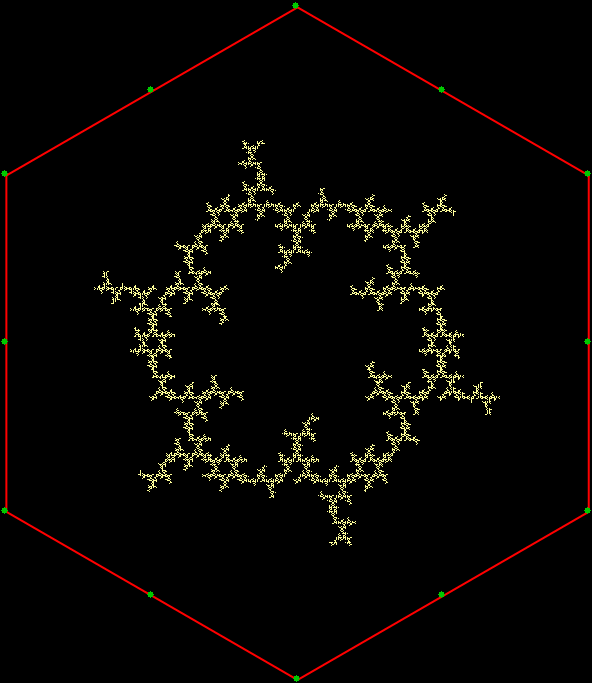
inc = 3, 5, 7

inc = 3, 6, 9
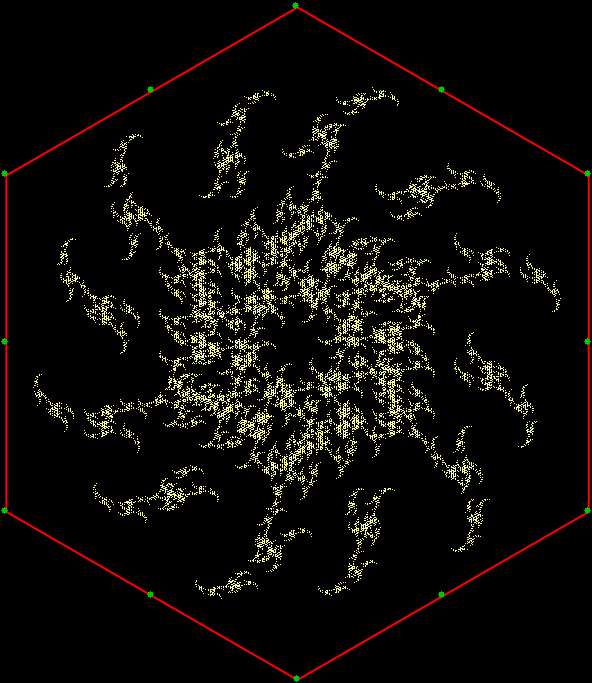
inc = 6, 7, 11
“I once received a letter from an eminent logician, Mrs. Christine Ladd-Franklin, saying that she was a solipsist, and was surprised that there were no others.” — Bertrand Russell, Human Knowledge: Its Scope and Limits (1948)
Peri-Performative Post-Scriptum
The title of this post is, of course, a radical reference to core Jethro Tull album Aladdin Sane (1973).
In the posts “Boole(b)an #1″ and “Boole(b)an #2” I looked at fractals created by certain kinds of ban on a point jumping (quasi-)randomly towards the four vertices, v=1..4, of a square. For example, suppose the program has a vertex-history of 2, that is, it remembers two jumps into the past, the previous jump and the pre-previous jump. There are sixteen possible combinations of pre-previous and previous jumps: [1,1], [1,2], 1,3] … [4,2], [4,3], [4,4].
Let’s suppose the program bans 4 of those 16 combinations by reference to the current possible jump. For example, it might ban [0,0]; [0,1]; [0,3]; [2,0]. To see what that means, let’s suppose the program has to decide at some point whether or not to jump towards v=3. It will check whether the combination of pre-previous and previous jumps was [3+0,3+0] = [3,3] or [3+0,3+1] = [3,4] or [3+0,3+3] = [3,2] or [3+2,3+0] = [1,3] (when the sum > 4, v = sum-4). If the previous combination is one of those pairs, it bans the jump towards v=3 and chooses another vertex; otherwise, it jumps towards v=3 and updates the vertex-history. This is the fractal that appears when those bans are used:
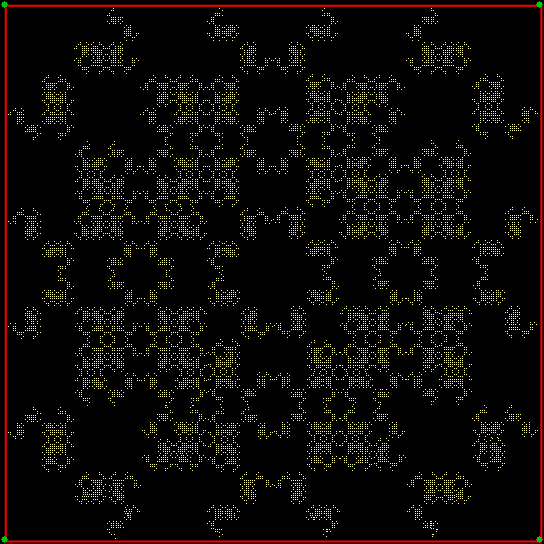
ban = [0,0]; [0,1]; [0,3]; [2,0]
And here are more fractals using a vertex-history of 2 and a ban on 4 of 16 possible combinations of pre-previous and previous jump:
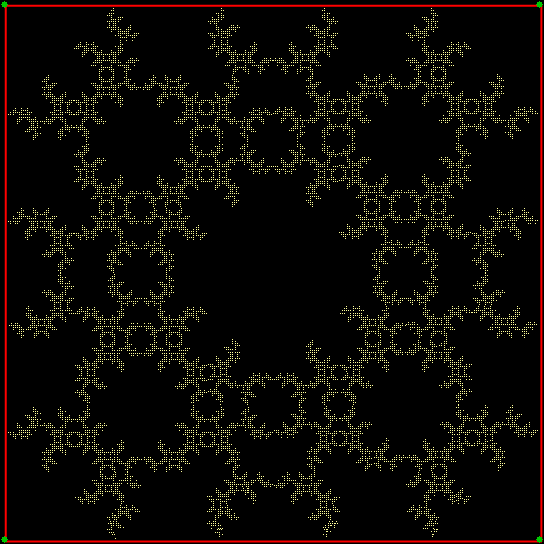
ban = [0,0]; [0,1]; [0,3]; [2,2]
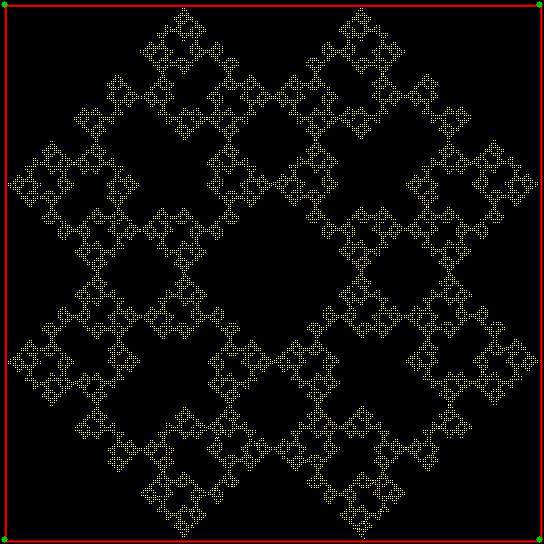
ban = [0,0]; [0,2]; [1,0]; [3,0]

ban = [0,0]; [0,2]; [1,1]; [3,3]
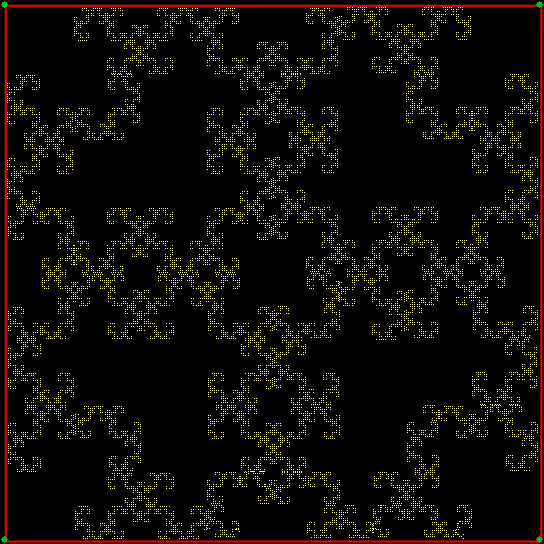
ban = [0,0]; [0,2]; [1,3]; [3,1]
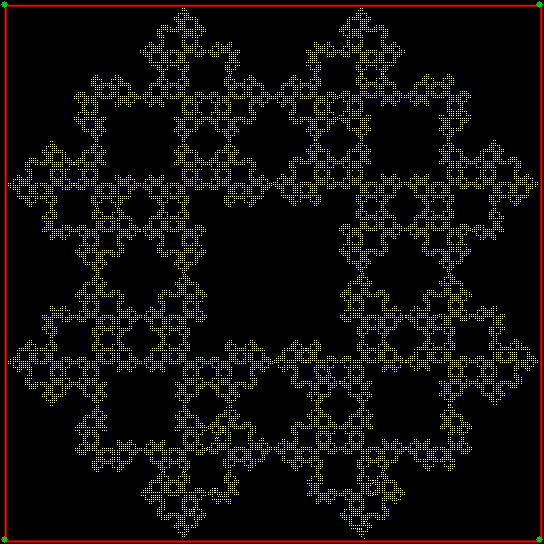
ban = [0,0]; [1,0]; [2,2]; [3,0]
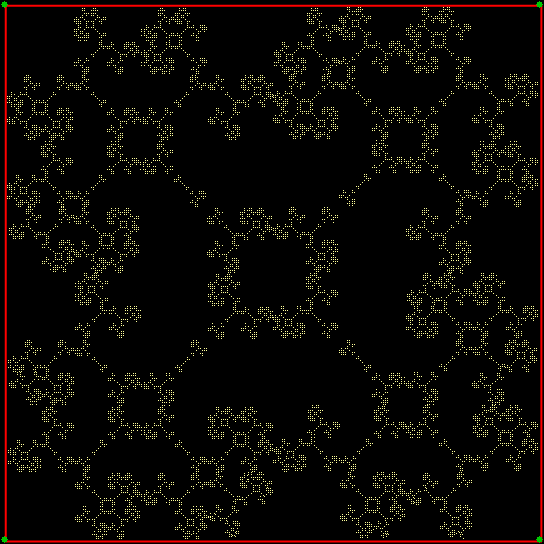
ban = [0,0]; [1,1]; [1,2]; [3,2]
Continue reading “Boole(b)an #3”…
Elsewhere other-engageable
• Flight for Life — The Flight of the Phoenix, Elleston Trevor (1964)
(Translated and edited by Simon Whitechapel)
In the black mirroring surface of the canal, these things: a sky very high and clear, the blue infinite interior of the skull of a god2 brooding beauty and pain into the world; the walls that line the canal, white marble, sharp-edged; the vivid mosaics of precious stone with which the walls are set: oval belladonnic eyes of emerald and obsidian in faces of sculpted mammoth ivory; the mouths of jade3-lipped bayadères leaking ruby threads of wine; the topaz fingers and wrists of rhodolite4-crowned lutanists; quartz-glistered sinews in the arms of capon5-plump eunuchs fanning the dances of turquoise6-skinned odalisques who prance and beck in frozen heated showers of opal-drop sweat.
But all, in the mirroring water, is grey.7
In the black mirroring surface of the canal, these things: a broad slab of basalt to which is bound a naked man8, white against the stone’s darkness, black-haired and bound with soft unbreakable bonds of purple silk; on his belly have been painted the red strokes and hooks and curls of the ideogram for death, like the roaring fist-talon and shank of a stooping hawk9 or the opening hungry maw of a leopard10, a splash of red tissues ringed and spiked and shaped by white barbs of teeth.
But all, in the mirroring water, is grey.
In the black mirroring surface of the canal, these things: five swans; their bright, forward-sweeping eyes are set in white, oval-skulled heads that are enwedged with yellow, black-rooted beaks; their white, smooth-feathered, twice-curved necks, slender as stems, are shivered on the ripples of the passage of bodies that are white seed-pods curling to smooth, hooked tails. Five swans, silent white swans. Their beaks are small and regular as the hardened gold heads of the ritual axes of the Temple of the Thanatocrator11, which sound tchlunk tchlunk tchlunk in the skulls of the sacrifices, opening slotted, red-welling ways for the prosempyreal passage of the soul.
But all, in the mirroring water, is grey.
In the black, mirroring surface of the canal, this: the white swans clustered on the white body of the sacrifice. Their necks dart and sway, sowing moist red blooms into the fertile milk of his skin. He strains against his bonds, but the necks fall, the heads hammer with steady, unconscious grace, opening the blooms to full flower. In the mirroring water they are beautiful, like strewn blossoms12 for the feet of the Thanatocrator, who dances his hatred into the waking dreams of the world. The sacrifice is dead and the swans are streaked and smirched and spotted with gore, like heavy white flowers in a garden of torture.
Their necks bend and sway, and their beaks open and close, but in the mirroring water their voices are silent, and how may we tell what they say?
NOTES
1. Trained swans were the favored form of execution under the insane and semi-legendary nymphomane Queen Sphalaghd (1-143 Anno Dominæ; 1137-1279 Anno Secundi Imperii), whose extravagances came nigh to ruining the kingdom before, after many hesitations on and retreats from the threshold, she converted fully to the austere and life-denying doctrines of the Thorn-God in the final lustrum of her nigromantically prolonged life.13 She was canonized by the Temple thirteen years after her death.
2. An obvious reference to the Thorn-God, and in another context the Yihhian (mhló)Kiùlthi might be translated “(of) the god”, but the use of the non-hieratic noun marker gives the flavor of the indefinite article in English and contributes to the sense of brooding anonymity in the story.
3. This is believed to be a satirical reference to Yokh-Tsiolphë’s own religion (see note 8 below), that of the Moon-Deity, whose abstemious priestesses wore strongly colored make-up while performing their ritual dances under the full moon.
4. From its use in other texts retrieved oneirically from the Temple, the hieroglyph appears to refer to some rose-colored semi-precious mineral, and I have chosen to translate the word as “rhodolite”: coronemus nos rosis antequam marcescant (“let us crown us with roses before they be withered”, Sapientia Solomonis 2:8) was a sentiment accepted in its widest possible sense at the week-long feasts held during the long years of Queen Sphalagdh’s dissipation.
5. Possibly a castrated form not of the domestic hen (Gallus domesticus) but of the peacock (Pavo cristatus).
6. Again a possible satirical reference to the priestesses of the Moon-Deity.
7. Mirrors in the Temple were only of dark minerals, principally basalt, haematite, and black coral (Gorgonia spp), for the priests taught that color was one of the snares of sensuality by which the world entrapped men’s souls. Accordingly, possession of a fully reflecting mirror was an excommunicable offence for members of the Thorn-God’s congregation.
8. The story is believed to refer to the execution of a nobleman called Yokh-Tsiolphë (Yugg-Siurphë in some texts), who had offended the Queen either by refusing to sacrifice his eldest son and daughter to the Thorn-God or (as most scholars now believe) by falling under suspicion of having composed an anonymous pasquinade against the Thorn-God which was briefly circulated at the royal court in 38 A.D./1174 A.S.I. The execution would have been one of the earliest signs of the Queen’s growing regard for the Thorn-God.
9. The Yihhian here is a little unclear and the reference is perhaps to the Osprey (Pandion haliætus), which was second only to the Great Grey Shrike (Lanius excubitor) in the ornithomancy of the Temple.
10. The Yihhian kiuthi literally means “spotted one” and can refer to several species of animal; “leopard” seems the most appropriate translation in this context.
11. Niédýthithlà (mhló)Nhriúlr, literally “deathly lord(’s)”, was a title of the Thorn-God, but the foreign derivation of the words in Yihhian means it is perhaps best translated into English as “thanatocrator”.
12. Blossoms of gorse (Ulex spp) and other spinose plants were thrown beneath the feet of dancing priests during rituals at the Temple, and many of the Temple’s hymns refer to osmomancy, or divination by the scents released from the crushed petals.
13. She is said to have been planning another round of the puerile and puellar sacrifices with which she purchased her unnatural youth at the time of her death, occasioned when she slipped on trampled petals in the Temple of the Thorn-God whilst approaching the altar for blessing and was impaled on the silver thorns topping a newly erected altar-rail. Some contemporary commentators hinted at numerological significance in her death, saying that the priests of the Thorn-God had persuaded her that by laying down her life at that age she would regain it at the beginning of the next cosmic cycle. It is possible, therefore, that the encephalotomy and cardiotomy of her ritual mummification were feigned.
Below is one of the best album-covers I’ve ever seen. It’s a triumph of subtlety and simplicity:

Burning Witch, Crippled Lucifer (1998)
The American blackened doom sludge-sters Burning Witch used Sorgen / Sorrow (1894-5), a painting by the Norwegian painter Theodor Kittelsen (1857-1914), to conjure an atmosphere of despair and darkness. Here is the original painting, skilfully combining snow, darkness and despair:

Theodor Kittelsen, Sorgen (1894-95)
But while the painting and album are good examples of less-is-more, the album is also an example of less-and-more. Part of its power comes from the contrast between the simplicity of the wandering figure and the complexity of the scripts used for the band’s name and album title:

Crippled Lucifer (detail)
Usually images are more detailed than writing. Here it’s the reverse. And while you can easily read the writing, despite its complexity, you can’t “read” the figure, despite its simplicity. Kittelsen’s skilful simplicity raised questions that can’t be answered. Is the figure male or female? Why is it sorrowful? Where is it going?
Well, you can say where it’s going in one sense: it’s walking from left-to-right. And that made me wonder whether the album could have become even starker in its contrasts. If you’re literate in Norwegian or English, you naturally read images from left-to-right, because that’s the direction of the Roman alphabet. On the album, you read the figure and the writing in the same direction. They contrast starkly in other ways, but they don’t contrast there. So let’s try making them contrast there too. Compare these two versions of the cover:
Crippled Lucifer (original cover)
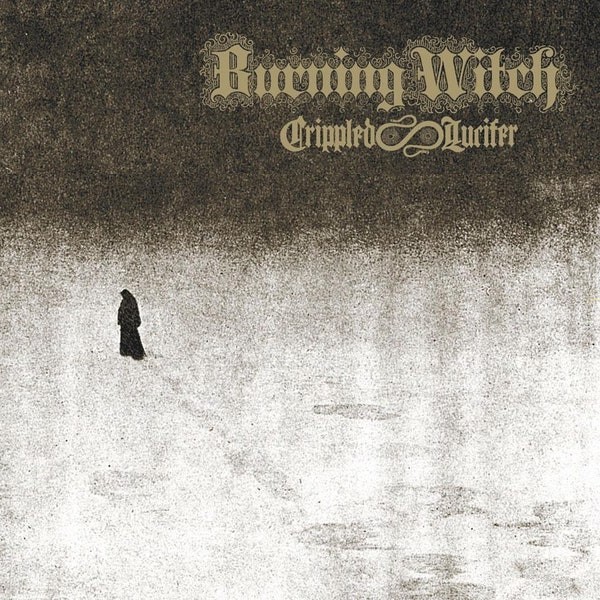
Crippled Lucifer (figure-and-snowscape mirrored)
I think there’s something emptier and more despairing in the mirrored figure, walking from right-to-left. On the original cover, the figure is in some sense walking into the future, despite the weight of sorrow it carries. As we read from left to right along a piece of writing, what’s to the left of our eye is the past, and what’s to the right is the future. The figure carries the same implication. And because the figure moving towards the highly-complex-but-perfectly-intelligible band-name-and-title, there’s almost an implication that its story will be told, even if it’s moving towards death or suicide.
When the image is mirrored, all that disappears. Moving from right-to-left, the figure seems to be walking into the past, not the future. It’s no longer near or moving towards the complexity-and-intelligibility of the band-name-and-title. It’s abandoning the world more strongly: there’s no hope, no future, no implication that its story will be told.
I think the same happens, though less strongly, when the original painting is contrasted with a mirrored version:
Sorrow (original)
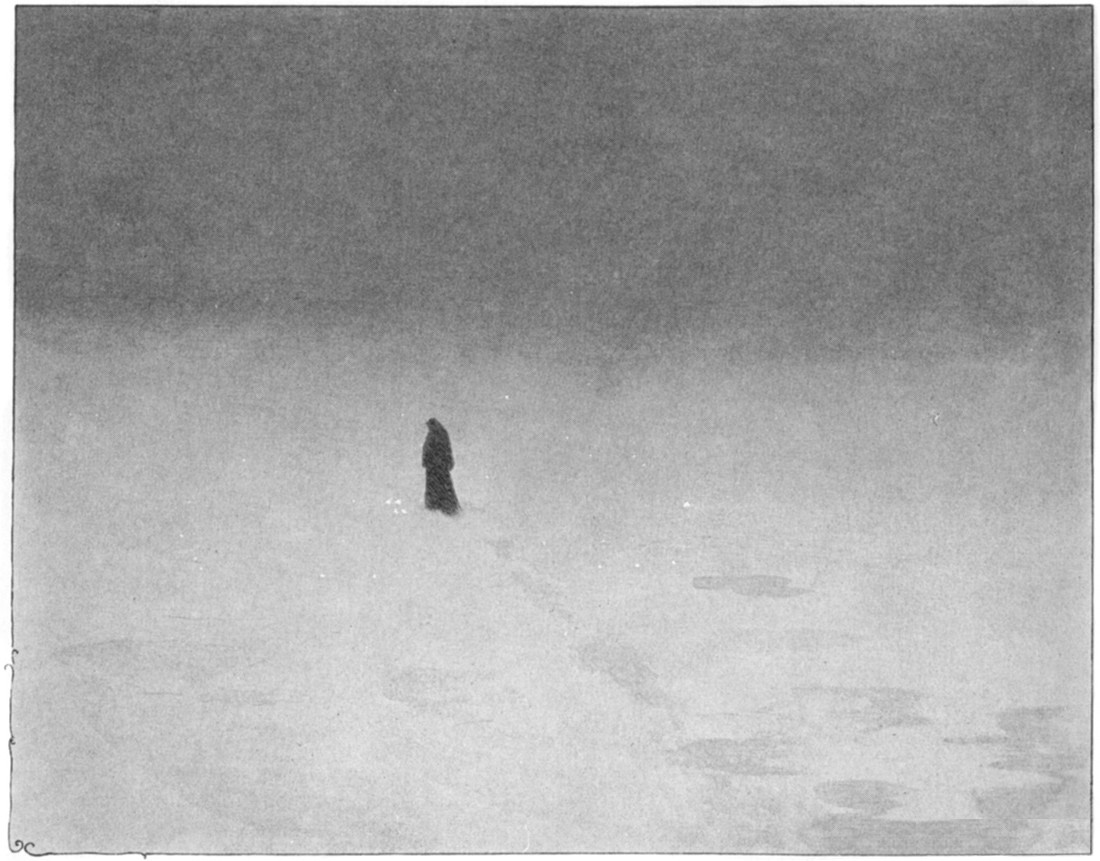
Sorrow (mirrored)
The contrast is less stark because, unlike the album-cover, there’s no complex patch of writing in the painting and the figure is moving away from what writing there is: the artist’s signature in the bottom left. In the original, the figure is abandoning identity and intelligibility by moving away from the signature. That’s why I’ve removed the signature in the mirrored version of the painting. It would be anomalous on the right, whether or not it was mirror-reversed, and it would be anomalous if it stayed on the left.
Finally, here’s a photo of two musicians in Sunn O))), the band into which Burning Witch eventually evolved:
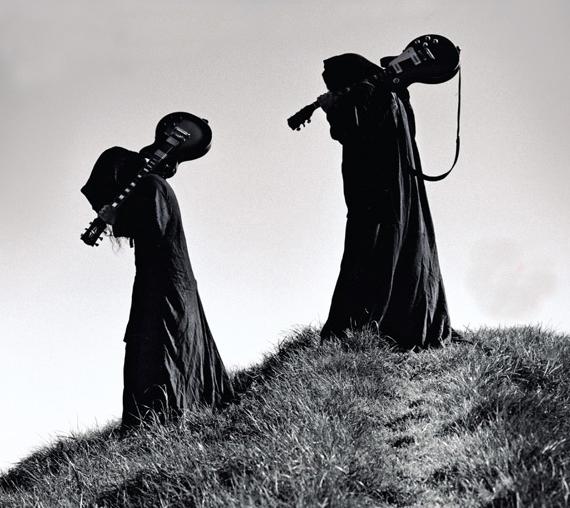
Sunn O))) in black robes
In the original, Stephen O’Malley and Greg Anderson are walking from right-to-left. Here’s a mirrored version for comparison:
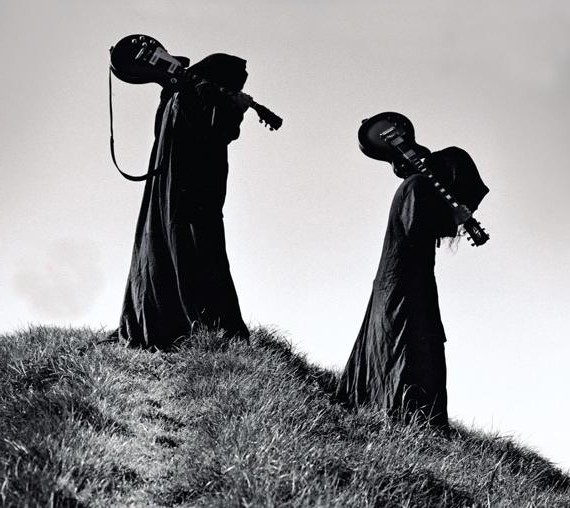
Sunn O))) photo (mirrored)
I think the original photo has more power, because the robed figures are walking against the grain, as it were — against the direction in which our Roman-alphabet-conditioned eyes read a photo.
• A Goggle at Gogol — review of The Collected Tales of Nikolai Gogol, translated by Richard Pevear and Larissa Volokhonsky (Granta 1998)
Suppose a point traces all possible routes jumping half-way towards the three vertices of an equilateral triangle. A special kind of shape appears — a fractal called the Sierpiński triangle that contains copies of itself at smaller and smaller scales:

Sierpiński triangle, jump = 1/2
And what if the point jumps 2/3rds of the way towards the vertices as it traces all possible routes? You get this dull fractal:

Triangle, jump = 2/3
But if you add targets midway along each side of the triangle, you get this fractal with the 2/3rds jump:

Triangle, jump = 2/3, side-targets
Now try the 1/2-jump triangle with a target at the center of the triangle:
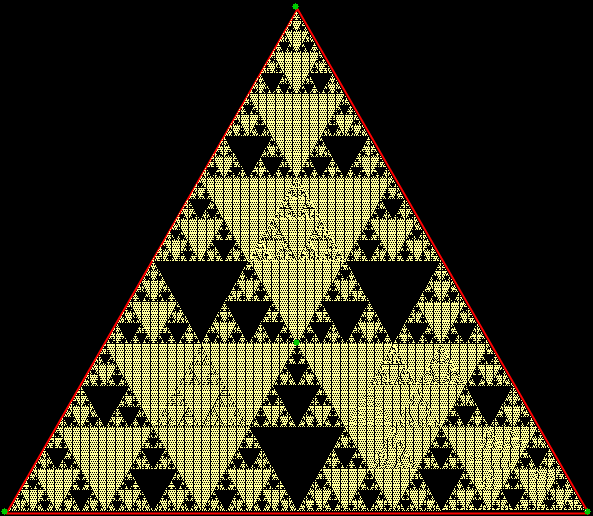
Triangle, jump = 1/2, central target
And the 2/3-jump triangle with side-targets and a central target:
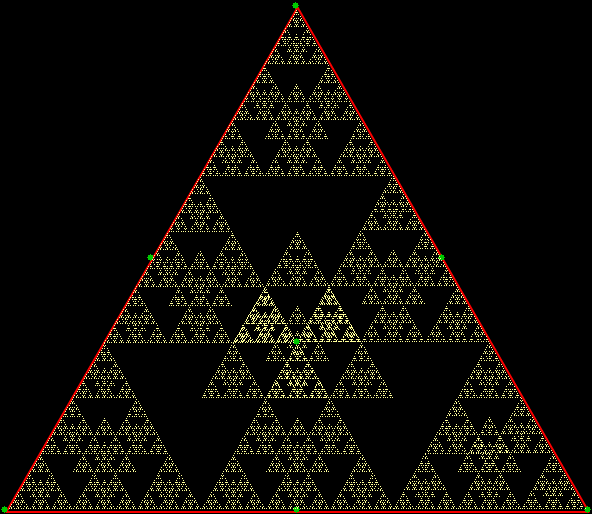
Triangle, jump = 2/3, side-targets, central target
But why stop at simple jumps like 1/2 and 2/3? Let’s take the distance to the target, td, and use the function 1-(sqrt(td/7r)), where sqrt() is the square-root and 7r is 7 times the radius of the circumscribing circle:

Triangle, jump = 1-(sqrt(td/7r))
Here’s the same jump with a central target:
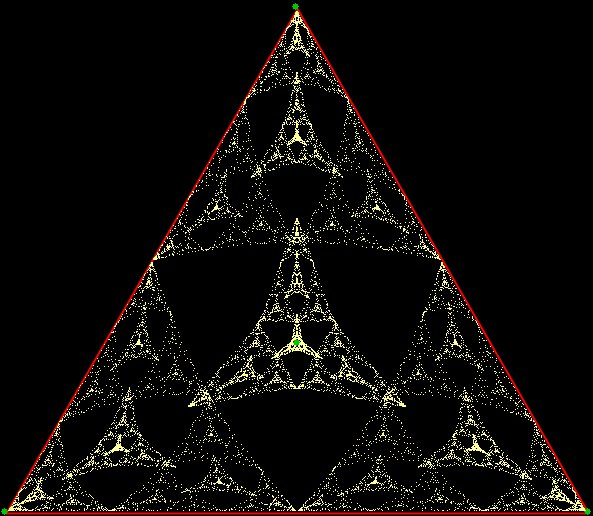
Triangle, jump = 1-(sqrt(td/7r)), central target
Now let’s try squares with various kinds of jump. A square with a 1/2-jump fills evenly with points:
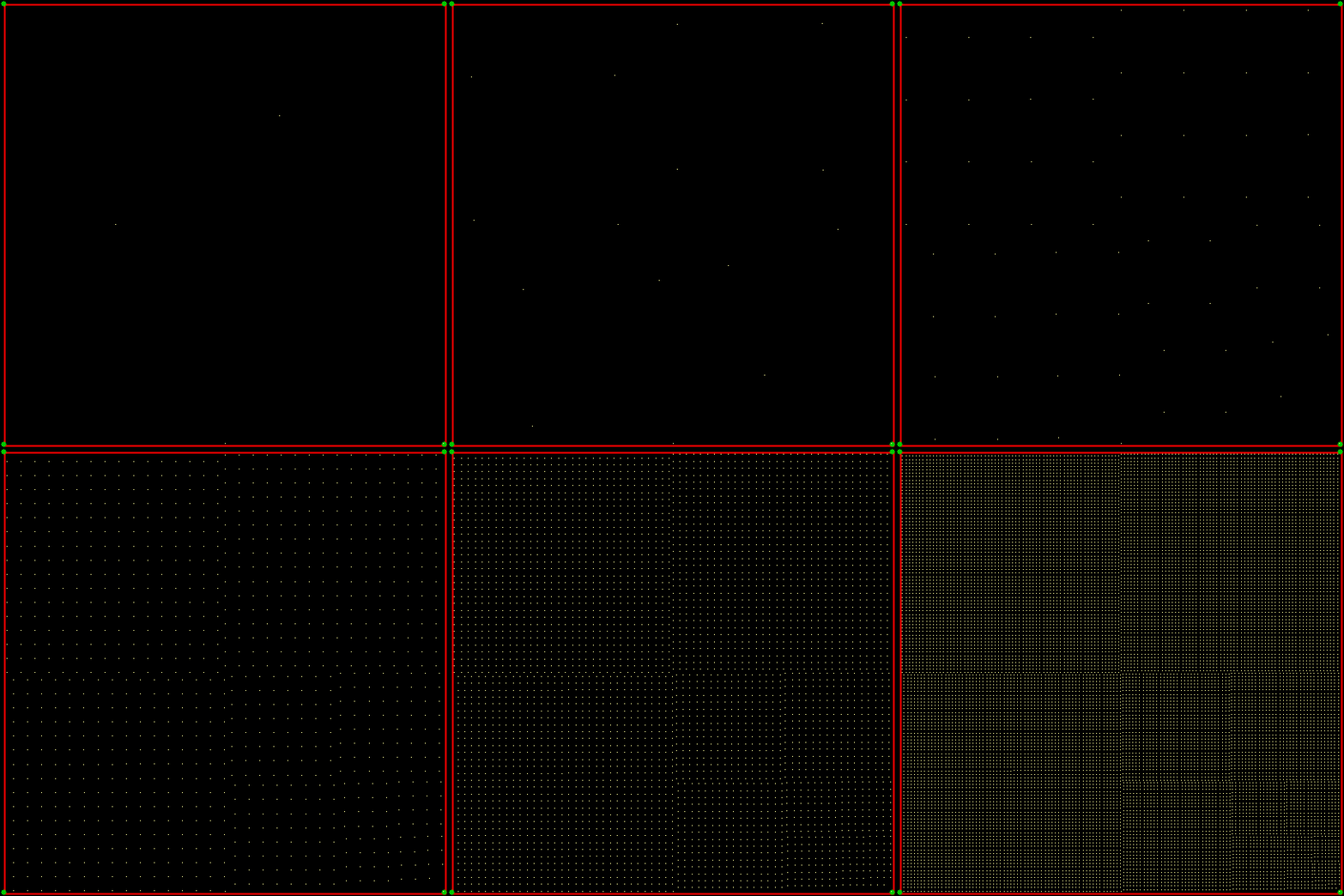
Square, jump = 1/2 (animated)
The 2/3-jump does better with a central target:
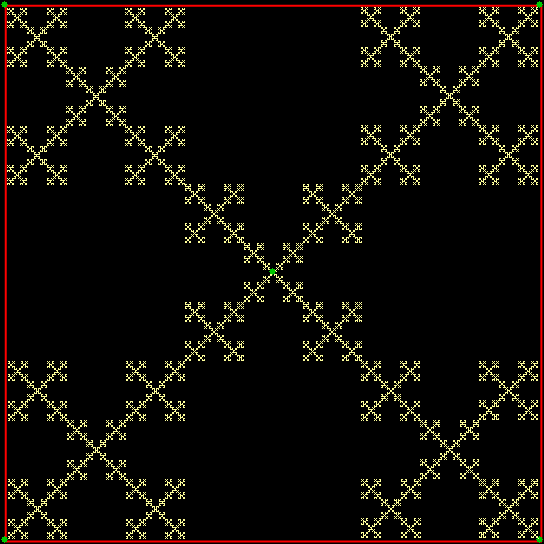
Square, jump = 2/3, central target
Or with side-targets:

Square, jump = 2/3, side-targets
Now try some more complicated jumps:

Square, jump = 1-sqrt(td/7r)
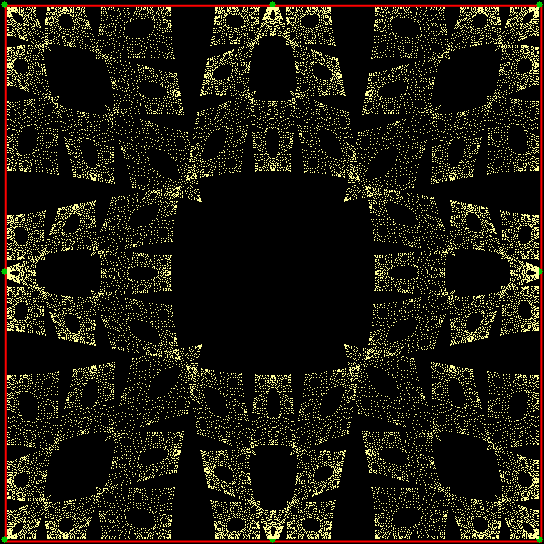
Square, jump = 1-sqrt(td/15r), side-targets
And what if you ban the point from jumping twice or more towards the same target? You get this fractal:
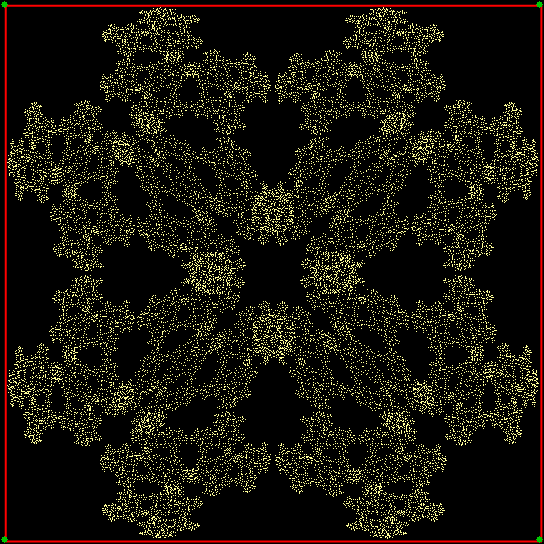
Square, jump = 1-sqrt(td/6r), ban = prev+0
Now try a ban on jumping towards the target two places clockwise of the previous target:
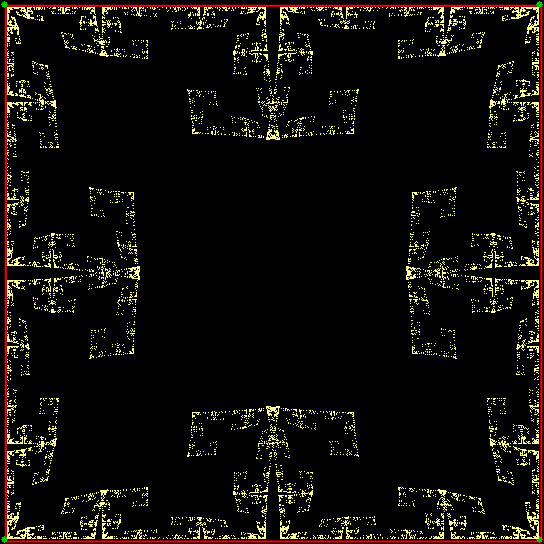
Square, jump = 1-sqrt(td/6r), ban = prev+2
And the two-place ban with a central target:
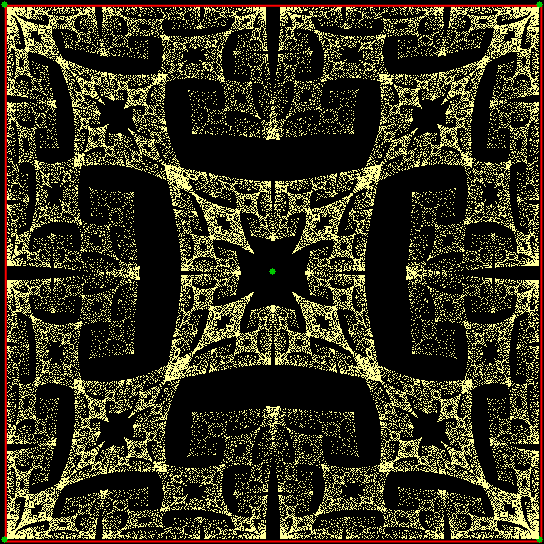
Square, jump = 1-sqrt(td/6r), ban = prev+2, central target
And so on:
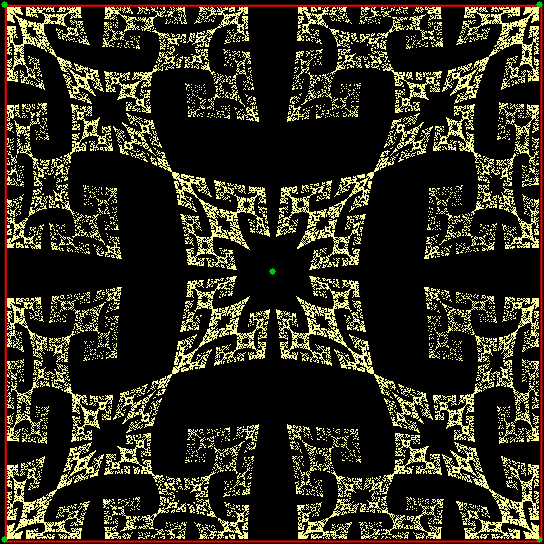
Square, jump = 1-sqrt(td/6.93r), ban = prev+2, central target
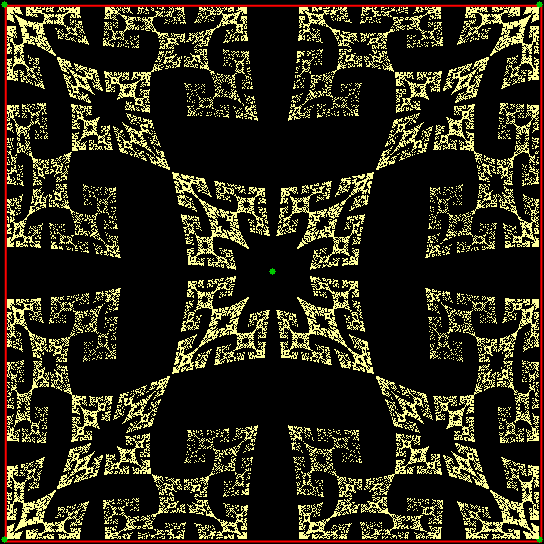
Square, jump = 1-sqrt(td/7r), ban = prev+2, central target
These fractals take account of the previous jump and the pre-previous jump:
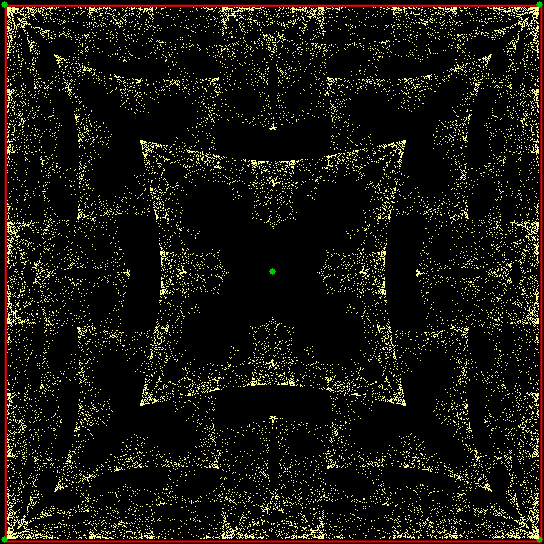
Square, jump = 1-sqrt(td/4r), ban = prev+2,2, central target
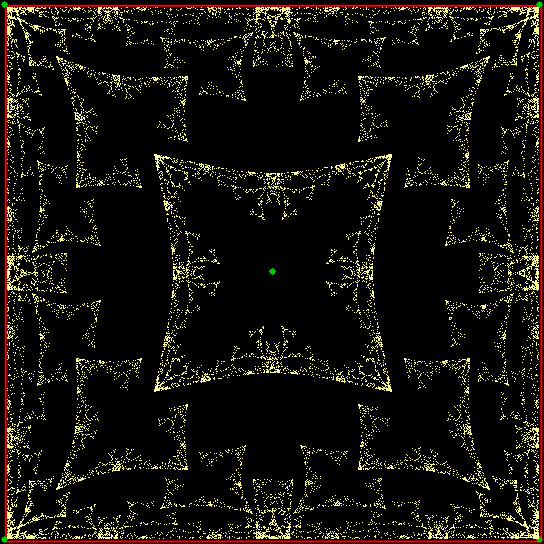
Square, jump = 1-sqrt(td/5r), ban = prev+2,2, central target
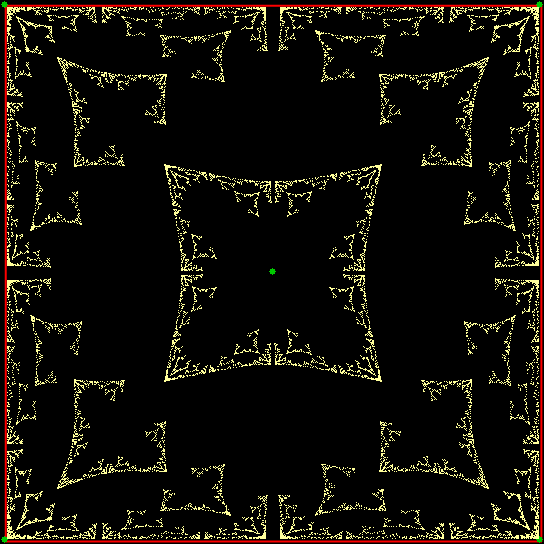
Square, jump = 1-sqrt(td/6r), ban = prev+2,2, central target
Elsewhere other-accessible
• Boole(b)an #2 — fractals created in similar ways
Cultural gayness has a fraught history in pop culture. Ever since Aids began to pick off members of the queer cultural elite in the 80s, femininity and queer signifiers (ahem, like glitter) became red flags for disease and moral corruption. The tabloid media systematically crucified gay people, using these feminine signifiers as tracking beacons. Closeting oneself and cloaking one’s femininity became a matter of survival, and not just for celebrities. — Claiming Shawn Mendes is queer is an own goal for gay men, Brian O’Flynn, The Guardian, 28xi2018.
 Overlord In Terms of Core Issues Around Maximal Engagement with Key Notions of the Über-Feral