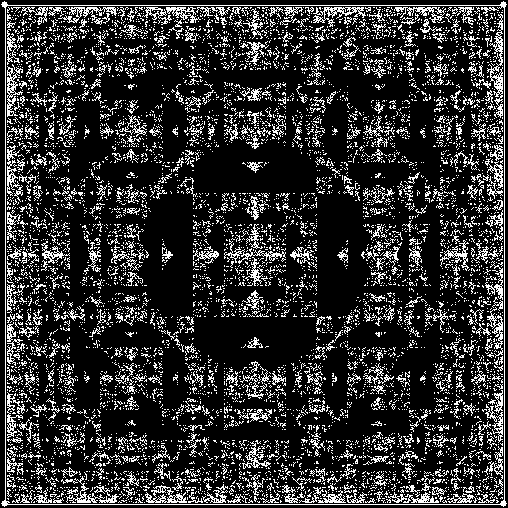
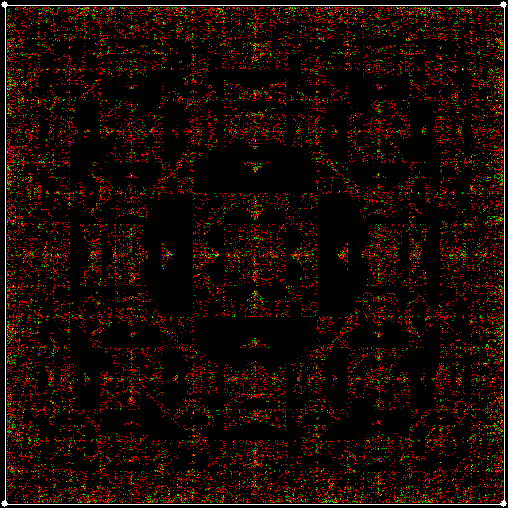
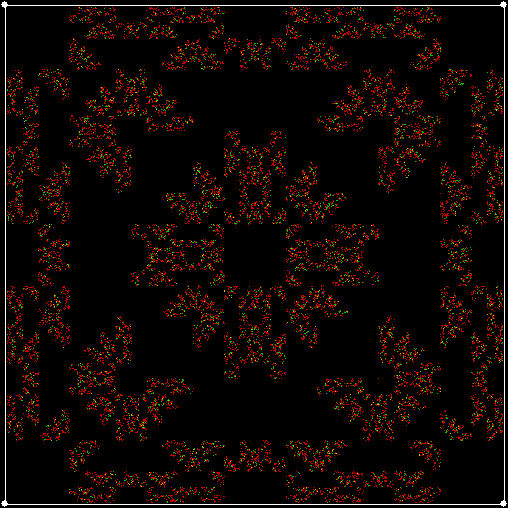
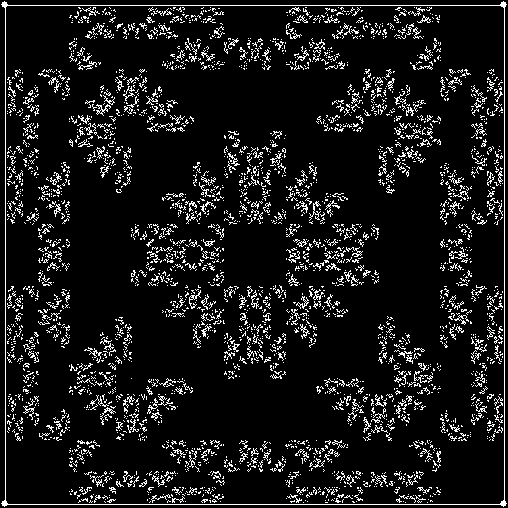
I Have a Threem

And now I have another. My first “threem”, or “three-M”, for this bijou bloguette was the alliterative three-word Latin phrase Mathematica Magistra Mundi, meaning “Mathematics Mistress of the World”. I also use it in the form Mathematica Machina Mundi, which has a variety of translations. In both Latin phrases, the words have five, three and two syllables, respectively. That’s the first three prime numbers in reverse and also part of the Fibonacci sequence in reverse.

You can find the same alliteration in languages derived from Latin, like the French La Mathématique, Maîtresse du Monde, but you don’t get the same syllable-count. So how likely was it that everything – the same alliteration and the same syllable-count – would appear in a language unrelated to Latin? But it does. Here’s a Georgian translation of the threem:

მათემატიკა მსოფლიოს მეფე

Matemat’ik’a Msoplios Mepe

“Mathematics the World’s King”

Msoplios isn’t a typo: Georgian is famous for its exotic consonant clusters and მს- / ms- isn’t a particularly unusual example. But it’s one I particularly like.

He Say, He Sigh, He Sow #36

• “By the time I was twenty-four I had constructed a complete system of philosophy. It rested on two principles: The Relativity of Things and The Circumferentiality of Man. I have since discovered that the first was not a very original discovery. It may be that the other was profound, but though I have racked my brains I cannot for the life of me remember what it was.” — W. Somerset Maugham, The Summing Up (1938), sec. 66.
Digital Rodeo

What a difference a digit makes. Suppose you take all representations of n in bases b <= n. When n = 3, the bases are 2 and 3, so 3 = 11 and 10, respectively. Next, count the occurrences of the digit 1:

digitcount(3, digit=1, n=11, 10) = 3

Add this digit-count to 3:

3 + digitcount(3, digit=1, n=11, 10) = 3 + 3 = 6.

Now apply the same procedure to 6. The bases will be 2 to 6:

6 + digitcount(6, digit=1, n=110, 20, 12, 11, 10) = 6 + 6 = 12

The procedure, n = n + digitcount(n,digit=1,base=2..n), continues like this:

12 + digcount(12,dig=1,n=1100, 110, 30, 22, 20, 15, 14, 13, 12, 11, 10) = 12 + 11 = 23
23 + digcount(23,dig=1,n=10111, 212, 113, 43, 35, 32, 27, 25, 23, 21, 1B, 1A, 19, 18, 17, 16, 15, 14, 13, 12, 11, 10) = 23 + 21 = 44
44 + digcount(44,dig=1,n=101100, 1122, 230, 134, 112, 62, 54, 48, 44, 40, 38, 35, 32, 2E, 2C, 2A, 28, 26, 24, 22, 20, 1L, 1K, 1J, 1I, 1H, 1G, 1F, 1E, 1D, 1C, 1B, 1A, 19, 18, 17, 16, 15, 14, 13, 12, 11, 10) = 44 + 31 = 75

And the sequence develops like this:

3, 6, 12, 23, 44, 75, 124, 202, 319, 503, 780, 1196, 1824, 2766, 4191, 6338, 9546, 14383, 21656, 32562, 48930, 73494, 110361, 165714, 248733, 373303, 560214, 840602, 1261237, 1892269, 2838926, 4258966, 6389157, 9584585, 14377879…

Now try the same procedure using the digit 0: n = n + digcount(n,dig=0,base=2..n). The first step is this:

3 + digcount(3,digit=0,n=11, 10) = 3 + 1 = 4

Next come these:

4 + digcount(4,dig=0,n=100, 11, 10) = 4 + 3 = 7
7 + digcount(7,dig=0,n=111, 21, 13, 12, 11, 10) = 7 + 1 = 8
8 + digcount(8,dig=0,n=1000, 22, 20, 13, 12, 11, 10) = 8 + 5 = 13
13 + digcount(13,dig=0,n=1101, 111, 31, 23, 21, 16, 15, 14, 13, 12, 11, 10) = 13 + 2 = 15
15 + digcount(15,dig=0,n=1111, 120, 33, 30, 23, 21, 17, 16, 15, 14, 13, 12, 11, 10) = 15 + 3 = 18
18 + digcount(18,dig=0,n=10010, 200, 102, 33, 30, 24, 22, 20, 18, 17, 16, 15, 14, 13, 12, 11, 10) = 18 + 9 = 27
27 + digcount(27,dig=0,n=11011, 1000, 123, 102, 43, 36, 33, 30, 27, 25, 23, 21, 1D, 1C, 1B, 1A, 19, 18, 17, 16, 15, 14, 13, 12, 11, 10) = 27 + 7 = 34
34 + digcount(34,dig=0,n=100010, 1021, 202, 114, 54, 46, 42, 37, 34, 31, 2A, 28, 26, 24, 22, 20, 1G, 1F, 1E, 1D, 1C, 1B, 1A, 19, 18, 17, 16, 15, 14, 13, 12, 11, 10) = 34 + 8 = 42
42 + digcount(42,dig=0,n=101010, 1120, 222, 132, 110, 60, 52, 46, 42, 39, 36, 33, 30, 2C, 2A, 28, 26, 24, 22, 20, 1K, 1J, 1I, 1H, 1G, 1F, 1E, 1D, 1C, 1B, 1A, 19, 18, 17, 16, 15, 14, 13, 12, 11, 10) = 42 + 9 = 51

The sequence develops like this:

3, 4, 7, 8, 13, 15, 18, 27, 34, 42, 51, 59, 62, 66, 80, 94, 99, 111, 117, 125, 132, 151, 158, 163, 173, 180, 204, 222, 232, 244, 258, 279, 292, 307, 317, 324, 351, 364, 382, 389, 400, 425, 437, 447, 454, 466, 475, 483, 494, 509, 517, 536, 553, 566, 576, 612, 637, 649, 669, 679, 693, 712, 728, 753, 768, 801, 822, 835, 849, 862, 869, 883, 895, 906, 923, 932, 943, 949, 957, 967, 975, 999, 1011…

If you compare it with the sequence for digit=1, it appears that digcount(n,dig=1,b=2..n) is always larger than digcount(n,dig=0,b=2..n). That is in fact the case, with one exception, when n = 2:

digcount(2,dig=1,n=10) = 1
digcount(2,dig=0,n=10) = 1

When n = 10 (in base ten), there are twice as many ones as zeros:

digcount(10,dig=1,n=1010, 101, 22, 20, 14, 13, 12, 11, 10) = 10
digcount(10,dig=0,n=1010, 101, 22, 20, 14, 13, 12, 11, 10) = 5

As n gets larger, the difference grows dramatically:

digcount(100,dig=1,base=2..n) = 64
digcount(100,dig=0,base=2..n) = 16

digcount(1000,dig=1,base=2..n) = 533
digcount(1000,dig=0,base=2..n) = 25

digcount(10000,dig=1,base=2..n) = 5067
digcount(10000,dig=0,base=2..n) = 49

digcount(100000,dig=1,base=2..n) = 50140
digcount(100000,dig=0,base=2..n) = 73

digcount(1000000,dig=1,base=2..n) = 500408
digcount(1000000,dig=0,base=2..n) = 102

digcount(10000000,dig=1,base=2..n) = 5001032
digcount(10000000,dig=0,base=2..n) = 134

digcount(100000000,dig=1,base=2..n) = 50003137
digcount(100000000,dig=0,base=2..n) = 160

In fact, digcount(n,dig=1,b=2..n) is greater than the digit-count for any other digit: 0, 2, 3, 4, 5… (with the exception n = 2, as shown above). But digit=0 sometimes beats digits >= 2. For example, when n = 18:
digcount(18,dig=0,n=10010, 200, 102, 33, 30, 24, 22, 20, 18, 17, 16, 15, 14, 13, 12, 11, 10) = 9
digcount(18,dig=2,n=10010, 200, 102, 33, 30, 24, 22, 20, 18, 17, 16, 15, 14, 13, 12, 11, 10) = 7
digcount(18,dig=3,n=10010, 200, 102, 33, 30, 24, 22, 20, 18, 17, 16, 15, 14, 13, 12, 11, 10) = 4
digcount(18,dig=4,n=10010, 200, 102, 33, 30, 24, 22, 20, 18, 17, 16, 15, 14, 13, 12, 11, 10) = 2
digcount(18,dig=5,n=10010, 200, 102, 33, 30, 24, 22, 20, 18, 17, 16, 15, 14, 13, 12, 11, 10) = 1

But as n gets larger, digcount(0) will fall permanently behind all these digits. However, digcount(0) will always be greater than some digit d, for the obvious reason that some digits only appear when the base is high enough. For example, the hexadecimal digit A (with the decimal value 10) first appears when n = 21:

digcount(21,dig=A,n=10101, 210, 111, 41, 33, 30, 25, 23, 21, 1A, 19, 18, 17, 16, 15, 14, 13, 12, 11, 10) = 1 digcount(21,dig=0,n=10101, 210, 111, 41, 33, 30, 25, 23, 21, 1A, 19, 18, 17, 16, 15, 14, 13, 12, 11, 10) = 5

There is a general rule for the n at which digit d first appears, n = 2d + 1 (this doesn’t apply when d = 0 or d = 1):

d = 2, n = 5 = 2*2 + 1
digcount(5,dig=2,n=101, 12, 11, 10) = 1

d = 3, n = 7 = 2*3 + 1
digcount(7,dig=3,n=111, 21, 13, 12, 11, 10) = 1

d = 4, n = 9 = 2*4 + 1
digcount(9,dig=4,n=1001, 100, 21, 14, 13, 12, 11, 10) = 1

d = 5, n = 11 = 2*5 + 1
digcount(11,dig=5,n=1011, 102, 23, 21, 15, 14, 13, 12, 11, 10) = 1

It should be apparent, then, that the digit-count for a particular digit starts at 1 and gets gradually higher. The rate at which the digit-count increases is highest for 1 and lowest for 0, with digits 2, 3, 4, 5… in between:

All-Base Graph

Graph for digcount(n,dig=d,b=2..n)


You could think of the graph as a digital rodeo in which these digits compete with each other. 1 is the clear and permanent winner, 0 the gradual loser. Now recall the procedure introduced at the start: n = n + digcount(n,dig=d,b=2..n). When it’s applied to the digits 0 to 5, these are the sequences that appear:

n = n + digcount(n,dig=0,b=2..n)

2, 3, 4, 7, 8, 13, 15, 18, 27, 34, 42, 51, 59, 62, 66, 80, 94, 99, 111, 117, 125, 132, 151, 158, 163, 173, 180, 204, 222, 232, 244, 258, 279, 292, 307, 317, 324, 351, 364, 382, 389, 400, 425, 437, 447, 454, 466, 475, 483, 494, 509, 517, 536, 553, 566, 576, 612, 637, 649, 669, 679, 693, 712, 728, 753, 768, 801, 822, 835, 849, 862, 869, 883, 895, 906, 923, 932, 943, 949, 957, 967, 975, 999, 1011…

n = n + digcount(n,dig=1,b=2..n)

2, 3, 6, 12, 23, 44, 75, 124, 202, 319, 503, 780, 1196, 1824, 2766, 4191, 6338, 9546, 14383, 21656, 32562, 48930, 73494, 110361, 165714, 248733, 373303, 560214, 840602, 1261237, 1892269, 2838926, 4258966, 6389157, 9584585, 14377879…

n = n + digcount(n,dig=2,b=2..n)

5, 6, 8, 12, 16, 22, 31, 37, 48, 60, 76, 94, 115, 138, 173, 213, 257, 311, 374, 454, 542, 664, 790, 935, 1109, 1310, 1552, 1835, 2167, 2548, 2989, 3509, 4120, 4832, 5690, 6687, 7829, 9166, 10727, 12568, 14697, 17182, 20089, 23470, 27425, 32042, 37477, 43768, 51113, 59687, 69705, 81379, 94998, 110910, 129488, 151153, 176429, 205923, 240331, 280490, 327396, 382067, 445858…

n = n + digcount(n,dig=3,b=2..n)

7, 8, 9, 10, 11, 13, 16, 18, 22, 25, 29, 34, 38, 44, 50, 56, 63, 80, 90, 104, 113, 131, 151, 169, 188, 210, 236, 261, 289, 320, 350, 385, 424, 463, 520, 572, 626, 684, 747, 828, 917, 999, 1101, 1210, 1325, 1446, 1577, 1716, 1871, 2040, 2228, 2429, 2642, 2875, 3133, 3413, 3719, 4044, 4402, 4786, 5196, 5645, 6140, 6673, 7257, 7900, 8582, 9315, 10130, 10998, 11942, 12954, 14058…

n = n + digcount(n,dig=4,b=2..n)

9, 10, 11, 12, 13, 14, 16, 18, 20, 23, 25, 28, 34, 41, 44, 52, 61, 67, 74, 85, 92, 102, 113, 121, 134, 148, 170, 184, 208, 229, 253, 269, 287, 306, 324, 356, 386, 410, 439, 469, 501, 531, 565, 604, 662, 703, 742, 794, 845, 895, 953, 1007, 1062, 1127, 1188, 1262, 1336, 1421, 1503, 1585, 1676, 1777, 1876, 2001, 2104, 2249, 2375, 2502, 2636, 2789, 2938, 3102, 3267, 3444, 3644, 3868, 4099…

n = n + digcount(n,dig=5,b=2..n)

11, 12, 13, 14, 15, 16, 17, 19, 21, 23, 26, 28, 29, 33, 37, 41, 48, 50, 55, 60, 64, 67, 72, 75, 83, 91, 96, 102, 107, 118, 123, 129, 137, 151, 159, 171, 180, 192, 202, 211, 224, 233, 251, 268, 280, 296, 310, 324, 338, 355, 380, 401, 430, 455, 488, 511, 536, 562, 584, 607, 638, 664, 692, 718, 748, 778, 807, 838, 874, 911, 951, 993, 1039, 1081, 1124, 1166, 1216, 1264, 1313, 1370, 1432…

Polymorphous Perverticity

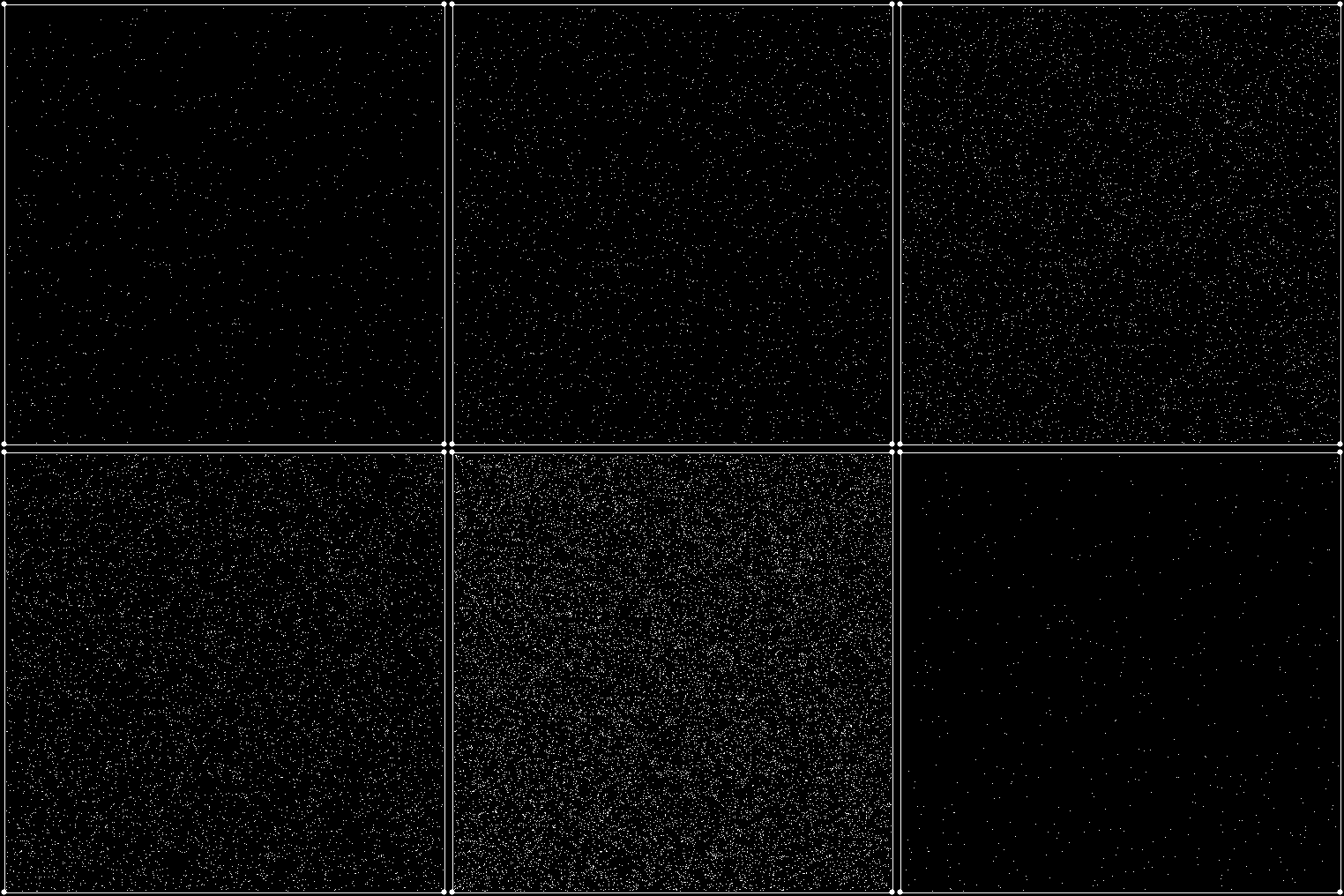
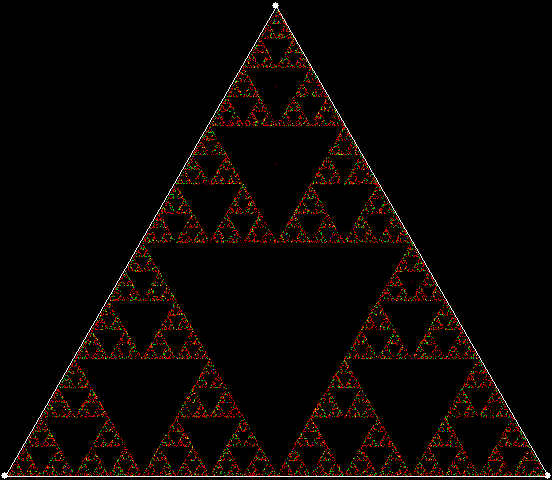
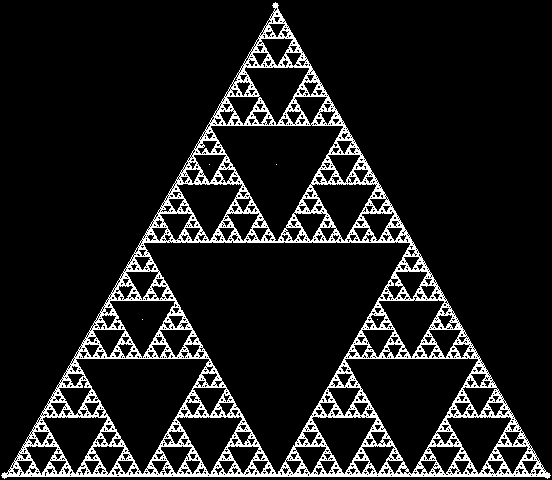
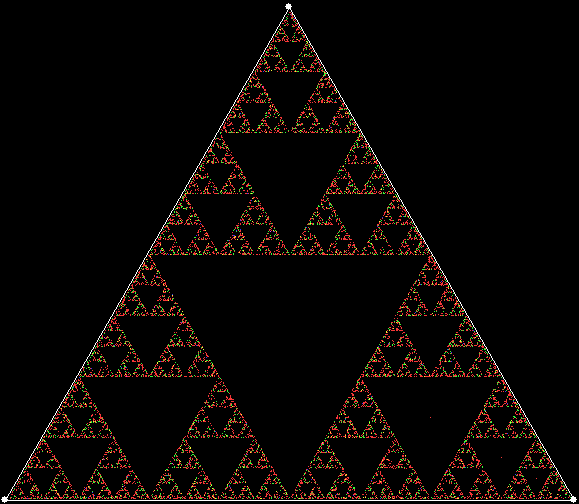
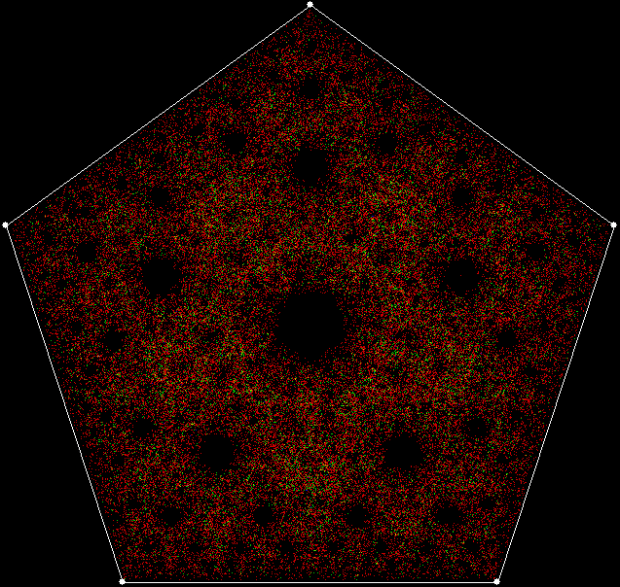
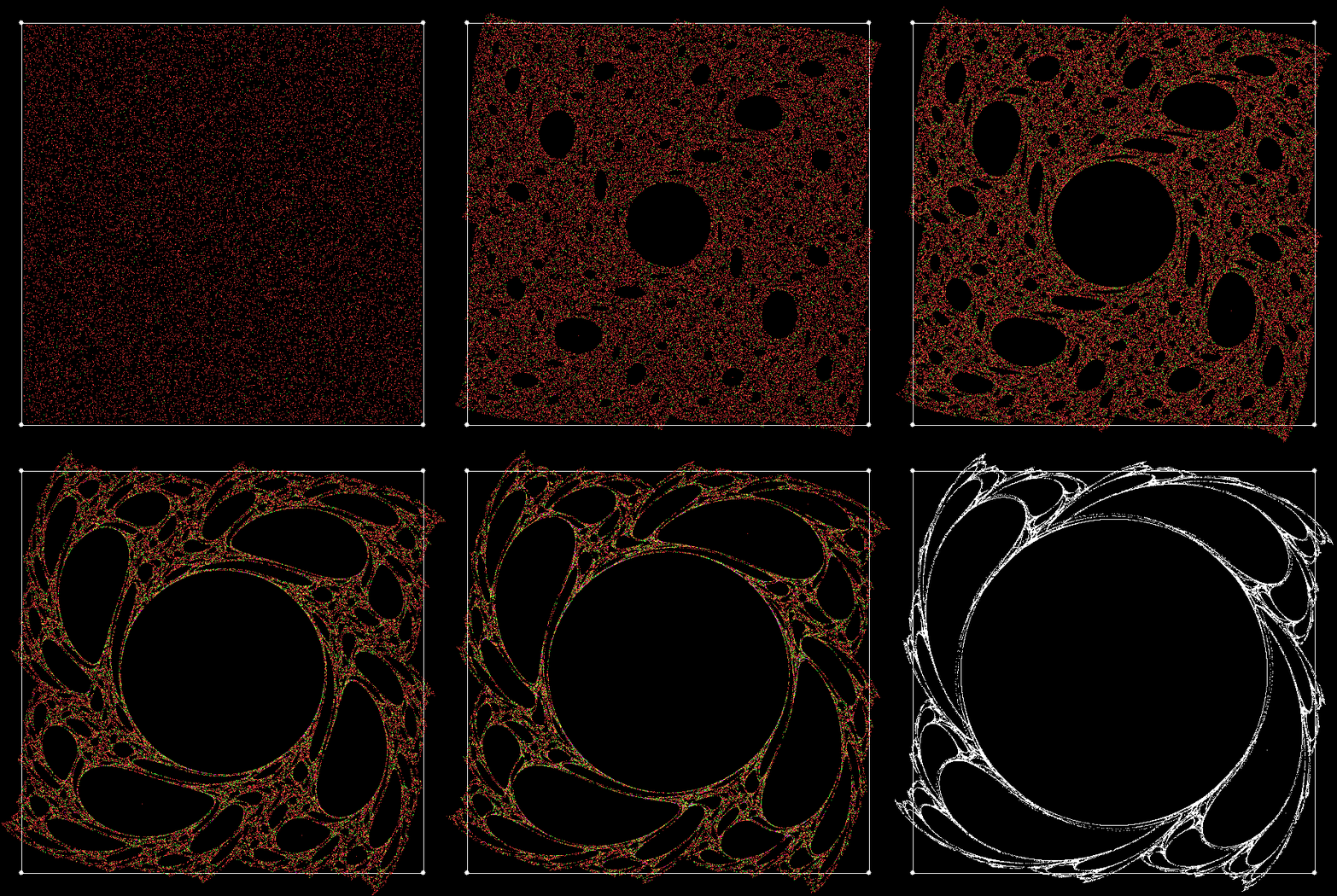
As I’ve explained before on Overlord of the Über-Feral, the planet’s premier purveyor of polygonic performativity (probably (possibly (perspectivistically))), it works with triangles and pentagons, but not with squares. And what is “it”? A simple procedure in which you create a polygon, choose a point inside it, then repeatedly move half-way towards a vertex chosen at random, marking each new position as you go.

pol3_4_5

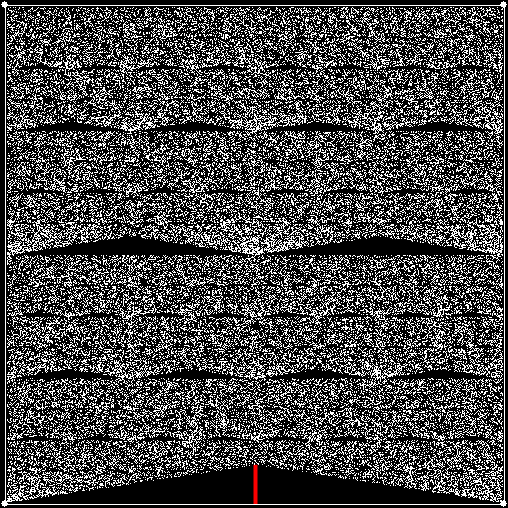
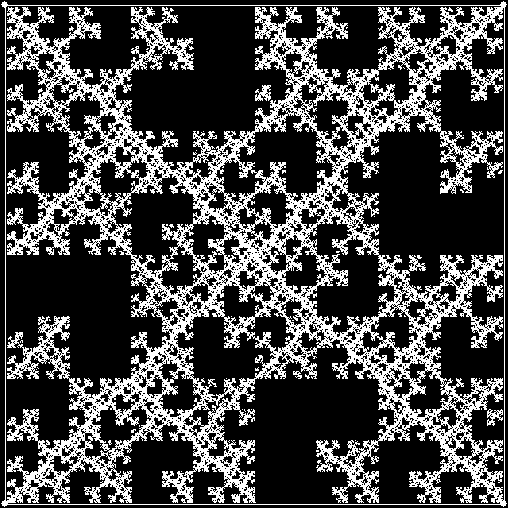
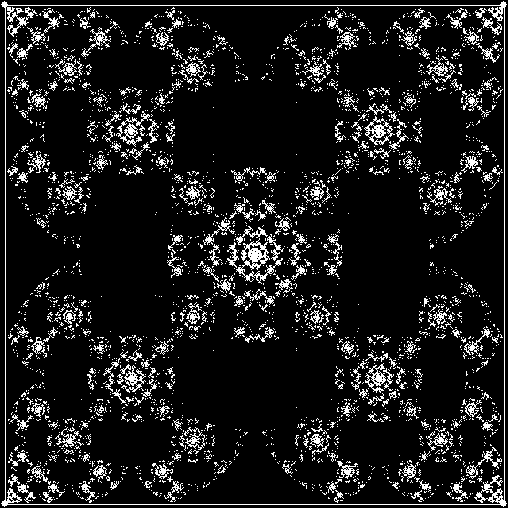
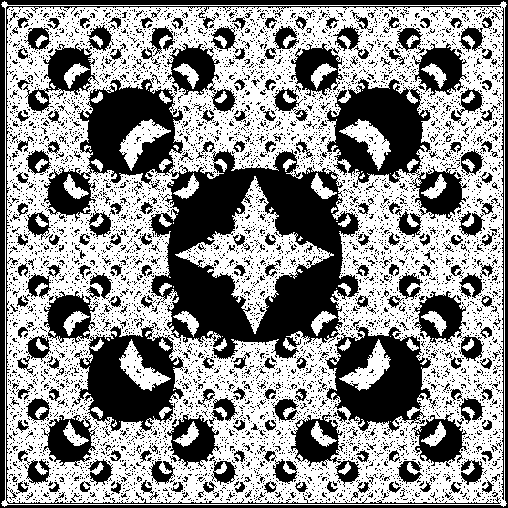
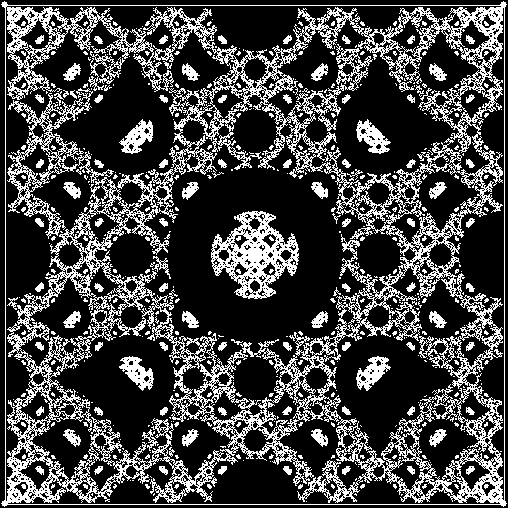
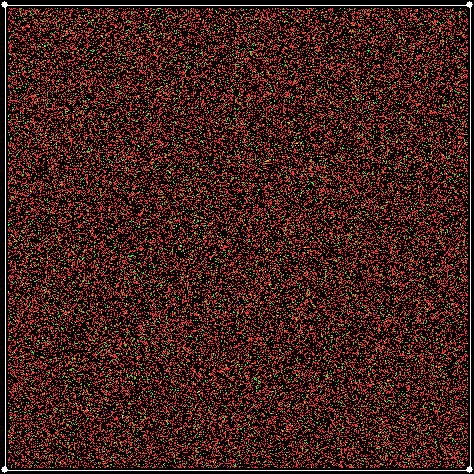
When the polygon has three vertices, you get a Sierpiński triangle. When it has five, you get what might be called a  Sierpiński pentagon. When it has four, you get nothing. Or rather: you get everything, because the whole interior of the square gradually fills with points. But, as I’ve also explained before, there’s a simple way to change this. You can adapt the procedure so that a vertex can’t be chosen twice in a row, and so on.

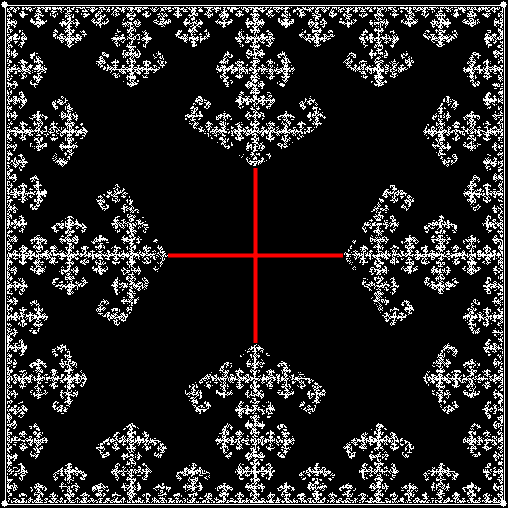
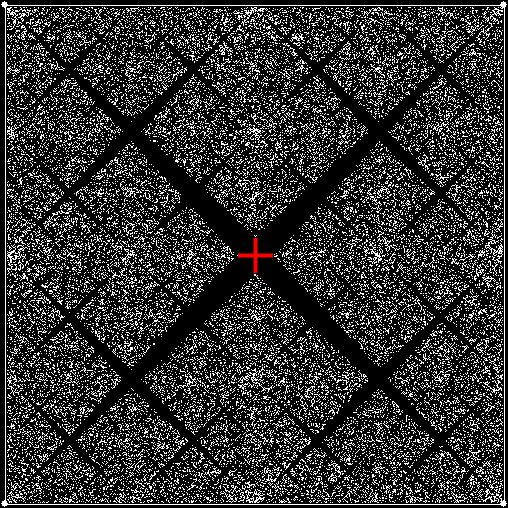
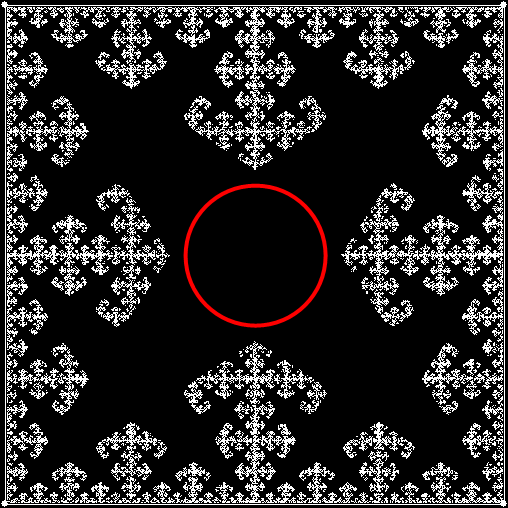
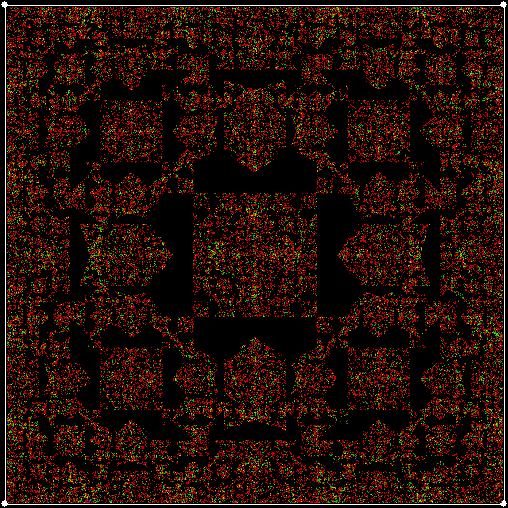
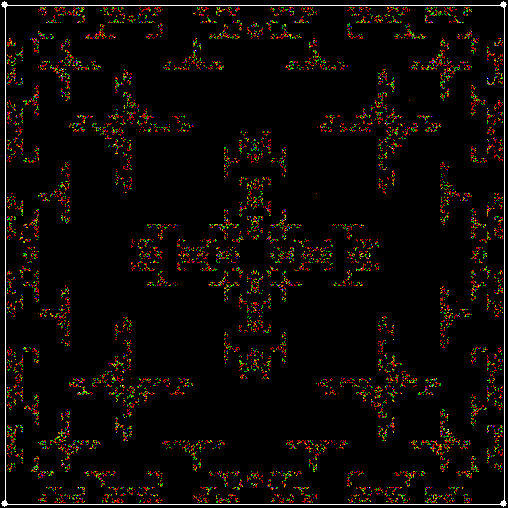
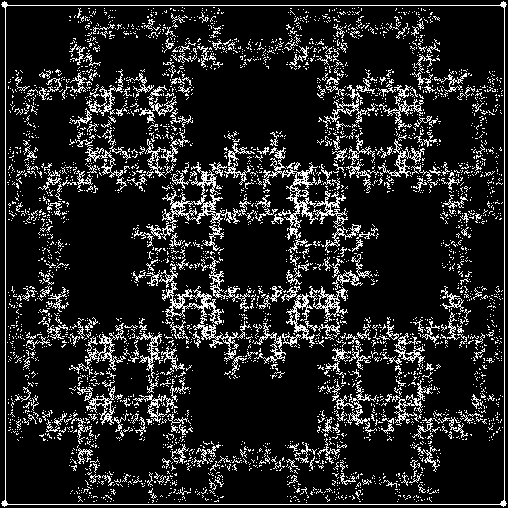
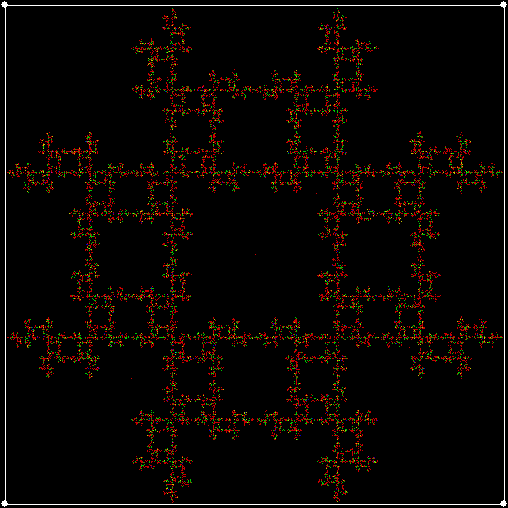
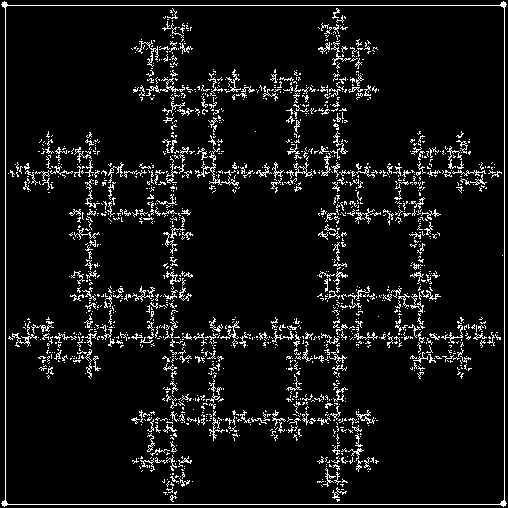
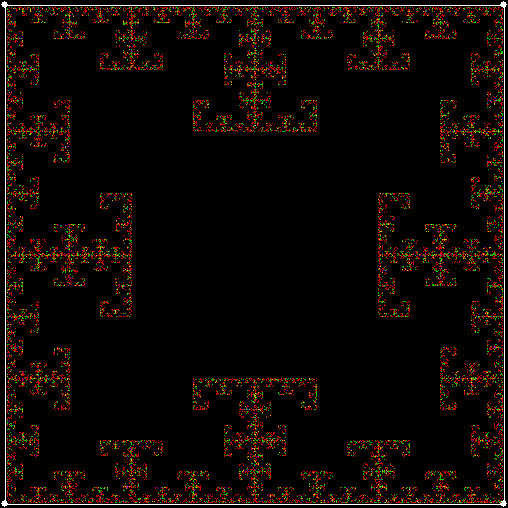
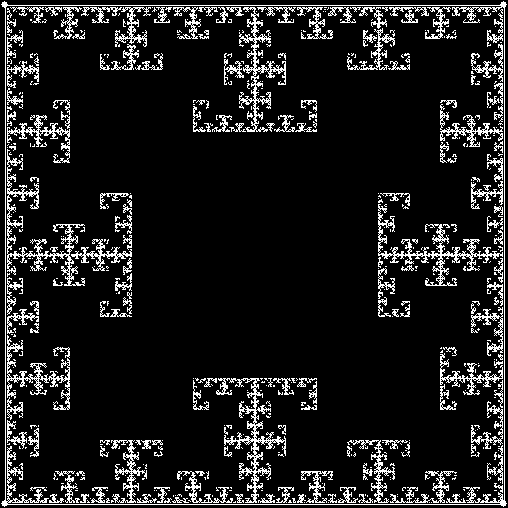
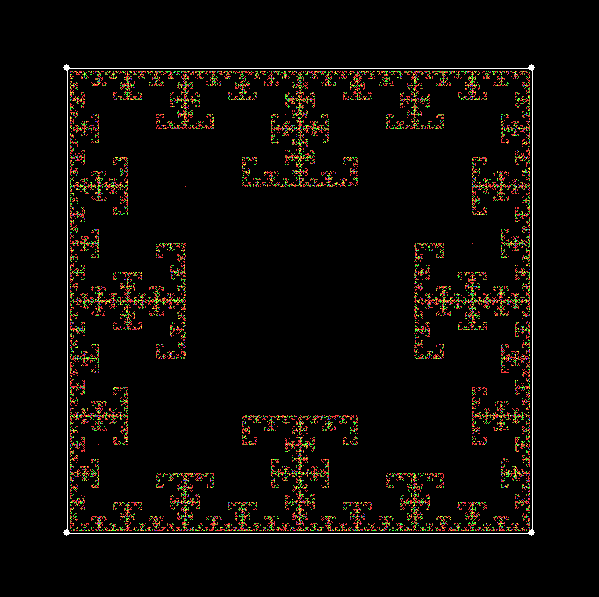
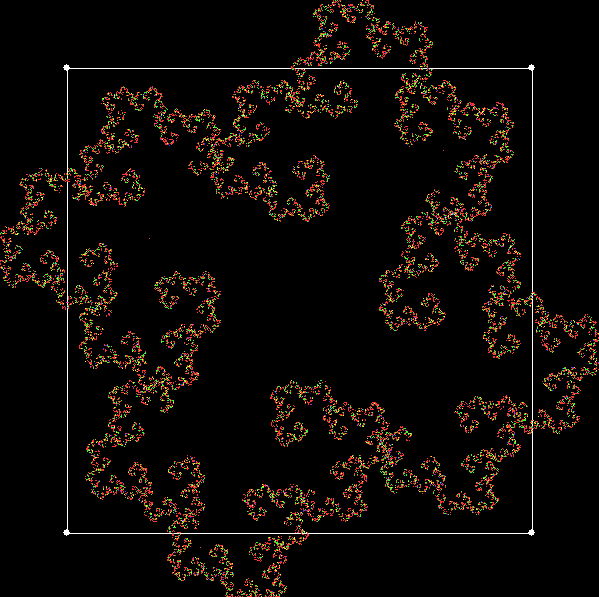
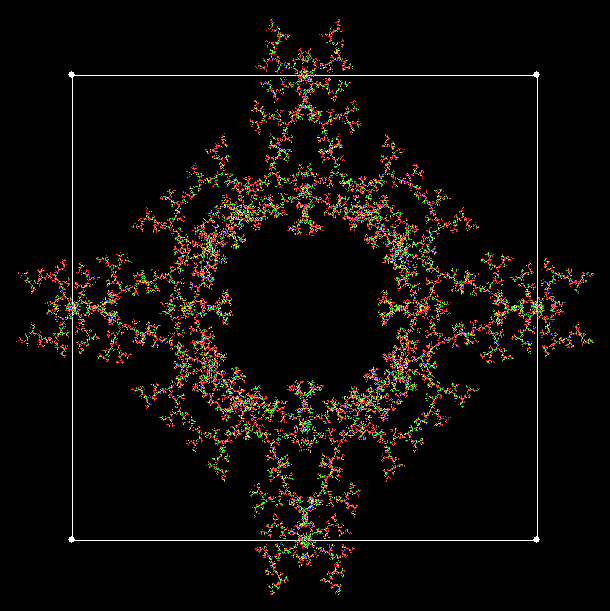
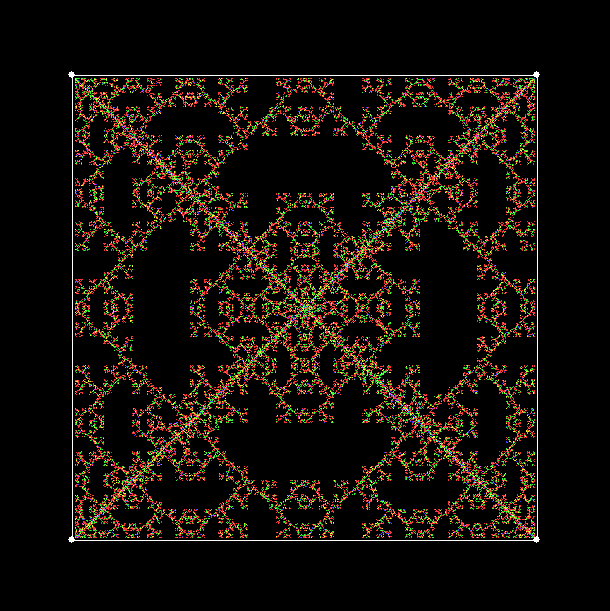
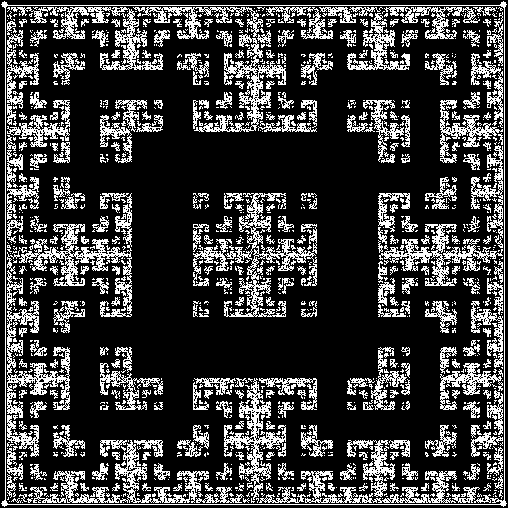
When the rule is “No vertex twice in a row”, you get this fractal (colours change as a pixel is selected again):

pol4_0

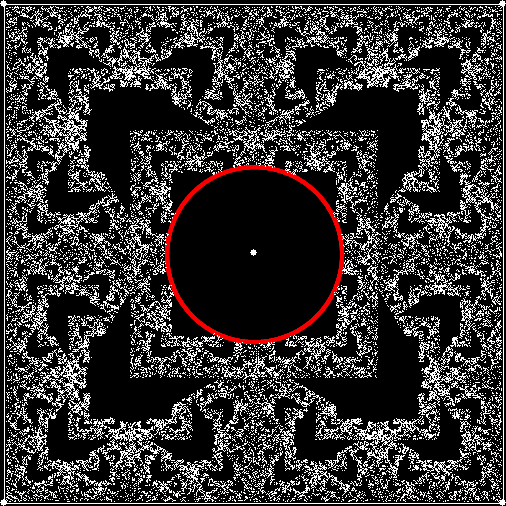
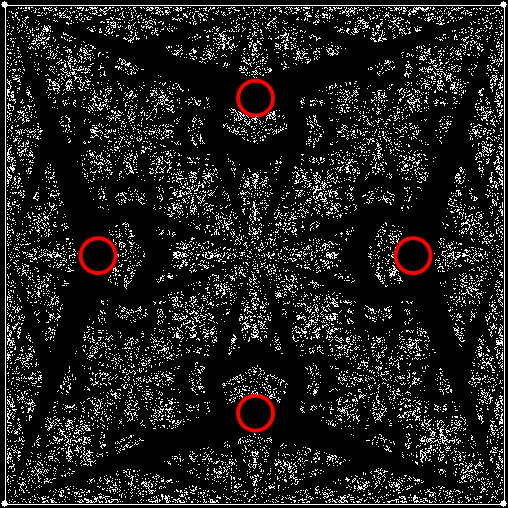
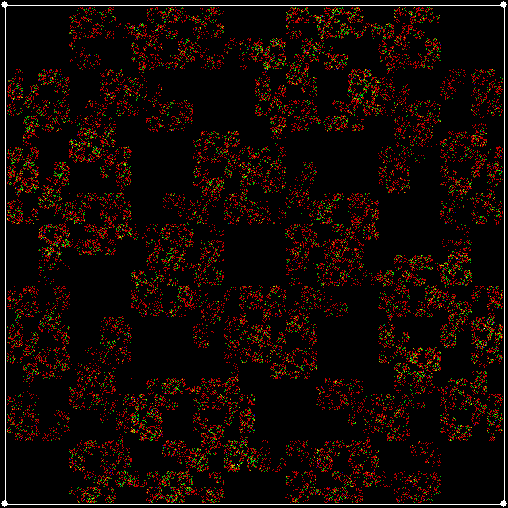
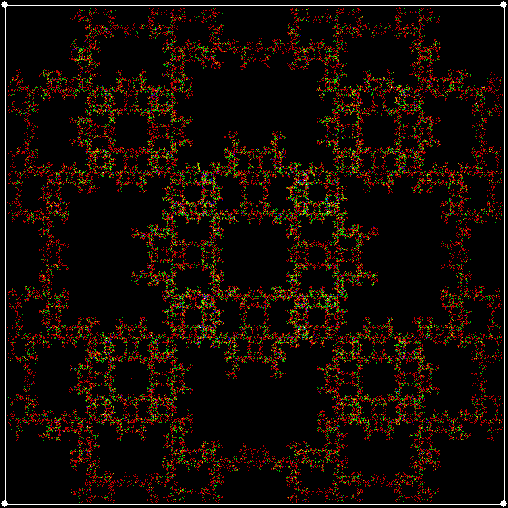
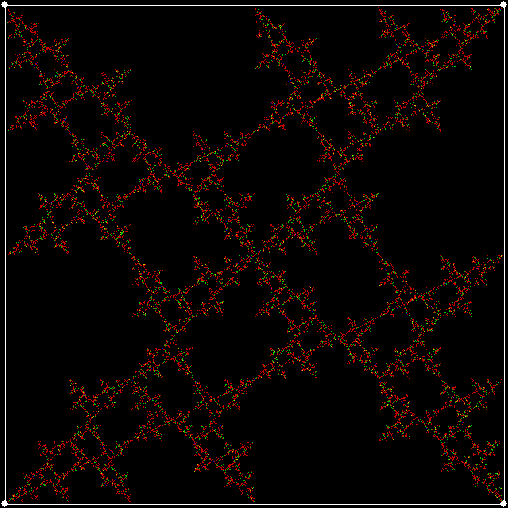
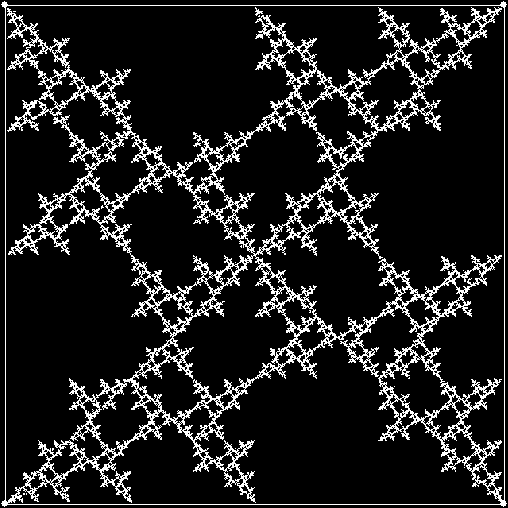
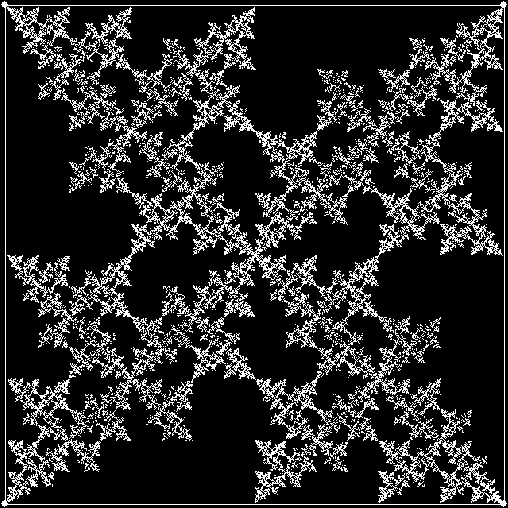
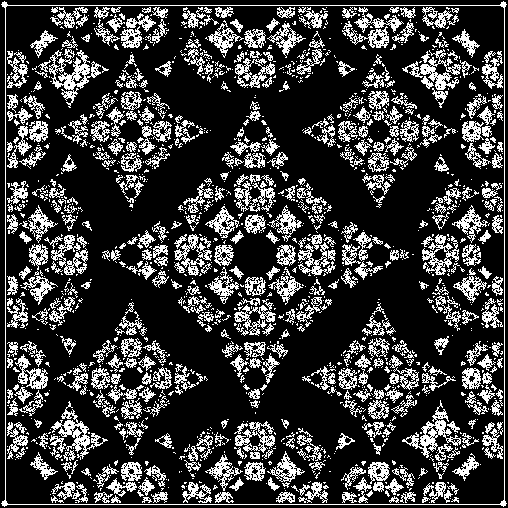
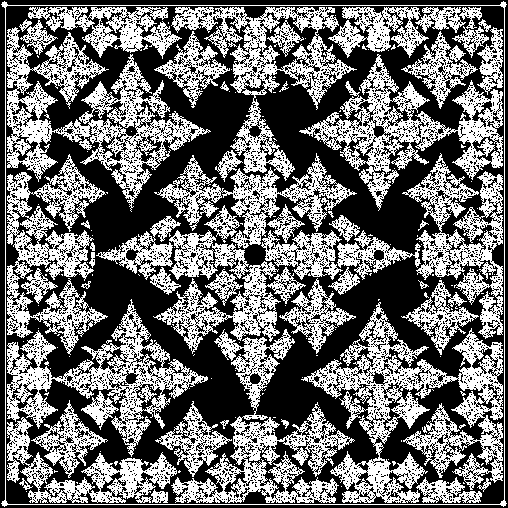
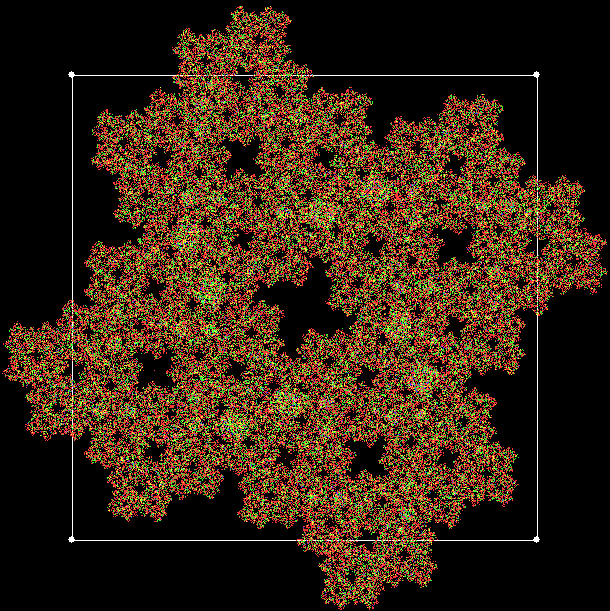
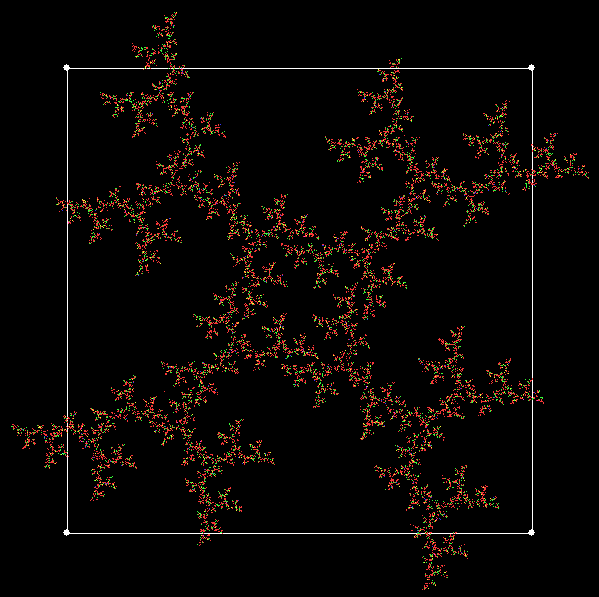
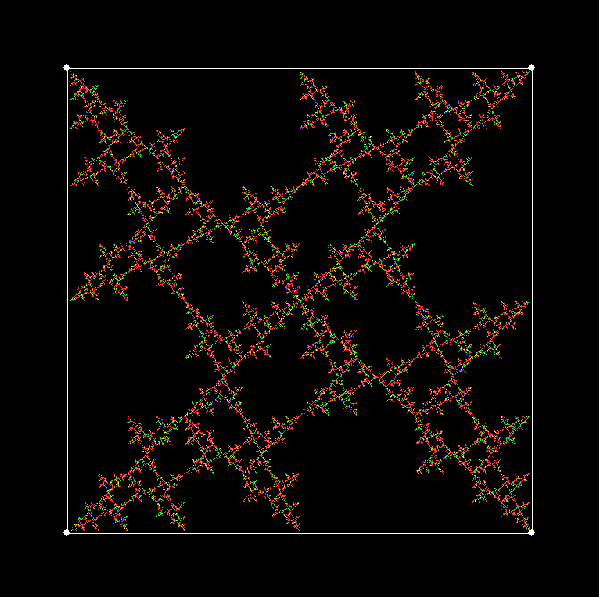
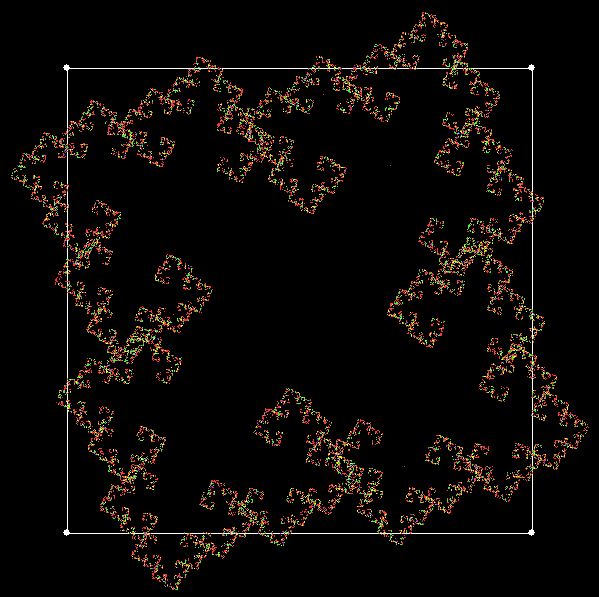
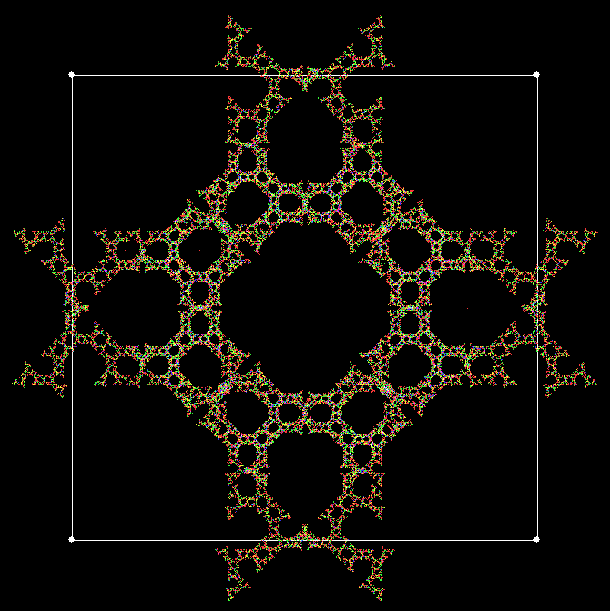
But you can also use what might be a vertex increment, or vi, whereby you disallow vertices that are next to the previously chosen vertex, or two positions away, and so on. When the rule is “No vertex twice in a row”, the disallowed vertex is (v + 0), that is, vi = 0. If vi = 2 and the rule is disallow(v + 2), this fractal appears (when vi = 1, there’s no fractal):

pol4_2

v = 4, vi = 2

pol4_2_anim


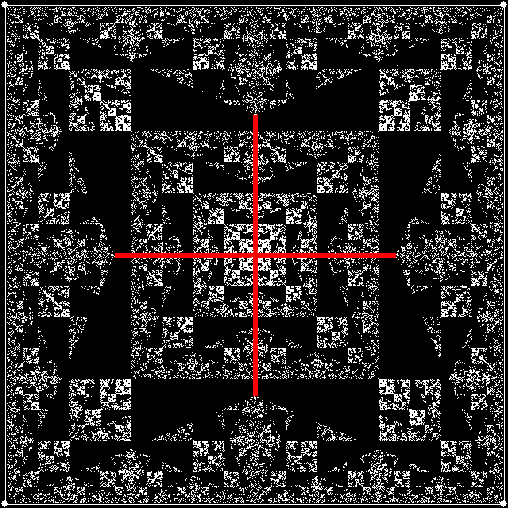
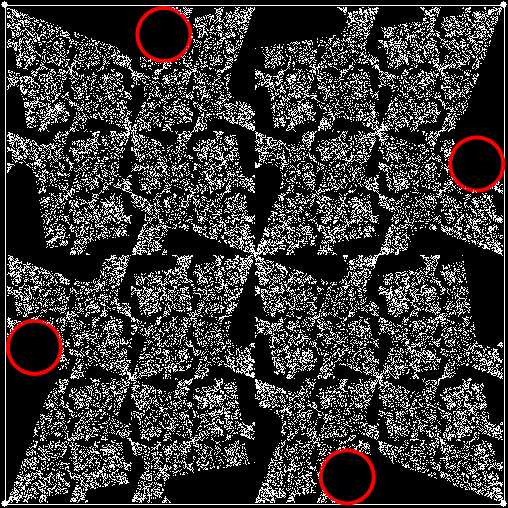
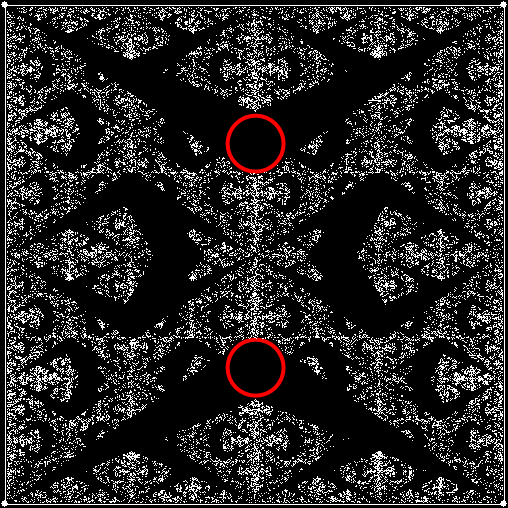
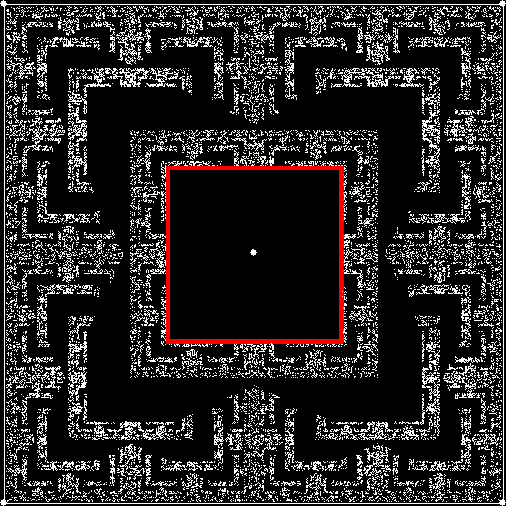
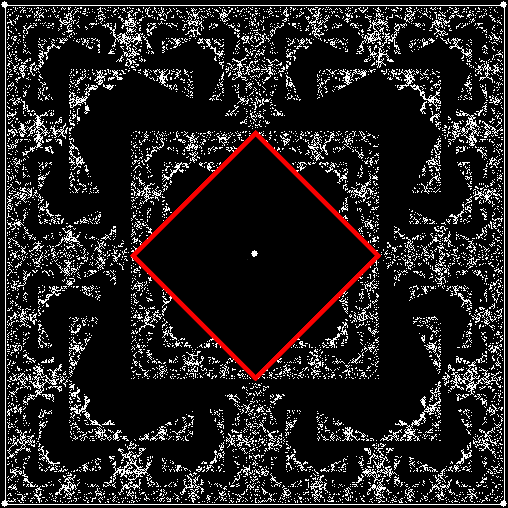
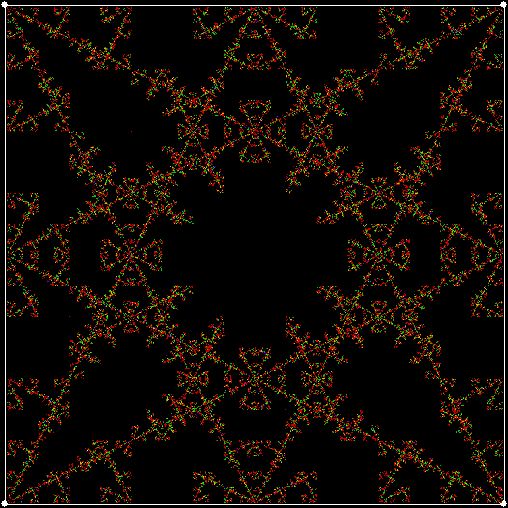
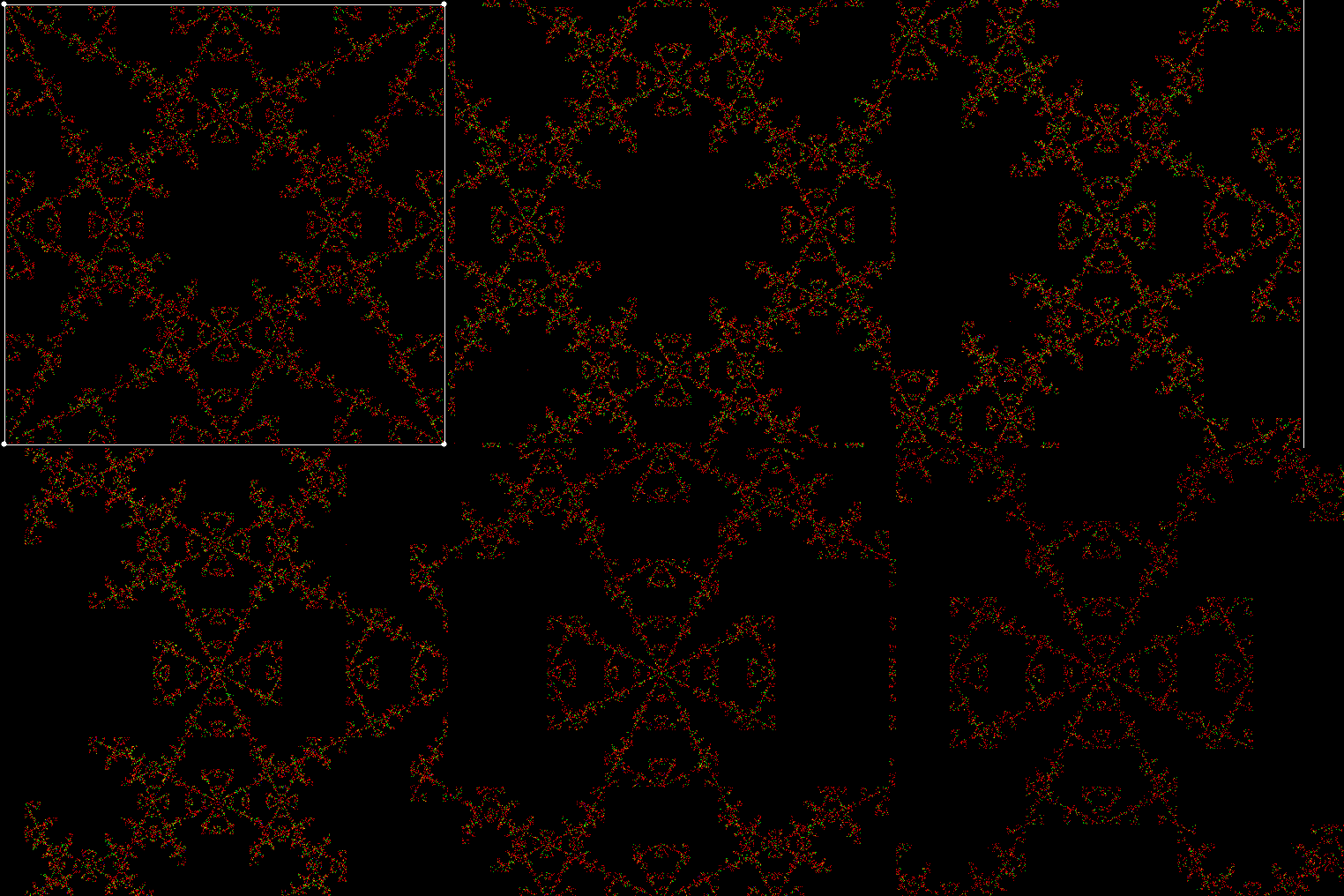
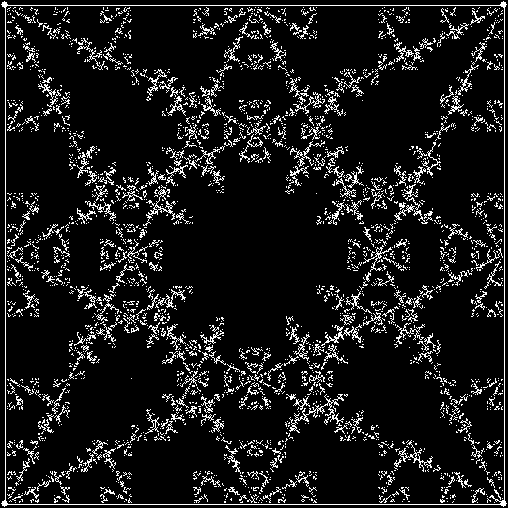
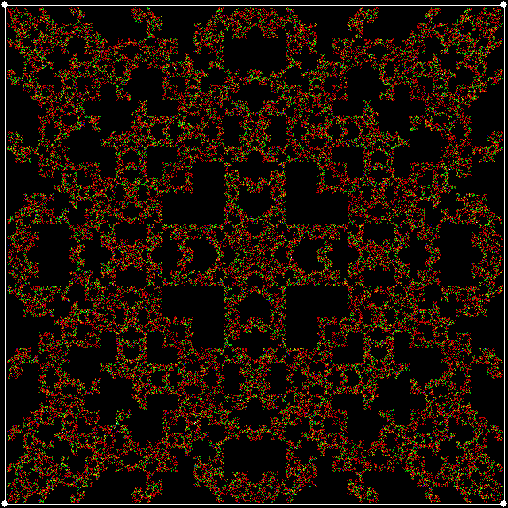
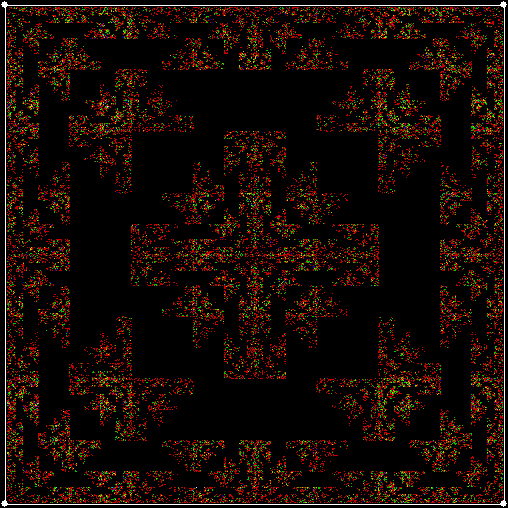
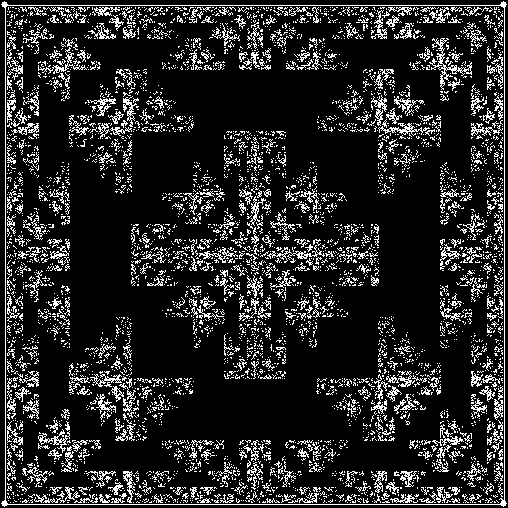
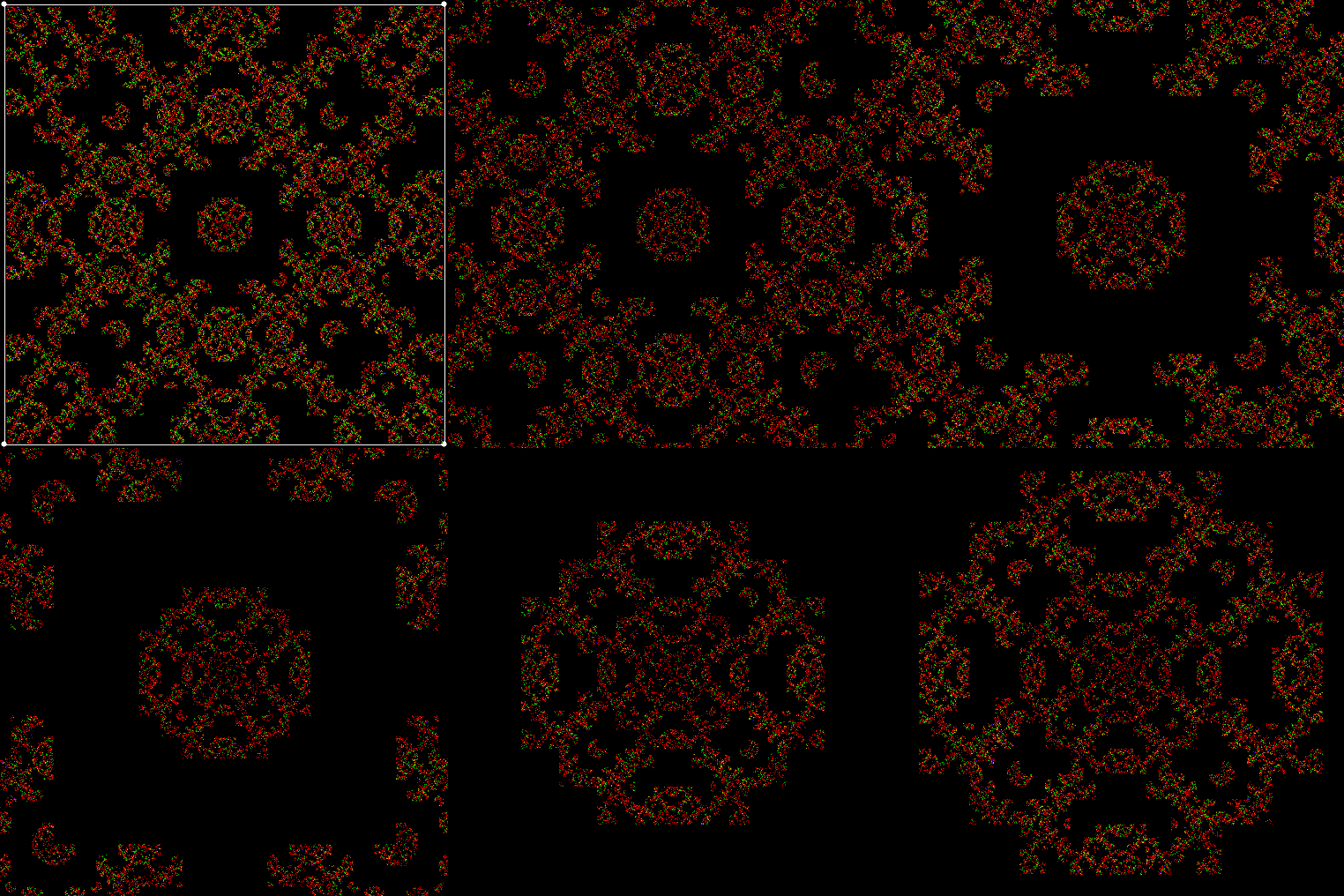
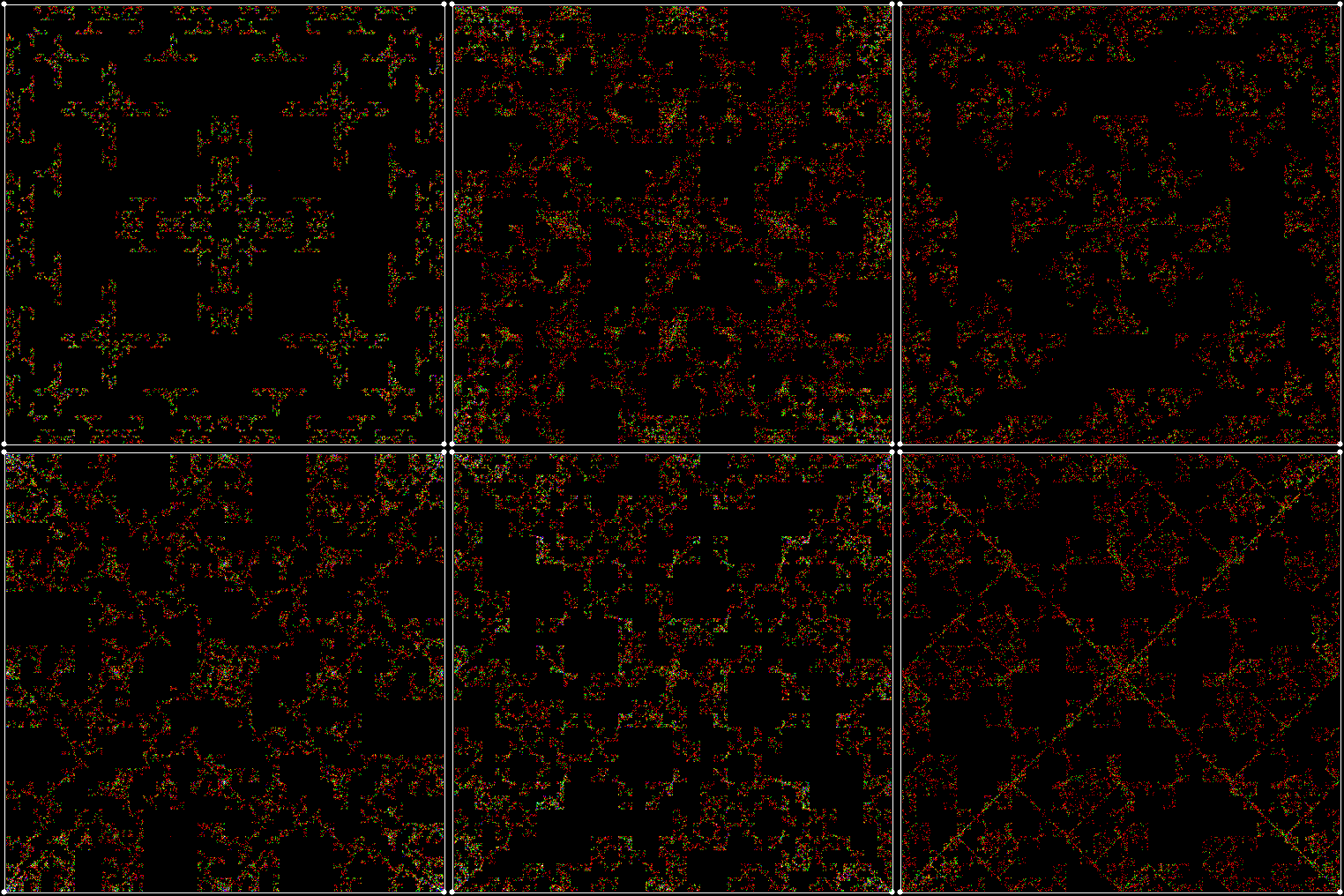
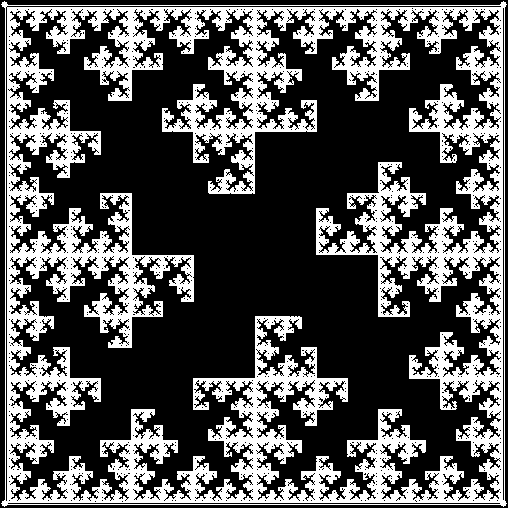
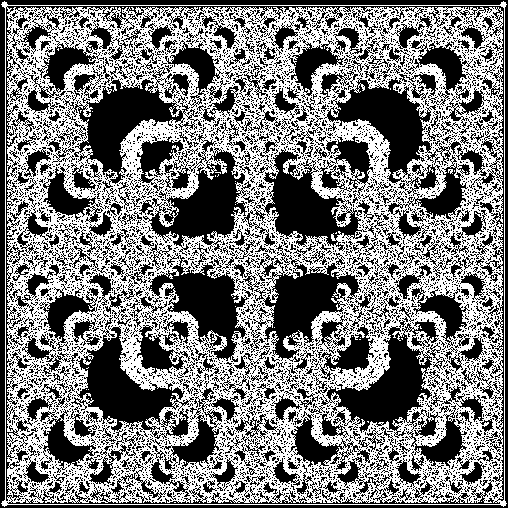
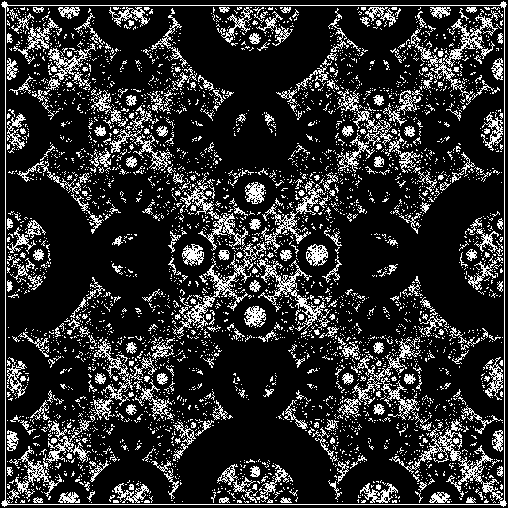
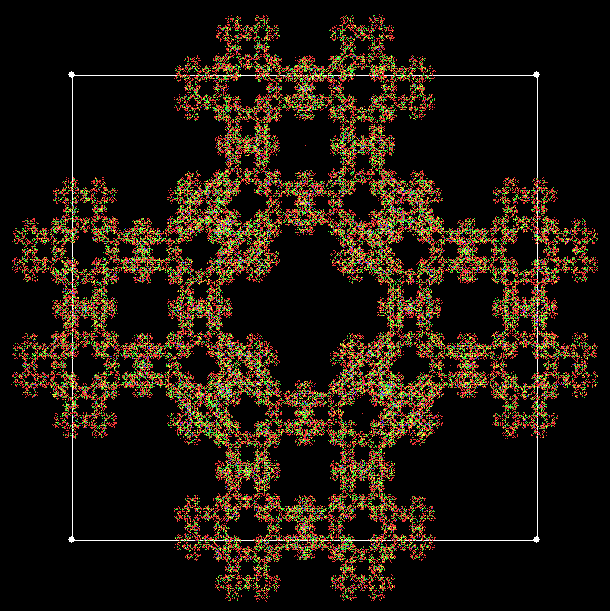
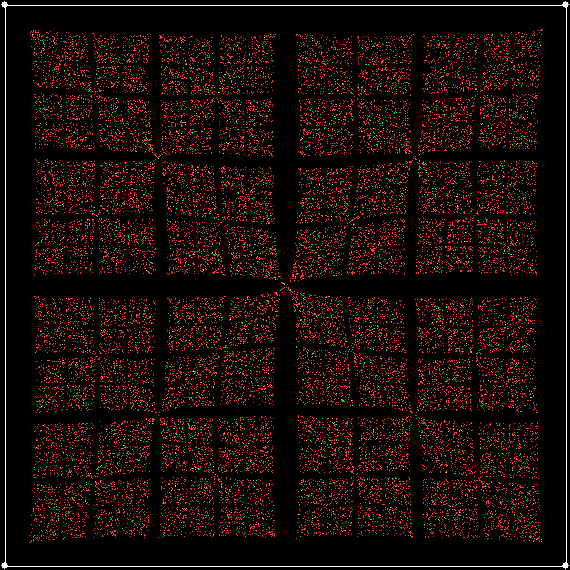
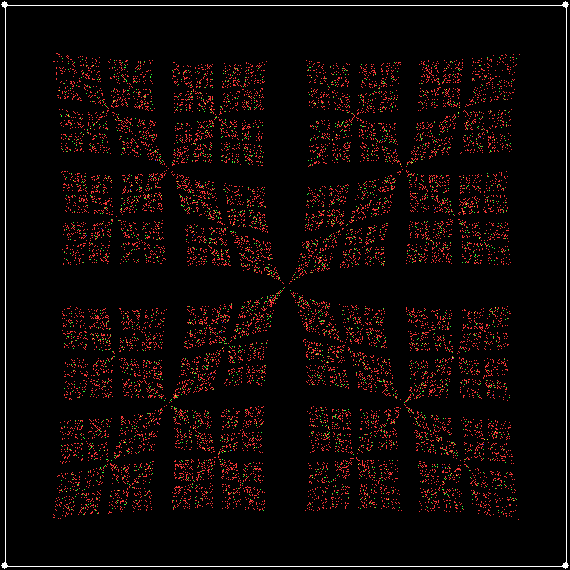
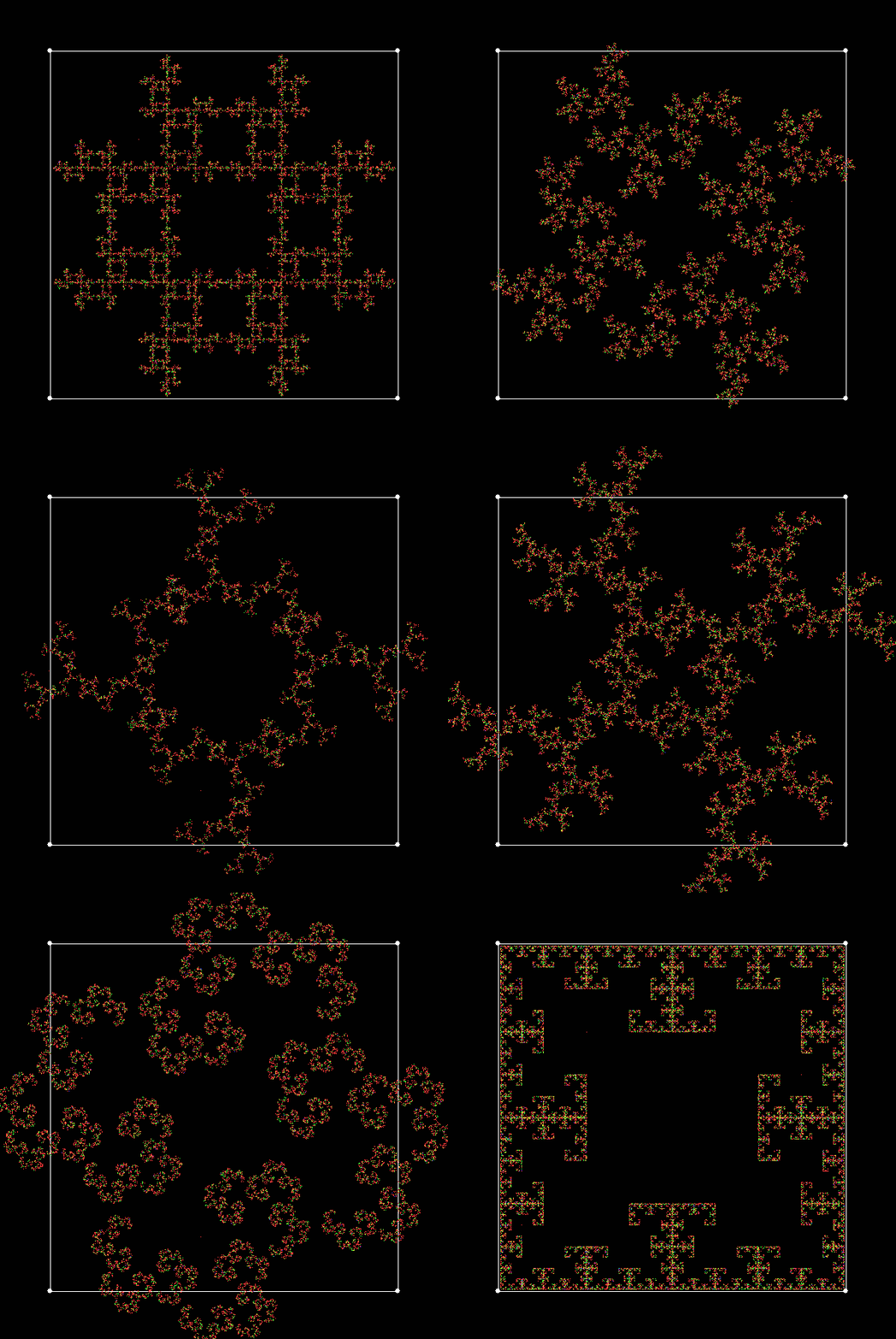
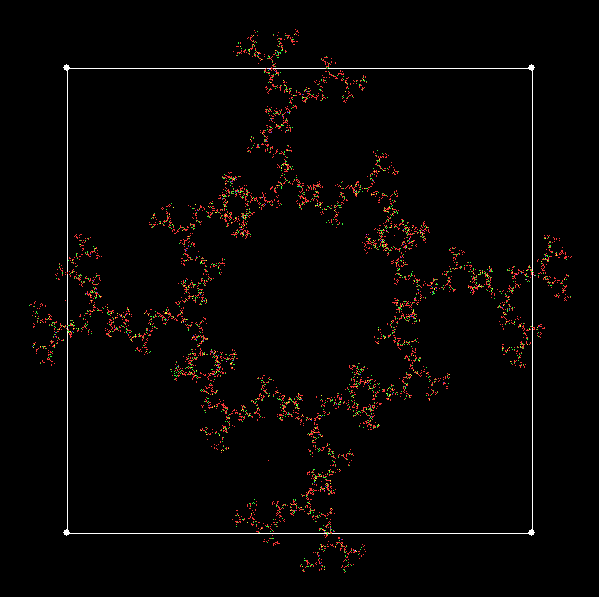
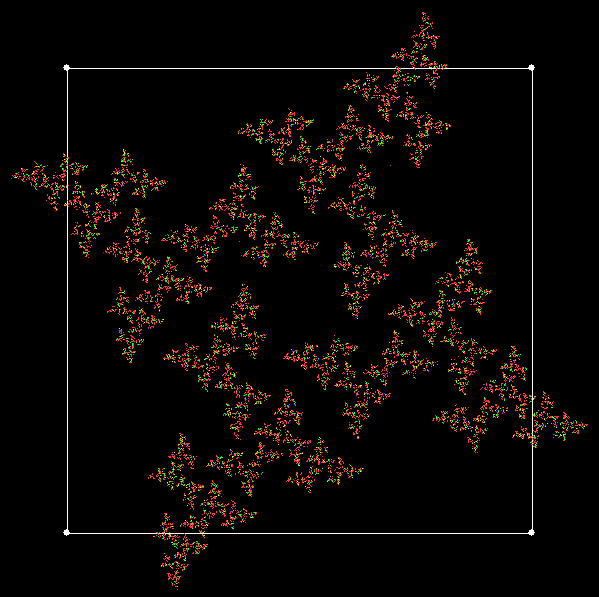
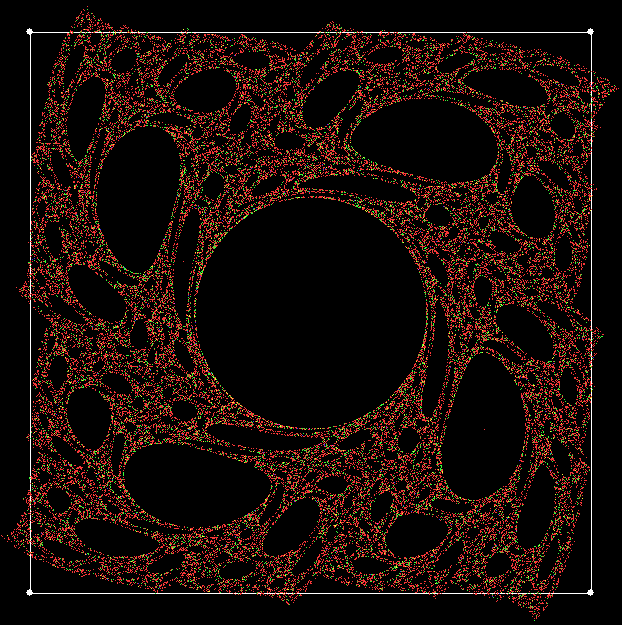
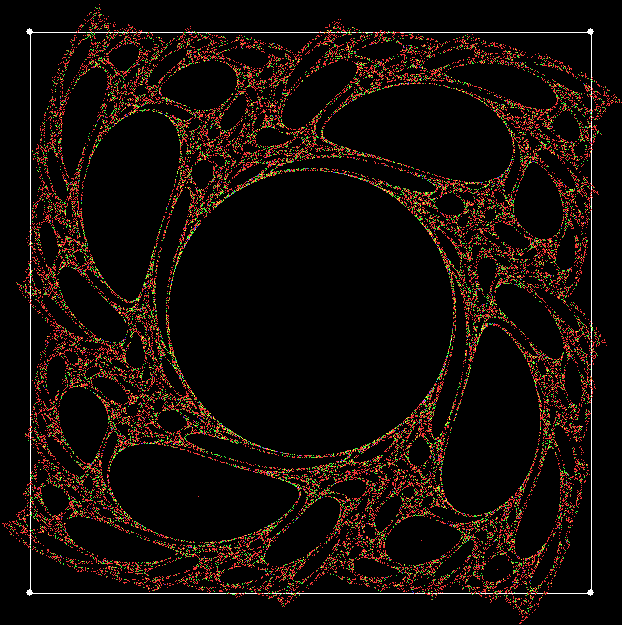
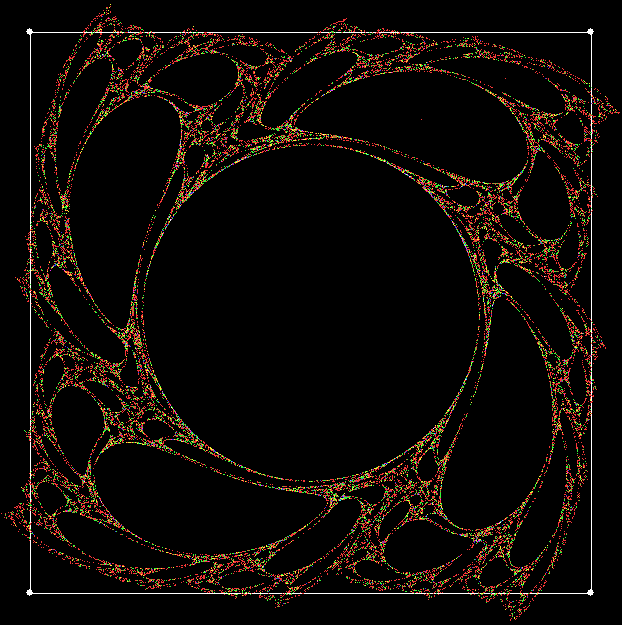
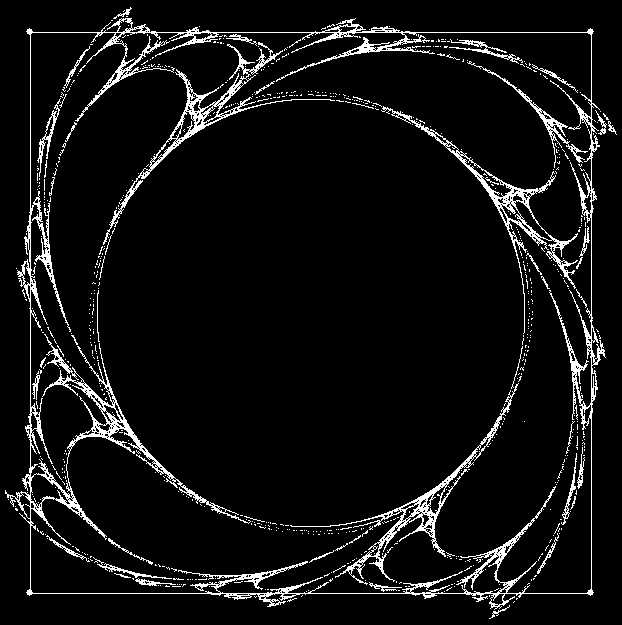
You can extend these rules to apply not just to the previously chosen vertex, but also to the vertex chosen before that. Here are some fractals produced by the rule disallow(v[1] + vi[1], v[2] + vi[2]), where v[1] is the vertex previously chosen and v[2] is the vertex chosen before that:

pol4_1_2

v = 4, vi[1] = 1, vi[2] = 2

pol4_1_2_anim


pol4_2_0

v = 4, vi[1] = 2, vi[2] = 0

pol4_2_0_anim

pol4_2_0_white


pol4_2_1

v = 4, vi[1] = 2, vi[2] = 1

pol4_2_1_anim


pol4_2_2

v = 4, vi[1] = 2, vi[2] = 2

pol4_2_2_anim


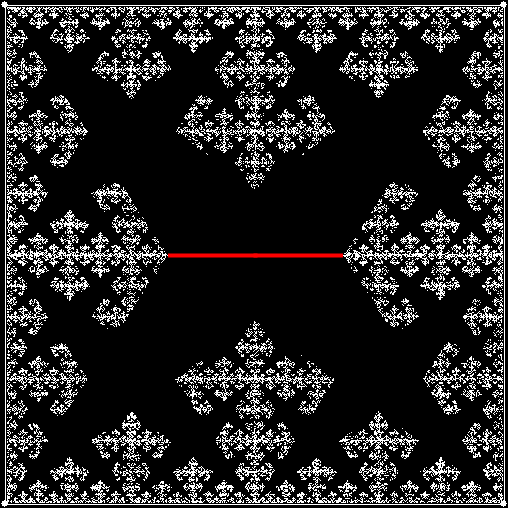
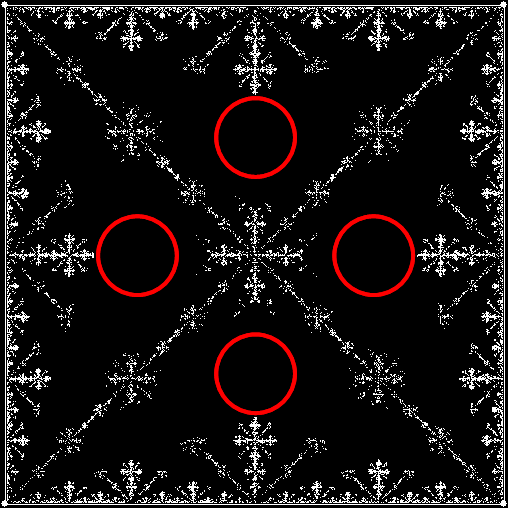
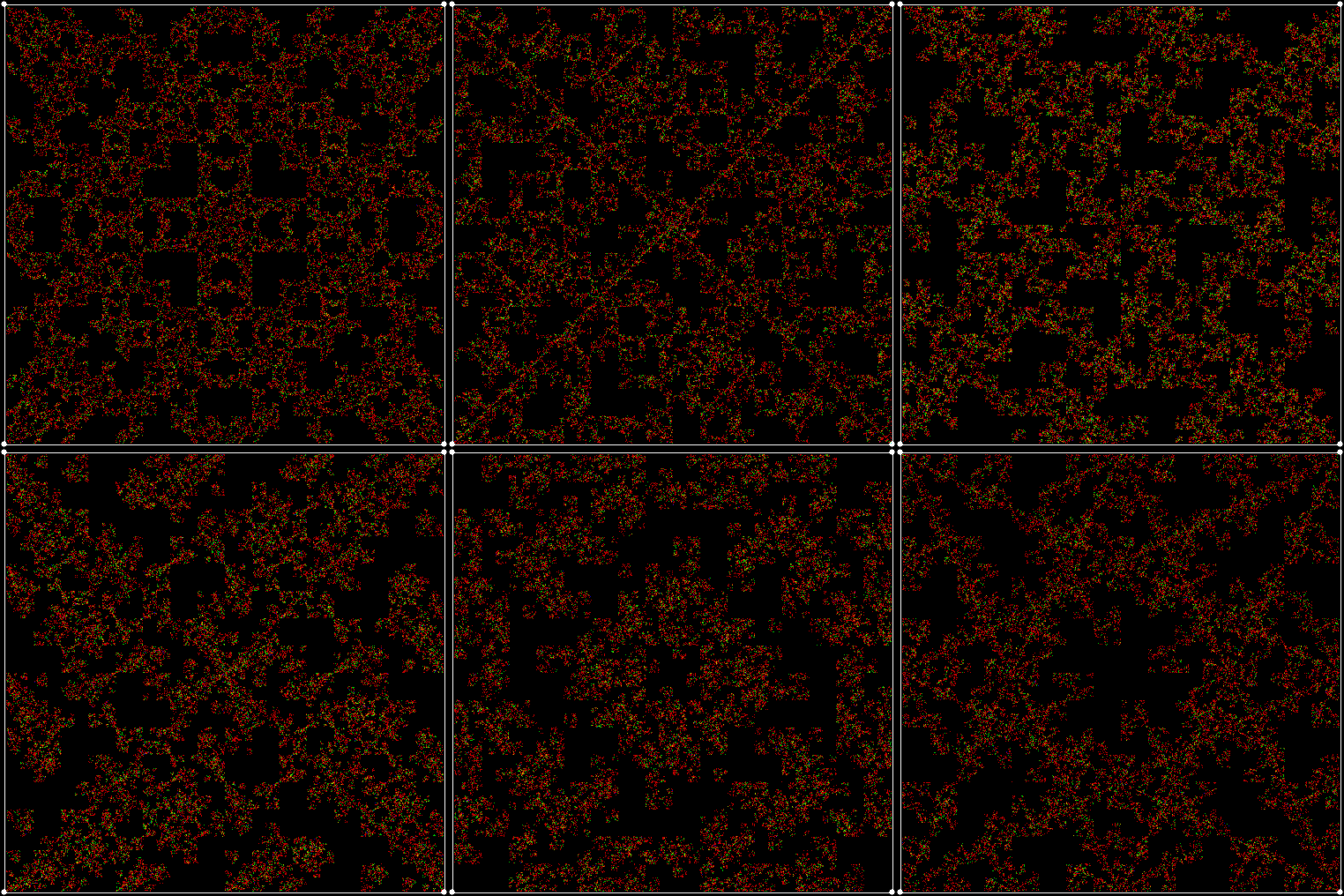
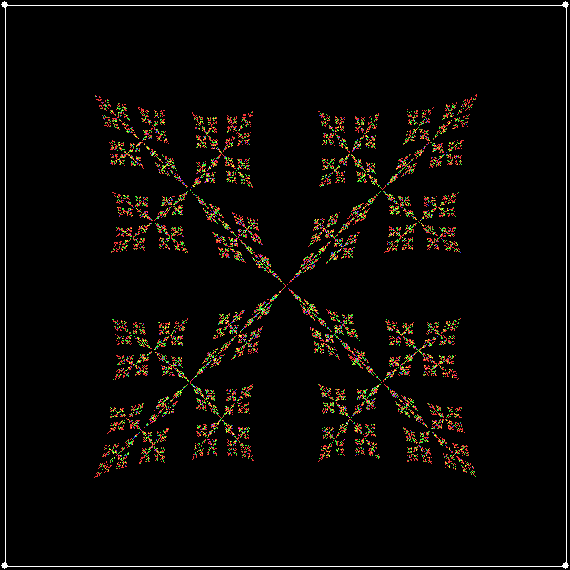
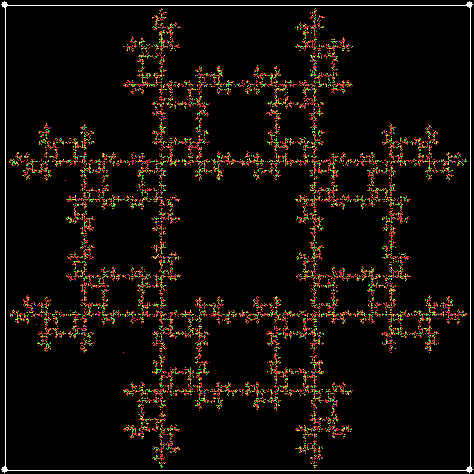
And here are some fractals produced by the rule disallow(v[1] + vi[1], v[2] + vi[2], v[3] + vi[3]):

pol4_1_1_0

v = 4, vi[1] = 1, vi[2] = 1, vi[3] = 0

pol4_1_1_0_anim


pol4_1_1_2

v = 4, vi[1] = 1, vi[2] = 1, vi[3] = 2

pol4_1_1_2_anim


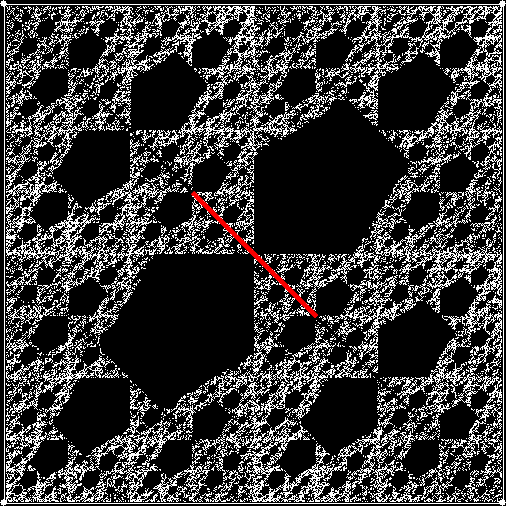
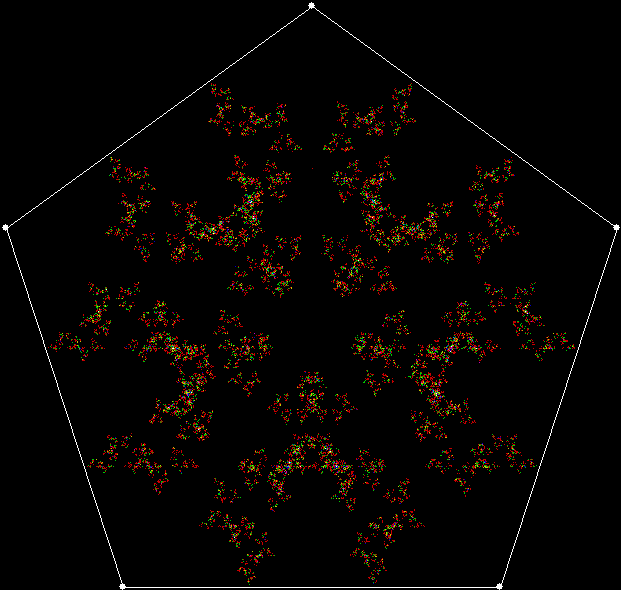
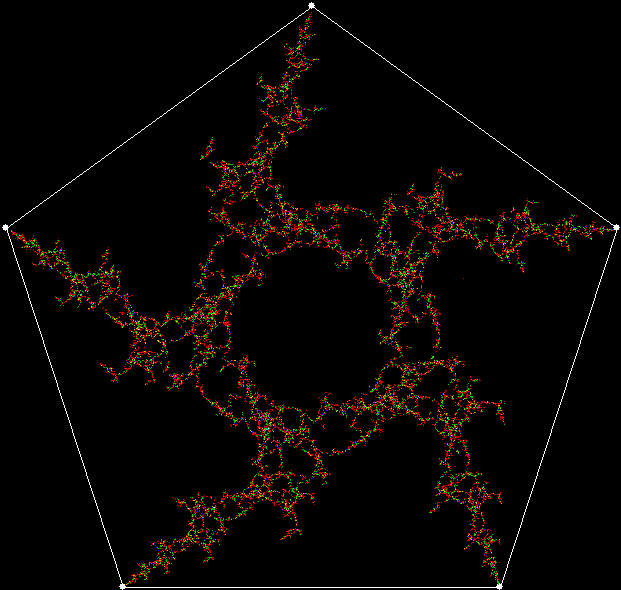
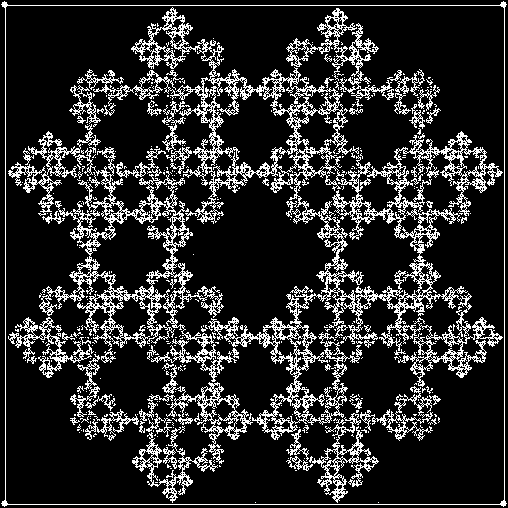
Applying these rules to pentagons rather than squares doesn’t produce such a dramatic difference, because the original procedure – choose any vertex at random, taking no account of previous choices – produces a fractal when v = 5, as noted above, but not when v = 4. Nevertheless, here are some fractals for v > 4:

pol5_0

v = 5, vi = 0


pol5_1

v = 5, vi = 1

pol5_1_anim


pol5_2

v = 5, vi = 2

pol5_2_anim


pol5_0_0

v = 5, vi[1] = 0, vi[2] = 0


pol5_1_0

v = 5, vi[1] = 1, vi[2] = 0


pol5_2_0

v = 5, vi[1] = 2, vi[2] = 0

pol5_2_0_anim


pol5_1_1

v = 5, vi[1] = 1, vi[2] = 1

pol5_1_1_anim


pol5_1_1_1

v = 5, vi[1] = 1, vi[2] = 1, vi[3] = 1


pol5_va2

v = 5, vi = various


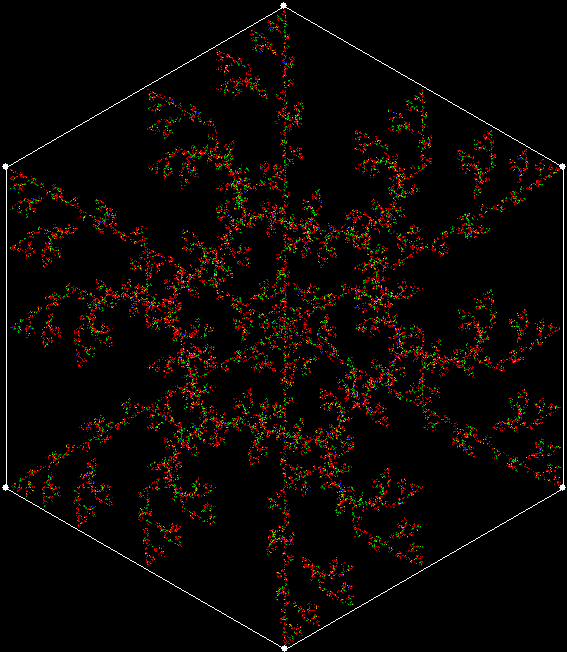
pol6_1

v = 6, vi = 1

pol6_1_anim

He Say, He Sigh, He Sow #35

• Las torres de la iglesia de hoy no han sido señalizadas por el clero progresivo con una cruz sino con una señal meteorológica. — Nicolás Gómez Dávila (1913-94)

    • The progressive clergy crowns the towers of the church of today not with a cross but with a weathervane.

Performativizing Papyrocentricity #47

Papyrocentric Performativity Presents:

The Sting’s the Thing – A Sting in the Tale, Dave Goulson (Jonathan Cape 2013)

Two Heads, Two TonguesExcuse my French! Fluent Français without the Faux Pas, Rachel Best and Jean-Christophe Van Waes (Kyle Books 2013)

Marred MoonVoid Moon, Michael Connelly (2000)

’Vile VibesIn Plain Sight: The Life and Lies of Jimmy Savile, Dan Davies (Quercus 2014)

One-Stop Chop-ShopToxic Trannies from Kastration Kamp 23: A Sinister Symposium of Academic Assholes Shamelessly Shmoog the Filthiest Films in Cess-Cinema, Dr Miriam B. Stimbers, Dr Samuel P. Salatta, et al (TransToxic Texts 2016)


Or Read a Review at Random: RaRaR

Fingering the Frigit

Fingers are fractal. Where a tree has a trunk, branches and twigs, a human being has a torso, arms and fingers. And human beings move in fractal ways. We use our legs to move large distances, then reach out with our arms over smaller distances, then move our fingers over smaller distances still. We’re fractal beings, inside and out, brains and blood-vessels, fingers and toes.

But fingers are fractal are in another way. A digit – digitus in Latin – is literally a finger, because we once counted on our fingers. And digits behave like fractals. If you look at numbers, you’ll see that they contain patterns that echo each other and, in a sense, recur on smaller and smaller scales. The simplest pattern in base 10 is (0, 1, 2, 3, 4, 5, 6, 7, 8, 9). It occurs again and again at almost very point of a number, like a ten-hour clock that starts at zero-hour:

0, 1, 2, 3, 4, 5, 6, 7, 8, 9…
10, 11, 12, 13, 14, 15, 16, 17, 18, 19…
200… 210… 220… 230… 240… 250… 260… 270… 280… 290…

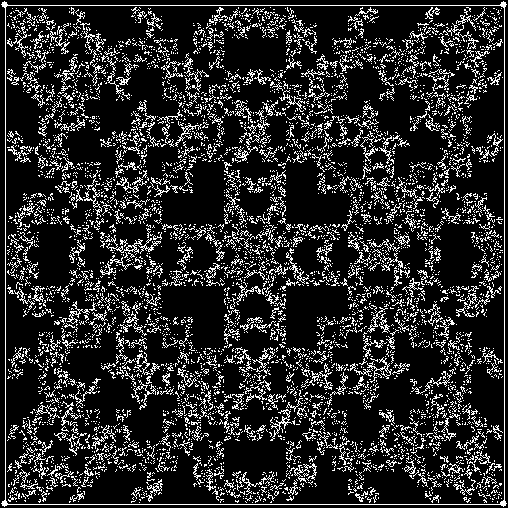
These fractal patterns become visible if you turn numbers into images. Suppose you set up a square with four fixed points on its corners and a fixed point at its centre. Let the five points correspond to the digits (1, 2, 3, 4, 5) of numbers in base 6 (not using 0, to simplify matters):

1, 2, 3, 4, 5, 11, 12, 13, 14, 15, 21, 22, 23, 24, 25, 31, 32, 33, 34, 35, 41, 42, 43, 44, 45, 51, 52, 53, 54, 55, 61, 62, 63, 64, 65… 2431, 2432, 2433, 2434, 2435, 2441, 2442, 2443, 2444, 2445, 2451, 2452…

Move between the five points of the square by stepping through the individual digits of the numbers in the sequence. For example, if the number is 2451, the first set of successive digits is (2, 4), so you move to a point half-way between point 2 and point 4. Next come the successive digits (4, 5), so you move to a point half-way between point 4 and point 5. Then come (5, 1), so you move to a point half-way between point 5 and point 1.

When you’ve exhausted the digits (or frigits) of a number, mark the final point you moved to (changing the colour of the pixel if the point has been occupied before). If you follow this procedure using a five-point square, you will create a fractal something like this:
fractal4_1single

fractal4_1
A pentagon without a central point using numbers in a zero-less base 7 looks like this:
fractal5_0single

fractal5_0
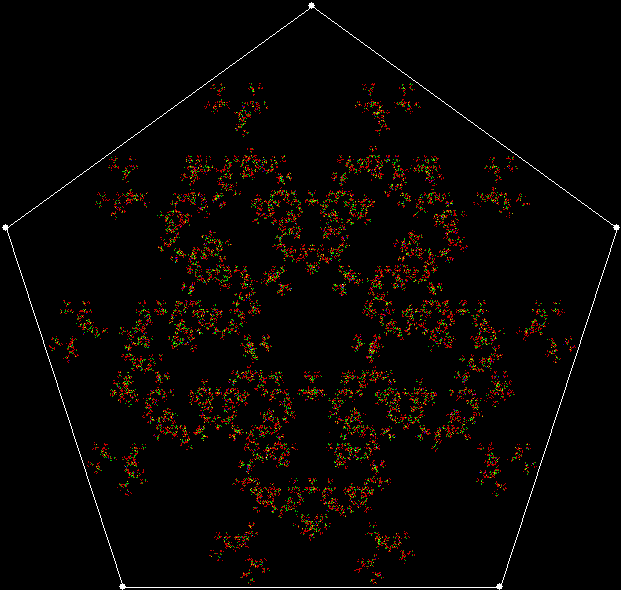
A pentagon with a central point looks like this:
fractal5_1single

fractal5_1
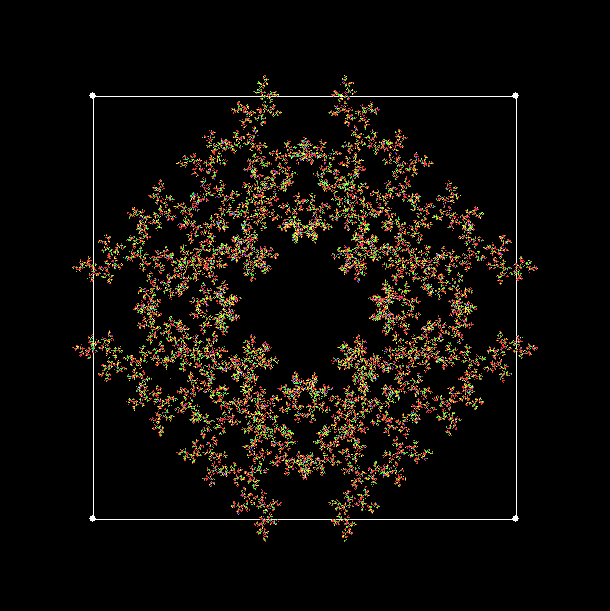
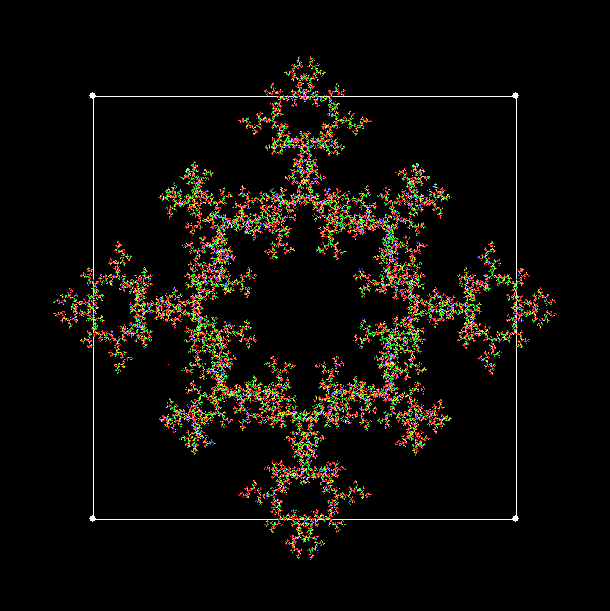
Hexagons using a zero-less base 8 look like this:
fractal6_1single

fractal6_1


fractal6_0single

fractal6_0
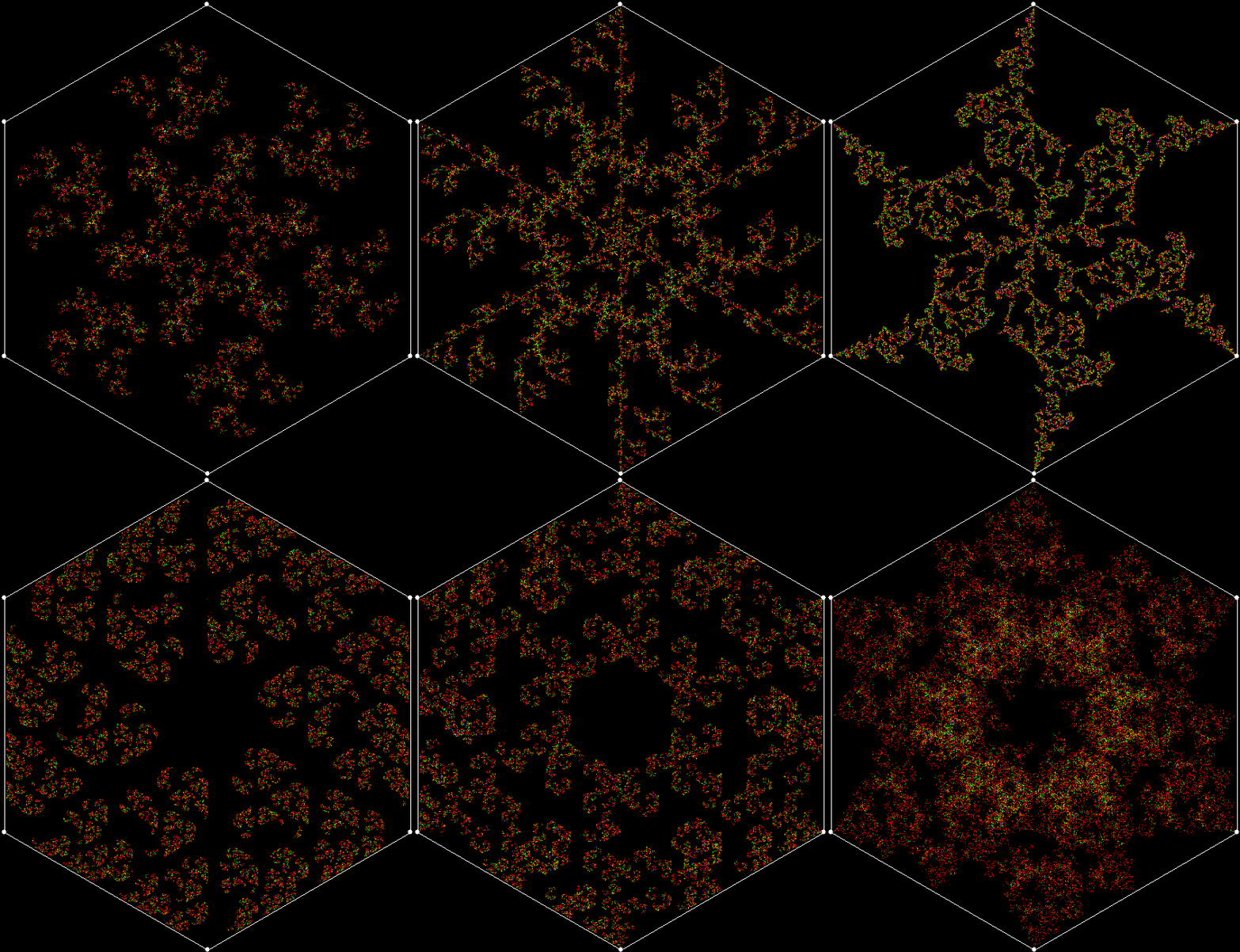
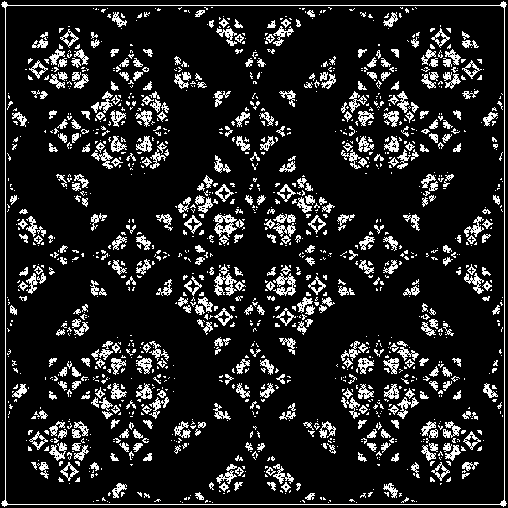
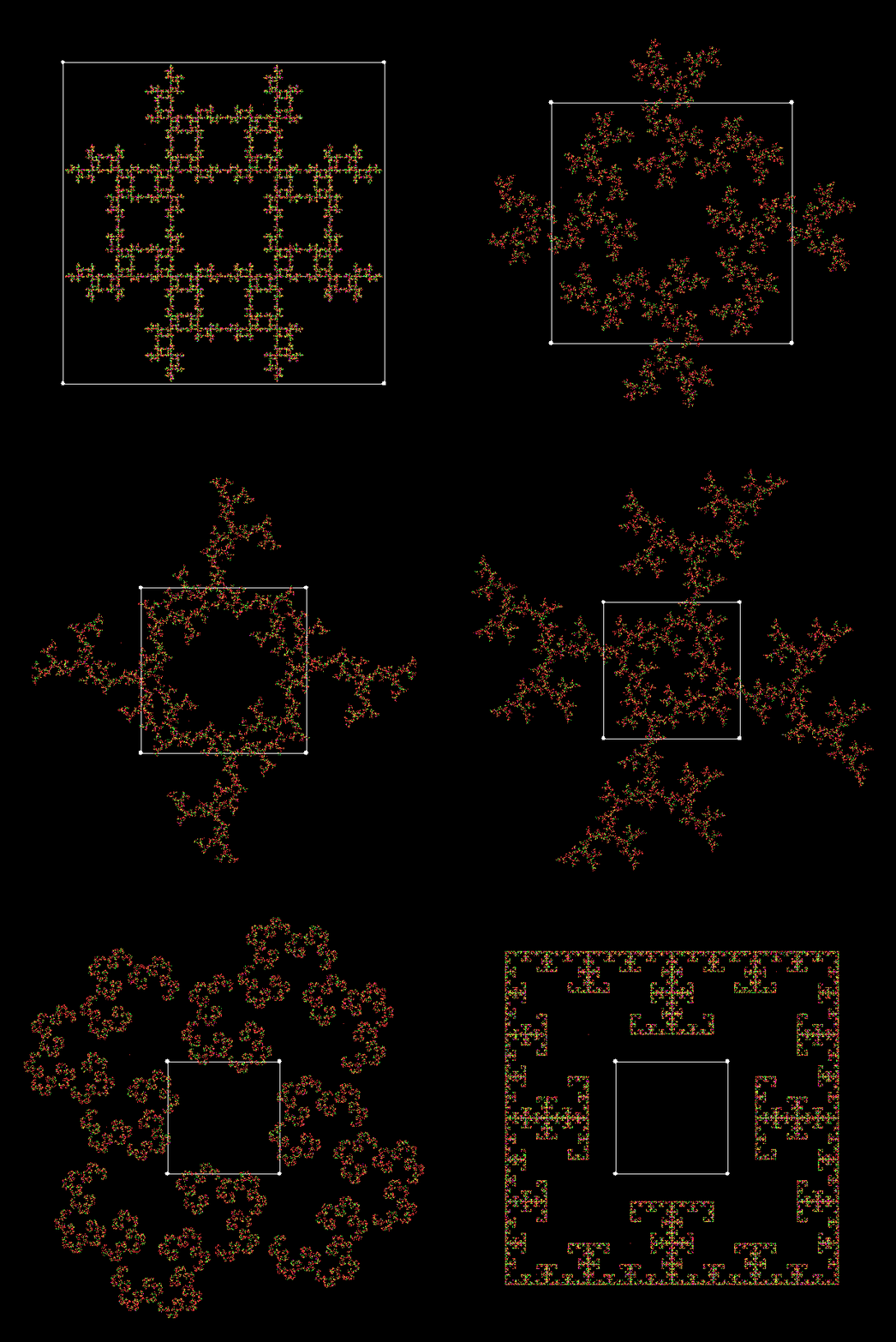
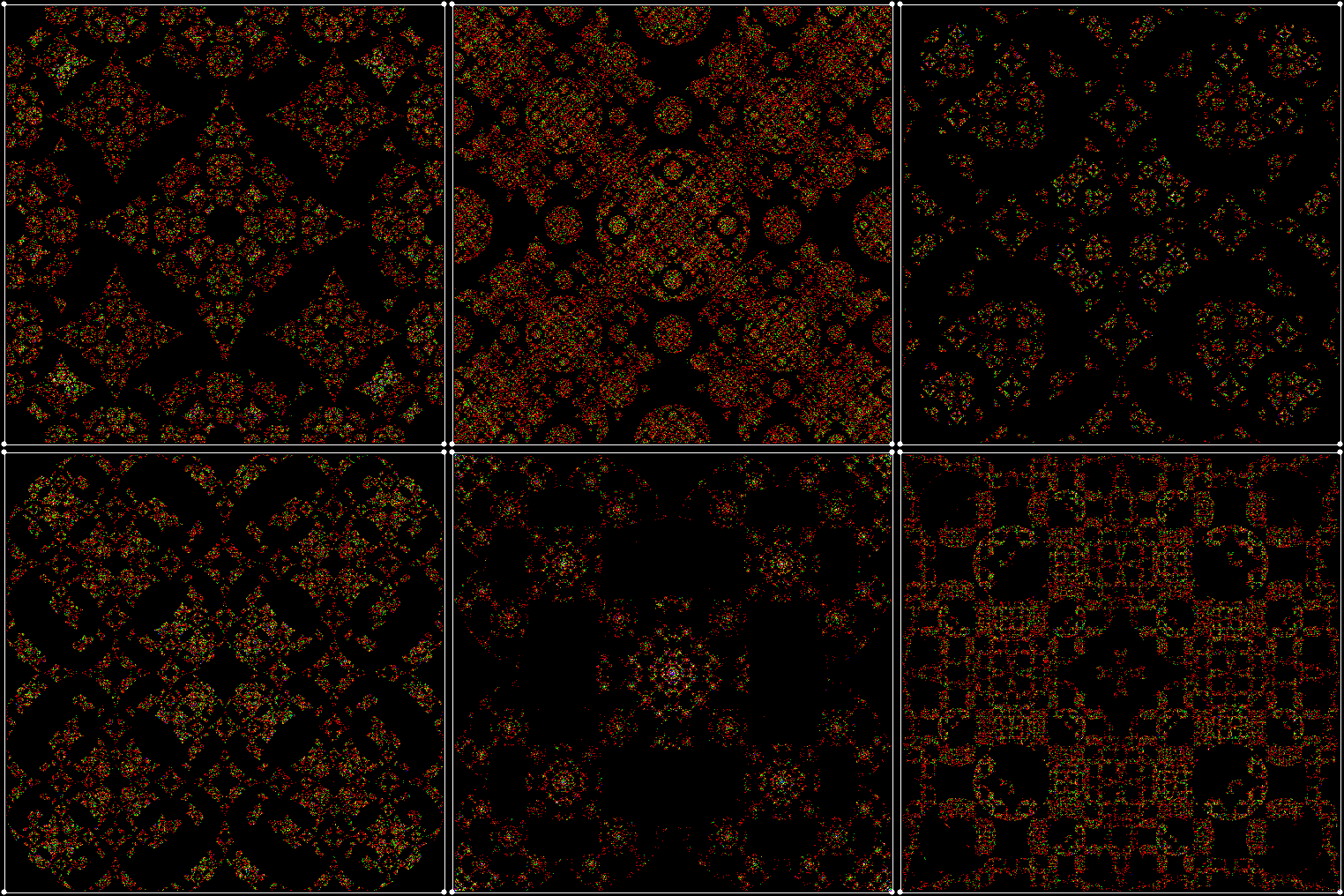
But the images above are just the beginning. If you use a fixed base while varying the polygon and so on, you can create images like these (here is the program I used):
fractal4


fractal5


fractal6789