Odorosa
by Krilling for Company in Biology, Botany, Flowers and tagged floral scents, flower, flower-scent, Flowers, petals, rose, roses, scent, scented flora, scented rose, stamens, stamina, wild rose |
Leave a comment
Keeping out of the Hive Mind is an endless struggle. The Hive evolves, constantly throwing out toxic tentacles of glottic grotesqueness to enwrap and entwine the unwary mind. However, “in terms of” is an old and familiar tentacle. It’s easy to spot and avoid. New tentacles can be trickier, particularly when they come in cosy colloquial guise, like this:
Perrine’s brother is one of 36 people killed in Baltimore so far this month, already the highest homicide count for May since 1999. But while homicides are spiking, arrests have plunged more than 50 percent compared to last year. […]
Baltimore was seeing a slight rise in homicides this year even before Gray’s death April 19. But the 36 homicides so far in May is a major spike, after 22 in April, 15 in March, 13 in February and 23 in January.
Non-fatal shootings are spiking as well. So far in May there have been 91 — 58 of them in the Western District. […] Rawlings-Blake said her office is “examining” the relationship between the homicide spike and the dwindling arrest rate. – Baltimore residents fearful amid rash of homicides, The Washington Times, 28/5/2015.
“Spike” is a metaphor drawn from the behaviour of a line on a graph. When a variable rises sharply, reaches a brief maximum, and then falls sharply, it looks like an inverted V. A spike, in other words:
But the same article supplies a word that is correct:
At a news conference Wednesday, Rawlings-Blake said there were “a lot of reasons why we’re having a surge in violence.”
A surge can be identified while it is happening. Violence in Baltimore is surging or rocketing or shooting up or rising sharply. It is not “spiking”. But why is this simple metaphor being misused? I think it’s because “spike” conveys a sense of urgency and excitement. It gives journalists and other members of the hive-mind a buzz. They like the connotation, so they forget about the denotation.
Papyrocentric Performativity Presents:
• Nature by Numbers – 30-Second Elements: The 50 Most Significant Elements, Each Explained in Half a Minute, ed. Eric Scerri (Icon 2013)
• Fresh Flesh – The Complete Illustrated Guide to Freshwater Fish & River Creatures, Daniel Gilpin and Dr Jenny Schmid-Araya (Hermes House 2011)
• The Reich Stoff – Rocket and Jet Aircraft of the Third Reich, Terry C. Treadwell (Spellmount 2011)
• Past Masters – Justice for All: The Truth about Metallica, Joel McIver (Omnibus Press, revised edition 2014)
• Ant on E – Burgess on Waugh
• M.O.R. of Babylon – Sleazy Listening: Frottage, Fladge and Frenzied Fornication in the Music of the Carpenters, Dr Miriam B. Stimbers (University of Nebraska Press 2015)
Or Read a Review at Random: RaRaR
Elsewhere other-accessible:
• Songs from the Center of the Sun — an interview with Faster Than Lichen
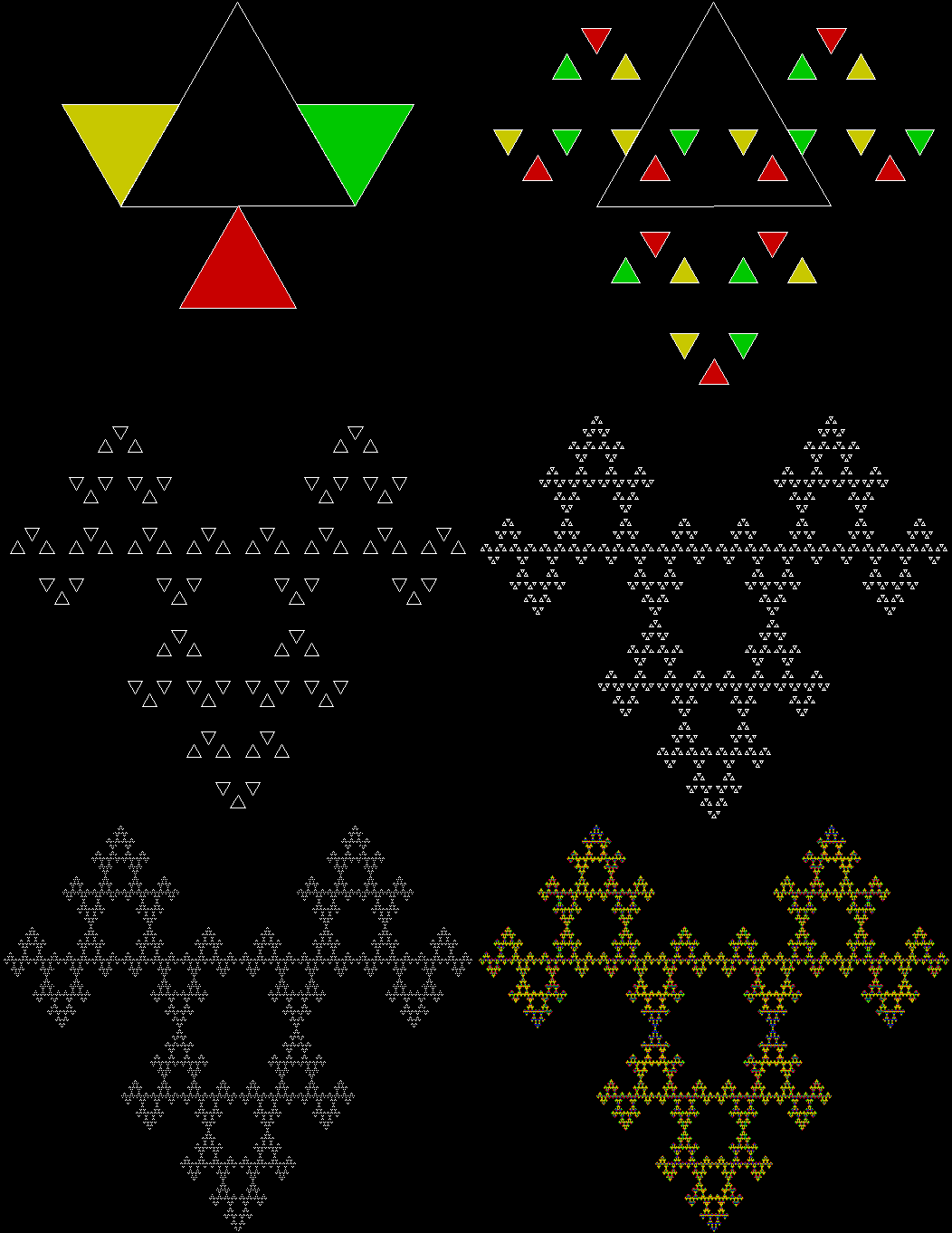
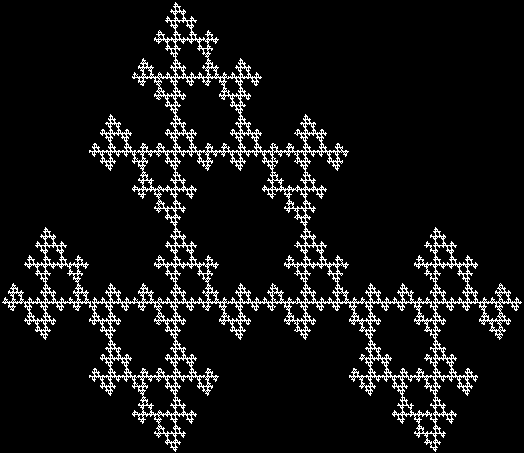
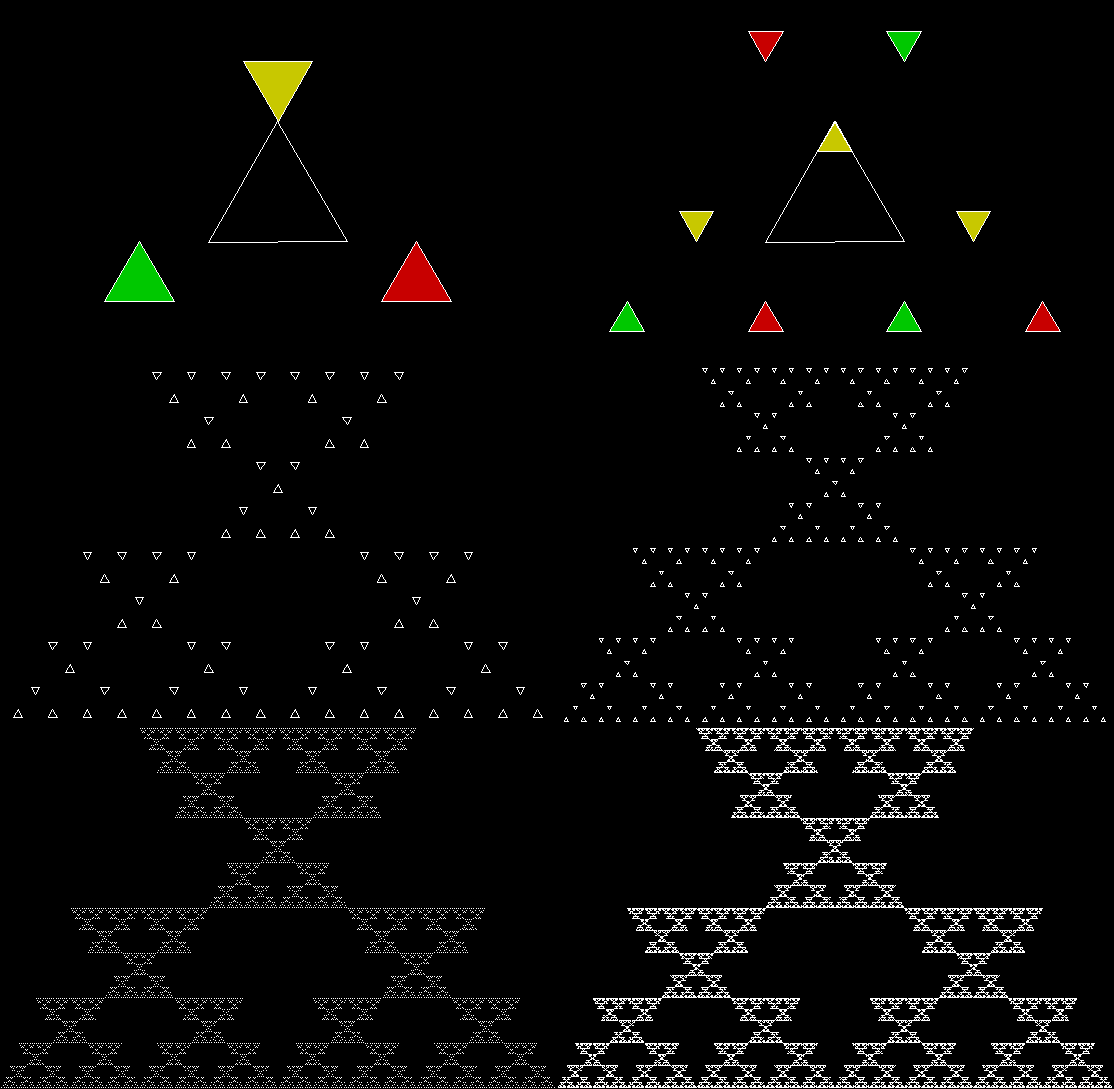
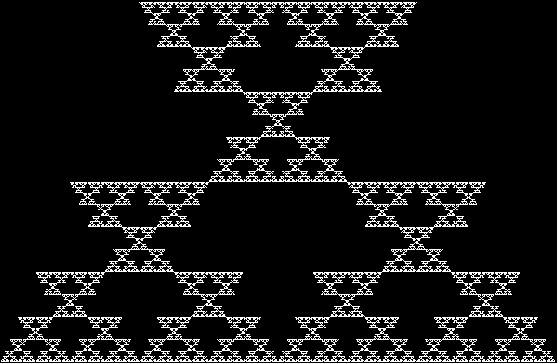
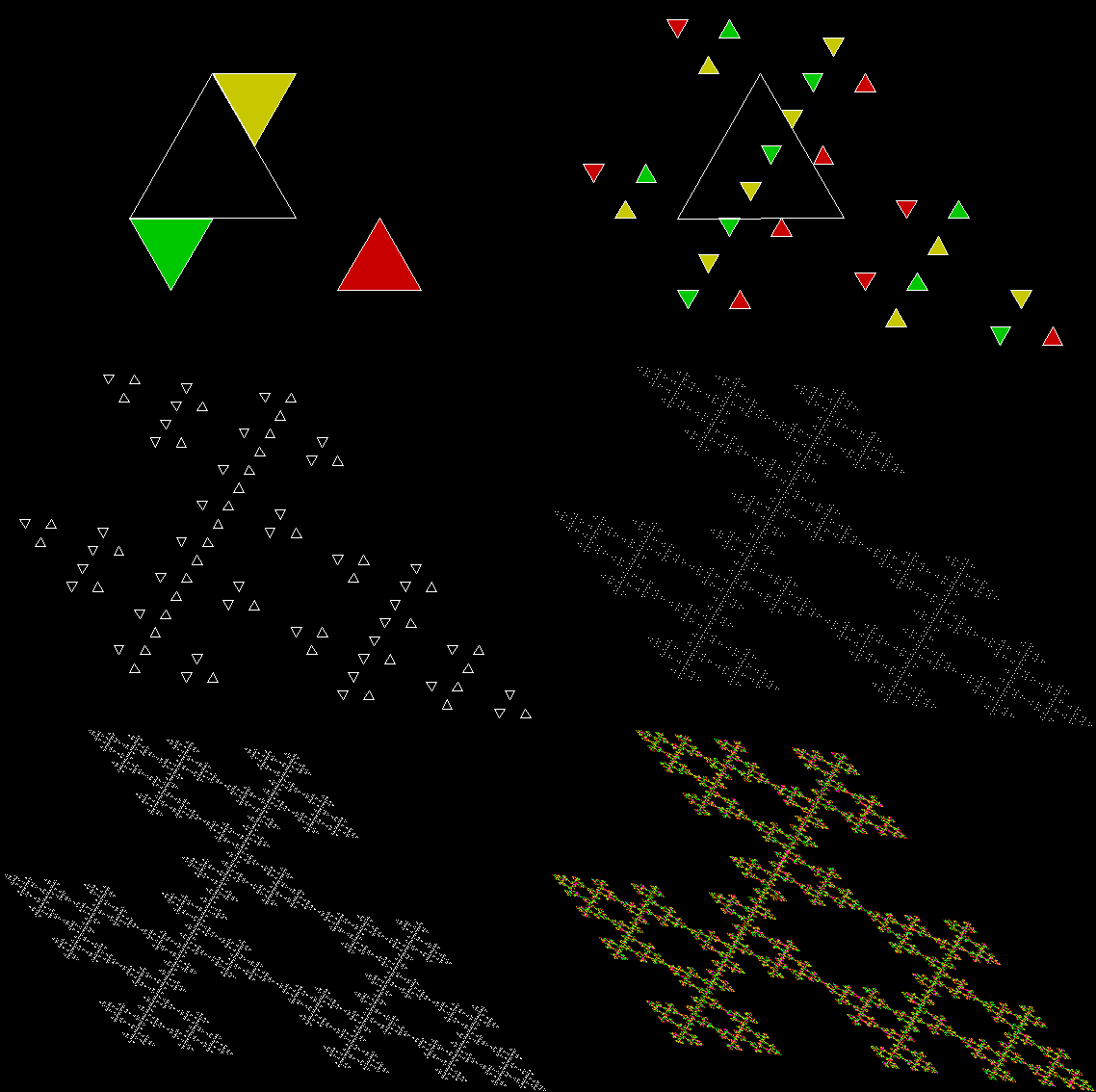
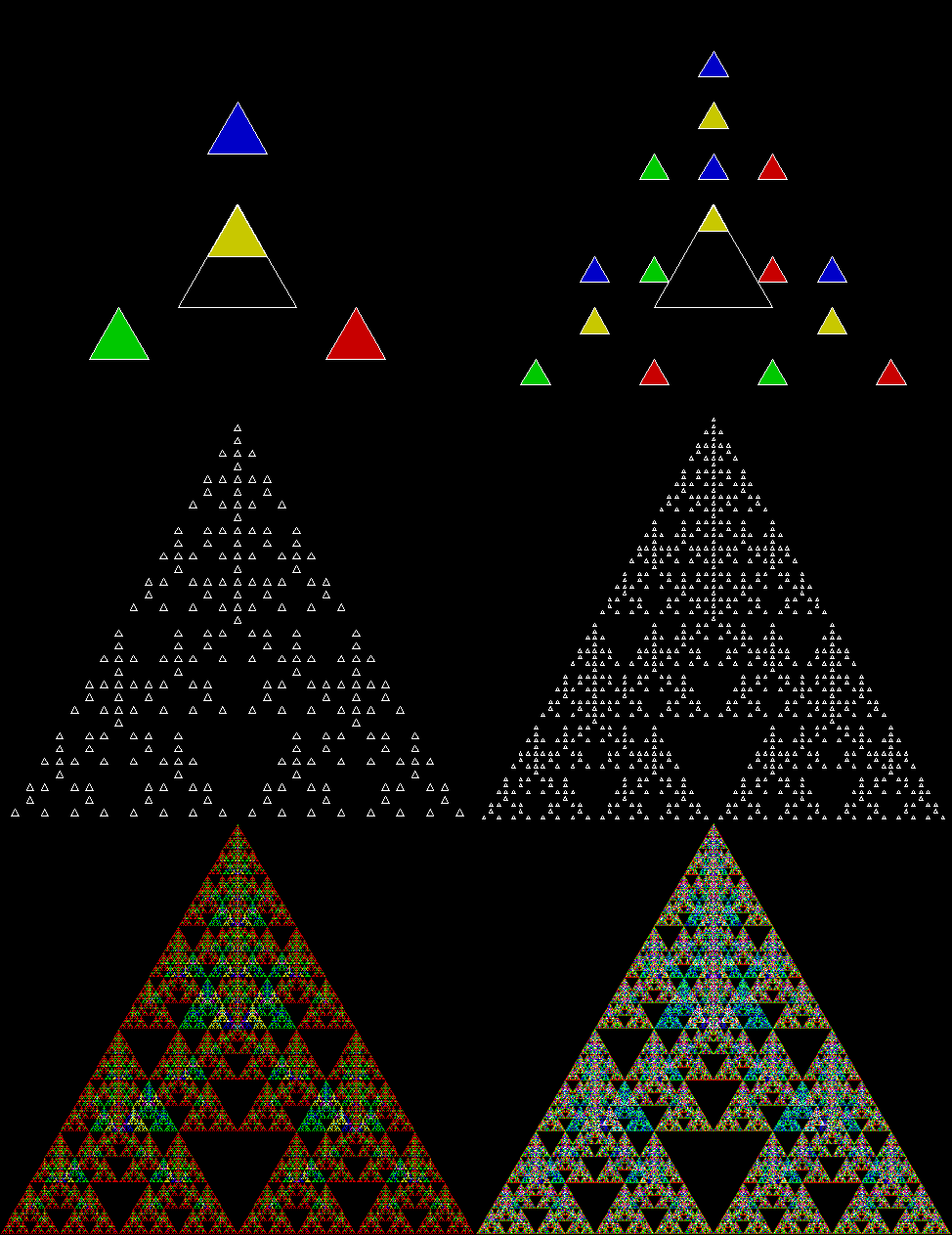
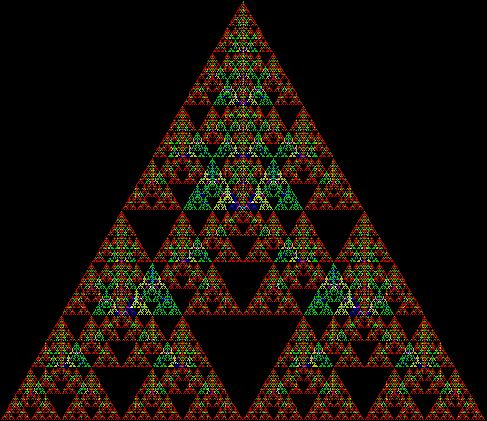
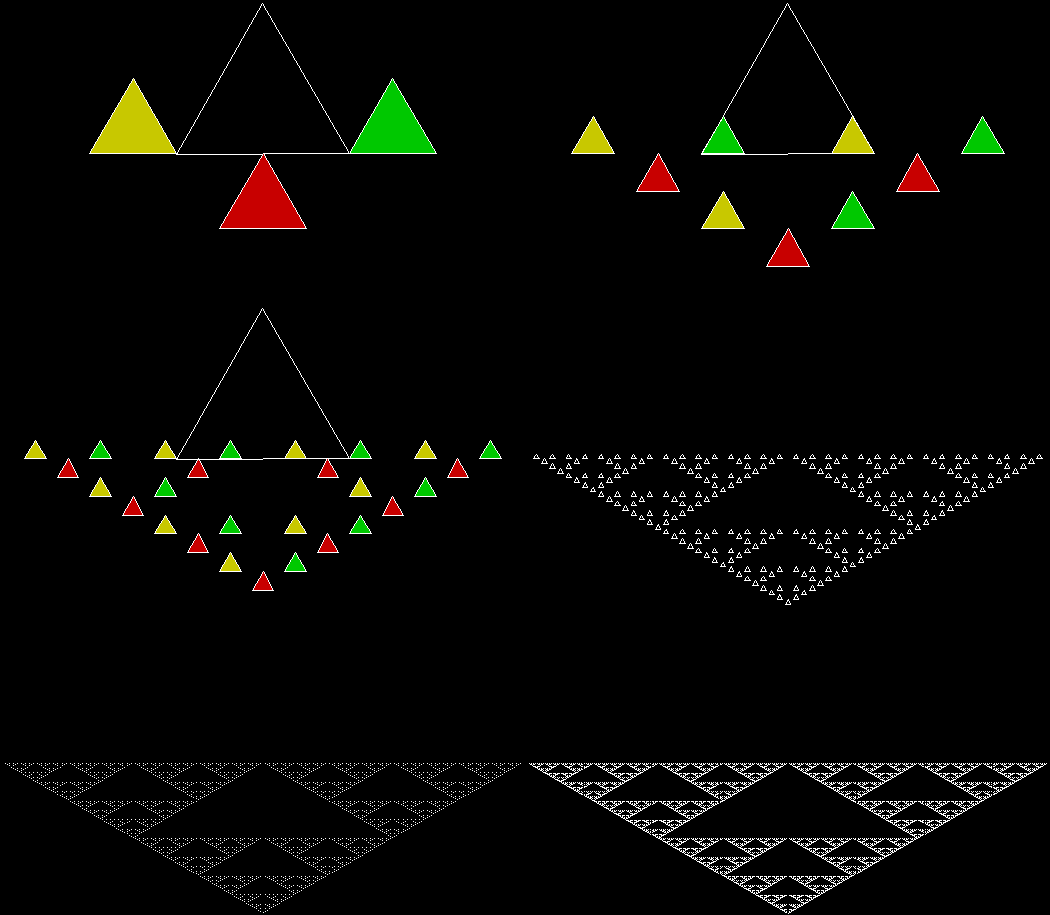
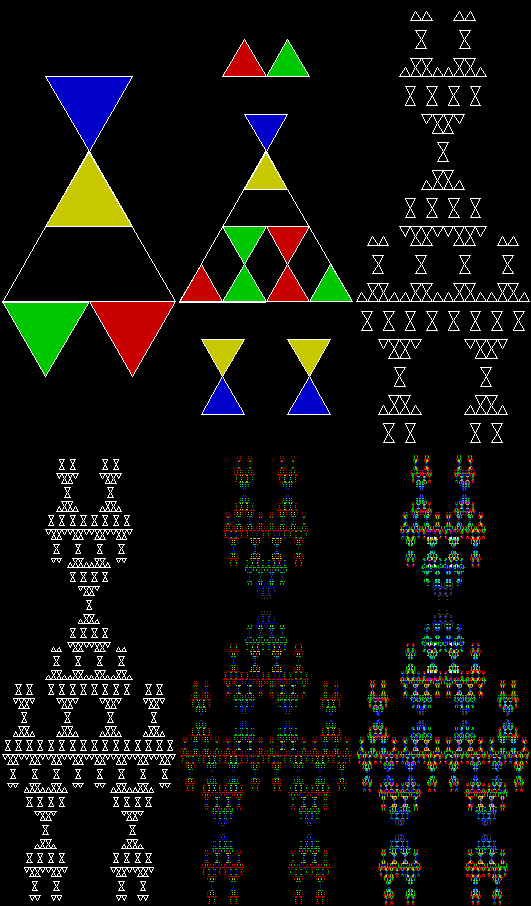
In “M.I.P. Trip”, I looked at fractals like this, in which a square is divided repeatedly into a pattern of smaller squares:

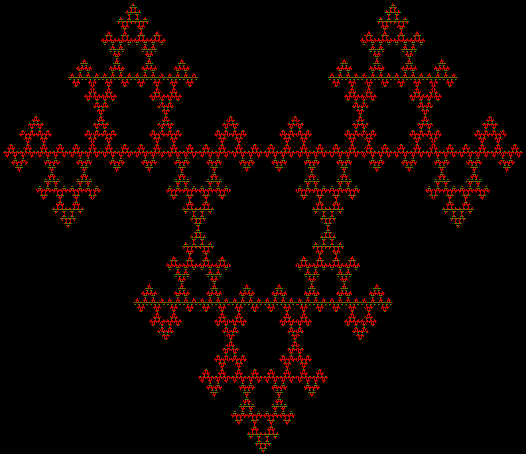
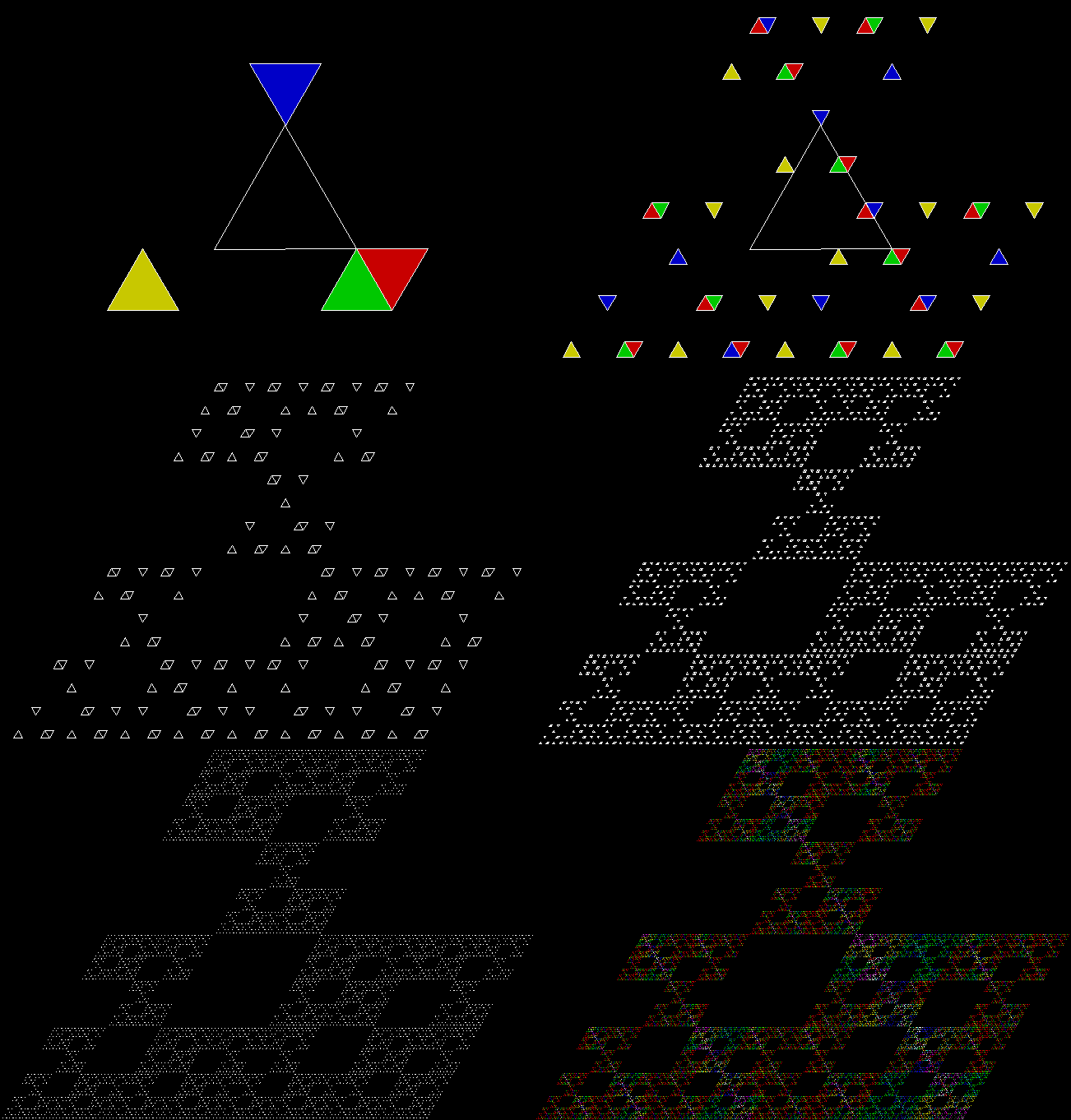
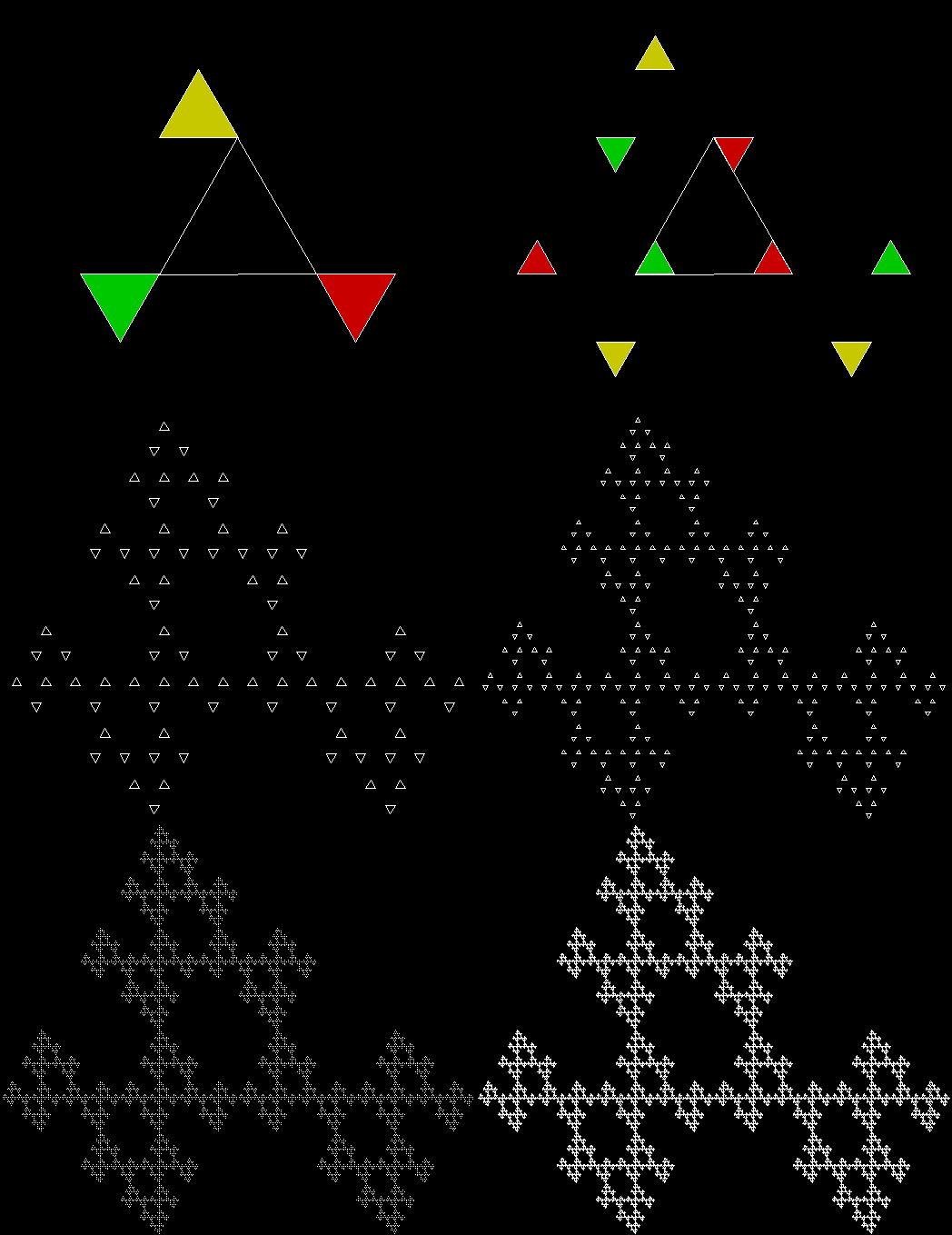
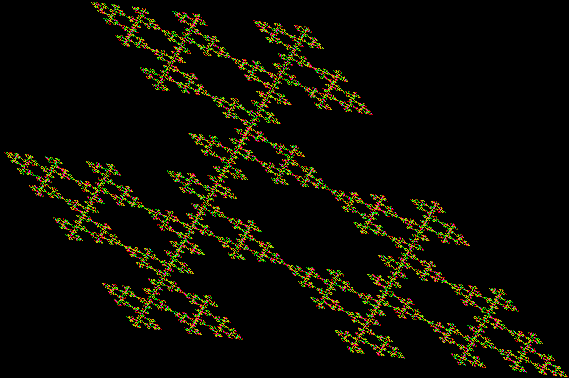
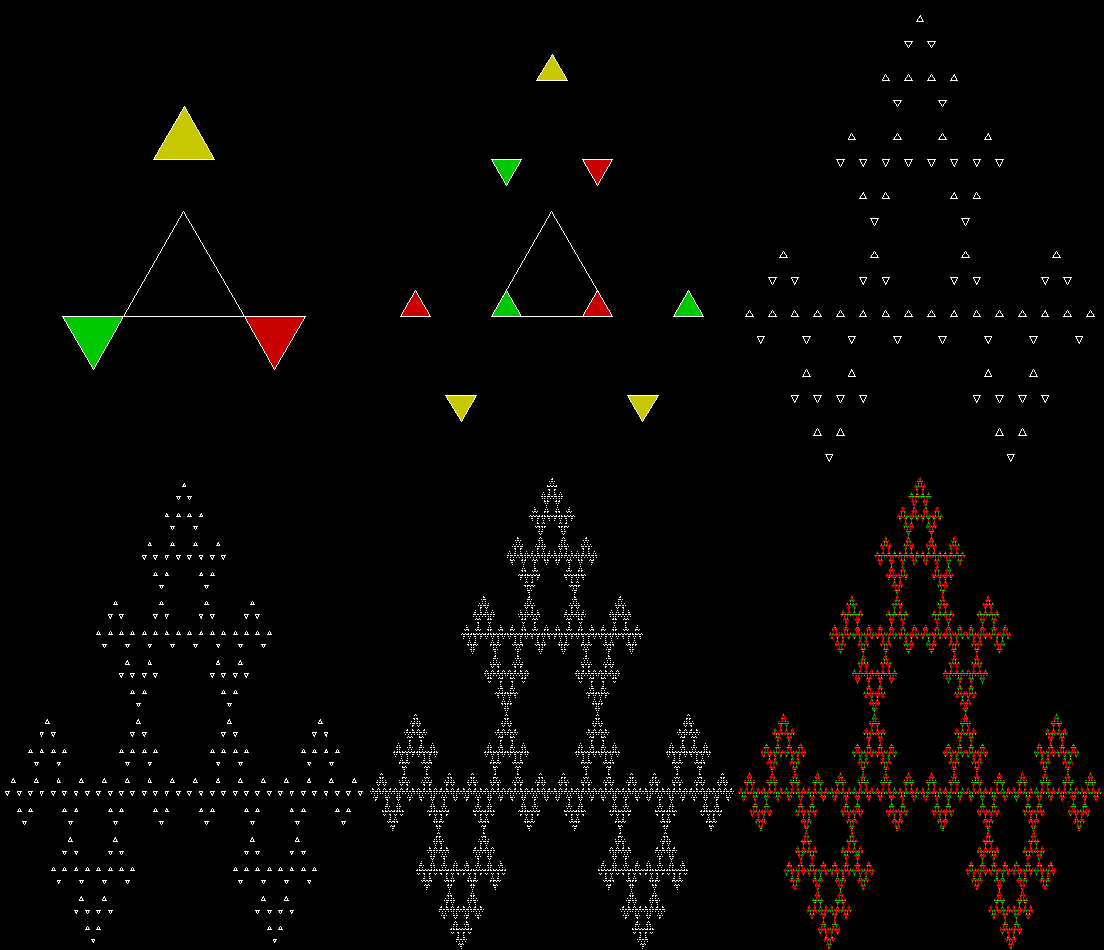
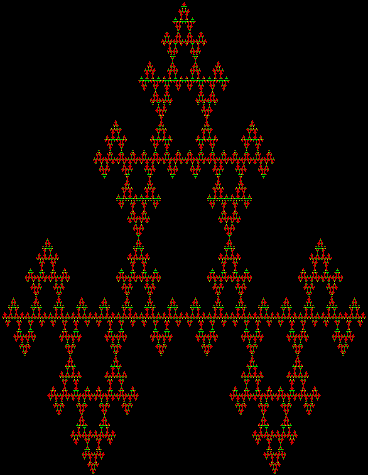
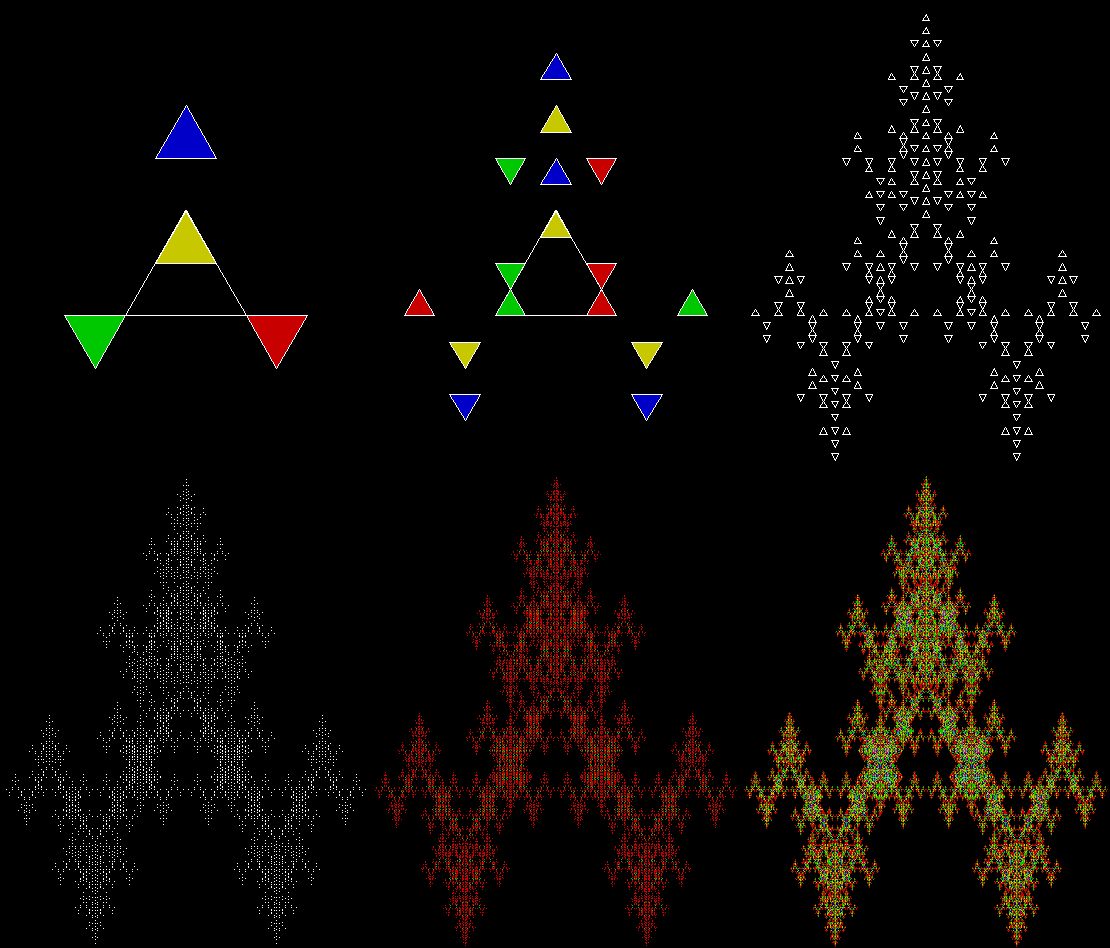
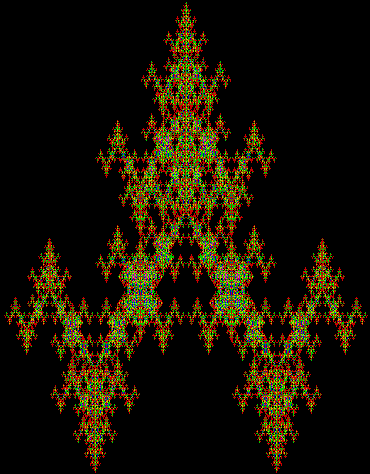
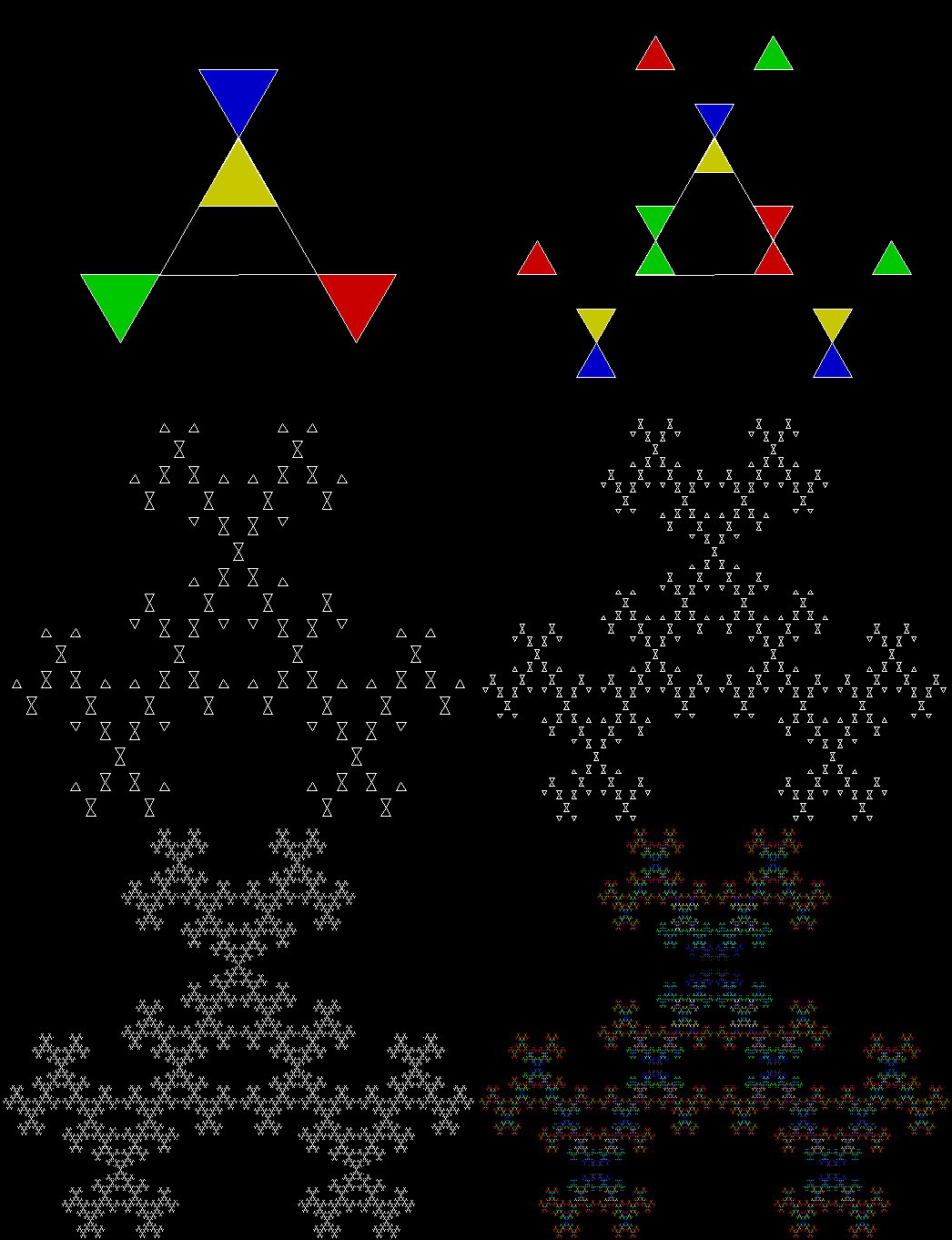
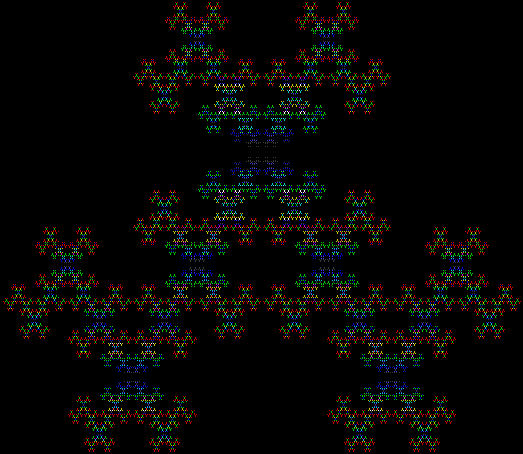
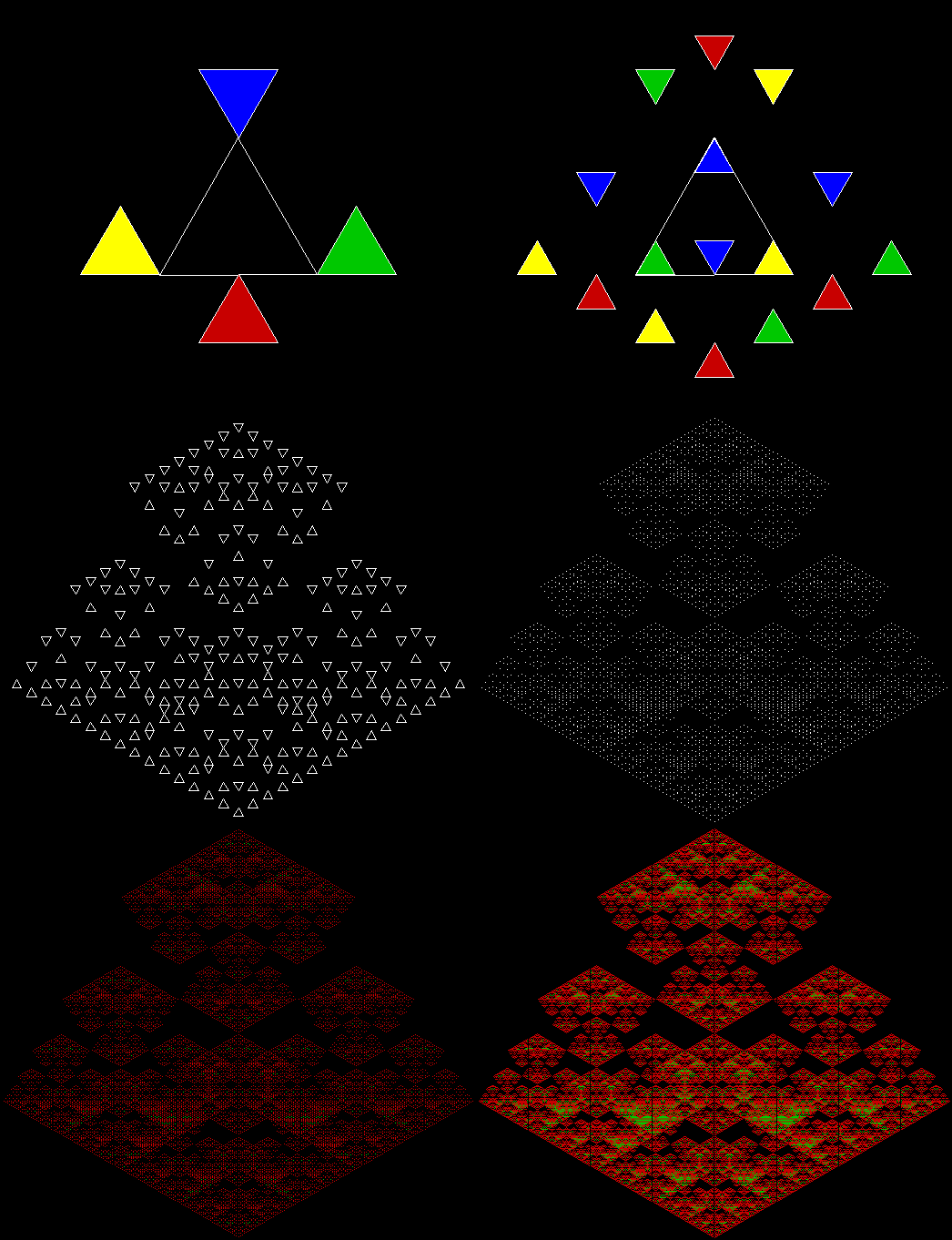
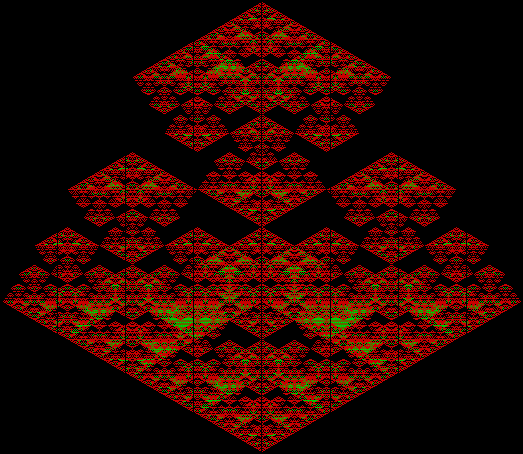
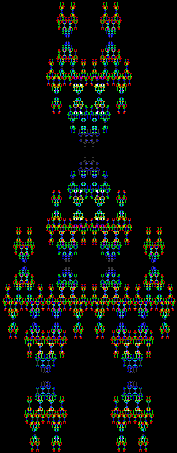
As you can see, the sub-squares appear within the bounds of the original square. But what if some of the sub-squares appear beyond the bounds of the original square? Then a new family of fractals is born, the over-fractals:
“When you run and jump on rocks, your entire brain and body are at work; you stretch your back better than with yoga; every muscle in your body is involved; no two movements will be identical (unlike running in gyms); you become yourself.” — Nassim Taleb, Opacity: A Philosophical Notebook.
It’s not true that Cryogénie are best experienced live. That would imply their music can be experienced some other way. It can’t. The live experience is the only experience. And it’s guaranteed unique. These French avant-gardists aren’t the only band to hand out earplugs on the door, but they don’t do it for the conventional reason: that they play so loud.
In fact, they don’t play loud. They don’t play soft either. In the conventional sense, they don’t play at all. Here’s an interview from 2008 with Tïurbeau magazine:
Tïurbeau: I’ve got your latest album in front of me now. Words fail me.
Alexandre: And us too.
François: As usual.
Tïurbeau: Then one has to ask: why do you bother to release albums?
Alexandre: We see it, you could say, as a little ritual, something solid, something material––
François: Something permanent.
Alexandre: Yes, something permanent, to mark the occasion, that will remain with our audience. Often, we hear, they will buy an album after they have attended a concert, as a souvenir, almost. And they will truly play it!
Tïurbeau: They will play thirty-seven minutes of silence?
François: Yes. The silence creates a space, a kind of opening in the present, for memories of the concert.
Alexandre: Yes, for memories, exactly so. Although, of course, in one sense we have pride in the irreproducibility of our music, in another sense we are recording every moment we are on stage. On the brain.
François: On the brains of the audience.
Alexandre: We are recording memories.
Tïurbeau: And the albums are designed to trigger the memories?
Alexandre: Trigger?
Tïurbeau: Bring the memories back.
Alexandre: Ah, yes, exactly so. The albums are a focus for memories of a concert.
François: Almost talismans.
Tïurbeau: In a magical sense?
Alexandre: Yes, why not? For us, experience is the ultimate magic. In the moment, but also in memory.
Tïurbeau: And does this relate to the sensory restrictions of your concerts, the way you try to turn down some senses in order to heighten the sense you are seeking to stimulate?
François: Yes, exactly so. Earplugs.
Alexandre: No aftershave, no perfume.
François: And please shower carefully before you attend.
Alexandre: Yes, shower carefully. And we ourselves, we will take care of the light. Remove it, make the scene very dark. You are not at a Cryogénie concert for pleasing your ears, your nose, eyes, mouth. Non, vous êtes là pour la chair!
François: Oui, pour la chair.
Tïurbeau: For the flesh.
Alexandre: Yes, the flesh. And how do we stimulate the flesh when we may not use another mode, not exploit another sense? No vibration, no infra-bass even. Then what?
François: Yes, this was the question we faced in our formative days.
Tïurbeau: And the answer…
Alexandre: The cold!
François: Cold.
Alexandre: Please remember a question in the Gay Science of Nietzsche: Ist es nicht kälter geworden?
François: “Has it not become colder?”
Alexandre: And we want, if you attend a Cryogénie concert, for you to say: Ja! Oui! Yes! Kälter, kälter! Plus froid, plus froid! Colder, colder!
Tïurbeau: The triumph of the chill?
François: Yes. Triumph of the chill!
Alexandre: I don’t understand.
François: [Explains briefly in French]
Alexandre: Ah, yes, a triumph.
Tïurbeau: And with the concept came the name?
Alexandre: Yes, and so we had our name also. Cryogénie. With several meanings. Cryogénie is “creation of cold”, but also, for us, “genius of cold”, “spirit of cold”. Remember the concept of ritual. Our concerts, you might say, are rituals of cold, invocations of cold.
François: And: “If it’s too cold, you’re too old!”
Alexandre: Yes, so it’s said. Of course, in truth we welcome all ages, but if you are in poor health, perhaps better not to attend.
François: Nevertheless, visits to the pharmacy surely increase after we have passed through a city.
Tïurbeau: How cold do you go?
Alexandre: Ah, we prefer not to speak of that. No numbers, no statistics. You are there for the music, not to watch le thermomètre.
François: We get cold enough for our purposes.
Tïurbeau: That sounds rather sinister!
François: Yes, perhaps so. But would that not be the ultimate experience, to die pour une grêlodie, for a grêlodie?
Tïurbeau: Grêlodie?
Alexandre: It’s a joke, un calembour, a mixing of words.
François: A pun. In French, grêle is “hail”, you know, the little balls of ice, and mélodie is “melody”, of course, and so you have grêlodie, for a tune as performed by Cryogénie, a tune of ice, a tune of cold.
Tïurbeau: But not literal hail?
Alexandre: No, not literal. Though sometimes the breath of our audience will freeze and fall as a kind of snow. It makes a sound, that, a very delicate sound, le chuchotement des étoiles, comme on dit en Sibérie.
François: Yes, the whisper of the stars, as they say in Siberia. But of course, no-one will hear it, if they have followed their instructions.
Alexandre: Earplugs in!
François: But the snow, the breath-snow, can be felt on the skin as it falls. This is acceptable, though it is an indirect effect of our music, not something we have planned for.
Tïurbeau: I have felt it. In the middle section of “Frissonique”, particularly.
Alexandre: Yes, and in “Bruitmal”.
François: When the framplifiers are cooking, as you might say.
Tïurbeau: Framplifiers? Can you explain for the benefit of our readers?
François: It is from froid and amplificateur. Framplicateur, framplifier. Amplifiers of cold, or generators of cold.
Tïurbeau: That is one of the most widely discussed aspects of your music, isn’t it? Your equipment.
Alexandre: Yes.
François: Yes, certainly.
Tïurbeau: But you’re rather secretive about it, aren’t you?
Alexandre: Yes!
François: You discuss, we are sphinxes.
Tïurbeau: Silent?
François: Yes. We have our – what is the term? – our trade-secrets. It’s not in our interests to expose our techniques. Nor in yours, we think.
Tïurbeau: You want to preserve that air of mystery?
Alexandre: Yes, precisely so. The experience is more strong when you don’t understand.
François: Like magic.
Alexandre: Yes, magic. We perform a ritual. The invocation of the cold. We invoke the cold and we throw the cold, we throw it on the audience.
François: Waves of cold. Cryorrhythms. Chords of cold, congelations, grêlodies, chills, thrills, rivers of shivers. That is the Cryogénie experience.
Tïurbeau: But there’s some serious technology behind the experience, isn’t there?
Alexandre: Yes.
François: Yes.
Tïurbeau: And you’re saying no more?
Alexandre: Yes, no more.
François: It’s not in our interests to explain. Or yours.
Tïurbeau: Nothing?
Alexandre: Nothing.
Tïurbeau: Not even a little?
François: Well, maybe a little. We had problems, in the early days, with unwanted noise, from the equipment.
Alexandre: Just a little.
François: I mean, if you think of a refrigerator, there is noise, of course. And we didn’t want noise, we wanted silence, pure silence.
Tïurbeau: A blank canvas, sensorily speaking?
François: Yes, a blank canvas, for us to paint with cold. So there was that problem to solve. The noise, unwanted noise.
Tïurbeau: And you solved it?
François: Yes, I think we did.
Alexandre: I think so.
Tïurbeau: But the earplugs are still necessary?
Alexandre: Yes, necessary, we think. Because, of course, with silent equipment there is still the movement of people, our movement on the stage, movement of the audience.
François: And the whisper of the stars, with some other effects. There are many things to create noise at a concert. We cannot eliminate them all, or we choose not to, because the earplugs are in themselves symbolic. To use them, you say: “See? I choose to close this door, this sensory mode.”
Alexandre: And you give yourself to us, to Cryogénie, to exploit another sense.
François: To submit you to our chill.
Tïurbeau: Esclaves du froid?
François: Yes, very good. Slaves of cold! But equally we are the slaves.
Alexandre: Yes, esclaves du froid. I like it. Perhaps we will write a song of that title one day.
Elsewhere Other-Engageable:
• Rois du Froid — Cryogénie’s official site
*Sonic Snow.
**Kings of Cold.
***Little White One.
A roulette is a little wheel or little roller, but it’s much more than a game in a casino. It can also be one of a family of curves created by tracing the path of a point on a rotating circle. Suppose a circle rolls around another circle of the same size. This is the resultant roulette:


The shape is called a cardioid, because it looks like a heart (kardia in Greek). Now here’s a circle with radius r rolling around a circle with radius 2r:

That shape is a nephroid, because it looks like a kidney (nephros in Greek).
This is a circle with radius r rolling around a circle with radius 3r:


The shapes above might be called outer roulettes. But what if a circle rolls inside another circle? Here’s an inner roulette whose radius is three-fifths (0.6) x the radius of its rollee:


The same roulette appears inverted when the inner circle has a radius two-fifths (0.4) x the radius of the rollee:

But what happens when the circle rolling “inside” is larger than the rollee? That is, when the rolling circle is effectively swinging around the rollee, like a bunch of keys being twirled on an index finger? If the rolling radius is 1.5 times larger, the roulette looks like this:

If the rolling radius is 2 times larger, the roulette looks like this:

Here are more outer, inner and over-sized roulettes:
And you can have circles rolling inside circles inside circles:
And here’s another circle-in-a-circle in a circle:
“What he said often had double and even triple meanings so that, while the rest of us speak and think in single notes, he thought in chords.” — Robert Trivers on W.D. Hamilton, Vignettes of Famous Evolutionary Biologists, Large and Small, Unz Review, 27/iv/2015.
Here’s some mathematical nonsense:
10 > 12
100 > 122
1000 > 1222
How can 1000 > 1222? Well, it makes perfect sense in what you might call a double base. In this base, every number is identified by a unique string of digits, but the strings don’t behave as they do in a standard base.
To see how this double base works, first look at 9 in standard base 2. To generate the binary digits from right to left, you follow the procedure x mod 2 and x = x div 2, where (x mod 2) returns the remainder when x is divided by 2 and (x div 2) divides x by 2 and discards the remainder:
9 mod 2 = 1 → ...1
9 div 2 = 4
4 mod 2 = 0 → ..01
4 div 2 = 2
2 mod 2 = 0 → .001
2 div 2 = 1
1 mod 2 = 1 → 1001
So 9[b=10] = 1001[b=2]. To adapt the procedure to base 3, simply use x mod 3 and x = x div 3:
32 mod 3 = 2 → ...2
32 div 3 = 10
10 mod 3 = 1 → ..12
10 div 3 = 3
3 mod 3 = 0 → .012
3 div 3 = 1
1 mod 3 = 1 → 1012
So 32[b=10] = 1012[b=3].
But what happens if you mix bases and use (x mod 3) and (x div 2), like this?:
2 mod 3 = 2 → .2
2 div 2 = 1
1 mod 3 = 1 → 12
3 mod 3 = 0 → .0
3 div 2 = 1
1 mod 3 = 1 → 10
So 10 > 12, i.e. 10[b=3,2] > 12[b=3,2].
5 mod 3 = 2 → ..2
5 div 2 = 2
2 mod 3 = 2 → .22
2 div 2 = 1
1 mod 3 = 1 → 122
6 mod 3 = 0 → ..0
6 div 2 = 3
3 mod 3 = 0 → .00
3 div 2 = 1
1 mod 3 = 1 → 100
So 100 > 122.
11 mod 3 = 2 → ...2
11 div 2 = 5
5 mod 3 = 2 → ..22
5 div 2 = 2
2 mod 3 = 2 → .222
2 div 2 = 1
1 mod 3 = 1 → 1222
12 mod 3 = 0 → …0
12 div 2 = 6
6 mod 3 = 0 → ..00
6 div 2 = 3
3 mod 3 = 0 → .000
3 div 2 = 1
1 mod 3 = 1 → 1000
And 1000 > 1222. Here are numbers 1 to 32 in this double base:
1 = 1
12 = 2
10 = 3
121 = 4
122 = 5
100 = 6
101 = 7
1212 = 8
1210 = 9
1221 = 10
1222 = 11
1000 = 12
1001 = 13
1012 = 14
1010 = 15
12121 = 16
12122 = 17
12100 = 18
12101 = 19
12212 = 20
12210 = 21
12221 = 22
12222 = 23
10000 = 24
10001 = 25
10012 = 26
10010 = 27
10121 = 28
10122 = 29
10100 = 30
10101 = 31
121212 = 32
Given a number represented in this mixed base, how do you extract the underlying n? Suppose the number takes the form n = (digit[1]..digit[di]), where digit[1] is the first and leftmost digit and digit[di] the final and rightmost digit. Then this algorithm will extract n:
n = 1
for i = 2 to di
..n = n * 2
..while n mod 3 ≠ digit[i]
....n = n + 1
..endwhile
next i
print n
For example, suppose n = 12212[b=3,2]. Then di = 5 and the algorithm will work like this:
n = 1
n = n * 2 = 2.
2 mod 3 = 2 = digit[2]
2 * 2 = 4
4 mod 3 = 1 ≠ digit[3]
5 mod 3 = 2 = digit[3]
5 * 2 = 10
10 mod 3 = 1 = digit[4]
10 * 2 = 20
20 mod 3 = 2 = digit[5]
Therefore 12212[b=3,2] = 20[b=10].
Now try some more mathematical nonsense:
21 > 100
111 > 1,000
1,001 > 10,000
10,001 > 100,000
How can numbers with d digits be greater than numbers with d+1 digits? Easily. In this incremental base, the base adjusts itself as the digits are generated, like this:
5 mod 2 = 1 → .1
5 div 2 = 2
2 mod (2 + 1) = 2 mod 3 = 2 → 21
The first digit generated is 1, so the base increases to (2 + 1) = 3 for the second digit. Compare the procedure when n = 4:
4 mod 2 = 0 → ..0
4 div 2 = 2
2 mod 2 = 0 → .00
2 div 2 = 1
1 mod 2 = 1 → 100
So 21 > 100, because 4 is a power of 2 and all the digits generated by (x mod 2) are 0 except the final and leftmost. 2 + 0 = 2. Now try n = 33:
33 mod 2 = 1 → ...1
33 div 2 = 16
16 mod (2+1) = 16 mod 3 = 1 → ..11
16 div 3 = 5
5 mod (3+1) = 5 mod 4 = 1 → .111
5 div 4 = 1
1 mod (4+1) = 1 mod 5 = 1.
33[b=10] = 1111[b=2,3,4,5].
Here are numbers 1 to 60 in this incremental base (note how 21 > 100, 111 > 1000, 1001 > 10000 and 10001 > 100000):
1 = 1
10 = 2
11 = 3
100 = 4*
21 = 5*
110 = 6
101 = 7
1000 = 8*
111 = 9*
210 = 10
121 = 11
1100 = 12
201 = 13
1010 = 14
211 = 15
10000 = 16*
221 = 17
1110 = 18
1001 = 19*
2100 = 20
311 = 21
1210 = 22
321 = 23
11000 = 24
1101 = 25
2010 = 26
1011 = 27
10100 = 28
421 = 29
2110 = 30
1201 = 31
100000 = 32*
1111 = 33
2210 = 34
1021 = 35
11100 = 36
2001 = 37
10010 = 38
1211 = 39
21000 = 40
1121 = 41
3110 = 42
2101 = 43
12100 = 44
1311 = 45
3210 = 46
1221 = 47
110000 = 48
2201 = 49
11010 = 50
2011 = 51
20100 = 52
1321 = 53
10110 = 54
10001 = 55*
101000 = 56
2111 = 57
4210 = 58
1421 = 59
21100 = 60
And here are numbers 256 to 270 (Note how 8,421 > 202,100 > 100,000,000):
100000000 = 256*
11221 = 257
101110 = 258
32101 = 259
202100 = 260*
13311 = 261
41210 = 262
10321 = 263
1111000 = 264
24201 = 265
131010 = 266
23011 = 267
320100 = 268
8421 = 269*
52110 = 270
Extracting n from a number represented in this incremental base is trickier than for the double base using (x mod 3) and (x div 2). To see how to do it, examine 11221[b=incremental]. The fifth and rightmost digit is 1, so the base increases to (2 + 1) = 3 for the fourth digit, which is 2. The base increases to (3 + 2) = 5 for the third digit, which is 2 again. The base increases to (5 + 2) = 7 for the second digit, 1. But the first and rightmost digit, 1, represents (x div 7) mod (7 + 1 = 8). So n can be extracted like this:
digit[1] * 7 = 1 * 7 = 7
7 mod 7 = 0 ≠ digit[2]
8 mod 7 = 1 = digit[2]
8 * 5 = 40
40 mod 5 = 0 ≠ digit[3]
41 mod 5 = 1 ≠ digit[3]
42 mod 5 = 2 = digit[3]
42 * 3 = 126
126 mod 3 = 0 ≠ digit[4]
127 mod 3 = 1 ≠ digit[4]
128 mod 3 = 2 = digit[4]
128 * 2 = 256
256 mod 2 = 0 ≠ digit[5]
257 mod 2 = 1 = digit[5]
So 11221[b=8,7,5,3,2] = 257[b=10].
Now try 8421[b=incremental]. The fourth and rightmost digit is 1, so the base increases to (2 + 1) = 3 for the third digit, which is 2. The base increases to (3 + 2) = 5 for the second digit, 4. But the first and rightmost digit, 8, represents (x div 5) mod (5 + 4 = 9). So n can be extracted like this:
digit[1] * 5 = 8 * 5 = 40
40 mod 5 = 0 ≠ digit[2]
41 mod 5 = 1 ≠ digit[2]
42 mod 5 = 2 ≠ digit[2]
43 mod 5 = 3 ≠ digit[2]
44 mod 5 = 4 = digit[2]
44 * 3 = 132
132 mod 3 = 0 ≠ digit[3]
133 mod 3 = 1 ≠ digit[3]
134 mod 3 = 2 = digit[3]
134 * 2 = 268
268 mod 2 = 0 ≠ digit[4]
269 mod 2 = 1 = digit[4]
So 8421[b=9,5,3,2] = 269[b=10].