« La musique exprime ce qui ne peut être dit et sur quoi il est impossible de rester silencieux. » — Victor Hugo (1802-85)
• “Music expresses what cannot be said and on which it is impossible to remain silent.” — Victor Hugo
« La musique exprime ce qui ne peut être dit et sur quoi il est impossible de rester silencieux. » — Victor Hugo (1802-85)
• “Music expresses what cannot be said and on which it is impossible to remain silent.” — Victor Hugo
Вряд ли где можно было найти человека, который так жил бы в своей должности. Мало сказать: он служил ревностно, нет, он служил с любовью. Там, в этом переписываньи, ему виделся какой-то свой разнообразный и приятный мир. Наслаждение выражалось на лице его; некоторые буквы у него были фавориты, до которых если он добирался, то был сам не свой: и подсмеивался, и подмигивал, и помогал губами, так что в лице его, казалось, можно было прочесть всякую букву, которую выводило перо его. — Николай Гоголь, «Шинель» (1842)
It would be difficult to find another man who lived so entirely for his duties. It is not enough to say that Akakiy laboured with zeal: no, he laboured with love. In his copying, he found a varied and agreeable world. Enjoyment was written on his face: some letters were even favourites with him; and when he encountered these, he smiled, winked, and worked with his lips, till it seemed as though each letter might be read in his face, as his pen traced it. — Nikolai Gogol, “The Overcoat” (1842)
Post-Performative Post-Scriptum
Бу́ква, búkva, the Russian for “letter”, may be related to the German Buche, meaning “beech”, which in its turn may be related to the English word “book”. Why so? Because beech-bark was once used for writing.
Here is a Clarificatory Conspectus for Core Comprehension of Key Counter-Culture:
(open in new window for larger version)
Please note the inclusion of James Joyce (1882-1941). You will see that he is at one remove from the Heart of Darkness represented by the despicable, deplorable and downright disgusting phrase “in terms of”. That is, I put Joyce in the clarificatory conspectus because he is popular among the abusers of “in terms of”, not because I think he would have abused “in terms of” himself. Although I can’t stand Joyce’s writing and think it has had a very bad influence on English literature, I also think he wrote too well and was too aesthetically and linguistically sensitive to use “in terms of” in the degraded fashion of his countless modern admirers and imitators.
Please note, however, that being at one or more removes from the Heart of Darkness is not exculpatory for any other inclusees in terms of the Clarificatory Conspectus (Marty Amis, Sal Rushdie, the LRB, etc).
Elsewhere other-accessible:
• Ex-term-in-ate! — core interrogation of why “in terms of” is so despicable, deplorable and downright disgusting…
• Titus Graun — core interrogation of key deployers of “in terms of”……
• Don’t Do Dot — core interrogation of why “…” is so despicable, deplorable and downright disgusting dot dot dot
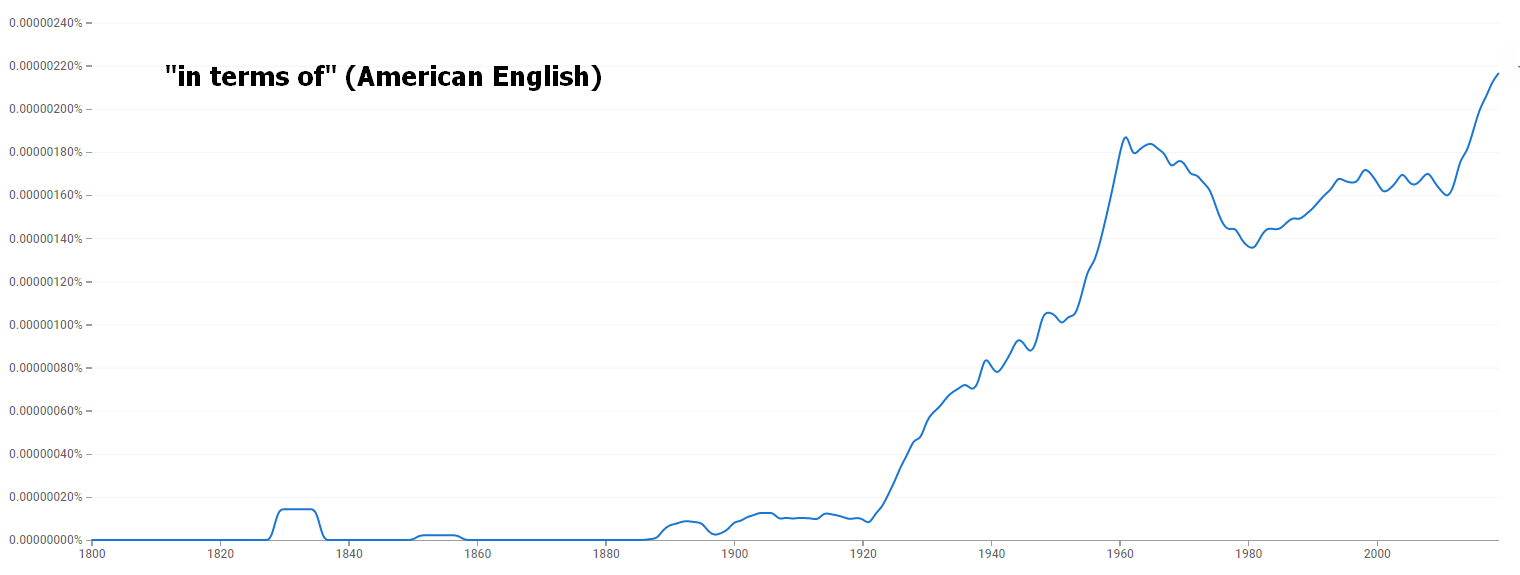
In 2013, I made a key discovery that disturbed and distressed core members of the non-conformist maverick community on a global basis dot dot dot… In America (or so it appeared) a key lexical marker of non-conformist maverickness was rapidly declining in terms of core usage, thusly:
At the same time, the non-conformist maverick community in Britain had maintained their core commitment to this key lexical marker of etc, thusly:
I expressed my puzzlement at the decline of “in terms of” in America. I couldn’t see a linguistic explanation and should (I now realize) have expressed doubts about the reliability of the data. Yes, in 2020 I’m very happy to report to members of the non-conformist maverick community that they need be disturbed and distressed no longer. The term has turned and it seems Google’s nGram wasn’t working properly at that time-period. Key statistics for core usage of “in terms of” are now in core accordance with key expectations, thusly:
“in terms of” (American English)
(open in new tab for larger image)
“in terms of” (British English)
Sadly, however, non-conformist mavericks in French- and Spanish-speaking countries seem to have stopped being non-conformist:
“en termes de” (French)
“en términos de” (Spanish)
Peri-Performative Post-Scriptum
The title of this incendiary intervention radically referencizes a key catchphrase of core comedian George Formby (1904-61), viz, “turned out nice again”. Formby’s home-county of Lancashire (England) was — and remains — a core hotbed of non-conformist maverickness dot dot dot
• Core discussion around “in terms of”…
“Será tan breve que ya he terminado,” — Salvador Dalí, Con la frase “Ja soc aquí”, Dalí abrió una surrealista conferencia de Prensa, El País, 25×1980
Salvador Dalí […] once gave the world’s shortest speech – six seconds in duration. He said, “I will be so brief I have already finished,” and he sat down. — Edward O. Wilson
Previously pre-posted
• A Seriously Sizzling Series of Super-Saucy Salvadisms — more good quotes by Salvador Dalí
«Il vino è la luce del sole tenuta insieme dall’acqua.» — Galileo (1564-1642)
“Wine is sunlight held together by water.” — Galileo
As a keyly committed core component of the anti-racist community, I’ve always been a passionate admirer of Kimberlé Crenshaw, the Black legal genius who conceived the corely committed key concept of intersectionality, the pro-feminist, anti-racist ideo-matrix whereby multiply impactive factors of oppression around race, gender and class are recognized to overlap in terms of toxic impact on corely vulnerable communities of color, gender, and class…
So, imagine my excitement when I saw that the Guardian was engaging core issues around Ms Crenshaw in a keynote article itself passionately penned by a Journalist of Color:
Kimberlé Crenshaw: the woman who revolutionised feminism – and landed at the heart of the culture wars, by Aamna Mohdin
From police brutality to sexual harassment, the lawyer fights to ensure black women’s experiences are not ignored. So why are her ideas being denounced? — The Guardian, 12xi20
“Why indeed?” I interrogated to myself as I began to read. But imagine my horror when I came across this passage in terms of the core article:
Crenshaw’s early academic work, meanwhile, was also an important building block in the development of critical race theory, which revolutionised the understanding of race in the US’s legal system and is taught in law schools across the country. — Kimberlé Crenshaw…
What is it coming to when the Guardian uses everyday English to engage issues around the keyly vital work of a Black legal genius? Huh? The Guardian should of course have put it like this:
Crenshaw’s early academic work, meanwhile, was also a core building block in terms of the development of critical race theory, which revolutionised the understanding of race in the US’s legal system and is taught in law schools across the country.
And “core foundational keystone in terms of the gestational development…” would have been even better…
Elsewhere other-engageable:
• Ex-term-in-nate! — incendiarily interrogating issues around “in terms of” dot dot dot
“In terms of those ideas, there’s been specific policies that are intersecting in terms of racist and sexist policies that have targeted and harmed black women. The same thing with black men, in terms of them being a racial group that have been affected by racist ideas and policies. […] So, in terms of assessing other people, we should allow for people to essentially make racist mistakes.” — Ibram X Kendi, The most extreme racists say, ‘I’m the least racist person anywhere in the world’, The Guardian, 30viii2019
Elsewhere other-accessible:
• Ex-term-in-nate! — incendiarily interrogating issues around “in terms of” dot dot dot
• All O.o.t.Ü.-F. posts interrogating issues around “in terms of”…
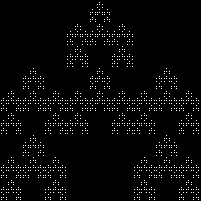
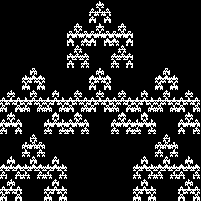
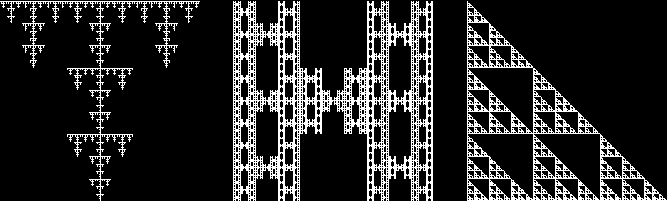
A fractal is a shape that contains smaller (and smaller) versions of itself, like this:
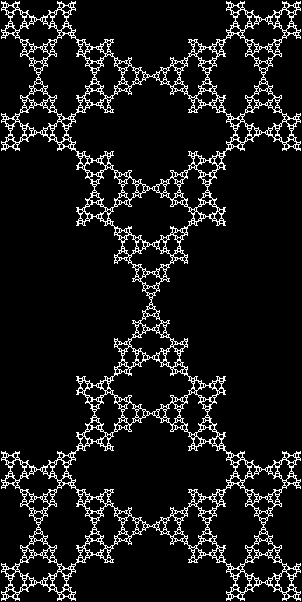
Fractals also occur in nature. For example, part of a tree looks like the tree as whole. Part of a cloud or a lung looks like the cloud or lung as a whole. So trees, clouds and lungs are fractals. The letters of an alphabet don’t usually look like that, but I decided to create a fractal alphabet — or fractalphabet — that does.
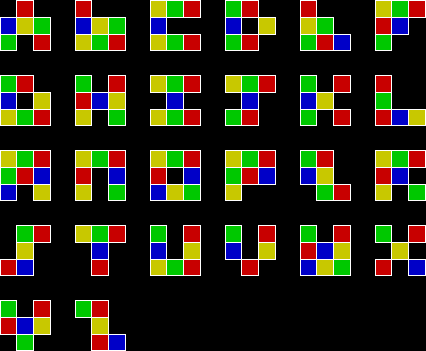
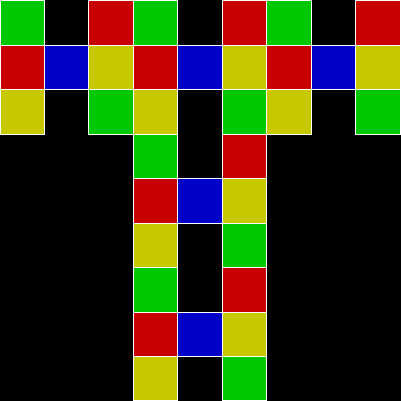
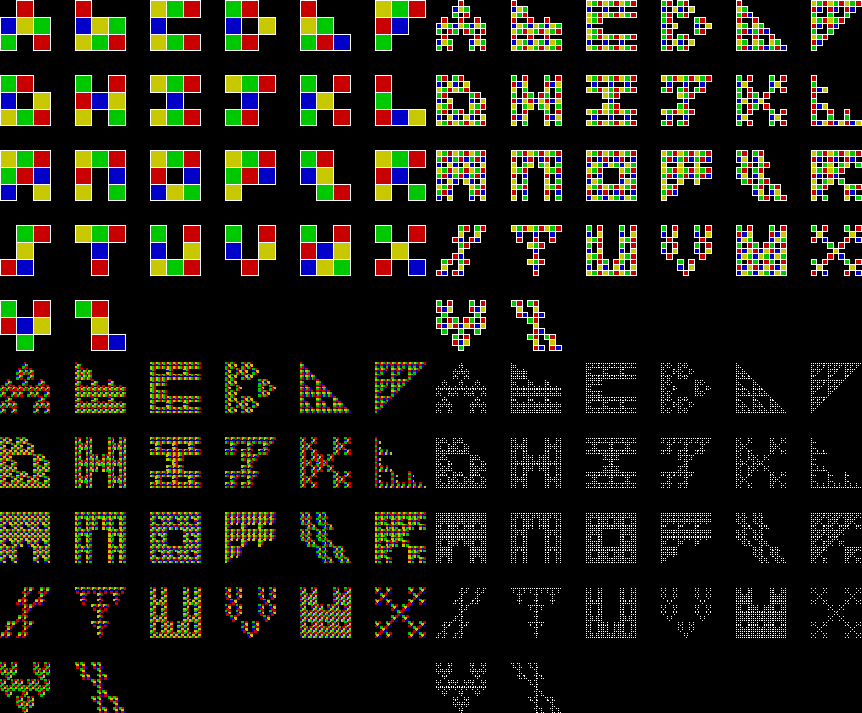
The fractalphabet starts with this minimal standard Roman alphabet in upper case, where each letter is created by filling selected squares in a 3×3 grid:
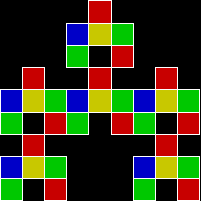
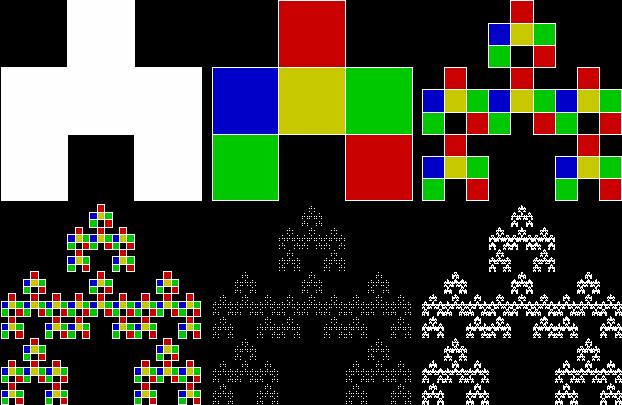
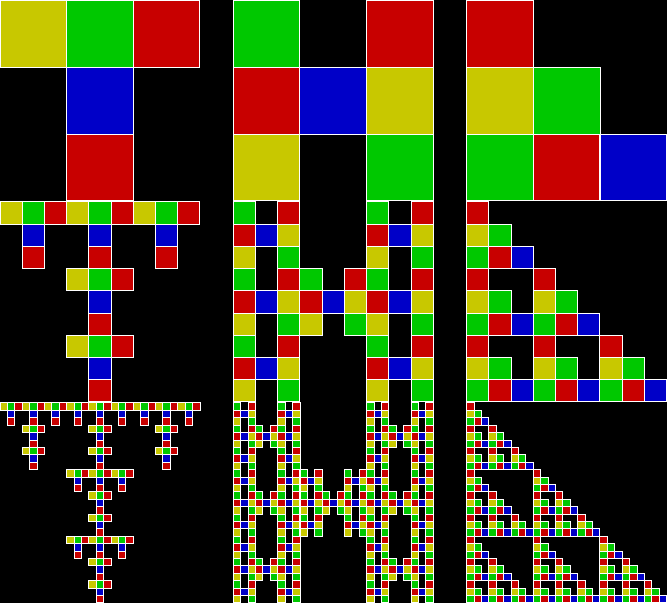
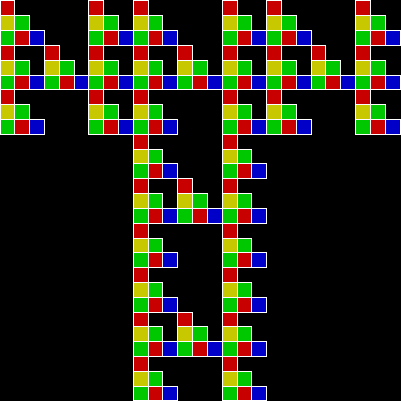
The above is stage 1 of the fractalphabet, when it isn’t actually a fractal alphabet at all. But if each filled square of the letter “A”, say, is replaced by the letter itself, the “A” turns into a fractal, like this:
Fractal A (animated)
Here’s the whole alphabet being turned into fractals:
Full fractalphabet (black-and-white)
Full fractalphabet (color)
Full fractalphabet (b&w animated)
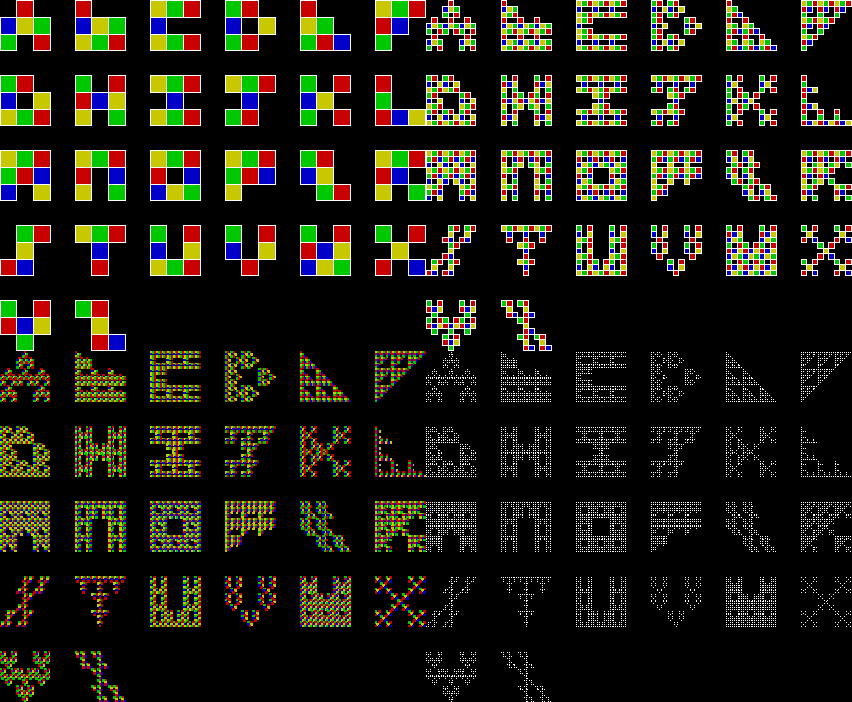
Full fractalphabet (color animated)
Now take a full word like “THE”:
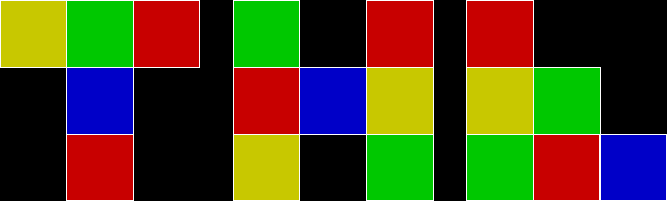
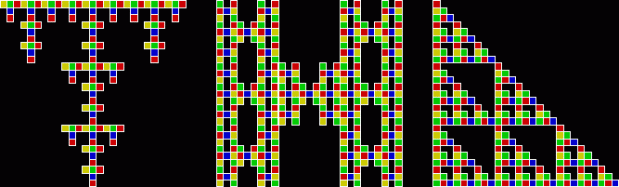
You can turn each letter into a fractal using smaller copies of itself:
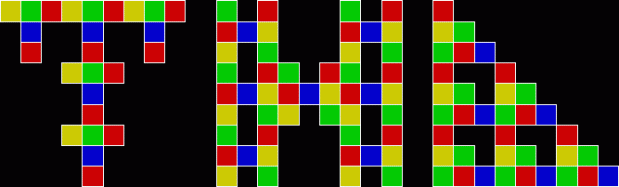
Fractal THE (b&w animated)
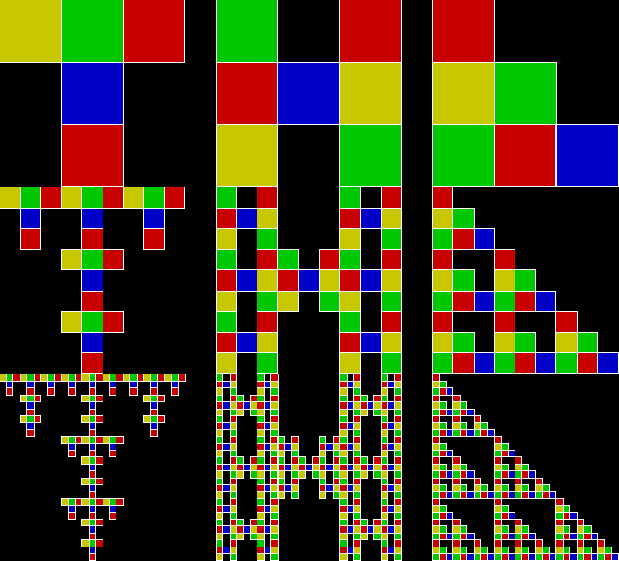
Fractal THE (color animated)
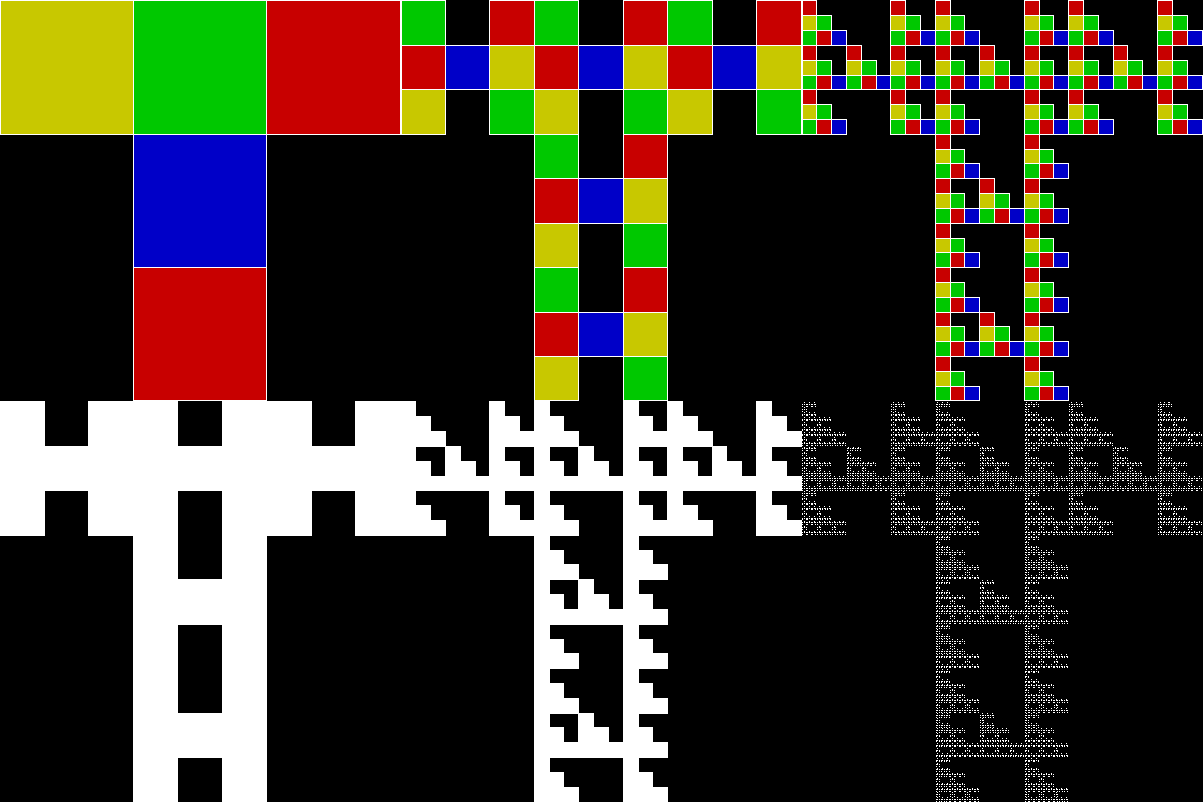
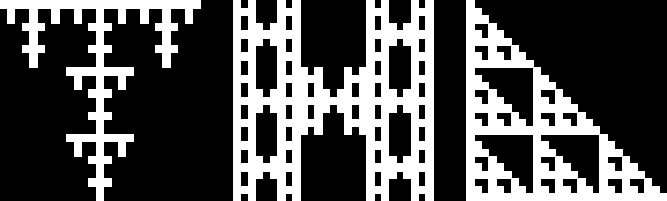
But you can also create a fractal from “THE” by compressing the “H” into the “T”, then the “E” into the “H”, like this:
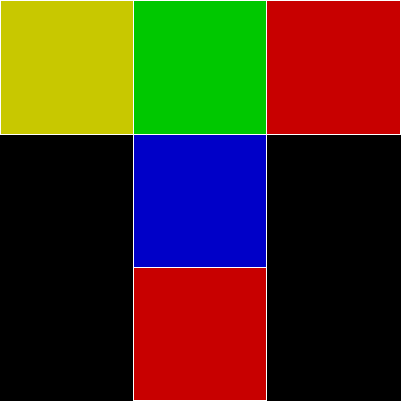
Compressed THE (animated)
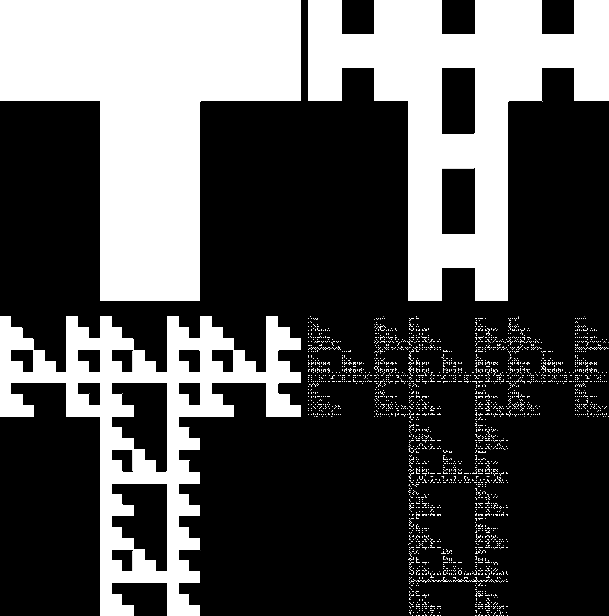
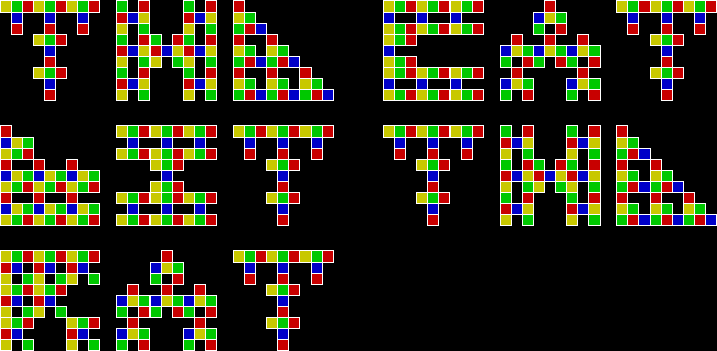
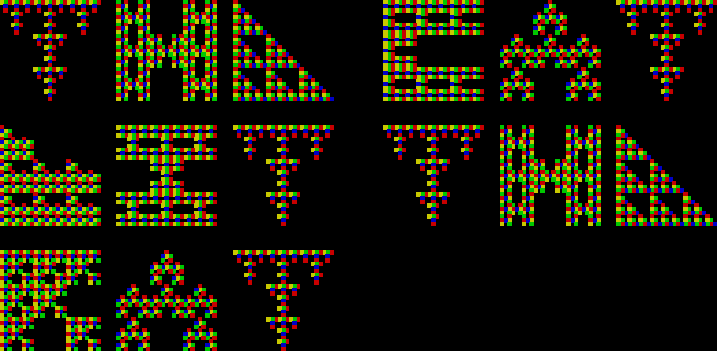
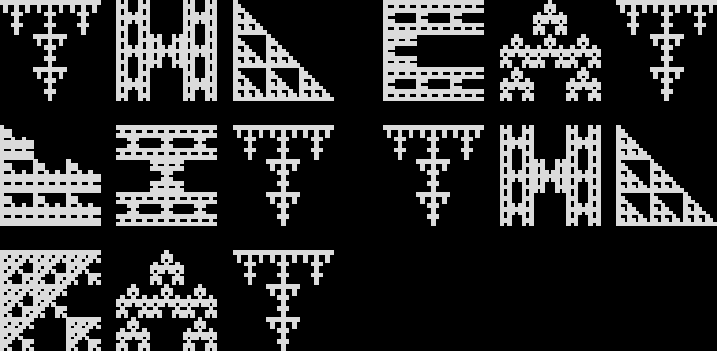
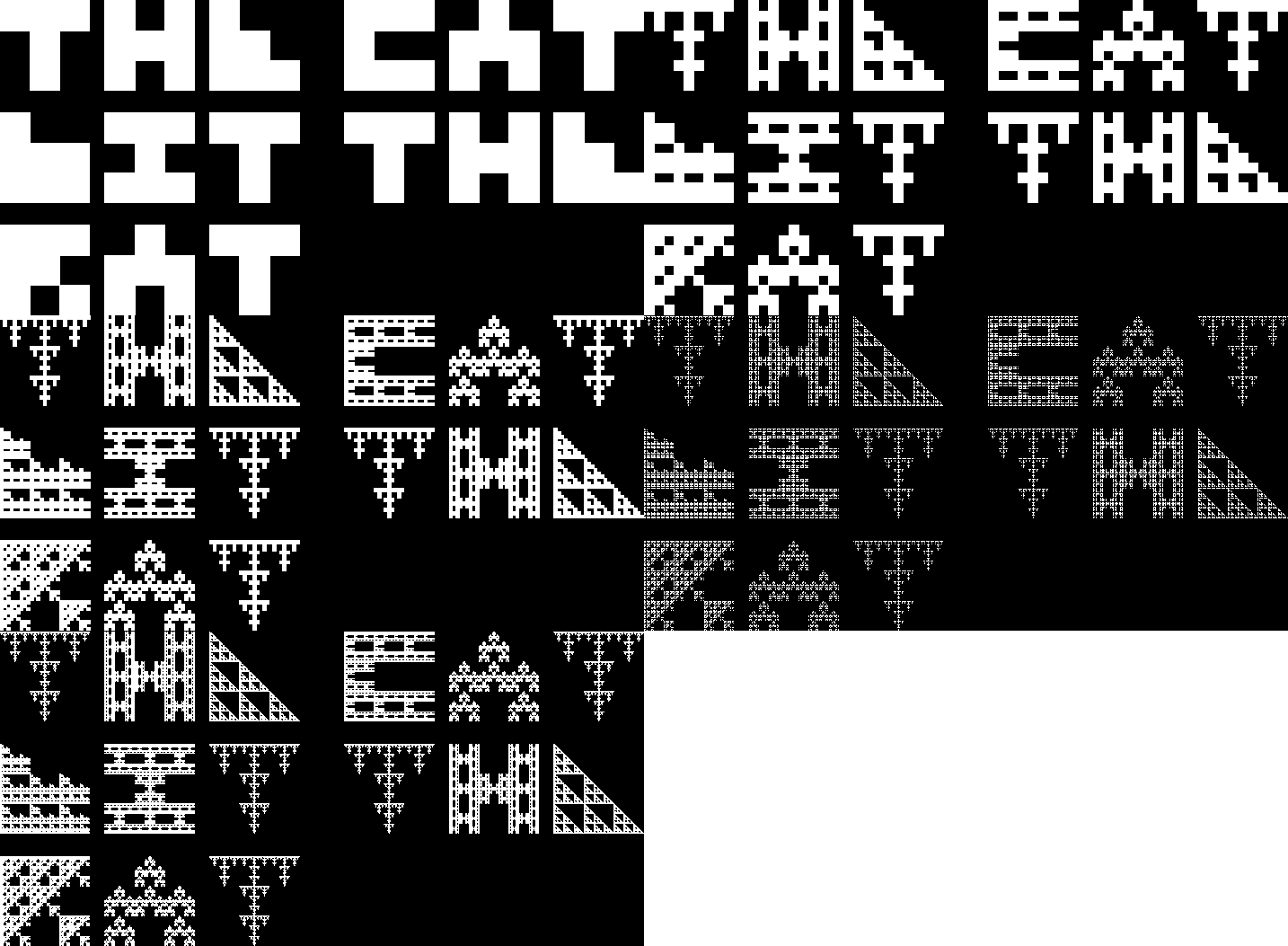
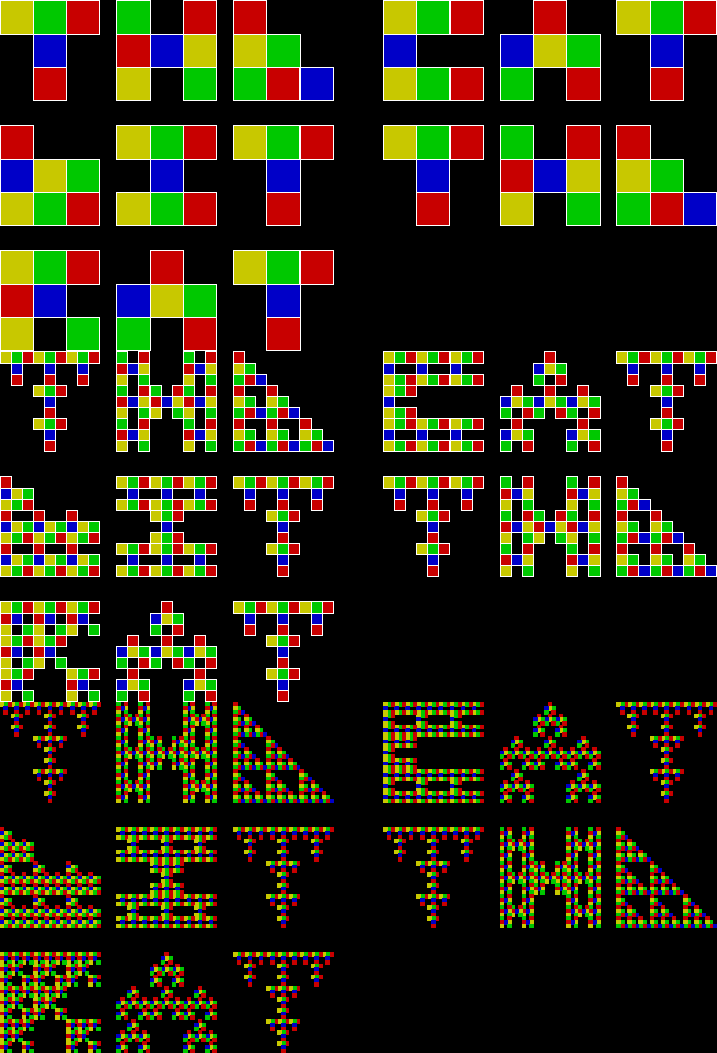
The compressed “THE” has a unique appearance and is both a letter and a word. Now try a complete sentence, “THE CAT BIT THE RAT”. This is the sentence in stage 1 of the fractalphabet:
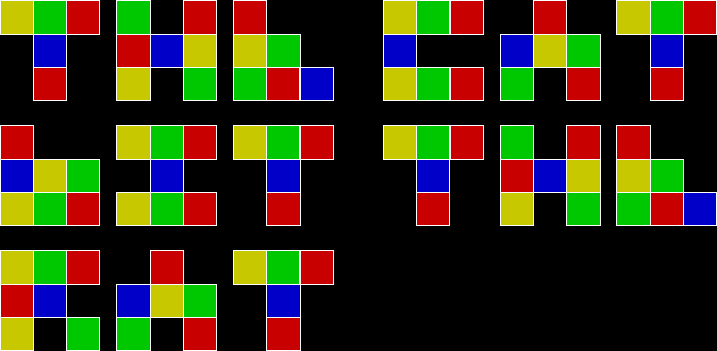
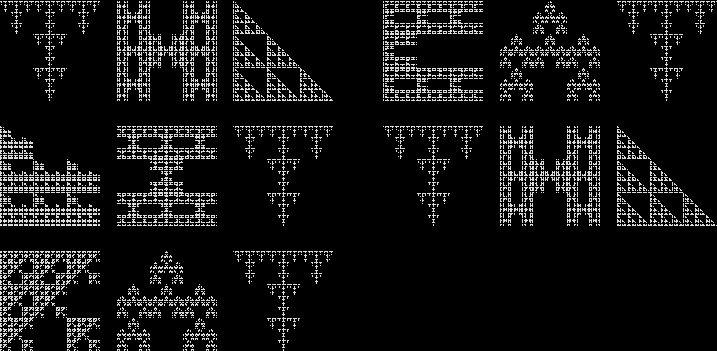
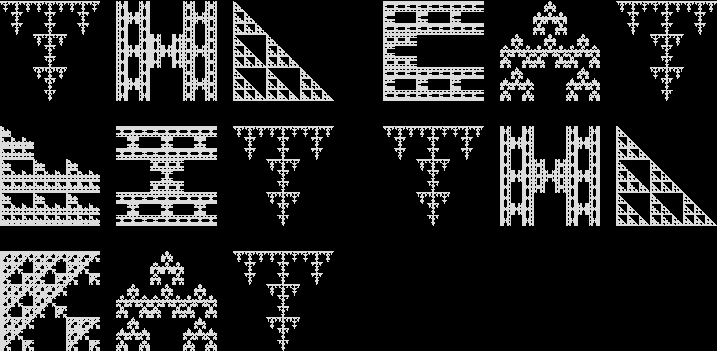
And stage 2:
And further stages:
Fractal CAT (b&w animated)
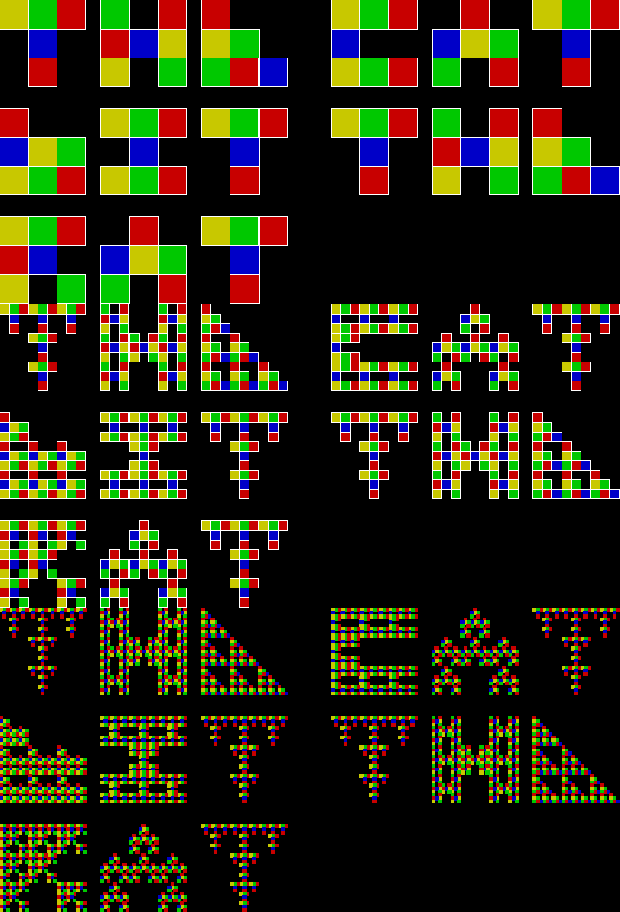
Fractal CAT (color animated)
But, as we saw with “THE” above, that’s not the only fractal you can create from “THE CAT BIT THE RAT”. Here’s what I call a 2-compression of the sentence, where every second letter has been compressed into the letter that precedes it:
THE CAT BIT THE RAT (2-comp color)
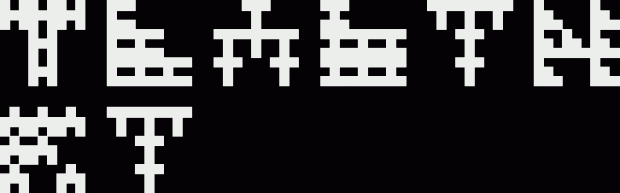
THE CAT BIT THE RAT (2-comp b&w)
And here’s a 3-compression of the sentence, where every third letter has been compressed into every second letter, and every second-and-third letter has been compressed into the preceding letter:

THE CAT BIT THE RAT (3-comp color)

THE CAT BIT THE RAT (3-comp b&w)
As you can see above, each word of the original sentence is now a unique single letter of the fractalphabet. Theoretically, there’s no limit to the compression: you could fit every word of a book in the standard Roman alphabet into a single letter of the fractalphabet. Or you could fit an entire book into a single letter of the fractalphabet (with additional symbols for punctuation, which I haven’t bothered with here).
To see what the fractalphabeting of a longer text in the standard Roman alphabet might look like, take the first verse of a poem by A.E. Housman:
On Wenlock Edge the wood’s in trouble;
His forest fleece the Wrekin heaves;
The gale it plies the saplings double,
And thick on Severn snow the leaves. (“Poem XXXI” of A Shropshire Lad, 1896)
The first line looks like this in stage 1 of the fractalphabet:
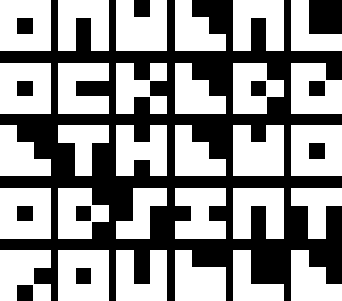
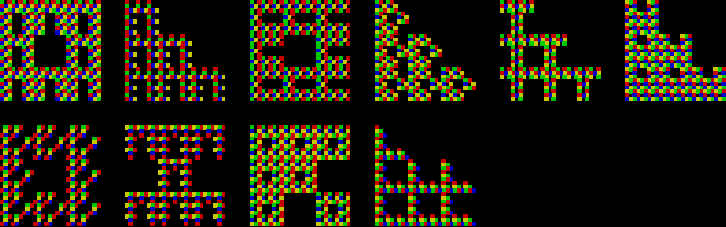
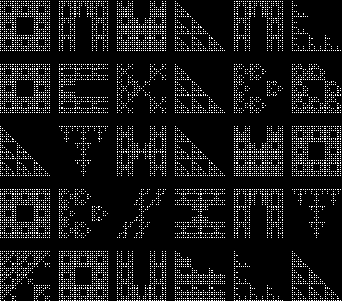
Here’s stage 2 of the standard fractalphabet, where each letter is divided into smaller copies of itself:
And here’s stage 3 of the standard fractalphabet:
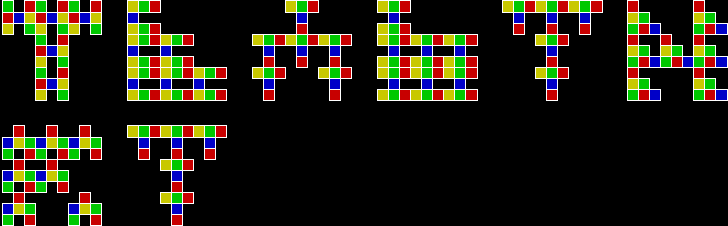
Now examine a colour version of the first line in stage 1 of the fractalphabet:
As with “THE” above, let’s try compressing each second letter into the letter that precedes it:
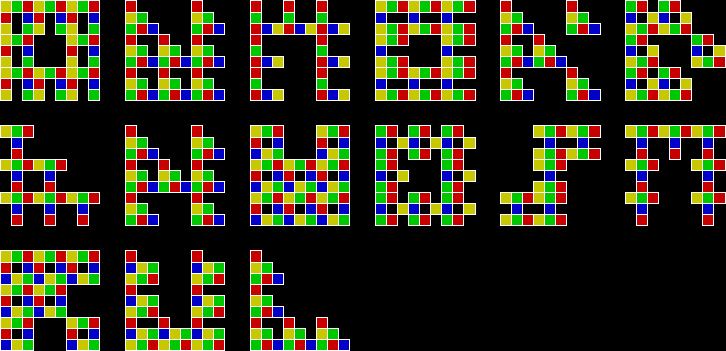
And here’s a 3-comp of the first line:
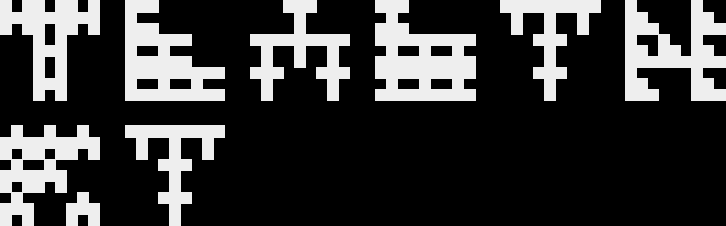
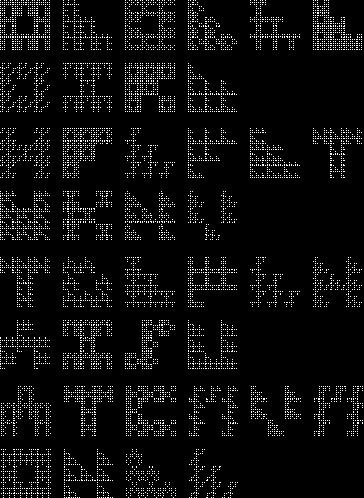
Finally, here’s the full first verse of Housman’s poem in 2-comp and 3-comp forms:
On Wenlock Edge the wood’s in trouble;
His forest fleece the Wrekin heaves;
The gale it plies the saplings double,
And thick on Severn snow the leaves. (“Poem XXXI of A Shropshire Lad, 1896)
“On Wenlock Edge” (2-comp)
“On Wenlock Edge” (3-comp)
Appendix
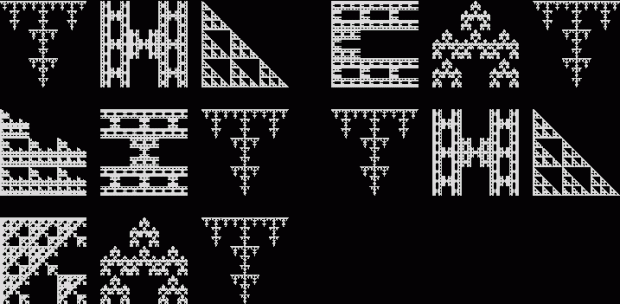
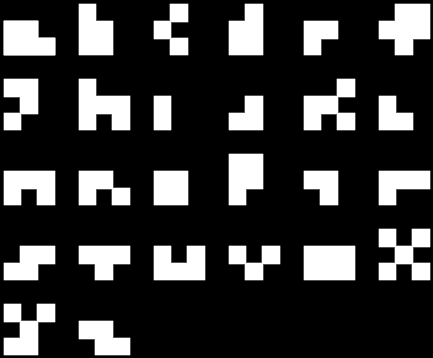
This is a possible lower-case version of the fractalphabet:
• «Планета есть колыбель разума, но нельзя вечно жить в колыбели.» — Константин Эдуардович Циолковский (1911)
• “Planet is the cradle of mind, but one cannot live in the cradle forever.” — Konstantin Tsiolkovsky