
• Et harum scientiarum porta et clavis est Mathematica.
• And of these sciences the door and key is Mathematics. — Roger Bacon (c.1214-c. 1292)
Category Archives: Mathematics
Self-Raising Power
The square root of 2 is the number that, raised to the power of 2, equals 2. That is, if r^2 = r * r = 2, then r = √2. The cube root of 2 is the number that, raised to the power of 3, equals 2. That is, if r^3 = r * r * r = 2, then r = [3]√2.
But what do you call the number that, raised to the power of itself, equals 2? I suggest “the auto-root of 2”. Here, if r^r = 2, then r = [r]√2. I don’t know a quick way to calculate the auto-root, but you can adapt a well-known algorithm for approximating the square root of a number. The square-root algorithm looks like this:
n = 2
r = 1
for c = 1 to 20
r = (r + n/r) / 2
next c
print rr = 1.414213562…
Note the fourth line of the algorithm: r = (r + n/r) / 2. When r is an over-estimate of √2, then 2/r will be an under-estimate (and vice versa). (r + 2/r) / 2 splits the difference and refines the estimate. Using the lines above as the model, the auto-root algorithm looks like this:
n = 2
r = 1
for c = 1 to 20
r = (r + [r]√n) / 2[*]
next c
print rr = 1.559610469…
*This is equivalent to r = (r + n^(1/r)) / 2
Here are the first 100 digits of [r]√2 = r in base 10:
1, 5, 5, 9, 6, 1, 0, 4, 6, 9, 4, 6, 2, 3, 6, 9, 3, 4, 9, 9, 7, 0, 3, 8, 8, 7, 6, 8, 7, 6, 5, 0, 0, 2, 9, 9, 3, 2, 8, 4, 8, 8, 3, 5, 1, 1, 8, 4, 3, 0, 9, 1, 4, 2, 4, 7, 1, 9, 5, 9, 4, 5, 6, 9, 4, 1, 3, 9, 7, 3, 0, 3, 4, 5, 4, 9, 5, 9, 0, 5, 8, 7, 1, 0, 5, 4, 1, 3, 4, 4, 4, 6, 9, 1, 2, 8, 3, 9, 7, 3…
And here is [r]√n = r for n = 2..20:
autopower(2) = 1.5596104694623693499703887…
autopower(3) = 1.8254550229248300400414692…
autopower(4) = 2
autopower(5) = 2.1293724827601566963803119…
autopower(6) = 2.2318286244090093673920215…
autopower(7) = 2.3164549587856123013255030…
autopower(8) = 2.3884234844993385564187215…
autopower(9) = 2.4509539280155796306228059…
autopower(10) = 2.5061841455887692562929409…
autopower(11) = 2.5556046121008206152514542…
autopower(12) = 2.6002950000539155877172082…
autopower(13) = 2.6410619164843958084118390…
autopower(14) = 2.6785234858912995813011990…
autopower(15) = 2.7131636040042392095764012…
autopower(16) = 2.7453680235674634847098492…
autopower(17) = 2.7754491049442334313328329…
autopower(18) = 2.8036632456580215496843618…
autopower(19) = 2.8302234384970308956026277…
autopower(20) = 2.8553085030012414128332189…
I assume that the auto-root is always an irrational number, except when n is a perfect power of suitable form, i.e. n = p^p for some integer p. For example, autoroot(4) = 2, because 2^2 = 4, autoroot(27) = 3, because 3^3 = 27, and so on.
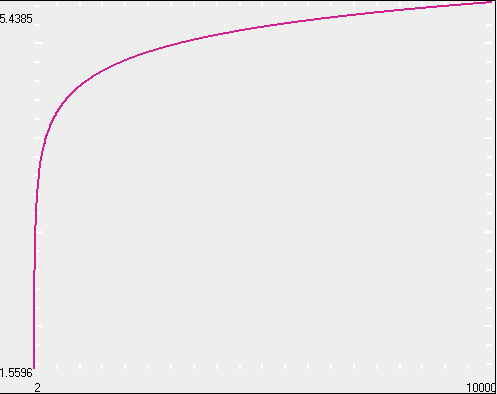
And here is the graph of autoroot(n) for n = 2..10000:
Performativizing Papyrocentricity #43
Papyrocentric Performativity Presents:
• Avens Above – Harrap’s Wild Flowers: A Guide to the Wild Flowers of Britain & Ireland, Simon Harrap (Bloomsbury 2013)
• Place of Glades – A Dictionary of British Place-Names, A.D. Mills (Oxford University Press 1991)
• De Minimis Curat Rex? – Infinitesimal: How a Dangerous Mathematical Theory Shaped the Modern World, Amir Alexander (Oneworld 2014)
• Seen and Not Heard – The Greatest Albums You’ll Never Hear, ed. Bruno MacDonald (Aurum Press 2014)
Or Read a Review at Random: RaRaR
Get Your Prox Off
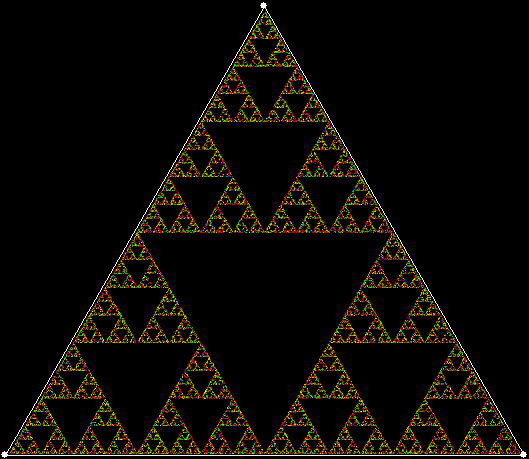
Create a triangle. Find a point somewhere inside it. Choose a corner at random and move halfway towards it. Mark the new point. Repeat the procedure: choose, move, mark. Repeat again and again. In time, a fractal will appear:
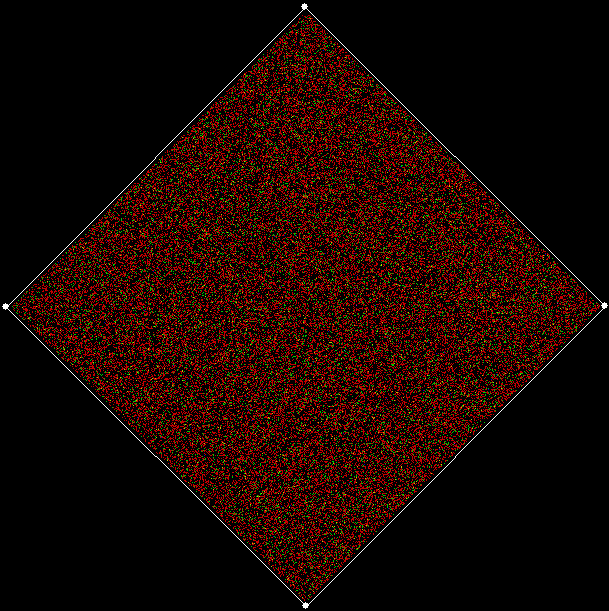
However, if you try the same thing with a square – choose a corner at random, move halfway towards it, mark the new point, repeat – no fractal appears. Instead, the points fill the interior of the square:
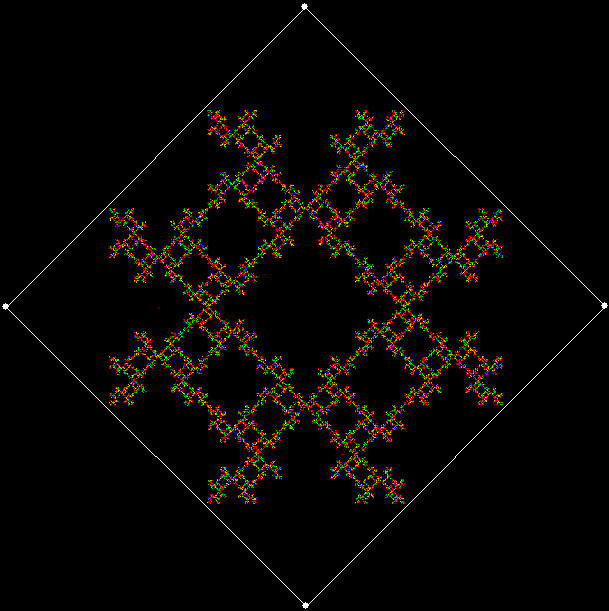
But what happens if you impose restrictions on the randomly chosen corner (or chorner)? Suppose you can’t choose the same corner twice in a row. If this rule is applied to the square, this fractal appears:
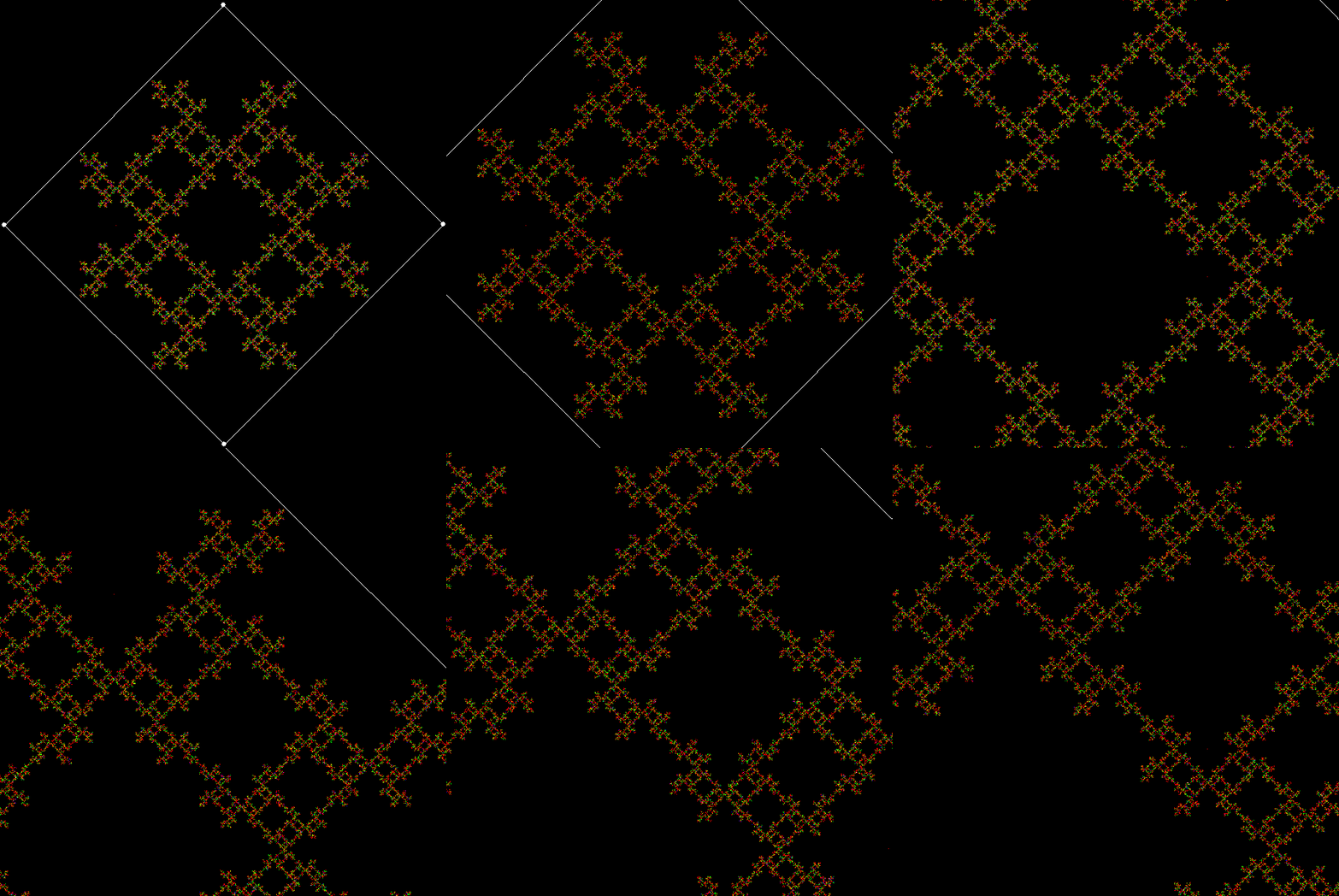
Now apply the no-corner-twice-in-a-row rule to a square that contains a central chorner. This fractal appears:
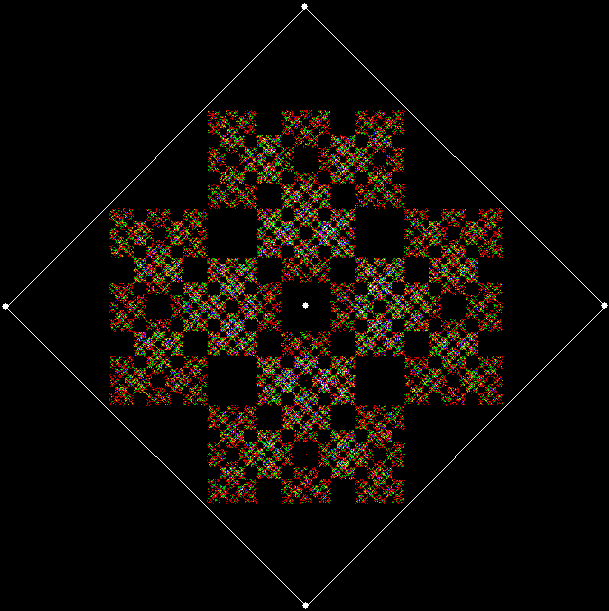
And if the rule is that you can choose a corner twice in a row but not thrice? This fractal appears:
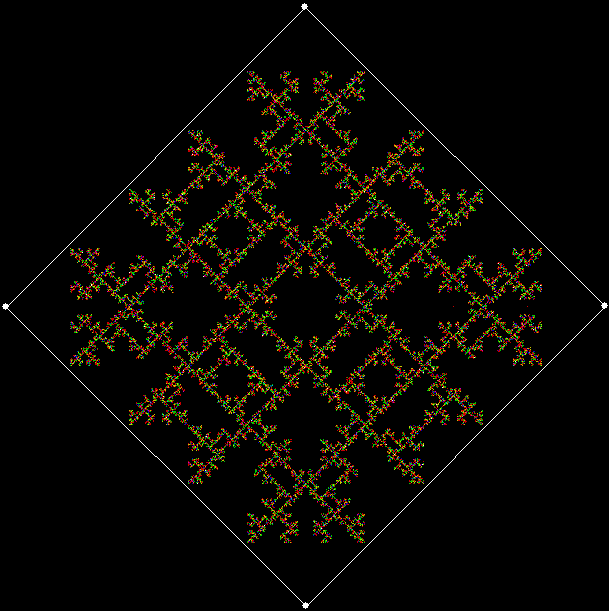
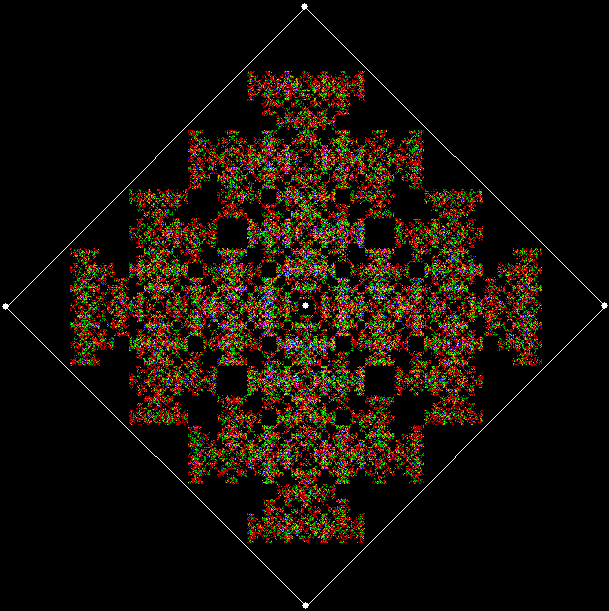
Here is the rule is that a corner can’t be chosen if it was chosen two moves ago:
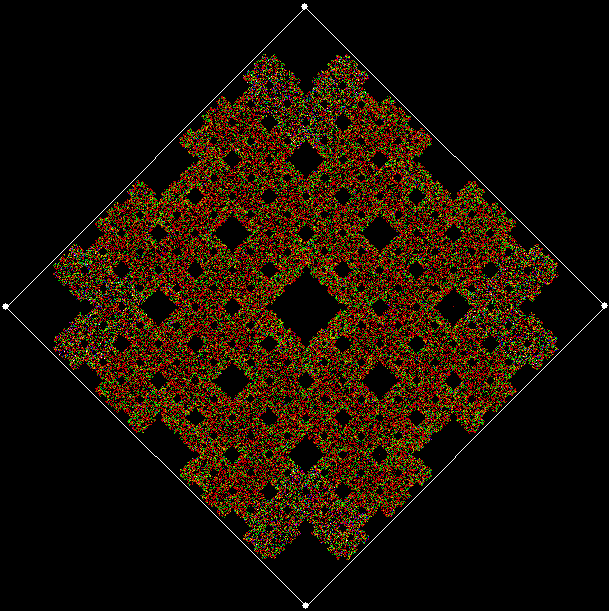
But what if the restriction is based not on how often or when a corner is chosen, but on its proximity, i.e. how near it is to the marked point? If the nearest corner can’t be chosen, the result is the same as the no-corner-twice-in-a-row rule:
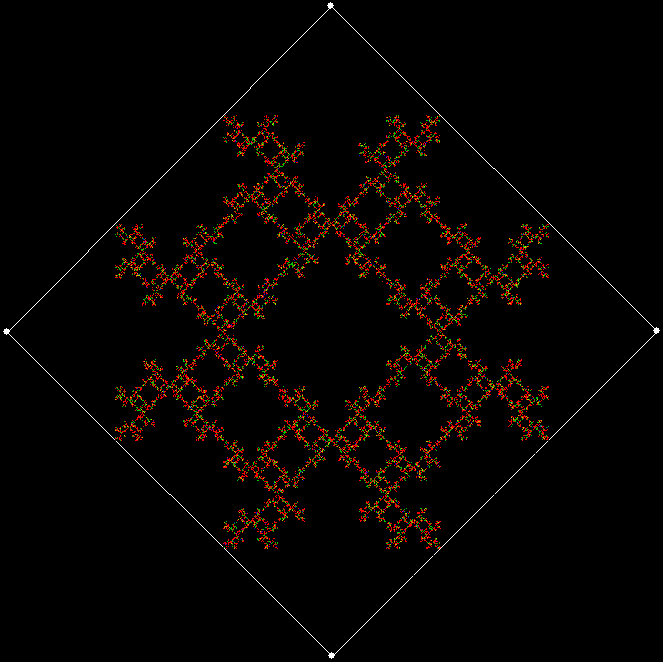
But if the second-nearest corner can’t be chosen, this fractal appears:
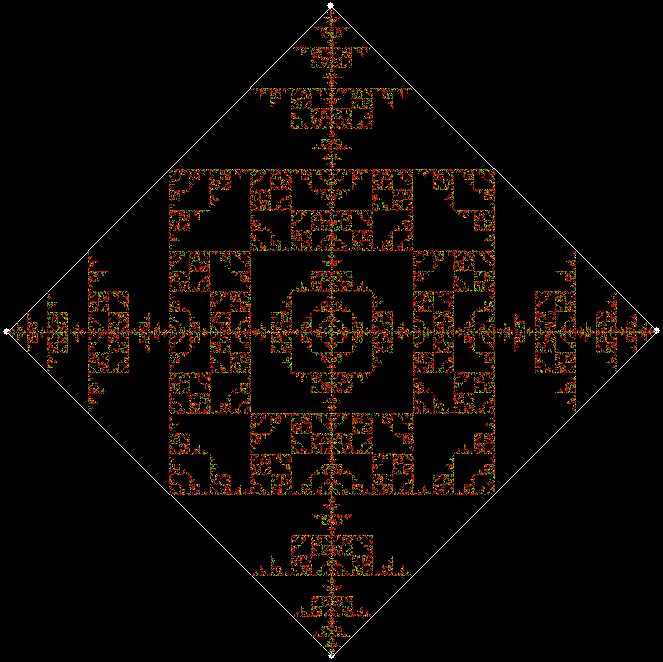
This is the fractal when the third-nearest corner can’t be chosen:
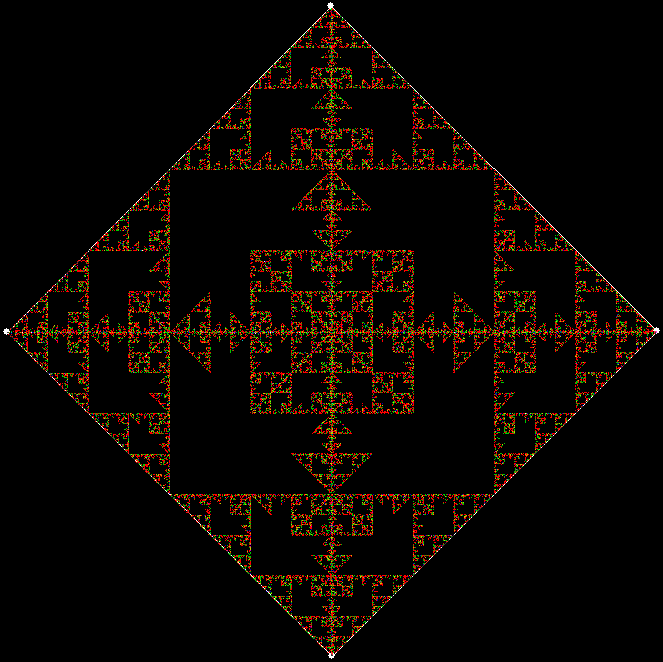
And this is the fractal when the fourth-nearest, or most distant, corner can’t be chosen:
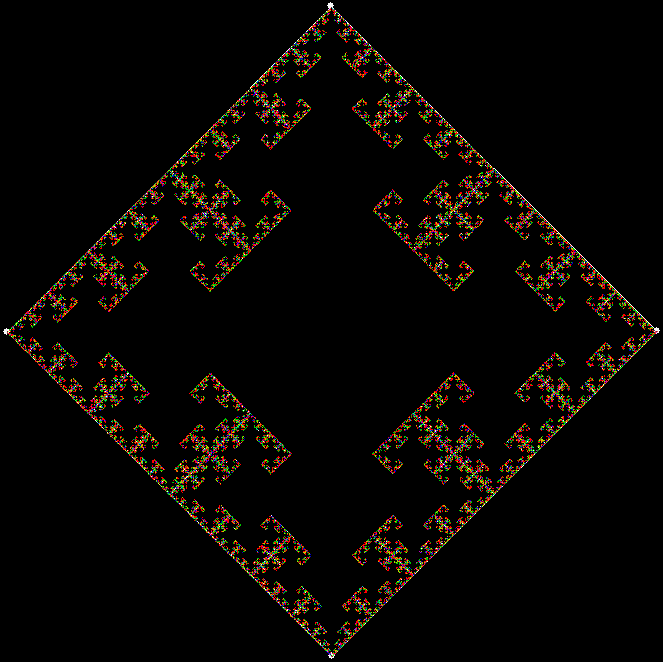
Here are the same restrictions applied to a pentagon:
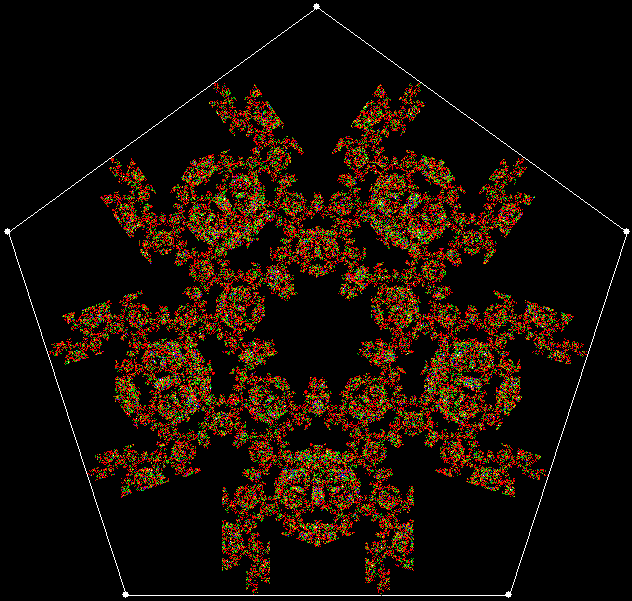
Nearest corner forbidden
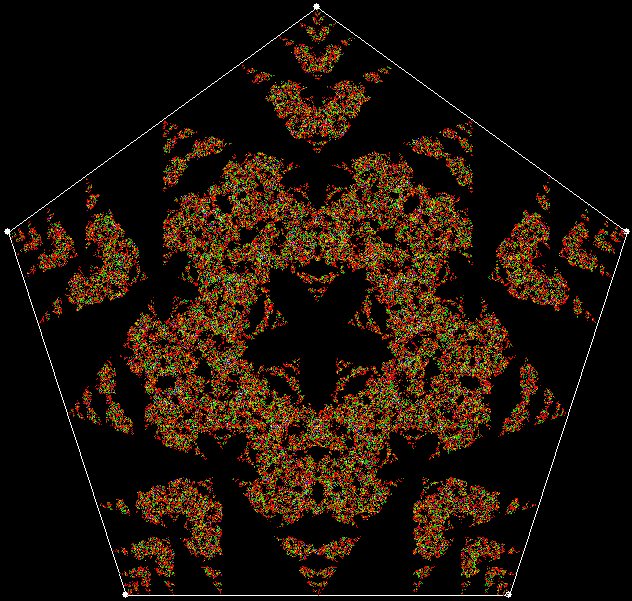
Second-nearest corner forbidden
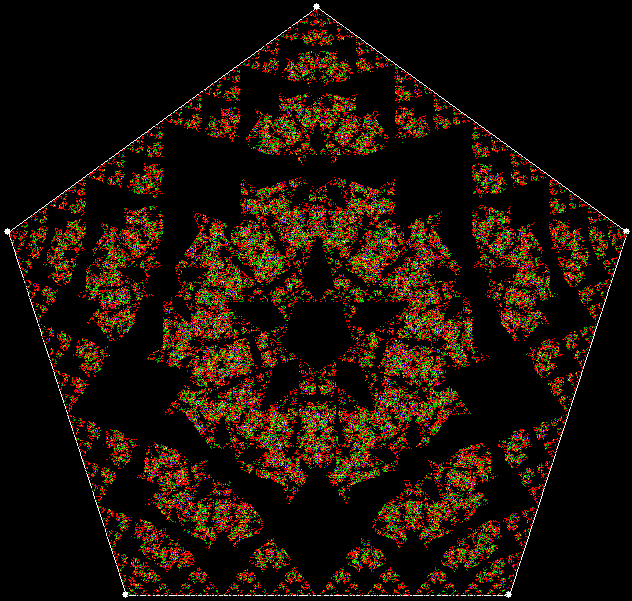
Third corner forbidden
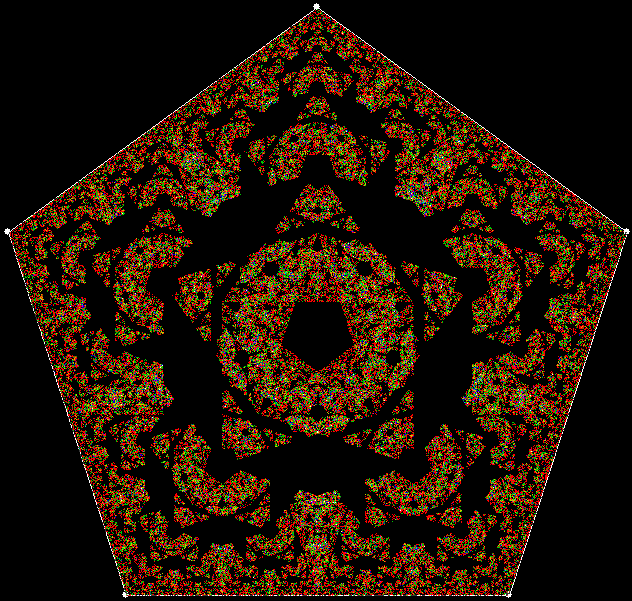
Fourth corner forbidden
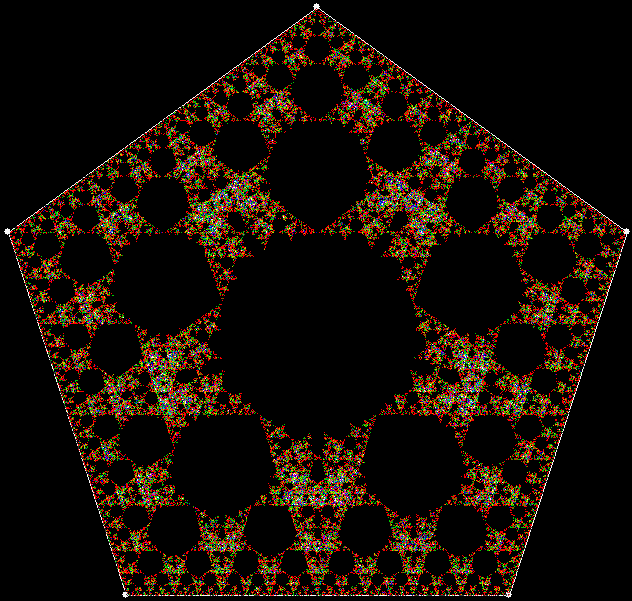
Fifth corner forbidden
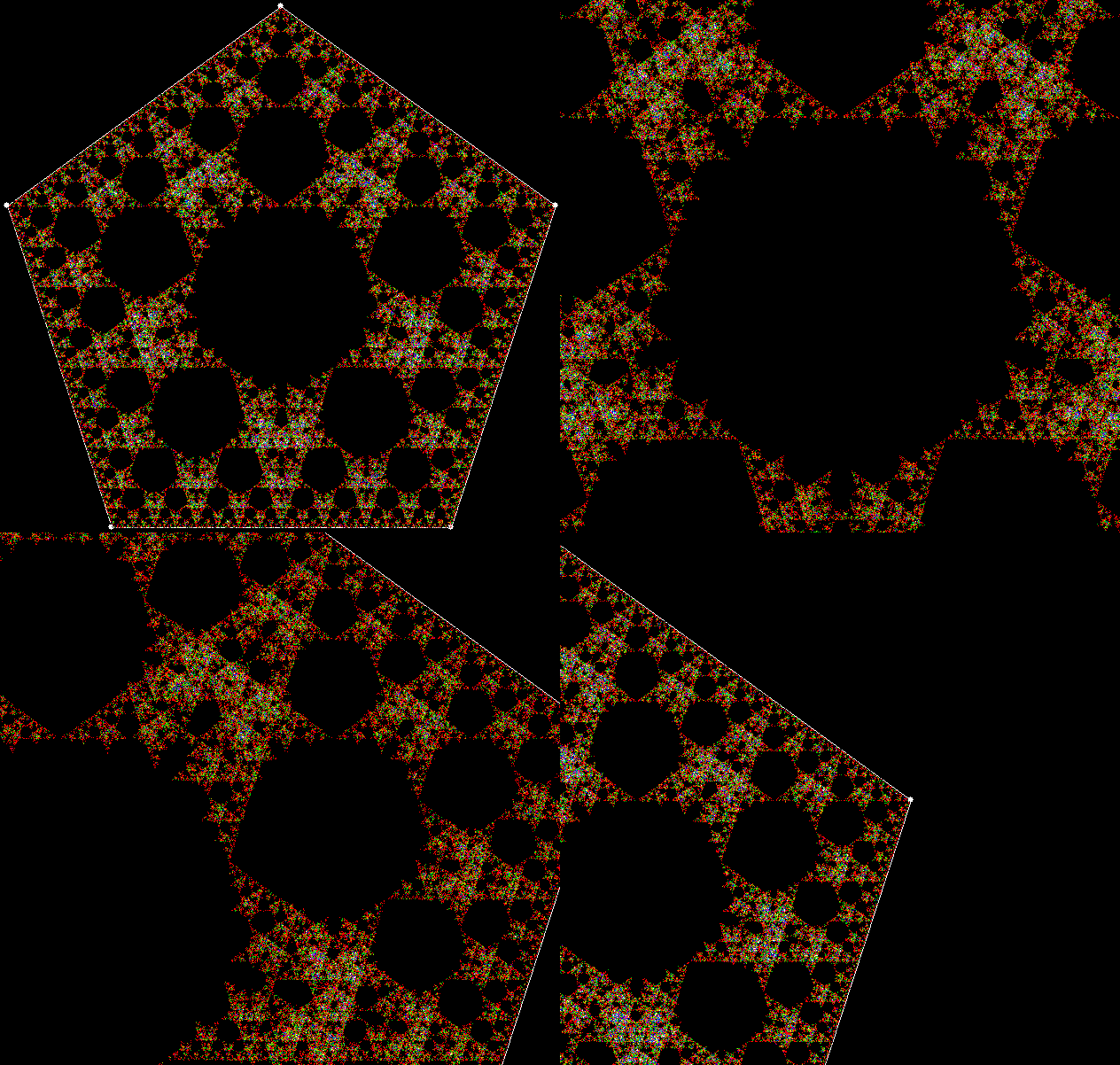
Fifth corner forbidden (animated)
And a pentagon with a central chorner:
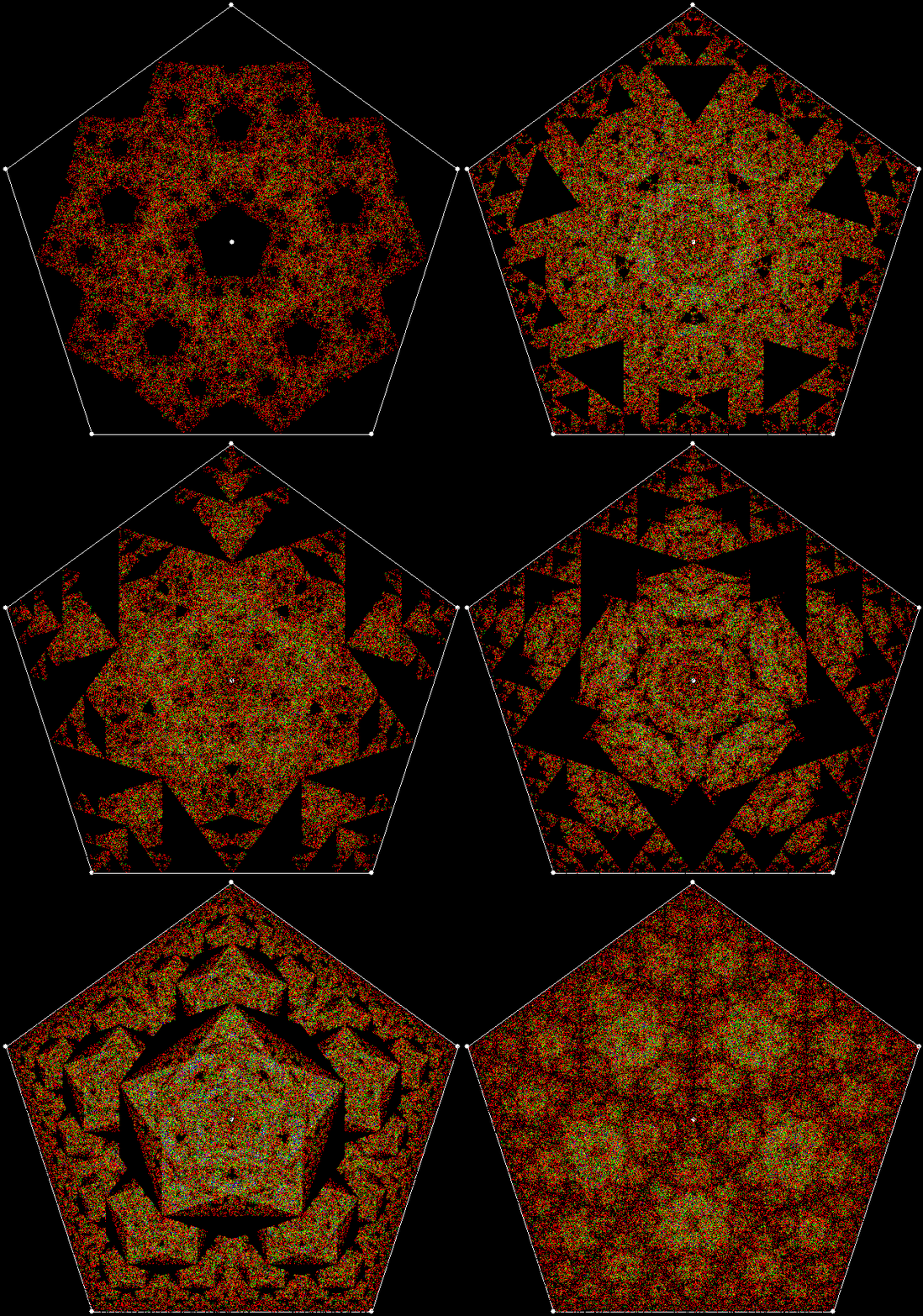
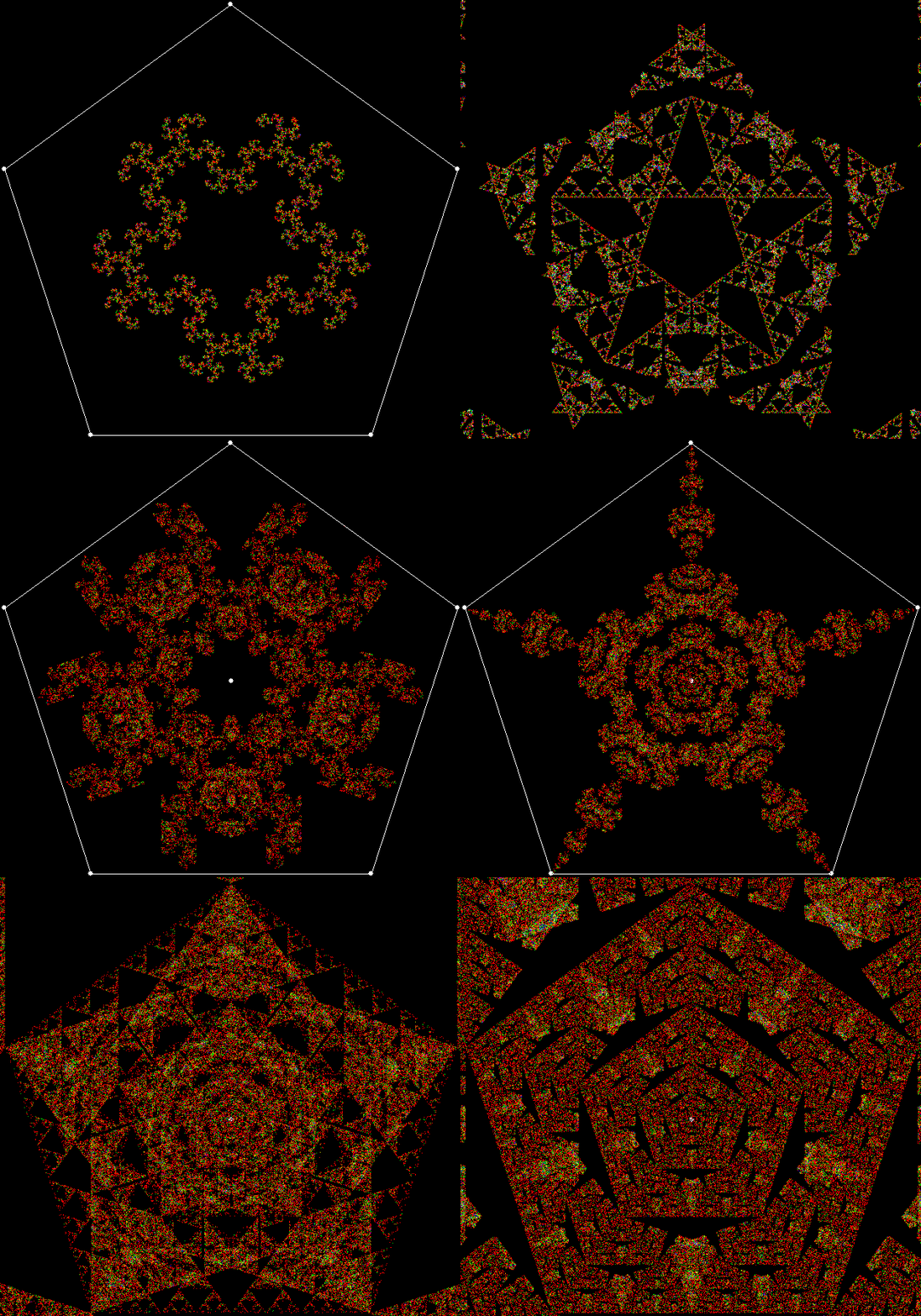
Now try excluding more than one corner. Here are pentagons excluding the n-nearest and n+1-nearest corners (for example, the nearest and second-nearest corners; the second-nearest and third-nearest; and so on):
But what if the moving point is set equal to the n-nearest corner before it moves again? If the corner is the second-nearest and the shape is a triangle with a central chorner, this is the fractal that appears:

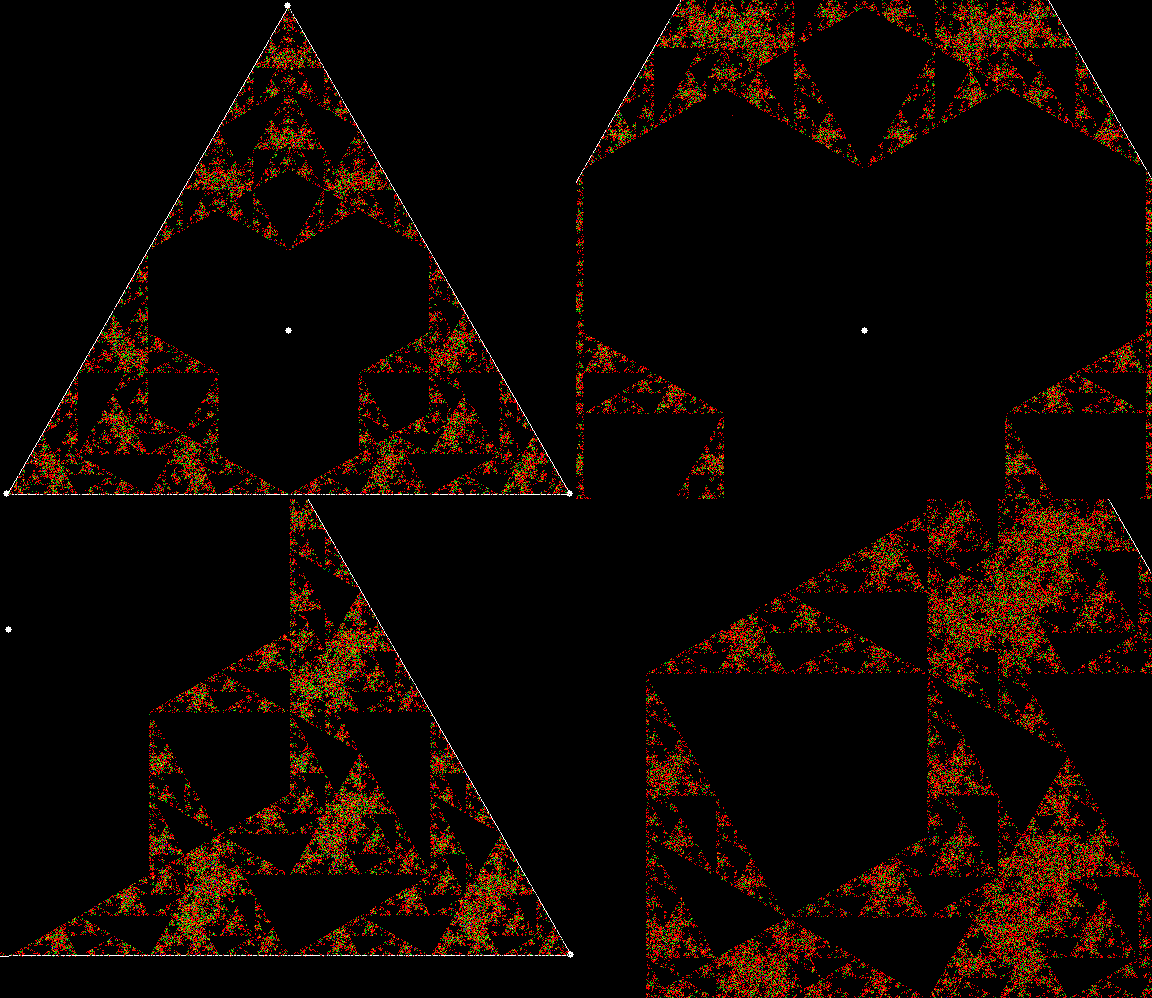
Animated version
And here is the same rule applied to various n-nearest corners in a pentagon:
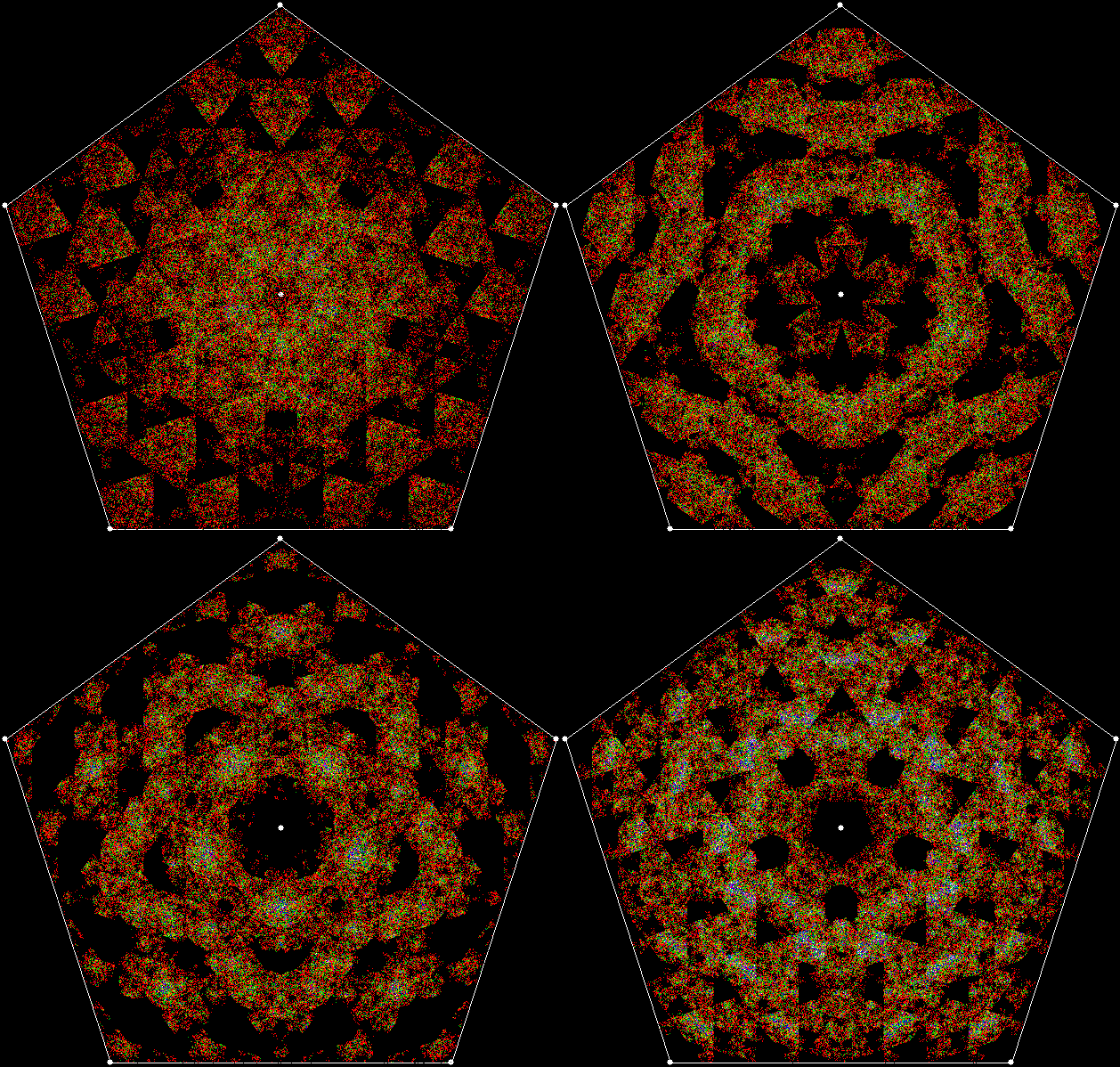
Cornucopious
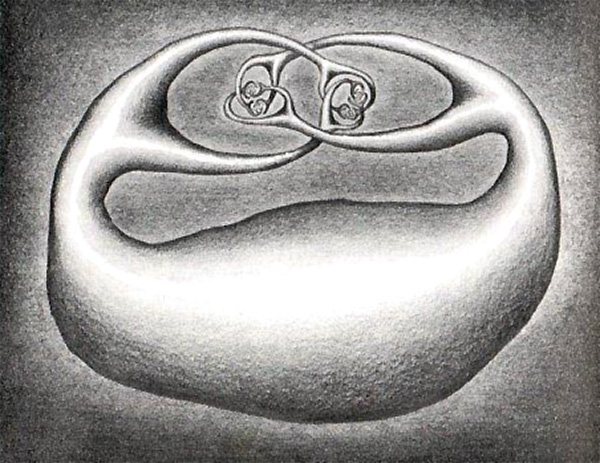
The Choice of the Circle
Here’s an elementary mathematical problem: how many ways are there to choose three numbers from a set of six numbers? If the set is (1, 2, 3, 4, 5, 6), these are the possible choices (or combinations):
(1, 2, 3), (1, 2, 4), (1, 2, 5), (1, 2, 6), (1, 3, 4), (1, 3, 5), (1, 3, 6), (1, 4, 5), (1, 4, 6), (1, 5, 6), (2, 3, 4), (2, 3, 5), (2, 3, 6), (2, 4, 5), (2, 4, 6), (2, 5, 6), (3, 4, 5), (3, 4, 6), (3, 5, 6), (4, 5, 6) (c = 20)
So 6C3 = 20 (C stands for “combination”). The general formula is nCr = (n! / (n-r)!) / r!, where n is the number to choose from, r is the number of choices and n! is factorial n, or n multiplied by all numbers less than itself. For example, 6! = 6 * 5 * 4 * 3 * 2 * 1 = 720. When n = 6 and c = 3, 6C3 = (6! / (6-3)!) / 3! = (720 / 6) / 6 = 20.
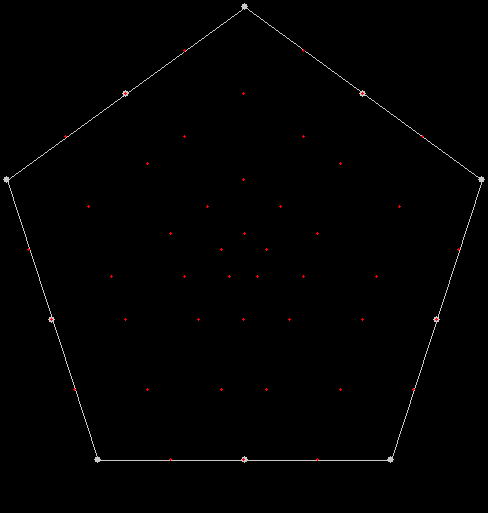
There isn’t much visual appeal in the choices above, but there’s a simple way to change that. Take the ways of choosing two numbers from a set of ten. They start like this:
(1, 2), (1, 3), (1, 4), (1, 5), (1, 6), (1, 7), (1, 8), (1, 9), (1, 10), (2, 3), (2, 4), (2, 5), (2, 6), (2, 7), (2, 8), (2, 9), (2, 10), (3, 4), (3, 5), (3, 6)…
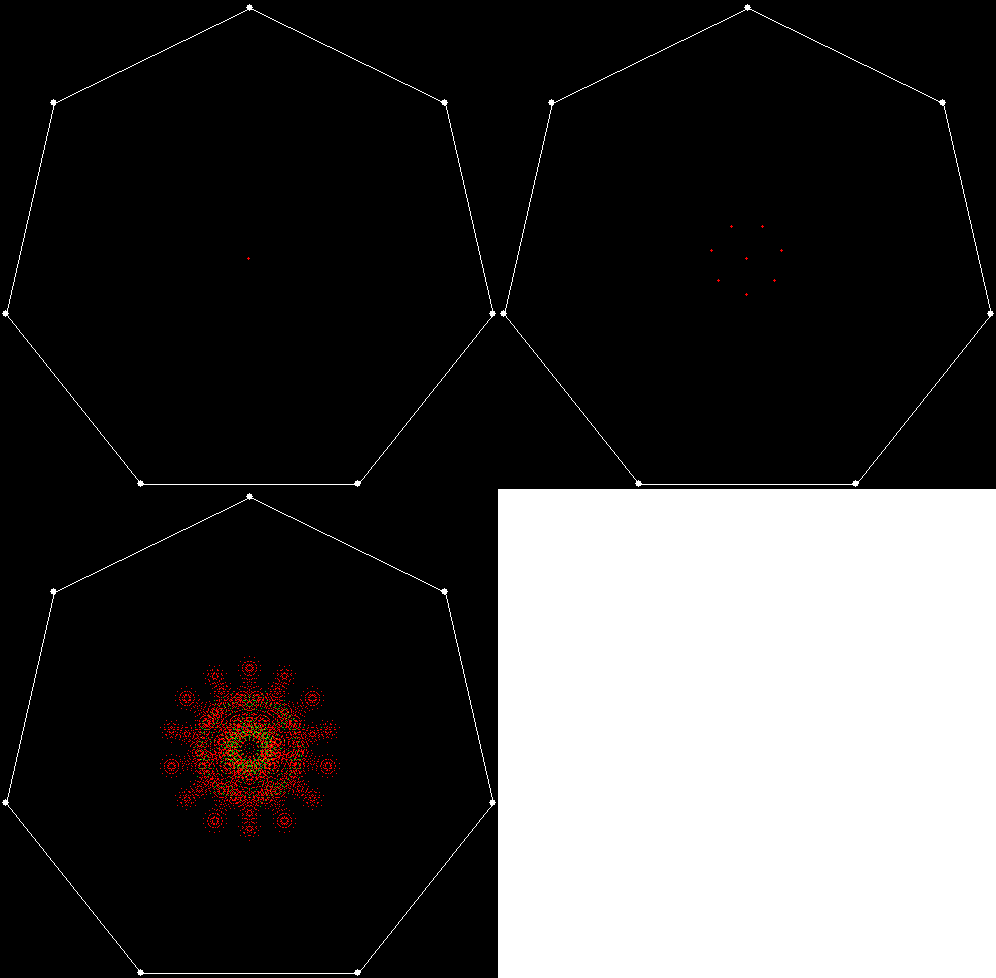
Suppose each choice represents the midpoint of two points chosen from a set of ten points around a pentagon, so that (1, 2) is half-way between points 1 and 2, (3, 5) is half-way between points 3 and 5, and so on:
Now take the ways of choosing three numbers from a set of ten:
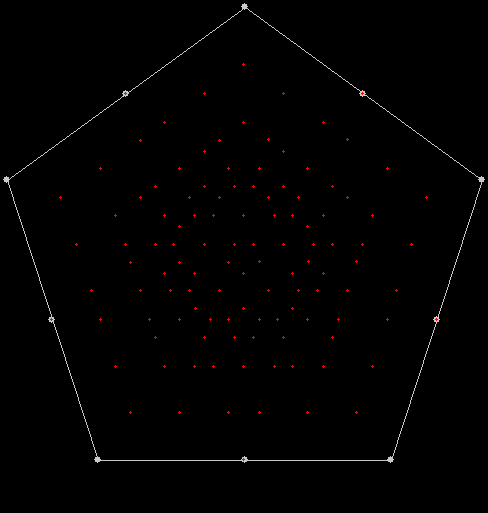
(1, 2, 3), (1, 2, 4), (1, 2, 5), (1, 2, 6), (1, 2, 7), (1, 2, 8), (1, 2, 9), (1, 2, 10), (1, 3, 4), (1, 3, 5), (1, 3, 6), (1, 3, 7), (1, 3, 8), (1, 3, 9), (1, 3, 10)…
Now the pentagon looks like this, with (1, 2, 3) representing the point midway between 1, 2 and 3, (1, 3, 9) representing the point midway between 1, 3 and 9, and so on:
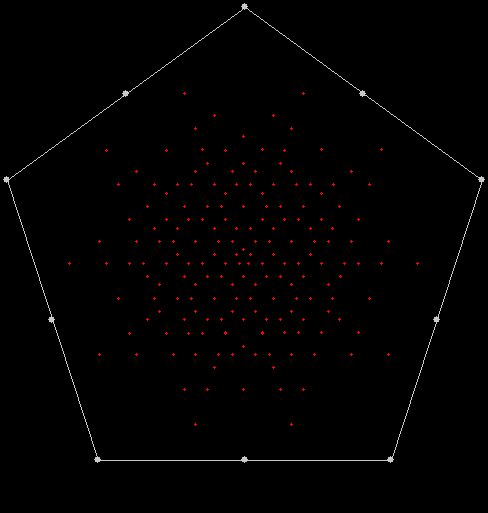
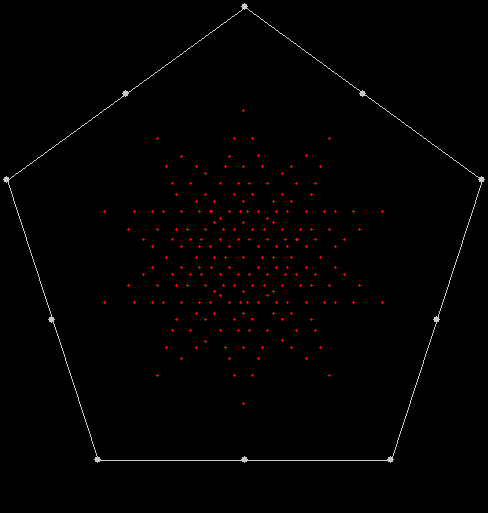
Now here are 10C4, 10C5 and 10C6 for the pentagon:
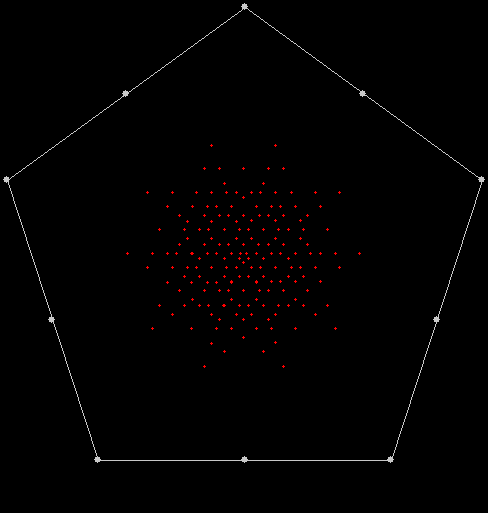
You can also generate the points 5C4 = 5, then add them to the original five points and generate 10C4:
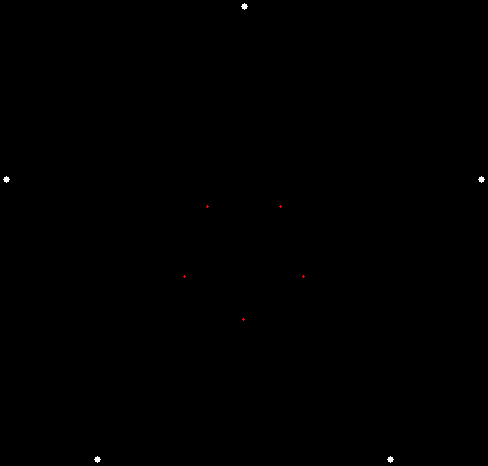
5C4
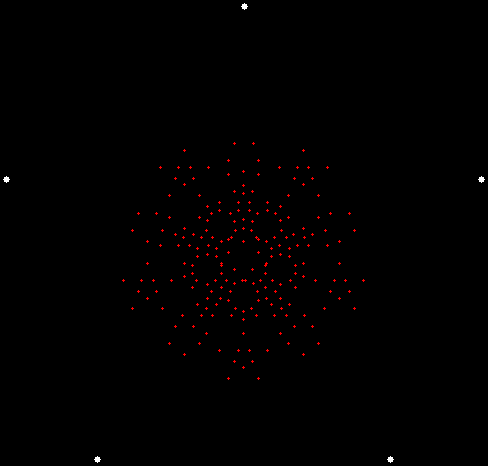
10C4
And here are 5C5, 6C5 and 12C5:
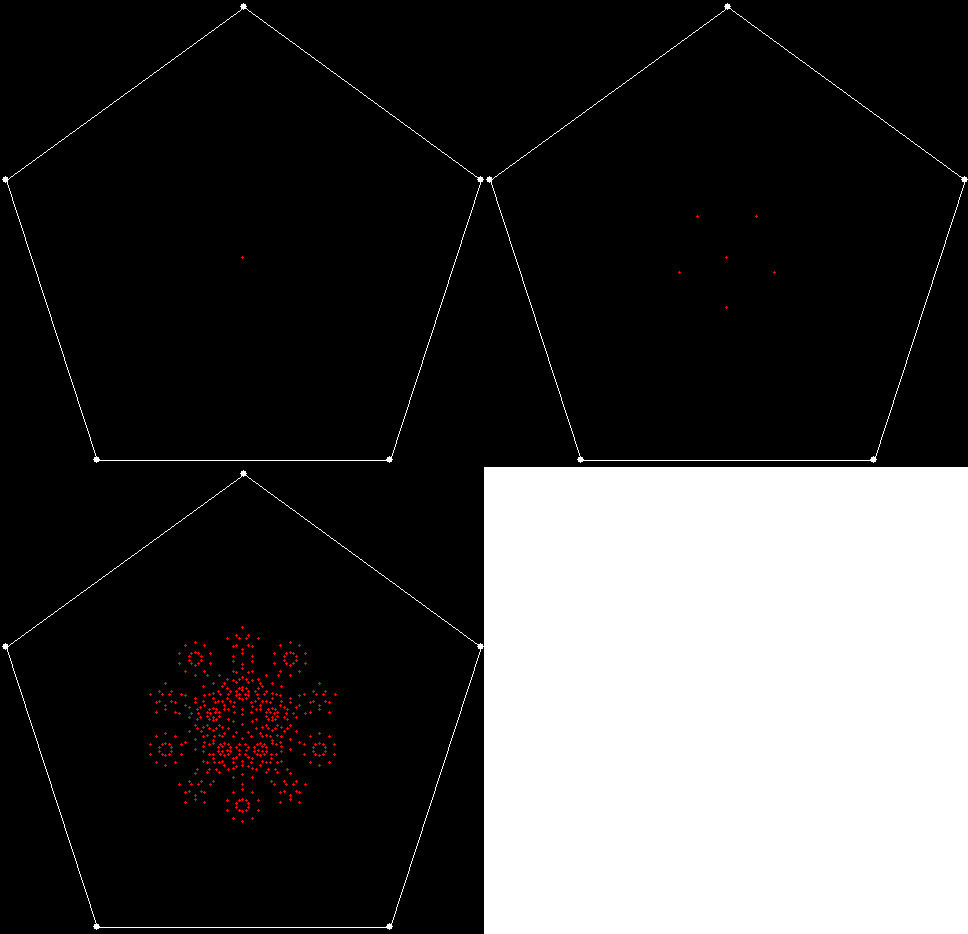
Here are 7C7 and 8C8, adding points as for 5C4:
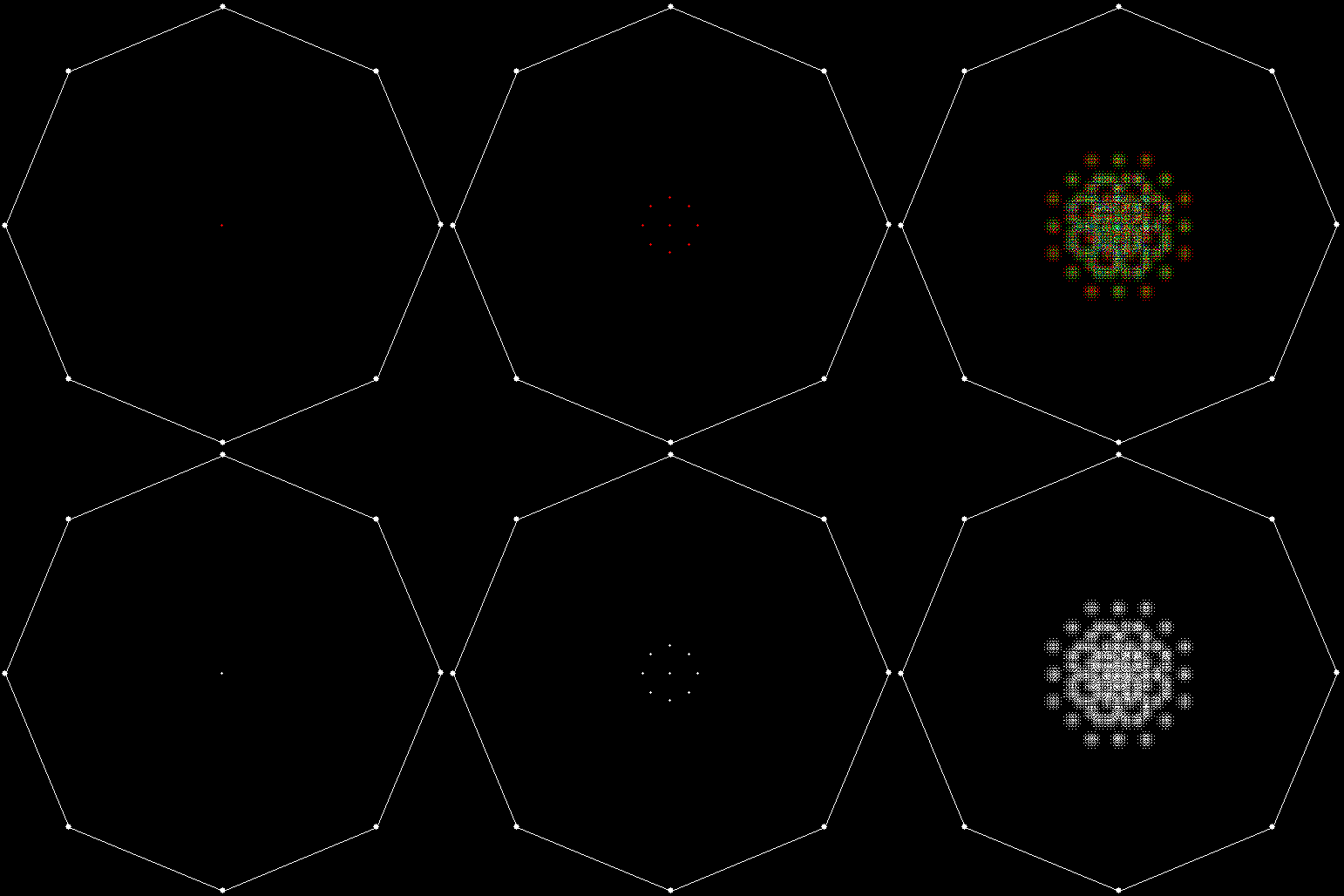
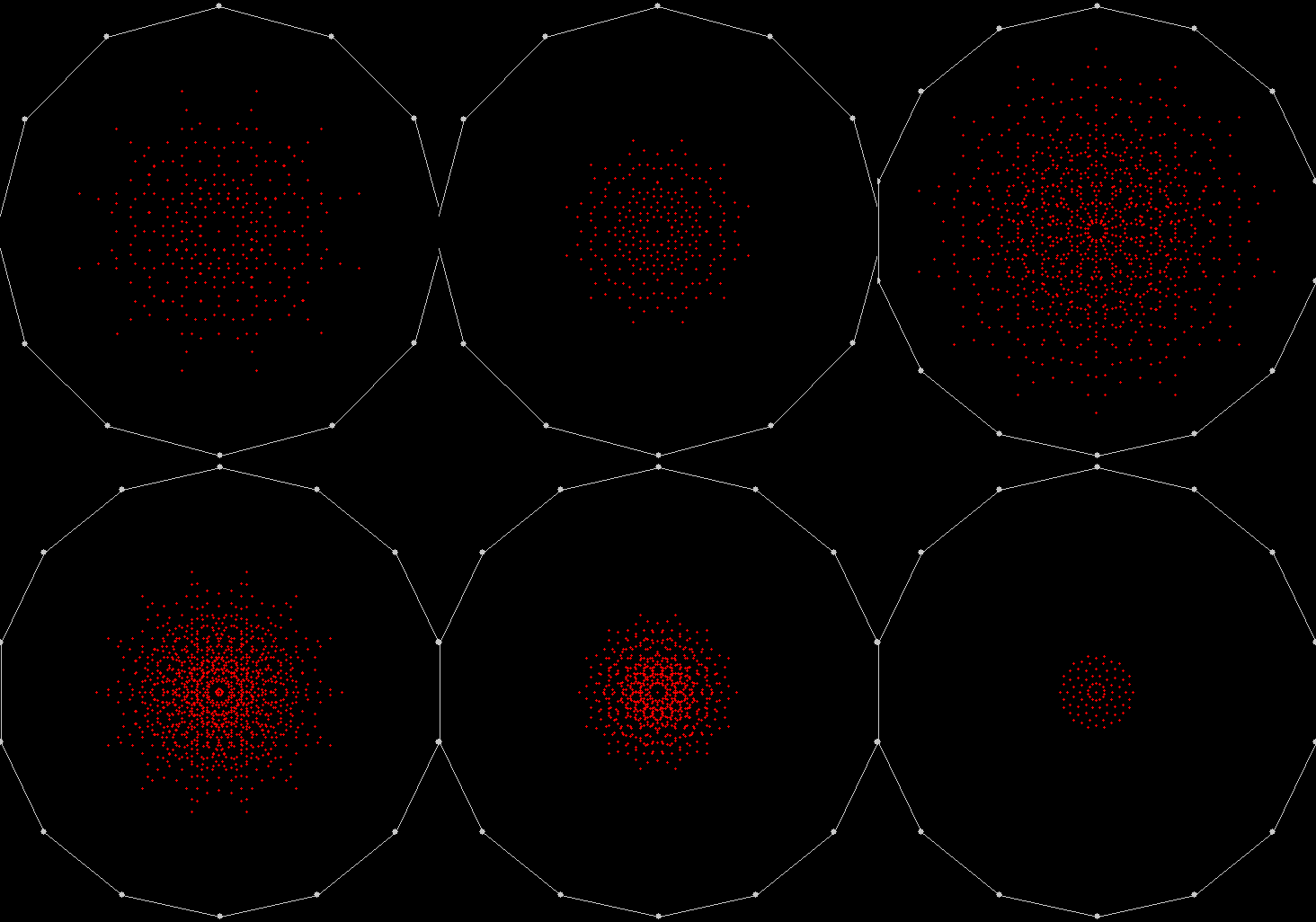
And here is 12C6 using a dodecagon:

And various nCr for dodecagons and other polygons:
This method can also be used to represent the partitions of n, or the number of sets whose members sum to n. The partitions of 5 are these:
(5), (4, 1), (3, 2), (3, 1, 1), (2, 2, 1), (2, 1, 1, 1), (1, 1, 1, 1, 1)
There are seven partitions, so p(5) = 7. Partitions start small and get very large, starting with p(1), p(2), p(3) and so on:
1, 2, 3, 5, 7, 11, 15, 22, 30, 42, 56, 77, 101, 135, 176, 231, 297, 385, 490, 627, 792, 1002, 1255, 1575, 1958, 2436, 3010, 3718, 4565, 5604, 6842, 8349, 10143, 12310, 14883, 17977, 21637, 26015, 31185, 37338, 44583, 53174, 63261, 75175, 89134, 105558, 124754, 147273, 173525, 204226, 239943, 281589, 329931, 386155, 451276, 526823, 614154, 715220, 831820, 966467, 1121505, 1300156…
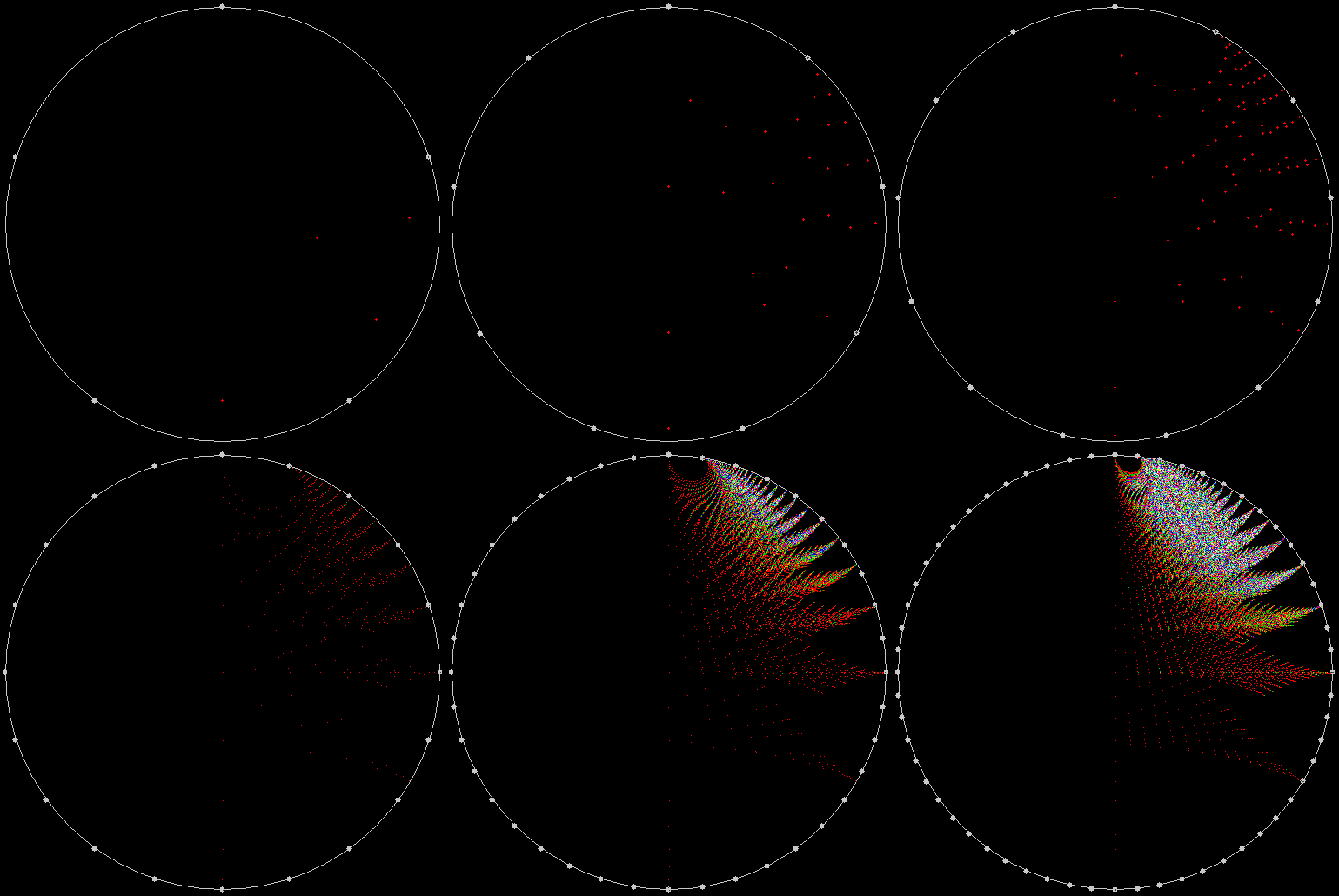
Suppose the partitions of n are treated as sets of points around a polygon with n vertices. Each set is then used to generate the point midway between its members. For example, (5, 4, 4, 2) is one partition of 15 and would represent the point midway between 5, 4, 4 and 2 of a pentadecagon. Here is a graphical representation of p(30):
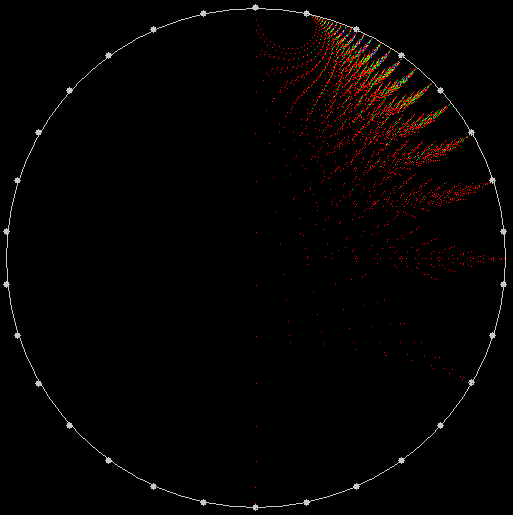
Here are graphical representations for the partitions 5 to 15, then 15 to 60 in increments of 5 (15, 20, 25, etc):
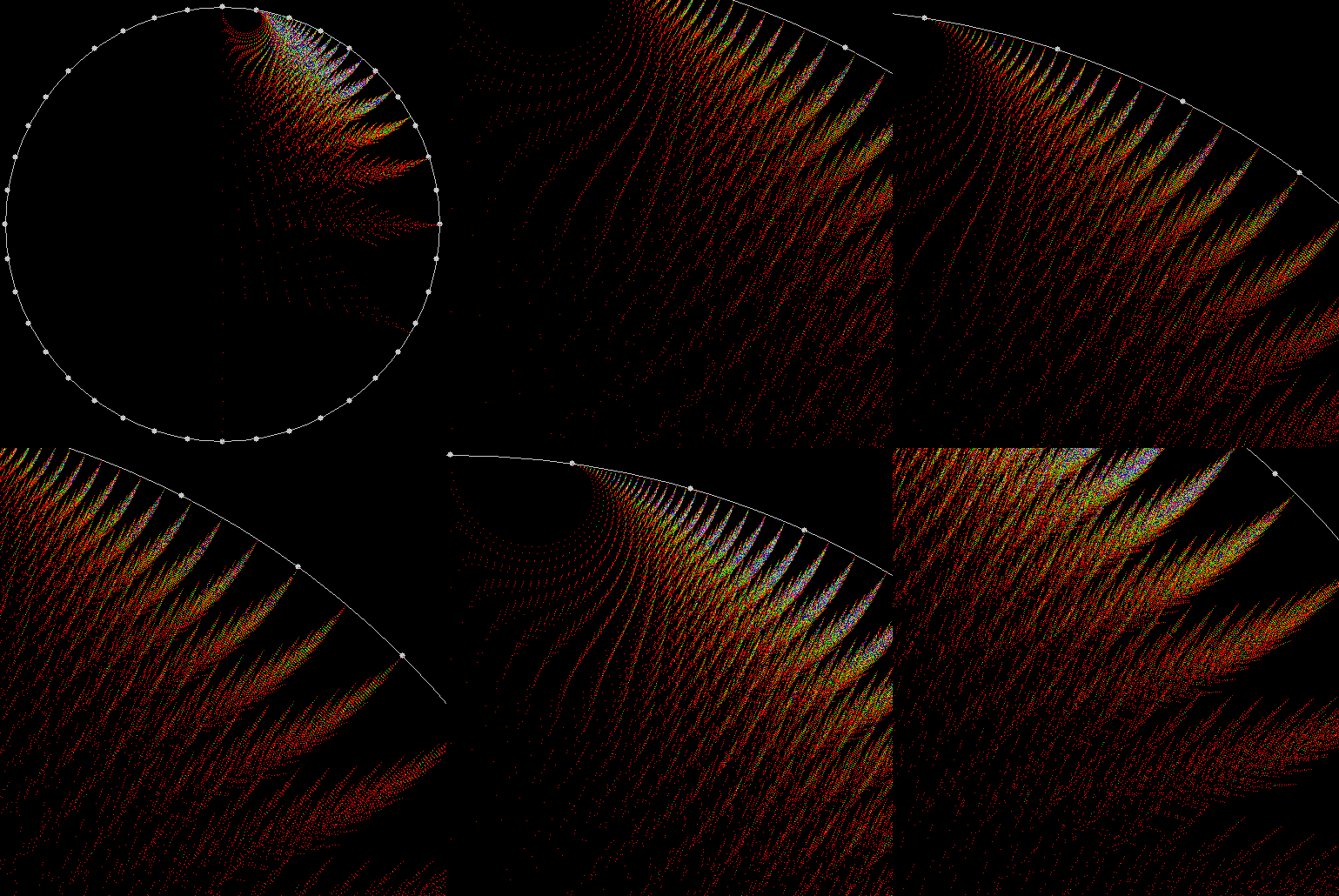
And here are some close-ups for the partitions of 35 and 40:
Post-Performative Post-Scriptum…
The title of this incendiary intervention wrily references the Bible:
The flowers appear on the earth; the time of the singing of birds is come, and the voice of the turtle is heard in our land — The Song of Solomon, 2:12
Performativizing Papyrocentricity #42
Papyrocentric Performativity Presents:
• Feats for the Eyes – Drawn from Paradise: The discovery, art and natural history of the birds of paradise, David Attenborough and Errol Fuller (Collins 2012)
• Heart of the Mather – Chaotic Fishponds and Mirror Universes: the maths that governs our world, Richard Elwes (Quercus 2013)
• Bergblumen – Enchanting Alpine Flowers, Alfred Pohler, trans. Jacqueline Schweighofer
Or Read a Review at Random: RaRaR
Yale Straight Un!
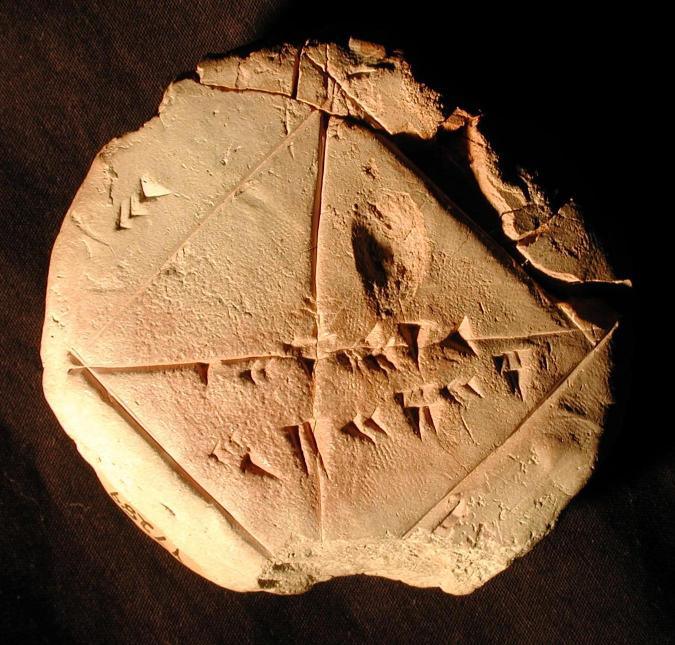
Yale tablet, YBC 7289, c. 1700 BC.
Power Trip
Here are the first few powers of 2:
2 = 1 * 2
4 = 2 * 2
8 = 4 * 2
16 = 8 * 2
32 = 16 * 2
64 = 32 * 2
128 = 64 * 2
256 = 128 * 2
512 = 256 * 2
1024 = 512 * 2
2048 = 1024 * 2
4096 = 2048 * 2
8192 = 4096 * 2
16384 = 8192 * 2
32768 = 16384 * 2
65536 = 32768 * 2
131072 = 65536 * 2
262144 = 131072 * 2
524288 = 262144 * 2
1048576 = 524288 * 2
2097152 = 1048576 * 2
4194304 = 2097152 * 2
8388608 = 4194304 * 2
16777216 = 8388608 * 2
33554432 = 16777216 * 2
67108864 = 33554432 * 2…
As you can see, it’s a one-way power-trip: the numbers simply get larger. But what happens if you delete the digit 0 whenever it appears in a result? For example, 512 * 2 = 1024, which becomes 124. If you apply this rule, the sequence looks like this:
2 * 2 = 4
4 * 2 = 8
8 * 2 = 16
16 * 2 = 32
32 * 2 = 64
64 * 2 = 128
128 * 2 = 256
256 * 2 = 512
512 * 2 = 1024 → 124
124 * 2 = 248
248 * 2 = 496
496 * 2 = 992
992 * 2 = 1984
1984 * 2 = 3968
3968 * 2 = 7936
7936 * 2 = 15872
15872 * 2 = 31744
31744 * 2 = 63488
63488 * 2 = 126976
126976 * 2 = 253952
253952 * 2 = 507904 → 5794
5794 * 2 = 11588
11588 * 2 = 23176
23176 * 2 = 46352
46352 * 2 = 92704 → 9274…
Is this a power-trip? Not quite: it’s a return trip, because the numbers can never grow beyond a certain size and the sequence falls into a loop. If the result 2n contains a zero, then zerodelete(2n) < n, so the sequence has an upper limit and a number will eventually occur twice. This happens at step 526 with 366784, which matches 366784 at step 490.
The rate at which we delete zeros can obviously be varied. Call it 1:z. The sequence above sets z = 1, so 1:z = 1:1. But what if z = 2, so that 1:z = 1:2? In other words, the procedure deletes every second zero. The first zero occurs when 1024 = 2 * 512, so 1024 is left as it is. The second zero occurs when 2 * 1024 = 2048, so 2048 becomes 248. When z = 2 and every second zero is deleted, the sequence begins like this:
1 * 2 = 2
2 * 2 = 4
4 * 2 = 8
8 * 2 = 16
16 * 2 = 32
32 * 2 = 64
64 * 2 = 128
128 * 2 = 256
256 * 2 = 512
512 * 2 = 1024 → 1024
1024 * 2 = 2048 → 248
248 * 2 = 496
496 * 2 = 992
992 * 2 = 1984
1984 * 2 = 3968
3968 * 2 = 7936
7936 * 2 = 15872
15872 * 2 = 31744
31744 * 2 = 63488
63488 * 2 = 126976
126976 * 2 = 253952
253952 * 2 = 507904 → 50794
50794 * 2 = 101588 → 101588
101588 * 2 = 203176 → 23176
23176 * 2 = 46352
46352 * 2 = 92704 → 92704
92704 * 2 = 185408 → 18548
This sequence also has a ceiling and repeats at step 9134 with 5458864, which matches 5458864 at step 4166. And what about the sequence in which z = 3 and every third zero is deleted? Does this have a ceiling or does the act of multiplying by 2 compensate for the slower removal of zeros?
In fact, it can’t do so. The larger 2n becomes, the more zeros it will tend to contain. If 2n is large enough to contain 3 zeros on average, the deletion of zeros will overpower multiplication by 2 and the sequence will not rise any higher. Therefore the sequence that deletes every third zero will eventually repeat, although I haven’t been able to discover the relevant number.
But this reasoning applies to any rate, 1:z, of zero-deletion. If z = 100 and every hundredth zero is deleted, numbers in the sequence will rise to the point at which 2n contains sufficient zeros on average to counteract multiplication by 2. The sequence will have a ceiling and will eventually repeat. If z = 10^100 or z = 10^(10^100) and every googolth or googolplexth zero is deleted, the same is true. For any rate, 1:z, at which zeros are deleted, the sequence n = zerodelete(2n,z) has an upper limit and will eventually repeat.
Update (30×21)
Six years later, I’ve found the answer for z = 3. And uncovered a serious error in this article. See:
Performativizing Papyrocentricity #41
Papyrocentric Performativity Presents:
• Touring the Tower – Physics in Minutes: 200 key concepts explained in an instant, Giles Sparrow (Quercus 2014)
• Living with Rainbows – Miller’s Field Guide: Glass, Judith Miller (Octopus 2015)
• Men on the Margins – Edgelands: Journeys into England’s True Wilderness, Paul Farley and Michael Symmons Roberts (Chivers 2011)
• Sward and Sorcery – Watership Down, Richard Adams (1972) (posted @ Overlord of the Über-Feral)
• Obscene Screen – Necro-Sluts from Satan’s Anus: Fifty Filthy Fester-Films to F*** You Up, Freak You Out and Feralize Your Fetidest Fantasies, Dr Joan Jay Jefferson (TransToxic Texts* 2015)
Or Read a Review at Random: RaRaR
(*TransToxic Texts is an infra-imprint of TransVisceral Books.)
 Overlord In Terms of Core Issues Around Maximal Engagement with Key Notions of the Über-Feral