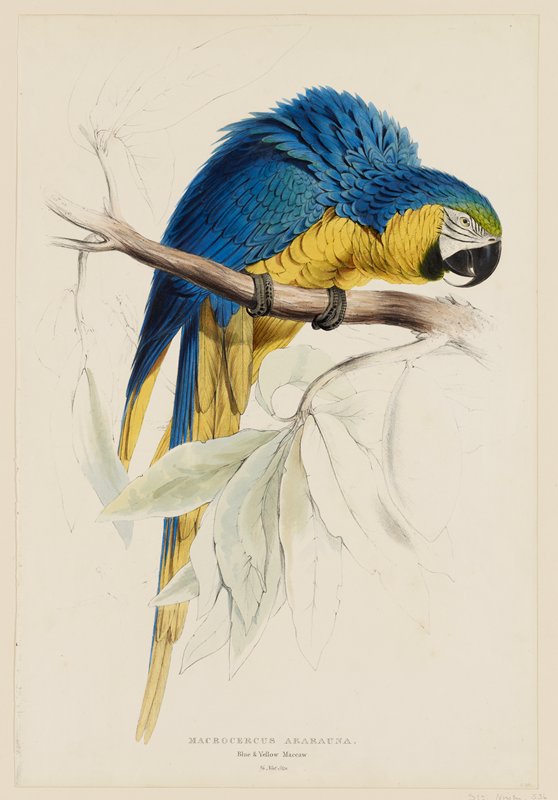
Blue-and-yellow macaw, Ara ararauna (Linnaeus, 1758), by Edward Lear (1812-1888)
Previously pre-posted

Blue-and-yellow macaw, Ara ararauna (Linnaeus, 1758), by Edward Lear (1812-1888)
Previously pre-posted
In The Penguin Dictionary of Curious and Interesting Numbers (1987), David Wells remarks that 142857 is “a number beloved of all recreational mathematicians”. He then explains that it’s “the decimal period of 1/7: 1/7 = 0·142857142857142…” and “the first decimal reciprocal to have maximum period, that is, the length of its period is only one less than the number itself.”
Why does this happen? Because when you’re calculating 1/n, the remainders can only be less than n. In the case of 1/7, you get remainders for all integers less than 7, i.e. there are 6 distinct remainders and 6 = 7-1:
(1*10) / 7 = 1 remainder 3, therefore 1/7 = 0·1...
(3*10) / 7 = 4 remainder 2, therefore 1/7 = 0·14...
(2*10) / 7 = 2 remainder 6, therefore 1/7 = 0·142...
(6*10) / 7 = 8 remainder 4, therefore 1/7 = 0·1428...
(4*10) / 7 = 5 remainder 5, therefore 1/7 = 0·14285...
(5*10) / 7 = 7 remainder 1, therefore 1/7 = 0·142857...
(1*10) / 7 = 1 remainder 3, therefore 1/7 = 0·1428571...
(3*10) / 7 = 4 remainder 2, therefore 1/7 = 0·14285714...
(2*10) / 7 = 2 remainder 6, therefore 1/7 = 0·142857142...
Mathematicians know that reciprocals with maximum period can only be prime reciprocals and with a little effort you can work out whether a prime will yield a maximum period in a particular base. For example, 1/7 has maximum period in bases 3, 5, 10, 12 and 17:
1/21 = 0·010212010212010212... in base 3
1/12 = 0·032412032412032412... in base 5
1/7 = 0·142857142857142857... in base 10
1/7 = 0·186A35186A35186A35... in base 12
1/7 = 0·274E9C274E9C274E9C... in base 17
To see where else 1/7 has maximum period, have a look at this graph:
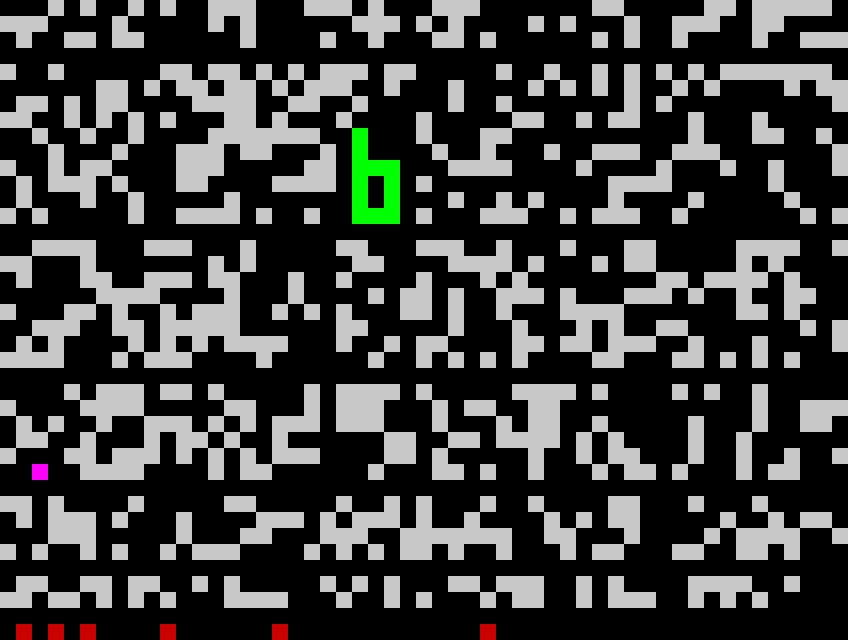
Period pane for primes 3..251 and bases 2..39
I call it a “period pane”, because it’s a kind of window into the behavior of prime reciprocals. But what is it, exactly? It’s a graph where the x-axis represents primes from 3 upward and the y-axis represents bases from 2 upward. The red squares along the bottom aren’t part of the graph proper, but indicate primes that first occur after a power of two: 5 after 4=2^2; 11 after 8=2^3; 17 after 16=2^4; 37 after 32=2^5; 67 after 64=2^6; and so on.
If a prime reciprocal has maximum period in a particular base, the graph has a solid colored square. Accordingly, the purple square at the bottom left represents 1/7 in base 10. And as though to signal the approval of the goddess of mathematics, the graph contains a lower-case b-for-base, which I’ve marked in green. Here are more period panes in higher resolution (open the images in a new window to see them more clearly):
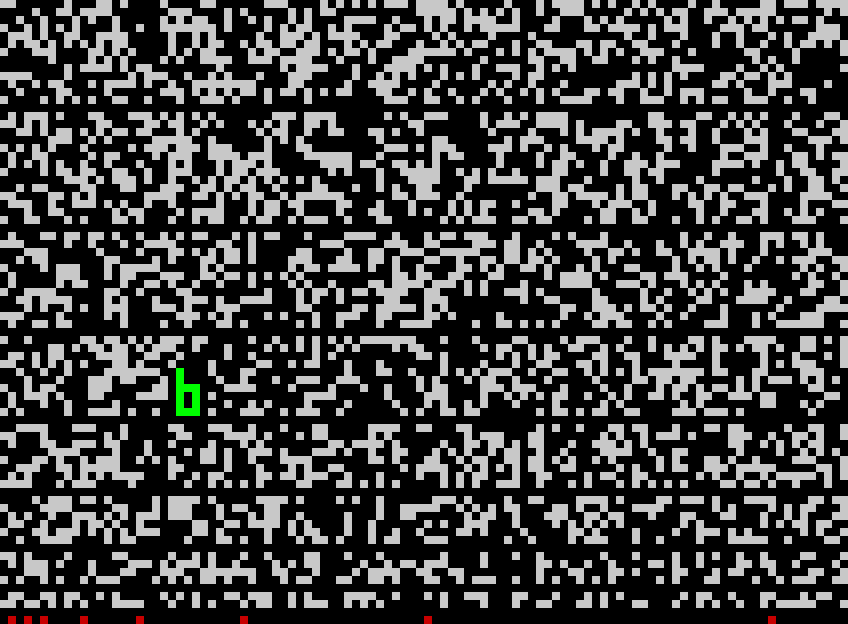
Period pane for primes 3..587 and bases 2..77

Period pane for primes 3..1303 and bases 2..152
An interesting pattern has begun to appear: note the empty lanes, free of reciprocals with maximum period, that stretch horizontally across the period panes. These lanes are empty because there are no prime reciprocals with maximum period in square bases, that is, bases like 4, 9, 25 and 36, where 4 = 2*2, 9 = 3*3, 25 = 5*5 and 36 = 6*6. I don’t know why square bases don’t have max-period prime reciprocals, but it’s probably obvious to anyone with more mathematical nous than me.

Period pane for primes 3..2939 and bases 2..302
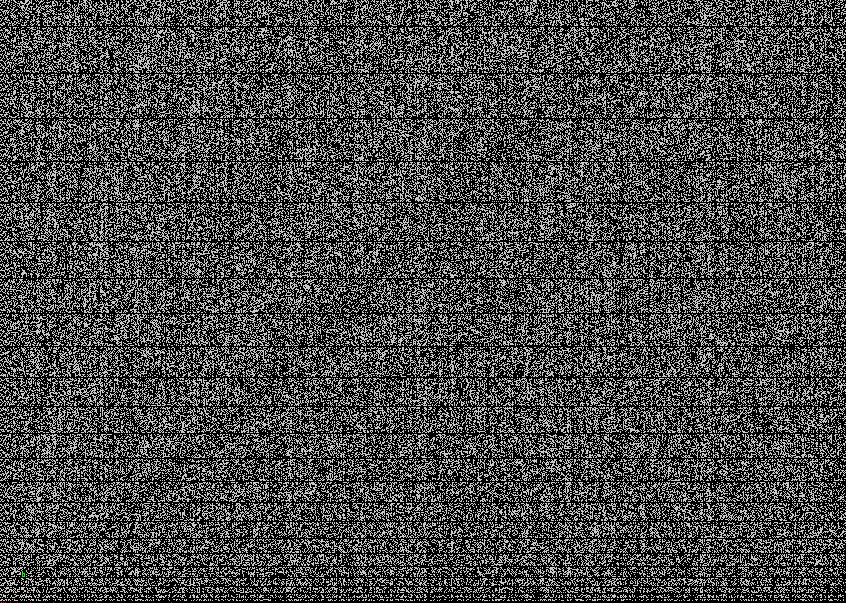
Period pane for primes 3..6553 and bases 2..602
Like the Ulam spiral, other and more mysterious patterns appear in the period panes, hinting at the hidden regularities in the primes.
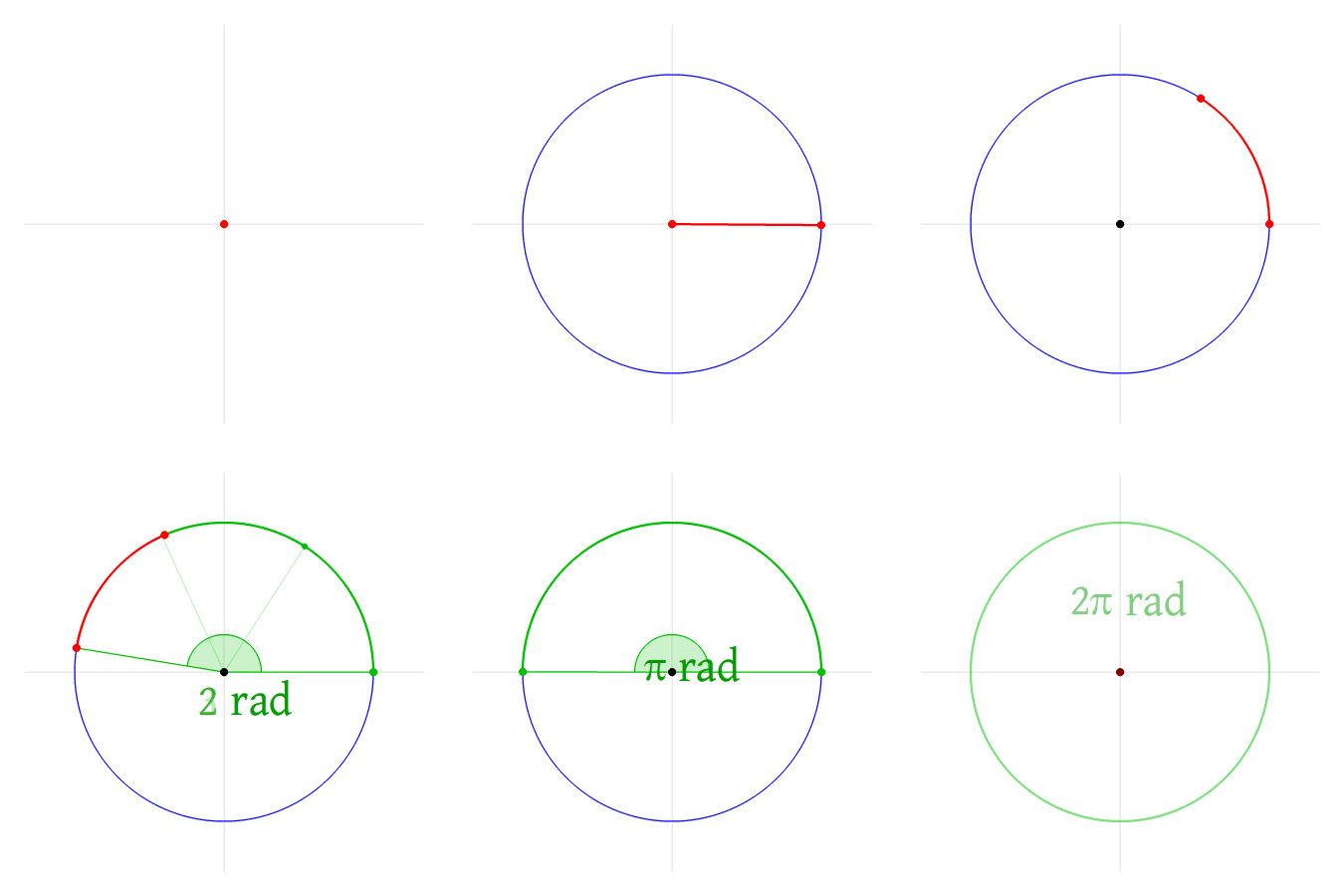
How radians work (from Wikipedia)
French novelist Colette was a firm cat-lover. When she was in the U.S. she saw a cat sitting in the street. She went over to talk to it and the two of them mewed at each other for a friendly minute. Colette turned to her companion and exclaimed, “Enfin! Quelqu’un qui parle français.” (At last! Someone who speaks French!) — viâ Cat Ladies and a book whose title I forget
This is a beautiful and interesting shape, reminiscent of a piece of jewellery:
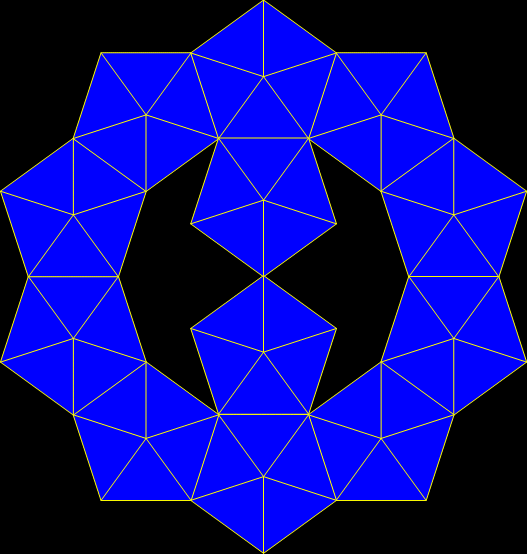
Pentagons in a ring
I came across it in this tricky little word-puzzle:
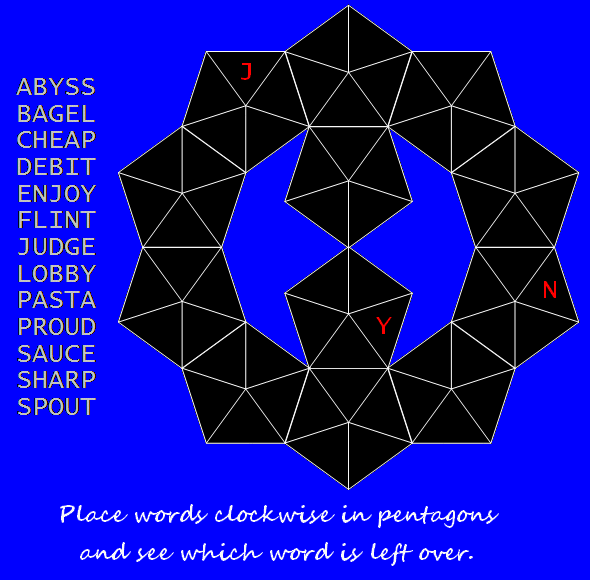
Word puzzle using pentagon-ring
Here’s a printable version of the puzzle:
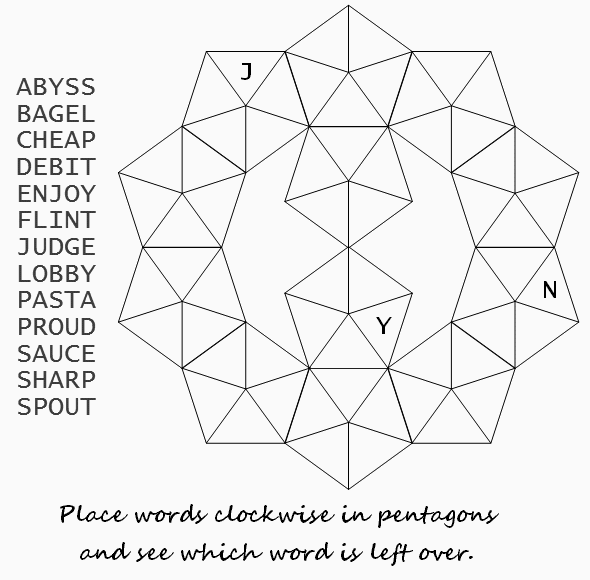
Printable puzzle
Let’s try placing some other regular polygons with s sides around regular polygons with s*2 sides:
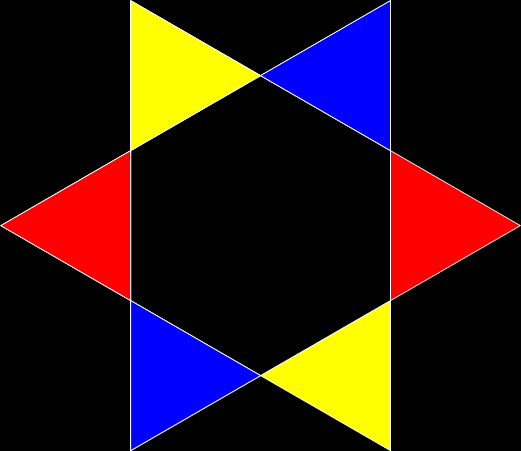
Hexagonal ring of triangles
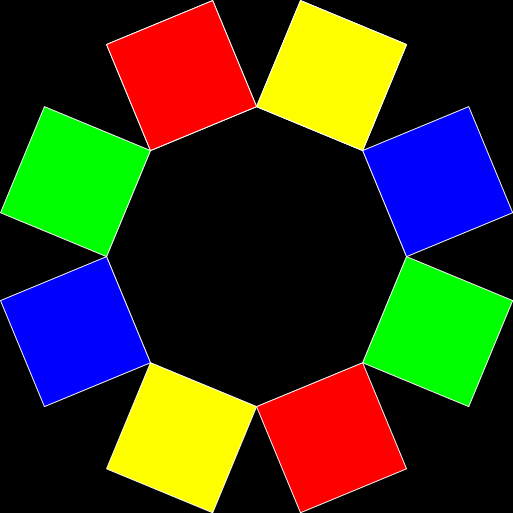
Octagonal ring of squares
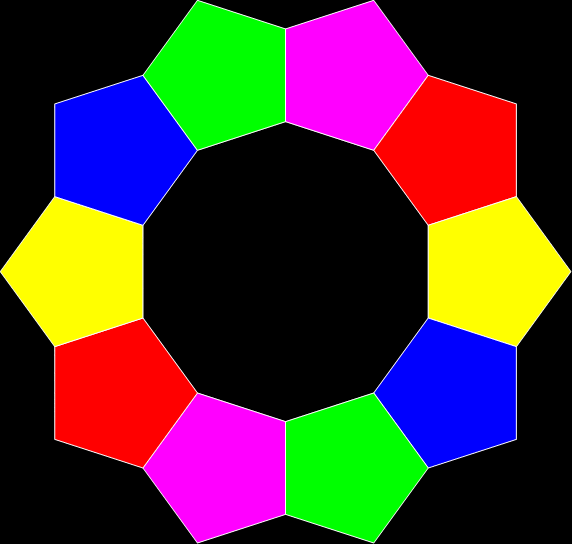
Decagonal ring of pentagons
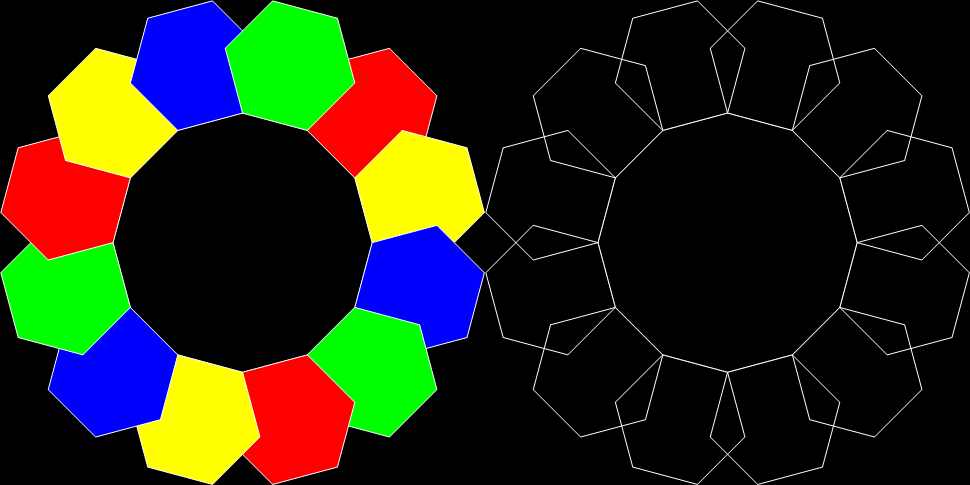
Dodecagonal ring of hexagons
Only regular pentagons fit perfectly, edge-to-edge, around a regular decagon. But all these polygonal-rings can be used to create interesting and beautiful fractals, as I hope to show in a future post.
Τα Στοιχεία του Ευκλείδου, ια΄
κεʹ. Κύβος ἐστὶ σχῆμα στερεὸν ὑπὸ ἓξ τετραγώνων ἴσων περιεχόμενον.
κϛʹ. ᾿Οκτάεδρόν ἐστὶ σχῆμα στερεὸν ὑπὸ ὀκτὼ τριγώνων ἴσων καὶ ἰσοπλεύρων περιεχόμενον.
κζʹ. Εἰκοσάεδρόν ἐστι σχῆμα στερεὸν ὑπὸ εἴκοσι τριγώνων ἴσων καὶ ἰσοπλεύρων περιεχόμενον.
κηʹ. Δωδεκάεδρόν ἐστι σχῆμα στερεὸν ὑπὸ δώδεκα πενταγώνων ἴσων καὶ ἰσοπλεύρων καὶ ἰσογωνίων περιεχόμενον.
Euclid’s Elements, Book 11
25. A cube is a solid figure contained by six equal squares.
26. An octahedron is a solid figure contained by eight equal and equilateral triangles.
27. An icosahedron is a solid figure contained by twenty equal and equilateral triangles.
28. A dodecahedron is a solid figure contained by twelve equal, equilateral, and equiangular pentagons.

Surfer amid sea-foam on Main beach, Stradbroke Island, Queensland (by Piotr Parzybok in The Ex-Term-in-a-tor)
All fans of recreational math love palindromic numbers. It’s mandatory, man. 101, 727, 532235, 8810188, 1367755971795577631 — I love ’em! But where can you go after palindromes? Well, you can go to palindromes in a higher dimension. Numbers like 101, 727, 532235 and 8810188 are 1-d palindromes. That is, they’re palindromic in one dimension: backwards and forwards. But numbers like 181818189 and 646464640 aren’t palindromic in one dimension. They’re palindromic in two dimensions:
1 8 1
8 9 8
1 8 1
n=181818189
6 4 6
4 0 4
6 4 6
n=646464640
They’re 2-d palindromes or spiral numbers, that is, numbers that are symmetrical when written as a spiral. You start with the first digit on the top left, then spiral inwards to the center, like this for a 9-digit spiral (9 = 3×3):

And this for a 36-digit spiral (36 = 6×6):
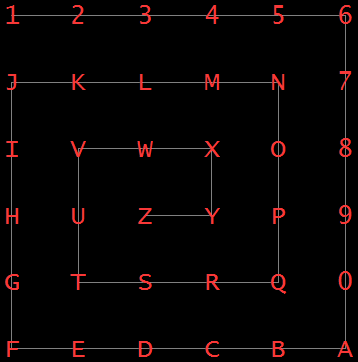
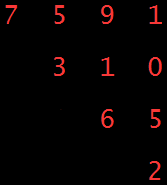
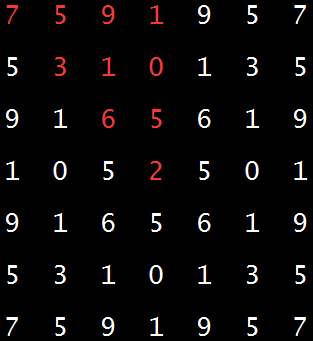
Spiral numbers are easy to construct, because you can reflect and rotate the numbers in one triangular slice of the spiral to find all the others:
↓
↓

You could say that the seed for the spiral number above is 7591310652, because you can write that number in descending lines, left-to-right, as a triangle.
Here are some palindromic numbers with nine digits in base 3 — as you can see, some are both palindromic numbers and spiral numbers. That is, some are palindromic in both one and two dimensions:
1 0 1
0 1 0
1 0 1
n=101010101
1 0 1
0 2 0
1 0 1
n=101010102
1 1 1
1 0 1
1 1 1
n=111111110
1 1 1
1 1 1
1 1 1
n=111111111
2 0 2
0 1 0
2 0 2
n=202020201
2 0 2
0 2 0
2 0 2
n=202020202
2 2 2
2 1 2
2 2 2
n=222222221
2 2 2
2 2 2
2 2 2
n=222222222
But palindromic primes are even better than ordinary palindromes. Here are a few 1-d palindromic primes in base 10:
101
151
73037
7935397
97356765379
1091544334334451901
1367755971795577631
70707270707
39859395893
9212129
7436347
166000661
313
929
And after 1-d palindromic primes, you can go to 2-d palindromic primes. That is, to spiral primes or sprimes — primes that are symmetrical when written as a spiral:
3 6 3
6 7 6
3 6 3
n=363636367 (prime)
seed=367 (see definition above)
9 1 9
1 3 1
9 1 9
n=919191913 (prime)
seed=913
3 7 8 6 3 6 8 7 3
7 9 1 8 9 8 1 9 7
8 1 9 0 9 0 9 1 8
6 8 0 5 5 5 0 8 6
3 9 9 5 7 5 9 9 3
6 8 0 5 5 5 0 8 6
8 1 9 0 9 0 9 1 8
7 9 1 8 9 8 1 9 7
3 7 8 6 3 6 8 7 3
n=378636873786368737863687378636879189819189819189819189819090909090909090555555557 (prime)
seed=378639189909557 (l=15)
And why stop with spiral numbers — and sprimes — in two dimensions? 363636367 is a 2-sprime, being palindromic in two dimensions. But the digits of a number could be written to form a symmetrical cube in three, four, five and more dimensions. So I assume that there are 3-sprimes, 4-sprimes, 5-sprimes and more out there. Watch this space.

Belzebong playing live by Rafał Kudyba
(click for larger image)
• Racine carrée de 2, c’est 1,414 et des poussières… Et quelles poussières ! Des grains de sable qui empêchent d’écrire racine de 2 comme une fraction. Autrement dit, cette racine n’est pas dans Q. — Rationnel mon Q: 65 exercices de styles, Ludmilla Duchêne et Agnès Leblanc (2010)
• The square root of 2 is 1·414 and dust… And what dust! Grains of sand that stop you writing the root of 2 as a fraction. Put another way, this root isn’t in Q [the set of rational numbers].
 Overlord In Terms of Core Issues Around Maximal Engagement with Key Notions of the Über-Feral