Kim Pickings

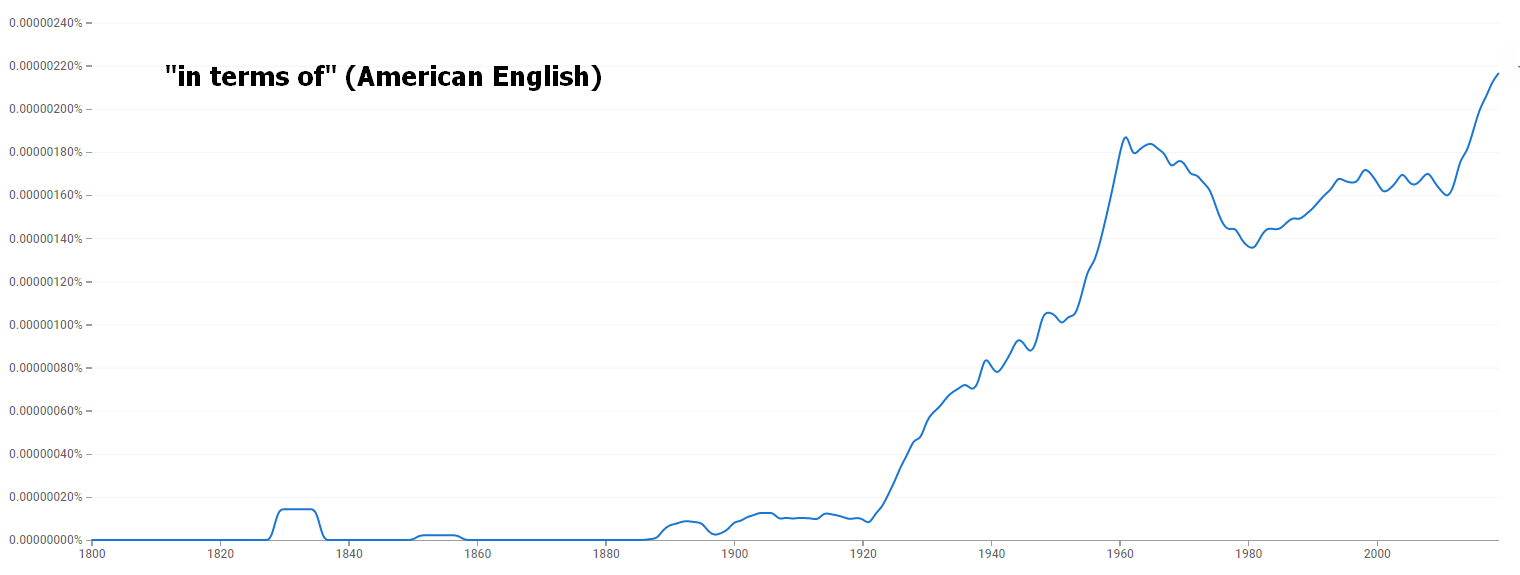
As a keyly committed core component of the anti-racist community, I’ve always been a passionate admirer of Kimberlé Crenshaw, the Black legal genius who conceived the corely committed key concept of intersectionality, the pro-feminist, anti-racist ideo-matrix whereby multiply impactive factors of oppression around race, gender and class are recognized to overlap in terms of toxic impact on corely vulnerable communities of color, gender, and class…

So, imagine my excitement when I saw that the Guardian was engaging core issues around Ms Crenshaw in a keynote article itself passionately penned by a Journalist of Color:

Kimberlé Crenshaw: the woman who revolutionised feminism – and landed at the heart of the culture wars, by Aamna Mohdin

From police brutality to sexual harassment, the lawyer fights to ensure black women’s experiences are not ignored. So why are her ideas being denounced? — The Guardian, 12xi20

“Why indeed?” I interrogated to myself as I began to read. But imagine my horror when I came across this passage in terms of the core article:

Crenshaw’s early academic work, meanwhile, was also an important building block in the development of critical race theory, which revolutionised the understanding of race in the US’s legal system and is taught in law schools across the country. — Kimberlé Crenshaw

What is it coming to when the Guardian uses everyday English to engage issues around the keyly vital work of a Black legal genius? Huh? The Guardian should of course have put it like this:

Crenshaw’s early academic work, meanwhile, was also a core building block in terms of the development of critical race theory, which revolutionised the understanding of race in the US’s legal system and is taught in law schools across the country.

And “core foundational keystone in terms of the gestational development…” would have been even better


Elsewhere other-engageable:

Ex-term-in-nate! — incendiarily interrogating issues around “in terms of” dot dot dot

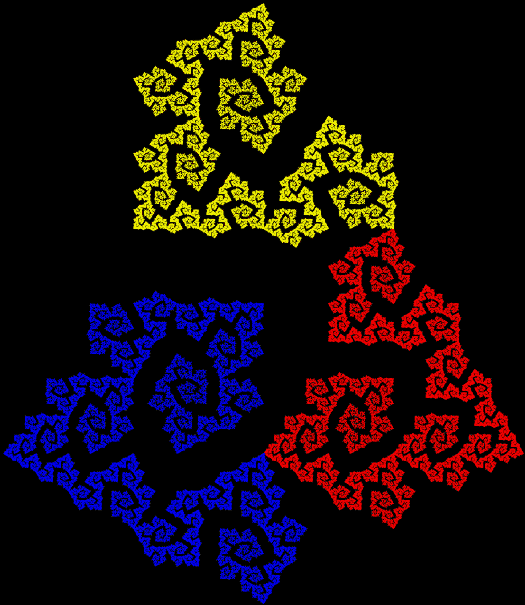
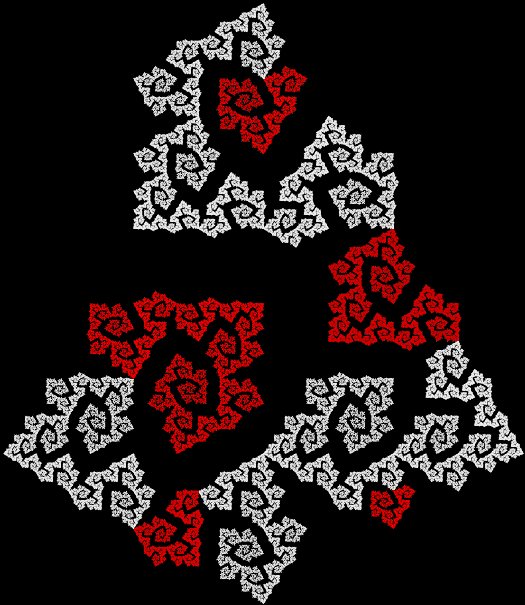
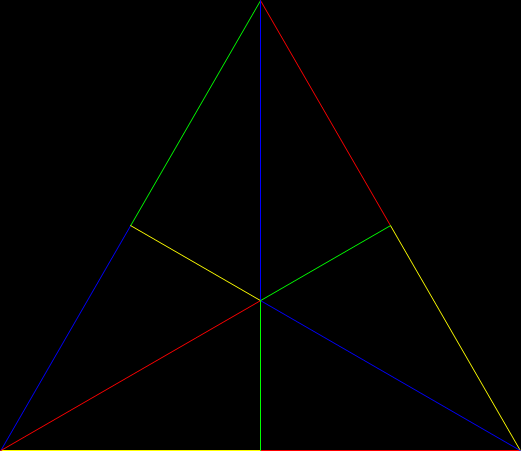
Tri Again (Again (Again))

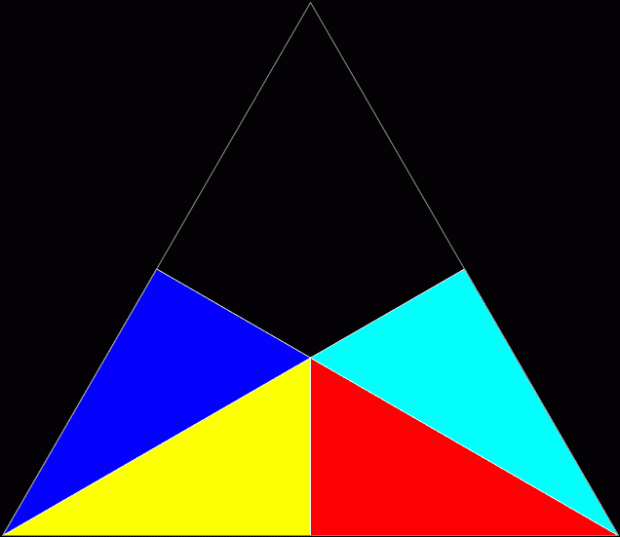
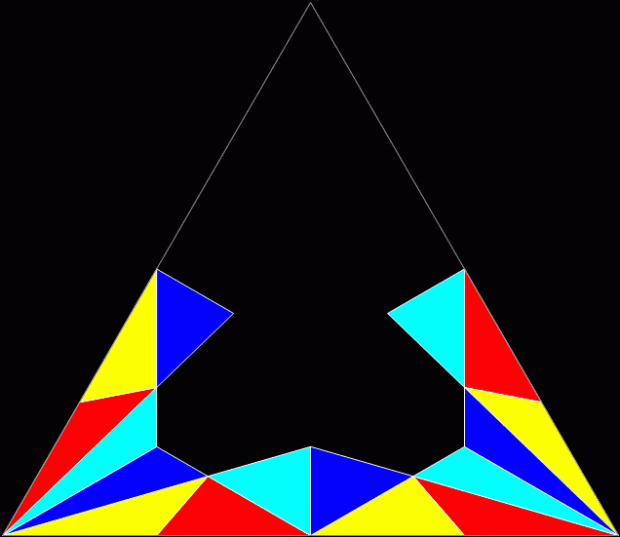
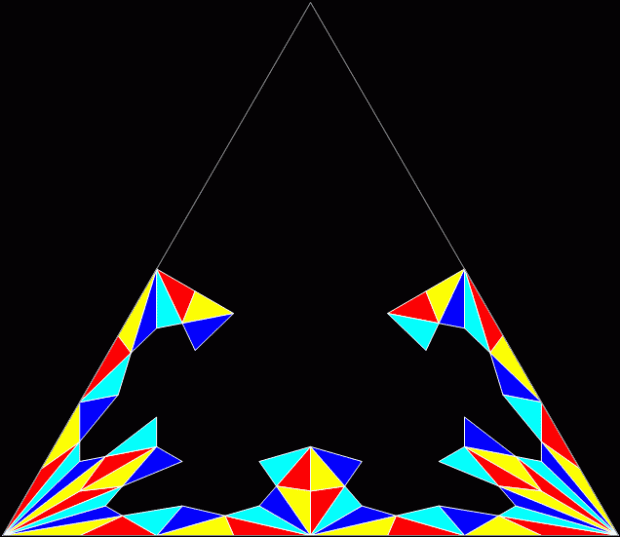
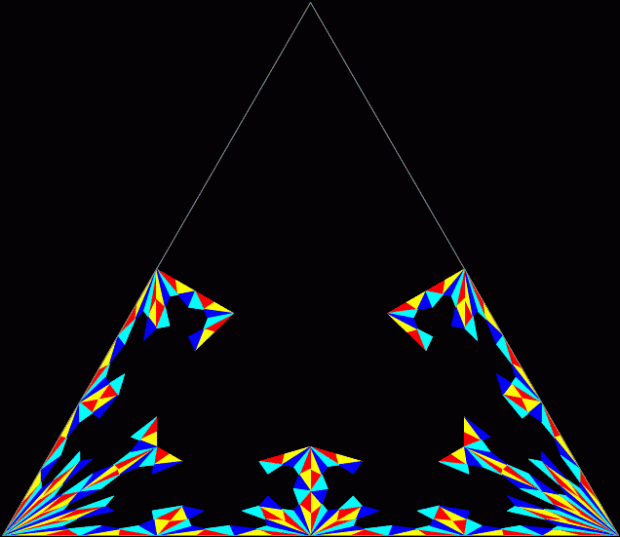
Like the moon, mathematics is a harsh mistress. In mathematics, as on the moon, the slightest misstep can lead to disaster — as I’ve discovered again and again. My latest discovery came when I was looking at a shape called the L-tromino, created from three squares set in an L-shape. It’s a rep-tile, because it can be tiled with four smaller copies of itself, like this:

Rep-4 L-tromino


And if it can be tiled with four copies of itself, it can also be tiled with sixteen copies of itself, like this:

Rep-16 L-tromino


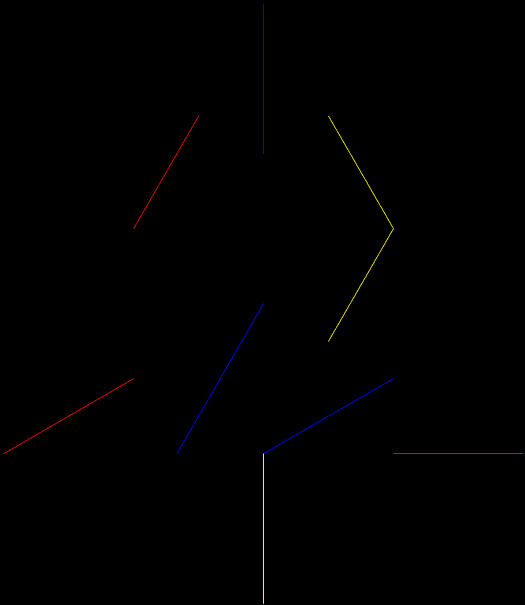
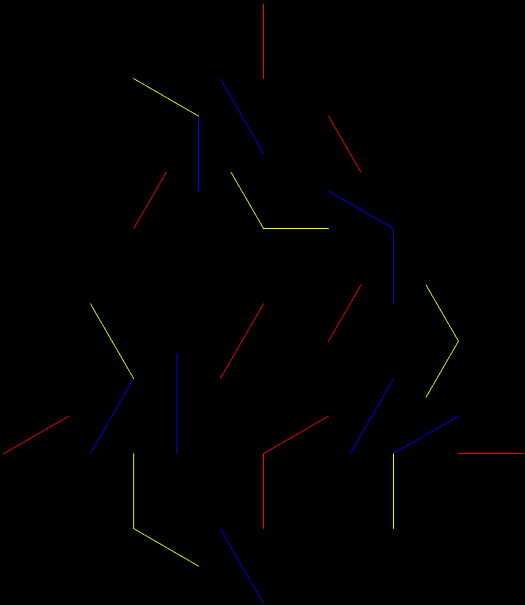
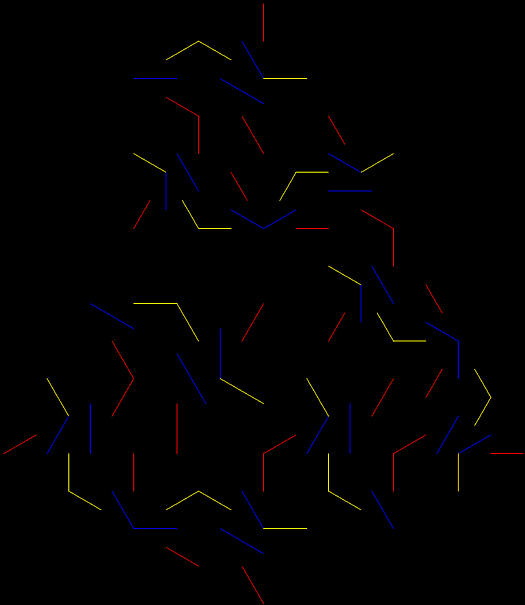
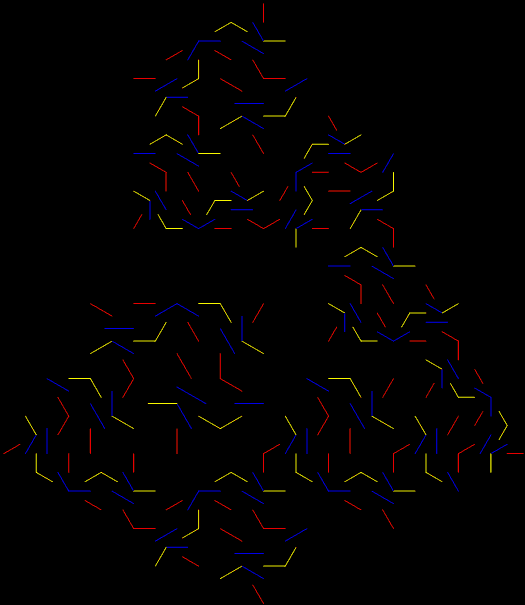
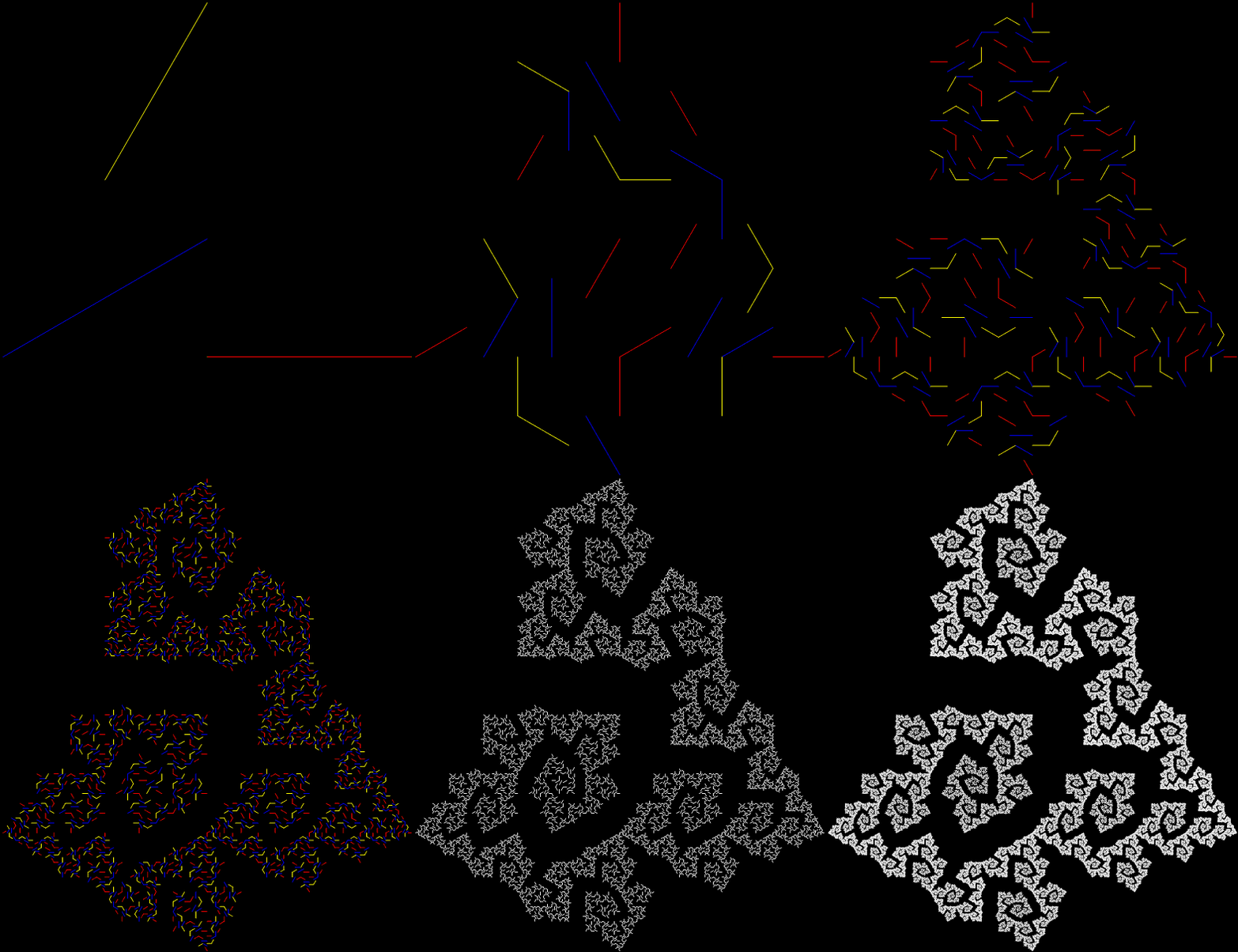
My misstep came when I was trying to do to a rep-16 L-tromino what I’d already done to a rep-4 L-tromino. And what had I already done? I’d created a beautiful shape called the hourglass fractal by dividing-and-discarding sub-copies of a rep-4 L-tromino. That is, I divided the L-tromino into four sub-copies, discarded one of the sub-copies, then repeated the process with the sub-sub-copies of the sub-copies, then the sub-sub-sub-copies of the sub-sub-copies, and so on:

Creating an hourglass fractal #1


Creating an hourglass fractal #2


Creating an hourglass fractal #3


Creating an hourglass fractal #4


Creating an hourglass fractal #5


Creating an hourglass fractal #6


Creating an hourglass fractal #7


Creating an hourglass fractal #8


Creating an hourglass fractal #9


Creating an hourglass fractal #10


Creating an hourglass fractal (animated)


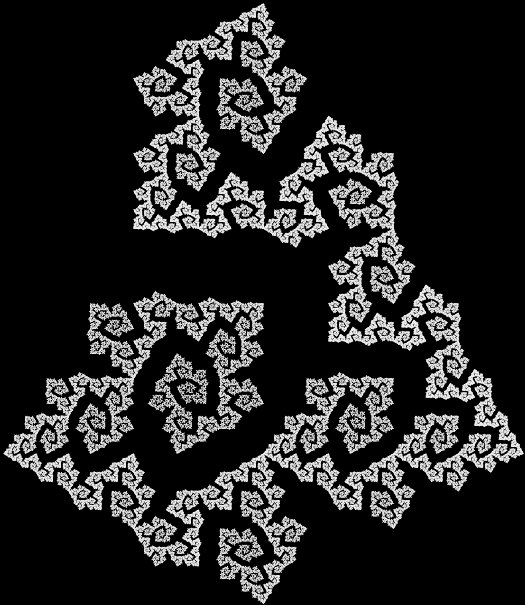
The hourglass fractal


Next I wanted to create an hourglass fractal from a rep-16 L-tromino, so I reasoned like this:

• If one sub-copy of four is discarded from a rep-4 L-tromino to create the hourglass fractal, that means you need 3/4 of the rep-4 L-tromino. Therefore you’ll need 3/4 * 16 = 12/16 of a rep-16 L-tromino to create an hourglass fractal.

So I set up the rep-16 L-tromino with twelve sub-copies in the right pattern and began dividing-and-discarding:

A failed attempt at an hourglass fractal #1


A failed attempt at an hourglass fractal #2


A failed attempt at an hourglass fractal #3


A failed attempt at an hourglass fractal #4


A failed attempt at an hourglass fractal #5


A failed attempt at an hourglass fractal (animated)


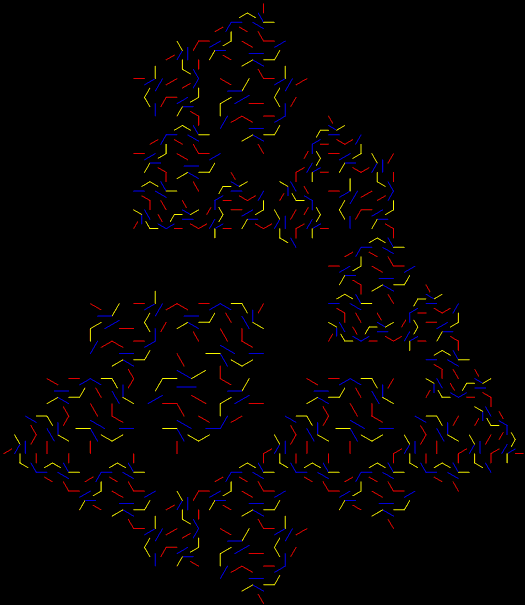
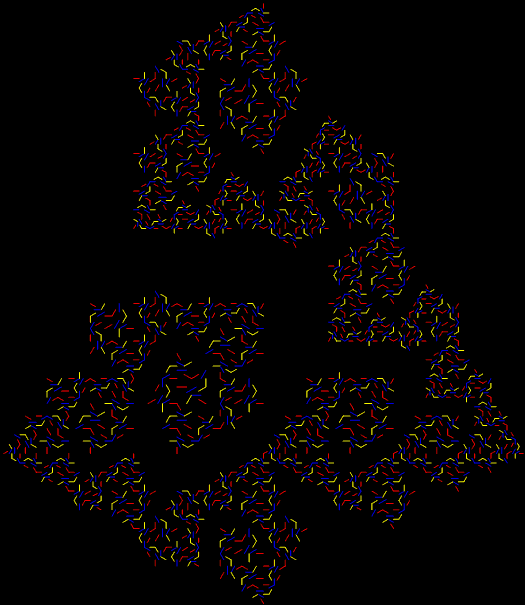
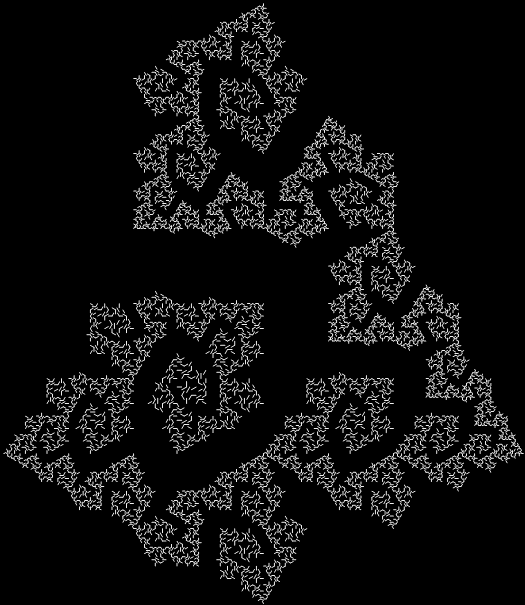
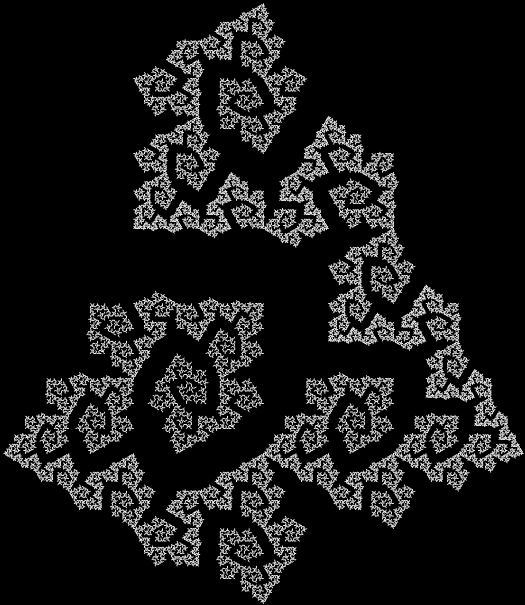
Whoops! What I’d failed to take into account is that the rep-16 L-tromino is actually the second stage of the rep-4 triomino, i.e. that 4 * 4 = 16. It follows, therefore, that 3/4 of the rep-4 L-tromino will actually be 9/16 = 3/4 * 3/4 of the rep-16 L-tromino. So I tried again, setting up a rep-16 L-tromino with nine sub-copies, then dividing-and-discarding:

A third attempt at an hourglass fractal #1


A third attempt at an hourglass fractal #2


A third attempt at an hourglass fractal #3


A third attempt at an hourglass fractal #4


A third attempt at an hourglass fractal #5


A third attempt at an hourglass fractal #6


A third attempt at an hourglass fractal (animated)


Previously (and passionately) pre-posted:

Tri Again
Tri Again (Again)

Count Amounts

One of my favourite integer sequences is what I call the digit-line. You create it by taking this very familiar integer sequence:

• 1, 2, 3, 4, 5, 6, 7, 8, 9, 10, 11, 12, 13, 14, 15, 16, 17, 18, 19, 20…

And turning it into this one:

• 1, 2, 3, 4, 5, 6, 7, 8, 9, 1, 0, 1, 1, 1, 2, 1, 3, 1, 4, 1, 5, 1, 6, 1, 7, 1, 8, 1, 9, 2, 0… (A033307 in the Online Encyclopedia of Integer Sequences)

You simply chop all numbers into single digits. What could be simpler? Well, creating the digit-line couldn’t be simpler, but it is in fact a very complex object. There are hidden depths in its patterns, as even a brief look will uncover. For example, you can try counting the digits as they appear one-by-one in the line and seeing whether the digit-counts compare. Do the 1s of the digit-line always outnumber the 0s, as you might expect? Yes, they do (unless you start the digit-line 0, 1, 2, 3…). But do the 2s always outnumber the 0s? No: at position 2, there’s a 2, and at position 11 there’s a 0. So that’s one 2 and one 0. Does it happen again? Yes, it happens again at the 222nd digit of the digit-line, as below:

1, 2count=1, 3, 4, 5, 6, 7, 8, 9, 1, 0count=1, 1, 1, 1, 22, 1, 3, 1, 4, 1, 5, 1, 6, 1, 7, 1, 8, 1, 9, 23, 02, 24, 1, 25, 26, 27, 3, 28, 4, 29, 5, 210, 6, 211, 7, 212, 8, 213, 9, 3, 03, 3, 1, 3, 214, 3, 3, 3, 4, 3, 5, 3, 6, 3, 7, 3, 8, 3, 9, 4, 04, 4, 1, 4, 215, 4, 3, 4, 4, 4, 5, 4, 6, 4, 7, 4, 8, 4, 9, 5, 05, 5, 1, 5, 216, 5, 3, 5,4, 5, 5, 5, 6, 5, 7, 5, 8, 5, 9, 6, 06, 6, 1, 6, 217, 6, 3, 6, 4, 6, 5, 6, 6, 6, 7, 6, 8, 6, 9, 7, 07, 7, 1, 7, 218, 7, 3, 7, 4, 7, 5, 7, 6, 7, 7, 7, 8, 7, 9, 8, 08, 8, 1, 8, 219, 8, 3, 8, 4, 8, 5, 8, 6, 8, 7, 8, 8, 8, 9, 9, 09, 9, 1, 9, 220, 9, 3, 9, 4, 9, 5, 9, 6, 9, 7, 9, 8, 9, 9, 1, 010, 011, 1, 012, 1, 1, 013, 221, 1, 014, 3, 1, 015, 4, 1, 016, 5, 1, 017, 6, 1, 018, 7, 1, 019, 8, 1, 020, 9, 1, 1, 021

So count(2) = count(0) = 1 at digit 11 of the digit-line in the 0 of what was originally 10. And count(2) = count(0) = 21 @ digit 222 in the 0 of what was originally 110. Is a pattern starting to emerge? Yes, it is. Here are the first few points at which the count(2) = count(0) in the digit-line of base 10:

1 @ 11 in 10
21 @ 222 in 110
321 @ 3333 in 1110
4321 @ 44444 in 11110
54321 @ 555555 in 111110
654321 @ 6666666 in 1111110
7654321 @ 77777777 in 11111110
87654321 @ 888888888 in 111111110
987654321 @ 9999999999 in 1111111110
10987654321 @ 111111111110 in 11111111110
120987654321 @ 1222222222221 in 111111111110
[...]

The count(2) = count(0) = 321 at position 3333 in the digit-line, and 4321 at position 44444, and 54321 at position 555555, and so on. I don’t understand why these patterns occur, but you can predict the count-and-position of 2s and 0s easily until position 9999999999, after which things become more complicated. Related patterns for 2 and 0 occur in all other bases except binary (which doesn’t have a 2 digit). Here’s base 6:

1 @ 11 in 10 (1 @ 7 in 6)
21 @ 222 in 110 (13 @ 86 in 42)
321 @ 3333 in 1110 (121 @ 777 in 258)
4321 @ 44444 in 11110 (985 @ 6220 in 1554)
54321 @ 555555 in 111110 (7465 @ 46655 in 9330)
1054321 @ 11111110 in 1111110 (54121 @ 335922 in 55986)
12054321 @ 122222221 in 11111110 (380713 @ 2351461 in 335922)
132054321 @ 1333333332 in 111111110 (2620201 @ 16124312 in 2015538)
1432054321 @ 14444444443 in 1111111110 (17736745 @ 108839115 in 12093234)
15432054321 @ 155555555554 in 11111111110 (118513705 @ 725594110 in 72559410)
205432054321 @ 2111111111105 in 111111111110 (783641641 @ 4788921137 in 435356466)
2205432054321 @ 22222222222220 in 1111111111110 (5137206313 @ 31345665636 in 2612138802)

And what about comparing other pairs of digits? In fact, the count of all digits except 0 matches infinitely often. To write the numbers 1..9 takes one of each digit (except 0). To write the numbers 1 to 99 takes twenty of each digit (except 0). Here’s the proof:

11, 21, 31, 41, 51, 61, 71, 81, 91, 12, 01, 13, 14, 15, 22, 16, 32, 17, 42, 18, 52, 19, 62, 110, 72, 111, 82, 112, 92, 23, 02, 24, 113, 25, 26, 27, 33, 28, 43, 29, 53, 210, 63, 211, 73, 212, 83, 213, 93, 34, 03, 35, 114, 36, 214, 37, 38, 39, 44, 310, 54, 311, 64, 312, 74, 313, 84, 314, 94, 45, 04, 46, 115, 47, 215, 48, 315, 49, 410, 411, 55, 412, 65, 413, 75, 414, 85, 415, 95, 56, 05, 57, 116, 58, 216, 59, 316, 510, 416, 511, 512, 513, 66, 514, 76, 515, 86, 516, 96, 67, 06, 68, 117, 69, 217, 610, 317, 6
11
, 417, 612, 517, 613, 614, 615, 77, 616, 87, 617, 97, 78, 07, 79, 118, 710, 218, 711, 318, 712, 418, 713, 518, 714, 618, 715, 716, 717, 88, 718, 98, 89, 08, 810, 119, 811, 219, 812, 319, 813, 419, 814, 519, 815, 619, 816, 719, 817, 818, 819, 99, 910, 09, 911, 120, 912, 220, 913, 320, 914, 420, 915, 520, 916, 620, 917, 720, 918, 820, 919, 920

And what about writing 1..999, 1..9999, and so on? If you think about it, for every pair of non-zero digits, d1 and d2, all numbers containing one digit can be matched with a number containing the other. 100 → 200, 111 → 222, 314 → 324, 561189571 → 562289572, and so on. So in counting 1..999, 1..9999, 1..99999, you use the same number of non-zero digits. And once again a pattern emerges:

count(0) = 0; count(1) = 1; count(2) = 1; count(3) = 1; count(4) = 1; count(5) = 1; count(6) = 1; count(7) = 1; count(8) = 1; count(9) = 1 (writing 1..9)
count(0) = 9; count(1) = 20; count(2) = 20; count(3) = 20; count(4) = 20; count(5) = 20; count(6) = 20; count(7) = 20; count(8) = 20; count(9) = 20 (writing 1..99)
0: 189; 1: 300; 2: 300; 3: 300; 4: 300; 5: 300; 6: 300; 7: 300; 8: 300; 9: 300 (writing 1..999)
0: 2889; 1: 4000; 2: 4000; 3: 4000; 4: 4000; 5: 4000; 6: 4000; 7: 4000; 8: 4000; 9: 4000 (writing 1..9999)
0: 38889; 1: 50000; 2: 50000; 3: 50000; 4: 50000; 5: 50000; 6: 50000; 7: 50000; 8: 50000; 9: 50000 (writing 1..99999)
0: 488889; 1: 600000; 2: 600000; 3: 600000; 4: 600000; 5: 600000; 6: 600000; 7: 600000; 8: 600000; 9: 600000 (writing 1..999999)
0: 5888889; 1: 7000000; 2: 7000000; 3: 7000000; 4: 7000000; 5: 7000000; 6: 7000000; 7: 7000000; 8: 7000000; 9: 7000000 (writing 1..9999999)
[...]

And here’s base 6 again:

0: 0; 1: 1; 2: 1; 3: 1; 4: 1; 5: 1 (writing 1..5)
0: 5; 1: 20; 2: 20; 3: 20; 4: 20; 5: 20 (writing 1..55 in base 6)
0: 145; 1: 300; 2: 300; 3: 300; 4: 300; 5: 300 (writing 1..555)
0: 2445; 1: 4000; 2: 4000; 3: 4000; 4: 4000; 5: 4000 (writing 1..5555)
0: 34445; 1: 50000; 2: 50000; 3: 50000; 4: 50000; 5: 50000 (writing 1..55555)
0: 444445; 1: 1000000; 2: 1000000; 3: 1000000; 4: 1000000; 5: 1000000 (writing 1..555555)
0: 5444445; 1: 11000000; 2: 11000000; 3: 11000000; 4: 11000000; 5: 11000000 (writing 1..5555555)
0: 104444445; 1: 120000000; 2: 120000000; 3: 120000000; 4: 120000000; 5: 120000000 (writing 1..55555555)
0: 1144444445; 1: 1300000000; 2: 1300000000; 3: 1300000000; 4: 1300000000; 5: 1300000000 (writing 1..555555555)

Absence and Essence

Abandoned: The Most Beautiful Forgotten Places from Around the World, Mathew Growcoot (Ebury Press 2017)

He isn’t mentioned in this book, but he haunts it like a semiotic spectre at a phantasmic feast. Yes, this is a very Ballardian book and I’m sure J.G. Ballard would have liked it. And perhaps been inspired by it to write one of his haunting stories about abandoned buildings or aircraft, about human artefacts slowly succumbing to nature and the elements and the ineluctable forces of entropy.

But Ballard’s omission isn’t surprising. There’s little room to mention anyone or anything here: apart from a brief foreword by the compiler Mathew (sic) Growcoot, there’s nothing but section headings, photographs and brief captions. I like the absence of words and the abundance of images. Abandoned buildings and artefacts are fertile not only for Ballardianism but also for bullshit. You can imagine what po-mo-ticians would make of the anomic alienation and transliminal alterities on display here.

As it is, the photographs are allowed to speak for themselves: silently, subtly, seductively. There’s everything from fairgrounds and theatres to jails and asylums, from rusting aircraft to sunken ships. The photographs are all variants on the single theme of abandonment, of what happens when bustle and busy-ness turn into quietness and contemplation. And the buildings and other artefacts do seem to be contemplating themselves or their own decay, like a Buddhist monk sinking slowly into deeper and deeper into meditation until he begins to merge into what surrounds him, becoming one with the world. But the power in the photos comes partly from what isn’t there: the human beings who created what nature is now reclaiming. That’s why the graffiti you can see in a few photos spoils the beauty of the abandonment. It’s ugly and intrusive, laying claim to structures that should now belong only to themselves and entropy.

They’re abandoned: human beings should be absent. The ab- of “abandoned” and the ab- of “absence” aren’t actually the same, but it’s appropriate that they seem to be. The ab- of “absence” is from the Latin preposition ab, meaning “from, away”. When a building or machine is abandoned, people have gone away. Something is subtracted and something else takes its place: an eeriness, a melancholy, a murmur of memento mori – “remember that you die”, that all things must pass. That eeriness comes in different flavours with different kinds of abandonment. The section headings run like this: “Abandoned Homes, Abandoned Recreation, Abandoned Rooms, Abandoned Journeys, Abandoned Society, Abandoned Industry”.

The photos of abandoned fairgrounds, theatres and stadiums – “Abandoned Recreation” – are in some ways the most powerful, because the absence is most present there. Crowds of people once filled these places with noise and activity – they laughed, cheered, applauded, had fun. Now paint is peeling off the colourful walls of a “Gym in a derelict school, Arctic circle.” Frost-whitened trees surround a stationary “Ferris Wheel, Chernobyl, Ukraine”. Shadows and slanting sunbeams fill an “Abandoned theatre near Berlin, Germany”.
No-one’s there: the crowds have gone. These places are abandoned to absence. But if the photos in “Abandoned Recreation” are in some ways the most powerful, they’re also in some ways the least powerful. Fairgrounds, gyms and theatres were regularly abandoned even when they were in use: the crowds would come and go, like tides filling a bay. It’s just that one day the crowds went and never came back. The private homes of other sections never had the same noise and activity, but they didn’t fill and empty like fairgrounds and theatres. People were always or almost always there, so their absence now is a stranger and sharper thing. Men, women and children did intimate, ordinary things there, year after year, decade after decade, even century after century. And now the thread is broken: the people are gone. No-one will ever sit in the sagging armchair or play the collapsed piano of a “Living area in industrial site, Austria”. No child will push the wheeled little horse in the “Nursery, Château de Moulbaix, Belgium” or look at the pictures on the walls.
But the sadness isn’t very strong in the nursery, because a nursery isn’t a permanent place. It’s akin to a theatre: abandonment is always natural there, because children grow up and leave. No, the sadness is strongest in places that were built to be in permanent use, like houses. Except that nothing is permanent. A nursery is used for a few years; a house might be used for decades or centuries. But in the end it will pass away, perhaps quickly, if it’s demolished, or slowly, if it’s abandoned. Demolition has its delights too, but abandonment is subtler and slyer. Its power follows a curve, first rising, then falling. The most powerful photos here have the least change in them, because they have been taken when the abandonment is most recent. Dust and shadows have taken over, but everything is still more-or-less intact.

When the abandonment is older and ceilings and floors have collapsed, as in the “Collapsed villa, Italy” and the “Collapsed palace, Italy”, there’s less power in the photographs. Or a different kind of power. Humans have been gone much longer and their absence is less poignant, less powerful. Their ghosts are fainter. And sometimes there are no ghosts, because something else has taken the place of humans. In the “Old overgrown glasshouse, Belgium” and the “Shopping mall, Bangkok, Thailand”, it’s vegetation, green and growing. In the the “House full of sand, Kolmanskop, Namibia”, it’s sand, slanted and scalloped. Or perhaps you could say that here the ghosts themselves have become ghosts.

“Ghostly” is certainly the word for the photographs in this book. The ghostliness comes in different forms and flavours, as the photographs capture both what’s there and what isn’t. Or rather: they capture what’s there and your mind conjures what isn’t. Absence is essence. Abandoned is a Ballardian book of phantasmic photography and I think Ballard would have enjoyed it a lot.

X-terminator!

“In terms of those ideas, there’s been specific policies that are intersecting in terms of racist and sexist policies that have targeted and harmed black women. The same thing with black men, in terms of them being a racial group that have been affected by racist ideas and policies. […] So, in terms of assessing other people, we should allow for people to essentially make racist mistakes.” — Ibram X Kendi, The most extreme racists say, ‘I’m the least racist person anywhere in the world’, The Guardian, 30viii2019


Elsewhere other-accessible:

Ex-term-in-nate! — incendiarily interrogating issues around “in terms of” dot dot dot
All O.o.t.Ü.-F. posts interrogating issues around “in terms of”…

Joule for Thought

No matter how efficient any physical device is (e.g. a computer or a brain) it can acquire one bit of information only if it expends 0.693kT joules of energy. — Information Theory: A Tutorial Introduction, James V. Stone, Sebtel Press 2015

At the Mountings of Mathness

Mounting n. a backing or setting on which a photograph, work of art, gem, etc. is set for display. — Oxford English Dictionary

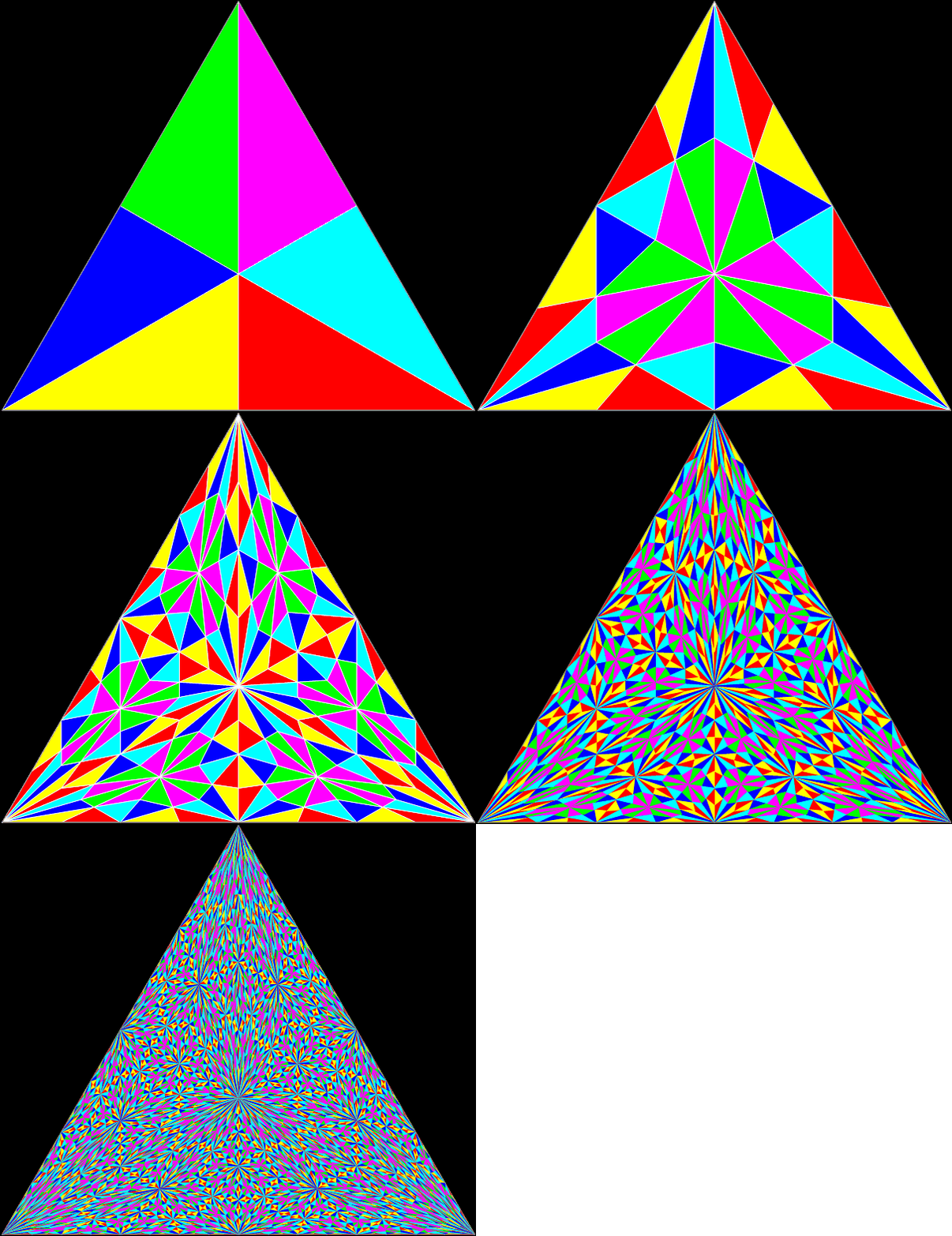
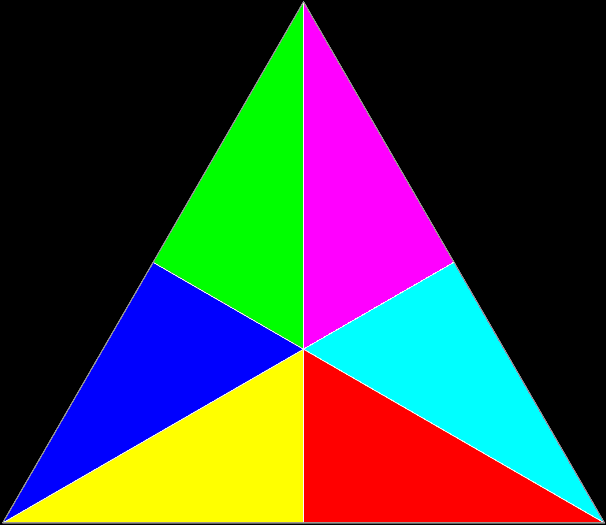
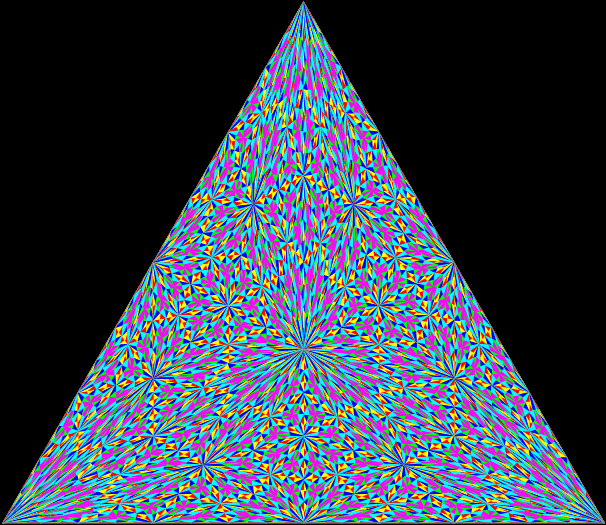
Viewer’s advisory: If you are sensitive to flashing or flickering images, you should be careful when you look at the final fourth and fifth of the animated gifs below.


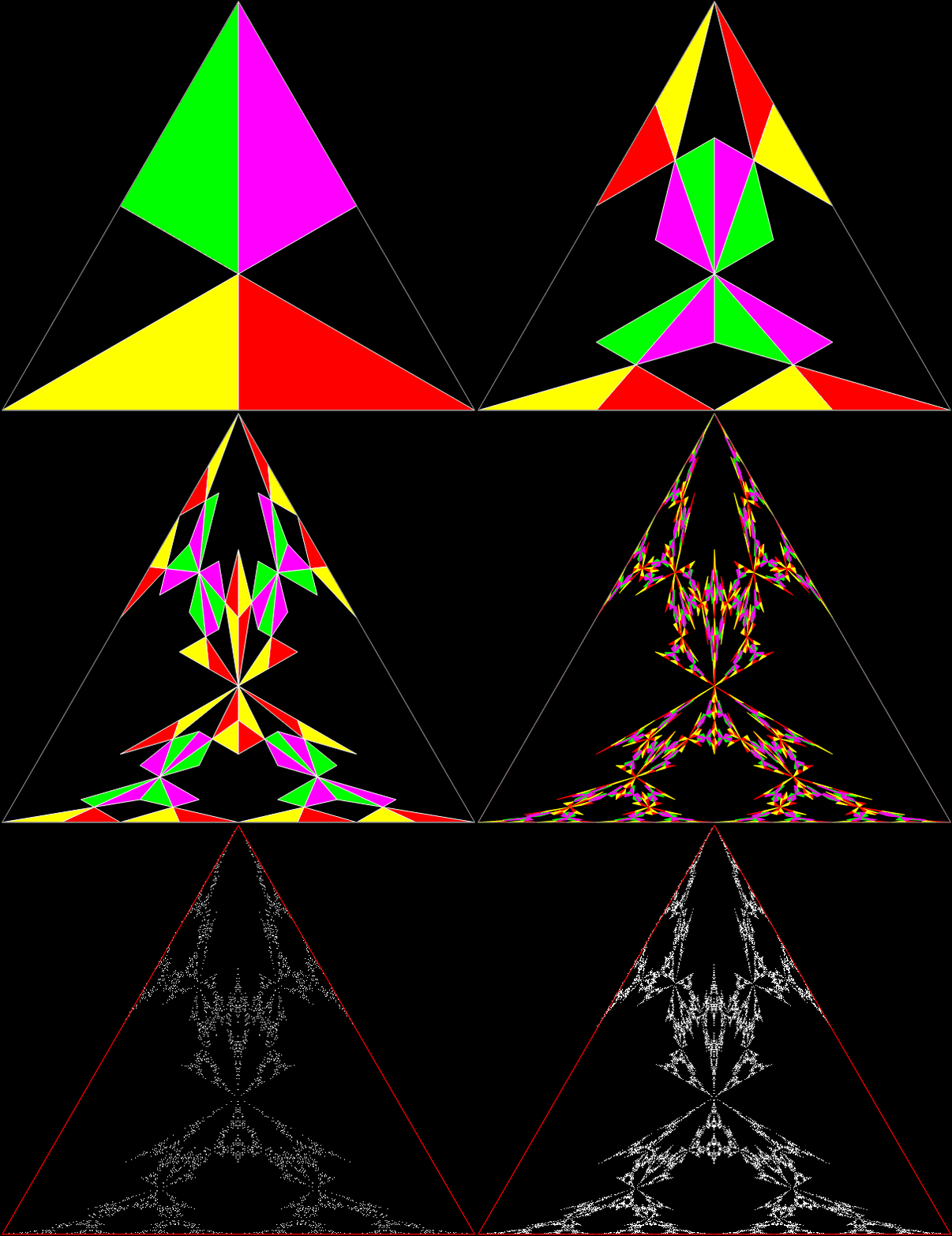
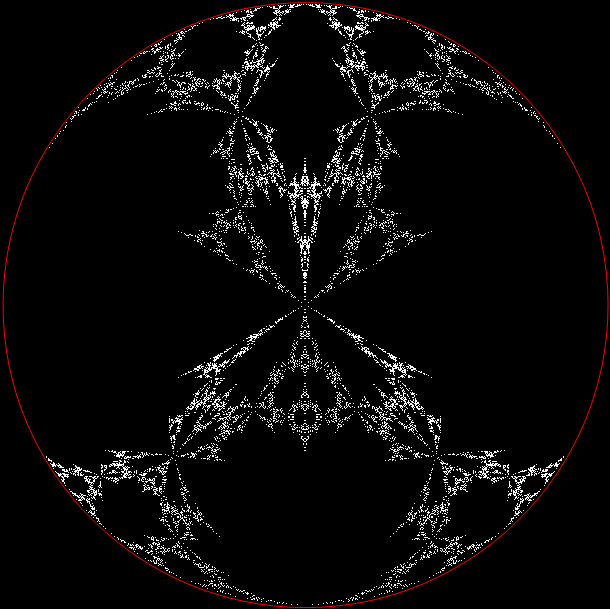
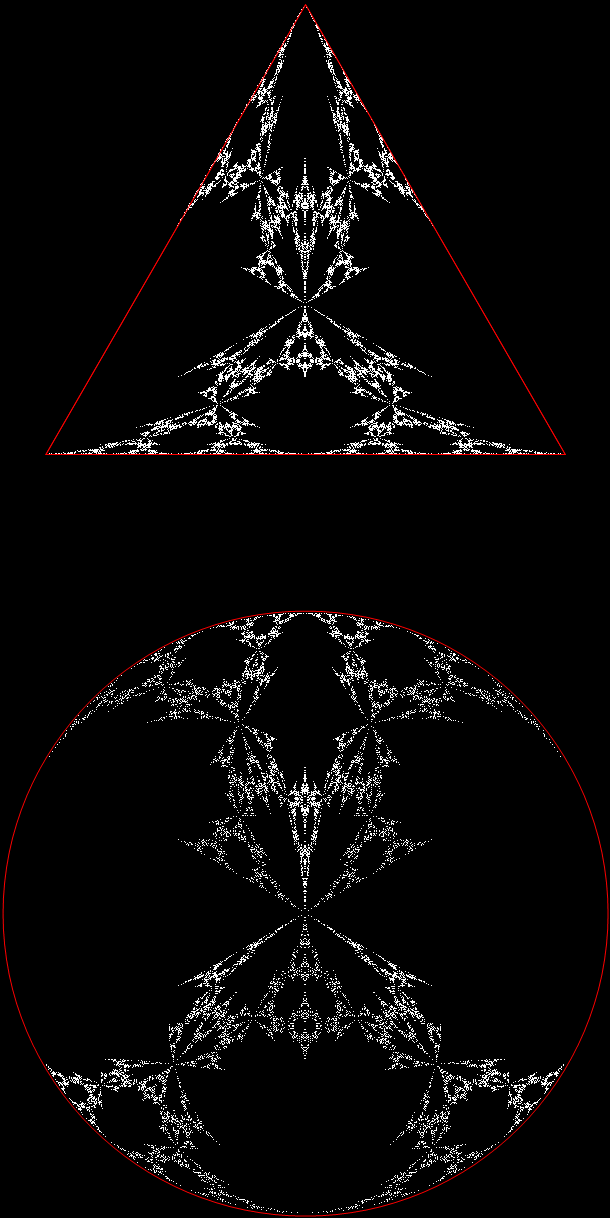
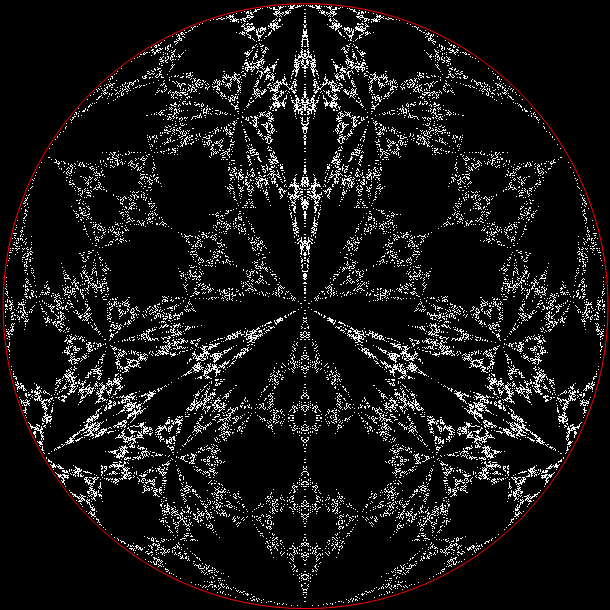
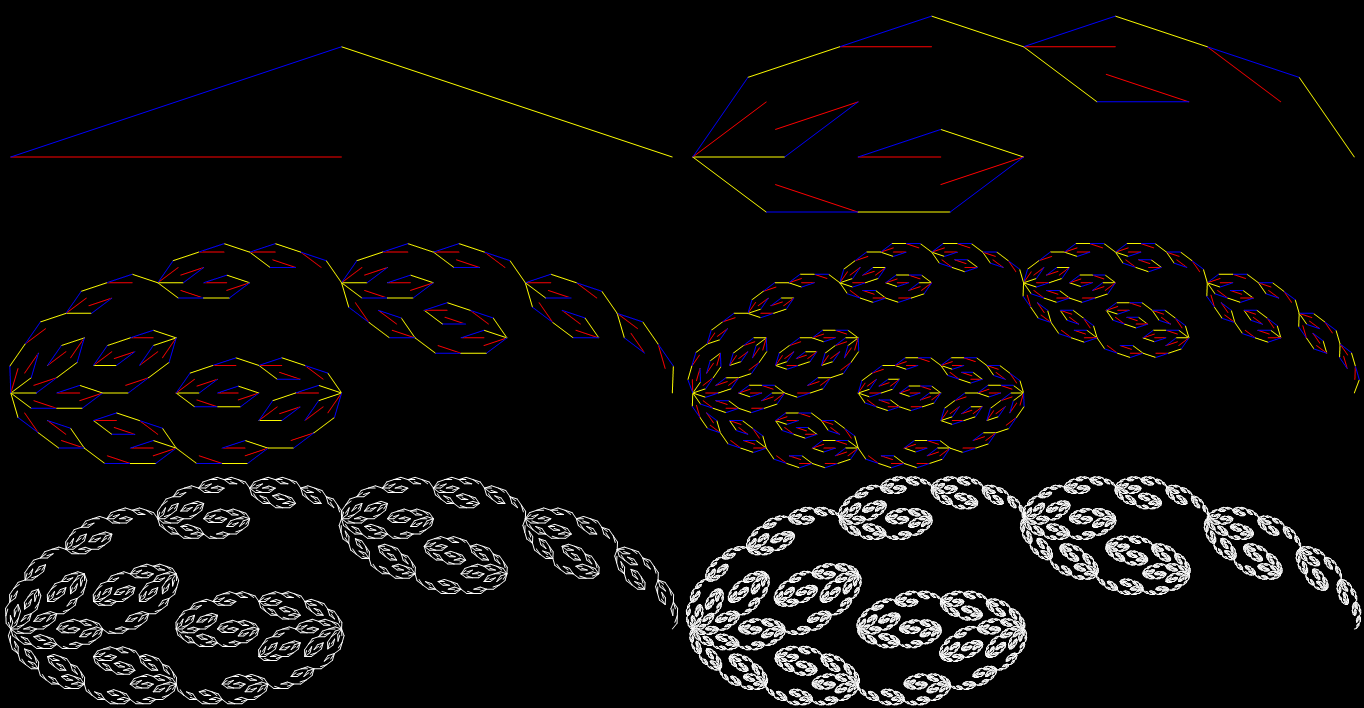
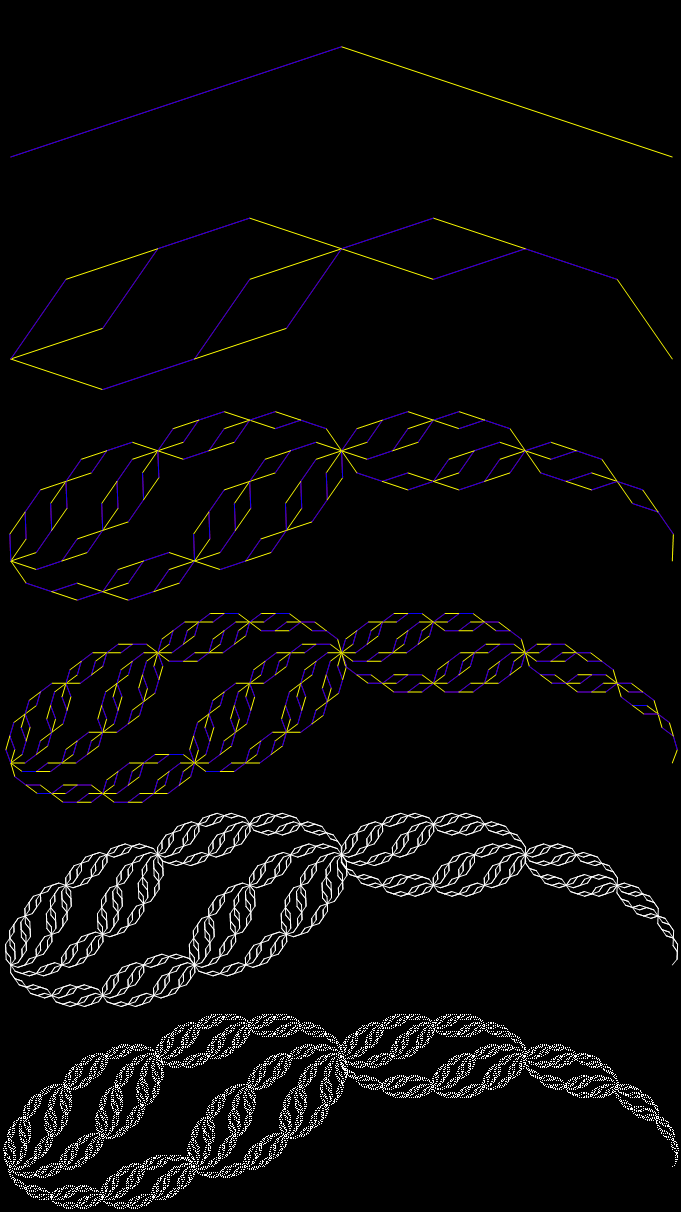
H.P. Lovecraft in some Mountings of Mathness


Paradoxical Puzzle Pair

Two interesting puzzles, one of which looks hard and is in fact easy, while the other looks easy and is in fact hard.

1. Three Cards

The values attached to a deck of bridge cards start with the Two of Clubs as lowest, with Diamonds, Hearts and Ace of Spades as highest.

If you draw three cards at random from the deck, what is the probability that they will be drawn in order of increasing value? (Answer 1)


2. The Hungry Hunter

A hunter, having run out of food, met two shepherds. One of the shepherd had three loaves of bread and the other had five loaves. When the hunter asked for food, the shepherds agreed to divide the eight identical loaves equally between the three of them. The hunter thanked them and gave them $8. How should the shepherds divide the money? (Answer 2)

• Puzzles and answers from Erwin Brecher’s How Do You Survive a Duel? And Other Mathematical Diversions, Puzzles and Brainteasers (Carlton Books 2018)

*

*

*

*

*

*

*

*

*


Answer #1: The puzzle sounds far more complicated than it is. The deck of cards is a red herring. The question reduces to this: Take three cards, say 2, 3 and 4 of clubs, facedown. What is the probability of turning them over in the order 2, 3, 4? There are six possible ways of arranging three cards. Therefore the probability is one-sixth.

*

*

*

*

*

*

*

*

*

Answer #2: It would be wrong to split the money into $3 and $5. Each of the three ended up with 2⅔ loaves. In other words, the first shepherd parted with ⅓ of a loaf and the other shepherd with 2⅓ or 7/3 loaves. The first shepherd should therefore get $1 and the second shepherd $7.