
Moonlight Walk by John Atkinson Grimshaw (1836-93)

Moonlight Walk by John Atkinson Grimshaw (1836-93)
OCTOPUS
By Algernon Charles Sin-burn
STRANGE beauty, eight-limbed and eight-handed,
Whence camest to dazzle our eyes?
With thy bosom bespangled and banded
With the hues of the seas and the skies;
Is thy home European or Asian,
O mystical monster marine?
Part molluscous and partly crustacean,
Betwixt and between.
Wast thou born to the sound of sea trumpets,
Hast thou eaten and drunk to excess
Of the sponges — thy muffins and crumpets;
Of the seaweed — thy mustard and cress?
Wast thou nurtured in caverns of coral,
Remote from reproof or restraint?
Art thou innocent, art thou immoral,
Sinburnian or Saint?
Lithe limbs, curling free, as a creeper
That creeps in a desolate place,
To enroll and envelop the sleeper
In a silent and stealthy embrace,
Cruel beak craning forward to bite us,
Our juices to drain and to drink,
Or to whelm us in waves of Cocytus,
Indelible ink!
O breast, that ’twere rapture to writhe on!
O arms, ’twere delicious to feel
Clinging close with the crush of the Python,
When she maketh her murderous meal!
In thy eightfold embraces enfolden,
Let our empty existence escape;
Give us death that is glorious and golden,
Crushed all out of shape!
Ah! thy red lips, lascivious and luscious,
With death in their amorous kiss,
Cling round us, and clasp us, and crush us,
With bitings of agonized bliss;
We are sick with the poison of pleasure,
Dispense us the potion of pain;
Ope thy mouth to its uttermost measure
And bite us again!
Arthur Clement Hilton (1851–77), written at the Crystal Palace Aquarium.
Papyrocentric Performativity Presents:
• Roy des Fleurs – Scented Flora of the World: An Encyclopedia, Roy Genders (Robert Hale 1977)
• Art to Hart – Lives in Writing, David Lodge (Vintage Books 2015)
• Could Yew Kudzu? – Wicked Plants: The A-Z of Plants that Kill, Maim, Intoxicate and Otherwise Offend, Amy Stewart (Timber Press 2010)
Or Read a Review at Random: RaRaR
Papyrocentric Performativity Presents:
• Wattir an Wirds – The Strange Adventures of Mr Andrew Hawthorn & Other Stories, John Buchan (Penguin Books 2009)
• Caveat Lector – Will This Do? The First Fifty Years of Auberon Waugh, Auberon Waugh (Century 1991)
Or Read a Review at Random: RaRaR
Q. How many Guardianistas does it take to change a light-bulb?
A. In terms of an initial / preliminary response around this obviously loaded question, I’d like to begin by problematicizing the notion that it is possible to erect an overt illuminational hierarchy whereby notions of “light” are privileged over notions of “darkness” through deployment of an “objective” and/or “value-free” modality of environmental interrogation via soi disant “sensory” channels. Next, it will (of course) be vital to undertake an in-depth consultation-exercise / impact-assessment with any and all vulnerable minority-communities of ethnicity, sexuality, gender-fluidity and/or other alternate ontology. We must ensure, on a keyly non-negotiable basis of absolute core non-negotiability, that their “fringe” inputs are prioritized on an on-going basis in terms of the decision-making process taking place around the problematicized notion of “changing” the allegedly “dead” so-called “bulb”. Issues around adequate resourcing of the consultation-exercise / impact-assessment must be addressed as a matter of urgency, with ring-fenced contingencies in place safeguarding provision of all necessary trauma counselling for vulnerable communities and/or individuals adversely impacted on a negative basis by the “bulb”-transitioning procedure and/or (indeed) the consultation-exercise / impact-assessment it/them/self/ves. Furthermore…
Vatican Clarification on Filioque
[…] We grant that the Holy Spirit proceeds principally from the Father, in the technical sense. That means, the Father is his principal without principal. It is not that the Spirit proceeds “less” from the Son. But that the Son, his principal, is himself from a principal. In short, the teaching here shores up the monarchy of the Father.
But it is odd to say that the HS proceeds from the Father alone in a “proper” manner. Is this opposed to an “improper” manner? Does it mean the term “proceeds” should not be linked to the Son? Does it mean that “proceeds” means only coming from an ultimate principal? Why then should the document include the expression “proceeds (ekporeuetai) from the Father through the Son?” Wouldn’t that be oxymoronic? Or is “proper” simply a redundant synonym for “principal”? These are questions. […]
• Vatican Clarification on Filioque, Thomistica.net, 7/xi/2014.
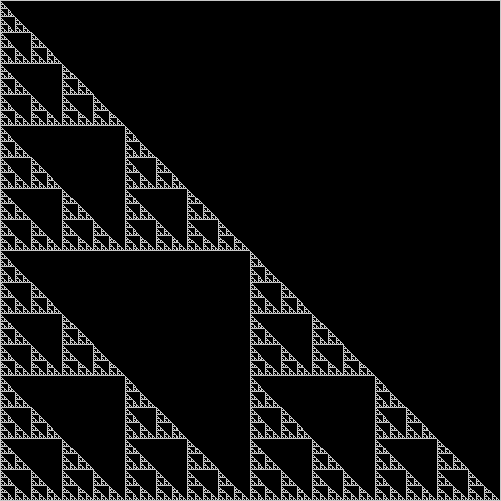
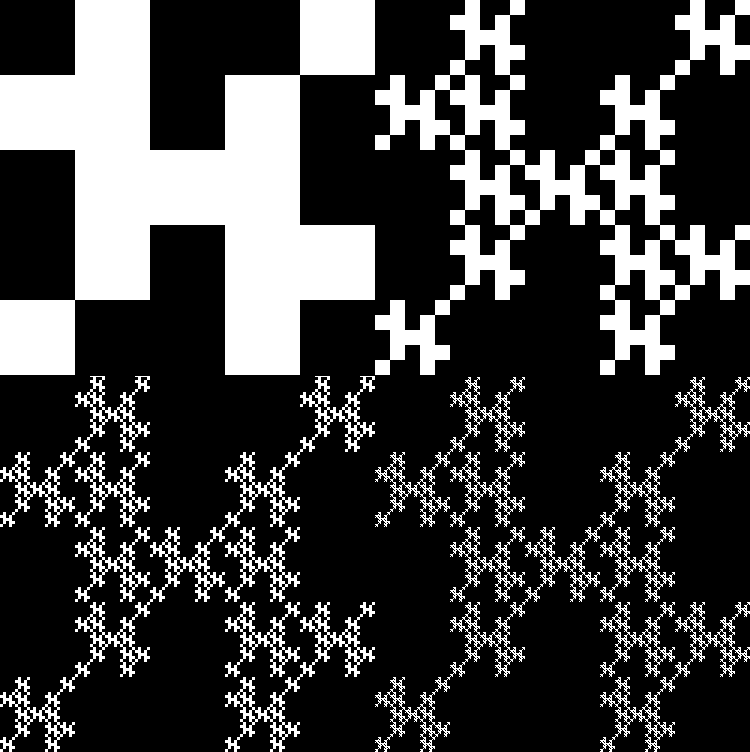
The Latin phrase multum in parvo means “much in little”. It’s a good way of describing the construction of fractals, where the application of very simple rules can produce great complexity and beauty. For example, what could be simpler than dividing a square into smaller squares and discarding some of the smaller squares?
Yet repeated applications of divide-and-discard can produce complexity out of even a 2×2 square. Divide a square into four squares, discard one of the squares, then repeat with the smaller squares, like this:

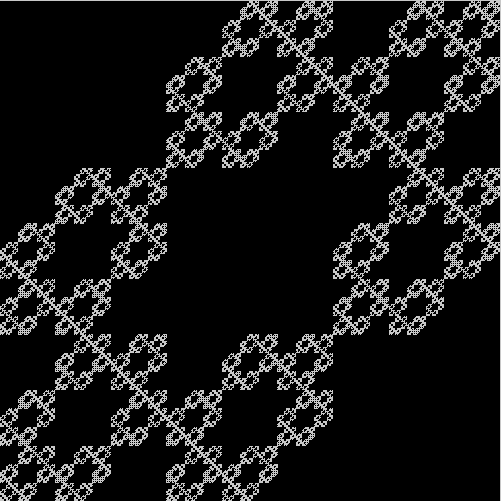
Increase the sides of the square by a little and you increase the number of fractals by a lot. A 3×3 square yields these fractals:






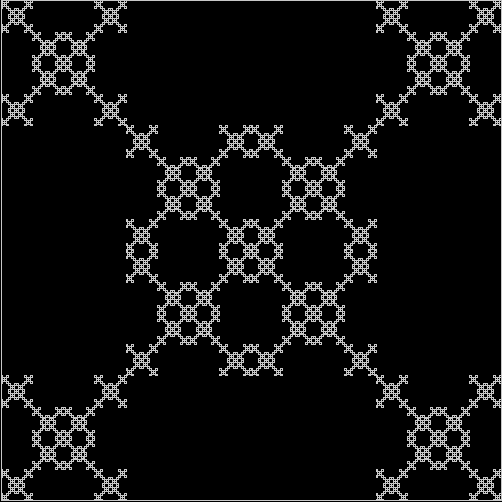
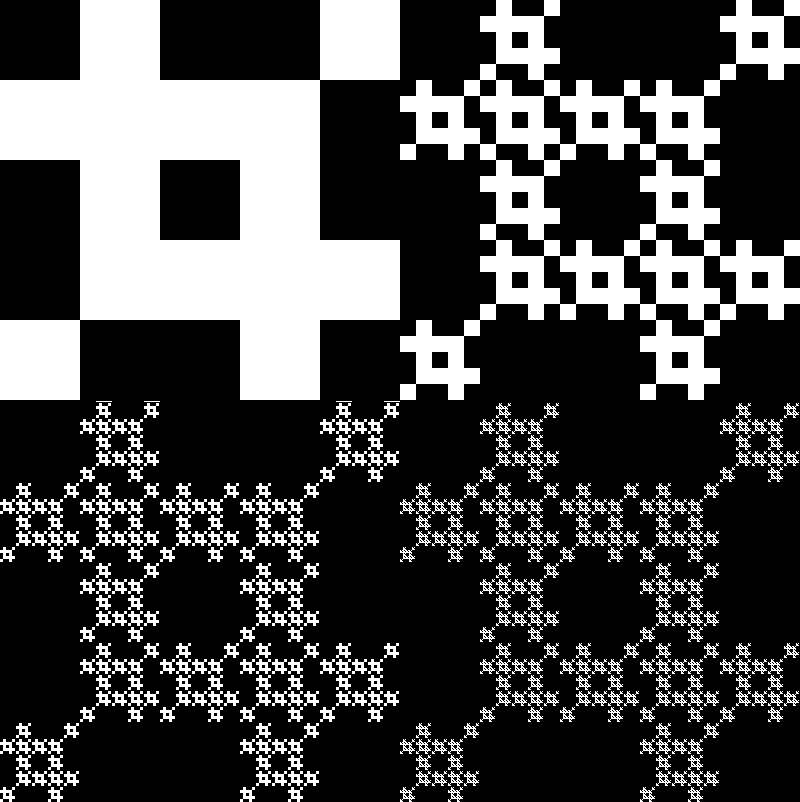
And the 4×4 and 5×5 fractals yield more:













When the biologist E.O. Wilson was asked by a friend what to do about the ants that had invaded his kitchen, Wilson said: “Watch where you step.” — Christopher Potter, How to Make a Human Being: A Body of Evidence (2014), pg. 214

Wolfgang Tillmans, Toucan (2010)
Duels are interesting things. Flashman made his name in one and earnt an impressive scar in another. Maupassant explored their psychology and so did his imitator Maugham. Game theory might be a good guide on how to fight one, but I’d like to look at something simpler: the concept of duelling numbers.
How would two numbers fight? One way is to use digit-sums. Find the digit-sum of each number, then take it away from the other number. Repeat until one or both numbers <= 0, like this:
function duel(n1,n2){
print(n1," <-> ",n2);
do{
s1=digitsum(n1);
s2=digitsum(n2);
n1 -= s2;
n2 -= s1;
print(” -> ",n1," <-> ",n2);
}while(n1>0 && n2>0);
}
Suppose n1 = 23 and n2 = 22. At the first step, s1 = digitsum(23) = 5 and s2 = digitsum(22) = 4. So n1 = 23 – 4 = 19 and n2 = 22 – 5 = 17. And what happens in the end?
23 ↔ 22 ➔ 19 ↔ 17 ➔ 11 ↔ 7 ➔ 4 ↔ 5 ➔ -1 ↔ 1
So 23 loses the duel with 22. Now try 23 vs 24:
23 ↔ 24 ➔ 17 ↔ 19 ➔ 7 ↔ 11 ➔ 5 ↔ 4 ➔ 1 ↔ -1
23 wins the duel with 24. The gap can be bigger. For example, 85 and 100 are what might be called David and Goliath numbers, because the David of 85 beats the Goliath of 100:
85 ↔ 100 ➔ 84 ↔ 87 ➔ 69 ↔ 75 ➔ 57 ↔ 60 ➔ 51 ↔ 48 ➔ 39 ↔ 42 ➔ 33 ↔ 30 ➔ 30 ↔ 24 ➔ 24 ↔ 21 ➔ 21 ↔ 15 ➔ 15 ↔ 12 ➔ 12 ↔ 6 ➔ 6 ↔ 3 ➔ 3 ↔ -3
999 and 1130 are also David and Goliath numbers:
999 ↔ 1130 ➔ 994 ↔ 1103 ➔ 989 ↔ 1081 ➔ 979 ↔ 1055 ➔ 968 ↔ 1030 ➔ 964 ↔ 1007 ➔ 956 ↔ 988 ➔ 931 ↔ 968 ➔ 908 ↔ 955 ➔ 889 ↔ 938 ➔ 869 ↔ 913 ➔ 856 ↔ 890 ➔ 839 ↔ 871 ➔ 823 ↔ 851 ➔ 809 ↔ 838 ➔ 790 ↔ 821 ➔ 779 ↔ 805 ➔ 766 ↔ 782 ➔ 749 ↔ 763 ➔ 733 ↔ 743 ➔ 719 ↔ 730 ➔ 709 ↔ 713 ➔ 698 ↔ 697 ➔ 676 ↔ 674 ➔ 659 ↔ 655 ➔ 643 ↔ 635 ➔ 629 ↔ 622 ➔ 619 ↔ 605 ➔ 608 ↔ 589 ➔ 586 ↔ 575 ➔ 569 ↔ 556 ➔ 553 ↔ 536 ➔ 539 ↔ 523 ➔ 529 ↔ 506 ➔ 518 ↔ 490 ➔ 505 ↔ 476 ➔ 488 ↔ 466 ➔ 472 ↔ 446 ➔ 458 ↔ 433 ➔ 448 ↔ 416 ➔ 437 ↔ 400 ➔ 433 ↔ 386 ➔ 416 ↔ 376 ➔ 400 ↔ 365 ➔ 386 ↔ 361 ➔ 376 ↔ 344 ➔ 365 ↔ 328 ➔ 352 ↔ 314 ➔ 344 ↔ 304 ➔ 337 ↔ 293 ➔ 323 ↔ 280 ➔ 313 ↔ 272 ➔ 302 ↔ 265 ➔ 289 ↔ 260 ➔ 281 ↔ 241 ➔ 274 ↔ 230 ➔ 269 ↔ 217 ➔ 259 ↔ 200 ➔ 257 ↔ 184 ➔ 244 ↔ 170 ➔ 236 ↔ 160 ➔ 229 ↔ 149 ➔ 215 ↔ 136 ➔ 205 ↔ 128 ➔ 194 ↔ 121 ➔ 190 ↔ 107 ➔ 182 ↔ 97 ➔ 166 ↔ 86 ➔ 152 ↔ 73 ➔ 142 ↔ 65 ➔ 131 ↔ 58 ➔ 118 ↔ 53 ➔ 110 ↔ 43 ➔ 103 ↔ 41 ➔ 98 ↔ 37 ➔ 88 ↔ 20 ➔ 86 ↔ 4 ➔ 82 ↔ -10
You can look in the other direction and find bully numbers, or numbers that beat all numbers smaller than themselves. In base 10, the numbers 2 to 9 obviously do. So do these:
35, 36, 37, 38, 39, 47, 48, 49, 58, 59, 64, 65, 66, 67, 68, 69, 76, 77, 78, 79, 189
In other bases, bullies are sometimes common, sometimes rare. Sometimes they don’t exist at all for n > b. Here are bully numbers for bases 2 to 30:
base=2: 3, 5, 7, 13, 15, 21, 27, 29, 31, 37, 43, 45, 47, 54, 59
b=3: 4, 5, 7, 8, 14
b=4: 5, 6, 7, 9, 10, 11, 14, 15, 27, 63
b=5: 12, 13, 14, 18, 19, 23, 24
b=6: 15, 16, 17, 22, 23, 26, 27, 28, 29, 32, 33, 34, 35, 65, 71, 101
b=7: 17, 18, 19, 20, 24, 25, 26, 27, 32, 33, 34, 40, 41, 45, 46, 47, 48, 76
b=8: 37, 38, 39, 46, 47, 59, 60, 61, 62, 63, 95, 103, 111, 119
b=9: 42, 43, 44, 52, 53, 61, 62
b=10: 35, 36, 37, 38, 39, 47, 48, 49, 58, 59, 64, 65, 66, 67, 68, 69, 76, 77, 78, 79, 189
b=11: 38, 39, 40, 41, 42, 43, 49, 50, 51, 52, 53, 54, 62, 63, 64, 65, 73, 74, 75, 76, 85, 86, 87
b=12: 57, 58, 59
b=13: 58, 59, 60, 61, 62, 63, 64, 74, 75, 76, 77, 87, 88, 89, 90, 101, 102, 103, 115, 116, 127, 128, 129
b=14: none (except 2 to 13)
b=15: 116, 117, 118, 119, 130, 131, 132, 133, 134, 147, 148, 149
b=16: 122, 123, 124, 125, 126, 127, 140, 141, 142, 143, 156, 157, 158, 159, 173, 174, 175, 190, 191, 222, 223
b=17: 151, 152, 168, 169, 185, 186
b=18: 85, 86, 87, 88, 89, 191, 192, 193, 194, 195, 196, 197, 212, 213, 214, 215
b=19: 242, 243, 244, 245, 246
b=20: none
b=21: 136, 137, 138, 139, 140, 141, 142, 143, 144, 145, 146, 162, 163, 164, 165, 166, 167, 183, 184, 185, 186, 187, 188, 206, 207, 208, 209, 227, 228, 229, 230, 248, 249, 250, 251, 270, 271, 272
b=22: 477, 478, 479, 480, 481, 482, 483
b=23: none
b=24: none
b=25: 271, 272, 273, 274, 296, 297, 298, 299, 322, 323, 324, 348, 349, 372, 373, 374
b=26: none
b=27: none
b=28: none
b=29: 431, 432, 433, 434, 459, 460, 461, 462, 463, 490, 491, 492, 546, 547, 548, 549, 550
b=30: none
 Overlord In Terms of Core Issues Around Maximal Engagement with Key Notions of the Über-Feral