Guns’n’Gladioli

Front cover of A Light That Never Goes Out by Tony FletcherA Light That Never Goes Out: The Enduring Saga of the Smiths, Tony Fletcher (Windmill Books 2013)

Coke, booze, earsplitting volume. Not a combination you associate with the Smiths. But it was there, as you’ll learn from this book. Towards the end, they were almost turning into Guns’n’Gladioli. Morrissey, of course, was the odd one out: he wasn’t battering his brain-cells with drink and drugs on their final American tour. But back home his Lichtmusik was also lout-music: the Smiths didn’t just appeal to bedsit miserabilists in rain-hammered humdrum towns. No, they appealed to some football hooligans too, including a Chelsea fan who didn’t mind being asked, “You still wanking off over that miserable northern poof?” as he travelled north by train to do battle with Manchester United and Manchester City, who also supplied hoolifans to the Smiths (pp. 509-10). So did football clubs in Glasgow and Edinburgh. The Smiths are easy to caricature, but the caricatures don’t capture their complexity.

Tony Fletcher does capture it: the band, their music, their fans, friends, producers, studio-engineers and record-labels. He’s definitely a Guardianista, but his prose is plodding rather than painful and he does a good job of putting the poof and his partners into context. The 1980s is one important part of that context. So are Irish Catholicism and Manchester. When you look at pictures of the Smiths, you can see two clear divisions. One of them separates the singer, guitarist and drummer from the bassist: the dark-haired, bushy-browed, strong-faced Morrissey, Johnny Marr and Andy Rourke clearly belong to one race and the light-haired, lesser-browed, milder-faced Mike Joyce to another. They’re Irish and he’s English: the British Isles are rich in language and rich in biology too. But Morrissey’s height and handsomeness also separate him from Marr, Rourke and Joyce, like his polysyllabic name. Both must be related to his intelligence, his creativity and his ability to turn himself into the Pope of Mope and become much more famous than any of the other three. Fletcher doesn’t talk about this biology – as I said, he’s a Guardianista – but it’s implicit in his descriptions of Irish settlement in Manchester and of Morrissey’s genius.

Is that too strong a word? Maybe. Morrissey is certainly the interesting and original one in this book and it ends with his story only just beginning. You can feel the tug of his later career throughout the book: it’s not discussed, but you know it’s there. But Fletcher isn’t concentrating on Morrissey and doesn’t seem very interested in Carry On and Brit-film in the 1960s, so he’s less good on what might be called the Smythos: the world created by Morrissey in his lyrics and interviews. Morrissey’s influences are better explained in Simon Goddard’s Mozipedia (2009), which isn’t just about the New York Dolls, the Cockney Rejects and vegetarianism. It has also entries for everyone from Hawtrey and Housman to Williams and Wilde by way of Sandy Shaw, Shelagh Delaney and Jobriath. No-one will ever devote an encyclopaedia to Marr like that: music doesn’t have as much meaning and metaphor in it. It has emotion and beauty instead and Fletcher is good at describing how Marr created a lot of both on albums like Meat Is Murder and Strangeways Here We Come.
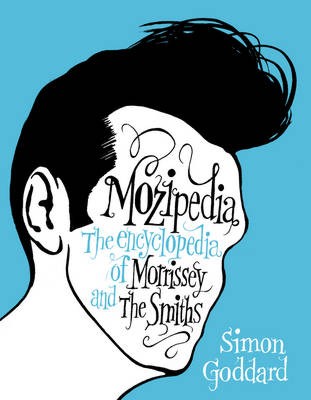
Front cover of Mozipedia by Simon Goddard

Front cover of Mozipedia by Simon Goddard

I’ve never liked him much, though. I like what he did with the guitar and in the studio, but I don’t like what he did to his body and mind. Or what he put on his body: he didn’t have Mozza’s way with weeds either. In the photos, you can clearly see Morrissey’s narcissism and Marr’s weediness. It’s no surprise that Marr smoked a lot of marijuana, preferred working at night and didn’t eat properly. But he’s weedy in more ways than the physical: there’s also a photo of him with Billy Bragg, the committed socialist behind Red Wedge. This was a collective of musicians and bands who wanted to make the world a better place by fighting Fatcher, fascism and free speech with their fantastic music. Morrissey had his lefty opinions too, but he didn’t like collectives and he didn’t scorn just Margaret Thatcher and the Queen: Bob Geldof and Live Aid got the sharp side of his tongue too. Which is good. Mozza is worshipped by Guardianistas, but he’s not a Guardianista himself.

Or not wholly. The hive-mind hasn’t been able to hum him fully into line, unlike Marr and Bragg. As for Rourke and Joyce: their politics don’t matter and the most interesting thing one of them does in this book is get stung by a sting-ray (pp. 539-40). They were competent musicians, but they weren’t essential to the Smiths. Joyce is most important for causing trouble, not for strumming his bass: first there was the heroin addiction, then the 21st-century court-case in which he sued for more money and earnt Morrissey’s undying enmity. Fletcher barely mentions the court-case and ends the book in the 1980s, with the Smiths exhausted, antagonistic and unfulfilled. They never achieved their full potential and though few bands do, few bands have had more to offer than the Smiths. The Beatles were one and managed to offer it from the nearby northern city of Liverpool. They were Irish Catholic too. But, like the Smiths, they achieved success in England, not Ireland. That’s important and the younger band captured it in their name. “Smiths” is an Anglo-Saxon word with ancient roots and difficult phonetics. It seems simple, but it isn’t. Rather like light.
Hex Appeal

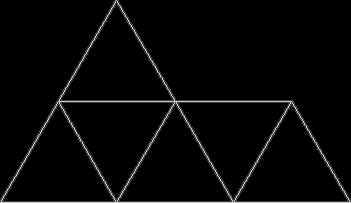
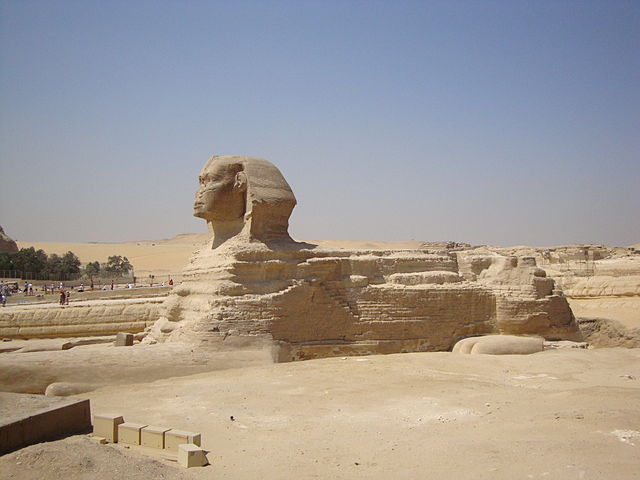
A polyiamond is a shape consisting of equilateral triangles joined edge-to-edge. There is one moniamond, consisting of one equilateral triangle, and one diamond, consisting of two. After that, there are one triamond, three tetriamonds, four pentiamonds and twelve hexiamonds. The most famous hexiamond is known as the sphinx, because it’s reminiscent of the Great Sphinx of Giza:

sphinx_hexiamond

It’s famous because it is the only known pentagonal rep-tile, or shape that can be divided completely into smaller copies of itself. You can divide a sphinx into either four copies of itself or nine copies, like this (please open images in a new window if they fail to animate):

sphinx4

sphinx9

So far, no other pentagonal rep-tile has been discovered. Unless you count this double-triangle as a pentagon:

double_triangle_rep-tile

It has five sides, five vertices and is divisible into sixteen copies of itself. But one of the vertices sits on one of the sides, so it’s not a normal pentagon. Some might argue that this vertex divides the side into two, making the shape a hexagon. I would appeal to these ancient definitions: a point is “that which has no part” and a line is “a length without breadth” (see Neuclid on the Block). The vertex is a partless point on the breadthless line of the side, which isn’t altered by it.

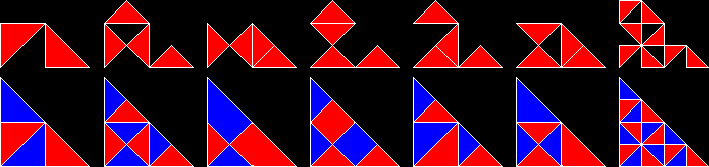
But, unlike the sphinx, the double-triangle has two internal areas, not one. It can be completely drawn with five continuous lines uniting five unique points, but it definitely isn’t a normal pentagon. Even less normal are two more rep-tiles that can be drawn with five continuous lines uniting five unique points: the fish that can be created from three equilateral triangles and the fish that can be created from four isosceles right triangles:

equilateral_triangle_fish_rep-tile

right_triangle_fish_rep-tile

Think Ink

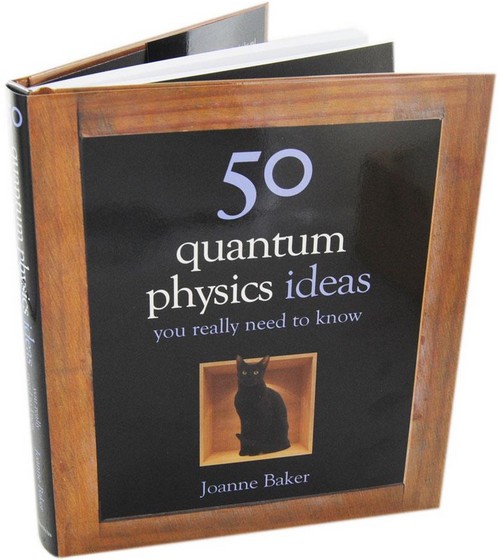
Front cover of 50 Quantum Physics Ideas You Really Need to Know by Joanne Baker50 Quantum Physics Ideas You Really Need to Know, Joanne Baker (Quercus 2013)

A very good introduction to a very difficult subject. A very superficial introduction too, because it doesn’t use proper mathematics. If it did, I’d be lost: like most people’s, my maths is far too weak for me to understand quantum physics. Here’s one of the side-quotes that help make this book such an interesting read: “We must be clear that when it comes to atoms, language can be used only as in poetry.”

That’s by the Jewish-Danish physicist Niels Bohr (1885-1962). It applies to quantum physics in general. Without the full maths, you’re peering through a frost-covered window into a sweetshop, you’re not inside sampling the wares. But even without the full maths, the concepts and ideas in this book are still difficult and challenging, from the early puzzles thrown up by the ultra-violet catastrophe to the ingenious experiments that have proved particle-wave duality and action at a distance.

But there’s a paradox here.

Continue reading: Think Ink

Performativizing Papyrocentricity #17

Papyrocentric Performativity Presents:

Men, Mountains and Mega-TherionsHimalaya: The Exploration and Conquest of the Greatest Mountains on Earth, general editor Philip Parker (Conway 2013)

Shifting and ShapingThe Metamorphoses of Ovid, translated by Mary M. Innes (Penguin 1961)

Warrior with WordsConan the Indomitable, Robert E. Howard (Orion Books 2011)


Or Read a Review at Random: RaRaR

Rep It Up

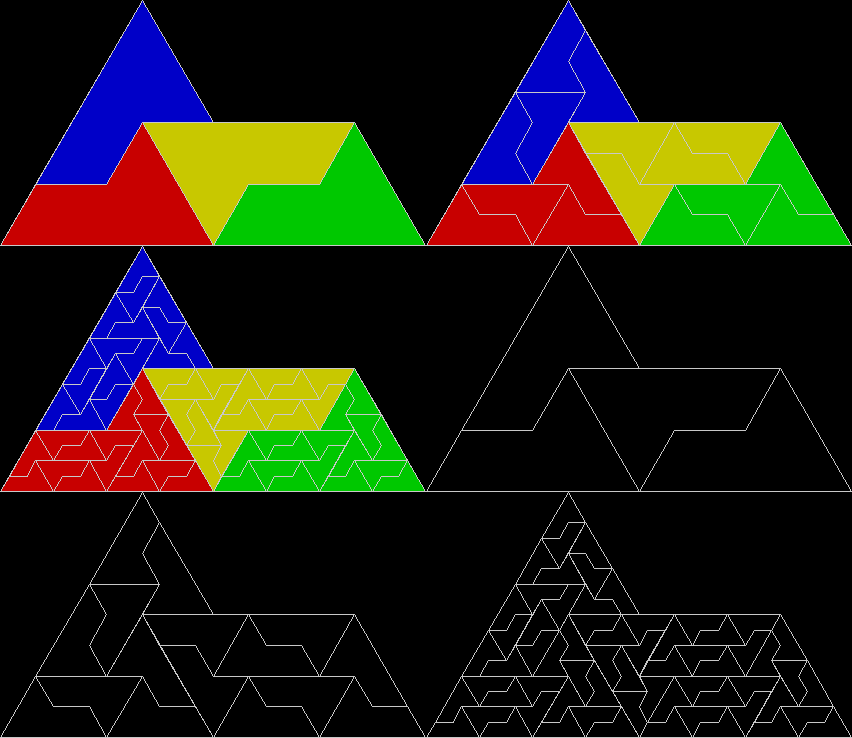
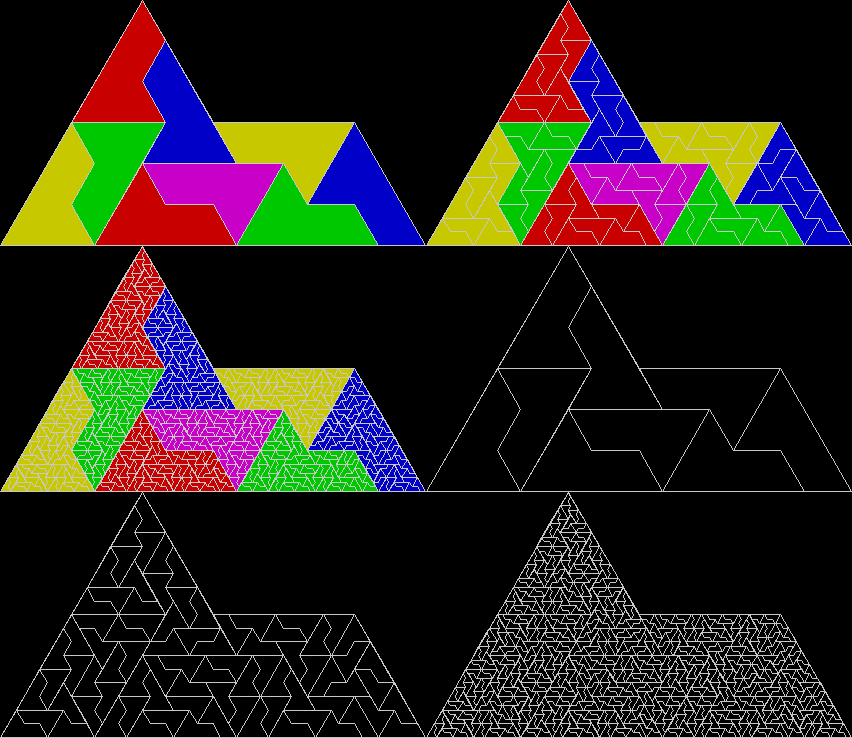
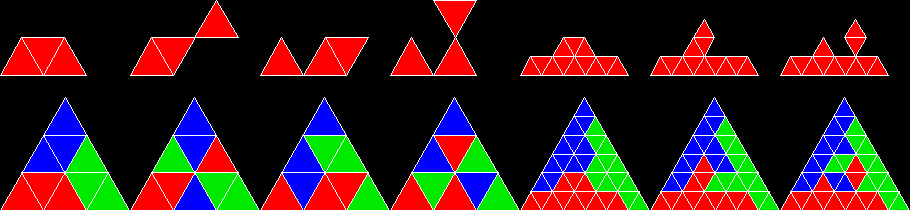
When I started to look at rep-tiles, or shapes that can be divided completely into smaller copies of themselves, I wanted to find some of my own. It turns out that it’s easy to automate a search for the simpler kinds, like those based on equilateral triangles and right triangles.

right triangle rep-tiles

right_triangle_fish

equilateral_triangle_reptiles

equilateral_triangle_rocket

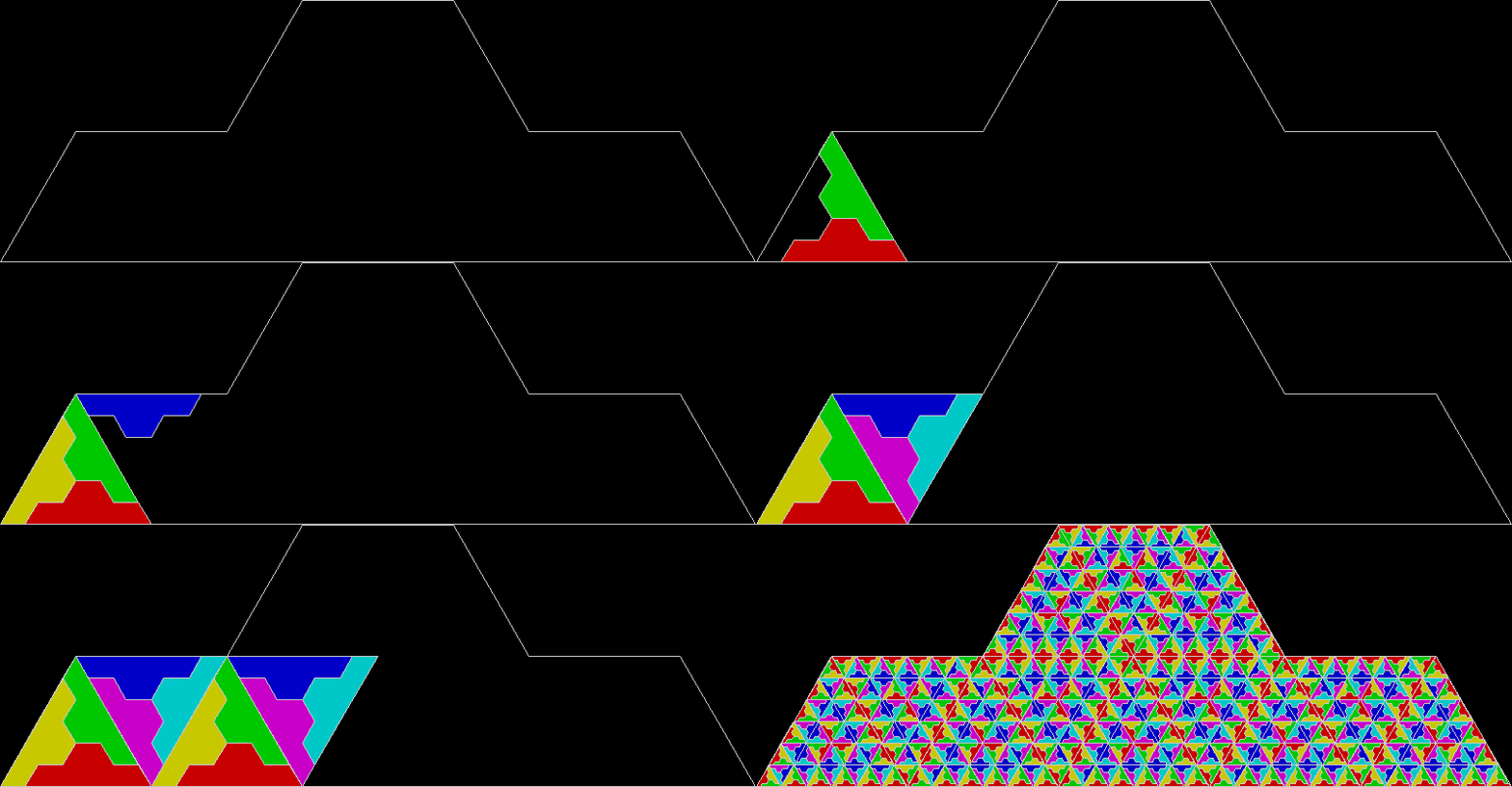
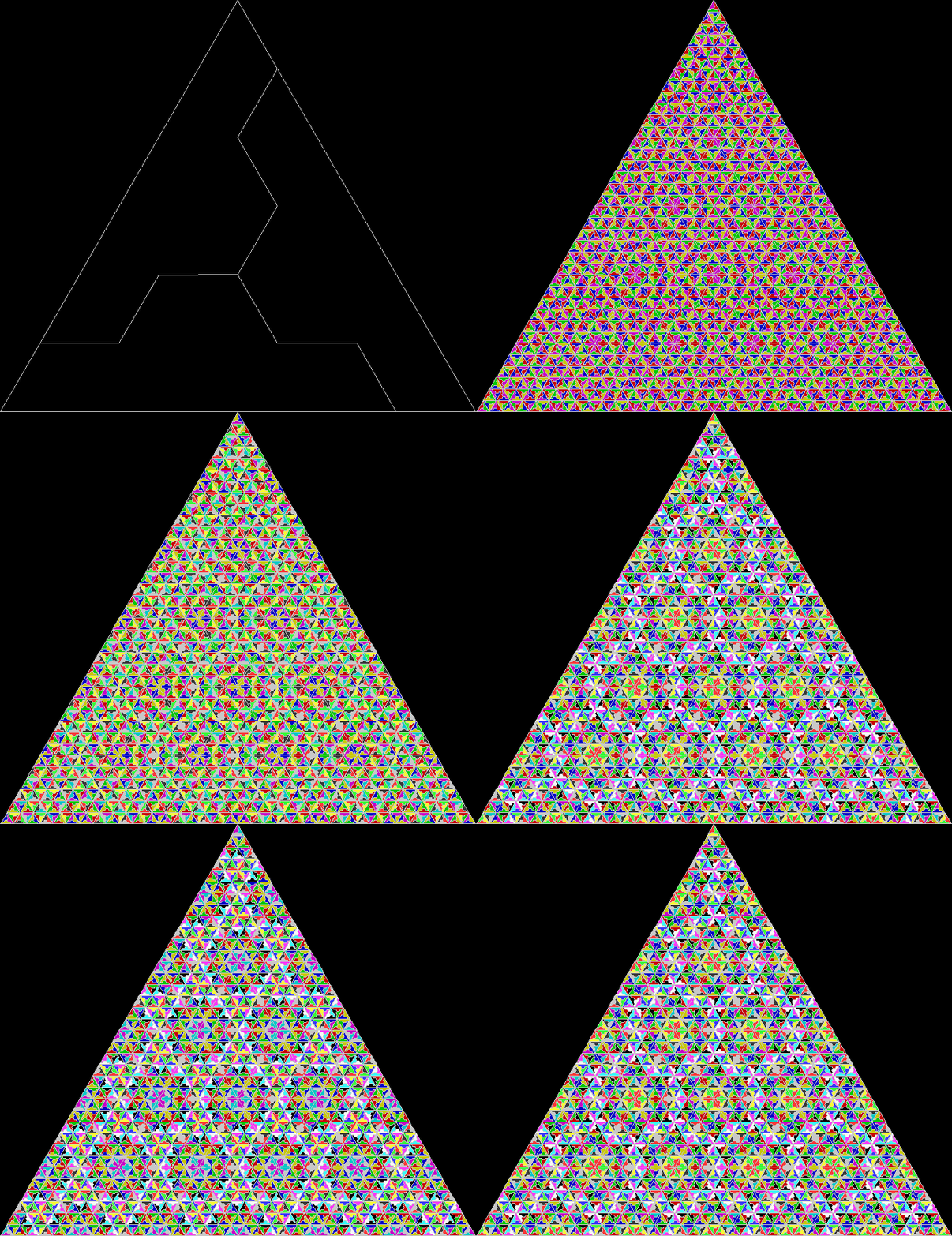
(Please open the following images in a new window if they fail to animate)

duodeciamond

triangle mosaic


Previously pre-posted (please peruse):

Rep-Tile Reflections

Mix to the Marx

“And in the global climate of the early 90s, it’s perhaps not surprising that the ANC bent to the neoliberal flood tide, putting its Freedom Charter calls for public ownership and redistribution of land on the back burner.” — Mandela has been sanitised by hypocrites and apologists, Seamus Milne, The Guardian, 12/xii/2013.


Previously pre-posted (please peruse):

Reds under the Thread

Hextra Texture

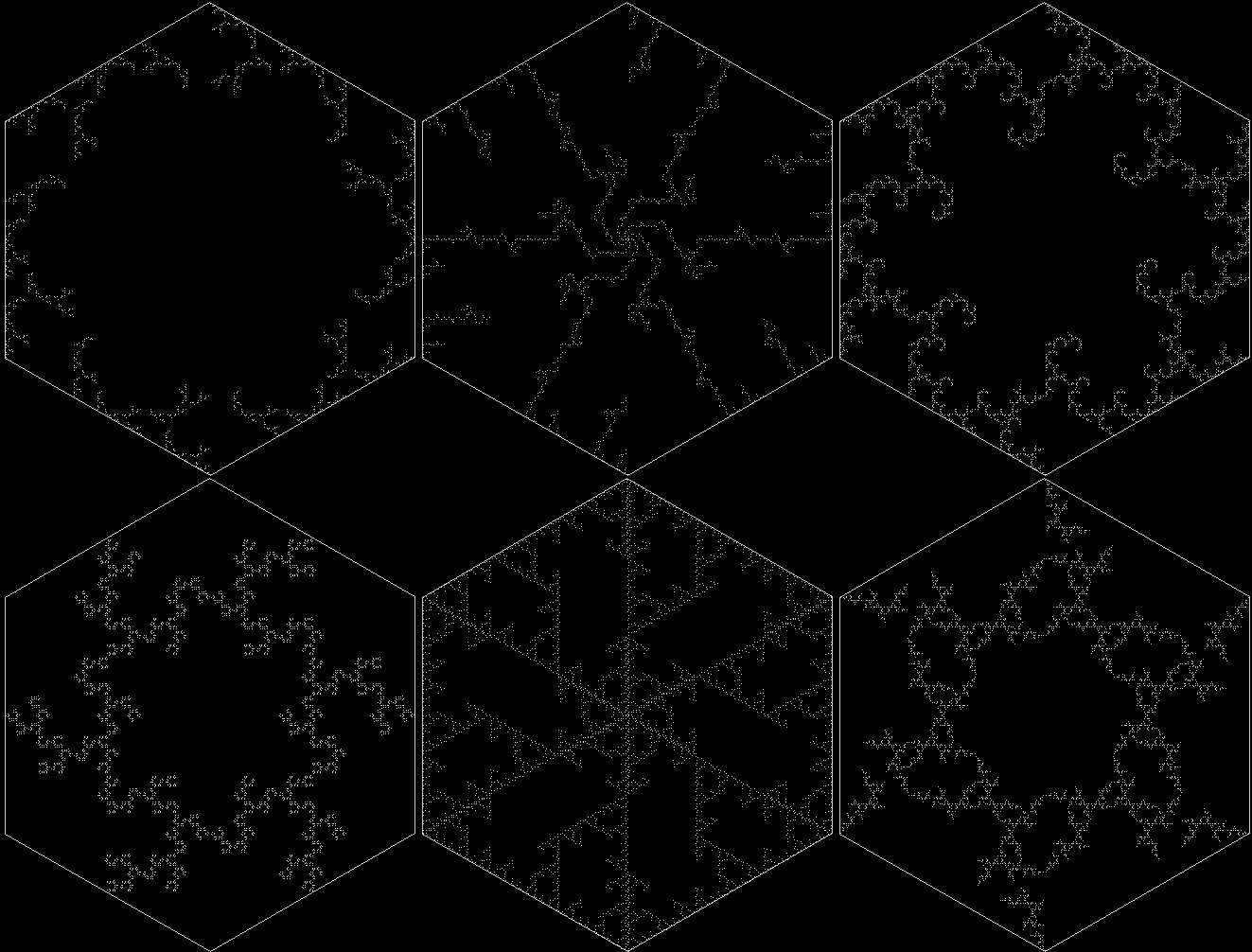
A hexagon can be divided into six equilateral triangles. An equilateral triangle can be divided into a hexagon and three more equilateral triangles. These simple rules, applied again and again, can be used to create fractals, or shapes that echo themselves on smaller and smaller scales.

hextriangle

hextriangle2

hextriangle1


Previously pre-posted (please peruse):

Fractal Fourmulas

He Say, He Sigh, He Sow #23

“Brion knew it wasn’t William’s fault. But in terms of the general popular culture not recognizing the importance of his contribution, there was a little bitterness.” — phantasmagoric freethinker Genesis P-Orridge interrogates issues around Brion Gysin and William S. Burroughs.


Elsewhere other-posted:

Ex-term-in-ate!

Prime Time

1/29[b=2] = 0·0000100011010011110111001011… (l=28)
1/29[b=3] = 0·0002210102011122200121202111… (l=28)
1/29[b=5] = 0·00412334403211… (l=14)
1/29[b=7] = 0·0145536… (l=7)
1/29[b=11] = 0·04199534608387[10]69115764[10]2723… (l=28)
1/29[b=13] = 0·05[10]9[11]28[12]7231[10]4… (l=14)
1/29[b=17] = 0·09[16]7… (l=4)
1/29[b=19] = 0·0[12]89[15][13][14]7[16]73[17][13]1[18]6[10]9354[11]2[11][15]15[17]… (l=28)
1/29[b=23] = 0·0[18]5[12][15][19][19]… (l=7)
1/29[b=29] = 0·1 (l=1)
1/29[b=31] = 0·1248[17]36[12][25][20]9[19]7[14][29][28][26][22][13][27][24][18]5[10][21][11][23][16]… (l=28)
1/29[b=37] = 0·1[10]7[24]8[34][16][21][25][19]53[30][22][35][26][29][12][28]2[20][15][11][17][31][33]6[14]… (l=28)
1/29[b=41] = 0·1[16][39][24]… (l=4)
1/29[b=43] = 0·1[20][32][26][29][28]7[17][34]4[19][11][37]2[41][22][10][16][13][14][35][25]8[38][23][31]5[40]… (l=28)
1/29[b=47] = 0·1[29]84[40][24][14][27][25][43][35][30][37][12][45][17][38][42]6[22][32][19][21]3[11][16]9[34]… (l=28)
1/29[b=53] = 0·1[43][45][36][29][12][42]… (l=7)
1/29[b=59] = 0·2… (l=1)
1/29[b=61] = 0·26[18][56][48][23]8[25][14][44][10][31][33][39][58][54][42]4[12][37][52][35][46][16][50][29][27][21]… (l=28)
1/29[b=67] = 0·2[20][53]9[16][11][36][64][46][13][57][50][55][30]… (l=14)
1/29[b=71] = 0·2[31][58][53][61][14][48][68][39][12][17]9[56][22]… (l=14)
1/29[b=73] = 0·2[37][55][27][50][25][12][42][57][65][32][52][62][67][70][35][17][45][22][47][60][30][15]7[40][20][10]5… (l=28)
1/29[b=79] = 0·2[57][16][27][19]5[35][32][54][38][10][70][65][29][76][21][62][51][59][73][43][46][24][40][68]8[13][49]… (l=28)
1/29[b=83] = 0·2[71][45][65][68][57][20]… (l=7)
1/29[b=89] = 0·36[12][24][49]9[18][36][73][58][27][55][21][42][85][82][76][64][39][79][70][52][15][30][61][33][67][46]… (l=28)
1/29[b=97] = 0·3[33][43][46][80][26][73][56][83][60][20]6[66][86][93][63][53][50][16][70][23][40][13][36][76][90][30][10]… (l=28)