Les Sez

In Terms of My Natural Life

(a pome crafted by Les Patterson)

I am an Australian in terms of Nation
And a Public Servant in terms of vocation,
But there’s one thing amazes my critics and that’s
How many I wear in terms of hats:
I chair the Cheese Board, I front the Yartz
You could term me a man of many parts.
I’m a Renaissance type, if you know the term
And I’ve held long office in terms of term,
Yes, I’ve long served Australia in terms of years
And in terms of refreshment I like a few beers.
My opponents are mongrels, scum and worms
Who I bucket in no uncertain terms
And my rich vocabulary always features
Large in terms of my public speeches.
My favourite terms in terms of debate
Are: “broadbased package” and “orchestrate”.
But one term I never employ is “failure” —
Especially when talking in terms of Australia!
For in terms of lifestyle we’ve got the germs of
A ripper concept to think in terms of.
Yes, in terms of charisma I’ve got the game mastered
In anyone’s terms I’m a well-liked bastard.

From the Back With A Vengeance Tour Brochure © 1989 Sir Les Patterson.


Elsewhere Other-Engageable:

Sir Les’s Website
Ex-Term-In-Ate!

Fiat Flux

Q. How many Guardianistas does it take to change a light-bulb?

A. In terms of an initial / preliminary response around this obviously loaded question, I’d like to begin by problematicizing the notion that it is possible to erect an overt illuminational hierarchy whereby notions of “light” are privileged over notions of “darkness” through deployment of an “objective” and/or “value-free” modality of environmental interrogation via soi disant “sensory” channels. Next, it will (of course) be vital to undertake an in-depth consultation-exercise / impact-assessment with any and all vulnerable minority-communities of ethnicity, sexuality, gender-fluidity and/or other alternate ontology. We must ensure, on a keyly non-negotiable basis of absolute core non-negotiability, that their “fringe” inputs are prioritized on an on-going basis in terms of the decision-making process taking place around the problematicized notion of “changing” the allegedly “dead” so-called “bulb”. Issues around adequate resourcing of the consultation-exercise / impact-assessment must be addressed as a matter of urgency, with ring-fenced contingencies in place safeguarding provision of all necessary trauma counselling for vulnerable communities and/or individuals adversely impacted on a negative basis by the “bulb”-transitioning procedure and/or (indeed) the consultation-exercise / impact-assessment it/them/self/ves. Furthermore…

Get Your Tox Off

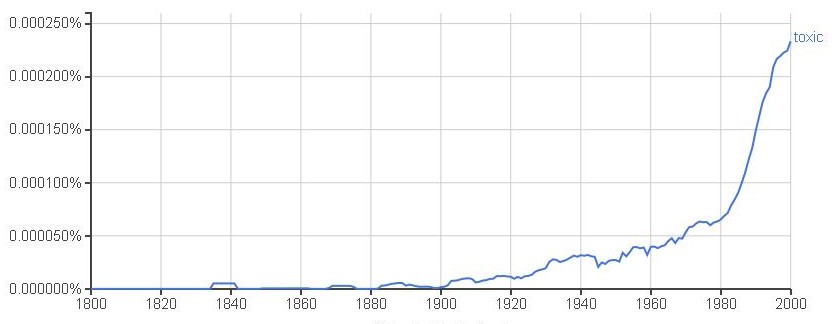
There’s only one word for it: toxic. The proliferation of this word is an incendiarily irritating abjectional aspect of contemporary culture. My visit to Google Ngram has confirmed my worst suspicions:

Toxic in English

Toxic in English

Toxic in English fiction

Toxic in English fiction

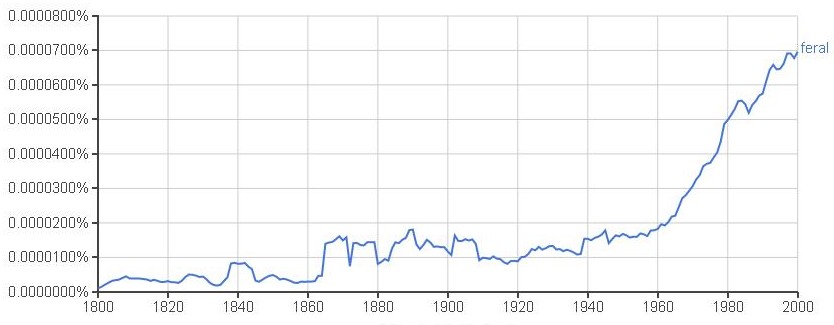
“Feral” isn’t irritating in quite the same way, but has similarly proliferated:

Feral in English

Feral in English

Feral in English fiction

Feral in English fiction

Noxious note: In terms of majorly maximal members of the Maverick Messiah community (such as myself), it goes without saying that when we deploy such items of Guardianese, we are being ironic dot dot dot


Previously pre-posted (please peruse):

Septics vs Dirties
Ex-term-in-ate!
Reds Under the Thread
Titus Graun

Mi Is Mirror

I hope that nobody thinks I’m being racially prejudiced when I say that, much though I am fascinated by her, I do not find the Anglo-American academic Mikita Brottman physically attractive. It is her mind that has raised my longstanding interest, nothing more.

Honest.

This is because, for me, Ms B is like a mirror that reverses not left and right, but male and female.

Obviously, we’re different in a lot of ways: I don’t smoke and I don’t have any tattoos, for example.

But there are big similarities too.

We were born in the same year (1956) and we were both keyly core contributors to seminal early issues of the transgressive journal Headpress Journal.

And we have various other things in common, like our mutually shared passion for corpse’n’cannibal cinema, our Glaswegian accents and (at different times) our season tickets for Hull Kingston Rovers.

So it is that, looking at Ms B, I have the uncanny experience of seeing myself as I might have been, had I been born female.

But it’s not just uncanny.

It’s horrifying at times too.

Okay, I’m comfortable with the idea that, born female, I would have been less intelligent and more conformist. So I don’t mind that Ms B is a Guardianista. Not particularly. I can face the fact that I would quite likely have been one of them too, as a female.

But there are worse things than being a Guardianista, believe it or not.

Ms B has a PhD in EngLit.

A PhD!

In EngLit.

It’s not at all easy for me to face the fact that I might have had one too, as a female. It really isn’t. But how can I deny it? I might have. That despicable, deplorable, thoroughly disreputable subject might have attracted me. In fact, it would probably have attracted me.

<retch>

But it gets worse still.

Ms B is a psychoanalyst.

A psychoanalyst.

Ach du lieber Gott!

See what I mean by “horrifying”?

I mean, even if I’d been born female I wouldn’t have sunk to such depths, would I? Would I? No, I have to face facts: I might. But I don’t think so. I have a feeling that there’s more to Brotty’s interest in Freud than her gender statusicity and her key commitment to core componency of the counter-cultural community.

But I’d better say no more. Verb sap.

World Wide Watchmen

I prefer to self-issue books in a library. It’s quicker and more convenient. And you feel okay about borrowing books suggestive of sordid and socially unacceptable tastes. For example, who would want to hand a copy of Watch You Bleed to a live librarian?

Well, I wouldn’t mind. I find it amusing to be mistaken for a Guns’n’Roses fan, just as I find it amusing to be mistaken for a Guardian-reader. But there are limits, so I’m grateful for self-issue when I borrow, say, a biography of Martin Amis or that book about The Simpsons. The trouble is, nowadays we have to be more dubious about self-issue than we used to be. It’s all on computer and it isn’t just librarians who might be scanning the record of books you borrow. No, you also have to ask yourself: What will the NSA, GCHQ and MOSSAD think?

With this in mind, I’d like to put it clearly on record: I got that book out last year for research purposes only. Nothing more. I am not – repeat not – a fan of Iron Maiden. The same applies to that other book this year. I got it out for research purposes only, I swear. Inter alia, I had a hypothesis to confirm. I am not – repeat not – a fan of his.

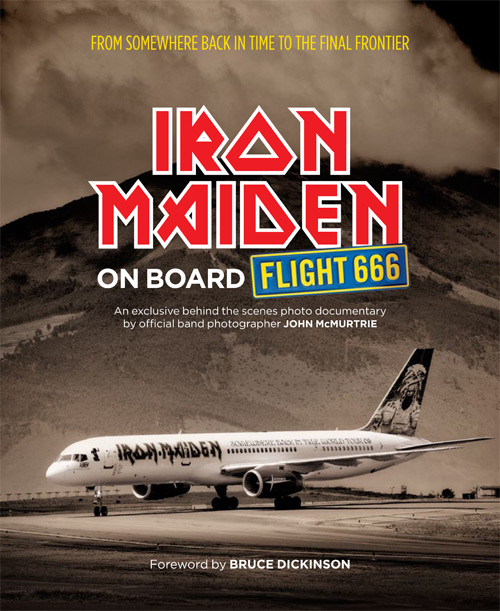
Front cover of Iron Maiden: On Board Flight 666

And was the hypothesis confirmed? Yes, thanks for asking, it was.


As for Big Numbers, Moore asserted: “It is the most advanced comic work I’ve ever done in terms of the storytelling.” — Magic Words: The Extraordinary Life of Alan Moore, Lance Parkin, pg. 266 (Aurum 2013)


Elsewhere other-posted:

Ex-term-in-ate!

Guns’n’Gladioli

Front cover of A Light That Never Goes Out by Tony FletcherA Light That Never Goes Out: The Enduring Saga of the Smiths, Tony Fletcher (Windmill Books 2013)

Coke, booze, earsplitting volume. Not a combination you associate with the Smiths. But it was there, as you’ll learn from this book. Towards the end, they were almost turning into Guns’n’Gladioli. Morrissey, of course, was the odd one out: he wasn’t battering his brain-cells with drink and drugs on their final American tour. But back home his Lichtmusik was also lout-music: the Smiths didn’t just appeal to bedsit miserabilists in rain-hammered humdrum towns. No, they appealed to some football hooligans too, including a Chelsea fan who didn’t mind being asked, “You still wanking off over that miserable northern poof?” as he travelled north by train to do battle with Manchester United and Manchester City, who also supplied hoolifans to the Smiths (pp. 509-10). So did football clubs in Glasgow and Edinburgh. The Smiths are easy to caricature, but the caricatures don’t capture their complexity.

Tony Fletcher does capture it: the band, their music, their fans, friends, producers, studio-engineers and record-labels. He’s definitely a Guardianista, but his prose is plodding rather than painful and he does a good job of putting the poof and his partners into context. The 1980s is one important part of that context. So are Irish Catholicism and Manchester. When you look at pictures of the Smiths, you can see two clear divisions. One of them separates the singer, guitarist and drummer from the bassist: the dark-haired, bushy-browed, strong-faced Morrissey, Johnny Marr and Andy Rourke clearly belong to one race and the light-haired, lesser-browed, milder-faced Mike Joyce to another. They’re Irish and he’s English: the British Isles are rich in language and rich in biology too. But Morrissey’s height and handsomeness also separate him from Marr, Rourke and Joyce, like his polysyllabic name. Both must be related to his intelligence, his creativity and his ability to turn himself into the Pope of Mope and become much more famous than any of the other three. Fletcher doesn’t talk about this biology – as I said, he’s a Guardianista – but it’s implicit in his descriptions of Irish settlement in Manchester and of Morrissey’s genius.

Is that too strong a word? Maybe. Morrissey is certainly the interesting and original one in this book and it ends with his story only just beginning. You can feel the tug of his later career throughout the book: it’s not discussed, but you know it’s there. But Fletcher isn’t concentrating on Morrissey and doesn’t seem very interested in Carry On and Brit-film in the 1960s, so he’s less good on what might be called the Smythos: the world created by Morrissey in his lyrics and interviews. Morrissey’s influences are better explained in Simon Goddard’s Mozipedia (2009), which isn’t just about the New York Dolls, the Cockney Rejects and vegetarianism. It has also entries for everyone from Hawtrey and Housman to Williams and Wilde by way of Sandy Shaw, Shelagh Delaney and Jobriath. No-one will ever devote an encyclopaedia to Marr like that: music doesn’t have as much meaning and metaphor in it. It has emotion and beauty instead and Fletcher is good at describing how Marr created a lot of both on albums like Meat Is Murder and Strangeways Here We Come.

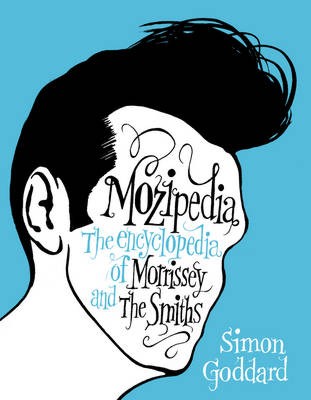
Front cover of Mozipedia by Simon Goddard

Front cover of Mozipedia by Simon Goddard

I’ve never liked him much, though. I like what he did with the guitar and in the studio, but I don’t like what he did to his body and mind. Or what he put on his body: he didn’t have Mozza’s way with weeds either. In the photos, you can clearly see Morrissey’s narcissism and Marr’s weediness. It’s no surprise that Marr smoked a lot of marijuana, preferred working at night and didn’t eat properly. But he’s weedy in more ways than the physical: there’s also a photo of him with Billy Bragg, the committed socialist behind Red Wedge. This was a collective of musicians and bands who wanted to make the world a better place by fighting Fatcher, fascism and free speech with their fantastic music. Morrissey had his lefty opinions too, but he didn’t like collectives and he didn’t scorn just Margaret Thatcher and the Queen: Bob Geldof and Live Aid got the sharp side of his tongue too. Which is good. Mozza is worshipped by Guardianistas, but he’s not a Guardianista himself.

Or not wholly. The hive-mind hasn’t been able to hum him fully into line, unlike Marr and Bragg. As for Rourke and Joyce: their politics don’t matter and the most interesting thing one of them does in this book is get stung by a sting-ray (pp. 539-40). They were competent musicians, but they weren’t essential to the Smiths. Joyce is most important for causing trouble, not for strumming his bass: first there was the heroin addiction, then the 21st-century court-case in which he sued for more money and earnt Morrissey’s undying enmity. Fletcher barely mentions the court-case and ends the book in the 1980s, with the Smiths exhausted, antagonistic and unfulfilled. They never achieved their full potential and though few bands do, few bands have had more to offer than the Smiths. The Beatles were one and managed to offer it from the nearby northern city of Liverpool. They were Irish Catholic too. But, like the Smiths, they achieved success in England, not Ireland. That’s important and the younger band captured it in their name. “Smiths” is an Anglo-Saxon word with ancient roots and difficult phonetics. It seems simple, but it isn’t. Rather like light.

The Term Turns dot dot dot

In Titus Graun, I interrogated issues around the Grauniness, or Guardianisticity, of two keyly committed core components of the counter-cultural community: the semiotician Stewart Home and the æsthetician John Coulthart. Seeking to utilizate their usage-metrics for the core/epicentral Guardianista phrase “in terms of” (i.t.o.), I interrogated their personal websites like this in terms of January 2013:

site:http://www.johncoulthart.com “in terms of”
About 2,180 results

site:http://www.johncoulthart.com “the”
About 8,860 results

site:http://www.johncoulthart.com “and”
About 8,150 results


site:http://www.stewarthomesociety.org “in terms of”
About 123 results

site:http://www.stewarthomesociety.org “the”
About 602 results

site:http://www.stewarthomesociety.org “and”
About 599 results

Noting that Coulthart’s site used “the/and” approximately 14 times more often than Home’s, I adjusted Home’s raw i.t.o.-score accordingly: 123 x 14 = 1722. I concluded that Coulthart, with an i.t.o.-score of 2180, was approximately 26·59% Graunier than Home – exactly as one might have hoped, given that Coulthart is not merely a Guardianista (good), but a gay Guardianista (doubleplusgood). But that was in terms of January. When I re-interrogated their websites in terms of June 2013, I discovered that the semiotic situation had transitioned in a most disturbing and disquieting way:

site:http://www.johncoulthart.com “in terms of”
About 1,080 results

site:http://www.johncoulthart.com “the”
About 8,680 results

site:http://www.johncoulthart.com “and”
About 8,010 results


site:http://www.stewarthomesociety.org “in terms of”
About 119 results

site:http://www.stewarthomesociety.org “the”
About 541 results

site:http://www.stewarthomesociety.org “and”
About 536 results

I was aghast (literally) to see that Coulthart’s i.t.o.-metrics have spiked (in reverse). Other lexicostatistical metrics have transitioned relatively little: his site now seems to use “the/and” approximately 15·5 times more often than Home’s. Home’s raw i.t.o.-score is 119 and 119 x 15·5 = 1844·5. So it is now Home who is approximately 70·78% Graunier than Coulthart.

This can only be described as highly suspicious. What has Coulthart been up to? Has he been spraying his site with verbicide? Has he donned a black Savoy nihilinja-suit™, crept out under cover of darkness and clubbed innocent i.t.o.’s as they lay basking in the feral radiance of Manchester’s Most Maverick Messiahs? If so, this is “‘Pushing the Transgressive Envelope Too Far’ Too Far” too far. Even M.M.M.M. must look askance at behaviour like that. Surely.


Previously pre-posted (please peruse):

Titus Graun
Ex-term-in-ate!
Reds under the Thread

Homotextuality

In terms of the highest levels of the United Kingdom’s counter-cultural community, it seems to be compulsory for non-conformists, mavericks, free-thinkers et al to be committed readers of The Guardian (which was nicknamed The Grauniad by Private Eye in honour of the misspellings once common there). Naturally enough, committed Guardian-readers use the special dialect of English known as Guardianese (which is also found in The Times Literary Supplement, The London Review of Books, etc). And there are a lot of such Guardianistas in the counter-cultural community, trust me. So the obvious question arises:

Myriads, myriads, off the wall,
Who is the Grauniest of them all?

Continue reading Homotextuality

He Say, He Sigh, He Sow

“It’s only really in the last decade or so that I’ve started to engage seriously with what I think the implications of modernism are in terms of the novel…” – Will Self, The Observer, Sunday, 5th August, 2012.


Pre-Previously Posted (Please Peruse)

Ex-Term-In-Ate!

Vermilion Glands

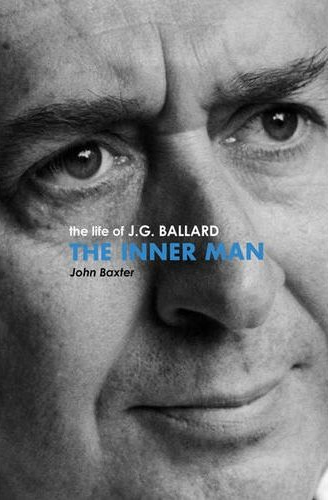
Front cover of The Inner Man The Life of J.G. Ballard by John BaxterReaders’ Advisory: Contains Self-abuse and reference to Mancas.

The Inner Man: The Life of J.G. Ballard, John Baxter (W&N 2011)

“B” is for Bataille, Burroughs, and Ballard. I’ve never read Bataille, I can’t stand Burroughs, I used to love Ballard. Nowadays I have strong doubts about him. Vermilion Sands, yes. Crash, no. Vermilion Sands is surreal, haunting, funny, endlessly inventive, and extravagantly intelligent. Crash, by contrast, is silly and sordid. The last time I tried to read it I quickly gave up. I couldn’t take it seriously any more. It’s a book for pretentious, wanna-be-intellectual adolescents of all ages who like Dark’n’Dangerous Sex’n’Violence. A book for Guardian-readers, in short – the sort of people who continually use and hear the phrase “in terms of”, who believe passionately in Equality, Justice, and the Fight against Hate, and who desperately, desperately, wished they’d been able to stimulate the largest erogenous zone in their bodies by voting for Barack Obama in 2008.

What is that erogenous zone? Well, though not all liberals are Guardianistas, all Guardianistas are liberals, so the largest erogenous zone in a Guardianista’s body is his-or-her narcissism. Guardianistas are also, alas, the sort of people who write biographies of J.G. Ballard. John Baxter is most definitely a committed component of the core community. As a big admirer of Mike Moorcock, Britain’s biggest bearded Burroughsian lit-twat, how could he not be? This is part of why I now have doubts about Ballard. I don’t like liking things that Guardianistas like and I don’t like the fact that Moorcock was mates (on and off) with Ballard. On the other hand, I do like the fact that Moorcock and the Guardian boosted Burroughs big-time back in the day and that the Guardian now bigs up Cormac McCarthy and his Dark’n’Dangerous Sex’n’Violence. Good, I think: they all deserve each other. Perhaps one day, in some drug-stoked, depravity-soaked über-orgy of trans-transgressive hyper-homoeroticism, they’ll all manage to climb up each other’s arseholes and disappear from history.

But Guardianistas don’t just like Burroughs and McCarthy: they like Ballard too. They write books about him. Fortunately, The Inner Man isn’t a good book. That would have been disturbing, believe me. The dedication is by far the best thing in it: “To the insane. I owe them everything.” And guess whose lines those are? After that, it’s mostly Baxter and mostly dull. When it’s not, you’ll usually have Ballard to thank:

Novels sent to him in hope of endorsement got short shrift. He enjoyed describing the satisfying thump of Salman Rushdie’s Midnight’s Children as it hit the bottom of the dustbin. (pg. 47) In September 1995, the Observer, for a piece about odd bequests, invited him to answer the question, “What would you leave to whom, and why?” Jim said, “I would leave Andrea Dworkin my testicles. She could have testicules flambés.” Anti-pornography campaigner Dworkin was a close friend of Mike and Linda Moorcock but a bête noire of Ballard’s. (pg. 308)

I think Ballard was right in his cod-bequest for Dworkin and bum’s-rush for Rushdie. And if Baxter had the same sense of humour and mischief, The Inner Man would have been a much better book. Okay, it’s not that bad, because I managed to finish it, but that was disappointing in its own way. I’d almost have preferred a boldly, flamboyantly pretentious Ballard bio full of solecisms and mixed metaphors to a plodding, mediocre one like this. I like sneering at and feeling sniffily superior to Guardianistas. And all I’ve got to go on here are occasional lines like these:

Like another diligent civil servant, he [Ballard] was Agent 00∞: licensed to chill… (pg. 3) But in surrealism, as in most things, Jim was drawn to the extremity, the dangerous edge, the abyss which, as H.G. Wells warned, will, if you stare into it long enough, stare back at you. (pg. 36)

It’s puzzling that Baxter misattributes such a famous quote and that his editors didn’t spot the misattribution. It’s also puzzling that Baxter doesn’t seem to like Ballard much, to be very interested in Ballard’s life, or to be very enthusiastic about Ballard’s writing. Born in Shanghai, incarcerated (and half-starved) under the Japanese during the war, trained as a doctor: Ballard had an unusual early life for a writer and one can only admire Baxter’s ability to keep the interest out of it. Baxter devotes much more attention to Ballard’s time in advertising and life in suburbia. Yes, the contrast between this apparently staid existence and the wildness of Ballard’s veridically visceral visions is interesting, but it’s obviously related to his early experiences in China. Baxter has got those out of the way within the first 26 pages of a 377-page book. When he himself takes visionary flight, he doesn’t do so to Ballard’s advantage. Why did Ballard turn down the chance to be published in “a series of de luxe limited editions of fantasy classics” by Manchester’s most maverick messiahs, “the radical publishing enterprise of Savoy Books”? Baxter conducts an interview with his own imagination and reports back with this:

He may have felt that involvement with Savoy and [David] Britton – who had already served two prison terms under the Obscene Publications and Dangerous Dogs Acts – risked once again placing him in hazard, as had been the case with “Why I Want to Fuck Ronald Reagan”. (pg. 321)

Eh? Yes, he “may”, but simpler explanations are to hand. Either way, Baxter says the rejection meant that “a sense of grievance” now “permeated his relationship with” the messianic Mancas. Again: Eh? The grievance would have been one-sided, there was never much of a relationship, and although Savoy “put a lot of effort” into persuading Fenella Fielding to record extracts from one of Ballard’s books (no prizes for guessing which), they put in the effort without first asking Ballard if he was interested. When the recordings were made and they did ask, he “refused to cooperate”. It was now that grievance began to permeate the relationship.

Reading about this important episode in Ballard’s career, I felt another feeling begin to permeate me. A familiar feeling. Yes, “S” is for Savoy (B), Sontag (S), and Self (W). All three turn up in this biography, variously offering to publish Ballard, heaping praise on him, and having dinner with him. All three are part of the Guardianista demographic in one way or another: Self nails his colours firmly to the gasbag when he speaks of a “scintilla” of an “affectation” that forms an “armature” (pg. 341). All three add to my doubts about Ballard. If people like that like him, should I like him too, like? I think if Ballard had been born ten or twenty years later, the question wouldn’t arise. A younger Ballard would have been sucked fully into the macroverse of Guardianista subversion, radicalism, and counter-cultural twattishness and I’d never have liked him at all. As it was, he was too big to entirely fit. Crash got sucked and does suck. Vermilion Sands didn’t and doesn’t.

And this biography? Well, it could have been much worse. Yes, it’s dull but that may be partly because Ballard himself is such an interesting and memorable writer. As I’ve pointed out elsewhere, the danger in literary biographies is that the biographee is likely to be a better writer than the biographer. The implicit comparison will always be there and Ballard’s autobiography, Miracles of Life (2008), is likely to remain better, and briefer, than anything a biographer ever turns out. But Baxter tells you about things that Ballard doesn’t, possibly because they’re not true. Like the air of menace Ballard could project and his occasional violence towards his girlfriend Claire Walsh, who “appeared at parties with facial bruises, usually hidden between sunglasses” (pg. 187).

And “girlfriend” is the word: Baxter reports that Ballard “always” and “anachronistically” used it of Walsh (pg. 171), rather than (he implies) the smarmy Guardianista “partner”. Good for Ballard. But bad for Ballard in terms of engagement with issues around the bruises, if true. As George Orwell said:

If Shakespeare returned to the earth to-morrow, and if it were found that his favourite recreation was raping little girls in railway carriages, we should not tell him to go ahead with it on the ground that he might write another King Lear. (“Benefit of Clergy: Some Notes on Salvador Dalí”, 1944)

It would have been better that Ballard hadn’t punched his girlfriend, just as it would have been better that Caravaggio hadn’t been a murderer. But if they hadn’t been violent men, with more than a touch of psychosis, they might not have produced such interesting art. I don’t think Ballard is as significant a figure in European art as Caravaggio, and even if he is, he and his art won’t have as much time to be significant in. One way or another, Europe is now entering its final days. We are about to reap the whirlwinds so diligently sown for us by the Guardianistas and their continental cousins. And science is busy measuring mankind for its coffin. Ballard saw and wrote about parts of this future, but I now prefer his surreal side to his sinister and his dreams to his depravity. It’s bad, v. bad, that Will Self hails Ballard as “My single most important mentor and influence.” But Self (thank Bog) didn’t write this biography. He didn’t write Vermilion Sands either. He couldn’t. Ballard could and did. He could and did write other good stuff. I don’t love him any more, but, despite the Guardian and the Guardianistas, I will continue to read him. Lucky Jim, eh?


Post-Performative Post-Scriptum…

In terms of all Savoy-fans and other non-conformist mavericks, keyly committed core components of the counter-cultural community et al having read this review prior to departing in terms of departure… please can you stop using “in terms of” and “prior to” and stuff? You wouldn’t allow bloated flesh to adversely impact your body, so why do you allow bloated phrases to negatively trajectorize your English?

Ex-term-in-ate! — more on “in terms of”
Prior Analytics — more on “prior to”