The Art Grows Onda

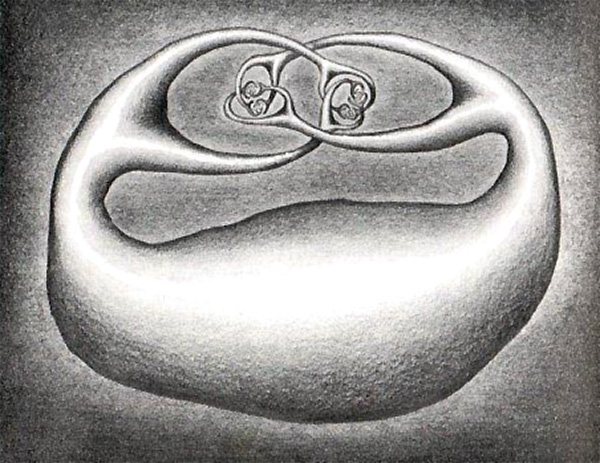
Anyone interested in recreational mathematics should seek out three compendiums by Ian Stewart: Professor Stewart’s Cabinet of Mathematical Curiosities (2008), Professor Stewart’s Hoard of Mathematical Treasures (2009) and Professor Stewart’s Casebook of Mathematical Mysteries (2014). They’re full of ideas and puzzles and are excellent introductions to the scope and subtlety of maths. I first came across Alexander’s Horned Sphere in one of them. I also came across this simpler shape that packs infinity into a finite area:

unicorn_triangle

I call it a horned triangle or unicorn triangle and it reminds me of a wave curling over, like Katsushika Hokusai’s The Great Wave off Kanagawa (c. 1830) (“wave” is unda in Latin and onda in Spanish).
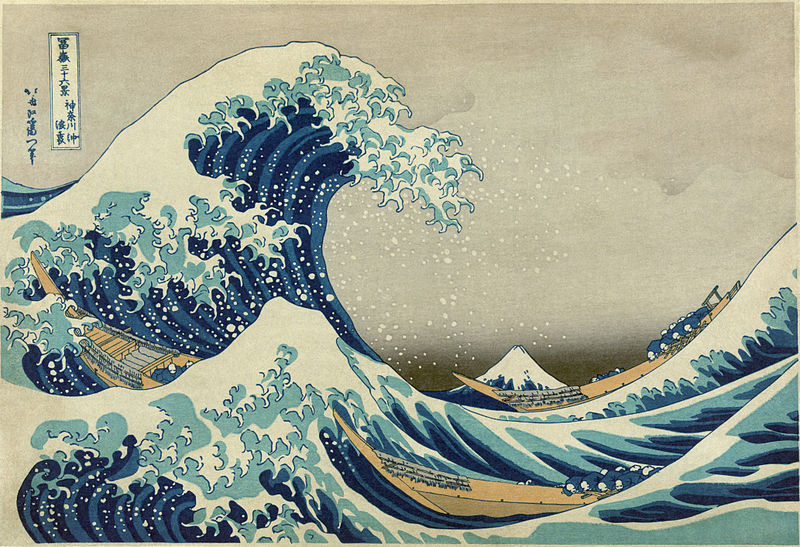
The Great Wave off Kanagawa by Katsushika Hokusai (1760–1849)

The Great Wave off Kanagawa by Katsushika Hokusai (1760–1849)

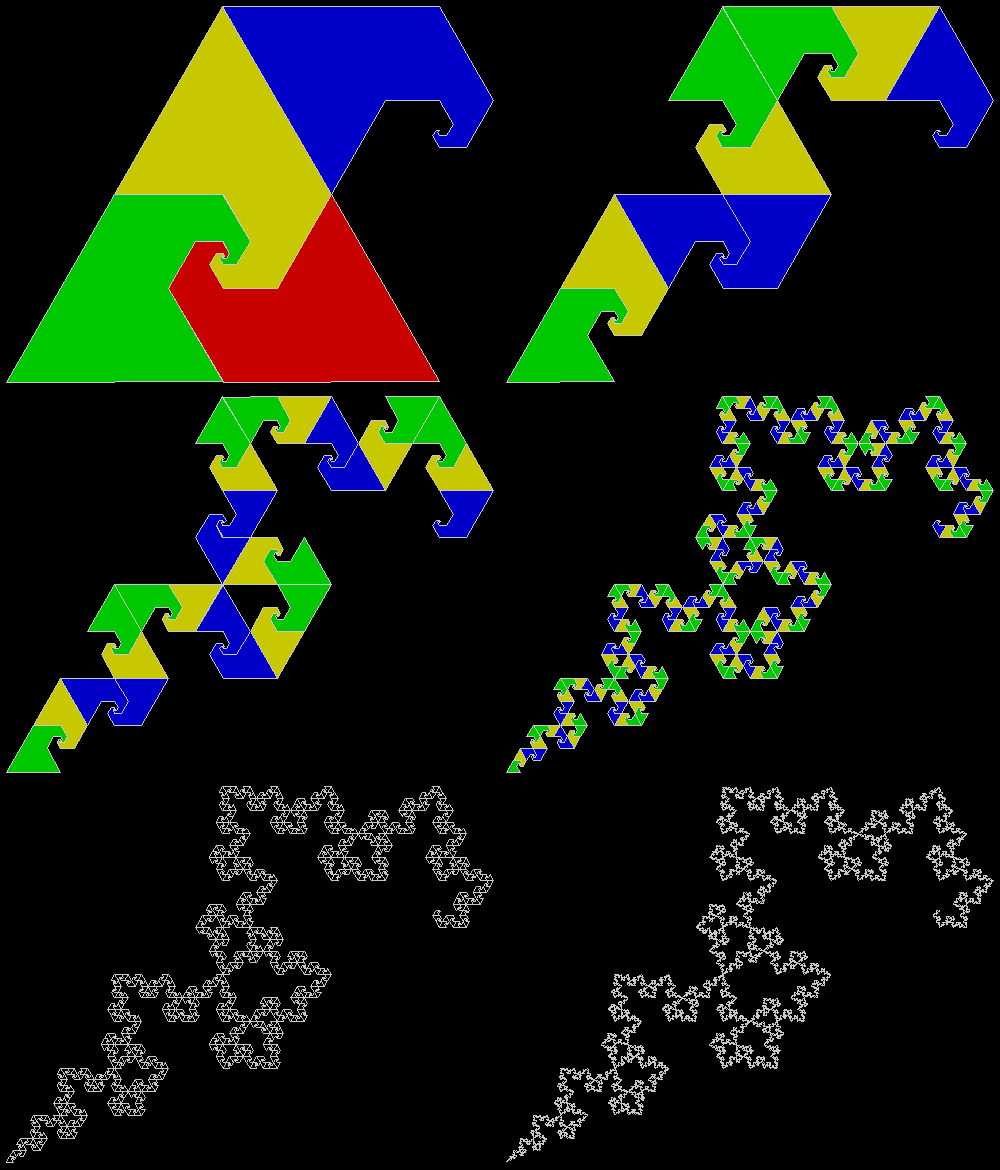
To construct the unicorn triangle, you take an equilateral triangle with sides of length 1 and erect a triangle with sides of length 0.5 on one of its corners. Then on the corresponding corner of the new triangle you erect a triangle with sides of length 0.25. And so on, for ever.
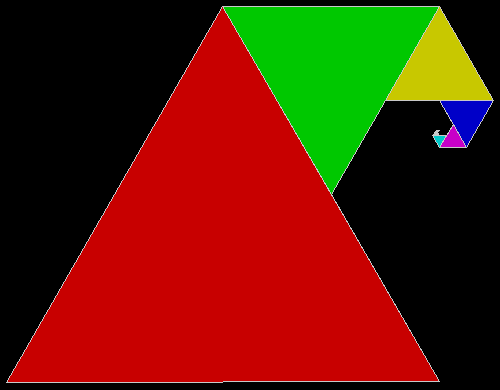
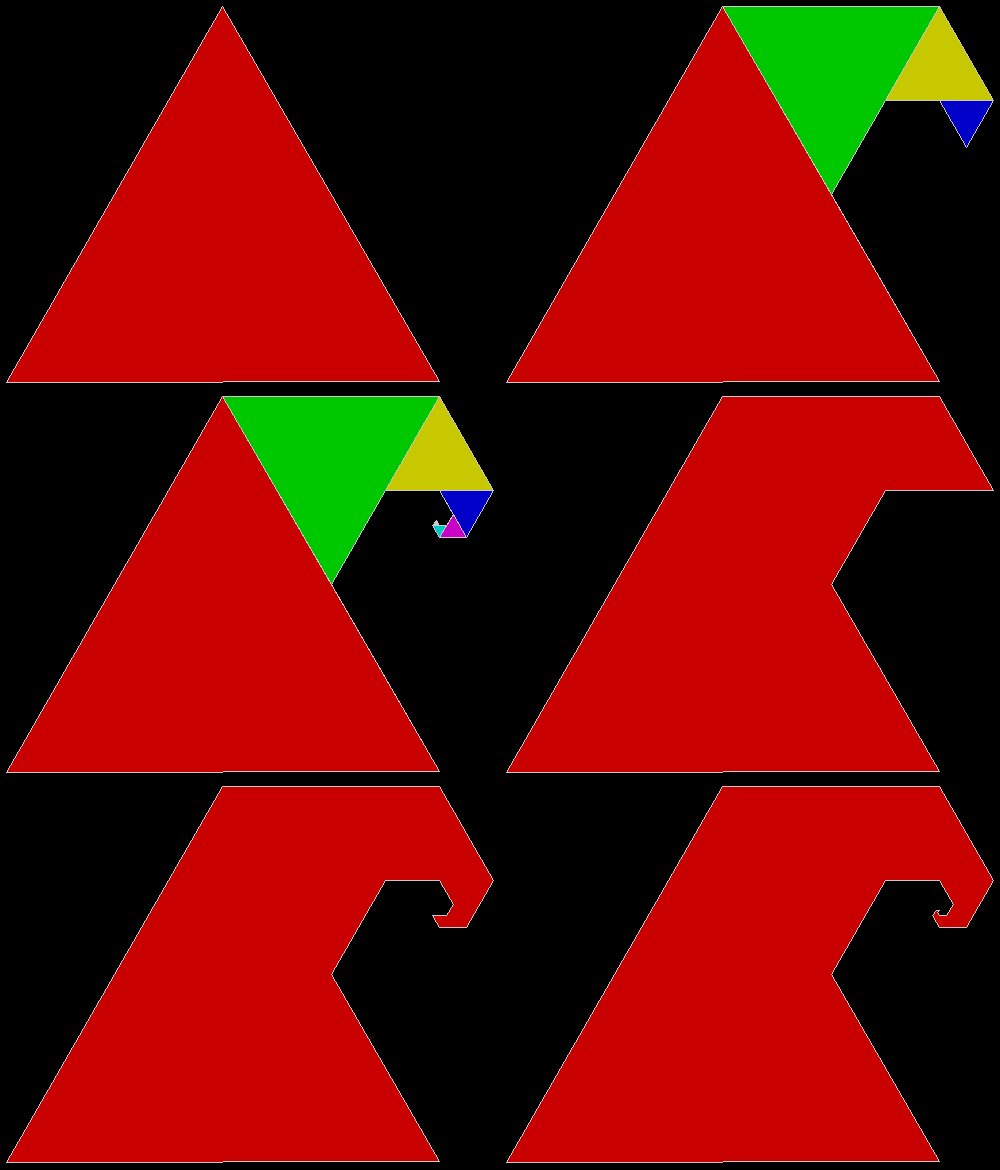
unicorn_multicolor

unicorn_animated

When you double the sides of a polygon, you quadruple the area: a 1×1 square has an area of 1, a 2×2 square has an area of 4. Accordingly, when you halve the sides of a polygon, you quarter the area: a 1×1 square has an area of 1, a 0.5 x 0.5 square has an area of 0.25 or 1/4. So if the original triangle of the unicorn triangle above has an area of 1 rather than sides of 1, the first triangle added has an area of 0.25 = 1/4, the next an area of 0.0625 = 1/16, and so on. The infinite sum is this:

1/4 + 1/16 + 1/256 + 1/1024 + 1/4096 + 1/16384…

Which equals 1/3. This becomes important when you see the use made of the shape in Stewart’s book. The unicorn triangle is a rep-tile, or a shape that can be divided into smaller copies of the same shape:
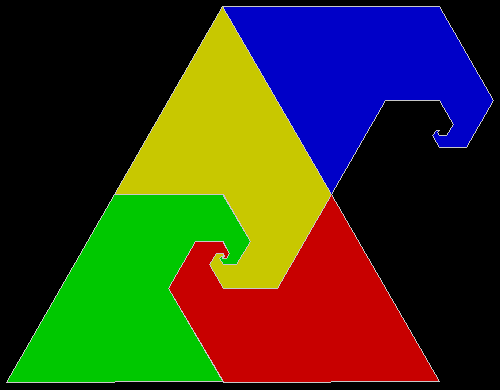

unicorn_reptile_static

unicorn_reptile

An equilateral triangle can be divided into four copies of itself, each 1/4 of the original area. If an equilateral triangle with an area of 4 is divided into three unicorn triangles, each unicorn has an area of 1 + 1/3 and 3 * (1 + 1/3) = 4.

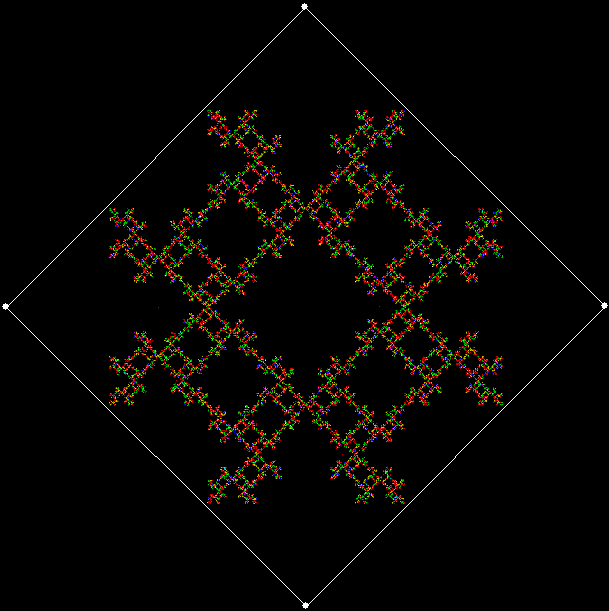
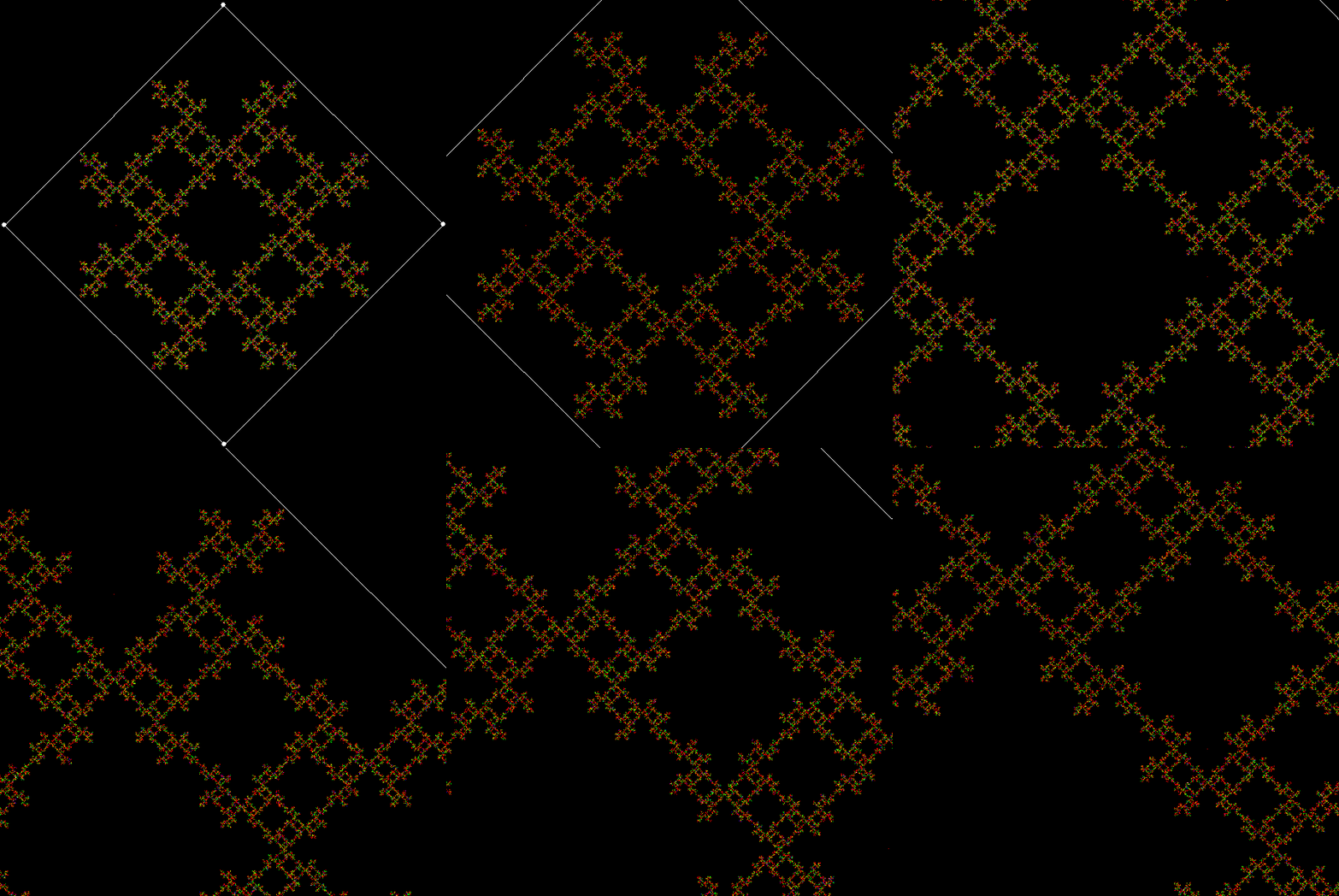
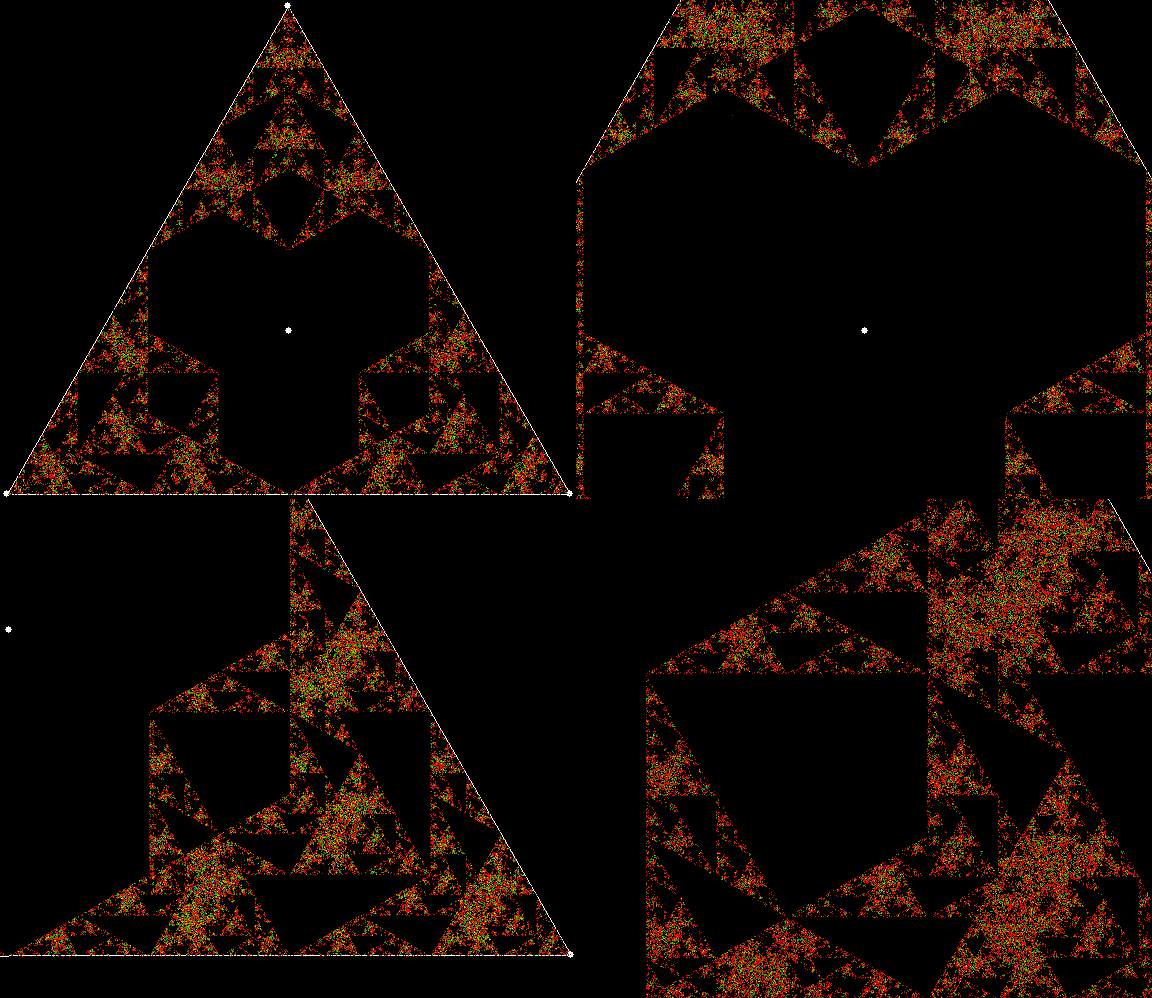
Because it’s a rep-tile, a unicorn triangle is also a fractal, a shape that is self-similar at smaller and smaller scales. When one of the sub-unicorns is dropped, the fractals become more obvious:
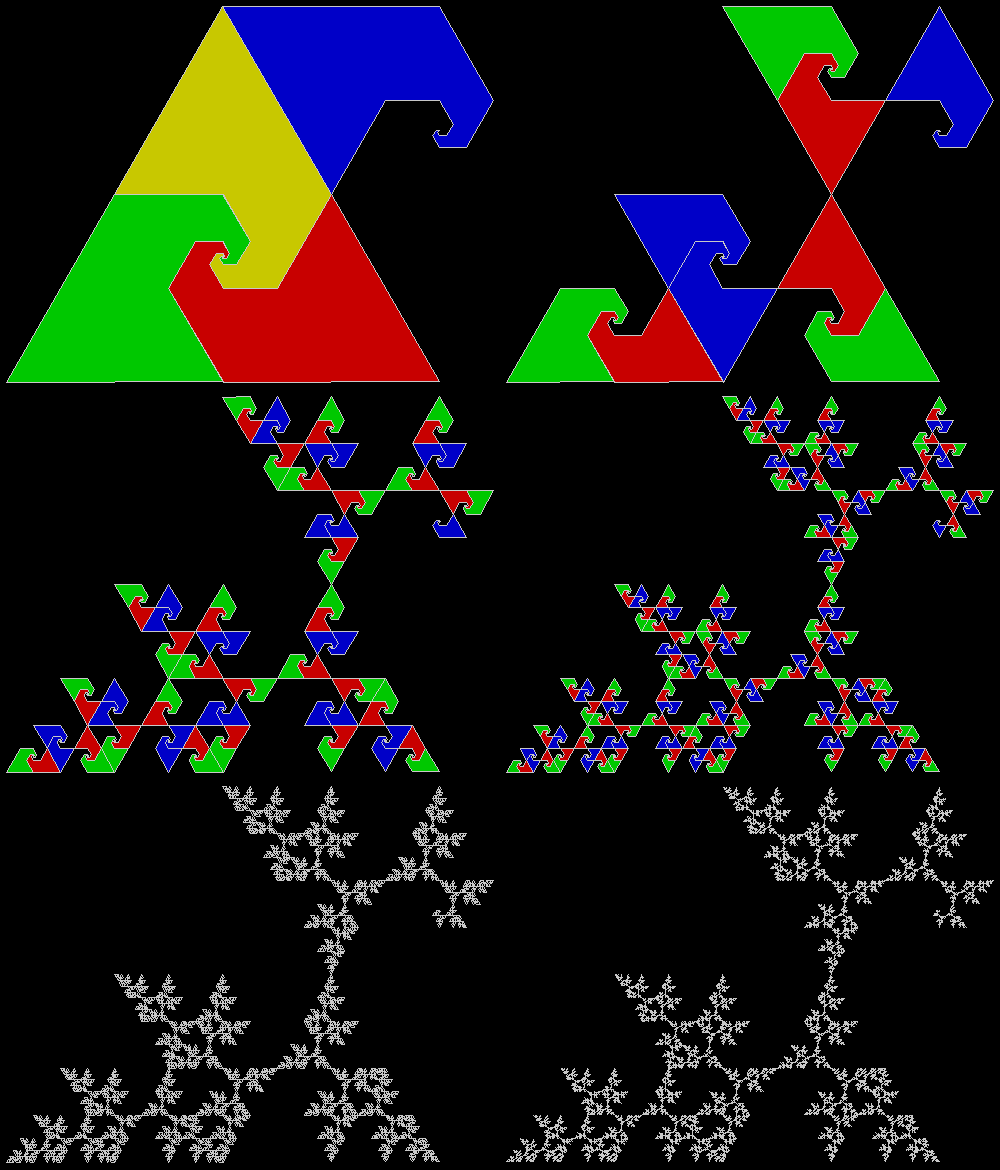
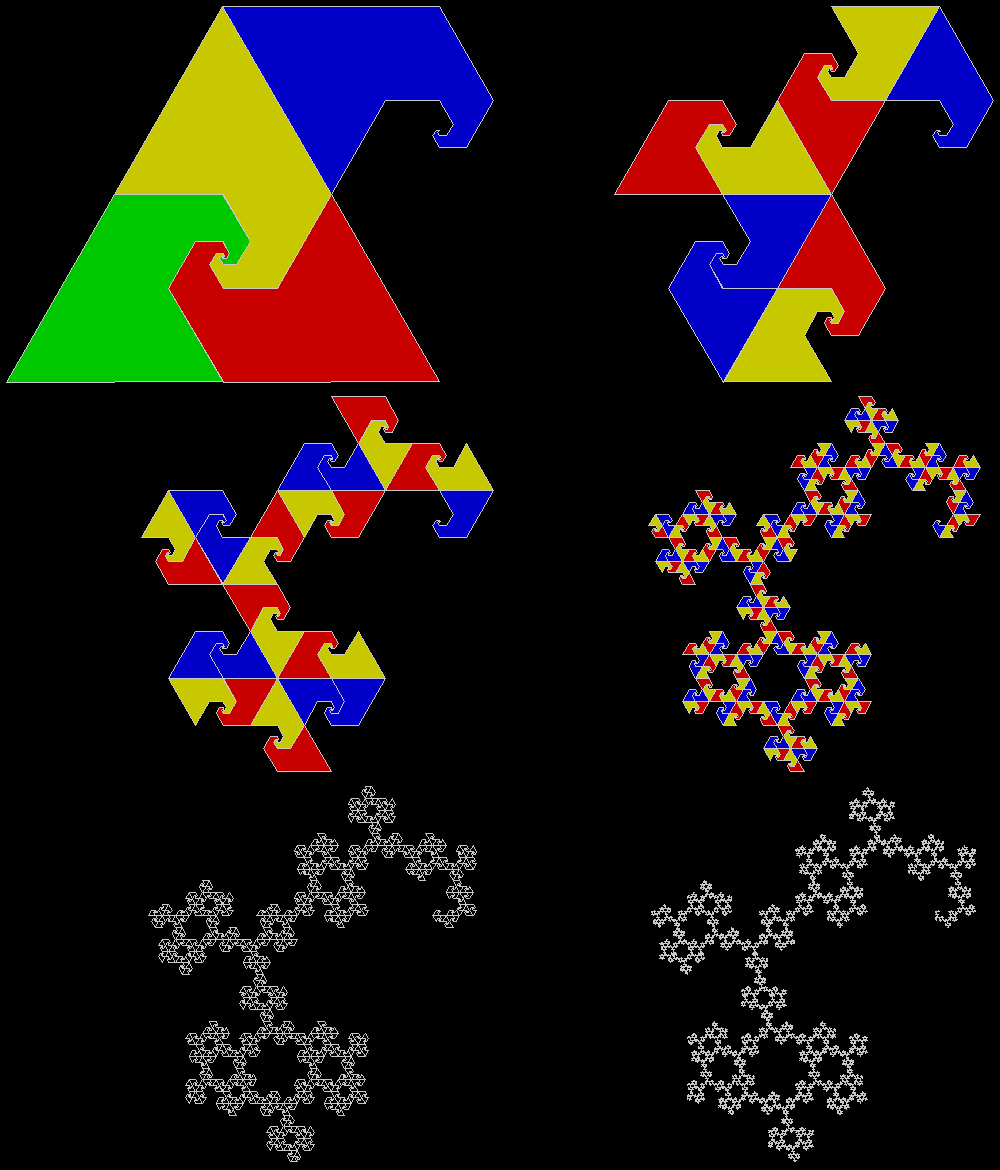
unicorn_fractal1


unicorn_fractal2


unicorn_fractal3


Elsewhere other-posted:
Rep-Tiles Revisited

Shareway to Seven

An adaptation of an interesting distribution puzzle from Joseph Degrazia’s Math is Fun (1954):
After a successful year of plunder on the high seas, a pirate ship returns to its island base. The pirate chief, who enjoys practical jokes and has a mathematical bent, hands out heavy bags of gold coins to his seven lieutenants. But when the seven lieutenants open the bags, they discover that each of them has received a different number of coins.

They ask the captain why they don’t have equal shares. The pirate chief laughs and tells them to re-distribute the coins according to the following rule: “At each stage, the lieutenant with most coins must give each of his comrades as many coins as that comrade already possesses.”

The lieutenants follow the rule and each one in turn becomes the lieutenant with most coins. When the seventh distribution is over, all seven of them have 128 coins, the coins are fairly distributed, and the rule no longer applies.

The puzzle is this: How did the pirate captain originally allocate the coins to his lieutenants?


If you start at the beginning and work forward, you’ll have to solve a fiendishly complicated set of simultaneous equations. If you start at the end and work backwards, the puzzle will resolve itself almost like magic.

The puzzle is actually about powers of 2, because 128 = 2^7 and when each of six lieutenants receives as many coins as he already has, he doubles his number of coins. Accordingly, before the seventh and final distribution, six of the lieutenants must have had 64 coins and the seventh must have had 128 + 6 * 64 coins = 512 coins.

At the stage before that, five of the lieutenants must have had 32 coins (so that they will have 64 coins after the sixth distribution), one must have had 256 coins (so that he will have 512 coins after the sixth distribution), and one must have had 64 + 5 * 32 + 256 coins = 480 coins. And so on. This is what the solution looks like:

128, 128, 128, 128, 128, 128, 128
512, 64, 64, 64, 64, 64, 64
256, 480, 32, 32, 32, 32, 32
128, 240, 464, 16, 16, 16, 16
64, 120, 232, 456, 8, 8, 8
32, 60, 116, 228, 452, 4, 4
16, 30, 58, 114, 226, 450, 2
8, 15, 29, 57, 113, 225, 449

So the pirate captain must have originally allocated the coins like this: 8, 15, 29, 57, 113, 225, 449 (note how 8 * 2 – 1 = 15, 15 * 2 – 1 = 29, 29 * 2 – 1 = 57…).

The puzzle can be adapted to other powers. Suppose the rule runs like this: “At each stage, the lieutenant with most coins must give each of his comrades twice as many coins as that comrade already possesses.” If the pirate captain has six lieutenants, after each distribution each of five will have n + 2n = three times the number of coins that he previously possessed. The six lieutenants each end up with 729 coins = 3^6 coins and the solution looks like this:

13, 37, 109, 325, 973, 2917
39, 111, 327, 975, 2919, 3
117, 333, 981, 2925, 9, 9
351, 999, 2943, 27, 27, 27
1053, 2997, 81, 81, 81, 81
3159, 243, 243, 243, 243, 243
729, 729, 729, 729, 729, 729

For powers of 4, the rule runs like this: “At each stage, the lieutenant with most coins must give each of his comrades three times as many coins as that comrade already possesses.” With five lieutenants, each of them ends up with 1024 coins = 4^5 coins and the solution looks like this:

16, 61, 241, 961, 3841
64, 244, 964, 3844, 4
256, 976, 3856, 16, 16
1024, 3904, 64, 64, 64
4096, 256, 256, 256, 256
1024, 1024, 1024, 1024, 1024

For powers of 5, the rule runs like this: “At each stage, the lieutenant with most coins must give each of his comrades four times as many coins as that comrade already possesses.” With four lieutenants, each of them ends up with 625 coins = 5^4 coins and the solution looks like this:

17, 81, 401, 2001
85, 405, 2005, 5
425, 2025, 25, 25
2125, 125, 125, 125
625, 625, 625, 625

Self-Raising Power

The square root of 2 is the number that, raised to the power of 2, equals 2. That is, if r^2 = r * r = 2, then r = √2. The cube root of 2 is the number that, raised to the power of 3, equals 2. That is, if r^3 = r * r * r = 2, then r = [3]√2.

But what do you call the number that, raised to the power of itself, equals 2? I suggest “the auto-root of 2”. Here, if r^r = 2, then r = [r]√2. I don’t know a quick way to calculate the auto-root, but you can adapt a well-known algorithm for approximating the square root of a number. The square-root algorithm looks like this:

n = 2
r = 1
for c = 1 to 20
    r = (r + n/r) / 2
next c
print r

r = 1.414213562…

Note the fourth line of the algorithm: r = (r + n/r) / 2. When r is an over-estimate of √2, then 2/r will be an under-estimate (and vice versa). (r + 2/r) / 2 splits the difference and refines the estimate. Using the lines above as the model, the auto-root algorithm looks like this:

n = 2
r = 1
for c = 1 to 20
    r = (r + [r]√n) / 2[*]
next c
print r

r = 1.559610469…


*This is equivalent to r = (r + n^(1/r)) / 2

Here are the first 100 digits of [r]√2 = r in base 10:

1, 5, 5, 9, 6, 1, 0, 4, 6, 9, 4, 6, 2, 3, 6, 9, 3, 4, 9, 9, 7, 0, 3, 8, 8, 7, 6, 8, 7, 6, 5, 0, 0, 2, 9, 9, 3, 2, 8, 4, 8, 8, 3, 5, 1, 1, 8, 4, 3, 0, 9, 1, 4, 2, 4, 7, 1, 9, 5, 9, 4, 5, 6, 9, 4, 1, 3, 9, 7, 3, 0, 3, 4, 5, 4, 9, 5, 9, 0, 5, 8, 7, 1, 0, 5, 4, 1, 3, 4, 4, 4, 6, 9, 1, 2, 8, 3, 9, 7, 3…

And here is [r]n = r for n = 2..20:

autopower(2) = 1.5596104694623693499703887…
autopower(3) = 1.8254550229248300400414692…
autopower(4) = 2
autopower(5) = 2.1293724827601566963803119…
autopower(6) = 2.2318286244090093673920215…
autopower(7) = 2.3164549587856123013255030…
autopower(8) = 2.3884234844993385564187215…
autopower(9) = 2.4509539280155796306228059…
autopower(10) = 2.5061841455887692562929409…
autopower(11) = 2.5556046121008206152514542…
autopower(12) = 2.6002950000539155877172082…
autopower(13) = 2.6410619164843958084118390…
autopower(14) = 2.6785234858912995813011990…
autopower(15) = 2.7131636040042392095764012…
autopower(16) = 2.7453680235674634847098492…
autopower(17) = 2.7754491049442334313328329…
autopower(18) = 2.8036632456580215496843618…
autopower(19) = 2.8302234384970308956026277…
autopower(20) = 2.8553085030012414128332189…

I assume that the auto-root is always an irrational number, except when n is a perfect power of suitable form, i.e. n = p^p for some integer p. For example, autoroot(4) = 2, because 2^2 = 4, autoroot(27) = 3, because 3^3 = 27, and so on.

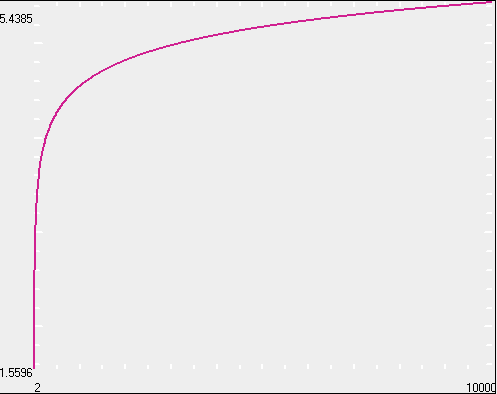
And here is the graph of autoroot(n) for n = 2..10000:
autoroot

Performativizing Papyrocentricity #43

Papyrocentric Performativity Presents:

Avens AboveHarrap’s Wild Flowers: A Guide to the Wild Flowers of Britain & Ireland, Simon Harrap (Bloomsbury 2013)

Place of GladesA Dictionary of British Place-Names, A.D. Mills (Oxford University Press 1991)

De Minimis Curat Rex?Infinitesimal: How a Dangerous Mathematical Theory Shaped the Modern World, Amir Alexander (Oneworld 2014)

Seen and Not HeardThe Greatest Albums You’ll Never Hear, ed. Bruno MacDonald (Aurum Press 2014)


Or Read a Review at Random: RaRaR

Get Your Prox Off

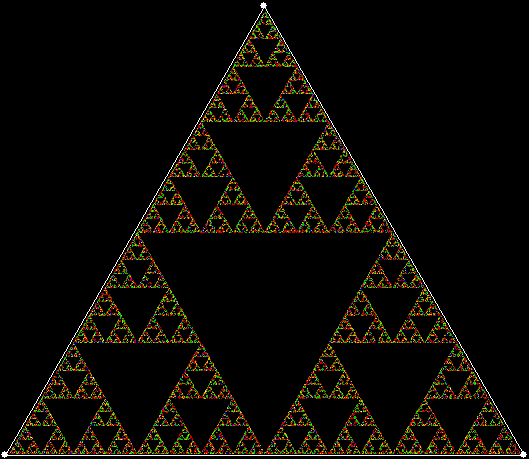
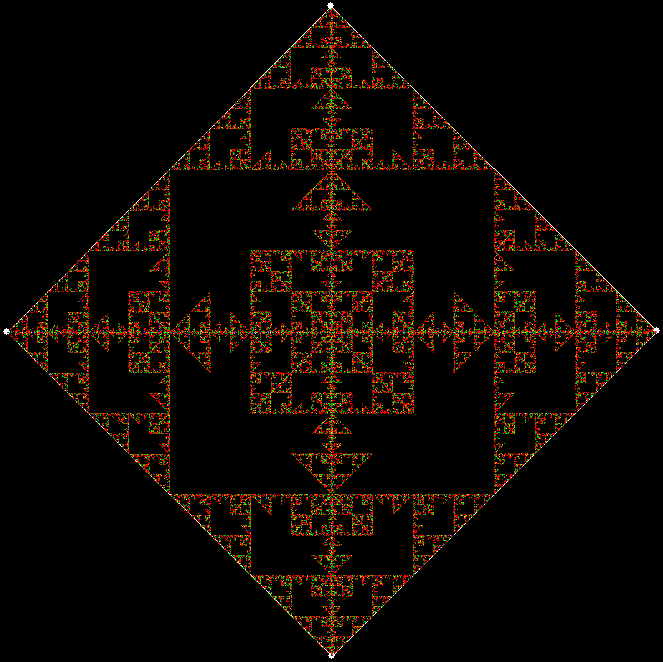
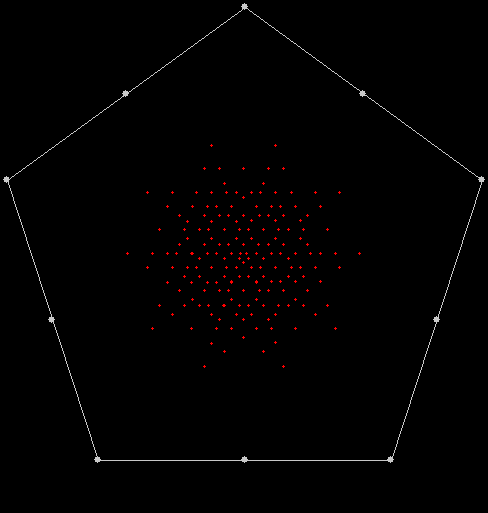
Create a triangle. Find a point somewhere inside it. Choose a corner at random and move halfway towards it. Mark the new point. Repeat the procedure: choose, move, mark. Repeat again and again. In time, a fractal will appear:

siertri

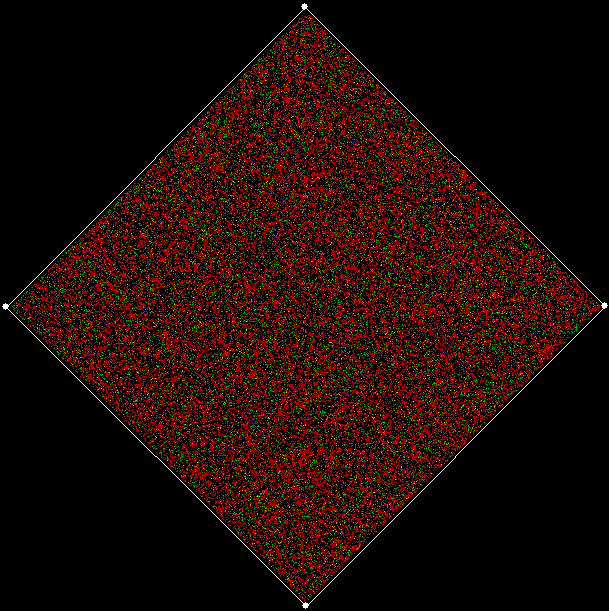
However, if you try the same thing with a square – choose a corner at random, move halfway towards it, mark the new point, repeat – no fractal appears. Instead, the points fill the interior of the square:

sierquad

But what happens if you impose restrictions on the randomly chosen corner (or chorner)? Suppose you can’t choose the same corner twice in a row. If this rule is applied to the square, this fractal appears:

restrict4_T


restrict4_Tanim

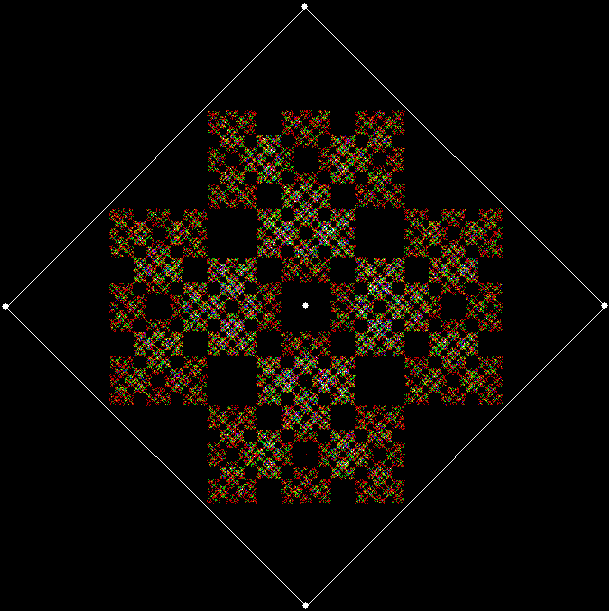
Now apply the no-corner-twice-in-a-row rule to a square that contains a central chorner. This fractal appears:

restrict4_Tc

And if the rule is that you can choose a corner twice in a row but not thrice? This fractal appears:

restrict4FT


restrict4FTc


Here is the rule is that a corner can’t be chosen if it was chosen two moves ago:

restrict4_3F

But what if the restriction is based not on how often or when a corner is chosen, but on its proximity, i.e. how near it is to the marked point? If the nearest corner can’t be chosen, the result is the same as the no-corner-twice-in-a-row rule:

prox4_1

But if the second-nearest corner can’t be chosen, this fractal appears:

prox4_2

This is the fractal when the third-nearest corner can’t be chosen:

prox4_3

And this is the fractal when the fourth-nearest, or most distant, corner can’t be chosen:

prox4_4

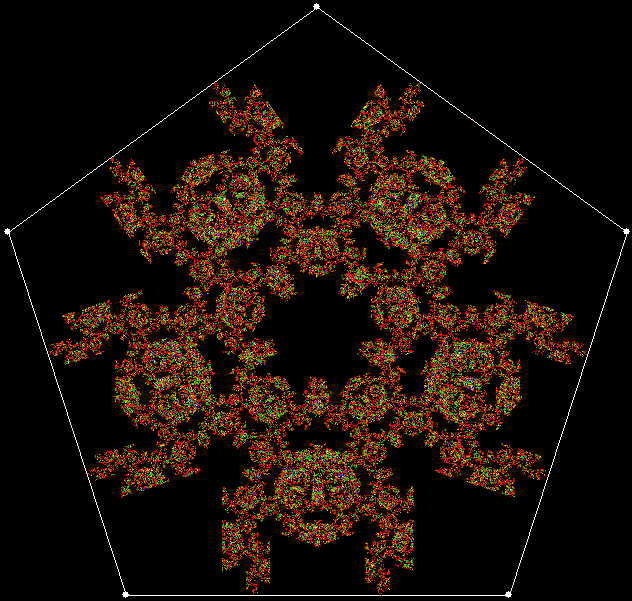
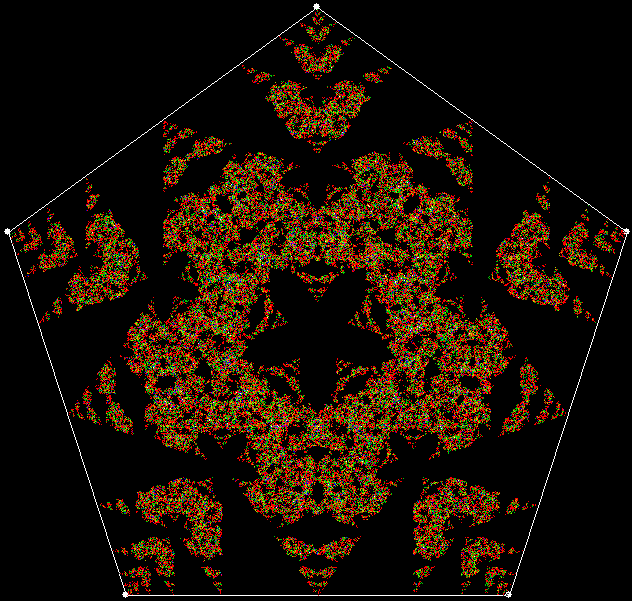
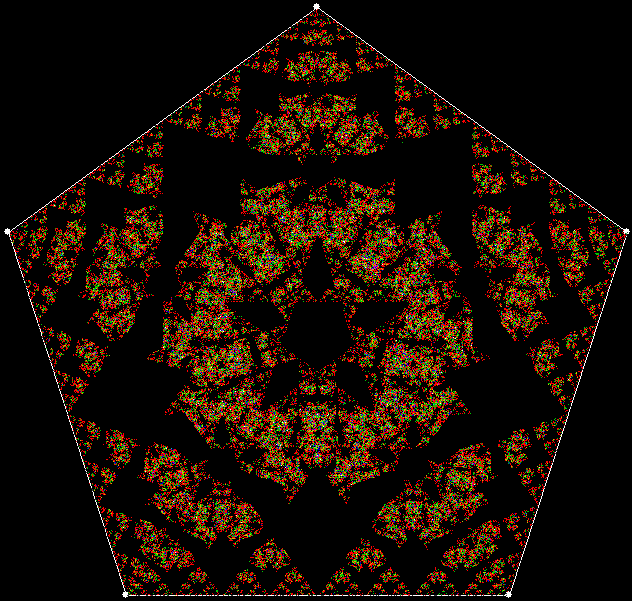
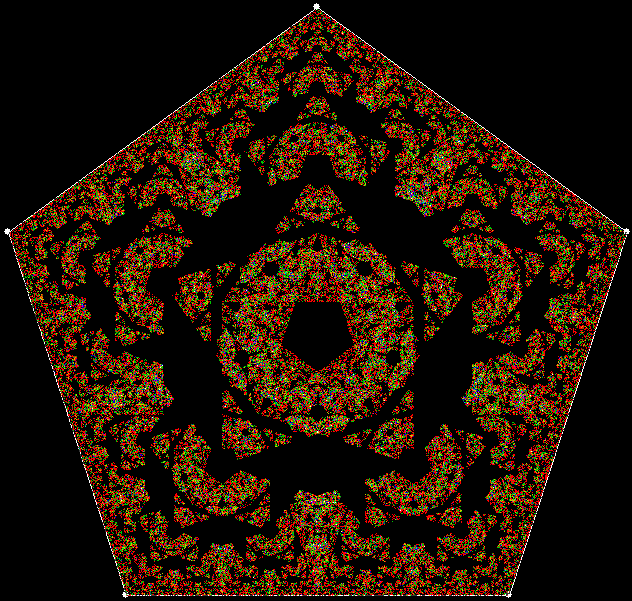
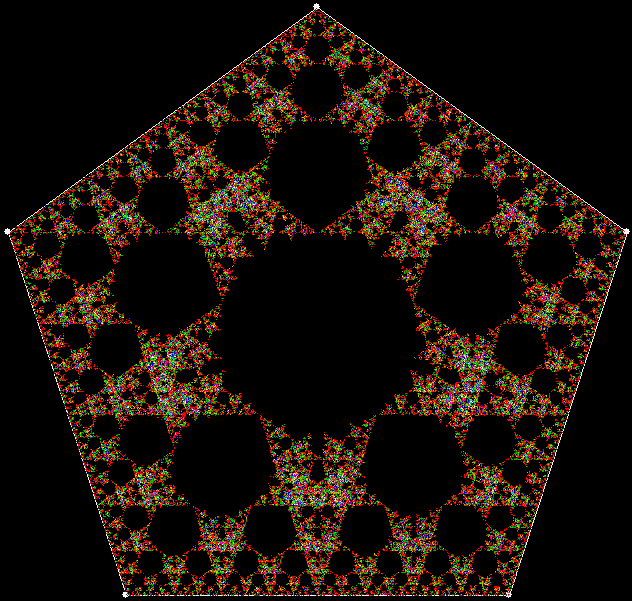
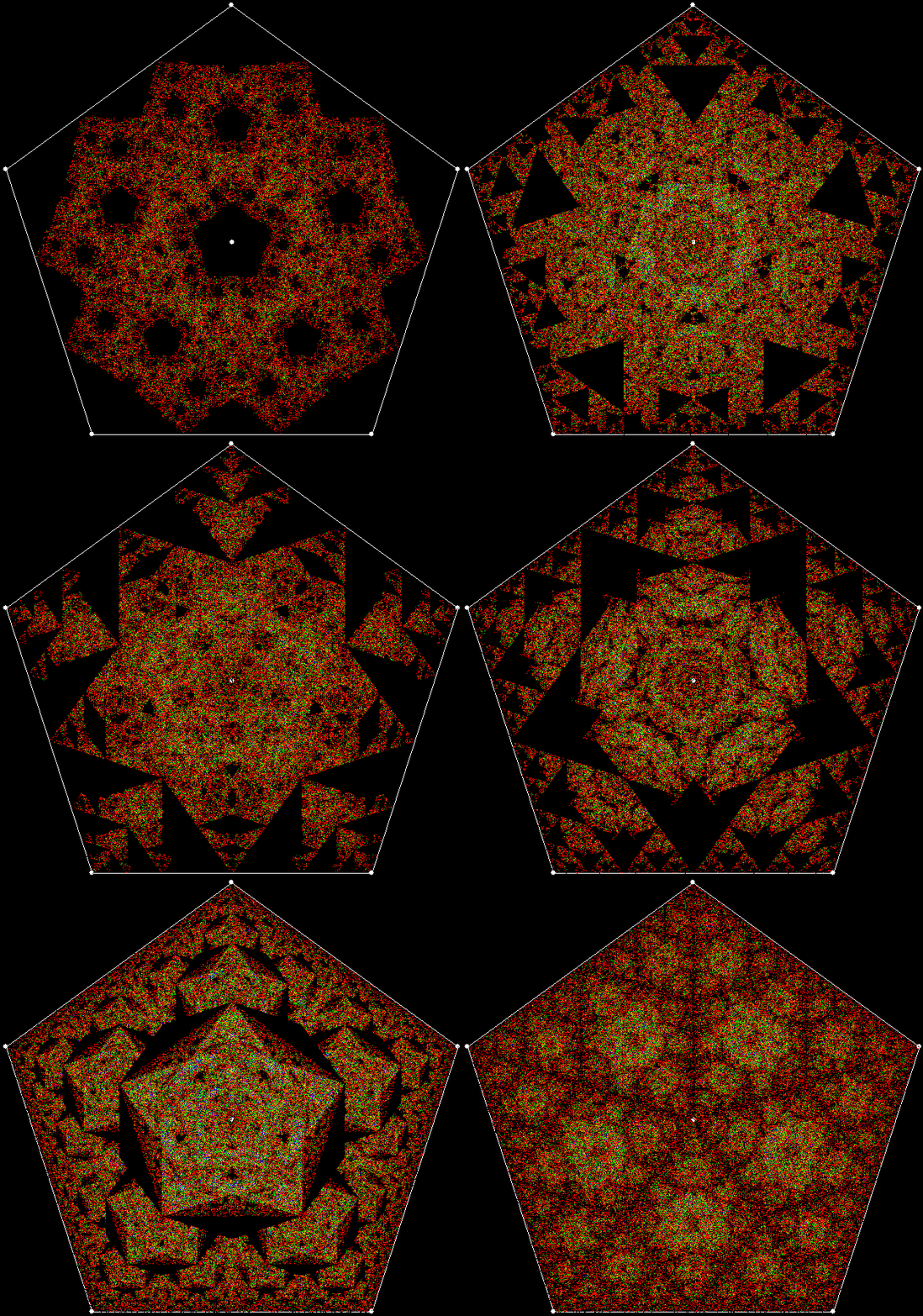
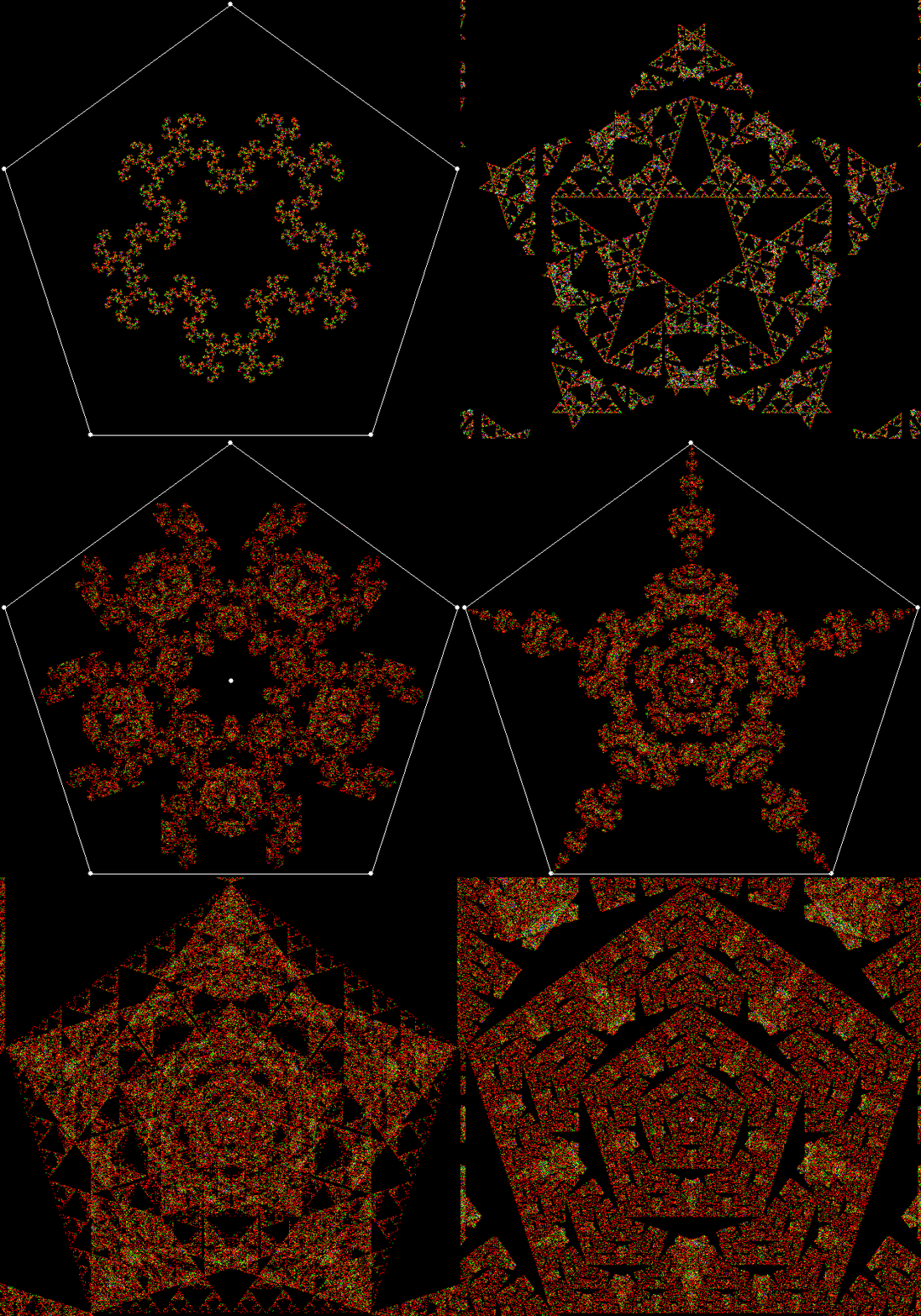
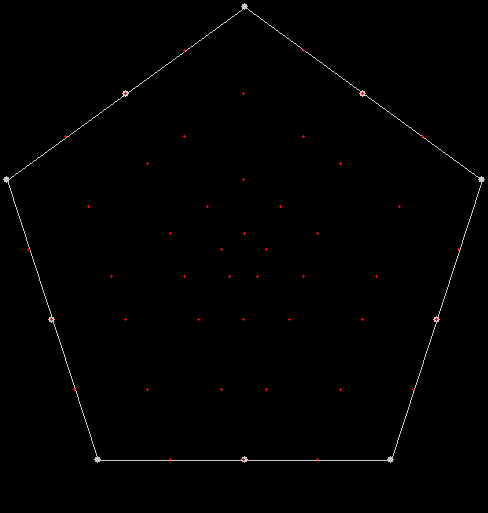
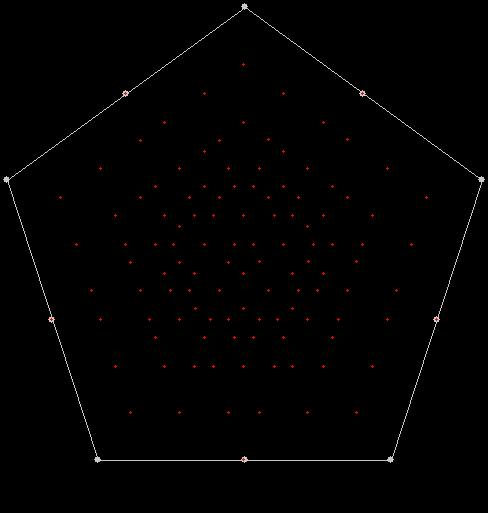
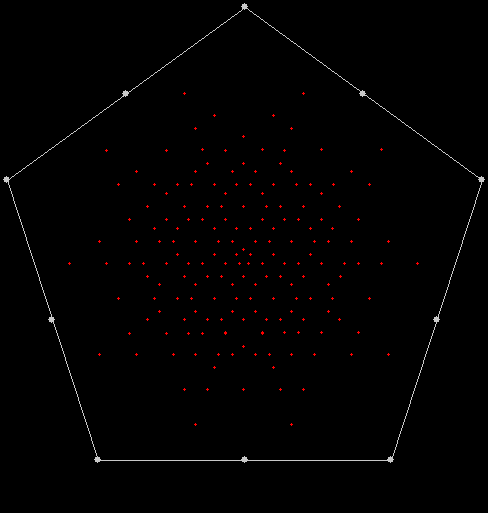
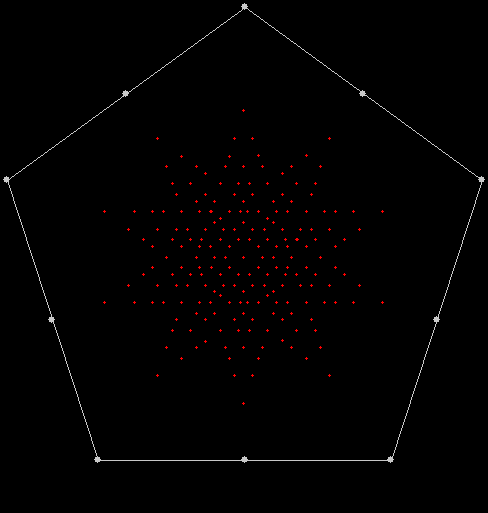
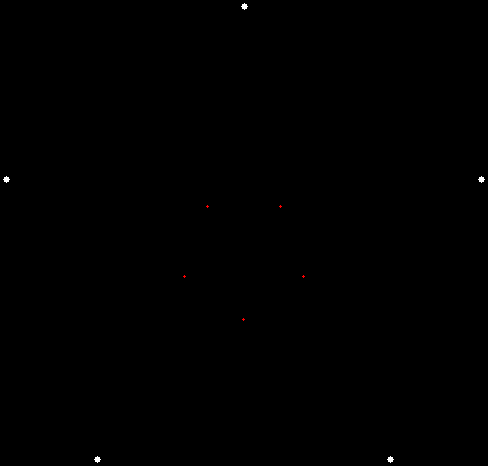
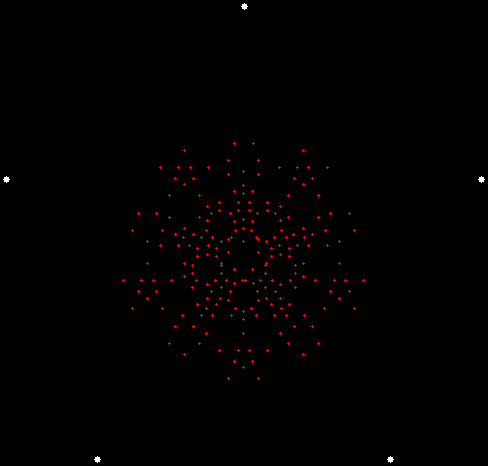
Here are the same restrictions applied to a pentagon:

prox5_1

Nearest corner forbidden


prox5_2

Second-nearest corner forbidden


prox5_3

Third corner forbidden


prox5_4

Fourth corner forbidden


prox5_5

Fifth corner forbidden


prox5_5anim

Fifth corner forbidden (animated)

And a pentagon with a central chorner:

prox5_anim_c

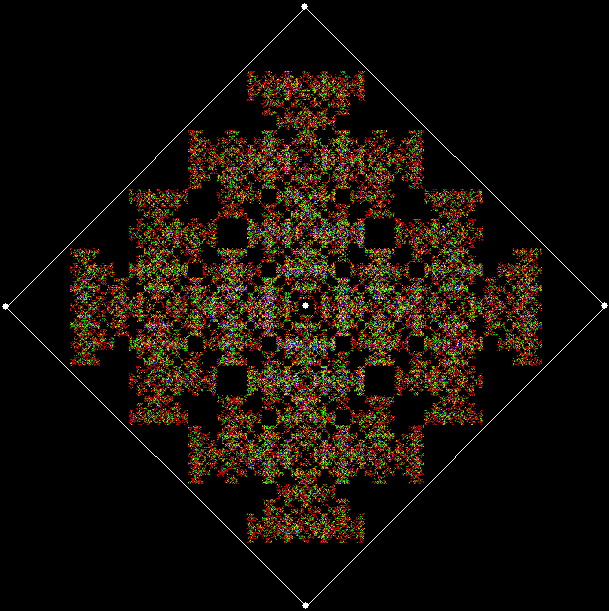
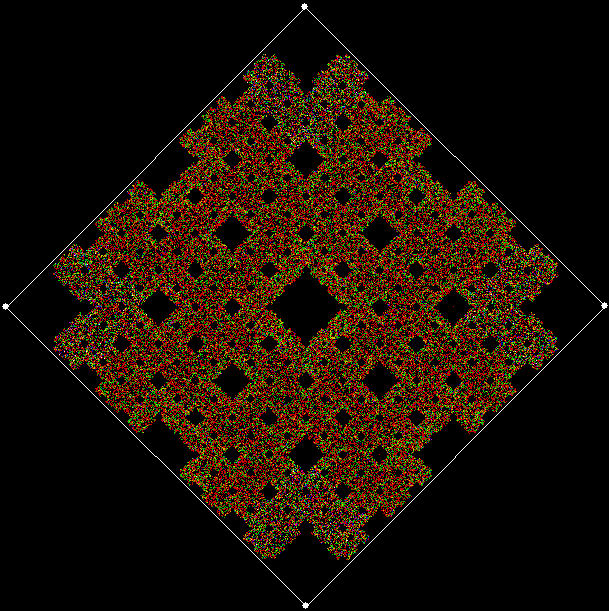
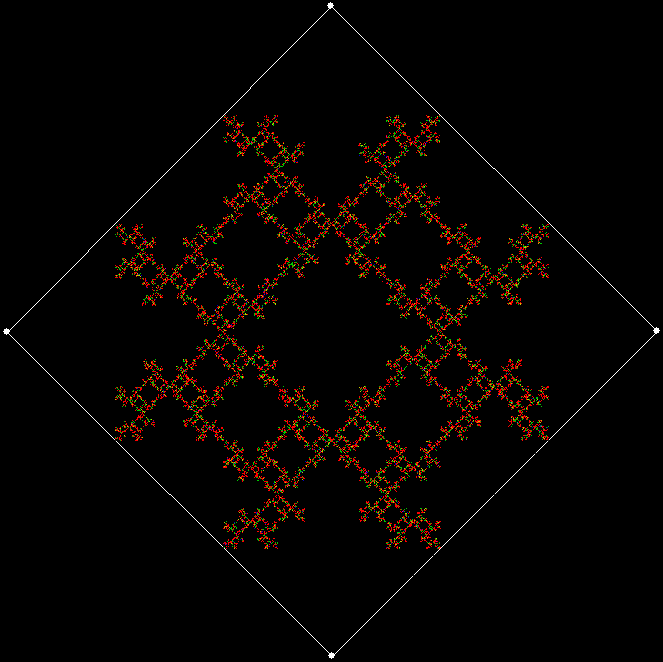
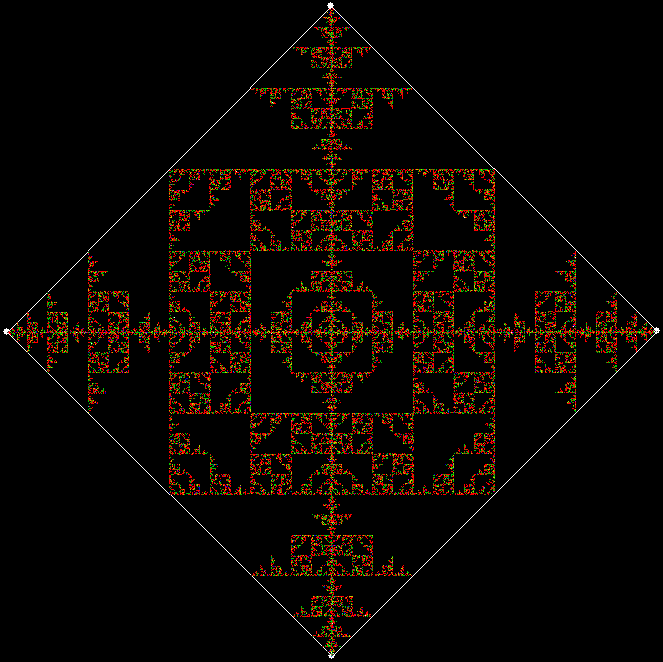
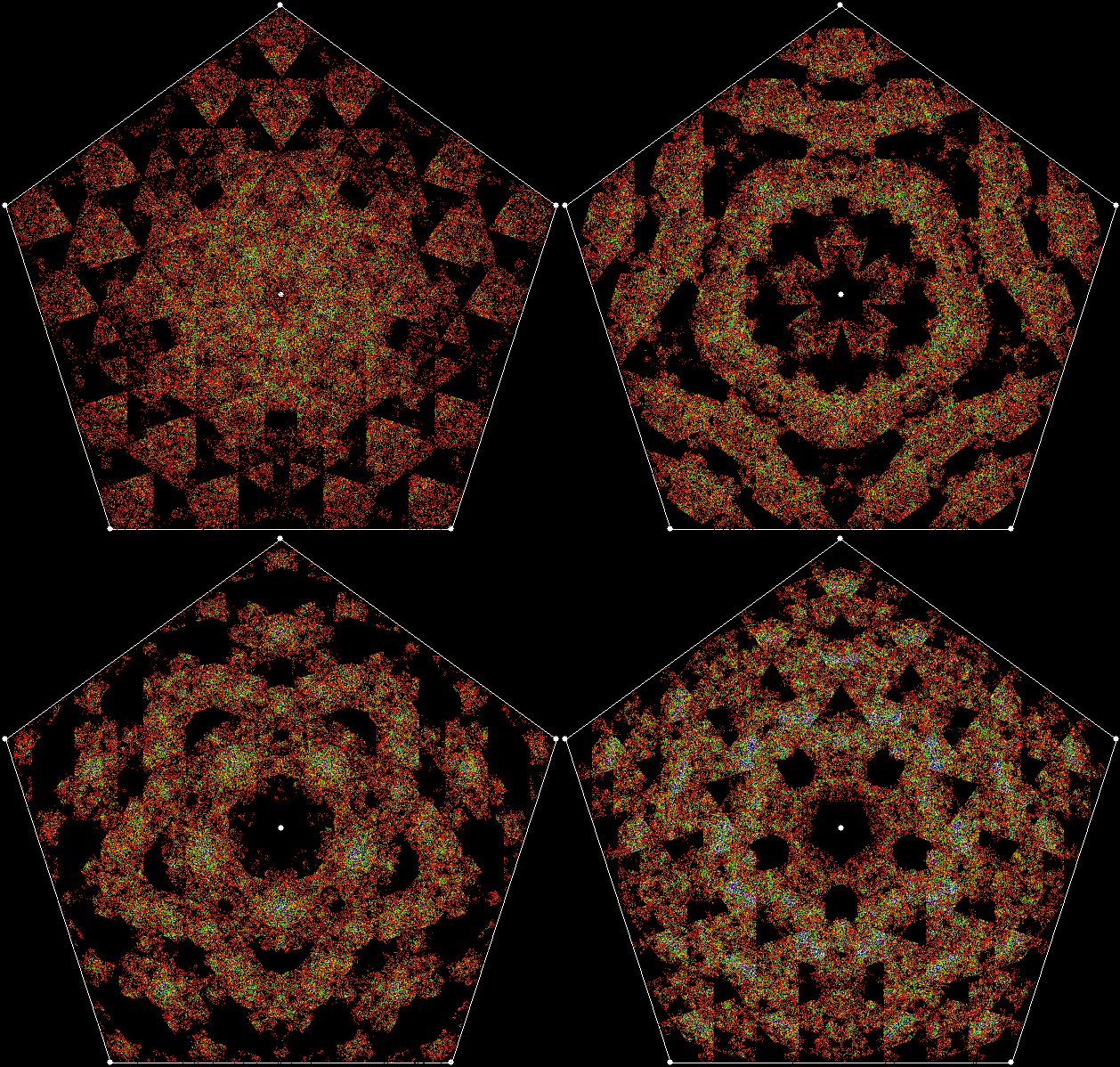
Now try excluding more than one corner. Here are pentagons excluding the n-nearest and n+1-nearest corners (for example, the nearest and second-nearest corners; the second-nearest and third-nearest; and so on):

prox5n_n1_anim

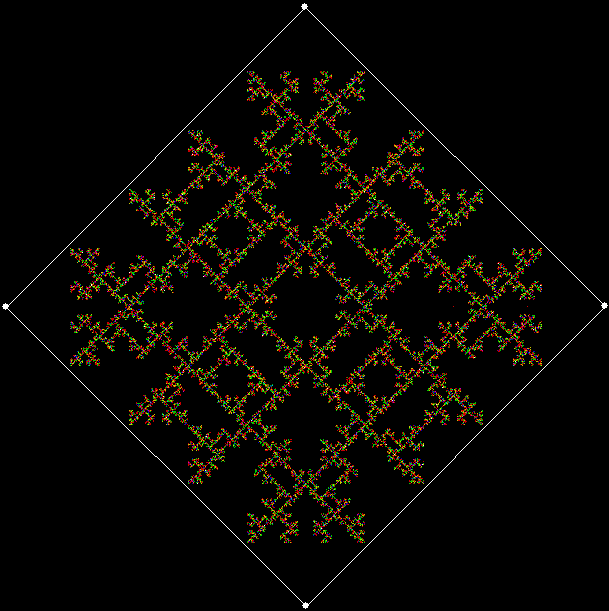
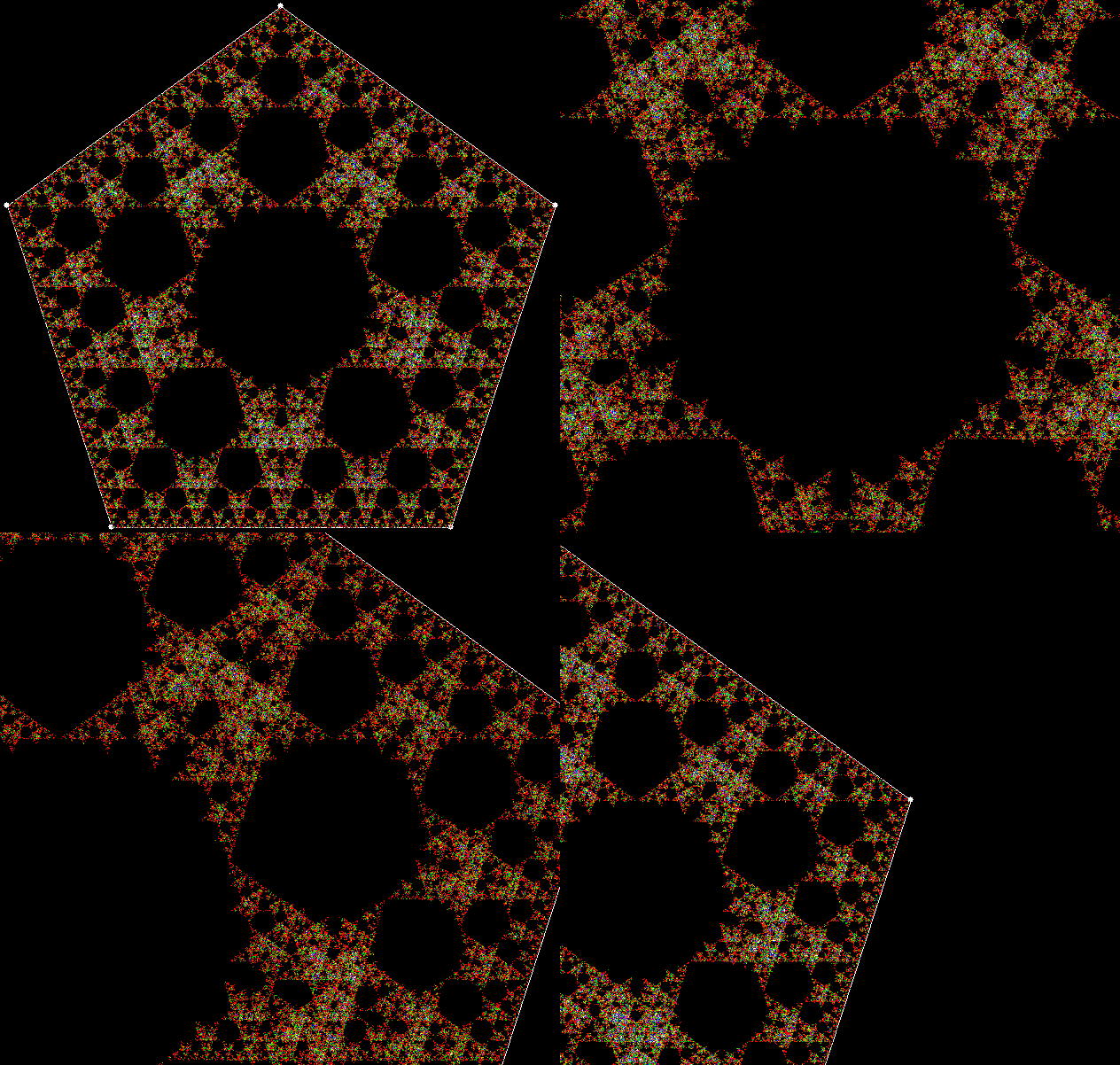
But what if the moving point is set equal to the n-nearest corner before it moves again? If the corner is the second-nearest and the shape is a triangle with a central chorner, this is the fractal that appears:

prox3_set2c


prox3_set2c_anim

Animated version

And here is the same rule applied to various n-nearest corners in a pentagon:

prox5_set_anim

The Choice of the Circle

Here’s an elementary mathematical problem: how many ways are there to choose three numbers from a set of six numbers? If the set is (1, 2, 3, 4, 5, 6), these are the possible choices (or combinations):

(1, 2, 3), (1, 2, 4), (1, 2, 5), (1, 2, 6), (1, 3, 4), (1, 3, 5), (1, 3, 6), (1, 4, 5), (1, 4, 6), (1, 5, 6), (2, 3, 4), (2, 3, 5), (2, 3, 6), (2, 4, 5), (2, 4, 6), (2, 5, 6), (3, 4, 5), (3, 4, 6), (3, 5, 6), (4, 5, 6) (c = 20)

So 6C3 = 20 (C stands for “combination”). The general formula is nCr = (n! / (n-r)!) / r!, where n is the number to choose from, r is the number of choices and n! is factorial n, or n multiplied by all numbers less than itself. For example, 6! = 6 * 5 * 4 * 3 * 2 * 1 = 720. When n = 6 and c = 3, 6C3 = (6! / (6-3)!) / 3! = (720 / 6) / 6 = 20.

There isn’t much visual appeal in the choices above, but there’s a simple way to change that. Take the ways of choosing two numbers from a set of ten. They start like this:

(1, 2), (1, 3), (1, 4), (1, 5), (1, 6), (1, 7), (1, 8), (1, 9), (1, 10), (2, 3), (2, 4), (2, 5), (2, 6), (2, 7), (2, 8), (2, 9), (2, 10), (3, 4), (3, 5), (3, 6)…

Suppose each choice represents the midpoint of two points chosen from a set of ten points around a pentagon, so that (1, 2) is half-way between points 1 and 2, (3, 5) is half-way between points 3 and 5, and so on:

pent_10_2

Now take the ways of choosing three numbers from a set of ten:

(1, 2, 3), (1, 2, 4), (1, 2, 5), (1, 2, 6), (1, 2, 7), (1, 2, 8), (1, 2, 9), (1, 2, 10), (1, 3, 4), (1, 3, 5), (1, 3, 6), (1, 3, 7), (1, 3, 8), (1, 3, 9), (1, 3, 10)…

Now the pentagon looks like this, with (1, 2, 3) representing the point midway between 1, 2 and 3, (1, 3, 9) representing the point midway between 1, 3 and 9, and so on:

pent_10_3

Now here are 10C4, 10C5 and 10C6 for the pentagon:

pent_10_4

pent_10_5

pent_10_6

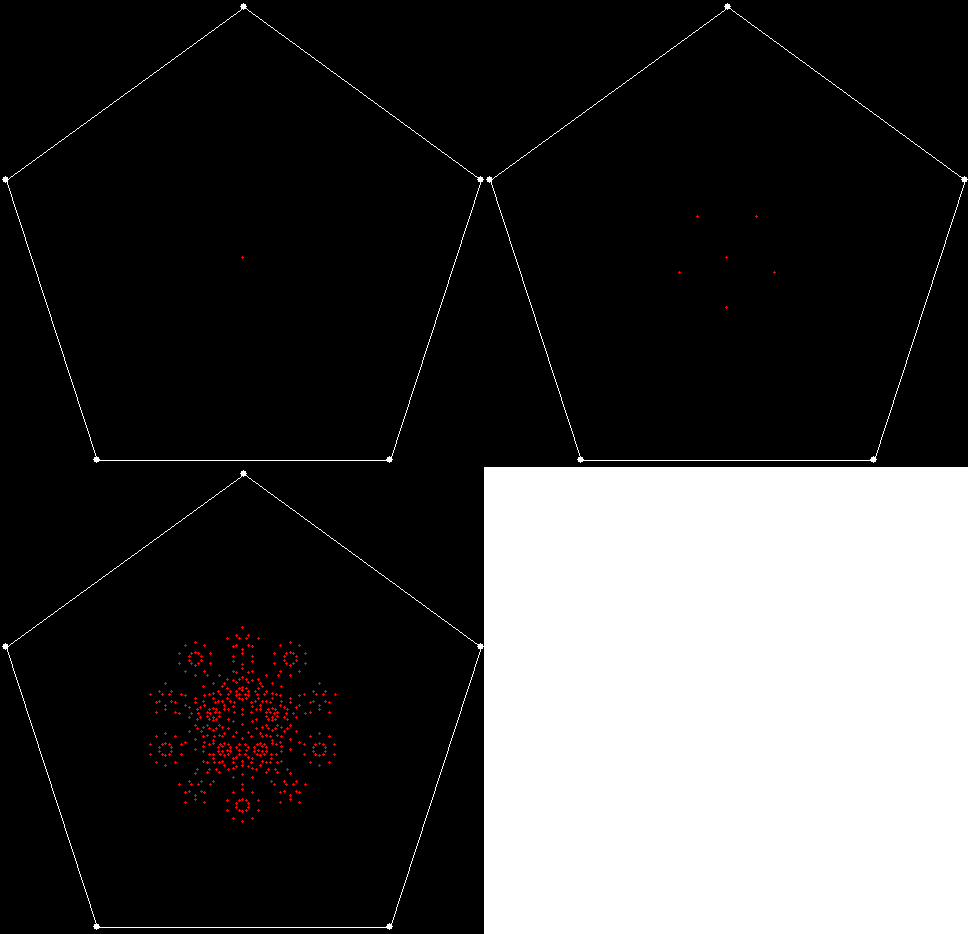
You can also generate the points 5C4 = 5, then add them to the original five points and generate 10C4:

pent4_1

5C4


pent4_2

10C4


And here are 5C5, 6C5 and 12C5:

pent5

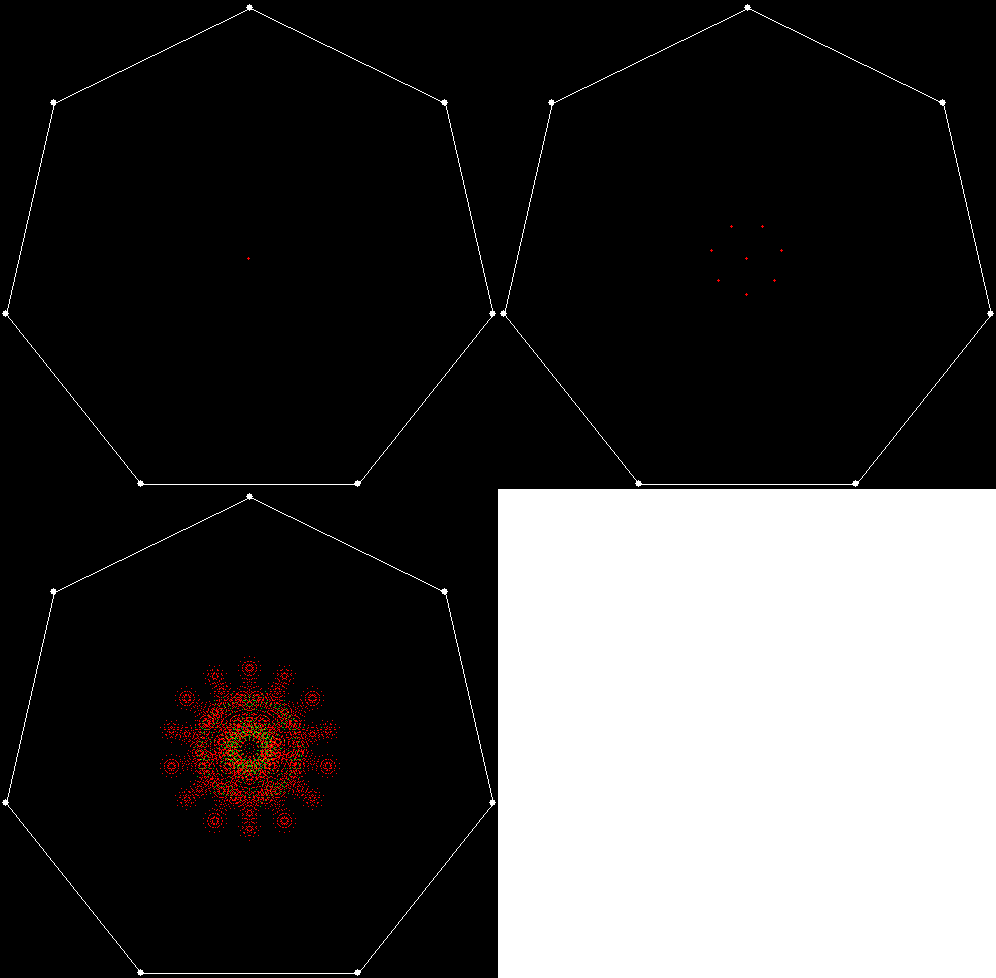
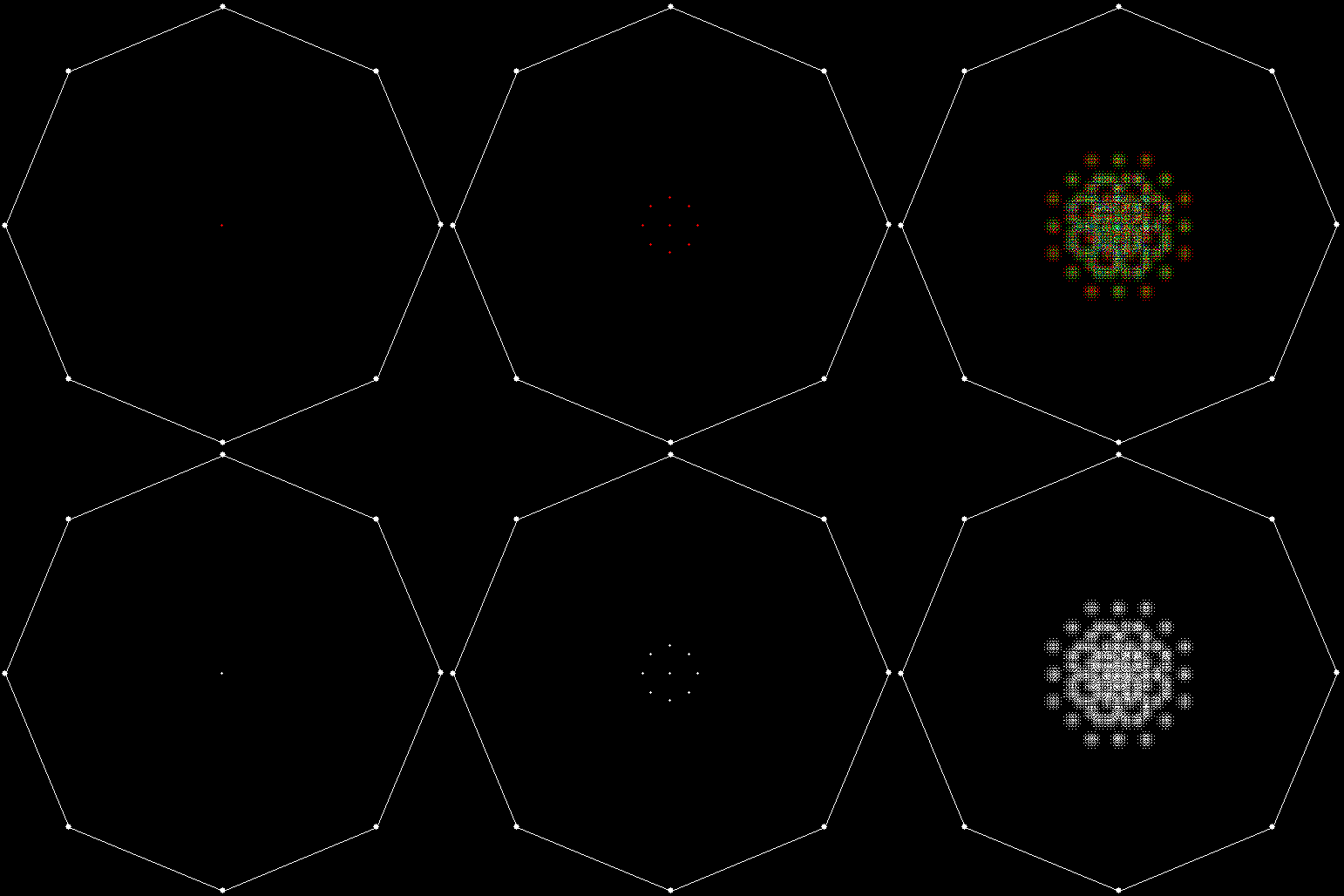
Here are 7C7 and 8C8, adding points as for 5C4:

hept7

octo8

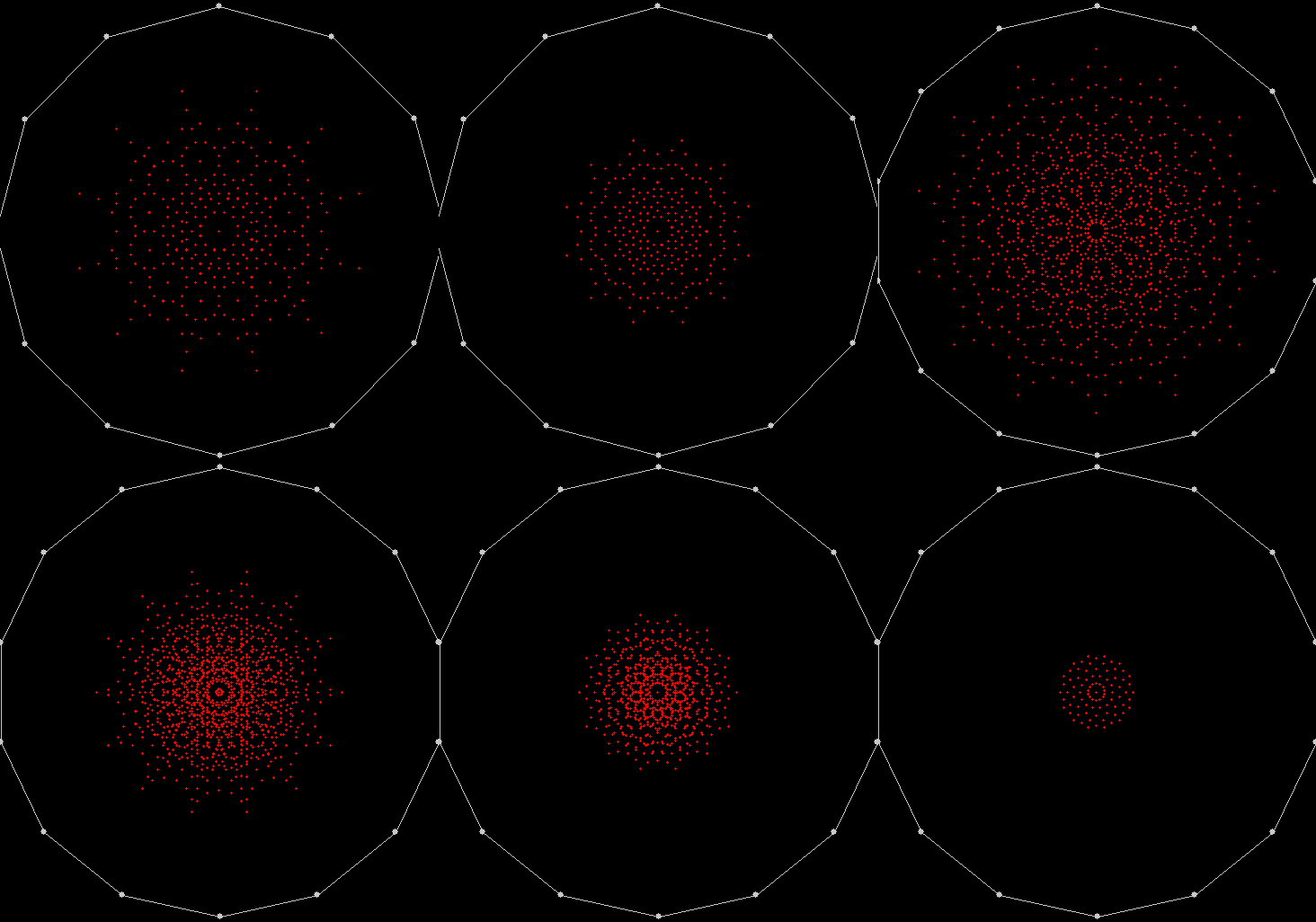
And here is 12C6 using a dodecagon:

dodeca_6

And various nCr for dodecagons and other polygons:

various

This method can also be used to represent the partitions of n, or the number of sets whose members sum to n. The partitions of 5 are these:

(5), (4, 1), (3, 2), (3, 1, 1), (2, 2, 1), (2, 1, 1, 1), (1, 1, 1, 1, 1)

There are seven partitions, so p(5) = 7. Partitions start small and get very large, starting with p(1), p(2), p(3) and so on:

1, 2, 3, 5, 7, 11, 15, 22, 30, 42, 56, 77, 101, 135, 176, 231, 297, 385, 490, 627, 792, 1002, 1255, 1575, 1958, 2436, 3010, 3718, 4565, 5604, 6842, 8349, 10143, 12310, 14883, 17977, 21637, 26015, 31185, 37338, 44583, 53174, 63261, 75175, 89134, 105558, 124754, 147273, 173525, 204226, 239943, 281589, 329931, 386155, 451276, 526823, 614154, 715220, 831820, 966467, 1121505, 1300156…

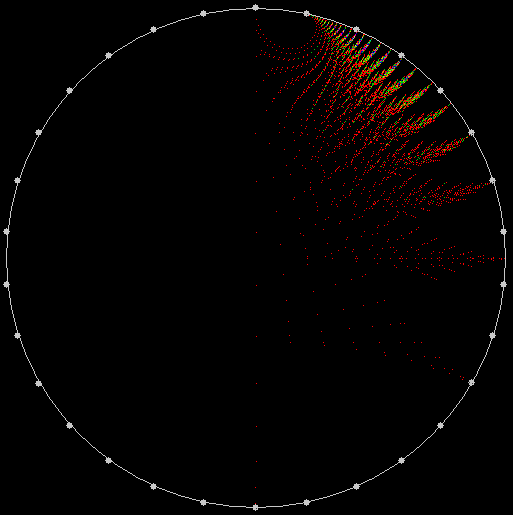
Suppose the partitions of n are treated as sets of points around a polygon with n vertices. Each set is then used to generate the point midway between its members. For example, (5, 4, 4, 2) is one partition of 15 and would represent the point midway between 5, 4, 4 and 2 of a pentadecagon. Here is a graphical representation of p(30):

partition30

Here are graphical representations for the partitions 5 to 15, then 15 to 60 in increments of 5 (15, 20, 25, etc):

partitions5_60

And here are some close-ups for the partitions of 35 and 40:

partitions40


Post-Performative Post-Scriptum…

The title of this incendiary intervention wrily references the Bible:

The flowers appear on the earth; the time of the singing of birds is come, and the voice of the turtle is heard in our land — The Song of Solomon, 2:12

Performativizing Papyrocentricity #42

Papyrocentric Performativity Presents:

Feats for the EyesDrawn from Paradise: The discovery, art and natural history of the birds of paradise, David Attenborough and Errol Fuller (Collins 2012)

Heart of the MatherChaotic Fishponds and Mirror Universes: the maths that governs our world, Richard Elwes (Quercus 2013)

BergblumenEnchanting Alpine Flowers, Alfred Pohler, trans. Jacqueline Schweighofer


Or Read a Review at Random: RaRaR