Solids and Shadows

Front cover of An Adventure in Multidimensional Space by Koji MiyazakiAn Adventure in Multidimensional Space: The Art and Geometry of Polygons, Polyhedra, and Polytopes, Koji Miyazaki (Wiley-Interscience 1987)

Two, three, four – or rather, two, three, ∞. Polygons are closed shapes in two dimensions (e.g., the square), polyhedra closed shapes in three dimensions (the cube), and polytopes closed shapes in four or more (the hypercube). You could spend a lifetime exploring any one of these geometries, but unless you take psychedelic drugs or brain-modification becomes much more advanced, you’ll be able to see only two of them: the geometries of polygons and polyhedra. Polytopes are beyond imagining but you can glimpse their shadows here – literally, because we can represent polytopes by the shadows they cast in 3-space or by the shadows of their shadows in 2-space.
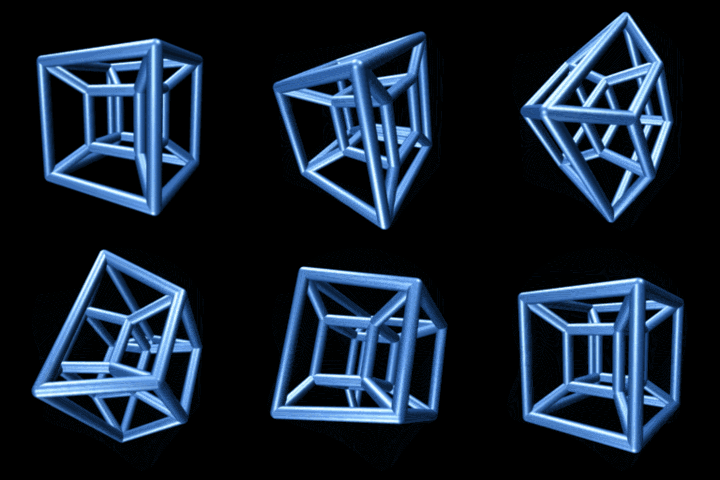
An animated gif of a tesseract

A four-dimensional shape in two dimensions (see Tesseract)

Elsewhere Miyazaki doesn’t have to convey wonder and beauty by shadows: not only is this book full of beautiful shapes, it’s beautifully designed too and the way it alternates black-and-white pages with colour actually increases the power of both. It isn’t restricted to pure mathematics either: Miyazaki also looks at the modern and ancient art and architecture inspired by geometry, and at geometry in nature: the dodecahedral pollen of Gypsophilum elegans (Showy Baby’s-Breath), for example, and the tetrahedral seeds of the Water Chestnut (Trapa spp.), which the Japanese spies and assassins called the ninja used as natural caltrops. A regular tetrahedron always lies on a flat surface with a vertex facing directly upward, and when a pursued ninja scattered the sharply pointed tetrahedral seeds of the Water Chestnut, they were regular enough to injure “the soles of feet of his pursuers”.
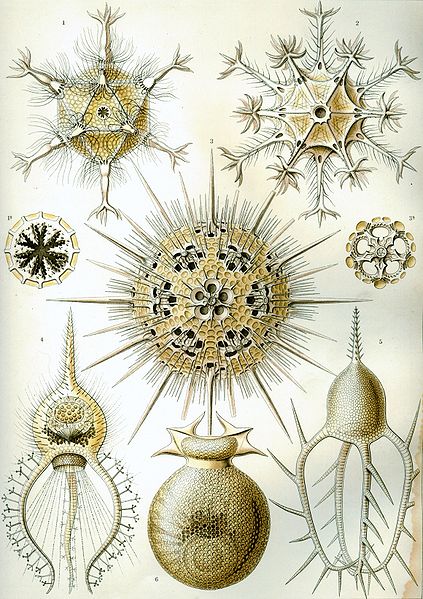
Polyhedral plankton by Ernst Haeckel

Polyhedral plankton by Ernst Haeckel

The slightly odd English there is another example of what I like about this book, because it proves the parochialism of language and the universality of mathematics. Miyazaki’s mathematics, as far as I can tell, is flawless, like that of many other Japanese mathematicians, but his self-translated English occasionally isn’t. Japanese mathematics was highly developed before Japan fell under strong Western influence. It would continue to develop if the West disappeared tomorrow. Language is something we have to absorb intuitively from the particular culture we’re born into, but mathematics is learnt and isn’t tied to any particular culture. That’s why it’s accessible in the same way to minds everywhere in the world. Miyazaki’s pictures and prose are an extended proof of all that, and the book is actually more valuable because it was written by a Japanese speaker. I think it’s probably more attractively designed for the same reason: the skill with which the pictures have been selected and laid out reflects something characteristically Japanese. Elegance and simplicity perhaps sum it up, and elegance and simplicity are central to mathematics and some of the greatest art.
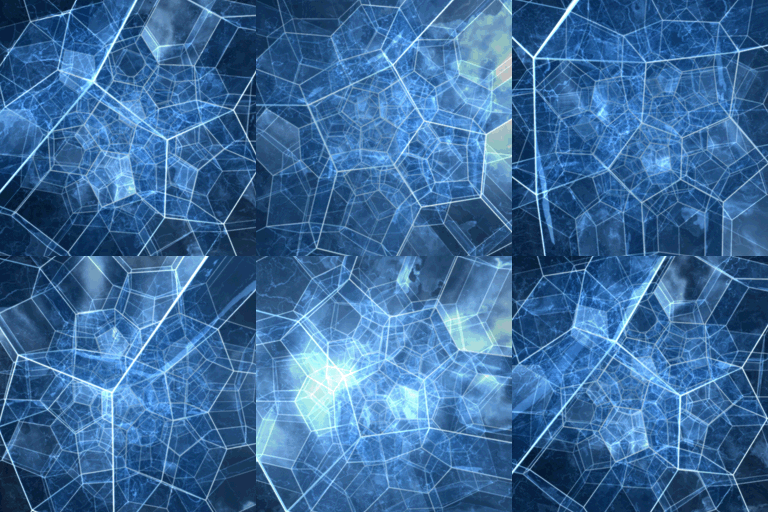
An animated gif of an 120-cell

Another four-dimensional shape in two dimensions (see 120-cell)

Magna Mater Marina

Front cover of The Illustrated World Encyclopedia of Marine Fish and Sea CreaturesThe Illustrated World Encyclopedia of Marine Fish and Sea Creatures, Amy-Jane Beer and Derek Hall (Lorenz Books, 2007)

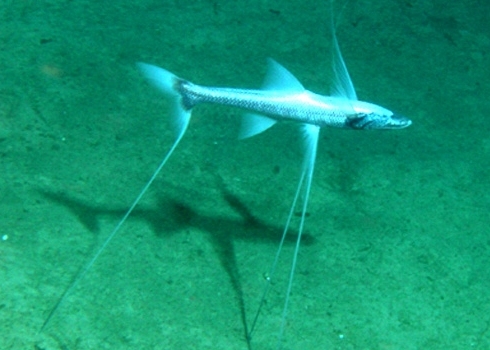
Books about marine life need to be big, like this one, because the sea is a big place and has been occupied for far longer than the land. You’ll learn here that some land creatures have even returned to it, like the ancestors of cetaceans (whales et al), sirenians (dugongs and manatees), and sea-snakes. The saltiness of human blood means that we each carry around a miniature ocean of our own, symbol of our own marine ancestry. The Illustrated World Encyclopedia of Marine Fish and Sea Creatures is an excellent guide to the remainers and the returners of our ancient home. It isn’t a proper scientific encyclopedia, but you can get a good sense of the richness and variety of marine life here, from jellyfish to electric rays by way of the deep-water sea-cucumber, Irpa abyssicola, and the very strange tripod fish, Bathypterois grallator.

Bathypterois grallator

The tripod fish, Bathypterois grallator

That scientific name literally means “the deep-wing stilt-walker”, because the tripod fish lives very deep, up to 3·5km down, and props itself up on extended fin-rays to save energy on swimming. Its tiny prey float towards to it on the current: it isn’t an active hunter. It’s also hermaphroditic, so that each fish can fertilize its own eggs if, thanks to depth and darkness, it doesn’t find a mate. Unlike many other deep-sea fish, however, it isn’t particularly ugly or grotesque and wouldn’t easily find place in an H.P. Lovecraft story. Vampyroteuthis infernalis, or “the vampire squid from hell”, definitely would. It looks rather like an animated umbrella, with dark webs between its tentacles and huge, light-thirsty eyes.

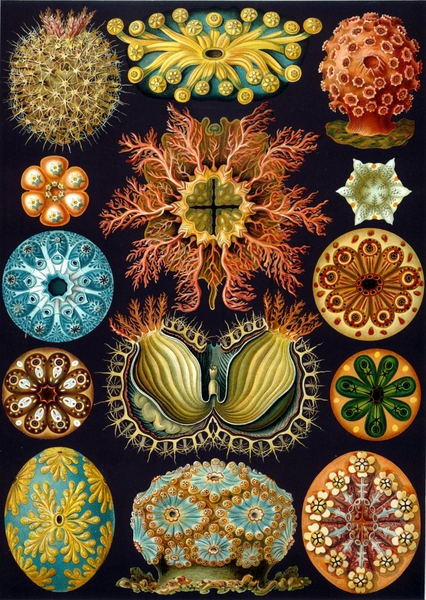
Sea anemones by Ernst Haeckel

Sea anemones by Ernst Haeckel

Elsewhere there’s proof that the sea contains not just abysmal ugliness but sublime beauty too, from cone shells (Conus spp.) and jewel “anemones” (Corynactis viridis) (really a form of coral, the book notes) to gorgeous fish like the copperband butterflyfish (Chelmon rostratus) and the Moorish idol (Zanclus cornutus). And the greater blue-ringed octopus (Hapalochlaena lunulata) is beautiful too, despite the “toxin in its saliva estimated to be 10,000 times more deadly than cyanide”. There isn’t enough here about plankton, which can be strange, ugly, and beautiful, but plankton could fill several encyclopedias, and this one does incorporate some more recent scientific discoveries, including the marine life that doesn’t depend ultimately on sunlight, however deep down dark it lives. The giant beardworm, Riftia pachyptila, lives in symbiosis with sulphide-digesting bacteria at hydrothermal vents on the ocean floor. It’s not part of the sun-chain and might have homologues beneath the ice-cap of Jupiter’s moon Europa. Life needs liquid, so far as we can see, and certainly on earth it had to get its start there. This book is an excellent introduction to the great biological cradle that is the sea and would be an ideal gift for a budding marine biologist or scientifically inclined sailer or fisherman.


Elsewhere other-posted:

Guise and Molls — review of Octopus: The Ocean’s Intelligent Invertebrate (2010)
Mental Marine Music — the band who supplied the title of this review

Performativizing Papyrocentricity #14

Papyrocentric Performativity Presents:

Scheming DemonThe Screwtape Letters, C.S. Lewis (1942)

Ai Wei to HellHow to Read Contemporary Art, Michael Wilson (Thames & Hudson, 2013)

Toxic TwosomeDoll, Peter Sotos and James Havoc (TransVisceral Books, 2013)

Know Your LimaçonsThe Penguin Dictionary of Curious and Interesting Geometry, David Wells (1991) (posted @ Overlord of the Über-Feral)

Pestilent, Pustulent and Pox-Pocked – various books by Dr Miriam B. Stimbers (@ O.o.t.Ü.-F.)


Or Read a Review at Random: RaRaR

Know Your Limaçons

Front cover of The Penguin Dictionary of Curious and Interesting Geometry by David WellsThe Penguin Dictionary of Curious and Interesting Geometry, David Wells (1991)

Mathematics is an ocean in which a child can paddle and an elephant can swim. Or a whale, indeed. This book, a sequel to Wells’ excellent Penguin Dictionary of Curious and Interesting Mathematics, is suitable for both paddlers and plungers. Plumbers, even, because you can dive into some very deep mathematics here.

Far too deep for me, I have to admit, but I can wade a little way into the shallows and enjoy looking further out at what I don’t understand, because the advantage of geometry over number theory is that it can appeal to the eye even when it baffles the brain. If this book is more expensive than its prequel, that’s because it needs to be. It’s a paperback, but a large one, to accommodate the illustrations.

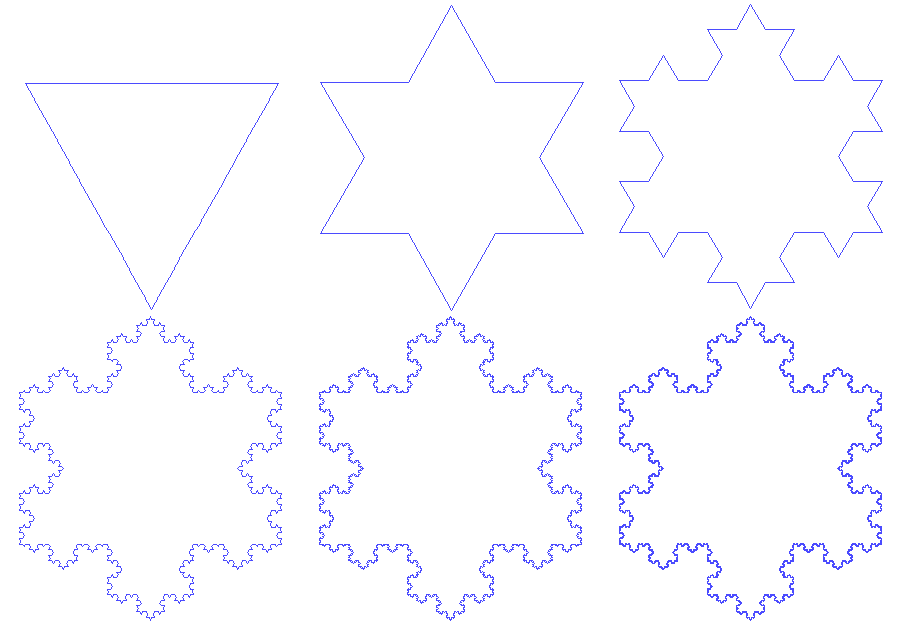
Fortunately, plenty of them appeal to the eye without baffling the brain, like the absurdly simple yet mindstretching Koch snowflake. Take a triangle and divide each side into thirds. Erect another triangle on each middle third. Take each new line of the shape and do the same: divide into thirds, erect another triangle on the middle third. Then repeat. And repeat. For ever.

A Koch snowflake (from Wikipedia)

A Koch snowflake (from Wikipedia)

The result is a shape with a finite area enclosed by an infinite perimeter, and it is in fact a very early example of a fractal. Early in this case means it was invented in 1907, but many of the other beautiful shapes and theorems in this book stretch back much further: through Étienne Pascal and his oddly organic limaçon (which looks like a kidney) to the ancient Greeks and beyond. Some, on the other hand, are very modern, and this book was out-of-date on the day it was printed. Despite the thousands of years devoted by mathematicians to shapes and the relationship between them, new discoveries are being made all the time. Knots have probably been tied by human beings for as long as human beings have existed, but we’ve only now started to classify them properly and even find new uses for them in biology and physics.

Which is not to say knots are not included here, because they are. But even the older geometry Wells looks at would be enough to keep amateur and recreational mathematicians happy for years, proving, re-creating, and generalizing as they work their way through variations on all manner of trigonomic, topological, and tessellatory themes.


Previously pre-posted (please peruse):

Poulet’s Propeller — discussion of Wells’ Penguin Dictionary of Curious and Interesting Numbers (1986)

Performativizing Papyrocentricity #13

Papyrocentric Performativity Presents:

Brown StudyWilliam in Trouble, Richmal Crompton (1927)

Bleeding BlackWatch You Bleed: The Saga of Guns n’ Roses, Stephen Davis (Michael Joseph 2008)

Toxic TailsIn the Seventies: Adventures in the Counterculture, Barry Miles (Serpent’s Tail 2011)

Leaf BriefWhat a Plant Knows: A Field Guide to the Senses of Your Garden — and Beyond, Daniel Chamovitz (Oneworld 2012) (posted @ Overlord of the Über-Feral)

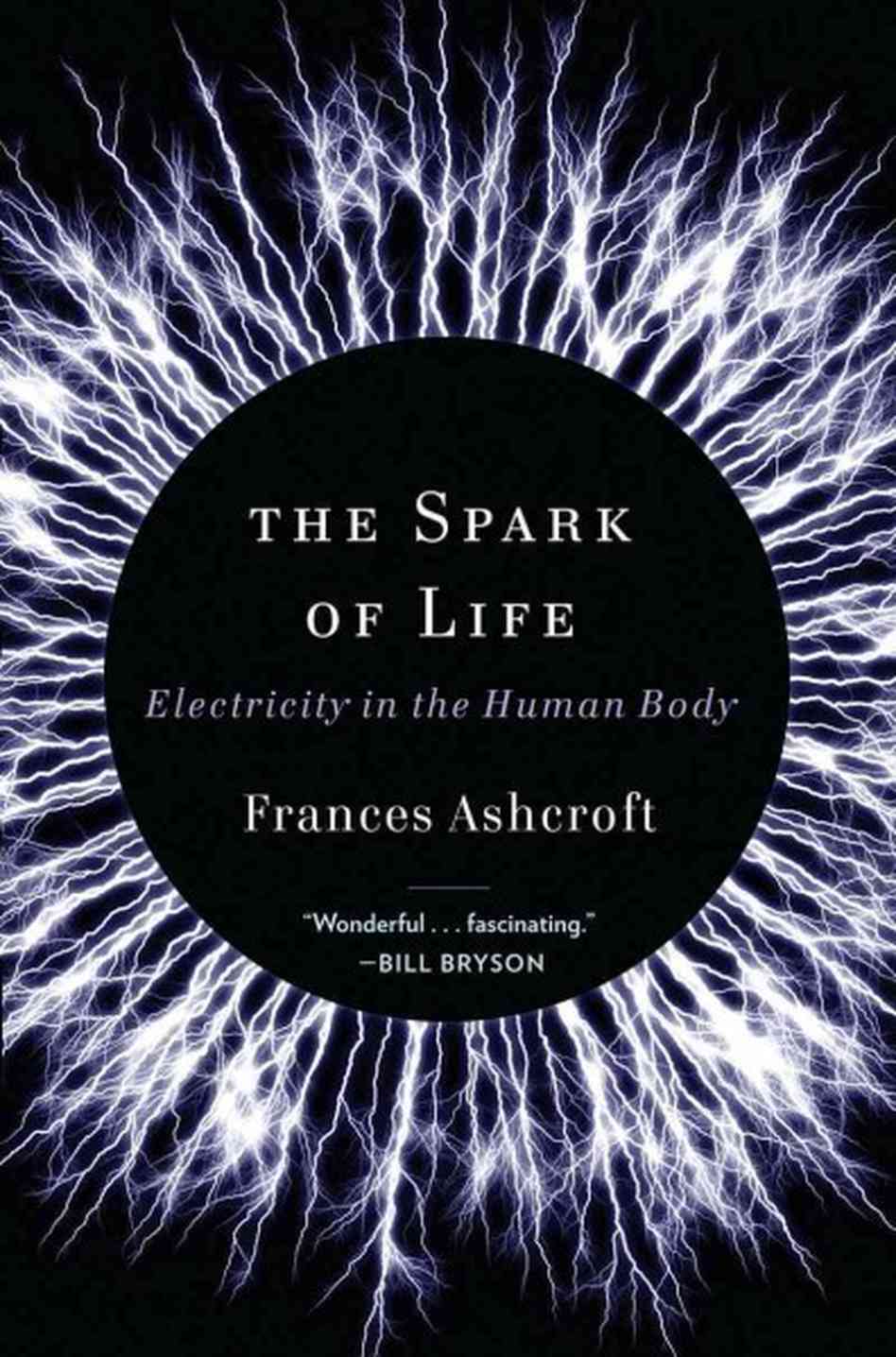
Electrify Your EyesThe Spark of Life: Electricity in the Human Body, Frances Ashcroft (Penguin 2013) (@ O.o.t.Ü.-F.)


Or Read a Review at Random: RaRaR

Leaf Brief

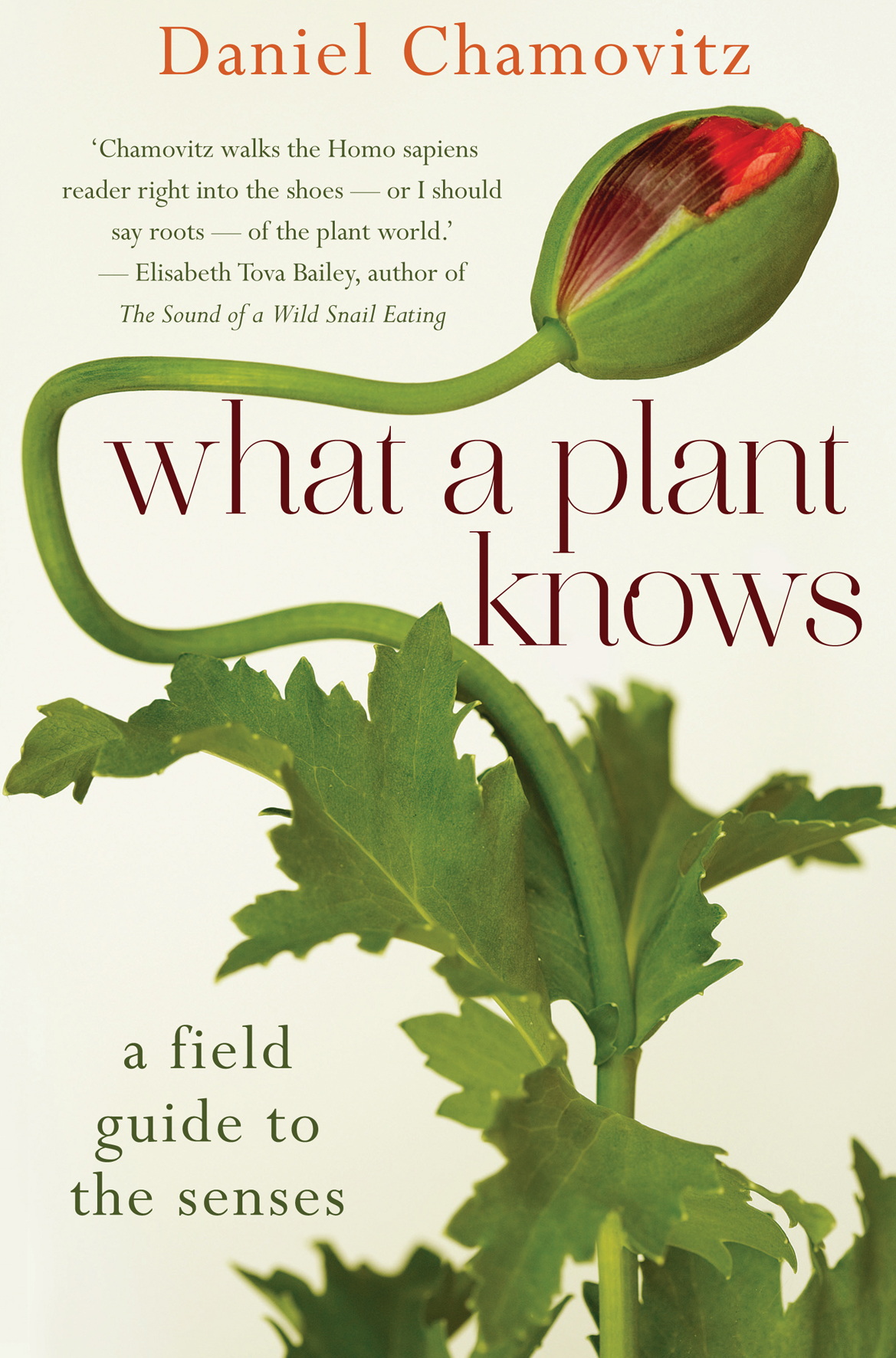
Front cover of What A Plant Knows by Daniel ChamovitzWhat a Plant Knows: A Field Guide to the Senses of Your Garden – and Beyond, Daniel Chamovitz (Oneworld 2012)

This is a brief but burgeoning book, covering a lot of science and a lot of scientific history. Plants stay in one place and don’t seem to suffer pain or discomfort, so they’re good experimental subjects, particularly for introverts. That’s why Charles Darwin devoted even more time to plants than he did to worms and barnacles. Chamovitz describes Darwin’s ingenious experiments and the even more ingenious experiments of the researchers that followed him. Over millions of years the world has set problems of survival for plants; in solving these problems, plants have set puzzles for scientists. How do plants know when to flower and prepare for winter? How do they resist attacks by insects? Or prey on insects? Or invite visits from pollinators? And how do they communicate with each other? The answers aren’t just chemical: they’re electrical too, as research on the world’s most famous carnivorous plant has proved:

Alexander Volkov and his colleagues at Oakwood University in Alabama first demonstrated that it is indeed electricity that causes the Venus flytrap to close. To test the model, they rigged up very fine electrodes and applied an electrical current to the open lobes of the trap. This made the trap close without any direct touch to its trigger hairs … (ch. 6, “What A Plant Remembers”, pp. 147-8)

Acoustics is also at work in the plant kingdom:

In a process known as buzz pollination, bumblebees stimulate a flower to release its pollen by rapidly vibrating their wing muscles without actually flapping their wings, leading to a high-frequency vibration. … In a similar vein, Roman Zweifel and Fabienne Zeugin from the University of Bern in Switzerland have reported ultrasonic vibrations emanating from pine and oak trees during a drought. These vibrations result from changes in the water content of the water-transporting xylem vessels. While these sounds are passive results of physical forces (in the same way that a rock crashing off a cliff makes a noise), perhaps these ultrasonic vibrations are used as a signal by other trees to prepare for dry conditions. (ch. 4, “What A Plant Hears”, pg. 107-8)

All of this is mathematical: a plant is a mechanism that processes not just sun, water and carbon-dioxide, but information from its environment too. But then sun, water and CO2 are all part of that information: sunlight signals plants as well as sustaining them. Its strength and duration are cues for the seasons and time of the day. So is its colour:

By the time John F. Kennedy was elected president, Warren L. Butler and his colleagues had demonstrated that a single photoreceptor in plants was responsible for both the red and far-red effects. They called this receptor “phytochrome”, meaning “plant colour”. In its simplest model, phytochrome is a light-activated switch. Red light activates phytochrome, turning it into a form primed to receive far-red light. Far-red light inactivates phytochrome, turning it into a form primed to receive red light. Ecologically, this makes a lot of sense. In nature, the last light a plant sees at the end of the day is far-red, and this signifies to the plant that it should “turn-off”. In the morning it sees red light and it wakes up. In this way a plant measures how long ago it last saw red light and adjusts its growth accordingly. (ch. 1, “What A Plant Sees”, pg. 21-2)

There’s an obvious analogy with a computer automatically turning itself off and on, which would make phytochrome and its associated chemicals a kind of hardware created by the software of the genes. Plants share some of that software with human beings: in one fascinating section, Chamovitz discusses the links between healthy plants and sick people:

The arabidopsis [A. thaliana, mustard plant] genome contains BRCA, CFTR, and several hundred other genes associated with human disease or impairment because they are essential for basic cellular biology. These important genes had already evolved 1.5 billion years ago in the single-celled organism that was the common evolutionary ancestor to both plants and animals. (ch. 4, “What A Plant Hears”, pg. 105)

What a Plant Knows stimulates human minds as it discusses plant senses. It’s one of the best briefest, or briefest best, books on science I’ve ever read, packing a lot of history and scientific information into six chapters. Plants don’t move much, but they’re a very lively topic and botany is a good way to understand and appreciate biology and scientific research better.

Electrify Your Eyes

Front cover of The Spark of Life by Frances AshcroftThe Spark of Life: Electricity in the Human Body, Frances Ashcroft (Penguin 2013)

“Electricity in the Human Body” is the subtitle of this book. Make that the goat, frog, eel, shark, torpedo-ray, snake, platypus, spiny anteater, sooty shearwater and fruit-fly body too. And if Venus flytraps, maize and algae have bodies, throw them in next. Frances Ashcroft gives you a bargeload of buzz for your buck, a shedload of shock for your shekel: The Spark of Life describes the use of electricity by many different forms of life. But it discusses death a lot too, from lightning-strikes and electric chairs to heart-attacks and toxicology. Poisons can be a cheap and highly effective way of interfering with the electro-chemistry of the body:

The importance of sodium and potassium channels in generating the nerve impulse is demonstrated by the fact that a vast array of poisons from spiders, shellfish, sea anemones, frogs, snakes, scorpions and many other exotic creatures interact with these channels and thereby modify the function of nerve and muscle. … The tetrodotoxin contained in the liver and other tissues of this fish [the fugu or puffer-fish, Takifugu spp., Lagocephalus spp., etc] is a potent blocker of the sodium channels found in your nerves and skeletal muscles. It causes numbness and tingling of the lips and mouth within as little as thirty minutes … This sensation of “pins and needles” spreads rapidly to the face and neck, moves onto the fingers and toes, and is then followed by gradual paralysis of the skeletal muscles … Ultimately the respiratory muscles are paralysed, which can be fatal. The heart is not affected, as it has a different kind of sodium channel that is far less sensitive to tetrodotoxin. The toxin is also unable to cross the blood-brain barrier so that, rather horrifyingly, although unable to move and near death, the patient remains conscious. (ch. 3, “Acting on Impulse”, pp. 69-70)

In short, fugu-poisoning is the opposite of electrocution: it’s the absence rather than the excess of electricity that kills its victims. Those “channels” are a reminder that electro-chemistry could also be called electro-mechanics: unlike an electricity-filled computer, an electricity-filled body has moving parts – and in more ways than one. Our muscles move because ions move in and out of our cells. This means that a body has to be wet inside, not dry like a computer, but it’s easy to imagine a human brain controlling a robotic body. But would a brain still be conscious if it became metal-and-plastic too? Perhaps a brain has to be both soggy and sparky to be conscious.

The electrical nature of the brain certainly seems important, though that may be a superstitious conclusion. Electricity is a mysterious phenomenon and so is consciousness, so they seem to go together well. Ashcroft writes a lot about the sense-organs and the data they supply to the brain, but like all scientists she cannot explain how those data are turned into conscious experience as the maths-engine of the brain applies its neuro-functions and neuro-algorithms. However, she does suggest ways in which our consciousness might be expanded in future. Humans have colour vision, based on the three types of cone-cells in our eyes:

Most mammals, such as cats and dogs, have only two types of cone photopigment and so see only a limited range of colour … Other animals live in a world entirely without colour. But humans should not be too complacent, for we are far from having the best colour vision in the animal world and lag far behind the mantis shrimp, which enjoys ten or more different visual pigments. Even tropical fish possess four or five types of cones. (ch. 9, “The Doors of Perception”, pg. 199)

Bio-engineering may one day sharpen and extend all our senses, from sight and hearing to touch, taste and smell. It may also give us new senses, like the ability to form sound-pictures like bats and detect infra-red like pit-vipers. And why not X-rays and radio-waves too? It’s an exciting prospect, but in a sense it won’t be anything new: our new senses, like our old ones, will depend on nerve-impulses and the way they’re mashed and mathed in that handful of “electrified clay” known as the brain.

“Electrified clay” is Shelley’s phrase: like his wife Mary, he was fascinated by the early electric experiments of the Italian scientists Luigi Galvani and Alessandro Volta. Mary turned her fascination into a book called Frankenstein (1818) and her invention is part of the scientific history in this book. The story of bio-electricity is still going strong: there are electric mysteries in all kinds of bodies waiting to be solved. Maybe consciousness is one of them. And if science proves unable to crack consciousness, it’s certainly able to expand it. Reading this book is one way to experience the mind-expanding powers of science, but seeing like a mantis shrimp would be good too.

Performativizing Papyrocentricity #12

Papyrocentric Performativity Presents:

Hawt’ in the ActWhatshisname: The Life and Death of Charles Hawtrey, Wes Butters (Tomahawk Press 2010)

Lez ReddThe Trials and Triumphs of Les Dawson, Louis Barfe (Atlantic Books 2012)

Fetch and CarryThe Surfrider, compiled by Jack Pollard (K.G. Murray 1963)


Bri’ on the SkyWonders of the Solar System, Professor Brian Cox and Andrew Cohen (Collins 2010) (posted @ Overlord of the Über-Feral)

Playing on the NervesIn A Glass Darkly, Sheridan Le Fanu (@ O.o.t.Ü.-F.)


Or Read a Review at Random: RaRaR

Bri’ on the Sky

Front cover of Wonders of the Solar System by Brian Cox and Andrew Cohen

Bri’ Eyes the Sky

Wonders of the Solar System, Professor Brian Cox and Andrew Cohen (Collins 2010)

One of the most powerful images in this book is also one of the most understated. It’s an artist’s impression of a dim star seen over the curve of a dwarf-planet called Sedna. The star is a G-type called Sol. We on Earth know it better as the sun. Sedna is a satellite of the sun too, but it’s much, much further out than we are. It takes 12,000 years to complete a single orbit and its surface is a biophobic -240°C. It’s so distant that sunrise is star-rise and it wasn’t discovered until 2003. But the sun’s gravity still keeps it in place: one of the weakest forces in nature is one of the most influential. That’s one important message in an understated, crypto-Lovecraftian image.

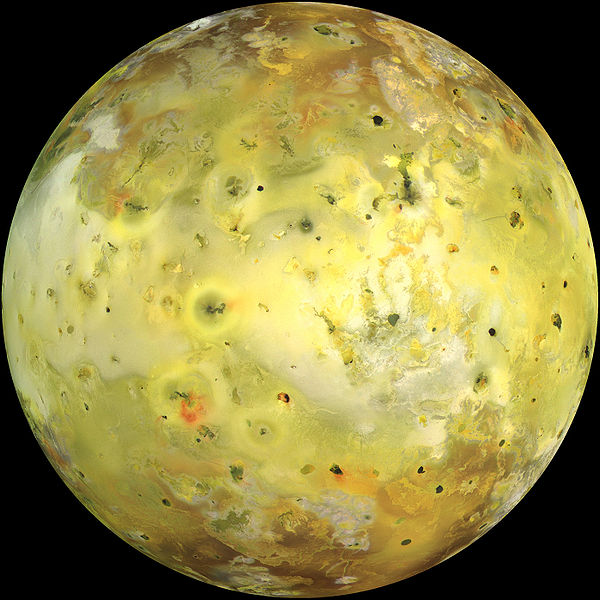
Sedna has been there, creeping around its dim mother-star, since long before man evolved. It will still be there long after man disappears, voluntarily or otherwise. This frozen dwarf is a good symbol of the vastness of the universe and its apparent indifference to life. We don’t seem to interest the universe at all, but the universe certainly interests us. Wonders of the Solar System is a good introduction to our tiny corner of it, describing some fundamentals of astronomy with the help of spectacular photographs and well-designed illustrations. You can learn how fusion powers the sun, how Mars lost its atmosphere and how there might be life beneath the frozen surface of Jupiter’s satellite Europa. The text is simple, but not simplistic, though I think the big name on the cover did little of the writing: this book is probably much more Cohen than Cox. Either way, I enjoyed reading the words and not just looking at the pictures, all the way from star-dim Sedna (pp. 26-7) to “Scars on Mars” (pp. 220-1) by way of “The most violent place in the solar system” (pp. 198-9), a.k.a. Jupiter’s gravity-flexed, volcano-pocked satellite Io.

Pockmarked moon -- the Galilean satellite Io

Pockmarked moon — the Galilean satellite Io

Everything described out there is linked to something down here, because that’s how it was done in the television series. Linking the sky with the earth allowed the BBC to film the genial and photogenic physicist Brian Cox in various exotic settings: Hawaii, India, East Africa, Iceland and so on. I’ve not seen any of Cox’s TV-work, but he seems an effective popularizer of science. And the pretty-boy shots here add anthropology to the astronomy. What is the scientific point of Cox striding away in an artistic blur over the Sahara desert (pg. 103), staring soulfully into the distance near the Iguaçu Falls on the Brazilian-Argentine border (pg. 37) or gazing down into the Grand Canyon, hips slung, hands in pockets (pg. 163)? There isn’t a scientific point: the photos are there for his fans, particularly his female ones. He’s a sci-celeb, a geek with chic, and we’re supposed to see the sky through Bri’s eyes.

But he’s also a liberal working for the Bolshevik Broadcasting Corporation, so he’ll be happy with the prominent photo early on: Brian holding protective glasses over the eyes of a dusky-skinned child during a solar eclipse in India. The same simul-scribes’ Wonders of Life (Collins 2013), another book-of-the-BBC-series, opens with a similarly allophilic allophoto: a dusky-skinned Mexican crowned in monarch butterflies. This is narcissistic and patronizing, but the readiness of whites to “Embrace the Other” helps explain science, because science involves looking away from the self, the tribe and the quotidian quest for status and survival. Of course, Cox and Cohen would gasp with horror at the idea of racial differences explaining big things like science and politics. Cox would be sincere in his horror. I’m not so sure about Cohen.

But there are wonders within us as well as without us and though you won’t hear about them on the BBC, the tsunami of HBD, or research into human bio-diversity, is now rolling ashore. It will sweep away almost all of Cox’s and Cohen’s politics, but leave most of their science intact. It isn’t a coincidence that the rings of Saturn were discovered by the Italian Galileo and explained by the Dutchman Huygens and the Italian Cassini, or that the photos of Saturn here were taken by a space-probe launched by white Americans. But the United States has much less money now for space exploration. That’s explained by race too: as the US looks less like its founders, it looks less like a First World nation too. It’s fun to see the world through Bri’s eyes, but he’s careful not to look at everything that’s out there.

Playing on the Nerves

Front cover of In a Glass Darkly by Sheridan Le FanuIn A Glass Darkly, Sheridan Le Fanu

Far less known than his great admirer M.R. James, the Dubliner Sheridan Le Fanu (1814-73) may be an even better and more haunting writer. And yet he doesn’t rely much on the supernatural. Some of his stories seem to be more about neurological disease than about ghostly visitation. That kind of disease was much more common in his Georgian and Victorian day, when the toxicity of many chemicals wasn’t understood properly and people could be poisoned by arsenic in their wallpaper. But the horrors conjured by a diseased brain can be both stronger and more mysterious than a ghost or demon, because they’re more intimate and less easy to escape.

Le Fanu is intimate in another way: he has Robert Aickman’s ability to start currents swirling in your subconscious. You can feel yourself being drawn down into the abysses that wait there, dark and mysterious with sex, death and primal instinct. “Carmilla”, his classic tale of adolescent lesbian vampirism, is a good example. It also reveals his wider sympathy with humanity. M.R. James would not have written about women or about that kind of sex. Homosexuality and necrophilia seem to inform James’ stories; Le Fanu’s have the richness and bittersweetness of a man with wider sexual interests. Like Frankenstein or Sherlock Holmes, “Carmilla” may be more famous than its author is. It still appears in horror anthologies, partly because of its theme, partly because it’s probably his best work.

It’s also written more simply than, say, “The Familiar”. You often have to pay attention when you read Le Fanu’s prose:

The mind thus turned in upon itself, and constantly occupied with a haunting anxiety which it dared not reveal, or confide to any human breast, became daily more excited, and, of course, more vividly impressible, by a system of attack which operated through the nervous system; and in this state he was destined to sustain, with increasing frequency, the stealthy visitations of that apparition, which from the first had seemed to possess so unearthly and terrible a hold upon his imagination. (“The Watcher”)

If you don’t concentrate as Le Fanu throws you the words, you drop them and can’t juggle the whirl of metaphor and concept he wants you to experience. The effort required to read his stories is no doubt part of why he isn’t as well-known as he should be. But what you invest is repaid with interest and this collection, in Oxford’s World Classics series, is well represented by the painting on the cover: a detail from the great John Atkinson Grimshaw’s Dulce Domum (1885), with a melancholy-dreaming young woman sitting in a house rich with detail, from peacock feathers to Chinese vases.