Summer Set Sequence

I wondered what would happen if you added to a set of numbers, (a, b, c), the first number that wasn’t equal to the sum of any subset of the numbers: a + b, a + c, c + b, a + b + c. If the set begins with 1, the first number not equal to any subset of (1) is 2. So the set becomes (1, 2). 3 = 1 + 2, so 3 is not added. But 4 is added, making the set (1, 2, 4). The sequence of additions goes like this:

1, 2, 4, 8, 16, 32, 64, 128, 256, 512, 1024, 2048, 4096, 8192, 16384, 32768, 65536…

It’s the powers of 2, because some subset of the powers of 2 < 2^p will equal any number from 1 to (2^p)-1, therefore the first addition will be 2^p = the cumulative sum + 1:

1 (cumulative sum=1), 2 (cs=3), 4 (cs=7), 8 (cs=15), 16 (cs=31), 32 (cs=63), 64 (cs=127), 128 (cs=255), 256 (cs=511), 512 (cs=1023), 1024 (cs=2047), 2048 (cs=4095), 4096 (cs=8191), 8192 (cs=16383), 16384 (cs=32767), 32768 (cs=65535)…

If you seed the sequence with the set (2), the first addition is 3, but after that the powers of 2 re-appear:

2, 3, 4, 8, 16, 32, 64, 128, 256, 512, 1024, 2048, 4096, 8192, 16384, 32768, 65536…

It becomes more complicated if the sequence is seeded with the set (3):

3, 4, 5, 6, 16, 17, 49, 50, 148, 149, 445, 446, 1336, 1337, 4009, 4010, 12028, 12029, 36085, 36086…

You can predict the pattern by looking at the cumulative sums again:

3, 4, 5, 6 (cumulative sum=18), 16, 17 (cs=51), 49, 50 (cs=150), 148, 149 (cs=447), 445, 446 (cs=1338), 1336, 1337 (cs=4011), 4009, 4010 (cs=12030), 12028, 12029 (cs=36087), 36085, 36086 (cs=108258)…

The sequence begins with a block of four consecutive numbers, followed by separate blocks of two consecutive numbers. The first number in each 2-block is predicted by the cumulative sum of the last number in the previous block, according to the formula n = cumulative sum – seed + 1. When the seed is 3, n = cs-3+1.

If the seed is 4, the sequences goes like this:

4, 5, 6, 7, 8, 27, 28, 29, 111, 112, 113, 447, 448, 449, 1791, 1792, 1793, 7167, 7168, 7169…

Now the sequence begins with a block of five consecutive numbers, followed by separate blocks of three consecutive numbers. The formula is n = cs-4+1:

4, 5, 6, 7, 8 (cumulative sum=30), 27, 28, 29 (cs=114), 111, 112, 113 (cs=450), 447, 448, 449 (cs=1794), 1791, 1792, 1793 (cs=7170), 7167, 7168, 7169 (cs=28674)…

And here’s the sequence seeded with (5):

5, 6, 7, 8, 9, 10, 41, 42, 43, 44, 211, 212, 213, 214, 1061, 1062, 1063, 1064, 5311, 5312, 5313, 5314…

5, 6, 7, 8, 9, 10 (cs=45), 41, 42, 43, 44 (cs=215), 211, 212, 213, 214 (cs=1065), 1061, 1062, 1063, 1064 (cs=5315), 5311, 5312, 5313, 5314 (cs=26565)…

Life in Vein

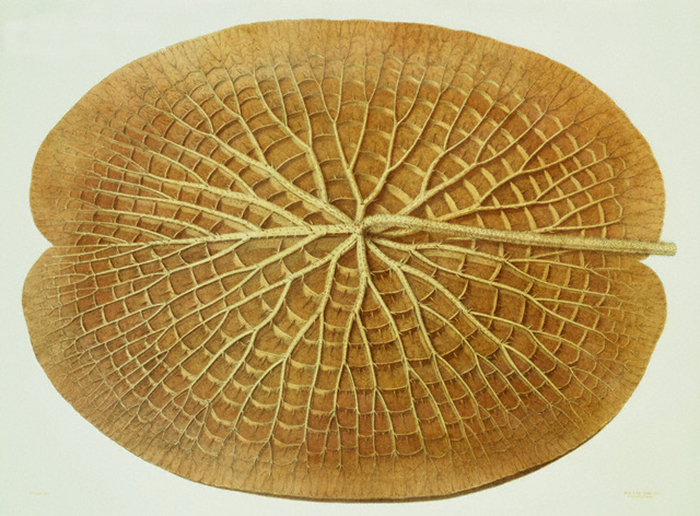
William Sharp, “Victoria Regia or the Great Water Lily of America (Underside of a Leaf)“ (1854), viâ Jeff Thompson

William Sharp, “Victoria Regia or the Great Water Lily of America (Underside of a Leaf)” (1854), viâ Jeff Thompson

M.i.P. Trip

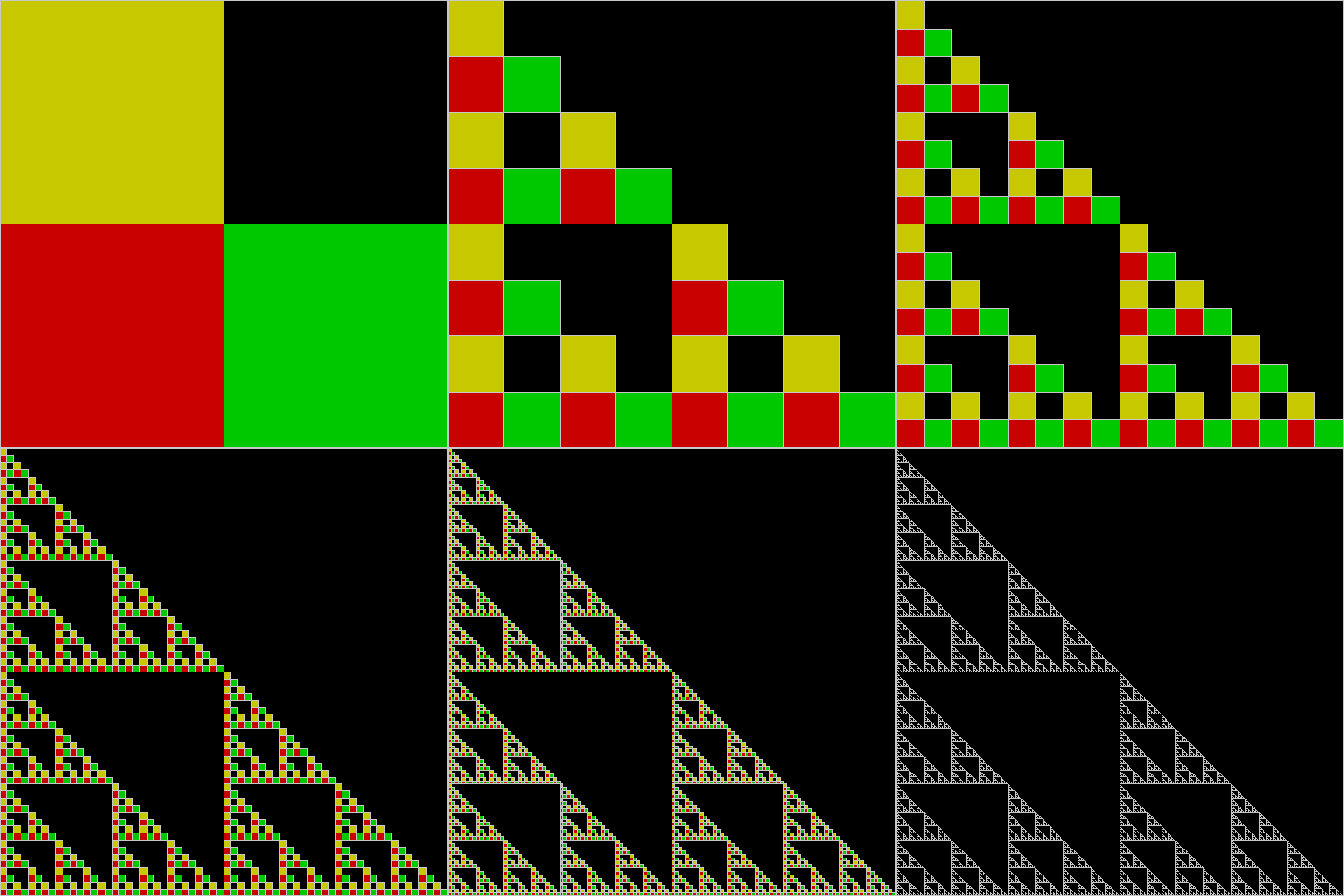
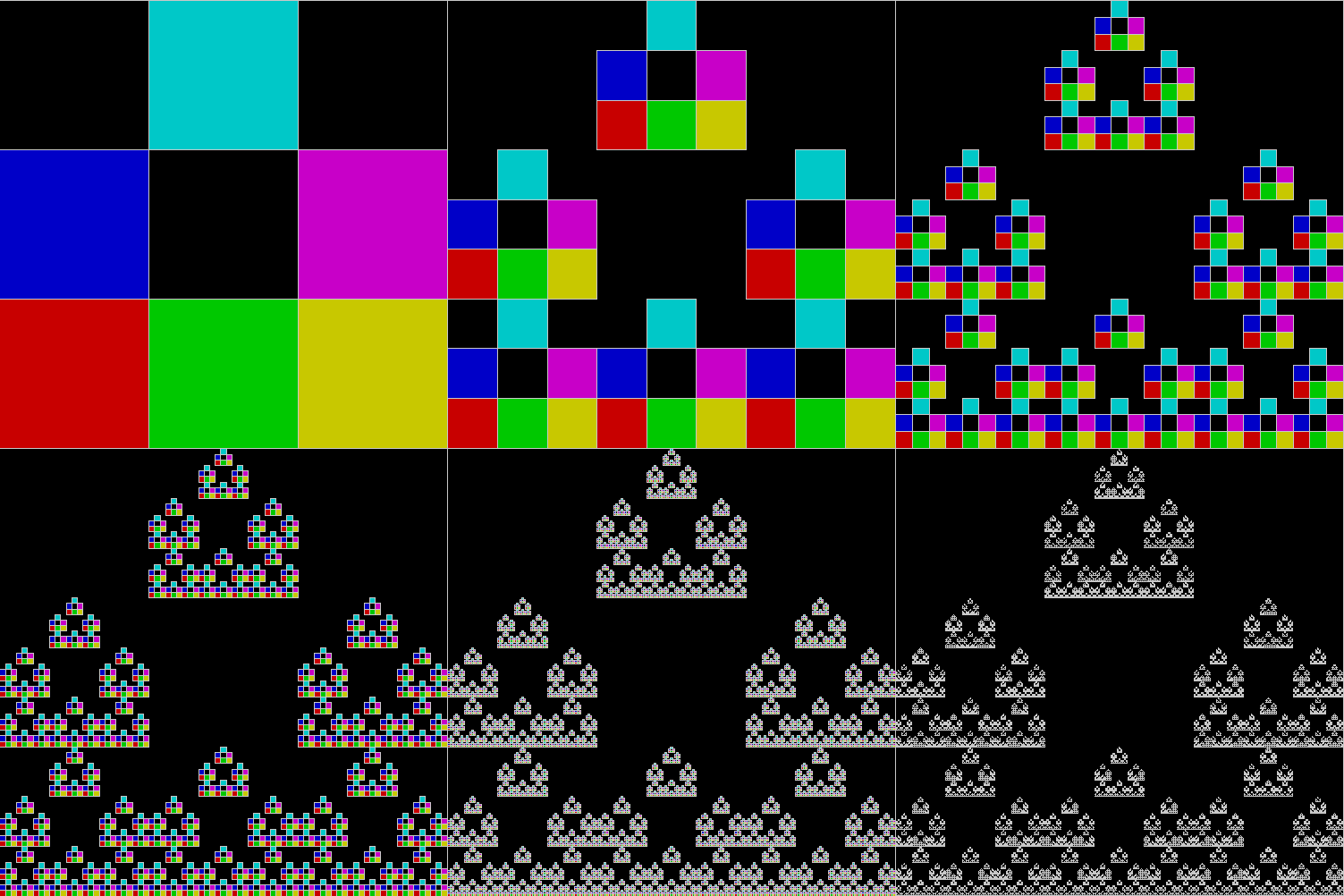
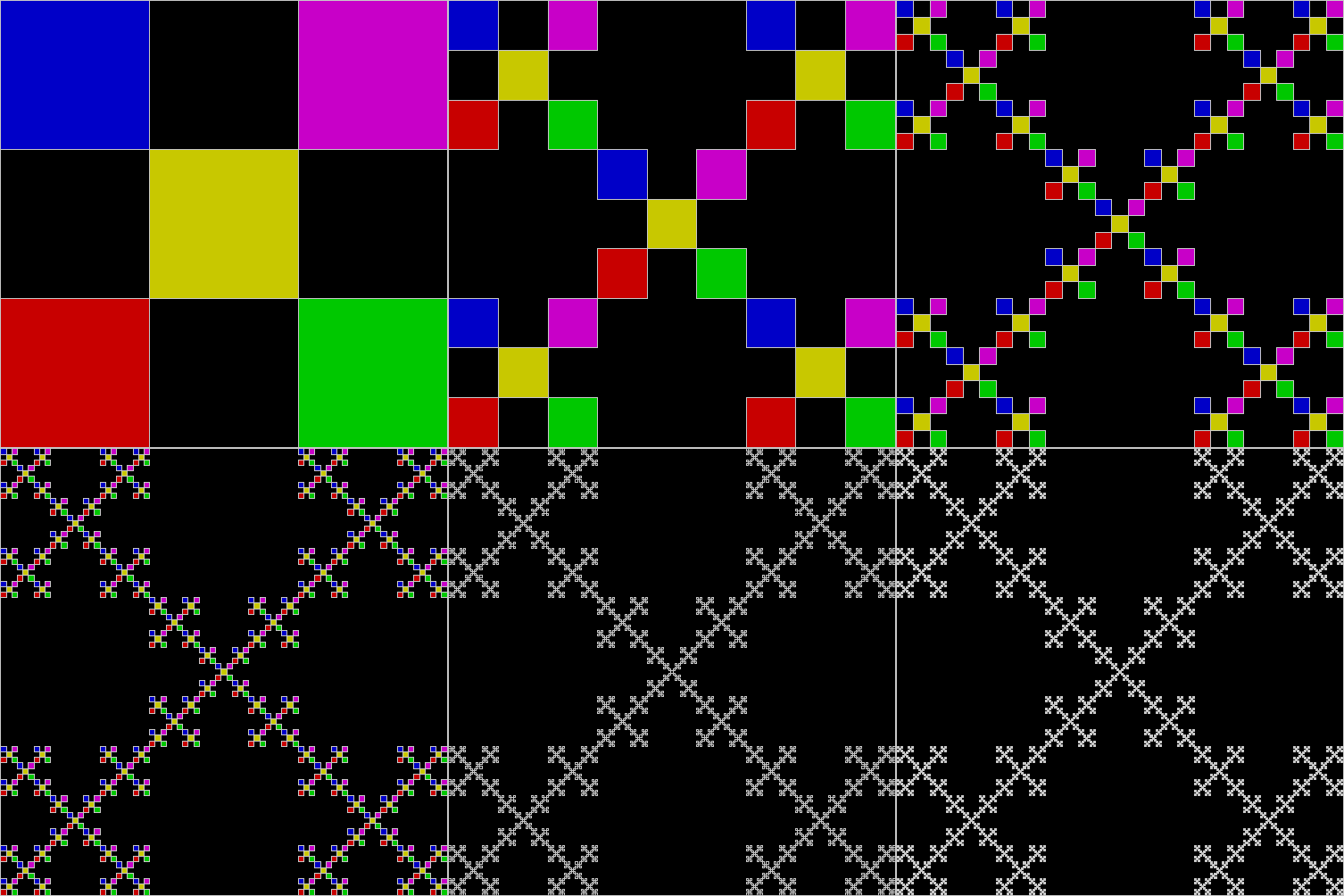
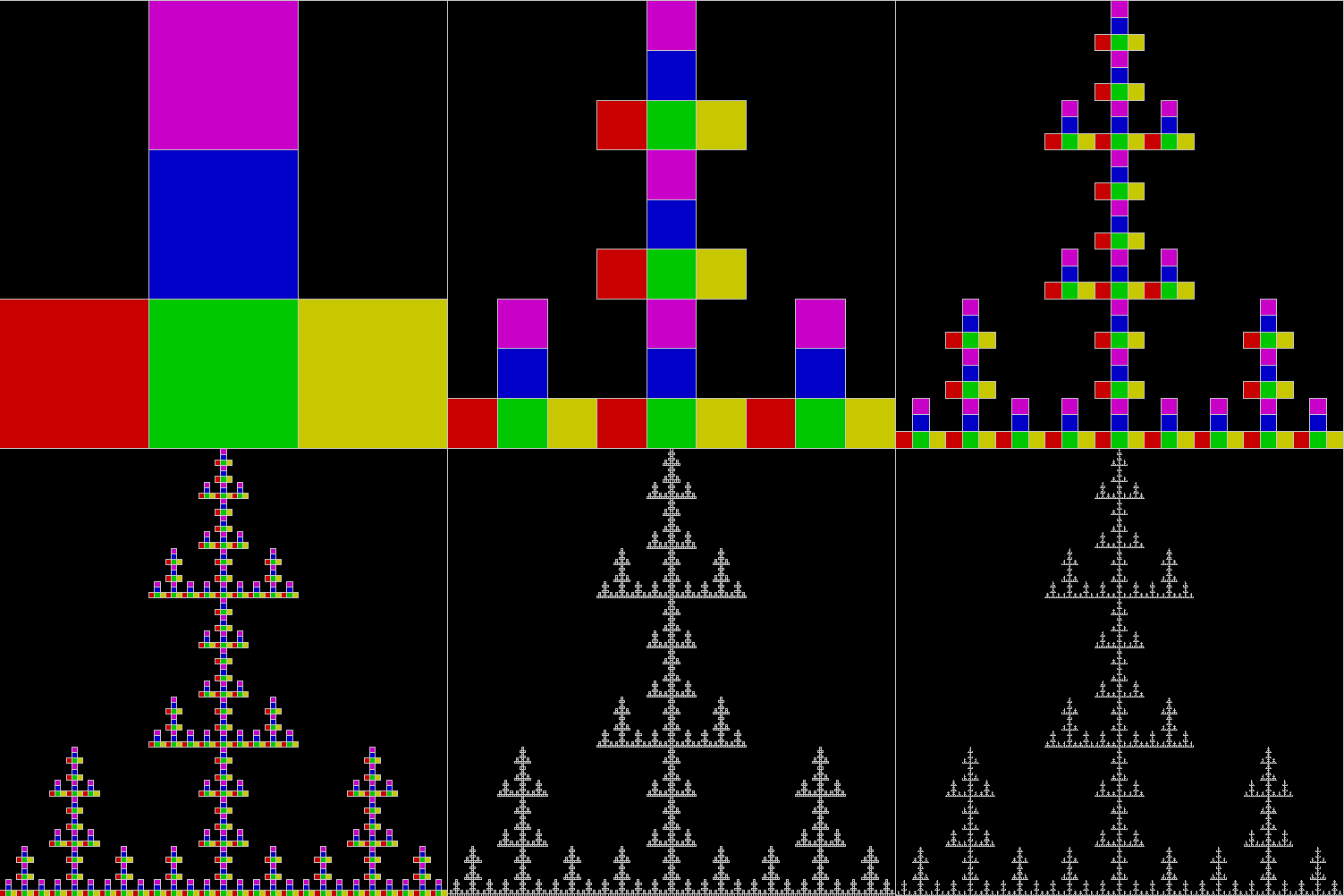
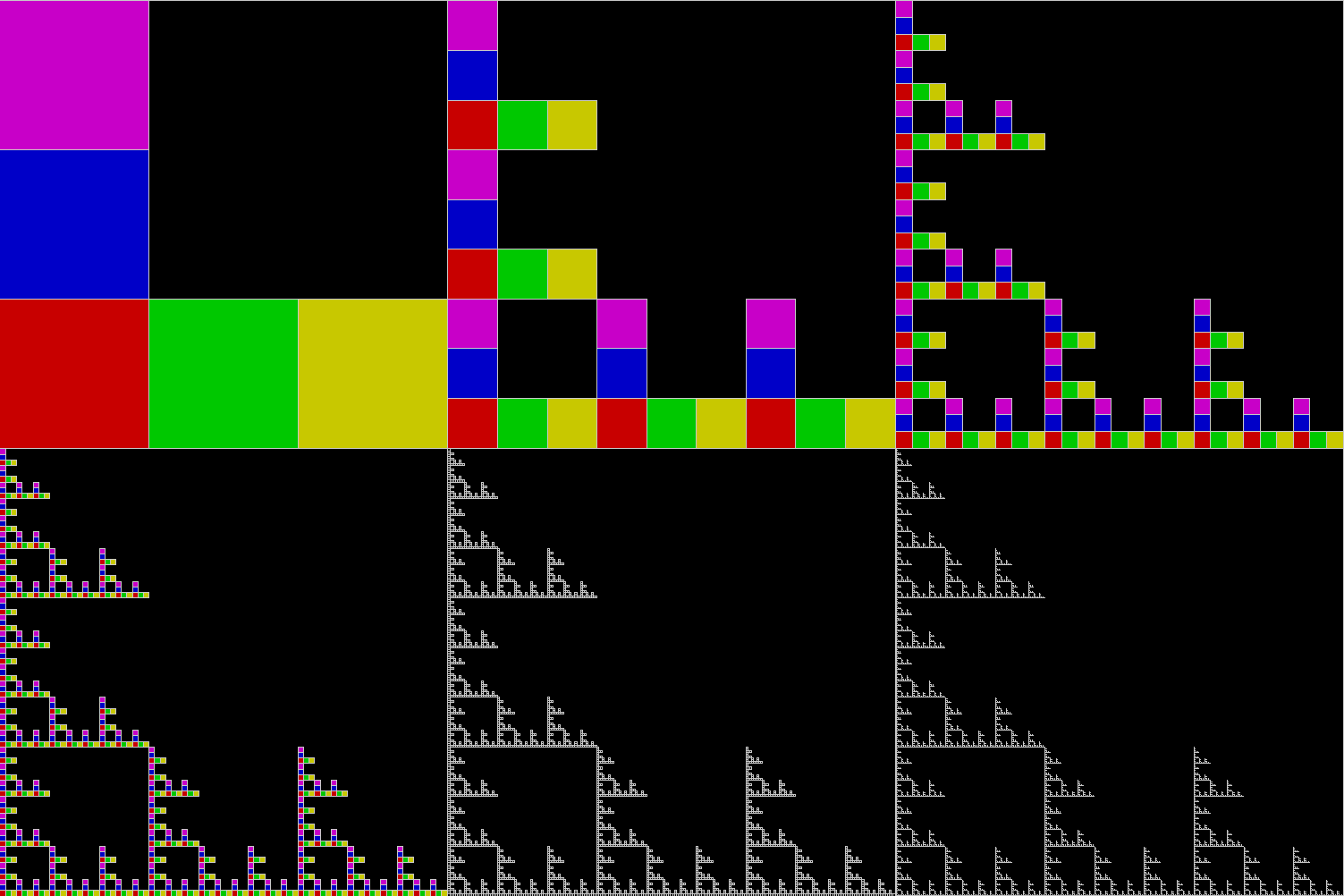
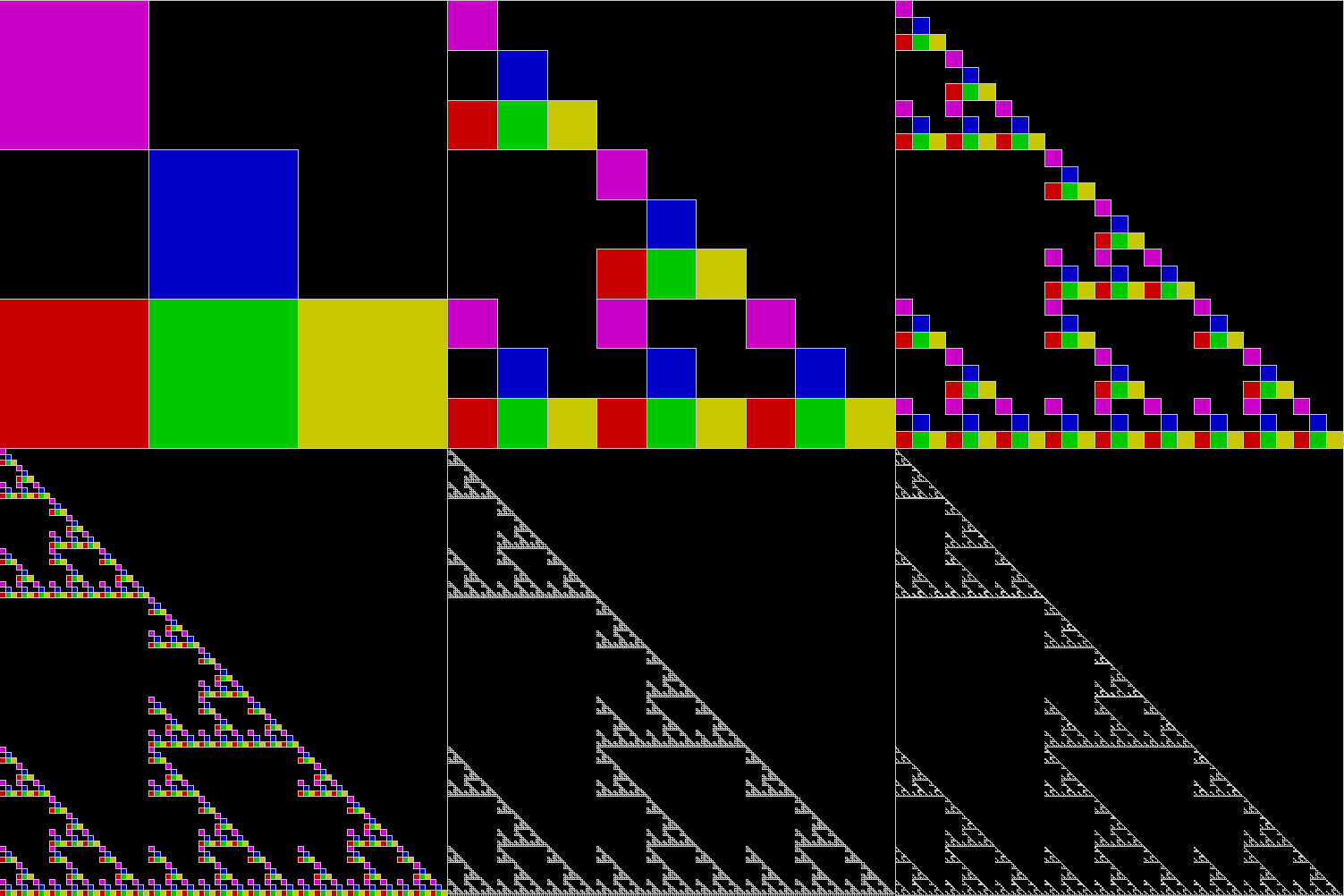
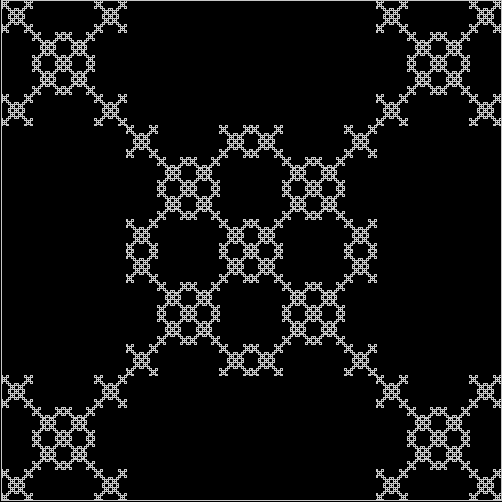
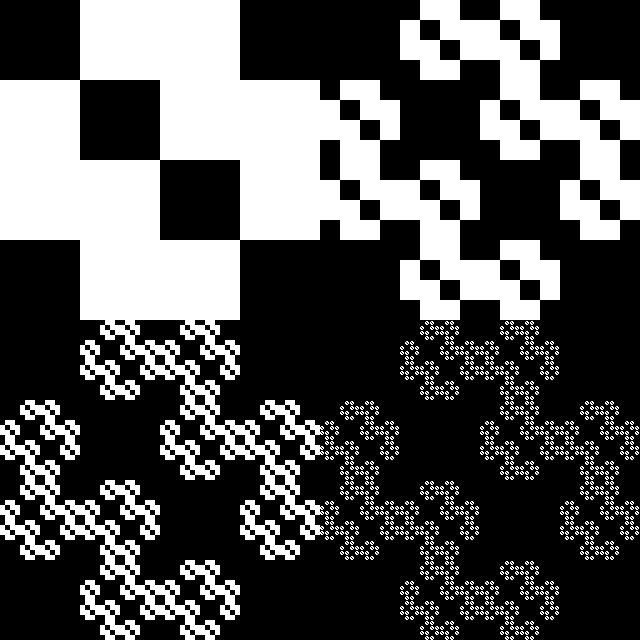
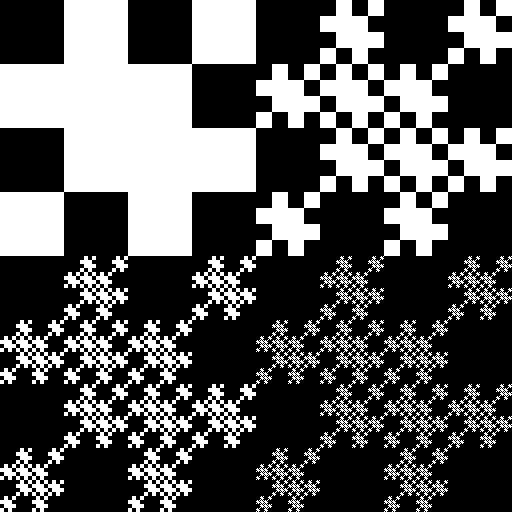
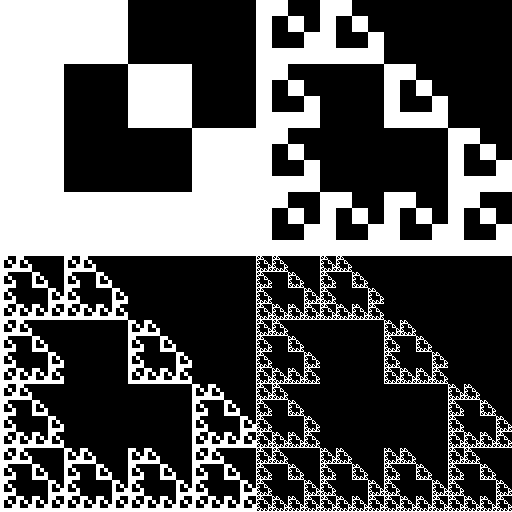
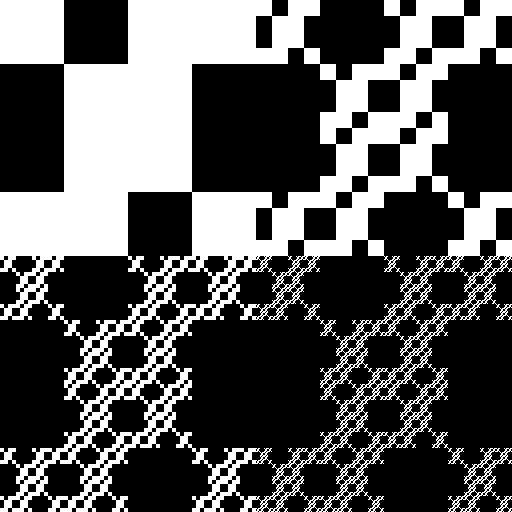
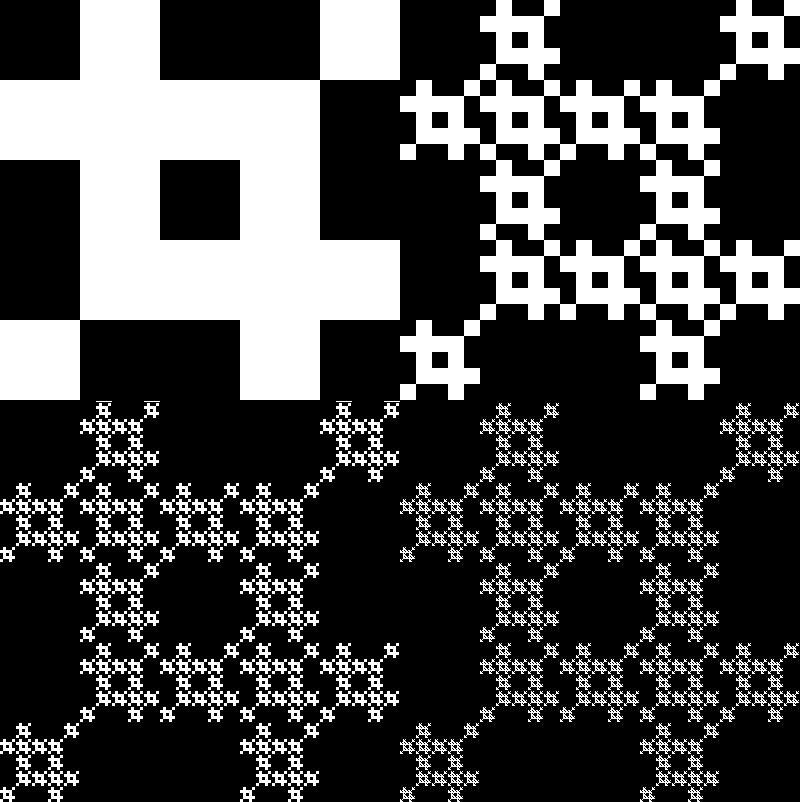
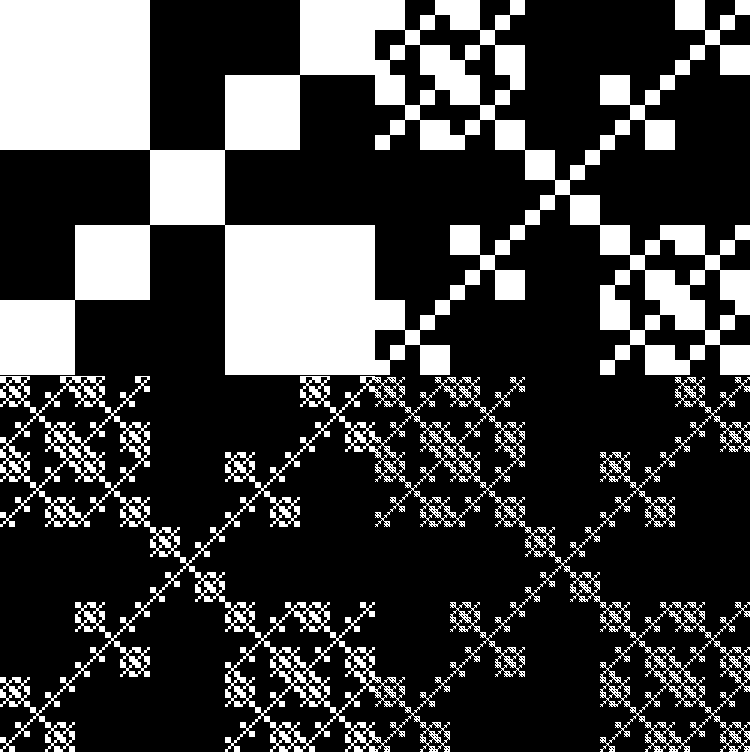
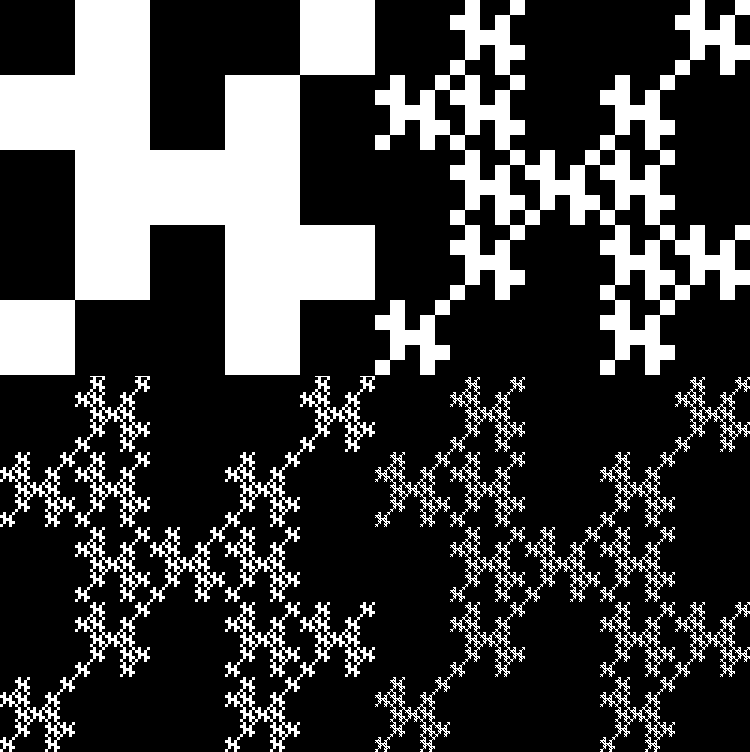
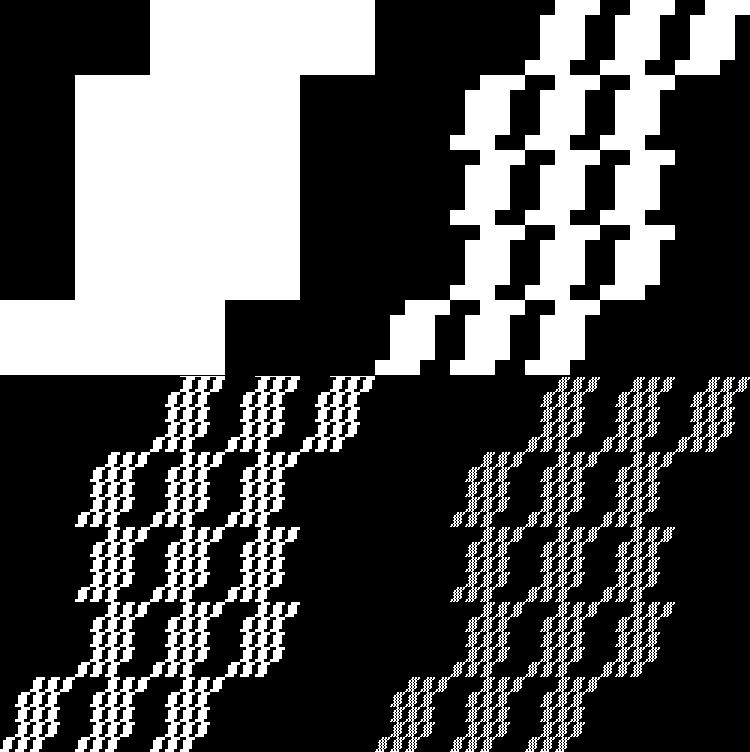
The Latin phrase multum in parvo means “much in little”. It’s a good way of describing the construction of fractals, where the application of very simple rules can produce great complexity and beauty. For example, what could be simpler than dividing a square into smaller squares and discarding some of the smaller squares?

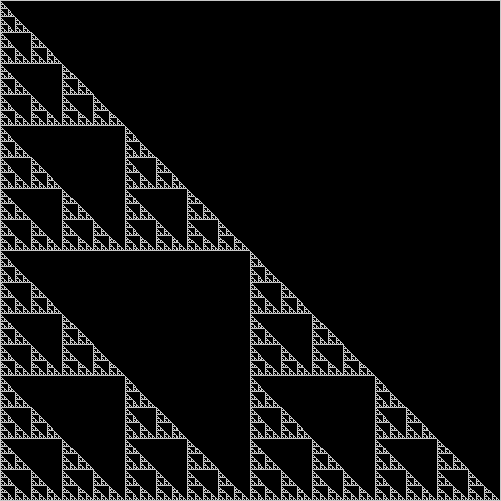
Yet repeated applications of divide-and-discard can produce complexity out of even a 2×2 square. Divide a square into four squares, discard one of the squares, then repeat with the smaller squares, like this:

2x2square2


2x2square3


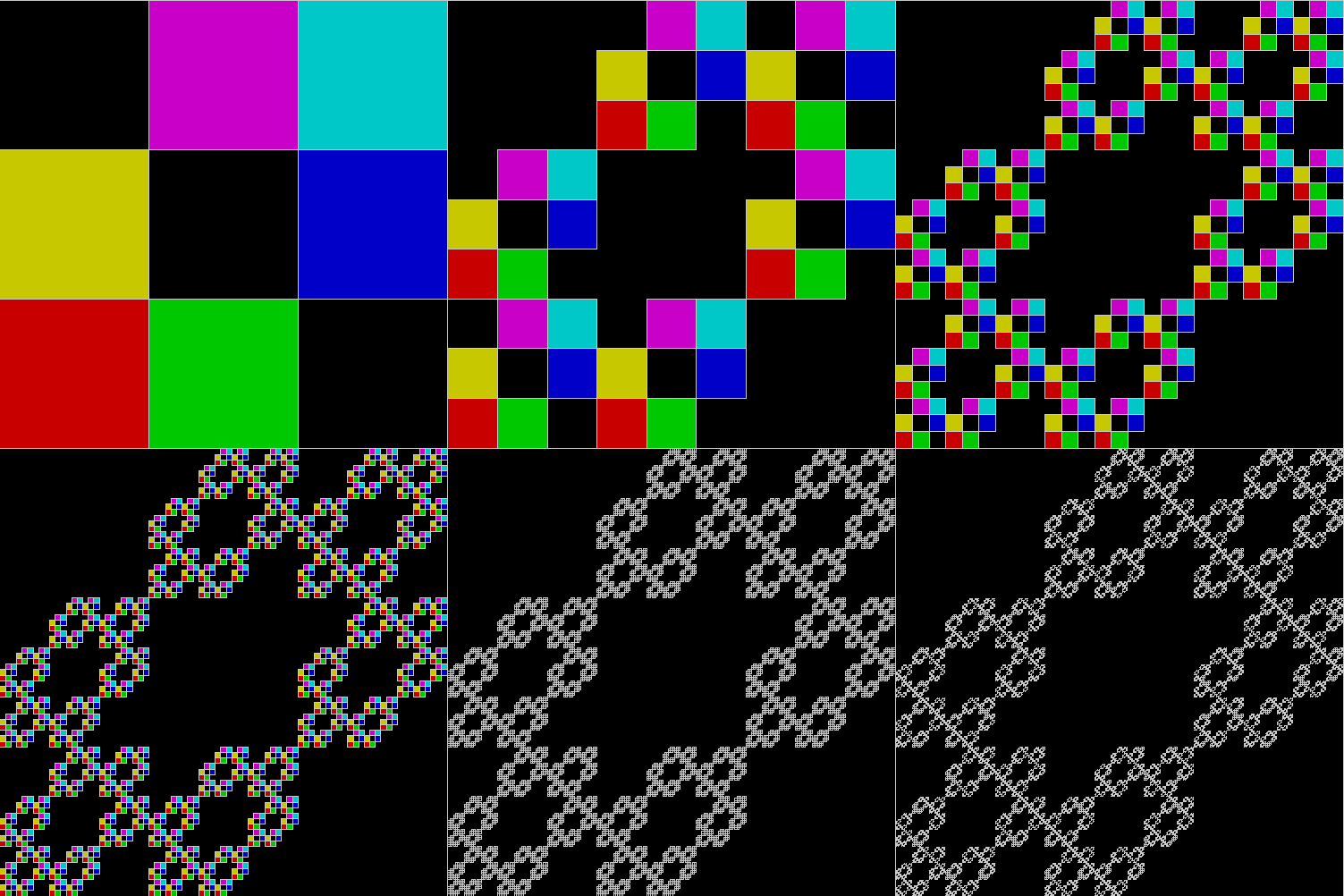
Increase the sides of the square by a little and you increase the number of fractals by a lot. A 3×3 square yields these fractals:

3x3square2


3x3square3


3x3square6


3x3square7


3x3square8


3x3square9


3x3square10


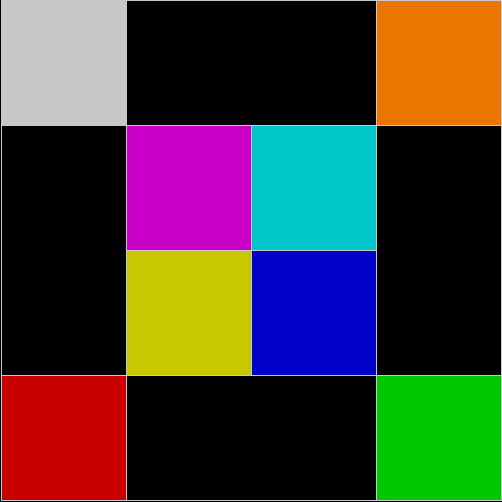
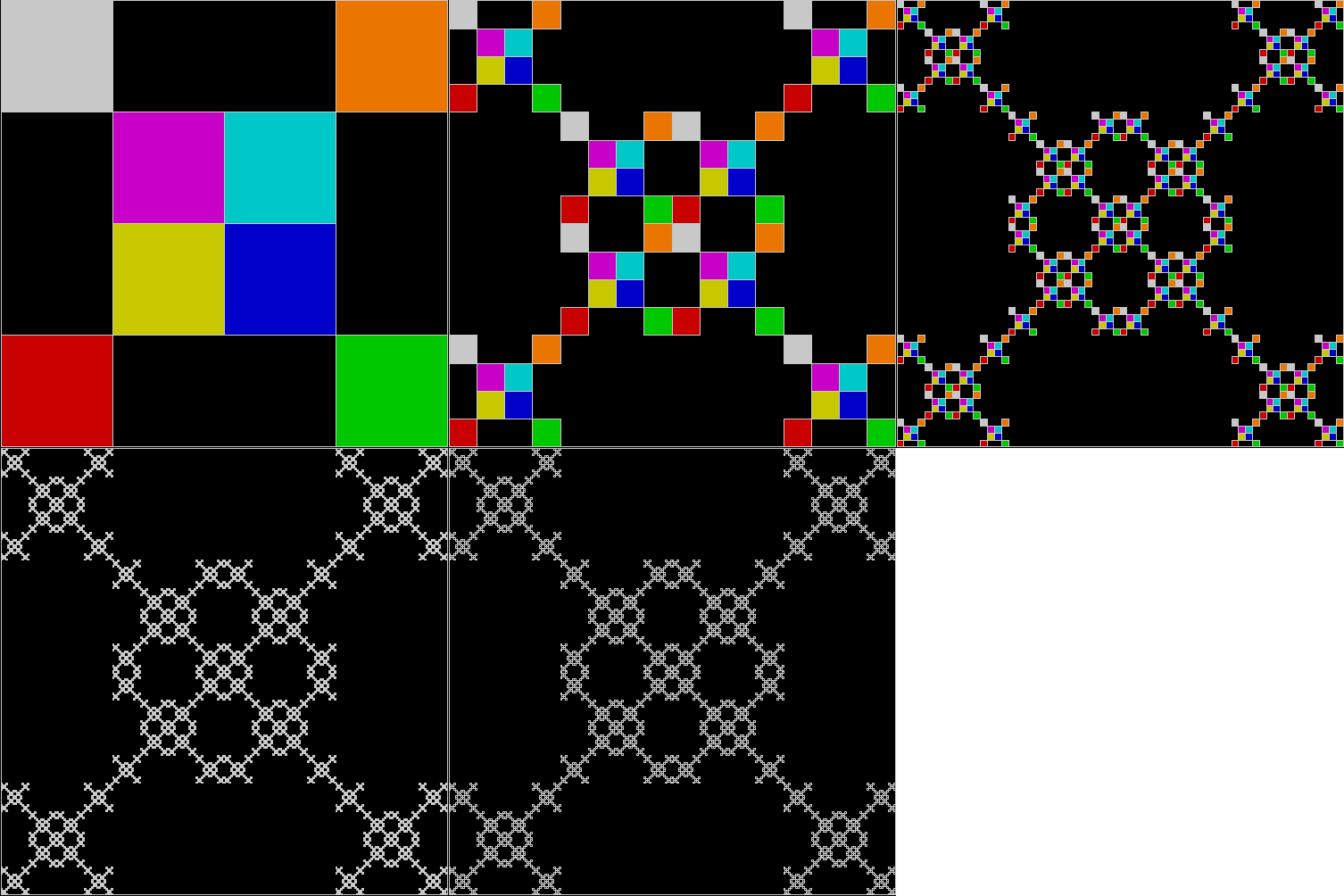
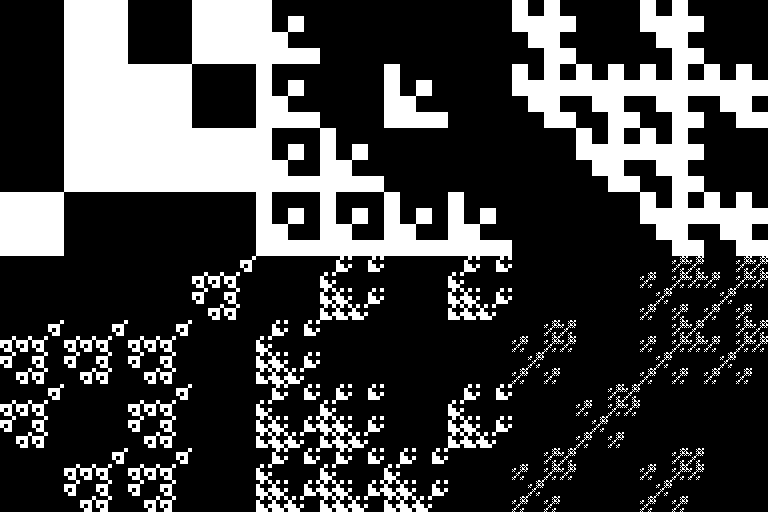
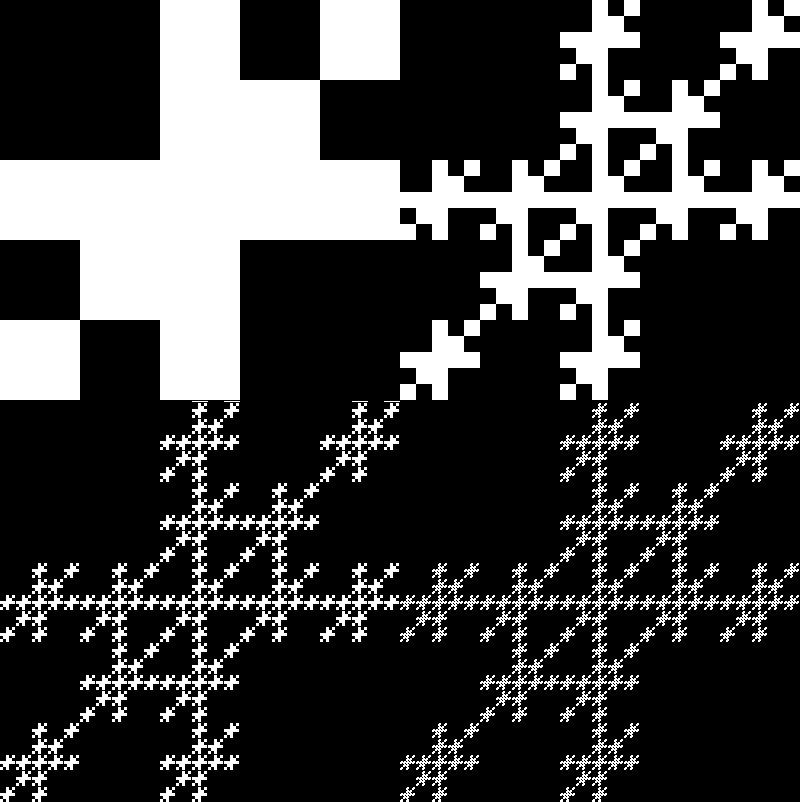
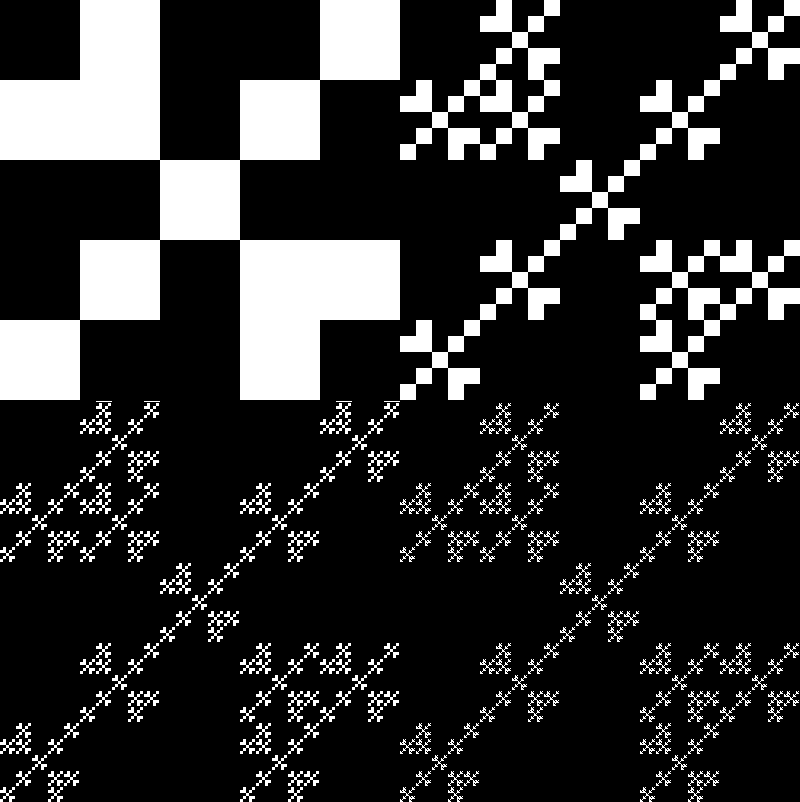
And the 4×4 and 5×5 fractals yield more:
4x4square1


4x4square2


4x4square4


4x4square5


4x4square6


4x4square7


4x4square8


5x5square1


5x5square2


5x5square3


5x5square4


5x5square5


5x5square6


5x5square7


The Rite of Sling

Duels are interesting things. Flashman made his name in one and earnt an impressive scar in another. Maupassant explored their psychology and so did his imitator Maugham. Game theory might be a good guide on how to fight one, but I’d like to look at something simpler: the concept of duelling numbers.

How would two numbers fight? One way is to use digit-sums. Find the digit-sum of each number, then take it away from the other number. Repeat until one or both numbers <= 0, like this:

function duel(n1,n2){
print(n1," <-> ",n2);
do{
s1=digitsum(n1);
s2=digitsum(n2);
n1 -= s2;
n2 -= s1;
print(” -> ",n1," <-> ",n2);
}while(n1>0 && n2>0);
}

Suppose n1 = 23 and n2 = 22. At the first step, s1 = digitsum(23) = 5 and s2 = digitsum(22) = 4. So n1 = 23 – 4 = 19 and n2 = 22 – 5 = 17. And what happens in the end?

23 ↔ 22 ➔ 19 ↔ 17 ➔ 11 ↔ 7 ➔ 4 ↔ 5 ➔ -1 ↔ 1

So 23 loses the duel with 22. Now try 23 vs 24:

23 ↔ 24 ➔ 17 ↔ 19 ➔ 7 ↔ 11 ➔ 5 ↔ 4 ➔ 1 ↔ -1

23 wins the duel with 24. The gap can be bigger. For example, 85 and 100 are what might be called David and Goliath numbers, because the David of 85 beats the Goliath of 100:

85 ↔ 100 ➔ 84 ↔ 87 ➔ 69 ↔ 75 ➔ 57 ↔ 60 ➔ 51 ↔ 48 ➔ 39 ↔ 42 ➔ 33 ↔ 30 ➔ 30 ↔ 24 ➔ 24 ↔ 21 ➔ 21 ↔ 15 ➔ 15 ↔ 12 ➔ 12 ↔ 6 ➔ 6 ↔ 3 ➔ 3 ↔ -3

999 and 1130 are also David and Goliath numbers:

999 ↔ 1130 ➔ 994 ↔ 1103 ➔ 989 ↔ 1081 ➔ 979 ↔ 1055 ➔ 968 ↔ 1030 ➔ 964 ↔ 1007 ➔ 956 ↔ 988 ➔ 931 ↔ 968 ➔ 908 ↔ 955 ➔ 889 ↔ 938 ➔ 869 ↔ 913 ➔ 856 ↔ 890 ➔ 839 ↔ 871 ➔ 823 ↔ 851 ➔ 809 ↔ 838 ➔ 790 ↔ 821 ➔ 779 ↔ 805 ➔ 766 ↔ 782 ➔ 749 ↔ 763 ➔ 733 ↔ 743 ➔ 719 ↔ 730 ➔ 709 ↔ 713 ➔ 698 ↔ 697 ➔ 676 ↔ 674 ➔ 659 ↔ 655 ➔ 643 ↔ 635 ➔ 629 ↔ 622 ➔ 619 ↔ 605 ➔ 608 ↔ 589 ➔ 586 ↔ 575 ➔ 569 ↔ 556 ➔ 553 ↔ 536 ➔ 539 ↔ 523 ➔ 529 ↔ 506 ➔ 518 ↔ 490 ➔ 505 ↔ 476 ➔ 488 ↔ 466 ➔ 472 ↔ 446 ➔ 458 ↔ 433 ➔ 448 ↔ 416 ➔ 437 ↔ 400 ➔ 433 ↔ 386 ➔ 416 ↔ 376 ➔ 400 ↔ 365 ➔ 386 ↔ 361 ➔ 376 ↔ 344 ➔ 365 ↔ 328 ➔ 352 ↔ 314 ➔ 344 ↔ 304 ➔ 337 ↔ 293 ➔ 323 ↔ 280 ➔ 313 ↔ 272 ➔ 302 ↔ 265 ➔ 289 ↔ 260 ➔ 281 ↔ 241 ➔ 274 ↔ 230 ➔ 269 ↔ 217 ➔ 259 ↔ 200 ➔ 257 ↔ 184 ➔ 244 ↔ 170 ➔ 236 ↔ 160 ➔ 229 ↔ 149 ➔ 215 ↔ 136 ➔ 205 ↔ 128 ➔ 194 ↔ 121 ➔ 190 ↔ 107 ➔ 182 ↔ 97 ➔ 166 ↔ 86 ➔ 152 ↔ 73 ➔ 142 ↔ 65 ➔ 131 ↔ 58 ➔ 118 ↔ 53 ➔ 110 ↔ 43 ➔ 103 ↔ 41 ➔ 98 ↔ 37 ➔ 88 ↔ 20 ➔ 86 ↔ 4 ➔ 82 ↔ -10

You can look in the other direction and find bully numbers, or numbers that beat all numbers smaller than themselves. In base 10, the numbers 2 to 9 obviously do. So do these:

35, 36, 37, 38, 39, 47, 48, 49, 58, 59, 64, 65, 66, 67, 68, 69, 76, 77, 78, 79, 189

In other bases, bullies are sometimes common, sometimes rare. Sometimes they don’t exist at all for n > b. Here are bully numbers for bases 2 to 30:

base=2: 3, 5, 7, 13, 15, 21, 27, 29, 31, 37, 43, 45, 47, 54, 59
b=3: 4, 5, 7, 8, 14
b=4: 5, 6, 7, 9, 10, 11, 14, 15, 27, 63
b=5: 12, 13, 14, 18, 19, 23, 24
b=6: 15, 16, 17, 22, 23, 26, 27, 28, 29, 32, 33, 34, 35, 65, 71, 101
b=7: 17, 18, 19, 20, 24, 25, 26, 27, 32, 33, 34, 40, 41, 45, 46, 47, 48, 76
b=8: 37, 38, 39, 46, 47, 59, 60, 61, 62, 63, 95, 103, 111, 119
b=9: 42, 43, 44, 52, 53, 61, 62
b=10: 35, 36, 37, 38, 39, 47, 48, 49, 58, 59, 64, 65, 66, 67, 68, 69, 76, 77, 78, 79, 189
b=11: 38, 39, 40, 41, 42, 43, 49, 50, 51, 52, 53, 54, 62, 63, 64, 65, 73, 74, 75, 76, 85, 86, 87
b=12: 57, 58, 59
b=13: 58, 59, 60, 61, 62, 63, 64, 74, 75, 76, 77, 87, 88, 89, 90, 101, 102, 103, 115, 116, 127, 128, 129
b=14: none (except 2 to 13)
b=15: 116, 117, 118, 119, 130, 131, 132, 133, 134, 147, 148, 149
b=16: 122, 123, 124, 125, 126, 127, 140, 141, 142, 143, 156, 157, 158, 159, 173, 174, 175, 190, 191, 222, 223
b=17: 151, 152, 168, 169, 185, 186
b=18: 85, 86, 87, 88, 89, 191, 192, 193, 194, 195, 196, 197, 212, 213, 214, 215
b=19: 242, 243, 244, 245, 246
b=20: none
b=21: 136, 137, 138, 139, 140, 141, 142, 143, 144, 145, 146, 162, 163, 164, 165, 166, 167, 183, 184, 185, 186, 187, 188, 206, 207, 208, 209, 227, 228, 229, 230, 248, 249, 250, 251, 270, 271, 272
b=22: 477, 478, 479, 480, 481, 482, 483
b=23: none
b=24: none
b=25: 271, 272, 273, 274, 296, 297, 298, 299, 322, 323, 324, 348, 349, 372, 373, 374
b=26: none
b=27: none
b=28: none
b=29: 431, 432, 433, 434, 459, 460, 461, 462, 463, 490, 491, 492, 546, 547, 548, 549, 550
b=30: none

Performativizing Papyrocentricity #32

Papyrocentric Performativity Presents:

At the Margins of MapnessMapping the World: The Story of Cartography, Beau Riffenburgh (Carlton Books 2011, 2014)

Vivid ViralFlora: An Artistic Voyage through the World of Plants, Sandra Knapp (Natural History Museum 2014)

Auto MotiveDream Cars: The Hot 100, Sam Philip (BBC Books 2014)


Or Read a Review at Random: RaRaR

Performativizing Papyrocentricity #31

Papyrocentric Performativity Presents:

Nor Severn ShoreThe Poems of A.E. Housman, edited by Archie Burnett (Clarendon Press 1997) (posted @ Overlord of the Über-Feral)

Knight and ClayThe Riddle of the Labyrinth: The Quest to Crack an Ancient Code and the Uncovering of a Lost Civilisation, Margalit Fox (Profile Books 2013)

Goal God GuideThe Secret Footballer’s Guide to the Modern Game: Tips and Tactics from the Ultimate Insider, The Secret Footballer (Guardian Books 2014)


Or Read a Review at Random: RaRaR

Moto-Motto

Poem XLIII of Housman’s More Poems (1936) runs like this:

I wake from dreams and turning
My vision on the height
I scan the beacons burning
About the fields of night.

Each in its steadfast station
Inflaming heaven they flare;
They sign with conflagration
The empty moors of air.

The signal-fires of warning
They blaze, but none regard;
And on through night to morning
The world runs ruinward. (MP, XLIII)

In his commentary on the poem, the Housman scholar Archie Burnett traces a parallel with these lines from Lucretius: …multosque per annos | sustenata ruet moles et machina mundi – “…and the mass and fabric of the world, upheld through many years, shall crash into ruins” (De Rerum Natura, V 95-6).

I like the phrase moles et machina mundi, “mass and fabric of the world”, but I didn’t understand the translation fully. I investigated and discovered that the Latin word machina, though taken from Doric Greek μαχανα, makhana, “mechanical device”,* developed an additional meaning of “frame” or “body”. So Latin has deus ex machina, “god from the machine”, with one meaning, and machina mundi, “fabric of the world”, with another.

This seems to make machina a good word to expand the motto of this bijou bloguette. At the moment, the motto is this:

• Mathematica (v) • Magistra (iij) • Mundi (ij) •

That means “Mathematics is Mistress of the World”. Now try this:

• Mathematica (v) • Machina (iij) • Mundi (ij) •

The syllabification doesn’t change, but now I assume that the central word is pleasingly ambiguous and the motto means variously “Mathematics is Mechanism of the World”, the “Fabric of the World”, the “Engine of the World”, the “Body of the World”, and so on.

In addition, all the letters of Machina are found in Mathematica and Mundi, so the words on left and right almost act as a matrix, generating what appears between them.

There are further possibilities, blending magistra and machina:

• Mathematica (v) • Machistra (iij) • Mundi (ij) •

• Mathematica (v) • Magina (iij) • Mundi (ij) •


*In Attic Greek, it’s μηχανη, mēkhanē, whence “mechanical”, etc.

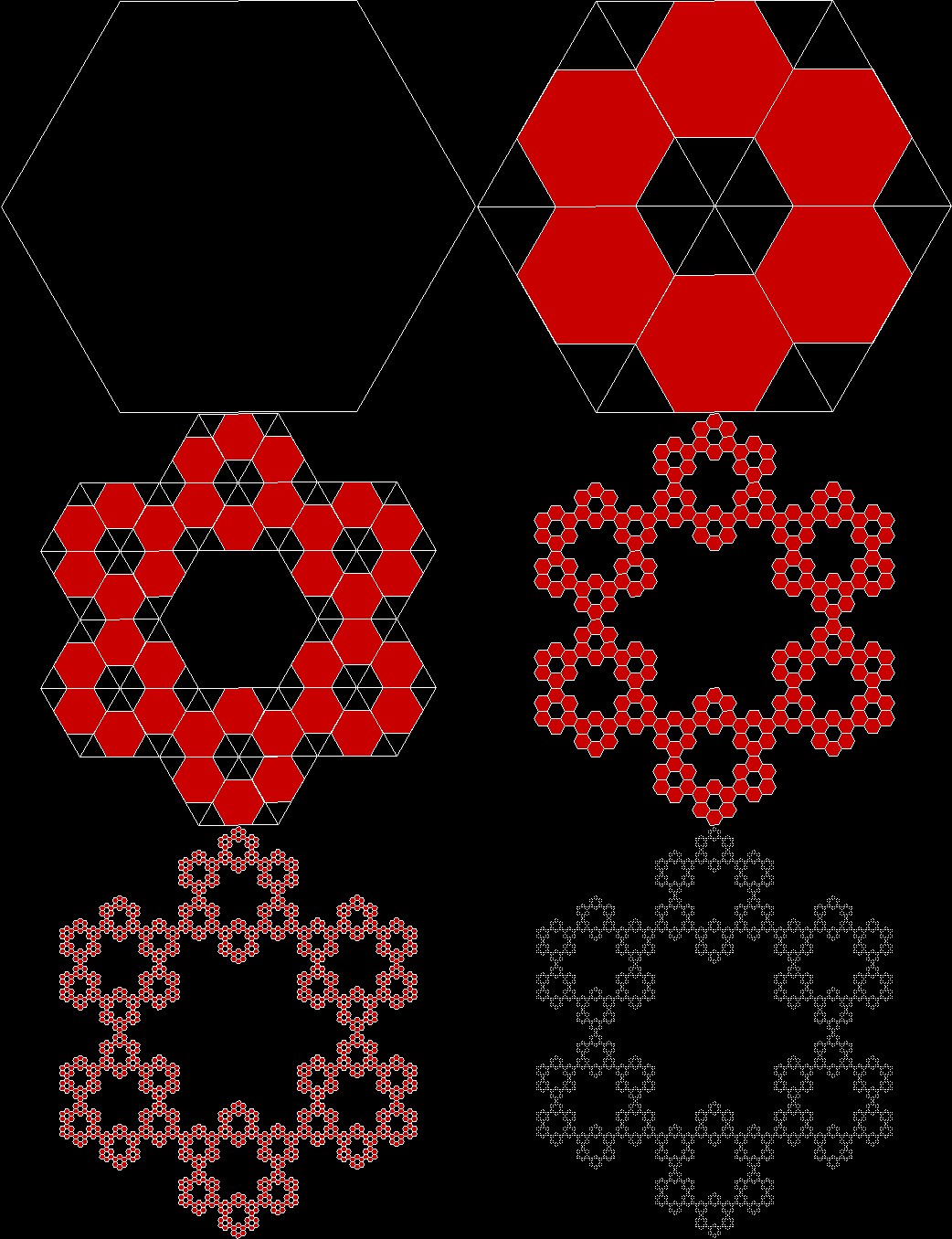
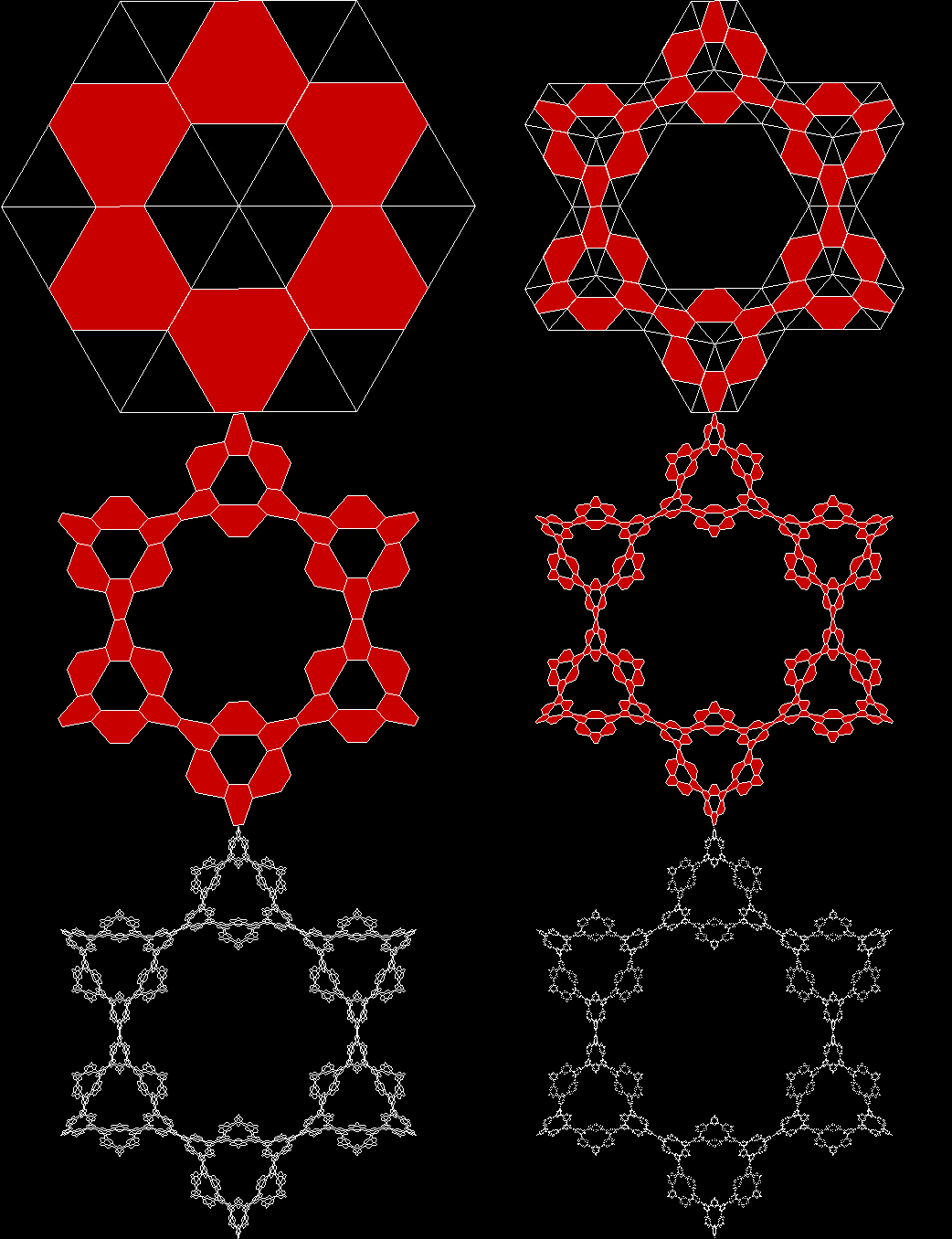
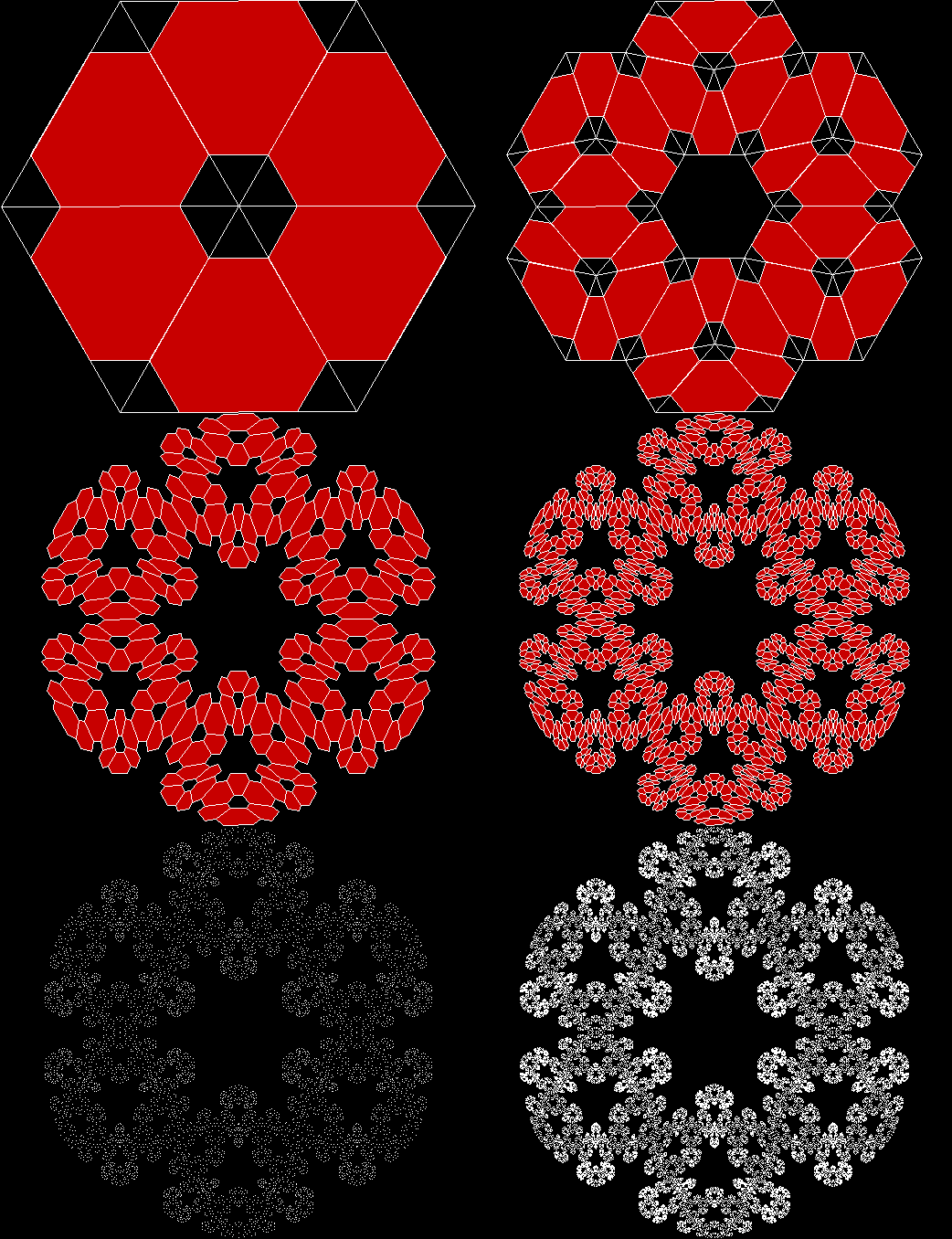
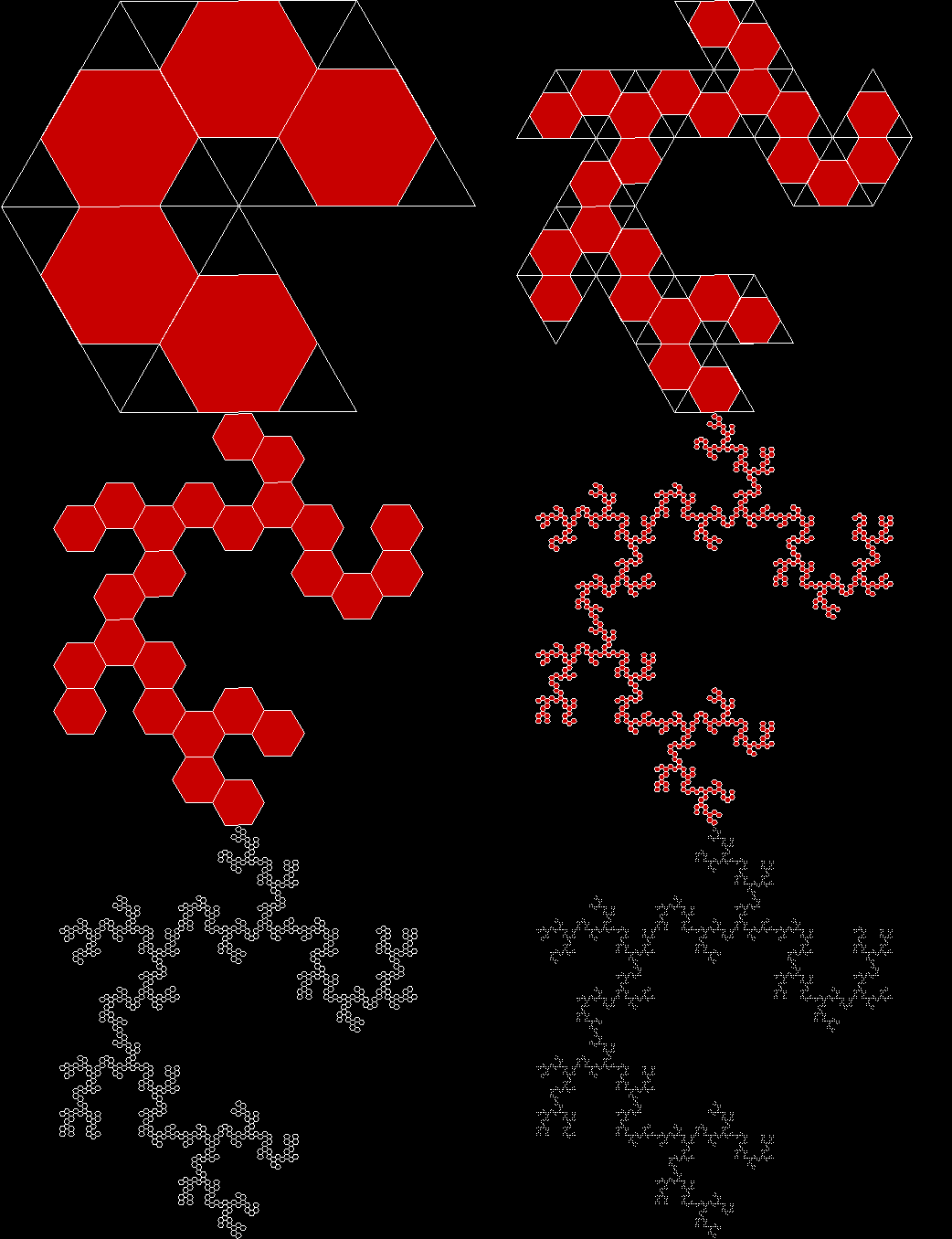
The Hex Fractor

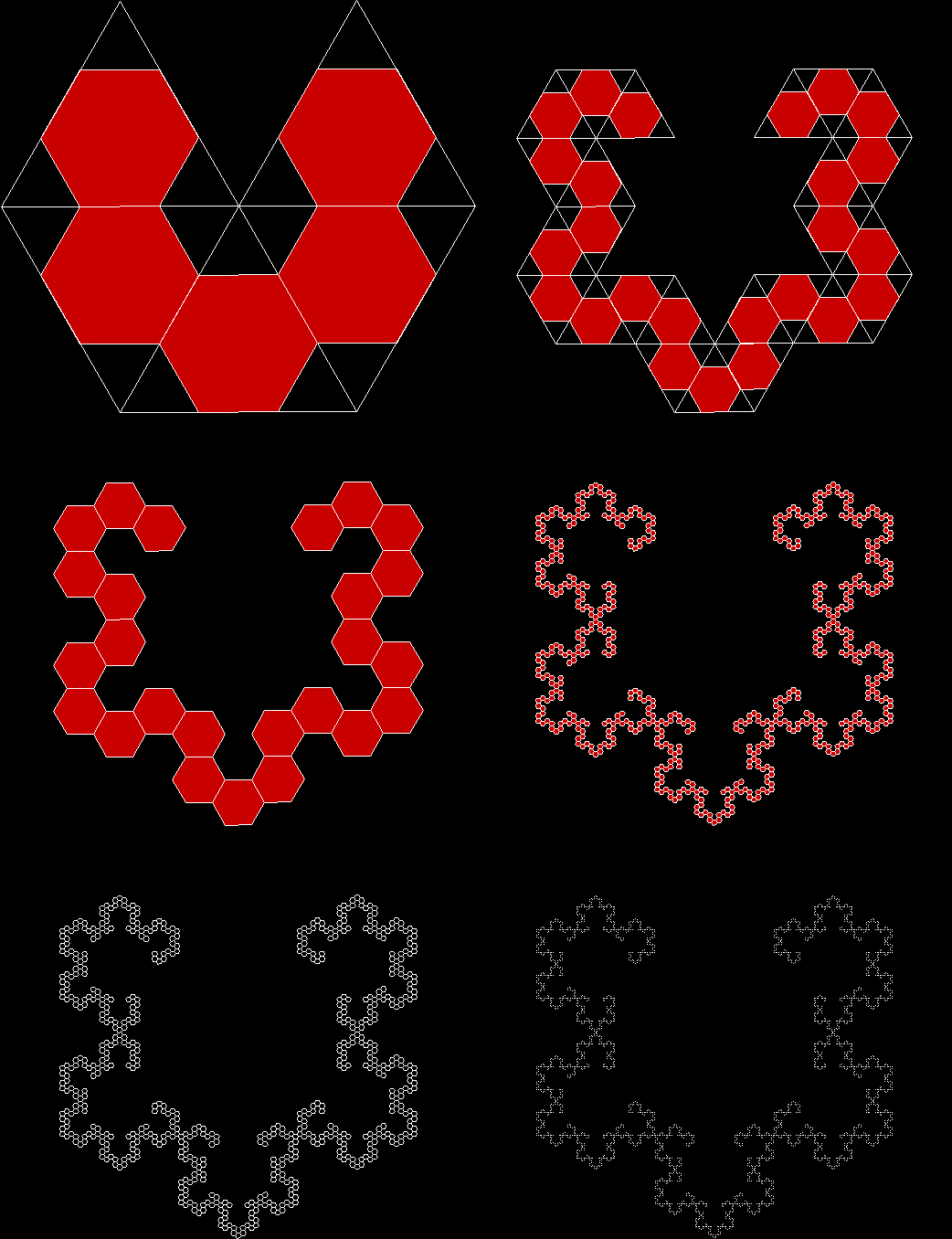
A regular hexagon can be divided into six equilateral triangles. An equilateral triangle can be divided into three more equilateral triangles and a regular hexagon. If you discard the three triangles and repeat, you create a fractal, like this:

hexring
Adjusting the sides of the internal hexagon creates new fractals:
hexring2
hexring1
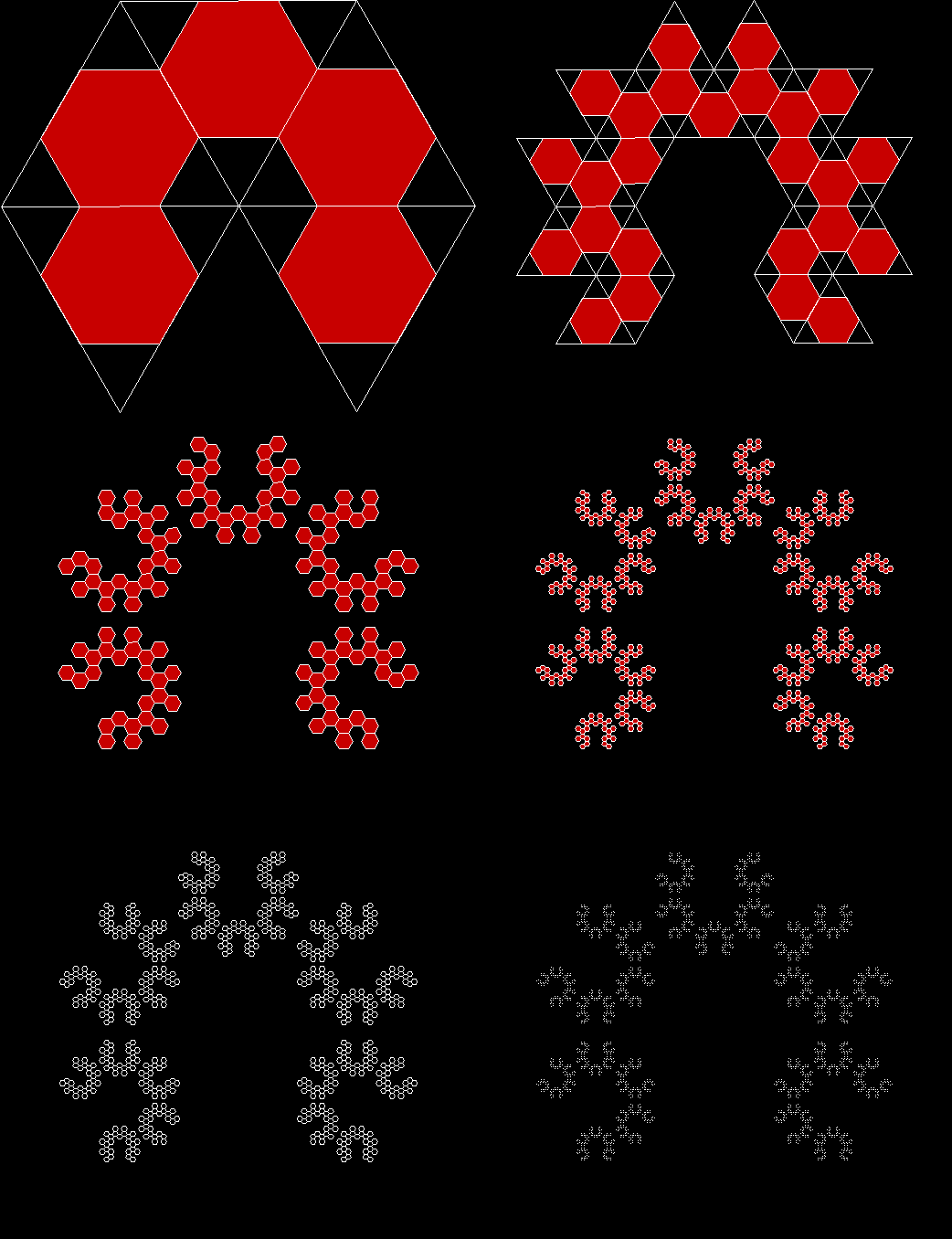
Discarding a hexagon after each subdivision creates new shapes:

hexring4
hexring5
hexring6
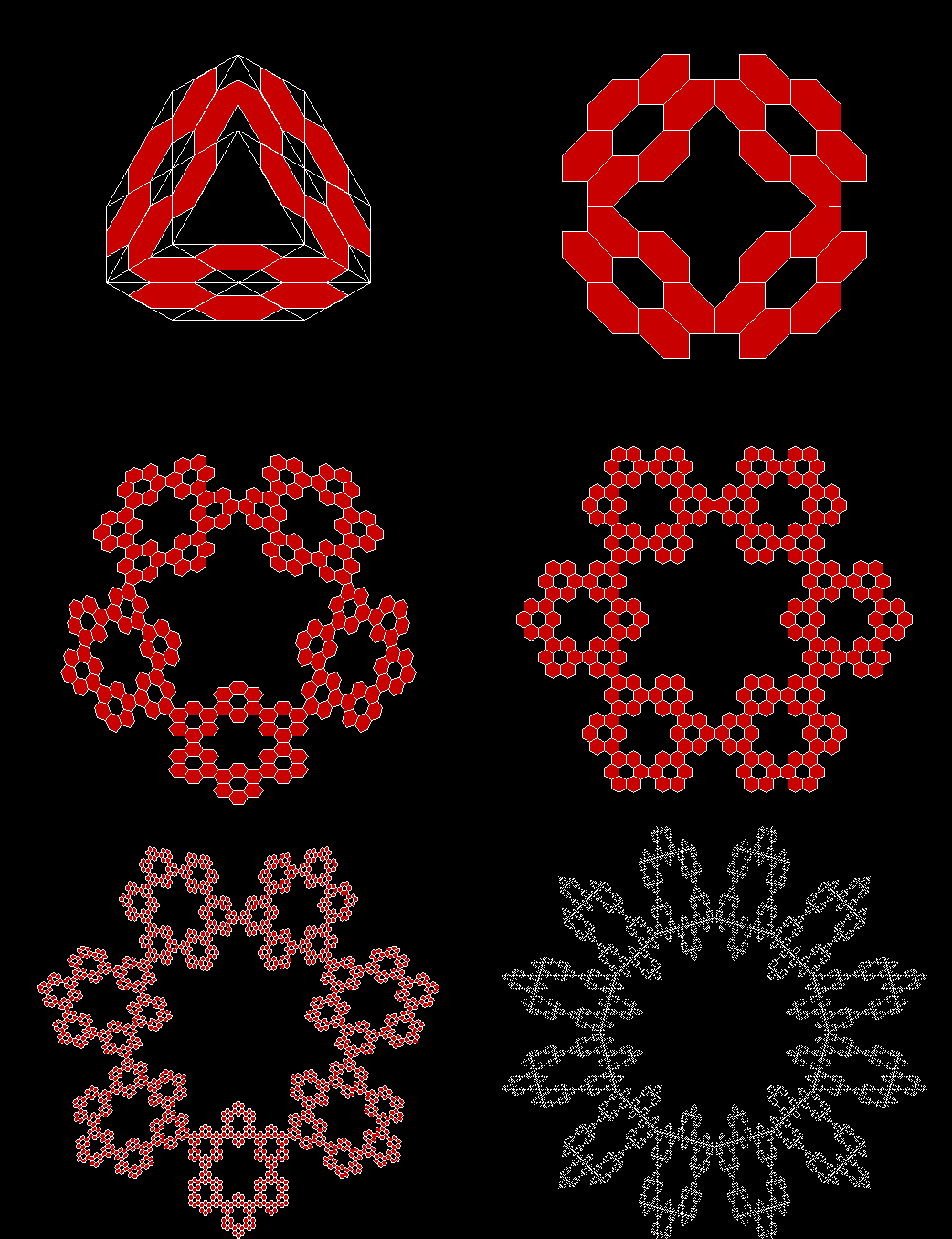
And you can start with another regular polygon, divide it into triangles, then proceed with the hexagons:
hexring3

Get Your Tox Off

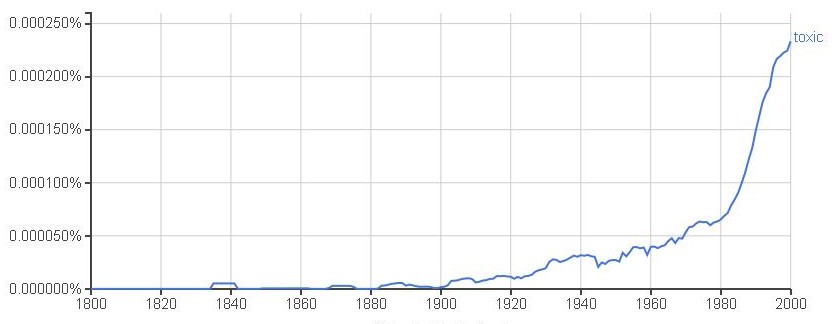
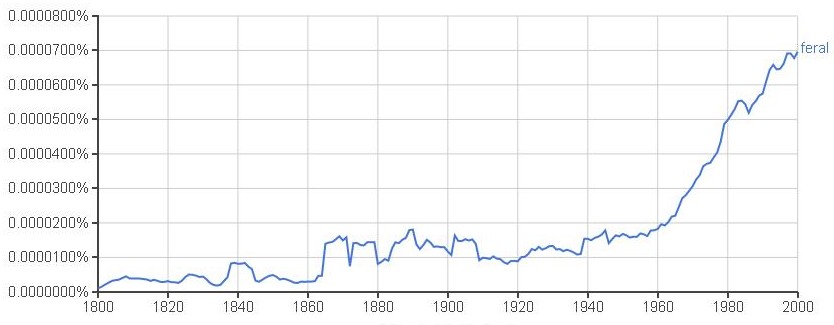
There’s only one word for it: toxic. The proliferation of this word is an incendiarily irritating abjectional aspect of contemporary culture. My visit to Google Ngram has confirmed my worst suspicions:

Toxic in English

Toxic in English

Toxic in English fiction

Toxic in English fiction

“Feral” isn’t irritating in quite the same way, but has similarly proliferated:

Feral in English

Feral in English

Feral in English fiction

Feral in English fiction

Noxious note: In terms of majorly maximal members of the Maverick Messiah community (such as myself), it goes without saying that when we deploy such items of Guardianese, we are being ironic dot dot dot


Previously pre-posted (please peruse):

Septics vs Dirties
Ex-term-in-ate!
Reds Under the Thread
Titus Graun

Pair on a D-String

What’s special about the binary number 10011 and the ternary number 1001120221? To answer the question, you have to see double. 10011 contains all possible pairs of numbers created from 0 and 1, just as 1001120221 contains all possible pairs created from 0, 1 and 2. And each pair appears exactly once. Now try the quaternary number 10011202130322331. That contains exactly one example of all possible pairs created from 0, 1, 2 and 3.

But there’s something more: in each case, the number is the smallest possible number with that property. As the bases get higher, that gets less obvious. In quinary, or base 5, the smallest number containing all possible pairs is 10011202130314042232433441. The digits look increasingly random. And what about base 10? There are 100 possible pairs of numbers created from the digits 0 to 9, starting with 00, 01, 02… and ending with …97, 98, 99. To accommodate 100 pairs, the all-pair number in base 10 has to be 101 digits long. It’s a string of digits, so let’s call it a d-string:

1, 0, 0, 1, 1, 2, 0, 2, 1, 3, 0, 3, 1, 4, 0, 4, 1, 5, 0, 5, 1, 6, 0, 6, 1, 7, 0, 7, 1, 8, 0, 8, 1, 9, 0, 9, 2, 2, 3, 2, 4, 2, 5, 2, 6, 2, 7, 2, 8, 2, 9, 3, 3, 4, 3, 5, 3, 6, 3, 7, 3, 8, 3, 9, 4, 4, 5, 4, 6, 4, 7, 4, 8, 4, 9, 5, 5, 6, 5, 7, 5, 8, 5, 9, 6, 6, 7, 6, 8, 6, 9, 7, 7, 8, 7, 9, 8, 8, 9, 9, 1

Again, the digits look increasingly random. They aren’t: they’re strictly determined. The d-string is in harmony. As the digits are generated from the left, they impose restrictions on the digits that appear later. It might appear that you could shift larger digits to the right and make the number smaller, but if you do that you no longer meet the conditions and the d-string collapses into dischord.

Now examine d-strings containing all possible triplets created from the digits of bases 2, 3 and 4:

1, 0, 0, 0, 1, 0, 1, 1, 1, 0 in base 2 = 558 in base 10

1, 0, 0, 0, 1, 0, 1, 1, 0, 2, 0, 0, 2, 1, 1, 1, 2, 0, 1, 2, 1, 2, 2, 0, 2, 2, 2, 1, 0 in base 3 = 23203495920756 in base 10

1, 0, 0, 0, 1, 0, 1, 1, 0, 2, 0, 0, 2, 1, 0, 3, 0, 0, 3, 1, 1, 1, 2, 0, 1, 2, 1, 1, 3, 0, 1, 3, 1, 2, 2, 0, 2, 2, 1, 2, 3, 0, 2, 3, 1, 3, 2, 0, 3, 2, 1, 3, 3, 0, 3, 3, 2, 2, 2, 3, 2, 3, 3, 3, 1, 0 in base 4 = 1366872334420014346556556812432766057460 in base 10

Note that there are 8 possible triplets in base 2, so the all-triplet number has to be 10 digits long. In base 10, there are 1000 possible triplets, so the all-triplet number has to be 1002 digits long. Here it is:

1, 0, 0, 0, 1, 0, 1, 1, 0, 2, 0, 0, 2, 1, 0, 3, 0, 0, 3, 1, 0, 4, 0, 0, 4, 1, 0, 5, 0, 0, 5, 1, 0, 6, 0, 0, 6, 1, 0, 7, 0, 0, 7, 1, 0, 8, 0, 0, 8, 1, 0, 9, 0, 0, 9, 1, 1, 1, 2, 0, 1, 2, 1, 1, 3, 0, 1, 3, 1, 1, 4, 0, 1, 4, 1, 1, 5, 0, 1, 5, 1, 1, 6, 0, 1, 6, 1, 1, 7, 0, 1, 7, 1, 1, 8, 0, 1, 8, 1, 1, 9, 0, 1, 9, 1, 2, 2, 0, 2, 2, 1, 2, 3, 0, 2, 3, 1, 2, 4, 0, 2, 4, 1, 2, 5, 0, 2, 5, 1, 2, 6, 0, 2, 6, 1, 2, 7, 0, 2, 7, 1, 2, 8, 0, 2, 8, 1, 2, 9, 0, 2, 9, 1, 3, 2, 0, 3, 2, 1, 3, 3, 0, 3, 3, 1, 3, 4, 0, 3, 4, 1, 3, 5, 0, 3, 5, 1, 3, 6, 0, 3, 6, 1, 3, 7, 0, 3, 7, 1, 3, 8, 0, 3, 8, 1, 3, 9, 0, 3, 9, 1, 4, 2, 0, 4, 2, 1, 4, 3, 0, 4, 3, 1, 4, 4, 0, 4, 4, 1, 4, 5, 0, 4, 5, 1, 4, 6, 0, 4, 6, 1, 4, 7, 0, 4, 7, 1, 4, 8, 0, 4, 8, 1, 4, 9, 0, 4, 9, 1, 5, 2, 0, 5, 2, 1, 5, 3, 0, 5, 3, 1, 5, 4, 0, 5, 4, 1, 5, 5, 0, 5, 5, 1, 5, 6, 0, 5, 6, 1, 5, 7, 0, 5, 7, 1, 5, 8, 0, 5, 8, 1, 5, 9, 0, 5, 9, 1, 6, 2, 0, 6, 2, 1, 6, 3, 0, 6, 3, 1, 6, 4, 0, 6, 4, 1, 6, 5, 0, 6, 5, 1, 6, 6, 0, 6, 6, 1, 6, 7, 0, 6, 7, 1, 6, 8, 0, 6, 8, 1, 6, 9, 0, 6, 9, 1, 7, 2, 0, 7, 2, 1, 7, 3, 0, 7, 3, 1, 7, 4, 0, 7, 4, 1, 7, 5, 0, 7, 5, 1, 7, 6, 0, 7, 6, 1, 7, 7, 0, 7, 7, 1, 7, 8, 0, 7, 8, 1, 7, 9, 0, 7, 9, 1, 8, 2, 0, 8, 2, 1, 8, 3, 0, 8, 3, 1, 8, 4, 0, 8, 4, 1, 8, 5, 0, 8, 5, 1, 8, 6, 0, 8, 6, 1, 8, 7, 0, 8, 7, 1, 8, 8, 0, 8, 8, 1, 8, 9, 0, 8, 9, 1, 9, 2, 0, 9, 2, 1, 9, 3, 0, 9, 3, 1, 9, 4, 0, 9, 4, 1, 9, 5, 0, 9, 5, 1, 9, 6, 0, 9, 6, 1, 9, 7, 0, 9, 7, 1, 9, 8, 0, 9, 8, 1, 9, 9, 0, 9, 9, 2, 2, 2, 3, 2, 2, 4, 2, 2, 5, 2, 2, 6, 2, 2, 7, 2, 2, 8, 2, 2, 9, 2, 3, 3, 2, 3, 4, 2, 3, 5, 2, 3, 6, 2, 3, 7, 2, 3, 8, 2, 3, 9, 2, 4, 3, 2, 4, 4, 2, 4, 5, 2, 4, 6, 2, 4, 7, 2, 4, 8, 2, 4, 9, 2, 5, 3, 2, 5, 4, 2, 5, 5, 2, 5, 6, 2, 5, 7, 2, 5, 8, 2, 5, 9, 2, 6, 3, 2, 6, 4, 2, 6, 5, 2, 6, 6, 2, 6, 7, 2, 6, 8, 2, 6, 9, 2, 7, 3, 2, 7, 4, 2, 7, 5, 2, 7, 6, 2, 7, 7, 2, 7, 8, 2, 7, 9, 2, 8, 3, 2, 8, 4, 2, 8, 5, 2, 8, 6, 2, 8, 7, 2, 8, 8, 2, 8, 9, 2, 9, 3, 2, 9, 4, 2, 9, 5, 2, 9, 6, 2, 9, 7, 2, 9, 8, 2, 9, 9, 3, 3, 3, 4, 3, 3, 5, 3, 3, 6, 3, 3, 7, 3, 3, 8, 3, 3, 9, 3, 4, 4, 3, 4, 5, 3, 4, 6, 3, 4, 7, 3, 4, 8, 3, 4, 9, 3, 5, 4, 3, 5, 5, 3, 5, 6, 3, 5, 7, 3, 5, 8, 3, 5, 9, 3, 6, 4, 3, 6, 5, 3, 6, 6, 3, 6, 7, 3, 6, 8, 3, 6, 9, 3, 7, 4, 3, 7, 5, 3, 7, 6, 3, 7, 7, 3, 7, 8, 3, 7, 9, 3, 8, 4, 3, 8, 5, 3, 8, 6, 3, 8, 7, 3, 8, 8, 3, 8, 9, 3, 9, 4, 3, 9, 5, 3, 9, 6, 3, 9, 7, 3, 9, 8, 3, 9, 9, 4, 4, 4, 5, 4, 4, 6, 4, 4, 7, 4, 4, 8, 4, 4, 9, 4, 5, 5, 4, 5, 6, 4, 5, 7, 4, 5, 8, 4, 5, 9, 4, 6, 5, 4, 6, 6, 4, 6, 7, 4, 6, 8, 4, 6, 9, 4, 7, 5, 4, 7, 6, 4, 7, 7, 4, 7, 8, 4, 7, 9, 4, 8, 5, 4, 8, 6, 4, 8, 7, 4, 8, 8, 4, 8, 9, 4, 9, 5, 4, 9, 6, 4, 9, 7, 4, 9, 8, 4, 9, 9, 5, 5, 5, 6, 5, 5, 7, 5, 5, 8, 5, 5, 9, 5, 6, 6, 5, 6, 7, 5, 6, 8, 5, 6, 9, 5, 7, 6, 5, 7, 7, 5, 7, 8, 5, 7, 9, 5, 8, 6, 5, 8, 7, 5, 8, 8, 5, 8, 9, 5, 9, 6, 5, 9, 7, 5, 9, 8, 5, 9, 9, 6, 6, 6, 7, 6, 6, 8, 6, 6, 9, 6, 7, 7, 6, 7, 8, 6, 7, 9, 6, 8, 7, 6, 8, 8, 6, 8, 9, 6, 9, 7, 6, 9, 8, 6, 9, 9, 7, 7, 7, 8, 7, 7, 9, 7, 8, 8, 7, 8, 9, 7, 9, 8, 7, 9, 9, 8, 8, 8, 9, 8, 9, 9, 9, 1, 0

Consider the quadruplet number in base 10. There are 10000 possible quadruplets, so the all-quadruplet number is 10003 digits long. And so on. In general, the “all n-tuplet” number in base b contains b^n n-tuplets and is (b^n + n-1) digits long. If b = 10 and n = 4, the d-string starts like this:

1, 0, 0, 0, 0, 1, 0, 0, 1, 1, 0, 0, 2, 0, 0, 0, 2, 1, 0, 0, 3, 0, 0, 0, 3, 1, 0, 0, 4, 0, 0, 0, 4, 1, 0, 0, 5, 0, 0, 0, 5, 1, 0, 0, 6, 0, 0, 0, 6, 1, 0, 0, 7, 0, 0, 0, 7, 1, 0, 0, 8, 0, 0, 0, 8, 1, 0, 0, 9, 0, 0, 0, 9, 1, 0, 1, 0, 1, 1, 1, 0, 1, 2, 0, 0, 1, 2, 1, 0, 1, 3, 0, 0, 1, 3, 1, 0, 1, 4, 0, 0, 1, 4, 1, 0, 1, 5, 0, 0, 1, 5, 1, 0, 1, 6, 0, 0, 1, 6, 1, 0, 1, 7, 0, 0, 1, 7, 1, 0, 1, 8, 0, 0, 1, 8, 1, 0, 1, 9, 0, 0, 1, 9, 1, 0, 2, 0, 1, 0, 2, 1, 1, 0, 2, 2, 0, 0, 2, 2, 1, 0, 2, 3, 0, 0, 2, 3, 1, 0, 2, 4, 0, 0, 2, 4, 1, 0, 2, 5, 0, 0, 2, 5, 1, 0, 2, 6…

What about when n = 100? Now the d-string is ungraspably huge – too big to fit in the known universe. But it starts with 1 followed by a hundred 0s and every digit after that is entirely determined. Perhaps there’s a simple way to calculate any given digit, given its position in the d-string. Either way, what is the ontological status of the d-string for n=100? Does it exist in some Platonic realm of number, independent of physical reality?

Some would say that it does, just like √2 or π or e. I disagree. I don’t believe in a Platonic realm. If the universe or multiverse ceased to exist, numbers and mathematics in general would also cease to exist. But this isn’t to say that mathematics depends on physical reality. It doesn’t. Nor does physical reality depend on mathematics. Rather, physical reality necessarily embodies mathematics, which might be defined as “entity in interrelation”. Humans have invented small-m mathematics, a symbolic way of expressing the physical embodiment of big-m mathematics.

But small-m mathematics is actually more powerful and far-ranging, because it increases the number, range and power of entities and their interaction. Where are √2 and π in physical reality? Nowhere. You could say that early mathematicians saw their shadows, cast from a Platonic realm, and deduced their existence in that realm, but that’s a metaphor. Do all events, like avalanches or thunderstorms, exist in some Platonic realm before they are realized? No, they arise as physical entities interact according to laws of physics. In a more abstract way, √2 and π arise as entities of another kind interact according to laws of logic: the concepts of a square and its diagonal, of a circle and its diameter.

The d-strings discussed above arise from the interaction of simpler concepts: the finite set of digits in a base and the ways in which they can be combined. Platonism is unnecessary: the arc and spray of a fountain are explained by the pressure of the water, the design of the pipes, the arrangement of the nozzles, not by reference to an eternal archetype of water and spray. In small-m mathematics, there are an infinite number of fountains, because small-m mathematics opens a door to a big-U universe, infinitely larger and richer than the small-u universe of physical reality.